Supercritical Fluid Technology: A Green Paradigm for Advanced Pharmaceutical Particle Engineering
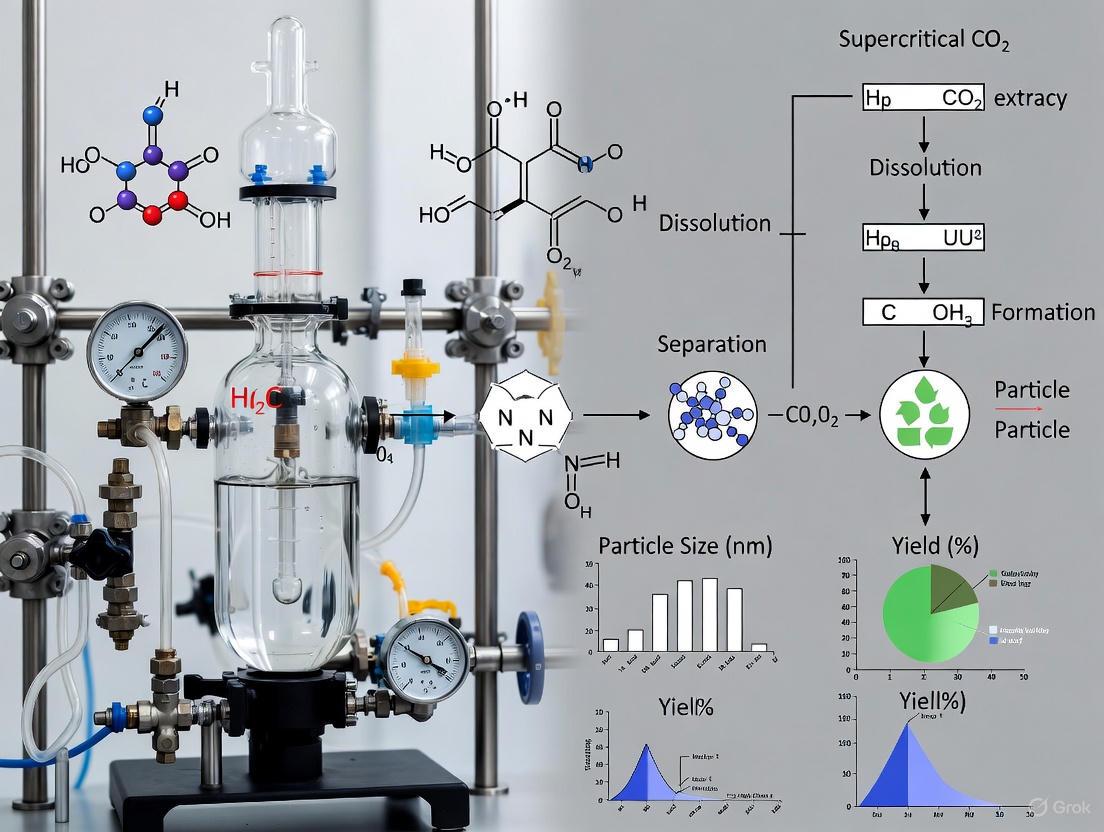
This article comprehensively explores supercritical fluid technology (SFT) as a sustainable and efficient platform for engineering pharmaceutical particles.
Supercritical Fluid Technology: A Green Paradigm for Advanced Pharmaceutical Particle Engineering
Abstract
This article comprehensively explores supercritical fluid technology (SFT) as a sustainable and efficient platform for engineering pharmaceutical particles. Tailored for researchers and drug development professionals, it covers the foundational principles of supercritical fluids, detailing key methodologies like RESS, SAS, and PGSS for enhancing drug solubility and bioavailability. It further delves into advanced troubleshooting using AI and computational fluid dynamics, and provides a rigorous validation framework comparing SFT to conventional techniques, highlighting its proven efficacy in clinical applications and its growing role in green pharmaceutical manufacturing.
Understanding Supercritical Fluids: Principles and Advantages for Pharmaceutical Engineering
A supercritical fluid (SCF) is a substance that exists at a temperature and pressure above its critical point, a specific thermodynamic state where the distinction between liquid and gas phases disappears [1] [2]. In this unique condition, the fluid does not condense or evaporate but exists as a single phase that exhibits a hybrid of liquid-like and gas-like properties, making it distinct from conventional solvents [3] [4]. This state is achieved when a substance is heated and compressed beyond its critical temperature (Tc) and critical pressure (Pc), the values of which are unique to each compound [2].
The critical point represents the terminus of the vapor-liquid equilibrium curve on a phase diagram [5]. Beyond this point, the meniscus separating the liquid and gas vanishes, and the substance enters the supercritical region [3]. A key characteristic of this transition is its continuity; a substance can be transformed from a liquid to a gas via the supercritical state without undergoing a discontinuous first-order phase transition, meaning the process occurs without the observable phenomenon of boiling [3]. This continuous pathway allows for the smooth adjustment of fluid properties by simply manipulating temperature and pressure [2].
Fundamental Properties and Phase Behavior
Hybrid Properties of Supercritical Fluids
Supercritical fluids possess a combination of properties that are intermediate between those of liquids and gases, as summarized in Table 1. This unique blend is the source of their utility in various technological applications, particularly in pharmaceutical particle engineering.
Table 1: Comparative Physical Properties of Gases, Supercritical Fluids, and Liquids
| Property | Gases | Supercritical Fluids | Liquids |
|---|---|---|---|
| Density (g/cm³) | ~0.001 [6] | 0.2 - 0.8 [1] | ~1 [6] |
| Diffusivity (cm²/s) | ~0.1 [6] | ~10⁻³ - 10⁻⁴ [6] | ~0.0001 [1] |
| Viscosity (g/cm·s) | ~10⁻⁴ [6] | ~10⁻³ [1] | ~10⁻² [6] |
The gas-like properties of SCFs, such as high diffusivity and low viscosity, facilitate exceptional mass transfer characteristics [1] [2]. This allows SCFs to penetrate porous materials and intricate structures much more effectively than liquids. Conversely, their liquid-like density grants SCFs a high solvent power, enabling them to dissolve a wide range of solid materials [6] [7]. Furthermore, a defining feature of SCFs is the absence of surface tension, as there is no liquid-gas phase boundary [2]. Perhaps the most powerful attribute is the tunability of these properties; small changes in temperature or pressure near the critical point can induce large, continuous variations in density and, consequently, in solvent strength and selectivity [2] [4].
Critical Parameters of Common Substances
The critical parameters for substances commonly used as supercritical fluids, particularly in pharmaceutical research, are provided in Table 2. Carbon dioxide is overwhelmingly the solvent of choice for most applications due to its accessible critical point, non-flammability, and low toxicity [1] [7].
Table 2: Critical Parameters of Common Supercritical Fluids
| Solvent | Molecular Mass (g/mol) | Critical Temperature (°C) | Critical Pressure (MPa) | Critical Density (g/cm³) |
|---|---|---|---|---|
| Carbon Dioxide (CO₂) | 44.01 | 31.1 [1] | 7.38 [1] | 0.469 [2] |
| Water (H₂O) | 18.015 | 374.1 [3] | 22.1 [1] | 0.322 [2] |
| Ethanol (C₂H₅OH) | 46.07 | 243.4 [6] | 6.14 [2] | 0.276 [2] |
| Nitrous Oxide (N₂O) | 44.013 | 36.5 [6] | 7.35 [2] | 0.452 [2] |
The phase behavior of a pure substance, such as CO₂, can be understood through its pressure-temperature (P-T) phase diagram. The diagram below illustrates the regions where solid, liquid, and gas phases coexist and highlights the critical point beyond which the supercritical fluid region exists.
Experimental Protocols for Pharmaceutical Particle Engineering
Protocol: Particle Size Reduction via Supercritical Anti-Solvent (SAS) Precipitation
The SAS technique is particularly suited for processing heat-sensitive pharmaceuticals and biopolymers to produce microparticles and nanoparticles with controlled size distributions [8]. The method relies on the rapid diffusion of a supercritical fluid (typically CO₂) into a solution of the drug in an organic solvent, causing a dramatic reduction in the solvent's power and the subsequent precipitation of fine, uniform drug particles [7] [8].
3.1.1 Materials and Equipment
- High-Pressure Precipitation Vessel: Equipped with sapphire windows for visual monitoring, a frit for gas distribution, and a solution injection port [9].
- CO₂ Supply System: Comprising a high-pressure pump, a chiller unit to maintain liquid CO₂, and a thermostatically controlled heating jacket for the vessel to maintain supercritical conditions (e.g., >31°C, >7.38 MPa) [9].
- Solution Delivery System: A high-pressure liquid pump and a fine-nozzle injector for introducing the drug solution.
- Back-Pressure Regulator: To maintain constant pressure within the vessel during the experiment.
- Solvent Collection Vessel: Placed downstream to capture the expanded CO₂ and evaporated solvent.
3.1.2 Step-by-Step Procedure
- System Preparation: Clean and dry the precipitation vessel. Set the vessel temperature to the desired operating condition (e.g., 40°C) using the heating jacket. Set the back-pressure regulator to the target pressure (e.g., 10-15 MPa).
- CO₂ Pressurization: Pump liquid CO₂ into the vessel until the target pressure is steadily maintained. Allow the system to stabilize for at least 20-30 minutes to ensure thermal and pressure equilibrium, achieving a homogeneous supercritical phase.
- Solution Injection: Prepare a drug solution in a suitable organic solvent (e.g., acetone, dimethyl sulfoxide). Using the high-pressure liquid pump, inject this solution through the fine-nozzle injector directly into the stream of supercritical CO₂ within the vessel. The typical flow rate ranges from 0.5 to 2 mL/min.
- Precipitation and Washing: The rapid diffusion of scCO₂ into the liquid droplets causes instantaneous supersaturation and precipitation of the drug as fine particles. Continue to pump pure scCO₂ through the vessel for 1-2 hours to wash and remove residual solvent from the precipitated particles.
- Depressurization and Collection: Slowly depressurize the vessel at a controlled rate (e.g., 0.5-1 MPa/min) to prevent particle agglomeration. Collect the dry, free-flowing powder from the frit or vessel floor for analysis.
3.1.3 Critical Process Parameters
- Pressure and Temperature: Directly control the density of scCO₂ and its solvation power, impacting the rate of supersaturation and final particle morphology [2] [8].
- Drug Solution Concentration: Affects the degree of supersaturation; higher concentrations can lead to larger particles or agglomerates.
- Solution Flow Rate and Nozzle Geometry: Govern the initial droplet size and the surface area for mass transfer, which are critical for determining final particle size and distribution [8].
Protocol: Polymer Foaming and Impregnation using scCO₂
This protocol utilizes scCO₂ as a physical blowing agent to create microporous polymer scaffolds for drug delivery or tissue engineering [9]. The process involves saturating a polymer matrix with scCO₂, which plasticizes the polymer, followed by a rapid pressure drop that induces thermodynamic instability and pore nucleation.
3.2.1 Materials and Equipment
- Variable-Volume View Cell or High-Pressure Autoclave: With sapphire windows and a movable piston for pressure control [9].
- CO₂ Supply System: As described in Protocol 3.1.
- Polymer Samples: In the form of films, discs, or custom-shaped devices.
3.2.2 Step-by-Step Procedure
- Loading and Pressurization: Place the dry polymer sample into the high-pressure vessel. Seal the vessel and pressurize it with scCO₂ to the desired saturation pressure (typically 10-30 MPa) at a constant temperature. The temperature must be set considering the scCO₂-plasticized glass transition temperature (Tg) of the polymer.
- Saturation: Maintain the pressure and temperature for a prolonged period (several hours to days, depending on polymer thickness) to allow scCO₂ to dissolve and saturate the polymer bulk fully.
- Foaming via Depressurization: Induce foaming by rapidly releasing the pressure (within seconds). The rapid pressure quench creates a high degree of supersaturation of CO₂ within the polymer, leading to the nucleation and growth of gas cells, which are trapped as the polymer solidifies.
- Controlled Foaming (Alternative): For more control over pore structure, the pressure can be released slowly into a second, lower-pressure vessel, or the temperature can be increased to further reduce polymer viscosity and promote cell growth before the final depressurization [9].
3.2.3 Critical Process Parameters
- Saturation Pressure and Temperature: Determine the concentration of dissolved CO₂, which directly affects the nucleation density and final porosity.
- Depressurization Rate: A faster rate leads to higher supersaturation and a greater number of nucleation sites, producing a finer cell structure.
- Polymer Thermal Transitions: The process temperature relative to the Tg of the polymer is critical. Foaming is typically conducted where the polymer's rigidity is significantly reduced by CO₂ plasticization, as measured by techniques like High-Pressure Torsional Braid Analysis (HP-TBA) [9].
The Scientist's Toolkit: Essential Research Reagents and Materials
Successful implementation of supercritical fluid technology in a pharmaceutical research setting requires specific high-pressure equipment and reagents. The following table details the key components of a research toolkit.
Table 3: Essential Research Reagents and Materials for SCF Research
| Item | Function/Application | Critical Specifications |
|---|---|---|
| High-Purity CO₂ Supply | Primary solvent for SCF processes; must be free of moisture and hydrocarbons to prevent contamination and system corrosion. | Purity: ≥ 99.99%; Equipped with a dip tube for liquid withdrawal [1]. |
| High-Pressure View Cell | Core vessel for visual observation of phase behavior, miscibility, and particle formation processes [9]. | Pressure rating: ≥ 60 MPa; Sapphire windows; Magnetic stirring; Temperature control jacket. |
| Supercritical Fluid Chromatography (SFC) System | Analytical and preparative-scale separation and purification of chiral and non-chiral compounds using scCO₂-based mobile phases [1]. | CO₂ pump, modifier pump, oven, back-pressure regulator, and compatible detectors (e.g., UV, ELSD). |
| High-Pressure Liquid Pump | Precise delivery of drug solutions or liquid modifiers (e.g., ethanol, methanol) into the SCF process stream. | Flow rate range: 0.1 - 10 mL/min; Pressure rating compatible with the SCF vessel. |
| Co-solvents / Modifiers | Enhance the solubility of polar compounds in non-polar scCO₂, enabling processing of a wider range of pharmaceuticals [6] [7]. | HPLC-grade ethanol, methanol, acetone; typically added in 1-15% (v/v). |
| Model Drug Compounds | For process development and optimization (e.g., griseofulvin, naproxen) [8]. | High-purity pharmaceuticals with known solubility data in scCO₂. |
| Biocompatible Polymers | For fabricating drug-loaded microparticles, nanoparticles, and porous scaffolds [9] [8]. | PLGA, PLLA, PCL; various molecular weights and end-groups. |
Advanced Concepts and Workflow Visualization
The SAS Process Workflow
The following diagram outlines the logical flow and key control points in a typical Supercritical Anti-Solvent (SAS) precipitation process, integrating the protocols described in Section 3.1.
Property Tuning in Supercritical Fluids
A fundamental advantage of SCFs is the ability to fine-tune their properties. The diagram below illustrates the logical relationship between process controls and the resulting fluid properties that are critical for pharmaceutical engineering outcomes.
Why CO2? The Dominance of Supercritical Carbon Dioxide in Pharma
Supercritical fluid technology has emerged as a transformative approach in pharmaceutical particle engineering, with supercritical carbon dioxide (scCO₂) establishing itself as the predominant solvent of choice. Its dominance stems from a convergence of practical advantages and compelling environmental benefits that align with the pharmaceutical industry's need for sustainable manufacturing processes. scCO₂ represents a green alternative to traditional organic solvents, offering a pathway to eliminate harmful chemical residues from drug formulations while enabling precise control over particle characteristics. The critical temperature of 304.1 K (31°C) and pressure of 7.4 MPa (73.8 bar) are easily attainable conditions that allow thermolabile pharmaceutical compounds to be processed without degradation, making scCO₂ particularly suitable for handling sensitive active pharmaceutical ingredients (APIs). [10]
The unique properties of scCO₂ combine gas-like advantages including high diffusivity and low viscosity with liquid-like solvent power, creating an exceptional medium for pharmaceutical processing. Furthermore, these properties can be precisely tuned through simple adjustments in temperature and pressure, providing researchers with a versatile tool for optimizing drug solubility and particle formation. This tunability is particularly valuable in pharmaceutical applications where controlling crystal morphology, particle size, and polymorphic form is essential for ensuring drug stability, bioavailability, and performance. As the industry continues to prioritize green chemistry principles and seek alternatives to conventional solvent-based processes, scCO₂ technology offers a sustainable platform for advancing pharmaceutical particle engineering. [10]
Fundamental Advantages of Supercritical CO₂
Tailorable Physicochemical Properties
The solvent power of scCO₂ can be precisely manipulated through controlled changes in temperature and pressure, enabling fine-tuning of solubility parameters without modifying solvent composition. This tunable solvation capability provides significant advantages over traditional organic solvents whose properties remain fixed. The density-dependent solvent strength allows researchers to optimize dissolution conditions for specific APIs and subsequently induce rapid precipitation through depressurization, facilitating the production of particles with well-defined characteristics. The gas-like transport properties of scCO₂, including high diffusivity and low viscosity, enhance mass transfer rates during processing, leading to more uniform particle formation and shorter processing times compared to conventional methods. [10]
Environmental, Safety, and Regulatory Benefits
Carbon dioxide is non-flammable, non-toxic, and chemically inert, making it exceptionally safe for pharmaceutical processing. Its natural abundance results in low cost and consistent availability, while its recyclability within closed-loop systems minimizes environmental impact and operational expenses. The elimination of organic solvent residues addresses stringent regulatory requirements for final drug products, significantly reducing purification steps and streamlining quality control processes. The environmental profile of scCO₂ aligns perfectly with green chemistry principles, supporting sustainable pharmaceutical manufacturing by minimizing waste generation and eliminating concerns about solvent disposal. [10]
Table 1: Key Physicochemical Properties of Supercritical CO₂ in Pharmaceutical Applications
| Property | Characteristic | Pharmaceutical Processing Advantage |
|---|---|---|
| Surface Tension | Zero | Enhanced penetration into porous matrices and drug substrates |
| Viscosity | Low | Reduced resistance to flow, improving mass transfer efficiency |
| Diffusivity | High (gas-like) | Superior mass transfer rates for extraction and precipitation processes |
| Solvent Power | Tunable via pressure/temperature | Precise control over solubility and precipitation kinetics |
| Critical Temperature | 304.1 K (31°C) | Suitable for processing thermolabile compounds |
| Critical Pressure | 7.4 MPa (73.8 bar) | Readily achievable with standard industrial equipment |
Key Pharmaceutical Applications and Methodologies
Particle Engineering Through scCO₂-Based Techniques
Supercritical carbon dioxide serves multiple functional roles in pharmaceutical particle engineering processes, acting as a solvent, antisolvent, or co-solute depending on the specific technique employed. This versatility has led to the development of several established methodologies for drug micronization, encapsulation, and polymorph control.
Rapid Expansion of Supercritical Solutions (RESS) In the RESS process, the API is first dissolved in scCO₂, followed by rapid depressurization through a nozzle into a low-pressure chamber. This abrupt pressure drop causes a dramatic reduction in solvent density and power, resulting in extremely high supersaturation that precipitates fine, uniform particles. The rapid nucleation kinetics typically produce particles with narrow size distributions. This method has been successfully employed to process cisplatin, producing a novel "liquid" form consisting of stable nanoclusters in water with 27-times greater solubility than conventional cisplatin, while maintaining stability at ambient conditions for over a year. [10]
Supercritical Antisolvent (SAS) Precipitation The SAS technique leverages the poor solubility of most pharmaceuticals in scCO₂ while utilizing their solubility in organic solvents. The process involves dissolving the drug (often with a polymeric carrier) in an organic solvent that is miscible with scCO₂. When this solution is contacted with scCO₂, the supercritical fluid dissolves into the organic phase, rapidly reducing its solvent capacity and causing supersaturation that precipitates the solute as fine particles. SAS has been effectively applied to produce telmisartan nanoparticles without carriers using mixed solvents (dichloromethane and methanol), resulting in amorphous particles with enhanced dissolution rates and higher oral bioavailability in rats. The technique has also been used to incorporate icariin into N-vinyl caprolactam nanoparticles for bone tissue engineering and to formulate curcumin with polyvinylpyrrolidone and β-cyclodextrin carriers, significantly accelerating dissolution. [10]
Supercritical Fluid Extraction of Emulsions (SFEE) SFEE utilizes scCO₂ as an extracting solvent for removing organic phases from emulsions. Typically, a water-in-oil-in-water (W/O/W) emulsion containing pharmaceutical compounds is prepared, then brought into contact with scCO₂, which extracts the organic solvent, leading to the formation of a final particle suspension. Process variables including homogenization speed, emulsification time, temperature, and pressure significantly influence the resulting particle size, morphology, encapsulation efficiency, and initial burst release characteristics. Research with bovine serum albumin (BSA) encapsulated in PLGA microspheres demonstrated that when encapsulation efficiency was low, a higher proportion of BSA located on the external surface led to larger initial burst release. [10]
Supercritical-Assisted Atomization (SAA) In SAA, scCO₂ acts as a co-solute and pneumatic agent. A controlled amount of scCO₂ is dissolved in a solution containing the components to be precipitated, forming an expanded solution that is then sprayed into a precipitation chamber under atmospheric conditions, yielding fine particles. This technique has been successfully employed to complex beclomethasone dipropionate with γ-cyclodextrin in the presence of leucine as a dispersion enhancer, producing spherical particles with excellent aerosol performance. The formulation demonstrated significantly faster release, with complete dissolution within 60 minutes compared to 36 hours for the unprocessed drug. [10]
Table 2: Comparison of Major scCO₂ Processing Techniques in Pharmaceutical Applications
| Technique | Role of scCO₂ | Key Applications | Advantages | Limitations |
|---|---|---|---|---|
| RESS | Solvent | Micronization of pure APIs | Produces solvent-free particles; simple setup | Limited to compounds soluble in scCO₂ |
| SAS | Antisolvent | Particle precipitation, drug-polymer composites | Handles poorly scCO₂-soluble compounds; versatile | Requires organic solvent; complex mass transfer |
| SFEE | Extracting solvent | Encapsulation, microsphere production | Controls drug release profiles; suitable for biologics | Complex emulsion preparation required |
| SAA | Co-solute | Spray drying, composite particles | Excellent for inhalation products; operates at atmospheric pressure | May require excipients for optimal performance |
Analytical and Predictive Methodologies
Solubility Measurement and Prediction Understanding and predicting drug solubility in scCO₂ is fundamental to process optimization, as it determines the appropriate technique selection and operational parameters. Experimental solubility measurement under supercritical conditions remains time-consuming and costly, driving the development of predictive modeling approaches. Recent advances have employed machine learning algorithms including CatBoost, XGBoost, LightGBM, and Random Forest to predict drug solubility based on thermodynamic properties and molecular descriptors. The XGBoost model has demonstrated exceptional performance with a root mean square error (RMSE) of just 0.0605 and an R² value of 0.9984, with 97.68% of data points falling within the model's applicability domain. These models utilize input parameters including temperature (T), pressure (P), critical temperature (Tc), critical pressure (Pc), density (ρ), acentric factor (ω), molecular weight (MW), and melting point (Tm) to achieve high-precision solubility predictions. [11]
Thermodynamic and Empirical Modeling Traditional approaches to solubility prediction include empirical models based on solvent density, temperature, and pressure; equations of state (cubic and non-cubic); expanded liquid models; and molecular modeling. Empirical models, while simple and not requiring compound-specific properties, have provided satisfactory correlation accuracy for many pharmaceutical compounds. The PC-SAFT (Perturbed-Chain Statistical Associating Fluid Theory) equation of state has emerged as a particularly accurate non-cubic EoS for solubility prediction, outperforming traditional cubic equations for compounds like Chloroquine with AARD% of 4.15. Artificial neural networks (ANN) have also achieved exceptional accuracy, with multilayer perceptron (MLP) models demonstrating over 99% agreement with experimental solubility data for Chlorothiazide and Chloroquine. [12]
Experimental Protocols
Supercritical Antisolvent (SAS) Precipitation for Drug Nanoparticle Production
Objective This protocol describes the production of drug nanoparticles using the SAS precipitation technique, suitable for both pure APIs and drug-polymer composite systems. The example outlined applies to telmisartan nanoparticle production using dichloromethane-methanol solvent systems.
Materials and Equipment
- Supercritical CO₂ supply (high purity, 99.99%)
- API (e.g., telmisartan for hypertension treatment)
- Organic solvents (dichloromethane, methanol, pharmaceutical grade)
- Polymer carriers (optional: PVP, β-cyclodextrin, PLGA)
- SAS apparatus consisting of:
- High-pressure precipitation vessel with sight windows
- CO₂ pump with cooling head
- Solution delivery pump
- Coaxial nozzle for solution/CO₂ contact
- Back-pressure regulator
- Particle collection chamber
- Temperature control system
- Analytical balance
- Sonicator for solution preparation
Procedure
- Solution Preparation: Dissolve the API in the organic solvent system. For telmisartan, use a mixture of dichloromethane and methanol (e.g., 70:30 v/v) at concentration of 10-50 mg/mL. Sonicate if necessary to achieve complete dissolution.
- System Pressurization: Pressurize the precipitation vessel with scCO₂ to the desired operating pressure (typically 8-15 MPa) using the CO₂ pump while maintaining temperature at 35-60°C.
- Stabilization: Circulate scCO₂ through the vessel until stable temperature and pressure conditions are achieved (approximately 15-20 minutes).
- Solution Injection: Inject the drug solution through the coaxial nozzle into the precipitation vessel at a controlled flow rate (typically 1-5 mL/min) using the solution delivery pump.
- Precipitation and Washing: Continue injection until the desired amount of solution has been processed. Maintain scCO₂ flow for an additional 30-60 minutes to wash residual solvent from the precipitated particles.
- Depressurization: Slowly depressurize the vessel at a controlled rate (0.5-1 MPa/min) to atmospheric pressure.
- Product Collection: Collect the precipitated powder from the collection chamber and filter if necessary.
- Characterization: Analyze particle size distribution by laser diffraction, morphology by scanning electron microscopy, crystallinity by X-ray diffraction, and dissolution profile by USP dissolution apparatus.
Critical Parameters
- Solvent selection and composition significantly impact particle morphology and size
- Pressure and temperature conditions control supersaturation rates
- Solution flow rate and nozzle design affect mixing efficiency
- Drug concentration in solution influences particle size distribution
- scCO₂ to solution flow ratio impacts precipitation kinetics
Solubility Measurement in Supercritical CO₂
Objective This protocol describes the static analytical method for determining the solubility of solid pharmaceuticals in scCO₂, providing essential data for process design and optimization.
Materials and Equipment
- High-pressure equilibrium vessel with sapphire windows
- Magnetic stirring system
- Precision CO₂ pump with cooling unit
- Temperature-controlled air bath or oven
- Back-pressure regulator
- Sampling loop and valves
- Analytical balance (0.0001 g sensitivity)
- HPLC system with UV detection for quantification
Procedure
- Vessel Loading: Precisely weigh the drug (50-200 mg) and place it in the equilibrium vessel containing a magnetic stir bar.
- System Purge and Pressurization: Purge the system with CO₂ to remove air, then pressurize with CO₂ to the desired pressure using the precision pump.
- Equilibration: Set the system to the target temperature and pressure conditions. Stir continuously at 300-500 rpm for equilibration (typically 2-4 hours). Monitor pressure and maintain constant.
- Sampling: After equilibration, slowly expand a small volume of the scCO₂ phase (0.1-0.5 mL) through the sampling loop into a collection solvent (typically methanol or ethanol). Ensure minimal disturbance to system equilibrium.
- Quantification: Dilute the collected sample as needed and analyze by HPLC to determine drug concentration.
- Repeat: Conduct measurements at various pressures (typically 10-30 MPa) and temperatures (308-338 K) to characterize solubility behavior.
- Data Calculation: Calculate the mole fraction solubility (y₂) using the equation: y₂ = (n₂) / (n₁ + n₂) where n₂ is the number of moles of solute dissolved and n₁ is the number of moles of CO₂ in the sampled volume.
Validation and Safety
- Validate HPLC analytical method for specific drug compound
- Perform each measurement in triplicate to ensure reproducibility
- Ensure all high-pressure components are rated for maximum operating conditions
- Implement proper safety protocols for high-pressure operations
- Include reference compounds with known solubility for method verification
Visualization of Processes and Methodologies
scCO₂ Pharmaceutical Processing Workflow
Supercritical Antisolvent (SAS) Precipitation Mechanism
The Scientist's Toolkit: Essential Research Reagents and Materials
Table 3: Key Research Reagents and Materials for scCO₂ Pharmaceutical Research
| Reagent/Material | Function/Application | Examples/Notes |
|---|---|---|
| Supercritical CO₂ | Primary solvent/antisolvent | High purity (99.99%), often filtered to remove impurities |
| Pharmaceutical Compounds | Active ingredients for processing | BCS Class II/IV compounds with poor solubility (e.g., telmisartan, curcumin, cisplatin) |
| Polymeric Carriers | Particle matrix for controlled release | PVP, PLGA, β-cyclodextrin, N-vinyl caprolactam |
| Organic Solvents | Drug dissolution for SAS processes | Dichloromethane, methanol, ethanol, acetone (pharmaceutical grade) |
| Stabilizers | Particle stabilization and dispersion | Leucine (for aerosol performance), polysorbates |
| Aerogel Precursors | Porous carrier development | Natural polysaccharides (alginate, chitosan) for colonic delivery |
| Co-solvents | Modifying scCO₂ solvent power | Ethanol, methanol (typically <10% modification) |
Supercritical carbon dioxide has firmly established its dominance in pharmaceutical particle engineering through its unique combination of environmental benefits, tunable physicochemical properties, and processing versatility. The ability to precisely control particle characteristics while eliminating organic solvent residues addresses critical challenges in modern drug development, particularly for poorly soluble BCS Class II and IV compounds. As predictive modeling approaches continue to improve in accuracy and accessibility, and as fundamental understanding of scCO₂-process interactions advances, the implementation of supercritical fluid technologies is poised to expand further from research laboratories to industrial pharmaceutical manufacturing. The continued refinement of scCO₂-based techniques promises to support the development of next-generation pharmaceutical products with enhanced therapeutic performance while aligning with increasingly important green chemistry principles and sustainability objectives.
Application Notes: Leveraging Supercritical CO₂ in Pharmaceutical Manufacturing
Supercritical fluid technology, particularly using carbon dioxide (SC-CO₂), has become a cornerstone of modern green pharmaceutical engineering. Its core advantages align perfectly with the industry's need for sustainable, efficient, and high-quality manufacturing processes. The tunable properties of SC-CO₂ allow for precise control over particle formation, encapsulation, and purification, enabling the formulation of advanced drug delivery systems with enhanced bioavailability [13] [14].
Application Note 001: Micronization of Poorly Soluble Active Pharmaceutical Ingredients (APIs)
1.1.1 Objective: To improve the dissolution rate and oral bioavailability of a BCS Class II hypertensive drug, Telmisartan, via particle size reduction and amorphization using the Supercritical Antisolvent (SAS) technique [13].
1.1.2 Background: The bioavailability of many active ingredients is limited by poor water solubility. Micronization via SC-CO₂ addresses this by creating micro- and nano-sized particles with a high surface area, leading to a enhanced dissolution rate in gastrointestinal media [13] [14]. The SAS process is particularly suited for compounds with low solubility in SC-CO₂.
1.1.3 Key Results: A study processing Telmisartan with SAS using a dichloromethane and methanol solvent mixture successfully reduced particle size to the nano- and micro-scale and transformed the drug into an amorphous state. This modification resulted in a higher dissolution rate and significantly increased in vivo oral bioavailability in rats compared to the unprocessed drug [13].
Application Note 002: Development of Colon-Targeted Drug Delivery Systems
1.2.1 Objective: To formulate polysaccharide-based aerogel carriers for colonic drug delivery, leveraging pH- and enzyme-resistant properties to minimize premature drug release [13].
1.2.2 Background: Aerogels dried under supercritical conditions are lightweight, porous materials with high surface area and uniform pore distribution. When made from natural polysaccharides, they form effective systems to load, protect, and release drugs in a controlled manner for colonic administration [13].
1.2.3 Key Results: The most successful strategy for targeting the colon involved developing coated aerogels. Techniques such as fluidized-bed or spouted-bed coaters, alongside coaxial nozzles and supercritical drying, provided the best coating results, effectively minimizing drug release before reaching the colon [13].
Application Note 003: Enhanced Bioavailability via Drug-Cyclodextrin Complexation
1.3.1 Objective: To improve the dissolution profile and aerosol performance of Beclomethasone dipropionate, a glucocorticosteroid, by forming an inclusion complex with γ-cyclodextrin (γ-CD) [13].
1.3.2 Background: Complexation with cyclodextrins is a established method to enhance drug solubility. Supercritical fluid techniques offer a green alternative to conventional methods for forming these complexes [13].
1.3.3 Key Results: Using Supercritical-Assisted Atomization (SAA), researchers successfully complexed Beclomethasone dipropionate with γ-CD in the presence of leucine as a dispersion enhancer. The resulting spherical particles exhibited excellent aerosol performance, and the drug completely dissolved within 60 minutes in vitro, a significant improvement over the 36-hour dissolution time of the unprocessed drug [13].
Quantitative Comparison of Supercritical Fluid Techniques
Table 1: Overview of Key Supercritical Fluid Techniques for Pharmaceutical Particle Engineering [13] [14]
| Technique | Role of SC-CO₂ | Mechanism | Typical Particle Size | Key Advantage |
|---|---|---|---|---|
| RESS (Rapid Expansion of Supercritical Solutions) | Solvent | Rapid depressurization of drug-loaded SC-CO₂ causes supersaturation and precipitation. | < 500 nm [14] | Produces particles with narrow size distribution and high purity. |
| SAS (Supercritical Antisolvent) | Antisolvent | SC-CO₂ dissolves into organic drug solution, reducing solvent power and precipitating the drug. | Nano- to micro-scale [13] | Ideal for compounds insoluble in SC-CO₂; allows use of mixed solvents for morphology control. |
| SFEE (Supercritical Fluid Extraction of Emulsions) | Extracting Solvent | SC-CO₂ extracts organic solvent from a W/O/W emulsion, forming a particle suspension. | Microspheres [13] | Suitable for encapsulating hydrophilic molecules (e.g., proteins) into biodegradable polymers. |
| SAA (Supercritical-Assisted Atomization) | Co-solute & Pneumatic Agent | SC-CO₂ is dissolved in drug solution, which is then spray-dried, leading to particle formation. | Fine particles [13] | Effective for drug-carrier complexation (e.g., with cyclodextrins) and producing spherical particles. |
Experimental Protocols
Protocol 001: Supercritical Antisolvent (SAS) Precipitation for Drug Micronization
This protocol outlines the procedure for micronizing Telmisartan based on the fractional factorial design study described in [13].
2.1.1 Materials and Equipment:
- API: Telmisartan.
- Solvents: Dichloromethane (DCM), Methanol (MeOH), analytical grade.
- Antisolvent: High-purity Carbon Dioxide (CO₂, >99.9%).
- Equipment: SAS apparatus comprising: CO₂ supply cylinder, chiller unit, high-pressure pump, co-solvent pump (if used), precipitation vessel (with sight windows), temperature control system, back-pressure regulator, and particle collection chamber.
2.1.2 Procedure:
- Solution Preparation: Dissolve Telmisartan in a mixture of DCM and MeOH. The composition of the solvent mixture is a critical parameter and should be optimized (e.g., 50:50 v/v).
- System Pressurization and Heating: Fill the precipitation vessel with SC-CO₂ and stabilize to the desired operating conditions. Typical conditions involve a pressure of 80-150 bar and a temperature of 35-60°C [13] [14].
- Solution Injection and Precipitation: Continuously pump the drug solution through a nozzle into the precipitation vessel filled with SC-CO₂. Maintain constant pressure and temperature during injection.
- Washing Phase: After solution injection is complete, continue pumping pure SC-CO₂ through the vessel to wash residual organic solvent from the precipitated particles.
- Depressurization and Collection: Slowly depressurize the precipitation vessel and collect the micronized Telmisartan powder from the frit or collection chamber.
2.1.3 Critical Parameters:
- Temperature and Pressure: Directly influence the solvent power of SC-CO₂ and the final particle morphology.
- Drug Concentration in Feed Solution: Affects supersaturation degree and particle size.
- Solvent Mixture Composition: Allows control over particle size and morphology [13].
- CO₂ and Solution Flow Rates: Impact mixing and supersaturation rates.
Protocol 002: Formulation of Drug-Loaded Aerogels for Colonic Delivery
This protocol describes the production of polysaccharide-based aerogels for colonic drug delivery, as reviewed by Illanes-Bordomás et al. [13].
2.2.1 Materials and Equipment:
- Polymer: Natural polysaccharide (e.g., alginate, chitosan).
- Cross-linker: (e.g., calcium chloride for alginate).
- API: Target drug for colonic delivery.
- Drying Medium: High-purity CO₂.
- Equipment: Gel preparation setup, high-pressure autoclave for supercritical drying.
2.2.2 Procedure:
- Gel Formation: Dissolve the polysaccharide in water to form a hydrogel. Incorporate the drug during this stage. Induce gelation (e.g., by adding a cross-linker).
- Solvent Exchange: Replace the water within the hydrogel pores with a solvent miscible with SC-CO₂, such as ethanol, through a series of washing steps. This is crucial for subsequent drying.
- Supercritical Drying: Transfer the solvent-exchanged gel to a high-pressure autoclave. Fill the vessel with SC-CO₂ and maintain conditions (e.g., 40°C, 100 bar) to extract the organic solvent. Continue flushing with SC-CO₂ until all solvent is removed.
- Depressurization: Slowly depressurize the vessel to atmospheric pressure to obtain the dry, porous aerogel.
- Coating (Optional): For colon-specific targeting, apply a protective coating using a fluidized-bed or spouted-bed coater to minimize premature drug release in the upper GI tract [13].
Workflow Diagram of Supercritical Pharmaceutical Engineering
The following diagram illustrates the logical pathway for selecting and applying supercritical fluid techniques in pharmaceutical research, based on drug solubility and the desired formulation outcome.
The Scientist's Toolkit: Essential Research Reagent Solutions
Successful implementation of supercritical fluid protocols requires specific materials and an understanding of their function within the process.
Table 2: Key Materials and Their Functions in Supercritical Fluid Pharmaceutical Research
| Material / Reagent | Function / Role in the Process | Example Applications / Notes |
|---|---|---|
| Supercritical Carbon Dioxide (SC-CO₂) | Primary solvent, antisolvent, or solute. Its tunable density/power is the core of the technology. | GRAS (Generally Recognized as Safe) status; non-flammable; easily separated from product [14]. |
| Co-solvents (e.g., Ethanol, Methanol) | Modifier added to SC-CO₂ to enhance its solubility for more polar compounds. | Critical in RESS to dissolve polymers or polar APIs; used in solvent mixtures for SAS to control morphology [13] [14]. |
| Biodegradable Polymers (e.g., PLGA, PLA, PVP) | Carrier or encapsulation matrix to control drug release kinetics and improve stability. | Used in SAS, SFEE, and SAA to form composite particles or microspheres [13] [14]. |
| Cyclodextrins (e.g., β-CD, γ-CD) | Oligosaccharide carriers that form inclusion complexes to enhance drug solubility and dissolution. | Superior dissolution acceleration compared to some polymers; complexation achieved via SAS or SAA [13]. |
| Aerogel Precursors (e.g., Alginate, Chitosan) | Natural polysaccharides used to form highly porous, biodegradable scaffolds for drug delivery. | Impart enzymatic/pH resistance for targeted (e.g., colonic) delivery after supercritical drying [13]. |
A formidable challenge in modern drug development is the prevalence of active pharmaceutical ingredients (APIs) with poor aqueous solubility, which directly impedes their bioavailability and therapeutic efficacy. It is estimated that approximately 90% of pharmaceutical compounds in development pipelines exhibit poor solubility characteristics, classifying them as Class 2 or 4 in the Biopharmaceutical Classification System (BCS) [15] [16]. These solubility limitations represent a significant formulation hurdle, as they prevent drugs from achieving adequate absorption through the gastrointestinal tract, ultimately resulting in suboptimal therapeutic outcomes and potential clinical failure [15].
Traditional particle engineering techniques, including milling, grinding, and conventional precipitation, often fail to adequately address these challenges. Jet milling produces broad particle size distributions and consumes significant energy, while spray-drying requires high temperatures that can degrade thermosensitive pharmaceuticals [17]. Additionally, conventional precipitation with organic solvents risks retaining toxic solvent residues in the final product, raising safety concerns [17].
Supercritical fluid (SCF) technology has emerged as an innovative, environmentally friendly alternative that effectively circumvents these limitations. This approach utilizes substances, typically carbon dioxide, maintained at temperatures and pressures above their critical point, where they exhibit unique properties intermediate between gases and liquids [17] [18]. Supercritical CO₂ (sc-CO₂) has become the predominant solvent in pharmaceutical applications due to its GRAS (Generally Recognized As Safe) status, non-flammability, inertness, and accessible critical point (31.1°C, 7.38 MPa) [17] [16]. The technology is recognized as a "green" process that minimizes organic solvent use and operational waste while enabling precise control over particle characteristics [15] [18].
SCF technology enhances drug solubility and bioavailability primarily through particle size reduction (micronization and nanonization), which increases the specific surface area available for dissolution [16]. Additionally, it can modify crystal morphology and produce composite particles through microencapsulation or cocrystallization, further optimizing dissolution profiles and delivery kinetics [15] [16].
Supercritical Fluid Technology Fundamentals
Principle and Properties of Supercritical Fluids
A supercritical fluid exists as a single phase above its critical temperature (Tc) and critical pressure (Pc), where the distinction between liquid and gas phases disappears [17] [18]. In this state, the fluid possesses unique properties that combine advantageous characteristics of both liquids and gases. Specifically, SCFs exhibit liquid-like densities, which provide excellent solvating power, while maintaining gas-like viscosities and diffusivities, which result in low surface tension and superior mass transfer capabilities [17] [16] [18]. These tunable transport properties make SCFs particularly suitable for pharmaceutical processing applications requiring precise control over particle formation.
Among various compounds that can reach a supercritical state, CO₂ has emerged as the solvent of choice for pharmaceutical applications for several compelling reasons. Its critical point is readily achievable (Tc = 31.1°C, Pc = 7.38 MPa), allowing processing of thermosensitive compounds without degradation [16] [18]. CO₂ is non-flammable, chemically inert, and possesses a low toxicity threshold (TLV ≈ 5000 ppm), making it safer than many organic solvents [17]. Furthermore, it is inexpensive, readily available, and generally recognized as safe (GRAS) by regulatory authorities [16]. After processing, CO₂ can be easily removed by depressurization, leaving virtually no solvent residues in the final product [16].
The solvent power of sc-CO₂ can be precisely tuned by manipulating temperature and pressure conditions. As pressure increases at constant temperature, the density and consequently the solvating capacity of sc-CO₂ increases [17]. However, sc-CO₂ is primarily suitable for dissolving non-polar or low-polarity compounds. For more polar molecules, the addition of small amounts of co-solvents (modifiers) such as ethanol, methanol, or acetone can significantly enhance solubility [17] [16]. This tunability is fundamental to SCF technology, as rapid changes in pressure and temperature can induce extremely high supersaturation levels, leading to uniform nucleation and the formation of particles with narrow size distributions [17].
Key SCF Techniques for Particle Engineering
SCF-based particle engineering techniques can be classified into three main categories based on the role of the supercritical fluid in the process, each with distinct mechanisms and applications, as summarized in the table below.
Table 1: Classification of Major Supercritical Fluid Particle Engineering Techniques
| Technique | Role of SC Fluid | Mechanism | Key Applications |
|---|---|---|---|
| RESS (Rapid Expansion of Supercritical Solutions) [15] [16] | Solvent | Dissolution of API in sc-CO₂ followed by rapid depressurization through nozzle causing supersaturation and particle formation | Compounds soluble in sc-CO₂; particle size reduction; microencapsulation |
| SAS (Supercritical Anti-Solvent) [15] [19] | Anti-solvent | API dissolved in organic solvent; sc-CO₂ acts as anti-solvent, reducing solvent power and causing precipitation | Compounds insoluble in sc-CO₂; heat-sensitive compounds; polymer coating |
| PGSS (Particles from Gas-Saturated Solutions) [15] [16] | Solute | sc-CO₂ dissolved in molten API or API-polymer mixture; rapid depressurization causes particle formation | Thermally stable compounds; polymer-based composite particles; low melting point materials |
The following workflow diagram illustrates the decision-making process for selecting the appropriate SCF technique based on API characteristics:
Application Notes
Quantitative Analysis of SCF Techniques
The effectiveness of SCF techniques in enhancing drug solubility and bioavailability is demonstrated by numerous experimental studies. The following table summarizes key parameters and outcomes from selected research investigations:
Table 2: Performance Comparison of SCF Techniques for Various APIs
| API | SCF Technique | Process Conditions | Particle Size (Before) | Particle Size (After) | Dissolution/Bioavailability Improvement |
|---|---|---|---|---|---|
| Raloxifene [15] | RESS | 50°C, 17.7 MPa | 45 μm | 19 nm | 7-fold increase in dissolution rate |
| Cefuroxime Axetil [15] | RESS | Not specified | Not specified | 158-513 nm | >90% dissolution in 3 min vs 50% in 60 min for commercial |
| Ibuprofen [15] | RESS | Modeled with Peng-Robinson EOS | Not specified | Micronized | Higher intrinsic dissolution rate |
| Diclofenac [15] | RESS | Optimized conditions | Irregular morphology | 1.33-10.92 μm (quasi-spherical) | Not specified |
| Digitoxin [15] | RESS | Response surface optimized | 0.2-8 μm | 68-458 nm (97% <200 nm) | Not specified |
| Coenzyme Q10 [16] | RESS with polymers | sc-CO₂ with ethanol/acetone | Not specified | Submicron | Enhanced dissolution with polymer dependent on ratio |
Mechanisms of Bioavailability Enhancement
SCF technology enhances bioavailability through multiple interconnected mechanisms that address fundamental pharmaceutical challenges. Each technique contributes differently to these enhancement mechanisms, as detailed below:
Particle Size Reduction and Surface Area Increase: The primary mechanism involves reducing particle size to micron and nanometer ranges, which dramatically increases the specific surface area available for dissolution. According to the Noyes-Whitney equation, dissolution rate is directly proportional to surface area. RESS has demonstrated remarkable efficacy in this regard, reducing raloxifene particle size from 45 μm to 19 nm and digitoxin particles to the range of 68-458 nm, with 97% of particles below 200 nm depending on processing conditions [15]. This substantial reduction in particle size directly correlates with enhanced dissolution rates.
Modification of Solid-State Properties: SCF processes can induce changes in crystal morphology, polymorphic form, and crystallinity degree that favorably alter dissolution characteristics. For instance, RESS-processed ibuprofen showed a slightly decreased degree of crystallinity, which contributed to its higher intrinsic dissolution rate compared to the unprocessed form [15]. Similarly, diclofenac particles transformed from irregular shapes to quasi-spherical morphologies after RESS processing, improving their flow properties and dissolution behavior [15].
Composite Particle Formation: SCF techniques enable the production of composite particles where APIs are co-precipitated with carrier molecules or polymers that enhance solubility. RESS has been successfully employed to produce polymeric microparticles loaded with naproxen, where the drug core became encapsulated in a polymer coating [15]. Similarly, improved dissolution of coenzyme Q10 was achieved when processed via RESS with various polymers and co-solvents, with the polymer-to-drug ratio significantly influencing the release profile [16].
Experimental Protocols
Protocol 1: RESS (Rapid Expansion of Supercritical Solutions)
Principle: The RESS process involves dissolving the API in supercritical CO₂ and then rapidly expanding this solution through a nozzle into a low-pressure chamber. The sudden decrease in pressure causes a dramatic reduction in the solvent density and solvating power, leading to extremely high supersaturation and the formation of fine, uniform particles [15] [16].
Equipment and Materials:
- Supercritical fluid extraction system with syringe pumps for CO₂ and modifier
- Extraction chamber (stainless steel, high-pressure rated)
- Pre-expansion unit with temperature control
- Nozzle (orifice disk or capillary tube)
- Particle collection chamber
- CO₂ source (high purity >99.98%)
- API (e.g., raloxifene, cefuroxime axetil, ibuprofen)
- Co-solvent (e.g., ethanol, acetone) if needed
- Analytical balance
- Mortar and pestle for sample preparation
Table 3: Research Reagent Solutions for RESS Protocol
| Item | Function | Specifications |
|---|---|---|
| Supercritical CO₂ | Primary solvent | High purity (>99.98%), non-flammable, recyclable |
| Co-solvent (Ethanol) | Solubility enhancer for polar compounds | HPLC grade, residue-free after processing |
| API Sample | Active compound for micronization | High purity, characterized for pre-processing properties |
| Polymer Carrier (optional) | For composite particles/microencapsulation | Biocompatible (e.g., PLA, PEG, PLGA) |
Step-by-Step Procedure:
Sample Preparation:
- Grind the API to a coarse powder using a mortar and pestle to increase surface area for extraction.
- For composite particles, physically mix the API with the selected polymer carrier at the desired ratio (e.g., 1:1, 2:1, or 1:0.5 drug-to-polymer ratio) [16].
Equipment Setup:
- Load the API or API-polymer mixture into the extraction chamber.
- Assemble the system ensuring all connections are properly sealed.
- Set the restrictor temperature to 40°C [20].
- Place the collection chamber containing 5 mL of ethanol or another suitable collection solvent.
Extraction Process:
- Pressurize the system with CO₂ to the desired extraction pressure (e.g., 17.7 MPa for raloxifene [15], 7000 psi/≈48 MPa for trans-resveratrol [20]).
- Heat the system to the target temperature (e.g., 50°C for raloxifene [15], 70°C for trans-resveratrol [20]).
- Maintain equilibrium conditions for sufficient time to ensure complete dissolution of the API in sc-CO₂ (typically 10-50 minutes).
- If using a co-solvent, introduce it at this stage (typically 3-7% of total solvent volume) [20].
Rapid Expansion:
- Rapidly expand the supercritical solution through a nozzle (orifice disk or capillary tube) into the collection chamber maintained at atmospheric pressure.
- The depressurization time should be extremely short (<10⁻⁶ seconds) to achieve high supersaturation rates [16].
- Maintain a constant flow rate during expansion (e.g., 0.8 mL/min restrictor flow rate) [20].
Product Collection:
- Collect the precipitated particles in the collection chamber.
- Adjust the final volume of the collected solution to 10 mL with ethanol if necessary [20].
- Centrifuge the suspension at 9500 rpm for 5 minutes to isolate particles [20].
- Dry the collected particles under vacuum to remove residual solvent.
Post-processing:
- Characterize the particles for size distribution (e.g., laser diffraction), morphology (SEM), crystallinity (PXRD), and dissolution profile.
- For raloxifene, optimal results were achieved at 50°C, 17.7 MPa, and 10 cm spray distance, producing particles of 19 nm [15].
The RESS experimental workflow is visualized below:
Protocol 2: SAS (Supercritical Anti-Solvent)
Principle: The SAS process involves dissolving the API in a conventional organic solvent and then introducing this solution into a vessel containing supercritical CO₂. The CO₂ acts as an anti-solvent, rapidly extracting the organic solvent and dramatically reducing the solvating power for the API, which consequently precipitates as fine particles [15] [19].
Equipment and Materials:
- Supercritical fluid anti-solvent system with coaxial nozzle
- High-pressure precipitation vessel
- Solution delivery pump (for API solution)
- CO₂ delivery pump
- Temperature control system
- Back-pressure regulator
- CO₂ source (high purity >99.98%)
- API (e.g., non-steroidal anti-inflammatory drugs)
- Organic solvent (e.g., dichloromethane, methanol, acetone)
- Polymer carrier (e.g., PLGA for microencapsulation)
Step-by-Step Procedure:
Solution Preparation:
- Dissolve the API in an appropriate organic solvent at a known concentration (typically 1-10% w/v).
- For encapsulation, dissolve both the API and polymer carrier in the solvent.
Equipment Setup:
- Load the precipitation vessel with a porous frit to collect the particles.
- Pressurize and heat the vessel to the desired operating conditions (typically 8-15 MPa, 35-60°C).
- Ensure the coaxial nozzle is properly aligned for optimal mixing.
Anti-solvent Process:
- Continuously pump sc-CO₂ into the precipitation vessel until steady-state conditions are achieved.
- Simultaneously, deliver the API solution through the inner tube of the coaxial nozzle into the vessel.
- The sc-CO₂ and API solution mix intimately at the nozzle, causing instantaneous supersaturation and particle precipitation.
- Continue pumping both fluids for a predetermined time to process the entire solution.
Washing Phase:
- After complete injection of the API solution, continue pumping pure sc-CO₂ through the vessel to remove residual organic solvent from the precipitated particles.
- The washing time depends on the particle bed characteristics and typically ranges from 30 minutes to several hours.
Depressurization and Collection:
- Slowly depressurize the precipitation vessel at a controlled rate (typically 0.1-0.5 MPa/min) to prevent particle disruption.
- Collect the dry powder from the vessel frit.
- For heat-sensitive compounds, maintain temperature control during depressurization.
Post-processing:
- Characterize the particles for size distribution, morphology, encapsulation efficiency (for composite particles), and residual solvent content.
- Campardelli et al. successfully used an improved SAS method to encapsulate non-steroidal anti-inflammatory drugs in PLGA with encapsulation efficiencies between 50% and 97% [19].
The Scientist's Toolkit
Successful implementation of SCF technology requires careful selection of materials and equipment. The following table details essential research reagent solutions and their functions:
Table 4: Essential Research Reagent Solutions for SCF Pharmaceutical Applications
| Category | Specific Items | Function | Application Notes |
|---|---|---|---|
| Supercritical Fluids | Carbon dioxide (high purity >99.98%) [20] | Primary processing solvent | Non-toxic, recyclable, tunable solvent power; critical point 31.1°C/7.38 MPa [16] |
| Co-solvents/Modifiers | Ethanol, methanol, acetone [17] [16] | Enhance solubility of polar compounds | Typically 3-7% of total solvent volume; ethanol preferred for pharmaceutical applications [20] |
| Polymer Carriers | PLA, PLGA, PEG [15] [19] | For microencapsulation and composite particles | Control drug release kinetics; PEG enhances dissolution while PLA/PLGA provide sustained release [16] |
| Stabilizers | Poloxamers, polysorbates, cyclodextrins [21] | Prevent particle aggregation and stabilize formulations | Particularly important for nano-sized particles; maintain long-term stability |
| Analytical Standards | API reference standards, solvent impurities kits | Quality control and method validation | Essential for HPLC calibration and residual solvent analysis |
Supercritical fluid technology represents a paradigm shift in addressing the critical pharmaceutical challenges of poor solubility and low bioavailability. Through techniques such as RESS, SAS, and PGSS, this innovative approach enables precise control over particle characteristics including size, morphology, and solid-state properties, resulting in significantly enhanced dissolution profiles and therapeutic efficacy. The environmental benefits of SCF technology, particularly when using sc-CO₂ as a green solvent, combined with its ability to process thermosensitive compounds without degradation, position it as an indispensable tool in modern pharmaceutical development.
As drug molecules continue to grow more complex and challenging from a solubility perspective, SCF technology offers a versatile and effective strategy for particle engineering that transcends the limitations of conventional methods. With ongoing advancements in process optimization and scale-up methodologies, SCF-based approaches are poised to play an increasingly prominent role in the development of next-generation pharmaceutical products with optimized bioavailability and therapeutic performance.
Core SFT Techniques and Their Clinical Applications in Drug Delivery
Supercritical fluid technology has become an invaluable resource in pharmaceutical particle engineering, primarily aimed at solving problems related to poor solubility and low bioavailability of Active Pharmaceutical Ingredients (APIs) [22]. The technology enables fine-tuning of particle size, shape, and distribution, which are critical parameters for drug delivery [17]. Among the various techniques, Rapid Expansion of Supercritical Solutions (RESS) stands out as a clean technology that can produce micronized and nano-sized particles with a narrow particle size distribution, eliminating the need for organic solvents and subsequent purification steps [17] [22]. This application note details the mechanism, workflow, and protocols for implementing RESS in a pharmaceutical research context.
Fundamental Principles and Mechanism of RESS
The Supercritical State and Supersaturation
A supercritical fluid (SCF) is defined as any substance at conditions above its critical temperature ((Tc)) and critical pressure ((Pc)) [17]. In this state, fluids exhibit unique properties: liquid-like densities and gas-like viscosities and diffusivities [17]. Carbon dioxide (sc-CO₂) is the most widely used SCF in pharmaceutical processing due to its moderate critical parameters ((Tc = 31.1°C), (Pc = 73.8) bar), non-flammability, inertness, and low toxicity [17].
The RESS process leverages the high solubility of certain solids in SCFs and the powerful driving force of supersaturation for particle formation. Supersaturation ((S)) is defined as the ratio of the real concentration of the solute in the fluid to its saturation concentration ((S = xi / x^*)) [17]. From a thermodynamic perspective, the difference between the chemical potential of the solute in the fluid ((\mui)) and at equilibrium ((\mu_i^*)) is the fundamental driver for precipitation [17]. The RESS process achieves immense and rapid supersaturation by causing a drastic change in the solvent power of the SCF, leading to the nucleation and formation of small, uniform crystalline particles [17].
The RESS Mechanism
The following diagram illustrates the core mechanism of the RESS process, from solubilization to particle formation.
The mechanism can be broken down into three key stages:
- Solubilization: The solid API is dissolved in the supercritical CO₂ within a high-pressure vessel. The solubility of the API in sc-CO₂ is a critical parameter and is influenced by the fluid's density, which is controlled by adjusting temperature and pressure [17].
- Rapid Expansion: the solute-saturated supercritical solution is passed through a heated nozzle or capillary, resulting in an extremely rapid pressure drop. This causes a dramatic decrease in the solvent density and power of the CO₂ [17].
- Nucleation and Particle Formation: the sudden supersaturation triggers a high rate of homogeneous nucleation, overwhelming the particle growth process. This leads to the formation of very fine particles with a narrow particle size distribution [17]. The absence of liquid solvents means the resulting particles are dry and free of solvent residues.
Detailed RESS Workflow
The implementation of RESS in a laboratory setting involves a sequence of carefully controlled steps. The workflow below outlines the entire procedure from preparation to particle collection.
Workflow Protocol Steps
- System Preparation: Ensure the entire system, including the extraction vessel, tubing, and expansion chamber, is thoroughly cleaned and dried to prevent contamination and unwanted nucleation.
- API Loading: Accurately weigh the raw API and load it into the high-pressure extraction vessel.
- System Sealing and Heating: Seal the extraction vessel and heat it to the desired supercritical temperature (typically above 31°C for CO₂).
- Pressurization and Equilibration: Pressurize the system with CO₂ to the target supercritical pressure. Maintain these conditions with constant stirring or circulation for a predetermined time to allow the API to fully dissolve in the sc-CO₂ and form a saturated solution.
- Rapid Expansion: Open the valve to the expansion nozzle, allowing the saturated supercritical solution to expand rapidly into the low-pressure expansion chamber. The nozzle is often heated to prevent clogging due to freezing from the Joule-Thomson effect.
- Particle Collection: The formed particles are collected in the expansion chamber, often using a filter or an electrostatic precipitator. The gaseous CO₂ is vented or recycled.
- Particle Analysis: The collected particles are characterized for key attributes such as particle size distribution, morphology, crystallinity, and purity.
Quantitative Data and Process Parameters
Successful particle engineering via RESS requires careful control and optimization of process parameters. The tables below summarize key quantitative data related to pharmaceutical particle engineering and critical RESS parameters.
Table 1: Particle Size Requirements for Different Drug Delivery Routes [17]
| Delivery Route | Target Particle Size Range | Key Considerations |
|---|---|---|
| Intravenous | 0.1 – 0.3 μm | Prevents capillary blockage; ensures safe administration. |
| Inhalation | 1 – 5 μm | Optimal for deep lung deposition and absorption. |
| Oral | 0.1 – 100 μm | Affects dissolution rate and bioavailability. |
Table 2: Critical RESS Process Parameters and Their Impact on Particle Properties
| Parameter | Typical Range for sc-CO₂ | Impact on Process and Product |
|---|---|---|
| Pre-expansion Pressure | 100 - 400 bar | Directly influences sc-CO₂ density and solute solubility. Higher pressure generally leads to smaller particles. |
| Pre-expansion Temperature | 40 - 100°C | Affects solubility and nucleation rate. Complex interaction with pressure. |
| Nozzle Diameter | 25 - 100 μm | Controls the expansion velocity and rate of pressure drop. Smaller diameters increase supersaturation, favoring nucleation. |
| Nozzle Temperature | 50 - 150°C | Prevents nozzle clogging by countering cooling during expansion. |
| Post-expansion Temperature | 25 - 40°C | Can influence particle growth and aggregation after expansion. |
The Scientist's Toolkit: Essential Research Reagents and Materials
Table 3: Key Research Reagent Solutions for RESS Experiments
| Material/Reagent | Function in RESS Process | Key Considerations for Selection |
|---|---|---|
| Carbon Dioxide (CO₂) | Primary supercritical solvent. | High purity (≥ 99.9%). Must be free of water and organic contaminants for reproducible results. |
| Active Pharmaceutical Ingredient (API) | The solute to be micronized. | Solubility in sc-CO₂ is the most critical factor. Low solubility can be a major limitation [17]. |
| Co-solvent (e.g., Ethanol, Acetone) | Enhances solubility of polar compounds in sc-CO₂ [17]. | Miscibility with sc-CO₂ and toxicity. Short-chain alcohols and acetone are commonly used. |
| Filter Membranes | For collecting particles from the gas stream in the expansion chamber. | Pore size (e.g., 0.1 - 0.45 μm) and chemical compatibility with the API. |
Advanced RESS Protocols and Modifications
RESOLV (Rapid Expansion of a Supercritical Solution into a Liquid Solvent)
This modification involves expanding the supercritical solution into a liquid solvent bath instead of a gaseous atmosphere [17]. This can help to control particle growth and prevent aggregation by immediately dispersing the nascent particles.
Protocol Snippet: RESOLV
- Prepare a receiving bath filled with an appropriate aqueous or organic solvent.
- Follow the standard RESS workflow until the expansion step.
- Direct the nozzle outlet to be submerged in the liquid receiving bath.
- Perform the rapid expansion into the liquid medium.
- Recover the particle suspension from the bath for further processing (e.g., lyophilization).
RESS with a Co-solvent
For APIs with insufficient solubility in pure sc-CO₂, a co-solvent (or modifier) can be added to the system to enhance solubility [17].
Protocol Snippet: Co-solvent Addition
- Determine the required co-solvent and its percentage (typically 1-10 mol%) based on solubility studies.
- Use a high-pressure pump to deliver the co-solvent and mix it with the CO₂ stream before it enters the extraction vessel, or pre-mix it with the API in the vessel.
- Proceed with the standard RESS workflow, accounting for the modified phase behavior and critical point of the mixture.
RESS represents a powerful, green technology for pharmaceutical particle engineering. Its ability to produce solvent-free, crystalline particles with controlled size and distribution directly addresses critical challenges in drug formulation, particularly for enhancing the bioavailability of poorly soluble APIs [17] [22]. The effectiveness of RESS hinges on a deep understanding of the thermodynamics of supercritical solutions and the precise control of process parameters such as pre-expansion pressure, temperature, and nozzle geometry. By following the detailed mechanisms, workflows, and protocols outlined in this document, researchers and drug development professionals can effectively leverage RESS to advance their particle engineering objectives.
Core Principles of SAS Technology
Supercritical Anti-Solvent (SAS) technology is a cornerstone of modern pharmaceutical particle engineering, offering unparalleled control over the solid-state properties of Active Pharmaceutical Ingredients (APIs). The process fundamentally relies on the use of a supercritical fluid, most commonly carbon dioxide (scCO₂), as an anti-solvent to induce the precipitation of a solute from an organic solution [23] [24]. The cornerstone of the SAS mechanism is the dramatic reduction in the solvating power of the liquid solvent upon its expansion by the dissolved scCO₂. This expansion leads to a state of high super-saturation, triggering rapid nucleation and the formation of fine, monodisperse particles [15] [25].
The selection of scCO₂ as the anti-solvent of choice is deliberate, driven by its unique physicochemical properties. With a critical temperature of 304.25 K (31.1°C) and a critical pressure of 7.38 MPa (73.8 bar), its critical point is easily attainable [23] [24]. In its supercritical state, CO₂ exhibits a unique combination of liquid-like density, which confers good solvation power, and gas-like low viscosity and high diffusivity. These properties promote exceptionally high mass transfer rates between the scCO₂ and the organic solution, a prerequisite for the rapid and uniform nucleation that yields particles with a narrow size distribution [23] [24]. Furthermore, scCO₂ is inexpensive, non-toxic, non-flammable, and readily available, making it an ideal and "green" substitute for conventional organic solvents in pharmaceutical processing [15] [23]. The process is particularly advantageous for thermolabile compounds as it can be operated at near-ambient temperatures, thereby avoiding thermal degradation [23].
For a SAS process to be successful, three key conditions must be met:
- The solute must have negligible solubility in the supercritical anti-solvent (scCO₂).
- The organic solvent and the scCO₂ must be completely miscible.
- The organic solvent must be able to dissolve the solute [23] [25].
The typical SAS apparatus, as utilized in recent research, comprises several key units [26]:
- CO₂ Supply Unit: A cylinder, refrigeration unit to maintain liquid CO₂, high-pressure pump, and preheater to bring CO₂ to supercritical conditions.
- Solution Delivery Unit: A container and a precision pump for the drug-polymer organic solution.
- Precipitation Unit: A high-pressure crystallizer/vessel equipped with a specialized nozzle for introducing the solution.
- Auxiliary Units: A back-pressure valve to maintain system pressure, a separator for solvent collection, and a flow meter [26].
The following diagram illustrates the logical workflow and the equipment setup of a standard SAS process.
The SAS Variant Spectrum: From Batch to Continuous Manufacturing
The fundamental SAS principle has been adapted into several variants, primarily categorized by their mode of operation: batch, semi-continuous, and continuous. This evolution reflects the industry's drive towards scalable and continuous manufacturing [24].
Batch and Semi-Continuous Modes
- Gas Anti-Solvent (GAS) / Batch Mode: This is the earliest SAS variant. The entire volume of the liquid solution is placed in the precipitation vessel before scCO₂ is introduced to gradually expand the solvent and cause precipitation [24]. While simple and useful for laboratory-scale crystallization studies, its batch nature limits production capacity and control over particle properties [24].
- Semi-Continuous Mode (ASES/PCA/SEDS): This category represents a significant advancement for larger-scale production. Here, the scCO₂ flows continuously through the vessel, and the solution is injected via a nozzle as a fine spray [24]. This includes processes like the Aerosol Solvent Extraction System (ASES) and Precipitation with Compressed Anti-solvents (PCA) [24]. A key enhancement is the Solution Enhanced Dispersion by Supercritical Fluids (SEDS) process, which employs a multi-channel coaxial nozzle to simultaneously introduce the solution and scCO₂, creating intense mixing at the point of contact and leading to finer particle sizes and better control over morphology [24] [25].
Advanced and Continuous Modes
- Atomization of Supercritical Anti-solvent Induced Suspensions (ASAIS): This innovative variant moves the precipitation step upstream. The scCO₂ and solution are mixed inside a small tube to generate a suspension of particles, which is then sprayed into a separator at atmospheric pressure [25]. This design eliminates the need for a large, high-pressure precipitation vessel, potentially reducing equipment costs and simplifying scale-up [25].
- SAS with Enhanced Mass Transfer (SAS-EM): This technique integrates an ultrasound horn at the nozzle to enhance jet break-up and mass transfer, further promoting the formation of small, uniform particles [24].
Table 1: Comparison of Key SAS Process Variants
| Variant Name | Mode | Key Feature | Primary Advantage | Scale-Up Potential |
|---|---|---|---|---|
| GAS [24] | Batch | Entire solution loaded before CO₂ addition | Process simplicity, good for solubility studies | Low |
| ASES/PCA [24] | Semi-Continuous | Solution sprayed into continuous scCO₂ flow | Better control of particle size & morphology | Medium |
| SEDS [24] [25] | Semi-Continuous | Coaxial nozzle for simultaneous introduction of fluids | Enhanced mass transfer, smaller particle size | High |
| ASAIS [25] | Continuous | Precipitation in a tube; collection at atmospheric pressure | Eliminates high-volume precipitator | High |
| SAS-EM [24] | Semi-Continuous | Ultrasound-enhanced nozzle break-up | Improved control over particle size distribution | Medium |
Application Notes: Experimental Protocols and Parameter Optimization
Detailed Experimental Protocol for Curcumin Submicron Particles
A recent study demonstrates a modern, industrially-relevant SAS protocol using an externally adjustable annular gap nozzle for producing curcumin particles [26]. The following section provides a detailed, step-by-step methodology.
Objective: To produce curcumin submicron particles with enhanced dissolution characteristics using the SAS method [26]. Materials:
- API: Curcumin [26].
- Solvent: Anhydrous Ethanol [26].
- Anti-solvent: Carbon Dioxide (purity > 99.9%) [26].
- Equipment: Custom SAS apparatus with an externally adjustable annular gap nozzle [26].
Procedure:
- System Preparation: The CO₂ cylinder, high-pressure pump, preheater, crystallizer, and associated lines constitute the flow path. The crystallizer is equipped with the custom-designed adjustable nozzle [26].
- CO₂ Pressurization: Liquid CO₂ is drawn from the cylinder, passed through a refrigeration unit, and compressed to the desired pressure using a high-pressure plunger pump. It is then heated to the target operational temperature via a preheater before entering the crystallizer through the inner channel of the nozzle. System pressure is maintained by a back-pressure valve [26].
- Stabilization: Once the system reaches the target temperature and pressure (e.g., 15 MPa and 320 K), pure ethanol is pumped through the outer channel of the nozzle for several minutes to stabilize the fluid phase composition inside the crystallizer [26].
- Solution Injection and Precipitation: The pure ethanol flow is switched to a curcumin-ethanol solution (concentration: 1.2 mg/mL). This solution is continuously injected into the crystallizer. Upon contact with scCO₂, the ethanol expands, solvent power plummets, and curcumin precipitates as fine particles, which collect on a filter at the bottom of the vessel [26].
- Washing: After solution injection is complete, pure scCO₂ continues to flow through the crystallizer for an extended period (e.g., 90 minutes) to strip any residual ethanol solvent from the collected particles [26].
- Product Collection: The system is slowly depressurized. The final product, dry curcumin submicron powder, is collected from the filter inside the crystallizer for subsequent analysis [26].
The design of the nozzle is a critical technological advancement in this protocol. The externally adjustable annular gap nozzle allows for real-time adjustment of the flow channels, preventing clogging and providing the flexibility to optimize the spraying conditions for different formulations [26].
The Scientist's Toolkit: Essential Research Reagents and Materials
Table 2: Key Research Reagents and Materials for SAS Experiments
| Item | Typical Examples | Function & Selection Criteria |
|---|---|---|
| Supercritical Anti-Solvent | Carbon Dioxide (CO₂) | The universal anti-solvent; selected for its mild critical point, safety, and cost [23] [24]. |
| Organic Solvent | Ethanol, Dichloromethane (DCM), Acetone, Dimethyl Sulfoxide (DMSO) | Must dissolve the API/polymer and be miscible with scCO₂. Selection impacts particle morphology and size [23] [26]. |
| Biodegradable Polymer | PLGA, PLLA, PVP, HPMC | Used for encapsulation, forming solid dispersions, or controlling drug release. Must be soluble in the chosen organic solvent [23] [24]. |
| Model Active Compound | Curcumin, Itraconazole, Griseofulvin, Amoxicillin | A poorly water-soluble drug used to test and optimize the SAS process for bioavailability enhancement [15] [26]. |
| Specialized Nozzle | Coaxial Nozzle (SEDS), Adjustable Annular Gap Nozzle | Critical for fluid dispersion and mixing. Nozzle geometry is a key factor determining particle characteristics [24] [26]. |
Mastering Process Parameters: A Quantitative Guide
The solid-state properties of the final product are highly dependent on the interplay of several process parameters. Systematic optimization using designs of experiment (DoE) like Response Surface Methodology (RSM) is highly recommended [26].
Table 3: Effect of Critical SAS Process Parameters on Particle Characteristics
| Process Parameter | General Effect on Particle Size | Specific Example & Quantitative Impact |
|---|---|---|
| Pressure [23] [26] | Variable, can increase or decrease size. Higher pressure increases CO₂ density and anti-solvent power. | For curcumin, pressure (12-16 MPa) had the least influence on particle size among the parameters studied [26]. |
| Temperature [23] [26] | Complex effect; competes between solvent power and CO₂ density. Often an increase leads to larger particles. | For curcumin, increasing temperature from 313 K to 323 K (at 15 MPa) significantly increased particle size [26]. |
| Solution Concentration [23] [26] | Higher concentration generally leads to larger particles due to increased super-saturation. | A curcumin concentration of 1.2 mg/mL yielded 808 nm particles, while 2 mg/mL gave larger particles [26]. |
| CO₂/Solution Flow Rate Ratio [26] | Higher ratio (more CO₂) typically yields smaller particles due to faster mass transfer and higher super-saturation. | This was the most influential parameter for curcumin. A ratio of 134 g/g was optimal, while 173 g/g increased size [26]. |
| Nozzle Geometry [24] [26] | Smaller orifice diameters and enhanced mixing (coaxial, ultrasonic) produce finer droplets and smaller particles. | An adjustable annular gap nozzle was designed specifically to prevent clogging and allow for flexible operation [26]. |
The following diagram summarizes the cause-effect relationships of these key parameters, providing a logical framework for experimental planning.
Concluding Remarks
SAS technology and its evolving variants represent a powerful and versatile platform for pharmaceutical particle engineering. By offering precise control over critical quality attributes like particle size, polymorphism, and solid-state form, SAS directly addresses the pervasive challenge of low bioavailability plaguing modern drug development. The transition of SAS processes from batch to continuous modes, coupled with technological innovations in nozzle design and real-time process monitoring, underscores its strong potential for scalable and industrial application. As a green technology that minimizes organic solvent residue and processes heat-sensitive materials effectively, SAS is poised to make a substantial contribution to the future of advanced drug delivery system manufacturing.
Particles from Gas-Saturated Solutions (PGSS) is an innovative particle engineering technology utilizing supercritical fluids, primarily carbon dioxide (CO₂), to produce finely divided powders and composite particles. This solvent-free approach has gained significant attention in pharmaceutical, cosmetic, and nutraceutical industries due to its ability to process thermolabile materials under mild conditions while avoiding organic solvent residues [27] [28]. The core principle involves the melting point depression and viscosity reduction of substances when saturated with supercritical CO₂, followed by rapid expansion through a nozzle that causes atomization and solidification into particulate form [29] [28].
The technology is particularly valuable for pharmaceutical applications where control over particle characteristics—including size, morphology, and crystalline structure—is crucial for drug delivery efficiency, bioavailability, and stability. Unlike other supercritical fluid processes such as Rapid Expansion of Supercritical Solutions (RESS) and Supercritical Antisolvent (SAS), PGSS does not require the active compound to be soluble in CO₂, significantly broadening its application scope [13] [29]. The process operates at relatively mild pressures and temperatures, typically ranging from 10–15 MPa and 353–414 K, making it energetically favorable and suitable for heat-sensitive pharmaceutical compounds [30] [29].
Fundamental Principles and Mechanisms
Core Process Mechanism
The PGSS process capitalizes on the unique properties of supercritical CO₂, which exhibits gas-like diffusivity and viscosity combined with liquid-like density and solvent power [13]. When supercritical CO₂ is dissolved in a molten substance under pressure, it acts as a plasticizer, significantly reducing both the viscosity and melting point of the material [29] [28]. This melting point depression phenomenon enables processing of materials at temperatures substantially below their normal melting points, preventing thermal degradation—a critical advantage for pharmaceutical compounds [29].
The particle formation mechanism involves a rapid pressure reduction through a nozzle, which creates a spray of fine droplets. The sudden expansion causes extremely fast cooling due to the Joule-Thomson effect and CO₂ evaporation, leading to solidification of the droplets into solid particles [30] [28]. The evaporation of CO₂ from the droplets occurs almost instantaneously, resulting in particles with controlled size distribution and various morphologies, including spheres, porous structures, and fibers [28].
Thermodynamic Foundations
The thermodynamic behavior of gas-saturated solutions is fundamental to PGSS operation. The solubility of CO₂ in the substrate and the consequent melting point depression determine the operable process conditions. Experimental studies using high-pressure view cells have demonstrated that melting point depression is highly dependent on working pressure, decreasing proportionally until reaching a plateau where additional pressure increases yield no further depression [29].
For instance, in glyceryl monostearate (GMS), a common pharmaceutical excipient, the normal melting point of 61°C at ambient pressure decreases to approximately 52°C under CO₂ pressure, with pressures above 120 bar unable to cause additional melting point reduction due to competing mechanisms of increased CO₂ solubility and hydrostatic pressure effects [29]. Understanding these phase behaviors is essential for establishing appropriate processing conditions and preventing nozzle clogging due to premature solidification.
PGSS Process Variants and Related Technologies
PGSS-Drying for Aqueous Solutions
PGSS-drying extends conventional PGSS applications to hydrophilic compounds and aqueous solutions. In this variant, an aqueous solution is contacted with CO₂ in a static mixer at high pressures and temperatures (typically 373–393 K), then sprayed into a vessel at ambient pressure [30]. The process enables production of dry powders from aqueous solutions using only water and CO₂ as solvents, making it particularly suitable for polar, water-soluble pharmaceutical substances [30].
In micronization experiments with polyethylene glycol (PEG) from aqueous solutions, PGSS-drying successfully produced spherical PEG particles with average sizes of 10-20 μm and residual water content below 1 wt% [30]. Process parameters significantly influencing output include pre-expansion temperature and pressure, solution and CO₂ flow rates, gas/liquid flow ratio, and nozzle design [30].
PGSS with Stepwise Temperature Control (PGSS-STC)
PGSS-STC was developed to handle high-viscosity systems that challenge conventional PGSS processing. This approach disperses solid particles in scCO₂ at low temperatures, then employs stepwise temperature increases to mix components in scCO₂ [31]. The method has successfully produced microcomposite particles of alpha lipoic acid in hydrogenated colza oil, which couldn't be formed using standard PGSS due to high viscosity preventing homogeneous mixing [31].
Table 1: Comparison of PGSS Process Variants
| Process Variant | Key Features | Typical Applications | Advantages |
|---|---|---|---|
| Conventional PGSS | Uses scCO₂ to melt and atomize substances | Polymers, lipids, thermolabile compounds | Solvent-free, low CO₂ consumption, wide application range [28] |
| PGSS-Drying | Processes aqueous solutions | Hydrophilic compounds, polar substances | Eliminates organic solvents, suitable for water-soluble actives [30] |
| PGSS-STC | Stepwise temperature control for viscous systems | High-viscosity composites, difficult-to-mix systems | Handles high-viscosity materials, enables composite formation [31] |
Pharmaceutical Applications
Drug Delivery Systems
PGSS technology has been extensively applied to develop various drug delivery systems, particularly solid lipid microparticles (SLMPs) for controlled release applications. Lipid matrices such as glyceryl monostearate, glycerides, and hydrogenated oils serve as effective carriers for bioactive agents, enhancing their stability, efficacy, and safety profile [29]. These lipid microparticles protect encapsulated drugs from environmental and physiological factors while providing controlled release kinetics, making them suitable for oral, parenteral, pulmonary, and topical administration [29].
The encapsulation efficiency and initial burst release of active compounds can be precisely controlled by manipulating process parameters. For instance, in bovine serum albumin (BSA) encapsulated in poly(lactic-co-glycolic acid) (PLGA) microspheres, lower encapsulation efficiency resulted in higher proportions of BSA on the external surface, leading to larger initial burst release—a critical factor in controlled release formulation design [13].
Solubility and Bioavailability Enhancement
PGSS effectively addresses solubility challenges, a common hurdle in pharmaceutical development where approximately 80% of drug candidates in the R&D pipeline exhibit poor water solubility [27]. The technology enhances dissolution rates and bioavailability through particle size reduction and manipulation of solid-state properties. For example, telmisartan (an antihypertensive drug) processed via supercritical antisolvent precipitation showed reduced particle size and transition to an amorphous state, resulting in higher in vivo oral bioavailability in rats compared to unprocessed drug [13].
Similarly, curcumin formulations with carriers like polyvinylpyrrolidone (PVP) and β-cyclodextrin (β-CD) processed with supercritical technology demonstrated significantly accelerated dissolution rates compared to unprocessed active principle, with β-CD proving particularly advantageous by ensuring rapid release with lower carrier amounts [13].
Composite Particles and Combination Products
PGSS enables the production of composite particles containing multiple active ingredients or functional components. The technology facilitates the incorporation of active compounds into carrier matrices during the particle formation process, creating microcomposites with tailored release characteristics [31]. This capability is valuable for developing combination products, taste-masking formulations, and targeted delivery systems.
The α-lipoic acid/hydrogenated colza oil microcomposites produced via PGSS-STC demonstrate how challenging formulations with high-viscosity components can be successfully engineered to obscure unpleasant tastes while maintaining bioavailability [31]. Similar approaches have been applied to produce particles for colonic delivery, anticancer therapies, and pulmonary treatments using various carrier systems [13].
Experimental Protocols and Parameters
Standard PGSS Protocol for Lipid Microparticles
Materials Preparation:
- Active Pharmaceutical Ingredient (API): Characterize for solid-state properties
- Lipid carrier (e.g., Glyceryl Monostearate, PEG, hydrogenated oils): Determine melting behavior
- Carbon dioxide (food/pharmaceutical grade): Filtered and pressurized
Equipment Setup:
- High-pressure mixing vessel with temperature control
- Static mixer (e.g., Sulzer SMX type) for CO₂-substrate contact
- Nozzle assembly (variable diameters: 0.5-1.0 mm)
- Expansion chamber/spray tower with temperature control
- Particle collection system (cyclones, filters, electrostatic precipitators)
Procedure:
- Melting Point Determination: Establish melting point depression curve for lipid carrier using high-pressure view cell experiments [29]
- System Pressurization: Pressurize mixing vessel with CO₂ to target pressure (typically 80-150 bar)
- Saturation Phase: Introduce molten lipid carrier into mixing vessel, maintain with agitation until CO₂ saturation achieved (confirmed by constant pressure)
- Expansion: Release gas-saturated solution through nozzle into expansion chamber at atmospheric pressure
- Collection: Recover particles from collection system, purge residual CO₂
- Characterization: Analyze particle size distribution, morphology, residual solvent, crystallinity, and drug loading
Critical Parameters:
- Pre-expansion temperature (T₀): 353-414 K [30]
- Pre-expansion pressure (P₀): 6.1-15.1 MPa [30]
- Gas/Liquid flow ratio (GLR): 5-50 [30]
- Nozzle diameter: 0.5-1.0 mm [30] [29]
- Soaking time: Varies with system
PGSS-Drying Protocol for Hydrophilic Compounds
Modifications to Standard Protocol:
- Prepare aqueous solution of hydrophilic compound (10-30% w/w)
- Adjust static mixer temperature to 373-393 K to maintain fluidity [30]
- Control residual moisture through CO₂/solution ratio, temperature, and pressure [30]
- Implement specialized drying in expansion chamber if necessary
Table 2: Key Process Parameters and Their Effects on PGSS Output
| Process Parameter | Effect on Particle Size | Effect on Morphology | Effect on Process Efficiency |
|---|---|---|---|
| Pre-expansion Pressure | Inverse relationship: Higher pressure → smaller particles [30] [28] | Higher pressure → more spherical, dense particles [30] | Higher pressure → increased CO₂ consumption but potentially better yield |
| Pre-expansion Temperature | Direct relationship: Higher temperature → larger particles [30] [28] | Higher temperature → more spherical, less porous particles [30] | Higher temperature → lower energy for melting but potential thermal degradation |
| Nozzle Diameter | Direct relationship: Larger diameter → larger particles [29] [28] | Larger diameter → broader size distribution, varied morphologies [29] | Larger diameter → higher throughput but potentially less control |
| Gas/Liquid Ratio (GLR) | Inverse relationship: Higher GLR → smaller particles [30] | Higher GLR → more uniform, spherical particles [30] | Higher GLR → increased CO₂ consumption but better atomization |
| Spray Temperature | Direct relationship: Higher temperature → larger particles [28] | Higher temperature → coalescence, less defined structures [28] | Higher temperature → potentially higher collection efficiency |
Process Modeling and Optimization
Mathematical Modeling of Droplet Behavior
The behavior of gas-saturated solution droplets in low-pressure environments has been investigated using mathematical models based on multi-component equations of change and Stefan conditions to account for moving boundaries during solidification [28]. These models simulate spatial and temporal profiles of temperature, composition, and mass flow inside and outside the droplet, predicting the time required to attain solid-liquid equilibrium conditions at droplet boundaries [28].
Modeling reveals that the solidification time decreases monotonically with increased initial CO₂ content but increases with higher initial solution temperatures—trends consistent with experimental observations showing that average final particle size decreases with higher mixing vessel pressure and increases with spray temperature [28]. This theoretical framework provides valuable insights for controlling particle characteristics by manipulating process parameters.
Artificial Intelligence for Process Optimization
Advanced modeling approaches using artificial neural networks (ANN) and fuzzy logic (neurofuzzy systems) have been successfully applied to optimize PGSS processes with multiple variables [29]. These artificial intelligence tools model complex relationships between process parameters and particle characteristics, generating predictive models expressed as simple linguistic rules.
For solid lipid microparticle production, neurofuzzy modeling has identified temperature as the primary factor controlling mean particle diameter, while pressure-nozzle diameter interaction predominantly influences size distribution and production yield [29]. These approaches enable robust production and scale-up by establishing design spaces for optimal process conditions, overcoming limitations of conventional statistical methods in handling numerous interacting variables [29].
Essential Research Reagents and Materials
Table 3: Essential Research Reagent Solutions for PGSS Experiments
| Material Category | Specific Examples | Function in PGSS Process | Pharmaceutical Relevance |
|---|---|---|---|
| Lipid Carriers | Glyceryl monostearate (GMS), Hydrogenated palm oil, Tristearin, Glyceryl dibehenate | Matrix former for solid lipid microparticles, controls drug release rate | Biocompatible, GRAS status, controlled release properties [29] [28] |
| Polymer Carriers | Polyethylene glycol (PEG), Polyvinylpyrrolidone (PVP), PLGA, PVC | Particle matrix, solubility enhancement, controlled release modulation | Tunable properties, biodegradability, regulatory acceptance [13] [30] |
| Supercritical Fluids | Carbon dioxide (food/pharmaceutical grade) | Processing medium, viscosity reduction, atomization agent | Non-toxic, recyclable, easily removable, mild critical conditions [13] [30] |
| Solubilizers | β-cyclodextrin, γ-cyclodextrin, Poloxamers | Solubility enhancement, complexation agent | Improve bioavailability of poorly soluble drugs [13] |
| Active Compounds | Alpha lipoic acid, Curcumin, Telmisartan, Bovine serum albumin (model protein) | Model or therapeutic active ingredients | Representative compounds for process development [13] [31] |
Process Visualization and Workflows
PGSS System Configuration and Flow
Particle Formation Mechanism
PGSS technology represents a versatile and environmentally friendly approach to pharmaceutical particle engineering, offering significant advantages over conventional methods through its solvent-free operation, mild processing conditions, and ability to produce particles with tailored characteristics. The technology's applicability spans various drug delivery challenges, including solubility enhancement, controlled release modulation, and composite particle production.
Continued research in process modeling, parameter optimization, and scale-up methodologies will further establish PGSS as a valuable tool in pharmaceutical development. As supercritical fluid technologies transition from research to industrial applications, PGSS is positioned to contribute significantly to the development of next-generation drug products with improved therapeutic performance and manufacturing efficiency.
Supercritical fluid (SCF) technology represents a innovative and green approach for pharmaceutical particle engineering, capable of overcoming the significant limitations of conventional drug processing techniques. A supercritical fluid is defined as any substance at conditions above its critical temperature and pressure, exhibiting unique properties that are intermediate between those of gases and liquids. These properties include liquid-like densities, which provide dissolving power, combined with gas-like viscosities and diffusivities, which promote high mass transfer rates [17] [32]. Among various candidates, supercritical carbon dioxide (scCO₂) has emerged as the most widely used supercritical fluid in pharmaceutical applications due to its favorable critical parameters (Tc = 31.1°C, Pc = 7.38 MPa), non-toxicity, non-flammability, and environmental acceptability [17] [33]. The inherent tunability of scCO₂'s solvent properties by simply varying temperature and pressure enables precise control over particle formation processes, making it particularly valuable for processing thermolabile pharmaceutical compounds [33] [13].
The pharmaceutical industry faces persistent challenges with conventional particle engineering techniques. Traditional methods such as milling, grinding, and spray drying often produce particles with broad size distributions, irregular morphology, and potential thermal degradation of active ingredients [17] [34]. Additionally, techniques using organic solvents risk leaving toxic residues in the final product, requiring extensive post-processing purification [17]. Supercritical fluid technologies address these limitations by enabling the production of micronized and nanonized particles with narrow size distributions, controlled morphology, and minimal solvent residues [17] [33] [34]. This application note explores the advanced applications of supercritical fluid technology, focusing on its pivotal role in drug nanonization and the development of composite formulations for enhanced therapeutic efficacy.
Key Supercritical Fluid Techniques for Particle Engineering
Supercritical fluid technologies for pharmaceutical applications can be systematically categorized based on the role that scCO₂ plays in the process. The most established techniques are summarized in Table 1 and detailed in the following sections.
Table 1: Classification of Major Supercritical Fluid Techniques in Pharmaceutical Applications
| Technique | Role of scCO₂ | Mechanism | Key Applications | Typical Particle Size Range |
|---|---|---|---|---|
| RESS | Solvent | Rapid expansion of supercritical solution causes supersaturation and particle precipitation | Processing of low-polarity drugs soluble in scCO₂ | Nanoparticles to microparticles [34] |
| SAS | Antisolvent | scCO₂ reduces solvent power of organic solution, inducing precipitation | Processing of polar pharmaceuticals insoluble in scCO₂ | Nanoparticles to microparticles [33] [13] |
| SFEE | Extracting solvent | scCO₂ extracts organic solvent from emulsions, forming particle suspensions | Encapsulation of biologics in polymer microspheres [13] | Microparticles [13] |
| SAA | Co-solute and pneumatic agent | scCO₂ dissolved in solution expands during spray-drying, forming fine particles | Drug-cyclodextrin complexation, pulmonary delivery systems [13] [10] | Nanoparticles to microparticles [13] |
Rapid Expansion of Supercritical Solutions (RESS)
The RESS process leverages scCO₂ as a solvent for the active pharmaceutical ingredient (API). The API is first dissolved in scCO₂ under elevated pressure and temperature conditions in an extraction vessel. This supercritical solution is then rapidly expanded through a nozzle into a low-pressure chamber, resulting in a dramatic decrease in solvent density and power, which induces extreme supersaturation and subsequent precipitation of fine particles [17] [34]. The rapidity of this expansion prevents particle growth and aggregation, typically yielding particles with narrow size distributions.
A notable application of RESS includes the processing of the anticancer drug cisplatin, resulting in a novel "liquid" formulation consisting of highly solvated networks of stable cisplatin nanoclusters in water. This RESS-processed cisplatin demonstrated 27 times greater water solubility than the standard drug and remained stable at ambient conditions for over a year [13] [10]. The particle size and morphology in RESS can be controlled by modulating extraction conditions (temperature, pressure), pre-expansion parameters, nozzle geometry, and spray distance, which typically ranges from 5-10 cm to minimize particle agglomeration [34].
Supercritical Antisolvent (SAS) Technique
The SAS technique employs scCO₂ as an antisolvent and is particularly valuable for processing polar pharmaceuticals that exhibit poor solubility in scCO₂. In this process, the API is first dissolved in an organic solvent, and this solution is then introduced into a vessel containing scCO₂. The scCO₂, which is completely miscible with the organic solvent but unable to dissolve the API, rapidly diffuses into the organic solution, causing a dramatic reduction in its solvent capacity and resulting in high supersaturation and subsequent precipitation of the API as fine particles [33] [13]. The organic solvent is then removed from the system by continuous scCO₂ flow.
SAS has been successfully applied to produce nanoparticles of pure drugs such as telmisartan (an antihypertensive medication) and to create composite formulations like icariin-loaded N-vinyl caprolactam nanoparticles for bone tissue engineering applications [13] [10]. The technique offers excellent control over particle characteristics, with studies demonstrating that reducing particle size and achieving an amorphous state through SAS processing can significantly enhance dissolution rates and in vivo oral bioavailability [13]. Furthermore, SAS enables the direct comparison of different carrier systems, as demonstrated in studies comparing polyvinylpyrrolidone (PVP) and β-cyclodextrin for curcumin formulations, where β-cyclodextrin proved more advantageous in ensuring rapid release with lower carrier amounts [13].
Supercritical Fluid Extraction of Emulsions (SFEE)
SFEE utilizes scCO₂ as an extracting solvent for the organic phase of emulsions. The process begins with the preparation of a water-in-oil-in-water (W/O/W) emulsion containing the pharmaceutical compounds. This emulsion is then brought into contact with scCO₂, which selectively extracts the organic solvent, leading to the formation of the final particle suspension [13]. This technique is particularly useful for encapsulating sensitive biologic drugs such as proteins and peptides.
In SFEE processing of bovine serum albumin (BSA) encapsulated in poly(lactic-co-glycolic acid) (PLGA) microspheres, critical process parameters include emulsion preparation variables (homogenization speed, emulsification time) and supercritical extraction conditions (temperature, pressure) [13]. These parameters significantly influence particle size, morphology, encapsulation efficiency, and initial burst release behavior. Research has demonstrated that when encapsulation efficiency is low, a higher proportion of the drug resides on the external surface of the microspheres, leading to larger initial burst release [13].
Supercritical-Assisted Atomization (SAA)
SAA employs scCO₂ as a co-solute and pneumatic agent in a spray-drying process. A controlled amount of scCO₂ is first dissolved in a solution containing the components to be precipitated. The resulting expanded solution is then sprayed through a nozzle into a precipitation chamber under atmospheric conditions, where the rapid release of CO₂ and solvent evaporation leads to the formation of fine particles [13]. This technique has shown particular promise for producing drug-cyclodextrin inclusion complexes.
For instance, SAA has been successfully used to complex Beclomethasone dipropionate (a glucocorticosteroid for respiratory diseases) with γ-cyclodextrin in the presence of leucine as a dispersion enhancer [13] [10]. The resulting spherical particles exhibited excellent aerosol performance, and in vitro dissolution tests revealed significantly faster release rates, with complete dissolution within 60 minutes compared to 36 hours for the unprocessed drug [13].
Experimental Protocols for Key Applications
Protocol 1: SAS Processing of Telmisartan Nanoparticles
Objective: To produce telmisartan nanoparticles with enhanced dissolution characteristics using the SAS technique with mixed solvents.
Materials:
- Telmisartan API (pharmaceutical grade)
- Dichloromethane (DMSO, HPLC grade)
- Methanol (HPLC grade)
- Carbon dioxide (high purity, 99.99%)
Equipment:
- SAS apparatus comprising: CO₂ cylinder with refrigeration unit, high-pressure pump, co-solvent pump, precipitation vessel (500 mL capacity) with sapphire windows, nozzle (diameter: 50-100 μm), back-pressure regulator, and collection filter.
- Analytical instruments: scanning electron microscope, laser diffraction particle size analyzer, X-ray diffractometer, dissolution tester.
Procedure:
- Solution Preparation: Prepare telmisartan solution by dissolving the API in a dichloromethane-methanol mixture (typical concentration: 10-30 mg/mL). Optimize solvent ratio (e.g., 1:1 to 1:3 DMSO:methanol) to enhance initial drug dissolution while facilitating subsequent antisolvent precipitation.
- System Equilibration: Pressurize the precipitation vessel with scCO₂ to the desired operating pressure (typically 8-15 MPa) using the high-pressure pump. Maintain temperature at 35-45°C using heating jackets.
- Solution Injection: Inject the telmisartan solution through the nozzle into the precipitation vessel at a controlled flow rate (typically 1-2 mL/min) while maintaining constant pressure and temperature.
- Antisolvent Precipitation: Continue scCO₂ flow for 60-90 minutes after solution injection to ensure complete precipitation and removal of residual organic solvents from the precipitated particles.
- Particle Collection: Slowly depressurize the vessel and collect the telmisartan nanoparticles from the filter.
- Characterization: Analyze particle size distribution by laser diffraction, morphology by SEM, crystallinity by XRD, and dissolution profile using USP dissolution apparatus.
Key Parameters for Optimization:
- Operating pressure and temperature
- Nozzle type and diameter
- Solution concentration and flow rate
- Solvent composition ratio
- scCO₂ flow rate
Protocol 2: RESS Processing of Cisplatin Nanoclusters
Objective: To produce stable cisplatin nanoclusters with enhanced solubility using the RESS technique.
Materials:
- Cisplatin API (pharmaceutical grade)
- Carbon dioxide (high purity, 99.99%)
- Deionized water
Equipment:
- RESS apparatus comprising: CO₂ supply, cooling unit, high-pressure pump, extraction column (100-500 mL), pre-expansion heater, nozzle (diameter: 25-100 μm), expansion chamber, and product collector.
- Analytical instruments: dynamic light scattering instrument, transmission electron microscope, UV-Vis spectrophotometer, HPLC system.
Procedure:
- Extraction Column Packing: Pack the extraction column with crystalline cisplatin.
- Supercritical Extraction: Pressurize the system with scCO₂ and maintain at desired extraction conditions (typically 15-25 MPa, 40-60°C) for 30-60 minutes to allow saturation of scCO₂ with cisplatin.
- Pre-expansion Heating: Pass the supercritical solution through a pre-expansion heater set at 5-20°C above extraction temperature.
- Rapid Expansion: Expand the supercritical solution rapidly through the nozzle into the expansion chamber containing deionized water as receiving solvent (RESOLV variant).
- Solution Collection: Collect the aqueous solution containing cisplatin nanoclusters from the expansion chamber.
- Characterization: Analyze particle size by DLS, morphology by TEM, drug content by HPLC, and solubility enhancement by comparison with untreated cisplatin.
Key Parameters for Optimization:
- Extraction pressure and temperature
- Pre-expansion temperature
- Nozzle geometry and diameter
- Spray distance
- Receiving solvent composition
Workflow Visualization
Diagram 1: SAS Experimental Workflow for Drug Nanonization. This diagram illustrates the sequential steps and critical parameters in the Supercritical Antisolvent process for producing drug nanoparticles.
Quantitative Data and Performance Metrics
The effectiveness of supercritical fluid techniques is demonstrated through quantitative performance metrics across various drug formulations. Table 2 summarizes key results from recent studies.
Table 2: Performance Metrics of Selected Supercritical Fluid-Processed Pharmaceutical Formulations
| Drug/Carrier System | Technique | Particle Size | Solubility/Dissolution Enhancement | Biological Performance |
|---|---|---|---|---|
| Cisplatin | RESS | Nanoclusters in aqueous solution | 27× increase in water solubility [13] | Sustained anticancer effect on A549 cells; stable >1 year [13] |
| Telmisartan | SAS (mixed solvents) | Nanoparticles with controlled morphology | Increased dissolution rate | Higher in vivo oral bioavailability in rats [13] |
| Curcumin/PVP vs. Curcumin/β-CD | SAS | Controlled particle size | Accelerated dissolution with both carriers | β-CD superior: rapid release with lower carrier amount [13] |
| Beclomethasone/γ-cyclodextrin | SAA | Spherical particles | Complete dissolution in 60 min vs. 36 h for unprocessed drug | Excellent aerosol performance for pulmonary delivery [13] |
| Niflumic Acid | Machine learning-optimized | N/A | Accurate solubility prediction (R² = 0.969 with Polynomial Regression) [35] | Framework for process optimization |
The Scientist's Toolkit: Essential Research Reagents and Materials
Successful implementation of supercritical fluid processes requires careful selection of materials and reagents. Table 3 outlines essential components and their functions in pharmaceutical particle engineering applications.
Table 3: Essential Research Reagents and Materials for Supercritical Fluid Pharmaceutical Applications
| Category | Specific Examples | Function/Role | Selection Considerations |
|---|---|---|---|
| Supercritical Fluids | Carbon dioxide (most common) | Primary processing medium | Purity (>99.9%), critical parameters, environmental impact [17] [32] |
| Pharmaceutical Compounds | Small molecule drugs (telmisartan, niflumic acid), biologics (BSA), anticancer agents (cisplatin) | Active ingredient to be processed | Solubility in scCO₂ or organic solvents, thermal stability, polarity [17] [13] |
| Polymeric Carriers | PLGA, PVP, PVC, cyclodextrins (β-CD, γ-CD) | Stabilizers, release modifiers, processability enhancers | Compatibility with drug, biodegradability, regulatory status [13] [10] |
| Organic Solvents | Dichloromethane, methanol, ethanol, acetone | Dissolve compounds insoluble in scCO₂ | Miscibility with scCO₂, toxicity, residue limits, environmental impact [17] [13] |
| Additives/Stabilizers | Leucine, surfactants, co-solvents | Dispersion enhancers, crystal habit modifiers | Functionality at low concentrations, biocompatibility, regulatory acceptance [13] |
Supercritical fluid technology has matured into a robust platform for advanced pharmaceutical applications, particularly in drug nanonization and composite formulation development. The techniques outlined in this application note—RESS, SAS, SFEE, and SAA—offer versatile approaches to overcome fundamental challenges in drug delivery, including poor solubility, limited bioavailability, and inadequate targeting. The quantitative data presented demonstrates significant enhancements in key pharmaceutical metrics, including dissolution rates, bioavailability, and stability profiles.
Future developments in this field are likely to focus on several key areas. First, the integration of machine learning and computational modeling will enable more efficient process optimization and prediction of solubility behavior, as demonstrated in niflumic acid studies [35]. Second, the application of supercritical technologies to increasingly complex pharmaceutical biologics, including proteins, peptides, and nucleic acids, will require further refinement of processes to maintain molecular stability [36]. Third, the development of continuous manufacturing processes using supercritical fluids will align with regulatory priorities for improved quality control and process analytical technology. Finally, the exploration of novel composite materials such as aerogels for specialized applications like colonic delivery represents an emerging frontier [13] [10].
As these technologies transition from research laboratories to industrial implementation, attention to scale-up considerations, regulatory requirements, and economic feasibility will be essential. The continued advancement of supercritical fluid applications in pharmaceuticals holds significant promise for developing next-generation therapeutics with enhanced efficacy, safety, and patient compliance.
Application of SFT in Oncology Drug Delivery
Background and Rationale
Supercritical Fluid Technology (SFT) addresses critical challenges in oncology drug delivery, particularly for chemotherapeutic agents with poor aqueous solubility and significant off-target toxicities. Conventional processing methods often involve organic solvents and high temperatures, risking thermal degradation and solvent residue contamination. SFT, utilizing supercritical carbon dioxide (scCO2) as a green solvent, enables precise control over particle size and morphology without compromising the stability of heat-sensitive active pharmaceutical ingredients (APIs) [33] [37]. This capability is paramount for formulating hydrophobic drugs, as reducing drug particles to the micron or nanometer scale significantly increases their specific surface area, thereby enhancing dissolution rate and bioavailability [33]. Furthermore, SFT facilitates the creation of novel drug delivery systems that can leverage effects like the Enhanced Permeability and Retention (EPR) effect for passive targeting in tumor tissues [33].
Case Study: SHIFT Technology for Hepatocellular Carcinoma (HCC)
Application Note: A key challenge in the transarterial chemoembolization (TACE) of HCC is the rapid separation of hydrophilic chemotherapeutic drugs from the hydrophobic Lipiodol embolic agent, leading to poor drug retention and suboptimal therapeutic duration. Conventional emulsification methods result in physically unstable formulations [33].
Protocol: Super-stable Homogeneous Intermix Formulating Technology (SHIFT)
- Objective: To achieve complete and stable dispersion of a hydrophilic small molecule (e.g., Indocyanine Green, ICG) in a hydrophobic oil phase (Lipiodol) for enhanced imaging and therapeutic delivery.
- Materials:
- Supercritical Fluid: CO2 (critical point: 31.3 °C, 7.38 MPa).
- API: Indocyanine Green (ICG), an FDA-approved tracer.
- Oil Phase: Lipiodol.
- Equipment: High-pressure vessel with temperature control, metering pumps for CO2 and liquid phases, and a depressurization nozzle.
- Methodology:
- The oil phase and the API are loaded into a high-pressure vessel.
- scCO2 is pumped into the vessel, acting as a processing medium. The temperature and pressure are maintained above the critical point of CO2.
- The system is mixed under supercritical conditions. The unique properties of scCO2 (gas-like diffusivity and liquid-like density) facilitate the intimate and homogeneous dispersion of the API within the oil phase.
- The homogeneous mixture is stabilized, and the scCO2 is vented off, leaving no solvent residues.
- Outcome and Efficacy: The resulting SHIFT formulation (SHIFTs) demonstrated superior stability and anti-burst release compared to free ICG. The technology changed the interactions between ICG molecules, reducing aggregation and leading to more stable photophysical properties. This resulted in a maintained and excellent photothermal conversion ability, which is crucial for precise surgical navigation in laparoscopic HCC resection [33].
Case Study: SPFT for Drug Micronization
Protocol: Super-Table Pure-Nanomedicine Formulation Technology (SPFT) via Supercritical Anti-Solvent (SAS)
- Objective: To produce nano- or micro-sized drug crystals with enhanced solubility and permeability for anti-cancer therapies.
- Materials:
- Supercritical Fluid: CO2.
- API: Chemotherapeutic agent (e.g., Decitabine).
- Organic Solvent: A solvent in which the API is soluble but that is miscible with scCO2 (e.g., Dichloromethane, Methanol, or their mixtures).
- Equipment: SAS apparatus comprising CO2 pump, co-solvent pump, precipitation vessel, and nozzle.
- Methodology:
- The API is dissolved in the organic solvent.
- scCO2 is pumped into the precipitation vessel until supercritical conditions are achieved.
- The API solution is sprayed into the vessel through a nozzle. scCO2 acts as an antisolvent, rapidly diffusing into the liquid droplets and reducing the solvent power for the API.
- This causes extreme supersaturation, leading to the precipitation of fine, uniform particles.
- scCO2 flushes through the vessel to strip and remove the residual organic solvent, yielding solvent-free particles.
- Outcome and Efficacy: This technology has been applied to various chemotherapeutic agents. For instance, solubility data for the anti-cancer drug Decitabine in scCO2 was measured between 308–338 K and 12–40 MPa, revealing a crossover pressure at 16 MPa. Below this pressure, solubility decreases with temperature; above it, solubility increases with temperature. The solubility ranged from 2.84 × 10^–5 to 1.07 × 10^–3 mol fraction, allowing for process optimization to create nanoparticles with improved dissolution rates and oral bioavailability [33] [38].
Table 1: Key SFT Processes and Their Characteristics in Oncology
| Process Name | Role of scCO2 | Key Advantage | Typical Application |
|---|---|---|---|
| SHIFT | Processing Medium | Creates ultra-stable dispersions in oil phases | Formulating Lipiodol-ICG for HCC imaging/therapy |
| SAS/SPFT | Antisolvent | Produces solvent-free, nano/micro crystals | Micronization of chemotherapeutics (e.g., Decitabine) |
| RESS | Solvent | Simple, one-step process for compounds soluble in scCO2 | Particle formation for soluble APIs |
The Scientist's Toolkit: Research Reagent Solutions for SFT in Oncology
Table 2: Essential Materials for SFT-based Oncology Formulation Development
| Research Reagent | Function/Application | Example/Citation |
|---|---|---|
| Supercritical CO2 | Green solvent/antisolvent/processing medium | Primary fluid for all SFT processes [33] [37] |
| Co-solvents (e.g., Ethanol, Methanol) | Enhances solubility of polar compounds in scCO2 | Used in RESS and SAS variations [37] |
| Lipiodol | Hydrophobic oil-based embolic agent | Carrier for SHIFT technology in HCC [33] |
| Biodegradable Polymers (e.g., PLGA) | Carrier for controlled/sustained release drug delivery | Used in microparticles for pulmonary delivery [39] |
| Indocyanine Green (ICG) | Hydrophilic near-infrared imaging agent | Model drug for SHIFT dispersion studies [33] |
Diagram 1: Workflow for Key SFT Processes in Oncology Drug Delivery.
Application of SFT in Pulmonary Drug Delivery
Background and Rationale
The pulmonary route offers a large surface area, low enzymatic activity, and avoidance of first-pass metabolism, making it ideal for both local and systemic drug delivery. However, challenges such as mucociliary clearance, rapid systemic absorption, and enzymatic degradation can limit therapeutic efficacy. Inhalable microparticles, particularly those with large porous structures, can overcome these limitations by enhancing drug deposition in the deep lung and providing sustained release. SFT excels in producing such particles with precise control over critical quality attributes like particle size (1-5 µm for alveolar deposition), density, and porosity, all while avoiding thermal degradation and solvent residues [39] [40] [41].
Case Study: Large Porous Celecoxib-PLGA Microparticles for Lung Cancer
Application Note: This case study demonstrates the use of a supercritical fluid pressure-quench technology to create large porous poly(lactide-co-glycolide) (PLGA) microparticles for sustained-release pulmonary delivery of celecoxib, a chemopreventive agent, in a mouse model of lung cancer.
Protocol: Preparation of Large Porous PLGA Microparticles
- Objective: To fabricate inhalable, large porous celecoxib-PLGA microparticles for sustained drug release and reduced dosing frequency.
- Materials:
- Polymer: PLGA (biodegradable polyester).
- API: Celecoxib.
- Supercritical Fluid: CO2.
- Equipment: High-pressure vessel, temperature control system.
- Methodology:
- PLGA and celecoxib are mixed and loaded into a high-pressure vessel.
- scCO2 is pumped into the vessel, plasticizing the polymer and dissolving the drug under elevated pressure and temperature.
- The system is maintained for a specific time to ensure homogeneous mixing.
- A rapid "pressure-quench" is performed by swiftly depressurizing the vessel. This rapid expansion causes the scCO2 to vaporize, creating a porous structure within the polymer matrix and precipitating the composite into microparticles.
- Outcome and Efficacy:
- Enhanced Drug Levels: A single intratracheal dose in A/J mice showed that porous particles achieved 4.8-, 15.7-, and 2.1-fold greater drug levels in the lung, bronchoalveolar lavage fluid (BAL), and plasma, respectively, compared to conventional non-porous microparticles on day 21 [39].
- Safety: The formulations showed no significant signs of pulmonary fibrosis or toxicity, as indicated by unchanged lactate dehydrogenase (LDH), total protein, total cell counts in BAL, and soluble collagen levels in lung tissue. Histology revealed no significant hyperplasia, granuloma, or collagen deposition [39].
- Efficacy: In a benzo[a]pyrene-induced lung cancer model, a single dose of celecoxib porous particles, especially in combination with intravenous chemotherapy, inhibited tumor multiplicity by 70% and reduced vascular endothelial growth factor (VEGF) by 58% on day 60 [39].
Table 3: Quantitative Efficacy Data for Celecoxib-PLGA Porous Microparticles
| Parameter | Result (Porous vs. Conventional Particles) | Result (Porous Particles vs. Plain Drug) | Citation |
|---|---|---|---|
| Drug Level in Lung (Day 21) | 4.8-fold higher | 50.2-fold higher | [39] |
| Drug Level in BAL (Day 21) | 15.7-fold higher | 95.5-fold higher | [39] |
| Tumor Multiplicity Inhibition (Day 60) | --- | 70% (in combination therapy) | [39] |
| VEGF Reduction in BAL (Day 60) | --- | 58% (in combination therapy) | [39] |
The Scientist's Toolkit: Research Reagent Solutions for SFT in Pulmonary Delivery
Table 4: Essential Materials for SFT-based Pulmonary Formulation Development
| Research Reagent | Function/Application | Example/Citation |
|---|---|---|
| Biodegradable Polymers (PLGA, PLA) | Matrix for sustained-release microparticles | PLGA for celecoxib porous particles [39] |
| Leucine | Dispersion enhancer for improved aerosol performance | Used in SAA-processed powders with γ-cyclodextrin [13] |
| Cyclodextrins (β-CD, γ-CD) | Carriers to enhance drug solubility and dissolution | β-CD with curcumin; γ-CD with Beclomethasone [13] |
| Methanol, Dichloromethane | Organic solvents for SAS process (miscible with scCO2) | Used in SAS micronization of Telmisartan [13] |
Diagram 2: SFT Pressure-Quench Process for Large Porous Pulmonary Microparticles.
Application of SFT in Colonic Drug Delivery
Background and Rationale
Colon-targeted drug delivery is crucial for treating local conditions like inflammatory bowel disease (IBD) and colorectal cancer. It leverages the colon's unique physiology, including its near-neutral pH, long transit time, and abundant microbial flora. Effective strategies involve protecting the drug during its passage through the stomach and small intestine, then ensuring its release in the colon. SFT contributes to this field primarily through the production of advanced carrier systems, such as polysaccharide-based aerogels. These aerogels, dried under supercritical conditions, are lightweight materials with high surface area and uniform pore size, ideal for enhancing drug stability and enabling controlled release targeted to the colon [13] [42].
Case Study: Polysaccharide-Based Aerogels for Colonic Delivery
Application Note: The objective is to develop a polysaccharide-based aerogel carrier for oral administration that protects the drug in the upper GI tract and releases it in the colon, either in response to specific enzymes from the colonic microbiota or the local pH.
Protocol: Preparation of Drug-Loaded Polysaccharide Aerogels
- Objective: To synthesize and drug-load natural polysaccharide-based aerogels for colonic drug delivery.
- Materials:
- Polysaccharides: Pectin, Chitosan, Starch, or Alginate.
- API: Drug for local colonic action (e.g., anti-inflammatory agents).
- Supercritical Fluid: CO2 for drying.
- Equipment: Gel formation apparatus, high-pressure vessel for supercritical drying.
- Methodology:
- Gel Formation: The polysaccharide is dissolved in water to form a sol, which is then gelled, often via cross-linking, to encapsulate the drug.
- Solvent Exchange: The water in the gel is exchanged with a solvent (e.g., ethanol) that is miscible with scCO2.
- Supercritical Drying: The gel is placed in a high-pressure vessel, and scCO2 is pumped through it. The scCO2 extracts the organic solvent from the gel without causing the pore collapse that typically occurs with conventional evaporative drying due to surface tension.
- Depressurization: After extraction, the system is slowly depressurized, yielding a dry, highly porous aerogel network containing the drug.
- Outcome and Efficacy: The resulting aerogels combine the advantageous properties of the polysaccharide (e.g., enzymatic and/or pH resistance) with the high surface area and porosity of the aerogel structure. This allows for high drug loading, protection of the API, and controlled release in the colon. Coating these aerogels, using techniques like fluidized-bed coating, has been identified as a successful strategy to further minimize premature drug release and enhance colon targeting [13].
The Scientist's Toolkit: Research Reagent Solutions for SFT in Colonic Delivery
Table 5: Essential Materials for SFT-based Colonic Formulation Development
| Research Reagent | Function/Application | Example/Citation |
|---|---|---|
| Natural Polysaccharides (Pectin, Chitosan) | Biodegradable, mucoadhesive polymer for aerogel matrix | Carrier for enzymatic/pH-triggered release in colon [13] [42] |
| Coating Polymers (Eudragit) | pH-sensitive polymer for enteric coating | Used in fluidized-bed coating of aerogels [13] |
| Cross-linking Agents | To strengthen the gel network of polysaccharides | Used during aerogel synthesis [13] |
Diagram 3: SFT-based Workflow for Manufacturing Colon-Targeted Polysaccharide Aerogels.
Optimizing SFT Processes: From AI Predictions to Nozzle Design
Supercritical fluid technology, particularly using supercritical carbon dioxide (scCO₂), has emerged as a green and versatile platform for pharmaceutical particle engineering. The technology leverages the unique properties of scCO₂, which exhibits liquid-like density and gas-like diffusivity and viscosity when maintained above its critical temperature (31.06 °C) and pressure (73.8 bar) [43] [7]. Particle size reduction, or micronization/nanonization, is a primary application of this technology to enhance the dissolution rate and bioavailability of poorly water-soluble Active Pharmaceutical Ingredients (APIs) [13] [8]. The precise control over particle characteristics—including size, size distribution, and morphology—is fundamentally governed by the operational parameters of pressure, temperature, and flow rate within the various supercritical processes [44] [13]. This document delineates the effects of these core parameters and provides detailed experimental protocols for researchers and scientists in drug development.
Quantitative Effects of Operational Parameters
The following tables summarize the quantitative and qualitative effects of pressure, temperature, and flow rate on the outcomes of major supercritical fluid processes.
Table 1: Effects of Pressure and Temperature on Supercritical Processes
| Process | Parameter | Direction of Change | Effect on Particle Properties | Underlying Mechanism |
|---|---|---|---|---|
| RESS (Rapid Expansion of Supercritical Solutions) [44] [13] | Pressure | Increase | Decreased particle size; Narrowed size distribution | Increased scCO₂ density and solvent power, leading to higher solute concentration and subsequent supersaturation upon expansion. |
| Temperature | Increase | Variable effect on size; can lead to increased particle size | Complex interplay: Reduced scCO₂ density vs. increased solute vapor pressure. Can promote particle aggregation and coagulation. | |
| SAS (Supercritical Anti-Solvent) [13] [8] | Pressure | Increase | Decreased particle size; Shift from films/microparticles to nanoparticles | Enhanced scCO₂ diffusion into the liquid solvent, faster reduction of solvent power, and higher supersaturation. |
| Temperature | Increase | Can lead to increased particle size | Decreased scCO₂ density, reduced anti-solvent power, and lower supersaturation. | |
| PGSS (Particles from Gas-Saturated Solutions) [44] | Pressure | Increase | Decreased particle size | Higher scCO₂ sorption into the melt/solution, leading to greater viscosity reduction and atomization efficiency upon depressurization. |
| Temperature | Increase | Must be above melting point/glass transition; Optimized for viscosity | Lowers viscosity of the substrate to facilitate efficient scCO₂ mixing and atomization. |
Table 2: Effects of Flow Rate on Supercritical Processes
| Process | Flow Rate Component | Direction of Change | Effect on Particle Properties | Underlying Mechanism |
|---|---|---|---|---|
| RESS [44] | Nozzle Inlet Flow Rate / Expansion Velocity | Increase | Decreased particle size | Higher supersaturation and nucleation rates due to faster pressure drop; reduced particle growth time. |
| Excessive Increase | Increased particle size due to aggregation | Coagulation of particles from increased collision frequency in the free jet expansion zone. | ||
| SAS [13] | Liquid Solution Injection Flow Rate | Increase | Can lead to increased particle size and irregular morphology | Inefficient mass transfer between scCO₂ and solvent, leading to non-uniform supersaturation and particle growth dominance. |
| scCO₂ Anti-solvent Flow Rate | Increase | Decreased particle size | Improved mixing and mass transfer, leading to faster, more uniform supersaturation and nucleation. | |
| SAA (Supercritical-Assisted Atomization) [13] | Expanded Solution to Spray Nozzle | Increase | Decreased particle size | Enhanced atomization producing smaller droplets, which form smaller particles upon drying. |
Experimental Protocols
Protocol for Particle Micronization via the SAS Process
This protocol outlines the steps for producing telmisartan nanoparticles using the Supercritical Anti-Solvent (SAS) technique, based on the work of Ha et al. [13].
3.1.1. Research Reagent Solutions and Essential Materials
Table 3: Research Reagent Solutions for SAS Experiment
| Item | Function / Explanation |
|---|---|
| Supercritical CO₂ | Acts as the anti-solvent. It is non-toxic, recyclable, and miscible with organic solvents, causing the API to precipitate. |
| Telmisartan (API) | Model drug with poor aqueous solubility; the target compound for micronization to enhance bioavailability. |
| Dichloromethane (DCM) | Primary organic solvent for dissolving telmisartan. |
| Methanol (MeOH) | Co-solvent in mixture with DCM to enhance drug dissolution and tune particle morphology. |
| Stainless Steel Precipitation Vessel | High-pressure chamber where the solution and scCO₂ meet and particle precipitation occurs. |
| Solution Coaxial Nozzle | Device for introducing the liquid solution into the scCO₂-rich environment, crucial for initial droplet formation and mixing. |
| High-Pressure Liquid Pump | Precisely delivers and pressurizes the liquid solution to the precipitation vessel. |
| CO₂ Pump | Delivers and compresses CO₂ to supercritical conditions. |
| Back-Pressure Regulator | Maintains constant supercritical pressure inside the precipitation vessel during the experiment. |
3.1.2. Methodology
- Solution Preparation: Dissolve telmisartan in a mixture of dichloromethane and methanol (e.g., 50:50 v/v) to a known concentration (e.g., 10 mg/mL). Ensure complete dissolution using magnetic stirring.
- System Pressurization and Heating: Fill the precipitation vessel with scCO₂ and stabilize the system at the desired operating conditions (e.g., pressure of 100-150 bar and temperature of 40-60 °C) using the CO₂ pump and heating jacket.
- Solution Injection and Precipitation: While maintaining constant pressure via the back-pressure regulator, pump the prepared telmisartan solution through the coaxial nozzle into the precipitation vessel at a controlled flow rate (e.g., 1-3 mL/min). Simultaneously, maintain a continuous flow of scCO₂. The contact between the solution and scCO₂ will cause instantaneous precipitation of fine particles.
- Washing: After the solution injection is complete, continue to flow pure scCO₂ through the vessel for 30-60 minutes to remove any residual organic solvent from the collected particles.
- Depressurization and Collection: Slowly depressurize the precipitation vessel over 1-2 hours to avoid disturbing the collected powder. Open the vessel and carefully collect the micronized telmisartan.
3.1.3. Logical Workflow Diagram
Protocol for Particle Formation via the RESS Process
This protocol describes the formation of drug nanoparticles using the Rapid Expansion of Supercritical Solutions (RESS) process, applicable to drugs like carbamazepine or ibuprofen [44].
3.2.1. Methodology
- Solubilization: Load the API into a high-pressure extraction vessel. Pressurize and heat the vessel with scCO₂ above its critical point until the solute is fully solubilized to form a supercritical solution. This may require several hours.
- Equilibration: Allow the system to equilibrate at the desired temperature (e.g., 40-80 °C) and pressure (e.g., 150-300 bar) to ensure a homogeneous solution.
- Rapid Expansion: Pass the supercritical solution through a pre-heated capillary or laser-drilled nozzle (aperture ~50-100 μm) into a low-pressure collection chamber. The flow rate, controlled by a metering valve, should be rapid to achieve a sharp pressure drop.
- Particle Collection: The sudden decrease in pressure causes extreme supersaturation, leading to the nucleation and formation of fine particles, which are collected on a suitable substrate or in an aqueous suspension within the collection chamber.
3.2.2. Logical Workflow Diagram
The Scientist's Toolkit: Key Parameter Optimization Guide
Successful particle engineering requires not only the right materials but also a strategic approach to parameter optimization. The following guide summarizes the primary effects and optimization goals for the key operational parameters.
Table 4: Parameter Optimization Guide for Particle Engineering
| Parameter | Primary Effect Controls | Typical Optimization Goal | Notes & Interactions |
|---|---|---|---|
| Pressure | ScCO₂ density and solvent/anti-solvent power [43] | Find threshold for nanoparticle production; balance with energy costs. | The most direct parameter for controlling supersaturation in RESS and SAS. |
| Temperature | ScCO₂ density & solute vapor pressure/ solubility [44] | Optimize for desired particle morphology (size, crystallinity). | Effect is highly process and compound-specific. Critical for viscosity in PGSS. |
| Flow Rate | Supersaturation rate & mixing efficiency [44] [13] | Maximize nucleation over growth for small size; prevent aggregation. | Nozzle design is a critical factor interacting with flow rate. |
| Nozzle Design (Geometry, Diameter) | Expansion angle, velocity, and turbulence [44] | Design for rapid, uniform pressure drop and mixing. | Consider pre-expansion heating in RESS to prevent clogging. |
| Solution Concentration (SAS/RESS) | Nucleation and growth kinetics [13] | Use the minimum concentration to achieve target yield and size. | Higher concentrations generally lead to larger particles and broader distributions. |
| Co-solvent / Solvent Mixture | API solubility and scCO₂ miscibility [13] | Tune solvent power to control precipitation kinetics and morphology. | As demonstrated with DCM/MeOH for telmisartan [13]. |
The accurate prediction of pharmaceutical solubility in supercritical carbon dioxide (SC-CO₂) is a critical challenge in advancing supercritical fluid technology for drug particle engineering. Traditional methods for measuring solubility are often time-consuming and costly, creating a bottleneck in the design and optimization of processes like the production of nano-sized solid-dosage drugs [45]. The integration of Artificial Intelligence (AI) and Machine Learning (ML) presents a transformative opportunity to overcome these hurdles, offering robust, data-driven models for precise solubility forecasting. This paradigm shift enables enhanced process understanding, accelerates the development of continuous pharmaceutical manufacturing, and supports the creation of drugs with higher bioavailability and fewer side effects [45] [46]. This application note details the core AI methodologies, provides explicit experimental protocols, and outlines essential tools for researchers aiming to implement these advanced predictive techniques.
Core AI Methodologies for Solubility Forecasting
Machine learning models have demonstrated significant potential in predicting the solubility of pharmaceuticals under supercritical conditions. These models can learn complex, non-linear relationships between process parameters and drug solubility, often achieving remarkable accuracy. The following table summarizes the performance of several prominent ML models as reported in recent studies.
Table 1: Performance Comparison of Machine Learning Models for Pharmaceutical Solubility Prediction in SC-CO₂
| Model | Drug Studied | Key Performance Metrics | Reference |
|---|---|---|---|
| Gaussian Process Regression (GPR) | Oxaprozin | R²: 0.997, MSE: 2.173 × 10⁻⁹ | [47] |
| k-Nearest Neighbors (KNN) | Oxaprozin | R²: 0.999, MSE: 1.372 × 10⁻⁸ | [47] |
| Multi-layer Perceptron (MLP) | Oxaprozin | R²: 0.868, MSE: 2.079 × 10⁻⁸ | [47] |
| Support Vector Machine (SVM) | Lornoxicam | Acceptable regression coefficient; great agreement with measured data | [45] |
| Ensemble Voting (GPR+MLP) | Clobetasol Propionate | Superior accuracy compared to individual GPR or MLP models | [46] |
| GPR-Enhanced COSMO-SAC | 22 solutes, 44 solvents | Accuracy improved from 71.74% to 99.28% | [48] |
The selection of an appropriate model often depends on the specific dataset and application. For instance, Gaussian Process Regression (GPR) is a powerful, probabilistic model that excels with small datasets and provides uncertainty quantification for its predictions [46]. In contrast, neural networks like MLP are capable of capturing intricate, non-linear patterns influenced by factors like temperature and pressure [46]. For the highest predictive accuracy, ensemble methods, which combine the strengths of multiple base models (e.g., GPR and MLP), have been shown to outperform individual models [46].
A key innovation in this field is the hybrid approach that marries traditional thermodynamic models with machine learning. For example, the COSMO-SAC model provides a qualitative understanding of molecular interactions but can have significant quantitative deviations. A subsequent correction using a GPR model was shown to dramatically increase prediction accuracy from 71.74% to 99.28%, demonstrating the power of this synergistic methodology [48].
Experimental Protocols for AI-Driven Solubility Modeling
Implementing a machine learning model for solubility forecasting involves a structured workflow from data acquisition to model deployment. The following protocol provides a detailed, step-by-step guide.
Protocol: Developing an AI-Based Solubility Prediction Model
Objective: To create and validate a supervised machine learning model for predicting drug solubility in supercritical CO₂ using temperature and pressure as input parameters.
Principle: Machine learning algorithms learn the underlying relationship between independent variables (e.g., temperature, pressure) and a dependent variable (solubility) from experimental data. The trained model can then predict solubility for new conditions within the trained domain [45] [46].
Materials and Equipment
- Experimental Solubility Data: A dataset comprising at minimum the parameters of temperature (K), pressure (bar or MPa), and the corresponding solubility of the drug in SC-CO₂ (e.g., in mole fraction or g/L) [45] [49]. For example, a dataset for Lornoxicam may contain 32 data points across temperatures of 308-338 K and pressures of 120-400 bar [45].
- Computational Resources: A computer with Python programming environment installed.
- Software Libraries: Standard ML libraries such as
scikit-learn,GPy(for GPR), andTensorFloworPyTorch(for neural networks like MLP).
Procedure
Data Acquisition and Preprocessing:
- Compile a dataset of experimental solubility measurements from literature or laboratory work. The dataset should be structured with clear input features (temperature, pressure) and the target output (solubility) [45] [47].
- Clean the data by handling any missing values or outliers.
- Normalize or standardize the input features (e.g., temperature and pressure) to a common scale to improve model stability and convergence during training.
Data Splitting:
- Randomly split the dataset into a training set (typically 70-90%) and a testing set (10-30%). The training set is used to teach the model, while the testing set is held back for a final, unbiased evaluation of its performance on unseen data [46].
Model Selection and Training:
- Select one or more candidate ML algorithms. Based on recent literature, strong candidates include Support Vector Machine (SVM) with a Radial Basis Function (RBF) kernel [45], Gaussian Process Regression (GPR) [47] [46], and Multi-layer Perceptron (MLP) [47] [46].
- Train each model using the training dataset. This involves an iterative process where the model adjusts its internal parameters to minimize the difference between its predictions and the actual solubility values.
Hyperparameter Tuning and Optimization:
- Enhance model performance by optimizing its hyperparameters. This can be done manually through trial-and-error or automatically using optimization algorithms like Grey Wolf Optimization (GWO) [46].
- For example, when using an ensemble voting model that combines GPR and MLP, GWO can be applied to tune the hyperparameters of both base models to achieve superior accuracy [46].
Model Validation and Evaluation:
- Use the testing dataset to validate the trained model.
- Evaluate performance using standard metrics such as the coefficient of determination (R²) and the Mean Squared Error (MSE) or Root Mean Squared Error (RMSE) [47] [46]. An R² value close to 1.0 and a low MSE indicate a high-quality model.
- For a more robust validation, a 10-fold cross-validation method can be employed, where the data is partitioned into 10 subsets, and the model is trained and tested 10 times, each time with a different subset as the test set [50].
Notes
- The quality and size of the training dataset are paramount. Models trained on larger, more comprehensive datasets generally perform better and are more generalizable [51].
- For novel compounds where experimental data is scarce, deeper neural network architectures (e.g., ~20-layer modified ResNet) have shown promise in improving prediction accuracy by learning more complex molecular features from molecular fingerprint data [50].
The Scientist's Toolkit
To effectively implement the aforementioned protocols, researchers require a suite of reliable reagents, materials, and software tools.
Table 2: Essential Research Reagent Solutions and Materials for SC-CO₂ Solubility and AI Modeling
| Item Name | Function/Application | Specification Notes |
|---|---|---|
| Supercritical Carbon Dioxide (SC-CO₂) | Green solvent for pharmaceutical processing. | Critical point: 304.25 K (31.1 °C) and 7.39 MPa (73.7 bar); non-toxic, non-flammable [52] [49]. |
| Model Drug Compound (e.g., Lornoxicam) | A poorly water-soluble drug used as a case study for solubility prediction and particle engineering. | Chemical Formula: C₁₃H₁₀ClN₃O₄S₂; a nonsteroidal anti-inflammatory drug (NSAID) [45]. |
| Co-solvent (e.g., Dimethyl Sulfoxide - DMSO) | Used for sample collection and analysis in experimental solubility setups. | High purity (>99%); used to dissolve the drug collected from the SC-CO₂ stream for UV-Vis analysis [49]. |
| UV-Visible Spectrophotometer | Analytical instrument for quantifying drug concentration in collected samples. | Used to measure solubility at specific wavelengths (e.g., 270 nm for Crizotinib) [49]. |
| Python with scikit-learn Library | Primary programming environment for building, training, and evaluating machine learning models. | Provides implementations of SVM, GPR, and other regression algorithms. |
The integration of AI and machine learning into pharmaceutical solubility forecasting represents a significant leap forward for supercritical fluid technology. Techniques such as Gaussian Process Regression, Support Vector Machines, and ensemble models offer a powerful, data-driven alternative to traditional, labor-intensive methods. By following the detailed protocols and utilizing the toolkit outlined in this document, researchers and drug development professionals can accelerate the design of optimized processes for producing nanomedicines, ultimately leading to more effective and safer therapeutics. The continued evolution of hybrid models that combine thermodynamic theory with data-driven correction will further solidify the role of AI as an indispensable tool in modern pharmaceutical particle engineering.
Computational Fluid Dynamics (CFD) for Visualizing and Improving Mixing Efficiency
Computational Fluid Dynamics (CFD) is a mechanistic modeling approach based on solving the Navier-Stokes equations, which describe fluid motion [53]. In the context of supercritical fluid technology for pharmaceutical particle engineering, CFD has emerged as a transformative technology for optimizing mixing processes by simulating complex fluid behaviors, heat transfer, and chemical reactions [53]. This enables researchers to design better systems, troubleshoot challenges, and make data-driven decisions, thereby enhancing efficiency, reducing costs, and improving overall process performance in pharmaceutical development.
The application of CFD is particularly valuable for supercritical processes, where direct observation of fluid dynamics is challenging. CFD allows for the detailed characterization of mixing efficiency in equipment such as high-pressure reactors and vessels used for supercritical adsorption and impregnation processes [54]. By providing insights into flow patterns, turbulence, and mixing effectiveness, CFD supports the development of more reliable and cost-effective solutions for pharmaceutical particle engineering.
Fundamentals of CFD Modeling for Mixing Analysis
CFD simulations leverage specialized software to generate digital representations of mixing processes, offering significant advantages over traditional empirical methods [55]. These simulations provide detailed, real-time access to mixing conditions within a vessel, enabling the investigation of parameters at any location—something often impossible through laboratory or pilot-scale testing alone [55].
The accuracy of CFD simulations depends heavily on appropriate model setup, including the selection of turbulence models, rheological models, and numerical schemes. A well-resolved computational mesh is fundamental for capturing relevant flow scales, ensuring numerical stability, and obtaining reliable results [55]. For mixing applications involving supercritical fluids, the equation of state must be capable of correctly predicting the fluid's behavior under process conditions, as supercritical state is an outcome of the applied pressure and temperature [56].
Key Performance Metrics for Mixing Efficiency
To evaluate mixing performance, CFD simulations calculate specific metrics that correlate with product quality and process efficiency:
- Shear Stress: Quantifies the energy applied to the agitated liquid by the impeller. Excessive shear can be detrimental to sensitive pharmaceutical compounds or cell cultures [57].
- Kolmogorov Turbulence Scale: Represents the size of the smallest turbulent eddies. For cell culture processes, if the size of cells or cell carriers exceeds two-thirds of this scale, cell growth is not hindered [57].
- Mixing Efficiency Parameter: A single parameter that can be derived from experiments and CFD simulations to assess overall mixing performance, particularly useful for comparing different geometries and operating conditions [58].
- Velocity Profiles and Flow Patterns: Identify areas of low velocity (stagnation zones) or poor local mixing that may affect product homogeneity [55].
CFD Applications in Supercritical Fluid Processes
Supercritical Adsorption for Drug Delivery Systems
Supercritical adsorption (or supercritical impregnation) is used to create novel drug delivery systems by impregnating Active Pharmaceutical Ingredients (APIs) into porous materials like aerogels [54]. APIs adsorbed in aerogels predominantly exist in an amorphous state, leading to significantly higher release rates and improved bioavailability compared to crystalline forms [54].
CFD modeling of supercritical adsorption processes enables researchers to predict system behavior—including velocity, temperature, pressure, composition, and density fields—at each point of the studied medium [54]. This capability is particularly valuable for predicting mass transport rates of APIs inside porous structures depending on apparatus geometry, flow structure, temperature, and pressure.
Table 1: Experimental Parameters for Supercritical Adsorption of Ibuprofen in Silica Aerogel [54]
| Parameter | Range | Impact on Process |
|---|---|---|
| Pressure | 120–200 bar | Affects solubility and diffusion of API |
| Temperature | 40–60°C | Influences adsorption kinetics |
| CO₂ Flowrate | 500–1000 g/h | Determines residence time and mass transfer |
| Aerogel Geometry | Cylindrical monoliths (10 mm diameter × 50 mm length) | Impacts internal diffusion pathways |
Atomization-Based Drug Particle Production
Atomization-based techniques are widely used in pharmaceutical industry for producing fine drug particles [59]. The Critical Quality Attributes (CQAs) of drug particles produced via atomization depend fundamentally on fluid dynamics of sprays, resulting mixing, heat and mass transfer, and distribution of supersaturation [59].
CFD models provide essential understanding of the multi-scale transport processes—from molecular scale mixing and particle scale processes to atomizer nozzle and overall spray chamber scale—that establish relationships between CQAs and design/operating parameters [59]. This understanding is crucial for implementing Quality by Design (QbD) approaches in pharmaceutical manufacturing.
CFD Protocols for Mixing Optimization
Protocol: CFD-Based Analysis of Shear Stress and Turbulence
Purpose: To evaluate and optimize mixing equipment to minimize detrimental shear and turbulence effects on shear-sensitive pharmaceutical compounds [57].
Materials and Equipment:
- CFD software (e.g., ANSYS Fluent, COMSOL Multiphysics, OpenFOAM)
- High-performance computing infrastructure
- 3D geometry of mixing tank and impeller
- Fluid properties (density, viscosity)
Procedure:
- Geometry Preparation: Create a 3D CAD model of the mixing system, including tank, baffles, and impeller.
- Mesh Generation: Discretize the domain into computational cells (typically millions of cells), ensuring proper refinement near the impeller and walls.
- Model Setup:
- Select appropriate turbulence model (e.g., k-ε, RSM, LES)
- Define fluid properties and operating conditions
- Set impeller rotation using sliding mesh or multiple reference frame approaches
- Solution Calculation: Run simulation on high-performance computing cluster until convergence.
- Postprocessing:
- Calculate volume-averaged shear stress
- Determine Kolmogorov turbulence scale distribution
- Identify regions of high shear stress and potential stagnation zones
Interpretation: Compare different impeller geometries and operating conditions to select configurations that maintain mixing effectiveness while minimizing shear damage to products.
Protocol: DOE-Based Mixing Optimization
Purpose: To systematically optimize mixing performance using Design of Experiments (DOE) in combination with CFD simulations [60].
Materials and Equipment:
- CFD software with parameterization capabilities
- DOE software or statistical analysis package
- Mixing vessel with variable impeller positioning
Procedure:
- Define Factors and Ranges: Identify key design factors (e.g., impeller bottom clearance, eccentricity, shaft angle, rotational speed) and their ranges [60].
- Create Experimental Design: Develop a DOE matrix (e.g., central composite design) to explore the factor space efficiently.
- Run CFD Simulations: Execute simulations for each design point in the DOE matrix.
- Response Collection: Extract response variables (mixing time, power input, average shear rate) from each simulation.
- Regression Modeling: Develop regression models linking design factors to performance responses.
- Optimization: Identify factor settings that optimize mixing performance while satisfying constraints.
Interpretation: The regression model reveals factor significance and interactions. For example, studies have shown that impeller eccentricity may have significantly more impact on mixing performance than shaft angle, while impeller speed is the main driver for power input and average shear forces [60].
Table 2: Essential Research Reagent Solutions for Supercritical Fluid Mixing Studies
| Reagent/Equipment | Function | Application Example |
|---|---|---|
| Supercritical CO₂ | Solvent medium for impregnation and extraction | Supercritical adsorption of APIs into aerogels [54] |
| Silica Aerogel | Porous carrier matrix for drug delivery | Adsorption of ibuprofen for enhanced bioavailability [54] |
| Tetraethoxysilane (TEOS) | Precursor for silica aerogel synthesis | Creating porous networks for drug impregnation [54] |
| Ibuprofen (RS-ibuprofen) | Model Active Pharmaceutical Ingredient | Studying supercritical adsorption kinetics [54] |
| High-Pressure Reactor | Vessel for supercritical processes | Containing supercritical adsorption at 120-200 bar [54] |
Visualization and Analysis Techniques
Workflow for CFD-Based Mixing Optimization
The following diagram illustrates the integrated workflow for applying CFD to mixing optimization in pharmaceutical processes:
Diagram 1: CFD Mixing Optimization Workflow (76 characters)
Advanced Analysis: Multiphase Flow Modeling
For complex mixing scenarios involving multiple phases (e.g., solid-liquid, gas-liquid), multiphase modeling becomes necessary [55]. In pharmaceutical applications, this includes:
- Solid-Liquid Mixing: Modeling suspension of API particles or cell carriers in bioreactors
- Gas-Liquid Systems: Simulating aeration processes in bioreactors or oxidation ditches
- Supercritical Fluid Processes: Modeling dissolution and impregnation in supercritical CO₂
Multiphase models are more computationally demanding and require accurate input data, including rheological properties and particle size distributions [55]. For solid-liquid mixing in pharmaceutical applications, CFD with discrete element modeling (DEM) or discrete phase modeling (DPM) can track particle behavior and fluid-particle interactions [61].
Regulatory Considerations and Validation
The FDA has recognized the potential of in-silico methods like CFD to complement traditional data-gathering approaches for regulatory submissions [53]. While specific FDA guidelines for CFD use in pharmaceutical manufacturing are still evolving, there is clear momentum behind the use of computational models [53].
For regulatory applications, CFD models must be extensively validated against experimental data to ensure reliability [53]. This validation process is particularly important in Good Manufacturing Practice (GMP) environments. However, for early-stage development and internal optimization, CFD can be employed more flexibly, with validation levels tailored to project needs [53].
The integration of CFD with Quality by Design (QbD) principles enables pharmaceutical manufacturers to demonstrate deeper process understanding and control to regulatory agencies. By identifying Critical Process Parameters (CPPs) that affect Critical Quality Attributes (CQAs), CFD supports the establishment of robust design spaces for pharmaceutical mixing processes [53].
{create_logovisual}
The Challenge of the Crossover Pressure: Navigating Complex Solubility Behavior
In the pursuit of advanced pharmaceutical particle engineering, supercritical fluid technology, particularly using carbon dioxide (scCO₂), has emerged as a cornerstone for producing micronized and nano-sized particles with enhanced solubility and bioavailability. A pivotal, yet complex, phenomenon encountered in this field is the crossover pressure. This is defined as the specific pressure at which the slope of the solute solubility versus temperature curve changes sign [62] [63]. At this point, the opposing effects of solute vapor pressure and solvent density on solubility precisely compensate for one another [63].
Understanding and accurately predicting this crossover region is not merely an academic exercise; it is a critical prerequisite for the efficient synthesis and optimization of supercritical fluid-based processes such as extraction, particle formation via Rapid Expansion of Supercritical Solutions (RESS), and other clean technologies [62] [17]. This application note details the theoretical underpinnings, experimental protocols, and advanced modeling approaches essential for navigating the challenge of crossover pressure in pharmaceutical research.
Theoretical Foundation and Key Relationships
The solubility of a solid solute in a supercritical fluid is a delicate balance between two primary temperature-dependent factors: the solute's vapor pressure and the solvent's density. An increase in temperature elevates the solute's vapor pressure, which acts to increase solubility. Conversely, the same temperature increase causes a decrease in the density of the scCO₂, which reduces its solvating power and acts to decrease solubility [63]. The dominance of one effect over the other is pressure-dependent.
- Below the Crossover Pressure: The solvent density effect dominates. An isobaric increase in temperature leads to a decrease in solubility.
- Above the Crossover Pressure: The solute vapor pressure effect dominates. An isobaric increase in temperature results in an increase in solubility.
- At the Crossover Pressure: These two effects cancel out, and the solubility becomes independent of temperature over a small range [63]. When plotting solubility isotherms against pressure, this region is often identified by the intersection of these curves [62].
Mathematically, the crossover pressure ((P{crossover})) is defined by the point where the partial derivative of solubility with respect to temperature at constant pressure equals zero: [ \left( \frac{\partial \ln y2}{\partial T} \right)P = 0 ] where (y2) is the solute solubility (mole fraction), (T) is temperature, and (P) is pressure [63].
Experimental Determination of Solubility and Crossover Pressure
Accurate experimental solubility data across a range of temperatures and pressures is the foundation for identifying the crossover region.
Key Experimental Protocols
The following protocols outline two common methods for measuring drug solubility in scCO₂.
Protocol 1: Static-Analytical Method using a High-Pressure Visual Cell
This method is suitable for direct measurement of equilibrium solubility for a single solute [64].
- Equipment Setup: Utilize a high-pressure visual equilibrium cell (e.g., 400 cm³ volume) equipped with an internal magnetic mixer, a pressure transducer (e.g., Keller, accuracy ± 35 kPa), and precise temperature control (accuracy ± 0.1 K). The system should include a liquefaction unit to convert gaseous CO₂ to liquid and a reciprocating pump (e.g., Haskel) for pressurization.
- Drug Purification: Purify the drug sample (e.g., Lumiracoxib) beforehand by subjecting it to scCO₂ (e.g., 450 bar, 338 K) for several hours to remove any volatile impurities that could skew gravimetric measurements [64].
- Loading and Equilibration: Place a known mass of the purified drug in the equilibrium cell. Seal and purge the system with CO₂. Pressurize the cell to the desired experimental pressure and set the temperature. Activate the magnetic mixer to ensure continuous contact between the drug and scCO₂ until equilibrium is established (this can take several hours).
- Sampling: After equilibration, a small volume of the supercritical solution is sampled through a fine-metering valve directly into a collection vessel.
- Analysis: The sampled solute is dissolved in a suitable organic solvent. The amount of drug is then quantified using an appropriate analytical technique, such as UV-Vis spectrophotometry. The solubility is calculated based on the collected mass and the known volume or mass of CO₂ that passed through the sampler [64].
Protocol 2: Dynamic Flow-Type Method
This method involves the continuous flow of scCO₂ through a bed of the solute [65].
- Equipment Setup: A system comprising a CO₂ cylinder, a cooling unit, a high-pressure pump, a dye extraction autoclave, a heat exchanger, and a separation autoclave is required. Pressure is controlled by an automatic back-pressure regulator.
- Saturation: Liquid CO₂ is pumped through a heat exchanger to reach supercritical conditions and then passed through the extraction autoclave (or saturation column) packed with the solid drug.
- Precipitation: The scCO₂, now laden with dissolved solute, is expanded into a lower-pressure separation autoclave. The drastic reduction in solvating power causes the solute to precipitate.
- Gravimetric Measurement: The solute is collected from the separation autoclave and weighed. The total amount of CO₂ passed is measured accurately using a flow meter. Solubility is calculated as the mass of solute per mass of CO₂ or as a mole fraction [65].
Illustrative Experimental Data
Experimental data for various compounds clearly demonstrates the crossover phenomenon. The table below summarizes solubility data and identified crossover pressures for two pharmaceutical compounds.
Table 1: Experimental Solubility Data and Crossover Pressure for Select Pharmaceuticals
| Compound | Temperature Range (K) | Pressure Range (MPa) | Solubility Range (mole fraction) | Identified Crossover Pressure | Citation |
|---|---|---|---|---|---|
| Lumiracoxib | 308 - 338 | 12 - 40 | 4.74 × 10⁻⁵ to 3.46 × 10⁻⁴ | ~16 MPa (160 bar) | [64] |
| Letrozole | 308 - 338 | 10 - 34 | Data used for ML modeling | Not explicitly stated | [66] |
Computational Prediction of Crossover Pressure
Given the cost and time of experimental measurements, reliable computational methods are highly valuable for predicting crossover pressure during process design.
Thermodynamic Modeling with Equations of State
A robust method involves using cubic Equations of State (EoS), such as the Peng-Robinson EoS, combined with appropriate mixing rules (e.g., LCVM-UNIFAC) [62] [63].
- Model Setup: The model requires pure component properties for both CO₂ and the solute (e.g., critical properties, acentric factor). For many drugs, these must be estimated using group contribution methods.
- Solubility Calculation: The fugacity coefficient of the solid solute in the fluid phase is calculated using the EoS. The solubility is then derived from the phase equilibrium condition between the solid and the supercritical phase.
- Crossover Determination: The calculated solubility values are used to generate a family of isotherms on a solubility-versus-pressure plot. The upper crossover pressure is identified as the point where these isotherms intersect [63]. Research indicates that the accuracy of this prediction is highly sensitive to the slope of the solute's sublimation pressure curve [63].
Advanced Machine Learning Approaches
Machine learning (ML) models have recently demonstrated superior performance in predicting drug solubility in scCO₂, offering a powerful alternative to traditional thermodynamic models [11].
- Data Input: These models use input features such as temperature (T), pressure (P), CO₂ density (ρ), and key drug properties like molecular weight (MW), melting point (Tm), critical temperature (Tc), critical pressure (Pc), and acentric factor (ω) [11].
- Algorithms: Ensemble models like XGBoost, CatBoost, and LightGBM have shown high predictive accuracy. For instance, an XGBoost model achieved an R² value of 0.9984 and a root mean square error (RMSE) of 0.0605 in predicting the solubility of 68 different drugs [11].
- Workflow: The process involves data collection, preprocessing, hyperparameter tuning (potentially using optimizers like the Golden Eagle Optimizer), and model validation [66]. Once trained, these models can rapidly predict solubility across wide T-P ranges, allowing for efficient mapping of the crossover region.
The following diagram illustrates the logical workflow for integrating experimental data and computational models to tackle the crossover pressure challenge.
The Scientist's Toolkit: Essential Research Reagents and Materials
Successful experimentation in supercritical fluid technology relies on a specific set of reagents and equipment.
Table 2: Key Research Reagent Solutions and Materials
| Item | Function / Role | Specifications / Notes |
|---|---|---|
| Carbon Dioxide (CO₂) | Supercritical solvent | High purity (≥ 99.9%), non-flammable, non-toxic, critical point at 31.1°C and 7.37 MPa. [17] |
| Pharmaceutical Compound | Solute of interest | High purity (≥ 95%), often requires pre-purification with scCO₂ to remove impurities. [64] |
| Co-solvent (e.g., Ethanol, Acetone) | Solubility enhancer | Used to increase the solubility of polar drugs in non-polar scCO₂; miscible with scCO₂ at moderate pressures. [17] |
| High-Pressure Equilibrium Cell | Core reaction vessel | Equipped with sapphire windows for visualization, magnetic stirring, and accurate T/P controls. Rated for high pressures (e.g., 600 bar). [64] |
| Reciprocating Pump | Fluid pressurization | Air-driven, water-free pump (e.g., Haskel) for generating and maintaining supercritical conditions. [64] |
| Back-Pressure Regulator | System pressure control | Automatically maintains and regulates system pressure during dynamic flow experiments. [65] |
The crossover pressure presents a complex but navigable challenge in the application of supercritical fluid technology for pharmaceutical particle engineering. A synergistic approach, combining rigorous experimental protocols with advanced computational modeling using both thermodynamic EoS and machine learning, provides researchers with a comprehensive toolkit to accurately characterize this phenomenon. Mastering the prediction and application of the crossover region is fundamental to designing efficient, scalable, and economically viable processes for producing advanced drug formulations with tailored properties.
Practical Solutions for Controlling Particle Size, Morphology, and Yield
Supercritical Fluid (SCF) technology, particularly using carbon dioxide (CO₂), has emerged as a superior green technology for pharmaceutical particle engineering. It addresses significant drawbacks of conventional techniques, including thermal and chemical degradation of Active Pharmaceutical Ingredients (APIs), excessive use of organic solvents, poor control over particle size distribution, and low drug loading efficiencies [67]. A substance reaches a supercritical state when heated and pressurized above its critical temperature (T꜀) and critical pressure (P꜀). Supercritical CO₂ (SC-CO₂), with a T꜀ of 31.1 °C and P꜀ of 74 bar, is inert, non-toxic, non-flammable, cost-effective, and recyclable [67]. Its hybrid properties—combining the high diffusivity and low viscosity of a gas with the solvating power of a liquid—make it an ideal medium for manipulating particle characteristics [67]. This document provides practical application notes and detailed protocols for controlling the critical quality attributes of pharmaceutical powders, namely particle size, morphology, and yield, using SCF-based methods.
Supercritical Fluid Manufacturing Technologies: Principles and Selection
The two primary approaches for particle formation using SCFs are based on using the fluid either as a solvent or as an antisolvent. The choice of technology depends largely on the solubility of the target compound in SC-CO₂.
- RESS (Rapid Expansion of Supercritical Solutions): This process is suitable for compounds with high solubility in SC-CO₂. The API is dissolved in SC-CO₂, and the solution is rapidly expanded through a nozzle into a low-pressure chamber. This drastic pressure drop induces extreme supersaturation, leading to high nucleation rates and the formation of fine, monodisperse particles [67] [44]. A key limitation is the generally poor solubility of many polar pharmaceuticals in pure SC-CO₂ [67].
- SAS (Supercritical Antisolvent): Also known as the Gas Antisolvent (GAS) process, this method is designed for compounds insoluble in SC-CO₂ but soluble in an organic solvent that is miscible with SC-CO₂ [67] [44]. The API is first dissolved in an organic solvent (e.g., acetone, ethanol). This solution is then introduced into a vessel containing SC-CO₂, which acts as an antisolvent. The SC-CO₂ diffuses into the liquid solution, drastically reducing the solvent power and causing the API to supersaturate and precipitate as fine particles [67].
Table 1: Comparison of Key SCF Particle Engineering Technologies
| Technology | Principle | Best For | Key Advantages | Main Limitations |
|---|---|---|---|---|
| RESS | Rapid expansion of a supercritical solution [67] | Compounds with good solubility in SC-CO₂ | - Single-step, continuous process- No organic solvent residues- Produces very fine, uniform particles [67] | - Limited solubility of many polar drugs in SC-CO₂- Nozzle design is critical and can cause clogging [67] |
| SAS/GAS | Precipitation using SC-CO₂ as an antisolvent [67] [44] | Compounds insoluble in SC-CO₂ but soluble in an SCF-miscible solvent | - Broad applicability to a wide range of APIs, including thermally labile ones- Good control over polymorphism and solid form [67] | - Complex ternary phase behavior- Requires handling and removal of organic solvents [67] |
Controlling Particle Size, Morphology, and Yield: Parameter Optimization
Successful particle engineering using SCFs requires precise control over process parameters. The following tables summarize the impact of key variables on critical quality attributes for the two main technologies.
Table 2: Controlling Factors in the RESS Process
| Parameter | Effect on Particle Size | Effect on Morphology | Effect on Yield | Practical Recommendation |
|---|---|---|---|---|
| Pre-expansion Pressure & Temperature | Determines SC-CO₂ density and solute solubility. Higher density can lead to larger particles due to different nucleation/growth dynamics [44]. | Influences crystal habit and polymorphism. | Directly impacts the amount of API that can be dissolved and precipitated. | Systematically map the phase behavior of the API-CO₂ system to identify optimal solvation conditions [67]. |
| Nozzle Design & Diameter | Critical factor. Smaller diameters and shorter lengths produce higher jet velocities, leading to greater supersaturation and smaller particles [44]. | Affects particle shape and aggregation. Improper design can lead to particle agglomeration or nozzle clogging. | Does not directly affect yield, but clogging will terminate the process and reduce effective yield. | Use laser-drilled nozzles with short lengths (L/D < 1) for fine, non-agglomerated powders [44]. |
| Post-expansion Temperature | Influences particle growth and aggregation via coagulation and coalescence in the free jet [44]. | Lower temperatures can reduce aggregation and produce more discrete particles. | Negligible direct effect. | Optimize to minimize particle coalescence after expansion. |
Table 3: Controlling Factors in the SAS/GAS Process
| Parameter | Effect on Particle Size | Effect on Morphology | Effect on Yield | Practical Recommendation |
|---|---|---|---|---|
| Pressure (Antisolvent Density) | Higher pressure (density) enhances antisolvent power, increasing supersaturation and producing smaller particles [68]. | Can shift morphology from crystals to amorphous or spherical particles. | Higher precipitation efficiency typically increases yield. | Operate at pressures sufficiently above the mixture critical point for the solvent-CO₂ system. |
| Temperature | Complex effect; influences solvent strength, antisolvent power, and mass transfer. Effect is system-dependent [68]. | Can control crystallization kinetics, affecting crystal form (amorphous vs. crystalline). | Can affect yield by changing equilibrium solubility of the API. | Must be optimized in conjunction with pressure for each specific API-solvent system. |
| Drug Solution Concentration | Studies show concentration may not significantly affect particle size within a range, but very high concentrations can promote aggregation [68]. | Can influence particle porosity and surface texture. | Higher concentration can lead to higher process throughput, but may compromise powder properties. | Use moderate concentrations (e.g., 1-5% w/v) to balance yield and particle characteristics [68]. |
| Solution Flow Rate & Dispersion | A lower drug solution flow rate and finer dispersion into the SC-CO₂ phase results in smaller particles and a narrower size distribution [68]. | Better dispersion can prevent the formation of solvent droplets that lead to hollow or irregular particles. | Does not directly affect yield, but poor dispersion can lead to losses on vessel walls. | Use high-efficiency spray nozzles and lower flow rates for finer dispersion and smaller particles [68]. |
| Agitation Rate | Increased agitation improves mass transfer, leading to more uniform and often smaller particles [68]. | Promotes uniform precipitation conditions throughout the vessel. | Can improve yield by preventing local saturation and wall deposition. | Maximize agitation within the mechanical limits of the vessel to ensure a well-mixed environment. |
Detailed Experimental Protocols
Protocol for Particle Size Reduction via SAS Precipitation
This protocol is adapted from pharmaceutical research on steroid micronization, aiming for a target particle size of ≤5 μm [68].
4.1.1 Research Reagent Solutions
Table 4: Essential Materials and Reagents
| Item | Function/Description | Example/Note |
|---|---|---|
| Supercritical CO₂ Supply | Acts as the antisolvent. | Food-grade or higher (99.99% purity) with a dip-tube cylinder [69]. |
| High-Pressure Vessel | Main precipitation chamber. | Stainless steel, with rated pressure > 300 bar, equipped with sapphire windows for visualization. |
| Solution Pump | Precisely delivers the drug solution. | HPLC-grade pump capable of handling organic solvents and providing a steady flow (e.g., 0.1-2 mL/min). |
| Agitation System | Provides mixing within the vessel. | Magnetic stirrer or overhead mechanical stirrer capable of > 500 rpm [68]. |
| API (Active Pharmaceutical Ingredient) | The target compound to be micronized. | e.g., Methylprednisolone Acetate. Purity should be > 98%. |
| Organic Solvent | Dissolves the API; must be miscible with SC-CO₂. | e.g., Tetrahydrofuran (THF), Ethanol, Acetone. HPLC grade to avoid impurities [68]. |
| Back-Pressure Regulator | Maintains constant pressure in the vessel. | Electronically heated to prevent nozzle clogging during depressurization. |
| Collection Filter | Retains the formed particles. | 0.1 μm metallic frit or membrane filter at the vessel outlet. |
4.1.2 Step-by-Step Procedure
- Preparation: Dry the API and solvent over molecular sieves if necessary. Prepare a drug solution of known concentration (e.g., 10 mg/mL) in the selected organic solvent and filter through a 0.45 μm filter to remove any undissolved nuclei.
- System Pressurization: Secure the high-pressure vessel and set the temperature to the desired value (e.g., 40°C). Fill the vessel with CO₂ and gradually increase the pressure to the target operating pressure (e.g., 120 bar) using the CO₂ pump. Initiate agitation (e.g., 600 rpm).
- Solution Introduction: Start the solution pump and introduce the drug solution into the vessel at a controlled, low flow rate (e.g., 0.5 mL/min). The SC-CO₂ will act as an antisolvent, causing the API to precipitate instantly.
- Washing: After the entire drug solution has been injected, continue pumping pure SC-CO₂ for 30-60 minutes to wash the vessel and the precipitated particles, removing residual organic solvent.
- Depressurization: Slowly depressurize the vessel at a controlled rate (e.g., 5-10 bar/min) to atmospheric pressure.
- Product Collection: Carefully open the vessel and collect the micronized powder from the internal surfaces and the collection filter. Store the powder in a desiccator.
4.1.3 Workflow Diagram
SAS Precipitation Workflow
Protocol for Experimental Design and Optimization
Given the large number of interacting variables, a systematic approach to experimental design (DoE) is crucial for process optimization [70].
4.2.1 Research Reagent Solutions
Table 5: Tools for Experimental Design
| Item | Function/Description | Example/Note |
|---|---|---|
| Statistical Software | Generates experimental designs and analyzes results. | STATGRAPHICS, JMP, Minitab, or Design-Expert. |
| Screening Design | Identifies the most influential factors from a large set. | Fractional Factorial or Plackett-Burman Design [70]. |
| Optimization Design | Models the response surface to find the optimum. | Central Composite Design (CCD) or Box-Behnken Design (BBD) [69] [70]. |
| Response Variables | The outcomes to be measured and optimized. | Mean Particle Size (Y1), PDI (Y2), Yield (Y3), Residual Solvent (Y4). |
4.2.2 Step-by-Step Procedure
- Factor Selection: Select potential critical process parameters (e.g., Pressure, Temperature, Solution Flow Rate, Agitation Rate, Drug Concentration).
- Screening Design: Run a screening design (e.g., a 2^(5-1) fractional factorial design) to identify which factors have a significant effect on your responses (e.g., particle size and yield).
- Optimization Design: For the significant factors (typically 2-4), conduct an optimization design (e.g., a Central Composite Design). This involves running experiments according to a matrix that explores the middle, high, and low points of each factor's range.
- Model Fitting & Analysis: Use the software to fit a mathematical model (e.g., a quadratic polynomial) to the experimental data. Analyze the model to understand interaction effects and identify the optimal parameter settings.
- Verification: Run a confirmation experiment at the predicted optimal conditions to validate the model.
4.2.3 Optimization Logic Diagram
DoE Optimization Strategy
Supercritical fluid technology provides a powerful and environmentally friendly toolbox for the precise engineering of pharmaceutical particles. By selecting the appropriate technology (RESS or SAS) and systematically optimizing critical process parameters such as pressure, temperature, and flow dynamics, researchers can exert significant control over particle size, morphology, and process yield. The application of structured experimental design methodologies is highly recommended to efficiently navigate the complex parameter space and develop a robust and scalable process. This approach enables the production of advanced drug delivery systems with enhanced bioavailability and performance.
Validating SFT: Performance Metrics, Market Analysis, and Future Outlook
This application note provides a structured comparison between Supercritical Fluid Technology (SFT) and traditional pharmaceutical manufacturing techniques for particle engineering. We present quantitative benchmarking data, detailed experimental protocols for key SFT processes, and a comprehensive analysis of their advantages in addressing poor drug solubility—a critical challenge in modern drug development. The data demonstrate that SFT methods enable superior control over particle characteristics while eliminating organic solvent residues, positioning SFT as a green alternative for pharmaceutical particle engineering.
Particle design is fundamental to pharmaceutical development, directly influencing critical drug properties including solubility, bioavailability, and stability. [18] Traditional techniques such as milling and solvent-based crystallization are often hampered by limitations including thermal degradation of active pharmaceutical ingredients (APIs), broad particle size distributions, and residual organic solvents. [18] Supercritical Fluid Technology (SFT), particularly using supercritical carbon dioxide (scCO₂), has emerged as a sustainable and efficient alternative. scCO₂ possesses unique physico-chemical properties: liquid-like density, gas-like diffusivity and viscosity, and tunable solvent power controlled by adjusting temperature and pressure. [13] [71] This document provides a direct, quantitative comparison between these manufacturing paradigms, supporting their evaluation for pharmaceutical research and production.
Performance Benchmarking and Comparative Analysis
The following tables summarize key performance metrics for SFT and traditional methods, highlighting differences in operational parameters, output quality, and economic feasibility.
Table 1: Comparative Analysis of Manufacturing Principles and Output Characteristics
| Parameter | Traditional Milling | Traditional Crystallization | Supercritical Fluid Technology (SFT) |
|---|---|---|---|
| Fundamental Principle | Mechanical particle size reduction via impact and attrition. [18] | Solvent-based precipitation and crystal growth through saturation control. | RESS: Rapid expansion of scCO₂ solution. [13] [18]SAS: scCO₂ anti-solvent precipitation. [13] [18]PGSS: ScCO₂ as a co-solute and pneumatic agent. [13] [18] |
| Particle Size Range | Micron to nanometer scale (potential for broad distribution). | Micron scale (highly dependent on process conditions). | High control from nano to micro scale; narrow distribution achievable. [18] |
| Particle Morphology | Irregular, often amorphous surfaces due to fracture. [18] | Crystalline, habit dependent on solvent system. | Spherical, uniform morphologies common; high degree of control. [18] |
| Solvent Residues | Not applicable (dry process). | High risk of residual organic solvents, requiring purification. | Negligible; scCO₂ is gaseous upon depressurization. [71] [18] |
| Thermal Stress | High local heat generation, risk of API degradation. [18] | Typically low (dependent on crystallization temperature). | Low; processes can be conducted near room temperature. [13] |
Table 2: Quantitative Process and Economic Benchmarking
| Benchmarking Metric | Traditional Milling | SFT (SAS Process Example) | Comparative Advantage of SFT |
|---|---|---|---|
| Process Scalability | Highly scalable, but cooling can be challenging. | Successfully scaled to industrial production. [71] | Comparable |
| API Degradation Risk | High (mechanical shear, local heat). [18] | Low (mild critical temperature of CO₂: 31.3°C). [18] | Significant SFT Advantage |
| Bioavailability Enhancement (Example) | Moderate improvement via increased surface area. | Telmisartan SAS: >200% relative bioavailability in rats. [13] | Significant SFT Advantage |
| Organic Solvent Consumption | None | 50-90% reduction vs. traditional crystallization. [71] [72] | Significant SFT Advantage |
| Particle Size Control | Limited, often polydisperse | High; can produce monodisperse nanoparticles. [18] | Significant SFT Advantage |
| Capital Investment | Lower | Higher | Traditional Advantage |
| Operational Cost (vs. Hexane Extraction) | Not applicable (solid process) | Estimated 1.5-2x higher for edible oil extraction. [72] | Traditional Advantage |
Experimental Protocols for Key SFT Techniques
Protocol: Rapid Expansion of Supercritical Solutions (RESS)
Principle: The API is dissolved in scCO₂, and the solution is rapidly depressurized through a nozzle. The drastic drop in solvent density causes extreme supersaturation, leading to the precipitation of fine, uniform particles. [13] [18]
Materials:
- Supercritical fluid extraction system (e.g., SFT-150 from Supercritical Fluid Technologies) [72]
- High-pressure precipitation vessel
- scCO₂ (high purity grade)
- API (e.g., Cisplatin, for "liquid" cisplatin synthesis) [13]
Procedure:
- Equilibration: Place the API in the extraction vessel. Heat the system to the desired temperature (e.g., 40-100°C) and pressurize with scCO₂ (e.g., 2000-8000 psi) to achieve solubility. [72]
- Dissolution: Maintain static (soak) conditions for 10-60 minutes to ensure complete dissolution of the API in scCO₂.
- Precipitation: Expand the supercritical solution rapidly through a laser-drilled nozzle (diameter 25-100 µm) into a low-pressure collection chamber.
- Collection: Collect the precipitated fine powder from the walls of the precipitation vessel.
- Post-processing: If required, gently remove residual CO₂ by purging with an inert gas.
Critical Parameters:
- Pre-expansion temperature and pressure
- Nozzle geometry (length/diameter)
- Spray distance and collection chamber environment
Protocol: Supercritical Antisolvent (SAS) Precipitation
Principle: The API is dissolved in an organic solvent. scCO₂, which is miscible with the solvent but a non-solvent for the API, is introduced. This reduces the solvent power, causing high supersaturation and API precipitation. [13]
Materials:
- SAS apparatus: CO₂ pump, co-solvent pump, precipitation vessel with sapphire windows, back-pressure regulator
- Organic solvent (e.g., Dichloromethane, Methanol, DMSO)
- API (e.g., Telmisartan, Curcumin) [13]
- scCO₂ (high purity grade)
Procedure:
- Vessel Pressurization: Fill the precipitation vessel with scCO₂ and stabilize at the desired process conditions (e.g., 40°C, 100 bar).
- Solution Injection:
- a. Continuously pump scCO₂ into the vessel.
- b. Simultaneously, pump the API solution (e.g., 10-50 mg/mL) through a coaxial nozzle into the vessel at a controlled flow rate (e.g., 1 mL/min).
- Precipitation and Washing: The mixture of solvent and scCO₂ is continuously flushed from the vessel for 30-120 minutes to ensure complete solvent removal and particle drying.
- Depressurization: Slowly depressurize the vessel (e.g., < 5 bar/min) to atmospheric pressure.
- Collection: Collect the dry, solvent-free powder from the vessel's frit or walls.
Critical Parameters:
- API and polymer/carrier concentration in the solution
- CO₂ to solution flow rate ratio
- Temperature and pressure of the precipitation vessel
- Nozzle design for atomization
Protocol: Supercritical Fluid Extraction of Emulsions (SFEE)
Principle: SFEE combines emulsion templating with SCF drying. A W/O/W double emulsion is prepared, and scCO₂ is used to extract the organic solvent from the emulsion droplets, forming a suspension of solid particles. [13]
Materials:
- High-pressure view cell
- Emulsification equipment (e.g., high-pressure homogenizer)
- API (e.g., Bovine Serum Albumin), Polymer (e.g., PLGA)
- Organic solvent (e.g., Ethyl Acetate)
- scCO₂ (high purity grade)
Procedure:
- Emulsion Preparation: Create a stable W/O/W double emulsion containing the API and the polymer in the organic phase.
- SFEE Processing: Continuously pump the emulsion and scCO₂ into a high-pressure contactor.
- Solvent Extraction: scCO₂ extracts the organic solvent from the emulsion droplets, causing the polymer to precipitate and encapsulate the API.
- Particle Collection: The resulting aqueous suspension of particles is collected, and scCO₂ is separated from the extracted solvent and vented.
Critical Parameters:
- Emulsion stability and droplet size
- Homogenization speed and emulsification time [13]
- Temperature and pressure of the supercritical extraction step [13]
Diagram 1: SFT Process Selection Logic
The Scientist's Toolkit: Essential Research Reagents and Materials
Table 3: Key Reagents and Materials for SFT Pharmaceutical Research
| Item | Function/Application | Critical Notes |
|---|---|---|
| Supercritical CO₂ | Primary solvent/antisolvent/co-solute. | Non-toxic, recyclable, mild critical point (31.3°C, 7.38 MPa). [13] [18] |
| Polymeric Carriers | Particle matrix for controlled release. | PLGA, PVP, β-Cyclodextrin. Choice affects encapsulation efficiency and drug release profile. [13] |
| Organic Solvents | Dissolving API for SAS process. | Dichloromethane, Methanol, Ethyl Acetate. Must be miscible with scCO₂. [13] |
| Coaxial Nozzles | Solution and scCO₂ contact in SAS/RESS. | Key for mixing efficiency; affects particle size and morphology. [13] |
| High-Pressure Vessels | Contain reaction/precipitation at scCO₂ conditions. | Require sapphire windows for process visualization (e.g., Phase Monitor). [72] |
| Model BCS Class II/IV APIs | Poorly soluble drugs for process development. | Telmisartan, Curcumin, Cisplatin, Icarin. Used for testing bioavailability enhancement. [13] |
The data and protocols presented herein demonstrate that SFT offers a compelling and green alternative to traditional milling and crystallization for pharmaceutical particle engineering. Key advantages include the ability to produce particles with tailored sizes and morphologies, significantly enhance the bioavailability of poorly soluble drugs, and virtually eliminate organic solvent residues. While the initial investment is higher, the benefits in final product quality and environmental impact position SFT as a transformative technology for the future of drug development.
Supercritical fluid technology, particularly using supercritical carbon dioxide (scCO₂), has emerged as a transformative approach in pharmaceutical particle engineering. This green technology enables precise control over particle size, morphology, and solid-state properties, directly impacting critical performance parameters including dissolution rates, bioavailability, and stability [73] [17]. The unique properties of scCO₂—such as liquid-like density, gas-like viscosity and diffusivity, tunable solvent power, and near-zero surface tension—facilitate the production of micronized and nanonized particles with narrow size distributions, addressing fundamental challenges posed by conventional methods like milling and spray drying [15] [17]. This document provides a detailed experimental framework and data analysis for validating the performance of pharmaceutical compounds processed via supercritical fluid technology, contextualized within a comprehensive research thesis on advanced particle engineering.
Core Supercritical Fluid Processing Techniques and Protocols
The application of supercritical fluids in particle engineering primarily revolves around three techniques, each with distinct mechanisms and suitability for different drug characteristics.
Rapid Expansion of Supercritical Solutions (RESS)
The RESS process is ideal for compounds with sufficient solubility in scCO₂ and allows for the production of solvent-free, fine particles in a single step [15] [17].
Experimental Protocol:
- Equipment Setup: Utilize a system comprising a CO₂ supply cylinder, a high-pressure pump, a thermostatted extraction vessel (or saturation cell) fitted with a sintered metal frit, a pre-expansion nozzle (or capillary tube), and a particle collection chamber.
- Solute Dissolution: Place the pure active pharmaceutical ingredient (API) in the extraction vessel. Pressurize and heat the system to the desired supercritical conditions (e.g., 150-350 bar, 40-80°C) to dissolve the API into the scCO₂.
- Residence Time: Allow the scCO₂ to continuously pass through the saturated vessel for a predetermined time to ensure a steady-state concentration of the solute.
- Rapid Expansion: Pass the supercritical solution through a heated nozzle (aperture: 25-100 μm) into a low-pressure collection chamber. The rapid, adiabatic expansion causes extreme supersaturation, leading to the precipitation of fine particles.
- Particle Collection: Collect the precipitated particles from the walls of the expansion chamber. The expanded CO₂ gas is vented or recompressed for recycle.
Key Parameters: Pre-expansion temperature and pressure, nozzle geometry, spray distance, and solute solubility in scCO₂ [15].
Supercritical Antisolvent (SAS) Precipitation
The SAS technique is suited for compounds insoluble in scCO₂ but soluble in an organic solvent that is miscible with scCO₂ [13] [17].
Experimental Protocol:
- Solution Preparation: Dissolve the API (and a polymer if producing composites) in a suitable organic solvent (e.g., acetone, dichloromethane, methanol).
- Vessel Equilibration: Place the solvent in the precipitation vessel and bring it to the desired operating temperature. Pressurize the vessel with scCO₂ to the target pressure to achieve a homogeneous supercritical phase.
- Solution Injection:
- SAS Batch: Inject the prepared organic solution through a nozzle into the vessel pressurized with scCO₂.
- SAS Continuous: Continuously co-pump the organic solution and scCO₂ through a mixing tee before introducing them into the precipitation vessel.
- Antisolvent Action: The scCO₂ diffuses into the liquid droplets, drastically reducing the solvent power and causing high supersaturation and particle precipitation.
- Washing and Depressurization: Continuously flow fresh scCO₂ through the vessel to wash and remove the residual organic solvent from the precipitated particles. Slowly depressurize the vessel to recover the final, dry powder.
Key Parameters: Type of organic solvent, concentration of the solution, pressure and temperature of the precipitation vessel, solution and CO₂ flow rates, and nozzle design [13] [15].
Particles from Gas-Saturated Solutions (PGSS)
PGSS is applicable when the substrate (e.g., a polymer or a lipid) can absorb a significant amount of scCO₂, causing it to melt or become paste-like [15] [18].
Experimental Protocol:
- Saturation: Place the API or API-excipient mixture in an autoclave. Contact the mixture with scCO₂ at high pressure and controlled temperature until saturation is achieved. The dissolved CO₂ swells and plasticizes the material, significantly lowering its melting point or viscosity.
- Expansion: Expand the gas-saturated solution through a nozzle into a low-pressure collection chamber.
- Particle Formation: The rapid pressure drop causes the CO₂ to vaporize, consuming latent heat and leading to rapid cooling and solidification of the droplets into fine particles.
Key Parameters: Saturation pressure and temperature, composition of the substrate, and nozzle geometry [15].
Quantitative Performance Data and Analysis
The following tables summarize the enhanced performance of drugs processed via supercritical fluid technology, as documented in the literature.
Table 1: Enhancement of Dissolution Rates Post-SCF Processing
| Drug Compound | SCF Technique | Process Conditions | Particle Size Reduction | Dissolution Enhancement |
|---|---|---|---|---|
| Cefuroxime Axetil [15] | RESS | Not Specified | 158-513 nm (amorphous nanoparticles) | >90% in 3 min; 100% in 20 min (vs. 50% in 60 min for commercial) |
| Raloxifene [15] | RESS | 50 °C, 177 bar, 10 cm spray distance | 45 μm → ~19 nm | 7-fold increase in dissolution rate |
| Telmisartan [13] | SAS (with mixed solvents) | Not Specified | Reduced to nano/micron scale | Increased dissolution rate and in vivo oral bioavailability in rats |
| Curcumin [13] | SAS (with β-CD) | Not Specified | Composite particles | Significantly accelerated dissolution rate vs. unprocessed API |
| Beclomethasone Dipropionate [13] | SAA (with γ-CD) | Not Specified | Spherical composite particles | 100% within 60 min (vs. 36 h for unprocessed drug) |
| Artemisinin [15] | SCF (Technique not specified) | Not Specified | Significant reduction | Improved dissolution rate |
| Diclofenac [15] | RESS | Optimized via RSM | 10.92 μm → 1.33 μm | Not quantified, morphology change to quasi-spherical |
| Digitoxin [15] | RESS | Optimized via RSM | 0.2-8 μm → 68-458 nm | Not quantified |
Table 2: Impact on Bioavailability and Stability
| Drug Compound | SCF Technique | Bioavailability & Pharmacokinetic Outcome | Stability & Solid-State Properties |
|---|---|---|---|
| Metformin-Glyburide FDC [74] | PBBM (In-silico) | Virtual Bioequivalence confirmed between reference and test formulations. | Dissolution safe space defined to ensure stability and performance. |
| Telmisartan [13] | SAS | Higher in vivo oral bioavailability in rats. | Amorphous state achieved upon precipitation. |
| "Liquid" Cisplatin [13] | RESS | Sustained anticancer effect in A549 cell studies. | Stable nanoclusters in water for over a year at ambient conditions. |
| Ibuprofen [15] | RESS | Higher intrinsic dissolution rate. | Slightly decreased crystallinity; aggregated particles easily dispersed. |
| Long-Acting Injectables (LAI) [75] | Various | PK governed by dissolution rate-limited release from particles. | PSD is a CMC strategy to ensure physical stability (suspension stability, resuspendability). |
The Scientist's Toolkit: Essential Research Reagents and Materials
Table 3: Key Reagents and Materials for SCF Pharmaceutical Research
| Item | Function / Role in SCF Processes |
|---|---|
| Supercritical Carbon Dioxide (scCO₂) | The primary supercritical fluid; acts as a solvent (RESS), antisolvent (SAS), or co-solute (SAA). It is non-toxic, non-flammable, and recyclable [73] [17]. |
| Methanol, Ethanol, Acetone | Common organic solvents used to dissolve APIs in SAS process; must be miscible with scCO₂ [13] [15]. |
| Polymer Carriers (e.g., PLGA, PVP, L-PLA) | Used in composite particle formation via SAS or RESS for microencapsulation, controlled release, and stabilization of amorphous drugs [13] [15]. |
| Cyclodextrins (β-CD, γ-CD) | Host molecules used to form soluble inclusion complexes with drugs via SCF techniques, dramatically enhancing solubility and dissolution [13]. |
| Ammonium Formate / Ammonia | Additives mixed with the organic modifier to improve peak shape and resolution in SFC analysis, acting as proton acceptors [76]. |
| Chiral Selector Columns (e.g., Chiralcel IC-3) | Stationary phases for Supercritical Fluid Chromatography (SFC) used for enantiomeric separation and purity profiling of chiral compounds [76]. |
| Sodium Lauryl Sulfate (SDS) | Surfactant added to dissolution media to achieve sink conditions for poorly soluble drugs like glyburide during in vitro dissolution testing [74]. |
| Polysaccharide-based Aerogels (e.g., Alginate) | Porous carriers produced via scCO₂ drying for drug delivery, offering high surface area and potential for colonic targeting [13]. |
Workflow and Pathway Visualizations
Diagram 1: Integrated workflow for supercritical fluid particle engineering, from target definition to performance validation.
Diagram 2: Logical pathway linking SCF processing parameters to ultimate clinical performance outcomes.
The data and protocols presented herein robustly validate that supercritical fluid technology is a powerful and versatile platform for enhancing the performance of pharmaceutical compounds. By enabling precise control over particle characteristics, SCF techniques directly and significantly improve dissolution rates and bioavailability, while also offering pathways to enhanced stability through the formation of amorphous solid dispersions, composites, and engineered crystalline forms. The integration of in-silico modeling, such as PBBM for virtual bioequivalence assessment, further strengthens the development and regulatory justification of SCF-engineered drug products [74]. As a green and efficient alternative to conventional comminution and crystallization processes, supercritical fluid technology is poised to play an increasingly critical role in the development of next-generation, high-performance pharmaceuticals.
Supercritical Fluid Technology (SFT) has emerged as a prominent and environmentally friendly method for nanopharmaceutical drug delivery system (DDS) manufacturing [77]. This technology utilizes substances, typically carbon dioxide (CO2), at a temperature and pressure above their critical point, where they exhibit unique properties combining the diffusivity of a gas with the solvating power of a liquid [43]. The core advantage of SFT lies in its ability to reduce or replace the use of conventional organic solvents, which is a significant concern in pharmaceutical development due to increasingly stringent solvent legislation and the pursuit of "green" manufacturing principles [77] [78]. For pharmaceutical researchers and drug development professionals, the adoption of SFT is driven by its potential to address critical challenges in particle engineering, including controlling particle size distribution, enhancing drug loading in nanocarriers, and improving the bioavailability of poorly water-soluble drugs [77] [43] [79].
The regulatory and industrial adoption of any new technology hinges on its ability to consistently meet purity standards and be scaled up efficiently. This document provides detailed application notes and experimental protocols to guide the implementation of SFT for pharmaceutical particle engineering, with a specific focus on fulfilling these critical requirements.
Meeting Regulatory Purity Standards
The Purity Advantage of SFT
The inherent properties of supercritical CO2 (SC-CO2) provide significant advantages for meeting pharmaceutical purity standards. SC-CO2 is nontoxic, nonflammable, and is classified as "Generally Recognized As Safe" (GRAS) by the United States Food and Drug Administration (US-FDA) [80]. Its use allows for the production of high-purity nanosystems with minimal organic solvent residue, a key regulatory concern [77] [80]. The technology represents an easy and reproducible method for producing high-purity nanosystems with excellent control over structural properties [77]. Furthermore, the low critical temperature of CO2 (304.2 K or 31.06 °C) enables the processing of heat-labile drugs, such as peptides and proteins, without thermal degradation, thereby preserving the integrity of the active pharmaceutical ingredient (API) [80] [43].
Table 1: Regulatory and Purity Benefits of Supercritical CO2 in Pharmaceutical Applications
| Benefit Category | Description | Regulatory & Quality Impact |
|---|---|---|
| Solvent Status | GRAS (Generally Recognized as Safe) by US-FDA [80] | Simplifies regulatory approval; reduces toxicological concerns. |
| Residual Solvents | Efficient removal of SC-CO2 by depressurization, leaving minimal to no solvent residue in the final product [80] | Helps meet ICH Q3C guidelines on residual solvents. |
| Thermal Degradation | Low critical temperature (31.06 °C) allows processing of thermolabile biomolecules [80] | Preserves API stability and potency. |
| Environmental Impact | "Green" solvent; uses industrially emitted CO2 and does not generate additional pollution [80] [78] | Aligns with green chemistry principles and reduces environmental footprint. |
Quantitative Purity and Environmental Performance
Life Cycle Assessment (LCA) studies provide quantitative data on the environmental performance of SFT processes, which is increasingly important for regulatory and sustainability assessments. A critical review of 70 LCA studies across various SFT applications reveals that the technology can offer environmental benefits, though the outcomes are mixed and highly dependent on the specific process and its configuration [78].
Table 2: Environmental Impact Ranges of SFT Processes from LCA Studies [78]
| Application Category | Global Warming Impact (kg CO₂-eq/kg input) | Key Hotspots & Notes |
|---|---|---|
| Gasification Processes | -0.2 to 5 | Supercritical water gasification is highly energy-intensive. |
| Extraction Processes | 0.2 to 153 | Impact varies widely with feed material and scale; energy is the primary hotspot. |
| Overall Benchmarking | 27 studies reported lower impacts, while 18 reported higher impacts than conventional processes. | Solvent recycling and electricity mix are key sensitivity factors. |
The data indicates that while many SFT processes can demonstrate a cleaner profile, careful process design and energy optimization are critical to ensuring that the purity advantages are not offset by high environmental impacts, particularly from energy consumption [78].
Industrial Adoption and Scaling-Up
Scaling Up SFT Processes
A significant driver for the industrial adoption of SFT is the potential for scalability. Commercially available set-ups exist that can achieve large-scale production, moving from laboratory research to industrial manufacturing [77]. Key SFT techniques like Supercritical Fluid Extraction of Emulsions (SFEE) have been highlighted for their scalability and efficiency in preparing micro-/nanoparticles [80]. The scalability of SFT is a direct result of its reproducibility and the ability to control critical process parameters, such as pressure, temperature, and flow rates, in a consistent manner [77] [80].
However, a major consideration for scaling up is the high initial investment in equipment and manufacturing, which can be a barrier to adoption [77]. Despite this, the long-term benefits of reduced solvent use, higher product quality, and compliance with environmental regulations can provide a compelling economic case.
Comparative Analysis of SFT for Particle Engineering
When selecting a particle engineering technology, it is essential to compare SFT against conventional methods.
Table 3: Comparison of SFT with Conventional Micro-/Nanoparticle Manufacturing Technologies [80]
| Method | Key Advantages | Key Limitations for Industrial Adoption |
|---|---|---|
| Supercritical Fluid Technology (e.g., SFEE, SAS) | Fast and efficient solvent removal; high encapsulation efficiency; low organic solvent residual; better control over particle size and agglomeration prevention [77] [80] | High facility investment cost [77] |
| Solvent Evaporation | Low facility investment cost; available for a variety of emulsions [80] | Long processing time; potential decomposition of thermolabile drugs; porous particle structures [80] |
| Spray Drying | One-step process with high production efficiency; easy scale-up; simultaneous particle size control and drying [80] | Can cause wrinkled or porous particles; not suitable for highly heat-decomposable compounds [80] |
| Coacervation | Applicable to heat-sensitive drugs; production of uniform, dense particles [80] | Complex and expensive process; long processing time; frequent solvent residue; not suitable for nano-range particles [80] |
Application Note: Protocol for Supercritical Fluid Extraction of Emulsions (SFEE)
Experimental Objective
To prepare polymeric micro-/nanoparticles encapsulating a poorly water-soluble active pharmaceutical ingredient (API) using Supercritical Fluid Extraction of Emulsions (SFEE), ensuring high encapsulation efficiency, controlled particle size, and minimal residual organic solvent.
Research Reagent Solutions
Table 4: Essential Materials for SFEE Protocol
| Reagent/Material | Function in the Protocol | Example Specifications |
|---|---|---|
| Carbon Dioxide (CO2) | Supercritical fluid (SF) for extracting organic solvent from the emulsion [80] | High purity (≥ 99.99%) |
| Biocompatible Polymer | Forms the matrix or shell of the drug-loaded particles [80] | e.g., PLGA, PLA |
| Active Pharmaceutical Ingredient (API) | The therapeutic compound to be encapsulated | Poorly water-soluble model compound |
| Organic Solvent | Dissolves the polymer and API to form the dispersed phase [80] | e.g., Dichloromethane (DCM), Ethyl Acetate |
| Aqueous Surfactant Solution | Forms the continuous phase of the emulsion; stabilizes the emulsion droplets and final particles [80] | e.g., PVA, Poloxamer solutions |
| High-Pressure Vessel | Main reactor where the supercritical extraction occurs | Rated for pressure > 10 MPa |
Detailed Step-by-Step Protocol
Emulsion Preparation (O/W Type): a. Dispersed Phase Preparation: Dissolve the polymer and the poorly water-soluble API in a suitable organic solvent (e.g., dichloromethane) at a defined concentration [80]. b. Continuous Phase Preparation: Prepare an aqueous solution containing a surfactant such as polyvinyl alcohol (PVA). c. Emulsification: Under continuous stirring, add the organic dispersed phase to the aqueous continuous phase to form a coarse emulsion. Subsequently, homogenize this coarse emulsion using a high-pressure homogenizer or a high-shear mixer to form a stable oil-in-water (O/W) emulsion with a uniform droplet size in the micrometer range [80].
SFEE Setup and Operation: a. Vessel Charging: Transfer the prepared emulsion to a high-pressure vessel rated for supercritical operations. b. Pressurization and Heating: Pressurize the vessel with CO2 using a high-pressure pump and heat it above the critical temperature and pressure of CO2 (Tc > 31.06°C, Pc > 7.38 MPa). This creates the supercritical CO2 (SC-CO2) conditions [80]. c. Extraction and Particle Formation: Maintain the system under continuous stirring. The SC-CO2 diffuses into the emulsion droplets, rapidly extracting the organic solvent. This causes the polymer and API to precipitate as solid micro- or nanoparticles. The extraction period typically ranges from 1 to 3 hours, depending on the volume and solvent [80]. d. Separation: The extracted organic solvent dissolves in the SC-CO2 and is carried away from the particle suspension. The solvent-laden CO2 is then passed through a depressurization valve into a separate low-pressure chamber, where the CO2 loses its solvent power, and the organic solvent is collected. e. Depressurization and Collection: Slowly depressurize the main vessel to atmospheric pressure. Collect the aqueous suspension containing the solidified, solvent-free particles [80].
Post-Processing: a. Washing: Isolate the particles by centrifugation or filtration and wash with purified water to remove excess surfactant. b. Drying: Lyophilize the washed particles to obtain a dry, free-flowing powder for further analysis and formulation [80].
The following workflow diagram illustrates the key stages of the SFEE protocol:
Critical Quality Attribute (CQA) Analysis
Post-synthesis, the generated particles must be characterized for key attributes:
- Particle Size and Distribution: Analyze using dynamic light scattering (DLS) or laser diffraction. SFEE offers superior control over these parameters compared to conventional methods [80] [43]. Orthogonal confirmation with scanning electron microscopy (SEM) is recommended to evaluate morphology and confirm the absence of agglomerates [81].
- Encapsulation Efficiency (EE): Determine by quantifying the amount of encapsulated API versus the initial loading. SFEE typically results in high encapsulation efficiency due to the rapid and uniform precipitation [80].
- Residual Solvent: Analyze using techniques like gas chromatography (GC) to confirm the removal of the organic solvent to levels within ICH guidelines [80].
Supercritical Fluid Technology presents a robust and "green" alternative for pharmaceutical particle engineering that is well-aligned with the demands of modern regulatory standards and industrial-scale production. Its principal advantages in eliminating hazardous organic solvents, operating under mild conditions, and providing precise control over particle characteristics make it a powerful tool for formulating advanced drug delivery systems. While challenges such as initial capital investment and process energy optimization remain, the continued development and adoption of techniques like SFEE and SAS are poised to play a critical role in the future of pharmaceutical manufacturing, enabling the development of safer, more effective, and higher-quality medicines.
Application Note: Advancing Chiral Bioanalysis with UHPSFC-MS/MS
In pharmaceutical research, individual stereoisomers of a chiral drug often possess different pharmacokinetic (PK) and pharmacodynamic (PD) properties, leading to distinct therapeutic and toxicological effects [82] [83]. Chiral bioanalysis is therefore critical for measuring the different concentrations of the two enantiomers in biological systems, especially when a dosing drug is a racemic material or when chiral inversion may occur in vivo [82]. A well-known example is thalidomide, where the R-enantiomer provides therapeutic benefits while the S-enantiomer causes teratogenic effects [82]. Supercritical fluid chromatography coupled with tandem mass spectrometry (SFC-MS/MS) has emerged as a powerful analytical technique that addresses the limitations of traditional chiral separation methods, offering superior performance for challenging chiral separations where normal-phase (NPLC) or reversed-phase liquid chromatography (RPLC) prove inadequate or require extended run times [82] [83].
Key Advantages of SFC-MS/MS
Modern SFC-MS/MS technology offers several distinct advantages over traditional chromatographic methods. It provides higher sample throughput with significantly shorter run times, sharper peak shapes for improved resolution and sensitivity, and represents a greener alternative to NPLC with substantially reduced consumption of organic solvents [82] [84]. The technique is particularly valuable for analyzing thermally unstable compounds and has demonstrated robust performance in regulated bioanalytical environments [82]. The orthogonality of SFC separation also makes it beneficial for complex molecules, including some peptides and oligonucleotides, where traditional RPLC approaches may struggle [84].
Quantitative Method Validation
Recent systematic evaluations have demonstrated that ultra-high performance supercritical fluid chromatography (UHPSFC)-MS/MS methods can meet rigorous regulatory requirements for bioanalytical method validation [82]. For six model chiral imide drugs from Bristol Myers Squibb, researchers developed, qualified, and validated chiral methods that demonstrated excellent sensitivity, selectivity, and accuracy [82] [83]. The validation studies confirmed that these methods performed reliably for the analysis of study samples in pharmacokinetic animal studies, establishing UHPSFC-MS/MS as a robust platform for chiral bioanalysis in regulated environments [82].
Table 1: Key Validation Parameters for Chiral SFC-MS/MS Bioanalytical Methods
| Parameter | Performance Characteristics | Regulatory Compliance |
|---|---|---|
| Sensitivity | Good detection limits suitable for PK studies | Meets FDA guidance requirements |
| Selectivity | High peak resolution between enantiomers | Adequate separation from endogenous components |
| Accuracy | High level of precision and accuracy | Within acceptable validation criteria |
| Throughput | Short run times (typically <10 minutes) | Increased sample processing capacity |
| Robustness | Consistent performance in biological matrices | Reliable for study sample analysis |
Protocol: Chiral SFC-MS/MS Method Development and Validation
Materials and Reagents
- Liquid carbon dioxide (99.999% purity) for the mobile phase [82]
- Organic modifiers: Methanol, isopropyl alcohol, acetonitrile, ethanol (HPLC grade) [82]
- Additives: Ammonium acetate, ammonium hydroxide, diethylamine, formic acid [82]
- Chiral stationary phases: Multiple polysaccharide-based chiral columns (3-sub micron particles and below) [82]
- Biological matrices: Acidified K₂EDTA animal plasma [82]
Instrumentation
- Modern UHPSFC system with low dead volume backpressure regulators [82]
- Tandem mass spectrometer with optimized interface parameters [82]
- Automated sample introduction system [82]
Experimental Procedure
Initial Method Development
- Column screening: Evaluate multiple chiral stationary phases to identify the most selective chemistry for target analytes [82].
- Organic modifier optimization: Test various organic modifiers (methanol, ethanol, isopropanol, acetonitrile) to determine optimal separation efficiency [82].
- Additive selection: Incorporate appropriate additives (acidic, basic, or neutral) to enhance peak shape and resolution [82].
- Gradient optimization: Establish optimal density/pressure gradients to achieve baseline separation of enantiomers [82].
Method Validation
- Specificity: Demonstrate baseline resolution of enantiomers and absence of interference from biological matrix components [82].
- Linearity: Establish calibration curves over the anticipated concentration range in biological matrices [82].
- Accuracy and precision: Evaluate intra-day and inter-day performance using quality control samples [82].
- Sensitivity: Determine lower limits of quantification suitable for pharmacokinetic studies [82].
- Robustness: Verify method performance under variations of flow rate, temperature, and mobile phase composition [82].
Diagram 1: SFC-MS/MS Method Development Workflow. This workflow outlines the systematic approach to developing and validating chiral SFC-MS/MS methods for bioanalysis.
Integration with Pharmaceutical Particle Engineering
Supercritical Fluid Technology in Particle Design
Supercritical fluid technology, particularly using supercritical CO₂ (scCO₂), has become an invaluable resource in pharmaceutical particle engineering, enabling precise control over particle size, morphology, and distribution to address challenges related to poor solubility and low bioavailability of active pharmaceutical ingredients (APIs) [17] [22] [10]. The unique properties of supercritical fluids – including gas-like diffusivity and viscosity combined with liquid-like density – make them ideal for producing particles with narrow size distributions and enhanced dissolution characteristics [17]. These technologies represent green alternatives to conventional particle formation techniques, reducing or eliminating the use of organic solvents and minimizing environmental impact [17] [10].
Principal Particle Engineering Techniques
Several supercritical fluid techniques have been developed for pharmaceutical particle engineering, each with distinct mechanisms and applications:
Rapid Expansion of Supercritical Solutions (RESS): The API is dissolved in scCO₂, followed by rapid depressurization through a nozzle, causing supersaturation and particle precipitation [17] [10]. This method has been used to create novel drug formulations such as "liquid" cisplatin, which demonstrates significantly enhanced water solubility [10].
Supercritical Antisolvent (SAS): The API is dissolved in an organic solvent, and scCO₂ acts as an antisolvent, reducing the solvent power and causing precipitation of fine particles [17] [85] [10]. This technique is particularly valuable for creating micronized particles for inhalation delivery, where precise particle size control (1-5 μm) is critical for deep lung deposition [85].
Particles from Gas-Saturated Solutions (PGSS): scCO₂ is dissolved in a molten or liquid drug/polymer mixture, followed by decompression to form porous particles or composites [22].
Supercritical Fluid Extraction of Emulsions (SFEE): scCO₂ extracts the organic solvent from emulsions, leading to the formation of particle suspensions with controlled characteristics [10].
Table 2: Supercritical Fluid Techniques for Pharmaceutical Particle Engineering
| Technique | Mechanism | Particle Characteristics | Applications |
|---|---|---|---|
| RESS | Rapid expansion of supercritical solution | Micronized and nanonized particles | Enhanced dissolution rate, novel formulations |
| SAS | Antisolvent precipitation | Crystalline, narrow size distribution | Inhalation therapy, improved bioavailability |
| PGSS | Decompression of gas-saturated solutions | Porous particles, composites | Controlled release systems |
| SFEE | Extraction from emulsions | Controlled size and morphology | Protein encapsulation, controlled release |
Analytical Support for Particle Engineering
SFC-MS/MS plays a crucial role in supporting supercritical particle engineering processes by providing essential analytical capabilities for quality control and performance assessment. The technique enables:
- Potency and purity assessment of APIs before particle engineering
- Chiral purity verification for enantiomerically pure drugs processed using SCF technologies
- Stability monitoring of engineered particles during storage
- Dissolution performance correlation with particle characteristics
- In vivo performance prediction through bioanalytical studies
Diagram 2: Synergy between SCF Particle Engineering and SFC-MS/MS Analysis. This diagram illustrates the complementary relationship between particle engineering technologies and analytical methods in pharmaceutical development.
Research Reagent Solutions
Table 3: Essential Materials for SFC-MS/MS and Particle Engineering Research
| Category | Specific Items | Function/Application |
|---|---|---|
| Chromatography Consumables | Polysaccharide-based chiral columns (sub-2µm particles) | High-efficiency chiral separations [82] |
| Organic modifiers (MeOH, IPA, ACN, EtOH) | Mobile phase modification for selectivity adjustment [82] | |
| Additives (ammonium acetate, formic acid, DEA) | Peak shape enhancement and resolution improvement [82] | |
| Supercritical Fluids | Liquid carbon dioxide (99.999% purity) | Primary mobile phase for SFC; solvent for RESS [82] [17] |
| Particle Engineering Materials | Biocompatible polymers (PLGA, PVP, β-cyclodextrin) | Carriers for controlled release and solubility enhancement [10] |
| Co-solvents (dichloromethane, methanol, acetone) | Solubilization of APIs for SAS processing [10] | |
| Analytical Standards | Chiral reference standards | Method development and quantification [82] |
| Internal standards (stable isotope-labeled) | Assay precision and accuracy improvement [82] |
The integration of SFC-MS/MS for chiral bioanalysis with supercritical fluid technologies for particle engineering represents a powerful combination in modern pharmaceutical research. Modern SFC-MS/MS systems have overcome historical limitations in robustness and reliability, establishing themselves as valuable tools for regulated bioanalysis of chiral compounds [82] [83]. Simultaneously, supercritical fluid particle engineering techniques continue to evolve, offering sustainable and efficient methods for producing advanced drug formulations with enhanced performance characteristics [17] [10]. The synergy between these technologies enables comprehensive drug development approaches, from initial chiral separation and analysis to final dosage form optimization, positioning supercritical fluid technology as a cornerstone of innovative pharmaceutical research and development.
Supercritical Fluid Technology (SFT) represents a transformative approach in pharmaceutical particle engineering, utilizing substances beyond their critical point to engineer particulate systems with precise characteristics. A supercritical fluid is defined as a substance compressed beyond its critical pressure (Pc) and heated beyond its critical temperature (Tc) [86]. This state endows the fluid with unique properties: liquid-like density for solvating power, combined with gas-like diffusivity and low viscosity, which are ideal for particle formation processes [17]. Among various options, supercritical carbon dioxide (sc-CO₂) has emerged as the most widely used supercritical fluid due to its moderate critical conditions (31.1°C, 73.8 bar), non-toxicity, non-flammability, and environmental acceptability [17] [10]. Within the pharmaceutical industry, SFT has gained substantial attention as a clean technology that can achieve high supersaturation, leading to the production of small crystalline particles with narrow particle size distributions—critical parameters affecting drug delivery, bioavailability, and stability [17].
The technology is poised to replace conventional micronization techniques like milling, grinding, and spray-drying, which often produce broad particle size distributions, consume significant energy, risk thermal degradation of pharmaceuticals, or leave residual organic solvents in the final product [17]. In contrast, SFT processes can precisely control particle size and polymorphic purity, enabling particle engineering for specific delivery routes: 0.1–0.3 μm for intravenous delivery, 1–5 μm for inhalation delivery, and 0.1–100 μm for oral delivery [17]. This precision, combined with environmental benefits and reduced organic solvent use, positions SFT as a key enabling technology for advanced drug delivery systems and aligns with the pharmaceutical industry's growing emphasis on sustainability and quality by design.
Quantitative Market Trajectory
The market for technologies and applications utilizing supercritical fluids demonstrates robust growth potential, particularly within the pharmaceutical sector. While specific market valuation for pharmaceutical SFT was not detailed in the search results, the broader technological domain shows significant expansion. The Short Fiber Thermoplastic (SFT) market, valued at $12.27 billion in 2025, is anticipated to advance at a compound annual growth rate (CAGR) of 10.34% through 2033, reaching $22.14 billion [87]. This growth trajectory reflects the increasing adoption of advanced material technologies across industrial sectors, including pharmaceuticals.
Table 1: Key Market Growth Indicators and Projections
| Market Indicator | 2025-2026 Value | Projected 2033 Value | CAGR | Primary Growth Sectors |
|---|---|---|---|---|
| Global SFT Market | $12.27 billion | $22.14 billion | 10.34% | Automotive, Packaging, Pharmaceuticals, Consumer Goods |
| Technology Adoption | Increasing R&D investment | Mainstream manufacturing | - | Drug formulation, Sustainable materials, High-performance composites |
Key Growth Drivers
Several interconnected factors are propelling the adoption and commercialization of SFT in pharmaceutical manufacturing:
Solubility and Bioavailability Challenges: A major challenge facing pharmaceutical companies is the poor water solubility of many active pharmaceutical ingredients (APIs), which limits drug bioavailability [10]. SFT addresses this through micronization and nanoinization techniques that increase surface area and dissolution rates, directly enhancing therapeutic efficacy [22].
Environmental Regulations and Sustainability: SFT, particularly using sc-CO₂, offers a green alternative to conventional organic solvents, aligning with global regulatory pressures to reduce hazardous chemical use in manufacturing [10]. The technology supports the pharmaceutical industry's transition toward more sustainable processes without compromising product quality.
Technological Advancements: Continuous innovation in SCF processes, including improved fiber reinforcement techniques, enhanced dispersion methods, and advanced processing technologies like extrusion and injection molding, are expanding SFT applications while improving cost-effectiveness [87].
Economic and Performance Benefits: Industries are increasingly seeking cost-effective, high-performance solutions [87]. SFT provides economic advantages through higher purity products, reduced processing steps, and improved operational efficiency compared to conventional techniques like recrystallization and milling [86].
Application Notes: Key SFT Techniques and Protocols
Experimental Protocols for Major SFT Techniques
Supercritical fluid technology encompasses several distinct approaches for particle engineering, each with specific mechanisms and applications. The following protocols detail the most established techniques:
Rapid Expansion of Supercritical Solutions (RESS)
The RESS process leverages sc-CO₂ as a solvent for the active pharmaceutical ingredient (API).
Workflow Protocol:
- Equilibration: Dissolve the API in sc-CO₂ within a high-pressure vessel until saturation is achieved [10].
- Expansion: Pass the supercritical solution through a heated nozzle into a low-pressure chamber [17] [10].
- Precipitation: The rapid pressure drop causes extreme supersaturation, leading to the precipitation of fine, uniform particles [17] [10].
- Collection: Collect dry powder from the expansion chamber walls or using a cyclone separator.
Critical Parameters:
- Pre-expansion pressure and temperature
- Nozzle geometry and temperature
- Extraction vessel temperature
- CO₂ flow rate
Applications: Particularly effective for lipophilic compounds with low polarity that demonstrate sufficient solubility in sc-CO₂ [17]. Sharmat et al. successfully applied RESS to create a novel "liquid" cisplatin formulation with 27 times greater water solubility than standard cisplatin [10].
Supercritical Anti-Solvent (SAS) Process
The SAS technique uses sc-CO₂ as an anti-solvent when the API has poor solubility in supercritical CO₂.
Workflow Protocol:
- Solution Preparation: Dissolve the API in an organic solvent that is miscible with sc-CO₂ [10].
- Contact: Introduce the solution into a vessel containing sc-CO₂ through an injector nozzle [10].
- Anti-Solvent Action: sc-CO₂ diffuses into the solution, expanding it and reducing solvent power, which induces supersaturation and particle precipitation [10].
- Washing: Continuously flow sc-CO₂ to remove residual organic solvent from the precipitated particles [10].
- Depressurization: Carefully release pressure to collect dry, solvent-free powder.
Critical Parameters:
- Pressure and temperature in the precipitation vessel
- Solution concentration and flow rate
- sc-CO₂ flow rate
- Nozzle diameter and design
Applications: Particularly valuable for processing polar, thermally-labile compounds, including proteins and antibiotics. Ha et al. utilized SAS with mixed solvents (dichloromethane and methanol) to produce telmisartan nanoparticles with enhanced dissolution rate and higher in vivo oral bioavailability in rats compared to unprocessed drug [10].
Particles from Gas-Saturated Solutions (PGSS)
PGSS utilizes the ability of sc-CO₂ to dissolve in molten substrates or solid suspensions.
Workflow Protocol:
- Saturation: Expose the molten API or API-polymer mixture to sc-CO₂ in a high-pressure autoclave until gas-saturated [22].
- Expansion: Expand the gas-saturated solution through a nozzle into a low-pressure chamber.
- Particle Formation: The rapid pressure drop causes the CO₂ to vaporize, resulting in rapid cooling and solidification into fine particles.
Critical Parameters:
- Saturation pressure and temperature
- sc-CO₂ solubility in the substrate
- Nozzle geometry
- Expansion conditions
Applications: Particularly suitable for heat-sensitive compounds and for producing composite particles with controlled release characteristics.
Comparative Analysis of SFT Techniques
Table 2: Technical Comparison of Major SFT Processes
| Technique | SCF Role | Key Advantage | API Suitability | Particle Characteristics |
|---|---|---|---|---|
| RESS | Solvent | Minimal organic solvent use | Lipophilic, low molecular weight compounds | Micronized particles, narrow size distribution |
| SAS | Anti-solvent | Handles polar compounds | Proteins, antibiotics, polar molecules | Nanoparticles to microparticles, amorphous or crystalline |
| PGSS | Solubilizing agent | Processes high molecular weight compounds | Polymers, heat-sensitive APIs | Composite particles, controlled release formulations |
| SFEE | Extracting solvent | Processes emulsions directly | Water-soluble compounds, biologics | Polymer-coated particles, encapsulation systems |
Economic Viability and Industrial Adoption
Economic Advantages Over Conventional Technologies
The economic viability of SFT stems from both direct cost benefits and value-added product characteristics:
Reduced Operational Costs: SFT processes often require fewer processing steps compared to conventional techniques that may involve multiple crystallization, milling, and purification steps. The ability to combine several unit operations into a single process significantly reduces handling, time, and equipment costs [86].
Enhanced Product Value: SFT-engineered particles command premium pricing due to their superior characteristics, including enhanced bioavailability, controlled release profiles, and improved stability. These properties can extend product patent life, create new product differentiation, and provide competitive advantages in the marketplace [17].
Regulatory and Environmental Cost Avoidance: By minimizing or eliminating organic solvents, SFT reduces costs associated with solvent disposal, environmental compliance, and worker safety measures. The phasing out of certain chlorinated solvents under regulatory pressure further enhances the economic attractiveness of SFT alternatives [10].
Implementation Considerations for Industrial Scale-Up
Successful commercialization of SFT requires careful attention to several implementation factors:
Capital Investment: High-pressure equipment represents significant initial investment, though this is offset by operational efficiencies and product premiums over time. Modular system designs allow for phased implementation and technology integration.
Process Optimization: Systematic optimization of critical process parameters (pressure, temperature, flow rates, nozzle design) is essential for reproducible results and economic viability. Statistical experimental design approaches, such as fractional factorial design used by Ha et al., enable efficient parameter optimization [10].
Technology Integration: SFT processes must be integrated with upstream and downstream unit operations, requiring consideration of material handling, product collection, and quality control interfaces.
The Scientist's Toolkit: Essential Research Reagents and Materials
Table 3: Key Research Materials for SFT Pharmaceutical Applications
| Material/Reagent | Function in SFT Processes | Application Examples | Critical Parameters |
|---|---|---|---|
| Supercritical CO₂ | Primary solvent or anti-solvent | All SFT processes | Purity, critical point (31.1°C, 73.8 bar) |
| Pharmaceutical Polymers (PLGA, PVP) | Carrier matrix for controlled release | SAS, PGSS processes | Molecular weight, solubility, biodegradability |
| Cyclodextrins (β-CD, γ-CD) | Molecular encapsulation carriers | Solubility enhancement | Cavity size, substitution pattern |
| Co-solvents (Ethanol, Acetone) | Solubility modifiers for polar compounds | RESS, SAS processes | Miscibility with sc-CO₂, toxicity profile |
| Stabilizers (Leucine) | Dispersion enhancers | Pulmonary formulations | Surface activity, biocompatibility |
Future Outlook and Research Directions
The transition of SFT from research laboratories to industrial applications is accelerating, driven by several converging trends. Future developments are likely to focus on:
Process Intensification: Integration of SFT with complementary technologies to create continuous manufacturing platforms with enhanced efficiency and control. This includes in-line monitoring techniques for real-time quality assurance.
Expanded Application Scope: Growing exploration of SFT for biologics, including proteins, peptides, and nucleic acids, which present unique stabilization challenges. The successful encapsulation of bovine serum albumin (BSA) in PLGA microspheres via SFEE technology demonstrates this potential [10].
Advanced Material Engineering: Increasing sophistication in producing complex particle architectures, including core-shell structures, Janus particles, and multifunctional systems for targeted drug delivery and theranostic applications.
Computational Modeling: Enhanced predictive capabilities for phase behavior, particle formation mechanisms, and process optimization will reduce development timelines and improve scale-up success rates.
As the pharmaceutical industry continues to prioritize sustainability, product quality, and manufacturing efficiency, supercritical fluid technology is positioned to play an increasingly central role in the development and production of next-generation pharmaceutical products.
Conclusion
Supercritical fluid technology represents a transformative, green paradigm in pharmaceutical particle engineering. By enabling precise control over particle characteristics, it directly addresses the industry's critical challenges of poor drug solubility and low bioavailability. The integration of foundational principles with advanced optimization tools like AI and CFD is pushing the boundaries of process control and predictability. Validated through superior in-vitro and in-vivo performance, and supported by a strong market growth trajectory, SFT is poised for expanded clinical translation. Future directions will focus on overcoming scaling challenges, further integrating smart manufacturing principles, and exploring novel therapeutic applications, solidifying its role as a cornerstone of modern, sustainable drug development.
References
- 1. Fluid Example | Supercritical and Uses | Shimadzu Properties [https://www.shimadzu.com/an/service-support/technical-support/liquid-chromatography/advanced_analysis/properties-of-supercritical-fluids.html]
- 2. Supercritical fluid [https://en.wikipedia.org/wiki/Supercritical_fluid]
- 3. What is supercritical fluid? | ITEC CO., LTD. [https://www.itec-es.co.jp/en/efforts/supercritical-fluid/]
- 4. Supercritical fluids [https://www.thyssenkrupp-uhde.com/supercritical-fluids/en/supercritical-fluids]
- 5. and Liquids Fluids | Materials and Physics | University of... Supercritical [https://hub.salford.ac.uk/sirc-materials-and-physics/liquids-and-supercritical-fluids/]
- 6. 29.1: Properties of Supercritical Fluids [https://chem.libretexts.org/Bookshelves/Analytical_Chemistry/Instrumental_Analysis_(LibreTexts)/29%3A_Supercritical_Fluid_Chromatography/29.01%3A_Properties_of_Supercritical_Fluids]
- 7. : concepts and Supercritical ... fluid technology pharmaceutical [https://pubmed.ncbi.nlm.nih.gov/22293238/]
- 8. The Use of Supercritical for... | SpringerLink Fluid Technologies [https://link.springer.com/chapter/10.1007/978-3-030-50703-9_6]
- 9. Facilities | supercriticalfluids.che [https://supercriticalfluids.che.vt.edu/testing11.html]
- 10. Supercritical Techniques for Pharmaceutical Applications [https://www.mdpi.com/1999-4923/16/12/1551]
- 11. Predicting drug solubility in supercritical carbon dioxide ... [https://www.nature.com/articles/s41598-025-24006-7]
- 12. Theoretical understanding of pharmaceutics solubility in ... [https://www.sciencedirect.com/science/article/abs/pii/S0896844625000920]
- 13. Supercritical Techniques for Pharmaceutical Applications [https://pmc.ncbi.nlm.nih.gov/articles/PMC11676248/]
- 14. Supercritical Fluid Technologies for the Incorporation of ... [https://www.mdpi.com/1999-4923/14/8/1670]
- 15. Supercritical fluid technology for solubilization of poorly ... [https://pmc.ncbi.nlm.nih.gov/articles/PMC8915588/]
- 16. Supercritical Fluid Technologies for the Incorporation of ... [https://pmc.ncbi.nlm.nih.gov/articles/PMC9413081/]
- 17. Supercritical fluids for pharmaceutical particle engineering [https://www.sciencedirect.com/science/article/abs/pii/S025527011200116X]
- 18. Supercritical Fluids: An Innovative Strategy for Drug ... [https://www.mdpi.com/2306-5354/11/8/788]
- 19. 4.1. Supercritical Fluid (SCF) [https://bio-protocol.org/exchange/minidetail?id=17024170&type=30]
- 20. Supercritical fluid extraction (SFE) optimization of trans ... [https://pmc.ncbi.nlm.nih.gov/articles/PMC7054580/]
- 21. SUPERCRITICAL FLUID TECHNOLOGY: AN INNOVATIVE ... [https://jddtonline.info/index.php/jddt/article/view/1495]
- 22. Supercritical Fluid Technology for Particle for Engineering ... [https://www.ijaresm.com/supercritical-fluid-technology-for-particle-for-engineering-in-drug-formulation]
- 23. Application of supercritical antisolvent method in drug ... [https://pmc.ncbi.nlm.nih.gov/articles/PMC3141870/]
- 24. Applications of Supercritical Anti-Solvent Process in ... [https://pmc.ncbi.nlm.nih.gov/articles/PMC8067079/]
- 25. Supercritical Anti Solvent Micronization (SAS) [https://separeco.com/co2-atomization-process/supercritical-antisolvent-micronization/]
- 26. Preparation of curcumin submicron particles by ... [https://www.nature.com/articles/s41598-025-87787-x]
- 27. Emerging Technologies For Particle Engineering – Pharma Manufacturing [https://www.pharmafocusasia.com/manufacturing/emerging-technologies-particle-engineering]
- 28. Modeling of particle formation processes using gas ... [https://www.sciencedirect.com/science/article/abs/pii/S0896844606002610]
- 29. Modeling of the Production of Lipid Microparticles Using ... [https://www.mdpi.com/1420-3049/25/21/4927]
- 30. Micronization of polyethylene glycol by PGSS (Particles from Gas Saturated Solutions)-drying of aqueous solutions - ScienceDirect [https://www.sciencedirect.com/science/article/abs/pii/S0255270110002400]
- 31. Gas-saturated solution process to obtain microcomposite ... [https://pubmed.ncbi.nlm.nih.gov/26024240/]
- 32. Application of Fluids in Supercritical Conditions in the ... [https://pmc.ncbi.nlm.nih.gov/articles/PMC7956827/]
- 33. Supercritical Fluids: An Innovative Strategy for Drug ... [https://pmc.ncbi.nlm.nih.gov/articles/PMC11351119/]
- 34. Nanoparticles and Nanocrystals by Supercritical CO 2 [https://www.mdpi.com/2076-3417/11/4/1476]
- 35. Optimization of drug solubility inside the supercritical CO 2 ... [https://www.nature.com/articles/s41598-024-74553-8]
- 36. Particle engineering principles and technologies for ... [https://www.sciencedirect.com/science/article/abs/pii/S0169409X2100106X]
- 37. Using Supercritical Fluid Technology as a Green ... [https://www.mdpi.com/1999-4923/11/12/629]
- 38. Experimental and thermodynamic modeling decitabine anti ... [https://www.nature.com/articles/s41598-020-80399-7]
- 39. Supercritical fluid technology based large porous celecoxib ... [https://pubmed.ncbi.nlm.nih.gov/23562638/]
- 40. Recent advances in the development of microparticles for ... [https://www.sciencedirect.com/science/article/abs/pii/S1359644620302981]
- 41. Current Treatments for COVID-19: Application of ... [https://www.mdpi.com/1999-4923/14/11/2380]
- 42. Advancements in Colon-Targeted Drug Delivery [https://link.springer.com/article/10.1208/s12249-024-02965-w]
- 43. Papers - Academia.edu Supercritical fluids Research [https://www.academia.edu/Documents/in/Supercritical_fluids]
- 44. Particles formation and particle design using supercritical ... [https://www.sciencedirect.com/science/article/abs/pii/S1359028603000974]
- 45. Frontiers | Development of machine learning predictive for... models [https://www.frontiersin.org/journals/chemistry/articles/10.3389/fchem.2025.1683695/abstract]
- 46. Machine learning analysis of drug solubility via green ... [https://www.nature.com/articles/s41598-025-11823-z]
- 47. Application of CO2 Supercritical to Optimize the Fluid of... Solubility [https://pmc.ncbi.nlm.nih.gov/articles/PMC9506598/]
- 48. Machine learning-enhanced COSMO-SAC for accurate ... [https://www.sciencedirect.com/science/article/abs/pii/S0378381225002055]
- 49. Experimental solubility and modeling of Crizotinib (anti-cancer...) [https://www.nature.com/articles/s41598-022-22366-y?error=cookies_not_supported&code=452bc273-e39e-4d4e-afba-a9624f648d05]
- 50. Improved Prediction of Aqueous Solubility of Novel ... [https://pmc.ncbi.nlm.nih.gov/articles/PMC7026387/]
- 51. A new model predicts how molecules will dissolve in ... [https://news.mit.edu/2025/new-model-predicts-how-molecules-will-dissolve-in-different-solvents-0819]
- 52. Mathematical representation of solute solubility in ... [https://www.sciencedirect.com/science/article/abs/pii/S0896844602000153]
- 53. CFD Applications in Design of Manufacturing Processes ... [https://synergbiopharma.com/cfd-applications-in-design-of-manufacturing-processes-and-facilities/]
- 54. Experimental Investigation and CFD Modeling of ... [https://pmc.ncbi.nlm.nih.gov/articles/PMC7565664/]
- 55. Designing mixing solutions using computational fluid ... [https://www.xylem.com/en-il/resources/white-papers/designing-mixing-solutions-using-computational-fluid-dynamics/]
- 56. Supercritical Fluid analysis in ansys fluent [https://www.cfd-online.com/Forums/fluent/248241-supercritical-fluid-analysis-ansys-fluent.html]
- 57. Mixing Optimization in Pharma Industries through CFD ... [https://resolvent.com/mixing-optimization-pharmaceutical-manufacturing-processes-cfd/]
- 58. Computational fluid dynamics (CFD) as a tool for industrial ... [https://www.sciencedirect.com/science/article/pii/S1369703X20301327]
- 59. CFD modelling and simulations of atomization-based ... [https://www.sciencedirect.com/science/article/pii/S0378517325000407]
- 60. DOE-Based CFD Optimization of Pharmaceutical Mixing ... [https://link.springer.com/article/10.1007/s12247-012-9142-x]
- 61. Computational Fluid Particle Dynamics Solutions [https://www.swri.org/markets/energy-environment/oil-gas/fluids-engineering/computational-fluid-particle-dynamics-solutions]
- 62. Computation of Crossover Pressure for Synthesis ... [https://www.sciencedirect.com/science/article/pii/S1570794609702871]
- 63. Solid pure component property effects on modeling upper ... [https://www.sciencedirect.com/science/article/abs/pii/S0896844608003963]
- 64. Solubility of lumiracoxib in supercritical carbon dioxide [https://www.nature.com/articles/s41598-024-63416-x]
- 65. Comparison of Four Density-Based Semi-Empirical Models ... [https://www.mdpi.com/2227-9717/10/10/1960]
- 66. Computational analysis on the influence of pressure and ... [https://www.nature.com/articles/s41598-025-24019-2]
- 67. Using Supercritical Fluid Technology as a Green ... [https://pmc.ncbi.nlm.nih.gov/articles/PMC6956038/]
- 68. Supercritical fluid technology for particle size reduction [https://docs.lib.purdue.edu/dissertations/AAI9952170/]
- 69. Optimization of supercritical fluid extraction of essential oils ... [https://pmc.ncbi.nlm.nih.gov/articles/PMC4486533/]
- 70. Review Experimental design of supercritical fluid extraction [https://www.sciencedirect.com/science/article/abs/pii/S0260877413005128]
- 71. Are supercritical fluids solvents for the future? [https://www.sciencedirect.com/science/article/abs/pii/S0255270118315721]
- 72. Application Notes [https://www.supercriticalfluids.com/technical-resources/applications-notes/]
- 73. Solid-state chemistry and particle engineering with ... [https://www.sciencedirect.com/science/article/abs/pii/S0928098705003386]
- 74. Virtual Bioequivalence Assessment and Dissolution Safe ... [https://pmc.ncbi.nlm.nih.gov/articles/PMC12566952/]
- 75. The impact of particle size on properties and performance ... [https://www.sciencedirect.com/science/article/abs/pii/S0168365925004134]
- 76. Supercritical Fluid Chromatography in the Pharmaceutical ... [https://www.chromatographyonline.com/view/supercritical-fluid-chromatography-pharmaceutical-industry-implementation-development-and-quality-co]
- 77. sciencedirect.com/topics/pharmacology-toxicology-and... [https://www.sciencedirect.com/topics/pharmacology-toxicology-and-pharmaceutical-science/supercritical-fluid-technology]
- 78. Environmental impacts of supercritical fluids processes [https://www.sciencedirect.com/science/article/pii/S0195925525003038]
- 79. Supercritical fluids and fluid mixtures to obtain high-value ... [https://pmc.ncbi.nlm.nih.gov/articles/PMC8808056/]
- 80. Pharmaceutical Applications of Supercritical Fluid Extraction ... [https://pmc.ncbi.nlm.nih.gov/articles/PMC8625501/]
- 81. The importance of particle size analysis [https://www.europeanpharmaceuticalreview.com/article/70846/importance-particle-size-analysis/]
- 82. Emerging applications of quantitative supercritical fluid ... [https://www.sciencedirect.com/science/article/abs/pii/S0021967325000767]
- 83. New Study Outlines on SFC Technique for Chiral Bioanalysis [https://www.chromatographyonline.com/view/new-study-outlines-on-sfc-technique-for-chiral-bioanalysis]
- 84. SFC 2025 Europe Preview: The Role of SFC in Life ... [https://www.chromatographyonline.com/view/sfc-2025-europe-preview-the-role-of-sfc-in-life-science-analysis]
- 85. Need for Particle Engineering Increases [https://www.pharmtech.com/view/need-particle-engineering-increases]
- 86. Supercritical Fluid Technology for Particle Engineering | 5 [https://www.taylorfrancis.com/chapters/edit/10.1201/9780849374555-5/supercritical-fluid-technology-particle-engineering-ram-gupta?context=ubx&refId=291b97ec-60f2-4b01-b263-b15312dd9bdd]
- 87. Short Fiber Thermoplastic (SFT) Market Expansion ... [https://www.linkedin.com/pulse/short-fiber-thermoplastic-sft-market-expansion-strategies-9rb1e]