Strategic Guide to Minimizing Penalty Points in Analytical Eco-Scale for Greener Drug Development
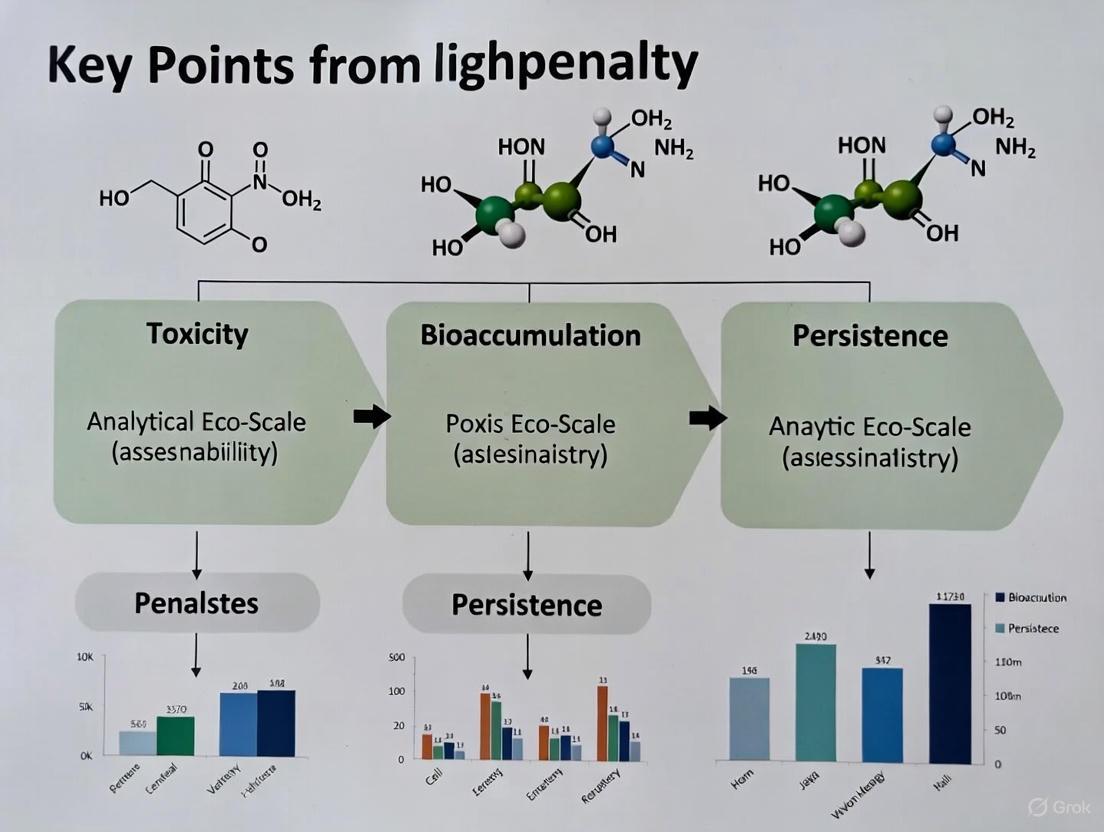
This article provides a comprehensive guide for researchers and drug development professionals on systematically addressing high penalty points in Analytical Eco-Scale assessments.
Strategic Guide to Minimizing Penalty Points in Analytical Eco-Scale for Greener Drug Development
Abstract
This article provides a comprehensive guide for researchers and drug development professionals on systematically addressing high penalty points in Analytical Eco-Scale assessments. Covering foundational principles to advanced optimization strategies, it explores practical methodologies for greener analytical procedures, troubleshooting common high-penalty scenarios, and validating improvements through established green chemistry metrics. By integrating modern techniques like microflow separations and selective sorbents, scientists can significantly enhance method environmental friendliness while maintaining analytical integrity, ultimately supporting more sustainable biomedical research practices.
Understanding Analytical Eco-Scale: Principles, Penalty Systems, and Green Chemistry Context
The Core Principles and Calculation Methodology of Analytical Eco-Scale
The Analytical Eco-Scale is a semi-quantitative tool designed to assess the greenness of analytical procedures [1] [2]. It was developed to address the need for a comprehensive, user-friendly metric that enables researchers to evaluate and compare the environmental impact of their analytical methods [3]. This tool aligns analytical chemistry with the principles of green chemistry by providing a clear framework to calculate the environmental footprint of laboratory processes, from sample preparation to final analysis [4].
The Analytical Eco-Scale operates on a straightforward principle: an ideal green analysis is assigned a base score of 100 points, and penalty points are subtracted for each element of the procedure that deviates from ideal green conditions [2] [3]. These penalties account for the use of hazardous reagents, excessive energy consumption, waste generation, and other factors that contribute to environmental and safety concerns [1]. The final score provides an immediate indication of a method's environmental performance, with higher scores representing greener analytical procedures [1].
Core Principles and Calculation Methodology
The Concept of an Ideal Green Analysis
The Analytical Eco-Scale methodology defines an "ideal green analysis" based on three fundamental conditions that must be simultaneously met [2]:
- Non-hazardous substances: The solvents or reagents used must not pose any health, environmental, or physical hazards.
- Minimal energy consumption: The energy used per sample should be less than 0.1 kWh.
- No waste generation: The analytical procedure should not produce any waste.
This ideal analysis serves as the benchmark against which all other methods are compared. In practice, few analytical methods fully meet all these criteria, particularly those requiring sample processing steps [2]. Direct analytical techniques without extensive sample preparation are most likely to approach this ideal [2].
Penalty Points System
The calculation of the Analytical Eco-Scale score follows a systematic approach where penalty points are deducted from the perfect score of 100. The penalties are categorized according to their environmental impact [1] [2]:
Eco-Scale Score = 100 - Total Penalty Points
Table 1: Analytical Eco-Scale Penalty Points Criteria
| Category | Parameter | Penalty Points | Remarks |
|---|---|---|---|
| Reagents | Hazardous reagents (> 0.1 kWh) | 1-20 | Points depend on quantity and hazard level (toxicity, flammability, etc.) |
| High reagent purity | 2 | Required for analysis | |
| Reagent packaging not recycled | 1 | ||
| Energy Use | Energy consumption > 0.1 kWh/sample | 1 | Per 0.1 kWh over the limit |
| Occupational Hazard | Risk of explosions, corrosion, etc. | 3 | Requires special precautions |
| Waste | Waste produced per sample | 1-5 | Points depend on quantity and hazard |
The penalty points for hazardous reagents are assigned based on both the amount used and the degree of hazard, with more dangerous substances receiving higher penalties [1]. Similarly, waste penalties consider both volume and toxicity [2].
Interpretation of Scores
The final Analytical Eco-Scale score provides a clear evaluation of a method's greenness [1]:
- > 75 points: Represents an excellent green analysis.
- 50 - 75 points: Represents an acceptable green analysis.
- < 50 points: Represents an inadequate green analysis that requires significant optimization to improve its environmental profile.
Workflow for Assessing an Analytical Method
The following diagram illustrates the logical workflow for applying the Analytical Eco-Scale to an analytical procedure:
Troubleshooting High Penalty Points: FAQs
FAQ 1: How can I reduce penalty points from hazardous reagents?
Q: My analytical method uses chlorinated solvents which incur high penalty points. What strategies can I employ to reduce these penalties?
A: Hazardous reagents, particularly toxic solvents, are a major source of penalty points. Implement these strategies to reduce their impact [1] [4]:
Solvent substitution: Replace hazardous solvents with their greener alternatives. Table 2: Green Solvent Alternatives
Hazardous Solvent Greener Alternative Relative Penalty Reduction Chloroform, Dichloromethane Ethyl acetate, Cyclopentyl methyl ether High n-Hexane Heptane Moderate Benzene Toluene Moderate to High Diethyl ether 2-Methyltetrahydrofuran Moderate - Miniaturization: Scale down the analytical procedure to reduce solvent volumes substantially [4].
- Automation: Implement automated systems that enable more precise reagent handling and reduced volumes [4].
FAQ 2: What are the most effective ways to minimize waste-related penalties?
Q: My HPLC method generates significant waste, resulting in substantial penalty points. How can I address this issue?
A: Waste generation is a critical factor in the Eco-Scale assessment. Consider these approaches [1] [4]:
- Method miniaturization: Transition to micro-extraction techniques or smaller column dimensions in chromatography to drastically reduce waste volumes.
- Waste treatment: Implement on-line decontamination processes such as recycling, degradation, or passivation of wastes before disposal [1].
- Alternative techniques: Explore direct analysis methods (e.g., spectroscopic techniques) that eliminate or reduce the need for solvents and thus waste generation [2].
FAQ 3: How can I optimize energy consumption in my analytical method?
Q: My extraction procedure requires prolonged heating, resulting in energy penalties. What modifications can help?
A: Energy-intensive processes contribute significantly to penalty points. These solutions can help [1] [4]:
- Alternative energy sources: Implement unconventional activation techniques like microwave-assisted extraction or ultrasound extraction, which can reduce both extraction time and temperature [5].
- Room temperature operations: Where possible, redesign methods to operate at ambient temperature rather than requiring heating or cooling [5].
- Process integration: Combine analytical steps to reduce overall processing time and energy requirements [4].
FAQ 4: How do I properly account for reagent hazards in my calculation?
Q: I'm uncertain about how to assign accurate penalty points for the reagents in my method. What guidance exists?
A: Proper assessment of reagent hazards is fundamental to the Eco-Scale. Follow this systematic approach [1] [5]:
- Consult safety data sheets (SDS): Identify hazard pictograms (T, T+, F, F+, E, N) which correspond to specific penalty points as shown in Table 1.
- Consider quantities: Remember that penalty points are proportional to the amount used - always strive to minimize reagent quantities.
- Account for cumulative effects: If using multiple hazardous reagents, sum all individual penalties.
FAQ 5: What is considered an acceptable Eco-Scale score for publication?
Q: As I prepare my research for publication, what Eco-Scale score should I aim for to demonstrate adequate greenness?
A: While requirements vary between journals, these general guidelines apply [1]:
- > 75 points: Represents a leader in green analytical chemistry and is highly desirable.
- 50 - 75 points: Generally acceptable, but should include a discussion of potential improvements.
- < 50 points: Requires significant optimization or justification for using such an environmentally problematic method.
Always check specific journal guidelines, as the expectation for greenness evaluation in analytical chemistry publications is increasingly becoming standard practice.
Essential Research Reagent Solutions
Table 3: Green Alternative Reagents for Common Analytical Procedures
| Reagent/Material | Traditional Hazardous Equivalent | Function in Analysis | Green Advantage |
|---|---|---|---|
| Ethyl acetate | Chloroform, Dichloromethane | Extraction solvent | Lower toxicity, biodegradable |
| Cyclopentyl methyl ether | Diethyl ether, THF | Reaction medium, extraction | Higher boiling point, less prone to peroxides |
| Deep Eutectic Solvents (DES) | Organic solvents | Extraction medium | Biodegradable, low toxicity, renewable sources |
| Water (at elevated T) | Organic solvents | Extraction solvent | Non-toxic, non-flammable |
| Supercritical CO₂ | Organic solvents | Extraction solvent | Non-toxic, easily removed, tunable properties |
Frequently Asked Questions (FAQs)
Q1: My analytical method uses a hazardous organic solvent, leading to high penalty points. What is a greener alternative I can implement? A1: Aqueous Two-Phase Systems (ATPS) are an excellent environmentally friendly alternative to traditional organic solvents for liquid-liquid extraction [6]. These systems are formed by mixing two water-soluble components, such as polymer-polymer or polymer-salt combinations, and are renowned for their biocompatibility, cost-effectiveness, and reduced environmental hazard [6]. Using ATPS can significantly reduce your penalty points related to hazardous waste and safety.
Q2: I am trying to set up an ATPS, but the phases are not separating properly. What factors control phase formation? A2: Proper phase formation in an ATPS depends on the system's composition exceeding critical concentration thresholds, which can be understood using a phase diagram [6]. Key factors to check include:
- Concentration: Ensure the concentrations of your phase-forming components (e.g., polymer and salt) are above the binodal curve on the phase diagram. Systems below this curve will remain in a single, monophasic region [6].
- Tie-Line Length (TLL): A longer TLL indicates a greater difference in composition between the two phases, which promotes clearer separation. If phases are poorly formed, you may need to adjust your stock solution concentrations to increase the TLL [6].
- Temperature: While not always critical, temperature can influence the phase diagram and binodal curve location. Maintain a consistent temperature during system preparation as specified in your protocol [6].
Q3: How can I ensure my research figures and data visualizations are accessible and do not incur penalty points for clarity? A3: To ensure accessibility, you must use color palettes with sufficient contrast that are distinguishable to individuals with color vision deficiencies (CVD) [7].
- Use High-Contrast Colors: Select colors that differ in lightness and saturation. You can use a grayscale view of your figure to verify that the contrast is adequate [7].
- Test for Color Blindness: Utilize online tools like "Viz Palette" to simulate how your chosen color combinations appear to people with different types of CVD [7].
- Leverage Color Codes: Use precise HEX or RGB codes to maintain consistency across all your visuals and graphing software [7].
Troubleshooting Guides
Issue 1: Low Yield and Poor Extraction Efficiency in ATPS
Problem: The target analyte is not effectively partitioning into the desired phase, leading to low recovery and yield-related penalty points.
| Possible Cause | Diagnostic Steps | Corrective Action |
|---|---|---|
| Suboptimal System Chemistry | Check the distribution coefficient (K = Ct/Cb). If K is close to 1, partitioning is poor [6]. | Alter the type of polymer or salt used. Adjust the pH of the system to change the surface charge of your target molecule [6]. |
| Insufficient Phase Separation | Observe if the interface between phases is cloudy or ill-defined. | Ensure the system composition is firmly within the two-phase region of the phase diagram. Increase the Tie-Line Length (TLL) by adjusting component concentrations [6]. |
| Incorrect Phase Volume Ratio | Calculate the volume of the top and bottom phases. | Modify the initial composition to change the phase volume ratio, ensuring the target phase is large enough to accommodate the analyte [6]. |
Issue 2: High Penalty Points from Safety and Hazardous Waste
Problem: The experimental protocol relies on large volumes of toxic, corrosive, or environmentally damaging reagents.
| Possible Cause | Diagnostic Steps | Corrective Action |
|---|---|---|
| Use of Halogenated Organic Solvents | Review the solvent inventory in your extraction and purification steps. | Replace solvents like dichloromethane or chloroform with Aqueous Two-Phase Systems (ATPS) or other green solvents [6]. |
| Generation of Hazardous Waste | Quantify the waste generated per sample processed. | Switch to micro-ATPS or scale-down the extraction volume. Implement reagent recycling protocols where possible [6]. |
Issue 3: Poor Reproducibility and Technical Setup Failures
Problem: Experimental results cannot be replicated between different operators or batches, leading to questions about data validity.
| Possible Cause | Diagnostic Steps | Corrective Action |
|---|---|---|
| Uncontrolled Temperature | Log the ambient and incubation temperatures during the experiment. | Perform all critical steps, especially phase separation, in a temperature-controlled environment like an incubator or water bath [6]. |
| Vague Experimental Protocol | Review the methodology for ambiguous terms (e.g., "mix vigorously"). | Create a Standard Operating Procedure (SOP) with precise parameters: mixing speed (RPM), time, temperature, and centrifugation force (g). |
| Impure or Degraded Reagents | Check the certificate of analysis for polymers and salts. | Use high-purity reagents, prepare stock solutions fresh, or store them appropriately to prevent microbial growth or hydrolysis. |
Experimental Protocol: Implementing an Aqueous Two-Phase System (ATPS) for Greener Extraction
Objective: To replace a traditional organic solvent-based liquid-liquid extraction with an Aqueous Two-Phase System for the separation and purification of a target biomolecule, thereby reducing eco-scale penalty points.
Principle: ATPS is formed when two water-soluble components, such as polyethylene glycol (PEG) and a salt (e.g., phosphate, citrate), are mixed above critical concentrations, resulting in two immiscible aqueous phases. Target molecules distribute between the phases based on affinity, surface properties, and system environment [6].
Materials and Reagents:
- Polyethylene glycol (PEG) of a specific molecular weight (e.g., PEG 4000, 6000, 8000)
- Salt (e.g., Potassium phosphate, Ammonium sulfate, Magnesium sulfate)
- Deionized water
- Target sample solution
- Centrifuge tubes
- pH meter and adjusters
- Analytical instrument for quantification
Methodology:
- Phase Diagram and Stock Solution Preparation:
- Refer to the scientific literature for the phase diagram of your chosen PEG-salt system [6].
- Prepare concentrated stock solutions of PEG (e.g., 40% w/w) and salt (e.g., 30% w/w) in deionized water.
System Construction:
- In a centrifuge tube, combine the stock solutions of PEG and salt at a ratio selected from the two-phase region of the phase diagram. A common starting point might be a final system with 15% PEG 8000 and 10% Potassium phosphate [6].
- Add your sample containing the target analyte.
- Adjust the total weight of the system with deionized water and adjust the pH as needed.
Phase Separation and Equilibrium:
- Vortex the mixture vigorously for 1-2 minutes to ensure thorough mixing.
- Allow the system to stand for 10-15 minutes for phase separation to occur. For faster separation, a low-speed centrifugation step (e.g., 2000-3000 × g for 5 minutes) can be applied.
- After separation, two clear phases with a distinct interface should be visible.
Sampling and Analysis:
- Carefully separate the top (PEG-rich) and bottom (salt-rich) phases using a pipette.
- Analyze the concentration of your target analyte in each phase using an appropriate analytical method (e.g., UV-Vis spectroscopy, HPLC).
- Calculate the distribution coefficient (K) using the formula: K = Ct / Cb, where Ct and Cb are the equilibrium concentrations of the target in the top and bottom phases, respectively [6].
The Scientist's Toolkit: Essential Research Reagent Solutions
| Reagent / Material | Function in Experimentation |
|---|---|
| Aqueous Two-Phase Systems (ATPS) | A green, biocompatible method for separating biomolecules, replacing hazardous organic solvents and reducing environmental penalty points [6]. |
| Polyethylene Glycol (PEG) | A common polymer used in polymer-salt and polymer-polymer ATPS to form the top, less polar phase [6]. |
| Potassium Phosphate | A common salt used in polymer-salt ATPS to form the bottom, more polar phase [6]. |
| Viz Palette Tool | An online resource to test color palette choices for data visualizations, ensuring they are accessible to audiences with color vision deficiencies [7]. |
| High-Contrast Color Palettes | Pre-selected sets of colors (with known HEX codes) that ensure legibility and accessibility in scientific figures, minimizing penalty points for presentation clarity [7]. |
Workflow and Relationship Diagrams
Diagram 1: A strategic workflow for diagnosing and mitigating high penalty points in analytical research.
Diagram 2: A detailed step-by-step workflow for conducting an ATPS experiment.
Positioning Eco-Scale within the Broader Green Analytical Chemistry Metrics Landscape
Green Analytical Chemistry (GAC) is a critical sub-discipline focused on minimizing the environmental footprint of analytical methods while maintaining analytical performance [3]. The field has evolved significantly since its emergence in 2000, driven by the need to reduce or eliminate hazardous solvents, reagents, and energy-intensive processes [4]. This transformation has necessitated the development of dedicated metric tools to assess and quantify the environmental sustainability of analytical procedures, as traditional green chemistry metrics like E-Factor and Atom Economy proved inadequate for analytical chemistry applications [4].
The landscape of GAC metrics has expanded from basic tools to comprehensive, multi-criteria assessment systems. These tools help researchers, scientists, and drug development professionals evaluate whether an analytical procedure can be considered "green" and identify areas for improvement [8]. The evolution began with foundational tools like the National Environmental Methods Index (NEMI) and has progressed to more sophisticated metrics including the Analytical Eco-Scale, Green Analytical Procedure Index (GAPI), and Analytical GREEnness (AGREE) [4]. Each tool offers unique advantages and approaches for evaluating environmental impact, with some providing simple pass/fail indicators and others offering detailed, quantitative assessments across multiple criteria.
The Analytical Eco-Scale: A Semi-Quantitative Assessment Tool
Fundamental Principles and Calculation Methodology
The Analytical Eco-Scale is a semi-quantitative assessment tool that provides a straightforward approach to evaluating the greenness of analytical methods [5] [3]. It operates on a penalty point system where an ideal analytical method starts with a base score of 100 points, and penalty points are subtracted for each non-ideal parameter related to environmental impact, safety, or health concerns [4].
The calculation follows this simple formula: Eco-Scale Score = 100 - Sum of Penalty Points
The penalty points are assigned across several key categories, including reagent toxicity, energy consumption, waste generation, and operator hazards [3]. The resulting score provides a clear indication of a method's environmental performance:
- >75 points: Excellent green analysis
- >50 points: Acceptable green analysis
- <50 points: Inadequate green analysis
This intuitive scoring system makes the Eco-Scale particularly accessible for laboratory practitioners who need to quickly assess and compare the environmental performance of their analytical methods.
Comprehensive Penalty Points Structure
Table 1: Analytical Eco-Scale Penalty Points Structure
| Parameter Category | Specific Issue | Penalty Points |
|---|---|---|
| Reagents | Toxic | 1-5 points per reagent |
| Corrosive | 1-5 points per reagent | |
| Flammable | 1-5 points per reagent | |
| Environmental hazard | 1-5 points per reagent | |
| Expensive reagents (>$10-50) | 3 points | |
| Very expensive reagents (>$50) | 5 points | |
| Energy Consumption | >0.1 kWh per sample | 1 point |
| >1.5 kWh per sample | 2 points | |
| Special energy requirements | 1-3 points | |
| Occupational Hazards | Carcinogenic, mutagenic, reprotoxic | 5 points each |
| Other hazards | 1-3 points each | |
| Waste | <1 mL per sample | 0 points |
| 1-10 mL per sample | 1 point | |
| >10 mL per sample | 2-3 points | |
| Hazardous waste treatment | Additional 0-3 points |
Comparative Analysis of GAC Metrics
The Analytical Eco-Scale occupies a distinct position within the broader ecosystem of GAC metrics. While it provides a valuable semi-quantitative approach, other tools offer complementary perspectives and assessment methodologies. Understanding how Eco-Scale compares with these tools is essential for researchers seeking to comprehensively evaluate their analytical methods.
Table 2: Comparison of Major Green Analytical Chemistry Assessment Tools
| Metric Tool | Assessment Approach | Key Parameters | Output Format | Strengths | Limitations |
|---|---|---|---|---|---|
| Analytical Eco-Scale | Semi-quantitative penalty system | Reagent toxicity, waste, energy, hazards | Numerical score (0-100) | Simple calculation, intuitive interpretation | Limited criteria coverage, subjective penalty assignment |
| NEMI | Binary pictogram | Persistence, bioaccumulation, toxicity, corrosiveness | Filled/unfilled quadrants | Simple visual representation | Binary assessment lacks granularity, limited criteria |
| GAPI | Qualitative pictogram | Entire analytical process from sampling to detection | Five-section colored pictogram | Comprehensive workflow coverage, visual identification of hotspots | No overall score, somewhat subjective color assignments |
| AGREE | Quantitative multi-criteria | All 12 SIGNIFICANCE principles | Numerical score (0-1) + circular pictogram | Comprehensive coverage, user-friendly software, customizable weights | Subjective weighting, limited pre-analytical phase coverage |
| AGREEprep | Quantitative assessment | Sample preparation-specific parameters | Numerical score (0-1) + pictogram | Focuses on often-overlooked sample preparation stage | Must be used with other tools for full method assessment |
Strategic Positioning of Analytical Eco-Scale
The Analytical Eco-Scale serves as a valuable intermediary tool in the GAC metrics landscape, positioned between basic binary assessments like NEMI and comprehensive multi-criteria tools like AGREE [9] [4]. Its primary advantage lies in its accessibility and straightforward implementation, requiring minimal training or specialized software. This makes it particularly suitable for preliminary assessments, educational contexts, and laboratories beginning their sustainability journey.
However, the tool's relative simplicity also presents limitations. The penalty point system relies on expert judgment and may introduce subjectivity in assessments [4]. Additionally, the fixed penalty structure offers less flexibility compared to weighted systems like AGREE, which allows users to adjust criteria importance based on specific analytical contexts or priorities [10]. Despite these limitations, the Analytical Eco-Scale remains widely adopted due to its practical implementation and immediate interpretability.
Troubleshooting High Penalty Points in Eco-Scale Assessments
Frequently Asked Questions
Q1: Our analytical method consistently scores below 50 on the Eco-Scale assessment. What are the most common factors contributing to low scores, and how can we address them?
High penalty points typically accumulate from three main areas: hazardous reagent usage, excessive energy consumption, and significant waste generation. To address these issues, consider solvent substitution using tools like CHEM21 selection guide, implement miniaturization strategies to reduce reagent volumes, and explore energy-efficient alternatives such as room-temperature operations or microwave-assisted extraction. Additionally, evaluate waste treatment options and consider direct analysis techniques to eliminate sample preparation steps [5] [3].
Q2: How can we reduce penalty points associated with toxic reagents without compromising analytical performance?
Several strategies can effectively address toxic reagent issues: First, apply the principles of green chemistry to substitute hazardous reagents with safer alternatives. Second, employ microextraction techniques like solid-phase microextraction (SPME) or thin-film microextraction (TFME) to minimize solvent volumes. Third, utilize computational models to predict solvent toxicity and environmental impact before experimental implementation. Finally, consider using natural reagents where analytically feasible [9] [3].
Q3: What are the most effective approaches to minimize waste-related penalty points?
Waste reduction can be achieved through multiple approaches: Implement miniaturization strategies to scale down analytical volumes. Explore solvent recovery and recycling systems for frequently used reagents. Employ automated systems with precise liquid handling to reduce excess consumption. Design methods that generate benign waste streams, and consider direct analytical techniques that eliminate extraction and pretreatment steps [5] [4].
Q4: How does the Analytical Eco-Scale compare to other metrics when evaluating sample preparation methods?
For sample preparation evaluation, the Analytical Eco-Scale provides a reasonable assessment but can be usefully complemented with specialized tools like AGREEprep, which is specifically designed for sample preparation stages. The combination provides both a comprehensive overview (Eco-Scale) and detailed preparation-specific insights (AGREEprep) [4].
Experimental Protocols for Improving Eco-Scale Scores
Protocol 1: Solvent Substitution Methodology
Objective: Replace hazardous solvents with greener alternatives while maintaining analytical performance.
Materials: CHEM21 solvent selection guide, traditional solvent, potential alternative solvents, analytical standards.
Procedure:
- Identify hazardous solvents receiving high penalty points in current method
- Consult CHEM21 guide to identify potential alternatives with improved safety profiles
- Prepare calibration standards using both traditional and alternative solvents
- Compare analytical performance parameters (sensitivity, precision, accuracy)
- Validate method performance with actual samples
- Calculate new Eco-Scale score with alternative solvent
Expected Outcome: Reduced reagent-related penalty points while maintaining analytical validity.
Protocol 2: Miniaturization Implementation Strategy
Objective: Reduce reagent consumption and waste generation through scale reduction.
Materials: Micro-extraction devices (SPME fibers, TFME devices), reduced-volume containers, precision liquid handling systems.
Procedure:
- Establish baseline method performance with conventional volumes
- Systematically reduce sample and reagent volumes in incremental steps
- Monitor analytical performance at each reduction stage
- Identify minimum volumes maintaining required performance
- Implement micro-extraction techniques where applicable
- Validate method robustness at minimized scale
Expected Outcome: Significant reduction in waste-related penalty points and reagent consumption.
Complementary Assessment Approaches
Research Reagent Solutions for Green Analytical Chemistry
Table 3: Essential Reagents and Materials for Green Analytical Chemistry
| Reagent/Material | Function | Green Alternative | Environmental Benefit |
|---|---|---|---|
| Organic Solvents | Extraction, separation, mobile phases | Bio-based solvents, water, supercritical CO2 | Reduced toxicity, biodegradability, renewable sourcing |
| Sorbents | Sample preparation, extraction | Natural sorbents, biopolymers, renewable materials | Reduced synthetic material use, biodegradability |
| Derivatization Agents | Analyte modification for detection | Less hazardous alternatives, enzyme-assisted derivatization | Reduced toxicity, milder reaction conditions |
| Catalysts | Reaction acceleration | Biocatalysts, reusable heterogeneous catalysts | Reduced metal consumption, reusability |
| Natural Reagents | Various analytical functions | Plant-based extracts, natural products | Renewable sourcing, biodegradability |
Integrated Assessment Workflow
GAC Assessment Workflow
The Analytical Eco-Scale represents a pivotal development in the evolution of green analytical chemistry metrics, serving as an accessible, semi-quantitative tool that bridges simple binary assessments and complex multi-criteria evaluations. While it possesses limitations in comprehensiveness and potential subjectivity, its straightforward implementation and intuitive scoring system make it particularly valuable for preliminary assessments, educational purposes, and laboratories initiating sustainability programs.
For researchers addressing high penalty points in Eco-Scale assessments, a systematic approach focusing on reagent substitution, waste reduction, and energy optimization provides the most effective pathway to improved scores. Furthermore, combining Eco-Scale with complementary tools like AGREE, GAPI, or AGREEprep enables a more comprehensive evaluation that leverages the strengths of each metric while mitigating their individual limitations.
As green analytical chemistry continues to evolve, the strategic application of these assessment tools will play an increasingly critical role in guiding the development of environmentally responsible analytical methods that maintain scientific rigor while minimizing ecological impact.
Troubleshooting Guides
Guide 1: Addressing High Penalty Points in Analytical Eco-Scale Assessments
Problem: My analytical method is receiving high penalty points on the Analytical Eco-Scale, making it difficult to achieve an "acceptable" score (above 50).
Explanation: The Analytical Eco-Scale is a semi-quantitative tool that assesses organic preparations based on yield, cost, safety, technical setup, temperature/time, and purification steps. Penalty points are deducted from an ideal score of 100, with higher penalties indicating less green characteristics [5].
Solution Steps:
Identify Major Penalty Sources: Calculate your current penalty points across all six categories [5]:
- Yield: (100 - %yield)/2
- Reagent cost
- Safety hazards
- Technical setup complexity
- Temperature and time requirements
- Workup and purification complexity
Prioritize High-Impact Changes: Focus on categories with the highest penalties first, typically safety hazards and complex purifications.
Implement Mitigation Strategies:
- Replace toxic reagents (T, T+, F, F+, E, N) with safer alternatives [5]
- Simplify purification: avoid classical chromatography (10 penalty points) where possible [5]
- Optimize reaction conditions to reduce extreme temperatures and long durations [5]
- Consider reagent costs: expensive reagents (>$10) incur 3-5 penalty points [5]
Prevention Tips: Incorporate green chemistry principles early in method development. Use the AGREE metric tool for comprehensive assessment based on all 12 principles of green analytical chemistry [10].
Guide 2: Selecting Appropriate Greenness Assessment Tools
Problem: I'm unsure which greenness assessment tool is most appropriate for my analytical method, leading to inconsistent or misleading results.
Explanation: Different metric tools evaluate different aspects of greenness, with varying focuses on environmental impact, practical effectiveness, and analytical performance [11].
Solution Steps:
Define Your Assessment Goals:
Match Tool to Application Context:
Ensure Proper Tool Application:
- Follow each tool's specific calculation methodology
- Use standardized units and data collection methods
- Apply consistent weighting factors where applicable
Prevention Tips: Consult recent comparative studies before selecting a tool. Consider using multiple complementary tools for a more comprehensive assessment [11].
Frequently Asked Questions (FAQs)
Q1: What is the difference between a baseline assessment and benchmarking in green chemistry?
A baseline assessment establishes your current environmental impact profile, while benchmarking compares this profile against ideal standards, industry averages, or best practices [12] [13]. The baseline is your starting point measurement, and benchmarking contextualizes this measurement against reference points to identify improvement opportunities [14].
Q2: How can I establish a credible baseline for life cycle assessment in pharmaceutical development?
For credible LCA baselines [14]:
- Use carbon intensity (kgCO2e/m²) for standardized comparisons
- Reference established databases like Built Environment Carbon Database (BECD) or Carbon Heroes Benchmark
- Ensure consistency in system boundaries and assessment methods
- Account for all life cycle stages, including often-overlooked elements like interiors (which can contribute up to 11% of carbon intensity) [14]
Q3: My analytical method requires hazardous reagents for sensitivity. How can I improve its greenness score without compromising performance?
Consider these approaches [11] [10]:
- Apply microscale or miniaturized techniques to reduce reagent volumes
- Implement automated or on-line analysis to contain hazards
- Explore alternative detection techniques that require less hazardous reagents
- Use the White Analytical Chemistry (WAC) approach to balance greenness with practical effectiveness [11]
Q4: What are the most common pitfalls in claiming carbon reduction savings, and how can I avoid them?
Common pitfalls include [14]:
- Setting unrealistic baselines that overstate reductions
- Using inconsistent assessment tools across project phases
- Neglecting significant carbon contributors like interior elements
- Failing to account for regional standards and code requirements
Solution: Use standardized assessment frameworks, document all assumptions, verify baseline realism against regional benchmarks, and maintain methodological consistency [14].
Quantitative Data Reference Tables
| Parameter | Specific Condition | Penalty Points |
|---|---|---|
| Yield | Based on percentage | (100 - %yield)/2 |
| Price of Reagents | Inexpensive (< $10) | 0 |
| Expensive ($10-$50) | 3 | |
| Very expensive (> $50) | 5 | |
| Safety Hazards | N (dangerous for environment) | 5 |
| T (toxic) | 5 | |
| F (highly flammable) | 5 | |
| E (explosive) | 10 | |
| T+ (extremely toxic) | 10 | |
| F+ (extremely flammable) | 10 | |
| Technical Setup | Common setup | 0 |
| Instruments for controlled addition | 1 | |
| Unconventional activation techniques | 2 | |
| Pressure equipment (> 1 atm) | 3 | |
| Additional special glassware | 1 | |
| (Inert) gas atmosphere | 1 | |
| Glove box | 3 | |
| Temperature/Time | Room temperature, < 1 h | 0 |
| Room temperature, < 24 h | 1 | |
| Heating, < 1 h | 2 | |
| Heating, > 1 h | 3 | |
| Cooling to 0°C | 4 | |
| Cooling, < 0°C | 5 | |
| Workup & Purification | None | 0 |
| Simple filtration | 0 | |
| Removal of solvent (bp < 150°C) | 0 | |
| Crystallization and filtration | 1 | |
| Removal of solvent (bp > 150°C) | 2 | |
| Solid phase extraction | 2 | |
| Distillation | 3 | |
| Sublimation | 3 | |
| Liquid-liquid extraction | 3 | |
| Classical chromatography | 10 |
| Tool | Year Developed | Primary Focus | Output Type | Key Advantages |
|---|---|---|---|---|
| NEMI | 2007 | Basic greenness criteria | Pictogram | Simple, qualitative |
| Analytical Eco-Scale | 2012 | Penalty-based assessment | Numerical score | Semi-quantitative, user-friendly |
| GAPI | 2018 | Comprehensive procedure assessment | Pictogram | Evaluates entire analytical process |
| AGREE | 2020 | 12 GAC principles | Pictogram/Score | Comprehensive, flexible weighting |
| BAGI | 2023 | Practical effectiveness | Pictogram/Score | Focuses on practicality and productivity |
| RGB Model | 2019 | Performance, greenness, practicality | Color combination | Balances multiple aspects |
Experimental Protocols
Protocol 1: Conducting a Comprehensive Analytical Method Greenness Assessment
Purpose: To systematically evaluate the greenness of an analytical method using multiple metric tools.
Materials:
- Method details (reagents, quantities, conditions, instrumentation)
- Safety Data Sheets for all chemicals
- AGREE software (available at: https://mostwiedzy.pl/AGREE)
- Analytical Eco-Scale worksheet
Procedure:
Data Collection Phase:
- Document all reagents, solvents, and materials with exact quantities
- Record energy consumption (temperature, duration, instrumentation power needs)
- Note waste generation amounts and characteristics
- Document all procedural steps from sample preparation to final analysis
AGREE Assessment:
- Input data for all 12 GAC principles into AGREE software
- Assign appropriate weights to each principle based on method priorities
- Generate and interpret the clock-style pictogram output
- Record overall score (0-1 scale) and principle-specific performance [10]
Analytical Eco-Scale Assessment:
- Calculate penalty points for each of the six categories [5]
- Sum all penalty points and subtract from 100
- Classify result: >75 acceptable, >50 excellent, <50 inadequate
Comparative Analysis:
- Identify consistent greenness weaknesses across tools
- Prioritize improvement areas based on highest impact opportunities
- Document baseline scores for future improvement tracking
Validation: Repeat assessments after method modifications to quantify greenness improvements.
Visualization Diagrams
Research Reagent Solutions
Table 3: Green Chemistry Reagent Alternatives
| Reagent Category | Conventional Hazardous Examples | Greener Alternatives | Function |
|---|---|---|---|
| Solvents | Chloroform, Dichloromethane | Ethyl acetate, Cyclopentyl methyl ether | Extraction, reaction medium |
| Catalysts | Heavy metal catalysts | Biocatalysts, organocatalysts | Reaction acceleration |
| Oxidizing Agents | Chromium trioxide, Perchlorates | Hydrogen peroxide, Oxygen | Oxidation reactions |
| Reducing Agents | Lithium aluminum hydride, Borane | Sodium borohydride, Catalytic hydrogenation | Reduction reactions |
| Derivatization Agents | Halogenated reagents | Sustainable alternatives from renewable sources | Analytical detection enhancement |
Practical Strategies for High-Penalty Area Reduction in Analytical Methods
Troubleshooting Guides & FAQs
This technical support center provides practical solutions for common challenges encountered when implementing green liquid chromatography (LC) techniques aimed at reducing solvent consumption and waste. These guides are designed to help researchers minimize the environmental impact of their analytical methods, directly addressing key factors that contribute to high penalty points in Analytical Eco-Scale Assessment (ESA) [15].
Troubleshooting Common Issues in Green LC Methods
The table below summarizes frequent problems, their likely causes, and solutions focused on maintaining analytical performance while upholding green principles.
| Problem & Symptom | Possible Cause | Solution | Eco-Scale Impact |
|---|---|---|---|
| Broad Peaks [16] [17] | - System not equilibrated.- Injection solvent too strong.- Extra-column volume too high. | - Equilibrate column with 10+ volumes of mobile phase [16].- Ensure injection solvent is same/weaker strength than mobile phase [16] [17].- Reduce diameter/length of connecting tubing [16]. | Reduces waste from repeated analyses. |
| Tailing Peaks [16] [17] | - Secondary interactions with active sites on stationary phase.- Column overload (mass or volume). | - Reduce injection volume or sample concentration [16] [17].- Use a more inert stationary phase (e.g., end-capped silica) [17]. | Improves efficiency, reducing solvent use per analysis. |
| Varying Retention Times [16] [17] | - Mobile phase composition or pH fluctuations.- Temperature fluctuations.- Pump not mixing solvents properly. | - Use a thermostatically controlled column oven [16].- Verify mobile phase preparation and pump performance [17].- Buffer the mobile phase to control retention of ionizable compounds [16]. | Ensures method robustness, minimizing wasted reagents and repeated runs. |
| Pressure Spikes [17] | - Blockage in system (inlet frit, guard column, tubing).- Use of overly viscous mobile phase. | - Disconnect column to isolate location of blockage; reverse-flush if permitted [17].- Maintain in-line filters and guard columns [17]. | Preicates column failure, reducing solid waste. |
| Ghost Peaks [16] [17] | - Carryover from prior injections.- Contaminants in mobile phase or sample vial.- Column bleed. | - Clean autosampler, change or clean injection needle/loop [17].- Run blank injections to identify source [17].- Use fresh, high-purity solvents and clean equipment [16]. | Reduces hazardous solvent use for extra washing and repeated runs. |
| Low Signal or No Peaks [16] | - Degraded sample.- Old detector lamp.- Damaged or blocked syringe. | - Inject a fresh sample [16].- Replace the lamp if used for >2000 hours [16].- Replace the syringe [16]. | Prevents waste of samples and solvents on faulty analyses. |
Frequently Asked Questions (FAQs)
Q1: How does switching to microflow LC specifically reduce the penalty points in an Analytical Eco-Scale Assessment?
The Analytical Eco-Scale assigns penalty points for hazardous reagents, energy consumption, and waste generation [15]. Microflow LC (e.g., using columns with internal diameters below 3 mm) directly minimizes these factors. By reducing the column diameter from 4.6 mm to 3.0 mm, the flow rate can be decreased by a factor of 0.43, cutting solvent consumption and waste generation by 57% [15]. This drastically reduces penalty points for solvent hazard and waste, potentially moving your method into an "excellent green" category (score >75) [15].
Q2: What are the most effective green solvents to replace acetonitrile in reversed-phase HPLC, and what are their trade-offs?
Replacing acetonitrile with greener alternatives is a highly effective strategy. Ethanol is a common replacement due to its favorable green profile [15] [18]. However, trade-offs include higher viscosity (which can lead to increased backpressure) and higher UV cutoff, which may affect low-wavelength detection [18]. Another option is subcritical water or modified water-ethanol mixtures, which can eliminate organic solvent use entirely in some applications [18]. Method re-validation is crucial when substituting solvents to ensure separation efficiency and detection sensitivity are maintained.
Q3: My peaks are tailing after switching to a narrower-bore column. What is the most likely cause?
Peak tailing when moving to a microflow system is often related to extra-column volume [16]. The connecting tubing, injector, and detector flow cell in a standard HPLC system can be a significant source of band broadening when the column volume is drastically reduced. To resolve this:
- Reduce the diameter and length of all connecting tubing [16].
- Use a flow cell with a smaller internal volume designed for microflow applications [16].
- Ensure the injection volume is appropriately scaled for the smaller column [17].
Q4: How can I systematically differentiate between a column problem and an instrument problem?
Follow a structured, step-by-step approach to isolate the issue [17]:
- Define the problem: Note what has changed (peak shape, retention time, pressure) [17].
- Substitute the column: Replace the current column with a new, known-good column of the same type. If the problem is resolved, the original column was the cause.
- If the problem persists without any column, or with a "dummy" column in place, the issue is likely with the instrument hardware (e.g., injector, detector, or tubing) [17].
- Run a system suitability test or a standard sample under known good conditions to compare performance [17].
Research Reagent Solutions for Green LC
The table below lists key materials for developing sustainable chromatographic methods.
| Item | Function | Green Chemistry Rationale |
|---|---|---|
| Microflow LC Column (e.g., 1-2 mm i.d.) | Chromatic separation with drastically reduced mobile phase flow rates. | Reduces solvent consumption and waste generation by up to 90% compared to standard 4.6 mm columns [15]. |
| Ethanol (HPLC Grade) | Replacement for acetonitrile in reversed-phase mobile phases. | Less hazardous, biodegradable, and derived from renewable resources, reducing the penalty for reagent toxicity [15] [18]. |
| Guard Column/In-Line Filter | Protects the analytical column from particulates and contaminants. | Extends the lifetime of the expensive analytical column, reducing solid waste [16] [17]. |
| Inert Stationary Phase (e.g., high-purity silica, hybrid) | Minimizes secondary interactions with analytes, reducing peak tailing. | Improves peak shape and method robustness, preventing repeated analyses and solvent waste [17]. |
Experimental Protocol: Transitioning a Method from Conventional HPLC to Microflow LC
This protocol provides a step-by-step guide for migrating an existing method to a microflow platform to reduce solvent consumption.
1. Instrument Setup:
- Column: Select a microflow column (e.g., 1.0 mm or 2.1 mm i.d.) with the same stationary phase chemistry as your original method (e.g., C18).
- System: Ensure your LC system is equipped with:
- A binary pump capable of delivering precise, low flow rates (10-200 µL/min).
- An autosampler configured for low-dispersion, small-volume injections.
- A detector with a low-volume flow cell (e.g., <1 µL) to avoid extra-column band broadening.
- Tubing: Use the shortest possible length of narrow-bore tubing (e.g., 0.005" i.d.) throughout the system.
2. Method Translation:
- Flow Rate: Scale the flow rate from your conventional method (e.g., 1.0 mL/min on a 4.6 mm i.d. column) based on the square of the column radius:
Flow_new = Flow_old × (r_new² / r_old²). For example, translating from a 4.6 mm to a 2.1 mm column:Flow_new = 1.0 mL/min × (1.05² / 2.3²) ≈ 0.21 mL/min. - Injection Volume: Scale the injection volume proportionally to the column volume.
Inj_vol_new = Inj_vol_old × (r_new² × L_new) / (r_old² × L_old). If the column length is unchanged, this simplifies to the square of the radius ratio. - Gradient: Keep the gradient time segments identical. The system dwell volume (the volume between the mixer and the column head) may become more significant; adjust the initial isocratic hold if necessary to maintain reproducibility [16] [17].
3. Optimization and Validation:
- After the initial translation, fine-tuning of the gradient profile or mobile phase strength may be required to achieve optimal separation.
- Fully validate the translated method according to ICH guidelines to ensure performance (precision, accuracy, sensitivity, linearity) is equivalent or superior to the original method.
Workflow and Decision Pathways
Pathway for Improving Analytical Eco-Scale Score
Technical Support Center
Troubleshooting Guides
This guide addresses common challenges encountered when replacing traditional ion-pairing reagents with safer alternatives in HPLC methods.
Problem 1: Poor Retention of Ionic Analytes after Removing Ion-Pairing Reagents
- Symptoms: Charged analytes elute too quickly, often near the void volume, with little to no separation. Peak shape may be poor.
- Root Cause: Traditional ion-pairing reagents (e.g., alkylsulfonates, tetraalkylammonium salts) mask the charge of ionic analytes, increasing their retention on reversed-phase columns. Removing them exposes the analyte's charge, making it too hydrophilic for the stationary phase [19].
- Solutions:
- Adjust Mobile Phase pH: Modify the pH to suppress the ionization of the analyte. For acids, use a low pH buffer; for bases, use a high pH buffer. This renders the molecule neutral and more retainable [20].
- Use a Different Stationary Phase: Switch to a column designed for polar or ionic compounds, such as:
- Polar-embedded phases (e.g., with amide or ether groups).
- Mixed-mode phases that combine reversed-phase and ion-exchange properties.
- Hydrophilic Interaction Liquid Chromatography (HILIC) columns [21].
- Employ Alternative Green Additives: Consider using low concentrations of less hazardous additives that can modulate selectivity, such as ammonium hydroxide or ammonium bicarbonate, which are more volatile and MS-compatible [19].
Problem 2: Peak Tailing and Poor Efficiency with Basic Compounds
- Symptoms: Asymmetric peaks, often with severe tailing, leading to inaccurate integration and poor resolution.
- Root Cause: Interaction of basic analytes with residual acidic silanol groups on the silica-based stationary phase. Ion-pairing reagents previously mitigated this by blocking these sites [21].
- Solutions:
- Use High-Purity Silica Columns: Switch to Type B (high-purity silica) columns, which have significantly fewer metal impurities and acidic silanol groups [21].
- Optimize Mobile Phase pH: Ensure the pH is at least 1.0 unit above or below the analyte's pKa to ensure it is in a single, non-ionic state [20].
- Employ Competing Amines: Add a low concentration of a competing base like triethylamine (TEA) to the mobile phase to saturate the silanol sites. Note that TEA itself requires careful handling, so use minimal concentrations [21].
Problem 3: Unintentional Ion-Pairing Causing Retention Time Drift
- Symptoms: Gradual, continuous increase or decrease in retention times over a series of injections, making method reproducibility impossible.
- Root Cause: Trace amounts of surfactants or ion-pairing agents from the sample matrix (e.g., sodium dodecyl sulfate from a dissolution bath) are unintentionally and gradually building up on the column, acting as an in-situ ion-pairing reagent [22].
- Solutions:
- Improve Sample Cleanup: Implement a solid-phase extraction (SPE) or filtration step to remove the interfering surfactant from the sample before injection [22] [21].
- Column Flushing: Implement a rigorous and frequent column cleaning protocol with a strong eluent to remove the accumulated reagent [22].
- Intentional Saturation: If removal is not feasible, intentionally add a low, controlled concentration of the reagent to the mobile phase to achieve a stable equilibrium on the column. However, this contradicts the goal of eliminating hazardous reagents and should be a last resort [22].
Problem 4: Inadequate Detection Sensitivity with Green Solvents
- Symptoms: High baseline noise or loss of signal when switching to alternative solvents like ethanol.
- Root Cause: Many green solvents have a high UV cut-off, leading to significant background absorption at lower wavelengths [23] [24].
- Solutions:
- Optimize Detection Wavelength: Shift the detection wavelength to a value higher than the solvent's UV cut-off (e.g., > 210 nm for high-purity ethanol).
- Use High-Purity Solvents: Ensure the use of HPLC-grade or "UV-cut" grades of green solvents, which are specially purified to have lower UV absorbance [24].
- Consider Alternative Detection: For compounds with native fluorescence, switch to fluorescence detection (FLD). For universal detection, a charged aerosol detector (CAD) can be used, though it may cause some peak broadening [21].
Problem 5: Increased Backpressure and System Pressure Fluctuations
- Symptoms: System pressure is higher than expected or shows periodic fluctuations.
- Root Cause: Many green alternative solvents, such as ethanol and glycerol-water mixtures, have a higher viscosity than acetonitrile or methanol. This increases system backpressure. Inadequate degassing can also cause bubbles and pressure instability [23].
- Solutions:
- Reduce Flow Rate: Slightly lower the mobile phase flow rate to bring the system pressure back within acceptable limits.
- Increase Column Temperature: Raising the column temperature reduces mobile phase viscosity, thereby reducing backpressure [19].
- Ensure Proper Degassing: Use vacuum filtration or sparging with inert gas to degas the mobile phase thoroughly, especially when using viscous solvents [20].
Frequently Asked Questions (FAQs)
Q1: Why is there a push to transition away from traditional ion-pairing reagents? Traditional ion-pairing reagents like trifluoroacetic acid (TFA) and alkylsulfonates are considered hazardous due to their toxicity, potential for bioaccumulation, and environmental persistence [23]. Replacing them with safer alternatives reduces the environmental and safety "penalty" in metrics like the Analytical Eco-Scale, aligning with Green Analytical Chemistry (GAC) principles [23] [24].
Q2: What are the primary green solvents considered for replacing acetonitrile and methanol? The most prominent green solvent is ethanol [23] [24]. It is bio-renewable, biodegradable, and less toxic. Superheated water is another powerful option, where water at elevated temperatures (75–180 °C) acts as a less polar eluent, sometimes eliminating the need for organic modifiers entirely [23] [24]. Other options include bio-based solvents like dimethyl carbonate and glycerol in specific applications [23].
Q3: Can I directly substitute ethanol for methanol or acetonitrile in my existing method? Not directly. Due to differences in viscosity, elution strength, and UV cut-off, a 1:1 substitution will change the chromatographic outcome. Method re-optimization is required, typically starting with a slightly lower percentage of ethanol (e.g., 5-10% less) than the original organic modifier and adjusting from there [23].
Q4: How does the "greenness" of a solvent get evaluated? Solvent selection guides from major pharmaceutical and chemical companies evaluate factors like safety (toxicity, flammability), health (carcinogenicity), environmental impact (persistence, bioaccumulation), and lifecycle considerations (renewable sourcing). Tools like the CHEM21 classification are commonly used [23].
Q5: My method is validated. Can I still make these changes? Any change to a validated method, including the mobile phase composition, requires re-validation to demonstrate that the new method is equally precise, accurate, and specific [24]. The extent of re-validation should follow the relevant pharmacopoeia or regulatory guidelines.
Experimental Protocols
Protocol 1: Systematic Scouting of Green Mobile Phases
Objective: To identify a suitable green mobile phase system for separating ionic analytes without traditional ion-pairing reagents.
Materials:
- HPLC system with DAD or equivalent detector
- C18 column (e.g., 150 x 4.6 mm, 5 µm) and/or a HILIC column
- Analytes of interest
- Chemicals: Ethanol (HPLC grade), Water (HPLC grade), Ammonium formate, Ammonium acetate, Formic acid, Ammonium hydroxide
Methodology:
- pH Scouting: Prepare a series of aqueous buffers (e.g., 10 mM) at different pH levels: 3.0 (formic acid), 5.0 (ammonium acetate), 7.0 (ammonium acetate), and 9.0 (ammonium bicarbonate). Keep the buffer concentration constant.
- Organic Modifier Scouting: Combine each buffer from step 1 with ethanol in a gradient run from 5% to 95% organic over 20 minutes.
- Column Scouting: Perform the pH and organic modifier scouting on at least two different column chemistries (e.g., a standard C18 and a polar-embedded C18).
- Analysis: Inject your analyte mixture under each condition. Evaluate chromatograms for retention, peak shape, and resolution.
Protocol 2: Method Translation from Conventional to Greener Micro-Flow HPLC
Objective: To reduce solvent consumption and waste by scaling down a conventional HPLC method to a micro-flow format.
Materials:
- Conventional HPLC system and a micro-flow capable HPLC system
- Conventional column (e.g., 150 x 4.6 mm) and a geometrically scaled micro-bore column (e.g., 150 x 1.0 mm)
- Mobile phase components
Methodology:
- Calculate Scaling Factor: Determine the scaling factor (F) based on the square of the column radius: F = (rmicro²) / (rconventional²). For 1.0 mm and 4.6 mm i.d. columns, F ≈ (0.5²)/(2.3²) ≈ 0.047.
- Adjust Flow Rate: Multiply the original flow rate by the scaling factor. E.g., 1.0 mL/min * 0.047 ≈ 0.047 mL/min for the micro-flow method.
- Adjust Injection Volume: Multiply the original injection volume by the scaling factor.
- Maintain Gradient Time: Keep the gradient time profile identical to the original method.
- Transfer and Run: Equilibrate the micro-flow system and column with the scaled method parameters. Inject the sample and compare the chromatographic profile (retention times, resolution) with the original method [23] [24].
Data Presentation
| Solvent | Viscosity (cP at 20°C) | UV Cut-off (nm) | CHEM21 Classification | Key Green Advantage | Key Consideration |
|---|---|---|---|---|---|
| Acetonitrile | 0.34 | 190 | Problematic | Strong eluent, low viscosity | Toxic, environmental impact |
| Methanol | 0.55 | 205 | Recommended | Strong eluent | Toxic, flammable |
| Ethanol | 1.08 | 210 | Recommended | Bio-based, low toxicity | High viscosity, high UV cut-off |
| Water | 1.00 | <190 | Recommended | Non-toxic, safe | Very high polarity, can cause stationary phase collapse |
| Acetone | 0.32 | 330 | Recommended | Strong eluent | Very high UV cut-off |
Table 2: Green Alternatives to Traditional Ion-Pairing Reagents and Their Applications
| Analyte Type | Traditional Reagent | Greener Alternative | Function | Recommended Starting Concentration |
|---|---|---|---|---|
| Acids (Oligonucleotides) | Trialkylamines | Ammonium Hydroxide | Volatile pH modifier | 5-20 mM |
| Bases (Peptides) | Trifluoroacetic Acid (TFA) | Formic Acid | Volatile pH modifier | 0.1% (v/v) |
| Inorganic Ions | Alkanesulfonates | Ammonium Bicarbonate | Volatile buffer, can modulate retention | 10-50 mM |
| Surfactants | Ion-pairing reagents | Micellar Liquid Chromatography (MLC) | Uses non-flammable, biodegradable surfactants as mobile phase | Varies with surfactant |
Visualization Diagrams
Diagram 1: Workflow for Transitioning to Safer Mobile Phases
Diagram 2: Ion-Pairing vs. pH Modification Separation Mechanism
The Scientist's Toolkit
Table 3: Essential Research Reagent Solutions for Greener HPLC Transition
| Item | Function/Description |
|---|---|
| Ethanol (HPLC Grade) | Primary green organic modifier for reversed-phase HPLC; bio-renewable and less toxic than acetonitrile or methanol [23] [24]. |
| Ammonium Formate | A volatile buffer salt for pH control in the mobile phase, ideal for LC-MS applications and a greener alternative to non-volatile buffers [20]. |
| Formic Acid | A volatile acid for mobile phase pH adjustment, used to protonate basic analytes and improve peak shape; less hazardous than TFA [20]. |
| Ammonium Hydroxide | A volatile base for mobile phase pH adjustment, used to deprotonate acidic analytes [19]. |
| Type B C18 Column | High-purity silica-based column with reduced acidic silanols, minimizing undesirable interactions with basic analytes and reducing the need for ion-pairing agents [21]. |
| HILIC Column | Stationary phase for separating polar and ionic compounds using a hydrophilic interaction mechanism, often with mobile phases high in acetonitrile or ethanol [21]. |
| 0.45 µm Nylon Filter | For removing particulate matter from mobile phases and samples, preventing column blockage and ensuring system longevity [20]. |
Technical Support Center
Frequently Asked Questions (FAQs)
Q1: What are the primary advantages of using multimodal chromatography (MMC) resins over classical single-mode resins?
MMC resins offer several key advantages: they provide higher selectivity and unique separation capabilities by facilitating multiple non-covalent interactions (electrostatic, hydrophobic, and hydrogen bonding) simultaneously [25]. This often results in a reduced number of purification steps, higher binding capacity, and improved purification resolution compared to single-mode resins [25].
Q2: Our current protein A affinity capture step is a bottleneck. What continuous capture technologies can increase productivity?
Implementing a multi-column chromatography (MCC) system, such as one operated in rapid cycling simulated moving bed (RC-BioSMB) mode, can significantly intensify your process [26]. One study demonstrated that using an MCC unit with five convective diffusive membrane adsorbers (MAs) increased process productivity by up to 5.3 times compared to hypothetical batch MA processes, while also reducing buffer consumption from 2.0 L g⁻¹ to 1.2 L g⁻¹ [26].
Q3: How can I improve the selectivity of a multimodal resin for my specific target protein?
Selectivity is significantly influenced by ligand design and operational parameters [25]. To improve it, consider:
- Ligand Properties: Evaluate functional groups, spacer length, and ligand flexibility [25].
- Fine-tuning Conditions: Adjust the pH, salt concentration, and other buffer modifiers to optimize the balance of multimodal interactions for your specific protein [25].
- Screening: Systematically screen different MMC resins and buffer conditions to find the optimal combination that exploits subtle differences in your target protein's surface characteristics versus impurities [25].
Q4: How does streamlining clarification and capture contribute to a greener Analytical Eco-Scale profile?
Integrated processes reduce the environmental footprint by lowering the consumption of buffers, raw materials, and water relative to the amount of product produced [26]. For example, the streamlined clarification and capture (S-CC) process mentioned reduced buffer consumption for the capture step by 40% [26]. This directly addresses high penalty points in Analytical Eco-Scale assessments related to high reagent and waste production [27].
Troubleshooting Guides
Problem 1: Low Product Yield During Capture Step
| Possible Cause | Diagnostic Steps | Recommended Solution |
|---|---|---|
| Overloading the column/membrane | Analyze breakthrough curves; check load density and volume against resin's dynamic binding capacity. | Reduce the load volume or dilute the feed; for continuous systems, optimize the column switching time in MCC systems to prevent product loss in the flow-through [26]. |
| Inefficient Elution | Measure product concentration in elution fractions and in strip solution. | Optimize elution buffer pH, ionic strength, or include modifiers to disrupt protein-ligand interactions more effectively. |
| Unrecognized Product Loss in Flow-through | Test flow-through for presence of target product. | Re-assess binding conditions (e.g., conductivity, pH); consider a resin with higher selectivity or different ligand chemistry for your product [25]. |
Problem 2: Poor Impurity Clearance (HCP or DNA)
| Possible Cause | Diagnostic Steps | Recommended Solution |
|---|---|---|
| Insufficient Orthogonality | Analyze which impurities are co-eluting. If HCP is the issue, use ELISA; for DNA, use qPCR. | Replace a classical resin with a multimodal resin that offers a different and orthogonal selectivity mechanism to your previous step [25]. |
| Non-specific Binding | Examine wash steps for impurity removal. | Incorporate a targeted wash step with specific pH, conductivity, or additives (e.g., arginine) to displace weakly bound impurities before elution [25]. |
| Overloading | Check if impurity levels increase with higher load. | Reduce load to stay within the resin's optimal binding capacity, ensuring impurities do not saturate binding sites meant for the target. |
Experimental Protocol: Integrated Clarification and Capture
Title: Streamlined Clarification and Capture (S-CC) for Monoclonal Antibody Purification [26]
Objective: To integrate primary clarification with a continuous capture step, reducing process time and buffer consumption while maintaining high yield and purity.
Methodology:
Clarification:
- Process mAb-containing cell broth using a fluidized bed centrifuge (FBC).
- Follow by filtration through interconnected depth and sterile filters.
- Collect the filtrate in a surge tank.
Continuous Capture:
- Use the surge tank feed for a Multi-Column Chromatography (MCC) unit equipped with protein A membrane adsorbers (MAs).
- Operate the MCC unit in Rapid Cycling Simulated Moving Bed (RC-BioSMB) mode.
- Implement a control strategy to adjust the loading flow rate of the MCC unit, compensating for variations in the filtrate stream.
Key Performance Data (from cited study [26]):
| Performance Metric | Result |
|---|---|
| Total Process Yield | 90% |
| HCP Removal | 2.1 LRV |
| DNA Removal | 2.9 LRV |
| Process Productivity | 4.2 g h⁻¹ |
| Buffer Consumption (Capture) | 1.2 L g⁻¹ |
Workflow Diagram
The Scientist's Toolkit: Research Reagent Solutions
| Reagent/Resin | Function & Application |
|---|---|
| Multimodal Chromatography (MMC) Resins | Stationary phases with ligands designed for multiple interaction modes (e.g., electrostatic, hydrophobic). Used for high-selectivity purification steps, often reducing the need for multiple single-mode chromatography steps [25]. |
| Protein A Membrane Adsorbers (MAs) | Convective diffusive membranes functionalized with Protein A ligand. Used in continuous capture steps for high throughput and productivity due to fast flow rates and predominant convective mass transfer [26]. |
| Salt-Tolerant Cation Exchangers | A class of MMC resins. Useful for binding antibodies under elevated conductivity conditions where traditional cation exchangers fail, offering unique selectivity and often removing the need for a buffer exchange step [25]. |
| Hydrophobic Charge Induction Chromatography (HCIC) Resins | A class of MMC resins. Employ pH-dependent desorption, which can be a milder elution method compared to high salt, potentially helping to maintain protein stability and aggregate removal [25]. |
Troubleshooting Guide: FAQs on Temperature and Reaction Time Penalties
FAQ 1: What are the most significant sources of penalty points related to temperature and time in the Analytical Eco-Scale? Within the Analytical Eco-Scale, penalty points are assigned for reagents, instruments, and energy consumption, which directly implicate temperature and reaction time. High penalty scores come from using extreme temperatures (e.g., very high or very low) for extended periods and from lengthy analytical procedures that consume significant energy [28]. Using hazardous chemicals to facilitate faster reactions at extreme temperatures can also incur substantial penalties [29] [28].
FAQ 2: How can I reduce the energy penalty from a method that requires a high-temperature reaction? To reduce this penalty, systematically optimize the reaction temperature and duration using experimental designs like Box-Behnken or fractional factorial designs to find the minimum effective temperature and shortest possible reaction time that still delivers the required analytical performance [29]. Furthermore, explore replacing energy-intensive techniques with greener alternatives [30].
FAQ 3: My analytical method is slow, leading to high energy use and waste. How can I make it faster without sacrificing quality? Implement the principles of Quality by Design (QbD) during method development. First, define your Analytical Target Profile (ATP). Then, use experimental designs to identify Critical Method Parameters (CMPs) and understand their impact on Critical Quality Attributes (CQAs). This allows you to optimize the method for speed (reduced run time) and greenness while maintaining robustness, for instance, by optimizing mobile phase composition and flow rate in chromatography [29].
FAQ 4: What tools can I use to holistically assess the greenness and whiteness of my optimized method? After optimization, you can evaluate your method using several green metrics tools. The Analytical Eco-Scale provides a total score (100 is ideal) by subtracting penalty points for hazardous chemicals, energy, and waste [29] [28]. The AGREE software evaluates your method against all 12 principles of Green Analytical Chemistry [30] [29]. For a balanced perspective that includes functionality, the Whiteness Assessment Criteria (WAC) can be used to balance greenness with analytical performance [30].
Experimental Protocol for Optimizing Temperature and Reaction Time
This detailed methodology is adapted from a green stability-indicating HPLC method development study [29].
1. Goal Definition (Analytical Target Profile - ATP): Define the goal of the analytical procedure. For example: "To develop a rapid, green, stability-indicating HPLC method for the concomitant determination of active pharmaceutical ingredients in the presence of their degradation products within four minutes."
2. Screening of Critical Method Parameters (CMPs) via Fractional Factorial Design (FFD):
- Objective: Identify which factors, including temperature and time-related parameters, significantly impact the Critical Quality Attributes (CQAs).
- Selected Factors: Column oven temperature, flow rate (impacts run time), mobile phase composition (pH, organic solvent ratio), and detection wavelength.
- Execution: Use software (e.g., Design Expert) to generate an FFD matrix. Execute the experiments and analyze the data to identify which factors have a statistically significant effect on your CQAs.
3. Optimization via Box-Behnken Design (BBD):
- Objective: Find the optimum conditions for the significant factors identified during screening.
- Selected Factors: The significant factors (e.g., temperature, flow rate) are now studied at three levels.
- Responses: Define responses that include both performance CQAs (e.g., resolution, peak symmetry) and greenness metrics (e.g., Ecoscale score, HPLC-EAT value).
- Execution: Use software to generate and analyze the BBD. The model will help predict the optimum conditions that deliver the desired analytical performance with the highest greenness score.
4. Validation and Greenness Assessment: Validate the optimized method as per ICH guidelines. Finally, calculate the greenness profile using tools like the Analytical Eco-Scale, AGREE, or ComplexGAPI to demonstrate the reduction in environmental impact [29] [28].
Optimization Workflow and Penalty Assessment
The following diagram illustrates the logical workflow for method optimization and its impact on reducing penalty points.
Quantitative Data on Analytical Eco-Scale Penalties
The table below summarizes key penalty points associated with temperature and energy use in the Analytical Eco-Scale. A higher total score (after subtracting penalties from 100) indicates a greener method [28].
| Penalty Category | Specific Parameter | Penalty Points | Optimization Strategy to Reduce Penalties |
|---|---|---|---|
| Reagents & Chemicals | Hazardous solvents (e.g., acetonitrile) | >1-5 points | Replace with eco-friendly alternatives (e.g., ethanol, isopropanol) [29]. |
| Energy Consumption | > 1.0 kWh per sample | 1 point | Use instruments with low energy profiles; shorten analysis time [28]. |
| Occupational Hazard | Use of corrosive, toxic, or endocrine-disrupting reagents | 1-3 points | Substitute hazardous chemicals; use automated systems to reduce exposure [29] [28]. |
| Waste | > 10 mL per sample | 1-3 points | Reduce sample preparation steps; minimize chromatographic run time [29]. |
Key Research Reagent Solutions for Green Analytical Chemistry
This table details essential materials and their functions for developing greener analytical methods, focusing on replacements for hazardous substances.
| Research Reagent | Function in Green Analytical Chemistry | Specific Application Example |
|---|---|---|
| Isopropanol | A less hazardous organic modifier for HPLC mobile phases [29]. | Used as a greener replacement for acetonitrile in the analysis of fluorescein and benoxinate [29]. |
| Ethanol | A biodegradable, less toxic solvent for extraction and chromatography [29]. | Available as an HPLC-grade solvent for preparing mobile phases and sample solutions [29]. |
| Potassium Dihydrogen Phosphate Buffer | A common, relatively benign buffer salt for adjusting mobile phase pH [29]. | Used with isopropanol in a green stability-indicating HPLC method to separate drugs from degradation products [29]. |
| Eclipse Plus C18 Column | A standard stationary phase for achieving efficient separations with eco-friendly mobile phases [29]. | Enabled rapid (4-minute) separation using a green mobile phase, reducing solvent consumption and waste [29]. |
| Design Expert Software | Software for implementing experimental designs (e.g., FFD, BBD) for systematic method optimization [29]. | Used to screen and optimize critical parameters like temperature and flow rate to minimize energy and time [29]. |
In pharmaceutical analysis, conventional High-Performance Liquid Chromatography (HPLC) methods often incur high penalty points on the Analytical Eco-Scale due to their significant environmental impact. These "high-penalty" methods typically involve large volumes of hazardous organic solvents, high energy consumption, and substantial waste generation, conflicting with the principles of Green Analytical Chemistry (GAC) [31] [32]. This case study examines the transformation of an HPLC method for analyzing metformin and bisoprolol—and their toxic impurities—from a high-penalty approach to an eco-friendly alternative using micellar liquid chromatography (MLC) [33].
Troubleshooting Guides
Troubleshooting Guide 1: Addressing High Penalty Points in Analytical Eco-Scale Assessment
Problem: Your analytical method scores below 75 on the Analytical Eco-Scale, indicating insufficient greenness.
| Symptom | Possible Cause | Solution |
|---|---|---|
| High penalty points for reagents | Use of hazardous solvents (acetonitrile, methanol) in mobile phase | Replace with safer alternatives like water, ethanol, or micellar solutions [33] |
| Substantial waste generation | High flow rates, long run times, large injection volumes | Method miniaturization, reduced column dimensions, shorter run times [32] |
| Excessive energy consumption | High column temperatures, inefficient instrumentation | Use ambient temperature, energy-efficient equipment [34] |
| Toxic impurities in analysis | Conventional methods require hazardous solvents for impurity separation | Implement micellar chromatography to separate impurities safely [33] |
Troubleshooting Guide 2: Common Issues in Green Method Transformation
Problem: Transitioning to greener methods compromises analytical performance.
| Symptom | Possible Cause | Solution |
|---|---|---|
| Poor resolution in green methods | Insufficient optimization of green mobile phase | Use design of experiments (DoE) for method optimization [31] |
| Long method development time | Traditional one-factor-at-a-time approach | Implement Analytical Quality by Design (AQbD) principles [31] |
| Inadequate detection limits | Reduced sensitivity with green solvents | Optimize detection parameters, consider alternative detectors [33] |
| Method validation failures | Insufficient method robustness | Apply White Analytical Chemistry principles to balance greenness and performance [31] |
Frequently Asked Questions
Q1: What defines a "high-penalty" method in Analytical Eco-Scale terms? A method scoring below 50 on the Analytical Eco-Scale is considered "high-penalty." Penalty points are assigned for hazardous reagents, energy consumption, and waste generation. The ideal green method scores 100, with points deducted for each deviation from eco-friendly practices [31] [33].
Q2: How can I reduce waste generation in my HPLC methods? Several strategies can minimize waste: reduce column dimensions (e.g., from 4.6 mm to 2.1 mm ID), shorten run times, apply micro-flow chromatography, and use solvent recycling systems. One study demonstrated a 90% reduction in solvent consumption through method miniaturization [34] [32].
Q3: Are there effective alternatives to acetonitrile in reversed-phase HPLC? Yes, several greener alternatives exist: ethanol-water mixtures, methanol-water mixtures (less hazardous than acetonitrile), and micellar mobile phases using surfactants like SDS. One successful transformation replaced acetonitrile with a micellar solution of 0.1M SDS with 10% isopropanol [33].
Q4: How do I validate that my greener method maintains analytical performance? Apply White Analytical Chemistry principles, which balance environmental safety (green), analytical performance (red), and practical productivity (blue). Use tools like the RGB model and Blue Applicability Grade Index (BAGI) to validate that your green method doesn't compromise performance [31] [33].
Q5: What greenness assessment tools are most comprehensive? Multiple tools offer different strengths: AGREE evaluates all 12 GAC principles with a radial chart; GAPI provides a visual pictogram of the entire workflow; Analytical Eco-Scale offers a simple numerical score; and BAGI assesses practical applicability. Using multiple tools provides the most complete assessment [32].
Experimental Protocols
Protocol 1: Transforming a Conventional HPLC Method to Micellar Liquid Chromatography
Background: This protocol details the transformation of a conventional reversed-phase HPLC method to a greener micellar liquid chromatography (MLC) method for the analysis of metformin, bisoprolol, and their toxic impurities (melamine and cyanoguanidine) [33].
Materials:
- HPLC system: Agilent 1100 series or equivalent with UV detector
- Column: Kinetex 1.7μ C18 100A (2.1 mm × 50 mm) or similar
- Chemicals: Sodium dodecyl sulfate (SDS), ortho-phosphoric acid, isopropanol, triethylamine
- Reference standards: Metformin, bisoprolol, melamine, cyanoguanidine
Procedure:
- Mobile Phase Preparation:
- Prepare 0.1M SDS solution in purified water
- Add 0.1% ortho-phosphoric acid
- Add 10% isopropanol as organic modifier
- Adjust pH to 5.0 using triethylamine
- Filter through 0.45μm membrane and degas
Chromatographic Conditions:
- Flow rate: 1.0 mL/min
- Column temperature: 25°C
- Detection wavelength: 230 nm
- Injection volume: 10 μL
- Isocratic elution
System Suitability:
- Ensure resolution between metformin and cyanoguanidine ≥2.0
- Verify tailing factor ≤2.0 for all peaks
- Confirm %RSD for peak areas ≤2.0%
Validation:
- Perform linearity studies (1-25 μg/mL for both drugs)
- Determine LOD and LOQ (0.92 μg/mL for metformin, 0.54 μg/mL for bisoprolol)
- Assess precision (intra-day and inter-day)
- Evaluate accuracy through recovery studies
Transformation Impact: This MLC method eliminated approximately 90% of organic solvent consumption compared to conventional HPLC methods, significantly reducing environmental impact and waste generation while maintaining analytical performance [33].
Protocol 2: Greenness Assessment Using Multiple Metrics
Background: This protocol provides a standardized approach to comprehensively evaluate the greenness of analytical methods using multiple assessment tools [31] [32] [33].
Materials:
- Complete method details (reagents, instrumentation, parameters)
- Safety Data Sheets for all chemicals
- AGREE, GAPI, and Analytical Eco-Scale calculators/software
Procedure:
- Analytical Eco-Scale Assessment:
- Start with base score of 100
- Deduct penalty points for hazardous reagents (type and amount)
- Deduct points for energy consumption (>1.0 kWh/sample)
- Deduct points for waste generation (>10 mL/sample)
- Classify: ≥75 (excellent greenness), 50-74 (acceptable greenness), <50 (insufficient greenness)
AGREE Metric Assessment:
- Input data for all 12 GAC principles
- Evaluate factors including directness of technique, sample preparation, reagent toxicity, energy consumption, and waste generation
- Generate radial chart with overall score (0-1)
- Higher scores indicate better greenness
GAPI Assessment:
- Evaluate five stages: sample collection, preservation, preparation, instrumentation, and final determination
- Assign color codes: green (low impact), yellow (medium impact), red (high impact)
- Generate visual pictogram for quick assessment
BAGI Assessment:
- Evaluate practical applicability across ten criteria
- Assess factors including throughput, cost, availability, and operational simplicity
- Generate "asteroid" pictogram with percentage score
Interpretation: Compare results across all metrics to identify specific areas for improvement and validate overall method greenness.
Experimental Workflow: Method Transformation
The following diagram illustrates the systematic workflow for transforming a high-penalty analytical method into a green alternative.
Research Reagent Solutions
Table: Green Alternatives for Common Analytical Reagents
| Conventional Reagent | Green Alternative | Function | Environmental Benefit |
|---|---|---|---|
| Acetonitrile | Micellar solutions (SDS) [33] | Mobile phase organic modifier | Reduces toxicity, waste, and cost |
| Acetonitrile | Ethanol-water mixtures [32] | Mobile phase | Biodegradable, less hazardous |
| Methanol | Isopropanol in micellar systems [33] | Organic modifier | Reduced toxicity in waste streams |
| Traditional columns (250mm) | Core-shell columns (50-100mm) [33] | Separation | Reduces solvent consumption and run time |
| Conventional sample prep | Direct injection in MLC [33] | Sample preparation | Eliminates extraction solvents |
| Acetonitrile for impurity analysis | Green aqueous mobile phases [33] | Impurity separation | Avoids hazardous solvent use |
Key Performance Indicators
Table: Quantitative Comparison: Conventional vs. Transformed Green Method [33]
| Parameter | Conventional HPLC | Transformed Green MLC | Improvement |
|---|---|---|---|
| Organic solvent consumption | 60-80% organic phase | 10% isopropanol in micellar system | 85-90% reduction |
| Hazardous waste generation | 500-1000 mL/day | 50-100 mL/day | 90% reduction |
| Energy consumption | High (column oven 30-40°C) | Low (ambient temperature) | 30-40% reduction |
| Analytical Eco-Scale score | ~50 (acceptable) | ~85 (excellent) | 70% improvement |
| Carbon footprint | High | Significantly reduced | Quantitative improvement |
| Analytical performance | Maintained | Maintained or improved | No compromise |
| Cost per analysis | $15-25 | $5-10 | 50-70% reduction |
Diagnosing and Remediating Common High-Penalty Scenarios in Analytical Procedures
Frequently Asked Questions
What is the Analytical Eco-Scale, and why is a high score important? The Analytical Eco-Scale is a semi-quantitative tool used to evaluate the environmental impact and practicality of analytical methods. A high score (closer to 100) represents an ideal, safe, economical, and eco-friendly method. Conducting a penalty point audit helps you identify factors that lower this score, enabling you to optimize your experiments for better green chemistry credentials [5].
My reaction has an excellent yield. Why did I still get a poor EcoScale score? A high yield is only one of six parameters evaluated by the EcoScale. Significant penalties in other areas, such as the use of expensive or hazardous reagents, complex technical setups, lengthy reaction times, or cumbersome purification processes, can drastically reduce the overall score, even for a high-yielding reaction [5].
How can I quickly identify the biggest contributor to my method's penalty points? The most effective way is to perform a systematic audit by listing every substance and process involved in your experiment. Then, consult the EcoScale penalty table to assign points to each item. The parameter with the largest cumulative penalty points is your biggest contributor. Often, waste generation from workup and purification or the safety profile of reagents are major culprits [5].
What is the single most common source of high penalties? The use of hazardous reagents carrying risk phrases like T+ (extremely toxic), T (toxic), E (explosive), or N (dangerous for the environment) incurs substantial penalties (5-10 points each). Furthermore, classical chromatography for purification carries a very high penalty of 10 points, making it one of the most detrimental steps to your score [5].
Are there any tools to help me calculate the EcoScale automatically? While the original publication describes a manual calculation, the review "Green analytical chemistry metrics for evaluating the..." mentions that several modern, automated GAC metrics have been developed, such as the AGREE calculator. You can explore these tools for a more streamlined assessment [8].
Troubleshooting Guides
Guide 1: Diagnosing and Improving a Poor EcoScale Score
Follow this workflow to audit your analytical method, identify key areas for improvement, and implement solutions.
Guide 2: Resolving High Penalties from Hazardous Reagents
A common finding in audits is the use of toxic or environmentally damaging reagents. This guide provides a methodology for finding safer alternatives.
Experimental Protocol: Reagent Substitution Assessment
- Identify the Hazardous Reagent's Function: Determine the exact role of the penalized reagent (e.g., catalyst, oxidizing agent, solvent).
- Literature Review for Alternatives: Search scientific databases for "green alternative for [reagent name]" or "benign [functional role]".
- Evaluate Alternative Candidates: Screen potential substitutes based on:
- Safety Penalty: Compare their T, E, N penalty points to the original.
- Atom Economy: Favor alternatives with higher atom economy to minimize waste [5].
- Reaction Efficiency: Assess potential impact on yield and reaction time.
- Bench-Scale Validation: Perform the reaction on a small scale with the top 1-2 alternative candidates.
- Comparative Analysis: Calculate and compare the EcoScale scores for the original and new methods to quantify the improvement.
Penalty Point Reference Tables
Use these tables to perform your systematic audit. Assign the relevant penalty points to every component and step of your analytical method.
Table 1: Penalties for Reaction Components & Conditions [5]
| Parameter | Specific Issue | Penalty Points |
|---|---|---|
| Yield | (100 - %yield)/2 | Calculated Value |
| Price of Reagents | Inexpensive (< $10) | 0 |
| Expensive ($10 - $50) | 3 | |
| Very Expensive (> $50) | 5 | |
| Safety (Hazard) | T (Toxic), F (Flammable), N (Environmental) | 5 |
| E (Explosive), F+ (Ext. Flammable), T+ (Ext. Toxic) | 10 | |
| Technical Setup | Inert gas atmosphere, controlled addition | 1 |
| Unconventional activation (microwave, ultrasound) | 2 | |
| Pressure equipment (> 1 atm) | 3 | |
| Temperature/Time | Heating, > 1 hour | 3 |
| Cooling to 0°C | 4 | |
| Cooling, < 0°C | 5 |
Table 2: Penalties for Workup & Purification [5]
| Purification Step | Penalty Points |
|---|---|
| Simple filtration, solvent removal (bp < 150°C) | 0 |
| Crystallization and filtration | 1 |
| Solid phase extraction, solvent removal (bp > 150°C) | 2 |
| Distillation, sublimation, liquid-liquid extraction | 3 |
| Classical chromatography | 10 |
The Scientist's Toolkit: Key Research Reagent Solutions
Table 3: Safer Alternatives for Common Hazardous Reagents
| Reagent / Material Function | Common Hazardous Example | Potential Greener Alternative | Rationale for Improvement |
|---|---|---|---|
| Oxidation | Chromium(VI) oxides (T+, N) | Hydrogen peroxide (H₂O₂), O₂ | Lower toxicity, water as by-product [5]. |
| Solvent | Halogenated (e.g., CCl₄, T) | Bio-derived ethanol, 2-MeTHF | Less toxic, renewable sources [5]. |
| Catalyst | Heavy metal catalysts (N) | Immobilized catalysts, enzymes | Recyclable, biodegradable, reduced waste [5]. |
| Purification | Classical silica column | Flash chromatography, recrystallization | While not penalty-free, flash chromatography is often faster and uses less solvent than classical column chromatography, potentially reducing the overall environmental impact. |
Within the framework of Analytical Eco-Scale research, the technical setup of an experiment is a significant source of penalty points, directly reducing the overall greenness score of a method [5]. Complex instrumentation, specialized glassware, and unconventional activation techniques are assigned penalties because they often increase energy consumption, require greater resources, and elevate safety concerns [5]. This guide provides targeted troubleshooting and FAQs to help researchers diagnose and resolve common instrumental issues, thereby improving method reliability, simplifying setups, and minimizing the environmental impact of analytical procedures.
Troubleshooting Guides for Common Instrumental Setups
The following tables summarize frequent issues, their potential causes, and solutions for key analytical techniques. Implementing these solutions helps maintain instrument efficiency and data quality, contributing to more robust and greener methods.
| Problem | Possible Causes | Solutions |
|---|---|---|
| No Peaks or Very Low Peaks | Injector blockage; Carrier gas flow issues; Detector malfunction. | Check and clean injector; Ensure correct carrier gas flow rate; Verify detector settings. |
| Tailing Peaks | Column contamination; Poor injection technique; Inappropriate column temperature. | Clean or replace column; Use clean syringe/proper technique; Adjust column temperature. |
| Broad Peaks | Column overload; Poor column efficiency; Incorrect flow rate. | Reduce sample size; Replace degraded column; Optimize carrier gas flow rate. |
| Baseline Drift | Temperature fluctuations; Contaminated carrier gas; Detector instability. | Stabilize oven temperature; Use high-purity gas/replace filters; Allow detector to stabilize. |
| Problem | Possible Causes | Solutions |
|---|---|---|
| No Peaks | Pump not delivering solvent; Detector not functioning; Blocked column. | Check pump operation/prime; Ensure detector is on/set correctly; Flush or replace column. |
| Irregular Peak Shapes | Air bubbles in system; Column issues; Sample solvent incompatible with mobile phase. | Degas solvents; Check column for blockages/damage; Match sample solvent to mobile phase. |
| High Backpressure | Blocked frit or column; Mobile phase contamination; Pump malfunction. | Clean/replace frit and column; Filter and degas mobile phase; Check and maintain pump. |
| Baseline Noise | Detector lamp issues; Mobile phase impurities; System leaks. | Replace aged lamp; Use high-purity solvents; Check and fix system leaks. |
| Problem | Possible Causes | Solutions |
|---|---|---|
| No Signal/Low Absorbance (AAS/Spectro.) | Lamp alignment/issues; Incorrect wavelength; Sample prep issues. | Realign/replace lamp; Set correct wavelength; Check sample preparation. |
| High Background (AAS/Spectro.) | Matrix interferences; Contaminated burner/nebulizer/cell; Faulty background correction. | Use matrix modifiers/dilution; Clean components; Verify background correction settings. |
| Poor Reproducibility (AAS/Spectro.) | Inconsistent sample intro.; Unstable flame/lamp; Contaminated reagents. | Standardize sample handling; Stabilize conditions/replace lamp; Use high-purity reagents. |
Frequently Asked Questions (FAQs)
1. How does fixing common instrument problems relate to improving my method's Analytical Eco-Scale score? Resolving issues like baseline drift, poor peaks, or low signal directly impacts parameters penalized by the Eco-Scale. A stable, well-functioning instrument improves data quality and reduces the need for repeated analyses, which saves reagents, solvents, and energy [5]. This minimizes waste generation and consumption, all of which are penalized in the Eco-Scale calculation [5] [35].
2. What are the most significant technical setup penalties in the Analytical Eco-Scale? According to the original Eco-Scale proposal, penalties are assigned for: unconventional activation techniques like microwave or ultrasound (2 points); pressure equipment above 1 atm (3 points); the use of a glove box (3 points); and any additional special glassware (1 point) [5]. Utilizing simpler, standard setups whenever possible avoids these penalties.
3. My method requires an inert atmosphere. How can I manage this penalty? The use of an inert gas atmosphere incurs a 1-point penalty on the Analytical Eco-Scale [5]. While this penalty is relatively small, ensure the system is leak-free to prevent repeated experiments and wasted resources. If the method is robust and highly efficient, this penalty can be offset by excellent performance in other categories, such as yield and safety.
4. Are there tools beyond the Analytical Eco-Scale to assess the greenness of my analytical method? Yes, several metrics have been developed. These include the National Environmental Methods Index (NEMI), the Green Analytical Procedure Index (GAPI), and the Analytical GREEnness (AGREE) metric, which evaluates all 12 principles of green analytical chemistry [2] [10]. The concept of White Analytical Chemistry (WAC) further expands this evaluation to also include analytical performance (Red) and practical/economic factors (Blue) [36].
Experimental Workflow for Troubleshooting
The following diagram outlines a logical, step-by-step workflow for diagnosing and resolving instrumental issues, promoting a systematic approach that aligns with green chemistry principles by preventing wasteful trial-and-error.
Research Reagent and Material Solutions
Selecting the right reagents and materials is crucial not only for experimental success but also for minimizing the environmental, health, and safety penalties assessed by green metrics.
Table 4: Essential Materials for Greener Analytical Setups
| Item | Function | Green Considerations & Alternatives |
|---|---|---|
| High-Purity Solvents | Mobile phase in HPLC; Sample dissolution. | Prefer less toxic solvents (e.g., ethanol, propylene carbonate) over acetonitrile or methanol to reduce toxicity penalties [35]. |
| Micro-Extraction Phases | Sample preparation and clean-up. | Use fabric phase sorptive extraction (FPSE) or magnetic nanoparticles to drastically reduce solvent consumption [36]. |
| In-Line Degassers | Removal of dissolved gases from HPLC mobile phases. | Reduces baseline noise and improves pump stability, preventing waste from failed runs. Prefer integrated over external degassers. |
| Syringe Pumps | Controlled addition of chemicals. | While controlled addition incurs a 1-point penalty [5], it enhances reproducibility, reducing waste from failed experiments. |
| Guard Columns | Protection of the main analytical column from contamination. | Extends column lifespan, reduces frequency of replacement, and minimizes solid waste generation. |
Troubleshooting Guides
Guide 1: Troubleshooting High Penalty Scores on the Analytical Eco-Scale
Problem: My analytical method is receiving a poor score on the Analytical Eco-Scale due to hazardous reagents. Solution: This guide helps you identify and replace the most common penalty-inducing reagents.
| Penalty Cause | Symptom | Diagnostic Check | Corrective Action |
|---|---|---|---|
| Highly Toxic Reagent | Use of reagents with "DANGER" signal words. | Check reagent labels and Safety Data Sheets (SDS) for acute toxicity hazards. [37] | Replace with less toxic alternatives (e.g., citric acid for metal complexation instead of cyanides). |
| Extremely Flammable Solvent | Use of low flash-point solvents (e.g., diethyl ether, pentane). | Review SDS for flammability classification and flash point. [37] | Substitute with less flammable solvents (e.g., ethanol for ether in extractions, or cyclopentyl methyl ether). [38] |
| Corrosive Substance | Use of strong acids/bases (e.g., concentrated sulfuric acid, sodium hydroxide). | Check SDS for corrosivity and pH. [37] | Use diluted solutions where possible, or switch to weaker acids/bases (e.g., acetic acid, sodium carbonate). [38] [37] |
| Environmental Hazard | Use of heavy metals (e.g., lead, mercury) or persistent organic pollutants. | Review SDS for environmental toxicity and persistence. [37] | Seek alternative complexing agents or catalysts that are biodegradable or have lower ecotoxicity. |
| Improper Waste Disposal | Mixing incompatible wastes, generating large volumes. | Audit lab waste streams and segregation practices. [39] | Implement waste segregation per Table 1. Consolidate compatible wastes to reduce disposal volume and cost. [39] |
Guide 2: Troubleshooting Common Issues When Switching to Safer Alternatives
Problem: The greener alternative is not providing the same analytical performance. Solution: Systematically adjust your method parameters to regain performance.
| Alternative Reagent Issue | Symptom | Diagnostic Check | Corrective Action |
|---|---|---|---|
| Reduced Reaction Efficiency | Lower yield, slower reaction kinetics. | Compare reaction completion times and yields between old and new methods. | Optimize temperature, concentration, or reaction time. Use a catalyst to enhance efficiency. |
| Different Polarity/Solubility | Poor extraction recovery or chromatographic separation. | Measure recovery rates of analytes. | Adjust the solvent ratio in a binary mixture (e.g., water-ethanol). Modify the mobile phase composition in HPLC. |
| pH Imbalance | Unstable analytes, poor buffer capacity. | Precisely measure the pH of the new solution. | Use a buffer system (e.g., citrate or carbonate) to maintain the optimal pH range. [37] |
| Matrix Interference | Increased background noise or signal suppression. | Analyze a blank sample and a spiked sample to check for interference. | Introduce a clean-up step (e.g., solid-phase extraction) or use a more selective detection technique. |
Frequently Asked Questions (FAQs)
FAQ 1: What is the strategic priority for replacing hazardous reagents to maximize safety and Eco-Scale points? The highest priority is to replace reagents with the highest inherent hazards, as these carry the largest penalties. Focus first on substances that are highly toxic (acutely or chronically), extremely flammable, or corrosive. [37] Subsequently, address persistent environmental pollutants and simplify waste disposal. The replacement hierarchy is: 1) Eliminate the hazard, 2) Substitute with a less hazardous option, 3) Reduce the amount used. [8]
FAQ 2: Where can I find a authoritative list of safer alternative reagents for common analytical procedures? Several resources provide lists of alternatives. Government and educational institutions often publish guides with specific formulas. For example, alternatives to toxic metal polishes, corrosive drain cleaners, and toxic air fresheners have been documented using common, less hazardous ingredients like vinegar, baking soda, and lemon juice. [38] [37] Always test an alternative on a small scale before full method implementation.
FAQ 3: How does proper waste segregation and disposal directly impact the Analytical Eco-Scale score? While the Analytical Eco-Scale primarily assesses the method itself, proper waste management is a core principle of Green Analytical Chemistry (GAC). [8] In a broader thesis context, demonstrating responsible end-of-life handling for reagents strengthens the environmental sustainability argument. Proper segregation reduces the hazard and cost of waste streams. [39] For instance, mixing halogenated and non-halogenated solvents can move waste from a lower-cost "Btu" profile to a more expensive "Lab Pack" profile, indicating a less efficient and potentially more hazardous waste stream. [39]
FAQ 4: My method requires a strong oxidizing agent. Are there any greener options? Yes, consider switching to hydrogen peroxide-based bleaches or oxygen bleaches. These are generally less hazardous and toxic compared to traditional chromium-based oxidizers or strong chlorine bleaches. [38] They can often be effective for oxidation steps in sample preparation or cleaning.
FAQ 5: We use large volumes of chlorinated solvents like chloroform and dichloromethane. What are the strategic replacement options? Chlorinated solvents are a major target for replacement due to their toxicity and environmental persistence. Consider:
- Cyclopentyl methyl ether (CPME) for extractions and reactions.
- 2-Methyltetrahydrofuran (2-MeTHF) for organic synthesis.
- Ethyl acetate or ethanol in chromatography where the polarity profile allows. Always re-optimize method parameters after switching solvents.
Data Presentation Tables
Table 1: Strategic Replacement Guide for Common Hazardous Reagents
| Hazardous Reagent | Potential Hazards | Safer Alternative | Alternative's Key Characteristics | GAC Benefit |
|---|---|---|---|---|
| Chlorinated Solvents (e.g., DCM, Chloroform) | Toxic, suspected carcinogen, environmental pollutant. [37] | Cyclopentyl methyl ether (CPME), Ethyl Acetate | Less toxic, biodegradable, not ozone-depleting. | Reduces toxicity, environmental impact, and waste disposal penalties. |
| n-Hexane | Flammable, neurotoxic. [37] | Heptane | Less volatile, higher flash point, not neurotoxic. | Reduces flammability risk and toxicity penalties. |
| Chlorine Bleach | Corrosive, toxic, reactive (forms toxic gas with acids/ammonia). [38] [37] | Hydrogen Peroxide-based Bleach | Less corrosive and toxic, does not produce toxic chlorinated vapors. | Reduces corrosion, toxicity, and reactivity penalties. |
| Strong Mineral Acids (e.g., conc. H₂SO₄, HCl) | Corrosive, toxic. [37] | Diluted Acid Solutions, Weaker Acids (e.g., Acetic Acid) | Reduced corrosivity, safer to handle. | Lowers corrosion and toxicity penalties. Can be neutralized more easily. |
| Cyanide Salts | Extremely toxic. | Citric Acid / EDTA (for complexing metals) | Non-toxic, biodegradable complexing agents. | Drastically reduces severe toxicity penalty. |
| Metal-based Catalysts (e.g., Pd, Cr) | Toxic heavy metals, environmental pollutants. | Organocatalysts, Enzyme-based Catalysts | Often derived from biological sources, lower toxicity. | Eliminates heavy metal and persistent pollutant penalties. |
| Waste Stream Category | Examples | Segregation & Packaging Rules | Destination & Cost Implication |
|---|---|---|---|
| Bulk Solvents (BtuH/BtuL/BSI) | Acetone, Ethanol, Hexane | Halogen content and water percentage must be within specified limits (e.g., Halogens <=20%). No RCRA metals, cyanides, or sulfides. [39] | Lower Cost: Bulked for fuel blending or incineration. |
| Lab Pack (LPNR/LPR) | Mixed wastes, solvents with traces of metals, spent reaction mixtures. | Wastes that do not meet bulk solvent criteria. Packed in lab packs with absorbent. | Higher Cost: Incinerated as-is. Reactive lab packs (LPR) are significantly more expensive. [39] |
| Corrosive Acids & Bases | Nitric Acid, Sodium Hydroxide solution | Keep mineral acids separate from organic acids. Keep acids segregated from bases and oxidizers. | Specialized treatment and neutralization. |
| Cyanide-containing Waste | Cyanide solutions | Collect in containers not exceeding 1 liter in volume. | High Cost: Requires unique disposal treatment. |
Experimental Protocols
Protocol 1: General Methodology for Evaluating Safer Reagent Substitutions
Principle: Systematically test an alternative, less hazardous reagent alongside the original in a controlled experiment to compare performance metrics like efficiency, yield, and detection sensitivity.
Materials:
- Original hazardous reagent
- Proposed safer alternative reagent
- Standard reference materials (analytes)
- All necessary laboratory equipment (balances, pipettes, HPLC/GC system, etc.)
Procedure:
- Define Key Metrics: Identify critical performance parameters for your method (e.g., analyte recovery, signal-to-noise ratio, reaction completion time, precision, accuracy).
- Prepare Standard Solutions: Using the original method, prepare and analyze a set of calibration standards to establish a baseline.
- Run Control Experiment: Perform the analytical procedure using the original hazardous reagent in triplicate. Record all key metrics.
- Run Alternative Experiment: Perform the identical analytical procedure using the safer alternative reagent in triplicate. Keep all other parameters (temperature, time, instrument settings) constant.
- Data Analysis: Statistically compare the results (e.g., using a t-test) to determine if the performance of the alternative is non-inferior to the original.
- Optimization (if needed): If performance is lacking, adjust one parameter at a time (e.g., concentration, pH, temperature) and repeat steps 4-5.
Protocol 2: Specific Protocol for Replacing Chlorinated Solvents in Liquid-Liquid Extraction
Principle: Replace dichloromethane (DCM) with a safer solvent like ethyl acetate or 2-MeTHF for the extraction of organic compounds from an aqueous phase.
Materials:
- Aqueous sample containing the analyte
- Dichloromethane (DCM) - original solvent
- Ethyl Acetate or 2-MeTHF - alternative solvent
- Separatory funnel
- Centrifuge tubes (if using small volumes)
- HPLC system for analysis
Procedure:
- Partition Coefficient Estimation: Consult literature or software to predict the suitability of the alternative solvent.
- Extraction with Original Solvent:
- Add a known volume of the aqueous sample to a separatory funnel.
- Add an equal volume of DCM.
- Shake vigorously for 1 minute, venting pressure frequently.
- Allow phases to separate completely.
- Drain and collect the organic (lower) layer.
- Analyze the extract via HPLC to determine analyte recovery.
- Extraction with Alternative Solvent:
- Repeat step 2 using ethyl acetate or 2-MeTHF. Note that these solvents are often less dense than water and will form the upper layer.
- Collect the organic (upper) layer.
- Analyze the extract via HPLC.
- Comparison and Optimization:
- Compare the recovery and HPLC chromatogram from both extracts.
- If recovery is lower with the alternative, optimize by increasing the volume of the extraction solvent or performing multiple sequential extractions.
- If the alternative provides acceptable recovery, it is a viable, greener substitute.
Workflow and Relationship Diagrams
Diagram 1: Hazard Assessment and Replacement Workflow
Diagram 2: GAC Principle Integration for Penalty Reduction
The Scientist's Toolkit: Key Research Reagent Solutions
| Item or Reagent | Function in Green Chemistry | Application Example |
|---|---|---|
| Cyclopentyl Methyl Ether (CPME) | A safer, greener ether solvent. Replaces tetrahydrofuran (THF) and dichloromethane (DCM). | Liquid-liquid extraction, reaction solvent for Grignard reactions. [38] |
| Ethyl Lactate | A biodegradable solvent derived from corn. Replaces halogenated solvents and other petroleum-derived solvents. | Extraction of natural products, cleaning agent in electronics. |
| Hydrogen Peroxide (H₂O₂) | A green oxidizing agent. Decomposes to water and oxygen. Replaces chromium-based oxidizers and chlorine bleaches. [38] | Sample pre-treatment for digesting organic matter, bleaching agent. |
| Citric Acid | A benign, biodegradable chelating agent derived from citrus fruits. Replaces toxic EDTA and cyanide in some metal-complexing applications. [37] | Complexing agent in sample buffers, cleaning agent for removing metal stains. |
| Baking Soda (Sodium Bicarbonate) | A mild base and abrasive agent. Non-toxic and inexpensive. | Making pastes for scrubbing surfaces, neutralizing acidic wastes. [38] [37] |
| Vinegar (Acetic Acid) | A weak acid. Less hazardous and corrosive than strong mineral acids. | Descaling agent, component in homemade cleaning solutions, pH adjustment. [38] [37] |
| Enzyme-based Cleaners | Use biological catalysts for specific reactions, often under mild conditions. Replace harsh, non-specific chemical cleaners. | Breaking down proteinaceous or fatty residues on labware. |
Technical Support Center: Analytical Eco-Scale Remediation
Troubleshooting Guide: High Penalty Points in Analytical Eco-Scale
Issue: My analytical method is receiving a low score on the Analytical Eco-Scale due to high penalty points. How can I improve it without compromising the reliability of my results?
Background: The Analytical Eco-Scale is a semi-quantitative greenness assessment tool that penalizes methods for non-green attributes. An ideal "green analysis" starts with a score of 100 points. Penalty points are subtracted for the use of hazardous reagents, high energy consumption, and waste generation [2]. A score above 75 is considered excellent green analysis, while a score below 50 indicates an inadequate green analysis [2].
Solution: Focus on the areas that incur the largest penalties. The following table summarizes common penalties and their remediation strategies [2].
| Penalty Category | Common Penalties & Points | Remediation Strategy | Impact on Analytical Performance |
|---|---|---|---|
| Reagents & Solvents | Hazardous reagents (1-20 pts), >10 mL solvent (1-5 pts) | Substitute with safer alternatives (e.g., ethanol for acetonitrile), implement miniaturization or solvent-less techniques [2]. | Must validate new reagents/solvents to ensure same extraction efficiency, resolution, and sensitivity. |
| Energy Consumption | >0.1 kWh per sample (1-5 pts) | Use ambient temperature reactions, switch to low-energy instrumentation (e.g., LED-based detectors), automate processes [4]. | Requires verification that lower energy methods do not increase analysis time or reduce detection capabilities. |
| Waste Generation | >1 g per sample (1-5 pts), hazardous waste (10-20 pts) | Employ micro-extraction techniques, on-line waste treatment, or reagent recycling systems [2]. | System must be checked for carryover, and recovery rates must be maintained with smaller sample sizes. |
Experimental Protocol: Method Remediation for Solvent Waste Reduction
This protocol outlines the steps to transition a traditional Liquid-Liquid Extraction (LLE) to a more sustainable Solvent-Free Micro-Extraction (SFME) technique, specifically addressing high penalty points for solvent volume and waste [2].
1. Problem Identification & Goal Setting
- Identify: Review your current method. LLE using 100 mL of chloroform per sample incurs high penalties for solvent volume, toxicity, and waste [2].
- Goal: Reduce solvent volume to zero and eliminate chlorinated waste.
2. Literature Review & Feasibility Study
- Research alternative methods for your analyte/application. SFME is suitable for volatile and semi-volatile compounds [2].
- Ensure required equipment (e.g., specialized extraction chamber) is available.
3. Method Development & Optimization
- Setup: Weigh 2 g of a finely ground solid sample into a 10 mL headspace vial.
- Extraction: Add 5 mL of saturated salt solution (e.g., NaCl) to the sample. Securely seal the vial with a septum cap.
- Heating & Agitation: Place the vial on a heated stirrer. Optimize temperature (e.g., 60°C) and agitation speed for 30 minutes to release volatiles into the headspace.
- Trapping: Simultaneously, expose a solid-phase microextraction (SPME) fiber to the vial's headspace to trap the analytes.
- Desorption: Transfer the SPME fiber to the GC injection port for thermal desorption and analysis.
4. Analytical Validation
- Validate the new SFME method against the original LLE procedure for key parameters [2]:
- Accuracy: Use spike-recovery experiments (target: 90-110% recovery).
- Precision: Calculate %RSD for replicate analyses (target: <5%).
- Linearity: Establish a calibration curve (target: R² > 0.995).
- Sensitivity: Determine Limit of Detection (LOD) and Limit of Quantification (LOQ).
5. Greenness Re-assessment
- Re-calculate the Analytical Eco-Scale score for the new SFME method. The elimination of chloroform and drastic waste reduction should significantly reduce penalty points [2].
Method Remediation Workflow
Frequently Asked Questions (FAQs)
Q1: My method requires a specific toxic reagent for a derivatization reaction. Substituting it is not an option without compromising sensitivity. What can I do to improve my Eco-Scale score?
- A: If substitution is not feasible, focus on other penalty areas. You can:
- Miniaturize the Reaction: Scale down the derivatization reaction volume to use a minimal amount of the toxic reagent [2].
- Recycle or Treat the Reagent: Implement an on-line procedure to neutralize or recycle the reagent before disposal, which can reduce waste penalty points [2].
- Justify its Use: In your documentation, clearly state the technical necessity of the reagent, as the principles of GAC recognize that complete greenness must be balanced with analytical performance [2].
Q2: After remediation, my greenness score improved, but my method's analysis time increased. Is this a common trade-off?
- A: Yes, this can be a common initial trade-off. For example, some micro-extraction techniques may have longer extraction times than conventional methods [4]. However, this can often be mitigated. Explore automation to handle the longer incubation times without increasing analyst labor. Furthermore, the overall green benefits—such as reduced waste and enhanced operator safety—often outweigh the disadvantage of increased time, especially when the process can be automated or batched [2].
Q3: I've improved my method's Eco-Scale score, but a colleague used a different metric (AGREE) and got a conflicting result. Why does this happen?
- A: Different greenness assessment metrics have varying criteria and weighting systems [2]. The Analytical Eco-Scale assigns penalty points, while AGREE evaluates compliance with the 12 principles of GAC and provides a unified score from 0-1 [2]. It is a best practice to use multiple complementary metrics (e.g., Eco-Scale, AGREE, and GAPI) to get a multidimensional, holistic view of your method's environmental profile [4] [2]. This approach provides a more robust and defensible assessment of its sustainability.
The Scientist's Toolkit: Key Research Reagent Solutions
This table lists essential materials and strategies for remediating common issues in analytical methods to improve their greenness profile [2].
| Item/Strategy | Function in Green Remediation | Example & Rationale |
|---|---|---|
| Solid-Phase Microextraction (SPME) | Solvent-less extraction and pre-concentration of analytes from various matrices. | Replaces large-volume Liquid-Liquid Extraction (LLE). Rationale: Eliminates solvent waste and reduces exposure to toxic vapors [2]. |
| Cyclodextrins | Non-toxic, biodegradable supramolecular hosts used for analyte complexation and separation. | Can replace toxic chiral separation agents or organic solvents in some chromatographic methods. Rationale: Improves reagent safety and waste profile [2]. |
| Bio-Based Solvents | Solvents derived from renewable biomass (e.g., ethanol, limonene). | Substitute for petrochemical solvents like hexane or chlorinated solvents. Rationale: Lower embodied energy, renewable source, and often less toxic [2]. |
| Direct Analysis in Real Time (DART) | Ambient ionization technique for mass spectrometry. | Allows analysis of samples with little to no preparation. Rationale: Eliminates or drastically reduces solvent use and sample preparation time [2]. |
| On-Line Waste Treatment | Integrating a treatment step (e.g., photolytic, chemical neutralization) into the analytical workflow. | Degrades hazardous waste as it is produced. Rationale: Converts hazardous waste into less harmful by-products, reducing disposal impact and penalty points [2]. |
Troubleshooting Guides for MIP Synthesis and Integration
Frequently Asked Questions (FAQs)
Q1: Why is my MIP demonstrating low selectivity towards the target analyte in an aqueous sample?
A: This is a common issue when MIPs synthesized in organic solvents are applied to aqueous matrices. The molecular recognition is highly dependent on the solvent environment in which the pre-polymerization complex was formed [40]. For analysis of aqueous samples, consider these solutions:
- Employ a "dummy template": Use a structural analogue of your target analyte during synthesis. This avoids issues with template bleeding and can be optimized for aqueous compatibility [41].
- Optimize the washing step: Carefully select a washing solvent that disrupts non-specific hydrophobic interactions without affecting the specific binding in the imprinted cavities. Running a control polymer (NIP) in parallel is essential to fine-tune this step [40].
- Explore hydrophilic functional monomers: Use monomers that can form stable complexes with the template in water-rich environments.
Q2: I am observing significant template bleeding, which affects my low-level quantitative analysis. How can I resolve this?
A: Incomplete template removal is a critical challenge, as residual template can leach during analysis, causing overestimation of the target analyte [42]. To mitigate this:
- Implement exhaustive washing protocols: Use a Soxhlet extractor with a solvent system that promotes polymer swelling and effectively disrupts template-polymer interactions (e.g., methanol-acetic acid mixtures) [42]. Monitor the effluent until no template is detected.
- Adopt the dummy template molecular imprinting approach: By using an analogue molecule as the template, any subsequent bleeding will not interfere with the quantification of your target analyte [43] [41].
- Validate removal efficiency: Use a sensitive spectroscopic method (e.g., UV-Vis) to quantify the amount of template removed after extraction and confirm the absence of bleeding in blank experiments [42].
Q3: My MIP-based in-tube SPME setup is experiencing high backpressure or blockages. What could be the cause?
A: This problem is often related to the physical configuration of the capillary or the particle size of the MIP [44].
- Check the capillary configuration: In-tube SPME capillaries can be inner-wall-coated, particle-packed, fiber-packed, or rod monoliths. Particle-packed capillaries are most susceptible to clogging, especially if the particles are irregular or not tightly sized [44] [40].
- Ensure particle uniformity: MIPs synthesized by bulk polymerization and grinding produce irregular particles with a wide size distribution, which can lead to tight packing and flow issues. Switching to a synthesis method that yields uniform spherical particles, such as precipitation polymerization, can alleviate this [45] [41].
- Pre-filter complex samples: For biological or environmental matrices, always pre-filter or centrifuge the sample to remove particulate matter that could clog the capillary [44].
Advanced Troubleshooting: Improving Environmental Footprint
Q4: How can I make my MIP synthesis and extraction procedure greener to improve my Analytical Eco-Scale score?
A: The Analytical Eco-Scale penalizes methods for hazardous chemicals, energy consumption, and waste [31]. To achieve a higher (better) score:
- Green Synthesis:
- Green Extraction:
- Miniaturization: Techniques like in-tube SPME or dispersive µ-SPE inherently reduce solvent consumption to almost zero, significantly reducing waste and penalty points [44] [31].
- Solvent-Free Desorption: For MIP-SPME fibers coupled to GC, thermal desorption is preferable to solvent desorption, eliminating solvent waste entirely [41].
- Reusability: Demonstrate that your MIPs can be reused for multiple extraction cycles (e.g., 10 cycles or more) without significant loss of performance, which reduces material waste per analysis [45].
Experimental Protocols for Key Integrated Techniques
Protocol: Synthesis of MIP Microspheres via Precipitation Polymerization
This protocol yields uniform, spherical MIP particles suitable for packing into miniaturized extraction devices like in-tube SPME capillaries [45].
1. Reagents and Materials:
- Template (e.g., Levofloxacin, 0.1 mmol)
- Functional Monomer (e.g., Methacrylic acid, 1-3 mmol)
- Cross-linker (e.g., Ethylene glycol dimethacrylate, EGDMA, 16 mmol)
- Initiator (e.g., Azobisisobutyronitrile, AIBN, 0.1 mmol)
- Porogenic Solvent (e.g., 50:50 v/v Ethanol:Acetonitrile, 100 mL)
2. Procedure:
- Step 1: Dissolve the template (e.g., 0.036 g Levofloxacin) in the porogenic solvent contained in a 250 mL conical flask with sonication.
- Step 2: Add the functional monomer (e.g., 0.678 mL MAA) and mix gently to form the pre-polymerization complex.
- Step 3: Add the cross-linker (e.g., 2.97 mL EGDMA) and the initiator (e.g., 0.030 g AIBN). Purge the mixture with nitrogen gas for 20 minutes to remove oxygen.
- Step 4: Seal the flask and place it in a water bath. Initiate polymerization at 40°C for 5 hours, then increase the temperature to 60°C for another 5 hours.
- Step 5: After polymerization, filter the resulting polymer microspheres.
- Step 6: Wash the MIP thoroughly with a mixture of methanol and acetic acid (e.g., 9:1 v/v) to remove the template. Use Soxhlet extraction for maximum removal efficiency [42].
- Step 7: Dry the MIPs in an oven at 60°C for 48 hours before use.
3. Validation:
- Perform a batch binding assay to determine the extraction efficiency (Q%) and imprinting factor (IF) compared to a Non-Imprinted Polymer (NIP) [45].
Q(%) = (C₀ - Cₑ)/C₀ × 100, where C₀ and Cₑ are the initial and equilibrium concentrations.
Protocol: Online MIP-in-tube SPME-HPLC Coupling
This protocol describes the setup for an automated, green online extraction and analysis system [44].
1. System Configuration:
- Extraction Capillary: Pack a stainless-steel or PEEK capillary (e.g., 10-20 cm x 0.25 mm i.d.) with the synthesized MIP microspheres.
- Valving: Install the MIP capillary in the loop position of a standard six-port or two-position switching valve.
- Configuration: The system operates in two positions:
- Load/Extract Position: The autosampler draws the sample solution repeatedly through the MIP capillary (draw/eject cycle), enriching the target analyte.
- Inject/Analyze Position: The valve switches, placing the MIP capillary in line with the HPLC mobile phase, which desorbs the analytes and transfers them to the analytical column for separation and detection.
2. Optimization Parameters:
- Extraction: Sample volume, number of draw/eject cycles, and sample flow rate.
- Washing: A short wash with a weak solvent after extraction to remove non-specifically bound interferents.
- Desorption: Composition of the mobile phase, and desorption time (flow rate).
Workflow Visualization: MIP Development and Integration
Below is the workflow for developing and integrating MIPs into miniaturized extraction systems, highlighting critical steps that influence both performance and greenness.
Research Reagent Solutions for MIP Development
The following table details key reagents used in non-covalent molecular imprinting and their functions, which are critical for experimental planning [46] [40].
| Reagent Category | Specific Examples | Function in MIP Synthesis | Greenness Consideration |
|---|---|---|---|
| Functional Monomers | Methacrylic acid (MAA), 4-Vinylpyridine (4-VP) | Interacts with the template via non-covalent bonds (H-bonding, ionic) to create specific binding sites. | MAA is versatile but corrosive. Consider bio-based alternatives. |
| Cross-linkers | Ethylene glycol dimethacrylate (EGDMA), Divinylbenzene (DVB) | Creates a rigid, porous 3D polymer network around the template, stabilizing the binding cavities. | High molar ratios are typically used, contributing to waste. |
| Initiators | Azobisisobutyronitrile (AIBN) | Generates free radicals upon heating or UV light to initiate the polymerization reaction. | AIBN is toxic. Photochemical initiation can be a greener alternative. |
| Porogenic Solvents | Acetonitrile, Toluene, Chloroform | Dissolves all components and creates the pore structure of the polymer; critically influences monomer-template complexation. | Traditional solvents are hazardous. Greener options: ethanol, water, deep eutectic solvents [43] [45]. |
| Template Molecules | Target analyte (e.g., Levofloxacin) or structural analogue ("Dummy Template") | Serves as a molecular mold around which the polymer forms. | Using the real target can lead to bleeding. A dummy template is often greener for analysis [41]. |
Measuring Improvement: Validating Green Method Enhancements and Comparative Metric Analysis
Troubleshooting Guides
Balance Inaccuracy and Drift
Problem: The balance provides inconsistent or drifting readings, leading to data variability and potential material waste, which increases the Eco-Scale penalty score [47] [48].
- Step 1: Verify the balance is on a stable, level surface away from drafts, vibrations, and direct sunlight. Adjust the leveling feet until the spirit level bubble is centered [47] [49] [50].
- Step 2: Check and clean the weighing pan to ensure no residual material is causing interference. Use a soft brush or lint-free cloth [47] [48].
- Step 3: Perform a full calibration using the manufacturer's guidelines and certified calibration weights. Record the calibration data for your quality documentation [47] [48] [50].
- Step 4: If the issue persists, check the sensor's output signal and inspect the operational amplifier circuit. Contact a professional technician if internal repair is needed [49].
Power and Display Failures
Problem: The balance fails to power on or the display shows garbled characters, halting experimentation and impacting productivity metrics [49].
- Step 1: Inspect the power cable, connections, and fuse. Ensure a stable power source and consider using a surge protector [48].
- Step 2: For battery-operated units, check if the issue is due to low battery voltage by removing the battery and powering on with AC only [48] [49].
- Step 3: If the display is garbled, this may indicate a problem with the display or driver circuit. Professional servicing is typically required [49].
Unresponsive Interface and Overload Errors
Problem: Buttons do not respond, or an overload error appears even with a valid load [49] [50].
- Step 1: Clean the buttons and surrounding area to remove any dirt, dust, or chemical residue that may be causing poor contact [49] [50].
- Step 2: Ensure the load is within the specified maximum capacity of the balance. Inspect for any obstructions or foreign objects underneath the weighing pan [48] [50].
- Step 3: If cleaning doesn't resolve the button issue, inspect the circuitry connecting the buttons to the CPU for open circuits or soldering problems [49].
Frequently Asked Questions (FAQs)
Q1: How often should I calibrate my analytical balance to ensure data integrity and minimize resource waste? Regular calibration is crucial. Schedule it based on usage frequency, manufacturer recommendations, and your lab's quality control procedures. Perform it immediately if you notice any discrepancies in readings or after relocating the instrument. Proper calibration directly reduces measurement errors and associated Eco-Scale penalty points for hazardous waste from repeated experiments [47] [50].
Q2: What are the most critical environmental factors affecting my balance, and how do they impact the Analytical Eco-Scale? Temperature fluctuations, humidity, and air currents are the most critical [47] [48]. Instability can cause measurement drift, forcing method repetition and increasing solvent/energy consumption—key penalty categories in the Analytical Eco-Scale. Always place the balance in a controlled, draft-free environment on a stable, anti-vibration surface [47] [48] [50].
Q3: I've spilled a volatile or corrosive chemical on the balance. What should I do immediately? Immediately power off the balance. Carefully remove any gross contamination and clean the affected area with a lint-free cloth lightly dampened with an appropriate cleaning agent, avoiding harsh solvents that can damage components. Such spills highlight the importance of proper handling to prevent instrument damage and the generation of hazardous waste, both of which negatively impact your green chemistry metrics [49].
Q4: How does proper balance maintenance contribute to reducing the environmental impact of my research? A well-maintained balance provides accurate data the first time, reducing the need for repeated experiments. This directly conserves solvents, reagents, and energy, thereby lowering the environmental footprint of your analytical methods and improving your Analytical Eco-Scale score by minimizing waste generation and resource use [47] [34] [50].
Quantitative Data on Environmental Impact and Improvement
The following table summarizes key quantitative metrics related to the environmental impact of analytical methods, based on industry case studies. Tracking these metrics is essential for documenting improvements in green chemistry performance [34].
Table 1: Quantitative Metrics for Environmental Impact Assessment
| Metric | Baseline Value (Case Study) | Potential Improved Value | Impact Parameter |
|---|---|---|---|
| Mobile Phase Consumption per LC Analysis | 18 L per batch (for a specific API) [34] | Reduce via method scaling or solvent substitution | Solvent volume contributing to waste [34] |
| Annual Solvent Waste (Single API) | 18,000 L [34] | Reduction target set via AMGS | Cumulative environmental footprint from manufacturing and disposal [34] |
| Analytical Eco-Scale Score | N/A - Method Dependent | Target > 75 (Greener) | Composite score; higher is better [34] |
| Instrument Energy Consumption | Component of AMGS [34] | Reduce via auto-shutdown or efficient hardware | Energy production impact [34] |
Experimental Protocol: Balance Performance Verification and Eco-Scale Impact Assessment
Objective: To verify the accuracy and precision of an analytical balance and document how its proper function contributes to reducing resource consumption and improving the Analytical Eco-Scale score.
Materials:
- Analytical balance
- Set of certified calibration weights (covering a range within the balance's capacity)
- Thermometer and hygrometer
- Lint-free cloth
- Level
- Laboratory notebook
Methodology:
- Environmental Stabilization: Record the room temperature and humidity. Ensure the balance is on a stable, level surface and has been powered on for the manufacturer-recommended预热时间 [49].
- Zero and Calibration Verification: Tare the balance to zero. Place a standard weight near the center of the pan and record the reading. Repeat this at different locations on the pan (center and all four corners) to check for off-center errors [49].
- Precision (Repeatability) Testing: Select a mid-range weight. Weigh it ten times, removing and replacing it between each measurement. Calculate the standard deviation of these measurements [47].
- Data Recording and Analysis: Compare the measured values from Step 2 against the known standard weight values. Analyze the standard deviation from Step 3. Tolerances are defined by your laboratory's SOPs or the manufacturer's specifications.
- Eco-Scale Correlation: Document how a failure in any of the above steps could lead to inaccurate data, requiring experiment repetition. Quantify the additional solvents, reagents, and energy that would be consumed in a single repetition of your specific analytical method.
Workflow for Penalty Point Reduction
The following diagram illustrates the logical workflow for diagnosing balance-related data issues and the subsequent actions that lead to a reduction in Analytical Eco-Scale penalty points.
The Scientist's Toolkit: Essential Research Reagent Solutions
Table 2: Key Materials for Balance Maintenance and Troubleshooting
| Item | Function/Brief Explanation |
|---|---|
| Certified Calibration Weights | Reference standards used to verify and adjust the accuracy of the balance, ensuring measurement traceability [47] [50]. |
| Anti-Vibration Table/Pads | Isolate the balance from environmental vibrations, a common source of reading instability and drift [50]. |
| Spirit Level | Verifies the balance is perfectly level, which is critical for obtaining accurate gravimetric measurements [47] [49]. |
| Lint-Free Cloths & Soft Brushes | Safe cleaning tools for removing dust and debris from the weighing chamber and pan without scratching sensitive components [47]. |
| Surge Protector | Guards the sensitive electronics of the balance from voltage spikes in the power supply that can cause damage [48]. |
Green Analytical Chemistry (GAC) aims to mitigate the adverse effects of analytical activities on the environment, human safety, and health [30] [2]. The field has developed numerous metrics to evaluate the environmental sustainability of analytical methods, each with distinct approaches, advantages, and limitations [2]. This technical support center provides troubleshooting guidance for researchers encountering high penalty points in Analytical Eco-Scale assessments, with comparative analysis of major green metrics tools to inform method selection and optimization.
Tool Comparison Tables
Table 1: Core Characteristics of Primary Green Assessment Tools
| Tool Name | Assessment Type | Output Format | Scope | Basis of Evaluation |
|---|---|---|---|---|
| NEMI [2] [51] | Qualitative | Pictogram (4 quadrants) | Analytical procedures | Pass/Fail based on 4 criteria: PBT, hazardous waste, corrosivity, waste amount |
| Analytical Eco-Scale [5] [2] [51] | Semi-quantitative | Numerical score (0-100) | Organic preparations | Penalty points subtracted from ideal score of 100 based on yield, cost, safety, technical setup, temperature/time, workup |
| GAPI [30] [2] [51] | Semi-quantitative | Pictogram (5 pentagrams) | Entire analytical procedure | Evaluates environmental impact across all stages from sampling to final determination |
| AGREE [30] [2] | Quantitative | Pictogram (circular scale 0-1) | Analytical methods | Evaluates 12 principles of GAC simultaneously using weighted criteria |
Scoring Systems and Interpretation
Table 2: Scoring Systems and Greenness Classification
| Tool | Ideal Score | Classification System | Acceptability Threshold |
|---|---|---|---|
| NEMI [2] | 4 green quadrants | Binary (green/white) | All criteria met (all quadrants green) |
| Analytical Eco-Scale [5] [51] | 100 points | >75: Excellent green, 50-75: Acceptable green, <50: Inadequate | >75 points |
| GAPI [2] | 5 green pentagrams | Color-coded (green-yellow-red) | More green sections indicate better greenness |
| AGREE [30] [2] | 1.0 | Continuous scale (0-1) | Higher scores indicate better greenness |
Troubleshooting High Penalty Points in Analytical Eco-Scale
FAQ: Addressing Common Eco-Scale Issues
Q1: Why does my analytical method receive high penalty points for "reagent price" in Eco-Scale assessment?
A: The Eco-Scale assigns penalty points based on the total cost of reaction components to obtain 10 mmol of end product [5]. Prices exceeding $10 attract 3 penalty points, while those exceeding $50 attract 5 points [5]. To troubleshoot:
- Consider substituting expensive reagents with more cost-effective alternatives
- Optimize reagent stoichiometry to minimize excess
- Explore catalyst recycling to reduce overall consumption
Q2: How can I reduce penalty points for "technical setup" and "temperature/time"?
A: Technical setups requiring special equipment (microwave, pressure equipment, glove boxes) incur 1-3 penalty points [5]. Temperature and time parameters also contribute significantly:
- Room temperature (<1 hour): 0 penalty points
- Heating (>1 hour): 3 penalty points
- Cooling (<0°C): 5 penalty points [5]
Troubleshooting strategies include:
- Develop room temperature methodologies where possible
- Minimize reaction times through catalyst optimization
- Avoid cryogenic conditions unless absolutely necessary
Q3: What are the most significant contributors to penalty points in "workup and purification"?
A: Classical chromatography is the most heavily penalized technique (10 points), followed by liquid-liquid extraction, distillation, and sublimation (3 points each) [5]. Troubleshooting approaches:
- Replace column chromatography with crystallization (1 point) or simple filtration (0 points) where possible
- Implement solvent-free extraction techniques
- Design methods that require minimal purification
Experimental Protocol: Eco-Scale Penalty Point Reduction
Methodology for Minimizing Eco-Scale Penalties:
Baseline Assessment: Calculate current Eco-Scale score using the formula: EcoScale = 100 - sum of individual penalties [5]
Identify Major Contributors: Rank penalty sources by magnitude, focusing on highest-point categories first
Solvent/Reagent Optimization:
- Replace reagents with safety warnings (T, F, E, N, T+, F+) with safer alternatives [5]
- Substitute hazardous solvents with safer alternatives from GAC solvent selection guides
- Minimize solvent volumes through method miniaturization
Process Simplification:
Energy Optimization:
- Develop methods operating at ambient temperature
- Reduce analysis time through improved kinetics
- Implement energy-efficient detection systems
Comparative Diagrams of Green Metrics Tools
Eco-Scale Penalty Calculation Workflow
Eco-Scale Penalty Calculation
GAPI Assessment Components
GAPI Assessment Components
Relationship Between Major Green Metrics
Green Metrics Relationships
The Scientist's Toolkit: Research Reagent Solutions
Table 3: Green Chemistry Reagents and Alternatives
| Reagent/Solution | Traditional Issue | Green Alternative | Function | Eco-Scale Impact |
|---|---|---|---|---|
| Chlorinated Solvents | High toxicity, environmental persistence [2] | Bio-based solvents (ethyl lactate, limonene) [2] | Extraction, chromatography | Reduces safety penalties (T, N) |
| Expensive Catalysts | High cost penalty [5] | Recyclable catalysts, enzyme-based systems | Reaction acceleration | Reduces price penalties (>$50) |
| Derivatization Agents | Additional hazardous steps [51] | Direct analysis techniques | Analyte detection | Eliminates reagent penalties |
| Classical Chromatography | High workup penalty (10 points) [5] | Green chromatography, simplified purification | Compound purification | Reduces workup penalties significantly |
When addressing high penalty points in Analytical Eco-Scale research, focus on the highest penalty categories first. Classical chromatography (10 points), extreme temperature conditions (5 points), and highly toxic reagents (5-10 points) typically offer the most significant improvement opportunities [5]. The comparative analysis shows that while Eco-Scale provides excellent semi-quantitative assessment for organic preparations, GAPI offers more comprehensive coverage of entire analytical procedures, and AGREE provides the most holistic evaluation against all 12 GAC principles [30] [2] [51]. For method development, consider using complementary tools: Eco-Scale for rapid optimization guidance, and GAPI or AGREE for comprehensive environmental impact assessment.
This technical support center provides practical guidance for researchers and scientists navigating the challenge of adopting greener analytical methods while maintaining stringent data quality standards. Framed within the context of addressing high penalty points in Analytical Eco-Scale research, the following troubleshooting guides and FAQs directly address specific, real-world issues encountered during method development and validation. The focus is on achieving a balance between ecological objectives and the uncompromised accuracy, precision, and reliability required in drug development and analytical science.
FAQs on Green Method Validation
What is the Analytical Eco-Scale and how are its penalty points calculated?
The Analytical Eco-Scale is a semi-quantitative tool (ranging from 0 to 100) for evaluating the "greenness" of an analytical preparation. An ideal reaction has a value of 100, and penalty points are subtracted from this maximum based on several parameters [5].
EcoScale Calculation: EcoScale = 100 - sum of individual penalties [5]
The table below summarizes the penalty points assigned for various parameters:
Table 1: Analytical Eco-Scale Penalty Points [5]
| Parameter | Condition | Penalty Points |
|---|---|---|
| Yield | --- | (100 – %yield)/2 |
| Price of Reagents (for 10 mmol product) | Inexpensive (< $10) | 0 |
| Expensive ($10 - $50) | 3 | |
| Very Expensive (> $50) | 5 | |
| Safety (Based on Hazard) | N (Dangerous for environment) | 5 |
| T (Toxic) | 5 | |
| F (Highly Flammable) | 5 | |
| E (Explosive) | 10 | |
| F+ (Extremely Flammable) | 10 | |
| T+ (Extremely Toxic) | 10 | |
| Technical Setup | Common Setup | 0 |
| Instruments for controlled addition | 1 | |
| Unconventional activation (e.g., microwave) | 2 | |
| Pressure equipment > 1 atm | 3 | |
| Additional special glassware | 1 | |
| (Inert) gas atmosphere | 1 | |
| Glove box | 3 | |
| Temperature/Time | Room Temperature, < 1 h | 0 |
| Room Temperature, < 24 h | 1 | |
| Heating, < 1 h | 2 | |
| Heating, > 1 h | 3 | |
| Cooling to 0°C | 4 | |
| Cooling, < 0°C | 5 | |
| Workup and Purification | None, or simple filtration | 0 |
| Crystallization and filtration | 1 | |
| Removal of solvent with bp > 150°C | 2 | |
| Solid phase extraction | 2 | |
| Distillation, Sublimation | 3 | |
| Liquid-liquid extraction | 3 | |
| Classical Chromatography | 10 |
How can I reduce penalty points without compromising data quality?
Reducing penalties often involves targeting the most significant point contributors. A primary strategy is to replace hazardous solvents and reagents with safer, more sustainable alternatives.
Experimental Protocol: Developing a Greener HPLC Method [52]
- Objective: Simultaneous determination of Nebivolol hydrochloride, Telmisartan, Valsartan, and Amlodipine besylate.
- Green Solvent Substitution:
- Conventional Approach: Uses high concentrations of organic solvents (e.g., acetonitrile, methanol) and inorganic salts.
- Green Alternative: Employ a mobile phase of 0.1% formic acid in water (pH: 2.5) and ethanol.
- Justification: Ethanol is less toxic and biodegradable compared to acetonitrile. This substitution directly reduces penalty points in the Safety and Environmental Impact categories.
- Quality-by-Design (QbD) & Design of Experiments (DoE):
- Methodology: Systematically vary critical method parameters (e.g., mobile phase pH, gradient time, temperature) using a statistical DoE approach.
- Purpose: To identify a "design space" where the method is robust, ensuring that the greener solvent system consistently delivers the required performance (specificity, linearity, accuracy, precision) despite minor, expected variations in operating conditions. This validates data quality.
- Validation: The developed method was thoroughly validated for linearity, accuracy, precision, LOD, LOQ, and robustness, confirming that the green alternative meets regulatory-quality standards [52].
What tools are available to assess the greenness of my analytical method?
Multiple tools exist beyond the Eco-Scale to provide a comprehensive greenness profile [52]:
- AGREE (Analytical Greenness Metric): A comprehensive metric that evaluates the environmental impact of an analytical method.
- Green Solvent Selection Tool (GSST): A free online tool (
http://green-solvent-tool.herokuapp.com/) that provides a composite sustainability score (G) for solvents on a scale of 1-10, with a higher score indicating a more environmentally friendly solvent [52]. - White Analytical Chemistry (WAC): An extension of GAC that uses an RGB model to balance Red (Analytical efficiency), Green (Ecological impact), and Blue (Practical economic efficiency), providing a "whiteness" score for the overall method [52].
Troubleshooting Guides
Poor Chromatographic Performance After Switching to a Green Solvent
Problem: After replacing a conventional solvent (e.g., acetonitrile) with a greener alternative (e.g., ethanol), you observe peak tailing, fronting, or a loss of resolution [53] [17].
Investigation and Solutions:
Table 2: Troubleshooting Chromatographic Performance with Green Solvents
| Symptom | Potential Cause | Investigation & Solution |
|---|---|---|
| Peak Tailing | Secondary interactions with stationary phase due to different solvent strength/selectivity. | - Solution: Modify mobile phase composition (slightly adjust % of ethanol or pH). Consider a different, more inert stationary phase (e.g., end-capped silica) [17]. |
| Peak Fronting | Sample solvent mismatch (sample in a stronger solvent than the mobile phase) or column overload. | - Investigation: Reduce injection volume or dilute the sample [53] [17]. - Solution: Ensure the sample is dissolved in a solvent compatible with or weaker than the initial mobile phase composition. |
| Low Resolution | The solvent strength of ethanol may not be identical to the solvent it replaced, altering selectivity. | - Solution: Use QbD/DoE to re-optimize the gradient program or isocratic composition for the new ethanol-based mobile phase to re-establish resolution between critical pairs [52]. |
| High Backpressure | Ethanol has a higher viscosity than acetonitrile, which can increase system pressure. | - Solution: Reduce the flow rate, increase the column temperature, or use a mixture of ethanol with a less viscous solvent (if greenness allows) to lower viscosity [53]. |
High Eco-Scale Penalties from Workup and Purification
Problem: The synthesis or sample preparation process relies on classical chromatography, liquid-liquid extraction, or distillation, leading to high penalty points (see Table 1) [5].
Strategies for Improvement:
- Target Classical Chromatography: This carries the highest penalty (10 points). Explore alternatives such as:
- Simplified Workups: Design reactions or sample prep that yields a cleaner product, requiring less purification.
- Alternative Techniques: Where possible, use crystallization (1 point) or solid-phase extraction (2 points), which carry significantly lower penalties [5].
- Minimize Liquid-Liquid Extraction: This process carries a 3-point penalty and generates significant waste. Consider:
- Alternative Separation: Use a guard column or in-line filters to remove impurities instead of extraction [17].
- Solvent Reduction: Optimize the procedure to use the minimum number of extractions and the smallest solvent volumes possible.
The following workflow outlines a systematic approach for transitioning to a greener analytical method while ensuring data quality.
Baseline Noise and Ghost Peaks in Greener HPLC Methods
Problem: After implementing a new, greener mobile phase, the chromatographic baseline becomes noisy, or unexpected "ghost" peaks appear [53] [17].
Investigation and Solutions:
- Cause: Contamination. New solvents or reagents may introduce contaminants.
- Cause: Carryover from previous injections using different solvents.
- Solution: Thoroughly clean the autosampler needle and injection loop. Implement a more rigorous flushing step in the gradient program when switching solvent systems [17].
- Cause: Air Bubbles in the system, which can be more prevalent with certain solvent viscosities.
- Solution: Degas the mobile phase thoroughly. Purge the pump of air [53].
The Scientist's Toolkit: Key Research Reagent Solutions
This table details essential materials and tools for developing and validating green analytical methods.
Table 3: Essential Reagents and Tools for Green Analytical Chemistry
| Item | Function & Relevance to Green Chemistry |
|---|---|
| Ethanol | A biodegradable, less toxic solvent that can often replace acetonitrile or methanol in reversed-phase HPLC, significantly improving the safety and ecological profile of a method [52]. |
| Quality-by-Design (QbD) Software | Statistical software packages that enable Design of Experiments (DoE). Critical for efficiently optimizing new green methods and proving their robustness, ensuring data quality is maintained during the solvent transition [52]. |
| Green Solvent Selection Tool (GSST) | A free online database that provides a composite sustainability score (G) for solvents, helping researchers make informed, data-driven choices when selecting green alternatives [52]. |
| End-capped C18 Columns | HPLC columns where residual reactive silanol groups on the silica are chemically capped. This reduces secondary interactions with basic analytes, mitigating peak tailing—a common issue when switching solvent systems—and improving method reliability [17]. |
| In-line Filters & Guard Columns | Protect the analytical column from particulates and contaminants present in samples or solvents, extending column life and reducing the frequency of hazardous waste generation from column replacement [53] [17]. |
Frequently Asked Questions (FAQs)
FAQ 1: What is a Life Cycle Assessment (LCA) and why is it relevant for analytical method development? A Life Cycle Assessment (LCA) is a comprehensive and systematic approach for evaluating the environmental impacts of a product, process, or service throughout its entire life cycle, from raw material extraction to disposal (cradle-to-grave) [54] [55]. For analytical chemists, applying LCA principles helps quantify the cumulative environmental benefits of greener methods, moving beyond a single-issue focus to avoid problem-shifting between life cycle stages [56] [57]. This is crucial for making informed decisions that genuinely improve sustainability rather than simply moving environmental burdens to different areas.
FAQ 2: How does the Analytical Eco-Scale tool work and what causes high penalty points? The Analytical Eco-Scale (AES) is a semi-quantitative greenness assessment tool that starts with a base score of 100 (representing an ideal green method) and deducts penalty points for hazardous reagents, energy consumption, and poor waste management [31]. High penalty points typically result from:
- Using large volumes of hazardous solvents (e.g., chloroform, acetonitrile)
- High energy consumption from instrumentation
- Ineffective waste management strategies
- Not employing recycling or solvent recovery systems Methods scoring ≥75 are classified as eco-friendly, scores of 50-74 are moderately eco-friendly, and scores below 50 are non-eco-friendly [31].
FAQ 3: What is the difference between Green Analytical Chemistry (GAC) and White Analytical Chemistry (WAC)? Green Analytical Chemistry (GAC) primarily focuses on minimizing the environmental impact of analytical methods by reducing hazardous chemical use, energy consumption, and waste generation [8]. White Analytical Chemistry (WAC) represents an advanced approach that integrates environmental sustainability with analytical performance criteria (precision, accuracy, robustness) and practical/economic feasibility [31]. WAC ensures that greener modifications do not compromise method effectiveness, creating a balanced sustainability profile.
FAQ 4: How can I assess the greenness of my analytical method when developing new protocols? Multiple tools are available for comprehensive greenness assessment:
- Analytical Eco-Scale: Provides a numerical score based on penalty points [31]
- AGREE: Uses a circular diagram to evaluate all 12 GAC principles [58]
- NEMI: Creates a qualitative pictogram with four evaluation criteria [31]
- GAPI: Employs a colored pictogram with five evaluation areas [8]
- ChlorTox: Quantifies chemical risk relative to chloroform as a reference [31] Using multiple complementary tools provides the most comprehensive assessment of your method's environmental sustainability [8].
Troubleshooting Guides
Troubleshooting High Penalty Points in Analytical Eco-Scale Assessments
Problem: High penalty points from hazardous reagents
- Symptoms: Deductions of 5-20 points for hazardous chemicals based on GHS classification [31]
- Solutions:
- Replace class 1 (most hazardous) solvents with class 3 or preferable solvents
- Substitute organic solvents with water-based systems where possible
- Reduce reagent volumes through method miniaturization
- Implement catalyst recycling systems
- Case Study: A spectrofluorimetric method for chrysin analysis used distilled water as dilution solvent instead of organic solvents, contributing to its excellent eco-scale score of 97 [58]
Problem: Excessive energy consumption penalties
- Symptoms: Penalty points for energy-intensive equipment or prolonged runtime [31]
- Solutions:
- Utilize ambient temperature reactions instead of heated processes
- Consolidate analytical runs to maximize instrument utilization
- Choose energy-efficient instrumentation
- Implement automation to reduce manual processing time
- Prevention: Calculate energy requirements during method development phase and compare alternatives using tools like SPMS, which includes energy consumption in its assessment criteria [31]
Problem: Inadequate waste management strategy
- Symptoms: High penalty points for waste quantity and treatment [31]
- Solutions:
- Implement in-line recycling of solvents and reagents
- Employ waste degradation or passivation techniques
- Redesign methods to generate less than 50g of waste per analysis
- Explore opportunities for reagent recovery
- Verification: Use the Sample Preparation Metric of Sustainability (SPMS) to quantitatively assess waste production and identify improvement areas [31]
Troubleshooting Cumulative Effects Assessment in Method Transitions
Problem: Unanticipated environmental burden shifting
- Symptoms: Improvements in one environmental impact category (e.g., waste reduction) cause degradation in another (e.g., increased energy use) [59]
- Solutions:
- Conduct full life cycle inventory analysis before method implementation
- Use multi-criteria decision analysis tools to evaluate trade-offs
- Apply cross-media impact assessment to identify burden shifting
- Implement iterative LCA phases (goal definition, inventory, impact assessment, interpretation) [60]
- Framework: Adopt a "cradle-to-grave" perspective that accounts for raw material extraction, manufacturing, transportation, use, and disposal phases to comprehensively evaluate cumulative effects [55]
Problem: Difficulty quantifying cumulative benefits of method optimization
- Symptoms: Inability to demonstrate overall environmental improvement despite individual enhancements
- Solutions:
- Apply the four standardized LCA phases: Goal and Scope Definition, Inventory Analysis, Impact Assessment, and Interpretation [60]
- Use established impact categories (global warming, eutrophication, acidification, etc.) to quantify effects
- Calculate cumulative energy demand across the method lifecycle
- Employ normalization and weighting to aggregate multiple impact categories
- Documentation: Maintain transparent inventory data for all inputs (materials, energy) and outputs (emissions, waste) across the method's lifecycle to enable accurate cumulative assessment [54] [55].
Green Assessment Tools Comparison
Table 1: Comparison of Major Greenness Assessment Tools for Analytical Methods
| Tool Name | Assessment Type | Key Criteria Evaluated | Output Format | Strengths | Limitations |
|---|---|---|---|---|---|
| Analytical Eco-Scale [31] | Semi-quantitative | Reagent hazards, energy use, waste generation | Numerical score (0-100) | Simple calculation, clear thresholds | Does not cover all 12 GAC principles |
| AGREE [58] | Comprehensive quantitative | All 12 GAC principles | Circular diagram with 0-1 score | Comprehensive, visual output | Requires detailed method analysis |
| NEMI [31] | Qualitative | PBT substances, hazardous chemicals, corrosivity, waste | 4-quadrant pictogram | Simple visual representation | Limited scope, no energy assessment |
| GAPI [8] | Semi-quantitative | 5 evaluation areas covering method lifecycle | Colored pictogram | Comprehensive lifecycle perspective | Complex assessment process |
| ChlorTox [31] | Quantitative | Chemical risk relative to chloroform | Numerical score | Specific toxicity assessment | Limited to chemical hazards only |
Research Reagent Solutions
Table 2: Green Alternative Reagents for Sustainable Method Development
| Reagent Type | Conventional Material | Green Alternative | Environmental Benefit | Application Example |
|---|---|---|---|---|
| Extraction Solvent | Chloroform, acetonitrile | Ethyl acetate, ethanol | Reduced toxicity, biodegradability | Plasma sample extraction [58] |
| Dilution Solvent | Methanol, acetonitrile | Distilled water | Non-toxic, zero VOC emissions | Spectrofluorimetric analysis [58] |
| Mobile Phase | Acetonitrile with modifiers | Ethanol-water mixtures | Reduced hazardous waste | HPLC method optimization [31] |
| Derivatization Agents | Hazardful catalysts | Biocatalysts, mild reagents | Reduced toxicity, energy efficiency | Sample preparation techniques |
Experimental Protocols for Green Method Development
Protocol 1: Systematic Greenness Assessment Workflow
- Method Characterization: Document all reagents, quantities, energy requirements, and waste outputs
- Multi-Tool Assessment: Apply at least two complementary greenness tools (e.g., Analytical Eco-Scale and AGREE)
- Hotspot Identification: Identify specific areas contributing most to environmental impact
- Alternative Evaluation: Systematically evaluate greener alternatives for identified hotspots
- Iterative Improvement: Implement changes and reassess greenness scores
- Validation: Verify that analytical performance (precision, accuracy, sensitivity) is maintained
Protocol 2: Life Cycle Inventory Compilation for Analytical Methods
- Define System Boundaries: Determine cradle-to-gate or cradle-to-grave scope [55]
- Quantify Material Inputs: Measure all reagents, solvents, consumables with precise quantities
- Document Energy Inputs: Record instrument power consumption, heating/cooling requirements, duration
- Track Outputs: Quantify all waste streams, emissions, byproducts
- Compile Inventory Data: Organize data in standardized format for impact assessment
- Impact Assessment: Calculate contributions to global warming, resource depletion, ecotoxicity, etc.
Visualization of Method Assessment Workflows
Green Method Development and Assessment Workflow
Sustainability Assessment Framework Integration
Technical Support Center
Frequently Asked Questions (FAQs)
FAQ 1: What is the Analytical Eco-Scale and how is it calculated? The Analytical Eco-Scale is a semi-quantitative tool to evaluate the "greenness" of an organic preparation. It is calculated by starting with a base score of 100 for an ideal reaction and subtracting penalty points for yield, price of reagents, safety, technical setup, temperature/time, and workup/purification. A higher score indicates a more environmentally friendly and acceptable organic preparation. [5]
FAQ 2: Our method received high penalty points for 'Safety' due to toxic reagents. What are the first steps to address this? High safety penalties are often due to reagents with hazard symbols (T, T+, N, F, F+, E). The initial troubleshooting steps are:
- Review the Penalty Structure: Consult the Eco-Scale penalty table; for example, 'T (toxic)' and 'N (dangerous for environment)' incur 5 points each, while 'T+ (extremely toxic)' incurs 10 points. [5]
- Consult Green Chemistry Guides: Utilize resources like the ACS GCI Pharmaceutical Roundtable Reagent Guide to identify safer alternative reagents. [61]
- Evaluate Solvent Systems: A significant portion of waste and hazard comes from solvents. Explore solvent selection tools and frameworks to substitute hazardous solvents with greener alternatives. [61]
FAQ 3: How can we reduce the high penalty points from complex workup and purification, such as classical chromatography? Classical chromatography carries a significant penalty of 10 points. [5] To mitigate this:
- Investigate Alternative Purification: Explore techniques like crystallization (1-point penalty) or simple filtration (0-point penalty) during method development. [5]
- Apply Green Chemistry Principles: Focus on preventing waste and designing safer chemicals and processes. This can reduce or eliminate the need for complex purification. [61]
- Consider Process Mass Intensity (PMI): Use PMI and related metrics to drive more sustainable processes by measuring the total mass used in a process relative to the mass of the product, which encourages minimizing solvent and reagent use. [61]
FAQ 4: What are the key industry benchmark metrics we should track alongside the Eco-Scale? A comprehensive green benchmarking strategy should include several key metrics. The table below summarizes the most relevant ones: [61] [5]
Table 1: Key Green Chemistry Metrics for Benchmarking
| Metric Name | Definition | Application in Pharmaceutical Development |
|---|---|---|
| Process Mass Intensity (PMI) | The ratio of the total mass used in a process to the mass of the end product. | A key industry metric to drive sustainable process design by measuring material efficiency. [61] |
| Environmental Factor (E-factor) | The ratio of the weight of generated waste to the total weight of the end product. | Rapid evaluation of processes based on generated waste; industry average is 25-100 kg waste/kg product. [5] |
| Atom Economy | The ratio of the molecular weight of the target molecule to the total molecular weights of all stoichiometric equation substances. | A predictive tool to minimize transformations where most reagent atoms do not end up in the final product. [5] |
| EcoScale Score | A semi-quantitative score (0-100) assessing yield, cost, safety, conditions, and purification. | A laboratory-scale tool to select and compare the greenness of different synthetic routes. [5] |
FAQ 5: How do we set realistic and meaningful green improvement targets? Target setting is a recognized best practice for galvanizing reduction efforts. Effective targets should be: [62]
- Publicly Declared: This provides transparency and accountability.
- Absolute and Aggressive: Define a clear, absolute GHG reduction over a specified time (e.g., 5-10 years). Aligning with the Science Based Targets initiative (SBTi) is considered best practice. [62]
- Comprehensive in Scope: Cover all relevant greenhouse gas emissions (Scope 1, 2, and 3) from global operations. [62]
- Integrated into a Framework: Adopt a structured methodology like the Six Principle Steps of Green Productivity, which includes planning, generating options, implementation, and monitoring to sustain improvements. [63]
Troubleshooting High Penalty Points: A Step-by-Step Guide
Issue: High overall Eco-Scale penalty points, leading to a poor score.
Table 2: Troubleshooting Guide for High Eco-Scale Penalty Points
| Symptom | Possible Cause | Corrective Action |
|---|---|---|
| Low yield penalty | (100 - %yield)/2 is high due to inefficient reaction. [5] | Optimize reaction parameters (catalyst, solvent, temperature). Aim for a yield as close to 100% as possible. |
| High cost penalty | Use of very expensive reagents (>$50 for 10 mmol product). [5] | Source more cost-effective starting materials or develop a synthetic route that avoids precious metal catalysts. |
| High safety penalty | Use of toxic (T), extremely toxic (T+), or environmentally dangerous (N) reagents. [5] | Substitute hazardous reagents with safer alternatives using guides like the ACS GCI Pharmaceutical Roundtable Reagent Guide. [61] |
| High technical setup penalty | Use of unconventional activation (e.g., microwave), pressure equipment, or glove boxes. [5] | Explore if the reaction can be run under ambient conditions using conventional heating/stirring. |
| High temperature/time penalty | Extended heating (>1 hour) or deep cooling (< 0°C). [5] | Screen catalysts to reduce reaction time or energy requirements. Avoid cryogenic cooling if possible. |
| High workup/purification penalty | Reliance on classical chromatography (10-point penalty) or liquid-liquid extraction (3-point penalty). [5] | Design syntheses that facilitate precipitation or crystallization (1-point penalty). Develop methods that require minimal workup. |
Experimental Protocol: A Case Study in Green Method Development
The following protocol is adapted from a published spectrofluorimetric method for quantifying an oral anticoagulant, which was assessed for its greenness using the EcoScale and the Green Analytical Procedure Index (GAPIndex). [64]
Objective: To develop a precise, sensitive, and eco-friendly spectrofluorimetric method for the quantification of Edoxaban tosylate monohydrate (EDTM) in its pure form and pharmaceutical dosage form.
Methodology:
- Principle: The method is based on the derivatization of the secondary amine group in EDTM by 9-fluorenyl methyl chloroformate (FMOC-Cl) at room temperature in an alkaline borate buffer (pH 9.0) to form a highly fluorescent derivative. [64]
- Reaction Workflow:
- Optimization of Experimental Conditions (as conducted in the study):
- pH and Buffer: The influence of pH was investigated. Maximum fluorescence intensity was obtained at pH 9.0 using a 0.2 M borate buffer. The volume of buffer was optimized to 2 mL. [64]
- Reagent Volume: The volume of 0.01% FMOC-Cl solution was optimized; 0.5 mL was found to be sufficient for the derivatization reaction. [64]
- Reaction Time and Temperature: The reaction was found to be complete after 15 minutes at room temperature, avoiding penalties for heating or cooling. [64]
Results and Green Assessment:
- Linear Range: 5.0–50.0 ng/mL [64]
- LOD and LOQ: 1.5 ng/mL and 4.5 ng/mL, respectively [64]
- EcoScale Assessment: This method would score highly on the EcoScale due to:
- High Yield (in terms of analytical performance): Excellent percent recovery (101.46% ± 1.02). [64]
- Safety: The reagents, while requiring care, are commonly used in analytical laboratories without extreme hazard penalties.
- Technical Setup: Uses a common spectrofluorimeter setup without special equipment penalties. [64] [5]
- Temperature/Time: Conducted at room temperature for a short duration (<1 hour), incurring no penalty. [5]
- Workup and Purification: The procedure involves simple dilution, avoiding complex purification penalties. [64] [5]
The Scientist's Toolkit: Research Reagent Solutions
Table 3: Key Reagents and Materials for Spectrofluorimetric Derivatization
| Item | Function in the Experiment | Green Considerations |
|---|---|---|
| FMOC-Cl | Fluorogenic derivatizing agent that reacts with the secondary amine in EDTM to produce a highly fluorescent compound. [64] | Preferable to other agents as it reacts under mild conditions (room temperature, alkaline buffer). [64] |
| Borate Buffer (pH 9.0) | Provides the optimal alkaline medium for the derivatization reaction to proceed efficiently. [64] | Aqueous-based buffer is preferable to organic solvents. |
| Acetonitrile | Solvent used to prepare the FMOC-Cl stock and working solutions. [64] | Classified as a less preferred solvent in some green solvent guides. Opportunities may exist for substitution with greener solvents depending on the application. [61] |
| Methanol | Solvent used to prepare the stock solution of the drug (EDTM). [64] | Like acetonitrile, it is a common solvent with known environmental and health hazards. Its use should be minimized where possible. [61] |
Setting Realistic Targets: A Green Metrics Dashboard
To effectively benchmark and set improvement targets, a dashboard of metrics is essential. The following diagram illustrates the logical relationship between green principles, key metrics, and the ultimate goal of a sustainable method.
Conclusion
Systematically addressing high penalty points in Analytical Eco-Scale requires a multifaceted approach that balances environmental objectives with analytical rigor. By understanding penalty structures, implementing modern green techniques like microflow LC and selective sorbents, and validating improvements through comparative metrics, researchers can significantly enhance method sustainability. The integration of these strategies fosters development of greener analytical procedures that reduce hazardous waste, minimize energy consumption, and improve safety profiles without compromising data quality. Future directions should focus on advancing real-time green assessment tools, developing standardized remediation frameworks, and creating industry-wide benchmarks for ecological performance in analytical method development, ultimately contributing to more sustainable drug development pipelines and reduced environmental impact of biomedical research.
References
- 1. Analytical Eco-Scale for assessing the greenness of ... [https://www.sciencedirect.com/science/article/abs/pii/S0165993612001525]
- 2. Green analytical chemistry metrics for evaluating the ... [https://pmc.ncbi.nlm.nih.gov/articles/PMC11697060/]
- 3. Green Analytical Chemistry: A Comprehensive Review ... [https://jddtonline.info/index.php/jddt/article/view/7089]
- 4. Assessing the Environmental Impact of Analytical Methods [https://www.chromatographyonline.com/view/the-green-component-assessing-the-environmental-impact-of-analytical-methods]
- 5. EcoScale, a semi-quantitative tool to select an organic ... [https://pmc.ncbi.nlm.nih.gov/articles/PMC1409775/]
- 6. Aqueous two-phase system (ATPS): from basic science to ... [https://pmc.ncbi.nlm.nih.gov/articles/PMC11934030/]
- 7. Best Color Palettes for Scientific Figures and Data ... [https://www.simplifiedsciencepublishing.com/resources/best-color-palettes-for-scientific-figures-and-data-visualizations]
- 8. Green analytical chemistry metrics for evaluating the ... [https://www.sciencedirect.com/science/article/pii/S2095177924001102]
- 9. Application of new green evaluation tools to assess the ... [https://www.sciencedirect.com/science/article/pii/S2772577424000533]
- 10. AGREE—Analytical GREEnness Metric Approach and ... [https://pmc.ncbi.nlm.nih.gov/articles/PMC7588019/]
- 11. Guidelines on the proper selection of greenness and ... [https://www.sciencedirect.com/science/article/abs/pii/S0003267025004465]
- 12. Good practices for credible benchmarking [https://isealalliance.org/what-we-do/credible-practice/good-practices-credible-benchmarking]
- 13. Baseline Assessment Definition → Term [https://pollution.sustainability-directory.com/term/baseline-assessment-definition/]
- 14. Defining baselines for Whole Building Life Cycle ... [https://leconsultants.net/2025/01/09/defining-baselines-for-whole-building-life-cycle-assessments/]
- 15. The ecological impact of liquid chromatographic methods ... [https://pmc.ncbi.nlm.nih.gov/articles/PMC9643294/]
- 16. Chromatography Troubleshooting Guides-Liquid ... [https://www.thermofisher.com/us/en/home/industrial/chromatography/chromatography-learning-center/chromatography-consumables-resources/chromatography-troubleshooting-guides/chromatography-troubleshooting-guides-liquid-chromatography.html]
- 17. LC Troubleshooting Essentials: A Guide to Common ... [https://www.chromatographyonline.com/view/lc-troubleshooting-essentials-a-guide-to-common-problems-and-solutions-for-peak-tailing-ghost-peaks-and-pressure-spikes]
- 18. Green Approaches in High-Performance Liquid ... [https://www.mdpi.com/1420-3049/30/17/3573]
- 19. Ion Pair Chromatography – How IPC Works, Strengths ... [https://www.technologynetworks.com/analysis/articles/ion-pair-chromatography-how-ipc-works-strengths-limitations-and-applications-358440]
- 20. Mobile Phase Optimization: A Critical Factor in HPLC [https://www.phenomenex.com/knowledge-center/hplc-knowledge-center/mobile-phase-in-chromatography?srsltid=AfmBOoo9U-dxIvEcwClF2NZKvzDiYCtO--S8p87BRA1C1y-0xSgPComt]
- 21. HPLC Troubleshooting Guide [https://www.thermofisher.com/us/en/home/industrial/chromatography/chromatography-learning-center/high-performance-liquid-chromatography-hplc-support/hplc-troubleshooting.html]
- 22. The Case of the Unintentional Ion-Pairing Reagent [https://www.sepscience.com/hplc-solutions-25-the-case-of-the-unintentional-ion-pairing-reagent-7608]
- 23. Potential of green solvents as mobile phases in liquid ... [https://www.sciencedirect.com/science/article/abs/pii/S002196732500158X]
- 24. HPLC Tips & Tricks: Getting Greener in HPLC [https://www.sigmaaldrich.com/US/en/technical-documents/technical-article/analytical-chemistry/small-molecule-hplc/getting-greener-in-hplc?srsltid=AfmBOoqmWk_dJc736HJESQ4YF3swr9TftjEIczlQixx9IILkugIPtEPT]
- 25. Exploiting the potential of preparative multimodal ... [https://www.sciencedirect.com/science/article/abs/pii/S0021967325004807]
- 26. Streamlined Clarification and Capture Process for ... [https://pmc.ncbi.nlm.nih.gov/articles/PMC11718437/]
- 27. Green analytical methods for simultaneous determination ... [https://pmc.ncbi.nlm.nih.gov/articles/PMC7494460/]
- 28. Analytical Eco-Scale for Assessing the Greenness of a ... [https://pubmed.ncbi.nlm.nih.gov/27492952/]
- 29. Quality by design paradigm for optimization of green ... [https://www.nature.com/articles/s41598-023-37548-5]
- 30. Green metrics and green analytical applications [https://www.sciencedirect.com/science/article/pii/S2772577424000685]
- 31. greenness assessment of HPLC methods for paclitaxel [https://link.springer.com/article/10.1007/s44371-025-00166-3]
- 32. Green Approaches in High-Performance Liquid ... [https://pmc.ncbi.nlm.nih.gov/articles/PMC12430196/]
- 33. Eco-friendly micellar HPLC for metformin and bisoprolol ... [https://www.nature.com/articles/s41598-025-22712-w]
- 34. Utilisation of Analytical Method Greenness Score to drive ... [https://pubs.rsc.org/pt-br/content/articlehtml/2025/gc/d5gc01574j]
- 35. Green Strategies toward Eco-Friendly HPLC Methods in ... [https://www.intechopen.com/chapters/85926]
- 36. White Analytical Chemistry: Balancing Performance ... [https://www.chromatographyonline.com/view/white-analytical-chemistry-balancing-performance-sustainability-and-practicality-in-modern-methods]
- 37. Hazardous Household Substances: Alternatives That Are ... [https://edis.ifas.ufl.edu/publication/HE791]
- 38. Safer Alternatives to Hazardous Products [https://www.cityofarcata.org/789/Safer-Alternatives-to-Hazardous-Products]
- 39. H&S Section 6: Hazardous Materials Recycling & Disposal [https://chemistry.berkeley.edu/research-safety/manual/section-6]
- 40. Different Approaches to Synthesizing Molecularly Imprinted ... [https://www.chromatographyonline.com/view/different-approaches-synthesizing-molecularly-imprinted-polymers-solid-phase-extraction]
- 41. Sample Preparation with Molecularly Imprinted Polymers ... [https://www.chromatographyonline.com/view/sample-preparation-with-molecularly-imprinted-polymers-mips-]
- 42. To Remove or Not to Remove? The Challenge of ... [https://www.mdpi.com/1422-0067/12/7/4327]
- 43. Application of Molecularly Imprinted Polymers as Separation ... [https://pmc.ncbi.nlm.nih.gov/articles/PMC12057544/]
- 44. Developments and Applications of Molecularly Imprinted ... [https://www.mdpi.com/1420-3049/29/18/4472]
- 45. Development of molecularly imprinted polymers for the ... [https://bmcchem.biomedcentral.com/articles/10.1186/s13065-025-01677-x]
- 46. Current Trends in Molecular Imprinting: Strategies ... [https://pmc.ncbi.nlm.nih.gov/articles/PMC9916028/]
- 47. How can I troubleshoot an analytical balance? [https://ussolid.com/blogs/analytical-balance/how-can-i-troubleshoot-an-analytical-balance?srsltid=AfmBOorCVe5JRC1cVgt8SaOlxNKBlAtTOjGRg0tJb7mBU1k-GcJzrGbF]
- 48. Digital Analytical Balance Troubleshooting [https://www.sisco.com/digital-analytical-balance-troubleshooting?srsltid=AfmBOooO05mP1AOAGfJf5zVcLsP0a7CBkMIy0eMIu1CZ08Z5t2xmDsAM]
- 49. Electronic Analytical Balance Troubleshooting [https://www.ato.com/electronic-analytical-balance-troubleshooting?srsltid=AfmBOorfGnUEgHlDWV9fcBQI__porsugt2WFTkEW2o0XZSSxDaRzG29D]
- 50. Digital Weighing Scale Problems and Troubleshooting [https://accurateworld.com/digital-weighing-scale-problems-and-troubleshooting/]
- 51. Green Analytical Chemistry: A Comprehensive Review ... [https://www.jddtonline.info/index.php/jddt/article/download/7089/6718/21643?inline=1]
- 52. Evaluation of analytical greenness metric for an eco-friendly ... [https://pmc.ncbi.nlm.nih.gov/articles/PMC11365310/]
- 53. HPLC Troubleshooting Guide [https://scioninstruments.com/us/blog/hplc-troubleshooting-guide-2/]
- 54. 6 Benefits of a Life Cycle Assessment [https://www.tunley-environmental.com/en/insights/benefits-of-a-life-cycle-assessment]
- 55. Life Cycle Assessment (LCA) – Everything you need to know [https://ecochain.com/blog/life-cycle-assessment-lca-guide/]
- 56. Analytical chemistry in the era of sustainability: evaluating ... [https://www.sciencedirect.com/science/article/pii/S2214158825000182]
- 57. Benefits of Life Cycle Approaches [https://www.lifecycleinitiative.org/starting-life-cycle-thinking/benefits/]
- 58. Eco-Friendly Analytical Approach for Sensitive ... [https://pmc.ncbi.nlm.nih.gov/articles/PMC12476434/]
- 59. Investigating cumulative effects across ecological scales [https://pubmed.ncbi.nlm.nih.gov/29722069/]
- 60. Life Cycle Assessment (LCA) explained [https://pre-sustainability.com/articles/life-cycle-assessment-lca-basics/]
- 61. Green metrics in pharmaceutical development [https://www.sciencedirect.com/science/article/abs/pii/S2452223621001206]
- 62. Target Setting | US EPA [https://www.epa.gov/climateleadership/target-setting]
- 63. Green Productivity: Six Principle Steps [https://www.gdrc.org/sustbiz/green/doc-6principles.html]
- 64. Development and validation of a novel Spectrofluorimetric ... [https://pmc.ncbi.nlm.nih.gov/articles/PMC9685855/]