Scientific Guardians: How EU Experts like SCHER Shape Your Health and Safety
The invisible shield protecting millions of consumers through evidence-based policymaking
The Invisible Shield of European Science
Imagine a world where the shampoo in your shower, the toy in your child's hands, or the air in your city could silently threaten your health. Now imagine a team of unseen scientific guardians working to prevent exactly that.
In the complex corridors of European power, a remarkable alliance between science and policy creates an invisible shield that protects millions of consumers from potential harm. This is the world of the Scientific Committee on Health and Environmental Risks (SCHER) and its successor, the Scientific Committee on Health, Environmental and Emerging Risks (SCHEER).
Evidence-Based Policy
Complex safety decisions grounded in scientific research rather than political whims
Consumer Protection
Ensuring products and environments meet the highest safety standards across the EU
Independent Expertise
Top scientists providing impartial guidance free from commercial or political influence
The Science Behind the Safety: Understanding EU Scientific Committees
The European Commission's reliance on scientific expertise is not merely procedural—it's a fundamental principle that recognizes the complexity of modern risks. The Scientific Committees provide the essential bridge between cutting-edge research and practical regulation, offering impartial guidance on issues where public health, consumer safety, and environmental protection intersect 1 .
SCHER Focus Areas
- Chemical exposures in consumer products
- Emerging environmental threats
- Novel technologies with uncertain risks
- Mixtures of substances with combined effects
Core Principles
Independence
Rigorous conflict-of-interest assessments ensure uncompromised advice
Excellence
Members selected based on scientific credentials and expertise
Transparency
Opinions and methodologies publicly available for scrutiny
The transition from SCHER to SCHEER reflects the evolving nature of risks in an interconnected world, where health threats increasingly transcend national borders and traditional disciplinary boundaries. This evolution also demonstrates the EU's commitment to adapting its scientific advice machinery to meet emerging challenges, from pandemics to the health impacts of climate change 1 5 .
Inside the Assessment: A Contemporary Case Study on Brain Stimulators
The abstract principles of scientific risk assessment come to life when we examine how SCHEER tackles specific emerging technologies. In October 2025, the committee advanced its assessment of health risks associated with brain stimulation devices, particularly those used for non-medical purposes 5 . This case perfectly illustrates the scientific method applied to policy questions.
Brain Stimulator Risks
- Tissue damage from improper use
- Unintended neurological effects
- Interactions with medical implants
- Long-term consequences not apparent in short-term studies

Non-medical brain stimulation devices are increasingly marketed directly to consumers
The Risk Assessment Methodology
Hazard Identification
Identifying potential adverse health effects based on scientific literature, manufacturer data, and research reports. For brain stimulators, this includes risks like tissue damage or unintended neurological effects.
Exposure Assessment
Evaluating how consumers interact with devices—frequency of use, duration, application methods, and potential misuse scenarios, including vulnerable populations at greater risk.
Dose-Response Characterization
Analyzing the relationship between exposure intensity/duration and likelihood/severity of adverse effects, establishing safety thresholds where possible.
Risk Characterization
Integrating all evidence to describe the nature and magnitude of risk, identifying specific use scenarios that warrant concern and those that appear acceptably safe 5 .
From Lab to Law: How Scientific Advice Becomes Policy
The journey from scientific assessment to concrete policy protection is exemplified by another pressing health issue: lung cancer screening. The SOLACE project, funded by the EU4Health programme, demonstrates how pilot research directly informs life-saving policies 4 .
Landmark Policy Change
In 2022, the European Commission made history by including lung cancer screening in its Council Recommendation on cancer screening for the first time.
This decision was built upon compelling scientific evidence from trials like the National Lung Screening Trial (USA) and the NELSON trial (Europe), which demonstrated that screening high-risk individuals with low-dose computed tomography scans could detect lung cancer much earlier than symptom-based diagnosis, significantly improving survival rates 4 .
SOLACE Project Implementation Pilots
| Pilot Focus | Participating Countries | Key Strategies |
|---|---|---|
| Increasing participation among women | France, Greece, Ireland | Combining breast and lung cancer checks, targeted awareness campaigns |
| Reaching underserved communities | Croatia, Poland, Hungary | Community outreach, tailored communication, mobile screening units |
| Engaging people with existing health conditions | Czechia, Germany, Spain | Integrating screening into existing care pathways |
Implementation Challenges
The SOLACE project faces practical challenges that reflect the complex interplay between science and implementation:
- Varying healthcare infrastructures across member states
- Radiology service capacity limitations
- Need for sustainable funding models
These are issues that scientific advice must consider to be practically relevant 4 .
The Scientist's Toolkit: Key Research Reagent Solutions
Whether assessing novel technologies or reviewing established methodologies, scientific committees must understand the tools that enable cutting-edge research. The development of cellular reagents represents an innovation with significant implications for making molecular biology more accessible and sustainable .
Traditional vs Innovative Approaches
Traditional molecular biology relies on highly purified protein reagents that require considerable expertise, time, and infrastructure to produce. These reagents typically need constant cold chains for storage and transportation, creating barriers for resource-limited settings.
Cellular reagents offer an alternative approach—using dried bacteria engineered to overexpress proteins of interest that can be used directly in molecular biology reactions without protein purification .
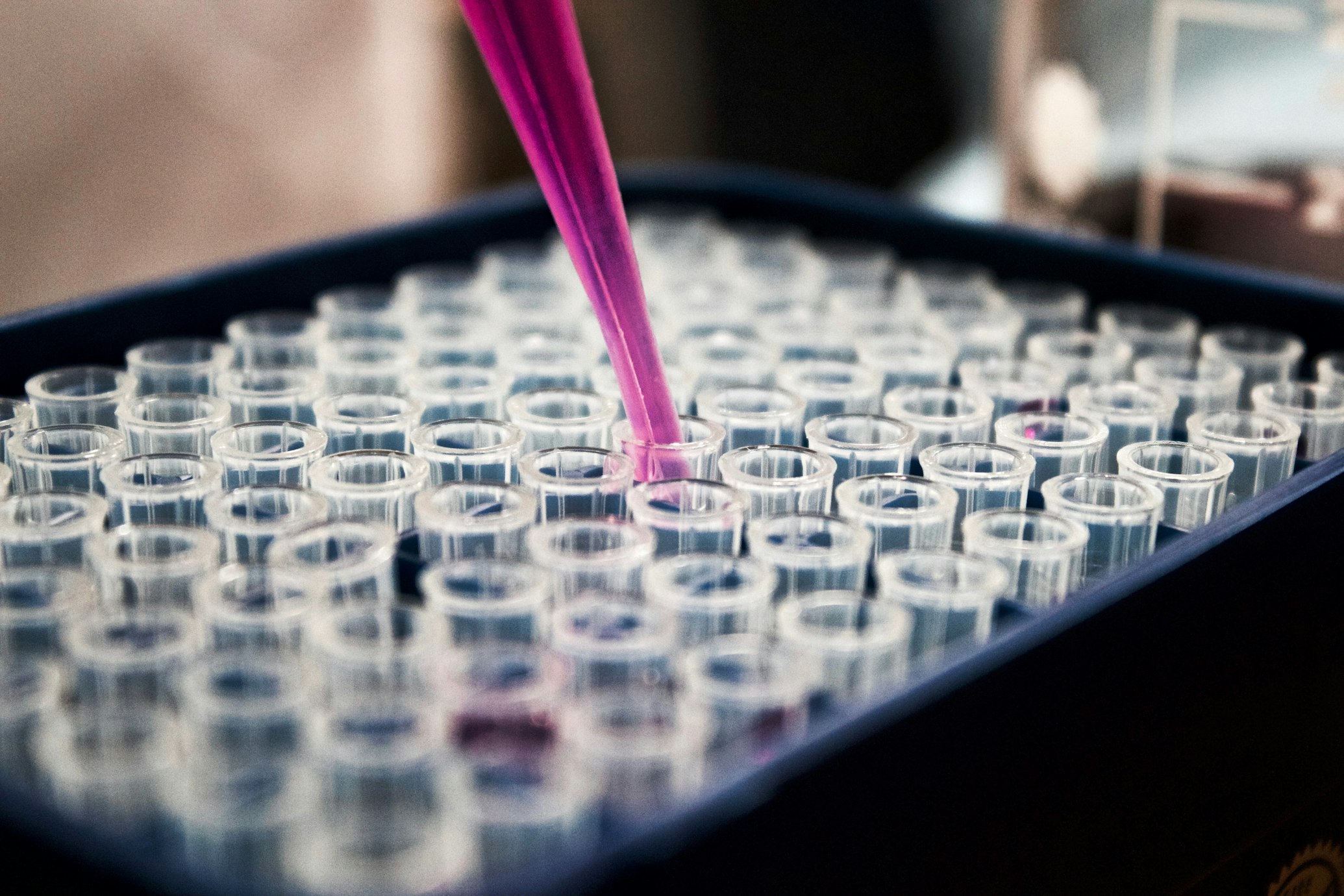
Innovative reagent solutions are making molecular biology more accessible and sustainable
Essential Research Reagent Solutions in Molecular Biology
| Reagent Type | Traditional Approach | Innovative Solutions | Key Applications |
|---|---|---|---|
| Protein Reagents | Highly purified, cold chain dependent | Cellular reagents (dried engineered bacteria) | PCR, LAMP, DNA assembly |
| Detection Systems | Commercial fluorimeters, transilluminators | DIY fluorescence visualization devices | Nucleic acid amplification detection |
| Quality Assessment | Spectrophotometers | McFarland turbidity standards | Bacterial culture density measurement |
This innovative approach exemplifies how scientific methodology continues to evolve, creating tools that are not only more accessible but also more sustainable—themes that resonate with the EU's broader goals of resilience and equity in healthcare.
Conclusion: The Future of Scientific Advice in the EU
As the European Union confronts increasingly complex challenges—from the health implications of new technologies to the environmental dimensions of public health—the role of independent scientific committees becomes ever more critical.
Evolving Scientific Architecture
The planned transition of certain chemical safety assessment activities from SCCS and SCHEER to the European Chemicals Agency (ECHA) in 2027 under the "One Substance, One Assessment" approach represents the continuing evolution of this scientific advisory architecture 5 .
This consolidation aims to create a more streamlined and effective process for chemical assessments, reducing duplication and enhancing consistency across different regulatory domains.
Rational Governance
The work of committees like SCHER and SCHEER, though technical and often invisible to the public, ultimately represents a profound commitment to rational governance—the belief that complex societal decisions should be grounded in evidence rather than ideology.
From ensuring the safety of everyday consumer products to guiding the integration of emerging technologies, these scientific guardians embody the EU's investment in a future where policy serves people through the rigorous application of the best available science.
The Invisible Shield Protecting European Citizens
As citizens and consumers, we may rarely see this intricate machinery of scientific review, but we benefit from its outcomes daily—in products that are safer, environments that are cleaner, and policies that are smarter. In an age of increasing technological complexity, this invisible shield of European science remains one of our most vital public assets.
For those interested in learning more about the ongoing work of the EU's scientific committees, upcoming opinions are published for stakeholder comment on the SCCS and SCHEER websites 5 .