Preventing Hot Spots in Microwave Nanomaterial Synthesis: Strategies for Uniformity and Reproducibility
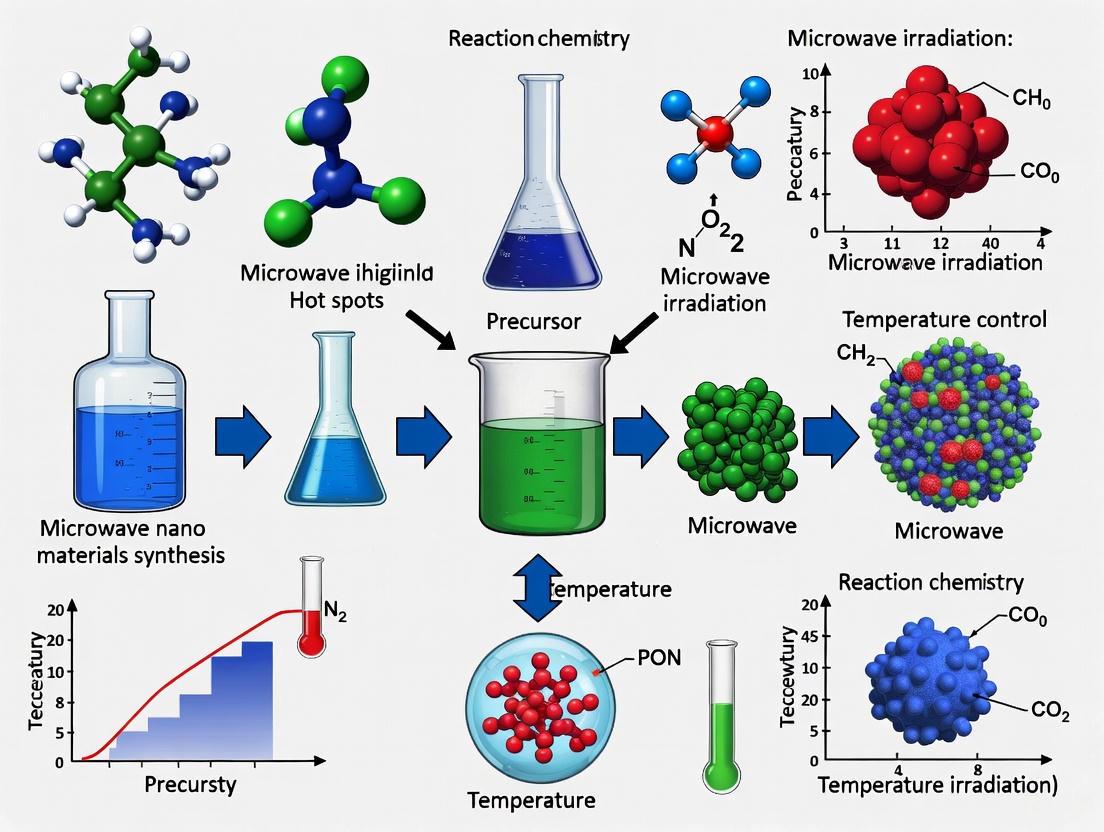
This article provides a comprehensive guide for researchers and scientists on preventing hot spots during microwave-assisted nanomaterial synthesis.
Preventing Hot Spots in Microwave Nanomaterial Synthesis: Strategies for Uniformity and Reproducibility
Abstract
This article provides a comprehensive guide for researchers and scientists on preventing hot spots during microwave-assisted nanomaterial synthesis. It covers the fundamental principles of microwave-matter interaction, explores advanced reactor designs and process control methodologies for uniform heating, and details practical troubleshooting and optimization strategies. The content also examines validation techniques and comparative performance analyses, highlighting the critical importance of hot spot prevention for achieving reproducible, high-quality nanomaterials essential for biomedical applications and drug development.
Understanding Hot Spots: The Fundamentals of Microwave Heating in Nanomaterial Synthesis
Core Principles and Troubleshooting
What are the fundamental microwave loss mechanisms and how do they cause heating?
Microwave heating occurs through several distinct energy conversion mechanisms, where electromagnetic energy is transformed into heat within a material. The primary mechanisms are dielectric loss, conductive loss, and magnetic loss [1].
Dielectric Loss: This is the dominant mechanism for many polar and insulating materials. It is caused by the polarization of molecules or charges in an alternating electric field.
- Dipolar Polarization: Molecules with a permanent dipole moment (like water) continuously rotate to align with the oscillating electric field of the microwave. Molecular friction and collisions during this reorientation generate heat [1] [2].
- Interfacial Polarization: This occurs in heterogeneous materials (e.g., composites) where charge carriers build up at interfaces between different phases, leading to energy loss [1].
Conductive Loss: This mechanism dominates in materials with mobile charge carriers (free electrons or ions). When exposed to the microwave's electric field, these charge carriers move back and forth, generating an electric current. Resistive heating (Joule heating) occurs due to the material's inherent resistance to this induced current [1].
Magnetic Loss: This mechanism applies to magnetic materials. Energy is dissipated when magnetic domains within the material attempt to realign with the rapidly oscillating magnetic field of the microwave.
- Hysteresis Losses: Energy is lost as heat due to the internal friction of magnetic domain wall motion [1] [3].
- Eddy Current Losses: The changing magnetic field induces circulating currents (eddy currents) in conductive materials, which then experience resistive heating [1].
- Resonance Effects: This includes natural resonance and domain wall resonance, where energy is absorbed most efficiently at specific frequencies [3].
Table 1: Summary of Microwave Loss Mechanisms and Material Dependencies
| Loss Mechanism | Primary Interaction | Key Material Property | Common in Materials |
|---|---|---|---|
| Dielectric (Dipolar) | Electric Field | Dielectric Loss Factor (ε″) | Water, solvents, polar organics [2] |
| Dielectric (Interfacial) | Electric Field | Charge Carrier Concentration | Composites, heterogeneous mixtures [1] |
| Conductive | Electric Field | Electrical Conductivity (σ) | Graphite, metals, carbon nanotubes [1] |
| Magnetic | Magnetic Field | Magnetic Loss Factor (μ″) | Iron, cobalt, nickel, ferrites [1] [3] |
Why do "hot spots" form during nanomaterial synthesis and how can I prevent them?
The intensification of microwave processes is often ascribed to the formation of microscopic hot spots, which are localized areas of significantly higher temperature than the bulk material [4]. While sometimes beneficial for initiating reactions, they are a major source of non-uniform synthesis and poor product reproducibility.
Formation Causes:
- Selective Heating: Different phases or components in a reaction mixture absorb microwave energy with varying efficiency. Strongly absorbing materials (e.g., certain metal precursors or carbon supports) can become localized heat sources, creating severe thermal gradients [5] [4].
- Non-Uniform Electric Field: The distribution of the electric field inside a microwave cavity is inherently complex. Areas of high field strength (antinodes) will experience more intense heating than nodes, leading to a stationary pattern of hot and cold spots [5].
- Thermal Runaway: A positive feedback loop can occur where a warmer area of the material absorbs microwaves more efficiently, causing it to become even hotter and further increasing its absorption [6].
Prevention and Mitigation Strategies:
- Efficient Stirring or Flow: Using magnetic stirring or continuous flow reactors helps to average out thermal gradients and disrupt the formation of stationary hot spots [5].
- Dilution with Microwave-Transparent Media: Mixing the reactant materials with a weak microwave absorber (e.g., silicon carbide or sand) can help distribute heat more evenly [5].
- Pulsed Microwave Power: Operating the microwave in pulsed mode allows time for heat to diffuse from hot spots to cooler regions during the "off" cycle, promoting temperature uniformity [5].
- Use of Hybrid Heating: Combining microwave heating with conventional convective heating can provide a more uniform background temperature, reducing the impact of localized hot spots [7].
Frequently Asked Questions (FAQs)
Q1: My reaction mixture heats very slowly. How can I improve the heating efficiency?
- Check Dielectric Properties: Your material may be a low-loss dielectric. Characterize its dielectric loss factor (ε″); a value below ~0.01 indicates poor absorption [6].
- Add a Susceptor: Introduce a small amount of a strong microwave-absorbing material (e.g., activated carbon, ionic liquids) to act as a localized heat source and transfer energy to the rest of the mixture [5] [1].
- Optimize Solvent: Switch to a solvent with a higher dielectric loss (e.g., from hexane to ethanol or water) if chemically permissible [5].
- Verify System Power: Ensure the magnetron is functioning correctly and that the microwave reactor is calibrated for power output.
Q2: I observe sparking inside my microwave reactor. What is the cause and is it dangerous?
- Cause: Sparking is typically caused by the presence of conductive or metallic materials in a high-electric-field region. This can include metal nanoparticles, sharp edges of carbonaceous materials, or even concentrated ionic solutions [1] [8].
- Action: Stop the experiment immediately. Sparking can damage the reactor's waveguide cover and create localized thermal degradation, contaminating your product. Redesign your experiment to avoid highly conductive particulates or use a lower power setting.
Q3: How can I accurately measure the temperature of a potential "hot spot" in my experiment? Conventional thermometers often fail to detect microscopic hot spots. Advanced in situ thermometry methods are required [4]:
- Raman-based Thermometry: Uses the temperature-dependent shift of Raman vibrational bands. Offers high spatial resolution.
- Fluorescence-based Thermometry: Utilizes the temperature-dependent intensity or lifetime of fluorescent probes (e.g., certain rare-earth dyes or quantum dots).
- X-ray-based Thermometry: Analyzes changes in X-ray absorption fine structure (XAFS) with temperature, suitable for in situ studies.
Q4: Why does the heating behavior of my biomass sample change dramatically during pyrolysis? This is due to drastic changes in dielectric properties during thermal degradation [6]:
- Drying Stage (25–200°C): Dielectric properties are dominated by water content.
- Pyrolysis Stage (200–450°C): Loss of volatiles causes the dielectric constant and loss factor to decrease; the material becomes a low-loss absorber.
- Carbonization Stage (450–800°C): Formation of conductive biochar with graphitic structures causes a sharp increase in dielectric loss and conductivity, leading to very efficient heating.
Experimental Protocol: Dielectric Property Measurement via Cavity Perturbation
Objective: To determine the complex permittivity (ε* = ε' - jε'') of a solid material as a function of temperature, providing critical data for predicting microwave absorption and identifying potential hot spot conditions [6].
Materials and Equipment:
- Vector Network Analyzer (VNA)
- Microwave Cavity Resonator (tuned for 2.45 GHz or 915 MHz)
- High-Temperature Sample Holder/Quartz Tube
- Tube Furnace (for external temperature control)
- Precisely Dimensioned Solid Sample (e.g., rod or pellet)
Step-by-Step Methodology:
- Baseline Measurement: Without the sample, use the VNA to measure the resonant frequency (f₀) and quality factor (Q₀) of the empty cavity.
- Sample Insertion: Insert the sample of known volume into the cavity's region of maximum electric field. Ensure it does not touch the cavity walls.
- Perturbed Measurement: With the sample in place, re-measure the new resonant frequency (fs) and quality factor (Qs).
- Data Calculation: Calculate the complex permittivity using the cavity perturbation formulas [6]:
- The shift in resonant frequency is related to the real part (dielectric constant, ε').
- The change in the quality factor (bandwidth) is related to the imaginary part (dielectric loss, ε'').
- Temperature Profiling: Place the cavity and sample within the tube furnace. Repeat steps 1-4 while gradually increasing the temperature from ambient to the target (e.g., 800°C) under an inert atmosphere.
Troubleshooting Notes:
- Inconsistent Results: Ensure sample size is small compared to the cavity and is positioned reproducibly in the exact same E-field maximum each time.
- No Frequency Shift: The sample may be microwave-transparent (very low ε'); verify sample integrity and conductivity.
- Arcing at High T: For samples becoming conductive at high temperature (like biochar), use lower microwave power to avoid electrical breakdown.
The Scientist's Toolkit: Key Research Reagent Solutions
Table 2: Essential Materials for Microwave Nanomaterial Synthesis
| Reagent/Material | Function in Microwave Synthesis | Key Consideration |
|---|---|---|
| Ionic Liquids | Serves as both solvent and strong microwave susceptor due to high ionic conductivity, enabling rapid heating [5]. | High cost; requires purification and recycling. |
| Carbon Nanotubes (CNTs) | Act as conductive nano-heaters due to conduction losses from delocalized π-electrons; can create intense local hot spots [1]. | Dispersion is critical; prone to arcing at high loads. |
| Metal Nanoparticle Susceptors (e.g., Au, Ag) | Provide localized surface plasmon-enhanced heating under microwave irradiation, facilitating nucleation [5]. | Can catalyze unintended side reactions. |
| Silicon Carbide (SiC) | A strong microwave absorber used for hybrid heating or as a passive heating element to improve thermal uniformity [5]. | Chemically inert; useful for high-temperature reactions. |
| Water (Deionized) | A green solvent with a high dielectric loss factor at 2.45 GHz, enabling efficient heating for hydrothermal synthesis [5] [2]. | Dielectric loss drops with increasing temperature. |
Visualizing Microwave-Matter Interactions and Hot Spot Formation
Microwave Heating Pathway and Hot Spot Control
Dielectric Property Variation During Pyrolysis
Frequently Asked Questions (FAQs)
1. What are "hot spots" and why are they a problem in microwave-assisted nanomaterial synthesis? Hot spots are localized areas of intense overheating that can develop on a catalyst surface or within a nanomaterial during microwave irradiation [9] [10]. They are a significant problem because they can:
- Cause safety hazards, including violent explosions and damage to equipment [9].
- Reduce chemical efficiency by degrading the catalyst and leading to lower yields of the desired product [10] [11].
- Damage materials during processing, such as causing fractures in ceramics during sintering [12].
2. What are the primary causes of hot spot formation? Hot spot formation is typically triggered by thermal instabilities, often stemming from one or more of the following factors:
- Inhomogeneous Heating: In non-polar solvents (like toluene), microwaves selectively and directly heat the solid catalyst particles (e.g., Pd/AC), while the surrounding solvent remains much cooler. This creates a massive temperature difference [10] [11].
- Electric Field Concentration: Hot spots can form in the spatial gaps between catalyst particles where the microwave's electric field becomes highly concentrated, potentially leading to micro-plasma discharges (arcing) [11].
- Material and Reaction Inhomogeneity: The presence of highly microwave-absorbing particles in a weakly absorbing matrix, or local defects in the sample, can create preferential paths for energy absorption and current, leading to localized overheating [12] [11].
- Inverted Thermal Gradients: Unlike conventional heating which starts from the surface, microwave heating occurs within the material itself, creating an "inverted" temperature profile that is inherently prone to instability [12].
3. My reaction only works in a non-polar solvent like toluene, but I keep getting hot spots. What can I do? This is a common challenge. Here are several proven strategies to mitigate hot spots while using non-polar solvents:
- Use a Susceptor for Hybrid Heating: Place a strongly microwave-absorbing material (a susceptor), such as an activated carbon heating stick (MAHS), near your reaction vessel. This susceptor heats up and transfers heat conventionally to the solvent and reactor, smoothing out the temperature gradient and distributing energy more evenly [10].
- Switch to a Biomass-Derived Solvent: Replace toluene with a solvent like γ-Valerolactone (GVL). GVL is a polar, biomass-derived solvent with a high boiling point (208°C) that interacts strongly with microwaves. This prevents the catalyst surface from drying out and eliminates arcing phenomena, while maintaining high reaction efficiency [9].
- Employ Magnetic Field Heating: If your microwave reactor allows it, configure the setup to expose the reaction primarily to the magnetic field (H-field) component of the microwave radiation. This can significantly suppress the formation of electric field-driven hot spots [11].
4. Are hot spots always a bad thing? Can they be useful? While often a nuisance in synthesis, research is exploring ways to exploit hot spots for beneficial applications. The intense, localized energy can be used for specific tasks such as localized sintering of metal powders, drilling of glass, or igniting thermite reactions [12].
Troubleshooting Guide: Diagnosing and Resolving Hot Spot Issues
| Symptom | Likely Cause | Recommended Solution |
|---|---|---|
| Visible arcing (bright sparks) in reaction vessel | Strong electric field concentration between catalyst particles in a non-polar solvent [9] [11] | 1. Switch to a polar solvent like GVL [9].2. Implement hybrid internal/external heating with a susceptor [10].3. Use a lower microwave power setting. |
| Lower-than-expected product yield with Pd/C catalyst | Catalyst deactivation due to aggregation of Pd nanoparticles at hot spot locations [11] | 1. Use hybrid heating to control hot spots [10].2. Ensure efficient stirring to dissipate heat. |
| Inconsistent results and charring during nanomaterial synthesis | Uncontrolled thermal instabilities and hot spots due to rapid heating [12] | 1. Employ a controlled heating rate instead of rapid power input.2. Use thermal insulation to create a more uniform temperature environment [12]. |
| Reaction works well in polar solvents but fails in desired non-polar solvent | Inefficient heating of the reaction mixture; solvent is too microwave-transparent [13] | Add a small amount of a strongly microwave-absorbing ionic additive or use a susceptor to indirectly heat the reaction [10] [13]. |
Experimental Protocols for Hot Spot Control
Protocol 1: Using γ-Valerolactone (GVL) as a Reaction Medium
This protocol is adapted from a study on Pd/C-catalyzed benzimidazole synthesis to avoid hot spots [9].
- Objective: To perform a microwave-assisted reaction safely in a high-boiling, biomass-derived solvent that minimizes arcing.
- Materials:
- γ-Valerolactone (GVL)
- Your specific reagents and Pd/C catalyst
- Sealed microwave reaction vessel
- Procedure:
- Charge the reaction vessel with your substrates, reagents, and catalyst.
- Add GVL as the solvent (e.g., 4 mL for a small-scale reaction).
- Securely seal the vessel and place it in the microwave reactor.
- Irradiate at the desired temperature (e.g., 170°C) for the required time. The heating profile of GVL allows it to reach high temperatures quickly and stably without decomposition.
- After the reaction, cool the vessel and work up the mixture as usual. GVL has been shown to be stable under these conditions, even in the presence of amines.
Protocol 2: Hybrid Internal/External Heating Method
This protocol uses a microwave-absorber heating stick (MAHS) to control hot spots in non-polar solvents like toluene [10].
- Objective: To achieve uniform heating in a non-polar solvent by combining direct microwave irradiation with external conventional heating.
- Materials:
- Non-polar solvent (e.g., Toluene)
- Pd/AC or other heterogeneous catalyst
- Microwave reactor
- Decalin bath (or similar high-boiling, microwave-transparent oil)
- Microwave-absorber heating sticks (MAHS). These can be fabricated by sealing granular activated carbon in a Pyrex ampoule.
- Procedure:
- Set up a three-neck flask containing your reaction mixture (catalyst and substrates in toluene).
- Place this flask into a bath of decalin.
- Immerse several MAHSs into the decalin bath around the reaction flask.
- Under microwave irradiation, the MAHSs will absorb energy and heat the decalin bath (external heating), while the Pd/AC catalyst will also be heated directly by the microwaves (internal heating).
- This hybrid approach distributes the microwave energy, reduces the temperature gradient between the catalyst and the solvent, and effectively controls hot spot formation, leading to higher yields and energy savings.
Research Reagent Solutions for Hot Spot Management
| Reagent / Material | Function in Hot Spot Control | Key Characteristics |
|---|---|---|
| γ-Valerolactone (GVL) [9] | A high-boiling, polar, biomass-derived solvent that absorbs microwaves efficiently. | Prevents dry catalyst surfaces, eliminates arcing, and is chemically stable under high-temperature MW conditions. |
| Activated Carbon (AC) Stick (MAHS) [10] | A microwave susceptor for hybrid heating. Converts MW energy to heat, which is then transferred to the reaction via conventional means. | Used in external baths to provide uniform background heating and smooth out thermal gradients in non-polar systems. |
| Carbon Microcoils (CMC) [11] | An alternative catalyst support to Activated Carbon (AC). | Changes the physical and electromagnetic properties of the support, helping to suppress the formation of hot spots compared to traditional AC. |
| Silicon Carbide (SiC) [13] [12] | A highly microwave-absorbing solid material. | Often used as a reactor material or passive heating element to absorb MW energy and re-radiate it as heat in systems with transparent reactants. |
Schematic: Mechanisms of Hot Spot Formation in Microwave Chemistry
The diagram below illustrates the primary mechanisms that lead to hot spot formation during microwave-assisted synthesis with heterogeneous catalysts.
Frequently Asked Questions: Troubleshooting Hot Spots
FAQ 1: What are the primary causes of hot-spot formation in microwave-assisted synthesis with heterogeneous catalysts? Hot spots, which are localized areas of extreme temperature, frequently occur during microwave irradiation when using solid catalysts, such as Pd/C, in low-boiling-point solvents like toluene. The primary cause is the differential heating of the solid catalyst and the solvent. The catalyst's surface can become dry at high temperatures, leading to dangerous arching phenomena and explosions. This is especially problematic in solvents that are poor absorbers of microwave energy [9].
FAQ 2: How can I prevent hot spots and arcing in my microwave-assisted reactions? A promising strategy is to replace traditional solvents with γ-valerolactone (GVL), a biomass-derived solvent. GVL has a high boiling point (208 °C) and interacts strongly with microwaves, efficiently absorbing energy and reaching high temperatures quickly. Its use has been demonstrated to prevent arching phenomena in Pd/C-catalyzed reactions, enabling safer and efficient synthesis without the frequent hot-spot formation observed with toluene [9].
FAQ 3: My recrystallized energetic material has inconsistent sensitivity. How can process control improve this? Inconsistent properties are often linked to poor control over crystal size and crystallinity during preparation. Implementing a microfluidic platform allows for precise control over particle size, morphology, and crystal type by adjusting parameters like the flow rate ratio of solvent to antisolvent. This method produces ultrafine materials with uniform morphology, narrow particle size distribution, high density, and consequently, lower mechanical sensitivity [14].
FAQ 4: Why is the Crystal Size Distribution (CSD) important for my crystalline product? The CSD is a major determinant of key product properties. It directly impacts the appearance, filtration efficiency, washing effectiveness, and handling of crystalline materials. A desired CSD can make downstream processing straightforward, while an inappropriate one can increase resistance to flow through a filter cake, cause difficulties in impurity removal, and lead to caking during storage [15].
FAQ 5: Beyond microwave synthesis, what is a "hot spot" in the context of nanomaterials? In plasmonics, a "hot spot" refers to nanoscale regions, typically in the junction between two or more plasmonic nanoparticles, where the incident electromagnetic field is intensely concentrated and amplified. These hot spots are crucial for techniques like surface-enhanced Raman spectroscopy (SERS), enabling ultra-sensitive detection and even single-molecule spectroscopy [16].
Troubleshooting Guide: Common Problems and Solutions
| Problem | Possible Cause | Solution |
|---|---|---|
| Explosions/Arcing in MW Synthesis | Use of low-boiling solvent (e.g., toluene) with Pd/C catalyst [9] | Switch to a high-boiling, MW-absorbing solvent like γ-valerolactone (GVL) [9]. |
| High Mechanical Sensitivity in Energetic Materials | Irregular particle size, broad size distribution, and uncontrolled crystallinity [14] | Use a microfluidic platform for controllable preparation of ultrafine particles with uniform morphology [14]. |
| Broad Crystal Size Distribution (CSD) | Poor control over crystallization conditions (e.g., mixing, supersaturation) [15] | Implement precise mixing and supersaturation control (e.g., microfluidics) to narrow the CSD [14] [15]. |
| Difficulty Filtering Crystalline Product | Inappropriate CSD increasing resistance to flow [15] | Optimize crystallization process to achieve a more uniform crystal size that forms a permeable filter cake [15]. |
| Low SERS Enhancement Signal | Lack of high-electromagnetic-enhancement hot spots in the substrate [16] | Use SERS substrates that incorporate hot spots (e.g., nanoparticle aggregates, bowtie antennas) instead of simple island films [16]. |
Experimental Protocol: Controlling HMX Properties via Microfluidics
This protocol details the preparation of ultrafine HMX with controlled size and crystallinity using a microfluidic platform, a method that mitigates the risks of traditional bulk synthesis [14].
1. Materials
- Solute: Raw HMX.
- Solvent: Dimethyl sulfoxide (DMSO), analytical reagent grade.
- Antisolvent: Deionized water.
- Equipment: Syringe pumps, double-chamber swirling micromixer, PTFE tubing (800 µm inner diameter), ultrasonic wave oscillator, collection beaker, centrifuge, freeze-dryer.
2. Equipment Setup The microfluidic platform consists of syringe pumps driving the solvent and antisolvent through PTFE tubing into a double-chamber swirling micromixer. An ultrasonic wave oscillator is incorporated to enhance mixing and prevent channel blockage. The output mixture is collected in a beaker [14].
3. Procedure
- Step 1: Preparation. Dissolve raw HMX in DMSO to create a 0.15 g/mL solution.
- Step 2: Flow Rate Adjustment. Set the flow rate ratio (R) of the HMX/DMSO solution to deionized water to the desired value (e.g., 1:1, 5:1, 10:1, 20:1, 40:1). The total flow rate and ratio are key control parameters.
- Step 3: Crystallization. Drive the solutions to mix in the micromixer. The rapid mixing and high supersaturation trigger the crystallization of ultrafine HMX particles.
- Step 4: Collection & Post-Processing. Collect the white colloidal liquid while stirring for 1 hour. Recover the ultrafine HMX particles via high-speed centrifugation and freeze-drying [14].
4. Control and Outcome By adjusting the flow rate ratio (R), you can control the final product's properties [14]:
| Flow Ratio (R) | Particle Size | Crystal Morphology | Crystal Phase |
|---|---|---|---|
| 1:1 and 5:1 | Larger | Polygonal-block and sphere-like shapes | β-HMX |
| 10:1 | Intermediate | Mixture of block and flaky shapes | Transition from β to γ |
| 20:1 and 40:1 | Smaller | Flaky shapes | γ-HMX |
Diagram 1: Microfluidic workflow for controlling HMX crystal phase and morphology by adjusting the flow rate ratio (R) of solvent to antisolvent [14].
Experimental Protocol: Preventing Hot Spots with γ-Valerolactone (GVL)
This protocol outlines the use of GVL as a reaction medium to avoid dangerous hot-spot formation during microwave-assisted, Pd/C-catalyzed reactions [9].
1. Materials
- Solvent: γ-Valerolactone (GVL).
- Catalyst: Palladium on activated carbon (Pd/C).
- Reagents: Substrate-specific (e.g., for benzimidazole synthesis: o-phenylenediamine, amine, crotonitrile, acetic acid).
- Equipment: Commercial microwave reactor, standard reaction vials.
2. Heating Profile Characterization (Optional)
- Procedure: Irradiate 4 mL of GVL in a microwave reactor at fixed power settings (e.g., 50, 100, 150, 200 W) for 10 minutes and record the temperature profile.
- Expected Outcome: GVL will show a strong and reproducible interaction with microwaves, reaching high temperatures quickly without decomposition, distinguishing it from solvents like toluene or NMP [9].
3. Synthetic Procedure
- Step 1: Reaction Setup. Combine your substrates, crotonitrile (2 eq.), AcOH (0.1 eq.), and 10 mol% Pd/C in GVL. Add a base such as triethylamine (1.5 eq.).
- Step 2: Microwave Irradiation. Place the reaction vessel in the microwave reactor and irradiate at 170 °C for 20-90 minutes.
- Step 3: Reaction Monitoring. Monitor conversion via GC or TLC. The reaction should proceed efficiently without observable arching or explosions [9].
4. Key Advantages
- Safety: Effectively suppresses arcing and hot-spot formation.
- Efficiency: Enables high conversion rates in challenging reactions like hydrogen transfer for benzimidazole synthesis.
- Green Credentials: GVL is a non-toxic, biomass-derived solvent [9].
Diagram 2: Solvent selection impact on hot-spot formation during microwave-assisted synthesis [9].
The Scientist's Toolkit: Essential Research Reagents & Materials
| Item | Function / Application |
|---|---|
| γ-Valerolactone (GVL) | A high-boiling, biomass-derived solvent for microwave chemistry that prevents hot-spot formation with Pd/C catalysts [9]. |
| Double-Chamber Swirling Micromixer | A microfluidic device providing rapid and uniform mixing for controlled crystallization of nanomaterials [14]. |
| Pd/C (Palladium on Carbon) | A common heterogeneous catalyst for reactions like hydrogen transfer; a known source of hot-spots under MW irradiation [9]. |
| Polystyrene (PS) Sphere Arrays | Used as a template for creating plasmonic nanoantenna substrates with specific hot-spot geometries for SERS [17]. |
| 4-Mercaptobenzoic Acid (4-MBA) | A model molecule used for characterizing and testing the enhancement performance of SERS substrates [17]. |
In microwave-assisted nanomaterial synthesis, achieving uniform heating is paramount for reproducible results, high product yield, and preventing safety hazards. This technical guide, framed within a broader thesis on preventing hot spots, addresses the core factors—solvent polarity, precursor absorption, and vessel geometry—that researchers must control to ensure heating uniformity. The following FAQs, data tables, and protocols provide targeted support for troubleshooting common experimental issues.
Frequently Asked Questions (FAQs) and Troubleshooting
1. Why does my reaction mixture heat unevenly, creating dangerous "hot spots"?
- Problem: Uneven heating, or hot spots, can lead to localized decomposition, unpredictable reaction outcomes, and potential safety incidents like vessel explosions [9].
- Solutions:
- Check Solvent Polarity: The primary cause is often a solvent with low dielectric loss, meaning it absorbs microwave energy poorly. Switch to a polar solvent like water, DMF, or γ-valerolactone (GVL) that couples efficiently with microwaves [18] [9].
- Add Doping Agents: For reactions requiring non-polar solvents, add small amounts of ionic additives or use a solvent with a higher boiling point like GVL, which has demonstrated efficacy in suppressing arcing phenomena, especially in reactions involving heterogeneous catalysts like Pd/C [9].
- Reevaluate Catalyst and Precursor: Certain solid catalysts (e.g., Pd/C) and precursors can absorb microwaves much more strongly than the solvent, leading to differential heating. Ensure the solvent can effectively absorb the radiation to mediate heat transfer to the solid components [9].
2. How does the choice of solvent directly impact the reaction rate and yield?
- Problem: Reactions are slower than expected or yields are low.
- Solutions:
- Select a Strong Microwave-Absorbing Solvent: Solvents interact with microwaves via dipole rotation and ionic conduction. Polar solvents like water, DMF, and ethanol convert microwave energy into heat efficiently, leading to dramatically reduced reaction times and improved yields [18] [19].
- Quantify Solvent Efficiency: Refer to solvent property databases or perform small-scale tests to measure a solvent's heating rate under microwave irradiation. For example, biomass-derived γ-valerolactone (GVL) has been shown to have a superior heating profile compared to toluene or water, reaching high temperatures in short times [9].
3. My reaction vessel exploded under pressure. What went wrong?
- Problem: Pressure build-up leads to vessel failure.
- Solutions:
- Understand Heating Mechanisms: Rapid heating can cause solvents to superheat or decompose faster than pressure can be safely vented. This is particularly critical in sealed-vessel reactions [20].
- Use Appropriate Vessel Geometry: Ensure you are using vessels designed for microwave synthesis, which can handle elevated pressure. For reactions with potential for rapid gas generation, use larger vessels or open-vessel configurations with reflux condensers [20].
- Employ Instrument Cooling Features: Utilize reactors with integrated cooling systems. Compressed gas cooling can be activated during or immediately after irradiation to quench the reaction and control temperature, reducing the risk of thermal runaway [20].
4. How does the microwave reactor's design affect the scalability of my synthesis?
- Problem: A reaction optimized in a small-scale microwave reactor fails when scaled up.
- Solutions:
- Distinguish Between Reactor Types: Laboratory-scale microwave reactors often use single-mode cavities, which create a single, homogeneous energy field ideal for small volumes (0.1-125 mL). In contrast, multi-mode cavities (like those in domestic ovens) have multiple energy pockets and are better suited for larger batches or parallel synthesis, though they can suffer from field inhomogeneity [20].
- Plan for Scale-Up: A hybrid microwave/oil jacket proof-of-concept system has been demonstrated to produce up to 4.1 kg of polymer resin per batch, showing that scale-up is feasible with specialized reactor design [21]. For larger scales, consider moving to continuous-flow microwave reactors which can provide uniform heating for larger volumes [18].
Key Factors and Quantitative Data
Solvent Properties and Heating Performance
The following table summarizes the properties and performance of common solvents used in microwave-assisted synthesis.
Table 1: Solvent Properties and Microwave Heating Characteristics
| Solvent | Polarity | Boiling Point (°C) | Microwave Absorption Efficiency | Key Characteristics & Applications |
|---|---|---|---|---|
| Water | High | 100 | High [19] | Excellent, eco-friendly solvent for polar reactions; heating efficiency increases with dissolved ions [18] [19]. |
| γ-Valerolactone (GVL) | High | 208 | Very High [9] | Biomass-derived, non-toxic green solvent. Excellent heating profile; suppresses arcing with Pd/C catalysts [9]. |
| N-Methyl-2-pyrrolidone (NMP) | High | 202 | High [9] | Strong microwave absorber; can decompose under prolonged high-power irradiation [9]. |
| Dimethylformamide (DMF) | High | 153 | High | Common polar aprotic solvent for high-temperature reactions. |
| Toluene | Low | 111 | Low [18] [9] | Poor microwave absorber; risk of hot spots and arcing, especially with heterogeneous catalysts [18] [9]. |
| Hexane | Low | 69 | Very Low [18] | Generally unsuitable for microwave heating due to poor energy absorption [18]. |
Microwave Reactor Geometries
The design of the microwave cavity is a critical factor in heating uniformity, especially when scaling up reactions.
Table 2: Comparison of Microwave Reactor Cavity Geometries
| Feature | Single-Mode Cavity | Multi-Mode Cavity |
|---|---|---|
| Energy Field | Single, focused, and homogeneous pocket [20] | Multiple, dispersed energy pockets (hot/cold spots) [20] |
| Power Density | High (~0.90 W/mL) [20] | Low (~0.025-0.040 W/mL) [20] |
| Typical Scale | Small-scale (0.1 - 125 mL) [20] | Larger-scale and parallel synthesis [20] |
| Heating Uniformity | High and reproducible for single samples [20] | Requires sample rotation to average energy exposure [20] |
| Ideal For | Reaction optimization, method development, and small-scale synthesis [20] | Processing multiple samples simultaneously or larger single batches [20] |
Experimental Protocols
Protocol 1: Assessing Solvent Heating Profiles
This methodology is adapted from procedures used to characterize new solvents like γ-valerolactone (GVL) [9].
- Objective: To quantitatively measure and compare the efficiency of different solvents in converting microwave energy to heat.
- Materials: Microwave synthesis reactor with temperature monitoring and power control, sealed microwave vials (e.g., 10 mL), solvents under investigation (e.g., Water, GVL, DMF, Toluene).
- Methodology:
- Precisely measure 4 mL of a solvent into a microwave vial.
- Secure the cap and place the vial in the microwave reactor.
- Program the reactor to irradiate the sample at a fixed power (e.g., 100W, 150W, 200W) for a set time (e.g., 10 minutes).
- Use the reactor's internal temperature sensor to record the temperature rise over time.
- Repeat steps 1-4 for all solvents and power settings.
- Data Analysis: Plot temperature versus time for each solvent. The initial slope of the curve represents the heating rate. Solvents with steeper slopes are more efficient microwave absorbers. This data is critical for selecting the right solvent for a target reaction temperature [9].
Protocol 2: Supercritical Synthesis of TiO₂ Nanoparticles
This protocol details a common nanomaterials synthesis method where precursor absorption is a key factor [22].
- Objective: To synthesize TiO₂ nanoparticles using a supercritical CO₂/ethanol medium.
- Materials: High-pressure reactor (e.g., 500 mL capacity), CO₂ high-pressure pump, Titanium precursor (e.g., TIP, TDB, TBO, TEO), Ethanol (hydrolytic agent), Thermostatic bath.
- Methodology:
- Loading: Place the selected titanium precursor and ethanol (at the desired HA/P molar ratio, e.g., 10:1 to 40:1) into the high-pressure reactor.
- Pressurization: Introduce CO₂ into the reactor using the high-pressure pump to achieve the target pressure (e.g., 20 MPa).
- Reaction: Heat the reactor to the target temperature (e.g., 250 °C) with continuous stirring (e.g., 300 RPM) for the reaction duration (e.g., 2 hours).
- Depressurization & Recovery: After the reaction time, slowly release the CO₂ and collect the solid product from the reactor.
- Post-processing: Dry the collected nanoparticles at 105 °C for 12 hours, then calcinate at 400 °C for 6 hours to remove carbonaceous impurities and crystallize the TiO₂ [22].
- Troubleshooting Note: The type of titanium precursor and the HA/P ratio can influence the physicochemical properties of the final TiO₂ material, including its crystallinity and photoactivity [22].
The Scientist's Toolkit: Essential Research Reagents
Table 3: Key Reagents for Microwave-Assisted Nanomaterial Synthesis
| Reagent | Function | Example Application |
|---|---|---|
| γ-Valerolactone (GVL) | A high-boiling, biomass-derived green solvent with excellent microwave absorption. | Prevents arcing in Pd/C-catalyzed reactions; used as a sustainable reaction medium [9]. |
| Palladium on Carbon (Pd/C) | A heterogeneous catalyst for hydrogenation and coupling reactions. | Can cause severe hot spots; requires a strongly microwave-absorbing solvent like GVL for safe use [9]. |
| Titanium Isopropoxide (TIP) | A metal-oxide precursor for nanoparticle synthesis. | Hydrolyzed in supercritical CO₂/ethanol to form TiO₂ nanoparticles; precursor choice affects final properties [22]. |
| Sodium Chloride (NaCl) | Ionic additive to modify dielectric properties. | Increases the heating efficiency of aqueous solutions via ionic conduction mechanism [19]. |
| Diisopropoxytitanium bis (acetylacetonate) (TDB) | A chelated metal-oxide precursor. | Used in supercritical synthesis of TiO₂; offers different hydrolysis kinetics compared to TIP [22]. |
Visual Guide: Factor Interactions for Uniform Heating
The following diagram illustrates the logical relationship between the three key factors and how they converge to influence heating uniformity in microwave-assisted synthesis.
Advanced Strategies for Uniform Synthesis: Reactor Design and Process Control
Frequently Asked Questions (FAQs)
Q1: What is the fundamental difference between multi-mode and single-mode microwave reactors, and how does this impact my synthesis? Multi-mode cavities, common in early laboratory and domestic ovens, have a larger geometry with multiple, uneven energy pockets (hot and cold spots) dispersed throughout the cavity. This can lead to poor reproducibility in small-scale synthetic reactions, as samples experience different energy intensities depending on their position [23]. Single-mode cavities, in contrast, produce a single, homogeneous, and intense pocket of energy that is highly reproducible. Due to their higher power density, they couple more efficiently with small samples, making them the preferred choice for modern drug discovery and research where reproducibility and control are paramount [23].
Q2: Why do dangerous "hot spots" or "arcing" occur, especially when I use heterogeneous catalysts like Pd/C? Hot spots and arcing are frequently observed when using solid, strongly microwave-absorbing catalysts (like Pd/AC - Palladium on Activated Carbon) in low-absorbing solvents (like toluene) [9] [11]. The mechanism involves the electric field component of microwaves becoming concentrated in the spatial gaps between catalyst particles, leading to extreme localized heating that can exceed the dielectric strength of the solvent vapor, causing micro-plasmas or arcs [11]. This is exacerbated by the aggregation of catalyst particles due to microwave-induced polarization [11].
Q3: My reaction works well in toluene, but I keep experiencing arcing. What are some safer solvent alternatives? A promising green alternative is the biomass-derived solvent γ-Valerolactone (GVL) [9]. It has a high boiling point (208 °C) and interacts strongly with microwaves, reaching high temperatures rapidly. Most importantly, its use has been demonstrated to avoid the arcing phenomena frequently encountered with Pd/C catalysts in toluene, while maintaining high reaction efficiency [9].
Q4: How can I ensure the temperature I am measuring is accurate? Accurate temperature monitoring is critical. External infrared (IR) sensors can be falsified in several scenarios: during exothermic reactions (due to slow response time), with weakly absorbing reaction mixtures (the vessel heats instead of the contents), or with thick vessel walls [24]. For accurate monitoring, especially in critical experiments, the use of an internal fiber optic temperature probe is strongly recommended. This is particularly crucial when using "heating-while-cooling" features, as the IR sensor may measure the cooled vessel surface rather than the actual internal reaction temperature [24].
Q5: Are there advanced control strategies to improve heating uniformity? Yes, recent research focuses on smart control systems. One method involves using an Adaptive Particle Swarm Optimization (APSO) algorithm with a Back Propagation Neural Network (BPNN) to intelligently control the microwave's input power. This system adjusts power in real-time based on the error between the actual temperature and the preset curve, significantly improving thermal uniformity compared to traditional controllers [25]. Another innovative approach is real-time phase optimization in dual-port systems, which selectively heats cold spots by finding the optimal phase for each time interval, improving uniformity by over 40% [26].
Troubleshooting Guides
Problem: Inconsistent Reaction Yields and Poor Reproducibility
| Possible Cause | Diagnostic Steps | Recommended Solution |
|---|---|---|
| Field Inhomogeneity | Check reactor type (multi-mode vs. single-mode). Note if sample position seems to affect results. | Transition to a single-mode reactor for superior field homogeneity and reproducibility, especially for small samples [23]. |
| Inaccurate Temperature Measurement | Run a control reaction with both IR and an internal fiber-optic probe. Compare readings. | Always use an internal temperature sensor (fiber optic) for accurate temperature monitoring, particularly for exothermic or non-absorbing mixtures [24]. |
| Uncontrolled Hot-Spots | Visually inspect for arcing or use a high-speed camera. Check for catalyst aggregation. | Switch to a solvent with a higher boiling point and better microwave absorption, such as GVL [9]. Alternatively, employ a reactor that allows operation in the magnetic (H-) field only to suppress arcing [11]. |
Problem: Hot-Spots and Arcing with Heterogeneous Catalysts
| Possible Cause | Diagnostic Steps | Recommended Solution |
|---|---|---|
| Low-Boiling Solvent | Identify the solvent's boiling point and loss tangent. Arcing is common in toluene (ε"=0.07) [11]. | Replace the solvent with a higher-boiling, biomass-derived alternative like γ-Valerolactone (GVL) [9]. |
| Strong Electric Field Coupling | Observe if arcing occurs immediately upon irradiation. | Use a reactor designed to expose the sample primarily to the magnetic field (H-field) component, which minimizes arcing [11]. |
| Catalyst Aggregation | Use a high-speed camera to observe particle behavior during irradiation. | Implement "hybrid microwave heating" by placing microwave susceptors around the sample to provide a more uniform thermal environment and limit the direct field on the catalyst [12]. |
Experimental Protocols & Data
Protocol: Evaluating Solvents for Hot-Spot Suppression in Pd/C Catalyzed Reactions
This protocol is adapted from research demonstrating the use of γ-valerolactone (GVL) to avoid arcing [9].
1. Objective: To safely perform a microwave-assisted, Pd/C-catalyzed reaction that typically arcs in toluene, by substituting with the green solvent GVL.
2. Materials:
- Reagents: o-phenylendiamine (1a), triethylamine, crotonitrile (hydrogen acceptor), AcOH, Pd/C catalyst (10 mol%), γ-valerolactone (GVL) [9].
- Equipment: Single-mode microwave reactor with internal temperature monitoring capability and sealed vessel technology [23] [24].
3. Methodology:
- Reaction Setup: In a microwave reaction vial, combine o-phenylendiamine (1a, 1.0 equiv), triethylamine (1.5 equiv), crotonitrile (2.0 equiv), AcOH (0.1 equiv), and Pd/C (10 mol%). Add GVL as the solvent (4 mL volume) [9].
- Heating Profile: Seal the vessel and irradiate using the microwave reactor. Set the target temperature to 170 °C and a hold time of 20-90 minutes. Use simultaneous internal temperature monitoring to ensure accuracy [9] [24].
- Analysis: Monitor reaction conversion via GC analysis. Note the absence of arcing and any GVL degradation by-products.
4. Expected Results: The reaction should proceed to high conversion (e.g., 90% in 90 minutes) without any observed arcing, providing a safer and efficient alternative to toluene for this transformation [9].
Table 1: Comparison of Microwave Reactor Cavity Types [23]
| Parameter | Multi-mode Reactor | Single-mode Reactor |
|---|---|---|
| Cavity Geometry | Large | Small, focused |
| Energy Distribution | Multiple, uneven pockets (hot/cold spots) | Single, homogeneous pocket |
| Typical Power Output | 1000 – 1200 W | 300 – 400 W |
| Power Density | 0.025 – 0.040 W/mL | ~0.90 W/mL |
| Best For | Processing multiple, larger samples simultaneously | Small-scale, reproducible synthesis |
Table 2: Heating Performance and Uniformity Improvement Strategies
| Method | Key Mechanism | Reported Improvement in Uniformity |
|---|---|---|
| Real-time Phase Optimization [26] | Uses feedback from volumetric temperature scans to find complementary phases that heat cold spots. | >40% improvement over fixed-phase heating. |
| Power-Controlled Slotted Waveguides [25] | Optimizes input power to each of multiple waveguides based on electric field peak amplitude. | ~67% improvement compared to conventional applicators. |
| APSO-BPNN Control System [25] | An intelligent controller that adjusts microwave power in real-time to follow a preset temperature curve. | Root Mean Square Error (RMSE) of only 0.74 between actual and preset temperature. |
The Scientist's Toolkit: Essential Research Reagents & Materials
Table 3: Key Reagents and Materials for Optimized Microwave Synthesis
| Item | Function / Rationale |
|---|---|
| γ-Valerolactone (GVL) | A biomass-derived, green solvent with high boiling point (208°C) and excellent microwave absorption profile. Effectively prevents arcing with Pd/C and other heterogeneous catalysts [9]. |
| Internal Fiber-Optic Temperature Probe | Provides accurate internal reaction temperature measurement, avoiding errors from external IR sensors caused by exotherms, vessel heating, or cooling features [24]. |
| Silicon Carbide (SiC) Susceptors | Used in "Hybrid Microwave Heating" to surround the sample. They couple well with microwaves and provide classical conductive heating, smoothing out thermal gradients and mitigating hot spots in the primary sample [12]. |
| Sealed Reaction Vessels | Enable superheating of solvents far above their atmospheric boiling points, which is a key advantage of microwave chemistry for dramatic rate acceleration [24]. |
Optimization Workflows and System Diagrams
Selecting Solvents and Reagents for Controlled Energy Coupling and Absorption
Troubleshooting Guide: Hot Spot Prevention in Microwave-Assisted Nanomaterial Synthesis
This guide addresses the common challenge of hot spot formation, which can lead to unreliable synthesis results, particle agglomeration, and decreased product yields.
| Problem | Possible Causes | Recommended Solutions |
|---|---|---|
| Localized overheating and erratic reaction outcomes [11] [12] | 1. Use of low-absorbing solvents with highly microwave-absorbing catalyst particulates (e.g., Pd/AC in toluene) [11].2. Aggregation of catalyst particles, creating spatial gaps that concentrate the electric field [11].3. Inhomogeneous reaction mixture or defective field distribution in the cavity [12]. | 1. Use hybrid heating: Place a high microwave-absorbing material (susceptor) around the sample to ensure even heating and limit the direct field applied to the sample [12].2. Optimize solvent polarity: Switch to a medium or high microwave-absorbing solvent to ensure more uniform bulk heating [28] [29].3. Apply magnetic field (H-field) irradiation: If available, use this to minimize hot spot formation triggered by the electric field [11]. |
| Uncontrolled temperature readings and vessel overheating [30] | 1. Weakly microwave-absorbing reaction mixture, causing the vessel walls to heat more than the contents [30].2. Use of external IR sensor only, which can be inaccurate for the internal reaction temperature [30]. | 1. Employ internal temperature monitoring: Use an internal fiber optic temperature probe to measure the actual reaction temperature [30].2. Add passive heating elements: Introduce a strongly microwave-absorbing material to the reaction mixture to aid heating if the solvent is non-polar [13]. |
| Rapid and violent decomposition of reaction mixture [28] [29] | 1. Use of thermally unstable solvents (e.g., DMF, DMSO, dichloromethane) at high temperatures in sealed vessels [29].2. Application of excessive microwave power, leading to thermal runaway [28]. | 1. Consult solvent stability data: Check the Material Safety Data Sheet (MSDS) for solvent stability at high temperatures before use [29].2. Use a lower power setting: For new or uncertain reactions, start with a low power (e.g., 50 W) and increase gradually as needed [28]. |
Frequently Asked Questions (FAQs)
Solvent and Reagent Selection
Q1: How does solvent choice directly influence the risk of hot spot formation?
Solvent choice is critical because it determines how uniformly the reaction mixture heats. Low-absorbing solvents (e.g., toluene, hexane) have a poor ability to convert microwave energy into heat (tan δ < 0.1). When heterogeneous catalysts like Pd/activated carbon are used in such solvents, the energy is selectively absorbed by the catalyst particles, creating extreme localized temperatures (hot spots) while the bulk solvent remains relatively cool [11] [13]. Using a medium or high absorbing solvent ensures more uniform bulk heating, thereby mitigating this risk.
Q2: What are "ionic liquids," and how can they help in controlled synthesis? Ionic liquids are solvents composed entirely of ions. They are environmentally benign and possess unique chemical and physical properties. The ionic conduction mechanism provides a very strong effect for converting microwave energy into heat. This makes them excellent, efficient mediums for microwave synthesis and can contribute to more uniform heating [29] [31].
Q3: Can I use non-polar solvents in microwave synthesis safely?
Yes, but with specific strategies. If the reaction requires a non-polar solvent (tan δ < 0.1), the overall mixture might not heat effectively. In this case, you must ensure that your substrates, reagents, or catalysts are polar enough to couple with the energy. If they are not, you can add passive heating elements (like silicon carbide) to the mixture to aid the heating process and improve uniformity [13].
System Configuration and Process Control
Q4: Is "heating-while-cooling" a recommended strategy for preventing hot spots? The primary benefit of simultaneous cooling is to manage heat from exothermic reactions, not to introduce more power to boost the reaction. If using this feature, an internal temperature sensor is essential. The external IR sensor measures the cooled vessel surface, which can be up to 60 °C lower than the actual temperature inside, creating a severe safety risk and potentially degrading your sample [30].
Q5: Why is an internal temperature probe necessary, even though my reactor has an IR sensor? IR sensors measure the external vessel surface temperature, which may not reflect the internal reaction temperature, especially in cases of exothermic reactions, weakly absorbing mixtures, or when using thick-walled vessels. An internal fiber optic probe provides a direct and accurate measurement of the reaction temperature, which is the key parameter for reproducibility and safety [30].
Q6: Are open-vessel (reflux) conditions in a microwave reactor better for avoiding hot spots? No. While open-vessel conditions prevent pressure buildup, they also prevent the main advantage of microwave synthesis: superheating solvents far above their boiling points to dramatically increase reaction rates. More importantly, hot spots are primarily a function of uneven energy absorption and can still occur in open vessels. Sealed vessels are required for efficient and rapid synthesis, and hot spots should be managed through the solvent and catalyst strategies outlined above [30].
Quantitative Data for Solvent Selection
The dielectric loss (εʺ) and loss tangent (tan δ) are the most indicative parameters for predicting a solvent's heating efficiency in a microwave field [29] [13].
| Solvent | Dielectric Loss (εʺ) [29] | Loss Tangent (tan δ) [13] | Microwave Absorption Classification [28] [13] |
|---|---|---|---|
| Ethylene Glycol | - | 1.350 | High |
| Ethanol | - | 0.941 | High |
| Dimethyl Sulfoxide (DMSO) | 35.00 [29] | 0.825 | High |
| Methanol | 20.90 [29] | 0.659 | High |
| Water | 12.00 [29] | 0.123 | Medium |
| Dimethylformamide (DMF) | 6.07 [29] | 0.161 | Medium |
| Acetonitrile | 2.325 [29] | 0.062 | Low |
| Dichloromethane | 0.38 [29] | 0.042 | Low |
| Toluene | 0.04 [29] | 0.040 | Low |
| Hexane | - | 0.020 | Low |
The Scientist's Toolkit: Essential Research Reagent Solutions
| Item | Function in Hot Spot Prevention & Controlled Synthesis |
|---|---|
| Polar Solvents (High tan δ)(e.g., Ethanol, DMSO) | Ensure efficient and uniform bulk heating of the reaction mixture, reducing selective heating of catalyst particles [28] [13]. |
| Silicon Carbide (SiC) Pellets | Act as passive heating elements to aid in heating low-absorbing reaction mixtures and improve temperature uniformity [13] [12]. |
| Ionic Liquids | Serve as highly absorbing, polar solvents that can enable efficient heating and are often more environmentally friendly [29]. |
| Internal Fiber Optic Temperature Probe | Provides accurate, real-time measurement of the internal reaction temperature, critical for safety and reproducibility when hot spots are a risk [30]. |
| Hybrid Microwave Susceptors(e.g., SiC sleeves) | Materials placed around the sample that absorb microwaves and transfer heat conventionally, transforming inverted thermal gradients into more classical ones and limiting hot spot formation [12]. |
Workflow for Diagnosing and Mitigating Hot Spots
The following diagram illustrates a systematic approach to troubleshooting hot spot issues in your experiments.
Systematic Workflow for Hot Spot Diagnosis and Mitigation
Critical Safety Note on Solvent Decomposition
Many common organic solvents can decompose into highly toxic components at the high temperatures achieved in sealed-vessel microwave synthesis. For example:
- Dichloromethane/Chloroform can decompose into phosgene, HCl, and CO [29].
- DMF, DMA, Acetonitrile can decompose into CO and nitrogen oxides [29].
- DMSO can decompose into SO₂, formaldehyde, and methyl mercaptan [29].
Always consult the Material Safety Data Sheet (MSDS) for solvent stability at high temperatures before designing your experiments [29].
Troubleshooting Guide: Hot Spots in Microwave-Assisted Synthesis
This guide addresses common challenges researchers face when trying to achieve homogeneous heating in microwave-assisted nanomaterial synthesis.
Problem 1: Inconsistent Product Quality and Formation of Hot Spots
- Symptoms: Non-uniform nanoparticle size, variable crystallinity, or unexpected phases in the final product.
- Cause: The formation of localized "hot spots," where temperatures are significantly higher than the surrounding bulk environment, is a primary challenge. This occurs due to selective absorption of microwave energy by specific components in the reaction mixture [5] [32].
- Solutions:
- Optimize Dielectric Properties: Ensure the reaction mixture contains components with similar dielectric loss factors to promote uniform energy absorption. Using polar solvents can help [32].
- Use Microwave-Absorbing Additives: In systems with transparent components, carefully introduce small amounts of ionic liquids or salts to improve overall heating uniformity [32].
- Employ Stirring: Mechanical stirring or magnetic agitation can help dissipate localized heat and improve temperature distribution throughout the reaction vessel [5].
- Modulate Microwave Power: Instead of constant high power, use pulsed irradiation or lower power settings with longer times to allow heat to distribute more evenly [5] [32].
Problem 2: Difficulty in Reproducing Synthesis Protocols
- Symptoms: Inability to replicate results from published procedures or between experiments in the same lab.
- Cause: Microwave reactors are highly sensitive to reaction volume, vessel geometry, and the placement within the cavity. Small variations can significantly alter the electromagnetic field distribution and heating profile [5] [32].
- Solutions:
- Standardize Setup: Always use the same type and size of reaction vessels, and ensure consistent placement in the microwave cavity.
- Scale Cautiously: Reaction parameters often do not scale linearly. Optimize parameters (power, time) for each specific reaction scale [5].
- Monitor Temperature In Situ: Use internal fiber-optic probes for accurate real-time temperature monitoring, as external sensors may not reflect the true internal temperature [5].
Problem 3: Uncontrolled Rapid Heating Leading to Thermal Runaway
- Symptoms: Sudden, uncontrollable temperature and pressure increases, potentially damaging equipment and compromising safety.
- Cause: Highly exothermic reactions or systems with strong microwave-absorbing capabilities can experience accelerated reaction kinetics under microwave irradiation, leading to a positive feedback loop [5] [33].
- Solutions:
- Apply Ramp-and-Hold Profiles: Start with lower microwave power to ramp temperature gradually, then hold at the desired synthesis temperature. This provides better control than constant high power [32].
- Use Diluted Precursors: Reducing reactant concentration can mitigate the intensity of exothermic reactions [33].
- Implement Safety Systems: Ensure your microwave reactor is equipped with robust pressure and temperature sensors with automatic shut-off capabilities [33].
Frequently Asked Questions (FAQs)
Q1: What are the fundamental mechanisms by which microwaves heat a reaction mixture? Microwave heating primarily occurs through two mechanisms: dipole rotation and ionic conduction. Dipole rotation involves the rapid realignment of polar molecules (like water) with the oscillating electric field (2.45 billion times per second at 2.45 GHz), generating heat through molecular friction. Ionic conduction involves the accelerated movement of ions in the solution, which collide with other molecules and convert kinetic energy into heat [32].
Q2: How does microwave synthesis reduce reaction times compared to conventional methods? Microwave synthesis enables volumetric and internal heating, meaning the entire reaction mixture is heated simultaneously. This eliminates the slow conductive and convective heat transfer steps required in conventional external heating methods (e.g., oil baths). This direct energy delivery leads to incredibly rapid heating rates, significantly shortening the time needed for nucleation and crystal growth, often reducing synthesis times from hours/days to minutes [5] [32].
Q3: Can microwave synthesis improve the quality of my nanomaterials? Yes. When properly controlled, microwave synthesis can lead to enhanced product uniformity, higher crystallinity, and suppression of impurities. The rapid and uniform heating promotes simultaneous nucleation, leading to more consistent particle size distribution. It also allows for the formation of specific crystal phases that might be difficult to obtain with conventional heating [5] [32] [34].
Q4: What is the single most critical parameter for preventing hot spots? While power, time, and temperature are all interconnected, precise control over the heating rate and temperature profile is paramount. Using advanced microwave systems that allow for temperature-controlled mode (rather than fixed power mode) and incorporating controlled heating rates can suppress the development of hot spots and lead to more reproducible, high-quality membranes and nanomaterials [32].
Synthesis Parameter Tables for Common Nanomaterials
The following tables summarize optimized microwave parameters for synthesizing various high-performance nanomaterials, as reported in recent literature. These serve as a starting point for experimental design.
Table 1: Synthesis Parameters for Inorganic Nanomaterials and Membranes
| Material | Application | Microwave Power/Temperature | Time | Key Outcomes | Citation |
|---|---|---|---|---|---|
| NaA Zeolite Membrane | Gas Separation | Not Specified / Optimized | 15 min | ~4x higher H2 permeance vs conventional heating; similar selectivity. [32] | |
| Mordenite Membrane | Solvent Dehydration | Controlled Heating Rate | Optimized | 69% faster crystallization; 70% thinner membrane; >70% flux improvement. [32] | |
| TaC Nanorods | EM Wave Absorption | 1300 °C | 20 min | High-quality 1D nanorods; effective EMW absorption. [34] | |
| Various Photocatalysts | Catalysis | Varies by material | Minutes | Rapid, controlled production of high-quality photocatalysts. [35] |
Table 2: General Microwave Synthesis Optimization Parameters
| Synthesis Goal | Power Setting | Heating Strategy | Reaction Time | Expected Improvement |
|---|---|---|---|---|
| Rapid Nucleation | Medium-High | Direct, rapid heating to target T | Short (min) | Smaller, more uniform nuclei. [5] |
| Controlled Crystal Growth | Low-Medium | Slow ramp or pulsed heating | Medium (10s of min) | Higher crystallinity, fewer defects. [32] |
| Preventing Thermal Runaway | Low | Temperature-controlled mode | As required | Improved safety and reproducibility. [33] |
| Suppressing Impurities | Optimized | Uniform, volumetric heating | Reduced vs conventional | Pure crystalline phases. [32] |
Experimental Protocol: Microwave-Assisted Synthesis of High-Performance TaC Nanorods
This protocol details the methodology for the rapid, molten salt-assisted synthesis of tantalum carbide (TaC) nanorods, a high-performance electromagnetic wave absorbing material [34].
1. Objective To rapidly synthesize high-quality, one-dimensional TaC nanorods via a microwave-assisted carbothermal reduction process.
2. Research Reagent Solutions & Essential Materials
| Reagent/Material | Function/Explanation |
|---|---|
| Ta₂O₅ (Tantalum Pentoxide) | Metal oxide precursor providing the Ta source. |
| Carbon Black | Reducing agent and carbon source for carbide formation. |
| NaCl (Sodium Chloride) | Molten salt medium that enhances ion mobility and lowers synthesis temperature. |
| Ni (Nickel) | Catalytic additive (0.08 mol ratio) for promoting 1D nanorod growth. |
| Microwave Reactor | System capable of reaching and maintaining 1300°C under controlled atmosphere. |
3. Procedure Step 1: Precursor Preparation. Precisely weigh and mix the solid precursors in the molar ratio Ta₂O₅ : C : NaCl : Ni = 1 : 8 : 2 : 0.08. Use a mortar and pestle or a ball mill to ensure a homogeneous mixture. Step 2: Reaction Vessel Loading. Transfer the mixed powder to a suitable high-temperature crucible (e.g., alumina, graphite) that is transparent to microwaves or acts as a susceptor. Step 3: Microwave Synthesis. Place the crucible in the microwave reactor. Purge the chamber with an inert gas (e.g., Argon). Rapidly heat the sample to 1300 °C and hold for 20 minutes. Step 4: Product Recovery. After the reactor cools down, collect the resulting product. Wash the product repeatedly with deionized water and ethanol to remove the molten salt (NaCl) and any other by-products. Dry the final product in an oven.
4. Characterization The successful synthesis of TaC nanorods can be confirmed by:
- X-ray Diffraction (XRD): To verify the crystal phase and purity.
- Scanning/Transmission Electron Microscopy (SEM/TEM): To observe the one-dimensional rod-like morphology and measure dimensions.
- Off-axis Electron Holography: To confirm the interfacial polarization effects at the core-shell structure [34].
Experimental Workflow for Homogeneous Microwave Synthesis
The diagram below outlines a logical workflow for developing a robust microwave synthesis protocol that minimizes hot spots.
Diagram 1: A logical workflow for developing a robust microwave synthesis protocol that minimizes hot spots.
Leveraging Pressurized vs. Atmospheric Conditions for Improved Reaction Control
This technical support center provides troubleshooting guidance for researchers working on the microwave-assisted synthesis of nanomaterials, with a specific focus on how pressure conditions can be leveraged to prevent hot spots and improve reaction control.
▎Frequently Asked Questions (FAQs)
Q1: How do pressurized microwave reactors help prevent hot spots in nanomaterial synthesis?
Pressurized microwave reactors are specifically designed to suppress the formation of hot spots, which are localized areas of overheating that can lead to inconsistent results and material defects.
- Mechanism: In a sealed pressurized vessel, the boiling point of solvents is elevated. This prevents localized boiling and the formation of vapor bubbles, which are primary physical instabilities that initiate hot spots. The pressurized environment promotes a more uniform temperature and energy distribution throughout the reaction mixture [5].
- Benefit: This results in superior control over nucleation and growth stages during nanomaterial formation, leading to nanoparticles with more uniform size distribution and crystallinity [5] [36]. This is crucial for applications requiring high consistency, such as in drug development.
Q2: What are the primary causes of non-uniform products in microwave synthesis, and how does pressure management address them?
Non-uniform products often stem from inconsistent reaction conditions. The table below summarizes common causes and how pressure conditions relate to them.
| Cause of Non-Uniformity | Description | Role of Pressure Control |
|---|---|---|
| Inhomogeneous Heating | Uneven microwave absorption creates hot and cold zones, leading to varied reaction rates [5]. | Pressurized systems help stabilize heating; atmospheric systems may require constant stirring for uniformity. |
| Uncontrolled Nucleation | Rapid, uneven formation of crystal seeds results in polydisperse nanoparticles [36]. | Pressurized conditions can moderate reaction kinetics for more synchronous nucleation. |
| Solvent Volatility | Low-boiling-point solvents can vaporize, causing localized density and temperature fluctuations [5]. | Pressurization is essential to use these solvents at higher temperatures safely and uniformly. |
| Vessel Configuration & Scale | In larger reactors, microwave penetration depth and field distribution can be uneven [5]. | Pressure conditions must be optimized for the specific vessel geometry and scale. |
Q3: My reaction in an atmospheric flask yields inconsistent results. What steps can I take to improve uniformity?
For reactions conducted under atmospheric reflux conditions, improving uniformity requires strategies to mitigate the inherent risk of hot spots.
- Use Efficient Agitation: Continuous and vigorous stirring is non-negotiable. It disrupts the formation of localized hot zones by ensuring constant fluid motion and mixing [5].
- Employ Microwave-Absorbing Additives: Adding small quantities of ionic liquids or carbon-based materials can enhance the mixture's ability to absorb microwave energy uniformly, reducing the chance for specific particles to overheat [5] [37].
- Optimize Solvent and Power: Choose solvents with appropriate dielectric properties. Additionally, using a lower microwave power with longer reaction times can be more effective than using high power for a short duration, as it allows heat to distribute more evenly [5] [36].
Q4: What are the critical safety precautions when working with pressurized microwave reactors?
Working with pressurized systems requires strict adherence to safety protocols to prevent accidents.
- Never Exceed Limits: Do not operate the reactor beyond its maximum rated pressure and temperature. Always account for the vapor pressure of solvents at the target temperature.
- Inspect Vessels Regularly: Before each use, visually inspect reaction vessels for any signs of wear, cracking, or damage. Ensure seals are clean and intact.
- Use Proper Venting: After a reaction, always allow the vessel to cool to room temperature before attempting to open it. Follow the manufacturer's instructions for safe venting of any built-up pressure.
- Wear Personal Protective Equipment (PPE): Always use a lab coat, safety glasses, and face shield, especially when working near the reactor during and after a run.
▎Troubleshooting Guides
Guide: Addressing Hot Spots and Poor Product Uniformity
Hot spots are a primary challenge in microwave synthesis. The following workflow provides a systematic approach to diagnosing and resolving this issue, with a focus on the choice between pressure regimes.
Recommended Actions Based on Diagnosis:
- For Inadequate Stirring (Atmospheric Systems): Ensure the stirrer is powerful enough for the viscosity of the reaction mixture. A magnetic stirrer may be insufficient for large volumes or viscous solutions; consider an overhead mechanical stirrer.
- For Suboptimal Power Settings: Apply a controlled power ramping profile instead of constant high power. This allows the reaction to heat more evenly [5] [36].
- For Solvent/Mixture Properties: If possible, switch to a solvent with better microwave-absorbing characteristics or use solvent mixtures to fine-tune the absorption profile [37].
Guide: Selecting Between Pressurized and Atmospheric Systems
The choice between a pressurized and an atmospheric reactor is fundamental to experimental design. The decision logic below helps select the appropriate setup based on reaction requirements.
Key Advantages of Each System:
Pressurized Reactor:
- Enables reactions at temperatures significantly above a solvent's normal boiling point, which can drastically reduce synthesis time. For example, a process that takes 5-24 hours with conventional heating can be completed in minutes [36].
- Provides an inert environment for air-sensitive reactions.
- Generally offers superior reproducibility and uniformity for demanding syntheses [5].
Atmospheric Reflux System:
- Offers operational simplicity and easy access for adding reagents during the reaction.
- Ideal for quick screening of reaction parameters and for syntheses that do not require elevated temperatures.
▎Experimental Protocol: Synthesis of Nanocrystalline Hydroxyapatite under Pressurized Conditions
This protocol adapts a published green chemistry synthesis of nanocrystalline hydroxyapatite (HA) from biogenic waste (green mussel shells) using a microwave-assisted hydrothermal method [36]. It serves as an excellent example of a well-controlled, pressurized synthesis.
1. Objective: To synthesize phase-pure, nanocrystalline hydroxyapatite using a pressurized microwave reactor to achieve rapid and uniform heating, preventing the formation of impurities and controlling crystal size.
2. Research Reagent Solutions
| Reagent/Material | Function in Experiment | Notes |
|---|---|---|
| Calcined Green Mussel Shells | Calcium (Ca²⁺) ion source | Provides a sustainable, biogenic calcium precursor; primarily calcium oxide post-calcination. |
| Diammonium Hydrogen Phosphate ((NH₄)₂HPO₄) | Phosphate (PO₄³⁻) ion source | Reacts with calcium to form the hydroxyapatite structure. |
| Microwave Reactor | Pressurized reaction vessel | Enables heating above the boiling point of water for rapid hydrothermal synthesis. |
| X-ray Diffractometer (XRD) | Characterization of crystalline phase | Confirms the formation of hydroxyapatite and determines crystallite size and weight percentage. |
| Fourier Transform Infrared Spectrometer (FTIR) | Identification of functional groups | Confirms the presence of phosphate (PO₄³⁻), hydroxyl (OH⁻), and carbonate (CO₃²⁻) groups. |
3. Step-by-Step Methodology:
Step 1: Precursor Preparation.
- Calcine cleaned green mussel shells in a muffle furnace at 900°C for 2 hours to convert calcium carbonate (CaCO₃) to calcium oxide (CaO).
- Slake the resulting CaO with distilled water to form calcium hydroxide (Ca(OH)₂).
- Prepare a 0.5 M aqueous solution of (NH₄)₂HPO₄.
Step 2: Reaction Mixture Preparation.
- Slowly add the (NH₄)₂HPO₄ solution to the Ca(OH)₂ suspension under constant stirring. Maintain a Ca/P molar ratio of 1.67 (the stoichiometric ratio for HA).
- Adjust the pH of the final suspension to 9-11 using ammonium hydroxide.
Step 3: Microwave-Assisted Hydrothermal Synthesis.
- Transfer the suspension to a Teflon-lined vessel of a laboratory microwave reactor.
- Close the vessel securely to create a pressurized system.
- Set the microwave reactor to 240 watts and irradiate the mixture for 3 minutes. The pressure will build autogenously during heating.
- Critical Control Note: The combination of 240 watts and 3 minutes was identified as the optimum condition, yielding HA with a 90.7% crystalline weight percentage and a nanocrystallite size of 1.5–1.7 nm [36].
Step 4: Product Recovery.
- After irradiation, allow the vessel to cool to room temperature before opening.
- Collect the resulting white precipitate by centrifugation.
- Wash the precipitate repeatedly with distilled water and ethanol to remove any ionic remnants.
- Dry the purified powder in an oven at 80°C overnight.
4. Characterization and Analysis:
- Analyze the phase purity and crystallite size of the final powder using XRD.
- Use FTIR to confirm the chemical structure and identify the presence of carbonate groups, indicating the formation of carbonated HA, which is often more bioactive.
In microwave-assisted synthesis, the formation of microscopic hot spots and thermal gradients represents a significant challenge, particularly in the context of nanomaterials research. These localized superheated zones can cause non-uniform reaction conditions, leading to inconsistent product quality, unpredictable reaction pathways, and potential safety hazards. Hot spots occur due to the selective heating of strongly microwave-absorbing substrates within a reaction mixture, creating temperature variations that are difficult to measure and control with conventional thermometry methods [4]. In solid-state reactions, where traditional convective heating mechanisms are absent, these effects can be particularly pronounced, resulting in gradient formation that compromises the reproducibility and scalability of synthetic protocols.
The intensification of chemical processes through microwave technology has been primarily ascribed to these hot spot phenomena [4]. While sometimes beneficial for enhancing reaction rates, uncontrolled hot spots frequently lead to particle agglomeration, decomposition of sensitive materials, and in extreme cases, damage to reaction vessels through arcing phenomena, especially when using heterogeneous catalysts like Pd/C in low-boiling-point solvents [9]. This technical guide addresses these challenges by providing researchers with proven methodologies for minimizing gradient formation through advanced non-liquid phase and solid-state microwave synthesis techniques.
Fundamentals of Microwave-Material Interactions
Dielectric Heating Mechanisms in Solid-Phase Systems
Microwave heating operates through two primary mechanisms: dipolar polarization and ionic conduction [13]. In solid-state systems, these mechanisms manifest differently than in solution-phase chemistry:
- Dipolar polarization: Molecules with permanent dipole moments attempt to align themselves with the oscillating electric field (2.45 GHz in most scientific reactors), generating molecular friction and heat [13].
- Ionic conduction: Charged particles (ions) oscillate under the influence of the microwave field, colliding with neighboring molecules or atoms to generate thermal energy [13].
- Interfacial polarization: Particularly relevant in composite solid materials, where charge accumulation at interfaces between components with different dielectric properties creates additional heating mechanisms [38].
The ability of a material to convert microwave energy into heat is quantified by its loss tangent (tan δ), which determines heating efficiency [13]. Solid materials exhibit a wide range of microwave absorption capabilities, from strong absorbers (e.g., silicon carbide, transition metal oxides) to nearly transparent substances (e.g., boron nitride, certain ceramics) [38].
Thermal vs. Non-Thermal Microwave Effects
While the thermal effects of microwave irradiation are well-established, research suggests that non-thermal effects may also contribute to enhanced reaction kinetics in solid-state systems [38]. These include:
- Lowered activation free energy (ΔG‡) due to increased activation entropy (ΔS‡) [38]
- Enhanced effective collision frequency through increased "interactive collision cross-section" [38]
- Molecular organization effects that favor certain reaction pathways
- Accelerated nucleation rates leading to uniform crystal growth [38]
Table 1: Dielectric Properties of Common Solid Materials in Microwave Synthesis
| Material | Loss Tangent (tan δ) | Heating Efficiency | Applications in Solid-State Synthesis |
|---|---|---|---|
| Silicon carbide | High | Excellent | Passive heating element, vessel material |
| Transition metal oxides | Medium-High | Good | Active reaction components |
| Boron nitride | Very Low | Poor | Microwave-transparent supports |
| Graphene | High | Excellent | Composite material for enhanced heating |
| Carbon nanotubes | Medium-High | Good | Nanocomposite formation |
| Mineral oxides (e.g., Al₂O₃) | Low-Medium | Moderate | Supports for solvent-free reactions |
Non-Liquid Phase Microwave Synthesis Techniques
Solvent-Free Organic Synthesis
Solvent-free microwave techniques represent a cornerstone of green chemistry, eliminating the environmental impact of organic solvents while providing superior control over thermal gradients [28]. These methods involve:
- Neat reactions: Conducting reactions using exclusively reactants without any solvent, particularly effective when reagents are liquids or melt at reaction temperatures [28]
- Solid-phase supported synthesis: Adsorbing reagents onto mineral oxides (e.g., alumina, silica, clay) that serve as microwave absorbers and catalytic surfaces [28]
- Phase-transfer catalysis: Using catalytic amounts of reagents to facilitate reactions between solid and liquid components [18]
Experimental Protocol: Solvent-Free Synthesis of Benzimidazoles
Background: This protocol adapts a previously reported Pd/C-catalyzed benzimidazole synthesis [9] to eliminate the hot spot formation associated with toluene solvent.
Materials:
- o-phenylenediamine (1a)
- Triethylamine (1.5 equiv.)
- Crotonitrile (2 equiv.)
- Acetic acid (0.1 equiv.)
- Pd/C catalyst (10 mol%)
- γ-Valerolactone (GVL) where needed for comparison
Method:
- Mechanical mixing: Grind o-phenylenediamine (1.0 mmol) and triethylamine (1.5 mmol) in a mortar until uniform consistency is achieved
- Catalyst incorporation: Add Pd/C catalyst (10 mol%) and mix gently to ensure uniform distribution without compromising catalyst structure
- Microwave irradiation: Transfer mixture to a sealed microwave vessel equipped with pressure regulation
- Reaction parameters: Irradiate at 170°C for 20-90 minutes with fixed power of 100W [9]
- Workup: Allow vessel to cool, then extract product with ethanol and filter to recover catalyst
Troubleshooting:
- If reaction mixture appears dry, add minimal GVL (100-200 μL) to improve mass transfer
- For excessive heating, reduce power to 50W and extend reaction time
- Monitor pressure buildup when using sealed vessels
Table 2: Optimization Parameters for Solvent-Free Benzimidazole Synthesis
| Parameter | Standard Condition | Optimization Range | Effect on Hot Spot Formation |
|---|---|---|---|
| Power Level | 100W | 50-150W | Higher power increases gradient risk |
| Reaction Time | 20 min | 10-90 min | Longer times may exacerbate hotspots |
| Catalyst Loading | 10 mol% | 5-15 mol% | Higher loading increases microwave absorption |
| Mixing Method | Mechanical | Mechanical/Sonication | Improved mixing reduces gradients |
| Particle Size | <100μm | 50-200μm | Smaller particles increase heating uniformity |
Solid-State Microwave Synthesis of Nanomaterials
Microwave-Assisted Synthesis of 3d Transition Metal Oxides
The synthesis of 3d transition metal oxides (Mn, Fe, Co, and Ni oxides) exemplifies the advantages of solid-state microwave chemistry for nanomaterials development [38]. These materials benefit from rapid nucleation and controlled crystal growth under microwave irradiation, resulting in enhanced electrochemical properties for supercapacitor applications [38].
Key Advantages:
- Precise crystallinity control through rapid, uniform heating
- Suppressed particle agglomeration due to inverted temperature gradients
- Enhanced material purity with minimal side reactions
- Tailored morphological features through self-assembly and oriented attachment [38]
Experimental Protocol: Microwave-Solid-State Synthesis of MnO₂ Nanostructures
Background: Manganese dioxide exhibits multiple polymorphs (α-, β-, γ-, δ-, λ-, and R-MnO₂) with varying energy storage capabilities [38]. Conventional methods often yield mixed phases with inconsistent performance.
Materials:
- Manganese(II) acetate tetrahydrate
- Potassium permanganate
- Ammonium persulfate (oxidizing agent)
- Deionized water
- Microwave-transparent ceramic mortar and pestle
Method:
- Precursor preparation: Grind manganese acetate (1.0 mmol) with potassium permanganate (0.7 mmol) in ceramic mortar until homogeneous mixture obtained
- Humidity control: Add minimal water (100 μL) to create damp paste while maintaining solid-state characteristics
- Microwave processing: Transfer to quartz microwave vessel and irradiate at 150°C for 5-15 minutes with 50W power [38]
- Product isolation: Cool to room temperature, wash with dilute acetic acid, and dry at 80°C overnight
Characterization:
- XRD analysis to determine crystal phase (α-MnO₂ with large tunnel structures preferred) [38]
- SEM/TEM to evaluate morphology and particle size distribution
- BET surface area analysis to confirm enhanced surface area (>150 m²/g)
Troubleshooting Guides and FAQs
Frequently Asked Questions
Q1: Why does arcing occur in my solid-state microwave reactions, and how can I prevent it?
Arcing results from localized charge buildup on conductive or semiconductive materials under strong electric fields [9]. Prevention strategies include:
- Incorporating microwave-transparent diluents (e.g., boron nitride) to disrupt conductive pathways
- Using gradual power ramping (1-2°C/sec) rather than full power initiation
- Ensuring thorough mixing of components to eliminate isolated conductive regions
- Replacing metal-containing catalysts with supported alternatives where possible [9]
Q2: How can I accurately measure temperature in solid-state microwave reactions?
Temperature measurement in solid-state systems presents unique challenges. Solutions include:
- Fiber-optic probes unaffected by microwave fields
- Infrared pyrometers calibrated for specific material emissivities
- Advanced thermometry methods including Raman-based, fluorescence-based, and X-ray-based approaches [4]
- Calorimetric methods measuring total energy absorption rather than surface temperature
Q3: What are the best practices for scaling up solid-state microwave reactions?
Successful scale-up requires addressing heat distribution challenges:
- Use shallow bed configurations rather than deep vessels to maximize exposure
- Implement periodic mixing during extended reactions (using specialized reactors with internal agitation)
- Employ modular scale-out approach rather than simple size increase
- Consider continuous flow systems for granular solid materials [39]
Q4: How can I control polymorph selection in solid-state microwave synthesis?
Polymorph control leverages microwave-specific heating profiles:
- Use selective microwave absorbers to create localized heating environments favoring specific polymorphs
- Employ temperature ramp rates >10°C/min to kinetically trap metastable phases
- Utilize two-stage heating profiles with nucleation and growth phases at different temperatures [38]
Troubleshooting Common Problems
Table 3: Troubleshooting Guide for Non-Liquid Phase Microwave Synthesis
| Problem | Possible Causes | Solutions | Preventive Measures |
|---|---|---|---|
| Incomplete reaction | Poor mass transfer, insufficient heating | Add minimal solvent (100-200 μL), increase temperature by 10°C increments, extend reaction time | Improve reactant grinding, use phase-transfer catalysts, optimize power settings |
| Hot spot formation | Heterogeneous mixture, highly absorbing components | Incorporate microwave-transparent diluents, improve mixing, reduce power | Use homogeneous precursor preparation, implement mechanical stirring during reaction |
| Product decomposition | Localized overheating, excessive power | Lower power setting (25-50W), implement simultaneous cooling, shorten reaction time | Use temperature-controlled mode rather than power-controlled, add thermal ballast |
| Vessel failure | Pressure buildup, arcing | Use pressure-rated vessels, incorporate pressure release mechanisms | Avoid completely sealed configurations for solid-state reactions, monitor pressure |
| Irreproducible results | Inconsistent mixing, variable microwave coupling | Standardize grinding protocol, use internal standard references | Implement precise power and temperature control, document all preparation parameters |
The Scientist's Toolkit: Essential Research Reagents and Materials
Table 4: Research Reagent Solutions for Non-Liquid Phase Microwave Synthesis
| Reagent/Material | Function | Application Examples | Optimization Tips |
|---|---|---|---|
| γ-Valerolactone (GVL) | Biomass-derived green solvent | Replacement for toluene in Pd/C catalyzed reactions; prevents arcing [9] | Use as minimal additive (10-15% v/w) to improve mass transfer without creating liquid phase |
| Silicon carbide (SiC) | Passive heating element | Microwave absorber for reactions with poor coupling; thermal ballast [13] | Use granules rather than powder for easier separation; preheat to desired temperature |
| Mineral oxides (Al₂O₃, SiO₂) | Solid supports | Adsorbent for reagent immobilization; catalytic activity [28] | Activate by heating (150°C) before use; optimize loading (typically 3:1 support:reagent ratio) |
| Ionic liquids | Polar additives | Microwave absorption enhancers; catalysts in neat reactions [18] | Use at 1-5 mol%; select thermally stable cations (e.g., imidazolium, pyrrolidinium) |
| Carbon nanomaterials | Microwave sensitizers | Enhance heating in low-loss materials; composite formation [38] | Optimize dispersion (sonication); use 0.1-1.0% loading for uniform heating |
| Boron nitride | Microwave-transparent matrix | Inert diluent to prevent arcing; thermal conductor [13] | Use as 10-30% additive; available in multiple morphologies (platelets, powder) |
Advanced Monitoring and Control Techniques
In Situ Monitoring of Solid-State Reactions
Advanced thermometry methods are essential for understanding and controlling hot spot formation in non-liquid phase microwave synthesis:
- Raman-based thermometry: Provides spatial and temporal temperature mapping with high resolution [4]
- Fluorescence-based thermometry: Utilizes temperature-dependent emission properties of molecular probes [4]
- X-ray-based thermometry: Offers insights into structural changes during heating processes [4]
- Fiber-optic sensor arrays: Multiple measurement points for gradient quantification
Experimental Protocol: Hot Spot Mapping with Fluorescence Thermometry
Materials:
- Europium(III) thenoyltrifluoroacetonate (EuTTA) as temperature-sensitive probe
- Sample material under investigation
- Microwave-transparent quartz cuvette
- Fiber-optic fluorescence spectrometer
- Calibration standards
Method:
- Probe incorporation: Dope solid sample with EuTTA (0.1% w/w) using solvent evaporation method
- Calibration: Establish temperature-fluorescence intensity relationship using conventional heating
- In situ monitoring: Irradiate sample in microwave reactor while collecting fluorescence spectra
- Spatial mapping: Translate sample position to create two-dimensional temperature profile
- Data analysis: Calculate temperature gradients and identify hot spot locations
Applications:
- Optimization of microwave parameters for uniform heating
- Identification of preferential heating zones in heterogeneous catalysts
- Validation of computational models for microwave heating
Troubleshooting Hot Spots: A Practical Guide to Process Optimization
Frequently Asked Questions
What are hot spots and why are they a problem in microwave-assisted synthesis? Hot spots are localized areas of excessive heat that can form within a reaction mixture during microwave-assisted synthesis (MAS). They arise due to the uneven absorption of microwave energy, often caused by heterogeneous reaction mixtures or varying dielectric properties of materials [5]. In nanomaterial synthesis, they can lead to irregular nanoparticle growth, decreased product yield, and even the decomposition of heat-sensitive reagents [5].
How can I detect hot spots in my experiment? Detection relies on temperature monitoring tools. While manual methods like handheld infrared thermometers can be used, they are labor-intensive and can miss transient hot spots [40]. Automated systems with multiple sensors provide real-time data and alerts, offering a more reliable solution for identifying these thermal anomalies [40].
What are the main causes of hot spots? The primary causes include [40] [5]:
- Restricted airflow and poor vessel design: Inefficient mixing or geometry that prevents uniform energy distribution.
- Inadequate stirring: Failing to ensure a homogenous mixture.
- Heterogeneous reaction mixtures: Using precursors or solvents with significantly different abilities to absorb microwave energy.
Can hot spots be prevented? While not always entirely avoidable, their likelihood and impact can be significantly reduced. Key strategies include optimizing stirring speed, ensuring a homogeneous reaction mixture, and using microwave-absorbing additives or solvents to promote even heating [5]. Proper method development, including careful selection of power and temperature parameters, is also crucial [28].
Troubleshooting Guide: Identifying and Mitigating Hot Spots
| Observed Problem | Possible Cause | Diagnostic Technique | Corrective Action |
|---|---|---|---|
| Irregular nanoparticle size and shape | Localized overheating causing non-uniform nucleation and growth. | Analyze product morphology via electron microscopy (SEM/TEM). | Implement magnetic stirring; use a pre-mixed homogenous solution; lower microwave power and extend reaction time [5] [28]. |
| Low product yield or decomposition | Thermal degradation of reagents or final product in hot spots. | In-situ temperature monitoring with multiple sensors; product analysis via HPLC or GC-MS. | Introduce a microwave-absorbing solvent to act as a heat sink; utilize simultaneous cooling if available; switch to a closed-vessel system to increase the boiling point of solvents [5] [28]. |
| Poor reproducibility between experiments | Uncontrolled and variable hot spot formation. | Compare temperature profiles and power consumption across multiple runs. | Standardize the reaction mixture's volume and composition; use vessels with identical geometry; employ a consistent and high stirring rate [28]. |
Experimental Protocols for Hot Spot Diagnosis
Protocol 1: In-Situ Temperature Profiling with Fiber-Optic Sensors
Objective: To map temperature variations within the reaction vessel in real-time. Materials:
- Microwave reactor
- Multiple fiber-optic temperature sensors (capable of withstanding microwave fields)
- Data logging software
- Standard reaction mixture
Methodology:
- Sensor Placement: Calibrate all fiber-optic sensors. Position them at different strategic locations within the reaction vessel (e.g., near the walls, at the center, and just below the surface).
- Baseline Measurement: Run the microwave reaction with the solvent alone to establish a baseline temperature profile and identify any inherent heating patterns from the equipment.
- Reaction Monitoring: Conduct the synthesis experiment with the full reaction mixture. Record the temperature from all sensors simultaneously at high frequency (e.g., every second).
- Data Analysis: Plot the temperature vs. time for all sensor locations. A divergence of more than 10-15°C between sensors indicates significant hot spot formation. Correlate temperature spikes with changes in microwave power output.
Protocol 2: Ex-Post Facto Product Analysis for Thermal Heterogeneity
Objective: To infer the presence of hot spots by analyzing the physical characteristics of the synthesized nanomaterial. Materials:
- Synthesized nanomaterial powder
- Scanning Electron Microscope (SEM) or Transmission Electron Microscope (TEM)
- X-ray Diffractometer (XRD)
Methodology:
- Synthesis: Perform the microwave-assisted synthesis as planned.
- Sampling: Collect the final product from different areas of the reaction vessel if possible.
- Morphology Analysis: Use SEM or TEM to analyze the size, shape, and morphology of nanoparticles from different samples. A wide, bimodal size distribution or distinctly different morphologies in a single batch are strong indicators of hot spots.
- Crystallinity Analysis: Perform XRD on the product. Broader or multiple phase peaks can suggest inconsistent crystallinity due to varying local temperatures during synthesis.
The Scientist's Toolkit: Essential Research Reagent Solutions
| Item | Function in Hot Spot Prevention |
|---|---|
| Polar Solvents (e.g., DMF, Ethylene Glycol) | Couple efficiently with microwave energy, promoting more uniform volumetric heating and reducing surface-only heating [28]. |
| Microwave-Absorbing Dopants/Additives | Can be introduced to homogenize the dielectric properties of a reaction mixture, ensuring more consistent energy absorption [41]. |
| Immersion Coolant | Used in systems with simultaneous cooling during irradiation, allowing for high microwave power application without excessive bulk temperature rise, mitigating hot spot formation [28]. |
| Viscosity Modifiers | Agents that adjust the rheology of the reaction medium can improve heat transfer and suppress convective flows that lead to hot spots. |
Workflow for Systematic Hot Spot Diagnosis
The following diagram illustrates a logical workflow for diagnosing and addressing hot spot issues in the lab.
Microwave Heating and Hot Spot Formation
This diagram visualizes the core principle of microwave heating and how hot spots form in a heterogeneous mixture.
This technical support center provides targeted guidance for researchers working on microwave-assisted nanomaterials synthesis, a method recognized for its efficiency and alignment with green chemistry principles [42]. A common and significant challenge in this field is the development of hot spots—localized areas of overheating that can compromise sample homogeneity, reaction reproducibility, and final nanomaterial properties [12]. This resource offers a systematic, question-and-answer approach to troubleshooting and optimizing key parameters to prevent these issues.
Frequently Asked Questions (FAQs)
1. What are the primary causes of hot spot formation during microwave synthesis? Hot spots develop due to thermal instabilities within the sample. Key factors include:
- Inverted Thermal Gradients: Bulk microwave heating creates a temperature profile that is inverted compared to conventional surface heating, creating an inherent instability in larger specimens [12].
- Defects in Field Distribution: Non-uniform microwave fields within the cavity, often due to sample shape or placement, lead to uneven power dissipation [12].
- Composition Inhomogeneity: The presence of highly microwave-absorbing particles within a weakly absorbing matrix can act as nucleation points for hot spots [12].
2. Why is my reaction inefficient despite using high microwave power? Inefficiency is often linked to poor coupling between the reaction mixture and the microwave energy. Microwave heating relies on the ability of molecules (reagents or solvents) to absorb microwave energy and convert it to heat. Reactions in non-polar solvents (e.g., hexane, toluene) or with non-polar reagents proceed inefficiently because these substances poorly absorb microwave energy [42]. Ensure you are using polar solvents or reagents to facilitate efficient energy transfer.
3. How can I make my microwave-assisted synthesis more reproducible? Reproducibility depends on precise control over reaction conditions. Use dedicated microwave reactors that provide precise control over temperature, pressure, and power, rather than domestic ovens [42]. Furthermore, employ multivariate optimization techniques, such as factorial designs, to systematically understand and control the interaction of parameters like power, time, and concentration instead of varying one factor at a time [43].
Troubleshooting Guide: Common Symptoms and Solutions
| Symptom | Potential Cause | Recommended Solution |
|---|---|---|
| Charring or decomposition of sample | Localized overheating (hot spots); power too high [12] | Reduce irradiation power; use controlled heating rates and hybrid microwave heating with susceptors [12] |
| Inconsistent results between identical runs | Uncontrolled field nonuniformity; composition inhomogeneity [12] | Ensure consistent sample positioning and geometry; improve sample preparation to ensure homogeneity [12] |
| Low reaction yield or conversion | Insufficient irradiation time or power; poor microwave coupling [42] | Systematically optimize time and power using experimental design; switch to a more polar solvent [42] [43] |
| Temperature readings fluctuate wildly | Development of thermal instabilities [12] | Implement a stirring mechanism in the reaction vessel to improve heat distribution; use a lower heating rate [12] |
Experimental Protocols for Optimization
Multivariate Optimization of Reaction Parameters
This methodology, adapted from the optimization of microwave-assisted extraction, provides a robust framework for simultaneously understanding the effects of power, time, and concentration [43].
- Objective: To determine the optimal combination of microwave power, irradiation time, and reagent concentration that maximizes yield while minimizing hot spot formation.
- Preliminary Screening with Full Factorial Design:
- Purpose: To identify which factors (e.g., Power, Time, Temperature, Concentration) have a significant effect on your response (e.g., yield, purity).
- Method: Run a 2-level full factorial design (e.g., 2^4 designs for four factors). Each factor is tested at a "low" and "high" level.
- Analysis: Use Analysis of Variance (ANOVA) to determine the statistical significance of each factor and their interactions [43].
- Refining Optimum with Box-Behnken Design (BBD):
- Purpose: To model the response surface and accurately locate the optimum conditions after significant factors are identified.
- Method: A BBD is a three-level spherical design that requires fewer runs than a central composite design. For example, for four factors, a BBD may require only 27 experiments [43].
- Analysis: The data is fitted to a quadratic model. The high regression coefficient (R² > 0.97) indicates an excellent fit, allowing you to navigate the design space and predict outcomes [43].
Strategy for Managing Hot Spot Development
This protocol outlines practical steps to suppress thermal instabilities.
- Objective: To achieve uniform heating and densification in microwave-assisted synthesis.
- Methodology:
- Use Hybrid Microwave Heating: Place materials with strong microwave coupling and stable permittivity (susceptors) near the sample. These act as external heaters, transforming MW energy into heat that is classically transmitted to the sample, thereby limiting direct field application and smoothing the thermal gradient [12].
- Control the Heating Rate: Avoid very high heating rates, which can trigger thermal instability. Using a stepped or ramped power profile can help prevent the runaway conditions that lead to hot spots [12].
- Ensure Sample Homogeneity: Meticulously prepare samples to avoid compositional inhomogeneity, which can create preferential paths for current or energy absorption [12].
- Validation: Monitor temperature at multiple points on the sample if possible. Post-synthesis, characterize the product for uniformity using electron microscopy and spectroscopic techniques [44].
The Scientist's Toolkit: Essential Research Reagent Solutions
| Item | Function in Microwave-Assisted Synthesis |
|---|---|
| Polar Solvents (e.g., Water) | Efficiently absorb microwave energy due to high dielectric constant, enabling rapid and uniform heating of the reaction mixture [42]. |
| Microwave Susceptors | Materials placed around the sample that couple strongly with microwaves, providing classical convective heat and helping to prevent inverted thermal gradients and hot spots [12]. |
| Dedicated Microwave Reactor | Provides precise control over temperature, pressure, and power, enabling safe, reproducible, and scalable synthesis compared to domestic ovens [42]. |
| Nitric Acid (HNO₃) | A common reagent in microwave-assisted extraction and digestion processes for preparing and breaking down samples for analysis [43]. |
Workflow Visualization
The following diagram illustrates the logical workflow for systematically optimizing parameters and troubleshooting hot spots in microwave-assisted synthesis.
Implementing Pulsed Irradiation and Simultaneous Cooling for Thermal Management
Troubleshooting Common Thermal Management Issues
Q1: My nanomaterial synthesis is producing inconsistent results, which I suspect is due to uneven heating or "hot spots." What could be the cause and solution?
A: Inconsistent results and hot spots are frequently caused by non-uniform microwave energy absorption. This occurs due to heterogeneous dielectric properties in your reaction mixture or suboptimal irradiation settings.
- Primary Cause: The transfer of microwave energy is highly dependent on the dielectric properties (the "loss tangent," tan δ) of your solvents and reagents. Mixtures with uneven absorption will heat at different rates, creating localized hot spots [13].
- Solution: Implement pulsed irradiation. Instead of continuous microwave power, use short, high-power bursts. This allows time for heat to dissipate and distribute evenly throughout the reaction vessel between pulses, preventing localized overheating [45]. Furthermore, ensure you are using a solvent with appropriate microwave-absorbing properties (refer to the Research Reagent Solutions table below) [13].
Q2: I am using pulsed irradiation, but my temperature readings from the reactor's sensor still show fluctuations. Why is this happening?
A: This is a common issue where the measured radiometric temperature can differ from the actual surface temperature of your sample. This discrepancy is caused by superficial temperature gradients, especially during rapid heating and cooling cycles [46].
- Primary Cause: Strong, pulsed energy absorption can create a steep temperature gradient at the surface of the material. The sensor may not accurately capture the core temperature of the reaction mixture [46].
- Solution: For critical measurements, validate your sensor readings with an external or fiber-optic temperature probe. Additionally, employ simultaneous cooling. Introducing a cooling phase synchronised with the off-cycle of the pulse can help manage these gradients. Cryogen spray cooling (CSC), for instance, has been proven effective in removing surface heat during pulsed laser applications, a principle that can be adapted for microwave systems [46] [45].
Q3: How can I actively cool my sample during microwave synthesis without stopping the reaction?
A: Integrating a closed-loop cooling system is the most effective method for in-situ thermal management.
- Primary Cause: Without active heat removal, the cumulative thermal energy in the system leads to a constant temperature rise, forcing a compromise between reaction speed and control.
- Solution: A cooling system, often using a water or water/glycol solution, can be designed to circulate through a jacket around the reaction vessel [47]. For more aggressive cooling, simultaneous pulsed cooling can be applied. This method involves spraying a cryogen (like a fluorinated hydrocarbon) onto the sample surface in short bursts timed with the off-cycles of the microwave pulse. This rapidly removes residual heat without fully quenching the reaction [46] [45].
Q4: What is the risk of overheating my catalytic substrate during synthesis, and how can I prevent it?
A: Overheating can cause sintering of nanoparticles, degradation of functional groups, and an overall loss of catalytic activity. The risk is particularly high when using substrates like reduced graphene oxide (RGO), which are excellent microwave absorbers and can reach extreme temperatures (over 1600 K) in milliseconds [48].
- Primary Cause: High electrical conductivity and the presence of defects in substrates like RGO lead to extremely efficient microwave absorption and rapid temperature rise [48].
- Solution: Precise control of pulsed irradiation parameters is critical. Using very short pulse durations (e.g., in the 100 ms range) followed by a cooling period can leverage the "self-quenching" mechanism of the substrate itself to rapidly cool the material, preserving its nanostructure [48]. Always start with lower power and shorter pulse widths, then gradually optimize.
Experimental Protocols & Data
Protocol 1: Establishing a Baseline with Pulsed Microwave Irradiation
This protocol is designed to synthesize metal nanoparticles while minimizing hot spots.
- Preparation: Create a solution of your metal precursor (e.g., Chloroauric acid for gold nanoparticles) in a medium-absorbing solvent like Dimethylformamide (DMF) or water [13].
- Equipment Setup: Use a dedicated scientific microwave reactor. Ensure the cooling jacket is activated and set to maintain a base temperature (e.g., 20°C).
- Irradiation Parameters: Set the microwave to pulsed mode. A recommended starting point is a 10-second pulse at medium power, followed by a 30-second cooling period.
- Repetition: Repeat this pulse/cool cycle for the desired number of iterations to complete the reaction.
- Analysis: Characterize the resulting nanoparticles for size, distribution, and morphology. Compare these results with products from a continuous irradiation method to assess improvement in uniformity.
Protocol 2: Integrating Simultaneous Pulsed Cooling
This advanced protocol is for highly exothermic reactions or heat-sensitive materials.
- Preparation: Place the reaction vessel in the microwave reactor equipped with an integrated cryogen spray nozzle [45].
- Synchronization: Program the system so that a short burst of cryogen spray is initiated immediately after each microwave pulse ends.
- Parameter Calibration: The duration and timing of the cryogen pulse must be calibrated based on the heat load of the microwave pulse. Start with a cryogen pulse duration that is 50% of the microwave pulse duration and adjust based on temperature monitoring.
- Monitoring: Use an internal fiber-optic temperature probe to track the core temperature of the reaction mixture in real-time to ensure the protocol is functioning as intended.
Quantitative Data for Thermal Management
The following table summarizes key findings from relevant studies on the effect of irradiation modes on temperature rise, providing a benchmark for your own parameters.
Table 1: Temperature Increases Under Different Irradiation Parameters
| Irradiation Mode | Power | Duration | Observed Temperature Increase | Context & Notes |
|---|---|---|---|---|
| Continuous Wave (cw) [49] | 8 W | 20 s | > +10°C | On a titanium dental implant. Highlights rapid heat buildup in continuous modes. |
| Continuous Wave w/ Super-Pulse [49] | 10 W | 60 s | +41.1°C | The highest temperature rise observed, even with a modified pulse pattern. |
| Pulsed Wave (pw) [49] | 8 W | 20 s | < +10°C | Effective at minimizing heat accumulation with shorter active cycles. |
| Pulsed Wave (pw) [49] | 10 W | 60 s | > +10°C | Demonstrates that even pulsed modes can overheat with sufficient power and time. |
| Microwave Thermal Shock [48] | High | 100 ms | ~1600 K | On RGO substrate. Shows the extreme temperatures achievable with very short, focused pulses. |
Table 2: Microwave Absorption of Common Solvents (tan δ) [13]
| Absorption Category | Solvent | Loss Tangent (tan δ) |
|---|---|---|
| High | Ethylene Glycol | 1.350 |
| High | Ethanol | 0.941 |
| Medium | Acetic Acid | 0.174 |
| Medium | Water | 0.123 |
| Low | Chloroform | 0.091 |
| Low | Toluene | 0.040 |
The Scientist's Toolkit: Research Reagent Solutions
Table 3: Essential Materials for Thermal-Managed Nanosynthesis
| Item | Function in Thermal Management |
|---|---|
| Dedicated Microwave Reactor | Provides precise electronic control over pulsed power and integrated cooling loops, unlike domestic ovens [13]. |
| Polar Solvents (e.g., DMF, Ethanol) | Have a high "loss tangent" (tan δ), enabling efficient conversion of microwave energy to heat and more predictable heating profiles [13]. |
| Cryogen Spray (e.g., Fluorinated Hydrocarbons) | Used for simultaneous pulsed cooling; rapidly removes surface heat during irradiation off-cycles [46] [45]. |
| Fiber-Optic Temperature Probe | Provides accurate internal temperature monitoring without interference from microwave fields [49]. |
| Reduced Graphene Oxide (RGO) Substrate | An excellent microwave absorber whose heating can be tuned by engineering its defect density; a model substrate for studying thermal shock effects [48]. |
| Passive Heating Elements (e.g., SiC) | Added to low-absorbing, non-polar reaction mixtures to initiate heating and improve overall energy coupling [13]. |
Experimental Workflow for Hot Spot Mitigation
The following diagram illustrates the logical decision process for diagnosing and addressing thermal hotspots in microwave-assisted synthesis.
Hot Spot Mitigation Workflow
Utilizing Additives and Susceptors to Mediate and Distribute Microwave Energy
Frequently Asked Questions (FAQs)
FAQ 1: What are the primary causes of hot spots in microwave-assisted synthesis? Hot spots, or localised overheating, develop due to thermal instabilities within the sample. Key factors include high applied power densities, inverted thermal gradients from bulk heating, defects in the electromagnetic field distribution, and local composition inhomogeneity which creates preferential paths for energy absorption [12]. In heterogeneous catalysis, hot spots can form on highly absorbing catalyst particulates, like Pd-loaded activated carbon, due to particle aggregation and intense coupling with either the electric or magnetic field component of the microwave radiation [11].
FAQ 2: How can additives and susceptors help prevent hot spot formation? Additives and susceptors function by mediating and distributing microwave energy more evenly. Microwave susceptors, which are materials with a significant ability to couple with microwaves, can be placed around the sample. They absorb microwave energy and convert it into heat, which is then transmitted to the sample classically. This "hybrid microwave heating" limits the direct field applied to the sample itself, smoothing out the thermal gradient [12]. Similarly, ionic liquids can act as efficient microwave-absorbing additives or solvents, promoting rapid and volumetric heating to reduce localized overheating [50].
FAQ 3: My reaction mixture is inherently non-polar and heats poorly. What can I do? For reaction mixtures with low polarity, incorporating a strongly microwave-absorbing additive is crucial. You can use a polar solvent as a medium, or employ solid susceptors like activated carbon, silicon carbide (SiC), or certain metal oxides mixed with your reagents [12] [51]. These materials will couple efficiently with the microwave energy, generating heat internally and transferring it to the surrounding reaction mixture. This approach is fundamental to many solvent-free "green" synthesis methods [28] [5].
FAQ 4: I am observing sparking or arcing in my reaction vessel. What is happening and how can I stop it? Sparking or arcing is often a result of a concentrated electric field, typically in the spatial gap between two highly absorbing particles (like activated carbon) or in the presence of sharp metal edges [11]. To mitigate this, you can:
- Reduce the microwave power to lower the electric field strength [28].
- Ensure solid catalysts or susceptors are evenly dispersed to prevent aggregation.
- In some cases, designing the experiment to couple primarily with the microwave's magnetic field (H-field) instead of the electric field (E-field) can suppress this effect, as demonstrated in reactions with Pd/AC catalyst [11].
Troubleshooting Guides
Problem 1: Inconsistent Reaction Yields Due to Localized Overheating
Symptoms: Charring or decomposition of product in specific zones, while other areas are under-reacted; erratic yield between repeated experiments.
| Possible Cause | Diagnostic Steps | Solution and Preventive Measures |
|---|---|---|
| Inhomogeneous sample composition | Check for uniform mixing of solid precursors and catalysts. | Finely grind and mix powders; consider using a liquid ionic liquid as a dispersing medium to ensure homogeneity [50]. |
| Uncontrolled field non-uniformity | Run a control experiment with a known homogeneous microwave absorber (e.g., water) to check for uneven heating patterns in your cavity. | Use a hybrid heating approach by placing a microwave susceptor (e.g., SiC, activated carbon) around the reaction vessel to create a more uniform thermal environment [12]. |
| Excessive microwave power | Gradually reduce the power setting while maintaining the same temperature using controlled microwave systems. | Implement a controlled heating rate and use the minimum power necessary to achieve the desired temperature. Refer to published "processing maps" for your material type if available [12]. |
Problem 2: Failure to Achieve Sufficient Temperature with Low-Absorbing Materials
Symptoms: Reaction mixture fails to reach target temperature even at high microwave power; extended reaction times with little conversion.
| Possible Cause | Diagnostic Steps | Solution and Preventive Measures |
|---|---|---|
| Low dielectric loss of reaction mixture | Confirm the loss tangent (tan δ) of your solvent and reagents. Non-polar solvents like toluene have very low loss [28] [11]. | Introduce a microwave-absorbing additive. This can be a polar solvent, an ionic liquid [50], or a solid susceptor like silicon carbide (SiC) or carbon-based materials mixed with the reactants [51] [52]. |
| Inefficient coupling with magnetic field | If your materials are non-polar but have magnetic properties, test irradiation in a system that favors the H-field [11]. | Select a microwave system that allows for optimization towards electric or magnetic field coupling, and design your experiment to leverage magnetic loss mechanisms if applicable [52] [11]. |
Experimental Protocols
Protocol 1: Hybrid Heating with a Silicon Carbide (SiC) Susceptor
This methodology uses an external SiC susceptor to evenly heat a sample that is a weak microwave absorber [12] [51].
Principle: SiC is a strong microwave absorber. It heats rapidly upon irradiation and transfers thermal energy to the sample via conventional conduction, preventing the formation of inverted thermal gradients.
Materials:
- Microwave synthesis reactor
- Silicon Carbide (SiC) susceptor (e.g., a crucible or loose chips)
- Standard reaction vessel (e.g., glass vial)
- Low-absorbing reaction mixture (e.g., in non-polar solvent)
Workflow: The following diagram illustrates the setup and energy pathway for hybrid heating.
Step-by-Step Procedure:
- Preparation: Place your reaction mixture in a suitable vial.
- Susceptor Setup: Position the reaction vial inside a larger SiC crucible, or completely surround it with SiC chips to ensure uniform exposure.
- Irradiation: Load the setup into the microwave reactor.
- Method Parameters: Set a moderate microwave power (e.g., 100-200 W) and your desired temperature. The SiC will ensure efficient and even heating.
- Processing: Run the reaction for the required time.
- Post-processing: After irradiation and cooling, carefully remove the vial from the susceptor material.
Protocol 2: Using Ionic Liquids as Microwave-Absorbing Additives
This protocol employs Ionic Liquids (ILs) as additives or solvents to dramatically improve the heating efficiency of poorly absorbing mixtures [50].
Principle: ILs consist of ions that have high polarity and high polarizability, enabling them to couple very efficiently with microwave energy, leading to rapid and volumetric heating.
Materials:
- Microwave reactor with temperature control
- Sealed microwave vial
- Ionic liquid (e.g., [Bmim][BF₄] - 1-butyl-3-methylimidazolium tetrafluoroborate)
- Your reaction reagents and/or a weak microwave-absorbing solvent
Workflow: The diagram below shows how an ionic liquid mediates energy transfer.
Step-by-Step Procedure:
- Formulation: Add your reagents to the microwave vial. Introduce the ionic liquid either as the primary solvent or as a co-solvent/additive (e.g., 10-20 vol%).
- Sealing: Seal the vial securely according to the manufacturer's instructions.
- Irradiation: Place the vial in the microwave reactor.
- Method Parameters: Due to the high efficiency of ILs, start with a low power setting (e.g., 50 W) and a short irradiation time (e.g., 5-10 minutes). Monitor the temperature closely.
- Optimization: If the temperature is not reached, incrementally increase the power. The high absorptivity of ILs means the set temperature will often be reached very rapidly.
- Work-up: After the reaction, the product can be separated from the ionic liquid, which can often be recovered and reused [50].
The Scientist's Toolkit: Key Research Reagent Solutions
| Item | Function & Mechanism | Example Applications |
|---|---|---|
| Silicon Carbide (SiC) | Strong microwave susceptor. Heats volumetrically due to its high dielectric loss, providing conductive and radiative heat to samples. Used in hybrid heating. | General purpose susceptor for heating low-absorbing samples; creating uniform thermal environments for solid-state reactions [12] [51]. |
| Activated Carbon (AC) | Highly absorbing carbon material. Couples strongly with microwave E-fields but can lead to arcing and hot spots if particles aggregate. | Catalyst support in heterogeneous reactions; can be used as a susceptor with careful control of particle dispersion and field direction [11]. |
| Ionic Liquids (ILs) | Molecular microwave absorbers. Ions rotate and translate rapidly in the electromagnetic field, causing intense, direct, and volumetric heating of the reaction medium. | As a green solvent/reaction medium for nanomaterial synthesis; as a doping agent or additive to enhance heating of specific regions [50] [5]. |
| Iron Oxide (Fe₃O₄) | Magnetic loss material. Absorbs microwave energy through magnetic loss mechanisms (e.g., natural resonance, eddy currents) in addition to dielectric loss. | Useful for materials requiring magnetic heating; as a nanocomposite component for microwave absorption and hyperthermia [53] [52]. |
| Graphite & Carbon Nanotubes | Conductive network susceptors. Generate heat through resistance loss and interfacial polarization when interacting with microwaves. | Creating composite materials for uniform heating; used in the synthesis of catalysts and energy storage materials [51] [52]. |
Machine Learning and Computational Modeling for Predictive Process Optimization
Frequently Asked Questions (FAQs)
FAQ 1: What are the most common causes of hot spots in microwave-assisted nanomaterial synthesis, and how can ML detect them? Hot spots are microscopic, localized high-temperature zones caused by the selective heating of strongly absorbing substrates under microwave irradiation [4]. They lead to non-uniform temperature profiles, which compromise product quality and reproducibility [5]. Machine learning models can detect them by analyzing real-time sensor data (like temperature and pressure) for anomalies and patterns indicative of these unstable heating conditions [54].
FAQ 2: My ML model for predicting reaction stability performs well on training data but poorly in real-time. What could be wrong? This is often a data mismatch issue. The training data may not adequately represent the dynamic and non-uniform conditions of the actual microwave reactor, particularly the rapid, localized heating that causes hot spots [5] [4]. Ensure your training dataset includes high-frequency sensor data captured during various reactor states and that features related to microwave power absorption and material properties are included.
FAQ 3: Which optimizer is best for training neural networks on our synthesis data? While the "best" optimizer can depend on your specific dataset, Adam (Adaptive Moment Estimation) is often a robust default choice for complex, non-convex problems common in deep learning [55]. It combines the advantages of momentum and adaptive learning rates, which helps navigate the rough loss landscapes typical of experimental data. For simpler models, standard Stochastic Gradient Descent (SGD) or its mini-batch variant can still be effective and may generalize better with sufficient tuning [55].
FAQ 4: How can I orchestrate a complete ML workflow for my experiments? You can use orchestration frameworks with built-in integrations for data processing and ML, such as Kubeflow Pipelines (KFP) or TensorFlow Extended (TFX) [56]. These tools, often run on a managed service like Vertex AI Pipelines, help you chain together data pre-processing, model training, and post-processing steps into a reliable, automated, and observable pipeline [56].
Troubleshooting Guides
Issue 1: Inconsistent Nanomaterial Properties Between Batches
Problem: Synthesis runs under identical configured parameters produce nanomaterials with varying size, morphology, or crystallinity.
| Potential Cause | Diagnostic Steps | Solution |
|---|---|---|
| Unaccounted Hot Spots [5] [4] | - Use in-situ thermometry (Raman, fluorescence) to map temperature distribution. [4]- Analyze time-series sensor data for high-frequency fluctuations. | Implement ML-based real-time control to adjust microwave power dynamically when temperature anomalies are detected. |
| Inadequate Data for ML Model | - Perform feature importance analysis on your model.- Check for overfitting on limited training data. | Expand the training dataset to include a wider range of process conditions and use data augmentation. Employ ensemble methods to improve robustness. |
| Poor Feature Selection | - Check if key parameters like precursor concentration or stirring rate are included. | Use feature engineering to create more informative inputs, such as rates of change for temperature/pressure. |
Issue 2: ML Model Fails to Converge or Train Effectively
Problem: The model training process is unstable, slow, or does not reach a satisfactory level of accuracy.
| Potential Cause | Diagnostic Steps | Solution |
|---|---|---|
| Inappropriate Learning Rate [55] | - Plot the loss function over iterations. A jagged, unstable line suggests too high a rate; a very slow decline suggests too low a rate. | Use a learning rate scheduler or switch to an adaptive optimizer like Adam or RMSProp [55]. |
| Vanishing/Exploding Gradients [55] | - Monitor the norms of the gradients during training. | Use normalization techniques (Batch Norm, Layer Norm) and activation functions (ReLU, Leaky ReLU) that mitigate this issue. |
| Poor Data Quality | - Perform data validation checks for missing values, outliers, and incorrect labels. | Invest time in rigorous data pre-processing: normalization, handling missing data, and outlier detection. |
Issue 3: Difficulty Scaling the Optimization Process from Lab to Pilot Plant
Problem: A model that works reliably at the laboratory scale fails to perform when applied to a larger reactor system.
| Potential Cause | Diagnostic Steps | Solution |
|---|---|---|
| Changed Reaction Dynamics | - Compare key process parameters (e.g., heating rate, cooling rate) between lab and pilot scales. | Use transfer learning to fine-tune your existing lab-scale model with a smaller amount of data from the pilot system. |
| Increased Data Latency & Volume | - Profile the data pipeline for bottlenecks in ingestion and processing. | Implement a hybrid data processing architecture using cloud platforms for heavy analytics and edge computing for low-latency control [54]. |
| Inefficient Workflow Orchestration | - Manually executing data processing and model inference steps is slow and error-prone. | Adopt a workflow orchestration tool like Kubeflow Pipelines or Google Cloud Workflows to automate the entire ML pipeline, from data collection to actuator control [56] [57]. |
Experimental Protocols & Data
Table 1: Comparison of ML Optimizers for Predictive Process Modeling
| Optimizer | Key Principles | Best Suited For | Common Challenges in Synthesis Context |
|---|---|---|---|
| SGD / Mini-batch SGD [55] | Iteratively updates parameters using the gradient of the loss function. | Large datasets; convex or relatively smooth loss landscapes. | Sensitive to learning rate; can get stuck in local minima or saddle points common in complex reaction models. [55] |
| Adam [55] | Combines ideas from momentum and RMSProp; adapts learning rate for each parameter. | Most non-convex deep learning problems; noisy data. | Can sometimes converge to sub-optimal solutions and has more hyperparameters than SGD. [55] |
| Conjugate Gradient [55] | Uses conjugate directions for more efficient progress than steepest descent. | Large-scale linear systems; quadratic optimization problems. | Less common for deep learning; more complex implementation. [55] |
| Method | Working Principle | Spatial Resolution | Advantages | Limitations |
|---|---|---|---|---|
| Raman-based Thermometry | Measures temperature-dependent Raman scattering shifts. | Microscopic | High spatial resolution; can provide 2D mapping. | Signal can be weak; may be affected by the material itself. |
| Fluorescence-based Thermometry | Uses temperature-dependent fluorescence intensity/lifetime of probes. | Microscopic (can reach nanoscale with quantum dots) | High sensitivity; can use nanoscale probes. | Requires introducing a foreign probe material into the system. |
| X-ray-based Thermometry | Analyzes X-ray absorption fine structure (XAFS) affected by thermal vibration. | Atomic | Provides atomic-level information. | Requires synchrotron radiation source; not lab-friendly. |
Workflow Visualizations
ML-Driven Synthesis Optimization
Hot Spot Mitigation Logic
The Scientist's Toolkit: Research Reagent Solutions
Essential Materials and Their Functions in ML-Driven Microwave Synthesis
| Item | Function in the Experiment |
|---|---|
| Polar Solvents & Precursors | Strongly absorb microwave energy, driving the heating process essential for nucleation and growth of nanomaterials. [5] |
| In-situ Raman Probe | Enables real-time, non-invasive temperature measurement and mapping for direct detection of microscopic hot spots. [4] |
| Fluorescent Molecular Thermometers | Nanoscale probes (e.g., quantum dots) that provide high-resolution temperature readings via changes in fluorescence properties. [4] |
| High-Frequency Sensors | Capture real-time data on temperature, pressure, and power draw, forming the primary data source for ML anomaly detection models. [54] |
| Apache Beam / Dataflow | A framework for building scalable data processing pipelines that handle the high-volume streaming data from sensors before ML analysis. [56] |
| Kubeflow Pipelines (KFP) | An orchestration platform for managing the end-to-end ML workflow, from data preparation to model deployment and monitoring. [56] |
Validating Success: Comparative Analysis and Performance Metrics
Troubleshooting Guides
Troubleshooting Guide 1: Addressing Poor Nanomaterial Uniformity
| Problem Phenomenon | Potential Root Cause | Link to Hot Spots | Diagnostic Method | Corrective Action |
|---|---|---|---|---|
| Broad Size Distribution (Non-uniform NPs) | Inconsistent nucleation & growth | Erratic heating causes uncontrolled nucleation bursts [5] | TEM/SEM imaging; Dynamic Light Scattering | Optimize solvent polarity; Use internal temperature probe [24] |
| Irregular Morphology/Shape | Preferential heating of certain precursors | Localized superheating alters crystal facet growth rates [4] | SEM; Powder X-ray Diffraction | Implement simultaneous IR + internal temperature monitoring [24] |
| Agglomeration & Clustering | Rapid, uncontrolled kinetic growth | High local energy densities force uncontrolled particle collisions [5] | Turbidity measurements (e.g., CrystalEYES sensor) [58] | Use lower power settings (start at 50W); Program controlled ramp-to-temperature [28] |
Troubleshooting Guide 2: Addressing Low Yield and Poor Crystallinity
| Problem Phenomenon | Potential Root Cause | Link to Hot Spots | Diagnostic Method | Corrective Action |
|---|---|---|---|---|
| Low Synthesis Yield | Incomplete reaction/conversion | Uneven energy distribution leaves reactant "cold spots" [5] | Gravimetric yield analysis; Spectroscopic concentration assays | Switch to sealed-vessel reactions to achieve superheated conditions [24] [28] |
| Poor Crystallinity / Amorphous Product | Insufficient energy for atomic reorganization | Energy delivery is localized, not uniform across reaction volume [4] | X-ray Diffraction (XRD); Raman spectroscopy | Ensure reaction mixture is microwave-absorbing; Add ionic additives [28] |
| Unreproducible Crystal Polymorphs | Uncontrolled supersaturation & nucleation | Hot spots trigger random, unpredictable nucleation events [58] | Parallel crystallization monitoring (e.g., CrystalSCAN) [58] | Implement precise temperature control; Perform systematic polymorph screening [58] |
Experimental Protocols
Protocol 1: Validating Temperature Measurement for Hot Spot Mitigation
Objective: To accurately measure the true reaction temperature during microwave-assisted synthesis, minimizing errors from hot spots and ensuring reproducible conditions.
Materials:
- Microwave reactor with both IR surface sensor and internal fiber optic temperature probe [24].
- Sealed microwave reaction vessels.
- Relevant chemical precursors for nanomaterial synthesis.
Methodology:
- Setup: Prepare the reaction mixture according to the synthetic protocol. Place it in a sealed vessel. Insert the internal fiber optic temperature probe directly into the reaction mixture [24].
- Calibration: Program the microwave reactor to heat to the target temperature (e.g., 120°C). Set the software to record temperature readings from both the internal probe and the external IR sensor simultaneously.
- Execution: Run the synthesis, monitoring the temperature disparity between the two sensors in real-time. A significant difference (>10°C) indicates the presence of a thermal gradient or that the IR sensor is measuring the vessel wall temperature rather than the mixture temperature [24].
- Optimization: Use the internal probe's reading as the true reaction temperature for all process control and documentation. Adjust microwave power settings to ensure the internal temperature profile is consistent and reproducible across runs.
Protocol 2: Sealed-Vessel Synthesis for Enhanced Crystallinity
Objective: To leverage superheated conditions in sealed vessels to improve reaction kinetics, yield, and crystallinity of nanomaterials, as open-vessel reflux offers no significant advantage over conventional heating [24].
Materials:
- Certified microwave pressure vessels (e.g., 7-10 mL capacity) [28].
- Microwave reactor.
- Solvent with a boiling point significantly lower than the target reaction temperature (e.g., Dichloromethane, bp 40°C, can be heated to 180°C) [28].
Methodology:
- Loading: Dissolve precursors in the chosen solvent. Load the mixture into the pressure vessel, ensuring adequate headspace (do not fill completely) to contain generated vapors [28].
- Sealing: Close and seal the vessel according to the manufacturer's instructions to withstand elevated pressure.
- Programming: Set the microwave reactor to a target temperature far above the solvent's standard boiling point. A good starting point for irradiation time is 5-10 minutes [28]. Begin with a conservative power level (e.g., 50W) to avoid rapid pressure spikes [28].
- Execution: Run the synthesis. The sealed environment allows the solvent to superheat, dramatically accelerating reaction speed and improving product crystallinity compared to atmospheric reflux [24].
Protocol 3: In-situ Hot Spot Detection Using Advanced Thermometry
Objective: To detect and characterize microscopic hot spots formed during microwave synthesis using advanced thermometry methods [4].
Materials:
- Microwave reactor.
- Raman spectrometer, fluorescence microscope, or X-ray absorption spectrometer [4].
- Temperature-sensitive molecular probes or nanocrystals (e.g., rare-earth doped nanophosphors) [4].
Methodology:
- Probe Introduction: Dope the reaction mixture with a minute quantity of a temperature-sensitive fluorescent probe or nanophosphor.
- In-situ Monitoring: Place the reaction vessel in the microwave and set up the detection apparatus (Raman, fluorescence, etc.) for in-situ monitoring during irradiation.
- Data Collection: As microwaves are applied, collect spectral data (e.g., fluorescence intensity, band shift). The spatial and temporal variations in the signal are correlated with temperature fluctuations, revealing the location and intensity of microscopic hot spots [4].
- Analysis: Map the temperature distribution within the reaction volume. Use this data to refine reactor parameters (stirring, power modulation) to mitigate hot spot formation.
FAQs
FAQ 1: Why is my nanomaterial batch inconsistent despite using a microwave reactor?
Inconsistent batches are often caused by unidentified hot spots and inaccurate temperature control. The external IR sensor on your reactor might not reflect the true temperature of the reaction mixture, especially if the mixture is weakly absorbing (heating the vessel more than the content) or during exothermic events [24]. This leads to erratic nucleation and growth. Solution: Use an internal fiber optic temperature sensor alongside the IR sensor to obtain the true reaction temperature and ensure reproducible thermal profiles [24].
FAQ 2: I am not seeing the reported rate enhancements with microwave synthesis. What am I doing wrong?
The most common error is performing reactions in open-vessel (reflux) setups. Under reflux, the reaction temperature is limited by the solvent's boiling point, just like conventional heating. The key advantage of microwave synthesis—superheating solvents—is only achievable in sealed vessels [24]. For example, a reaction that takes 3 hours at reflux might complete in 10 minutes in a sealed vessel at 120°C [24].
FAQ 3: How do "hot spots" specifically affect the crystallinity of my product?
Hot spots cause localized regions of extreme supersaturation and temperature, triggering uncontrolled and random nucleation. This can result in a mix of crystal polymorphs, poor overall crystallinity, or amorphous material instead of a single, high-quality crystalline phase [4] [58]. Precise and uniform temperature control is essential for directing the crystallization process through predictable nucleation and growth kinetics [58].
FAQ 4: What is the simplest first step to improve my microwave synthesis reproducibility?
The simplest and most impactful step is to always use sealed vessels and validate your temperature measurement with an internal probe [24] [28]. This combination ensures you are working at a known, consistent, and elevated temperature, which is the primary factor controlling reaction kinetics and outcomes according to the Arrhenius equation [24].
The Scientist's Toolkit: Research Reagent Solutions
| Item | Function in Synthesis | Relevance to Hot Spot Mitigation |
|---|---|---|
| Internal Fiber Optic Temperature Probe | Provides direct, accurate measurement of the reaction mixture's internal temperature. | Critical for identifying and correcting for thermal gradients and hot spots; ensures data is based on true reaction conditions [24]. |
| Polar Solvents (e.g., DMF, Water, Ethanol) | Efficiently couple with microwave energy, leading to rapid heating. | Using a solvent with appropriate polarity ensures more uniform bulk heating, reducing the driving force for extreme localized hot spots [28]. |
| Ionic Additives / Microwave Susceptors | Enhances the ability of the reaction mixture to absorb microwave energy. | Can be used to make a weakly absorbing mixture heat more evenly, preventing a scenario where the vessel overheats relative to the solution [28]. |
| Temperature-Sensitive Fluorescent Nanoprobes | Act as microscopic thermometers by changing fluorescence properties with temperature. | Enable in-situ mapping of temperature distributions at the micro-scale, allowing for direct detection and study of hot spots [4]. |
| Parallel Crystallization Monitoring System (e.g., CrystalSCAN) | Automates the screening of crystallization parameters (temp, solvent, concentration). | Systematically identifies conditions that promote reproducible nucleation and crystal growth, minimizing the impact of stochastic hot-spot-induced nucleation [58]. |
Workflow and Relationship Diagrams
Synthesis Optimization Workflow
Hot Spots Impact on Synthesis
This technical support center is designed within the context of a broader thesis on preventing hot spots in microwave nanomaterials synthesis. For researchers and scientists, understanding the fundamental differences and practical challenges between microwave and conventional hydrothermal synthesis is crucial for reproducible, high-quality nanomaterial production, particularly for sensitive applications like drug development. The following guides and FAQs address common experimental issues, with a focus on mitigating hot spots in microwave-assisted synthesis.
Experimental Protocols & Data Comparison
Detailed Methodology for a Comparative Study
The following protocol, adapted from a study on MoS₂ nanosheets for the hydrogen evolution reaction, provides a direct comparison of the two synthesis methods [59].
Synthesis of MoS₂ Nanosheets via Conventional Hydrothermal (HT) Method:
- Precursor Preparation: Dissolve 200 mg of ammonium molybdate tetrahydrate and 300 mg of L-cysteine in 80 mL of distilled water.
- Stirring: Stir the mixture with a magnetic stirrer for 20 minutes until a clear yellow solution is obtained.
- Reaction Transfer: Transfer the solution into a Teflon-lined autoclave and seal it.
- Heating: Place the autoclave in a conventional oven and heat at 180 °C for 24 hours.
- Cooling: Allow the reaction mixture to cool down to room temperature naturally.
- Product Recovery: Recover the resulting MoS₂ powder via vacuum filtration.
- Drying: Dry the filtered powder in a vacuum oven at 75 °C for 30 minutes.
- Annealing: Anneal the powder at 500 °C in a tube furnace under an argon gas flow for 2 hours.
Synthesis of MoS₂ Nanosheets via Microwave (MW) Method:
- Precursor Preparation: Prepare an identical precursor solution as in the HT method.
- Stirring: Stir the mixture identically for 20 minutes.
- Reaction Transfer: Transfer the solution into a Teflon-lined vessel compatible with a microwave reactor (e.g., a flexiWAVE system).
- Heating: Place the vessel in the microwave reactor and maintain at 180 °C for only 30 minutes.
- Cooling, Product Recovery, Drying, and Annealing: Follow the same steps as the HT method (steps 5-8) [59].
The table below summarizes key performance metrics from the cited experimental data and general principles of both synthesis methods.
Table 1: Comparative Performance Data for Hydrothermal Synthesis Methods
| Performance Metric | Conventional Hydrothermal | Microwave Hydrothermal | Key Takeaways & Troubleshooting Insight |
|---|---|---|---|
| Typical Reaction Time | 2-12 hours [60], up to 24 hours [59] | 30 minutes to 1 hour [59] [60] | Issue: MW synthesis is significantly faster. Guide: Do not directly transfer time parameters from HT to MW protocols. Start with shorter durations and optimize. |
| Heating Mechanism | Conductive, external-internal thermal gradient [61] | Volumetric, "in-core" heating [62] | Issue: Inherently different heating profiles. Guide: MW heating is more uniform for the reaction mixture but can create localized "hot spots" on highly absorbing materials. |
| Energy Consumption | Higher due to longer heating times and heating of the entire autoclave. | Lower; energy is directly deposited into the reaction mixture [62]. | A key advantage for scaling up MW synthesis for sustainable practices. |
| Product Crystallinity | Produces highly crystalline MoS₂ [59]. | Can result in broader XRD peaks, indicating smaller crystalline size or poorer crystallinity for the same duration [59]. | Issue: Differing crystallization kinetics. Guide: For MW synthesis, slightly higher temperatures or post-annealing may be required to achieve crystallinity comparable to HT products. |
| Product Morphology (MoS₂) | Forms thin, aggregated nanosheets with a more crumpled structure [59]. | Forms less crumpled nanosheets with smoother edges [59]. | Morphology differences can impact application performance (e.g., catalytic activity). |
| HER Performance (MoS₂) | Reaches 10 mA/cm² at ~280 mV overpotential [59]. | Requires ~320 mV overpotential to reach 10 mA/cm² [59]. | The different morphurities and crystallinities directly influence catalytic efficacy, with HT-synthesized samples showing slightly better activity in this case. |
Troubleshooting Guides
FAQ 1: How Can I Prevent Hot Spots in My Microwave Synthesis Reaction?
The Problem: Hot spots—localized areas of much higher temperature than the bulk reaction temperature—can lead to inconsistent results, unwanted side reactions, particle agglomeration, and even damage to the reactor [11] [62].
The Solution:
- Use a Microwave-Absorbing Solvent or Additive: If your precursors are poor microwave absorbers, the reaction will not heat efficiently. Using polar solvents (e.g., water) or adding small amounts of ionic liquids can improve heating uniformity [63] [62].
- Employ Efficient Stirring: Continuous and vigorous stirring is critical in microwave synthesis. It helps to dissipate localized heat and ensures a more uniform temperature distribution throughout the reaction mixture, thereby suppressing hot spot formation.
- Understand Your Catalyst/Precursor: Be aware that materials like activated carbon (AC) or metal particles are strong microwave absorbers and are prone to generating hot spots and microplasmas, especially in non-polar solvents [11]. Aggregation of these particles can exacerbate the issue.
- Optimize Microwave Power and Mode: Avoid using maximum power continuously. Pulsed irradiation or lower power settings can allow heat to distribute more evenly. Furthermore, some advanced reactors allow for irradiation with only the magnetic field (H-field), which has been shown to minimize hot spot formation on catalysts like Pd/AC [11].
- Select Appropriate Reactors: Closed-vessel microwave systems provide a more uniform and controlled environment compared to open vessels, helping to manage pressure and temperature, which indirectly controls hot spots.
FAQ 2: Why is My Microwave-Synthesized Nanomaterial Less Crystalline Than the Conventional One?
The Problem: As observed in the MoS₂ study, materials synthesized via microwave for a short duration can exhibit poorer crystallinity compared to their conventional counterparts [59].
The Solution:
- Extend Reaction Time: While MW is fast, crystallization might require more time. Try increasing the reaction duration while monitoring crystal quality.
- Apply Post-Synthesis Annealing: This is a highly effective and common step. As per the MoS₂ protocol, annealing the as-synthesized powder in a furnace (e.g., at 500°C under inert gas) can significantly improve crystallinity without affecting the unique nanomorphology created by the MW process [59].
- Optimize Reaction Temperature: The rapid kinetics of MW heating might not allow sufficient time for crystal growth at a given temperature. A slight increase in the reaction temperature can compensate for the shorter time and promote better crystallinity.
Essential Visualizations
Synthesis Workflow and Hot Spot Formation
The following diagram illustrates the parallel workflows for both synthesis methods and highlights the key difference in heating mechanism that leads to the potential for hot spot formation in microwave synthesis.
Title: Synthesis Workflow & Hot Spot Origin
Mechanisms of Microwave Hot Spot Generation
This diagram details the specific mechanisms that lead to the formation of hot spots during microwave irradiation, which is central to the troubleshooting guide for this issue.
Title: Microwave Hot Spot Mechanisms
The Scientist's Toolkit: Key Research Reagent Solutions
Table 2: Essential Materials for Hydrothermal Nanomaterial Synthesis
| Reagent/Material | Function in Synthesis | Specific Example & Notes |
|---|---|---|
| Mineralizers (e.g., KF, NaOH, LiCl) | Increases solubility of reactants; controls product phase, morphology, and crystal size [61]. | Used in ZrO₂ synthesis: KF yields 16 nm monoclinic ZrO₂, while NaOH yields 40 nm crystals [61]. |
| Structure-Directing Agents (e.g., L-cysteine) | Acts as a sulfur source and shapes the morphology of the final nanomaterial [59]. | Critical for forming MoS₂ nanosheets instead of bulk material. |
| Dopant Precursors | Enhances optical, electronic, or catalytic properties by introducing atomic impurities [60]. | N or S doping in Carbon Dots; Zn doping in MoS₂ improves HER activity [60] [59]. |
| Microwave Absorbents | Improves heating efficiency in microwave synthesis by converting microwave energy to heat [62]. | Includes activated carbon, silicon carbide (SiC), and some metal oxides. Crucial for biomass pyrolysis [62]. |
| Ionic Liquids | Serves as a green solvent and microwave absorption agent, enabling rapid and uniform heating [63]. | Used in the Microwave-assisted Ionic Liquid method for rapid, eco-friendly nanostructure preparation [63]. |
Troubleshooting Guides
Microwave-Assisted Synthesis: Hot Spot Prevention and Control
Problem 1: Inconsistent Nanomaterial Properties (Size/Shape) During Microwave Synthesis
- Problem Description: Batch-to-batch variations in nanoparticle size, morphology, and crystallinity, often resulting from uncontrolled hot spots and non-uniform heating within the reaction mixture.
- Underlying Cause: The primary cause is heterogeneous energy absorption, leading to localized superheating (hot spots). This is exacerbated by:
- Solution:
- Switch to a High-Boiling, Biomass-Derived Solvent: Replace traditional solvents with γ-Valerolactone (GVL). GVL has a high boiling point (208°C), excellent microwave absorption, and has been proven to prevent arcing and hot spots in Pd/C-catalyzed reactions [9].
- Optimize Microwave Parameters: Use a lower fixed power with longer ramp times instead of high power for short durations. This allows for more controlled and uniform heat distribution.
- Ensure Efficient Stirring: Implement vigorous mechanical stirring to disrupt the formation of localized hot spots and ensure a homogeneous temperature profile.
Problem 2: Arcing and Explosions in Microwave Reactor
- Problem Description: Visible sparks (arcing) inside the microwave reactor, leading to potential vessel explosion, loss of materials, and instrument damage. This is a common and dangerous issue.
- Underlying Cause: Arcing is caused by a high electric field concentration on the sharp edges of conductive materials, such as the carbon support in Pd/C catalysts, especially when the surface is dry or the solvent is not sufficiently polar to dissipate the charge [9].
- Solution:
- Use a Microwave-Compatible Solvent: As in Problem 1, employing GVL instead of toluene keeps the catalyst surface properly immersed in a polar medium, effectively dissipating charge and preventing arcing [9].
- Avoid Metallic Catalysts in Low-Absorbing Solvents: If GVL is not suitable, consider alternative catalysts or ensure the reaction medium is highly microwave-absorbent to prevent the catalyst from becoming a focal point for discharge.
- Do Not Run Reactions "Neat" (Without Solvent) when using conductive catalysts, as this dramatically increases the risk of arcing.
Material Performance in Drug Delivery and Bio-imaging
Problem 1: Poor Drug Loading or Rapid Release from Nanocarriers
- Problem Description: Synthesized nanoparticles exhibit low encapsulation efficiency of the active pharmaceutical ingredient (API) or release their payload too quickly before reaching the target site.
- Underlying Cause: This is often due to a mismatch between the hydrophobicity/hydrophilicity of the drug and the nanoparticle core, or insufficient control over the nanomaterial's porosity and surface chemistry.
- Solution:
- Optimize Synthesis for Core-Shell Structures: Use microwave-assisted methods to create composite nanomaterials with a well-defined core-shell structure. The core can be tuned for drug loading, while the shell can be functionalized for controlled release.
- Leverage Green Chemistry: Utilize plant extracts (e.g., Trigonella hamosa L.) during microwave synthesis. The various phytoconstituents can act as both reducing and capping agents, influencing surface properties and drug interaction sites [64].
Problem 2: Low Signal-to-Noise Ratio in Bio-imaging Applications
- Problem Description: Nanoparticles used as contrast agents produce a weak signal or high background interference, leading to poor image clarity.
- Underlying Cause: For carbon quantum dots (CQDs) or metal nanoparticles, this can be due to broad emission spectra, low quantum yield, or non-specific binding to non-target tissues.
- Solution:
- Refine Microwave Synthesis for Uniformity: Microwave-assisted synthesis is renowned for producing nanomaterials with high uniformity and controlled optical properties [5]. Precise control over temperature and time can yield CQDs with sharper emission peaks and higher quantum yields.
- Surface Functionalization: Post-synthesis, functionalize the nanoparticles with targeting ligands (e.g., antibodies, peptides) to enhance their specificity for the target tissue, thereby reducing background signal [65].
Frequently Asked Questions (FAQs)
FAQ 1: Why is microwave-assisted synthesis considered a "green" method for creating biomedical nanomaterials?
Microwave synthesis aligns with green chemistry principles by significantly reducing energy consumption, reaction times (from hours to minutes), and the generation of hazardous waste. It can be integrated with eco-friendly precursors like plant extracts, ionic liquids, and biomass-derived solvents (e.g., GVL), supporting sustainable nanomaterial production [5] [9] [64].
FAQ 2: What is the single most important factor in preventing hot spots when using Pd/C catalyst in microwave reactions?
The most critical factor is solvent choice. Replacing low-boiling, poorly absorbing solvents like toluene with a high-boiling, strongly microwave-absorbing solvent like γ-valerolactone (GVL) has been proven to effectively prevent the arcing and hot spot formation commonly associated with Pd/C [9].
FAQ 3: Can I use the same microwave synthesis protocols for creating drug delivery nanoparticles and bio-imaging contrast agents?
While the core microwave principles are the same, the protocols must be optimized for the specific application. Drug delivery carriers often require precise control over porosity and surface chemistry for drug loading/release, while imaging agents need tight control over optical properties (e.g., fluorescence, plasmon resonance). The microwave parameters (power, temperature, time) and precursor choices will differ accordingly [5] [64] [65].
FAQ 4: How can I quickly characterize the success of my microwave-synthesized nanoparticles for drug delivery?
Beyond standard techniques like XRD and TEM, you should perform:
- UV-Vis Spectroscopy: To confirm nanoparticle formation and initial optical properties [64].
- Dynamic Light Scattering (DLS): To determine the hydrodynamic size and size distribution (PDI), which are critical for biological behavior.
- Drug Loading Efficiency: A simple centrifugation and spectrophotometric analysis can determine how much API has been successfully encapsulated.
Experimental Protocols
This protocol exemplifies a sustainable, microwave-assisted bottom-up approach for synthesizing functional nanomaterials.
1. Materials:
- Precursor: Silver nitrate (AgNO₃) solution.
- Reducing/Stabilizing Agent: Aqueous extract of Trigonella hamosa L. leaves.
- Equipment: Domestic or scientific microwave oven, standard laboratory glassware, centrifuge.
2. Step-by-Step Procedure: 1. Plant Extract Preparation: Wash and dry fresh Trigonella hamosa L. leaves. Boil the leaves in deionized water for 10 minutes, then filter the solution to obtain a clear extract. 2. Reaction Mixture: Mix the aqueous leaf extract with a predetermined volume of AgNO₃ solution in a microwave-safe flask. 3. Microwave Irradiation: Place the reaction flask in the microwave oven. Irradiate at a controlled power (e.g., 300-500W) for short intervals (e.g., 30-60 seconds) to prevent overheating. The color change to brown indicates AgNP formation. 4. Purification: Centrifuge the resulting suspension at high speed (e.g., 12,000 rpm) to separate the nanoparticles. Re-disperse the pellet in deionized water and repeat the centrifugation process to remove any unreacted components. 5. Characterization: Analyze the purified AgNPs using UV-Vis spectroscopy (SPR peak ~430 nm), XRD (crystal structure), and HR-TEM (size and morphology, expected ~14 nm average size) [64].
3. Application Testing (Photodegradation): 1. Mix a known quantity of the synthesized AgNPs with a solution of a model pollutant (e.g., Methylene Blue dye or paracetamol). 2. Expose the mixture to sunlight or a visible lamp with constant stirring. 3. At regular intervals, collect samples and measure the decrease in the characteristic absorbance peak of the pollutant using UV-Vis spectroscopy to calculate the degradation percentage (reported up to 96.2% for MB under sunlight) [64].
This protocol directly addresses the core thesis context of preventing hot spots.
1. Materials:
- Solvent: γ-Valerolactone (GVL).
- Catalyst: Palladium on Carbon (Pd/C).
- Reactants: o-phenylenediamine, alkyl amine, crotonitrile (hydrogen acceptor), acetic acid.
- Equipment: Sealed microwave reaction vial, scientific microwave reactor.
2. Step-by-Step Procedure: 1. Reaction Setup: In a microwave vial, combine o-phenylenediamine (1 mmol), the alkyl amine (1.5 mmol), crotonitrile (2 mmol), a catalytic amount of acetic acid (0.1 mmol), and 10 mol% Pd/C. 2. Add Solvent: Add 4 mL of GVL as the reaction medium [9]. 3. Microwave Irradiation: Secure the vial in the microwave reactor. Heat the mixture to 170°C and maintain this temperature for 20-90 minutes with continuous stirring. The use of GVL should prevent arcing and hot spots. 4. Work-up: After cooling, filter the reaction mixture to remove the Pd/C catalyst. The product can then be isolated by extraction or precipitation.
Data Presentation
| Solvent | Boiling Point (°C) | Microwave Absorption | Compatibility with Pd/C | Hot Spot/Arcing Risk | Key Finding |
|---|---|---|---|---|---|
| Toluene | 111 | Low | Incompatible | Very High | Frequent explosions and arcing observed at 170°C. |
| DMF/NMP | ~190 | High | Compatible | Moderate | Higher boiling point helps but does not eliminate risk; lower conversion in some reactions. |
| GVL | 208 | Very High | Highly Compatible | Very Low | No arcing observed; stable at high temperature; achieved 90% conversion in model reaction. |
| Pollutant | Light Source | Degradation Percentage (%) | Key Experimental Condition (AgNP size ~14 nm) |
|---|---|---|---|
| Methylene Blue | Sunlight | 96.2% | Catalyst: AgNPs from Trigonella hamosa extract. |
| Methylene Blue | Visible Lamp | 94.9% | Catalyst: AgNPs from Trigonella hamosa extract. |
| Paracetamol | Sunlight | 94.5% | Catalyst: AgNPs from Trigonella hamosa extract. |
| Paracetamol | Visible Lamp | 92.0% | Catalyst: AgNPs from Trigonella hamosa extract. |
Experimental Workflow Visualization
The Scientist's Toolkit: Research Reagent Solutions
Table 3: Essential Materials for Microwave-Assisted Nanomaterial Synthesis
| Reagent / Material | Function in Synthesis | Example in Biomedical Context |
|---|---|---|
| γ-Valerolactone (GVL) | Green Solvent: High-boiling, biomass-derived medium that prevents hot spots and arcing with solid catalysts [9]. | Enables safe synthesis of drug intermediates (e.g., benzimidazoles) under microwave conditions. |
| Plant Extracts (e.g., Trigonella hamosa L.) | Reducing & Capping Agent: Provides eco-friendly phytochemicals for nanoparticle reduction and stabilization [64]. | Used in green synthesis of AgNPs for catalytic degradation of pharmaceutical water pollutants. |
| Palladium on Carbon (Pd/C) | Heterogeneous Catalyst: Facilitates various organic transformations, like hydrogen transfer reactions [9]. | Synthesis of active pharmaceutical ingredients (APIs) and complex organic molecules for drug delivery systems. |
| Silver Nitrate (AgNO₃) | Metal Precursor: Source of silver ions for the reduction synthesis of silver nanoparticles (AgNPs) [64]. | Creating AgNPs for antimicrobial coatings, biosensors, and photocatalytic therapy. |
| Carbon Quantum Dots (CQDs) Precursors | Carbon Source: Materials (e.g., citric acid) that carbonize to form fluorescent nanoparticles [5] [65]. | Producing biocompatible nanoparticles for bioimaging, sensing, and drug delivery. |
Quantifying Sustainability and Efficiency Gains from Optimized Microwave Protocols
Technical Support Center: Microwave Synthesis Troubleshooting
Frequently Asked Questions (FAQs)
1. What are "hot-spots" and why are they a critical problem in microwave-assisted nanomaterial synthesis? Hot-spots are localized areas of intense, superheated temperature that form unpredictably during microwave irradiation. They are a critical problem because they can cause dangerous arcing phenomena, explosions, loss of precious starting materials, damage to instrumentation, and inconsistent experimental results that are difficult to reproduce [9]. In nanomaterial synthesis, they lead to poor control over particle size and morphology [5] [66].
2. Which solvent is recommended to prevent hot-spots in Pd/C catalyzed reactions, and what are its benefits? The biomass-derived solvent γ-Valerolactone (GVL) is highly recommended. It is a green solvent with a high boiling point (208 °C) that strongly absorbs microwave energy, leading to stable and uniform heating profiles. Its use prevents the arcing phenomena frequently observed with traditional solvents like toluene, thereby enhancing both safety and reaction efficiency [9].
3. How does microwave frequency (e.g., 915 MHz vs. 2.45 GHz) impact processing efficiency? The 915 MHz frequency offers deeper penetration and more homogeneous heating compared to the standard 2.45 GHz, making it particularly effective for dense, heterogeneous mixtures like industrial wastewaters. This can lead to more uniform treatment and better scalability, although 2.45 GHz remains common for lab-scale synthesis [67].
4. What are the key quantitative sustainability gains from optimized microwave protocols? Optimized microwave protocols can yield substantial sustainability gains, including 30-70% energy savings, significant reductions in reaction times (from hours to minutes), and minimized generation of hazardous waste compared to conventional heating methods [5] [68].
Troubleshooting Guides
Issue 1: Hot-Spots and Arcing During Synthesis
Problem: Visible sparking (arcing) inside the reaction vessel, unpredictable temperature spikes, or sudden failure of the reaction.
| Root Cause | Diagnostic Checks | Corrective Actions |
|---|---|---|
| Inappropriate Solvent | Check solvent boiling point and dielectric properties. Low-boiling point solvents (e.g., toluene) are high-risk [9]. | Switch to a high-boiling point, microwave-absorbing solvent like γ-Valerolactone (GVL) or dimethylformamide (DMF) [9]. |
| Heterogeneous Catalyst (e.g., Pd/C) | Observe if catalyst surface appears dry. arcing is common with carbon-supported catalysts [9]. | Ensure the solvent can effectively wet the catalyst. Use GVL to keep the catalyst surface from drying out [9]. |
| Metal Impurities or Containers | Inspect for accidental introduction of metal from spatulas or container linings [69]. | Use exclusively microwave-safe glassware (e.g., Pyrex). Avoid any metal objects inside the cavity. |
Issue 2: Inconsistent Nanomaterial Size and Morphology
Problem: Synthesized nanoparticles have broad size distributions or unpredictable shapes between batches.
| Root Cause | Diagnostic Checks | Corrective Actions |
|---|---|---|
| Non-Uniform Heating | Review heating profile for erratic temperature control. Hot-spots cause rapid, localized nucleation [5] [66]. | Optimize stirring and use reactors designed for uniform field distribution. Consider single-mode microwaves for superior control [68]. |
| Unoptimized Power & Time | Power too high can cause violent nucleation; time too long leads to Oswald ripening [66]. | Systematically optimize parameters. Higher power promotes nucleation; longer time promotes growth [5]. |
| Inadequate Precursor Mixing | Check for concentration gradients in the solution before irradiation. | Ensure homogeneous mixing of all precursors before initiating microwave treatment [66]. |
Quantitative Data on Sustainability and Efficiency
The following tables summarize key quantitative gains from optimized microwave protocols as evidenced by recent research.
Table 1: Quantitative Gains in Microwave-assisted Nanomaterial Synthesis [5] [66]
| Synthesis Parameter | Conventional Method | Optimized Microwave Protocol | Efficiency Gain |
|---|---|---|---|
| Reaction Time | Several hours to days | Minutes to a few hours | Up to 90% reduction |
| Energy Consumption | High (thermal losses) | Direct internal heating | Estimated 30-70% savings [68] |
| Particle Size Control | Broader distribution | Narrower distribution | Superior uniformity |
| Crystallinity | Often requires longer annealing | Enhanced and rapid crystallization | Improved quality |
Table 2: Performance of γ-Valerolactone (GVL) vs. Common Solvents under Microwave Irradiation [9]
| Solvent | Boiling Point (°C) | Final Temp after 10 min MW (200 W) | Stability under Prolonged MW | Suitability for Pd/C Reactions |
|---|---|---|---|---|
| γ-Valerolactone (GVL) | 208 | ~180 | Stable (No decomposition) | Excellent (No arcing) |
| Toluene | 111 | ~110 | Stable | Poor (Frequent arcing) |
| NMP | 202 | ~160 | Decomposes after 10 min | Moderate (Lower conversion) |
| DMF | 153 | ~150 | Stable | Moderate (Lower conversion) |
Detailed Experimental Protocol: Preventing Hot-Spots with GVL
This protocol is adapted from a study on Pd/C catalysed synthesis of benzimidazoles, demonstrating a solution to hot-spots [9].
Objective: To perform a microwave-assisted, Pd/C catalysed hydrogen transfer reaction safely and efficiently, avoiding hot-spots and arcing by using γ-Valerolactone (GVL) as the solvent.
Materials and Equipment:
- Microwave reactor (e.g., monomodal microwave system)
- Reaction vessels suitable for microwave use
- Pd/C catalyst (10 mol%)
- Substrates: o-phenylendiamine (1a), Butylamine (2a), crotonitrile (2 eq.)
- Acetic acid (0.1 eq.)
- Triethylamine (1.5 eq. or 0.35 eq.)
- Solvent: γ-Valerolactone (GVL) [9]
Methodology:
- Reaction Setup: In a microwave reaction vessel, combine o-phenylendiamine (1.0 equiv), butylamine (1.0 equiv), crotonitrile (2.0 equiv), AcOH (0.1 equiv), and Pd/C (10 mol%).
- Add Solvent: Add GVL as the reaction medium (ensure the solid catalyst is fully immersed and wetted).
- Microwave Irradiation: Securely seal the vessel and place it in the microwave reactor. Irradiate the mixture at a set temperature of 170 °C for a duration of 20-90 minutes. The required power will be automatically managed by the reactor to maintain the temperature.
- Reaction Monitoring: After the reaction time, allow the vessel to cool. Analyze the conversion using GC or other suitable analytical methods.
Key Technical Notes:
- GVL Stability: GVL demonstrated excellent stability under these conditions with no observed degradation, even after extended irradiation [9].
- Amine Compatibility: The reaction proceeds successfully in GVL despite the solvent being a lactone, showing compatibility with aliphatic and aromatic amines [9].
- Conversion: This protocol achieved up to 90% conversion to the desired benzimidazole product without forming intermediates or solvent-derived by-products [9].
The Scientist's Toolkit: Essential Research Reagents & Materials
Table 3: Key Reagent Solutions for Hot-Spot Prevention and Efficient Synthesis
| Reagent/Material | Function & Rationale |
|---|---|
| γ-Valerolactone (GVL) | A biomass-derived green solvent with high boiling point and excellent microwave absorbance. Prevents arcing by effectively wetting and heating heterogeneous catalysts like Pd/C [9]. |
| Palladium on Carbon (Pd/C) | A common heterogeneous catalyst for hydrogen transfer and cross-coupling reactions. It is particularly prone to causing hot-spots, making solvent choice critical [9]. |
| Polar Solvents (e.g., DMF, NMP, Water) | Act as microwave-absorbing media via dipole rotation. Their use is fundamental to achieving rapid and efficient heating in microwave-assisted synthesis [70]. |
| Ceramic Stirring Bars | Ensure homogeneous mixing of the reaction mixture, which is crucial for mitigating temperature gradients and achieving uniform nanoparticle growth [66]. |
| Single-Mode Microwave Reactor | Provides a focused and homogeneous electromagnetic field, leading to superior reproducibility and control compared to multi-mode (domestic) ovens [5] [71]. |
Workflow and Mechanism Diagrams
The following diagram illustrates the logical decision process for preventing hot-spots and achieving uniform heating in microwave-assisted synthesis.
Hot-Spot Prevention Workflow
This diagram illustrates the primary mechanism of microwave heating compared to conventional methods, highlighting the root of hot-spot formation.
Heating Mechanism Comparison
Establishing Robust Protocols for Reproducible, Scalable Nanomaterial Production
FAQs: Microwave-Assisted Synthesis
What causes "hot spots" and arcing in microwave-assisted nanomaterial synthesis, and how can I prevent them?
Hot spots—localized superheated areas—and arcing (electrical discharges) are frequently caused by the interaction of microwaves with highly absorbing solid catalysts, particularly in low-absorbing solvents [9] [11]. This occurs when the electric field becomes concentrated in gaps between catalyst particles, such as Pd on activated carbon (Pd/C) [11]. Key prevention strategies include:
- Solvent Selection: Replace low-boiling-point, microwave-transparent solvents (e.g., toluene) with solvents that have higher dielectric loss. The biomass-derived solvent γ-Valerolactone (GVL) has been shown to effectively absorb microwaves and prevent arcing with Pd/C catalysts, while maintaining high reaction efficiency [9].
- Field Manipulation: Where possible, utilize reactors that can apply only the magnetic field (H-field) component of microwaves, which minimizes arcing [11].
- Catalyst Design: Consider alternative catalyst supports like carbon microcoils instead of standard activated carbon to reduce hot spot formation [11].
Why is my microwave synthesis irreproducible, even when following published methods?
A common source of irreproducibility is inaccurate temperature measurement [30]. In microwave reactors, an external infrared (IR) sensor can be fooled, especially during exothermic reactions, with poorly absorbing mixtures, or under "heating-while-cooling" conditions where the vessel surface is cooler than the reaction mixture inside [30]. The internal temperature can be up to 60°C higher than the IR reading [30].
- Solution: For accurate and reproducible results, use a microwave reactor equipped with an internal fiber-optic temperature probe [30].
Does performing a reaction under microwave "reflux" provide a significant advantage over conventional heating?
No. Microwave heating in an open-vessel reflux setup provides no significant rate enhancement compared to conventional oil-bath heating, as the reaction temperature is limited to the solvent's boiling point in both cases [30]. The major advantage of microwave chemistry is the ability to safely heat reactions in sealed vessels to temperatures far above the solvent's normal boiling point, dramatically accelerating reaction kinetics [30].
Troubleshooting Guides
Troubleshooting Hot Spots and Irreproducibility in Microwave Synthesis
| Problem | Possible Cause | Recommended Solution |
|---|---|---|
| Arcing or visible sparks | Use of a solid catalyst (e.g., Pd/C) in a microwave-transparent solvent (e.g., toluene) [9] [11] | Switch to a better microwave-absorbing solvent like γ-valerolactone (GVL) [9] |
| Irreproducible reaction outcomes between runs | Inaccurate temperature measurement from an external IR sensor [30] | Use an internal fiber-optic temperature probe for reliable monitoring [30] |
| Charring or decomposition of products | Uncontrolled heating and localized superheating (hot spots) [11] [72] | Ensure even absorption of microwaves by using an appropriate solvent; avoid domestic microwaves for synthesis [72] |
| Reaction not proceeding as expected in a sealed vessel | Incorrect temperature measurement under "heating-while-cooling" mode [30] | Use an internal temperature sensor, as the IR sensor will read lower than the actual mixture temperature [30] |
| Decreased catalytic activity over time | Aggregation of catalyst particles due to hot spot formation [11] | Employ strategies to suppress hot spots, such as magnetic field-only irradiation or alternative catalyst supports [11] |
Troubleshooting General Reproducibility in Scaled-Up Nanomaterial Synthesis
| Problem | Possible Cause | Recommended Solution |
|---|---|---|
| Batch-to-batch variation in nanoparticle size | Poor control of reaction parameters (time, temp, mixing) during scale-up [73] [74] | Implement continuous flow synthesis for superior control over mixing and heat transfer [74] |
| Low yield or poor reproducibility in scaled thermal decomposition | Intrinsic variability of the colloidal crystallization nucleation process [73] | Prolong the high-temperature maturation step; this was shown to increase yield, particle size, and reproducibility [73] |
| Nanoparticle aggregation during synthesis or storage | Inadequate stabilization; degradation or alteration over time [75] | Use designed stabilizers (e.g., PEG with nitrodopamine anchors); monitor stability; store correctly [74] [75] |
| Inconsistent biological performance | Lack of comprehensive characterization in biologically relevant media [76] | Characterize nanoparticles in the final dispersion medium (e.g., size, zeta potential in serum) [76] [75] |
Experimental Protocols & Workflows
Detailed Methodology: Continuous Flow Synthesis of Reproducible PEGylated Iron Oxide Nanoparticles
This protocol outlines a scalable and reproducible method for producing biocompatible iron oxide nanoparticles, bypassing the need for ligand exchange [74].
- Principle: Continuous flow co-precipitation ensures excellent mixing and heat transfer, leading to superior size control compared to batch methods. Immediate in-line functionalization enhances reproducibility [74].
- Materials:
- Precursor Solution: Aqueous solution of Fe(II) and Fe(III) chlorides (0.02 M, 1:2 molar ratio).
- Base Solution: Tetraethylammonium hydroxide (NEt₄OH, 0.1 M in water).
- Stabilizer: Custom nitrodopamine–PEG–carboxylic acid (NDA–PEG–COOH) [74].
- Procedure:
- Setup: Use a fluoropolymer tubular microreactor system with two injection points and a downstream functionalization loop.
- Synthesis: Pump the precursor solution and the NEt₄OH solution into the first reactor at controlled flow rates.
- Functionalization: Immediately after the first reactor, introduce the NDA–PEG–COOH stabilizer solution (using only 0.5 equivalents relative to iron) into the stream.
- Reaction: Allow the mixture to reside in the downstream reactor for complete functionalization.
- Purification: The resulting nanoparticles can be purified by membrane filtration or dialysis [74].
- Key Parameters for Reproducibility:
- Precise control of flow rates and reactor temperature.
- Use of NEt₄OH instead of NaOH, which allows for reversible aggregation and leads to stable particles [74].
- Immediate functionalization in-flow to prevent irreversible aggregation.
Visual Workflow: Ensuring Reproducibility in Nanomaterial Synthesis & Translation
This workflow outlines the critical pass/fail checkpoints based on best practices from high-quality research and characterization labs [76].
The Scientist's Toolkit: Essential Research Reagents & Materials
This table details key materials for developing reproducible nanomaterial synthesis protocols, especially in a microwave context.
Research Reagent Solutions
| Item | Function & Rationale |
|---|---|
| γ-Valerolactone (GVL) | A biomass-derived, high-boiling-point (208°C) solvent that strongly absorbs microwaves. It is a green alternative to toluene that prevents arcing and hot spot formation when using Pd/C and other heterogeneous catalysts [9]. |
| Nitrocatechol-Based Stabilizers (e.g., NDA-PEG-COOH) | Provides a high-affinity anchor (nitrodopamine) to metal oxide surfaces, coupled with a stabilizing polymer (PEG) and a functional end group (-COOH). This design ensures irreversible binding and long-term stability, crucial for reproducibility in biological applications [74]. |
| Tetraethylammonium Hydroxide (NEt₄OH) | A base used in the co-precipitation of iron oxide nanoparticles. The large NEt₄⁺ cation provides superior electrostatic stabilization compared to Na⁺, preventing irreversible aggregation and enabling the synthesis of stable, bare nanoparticles for subsequent functionalization [74]. |
| Internal Fiber-Optic Temperature Probe | A critical tool for accurate temperature measurement in microwave reactors. It eliminates errors from external IR sensors, which are prone to misreading the true reaction temperature, especially in exothermic reactions or under active cooling [30]. |
| Heterogeneous Catalyst (Pd/C) | A common catalyst for cross-coupling and hydrogen transfer reactions. It is a major source of hot spots in microwave synthesis if used with inappropriate solvents, making it a key material for troubleshooting [9] [11]. |
Conclusion
Preventing hot spots is not merely a technical challenge but a fundamental requirement for advancing microwave-assisted synthesis of nanomaterials, particularly for sensitive biomedical and clinical applications. By integrating a deep understanding of microwave interactions with optimized reactor designs, precise process control, and robust validation, researchers can achieve unparalleled uniformity and reproducibility. The future of nanomaterial synthesis lies in smart, optimized systems that leverage machine learning and advanced modeling to predict and prevent hot spot formation, thereby unlocking the full potential of nanomaterials in targeted drug delivery, diagnostic imaging, and next-generation therapeutics. Embracing these strategies will be pivotal in transitioning from laboratory-scale innovations to reliable industrial and clinical manufacturing.
References
- 1. Advanced mechanisms and applications of microwave -assisted... [https://pubs.rsc.org/en/content/articlehtml/2025/na/d4na00701h]
- 2. Dielectric heating [https://en.wikipedia.org/wiki/Dielectric_heating]
- 3. Insights into the micro magnetic loss mechanism of ... [https://www.sciencedirect.com/science/article/abs/pii/S0304885318330439]
- 4. A review on the thermometry of microscopic hot spots ... [https://www.sciencedirect.com/science/article/abs/pii/S1364032125008330]
- 5. Microwave-assisted synthesis of nanomaterials: a green ... [https://pubs.rsc.org/en/content/articlehtml/2025/su/d5su00584a]
- 6. Microwave dielectric characterization and loss mechanism ... [https://www.sciencedirect.com/science/article/abs/pii/S0196890424000165]
- 7. Industrial Microwave Applications Report 2025 with 80 ... [https://www.businesswire.com/news/home/20250310774584/en/Industrial-Microwave-Applications-Report-2025-with-80-Key-Players-Profiles-for-Elite-RF-Ferrite-Microwave-Technologies-GR3N-LyoWave-Nisshinbo-Micro-Devices-Nuionic-Sairem-Thermex-Thermatron---ResearchAndMarkets.com]
- 8. Microwave Malfunctions: Troubleshooting Common ... [https://www.allvalleyappliancerepair.com/microwave-malfunctions-troubleshooting-common-problems/]
- 9. Avoiding hot-spots in Microwave-assisted Pd/C catalysed ... [https://www.nature.com/articles/s41598-018-28458-y]
- 10. Control of microwave-generated hot spots. Part IV. ... [https://www.sciencedirect.com/science/article/abs/pii/S0255270113000408]
- 11. Control of microwave-generated hot spots. Part V. ... [https://www.sciencedirect.com/science/article/abs/pii/S0926860X13002135]
- 12. Strategies for managing hot spot development during ... [https://ceramics.org/ceramic-tech-today/strategies-for-managing-hot-spot-development-during-microwave-and-flash-sintering/]
- 13. Microwave-assisted synthesis [https://wiki.anton-paar.com/en/microwave-assisted-synthesis/]
- 14. Size, Morphology and Crystallinity Control Strategy of ... [https://pmc.ncbi.nlm.nih.gov/articles/PMC9921854/]
- 15. Crystal Size Distribution - an overview [https://www.sciencedirect.com/topics/engineering/crystal-size-distribution]
- 16. Creating, characterizing, and controlling chemistry with SERS hot ... [https://pubs.rsc.org/en/content/articlehtml/2013/cp/c2cp42598j]
- 17. Designing the Hotspots Distribution by Anisotropic Growth [https://www.mdpi.com/1420-3049/26/1/187]
- 18. Microwave-Assisted Organic Synthesis: An Eco-Friendly ... [https://www.mdpi.com/1424-8247/18/11/1692]
- 19. Unusual heating effect of the elliptically polarized ... [https://www.sciencedirect.com/science/article/abs/pii/S0301010423000381]
- 20. Microwave Synthesis Reactor Designs [https://cem.com/de/microwave-chemistry/reactors]
- 21. Design and optimisation of a microwave reactor for kilo- ... [https://www.sciencedirect.com/science/article/pii/S2590140019300292]
- 22. Impact of the Precursor on the Physicochemical Properties ... [https://pmc.ncbi.nlm.nih.gov/articles/PMC10459058/]
- 23. Microwave Synthesis Reactor Designs [https://cem.com/cn/microwave-chemistry/reactors]
- 24. How to avoid erroneous conclusions in microwave synthesis [https://wiki.anton-paar.com/en/how-to-avoid-erroneous-conclusions-in-microwave-synthesis/]
- 25. Control of thermal uniformity in microwave heating process ... [https://pmc.ncbi.nlm.nih.gov/articles/PMC11577134/]
- 26. A novel phase optimization method to improve microwave ... [https://www.sciencedirect.com/science/article/pii/S0260877425001025]
- 27. Microwave heating in heterogeneous catalysis: Modelling ... [https://www.sciencedirect.com/science/article/pii/S0009250920309155]
- 28. Getting Started with Microwave Synthesis [https://cem.com/microwave-chemistry/getting-started]
- 29. Solvent Choice for Microwave Synthesis [https://cem.com/it/microwave-chemistry/solvent-choice]
- 30. How to avoid erroneous conclusions in microwave synthesis [https://wiki.anton-paar.com/us-en/how-to-avoid-erroneous-conclusions-in-microwave-synthesis/]
- 31. chemistry for inorganic nanomaterials Microwave ... synthesis [https://pubs.rsc.org/en/content/articlehtml/2010/nr/b9nr00377k]
- 32. Microwave Synthesis in Zeolite and MOF Membranes [https://www.mdpi.com/2077-0375/15/9/275]
- 33. Classification and optimization of homogeneous reactions ... [https://www.sciencedirect.com/science/article/abs/pii/S0957582022008977]
- 34. Microwave-assisted synthesis of high-performance TaC ... [https://www.sciopen.com/article/10.26599/JAC.2025.9221130]
- 35. Advanced microwave synthesis strategies for innovative ... [https://www.sciencedirect.com/science/article/pii/S2468025724003194]
- 36. Microwave-assisted synthesis of nanocrystalline ... [https://www.sciencedirect.com/science/article/abs/pii/S2352507X2500054X]
- 37. Microwave-Assisted Organic Synthesis: A Green Chemistry ... [https://www.ijrpas.com/HTMLPaper.aspx?Journal=International%20Journal%20of%20Research%20in%20Pharmacy%20and%20Allied%20Science;PID=2025-4-6-5]
- 38. Research Progress on Microwave of 3d Transition Metal... Synthesis [https://pmc.ncbi.nlm.nih.gov/articles/PMC12029896/]
- 39. System Market Resource Microwave and... Synthesis Optimization [https://www.linkedin.com/pulse/microwave-synthesis-system-market-resource-optimization-zpbxc]
- 40. Hotspots and Coldspots: The Energy Wasting Culprits [https://www.akcp.com/index.php/2025/07/25/identifying-hotspots-through-temperature-monitoring/]
- 41. A new microwave-assisted synthesis route to produce ... [https://www.sciencedirect.com/science/article/pii/S1385894725017875]
- 42. Microwave-Assisted Organic Synthesis: An Eco-Friendly ... [https://pmc.ncbi.nlm.nih.gov/articles/PMC12655639/]
- 43. Multivariate optimization of microwave-assisted extraction of ... [https://pmc.ncbi.nlm.nih.gov/articles/PMC4190211/]
- 44. Progress in nanomaterials: Synthesis, characterization, ... [https://www.sciencedirect.com/science/article/pii/S2949829525001329]
- 45. Systems and methods for use and measurement of non- ... [https://patents.google.com/patent/US20200068672A1/en]
- 46. Thermal interactions of pulsed laser radiation and cryogen ... [https://repositories.lib.utexas.edu/items/ea7acfb3-64aa-432a-8268-4799ab1327d1]
- 47. Troubleshooting Your Laser Cooling System [https://adapt-laser.com/troubleshooting-laser-cooling-system/]
- 48. Uniform, Scalable, High-Temperature Microwave Shock for ... [https://www.sciencedirect.com/science/article/pii/S2590238519300475]
- 49. Thermal conduction of titanium implants under CO2 laser ... [https://pmc.ncbi.nlm.nih.gov/articles/PMC3591089/]
- 50. New Developments in Material Preparation Using a ... [https://pmc.ncbi.nlm.nih.gov/articles/PMC6523822/]
- 51. US5389767A - Microwave susceptor elements and materials [https://patents.google.com/patent/US5389767A/en]
- 52. Recent progress of nanomaterials for microwave absorption [https://www.sciencedirect.com/science/article/pii/S2352847819300735]
- 53. Nanomaterials responding to microwaves: an emerging ... [https://pmc.ncbi.nlm.nih.gov/articles/PMC8388194/]
- 54. Predictive Maintenance Machine Learning: A Practical Guide [https://www.neuralconcept.com/post/how-ai-is-used-in-predictive-maintenance]
- 55. The Complete Guide to Optimization in Machine Learning [https://medium.com/@amitkharche14/the-complete-guide-to-optimization-in-machine-learning-86bb26a68df9]
- 56. Dataflow ML in ML workflows [https://docs.cloud.google.com/dataflow/docs/machine-learning/ml-data]
- 57. Workflows [https://cloud.google.com/workflows]
- 58. Key Considerations for Crystallization Studies [https://helgroup.com/applications/key-considerations-for-crystallization-studies/?srsltid=AfmBOoqcRgvaNiQgX41zAtzK1po5iOeMT26nDuzbazrlvCZ_HS1UwCEd]
- 59. Application towards Hydrogen Evolution Reaction [https://www.mdpi.com/2073-4352/10/11/1040]
- 60. Comparison between hydrothermal and microwave- ... [https://www.sciencedirect.com/science/article/abs/pii/S0026265X21002009]
- 61. Conventional and Microwave Hydrothermal Synthesis ... [https://pmc.ncbi.nlm.nih.gov/articles/PMC6479615/]
- 62. Microwave catalytic pyrolysis of biomass: a review focusing ... [https://www.nature.com/articles/s44296-024-00027-7]
- 63. 研究工作----高性能陶瓷和超微结构国家重点实验室 [https://www.sic.cas.cn/kybm/bio/zyj/yjly/201411/t20141110_4250124.html]
- 64. Microwave assisted green synthesis of silver nanoparticles ... [https://www.nature.com/articles/s41598-025-21112-4]
- 65. Carbon dots meet artificial intelligence: applications in ... [https://pubs.rsc.org/en/content/articlelanding/2025/tb/d5tb00593k]
- 66. Fundamentals of microwave heating in nanoparticle ... [https://atomfair.com/nanomaterial-primer/article.php?id=G11-191]
- 67. Microwave Processing at the 915 MHz Frequency for ... [https://pmc.ncbi.nlm.nih.gov/articles/PMC12619080/]
- 68. Industrial Applications of Microwaves: Global Market 2025-2035 [https://www.futuremarketsinc.com/industrial-applications-of-microwaves-global-market-2025-2035/]
- 69. 7 Reasons Your Microwave Isn't Working and How to Fix It ... [https://beach2bayappliance.com/blog/microwave-not-working-fix/]
- 70. assisted synthesis – a critical technology overview - Green... Microwave [https://pubs.rsc.org/en/content/articlehtml/2004/gc/b310502d]
- 71. Sucrose chemistry: Fast and Efficient -assisted Microwave ... Protocols [https://www.intechopen.com/chapters/17019]
- 72. troubleshooting microwave synthesis of melatonin. [http://www.sciencemadness.org/talk/viewthread.php?tid=28630]
- 73. Reproducibility and Scalability of Magnetic Nanoheater ... [https://pmc.ncbi.nlm.nih.gov/articles/PMC8402135/]
- 74. Green, scalable, low cost and reproducible flow synthesis of ... [https://pubs.rsc.org/en/content/articlehtml/2021/re/d1re00239b]
- 75. How to Ensure Reproducibility in Nanomaterials Research [https://www.linkedin.com/advice/3/what-best-ways-ensure-nanomaterials-research]
- 76. On the issue of transparency and reproducibility in ... [https://pmc.ncbi.nlm.nih.gov/articles/PMC6939883/]