Overcoming Matrix Effects in Complex Botanical HPTLC Analysis: Strategies for Accurate Quantification
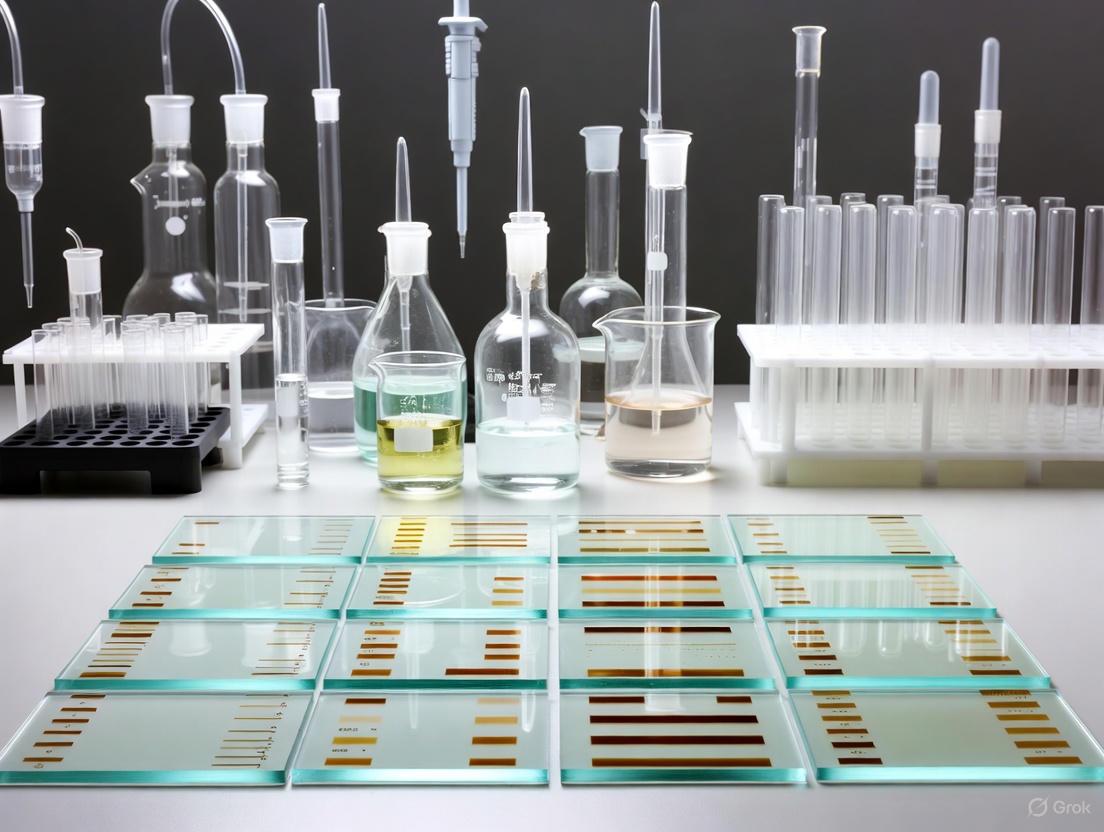
This article provides a comprehensive guide for researchers and scientists engaged in the chemical analysis of complex botanical matrices using High-Performance Thin-Layer Chromatography (HPTLC).
Overcoming Matrix Effects in Complex Botanical HPTLC Analysis: Strategies for Accurate Quantification
Abstract
This article provides a comprehensive guide for researchers and scientists engaged in the chemical analysis of complex botanical matrices using High-Performance Thin-Layer Chromatography (HPTLC). It addresses the critical challenge of matrix effects, which can severely compromise quantitative accuracy by causing signal suppression or enhancement. The content explores the fundamental sources of these effects in plant extracts, details methodological strategies for robust HPTLC method development, offers troubleshooting and optimization protocols for challenging samples, and outlines rigorous validation procedures aligned with ICH guidelines. By integrating foundational knowledge with advanced application techniques, this resource aims to empower professionals in pharmaceutical and nutraceutical development to achieve reliable, reproducible, and defensible analytical results for botanical safety and efficacy assessments.
Understanding Matrix Effects in Botanical HPTLC: From Fundamental Concepts to Complex Challenges
In High-Performance Thin-Layer Chromatography (HPTLC) of botanical samples, matrix effects refer to the interference caused by all components in the product except the target analyte (the substance of interest). These effects arise because plants consist of an incredibly wide variety of compounds—including lipids, sugars, and proteins—many of which are chemically similar to one another. In complex botanical matrices, these interfering compounds can obstruct the accurate separation and detection of target active ingredients, potentially leading to overlapping spots, inaccurate quantification, and false identifications. [1]
FAQ: Troubleshooting Matrix Effects in HPTLC
Q1: Why do my HPTLC bands appear smeared or overlapping? This is a classic symptom of matrix effects. Non-analyte components in your botanical sample, such as lipids, sugars, or pigments, can co-elute with your target compounds, preventing clear separation. To resolve this, optimize your sample preparation to remove these interferents. This might include using a different extraction solvent, or incorporating a clean-up step like solid-phase extraction. Furthermore, adjusting the mobile phase composition can improve separation selectivity. [1]
Q2: How can I confirm that my quantification is accurate despite a complex matrix? Thorough method validation is essential. You must define the Detection Limit (LOD) and Quantification Limit (LOQ) for your specific analyte within the complex matrix. This ensures your method is optimized to accurately capture even trace amounts of the active ingredient. Consistently using validated methods and including control standards in every run helps ensure reliable quantification across different sample batches. [1]
Q3: What causes variable results between different batches of the same botanical? Botanical material is inherently variable. Factors such as growing conditions, harvest time, and post-harvest processing can significantly alter the chemical profile—and thus the matrix composition—from batch to batch. To ensure your HPTLC methods remain robust, conduct reproducibility tests using multiple batches of the plant material. This validates that the method is effective even when the underlying botanical composition shifts. [1]
Q4: How does sample solvent choice affect my HPTLC results? An incorrect solvent can cause peak fronting or tailing. Ensure your sample is completely solubilized in a solvent that is compatible with the initial mobile phase. A poorly chosen, overly strong solvent can distort the application band. Always filter your sample through a 0.22 µm syringe filter to remove any coarse particles that could clog the application syringe. [2] [3]
Q5: Why is activation of the HPTLC plate necessary? The silica on HPTLC plates is hygroscopic and absorbs moisture from the air, which can alter its activity. If a plate is used without activation, the Rf values of polar compounds can be affected, as they may bind more tightly to the silica. For consistent results, activate plates by heating in an oven prior to use. Always handle plates by the edges to avoid contaminating the surface with oils from your skin. [2]
Experimental Protocols for Mitigating Matrix Effects
Protocol 1: Sample Preparation Clean-up for Oily or Pigmented Botanicals
- Objective: To remove interfering lipids and chlorophyll prior to HPTLC analysis.
- Materials: Sample, appropriate solvent (e.g., methanol), solid-phase extraction (SPE) cartridge (C18 or silica), clean collection vials.
- Procedure:
- Dissolve or dilute the botanical sample in a suitable solvent.
- Pre-condition the SPE cartridge with a few mL of the same solvent.
- Load the sample onto the cartridge.
- Wash with a weak solvent to elute the non-polar interferents (lipids, pigments).
- Elute your target analytes with a stronger solvent mixture.
- Evaporate the eluent to dryness and reconstitute in a precise volume of a solvent compatible with HPTLC application.
- Filter through a 0.22 µm syringe filter before application on the HPTLC plate. [1] [4]
Protocol 2: Method Validation for Quantification in a Complex Matrix
- Objective: To establish the LOD, LOQ, and linearity of your HPTLC method for a specific analyte within its botanical matrix.
- Materials: Standard reference compound, botanical matrix (placebo, if possible), HPTLC system, densitometer.
- Procedure:
- Prepare a series of standard solutions of the analyte at known concentrations.
- Spike these into the blank botanical matrix (the matrix without the analyte) to create a calibration series.
- Apply these spiked samples, along with a blank matrix sample, to the HPTLC plate.
- Develop, dry, and derivatize the plate as per your method.
- Scan the plate with a densitometer and record the peak areas.
- Plot a calibration curve of peak area versus concentration.
- The LOD and LOQ can be calculated based on the standard deviation of the response and the slope of the calibration curve (typically LOD = 3.3σ/S and LOQ = 10σ/S). [1]
Protocol 3: HPTLC-Bioautography for Function-Driven Analysis
- Objective: To detect bioactive compounds directly from the HPTLC plate, bypassing matrix interference through biological activity.
- Materials: Developed HPTLC plate, microbial broth or enzyme solution, agar, detection reagents (e.g., tetrazolium salts for viability).
- Procedure:
- Develop the botanical extract on the HPTLC plate using the optimized mobile phase.
- Carefully dry the plate to remove all solvent.
- Overlay the plate with a nutrient agar seeded with a test microorganism or a gel containing a target enzyme.
- Incub the plate under conditions that allow for microbial growth or enzymatic reaction.
- Zones of inhibition (for antimicrobial activity) or clear zones (for enzymatic activity) appear where bioactive compounds are located on the original plate. This directly links a biological effect to a specific chemical band, irrespective of most co-eluting matrix components. [5]
Workflow Diagram: A Systematic Approach to Managing Matrix Effects
The following diagram illustrates a logical workflow for diagnosing and addressing matrix effects in botanical HPTLC analysis.
Systematic Troubleshooting for Matrix Effects
Research Reagent Solutions for Complex Matrices
The following table details key reagents and materials essential for developing robust HPTLC methods that overcome matrix challenges. [2] [5]
| Item Name | Function / Explanation |
|---|---|
| Specific HPTLC Plates | Plates with finer, narrower particle size distribution (~10 µm) offer greater resolving power per unit distance, which is critical for separating analytes from similar matrix components. [2] |
| 0.22 µm Syringe Filter | Removes coarse particles or precipitates from the sample solution post-extraction, preventing clogging of the application syringe and ensuring a clean application zone. [2] |
| Solid-Phase Extraction (SPE) Cartridges | Used for sample clean-up to selectively isolate target analytes and remove interfering matrix components like lipids and pigments before HPTLC application. [1] [4] |
| Metal-Organic Frameworks (MOFs) | Advanced functional nanomaterials that can be used to modify HPTLC plates, providing selective analyte enrichment and enhanced separation of trace contaminants from complex food matrices. [5] |
| Derivatization Reagents | Chemicals like sulfuric acid or specific chromogenic agents used to visualize compounds that are not otherwise detectable, crucial for creating a full fingerprint of the botanical matrix. [2] |
| Reference Standard Materials | Authentic, high-purity chemical compounds are essential for method development, validation, and correct identification/quantification of analytes against a background of matrix interference. [1] [4] |
Advanced Multimodal HPTLC Platforms
For the most challenging matrix effects, advanced "HPTLC+" platforms integrate separation with high-end detection techniques to provide definitive results. [5]
- HPTLC-MS (Mass Spectrometry): Provides structural identity confirmation of separated bands directly from the plate, unequivocally distinguishing the target analyte from co-eluting matrix compounds with the same Rf. This synergy simplifies the matrix for the mass spectrometer, reducing ion suppression. [5]
- HPTLC-SERS (Surface-Enhanced Raman Spectroscopy): Offers molecular fingerprinting with high specificity. SERS can identify compounds based on their unique vibrational signatures, which is highly effective for detecting adulterants or confirming the identity of a target in a dense chemical background. [5]
- HPTLC-NIR (Near-Infrared Spectroscopy): A non-destructive method that can be used for compositional profiling directly on the plate, useful for monitoring food freshness or degradation without complex sample preparation. [5]
Frequently Asked Questions (FAQs)
FAQ 1: What are the most significant challenges when analyzing complex botanical matrices with HPTLC? The primary challenges are matrix effects, the complexity of plant chemical profiles, and batch-to-batch variability. Botanical matrices contain a wide variety of compounds like lipids, sugars, and proteins that can interfere with the detection of target substances, causing overlapping spots and making it difficult to identify and quantify desired analytes [1]. Furthermore, plants produce a wide range of structurally similar secondary metabolites, some in very low concentrations, complicating their detection and differentiation [1].
FAQ 2: How can I improve the separation and reduce streaking of my botanical sample on the HPTLC plate? Sample streaking or elongation is often a result of sample overloading or issues with the compound's properties. To address this [6]:
- Dilute your sample solution and re-run the analysis.
- For base-sensitive compounds, add acetic or formic acid (0.1–2.0%) to the mobile phase.
- For acid-sensitive compounds, add triethylamine (0.1–2.0%) to the mobile phase.
- For highly polar compounds, consider using a specialized HPTLC plate, such as a C18 reversed-phase plate [6].
FAQ 3: Why are my target compounds not visible after development, and how can I visualize them? If spots are not visible, the sample may be too diluted, the compounds may not be UV-sensitive, or they may have evaporated. Solutions include [6]:
- Concentrate the sample by spotting several times in the same location, letting it dry between applications.
- Ensure the solvent level in the development tank is below the spotting line.
- Use an appropriate visualization method. The table below details common staining reagents.
Table 1: Common Staining Reagents for Visualization in HPTLC
| Stain/Reagent | Best For Analyzing | Recipe & Application Notes |
|---|---|---|
| UV Light | Highly conjugated compounds & aromatic rings [6] | Non-destructive method; use a UV lamp and trace spots with a pencil [6]. |
| Iodine Vapor | Unsaturated & aromatic compounds [6] | Place plate in iodine-saturated chamber; spots appear brown; record quickly as stains fade [6]. |
| Anisaldehyde | Aldehydes, carbohydrates, phenols [6] | 15 g anisaldehyde + 250 mL ethanol + 2.5 mL conc. sulfuric acid; usually requires heating [6]. |
| Potassium Permanganate | Oxidizable groups (alkenes, alkynes, alcohols, amines) [6] | 3 g KMnO₄ + 10 g K₂CO₃ + 300 mL water; yellow spots on pink/purple background [6]. |
| Phosphomolybdic Acid (PMA) | Universal stain for most functional groups [6] | 10 g PMA + 100 mL absolute ethanol; requires strong heat; green spots [6]. |
| Ninhydrin | Amino acids & primary amines [6] | 1.5 g ninhydrin + 100 mL n-butanol/acetone + 3 mL acetic acid; gentle heating required [6]. |
| Vanillin | Steroids, higher alcohols, phenols [6] | 15 g vanillin + 250 mL ethanol + 2.5 mL sulfuric acid; provides a wide range of colors [6]. |
FAQ 4: My compounds are running too close to the solvent front or the baseline. How can I adjust their Rf values? The Rf value is controlled by the polarity of the mobile phase [6]:
- If compounds are too close to the baseline, the eluent is not polar enough. Increase the proportion of polar solvent or choose a more polar solvent.
- If compounds are too close to the solvent front, the eluent is too polar. Decrease the proportion of polar solvent or choose a less polar solvent.
- If adjusting the mobile phase is insufficient, consider changing the stationary phase, for example, to a reversed-phase plate like C18 [6].
Troubleshooting Guides
Troubleshooting Sample Preparation and Application
Table 2: Troubleshooting Sample-Related Issues
| Problem | Potential Cause | Solution |
|---|---|---|
| Sample Streaking | 1. Sample overloaded [6].2. Acid/base-sensitive compounds degrading [6]. | 1. Dilute the sample and re-apply [6].2. Modify mobile phase with acid or base as described in FAQ 2 [6]. |
| Clogged Application Syringe | Coarse particles or precipitate in the sample [2]. | Ensure complete sample solubilization and always filter the sample through a 0.22 µm syringe filter before loading [2]. |
| Inconsistent Sample Band Application | Variable band position or width during application [2]. | Keep the position and width of application bands constant using the autosampler software, as these directly influence Rf values and quantitative band intensity [2]. |
| Air Bubbles in Syringe | Incorrect sample loading volume, leading to false positives [2]. | Hold the syringe upright and purge the bubbles out before application [2]. |
Troubleshooting Plate Development and Visualization
Table 3: Troubleshooting Development and Detection Issues
| Problem | Potential Cause | Solution |
|---|---|---|
| Inconsistent Rf Values | 1. Plate not activated [2].2. Variable heating during charring [2]. | 1. Activate silica plates by heating in an oven prior to use to remove absorbed water [2].2. For charring, keep oven time and temperature constant for all analyses [2]. |
| Dissolved Bands After Derivatization | Plate not properly dried after development [2]. | Dry the plate completely after the run and before dipping it in the derivatization agent. Use a blow-dryer to save time [2]. |
| Uneven or Faint Staining | 1. Plate immersed in derivatization agent for too long [2].2. Inadequate heating for stains requiring it [6]. | 1. Dip the plate for only a few seconds until it is evenly soaked [2].2. Ensure appropriate and consistent heating for stains like PMA, Anisaldehyde, or Ninhydrin [6]. |
| Uneven Background After Heating | Use of a hot plate for heating [2]. | Avoid hot plates, which heat unevenly. Use an HPTLC plate heater or a controlled-temperature oven for even heat distribution [2]. |
| Ghost Peaks or Unexpected Signals | 1. Contaminants on the plate from handling [2].2. Contaminants in mobile phase or equipment [3]. | 1. Always handle plates by the edges or with clean forceps to avoid transferring skin oils[dirty hands]2. Run blank injections; use fresh, filtered mobile phases; and maintain clean equipment [3]. |
Experimental Workflow for Overcoming Matrix Effects
The following diagram outlines a systematic workflow for the HPTLC analysis of complex botanical matrices, integrating steps to mitigate common matrix effects.
HPTLC Analysis Workflow
Detailed Protocol: HPTLC Analysis of Cannabinoids in Cannabis Extracts
This validated protocol exemplifies the analysis of specific compounds within a complex botanical matrix [7].
1. Sample and Standard Preparation:
- Standard Solutions: Prepare working solutions (100 µg/mL) of cannabinoid standards by diluting 1-mg/mL certified standard solutions with LC-grade methanol [7].
- Standard Mixture: Create a mixture of all 11 cannabinoid standards by combining 136 µL aliquots of each individual standard, yielding a final concentration of approximately 91 µg/mL for each cannabinoid [7].
- Botanical Sample Preparation:
- Dry 500 mg of ground cannabis vegetation at 60°C overnight.
- Extract 100 mg of the dried, ground material with 50 mL of chloroform.
- Evaporate the extract to dryness and reconstitute it in 5 mL of 0.2% (w/v) tetracosane in methanol [7].
2. HPTLC Instrumentation and Parameters:
- Plate: Use commercial HPTLC plates.
- Applicator: CAMAG automatic TLC sampler 4 (band or dot application).
- Development Chamber: CAMAG automatic development chamber-2 (ADC2).
- Documentation: CAMAG TLC visualizer.
3. Method Execution:
- Application: Apply methanol blanks, standard working solutions, and prepared case samples onto the HPTLC plate [7].
- Development:
- Pre-dry the plate for 30 seconds.
- Condition the chamber for 20 minutes with the mobile phase for humidity control and tank saturation.
- Develop the plate to a migration distance of 70 mm with an optimized mobile phase. Two validated options are [7]:
- 6% Diethylamine:Toluene (6DaT)
- Xylene:Hexane:Diethylamine (25:10:1) (XHDa)
- After development, remove the plate and dry for 5 minutes [7].
- Visualization & Documentation: Document the plate under white light, and at 254 nm and 366 nm wavelengths using the TLC visualizer [7].
- Data Analysis: Calculate the Rf values for each compound. The table below shows sample data for one mobile phase system [7].
Table 4: Example RF Data for Cannabinoids in Hexane:Acetone (87:13) (n=3)
| Cannabinoid | Average RF (± St. Dev.) | RF CV% |
|---|---|---|
| Δ8-THC | 0.390 (± 0.014) | 3.47 |
| Δ9-THC | 0.336 (± 0.017) | 5.09 |
| CBD | 0.305 (± 0.012) | 3.85 |
| CBN | 0.254 (± 0.013) | 5.06 |
| CBG | 0.151 (± 0.008) | 5.42 |
| THCA-A | 0.054 (± 0.001) | 2.13 |
The Scientist's Toolkit: Essential Research Reagent Solutions
Table 5: Key Materials and Reagents for Botanical HPTLC Analysis
| Item | Function / Description | Key Features & Selection Criteria |
|---|---|---|
| HPTLC Plates | The stationary phase for separation. | Features a smaller particle size (≤10 µm) and narrower distribution than TLC, offering greater resolving power, faster development, and 5-10x better detection sensitivity [2] [8]. |
| Normal Phase (Silica) | Standard for most separations [8]. | Ideal for a wide range of compound separations under normal-phase conditions [8]. |
| Reversed Phase (C18) | For separating very non-polar and highly polar substances with aqueous solvent systems [8]. | Useful for highly polar compounds that streak on normal silica [6]. C18-50 can handle up to 60% water [8]. |
| Amino & Cyano Phases | For hydrophilic/charged samples; can be used in both normal and reversed-phase modes [8]. | Useful for sugars, steroids, and pesticides [8]. |
| Syringe Filters (0.22 µm) | Removes coarse particles/precipitate from the sample solution [2]. | Prevents clogging of the expensive HPTLC application syringe, ensuring accurate and precise sample volume deposition [2]. |
| Derivatization Reagents | Chemical stains used to visualize compounds that are not UV-active [6]. | A range of reagents is needed for different compound classes (see Table 1). Some are universal (PMA), while others are specific (Ninhydrin for amino acids) [6]. |
| Mobile Phase Additives | Modifiers to improve separation and reduce streaking. | Acids (e.g., Acetic, Formic): For base-sensitive compounds [6]. Bases (e.g., Diethylamine, Triethylamine): For acid-sensitive compounds [6] [7]. |
| HPTLC Plate Heater / Oven | Provides controlled, even heating for steps like plate activation and stain development [2]. | Crucial for reproducibility. Avoids the uneven heating of a hotplate, which can cause localized over- or under-heating and inconsistent results [2]. |
In High-Performance Thin-Layer Chromatography (HPTLC) analysis of complex botanical extracts, matrix effects present significant challenges that can compromise analytical accuracy and reproducibility. These effects manifest primarily as signal suppression or enhancement of target analytes and overlapping spots, both stemming from co-elution of interfering compounds from the plant matrix. This technical guide provides targeted troubleshooting methodologies to identify, evaluate, and overcome these issues, enabling researchers to generate reliable data for pharmaceutical and nutraceutical development. The protocols outlined are specifically framed within botanical research contexts, where complex mixtures of secondary metabolites interact with both stationary and mobile phases in unpredictable ways.
Understanding the Fundamental Challenges
Signal Suppression and Enhancement
Signal suppression and enhancement occur when components from complex botanical matrices co-elute with target analytes, interfering with their detection and quantification. In mass spectrometry-based detection, these effects arise when interfering compounds alter the ionization efficiency of target analytes in the source [9]. Similarly, in densitometric detection, matrix components can quench or enhance fluorescence and UV absorption characteristics. One study noted that ion suppression effects can reduce analytical accuracy by as much as 26% [10]. These phenomena are particularly problematic in botanical research where concentrations of active constituents are often low and matrix complexity is high.
Overlapping Spots
Overlapping spots occur when target analytes and interfering matrix compounds migrate to similar positions on the HPTLC plate, resulting in inadequate separation. This problem manifests as streaked, elongated, or poorly resolved spots that prevent accurate quantification and identification [6] [11]. In botanical HPTLC analysis, this frequently occurs when the sample is overloaded or when the mobile phase lacks sufficient selectivity for the compounds of interest.
Troubleshooting FAQs
FAQ 1: How can I determine if my HPTLC analysis is experiencing matrix effects?
Answer: Several experimental approaches can qualitatively and quantitatively assess matrix effects:
Post-Extraction Spike Method: Compare the response of a target analyte in neat solvent standard to the response of the same analyte spiked into a pre-extracted blank matrix at the same concentration. Significant deviation between the two responses indicates matrix effects [9]. Calculate the matrix effect (ME) using the formula: ME (%) = (Peak area of post-spiked sample / Peak area of standard solution - 1) × 100 A negative value indicates suppression, while a positive value indicates enhancement.
Slope Ratio Analysis: Prepare a calibration curve in neat solvent and another in matrix-matched standards. The ratio of their slopes provides a quantitative measure of the overall matrix effect across different concentrations [9].
Visual Inspection of Chromatograms: Look for signs such as peak tailing, fronting, or broadening in sample chromatograms compared to standards [11].
FAQ 2: What are the primary causes of streaking or elongated spots in botanical HPTLC?
Answer: Streaking compromises separation and quantification, with these main causes and solutions [6] [12] [11]:
Sample Overloading: Excessive application of sample, particularly with complex botanical extracts, exceeds the stationary phase's capacity.
- Solution: Dilute the sample progressively until spot definition improves. For initial testing, a standard dilution ratio of 1 drop of sample to approximately 1 mL of solvent is recommended [12].
Inappropriate Sample Solvent: Using a solvent that is too polar for normal-phase HPTLC can cause spot spreading during application.
- Solution: Use the least polar solvent that completely dissolves your analytes (e.g., hexane, dichloromethane) [12].
Chemical Interactions: Ionic or strong interactions between analytes and the active sites on the stationary phase (e.g., silica gel) can cause tailing.
FAQ 3: My target compounds are invisible after development. What steps should I take?
Answer: This common issue has several potential remedies [6] [11]:
Check Sample Concentration: The analyte may be too diluted. Concentrate your sample or apply multiple spots in the same location, allowing the solvent to dry completely between applications [6].
Verify Visualization Method: Your compound may not be UV-active. Use an appropriate chemical derivatization reagent (e.g., anisaldehyde, vanillin, phosphomolybdic acid) to visualize the spots [6].
Confirm Solvent Level: Ensure the developing solvent level in the chamber is below the application line. If the solvent covers the spots, analytes will dissolve into the reservoir instead of migrating [11].
FAQ 4: How can I resolve overlapping spots of my bioactive marker and matrix interference?
Answer: To improve resolution between closely migrating compounds:
Optimize Mobile Phase Polarity: Adjust the solvent system to achieve ideal Rf values (0.2-0.8, ideally 0.4) [12]. If compounds are too close to the solvent front (Rf > 0.8), decrease mobile phase polarity. If they are near the baseline (Rf < 0.2), increase polarity [6] [13].
Employ "Co-spotting": Apply the standard and sample mixture in the same spot. If the suspect spot in the sample shows increased size or deformation without splitting into two distinct spots, it likely co-elutes with the standard [6].
Change Separation Mode: If normal-phase systems consistently fail, switch to reversed-phase plates (e.g., C18) for highly polar compounds [6] [13].
Use Multiple Developments: Develop the plate in the same mobile phase multiple times, with drying between developments, to increase the total migration distance and improve separation [12].
Experimental Protocols for Systematic Problem-Solving
Protocol for Evaluating Matrix Effects via Post-Extraction Spiking
This method provides a quantitative measure of matrix effects [9].
Prepare Solutions:
- Solution A (Standard in Solvent): Prepare a known concentration of your target analyte in a neat solvent.
- Solution B (Post-Extraction Spiked): Take a blank botanical extract (from a matrix known not to contain the analyte), go through the entire extraction and clean-up process. Spike this cleaned blank matrix with the same concentration of analyte as in Solution A.
Analysis and Calculation:
- Analyze both solutions using your established HPTLC method.
- Compare the peak areas (or spot intensities) of the analyte in both solutions.
- Calculate the Matrix Effect (ME) as follows: ME (%) = [(Area of Solution B / Area of Solution A) - 1] × 100
- An ME value of ±15% is often considered the acceptable limit in validated methods. Significant suppression or enhancement necessitates further method optimization.
Protocol for Mobile Phase Optimization using the PRISMA Approach
This systematic three-step approach efficiently identifies the optimal mobile phase [12].
Diagram 1: The PRISMA model for systematic mobile phase optimization.
Standard HPTLC Protocol for Botanical Extracts with Minimal Matrix Effects
This workflow integrates best practices to prevent common issues [13] [12].
Plate Preparation:
- Pre-washing: Develop blank HPTLC plates (silica gel 60 F254) with methanol to the top. Dry completely in a fume hood.
- Activation: Activate the plates in a clean oven at 120°C for 20-30 minutes. Cool in a desiccator before use.
Sample Preparation:
- Extraction: Use appropriate solvents (e.g., hydroalcoholic mixtures for phenolics) to extract target bioactive compounds.
- Clean-up: Employ solid-phase extraction (SPE) or liquid-liquid extraction to remove interfering pigments, lipids, or sugars.
- Dissolution: Re-dissolve the final extract in a non-polar or moderately polar solvent (e.g., dichloromethane or ethyl acetate) at a concentration of 0.5-10 mg/mL.
Sample Application:
- Using an automated applicator or micropipette, apply samples as narrow bands (6-8 mm width).
- Maintain a spot diameter under 2 mm if applying manually.
- Keep the application volume between 0.5-5.0 μL for analytical purposes.
Chromatogram Development:
- Use a saturated twin-trough chamber with a filter paper lining.
- Equilibrate the chamber with the mobile phase for 20-25 minutes before development.
- Develop the plate until the mobile phase migrates to a distance of 70-80 mm from the origin.
Derivatization and Detection:
- Dry the plate thoroughly to remove solvent residues.
- Use a sequence of non-destructive (UV 254/366 nm) and destructive (chemical derivatization) visualization methods appropriate for your compound class.
Research Reagent Solutions for Matrix Management
Table 1: Essential reagents and materials for troubleshooting HPTLC matrix effects.
| Reagent/Material | Function & Application in Troubleshooting |
|---|---|
| Triethylamine (0.1-2.0%) | Mobile phase additive to suppress tailing of basic compounds (e.g., alkaloids) by blocking active silanol sites on silica gel [6] [12]. |
| Acetic/Formic Acid (0.1-2.0%) | Mobile phase additive to suppress ionization and tailing of acidic compounds (e.g., phenolic acids, flavonoids) [6] [12]. |
| C18 Reversed-Phase Plates | Stationary phase for separating highly polar compounds that streak on normal-phase silica gel plates [6] [13]. |
| Anisaldehyde Sulfuric Acid Reagent | A universal chemical derivatization reagent that produces colored spots for a wide range of functional groups, particularly useful for non-UV active terpenoids and sugars [6]. |
| Ammonium Fluoride (NH₄F) | An eluent additive in LC-MS that can significantly enhance signal intensity for certain compound classes (e.g., steroids), potentially applicable in HPTLC-MS hyphenation [14]. |
Advanced Methodological Considerations
The Role of Internal Standards in Quantitative Correction
For precise quantification, especially when matrix effects cannot be fully eliminated, the use of a suitable internal standard (IS) is critical. A stable isotope-labelled (SIL) analogue of the analyte is ideal because it has nearly identical physicochemical properties [10] [9]. A key requirement for effective correction is that the IS must completely co-elute with the analyte. Research has demonstrated that incomplete overlapping of analyte and internal standard peaks can lead to significant data scatter and failed correction of matrix effects, as the two molecules may not experience the same ionization conditions at any given moment [10].
Chamber Saturation and Humidity Control
The gas phase in the development chamber significantly impacts reproducibility. Unsaturated chambers can cause edge effects (solvent front curving up at the edges) and inconsistent Rf values. Always pre-saturate the chamber with a filter paper soaked in the mobile phase for at least 20 minutes [13] [12]. Furthermore, humidity can deactivate the stationary phase. For highly reproducible results, condition activated plates for 45 minutes in a chamber with a controlled relative humidity (e.g., using a saturated MgCl₂ solution for 33% RH) immediately before development [13].
Diagram 2: Quick-reference troubleshooting guide for common HPTLC spot manifestations.
Troubleshooting Guides
FAQ: Addressing Common HPTLC Challenges with Botanical Variability
Q1: My HPTLC fingerprints show significant differences between batches of the same botanical material. How can I determine if this is normal variation or a quality failure?
A: Batch-to-batch variation is expected in botanical materials, but systematic monitoring is required to distinguish common-cause variation from significant quality deviations. Implement a multivariate statistical analysis approach using historical batch data (e.g., 200+ batches) to establish a quality control baseline [15]. Calculate statistical control limits for Hotelling T² and DModX (Distance to the Model in X-space) to objectively determine if new batches fall within expected variability ranges [15].
Q2: How can I minimize the impact of botanical matrix effects on my HPTLC quantification results?
A: Matrix effects from co-eluting compounds (lipids, sugars, proteins) can cause ionization suppression or enhancement, particularly when using HPTLC-MS coupling [1] [9]. To combat this:
- Optimize sample preparation and chromatographic conditions to separate target analytes from interfering compounds [1]
- Use appropriate internal standards, particularly isotope-labeled standards when available [9]
- Perform post-column infusion experiments to identify regions of ion suppression/enhancement in your chromatographic method [9]
Q3: What critical sample information is essential for meaningful HPTLC comparison across variable botanical batches?
A: Consistent documentation is vital for tracing variability sources. For every sample, record these four key elements [16]:
- Latin name (Genus and species) to ensure correct species identification
- Plant part used (root, leaf, bark, etc.) as chemical profiles vary significantly
- Extraction solvents and processing methods that impact chemical fingerprint
- Vendor Certificate of Analysis (CoA) for traceability
Q4: How does seasonal variation specifically affect the quantitative results of marker compounds in botanicals?
A: Seasonal variation significantly impacts alkaloid and secondary metabolite content. A validated HPTLC study on Rauvolfia species demonstrated that ajmalicine levels were highest in March collections, while reserpine peaked in September collections [17]. This highlights the importance of determining optimal harvesting times for specific target compounds and standardizing collection periods for quality control.
Q5: What are the most common technical mistakes in HPTLC that might exaggerate apparent batch-to-batch variation?
A: Several technical factors can introduce artificial variability [2]:
- Inconsistent plate activation (hygroscopic silica absorbs moisture from air)
- Variable derivatization conditions (especially heating time/temperature)
- Improper sample application (position, bandwidth consistency)
- Incomplete sample solubilization before application Standardize these technical parameters across all analyses to ensure observed variation reflects true botanical differences rather than methodological inconsistencies.
Experimental Protocols
Detailed Methodology: Multivariate Statistical Analysis for Batch Consistency
Protocol Title: Using Multivariate Statistical Analysis with HPTLC Fingerprinting for Batch-to-Batch Quality Consistency Evaluation [15]
Objective: To establish a statistical model for evaluating quality consistency of botanical drug products across multiple production batches.
Materials and Equipment:
- HPTLC system with automated sample applicator
- HPTLC plates (silica gel 60 F254, 20 × 10 cm)
- Precision syringe (100 μL)
- Controlled development chamber
- Densitometer or imaging scanner
- Multivariate statistical analysis software
Procedure:
Step 1: Sample Collection and Preparation
- Collect HPTLC fingerprint data from a substantial number of historical batches (minimum 50-100 batches, ideally 200+ for robust modeling) [15]
- Ensure consistent sample preparation: for direct injection, filter samples through 0.22 μm syringe filter to remove particulates [2]
Step 2: HPTLC Analysis
- Apply samples as bands (not spots) using automated applicator for consistency [2]
- Maintain constant application position (from lower and side edges) and bandwidth [2]
- Develop plates in saturated twin-trough chamber with optimized mobile phase
- Dry plates completely after development using consistent drying method [2]
- Detect using appropriate wavelength (e.g., 203 nm for ginsenosides) [15]
Step 3: Data Preprocessing
- Identify K characteristic peaks across N batches to construct data matrix X (N × K) [15]
- Apply standardization and variability-based weighting to peak areas:
- Standardize each peak to mean = 0 and variance = 1
- Weight peaks according to their variability among production batches [15]
Step 4: Multivariate Model Establishment
- Perform Principal Component Analysis (PCA) on preprocessed data
- Identify and modify/remove outliers from the model
- Establish control limits for Hotelling T² and DModX statistics based on historical batch data [15]
Step 5: Batch Consistency Evaluation
- For new batches, project HPTLC fingerprint data onto established PCA model
- Calculate Hotelling T² (measures variation within model) and DModX (measures distance to model)
- Compare to statistical control limits to determine if batch is within expected variability range [15]
Validation Parameters:
- Method precision (RSD < 5%)
- Linearity (R² > 0.99)
- Limit of detection (LOD) and quantification (LOQ)
- Specificity (separation of target compounds)
Detailed Methodology: Seasonal Variation Analysis of Bioactive Compounds
Protocol Title: Validated HPTLC Method for Seasonal Variation Assessment of Antihypertensive Alkaloids [17]
Objective: To determine optimal harvesting time by quantifying seasonal variations of reserpine and ajmalicine in Rauvolfia species.
Materials:
- Plant materials collected in March, June, September, December
- Reference standards: reserpine and ajmalicine
- HPTLC plates (silica gel 60 F254)
- Mobile phase: toluene-ethyl acetate-diethyl amine (7:2:0.6 v/v/v)
- HPTLC-densitometer with winCATS software
Chromatographic Conditions:
- Application volume: 10 μL (standards and samples)
- Development distance: 80 mm
- Chamber saturation: 20 min
- Detection: densitometry at 302 nm
Procedure:
- Prepare methanolic extracts of plant materials for each seasonal collection
- Apply standards and samples as bands (8 mm length, 15 mm from bottom)
- Develop plate in mobile phase to 80 mm distance
- Dry plate, scan at 302 nm
- Identify alkaloids by Rf values: reserpine (Rf 0.56), ajmalicine (Rf 0.79) [17]
Validation Parameters:
- Instrument precision: RSD ≤ 1.5%
- Method precision: RSD ≤ 1.5%
- Linearity range: 100-1000 ng/band (reserpine), 100-800 ng/band (ajmalicine)
- LOD: 13.48 ng/band (reserpine), 17.86 ng/band (ajmalicine)
- LOQ: 43.09 ng/band (reserpine), 59.55 ng/band (ajmalicine) [17]
Data Presentation
| Compound | Species | March | June | September | December | Optimal Harvest |
|---|---|---|---|---|---|---|
| Ajmalicine | R. serpentina | 0.240% | 0.180% | 0.205% | 0.155% | March |
| Ajmalicine | R. tetraphylla | 0.235% | 0.175% | 0.210% | 0.160% | March |
| Reserpine | R. serpentina | 0.080% | 0.100% | 0.150% | 0.120% | September |
| Reserpine | R. tetraphylla | 0.075% | 0.095% | 0.145% | 0.115% | September |
Values represent mean percentage content in plant material. Maximum yields for each compound are highlighted in bold.
| Strategy | Approach | When to Use | Limitations |
|---|---|---|---|
| Minimization Approaches | Adjust MS parameters; optimize chromatography; sample clean-up | When sensitivity is crucial; equipment allows parameter optimization | May not completely eliminate ME; requires method re-validation |
| Compensation with Blank Matrix | Isotope-labeled IS; matrix-matched calibration | When blank matrix is available; high precision required | Blank matrix not always available; isotope standards expensive |
| Compensation without Blank Matrix | Background subtraction; surrogate matrices | When blank matrix unavailable; analyzing endogenous compounds | May reduce accuracy; requires demonstration of similar response |
Workflow Visualization
HPTLC Batch Consistency Workflow
Research Reagent Solutions
Essential Materials for Botanical HPTLC Analysis
| Item | Function | Application Notes |
|---|---|---|
| HPTLC Plates (silica gel 60 F254) | Stationary phase for compound separation | Superior to conventional TLC plates: thinner layers, smaller particles (≈10 µm), narrower distribution [2] |
| Post-chromatographic derivatization reagents | Visualize compounds without chromophores/fluorophores | Apply via automated spraying; enables detection of sugars, alkaloids via specific color reactions [18] |
| Reference standards (e.g., reserpine, ajmalicine) | Compound identification and quantification | Essential for method validation; calculate Rf values and prepare calibration curves [17] |
| Matrix-matched calibration standards | Compensate for matrix effects | Prepare in blank matrix when available; improves quantification accuracy [9] |
| HPTLC-MS Interface | Structural elucidation of separated compounds | Automated elution of specific zones for mass spectrometry analysis [19] |
Technical Troubleshooting Guides
Poor Resolution of Withanolides in HPTLC
Problem: Inadequate separation of key withanolides (e.g., withaferin A, withanolide A, withanone) and phenolic acids in HPTLC analysis, leading to overlapping spots.
Solutions:
- Mobile Phase Optimization: Use a optimized mobile phase of toluene:ethyl acetate:acetic acid (60:40:4, v/v/v) for enhanced resolution of withanolides and phenolic acids [20].
- Plate Pre-treatment: Ensure silica-coated aluminium plates (Si 60F254) are activated at 110°C for 20-30 minutes before sample application to remove moisture.
- Band Application: Apply samples as narrow bands (6-8 mm) rather than spots to improve separation efficiency and resolution.
- Detection Wavelength: Confirm quantification is performed at 231 nm for optimal detection of withanolides [20].
Suspected Adulteration with Aerial Plant Parts
Problem: Suspect undisclosed addition of lower-cost leaves and stems to root-only labeled products.
Solutions:
- Microscopic Analysis: Perform microscopic investigation to identify plant fragments and starch granules characteristic of root material that should be absent in properly prepared extracts [21].
- Multi-Analyte Profiling: Move beyond single-class compound testing. Implement methods that detect both withanolides and phenolic acids, as leaf material has different phytochemical ratios [20] [22].
- HPLC-UV Comparison: Compare the chromatographic profile of the test sample with authentic root and leaf materials. Nearly identical peak patterns and signal intensities between a test extract and raw root powder may indicate improper labeling [21].
Inaccurate Quantification of Withanolides
Problem: Discrepancy between labeled and measured withanolide content, with some products showing ~0.15% content versus claimed 5% [21].
Solutions:
- Comprehensive Standardization: Use multiple authentic standards including withaferin A, withanolide A, withanone, withanoside IV, and withanoside V for accurate quantification [23].
- Extraction Efficiency: Perform triple extraction with methanol at 70°C for 30 minutes each to ensure complete extraction of analytes [21].
- Mass Spectrometry Confirmation: Confirm peak identity by positive ion electrospray ionization mass spectrometry (ESI-MS/MS) analyses, especially for withanolides [20].
Matrix Interference in Complex Formulations
Problem: Analytical method developed for pure Ashwagandha root extract fails when applied to polyherbal formulations due to interfering metabolites.
Solutions:
- Enhanced Specificity: Implement a multi-detector platform combining UHPLC with photodiode array (PDA), charged aerosol detection (CAD), and high-resolution mass spectrometry (HRMS) to compensate for detector biases and provide comprehensive fingerprints [24].
- Advanced MS Techniques: Utilize parallel-reaction-monitoring (PRM) with an inclusion list or multiple-reaction-monitoring (MRM) for targeted quantification with high specificity in complex matrices [23].
- HPTLC Method Validation: Validate methods following ICH guidelines for specificity, accuracy, precision, LOD, and LOQ to ensure reliability across different formulations [20].
Frequently Asked Questions (FAQs)
Q1: What is the most effective mobile phase system for simultaneous analysis of withanolides and phenolic acids in Ashwagandha?
A1: Research indicates that toluene:ethyl acetate:acetic acid (60:40:4, v/v/v) provides optimal separation for simultaneous quantification of three withanolides (withaferin A, withanone, withanolide A) and three phenolic acids (caffeic, ferulic, and benzoic acids) on silica gel HPTLC plates [20]. This system offers enhanced resolution of studied analytes compared to other phytoconstituents present in W. somnifera extracts.
Q2: How can we distinguish between genuine Ashwagandha root extract and adulterated products?
A2: Authentication requires a multi-pronged approach:
- Chemical Profiling: Use HPLC-UV to compare chromatographic fingerprints with authentic reference material [21].
- Microscopy: Detect starch granules and plant fragments inconsistent with pure extracts [21].
- Multi-Class Analysis: Test for both withanolides and phenolic acid profiles, as leaf-adulterated products will show different chemical signatures than root-only products [22].
- Standardized Methods: Follow the newly released Botanical Adulterants Prevention Program (BAPP) Laboratory Guidance Document which evaluates 22 analytical methods for authenticating ashwagandha root and detecting adulteration [22].
Q3: What are the key validation parameters for HPTLC methods in Ashwagandha analysis?
A3: For reliable HPTLC methods, validate these key parameters per ICH guidelines:
- Linearity: Demonstrate r > 0.99 across appropriate ranges (e.g., 50-1000 ng/band for most withanolides and phenolic acids) [20].
- Sensitivity: Determine Limit of Detection (LOD) and Limit of Quantification (LOQ) for each analyte.
- Specificity: Confirm peak purity by matching Rf values and UV spectra with authentic standards [20].
- Precision and Accuracy: Establish method reproducibility and recovery rates [20].
Q4: What advanced techniques provide the most comprehensive chemical characterization of Ashwagandha extracts?
A4: A multi-detector platform incorporating UHPLC-PDA-CAD-HRMS provides the most comprehensive characterization, enabling identification and semi-quantification of over 60 constituents in ashwagandha extracts [24]. This approach combines:
- PDA: For UV-active compound detection
- CAD: For semi-universal quantification
- HRMS: For precise identification of constituents This system compensates for potential detector biases and provides a thorough fingerprint for authentication [24].
Table 1: HPTLC Validation Parameters for Key Ashwagandha Compounds [20]
| Compound | Linear Range (ng/band) | Correlation Coefficient (r) | Primary Detection Wavelength |
|---|---|---|---|
| Withaferin A | 50-1000 | >0.99 | 231 nm |
| Withanone | 50-1000 | >0.99 | 231 nm |
| Withanolide A | 50-1000 | >0.99 | 231 nm |
| Caffeic Acid | 50-1000 | >0.99 | 231 nm |
| Ferulic Acid | 50-1000 | >0.99 | 231 nm |
| Benzoic Acid | 50-2000 | >0.99 | 231 nm |
Table 2: Comparison of Claimed vs. Actual Withanolide Content in Marketed Products [21]
| Product Type | Claimed Withanolide Content | Actual Measured Content | Analytical Technique |
|---|---|---|---|
| Ashwagandha Root Extract Capsules | 2.5-5% | ~0.15% | HPLC-UV |
| Authentic Ashwagandha Root | Not applicable | ~0.15% (consistent with literature) | HPLC-UV |
Table 3: Research Reagent Solutions for Ashwagandha Analysis
| Reagent/Standard | Function/Application | Source/Reference |
|---|---|---|
| Withaferin A Standard | Bioactive marker quantification; quality control | [20] [25] [26] |
| Withanolide A Standard | Bioactive marker quantification; standardization | [20] [23] |
| Withanone Standard | Method development; compound identification | [20] [23] |
| Phenolic Acid Standards (Caffeic, Ferulic, Benzoic) | Adulteration detection; method specificity | [20] |
| Toluene:Ethyl Acetate:Acetic Acid (60:40:4) | HPTLC mobile phase for simultaneous withanolide and phenolic acid separation | [20] |
| Acetonitrile:Buffer (35:65) | HPLC mobile phase for Withaferin A analysis | [25] |
| Methanol (70%) | Optimal extraction solvent for withanolides and total phenolics | [23] |
Experimental Workflow Visualization
Method Optimization Protocols
Sample Preparation:
- Accurately weigh 100 mg of Ashwagandha root extract
- Perform triple extraction with 15 mL methanol at 70°C for 30 minutes in ultrasonic bath
- Combine supernatants and adjust total volume to 50 mL with methanol
- Filter through 0.22 μm membrane before application
Chromatographic Conditions:
- Stationary Phase: Silica-coated aluminium plates Si 60F254
- Mobile Phase: Toluene:ethyl acetate:acetic acid (60:40:4, v/v/v)
- Application Volume: 50-1000 ng/band (depending on analyte)
- Development: Saturate chamber for 20 minutes, develop to 80 mm
- Detection: Scan at 231 nm for quantification
- Derivatization: Optional vanillin-sulphuric acid reagent for additional detection
Chromatographic Conditions:
- Column: C18 Eclipse, XDB (4.6 × 150 mm, 5μm)
- Mobile Phase: Acetonitrile:Buffer (35:65, v/v) - isocratic
- Buffer: 0.1 M KH₂PO₄ with 0.5 mL orthophosphoric acid
- Flow Rate: 1.8 mL/min
- Detection: 227 nm (DAD)
- Column Temperature: 32°C
- Injection Volume: 10 μL
- Retention Time: ~5.05 minutes for withaferin A
System Configuration:
- Separation: UHPLC with Hypersil Gold aQ (2.1 × 150 mm, 1.9 µm) column
- Detection Cascade: PDA → CAD → HRMS (positive and negative mode)
- MS Parameters: m/z 125-2000 at resolution 120,000; data-dependent acquisition with CID and HCD fragmentation
- Sample Preparation: 20 mg/mL in 50:50 methanol-water, sonication and centrifugation
This integrated approach enables identification of over 60 constituents and provides a comprehensive chemical fingerprint for authentication and quality assessment of Ashwagandha root extracts.
Advanced HPTLC Method Development for Botanical Matrices: A Practical Guide
Strategic Mobile Phase Selection and Optimization for Complex Separations
HPTLC Troubleshooting Guide
FAQ: Addressing Common Mobile Phase and Separation Challenges
This section provides solutions to frequently encountered problems in HPTLC analysis of complex botanical samples, where matrix effects can significantly impact results.
1. My sample runs as a streak rather than a discrete spot. How can I fix this?
Streaking is a common issue often caused by sample overloading or an inappropriate mobile phase [6] [11].
- Solution A: Reduce Sample Load. The sample may be overloaded. Dilute your sample solution and re-run the separation [6].
- Solution B: Adjust Mobile Phase pH. For base-sensitive compounds, add acetic or formic acid (0.1–2.0%) to the mobile phase. For acid-sensitive compounds, add triethylamine (0.1–2.0%) or 1–10% ammonia in methanol/dichloromethane [6].
- Solution C: Change Separation Mode. For highly polar compounds, consider switching to a reversed-phase C18 plate and a compatible mobile phase [6].
2. The compounds are too close to the solvent front or baseline. What adjustments are needed?
This indicates the solvent's elution strength is incorrect [6].
- Problem: Compounds too close to baseline.
- Cause & Solution: The mobile phase is not polar enough. Increase the proportion of the polar solvent (e.g., water, methanol) or choose a more polar solvent [6].
- Problem: Compounds too close to solvent front.
- Cause & Solution: The mobile phase is too polar. Decrease the proportion of the polar solvent or choose a less polar solvent [6].
3. I see unexpected ("ghost") peaks or my retention times are unstable. What could be wrong?
This can be caused by mobile phase inconsistencies or matrix effects [3].
- Solution A: Prepare Fresh Mobile Phase. Always use a freshly prepared mobile phase. Reusing solvent systems can lead to irreproducible results due to evaporation or decomposition [11].
- Solution B: Ensure Proper Saturation. Let the development chamber saturate with mobile phase vapor for 15-20 minutes before introducing the plate. This creates a consistent environment for separation [27].
- Solution C: Filter and Degas. Filter the mobile phase through a 0.45 µm membrane to remove particulates and degas it to prevent air bubbles from interfering with the flow [28].
4. How can I improve the separation of two closely eluting compounds?
To enhance resolution, you need to fine-tune the selectivity of the mobile phase [28] [29].
- Solution A: Fine-Tune Solvent Ratios. Small adjustments in the ratio of solvents (e.g., ethyl acetate and hexane) can dramatically impact selectivity. Systematically test different ratios [6].
- Solution B: Switch Solvents. Try a solvent system from a different selectivity class. For example, compare a polar/hydrocarbon system (EtOAc/hexane) to a polar/dichloromethane system (ether/DCM) [6].
- Solution C: Use Gradient Elution. Though more complex, a double development (running the plate in the same solvent twice) or using a two-step gradient with solvents of different polarities can improve resolution in complex mixtures [28] [30].
5. How does sample matrix complicate botanical HPTLC, and how can I mitigate it?
The complex matrix of botanical extracts can cause ion suppression, alter retention times, and lead to poor peak shapes [5] [31].
- Strategy: Enhanced Sample Cleanup. For bovine tissue analysis, a solid-phase extraction (SPE) step is often necessary to isolate analytes from the fatty matrix. For plant extracts, liquid-liquid extraction may be used to remove pigments and lipids [27].
- Strategy: Use of Internal Standards. Where possible, use an internal standard (IS)—a compound very similar to the analyte that is added to every sample. This helps correct for variability in sample preparation and matrix-induced suppression/enhancement effects during detection [27] [31].
Optimizing the Mobile Phase: A Strategic Workflow
Optimizing the mobile phase is a systematic process critical for overcoming matrix effects in complex botanical samples. The following workflow provides a logical path to an effective separation.
Mobile Phase Additives and Their Functions
Additives are powerful tools for optimizing a mobile phase to combat specific matrix-related issues. The table below summarizes common additives and their applications.
Table 1: Guide to Mobile Phase Additives for Complex Separations
| Additive Type | Common Examples | Primary Function | Considerations for Botanical Matrices |
|---|---|---|---|
| Acids | Formic Acid, Acetic Acid (0.1-1%) | Suppresses ionization of acidic analytes; improves peak shape for bases [28] [6]. | Prevents tailing of phenolic acids and alkaloids. Use volatile acids (e.g., formic) for MS-coupling [28]. |
| Bases | Triethylamine, Ammonia (0.1-1%) | Suppresses ionization of basic analytes; improves peak shape for acids [28] [6]. | Essential for separating basic compounds. Triethylamine is common for UV detection [6]. |
| Buffers | Ammonium Acetate, Formate | Controls pH precisely for ionizable compounds, ensuring reproducibility [28]. | Crucial for pH-sensitive flavonoids and alkaloids. Use MS-compatible buffers for hyphenation [28]. |
| Ion-Pair Reagents | Alkyl sulfonates (e.g., Heptanesulfonate) | Interacts with charged analytes, reducing polarity and increasing retention in RP-mode [28]. | Can help retain and separate highly polar ionic plant metabolites. Not suitable for MS detection [28]. |
| Metal Chelators | EDTA | Binds metal ions that can cause tailing or decomposition of certain analytes [28]. | Useful in plant extracts rich in metal ions; improves peak shapes for chelating compounds [28]. |
Essential Research Reagent Solutions
A successful HPTLC method relies on high-quality materials and reagents. The following table details key components for robust analysis.
Table 2: Essential HPTLC Research Reagents and Materials
| Item | Function / Purpose | Key Specifications & Best Practices |
|---|---|---|
| HPTLC Plates | The stationary phase for separation. | Use specific HPTLC plates with smaller, more uniform silica particles (~5-10 µm) for greater resolving power than standard TLC [2] [5]. Activate by heating before use to remove absorbed water [2]. |
| Organic Solvents | Primary components of the mobile phase. | HPLC-grade purity. Common choices: Ethyl Acetate, Methanol, Acetonitrile, Hexane. Adjust polarity and selectivity [28] [6]. |
| Water | Polar component in reversed-phase mobile phases. | Use ultra-pure, deionized water to prevent microbial growth and contamination [28]. |
| Derivatization Reagents | Visualize compounds that are not UV-active. | Anisaldehyde: General stain for many functional groups. Ninhydrin: Specific for amino acids. Vanillin: Good for steroids and phenols [6]. Dip plate briefly to avoid dissolving compounds [2]. |
| Internal Standard (IS) | Corrects for analytical variability and matrix effects [31]. | A compound not found in the sample that behaves similarly to the analyte. Esomeprazole was used as an IS for veterinary drug quantification to correct for wavelength fluctuations [27]. |
Sample Preparation Techniques to Minimize Matrix Interference
Frequently Asked Questions (FAQs)
FAQ 1: What are matrix effects in botanical HPTLC analysis and why are they a problem? Matrix effects refer to the combined influence of all components in a botanical sample, other than your target analyte, on the analytical measurement [1] [9]. In complex botanical matrices, these can include lipids, sugars, proteins, and a wide range of secondary metabolites [1]. These interfering compounds can co-elute with your target substances, leading to ionization suppression or enhancement, overlapping spots, streaking, tailing, and ultimately, inaccurate quantification and identification [1] [9]. This compromises the reliability, reproducibility, and accuracy of your HPTLC results.
FAQ 2: What is the most effective initial step to minimize matrix interference? Optimizing the sample cleanup procedure is widely considered one of the most effective initial steps [32]. For botanical samples, this typically involves techniques such as:
- Liquid-Liquid Extraction (LLE): This separates target analytes based on their partitioning between two immiscible liquids. Adjusting the pH can be highly effective for isolating acidic or basic compounds [32] [12].
- Solid-Phase Extraction (SPE): This provides selective cleanup using cartridges with various sorbents (e.g., reversed-phase, mixed-mode) to retain interferents or the analyte itself [32] [12].
- Filtration: A simple but critical step to remove particulate matter that can damage the HPTLC plate or cause irregular solvent flow [12].
FAQ 3: How does sample application technique affect matrix interference? Improper sample application is a primary cause of poor resolution in HPTLC. To minimize interference-related artifacts [12]:
- Spot Size: Maintain an initial spot diameter under 2 mm to prevent band broadening and resolution loss.
- Application Volume: Typically use 0.5-2.0 µL for identity testing. Avoid overloading the plate; if streaking occurs, progressively dilute the sample to find the optimal concentration [12].
- Application Technique: Apply the sample slowly to allow for complete solvent evaporation between successive additions. Automated spray-on techniques can provide superior resolution to manual spotting [12].
FAQ 4: My analytes are strong acids/bases and are tailing badly. What can I do? Tailing of acidic or basic compounds is often due to undesirable interactions with active sites on the stationary phase. This can be mitigated by adding modifiers to your mobile phase [12]:
- For basic compounds (e.g., amines), add 2-3 drops of triethylamine per 100 mL of mobile phase.
- For acidic compounds (e.g., carboxylic acids), add 2-3 drops of acetic acid per 100 mL of mobile phase. These modifiers suppress the ionization of the analytes, leading to more symmetrical spots and reduced tailing [12].
Troubleshooting Guides
Problem 1: Streaking or Tailing Spots on the HPTLC Plate
| Potential Cause | Diagnostic Steps | Solution |
|---|---|---|
| Sample Overloading | Perform a progressive dilution test. If spot shape improves with dilution, overloading is confirmed. | Reduce the sample application volume or dilute the sample concentration further using the least polar solvent that ensures complete dissolution [12]. |
| Ionic Interactions | Observe if tailing is specific to acidic/basic compounds in your mixture. | Add mobile phase modifiers (e.g., triethylamine for bases, acetic acid for acids) to suppress ionization [12]. |
| Insufficient Stationary Phase Activity | Note the ambient humidity during plate activation and application. | Re-activate the plate by heating at 120°C for 20-30 minutes and cool in a desiccator. Use the plate within 2-4 hours of activation [12]. |
Problem 2: Poor Separation or Co-elution of Compounds
| Potential Cause | Diagnostic Steps | Solution |
|---|---|---|
| Suboptimal Mobile Phase Polarity | Calculate the Rf values. If they are all <0.2 (too low) or >0.8 (too high), the polarity is incorrect. | Adjust the mobile phase composition. Decrease polarity to separate co-eluting compounds (Rf difference <0.15) and increase polarity if all compounds are retained near the baseline [12]. |
| Inadequate Chamber Saturation | Look for an uneven or irregular solvent front. | Ensure proper chamber saturation by lining it with filter paper and equilibrating with mobile phase for a minimum of 20 minutes before plate development [12]. |
Experimental Protocols
Protocol 1: Standard Liquid-Liquid Extraction for Acidic/Basic Compounds
This protocol is designed to selectively extract acidic or basic analytes from a complex botanical matrix.
- Reconstitute: Dissolve or suspend the botanical extract in an aqueous phase.
- pH Adjustment:
- For acidic analytes, adjust the aqueous phase to a pH at least 2 units below the analyte's pKa to ensure it is in its uncharged, extractable form.
- For basic analytes, adjust the aqueous phase to a pH at least 2 units above the analyte's pKa [32].
- Extract: Add a suitable immiscible organic solvent (e.g., ethyl acetate, methyl tert-butyl ether) and shake vigorously.
- Separate: Allow the phases to separate completely.
- Collect: Isolate the organic layer containing your target analytes.
- Evaporate & Reconstitute: Evaporate the organic solvent to dryness and reconstitute the residue in a small volume of a chromatographically compatible solvent for HPTLC application [32] [12].
Protocol 2: Post-Column Infusion for Qualitative Matrix Effect Assessment
This protocol helps identify regions of ionization suppression/enhancement in your chromatographic run [9].
- Setup: Connect a syringe pump containing a solution of your analyte to a T-piece between the HPLC column outlet and the MS detector.
- Infuse: Start a constant infusion of the analyte at a known concentration.
- Inject: Inject a blank, prepared botanical sample extract onto the column.
- Monitor: Observe the detector signal. A dip in the baseline indicates a region where matrix components from the blank extract are suppressing the ionization of your infused analyte. An upward spike would indicate enhancement [9].
- Adjust Method: Use this information to adjust your chromatographic conditions to move your analyte's retention time away from the suppression/enhancement regions.
Workflow Diagram
The following diagram illustrates the logical decision-making process for selecting the appropriate sample preparation technique based on your sample matrix and analytical goals.
The Scientist's Toolkit: Research Reagent Solutions
The table below details essential materials and reagents used in sample preparation to combat matrix interference.
| Item | Function / Explanation | Example Use Cases |
|---|---|---|
| Zirconia-Coated Silica Sorbents | Specifically designed to retain and remove phospholipids from sample extracts, a major source of ion suppression [32]. | Cleaning up plant tissue or seed oil extracts prior to HPTLC analysis. |
| Mixed-Mode SPE Cartridges | Sorbents combining reversed-phase and ion-exchange mechanisms offer highly selective cleanup by retaining interferents based on both hydrophobicity and charge [32]. | Selective extraction of basic or acidic active compounds from complex herbal extracts. |
| Triethylamine & Acetic Acid | Mobile phase additives used to suppress ionization of basic and acidic compounds, respectively, reducing tailing and improving spot shape [12]. | Analysis of alkaloids (using triethylamine) or phenolic acids (using acetic acid). |
| n-Bromosuccinimide (NBS) | An oxidizing agent used to convert organothiophosphates into their corresponding oxons, which are more easily detected in subsequent effect-directed assays [33]. | Detection and analysis of organothiophosphate pesticides in botanical or environmental samples. |
| Stable Isotope-Labeled Internal Standards (SIL-IS) | An ideal, though often expensive, internal standard that co-elutes with the analyte and experiences nearly identical matrix effects, allowing for accurate compensation during quantification [32] [9]. | Quantitative HPTLC-MS analysis where the highest level of accuracy is required. |
Creating Botanical Fingerprints for Authentication and Quality Control
Frequently Asked Questions (FAQs)
Q1: Why is HPTLC particularly suitable for the quality control of complex botanical samples?
HPTLC offers several advantages for analyzing complex plant matrices. It allows for parallel processing of multiple samples on a single plate, which speeds up analysis and reduces solvent consumption significantly compared to column chromatography techniques [5]. The method is inherently green with analysis times of 5-15 minutes and minimal solvent consumption (<10 mL) [5]. Each analysis uses fresh stationary and mobile phases, eliminating carryover effects or contamination from previous runs that can plague HPLC methods [34]. Furthermore, HPTLC provides the unique advantage of visualizing the entire chromatogram at a glance, enabling quick comparison and assessment of all separated components simultaneously [34].
Q2: What critical sample information is required to ensure accurate HPTLC analysis?
Four key pieces of information are essential for reliable HPTLC fingerprinting:
- Latin Name (Genus and Species): Prevents confusion from common names and ensures alignment with pharmacopeial standards [16]
- Plant Part: Directly influences chemical composition (e.g., bark rich in tannins vs. flowers rich in flavonoids) [16]
- Extraction Solvents and Processing Methods: Determines which compounds are isolated from the matrix [16]
- Vendor Certificate of Analysis (CoA): Provides secondary confirmation of sample origin and composition [16]
Q3: How can I address matrix effects from pigments or lipids in complex botanical samples?
Matrix effects from colored compounds or lipids can be mitigated through several approaches:
- Multimodal Detection: Combine HPTLC with complementary techniques like Surface-Enhanced Raman Spectroscopy (SERS) for molecular fingerprinting that can overcome interference from pigments [5]
- Stationary Phase Modifications: Use Metal-Organic Framework (MOF)-modified plates for selective analyte enrichment [5]
- Sample Pre-treatment: Employ optimized extraction and clean-up procedures specific to the sample matrix [35]
- Advanced Detection: Implement HPTLC-MS which reduces ion suppression effects by pre-separating target analytes from interfering substances [5]
Q4: What strategies exist for analyzing botanical mixtures where a single fingerprint is insufficient?
For complex multi-herb products, multiple chromatographic fingerprinting is recommended. This approach uses more than one chromatographic fingerprint to represent the whole characteristics of chemical constitutions [36]. For example, "Danshen Dropping Pill" required two HPLC fingerprints representing depsides and saponins separately to adequately capture its complete chemical profile [36]. Similarly, you can develop different HPTLC methods with varying stationary phases or mobile phases to target different compound classes within the same product.
Troubleshooting Guides
Issue 1: Poor Band Resolution or Tailing
Table 1: Troubleshooting Poor Band Resolution
| Observed Problem | Potential Causes | Solutions |
|---|---|---|
| Streaked bands | Overloading of sample; matrix interference | Dilute sample 50-100% and re-analyze [34]; consider clean-up procedures |
| Tailed bands | Inappropriate mobile phase pH; secondary interactions | Add modifiers like triethylamine (0.1% v/v) [27]; adjust solvent proportions |
| Poor separation | Incorrect mobile phase selectivity | Test multiple solvent systems; use ADC2 for chamber saturation [37] |
| Uneven solvent front | Chamber saturation issues | Ensure proper vapor equilibrium (25 min pre-saturation) [37] |
Issue 2: Inconsistent Fingerprint Patterns Between Batches
Table 2: Addressing Reproducibility Issues
| Problem Area | Verification Steps | Corrective Actions |
|---|---|---|
| Sample Application | Check applicator calibration | Use automated applicator (e.g., CAMAG Linomat) with 8 mm bands [27] |
| Development Conditions | Monitor temperature/humidity | Control environment (25±0.5°C, 40±2% RH) [37] |
| Detection | Validate wavelength accuracy | Use dual-wavelength scanning; document under white/UV light [35] |
| Sample Preparation | Standardize extraction | Employ consistent solvent volumes, sonication times (e.g., 15 min) [34] |
Experimental Protocols
Protocol 1: Standard HPTLC Fingerprinting Method for Botanical Authentication
Materials and Equipment:
- HPTLC plates: Silica gel 60 F₂₅₄ (e.g., Merck), 20×20 cm or 20×10 cm [37] [34]
- Sample applicator: Automated (e.g., CAMAG Linomat 5) with 100 μL syringe [37]
- Development chamber: Twin-trough chamber with saturation capability [34]
- Densitometer: CAMAG TLC Scanner 3 with WinCATS software [37] [27]
Procedure:
- Sample Preparation:
Plate Preparation:
- Pre-wash plates if necessary; cut to appropriate size (10×10 cm) [37]
- Condition at room temperature with controlled humidity
Sample Application:
Chromatographic Development:
Detection and Documentation:
Protocol 2: Green HPTLC Method Development for Regulatory Compliance
Materials: Eco-friendly solvents (ethyl acetate, ethanol, methanol-water mixtures) [37] [39]
Procedure:
- Mobile Phase Selection:
Method Validation:
Greenness Assessment:
The Scientist's Toolkit
Table 3: Essential Research Reagent Solutions for HPTLC Fingerprinting
| Reagent/Material | Function | Application Notes |
|---|---|---|
| Silica gel 60 F₂₅₄ plates | Stationary phase for separation | 0.2 mm thickness, 5 μm particle size for optimal resolution [27] |
| Metal-Organic Frameworks (MOFs) | Selective analyte enrichment | Enhances detection of trace contaminants in complex matrices [5] |
| Anisaldehyde derivatization reagent | Visualization of compounds | Detects various phytochemicals; produces colorful patterns [38] |
| Butanol:Acetic acid:Water | Mobile phase for polar compounds | Effective for separating diverse phytochemicals (4:1:1 ratio) [34] |
| Triethylamine | Mobile phase modifier | Reduces tailing of basic compounds; concentration: 0.1% v/v [27] |
Workflow Visualization
HPTLC Botanical Authentication Workflow
Addressing Matrix Effects in Complex Samples
The Role of Internal Standards for Compensation of Analytical Variability
Internal Standards FAQs: Core Concepts and Selection
What is an internal standard and what is its primary role in a bioanalytical assay?
An Internal Standard (IS) is a substance added in a constant amount to all calibration standards, quality controls, and study samples to correct for variability during analysis. Its primary role is to normalize the instrument response for the analyte of interest, compensating for variations in sample preparation, injection volume, matrix effects, and instrument fluctuations. By tracking the analyte throughout the bioanalytical workflow, the IS significantly improves the precision and accuracy of the reported results [40].
What are the different types of internal standards and which is preferred?
The two main classifications are stable isotope-labeled (SIL) internal standards and analog internal standards.
- Stable Isotope-Labeled (SIL) IS: Structurally identical to the analyte but incorporated with heavy atoms (e.g., ²H, ¹³C, ¹⁵N). This is the preferred type because it co-elutes with the analyte and exhibits nearly identical physicochemical behavior, making it most effective at correcting for analytical variability [40].
- Analog IS: A compound selected to be as structurally similar as possible to the analyte. It is often used when a SIL-IS is not readily available, but it may not track the analyte as perfectly [40].
The table below summarizes a comparison of these types.
Table 1: Types of Internal Standards
| Type | Description | Advantages | Limitations |
|---|---|---|---|
| Stable Isotope-Labeled (SIL) | Structurally identical, contains heavy isotopes (e.g., ²H, ¹³C). | Co-elutes with analyte; corrects for matrix effects & extraction efficiency most effectively. | Higher cost and longer synthesis time. |
| Structural Analog | Structurally similar, but not identical, compound. | More readily available when SIL-IS is not an option. | May not fully compensate for matrix effects or chromatographic variability. |
How does an internal standard correct for matrix effects?
Matrix effects occur when other components in a sample alter the ionization efficiency of the analyte, leading to suppression or enhancement of the signal [9] [41]. Since an internal standard is added to the sample before any preparation steps, it is subjected to the same matrix environment as the analyte. Any suppression or enhancement that occurs will, in an ideal scenario, affect both the analyte and the IS similarly. By calculating the ratio of the analyte response to the IS response, this shared variability is corrected, leading to a more accurate and reliable quantification [40].
Troubleshooting Guides: Addressing Common Internal Standard Issues
What does excessive internal standard response variability indicate, and how should it be investigated?
Excessive variability in IS response can signal problems with the sample, the preparation process, or the instrument. The 2019 FDA guidance underscores the importance of reviewing IS response patterns across a run [40].
Problematic patterns to investigate include:
- A single sample with a dramatically different IS response.
- A gradual drift (increase or decrease) in IS response across a sequence.
- IS responses for all samples from a specific subject that are consistently higher or lower than the calibrators or QCs [40].
Investigation Protocol:
- Visual Review: Plot the IS response across the entire sample sequence to identify obvious trends or outliers [40].
- Pre-defined Criteria: Follow laboratory SOPs that establish acceptable limits for IS response variation. Samples falling outside these limits typically require re-analysis [40].
- Re-analysis: Re-inject the affected samples to determine if the pattern is reproducible. For consistent drift, re-analysis of a specific subset of samples with calibrators interspersed may be warranted [40].
My internal standard isn't tracking my analyte well. What could be wrong?
Poor tracking between the IS and analyte invalidates the core principle of internal standardization. This can be due to several factors, which are summarized in the troubleshooting table below.
Table 2: Troubleshooting Internal Standard Performance
| Symptom | Potential Cause | Corrective Action |
|---|---|---|
| Poor tracking between IS and analyte, leading to high variability. | Use of a non-ideal analog IS with different extraction recovery or ionization efficiency. | Switch to a Stable Isotope-Labeled (SIL) IS whenever possible [40]. |
| Inaccurate results, even with a SIL-IS. | Physical dissimilarity (e.g., boiling point, relative volatility) between analyte and IS, especially for volatile compounds [42]. | Evaluate the physicochemical properties of the IS-analyte pair. Consider alternative calibration strategies that account for these differences, such as a recovery algorithm based on boiling point [42]. |
| Inconsistent IS response in specific sample types. | Lack of equilibration between the IS and the sample matrix [42]. | Ensure the IS is properly and thoroughly mixed with the sample and allowed to equilibrate before extraction. |
How can I minimize matrix effects during method development?
While internal standards compensate for matrix effects, minimizing them during method development leads to a more robust assay. The strategy can be summarized in the following workflow.
Minimization Workflow Description: The path you take depends on the sensitivity requirements of your analysis.
- When Sensitivity is Crucial: The goal is to minimize matrix effects. This involves:
- When Sensitivity is Less Critical: The goal shifts to compensating for matrix effects through calibration. The best approach depends on the availability of a blank matrix.
- If a blank matrix is available, the preferred method is to use a stable isotope-labeled internal standard combined with matrix-matched calibration standards [9].
- If a blank matrix is not available (e.g., for endogenous compounds), you must use a surrogate matrix or employ other techniques like standard addition [9].
How should I evaluate matrix effects in my method?
It is critical to evaluate matrix effects during method validation, not just after problems arise [41]. The following table outlines common evaluation techniques.
Table 3: Methods for Evaluating Matrix Effects
| Method | Description | Outcome | Utility |
|---|---|---|---|
| Post-Column Infusion | A blank extract is injected while the analyte is infused post-column. | A qualitative chromatogram showing regions of ion suppression/enhancement. | Ideal for early method development to assess sample clean-up and chromatography [9]. |
| Post-Extraction Spiking | The response of an analyte in solution is compared to its response spiked into a blank matrix extract. | A quantitative measure of ME at a specific concentration (e.g., % suppression/enhancement) [9]. | Used during validation for a quantitative assessment. |
| Slope Ratio Analysis | Compares the slope of the calibration curve in solvent to the slope in matrix. | A semi-quantitative measure of ME across the calibration range [9]. | Useful for assessing the overall impact of ME on calibration. |
The Scientist's Toolkit: Essential Materials for Reliable Analysis
Table 4: Key Research Reagent Solutions
| Item | Function in Analysis |
|---|---|
| Stable Isotope-Labeled Internal Standard | Corrects for analyte loss during preparation, matrix effects, and instrument fluctuation; the cornerstone for reliable quantification [40]. |
| Blank Matrix | Used to prepare calibration standards and quality control samples for method development and validation, enabling assessment of matrix effects [9]. |
| Analog Internal Standard | Serves as an alternative when a SIL-IS is unavailable; selection is critical to ensure it tracks the analyte well [40]. |
| Matrix-Matched Calibrators | Calibration standards prepared in the blank matrix to compensate for matrix effects, used in conjunction with an IS [9]. |
| Derivatization Agents | Used in HPTLC and other techniques to visualize compounds that are not otherwise detectable, enabling quantification [2]. |
| Quality Control (QC) Samples | Samples with known concentrations of analyte, used to monitor the accuracy and precision of the analytical run over time [40]. |
Experimental Protocol: HPTLC Method for Catechin and EGCG in Cocoa Extract
The following detailed methodology is adapted from a Quality by Design (QbD) based optimization for the analysis of cocoa nutraceuticals [43].
1. Sample Preparation:
- Extraction: Defatted cocoa bean powder is obtained using petroleum ether in a Soxhlet apparatus. The bioactive compounds are then extracted from this defatted powder using cold maceration with a hydroalcoholic solvent (80:20 ethanol-water, % v/v). The mixture is stirred at 100 rpm at 37°C for 24 hours. The resulting liquid extract is filtered, concentrated using a rotary evaporator at 45°C, and then spray-dried into a fine powder for analysis [43].
- Sample Solubilization: For HPTLC analysis, the cocoa extract (CE) is dissolved in a suitable solvent, typically methanol, to ensure complete solubilization and form a homogenous mixture. This solution must be filtered through a 0.22 µm syringe filter to remove any coarse particles or precipitate that could clog the autosampler syringe [2].
2. HPTLC Instrumentation and Conditions:
- Stationary Phase: HPTLC plates pre-coated with silica gel 60 F254. These plates should be activated prior to use by heating in an oven to remove absorbed water, which can otherwise affect results, especially for polar compounds like catechins [2].
- Application: Samples and standards are applied as bands using an HPTLC autosampler. The position and width of the bands must be kept constant to ensure consistent Rf values and reliable quantification. Handle plates by the edges to avoid contamination from skin oils [2].
- Mobile Phase: Ethyl acetate : Toluene : Formic acid in a ratio of 9:9:2 (v/v/v) [43].
- Development: The plate is developed in a twin-trough chamber pre-saturated with the mobile phase vapor.
- Drying: After the run, the plate is thoroughly dried using a blow-dryer to remove any residual solvent before derivatization. This prevents the dissolution of compound bands when the plate is dipped in the derivatization agent [2].
- Derivatization and Detection: The plate is dipped for a few seconds in a derivatization agent (if required for visualization) and then heated. For consistent results, use an oven or HPTLC plate heater instead of a hot plate to ensure even heat distribution. Uneven heating can lead to variable band intensities and inaccurate quantification [2]. Finally, the plate is scanned with a densitometer at the appropriate wavelength.
Troubleshooting Guide: Addressing Common HPTLC Challenges
| Challenge | Possible Cause | Solution |
|---|---|---|
| Irreproducible Rf Values | Hygroscopic HPTLC plates absorbing moisture from air. | Activate silica plates by heating in an oven immediately before use [2]. |
| Clogged Autosampler Syringe | Particulate matter in the sample solution. | Always filter the sample solution through a 0.22 µm syringe filter prior to loading [2]. |
| Irregular or Tailed Spots | Overloading of the sample or improper solubilization. | Ensure sample is completely soluble in the solvent and apply optimal, not excessive, sample volumes [2]. |
| Inconsistent Quantification | Uneven heating after derivatization. | Use an oven or HPTLC plate heater instead of a hot plate for even heat distribution [2]. |
| Poor Separation/Resolution | Suboptimal mobile phase or high matrix complexity. | Optimize the mobile phase ratio. For complex botanicals like cocoa, a multi-solvent system like toluene:ethyl acetate:formic acid is often effective [43]. |
| Weak or Faded Bands | Low concentration of target analytes or incomplete derivatization. | Concentrate the sample extract and ensure the derivatization agent is fresh and the plate is dipped evenly and for the correct duration [2]. |
Frequently Asked Questions (FAQs)
Q1: Why is my catechin recovery rate low or inconsistent? This is often a result of matrix effects, where other components in the complex cocoa extract interfere with the extraction or separation of your target analytes [1]. To mitigate this:
- Ensure thorough defatting of the cocoa beans during sample preparation [43].
- Optimize the extraction solvent; a hydroalcoholic mixture (e.g., 80:20 ethanol-water) is often effective for phenolic compounds [43] [44].
- Validate your method using a standard addition technique, where known amounts of catechin standard are spiked into the cocoa extract to check for interference and establish accurate recovery rates (typically 98.84%–103.53% in validated methods) [45].
Q2: How can I confirm the identity of the catechin band on my HPTLC plate? The primary confirmation is by comparing the Rf value and band color with an authentic catechin standard run on the same plate. Under the specified conditions, catechin has an Rf of approximately 0.49 [43]. For definitive confirmation, HPTLC can be hyphenated with mass spectrometry (HPTLC-MS), which allows you to directly elute the compound from the band and determine its molecular mass [46].
Q3: My HPTLC shows multiple unknown bands. Is this a problem? Not necessarily. Cocoa is a complex botanical matrix containing numerous polyphenols, flavonoids, and other secondary metabolites [47]. The presence of multiple bands creates a unique "fingerprint" that is characteristic of the authentic material. This fingerprint can be used to confirm the identity and quality of your cocoa extract and to detect potential adulteration [1]. The key is that the catechin band of interest should be well-separated from these other components for accurate quantification.
Q4: Why should I use HPTLC over HPLC for this analysis? HPTLC offers several distinct advantages for the analysis of complex botanical extracts like cocoa:
- Minimal Sample Preparation: Requires mainly dilution and filtration, reducing steps where analytes can be lost [46].
- High Throughput: Multiple samples and standards can be run simultaneously on the same plate, ensuring identical analytical conditions [46] [1].
- Cost-Effectiveness: Lower solvent consumption and the ability to analyze many samples per plate reduce operational costs [45].
- Flexibility: The open system allows for post-chromatographic derivatization with various reagents to detect different classes of compounds [1].
Key Reagents and Materials
Table: Essential Research Reagents for HPTLC of Cocoa Catechins
| Item | Function/Justification |
|---|---|
| Catechin (CTN) Standard | Reference standard for identification and calibration curve construction [43]. |
| EGCG Standard | For simultaneous identification and quantification of this key cocoa catechin [43]. |
| HPTLC Silica gel 60 F254 plates | The standardized stationary phase for high-resolution separation. Thinner layers and smaller, uniform particle size compared to TLC plates offer greater resolving power [2]. |
| Ethyl Acetate, Toluene, Formic Acid (HPLC grade) | Components of the optimized mobile phase system (9:9:2 v/v/v) for effective separation of catechins [43]. |
| Methanol, Ethanol (HPLC grade) | For sample dissolution and preparation of extraction solvents [43]. |
| 0.22 µm Syringe Filters | Critical for removing particulate matter from samples to prevent clogging of the HPTLC autosampler syringe [2]. |
Method Validation Parameters
Table: Typical Validation Parameters for a Quantitative HPTLC Catechin Method [45] [43]
| Validation Parameter | Result / Requirement |
|---|---|
| Linearity | Correlation coefficient (r) should be ≥ 0.995 [45]. |
| Precision (Repeatability) | Relative Standard Deviation (RSD) for intra-day precision should be < 3.00% [45]. |
| Recovery | Should be in the range of 98.84% - 103.53% for accuracy [45]. |
| Detection Limit (LOD) | Determined to confirm method sensitivity [43]. |
| Quantification Limit (LOQ) | Determined to confirm method sensitivity [43]. |
Experimental Workflow for HPTLC Analysis
The diagram below outlines the logical sequence of steps for the semi-quantification of catechins in cocoa extract, from sample preparation to analysis.
Troubleshooting HPTLC Analysis: Solving Common Matrix-Related Problems
FAQ: Understanding and Addressing Matrix Effects in HPTLC
What are matrix effects in HPTLC analysis?
The sample matrix is the portion of your sample that is not the target analyte. In HPTLC, matrix effects refer to the phenomenon where components of this matrix interfere with the accurate separation, detection, or quantification of your analytes [31] [1]. For botanical extracts, this is a common challenge as the matrix is a complex mixture of lipids, sugars, proteins, and countless secondary metabolites [1]. These interferences can cause overlapping spots, altered retention factors (Rf), or enhanced/suppressed detector response, ultimately compromising your results.
How can I quickly check if my analysis is suffering from matrix effects?
A straightforward technique is to compare detector responses under different conditions [31]. Prepare your analyte in two different diluents:
- A pure solvent (e.g., methanol or water).
- The blank sample matrix (e.g., a placebo or a blank botanical extract if available).
After developing the HPTLC plate, compare the chromatograms. A significant difference in the signal (peak area or intensity) for the analyte between the two tracks suggests a matrix effect is present. Similarly, you can spike a known amount of analyte into the blank matrix and measure the recovery; a recovery value significantly different from 100% indicates interference [31].
What are the most robust methods to mitigate matrix effects in quantitative HPTLC?
Several strategies can be employed to overcome matrix effects:
- Improved Sample Preparation: Techniques like liquid-liquid extraction or solid-phase extraction can remove interfering matrix components before application to the HPTLC plate [1].
- Optimized Chromatography: Adjusting the mobile phase composition or using multiple development steps can achieve better separation of the analyte from matrix compounds [48] [5].
- Internal Standard Method: This is one of the most potent approaches. A known amount of an internal standard compound (structurally similar to the analyte) is added to every sample. Quantification is then based on the ratio of the analyte signal to the internal standard signal, which corrects for variability caused by the matrix [31].
- Advanced Hyphenation: Coupling HPTLC with techniques like mass spectrometry (MS) provides an additional layer of identification. HPTLC-MS simplifies the matrix before it enters the mass spectrometer, reducing ion suppression effects and allowing for confident confirmation of the target analyte [5] [49].
Key Experimental Protocols for Diagnosis
Protocol 1: The Post-Chromatographic Derivatization Test
This protocol helps identify if matrix components are co-eluting with your analyte and affecting its detection.
- Objective: To visualize matrix components that are invisible under standard detection modes but may be reacting with your analyte or derivatization reagent.
- Materials:
- HPTLC plates (e.g., Silica gel 60 F254)
- Sample: Your botanical extract and a standard solution of your analyte.
- Derivatization reagents (e.g., anisaldehyde-sulfuric acid for sugars, NTS for flavonoids) [30].
- Method:
- Apply your sample and standard tracks on the HPTLC plate.
- Develop the plate with your optimized mobile phase.
- Do not derivatize immediately. First, document the plate under UV light at 254 nm and 366 nm.
- Then, apply the derivatization reagent uniformly and document the plate again under white light and UV light.
- Interpretation: Compare the tracks before and after derivatization. The appearance of new bands in the sample track that are not present in the standard track, especially bands that are close to your analyte's Rf value, indicates co-eluting matrix components. A distorted shape of the analyte band after derivatization can also signal interference.
Protocol 2: The Standard Addition Method for Quantification
This method is used to assess and correct for matrix effects in quantitative analysis.
- Objective: To accurately quantify an analyte in a complex matrix by compensating for signal enhancement or suppression.
- Materials:
- Your botanical sample extract.
- A high-purity standard of your target analyte.
- Volumetric flasks or vials.
- Method:
- Prepare a series of identical aliquots of your sample extract.
- Spike these aliquots with increasing, known concentrations of your analyte standard. Prepare one unspiked sample as a control.
- Analyze all samples on the same HPTLC plate under controlled conditions.
- Plot the measured response (peak area/height) of the analyte against the amount of standard added.
- Interpretation: The slope of the calibration curve generated from the standard addition series reflects the detector response in the presence of the matrix. The absolute value of the x-intercept indicates the concentration of the analyte in the original, unspiked sample. A linear curve with a different slope than a pure solvent-based calibration curve confirms a matrix effect, and the x-intercept provides the corrected concentration.
Research Reagent Solutions for Matrix Effect Analysis
The following table details key reagents and materials essential for diagnosing and mitigating matrix effects.
| Item | Function/Benefit |
|---|---|
| Silica Gel 60 F254 HPTLC Plates | The standard stationary phase. The F254 indicator allows for visualization under 254 nm UV light, helping to identify many organic matrix compounds [50]. |
| Multi-Modal Derivatization Reagents | Different reagents react with different compound classes. Using reagents like Anisaldehyde (for sugars), NTS (for flavonoids), or Dragendorff's (for alkaloids) helps reveal a comprehensive profile of the matrix [30]. |
| Chemical Standards | High-purity analyte standards are non-negotiable for the standard addition method and for creating reference tracks to identify analyte positions accurately. |
| HPTLC-MS Interface | An instrument that enables the coupling of HPTLC with mass spectrometry. It allows for the direct elution of specific bands from the plate into the MS for definitive identification, distinguishing analyte from co-eluting matrix [5] [49]. |
Workflow Diagram: Diagnosing Matrix Effects in HPTLC
The diagram below illustrates a logical workflow for identifying and addressing matrix effects in your HPTLC analysis.
HPTLC-MS Synergy for Matrix Investigation
Coupling HPTLC with Mass Spectrometry (MS) creates a powerful "HPTLC+" platform for investigating matrix effects. The separation power of HPTLC pre-simplifies the complex sample, reducing ion suppression in the MS. Matrix components are separated from the analyte on the plate, so they do not co-elute into the mass spectrometer at the same time. Furthermore, the in-situ capability of HPTLC-MS allows you to obtain a high-resolution mass spectrum directly from any band on the plate, providing definitive identification of the analyte and revealing the identity of interfering matrix compounds that are co-eluting [5] [49]. This synergy is a cornerstone of modern, robust analysis for complex botanical matrices.
Optimizing the Stationary and Mobile Phases for Enhanced Resolution
Troubleshooting Guides and FAQs
FAQ: Addressing Common HPTLC Challenges in Botanical Analysis
1. My target compound bands are distorted (tailing or fronting). What should I do?
Peak tailing or fronting often indicates issues with the stationary phase or sample overload. In botanical matrices, tailing can arise from secondary interactions between analyte molecules and active sites on the stationary phase, such as residual silanol groups [3]. Fronting is typically caused by column overload from too large an injection volume or too high a sample concentration [3].
- Solutions:
- Reduce sample load: Dilute your sample or reduce the application volume to see if the band shape improves [3].
- Check solvent compatibility: Ensure your sample solvent strength is compatible with the initial mobile phase composition to avoid distortion, particularly for early-eluting compounds [3].
- Select an alternative stationary phase: For analytes prone to such interactions, use a stationary phase with less active residual sites. Premium purity HPTLC plates are specifically designed to prevent contamination and unknown additional zones that can complicate analysis [51].
- Modify the mobile phase: The addition of modifiers can improve band shape. For instance, adding surfactants like Sodium Dodecyl Sulphate (SDS) to the mobile phase has been shown to significantly improve tailing and asymmetry factors for certain compounds, bringing them closer to the ideal value of 1.0 [52].
2. I am seeing unexpected "ghost" peaks in my chromatogram. What is the cause?
Ghost peaks are a common issue that can stem from contaminants in your system or reagents, or from carryover from previous samples [3]. In complex botanical samples, they can also be caused by matrix components not fully removed during sample preparation [1].
- Solutions:
- Run a blank: Perform an injection of your sample solvent alone to identify peaks originating from the system or mobile phase [3].
- Maintain clean equipment: Clean the autosampler and injection path to eliminate carryover [3].
- Use high-purity reagents: Prepare fresh, high-purity mobile phase and filter solvents to remove particulates [3].
- Employ a guard column: Using a guard column or in-line filter can protect the analytical plate and capture contaminants early [3].
- Ensure proper sample preparation: Optimize sample pre-treatment, such as a 1:1 dilution with methanol for salivary caffeine analysis, to remove interfering matrix components [53].
3. How can I improve the separation of structurally similar compounds in a complex plant extract?
The core of HPTLC is leveraging the differential affinity of compounds for the stationary and mobile phases. Overcoming the challenge of separating structurally similar secondary metabolites requires optimizing both [1].
- Solutions:
- Systematically select the stationary phase: Choose a stationary phase with selectivity tailored to your compounds. The table below provides a guide.
- Optimize the mobile phase: Experiment with different solvent combinations and ratios. The use of automated multiple development (AMD) with gradient elution can achieve extremely high resolution of up to 40 components [51].
- Consider mobile phase modifiers: As demonstrated with neurodegenerative disease drugs, adding surfactants like SDS to the mobile phase can modify the stationary phase's surface and alter retention mechanisms, providing a new dimension for separation [52].
Experimental Protocols for Method Optimization
Protocol 1: Validated HPTLC Method for Salivary Caffeine as a Model Probe [53]
This protocol exemplifies a robust, validated method for analyzing a specific compound in a complex biological matrix.
- Stationary Phase: Silica gel 60 F254 HPTLC plates.
- Mobile Phase: Acetone/Toluene/Chloroform in the ratio of 4:3:3 (v/v/v).
- Sample Preparation: Saliva samples were diluted 1:1 (v/v) with methanol. Centrifugation was used to obtain a clear supernatant.
- Application: 2 µL of the processed sample was applied as a band.
- Development: The plate was developed in a twin-trough chamber previously saturated with the mobile phase for 20 minutes.
- Detection & Quantification: Densitometric scanning was performed at 275 nm. The method was validated for linearity (20-100 ng/band), precision (intra-day RSD 0.97-2.23%), and accuracy (mean recovery 101-102.5%).
Protocol 2: Eco-Friendly HPTLC Method for Simultaneous Quantification in Bovine Tissue [27]
This protocol demonstrates a method for simultaneous analysis of multiple compounds in a complex tissue matrix, incorporating sustainability principles.
- Stationary Phase: Aluminum HPTLC plates pre-coated with silica gel 60 F254.
- Mobile Phase: Glacial acetic acid, methanol, triethylamine, and ethyl acetate (0.05:1.00:0.10:9.00, by volume).
- Sample Preparation: Bovine muscle tissue was homogenized, spiked with standards, and treated with 0.10 N EDTA and an internal standard (Esomeprazole) solution before being made up to volume with methanol and filtered.
- Application: 10 µL of the sample was spotted in triplicate.
- Development: The plate was developed in a dual-trough chamber saturated with mobile phase for 15 minutes at room temperature.
- Detection & Quantification: Densitometric detection was carried out at 230 nm.
Protocol 3: Investigating Surfactant-Modified Systems with Raman Spectroscopy [52]
This advanced protocol uses spectroscopy to understand the mechanisms of mobile phase modification.
- Stationary Phase: RP-18 W HPTLC plates.
- Mobile Phase: Acetonitrile and aqueous buffer containing varying concentrations of Sodium Dodecyl Sulphate (SDS).
- Modification Procedure: Chromatographic plates were immersed in solutions containing various SDS concentrations (0 to 150 mM). The changes on the sorbent surface were examined using Raman spectroscopy.
- Key Finding: Raman spectroscopy confirmed that SDS was successfully adsorbed on the TLC plate, incorporating its dodecyl hydrocarbon chains into the C-18 chains of the stationary phase, thereby increasing its effective thickness and altering its interaction with analytes.
Data Presentation
Table 1: Guide to HPTLC Stationary Phases for Complex Matrices
| Stationary Phase Type | Key Characteristics | Ideal Applications in Botanical Research |
|---|---|---|
| Silica Gel 60 F254 [51] [53] | Unmodified, polar; particle size 5-6 µm; often with fluorescent indicator. | Standard normal-phase separations; general fingerprinting of plant extracts; identification of substances in herbal medicines [51]. |
| CN-, DIOL-, NH2-Modified [51] | Moderately polar (CN, DIOL) to weakly basic ion-exchange (NH2); offers alternative selectivity. | Complex separations where unmodified silica fails; 2D separations (CN); separation of charged molecules like nucleotides (NH2) [51]. |
| RP-2, RP-8, RP-18 [51] | Reversed-phase; hydrophobicity increases with carbon chain length; RP-18W allows 100% aqueous mobile phases. | Separation of highly non-polar and polar compounds; challenging HPTLC separations; HPLC pilot experiments [51]. |
| Premium Purity [51] | Carefully wrapped to prevent contamination by plasticizers. | Pharmacopeia applications; analyses where unknown contaminant peaks are a concern [51]. |
| HPTLC Cellulose [51] | Facilitates separation of hydrophilic substances via partition chromatography. | Analysis of nucleic acids, carbohydrates, and amino acids; metabolic studies; 2D separations [51]. |
| LiChrospher [51] | Uses spherical silica particles (7 µm); offers higher performance and faster analysis. | High-throughput examination of complex samples; trace analysis of pesticide mixtures; pharmaceutical assays [51]. |
Table 2: Exemplary Mobile Phase Compositions for Different Applications
| Application / Analyte | Mobile Phase Composition (v/v/v) | Key Outcome | Source |
|---|---|---|---|
| Salivary Caffeine & Metabolites [53] | Acetone / Toluene / Chloroform (4:3:3) | Well-separated bands for caffeine (RF 0.25) and its metabolites. | [53] |
| Florfenicol & Meloxicam in Tissue [27] | Glacial Acetic Acid / Methanol / Triethylamine / Ethyl Acetate (0.05:1.00:0.10:9.00) | Simultaneous quantification of two drugs in a complex bovine muscle matrix. | [27] |
| Neurodegenerative Disease Drugs [52] | Acetonitrile / Aqueous Buffer with SDS (concentration optimized) | Improved band shape and separation of a mixture of six drugs using a micellar system. | [52] |
Workflow Visualization
The Scientist's Toolkit: Research Reagent Solutions
| Reagent / Material | Function in HPTLC Analysis |
|---|---|
| Silica Gel 60 F254 Plates [51] [53] | The most common stationary phase for normal-phase chromatography, providing a polar surface for separation. The F254 indicator allows visualization under 254 nm UV light. |
| RP-18 W Plates [51] [52] | Reversed-phase plates allowing the use of aqueous solvent systems up to 100% water. Ideal for separating non-polar compounds and for use with micellar mobile phases. |
| Sodium Dodecyl Sulphate (SDS) [52] | A surfactant used as a mobile phase modifier. It adsorbs to the stationary phase, altering its surface properties and improving band shape and separation for certain analytes. |
| CAMAG Linomat Autosampler [27] | An automated device for precise application of samples as narrow bands onto the HPTLC plate, which is critical for achieving high resolution and reproducible results. |
| HPTLC Scanner & winCATS Software [27] | A densitometer and its controlling software used for the quantitative in-situ evaluation of the developed HPTLC plates by measuring the absorbance or fluorescence of the separated bands. |
| Triethylamine [27] | A mobile phase additive used as a tailing reducer, particularly for basic compounds, by blocking active silanol sites on the silica surface. |
| Methanol & Acetonitrile (HPLC Grade) [53] [27] | High-purity organic solvents used in mobile phase preparation and sample extraction to minimize background interference and ghost peaks. |
Addressing Spot Tailing and Overlapping Bands in Dense Botanical Profiles
In the analysis of complex botanical matrices using High-Performance Thin-Layer Chromatography (HPTLC), researchers frequently encounter the dual challenges of spot tailing and overlapping bands. These issues are particularly prevalent in dense botanical profiles, where a wide variety of compounds—from primary metabolites like sugars and lipids to secondary metabolites such as alkaloids and polyphenols—coexist [1]. These phenomena not only compromise the clarity of the chromatogram but also hinder accurate quantification, identification, and overall reliability of the analysis. This guide provides targeted troubleshooting strategies to overcome these challenges, directly supporting the broader thesis of mitigating matrix effects in complex botanical research.
FAQs and Troubleshooting Guide
Why are my botanical extracts showing severe spot tailing?
Spot tailing occurs when a fraction of your analyte interacts undesirably with the stationary phase, leading to a diffuse, comet-like spot instead of a compact, round band.
- Cause: Secondary Interactions with Silanol Groups: The silica gel on HPTLC plates contains residual silanol groups which can act as weak acids. Basic compounds in your botanical extract (e.g., alkaloids) can ionically interact with these negative sites, causing part of the sample to be retained longer [54] [3].
- Solution: Mobile Phase Buffering: Add a volatile buffer, such as ammonium formate with formic acid, to your mobile phase. The positively charged buffer ions will compete with and block the silanol sites, preventing your analyte from interacting with them and resulting in a sharper spot [54].
- Solution: Plate Activation: Silica is hygroscopic and absorbed moisture can deactivate the stationary phase. Activate the plate by heating in an oven prior to sample application to ensure consistent surface chemistry [2].
- Diagnostic Check: If tailing affects all analytes uniformly, it may indicate a system issue like a void in the plate bed. If it's specific to certain compounds, it is likely a chemical interaction issue [55].
How can I resolve overlapping bands in complex botanical fingerprints?
Overlapping bands are a common consequence of the high complexity of plant metabolite profiles, where compounds of similar polarity migrate to nearly the same position.
- Cause: Saturation of the Stationary Phase (Mass Overload): Injecting too much sample can saturate the binding sites on the silica, reducing the column's ability to resolve individual compounds and causing them to merge [55].
- Solution: Optimize Sample Load: Dilute your sample or reduce the application volume. You may find that a single broad band resolves into two or more sharp, distinct peaks upon reducing the load [55].
- Solution: Mobile Phase Optimization: Systematically adjust the polarity and composition of your mobile phase. Even a small change in the ratio of solvents (e.g., ethyl acetate and methanol) can significantly alter the selectivity and improve separation [1].
- Solution: Multiple Development Techniques: Use graded or multiple developments with solvents of increasing strength. This can enhance resolution by allowing for finer separation in complex regions of the chromatogram [56].
What causes unexpected ghost spots or streaking on my plate?
Ghost spots or horizontal streaking can be caused by improper sample handling or preparation.
- Cause: Poor Sample Solubility or Particulates: If your sample is not fully dissolved or contains coarse particles, it can clog the application syringe or create irregular starting zones, leading to streaking [2].
- Solution: Ensure Complete Solubilization and Filtration: Always filter your sample solutions through a 0.22 µm syringe filter before application to remove any particulates that could disrupt the chromatographic process [2].
- Cause: Incomplete Plate Drying: If the plate is not thoroughly dried after development, residual solvent can cause compounds to dissolve and smear when the plate is immersed in a derivatization reagent [2].
- Solution: Dry Plate Completely After Run: Use a blow-dryer or place the plate on a heating module to ensure all mobile phase solvent is evaporated before derivatization [2].
Optimized Experimental Protocols
Protocol 1: Mitigating Silanol-Induced Tailing for Basic Compounds
This protocol is designed for analyzing basic botanicals like those containing alkaloids.
- Plate Preparation: Use pre-coated HPTLC silica gel 60 F254 plates. Activate by heating at 100-110°C for 20-30 minutes and store in a desiccator until use [2].
- Sample Preparation: Dissolve the solid botanical extract in a suitable solvent (e.g., methanol). Filter through a 0.22 µm syringe filter to remove particulates [2].
- Application: Apply samples as bands (e.g., 8 mm width) using an autosampler syringe. Ensure consistent positioning and band width for reproducible Rf values [2].
- Mobile Phase Preparation: Prepare a buffered mobile phase. For example, a mixture of ethyl acetate, methanol, and water amended with 0.1% formic acid and 5mM ammonium formate to suppress silanol interactions [54]. Ensure the buffer is added to both the aqueous and organic reservoirs for gradient analyses.
- Chromatography and Detection: Develop the plate in a pre-saturated twin-trough chamber. After development, dry the plate completely using a stream of warm air before performing any derivatization or visualization steps [2].
Protocol 2: Enhancing Separation in Dense Profiles via Mobile Phase Tuning
This protocol is ideal for creating a detailed fingerprint of a complex extract, such as Ginseng or vanilla.
- Scouting Gradient: Begin with a screening test using a normal-phase gradient. A typical starting mixture could be n-Hexane, Ethyl Acetate, and Acetic Acid.
- Band Tracking: After development, document the plate under UV light at 254 nm and 366 nm, and then after derivatization with an appropriate reagent (e.g., anisaldehyde sulfuric acid for terpenes).
- Systematic Optimization: Adjust the solvent ratios based on the initial results. The table below provides a framework for optimizing a ternary solvent system to resolve overlapping bands.
Table: Mobile Phase Optimization Framework for Overlapping Bands
| Challenge Observed | Adjustment Strategy | Example Modified Solvent Ratio (Hexane:EtOAc:AcOH) | Expected Effect |
|---|---|---|---|
| All bands too close to solvent front | Decrease overall polarity | From 3:7:1 to 5:5:1 | Increases retention, spreads bands across a wider Rf range |
| All bands too low, poor migration | Increase overall polarity | From 3:7:1 to 2:8:1 | Promotes migration, compresses the chromatogram for late-eluting compounds |
| Overlap in mid-polarity region | Adjust selectivity (modify ratio) | From 3:7:1 to 4:6:1 or 3:6:2 | Alters chemical interactions to change the elution order of co-migrating compounds |
| Band tailing in acidic/basic compounds | Add modifier | Add 0.1-1% acid (for basics) or base (for acids) | Suppresses ionization, reduces secondary interactions, sharpens bands |
- Validation: Once an optimal ratio is found, run all samples and standards under the finalized conditions to ensure reproducibility and resolution.
Workflow and Strategy Visualization
The following diagram illustrates a systematic troubleshooting workflow for addressing the core issues discussed.
Systematic troubleshooting workflow for HPTLC issues
The Scientist's Toolkit: Essential Reagents and Materials
The following table lists key materials and reagents critical for successful and reproducible HPTLC analysis of botanical matrices.
Table: Essential Research Reagents and Materials for Botanical HPTLC
| Item | Function & Importance | Key Considerations |
|---|---|---|
| HPTLC-specific Plates | Stationary phase with finer, narrower particle size distribution (~10 µm) for greater resolving power, faster development, and sharper bands than conventional TLC [2]. | Essential for quantitative, reproducible results. |
| Volatile Buffers (e.g., Ammonium formate/acetate with formic/acetic acid) | Modifies mobile phase to suppress undesirable secondary interactions with active silanol sites on the silica gel, effectively reducing tailing for ionizable compounds [54]. | Crucial for analyzing basic botanicals (e.g., alkaloids). Compatible with MS coupling. |
| Syringe Filters (0.22 µm) | Removes particulate matter from sample solutions that could clog application syringes or create irregular starting zones, a common cause of band distortion and streaking [2]. | A simple, critical step for clean application and sharp bands. |
| Derivatization Reagents (e.g., Anisaldehyde sulfuric acid, Natural Product reagent) | Visualizes compounds that lack chromophores by reacting to form colored or fluorescent derivatives, enabling detection and expanding the scope of analyzable metabolites [2]. | Heating time and temperature must be strictly controlled for reproducibility [2]. |
| Metal-Organic Frameworks (MOFs) | Functional nanomaterials that can be used to modify plates, providing selective analyte enrichment and enhanced sensitivity for trace-level contaminants in complex food matrices [56]. | An advanced material for tackling challenging matrix effects. |
Adjusting Detection Parameters for Improved Sensitivity and Specificity
A technical guide for botanical research scientists
In complex botanical extracts, the sample matrix—comprising pigments, lipids, sugars, and other co-extracted compounds—can significantly interfere with the detection of target analytes. These matrix effects are a major source of reduced sensitivity (inability to detect low concentrations) and compromised specificity (inability to distinguish analyte from interference) [9] [41]. This guide provides targeted strategies to adjust HPTLC detection parameters to overcome these challenges, ensuring reliable and reproducible results in your research.
Frequently Asked Questions (FAQs) on Detection Optimization
How do I know if my analysis is suffering from matrix effects?
Matrix effects often manifest in specific, observable ways in your HPTLC results [9] [41]. Look for these tell-tale signs:
- Unexpected peak broadening or tailing in the densitogram.
- Baseline elevation or noise in regions where the matrix elutes.
- Inconsistent analyte response, where the signal for a fixed amount of analyte varies between different sample batches.
- Poor reproducibility of retention factors (Rf) or peak areas for the same sample.
What is the simplest first step to improve sensitivity?
The most straightforward step is to re-scan your developed plate at different wavelengths [57]. After documentation under white light, UV 254 nm, and UV 366 nm, use your densitometer's spectrum recording function to obtain an in-situ UV spectrum of your target analyte band. Then, set the monochromator to the wavelength of maximum absorption ((\lambda_{\text{max}})) for quantification. This simple adjustment can dramatically increase the signal-to-noise ratio.
My target compound is masked by a co-eluting matrix component. What can I do?
When chromatographic separation is insufficient, leveraging post-chromatographic derivatization is a powerful strategy to regain specificity [2] [5]. A derivatization reagent that reacts specifically with your target analyte's functional group (e.g., amines, phenols, or specific sugars) will create a new, uniquely colored or fluorescent compound that the matrix cannot. This chemically "labels" your compound of interest, making it visible and distinguishable from the background.
How can I minimize matrix effects during sample preparation?
Effective sample preparation is crucial. Always filter your sample solutions through a 0.22 µm syringe filter before application to the HPTLC plate [2]. This removes particulate matter that can clog the applicator syringe and cause irregular bands. Furthermore, employing a selective extraction or clean-up procedure (e.g., liquid-liquid partitioning or solid-phase extraction) tailored to your analyte's properties can remove a significant portion of the interfering matrix before the analysis even begins [9].
Troubleshooting Guides: From Problem to Solution
Problem: Faint or Undetectable Bands for Low-Abundance Compounds
This indicates a sensitivity issue, often caused by matrix components suppressing the analyte's response or high background noise.
Solutions:
- Switch to Fluorescence Mode: If your analyte is naturally fluorescent or can be derivatized to become fluorescent, use fluorescence detection with your densitometer. This offers significantly higher sensitivity and specificity than absorbance, as few matrix components will fluoresce under the same conditions [57].
- Optimize Derivatization: For charring reagents, the heating time and temperature are critical [2]. Precise, reproducible heating in an oven (not a hot plate, to ensure even heat distribution) is essential for developing strong, quantifiable bands.
- Employ Advanced Derivatization: Use specific chemical reagents that react with your analyte to form highly absorbing or fluorescent derivatives. This simultaneously improves both sensitivity and specificity.
Table: Common Derivatization Reagents for Botanical Compounds
| Reagent Name | Target Compound Class | Result | Specificity Note |
|---|---|---|---|
| Anisaldehyde-Sulfuric Acid | Terpenes, Sugars, Steroids | Various colored bands | Broad-spectrum reagent |
| Ninhydrin | Amino Acids | Purple/Pink bands | Specific for amino groups |
| Fast Blue Salt | Phenolics, Alkaloids | Orange/Red bands | Reacts with specific functional groups |
| Sulphuric Acid in Ethanol | General organic compounds | Charred brown/black bands after heating | Non-specific, used for visualization |
Problem: Poor Specificity and Unreliable Quantification Due to Matrix Interference
When the analyte band is not fully resolved from matrix components, quantification becomes inaccurate.
Solutions:
- Multi-Wavelength Scanning: Instead of a single wavelength, use the densitometer to scan using multi-wavelength or spectral correlation modes. This allows you to distinguish the analyte's spectrum from the matrix's spectrum even if their Rf values are identical [5].
- HPTLC-MS Coupling: For definitive identification and maximum specificity, couple your HPTLC analysis with Mass Spectrometry (MS) [57] [5]. The HPTLC-MS interface allows you to elute the material from a specific band directly into a mass spectrometer, confirming the identity of your analyte based on its molecular weight and fragmentation pattern, irrespective of matrix interference.
- Validate with Standard Addition: Spike your sample with a known amount of the pure analytical standard and re-analyze. The expected increase in the band intensity confirms the identity of your analyte band and can be used to calculate recovery, validating the method's accuracy in the complex matrix [41].
Essential Experimental Protocols
Protocol 1: In-Situ UV Spectrum Acquisition for Wavelength Optimization
Purpose: To find the optimal detection wavelength for your analyte, maximizing sensitivity and minimizing matrix background noise.
Procedure:
- Develop and dry your HPTLC plate as usual.
- Place the plate in the densitometer.
- Using the software, select the "spectrum" mode.
- Position the measurement beam directly on the band of your analyte standard.
- Record the reflectance spectrum across a suitable range (e.g., 200-600 nm).
- Similarly, record the spectrum of a "blank" matrix zone at the same Rf value.
- Set the monochromator for quantitative scanning to the wavelength ((\lambda_{\text{max}})) where your analyte shows maximum absorption and the matrix shows minimal interference.
Protocol 2: Post-Chromatographic Derivatization for Enhanced Specificity
Purpose: To chemically transform the target analyte into a unique, easily detectable species, separating its signal from co-eluting matrix components.
Procedure:
- Reagent Preparation: Prepare a fresh derivatization reagent specific to your analyte's functional group (e.g., 1% anisaldehyde in methanol-sulfuric acid).
- Dip Derivatization: Use a chromatogram immersion device to uniformly dip the developed and thoroughly dried plate into the reagent for a precise duration (e.g., 1-2 seconds) [2] [58].
- Drying and Heating: Dry the plate briefly to evaporate the dipping solvent.
- Controlled Heating: Place the plate in a pre-heated oven (e.g., 100°C for 5-10 minutes) for even heat distribution, which is critical for reproducible band intensity [2].
- Documentation and Scanning: Document the plate under white light and UV light immediately after heating, then perform densitometric scanning.
The Scientist's Toolkit: Key Research Reagent Solutions
Table: Essential Materials for Overcoming Matrix Effects
| Item | Function in HPTLC Analysis | Considerations for Matrix Effects |
|---|---|---|
| Silica Gel 60 F254 HPTLC Plates | The stationary phase for separation. | Standard choice; pre-washing the plate with methanol can remove impurities that contribute to background noise. |
| 0.22 µm Syringe Filter | Clarifies sample solutions by removing particulates. | Critical for preventing application artifacts and protecting equipment; reduces physical matrix interference [2]. |
| Chromatogram Immersion Device | Provides uniform, controlled post-chromatographic derivatization by dipping. | Ensures even reagent application, which is key to reproducible derivatization and quantitative accuracy [58]. |
| Controlled-Temperature Oven | Heats plates after derivatization for band development. | Superior to hot plates for even heat distribution, preventing localized over-/under-heating that creates variable band intensities [2]. |
| HPTLC-MS Interface | Elutes material from a specific HPTLC band directly into a mass spectrometer. | The definitive tool for specificity, confirming analyte identity and detecting unknown interferences in complex matrices [57] [5]. |
Workflow Diagrams for Method Optimization
Diagram 1: Systematic Workflow for Detection Optimization
Diagram 2: Multi-Modal HPTLC for Specificity Assurance
Implementing a Quality by Design (QbD) Approach for Robust Method Development
FAQs: Core QbD Principles
Q1: What is the fundamental difference between a traditional OFAT approach and a QbD approach in method development?
| Aspect | One-Factor-at-a-Time (OFAT) | Quality by Design (QbD) |
|---|---|---|
| Philosophy | Quality is tested into the method post-development. | Quality is designed into the method from the outset [59]. |
| Approach | Sequential change of one variable; others held constant [60]. | Systematic, simultaneous evaluation of variables using statistical Design of Experiments (DoE) [60] [59]. |
| Output | An "adequate" method with limited understanding of robustness [60]. | A robust "design space"—a defined range where method parameters can change without affecting results [60] [59]. |
| Regulatory Submission | Less robust, with potential for future re-validation [60]. | A significantly more robust and quality submission to regulatory authorities [60]. |
Q2: Why is a QbD approach particularly critical for analyzing complex botanical matrices using techniques like HPTLC/HPLC?
Botanical matrices, such as plant extracts, are inherently complex. They contain a wide variety of compounds—including lipids, sugars, proteins, and numerous structurally similar secondary metabolites—that can interfere with the analysis of target substances [1]. This complexity leads to significant challenges, including:
- Matrix Effects: Co-elution or interaction of non-target compounds can cause ionization suppression/enhancement (in MS) or other detection issues, leading to inaccurate quantitation [61] [31].
- Batch-to-Batch Variation: The chemical profile of plants can vary due to growing conditions, harvesting times, and processing, making robust methods essential for consistent results [1] [24]. A QbD approach proactively identifies and manages these sources of variability by building robustness into the method during development, ensuring reliable performance even when the sample matrix changes [60] [59].
Q3: What are the key steps in implementing a QbD framework for analytical method development?
A QbD framework follows a systematic, pre-defined sequence [59]:
- Define the Analytical Target Profile (ATP): Outline the method's purpose, defining required performance criteria like accuracy, precision, sensitivity, and robustness [59].
- Identify Critical Method Parameters (CMPs) and Critical Quality Attributes (CQAs): Use risk analysis tools (e.g., Fishbone diagrams, FMEA) to pinpoint variables (e.g., mobile phase pH, column temperature) that significantly impact CQAs (e.g., retention time, peak shape, resolution) [59].
- Develop a Design Space: Use DoE to experimentally determine the multidimensional combination of CMPs where the CQAs consistently meet the ATP. Operating within this space ensures method robustness [60] [59].
- Implement a Control Strategy: Establish procedures, such as system suitability tests, to ensure the method remains within the design space during its lifecycle [59].
Troubleshooting Guides
Problem: Variable Retention Times and Peak Shape in Complex Botanicals
Problem Description: Analyte retention time (tR) is not consistent between samples, or peak shape (e.g., tailing) is poor, making identification and quantification unreliable.
| Potential Cause | Diagnostic Steps | QbD-Driven Solution |
|---|---|---|
| Uncontrolled Mobile Phase pH (for ionizable analytes) | Measure the pH of the mobile phase buffer accurately before use. | During method development (DoE phase), screen a range of pH values, typically 2 units above or below the analyte pKa, to find the region where retention is most stable [62]. |
| Sample Solvent Strength Too High | Compare the tR of a standard in the sample solvent versus the mobile phase. | Define the sample solvent strength as a CMP. The DoE can identify the maximum allowable solvent strength that does not distort peaks, leading to a robust sample preparation protocol [63]. |
| Matrix-Induced Retention Time Shifts | Analyze a neat standard versus a standard spiked into a blank matrix extract. | As characterized in LC-MS studies [61], matrix components can bind to analytes, altering tR. A QbD approach uses DoE to optimize sample preparation (e.g., extraction, dilution, clean-up) to remove interfering matrix components, building mitigation into the method [1] [31]. |
Problem: Signal Suppression or Enhancement in Detection
Problem Description: The detector response for an analyte is lower (suppression) or higher (enhancement) than expected, leading to inaccurate quantification. This is common in LC-MS but also occurs with other detectors [31].
| Potential Cause | Diagnostic Steps | QbD-Driven Solution |
|---|---|---|
| Co-eluting Matrix Components (Most common in MS) | Perform a post-column infusion experiment to map ionization suppression/enhancement across the chromatogram [31]. | During scouting and optimization, use DoE to maximize the resolution between the analyte and potential matrix interferents. This involves optimizing gradient time, column temperature, and mobile phase composition [60] [62]. |
| Insufficient Sample Clean-up | Compare the detector response from a crude sample extract versus one that has undergone a clean-up step (e.g., SPE). | Define the sample clean-up procedure as a CMP. The DoE can evaluate different extraction sorbents or solvents to find the most effective and robust clean-up strategy to remove the matrix effect [63]. |
| Inherent Detector Bias | Analyze standards and samples using a different detection principle (e.g., CAD vs. UV). | For ultra-complex botanicals, a multi-detector approach (e.g., UHPLC-PDA-CAD-HRMS) can compensate for individual detector biases and provide a more comprehensive chemical profile [24]. This data can inform the selection of the most robust detection method for the ATP. |
Experimental Protocol: A QbD Workflow for HPTLC/HPLC Method Development
This protocol outlines a phased, QbD-based approach for developing a robust method for a botanical extract, as demonstrated in UPLC applications [60] and applicable to HPTLC [64].
Phase I: Screening for Selectivity
- Objective: To find the best combination of stationary phase and mobile phase for the initial separation of the complex botanical mixture.
- Experimental Design: A partial factorial statistical design is generated to screen multiple variables with the fewest experiments [60].
- Key Parameters (Variables):
- Stationary Phase: Screen 4-6 columns with different chemistries (e.g., C18, Fluoro-Phenyl, Shield RP18, HSS) for maximum selectivity [60] [62].
- Mobile Phase: Screen different organic modifiers (Acetonitrile, Methanol) and a wide pH range (e.g., pH 2.5 to 10.5) [60].
- Gradient: Run a scouting gradient (e.g., 5-100% organic in 20 min) to understand elution behavior [62].
- Execution: Use an automated system with column and solvent switching valves. Software randomizes the run order and automatically generates methods [60] [63].
- Output: An initial chromatographic condition that best meets the separation goals.
Phase II: Optimization & Design Space Definition
- Objective: To refine the initial method and define the robust operating region (Design Space).
- Experimental Design: A new DoE (e.g., Response Surface Methodology) is created around the promising conditions from Phase I.
- Key Parameters (Variables): Column temperature, flow rate, gradient time (slope), and injection volume [60].
- Execution: The DoE is executed, and results for CQAs (e.g., resolution of critical pair, tailing factor) are processed in the DoE software.
- Output:
- A final optimized method.
- A 2D Contour Plot visualizing the design space, where the white region shows parameter combinations that meet all success criteria [60].
Diagram 1: QbD Method Development Workflow
Research Reagent Solutions
The following table details key materials and instruments used in a modern QbD-driven analytical laboratory for botanical analysis.
| Item Category | Specific Examples | Function in QbD Method Development |
|---|---|---|
| Stationary Phases | ACQUITY UPLC CSH C18, HSS C18 SB, BEH Shield RP18, HPTLC Silica gel 60 F254 plates [60] [64] | Provides different selectivity for screening; critical for achieving resolution of complex botanical mixtures [60] [62]. |
| Detection Systems | UV/PDA, Charged Aerosol Detector (CAD), High-Resolution Mass Spectrometry (HRMS) [24] | Provides complementary data; PDA for identification, CAD for semi-universal quantification, HRMS for definitive ID. Mitigates individual detector biases [24] [31]. |
| Software & Automation | Fusion AE Method Development Software, ChromSword, Chromeleon [60] [63] | Core of QbD implementation. Automates DoE generation, sequence control, and data processing to define the design space and ensure reproducibility [60] [63]. |
| Sample Preparation | Solid Phase Extraction (SPE), Liquid-Liquid Extraction, Filtration [63] | Critical for mitigating matrix effects by removing interfering compounds from the sample before analysis, improving accuracy and robustness [63] [31]. |
Diagram 2: QbD Troubleshooting Logic Flow
Validation and Comparative Analysis: Ensuring HPTLC Method Reliability
This guide provides troubleshooting support for researchers validating High-Performance Thin-Layer Chromatography (HPTLC) methods for complex botanical matrices, in accordance with ICH Q2(R2) guidelines.
Core Validation Parameters & Acceptance Criteria
Method validation demonstrates that an analytical procedure is suitable for its intended purpose. The table below summarizes the core characteristics for validation of specificity, linearity, and accuracy per ICH Q2(R2) [65] [66].
| Parameter | Definition | Typical Validation Approach | Common Acceptance Criteria |
|---|---|---|---|
| Specificity [66] | Ability to assess the analyte unequivocally in the presence of other components. | Analyze blank matrix, standard, and sample spiked with analyte. Resolve target analyte from other constituents [1] [66]. | No interference from blank at the Rf of the target analyte. Peak purity tests (e.g., via spectral comparison) confirm a single compound. |
| Linearity [66] | Ability of the method to obtain results directly proportional to analyte concentration. | Analyze a minimum of 5 concentration levels. Plot response vs. concentration [66]. | Correlation coefficient (r) ≥ 0.990 or coefficient of determination (R²) ≥ 0.980. Visual inspection of the plot for random residual distribution. |
| Accuracy [66] | Closeness of agreement between the accepted reference value and the value found. | Spike and recover the analyte into the blank botanical matrix at multiple levels (e.g., 80%, 100%, 120%) [66]. | Mean % Recovery: 98–102%. %RSD for replicate preparations ≤ 2–3%. |
Troubleshooting FAQs for Complex Botanical Matrices
How do I demonstrate specificity when my sample shows an overlapping band with the analyte?
An overlapping band indicates incomplete separation, a common challenge in complex botanical extracts [1].
- Potential Cause: The mobile phase is not optimized for the specific chemical interactions in your sample, or the sample preparation did not remove enough interfering compounds.
- Solutions:
- Modify the Mobile Phase: Systematically adjust the mobile phase composition (e.g., solvent ratios, pH) or try a different solvent system entirely to improve separation [1].
- Employ Multi-Modal Detection: Use the inherent advantage of HPTLC to derivatize the plate with different reagents or use hyphenated techniques like HPTLC-MS or HPTLC-SERS to confirm the identity of the co-eluting band based on its mass spectrum or molecular fingerprint, independent of its Rf value [56].
- Enhance Sample Cleanup: Incorporate additional sample preparation steps, such as liquid-liquid extraction or solid-phase extraction (SPE), to remove the interfering compound before application on the HPTLC plate [1].
My linearity data shows high scatter and a poor R² value. What steps should I take?
Poor linearity often points to issues with the application step or the detection system.
- Potential Causes: Inconsistent application of samples onto the HPTLC plate; overloading of the adsorption isotherm; an inappropriate concentration range for the detector; or issues with the derivatization reaction.
- Solutions:
- Verify Application Technique: Ensure the automated or manual applicator is calibrated and deposits samples as narrow, uniform bands. Inconsistent application leads to varying peak shapes and responses.
- Check Concentration Range: Ensure the calibration standards cover a range that is within the linear dynamic range of the detection method (e.g., not too concentrated for the scanner to measure accurately). You may need to dilute your samples.
- Standardize Derivatization: If using a chemical derivatization agent, ensure it is freshly prepared, applied evenly, and the heating time/temperature is strictly controlled for all tracks [67].
How can I improve low analyte recovery in my accuracy study?
Low recovery means the method is not accurately extracting or quantifying the analyte from the botanical matrix.
- Potential Causes: Inefficient extraction of the analyte from the complex matrix; analyte degradation during sample preparation; or strong matrix effects suppressing the detection signal.
- Solutions:
- Optimize Extraction: Re-evaluate your extraction protocol. This includes testing different solvents, extraction time, temperature, and techniques (e.g., sonication, reflux) to achieve complete extraction [24].
- Use a Stable Isotope-Labeled Internal Standard (SIL-IS): If available, add a SIL-IS to the sample at the very beginning of preparation. It corrects for losses during sample preparation and variability in the analytical process [24].
- Investigate Matrix Effects: Compare the response of a standard in pure solvent versus a spiked blank matrix extract. If suppression/enhancement is observed, improve sample cleanup or use standard addition for quantification [1].
Advanced Workflows for Overcoming Matrix Effects
For exceptionally challenging matrices, standard validation protocols may be insufficient. The following advanced workflows integrate modern techniques to ensure robust method performance.
Multi-Detector Platform for Specificity and Accuracy
A multi-detector approach is a powerful solution for complex botanicals like ashwagandha root extract [24]. This platform combines:
- Photodiode Array (PDA) Detection: Confirms peak purity by comparing UV-Vis spectra of the sample band with that of the reference standard [24].
- Charged Aerosol Detection (CAD): Provides semi-universal response for quantification, compensating for the varying UV response factors of different compounds and enabling a more accurate profile of the sample [24].
- High-Resolution Mass Spectrometry (HRMS): Delivers definitive identification based on exact mass and fragmentation pattern, which is the gold standard for confirming specificity, even for co-eluting compounds [24].
Digitization and Chemometrics for Data Analysis
Overcoming the subjective, visual analysis of HPTLC plates is possible through digitization and chemometrics [68].
- Workflow:
- Digitize the HPTLC chromatogram.
- Pre-process the data (e.g., align tracks, normalize intensities, remove background) [68].
- Apply Chemometric Models like Principal Component Analysis (PCA) to differentiate closely related species (e.g., Echinacea species) or Soft Independent Modelling of Class Analogy (SIMCA) for statistical classification [68].
- Benefit: This provides an objective, statistical basis for identity testing, turning the HPTLC fingerprint into a powerful, data-rich tool for overcoming matrix complexity and inherent botanical variance [68].
Essential Research Reagent Solutions
The following table lists key materials and their functions for developing and validating robust HPTLC methods.
| Item | Function / Application |
|---|---|
| Reference Standards [67] | Critical for confirming Rf, for semi-quantification, and for validating method specificity and accuracy. |
| Validated HPTLC Plates [56] | The stationary phase. Consistent particle size and layer quality are essential for reproducible separation. |
| Mass Spectrometry-Compatible Reagents [56] | Mobile phase additives and derivatization reagents suitable for subsequent HPTLC-MS coupling for structural confirmation. |
| Metal-Organic Frameworks (MOFs) [56] | Advanced material used to modify HPTLC plates to selectively enrich target analytes or contaminants, improving sensitivity and specificity. |
| SERS Substrates (e.g., Gold/Silver Nanoparticles) [56] | Applied to separated bands on the plate to enable Surface-Enhanced Raman Spectroscopy, providing a unique molecular fingerprint for unambiguous identification. |
Determining Limits of Detection and Quantification in Complex Matrices
In the analysis of complex botanical samples using High-Performance Thin-Layer Chromatography (HPTLC), the accurate determination of the Limit of Detection (LOD) and Limit of Quantification (LOQ) is fundamentally challenged by matrix effects. These matrix components can interfere with the analytical signal, leading to inaccurate measurements and compromised data quality. This technical support guide addresses the specific challenges researchers face when establishing these critical method validation parameters in the presence of complex plant matrices, providing practical troubleshooting advice and standardized protocols to ensure reliable results in botanical research and drug development.
FAQs: Fundamental Concepts
What is the difference between LOD and LOQ in practical terms?
The Limit of Detection (LOD) represents the lowest concentration of an analyte that can be reliably detected but not necessarily quantified with acceptable precision. In practical terms, at the LOD, you can be confident that your target compound is present, but you cannot confidently report its exact concentration. Conversely, the Limit of Quantification (LOQ) is the lowest concentration at which the analyte can not only be detected but also quantified with stated accuracy and precision, typically with a coefficient of variation ≤15-20% [69] [70].
Why are LOD and LOQ values typically higher in complex botanical matrices compared to pure standards?
Complex botanical matrices contain numerous interfering compounds that co-elute with your target analytes, increasing baseline noise and reducing signal clarity. These matrix effects elevate both the blank response and the variability of low-concentration measurements, thereby increasing the calculated LOD and LOQ values. The sample matrix may restrict the possibility of generating a proper blank, which dramatically affects estimation [71].
How does the choice of blank sample affect LOD/LOQ determination in botanical analysis?
The selection of a proper blank is critical yet challenging. For exogenous compounds (not naturally present in the matrix), an analyte-free matrix can be used. However, for endogenous compounds (natural constituents of the plant material), a genuine analyte-free matrix is difficult or impossible to obtain. In such cases, you may use a method blank (subjecting the matrix to the same preparation procedures without the analyte) or a standard addition approach to account for background signals [71].
Troubleshooting Guides
Problem: Inconsistent LOD/LOQ values across different calculation methods
Issue: When applying different calculation approaches (signal-to-noise, calibration curve, blank standard deviation), you obtain significantly different LOD and LOQ values.
Solution:
- Standardize your approach: Consistently apply the same calculation method throughout your study to enable fair method comparisons [71].
- Understand method assumptions:
- Signal-to-Noise (S/N): Best for quick estimates and verification; defines LOD at S/N ≥ 3 and LOQ at S/N ≥ 10 [72] [73].
- Calibration Curve: Uses the standard error of the regression and slope (LOD = 3.3σ/S; LOQ = 10σ/S); more statistically rigorous but requires a linear response in the low concentration range [73].
- Blank Standard Deviation: Based on the mean and standard deviation of blank measurements (LoB = meanblank + 1.645SDblank; LoD = LoB + 1.645SDlowconcentration_sample) [69].
- Validate empirically: Regardless of the calculation method, experimentally verify your proposed LOD and LOQ by analyzing multiple replicates (n ≥ 6) at these concentrations to confirm they meet detection and precision criteria [73].
Problem: High background noise due to matrix interference
Issue: Matrix components create elevated and variable background signals, increasing noise and adversely affecting LOD/LOQ.
Solution:
- Optimize sample preparation:
- Enhance chromatographic separation:
- Adjust mobile phase composition to improve resolution of target analytes from matrix components.
- Utilize HPTLC plates with enhanced separation capabilities and ensure proper plate preconditioning [64].
- Apply pre-concentration methods: Use techniques like evaporation and reconstitution in a smaller volume to increase analyte concentration relative to matrix interference [74].
Problem: Unable to obtain a true blank for endogenous compounds
Issue: For botanical compounds naturally present in the plant material, it is impossible to obtain a matrix completely free of the analyte.
Solution:
- Use the standard addition method: Spike known concentrations of the analyte into the native matrix and plot the response to determine the intercept and estimate background levels.
- Employ a surrogate matrix: When possible, use a similar but analyte-free matrix for calibration, though this may not fully represent the true matrix effects [71].
- Apply background subtraction: Carefully measure the background signal in the region of interest and subtract it from the analyte signal, though this introduces additional variability.
Experimental Protocols & Data Presentation
Standardized Workflow for LOD/LOQ Determination
The following diagram illustrates the comprehensive workflow for determining LOD and LOQ in complex matrices, integrating multiple approaches to ensure reliability:
Comparison of LOD/LOQ Calculation Methods
Table 1: Comparison of different approaches for calculating LOD and LOQ
| Method | Formula | Data Requirements | Advantages | Limitations |
|---|---|---|---|---|
| Signal-to-Noise | LOD: S/N ≥ 3LOQ: S/N ≥ 10 | Blank chromatogram and low-level standard | Quick, simple, widely accepted | Subjective, depends on measurement location |
| Calibration Curve | LOD = 3.3σ/SLOQ = 10σ/S | Calibration curve with minimum of 5 concentrations | Statistical basis, uses method performance | Assumes linearity at low concentrations |
| Blank Standard Deviation | LoB = meanblank + 1.645SDblankLoD = LoB + 1.645SDlowlevel | Multiple blank and low-concentration replicates (n ≥ 10) | Accounts for matrix-specific background | Requires many replicates, challenging for endogenous compounds |
Experimental Requirements for Reliable LOD/LOQ Determination
Table 2: Experimental requirements for establishing LOD and LOQ parameters
| Parameter | Establishment Phase | Verification Phase | Key Considerations |
|---|---|---|---|
| Number of Replicates | 60 total (multiple instruments/lots) | 20 replicates | Captures expected performance variability |
| Sample Type | Commutable with patient specimens | Identical to establishment phase | Ensures matrix equivalence |
| Concentration Levels | Blank and low concentration sample | At proposed LOD and LOQ | Low concentration should be near expected limit |
| Acceptance Criteria | ≤5% of values below LoB for LoD sample | Meet precision targets (e.g., CV ≤ 20% at LOQ) | Confirms detection and quantification capability |
Research Reagent Solutions
Table 3: Essential materials and reagents for HPTLC analysis of complex botanical matrices
| Item | Function | Application Notes |
|---|---|---|
| HPTLC Plates (Silica gel 60 F₂₅₄) | Separation medium | 20 × 10 cm plates; smaller particles (2 μm) provide enhanced resolution for complex mixtures [64] |
| Automated Sample Applicator (e.g., Linomat 5) | Precise sample deposition | Controls spot form and position; critical for reproducibility [64] |
| Automated Developing Chamber (e.g., ADC2) | Controlled chromatogram development | Regulates humidity and saturation; essential for reproducible separation [64] |
| Chromatogram Immersion Device | Uniform derivatization | Ensures consistent reagent application for visualization [64] |
| TLC Visualizer/Densitometer | Documentation and quantification | Enables digital imaging and quantitative analysis at different wavelengths [64] |
| Solid-Phase Extraction (SPE) Cartridges | Sample clean-up | Reduces matrix complexity; improves signal-to-noise ratio [74] |
| LC-MS Grade Solvents | Mobile phase preparation | Minimizes background contamination; essential for trace analysis [74] |
Advanced Technical Considerations
Statistical Principles Behind Detection Limits
The determination of LOD and LOQ is fundamentally based on statistical principles of hypothesis testing. The Critical Level (LC) represents the threshold above which a response is considered detected, calculated as LC = z₁₋α × σ₀, where α is the probability of a false positive (typically 5%) and σ₀ is the standard deviation of the blank. The LOD must consider both false positives (α) and false negatives (β), leading to LD = LC + z₁₋β × σD, where σD is the standard deviation at the detection limit. When using sample statistics instead of population parameters, z-values are replaced with t-values from the Student's t-distribution [72] [69].
Method Detection Limit vs. Instrument Detection Limit
It is crucial to distinguish between the Instrument Detection Limit (IDL) and Method Detection Limit (MDL). The IDL represents the detection capability of the analytical instrument alone, typically determined by analyzing diluted standards. The MDL incorporates all steps of the analytical method, including sample preparation, clean-up, and potential losses, and is therefore more representative of the actual capability of your complete analytical procedure. The MDL is generally higher than the IDL due to additional variability introduced during sample processing [70].
Optimization Strategies for Lower Detection Limits
To achieve lower detection limits in complex botanical matrices:
- Maximize signal through pre-concentration techniques such as evaporation and reconstitution in smaller volumes [74].
- Minimize noise by implementing rigorous sample clean-up and using high-purity reagents to reduce chemical background [74].
- Enhance separation efficiency using appropriate HPTLC stationary phases and optimized mobile phases to resolve analytes from matrix interferences [64].
- Utilize advanced detection including densitometry at optimal wavelengths and post-chromatographic derivatization to improve sensitivity for specific compound classes [64].
Technical FAQ: Addressing Common Precision Challenges
FAQ 1: What are the most common causes of poor intra-day precision in HPTLC analysis of botanicals?
Poor intra-day precision often stems from inconsistencies in sample preparation and application [2]. Ensure your sample is completely solubilized and filtered through a 0.22 µm syringe filter to prevent clogging the applicator syringe, which can lead to variable sample volumes [2]. Additionally, small variations in laboratory temperature or humidity during development can affect the chromatographic run. Using an Automatic Developing Chamber (ADC) can significantly improve intra-day precision by standardizing the development conditions and removing human intervention [75].
FAQ 2: How should I handle a situation where my sample profile does not exactly match the botanical reference profile?
First, systematically review your reference materials. Ensure you are using the correct, authenticated reference standard prepared appropriately [67]. Minor variances can be inherent, such as due to the plant's growing conditions or harvest time. However, a "rogue band" could indicate adulteration. Utilize multi-wavelength scanning on your HPTLC scanner to gather more data points on the chemical profiles [67] [75]. Method robustness testing during validation can also help you understand the acceptable range of variance for your specific method and matrix [76].
FAQ 3: What steps can I take to improve inter-day precision?
To enhance inter-day precision, strictly control all time and temperature-dependent steps [2]. This includes plate activation (heating time and temperature), plate development chamber saturation time, and most critically, the heating time and temperature after derivatization [2]. Do not use a hot plate for heating, as it provides uneven heat distribution; use an oven or HPTLC plate heater with a controlled temperature instead [2]. Document all these parameters meticulously to ensure they can be replicated across different days.
FAQ 4: How can I differentiate between a problem with the HPTLC method and a problem with the sample itself?
A structured approach is key. If the issue (e.g., peak tailing, shifting Rf) affects all samples and standards uniformly, it is likely a method or system problem [3]. If the issue is isolated to a specific sample, the sample matrix is the probable cause. To isolate the problem, inject a standard sample under known good conditions. If the problem persists, suspect the method, injector, or detector. If it resolves, the issue lies with the sample or its preparation [3]. Running a blank injection can also help identify ghost peaks from carryover or contaminants [3].
Precision Data in Method Validation
The table below summarizes typical precision data from a validated HPTLC method for a pharmaceutical compound, illustrating the performance benchmarks for intra-day and inter-day studies.
Table 1: Example Precision Data from an HPTLC Method Validation Study for Trandolapril [77]
| Precision Type | Concentration Studied (ng/spot) | % RSD (Relative Standard Deviation) | Description |
|---|---|---|---|
| System Precision | Not Specified | 1.04% | Six replicate applications of the same drug solution on one plate [77]. |
| Intra-Day Precision | 75, 100 | 0.39% to 1.26% | Analysis of standard solutions three times on the same day [77]. |
| Inter-Day Precision | 75, 100 | 0.17% to 1.4% | Analysis of corresponding standards daily over three days [77]. |
Experimental Protocol: Conducting Precision Studies
This protocol provides a detailed methodology for assessing the intra-day and inter-day precision of an HPTLC method, tailored for complex botanical samples.
Materials and Reagents
- HPTLC Plates: Pre-coated silica gel 60 F254, 10x10 cm or 20x10 cm [77].
- Sample Applicator: Semi-automatic or automatic applicator (e.g., CAMAG Linomat IV) [77].
- Developing Chamber: Twin-trough glass chamber or Automatic Developing Chamber (ADC) [75].
- Scanner: Densitometric TLC scanner (e.g., CAMAG TLC Scanner 3) with winCATS or similar software [77].
- Micro-syringe: Precision syringe (e.g., 100 µL Hamilton syringe) [77].
- Reference Standards: Authentic chemical markers and botanical reference materials for the target species [76] [67].
- Mobile Phase: Optimized for the target botanicals (e.g., Chloroform: Methanol: Acetic acid in a specific ratio) [77].
- Derivatization Reagent: As required for visualization (e.g., sulfuric acid reagent for charring) [2].
Procedure
- Sample Preparation: Accurately weigh multiple batches of the homogenized botanical test sample and reference standard. Prepare sample solutions at multiple concentration levels (e.g., low, mid, high) within the linearity range of the method. Ensure complete solubilization and filter through a 0.22 µm syringe filter [2] [77].
- Plate Preparation: Pre-wash the HPTLC plates with methanol if necessary. Activate the plates by heating in an oven (e.g., at 110°C for 20-30 minutes) to remove absorbed moisture. Allow to cool and store in a desiccator [2].
- Sample Application: Using the autosampler, apply bands (not spots) of the sample and standard solutions onto the HPTLC plate. The position of the bands from the bottom edge (Y-axis) and the distance between tracks (X-axis) must be kept constant. The application volume and band width must also be consistent as programmed in the software [2] [77].
- Plate Development: Transfer the applied plate to a developing chamber that has been pre-saturated with the mobile phase for at least 20-30 minutes. Allow the mobile phase to migrate up the plate to a fixed distance (e.g., 70-80 mm) from the point of application. Perform all developments at a constant temperature [77] [75].
- Derivatization & Drying: After development, dry the plate completely using a hair dryer or in a stream of warm air. Immerse the plate in the derivatization reagent uniformly for a few seconds using a chromatogram immersion device or manually with consistent speed. Heat the plate in a controlled oven (not a hot plate) for a fixed time and temperature to develop the chromatographic profile [2].
- Documentation & Scanning: Capture the chromatogram under visible or UV light. Then, scan the plate at the appropriate wavelength using a TLC scanner to obtain the peak areas and Rf values for all bands [77] [75].
- Intra-Day Precision: On the same day, prepare and analyze six independent samples from the same homogeneous batch at 100% of the test concentration. Repeat this process for two additional concentration levels. Perform the entire process from application to scanning for all replicates [77].
- Inter-Day Precision: Repeat the procedure described for intra-day precision on three different days (e.g., Day 1, Day 2, Day 3) by a different analyst using a different instrument of the same type, if possible [77].
Data Analysis For both intra-day and inter-day studies, calculate the % Relative Standard Deviation (%RSD) for the peak areas (for quantification) and Rf values (for identification) of the key markers.
- % RSD = (Standard Deviation / Mean) x 100 A method is generally considered precise if the %RSD is less than 2% for both intra-day and inter-day studies [77].
Workflow and Logical Diagrams
The following diagram illustrates the logical sequence and decision points in the precision assessment workflow for HPTLC methods.
HPTLC Precision Assessment Workflow
The Scientist's Toolkit: Essential Research Reagent Solutions
Table 2: Key Materials and Reagents for HPTLC Precision Studies
| Item | Function & Importance for Precision |
|---|---|
| Authentic Reference Standards | Certified plant material or chemical markers are the benchmark for accurate identification and quantification. Using incorrect or impure references is a primary source of error [76] [67]. |
| HPTLC-Grade Plates | Plates with a uniform, fine-particle silica layer provide greater resolving power and consistent development, which is fundamental for reproducible Rf values [2] [75]. |
| Precision Syringe & Filters | A calibrated autosampler syringe ensures accurate and reproducible sample volume application. Syringe filters (0.22 µm) prevent clogging and ensure a homogeneous, particulate-free sample [2] [77]. |
| Chromatography Chamber | A twin-trough chamber allows for proper saturation, leading to a stable and reproducible mobile phase velocity, which is critical for consistent Rf values [75]. |
| Controlled Heating Oven | An oven that provides even, controlled heat is essential for consistent plate activation and derivatization, directly impacting band intensity and reproducibility. A hot plate must not be used [2]. |
The accurate analysis of botanicals is often challenged by matrix effects, where numerous co-existing compounds interfere with the detection and quantification of target analytes. These effects can cause ion suppression/enhancement, altered retention times, and erroneous quantitative results, compromising data reliability [31] [61]. High-Performance Thin-Layer Chromatography (HPTLC) and High-Performance Liquid Chromatography (HPLC) are two pivotal techniques employed to navigate these challenges. This analysis compares their capabilities, particularly within multi-detector platforms, providing a structured troubleshooting guide to help researchers select and optimize methods for robust botanical analysis.
Technical Comparison: HPTLC vs. HPLC
Core Technical Principles and Workflows
HPLC is a column-based technique where a pressurized liquid mobile phase carries the sample through a packed column. Separation occurs based on differential interaction between the components, the stationary phase, and the mobile phase. Detection follows elution from the column [61].
HPTLC is a planar technique where samples are applied as bands on a layer of fine-particle stationary phase. Separation occurs via capillary action as the mobile phase migrates through the layer. The entire chromatogram is processed and detected post-development [78] [2].
Direct Comparison of Key Characteristics
The table below summarizes the fundamental differences between the two techniques, which inform their application in botanical analysis.
Table 1: Core Characteristics of HPTLC and HPLC
| Feature | HPTLC | HPLC |
|---|---|---|
| Separation Principle | Planar chromatography; capillary action | Column chromatography; high pressure |
| Phase System | Open, off-line | Closed, on-line |
| Sample Throughput | High (multiple samples in parallel) [78] | Lower (sequential sample analysis) |
| Solvent Consumption | Low (small chamber volume) | High (continuous flow) |
| Detection | Post-separation, multiple derivatizations possible on same plate [78] | Destructive, typically single detection per run |
| Visualization | Permanent chromatogram record; effect-directed analysis [78] | Transient signal output |
| Data Output | Chromatographic fingerprint (Image/Rf value) [1] | Chromatogram (Retention time/Peak area) |
Analytical Performance and Application Fit
The choice between HPTLC and HPLC often depends on the specific analytical goals. The following table compares their performance in key application areas, especially for complex botanicals.
Table 2: Analytical Performance and Application Comparison
| Parameter | HPTLC | HPLC |
|---|---|---|
| Primary Use in Botanicals | Fingerprinting, identity testing, adulteration screening [78] [1] | Precise quantification of specific markers, pharmacokinetics [79] [61] |
| Matrix Effect Challenge | Physical separation of interferents on the plate; multiple detection paths | Co-elution leading to ionization suppression/enhancement in MS [31] [80] [61] |
| Quantification | Semi-quantitative; densitometric [1] | Highly precise and accurate |
| Key Advantage | Ability to analyze multiple samples simultaneously under identical conditions; cost-effectiveness for screening [78] | High sensitivity, specificity, and automation for quantitative analysis |
| Multi-Detector Platforms | Hyphenation with bioautography/spectroscopy for effect-directed detection [78] | Coupling with MS, CAD, DAD for enhanced identification and quantification [31] |
The Scientist's Toolkit: Essential Materials and Reagents
Successful chromatography requires high-quality, purpose-specific materials. The following table lists key reagents and their functions.
Table 3: Essential Research Reagent Solutions
| Item | Function/Description |
|---|---|
| HPTLC Plates | Pre-coated with finer, more uniform sorbents (e.g., silica gel 10 µm) for greater resolving power than standard TLC [2]. |
| HPLC Columns (C8/C18) | Reversed-phase columns for separating compounds based on hydrophobicity; C18 is more retentive than C8 [79]. |
| IAM/Chol Stationary Phases | Immobilized Artificial Membrane (IAM) and Cholesterol (Chol) phases better mimic biological membranes for lipophilicity studies [79]. |
| Mass Spectrometry-Grade Solvents | High-purity solvents (MeOH, ACN) with low particulate and ion content to minimize background noise and ion suppression in LC-MS [31]. |
| Syringe Filters (0.22 µm) | Remove particulate matter from samples to prevent system blockages, essential for both HPLC and HPTLC autosamplers [2]. |
| Internal Standards (e.g., Isotope-Labeled) | Added to samples to compensate for matrix effects and variability in sample preparation, especially critical for LC-MS quantitation [31] [80]. |
| Derivatization Reagents | Chemicals like sulfuric acid used post-separation in HPTLC to visualize compounds that are not otherwise detectable [2]. |
Troubleshooting Guides and FAQs
HPLC Troubleshooting for Complex Matrices
Table 4: Common HPLC Issues and Solutions in Botanical Analysis
| Symptom | Possible Cause | Solution |
|---|---|---|
| Peak Tailing | Silanol interaction with basic compounds [81]. | Use high-purity silica (type B) or polar-embedded group columns; add a competing base like triethylamine to mobile phase [81]. |
| Retention Time Shifts | Matrix components binding to analytes or column [61]. | Improve sample cleanup; use standard addition or internal standard for quantification; guard column usage [31] [61]. |
| Ion Suppression/Enhancement (MS Detection) | Co-elution of matrix components with analyte [31] [80] [61]. | Improve chromatographic separation; use stable isotope-labeled internal standard; enhance sample cleanup [31] [80]. |
| Broad Peaks | Extra-column volume too large; detector cell volume too large [81]. | Use shorter, narrower internal diameter capillaries; ensure detector cell volume is <1/10 of the smallest peak volume [81]. |
| No Peaks/Flat Line | Injection failure; detector issue [81]. | Confirm sample was drawn into loop; check detector output and lamp life; inject a test substance without column [81]. |
HPTLC Troubleshooting for Reproducible Results
Table 5: Common HPTLC Pitfalls and Best Practices
| Challenge | Common Mistake | Best Practice/Solution |
|---|---|---|
| Irreproducible Rf Values | Variable plate activation due to hygroscopic silica [2]. | Activate plates in an oven prior to use (e.g., 105°C for 30 min); handle plates with forceps/edges to avoid contamination [2]. |
| Poor Resolution | Use of conventional TLC plates for quantitative work. | Use specific HPTLC plates with thinner layers and smaller, more uniform particles (~10 µm) [2]. |
| Irregular Band Shape/Application | Incorrect sample application or overloading. | Use autosampler; keep band position and width constant; ensure complete sample solubilization and filtration (0.22 µm) [2]. |
| Spot Diffusion/Distortion After Derivatization | Dipping plate before mobile phase is fully dried. | Dry plate completely after development (using blow-dryer) before immersion in derivatization reagent [2]. |
| Inconsistent Derivatization | Variable dipping time or uneven heating. | Standardize dipping duration; use an oven or plate heater instead of a hot plate for even heat distribution [2]. |
Frequently Asked Questions (FAQs)
Q1: How can I confirm if matrix effects are impacting my LC-MS results? A: Two common approaches are: 1) The post-column infusion test: Infuse a standard analyte into the effluent post-column while injecting a blank matrix extract. Signal suppression or enhancement at the analyte's retention time indicates a matrix effect [31]. 2) The slope-of-line test: Compare the calibration curve slopes in pure solvent versus spiked matrix. A significant difference indicates a matrix effect [31].
Q2: Which technique is better for fingerprinting a complex botanical extract? A: HPTLC is often superior for initial fingerprinting due to its ability to separate and visually display all components of multiple samples on a single plate, providing a comprehensive "image" of the sample. The permanent chromatogram allows for multiple detection methods, including effect-directed assays, to link chemical profiles to biological activity [78] [1].
Q3: What is the most effective way to mitigate matrix effects in quantitative HPLC-MS? A: The internal standard method is highly effective, especially when using a stable isotope-labeled (SIL) analog of the analyte. The SIL internal standard co-elutes with the analyte, experiences nearly identical matrix-induced ionization effects, and allows for correction, leading to accurate quantification [31] [80].
Q4: Why is UPLC often reported to have lower matrix effects than HPLC? A: UPLC (Ultra-Performance Liquid Chromatography) uses smaller particles (<2 µm) and higher pressures, resulting in better chromatographic resolution and narrower peaks. This reduces the likelihood of co-elution between the analyte and interfering matrix components, thereby minimizing ion suppression/enhancement in the MS source [80].
Experimental Protocols for Key Analyses
Detailed Protocol: HPTLC Fingerprinting of Botanical Extracts
This protocol is adapted for creating chemotaxonomic fingerprints of plant extracts [78].
- Plate Preparation: Use silica gel 60 HPTLC plates. Activate by heating in an oven at 110-115°C for 30 minutes. Handle only by the edges.
- Sample Application: Using an automatic applicator (e.g., HPTLC PRO Module), apply sample and standard bands as 8-mm bands, 8 mm from the bottom and 10 mm from the side, with 10 mm track distance. The application position must be consistent for reproducible Rf values.
- Chromatogram Development: Develop the plate in a twin-trough chamber pre-saturated with the mobile phase for 20 minutes. Use a multi-solvent system of increasing polarity for comprehensive fingerprinting (e.g., light petroleum-ethyl acetate; chloroform-ethyl acetate-formic acid; chloroform-methanol-water) [78]. Develop until the solvent front travels 70-80 mm from the origin.
- Post-Development Drying: Dry the plate thoroughly in a stream of warm air from a hair dryer to remove all traces of the mobile phase.
- Derivatization & Detection: Dip the plate uniformly in a suitable derivatization reagent (e.g., anisaldehyde-sulfuric acid for terpenes, Neu's reagent for flavonoids) for 2 seconds. Heat the plate in a controlled oven at 100°C for 3-5 minutes to develop colors.
- Documentation & Analysis: Capture the chromatogram image under visible and UV (254/366 nm) light using a documentation system. Use densitometric software to scan the plates and generate Rf values and peak area data for quantitative comparisons.
Detailed Protocol: Determining Lipophilicity (log kw) by RP-HPLC
This protocol describes the determination of a chromatographic lipophilicity parameter using reversed-phase HPLC, a key method in drug development [79].
- Column Selection: Use a reversed-phase column (e.g., C8 or C18, 150 mm x 4.6 mm, 5 µm).
- Mobile Phase Preparation: Prepare a binary mobile phase system. Mobile phase A is a buffer (e.g., 20 mM ammonium acetate, pH 7.4) or water. Mobile phase B is an organic modifier (Methanol or Acetonitrile). Prepare isocratic mixtures with varying ϕ (volume fraction of organic modifier), e.g., 60%, 70%, 80%, 90% MeOH.
- Chromatographic Conditions: Flow rate: 1.0 mL/min. Column temperature: 25°C. Detection: UV-Vis at a λmax relevant to the analytes.
- Calibration and Sample Run: Inject the analyte dissolved in a suitable solvent under each isocratic condition. Record the retention time (tR). Also record the void time (t0) using an unretained compound.
- Data Analysis:
- Calculate the capacity factor for each run: k = (tR - t0) / t0.
- Plot log k against the volume fraction of the organic modifier (ϕ) for each compound.
- The linear relationship is described by: log k = log kw + bϕ.
- Extrapolate the line to ϕ = 0 (100% aqueous mobile phase). The y-intercept is log kw, the chromatographic lipophilicity parameter [79].
Workflow and Decision-Making Diagrams
Diagram 1: Method Selection Workflow
Diagram 2: Matrix Effect Troubleshooting Path
Demonstrating Robustness and Ruggedness for Regulatory Acceptance
For researchers analyzing complex botanical extracts using High-Performance Thin-Layer Chromatography (HPTLC), demonstrating method reliability is paramount for regulatory acceptance. Robustness refers to the capacity of an analytical method to remain unaffected by small, deliberate variations in method parameters, while ruggedness describes its reliability when performed under different conditions, such as in different laboratories or by different analysts [76]. In the context of botanical analysis, where matrix effects from complex plant constituents can significantly impact results, establishing robustness and ruggedness proves particularly challenging yet essential.
Botanical extracts contain mixtures of numerous phytoconstituents that may act individually, additively, or synergistically, making complete chemical profiling practically impossible [30]. The chemical composition varies based on geographical growing area, plant development stage, and pedoclimatic conditions, further complicating method validation [30]. This article provides a comprehensive framework for HPTLC method validation focused on overcoming matrix effects in complex botanical research, ensuring your methods produce reliable, accurate, and reproducible results suitable for regulatory submission.
Key Validation Parameters & Experimental Protocols
Establishing Robustness Through Experimental Design
Robustness testing systematically evaluates the impact of minor method parameter variations on analytical results. For botanical HPTLC methods, this is crucial because natural variations in plant matrices can significantly affect chromatographic behavior.
Fractional Factorial Design Methodology A robust approach employs Fractional Factorial Design (FFD) to efficiently evaluate multiple parameters with minimal experimental runs [82]. This is particularly valuable for HPTLC methods where numerous factors can influence separation:
- Select Critical Factors: Identify 4-6 method parameters most likely to affect results, such as mobile phase composition, chamber saturation time, development distance, or detection wavelength [82]
- Define Normal and Varied Levels: Establish the nominal (optimal) value for each parameter and appropriate variation ranges (e.g., ±0.5-2% for solvent composition, ±5-10% for timing parameters)
- Design Experimental Matrix: Use statistical software to generate a balanced set of experimental conditions covering all factor combinations
- Execute Experiments: Run HPTLC analyses under all designated conditions using a standard test mixture and representative botanical sample
- Evaluate Responses: Measure critical responses including retardation factor (Rf), resolution between key marker compounds, spot shape, and background
A study validating an HPTLC method for simultaneous determination of nadifloxacin, mometasone furoate, and miconazole nitrate demonstrated this approach effectively. Researchers evaluated four independent variables: methanol content in mobile phase, wavelength, chamber saturation time, and solvent front. Results revealed that "volume of methanol in mobile phase appeared to have a possibly significant effect on retention factor" compared to other factors, highlighting the importance of carefully controlling this parameter [82].
Assessing Ruggedness Across Variables
Ruggedness testing demonstrates method reliability under different normal use conditions, establishing that the method transfers successfully between laboratories, analysts, instruments, and over time.
Inter-laboratory Comparison Protocol
- Participant Selection: Engage 2-3 independent laboratories with comparable HPTLC instrumentation
- Standardized Protocol: Provide detailed written procedures including sample preparation, reference standards, and evaluation criteria
- Sample Distribution: Supply identical test samples, reference standards, and HPTLC plates from the same manufacturing lot
- Data Collection: Each laboratory performs the analysis according to the protocol with different analysts on different days
- Statistical Analysis: Compare results using appropriate statistical measures (e.g., %RSD, correlation coefficients)
Inter-analyst Ruggedness Assessment
- Multiple Analysts: Have 2-3 analysts independently prepare and analyze the same botanical sample
- Different Time Points: Conduct analyses over different days to account for daily variations
- Instrument Variation: If possible, perform analyses on different HPTLC systems (same manufacturer and model)
- Evaluation: Assess consistency in sample application, development, derivatization, and documentation
For botanical identification, precision refers to "the ability of the method to consistently produce the same results under the same conditions over multiple trials" [76]. This is particularly important when working with complex botanical matrices where even slight variations in the chromatogram can indicate misidentification or contamination.
Troubleshooting Matrix Effects in Botanical HPTLC
FAQ: Addressing Common Challenges
Q1: What causes streakiness or tailing in botanical HPTLC separations and how can it be resolved?
Streakiness or tailing often indicates secondary interactions between analyte molecules and active sites on the stationary phase, or column overload from too much analyte mass [3]. For botanical extracts, this frequently results from matrix components interfering with the separation.
- Solutions:
- Reduce sample load by decreasing application volume or diluting the extract
- Modify mobile phase composition to improve selectivity
- Incorporate mobile phase additives (e.g., acids, bases) to suppress ionization or silanol interactions
- Ensure sample solvent strength is compatible with the initial mobile phase [3]
- Consider different stationary phases (e.g., RP-18, NH2) to alter selectivity
Q2: How can I distinguish method robustness issues from sample-related problems?
Method robustness issues manifest as inconsistent results when method parameters are slightly altered, while sample-related problems typically persist across different analytical conditions.
- Diagnostic Approach:
- Analyze a standard reference material alongside problematic samples - if issues persist only with samples, the problem is likely sample-related
- Perform the "matrix effect" experiment by spiking the analyte into extracted blank matrix and comparing response to standards in pure solvent [41]
- Test sample stability under various storage conditions (freeze-thaw, different temperatures)
- Check for sample preparation inconsistencies (extraction efficiency, derivatization completeness)
Q3: What strategies effectively minimize matrix effects in complex botanical extracts?
Matrix effects occur when sample components co-elute with analytes and alter detector response [41]. For botanical analyses, these effects are particularly challenging due to the chemical complexity.
- Effective Strategies:
- Implement comprehensive sample cleanup procedures (solid-phase extraction, liquid-liquid partitioning)
- Optimize extraction selectivity to target desired compounds while excluding interferents
- Apply standard addition methods for quantification in complex matrices [41]
- Use internal standardization with structurally similar compounds to correct for variability [31]
- Employ matrix-matched calibration standards prepared in extracted blank matrix
HPTLC Method Validation Parameters and Acceptance Criteria
Table 1: Key Validation Parameters for Botanical HPTLC Methods
| Parameter | Protocol | Acceptance Criteria | Regulatory Reference |
|---|---|---|---|
| Accuracy | Compare known amounts of analytes in quality control samples vs. measured values | 98-102% recovery for pure compounds; 80-115% for complex matrices [27] | ICH Q2(R1) [82] |
| Precision | Repeatability: 6 replicates of same sample, same dayIntermediate precision: Different days, analysts, instruments | %RSD < 2% for active ingredients; < 5% for biomarkers in botanicals [82] | ICH Q2(R1) [82] |
| Specificity | Compare chromatograms of blank matrix, standard, and sample; verify peak purity via spectral analysis | Baseline resolution (R > 1.5) between critical pairs; peak purity > 0.999 | USP ⟨1064⟩ [76] |
| Robustness | Deliberate variations in mobile phase (±2%), development time (±5%), chamber saturation (±10%) | %RSD of Rf values < 3% across all variations [82] | ICH Q2(R1) [82] |
| Ruggedness | Inter-laboratory study with predefined acceptance criteria | Correlation coefficient > 0.98 between laboratories [76] | FDA Guidance on Botanical Drugs [30] |
Essential Research Tools & Workflows
Research Reagent Solutions for Robust HPTLC
Table 2: Essential Materials for Botanical HPTLC Analysis
| Item | Function | Application Notes |
|---|---|---|
| Silica Gel 60 F254 HPTLC Plates | Stationary phase for separation | Mean particle size 5-6 μm provides higher resolution vs. conventional TLC (10-12 μm) [83] |
| CAMAG Linomat 5 Applicator | Automated sample application | Enables precise, reproducible band application as narrow bands (6 mm typical) [82] |
| CAMAG Twin Trough Chamber | Controlled mobile phase development | Allows chamber saturation for reproducible separation conditions [82] |
| Derivatization Reagents (e.g., anisaldehyde, 2-aminoethyl diphenylborinate) | Visualizing compounds with low UV absorption | Essential for detecting various phytochemical classes; specific reagents target different compound types [30] |
| visionCATS Software | Instrument control, data acquisition, and evaluation | Supports regulatory compliance with audit trails, user management, and electronic signatures [84] |
| HPTLC Spectrum Libraries | Compound identification via spectral matching | Contains UV spectra of 222 phytochemicals and 369 pharmaceuticals for reliable identification [84] |
HPTLC Method Validation Workflow
Robustness Investigation Pathway
Regulatory Submission Strategy
When preparing HPTLC methods for regulatory submission, particularly for botanical products, provide comprehensive data demonstrating method validity across the anticipated variability in raw materials. Regulatory agencies including FDA, EMA, and WHO accept "the fingerprint analysis for identification and characterization of herbal drugs and as a strategy for assessing consistency between batches of plant-based medicines" [30].
Include in your submission:
- Complete validation data following ICH Q2(R1) guidelines [82]
- System suitability test parameters and acceptance criteria
- Robustness study results demonstrating method performance under varied conditions
- Inter-laboratory study data establishing method ruggedness
- Procedures for handling matrix variations between botanical batches
- Reference to compendial methods where applicable (USP, Ph. Eur.)
By systematically addressing robustness and ruggedness during method development and validation, researchers can establish reliable HPTLC methods that withstand regulatory scrutiny while effectively handling the complexities of botanical matrices.
Conclusion
Successfully overcoming matrix effects in complex botanical HPTLC analysis requires a holistic strategy that integrates a deep understanding of the sample matrix, meticulous method development, proactive troubleshooting, and rigorous validation. The strategies outlined—from employing internal standards and creating diagnostic fingerprints to adopting a Quality by Design framework—provide a robust pathway to achieving accurate and reliable quantification. As the demand for botanical supplements and herbal medicines grows, the role of validated HPTLC methods becomes increasingly critical for ensuring product authenticity, safety, and efficacy. Future directions should focus on the deeper integration of HPTLC with mass spectrometry for definitive compound identification, the development of standardized protocols for major botanicals, and the application of advanced data analysis and modeling to further deconvolute complex chromatographic data, ultimately strengthening the scientific foundation of botanical drug development and clinical research.
References
- 1. The Basics of Botanical Matrices and HPTLC Testing [https://www.eurofinsus.com/food-testing/resources/applying-hptlc-in-complex-food-and-supplement-matrices/]
- 2. The Do's and Don'ts of HPTLC [https://bitesizebio.com/47838/the-dos-and-donts-of-hptlc/]
- 3. LC Troubleshooting Essentials: A Guide to Common ... [https://www.chromatographyonline.com/view/lc-troubleshooting-essentials-a-guide-to-common-problems-and-solutions-for-peak-tailing-ghost-peaks-and-pressure-spikes]
- 4. "Can You Test This?" What to Know About Complex ... [https://www.eurofinsus.com/food-testing/resources/can-you-test-this-what-to-know-about-complex-botanical-matrices/]
- 5. Versatile Platforms based on HPTLC: Multimodal and ... [https://www.sciencedirect.com/science/article/pii/S0924224425004467?dgcid=rss_sd_all]
- 6. Troubleshooting for Thin Layer Chromatography [https://www.silicycle.com/articles/troubleshooting-for-thin-layer-chromatography/]
- 7. High Performance Thin-Layer Chromatography (HPTLC) ... [https://pmc.ncbi.nlm.nih.gov/articles/PMC7352075/]
- 8. HPTLC – High-Performance Thin Layer Chromatography [https://www.sorbtech.com/chromatography/thin-layer-chromatography-tlc-plates/hptlc-plates/]
- 9. Compensate for or Minimize Matrix Effects? Strategies ... [https://pmc.ncbi.nlm.nih.gov/articles/PMC7412464/]
- 10. The Importance of Complete Overlapping of Analyte and ... [https://www.chromatographyonline.com/view/the-importance-of-complete-overlapping-of-analyte-and-internal-standard-peaks-in-eliminating-matrix-effects-with-liquid-chromatography-mass-spectrometry-lc-ms-]
- 11. Troubleshooting Thin Layer Chromatography: Some TLC ... [https://bitesizebio.com/28553/troubleshooting-thin-layer-chromatography-tlc-tlc/]
- 12. Complete Guide to Thin Layer Chromatography Sample ... [https://www.organomation.com/complete-guide-to-thin-layer-chromatography-sample-preparation]
- 13. Tips & Tricks for Thin-Layer Chromatography [https://www.sigmaaldrich.com/US/en/technical-documents/technical-article/analytical-chemistry/thin-layer-chromatography/tips-n-tricks-for-thin-layer-chromatography?srsltid=AfmBOoqHKu7uk7r-U2eqhTCh-b46AAdFHHNWu9x2FpCsLRFvoehyIp2x]
- 14. Signal Enhancement in the HPLC-ESI-MS/MS analysis of ... [https://link.springer.com/article/10.1007/s00216-017-0255-4]
- 15. Batch-to-Batch Quality Consistency Evaluation of Botanical ... [https://pmc.ncbi.nlm.nih.gov/articles/PMC3665986/]
- 16. Key Components for Ensuring Accurate HPTLC Analysis [https://www.eurofinsus.com/food-testing/resources/key-components-for-ensuring-accurate-hptlc-analysis/]
- 17. A validated HPTLC method for the simultaneous ... [https://www.sciencedirect.com/science/article/pii/S0254629921002428]
- 18. High Performance Thin Layer Chromatography (HPTLC) [https://forensicspedia.com/high-performance-thin-layer-chromatography-hptlc/]
- 19. CAMAG – Advanced Analysis of Complex Samples with HPTLC [https://camag.com/]
- 20. A validated HPTLC method for the simultaneous ... [https://www.sciencedirect.com/science/article/abs/pii/S1570023219306622]
- 21. A feasible procedure to detect widespread wrong labeling ... [https://www.explorationpub.com/Journals/eff/Article/101046]
- 22. New botanical guide to help detect adulteration of ... [https://www.nutritioninsight.com/news/guidance-document-ashwagandha-root-adulteration-authentication.html]
- 23. Liquid chromatography-mass spectrometry quantification of ... [https://www.frontiersin.org/journals/chemistry/articles/10.3389/fchem.2024.1373535/full]
- 24. A multi-detector analytical approach for characterizing ... [https://pmc.ncbi.nlm.nih.gov/articles/PMC12367915/]
- 25. Estimation of Withaferin-A by HPLC and standardization of the ... [https://pmc.ncbi.nlm.nih.gov/articles/PMC7889947/]
- 26. HPTLC Method for Analysis of Withaferin-A in ... [https://link.springer.com/article/10.1556/JPC.22.2009.3.7]
- 27. FDA validated ecofriendly HPTLC method for quantification ... [https://www.nature.com/articles/s41598-025-18548-z]
- 28. Mobile Phase Optimization: A Critical Factor in HPLC [https://www.phenomenex.com/knowledge-center/hplc-knowledge-center/mobile-phase-in-chromatography?srsltid=AfmBOootpiFWL4I2Qm-uHtUPTmQfjKpGyAqeOjjANlmDZoaXrnWVzpdX]
- 29. Get Smoother Separations, Faster: Troubleshoot Method ... [https://www.acdlabs.com/blog/method-development/]
- 30. Application of HPTLC Multiwavelength Imaging and Color ... [https://pmc.ncbi.nlm.nih.gov/articles/PMC8659119/]
- 31. Matrix Effects on Quantitation in Liquid Chromatography [https://www.chromatographyonline.com/view/matrix-effects-on-quantitation-in-liquid-chromatography-sources-and-solutions]
- 32. Innovations and Strategies of Sample Preparation ... [https://www.chromatographyonline.com/view/innovations-and-strategies-of-sample-preparation-techniques-to-reduce-matrix-effects-during-lc-ms-ms-bioanalysis]
- 33. High-performance thin-layer chromatography in ... [https://link.springer.com/article/10.1007/s00216-022-04068-6]
- 34. Microscopic and HPTLC Fingerprint Analysis a Tool for ... [https://link.springer.com/article/10.1007/s42250-022-00338-z]
- 35. Advances in Fingerprint Analysis for Standardization and ... [https://pmc.ncbi.nlm.nih.gov/articles/PMC9201489/]
- 36. Multiple chromatographic fingerprinting and its application ... [https://www.sciencedirect.com/science/article/abs/pii/S0003267005015412]
- 37. Dual-platform integration of HPTLC and firefly algorithm ... [https://pmc.ncbi.nlm.nih.gov/articles/PMC12345108/]
- 38. HPTLC Fingerprinting—Rapid Method for the ... [https://pmc.ncbi.nlm.nih.gov/articles/PMC6099833/]
- 39. Eco-friendly and stability-indicating HPTLC method for the ... [https://www.sciencedirect.com/science/article/pii/S2772577425000333]
- 40. Ask the Experts: the impact of internal standard response ... [https://www.bioanalysis-zone.com/ask-the-experts-the-impact-of-internal-standard-response-variability-during-chromatographic-bioanalysis_ate_alturas_analytics_2023/]
- 41. Challenges and strategies of matrix effects using ... [https://www.sciencedirect.com/science/article/abs/pii/S0165993620302971]
- 42. Internal standards: A source of analytical bias for volatile ... [https://www.sciencedirect.com/science/article/abs/pii/S0021967310016663]
- 43. Quality by design-based optimization and HP-TLC ... [https://pmc.ncbi.nlm.nih.gov/articles/PMC12016216/]
- 44. Extraction optimization of gallic acid, (+)-catechin, ... [https://www.sciencedirect.com/science/article/pii/S1021949816301296]
- 45. Validated HPTLC and antioxidant activities for quality ... [https://pmc.ncbi.nlm.nih.gov/articles/PMC8194912/]
- 46. Exploring the Synergy Between HPTLC and HPLC-DAD for ... [https://pmc.ncbi.nlm.nih.gov/articles/PMC6803953/]
- 47. Interactions between bioactive components determine ... [https://www.sciencedirect.com/science/article/pii/S0891584920305049]
- 48. High-performance thin layer chromatography: A powerful ... [https://pmc.ncbi.nlm.nih.gov/articles/PMC3658041/]
- 49. High-performance thin-layer chromatography combined ... [https://www.sciencedirect.com/science/article/pii/S0003267021004700]
- 50. High-Performance Thin-Layer Chromatography (HPTLC ... [https://www.mdpi.com/2227-9717/10/2/394]
- 51. High Performance Thin Layer Chromatography Plates [https://www.sigmaaldrich.com/US/en/technical-documents/technical-article/analytical-chemistry/thin-layer-chromatography/high-performance-thin-layer-chromatography-plates?srsltid=AfmBOoodkYCZmPQ5hEf_0AItD-RtlFkqlwAhFN1krHUxJJzFjHFul7DE]
- 52. High performance thin layer chromatography with eluents ... [https://www.nature.com/articles/s41598-025-99617-1]
- 53. Development of a Validated High-Performance Thin-Layer ... [https://www.mdpi.com/1420-3049/30/19/3859]
- 54. LC Troubleshooting—All of My Peaks are Tailing! What ... [https://www.restek.com/videos/lc-troubleshooting-all-of-my-peaks-are-tailing-what-should-i-do?srsltid=AfmBOoqGm2B3ZRkmvDDqdF6X-3FxpYrA9i1bpZMe3R1XFUbnfBZqj1Nx]
- 55. How to get the perfect shape according to experts – Top 6 ... [https://www.silicycle.com/articles/how-to-get-the-perfect-shape-according-to-experts-top-6-most-common-shape-problems-in-hplc]
- 56. Versatile platforms based on HPTLC: Multimodal and ... [https://www.sciencedirect.com/science/article/abs/pii/S0924224425004467]
- 57. FAQs about HPTLC [https://anchrom.in/faq]
- 58. visionCATS Guide [https://visioncats-doc.camag.com/400/VisionCatsGuide/VisionCatsGuide.html]
- 59. A Beginner's Guide to Quality by Design (QbD) for HPLC ... [https://www.sepscience.com/a-beginners-guide-to-quality-by-design-qbd-for-hplc-method-development-11307]
- 60. A Quality by Design (QbD) Based Method Development for ... [https://www.waters.com/nextgen/us/en/library/application-notes/2011/quality-by-design-method-development-for-determination-of-impurities-in-ziprasidone.html?srsltid=AfmBOopWSMqL2ayFuItt-K2CjeqhK-uuoUhXtQyguslPUp_dypb2qcn4]
- 61. Matrix effects break the LC behavior rule for analytes in LC ... [https://pmc.ncbi.nlm.nih.gov/articles/PMC4935370/]
- 62. Top Three HPLC Method Development Tips [https://www.chromatographyonline.com/view/top-three-hplc-method-development-tips-0]
- 63. HPLC Method Development Steps [https://www.thermofisher.com/us/en/home/industrial/chromatography/chromatography-learning-center/liquid-chromatography-information/hplc-method-development-steps.html]
- 64. The Modern Analytical Determination of Botanicals and ... [https://www.sciencedirect.com/science/article/abs/pii/B9780444595140000080]
- 65. ICH Q2(R2) Validation of analytical procedures [https://www.ema.europa.eu/en/ich-q2r2-validation-analytical-procedures-scientific-guideline]
- 66. ICH Guidelines for Analytical Method Validation Explained [https://amsbiopharma.com/ich-guidelines-analytical-method/]
- 67. Learn from the Experts: Essential HPTLC Techniques and ... [https://www.hptlc-association.org/blog/learn-from-the-experts-essential-hptlc-techniques-and-strategies-for-complex-sample-matrices]
- 68. Oxford ICSB: Digitization of HPTLC chromatograms for ... [https://egrove.olemiss.edu/icsb/2025_ICSB/Schedule/8/]
- 69. Limit of Blank, Limit of Detection and Limit of Quantitation [https://pmc.ncbi.nlm.nih.gov/articles/PMC2556583/]
- 70. Detection limit [https://en.wikipedia.org/wiki/Detection_limit]
- 71. A tutorial for computing limits of detection and ... [https://www.sciencedirect.com/science/article/abs/pii/S0003267021011685]
- 72. The Limit of Detection [https://www.chromatographyonline.com/view/limit-detection]
- 73. Determining LOD and LOQ Based on the Calibration Curve [https://www.sepscience.com/hplc-solutions-126-chromatographic-measurements-part-5-determining-lod-and-loq-based-on-the-calibration-curve-6959]
- 74. Advanced Strategies to Improve Detection Limits in ... [https://www.organomation.com/advanced-strategies-to-improve-detection-limits-in-chromatography-mass-spectrometry]
- 75. How HPTLC Works: A Guide for Researchers at the Bench [https://bitesizebio.com/47784/hptlc-basics-and-instrumentation/]
- 76. Method Validation in High-Performance Thin Layer ... [https://www.eurofinsus.com/food-testing/resources/method-validation-in-hptlc-methods-for-food-and-supplements/]
- 77. HPTLC METHOD DEVELOPMENT AND VALIDATION OF ... [https://pmc.ncbi.nlm.nih.gov/articles/PMC3255440/]
- 78. Thin-Layer Chromatography (TLC) in the Screening of ... [https://pmc.ncbi.nlm.nih.gov/articles/PMC9572063/]
- 79. Comparison of HPLC, HPTLC, and In Silico Lipophilicity ... [https://www.mdpi.com/1420-3049/29/11/2478]
- 80. Comparison of Matrix Effects in HPLC-MS/MS and UPLC ... [https://www.sciencedirect.com/science/article/pii/S1044030508000585]
- 81. HPLC Troubleshooting Guide [https://www.thermofisher.com/us/en/home/industrial/chromatography/chromatography-learning-center/high-performance-liquid-chromatography-hplc-support/hplc-troubleshooting.html]
- 82. Validated high-performance thin-layer chromatographic ... [https://pmc.ncbi.nlm.nih.gov/articles/PMC9336651/]
- 83. High-Performance Thin-Layer Chromatography (HPTLC) [https://ctlatesting.com/blogs/articles/high-performance-thin-layer-chromatography-hptlc]
- 84. CAMAG® HPTLC Software visionCATS [https://camag.com/product/software/]