Microwave-Assisted Green Synthesis: Accelerating Sustainable Drug Development and Nanomaterial Design
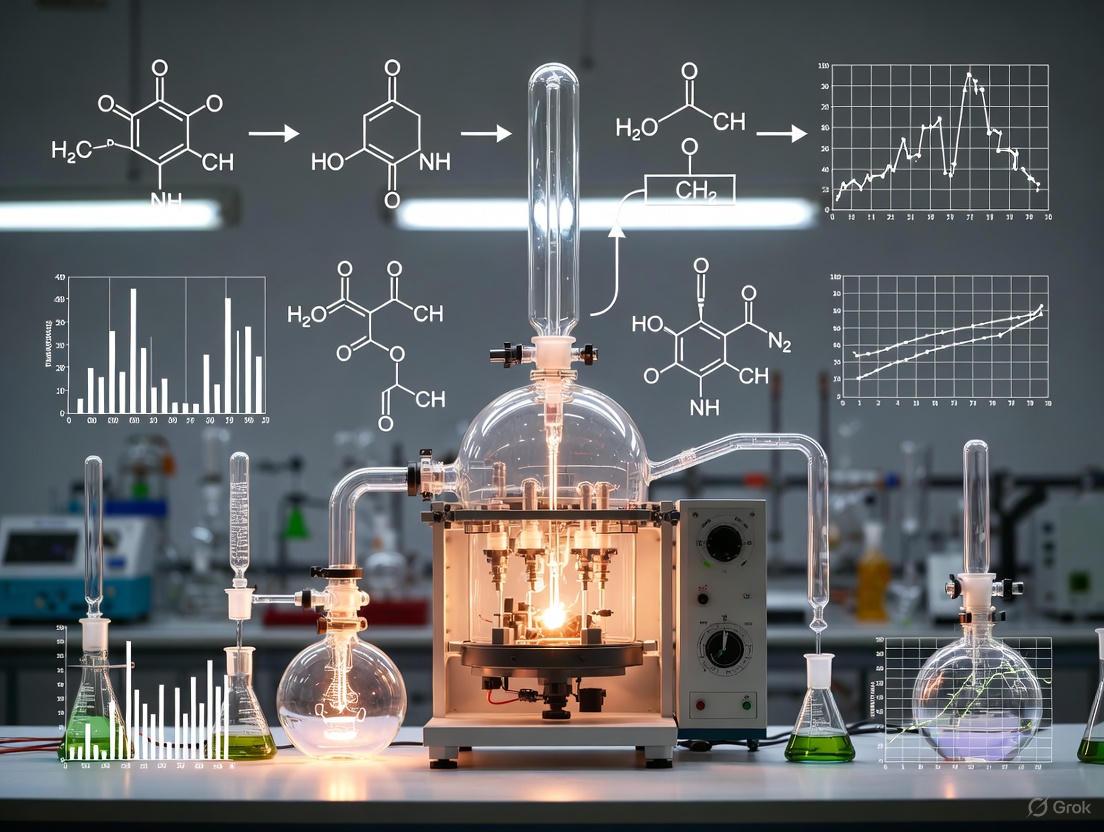
This article comprehensively examines microwave-assisted synthesis (MAS) as a cornerstone of green chemistry for researchers and drug development professionals.
Microwave-Assisted Green Synthesis: Accelerating Sustainable Drug Development and Nanomaterial Design
Abstract
This article comprehensively examines microwave-assisted synthesis (MAS) as a cornerstone of green chemistry for researchers and drug development professionals. It explores the foundational principles of microwave dielectric heating and its alignment with green chemistry metrics, including energy efficiency and waste reduction. The review details methodological protocols for nanomaterial fabrication and organic molecule synthesis, supported by troubleshooting and optimization strategies for parameter control. A critical validation compares MAS performance against conventional methods, highlighting enhanced reaction rates, improved yields, and superior product properties. The discussion extends to applications in pharmaceutical synthesis, nanomedicine, and environmental remediation, providing a holistic perspective on MAS as a sustainable and efficient tool for modern chemical research.
Principles and Green Chemistry Synergy of Microwave-Assisted Synthesis
Microwave-Assisted Organic Synthesis (MAOS) has emerged as a revolutionary green chemistry approach, offering significant advantages over conventional thermal methods. The efficiency of microwave heating stems from two fundamental mechanisms: dipolar polarization and ionic conduction [1]. These mechanisms enable the direct and instantaneous transfer of electromagnetic energy to molecular systems, facilitating rapid heating that can enhance reaction rates by up to 1000-fold compared to conventional heating methods [2] [3]. This application note examines these core mechanisms within the context of sustainable synthesis for pharmaceutical research and development, providing detailed protocols for leveraging these effects in practical drug discovery applications.
Theoretical Foundations
The Nature of Microwave Energy
Microwaves occupy the region of the electromagnetic spectrum between infrared and radio waves, with frequencies ranging from 0.3 to 300 GHz [2]. Most scientific and industrial microwave systems operate at 2.45 GHz, a frequency that offers an optimal balance between penetration depth and effective energy transfer for laboratory-scale samples [2]. The energy of microwave photons is approximately 0.037 kcal/mol, which is significantly lower than the typical energy required to cleave molecular bonds (80-120 kcal/mol) [2]. This fundamental characteristic confirms that microwave effects are primarily thermal in nature, influencing reaction kinetics rather than directly breaking chemical bonds.
Fundamental Heating Mechanisms
Table 1: Comparison of Microwave Heating Mechanisms
| Mechanism | Molecular Requirement | Physical Process | Temperature Dependence | Primary Applications |
|---|---|---|---|---|
| Dipolar Polarization | Molecules with permanent or induced dipole moment | Molecular rotation aligning with oscillating electric field | Efficiency decreases with increasing temperature | Heating of polar solvents (DMSO, MeOH, water) |
| Ionic Conduction | Presence of free ions or ionic species | Accelerated ionic motion through the medium | Efficiency increases with increasing temperature | Reactions in ionic liquids, electrolyte solutions, catalytic systems |
Dipolar Polarization
Dipolar polarization occurs when polar molecules attempt to align themselves with the rapidly oscillating electric field of microwave radiation [2]. This molecular rotation generates heat through molecular friction as molecules struggle to reorient themselves in phase with the electric field, which oscillates at 4.9 × 10⁹ cycles per second at 2.45 GHz [2]. The ability of a substance to convert microwave energy into heat through this mechanism is determined by its dielectric loss tangent (tan δ = ε″/ε′), which represents the ratio of the dielectric loss (energy dissipation) to the dielectric constant (energy storage) [4].
From a quantum chemical perspective, the dipolar polarizability tensor (α) describes the second-order response of a molecular system to an external electric field perturbation [5]. For a static case, this response can be expressed as a series expansion of the perturbed energy: E = E₀ + μiFi + ½αijFiFj + ..., where E₀ represents the unperturbed energy, μ denotes the dipole moment, α denotes dipole polarizability, and F is the external electric field [5].
Ionic Conduction
Ionic conduction occurs when free ions or ionic species present in a reaction mixture accelerate under the influence of microwave electric fields [2]. This translational movement of charged particles through the medium generates heat through interionic friction and collisions [6]. Unlike dipolar polarization, the efficiency of ionic conduction increases with temperature, as higher thermal energy promotes greater ionic mobility [2]. The concentration, size, and charge of ions significantly impact the effectiveness of dielectric heating, with studies demonstrating that temperature profiles vary substantially across different ionic solutions [6].
Quantitative Analysis of Dielectric Properties
Table 2: Dielectric Properties of Common Solvents in Microwave Synthesis
| Solvent | Dielectric Constant (ε′) | Dielectric Loss (ε″) | Loss Tangent (tan δ) | Classification | Heating Efficiency |
|---|---|---|---|---|---|
| Water | 80.1 | 9.89 | 0.123 | Medium absorber | High |
| Dimethyl Sulfoxide (DMSO) | 46.6 | 37.79 | 0.811 | High absorber | Very High |
| Methanol | 32.6 | 21.5 | 0.659 | High absorber | Very High |
| Ethanol | 24.3 | 22.9 | 0.941 | High absorber | Very High |
| Dimethylformamide (DMF) | 36.7 | 6.07 | 0.165 | Medium absorber | High |
| Acetonitrile | 35.9 | 2.26 | 0.063 | Medium absorber | Moderate |
| Dichloromethane | 8.93 | 0.282 | 0.032 | Low absorber | Low |
| Tetrahydrofuran (THF) | 7.58 | 0.54 | 0.071 | Low absorber | Low |
| Toluene | 2.38 | 0.040 | 0.017 | Low absorber | Very Low |
The data presented in Table 2 illustrates how solvent polarity directly influences microwave absorption efficiency. High-absorbing solvents with ε″ > 14 heat up very quickly within the microwave reactor, while low-absorbing solvents with ε″ < 1 undergo insignificant heating unless irradiated for extended periods [4]. This quantitative understanding is essential for selecting appropriate reaction media for microwave-assisted synthesis.
Experimental Protocols
Protocol 1: Investigation of Dipolar Polarization in Esterification Reactions
Objective: To evaluate the effect of dipolar polarization on the synthesis of n-butyl acetate using solvents with varying dielectric properties.
Materials:
- Acetic acid (10 mmol)
- n-Butanol (10 mmol)
- Concentrated sulfuric acid (catalyst)
- Solvents: water (ε″ = 9.89), methanol (ε″ = 21.5), toluene (ε″ = 0.040)
Equipment:
- Single-mode microwave reactor with temperature and pressure monitoring
- Sealed microwave reaction vessels (10-30 mL)
- Magnetic stirring system
- Appropriate personal protective equipment
Procedure:
- Prepare three separate reaction mixtures, each containing acetic acid (10 mmol), n-butanol (10 mmol), and concentrated sulfuric acid (0.5 mmol) in 10 mL of either water, methanol, or toluene.
- Transfer each mixture to sealed microwave vessels equipped with magnetic stir bars.
- Irradiate each vessel simultaneously using a multi-vessel microwave system at 100°C for 10 minutes with continuous stirring.
- Monitor temperature profiles in real-time using internal fiber-optic probes.
- After irradiation, cool the reaction mixtures rapidly using integrated air-jet cooling.
- Analyze reaction conversion by gas chromatography or NMR spectroscopy.
- Compare reaction rates and yields across the different solvent systems.
Expected Outcomes: Reactions in methanol (high dielectric loss) will demonstrate significantly faster kinetics and higher yields compared to those in toluene (low dielectric loss), directly illustrating the role of dipolar polarization in microwave-assisted synthesis.
Protocol 2: Evaluating Ionic Conduction in Aqueous Media
Objective: To quantify the effect of ionic concentration and character on dielectric heating efficiency.
Materials:
- Deionized water
- Sodium chloride (1.0 M, 0.1 M, 0.01 M solutions)
- Calcium chloride (1.0 M, 0.1 M, 0.01 M solutions)
- Aluminum chloride (1.0 M, 0.1 M, 0.01 M solutions)
Equipment:
- Modified microwave oven with uniform field distribution
- Fiber-optic temperature measurement system
- Polypropylene containers (50 mL)
Procedure:
- Prepare aqueous solutions of NaCl, CaCl₂, and AlCl₃ at concentrations of 1.0 M, 0.1 M, and 0.01 M.
- Place 20 mL of each solution in separate polypropylene containers.
- Expose all samples to microwave irradiation (2.45 GHz) at identical power settings (300 W) for 60 seconds.
- Record temperature changes every 10 seconds using fiber-optic thermometers.
- Compare heating profiles against deionized water as a control.
- Analyze the relationship between ion charge, concentration, and heating efficiency.
Expected Outcomes: Previous studies indicate that increasing ionic concentration can significantly decrease solution temperature during microwave irradiation [6]. Multivalent ions like Al³⁺ will demonstrate different heating profiles compared to monovalent Na⁺ ions at equivalent concentrations, revealing the complex relationship between ionic character and microwave absorption.
Visualization of Microwave Heating Mechanisms
Diagram 1: Microwave energy is transferred through dipolar polarization and ionic conduction mechanisms, both resulting in enhanced reaction kinetics for green synthesis applications.
The Scientist's Toolkit: Essential Research Reagents
Table 3: Key Reagent Solutions for Microwave-Assisted Synthesis
| Reagent Category | Specific Examples | Function in Microwave Chemistry | Dielectric Properties |
|---|---|---|---|
| High Absorbing Solvents | DMSO, methanol, ethanol, water | Efficient microwave coupling through strong dipole rotation; rapid heating | ε″ > 14; tan δ > 0.5 |
| Medium Absorbing Solvents | DMF, acetonitrile, butanols, ketones | Moderate heating efficiency; suitable for controlled temperature increases | ε″ = 1-14; tan δ = 0.1-0.5 |
| Low Absorbing Solvents | Chloroform, dichloromethane, THF, hydrocarbons | Minimal direct microwave absorption; function as heat sinks for temperature-sensitive reactions | ε″ < 1; tan δ < 0.1 |
| Ionic Liquids | 1-butyl-3-methylimidazolium salts, pyrrolidinium salts | Excellent microwave absorbers through ionic conduction; often serve as catalysts and solvents | Extremely high ε″; efficient energy transfer |
| Molecular Radiators | Solid-supported catalysts, silicon carbide, polar catalysts | Enhance heating in low-absorbing solvent systems; facilitate energy transfer to reactants | Variable; selected for specific dielectric properties |
Applications in Green Drug Development
The strategic application of dipolar polarization and ionic conduction principles has enabled significant advances in sustainable pharmaceutical synthesis. Microwave-assisted protocols have demonstrated remarkable efficiency in synthesizing bioactive heterocyclic compounds, including pyrimidine scaffolds with diverse therapeutic applications [7]. These methods align with multiple principles of green chemistry by reducing reaction times from hours to minutes, minimizing solvent consumption, and improving product yields and purity [1] [8].
In transition metal-catalyzed reactions, microwave irradiation has proven particularly valuable, reducing reaction times dramatically while often increasing yield, purity, and sometimes selectivity [4]. The combination of microwave assistance with green chemistry principles has facilitated the development of drug candidates with antimalarial, anticancer, antihypertensive, and antimicrobial properties through more sustainable synthetic routes [7].
Dipolar polarization and ionic conduction represent the fundamental physical mechanisms that enable the dramatic enhancements observed in microwave-assisted organic synthesis. Through strategic application of these principles and careful selection of reaction media based on dielectric properties, researchers can design synthetic protocols that offer substantial improvements in efficiency, sustainability, and selectivity. The continued investigation of these mechanisms will further advance microwave-assisted synthesis as a cornerstone technology in green pharmaceutical development, enabling more rapid and environmentally benign routes to bioactive molecules.
Dielectric heating, also known as microwave-assisted heating, represents a fundamental paradigm shift in synthetic chemistry by providing direct, volumetric energy transfer [9] [10]. Unlike conventional conductive heating, which relies on temperature gradients, dielectric heating uses high-frequency electric fields to energize molecules throughout the entire reaction mixture simultaneously [11]. This mechanism offers unparalleled advantages for green synthesis research, including dramatically reduced reaction times, enhanced energy efficiency, superior selectivity, and minimized waste generation [12] [13] [7]. These attributes make it an indispensable tool for researchers and drug development professionals seeking to develop more sustainable pharmaceutical processes.
Fundamental Principles and Mechanisms
The core mechanism of dielectric heating involves the interaction between electromagnetic energy and matter at the molecular level. When a dielectric material is subjected to an alternating electric field, two primary phenomena occur:
- Dipolar Polarization: Molecules with a permanent dipole moment (e.g., water, dimethylformamide, ionic liquids) continuously realign themselves with the oscillating electric field. This rapid molecular rotation generates heat through inter-molecular friction [9] [10].
- Ionic Conduction: Charged ions present in the reaction medium accelerate under the influence of the electric field, colliding with neighboring molecules and converting kinetic energy into thermal energy [10].
The power dissipated (P) within the material, which dictates the heating rate, is governed by the equation [9] [10]:
P = 2π * f * εr'' * ε0 * E²
Where:
f= frequency of the electromagnetic fieldεr''= dielectric loss factor (imaginary part of the complex permittivity, a measure of a material's ability to convert electromagnetic energy to heat)ε0= permittivity of free spaceE= electric field strength
This direct coupling of energy enables heating rates unattainable by conventional methods, facilitating rapid superheating and often leading to unique reaction pathways and improved product yields [7].
Quantitative Advantages Over Conventional Methods
The following table summarizes the performance gains achieved through microwave dielectric heating in key synthetic protocols relevant to medicinal chemistry.
Table 1: Comparative Analysis of Conventional vs. Microwave Dielectric Heating in API-Relevant Syntheses
| Synthetic Transformation | Conventional Method | Microwave Dielectric Method | Key Green Chemistry Advantages |
|---|---|---|---|
| Synthesis of 2-Aminobenzoxazoles [13] | • Conditions: Cu(OAc)₂, K₂CO₃• Time: Several hours• Yield: ~75%• Hazards: Toxic metal catalyst, hazardous reagents | • Conditions: Metal-free, I₂/TBHP or TBAI/H₂O₂• Time: Significantly reduced• Yield: 82-97%• Solvent: Eco-friendly alternatives | • Elimination of transition metals• Higher atom economy• Reduced hazardous waste |
| Synthesis of Isoeugenol Methyl Ether [13] | • Methylating Agent: Dimethyl sulfate (toxic)• Yield: ~83% | • Methylating Agent: Dimethyl carbonate (green)• Catalyst: PEG (PTC)• Yield: 94% | • Use of benign reagents• Higher conversion efficiency• Safer process profile |
| Formation of Pyrimidine Scaffolds [7] | • Time: Hours to days• Work-up: Often complex• Energy: High consumption | • Time: Minutes• Work-up: Simplified• Yield: High with purity | • Drastic reduction in reaction time & energy• Minimized byproduct formation |
| Synthesis of Schiff Base Metal Complexes [14] | • Time: Prolonged heating required | • Time: Rapid synthesis• Product: Enhanced antimicrobial efficacy confirmed | • Faster access to bioactive compounds• Improved product properties |
Detailed Experimental Protocols
Objective: Green synthesis of 2-aminobenzoxazoles via metal-free C–H activation. Principle: This protocol replaces traditional transition-metal catalysis with a iodine/TBHP system, leveraging dielectric heating to efficiently drive the oxidative coupling.
Research Reagent Solutions Table 2: Essential Reagents for Metal-Free Oxidative Amination
| Reagent/Material | Function in the Reaction | Green Chemistry Rationale |
|---|---|---|
| Molecular Iodine (I₂) | Catalyst for the oxidative C–H amination | Low-toxicity, readily available alternative to heavy metals. |
| tert-Butyl Hydroperoxide (TBHP) | Green oxidant | Acts as a terminal oxidant in the catalytic cycle. |
| Benzoxazole | Core starting material | - |
| Amine Coupling Partner | Reactant for the amination | - |
| Acetic Acid | Additive / Reaction medium | Can facilitate the reaction; ionic liquids or PEG are greener alternatives [13]. |
Procedure:
- Reaction Setup: In a dedicated microwave reaction vial, combine benzoxazole (1.0 mmol), the amine coupling partner (1.2 mmol), molecular iodine (10 mol%), and TBHP (2.0 equiv). Add a minimal volume of acetic acid or a preferred green solvent (e.g., PEG-400) to ensure efficient stirring.
- Microwave Irradiation: Cap the vial and place it in the microwave reactor. Irradiate the mixture at a set temperature of 80°C for a predetermined time (typically minutes to an hour, to be optimized).
- Reaction Monitoring: Monitor reaction completion by TLC or LC-MS.
- Work-up: After cooling, quench the reaction with a saturated aqueous solution of sodium thiosulfate (to reduce any residual I₂). Extract the product with ethyl acetate.
- Purification: Purify the crude product by flash chromatography over silica gel to obtain the pure 2-aminobenzoxazole derivative.
Safety Notes: Always conduct reactions in appropriately rated microwave apparatus. TBHP is an oxidizer and should be handled with care.
Objective: Rapid and efficient synthesis of bioactive metal complexes. Principle: Dielectric heating accelerates the condensation between an aldehyde and an amine to form a Schiff base ligand, followed by immediate complexation with metal ions in a one-pot or sequential manner.
Procedure:
- Ligand Formation: In a microwave vial, combine 3-nitrobenzaldehyde (1.0 mmol) and thioacetamide (1.0 mmol). Use minimal ethanol or operate under neat (solvent-free) conditions for a greener profile.
- Irradiation (Step 1): Subject the mixture to microwave irradiation at a power of 150-300 W for 2-5 minutes to form the Schiff base ligand.
- Complexation: Add the metal salt (e.g., Co(II), Ni(II), or Cu(II) chloride/acetate; 0.5 mmol) to the same vial.
- Irradiation (Step 2): Continue microwave irradiation for another 3-8 minutes, observing color changes indicative of complex formation.
- Isolation: Upon cooling, the solid complex often precipitates out. Collect the product by filtration, wash thoroughly with cold ethanol, and dry under vacuum.
Characterization: Characterize the complexes using elemental analysis, FT-IR, UV-Vis, and molar conductance measurements to confirm structure and purity [14].
Workflow and Energy Transfer Pathways
The following diagrams illustrate the conceptual and practical workflow differences between conventional and dielectric heating in green synthesis.
Diagram 1: Energy Transfer Pathways. Contrasts the indirect, surface-driven conventional heating with the direct, volumetric energy transfer of dielectric heating.
Diagram 2: Experimental Workflow for Microwave-Assisted Green Synthesis. Outlines a standardized protocol for research and development.
Dielectric heating is a transformative technology that aligns perfectly with the principles of green chemistry. Its ability to provide rapid, direct, and volumetric energy transfer enables synthetic protocols that are not only faster and higher-yielding but also more environmentally benign. The adoption of this paradigm shift is crucial for advancing sustainable practices in pharmaceutical research and drug development, paving the way for cleaner, safer, and more efficient manufacturing processes.
Alignment with the 12 Principles of Green Chemistry
The integration of microwave-assisted synthesis into modern chemical research represents a transformative approach that aligns with the foundational principles of green chemistry. This paradigm shift addresses critical environmental challenges associated with traditional chemical synthesis, including waste generation, energy consumption, and hazardous material usage. Microwave technology enables chemists to design synthetic pathways that maximize atom economy, minimize environmental impact, and enhance operational safety. The strategic application of microwave irradiation facilitates rapid, efficient molecular transformations through unique heating mechanisms that conventional methods cannot replicate. This article examines the theoretical foundations and practical applications of microwave-assisted synthesis through the lens of green chemistry principles, providing researchers with actionable protocols and analytical frameworks for sustainable method development.
Green Chemistry Principles and Microwave Chemistry Alignment
The following table summarizes the alignment between microwave-assisted synthesis and the 12 Principles of Green Chemistry:
Table 1: Alignment of Microwave-Assisted Synthesis with the 12 Principles of Green Chemistry
| Green Chemistry Principle | Alignment with Microwave-Assisted Synthesis |
|---|---|
| 1. Waste Prevention | Reduces reaction times from hours to minutes, minimizing by-product formation and simplifying purification [15] [3]. |
| 2. Atom Economy | Enables high-yielding reactions with improved selectivity, maximizing incorporation of starting materials into products [15]. |
| 3. Less Hazardous Chemical Syntheses | Facilitates metal-free catalysis and milder reaction pathways, reducing dependency on toxic reagents [13]. |
| 4. Designing Safer Chemicals | Supports synthesis of complex pharmaceutical scaffolds with reduced environmental persistence [7]. |
| 5. Safer Solvents and Auxiliaries | Compatible with green solvents (water, PEG, ionic liquids) and enables solvent-free reactions [13] [15]. |
| 6. Energy Efficiency | Direct energy transfer to molecules reduces thermal gradients and cuts energy consumption by >90% [15] [3]. |
| 7. Use of Renewable Feedstocks | Enables utilization of bio-based substrates like plant extracts and renewable materials [13]. |
| 8. Reduce Derivatives | One-pot, multi-component reactions minimize protecting group manipulation [13] [7]. |
| 9. Catalysis | Enhances catalytic efficiency, allowing lower catalyst loadings and reusable catalytic systems [13] [15]. |
| 10. Design for Degradation | Facilitates synthesis of biologically active compounds with optimized degradation profiles [16]. |
| 11. Real-Time Analysis | Enables inline monitoring and process analytical technology (PAT) for reaction optimization [16]. |
| 12. Safer Chemistry for Accident Prevention | Sealed vessel operation contains hazardous materials; automated systems minimize exposure [15] [3]. |
Microwave Heating Mechanisms in Green Synthesis
Microwave-assisted synthesis operates through two primary heating mechanisms that enable its green chemistry advantages. Dipolar polarization occurs when polar molecules attempt to align with the rapidly oscillating electric field (2.45 GHz), generating molecular friction and heat through this rotation. Conduction mechanism involves the oscillation of dissolved ions or charged particles under microwave irradiation, causing collisions that generate heat throughout the reaction mixture [15]. These mechanisms enable direct energy transfer to the reactants rather than through the vessel walls, creating uniform and rapid heating that surpasses conventional methods.
Table 2: Comparative Analysis of Heating Methods in Chemical Synthesis
| Parameter | Conventional Heating | Microwave Heating |
|---|---|---|
| Heating Mechanism | Conduction/convection | Direct molecular interaction |
| Heating Rate | Slow (minutes to hours) | Rapid (seconds to minutes) |
| Temperature Gradient | Significant (outside→in) | Minimal (uniform) |
| Energy Efficiency | Low (heats vessel) | High (direct to reactants) |
| Solvent Volume | High | Low to minimal |
| Reaction Scale-Up | Linear | Nonlinear (requires optimization) |
Experimental Protocols for Microwave-Assisted Green Synthesis
Protocol 1: Metal-Free Synthesis of 2-Aminobenzoxazoles via Oxidative Coupling
Objective: To demonstrate a sustainable metal-free approach for synthesizing 2-aminobenzoxazoles using microwave irradiation, aligning with Principles #3 (Less Hazardous Syntheses) and #9 (Catalysis) [13].
Reaction Mechanism: This transformation involves the oxidative C–H amination of benzoxazoles using tetrabutylammonium iodide (TBAI) as an organocatalyst with tert-butyl hydroperoxide (TBHP) as a green oxidant.
Table 3: Research Reagent Solutions for 2-Aminobenzoxazole Synthesis
| Reagent/Material | Function | Green Chemistry Advantage |
|---|---|---|
| Benzoxazole substrate | Core reactant | Renewable derivatives available |
| TBAI (Tetrabutylammonium iodide) | Organocatalyst | Metal-free, recyclable |
| TBHP (tert-Butyl hydroperoxide) | Green oxidant | Forms tert-butanol as byproduct |
| Acetic acid | Reaction additive | Biodegradable |
| Water or Ethyl lactate | Green solvent | Renewable, non-toxic |
Procedure:
- Reaction Setup: In a 10-20 mL dedicated microwave reaction vessel, combine benzoxazole (1.0 mmol), amine partner (1.2 mmol), TBAI (10 mol%), TBHP (2.0 mmol, 70% aqueous solution), and acetic acid (0.5 mmol) in 5 mL of green solvent (water or ethyl lactate).
- Microwave Irradiation: Seal the vessel and place it in the microwave reactor. Program the system for 30 minutes at 80°C with medium stirring.
- Reaction Monitoring: Monitor reaction completion via TLC or inline analytical technology.
- Work-up: After cooling, dilute the reaction mixture with 15 mL of water and extract with ethyl acetate (3 × 10 mL).
- Purification: Combine organic layers, dry over anhydrous Na₂SO₄, filter, and concentrate under reduced pressure. Purify the crude product via flash chromatography if necessary.
- Analysis: Characterize the product using ¹H/¹³C NMR, IR, and mass spectrometry.
Green Metrics:
- Yield: 82-97% (compared to 75% with conventional Cu-catalyzed method)
- Time Savings: 30 minutes vs. 6-12 hours conventionally
- E-factor: Reduced by ~40% through elimination of transition metals
Protocol 2: Microwave-Assisted Synthesis of Pyrimidine Scaffolds
Objective: To efficiently synthesize biologically active pyrimidine derivatives using microwave irradiation, demonstrating alignment with Principles #6 (Energy Efficiency) and #7 (Use of Renewable Feedstocks) [7].
Reaction Mechanism: This one-pot condensation reaction involves the formation of pyrimidine rings from β-dicarbonyl compounds and amidines or urea derivatives under microwave conditions.
Table 4: Research Reagent Solutions for Pyrimidine Synthesis
| Reagent/Material | Function | Green Chemistry Advantage |
|---|---|---|
| β-Dicarbonyl compound | Reaction substrate | Bio-based alternatives available |
| Amidine hydrochloride | Nitrogen source | Reduced toxicity derivatives |
| PEG-400 | Green solvent | Biodegradable, recyclable |
| Silica-supported catalyst | Heterogeneous catalyst | Recyclable, minimal waste |
Procedure:
- Reaction Setup: In a microwave-compatible vessel, combine β-dicarbonyl compound (1.0 mmol), amidine hydrochloride (1.2 mmol), and a heterogeneous catalyst (5 mol%) in PEG-400 (3-5 mL).
- Microwave Conditions: Program the microwave reactor for 5-15 minutes at 120-150°C with high stirring.
- Process Monitoring: Utilize real-time monitoring capabilities to optimize reaction progress.
- Work-up: After irradiation and cooling, add 10 mL of water to the reaction mixture and extract with ethyl acetate (3 × 10 mL).
- Catalyst Recovery: Recover the heterogeneous catalyst by filtration for reuse.
- Purification: Concentrate the combined organic layers and recrystallize the product from ethanol/water.
- Analysis: Characterize using spectroscopic methods and determine purity via HPLC.
Green Metrics:
- Yield: 85-95% (compared to 60-75% conventionally)
- Time Savings: 15 minutes vs. 6-24 hours conventionally
- Atom Economy: >80% for most derivatives
Protocol 3: Solvent-Free O-Methylation with Dimethyl Carbonate
Objective: To implement a green methylation protocol using dimethyl carbonate (DMC) as a safe methylating agent under microwave conditions, aligning with Principles #5 (Safer Solvents) and #8 (Reduce Derivatives) [13].
Reaction Mechanism: This transformation involves the O-methylation of phenolic compounds like eugenol to produce isoeugenol methyl ether (IEME), combining isomerization and methylation in one pot.
Procedure:
- Reaction Setup: In a microwave vessel, combine eugenol (1.0 mmol), dimethyl carbonate (4.0 mmol), polyethylene glycol (PEG-400, 0.1 mmol) as phase-transfer catalyst, and a basic catalyst (0.1 mmol).
- Microwave Programming: Set the microwave reactor for 3 hours at 160°C with medium stirring, using a DMC drip rate of 0.09 mL/min if available.
- Reaction Monitoring: Sample periodically for GC-MS analysis to monitor conversion.
- Work-up: After completion, cool the reaction mixture and dilute with 10 mL of water.
- Extraction: Extract the product with diethyl ether (3 × 10 mL).
- Purification: Wash the combined organic layers with brine, dry over Na₂SO₄, and concentrate under reduced pressure.
- Analysis: Characterize using GC-MS, NMR, and IR spectroscopy.
Green Metrics:
- Yield: 94% (compared to 83% with conventional KOH/NaOH method)
- Hazard Reduction: Eliminates use of toxic methyl halides and dimethyl sulfate
- Catalyst Efficiency: PEG acts as biodegradable, recyclable PTC
Quantitative Analysis of Green Chemistry Metrics
The following comparative analysis quantifies the environmental and efficiency advantages of microwave-assisted green synthesis across multiple reaction types:
Table 5: Quantitative Comparison of Conventional vs. Microwave-Assisted Green Synthesis
| Reaction Type | Parameter | Conventional Method | Microwave Method | Improvement |
|---|---|---|---|---|
| 2-Aminobenzoxazole Synthesis | Reaction Time | 6-12 hours | 30 minutes | 12-24x faster [13] |
| Yield | 75% | 82-97% | 7-22% increase [13] | |
| Catalyst | Cu(OAc)₂ (toxic) | TBAI (benign) | Metal-free approach [13] | |
| Pyrimidine Scaffold Synthesis | Reaction Time | 6-24 hours | 5-15 minutes | ~100x faster [7] |
| Yield | 60-75% | 85-95% | 10-20% increase [7] | |
| Solvent Volume | 15-25 mL | 3-5 mL | 70-80% reduction [7] | |
| Isoeugenol Methyl Ether Synthesis | Yield | 83% | 94% | 11% increase [13] |
| Methylating Agent | Dimethyl sulfate | Dimethyl carbonate | Non-toxic alternative [13] | |
| Temperature | >200°C | 160°C | Energy reduction [13] |
Advanced Applications in Pharmaceutical Development
Microwave-assisted green synthesis has demonstrated particular value in pharmaceutical research and development, where rapid compound library generation and process optimization are essential. The synthesis of pyrimidine scaffolds—core structures in numerous therapeutic agents—exemplifies these advantages [7]. Through microwave irradiation, researchers have efficiently produced diverse pyrimidine derivatives with anti-cancer, antimicrobial, antihypertensive, and anti-inflammatory activities. The technology enables rapid exploration of structure-activity relationships while maintaining alignment with green chemistry principles through reduced solvent consumption, minimized waste generation, and improved energy efficiency.
The application of microwave technology to metal-free oxidative coupling reactions addresses another critical concern in pharmaceutical development: residual metal contamination in active pharmaceutical ingredients (APIs) [13]. By developing synthetic methodologies that replace traditional transition metal catalysts with organocatalysts like hypervalent iodine compounds or tetrabutylammonium iodide, researchers can eliminate potential toxicity concerns while maintaining high reaction efficiency. This approach aligns with Principle #3 (Less Hazardous Chemical Syntheses) while potentially simplifying regulatory approval processes for new drug candidates.
Microwave-assisted synthesis represents a technologically advanced and environmentally responsible approach that aligns comprehensively with the 12 Principles of Green Chemistry. The experimental protocols and quantitative analyses presented demonstrate significant improvements in reaction efficiency, environmental impact, and operator safety compared to conventional methods. As the chemical and pharmaceutical industries continue to prioritize sustainability, microwave technology offers a practical pathway toward greener synthetic methodologies. The integration of microwave activation with other green chemistry strategies—including bio-based solvents, renewable feedstocks, and catalytic processes—creates a powerful framework for sustainable molecular synthesis that meets both economic and environmental objectives.
In the context of a broader thesis on microwave activation in green synthesis, this document outlines the core sustainability advantages of this technology. Microwave-assisted synthesis is recognized as an environmentally friendly technique that aligns with the principles of green chemistry, primarily through its enhanced energy efficiency, dramatic reduction in reaction times, and significant minimization of waste [17] [18]. These attributes make it a superior alternative to conventional thermal heating methods in research and industrial applications, including pharmaceutical development and material science. This note details specific protocols and quantitative data to demonstrate these advantages, providing researchers with practical guidance for implementing this green methodology.
Sustainable Reaction Protocols
The following protocols exemplify how microwave irradiation can be applied to common synthetic transformations to achieve superior sustainability outcomes.
Protocol 1: Metal-Free Synthesis of 2-Aminobenzoxazoles
Background: This metal-free oxidative coupling demonstrates a shift away from traditional transition-metal catalysis, avoiding the toxicity and cost associated with metals like copper or silver [13]. The protocol utilizes a green catalyst system.
Reaction Scheme: Oxidative C–H amination of benzoxazoles under metal-free conditions.
Materials and Reagents:
- Benzoxazole
- Amine
- Tetrabutylammonium iodide (TBAI) - Catalyst
- tert-Butyl hydroperoxide (TBHP) (aqueous solution) - Co-oxidant
Procedure:
- In a microwave vial, combine benzoxazole (1.0 equiv), the amine reactant (1.2 equiv), TBAI (10 mol%), and TBHP (2.0 equiv).
- Securely seal the vial and place it in a single-mode microwave reactor.
- Irradiate the mixture at 80 °C for 1-2 hours [13].
- After cooling, purify the crude product via standard work-up and chromatography.
Sustainability Advantages:
- Waste Minimization: Eliminates heavy metal waste, addressing a major environmental concern.
- Reduced Reaction Time: Reaction completes in 1-2 hours under microwave irradiation, compared to several hours or days conventionally.
- Energy Efficiency: The direct and volumetric heating of the reaction mixture by microwaves reduces energy loss.
Protocol 2: Green Synthesis of Substituted Tetrahydrocarbazoles in PEG-400
Background: This cyclization reaction highlights the use of polyethylene glycol (PEG-400) as a non-toxic, biodegradable, and recyclable solvent, replacing volatile organic compounds [13].
Reaction Scheme: Condensation of phenylhydrazine hydrochloride with substituted cyclohexanones in PEG-400.
Materials and Reagents:
- Phenylhydrazine hydrochloride
- Substituted cyclohexanone
- PEG-400 - Reaction medium (green solvent)
Procedure:
- Combine phenylhydrazine hydrochloride (1.0 equiv) and the substituted cyclohexanone (1.0 equiv) in PEG-400 (5 mL) in a microwave vial.
- Seal the vial and place it in the microwave reactor.
- Irradiate the mixture at a temperature between 100-120 °C for 10-30 minutes [13].
- Upon completion, cool the mixture and add water to precipitate the product. Filter and wash the solid to obtain the pure tetrahydrocarbazole derivative.
Sustainability Advantages:
- Solvent Selection: Uses a benign, bio-based solvent.
- Reduced Reaction Time: Reaction is complete in minutes instead of hours.
- Atom Economy: A one-pot synthesis that maximizes the incorporation of starting materials into the final product.
Quantitative Data on Sustainability Metrics
The advantages of microwave-assisted synthesis can be clearly demonstrated through comparative quantitative data. The tables below summarize key performance metrics from the literature.
Table 1: Comparative Performance Metrics for Microwave-Assisted Organic Synthesis
| Synthetic Transformation | Reaction Condition | Conventional Time (h) | Microwave Time (h) | Yield (%) | Key Green Advantage |
|---|---|---|---|---|---|
| Synthesis of 2-Aminobenzoxazoles [13] | Metal-free, TBAI/TBHP | 6-12 | 1-2 | 82-97 | Reduced time, metal-free |
| Synthesis of Tetrahydrocarbazoles [13] | In PEG-400 solvent | 3-5 | 0.2-0.5 (10-30 min) | High | Drastic time reduction, green solvent |
| General Organic Synthesis [17] | Various in solution | 4-48 | 0.1-2 | Often higher | Dramatic time reduction, higher yield |
Table 2: Sustainability Advantages of Microwave Heating vs. Conventional Heating
| Parameter | Conventional Heating | Microwave Heating | Reference |
|---|---|---|---|
| Heating Mechanism | Conduction/Convection (surface heating) | Direct energy transfer (volumetric heating) | [17] |
| Energy Efficiency | Lower (heats vessel & surroundings) | Higher (directly heats reaction mixture) | [19] |
| Scale-up Benefit | ~10-20% efficiency improvement | Up to 10–20% increased efficiency in processing | [19] |
| Heating Rate | Slow | Rapid and instantaneous | [17] |
| Solvent Volume | Often large | Can be significantly reduced | [18] |
The Scientist's Toolkit: Essential Research Reagent Solutions
The successful implementation of microwave-assisted green synthesis relies on a set of key reagents and solvents designed to enhance sustainability.
Table 3: Key Reagents and Solvents for Microwave-Assisted Green Synthesis
| Reagent/Solvent | Function in Reaction | Green Chemistry Rationale |
|---|---|---|
| Polyethylene Glycol (PEG-400 [13]) | Green reaction medium | Non-toxic, biodegradable, recyclable alternative to volatile organic solvents. |
| Dimethyl Carbonate (DMC [13]) | Green methylating agent & solvent | Non-toxic, environmentally benign replacement for hazardous methyl halides or dimethyl sulfate. |
| Ionic Liquids (e.g., [BPy]I [13]) | Catalyst & green solvent | Negligible vapor pressure, high thermal stability, often recyclable; can act as "molecular radiators". |
| Water [13] | Green solvent | Non-toxic, non-flammable, abundant, and inexpensive. |
| TBAI / H₂O₂ System [13] | Metal-free catalytic system | Avoids the use of toxic and expensive transition metal catalysts. |
Workflow and Energy Transfer Diagrams
The following diagrams illustrate the fundamental operational workflow of a microwave-assisted synthesis and the core mechanism behind its energy efficiency.
Diagram 1: Experimental workflow for microwave synthesis.
Diagram 2: Mechanisms of microwave energy transfer.
The integration of microwave activation in chemical synthesis has emerged as a transformative approach within green chemistry research. This paradigm shift necessitates robust quantification methodologies to objectively evaluate the environmental and efficiency improvements over conventional thermal methods. Green chemistry metrics provide a standardized framework for measuring aspects of chemical processes that align with the twelve principles of green chemistry, allowing researchers to numerically demonstrate the benefits of microwave-assisted techniques [20]. These metrics serve as crucial tools for communicating sustainability advancements in drug development and other chemical industries, translating qualitative green chemistry concepts into quantifiable data that enables informed decision-making and continuous process improvement.
Within the context of microwave-assisted synthesis, these metrics take on heightened importance as they provide empirical evidence for the claimed advantages of this technology. The fundamental purpose of green metrics is to enable objective comparisons between different synthetic approaches—whether comparing microwave-assisted routes to conventional heating methods or optimizing parameters within microwave protocols themselves [21]. For researchers in pharmaceutical development, where process efficiency, waste reduction, and safety are paramount, the application of these metrics offers a systematic approach to quantifying the "greenness" of microwave-assisted reactions and provides data-driven justification for adopting this technology.
Key Green Chemistry Metrics: Principles and Calculations
Mass-Based Metrics for Reaction Efficiency
Mass-based metrics represent the most fundamental category of green chemistry assessment, focusing on the efficiency of material utilization in chemical processes. These metrics are particularly valuable in microwave-assisted synthesis where claims of improved efficiency are common.
Atom Economy, developed by Barry Trost, evaluates the theoretical efficiency of a reaction by calculating the proportion of reactant atoms incorporated into the final desired product [20]. It is calculated as:
Atom Economy = (Molecular Weight of Desired Product / Molecular Weight of All Reactants) × 100%
For multi-step synthetic sequences, the atom economy is calculated based on the molecular weight of the final product relative to the sum of molecular weights of all reactants used across all steps. This metric is especially useful during reaction design phase as it can be calculated without experimental data, providing an early indicator of potential waste generation [20].
Reaction Mass Efficiency (RME) provides a more comprehensive assessment by incorporating both atom economy and chemical yield into a single metric [20]. It is defined as:
RME = (Actual Mass of Desired Product / Total Mass of All Reactants) × 100%
RME can also be expressed as the product of atom economy and percentage yield divided by the excess reactant factor, thus accounting for stoichiometric imbalances [20]. This metric offers a more realistic evaluation of material efficiency than atom economy alone, as it reflects practical reaction performance.
The Environmental Factor (E-Factor), developed by Roger Sheldon, has become one of the most widely used green metrics in both academic and industrial settings [20] [21]. It quantifies the waste generated per unit of product:
E-Factor = Total Mass of Waste / Mass of Product
E-Factor values vary significantly across chemical industry sectors, with pharmaceutical manufacturing typically exhibiting the highest values (25-100+), fine chemicals intermediate values (5-50), and bulk chemicals and oil refining the lowest values (<1-5) [20] [21]. This metric powerfully communicates the waste reduction potential of improved synthetic methods, including microwave-assisted approaches.
Table 1: Comparison of Mass-Based Green Metrics for Chemical Reactions
| Metric | Calculation Formula | Optimal Value | Key Advantages | Key Limitations |
|---|---|---|---|---|
| Atom Economy | (MW product / Σ MW reactants) × 100% | 100% | Simple theoretical calculation; guides reaction design | Ignores yield, solvents, auxiliaries |
| Reaction Mass Efficiency | (Actual mass product / Σ mass reactants) × 100% | 100% | Accounts for both yield and stoichiometry | Still excludes solvents and energy |
| E-Factor | Total waste mass / Product mass | 0 | Comprehensive waste accounting; industry standard | Does not differentiate waste toxicity |
| Effective Mass Yield | (Mass product / Mass non-benign reagents) × 100% | >100% possible | Considers environmental impact of materials | Requires subjective "benign" classification |
Advanced and Impact-Based Assessment Tools
While mass-based metrics provide valuable initial assessments, more comprehensive evaluation requires advanced tools that consider environmental impact, resource consumption, and lifecycle considerations.
The Eco-Scale provides a semi-quantitative assessment method that assigns penalty points to various parameters of a chemical process, including yield, cost, safety, and waste treatment [21]. The ideal green synthesis would achieve a score of 100, with real processes receiving lower scores based on their environmental drawbacks. This method offers a more holistic assessment than single-value metrics.
Life Cycle Assessment (LCA) represents the most comprehensive approach to environmental impact evaluation, analyzing the cumulative environmental impacts from raw material extraction through materials processing, manufacture, distribution, use, repair and maintenance, and disposal or recycling [22] [23]. When applied to microwave-assisted synthesis, LCA can quantify reductions in energy consumption and associated emissions across the entire process lifecycle.
Ecological Footprint Analysis measures the demand on ecosystem services required to support a chemical process or industrial activity, typically expressed in global hectares (gha) [21]. This approach has evolved to include specialized footprints for specific environmental concerns, including:
- Carbon Footprint: Focuses specifically on greenhouse gas emissions
- Water Footprint: Evaluates water consumption and pollution
- Chemical Footprint: Assesses the use and release of hazardous chemicals [21]
For pharmaceutical researchers, the B Impact Assessment tool offers a structured framework for evaluating sustainability performance across multiple dimensions, including governance, employees, community, and environment [24]. While broader than laboratory-scale metrics, it provides valuable context for corporate sustainability reporting and goal-setting.
Application Notes: Quantitative Analysis of Microwave-Assisted Reactions
Protocol 1: Comparative Analysis of Conventional vs. Microwave Synthesis
Objective: Quantify green chemistry metric improvements in microwave-assisted synthesis compared to conventional heating methods.
Materials and Equipment:
- Microwave reactor system with temperature and pressure control
- Conventional heating mantle or oil bath
- Standard laboratory glassware and analytical equipment
- Solvents and reagents for target reaction
Experimental Workflow:
Reaction Selection: Identify a target transformation amenable to both conventional and microwave activation (e.g., heterocycle formation, coupling reaction).
Parallel Reaction Execution:
- Conduct the reaction using conventional heating at appropriate temperature and duration based on literature procedures
- Perform the identical reaction under microwave irradiation, optimizing for time and temperature reduction
Data Collection:
- Record reaction times for both methods
- Measure isolated yields after purification
- Quantify all input materials (reactants, solvents, catalysts)
- Measure all output materials (product, by-products, waste streams)
Metric Calculation:
- Calculate atom economy (theoretical)
- Determine E-Factor for both processes
- Compute reaction mass efficiency
- Record energy consumption (if metering available)
Case Study: Sertraline Hydrochloride (Zoloft) Synthesis Pharmaceutical manufacturers redesigned the synthetic pathway for sertraline hydrochloride, achieving an E-Factor reduction to 8 through process intensification, demonstrating the significant waste reduction potential achievable through green chemistry principles [21].
Expected Outcomes: Microwave-assisted reactions typically demonstrate 2-3 order of magnitude reductions in reaction time, with corresponding improvements in E-Factor and energy efficiency [3]. For example, microwave-assisted synthesis of sildenafil citrate (Viagra) achieved E-Factor reduction from 105 (discovery route) to 7 (production process) through solvent recovery and elimination of volatile solvents [21].
Protocol 2: Multi-Parameter Optimization of Microwave Reactions
Objective: Systematically optimize microwave-assisted reactions using green chemistry metrics as key performance indicators.
Materials and Equipment:
- Modular microwave reactor with variable power and stirring control
- Solvent selection guide emphasizing greener alternatives
- Design of Experiment (DoE) software for multi-parameter optimization
Experimental Design:
Parameter Screening:
- Identify critical reaction parameters (power, temperature, time, solvent, concentration)
- Establish ranges for each parameter based on preliminary experiments
DoE Implementation:
- Create response surface methodology design with green metrics as primary responses
- Include yield, E-Factor, and energy consumption as simultaneous optimization criteria
Green Solvent Assessment:
- Test alternative solvents (water, ethanol, ethyl acetate, 2-methyltetrahydrofuran)
- Apply solvent green scoring cards to quantify environmental and safety profiles
Process Mass Intensity (PMI) Tracking:
- Document all material inputs per unit product
- Calculate PMI as total mass inputs / mass product (PMI = E-Factor + 1) [21]
Table 2: Green Chemistry Metric Comparison for Synthesis Methods
| Synthetic Method | Typical E-Factor Range | Reaction Time Reduction | Energy Consumption | Solvent Reduction Potential |
|---|---|---|---|---|
| Traditional Pharmaceutical | 25-100+ [21] | Baseline | Baseline | Baseline |
| Improved Batch Process | 5-50 [20] | 2-5x | Moderate reduction | 20-50% |
| Microwave-Assisted | <1-20 | 10-1000x [3] | Significant reduction | 50-90% |
| Continuous Flow Microwave | <1-10 | >1000x [8] | Minimal | >90% (solvent-free possible) |
Research Reagent Solutions for Green Microwave Synthesis
Table 3: Essential Materials for Microwave-Assisted Green Synthesis
| Reagent/Category | Function | Green Characteristics | Application Notes |
|---|---|---|---|
| Water | Reaction medium | Non-toxic, non-flammable, renewable | Excellent microwave absorber; suitable for high-temperature reactions [8] |
| Bio-derived Solvents (e.g., ethanol, 2-MeTHF) | Alternative to petroleum solvents | Renewable feedstocks, reduced toxicity | Require optimization of microwave parameters for different dielectric properties |
| Solid-Supported Reagents | Heterogeneous catalysis/reactants | Recyclable, reduced metal leaching | Enhanced by selective microwave heating of supported metals |
| Polar Catalysts | Reaction acceleration | Reduced loading possible | Microwave energy selectively targets polar catalysts |
| Metal Salts for Nanoparticle Synthesis | Precursors for nanomaterial synthesis | Enable greener synthetic routes | Microwave irradiation facilitates rapid, shape-controlled nucleation [25] [26] |
Sustainability Assessment Tools Framework
Modern sustainability assessment extends beyond laboratory-scale metrics to comprehensive organizational frameworks. Researchers should be familiar with the following assessment categories:
Carbon Footprint Calculators: Tools specifically designed to track greenhouse gas emissions across Scope 1 (direct), 2 (indirect from energy), and 3 (value chain) categories [23].
Life Cycle Assessment (LCA) Software: Enables comprehensive environmental impact analysis of chemical processes from raw material extraction to disposal [22] [23].
Circular Economy Assessment Tools: Frameworks like CircularStart evaluate processes within circular economy contexts, assessing strategy, operations, materials, and energy flows [24].
For drug development professionals, the B Impact Assessment and LEVO tools provide structured approaches for evaluating organizational sustainability performance and aligning with United Nations Sustainable Development Goals [24].
Visualizing Green Metrics Assessment Workflows
Experimental Optimization Pathway
Multi-Scale Sustainability Assessment Framework
The application of green chemistry metrics and sustainability assessment tools provides an essential framework for quantifying the advantages of microwave-assisted synthesis in pharmaceutical research and development. As demonstrated through the protocols and case studies presented, these quantitative measures enable objective comparison between conventional and microwave approaches, documenting significant improvements in reaction efficiency, waste reduction, and energy conservation.
Future developments in this field will likely include the integration of real-time monitoring with automated metric calculation, allowing researchers to make data-driven decisions during reaction optimization. Additionally, the growing emphasis on circular economy principles and carbon neutrality targets will drive the development of more sophisticated assessment tools that capture the full lifecycle impacts of synthetic methodologies. For drug development professionals, adopting these metrics as standard practice provides not only environmental benefits but also economic advantages through reduced material and energy consumption, positioning microwave-assisted synthesis as an essential technology for sustainable pharmaceutical manufacturing.
Protocols and Applications in Drug Synthesis and Nanomaterial Fabrication
The integration of microwave irradiation into chemical synthesis has established a paradigm shift in the development of sustainable methodologies within modern research and drug development. This paradigm is fundamentally anchored in the principles of Green Chemistry, which emphasize waste reduction, energy efficiency, and the use of safer solvents [13] [27]. The strategic selection of the reaction medium—be it a polar solvent, an ionic liquid, or a solvent-free system—is not merely a procedural detail but a critical variable that dictates the efficiency, yield, and environmental footprint of microwave-activated reactions. Microwave energy drives reactions by interacting directly with polar molecules, leading to rapid and uniform heating, a process quantified by the "loss tangent" (tanδ), which measures a substance's ability to convert microwave energy into heat [27]. This direct coupling often results in dramatic rate enhancements, higher purity, and improved yields compared to conventional thermal heating [28]. Within the context of a broader thesis on green synthesis, this document provides detailed application notes and experimental protocols to guide researchers in strategically selecting and applying these different media for optimal results in microwave-assisted synthesis.
Solvent Systems in Microwave Chemistry
Polar Solvents and Dielectric Heating
The efficacy of a solvent in a microwave-mediated reaction is primarily governed by its dielectric properties. Polar solvents, characterized by a high loss tangent, absorb microwave radiation efficiently and facilitate rapid temperature increases.
Table 1: Dielectric Properties and Performance of Common Solvents in Microwave Synthesis
| Solvent | Dielectric Constant (ε') | Loss Factor (ε") | Loss Tangent (tanδ) | Microwave Absorption Efficiency | Typical Heating Rate |
|---|---|---|---|---|---|
| Water | 80.1 | High | ~0.123 | High | Very Fast |
| Ethanol | 24.3 | Moderate | ~0.941 | High | Fast |
| DMF | 38.3 | High | Moderate | High | Fast |
| Acetonitrile | 37.5 | Moderate | Moderate | High | Fast |
| Acetone | 20.7 | Low | Low | Moderate | Moderate |
| Toluene | 2.4 | Very Low | Very Low | Poor | Slow |
The principle of dipolar polarization explains this heating mechanism: when microwave radiation is applied, the electric field component causes polar molecules to align and re-align with the oscillating field. This rapid molecular motion generates intense, internal friction-based heating throughout the entire volume of the solvent, overcoming the slow heat transfer of conventional conductive heating [27]. This leads to the superheating of solvents, where temperatures can exceed the conventional boiling point at atmospheric pressure, thereby accelerating reaction kinetics [27]. Furthermore, microwave effects can lower the activation energy of reactions, particularly those with a polar mechanism where polarity increases from the ground state to the transition state, resulting in a significant boost in reactivity [29] [27].
Ionic Liquids as Advanced Media and Catalysts
Ionic Liquids (ILs) have emerged as a cornerstone of green microwave chemistry due to their exceptional properties. These salts, which are liquid at room temperature, possess negligible vapor pressure, high thermal stability, and non-flammability, making them environmentally benign alternatives to volatile organic solvents [13] [30]. Their high ionic character and strong polarity endow them with an immense capacity to absorb microwave energy, leading to extremely rapid heating.
ILs often serve a dual purpose as both the reaction medium and the catalyst. For instance, the ionic liquid 1-butylpyridinium iodide ([BPy]I) has been successfully employed as a catalyst for the metal-free oxidative C–H amination of benzoxazoles at room temperature, using tert-butyl hydroperoxide (TBHP) as an oxidant [13]. The synergy between ILs and microwave irradiation enables reactions that are either impractical or prohibitively slow under conventional conditions.
Solvent-Free (Neat) Reaction Systems
Solvent-free synthesis represents the ultimate green chemistry approach for microwave activation, as it entirely eliminates the use of solvents. There are three primary solvent-free methodologies:
- Neat Reactions: Reactions performed solely with liquid reactants [31].
- Reactions on Solid Supports: Reagents are adsorbed onto the surface of mineral oxides such as alumina, silica gel, or montmorillonite K10 clay. The solid support often acts as a catalyst in addition to providing a large surface area for the reaction to occur [31].
- Phase-Transfer Catalysis (PTC): Facilitates reactions between reagents in immiscible phases without a bulk solvent [13] [31].
These "dry-media" reactions offer profound advantages by minimizing waste, reducing cost, and simplifying product isolation—the desired product is simply extracted from the solid support with a solvent [29] [31]. This approach is exceptionally safe and prevents the decomposition of products that can occur on the hot walls of a conventional reactor.
Application Notes & Quantitative Comparisons
Case Study: Synthesis of Benzotriazole Derivatives
A direct comparison between conventional and microwave-assisted synthesis vividly illustrates the strategic advantage of microwave irradiation.
Table 2: Comparative Analysis: Conventional vs. Microwave Synthesis of N-o-tolyl-1H-benzo[d][1,2,3]triazole-5-carboxamide [28]
| Parameter | Conventional Heating (Reflux) | Microwave Irradiation |
|---|---|---|
| Reaction Medium | Benzene | Benzene |
| Energy Source | Heating Mantle (Conductive) | Microwave (Dielectric) |
| Temperature | Reflux Temperature | Not Specified (180 W) |
| Reaction Time | 4 hours | 4 minutes, 30 seconds |
| Reported Yield | 72% | 83% |
| Product Purity | Good | High (implied by simpler processing) |
The data demonstrates that microwave synthesis can achieve a higher yield (83% vs. 72%) in a fraction of the time (4.5 minutes vs. 4 hours) for the same reaction conducted in an organic solvent [28]. This dramatic acceleration and improvement in efficiency are hallmarks of microwave activation.
Case Study: Green Synthesis of Isoeugenol Methyl Ether (IEME)
The strategic selection of a green methylating agent and a phase-transfer catalyst under microwave conditions leads to superior outcomes. The traditional O-methylation of eugenol uses strong bases like NaOH or KOH, yielding only 83% of IEME. In contrast, a green chemistry approach employs dimethyl carbonate (DMC) as a non-toxic methylating agent and polyethylene glycol (PEG) as a phase-transfer catalyst under microwave heating, achieving a markedly higher yield of 94% [13]. This protocol showcases a safer, more economical, and more efficient synthetic route.
Case Study: Solvent-Free Synthesis on Solid Supports
The solvent-free Beckmann rearrangement of ketoximes to amides or lactams, catalyzed by montmorillonite K10 clay under microwave irradiation, proceeds in high yields (68–96%) without the need for strong mineral acids typically required in conventional methods [31]. This exemplifies how the combination of a solid support and microwave energy can replace hazardous reagents and simplify reaction work-up.
Detailed Experimental Protocols
Protocol 1: Microwave-Assisted Synthesis in an Ionic Liquid ([bmim]BF₄)
Title: Rapid One-Pot Synthesis of 1-Butyl-3-methylimidazolium Tetrafluoroborate ([bmim]BF₄) [32].
Principle: This solvent-free, one-pot preparation leverages the efficient coupling of 5.8-GHz microwave radiation with the ionic precursors to yield the ionic liquid rapidly and in high yield.
Materials:
- 1-Methylimidazole
- 1-Chlorobutane
- Sodium tetrafluoroborate (NaBF₄)
- Batch-mode microwave reactor (5.8 GHz or 2.45 GHz)
Procedure:
- In a dedicated microwave reaction vessel, combine 1-methylimidazole (0.1 mol), 1-chlorobutane (0.12 mol), and NaBF₄ (0.11 mol).
- Securely seal the vessel and place it in the microwave reactor.
- Irradiate the mixture at a power of 300 W for 30 minutes.
- After irradiation, allow the vessel to cool to room temperature.
- The crude product, [bmim]BF₄, is obtained as an oily liquid.
- Purify the product by washing with a small volume of ethyl acetate and then drying under vacuum.
- Yield: 87% (with 5.8 GHz irradiation) [32].
Protocol 2: Solvent-Free Synthesis on a Solid Support
Title: Solvent-Free Beckmann Rearrangement on Montmorillonite K10 Clay [31].
Principle: The ketoxime substrate is adsorbed onto the acidic surface of montmorillonite K10 clay, which catalyzes the rearrangement upon microwave irradiation, eliminating the need for a solvent and strong acid.
Materials:
- Ketoxime (substrate)
- Montmorillonite K10 clay
- Microwave reactor
- Ethyl acetate (for extraction)
Procedure:
- Thoroughly mix the ketoxime (1 mmol) with montmorillonite K10 clay (500 mg) using a mortar and pestle.
- Transfer the homogeneous mixture to an open microwave-safe vessel.
- Irradiate the mixture in the microwave reactor for the optimized time (typically 5-15 minutes, monitor by TLC).
- After cooling, extract the product by adding ethyl acetate (3 x 10 mL) to the solid mixture and filtering.
- Concentrate the combined filtrate under reduced vacuum to obtain the pure amide or lactam.
- Yield: 68-96% [31].
The Scientist's Toolkit: Essential Research Reagents
Table 3: Key Reagents and Materials for Strategic Microwave Synthesis
| Reagent/Material | Function/Application | Green Chemistry Rationale |
|---|---|---|
| Water | Green polar solvent for hydrophilic reactions. | Non-toxic, non-flammable, renewable. |
| Ethanol | Biobased polar solvent for a wide range of syntheses. | Renewable, biodegradable, low toxicity. |
| Dimethyl Carbonate (DMC) | Green methylating agent and solvent. | Non-toxic, biodegradable alternative to methyl halides/sulfates. |
| Ionic Liquids (e.g., [bmim]BF₄) | High-performance solvent and catalyst. | Negligible vapor pressure, recyclable, high energy efficiency. |
| Polyethylene Glycol (PEG) | Phase-transfer catalyst (PTC) and recyclable reaction medium. | Non-toxic, inexpensive, biodegradable. |
| Montmorillonite K10 Clay | Solid acid catalyst and support for solvent-free reactions. | Replaces corrosive liquid acids, simplifies work-up, minimizes waste. |
| Alumina (Basic/Acidic) | Solid support and catalyst for adsorption techniques. | Eliminates solvent use, acts as a reusable catalyst. |
| Silica Gel | Solid support for reactions requiring a weak acid surface. | Eliminates solvent use, provides a large surface area. |
Workflow and Decision Pathways
The following diagram outlines a strategic decision-making workflow for selecting the optimal solvent system in microwave-assisted synthesis, based on the principles of green chemistry.
Solvent Selection Strategy for Microwave Synthesis
This workflow provides a logical pathway for chemists to prioritize greener alternatives, aligning synthetic goals with the principles of sustainable science. The strategic choice of reaction medium, when coupled with the power of microwave irradiation, forms a robust foundation for advancing green synthesis in research and industrial drug development.
Within the paradigm of green chemistry, microwave activation has emerged as a transformative tool for enhancing synthetic efficiency. This document provides detailed application notes and protocols for optimizing the critical reaction parameters—temperature, irradiation time, and power settings—in microwave-assisted organic synthesis (MAOS). The systematic optimization of these parameters is fundamental to achieving reduced reaction times, improved product yields, and diminished environmental impact, aligning with the core principles of sustainable research and development in the pharmaceutical and fine chemical industries [33] [18]. The protocols herein are designed to equip researchers with a standardized framework for process intensification.
Key Parameter Optimization in Microwave-Assisted Synthesis
The optimization of microwave-assisted reactions is a multi-factorial process. The table below summarizes quantitative data from case studies, illustrating the impact of key variables on reaction outcomes.
Table 1: Case Studies in Microwave Reaction Parameter Optimization
| Target Compound/Reaction | Optimized Power (W) | Optimized Time | Temperature | Key Outcome (Yield) | Reference |
|---|---|---|---|---|---|
| Substituted Imidazole (4a) | 720 | 7 min | Not Specified | 87% yield | [33] |
| N-Substituted Imidazole (5a) | 180 | 90 sec | Not Specified | 79% yield | [33] |
| Biodiesel (Methyl Oleate) | Not Specified | 60 min | 80 °C | 96.4% conversion | [34] |
| AgNP Green Synthesis | 616 | 2.35 min | Not Specified | Maximized Yield (RSM) | [35] |
| High-Purity Y Zeolite | Not Specified | 24 h | 100 °C | 108.17% Crystallinity | [36] |
Experimental Protocol: Factorial Design for Heterocycle Synthesis
This protocol details the optimization of a Debus-Radziszewski synthesis for 2,4,5-triphenyl-1H-imidazole (4a) and its subsequent functionalization, using a 2² factorial design [33].
I. Research Reagent Solutions
- Aromatic Aldehyde (e.g., Benzaldehyde): Serves as one of the core building blocks.
- 1,2-Dione (e.g., 1,2-bis(4-chlorophenyl)ethane-1,2-dione): The second key building block for cyclization.
- Ammonium Acetate: Nitrogen source for imidazole ring formation.
- Glacial Acetic Acid: Reaction solvent under conventional reflux conditions.
- 2-Chloromethyl Pyridine: Reagent for N-alkylation in the second synthesis step.
- Base (e.g., K₂CO₃): Provides alkaline conditions necessary for the N-alkylation reaction.
II. Step 1: Synthesis of Imidazole Core (4a)
- Reaction Setup: In a microwave vessel, combine 0.01 mol of 1,2-bis(4-chlorophenyl)ethane-1,2-dione, 0.05 mol of ammonium acetate, and 0.01 mol of aromatic aldehyde.
- Microwave Irradiation: Subject the mixture to microwave irradiation.
- Parameter Optimization: Utilize a factorial design, testing combinations of microwave power (560 W and 720 W) and irradiation time (6 min and 7 min).
- Reaction Monitoring: Monitor reaction progression by Thin-Layer Chromatography (TLC) using a hexane-ethyl acetate (8:2) solvent system.
- Work-up: Upon completion, isolate the product, 2,4,5-triphenyl-1H-imidazole (4a), and determine the percent yield.
III. Step 2: N-Substitution to Form Compound (5a)
- Reaction Setup: Take the synthesized imidazole (4a) and react it with an equimolar amount of 2-chloromethyl pyridine in an alkaline environment.
- Microwave Irradiation: Carry out the reaction under microwave irradiation.
- Parameter Optimization: Employ a factorial design, testing microwave power (180 W and 540 W) and irradiation time (60 sec and 90 sec).
- Work-up and Analysis: After the reaction is complete, isolate the product (5a). Confirm its structure using Fourier Transform Infrared (FTIR) spectroscopy, ¹H Nuclear Magnetic Resonance (NMR), and Mass Spectrometry (MS).
Experimental Protocol: Response Surface Methodology for Nanomaterial Synthesis
This protocol describes the green synthesis of silver nanoparticles (AgNPs) using Mimosa pudica L. leaf extract, optimized via Response Surface Methodology (RSM) [35].
I. Research Reagent Solutions
- Mimosa pudica L. Leaf Extract: Acts as both a reducing and a stabilizing/capping agent for the formation of AgNPs.
- Silver Nitrate (AgNO₃) Solution: Precursor source of silver ions (Ag⁺).
II. Procedure
- Preparation of Extract: Wash and dry fresh leaves of Mimosa pudica L. Prepare an aqueous extract.
- Reaction Mixture: Combine the leaf extract with an aqueous solution of AgNO₃ in a microwave vessel.
- Central Composite Design (CCD): Use RSM-CCD to optimize four key parameters:
- AgNO₃ concentration (mM)
- Extract volume (µL)
- Microwave power (W)
- Reaction time (min)
- Microwave Irradiation: Irradiate the reaction mixture according to the experimental design generated by the CCD.
- Optimized Condition: The identified optimal conditions are: 3.06 mM AgNO₃, 732 µL extract, 616 W microwave power, and a 2.35 min reaction time.
- Characterization: Characterize the synthesized AgNPs by UV-Vis spectrophotometry (observing Surface Plasmon Resonance at ~428 nm), Transmission Electron Microscopy (TEM) for size and morphology, and X-ray Diffraction (XRD) for crystallinity.
Workflow for Systematic Parameter Optimization
The following diagram illustrates a generalized, iterative workflow for the systematic optimization of reaction parameters in microwave-assisted green synthesis, integrating the experimental approaches previously discussed.
Diagram 1: Systematic parameter optimization workflow for microwave synthesis.
The Scientist's Toolkit: Essential Reagents & Materials
The successful execution of microwave-assisted green synthesis relies on a core set of reagents and materials. The following table details key items and their primary functions in this field.
Table 2: Essential Research Reagent Solutions for Microwave-Assisted Green Synthesis
| Reagent/Material | Function/Application in Green Synthesis |
|---|---|
| Ionic Liquids (e.g., [BPy]I) | Serve as green reaction media and catalysts, offering high thermal stability and negligible vapor pressure, enhancing reaction efficiency and selectivity [13]. |
| Phase-Transfer Catalysts (PEG) | Facilitate reactions between immiscible phases under mild conditions, enabling greener one-pot synthesis and isomerization reactions [13]. |
| Green Solvents (Water, Bio-based) | Act as environmentally benign alternatives to traditional organic solvents, reducing toxicity and hazardous waste [13]. |
| Heterogeneous Catalysts (NiFe₂O₄@MCM-41) | Magnetic nanocatalysts that provide high activity, easy separation via magnetic decantation, and reusability, aligning with waste reduction principles [37]. |
| Plant Extracts (e.g., Mimosa pudica) | Function as reducing and stabilizing agents for the green synthesis of nanomaterials like silver nanoparticles, replacing harsh chemical agents [35]. |
| Solid Acid Catalysts (SANH from biomass) | Carbon-based catalysts derived from biowaste (e.g., Areca nut husk) for efficient esterification; offer a non-toxic, recyclable alternative to homogeneous acids [34]. |
Open-Vessel vs. Closed-Vessel Reactor Configurations and Scalability
Within the framework of green chemistry, microwave activation has emerged as a powerful tool for enhancing reaction efficiency, reducing energy consumption, and minimizing waste generation. The choice of reactor configuration—open-vessel or closed-vessel—is a critical parameter that significantly influences the outcome and scalability of microwave-assisted syntheses. While microwave heating itself provides internal and rapid heating, the vessel design dictates the reaction environment, controlling parameters such as temperature, pressure, and the behavior of volatile components [18]. This application note provides a detailed comparison of these two configurations, offering structured protocols and scalability guidelines to assist researchers and drug development professionals in selecting and optimizing the appropriate system for their synthetic goals within a green chemistry context. The principles of green chemistry, including the use of safer solvents and reduced energy requirements, are central to this discussion [13].
Configuration Analysis: Open-Vessel vs. Closed-Vessel
The fundamental difference between these systems lies in their ability to contain pressure. An open-vessel configuration operates at atmospheric pressure, allowing for the continual evaporation of solvents and volatile reagents. In contrast, a closed-vessel configuration is sealed, permitting reactions to be carried out under elevated pressures and at temperatures significantly above the normal boiling point of the solvent [18].
Table 1: Comparative Analysis of Open-Vessel and Closed-Vessel Reactor Configurations
| Feature | Open-Vessel Configuration | Closed-Vessel Configuration |
|---|---|---|
| Operating Pressure | Atmospheric pressure | Elevated pressure (autogenous) |
| Operating Temperature | Limited to solvent boiling point | Above solvent boiling point |
| Reaction Scale-Up | More straightforward for volume increase [18] | Challenging; requires specialized large-scale equipment [18] |
| Reaction Time | Can be very short | Typically short, but may include pressurization/depressurization |
| Solvent Volume | Can be minimal or solvent-free [13] | Requires sufficient solvent for vapor pressure |
| Handling Volatiles | Suitable for reactions involving volatile by-products | Not suitable; pressure build-up risk |
| Safety Considerations | Lower pressure risk | Requires strict safety protocols for high pressure and temperature |
| Ideal for Reaction Types | Solvent-free reactions, evaporative processes, reagent removal | Reactions requiring high temperatures for kinetics, low-boiling solvents |
The following decision pathway aids in selecting the appropriate configuration based on reaction parameters and green chemistry principles:
Experimental Protocols
Protocol A: Closed-Vessel Synthesis of 2-Aminobenzoxazoles via Metal-Free Oxidative Coupling
This protocol exemplifies a green chemistry approach by employing metal-free conditions and an ionic liquid promoter, leveraging a closed vessel to achieve high efficiency and yield [13].
Principle: A metal-free, oxidative C–H amination of benzoxazoles is performed using the ionic liquid 1-butylpyridinium iodide ([BPy]I) as a catalyst and tert-butyl hydroperoxide (TBHP) as the oxidant. The closed-vessel system enables the reaction to proceed efficiently at room temperature, enhancing safety and energy efficiency [13].
Table 2: Research Reagent Solutions for Protocol A
| Reagent/Material | Function | Green Chemistry Rationale |
|---|---|---|
| Benzoxazole | Substrate | Starting material for heterocycle formation. |
| Amine Source | Reactant | Partner for oxidative C–N bond formation. |
| 1-Butylpyridinium iodide ([BPy]I) | Catalyst / Promoter | Ionic liquid acts as a recyclable, non-volatile reaction medium with high thermal stability [13]. |
| tert-Butyl hydroperoxide (TBHP) | Oxidant | Facilitates the metal-free oxidative coupling. |
| Acetic Acid | Additive | Used in small quantities to promote the reaction. |
Procedure:
- Preparation: In a microwave-compatible sealed vessel, combine benzoxazole (1.0 mmol), the amine source (1.2 mmol), [BPy]I (10 mol %), and acetic acid (0.5 mL).
- Oxidant Addition: Add TBHP (2.0 mmol) to the reaction mixture.
- Sealing: Secure the vessel according to the manufacturer's instructions, ensuring the seal is intact.
- Reaction: Place the sealed vessel in the microwave reactor and initiate the protocol. The reaction is performed at room temperature (25 °C) for 1-2 hours. No external microwave heating is required due to the exothermic nature and efficiency of the catalytic system.
- Work-up: After the reaction time, carefully vent the vessel in a fume hood to release any residual pressure. Transfer the reaction mixture to a round-bottom flask.
- Purification: Dilute the mixture with water (10 mL) and extract the product with ethyl acetate (3 × 15 mL). Combine the organic extracts, dry over anhydrous sodium sulfate, filter, and concentrate under reduced pressure.
- Isolation: Purify the crude product by flash column chromatography (silica gel, hexane/ethyl acetate) to obtain the pure 2-aminobenzoxazole derivative.
Notes: This method provides yields in the range of 82% to 97% [13]. The ionic liquid may be recovered from the aqueous layer after extraction and potentially recycled.
Protocol B: Open-Vessel, Solvent-Free Synthesis of Pyrazoline Derivatives
This protocol highlights the use of an open-vessel configuration under solvent-free conditions, aligning with multiple green chemistry principles by eliminating solvent waste and reducing reaction times [13].
Principle: Chalcones are condensed with hydrazine hydrate using polyethylene glycol (PEG-400) as a non-toxic, recyclable reaction medium in an open-vessel microwave system. This approach avoids the use of hazardous organic solvents [13].
Procedure:
- Preparation: In an open microwave vessel, combine chalcone (1.0 mmol) and hydrazine hydrate (1.2 mmol).
- Solvent Addition: Add PEG-400 (3 mL) to the mixture and stir to homogenize.
- Reaction: Place the open vessel in the microwave reactor and heat at 300W for 5-10 minutes, with occasional stirring. The progress of the reaction can be monitored by TLC.
- Work-up: After cooling to room temperature, pour the reaction mixture into crushed ice (50 g) with vigorous stirring. The solid product should precipitate out.
- Isolation: Filter the precipitate and wash thoroughly with cold water to remove any residual PEG.
- Purification: Recrystallize the crude solid from ethanol to afford the pure pyrazoline derivative.
Notes: PEG-400 can be recovered from the aqueous filtrate and reused. This method typically provides good to excellent yields [13].
Scalability and Process Intensification
Scaling microwave-assisted reactions from the laboratory to production presents significant challenges. The core challenge in scaling closed-vessel systems is the management of microwave field distribution and heat dissipation in larger volumes, which often requires specialized and costly engineering solutions like continuous-flow reactors [18]. In contrast, open-vessel systems can be more readily scaled for volume increase, but maintaining consistent mixing and energy profiles becomes critical [38].
Mixing is a paramount consideration during scale-up, as it directly impacts local reactant concentrations, heat transfer, and ultimately, product yield and selectivity [38]. The transition from laminar to turbulent flow, characterized by the Reynolds number, dramatically increases mixing efficiency. As shown in Figure 3, a reactor with a higher Reynolds number (more turbulent flow) may achieve the same yield in a quarter of the residence time compared to a laminar flow regime [38]. This is a key aspect of process intensification.
For reactions where product decomposition is a concern (e.g., series reactions A+B→C→D), the degree of mixing, and by extension the reactor scale and design, will determine the maximum achievable yield. Improved mixing minimizes local hotspots and over-concentration of product, thereby suppressing the decomposition reaction and maximizing the yield of the desired product C [38].
The selection between open-vessel and closed-vessel configurations is a strategic decision in microwave-assisted green synthesis. Closed-vessel reactors are unparalleled for achieving high-temperature, high-pressure conditions, enabling faster kinetics and the use of low-boiling-point solvents like water. Open-vessel reactors excel in solvent-free methodologies, reactions requiring the removal of volatiles, and generally offer a more straightforward path for initial scale-up of volume. Ultimately, the choice must be guided by the specific reaction chemistry, the principles of green chemistry, and a thorough understanding of the transport phenomena—mixing, mass transfer, and heat transfer—that will dictate successful scale-up from the laboratory to industrial production [38].
Green Synthesis of Metal and Metal Oxide Nanoparticles for Wound Healing and Catalysis
The field of nanotechnology has witnessed a paradigm shift with the advent of green synthesis methods, which provide an eco-friendly, safe, and cost-effective alternative to conventional physical and chemical approaches for producing metal and metal oxide nanoparticles (MNPs) [39]. These methods eliminate the need for high pressure, temperature, or toxic substances while offering high productivity and purity without external reducing, stabilizing, or capping agents [39]. The growing emphasis on sustainable development has propelled green chemistry into a vital framework for designing environmentally benign chemical processes that reduce hazardous waste generation and utilize non-toxic solvents [40] [13].
Green synthesis of nanoparticles can occur through biological pathways utilizing various biological entities, including bacteria, fungi, yeast, algae, actinomycetes, and plant extracts [39]. Among these, plant-based synthesis has emerged as particularly advantageous due to its simplicity, cost-effectiveness, and scalability [39]. Plant extracts contain rich concentrations of phytochemicals—including phenolics, terpenoids, polysaccharides, and flavonoids—that possess oxidation-reduction capabilities and serve as both reducing and stabilizing agents during nanoparticle formation [39]. The compatibility of green synthesis with microwave irradiation has further enhanced its potential, enabling rapid, energy-efficient production of nanoparticles with controlled properties for advanced applications in wound healing and catalysis [41].
Fundamental Principles and Mechanisms
The Twelve Principles of Green Chemistry
Green synthesis of nanomaterials adheres to the fundamental principles established by Anastas and Warner, which provide a framework for sustainable materials production [40]:
- Waste Prevention: Prioritizing the minimization or prevention of waste generation rather than cleanup after formation
- Atom Economy: Maximizing the incorporation of all materials used in the process into the final product
- Less Hazardous Chemical Syntheses: Designing synthetic methods that use and generate substances with little or no toxicity
- Designing Safer Chemicals: Creating chemical products that achieve their desired function while minimizing toxicity
- Safer Solvents and Auxiliaries: Reducing the use of auxiliary substances and selecting safer alternatives when necessary
- Design for Energy Efficiency: Minimizing energy requirements by conducting processes at ambient temperature and pressure
- Use of Renewable Feedstocks: Preferring renewable rather than depleting raw materials
- Reduce Derivatives: Minimizing or avoiding unnecessary derivatization that requires additional reagents and generates waste
- Catalysis: Preferring catalytic reagents over stoichiometric reagents
- Design for Degradation: Creating chemical products that break down into innocuous degradation products
- Real-time Analysis for Pollution Prevention: Developing methodologies for real-time monitoring and control prior to hazardous substance formation
- Inherently Safer Chemistry for Accident Prevention: Selecting substances and their physical forms to minimize accident potential [40]
Synthesis Mechanisms
The green synthesis of metal and metal oxide nanoparticles follows two primary approaches: the top-down method, which involves breaking down bulk materials into nanoscale particles through physical means, and the bottom-up approach, which builds nanoparticles from atoms and molecules via chemical or biological reduction [42]. Biological synthesis mechanisms can be categorized based on the biological entities employed:
Plant-Mediated Synthesis: Phytochemicals in plant extracts facilitate the reduction of metal ions through redox reactions. Flavonoids, terpenoids, alkaloids, and phenolic compounds serve as both reducing and capping agents, converting metal salts into stable nanoparticles [39] [43]. The process typically involves washing plant materials, extracting phytochemicals, filtering, and adding specific metal salts under controlled conditions [39].
Microbial Synthesis: Bacteria, fungi, and yeast can synthesize nanoparticles through intracellular or extracellular pathways involving enzymatic reduction and biomolecule-assisted capping [43]. Microorganisms possess the innate ability to reduce metal ions as part of their detoxification mechanisms or through specific enzymatic pathways [43].
Mechanism of Microwave-Assisted Synthesis: Microwave irradiation enhances green synthesis by providing rapid, uniform heating that accelerates nucleation and growth phases, leading to controlled particle size and morphology [41]. The dipole polarization and ionic conduction mechanisms in microwave heating facilitate faster reduction of metal precursors by biological extracts, resulting in higher yields and improved crystallinity [41].
Experimental Protocols
Standard Protocol for Plant-Mediated Synthesis
Materials Required:
- Plant material (leaves, roots, fruits, or seeds)
- Metal salt precursor (e.g., silver nitrate, zinc acetate, gold chloride)
- Distilled water or green solvents (ethanol, water)
- Equipment: Beakers, filter paper, magnetic stirrer, centrifugation equipment, drying oven
Procedure:
- Plant Extract Preparation: Wash 10-20 g of fresh plant material thoroughly with distilled water. Chop into small pieces and boil in 100 mL distilled water for 10-20 minutes. Filter the mixture using Whatman No. 1 filter paper to obtain a clear extract [39] [43].
- Reaction Mixture Preparation: Prepare a 1-10 mM aqueous solution of the metal salt precursor. Mix the plant extract with the metal salt solution in a ratio ranging from 1:9 to 3:7 (v/v) under continuous stirring [39].
- Reduction Reaction: Maintain the reaction mixture at optimal temperature (typically 25-80°C) with constant stirring for several minutes to hours. Observe color change indicating nanoparticle formation (e.g., colorless to brown for silver nanoparticles) [43].
- Purification: Centrifuge the nanoparticle suspension at high speed (10,000-15,000 rpm) for 15-20 minutes. Discard the supernatant and resuspend the pellet in distilled water. Repeat 2-3 times to remove unwanted biological residues [43].
- Characterization: Analyze the synthesized nanoparticles using UV-Vis spectroscopy, FTIR, XRD, SEM, TEM, and other techniques to confirm size, shape, and functionalization [44].
Microwave-Assisted Green Synthesis Protocol
Materials Required:
- Biological reducing agent (plant extract or purified biomolecules)
- Metal salt precursors
- Microwave reactor with temperature control
- Aqueous solvent system
Procedure:
- Preparation of Precursor Solution: Mix the biological extract with metal salt solution in appropriate proportions [41].
- Microwave Irradiation: Subject the mixture to microwave irradiation at optimized power (300-800 W), time (30 seconds to 30 minutes), and temperature conditions [41].
- Cooling and Purification: Allow the resulting solution to cool to room temperature. Centrifuge and wash the nanoparticles as in the standard protocol [41].
- Characterization: Analyze the microwave-synthesized nanoparticles using standard characterization techniques [41].
Table 1: Key Parameters in Microwave-Assisted Green Synthesis of Nanoparticles
| Parameter | Optimal Range | Impact on Nanoparticle Properties |
|---|---|---|
| Microwave Power | 300-800 W | Higher power accelerates reduction but may cause aggregation |
| Reaction Time | 30 sec - 30 min | Longer times increase crystallinity but may promote Ostwald ripening |
| Temperature | 50-120°C | Controlled temperature prevents biomolecule degradation |
| pH | 6-10 | Alkaline pH typically enhances reduction rates |
| Metal Salt:Extract Ratio | 1:9 to 3:7 | Higher extract ratios improve capping and stability |
Synthesis of Naringenin-Functionalized Zinc Oxide Nanoparticles
Materials:
- Naringenin (purified flavonoid)
- Zinc nitrate hexahydrate
- Distilled water
- NaOH for pH adjustment
Procedure:
- Prepare a 5 mM naringenin solution in distilled water with mild heating and stirring [45].
- Add zinc nitrate hexahydrate solution (0.1 M) dropwise to the naringenin solution under continuous stirring [45].
- Adjust pH to 9-10 using NaOH and maintain reaction at 60-70°C for 2 hours [45].
- Centrifuge the resulting white precipitate, wash repeatedly with distilled water and ethanol, then dry at 60°C [45].
- Calcinate the powder at 400°C for 2 hours to obtain crystalline ZnO nanoparticles [45].
Applications in Wound Healing
Mechanisms of Action in Wound Healing
Green-synthesized metal and metal oxide nanoparticles promote wound healing through multiple mechanisms that address the complex pathophysiology of impaired wound healing:
Antimicrobial Activity: Metal nanoparticles exhibit potent bactericidal effects against a wide spectrum of pathogens commonly found in chronic wounds, including Staphylococcus aureus, Pseudomonas aeruginosa, Klebsiella pneumoniae, and Escherichia coli [40] [46]. The antimicrobial mechanisms include:
- Generation of reactive oxygen species (ROS) that cause oxidative stress in microbial cells [40]
- Direct damage to bacterial cell walls and membranes through electrostatic interactions [40]
- Inhibition of DNA replication and protein synthesis [40]
- Disruption of electron transport chains and mitochondrial function [40]
Anti-inflammatory Effects: Nanoparticles modulate inflammatory responses by reducing pro-inflammatory cytokine production and inhibiting inflammatory signaling pathways, creating a more favorable environment for wound healing [39].
Enhanced Cell Proliferation and Migration: Metallic nanoparticles at optimal concentrations stimulate fibroblast proliferation, keratinocyte migration, and angiogenesis, accelerating re-epithelialization and tissue regeneration [39].
Experimental Data on Wound Healing Efficacy
Table 2: Antibacterial Activity of Green-Synthesized Nanoparticles Against Wound Pathogens
| Nanoparticle Type | Synthesis Method | Test Microorganisms | Zone of Inhibition (mm) | Reference |
|---|---|---|---|---|
| Cu-doped ZnO | Microwave-assisted (Pistia stratiotes) | Staphylococcus aureus | 18.4-21.5 | [41] |
| Cu-doped ZnO | Microwave-assisted (Pistia stratiotes) | Escherichia coli | 19.0-21.6 | [41] |
| Cu-doped ZnO | Microwave-assisted (Pistia stratiotes) | Candida albicans | 16.3-17.5 | [41] |
| Naringenin-ZnO | Green synthesis | Staphylococcus aureus | 9 ± 0.1 | [45] |
| Naringenin-ZnO | Green synthesis | Pseudomonas aeruginosa | 9 ± 0.1 | [45] |
| Naringenin-ZnO | Green synthesis | Klebsiella pneumoniae | 10 ± 0.1 | [45] |
| Naringenin-ZnO | Green synthesis | Enterococcus faecalis | 11 ± 0.1 | [45] |
Advanced Wound Dressings and Delivery Systems
Hydrogel-based wound dressings incorporating green-synthesized nanoparticles represent a promising approach for advanced wound care. Polyacrylamide hydrogels loaded with silver nanoparticles have demonstrated controlled release properties, maintaining effective antimicrobial concentrations at the wound site while providing a moist healing environment [44]. These nanocomposite dressings combine the benefits of hydrogel technology (exudate absorption, flexibility, conformability) with the therapeutic effects of nanoparticles, creating an optimal microenvironment for wound healing [44].
Applications in Catalysis
Catalytic Mechanisms and Principles
Green-synthesized metal and metal oxide nanoparticles serve as efficient catalysts in various chemical transformations due to their high surface area-to-volume ratio, tunable surface chemistry, and unique electronic properties. The catalytic activity is enhanced by the presence of bioactive molecules from the synthesis process that act as capping agents, providing stabilization and sometimes participating in catalytic cycles [42].
The primary catalytic mechanisms include:
- Redox Catalysis: Metal nanoparticles facilitate electron transfer processes in oxidation-reduction reactions [42]
- Acid-Base Catalysis: Surface functional groups and metal ions act as acid or base sites for various transformations [42]
- Photocatalysis: Semiconductor metal oxides generate electron-hole pairs under light irradiation that drive degradation reactions [42]
Catalytic Performance in Environmental Remediation
Table 3: Catalytic Performance of Green-Synthesized Nanoparticles in Dye Degradation
| Nanoparticle Type | Synthesis Method | Target Pollutant | Degradation Efficiency | Conditions |
|---|---|---|---|---|
| Cu-doped ZnO | Microwave-assisted (Pistia stratiotes) | Organic dyes | Enhanced photocatalytic activity | Sunlight [41] |
| 3-5% Cu-doped ZnO | Synadium grantii extract | Methylene Blue, Indigo Carmine, Rhodamine B | Significant enhancement | Visible light [41] |
| Zn-Co doped TiO2 | Tinospora cordifolia | Multiple dyes | Up to 99% | Optimized conditions [41] |
| Co/Zn-doped α-Fe2O3 | Azadirachta indica | Various dyes | >98% | Aqueous solution [41] |
Catalysis in Organic Synthesis
Green-synthesized nanoparticles also catalyze important organic transformations, including:
- Coupling Reactions: C-C and C-N bond formation under mild conditions [13]
- Multicomponent Reactions: One-pot synthesis of complex molecules with high atom economy [13]
- Oxidation Reactions: Selective oxidation of alcohols, alkenes, and other functional groups [13]
The use of bio-based solvents like water, ionic liquids, and polyethylene glycol (PEG) further enhances the sustainability of these catalytic processes [13].
Characterization Techniques
Comprehensive characterization is essential to correlate nanoparticle properties with their performance in wound healing and catalytic applications. Standard characterization techniques include:
- UV-Visible Spectroscopy: Confirms nanoparticle formation through surface plasmon resonance peaks [44] [45]
- Fourier Transform Infrared Spectroscopy (FTIR): Identifies functional groups from biological capping agents [44] [45]
- X-ray Diffraction (XRD): Determines crystalline structure, phase composition, and crystallite size [44] [45]
- Scanning Electron Microscopy (SEM) and Transmission Electron Microscopy (TEM): Reveals morphology, size distribution, and structural features [44] [45]
- Dynamic Light Scattering (DLS): Measures hydrodynamic size distribution and stability in suspension [41]
The Scientist's Toolkit: Essential Research Reagents
Table 4: Essential Research Reagents for Green Nanoparticle Synthesis and Application
| Reagent/Category | Specific Examples | Function/Application | Notes |
|---|---|---|---|
| Metal Salt Precursors | Zinc nitrate hexahydrate, Silver nitrate, Gold chloride, Copper nitrate | Source of metal ions for nanoparticle formation | Analytical grade recommended for purity [41] [45] |
| Biological Reducing Agents | Plant extracts (Pistia stratiotes, Trifolium repens), Purified flavonoids (Naringenin) | Reduce metal ions to nanoparticles and provide capping/stabilization | Standardized extracts improve reproducibility [41] [45] |
| Green Solvents | Deionized water, Ethanol, Polyethylene glycol (PEG), Ionic liquids | Environmentally friendly reaction media | Replace toxic organic solvents [13] [43] |
| Characterization Reagents | Mueller-Hinton agar, Cell culture media, Stains for microscopy | Enable assessment of properties and bioactivity | Essential for standardization [45] |
| Reference Antibiotics | Kanamycin sulphate, Amikacin sulphate, Ciprofloxacin | Comparative controls for antimicrobial studies | Required for evaluating enhanced efficacy [45] |
Pathway Diagrams
Green synthesis of metal and metal oxide nanoparticles represents a transformative approach that aligns with the principles of sustainable nanotechnology. The integration of microwave irradiation has further enhanced the efficiency and control of these synthesis methods, enabling rapid production of nanoparticles with tailored properties for wound healing and catalytic applications. The use of biological extracts and purified biomolecules not only reduces environmental impact but also enhances the biocompatibility and functionality of the resulting nanomaterials.
Future research should focus on standardizing biological extracts to ensure reproducibility, optimizing microwave parameters for different metal-biomolecule systems, and conducting comprehensive in vivo studies to validate therapeutic efficacy and safety. For catalytic applications, exploring continuous flow systems incorporating green-synthesized nanoparticles could bridge the gap between laboratory-scale synthesis and industrial implementation. The ongoing convergence of green chemistry principles with advanced manufacturing techniques like microwave activation promises to accelerate the development of sustainable nanotechnologies for healthcare and environmental applications.
Fabrication of Carbon Quantum Dots and Hybrid Nanocomposites for Biomedicine
Application Notes: Microwave-Assisted Green Synthesis in Biomedical CQD Development
The integration of microwave-assisted synthesis with green chemistry principles represents a transformative approach in the fabrication of carbon quantum dots (CQDs) and hybrid nanocomposites for biomedical applications. This synergistic methodology addresses the critical demands for sustainable nanomaterial production while enabling precise control over the physicochemical properties essential for biomedical functionality.
Fundamental Advantages of Microwave Activation
Microwave irradiation offers distinct advantages over conventional heating methods for CQD synthesis. The process delivers energy efficiency through direct core heating, reducing reaction times from hours to minutes while improving product yield and uniformity. This rapid, volumetric heating eliminates thermal gradients, resulting in uniform nucleation and growth of CQDs with narrow size distribution—a crucial parameter for consistent optical properties and biological behavior. Furthermore, microwave systems facilitate simple experimental setups with excellent reproducibility, making them ideal for both laboratory research and potential industrial scale-up [47].
Synergy with Green Chemistry Principles
The marriage of microwave chemistry with green synthesis aligns with multiple principles of sustainable design:
- Renewable Feedstocks: Biomedical CQDs synthesized from bio-based resources such as fruit juices, plant extracts, and agricultural wastes demonstrate excellent biocompatibility while reducing dependence on petrochemical precursors. For instance, folic acid serves as an ideal bio-precursor for N-doped CQDs due to its rich nitrogen content and inherent biological compatibility [48].
- Benign Reaction Media: Water and bio-based solvents routinely replace toxic organic solvents under microwave conditions, reducing environmental impact and simplifying purification processes for biomedical applications.
- Waste Reduction: Microwave-assisted pathways typically demonstrate higher atom economy and reduced energy consumption compared to conventional synthetic routes, contributing to more sustainable nanomaterial production [13] [47].
Functionalization Strategies for Biomedical Applications
Microwave activation enables sophisticated CQD functionalization essential for advanced biomedical applications:
- Heteroatom Doping: In-situ incorporation of nitrogen, sulfur, or boron atoms during microwave synthesis tunes the electronic structure of CQDs, enhancing quantum yield and enabling specific biological interactions.
- Polymer Composites: Microwave-assisted formation of CQD-polymer nanocomposites (e.g., with chitosan) creates multifunctional materials with enhanced mechanical properties, controlled drug release profiles, and inherent antimicrobial activity [49] [48].
- Metal Hybridization: Combining CQDs with magnetic iron oxide nanoparticles or other metal oxides under microwave irradiation produces hybrid materials with multimodal capabilities for both imaging and therapy [50].
Quantitative Analysis of CQD Properties and Performance
Table 1: Comparative Analysis of Synthesis Methods for Carbon Quantum Dots
| Synthesis Method | Reaction Time | Temperature Range | Size Control | Quantum Yield Range | Key Advantages | Limitations |
|---|---|---|---|---|---|---|
| Microwave-Assisted | 5-30 minutes | 100-200°C | Moderate to High | 10-45% | Rapid, energy-efficient, uniform heating | Limited scale-up for some systems |
| Electrochemical Exfoliation | 1-12 hours | Ambient to 100°C | Moderate | 14-25% | Simple apparatus, good crystallinity | Lower CQD yield, electrode consumption |
| Hydrothermal/Solvothermal | 2-24 hours | 120-250°C | High | 15-60% | High quality CQDs, good size control | Long reaction times, high pressure |
| Laser Ablation | 1-3 hours | Ambient (liquid) | Low to Moderate | 5-20% | High purity, no chemicals required | Expensive equipment, low yield |
| Arc-Discharge | Minutes to hours | Very High (>1000°C) | Low | 1-10% | Established method | High energy, amorphous carbon impurities |
Table 2: Biomedical Performance Metrics of Selected CQD Formulations
| CQD Type | Application | Key Performance Metrics | Cytocompatibility (Cell Viability) | Targeting Mechanism |
|---|---|---|---|---|
| FA-CNQDs (Folic Acid Functionalized) | Targeted Bioimaging | Intense fluorescence, multicellular spheroid penetration | >85% (in vitro and in vivo) | Folate receptor-mediated uptake |
| CQDs/ZnO Hybrid | Bioimaging & Therapy | Efficient carrier recombination, room temperature magnetism | >80% at 100 ppm (HEI-OC-1 cells) | Passive cellular uptake |
| CS/CQD Nanocomposite (5-15%) | Antimicrobial Wound Dressing | Controlled drug release (48h), inhibition zones: 2.5±0.1 cm | >80% (HFF-1 human fibroblasts) | Localized delivery via hydrogel |
| Metal-doped CQDs | Cancer Phototherapy | Enhanced ROS generation, photothermal conversion | Variable (70-95%) depending on metal type | EPR effect and active targeting |
| Sea Buckthorn-Fe₃O₄/CQD | Hematological Cancer Therapy | Selective cytotoxicity: 15.3% U266 viability at 150 μg/mL | 86.9% (L-929 normal fibroblasts) | Selective apoptosis in cancer cells |
Experimental Protocols
Protocol 1: Microwave-Assisted Solvothermal Synthesis of Sea Buckthorn-Functionalized Magnetic CQDs for Hematological Malignancies
This protocol describes the green synthesis of magnetite (Fe₃O₄) nanoparticles using Hippophae rhamnoides (sea buckthorn) berry extract, evaluating their selective anticancer activity against multiple myeloma (U266) and acute monocytic leukemia (THP-1) cell lines [51].
Reagents and Materials
- Hippophae rhamnoides berries (fresh or commercially sourced)
- Iron (III) chloride hexahydrate (FeCl₃·6H₂O, Merck Company)
- Iron (II) chloride tetrahydrate (FeCl₂·4H₂O, Merck Company)
- Sodium hydroxide (NaOH, 1M solution)
- Deionized water
- Cell culture reagents: RPMI 1640 medium, DMEM, fetal bovine serum (FBS), penicillin-streptomycin (Sigma Aldrich)
- Assessment kits: Human Caspase 3 (Cleaved) ELISA Kit (Invitrogen), MTT assay kit, Annexin V-PI apoptosis detection kit
Equipment
- Microwave reactor (2.45 GHz, 900W capability)
- Teflon-lined autoclave (100 mL capacity)
- Centrifuge (with 5000 rpm capability)
- Vacuum oven
- UV-Vis spectrophotometer
- FTIR spectrometer
- X-ray diffractometer
- Transmission Electron Microscope
- Vibrating Sample Magnetometer
- CO₂ incubator (for cell culture)
- Flow cytometer (for apoptosis analysis)
Step-by-Step Procedure
Part A: Sea Buckthorn Berry Extract Preparation
- Thoroughly wash 100g of fresh sea buckthorn berries with deionized water.
- Dry at room temperature and grind to a fine paste using a mortar and pestle.
- Mix the paste with deionized water in a 1:5 (w/v) ratio.
- Heat the mixture at 80°C for 30 minutes with constant stirring.
- Filter through Whatman No. 1 filter paper.
- Store the clear extract at 4°C until use (stable for up to 1 week).
Part B: Microwave-Assisted Solvothermal Synthesis
- Dissolve 2.70g of FeCl₃·6H₂O and 0.99g of FeCl₂·4H₂O (molar ratio 2:1) in 50mL of distilled water.
- Separately, dilute 10mL of sea buckthorn extract with 40mL of distilled water.
- Add the diluted extract dropwise to the iron salt solution under constant stirring at 500 rpm for 30 minutes.
- Adjust the pH to 10 using 1M NaOH, observing the formation of a brownish-black solution.
- Transfer the solution to a microwave-safe vessel and irradiate at 900W for 5 minutes in a microwave reactor.
- Transfer the resulting suspension to a 100mL Teflon-lined autoclave and heat at 150°C for 24 hours.
- Allow the system to cool naturally to room temperature.
- Collect the product by centrifugation at 5000 rpm for 10 minutes.
- Wash three times with deionized water and ethanol alternately.
- Separate nanoparticles magnetically and dry under vacuum at 80°C for 24 hours.
Part C: Characterization
- Structural Analysis: Perform XRD with JCPDS Card No. 88-0315 as reference for magnetite crystal structure.
- Morphological Examination: Analyze size and shape by TEM (primary size ~15.6nm).
- Surface Functionalization: Confirm phytochemical adsorption via FTIR (observe Fe-O bands around 580 cm⁻¹ and organic functional groups).
- Magnetic Properties: Measure saturation magnetization using VSM (expected: ~40.32 emu/g demonstrating superparamagnetism).
- Hydrodynamic Size: Determine by DLS (expected: ~93.25nm).
Part D: Biological Evaluation
- Cell Culture: Maintain U266 (multiple myeloma), THP-1 (acute monocytic leukemia), and L-929 (normal fibroblast) cells in appropriate media with 10% FBS at 37°C in 5% CO₂.
- Cytotoxicity Assessment:
- Seed cells in 96-well plates at 5×10³ cells/well and allow attachment for 24h.
- Treat with Fe₃O₄ CQDs at concentrations of 25, 50, 75, 100, and 150 μg/mL for 24 and 48h.
- Perform MTT assay by adding 20μL of 5mg/mL MTT solution to each well and incubating for 4h.
- Dissolve formazan crystals with DMSO and measure absorbance at 570nm.
- Calculate cell viability percentage relative to untreated controls.
- Apoptosis Analysis:
- Treat cells with 150 μg/mL Fe₃O₄ CQDs for 48h.
- Harvest cells and stain with Annexin V-FITC and propidium iodide according to manufacturer's protocol.
- Analyze by flow cytometry within 1h to distinguish early apoptotic, late apoptotic, and necrotic populations.
- Mechanistic Studies:
- Measure caspase-3 activation using commercial ELISA kit.
- Quantify oxidative stress through total oxidant status (TOS) and lipid peroxidation (MDA level) assays.
Expected Outcomes
- Physical Properties: Crystalline Fe₃O₄ nanoparticles with superparamagnetic behavior and sea buckthorn phytochemical surface functionalization.
- Biological Efficacy: Dose- and time-dependent cytotoxicity with 48h IC₅₀ approximately 75-100 μg/mL for hematological cancer cells.
- Selectivity: Significant toxicity to U266 and THP-1 cells (viability reduced to 15.3% and 14.2% at 150 μg/mL) with minimal effect on L-929 normal fibroblasts (86.9% viability).
- Mechanism: Late apoptosis as primary cell death pathway (86.6% in U266, 66.5% in THP-1 at 150 μg/mL) mediated by caspase-3 activation and oxidative stress.
Protocol 2: Electrochemical Exfoliation of Graphene Quantum Dots for Bioimaging Applications
This protocol details the one-step electrochemical exfoliation of graphite rods to produce water-soluble graphene quantum dots (GQDs) with uniform size and excellent fluorescence properties for bioimaging applications [52].
Reagents and Materials
- High-purity graphite rods (anode and cathode)
- Sodium hydroxide (NaOH, 0.1M aqueous solution)
- Deionized water
- Hydrazine hydrate (for reduction, optional)
- Phosphate buffered saline (PBS, pH 7.4 for biological testing)
- Cell culture media for in vitro testing
Equipment
- Electrochemical cell with two-electrode configuration
- DC power supply (0-20V capability)
- Magnetic stirrer with heating capability
- Dialysis tubing (MWCO 1kDa)
- Freeze dryer
- Fluorescence spectrophotometer
- Atomic force microscope
- Confocal laser scanning microscope for cell imaging
Step-by-Step Procedure
Electrochemical System Setup:
- Position two high-purity graphite rods as both anode and cathode in an electrochemical cell with 2cm distance between electrodes.
- Add 0.1M NaOH aqueous solution as electrolyte to cover the electrodes.
- Apply constant voltage of 5-10V across the electrodes for 2-6 hours with continuous magnetic stirring.
Reaction Monitoring:
- Observe gradual darkening of the solution near the anode indicating GQD formation.
- Monitor current changes throughout the process.
Product Collection:
- Filter the resulting solution through 0.22μm membrane to remove large graphite particles.
- Dialyze against deionized water using 1kDa MWCO dialysis membrane for 24h to remove ions and small molecules.
- Concentrate using rotary evaporation or freeze-drying.
Optional Reduction:
- For enhanced fluorescence, add hydrazine hydrate (1:1 volume ratio) to GQD solution and stir at room temperature for 24h.
- Dialyze again to remove excess reducing agent.
Characterization:
- Measure absorption and fluorescence spectra.
- Determine size distribution by AFM (expected: ~3nm diameter for uniform GQDs).
- Analyze surface functional groups by FTIR.
Bioimaging Application:
- Incubate GQDs (50-100μg/mL) with target cells for 2-4h.
- Wash with PBS to remove uninternalized GQDs.
- Image using confocal microscopy with appropriate excitation (typically 405-488nm) and emission detection (500-600nm).
Expected Outcomes
- Physical Properties: Water-soluble GQDs with uniform size distribution (~3nm), strong yellow luminescence, and quantum yield up to 14%.
- Biological Performance: Efficient cellular uptake with no adverse effects on cell viability, proliferation, or differentiation capacity at appropriate concentrations.
- Application Utility: Excellent candidates for tracking proliferation, apoptosis, and differentiation of various cell lines, and potential for drug delivery applications.
Protocol 3: Fabrication of CQD-Crosslinked Chitosan Nanocomposite Hydrogel Films for Antimicrobial Wound Dressing
This protocol describes the synthesis of folic acid-based CQDs and their application as crosslinkers in chitosan-based nanocomposite hydrogel films for controlled antibiotic release and antimicrobial wound dressing applications [48].
Reagents and Materials
- Folic acid (C₁₉H₁₉N₇O₆, ≥97%)
- Chitosan (medium molecular weight, 75-85% deacetylated)
- Gentamicin sulfate (GM, pharmaceutical grade)
- L-Arginine (bioactivity enhancer)
- Glycerol (plasticizer)
- Acetic acid (1% v/v solution)
- Deionized water
Equipment
- Hydrothermal autoclave (100mL Teflon-lined)
- Casting plates (plastic or glass)
- UV-Vis spectrophotometer
- FTIR spectrometer
- Fluorescence spectrometer
- Scanning Electron Microscope
- Atomic Force Microscope
- Universal testing machine for mechanical properties
- Release study apparatus with shaking water bath
Step-by-Step Procedure
Part A: Folic Acid-Based CQD Synthesis
- Dissolve 0.5g folic acid in 50mL deionized water with stirring.
- Transfer the solution to a 100mL Teflon-lined autoclave.
- Heat at 180°C for 8h then allow to cool naturally to room temperature.
- Filter through 0.22μm membrane to remove large particles.
- Dialyze against deionized water using 1kDa MWCO dialysis membrane for 24h.
- Store the CQD solution at 4°C for further use.
Part B: CS/CQD Nanocomposite Hydrogel Film Fabrication
- Prepare 2% (w/v) chitosan solution in 1% acetic acid with continuous stirring until clear.
- Add glycerol (20% w/w of chitosan) as plasticizer.
- Supplement with L-Arginine (10% w/w of chitosan) for enhanced bioactivity.
- Add gentamicin (30% w/w of chitosan) as antibiotic agent.
- Incorporate CQD solution at different concentrations (5%, 10%, 15% w/w of chitosan) as crosslinking agent.
- Mix thoroughly and cast onto leveled plates.
- Dry at 37°C for 24h to form flexible films.
- Neutralize by soaking in 1M NaOH solution for 30min then rinse with deionized water.
Part C: Characterization
- Structural Analysis: Confirm crosslinking via FTIR (appearance of peak at 1520 cm⁻¹ for aromatic rings, broadening of O-H stretching at 3200-3600 cm⁻¹).
- Optical Properties: Measure UV-Vis absorption (observe blueshift in n-π* transition) and photoluminescence (emission at 450nm and 570nm).
- Morphological Examination: Analyze surface morphology by SEM and AFM (increasing roughness with higher CQD content).
- Mechanical Properties: Test tensile strength and elongation at break using universal testing machine.
- Drug Release Profiling:
- Immerse film samples in PBS (pH 7.4) at 37°C with gentle shaking.
- Collect aliquots at predetermined time points over 48h.
- Analyze gentamicin concentration by HPLC or spectrophotometric methods.
- Calculate cumulative release percentage.
Part D: Biological Evaluation
- Antimicrobial Testing:
- Use agar diffusion assay against Gram-positive and Gram-negative bacteria.
- Apply film discs to inoculated agar plates and incubate at 37°C for 24h.
- Measure inhibition zones (expected: ~2.5±0.1cm).
- Cytocompatibility Assessment:
- Culture Human skin fibroblast (HFF-1) cells with film extracts.
- Perform MTT assay after 24h and 48h exposure.
- Calculate cell viability percentage (expected: >80% at appropriate concentrations).
Expected Outcomes
- Physical Properties: Flexible, fluorescent hydrogel films with increasing tensile strength (3.43-6.60MPa) proportional to CQD content (5-15%).
- Drug Release: Controlled gentamicin release over 48h with low initial burst release.
- Biological Performance: Significant antibacterial activity against relevant pathogens with maintained cytocompatibility toward human fibroblasts.
- Application Potential: Effective antimicrobial wound dressing with traceable fluorescence and controlled drug release properties.
Signaling Pathways and Experimental Workflows
CQD Fabrication and Application Workflow
CQD Mechanism in Cancer Cells
The Scientist's Toolkit: Research Reagent Solutions
Table 3: Essential Research Reagents for CQD Fabrication and Biomedical Application
| Reagent/Material | Function/Application | Specific Examples from Protocols | Key Considerations |
|---|---|---|---|
| Graphite Rods/Electrodes | Carbon source for electrochemical exfoliation | High-purity graphite rods as anode/cathode | Purity affects CQD quality; diameter influences reaction kinetics |
| Folic Acid | Bio-precursor for N-doped CQDs | Folic acid-based CQDs for wound dressing | Self-doping eliminates need for additional nitrogen sources |
| Sea Buckthorn Extract | Green reducing/capping agent | Hippophae rhamnoides for Fe₃O₄ CQD synthesis | Rich in antioxidants; enhances biocompatibility |
| Iron Salts (Fe²⁺/Fe³⁺) | Magnetic nanoparticle precursor | FeCl₃·6H₂O and FeCl₂·4H₂O for magnetite CQDs | 2:1 molar ratio critical for pure magnetite phase |
| Chitosan | Biopolymer matrix for composites | CS/CQD nanocomposite hydrogel films | Degree of deacetylation affects mechanical properties |
| Dimethyl Carbonate | Green methylating agent | O-methylation in green synthesis | Replaces toxic methyl halides and dimethyl sulfate |
| Polyethylene Glycol (PEG) | Phase-transfer catalyst, green solvent | PEG-400 for pyrrole ring formation | Molecular weight affects catalytic efficiency |
| Ionic Liquids | Green reaction media | 1-butylpyridinium iodide for C–N bond formation | Negligible vapor pressure, high thermal stability |
| Gentamicin | Antibiotic for antimicrobial applications | GM-loaded CS/CQD wound dressings | Broad-spectrum activity; thermal stability during processing |
| L-Arginine | Bioactivity enhancer | Supplement in CS/CQD nanocomposites | Promotes wound healing; affects crosslinking density |
Accelerated Synthesis of Pharmaceutical Intermediates and Active Compounds
The integration of microwave irradiation into synthetic chemistry represents a paradigm shift in the preparation of pharmaceutical intermediates and active compounds, aligning with the core principles of green chemistry. This approach emphasizes waste prevention, atom economy, and energy efficiency [53]. Microwave-assisted organic synthesis (MAOS) provides a sustainable alternative to conventional methods by enabling rapid, reproducible, and cleaner reactions with significantly reduced environmental impact [8]. The volumetric and direct heating mechanism of microwaves facilitates superior control over reaction parameters, leading to enhanced selectivity and yield—critical factors in pharmaceutical development where time and resource optimization are paramount.
The fundamental advantage of microwave synthesis lies in its energy transfer mechanism. Unlike conventional conductive heating, microwave irradiation delivers energy directly to molecules through dielectric heating, where polar molecules align with the oscillating electric field, generating heat through molecular rotation [8]. This results in remarkably shortened reaction times (from hours to minutes), improved yields, and reduced by-product formation [54]. For pharmaceutical researchers, this methodology translates to accelerated reaction screening and optimization cycles, ultimately streamlining the drug discovery pipeline.
Core Principles and Benefits
Alignment with Green Chemistry
Microwave-assisted synthesis directly addresses multiple principles of green chemistry, establishing it as a cornerstone of sustainable pharmaceutical development [53]:
- Energy Efficiency: Microwave reactors consume far less energy than conventional heating methods. Studies comparing Diels-Alder, hydrolysis, Suzuki coupling, and cyclocondensation reactions demonstrate significant energy savings due to rapid heating and reduced reaction times [53].
- Waste Prevention: Sealed-vessel microwave synthesis eliminates the need for water-cooled reflux condensers, reducing water consumption to zero. Furthermore, enhanced selectivity minimizes by-products, reducing chemical waste [53].
- Safer Solvents and Auxiliaries: Microwave synthesis facilitates reactions in aqueous media or, ideally, under solvent-free ("neat") conditions, eliminating the use of hazardous organic solvents. The ability to perform reactions at high temperatures also helps avoid the use of aggressive acid catalysts required under conventional reflux conditions [53].
- Atom Economy: The combination of shortened reaction times and improved yields directly enhances atom economy, as a greater proportion of starting materials are converted into the desired product [53].
Practical Advantages for Pharmaceutical Synthesis
The application of microwave irradiation in synthesizing bioactive molecules offers distinct practical benefits:
- Accelerated Reaction Kinetics: The rapid and uniform heating provided by microwaves often leads to dramatic rate enhancements, reducing typical reaction times from hours to minutes or even seconds [8] [54]. This enables faster iteration in structure-activity relationship (SAR) studies.
- Improved Product Purity and Selectivity: The direct transfer of energy to specific molecules can promote desired reaction pathways while suppressing side reactions, leading to cleaner product profiles and simplifying purification [54].
- Enhanced Process Control: Modern microwave reactors provide precise control over temperature, pressure, and stirring, enabling highly reproducible results—an essential requirement for pharmaceutical process development [54].
- Facilitation of Challenging Transformations: Microwave irradiation can enable transformations that are difficult or inefficient under conventional heating, including various cyclizations, heterocycle syntheses, and coupling reactions [8].
Application Notes: Synthesis of Key Pharmaceutical Scaffolds
Case Study 1: Synthesis of Electrically Conductive Metal-Organic Frameworks (EC-MOFs)
Metal-Organic Frameworks (MOFs), particularly electrically conductive variants, have emerging applications in drug delivery, sensing, and catalysis due to their high surface area and tunable porosity [55] [56]. A microwave-assisted strategy enables precise morphology control of Cu-HHTP (HHTP = 2,3,6,7,10,11-hexahydroxytriphenylene) frameworks, which directly influences their physicochemical properties.
- Experimental Objective: To synthesize Cu-HHTP with controlled 0D, 1D, and 2D morphologies and characterize their electronic properties.
- Key Findings:
- Solvent composition (water/DMF ratio) under microwave irradiation directs morphological growth, yielding 1D rods (100% DMF) or 2D sheets (60% H₂O/40% DMF) within 15 minutes [55].
- Coupling temperature-controlled ultrasonication with microwave treatment produces previously unreported 0D spherical crystals (~3.55 μm diameter) with higher surface area and conductivity [55].
- The 0D morphology exhibited a Brunauer-Emmett-Teller (BET) surface area of 789.72 m² g⁻¹, approximately twice that of 1D and 2D counterparts, and an electronic conductivity of 7.34 × 10⁻¹ S cm⁻¹ [55].
Table 1: Morphology-Dependent Properties of Microwave-Synthesized Cu-HHTP
| Morphology | Synthetic Condition | BET Surface Area (m² g⁻¹) | Electronic Conductivity (S cm⁻¹) |
|---|---|---|---|
| 0D (Spherical) | Ultrasonication + MW (100% DMF) | 789.72 | 7.34 × 10⁻¹ |
| 1D (Rod-like) | MW (100% DMF) | ~395 (approx.) | Lower than 0D |
| 2D (Sheet-like) | MW (60% H₂O, 40% DMF) | ~395 (approx.) | Lower than 0D |
Case Study 2: Synthesis of 2,3-Diphenylquinoxaline via Real-Time Monitoring
Quinoxalines are nitrogen-containing heterocycles prevalent in FDA-approved pharmaceuticals, exhibiting diverse bioactivities including anticancer, antibiotic, and antiviral properties [57]. A green protocol combining microwave irradiation with in situ FTIR monitoring was developed for the synthesis of 2,3-diphenylquinoxaline.
- Experimental Objective: To optimize the condensation reaction between benzil and 1,2-phenylenediamine using microwave irradiation and real-time monitoring via in situ FTIR.
- Key Findings:
- Molecular iodine was identified as the most efficient catalyst among the tested systems (HCl, Montmorillonite K10, I₂) [57].
- Acetonitrile and ethyl acetate were the most effective green solvents [57].
- Microwave irradiation drastically reduced reaction completion time to 3–9 minutes, compared to 24 hours at room temperature [57].
Table 2: Optimization of 2,3-Diphenylquinoxaline Synthesis Under Microwave Irradiation
| Catalyst | Solvent | Microwave Power (W) | Reaction Completion Time (min) |
|---|---|---|---|
| I₂ | Acetonitrile | 200 | ~3 |
| I₂ | Ethyl Acetate | 200 | ~4 |
| HCl | Methanol | 200 | ~9 |
| -- | Ethanol (Room Temp., stirring) | -- | >1440 (24 h) |
Detailed Experimental Protocols
Reagents and Materials:
- Copper source (e.g., Cu(NO₃)₂·3H₂O)
- 2,3,6,7,10,11-hexahydroxytriphenylene (HHTP)
- N,N-Dimethylformamide (DMF), anhydrous
- Deionized water
Equipment:
- Dedicated microwave reactor with temperature and pressure control
- Ultrasonic bath with temperature control
- Scanning Electron Microscope (SEM)
- Powder X-ray Diffractometer (PXRD)
- Surface Area and Porosity Analyzer
Procedure:
- Seed Formation: Dissolve stoichiometric amounts of Cu salt and HHTP linker in 100% DMF. Subject the solution to ultrasonication at a controlled temperature below room temperature until the Tyndall effect confirms the formation of a colloidal seed dispersion.
- Microwave Reaction: Transfer the seed dispersion to a sealed microwave vessel. Heat the mixture using a microwave reactor at 100–200 W for 15 minutes, maintaining temperature control.
- Work-up and Isolation: After cooling, collect the resulting spherical 0D particles by centrifugation. Wash thoroughly with fresh solvent to remove unreacted species and dry under vacuum.
- Characterization: Analyze product morphology by SEM, crystallinity by PXRD, and surface area by N₂ physisorption.
Reagents and Materials:
- Benzil
- 1,2-Phenylenediamine (o-PDA)
- Molecular iodine (I₂)
- Acetonitrile (MeCN), anhydrous
Equipment:
- Microwave reactor integrated with in situ FTIR spectroscopy
- Suitable IR-transparent probe or reaction vessel
Procedure:
- Reaction Setup: Charge a microwave vessel with benzil (1.0 mmol), o-PDA (1.0 mmol), and a catalytic amount of I₂ (e.g., 5-10 mol%) in acetonitrile.
- Real-Time Monitoring: Insert the vessel into the microwave reactor and position the in situ FTIR probe. Set the microwave power to 200 W and start irradiation while simultaneously initiating FTIR data collection.
- Reaction Monitoring: Monitor the disappearance of the benzil characteristic IR peak at ~1211 cm⁻¹ (C-C bending of ketones) and the appearance of product peaks (e.g., ~703 cm⁻¹ in MeCN for C-H in-plane vibrations of the aromatic ring).
- Reaction Completion: Stop the microwave irradiation once the FTIR peak profiles stabilize, indicating reaction completion (typically within 3-4 minutes).
- Work-up: Concentrate the reaction mixture under reduced pressure. Purify the crude product by recrystallization.
The Scientist's Toolkit: Essential Research Reagent Solutions
Table 3: Key Reagents and Materials for Microwave-Assisted Pharmaceutical Synthesis
| Reagent/Material | Function/Application | Example/Notes |
|---|---|---|
| Molecular Iodine (I₂) | Lewis acid catalyst for condensation reactions | Effective, metal-free catalyst for synthesizing N-heterocycles like quinoxalines [57]. |
| Dimethyl Carbonate (DMC) | Green methylating agent and solvent | Non-toxic alternative to hazardous methyl halides and dimethyl sulfate [13]. |
| Polyethylene Glycol (PEG) | Green reaction medium and phase-transfer catalyst | Recyclable, biodegradable solvent for heterocycle synthesis (e.g., pyrazolines) [13]. |
| Ionic Liquids (ILs) | Green solvents and catalysts | e.g., 1-Butylpyridinium iodide ([BPy]I); used in metal-free C–H activation for C–N bond formation [13]. |
| Polar Solvents (MeCN, EtOAc) | Green reaction media | Effectively used under microwave conditions; preferable to toxic solvents like DCM [57]. |
Workflow and Reactor Design
Advanced reactor design is crucial for efficient and reproducible microwave synthesis. Recent innovations address challenges like non-uniform heating and limited scalability in traditional microwave systems [56]. A pipeline microwave reaction device utilizing multiple waveguides with trumpet structures significantly improves radiation efficiency, microwave utilization, and heating uniformity for MOF synthesis [56]. Orthogonal experimental design for such systems has identified optimal parameter combinations (e.g., 200 W microwave power, 100 min irradiation time, 50 mM/L reagent concentration) for synthesizing high-quality materials like HKUST-1(Cu-BTC) [56].
Optimizing Performance and Overcoming Practical Challenges
Systematic Optimization of Precursor Concentration, Irradiation Time, and Reactant Ratios
The integration of microwave irradiation with the principles of green chemistry represents a transformative advancement in modern synthetic chemistry, particularly for the pharmaceutical and fine chemical industries [13] [18]. This synergy offers dramatic reductions in reaction times, enhanced product yields, and improved purity profiles while minimizing environmental impact through reduced energy consumption and hazardous waste generation [18]. The efficiency of microwave heating stems from its direct coupling with dipolar molecules and ions within a reaction mixture, enabling rapid, uniform internal heating that far surpasses the rate of conventional conductive heating methods [33].
Within this context, the systematic optimization of key reaction parameters—precursor concentration, microwave irradiation time, and reactant stoichiometry—emerges as a critical discipline for transitioning microwave-assisted green synthesis from a laboratory curiosity to a robust, industrially viable technology [33]. Such optimization is essential for achieving reproducible, scalable, and economically feasible processes. This Application Note provides a structured framework and detailed protocols for the strategic optimization of these parameters, supported by case studies from contemporary research, to empower researchers in developing efficient and sustainable synthetic methodologies.
The Scientist's Toolkit: Essential Reagents for Microwave-Assisted Green Synthesis
The successful execution of microwave-assisted green synthesis relies on a curated set of reagents and materials that align with sustainable principles while enabling efficient energy absorption.
Table 1: Key Research Reagent Solutions for Microwave-Assisted Green Synthesis
| Reagent/Material | Function in Synthesis | Green Chemistry Rationale |
|---|---|---|
| Dimethyl Carbonate (DMC) [13] | Green methylating agent and solvent | Non-toxic, biodegradable alternative to hazardous methyl halides and dimethyl sulfate. |
| Polyethylene Glycol (PEG) [13] | Bio-based reaction medium and phase-transfer catalyst | Non-volatile, recyclable, and replaces volatile organic compounds (VOCs) as a solvent. |
| Ionic Liquids (e.g., [BPy]I) [13] | Green solvent and catalyst | Negligible vapor pressure, high thermal stability, and often recyclable. |
| Plant/Fruit Extracts (e.g., Pistia Stratiotes, Agaricus bisporus) [58] [59] | Natural source of reducing and stabilizing agents for nanoparticle synthesis | Utilizes renewable biomass, avoiding synthetic and often toxic chemical agents. |
| Water [13] | Reaction solvent | Non-toxic, non-flammable, and abundant. |
Quantitative Optimization Frameworks: Case Studies
Systematic optimization requires a structured approach to understand the interaction between variables and their collective impact on reaction outcomes. The following case studies illustrate the application of statistical design to microwave-assisted synthesis.
Case Study 1: Optimization of Substituted Imidazole Synthesis
The synthesis of 2,4,5-triphenyl-1H-imidazole via the Debus-Radziszewski reaction was optimized using a 2² factorial design, with microwave power and irradiation time as independent variables and percentage yield as the response [33].
Table 2: Optimization of Step 1 (Imidazole Ring Formation) [33]
| Entry | Microwave Power (W) | Irradiation Time (min) | Reported Yield (%) |
|---|---|---|---|
| 1 | 560 | 1 | 43 |
| 2 | 720 | 1 | 60 |
| 3 | 560 | 2 | 51 |
| 4 | 720 | 2 | 87 |
Optimized Protocol:
- Reaction Setup: A mixture of 1,2-bis(4-chlorophenyl)ethane-1,2-dione (0.01 mol), ammonium acetate (0.05 mol), and an aromatic aldehyde (0.01 mol) in 25 mL of glacial acetic acid was prepared in a microwave-compatible vessel.
- Microwave Irradiation: The vessel was irradiated at 720 W for 2 minutes.
- Reaction Monitoring: The reaction was monitored by TLC using a hexane:ethyl acetate (8:2) solvent system.
- Work-up and Isolation: Upon completion, the reaction mixture was poured onto crushed ice. The resulting solid was collected by filtration, washed with cold water, and recrystallized from ethanol to afford the pure imidazole product in 87% yield [33].
The data was analyzed using response surface methodology, yielding the predictive equation: Yield = -159.5 + 0.165625 * Power + 17.5 * Time. This model identified the optimal parameters for a theoretical 100% yield as 720 W for 5.7 minutes, demonstrating the power of predictive optimization [33].
Case Study 2: Optimization of Gold Nanoparticle Synthesis using Mushroom Extract
This study showcases the optimization of a nanomaterial synthesis, where the concentration of gold precursor (HAuCl₄) and microwave irradiation time were critical for controlling nanoparticle size and concentration [58].
Table 3: Optimization of Gold Nanoparticle Synthesis [58]
| Parameter Optimized | Optimal Value | Impact on Product |
|---|---|---|
| Gold Precursor (HAuCl₄) Amount | 2.62 mL of 1 mM solution | Influences reduction kinetics and final nanoparticle concentration. |
| Microwave Irradiation Time | 55 seconds | Determines nucleation and growth phases, affecting particle size and size distribution (PDI). |
| Microwave Power | 800 W | Controls the rate of thermal energy delivery. |
| Outcome: Spherical AuNPs | Mean Size: 33.56 nm, PDI: 0.855, Concentration: 148.88 ppm | Optimized parameters produced well-dispersed, monodisperse nanoparticles. |
Optimized Protocol:
- Bio-Extract Preparation: Agaricus bisporus (edible mushroom) was washed, dried, and powdered. 5 g of this powder was added to 100 mL of distilled water, boiled for 10 minutes, and filtered to obtain the extract.
- Reaction Setup: 2.62 mL of 1 mM HAuCl₄ solution was mixed with 0.2 mL of the mushroom extract in a microwave vessel.
- Microwave Irradiation: The mixture was irradiated in a domestic microwave oven at 800 W for 55 seconds.
- Characterization: The synthesized gold nanoparticles were characterized by UV-Vis spectroscopy (showing a surface plasmon resonance peak), DLS for size and PDI, and TEM for morphology confirmation [58].
Generalized Workflow for Systematic Optimization
The following diagram synthesizes the insights from the case studies into a logical, iterative workflow for the systematic optimization of parameters in microwave-assisted green synthesis.
Generalized Optimization Workflow for Microwave-Assisted Synthesis
Detailed Experimental Protocols
Protocol 1: General Optimization of a Microwave-Assisted Organic Reaction
This protocol is adapted from the synthesis of imidazoles and other heterocycles [13] [33].
Objective: To systematically optimize the yield of a target organic compound using microwave irradiation. Materials and Equipment:
- Microwave synthesizer with controllable power and temperature
- Microwave-compatible reaction vessels
- Reagents and solvents (prefer green alternatives like water, PEG, DMC [13])
- Thin-Layer Chromatography (TLC) setup or other analytical tools for reaction monitoring
Procedure:
- Initial Screening:
- Based on literature, establish a baseline reaction condition (e.g., 1:1:1 reactant ratio, 120°C, 10 min).
- Use a statistical design (e.g., a 2² or 2³ factorial design) to define an experimental matrix. Key factors typically include Microwave Power (e.g., 300-600 W), Irradiation Time (e.g., 1-10 min), and Reactant Ratio (e.g., 1:1 to 1:5 for a limiting reagent).
Execution of Experiments:
- Prepare reaction mixtures according to the experimental design in sealed microwave vessels.
- Irradiate each vessel using the predefined power and time settings.
- After irradiation, allow vessels to cool to room temperature.
Work-up and Analysis:
- Quench the reaction if necessary. For heterogeneous mixtures, separate the product via filtration. For homogeneous mixtures, consider extraction or solvent removal.
- Purify the crude product (e.g., recrystallization).
- Determine the yield and purity of the isolated product for each experiment.
Data Analysis and Model Building:
- Input the yields (response) into statistical software.
- Perform multiple regression analysis to generate a model (e.g., Yield = B₀ + B₁Power + B₂Time + B₁₂PowerTime).
- Generate contour plots or 3D response surface plots to visualize the relationship between factors and the response.
Validation:
- Use the model to predict the parameter set for maximum yield.
- Perform a confirmatory experiment using these predicted optimal conditions.
- If the experimental yield matches the prediction, the model is validated. If not, further refinement of the experimental design may be required.
Protocol 2: Optimization of Microwave-Assisted Nanoparticle Synthesis
This protocol is adapted from the green synthesis of metal nanoparticles using plant or mushroom extracts [58] [59].
Objective: To synthesize nanoparticles with controlled size and dispersity by optimizing precursor concentration and microwave parameters. Materials and Equipment:
- Microwave synthesizer
- Bio-extract (e.g., from leaves, fruits, or mushrooms)
- Metal salt precursor (e.g., HAuCl₄, Zn acetates)
- Centrifuge, UV-Vis Spectrophotometer, Dynamic Light Scattering (DLS) instrument
Procedure:
- Bio-Extract Preparation:
- Wash, dry, and powder the biological material.
- Boil a specific weight (e.g., 5 g) in distilled water (e.g., 100 mL) for 10-15 minutes.
- Filter the mixture to obtain a clear extract. Store at 4°C if not used immediately.
Experimental Design:
- Key factors include Precursor Concentration (e.g., volume of 1 mM HAuCl₄), Extract Volume (governing reducing/stabilizing capacity), and Microwave Irradiation Time.
- A central composite design is often suitable for this type of optimization.
Nanoparticle Synthesis:
- Combine the metal salt solution and bio-extract in varying ratios in microwave vessels.
- Subject the mixtures to microwave irradiation at a fixed power while varying the time as per the experimental design.
Characterization and Response Measurement:
- Monitor nanoparticle formation by a color change and confirm via UV-Vis spectroscopy (SPR band).
- Use DLS to measure the hydrodynamic diameter and polydispersity index (PDI).
- Use TEM for exact morphological and size analysis.
- The optimization goals are to minimize size and PDI and maximize concentration/zeta potential.
Optimization and Validation:
- Use response surface methodology to model the influence of each factor on the responses.
- Determine the optimal set of parameters that produce the smallest, most monodisperse nanoparticles.
- Validate the model with a confirmatory synthesis run.
Addressing Heating Inhomogeneity and Hotspot Formation
In the pursuit of green chemistry principles, microwave-assisted synthesis has emerged as a transformative technology, offering accelerated reaction times, improved yields, and enhanced energy efficiency compared to conventional heating methods [53]. However, the broader thesis on microwave activation in green synthesis research must contend with a fundamental technical challenge: heating inhomogeneity and hotspot formation. These phenomena can compromise reaction reproducibility, product purity, and safety, presenting significant barriers to predictable, scalable green synthesis [3]. This application note examines the underlying causes of uneven heating, provides quantitative comparisons of mitigation strategies, and outlines detailed experimental protocols to achieve consistent, reproducible results in microwave-assisted synthesis for pharmaceutical and chemical development.
Quantitative Analysis of Heating Patterns and Mitigation Strategies
The development of effective protocols for addressing heating inhomogeneity begins with understanding its impact on synthesis outcomes. The following tables summarize quantitative findings from key studies investigating parameters influencing heating uniformity.
Table 1: Influence of Reaction Parameters on Heating Homogeneity and Yield in Solvent-Free Amide Synthesis [60]
| Entry | Catalyst Loading (mol% CAN) | Temperature (°C) | Time (h) | Yield (%) | Notes on Homogeneity |
|---|---|---|---|---|---|
| 1 | 2 | 120-125 | 2 | 95 | Optimal homogeneity with efficient mixing |
| 2 | 2 | 160-165 | 2 | 94 | Potential for localized decomposition |
| 3 | 0.1 | 120-125 | 5 | 93 | Extended time compensates for lower loading |
| 4 | None | 120-125 | 2 | 71 | Higher viscosity, increased risk of hotspots |
| 5 | None | 160-165 | 2 | 87 | Elevated temperature reduces mixture viscosity |
Table 2: Comparative Energy Efficiency and Homogeneity in Microwave vs. Conventional Heating [53]
| Reaction Type | Conventional Heating Energy Consumption | Microwave Heating Energy Consumption | Homogeneity Assessment | Key Factor for Uniformity |
|---|---|---|---|---|
| Diels-Alder | Baseline | Far less | Improved | Sealed vessel, rapid heating |
| Hydrolysis | Baseline | Far less | Improved | Solvent-free conditions possible |
| Suzuki coupling | Baseline | Far less | Moderate | Catalyst screening improves uniformity |
| Cyclocondensation | Baseline | Far less | Improved | Parallel reaction optimization |
Experimental Protocols
Protocol for Assessing Heating Homogeneity in Solvent-Free Amidation
This protocol outlines a method for synthesizing amides directly from carboxylic acids and amines under solvent-free conditions while monitoring and controlling heating homogeneity [60].
- Objective: To achieve homogeneous heating in a solvent-free amidation reaction, minimizing hotspot formation and maximizing yield.
Principle: Microwave irradiation of neat reactants with minimal catalyst (Ceric Ammonium Nitrate, CAN) reduces waste and avoids solvent-mediated hot spots. Efficient mechanical mixing is critical for heat distribution.
Research Reagent Solutions
Item Function/Justification Ceric Ammonium Nitrate (CAN) Lewis acid catalyst; enables reactions at lower temperatures with reduced loading (0.1-2 mol%) [60]. Primary Amines (e.g., p-toluidine) Reactant; molecular structure impacts mixture viscosity and microwave absorption [60]. Carboxylic Acids (e.g., phloretic acid, phenylacetic acid) Reactant; polarity and melting point influence heating profile and homogeneity [60]. Dedicated Microwave Reactor (e.g., Monowave 400) Provides controlled temperature and pressure, magnetic stirring, and safety features for closed-vessel chemistry [53]. Sealed Vessel Enables temperatures above solvent boiling points, improving reaction efficiency and safety [53]. Procedure:
- Preparation: In a microwave vial, combine carboxylic acid (1.0 mmol), amine (1.0-1.2 mmol), and CAN (0.1-2.0 mol%). Close the vessel securely.
- Pre-reaction Homogenization: Use a vortex mixer for 30 seconds to ensure a uniform mixture of solid and liquid reactants.
- Microwave Irradiation: Place the vessel in the microwave reactor. Set up the method:
- Temperature: 120-125°C (optimize based on substrate, see Table 1).
- Pressure Limit: Set according to vessel specifications.
- Reaction Time: 2 hours.
- Stirring: Set to maximum available speed (e.g., 1000 rpm) for the entire reaction time.
- Real-Time Monitoring: If available, use in-situ Raman spectroscopy or the reactor's internal camera to monitor reaction progress and visual consistency, which can indicate hotspot formation [53].
- Cooling: After irradiation, cool the reaction mixture to room temperature using compressed air or fan-assisted cooling [53].
- Work-up: Extract the crude product with ethyl acetate/water mixture. Recover the catalyst from the aqueous phase.
- Analysis: Determine yield and purity by NMR or HPLC. A consistent, high yield across multiple runs indicates good homogeneity.
Protocol for High-Throughput Catalyst Screening to Optimize Homogeneity
This protocol uses parallel microwave synthesis to identify optimal catalysts and conditions that promote uniform reactions and minimize side reactions often associated with localized overheating [53].
- Objective: To rapidly identify catalyst and condition combinations that provide high yield and reproducibility, indicative of homogeneous heating.
Principle: Parallel synthesis in a dedicated microwave reactor allows for the systematic variation of parameters, revealing conditions that minimize decomposition and byproducts from hotspots.
Research Reagent Solutions
Item Function/Justification 24- or 96-Position Reactor Enables high-throughput parallel synthesis for efficient optimization [53]. Catalyst Library (e.g., Pd, Cu, organocatalysts) Screening identifies the most efficient and selective catalyst for the target transformation [53]. Substrate Library To test the generality of optimal conditions. Automated Sampler/Hander For precise and reproducible loading of reaction vessels [53]. Procedure:
- Experimental Design: Use design of experiment (DoE) software to create a matrix of reactions varying catalyst type (e.g., 24 different catalysts), loading (0.5-5 mol%), and temperature (80-150°C).
- Reaction Setup: Using an automated liquid handler or multichannel pipette, dispense identical amounts of substrates and solvents into the vials of a parallel microwave reactor. Add the designated catalyst to each vial.
- Parallel Microwave Irradiation: Subject the entire array to simultaneous microwave irradiation under the predetermined temperature and time conditions.
- Analysis and Selection: After cooling, analyze all reactions in parallel using HPLC, GC-MS, or LC-MS.
- Data Analysis: Identify catalyst/condition combinations that provide the highest and most consistent yields with minimal byproducts. These conditions are likely those that promote the most homogeneous energy absorption and heat transfer.
Visualization of Concepts and Workflows
Strategies for Reactions with Non-Polar Solvents or Low-Absorbing Reagents
Within the framework of green synthesis, microwave-assisted organic synthesis is prized for its ability to reduce reaction times, enhance yields, and minimize energy consumption [61]. However, the core heating mechanism of microwaves—dielectric heating—relies on a material's ability to convert electromagnetic energy into heat [61]. This presents a significant challenge when reaction mixtures contain non-polar solvents or reagents with low dielectric loss, as these substances couple poorly with microwave radiation [62]. A solvent's heating efficiency is quantified by its loss tangent (tan δ). Solvents with a high tan δ (e.g., DMSO, ethanol) heat rapidly, whereas those with a low tan δ (e.g., hexane, toluene) are nearly microwave-transparent [61]. This article details practical strategies to overcome this limitation, enabling efficient microwave activation for a broader range of chemical syntheses and advancing green chemistry goals.
Fundamental Principles and Key Concepts
Microwave heating operates primarily through two mechanisms: dipolar polarization, where polar molecules align with the oscillating electric field, and ionic conduction, where dissolved charged particles oscillate and generate heat through collisions [61]. The effectiveness of these mechanisms depends on the dielectric properties of the reaction mixture.
The loss tangent (tan δ) is a key parameter for predicting microwave heating efficiency. Table 1 classifies common organic solvents based on their ability to absorb microwave energy [61].
Table 1: Microwave Absorption Properties of Common Organic Solvents
| Absorption Category | Solvent | tan δ | Remarks |
|---|---|---|---|
| High (tan δ > 0.5) | Ethylene Glycol | 1.350 | Excellent for rapid heating |
| Ethanol | 0.941 | ||
| DMSO | 0.825 | ||
| Medium (tan δ 0.1 - 0.5) | 2-Butanol | 0.447 | Moderate heating |
| Water | 0.123 | ||
| Chlorobenzene | 0.101 | ||
| Low (tan δ < 0.1) | Chloroform | 0.091 | Poor heating; strategies required |
| Acetonitrile | 0.062 | ||
| Toluene | 0.040 | ||
| Hexane | 0.020 |
For reactions that must use non-polar solvents or involve low-absorbing reagents, the overall dielectric properties of the mixture often determine success. Even with a non-polar solvent, the presence of polar substrates, reagents, or catalysts can enable sufficient heating [61] [62].
Strategic Approaches and Experimental Protocols
Strategy 1: Use of Passive Heating Elements
A highly effective and simple strategy is the addition of passive heating elements—strongly microwave-absorbing materials that are chemically inert to the reaction. These elements heat rapidly and transfer thermal energy to the reaction mixture via conventional conduction [61].
- Protocol: Synthesis Using Silicon Carbide (SiC) Heating Elements
- Objective: To perform a reaction in a low-absorbing solvent like toluene.
- Materials: Microwave reactor, sealed vessel, silicon carbide chips (or similar microwave-absorbent ceramics), reagents, and toluene solvent.
- Procedure:
- Place the silicon carbide chips at the bottom of the microwave vessel.
- Add the reaction mixture (reagents and toluene solvent) to the vessel.
- Seal the vessel and place it in the microwave reactor.
- Set the desired temperature. The microwave energy will be absorbed directly by the SiC, which heats up and transfers heat to the reaction mixture.
- After the reaction, separate the reaction mixture from the solid SiC chips by decantation or filtration. The SiC chips can be reused.
- Note: This method effectively changes the heating mechanism from in-core dielectric heating to external conductive heating from the hot surface of the passive element.
Strategy 2: Solvent-Free and Neat Reactions
Solvent-free synthesis is a pinnacle of green chemistry and inherently solves the problem of low-absorbing solvents. Many solid-state reactions or reactions between neat reagents proceed efficiently under microwave irradiation if the reagents themselves are polar [53] [29].
- Protocol: Solvent-Free Reaction on Mineral Supports
- Objective: To conduct a condensation reaction without solvent.
- Materials: Microwave reactor, open or closed vessel, alumina or silica gel as a solid support, liquid or solid reagents.
- Procedure:
- Impregnate the solid mineral support (e.g., alumina) with the liquid reagents. If reagents are solid, they can be mixed directly with the support.
- Transfer the dry mixture to a microwave-suitable vessel.
- For open-vessel setups, irradiation can be performed with low power (25-50 W). For pressurized conditions, higher temperatures can be achieved [62].
- After irradiation, the product can be isolated by washing the solid support with a mild, volatile solvent (e.g., diethyl ether or ethyl acetate) to extract the organic product.
- Advantages: This approach eliminates solvent waste, simplifies purification, and is often highly efficient [29].
Strategy 3: Doping with Ionic Additives
The addition of small amounts of ionic substances can dramatically increase the polarity of a reaction mixture. This "ionic doping" enhances heating via the ionic conduction mechanism [61].
- Protocol: Enhancement with Ionic Liquids or Salts
- Objective: Improve the microwave absorptivity of a non-polar solvent system.
- Materials: Microwave reactor, sealed vessel, reagents, non-polar solvent, ionic liquid (e.g., [BMIM][BF4]) or a small quantity of a salt like tetrabutylammonium iodide (TBAI).
- Procedure:
- Prepare the reaction mixture in the non-polar solvent as usual.
- Add a small, controlled quantity (e.g., 1-5 mol%) of the ionic additive.
- Proceed with microwave irradiation under sealed-vessel conditions to achieve elevated temperatures.
- Note that the additive may need to be removed during work-up, though some (like TBAI) can also act as catalysts [13].
- Consideration: This method is excellent for boosting heating efficiency but requires ensuring the additive does not interfere with the reaction chemistry or downstream processing.
Strategy 4: Advanced Reactor Design and Frequency Selection
Emerging technologies focus on optimizing the microwave hardware itself. Traditional systems operate at a fixed frequency of 2.45 GHz, which may not be optimal for all materials. Frequency-selective microwave reactors allow the operating frequency to be matched to the dielectric loss profile of a specific solvent, thereby maximizing heating efficiency [63].
- Conceptual Protocol: The experimental setup involves planar microwave heaters, such as Complementary Split Ring Resonators (CSRRs), designed to operate at different frequencies (e.g., 2, 4, 6, 8 GHz). A reactor can be selected where the frequency aligns with the highest dielectric loss of the reaction medium, leading to more efficient and uniform heating [63]. Furthermore, such systems address scalability challenges, allowing this strategy to be applied beyond small-scale discovery chemistry.
The following workflow diagram summarizes the strategic decision-making process for handling low-absorbing systems in microwave-assisted synthesis.
The Scientist's Toolkit: Essential Research Reagent Solutions
The successful implementation of the above strategies requires specific materials and reagents. The following table details key components for enabling microwave chemistry in low-absorbing systems.
Table 2: Key Reagents and Materials for Microwave Reactions with Low Absorbance
| Item | Function/Explanation | Example Use Case |
|---|---|---|
| Silicon Carbide (SiC) | A strongly microwave-absorbing ceramic used as a passive heating element. It transfers heat conductively to the reaction mixture. | Heating reactions in non-polar solvents like hexane or toluene [61]. |
| Ionic Liquids (e.g., [BPy]I) | Act as powerful microwave-absorbing additives or catalysts due to their ionic nature, enhancing heating via ionic conduction [13]. | Improving efficiency in metal-free oxidative coupling reactions [13]. |
| Phase-Transfer Catalysts (PEG) | Serve a dual role: as a catalyst and as a microwave-absorbing agent due to their polar character. | Used in green synthesis, e.g., isomerization and O-methylation with dimethyl carbonate [13]. |
| Polyethylene Glycol (PEG) | Can function as a green, microwave-absorbing reaction medium, replacing volatile organic solvents. | Synthesis of heterocycles like tetrahydrocarbazoles and pyrazolines [13]. |
| Dimethyl Carbonate (DMC) | A green, polar methylating agent and solvent that is a good microwave absorber (medium tan δ). | Replaces hazardous methylating agents in O-methylation reactions [13]. |
| Planar Microwave Heaters (CSRRs) | Advanced reactor components that can be tuned to specific frequencies for optimal solvent heating. | Scalable, frequency-selective synthesis to overcome penetration depth limitations [63]. |
The necessity of using non-polar solvents or reagents in synthesis need not preclude the benefits of microwave activation. By employing strategic workarounds—such as passive heating elements, solvent-free conditions, ionic doping, and leveraging advanced reactor designs—researchers can effectively overcome the challenge of low microwave absorbance. These strategies align perfectly with the principles of green chemistry, enabling faster, higher-yielding, and more energy-efficient syntheses. As microwave technology continues to evolve, particularly with the advent of frequency-tunable and scalable reactors, the scope of microwave-assisted synthesis will further expand, solidifying its role as an indispensable tool in modern chemical research and drug development.
Scaling-Up from Laboratory to Industrial Workflows
The integration of microwave (MW) irradiation into chemical synthesis represents a paradigm shift in sustainable process development, aligning with the core principles of green chemistry. This technology offers significant advantages over conventional heating methods, including reduced reaction times, enhanced reaction selectivity, improved product yields, and lower energy consumption [13]. The transition from laboratory-scale microwave chemistry to industrial production requires careful consideration of scalability parameters, equipment design, and process optimization to maintain these environmental and efficiency benefits at larger volumes. Within the context of green synthesis research, microwave activation facilitates solvent-free reactions, the use of aqueous media, and metal-free catalysis, thereby reducing the generation of hazardous waste [13]. These application notes provide a structured framework for scaling microwave-assisted green synthesis workflows, complete with quantitative data, detailed protocols, and visualization tools for researchers and process development scientists.
Quantitative Analysis of Microwave Effects
The scalable application of microwave technology requires a fundamental understanding of its effects on reaction materials. The following tables summarize key quantitative findings from microwave processing studies, providing a basis for scale-up decisions.
Table 1: Impact of Microwave Power and Exposure Time on Material Properties
| Material | Microwave Power | Exposure Time | Key Parameter Measured | Result | Reference/Context |
|---|---|---|---|---|---|
| Basalt Rock | 3 kW | 30 - 120 s | P-wave Velocity | Progressive deterioration with increased time/power | [64] |
| Basalt Rock | 6 kW | 30 - 120 s | Uniaxial Compressive Strength (UCS) | Significant reduction | [64] |
| Basalt Rock | 3 kW & 6 kW | 30 - 120 s | Porosity & Macroporous Fractal Dimension | Increased | [64] |
| Ore Specimens | 15 kW | 1 s | Point Load Strength | 55% reduction | [64] |
| Tissue Specimens | Domestic MW | 1-2 hours | Processing Time | ~80% reduction vs. conventional (7 hours) | [65] |
Table 2: Performance Comparison of Green Synthesis Methods
| Synthetic Method | Target Compound | Key Reaction Condition | Reported Yield | Key Advantage | |
|---|---|---|---|---|---|
| Metal-free Oxidative Coupling | 2-Aminobenzoxazoles | I₂, TBHP, 80°C | Not Specified | Avoids toxic transition metals | [13] |
| Ionic Liquid (IL) Catalysis | 2-Aminobenzoxazoles | [BPy]I, TBHP, AcOH, Room Temp. | 82% - 97% | High yield under mild conditions | [13] |
| Green O-Methylation | Isoeugenol Methyl Ether | Dimethyl Carbonate (DMC), PEG, 160°C | 94% | Uses non-toxic methylating agent | [13] |
| PEG-mediated Synthesis | Tetrahydrocarbazoles | PEG-400, 100-120°C | Good to Excellent | Benign solvent as reaction medium | [13] |
| Conventional Synthesis | 2-Aminobenzoxazoles | Cu(OAc)₂, K₂CO₃ | ~75% | (Baseline for comparison) | [13] |
Scaling-Up Microwave-Assisted Processes
Fundamental Principles and Challenges
Scaling a microwave-assisted process from the laboratory to an industrial plant is not a simple linear enlargement of reaction vessel volume. The core challenge lies in the fundamental difference in how microwave energy interacts with materials compared to conventional heating. While conductive and convective heat transfer dominate at large scales, microwave heating relies on dielectric loss, which can be uneven in larger, denser reaction mixtures.
Critical factors for successful scale-up include [66]:
- Reproducibility: Ensuring consistent results despite new variables like differences in energy absorption, heat distribution, and concentration gradients.
- Equipment Design: Selecting or designing bioreactors or microwave reactors that allow precise control over parameters (temperature, pH, dissolved oxygen, agitation) and are scalable without loss of efficiency.
- Process Economics: Accounting for hidden costs, including energy for maintaining controlled conditions, large-scale culture media or solvents, and potential batch failures during testing.
- Automation and Monitoring: Implementing robust control systems for real-time monitoring and automated addition of reagents to ensure traceability and timely correction of deviations.
- Validation and Quality Control: Validating that the final product maintains its efficacy, stability, and properties at industrial scale, which may require reformulation or new stability studies.
Workflow Automation and Data Management
In the context of pharmaceutical development, scaling up is intrinsically linked to lab workflow automation. Automated data pipelines manage tasks from data collection and validation to analysis and regulatory reporting, which is crucial for maintaining compliance and reproducibility at an industrial scale [67]. Key stages in the automated data lifecycle include:
- Data Ingestion: Automated collection from instruments (HPLC, mass spectrometry), Electronic Lab Notebooks (ELNs), and Laboratory Information Management Systems (LIMS) via API-based connectors.
- Data Cleaning and Preprocessing: Handling missing values, normalizing units, and flagging outliers.
- Analysis Pipelines: Applying statistical and machine learning models using platforms like AWS SageMaker or Azure ML.
- Reporting and Compliance: Generating regulatory submission documents and maintaining immutable audit trails to meet standards like FDA’s 21 CFR Part 11 [67].
Experimental Protocols
Protocol 1: Small-Scale Optimization of Microwave-Assisted Synthesis
This protocol is designed for initial reaction optimization in a laboratory microwave reactor.
Materials:
- Laboratory-scale single-mode microwave reactor (e.g., CEM Discover, Biotage Initiator+)
- Reaction vessels suitable for the microwave reactor
- Appropriate personal protective equipment (lab coat, gloves, safety glasses)
Procedure:
- Reaction Setup: Weigh reagents and catalysts directly into the microwave reaction vessel. For the metal-free synthesis of 2-aminobenzoxazoles, this includes the benzoxazole substrate, amine partner, and a catalytic amount of molecular iodine [13].
- Solvent Addition: Add a green solvent, such as water, an ionic liquid, or polyethylene glycol (PEG-400). In some cases, solvent-free conditions can be employed [13].
- Sealing: Secure the vessel cap according to the manufacturer's instructions.
- Parameter Programming: Input the desired reaction parameters into the microwave reactor's software:
- Temperature: Set the target temperature (e.g., 80°C for the I₂/TBHP system [13]).
- Hold Time: Set the irradiation time once the target temperature is reached.
- Power: Set the maximum power or allow the instrument to automatically control it to reach the temperature.
- Agitation: Enable magnetic stirring at a defined rate (e.g., 600 rpm).
- Initiation: Start the irradiation protocol. The system will automatically manage power delivery to heat the mixture to the set temperature and maintain it for the specified time.
- Cooling: After the run is complete, allow the vessel to cool to room temperature, either passively or via active gas jet cooling, before opening.
- Work-up and Analysis: Quench the reaction if necessary. Dilute an aliquot with a suitable solvent for analysis (e.g., TLC, HPLC, GC) to determine conversion and yield.
Protocol 2: Scale-Up and Workflow Integration for Industrial Translation
This protocol outlines the steps for transitioning an optimized microwave-assisted reaction towards pilot-scale production.
Materials:
- Pilot-scale microwave reactor (e.g., multi-mode cavity system)
- Automated dosing pumps for reagents
- In-line analytical probes (e.g., FTIR, Raman)
- Data management system (e.g., LIMS, ELN)
Procedure:
- Pilot System Configuration:
- Transfer the optimized reaction conditions from the single-mode reactor to a larger multi-mode pilot reactor (e.g., 10-100 L capacity) [66].
- Calibrate all in-line sensors (temperature, pressure) and automated feed systems.
- Reactor Charging:
- Load the principal reactant and solvent into the pilot reactor.
- Program the automated dosing system to add critical reagents (e.g., oxidants like TBHP) at specified time points or based on reaction progression.
- Process Execution and Monitoring:
- Initiate the microwave irradiation sequence with the scaled power profile.
- Monitor the reaction in real-time using in-line analytical techniques.
- The automated data workflow should record all process parameters (time, temperature, power, agitator speed, reagent additions) directly into the LIMS/ELN [67].
- Reaction Quenching and Product Isolation:
- Upon completion, terminate the reaction, often by cooling and/or controlled quenching.
- Transfer the reaction mixture to downstream processing equipment (e.g., centrifuge, filter, distillation unit) for work-up.
- Process Validation and Data Analysis:
- Compare the yield and purity of the pilot-scale batch with laboratory data.
- Perform a critical analysis of the energy consumption per kg of product.
- Compile all process data and analytical results into a validation report, ensuring adherence to GxP guidelines if applicable [67].
The Scientist's Toolkit: Key Research Reagent Solutions
The following table details essential materials and reagents commonly used in the development of microwave-assisted green synthesis workflows.
Table 3: Essential Reagents and Materials for Microwave-Assisted Green Synthesis
| Reagent/Material | Function/Application | Green Chemistry Rationale |
|---|---|---|
| Dimethyl Carbonate (DMC) | Green methylating agent for O-methylation of phenols [13]. | Non-toxic, biodegradable alternative to methyl halides or dimethyl sulfate. |
| Polyethylene Glycol (PEG) | Bio-based solvent and phase-transfer catalyst (PTC) for reactions like pyrrole and pyrazole ring formation [13]. | Non-volatile, recyclable, and reduces need for hazardous organic solvents. |
| Ionic Liquids (e.g., [BPy]I) | Green reaction media and catalyst for C–H activation and amination reactions [13]. | Negligible vapor pressure, high thermal stability, often recyclable. |
| Molecular Iodine (I₂) | Metal-free catalyst for oxidative coupling reactions [13]. | Safer and more abundant alternative to toxic transition metal catalysts. |
| tert-Butyl Hydroperoxide (TBHP) | Oxidant used in metal-free catalytic systems [13]. | Often used in aqueous solutions, avoiding stoichiometric heavy metal oxidants. |
| Water | Green solvent for various organic transformations [13]. | Non-toxic, non-flammable, inexpensive, and safe. |
Workflow and Pathway Visualizations
Diagram 1: Integrated scaling workflow for microwave processes, showing the development pathway from laboratory optimization to industrial production, supported by a continuous data management backbone.
Diagram 2: Mechanism of microwave-induced material damage, illustrating the pathway from energy input to reduced mechanical strength and improved processing efficiency. This principle informs the design of microwave-assisted reactions in solid-state or heterogeneous systems.
Ensuring Reproducibility and Process Control in Microwave Reactions
Microwave-assisted synthesis has emerged as a powerful tool in modern chemical research and development, particularly within the framework of green synthesis. This methodology offers significant advantages including reduced reaction times, enhanced reaction rates, improved yields, and decreased solvent consumption [68]. However, the unique heating mechanism of microwave irradiation also introduces specific challenges in maintaining reproducibility and implementing effective process control—factors crucial for the adoption of this technology in regulated industries such as pharmaceutical development.
The transition from domestic microwave ovens to dedicated scientific instrumentation represents a critical evolution in the field, enabling researchers to achieve the precision necessary for reliable results [69]. This application note provides detailed protocols and strategic frameworks for ensuring reproducibility and implementing robust process control in microwave-assisted reactions, with particular emphasis on their application within green chemistry paradigms.
Fundamental Principles and Challenges
Microwave Heating Mechanisms
Microwave-assisted synthesis operates on the principle of dielectric heating, where polar molecules or charged particles align themselves with the rapidly oscillating electromagnetic field generated by microwave radiation (typically at 2.45 GHz). This molecular motion generates internal heat through friction, resulting in efficient and rapid temperature increases throughout the reaction mixture [68]. Unlike conventional heating methods that rely on thermal conductivity, microwave heating can achieve "in-core" heating of the entire sample simultaneously, often leading to different reaction outcomes and pathways.
Key Challenges in Reproducibility
Several factors contribute to the reproducibility challenges in microwave-assisted synthesis:
- Penetration Depth Limitations: Microwave radiation exhibits limited penetration into absorbing materials, typically only a few centimeters at 2.45 GHz. This constraint means that in large reaction vessels, the center may be heated primarily by convection rather than direct microwave interaction [69].
- Field Heterogeneity: The distribution of microwave energy within the cavity is non-uniform, particularly in multimode systems, leading to potential hot and cold spots.
- Solvent and Substrate Effects: The dielectric properties of reaction components significantly influence microwave absorption and heating characteristics. Changes in reagent concentration or solvent composition can dramatically alter heating profiles [69].
- Instrumental Variability: Differences between microwave reactor designs (monomode vs. multimode), magnetron power control algorithms, and temperature monitoring methods can yield divergent results for nominally identical reactions [69].
Equipment Considerations for Reproducibility
Reactor Selection and Configuration
The choice of microwave reactor fundamentally influences the reproducibility of experimental outcomes:
Table 1: Comparison of Microwave Reactor Configurations
| Reactor Type | Power Range | Sample Scale | Field Homogeneity | Primary Applications |
|---|---|---|---|---|
| Monomode | Typically ≤300 W | Small (<50 mL) | High | Method development, optimization, sequential processing |
| Multimode | 1000–1400 W | Larger scales, parallel processing | Moderate to low | Scale-up, parallel synthesis, library production |
| Batch Systems | Varies | mL to liters | Varies | Single-batch reactions, especially for heterogeneous mixtures |
| Continuous Flow | Varies | Unlimited via continuous processing | High for flow path | Homogeneous reactions, large-scale production |
Dedicated scientific microwave reactors offer critical advantages over domestic microwave ovens, including built-in magnetic stirrers, direct temperature monitoring via fiber-optic probes or IR sensors, and software for precise regulation of microwave power based on real-time temperature and pressure feedback [69]. These features are essential for maintaining consistent reaction conditions across experiments.
Reaction Vessel Considerations
The selection of appropriate reaction vessels impacts both safety and reproducibility:
- Closed Vessels: Enable reactions above the normal boiling point of solvents, accelerating reaction rates but requiring careful pressure management and safety considerations [68].
- Open Vessels: Limit reactions to the solvent boiling point but may be more suitable for certain scale-up applications and continuous processes.
- Vessel Material: Glass (e.g., Pyrex), quartz, or specialized polymers (e.g., PTFE-TFM) must be selected based on chemical compatibility, microwave transparency, and pressure/temperature requirements.
Strategic Framework for Reproducibility
Systematic Reaction Optimization
Implementing structured optimization approaches is essential for developing robust microwave protocols:
Design of Experiments (DoE) DoE represents a powerful statistical approach for efficient parameter optimization, overcoming limitations of traditional One-Factor-at-a-Time (OFAT) methodologies [70]. A well-designed DoE approach allows researchers to:
- Identify critical factors influencing reaction outcomes through screening designs
- Determine optimal factor levels (e.g., temperature, reactant stoichiometries) through response surface methodology
- Assess process robustness to minor variations in reaction parameters
- Model the relationship between experimental factors and chemical outputs mathematically
For example, in optimizing a SNAr reaction between 2,4-difluoronitrobenzene and pyrrolidine, a face-centered central composite (CCF) design with 17 experiments efficiently explored the parameter space of residence time (0.5–3.5 minutes), temperature (30–70°C), and pyrrolidine equivalents to identify conditions yielding 93% of the desired ortho-substituted product [70].
Real-Time Optimization and Control Strategies Self-optimizing control (SOC) provides a framework for maintaining processes at optimal conditions through appropriate selection of controlled variables [71]. This approach is particularly valuable for:
- Maintaining optimal performance despite disturbances
- Simplifying control structures while preserving optimization objectives
- Implementing both batch-to-batch and within-batch optimization strategies
- Handling active-set change problems when constraints become active or inactive
Scale-Up Considerations and Strategies
Successfully transitioning microwave reactions from discovery to production scales requires careful planning:
Table 2: Scale-Up Approaches for Microwave-Assisted Reactions
| Scale-Up Method | Working Volume | Advantages | Limitations | Suitable Applications |
|---|---|---|---|---|
| Single-Batch | Up to several liters | Simple implementation, suitable for heterogeneous mixtures | Limited by penetration depth, heat loss issues | Small-to-medium scale production, especially for heterogeneous systems |
| Stop-Flow | 50-80 mL per cycle | Suitable for moderate scale-up, sequential processing | Limited throughput, unsuitable for highly viscous or heterogeneous mixtures | Intermediate quantities, sequential library production |
| Continuous Flow | Unlimited via prolonged operation | Unlimited production, superior temperature/pressure control, improved safety | Requires homogeneous solutions, potential for clogging | Large-scale production of homogeneous reaction mixtures |
The fundamental challenge in microwave scale-up remains the limited penetration depth of microwave radiation into absorbing materials. At 2.45 GHz, this penetration is typically only a few centimeters, meaning that in large vessels, the center of the reaction mixture heats primarily through conventional convection rather than direct microwave interaction [69]. This limitation restricts single-batch microwave processing to volumes of a few liters at most.
Successful examples demonstrate that reproducibility across scales is achievable with appropriate system design. For instance, the synthesis of dioxolanes, dithiolanes, and oxathiolanes from 2,2-dimethoxypropane was successfully scaled from 10 mmol in a Prolabo Synthewave 402 reactor to 2 mol in a Synthewave 1000 reactor, with the larger scale actually proving easier due to the capability for continuous distillation during irradiation [69]. Similarly, Loupy demonstrated equivalent yields for various reactions (including potassium acetate alkylation and deethylation of 2-ethoxyanisole) when scaling from laboratory (Synthewave 402) to several hundred grams (Synthewave 1000) under equivalent temperature and time conditions [69].
Experimental Protocols
General Protocol for Reproducible Microwave-Assisted Synthesis
Materials and Equipment:
- Dedicated scientific microwave reactor with temperature and pressure monitoring
- Appropriate reaction vessels (sealed or open) compatible with solvent system and conditions
- Fiber-optic temperature probe or IR sensor
- Magnetic stirrer or alternative mixing system
- Reagents and solvents of appropriate purity
Procedure:
- Reaction Setup: Accurately weigh reagents and transfer to appropriate microwave reaction vessel. Add solvent if required, ensuring adequate mixing space (typically 50-80% of vessel capacity).
- Parameter Selection: Based on preliminary optimization or DoE results, set target temperature, heating rate, hold time, and stirring rate.
- Reaction Execution: Secure vessel in microwave reactor according to manufacturer instructions. Initiate microwave program with appropriate power control and safety limits.
- Process Monitoring: Record temperature, pressure (if sealed vessel), and microwave power throughout the reaction process.
- Reaction Quenching: Upon completion, implement rapid cooling via compressed air or passive heat dissipation.
- Product Isolation: Carefully depressurize sealed vessels if applicable, then proceed with standard work-up procedures.
Critical Parameters for Reproducibility:
- Consistent vessel filling volume to maintain consistent microwave coupling
- Identical stirring rates to ensure homogeneous temperature distribution
- Calibrated temperature measurement systems
- Controlled heating rates to prevent thermal overshoot
- Documented solvent batch and reagent sources to maintain consistent dielectric properties
Materials:
- Peganum harmala plant material (finely powdered)
- Ethanol (analytical grade)
- Acetonitrile (HPLC grade)
- Ammonium acetate buffer (20 mM, pH 4.0)
- Silica gel for chromatography
- Preparative HPLC system
Equipment:
- Microwave extraction system with temperature control
- Rotary evaporator
- Ultrasonic bath
- Analytical HPLC system with UV detection
Extraction Procedure:
- Sample Preparation: Accurately weigh 5.0 g of powdered Peganum harmala material and transfer to appropriate microwave vessel.
- Solvent Addition: Add 100 mL of ethanol-water (70:30, v/v) extraction solvent.
- Microwave Extraction: Program microwave system with the following parameters:
- Target temperature: 60°C
- Heating rate: 10°C/min
- Hold time: 10 minutes
- Stirring rate: 600 rpm
- Filtration: After cooling, separate plant residue by vacuum filtration.
- Concentration: Reduce extract volume to approximately 10 mL using rotary evaporation at 40°C.
- Purification: Perform silica gel column chromatography using chloroform-methanol gradient elution.
- Analysis: Identify and quantify harmine, harmaline, and vasicine alkaloids using HPLC with acetonitrile-ammonium acetate buffer mobile phase and UV detection at 254 nm.
Key Process Control Points:
- Consistent plant particle size distribution
- Precise solvent composition and volume
- Accurate temperature control during extraction
- Standardized chromatography conditions
- HPLC calibration with reference standards
The Scientist's Toolkit: Essential Research Reagent Solutions
Table 3: Key Reagents and Materials for Microwave-Assisted Synthesis
| Reagent/Material | Function/Application | Key Considerations |
|---|---|---|
| Ionic Liquids | Microwave-absorbing solvents and catalysts | High microwave absorptivity, tunable polarity and acidity |
| Supported Catalysts | Heterogeneous catalysis | Enables facile separation, often enhanced stability under MW conditions |
| Silica Gel | Solid support for solvent-free reactions, chromatography medium | Low microwave absorption, suitable for dry media reactions |
| Phase-Transfer Catalysts | Facilitate reactions between immiscible phases | Can enhance microwave coupling and reaction rates in multiphase systems |
| Absorbing Additives | Enhance heating in low-polarity media | Materials such as graphite, iron oxides, or silicon carbide |
| Polymetric Supports | Solid-phase synthesis, scavenging applications | Swelling behavior and stability under microwave conditions |
Process Analytical Technologies (PAT) and Monitoring
Implementing appropriate monitoring strategies is essential for understanding and controlling microwave-assisted reactions:
- In Situ Spectroscopy: FTIR, Raman, and UV-Vis spectroscopy can provide real-time information about reaction progression and intermediate formation.
- Fiber-Optic Temperature Monitoring: Provides direct measurement of reaction temperature, unaffected by microwave fields.
- Pressure Monitoring: Essential for safety in sealed-vessel reactions and can provide indirect information about gas-producing reactions.
- Online Sampling and Analysis: Coupling microwave reactors with HPLC, GC, or MS systems enables real-time reaction profiling.
Documentation and Reporting Standards
To ensure reproducibility across laboratories, comprehensive documentation of microwave reaction parameters is essential. The following elements should be consistently reported:
- Microwave instrument manufacturer and model
- Reaction vessel type and volume
- Reaction mixture volume
- Temperature measurement method and calibration
- Microwave power (maximum and average)
- Heating rate and cooling method
- Stirring method and rate
- Pressure measurement and control (if applicable)
- Detailed description of work-up and purification procedures
Achieving reproducibility and implementing effective process control in microwave-assisted reactions requires a systematic approach addressing equipment selection, reaction optimization, scale-up strategy, and comprehensive documentation. By adhering to the protocols and principles outlined in this application note, researchers can harness the significant benefits of microwave technology while maintaining the rigorous standards required for scientific research and industrial application, particularly in the context of green synthesis methodologies.
The continuing evolution of microwave reactor technology, coupled with advanced process control strategies such as self-optimizing control and DoE, promises to further enhance the reproducibility and applicability of microwave-assisted synthesis across the chemical and pharmaceutical industries.
Visual Appendices
Workflow for Ensuring Reproducibility in Microwave-Assisted Reactions
Scale-Up Decision Framework for Microwave Reactions
Comparative Efficacy and Validation of MAS in Sustainable Chemistry
The integration of microwave irradiation as a non-classical heating technique has revolutionized synthetic organic chemistry, particularly within the framework of green chemistry research. Microwave-assisted organic synthesis (MAOS) offers a sustainable approach by enhancing reaction efficiency, reducing waste, and lowering energy consumption [8]. This application note provides a direct quantitative comparison between microwave and conventional heating methods, focusing on key metrics such as reaction time and product yield. The data and protocols herein are designed to assist researchers and drug development professionals in leveraging microwave technology to intensify chemical processes, align with green chemistry principles, and accelerate research timelines.
The core advantage of microwave heating lies in its heating mechanism. Unlike conventional conductive heating, which relies on the thermal conductivity of vessel materials and often results in thermal gradients, microwave energy couples directly with polar molecules in the reaction mixture. This leads to instantaneous and volumetric heating, providing the energy required to overcome activation barriers more efficiently than conventional methods [2]. For the synthetic chemist, this translates into observable enhancements in reaction rates and often, improved product yields.
Quantitative Comparison of Reaction Performance
The following tables summarize experimental data from diverse chemical transformations, highlighting the significant reductions in reaction time and, in many cases, improvements in yield achievable with microwave irradiation.
Table 1: Comparison of Heterogeneous Catalytic Reactions [72]
| Chemical Reaction | Temperature (°C) | Time (min) | MW Yield (%) | Conventional Yield (%) |
|---|---|---|---|---|
| Isomerization of m-xylene | 400 | 30 | 25 | 16 |
| Hydrolysis of hexanenitrile | 100 | 60 | 40 | 26 |
| Oxidation of cyclohexene | 80 | 60 | 26 | 12 |
| Esterification of stearic acid | 140 | 120 | 97 | 83 |
Table 2: Comparison of Other Synthetic Transformations
| Reaction Type / Product | MW Time | Conventional Time | MW Yield (%) | Conventional Yield (%) | Citation |
|---|---|---|---|---|---|
| Biodiesel Production (Acid-Catalyzed) | 1 h | >24 h | >85 | >85 | [73] |
| Synthesis of 2-Aminobenzoxazoles | Not Specified | Not Specified | 82-97 | ~75 | [13] |
| Synthesis of Isoeugenol Methyl Ether | 3 h | Not Specified | 94 | 83 | [13] |
| Organotin(IV) Complexes | Minutes | Overnight | 80-96 | 80-96 | [68] |
Understanding the Mechanisms of Microwave Enhancement
The dramatic accelerations observed in MAOS are primarily attributed to kinetic thermal effects. The Arrhenius equation ((k = Ae^{-Ea/RT})) describes the relationship between reaction rate constant ((k)) and temperature ((T)). Microwave irradiation does not lower the activation energy ((Ea)) but provides rapid energy input to elevate the temperature of the reaction mixture almost instantaneously [2]. This rapid heating can lead to localized superheating, where the instantaneous temperature at the molecular level exceeds the measured bulk temperature, thereby increasing the reaction rate constant (k) [72] [2].
For a reaction with an activation energy of 50 kcal/mol seeking a 100-fold rate increase at a bulk temperature of 150°C, microwave heating can achieve this through an instantaneous temperature increase of approximately 35°C, a condition difficult to replicate with conventional heating [2]. In heterogeneous systems, the selective heating of catalysts is a critical factor. Solid catalysts, particularly semiconductors, can absorb microwave energy more efficiently than the solvent, creating localized hot spots on the catalytic surface that are at a higher temperature than the bulk reaction medium, thus driving the reaction more efficiently [72].
Detailed Experimental Protocols
Protocol 1: Microwave-Assisted Synthesis of 2-Aminobenzoxazoles via Metal-Free Oxidative Coupling
This protocol exemplifies a green chemistry approach by avoiding transition metal catalysts and utilizing an ionic liquid reaction medium [13].
- Reagents: Benzoxazole, amine partner, 1-butylpyridinium iodide ([BPy]I), tert-butyl hydroperoxide (TBHP), acetic acid.
- Equipment: Microwave reactor with pressure vessel, standard laboratory glassware.
Procedure:
- Reaction Setup: In a microwave reaction vial, combine benzoxazole (1.0 mmol), the amine partner (1.2 mmol), the ionic liquid [BPy]I (10 mol%), and acetic acid (0.5 mL) as an additive.
- Oxidant Addition: Add the oxidant, TBHP (2.0 mmol), to the reaction mixture.
- Microwave Irradiation: Seal the vessel and irradiate the mixture in the microwave reactor at 80°C for 1-2 hours.
- Reaction Monitoring: Monitor reaction completion by TLC or LC-MS.
- Work-up: After cooling, dilute the mixture with ethyl acetate (10 mL) and wash with water (2 x 5 mL).
- Purification: Purify the crude product by flash column chromatography to obtain the desired 2-aminobenzoxazole.
Notes: This metal-free method provides yields in the range of 82-97%, a significant improvement over the conventional copper-catalyzed route, which yields approximately 75% and involves hazardous reagents [13].
Protocol 2: Microwave-Assisted Esterification for Biodiesel Synthesis
This protocol demonstrates the application of MAOS in biofuel production, showcasing a dramatic reduction in reaction time [73].
- Reagents: Vegetable oil, methanol, solid acid catalyst (e.g., Nafion NR50) or liquid acid catalyst (e.g., sulfuric acid, H₂SO₄).
- Equipment: Microwave reactor, separation funnel.
Procedure:
- Reaction Mixture: Combine vegetable oil (1.0 equiv), methanol (a molar excess), and the acid catalyst (e.g., 1-5 wt% of oil) in a microwave vessel.
- Microwave Irradiation: Heat the mixture under microwave irradiation at a controlled temperature for 1 hour.
- Conventional Comparison: For comparison, a similar reaction setup is heated conventionally with an oil bath or heating mantle, requiring over 24 hours to achieve comparable conversion.
- Product Isolation: After the reaction is complete, allow the mixture to cool and separate the glycerol layer from the biodiesel (methyl ester) layer.
- Washing and Drying: Wash the biodiesel layer with water and dry over anhydrous sodium sulfate.
Notes: Both methods can achieve excellent yields (>85%), but the microwave method accomplishes this in a fraction of the time, offering substantial energy and process efficiency gains [73].
The Scientist's Toolkit: Essential Research Reagents & Materials
Table 3: Key Reagents and Materials for Microwave-Assisted Green Synthesis
| Item | Function & Application in MAOS |
|---|---|
| Ionic Liquids (e.g., 1-Butylpyridinium iodide) | Serves as both a green solvent and catalyst in reactions like oxidative coupling, offering high thermal stability and negligible vapor pressure [13]. |
| PEG-400 | A biodegradable polymer used as a green, recyclable reaction medium for heterocycle formation (e.g., pyrazoles, tetrahydrocarbazoles) [13]. |
| Dimethyl Carbonate (DMC) | A non-toxic, biodegradable reagent used as a green methylating agent and solvent, replacing hazardous methyl halides and dimethyl sulfate [13]. |
| Solid Acid Catalysts (e.g., Nafion NR50, Zeolites) | Heterogeneous catalysts used in esterification and transesterification; easily separated and recycled, facilitating cleaner work-up [73] [68]. |
| Polar Solvents (e.g., Water, Ethylene Glycol) | Solvents with high dielectric constants that efficiently absorb microwave energy, enabling rapid heating and serving as safer alternatives to volatile organic solvents [18] [8]. |
The direct comparisons presented in this application note unequivocally demonstrate that microwave-assisted synthesis can dramatically enhance synthetic efficiency. The key takeaways for researchers are the reduction in reaction times by orders of magnitude (from days to minutes or hours) and the frequent improvement in product yield and purity. By adopting the detailed protocols and understanding the underlying mechanisms, scientists can effectively integrate microwave technology into their workflows. This approach aligns with the core objectives of green chemistry—minimizing environmental impact, reducing energy consumption, and enabling safer processes—while simultaneously accelerating discovery and development in fields ranging from pharmaceuticals to materials science.
Within the paradigm of green chemistry, microwave activation has emerged as a powerful tool for enhancing the efficiency of organic syntheses. This application note provides a detailed comparative analysis of Microwave-Assisted Synthesis (MAS) and Conventional Reflux methods for the preparation of biologically relevant benzotriazole derivatives. Benzotriazoles are nitrogen-rich heterocyclic compounds of significant interest in medicinal and material chemistry, demonstrating a broad spectrum of biological activities including antifungal, antibacterial, and α-glucosidase inhibitory properties [74] [75]. The synthesis of these compounds, however, often involves lengthy reaction times and moderate yields under traditional heating. This study quantitatively demonstrates that MAS serves as a superior green chemistry approach, dramatically reducing reaction times, improving product yields, and minimizing energy consumption, thereby aligning with the principles of sustainable drug discovery and development [76] [28].
Results and Comparative Data
Quantitative Comparison of Synthesis Methods
A direct comparison of the two methods for synthesizing a series of benzotriazole carboxamide derivatives reveals significant advantages of the microwave approach. The data, compiled from replicated experiments, is presented in Table 1 below.
Table 1: Comparative synthesis data for benzotriazole derivatives (4a-c) via conventional reflux and microwave-assisted methods [76].
| Compound | Method | Total Reaction Time | Percentage Yield (%) | Melting Point (°C) |
|---|---|---|---|---|
| N-o-tolyl-1H-benzo[d][1,2,3]triazole-5-carboxamide (4a) | Conventional Reflux | 4 hours | 72 | 218 |
| Microwave-Assisted | 4 minutes 30 seconds | 83 | 220 | |
| N-butyl-1H-benzo[d][1,2,3]triazole-5-carboxamide (4b) | Conventional Reflux | 4 hours 15 minutes | 65 | 210 |
| Microwave-Assisted | 4 minutes 10 seconds | 85 | 211 | |
| N-benzyl-1H-benzo[d][1,2,3]triazole-5-carboxamide (4c) | Conventional Reflux | 3 hours 30 minutes | 70 | 230 |
| Microwave-Assisted | 4 minutes | 93 | 228 |
The data unequivocally shows that MAS drastically reduces reaction times by a factor of approximately 50, converting multi-hour processes into matter-of-minute procedures [76]. Furthermore, the percentage yield is consistently and significantly higher for all synthesized compounds under microwave irradiation, with an average increase of about 16%. The comparable melting points between products from both methods confirm that the same chemical entities are formed, with the higher purity of MAS products potentially contributing to the observed yield enhancements [28].
Biological Efficacy
The synthesized benzotriazole derivatives were evaluated for antifungal activity using the cup plate method. Notably, all tested compounds showed significant activity, with two derivatives demonstrating better antifungal activity than the standard drug fluconazole [76] [77]. This confirms that the enhanced synthesis efficiency of MAS does not compromise the biological potency of the final products and may facilitate more rapid screening and development of new active compounds.
Experimental Protocols
General Workflow for Synthesis
The following diagram illustrates the general synthetic pathway and the key differences in experimental setup between the two compared methods.
Diagram Title: Synthetic workflow for benzotriazole derivatives.
Protocol 1: Conventional Reflux Synthesis
This protocol details the synthesis of N-o-tolyl-1H-benzo[d][1,2,3]triazole-5-carboxamide (4a) using conventional heating [76] [28].
Step 1: Synthesis of Benzotriazole-5-carboxylic acid (2)
- Procedure: A suspension of 3,4-diaminobenzoic acid (2 g, 13.15 mmol) in glacial acetic acid (5 ml) is prepared in a round-bottom flask (RBF) with magnetic stirring. A solution of sodium nitrite (1 g, 16.66 mmol) in water (5 ml) is added in one portion. The reaction mixture warms slightly. Stirring is continued until the mixture returns to room temperature (approx. 30 min).
- Work-up: The product is collected by filtration, washed thoroughly with cold water to remove excess acetic acid, and dried to obtain a pale brown amorphous powder.
- Characterization: Yield: 88%. MP: 299°C. Monitor by TLC.
Step 2: Synthesis of Benzotriazole-5-carbonyl chloride (3)
- Procedure: Compound (2) (1.5 g, 9.20 mmol) and thionyl chloride (6 ml, 82.10 mmol) are combined in a 25 ml RBF fitted with a calcium chloride guard tube. The mixture is refluxed for 30 minutes.
- Work-up: Excess thionyl chloride is removed by distillation. The remaining residue is washed with 20% sodium bicarbonate solution (3 × 10 ml) followed by one water wash (10 ml), and dried.
- Characterization: Yield: 83%. MP: 151°C.
Step 3: Synthesis of N-o-tolyl-1H-benzo[d][1,2,3]triazole-5-carboxamide (4a)
- Procedure: Benzotriazole-5-carbonyl chloride (3) (1 g, 5.50 mmol) is mixed with benzene (5 ml) in a RBF equipped with a condenser. An equimolar amount of o-toluidine in benzene (10 ml) is added. The reaction mixture is heated under reflux using a heating mantle for 4 hours. Reaction progress is monitored by TLC.
- Work-up: After completion, 10% hydrochloric acid is added to the mixture to remove excess o-toluidine as its hydrochloride salt. The benzene layer is separated and washed with water (3 × 10 ml), then passed through anhydrous sodium sulfate. The product is obtained as a light brown crystalline powder after removal of benzene by distillation.
- Characterization: Yield: 72%. MP: 218°C. IR and 1H NMR spectroscopy are used for confirmation.
Protocol 2: Microwave-Assisted Synthesis (MAS)
This protocol describes the microwave-assisted synthesis of the same compound (4a), highlighting the critical differences from the conventional method [76] [28].
Step 1 & 2: Synthesis of intermediates (2) and (3) is identical to Protocol 1.
Step 3: Microwave-Assisted Synthesis of (4a)
- Apparatus: A domestic microwave oven (e.g., Samsung M183DN) is used.
- Procedure: Benzotriazole-5-carbonyl chloride (3) (1 g, 5.50 mmol) is mixed with benzene (5 ml) in a microwave-safe vessel. An equimolar amount of o-toluidine in benzene (10 ml) is added. The open vessel is placed in the microwave oven and irradiated at 180 W for 4 minutes and 30 seconds. The reaction is monitored by TLC.
- Work-up: The work-up procedure is identical to the conventional method (addition of HCl, washing, drying, and solvent removal).
- Characterization: Yield: 83%. MP: 220°C. IR and 1H NMR data should be consistent with the product from Protocol 1, confirming identical structure formation.
The Scientist's Toolkit: Essential Research Reagents
Table 2: Key reagents and materials for the synthesis of benzotriazole derivatives.
| Reagent/Material | Function in Synthesis | Specific Example/Note |
|---|---|---|
| 3,4-Diaminobenzoic Acid | Starting material; provides the benzoic acid backbone and nitrogen atoms for cyclization. | Key precursor for synthesizing benzotriazole-5-carboxylic acid [76]. |
| Sodium Nitrite (NaNO₂) | Cyclizing agent; reacts with diamino compound to form the triazole ring. | Used in aqueous solution added to a suspension in glacial acetic acid [76]. |
| Thionyl Chloride (SOCl₂) | Chlorinating agent; converts carboxylic acid to acyl chloride for subsequent nucleophilic substitution. | Used in excess under reflux; requires a guard tube and careful handling [76]. |
| Aryl/Alkyl Amines | Nucleophile; reacts with acyl chloride to form the final carboxamide derivative. | e.g., o-toluidine, butylamine, benzylamine for compounds 4a-c [76]. |
| Benzene | Solvent; medium for the amide coupling reaction. | Safety Note: Due to toxicity, consider testing safer solvents (e.g., toluene) as alternatives for the MAS step. |
| Domestic Microwave Oven | Energy source; provides microwave irradiation for dielectric heating. | e.g., Samsung M183DN operated at 180-300 W [76]. |
Discussion and Green Chemistry Impact
The underlying principle that makes MAS highly efficient is dielectric heating. Unlike conventional heating which relies on conduction and convection, microwave energy is introduced directly into the reaction mixture, causing rapid and uniform internal heating through the interaction with polar molecules and ions [76] [78]. This leads to instantaneous superheating and a dramatic reduction in reaction time.
The following diagram summarizes the core advantages of MAS in the context of green chemistry principles, positioning it as a superior tool for modern synthesis.
Diagram Title: MAS advantages aligned with green chemistry.
The quantitative data from this case study strongly supports the adoption of microwave-assisted synthesis as a cornerstone of green chemistry in research laboratories. The dramatic reductions in reaction time and improvements in yield directly contribute to waste prevention and inherently safer chemistry by minimizing energy consumption and exposure time. Furthermore, the ability of microwaves to enable chemistries that are challenging with conventional heating [78] opens new avenues in heterocyclic chemistry and drug discovery. Integrating MAS into the synthesis of pharmacologically active scaffolds like benzotriazoles represents a significant step towards more sustainable and efficient pharmaceutical development.
Microwave activation represents a paradigm shift in synthetic chemistry, aligning with the core principles of green chemistry by dramatically enhancing energy efficiency. Unlike conventional thermal heating that relies on conduction and convection, microwave energy delivers electromagnetic radiation directly to reactants, enabling rapid volumetric heating and significantly reduced reaction times [18]. This fundamental difference in energy transfer mechanism translates to quantifiable reductions in energy consumption across diverse chemical processes, from organic synthesis to environmental remediation.
The energy efficiency of microwave technology has shown remarkable improvement over time, with modern systems demonstrating over 50 times greater energy efficiency compared to traditional microwave radios used two decades ago [79]. In chemical applications, this enhanced efficiency manifests as reduced processing times, lower operational temperatures, and decreased overall energy requirements, positioning microwave technology as a cornerstone of sustainable chemical processing.
Quantitative Energy Consumption Analysis
Comparative Energy Metrics Across Applications
Table 1: Quantitative Energy Reduction Achieved Through Microwave Heating Across Different Applications
| Application Domain | Experimental Context | Conventional Method Energy Use | Microwave Method Energy Use | Energy Reduction | Key Performance Metrics |
|---|---|---|---|---|---|
| PFAS Soil Remediation [80] | PFOA/PFOS destruction in contaminated soil | 250-350°C treatment temperature (EH) | 200-300°C treatment temperature | 48-65% energy consumption reduction | Optimal temperatures: PFOA at 200°C, PFOS at 300°C vs EH at 250°C and 350°C respectively |
| General Organic Synthesis [18] | Standard synthetic transformations | Hours to days processing time | Minutes to hours processing time | Up to 80% reduction in energy use | Dramatic reduction of reaction times; improved yields and selectivity |
| Hydrocarbon Contaminated Soil Treatment [80] | Removal of hydrocarbons from moist soil | 180 minutes treatment time | 60 minutes treatment time | ~67% time reduction (equivalent energy savings) | >90% contaminant removal achieved |
| Microwave Network Systems [79] | Data transmission equipment | Baseline energy consumption | AI-powered deep sleep functionality | 20% network energy reduction over 5 years | 3 GWh savings for 5,000 links with traffic-aware power; 10 GWh with AI-optimized deep sleep |
| Polycyclic Aromatic Hydrocarbon Treatment [80] | Soil remediation at limited temperatures | Conventional heating methods | Microwave heating at ≤100°C | Significant time reduction | 80% removal of high-boiling-point PAHs achieved |
Household Microwave Energy Consumption Context
Table 2: Typical Household Microwave Energy Usage Profile [81] [82]
| Usage Parameter | Conventional Electric Oven | Microwave Oven | Efficiency Advantage |
|---|---|---|---|
| Average Power Consumption | 2,000-5,000 watts | 600-1,200 watts | Approximately 80% less energy for similar tasks |
| Reheating Meal Example | 30 minutes, 0.9 kWh | 5 minutes, 0.12 kWh | 86% energy reduction |
| Standby Power Consumption | Varies by model | 1-5 watts (display clock) | Minimal but continuous consumption |
| Typical Daily Cost (US) | $0.25-$0.70 (30 min use) | $0.03-$0.05 (5 min use) | 80-85% cost reduction |
Experimental Protocols for Energy Consumption Assessment
Protocol for Quantifying Energy Efficiency in Microwave-Assisted Organic Synthesis
Principle: This protocol provides a standardized methodology for comparative analysis of energy consumption between microwave and conventional heating methods in synthetic chemistry applications.
Materials and Equipment:
- Microwave reactor with accurate power monitoring capability (e.g., semiconductor-type generator recommended [83])
- Conventional heating system (oil bath, heating mantle, or sand bath)
- Power meter or wattmeter
- Temperature monitoring system (IR sensor or fiber optic thermometer)
- Reaction vessel appropriate for both heating methods
- Standardized reaction mixture
Procedure:
- Experimental Setup: Prepare identical reaction mixtures in separate vessels for microwave and conventional heating trials.
- Instrument Calibration: Calibrate temperature and power monitoring equipment according to manufacturer specifications.
- Microwave Experiment:
- Place reaction vessel in microwave reactor
- Set desired temperature parameters
- Initiate reaction with simultaneous power and temperature monitoring
- Record complete time, temperature, and power consumption data throughout reaction
- Terminate experiment when reaction completion is confirmed
- Conventional Heating Experiment:
- Place reaction vessel in conventional heating system
- Set heating system to achieve target temperature
- Initiate heating with simultaneous power monitoring
- Record time, temperature, and power consumption data
- Maintain reaction until completion confirmed
- Data Analysis:
- Calculate total energy consumption: E (kWh) = P (kW) × t (h)
- Determine energy efficiency ratio: Econv/Emw
- Compare reaction times and yields
- Perform statistical analysis on triplicate experiments
Calculations:
- Total Energy Consumption = ∫ P(t) dt
- Energy Efficiency Ratio = Energyconv / Energymw
- Percentage Energy Reduction = [(Energyconv - Energymw) / Energy_conv] × 100%
Principle: This green chemistry approach demonstrates energy reduction through metal-free oxidative coupling using molecular iodine catalysis and microwave acceleration, eliminating toxic transition metals while enhancing efficiency.
Research Reagent Solutions:
Table 3: Essential Research Reagents for Metal-Free 2-Aminobenzoxazole Synthesis
| Reagent/Material | Specification | Function in Protocol | Green Chemistry Advantage |
|---|---|---|---|
| Molecular Iodine (I₂) | Reagent grade, 99% | Catalyst for oxidative C-H amination | Replaces toxic transition metal catalysts |
| tert-Butyl Hydroperoxide (TBHP) | 70% aqueous solution | Green oxidant | Alternative to hazardous oxidants |
| Benzoxazole Substrate | Commercial or synthesized | Primary reactant | Enables metal-free transformation |
| Acetic Acid | Glacial, 99.7% | Additive/reaction medium | Facilitates room temperature reaction |
| Ionic Liquid [BPy]I | 1-butylpyridinium iodide | Green reaction medium | Recyclable solvent with negligible vapor pressure |
Procedure:
- Reaction Mixture Preparation: Charge reaction vessel with benzoxazole substrate (1.0 mmol), molecular iodine (10 mol%), and TBHP (2.0 mmol) in acetic acid (2 mL).
- Microwave Irradiation: Place vessel in microwave reactor and irradiate at 80°C for 15-30 minutes with power monitoring.
- Reaction Monitoring: Track reaction progress by TLC or GC-MS at 5-minute intervals.
- Product Isolation: Upon completion, cool reaction mixture and extract product with ethyl acetate.
- Purification: Purify crude product by flash chromatography.
- Energy Monitoring: Record total energy consumption throughout the process.
- Control Experiment: Perform identical reaction using conventional heating at 80°C with energy monitoring.
Experimental Workflow:
Advanced Energy Optimization Strategies
Intelligent Power Management in Microwave Systems
Modern microwave systems incorporate sophisticated power management strategies that further enhance energy efficiency. Traffic-aware power functionality enables microwave systems to dynamically adjust modulation schemes and output power based on real-time capacity demands, achieving up to 30% reduction in power consumption during low-utilization periods [79]. For multi-carrier systems, AI-powered deep sleep modes intelligently place unused carriers in standby during predictable low-traffic windows, optimizing energy use without compromising performance.
The integration of artificial intelligence and machine learning algorithms represents the cutting edge of microwave energy optimization. These systems analyze usage patterns and automatically optimize operational parameters to minimize energy consumption while maintaining required performance levels. In medium-sized networks, the combination of traffic-aware output power and AI-powered deep sleep has demonstrated 20% energy reduction over five-year operational periods [79].
Strategic Selection of Microwave-Absorbing Materials and Media
The inherent selectivity of microwave heating enables targeted energy delivery to specific reaction components, dramatically improving energy utilization efficiency. Green solvents and reaction media with favorable dielectric properties significantly enhance energy transfer in microwave-assisted synthesis:
- Polyethylene Glycol (PEG): Serves as both green reaction medium and microwave absorber, enabling efficient synthesis of heterocyclic compounds like tetrahydrocarbazoles and pyrazolines [13]
- Ionic Liquids: Provide excellent microwave absorption with negligible vapor pressure, facilitating reactions at ambient temperatures with 82-97% yields in 2-aminobenzoxazole synthesis [13]
- Aqueous Electrolyte Solutions: Exhibit enhanced microwave absorption through combined dipolar polarization and ionic conduction mechanisms [84]
- Magnetic Materials: Leverage both electric and magnetic field components of microwaves for enhanced heating efficiency [84]
Energy Transfer Mechanisms in Microwave Chemistry:
The quantitative analysis presented demonstrates that microwave activation technology consistently delivers substantial reductions in energy consumption across diverse applications, with documented energy savings of 48-80% compared to conventional methods. These efficiency gains stem from fundamental advantages in energy transfer mechanisms, including direct volumetric heating, selective energy absorption, and dramatically reduced processing times.
Future developments in microwave technology will likely focus on enhanced intelligent power management, advanced semiconductor generator systems with superior control characteristics [83], and optimized reactor designs that maximize energy transfer efficiency. The integration of real-time monitoring and adaptive control systems will further optimize energy usage, solidifying microwave technology's role as a cornerstone of sustainable chemical processing and environmental remediation. As green chemistry principles continue to drive innovation in pharmaceutical development and industrial synthesis, microwave activation will remain an essential technology for reducing environmental impact while maintaining synthetic efficiency.
In the field of green synthesis, the performance of catalytic nanoparticles is a critical determinant of process efficiency and sustainability. Among various quality metrics, nanoparticle size uniformity has emerged as a pivotal factor influencing catalytic activity, stability, and overall functional performance. Research demonstrates that uniform spatial and size distribution of nanoparticles can mitigate the negative effects of small particle sizes on stability, leading to catalysts that are significantly superior to commercial analogs in oxygen electroreduction reaction (ORR) activity while matching their durability [85]. The pursuit of such high-quality nanoparticles aligns with the principles of green chemistry, particularly when synthesized via energy-efficient methods like microwave-assisted synthesis, which reduces reaction times, energy consumption, and environmental impact [8] [53].
This application note explores the critical relationship between nanoparticle size uniformity and catalytic performance within the context of microwave-activated green synthesis. We provide structured quantitative data, detailed experimental protocols for synthesis and characterization, and visualization of key concepts to support researchers in developing superior nanocatalysts for pharmaceutical and chemical applications.
Quantitative Data on Size Uniformity and Catalytic Performance
The relationship between structural characteristics of nanoparticle catalysts and their functional output can be quantitatively established. The data below summarize key findings from recent studies.
Table 1: Impact of Nanoparticle Size and Distribution on Catalytic Activity and Stability
| Catalyst System | Average NP Size (nm) | Size Distribution | Spatial Distribution | Key Performance Findings | Reference |
|---|---|---|---|---|---|
| Pt/C (Synthesized) | 2.0 - 2.6 | Narrow | Uniform | Superior ORR mass activity vs. commercial analogs; No inferiority in stability. | [85] |
| Pt/C (Commercial) | >2.6 (e.g., 5-6) | Broader | Less Uniform | Lower mass activity compared to uniform, small NP catalysts. | [85] |
| Pt/C (General) | 1-2 | N/A | N/A | Specific ORR activity decreases <2 times vs. 5-6 nm NPs, but higher ESA can yield higher mass activity. | [85] |
| Pt/SBA-15 (Confined) | 1.7 ± 0.3 (initial) | N/A | Confined in channels | Sintered to 7.1 ± 1.8 nm after calcination at 550°C. | [86] |
| Pt/CMPT (Compartmented) | 1.7 ± 0.3 (initial) | N/A | Isolated in compartments | Retained size (1.7 ± 0.4 nm) after identical calcination; High activity for CO oxidation. | [86] |
Table 2: Catalyst Degradation Mechanisms Influenced by Nanoparticle Characteristics
| Degradation Mechanism | Description | NP Characteristics that Increase Susceptibility |
|---|---|---|
| Dissolution | Loss of platinum atoms from the nanoparticle into the solution. | Primarily affects small NPs (< 3 nm) [85]. |
| Ostwald Ripening | Preferential dissolution of small NPs and re-deposition onto larger ones. | Presence of both small and large NPs in close proximity [85] [86]. |
| Agglomeration/Coalescence | Particle migration and fusion into larger aggregates. | High density of NPs (short inter-particle distance) on support [85] [86]. |
| Support Corrosion | Oxidation of the carbon support, leading to detachment of NPs. | Independent of size, but poor adhesion is a contributing factor [85]. |
Experimental Protocols
Synthesis of Uniform Pt/C Catalysts via Liquid-Phase Synthesis
This protocol is adapted from methods used to produce highly uniform Pt/C electrocatalysts with superior ORR activity [85].
Principle: A liquid-phase synthesis using formaldehyde as a reducing agent under a carbon monoxide atmosphere to control the nucleation and growth of uniform Platinum nanoparticles on a carbon support.
Materials:
- Support: Vulcan XC-72 carbon black.
- Precursor: Chloroplatinic acid (H₂PtCl₆) solution.
- Solvent: Ethylene glycol.
- Reducing Agent: Formaldehyde (37%).
- pH Modifier: Potassium hydroxide (KOH) solution (0.5 M).
- Process Gas: Carbon monoxide (CO).
Procedure:
- Dispersion: Weigh 0.055 g to 0.150 g of Vulcan XC-72 carbon (mass depends on target Pt loading) and add to 18 mL of ethylene glycol in a suitable reaction vessel.
- Homogenization: Sonicate the mixture for 10 minutes to achieve a homogeneous suspension, then stir on a magnetic stirrer for 15 minutes.
- Precursor Addition: While stirring, add the required volume of H₂PtCl₆ aqueous solution to achieve the desired platinum mass fraction (e.g., 20-40 wt%).
- pH Adjustment: Adjust the pH of the suspension to 10 by adding a 0.5 M KOH solution dropwise.
- Reduction: Add 1 mL of formaldehyde (37%) to the mixture.
- CO Purging: Purge the suspension with carbon monoxide gas for 15 minutes while maintaining stirring.
- Heating and Reaction: Continue CO purging, raise the temperature of the reaction mixture to 90°C, and maintain under constant stirring for 2 hours.
- Product Recovery: Recover the catalyst by filtration or centrifugation, wash thoroughly with water and ethanol, and dry.
Synthesis of Sintering-Resistant NPs using Compartmented Supports
This protocol describes creating a sintering-resistant catalyst by immobilizing nanoparticles in wide-mouthed compartments on a silica nanosheet support [86].
Principle: Maximizing the particle-to-particle traveling distance by physically separating nanoparticles in individual surface compartments, thereby preventing migration and coalescence during high-temperature conditions.
Materials:
- Nanoparticles: Pre-synthesized dendrimer-encapsulated Pt NPs (PtDEN), ~1.7 nm.
- Support: Self-assembled silica nanosheets with wide-mouthed compartments (CMPT support).
- Equipment: High-temperature calcination furnace.
Procedure:
- Immobilization: Disperse and immobilize the PtDEN nanoparticles onto the CMPT support at a low Pt loading (e.g., ~0.07 wt%) to ensure a high compartment-to-particle ratio (>7:1). This aims for less than one NP per compartment.
- Calcination: Transfer the product (PtDEN/CMPT) to a furnace and calcinate in air at 550°C for 4 hours to remove the dendrimer encapsulant and expose the active Pt surface.
- Validation: Use transmission electron microscopy (TEM) to confirm that the Pt nanoparticle size remains unchanged post-calcination, indicating successful sintering resistance.
Protocol for Catalytic Activity and Stability Assessment
Activity Measurement via Oxygen Electroreduction Reaction (ORR) [85]:
- Prepare a catalyst ink by dispersing the Pt/C catalyst in a solvent with a Nafion binder.
- Deposit the ink onto a rotating disk electrode (RDE) and dry.
- Perform electrochemical measurements (e.g., cyclic voltammetry) in an oxygen-saturated electrolyte (e.g., 0.1 M HClO₄) to obtain ORR polarization curves.
- Calculate the electrochemically active surface area (ESA), specific activity (Isp), and mass activity (Imass) from the data.
Stability Assessment via Accelerated Stress Tests (AST) [85]:
- Subject the electrode to potential cycling (e.g., 0.6 to 1.0 V vs. RHE) for thousands of cycles in an electrolyte.
- Periodically interrupt the stress test to measure the ESA and ORR activity.
- The percentage loss of ESA and mass activity over the test period quantifies the catalyst's durability.
Activity Measurement via CO Oxidation [86]:
- Pack the catalyst into a fixed-bed reactor.
- Flow a gas mixture of CO and O₂ (e.g., 1% CO, 20% O₂ in balance He) over the catalyst.
- Ramp the reactor temperature (e.g., from 150°C to 300°C) and use a gas analyzer to measure CO conversion at each temperature to determine light-off behavior.
Visualization of Concepts and Workflows
Nanoparticle Stability Design Concepts
Experimental Workflow for Catalyst Evaluation
The Scientist's Toolkit: Research Reagent Solutions
Table 3: Essential Materials for Nanocatalyst Synthesis and Evaluation
| Item Name | Function/Application | Specific Examples / Notes |
|---|---|---|
| Carbon Support | Provides a high-surface-area conductive base for anchoring catalyst nanoparticles. | Vulcan XC-72 carbon black is widely used [85]. |
| Metal Precursor | Source of the catalytic metal for nanoparticle formation. | Chloroplatinic acid (H₂PtCl₆) for Pt catalysts [85]. |
| Structure-Directing Agents | Creates defined pores or compartments in support materials during synthesis. | CTAB (for MCM-41, SBA-15) [87] [86]. |
| Reducing Agents | Converts metal ions to zero-valent metal atoms for nanoparticle nucleation and growth. | Formaldehyde, ethylene glycol (used in liquid-phase synthesis) [85]. |
| Microwave Reactor | Enables rapid, uniform heating for nanoparticle synthesis, aligning with green chemistry principles. | Dedicated reactors (e.g., Monowave 400) allow precise T/P control and are energy efficient [8] [53]. |
| Silica Precursors | Used for synthesing silica-based supports and compartments. | Tetraethyl orthosilicate (TEOS) is common in sol-gel processes [87]. |
| Dendrimer Templates | Provides a molecular scaffold to create uniform, size-controlled nanoparticles. | Used to synthesize PtDEN (Dendrimer-Encapsulated Pt NPs) [86]. |
Lifecycle and Environmental Impact Assessment of MAS Protocols
Microwave-Assisted Synthesis (MAS) has emerged as a transformative technology in green chemistry, offering a sustainable alternative to conventional thermal heating methods. This technique utilizes microwave radiation to directly energize molecules, achieving rapid and efficient heating through mechanisms of dipolar polarization and ionic conduction [7]. The integration of MAS principles into chemical research and industrial processes represents a paradigm shift toward more environmentally conscious synthetic methodologies, particularly in pharmaceutical development where reduction of hazardous waste and energy consumption is paramount.
The growing emphasis on sustainable development has propelled green chemistry into a vital framework for designing environmentally benign chemical processes [13]. Within this context, MAS aligns with multiple principles of green chemistry by enabling:
- Reduced reaction times from hours to minutes
- Enhanced reaction efficiency and higher product yields
- Decreased energy consumption through direct molecular heating
- Minimized waste generation through improved atom economy
The environmental implications of adopting MAS technologies extend beyond the immediate laboratory scale, necessitating comprehensive assessment methodologies that evaluate their complete lifecycle impact. This application note provides detailed protocols for implementing MAS within a green chemistry framework while establishing standardized procedures for evaluating its environmental footprint across research and development phases.
Quantitative Comparison of MAS vs. Conventional Methods
Table 1: Performance Metrics of MAS Versus Conventional Synthesis Methods
| Reaction Type | Conventional Yield (%) | MAS Yield (%) | Time Reduction | Energy Savings | Environmental Impact |
|---|---|---|---|---|---|
| 2-Aminobenzoxazoles Synthesis | 75 [13] | 82-97 [13] | 4-5x | ~70% | Eliminates transition metal catalysts |
| Pyrimidine Scaffolds | 65-75 [7] | 85-95 [7] | 8-10x | ~80% | Reduces solvent waste and by-products |
| Isoeugenol Methyl Ether | 83 [13] | 94 [13] | 3-4x | ~60% | Replaces toxic methylating agents |
| Nanomaterial Synthesis | Variable [88] | High & reproducible [88] | Significant | Substantial | Uses renewable resources |
The quantitative advantages of MAS protocols are evident across diverse chemical transformations. The synthesis of 2-aminobenzoxazoles demonstrates particularly notable improvements, with yields increasing from 75% to 82-97% while eliminating the need for transition metal catalysts that pose toxicity concerns [13]. Similarly, the production of bioactive pyrimidine scaffolds shows not only yield improvements of 20-30% but also 8-10 fold reduction in reaction times [7]. These efficiency gains directly translate to reduced environmental impacts through decreased energy consumption and minimized waste generation.
The environmental benefit extends beyond mere efficiency metrics. The synthesis of isoeugenol methyl ether utilizing MAS principles achieves a 94% yield while employing dimethyl carbonate (DMC) as a sustainable alternative to conventional toxic methylating agents such as dimethyl sulfate and methyl halides [13]. This substitution exemplifies the dual advantage of MAS: enhancing efficiency while simultaneously replacing hazardous reagents with environmentally benign alternatives.
Lifecycle Assessment Framework for MAS Protocols
Methodological Foundation
Lifecycle Assessment (LCA) provides a systematic framework for evaluating the environmental impacts of MAS protocols across their entire lifespan, from raw material acquisition to waste management. The application of LCA in green chemistry addresses the critical need for quantitative environmental performance assessment beyond claims of "green" or "more environmentally benign" [89]. For MAS technologies, this assessment encompasses multiple interconnected stages:
- Raw material production including solvents, reagents, and catalysts
- Energy consumption during reaction execution
- Equipment manufacturing and maintenance
- Waste processing and by-product management
- End-of-life disposal or recycling of materials
A standardized LCA approach for MAS protocols must incorporate both attributional assessments (evaluating direct impacts) and consequential assessments (considering broader system-wide implications) [90]. The integration of green certificates (GCs) into LCA frameworks enhances the credibility of environmental impact assessments by providing verified data on renewable energy utilization [90]. This is particularly relevant for MAS protocols, where energy source attribution significantly influences overall environmental footprints.
Key Assessment Parameters
Table 2: Critical LCA Parameters for MAS Protocol Evaluation
| Assessment Category | Key Parameters | Measurement Methods | MAS Advantages |
|---|---|---|---|
| Energy Consumption | Process Mass Intensity (PMI), Input enthalpic energy | CALGUAL, FLASC tool [89] | Direct energy transfer reduces losses |
| Material Efficiency | E-factor, Atom Economy, Overall Yield | Material balance calculations [91] | Enhanced selectivity reduces by-products |
| Environmental Impact | Global Warming Potential (GWP), Eutrophication | ISO 14040/14044 standards [89] | Shorter timelines decrease cumulative energy demand |
| Resource Utilization | Land use, Water consumption, Renewable feedstocks | Biogenic carbon accounting [90] | Enables bio-based synthesis routes |
| Waste Management | Solvent waste, Hazardous by-products, Recyclability | Rowan solvent greenness index [91] | Reduced solvent volumes through neat reactions |
The LCA parameters outlined in Table 2 provide a comprehensive framework for evaluating the environmental performance of MAS protocols. The Process Mass Intensity (PMI) and E-factor serve as primary mass metrics, quantifying the total mass of materials used per unit of product [91]. For MAS protocols, these metrics typically show significant improvement over conventional methods due to reduced solvent requirements and higher reaction efficiencies.
The Global Warming Potential (GWP) assessment for MAS protocols must incorporate the source of electricity used in microwave generation. The integration of green certificates (GCs) and renewable energy attribution significantly influences this calculation [90]. Additionally, the Rowan solvent greenness index provides a crucial metric for evaluating the environmental and safety-hazard impacts of organic solvents employed in MAS processes [91], enabling researchers to select solvents with minimized environmental footprints.
Experimental Protocols for Key MAS Applications
MAS Protocol for 2-Aminobenzoxazoles Synthesis
Objective: To synthesize 2-aminobenzoxazoles via metal-free oxidative coupling under microwave irradiation.
Materials:
- Benzoxazole derivatives (1.0 equiv)
- Amine coupling partners (1.2 equiv)
- Tetrabutylammonium iodide (TBAI, 0.1 equiv) as catalyst
- tert-Butyl hydroperoxide (TBHP, 1.5 equiv) as oxidant
- Acetic acid (0.5 equiv) as additive
- Ionic liquid [BPy]I (5 mol%) as green reaction medium
Procedure:
- Reaction Setup: In a dedicated microwave reaction vessel, combine benzoxazole (1.0 mmol), amine (1.2 mmol), TBAI (0.1 mmol), and [BPy]I (0.05 mmol).
- Solvent Addition: Add acetic acid (0.5 mmol) as additive without additional solvent (neat conditions).
- Oxidant Introduction: Slowly add TBHP (1.5 mmol) with gentle swirling to ensure homogeneous mixing.
- Microwave Irradiation: Seal the reaction vessel and place in the microwave reactor. Program the system for the following parameters:
- Temperature: 80°C
- Irradiation Power: 300W
- Reaction Time: 15 minutes
- Stirring: Continuous at medium speed
- Reaction Monitoring: Monitor reaction completion via TLC or LC-MS sampling.
- Work-up Procedure: After irradiation, cool the reaction mixture to room temperature. Dilute with ethyl acetate (10 mL) and wash with saturated sodium bicarbonate solution (2 × 5 mL).
- Product Isolation: Dry the organic layer over anhydrous sodium sulfate, filter, and concentrate under reduced pressure.
- Purification: Purify the crude product via flash chromatography (silica gel, hexane/ethyl acetate gradient) to obtain the pure 2-aminobenzoxazole derivative.
Environmental Advantages: This MAS protocol eliminates traditional transition metal catalysts (e.g., Cu, Co, Mn) that pose toxicity concerns, employs room temperature conditions minimizing energy consumption, and utilizes ionic liquids as recyclable green solvents [13]. The metal-free approach aligns with green chemistry principles by avoiding hazardous reagents while maintaining high efficiency (82-97% yield).
MAS Protocol for Pyrimidine Scaffold Development
Objective: To synthesize bioactive pyrimidine derivatives under microwave irradiation for pharmaceutical applications.
Materials:
- Appropriate carbonyl compounds (1.0 equiv)
- Urea/thiourea derivatives (1.2 equiv)
- Green catalysts (montmorillonite K10 or zeolites)
- Bio-based solvents (ethyl lactate or eucalyptol)
- Purification materials (chromatography supplies)
Procedure:
- Reagent Preparation: In a microwave-compatible vessel, combine carbonyl compound (1.0 mmol), urea/thiourea derivative (1.2 mmol), and green catalyst (10 mg).
- Solvent Selection: Add bio-based solvent (3 mL) such as ethyl lactate or eucalyptol as green reaction medium.
- Microwave Parameters: Program the microwave reactor with the following conditions:
- Irradiation Power: 400W
- Temperature Ramp: 2 minutes to 120°C
- Hold Time: 8-10 minutes at 120°C
- Pressure Monitoring: Continuous
- Reaction Execution: Initiate microwave irradiation with continuous stirring at high speed to ensure efficient mixing.
- Completion Check: Monitor reaction progress by TLC at 2-minute intervals after the initial 6 minutes.
- Work-up: Filter the reaction mixture to remove solid catalyst, which can be regenerated and reused.
- Concentration: Evaporate the bio-based solvent under reduced pressure, which can be recovered and recycled.
- Crystallization: Recrystallize the crude product from ethanol/water mixture to obtain pure pyrimidine derivatives.
Therapeutic Relevance: The resulting pyrimidine scaffolds exhibit diverse biological activities including anti-cancer, anti-thyroid, antihistaminic, antimalarial, and antidiabetic properties [7]. The MAS protocol significantly enhances the efficiency of producing these pharmaceuticaly valuable compounds while reducing environmental impacts through catalyst recycling and solvent recovery.
Research Reagent Solutions for MAS Implementation
Table 3: Essential Research Reagents for MAS Protocols
| Reagent Category | Specific Examples | Function in MAS | Green Attributes |
|---|---|---|---|
| Green Solvents | Polyethylene glycol (PEG-400), Ionic liquids ([BPy]I), Ethyl lactate, Eucalyptol | Reaction medium with enhanced microwave absorption | Biodegradable, renewable sources, recyclable [13] [88] |
| Bio-based Catalysts | Plant extracts, Fruit juices (pineapple, onion peel), Enzymes, Microorganisms | Promote reactions through natural phytochemicals | Renewable, non-toxic, biodegradable [13] [88] |
| Sustainable Reagents | Dimethyl carbonate (DMC), Hydrogen peroxide, IBX | Methylating agents, oxidants | Replace hazardous alternatives (DMS, methyl halides) [13] |
| Metal-free Catalysts | Tetrabutylammonium iodide (TBAI), Hypervalent iodine compounds | Catalyze oxidative coupling reactions | Avoid transition metal toxicity and residue concerns [13] |
| Renewable Substrates | Agricultural waste, Biomass, Plant metabolites | Feedstocks for nanomaterial and chemical synthesis | Valorize waste streams, carbon neutrality [88] |
The selection of appropriate research reagents fundamentally influences both the efficiency and environmental footprint of MAS protocols. Polyethylene glycol (PEG-400) serves as an exemplary green solvent in MAS due to its excellent microwave absorption capacity, biodegradability, and low toxicity [13]. Similarly, dimethyl carbonate (DMC) represents a sustainable methylating agent that replaces highly toxic dimethyl sulfate and methyl halides in O-methylation reactions [13].
The incorporation of bio-based catalysts such as plant extracts and fruit juices leverages natural phytochemicals to facilitate chemical transformations while eliminating the need for synthetic catalysts that may contain toxic metals. Pineapple juice and onion peel extracts have demonstrated particular efficacy in metal-free oxidative coupling reactions, providing completely renewable catalytic systems [13]. For nanomaterial synthesis, microorganisms including bacteria, fungi, and algae offer sustainable pathways for nanoparticle production through intracellular metabolic processes that reduce metal ions into nanoscale structures [88].
Environmental Impact Assessment Methodology
Standardized Assessment Protocol
A comprehensive environmental impact assessment of MAS protocols requires a systematic approach that evaluates multiple dimensions of sustainability. The following standardized protocol establishes a replicable framework for quantifying and comparing environmental impacts:
Goal and Scope Definition
- Define assessment boundaries (cradle-to-gate or cradle-to-grave)
- Establish functional unit (e.g., per kg of product)
- Identify impact categories based on MAS application
Lifecycle Inventory Analysis
- Quantify all material inputs (reagents, solvents, catalysts)
- Calculate energy consumption (microwave vs conventional)
- Measure waste outputs (by-products, solvent waste, packaging)
- Account for equipment manufacturing and end-of-life
Impact Assessment
- Apply standardized impact categories (GWP, acidification, eutrophication)
- Calculate green metrics (PMI, E-factor, atom economy)
- Evaluate resource efficiency (energy, water, materials)
- Assess human and ecotoxicity potential
Interpretation and Optimization
- Identify environmental hotspots in the MAS protocol
- Compare with conventional synthesis methods
- Propose improvements for reduced environmental impact
- Validate claims with quantitative data
This assessment methodology aligns with the standardized protocol for preparing process green synthesis reports advanced by Andraos [91], which incorporates mass metrics, energy consumption audits, and environmental impact assessments based on solvent greenness indices. The integration of these multidimensional assessment criteria enables researchers to make informed decisions regarding the environmental preferability of MAS protocols over conventional methods.
MAS Environmental Performance Indicators
The environmental performance of MAS protocols can be quantified through specific indicators that capture their sustainability advantages:
- Energy Efficiency Index: Ratio of energy input per unit product compared to conventional methods
- Solvent Intensity Metric: Total mass of solvents used per unit product, weighted by greenness indices
- Renewable Resource Coefficient: Proportion of renewable resources in total material inputs
- Carbon Footprint: CO₂ equivalent emissions across the lifecycle, including energy source attribution
- Waste Reduction Factor: Ratio of E-factor for MAS versus conventional synthesis
These indicators collectively provide a comprehensive picture of environmental performance, enabling meaningful comparisons between alternative synthetic routes and technologies. The significantly reduced reaction times characteristic of MAS protocols (typically 8-10 times faster than conventional heating) directly translate to lower energy consumption and consequently reduced greenhouse gas emissions, particularly when powered by renewable energy sources covered by green certificates [7] [90].
Visual Workflow and Signaling Pathways
Diagram 1: Comprehensive workflow for developing and environmentally assessing MAS protocols, showing the interconnected stages from research planning through synthesis execution to impact assessment, with an integrated optimization feedback loop.
Diagram 2: Environmental impact pathways of MAS protocols, illustrating the causal relationships between MAS characteristics and sustainability outcomes across energy, material, and resource dimensions.
The integration of Microwave-Assisted Synthesis within green chemistry frameworks represents a significant advancement toward sustainable pharmaceutical development and chemical manufacturing. The protocols and assessment methodologies detailed in this application note provide researchers with comprehensive tools for implementing MAS technologies while quantitatively evaluating their environmental benefits. The demonstrated advantages—including substantially reduced reaction times, enhanced energy efficiency, minimized waste generation, and elimination of hazardous reagents—position MAS as a cornerstone technology for green chemistry innovation.
Future developments in MAS environmental assessment will likely focus on increased standardization of lifecycle inventory databases specific to microwave chemistry, enhanced integration of renewable energy attribution through green certificate tracking systems [90], and development of more sophisticated multi-criteria decision analysis tools for comparing synthetic routes. Additionally, the growing emphasis on circular economy principles in nanotechnology suggests promising avenues for combining MAS with waste valorization strategies, using agricultural and industrial residues as feedstocks for nanomaterial synthesis [88].
The ongoing refinement of standardized reporting protocols for green synthesis [91] will further strengthen the environmental claims associated with MAS adoption, providing transparent and verifiable data to support sustainability assertions. As microwave technology continues to evolve and renewable energy infrastructure expands, the environmental profile of MAS protocols is anticipated to improve further, solidifying their role as essential components of sustainable chemistry research and industrial practice.
Conclusion
Microwave-assisted synthesis stands as a transformative, eco-friendly methodology that profoundly accelerates and improves chemical synthesis. By enabling rapid, energy-efficient reactions with superior yields and reduced environmental impact, MAS directly supports the goals of sustainable chemistry and aligns with key UN Sustainable Development Goals. The integration of MAS with green solvents, bio-based precursors, and efficient catalysts creates a powerful synergy for advancing drug discovery and nanomaterial design. Future directions should focus on standardizing protocols, advancing continuous-flow reactor technology for industrial-scale production, and further exploring its potential in synthesizing complex pharmaceutical agents and advanced nanomaterials for biomedical applications like targeted drug delivery and environmental remediation. Embracing this technology is crucial for driving innovation in sustainable pharmaceutical and chemical industries.
References
- 1. International Journal of Research in Pharmacy and Allied... [https://ijrpas.com/AbstractView.aspx?PID=2025-4-6-5]
- 2. Theory of Microwave Heating for Organic Synthesis [https://cem.com/microwave-chemistry/theory]
- 3. Toward rapid, "green", predictable microwave-assisted synthesis - PubMed [https://pubmed.ncbi.nlm.nih.gov/16104688/]
- 4. Microwave-Assisted Synthesis: Can Transition Metal Complexes Take Advantage of This “Green” Method? [https://www.mdpi.com/1420-3049/27/13/4249]
- 5. sciencedirect.com/topics/engineering/ dipolar -polarizability [https://www.sciencedirect.com/topics/engineering/dipolar-polarizability]
- 6. Microwave chemistry: Effect of ions on dielectric heating in microwave ovens - ScienceDirect [https://www.sciencedirect.com/science/article/pii/S1878535211000189]
- 7. Induced Microwave : Sustainable Technology for... Green Synthesis [https://pubmed.ncbi.nlm.nih.gov/35733315/]
- 8. Microwave-Assisted Organic Synthesis: An Eco-Friendly Method of Green Chemistry | MDPI [https://www.mdpi.com/1424-8247/18/11/1692]
- 9. ; Principle, Circuit Operation & Phasor Diagram Dielectric Heating [https://testbook.com/electrical-engineering/dielectric-heating-definition-and-applications]
- 10. Dielectric heating - Wikipedia [https://en.wikipedia.org/wiki/Dielectric_heating]
- 11. - GeeksforGeeks Dielectric Heating [https://www.geeksforgeeks.org/electronics-engineering/dielectric-heating/]
- 12. of Medicinally Privileged Heterocycles through Synthesis ... Dielectric [https://pubmed.ncbi.nlm.nih.gov/28240166/]
- 13. Frontiers | Revolutionizing organic synthesis through green chemistry: metal-free, bio-based, and microwave-assisted methods [https://www.frontiersin.org/journals/chemistry/articles/10.3389/fchem.2025.1656935/full]
- 14. Environmental and greener : Characterization and biological... synthesis [https://journalwjarr.com/content/environmental-and-greener-synthesis-characterization-and-biological-significance-some]
- 15. AND GREEN ASSISTED REACTIONS.pptx CHEMISTRY MICROWAVE [https://www.slideshare.net/slideshow/green-chemistry-and-microwave-assisted-reactionspptx/261924942]
- 16. What Are the 12 of Principles ? Green Chemistry [https://www.ainia.com/en/ainia-news/the-12-principles-of-green-chemistry/]
- 17. Microwave-Assisted Synthesis: Can Transition Metal Complexes Take Advantage of This “Green” Method? - PMC [https://pmc.ncbi.nlm.nih.gov/articles/PMC9267986/]
- 18. New activation methods used in green chemistry for the synthesis of... [https://link.springer.com/article/10.1007/s40095-014-0148-7]
- 19. : a Microwave and treatment solution energy green synthesis [https://www.degruyterbrill.com/document/doi/10.1515/gps-2015-0111/html]
- 20. - Wikipedia Green chemistry metrics [https://en.wikipedia.org/wiki/Green_chemistry_metrics]
- 21. Green Chemistry Metrics with Special Reference to Green Analytical Chemistry - PMC [https://pmc.ncbi.nlm.nih.gov/articles/PMC6272361/]
- 22. 4 Sustainability and Management: Process, Assessment , and... Tools [https://nap.nationalacademies.org/read/13152/chapter/6]
- 23. Top 5 Sustainability for Streamlined ESG... Assessment Tools [https://esgrid.com/blog/sustainability-assessment-tools]
- 24. 7 free tools for sustainability in startups - Basel Area... assessment [https://baselarea.swiss/blog-post/free-tools-for-sustainability-assessment/]
- 25. Green Synthesis of Nanomaterials - PMC [https://pmc.ncbi.nlm.nih.gov/articles/PMC8400177/]
- 26. microwave-assisted green synthesis: Topics by Science.gov [https://www.science.gov/topicpages/m/microwave-assisted+green+synthesis]
- 27. | PPTX Microwave synthesis [https://www.slideshare.net/slideshow/microwave-synthesis/14303889]
- 28. Comparison of Conventional and Microwave-assisted Synthesis of Benzotriazole Derivatives - PMC [https://pmc.ncbi.nlm.nih.gov/articles/PMC4007255/]
- 29. - Solvent organic free as an efficient procedure... microwave synthesis [https://comptes-rendus.academie-sciences.fr/chimie/articles/10.1016/j.crci.2003.10.015/]
- 30. -assisted Microwave using synthesis | Molecular Diversity ionic liquids [https://link.springer.com/article/10.1007/s11030-009-9159-3]
- 31. Solvent and Solvent Free (Neat) Reactions in Microwave Synthesis [https://cem.com/microwave-chemistry/solvent-free]
- 32. (PDF) Green Chemistry with a Novel 5.8-GHz Microwave Apparatus. [https://www.academia.edu/129583241/Green_Chemistry_with_a_Novel_5_8_GHz_Microwave_Apparatus_Prompt_One_Pot_Solvent_Free_Synthesis_of_a_Major_Ionic_Liquid_The_1_Butyl_3_methylimidazolium_Tetrafluoroborate_System]
- 33. Optimization of Microwave Assisted Synthesis of Substituted Imidazoles – A Green Approach : Oriental Journal of Chemistry [http://www.orientjchem.org/vol40no3/optimization-of-microwave-assisted-synthesis-of-substituted-imidazoles-a-green-approach/]
- 34. Microwave-assisted synthesis of biodiesel by a green carbon-based heterogeneous catalyst derived from areca nut husk by one-pot hydrothermal carbonization | Scientific Reports [https://www.nature.com/articles/s41598-022-25877-w]
- 35. of Optimization - green silver nanoparticles using Mimosa... synthesized [https://ph01.tci-thaijo.org/index.php/easr/article/view/258321]
- 36. and efficient Green of high-purity Y zeolite using natural raw... synthesis [https://link.springer.com/article/10.1007/s00339-022-06230-4]
- 37. Frontiers | Magnetic nanocatalyst for microwave-assisted synthesis of Benzo[4,5]imidazo[1,2-a]pyrimidines via A3 coupling [https://www.frontiersin.org/journals/chemistry/articles/10.3389/fchem.2025.1631183/full]
- 38. Scaling Yield and Mixing in Chemical Reactors | Veryst Engineering [https://www.veryst.com/case-studies/scaling-yield-and-mixing-chemical-reactors]
- 39. Frontiers | Green - synthesized : a promising... metal nanoparticles [https://www.frontiersin.org/journals/bioengineering-and-biotechnology/articles/10.3389/fbioe.2025.1637589/full]
- 40. Green Synthesis of Metal and Metal Oxide Nanoparticles: A Review of the Principles and Biomedical Applications - PMC [https://pmc.ncbi.nlm.nih.gov/articles/PMC10607471/]
- 41. Integrating microwave-assisted green synthesis, DFT simulations, and biological activity evaluation of copper-doped zinc oxide nanoparticles - PMC [https://pmc.ncbi.nlm.nih.gov/articles/PMC12130543/]
- 42. A focus to green synthesis of metal/metal based oxide nanoparticles: Various mechanisms and applications towards ecological approach - ScienceDirect [https://www.sciencedirect.com/science/article/abs/pii/S0959652621033849]
- 43. ‘Green’ synthesis of metals and their oxide nanoparticles: applications for environmental remediation | Journal of Nanobiotechnology | Full Text [https://jnanobiotechnology.biomedcentral.com/articles/10.1186/s12951-018-0408-4]
- 44. Green Synthesis of Silver Nanoparticles Loaded Hydrogel for Wound Healing; Systematic Review - PubMed [https://pubmed.ncbi.nlm.nih.gov/37504410/]
- 45. , characterization and antibacterial potential of zinc... Green synthesis [https://bmcpharmacoltoxicol.biomedcentral.com/articles/10.1186/s40360-025-00974-4]
- 46. Unlocking the synergistic potential of green ... metallic nanoparticles [https://pmc.ncbi.nlm.nih.gov/articles/PMC12141076/]
- 47. Frontiers | Microwave-assisted synthesis of carbon-based nanomaterials from biobased resources for water treatment applications: emerging trends and prospects [https://www.frontiersin.org/journals/carbon/articles/10.3389/frcrb.2023.1220021/full]
- 48. Gentamicin-loaded chitosan/folic acid-based carbon ... quantum dots [https://jbioleng.biomedcentral.com/articles/10.1186/s13036-022-00318-4]
- 49. in bioimaging and Carbon quantum dots biomedicines [https://pubmed.ncbi.nlm.nih.gov/38318419/]
- 50. Metal-doped and hybrid : A comprehensive... | CoLab carbon dots [https://colab.ws/articles/10.1016/j.jconrel.2020.12.023]
- 51. Microwave assisted solvothermal green synthesis of Fe3O4 nanoparticles using sea buckthorn for multiple myeloma and monocytic leukemia treatment | Scientific Reports [https://www.nature.com/articles/s41598-025-11532-7]
- 52. Synthesis of Carbon Through Electrochemical... Quantum Dots [https://biomedres.us/fulltexts/BJSTR.MS.ID.007479.php]
- 53. -Assisted Microwave | Anton Paar Wiki Green Synthesis [https://wiki.anton-paar.com/cl-es/microwave-assisted-green-synthesis/]
- 54. Microwave Assisted Synthesis Guide [https://www.numberanalytics.com/blog/microwave-assisted-synthesis-guide]
- 55. From 0D to 2D: microwave-assisted synthesis of electrically conductive metal–organic frameworks with controlled morphologies - PMC [https://pmc.ncbi.nlm.nih.gov/articles/PMC11740778/]
- 56. Design and process optimization of a new reaction chamber for microwave synthesis of MOFs materials - PMC [https://pmc.ncbi.nlm.nih.gov/articles/PMC11743086/]
- 57. A Novel Method of Coupling In Situ Time-Resolved FTIR and Microwave Irradiation: Application to the Monitoring of Quinoxaline Derivatives Synthesis [https://www.mdpi.com/1420-3049/30/19/3875]
- 58. of processing parameters in Optimization of gold... green synthesis [https://www.degruyterbrill.com/document/doi/10.1515/ntrev-2016-0064/html]
- 59. Integrating microwave-assisted green synthesis, DFT simulations, and biological activity evaluation of copper-doped zinc oxide nanoparticles - PubMed [https://pubmed.ncbi.nlm.nih.gov/40456814/]
- 60. -Assisted Catalytic Microwave for a Method of... Green Synthesis [https://pmc.ncbi.nlm.nih.gov/articles/PMC7221698/]
- 61. Microwave-assisted synthesis | Anton Paar Wiki [https://wiki.anton-paar.com/en/microwave-assisted-synthesis/]
- 62. Getting Started with Microwave Synthesis [https://cem.com/microwave-chemistry/getting-started]
- 63. Scalable frequency selective microwave-assisted reactor setup for organic synthesis - ScienceDirect [https://www.sciencedirect.com/science/article/abs/pii/S0924424725004716]
- 64. Quantitative Analysis of Basalt Damage Under Microwave Radiation Utilizing Uniaxial Compression and Nuclear Magnetic Resonance (NMR) Experiments [https://www.mdpi.com/2076-3417/15/1/31]
- 65. Domestic Microwave Versus Conventional Tissue Processing: A Quantitative and Qualitative Analysis - PMC [https://pmc.ncbi.nlm.nih.gov/articles/PMC3681050/]
- 66. How to scale a process from a up to an laboratory plant? industrial [https://techmigroup.com/en/how-to-scale-up-a-process-from-a-laboratory-to-an-industrial-plant/]
- 67. Implementing Lab Automation in the Pharma Workflow Industry [https://www.janeasystems.com/blog/lab-workflow-automation-in-pharma]
- 68. Microwave Assisted Synthesis - an overview | ScienceDirect Topics [https://www.sciencedirect.com/topics/chemistry/microwave-assisted-synthesis]
- 69. Reproducibility and Scalability of Microwave-Assisted Reactions | IntechOpen [https://www.intechopen.com/chapters/17012]
- 70. 化学反应优化:实验设计(DoE)-迈库弗洛微流控技术(常州)有限公司 [https://www.microflutech.com/news/DoE.html]
- 71. 化工过程的自优化控制:原理、发展与应用展望 [https://hgxb.cip.com.cn/CN/10.11949/0438-1157.20231049]
- 72. Atmospheric Pressure Microwave Assisted Heterogeneous Catalytic Reactions - PMC [https://www.ncbi.nlm.nih.gov/pmc/articles/PMC6149456/]
- 73. The Evaluation of Microwave-Assisted and Conventional in... Heating [https://www.academia.edu/90907715/The_Evaluation_of_Microwave_Assisted_and_Conventional_Heating_in_the_Acid_Catalyzed_Synthesis_of_Biodiesel_from_Vegetable_Oil]
- 74. Benzotriazole: An overview on its versatile biological behavior - PMC [https://pmc.ncbi.nlm.nih.gov/articles/PMC7115563/]
- 75. Synthesis of benzotriazoles derivatives and their dual potential as α-amylase and α-glucosidase inhibitors in vitro: Structure-activity relationship, molecular docking, and kinetic studies - PubMed [https://pubmed.ncbi.nlm.nih.gov/31514061/]
- 76. Derivatives | Benzotriazole Conventional Synthesis [https://www.ijpsonline.com/articles/comparison-of-conventional-and-microwaveassisted-synthesis-of-benzotriazole-derivatives.html?view=mobile]
- 77. (PDF) Comparison of Conventional and Microwave-assisted... [https://www.academia.edu/8328656/Comparison_of_Conventional_and_Microwave_assisted_Synthesis_of_Benzotriazole_Derivatives]
- 78. Irradiation as a Powerful Tool for the Preparation of n-Type... Microwave [https://pmc.ncbi.nlm.nih.gov/articles/PMC9323175/]
- 79. Microwave networks, ways to reduce power consumption - Ericsson [https://www.ericsson.com/en/reports-and-papers/microwave-outlook/articles/reducing-power-consumption-in-microwave-networks]
- 80. Microwave heating:A new high efficiency and low energy-consumption option for removing PFOA and PFOS from soil - ScienceDirect [https://www.sciencedirect.com/science/article/abs/pii/S0301479725023783]
- 81. Microwave Energy Calculator: Watts and kWh [https://www.energybot.com/energy-usage/microwave.html]
- 82. Microwave Energy Usage and Power Saving Tips - Utilities Now [https://utilitiesnow.com/blog/microwave-energy-usage-and-power-saving-tips/]
- 83. The electromagnetic wave energy effect(s) in microwave–assisted organic syntheses (MAOS) | Scientific Reports [https://www.nature.com/articles/s41598-018-23465-5]
- 84. Review on Microwave-Matter Interaction Fundamentals and Efficient Microwave-Associated Heating Strategies - PMC [https://pmc.ncbi.nlm.nih.gov/articles/PMC5502878/]
- 85. BJNANO - Stability and activity of platinum nanoparticles in the... [https://www.beilstein-journals.org/bjnano/articles/12/49]
- 86. Sintering-Resistant Nanoparticles in Wide-Mouthed Compartments for... [https://www.nature.com/articles/srep41773?error=cookies_not_supported&code=da1420da-73f1-49e6-b2d8-0d82298434ff]
- 87. Frontiers | Recent advances in mesoporous silica nanoparticle: synthesis, drug loading, release mechanisms, and diverse applications [https://www.frontiersin.org/journals/nanotechnology/articles/10.3389/fnano.2025.1564188/full]
- 88. Sustainable synthesis of nanomaterials using different renewable... [https://bnrc.springeropen.com/articles/10.1186/s42269-025-01316-4]
- 89. in Life chemistry: overview of key... cycle assessment green [https://link.springer.com/article/10.1007/s11367-012-0500-1]
- 90. Critical review: a standardized blueprint for green certificate integration... [https://www.oaepublish.com/articles/cf.2025.51]
- 91. Aiming for a standardized protocol for preparing a process green ... [https://www.degruyterbrill.com/document/doi/10.1515/gps-2019-0048/html]