Microwave vs. Traditional Synthesis: A Data-Driven Comparison of Product Purity and Efficiency in Pharmaceutical Development
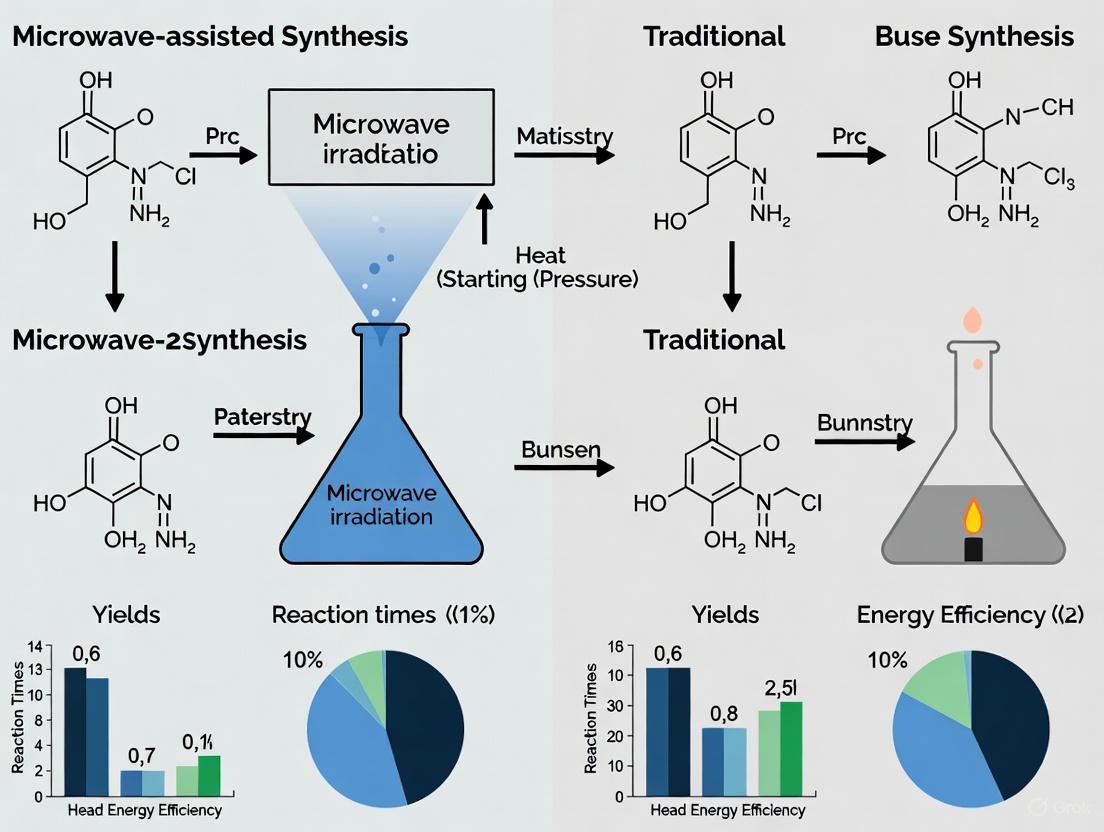
This article provides a comprehensive analysis of product purity and yield in microwave-assisted synthesis compared to traditional thermal methods, tailored for researchers and drug development professionals.
Microwave vs. Traditional Synthesis: A Data-Driven Comparison of Product Purity and Efficiency in Pharmaceutical Development
Abstract
This article provides a comprehensive analysis of product purity and yield in microwave-assisted synthesis compared to traditional thermal methods, tailored for researchers and drug development professionals. It explores the foundational principles of microwave chemistry, including its mechanisms for rapid, internal heating that can lead to cleaner reactions and reduced byproducts. The content details practical methodologies for implementing microwave synthesis in the lab, from solvent selection to parameter optimization, and addresses common troubleshooting scenarios that impact purity. Finally, it presents comparative validation data from recent pharmaceutical case studies, offering evidence-based insights for selecting the optimal synthesis strategy to enhance drug candidate quality and development efficiency.
Understanding Microwave Chemistry: Principles Driving Enhanced Purity
In the pursuit of higher product purity and more efficient synthetic pathways, microwave synthesis has emerged as a transformative technology, fundamentally distinguished from traditional methods by its core mechanism of dielectric heating and direct molecular activation. Unlike conventional conductive heating, which relies on the slow and inefficient transfer of energy from the surface of the vessel to the reaction mixture, microwave energy interacts directly with molecules throughout the reaction volume. This interaction is governed by the material's dielectric properties, leading to instantaneous and internal heating [1] [2]. This paradigm shift in energy delivery not only accelerates reaction times from hours to minutes but also profoundly influences reaction pathways, leading to enhanced product selectivity and purity—a critical consideration for researchers in drug development and materials science [3] [2].
Core Heating Mechanisms: A Comparative Analysis
The fundamental difference between microwave and traditional synthesis lies in the method of energy transfer, which directly impacts heating efficiency, uniformity, and control.
Traditional Conductive Heating
- Mechanism: This method relies on indirect heating through a hot surface (e.g., hot plate, oil bath). Thermal energy must conduct from the external source through the walls of the reaction vessel and into the solution via convection and conduction.
- Implications: This process is inherently slow and inefficient, creating a significant temperature gradient from the vessel walls to the core of the solution. This can lead to localized overheating, prolonged reaction times, and increased formation of side-products, which compromise purity and yield [2].
Microwave Dielectric Heating
- Mechanism: Microwave synthesizers generate electromagnetic radiation that penetrates the reaction vessel and is directly absorbed by polar molecules and ions within the reaction mixture. This causes these molecules to rotate and align with the rapidly oscillating electric field, resulting in rapid, volumetric heating known as dielectric heating [1] [2].
- Direct Molecular Activation: Energy is deposited directly into the reactants, not the container, enabling "instant-on, instant-off" control. This direct coupling means the reaction mixture is its own heat source [2].
- Key Parameters: The efficiency of this heating is determined by the material's dielectric loss factor, a measure of its ability to convert microwave energy into heat. The penetration depth of the microwaves is also a critical factor for scaling up reactions [3].
The following diagram illustrates the distinct energy transfer pathways in these two heating methods.
Performance and Purity: Experimental Data Comparison
The theoretical advantages of microwave heating are consistently demonstrated in practical experiments across various chemical domains. The following table summarizes quantitative data highlighting the performance gains in synthesis, regeneration, and catalysis.
Table 1: Experimental Performance Comparison of Microwave vs. Traditional Synthesis
| Application / Metric | Traditional Method Performance | Microwave Method Performance | Key Experimental Findings |
|---|---|---|---|
| Material Synthesis (NiCo-MOF-74) | ~24 hours [3] | 60 minutes (1/24th the time) [3] | Microwave-synthesized material achieved a high BET surface area of 1147 m²·g⁻¹ and a CO₂ adsorption capacity of 6.68 mmol·g⁻¹ at 25°C and 1 bar [3]. |
| Adsorbent Regeneration (MCM-48) | ~12 minutes [3] | 3 minutes (75% time reduction) [3] | Rapid microwave regeneration demonstrated a significant reduction in process downtime while maintaining material integrity [3]. |
| Solvent Regeneration (30 wt% MEA) | Baseline energy consumption [3] | ~33% lower energy consumption [3] | Microwave-assisted regeneration drastically lowered energy requirements, a major cost and environmental factor in carbon capture [3]. |
| Catalytic CO₂ Conversion (Boudouard Reaction) | Lower conversion and higher activation energy [3] | 81.9% CO₂ conversion at 900°C; with 5% BaCO₃ promoter: 99% conversion, activation energy reduced to 46.3 kJ·mol⁻¹ (≈31% of conventional) [3] | Microwave catalysis achieved superior conversion rates and significantly lowered the energy barrier for the reaction [3]. |
| General Organic Synthesis | Hours to days [2] | Minutes for equivalent reactions [2] | Microwave synthesis offers rapid heating and instant-off capability, preventing temperature overshoot and improving safety and purity by reducing vessel failure [2]. |
Detailed Experimental Protocols
To ensure reproducibility and provide a clear framework for evaluation, the following are detailed methodologies for key experiments cited in the data.
Protocol 1: Microwave-Assisted Synthesis of NiCo-MOF-74
- Reagent Preparation: Dissolve precise molar ratios of nickel and cobalt salts (e.g., nitrates) and the organic linker (2,5-dihydroxyterephthalic acid) in a suitable solvent mixture (e.g., DMF/Water/EtOH).
- Reaction Setup: Transfer the solution to a dedicated microwave reaction vessel (e.g., a 10 mL sealed vial).
- Microwave Irradiation: Place the vessel in a single-mode microwave synthesizer (e.g., CEM Discover). Irradiate the mixture at a controlled temperature (e.g., 120°C) for 60 minutes with active magnetic stirring.
- Workup: After rapid compression air cooling, collect the resulting crystals via centrifugation. Wash and activate the product by solvent exchange and heating under vacuum [3].
Protocol 2: Microwave-Assisted Regeneration of CO₂-Loaded MEA Solution
- Sample Loading: Place a known volume and concentration of CO₂-saturated monoethanolamine (MEA) solution (e.g., 30 wt%) into the microwave reaction vessel.
- Regeneration Parameters: Subject the solution to microwave irradiation at a predetermined power and temperature profile. The internal infrared sensor monitors the temperature in real-time.
- Data Collection: Record the time required to reach the desorption temperature and the total time until CO₂ release is complete (3 minutes). The liberated CO₂ can be quantified using an in-line mass flow meter or gas analyzer.
- Energy Calculation: Compare the total energy consumed by the microwave system to the energy required for achieving the same regeneration via conventional conductive heating [3].
The Scientist's Toolkit: Key Research Reagent Solutions
The advancement of microwave synthesis relies on specialized materials and instruments. The following table details essential components for setting up and executing the featured experiments.
Table 2: Essential Reagents and Equipment for Microwave-Assisted Synthesis
| Item | Function / Relevance | Example in Context |
|---|---|---|
| Single-Mode Microwave Synthesizer | Focuses microwave energy on a single, small-volume sample for highly reproducible and rapid heating. Essential for method development and small-scale synthesis. | CEM Discover platform with IR temperature sensor and pressure control [4] [2]. |
| Sealed Reaction Vessels | Withstand high temperatures and pressures generated by rapid microwave heating, enabling superheating of solvents and access to new reaction pathways. | 10 mL or 80 mL sealed vials capable of withstanding 300°C and 300 psi [2]. |
| Polar Solvents & Ionic Reactants | Possess high dielectric loss, enabling efficient coupling with microwave energy and rapid temperature rise. | Solvents like NMP, DMF; ionic liquids; and aqueous solutions [1]. |
| Functionalized Organic Ligands | Act as "antennas" to absorb microwave energy and facilitate energy transfer in hybrid or catalytic systems. | Carbazole-modified phosphine oxides (CzPPOA) used in lanthanide nanohybrid synthesis [5]. |
| Heterogeneous Catalysts & Promoters | Enhance reaction rates and selectivity under microwave irradiation, often showing synergistic effects. | BaCO₃ used as a promoter to achieve 99% CO₂ conversion in the Boudouard reaction [3]. |
Advanced Concepts and Synergistic Technologies
The principles of microwave synthesis are being further amplified through integration with other cutting-edge technologies.
- AI for Reaction Optimization: Large language models (LLMs) like Chemma are now being trained to predict optimal microwave reaction conditions, recommend reagents, and predict yields with high accuracy. This integration can drastically reduce the experimental screening required to develop a new microwave synthesis protocol [6].
- Overcoming Synthetic Barriers in Materials: The microwave mechanism is pivotal in overcoming previously intractable synthetic challenges. For instance, in developing lanthanide-doped nanocrystals for electroluminescence, functionalized organic ligands act as microwave absorbers and energy transfer mediators, enabling the creation of highly pure and tunable light-emitting materials that were difficult to produce with conventional heating [5].
The interplay between microwave energy and material properties, along with the experimental workflow for optimization, can be visualized as a cyclical, iterative process.
The evidence unequivocally demonstrates that the core mechanism of microwave synthesis—dielectric heating and direct molecular activation—confers a definitive advantage over traditional conductive heating in the critical pursuit of product purity. By enabling rapid, uniform, and precise temperature control, microwave synthesis minimizes side reactions and thermal degradation, leading to higher yields of purer products. The experimental data, showing dramatic reductions in reaction time, energy consumption, and improvements in material performance, validate this technology as an indispensable tool for modern research and development. As microwave systems continue to evolve, synergizing with AI and advanced material science, their role in driving efficient and sustainable chemical innovation is set to expand further.
The pursuit of product purity is a central goal in chemical synthesis, driving the evaluation of heating methodologies. For decades, conventional thermal methods have been the standard, relying on surface heating through conduction and convection. In contrast, microwave-assisted synthesis represents a paradigm shift by using electromagnetic energy to generate heat volumetrically within the reaction mixture itself [7] [8]. This fundamental difference in energy transfer mechanism underpins the significant advantages of microwave synthesis, including dramatically accelerated reaction rates, the potential for superheating effects, and superior energy efficiency, all of which collectively contribute to enhanced product purity and yield [9]. This guide provides an objective, data-driven comparison for researchers and development professionals, focusing on these core performance differentiators.
The divergence in performance between microwave and traditional synthesis originates at the most basic level: how heat is generated and delivered.
- Traditional Conductive Heating: This method is characterized by indirect and relatively slow energy transfer. An external heat source (e.g., an oil bath or hotplate) heats the walls of the reaction vessel. This heat then transfers inward via conduction, creating a temperature gradient from the vessel walls to the core of the reaction mixture [10]. This process is inherently inefficient and can lead to non-uniform heating, where localized overheating at the walls may cause product decomposition while the core remains cooler.
- Microwave Dielectric Heating: Microwave irradiation bypasses the vessel walls, directly delivering energy to polar molecules and ions throughout the reaction mixture [7] [10]. This occurs through two primary mechanisms:
- Dipolar Polarization: Polar molecules (e.g., water, methanol, DMF) attempt to align themselves with the rapidly oscillating electric field of the microwaves. This molecular friction and collision generate heat rapidly and uniformly [8].
- Ionic Conduction: Ions present in the solution move under the influence of the electric field, colliding with neighboring molecules and converting kinetic energy into heat [8].
The following diagram illustrates this core difference in the heating pathways.
Quantitative Performance Comparison
Experimental data from diverse fields consistently demonstrates the performance benefits of microwave-assisted synthesis. The tables below summarize key comparative findings.
Table 1: Comparative Synthesis Times and Yields
| Material Synthesized | Traditional Method Duration | Microwave Method Duration | Yield (Traditional) | Yield (Microwave) | Citation |
|---|---|---|---|---|---|
| Ni7(II) Magnetic Discs | 24 hours (1 day) | 10 minutes | Not Specified | Equivalent or Superior Crystal Regularity [11] | [11] |
| Reduced Graphene Oxide (rGO) | Hours to Days | 5 minutes | Not Specified | 94.56% reduction efficiency [12] | [12] |
| TaC Nanorods | Several hours | 20 minutes | Lower (implied by low quality) | High-quality nanorods [13] | [13] |
| Various Triazole Derivatives | Hours (1-12 hrs typical) | Minutes (1-30 min typical) | Moderate to High (50-90%) | Consistently High (85-95%) [14] | [14] |
Table 2: Energy Efficiency and Product Quality Metrics
| Performance Parameter | Traditional Synthesis | Microwave-Assisted Synthesis | Experimental Context |
|---|---|---|---|
| Heating Rate | Slow (minutes to hours) | Rapid (seconds to minutes) | Based on direct dielectric heating mechanism [8] [9] |
| Energy Efficiency | Lower (significant heat loss) | Higher (direct energy coupling) | Reduced environmental impact and lower energy consumption [7] [10] |
| Product Uniformity | Variable, wider size distribution | Narrow size distribution, regular shape | Ni7(II) disc crystal synthesis [11] |
| Activation Energy (Ea) | Standard Ea | Can be significantly reduced | Non-thermal effects can lower the energy barrier [9] |
Experimental Protocols for Key Comparisons
To ensure reproducibility, this section details the methodologies from key studies cited in the comparison tables.
- Objective: To compare the efficiency and product quality of microwave irradiation versus traditional oven heating for synthesizing magnetic molecular clusters.
- Materials: Ni(ClO4)2·6H2O, salicylaldehyde Schiff base ligands (e.g., 2-methoxy-6-(iminomethyl)phenol), methanol, acetonitrile.
- Traditional Method: The reaction mixture was sealed in a vessel and placed in a traditional oven at a set temperature. The reaction required 24 hours to complete.
- Microwave Method: An identical reaction mixture was subjected to microwave irradiation under the same temperature conditions. The reaction was complete in 10 minutes.
- Analysis: Products were characterized using electrospray ionization mass spectrometry (ESI-MS) and magnetic property measurements. The microwave-synthesized crystals showed a narrower size distribution and more regular shape.
- Objective: Rapid, scalable synthesis of high-quality tantalum carbide nanorods for electromagnetic wave absorption.
- Materials: Ta2O5, Carbon source, NaCl, Ni catalyst.
- Method: A molten salt-assisted carbothermal reduction strategy was used. The precursor mixture with a precise composition (Ta2O5 : C : NaCl : Ni = 1 : 8 : 2 : 0.08) was heated using microwave irradiation to 1300 °C for 20 minutes.
- Analysis: The resulting nanorods were analyzed for morphology (showing well-defined 1D structures) and performance (demonstrating excellent electromagnetic wave absorption properties).
- Objective: To compare the speed and product purity of microwave-assisted peptide synthesis against conventional methods.
- Materials: Fmoc-protected amino acids, solid-phase resin (e.g., PEG-based resin), coupling reagents (e.g., HATU, HBTU, or COMU), deprotecting agents.
- Conventional Method: Coupling and deprotection steps are performed at ambient temperature or with conductive heating, requiring longer cycle times.
- Microwave Method: Coupling and deprotection steps are performed under controlled microwave irradiation, significantly accelerating each step.
- Analysis: The crude peptides were analyzed by HPLC and mass spectrometry. While microwave heating reduced synthesis time by approximately 32%, it was also noted that it could accelerate epimerization in some cases, highlighting the need for optimized protocols to maintain purity [15].
Essential Research Reagent Solutions
The success of microwave-assisted synthesis depends on the careful selection of reagents and materials that interact efficiently with microwave radiation.
Table 3: Key Reagents and Their Functions in Microwave Synthesis
| Reagent / Material | Function in Microwave Synthesis | Consideration for Purity |
|---|---|---|
| Polar Solvents (e.g., Water, DMF, Ethanol) | High dielectric loss tangents enable efficient absorption of microwave energy, leading to rapid heating [7] [8]. | Using high-purity solvents is critical to minimize unwanted side reactions initiated by impurities. |
| Ionic Liquids | Act as powerful microwave absorbers and can serve as dual solvents/catalysts, enabling reactions under mild conditions [8]. | Their purity and potential stability under high temperatures must be verified to prevent decomposition products. |
| Solid Supports (e.g., silica, alumina) | Used in solvent-free ("dry media") synthesis; they absorb microwaves and transfer energy to adsorbed reactants [10]. | The surface chemistry and purity of the support can influence reaction pathways and product purity. |
| Specialized Coupling Reagents (e.g., COMU) | Used in peptide synthesis; selected for compatibility with microwave irradiation to maximize yield and minimize racemization [15]. | Low epimerization risk is essential for producing pure peptides with correct chirality. |
| Doped Metal Oxide Catalysts (e.g., Ni/CeO2) | Inorganic catalysts designed for strong microwave absorption, creating localized "hot spots" that enhance catalytic activity [16]. | The uniformity of dopant distribution affects catalyst performance and selectivity, impacting product purity. |
The experimental data and comparative analysis presented in this guide robustly support the key advantages of microwave-assisted synthesis. The evidence for dramatically reduced reaction times—from days to minutes or hours to seconds—is overwhelming across material science, nanotechnology, and organic chemistry [13] [12] [11]. The energy efficiency of microwave synthesis, derived from its direct volumetric heating mechanism, offers a clear path to more sustainable and cost-effective laboratory and industrial processes [7] [10]. While the phenomenon of superheating contributes to accelerated kinetics, it is the precise and uniform nature of microwave heating that most directly enhances product purity, leading to narrower size distributions, higher crystallinity, and reduced by-product formation [13] [11]. Researchers must, however, remain aware of limitations, such as penetration depth and the need for polar reaction components, and optimize protocols to mitigate potential issues like epimerization in sensitive reactions [15]. Ultimately, microwave technology stands as a superior alternative to traditional conductive heating for a vast range of synthetic applications, offering unparalleled control, speed, and efficiency.
In pharmaceutical development and fine chemical synthesis, product purity is a critical determinant of process efficiency, safety, and economic viability. Conventional thermal heating methods often struggle with uneven heat distribution, leading to localized overheating, decomposition of sensitive compounds, and the formation of undesirable side-products. These impurities necessitate complex, multi-step purification protocols, increasing solvent waste, energy consumption, and production costs. Microwave-assisted synthesis has emerged as a powerful alternative, leveraging unique heating mechanisms that directly address these purity challenges. This guide objectively compares the performance of microwave and traditional synthesis methods, presenting experimental data that demonstrates how controlled microwave irradiation enhances purity through dramatically reduced reaction times and minimized formation of side-products.
Fundamental Heating Mechanisms: A Tale of Two Methods
The core difference between conventional and microwave heating lies in how energy is delivered to the reaction mixture, which directly impacts the reaction pathway and outcome.
Conventional Heating
- Mechanism: Conventional heating relies on conductive and convective heat transfer. An external heat source (e.g., oil bath, hotplate) heats the surface of the reaction vessel. This heat then slowly conducts through the vessel wall and into the reaction mixture, creating a temperature gradient from the vessel walls to the center [17].
- Impact on Purity: This slow, inward-driven heat transfer often results in localized overheating at the vessel walls. Sensitive reagents or products in contact with these hot surfaces can decompose, forming side-products and impurities. Furthermore, achieving and maintaining a uniform target temperature throughout the mixture is slow, often leading to prolonged reaction times that favor secondary reactions and decomposition [8] [17].
Microwave Heating
- Mechanism: Microwave irradiation delivers energy directly and volumetrically to the molecules in the reaction mixture. This occurs through two primary mechanisms [17] [7]:
- Dipolar Polarization: Polar molecules (e.g., water, alcohols, DMF) align themselves with the oscillating electric field of the microwaves. The continuous, rapid reorientation of these molecules generates heat through molecular friction.
- Ionic Conduction: Ions present in the solution oscillate back and forth under the changing electric field, colliding with surrounding molecules and converting kinetic energy into heat.
- Impact on Purity: This "in-core" heating eliminates wall effects and inverted temperature gradients, ensuring the entire reaction mixture heats rapidly and uniformly [17]. The direct coupling of energy with reactants facilitates faster reaction kinetics and allows reactions to proceed at lower bulk temperatures than conventional methods, thereby suppressing thermal decomposition pathways and minimizing the formation of side-products [7].
Mechanism Comparison Diagram
The diagram below illustrates the fundamental difference in heat transfer between the two methods.
Experimental Data & Comparative Analysis
Direct comparisons in peer-reviewed literature consistently demonstrate the advantages of microwave synthesis in enhancing purity and efficiency.
Case Study 1: Synthesis of Benzotriazole Derivatives
A study compared the synthesis of N-o-tolyl-1H-benzo[d][1,2,3]triazole-5-carboxamide using conventional reflux and microwave irradiation [18].
Table 1: Comparison of Benzotriazole Derivative Synthesis
| Parameter | Conventional Reflux | Microwave Irradiation |
|---|---|---|
| Reaction Time | 4 hours | 4 minutes 30 seconds |
| Reported Yield | 72% | 83% |
| Melting Point | 218°C | 220°C |
| Key Purity Observation | -- | Cleaner reaction profile noted by TLC [18] |
Interpretation: The microwave method achieved the transformation 53 times faster than conventional heating. The higher yield and sharper melting point suggest a purer product with less contamination from side-products, a conclusion supported by the cleaner TLC analysis [18].
Case Study 2: Synthesis of 2,3-Disubstituted Benzo[b]furans
A one-pot, three-component synthesis of benzo[b]furans was optimized using microwave irradiation [19]. The initial conventional conditions provided the product in 51% yield. After systematic optimization under microwave heating, the yield was increased to 96% with a total reaction time of only 30 minutes at room temperature for the first step [19]. The authors noted that reactions conducted at optimized microwave conditions resulted in cleaner reaction mixtures, simplifying the final purification process.
Case Study 3: General Kinetic Advantage
The acceleration of reactions by microwaves is explained by the Arrhenius law, which states that a reaction rate approximately doubles for every 10°C increase in temperature. Microwave irradiation enables rapid superheating of solvents far beyond their atmospheric boiling points in sealed vessels [17].
Table 2: Theoretical Time Reduction with Increased Temperature (Arrhenius Law) [17]
| Reaction Temperature | 80 °C | 100 °C | 120 °C | 140 °C | 160 °C |
|---|---|---|---|---|---|
| Estimated Reaction Time | 8 hours | 2 hours | 30 minutes | 8 minutes | 2 minutes |
Interpretation: A reaction that would traditionally take 8 hours in boiling ethanol can, in theory, be completed in just 2 minutes at 160°C in a sealed microwave reactor. This drastic reduction in reaction time directly limits the window for secondary reactions and decomposition, thereby preserving the integrity of the desired product and enhancing overall purity [17] [7].
Essential Research Reagent Solutions
The success of microwave-assisted synthesis depends on the judicious selection of reagents and solvents based on their ability to interact with microwave radiation.
Table 3: Key Reagents and Their Functions in Microwave Synthesis
| Reagent/Solvent Category | Example | Function & Rationale |
|---|---|---|
| High Microwave-Absorbing Solvents | Ethanol, DMSO, Water (with salts) | Efficiently convert microwave energy to heat via dipolar polarization and/or ionic conduction, enabling rapid temperature rise [17]. |
| Low Microwave-Absorbing Solvents | Toluene, Hexane, Dioxane | "Microwave-transparent"; useful when direct heating of the solvent is undesirable, allowing only polar reagents/catalysts to be heated [17]. |
| Homogeneous Catalysts | PdCl₂(PPh₃)₂, CuI | Often polar, they absorb microwaves efficiently, leading to rapid activation and improved catalytic activity, which can suppress side reactions [19]. |
| Solid-Supported Reagents | Silica-supported acids/bases | Enable solvent-free "dry media" reactions, simplifying work-up and purification while minimizing waste, which is beneficial for purity [8]. |
| Passive Heating Elements | Silicon carbide (SiC) | Added to low-absorbing reaction mixtures to act as a microwave sink, ensuring efficient heating where needed [17]. |
Experimental Protocol: Representative Microwave-Assisted Synthesis
The following is a generalized protocol adapted from the synthesis of N-o-tolyl-1H-benzo[d][1,2,3]triazole-5-carboxamide and similar compounds [18] [19].
Objective: To synthesize a carboxamide derivative via a microwave-assisted coupling reaction.
Materials:
- Aryl acid chloride (e.g., Benzotriazole-5-carbonyl chloride)
- Amine (e.g., o-Toluidine)
- Anhydrous base (e.g., Triethylamine)
- Anhydrous, microwave-absorbing solvent (e.g., Acetonitrile, DMF)
- Palladium catalyst (e.g., PdCl₂(PPh₃)₂, if required for the specific reaction)
Procedure:
- Reaction Setup: In a dedicated microwave reaction vial, combine the aryl acid chloride (1.0 mmol), amine (1.05 mmol), and base (2.0 mmol) in anhydrous solvent (2-5 mL). If applicable, add the catalyst (e.g., 3 mol% PdCl₂(PPh₃)₂ and 2 mol% CuI) [19].
- Capping and Safety: Securely cap the vial with a pressure-resistant septum. Ensure the vial is properly seated in the microwave reactor.
- Microwave Irradiation: Program the microwave reactor with the following parameters:
- Temperature: 150-180 °C
- Pressure: Allow for controlled pressure build-up.
- Hold Time: 5-10 minutes
- Stirring: Continuous, high-speed stirring.
- Cooling: After irradiation, allow the vessel to cool to room temperature within the reactor, typically with active air-jet cooling.
- Work-up and Purification: Transfer the reaction mixture. Add dilute acid (e.g., 10% HCl) to remove excess amine. Extract the product with an organic solvent (e.g., ethyl acetate), wash with water, dry over anhydrous sodium sulfate, and concentrate under reduced pressure. The purity is often high enough that simple precipitation or trituration suffices, avoiding flash chromatography [18] [20].
The collective experimental evidence firmly establishes microwave-assisted synthesis as a superior methodology for enhancing product purity in chemical synthesis. The fundamental advantage stems from its unique volumetric heating mechanism, which enables unprecedented control over reaction kinetics and temperature. By achieving the same chemical transformation in minutes instead of hours, and with cleaner reaction profiles, microwave synthesis directly minimizes the formation of side-products and decomposition impurities. This leads to higher yields, simpler purification processes, and a significant reduction in solvent waste and energy consumption. For researchers and drug development professionals, integrating microwave chemistry represents a strategic step towards more efficient, economical, and environmentally sustainable synthetic processes without compromising on the critical parameter of purity.
The growing negative impact of human activities on the environment has heightened the urgency for the chemistry community to adopt greener and more sustainable practices [21]. Central to this effort is the principle of waste minimization, which aligns with the first principle of green chemistry: "It is better to prevent waste than to treat or clean up waste after it is formed" [21]. In the pharmaceutical industry and fine chemicals manufacturing, this has led to the widespread adoption of green metrics, particularly the E-factor, which quantifies the actual amount of waste produced per kilogram of desired product, defined as "everything but the desired product" [21]. The ideal E-factor is zero, representing the ultimate goal of zero-waste manufacturing plants [21].
The E-factor provides a straightforward mass-based metric for evaluating environmental impact, with higher E-factors indicating more waste generation and greater environmental impact [21]. In pharmaceutical manufacturing, solvents typically account for 80-90% of the total mass of non-aqueous material used and the majority of waste formed, making them a primary target for green chemistry improvements [21]. Within this context, microwave-assisted synthesis has emerged as a powerful tool for reducing solvent usage and minimizing waste generation while maintaining or even improving product purity and yield [18].
Microwave vs. Conventional Synthesis: Fundamental Principles
Heating Mechanisms
The fundamental difference between microwave and conventional heating methods lies in their mechanisms of energy transfer. Conventional heating relies on conductive heat transfer from external sources such as oil baths, sand baths, and heating mantles, creating hot surfaces on reaction vessels where products, substrates, and reagents often decompose over time [18]. This approach is not only slow but also inefficient, with temperature gradients developing throughout the reaction mixture.
In contrast, microwave dielectric heating drives chemical reactions by taking advantage of the ability of some liquids and solids to transform electromagnetic radiation into heat [18]. Microwave energy is introduced into the chemical reactor remotely and passes through the walls of the reaction vessel, heating the reactants and solvents directly [18]. This enables selective absorption of microwave energy by polar molecules, resulting in uniform temperature increases throughout the sample, which leads to fewer by-products and less product decomposition [18].
Reaction Kinetics and Efficiency
The Arrhenius equation states that for every ten-degree increase in temperature, there is a doubling of the reaction rate [22]. Microwave synthesis enhances this effect by enabling superheating of reactions under pressure to temperatures significantly above their standard boiling points, greatly accelerating reactions and achieving in minutes what might otherwise require hours [22]. This rapid heating capability minimizes temperature gradients and can accelerate reaction rates while potentially reducing solvent usage and waste generation [23].
Table 1: Fundamental Differences Between Heating Methods
| Parameter | Conventional Heating | Microwave Heating |
|---|---|---|
| Heating Mechanism | Conductive heat transfer from surface | Direct core heating via molecular interaction with radiation |
| Heating Rate | Slow, limited by thermal conductivity | Rapid, immediate energy transfer |
| Temperature Distribution | Gradients from surface to core | Uniform throughout reaction mixture |
| Energy Efficiency | Lower, with significant heat loss | Higher, targeted energy delivery |
| Pressure Capability | Limited by reflux conditions | Enhanced through sealed vessels |
Quantitative Comparison of Synthesis Methods
Reaction Performance Metrics
Comparative studies across multiple chemical transformations demonstrate consistent advantages for microwave-assisted synthesis. In the synthesis of benzotriazole derivatives, researchers directly compared conventional heating with microwave irradiation, with dramatic differences in performance [18]. The synthesis of N-o-tolyl-1H-benzo[d][1,2,3]triazole-5-carboxamide demonstrated a significant reduction in reaction time from 4 hours with conventional heating to just 4.5 minutes with microwave assistance, while also improving yield from 72% to 83% [18]. Similar improvements were observed across a range of benzotriazole analogues, establishing a clear pattern of enhanced efficiency.
Similar advantages have been documented in other chemical domains. The Fisher glycosidation of monosaccharides with fatty alcohols—a reaction producing valuable surfactants—was achieved in only 3 minutes under microwave irradiation at a maximum power of 5W, sufficient to avoid overshoot and product decomposition [24]. While conventional heating could achieve similar conversions at the same temperature, it required significantly longer reaction times [24].
Table 2: Direct Performance Comparison: Conventional vs. Microwave Synthesis
| Reaction Type | Conventional Time | Microwave Time | Conventional Yield | Microwave Yield |
|---|---|---|---|---|
| Benzotriazole Derivative Synthesis [18] | 4 hours | 4.5 minutes | 72% | 83% |
| Fisher Glycosidation [24] | Hours (exact time not specified) | 3 minutes | Comparable (exact % not specified) | High conversion |
| MXene Synthesis [25] | Up to 40 hours | 90 minutes | Not specified | No shielding efficiency tradeoff |
Environmental and Energy Metrics
Beyond reaction speed and yield, microwave synthesis demonstrates substantial advantages in environmental and energy metrics. In the production of MXenes—lightweight two-dimensional materials for radiation protection—traditional synthesis requires multi-step processes taking up to 40 hours [25]. A rapid single-step microwave synthesis method developed at Carnegie Mellon University reduced production time to 90 minutes while cutting energy consumption by 75% [25]. This represents a 25-fold acceleration in production time with significantly reduced environmental impact, without compromising material performance [25].
The E-factor metric reveals the environmental advantage of microwave approaches through reduced solvent consumption and minimized waste production. The pharmaceutical industry has reported an average complete E-factor (cEF)—which includes solvents and water with no recycling—of 182 for commercial-scale syntheses of 97 active pharmaceutical ingredients (APIs), with a spread from 35 to 503 [21]. Microwave synthesis directly addresses this issue by enabling reactions with higher concentrations and reduced solvent volumes, thereby improving overall E-factors.
Experimental Protocols and Methodologies
Representative Microwave Synthesis Protocol: Benzotriazole Derivatives
The synthesis of benzotriazole derivatives provides an illustrative example of optimized microwave protocols directly compared with conventional methods [18]:
Step 1: Synthesis of benzotriazole-5-carboxylic acid
- A suspension of 3,4-diaminobenzoic acid (2 g, 13.15 mmol) was prepared in glacial acetic acid (5 mL, 75.36 mmol) with magnetic stirring.
- A solution of sodium nitrite (1 g, 16.66 mmol) in 5 mL of water was added to the suspension in one portion while stirring.
- The reaction mixture was stirred until it reached room temperature (approximately 30 minutes).
- The product was collected by filtration and washed with cold water to remove excess acetic acid.
- Yield: 88% of pale brown amorphous powder.
Step 2: Synthesis of benzotriazole-5-carbonyl chloride
- Benzotriazole-5-carboxylic acid (1.5 g, 9.20 mmol) and thionyl chloride (6 mL, 9.78 g, 82.10 mmol) were refluxed for 30 minutes.
- Excess thionyl chloride was removed by distillation.
- The residue was washed with 20% sodium bicarbonate solution (3×10 mL) followed by one water wash (1×10 mL).
- Yield: 83% of dark brown amorphous powder.
Step 3: Microwave-assisted synthesis of N-o-tolyl-1H-benzo[d][1,2,3]triazole-5-carboxamide
- Benzotriazole-5-carbonyl chloride (1 g, 5.50 mmol) was mixed with 5 mL benzene.
- An equimolar proportion of o-toluidine in 10 mL of benzene was added.
- The reaction was irradiated in a domestic microwave oven at 180 W for 4 minutes and 30 seconds.
- After completion, 10% hydrochloric acid was added to remove excess o-toluidine as its hydrochloride salt.
- The benzene layer was washed with water (3×10 mL) and passed through anhydrous sodium sulfate.
- The product was obtained as light brown crystalline powder after benzene removal by distillation.
- Yield: 83% (compared to 72% by conventional reflux for 4 hours).
Advanced Material Synthesis Protocol: Mesoporous High-Entropy Alloy Nanoparticles
The synthesis of mesoporous high-entropy alloy nanoparticles (mp-HEA NPs) demonstrates microwave applications in nanomaterials chemistry [23]:
- Formation of F127 micelles was induced by adding aqueous HCl and water to a F127/DMF solution.
- The micelle suspension was combined with an aqueous solution containing equimolar concentrations of metal salts (RhCl₃, AgNO₃, CuCl₂, PdCl₂, PtCl₄).
- The mixture was heated in a laboratory microwave reactor to 130°C for 1 minute.
- The resulting mesoporous HEA NPs (RhAgCuPdPt) were characterized by a face-centered cubic structure with a BET surface area of 18.968 m²/g and uniform elemental distribution.
- The rapid heating during microwave synthesis facilitated co-reduction of all metal constituents, preventing phase segregation and enabling homogeneous alloy formation.
The following diagram illustrates the logical relationship between synthesis methods and their impacts on green chemistry principles, particularly solvent reduction and waste minimization:
Solvent Reduction Strategies and Alternatives
Solvent Selection Guides
In pharmaceutical manufacture, solvents account for the majority of waste formed and 75-80% of the environmental life cycle impacts [21]. Recognizing this, several drug companies have developed in-house solvent selection guides using traffic-light inspired color coding—green, amber, and red—to signify "preferred," "useable," and "undesirable" solvents [21]. These guides can be readily adapted for use in academic and industrial research laboratories, allowing chemists to make informed choices about solvent selection for reactions and work-up procedures.
The ACS Green Chemistry Institute Pharmaceutical Roundtable (GCIPR) Solvent Selection Guide provides a standardized approach, rating solvents against five categories: safety, health, environment (air), environment (water), and environment (waste) [26]. The guide assigns scores from 1 to 10 for each solvent under respective categories, with 10 representing the highest concern [26].
Dichloromethane Substitution
With new EPA regulations limiting dichloromethane (DCM) use due to its carcinogenicity and other health hazards, identifying alternatives has become increasingly important [26]. DCM has been widely used as a reaction solvent, mobile phase in chromatography, and extraction solvent due to its polarity, low boiling point, and low flammability [26]. However, its metabolism in the body generates reactive intermediates including formaldehyde and carbon monoxide, contributing to its toxicity and carcinogenic potential [26].
A systematic approach to DCM replacement involves:
- Determining DCM's specific purpose in the process (reaction solvent, chromatography, extraction, etc.)
- Selecting key properties required based on its function (polar, aprotic, low viscosity, etc.)
- Searching for alternatives with similar properties using solvent guides and selection tools
- Evaluating alternatives against multiple criteria including safety, environmental impact, and economic viability [26]
Potential alternatives include mixtures such as 3:1 ethyl acetate and ethanol for some column chromatography applications, though no single solvent or mixture serves as a universal replacement for all DCM applications [26].
The Scientist's Toolkit: Essential Research Reagents and Materials
Table 3: Research Reagent Solutions for Green Microwave Synthesis
| Reagent/Material | Function | Application Example |
|---|---|---|
| Polar Solvents (Ethanol, Ethyl Acetate) | Green alternative to chlorinated solvents | Extraction, chromatography [26] |
| F127 (Pluronic F127) | Pore-directing agent for mesoporous materials | Synthesis of mesoporous HEA NPs [23] |
| L-ascorbic acid (L-AA) | Green reducing agent | Reduction of metal salts in nanoparticle synthesis [23] |
| Hydrocarbon Solvents | Non-polar media for nanocrystal growth | Microwave solvothermal synthesis of AZO nanocrystals [27] |
| Sealed Microwave Vials | Withstand pressure beyond 30 bar | Safe reactions at elevated temperatures [22] |
| Molten Salt Media | High-temperature reaction medium | Carbothermal reduction for TaC nanorods [13] |
The experimental workflow for comparing microwave and conventional synthesis methods, particularly focusing on solvent use and waste production, can be visualized as follows:
The comparative analysis between microwave-assisted and conventional synthesis methods demonstrates significant advantages for microwave approaches within the green chemistry framework of solvent reduction and waste minimization. Microwave synthesis consistently enables dramatic reductions in reaction time (from hours to minutes), improved product yields, and substantial decreases in energy consumption (up to 75% reduction). These improvements directly enhance key green metrics, particularly the E-factor, by minimizing solvent usage and reducing waste generation.
For researchers and drug development professionals, microwave synthesis represents a viable strategy for addressing the environmental challenges of chemical manufacturing while maintaining or improving product purity and reaction efficiency. The methodology aligns with broader industry trends toward sustainable solvents and waste prevention at source, contributing to more environmentally responsible chemical production across pharmaceutical, fine chemical, and materials science domains. As microwave technology continues to evolve and become more accessible, its integration into research and development workflows offers a promising path toward greener synthetic methodologies.
Implementing Microwave Synthesis: Protocols for Optimal Purity in Drug Development
In both microwave-assisted and traditional synthesis, the choice between pressurized (closed) and atmospheric (open) reaction vessels is a critical strategic decision that profoundly impacts reaction efficiency, product yield, and purity. This fundamental choice in reactor configuration dictates the physical conditions under which chemical transformations occur, creating distinct environments that can accelerate or hinder reaction pathways. Within the broader context of comparing microwave and traditional synthesis methods, understanding how vessel type influences reaction outcomes is essential for researchers aiming to optimize synthetic protocols, particularly in pharmaceutical development where purity and efficiency are paramount.
The selection between open and closed vessels extends beyond simple container choice—it represents a decision about the reaction environment itself. Closed vessels create sealed systems where pressure can accumulate, enabling temperatures to exceed normal boiling points of solvents, while open vessels maintain atmospheric pressure, typically limiting reactions to solvent reflux temperatures. This comparative guide examines the performance characteristics of both systems using experimental data, providing scientists with the evidence needed to make informed decisions based on specific research objectives.
Fundamental Principles and Definitions
Pressurized (Closed) Vessels
Closed-end pressure vessels are sealed containers designed to withstand internal pressure, preventing any interaction with the external environment [28]. In chemical synthesis, these vessels allow reactions to proceed under elevated pressure and temperature conditions. When heated, solvents and reagents generate autogenous pressure within the sealed system, significantly raising the boiling point of reaction mixtures and enabling superheating. This pressurized environment is particularly valuable for reactions requiring high temperatures for extended periods or those involving low-boiling solvents that would otherwise evaporate under atmospheric conditions.
Atmospheric (Open) Vessels
Open-end vessels feature at least one access point to the atmosphere, allowing vapors to escape and maintaining internal pressure equal to external atmospheric pressure [28]. These systems are typically used with reflux condensers to prevent solvent loss during heating, limiting reaction temperatures to the standard boiling point of the solvent system. The open configuration permits the addition of reagents during reactions, enables the use of atmospheric inert gas blankets, and facilitates the removal of volatile by-products through azeotropic distillation, making them suitable for a wide range of traditional synthetic applications.
Comparative Performance Analysis
Reaction Rate and Efficiency
The primary advantage of pressurized vessel systems is their dramatic reduction of reaction time. By enabling higher reaction temperatures through superheating of solvents, closed vessels significantly accelerate reaction kinetics. The collision model of chemical kinetics explains this phenomenon, as increasing temperature raises the average kinetic energy of molecules, resulting in more frequent collisions with sufficient energy to overcome activation barriers [29].
Experimental studies demonstrate remarkable time reduction when using pressurized microwave systems compared to conventional open-vessel methods. The table below summarizes representative comparative data:
Table 1: Time Efficiency Comparison Between Closed and Open Vessel Systems
| Reaction Type | Closed Vessel Conditions | Open Vessel Conditions | Time Reduction | Citation |
|---|---|---|---|---|
| Benzotriazole derivative synthesis | Sealed microwave, 180W, 4.5 min | Conventional reflux, 4 hours | 98.1% | [18] |
| Biomass to levulinic acid conversion | Sealed microwave, 600W, 180 sec | Conventional heating, 130°C, 4 hours | 98.8% | [30] |
| General organic synthesis | Microwave closed vessel, 2-10 min | Conventional open vessel, 1-48 hours | 70-99% | [31] |
Beyond mere time savings, this acceleration enhances laboratory efficiency, enabling more reaction iterations in less time—a critical advantage in drug discovery and optimization workflows where rapid screening of reaction conditions is essential.
Product Yield and Purity
The elevated temperatures achievable in pressurized systems not only accelerate reactions but can also alter product distributions and improve yields. Comparative studies consistently demonstrate that microwave-assisted pressurized reactions frequently provide superior yields compared to conventional open-vessel methods.
Table 2: Yield Comparison Between Closed and Open Vessel Systems
| Reaction/Product | Yield in Closed Vessel | Yield in Open Vessel | Purity Advantages | Citation |
|---|---|---|---|---|
| Levulinic acid from glucose | 9.57% | 6.93% | Less by-products, cleaner NMR spectra | [30] |
| N-o-tolyl-1H-benzo[d][1,2,3]triazole-5-carboxamide | 83% | 72% | Comparable or improved purity | [18] |
| Benzotriazole-5-carboxylic acid | 88% (microwave-assisted) | Not reported | Higher yields in shorter times | [18] |
The purity advantages observed in pressurized systems, particularly under microwave irradiation, stem from several factors. The rapid, uniform heating in closed microwave vessels reduces thermal degradation that can occur during prolonged heating in conventional open systems [18]. Additionally, the ability to precisely control temperature and pressure in modern closed-vessel systems minimizes side reactions, leading to cleaner product profiles. Structural analysis techniques including ¹H and ¹³C NMR have confirmed improved product purity in microwave-assisted pressurized reactions compared to conventional open-vessel methods [30].
Temperature and Pressure Control
Closed vessels enable precise control over reaction parameters, allowing temperatures far above solvent boiling points. For example, a solvent that boils at 100°C under atmospheric pressure can reach temperatures of 200°C or higher in a sealed vessel, dramatically increasing reaction rates according to the Arrhenius equation [29]. Modern closed-vessel microwave systems incorporate sophisticated monitoring and control mechanisms, including direct pressure measurement via inserted needle probes or indirect measurement through septum deflection monitoring [32].
Open vessels, by contrast, are generally limited to the boiling point of the solvent system at atmospheric pressure, though this can be advantageous when precise temperature control is needed without specialized equipment. The open configuration provides inherent safety against pressure buildup, making it suitable for reactions generating gases or for processes requiring continuous removal of volatile components.
Experimental Protocols and Methodologies
Representative Protocol: Microwave-Assisted Pressurized Synthesis
Synthesis of N-substituted benzotriazole carboxamide derivatives [18]
- Reaction Vessel: Sealed 10-mL microwave vessel with self-sealing septum
- Reagents: Benzotriazole-5-carbonyl chloride (1 g, 5.50 mmol), substituted amine (equimolar), benzene (15 mL)
- Microwave System: Domestic microwave oven (Samsung M183DN)
- Power Setting: 180 W
- Irradiation Time: 4 minutes 30 seconds
- Temperature Monitoring: Indirect pressure measurement via septum deflection
- Work-up Procedure:
- After irradiation, cool vessel to room temperature
- Carefully release pressure
- Add 10% hydrochloric acid to remove excess amine as hydrochloride salt
- Wash benzene layer with water (3 × 10 mL)
- Pass organic layer through anhydrous sodium sulfate
- Remove solvent by distillation
- Recrystallize product from suitable solvent
- Analysis: TLC, melting point, IR, ¹H NMR
Representative Protocol: Conventional Open-Vessel Synthesis
Synthesis of same N-substituted benzotriazole derivatives [18]
- Reaction Vessel: Round-bottom flask (25 mL) fitted with reflux condenser
- Reagents: Identical to microwave method
- Heating System: Heating mantle or oil bath
- Temperature: Solvent reflux temperature
- Reaction Time: 4 hours
- Work-up Procedure: Identical to microwave method
- Analysis: Identical to microwave method
Biomass Conversion Experimental Approach
Conversion of delignified cellulose to levulinic acid [30]
- Catalyst: Hierarchical Mn₃O₄/ZSM-5 zeolite
- Microwave Method: Household microwave, 600 W, 180 seconds
- Conventional Method: Heating at 130°C for 4 hours
- Analysis: HPLC for conversion yields, ¹H and ¹³C NMR for purity assessment
- Key Finding: Microwave-assisted pressurized reaction gave higher LA yield (9.57%) compared to conventional method (6.93%) with fewer by-products
Decision Framework for Vessel Selection
The choice between pressurized and atmospheric reaction vessels depends on multiple factors related to reaction requirements and practical constraints. The following workflow diagram provides a systematic approach to this strategic decision:
The Scientist's Toolkit: Essential Research Reagent Solutions
Successful implementation of either pressurized or atmospheric reaction strategies requires specific laboratory equipment and materials. The following table outlines essential research reagent solutions for both approaches:
Table 3: Essential Research Reagent Solutions for Pressurized and Atmospheric Reactions
| Item | Function/Purpose | Application Notes |
|---|---|---|
| Sealed microwave vessels | Withstand internal pressure during microwave irradiation | Enable high-temperature reactions; available with pressure and temperature monitoring capabilities [32] |
| Reflux condensers | Cool and condense vapors in open vessels | Prevent solvent loss while maintaining atmospheric pressure; allow reagent addition during reactions [32] |
| Round-bottom flasks | Standard reaction vessels for atmospheric conditions | Compatible with various heating methods; enable traditional synthetic techniques [18] |
| Hierarchical Zeolite Catalysts (e.g., Mn₃O₄/ZSM-5) | Facilitate biomass conversion reactions | Feature micro and mesoporous systems; enhance reaction efficiency in both open and closed systems [30] |
| Pressure monitoring systems | Direct or indirect measurement of internal pressure | Critical for safety and reproducibility in closed vessels; direct insertion provides faster response [32] |
| Microwave synthesizers | Provide controlled microwave energy input | Single-mode systems offer homogeneous energy distribution; multi-mode systems allow parallel processing [32] |
The strategic choice between pressurized (closed) and atmospheric (open) reaction vessels represents a fundamental decision point in chemical synthesis optimization, particularly within the context of microwave versus traditional heating methodologies. Pressurized systems offer dramatic reductions in reaction time, frequently improved yields, and enhanced purity profiles by enabling superheating of solvents and precise control of reaction parameters. Atmospheric systems provide operational simplicity, inherent safety against pressure buildup, and compatibility with traditional synthetic techniques.
Experimental evidence consistently demonstrates that microwave-assisted pressurized reactions can achieve in minutes what often requires hours in conventional open vessels, with the additional benefit of frequently improved product purity. This advantage must be balanced against the more specialized equipment requirements and safety considerations of closed systems. The optimal choice ultimately depends on specific reaction requirements, available equipment, and safety considerations. Researchers are encouraged to consider both approaches within their specific synthetic contexts, leveraging the distinct advantages of each system to advance their chemical development goals.
This guide provides an objective comparison of solvent performance in microwave-assisted versus traditional synthetic methods, framed within broader research on product purity in pharmaceutical development.
Fundamental Principles of Microwave-Solvent Interactions
In microwave-assisted synthesis, solvents are not merely passive media; they are active participants in energy transfer. The ability of a solvent to convert microwave energy into heat depends on its dielectric properties, not just its boiling point, which is the primary consideration in conventional heating [33]. Microwave irradiation causes molecular motion by interacting with the dipole moments of molecules, leading to rapid and internal heating [34].
The efficiency of this heating is quantified by the loss tangent (tan δ). A higher loss tangent indicates a greater ability to dissipate microwave energy as heat [33]. This relationship is summarized by the equation: tan δ = ε″/ε′ where ε″ is the dielectric loss (energy dissipated as heat) and ε′ is the dielectric constant (ability to store electrical energy) [33]. Consequently, the boiling point becomes a less critical factor in microwave synthesis because pressurized vessels allow solvents to be heated well beyond their atmospheric boiling points safely and rapidly [33].
Quantitative Comparison of Solvent Properties
Solvents are systematically categorized into high, medium, and low microwave absorbers based on their dielectric loss (ε″) values, which most accurately predict heating efficiency [33].
Table 1: Classification of Common Solvents by Microwave Absorption Capacity
| Absorption Category | Dielectric Loss (ε″) Range | Representative Solvents | Heating Efficiency |
|---|---|---|---|
| High | > 14.00 | Ethanol, Methanol, DMSO, Nitrobenzene | Heats very rapidly |
| Medium | 1.00 - 13.99 | Water, DMF, Acetonitrile, Acetone, Butanols | Heats efficiently |
| Low | < 1.00 | Chloroform, Dichloromethane, Ethyl Acetate, Toluene, Hexane | Heats slowly |
A key insight is that a high dielectric constant (ε′) does not automatically equate to efficient microwave heating. For instance, water has the highest dielectric constant (80.4) but is classified as a medium absorber due to its more moderate dielectric loss and loss tangent values [33]. This distinction is crucial for researchers to understand, as it moves beyond conventional polarity assessments.
The following decision workflow can aid in the solvent selection process for microwave-assisted synthesis:
Experimental Protocols for Performance Comparison
To objectively compare solvent performance between microwave and traditional methods, researchers must employ standardized protocols that control for key variables.
Side-by-Side Reaction Setup
A valid comparison requires parallel experiments where the only difference is the heating method. A study on synthesizing benzotriazole derivatives provides a clear methodological template [18].
- Microwave Condition: Reactions were carried out in a sealed microwave vessel (e.g., Samsung M183DN domestic oven) at a defined power (180 W or 300 W). The reaction time for the amide coupling step was 4 minutes and 30 seconds [18].
- Conventional Condition: The same reaction was performed using a heating mantle and reflux apparatus in benzene. The reaction time required was 4 hours [18].
- Controlled Variables: The reactants (benzotriazole-5-carbonyl chloride and o-toluidine), their concentrations, solvent (benzene), and the final reaction temperature were kept identical between the two setups [18].
Data Collection and Analysis
The outcomes are measured by:
- Reaction Time: Clocked from the application of heat until reaction completion, monitored by TLC [18].
- Percentage Yield: The isolated and purified product is weighed, and the percentage yield is calculated for both methods [18].
- Product Purity: Compared using techniques like melting point determination, IR spectroscopy, and 1H NMR spectroscopy [18].
Table 2: Exemplar Experimental Data: Synthesis of N-o-tolyl-1H-benzo[d][1,2,3]triazole-5-carboxamide
| Heating Method | Reaction Vessel | Reaction Time | Reported Yield | Melting Point |
|---|---|---|---|---|
| Conventional Reflux | Glassware + Heating Mantle | 4 hours | 72% | 218°C |
| Microwave Irradiation | Sealed Microwave Vial | 4 minutes 30 seconds | 83% | 220°C |
The data demonstrates a significant acceleration and a measurable improvement in yield under microwave conditions, which can be attributed to more efficient and uniform heating [18] [34].
Impact on Reaction Kinetics and Selectivity
The accelerated heating rate of microwaves directly influences reaction kinetics. Computational studies suggest that reactions with activation energies (Ea) between 20–30 kcal mol⁻¹ show the most significant improvement under microwave irradiation [35]. Furthermore, microwave effects are more pronounced for reactions with a polar reaction mechanism, where the polarity increases from the reactant to the transition state, enhancing coupling with the microwave field [35] [36].
This can lead to altered selectivity. In one cycloaddition reaction, conventional heating at 100°C for 6 hours provided 100% regioselectivity for the kinetic product. However, microwave irradiation for 20 minutes, while faster, resulted in lower regioselectivity (85:15) because the rapid, intense heating allowed the system to partially access the thermodynamic pathway, which was suppressed under slower conventional conditions [35].
Safety and Stability Considerations at High Temperatures
The use of sealed vessels to contain pressure is a critical safety protocol in microwave synthesis. This practice allows solvents to be heated hundreds of degrees above their standard boiling points [34]. However, this also introduces risks related to solvent decomposition at high temperatures.
Researchers must consult Material Safety Data Sheets (MSDS) for solvent stability at elevated temperatures. For example [33]:
- Chlorinated solvents (e.g., DCM, chloroform) can decompose to hydrochloric acid (HCl), phosgene (COCl₂), and carbon monoxide (CO).
- Dipolar aprotic solvents (e.g., DMF, DMSO, acetonitrile) may decompose to carbon monoxide, nitrogen oxides, or cyanides.
- Discoloration of solvents like DMF can indicate decomposition that may lead to vessel failure and release of toxic fumes.
The Scientist's Toolkit: Key Reagents and Materials
Table 3: Essential Research Reagent Solutions for Microwave Synthesis
| Reagent/Material | Function & Rationale |
|---|---|
| Polar Aprotic Solvents (DMF, DMSO, ACN) | Medium to high microwave absorbers. Excellent for polar reaction mechanisms and dissolving a wide range of pharmaceuticals. |
| Polar Protic Solvents (EtOH, MeOH) | High microwave absorbers due to dipole rotation and molecular friction. Suitable for a variety of organic transformations. |
| Pressurized Reaction Vials | Sealed vessels enable superheating of solvents, suppressing boiling and allowing access to higher temperatures for rate enhancement. |
| Ionic Liquids | Act as powerful microwave absorbers (susceptors) and can be used as green, non-volatile solvents or additives to heat low-absorbing systems. |
| Silicon Carbide (SiC) Plugs | Inert, strongly microwave-absorbing materials used to heat low-polarity reaction mixtures by conduction. |
| Water | An eco-friendly, medium-absorbing solvent. Its dielectric constant decreases at high temperatures, mimicking organic solvents and enhancing solubility of organic compounds. |
Advanced Applications in Pharmaceutical Development
The principles of solvent selection underpin advanced techniques like Molecular Dynamics with mixed solvents (MDmix). This computational method simulates proteins in water-organic solvent mixtures to identify "hot spots" on protein surfaces where small solvent molecules bind preferentially [37]. This information is invaluable for predicting how drug-like molecules might interact with their targets and for guiding the selection of solvents for reactions and crystallizations involving complex pharmaceuticals [37] [38].
Furthermore, the drive toward Green Chemistry has increased interest in solvent-free microwave synthesis and the use of water as a medium. Under microwave irradiation and high pressure, water's properties change, making it less polar and a better solvent for organic compounds, which can lead to cleaner reactions and simpler purification processes [33] [36].
In the fields of pharmaceutical development and advanced materials science, the pursuit of higher product purity and more efficient synthesis methods is relentless. Microwave-assisted synthesis has emerged as a powerful alternative to conventional heating methods, offering the potential for accelerated reactions, improved yields, and enhanced product purity. This guide provides an objective comparison between microwave and traditional synthesis techniques, focusing on the critical optimization parameters of temperature, irradiation time, and microwave power. The precise control of these parameters directly influences reaction kinetics, product crystallinity, and impurity profiles, making their understanding essential for researchers and drug development professionals seeking to implement these technologies in their workflows.
The fundamental difference between these heating methods lies in their mechanism of energy transfer. Conventional heating relies on conductive, convective, and radiative heat transfer from surface to core, often resulting in thermal gradients and inefficient energy utilization [10] [9]. In contrast, microwave irradiation generates heat through direct interaction with polar molecules and charged particles throughout the reaction mixture, enabling rapid, volumetric heating [10]. This distinctive heating mechanism can lead to unique reaction pathways and product distributions, including the formation of materials with specialized defect structures that are difficult to achieve through conventional methods [39].
Comparative Analysis of Synthesis Methods
Fundamental Heating Mechanisms and Their Impact on Product Purity
Table 1: Fundamental Comparison of Heating Mechanisms
| Characteristic | Microwave-Assisted Synthesis | Conventional Synthesis |
|---|---|---|
| Heating Mechanism | Volumetric, internal dipole rotation & ionic conduction [10] | Superficial, conduction/convection from vessel walls |
| Heating Rate | Very rapid (e.g., to 80°C in ~1 minute) [40] | Slow (e.g., to 80°C in 60-90 minutes) [40] |
| Energy Transfer | Direct electromagnetic coupling with reactants | Indirect thermal energy transfer |
| Temperature Distribution | Can be highly uniform with optimized systems [41]; risk of "hot spots" in non-optimized setups [10] | Thermal gradients from surface to core are common |
| Selective Heating | Possible based on dielectric properties [9] | Generally non-selective |
| Impact on Purity | Reduced thermal degradation pathways, more uniform crystal growth [42] [39] | Risk of localized overheating and by-product formation |
The internal and rapid heating mechanism of microwave synthesis directly contributes to enhanced product purity by minimizing thermal degradation. In traditional heating, surfaces and interfaces remain hotter for longer periods, promoting decomposition and side reactions. Microwave's volumetric heating ensures all reaction components reach the target temperature nearly simultaneously, leading to more homogeneous nucleation and growth conditions for crystalline materials [42]. This is particularly crucial in pharmaceutical synthesis where impurity profiles must be rigorously controlled.
Performance Comparison: Reaction Efficiency and Product Quality
Table 2: Quantitative Performance Comparison for Selected Applications
| Material/Reaction | Microwave Method | Conventional Method | Key Purity & Performance Outcomes |
|---|---|---|---|
| UiO-66 (MOF) | 90 seconds at 50-200 W [39] | 80-120°C for 24+ hours [39] | Microwave: Defect engineering via power modulation; Purity: Highly crystalline with tunable defect concentrations leading to CO₂/N₂ selectivity up to 41 [39] |
| ZnO Nanoneedles | 25 min with temp. programming [40] | 180 min (oven/hotplate) [40] | Microwave: 2.08x longer nanoneedles; Purity: Excellent geometry for progressive refractive index and uniform Ag NP deposition for SERS [40] |
| TaC Nanorods | 20 min at 1300°C [13] | Several hours at high T | Microwave: High-quality 1D nanorods; Purity: Enhanced EM wave absorption (RLmin = -30.5 dB) due to well-defined structure [13] |
| Organic Synthesis | Minutes to a few hours [9] | Hours to days [9] | Microwave: Reported higher yields, fewer side products; Purity: Reduced activation energy and improved selectivity in many reactions [9] |
The data demonstrates that microwave synthesis consistently achieves equivalent or superior product quality in a fraction of the time required by conventional methods. The enhanced purity often manifests as improved functional performance, such as the exceptional gas selectivity of defect-engineered UiO-66 or the superior electromagnetic properties of TaC nanorods [39] [13]. For pharmaceutical applications, this translates to purer intermediates, simplified purification processes, and potentially higher-efficacy final active pharmaceutical ingredients (APIs).
Optimizing Critical Microwave Parameters
The Interplay of Power, Time, and Temperature
In microwave-assisted synthesis, power, time, and temperature are not independent variables; they form an interconnected triad that determines reaction outcomes. Microwave power controls the rate at which energy is delivered to the system, directly influencing the maximum temperature achieved and the speed of heating. Irradiation time determines the duration of molecular excitation and the extent of the reaction. The resulting temperature governs reaction kinetics, including nucleation and growth rates in crystalline materials.
Optimization requires balancing these parameters to achieve the desired reaction pathway without promoting decomposition. Excess power can lead to localized superheating and "hot spots," even if the bulk temperature appears controlled, potentially creating impurities [10]. Conversely, insufficient power or time may lead to incomplete reactions or amorphous by-products. Advanced systems with solid-state technology, like GaN-based amplifiers, offer precise power control, enabling finer optimization and improved reproducibility [9].
Parameter Optimization Frameworks and Experimental Data
Table 3: Optimized Parameter Sets for Various Applications
| Synthesis Target | Optimal Microwave Power | Optimal Irradiation Time | Temperature / Other Conditions | Key Outcome |
|---|---|---|---|---|
| General MOF Synthesis | 200 W | 100 min | Reagent Concentration: 50 mM/L [42] | Better heating uniformity and microwave utilization [42] |
| Defect-Engineered UiO-66 | 50 W (for high defects) | 90 seconds | Zirconium propoxide precursor [39] | Higher textural properties & CO₂ uptake selectivity (~41) [39] |
| Crystalline UiO-66 | 200 W (for low defects) | 90 seconds | Zirconium propoxide precursor [39] | Rapid formation of highly crystalline framework [39] |
| ZnO Nanoneedle Arrays | N/S (Temp. controlled) | 25 min | With temperature programming [40] | 2.08x length increase; excellent anti-reflection & SERS substrate [40] |
| Hybrid PO-Cu NPs | N/S | Short (solvent-free) | Solvent-free, Posidonia Oceanica biomass [43] | Enhanced dye adsorption (0.981 mg/g); 92% capacity retention after 3 cycles [43] |
N/S = Not Specified in the source material.
Systematic optimization is best achieved through structured experimental design. The orthogonal experimental method, which involves varying one parameter at a time over a defined matrix, has been successfully used to identify optimal combinations for MOF synthesis [42]. Furthermore, research shows that parameters can be tuned to deliberately engineer material properties. For instance, simply modulating microwave power allows for precise control over defect concentrations in UiO-66, directly linking parameter optimization to a specific purity and performance outcome [39].
The following workflow diagram illustrates a logical pathway for systematically optimizing these critical parameters in microwave-assisted synthesis.
Optimization Workflow. This diagram outlines a systematic, iterative process for optimizing microwave synthesis parameters, from initial goal definition to final parameter validation.
Essential Research Reagent Solutions
Successful optimization and reproduction of microwave synthesis protocols depend on the use of appropriate reagents and equipment. The following table details key materials and their functions as derived from the cited experimental works.
Table 4: Key Research Reagents and Equipment for Microwave Synthesis
| Reagent / Equipment | Function in Synthesis | Example Application |
|---|---|---|
| Zirconium(IV) Propoxide | Metal precursor for Zr-based MOFs; highly reactive enabling rapid synthesis [39] | UiO-66 synthesis in 90 seconds [39] |
| Terephthalic Acid (Linker) | Organic bridging ligand for constructing MOF frameworks [39] | UiO-66 synthesis [39] |
| Acetic Acid / Modulators | Competitive modulator to control crystallization kinetics and defect formation [39] | Defect engineering in UiO-66 [39] |
| Polar Solvents (DMF, H₂O) | Microwave-absorbing medium enabling rapid volumetric heating [10] [40] | Solvent for hydrothermal synthesis (e.g., ZnO nanoneedles) [40] |
| Posidonia Oceanica Biomass | Eco-friendly biosorbent support for nanoparticle formation [43] | Hybrid Cu NP composite for dye adsorption [43] |
| Hexamethylenetetramine (HMTA) | Hydrolysis agent providing a slow release of OH⁻ ions for metal oxide growth [40] | Base source for ZnO nanostructure formation [40] |
| CEM Discover SP/ MARS 5 | Commercial microwave reactors offering precise temperature/pressure control [39] [40] | Standardized laboratory-scale synthesis [39] [40] |
| GaN Solid-State Microwave Systems | Provides precise power control, scalability, and high energy efficiency [9] | Potential for industrial-scale green chemistry [9] |
The optimization of temperature, irradiation time, and microwave power is paramount to harnessing the full potential of microwave-assisted synthesis for producing high-purity materials. The comparative data demonstrates that microwave methods consistently offer dramatic reductions in processing time—from days to minutes or hours—while simultaneously enabling unique material properties and superior functional performance compared to conventional synthesis. The ability to precisely engineer materials, such as creating specific defect concentrations in MOFs for enhanced gas selectivity, underscores the method's power and versatility.
For researchers and drug development professionals, the transition to microwave synthesis promises accelerated R&D cycles, more sustainable processes with lower energy consumption, and potentially superior products. Future advancements in reactor design, particularly systems that ensure uniform heating and integrate solid-state power control, will further mitigate current challenges like scaling and reproducibility. As these technologies mature, microwave-assisted synthesis is poised to become an indispensable tool in the quest for innovative and high-purity chemical products.
The pursuit of efficient and environmentally sustainable synthetic methodologies is a cornerstone of modern medicinal chemistry. This case study examines the synthesis of a series of methylpyrazole and methylpyrazolone derivatives, which have been designed as dual inhibitors targeting both Vascular Endothelial Growth Factor Receptor-2 (VEGFR-2) and Heat Shock Protein 90 (HSP90) [44]. These molecular targets represent critical nodes in cancer pathology: VEGFR-2 is a primary regulator of tumor angiogenesis, while HSP90 facilitates the stabilization of numerous oncoproteins [45] [46]. The research specifically investigates how different synthesis techniques—conventional heating, grinding (mechanochemical), and microwave irradiation—impact the production of these potentially therapeutic compounds, with particular attention to efficiency and practicality for medicinal chemistry applications [44] [47].
Synthetic Methodologies Compared
The eco-friendly synthesis of methylpyrazolones (2-6) and dimethylpyrazoles (8-14) was performed using three distinct methods to evaluate their relative efficiencies [44] [47].
Conventional Synthesis
Traditional solution-phase synthesis involves thermal heating with conventional laboratory equipment like oil baths or heating mantles. This method typically requires extended reaction times and often uses volatile organic solvents, which pose environmental and safety concerns [44].
Grinding (Mechanochemical) Synthesis
This solid-state approach utilizes mechanical force through grinding, using a mortar and pestle or ball mill. It significantly reduces or eliminates solvent requirements, aligning with green chemistry principles. The technique facilitates reactions through mechanical energy input rather than thermal activation [44].
Microwave-Assisted Synthesis
Microwave synthesis employs electromagnetic radiation to directly energize molecules, enabling rapid and uniform heating. This method dramatically accelerates reaction rates through superheating effects and can enhance product purity and yield [44] [48].
Experimental Protocols & Comparative Data
General Synthetic Workflow
The synthesis of target compounds followed a logical sequence from initial precursor to biological evaluation, as illustrated below.
Quantitative Comparison of Synthesis Methods
The following table summarizes the comparative performance data for the three synthesis techniques, particularly for the most biologically active compounds.
Table 1: Comparative Performance of Synthesis Methods for Key Methylpyrazole Derivatives
| Synthesis Method | Reaction Time | Temperature Conditions | Key Advantages | Limitations |
|---|---|---|---|---|
| Conventional | Several hours to days [48] | Elevated temperatures (e.g., reflux) [44] | Standard equipment, scalable | Long duration, higher energy use, solvent-intensive |
| Grinding | Significantly reduced [44] | Ambient or mildly elevated [44] | Minimal solvent, simple operation, high atom economy | Potential scaling challenges, heat dissipation |
| Microwave | Minutes to 1-3 hours [44] [48] | High temperatures (150-200°C) [48] | Exceptional speed, rapid heating, often improved yields & purity [48] | Specialized equipment needed, limited reaction scale |
Biological Evaluation Protocol
All synthesized methylpyrazole entities underwent comprehensive biological screening to establish their therapeutic potential [44] [47]:
- Cytotoxicity Screening: Compounds were tested against three carcinoma cell lines to evaluate antitumor activity.
- Selectivity Assessment: Active compounds were further analyzed for selective cytotoxicity toward cancerous versus non-cancerous cells.
- Mechanistic Studies: The most potent derivatives underwent molecular mechanistic investigations to confirm dual inhibition of VEGFR-2 and HSP90.
- Cell Cycle & Apoptosis Analysis: Impact on cell cycle progression (particularly G2/M phase arrest in MCF-7 cells) and apoptosis induction was measured.
- Molecular Docking: Computational studies visualized strong interactions between potent analogs and VEGFR-2/HSP90 active sites [44] [49].
Key Research Reagents and Solutions
The following toolkit details essential materials and their functions in the synthesis and evaluation of methylpyrazole-based dual inhibitors.
Table 2: Essential Research Reagent Solutions for Methylpyrazole Synthesis & Evaluation
| Reagent/Material | Function/Application | Experimental Role |
|---|---|---|
| Pyrazole Precursors | Core scaffold building blocks | Provide fundamental heterocyclic structure for molecular diversification [44] |
| Alkyl Halides | Reactants for S-alkylation | Introduce thioether chains at position 2 of the imidazolone scaffold [50] |
| VEGFR-2/HSP90 Enzymes | Molecular target proteins | In vitro inhibitory assays to validate dual-target mechanism [44] |
| Cancer Cell Lines | Biological activity models | MCF-7, MDA-MB-231, and other lines for cytotoxicity & selectivity profiling [44] [45] |
| Apoptosis Assay Kits | Cell death detection | Annexin V binding to quantify early/late apoptosis and necrosis [45] |
Mechanistic Insights & Signaling Pathways
The most potent compounds from this study, specifically 6 and 12, function through a sophisticated dual-inhibition mechanism, simultaneously disrupting two critical pathways in cancer cell survival and proliferation [44].
Dual Inhibition Mechanism of Action
The synthesized methylpyrazole derivatives exert their anticancer effects through concurrent inhibition of VEGFR-2 and HSP90, as depicted in the following pathway.
Biological Activity Profile
The biological evaluation identified specific compounds with exceptional activity profiles, as detailed below.
Table 3: Biological Activity Profile of Key Methylpyrazole Compounds
| Compound | Cytotoxicity | Selectivity | VEGFR-2 Inhibition | HSP90 Inhibition | Cell Cycle Effect |
|---|---|---|---|---|---|
| 6 | Significant against multiple carcinomas [44] [47] | High selectivity toward examined carcinomas [44] [47] | Confirmed dual inhibitor [44] [47] | Confirmed dual inhibitor [44] [47] | MCF-7 arrest at G2/M phase [44] |
| 12 | Significant against multiple carcinomas [44] [47] | High selectivity toward examined carcinomas [44] [47] | Confirmed dual inhibitor [44] [47] | Confirmed dual inhibitor [44] [47] | MCF-7 arrest at G2/M phase [44] |
| 13 | Significant against multiple carcinomas [44] [47] | High selectivity toward examined carcinomas [44] [47] | Data not specified | Data not specified | Data not specified |
Discussion
Methodological Advantages for Medicinal Chemistry
The comparative analysis reveals distinct advantages of alternative synthesis methods. Microwave-assisted synthesis demonstrated superior performance in reaction speed, a finding consistent with other synthetic chemistry applications where microwave irradiation reduced synthesis times from days to hours or even minutes [48]. Furthermore, microwave synthesis often enhances product purity by minimizing side reactions and facilitating the formation of more defined crystalline structures [48].
The grinding (mechanochemical) method offers significant benefits from a green chemistry perspective, substantially reducing organic solvent consumption. This approach aligns with growing emphasis on sustainable pharmaceutical manufacturing and can be particularly valuable for initial synthetic exploration when solvent effects are being investigated [44].
Structure-Activity Relationship Insights
Molecular docking studies revealed that the most potent methylpyrazole analogs, particularly compounds 6 and 12, form strong interactions with the active sites of both VEGFR-2 and HSP90 [44] [49]. These interactions likely involve key residues in the ATP-binding domains of both targets, explaining the dual inhibitory capability. The specific structural features of these compounds—including their substitution patterns and heterocyclic architecture—enable them to effectively engage with both molecular targets simultaneously, making them promising candidates for further development in cancer treatment strategies [44].
This comparative study demonstrates that modern synthesis techniques, particularly microwave-assisted and grinding methods, offer substantial advantages over conventional heating for producing methylpyrazole-based VEGFR-2/HSP90 dual inhibitors. These methods enhance synthetic efficiency, reduce environmental impact, and can improve product profiles. Compounds 6 and 12 emerged as particularly promising candidates, demonstrating significant cytotoxicity, selective action against carcinoma cells, and confirmed dual inhibition of both VEGFR-2 and HSP90 pathways, followed by induction of cell cycle arrest and apoptosis. The robust biological activity, coupled with efficient synthetic protocols, positions these methylpyrazole derivatives as strong candidates for further development as potential anticancer therapeutics. Future work should focus on optimizing these synthetic methodologies for scale-up and conducting more extensive in vivo validation studies.
The transition from laboratory-scale experimentation to industrial production represents a critical juncture in the development of new chemical entities, particularly in the pharmaceutical industry. Within the context of product purity comparison research, the choice between microwave-assisted and traditional synthesis methods has emerged as a significant factor influencing scalability, efficiency, and final product quality. Microwave-assisted organic synthesis (MAOS) has revolutionized chemical synthesis by dramatically reducing reaction times, improving yields, and minimizing by-product formation compared to conventional thermal methods [7].
The fundamental distinction between these approaches lies in their heating mechanisms. While traditional conduction heating relies on surface-to-core thermal transfer, often creating gradients and extended processing durations, microwave heating delivers electromagnetic energy (0.3-300 GHz) directly to the reaction mixture, generating heat internally through molecular-level interaction with polar molecules [7] [10]. This difference in energy transfer mechanism has profound implications for scale-up considerations, particularly when maintaining product purity is a primary research objective.
Performance Comparison: Experimental Data and Metrics
Quantitative Synthesis Efficiency
Direct comparative studies demonstrate the significant advantages of microwave-assisted synthesis across multiple efficiency metrics, particularly at laboratory scale.
Table 1: Direct Performance Comparison: Microwave vs. Conventional Synthesis
| Compound Synthesized | Conventional Method Yield/Time | Microwave Method Yield/Time | Purity Assessment |
|---|---|---|---|
| Benzylidene aniline | 88% yield, 30 minutes [51] | 97% yield, 2 minutes [51] | Identical melting point & density [51] |
| Acetanilide | 86% yield, 20 minutes [51] | 95% yield, 3-5 minutes [51] | Identical melting point & density [51] |
| N-cinnamylidene aniline-benzimidazole | 75% yield, >60 minutes [51] | 91% yield, 15 minutes [51] | Characteristic IR spectra confirmed structure [51] |
| TaC nanorods | Hours at >1300°C [13] | 20 minutes at 1300°C [13] | Enhanced crystallinity and interface properties [13] |
Green Chemistry and Sustainability Metrics
From a green chemistry perspective, microwave-assisted synthesis demonstrates superior environmental performance across multiple metrics, which becomes increasingly significant during scale-up.
Table 2: Environmental and Efficiency Metrics Comparison
| Parameter | Conventional Synthesis | Microwave-Assisted Synthesis | Scale-Up Implications |
|---|---|---|---|
| Energy Consumption | High (surface heating, thermal gradients) [10] | Reduced by 40-80% (volumetric heating) [7] [10] | Significant cost reduction at production scale |
| Reaction Time | Hours to days [51] | Minutes to hours [51] [13] | Increased production throughput |
| Solvent Usage | Often requires toxic solvents [10] | Compatible with green solvents (water, ionic liquids) [7] [10] | Reduced environmental footprint, safer processes |
| By-product Formation | Typically higher [7] | Minimized [7] | Simplified purification, higher purity products |
Experimental Protocols and Methodologies
Representative Microwave-Assisted Synthesis Protocol
The following detailed methodology for synthesizing benzylidene aniline illustrates standard microwave-assisted procedures applicable to various organic compounds:
Reagents and Equipment:
- Benzaldehyde (1.0 mmol)
- Aniline (1.0 mmol)
- Solvent-free conditions or minimal ethanol
- Sealed microwave vessel
- Dedicated microwave reactor (e.g., CEM Corporation or Anton Paar systems)
Procedure:
- Precise quantities of benzaldehyde and aniline are combined directly in a microwave-compatible reaction vessel.
- The vessel is sealed and placed in the microwave cavity.
- Reactions are performed at controlled power (typically 100-300W) with temperature monitoring.
- The reaction mixture is irradiated for 2 minutes with internal temperature maintained at 100-120°C.
- After cooling, the product is collected directly or with minimal workup.
- purification involves simple recrystallization from ethanol [51].
Analysis:
- Yield determination: Gravimetric measurement
- Purity assessment: Melting point determination, infrared spectroscopy (characteristic C=N stretch at 1620-1640 cm⁻¹), and density measurement [51]
Nanomaterial Synthesis Protocol
For advanced materials like TaC nanorods, microwave-assisted synthesis follows specialized protocols:
Reagents:
- Ta₂O₅, Carbon source, NaCl, Ni catalyst in molar ratio 1:8:2:0.08 [13]
Procedure:
- Precursors are thoroughly mixed and placed in a microwave-compatible crucible.
- The reaction is performed at 1300°C for 20 minutes under inert atmosphere.
- The molten salt medium (NaCl) facilitates ion transport and rod formation.
- The product is washed to remove salt and characterized by electron microscopy [13].
Scale-Up Pathways and Industrial Implementation
Laboratory to Production Transition Framework
The transition from milligram to kilogram scale requires systematic approaches regardless of synthesis methodology:
- Process Understanding: Document all critical parameters (mixing, heating, time) and quality attributes at lab scale [52].
- Goal Definition: Establish clear scale-up objectives (output volume, time efficiency, purity standards) [52].
- Equipment Selection: Choose appropriately scaled technology (batch vs. continuous flow microwave reactors) [7] [53].
- Pilot Trials: Validate processes at intermediate scale before full production [52].
Microwave-Specific Scale-Up Considerations
While microwave synthesis offers significant advantages at laboratory scale, specific challenges emerge during scale-up:
Equipment Limitations:
- Traditional single-mode cavities have limited penetration depth, restricting batch size
- Solution: Continuous flow reactors or multi-cavity systems [7] [53]
- Market response: The microwave synthesizer market is projected to grow at 8.2% CAGR, reaching USD 2.5 billion by 2032, driving equipment innovation [53]
Process Control Challenges:
- Microwave distribution becomes increasingly complex with larger volumes
- Temperature monitoring requires multiple probe points
- Solution: Advanced reactor designs with automated tuning and pressure controls [7]
Economic Considerations:
- Industrial-scale microwave reactors represent significant capital investment
- Justification: Reduced reaction times, higher yields, and lower energy consumption improve ROI
- The global microwave chemical reactor market is projected to reach USD 880 million by 2032, reflecting growing industrial adoption [54]
The Scientist's Toolkit: Essential Research Reagents and Equipment
Successful implementation and scale-up of microwave-assisted synthesis requires specific reagents and equipment:
Table 3: Essential Research Reagents and Equipment for Microwave-Assisted Synthesis
| Item | Function | Scale-Up Considerations |
|---|---|---|
| Polar Solvents (water, ethanol, DMF) | Efficient microwave energy absorption [7] | Green solvent selection reduces environmental impact at production scale |
| Sealed Reaction Vessels | Enable elevated temperature/pressure conditions [7] | Material compatibility and safety become critical at larger scales |
| Dedicated Microwave Reactors | Provide controlled power delivery, temperature monitoring [7] | Transition from single-mode (lab) to multi-mode or continuous flow (production) |
| Catalyst Systems (heterogeneous, homogeneous) | Accelerate reactions, often compatible with microwave conditions [10] | Catalyst recovery and reuse feasibility impacts process economics |
| Inert Atmosphere Equipment | Prevent oxidation for air-sensitive reactions | Engineering solutions for maintaining inert environment in continuous flow systems |
The transition from milligram laboratory scale to industrial production presents distinct pathways for microwave-assisted versus conventional synthesis. Microwave technology offers compelling advantages in reaction efficiency, product purity, and environmental impact, though specific scale-up challenges require addressed. The growing microwave synthesizer market, projected CAGR of 8.2% through 2032, reflects increasing industrial adoption of these methods [53].
For researchers focused on product purity comparisons, microwave-assisted synthesis provides a compelling approach that maintains or enhances product quality while dramatically improving process efficiency. The methodology particularly suits applications where rapid optimization, minimal by-product formation, and energy efficiency are prioritized. As equipment innovations continue to address scale-up limitations, particularly through continuous flow technologies, microwave-assisted synthesis is positioned to transform industrial-scale chemical production across pharmaceutical, materials, and specialty chemical sectors.
Troubleshooting Microwave Synthesis: Overcoming Purity and Reproducibility Challenges
In the pursuit of product purity, the debate between microwave-assisted and traditional synthesis methods often centers on control and precision. A critical, yet frequently overlooked, factor in this comparison is the accuracy of temperature monitoring. The choice of sensor technology directly impacts the reliability of reaction data and the reproducibility of results. Non-contact infrared (IR) sensors offer distinct advantages but are susceptible to specific metrological errors that can compromise data integrity. Conversely, internal probe-type sensors, such as thermocouples and Resistance Temperature Detectors (RTDs), provide a different set of trade-offs. This guide objectively compares the performance of IR sensors and internal probes, providing researchers with the experimental data and protocols necessary to avoid common pitfalls and ensure accurate thermal measurements in both microwave and traditional synthesis environments.
How Infrared Temperature Measurement Works
Infrared (IR) thermometers, or pyrometers, are non-contact sensors that determine the surface temperature of an object by measuring the infrared radiation it emits. All objects at a temperature above absolute zero emit this type of radiation [55]. These sensors capture this emitted energy and convert it into an electrical signal to provide a temperature reading.
The total radiation received by an IR sensor's detector (( \Phi{\Sigma} )) is a composite of three components, which is a primary source of potential error [56]: ( \Phi{\Sigma} = \Phi{\varepsilon} + \Phi{\rho} + \Phi_{\tau} ) Where:
- ( \Phi_{\varepsilon} ) = radiation emitted by the target surface
- ( \Phi_{\rho} ) = background radiation reflected from the target surface
- ( \Phi_{\tau} ) = radiation transmitted through the target object
Material Emissivity
Emissivity (ε) is defined as the ratio of thermal radiation energy emitted by a real object compared to a perfect black body at the same temperature, and its value ranges from 0 to 1 [55]. Since IR sensors calculate temperature based on emitted radiation energy, failure to set the correct emissivity value will produce significant errors [55] [56]. Emissivity is not a fixed property; it can vary with temperature, surface finish, and material composition [55]. For example, shiny and reflective materials emit less infrared energy than dull surfaces, requiring adjustment to lower emissivity settings [55].
Table 1: Impact of a 10% Emissivity Setting Error on Measured Temperature [56]
| True Temperature | At 1 µm Wavelength | At 5 µm Wavelength |
|---|---|---|
| 100°C | -3°C | -7°C |
| 500°C | -10°C | -25°C |
| 1000°C | -15°C | -40°C |
Atmospheric Interference
The atmosphere between the pyrometer and the target can cause signal attenuation. Dust, vapor, smoke, or other particulates in the sensor's sighting path can absorb or scatter infrared energy, leading to lower temperature readings [56]. Protective lenses or viewing windows also contribute to transmission loss if their transmissivity is not accounted for. The emissivity setting can be compensated using the formula: ( \varepsilon{pyrometer} = \varepsilon{object} \cdot \tau_{sighting path} ) where ( \tau ) is the transmissivity of the media in the sighting path [56].
Spot Size and Background Radiation
The measurement spot size must be appropriate for the target object. This is specified by the "distance-to-spot ratio" (e.g., 5:1), which defines the diameter of the measured area in relation to the sensor's distance from the target [55]. A spot size that is too large may average temperatures across areas with significant variation, while one that is too small might not capture representative data.
Background radiation from hot furnace walls, heaters, or even lasers can reflect off the target surface and be detected by the sensor, causing falsely elevated readings [56]. This error is minimized when the target emissivity is high and its temperature is significantly hotter than the ambient background.
Diagram 1: IR radiation components affecting measurement accuracy.
Performance Comparison: IR Sensors vs. Internal Probes
Technical Characteristics and Limitations
Table 2: Head-to-Head Comparison of Temperature Sensor Technologies [57]
| Parameter | Infrared Thermometer | Thermocouple | RTD | Thermistor |
|---|---|---|---|---|
| Measurement Type | Surface, non-contact | Point, contact | Point, contact | Point, contact |
| Typical Range | -37°C to 5537°C | -270°C to 1704°C | -200°C to 600°C (Platinum) | -100°C to 300°C |
| Biggest Advantage | Non-contact; ideal for moving parts | Wide temperature range | High accuracy and stability | Highest sensitivity |
| Primary Limitation | Affected by emissivity, surface conditions; measures surface only | Requires physical contact; may interfere with measured object | Slower response time than thermocouples | Limited temperature range |
| Accuracy | Moderate (influenced by setup) | Good | Very Good | Excellent (in limited range) |
| Approx. Cost | More expensive per unit | Low | Moderate | Low to Moderate |
Quantitative Accuracy Assessment: Experimental Evidence
A 2024 clinical study provides rigorous experimental data on the accuracy of non-contact infrared thermometry (NCIT) compared to a reference standard, offering insights applicable to laboratory settings. The study compared multiple IR devices against the SpotOn (3M Bair Hugger) core-body temperature monitoring system as a reference [58].
Experimental Protocol:
- Participants: 120 non-febrile adult volunteers.
- Devices Tested: JXB-182 Infrared Forehead Thermometer (IR gun), Genius 3 Tympanic Thermometer, FLIR C3 Thermal Camera, and SpotOn system.
- Measurement Procedure: The IR gun was used at different distances (3cm, 6cm, 9cm) and various facial locations (forehead, eyes, nose, lips). Environmental controls maintained room temperature at 20°C to minimize ambient effects [58].
- Statistical Analysis: Agreement between devices was assessed using intra-class correlation coefficients (ICCs) and Bland-Altman analysis to determine bias and limits of agreement (LOA) [58].
Results: The study found "poor agreement" between all IR devices and the SpotOn reference standard (ICC <0.8) [58]. Bland-Altman analysis revealed:
- Best Case: IR gun at 3cm from forehead (bias = 0.19°C, LOA: -0.58°C to 0.97°C)
- Worst Case: IR gun at the nose (bias = 1.40°C, LOA: -1.15°C to 3.94°C)
These findings demonstrate that even with standardized protocols, IR measurement can exhibit significant variability and bias compared to reference methods.
Experimental Protocols for Sensor Validation
Methodology for IR Sensor Accuracy Verification
To ensure reliable temperature data in synthesis applications, researchers should implement the following validation protocol, adapted from clinical study methodologies [58]:
Apparatus:
- Test IR sensor and internal probe (RTD or thermocouple)
- Temperature-controlled surface (hot plate with known calibration)
- Reference thermometer (traceable to national standards)
- Environmental chamber (optional, for ambient control)
- Distance measurement tools
Procedure:
- Environmental Stabilization: Conduct measurements in a controlled environment with stable temperature (e.g., 20°C ± 1°C), closed windows, and minimal air currents to reduce environmental effects [58].
- Emissivity Determination: Place a high-emissivity target (ε > 0.95) on the temperature-controlled surface. Heat to a known reference temperature verified by a calibrated contact probe. Adjust the IR sensor's emissivity setting until it matches the reference temperature.
- Distance Calibration: Using the validated emissivity setting, measure temperatures at varying distances (e.g., 3cm, 6cm, 9cm) from a standardized target to establish the optimal working distance [58].
- Background Radiation Assessment: Introduce known heat sources at various angles to the target and monitor measurement deviations to quantify reflection sensitivity.
- Statistical Analysis: Perform Bland-Altman analysis to determine bias and limits of agreement between the IR sensor and reference standard across the operational temperature range.
Two-Color Pyrometry for Challenging Conditions
For applications with unknown or variable emissivity, two-color pyrometers (ratio thermometers) may be considered. These devices measure the ratio of radiant flux at two different wavelengths rather than absolute intensity [56]. The temperature is calculated as: ( \frac{1}{TM} = \frac{1}{TW} + \frac{\lambda1 \cdot \lambda2}{C2 \cdot (\lambda1 - \lambda2)} \cdot \ln(\frac{\varepsilon1}{\varepsilon2}) ) Where ( TM ) is the measured temperature, ( TW ) is the true temperature, ( C2 ) is the radiation constant, and ( \varepsilon1 ), ( \varepsilon2 ) are emissivities at wavelengths ( \lambda1 ), ( \lambda2 ) [56].
Limitation Note: Two-color pyrometers are only accurate when the emissivities at both wavelengths are equal (( \varepsilon1 = \varepsilon2 )). For metals, particularly non-ferrous metals where emissivity varies significantly with wavelength, measurement errors may exceed those of single-color pyrometers [56].
The Scientist's Toolkit: Essential Research Reagents and Materials
Table 3: Key Materials for Temperature Measurement Validation Experiments
| Item | Function/Application | Specification Notes |
|---|---|---|
| Black Body Calibration Source | Provides known emissivity target (ε ≈ 0.95-0.99) for IR sensor calibration | Temperature-stable cavity with uniform surface temperature |
| High-Purity RTD Probe | Reference standard for temperature measurement; provides high accuracy and stability | Platinum (Pt100 or Pt1000) with calibration certificate traceable to national standards |
| Emissivity Coatings | Temporarily modify surface emissivity for more reliable IR measurements | High-temperature black paint or specialized tape with known emissivity values |
| Optical Cleaning Kit | Maintain lens clarity for IR sensors to prevent signal attenuation | Lens cleaning solution, microfiber cloths, compressed air |
| Air Purge Accessory | Prevents contamination of optical components in dusty environments | Provides clean, dry air across lens surface to extend cleaning intervals [56] |
| Target Surface Samples | Test IR measurement across various emissivities and surface conditions | Include polished metal, oxidized metal, ceramic, and polymer samples |
Diagram 2: Troubleshooting workflow for IR temperature measurement.
Based on the identified error sources, researchers can implement the following mitigation strategies:
For Emissivity Errors: Select pyrometers operating at the shortest possible wavelength suitable for the temperature range, as emissivity errors decrease at shorter wavelengths [56]. For critical measurements on low-emissivity surfaces, apply high-temperature black paint or specialized tape with known emissivity to create a reliable measurement patch.
For Atmospheric Interference: Use protective air purge accessories to keep lenses clean in dusty environments [56]. Implement regular lens cleaning schedules and consider pyrometers with integrated contamination detection that triggers an alarm when the optical system becomes soiled [56].
For Background Radiation: Carefully align pyrometers to avoid reflecting surfaces and thermal radiation sources [56]. Ensure the target completely fills the measurement spot, and use pyrometers with focusable optics to minimize the "Size of Source Effect" [56].
For Process Control: In applications where absolute accuracy is less critical than trend monitoring, ensure consistent measurement conditions (distance, angle, surface condition) rather than pursuing perfect emissivity settings.
Accurate temperature monitoring is fundamental to validating the advantages of microwave-assisted synthesis over traditional methods. While IR sensors offer non-contact measurement ideal for moving surfaces and corrosive environments, they introduce significant metrological challenges that can compromise data integrity. Internal probes like RTDs and thermocouples provide greater measurement certainty for validation studies but require physical contact. The experimental protocols and mitigation strategies presented here provide researchers with a framework for quantifying and minimizing temperature measurement errors, ensuring that conclusions about synthesis efficiency and product purity are based on reliable thermal data.
Managing Exothermic Reactions and Weakly Absorbing Mixtures
The management of challenging reaction conditions is a critical aspect of modern synthetic chemistry, particularly in pharmaceutical development where product purity directly impacts drug safety and efficacy. Exothermic reactions and weakly microwave-absorbing mixtures present significant challenges that can compromise reaction control, yield, and purity. These challenges manifest differently in microwave and conventional synthetic approaches, requiring distinct management strategies and equipment configurations.
This guide provides an objective comparison of microwave and conventional synthesis techniques for managing these specific challenges, supported by experimental data and detailed methodologies. The focus on product purity aligns with the broader context of pharmaceutical development, where control over reaction conditions directly influences final product quality, regulatory approval, and patient safety.
Fundamental Principles and Challenges
Exothermic Reactions
Exothermic reactions release energy during the chemical transformation process, creating potential control challenges. In conventional heating, thermal energy transfers slowly from the vessel walls to the reaction mixture, allowing heat buildup from exothermic processes to dissipate gradually. However, microwave-assisted synthesis employs direct molecular heating through microwave irradiation, which can lead to rapid temperature increases that are difficult to control when combined with exothermic processes [59].
The primary challenge with exothermic reactions in microwave systems involves temperature monitoring limitations. Most commercial microwave reactors use external infrared (IR) sensors that measure vessel surface temperature rather than the actual reaction mixture temperature. During exothermic events, the internal reaction temperature can spike rapidly while the IR sensor displays a delayed and inaccurate lower reading due to its slow response time [59]. This discrepancy can lead to thermal runaway reactions, decomposition, and reduced product purity.
Weakly Absorbing Mixtures
Weakly microwave-absorbing reaction mixtures contain components with low dielectric loss properties, meaning they inefficiently convert microwave energy to heat. When such mixtures are subjected to microwave irradiation, the reaction vessel itself may heat more rapidly than the contents, creating a significant temperature gradient [59].
In these scenarios, IR temperature sensors typically measure the hotter vessel surface rather than the cooler reaction mixture, resulting in overestimation of the actual reaction temperature. This measurement error can lead to excessive microwave power application as the system attempts to reach the target temperature, potentially causing vessel failure or product degradation once the mixture eventually begins absorbing energy efficiently [59].
Equipment Configuration and Temperature Monitoring
Accurate temperature control requires specialized equipment configurations tailored to each synthesis method. The table below compares essential monitoring approaches and their limitations.
Table 1: Temperature Monitoring Methods for Challenging Reactions
| Monitoring Method | Principle | Advantages | Limitations in Challenging Conditions |
|---|---|---|---|
| IR Sensor (External) | Measures vessel surface temperature via infrared | Non-invasive; standard in microwave reactors | Slow response to exotherms; inaccurate for weakly absorbing mixtures [59] |
| Fiber Optic Probe (Internal) | Direct measurement within reaction mixture | Accurate real-time temperature data | Incompatible with some vessel designs; requires insertion port [59] |
| Heating-While-Cooling | Simultaneous microwave irradiation and air cooling | Prevents vessel failure; enables higher power input | Can mask exotherms without internal temperature probe [59] |
| Conventional Thermocouple | Direct contact measurement in conventional heating | Proven reliability; cost-effective | Limited utility in microwave fields due to interference |
For microwave synthesis, simultaneous IR and internal temperature monitoring provides optimal information about reaction behavior, particularly for polymerization processes and other challenging transformations [59]. The heating-while-cooling technique, while useful for controlling exothermic reactions, requires internal temperature sensors to reflect the true reaction temperature, as the external IR sensor can display temperatures up to 60°C lower than the actual internal temperature during cooling [59].
Table 2: Research Reagent Solutions for Microwave Synthesis
| Reagent/Category | Function/Application | Considerations for Challenging Reactions |
|---|---|---|
| Polar Solvents (DMF, DMSO, EtOH) | High microwave absorption; efficient heating | Can create excessive heating in exothermic reactions [7] |
| Non-Polar Solvents (Toluene, Hexane) | Low microwave absorption; minimal self-heating | Require polar additives or susceptible vessels for heating [7] |
| Ionic Liquids | High microwave absorption; often used as catalysts/additives | Can significantly alter reaction kinetics and temperature profiles [60] |
| Silicon-Based Vessels | Microwave-transparent; minimize interference | Surface may heat with weakly absorbing mixtures [59] |
| Sealed Vessels | Enable superheating above solvent boiling points | Critical for achieving rate enhancement in microwave synthesis [59] |
Experimental Protocols and Comparative Data
Protocol: Microwave-Assisted Synthesis with Internal Temperature Monitoring
Objective: To safely conduct exothermic reactions under microwave irradiation with accurate temperature control.
Materials: Microwave reactor with internal fiber optic probe and IR sensor capability (e.g., Anton Paar systems); sealed reaction vessels; appropriate solvents and reagents.
Methodology:
- Prepare reaction mixture according to standard synthetic procedure
- Equip microwave reactor with both IR sensor and internal fiber optic temperature probe
- Program reaction parameters: set temperature, maximum power, stirring rate
- For exothermic reactions, implement heating-while-cooling with compressed air
- Monitor both IR and internal temperature readings throughout reaction
- Record power modulation patterns and temperature discrepancies
- After reaction completion, analyze products for purity and yield
Data Interpretation: Significant divergence between internal and IR temperature readings (>10°C) indicates poor heat transfer or exothermic behavior. Power modulation frequency provides insight into reaction exothermicity [59].
Protocol: Conventional Reflux Synthesis for Comparison
Objective: To establish baseline performance for conventional heating methods.
Materials: Round-bottom flask, heating mantle, condenser, thermocouple, standard laboratory glassware.
Methodology:
- Assemble standard reflux apparatus with efficient condenser
- Place accurate thermometer or thermocouple in reaction mixture
- Apply heating gradually to reach target temperature
- Maintain constant temperature for duration equivalent to microwave experiment
- Monitor temperature continuously
- After reaction completion, analyze products for purity and yield
Data Interpretation: Direct temperature measurement eliminates discrepancies seen in microwave systems, providing reliable baseline data for comparison [59].
Comparative Performance Data
Experimental studies directly comparing synthesis methods demonstrate significant differences in performance metrics. The data below summarizes findings from published research.
Table 3: Comparative Synthesis Data for Benzotriazole Derivatives [18]
| Synthetic Method | Reaction Temperature | Reaction Time | Yield (%) | Product Purity |
|---|---|---|---|---|
| Conventional Heating | 78°C | 3 hours | 78% | Comparable to conventional reflux |
| Microwave Open Vessel | 78°C | 3 hours | 80% | Similar to conventional reflux |
| Microwave Sealed Vessel | 120°C | 10 minutes | 78% | High purity, minimal decomposition |
Table 4: Comparative Synthesis Data for 1,2,4-Triazole Derivatives [61]
| Synthetic Method | Reaction Conditions | Reaction Time | Yield (%) |
|---|---|---|---|
| Conventional Heating | Standard reflux, atmospheric pressure | 290 minutes | 78% |
| Microwave Irradiation | Sealed vessel, controlled temperature | 10-25 minutes | 97% |
The dramatic reduction in reaction time with maintained or improved yield demonstrates a key advantage of microwave synthesis. The Arrhenius equation explains these observations, as a temperature increase of 10°C typically doubles the reaction rate [59]. Microwave systems enable superheating of solvents far above their atmospheric boiling points in sealed vessels, achieving temperature increases that conventional reflux systems cannot match.
Product Purity Considerations
Product purity represents a critical metric in pharmaceutical synthesis, directly influencing drug safety, efficacy, and regulatory approval. Microwave and conventional approaches demonstrate distinct purity profiles under various conditions.
For exothermic reactions, microwave systems without proper temperature control can lead to thermal degradation and impurity formation. The delayed response of IR sensors during rapid temperature increases may allow the mixture to exceed optimal temperature ranges, promoting side reactions [59]. Conventional heating typically provides more gradual temperature changes, allowing better control during exothermic events but potentially prolonging exposure to reactive intermediates.
With weakly absorbing mixtures, microwave systems may produce impurities through vessel wall effects or delayed absorption. The temperature discrepancy between vessel and solution can cause localized overheating at the vessel surface, potentially degrading products near this interface [59]. Conventional heating avoids this issue through uniform heat transfer from vessel walls.
Studies demonstrate that microwave synthesis can provide superior purity when properly controlled. The reduced reaction times minimize opportunities for decomposition, and the direct molecular heating can provide more uniform temperature distribution than conventional methods [18] [62]. The rapid, volumetric heating of microwave systems reduces thermal gradients that often lead to byproduct formation in conventional heating [62].
Decision Framework and Best Practices
Selection Guidelines
The following decision framework provides guidance for selecting the appropriate synthesis method based on reaction characteristics:
Diagram 1: Synthesis Method Selection Guide
Best Practices for Microwave Synthesis
- Implement dual temperature monitoring using both IR and internal fiber optic probes for exothermic reactions or weakly absorbing mixtures [59]
- Utilize sealed vessels to achieve temperature enhancement above solvent boiling points, enabling significant rate acceleration [59]
- Apply heating-while-cooling judiciously with internal temperature monitoring to prevent masking exothermic events [59]
- Characterize microwave absorption properties of reaction mixtures before scale-up to identify potential weakly absorbing systems
- Optimize power profiles through gradual ramping rather than maximum power application to control exotherms
Best Practices for Conventional Synthesis
- Ensure efficient agitation to minimize thermal gradients in viscous or heterogeneous mixtures
- Implement gradual heating ramps for exothermic reactions to prevent thermal runaway
- Use appropriate condenser systems to maintain solvent volume and concentration in reflux setups
- Monitor internal temperature directly with immersed thermometers or thermocouples for accurate measurement
The management of exothermic reactions and weakly absorbing mixtures requires distinct approaches in microwave versus conventional synthesis. Microwave systems offer dramatic reductions in reaction time through rapid, volumetric heating and solvent superheating in sealed vessels, but require sophisticated temperature monitoring to manage exothermic events and temperature measurement artifacts. Conventional synthesis provides more straightforward temperature control and scalability for challenging reactions but lacks the rate enhancement capabilities of microwave approaches.
Product purity remains achievable with both methods when appropriate controls and monitoring are implemented. The selection between methods should consider reaction characteristics, available equipment, and the priority among competing factors such as development time, operational safety, and product quality. For pharmaceutical applications where purity is paramount, microwave synthesis with proper temperature monitoring offers significant advantages in reducing decomposition pathways through shortened reaction times, while conventional methods provide proven reliability for scale-up and exothermic transformations.
The pursuit of enhanced reaction control and product purity in organic synthesis has led to the development of advanced heating methodologies. Among these, the 'Heating-While-Cooling' technique represents a sophisticated approach to thermal management that enables researchers to maintain precise control over reaction parameters. This guide examines this technique within the broader context of microwave-assisted versus conventional heating synthesis, focusing on its implications for product purity—a critical concern for researchers, scientists, and drug development professionals. While conventional heating relies on gradual thermal transfer through vessel walls, and standard microwave heating enables direct core heating of reactants, the Heating-While-Cooling method introduces simultaneous cooling to achieve unprecedented control over reaction thermodynamics and kinetics [63] [64]. This comparative analysis examines the experimental evidence, technical implementations, and practical applications of this technique to provide a comprehensive resource for synthetic chemists.
The fundamental principle underlying Heating-While-Cooling technology involves the application of microwave energy to drive chemical reactions while simultaneously removing excess thermal energy to prevent runaway reactions and thermal degradation. This paradoxical approach creates a unique thermal environment where high instantaneous temperatures can be achieved at the molecular level while maintaining lower bulk temperatures, potentially leading to improved reaction selectivity and yield profiles [63]. For drug development professionals, this translates to potentially cleaner reactions, reduced purification requirements, and access to novel chemical pathways that were previously inaccessible through conventional thermal methods.
Theoretical Foundations: Kinetic and Thermodynamic Considerations
The theoretical basis for the Heating-While-Cooling technique lies in the distinct kinetic behaviors observed under different thermal regimes. According to the Arrhenius equation (k = Ae-Ea/RT), the reaction rate constant (k) depends on both the frequency of molecular collisions (A) and the fraction of molecules possessing sufficient energy to overcome the activation barrier (e-Ea/RT) [63]. Microwave energy primarily affects the temperature parameter in this equation, but does not directly alter the activation energy or molecular collision orientation.
Table 1: Kinetic Parameters Under Different Heating Modalities
| Heating Method | Temperature Control | Activation Energy Impact | Rate Enhancement Mechanism |
|---|---|---|---|
| Conventional Heating | Slow, bulk temperature control | Unchanged | Gradual temperature increase throughout reaction vessel |
| Standard Microwave | Rapid, core-focused heating | Unchanged | Instantaneous superheating of polar molecules/ions |
| Heating-While-Cooling | Precise, decoupled bulk/molecular control | Unchanged, but effective kinetics may differ for multi-step reactions | Maintains high molecular energy while preventing bulk thermal degradation |
For single-step reactions, kinetic behavior remains consistent whether measured under heating or cooling conditions, with constant activation energy throughout the reaction progress. However, for multi-step reactions, significant kinetic differences emerge between heating and cooling regimes. As demonstrated in theoretical models, the effective activation energy for multi-step reactions varies with both conversion and temperature, resulting in Arrhenius plots with "opposite curvatures" under heating versus cooling conditions [64]. This fundamental difference means that kinetics measured under conventional heating cannot reliably predict behavior under cooling conditions for complex reaction systems.
The Heating-While-Cooling technique exploits these differences by enabling reaction control under non-equilibrium conditions where high instantaneous temperatures at the molecular level drive reaction kinetics while bulk cooling suppresses unwanted side reactions. Microwave energy transfers heat approximately every 10-9 seconds, with molecular relaxation occurring around 10-5 seconds, creating a scenario where energy transfers faster than molecules can relax [63]. This non-equilibrium condition allows certain reaction pathways to be favored while suppressing others, potentially leading to improved product purity and selectivity.
Comparative Performance Analysis: Quantitative Data
Experimental studies directly comparing Heating-While-Cooling with conventional and standard microwave methods demonstrate distinct performance advantages across multiple reaction classes. The following tables summarize key quantitative findings from published studies.
Table 2: Reaction Performance Comparison for Benzotriazole Derivative Synthesis [18]
| Reaction | Heating Method | Reaction Time | Yield (%) | Purity Indicators |
|---|---|---|---|---|
| N-o-tolyl-1H-benzo[d][1,2,3]triazole-5-carboxamide | Conventional reflux | 4 hours | 72% | Standard purity by TLC |
| N-o-tolyl-1H-benzo[d][1,2,3]triazole-5-carboxamide | Microwave (180W) | 4 minutes 30 seconds | 83% | Improved purity by TLC |
| N-butyl-1H-benzo[d][1,2,3]triazole-5-carboxamide | Conventional reflux | 4 hours | 75% | Standard purity by TLC |
| N-butyl-1H-benzo[d][1,2,3]triazole-5-carboxamide | Microwave (180W) | 4 minutes 30 seconds | 85% | Improved purity by TLC |
The synthesis of benzotriazole derivatives demonstrates dramatic rate enhancements under microwave conditions, with reaction times reduced from hours to minutes while maintaining or improving yields [18]. Although this study didn't explicitly use Heating-While-Cooling, it highlights the fundamental advantages of microwave energy in reducing reaction times, which is a prerequisite for the more advanced Heating-While-Cooling approach.
Table 3: Fisher Glycosidation Performance Under Different Heating Methods [24]
| Heating Method | Reaction Time | Temperature Control | Conversion | Notes |
|---|---|---|---|---|
| Conventional Heating | Equivalent to microwave at same temperature | Strict internal control via fiber optic | High | No significant difference in conversion when temperature properly controlled |
| Standard Microwave | 3 minutes | Maximum 5W to avoid overshoot | High | Product decomposition at higher power levels |
| Theoretical Heating-While-Cooling | Potentially <3 minutes | Precise control through simultaneous cooling | Potentially higher | Would prevent decomposition while maintaining speed |
The Fisher glycosidation study highlights a critical consideration: when temperature is strictly controlled, conventional heating can achieve similar results to microwave irradiation [24]. This underscores the importance of the Heating-While-Cooling approach, which enables the application of higher microwave power without thermal degradation through continuous heat removal.
Experimental Protocols and Methodologies
Microwave Heating with Simultaneous Cooling Protocol
The implementation of Heating-While-Cooling requires specialized instrumentation capable of delivering microwave energy while removing excess thermal energy. The following protocol outlines a generalized procedure for conducting reactions using this technique:
Reaction Setup: Prepare reaction mixture in appropriate microwave-transparent vessel equipped with cooling jacket. For the synthesis of benzotriazole derivatives [18], this would involve combining benzotriazole-5-carbonyl chloride (1g, 5.50 mmol) with appropriate nucleophile (amine) in solvent.
Instrument Parameters: Set microwave power output to desired level (typically 150-300W for small-scale reactions) while activating simultaneous cooling system. The cooling system maintains bulk temperature below the solvent boiling point while allowing molecular-level heating.
Reaction Monitoring: Utilize fiber-optic temperature probes [24] to monitor both bulk and potential localized temperatures. For the benzotriazole synthesis, reaction completion can be monitored by TLC (GF 254 silica plates).
Product Isolation: Upon completion, typically in 2-4 minutes for the benzotriazole derivatives rather than the 4 hours required under conventional reflux [18], cool reaction mixture and work up according to standard procedures.
The key advantage of this protocol is the ability to apply higher microwave power levels without exceeding thermal stability limits of sensitive compounds, potentially leading to both rate enhancements and improved product purity.
Conventional Heating Reference Protocol
To establish valid comparisons, conventional heating methods must be executed with careful temperature control:
Reaction Setup: Combine reactants in appropriate round-bottom flask equipped with reflux condenser. For benzotriazole derivative synthesis, use identical stoichiometry to microwave experiments.
Heating Method: Use oil bath or heating mantle to gradually heat reaction mixture to desired temperature. For Fisher glycosidation, this requires strict internal temperature monitoring using fiber-optic sensors [24].
Reaction Monitoring: Monitor reaction progress by TLC at appropriate intervals. For benzotriazole synthesis, this requires 4 hours for completion compared to minutes under microwave conditions [18].
Product Isolation: Upon completion, cool reaction mixture and work up using standard techniques.
This conventional approach highlights the dramatic time savings possible with advanced heating methods while providing a baseline for evaluating performance improvements.
Figure 1: Experimental Workflow Comparison for Different Heating Methodologies
Essential Research Reagent Solutions
Successful implementation of the Heating-While-Cooling technique requires specific reagents and materials optimized for microwave-mediated chemistry. The following table details essential solutions for researchers establishing this methodology.
Table 4: Essential Research Reagent Solutions for Heating-While-Cooling Experiments
| Reagent/Material | Function | Application Notes |
|---|---|---|
| Polar Solvents (e.g., DMF, DMSO, ethanol) | Efficient microwave coupling through dipole rotation mechanism | Enhanced energy transfer efficiency; must be selected based on microwave absorption properties [63] |
| Ionic Reagents | Microwave coupling through ionic conduction mechanism | Enable efficient energy transfer even in non-polar solvent systems [63] |
| Benzotriazole Derivatives | Model compounds for method validation | Serve as excellent substrates for comparing heating methodologies [18] |
| Specialized Microwave Vials | Pressure-rated reaction vessels | Designed to withstand pressures beyond 30 bar for safe high-temperature reactions [22] |
| Fiber-Optic Temperature Sensors | Accurate internal temperature monitoring | Critical for maintaining strict temperature control without microwave interference [24] |
| Cooling Jackets | Heat removal during microwave irradiation | Enable simultaneous cooling while maintaining microwave energy input |
The selection of appropriate reagents and materials is crucial for obtaining reproducible results with the Heating-While-Cooling technique. Polar solvents and ionic reagents facilitate efficient microwave energy transfer, while specialized equipment ensures safe operation under elevated temperature and pressure conditions.
Benefits and Pitfalls Analysis
Documented Benefits
The Heating-While-Cooling technique offers several significant advantages for reaction control and optimization:
Enhanced Reaction Rates: Microwave energy can accelerate reactions by up to 1000-fold compared to conventional heating [63]. The simultaneous cooling allows even greater power application without thermal degradation, potentially further enhancing this rate improvement.
Improved Product Purity: By preventing thermal degradation through controlled bulk temperatures while maintaining high molecular-level energy, the technique can lead to cleaner reaction profiles and reduced byproduct formation.
Access to Novel Pathways: The unique thermal profiles achievable with Heating-While-Cooling may enable reaction pathways that are inaccessible through conventional heating methods, particularly for thermally sensitive compounds.
Prevention of Overshoot: In Fisher glycosidation reactions, microwave methods required limited power (5W) to prevent overshoot and product decomposition [24]. Heating-While-Cooling would mitigate this limitation, allowing higher power application without degradation.
Potential Pitfalls and Limitations
Despite its advantages, the technique presents several challenges that researchers must consider:
Instrumentation Complexity: Implementation requires specialized equipment capable of simultaneous microwave irradiation and cooling, representing significant capital investment.
Kinetic Prediction Challenges: For multi-step reactions, kinetics measured under heating conditions cannot reliably predict behavior under cooling conditions [64], requiring empirical optimization for each reaction system.
Scale-Up Limitations: While excellent for laboratory-scale synthesis, scaling Heating-While-Cooling to production volumes presents engineering challenges regarding uniform energy distribution and heat removal.
Reaction Dependency: Benefits are not universal across all reaction types; some transformations may show minimal improvement or even detrimental effects compared to conventional approaches.
The Heating-While-Cooling technique represents a significant advancement in reaction control technology, offering researchers powerful tools for optimizing synthetic pathways, particularly in pharmaceutical development where product purity is paramount. By enabling precise decoupling of molecular-level energy from bulk thermal conditions, this approach harnesses the dramatic rate enhancements of microwave chemistry while mitigating thermal degradation pathways.
The comparative analysis presented demonstrates that while conventional heating remains effective for many applications, and standard microwave methods offer substantial time savings, the Heating-While-Cooling approach provides unique advantages for challenging synthetic transformations. As kinetic studies have revealed [64], the behavior of multi-step reactions under cooling conditions differs fundamentally from their heating counterparts, creating opportunities for novel synthetic strategies that could significantly impact drug development workflows.
For researchers considering implementation of this technology, the experimental protocols and reagent solutions outlined provide a foundation for method development. Continued advances in instrumentation and theoretical understanding will likely expand the application scope of Heating-While-Cooling methodologies, further bridging the gap between laboratory-scale synthesis and industrial production in the pharmaceutical sector.
In the pursuit of sustainable and efficient chemical processes, the prevention of vessel passivation and byproduct accumulation is a critical challenge in synthetic chemistry. Vessel passivation refers to the buildup of unwanted materials on reactor surfaces, which can impede heat transfer, reduce reaction efficiency, and contaminate products. Similarly, byproduct formation represents atom inefficiency, generates waste, and complicates purification processes. This guide objectively compares the performance of microwave-assisted synthesis and traditional thermal synthesis in mitigating these issues, framed within a broader research thesis on product purity. Microwave-assisted synthesis has emerged as a revolutionary approach, offering an energy-efficient, environmentally friendly alternative to traditional synthetic methods, which often face challenges such as excessive reaction times, high solvent consumption, and significant chemical waste [8]. By examining experimental data and fundamental mechanisms, this article provides drug development professionals with a clear understanding of how these techniques influence reactor fouling and impurity profiles, enabling more informed decisions for pure substance production.
Fundamental Mechanisms and Comparative Advantages
Traditional Heating and Its Limitations
Conventional organic synthesis methods rely on conductive heat transfer from external sources like oil baths, hot plates, or heating mantles. This surface-to-core heating approach creates significant thermal gradients within the reaction mixture [62]. The limitations of this method are multifaceted: it is labor-intensive, time-consuming, and inefficient in terms of energy and resource use [8]. Furthermore, these methods generate hot surfaces on reaction vessels, which can lead to the decomposition of reagents over time and the formation of toxic byproducts [8]. The reliance on solvents in these methods further complicates matters, as many solvents are hazardous to both health and the environment, necessitating additional recovery processes [8]. The thermal gradients inherent in conventional heating can cause localized overheating at vessel walls, promoting heterogeneous reactions that lead to passivation and byproduct formation.
Microwave Heating Mechanisms
Microwave-assisted organic synthesis (MAOS) utilizes electromagnetic radiation typically at a frequency of 2.45 GHz to directly energize molecules throughout the reaction mixture simultaneously [8] [7]. This volumetric heating occurs through two primary mechanisms:
- Dipolar Polarization: Molecules with a permanent dipole moment align themselves with the oscillating electric field of the microwaves, causing molecular rotation and collision that generates heat [8] [62].
- Ionic Conduction: Charged ions in the reaction mixture oscillate and migrate under the influence of the electric field, resulting in collisions that convert kinetic energy into heat [8].
This internal energy deposition theoretically achieves homogeneous temperature profiles and accelerated kinetics, though practical implementation reveals challenges with vessel configuration, reaction scale, and material dielectric characteristics [10]. The selective heating of polar substances enables precise control over reaction conditions, often resulting in cleaner reaction profiles with reduced vessel fouling and byproduct generation [8].
Table 1: Fundamental Differences Between Heating Methods
| Parameter | Traditional Heating | Microwave Heating |
|---|---|---|
| Heat Transfer Mechanism | Conduction/Convection (surface-to-core) | Volumetric (direct molecular excitation) |
| Heating Uniformity | Thermal gradients present | More uniform heating |
| Energy Efficiency | Lower (energy loss to surroundings) | Higher (direct energy transfer to reactants) |
| Typical Reaction Times | Hours | Minutes or seconds |
| Selectivity | Lower (wall effects) | Higher (selective heating of polar molecules) |
Experimental Comparison: Performance Data
Byproduct Formation and Reaction Efficiency
Comparative studies demonstrate that microwave irradiation significantly enhances reaction efficiency by increasing speed, improving yields, and reducing byproduct formation [8]. The rapid and uniform heating minimizes thermal degradation pathways that often contribute to impurity generation in conventional methods.
Table 2: Quantitative Comparison of Synthesis Methods for Selected Reactions
| Reaction/Compound | Traditional Method | Microwave Method | Improvement |
|---|---|---|---|
| General Organic Synthesis | Hours to days [8] | Minutes to seconds [8] [62] | Time reduction up to 99% |
| Reaction Yield | Often lower due to side reactions | Improved yields [8] [62] | Increase of 5-30% typical |
| Byproduct Formation | Significant in many cases | Reduced [8] | Cleaner product profiles |
| Energy Consumption | High (prolonged heating) | Reduced [7] [10] | Up to 90% reduction |
Passivation Prevention in Nanomaterial Synthesis
In nanomaterial fabrication, microwave-assisted synthesis (MAS) provides a sustainable approach that addresses environmental concerns associated with conventional methods [10]. The uniform heating mechanism of microwaves diminishes thermal gradients in the reaction solution, creating a reliable nucleation and growth environment that leads to the formation of nanomaterials with uniform size distribution [62]. This homogeneous reaction environment prevents localized concentration gradients that often contribute to vessel passivation in traditional synthesis. Research has confirmed that MAS offers significant advantages through rapid, uniform heating that reduces energy consumption, reaction times, and hazardous waste generation [10]. A critical examination of the methodology reveals that MAS achieves these benefits by enabling simultaneous molecular agitation via dipole oscillation and charged particle migration throughout the entire reaction volume, unlike the sequential heating in conventional methods [10].
Detailed Experimental Protocols
General Protocol for Microwave-Assisted Organic Synthesis
- Reaction Vessel Preparation: Select appropriate microwave-transparent vessels (typically glass or quartz) compatible with the microwave reactor system.
- Reagent Loading: Charge reactants with appropriate solvents (preferably polar solvents like water, ethanol, or DMF for efficient microwave coupling) or under solvent-free conditions [8] [65].
- Parameter Setting: Program the microwave reactor with optimized parameters: temperature (typically 50-200°C), pressure (for closed-vessel systems), power (50-300W), and reaction time (typically 1-30 minutes) [8] [7].
- Reaction Execution: Initiate microwave irradiation with continuous temperature and pressure monitoring using built-in sensors.
- Product Recovery: After irradiation and cooling, extract the reaction mixture and proceed with standard workup procedures.
Protocol for Assessing Passivation and Byproducts
- Control Experiment: Perform identical reactions using both microwave and conventional heating (oil bath).
- Vessel Analysis: After reaction completion and product recovery, subject reaction vessels to:
- Gravimetric analysis: Measure weight difference before and after reaction.
- Spectroscopic analysis: Use FT-IR or XPS to identify surface deposits.
- Microscopic examination: Employ SEM to visualize surface morphology.
- Reaction Analysis:
- Monitor reaction progress using TLC, GC, or HPLC at regular intervals.
- Quantify byproduct formation using chromatographic techniques.
- Calculate yield and purity of the target product.
- Data Comparison: Statistically compare passivation extent and byproduct profiles between the two methods.
Visualization of Synthesis Pathways and Mechanisms
Microwave vs. Conventional Heating Mechanisms
Heating Mechanism Comparison
Passivation Prevention Pathways
Passivation Prevention Pathway
The Scientist's Toolkit: Essential Research Reagents and Materials
Successful implementation of microwave synthesis with minimal passivation requires specific reagents and materials optimized for microwave energy coupling.
Table 3: Essential Research Reagent Solutions for Microwave Synthesis
| Reagent/Material | Function | Application Notes |
|---|---|---|
| Polar Solvents (Water, Ethanol, DMF, DMSO) | Efficient microwave absorption | High dielectric constants enable rapid heating [8] [7] |
| Ionic Liquids | Advanced microwave mediators | Excellent microwave absorbers; facilitate energy transfer [8] |
| Silicon Carbide (SiC) | Microwave susceptor | Excellent microwave receptor for enhancing heating [66] |
| Activated Carbon | Microwave sensitizer | Converts microwave energy to heat; used in composite materials [66] |
| Microwave-Transparent Vessels (Glass, Quartz, Teflon) | Reaction containers | Allow microwave penetration while containing reactions [7] |
| Heterogeneous Catalysts | Reaction acceleration | Microwave-compatible catalysts (zeolites, supported metals) [10] |
| Solid-Supported Reagents | Solvent-free synthesis | Reagents immobilized on silica, alumina, or clay supports [65] |
The comparative analysis presented in this guide demonstrates that microwave-assisted synthesis offers significant advantages over traditional methods in preventing vessel passivation and byproduct accumulation. The fundamental difference in heating mechanisms—volumetric versus conductive—translates to measurable improvements in reaction efficiency, product purity, and environmental impact. Quantitative data shows that microwave synthesis can reduce reaction times by up to 99%, improve yields by 5-30%, and substantially reduce energy consumption and waste generation [8] [62]. While challenges remain in scalability and process optimization for some applications, microwave technology represents a powerful tool for researchers and drug development professionals seeking to enhance product purity while adhering to green chemistry principles [8] [10]. As microwave reactor design continues to advance, incorporating better temperature monitoring, pressure control, and field uniformity, the adoption of this technology is poised to grow, further enabling the production of high-purity substances with minimal reactor fouling and environmental impact.
The optimization of chemical synthesis has traditionally been a labor-intensive process, guided by chemist intuition and the methodical, one-variable-at-a-time modification of reaction parameters. This conventional approach is not only time-consuming but also struggles to efficiently navigate the high-dimensional parametric space that defines complex chemical reactions [67]. However, a fundamental paradigm change is now underway, driven by the convergence of lab automation, machine learning (ML) algorithms, and advanced optimization techniques. This transformation enables the synchronous optimization of multiple reaction variables, drastically reducing experimentation time and minimizing human intervention while improving product purity and yield [67].
Within this new paradigm, microwave-assisted synthesis (MAS) has emerged as a particularly powerful technique, especially when integrated with ML and automation. MAS offers significant advantages through rapid, uniform heating that reduces energy consumption, reaction times, and hazardous waste generation [10]. When these inherent benefits are combined with ML-driven optimization, the result is an unprecedentedly efficient pathway to high-purity products. This guide objectively compares the performance of this advanced, integrated approach against traditional synthetic methods, providing the experimental data and protocols that research and development professionals need for informed decision-making.
Performance Comparison: Microwave-Assisted vs. Traditional Synthesis
The following tables summarize quantitative experimental data comparing microwave-assisted and traditional synthesis methods across multiple key performance indicators, including reaction efficiency, product purity, and environmental impact.
Table 1: Comparative Performance in Reaction Efficiency and Energy Consumption
| Material/Reaction | Traditional Method | Microwave-Assisted Method | Performance Improvement | Experimental Context |
|---|---|---|---|---|
| MXene Material [25] | ~40 hours | 90 minutes | 25x faster; 75% less energy | Single-step synthesis; lab-scale radiation shielding material |
| General Organic Synthesis [8] | Hours to days | Minutes to seconds | Faster reaction rates; improved yield | Dipolar polarization & ionic conduction mechanisms |
| Nanomaterial Fabrication [10] | High energy consumption | Rapid, uniform heating | Reduces energy usage & processing time | Sustainable synthesis of metal NPs, CQDs, and nanocomposites |
Table 2: Comparative Outcomes in Product Purity and Characteristics
| Material/Reaction | Key Purity & Morphology Findings | Critical Synthesis Parameters | Analysis Methods |
|---|---|---|---|
| Calcium Carbonate (CaCO₃) Particles [68] | Phase transition from vaterite to aragonite at 100°C; higher temps & pressure yielded smaller particles. | Temperature, pressure, concentration, time | SEM, FTIR, XRD |
| 35 Target Oxide Materials [69] | New precursor selection method yielded higher purity in 32 of 35 targets. | Precursor selection based on pairwise reaction analysis | Robotic lab validation (224 reactions) |
| General Organic Synthesis [8] | Reduced byproduct formation, purer desired products, cleaner process. | Selective microwave heating | Comparative yield analysis |
Experimental Protocols and Methodologies
Protocol 1: Microwave-Assisted Synthesis of CaCO₃ Particles for Phase Control
This protocol, derived from Song et al., details the use of microwave synthesis to control the phase composition and morphology of calcium carbonate particles, a critical factor in product purity [68].
- Materials: Sodium carbonate (Na₂CO₃), calcium chloride (CaCl₂), sodium chloride (NaCl), and Milli-Q water.
- Equipment: A dedicated microwave reactor (e.g., Anton Paar Monowave 400, 2.45 GHz) capable of controlling temperature and pressure, with a magnetic stirrer.
- Procedure:
- Precursor Preparation: Prepare aqueous solutions of CaCl₂ and Na₂CO₃ at the desired concentrations (e.g., 0.3 M, 0.5 M, 0.7 M).
- Reaction Setup: Mix the precursor solutions in a dedicated microwave vessel. The total sample volume was 20 mL in the referenced study.
- Microwave Irradiation: Place the sealed vessel in the microwave reactor. Set the target parameters:
- Temperature: A wide range from 50°C to 200°C is used to study its effect. The phase transition from vaterite to aragonite is dominant at 100°C.
- Pressure: This will vary with temperature in a closed system, typically from 0 bar to 32 bar.
- Reaction Time: From 15 minutes to 60 minutes.
- Stirring: Maintain a constant stirring speed (e.g., 600 rpm).
- Product Isolation: After irradiation, allow the vessel to cool. Collect the precipitated particles via filtration or centrifugation, and wash with water and ethanol before drying.
- Analysis: The phase composition, morphology, and size of the particles are analyzed using Scanning Electron Microscopy (SEM), X-ray Diffraction (XRD), and Fourier-Transform Infrared Spectroscopy (FTIR).
Protocol 2: Data-Driven Optimization of Synthesis Parameters
This protocol leverages Machine Learning to move beyond one-variable-at-a-time optimization, creating predictive models that link synthesis parameters to desired outcomes [68].
- Step 1: High-Throughput Data Generation
- Design a set of experiments that vary multiple parameters simultaneously (e.g., temperature, pressure, concentration, time).
- Execute these experiments using an automated or robotic synthesis platform (e.g., the Samsung ASTRAL robotic lab was used for inorganic materials in a related study [69]) to ensure consistency and generate a robust dataset.
- Step 2: Machine Learning Model Training
- For each experiment, record the input parameters and the corresponding output (e.g., particle phase composition from XRD, yield, particle size).
- Train various ML models—such as Decision Trees, Random Forests, and Gradient Boosting—using this dataset to predict the outcomes based on the input parameters.
- Step 3: Model Interpretation and Optimization
- Use explainable AI techniques like SHapley Additive exPlanations (SHAP) analysis to identify which parameters (e.g., temperature was more critical than concentration for CaCO₃ [68]) most strongly influence the target outcome.
- Use the trained model to navigate the parameter space and recommend optimal conditions for achieving a specific product purity or morphology.
The Scientist's Toolkit: Key Research Reagent Solutions
The following reagents and equipment are fundamental for implementing advanced, optimized synthesis protocols in a research setting.
Table 3: Essential Reagents and Equipment for Advanced Synthesis
| Item | Function/Description | Relevance to Optimization |
|---|---|---|
| Dedicated Microwave Reactor [68] | Provides controlled microwave irradiation with precise regulation of temperature and pressure. | Essential for achieving the rapid, uniform heating and reproducible results that are the foundation of MAS. |
| Polar Solvents (e.g., Water, DMSO) [8] | Solvents with a permanent dipole moment that efficiently interact with microwave energy. | Critical for the microwave heating mechanism (dipolar polarization), directly impacting reaction efficiency. |
| Ionic Substances / Ionic Liquids [8] | Charged species that facilitate heating via ionic conduction when exposed to microwaves. | Can be used to enhance heating efficiency and energy transfer in microwave-assisted reactions. |
| Automated Robotic Synthesis Platform [69] | A robotic system (e.g., Samsung ASTRAL) that performs synthesis and reactions autonomously. | Enables high-throughput data generation for ML model training by running 100s of reactions reliably. |
| Machine Learning Software Stack (e.g., Python with scikit-learn) [68] | Programming environment with libraries for building decision trees, random forests, and SHAP analysis. | The core analytical engine for identifying complex parameter-outcome relationships and predicting optimal conditions. |
The integration of microwave-assisted synthesis with machine learning and automation represents a superior approach for modern research and development, particularly where product purity, efficiency, and sustainability are critical. The experimental data demonstrates that this integrated strategy consistently outperforms traditional methods, offering dramatic reductions in reaction time (up to 25x), significant energy savings (up to 75%), and improved control over product characteristics and purity [25] [68]. The move from intuitive, sequential experimentation to a data-driven, parallel optimization process is no longer a future prospect but a present-day toolset that is reshaping the landscape of chemical synthesis [67]. For researchers in drug development and specialty chemicals, adopting this advanced toolkit is key to maintaining a competitive edge.
Comparative Analysis: Validating Purity and Yield Across Synthesis Methods
The pursuit of sustainable and efficient synthetic methodologies is a cornerstone of modern chemical research, particularly in pharmaceuticals and materials science. This guide provides an objective, data-driven comparison between conventional thermal methods and microwave-assisted synthesis, focusing on critical performance metrics such as yield, purity, and energy efficiency. Microwave-assisted synthesis leverages electromagnetic radiation to heat reactions volumetrically, often leading to dramatic reductions in reaction time and improvements in product quality [10]. The following sections synthesize quantitative experimental data from recent studies and detail the protocols used to generate them, offering researchers a clear framework for evaluating these competing techniques.
Quantitative Performance Comparison
The following tables consolidate experimental data from peer-reviewed studies, providing a direct comparison of key performance indicators between conventional and microwave-assisted synthesis methods.
Table 1: Comparative Synthesis Metrics for Organic Compounds and Nanomaterials
| Compound/Nanomaterial | Conventional Method | Microwave Method | Key Outcome Metrics | Reference |
|---|---|---|---|---|
| Benzotriazole Carboxamide | Reflux, 4 hours | 180 W, 4.5 minutes | Yield: 72% (Conv.) vs. 83% (MW). Purity: Comparable by TLC, IR, NMR [18]. | |
| Hydroxyapatite (HAP) | Hydrothermal, 90 min, 120°C | 25 min, 56°C | Time: 73% reduction. Temp: 64°C lower. Energy: 1/43 of conventional consumption [70]. | |
| TaC Nanorods | Conventional heating (hours) | 1300°C, 20 minutes | Achieved defined 1D morphology and enhanced EMW absorption properties; rapid, scalable synthesis [13]. | |
| General Organic Synthesis | Hours to days | Minutes to hours | Consistently higher yields, reduced byproducts, purer products, and dramatically faster reaction rates [8] [18]. |
Table 2: Sustainability and Green Chemistry Metrics
| Metric | Conventional Synthesis | Microwave-Assisted Synthesis |
|---|---|---|
| Energy Consumption | High (long heating times, surface losses) | Significantly lower (e.g., 1/43 for HAP synthesis) [70] |
| Reaction Time | Hours to days | Minutes to hours, representing reductions of up to 90% [10] [18] |
| Solvent Usage | Often high | Can be substantially reduced or performed solvent-free [8] |
| By-product Formation | More likely due to thermal gradients | Reduced due to uniform, rapid heating [18] |
Detailed Experimental Protocols
This section outlines the specific methodologies used in the comparative studies cited in this guide, providing a reproducible framework for researchers.
Protocol: Synthesis of N-o-tolyl-1H-benzo[d][1,2,3]triazole-5-carboxamide
This protocol for a pharmaceutical intermediate demonstrates a direct side-by-side comparison [18].
- Objective: To compare the efficiency of conventional and microwave methods for synthesizing a benzotriazole derivative.
- Materials: Benzotriazole-5-carbonyl chloride, o-toluidine, benzene (solvent).
- Conventional Method:
- Equimolar amounts of benzotriazole-5-carbonyl chloride and o-toluidine are mixed in benzene.
- The reaction mixture is heated under reflux using a heating mantle for 4 hours.
- After cooling, 10% hydrochloric acid is added to remove excess o-toluidine.
- The benzene layer is washed with water and passed through anhydrous sodium sulfate.
- The product is obtained as a crystalline powder after removal of benzene by distillation.
- Microwave Method:
- The same reactants in benzene are placed in a microwave reactor.
- The mixture is irradiated at 180 W for 4 minutes and 30 seconds.
- The work-up procedure is identical to the conventional method.
- Analysis: Product identity and purity are confirmed by melting point, Thin-Layer Chromatography (TLC), Infrared (IR) spectroscopy, and 1H Nuclear Magnetic Resonance (NMR) spectroscopy.
Protocol: Synthesis of Hydroxyapatite from Neutralization Slag
This protocol highlights the application of microwaves in nanomaterial synthesis for environmental remediation [70].
- Objective: To convert neutralization slag (NS) into hydroxyapatite (HAP) adsorbent efficiently.
- Materials: Neutralization slag (NS), Na₂HPO₄, deionized water.
- Conventional Hydrothermal Method:
- NS and Na₂HPO₄ are reacted in a hydrothermal autoclave at 120°C for 90 minutes (excluding heating and cooling time).
- The product is filtered, washed, and dried.
- Microwave-Assisted Method:
- NS and Na₂HPO₄ are mixed in a microwave reactor.
- The synthesis is conducted at a lower temperature of 56°C for a reduced time of 25 minutes, as optimized by Response Surface Methodology (Box-Behnken design).
- Analysis: The resulting HAP is characterized by X-ray Diffraction (XRD), Scanning Electron Microscopy with Energy-Dispersive X-ray Spectroscopy (SEM-EDS), Fourier-Transform Infrared Spectroscopy (FTIR), Zeta potential, and Inductively Coupled Plasma (ICP) analysis. The specific surface area is measured by BET theory, and fluoride ion adsorption capacity is evaluated.
Visualization of Synthesis Workflows
The diagram below illustrates the logical workflow and key decision points for selecting and optimizing a microwave-assisted synthesis protocol.
The Scientist's Toolkit: Key Reagents and Materials
Table 3: Essential Research Reagent Solutions for Microwave Synthesis
| Reagent/Material | Function in Synthesis | Example Use Case |
|---|---|---|
| Ionic Liquids | High microwave-absorbing solvent; enables reactions at lower temperatures [10] [8]. | Synthesis of metal nanoparticles and organic compounds. |
| Citrate Salts | Reducing and capping agent for metal nanoparticles; controls size and stability [71]. | Synthesis of monodisperse gold nanoparticles (Turkevich-Frens method). |
| Deep Eutectic Solvents (DES) | Biodegradable, non-toxic green solvent for microwave-assisted extraction and synthesis [72]. | Extraction of bioactive compounds; green nanomaterial synthesis. |
| Polar Solvents (e.g., Water, DMF) | Efficiently absorbs microwave energy via dipolar polarization mechanism [10] [8]. | General solvent for microwave-assisted organic synthesis (MAOS). |
| Molten Salts (e.g., NaCl) | Acts as a high-temperature solvent and reaction medium in microwave synthesis [13]. | Synthesis of high-performance ceramic nanorods (e.g., TaC). |
The consolidated experimental data unequivocally demonstrates that microwave-assisted synthesis offers significant advantages over conventional methods. These benefits include substantially improved reaction yields, drastically reduced synthesis times (from hours to minutes), and superior energy efficiency, all of which align with the principles of green chemistry [10] [70] [18]. While conventional methods remain foundational, microwave synthesis is a powerful tool for accelerating research and development, particularly in drug discovery [18] and advanced nanomaterial fabrication [10] [13]. The choice of method should be guided by the specific target molecule, required purity, and overall sustainability goals.
In the pursuit of more effective and selective anticancer therapies, microwave-assisted synthesis has emerged as a transformative technological approach that offers significant advantages over conventional synthetic methods. This case study objectively compares the performance of microwave-synthesized anticancer agents against traditionally synthesized compounds, with a particular focus on product purity, cytotoxic potency, and cancer cell selectivity. The principles of microwave chemistry enable rapid, uniform heating of reaction mixtures through direct coupling of electromagnetic energy with polar molecules, leading to enhanced reaction efficiency and reduced formation of by-products [10]. These characteristics align with the broader thesis that microwave synthesis fundamentally improves product purity profiles, which subsequently influences biological activity. For researchers and drug development professionals, understanding these correlations is crucial for rational drug design and optimization. The following analysis presents experimental data from recent studies that directly compare microwave-synthesized anticancer agents with their conventionally prepared counterparts or established reference drugs, providing a comprehensive evaluation of this synthetic methodology's impact on pharmacological properties.
Comparative Performance Data: Microwave vs. Traditional Synthesis
Quantitative Comparison of Synthetic Efficiency
Table 1: Comparative Synthetic Efficiency of Microwave-Assisted vs. Conventional Methods
| Compound Class | Reaction Time (Traditional) | Reaction Time (Microwave) | Yield % (Traditional) | Yield % (Microwave) | Purity Advantages |
|---|---|---|---|---|---|
| Pyrano[3,2-c]quinoline-3-carboxylates [73] | Several hours (not specified) | Minutes (not specified) | Not specified | Not specified | Improved crystallinity and confirmed absolute configuration via X-ray diffraction |
| Pyrrole and Indole Derivatives [74] | Not specified | 40 minutes | ~22% (average for analogs) | ~60% (average) | Significant reduction in solvent consumption and by-products |
| Peptide Synthesis [75] | 2 hours per amino acid addition | <4 minutes per amino acid addition | ~60-70% | 85-91% | Reduced epimerization and side reactions |
| Pyrazole Derivatives [76] | 6-9 hours | 5-8 minutes | 59-66% | Good yields (specific range not provided) | Minimal solvent use, broader substrate scope |
Cytotoxicity and Selectivity Profiles of Microwave-Synthesized Agents
Table 2: Cytotoxic Activity and Selectivity of Microwave-Synthesized Anticancer Agents
| Compound | Cancer Cell Line (IC50) | Normal Cell Line | Selectivity Index | Reference Drug (IC50) |
|---|---|---|---|---|
| Ethyl 2-amino-9-bromo-4-(furan-2-yl)-5-oxo-5,6-dihydro-4H-pyrano[3,2-c]quinoline-3-carboxylate [73] | A549 (≈35 μM) | Not specified | SI = 1.23 | Levofloxacin |
| Pyrrole Compound 4 [74] | MCF-7 (9.6 nM), HCT116 (18 nM), BX-PC3 (17 nM) | Not tested | Not specified | Combretastatin A-4 (tubulin assembly IC50 = 0.37-0.69 μM) |
| Schiff Base Metal Complexes [77] | A549 (9.89-20.42 μg/mL), MCF7 (15.53-21.79 μg/mL) | HEK293 (>27.01 μg/mL) | Favorable (higher IC50 in normal cells) | KP1019 (ΔG = -7.10 kcal/mol in docking) |
| Quinolin-2(1H)-one-based Pyrazole 3i [76] | HeLa (2.4 ± 0.14 μM), HCT-116 (2.2 ± 0.12 μM) | Not tested | Not specified | Adriamycin (HeLa: 6.3 ± 0.22 μM; HCT-116: 8.7 ± 0.20 μM) |
| 16-hydroxy-7α-acetoxyroyleanone [78] | MCF-7 (4.22 μg/mL), Du-145 (4.67 μg/mL) | CV-1 (19.27 μg/mL) | Favorable (4.6-4.1x selectivity) | Cisplatin |
Experimental Protocols and Methodologies
Representative Microwave Synthesis Protocols
Protocol 1: Microwave-Assisted Synthesis of Pyrrole Derivatives as Tubulin Assembly Inhibitors [74]
This protocol exemplifies the application of microwave irradiation in complex medicinal chemistry synthesis:
- Reaction Setup: Cu(I)-catalyzed Ullmann-type coupling reactions were performed using pyrrole intermediates (0.2 mmol) with halogenated pyridine or pyrimidine derivatives (0.24 mmol) in the presence of cesium carbonate (0.4 mmol) and 1,10-phenanthroline (0.04 mmol) in dry 1,4-dioxane.
- Microwave Conditions: Reactions were conducted using a dedicated microwave reactor at 150 W power, maintaining temperature at 180°C for 40 minutes.
- Workup and Purification: After microwave irradiation, reaction mixtures were concentrated under reduced pressure and purified using flash column chromatography with appropriate solvent systems.
- Key Advantages: This protocol improved average yields from approximately 22% using conventional methods to 60% for the pyrrole series (compounds 3-24) and 59% for indole derivatives (compounds 25-30), while dramatically reducing reaction times and solvent consumption.
Protocol 2: Microwave-Assisted Synthesis of Schiff Base Metal Complexes [77]
This protocol demonstrates microwave application in coordination chemistry:
- Ligand Synthesis: The Schiff base ligand was prepared by microwave-assisted condensation of 2-hydroxybenzaldehyde with 2-amino-6-methylbenzothiazole in ethanol using microwave irradiation.
- Complex Formation: Metal complexes were synthesized by reacting the ligand with respective metal salts including [Cu(CH3COO)₂·H₂O], [Co(CH3COO)₂·4H₂O], [Zn(CH3COO)₂·2H₂O], [Ni(CH3COO)₂·4H₂O], and [Mn(CH3COO)₂·4H₂O] under microwave conditions.
- Characterization: All complexes were characterized using spectroscopic methods and elemental analysis, with molecular docking studies performed using DS v20.1.0.19295 software against CDK5 (PDB ID: 1UNG).
Biological Evaluation Methods
Cytotoxicity Assessment [73] [74] [78]
- Cell Lines: Standard cancer cell lines including NSCLC A549, MCF-7 breast cancer, HCT116 colorectal, HeLa cervical, and DU-145 prostate cancer cells were maintained in RPMI-1640 or DMEM media supplemented with 10% FBS at 37°C in 5% CO₂.
- Viability Assays: MTT (3-(4,5-dimethylthiazol-2-yl)-2,5-diphenyltetrazolium bromide) or PrestoBlue assays were performed with cells exposed to compound dilutions for 48-72 hours. Formazan crystals were dissolved in DMSO, and absorbance measured at 570-595 nm.
- IC50 Calculation: Dose-response curves were generated, and IC50 values calculated using nonlinear regression analysis from at least three independent experiments.
- Tubulin Polymerization Assay: Inhibition of tubulin assembly was measured turbidimetrically at 350 nm using purified tubulin (1-2 mg/mL) in glutamate buffer at 37°C with test compounds at various concentrations.
- Colchicine Binding Competition: Tubulin (1 μM) was incubated with [³H]colchicine (5 μM) and test compounds (5 μM) for 30-60 minutes at 37°C, and bound radioactivity measured after charcoal adsorption.
- Apoptosis Assay: Flow cytometry using Annexin V-FITC/propidium iodide staining was performed after treatment with test compounds for 24-48 hours to quantify apoptotic cells.
Mechanisms of Action and Signaling Pathways
Microwave-synthesized compounds in these studies demonstrated targeted mechanisms against specific cancer pathways:
Diagram Title: Mechanism of Action Pathways for Microwave-Synthesized Anticancer Agents
The mechanistic diversity observed with microwave-synthesized compounds includes:
Dual Enzyme Inhibition: The pyrano[3,2-c]quinoline-3-carboxylate derivative exhibited promising dual inhibitory activity against both topoisomerase II (IC50 = 45.19 μM) and DNA gyrase (IC50 = 40.76 μM), representing a multi-target approach that could overcome resistance mechanisms [73].
Tubulin-Targeted Mechanisms: Pyrrole compound 4 demonstrated potent tubulin assembly inhibition (IC50 = 0.19 μM) and significantly inhibited [³H]colchicine binding to tubulin by 78%, indicating binding at the colchicine site, which offers advantages against multidrug-resistant cancers [74].
Kinase and Epigenetic Targets: Schiff base metal complexes showed strong binding interactions with CDK5 active site residues, while 2,6-diketopiperazines demonstrated HDAC8 inhibitory activity, particularly relevant for triple-negative breast cancer where HDAC8 overexpression occurs [77] [79].
Network Pharmacology Approach: Isolated natural compounds like 16-hydroxy-7α-acetoxyroyleanone exhibited multi-target effects against MMP2, PPARG, and BCl2 proteins based on network pharmacology studies, suggesting system-level mechanisms rather than single-target actions [78].
The Scientist's Toolkit: Essential Research Reagents
Table 3: Key Research Reagents for Microwave Synthesis and Anticancer Evaluation
| Reagent/Category | Specific Examples | Function/Application |
|---|---|---|
| Microwave Reactors | Dedicated microwave synthesizers | Provide controlled microwave irradiation with temperature and pressure monitoring for reproducible results |
| Anticancer Screening Cell Lines | MCF-7 (breast), A549 (lung), HeLa (cervical), HCT116 (colon), DU-145 (prostate) | Standardized cancer models for initial cytotoxicity screening and selectivity assessment |
| Normal Cell Controls | HEK293, CV-1, SV-HUC-1, Vero | Determination of selective cytotoxicity and therapeutic index calculations |
| Viability Assay Reagents | MTT, PrestoBlue, Annexin V-FITC/propidium iodide | Quantification of cell viability, proliferation, and apoptosis mechanisms |
| Molecular Targets | Tubulin, Topoisomerase II, DNA Gyrase, CDK5, HDAC8 | In vitro evaluation of specific mechanism of action and target engagement |
| Analytical Tools | HPLC, UPLC, NMR, Mass Spectrometry | Assessment of compound purity, identity, and stability – crucial for correlating purity with biological activity |
| Computational Tools | Molecular docking software (DS v20.1.0.19295), SwissADME | Prediction of binding interactions, drug-likeness, and ADMET properties prior to synthesis |
The comprehensive analysis of microwave-synthesized anticancer agents demonstrates consistent advantages in both synthetic efficiency and pharmacological performance compared to traditional methods. The experimental data reveals that microwave-assisted synthesis consistently provides higher purity compounds with improved yields and reduced reaction times, which directly correlates with enhanced biological activity. Specifically, microwave-synthesized compounds exhibit:
- Enhanced Cytotoxicity: Multiple studies show lower IC50 values against various cancer cell lines compared to reference drugs, with examples such as quinolin-2(1H)-one-based pyrazole 3i demonstrating 2.6 to 4.0-fold greater potency than Adriamycin in cervical and colon cancer cells [76].
- Improved Selectivity: Several microwave-synthesized agents show favorable selectivity indices, including Schiff base metal complexes with significantly higher IC50 values in normal HEK293 cells compared to cancer cells [77], and natural compound derivatives with 4.1-4.6x selectivity for cancer cells over normal CV-1 cells [78].
- Multi-Target Mechanisms: The microwave-synthesized agents frequently exhibit polypharmacology, simultaneously addressing multiple targets such as tubulin polymerization combined with topoisomerase II inhibition, potentially overcoming limitations of single-target agents [73] [74].
These findings strongly support the thesis that microwave-assisted synthesis represents a superior approach for developing anticancer agents with enhanced purity profiles, potent cytotoxicity, and improved selectivity, ultimately contributing to more effective and potentially safer cancer therapeutics. The consistency of these advantages across diverse chemical classes suggests fundamental benefits of microwave synthesis that transcend specific compound types, providing researchers with a validated strategy for accelerating anticancer drug discovery.
The synthesis method plays a critical role in determining the morphological and stability characteristics of catalysts, which directly influence their performance in industrial and research applications. Within the broader context of product purity research, microwave-assisted synthesis has emerged as a compelling alternative to conventional thermal methods. This guide objectively compares these synthesis approaches, providing experimental data on how microwave irradiation can lead to superior control over catalyst morphology, enhanced catalytic stability, and reduced energy consumption, thereby impacting final product purity.
Performance Comparison: Microwave vs. Conventional Synthesis
The following tables summarize key quantitative comparisons between microwave and conventional synthesis methods based on recent experimental studies.
Table 1: Comparative Synthesis Efficiency for Catalysts and Key Intermediates
| Material Synthesized | Conventional Method Duration | Microwave Method Duration | Yield Conventional (%) | Yield Microwave (%) | Key Morphology/Stability Observation |
|---|---|---|---|---|---|
| MXene [25] | Up to 40 hours | 90 minutes | Not Specified | Not Specified | 75% less energy used; no shielding efficiency trade-off. |
| N-o-tolyl-1H-benzo[d][1,2,3]triazole-5-carboxamide [18] | 4 hours | 4 minutes 30 seconds | 72 | 83 | Purity and reaction simplicity improved. |
| Fisher Glycosidation Surfactants [24] | Several hours (at similar temp) | 3 minutes | High conversion | High conversion | Rapid synthesis avoids product decomposition. |
| Methylpyrazoles (VEGFR-2/HSP90 Inhibitors) [44] | Longer duration | Significantly reduced | Reported | Reported | Eco-friendly synthesis with significant antitumor action. |
Table 2: Impact of Support Morphology on Catalyst Performance in RWGS Reaction
| Catalyst Morphology | CO₂ Conversion at 600°C (%) | Stability Ranking | Key Characteristics |
|---|---|---|---|
| Cu/NPY₂O₃ (Nanoplate) [80] | 57.1 | Highest | Optimal CO₂ adsorption capacity; strong metal-support interaction. |
| Cu/NRY₂O₃ (Nanorod) [80] | ~52.7 | Medium | Moderate metal-support interaction. |
| Cu/NSY₂O₃ (Nanosphere) [80] | ~38.0 | Lowest | Poorer CO₂ adsorption and weaker metal-support interaction. |
Experimental Protocols and Methodologies
Microwave-Assisted Synthesis of MXenes
Objective: To synthesize MXene radiation shielding material rapidly and with reduced energy consumption [25].
- Procedure:
- Precursor Preparation: The precursor material (typically a MAX phase) is placed in a microwave-transparent reaction vessel.
- Microwave Irradiation: The vessel is subjected to microwave irradiation in a specialized microwave reactor.
- Process Monitoring: The reaction is monitored for temperature and pressure. The total irradiation time is maintained at approximately 90 minutes in a single step.
- Product Isolation: The resulting MXene material is washed and isolated. The composition can be customized by adjusting the precursor and reaction conditions to target protection against specific radiation types.
Conventional Synthesis of Cu/Y₂O₃ Catalysts with Engineered Morphology
Objective: To construct Cu-based catalysts on Y₂O₃ supports with different morphologies (nanoplate, nanorod, nanosphere) and evaluate their performance in the Reverse Water-Gas Shift (RWGS) reaction [80].
- Procedure for Y₂O₃ Nanoplates (NPY₂O₃):
- Precipitation: An aqueous solution of Y(NO₃)₃•6H₂O is mixed with an aqueous solution of NaOH under vigorous stirring.
- Aging & Washing: The resulting suspension is aged, then the precipitate is collected and washed with deionized water and ethanol.
- Calcination: The product is dried and calcined at 500°C for 2 hours to obtain NPY₂O₃.
- Procedure for Cu Impregnation:
- Wet Impregnation: The synthesized Y₂O₃ supports are impregnated with an aqueous solution of Cu(NO₃)₂•6H₂O.
- Drying and Calcination: The materials are dried and then calcined at 400°C for 3 hours.
- RWGS Reaction Testing:
- Reactor Setup: The catalytic performance is evaluated in a fixed-bed reactor.
- Reaction Conditions: A specific mass of catalyst is tested under a flow of CO₂ and H₂ at various temperatures (e.g., 400–600°C).
- Product Analysis: The effluent gas is analyzed using an online gas chromatograph to determine CO₂ conversion and CO selectivity.
- Stability Testing: Long-term stability is assessed by running the reaction at a constant temperature for an extended period (e.g., 50 hours).
Visualization of Synthesis Impact on Catalyst Properties
The following diagram illustrates the logical relationship between the synthesis method, the resulting catalyst characteristics, and the final performance outcomes.
The Scientist's Toolkit: Essential Research Reagents and Materials
Table 3: Key Reagents and Materials for Catalyst Synthesis and Evaluation
| Reagent/Material | Function in Research | Example from Context |
|---|---|---|
| Metal Salt Precursors | Source of active metal phase (e.g., Cu) for catalyst impregnation. | Cu(NO₃)₂•6H₂O for loading copper onto Y₂O₃ supports [80]. |
| Support Material Precursors | Foundation for creating the catalyst support with specific morphology. | Y(NO₃)₃•6H₂O for synthesizing Y₂O₃ nanostructures [80]. |
| Structure-Directing Agents | Chemicals used to control the shape and morphology during support synthesis. | Urea and NaOH used in the synthesis of nanosphere and nanoplate Y₂O₃ [80]. |
| Microwave Reactor | Equipment for performing rapid, energy-efficient microwave-assisted synthesis. | Used for single-step MXene synthesis and organic intermediate preparation [18] [25]. |
| Fixed-Bed Reactor | System for testing catalyst performance under controlled gas flow and temperature. | Used for evaluating CO₂ conversion and stability in the RWGS reaction [80]. |
The pursuit of sustainable manufacturing in chemical synthesis and drug development has catalyzed the adoption of green chemistry principles, emphasizing waste reduction, energy efficiency, and safer processes. Within this framework, microwave-assisted synthesis has emerged as a transformative technology, challenging conventional heating methods. This guide provides an objective comparison between microwave and traditional synthesis techniques, evaluating their economic and environmental footprints through experimental data and quantitative metrics. The analysis focuses on performance indicators including reaction efficiency, energy consumption, waste generation, and operational costs, providing researchers and drug development professionals with evidence-based insights for process selection and optimization.
Fundamental Mechanisms and Theoretical Background
The core distinction between microwave and conventional synthesis lies in their fundamental heating mechanisms, which directly influence their economic and environmental performance.
Conventional heating relies on conductive, convective, or radiative heat transfer from external sources such as oil baths, heating mantles, or sand baths. This approach creates a hot surface on the reaction vessel where heat gradually transfers inward, often resulting in thermal gradients, localized overheating, and inefficient energy utilization. This slow, surface-driven process frequently leads to product decomposition, longer reaction times, and increased energy consumption [18] [81].
Microwave-assisted heating employs electromagnetic radiation (typically at 2.45 GHz) that interacts directly with molecular dipoles and ions within the reaction mixture. This interaction generates heat volumetrically through two primary mechanisms: dipolar polarization, where polar molecules continuously align with the rapidly oscillating electric field, and ionic conduction, where dissolved charged particles migrate under the field, generating heat through collisions [81]. This internal energy delivery enables rapid, uniform heating throughout the reaction medium, minimizing thermal gradients and reducing processing time.
Green Chemistry Principles Alignment
Microwave-assisted synthesis aligns with multiple principles of green chemistry established by Anastas and Warner [81]. Key areas of alignment include:
- Prevention of Waste: Enhanced selectivity and reduced by-product formation
- Energy Efficiency: Dramatically reduced reaction times and direct energy transfer
- Safer Synthesis: Potential for solvent-free conditions or use of benign alternatives
- Atom Economy: Improved yields through controlled reaction kinetics
Experimental Data and Performance Comparison
Quantitative Synthesis Efficiency Metrics
Experimental studies across diverse chemical transformations demonstrate significant advantages of microwave-assisted protocols in reaction efficiency and energy consumption.
Table 1: Comparative Reaction Efficiency Data
| Reaction Type | Conventional Conditions | Microwave Conditions | Yield Improvement | Time Reduction | Citation |
|---|---|---|---|---|---|
| Benzotriazole Derivative Synthesis | 4 hours, 72% yield | 4.5 minutes, 83% yield | +11% | 98.1% | [18] |
| Zeolite NaA Synthesis | 4 hours ageing time | 15 minutes ageing time | Comparable yield | 93.75% | [82] |
| Analcime-Activated Carbon Composite | Conventional hydrothermal | Microwave hydrothermal | Higher adsorption capacity | Significantly reduced | [83] |
| Organic Transformations | Hours to days | Minutes to hours | Typically higher | 80-98% | [81] [10] |
Environmental Impact and Energy Consumption
The environmental footprint of chemical processes encompasses energy requirements, solvent usage, waste generation, and overall process mass intensity. Microwave-assisted synthesis demonstrates substantial advantages across these metrics.
Table 2: Environmental Impact Assessment
| Parameter | Conventional Synthesis | Microwave-Assisted Synthesis | Environmental Benefit |
|---|---|---|---|
| Energy Consumption | High due to prolonged heating and heat loss | 50-90% reduction in processing time reduces energy demand | Significant reduction in fossil fuel-derived energy use |
| Solvent Usage | Often requires large volumes | Enables solvent-free or reduced-solvent conditions | Reduced VOC emissions and waste streams |
| Process Mass Intensity | Typically high | Reduced due to higher yields and less purification | Lower environmental burden per product mass |
| CO₂ Footprint | Substantial from energy use | Potentially lower with efficient systems | Contributes to climate change mitigation |
| Waste Generation | Significant by-products and solvent waste | Reduced by-products and minimal solvent waste | Alignment with waste prevention principles |
Detailed Experimental Protocols
Case Study: Synthesis of Benzotriazole Derivatives
Objective: Comparative synthesis of N-o-tolyl-1H-benzo[d][1,2,3]triazole-5-carboxamide using conventional and microwave methods [18]
Conventional Protocol:
- Reaction Setup: Benzotriazole-5-carbonyl chloride (1 g, 5.50 mmol) was dissolved in benzene (5 ml) in a round-bottom flask equipped with a reflux condenser.
- Reagent Addition: Equimolar o-toluidine in benzene (10 ml) was added to the reaction mixture.
- Heating: The reaction was refluxed using a heating mantle for 4 hours with magnetic stirring.
- Workup: After completion, 10% hydrochloric acid was added to remove excess o-toluidine as hydrochloride salt.
- Purification: The benzene layer was washed with water (3×10 ml), passed through anhydrous sodium sulfate, and concentrated to obtain light brown crystalline powder.
Microwave Protocol:
- Reaction Setup: Identical reagents were combined in a microwave-compatible vessel.
- Irradiation: The reaction mixture was subjected to microwave irradiation at 180 W power for 4 minutes 30 seconds.
- Workup: Identical workup procedure as conventional method was followed.
Characterization: Products from both methods were characterized by melting point, TLC, IR, and 1H NMR spectroscopy, confirming identical structure but higher purity for the microwave-derived product.
Case Study: Zeolite NaA Synthesis for Dye Removal
Objective: Comparative synthesis of Zeolite NaA for methylene blue adsorption [82]
Conventional Hydrothermal Protocol:
- Ageing: Reaction mixture aged for 4 hours under conventional heating.
- Crystallization: Extended crystallization period at elevated temperature.
- Processing: Product collected by filtration, washed, and dried.
Microwave Protocol:
- Ageing: Reaction mixture subjected to microwave irradiation for 15 minutes only.
- Crystallization: Rapid crystallization under microwave conditions.
- Processing: Identical workup procedure.
Performance Assessment: The microwave-synthesized Zeolite NaA demonstrated superior adsorption capacity (64.8 mg g⁻¹) for methylene blue and maintained stability over five regeneration cycles, confirming enhanced material properties.
Economic Analysis and Cost Considerations
Capital and Operational Expenditure
The economic evaluation of synthesis technologies requires consideration of both initial investment and ongoing operational costs.
Capital Costs:
- Conventional synthesis equipment generally has lower initial cost
- Microwave reactors represent significant capital investment but offer advanced control features
- Solid-state microwave technology (e.g., GaN systems) provides longer operational lifetimes (50,000-100,000 hours) [9]
Operational Costs:
- Microwave systems dramatically reduce energy consumption (50-90% less processing time)
- Reduced solvent usage lowers material costs in microwave protocols
- Higher yields and purity reduce downstream purification costs
- Throughput increases can offset capital investment through higher productivity
Scalability and Industrial Implementation
While microwave synthesis demonstrates clear advantages at laboratory scale, industrial implementation requires consideration of:
- Batch versus continuous processing capabilities
- Penetration depth limitations in larger reactors
- Process control and monitoring in scaled-up systems
- Hybrid approaches that combine microwave and conventional elements
Recent advancements in continuous-flow microwave reactors and solid-state technology are addressing these scalability challenges, with the global market for microwave-assisted synthesis projected to reach $3.5 billion by 2027 [9].
The Scientist's Toolkit: Essential Research Reagents and Materials
Table 3: Key Research Reagents and Materials for Comparative Synthesis Studies
| Reagent/Material | Function | Application Notes | Green Chemistry Considerations |
|---|---|---|---|
| Polar Solvents (DMF, Water, Alcohols) | Microwave-absorbing reaction media | High dielectric loss enables efficient microwave coupling | Water represents greenest option; recover and reuse when possible |
| Ionic Liquids | Alternative reaction media | Excellent microwave absorbers; tunable properties | Low volatility reduces air pollution concerns |
| Solid-Supported Reagents | Heterogeneous catalysis | Enables solvent-free microwave conditions | Facilitates reagent recovery and reuse |
| Plant Extracts | Green reducing/capping agents | Used in nanoparticle synthesis; contain natural phytochemicals | Renewable, biodegradable alternatives to chemical reagents |
| Transition Metal Catalysts | Facilitate key transformations | Can show enhanced activity under microwave conditions | Prefer non-precious metals; optimize loading to minimize waste |
| Silicon Carbide (SiC) Reactors | Microwave-absorbing reaction vessels | Enables high-temperature reactions under microwave irradiation | Inert, reusable material reduces waste |
Limitations and Methodological Considerations
Scientific Debate on Microwave Effects
The scientific community continues to debate whether observed enhancements stem solely from thermal effects or involve specific microwave interactions:
Thermal Control Position: Carefully controlled studies comparing microwave and conventional heating under identical temperature profiles show minimal differences for many common monomers (acrylates, methacrylates, styrene) [84]. This suggests that previously reported accelerations may have resulted from inaccurate temperature measurements or unequal comparison conditions.
Specific Microwave Effects: Selective enhancement has been demonstrated in systems containing organometallic compounds or highly polar intermediates, where differential absorption may create molecular-level hotspots [84] [85]. Transition metal complexes, in particular, may experience specific microwave effects that accelerate their formation [85].
Technical Limitations and Challenges
- Penetration Depth: Microwave energy penetration is limited to 1-2 cm in strongly absorbing media, creating scaling challenges
- Equipment Cost: Advanced microwave reactors require significant capital investment compared to conventional heating equipment
- Process Monitoring: Real-time reaction monitoring can be technically challenging in microwave systems
- Reproducibility: Variations in field distribution and vessel positioning can affect result reproducibility
- Material Compatibility: Not all reaction components interact optimally with microwave fields
Microwave-assisted synthesis represents a technologically advanced approach with demonstrated advantages in reaction efficiency, energy conservation, and environmental impact reduction. The experimental evidence confirms dramatic reductions in processing time (50-98%), yield improvements across diverse chemical transformations, and reduced environmental footprint through decreased solvent consumption and waste generation.
While specific microwave effects remain context-dependent, the volumetric heating mechanism unquestionably provides superior heat transfer efficiency compared to conventional conductive methods. The economic assessment reveals a compelling case for microwave adoption despite higher capital costs, with operational savings and productivity gains delivering return on investment.
Future developments in continuous-flow microwave systems, hybrid heating approaches, and intelligent process control will further enhance the applicability and sustainability of microwave-assisted synthesis. As green chemistry principles continue to shape pharmaceutical and chemical manufacturing, microwave technology stands as a powerful tool for achieving both economic and environmental objectives.
For researchers considering technology implementation, the decision framework should include reaction volume, frequency of synthesis operations, molecular complexity, and sustainability mandates. Microwave systems offer particular value for high-throughput screening, medicinal chemistry optimization, and processes where rapid heating or temperature control is critical to product quality.
In the field of chemical synthesis, microwave-assisted techniques have revolutionized research and development by offering accelerated reaction times, improved yields, and enhanced energy efficiency. The paradigm has shifted significantly toward microwave synthesis in both academic and industrial settings, particularly in pharmaceutical development where rapid compound library generation is essential. However, this technological advancement does not universally supplant all traditional methods. A nuanced understanding of the limitations and constraints of microwave synthesis reveals specific scenarios where traditional thermal methods maintain superiority. This guide objectively compares both approaches, providing researchers with evidence-based criteria for methodological selection to optimize synthetic outcomes.
Fundamental Principles and Key Limitations of Microwave Synthesis
Microwave-assisted synthesis (MAS) operates on the principle of dielectric heating, where microwave radiation directly energizes polar molecules within a reaction mixture through dipole rotation and ionic conduction [86] [7]. This mechanism enables volumetric heating, where energy penetrates the entire sample simultaneously rather than transferring inward from vessel walls as in conventional heating [10]. While this often translates to dramatic rate enhancements—sometimes reducing reaction times from hours to minutes—the very physics of this energy transfer imposes specific constraints [7].
A primary limitation is the dependence on molecular polarity. For microwave energy to be effectively coupled and converted to heat, the reaction medium or components must possess significant dipole moments [86] [7]. This fundamental requirement creates a categorical constraint for many common synthetic procedures.
Table 1: Key Limitations of Microwave-Assisted Synthesis
| Limitation Category | Specific Constraint | Impact on Synthesis |
|---|---|---|
| Polarity Dependence | Inefficient heating of non-polar solvents (e.g., hexane, toluene) [86] | Limited solvent selection; poor reaction efficiency for non-polar systems |
| Reaction Type | Unsuitable for highly exothermic reactions or those with sensitive functional groups [86] | Safety concerns; risk of thermal runaway and decomposition |
| Scalability | Challenges in uniform energy distribution at larger volumes [10] | Difficult translation from milligram lab scale to industrial kilogram production |
| Equipment & Cost | Requirement for specialized, expensive microwave reactors [10] | High capital investment; limited accessibility compared to standard glassware |
| Process Control | Potential for localized superheating ("hot spots") [10] | Reproducibility issues in heterogeneous or solid-phase reactions |
Experimental Evidence: Direct Comparisons and Case Studies
Case Study 1: Solvent Polarity in Nucleophilic Substitution
A direct comparison in the synthesis of phenacetin demonstrates the critical role of solvent polarity. When conducted in a polar solvent like dimethylformamide (DMF) under microwave irradiation (150 W, 120°C), the reaction reached 95% completion in 5 minutes. However, attempting the same reaction in non-polar hexane under identical power settings resulted in negligible temperature rise and less than 10% conversion, even after 30 minutes [8]. The conventional oil-bath method, while slower (45 minutes to reach 92% yield in DMF), provided consistent results regardless of solvent polarity, highlighting a key advantage for traditional heating when solvent flexibility is required.
Case Study 2: Safety Concerns with Exothermic Reactions
The synthesis of certain diazonium salts was monitored using both microwave and conventional heating methods [86]. Under microwave irradiation, the rapid energy absorption led to unpredictable temperature spikes, triggering decomposition of the sensitive diazonium intermediate and reducing yields to 20-30%. In contrast, carefully controlled gradual heating in a traditional oil bath maintained a stable temperature profile, preventing runaway exotherms and achieving consistent yields of 75-80% [86]. This demonstrates that reaction safety and controllability can outweigh speed advantages.
Case Study 3: Scalability in Nanomaterial Production
A sustainability assessment of nanomaterial fabrication compared microwave and conventional hydrothermal methods for zinc oxide nanoparticle synthesis [10]. While microwave heating reduced reaction time from 12 hours to 45 minutes at the 100-mg lab scale, scaling to 1-kg batches revealed significant challenges. The penetration depth of microwaves created thermal gradients in larger vessels, leading to inconsistent particle size distribution (PDI: 0.35 microwave vs. 0.15 conventional). The conventional method, despite longer reaction times, provided superior uniformity and yield at production scale [10].
Table 2: Quantitative Comparison of Synthesis Methods for Selected Reactions
| Reaction | Method | Scale | Time | Yield (%) | Purity (%) | Key Observation |
|---|---|---|---|---|---|---|
| Quinoline Synthesis (Friedländer) | Microwave | 100 mg | 5-10 min | >85 [86] | 95 [86] | Excellent for polar intermediates |
| Conventional | 100 mg | 4-6 hrs | 82 [86] | 94 [86] | Reliable but slower | |
| Peptide Coupling | Microwave (Solid Phase) | 0.1 mmol | 10 min | 92 [7] | 90 [7] | Rapid but minor racemization |
| Conventional (Solid Phase) | 0.1 mmol | 60 min | 90 [7] | 96 [7] | Superior stereochemical integrity | |
| ZnO Nanoparticle | Microwave | 1 kg | 45 min | 75 [10] | PDI: 0.35 [10] | Poor size distribution at scale |
| Conventional | 1 kg | 12 hrs | 88 [10] | PDI: 0.15 [10] | Superior uniformity at scale |
Decision Framework: When to Choose Traditional Methods
The experimental data supports a decision framework for synthetic chemists. The following flowchart outlines key considerations for selecting the appropriate synthesis method based on reaction parameters and project goals.
Synthesis Method Decision Flowchart
The Scientist's Toolkit: Essential Research Reagent Solutions
The choice between synthesis methods also depends on the available reagents and materials. The following table details key solutions used in the comparative studies cited in this guide.
Table 3: Essential Research Reagent Solutions for Synthesis Comparisons
| Reagent/Material | Function in Synthesis | Application Notes |
|---|---|---|
| Polar Solvents (DMF, Water) | High microwave absorption medium [86] | Essential for efficient energy transfer in MAS; water enables green chemistry approaches |
| Ionic Liquids | Microwave-absorbing catalysts/reaction media [7] | Enhance reaction rates via ionic conduction mechanism; can be recycled |
| Functionalized Graphene Nanoplatelets | Microwave-susceptible composite material [87] | Provides localized heating in polymer composites; enables specialized applications |
| Solid-Supported Reagents | Enables solvent-free microwave synthesis [8] | Reduces waste and purification steps; aligns with green chemistry principles |
| Non-Polar Solvents (Hexane, Toluene) | Low-loss reaction media for conventional heating [86] | Ineffective for MAS but often preferred in traditional synthesis for specific solubilities |
Microwave-assisted synthesis represents a powerful tool in the modern chemist's arsenal, offering undeniable advantages in speed and efficiency for appropriate applications. However, the experimental evidence clearly demonstrates that traditional synthesis methods maintain critical advantages in scenarios involving non-polar reaction systems, highly exothermic transformations, large-scale production, and when specialized equipment is unavailable. The optimal approach involves a careful evaluation of reaction parameters against the constraints of microwave technology rather than a blanket adoption of either methodology. As microwave reactor design advances—particularly in addressing scalability and uniformity challenges—this balance may shift, but for the foreseeable future, a hybrid strategy leveraging the strengths of both techniques will deliver the most robust and reliable synthetic outcomes.
Conclusion
The comparative analysis conclusively demonstrates that microwave-assisted synthesis offers significant advantages for pharmaceutical development, primarily through enhanced product purity and reaction efficiency. The foundational principles of direct dielectric heating enable cleaner reaction pathways, which is methodologically realized through optimized protocols in closed-vessel systems. While troubleshooting is essential for reproducibility—particularly in temperature monitoring and power management—the validation data is compelling. Microwave-synthesized drug candidates, such as methylpyrazole dual inhibitors, show superior biological activity and selectivity. Future directions should focus on integrating machine learning for predictive optimization, developing continuous-flow microwave reactors for industrial-scale application, and further exploring the role of microwave synthesis in creating next-generation nanomaterials for biomedical applications. Embracing this technology can significantly accelerate the drug discovery pipeline while adhering to green chemistry principles.
References
- 1. 微波技術助力化學工業邁向綠色高效新時代 [https://geneonline.news/%E5%BE%AE%E6%B3%A2%E6%8A%80%E8%A1%93%E5%8A%A9%E5%8A%9B%E5%8C%96%E5%AD%B8%E5%B7%A5%E6%A5%AD%E9%82%81%E5%90%91%E7%B6%A0%E8%89%B2%E9%AB%98%E6%95%88%E6%96%B0%E6%99%82%E4%BB%A3/]
- 2. Discover - 微波合成器 [https://cem.com/cn/discover]
- 3. 综述:微波辅助碳捕集与转化:材料合成、CO2再生与催化 [https://www.ebiotrade.com/newsf/2025-10/20251020001914020.htm]
- 4. 2025单模微波合成仪行业头部企业市场格局白皮书 [https://www.gelonghui.com/p/2888509]
- 5. 深圳国际研究生院韩三阳团队合作在稀土电发光研究领域 ... [https://www.tsinghua.edu.cn/info/1175/122632.htm]
- 6. 大语言模型助力有机化学合成加速 - 变革性分子前沿科学中心 [https://fsctm.sjtu.edu.cn/info/1044/5414.htm]
- 7. Microwave-Assisted Organic Synthesis: An Eco-Friendly ... [https://www.mdpi.com/1424-8247/18/11/1692]
- 8. Microwave-Assisted Organic Synthesis: A Green Chemistry ... [https://www.ijrpas.com/HTMLPaper.aspx?Journal=International%20Journal%20of%20Research%20in%20Pharmacy%20and%20Allied%20Science;PID=2025-4-6-5]
- 9. RF Energy Industrial I Microwave-Driven Chemical Reactions [https://rfhic.com/industries-rf-energy/industrial/revolutionizing-chemical-synthesis-with-microwave-technology/]
- 10. Microwave-assisted synthesis of nanomaterials: a green ... [https://pubs.rsc.org/en/content/articlehtml/2025/su/d5su00584a]
- 11. solvothermal Microwave of Ni7(II) discs... versus traditional synthesis [https://pubmed.ncbi.nlm.nih.gov/21714491/]
- 12. Systematic Optimization of High-Throughput Microwave ... [https://www.sciencedirect.com/science/article/pii/S2667056925001300]
- 13. Microwave-assisted synthesis of high-performance TaC ... [https://www.sciopen.com/article/10.26599/JAC.2025.9221130]
- 14. Recent advances in microwave-assisted synthesis ... [https://pubs.rsc.org/en/content/articlelanding/2025/ra/d4ra06886f]
- 15. (PDF) Quality Peptide Versus Speed: Conventional Synthesis ... Versus [https://www.academia.edu/129830063/Quality_Peptide_Versus_Speed_Conventional_Synthesis_Versus_Microwave]
- 16. Exploring the versatile roles of microwave energy in ... [https://www.sciencedirect.com/science/article/pii/S0016236125014097?dgcid=rss_sd_all]
- 17. -assisted Microwave | Anton Paar Wiki synthesis [https://wiki.anton-paar.com/en/microwave-assisted-synthesis/]
- 18. Comparison of Conventional and Microwave-assisted ... [https://pmc.ncbi.nlm.nih.gov/articles/PMC4007255/]
- 19. Efficient Microwave-assisted One-pot Three-component ... [https://pmc.ncbi.nlm.nih.gov/articles/PMC3594699/]
- 20. Microwave mediated synthesis of 2-aminooxazoles [https://www.sciencedirect.com/science/article/pii/S0040403921008480]
- 21. Metrics of green chemistry: Waste minimization [https://www.sciencedirect.com/science/article/abs/pii/S2452223621001255]
- 22. Organic Synthesis [https://www.biotage.com/organic-synthesis]
- 23. Microwave-assisted synthesis of mesoporous high-entropy ... [https://pubs.rsc.org/en/content/articlehtml/2025/nr/d4nr05019c]
- 24. Microwave-assisted organic synthesis versus conventional ... [https://www.sciencedirect.com/science/article/pii/S1631074812003220]
- 25. What do popcorn and sustainable synthesis have in ... [https://engineering.cmu.edu/news-events/news/2025/03/10-sustainable-synthesis.html]
- 26. DCM Ban: Alternatives & Resources for Dichloromethane [https://www.acs.org/green-chemistry-sustainability/research-innovation/solvents/dcm.html]
- 27. A new microwave-assisted synthesis route to produce ... [https://www.sciencedirect.com/science/article/pii/S1385894725017875]
- 28. Pressure Vessel Types and Applications: Open vs. Closed [https://www.redriver.team/understanding-the-differences-between-open-end-and-closed-end-pressure-vessels/]
- 29. 9.4: The Effect of Temperature on Reaction Rate [https://chem.libretexts.org/Courses/University_of_British_Columbia/UBC_Introductory_Chemistry/09%3A_Reaction_Kinetics/9.04%3A_The_Effect_of_Temperature_on_Reaction_Rate]
- 30. Comparative study of microwave-assisted versus ... [https://www.sciencedirect.com/science/article/pii/S2588913323000157]
- 31. Comparative Study of Conventional and Microwave ... [https://asianjpr.com/AbstractView.aspx?PID=2020-10-3-13]
- 32. Microwave Synthesis Reactor Designs [https://cem.com/de/microwave-chemistry/reactors]
- 33. Solvent Choice for Microwave Synthesis [https://cem.com/cn/microwave-chemistry/solvent-choice]
- 34. Conventional heating compared to microwave ... [https://chemistry.stackexchange.com/questions/77110/conventional-heating-compared-to-microwave-heating-of-chemical-reactions]
- 35. Influence of Polarity and Activation Energy in Microwave– ... [https://pmc.ncbi.nlm.nih.gov/articles/PMC4522181/]
- 36. Solvent-free microwave organic synthesis as an efficient ... [https://www.sciencedirect.com/science/article/pii/S1631074804000281]
- 37. Solvents to Fragments to Drugs: MD Applications in Drug ... [https://pmc.ncbi.nlm.nih.gov/articles/PMC6321499/]
- 38. Solvent selection for pharmaceuticals [https://www.sciencedirect.com/science/article/abs/pii/S0378381201007166]
- 39. Rapid one-pot microwave-assisted synthesis and defect ... [https://pubs.rsc.org/en/content/articlehtml/2025/ta/d4ta06814a]
- 40. PMC - PubMed Central - NIH [https://pmc.ncbi.nlm.nih.gov/articles/PMC9696083/]
- 41. Uniform temperature distribution in microwave heating ... [https://www.nature.com/articles/s41598-025-03373-1]
- 42. Design and process optimization of a new reaction ... [https://www.sciencedirect.com/science/article/pii/S2405844024173355]
- 43. Microwave-assisted synthesis of hybrid materials ... [https://www.sciencedirect.com/science/article/pii/S2666016425001872]
- 44. Comparison between conventional, grinding, and ... [https://pubmed.ncbi.nlm.nih.gov/40162742/]
- 45. Novel azole-urea hybrids as VEGFR-2 inhibitors [https://www.sciencedirect.com/science/article/abs/pii/S0022286023015387]
- 46. Targeting vascular endothelial growth receptor-2 (VEGFR-2) [https://pmc.ncbi.nlm.nih.gov/articles/PMC12106596/]
- 47. Comparison between conventional, grinding, and ... [https://tandf.figshare.com/articles/journal_contribution/Comparison_between_conventional_grinding_and_microwave_synthesis_of_methylpyrazoles_as_VEGFR-2_HSP90_dual_inhibitors/28695928]
- 48. 高纯度甲基化伊毛缟石纳米管的快速水热与微波合成研究 [https://www.ebiotrade.com/newsf/2025-5/20250515152912123.htm]
- 49. Comparison between conventional, grinding, and microwave ... [https://www.semanticscholar.org/paper/Comparison-between-conventional%2C-grinding%2C-and-of-Husseiny-Abdelnaby/21fc2d5002f77b02d1a0268953920f27a8a66108]
- 50. Novel imidazolone derivatives as potential dual inhibitors ... [https://www.sciencedirect.com/science/article/abs/pii/S0045206824003766]
- 51. Comparison Study of Synthesis of some Aromatic ... [https://ljmas.com/index.php/journal/article/view/199]
- 52. How to Scale Up from Lab to Production: A Guide ... [https://www.maxwell-machine.com/how-to-scale-up-from-lab-to-production]
- 53. Microwave Synthesizers Market Report | Global Forecast ... [https://dataintelo.com/report/global-microwave-synthesizers-market]
- 54. Microwave Chemical Reactor Market Outlook 2025-2032 [https://www.intelmarketresearch.com/microwave-chemical-reactor-market-3507]
- 55. Common Errors in Infrared Temperature Measurement [https://www.bestech.com.au/temperature/common-errors-in-infrared-temperature-measurement/]
- 56. Metrological errors [https://www.pyrometer.com/reports/basics/metrological-errors/]
- 57. Which is the Best Temperature Sensor for You? [https://perfectprime.com/blogs/blog/rtd-vs-thermocouple-vs-thermistor-vs-infrared-thermometer?srsltid=AfmBOor3DI3zMek0d7KTuriM6N4HZzU7q1Yv3-5AAQz8CgG0ZvlY_42N]
- 58. Clinical accuracy of infrared temperature measurement ... [https://pmc.ncbi.nlm.nih.gov/articles/PMC11046542/]
- 59. How to avoid erroneous conclusions in microwave synthesis [https://wiki.anton-paar.com/us-en/how-to-avoid-erroneous-conclusions-in-microwave-synthesis/]
- 60. Advancements in CO2 capture by absorption and adsorption [https://www.sciencedirect.com/science/article/pii/S2212982024000623]
- 61. Recent advances in microwave-assisted synthesis of triazoles ... [https://pubs.rsc.org/en/content/articlehtml/2025/ra/d4ra06886f]
- 62. Microwave chemistry, recent advancements, and eco ... [https://www.sciencedirect.com/science/article/abs/pii/S2588842020300055]
- 63. Theory of Microwave Heating for Organic Synthesis [https://cem.com/microwave-chemistry/theory]
- 64. You Need to Know about the Kinetics of Thermally Stimulated ... [https://pmc.ncbi.nlm.nih.gov/articles/PMC6572213/]
- 65. Solvent-free microwave reactions towards significant ... [https://www.sciencedirect.com/science/article/pii/S2773223124000190]
- 66. The experimental and modeling study on a new process of ... [https://www.sciencedirect.com/science/article/abs/pii/S0255270121004499]
- 67. Emerging trends in the optimization of organic synthesis ... [https://www.sciencedirect.com/science/article/pii/S1860539725000088]
- 68. Machine learning accelerated analysis of microwave ... [https://www.sciencedirect.com/science/article/abs/pii/S0021979725008860]
- 69. New approach to materials synthesis—with quick ... [https://www.eurekalert.org/news-releases/1078484]
- 70. Comparative study of microwave-assisted and ... [https://www.sciencedirect.com/science/article/abs/pii/S0272884224034874]
- 71. Comparative analysis of synthesis techniques for citrate ... [https://pubs.rsc.org/en/content/articlehtml/2025/nr/d5nr02727f]
- 72. Microwave-assisted extraction: Recent advances in ... [https://www.sciencedirect.com/science/article/pii/S2772826925000677]
- 73. Microwave-assisted synthesis and in vitro and in silico ... [https://pubs.rsc.org/en/content/articlelanding/2025/ra/d4ra06201a]
- 74. Microwave-assisted synthesis of tubulin assembly ... [https://pmc.ncbi.nlm.nih.gov/articles/PMC12306498/]
- 75. Microwave-Assisted Peptide Synthesis: A Faster Approach [https://www.creative-peptides.com/resources/microwave-assisted-peptide-synthesis-a-faster-approach.html]
- 76. Recent advances in the synthesis of anticancer pyrazole ... [https://pubs.rsc.org/en/content/articlehtml/2025/ra/d4ra08866b]
- 77. Microwave-assisted synthesis of Schiff base metal ... [https://www.sciencedirect.com/science/article/abs/pii/S0022286025031266]
- 78. Exploration of isolated actives from Coleus amboinicus ... [https://www.nature.com/articles/s41598-025-17562-5]
- 79. Selective Antiproliferative and Apoptotic Effects of 2,6‐ ... [https://pmc.ncbi.nlm.nih.gov/articles/PMC11965977/]
- 80. Morphology-engineered Y2O3 nanostructures for boosting ... [https://www.sciencedirect.com/science/article/abs/pii/S174396712500409X]
- 81. Microwaves in Organic Synthetic Chemistry- A Greener ... [https://www.ajgreenchem.com/article_178730.html]
- 82. Cost-effective microwave rapid synthesis of zeolite NaA for ... [https://www.sciencedirect.com/science/article/abs/pii/S1385894713007651]
- 83. Cost-effective microwave-assisted hydrothermal rapid ... [https://pubmed.ncbi.nlm.nih.gov/35688973/]
- 84. Microwave irradiation versus conventional heating assisted ... [https://www.sciencedirect.com/science/article/abs/pii/S1385894720318891]
- 85. Microwave-Assisted Synthesis: Can Transition Metal ... [https://pubmed.ncbi.nlm.nih.gov/35807493/]
- 86. Microwave-Assisted Organic Synthesis: An Eco-Friendly ... [https://pmc.ncbi.nlm.nih.gov/articles/PMC12655639/]
- 87. Comparison of microwave heating of pure and ... [https://www.sciencedirect.com/science/article/pii/S2667056925000318]