Microwave vs. Conventional Heating: A Scientific Analysis of Energy Efficiency and Its Applications in Biomedical Research
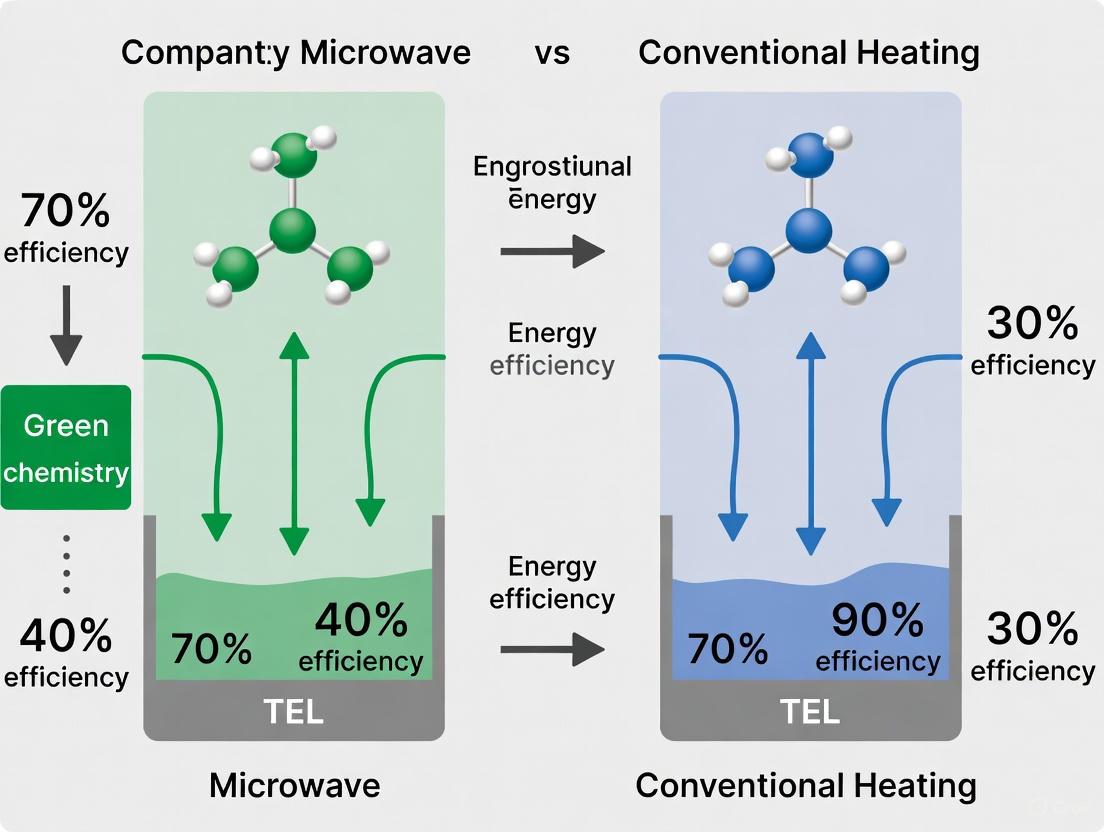
This article provides a comprehensive analysis of microwave and conventional heating technologies, focusing on their fundamental energy transfer mechanisms, comparative efficiency, and practical applications in scientific and drug development contexts.
Microwave vs. Conventional Heating: A Scientific Analysis of Energy Efficiency and Its Applications in Biomedical Research
Abstract
This article provides a comprehensive analysis of microwave and conventional heating technologies, focusing on their fundamental energy transfer mechanisms, comparative efficiency, and practical applications in scientific and drug development contexts. It explores the foundational physics of microwave heating, including dipolar rotation and ionic conduction, and contrasts this with the conductive heat transfer of conventional methods. The content extends to methodological applications in laboratory settings, troubleshooting for process optimization, and a rigorous validation of energy savings, which can reach 30-70% in industrial applications. Tailored for researchers, scientists, and drug development professionals, this review synthesizes technical principles with practical insights to guide the selection and optimization of heating methods for enhanced efficiency, process intensification, and improved product quality in biomedical research.
The Physics of Heat: Demystifying Microwave and Conventional Energy Transfer Mechanisms
Fundamental Principles of Microwave-Matter Interactions
Microwave heating represents a fundamentally different energy transfer mechanism compared to conventional thermal processes. Rather than relying on external heat sources, microwaves—electromagnetic waves with frequencies between 0.3 and 3.0 GHz—interact directly with materials through two primary mechanisms: dielectric polarization and ionic conduction [1]. In dielectric heating, polar molecules (most notably water) continuously realign themselves with the rapidly alternating electromagnetic field, generating heat through molecular friction. In conductive materials, charged ions accelerate under the electric field, colliding with neighboring molecules and converting kinetic energy into thermal energy [1]. This direct energy conversion enables volumetric heating, where thermal energy generates throughout the material simultaneously, unlike conventional heating which relies on slow thermal conduction from the surface inward [1] [2].
The effectiveness of microwave-matter interactions depends critically on the dielectric properties of the material, which determine how efficiently electromagnetic energy converts to heat. Materials are broadly categorized as conductors, insulators, or absorbers based on their microwave interaction characteristics. Conductors reflect microwaves, insulators are transparent to them, while absorbers efficiently convert microwave energy to heat [2]. This fundamental understanding of microwave-matter interactions provides the foundation for comparing microwave and conventional heating across scientific and industrial applications.
Comparative Performance Analysis: Microwave vs. Conventional Heating
Quantitative Comparison of Heating Performance
Table 1: Experimental Performance Comparison Between Microwave and Conventional Heating
| Application Domain | Heating Method | Heating Uniformity Improvement | Energy Efficiency Improvement | Processing Time Reduction | Key Metrics & Observations |
|---|---|---|---|---|---|
| Food Reheating (Solid-State Microwave) | Predictive Complementary Relative Phase Strategy | 4.6% improvement (Heating Uniformity Index) | 22.9% higher average temperature rise | Not specified | Testing on 5 commercial food products; superior to magnetron-based with rotational turntable [3] |
| Carbide Composite Treatment | Microwave Furnace | Comparable phase development | Dramatically shorter processing time | Much shorter crystallization time | WC-Co system achieved more crystalline structure; Cr3C2-NiCr showed comparable results [2] |
| Cement & Concrete Processing | Microwave Heating | Internal temperatures exceed surface temperatures | Not specified | Not specified | Maximum temperature difference >150°C at 800°C; compressive stresses in mortar, tensile stresses in aggregates [4] |
| CO2 Desorption | Microwave-Assisted Fluidized Bed | Homogeneous temperature distribution | 4.8 MJ/kg CO2 (best case) | Fast desorption at near-room-temperature | Regeneration possible at 33°C with 4W power; fluidization prevented overheating [5] |
Energy Consumption and Efficiency Analysis
Table 2: Energy Consumption Profile Comparison Between Microwave and Conventional Systems
| Parameter | Microwave Heating | Conventional Heating | Context & Notes |
|---|---|---|---|
| Heating Mechanism | Volumetric: direct energy conversion within material | Surface-based: conduction, convection, or radiation from external source | Microwave heating avoids thermal gradients of conventional methods [1] [2] |
| Energy Transfer | Electromagnetic to thermal | Chemical/Electrical to thermal to material | Microwaves bypass intermediate energy conversions [1] |
| Typical Power Consumption | 1,000-1,200 watts (domestic); 900 MHz (industrial) | 2,000-5,000 watts (oven) | Domestic microwave uses 2,450 MHz; industrial systems at 900 MHz for better penetration [1] [6] |
| Preheating Requirement | None | Significant energy drain | Oven preheating constitutes substantial energy loss [6] |
| Process Speed | Faster (minutes) | Slower (often 30+ minutes) | Speed directly correlates with energy savings [6] |
| Penetration Depth | Several centimeters or more | Limited to surface layers | Infrared radiation and thermal convection deposit heat shallowly [1] |
| Industrial Applications | Up to 50% more efficient in some cases | Varies by application | Efficiency gains from direct coupling, reduced processing time [1] |
Experimental Protocols and Methodologies
Solid-State Microwave Reheating Performance Protocol
The evaluation of solid-state microwave reheating performance employed a sophisticated experimental design comparing innovative phase-shifting strategies against conventional magnetron-based heating [3]. The methodology centered on a dynamic predictive complementary relative phase shifting strategy implemented in a solid-state microwave system with dual ports. Researchers disabled the rotational turntable to isolate the effects of phase control from mechanical uniformity improvements. The system incorporated a radiometric-capable thermal camera module (Lepton 3.5, 160 × 120) positioned at the cavity top to capture real-time thermal patterns during heating. A customized Python program regulated the solid-state generators, collecting temperature data and implementing the predictive complementary algorithm, which used only three collected thermal profiles (at 0°, 90°, and 180°) to predict remaining thermal contributions, allocating approximately 83% of heating time to optimized complementary shifting [3].
The experimental design tested five distinct commercial food products representing various structural complexities: Pulled Chicken (single component), Beef in Gravy (multicomponent), Lasagna (multilayer), Pulled Chicken & Lasagna (multicompartment), and Mashed Potato & Beef in Gravy (multicompartment). Researchers quantitatively evaluated heating performance using three key metrics: Heating Uniformity Index (HUI) calculated from temperature distributions, mean temperature rise, and temperature span (difference between maximum and minimum temperatures). The experimental protocol directly compared results against a domestic microwave oven with rotational turntable, with all samples prepared at consistent initial refrigeration temperature (4°C) and heated to target serving temperature (74°C) [3].
Microwave versus Conventional Furnace Heat Treatment Protocol
The comparative analysis of microwave versus conventional furnace treatments for carbide composite thermal spray coatings followed a meticulous materials science protocol [2]. Researchers prepared WC-Co and Cr3C2-NiCr thermal spray coatings using high-energy input conditions to maximize carbide dissolution into the metallic binder phase, creating supersaturated coatings ideal for studying precipitation behavior during subsequent heat treatments. The experimental design employed two heat treatment pathways: microwave heating using a 2.45 GHz multimode system, and conventional furnace treatment using standard laboratory furnaces.
The characterization protocol included comprehensive microstructural analysis using scanning electron microscopy (SEM) and phase identification via X-ray diffraction (XRD) to quantify carbide precipitation kinetics, grain growth, and phase development. Researchers measured critical performance parameters including coating hardness, wear resistance, and crystallinity comparing microwave-processed and conventional furnace-treated samples. The study particularly focused on how microwave energy interacts with composite materials, noting that "microwave radiation lowered the free energy of the high-temperature phase, lowering the transition temperature" for iron particles (875°C versus 910°C for the BCC to FCC transition) [2]. This fundamental observation suggests microwave energy may alter basic thermodynamic relationships in addition to providing rapid heating.
Microwave-Assisted Fluidized Bed CO2 Capture Protocol
The experimental study of microwave-assisted direct air capture employed a novel fluidized bed reactor system with precise energy monitoring [5]. Researchers selected commercial zeolite 13X with an average particle size of 213.5 μm as the CO2 sorbent material, characterizing its microwave absorption properties and fluidization behavior. The experimental apparatus consisted of a microwave generator with tunable power output (4-30 W) coupled to a fluidized bed reactor with gas flow controls for both adsorption (air with 400 ppm CO2) and desorption cycles.
The experimental protocol measured multiple response variables: desorption characteristics (CO2 release profiles), desorption kinetics, energy consumption (both thermal and electrical), productivity (kg CO2 per kg sorbent per day), and temperature distribution within the reactor using infrared thermography. Researchers systematically varied regeneration temperature (33-100°C) and microwave power (4-30 W) to establish optimal operating conditions. The study contrasted system performance under packed bed versus fluidized bed conditions, with infrared imaging confirming that "while most of the heat was accumulated in the middle of the reactor under packed bed conditions, the heat expanded through the reactor on fluidization, creating homogeneous temperature distribution and preventing overheating" [5].
Research Reagent Solutions and Essential Materials
Table 3: Key Research Materials and Experimental Components
| Material/Component | Function in Experiment | Research Context & Specifications |
|---|---|---|
| Zeolite 13X | CO2 adsorption sorbent | Average particle size: 213.5 μm; microwave-assisted regeneration at 33-100°C [5] |
| Magnetite Concrete | Radiation-shielding test material | Magnetite aggregates with high Fe2O3 content; enhances dielectric loss capacity [4] |
| Gellan Gel | Model food substance | Used in developing complementary phase-shifting strategy; simulates complex food dielectric properties [3] |
| WC-Co & Cr3C2-NiCr | Thermal spray coating materials | Carbide composites for comparing microwave vs conventional furnace heat treatments [2] |
| GaN-Based Solid-State Generator | Microwave energy source | 0.5 kW, 2.45 GHz system; enables precise control of frequency, power, and relative phases [3] |
| Radiometric Thermal Camera (Lepton 3.5) | Temperature mapping | 160 × 120 resolution; captures real-time thermal patterns during microwave heating [3] |
| Carbon Particles (Geldart A & B) | Fluidized bed medium | 100 μm and 350 μm particles; optimal microwave absorption when particle size comparable to skin depth [7] |
Visualization of Microwave-Matter Interaction Principles
Dielectric Heating Mechanism and Volumetric Heating
This diagram illustrates the fundamental principles of microwave-matter interactions, showing how microwave parameters (frequency, power, and phase control) influence the primary interaction mechanisms that ultimately determine heating characteristics. The dipolar polarization mechanism involves water molecules rotating to align with the rapidly alternating electric field, generating heat through molecular friction [1]. Ionic conduction occurs when charged ions (e.g., salts in food products) accelerate under the electric field and collide with neighboring molecules [1]. The interfacial polarization mechanism, particularly relevant in composite materials, arises from charge accumulation at interfaces between materials with different dielectric properties [2]. These mechanisms enable volumetric heating where energy deposits throughout the material simultaneously rather than progressing slowly from the surface inward [1] [2].
Solid-State Microwave Phase Control Strategy
This workflow diagrams the advanced phase control strategy employed in solid-state microwave systems, which represents a significant advancement over conventional magnetron-based ovens. The predictive complementary relative phase strategy uses limited phase sweeping (only three data points at 0°, 90°, and 180°) to predict thermal contributions across all phase angles, leveraging the sinusoidal nature of microwave power dissipation [3]. This approach allocates approximately 83% of heating time to optimized complementary phase shifting, significantly improving both efficiency and heating uniformity compared to fixed-phase approaches [3]. The system's dynamic adjustment capability responds to real-time thermal patterns collected via radiometric camera, selecting complementary relative phases that optimize heating performance specifically for the material being processed. This sophisticated control strategy demonstrates how solid-state microwave technology enables precise manipulation of electromagnetic field patterns to overcome the inherent non-uniform heating limitations of conventional microwave systems [3].
The fundamental principles of microwave-matter interactions reveal a complex landscape of energy transfer mechanisms that differ substantially from conventional heating approaches. The experimental data compiled in this comparison guide demonstrates that microwave heating technologies can provide significant advantages in specific applications, particularly where volumetric heating, rapid processing, and energy efficiency are prioritized. The emergence of solid-state microwave systems with advanced phase control strategies has addressed historical limitations in heating uniformity, while microwave-assisted fluidized bed reactors have solved penetration depth challenges through particle movement and eddy current induction [3] [7].
However, the optimal heating strategy remains highly dependent on the specific application requirements and material properties. Conventional heating maintains advantages for large-volume processing, certain structural materials, and applications requiring specific thermal profiles that align with surface-to-interior heat transfer. The continuing advancement of microwave technologies—particularly in solid-state generators, intelligent control algorithms, and specialized reactor designs—promises to expand the appropriate applications for microwave-based heating while improving its efficiency and effectiveness. For researchers and development professionals, the selection between microwave and conventional heating should be guided by fundamental material properties, process requirements, and the specific energy transfer mechanisms that best align with the desired outcomes.
Microwave heating has emerged as a powerful tool in scientific and industrial applications, offering distinct advantages over conventional thermal methods. This energy transfer operates through fundamental electromagnetic mechanisms that directly interact with materials at the molecular level. Unlike conventional heating, which relies on conductive, convective, or radiative heat transfer from external sources, microwave energy is delivered directly to materials through molecular interactions with electromagnetic fields, enabling rapid and efficient volumetric heating [8] [9]. Commercial microwave systems typically operate at 2.45 GHz, a frequency that permits effective energy transfer to polar molecules without quantum mechanical resonance effects [8].
The core heating mechanisms in microwave applications are dipolar polarization and ionic conduction. These processes explain how electromagnetic energy converts to thermal energy within materials. In dipolar polarization, polar molecules attempt to align with a rapidly oscillating electric field, generating heat through molecular friction. In ionic conduction, charged ions move through a material in response to the electric field, colliding with neighboring molecules and generating heat through electrical resistance [9] [10]. Understanding these mechanisms is crucial for researchers and drug development professionals seeking to optimize processes, enhance reaction efficiencies, and develop new synthetic pathways in their respective fields.
Fundamental Principles of Microwave-Matter Interaction
The Nature of Microwaves
Microwaves represent a specific region of the electromagnetic spectrum characterized by wavelengths from 0.001 to 0.3 meters and frequencies between 1,000 and 300,000 MHz. Most laboratory and industrial microwave instrumentation operates at 2,450 MHz (corresponding to a 12.2 cm wavelength), as this frequency provides an effective balance between energy transfer and penetration depth [9] [10]. Like all electromagnetic waves, microwaves travel at the speed of light and consist of two perpendicular oscillating fields: an electric field and a magnetic field [9]. The electric field component is primarily responsible for the two main heating mechanisms discussed in this article, while the magnetic field component contributes significantly to heating magnetic materials, conductors, and semiconductors [11].
When microwaves encounter matter, they can be reflected, absorbed, or transmitted. The specific interaction depends on the material's properties, dictating how efficiently microwave energy converts to thermal energy. This direct coupling between the electromagnetic field and the material enables microwave heating to overcome the limitations of conventional thermal conductivity, where heat transfers gradually from the vessel walls to the solution [9].
Comparative Analysis: Microwave vs. Conventional Heating
The fundamental difference between microwave and conventional heating lies in their energy transfer mechanisms. Conventional heating relies on thermal conductivity, where an external heat source transfers energy to the reaction vessel walls, which then conduct heat to the solution through molecular collisions. This process creates temperature gradients, with the vessel walls typically hotter than the solution's core [8] [9].
In contrast, microwave heating occurs through direct energy conversion within the material itself. The electromagnetic field interacts simultaneously with molecules throughout the reaction mixture, enabling volumetric heating where materials absorb microwave energy directly and convert it to heat [8] [11]. This approach offers several distinct advantages:
- Rapid Heating: Energy transfers directly to the entire volume simultaneously, significantly reducing heating times [8] [11].
- Energy Efficiency: Eliminates intermediate heating steps, reducing thermal losses and energy consumption [12] [13].
- Selective Heating: Different materials absorb microwave energy with varying efficiencies, enabling targeted heating of specific components [8].
- Elimination of Wall Effects: Since heating occurs throughout the material rather than from the walls inward, superheating of vessel surfaces is minimized [8].
- Enhanced Reaction Control: The rapid and direct nature of microwave heating can lead to improved reaction selectivity and yield [8] [13].
Table 1: Fundamental Differences Between Microwave and Conventional Heating
| Characteristic | Microwave Heating | Conventional Heating |
|---|---|---|
| Energy Transfer | Direct conversion of electromagnetic to thermal energy | Thermal conduction and convection from surfaces |
| Heating Pattern | Volumetric (throughout the material) | Superficial (from outside inward) |
| Heating Rate | Very rapid | Relatively slow |
| Energy Efficiency | High (minimal heat loss) | Lower (significant heat loss) |
| Selectivity | Possible based on dielectric properties | Generally non-selective |
| Temperature Gradients | Can be minimal with uniform fields | Typically significant |
Core Mechanism I: Dipolar Polarization
Theoretical Foundation
Dipolar polarization represents one of the two primary mechanisms by which materials convert microwave energy into heat. This process specifically affects polar molecules—those possessing a permanent dipole moment due to unequal charge distribution within the molecule. When exposed to an alternating electric field, these dipolar molecules experience a torque that forces them to continuously realign with the rapidly oscillating field [8] [9].
The molecular response to the electric field oscillation generates significant molecular friction as molecules rotate, collide, and attempt to follow the field reversals. This friction dissipates as thermal energy throughout the material. A critical aspect of this mechanism is the phase lag between the electric field oscillation and the molecular response. If the field oscillates too rapidly, molecules cannot reorient fast enough to align with the field, reducing efficiency. Conversely, if oscillations are too slow, molecules align completely with the field without significant friction [8]. The frequency of 2.45 GHz represents an optimal balance where the phase lag generates substantial molecular friction and efficient heating for many common solvents and compounds [9].
Factors Influencing Dipolar Heating Efficiency
The effectiveness of dipolar polarization as a heating mechanism depends on several material properties and experimental conditions:
- Dielectric Loss Factor (ε″): This property quantifies a material's ability to convert electromagnetic energy into heat. Materials with higher dielectric loss factors heat more efficiently under microwave irradiation [10].
- Dipole Moment: Molecules with larger permanent dipole moments typically experience stronger interactions with the electric field and heat more rapidly [9].
- Relaxation Time: This represents the time required for dipoles to return to random orientation after field removal. Optimal heating occurs when the radiation frequency roughly matches the molecular relaxation time [8].
- Temperature: Heating efficiency typically increases with temperature, as reduced viscosity facilitates molecular rotation [9].
- State of Matter: Molecular rotation occurs more freely in liquids than in solids, making liquids generally more responsive to dipolar heating [8].
Table 2: Dielectric Properties and Microwave Heating Response of Common Solvents
| Solvent | Dipole Moment (D) | Dielectric Constant (ε′) | Dielectric Loss (ε″) | Heating Efficiency |
|---|---|---|---|---|
| Water | 1.85 | 80.1 | High | High |
| Methanol | 1.70 | 32.6 | High | High |
| Ethanol | 1.69 | 24.3 | Medium | Medium |
| Acetone | 2.88 | 20.7 | Low | Low |
| Hexane | 0.08 | 1.88 | Very Low | Very Low |
| Chloroform | 1.15 | 4.81 | Very Low | Very Low |
Experimental Evidence and Applications
The dipolar polarization mechanism finds extensive application in chemical synthesis and materials processing. Polar solvents such as water, methanol, and dimethylformamide (DMF) heat efficiently under microwave irradiation, enabling rapid temperature increases throughout the reaction mixture rather than just at the vessel walls [8]. This characteristic has made microwave-assisted organic synthesis (MAOS) particularly valuable, often resulting in remarkable rate accelerations, milder reaction conditions, and higher chemical yields compared to conventional heating methods [8].
Selective heating represents another significant advantage of dipolar polarization. In heterogeneous systems comprising materials with different dielectric properties, microwave energy can preferentially heat components with higher loss tangents. This selective heating enables unique synthetic pathways and processing conditions difficult to achieve with conventional heating [8]. For drug development professionals, this capability offers opportunities to enhance reaction selectivity, reduce decomposition of heat-sensitive compounds, and develop more efficient synthetic protocols.
Core Mechanism II: Ionic Conduction
Theoretical Foundation
Ionic conduction serves as the second primary mechanism of microwave heating, occurring in materials containing mobile ions or ionic species. When subjected to the oscillating electric field of microwave radiation, these charged particles experience translational forces that drive them to move back and forth through the material in phase with the field alternations [9] [10].
As ions accelerate through the medium, they inevitably collide with neighboring molecules or atoms, converting their kinetic energy into thermal energy through this friction. The resulting current encounters electrical resistance within the material, further generating heat through Joule heating effects [10]. Unlike dipolar polarization, which primarily affects polar molecules, ionic conduction specifically targets charged species, making it particularly effective for electrolyte solutions, ionic liquids, and materials with mobile charge carriers.
The effectiveness of ionic conduction heating depends on several factors, including ion concentration, ion mobility, and the electrical conductivity of the medium. Higher ion concentrations typically provide more charge carriers, while greater mobility enables more efficient energy transfer through increased collision frequency [14] [9].
Experimental Evidence of Ionic Conduction Effects
Substantial experimental evidence demonstrates the significant role of ionic conduction in microwave heating. Research has shown that aqueous electrolyte solutions (NaCl, KCl, CaCl₂, NaBF₄, and NaBr) heat far more rapidly than same-volume ultrapure water under identical microwave conditions [11]. This enhanced heating directly results from the additional conductive losses contributed by mobile ions in solution.
Interestingly, studies examining the effect of ions on dielectric heating have revealed that temperature actually decreases significantly with increasing ionic concentration in some contexts [14]. This apparent contradiction highlights the complex nature of microwave-matter interactions, where multiple factors including ionic size, charge, and solution conductivity collectively determine heating efficiency. These findings underscore the importance of considering specific ion properties rather than merely total concentration when predicting microwave heating behavior.
Applications in Chemical Processing
Ionic conduction enables efficient microwave heating of numerous systems relevant to industrial chemistry and drug development. Electrolyte solutions, ionic liquids, and materials with delocalized electrons (such as graphite and carbon nanotubes) benefit from this mechanism [15] [7]. In catalytic applications, ionic conduction can facilitate selective heating of catalyst particles, potentially enhancing catalytic activity and reducing coke formation through unique temperature profiles [12] [13].
The combination of dipolar polarization and ionic conduction—known as interfacial or Maxwell-Wagner polarization—occurs in systems containing conducting materials dispersed in non-conducting media [11]. This synergistic effect is particularly valuable in nanocomposites and supported catalyst systems, where it enables efficient heating through multiple simultaneous mechanisms.
Comparative Experimental Analysis
Quantitative Comparison of Heating Mechanisms
Understanding the relative contributions of dipolar polarization and ionic conduction requires careful experimental analysis. The power loss per unit volume (P) for microwave heating can be quantified using the following equation, which incorporates both mechanisms [11]:
P = ω·ε″eff·ε₀·E²rms
Where ω represents angular frequency, ε″eff is the effective dielectric loss factor, ε₀ is the permittivity of free space, and Erms is the root mean square electric field strength. The effective dielectric loss factor can be further expressed as [11]:
ε″eff = ε″dipolar + ε″interfacial + σ/ωε₀
This equation accounts for contributions from dipolar polarization (ε″dipolar), interfacial polarization (ε″interfacial), and ionic conduction (σ/ωε₀), where σ represents electrical conductivity.
Table 3: Kinetic Comparison of Microwave vs Conventional Heating in Dry Reforming of Methane
| Heating Method | Methane Conversion (%) | Carbon Dioxide Conversion (%) | Coke Formation | Energy Consumption |
|---|---|---|---|---|
| Conventional Heating | 72 | 78 | High | Reference |
| Microwave Heating | 85 | 82 | Low (reactive coke) | 30-50% Lower |
| Key Difference | Enhanced conversion under microwave | Moderately improved conversion | Formation of reactive coke rather than deactivating coke | Significant reduction |
Methodology for Investigating Heating Mechanisms
Researchers have developed specialized experimental protocols to elucidate the distinct effects of dipolar polarization and ionic conduction:
Solution Temperature Monitoring: Aqueous solutions with varying ionic concentrations are exposed to microwaves (2.45 GHz) under identical conditions. Temperature differences relative to pure deionized water are monitored to isolate ionic effects [14].
Dielectric Property Characterization: Permittivity and dielectric loss factors are measured using impedance analyzers or network analyzers across frequency ranges, enabling quantification of a material's microwave absorption capability [15] [10].
Steady-State Isotopic Transient Kinetic Analysis (SSITKA): This technique switches reactants between isotopically labeled forms while monitoring product formation, providing insights into surface intermediates and residence times under microwave irradiation [13].
Single-Particle Heating Studies: Individual particles are irradiated in microwave cavities to understand fundamental interactions without complex multi-particle effects, particularly valuable for conductive and semiconductive materials [7].
Multiphysics Modeling: Computational models simultaneously solve Maxwell's equations for electromagnetic fields, heat transfer equations, and fluid dynamics to predict temperature profiles and heating efficiency [15] [7].
Research Reagent Solutions and Essential Materials
Successful implementation of microwave-assisted processes requires specific materials with optimized dielectric properties. The following toolkit represents essential categories for researchers exploring dipolar polarization and ionic conduction mechanisms:
Table 4: Essential Research Reagents for Microwave Chemistry Applications
| Material Category | Specific Examples | Function in Microwave Heating | Primary Mechanism |
|---|---|---|---|
| High Polar Solvents | Water, DMF, DMSO, NMP | Efficient microwave absorption | Dipolar polarization |
| Ionic Solutions | NaCl, KCl, CaCl₂ solutions | Enhance heating through ion mobility | Ionic conduction |
| Carbon Materials | Graphene, CNTs, carbon black | Provide delocalized electrons for heating | Interfacial polarization |
| Metal Nanoparticles | Ni, Fe, Cu nanoparticles | Selective heating through magnetic and conduction effects | Magnetic heating, Eddy currents |
| Functionalized Composites | fGNP/PLA nanocomposites | Enhance microwave absorption in polymer matrices | Combined mechanisms |
| Solid Catalysts | Supported metal catalysts | Enable selective catalyst heating | Conduction losses, Magnetic effects |
Visualization of Microwave Heating Mechanisms
The following diagrams illustrate the fundamental processes of microwave heating mechanisms, highlighting the distinct characteristics of dipolar polarization and ionic conduction.
Microwave Heating Mechanisms Diagram
Molecular Response to Microwave Fields Diagram
Advanced Concepts and Specialized Applications
Magnetic Field Heating and Combined Effects
While this article focuses on dipolar polarization and ionic conduction driven by the electric field component, researchers should recognize that the magnetic field component also contributes significantly to microwave heating in specific materials. Magnetic field heating generates distinct thermal profiles through mechanisms including eddy currents, hysteresis losses, and residual losses [10] [11]. These effects prove particularly important for magnetic materials, conductors, and semiconductors.
For magnetic dielectric materials (e.g., ferrites) and certain conductive powder materials, research has demonstrated that magnetic field heating can be more efficient than electric field heating. One study reported that magnetic loss can reach approximately four times greater than dielectric loss in the microwave heating of ferrites (BaFe₁₂O₁₉, SrFe₁₂O₁₉) at 2.45 GHz [11]. This understanding expands the applications of microwave heating beyond traditional dielectric materials to include specialized composites and functionalized nanomaterials.
Industrial and Research Applications
The unique advantages of microwave heating mechanisms have enabled significant advancements across multiple domains:
Chemical Synthesis: Microwave-assisted reactions frequently demonstrate remarkable rate accelerations, reduced reaction times, and improved yields compared to conventional heating [8]. The direct coupling of microwave energy with polar reactants and catalysts enables more efficient energy transfer throughout the reaction volume.
Heterogeneous Catalysis: Microwave heating offers particular benefits for catalytic reactions, including reduced coke formation and enhanced catalyst stability [12] [13]. In dry reforming of methane, microwave activation induces the formation of reactive coke rather than deactivating coke, enhancing reaction rates while maintaining catalyst activity [13].
Materials Processing: Functionalized graphene nanoplatelet/polymer composites exhibit substantial microwave absorption, enabling rapid heating for joining thermoplastic components [15]. This application demonstrates how tailored dielectric properties can optimize microwave energy conversion for specific manufacturing needs.
Fluidized Bed Reactors: Recent research reveals that fluidized beds of conductive particles can overcome traditional penetration depth limitations associated with microwave heating, enabling uniform heating in large-scale reactors [7]. This breakthrough has significant implications for industrial electrification and decarbonization efforts.
Dipolar polarization and ionic conduction represent the fundamental mechanisms through which microwave energy converts to thermal energy in diverse materials. Dipolar polarization dominates in polar molecules that rotate to align with oscillating electric fields, while ionic conduction prevails in systems containing mobile charges that translate through media. The distinct advantage of microwave heating lies in its ability to deliver energy directly throughout a material's volume rather than relying on gradual heat transfer from external sources.
For researchers, scientists, and drug development professionals, understanding these core mechanisms enables optimized experimental design and process development. The selective nature of microwave heating, combined with its rapid and efficient energy transfer, offers opportunities to enhance reaction rates, improve product yields, reduce energy consumption, and develop synthetic pathways inaccessible through conventional heating methods. As microwave technology continues to evolve, particularly in addressing challenges of penetration depth and heating uniformity, its applications across chemical processing, materials science, and pharmaceutical development will undoubtedly expand.
In the pursuit of industrial energy efficiency, the comparison between microwave and conventional heating methods has emerged as a critical research frontier. Conventional thermal conductivity, which governs heat transfer in standard industrial processes, operates on a fundamental principle: energy must travel from the exterior surfaces of a material toward its core. This surface-to-core heat transfer mechanism creates inherent limitations that impact processing times, energy consumption, and product quality across numerous applications including pharmaceutical manufacturing, food processing, and chemical synthesis. As industries seek to decarbonize operations and improve efficiency, understanding these constraints becomes essential for evaluating alternative heating technologies. This guide objectively examines the performance limitations of conventional thermal conductivity, supported by experimental data comparing it with emerging microwave-based approaches that offer volumetric heating capabilities.
Theoretical Framework: Mechanisms Governing Conventional Heat Transfer
Fundamental Principles of Thermal Conductivity
Conventional thermal conductivity describes the rate at which heat energy passes through a material, governed fundamentally by Fourier's Law of Heat Conduction. This physical limitation necessitates that thermal energy must initiate at material surfaces and progressively travel inward through molecular collisions and electron transport. The rate of this transfer is quantified by a material's thermal conductivity coefficient (k-value), which is influenced by multiple factors including density, porosity, moisture content, and temperature gradients. For insulating materials particularly common in construction and packaging applications, these k-values are exceptionally low, creating significant bottlenecks in thermal processing. The surface-to-core pathway establishes an inescapable thermodynamic constraint: the core of a material cannot become hotter than its surface at any point during the heating process, creating inevitable thermal gradients that impact processing outcomes.
Comparative Heat Transfer Mechanisms
Table 1: Fundamental Comparison of Heating Mechanisms
| Parameter | Conventional Heating | Microwave Heating |
|---|---|---|
| Energy Transfer Path | Surface-to-core | Volumetric |
| Primary Mechanism | Thermal conduction & convection | Electromagnetic energy absorption |
| Penetration Depth | Limited by thermal conductivity | Limited by dielectric properties |
| Thermal Gradient | High (surface hotter than core) | Potentially uniform or reverse |
| Energy Efficiency | Limited by heat losses | Direct coupling to target material |
| Heating Rate | Slow, diffusion-limited | Rapid, potentially instantaneous |
The critical distinction lies in the fundamental energy transfer pathway. Conventional heating relies on thermal conduction, where energy moves from molecule to molecule, resulting in inevitable thermal gradients from surface to core [1]. This process is inherently slow and inefficient for many industrial applications. In contrast, microwave heating operates through electromagnetic energy conversion, where specific materials directly absorb microwave radiation, generating heat throughout their volume simultaneously [16] [17]. This volumetric approach can eliminate the surface-to-core limitation entirely, potentially creating more uniform temperature distributions or even reverse gradients where cores become hotter than surfaces.
Experimental Evidence: Documenting Thermal Transfer Limitations
Thermal Conductivity Measurement Challenges
Accurate quantification of thermal conductivity itself faces methodological challenges rooted in the surface-to-core paradigm. Recent investigations highlight that edge effects often compromise measurement reliability, particularly for low-conductivity materials [18]. These experimental artifacts arise from heat losses at sample boundaries, creating complex three-dimensional heat flow patterns that deviate from idealized one-dimensional models. Researchers systematically evaluating thermal conductivity measurement techniques found that material anisotropy can significantly enhance edge effects, in some cases creating conditions where heat flux along measurement plates becomes negative [18]. Such findings underscore the fundamental complexities in even quantifying thermal conductivity, much less overcoming its limitations in applied settings.
Experimental optimizations have demonstrated that careful control of sample thickness and temperature differentials between samples and ambient environments can improve measurement accuracy. However, these methodological refinements cannot eliminate the core constraint: thermal energy must still traverse from exterior to interior surfaces during testing, maintaining the fundamental surface-to-core limitation.
Industrial Drying Applications
The surface-to-core limitation manifests particularly clearly in industrial drying processes. Experimental studies on onion slice dehydration demonstrate pronounced differences between conventional and microwave approaches. In conventional hot-air drying, heat must gradually penetrate from exterior surfaces inward, causing moisture to initially evaporate far from the surface, with remaining water then slowly diffusing to the exterior [19]. This sequential process creates significant quality compromises including color degradation, texture softening, and nutrient loss.
Microwave drying transforms this dynamic through volumetric heating that generates moisture vaporization throughout the material simultaneously. The resulting internal pressure differentials create a "pumping action" that forcibly transports liquid to the surface as vapor [19]. This mechanism explains dramatically reduced processing times and improved product quality retention observed in comparative studies. Quantitative analysis reveals that higher microwave power levels (800-1000W) accelerate drying rates but require careful optimization to balance efficiency against potential quality degradation from overheating [19].
Table 2: Experimental Performance Comparison in Agricultural Drying
| Performance Metric | Conventional Hot-Air Drying | Microwave Drying (600W) | Microwave Drying (1000W) |
|---|---|---|---|
| Drying Time | 8-10 hours | 45-60 minutes | 20-30 minutes |
| Color Retention (L-value) | Moderate degradation | Minimal degradation | Significant darkening |
| Energy Consumption | High (extended duration) | Reduced (shorter duration) | Variable (efficient but potential waste) |
| Texture Preservation | Variable, often hardened | Better retention | Potential overheating damage |
| Nutrient Retention | Moderate losses | Improved retention | Potential degradation |
Methodological Approaches: Experimental Protocols for Thermal Analysis
Thermal Conductivity Measurement Protocol
Research into thermal conductivity limitations employs sophisticated methodologies to quantify heat transfer characteristics. The following experimental protocol, adapted from studies on insulating construction materials, exemplifies current approaches [18] [20]:
Sample Preparation: Materials are cut to precise dimensions (typically square or circular cross-sections) to ensure proper fit within measurement apparatus. Anisotropic materials require special consideration of orientation relative to heat flow.
Apparatus Configuration: A Heat Flow Meter apparatus with calibrated copper cylinders arranges samples symmetrically between heated and cooled plates. Temperature sensors (Pt100) position at precise intervals to measure thermal gradients.
System Calibration: The measurement system first operates without test samples to establish baseline thermal properties and quantify apparatus-specific heat losses.
Insulation Application: Comprehensive insulation using materials like rubber tubing or cork boards (typically 1cm thickness) surrounds the apparatus to approximate one-dimensional heat flow conditions.
Thermal Equilibrium Establishment: Systems achieve steady-state conditions by maintaining constant temperature differentials (typically 49.5-59.5°C) for extended periods (4-5 hours).
Data Collection: Temperature measurements at multiple points enable thermal conductivity calculation via Fourier's Law analysis, with numerical simulations (e.g., Comsol Multiphysics) validating experimental results.
This methodology specifically addresses edge effects that complicate thermal conductivity measurements, particularly for insulating materials where heat losses significantly impact accuracy [18].
Microwave Heating Efficiency Protocol
Comparative analysis of microwave heating efficiency employs distinct experimental approaches [16] [21] [19]:
Material Characterization: Dielectric properties determination establishes microwave absorption characteristics, critical for predicting heating behavior.
System Configuration: Laboratory-scale microwave systems with variable power controls (200-1000W), incorporating real-time temperature monitoring via thermal cameras and fiber-optic sensors.
Power Optimization: Systematic testing across power levels establishes relationships between microwave energy input and heating rates, identifying optimal parameters for specific applications.
Fluidized Bed Design: For particulate systems, fluidized beds enable uniform exposure to microwave fields, overcoming penetration depth limitations through particle movement [16].
Temperature Validation: Specialized experimental environments, such as synchrotron radiation facilities, enable precise temperature measurement at microscopic scales despite the challenges of electromagnetic interference [21].
Quality Assessment: Dried products undergo comprehensive analysis including color measurement (colorimetry), texture analysis, and nutrient retention assessment to quantify process effectiveness beyond mere thermal efficiency.
The Scientist's Toolkit: Essential Research Reagents and Materials
Table 3: Essential Research Materials for Thermal Conductivity Studies
| Item | Function/Application | Specific Examples |
|---|---|---|
| Heat Flow Meter Apparatus | Quantitative thermal conductivity measurement | Calibrated copper cylinders with temperature control |
| Thermal Sensors | Temperature gradient measurement | Pt100 sensors, fiber-optic thermometers |
| Numerical Simulation Software | Heat flow modeling and experimental validation | Comsol Multiphysics with Heat Transfer Module |
| Dielectric Property Characterization Tools | Microwave absorption quantification | Network analyzers, dielectric probes |
| Insulating Materials | Minimization of parasitic heat losses | Rubber tubing, cork boards (1cm thickness) |
| Microwave Cavity Design Tools | Optimization of electromagnetic field distribution | Computational electromagnetics software |
| Fluidized Bed Reactors | Uniform microwave heating of particulate materials | Geldart A and B particle systems [16] |
| Zeolite-Based Catalysts | Precision microwave absorption at atomic sites | Indium-ion modified zeolite scaffolds [21] |
Visualization of Thermal Transfer Pathways
Conventional vs. Microwave Heating Mechanisms
Heating Mechanism Comparison: This diagram contrasts the sequential surface-to-core pathway of conventional heating against the simultaneous volumetric approach of microwave energy delivery, highlighting fundamental differences in thermal gradient development.
Experimental Methodology for Thermal Analysis
Thermal Analysis Workflow: This workflow diagrams the sequential experimental protocol for quantifying thermal conductivity, emphasizing the systematic approach required to minimize measurement artifacts and validate results through computational modeling.
The surface-to-core heat transfer limitation of conventional thermal conductivity represents a fundamental constraint with far-reaching implications for industrial energy consumption and process efficiency. Experimental evidence consistently demonstrates that this limitation manifests as extended processing times, significant thermal gradients compromising product quality, and inherent energy inefficiencies through parasitic heat losses. Microwave-assisted heating technologies present a paradigm shift from this conventional model, offering volumetric energy deposition that can overcome traditional diffusion-limited processes. While microwave approaches face their own implementation challenges including penetration depth restrictions and specialized equipment requirements, their capacity for targeted, efficient heating positions them as transformative solutions for industrial decarbonization. As research advances in microwave applicator design, process optimization, and hybrid system development, the limitations of conventional thermal conductivity may increasingly be circumvented through electromagnetic approaches that fundamentally redefine industrial thermal processing.
The methods by which energy is delivered to drive chemical processes and industrial transformations are undergoing a fundamental revolution. For centuries, conductive heating has served as the conventional approach, relying on the transfer of thermal energy from an external source through material surfaces via conduction, convection, and radiation. This method creates a temperature gradient that slowly propagates inward from the heated surfaces, resulting in significant thermal lag and energy inefficiency. In stark contrast, volumetric heating—exemplified by microwave and low-frequency electromagnetic technologies—represents a paradigm shift by generating heat simultaneously throughout the entire volume of a material through direct interaction with electromagnetic energy. This fundamental difference in energy delivery mechanisms has profound implications for efficiency, control, and applicability across scientific and industrial domains.
Within the broader thesis of microwave versus conventional heating energy efficiency research, this comparison guide objectively examines both technologies through experimental data and mechanistic studies. The transition from conductive to volumetric heating is particularly relevant for researchers, scientists, and drug development professionals who require precise thermal control, rapid processing, and improved energy efficiency in their workflows. As industrial sectors face increasing pressure to decarbonize, understanding these competing energy delivery systems becomes crucial for both operational efficiency and environmental sustainability. This analysis provides a comprehensive technological comparison supported by experimental evidence to inform decision-making in research and process development.
Fundamental Mechanisms: How Energy is Delivered
Conductive Heating Mechanism
Conductive heating operates on established principles of heat transfer where thermal energy moves from a high-temperature region to a lower-temperature region through direct molecular interaction. In laboratory and industrial contexts, this typically involves applying an external heat source to the walls of a reaction vessel, which then transfers energy to the contents through sequential steps:
- External Heat Source: Combustion or resistive elements generate thermal energy
- Surface Contact: Vessel walls absorb thermal energy
- Molecular Conduction: Heat transfers slowly from vessel inner surfaces to adjacent fluid/solid molecules
- Thermal Gradients: Temperature differentials establish from outside inward
- Gradual Equalization: Over time, thermal equilibrium is established throughout the material
This conductive pathway creates an inherent efficiency limitation, as the thermal conductivity of the vessel material and the contents determines the rate of heat transfer. In chemical synthesis, this means the temperature of the reaction vessel must be higher than the desired internal reaction temperature until sufficient time has elapsed for thermal equilibrium. The process can require hours to reach the target temperature throughout the system and is slow to respond to control adjustments [22].
Volumetric Heating Mechanism
Volumetric heating bypasses surface-limited conduction by using electromagnetic energy to generate heat directly within materials. The two primary mechanisms for this energy transfer are:
Dipole Rotation: Polar molecules (such as water) attempt to align with the rapidly oscillating electric field (typically at 2.45 GHz for microwave heating). This molecular rotation creates friction that generates heat throughout the material simultaneously [22] [23].
Ionic Conduction: Free ions or ionic species in the material accelerate under the influence of the electric field, colliding with neighboring molecules and converting kinetic energy to thermal energy [22].
The effectiveness of these mechanisms depends on the dielectric properties of the materials, with polar solvents and ionic compounds showing particularly strong coupling with microwave energy. The energy transfer occurs on nanosecond timescales (10⁻⁹ seconds per cycle), significantly faster than molecular relaxation (approximately 10⁻⁵ seconds), creating non-equilibrium conditions that can enable novel reaction pathways [22].
Low-frequency electromagnetic heating represents a variation of this approach, using frequencies in the hundreds of Hz to kHz range to achieve deeper penetration in conductive materials through eddy current induction. This method is particularly effective for large-scale metallic components in industrial manufacturing [24].
Experimental Comparisons: Quantitative Performance Data
Catalytic Reaction Performance
Research into catalytic dry reforming of methane provides compelling experimental evidence comparing both heating methods. This reaction is particularly challenging due to its highly endothermic nature and tendency for coke formation, making it an excellent test case for comparing heating methodologies.
Table 1: Performance Comparison in Catalytic Dry Reforming of Methase
| Parameter | Conventional Heating | Microwave Heating | Experimental Conditions |
|---|---|---|---|
| CH₄ Conversion | Baseline | Enhanced by 20-40% | 500-700°C, Ni-based catalyst [12] |
| CO₂ Conversion | Baseline | Enhanced by 15-35% | 500-700°C, Ni-based catalyst [12] |
| Coke Formation | Significant accumulation | Suppressed by 60-80% | 6-hour operation [12] |
| Energy Efficiency | Baseline | 4.5 times higher | Zeolite-supported indium catalyst [25] |
| Thermal Gradient | Significant (50-100°C) | Minimal (<10°C) | Measured across catalyst bed [12] |
The suppression of coke formation under microwave irradiation is particularly noteworthy. This phenomenon is attributed to the selective heating of catalyst sites and the creation of microplasmas that help gasify carbon deposits as they form. The enhanced reaction rates enable equivalent conversions at lower bulk temperatures or significantly higher throughput at equivalent temperatures [12].
Heat Transfer Fluid Performance
Nanofluids represent another application where heating methodology significantly impacts performance. Experimental investigation into Fe₃O₄/TiO₂ hybrid nanofluids reveals important considerations for thermal system design.
Table 2: Heat Transfer Performance of Fe₃O₄/TiO₂ Nanofluid (Re: 3200-5300) [26]
| Volume Fraction (% vol) | Convective Heat Transfer Enhancement (%) | Pressure Drop Increase (%) | Sedimentation Factor After 30 Days (%) |
|---|---|---|---|
| 0.00625 | 24.30 | 10.29 | 8.89 |
| 0.0125 | 26.33 | 7.67 | 9.82 |
| 0.025 | 22.91 | Not specified | 10.24 |
| 0.05 | 19.98 | 9.82 | Not specified |
| 0.1 | 18.04 | 11.94 | 11.44 |
| 0.2 | 14.03 | 13.10 | 11.88 |
| 0.3 | 11.42 | 21.00 | 31.79 |
These results demonstrate that lower nanoparticle concentrations provide optimal balance between heat transfer enhancement and manageable pressure losses. The 0.0125% volume fraction achieved the highest convective heat transfer enhancement (26.33%) with moderate pressure drop increase (7.67%) and excellent long-term stability (9.82% sedimentation factor) [26]. This has significant implications for system design where volumetric heating methods could be combined with optimized nanofluids for maximum efficiency.
Methodology: Experimental Protocols for Comparative Studies
Catalytic Dry Reforming Experimental Protocol
The comparative studies on methane dry reforming followed rigorous methodologies to ensure valid comparisons between heating methods:
Catalyst Preparation:
- Ni-based catalysts (5-10% loading) supported on Al₂O₃, MgO, or zeolite substrates
- Impregnation of support with nickel nitrate solution followed by drying (110°C, 12 hours)
- Calcination in air (500-600°C, 4 hours) followed by reduction under hydrogen (500°C, 2 hours)
- Sieving to uniform particle size (150-250 μm) to eliminate mass transfer limitations
Reactor Configuration:
- Fixed-bed quartz reactor (8-10 mm internal diameter)
- Temperature monitoring via multiple thermocouples at reactor inlet, outlet, and within catalyst bed
- For conventional heating: Tubular furnace with PID temperature control
- For microwave heating: Multimode cavity with waveguides (900 MHz or 2.45 GHz)
- Gas feed system with mass flow controllers for CH₄, CO₂, and inert gases
- Downstream gas analysis via gas chromatography (TCD and FID detectors)
Experimental Procedure:
- Catalyst loading (0.5-1.0 g) between quartz wool layers
- System purge with inert gas (N₂ or Ar) to remove oxygen
- In situ catalyst activation under H₂ flow (30 mL/min) at 500°C for 2 hours
- Adjustment to reaction temperature under inert gas
- Introduction of reactant mixture (CH₄:CO₂ ratio 1:1, GHSV 10,000-20,000 mL·g⁻¹·h⁻¹)
- System stabilization for 1-2 hours before data collection
- Product analysis every 30 minutes for 6-12 hours operation
- Post-reaction catalyst characterization via TGA, XRD, and TEM for coke quantification
Conversion calculations were performed using the following equations [12]: [ X{CH4} ( \% ) = \frac{F{CH4,in} - F{CH4,out}}{F{CH4,in}} \times 100 ] [ X{CO2} ( \% ) = \frac{F{CO2,in} - F{CO2,out}}{F{CO2,in}} \times 100 ]
Nanofluid Heat Transfer Experimental Protocol
The experimental methodology for nanofluid heat transfer characterization followed standardized approaches:
Nanofluid Preparation:
- Two-step method: Commercial Fe₃O₄ and TiO₂ nanoparticles (20-50 nm) mixed at 1:1 mass ratio
- Dispersion in deionized water using ultrasonic homogenization (400 W, 24 kHz, 30-60 minutes)
- pH adjustment to 9-10 using NaOH to enhance stability via electrostatic repulsion
- Addition of sodium dodecyl sulfate (SDS) surfactant (0.1-0.2% mass) to prevent aggregation
Stability Assessment:
- Sedimentation monitoring via UV-Vis spectroscopy at 500 nm wavelength
- Regular sampling from top portion of stationary suspensions
- Zeta potential measurement to confirm electrostatic stability (>±30 mV)
- Visual inspection for aggregation or color change over 30-day period
Heat Transfer Measurement:
- Flow loop apparatus with test section (stainless steel tube, 6 mm ID, 1000 mm length)
- Constant heat flux boundary condition via electrical heating tape
- Temperature measurement at inlet, outlet, and multiple wall positions via T-type thermocouples
- Differential pressure transducer for pressure drop measurement
- Variable speed centrifugal pump for flow rate control
- Data acquisition under steady-state conditions (monitored for 10 minutes minimum)
Data Reduction: Convective heat transfer coefficient calculated as [26]: [ h = \frac{q''}{Tw - Tb} ] where ( q'' ) is the heat flux, ( Tw ) is the wall temperature, and ( Tb ) is the bulk temperature.
The performance index (TEI) evaluating the overall efficiency considering both heat transfer enhancement and pressure drop penalty was calculated as: [ TEI = \frac{Nu{nf}/Nu{bf}}{(f{nf}/f{bf})^{1/3}} ] where ( Nu ) is the Nusselt number and ( f ) is the friction factor.
The Scientist's Toolkit: Essential Research Materials
Table 3: Key Research Reagent Solutions for Heating Methodology Studies
| Material/Reagent | Function/Application | Specific Examples | Critical Parameters |
|---|---|---|---|
| Zeolite Supports | Microwave-absorbing catalyst support with tunable acidity | Zeolite X, Y, ZSM-5 with varying Si/Al ratios | Pore size (3-10 Å), specific surface area (500-800 m²/g), cation type [25] |
| Magnetic Nanoparticles | Nanofluid enhancement, microwave susceptors | Fe₃O₄, γ-Fe₂O₃ (10-30 nm) | Particle size distribution, saturation magnetization, surface functionalization [26] |
| Dielectric Susceptors | Enhanced microwave coupling for low-loss materials | Silicon carbide (SiC), carbon nanotubes | Dielectric loss tangent, thermal stability, specific heat capacity [12] |
| Polar Solvents | High microwave absorption for solution-phase reactions | Water, DMF, DMSO, ionic liquids | Dielectric constant, loss factor, boiling point [22] |
| Non-polar Solvents | Selective heating of substrates/solutes | Hexane, toluene, carbon tetrachloride | Dielectric loss, thermal conductivity, solubility parameters [22] |
| Specialized Catalysts | Designed for microwave-specific activation | Nickel on zeolite supports, indium antenna catalysts | Metal dispersion, reducibility, surface acidity [25] |
Scaling and Industrial Applications: From Laboratory to Production
The translation of volumetric heating technologies from research laboratories to industrial scale presents both challenges and opportunities. Recent advances in reactor design have addressed previous limitations, particularly regarding penetration depth and heating uniformity.
Overcoming Penetration Depth Limitations
A significant historical challenge for microwave heating has been the limited penetration depth, which traditionally restricted applications to small-scale or surface-level processes. Recent research has demonstrated innovative solutions to this limitation:
Fluidized Bed Reactors: By utilizing fluidized beds of Geldart A and B particles, researchers have achieved over 90% heating uniformity with no evidence of exponential field attenuation. The continuous particle motion creates an effective "pseudo-infinite" medium that overcomes traditional penetration depth restrictions [16].
Low-Frequency Systems: Industrial-scale low-frequency electromagnetic heating (hundreds of Hz to kHz) enables deep penetration in conductive materials. The skin depth (( \delta )), which is inversely proportional to the square root of the frequency (( \delta \propto 1/\sqrt{f} )), allows for uniform heating of large metallic billets and components [24].
Resonant Cavity Designs: Advanced multimode cavities with mode stirrers and optimized feed positions create homogeneous field distributions in larger volumes, enabling scalable reactor designs for chemical processing [12].
Industrial Implementation Case Studies
Chemical Synthesis and Drug Development: Microwave-assisted organic synthesis has demonstrated remarkable efficiency improvements in pharmaceutical research. Reaction rate enhancements of up to 1000-fold have been documented, with particular advantages for slow reactions requiring high activation energies [22]. The precise temperature control and rapid heating/cooling capabilities enable improved selectivity and reduced reaction times for complex synthetic pathways.
Materials Processing: Low-frequency electromagnetic heating has shown transformative potential in high-temperature manufacturing processes. Metallic billets for forging operations have been heated rapidly and uniformly with excellent temperature homogeneity, demonstrating both scalability and industrial readiness as a clean alternative to fossil-based process heat [24].
Energy-Intensive Industrial Processes: The application of microwave heating to fluidized beds offers a transformative solution to decarbonize industrial heating, which accounts for approximately 40% of industrial CO₂ emissions. By utilizing clean electricity to directly generate heat within process materials, this approach eliminates combustion-related emissions while improving process efficiency [16] [24].
The comparative analysis of volumetric versus conductive heating reveals a technological landscape in transformation. Volumetric heating technologies, particularly microwave and low-frequency electromagnetic systems, demonstrate clear advantages in energy efficiency, process control, and reaction performance across multiple experimental studies. The documented 4.5-fold improvement in energy efficiency for CO₂ conversion, combined with significant coke suppression in catalytic reforming, presents compelling evidence for accelerated adoption in research and industrial applications [25].
For researchers, scientists, and drug development professionals, these technologies offer not merely incremental improvements but fundamental enhancements to experimental capabilities. The dramatically accelerated reaction kinetics, improved selectivity through precise thermal control, and ability to drive thermodynamically challenging transformations open new possibilities in synthetic methodology and process intensification.
As industrial sectors face increasing pressure to decarbonize, the electrification of process heat through volumetric heating technologies represents a critical pathway toward sustainable manufacturing. The integration of these systems with renewable electricity sources, combined with AI-driven control algorithms, points toward a future where industrial energy delivery is not only clean but intelligent—responsive, adaptive, and optimized at fundamental physical levels. This paradigm shift from conductive to volumetric heating thus represents both an immediate opportunity for research advancement and a long-term necessity for industrial sustainability.
Electromagnetic Spectrum and Material Compatibility for Selective Heating
Selective heating, the ability to preferentially heat specific materials or regions within a composite, represents a foundational advantage of microwave-based thermal processing over conventional methods. This capability stems from the direct interaction between electromagnetic energy and a material's intrinsic dielectric and magnetic properties, rather than reliance on thermal gradients. Within the broader research on microwave versus conventional heating energy efficiency, understanding the principles of the electromagnetic spectrum and material compatibility is paramount for designing effective processes in fields ranging from drug development to advanced materials synthesis. This guide provides a comparative analysis of selective heating performance, supported by experimental data and detailed methodologies, to inform researchers and scientists in selecting and optimizing thermal applications.
Theoretical Foundations of Microwave Heating
Microwave heating is characterized by the conversion of electromagnetic energy into thermal energy within a material. Unlike conventional heating, which relies on conduction, convection, and radiation to transfer heat from the surface inward, microwave energy is delivered directly to the material through molecular interaction with the electromagnetic field, resulting in volumetric heating [11]. The electromagnetic spectrum utilized for heating typically involves specific industrial, scientific, and medical (ISM) frequencies, most commonly 915 MHz and 2.45 GHz.
The primary mechanisms responsible for microwave-matter interactions are [11]:
- Dielectric Losses: Governed by the electric field component, this includes:
- Dipolar Polarization: The rotation of polar molecules (e.g., water) attempting to align with a rapidly oscillating electric field, resulting in collisions and heat generation.
- Ionic Conduction: The back-and-forth movement of mobile charge carriers (e.g., ions in an electrolyte solution) under the influence of the electric field, causing heating due to electrical resistance.
- Magnetic Losses: Governed by the magnetic field component, this contributes significantly to the heating of magnetic materials (e.g., ferrites, some metal powders) through mechanisms like eddy currents and hysteresis.
- Conductive Losses: Heating due to the electrical resistance of a material to induced currents.
The extent to which a material will heat in a microwave field is determined by its dielectric and magnetic properties. The key parameters are [27] [11]:
- Dielectric Constant (ε'): Measures a material's ability to store electrical energy.
- Dielectric Loss (ε''): Measures a material's ability to convert stored electrical energy into heat.
- Loss Tangent (tan δ = ε''/ε'): A direct indicator of a material's heating potential, with higher values signifying more efficient conversion of microwave energy to heat.
- Penetration Depth (Dp): The depth at which the microwave power drops to 1/e (about 37%) of its surface value; it dictates how deeply microwaves can effectively heat a material.
The following diagram illustrates the core decision-making workflow for determining a material's compatibility with microwave selective heating.
Comparative Performance: Microwave vs. Conventional Heating
The fundamental differences in heating mechanisms between microwave and conventional furnaces lead to distinct performance outcomes in processing time, energy efficiency, and final product microstructure.
Table 1: General Performance Comparison: Microwave vs. Conventional Furnace Heating
| Feature | Microwave Heating | Conventional Heating |
|---|---|---|
| Heating Mechanism | Volumetric, direct energy conversion [11] | Superficial, relies on heat transfer from external sources [2] |
| Heating Rate | Rapid | Relatively slow |
| Energy Efficiency | High; energy delivered directly to the material | Lower; energy wasted heating furnace, atmosphere, and substrate |
| Process Control | Quick start-up and stopping; potential for precise control | Slower response times |
| Selectivity | High; dependent on material's dielectric/magnetic properties | Low; heats all materials uniformly based on thermal conductivity |
| Thermal Gradients | Uniform volumetric heating; can reverse gradients (hotter interior) [2] | Temperature decreases from surface to interior |
| Microstructural Outcomes | Can achieve finer microstructures, limit grain growth [2] | Longer processing times can lead to increased grain growth |
Experimental data from thermal spray coatings demonstrates these differences clearly. A 2024 study comparing heat treatments of WC-Co and Cr3C2-NiCr carbide composites found that microwave treatment generated the same phase composition as conventional furnace treatment but in a "dramatically shorter time." Specifically, for the WC-Co system, microwave heating produced a "much more crystalline structure" compared to the conventional furnace-treated sample [2]. This acceleration and improvement in outcomes is often attributed to non-thermal "catalytic effects" of microwaves, which can lower phase transformation temperatures and enhance reaction kinetics [2].
Material Compatibility and Dielectric Properties
A material's response to microwave radiation is dictated by its complex permittivity and permeability. The following table summarizes the dielectric properties and heating behavior of various materials as explored in the search results, providing a reference for researchers.
Table 2: Dielectric Properties and Microwave Heating Behavior of Select Materials
| Material | Frequency | Key Dielectric Properties | Heating Behavior & Applications | Experimental Context |
|---|---|---|---|---|
| Mustard Husk (MSH) [27] | 0.5 - 20 GHz | ε': 3.396 (0.5 GHz) to 2.182 (20 GHz); tan δ: 0.082 (900 MHz) to 0.104 (2450 MHz) | Dielectric loss and penetration depth decrease with frequency. Suitable for microwave heating; lower frequencies (e.g., 900 MHz) are more favorable. | Agricultural waste biomass; powdered form; room temperature [27] |
| Neutral Leaching Slag [28] | 2450 MHz | Dielectric loss factor enables energy absorption and heat transformation. | Absorbs microwave energy effectively, causing cracks for improved reaction channels in metallurgical recovery of germanium. | Metallurgical by-product; air atmosphere; temperature up to 1200°C [28] |
| Aqueous Electrolyte Solutions (e.g., NaCl, KCl) [11] | Microwave Frequencies | Effective dielectric loss (ε"eff) enhanced by ionic conduction (σ/ωε0). |
Heats far more significantly than pure water due to combined dipolar and ionic conduction mechanisms. | Laboratory analysis [11] |
| Ferrites (e.g., BaFe12O19) [11] | 2450 MHz | Magnetic loss can be ~4x greater than dielectric loss. | Heated more efficiently by the magnetic (H-field) component of microwaves. | Material synthesis [11] |
| Metal Powders (e.g., Fe, WC-Co) [11] [2] | 2450 MHz | Couple strongly with magnetic field; resistivity increases with temperature. | Heated effectively in powder form, unlike bulk metals; enables sintering. | Composite sintering; studies on sintering mechanisms [2] |
The variation in dielectric properties with frequency is a critical consideration. For instance, in mustard husk, the dielectric constant decreases by 36% and the penetration depth decreases by a remarkable 99% as the frequency increases from 0.5 GHz to 20 GHz [27]. This indicates that for larger or denser biomass volumes, lower frequencies are more efficient for uniform heating.
Experimental Protocols for Dielectric Property Assessment
To generate data comparable to that presented in this guide, researchers must adhere to standardized experimental protocols. The following are detailed methodologies for key characterization techniques.
Protocol: Dielectric Property Measurement via Open-Ended Coaxial Probe
This method is widely used for its simplicity and minimal sample preparation requirements [28].
- Objective: To determine the complex permittivity (ε' and ε") of a material as a function of temperature and frequency.
- Equipment:
- Vector Network Analyzer (VNA)
- Open-ended coaxial probe
- High-temperature dielectric constant analyzer with a cylindrical resonant cavity
- Eddy current heating system
- Sample holder (e.g., quartz tube)
- Procedure:
- Sample Preparation: The material (e.g., neutral leaching slag) is ground and compacted uniformly into a quartz tube. The sample mass and density should be recorded.
- Calibration: The VNA and probe are calibrated using standard materials (e.g., air, short circuit, deionized water).
- Measurement: The sample tube is placed inside the resonant cavity. The measurement is conducted under a controlled atmosphere (e.g., air). The temperature is increased from ambient to the target (e.g., 1200°C) at defined intervals (e.g., 100°C), and the complex permittivity is recorded at each temperature point at a fixed frequency (e.g., 2450 MHz).
- Data Analysis: The VNA measures the reflection coefficient from the probe, which is related to the complex permittivity of the material in contact with the probe. Software is typically used to calculate and output the values for ε' and ε" [28].
Protocol: In-Situ Microwave Heating and Temperature Profiling
This protocol assesses the heating behavior of a material under actual microwave radiation.
- Objective: To obtain the temperature rise characteristic curve of a material in a microwave field.
- Equipment:
- Microwave oven with adjustable power (0-3000 W) and frequency (e.g., 2.45 GHz)
- Online real-time temperature measuring system
- Shielded thermocouple (e.g., with a thin layer of aluminum shielding)
- Procedure:
- Setup: The sample is placed in the center of the microwave oven. The shielded thermocouple is positioned in close proximity to or within the material to measure the internal temperature accurately without interference from the microwave field.
- Heating: Microwave energy is applied at a fixed input power (e.g., 1000 W) and frequency.
- Data Recording: The temperature is recorded by the thermocouple and transmitted to a computer system in real-time as a function of heating time [28].
- Data Analysis: The temperature-time data is plotted to generate a heating curve. The slope indicates the heating rate, and the final profile reveals the material's ability to absorb and convert microwave energy into heat.
The Scientist's Toolkit: Key Research Reagent Solutions
This section details essential materials and their functions in experiments involving selective microwave heating, particularly in the context of biomass and metallurgical processing.
Table 3: Essential Research Reagents and Materials for Selective Heating Studies
| Item | Function & Application | Example Use-Case |
|---|---|---|
| Biomass Samples (e.g., Mustard Husk) | Model agricultural waste material for studying microwave-assisted pyrolysis, torrefaction, and gasification. | Determining frequency-dependent dielectric properties for optimizing biochar production [27]. |
| Metallurgical Residues (e.g., Neutral Leaching Slag) | Complex, multi-component material for studying microwave-enhanced roasting and metal recovery processes. | Investigating microwave-induced crack formation to improve leaching efficiency of germanium [28]. |
| Polar Solvents (e.g., Water) | High loss factor solvent used as a primary medium for dipolar polarization heating. | Serving as a baseline for comparing the heating rates of electrolyte solutions [11]. |
| Electrolyte Salts (e.g., NaCl, KCl) | Additives to enhance microwave absorption in aqueous systems via ionic conduction mechanism. | Accelerating the heating rate of solutions in chemical synthesis [11]. |
| Microwave Susceptors (e.g., Carbon, SiC) | Materials with high loss tangents used to initiate heating in low-loss materials or to create thermal hotspots. | Enabling the pyrolysis of low-loss biomass by providing an initial heat source. |
| Magnetic Powder Materials (e.g., Ferrites, Metal Powders) | Materials that couple strongly with the magnetic field component of microwaves, enabling selective heating. | Studying H-field dominated heating and sintering mechanisms for powder metallurgy [11] [2]. |
| Shielded Thermocouples | For accurate internal temperature measurement of materials during microwave irradiation without electromagnetic interference. | Profiling real-time temperature rise in neutral leaching slag during microwave roasting [28]. |
The compatibility between a material and the electromagnetic spectrum is the cornerstone of selective microwave heating. As the experimental data demonstrates, dielectric and magnetic properties, which are highly dependent on frequency and temperature, dictate a material's heating performance. When strategically selected and processed, materials ranging from agricultural biomass like mustard husk to complex metallurgical slags can be heated more efficiently, rapidly, and with superior outcomes compared to conventional methods.
The broader thesis on energy efficiency is strongly supported by this material-specific analysis. Microwave processing offers not just faster heating times and unique microstructural control, but fundamentally more efficient energy utilization by targeting energy directly to the reaction site. For researchers in drug development and materials science, leveraging these principles of electromagnetic spectrum and material compatibility enables the design of more sustainable, effective, and innovative thermal processes.
Precision in Practice: Implementing Microwave Technology in Laboratory and Industrial Processes
Microwave-assisted synthesis represents a significant advancement in synthetic chemistry, offering a powerful alternative to conventional heating methods. This technique utilizes microwave irradiation to directly energize reactants, leading to dramatic reductions in reaction times, improved product yields, and enhanced selectivity for a wide range of chemical transformations. Within the broader context of microwave versus conventional heating energy efficiency research, microwave technology stands out for its ability to deliver energy precisely where needed in the reaction mixture, minimizing wasteful dissipation and aligning with green chemistry principles. For researchers, scientists, and drug development professionals, understanding the capabilities and applications of microwave-assisted synthesis is crucial for developing more efficient and sustainable synthetic protocols.
Fundamental Principles: How Microwave Heating Works
Microwave Heating vs. Conventional Heating
Microwave heating operates on fundamentally different principles compared to conventional conductive heating:
Conventional Heating: Relies on conductive heat transfer from an external source (e.g., oil bath, heating mantle) through the walls of the reaction vessel into the reaction mixture. This process is often slow and inefficient, creating thermal gradients where the vessel surface becomes much hotter than the reaction mixture until thermal equilibrium is eventually reached. This method subjects products, substrates, and reagents to prolonged heating, potentially leading to decomposition [29] [30].
Microwave Heating: Utilizes electromagnetic radiation (typically at 2450 MHz) that couples directly with molecules in the reaction mixture, enabling rapid and uniform heating throughout the sample volume. Microwaves consist of an electric field and magnetic field, with the electric field primarily responsible for energy transfer. This energy penetrates through the walls of the reaction vessel and directly energizes the reactants, resulting in instantaneous localized superheating [29] [31].
The different heating mechanisms are illustrated in the following diagram:
Molecular Mechanisms of Microwave Energy Transfer
Microwave energy transfer to chemical substances occurs through two primary mechanisms:
Dipolar Polarization: When microwave radiation is applied, polar molecules attempt to align themselves with the rapidly oscillating electric field (4.9 × 10⁹ times per second at 2450 MHz). This perpetual reorientation generates intense molecular friction and rotation, producing heat throughout the material. The efficiency of this mechanism depends on molecular polarity and the ability to align with the electric field [29] [31].
Ionic Conduction: In reaction mixtures containing ions or ionic species, the electric field induces ionic motion as charged particles move in response to the oscillating field, colliding with neighboring molecules and generating heat through friction. This mechanism becomes more efficient as temperature increases [29].
The energy provided by microwave photons (0.037 kcal/mole) is considerably lower than typical chemical bond energies (80-120 kcal/mole), confirming that microwaves do not directly affect molecular structure or break chemical bonds. Instead, the effect is purely kinetic, providing thermal energy to overcome activation barriers [29].
Comparative Experimental Data: Microwave vs. Conventional Synthesis
Reaction Rate Acceleration and Yield Improvement
Multiple studies across different chemical domains demonstrate the significant advantages of microwave-assisted synthesis. The following table summarizes key comparative data:
Table 1: Comparative Performance of Microwave vs. Conventional Synthesis
| Reaction Type | Starting Material | Conventional Conditions | Microwave Conditions | Yield (Conventional) | Yield (Microwave) | Reference |
|---|---|---|---|---|---|---|
| Biomass Conversion | Glucose | 130°C, 4 hours | 600W, 180 seconds | 6.93% | 9.57% | [32] |
| Biomass Conversion | Cellobiose | 130°C, 4 hours | 600W, 180 seconds | 4.88% | 6.12% | [32] |
| Biomass Conversion | Delignified Cellulose | 130°C, 4 hours | 600W, 180 seconds | 5.20% | 4.33% | [32] |
| Benzotriazole Derivative Synthesis | Benzotriazole-5-carbonyl chloride + o-toluidine | Reflux, 4 hours | 180W, 4.5 minutes | 72% | 83% | [30] |
| Heterocyclic Compound Synthesis | Various N-heterocycles | Hours to days | Minutes to seconds | Variable (typically lower) | 50-91% | [33] |
Beyond the dramatic reduction in reaction times (from hours to minutes or seconds), microwave synthesis consistently provides higher product yields and reduced formation of by-products. For instance, in the conversion of biomass to levulinic acid, not only was the yield higher under microwave conditions, but NMR analysis also indicated that the microwave-assisted process improved the purity of the levulinic acid produced [32].
Energy Efficiency Comparison
The energy efficiency of microwave heating extends beyond just chemical synthesis. Controlled experiments comparing heating methods demonstrate the fundamental efficiency advantages:
Table 2: Energy Efficiency Comparison of Heating Methods
| Heating Method | Volume Water | Heating Time | Final Temperature | Energy Consumed | Efficiency Notes | Reference |
|---|---|---|---|---|---|---|
| Microwave Oven | 1000 mL | 3 minutes | ~95°C | 72 KJ | Higher temperature with less energy | [34] |
| Electric Hot Plate | 1000 mL | 3 minutes | ~72°C | 90 KJ | Lower temperature with more energy | [34] |
| Microwave Oven | Various (100-1000 mL) | 3 minutes | 20-40°C higher than hot plate | Significantly less | Efficiency increases with volume | [34] |
| Conventional Oven | Potatoes | Not specified | Cooking complete | 100% baseline | Reference value | [35] |
| Microwave Oven | Potatoes | Not specified | Cooking complete | 10-25% of conventional | Major energy savings | [35] |
The energy efficiency advantage of microwave systems stems from their ability to deliver energy directly to the target material rather than heating the entire reactor assembly and surroundings. Research indicates that microwaves can achieve energy efficiencies approximately 4.5 times higher than conventional techniques for specific applications [21] [25].
Experimental Protocols and Methodologies
Protocol 1: Microwave-Assisted Synthesis of Benzotriazole Derivatives
This protocol for synthesizing N-substituted benzotriazole-5-carboxamide derivatives demonstrates the dramatic acceleration achievable with microwave irradiation [30]:
Reagents:
- Benzotriazole-5-carbonyl chloride (1 g, 5.50 mmol)
- Appropriate amine (e.g., o-toluidine, 5.50 mmol)
- Benzene (15 mL total)
Conventional Method:
- Mix benzotriazole-5-carbonyl chloride with 5 mL benzene in a round-bottom flask.
- Add equimolar amine in 10 mL benzene.
- Reflux using a heating mantle for 4 hours.
- After reaction completion, add 10% hydrochloric acid to remove excess amine as hydrochloride salt.
- Wash benzene layer with water (3 × 10 mL).
- Pass through anhydrous sodium sulfate.
- Remove benzene by distillation to obtain product.
- Yield: 72%
Microwave-Assisted Method:
- Mix reagents in similar proportions in a microwave-compatible vessel.
- Irradiate at 180W for 4 minutes 30 seconds in a dedicated microwave reactor.
- Follow identical work-up procedure as conventional method.
- Yield: 83%
Characterization: Products characterized by melting point, TLC, IR, and ¹H NMR spectroscopy. The microwave method provided equivalent purity with significantly reduced reaction time and improved yield.
Protocol 2: Biomass Conversion to Levulinic Acid Using Hierarchical Mn₃O₄/ZSM-5 Catalyst
This protocol demonstrates microwave enhancement in biomass conversion [32]:
Catalyst Preparation:
- Prepare hierarchical ZSM-5 using a double template method to create micro and mesoporous systems.
- Modify ZSM-5 with Mn₃O₄ through incipient wetness impregnation with Mn²⁺ solution.
- Calcinate at 550°C.
- Characterize using powder XRD, SEM, BET, AAS, and FT-IR techniques.
Reaction Procedure:
- Conventional Method: React delignified cellulose, cellobiose, or glucose with catalyst at 130°C for 4 hours.
- Microwave Method: React identical substrates with catalyst using household microwave at 600W for 180 seconds.
Analysis: Analyze conversion products using HPLC, ¹H NMR, and ¹³C NMR. The microwave method achieved comparable conversions in dramatically reduced time with higher levulinic acid yields and fewer by-products.
The experimental workflow for comparing these methods can be visualized as:
Mechanisms for Enhanced Selectivity and Special Effects
Selectivity Enhancements in Microwave-Assisted Reactions
Microwave irradiation can influence reaction selectivity through several mechanisms:
Thermodynamic vs. Kinetic Control: Conventional heating often favors kinetic products formed through pathways with lower activation energies. In contrast, microwave irradiation provides sufficient instantaneous energy to reach higher activation energy barriers, potentially favoring thermodynamic products. This explains the altered diastereoselectivity observed in some microwave-assisted syntheses [29].
Selective Heating: In heterogeneous systems, microwaves can selectively heat specific components, such as catalysts or polar reactants, creating localized hot spots that enhance desired reaction pathways while suppressing side reactions [21].
Reduced Thermal Gradients: The uniform heating provided by microwaves minimizes thermal decomposition that often occurs at hot vessel surfaces in conventional heating, preserving product integrity [30] [31].
Targeted Microwave Heating for Precision Synthesis
Recent advancements demonstrate exceptionally precise microwave applications:
Atomic Antenna Effect: Researchers have developed zeolite catalysts with indium ions that act as "atomic antennas" for microwave energy. When tuned to specific frequencies (around 900 MHz), these antennas focus thermal energy precisely at reactive sites, achieving energy efficiencies 4.5 times higher than conventional methods [21] [25].
Frequency-Specific Excitation: Unlike conventional heating, microwave systems can be tuned to specific frequencies that optimally excite particular catalysts or functional groups, enabling unprecedented control over reaction pathways [21].
The Scientist's Toolkit: Essential Research Reagent Solutions
Successful implementation of microwave-assisted synthesis requires specific reagents, catalysts, and equipment:
Table 3: Essential Research Reagent Solutions for Microwave-Assisted Synthesis
| Reagent/Catalyst | Function/Application | Specific Example | Performance Benefits |
|---|---|---|---|
| Hierarchical Zeolite Catalysts | Biomass conversion, hydrocarbon processing | Mn₃O₄/ZSM-5 with micro and mesoporous systems | Enhanced mass transfer, recyclable (3+ cycles), improved selectivity [32] |
| Ionic Liquid Catalysts | Green solvent/catalyst for heterocyclic synthesis | 1-hexyl-3-methylimidazolium hydrogen sulfate ([hmim][HSO₄]) | Excellent MW absorption, high yields (69-91%), recyclable [33] |
| Polar Solvents | Medium for MW-assisted reactions | DMSO, water, ionic liquids | Efficient MW energy coupling, enable superheating, uniform temperature [33] |
| Dedicated Microwave Reactors | Instrumentation for controlled MW synthesis | Monomode and multi-mode MW reactors | Precise temperature/pressure control, safety features, reproducibility [31] [33] |
| Sealed Reaction Vessels | Enabling high-temperature/pressure conditions | Glass, Teflon, or composite vessels | Access to superheated conditions, prevention of solvent evaporation [31] |
Microwave-assisted synthesis has evolved from a laboratory curiosity to an essential tool for modern chemical research, particularly in pharmaceutical development and green chemistry applications. The compelling experimental data demonstrates unambiguous advantages over conventional heating, including dramatic reductions in reaction times, improved product yields, enhanced selectivity, and superior energy efficiency.
Future developments in microwave technology will likely focus on several key areas:
- Precision Energy Delivery: Advanced systems that can target specific molecular sites with tailored frequencies [21]
- Scale-Up Technologies: Continuous-flow and stop-flow reactors that enable industrial-scale microwave-assisted synthesis [31] [33]
- Hybrid Approaches: Integration of microwave heating with other green chemistry principles, including solvent-free reactions and biodegradable catalysts [31]
- Advanced Monitoring: Real-time analytical capabilities integrated into microwave reactors for reaction optimization [33]
For researchers and drug development professionals, adopting microwave-assisted synthesis methodologies offers the potential to accelerate discovery timelines, improve reaction efficiency, and develop more sustainable synthetic processes. As microwave technology continues to advance, its integration into mainstream chemical synthesis appears inevitable, promising to reshape synthetic strategies across multiple chemical disciplines.
Applications in Chemical Synthesis, Polymer Processing, and Inorganic Material Fabrication
Industrial heating processes are fundamental to chemical synthesis, polymer processing, and inorganic material fabrication. Traditionally, these processes rely on conventional conductive heating methods, which transfer thermal energy from the surface inward, often resulting in significant energy loss, thermal gradients, and process inefficiencies. In contrast, microwave heating utilizes electromagnetic energy to generate heat volumetrically within the material itself, leading to faster heating rates, improved energy efficiency, and enhanced product quality [1]. This guide provides an objective comparison of these competing technologies, framed within the broader research on industrial energy efficiency.
Performance Comparison: Quantitative Data
The following tables summarize key performance metrics for microwave and conventional heating across different applications, based on recent experimental studies and industry reports.
Table 1: Overall Energy Efficiency and Process Performance
| Performance Parameter | Conventional Heating | Microwave Heating | Application Context |
|---|---|---|---|
| Energy Efficiency | Baseline | 30-70% savings [36] [37] [38] | General industrial processing |
| Heating Rate | Relatively slow | Rapid, volumetric heating [1] | General thermal processing |
| Thermal Uniformity | Surface-to-core gradients | Can achieve >90% uniformity in fluidized beds [16] | Powder and bulk solid processing |
| Energy Transfer Efficiency | Lower, heats entire reactor | Up to 4.5 times higher efficiency [25] | Catalytic processes (e.g., CO₂ conversion) |
Table 2: Application-Specific Performance Data
| Application Domain | Specific Process | Conventional Heating Outcome | Microwave Heating Outcome | Key Experimental Data |
|---|---|---|---|---|
| Chemical Synthesis | CO₂ Methanation | Standard efficiency | High efficiency with selective heating at atomic active sites [25] | 4.5x energy efficiency achieved in lab-scale reactor [25] |
| Polymer Processing | Composite Curing (e.g., fibre-reinforced plastics) | Energy-intensive autoclave curing; slow [39] | Faster curing; "Out-of-Autoclave" method [39] | Significant reduction in energy consumption [39] |
| Inorganic Processing | Drying & Sintering | Slow, non-uniform surface heating [1] | Rapid drying; uniform sintering [36] [38] | Prevents case hardening; improves product quality [1] |
| Food/Medical | Pasteurization & Sterilization | Surface heating can damage nutrients | Volumetric heating preserves nutritional content [36] [37] | Enhanced food safety and quality [36] |
Experimental Protocols and Methodologies
Protocol for Evaluating Microwave Efficiency in Catalytic Reactions
This protocol is derived from research on converting CO₂ into fuel [25].
- Objective: To quantify the energy efficiency gain from using microwaves for selective heating of atomic active sites in a catalytic zeolite structure compared to conventional bulk heating.
- Materials:
- Catalyst: Zeolite sponge with indium ions acting as microwave antennas.
- Reactor: Specialized microwave reactor tuned to approximately 900 MHz.
- Feedstock: Carbon dioxide (CO₂) and reaction partners for methane conversion.
- Methodology:
- Catalyst Preparation: Synthesize or procure zeolite with controlled pore sizes and incorporated indium ions.
- Microwave Setup: The microwave frequency is tuned to 900 MHz to optimally excite the indium ions within the zeolite framework, rather than the standard 2.45 GHz used for water heating.
- Reaction Process: Pass the CO₂ feedstock through the zeolite catalyst bed while applying microwave energy.
- Energy Measurement: The energy input required to achieve a specific conversion rate and product yield is measured.
- Comparison: The same reaction is conducted in a conventionally heated reactor, and the energy consumption for an equivalent output is compared.
- Key Measurements: Energy consumption per mole of product, reaction conversion rate, and product selectivity.
Protocol for Assessing Heating Uniformity in Particulate Materials
This protocol is based on a particle-scale study of microwave heating in fluidized beds [16].
- Objective: To evaluate the uniformity of microwave heating in a fluidized bed of conductive particles and overcome the traditional limitation of limited microwave penetration depth.
- Materials:
- Particles: Geldart A or B type particles with sufficient electrical conductivity.
- Reactor: Microwave-transparent fluidized bed reactor.
- Monitoring Equipment: Sophisticated thermal and electromagnetic field monitoring.
- Methodology:
- Bed Preparation: The reactor is filled with the particulate material.
- Fluidization: A gas flow is introduced to fluidize the particle bed, ensuring continuous motion and mixing.
- Microwave Application: Microwaves are applied, and the alternating magnetic field penetrates the entire reactor, inducing eddy currents on each individual particle.
- Analysis: The power absorption density across the bed is measured. The constant motion of particles helps eliminate localized cold spots and creates microscopic hotspots at particle collisions, which enhance reaction kinetics.
- Key Measurements: Temperature mapping across the bed, calculation of power absorption density uniformity.
Visual Workflow: Microwave Heating Applications
The following diagram illustrates the core principle and applications of microwave heating in industrial contexts.
The Scientist's Toolkit: Key Research Reagents and Materials
Table 3: Essential Materials for Advanced Microwave Processing Research
| Item | Function in Experimentation | Example Use-Case |
|---|---|---|
| Zeolite-based Catalysts | Acts as a porous support and microwave antenna; its structure can be tuned for specific reactions. | CO₂ methanation and other catalytic conversions; indium ions in zeolite act as microwave receptors [25]. |
| Conductive Particles (Geldart A/B) | Enable uniform microwave heating in fluidized beds by breaking penetration depth limits. | Studying uniform heat distribution in large-scale particulate reactors [16]. |
| Solid-State Microwave Generators | Provide precise control over microwave frequency and power, enabling reproducible experiments. | Next-generation systems using GaN semiconductors for improved process control [36] [38]. |
| Continuous-Flow Microwave Reactors | Overcome batch processing limitations, enabling scalable, continuous chemical synthesis. | Microwave-assisted organic synthesis and flow chemistry applications [36] [37]. |
| Carbon-Based Materials | Strong microwave absorbers due to conductive properties, used in composites and material processing. | Synthesis of carbon nanotubes and processing of composite materials [36] [38]. |
The transition from batch to continuous-flow processing represents a paradigm shift in modern chemical manufacturing, particularly when integrated with microwave heating technology. This comparison guide objectively analyzes the performance of batch versus continuous-flow microwave reactors, framing the discussion within broader research on microwave energy efficiency. Supported by experimental data, we examine critical parameters including energy utilization, product yield, scalability, and operational safety to provide researchers and drug development professionals with a scientific basis for reactor selection.
Microwave heating converts electromagnetic energy directly into thermal energy within materials, fundamentally differing from conventional thermal conduction. Unlike conventional methods that rely on surface heat transfer through conduction, convection, or radiation, microwave energy enables volumetric heating by exciting molecules throughout the material simultaneously [1] [40]. This mechanism offers several theoretical advantages: significantly reduced processing times, improved energy efficiency, and potentially superior product quality [1] [40] [2].
Industrial microwave systems typically operate at 900 MHz or 2.45 GHz, with the lower frequency allowing more efficient penetration through materials [1] [40]. The efficiency of microwave heating depends critically on the dielectric properties of the materials being processed, which determine how effectively electromagnetic energy is converted to heat [41]. This direct coupling of energy enables rapid heating without the need to overheat the surrounding environment, thereby reducing thermal gradients and improving process control [1].
When applied to chemical synthesis, these characteristics can accelerate reaction rates, improve product purity, and suppress byproduct formation [42] [43]. The integration of microwave heating with continuous-flow systems represents an especially promising approach for process intensification, combining the kinetic advantages of microwave activation with the operational benefits of continuous processing [44] [45].
Fundamental Differences: Batch vs. Continuous-Flow Reactors
Operational Characteristics
Batch and continuous-flow reactors differ fundamentally in their operation, influencing their suitability for specific applications. Batch reactors are transient systems where reactions proceed over time within a confined volume, typically an autoclave uploaded with reaction mixture and catalyst [42]. Key characteristics include: changing concentrations of reactants and products with time; the need for vigorous stirring to ensure uniform temperature and composition; potential challenges with catalyst separation; and the necessity to repeat synthesis multiple times for large-scale production [42].
In contrast, continuous-flow reactors operate at steady state, with constant feed of reagents at the inlet and continuous collection of products at the outlet [42]. These systems enable: precise control of reactant molar ratios through flow rate adjustment; variation of residence time without changing catalyst; continuous monitoring of output composition; and elimination of start-stop cycles for continuous production [42].
Comparative Decision Framework
Research indicates that batch processes may be preferable when: there is an acceptable yield, scale, and reaction time with existing batch equipment; the immediate goal is optimization of discrete variables; market growth is low (<1 kt/a); or precipitate formation drives reaction completion [42].
Continuous-flow reactors are generally favored when: reagents include gases; reactions employ heterogeneous catalysts; market volume is high (>10 kt/a); products are susceptible to catalyst deactivation; or heating significantly accelerates reaction rates [42].
Table 1: Fundamental Comparison of Reactor Operating Principles
| Parameter | Batch Reactor | Continuous-Flow Reactor |
|---|---|---|
| Process Nature | Transient, unsteady-state | Steady-state |
| Concentration Profile | Changes with clock time | Constant at outlet |
| Temperature Control | Requires vigorous stirring | Enhanced through small dimensions |
| Catalyst Handling | Separation required from products | Fixed bed, no separation needed |
| Scale-up Approach | Repetition of batches | Kinetic data and reactor modeling |
| Residence Time Control | Fixed by reaction time | Adjustable via flow rate |
Microwave Reactor Designs and Energy Efficiency
Advanced Continuous-Flow Microwave Reactor Configurations
Recent innovations in continuous-flow microwave reactor design have focused on addressing limitations of conventional systems, particularly regarding heating uniformity and energy efficiency. Several sophisticated designs have emerged:
The leaky waveguide reactor demonstrates exceptional performance for biodiesel production, achieving microwave energy utilization efficiency exceeding 95% while significantly improving heating uniformity (coefficient of variation reduced to 1.51 × 10⁻³) [43]. This design features a radiator that distributes microwave energy uniformly along axial and longitudinal directions, overcoming the penetration depth limitations that often plague microwave applications [43].
Fractal antenna-based systems represent another innovative approach, employing six fractal antennas arranged on a cylindrical shell to create a more uniform electromagnetic field distribution [45]. This configuration improves heating homogeneity while enabling a more compact design compared to traditional multi-mode resonant cavities, with demonstrated adaptability to fluids with varying dielectric properties like ethanol-water solutions [45].
Multiphysics-optimized applicators incorporate sophisticated tuning elements such as three-stub tuners to minimize power reflection, quantified by the scattering parameter (S₁₁) [41]. These systems demonstrate remarkable prediction accuracy for outlet temperatures, with errors as low as 1.6 ± 1.3°C for orange juice pasteurization, indicating precise thermal control [41].
Energy Efficiency Metrics
Quantitative assessments of microwave reactor efficiency reveal significant advantages over conventional heating methods. A novel continuous-flow heating system designed for fluids with varying permittivity demonstrated energy utilization rates consistently above 92% across materials with permittivity values ranging from 10 to 80 and loss tangent values between 0.1 and 1 [44]. This high efficiency is maintained regardless of flow rate and pipeline materials, indicating robust performance across operational conditions [44].
Industrial assessments suggest that microwave systems can reduce energy consumption by up to 50% compared to conventional heating methods, with additional savings from faster processing, reduced cleaning requirements, and smaller equipment footprints [40]. The volumetric heating mechanism of microwaves eliminates the need to heat the entire reactor volume, focusing energy directly on the reaction mixture [1] [40].
Table 2: Performance Metrics of Advanced Continuous-Flow Microwave Reactors
| Reactor Type | Application | Energy Efficiency | Heating Uniformity (COV) | Key Innovation |
|---|---|---|---|---|
| Leaky Waveguide [43] | Biodiesel production | >95% | 1.51 × 10⁻³ | Axial/longitudinal uniform radiation |
| Fractal Antenna [45] | Chemical processing | High (31.1% improvement) | 64% optimization | Compact design, multi-radiator |
| Three-Stub Tuner [41] | Food pasteurization | High (precise control) | N/A | Optimized impedance matching |
Experimental Comparison: Performance Data
Selective Hydrogenation Case Study
A comprehensive comparative study examined the selective hydrogenation of functionalized nitroarenes in both batch and continuous-flow reactors using identical catalytic systems [42]. This systematic investigation provides direct performance comparisons under optimized conditions for each reactor type.
For the hydrogenation of p-chloronitrobenzene to p-chloroaniline, batch processing using Pd/C catalyst at 5 bar H₂ and 150°C achieved complete conversion in 1 hour but with only 79% selectivity to the desired product [42]. Increasing pressure improved selectivity but required more stringent safety measures. In contrast, Au/TiO₂ catalysts in batch mode required 30 hours at 5-12 bar and 150°C for complete conversion, exhibiting excellent selectivity but slower reaction rates [42].
Continuous-flow gas-phase hydrogenation over Au/Mo₂N at atmospheric pressure and 220°C demonstrated the feasibility of operating without pressurized hydrogen, thereby reducing safety hazards and energy requirements associated with gas compression [42]. This transition from pressurized batch to atmospheric continuous processing highlights one of the significant operational advantages of flow reactors for reactions involving gases.
Biodiesel Production Optimization
Microwave-assisted biodiesel production demonstrates dramatic improvements in reaction kinetics and efficiency compared to conventional methods. A continuous-flow system achieved a 98.2% conversion rate for the esterification of methanol with waste cooking oils in just 2 minutes at 65°C using NaOH catalyst [43]. This exceptional performance underscores the synergistic effect of combining microwave heating with continuous processing.
Multiple studies confirm that microwave-assisted transesterification reactions typically proceed at rates several orders of magnitude faster than conventional heating methods [43]. The acceleration enables significantly reduced reactor volumes for the same throughput, contributing to the compact footprint of continuous-flow microwave systems.
Table 3: Experimental Performance Data for Batch vs. Continuous-Flow Microwave Reactors
| Reaction System | Reactor Type | Conditions | Conversion/Yield | Key Advantage |
|---|---|---|---|---|
| Halogenated Nitroarenes Hydrogenation [42] | Batch (Pd/C) | 5 bar, 150°C, 1 h | 100% conversion, 79% selectivity | Standard practice |
| Halogenated Nitroarenes Hydrogenation [42] | Continuous Flow (Au/Mo₂N) | Atmospheric, 220°C | High conversion, 100% selectivity | Enhanced safety |
| Biodiesel Production [43] | Continuous Microwave | 65°C, 2 min | 98.2% conversion | Dramatically accelerated kinetics |
| WC-Co Coating Treatment [2] | Microwave Furnace | Lower temperature | More crystalline structure | Reduced processing time |
Material Processing Applications
Beyond chemical synthesis, microwave heating demonstrates advantages in materials processing. Heat treatment of WC-Co and Cr₃C₂-NiCr thermal spray coatings revealed that microwave processing could generate the same phase composition as conventional furnace treatment but in dramatically shorter times [2]. The WC-Co system achieved a more crystalline structure through microwave treatment, highlighting the potential for improved product quality alongside reduced processing time [2].
This accelerated phase development, coupled with the volumetric heating characteristics of microwaves that generate a hotter interior than exterior, enables more uniform thermally induced phase transformations throughout the material [2]. The resulting microstructural homogeneity is particularly valuable for functional coatings and advanced materials.
Experimental Protocols and Methodologies
Continuous-Flow Microwave Reactor Validation
The development and validation of continuous-flow microwave reactors typically employs a multi-physics modeling approach combining electromagnetism, heat transfer, fluid dynamics, and reaction kinetics [43] [41]. A representative methodology includes:
Computational Modeling: Systems are initially simulated using platforms like COMSOL Multiphysics to solve coupled physics phenomena. The electromagnetic field distribution is determined from time-harmonic Maxwell equations, with heat generation calculated from the electromagnetic dissipation density [45]. Fluid flow is modeled using Navier-Stokes equations for incompressible Newtonian fluids, while heat transfer follows the Fourier equation with the electromagnetic dissipation as the source term [45].
Experimental Validation: Reactor performance is validated by comparing simulated results with experimental measurements of temperature profiles, product yields, and energy efficiency [43] [41]. Dielectric properties of processed materials are measured as functions of temperature since these properties significantly influence microwave absorption and heating patterns [41].
Performance Optimization: Key parameters such as waveguide geometry, tube configuration, and impedance matching elements are systematically optimized to maximize energy transfer efficiency and heating uniformity [43] [45]. The scattering parameter (S₁₁) is monitored to ensure values remain below -10 dB for high energy utilization [43].
Comparative Reaction Studies
Methodologies for direct comparison between batch and continuous-flow microwave reactors require careful experimental design:
Catalyst Evaluation: Studies should employ identical catalytic systems in both reactor configurations, with careful attention to catalyst form (powder in batch vs. fixed bed in flow) [42]. The same characterization techniques should be applied to catalysts from both systems.
Reaction Condition Mapping: Experiments should explore equivalent reaction conditions (temperature, pressure, concentration) while respecting the operational constraints of each reactor type [42]. For gas-phase reactions, continuous-flow systems often enable operation at atmospheric pressure, while batch systems may require pressurized reactors [42].
Performance Metrics: Standardized evaluation should include conversion, selectivity, productivity, energy consumption, and catalyst stability measurements [42]. Long-term stability testing is particularly relevant for continuous-flow systems, while batch systems may focus on catalyst reusability across multiple cycles [42].
Diagram 1: Continuous-Flow Microwave Reactor Development Workflow. This protocol integrates computational modeling with experimental validation for reactor optimization.
The Scientist's Toolkit: Essential Research Reagents and Materials
Successful implementation of continuous-flow microwave reactors requires careful selection of materials and components compatible with microwave fields and process requirements.
Table 4: Essential Materials for Continuous-Flow Microwave Reactor Research
| Component | Function | Examples & Specifications |
|---|---|---|
| Microwave-Transparent Tubing | Contain reaction mixture while allowing microwave penetration | Alumina ceramic [41], quartz [45], PTFE [43] |
| Heterogeneous Catalysts | Facilitate reactions in fixed-bed configurations | Pd/C [42], Au/TiO₂ [42], Au/Mo₂N [42] |
| Dielectric Property Standards | Calibration and validation of heating patterns | Ethanol-water solutions (0-100%) [45], reference liquids |
| Waveguide Components | Direct and focus microwave energy | Leaky waveguides [43], fractal antennas [45] |
| Impedance Matching Elements | Maximize energy transfer, minimize reflection | Three-stub tuners [41], adjustable couplers |
The systematic transition from batch to continuous-flow microwave reactors represents a significant advancement in chemical processing technology. Experimental evidence demonstrates that continuous-flow microwave systems consistently outperform conventional batch reactors across multiple metrics: energy utilization rates exceeding 90% [44] [43], dramatic reductions in reaction time [43], improved product selectivity [42], and enhanced operational safety [42].
The integration of multi-physics modeling with advanced reactor designs featuring leaky waveguides [43], fractal antennas [45], and adaptive impedance matching [41] has addressed historical challenges of heating uniformity and scale-up limitations. These technological innovations enable more compact, efficient, and controllable reaction systems suitable for both laboratory research and industrial production.
For researchers and drug development professionals, continuous-flow microwave reactors offer a compelling technology platform that aligns with the evolving demands of sustainable chemical manufacturing. The demonstrated energy efficiency, combined with improved process control and safety characteristics, positions these systems as enabling technologies for the development of next-generation chemical processes.
Process Analytical Technology (PAT) and Real-Time Monitoring for Reproducibility
In the modern pharmaceutical landscape, achieving consistent product quality and manufacturing reproducibility is paramount. The traditional approach to quality control, often described as "quality by testing" (QbT), relies heavily on end-product testing, a reactive method that can be inefficient and costly [46]. In contrast, Process Analytical Technology (PAT) represents a fundamental paradigm shift towards a proactive, data-driven framework for ensuring quality. PAT is defined as a "regulatory framework… that encourages pharmaceutical manufacturers to improve the process… through timely measurements of critical quality attributes of raw and in-process materials" [46]. When integrated within a Quality by Design (QbD) framework—a systematic approach to development that begins with predefined objectives—PAT enables real-time monitoring and control, ensuring quality is built into the product from the beginning rather than tested for at the end [46]. This synergy between PAT and QbD creates a "marriage made in heaven," forming the backbone of modernized, robust pharmaceutical manufacturing [46].
This guide objectively compares the performance of PAT-enabled processes, with a special focus on advanced heating technologies, against conventional methods. The analysis is framed within a broader research thesis investigating the superior energy efficiency of microwave-based systems versus conventional heating, providing researchers and drug development professionals with experimental data and protocols to inform their process development strategies.
PAT and Conventional Heating: A Performance Comparison
The choice between PAT-enabled systems and conventional methods significantly impacts process efficiency, control, and cost. The following table provides a structured comparison of these approaches, with an emphasis on heating technologies relevant to chemical synthesis.
Table 1: Performance Comparison of PAT-enabled/Advanced Systems vs. Conventional Systems
| Feature | PAT-Enabled & Advanced Systems | Conventional Systems |
|---|---|---|
| Control Philosophy | Proactive, real-time control within a defined "design space" [46]. | Reactive, based on offline testing and fixed parameters [46]. |
| Heating Method | Focused Microwave Heating: Excites specific elements (e.g., indium ions in zeolite) to deliver energy directly to reaction sites [21] [25]. | Conventional Bulk Heating: Relies on combustion or hot fluids to disperse thermal energy throughout the entire reactor [21] [25]. |
| Energy Efficiency | Highly efficient. Microwave method demonstrated ~4.5x higher efficiency than conventional heating [21] [25]. | Inefficient, as energy is wasted heating non-critical reactor volumes [21]. |
| Process Monitoring | Real-time, using tools like Terahertz Time-Domain Spectroscopy (THz-TDS) and spectroscopic methods for in-line assessment [46] [47]. | Off-line, manual sampling and delayed analysis, leading to potential for batch failure [46]. |
| Batch Failure & Cost | Drastically reduced. Prevents costly failures via real-time adjustments. One study notes PAT can cut QC and rework expenses by ~90% [46]. | High risk. A single lost batch can cost between $250,000 and $500,000 [46]. |
| Process Understanding | High, based on data-rich analysis of Critical Quality Attributes (CQAs) and Critical Process Parameters (CPPs) [46]. | Limited, often empirical and focused on reproducibility without deep scientific understanding [46]. |
| Operational Flexibility | High. Ability to make changes within the approved "design space" without regulatory filings [46]. | Low. Even minor process changes require extensive regulatory reporting [46]. |
Experimental Data: Quantitative Evidence of Superior Performance
The theoretical advantages of PAT and advanced heating systems are borne out by concrete experimental data. The table below summarizes key quantitative findings from recent research, providing a basis for objective performance comparison.
Table 2: Summary of Experimental Data from PAT and Advanced Heating Studies
| Experiment / Technology | Measured Parameters / Outcome | Performance Results | Source / Context |
|---|---|---|---|
| Focused Microwave Heating | Energy efficiency for catalytic reactions compared to conventional heating. | 4.5 times more efficient than conventional methods [21] [25]. | University of Tokyo study on zeolite-based eco-catalysis [21] [25]. |
| In-line Terahertz Time-Domain Spectroscopy (THz-TDS) | Monitoring of tablet physical attributes (thickness, porosity, mass) during compression [47]. | Low prediction errors: Thickness RMSE* ≤ 0.012 mm, Porosity RMSE ≤ 1.23%, Mass RMSE ≤ 1.3 mg [47]. | PAT framework for pharmaceutical tableting; enables measurement speeds >1 tablet/second [47]. |
| PAT Implementation (Theoretical Model) | Impact on operational costs in an Oral Solid Dosage (OSD) plant. | Can cut 90% of labor costs in analytical labs and reduce expenses from rejections/reworks by a similar percentage [46]. | Analysis of PAT ROI; links PAT with Lean manufacturing to slash process cycle times by up to 50% [46]. |
| *RMSE: Root Mean Square Error |
Experimental Protocols for Key Studies
To facilitate replication and further research, detailed methodologies for the pivotal experiments cited are provided below.
Protocol 1: Focused Microwave Heating for Eco-Catalysis
This protocol is based on the research from the University of Tokyo that demonstrated highly efficient, targeted heating [21] [25].
- Catalyst Preparation: Synthesize a spongelike zeolite catalyst with controlled pore sizes. Disperse indium ions within the zeolite cavities; these ions will act as microwave antennas.
- Reactor Setup: Pack the synthesized zeolite catalyst into a specialized reactor designed for microwave irradiation and capable of withstanding the reaction conditions.
- Microwave Configuration: Configure the microwave generator to operate at a frequency of approximately 900 megahertz. This frequency is tuned to optimally excite the indium ions within the zeolite support, unlike conventional microwave ovens that use 2.45 gigahertz to target water molecules.
- Reaction Procedure: Introduce reactant materials (e.g., for CO2 conversion or methane conversion) to flow through the zeolite sponge.
- Energy Delivery: Apply microwave radiation. The energy is selectively absorbed by the indium "antenna" sites, creating localized heat that is transferred to the reactants passing through the pores.
- Analysis: Use a specialized experimental environment, such as a synchrotron radiation facility (e.g., SPring-8), to provide indirect evidence that heating is confined to the single atomic active sites. Analyze reaction products to determine conversion efficiency and selectivity.
Protocol 2: In-Line Monitoring of Tablets Using Terahertz Spectroscopy
This protocol outlines the procedure for real-time monitoring of tablet quality attributes, as detailed in the ScienceDirect study [47].
- System Setup: Install an automated Terahertz Time-Domain Spectroscopy (THz-TDS) system with a reflection setup in-line with the tablet compression machine.
- Interface Integration: Couple the THz-TDS system with a novel sampling interface prototype designed to present each tablet reproducibly to the terahertz beam for measurement.
- Calibration (Off-line): Develop a calibration model by measuring tablets with known thickness, porosity, and mass using both the THz-TDS system and reference methods.
- Data Acquisition: As tablets exit the press, the automated interface presents them to the THz-TDS sensor. The system collects terahertz reflection signals from each tablet at a speed exceeding one tablet per second.
- Automated Data Processing: Process the raw terahertz data using a developed algorithm that automatically:
- Sorts and groups tablet measurements, separating them from background noise.
- Detects and handles signal outliers.
- Extracts key features from the terahertz waveform.
- Real-Time Prediction: Apply the pre-calibrated model to the processed data to predict and report the tablet's thickness, porosity, and mass in real-time.
- Process Control: Feed these real-time quality attributes into a process control system to enable automatic adjustment of the tablet press parameters, ensuring all tablets remain within specification.
Workflow Visualization: PAT in Pharmaceutical Development
The following diagram illustrates the integrated logical relationship between QbD, PAT, and real-time control within a modern pharmaceutical development workflow.
The Scientist's Toolkit: Essential Research Reagents & Materials
Implementing PAT and advanced heating technologies requires specific materials and instrumentation. The following table details key items used in the featured experiments.
Table 3: Essential Research Reagents and Materials for PAT and Advanced Heating Studies
| Item | Function / Relevance | Example in Context |
|---|---|---|
| Zeolite Catalysts | Porous support material that holds active catalytic sites. Pore size can be tuned to balance reaction efficiency and selectivity. | Used as the "spongelike" support for indium ions in the focused microwave heating experiment [21] [25]. |
| Indium Ions (In³⁺) | Act as microwave antennas. They efficiently absorb microwave energy at specific frequencies, generating localized heat. | The key element excited by 900 MHz microwaves to create focused thermal energy in the zeolite cavities [21] [25]. |
| Terahertz Time-Domain Spectroscopy (THz-TDS) | A process analyser for the non-contact, rapid assessment of critical physical attributes of solid dosage forms. | Used for the simultaneous in-line measurement of tablet thickness, porosity, and mass during compression [47]. |
| Automated Sampling Interface | A specialized mechanical interface that ensures reproducible presentation of samples (e.g., tablets) to the process analyser. | A prototype interface enabled reliable and fast THz-TDS measurements of every tablet on a production line [47]. |
| Near-Infrared (NIR) Spectroscopy | A common PAT tool for real-time monitoring of chemical composition and physical properties of in-process materials. | Cited as a standard spectroscopic method within the PAT framework for timely measurements [46]. |
| Synchrotron Radiation Facility | Provides high-intensity X-rays or other radiation for advanced characterization, enabling precise analysis at the atomic scale. | Used to provide indirect evidence that heating was confined to single atomic sites in the microwave study [21] [25]. |
Thermal processing is a cornerstone of manufacturing in the food and pharmaceutical industries, essential for ensuring product safety, stability, and quality. The choice of heating technology directly impacts critical outcomes including energy efficiency, process time, and the preservation of bioactive components. This guide objectively compares Microwave and Conventional Heating technologies across key industrial applications: drying, tempering, and pasteurization. The analysis is framed within a broader research thesis on energy efficiency, examining experimental data on energy consumption, processing times, and quality retention metrics. As industrial sectors face increasing pressure to optimize energy use and reduce environmental footprints, understanding the performance characteristics of these thermal technologies becomes paramount for researchers, scientists, and drug development professionals.
Performance Comparison: Quantitative Data Analysis
The following tables synthesize experimental data from recent studies to provide a direct comparison of microwave and conventional heating performance across several industrial applications.
Table 1: Energy Consumption and Cost Analysis for Industrial Drying (2020 Data)
| Sector | Drying Energy Share of Total | Annual Energy Cost | Annual CO2e Emissions Share | Key Regional Energy Consumers |
|---|---|---|---|---|
| Pulp & Paper | 22% [48] | $919 Million [48] | 25% (incl. biogenic) [48] | Southern US [48] |
| Food Processing | 10% [48] | $417 Million [48] | 15% [48] | Midwest US [48] |
Table 2: Performance Comparison of Pasteurization Technologies
| Parameter | Dry-Tempering Holder (DT-HoP) | Water-Bath Holder (WB-HoP) | High-Temperature Short-Time (HTST) |
|---|---|---|---|
| Process Description | 62.5°C, 30 min; aluminum alloy block heating [49] | 62.5°C, 30 min; submerged in water bath [49] | ~62°C, 5 sec; rotating glass flask with hot air [49] |
| sIgA Retention | 57 ± 14% [49] | 73.2 ± 13.5% [49] | 80.4 ± 23% [49] |
| Lactoferrin Retention | 25 ± 8% [49] | 47 ± 40% [49] | 70 ± 42% [49] |
| Alkaline Phosphatase Activity | Below detection limit [49] | Below detection limit [49] | 52.8 ± 13% retention [49] |
| Heating Time to 62.5°C | 38 ± 2 min [49] | 23.7 ± 1 min [49] | 2.02 ± 0.2 min (to 62°C) [49] |
Table 3: Energy Efficiency in Soil Remediation and Drying
| Heating Technology | Removal Efficiency (PFOA at 200°C) | Removal Efficiency (PFOS at 300°C) | Energy Consumption vs. Conventional |
|---|---|---|---|
| Microwave Heating | 78.05% increase vs. EH [50] | 24.82% increase vs. EH [50] | 74.33%-76.19% lower than EH [50] |
| Conventional Electric Heating (EH) | Baseline | Baseline | Baseline |
| Industrial Microwave Drying | Up to 80% reduction in drying time [51] | Equipment footprint reduced by up to 90% [51] | ~70% power directly heats sample [51] |
Experimental Protocols and Methodologies
Protocol 1: Comparative Analysis of Holder Pasteurization Techniques
This protocol details the methodology for comparing the impact of different Holder pasteurization techniques on human milk protein retention [49].
- Objective: To assess the impact of water-bath Holder pasteurization (WB-HoP), dry-tempering Holder pasteurization (DT-HoP), and high-temperature short-time (HTST) treatment on the retention rates of lactoferrin, secretory immunoglobulin A (sIgA), and alkaline phosphatase (ALP) activity in human milk.
- Sample Preparation: Human milk samples are expressed and stored in polypropylene bottles at -22°C. Upon thawing, samples from individual donors are pooled, and 60 mL aliquots are prepared for each treatment.
- Pasteurization Processes:
- WB-HoP: Samples are heated in a water-bath pasteurizer (S90, Medicare Colgate) at 62.5 ± 0.5°C for 30 minutes, followed by automatic chilling to 4°C.
- DT-HoP: Samples are heated in an aluminum alloy block dry-tempering device (clinitherm pasteur, MedCare Visions) at 62.5 ± 0.5°C for 30 minutes, followed by chilling in an ice bath.
- HTST: A thin milk layer in a rotating glass flask is heated by hot air to a 62°C plateau for 5 seconds, then rapidly cooled with a cold water stream.
- Data Collection: Time-temperature curves for each cycle are recorded. The aqueous layer of milk is separated via sequential centrifugation and filtration.
- Analysis: Alkaline phosphatase activity is determined colorimetrically using an ALP Activity Assay Kit. Concentrations of lactoferrin and sIgA are measured using commercial enzyme-linked immunosorbent assay (ELISA) kits. All treatments are performed in triplicate with protein determination in duplicate.
Protocol 2: Ohmic Heating for Juice Pasteurization
This protocol outlines the experimental setup for evaluating ohmic heating as a pasteurization technique for fruit juices, focusing on electrical conductivity and heating rate [52].
- Objective: To determine the temperature dependence of electrical conductivity and the effect of ohmic heating on pH and Total Soluble Solids (TSS) in fruit juices (litchi, mango, guava, aloe vera).
- Ohmic Heater Setup: A PVC cylinder (10.5 cm length, 3.47 cm diameter) serves as the ohmic cell. Two stainless steel electrodes (0.2 cm thickness) are placed at the ends. A variable AC power supply (0-255V, 50Hz) provides power.
- Experimental Procedure: Juice samples are heated at different voltage gradients (7, 12, 17, 22, 27 V/cm). The temperature rise is monitored using K-type thermocouples. The voltage and current are recorded using a voltmeter and ammeter.
- Data Collection and Analysis:
- Electrical Conductivity: Calculated using the formula:
σ = (I × L) / (V × A), where σ is conductivity (S/m), I is current (A), V is voltage (V), L is distance between electrodes (m), and A is cross-sectional area (m²) [52]. - Heating Rate: The rate of temperature increase (°C/s) is recorded for each voltage gradient.
- Quality Parameters: pH and TSS are measured before and after the ohmic heating treatment.
- Electrical Conductivity: Calculated using the formula:
Protocol 3: Microwave Heat Treatment of Thermal Spray Coatings
This protocol describes a two-step method for generating nanocarbide-reinforced coatings, contrasting microwave and conventional furnace heat treatments [2].
- Objective: To explore the use of microwaves for the heat treatment of WC-Co and Cr3C2-NiCr thermal spray coatings and contrast the rate of phase development with conventional furnace treatment.
- Sample Preparation: Coatings are formed via high-energy thermal spraying (e.g., atmospheric plasma spray) under a protective argon gas shroud to maximize carbide dissolution and minimize carbon loss.
- Heat Treatment:
- Microwave Treatment: Coatings are heat-treated in a microwave system. The interaction of microwaves with the material, potentially via magnetic field-induced eddy currents, generates internal, volumetric heating.
- Conventional Furnace Treatment: Coatings are heat-treated in a standard resistance element furnace, which relies on external heating and thermal conduction.
- Analysis: The phase composition, microstructure, and crystallinity of the coatings post-treatment are analyzed using techniques such as X-ray diffraction (XRD) and scanning electron microscopy (SEM) to compare the efficacy and speed of microstructural development between the two methods.
Visualizing Experimental Workflows and Decision Pathways
Comparative Heating Experiment Workflow
The following diagram illustrates a generalized experimental workflow for comparing microwave and conventional heating technologies, applicable to various industrial case studies.
Technology Selection Decision Pathway
This decision pathway aids researchers in selecting an appropriate heating technology based on primary processing objectives and material constraints.
The Scientist's Toolkit: Key Research Reagents and Materials
Table 4: Essential Materials and Reagents for Thermal Processing Research
| Item | Function/Application | Specific Examples / Notes |
|---|---|---|
| Dielectric Property Analyzer | Measures dielectric constant (ε') and loss factor (ε'') of materials to predict microwave interaction and heating efficiency [51]. | Critical for modeling microwave power penetration and predicting heating patterns. |
| Thermal Validation System | Measures and verifies temperature distribution within a process to confirm it reaches and maintains required parameters [53]. | Systems like Kaye AVS or ValProbe RT; used for thermal mapping and lethality calculations (F-value) [53]. |
| Biological & Chemical Indicators | Validate sterilization efficacy by confirming the inactivation of specific microorganisms or through chemical change [53]. | e.g., Geobacillus stearothermophilus spores for steam; Bacillus atrophaeus for dry heat [53]. |
| Ohmic Heating Cell | A experimental setup for studying joule heating in fluids, typically consisting of a chamber with electrodes [52]. | Often custom-built from PVC or glass with titanium/stainless steel electrodes; includes power supply and data loggers [52]. |
| ELISA Kits | Quantify specific protein concentrations (e.g., lactoferrin, sIgA) to assess the impact of thermal processing on bioactive components [49]. | Used to measure protein retention post-pasteurization as a key quality metric [49]. |
| Polypropylene Storage Bottles | Standardized containers for sample holding and processing to avoid container-induced variability in thermal studies [49]. | Used in pasteurization studies to ensure consistent heat transfer across samples [49]. |
The experimental data and case studies presented in this guide demonstrate a clear and compelling efficiency advantage for microwave heating in terms of significantly reduced processing times and lower energy consumption, particularly in drying and remediation applications [50] [51]. However, the selection between microwave and conventional heating technologies is highly application-dependent. In sensitive processes like human milk pasteurization, the method of heat transfer (e.g., water-bath vs. dry-tempering) within the same conventional temperature-time profile can significantly impact bioactive protein retention, with HTST emerging as a promising alternative [49]. A critical barrier to widespread microwave adoption in food drying is non-uniform heating, driving ongoing research into cavity design, hybrid systems, and real-time control [51]. Ultimately, the optimal technology depends on a triage of priorities: energy efficiency, product quality, and process uniformity. Future advancements will likely focus on overcoming the limitations of each technology, paving the way for more efficient, sustainable, and high-quality industrial thermal processing.
Maximizing Efficiency and Overcoming Technical Challenges in Microwave Processing
Heating uniformity is a pivotal factor in industrial processing, directly impacting product quality, process efficiency, and energy consumption. This guide provides an objective comparison of performance between advanced microwave heating systems and conventional thermal methods, focusing on experimental data and methodologies relevant to researchers and drug development professionals.
In both conventional and microwave heating, thermal gradients—spatial variations in temperature—and hotspots—localized areas of excessive temperature—present significant challenges. In conventional furnace heating, energy is transferred from the exterior surfaces to the interior via conduction, convection, and radiation, inherently creating temperature gradients from the surface to the core [2]. In contrast, microwave heating is volumetric, with electromagnetic energy directly interacting with materials to generate heat internally. While this can potentially improve uniformity, the phenomenon of standing waves within the cavity and differential energy absorption based on a material's dielectric properties often leads to its own patterns of non-uniform heating, including pronounced edge and corner overheating [51].
Addressing these inefficiencies is critical for process intensification, energy savings, and ensuring consistent product quality, especially in heat-sensitive applications like pharmaceutical synthesis. The following sections compare the performance of innovative solutions against conventional benchmarks and detail the experimental protocols used to generate these findings.
Performance Comparison of Heating Strategies
The table below summarizes the performance of various advanced heating strategies based on recent experimental studies, providing a quantitative basis for comparison.
Table 1: Performance Comparison of Advanced Heating Strategies
| Heating Strategy | Efficiency Improvement | Uniformity Enhancement | Key Mechanism | Experimental Context |
|---|---|---|---|---|
| Liquid Metal Boundaries [54] | 107.54% improvement | 201.85% improvement | Dynamically tunable cavity boundaries using liquid metal columns to optimize electromagnetic field distribution. | Microwave cavity for food processing; validated via numerical simulation and experimental prototype. |
| Solid-State Frequency Shifting [55] | High energy efficiency maintained | 20% improvement | Using generator feedback signals to identify and excite multiple resonant frequencies tailored to the specific cavity load. | Heating of cylindrical Gellan gel samples (130g) of varying diameters (50-200 mm). |
| Continuous-Flow Reactor [44] | >92% energy utilization rate | Not explicitly quantified | Asymmetric wave propagation via a wedge ceramic structure to concentrate EM energy on the flowing fluid. | Heating of aqueous ethanol solutions and edible liquids with varying permittivity. |
| Microwave vs. Conventional Furnace [2] | Dramatically shorter processing time | More crystalline, homogeneous structure achieved in WC-Co system | Volumetric heating and potential "catalytic effect" accelerating phase transformations. | Heat treatment of WC-Co and Cr3C2-NiCr thermal spray coatings. |
| Discontinuous Fins for LHTES [56] | Melting time reduced by 23.4% | Temperature uniformity improved by 36.7% | Enhanced heat transfer in Phase Change Materials (PCMs) by disrupting thermal boundary layers. | Latent Heat Thermal Energy Storage (LHTES) system using PCM. |
Detailed Experimental Protocols
To ensure the reproducibility of these methods for research and development, this section outlines the core experimental protocols for the key strategies presented.
This protocol details the method for implementing and testing controllable liquid metal boundaries to enhance microwave heating.
- 1. Objective: To improve microwave heating efficiency and uniformity by dynamically controlling the cavity's electromagnetic boundaries using height-adjustable liquid metal columns.
- 2. Materials:
- Microwave Reaction Cavity (MRC): A custom-designed microwave cavity.
- Liquid Metal Boundaries: An array of glass tubes placed along the cavity walls, filled with a specified volume of liquid metal (e.g., gallium-based alloy).
- Control System: A system to control the injection and withdrawal of liquid metal, adjusting the height of the columns in the glass tubes.
- 3. Methodology:
- Setup: The array of glass tubes is fixed to the sidewalls of the MRC. The liquid metal is injected to create columns of a predetermined initial height.
- Boundary Modulation: During operation, three distinct heating methods are applied by dynamically sequencing the height of the liquid metal columns:
- Method A: Optimized for maximum heating efficiency.
- Method B: Optimized for maximum heating uniformity.
- Method C: A balanced approach for diverse performance goals.
- Evaluation: Heating performance is compared against a Conventional Microwave Reaction Cavity (CMRC). Efficiency is calculated based on the energy absorbed by the sample. Uniformity is quantified by the temperature distribution within the sample, with a lower coefficient of variation (COV) indicating better uniformity. The COV is calculated as the standard deviation of temperature divided by the average temperature across the sample [51].
- 4. Analysis: Performance is measured via numerical simulations (e.g., using COMSOL Multiphysics solving Maxwell's equations coupled with heat transfer) and validated with a corresponding experimental setup using temperature mapping techniques.
This protocol leverages solid-state microwave generators to adapt heating parameters based on the load.
- 1. Objective: To enhance heating uniformity and energy efficiency by using frequency-shifting strategies based on feedback signals from a solid-state microwave generator.
- 2. Materials:
- Solid-State Microwave Generator: A generator capable of precise frequency and power output control (e.g., using GaN semiconductor technology).
- Feedback Signal Monitoring System: Integrated circuitry to monitor reflected power and other impedance-related signals.
- Test Samples: Cylindrical Gellan gel samples (130g) with varying diameters (50mm, 200mm) to simulate different cavity loads.
- 3. Methodology:
- Pre-heating Feedback Scan: Prior to heating, the generator sweeps a frequency range while monitoring feedback signals (e.g., reflected power) to identify the resonant frequencies specific to the loaded cavity.
- Multi-Frequency Strategy: The heating process is not conducted at a single fixed frequency (like a traditional magnetron at 2.45 GHz). Instead, the system excites the sample at all identified resonant frequencies, either sequentially or in a modulated pattern.
- Comparison: The performance of this multi-frequency strategy is compared against single-frequency heating and conventional rule-based control strategies.
- 4. Analysis: Heating uniformity is assessed by measuring the temperature distribution within the gel samples after heating, often using infrared thermography or embedded thermocouples. A 20% enhancement in uniformity is reported with this method, while maintaining high energy efficiency [55].
Visualization of Strategy Workflows
The following diagrams illustrate the logical workflows and core mechanisms of the key strategies discussed, providing a clear conceptual understanding.
Liquid Metal Boundary Control Workflow
Diagram Title: Liquid Metal Boundary Control Workflow
Solid-State Frequency Optimization Logic
Diagram Title: Frequency Optimization Logic
The Scientist's Toolkit: Essential Research Reagents & Materials
This table lists key materials and their functions as derived from the experimental protocols, serving as a reference for researchers aiming to replicate or design similar studies.
Table 2: Key Research Materials and Their Functions
| Item | Function in Experiment | Relevant Context |
|---|---|---|
| Liquid Metal (e.g., Gallium alloy) | Serves as a dynamically controllable boundary to modulate the electromagnetic field within the cavity. | Liquid Metal Boundary System [54] |
| Solid-State Microwave Generator | Provides precise control over frequency and power, enabling frequency-shifting strategies and real-time feedback monitoring. | Frequency-Shifting Strategy [55] [37] |
| Gellan Gel Samples | A model food substance with consistent dielectric properties, used to simulate and test heating patterns on biological materials. | Uniformity Validation [55] |
| WC-Co & Cr3C2-NiCr Composites | Thermal spray coating materials used to contrast phase development and microstructure in microwave vs. conventional heat treatment. | Materials Processing Comparison [2] |
| Phase Change Materials (PCM) | Substances with high latent heat of fusion used in thermal energy storage; studied for melting performance and temperature uniformity. | Latent Heat Thermal Energy Storage (LHTES) [56] |
| Carbon Black Absorber | A microwave-absorbing material dispersed in a coating to enhance the absorption of electromagnetic energy and convert it to heat. | Microwave-Sensitive Coatings [57] |
| Continuous-Flow Reactor | A system where fluid is heated while flowing through a pipe, allowing for consistent processing and high energy utilization. | Continuous-Flow Heating [44] |
The experimental data clearly demonstrates that advanced strategies like liquid metal boundaries, solid-state frequency shifting, and optimized continuous-flow reactors can significantly mitigate the historic challenges of heating uniformity and efficiency in microwave processing. When directly compared to conventional furnace heating, microwave approaches offer compelling advantages, including dramatically shorter processing times and the ability to create more homogeneous microstructures in composite materials [2]. For researchers in drug development and other precision-dependent fields, these modern microwave strategies, particularly those adaptable to individual load characteristics [55], present a pathway to more controlled, reproducible, and energy-efficient thermal processes.
The fundamental difference between microwave and conventional heating lies in their energy transfer mechanisms, which directly influences how solvents and substrates interact with thermal energy. Conventional heating relies on conductive, convective, and radiative heat transfer, progressing from surfaces inward and creating thermal gradients that often lead to non-uniform heating and process inefficiencies [1]. In contrast, microwave energy delivers electromagnetic radiation that directly interacts with materials at the molecular level through dielectric heating mechanisms, enabling volumetric heating where materials absorb energy throughout their volume rather than just at surfaces [16] [58].
This paradigm shift in energy delivery creates unique optimization challenges and opportunities that are highly dependent on the specific electromagnetic properties of both solvents and substrates. The dielectric properties of materials, particularly their ability to couple with microwave fields, become critical parameters in process optimization [38]. Materials with high dielectric loss factors efficiently convert microwave energy to heat, while transparent materials may require specialized susceptors or hybrid heating approaches [2]. Understanding these material-specific interactions enables researchers to design more efficient synthetic and manufacturing processes across pharmaceutical development, materials science, and chemical engineering.
Solvent Considerations in Microwave-Assisted Processes
Dielectric Properties and Solvent Selection
The effectiveness of microwave-assisted processes depends significantly on solvent dielectric properties, particularly the dissipation factor (tan δ), which quantifies a solvent's ability to convert microwave energy into heat [58]. Solvents with high tan δ values strongly absorb microwave radiation, leading to rapid heating, while solvents with low tan δ values remain relatively transparent to microwave fields. This fundamental property creates a classification system for solvents based on their microwave absorption characteristics:
High-absorbing solvents including water, dimethyl sulfoxide (DMSO), N-methyl-2-pyrrolidone (NMP), and ionic liquids exhibit strong microwave absorption and rapidly reach high temperatures under microwave irradiation. Medium-absorbing solvents such as acetonitrile, dichloromethane (DCM), and methanol provide moderate heating rates suitable for controlled temperature increases. Low-absorbing solvents including hexane, toluene, diethyl ether, and tetrahydrofuran (THF) exhibit poor microwave absorption and require specialized heating strategies [58].
Table 1: Dielectric Properties and Microwave Absorption Characteristics of Common Solvents
| Solvent | Dielectric Constant (ε') | Dissipation Factor (tan δ) | Microwave Absorption | Optimal Application |
|---|---|---|---|---|
| Water | 80.1 | 0.123 | High | Green synthesis, hydrolytic reactions |
| DMSO | 46.6 | 0.825 | High | High-temperature reactions |
| Methanol | 32.6 | 0.659 | Medium-High | Rapid heating applications |
| Ethanol | 24.3 | 0.941 | Medium-High | Extraction processes |
| Acetonitrile | 35.9 | 0.062 | Medium | Controlled temperature rise |
| Acetone | 20.7 | 0.054 | Medium | Moderate heating needs |
| DCM | 8.9 | 0.042 | Low-Medium | Low-temperature reactions |
| Toluene | 2.4 | 0.040 | Low | Non-polar synthesis |
| Hexane | 1.9 | 0.020 | Low | Non-polar extraction |
Experimental Optimization of Solvent Parameters
The optimization of solvent parameters for microwave processes requires systematic approaches that account for multiple variables. Recent research on extracting biological compounds from Phylloporia ribis mushrooms demonstrates an advanced methodology combining Response Surface Methodology (RSM) and Artificial Neural Network-Genetic Algorithm (ANN-GA) optimization [59]. This integrated approach simultaneously evaluated extraction temperature (45-65°C), duration (5-15 hours), and ethanol-to-water ratio (0-100%) to maximize total antioxidant status (TAS) as the response variable.
The experimental protocol employed a full factorial design with 27 distinct extraction trials using a Gerhardt SOX-414 Soxhlet apparatus with precise temperature control [59]. The ANN component developed a predictive model using the Levenberg-Marquardt optimization algorithm with hyperbolic tangent sigmoid activation functions, while the GA component identified global optimum conditions through simulated evolution. Results demonstrated that the ANN-GA approach outperformed traditional RSM, yielding extracts with superior antioxidant activity and higher concentrations of phenolic compounds including gallic acid, quercetin, and vanillic acid [59].
For organic synthesis, microwave-assisted reactions achieve optimal results when using polar solvents that efficiently absorb microwave energy. The reaction efficiency significantly increases when both reagents and solvents possess polar characteristics, enabling direct coupling with the oscillating electric field [58]. This principle guided the development of microwave-assisted thin film growth of titanium dioxide (TiO₂), where the selective heating of indium tin oxide (ITO) substrates in a sol-gel based Ti precursor and tetraethylene glycol (TEG) solution enabled crystalline anatase TiO₂ formation at just 150°C, dramatically lower than the 450°C required for conventional methods [60].
Substrate-Specific Considerations and Optimization
Electrical and Magnetic Properties of Substrates
Substrate interactions with microwave fields depend on their electrical conductivity, magnetic permeability, and dielectric properties [2]. These properties determine whether substrates will reflect, transmit, or absorb microwave energy, creating distinct optimization requirements for different material classes. Conductive materials including metals and metal-coated substrates exhibit limited microwave penetration due to the skin effect, where alternating currents flow primarily near the surface [2]. However, powdered metals and thin conductive films can efficiently heat in microwave fields through eddy current losses and magnetic field interactions [16].
Dielectric substrates including ceramics, polymers, and composite materials interact primarily with the electric field component of microwave radiation. Their heating efficiency depends on dipole polarization and ionic conduction mechanisms, both included in the complex permittivity (ε = ε' - jε'') that characterizes a material's ability to store and dissipate electrical energy [60]. Semiconductor materials exhibit intermediate properties that can be tuned through doping, temperature, and structural modifications to optimize microwave coupling.
Table 2: Microwave Interaction Mechanisms for Different Substrate Types
| Substrate Type | Primary Interaction Mechanism | Penetration Depth | Heating Uniformity | Optimization Strategy |
|---|---|---|---|---|
| Metallic Powders | Eddy current losses, magnetic hysteresis | Shallow (skin depth) | Variable, hotspot formation | Particle size control, hybrid heating |
| Bulk Metals | Reflection, surface heating | Very shallow (microns) | Poor, surface only | Not recommended for pure bulk forms |
| Ceramics | Dipole polarization, ionic conduction | Medium to high | Good to excellent | Additive incorporation, frequency tuning |
| Polymers | Dipole relaxation | High for non-polar types | Generally good | Susceptor addition for non-polar types |
| Semiconductors | Electronic polarization, conduction losses | Variable with doping | Moderate | Bandgap engineering, temperature control |
| Composite Materials | Combination mechanisms | Complex, interface-dependent | Interface-dependent | Phase distribution optimization |
Advanced Applications and Substrate-Specific Protocols
Thin Film Growth on Microwave-Absorbing Substrates
The microwave-assisted growth of titanium dioxide (TiO₂) thin films demonstrates optimized parameters for substrate-specific processing [60]. This protocol utilized the selective heating of indium tin oxide (ITO)-coated glass substrates (conductivity σ ~ 10⁵ S/m) immersed in a growth solution containing a sol-gel based Ti precursor and tetraethylene glycol (TEG). The experimental methodology involved:
- Substrate Preparation: ITO-coated glass substrates with defined square regions were cleaned and positioned vertically in custom glass baskets within quartz vessels [60].
- Reaction Conditions: Sealed vessels heated in an Anton Paar Synthos 3000 microwave reactor at 2.45 GHz with temperature, pressure, and power monitoring [60].
- Optimized Parameters: Temperature of 150°C, reaction time of 60 minutes, with direct microwave absorption by the ITO layer creating localized heating catalyzing anatase TiO₂ formation [60].
- Characterization: Glancing incidence X-ray diffraction (GIXRD) and Raman spectroscopy confirmed crystalline anatase structure formation at significantly lower temperatures (150°C) than conventional methods (450°C) [60].
This substrate-specific approach enabled thin film growth on various substrates including aluminum-coated glass and ITO-coated polyethylene terephthalate (PET) plastic, demonstrating the methodology's versatility for heat-sensitive materials [60].
Fluidized Bed Processing for Uniform Powder Heating
Recent research reveals that fluidized beds of particulate materials overcome the traditional penetration depth limitation of microwave heating [16]. The experimental study demonstrated that Geldart A and B particles with sufficient electrical conductivity enabled uniform heating across large-scale reactors when fluidized. Key findings and optimized parameters include:
- Heating Mechanism: The alternating magnetic field penetrates the entire reactor, inducing eddy currents in individual particles rather than suffering exponential attenuation [16].
- Uniformity Achievement: Over 90% heating uniformity achieved for conductive powders in fluidized state, with particle collisions generating localized hotspots that enhance overall microwave absorption [16].
- Optimization Parameters: Appropriate fluidization velocity to maintain particle motion, particle size distribution ensuring fluidizability, and electrical conductivity sufficient for eddy current formation [16].
This approach enables scalable microwave processing of powdered substrates that traditionally suffered from non-uniform heating and limited penetration depth issues.
Thermal Spray Coating Heat Treatment
Comparative research on WC-Co and Cr₃C₂-NiCr thermal spray coatings demonstrates substrate-specific optimization for microwave versus conventional heat treatments [2]. The experimental protocol involved:
- Coating Preparation: High-energy thermal spraying to maximize carbide dissolution into metallic binders, creating supersaturated coatings [2].
- Heat Treatment Comparison: Separate batches treated in microwave and conventional furnaces with careful monitoring of phase development kinetics [2].
- Substrate-Specific Results: WC-Co coatings achieved more crystalline structures in dramatically shorter times with microwave treatment, while both methods generated comparable results for Cr₃C₂-NiCr system [2].
- Optimization Insight: Microwave heating efficiency depended on the specific material system's interaction mechanisms, with conductive phases responding more effectively to magnetic field components [2].
Comparative Experimental Data and Performance Metrics
Quantitative Comparison of Heating Methods
Direct comparison of microwave and conventional heating methods reveals significant differences in processing efficiency, energy consumption, and product quality across various applications. The data demonstrates that microwave processing typically achieves 30-70% energy savings compared to conventional methods while reducing processing times by factors of 10-1000× in many applications [36] [38].
Table 3: Performance Comparison of Microwave vs. Conventional Heating for Selected Applications
| Application | Conventional Method | Microwave Method | Time Reduction | Energy Savings | Product Quality Improvement |
|---|---|---|---|---|---|
| TiO₂ Thin Film Growth | 450°C, several hours [60] | 150°C, 60 minutes [60] | 3-5× faster | ~40% estimated | Similar crystallinity at lower temperature |
| Carbide Coating Treatment | Hours at high temperature [2] | Minutes to comparable results [2] | 5-10× faster | 30-50% estimated | Enhanced crystallinity in WC-Co |
| Nanomaterial Synthesis | Hours to days [61] | Minutes to hours [61] | 10-100× faster | 40-70% reported | Improved size distribution, yield |
| Medicinal Mushroom Extraction | 15 hours [59] | <1 hour (estimated) | >15× faster | ~50% estimated | Higher antioxidant activity |
| Organic Synthesis | Hours to days [58] | Minutes to hours [58] | 10-1000× faster | 50-70% reported | Improved yield, selectivity |
Sustainability Assessment and Green Chemistry Metrics
From a green chemistry perspective, microwave-assisted processes demonstrate substantial advantages across multiple sustainability metrics [61] [58]. The rapid heating and shortened reaction times directly contribute to reduced energy consumption, while the ability to use green solvents like water, ethanol, and ionic liquids decreases environmental impact [61]. The enhanced selectivity and reduced byproduct formation in microwave-assisted organic synthesis (MAOS) improve atom economy and reduce purification requirements [58].
Life cycle assessment studies of microwave-assisted nanomaterial synthesis indicate reductions in environmental impact factors including global warming potential, acidification potential, and photochemical ozone creation potential compared to conventional methods [61]. These improvements align with multiple United Nations Sustainable Development Goals, particularly SDG 7 (Affordable and Clean Energy), SDG 9 (Industry, Innovation and Infrastructure), and SDG 12 (Responsible Consumption and Production) [61].
The Scientist's Toolkit: Essential Research Reagents and Materials
Successful optimization of microwave processes requires careful selection of reagents and materials based on their microwave interaction properties. This toolkit highlights essential categories with specific functions in microwave-assisted processes:
Table 4: Essential Research Reagents and Materials for Microwave Process Optimization
| Reagent/Material | Function | Microwave-Specific Considerations | Representative Examples |
|---|---|---|---|
| High Absorbing Solvents | Efficient energy transfer to reaction system | High tan δ values for rapid heating | Water, DMSO, NMP, ionic liquids |
| Medium Absorbing Solvents | Balanced heating control | Moderate tan δ for controlled temperature rise | Acetonitrile, methanol, ethanol, acetone |
| Microwave Transparent Solvents | Minimal direct heating | Low tan δ values require susceptors | Hexane, toluene, diethyl ether |
| Solid Phase Susceptors | Enable heating of low-absorbing materials | Selectively absorb microwaves and transfer heat conventionally | Carbon materials, SiC, specialized metal oxides |
| Ionic Liquids | Green solvents with high microwave absorption | Excellent microwave absorption, low vapor pressure | Imidazolium, pyridinium, phosphonium salts |
| Dielectric Modifiers | Tune microwave absorption characteristics | Adjust overall dielectric properties of reaction mixture | Salts, polar additives, nanomaterials |
| Solid Supported Catalysts | Enable heterogeneous catalysis under microwave | Combine catalytic activity with microwave effects | Zeolites, clay-supported reagents, metal nanoparticles |
| Specialty Substrates | Optimized microwave absorption | Engineered dielectric properties for specific applications | ITO-coated glass, conductive polymers, carbon composites |
Process Workflow and Optimization Pathways
The following diagram illustrates the systematic decision pathway for optimizing solvent and substrate parameters in microwave-assisted processes:
Microwave Process Optimization Pathway
This optimization workflow illustrates the systematic approach to designing microwave-assisted processes based on solvent and substrate properties, highlighting the decision points where material-specific considerations direct researchers toward appropriate heating strategies and optimization methodologies.
The optimization of solvent and substrate parameters for microwave-assisted processes requires a fundamental understanding of dielectric heating principles and material-specific interactions. Solvent selection must prioritize dielectric properties and dissipation factors, while substrate considerations must address electrical conductivity, magnetic permeability, and structural characteristics. The experimental data demonstrates that properly optimized microwave processes can achieve dramatic improvements in energy efficiency (30-70% reductions), processing speed (10-1000× faster), and frequently enhanced product quality compared to conventional heating methods.
The integration of advanced optimization approaches like Response Surface Methodology and Artificial Neural Network-Genetic Algorithm systems enables researchers to efficiently navigate complex parameter spaces and identify optimal conditions for specific material systems. As microwave technology continues to evolve with improvements in solid-state generators, IoT-enabled control systems, and hybrid processing approaches, the material-specific considerations outlined in this guide will remain essential for researchers seeking to harness the full potential of microwave energy across pharmaceutical development, materials synthesis, and industrial manufacturing applications.
Within the broader research on microwave versus conventional heating energy efficiency, the selection of the microwave energy source is a critical determinant of system performance. This guide provides an objective comparison between traditional magnetron generators and emerging solid-state semiconductor generators, focusing on their operational principles, performance data, and implications for reactor design. The transition from magnetron to solid-state technology represents a significant paradigm shift, offering researchers and drug development professionals unprecedented control over microwave-assisted processes, which can enhance reproducibility, improve energy efficiency, and enable more sophisticated experimental designs [62] [63].
Technical Comparison of Microwave Generators
Fundamental Operating Principles
Magnetron Generators: Magnetrons are vacuum tube-based devices that generate microwaves through the motion of electrons in a magnetic field. Developed during World War II for radar systems, they have been the conventional microwave source for decades [62]. Their operation is characterized by high-power output but with limited controllability, as they typically operate at a fixed frequency with random "frequency pulling" where the peak frequency can change due to factors like aging, power settings, and load impedance [64].
Solid-State Generators: Solid-state technology harnesses semiconductors (such as LDMOS transistors or GaN-based devices) to generate microwaves [62] [65]. This approach adapts technology developed for the telecommunications industry, where reliability and precise signal control are paramount. Unlike magnetrons, solid-state generators provide exact control over key parameters including frequency, phase, and power, enabling adaptive processing that responds to changing material properties during operation [66] [63].
Comparative Performance Specifications
The table below summarizes key performance characteristics based on experimental data from recent studies:
Table 1: Performance comparison between magnetron and solid-state microwave generators
| Performance Characteristic | Magnetron Generator | Solid-State Generator | Experimental Basis |
|---|---|---|---|
| Frequency Bandwidth | ~50 MHz (2425-2475 MHz) [64] | <0.1 MHz (~1/500 of magnetron) [64] | Frequency spectrum analysis [64] |
| Frequency Agility | Fixed or limited variation [62] | Precise digital control across bandwidth (e.g., 902-928 MHz or 2400-2500 MHz) [66] [63] | Adaptive processing experiments [66] |
| Power Control Response | Several seconds (on/off cycling) [65] | Microseconds (linear regulation) [65] [67] | Power modulation studies [65] [66] |
| Heating Uniformity | Higher inhomogeneity [67] | 20% improvement in uniformity [55] | Comparative heating studies [67] |
| Operational Lifetime | 4,000-6,000 hours [63] | 50,000-100,000 hours [63] | Accelerated lifetime testing [63] |
| Energy Absorption Efficiency | Lower efficiency, especially at partial loads [62] | Higher absorption efficiency [67] | Calorimetric measurements [67] |
Experimental Evidence and Research Applications
Heating Uniformity and Energy Efficiency Studies
Experimental Protocol: A standardized methodology for comparing heating performance involves using model food systems (e.g., gellan gel cuboids containing Maillard reaction substrates) processed in both magnetron and solid-state microwave systems [67] [68]. Samples are heated at different positions within the cavity with and without turntable rotation at various absorbed power levels. Temperature distribution is measured using infrared thermal imaging and optical fiber sensors, while heating uniformity is quantified through Maillard reaction-induced browning patterns that provide a three-dimensional visual mapping of time-temperature history [67] [68].
Key Findings: Research demonstrates that solid-state generators produce more uniform heating patterns with higher energy absorption efficiency compared to magnetron systems. One study reported that appropriately adjusting solid-state generator frequencies can improve heating uniformity by approximately 20% while maintaining stable and predictable heating patterns [55] [64]. This precision is particularly valuable for pharmaceutical applications where consistent thermal processing is critical for product quality and safety [69] [70].
Frequency-Agile Processing
Experimental Protocol: Investigating frequency effects involves using solid-state generators capable of operating at specific frequencies within the ISM bands (e.g., 915 MHz or 2.45 GHz). Researchers measure forward and reflected power at different frequencies to identify optimal frequency settings for specific materials [65] [66]. Multi-frequency strategies based on feedback signals from the solid-state generator itself can identify resonant frequencies specific to each load before heating begins [55].
Key Findings: Solid-state generators enable frequency-specific heating patterns that can be optimized for different materials and load conditions. One study found that the narrow bandwidth of solid-state generators (approximately 1/500th that of magnetrons) enables the formation of a single microwave standing wave pattern, resulting in consistent and predictable heating patterns [64]. This frequency agility allows researchers to minimize power reflection and improve energy coupling efficiency by dynamically adjusting to the dielectric properties of the material being processed [66] [64].
The following diagram illustrates the operational workflow for solid-state generator control and its impact on heating performance:
Reactor Design Considerations
System Architecture Implications
The choice between magnetron and solid-state technology significantly impacts microwave reactor design:
Magnetron-Based Systems: Traditional designs employ a central magnetron with waveguide networks to distribute microwave energy to the application point. This approach often results in significant transmission losses and limited flexibility for system modifications [66]. Magnetron systems typically require additional components such as circulators and isolators to protect the magnetron from reflected power, adding complexity and cost [63].
Solid-State Systems: Enable distributed power generation with right-sized units at each application point [66]. Their lower operating voltages (e.g., 50V for solid-state vs. 20,000V for magnetrons) simplify safety requirements and system integration [63]. The compact size of solid-state amplifiers facilitates modular reactor designs with multiple feed points, further enhancing heating uniformity [65] [63].
Research Reagent Solutions and Essential Materials
Table 2: Key research materials for experimental microwave reactor studies
| Material/Component | Function | Application Examples |
|---|---|---|
| Gellan Gel with Maillard Reactants | Model food system for visualizing 3D heating patterns through browning reactions | Heating uniformity studies [67] [68] |
| Double Deionized (DDI) Water | Reference material for calorimetric power absorption measurements | Energy efficiency calculations [67] [68] |
| Solid-State Generator (GaN-based) | Precision microwave source with frequency, phase, and power control | Advanced heating studies [63] [64] |
| Optical Fiber Temperature Sensors | Temperature monitoring without microwave interference | Thermal profiling [67] |
| Infrared Thermal Camera | Non-contact surface temperature mapping | Heating pattern analysis [68] |
Economic and Operational Factors
Lifecycle Cost Analysis
While solid-state generators typically have higher initial costs, their longer operational lifetime (50,000-100,000 hours vs. 4,000-6,000 hours for magnetrons) fundamentally changes the economic equation [66] [63]. The extended lifespan eliminates frequent replacement cycles and reduces system downtime, providing significant advantages in research environments where consistent operation and reproducibility are valued [66] [63].
Process Control and Analytical Capabilities
Solid-state systems offer sophisticated monitoring and control features that magnetrons cannot provide. These include real-time impedance matching, data logging of process parameters, and the ability to implement complex power delivery profiles such as advanced pulse modes [66]. One study demonstrated that pulsed operation in solid-state systems could improve product quality while reducing energy consumption by 25% or more in certain applications [66].
The following diagram illustrates the key decision factors for generator selection:
The selection between magnetron and solid-state generators represents a fundamental decision in microwave reactor design that significantly impacts research capabilities and outcomes. Magnetrons remain suitable for applications requiring high power levels where precise control is not essential, offering a cost-effective solution for simpler processes [62]. In contrast, solid-state generators provide superior control, stability, and flexibility, making them particularly valuable for research applications requiring precise temperature control, reproducible results, and adaptive processing capabilities [66] [64].
For the pharmaceutical research and development community, solid-state technology offers compelling advantages for applications including drug synthesis, sterilization, and drying processes where precise thermal control directly impacts product quality and consistency [69] [70]. As solid-state technology continues to evolve and costs decrease, it is positioned to become the preferred technology for advanced microwave processing applications across scientific research and industrial manufacturing.
The pursuit of energy efficiency and process intensification in industrial heating has led to the development of sophisticated hybrid systems that combine microwave and conventional heating technologies. Microwave Hybrid Heating (MHH) represents an advanced thermal processing technique that strategically integrates the volumetric heating capabilities of microwaves with the surface-driven heat transfer of conventional methods [71]. This synergy creates a uniquely efficient approach to thermal processing that overcomes the limitations of either technology used independently, particularly for complex materials and processes that involve multiple phases or heat-sensitive components.
Industrial microwave processing typically operates at a frequency of 2.45 GHz, which provides an optimal balance between penetration depth and heating effectiveness for most material processing applications [71]. The fundamental innovation of MHH lies in its ability to generate heat internally through microwave absorption while simultaneously applying controlled external heat through conventional means, resulting in significantly reduced thermal gradients and more uniform temperature distribution throughout the material being processed [71]. This characteristic is particularly valuable for applications requiring precise temperature control or involving composite materials with varying dielectric properties.
The adoption of hybrid heating systems aligns with broader industrial trends toward electrification and sustainability. As industries face increasing regulatory pressure to reduce carbon emissions and improve energy efficiency, MHH offers a compelling solution with demonstrated energy savings of 30-70% compared to conventional heating methods alone [37] [36] [38]. Additionally, the integration of Industry 4.0 principles, including IoT-enabled monitoring and predictive maintenance capabilities, further enhances the efficiency and control of these advanced heating systems [37].
Fundamental Heating Mechanisms and Their Synergy
Microwave Heating Principles
Microwave heating operates through fundamentally different mechanisms than conventional conductive heating. While conventional heating relies on external heat sources and thermal conductivity to transfer energy from surface to interior, microwave energy couples directly with molecules throughout the material volume, creating rapid, internal heat generation [22]. This process involves two primary mechanisms: dipolar polarization and ionic conduction [22].
In dipolar polarization, polar molecules attempt to align themselves with the rapidly oscillating electric field of the microwave radiation (4.9 × 10^9 times per second at 2.45 GHz). The resulting molecular rotation generates heat through friction. In ionic conduction, free ions or ionic species move in response to the electric field, colliding with other molecules and transferring kinetic energy [22]. The efficiency of these microwave absorption mechanisms depends critically on the dielectric properties of the materials involved, with different substances exhibiting varying capacities to convert electromagnetic energy to thermal energy [71].
The energy in microwave photons is approximately 0.037 kcal/mole, which is significantly lower than the typical energy required to break molecular bonds (80-120 kcal/mole) [22]. This confirms that microwave effects are primarily thermal rather than structural, though the unique heating profile can influence reaction pathways and product distributions in chemical processes.
Conventional Heating Characteristics
Conventional heating methods transfer thermal energy through conduction, convection, or radiation from external sources. This approach creates inherent temperature gradients, with the material surface reaching higher temperatures than the interior during the heating process [22]. The rate of heating is constrained by the thermal conductivity of the material and any intervening medium, often resulting in extended processing times to achieve temperature uniformity.
In traditional thermal processing, heat must penetrate through the walls of the vessel before reaching the target material, making this a relatively slow and inefficient method for energy transfer [22]. This limitation becomes particularly significant when processing materials with low thermal conductivity, as the surface may experience degradation before the interior reaches the target temperature.
Synergistic Effects in Hybrid Systems
Microwave Hybrid Heating creates a synergistic thermal environment by simultaneously applying internal microwave energy and external conventional heat. The conventional heating component helps to preheat materials and maintain surface temperatures, while the microwave energy ensures rapid and uniform heating throughout the material volume [71]. This combination is particularly effective for processing materials with complex geometries or varied dielectric properties.
In MHH, susceptor materials are often employed to facilitate the heating process, particularly for materials that are otherwise microwave-transparent [71]. These susceptors (typically graphite, silicon carbide, or specialized charcoal) efficiently absorb microwave energy and convert it to thermal energy, which is then transferred to the primary material through conventional conduction. This approach enables the processing of a wider range of materials than would be possible with microwave energy alone.
Table 1: Comparative Analysis of Heating Mechanisms
| Heating Mechanism | Energy Transfer Method | Temperature Distribution | Processing Rate | Material Compatibility |
|---|---|---|---|---|
| Microwave Heating | Direct coupling with molecules | Volumetric, potentially uniform | Very rapid | Selective (depends on dielectric properties) |
| Conventional Heating | Conduction/convection from surface | Gradient (surface to interior) | Slow to moderate | Broad (limited by thermal stability) |
| Hybrid Heating (MHH) | Combined volumetric and surface heating | More uniform, reduced gradients | Accelerated | Expanded range through susceptors |
Quantitative Performance Comparison
Energy Efficiency Metrics
Direct comparative studies demonstrate significant advantages for microwave and hybrid heating systems in terms of energy efficiency. Experimental measurements using standardized power meters show that microwave systems consume substantially less energy than conventional hotplates to achieve equivalent temperature increases in identical material samples [34]. In one controlled experiment heating 1000 ml of water, the microwave system reached higher temperatures while consuming 20% less energy than the conventional hotplate over the same time period [34].
The energy efficiency advantage of microwave-based systems becomes more pronounced with increasing sample volume. As volume increases, conventional heating faces greater heat transfer limitations, while microwave heating maintains its efficiency due to its volumetric nature [34]. This scalability makes hybrid systems particularly advantageous for industrial-scale processes where energy consumption represents a significant operational cost.
Industrial assessments report even more substantial efficiency gains, with microwave and hybrid systems achieving 30-70% energy savings compared to conventional heating methods across various applications [37] [36] [38]. These efficiency improvements translate directly to reduced operating costs and lower carbon emissions, supporting sustainability initiatives in energy-intensive industries.
Processing Time and Rate Enhancements
The most dramatic performance difference between conventional and hybrid microwave heating appears in processing time reduction. The Arrhenius equation (k = Ae^(-Ea/RT)) provides the theoretical foundation for understanding these rate enhancements, where temperature increases exponentially accelerate reaction kinetics [22] [72]. Microwave heating enables rapid temperature increases throughout the material volume, effectively providing the "instant on-instant off" control that minimizes processing delays [22].
Experimental data confirms that reaction rates in microwave systems can be 10 to 1000 times faster than in conventionally heated systems [22]. This rate enhancement stems from the ability of microwave energy to create instantaneous localized superheating, effectively increasing the temperature at the molecular level beyond what is measured as the bulk temperature [72]. The relationship between temperature increase and time reduction follows a predictable pattern, with each 10°C increase approximately halving the required processing time [72].
Table 2: Processing Time Reduction with Temperature Increase
| Temperature Increase | Original 1-hour Process | Original 8-hour Process | Original 24-hour Process |
|---|---|---|---|
| +10°C | 30 minutes | 4 hours | 12 hours |
| +30°C | 8 minutes | 1 hour | 3 hours |
| +50°C | 2 minutes | 15 minutes | 45 minutes |
| +80°C | <1 minute | 3 minutes | 6 minutes |
In materials processing applications, microwave hybrid heating has demonstrated remarkable efficiency. For example, joining of metal components can be achieved in approximately 300 seconds at 900 W and 2.45 GHz using MHH techniques, representing a substantial reduction compared to conventional furnace-based joining processes [71]. Similarly, heat treatment of carbide composite thermal spray coatings proceeds much more rapidly with microwave assistance while generating comparable or superior microstructural results [2].
Experimental Protocols and Methodologies
Thermal Spray Coating Heat Treatment
A representative experimental protocol comparing hybrid microwave versus conventional furnace heating was conducted for carbide composite thermal spray coatings [2]. This study employed a two-step methodology to generate nanocarbide-reinforced coatings with optimized wear resistance.
Materials and Equipment:
- WC-Co and Cr3C2-NiCr thermal spray coating samples
- Multimode microwave system (2.45 GHz) with hybrid heating capability
- Conventional resistance element furnace
- Metallographic preparation equipment
- X-ray diffraction (XRD) analyzer for phase identification
- Scanning electron microscope (SEM) for microstructural characterization
Experimental Procedure:
- Coatings were initially deposited using high-energy plasma thermal spraying with protective argon shroud to maximize carbide dissolution while minimizing carbon loss
- Samples were divided into two groups for comparative heat treatment:
- Microwave group: Processed in multimode microwave system at optimized power and duration parameters
- Conventional group: Processed in standard furnace under atmospheric conditions
- Both treatments were designed to precipitate dissolved carbide elements and return coating composition toward feedstock specifications
- Heat-treated samples were characterized using XRD and SEM to compare phase development and microstructure
- Mechanical properties were assessed through standardized wear testing protocols
Key Findings: The microwave heat treatment generated the same phase composition as conventional furnace treatment but in dramatically shorter timeframes [2]. Specifically, the WC-Co system achieved a more crystalline structure with microwave assistance, while both treatments produced comparable results in the Cr3C2-NiCr system. The study attributed these differences to variations in how the different materials interact with microwave energy and their respective phase transition temperatures.
Agricultural Product Drying Optimization
Research on microwave drying of agricultural products, particularly onion slices, provides another well-documented experimental protocol for comparing hybrid and conventional approaches [19]. This study focused on optimizing quality parameters while maximizing energy efficiency.
Materials and Equipment:
- Fresh onions of uniform variety and maturity
- Laboratory-grade microwave dryer with variable power (200-1000 W)
- Precision digital balance for moisture measurement
- Colorimeter for objective color evaluation
- Texture analyzer for firmness measurements
- Thermal camera for real-time temperature monitoring
Experimental Design:
- Onions were peeled, washed, and sliced into uniform thicknesses (7 mm, 9 mm, 13 mm)
- Samples were pre-treated to remove surface moisture
- Drying experiments were conducted at varying microwave power levels (200-1000 W)
- Control samples were processed using conventional hot-air drying
- Continuous monitoring of moisture content reduction throughout drying process
- Final product quality assessment including color, texture, and rehydration capacity
Mathematical Modeling: The study developed correlations to predict instantaneous moisture content during microwave drying:
Mt = M0 - (Rd × A × t / ms) × (P / Pref)
Where:
- Mt = Instantaneous moisture content at time t
- M0 = Initial moisture content
- Rd = Average drying rate
- A = Surface area exposed to drying
- ms = Mass of solids
- t = Drying time
- P = Microwave heating power
- Pref = Reference power level for normalization [19]
Results: Higher microwave power levels (800-1000 W) significantly reduced drying times but sometimes caused quality degradation in the form of color changes and texture softening [19]. The optimal balance between efficiency and quality was achieved at intermediate power levels (400-600 W) with appropriate slice thickness and process duration.
Research Reagent Solutions and Essential Materials
Successful implementation of microwave hybrid heating requires specific materials and reagents optimized for microwave interactions. The selection of appropriate materials significantly influences process efficiency and final product quality.
Table 3: Essential Research Reagents and Materials for Microwave Hybrid Heating
| Material Category | Specific Examples | Function in MHH | Application Notes |
|---|---|---|---|
| Susceptor Materials | Graphite, Silicon Carbide (SiC), Charcoal | Primary microwave absorbers; generate initial heat | High dielectric loss materials; enable heating of low-loss materials [71] |
| Interface Materials | Metallic powders (Cu, Ni), specialized alloys | Join components through localized microwave heating | Particle size and distribution critical for even heating [71] |
| Insulator Materials | Alumina (Al2O3), Zirconia (ZrO2) | Support structures; contain heat in specific zones | Low dielectric loss prevents unwanted heating [71] |
| Catalyst Systems | Metal nanoparticles, hierarchical zeolites | Accelerate chemical reactions with microwave specificity | Enable selective heating pathways in catalytic chemistry [37] |
| Sample Matrices | Gellan gel, agar-based simulants | Model biological materials for process optimization | Uniform dielectric properties enable process scaling [55] |
Advanced System Architectures and Control Strategies
Solid-State Microwave Generators
Recent advancements in solid-state microwave generators represent a significant technological improvement over traditional magnetron-based systems [55]. These systems offer precise control over frequency output, enabling optimization of energy coupling for specific material configurations. Unlike fixed-frequency magnetrons, solid-state generators can implement frequency-shifting strategies that adapt to changing load conditions during processing, maintaining optimal efficiency throughout the heating cycle [55].
The implementation of feedback signals in solid-state systems allows real-time monitoring of cavity load conditions, enabling the identification of optimal excitation frequencies for uniform and efficient heating [55]. This capability is particularly valuable in hybrid systems where the dielectric properties of materials may change significantly as temperature increases or as phase transitions occur. Research demonstrates that these advanced control strategies can improve heating uniformity by approximately 20% while maintaining energy efficiency across varying load conditions [55].
Continuous-Flow Systems
Industrial implementation of microwave hybrid heating has increasingly shifted from batch processing to continuous-flow systems [37]. This transition addresses one of the primary limitations of early microwave processing technologies and enables seamless integration into existing industrial production lines. Continuous-flow microwave reactors are particularly valuable for chemical synthesis applications, where they provide more consistent product quality and higher throughput than batch systems.
The design of continuous-flow microwave systems requires careful consideration of residence time distribution, flow dynamics, and microwave field uniformity. Advanced systems incorporate multiple microwave injection points along the flow path with independent power control, allowing precise temperature profiles to be maintained throughout the reaction process. These systems represent a key enabling technology for the scale-up of microwave-assisted processes from laboratory to industrial production scales.
Flowchart: Microwave Hybrid Heating Experimental Workflow
Diagram 1: Microwave Hybrid Heating Experimental Workflow. This flowchart illustrates the systematic approach for designing and executing experiments comparing hybrid microwave-conventional heating with conventional methods alone, highlighting the iterative optimization process.
Industrial Applications and Implementation Guidelines
Sector-Specific Applications
Microwave hybrid heating technology has found successful implementation across diverse industrial sectors, each with specific requirements and performance metrics:
Food Processing Applications: MHH systems are extensively utilized for drying, tempering, pasteurization, and sterilization applications in the food industry [37] [36]. The ability to provide rapid, uniform heating while preserving nutritional content and sensory attributes makes hybrid systems particularly valuable for heat-sensitive food products. The volumetric heating characteristics significantly reduce processing times compared to conventional thermal processing, with demonstrated improvements in product quality and shelf life.
Materials Processing: In materials manufacturing, MHH enables advanced ceramics sintering, polymer curing, and composite manufacturing processes [37]. The reduced thermal gradients in hybrid systems minimize internal stresses and distortion during high-temperature processing, resulting in improved dimensional stability and mechanical properties. Specific applications include the joining of dissimilar materials that would be challenging with conventional heating alone due to mismatched thermal expansion coefficients.
Chemical and Pharmaceutical Synthesis: Microwave-assisted organic synthesis has revolutionized laboratory-scale chemical development, with hybrid systems now enabling scale-up to production volumes [37] [22]. The pharmaceutical industry particularly benefits from the precise temperature control and rapid heating capabilities of MHH systems, which support the implementation of Quality by Design (QbD) principles and Process Analytical Technology (PAT) frameworks [37]. The technology enables reproducible results and enhanced product selectivity while reducing synthesis times from hours to minutes.
Implementation Considerations
Successful implementation of microwave hybrid heating technology requires careful attention to several critical factors:
System Design Parameters:
- Microwave frequency selection (typically 2.45 GHz for material processing)
- Power density and distribution control
- Conventional heating method integration (radiant, convective, or conductive)
- Material handling system compatibility
- Monitoring and control system architecture
Economic Considerations: While MHH systems typically involve higher initial capital investment than conventional alternatives, the operational savings through reduced energy consumption (30-70%), shorter processing times, and improved product quality typically deliver compelling return on investment [37] [38]. Comprehensive lifecycle cost analysis should factor in maintenance requirements, with solid-state systems generally offering longer service life than magnetron-based systems.
Scaling Strategies: Successful scale-up from laboratory to production scale requires systematic approach including:
- Dielectric property characterization across relevant temperature ranges
- Computational modeling of electromagnetic field and thermal distributions
- Pilot-scale validation with representative sample sizes
- Graduated scaling with intermediate steps where appropriate
The integration of Industry 4.0 technologies, including IoT connectivity and data analytics, further enhances the performance and reliability of industrial-scale MHH systems [37]. These digital technologies enable predictive maintenance, real-time process optimization, and enhanced quality control through the product lifecycle.
The debate between microwave and conventional heating technologies is central to improving energy efficiency in industrial processes and scientific research. This guide provides an objective comparison of their performance, focusing on quantifiable energy consumption, operational efficiency, and economic payback. Framed within broader research on energy efficiency, this analysis leverages experimental data to help researchers, scientists, and drug development professionals make informed technology selections based on rigorous Return on Investment (ROI) calculations for high-volume applications.
Performance Comparison: Microwave vs. Conventional Heating
Direct comparison of these technologies reveals fundamental differences in heating mechanism, efficiency, and application suitability.
Table 1: Fundamental Characteristics Comparison
| Characteristic | Microwave Heating | Conventional Heating |
|---|---|---|
| Heating Mechanism | Volumetric; energy converted directly to heat within material [16] [1] | Superficial; heat transfers from surface inward via conduction, convection, or radiation [1] |
| Energy Transfer | Electromagnetic waves directly interact with material [1] [73] | Thermal energy from external source (e.g., gas, electric element) [1] |
| Heating Rate | Very rapid (minutes) [19] [2] | Slow (hours) [2] |
| Penetration Depth | Limited in bulk materials, but fluidized beds overcome this [16] | Shallow at surface; relies on thermal conductivity [1] |
| Process Control | Rapid start/stop; precise [73] | Sluggish response to temperature changes [1] |
| Uniformity | Achievable with system optimization (e.g., rotating fields, fluidization) [16] [74] | Often non-uniform; surfaces and edges hotter [1] |
Table 2: Quantitative Energy and Process Efficiency
| Metric | Microwave Heating | Conventional Heating | Application Context |
|---|---|---|---|
| Heating/Cooling Efficiency | Can be 50% more efficient [1] | Baseline efficiency | General industrial processing [1] |
| Drying Time | 4000 seconds to ~0.5 kg/kg moisture [19] | Significantly longer periods | Onion slice drying [19] |
| Process Temperature | Achieves phase transformations at lower temperatures [2] | Requires higher temperatures | Carbide composite heat treatment [2] |
| Energy Utilization | Heat and exergy efficiency reduce at higher powers (e.g., ~14% reduction from 240W to 480W) [73] | N/A | Microwave-induced discharge [73] |
Experimental Data and Protocols
Protocol: Microwave Drying of Agricultural Products
This protocol outlines a method to evaluate the impact of microwave power on drying efficiency and product quality, using onion slices as a model system [19].
- 1. Sample Preparation: Peel, wash, and slice onions into uniform thicknesses (e.g., 7, 9, 13 mm). Pre-treat to remove surface moisture [19].
- 2. Drying Setup: Use a laboratory-grade microwave dryer with variable power levels (200 W to 1000 W). Place slices on a perforated dish for airflow. Implement real-time temperature monitoring with a thermal camera or digital thermometer [19].
- 3. Moisture Content Determination: Measure samples at regular intervals until moisture content stabilizes. Use oven drying as the reference method [19].
- 4. Quality Evaluation: Analyze dried samples for:
- 5. Data Modeling: Model drying kinetics and predict instantaneous moisture content (Mt) using equations derived from energy balance [19]:
- ( Mt = M0 - \frac{Rd A t}{ms} \left( \frac{P}{P_{ref}} \right) )
- Where ( M0 ) is initial moisture content, ( Rd ) is average drying rate, ( A ) is surface area, ( t ) is time, ( ms ) is mass of solids, ( P ) is microwave power, and ( P{ref} ) is a reference power [19].
Protocol: Heat Treatment of Thermal Spray Coatings
This protocol compares microwave and conventional furnace treatments for carbide composite coatings (WC-Co and Cr3C2-NiCr) [2].
- 1. Coating Deposition: Form coatings using high-energy thermal spraying (e.g., plasma spraying) with an argon gas shroud to maximize carbide dissolution and minimize carbon loss [2].
- 2. Heat Treatment:
- 3. Microstructure Analysis: Use scanning electron microscopy (SEM) and X-ray diffraction (XRD) to analyze phase composition, carbide grain size, and crystallinity [2].
- 4. Performance Testing: Evaluate mechanical properties, including wear resistance and hardness, using standardized tribological and indentation tests [2].
Key Findings from Experimental Studies
- Efficiency in Drying: Microwave drying achieves moisture reduction in thousands of seconds, whereas conventional methods require substantially longer. Higher microwave power increases the drying rate but can cause product degradation, necessitating optimization of power, time, and sample thickness [19].
- Superior Processing in Materials Synthesis: Microwave heat treatment of WC-Co coatings produces a more crystalline structure in a "dramatically shorter time" compared to conventional furnace treatment [2].
- Overcoming Uniformity Challenges: In conventional microwave systems, standing waves create hot and cold spots. Advanced systems using rotating electric fields via multi-waveguide phase-shifting can achieve a temperature coefficient of variation below 5% over a 150 mm area, making large-scale uniform processing viable [74].
- Fluidized Bed Enhancement: In industrial process heat, fluidized beds of conductive particles overcome limited microwave penetration depth, enabling uniform heating with over 90% uniformity across the bed, a transformative solution for decarbonizing industry [16].
Visualizing Mechanisms and Workflows
Microwave Heating Workflow
Key Technology Comparison
The Scientist's Toolkit: Research Reagent Solutions
Table 3: Essential Materials for Microwave Heating Experiments
| Item | Function/Application |
|---|---|
| Carbon-Based Dielectrics (Bio-char, Graphite) | Enhances microwave absorption and discharge; increases process efficiency by generating localized hotspots [73]. |
| Spherical Dielectric Particles | Standardized geometry for consistent microwave interaction and energetic analysis in discharge experiments [73]. |
| Fluidized Bed Reactor with Conductive Particles | Enables uniform large-scale microwave heating by overcoming limited penetration depth; critical for industrial process heat [16]. |
| Phase-Shifting Multi-Waveguide System | Creates a rotating electric field to achieve uniform temperature distribution (COV <5%), solving the standing wave problem [74]. |
| Real-Time Thermal Monitoring (Thermal Camera) | Essential for validating temperature uniformity and optimizing microwave power settings during experiments [19] [74]. |
Cost-Benefit and ROI Analysis
Calculating ROI requires evaluating capital expenditure (CAPEX), operational expenditure (OPEX), and process-related savings.
Table 4: Cost-Benefit Analysis Framework
| Cost Factor | Microwave Heating | Conventional Heating | ROI Calculation Notes |
|---|---|---|---|
| Capital Cost (CAPEX) | Higher initial investment [1] | Lower initial investment [1] | Microwave ROI period depends on operational savings offsetting CAPEX. |
| Energy Cost (OPEX) | Up to 50% lower in optimal applications [1] | Baseline energy cost [1] | Calculate using local electricity rates and process time savings. |
| Process Time | Much shorter (minutes vs. hours) [19] [2] | Longer process cycles [2] | Reduces labor, increases throughput, and lowers overhead costs per unit. |
| Product Quality/Yield | Reduces rejections; improves uniformity [1] | Variable quality; risk of overheating surfaces [1] | Higher yield and reduced waste directly improve profit margins. |
| Maintenance & Lifetime | Lower radiant losses; no boilers [1] | High heat capacities; boiler maintenance [1] | Potential for lower long-term maintenance costs. |
Key ROI Drivers
- Throughput Increase: The dramatic reduction in process time is a primary economic driver. One study showed microwave heat treatment achieved superior results in a "dramatically shorter time" [2]. This allows for more production cycles within the same timeframe, directly increasing revenue potential.
- Energy Savings: Microwave systems directly couple energy into the material, reducing losses to the environment. This can lead to energy savings of up to 50% compared to conventional systems in suitable applications, significantly lowering operating costs [1].
- Process Intensification: Microwave technology can enable more compact plant designs and eliminate ancillary equipment like boilers, potentially reducing permitting requirements and insurance costs [1].
- Quality and Waste Reduction: Volumetric heating minimizes surface degradation (e.g., case hardening). Improved uniformity leads to fewer product rejections, saving on material costs and wasted energy [1].
Microwave heating presents a compelling alternative to conventional methods, offering significant advantages in speed, energy efficiency, and process control for high-volume applications. While initial investment is higher, the ROI—driven by reduced operational costs, increased throughput, and improved product quality—can be substantial. The successful implementation of advanced techniques like fluidized beds and rotating electric fields is overcoming traditional challenges like non-uniform heating, making microwave technology a viable and efficient choice for modern industrial and research applications.
Data-Driven Validation: Quantifying the Energy and Performance Advantages of Microwave Systems
Microwave heating represents a transformative approach to energy utilization in industrial and scientific processes, offering a compelling alternative to conventional thermal methods. Unlike traditional conduction-based heating, which relies on surface heat transfer, microwave energy converts electromagnetic energy directly into thermal energy within the material itself through two fundamental mechanisms: dipole rotation of polar molecules and ionic conduction [75]. This direct energy conversion eliminates intermediate heat transfer steps, resulting in dramatically reduced processing times and lower energy consumption across diverse applications from chemical synthesis to industrial drying.
The energy efficiency of microwave technology stems from its ability to provide volumetric heating rather than surface-limited heating. In conventional systems, heat must travel slowly from the exterior to the interior of materials, creating temperature gradients and requiring higher external temperatures to achieve target internal temperatures. Microwaves, however, penetrate deeply and deposit energy throughout the material simultaneously, enabling more uniform heating with substantially less energy input [1]. This fundamental difference in heating mechanism underpins the significant energy savings documented across multiple sectors.
Quantitative Analysis of Energy Savings
Rigorous comparative studies across multiple domains consistently demonstrate that microwave-assisted processes achieve equivalent or superior results to conventional methods while consuming 30% to 70% less energy. The table below summarizes key findings from experimental research:
Table 1: Quantitative Comparison of Energy Efficiency Between Microwave and Conventional Methods
| Application Area | Energy Efficiency/Savings | Experimental Conditions | Key Performance Metrics |
|---|---|---|---|
| Food Preparation | 75-90% energy savings [35] | Cooking potatoes | Microwave used 10-25% of energy required by conventional oven |
| Chemical Synthesis | 80% reduction in energy consumption [30] | Synthesis of benzotriazole derivatives | Conventional heating: 4 hours; Microwave: 4.5 minutes |
| Industrial Drying | Up to 50% more efficient [1] | Various industrial drying processes | Faster drying without overheating atmosphere |
| Organic Synthesis | Rate enhancements up to 1000-fold [75] | Various organic reactions | Instantaneous superheating reduces reaction times |
| Catalytic Reactions | ~4.5x more efficient [21] | Methane conversion and water decomposition | Focused thermal energy at atomic active sites |
The consistency of these energy savings across disparate fields underscores the fundamental efficiency advantages of microwave energy transfer. In chemical synthesis specifically, microwave irradiation not only reduces energy consumption but also enhances reaction rates and improves product yields, creating a compelling efficiency multiplier effect [30] [75].
Experimental Protocols for Energy Comparison
Protocol 1: Comparative Synthesis of Benzotriazole Derivatives
This established protocol demonstrates the dramatic energy and time savings achievable through microwave-assisted organic synthesis.
- Objective: To compare energy efficiency and reaction kinetics between conventional and microwave-assisted synthesis of N-o-tolyl-1H-benzo[d][1,2,3]triazole-5-carboxamide [30].
- Materials:
- Benzotriazole-5-carbonyl chloride (1 g, 5.50 mmol)
- o-toluidine (equimolar proportion)
- Benzene (15 mL total volume)
- Domestic microwave oven (Samsung M183DN) capable of 180W and 300W operation
- Conventional reflux apparatus with heating mantle
- Conventional Method:
- Combine benzotriazole-5-carbonyl chloride with 5mL benzene in round-bottom flask.
- Add o-toluidine in 10mL benzene to reaction mixture.
- Heat under reflux using heating mantle for 4 hours.
- Add 10% hydrochloric acid to remove excess o-toluidine.
- Wash benzene layer with water (3 × 10 mL).
- Pass organic layer through anhydrous sodium sulfate.
- Remove benzene by distillation to obtain product.
- Microwave Method:
- Prepare identical reaction mixture in microwave-safe vessel.
- Irradiate at 180W power for 4 minutes and 30 seconds.
- Perform identical workup procedure as conventional method.
- Analysis: Compare reaction time, percentage yield (72% conventional vs. 83% microwave), product purity, and energy consumption.
Protocol 2: Industrial Fluidized Bed Heating
This protocol validates the uniform heating capability of microwaves in industrial-scale applications, overcoming traditional penetration depth limitations.
- Objective: To demonstrate uniform microwave heating in fluidized beds of Geldart A and B particles for industrial process heat applications [16].
- Materials:
- Fluidized bed reactor configured for microwave application
- Geldart A and B particles with sufficient electrical conductivity
- Microwave generator system with temperature monitoring
- Power absorption density measurement equipment
- Method:
- Fluidize particulate bed under controlled gas flow conditions.
- Apply microwave energy at industrial frequency (typically 900MHz or 2.45GHz).
- Monitor temperature distribution throughout bed using multiple sensors.
- Measure power absorption density across different bed regions.
- Quantify heating uniformity and compare to theoretical models.
- Analysis: Document penetration depth, heating uniformity (>90% achieved in study), and overall energy efficiency compared to conventional gas-fired heating.
Diagram 1: Fundamental Heating Mechanism Comparison
Essential Research Reagent Solutions
The successful implementation of microwave-assisted processes requires specific materials and reagents optimized for microwave interactions. The following table details key components for energy efficiency research:
Table 2: Essential Research Reagents and Materials for Microwave Energy Studies
| Reagent/Material | Function/Application | Critical Properties |
|---|---|---|
| Zeolite-based catalysts | Microwave antenna for catalytic reactions [21] | Tunable pore size (sponge cavities); Contains indium ions as microwave antennas |
| Polar solvents (water, DMF, alcohols) | Reaction medium for microwave-enhanced synthesis [75] | High dielectric loss; Efficient dipole rotation mechanism |
| Geldart A & B particles | Fluidized bed media for industrial microwave heating [16] | Sufficient electrical conductivity; Fluidization enables uniform heating |
| Benzotriazole derivatives | Model compounds for synthetic efficiency studies [30] | Polar functional groups; Pharmaceutical relevance |
| Specialized microwave reactors | Controlled microwave energy application [17] | Precise power control (180-300W); Temperature monitoring capabilities |
These specialized materials enable researchers to maximize microwave energy coupling efficiency. Particularly noteworthy are zeolite-based catalysts with indium ions that act as atomic microwave antennas, focusing thermal energy precisely where needed for catalytic reactions like CO₂ conversion [21].
Diagram 2: Experimental Workflow for Microwave Energy Efficiency Research
Mechanisms Underpinning Energy Efficiency
The substantial energy savings achieved through microwave processing originate from fundamental physical principles that differentiate microwave heating from conventional thermal transfer. The core mechanism involves direct coupling of microwave energy with target materials through:
Dipole Rotation: Polar molecules (e.g., water, solvents) continuously realign with the rapidly oscillating electric field (typically 2.45 GHz), generating molecular friction and heat throughout the material volume simultaneously [75].
Ionic Conduction: Free ions or ionic species in the material accelerate under the influence of the electric field, colliding with neighboring molecules and converting kinetic energy to thermal energy [75].
These mechanisms enable "instant on-instant off" heating that eliminates the energy losses associated with maintaining conventional heating systems at elevated temperatures. The energy transfer occurs at the molecular level in approximately 10⁻⁹ seconds with each electromagnetic cycle, while molecular relaxation occurs in approximately 10⁻⁵ seconds [75]. This creates non-equilibrium conditions with high instantaneous temperatures that enhance reaction kinetics without maintaining bulk media at high temperatures.
In industrial applications like fluidized beds, microwaves overcome traditional penetration depth limitations through the alternating magnetic field component, which induces eddy currents throughout the reactor volume. This enables uniform heating with no exponential attenuation, allowing scalability previously considered impossible for microwave processing [16].
Industrial Applications and Scalability
The transition from laboratory-scale demonstrations to industrial implementation represents the next frontier for microwave energy efficiency. Promising applications with validated scalability include:
Chemical Manufacturing: Microwave-assisted dry reforming of methane utilizes greenhouse gases (CH₄ and CO₂) as feedstocks while suppressing coke formation and enhancing conversion efficiencies compared to conventional heating [12].
Pharmaceutical Synthesis: Drug discovery laboratories increasingly adopt microwave technology to accelerate chemical reactions from hours or days to minutes, improving R&D productivity while reducing energy footprints [30] [75].
Industrial Drying and Processing: Microwave systems provide rapid drying without overheating the atmosphere, preventing case hardening and other surface overheating phenomena common in conventional thermal drying [1].
The scalability challenge primarily involves customized reactor design to optimize electromagnetic field distribution for specific processes. Continuous flow microwave systems represent particularly promising approaches for industrial implementation, offering consistent product quality with dramatically reduced energy requirements [17].
The comprehensive analysis of microwave versus conventional heating methods reveals consistent, quantifiable energy savings ranging from 30% to 70% across diverse applications. These efficiency gains stem from fundamental advantages in heating mechanisms, specifically the direct coupling of electromagnetic energy with target materials, enabling faster processing times, higher product yields, and reduced environmental impact.
For researchers, scientists, and drug development professionals, microwave technology offers not only energy conservation benefits but also enhanced synthetic capabilities, including access to novel reaction pathways and improved selectivity. As industrial-scale microwave systems continue to evolve, particularly with advanced catalyst designs and continuous flow reactors, the potential for transformative energy savings across the chemical, pharmaceutical, and manufacturing sectors becomes increasingly attainable. The experimental evidence clearly positions microwave-assisted processing as a cornerstone technology for sustainable industrial development.
This guide provides an objective comparison of microwave and conventional heating technologies, focusing on critical efficiency metrics. Microwave heating demonstrates superior performance in specific applications, offering significant reductions in process time and energy consumption due to its volumetric heating mechanism. However, optimal efficiency depends on precise control of parameters to mitigate inherent challenges like temperature non-uniformity.
The table below summarizes core efficiency metrics across various applications.
| Application Area | Heating Method | Process Time | Energy Consumption | Thermal Loss/ Efficiency Notes |
|---|---|---|---|---|
| General Industrial Processing [36] [1] | Conventional | Slower | Higher | Significant heat loss to environment; Efficiency limited by thermal conductivity. |
| Microwave | 30-70% faster [36] | 30-70% savings [36] | Volumetric heating minimizes surface losses; Energy directly couples with material. | |
| Food Drying (Onion Slices) [76] | Conventional (Hot Air) | Longer periods | Not Specified | Quality loss in color, texture, and nutrients. |
| Microwave | Rapid drying | Highly energy-efficient | Higher power increases rate but can cause quality degradation (e.g., color loss). | |
| Metals Melting (Sn-Bi Alloy) [77] | Conventional Furnace | Baseline | Baseline | Requires high-power industrial equipment. |
| Microwave (700W) | ~5 minutes (est. from model) | Low (Uses domestic oven) | Requires SiC-graphite susceptor for indirect heating; model error <5%. | |
| Cemented Tailings Curing [78] | Conventional Curing | ~28 days for strength | Baseline | Slow strength evolution at ambient temperature. |
| Microwave (Optimum: 340W, 7min) | Strength enhanced at 3 & 7 days | Not Specified | Promotes cement hydration; excessive time/power causes microcracks. | |
| Carbide Coating Heat Treatment [2] | Conventional Furnace | Slower | Higher | External heating leads to temperature gradients and longer processing. |
| Microwave | Dramatically shorter | Higher heating efficiency | Internal, volumetric heating achieves target phases faster and more uniformly. |
Experimental Protocols for Key Studies
Protocol: Microwave Drying of Agricultural Products
- Objective: To investigate the effects of microwave power level and sample thickness on the drying kinetics and quality attributes (color, texture) of onion slices [76].
- Materials: Fresh onion slices, domestic microwave oven.
- Methodology:
- Preparation: Onion slices were prepared at varying, controlled thicknesses.
- Power Variation: Samples were dried at microwave power levels ranging from 200 W to 1000 W.
- Monitoring: The drying rate was monitored by measuring weight loss over time. Instantaneous moisture content and drying kinetics were calculated.
- Quality Analysis: Post-drying, samples underwent texture and color analysis (e.g., measuring L* values for lightness).
- Modeling: Mathematical models were developed to predict moisture content and optimize the drying process [76].
- Key Parameters: Microwave Power (200-1000 W), Slice Thickness, Drying Time, Color (L* value), Texture.
Protocol: Microwave-Assisted Melting of Metals
- Objective: To develop a predictive model for the melting time of low-melting-point metals and alloys using a domestic microwave oven [77].
- Materials: Metals and alloys (Sn-Bi, Zn, Zamak, Al-Si), 700 W domestic microwave oven, hybrid silicon carbide-graphite (SiC-graphite) susceptor crucible, thermocouples, data acquisition system.
- Methodology:
- Susceptor Validation: A SiC-graphite crucible was selected as it acts as a thermal intermediary, absorbing microwaves and transferring heat to the metal via conduction, convection, and radiation [77].
- Experimental Trials: Metal samples of variable masses were placed in the susceptor and heated in intervals.
- Data Acquisition: Temperature was recorded in real-time using thermocouples. The time to reach the melting point for each alloy and mass was documented.
- Model Development: An XGBoost machine learning algorithm was trained on the experimental data using easily measurable thermophysical properties (specific heat, density, thermal conductivity, mass, melting temperature). The resulting model predicts melting time with a relative error below 5% [77].
- Key Parameters: Alloy Type, Sample Mass, Microwave Power (700 W), Melting Time, Thermophysical Properties.
Protocol: Microwave Heating for Cemented Tailings Backfill (CTB) Curing
- Objective: To analyze the impact of microwave heating time and power on the early-age mechanical properties of CTB [78].
- Materials: CTB specimens (tailings, cement binder, water), microwave heating apparatus with adjustable power (max 1000 W), uniaxial compression test machine, SEM-EDS.
- Methodology:
- Specimen Preparation: CTB slurry was cast into cylindrical molds (50 mm diameter × 100 mm height) with varying concentrations and cement-to-sand ratios.
- Microwave Treatment: Specimens were subjected to microwave irradiation immediately after casting. Variables included power output (e.g., 340 W) and exposure duration (e.g., up to 7 minutes).
- Curing and Testing: After microwave treatment, specimens were cured in a controlled environment (20 ± 1 °C, 95% RH) for 3, 7, and 28 days before uniaxial compressive strength (UCS) testing.
- Microstructural Analysis: Scanning Electron Microscopy and Energy-Dispersive X-ray Spectroscopy (SEM-EDS) were performed to observe microstructural changes and hydrate formation (e.g., C-S-H phases) [78].
- Key Parameters: Heating Power, Heating Time, CTB Concentration, Cement-Sand Ratio, UCS Growth Rate.
Mechanisms and Workflows
Fundamental Heating Mechanisms
The following diagram illustrates the core physical principles that differentiate conventional and microwave heating, which are the root cause of their efficiency differences.
Experimental Workflow for Microwave Processing
A generalized workflow for conducting and modeling microwave heating experiments is presented below, synthesizing methodologies from the cited research.
The Scientist's Toolkit: Essential Research Reagents & Materials
| Item | Function/Application | Relevance to Microwave Heating Research |
|---|---|---|
| Silicon Carbide-Graphite (SiC-Graphite) Susceptor [77] | Indirect heating of low-absorption or metallic materials. | Critical for melting metals in microwaves; absorbs MW energy and transfers heat via conduction/radiation [77]. |
| Hybrid Multi-Mode Microwave Cavity [74] | Research-scale uniform heating. | Systems with multiple waveguides and phase-shifting create a rotating electric field to achieve uniform temperature distribution (COV < 5%) [74]. |
| Machine Learning Model (XGBoost) [77] | Predictive modeling of process outcomes. | Predicts complex process results (e.g., melting time) using material properties and input parameters, enabling optimization and scaling [77]. |
| Refractory Insulation (e.g., Alumina Bricks) [77] | Thermal management in experimental setups. | Minimizes heat loss from the susceptor or sample during high-temperature microwave processing, improving efficiency [77]. |
| Dielectric Property Characterization Tools | Material interaction analysis. | Understanding a material's dielectric loss factor is fundamental to predicting its coupling with microwave energy and heating efficiency [74]. |
The selection of a heating method is a critical determinant of efficiency, product quality, and sustainability in pharmaceutical synthesis. As the industry seeks to reduce its environmental footprint and enhance process control, the paradigm is shifting from traditional conventional heating to advanced microwave-assisted techniques. This guide provides a systematic comparison of these methods, focusing on quantitative performance benchmarks in yield, purity, and product quality. The analysis is framed within a broader research thesis on energy efficiency, examining how microwave technology's unique volumetric heating mechanism enables not only significant energy savings but also superior synthetic outcomes. For researchers and drug development professionals, understanding these distinctions is essential for optimizing development pipelines, implementing Quality by Design principles, and adopting more sustainable laboratory practices.
Comparative Performance Analysis: Microwave vs. Conventional Heating
Direct comparison of key performance metrics reveals profound differences between heating methodologies. Microwave-assisted synthesis typically achieves outcomes orders of magnitude faster than conventional methods. For instance, in the synthesis of triazoles—key scaffolds in medicinal chemistry—microwave irradiation completes reactions in minutes that otherwise require hours, while simultaneously improving yield and purity [79]. This performance advantage stems from the fundamental heating mechanism: microwaves energize molecules volumetrically throughout the reaction mixture, whereas conventional methods rely on inefficient conductive heat transfer from vessel walls.
The tables below provide a detailed quantitative comparison of these two methods across critical performance parameters.
Table 1: Overall Performance Benchmark Comparison
| Performance Metric | Microwave-Assisted Synthesis | Conventional Heating Synthesis |
|---|---|---|
| Typical Reaction Time | Minutes (1-20 minutes) [79] | Hours (1-24 hours) [79] |
| Energy Efficiency | 30-70% savings vs. conventional methods [36] [37] [38] | Baseline efficiency |
| Heating Mechanism | Volumetric, internal heating [17] [1] | Conductive, surface-to-core heating [1] |
| Temperature Uniformity | Highly uniform [1] | Gradients from surface to interior [1] |
| Process Control | High (rapid start/stop, precise tuning) [17] | Low (sluggish thermal response) [1] |
| Green Chemistry Score | High (atom economy, reduced waste) [79] | Variable |
Table 2: Experimental Data from Triazole Synthesis [79]
| Synthetic Parameter | Microwave Method | Conventional Heating Method |
|---|---|---|
| Reaction Time | 5 minutes | 4 hours |
| Reported Yield | 92% | 85% |
| Reaction Conditions | Solvent-free, catalyst | Conventional solvent, catalyst |
| Byproduct Formation | Significantly reduced | Notable |
Beyond speed and yield, microwave heating offers exceptional purity enhancements. The selective and uniform heating reduces thermal degradation of heat-sensitive intermediates and final products, a common challenge in conventional oil-bath heating where surface overheating can occur. This precise energy delivery directly contributes to improved product quality by minimizing side reactions and decomposition, leading to cleaner crude products and simplified purification workflows [1] [79]. For pharmaceutical applications where impurity profiles are critically regulated, this advantage is particularly significant.
Experimental Protocols for Method Comparison
To ensure the reliability and reproducibility of the performance data presented, the following section outlines standardized experimental protocols. These methodologies are adapted from recent research to provide a clear framework for comparing microwave and conventional heating.
Protocol for Microwave-Assisted Synthesis
This protocol is modeled after advanced synthetic procedures for heterocyclic compounds, utilizing modern laboratory microwave synthesizers.
- Equipment Setup: Employ a commercial microwave chemical synthesizer (e.g., from CEM Corporation or Biotage) with integrated magnetic stirring and temperature monitoring via infrared sensor or fiber-optic probe. The system must include safety features for pressure and temperature control [80].
- Reaction Vessel Preparation: Charge the vessel with the reaction substrates. In a typical triazole synthesis, this would include the appropriate organic azide, alkyne, catalyst (often copper iodide), and a solvent if not performed neat [79].
- Parameter Programming: Set the microwave parameters on the instrument's interface. A typical protocol would be: Power: Dynamic control to ramp to temperature; Temperature: Set point between 100°C and 150°C based on reaction requirements; Time: 5-10 minutes; Pressure: Automated monitoring with safety release [79].
- Reaction Execution: Initiate the program. The microwave will irradiate the reaction mixture, with power automatically adjusting to maintain the set temperature.
- Work-up: Upon completion and automatic cooling, the reaction vessel is vented if necessary. The crude product is then isolated, typically by dilution with a suitable solvent and purification via chromatography or recrystallization. Yield and purity are analyzed by standard methods (NMR, HPLC) [79].
Protocol for Conventional Heating Synthesis
This parallel protocol uses traditional heating methods for the same chemical transformation, providing a direct comparison.
- Equipment Setup: Use a standard round-bottom flask equipped with a magnetic stir bar, condenser, and heating mantle (or oil bath) with a connected thermostat. A thermometer is used to monitor bath temperature, not the internal reaction temperature [1].
- Reaction Vessel Preparation: Charge the flask with the identical stoichiometry of substrates, catalyst, and solvent as used in the microwave experiment.
- Heating and Reaction: Submerge the flask in a pre-heated oil bath set to a temperature sufficient to achieve the desired internal reaction temperature (e.g., 100-150°C). Begin stirring. Note: The time required for the reaction mixture to reach the target temperature can be significant and is a source of variability. Maintain the reaction with stirring for the required duration, typically 2-4 hours for a triazole synthesis [79].
- Work-up: After the set time, remove the flask from the heat source and allow it to cool. The crude product is then isolated and purified using the same work-up and analysis procedures as the microwave experiment to ensure a fair comparison.
Integration with Quality by Design (QbD) in Pharmaceutical Development
The superior control offered by microwave synthesis aligns perfectly with the modern Quality by Design framework mandated by regulatory bodies. QbD is a systematic, science-based approach to development that begins with predefined objectives and emphasizes product and process understanding and control [81]. Its core principles involve defining a Quality Target Product Profile, identifying Critical Quality Attributes, and understanding the impact of material attributes and process parameters on these CQAs through risk assessment and rigorous experimentation [81].
Microwave-assisted synthesis directly facilitates QbD implementation. Its rapid heating and cooling, combined with precise parameter control (power, temperature, time), make it exceptionally suited for building a robust design space—the multidimensional combination of input variables demonstrated to assure quality [81]. Furthermore, the technology's compatibility with Process Analytical Technology enables real-time monitoring and control, a cornerstone of the QbD-based continuous manufacturing paradigm [81] [37]. The following workflow diagrams illustrate the QbD lifecycle and the specific role of microwave synthesis within it.
Diagram 1: QbD Workflow in Drug Development. This chart outlines the systematic stages of Quality by Design, from defining quality targets to continuous lifecycle management. The dashed red lines indicate how the capabilities of microwave synthesis directly support and enhance key stages, including experimental design, design space establishment, and control strategy development.
The Scientist's Toolkit: Essential Research Reagent Solutions
The successful execution of advanced synthetic protocols, whether microwave-assisted or conventional, relies on high-purity raw materials. This is especially critical in regulated pharmaceutical development. The following table details key reagent solutions and their functions in mRNA synthesis, a rapidly growing area of pharmaceutical production that exemplifies the need for high-purity inputs.
Table 3: Key Research Reagent Solutions for mRNA Synthesis
| Reagent Category | Specific Examples | Function in Synthesis | Key Quality Metrics |
|---|---|---|---|
| Nucleotides | Adenosine, Guanosine, Cytidine, Uridine Triphosphates; Modified analogs (e.g., Pseudouridine) [82] | Fundamental building blocks for mRNA strand elongation [82] | 95-99% purity; Low endotoxin levels [82] |
| Enzymes | RNA Polymerase (e.g., T7, SP6); DNase; Capping Enzymes; Poly-A Polymerase [82] | Catalyze transcription, DNA template digestion, 5' cap addition, and polyadenylation [82] | High specific activity; Stringent purity (≥95%); Freedom from nucleases [82] |
| Capping Agents | Cap Analogs (e.g., CleanCap, ARCA) [82] | Co-transcriptionally or post-transcriptionally add 5' cap structure, crucial for stability and translation [82] | High solubility; Transcriptional efficiency; >98% purity [82] |
| Plasmid DNA Template | Linearized plasmid with target gene sequence and promoter [82] | Serves as the DNA template for in vitro transcription | Supercoiled topology; High purity (A260/A280 ~1.8); Sequence-verified |
Energy Efficiency and Environmental Impact
The transition to microwave-assisted synthesis is a cornerstone of green chemistry initiatives within the pharmaceutical industry. The core advantage lies in its energy efficiency; industrial microwave systems are reported to offer 30-70% energy savings compared to conventional heating methods [36] [37] [38]. This is achieved because microwaves convert energy directly into heat within the reaction mixture (volumetric heating), drastically reducing the losses associated with heating vessel walls and the surrounding environment [1]. A groundbreaking study from the University of Tokyo further demonstrated a method to focus microwave energy on single atomic active sites within a zeolite catalyst, achieving energy efficiencies approximately 4.5 times higher than conventional techniques for reactions like CO₂ conversion [25].
This efficiency translates into a significantly reduced carbon footprint for manufacturing processes. Additional environmental benefits include:
- Reduced Reaction Times: Minutes versus hours of energy consumption [79].
- Solvent Reduction: Enables efficient solvent-free or neater conditions for some reactions [79].
- Waste Minimization: Higher yields and purities lead to less chemical waste [79].
The following diagram illustrates the operational logic and energy advantages of the microwave heating process compared to the conventional pathway.
Diagram 2: Energy Flow: Conventional vs. Microwave. This diagram contrasts the inefficient, multi-step energy pathway of conventional heating (red) with the direct, volumetric energy transfer of microwave heating (green). The conventional process suffers from significant energy loss as heat is transferred through vessel walls, while microwave energy couples directly with the reaction molecules, minimizing waste.
Process Intensification (PI) represents a set of radically innovative design principles aimed at dramatically improving process efficiency, reducing environmental impact, and optimizing performance across chemical and industrial sectors [83] [84]. In the context of thermal processing, a central paradigm shift involves the transition from conventional furnace heating to advanced microwave energy systems. This shift is driven by the urgent need to decarbonize industrial operations, which account for approximately 25% of direct CO₂ emissions from global energy-related processes [7].
The fundamental distinction between these heating methodologies lies in their mechanisms of energy transfer. Conventional heating relies on conductive, convective, or radiative heat transfer from external sources, resulting in significant thermal gradients and energy losses. In contrast, microwave heating converts electromagnetic energy directly into thermal energy within the material itself, enabling more precise and efficient heating [7]. This comparison guide examines these technologies through the lens of lifecycle assessment and environmental impact, providing researchers and drug development professionals with objective data to inform sustainable process decisions.
Comparative Performance Analysis: Microwave vs. Conventional Heating
Quantitative Performance Metrics
Direct experimental comparisons across various applications demonstrate significant differences in performance between microwave and conventional heating technologies. The table below summarizes key findings from recent studies.
Table 1: Experimental comparison of microwave versus conventional heating performance
| Application Context | Performance Metric | Conventional Heating | Microwave Heating | Reference |
|---|---|---|---|---|
| Thermal Spray Coatings (WC-Co) | Heat Treatment Time | ~Several hours | Dramatically shorter (comparable results) | [2] |
| Catalytic Dry Reforming of Methane | Coke Formation | Significant | Suppressed | [12] |
| Carbide Composite Processing | Phase Development | Standard crystallization | Much more crystalline structure | [2] |
| Industrial Heating | Energy Transfer Mechanism | Indirect surface heating | Direct volumetric heating | [7] |
| Process Penetration | Heating Uniformity | Temperature gradients | Uniform (in optimized fluidized beds) | [7] |
Environmental Impact and Carbon Footprint
The environmental implications of heating technology selection extend beyond direct process efficiency to encompass full lifecycle impacts.
Table 2: Lifecycle environmental impact comparison
| Impact Category | Conventional Heating | Microwave Heating | Context & Notes |
|---|---|---|---|
| Direct CO₂ Emissions | High (fossil fuel combustion) | Potential for significant reduction | With renewable electricity, microwave can achieve near-zero direct emissions [7] |
| Energy Efficiency | Lower due to thermal gradients & losses | Higher due to direct molecular excitation | Microwave can reduce energy consumption by 38.33% in some processes [84] |
| Equipment Footprint | Larger equipment size | Compact reactor designs | PI principles enable equipment minimization [83] |
| Process Waste Generation | Higher in some applications | Reduced waste and byproduct generation | Continuous microwave processing minimizes waste [84] |
| Full Lifecycle Impact | Dominated by operational energy | Shifting toward manufacturing impacts | Consumer microwave ovens in EU emit 7.7M tons CO₂eq annually [85] |
Detailed Experimental Protocols
Microwave Versus Conventional Furnace Heat Treatment of Thermal Spray Coatings
This protocol is adapted from the comparative study of WC-Co and Cr₃C₂-NiCr carbide composite coatings [2].
Objective: To contrast the rate of phase development and microstructural properties between microwave and conventional heat treatment of thermal spray coatings.
Materials Preparation:
- Feedstock powders: WC-Co and Cr₃C₂-NiCr compositions (1-5 µm carbide particles)
- Substrate preparation: Standard metallic substrates for thermal spraying
- Coating application: High-velocity oxy-fuel (HVOF) or plasma thermal spraying under protective argon shroud
Experimental Apparatus:
- Conventional heating: Standard laboratory furnace with resistance elements
- Microwave heating: 2.45 GHz multimode microwave system with temperature monitoring
- Characterization equipment: X-ray diffraction (XRD), scanning electron microscopy (SEM), hardness tester
Methodology:
- Coating Formation: Apply coatings using high thermal input plasma spraying to maximize carbide dissolution into the molten binder
- Rapid Solidification: Achieve supersaturated, brittle coatings through rapid solidification at impact
- Heat Treatment:
- Conventional: Heat samples in furnace at predetermined temperatures (500-900°C) for several hours
- Microwave: Process samples in microwave system with similar temperature profiles but significantly shorter dwell times
- Precipitation Control: Manipulate time and temperature parameters to control nanocarbide precipitation and grain growth
- Analysis: Compare phase composition, microstructure, crystallinity, and mechanical properties between treatments
Key Parameters Monitored:
- Temperature profiles and heating/cooling rates
- Phase transformations via in-situ or ex-situ XRD
- Microstructural evolution using SEM
- Hardness and wear resistance
Microwave-Assisted Catalytic Dry Reforming of Methane
This protocol summarizes the approach for comparing heating methods in catalytic methane reforming [12].
Objective: To evaluate the efficacy of microwave versus conventional heating in dry reforming of methane with respect to conversion efficiency, product selectivity, and coke suppression.
Catalyst Preparation:
- Catalyst synthesis: Supported metal catalysts (Ni, Co, or noble metals) on high-surface-area supports
- Characterization: Surface area analysis, temperature-programmed reduction (TPR), X-ray diffraction
Reactor Configuration:
- Conventional heating: Fixed-bed reactor with external furnace
- Microwave heating: Similar fixed-bed reactor placed in microwave cavity with appropriate tuning
- Gas delivery system: Mass flow controllers for CH₄ and CO₂ feedstocks
- Product analysis: Online gas chromatography for H₂, CO, and light hydrocarbons
Experimental Procedure:
- Catalyst Activation: Pre-treat catalyst under specified conditions (e.g., H₂ reduction)
- Reaction Conditions: Maintain identical temperature, pressure, and gas hourly space velocity in both systems
- Temperature Measurement: Implement appropriate temperature monitoring in microwave system (challenge noted in study)
- Performance Evaluation: Measure CH₄ and CO₂ conversion, H₂/CO ratio, and long-term stability
- Coke Quantification: Analyze spent catalysts for carbon deposition using thermogravimetric analysis
Critical Considerations:
- Accurate temperature measurement in microwave fields
- Catalyst selection for microwave absorption characteristics
- Reaction kinetics under selective microwave heating
Visualization of Key Concepts and Mechanisms
Microwave Heating Mechanism in Fluidized Beds
Process Intensification Workflow for Sustainable Manufacturing
The Scientist's Toolkit: Essential Research Reagent Solutions
Table 3: Key research reagents and materials for microwave vs conventional heating studies
| Reagent/Material | Function in Research | Application Examples | Critical Specifications |
|---|---|---|---|
| Carbide Composite Powders (WC-Co, Cr₃C₂-NiCr) | Model system for comparing heat treatment efficacy | Thermal spray coatings, wear-resistant materials | Carbide size (1-5 µm), composition purity, flow characteristics [2] |
| Supported Metal Catalysts (Ni, Co, Noble metals) | Catalytic testing under different heating modes | Dry reforming of methane, catalytic transformations | Metal loading, support material (Al₂O₃, SiO₂), microwave absorption properties [12] |
| Semiconductive Carbon Particles | Microwave absorption medium for fluidized bed studies | Methane pyrolysis, material synthesis | Particle size (Geldart A/B/D classification), electrical conductivity, skin depth relationship [7] |
| Dielectric Reference Materials | Calibration of microwave absorption characteristics | Microwave process development | Known dielectric properties, thermal stability, purity |
| Specialized Reactor Liners | Containment and compatibility in microwave fields | Chemical reactions under microwave heating | Microwave transparency, chemical resistance, temperature stability |
| Temperature Monitoring Systems | Accurate thermal profiling in microwave environments | Process optimization, kinetic studies | Fiber optic probes, IR pyrometry, calibration for EM fields [12] |
The comparative analysis between microwave and conventional heating technologies within the framework of process intensification reveals significant opportunities for reducing the carbon footprint of industrial processes. Microwave heating demonstrates distinct advantages in energy efficiency, processing time, and environmental performance across multiple applications, from thermal spray coatings to catalytic reactions [2] [12].
The integration of microwave heating with fluidized bed systems represents a particularly promising pathway to industrial decarbonization, overcoming traditional limitations of penetration depth through innovative particle-scale interactions [7]. When powered by renewable electricity, these intensified processes can contribute substantially to achieving UN Sustainable Development Goals, particularly affordable and clean energy (Goal 7), industry innovation (Goal 9), responsible consumption (Goal 12), and climate action (Goal 13) [83] [84].
For researchers and drug development professionals, the decision between microwave and conventional heating technologies should consider both direct process efficiency and full lifecycle environmental impacts. As microwave technology continues to evolve and renewable electricity sources become more prevalent, the environmental advantages of microwave-based process intensification are expected to become increasingly pronounced, offering a viable pathway to sustainable manufacturing.
Within industrial processing, the choice of heating technology is a critical determinant of both economic and environmental performance. This guide provides an objective comparison between microwave-assisted heating and conventional heating methods, framing the analysis within the broader research on energy efficiency. The transition from traditional methods to microwave technology represents a significant shift from indirect, surface-based heating to direct, volumetric energy conversion [1] [17]. While the fundamental principles of microwave heating are well-established, its economic viability—a balance between higher initial capital expenditure and potential operational savings—remains a key consideration for researchers and industry professionals seeking to decarbonize process heat [86]. This analysis synthesizes experimental data to offer a clear comparison of performance, energy consumption, and costs, providing evidence-based insights for decision-making in research and development settings.
Fundamental Principles and Mechanisms
Conventional Heating Mechanisms
Conventional heating methods, such as hot-air drying and electrical heating (EH), rely on fundamental heat transfer mechanisms: conduction, convection, and radiation. In these processes, thermal energy is first applied to the material's surface and then gradually travels inward via thermal conduction [1]. This creates a temperature gradient, with the surfaces, edges, and corners becoming significantly hotter than the material's interior. Consequently, moisture is initially removed from the surface, and the remaining internal water must slowly diffuse outward. This method is inherently slow and often non-uniform, frequently necessitating high external temperatures to achieve practical processing rates, which can risk damaging the product surface through case hardening or other thermal degradation phenomena [1].
Microwave Heating Mechanisms
In contrast, microwave heating is a process where electromagnetic energy is directly converted into thermal energy within the material itself, a method known as volumetric heating [17] [86]. Microwaves are electromagnetic waves, and industrial systems typically operate at frequencies of 900 MHz or 2.45 GHz [1]. This energy interacts primarily with polar molecules, such as water, causing them to rotate rapidly and generate heat throughout the material's volume simultaneously. This direct coupling of energy leads to rapid temperature rise and a unique "pumping action," where internal moisture is vaporized and forced to the surface [1]. This mechanism overcomes the diffusion limitations of conventional drying, resulting in significantly faster processing times without requiring overheating the surrounding atmosphere.
The following diagram illustrates the fundamental differences in how heat is generated and transferred in these two systems.
Experimental Comparison & Performance Data
Experimental Protocols for Key Studies
To ensure a rigorous comparison, the following outlines the methodologies from key experimental studies that provide quantitative data on the performance of both heating technologies.
1. Onion Slice Drying (Microwave vs. Traditional Methods) This study investigated the effect of microwave power on the drying behavior and quality attributes of onion slices [76] [87].
- Materials: Onion slices of varying thicknesses.
- Equipment: Microwave dryer capable of operating at power levels from 200 W to 1000 W.
- Protocol: Onion slices were dried at different microwave power levels (200 W, 400 W, 600 W, 800 W, 1000 W). Drying kinetics were monitored by recording weight loss over time to determine drying rates and model moisture content.
- Quality Analysis: Post-drying, samples were analyzed for color (using a colorimeter to measure Lab* values, particularly lightness/L-value) and texture (via texture profile analysis) to quantify quality degradation [76].
2. PFAS Removal from Soil (Microwave vs. Electrical Heating) This research systematically compared microwave heating (MWH) with traditional electrical heating (EH) for remediating soil contaminated with per- and polyfluoroalkyl substances (PFASs) [88].
- Materials: Soil contaminated with PFOA and PFOS; 10% moisture content.
- Equipment: Custom microwave heating system and traditional electrical heating oven.
- Protocol: Soil samples were treated under optimal parameters (N₂ atmosphere, 30 min residence time) across a range of temperatures (200°C to 350°C). Removal efficiency was calculated by measuring PFAS concentration before and after treatment using analytical chemistry techniques (e.g., LC-MS/MS).
- Energy Consumption: Total energy input for both systems was meticulously measured and compared when achieving target removal efficiencies (>95%) [88].
The data from these and other studies are synthesized in the tables below to facilitate direct comparison.
Table 1: Comparative Processing Efficiency and Product Quality
| Parameter | Microwave Heating | Conventional Heating | Experimental Context & Notes |
|---|---|---|---|
| Drying Rate | Very High | Low to Moderate | Onion slice drying; rate increases with microwave power (200-1000W) [76]. |
| Process Time | 60 minutes | 180 minutes | Soil remediation; time to achieve >90% hydrocarbon removal [88]. |
| Color Retention (L-value) | Decreases with higher power | N/A (Benchmark is fresh product) | Onion slices; higher microwave power (e.g., 1000W) causes significant darkening [76]. |
| Removal Efficiency (PFOA) | ~78% higher than EH | Baseline | Soil remediation at 200°C [88]. |
| Removal Efficiency (PFOS) | ~25% higher than EH | Baseline | Soil remediation at 300°C [88]. |
| Heating Uniformity | High in fluidized beds [86] | Low (Surface-biased) [1] | Fluidized beds of conductive particles enable uniform heating at large scale. |
Table 2: Comparative Energy Consumption and Economic Metrics
| Parameter | Microwave Heating | Conventional Heating | Experimental Context & Notes |
|---|---|---|---|
| Energy Consumption | 74.33%–76.19% lower [88] | Baseline | Soil remediation for >95% PFAS removal. |
| Heating Mode | Volumetric / Direct [86] | Surface / Indirect [1] | Fundamental difference in mechanism. |
| Operational GHG Emissions | Low (with clean electricity) [86] | High (if fossil-fueled) | Potential for significant industrial decarbonization [86]. |
| Response to Control | Instantaneous start-up, rapid changes [17] | Slow to heat up, sluggish response [1] | Impacts process control and flexibility. |
The Scientist's Toolkit: Key Research Reagents and Materials
For researchers aiming to replicate or design experiments in this field, the following table details essential materials and their functions as derived from the cited studies.
Table 3: Essential Research Materials for Heating Experiments
| Item | Function/Description | Relevant Study |
|---|---|---|
| PFOA & PFOS Standards | High-purity chemical standards of per- and polyfluoroalkyl substances used as target pollutants in soil remediation studies. | PFAS Removal from Soil [88] |
| Polar Solvent (e.g., Methanol) | Used to prepare stock solutions of target analytes and for extracting contaminants from solid matrices like soil for analysis. | PFAS Removal from Soil [88] |
| Soil with Controlled Moisture | The primary matrix for remediation studies; moisture content (e.g., 10%) is a critical parameter influencing microwave absorption and efficiency. | PFAS Removal from Soil [88] |
| Agricultural Product (e.g., Onion) | A model biological material for drying studies due to its high moisture content and sensitivity to thermal degradation. | Onion Slice Drying [76] |
| Geldart A & B Particles | Classified granular materials used in fluidized bed reactors to demonstrate uniform microwave heating at particle-scale and overcome penetration depth limits. | Fluidized Bed Heating [86] |
| Inert Gas (N₂) | Creates an oxygen-free atmosphere in experimental chambers to control reaction pathways and prevent combustion during thermal treatment. | PFAS Removal from Soil [88] |
Economic Analysis: CapEx vs. OpEx
The decision to adopt microwave technology hinges on a thorough economic analysis that weighs higher initial capital expenditure against long-term operational savings.
Capital Expenditure (CapEx) Considerations
The initial investment for a microwave system is typically higher than for a conventional oven of similar throughput. This cost includes the microwave generator (magnetron or solid-state), the applicator design (a resonant cavity that must be custom-engineered for the specific material and process to ensure uniform field distribution), and advanced temperature measurement and control systems that can operate effectively in an electromagnetic environment [17]. The complexity of this custom-designed system is a primary driver of capital cost. In contrast, conventional heating systems like gas ovens or electric resistance furnaces are often based on standardized, simpler designs [1].
Operational Expenditure (OpEx) and Savings
Operational savings from microwave systems can be substantial, often justifying the higher initial investment.
- Energy Efficiency: The core of OpEx savings lies in dramatically lower energy consumption. As evidenced in soil remediation, microwave heating can achieve superior results with 74.33%–76.19% lower energy consumption than electrical heating [88]. This is due to direct volumetric heating, which bypasses the inefficiencies of heat transfer through walls and surfaces, thereby heating only the material and not the entire furnace structure [1].
- Throughput and Speed: The rapid heating rates of microwaves can reduce process times by over 50%, as seen in the comparison of 60-minute microwave cycles versus 180-minute conventional cycles [88]. This directly increases throughput and reduces labor and facility costs per unit of product.
- Process Control and Quality: Reduced process times and lower overall thermal exposure can lead to better product quality, such as improved nutrient retention in food products [76]. This reduces waste and the cost associated with product rejection. Furthermore, the instantaneous control of microwaves allows for more responsive and agile process management compared to the sluggish thermal response of large conventional ovens [1].
The following diagram maps the logical relationships and trade-offs between the key economic factors influencing the viability of microwave heating systems.
The experimental data presented in this guide objectively demonstrates that microwave-assisted heating systems offer significant performance advantages over conventional methods, primarily through faster processing and substantially lower energy consumption. The economic viability of this technology is not a simple question of cost but a strategic balance. The higher capital expenditure required for custom-designed microwave systems must be evaluated against the compelling operational savings from reduced energy use (up to ~76%), increased throughput, and potential quality improvements [88] [1].
For researchers and industry professionals, the decision framework should extend beyond immediate costs. The transition to microwave heating, particularly when powered by clean electricity, represents a critical pathway for decarbonizing industrial process heat [86]. Furthermore, innovative solutions, such as the use of fluidized beds, are effectively overcoming historical challenges like limited penetration depth, enabling uniform heating at larger scales [86] [16]. Therefore, while the initial investment is non-trivial, the long-term economic outlook for microwave technology is highly favorable, supported by strong operational data and its alignment with sustainability goals.
Conclusion
The transition from conventional to microwave heating represents a significant leap in energy efficiency and process control for biomedical and clinical research. The foundational principles of microwave energy transfer—volumetric and selective heating—enable unparalleled speed and specificity, leading to demonstrable energy savings of 30-70% and enhanced product quality. Methodological advancements in continuous-flow systems and IoT-enabled controls are overcoming historical challenges, making microwave technology increasingly robust for laboratory and industrial scale. The validated performance advantages, coupled with growing regulatory pressures for sustainable practices, position microwave-assisted techniques as a cornerstone for future innovation. For drug development, this implies shorter synthesis times, novel reaction pathways, and improved reproducibility. Future research should focus on exploring non-thermal microwave effects, developing standardized protocols for clinical material preparation, and further integrating microwave processing with Industry 4.0 platforms to fully realize its potential in creating more efficient and sustainable biomedical manufacturing pipelines.
References
- 1. Comparison of Conventional Heating and Drying Methods ... [https://www.linkedin.com/pulse/comparison-conventional-heating-drying-methods-microwaves-cdplf]
- 2. Comparison of Microwave Versus Conventional Furnace ... [https://link.springer.com/article/10.1007/s11666-024-01772-w]
- 3. Comprehensive evaluation of microwave reheating ... [https://www.sciencedirect.com/science/article/abs/pii/S1466856425001973]
- 4. Study and Simulation Analysis of Microwave Heating ... [https://www.mdpi.com/1996-1944/18/6/1333]
- 5. An experimental study on microwave-assisted direct air ... [https://pubs.rsc.org/en/content/articlelanding/2025/se/d4se01784f]
- 6. Microwave vs. Oven: Energy Efficiency Showdown [https://myfoodware.com/microwave-vs-oven-energy-efficiency-showdown/]
- 7. A particle-scale study showing microwave energy can ... [https://pmc.ncbi.nlm.nih.gov/articles/PMC11804605/]
- 8. Microwave chemistry [https://en.wikipedia.org/wiki/Microwave_chemistry]
- 9. Microwave Heating - Mechanism and Theory [https://cem.com/fr/microwave-heating-mechanism-and-theory]
- 10. Fundamentals of Microwave Technology in Catalyst ... [https://encyclopedia.pub/entry/34856]
- 11. Review on Microwave-Matter Interaction Fundamentals ... [https://pmc.ncbi.nlm.nih.gov/articles/PMC5502878/]
- 12. Microwave vs conventional heating in hydrogen production ... [https://www.sciencedirect.com/science/article/pii/S2772443322000423]
- 13. Isotopic transient study elucidates reaction rate enhancement by ... [https://www.eurekalert.org/news-releases/1091062]
- 14. Effect of ions on dielectric heating in microwave ovens [https://www.sciencedirect.com/science/article/pii/S1878535211000189]
- 15. Comparison of microwave heating of pure and ... [https://www.sciencedirect.com/science/article/pii/S2667056925000318]
- 16. A particle-scale study showing microwave energy can ... [https://www.sciencedirect.com/science/article/pii/S2589004224029596]
- 17. State of the art of the fundamental aspects in the concept ... [https://www.sciencedirect.com/science/article/pii/S0735193324003567]
- 18. Enhancing the accuracy of thermal conductivity ... [https://www.sciencedirect.com/science/article/pii/S2352710225012331]
- 19. Experimental study on the effect of microwave heating ... [https://pmc.ncbi.nlm.nih.gov/articles/PMC12274874/]
- 20. On optimizing the experimental setup for estimation of ... [https://link.springer.com/article/10.1007/s10973-024-13074-y]
- 21. Microwaves for energy-efficient chemical reactions [https://www.u-tokyo.ac.jp/focus/en/press/z0508_00427.html]
- 22. Theory of Microwave Heating for Organic Synthesis [https://cem.com/fr/microwave-chemistry/theory]
- 23. What is Volumetric ? - EnWave | إنويف Heating [https://www.enwave.net/ar/what-is-volumetric-heating/]
- 24. Low-Frequency Electromagnetic Heating : Clean Electrification for... [https://www.linkedin.com/pulse/low-frequency-electromagnetic-heating-clean-prof-dr-florian-turk-yglwe]
- 25. New Microwave Technique Could Turn CO2 Into Fuel Far ... [https://scitechdaily.com/new-microwave-technique-could-turn-co2-into-fuel-far-more-efficiently/]
- 26. Experimental investigation into heat transfer and flow ... [https://www.sciencedirect.com/science/article/pii/S1359431124022981]
- 27. Interaction of Mustard Husk with microwave radiation [https://www.sciencedirect.com/science/article/abs/pii/S0165237023002346]
- 28. Dielectric properties and microwave heating behavior of n... [https://www.degruyterbrill.com/document/doi/10.1515/gps-2020-0011/html?lang=en&srsltid=AfmBOopQIFo7DGFhL5NorzDaHWsO0sj2oDerpRPhxOte7IdNV_IHmVgX]
- 29. Theory of Microwave Heating for Organic Synthesis [http://cem.com/in/microwave-chemistry/theory]
- 30. Comparison of Conventional and Microwave-assisted ... [https://pmc.ncbi.nlm.nih.gov/articles/PMC4007255/]
- 31. Microwave chemistry, recent advancements, and eco ... [https://www.sciencedirect.com/science/article/abs/pii/S2588842020300055]
- 32. Comparative study of microwave-assisted versus ... [https://www.sciencedirect.com/science/article/pii/S2588913323000157]
- 33. Benefits and applications of microwave-assisted synthesis ... [https://pmc.ncbi.nlm.nih.gov/articles/PMC9051880/]
- 34. Comparison of Heating Efficiency by Microwave and [https://web.njit.edu/~mitra/green_chemistry/EXP_1.htm]
- 35. The Complete Guide to Kitchen Energy Savers and Wasters [https://sense.com/consumer-blog/the-complete-guide-to-kitchen-energy-savers-and-wasters/]
- 36. Industrial Applications of Microwaves Market Outlook 2025 ... [https://finance.yahoo.com/news/industrial-applications-microwaves-market-outlook-151500540.html]
- 37. Industrial Microwave Applications Report 2025 with 80 ... [https://www.businesswire.com/news/home/20250310774584/en/Industrial-Microwave-Applications-Report-2025-with-80-Key-Players-Profiles-for-Elite-RF-Ferrite-Microwave-Technologies-GR3N-LyoWave-Nisshinbo-Micro-Devices-Nuionic-Sairem-Thermex-Thermatron---ResearchAndMarkets.com]
- 38. Industrial Applications of Microwaves: Global Market 2025-2035 [https://www.futuremarketsinc.com/industrial-applications-of-microwaves-global-market-2025-2035/]
- 39. A review on energy-efficient manufacturing for high ... [https://www.sciencedirect.com/science/article/pii/S1359835X25000739]
- 40. Comparing Microwave to Conventional Heating & Drying [https://www.manufacturing.net/home/article/13149658/comparing-microwave-to-conventional-heating-drying]
- 41. Multiphysics modeling and validation of a microwave ... [https://www.frontiersin.org/journals/sustainable-food-systems/articles/10.3389/fsufs.2025.1560122/full]
- 42. Comparative Study of Batch and Continuous Flow ... [https://www.mdpi.com/1422-0067/24/18/14136]
- 43. Design of continuous-flow microwave reactor based on a ... [https://www.sciencedirect.com/science/article/abs/pii/S1385894722051695]
- 44. Design and Optimization of a High-Efficiency Microwave ... [https://www.sciencedirect.com/science/article/pii/S2214157X25011669]
- 45. Compact Microwave Continuous-Flow Heater [https://www.mdpi.com/2227-9717/12/9/1895]
- 46. Mastering the Generic Drug: A Strategic Blueprint ... [https://www.drugpatentwatch.com/blog/mastering-the-generic-drug-a-strategic-blueprint-for-a-profitable-future-with-pat-and-qbd/?srsltid=AfmBOoq8SHt0Josspo0fD44-8ljhQ5j8RkJuVcmlqRIca_rvUfKOhB-N]
- 47. Towards real-time process monitoring and control of ... [https://www.sciencedirect.com/science/article/pii/S0009250925008152]
- 48. Current state and future projections of drying processes in ... [https://www.sciencedirect.com/science/article/pii/S2590174525003137]
- 49. Holder Pasteurization: Comparison of Water-Bath and Dry- ... [https://pmc.ncbi.nlm.nih.gov/articles/PMC9301034/]
- 50. Microwave heating:A new high efficiency and low energy ... [https://pubmed.ncbi.nlm.nih.gov/40602258/]
- 51. Toward Uniform Microwave Heating in Food Drying [https://link.springer.com/article/10.1007/s12393-025-09426-5]
- 52. Ohmic Heating for Pasteurization Using Electrical ... [https://www.foodandnutritionjournal.org/volume13number3/ohmic-heating-for-pasteurization-using-electrical-conductivity-in-fruit-juices/]
- 53. Thermal Validation: Ensuring Sterility in Healthcare ... [https://www.kayeinstruments.com/en/news/blog-post/thermal-validation-ensuring-sterility-in-healthcare-pharmaceutical-and-food-manufacturing]
- 54. Controllable liquid metal boundaries to improve microwave ... [https://www.sciencedirect.com/science/article/pii/S2665927125001418]
- 55. Enhancing uniformity and energy efficiency of microwave ... [https://www.sciencedirect.com/science/article/pii/S1466856424002534]
- 56. Experimental study on melting performance and uniformity of ... [http://adsabs.harvard.edu/abs/2025AppTE.27827429T]
- 57. Optimizing microwave-sensitive coatings for enhanced de ... [https://pmc.ncbi.nlm.nih.gov/articles/PMC12381461/]
- 58. Microwave-Assisted Organic Synthesis: An Eco-Friendly ... [https://www.mdpi.com/1424-8247/18/11/1692]
- 59. Artificial intelligence-assisted optimization of extraction ... [https://www.nature.com/articles/s41598-025-25130-0]
- 60. Microwave-assisted Low-temperature Growth of Thin Films ... [https://www.nature.com/articles/srep01003]
- 61. Microwave-assisted synthesis of nanomaterials: a green ... [https://pubs.rsc.org/en/content/articlehtml/2025/su/d5su00584a]
- 62. Solid-State vs Magnetrons [https://eliterfllc.com/solid-state-vs-magnetrons/]
- 63. Emerging Microwave Heating Applications Incorporate ... [https://www.microwavejournal.com/articles/41891-emerging-microwave-heating-applications-incorporate-solid-state-semiconductors]
- 64. Microwave heating based on solid-state generators [https://www.sciencedirect.com/science/article/abs/pii/S0260877423002480]
- 65. Introduction to RF Solid State Microwave Heating [https://slipstream-design.co.uk/introduction-to-rf-solid-state-microwave-heating/]
- 66. Solid-State vs Magnetron Systems [https://crescendrf.com/solid-state-vs-magnetron-systems/]
- 67. Solid-state (semiconductor) versus traditional magnetron ... [https://www.sciencedirect.com/science/article/abs/pii/S1466856420303222]
- 68. Effect of Vertical and Horizontal Sample Orientations on ... [https://pmc.ncbi.nlm.nih.gov/articles/PMC8472756/]
- 69. Medicine & Pharma - Applications | Fricke & Mallah [https://www.microwaveheating.net/applications/medicine-pharma]
- 70. Solid-State RF Microwave Energy Markets [https://crescendrf.com/markets-industries/solid-state-rf-microwave-energy-markets/]
- 71. A review on heating mechanism, materials and ... [https://www.sciencedirect.com/science/article/abs/pii/S1526612524001956]
- 72. Microwave Heating - Increasing Reaction Rate [https://cem.com/microwave-heating-increasing-reaction-rate]
- 73. Analysis of energy utilization for microwave-induced ... [https://www.sciencedirect.com/science/article/abs/pii/S0378382022003812]
- 74. Uniform temperature distribution in microwave heating ... [https://www.nature.com/articles/s41598-025-03373-1]
- 75. Theory of Microwave Heating for Organic Synthesis [https://cem.com/microwave-chemistry/theory]
- 76. Experimental study on the effect of microwave heating ... [https://www.sciencedirect.com/science/article/pii/S2215016125003243]
- 77. Machine Learning-Based Prediction of Time Required to ... [https://pmc.ncbi.nlm.nih.gov/articles/PMC12300049/]
- 78. Study on the Effects of Microwave Heating Time and Power ... [https://www.mdpi.com/2075-163X/14/9/944]
- 79. Recent advances in microwave-assisted synthesis ... [https://pubs.rsc.org/en/content/articlelanding/2025/ra/d4ra06886f]
- 80. Microwave Chemical Synthesizer Market Outlook 2025-2032 [https://www.intelmarketresearch.com/microwave-chemical-synthesizer-market-3499]
- 81. Aspects and Implementation of Pharmaceutical Quality by ... [https://pmc.ncbi.nlm.nih.gov/articles/PMC12114689/]
- 82. mRNA Synthesis Raw Materials Market [https://www.factmr.com/report/mrna-synthesis-raw-materials-market]
- 83. Challenges and opportunities in process intensification to ... [https://www.sciencedirect.com/science/article/abs/pii/S0255270123002441]
- 84. Process intensification: The key to sustainability in ... [https://www.elsevier.com/connect/process-intensification-the-key-to-sustainability-in-chemical-engineering]
- 85. Microwaves could be as bad for the environment ... [https://www.manchester.ac.uk/about/news/microwaves-could-be-as-bad-for-the-environment-as-cars-suggests-new-research/]
- 86. A particle-scale study showing microwave energy can ... [https://pubmed.ncbi.nlm.nih.gov/39925423/]
- 87. Experimental study on the effect of microwave heating ... [https://pubmed.ncbi.nlm.nih.gov/40687347/]
- 88. Microwave heating:A new high efficiency and low energy ... [https://www.sciencedirect.com/science/article/abs/pii/S0301479725023783]