Ionic Liquids as Green Solvents: A Critical Look at Sustainability and Biomedical Applications
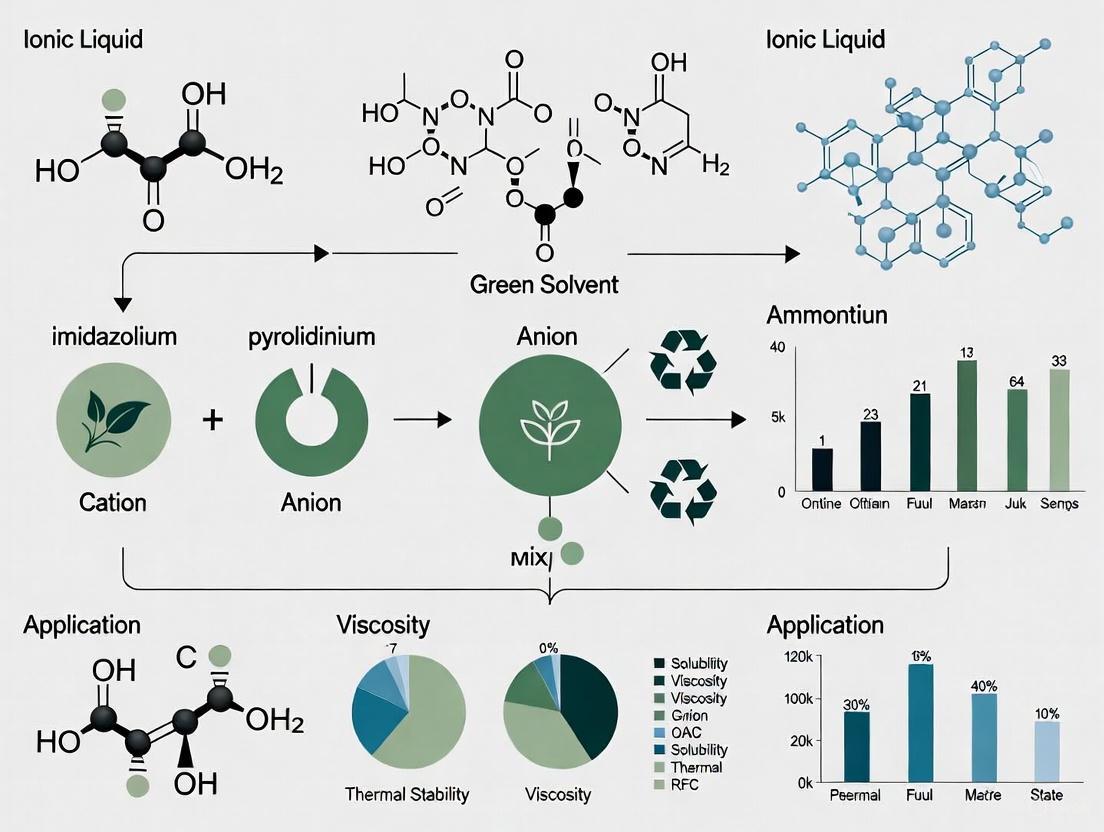
The classification of ionic liquids (ILs) as 'green solvents' is a subject of ongoing debate and refinement within the scientific community.
Ionic Liquids as Green Solvents: A Critical Look at Sustainability and Biomedical Applications
Abstract
The classification of ionic liquids (ILs) as 'green solvents' is a subject of ongoing debate and refinement within the scientific community. Initially celebrated for their negligible vapor pressure and thermal stability, conventional ILs have since faced scrutiny over potential toxicity and environmental persistence. This article explores the multifaceted 'green' profile of ILs for researchers and drug development professionals. We trace the evolution of ILs from first-generation solvents to modern, biocompatible designs derived from natural sources. The review covers their foundational chemistry, showcases their methodological application in drug synthesis and extraction, addresses key troubleshooting around environmental impact and cost, and provides a validation through comparative analysis with traditional solvents and emerging bio-alternatives. The synthesis of these perspectives aims to provide a balanced framework for the informed and sustainable application of ILs in biomedical research.
From Green Promise to Nuanced Reality: The Evolution of Ionic Liquids
Ionic liquids (ILs), a class of salts with melting points below 100°C, have been heralded as green solvents for over two decades, primarily based on their negligible vapor pressure and low flammability compared to conventional volatile organic compounds (VOCs) [1]. These properties effectively eliminate concerns about atmospheric emissions and solvent inhalation, positioning ILs as attractive replacements for hazardous solvents in pharmaceutical development, industrial processes, and energy technologies [2]. However, the scientific community has increasingly recognized that a comprehensive environmental assessment must look beyond volatility to include complete lifecycle impacts, particularly aquatic toxicity, biodegradability, and environmental persistence [1] [3].
The assumption that ILs are inherently environmentally benign has been challenged by substantial evidence demonstrating that many conventional ILs display significant toxicity to various organisms and resist microbial degradation in the environment [4] [2]. This whitepaper provides a critical technical examination of the holistic environmental impact of ionic liquids, presenting standardized assessment methodologies, structural factors influencing toxicity and biodegradation, and design strategies for developing truly sustainable ILs suitable for pharmaceutical applications and other industrial uses.
Beyond Volatility: The Toxicity Profile of Ionic Liquids
Quantitative Toxicity Assessment Across Biological Systems
Toxicity evaluations of ILs have revealed substantial impacts across diverse biological systems, from molecular targets to whole organisms. The following table summarizes key toxicity data for common IL structures across multiple trophic levels:
Table 1: Toxicity of Ionic Liquids Across Biological Systems
| Ionic Liquid | Test System | Endpoint | Value | Reference |
|---|---|---|---|---|
| [C₈mim]Cl | Rat leukemia IPC-81 cells | EC₅₀ | 0.102 mmol/L | [3] |
| [C₄mim]Cl | Rat (oral administration) | LD₅₀ | 550 mg/kg | [3] |
| [C₂mim]Cl | Rat leukemia IPC-81 cells | EC₅₀ | 7.2 mmol/L | [3] |
| [C₈mim]Cl | Algae (Pseudokirchneriella subcapitata) | EC₅₀ | 0.18 mg/L | [1] |
| [C₈mim]Cl | Water flea (Daphnia magna) | EC₅₀ | 2.25 mg/L | [1] |
| Methanol | Rat leukemia IPC-81 cells | EC₅₀ | 1584 mmol/L | [3] |
| DMSO | Rat (oral administration) | LD₅₀ | 15,000-30,000 mg/kg | [3] |
The concentration-dependent toxicity of ILs is frequently quantified using EC₅₀ (half-maximal effective concentration) for cellular and sublethal effects, and LD₅₀ (median lethal dose) for acute toxicity in animal studies [3]. These standardized metrics allow for direct comparison of IL toxicity relative to conventional solvents.
Structural Determinants of Ionic Liquid Toxicity
Research has established clear structure-activity relationships (SARs) between IL chemical structures and their toxicological profiles:
Alkyl Chain Length Effect: The most consistent trend observed across biological systems is increasing toxicity with longer alkyl side chains on cationic structures [3]. For imidazolium-based ILs, EC₅₀ values decrease exponentially as the alkyl chain lengthens from ethyl (C₂) to decyl (C₁₀) groups [3]. This "alkyl chain effect" has been documented in microorganisms, mammalian cells, plants, crustaceans, fish, and mammals.
Cationic Head Group Influence: Toxicity varies significantly with the central cationic structure. Generally, toxicity follows the order: imidazolium > pyridinium > quaternary ammonium > phosphonium for similar alkyl chain lengths [1]. The aromaticity and charge distribution of the cation significantly influence biological interactions.
Anion Modulation: While the cation predominantly determines toxicity, anions can modulate these effects through lipophilicity, stability, and specific biological interactions [1]. For instance, anions like hexafluorophosphate (PF₆⁻) may hydrolyze to release toxic fluoride ions, while chloride or acetate anions generally demonstrate lower inherent toxicity.
The diagram below illustrates the primary mechanism of IL toxicity related to alkyl chain length:
Figure 1: Alkyl Chain Toxicity Mechanism
Experimental Protocols for Toxicity Assessment
Standardized toxicity testing protocols are essential for generating comparable data:
Cytotoxicity Assays (IPC-81 Cells):
- Cell Culture: Maintain rat leukemia IPC-81 cells in RPMI-1640 medium with 10% fetal calf serum at 37°C and 5% CO₂ [3].
- Exposure: Incubate cells with IL concentrations ranging from 0.01-10 mM for 48 hours.
- Viability Assessment: Measure metabolic activity using MTS tetrazolium assay. Calculate EC₅₀ values from dose-response curves using four-parameter logistic regression [3].
- Quality Control: Include solvent controls and reference standards (e.g., methanol) in each assay plate.
Acute Aquatic Toxicity (Daphnia magna):
- Test Organisms: Use young daphnids (<24 hours old) from laboratory cultures [1].
- Experimental Design: Expose daphnids to至少 five concentrations of IL in reconstituted standard water for 48 hours.
- Endpoint Measurement: Record immobility at 24 and 48 hours. Calculate EC₅₀ values using probit analysis or nonlinear regression.
- Validity Criteria: Control survival must exceed 90%; reference toxicant tests must yield EC₅₀ within established ranges [1].
Mammalian Acute Toxicity (Rat Oral LD₅₀):
- Animal Model: Use healthy young adult rats (typically 8-12 weeks old) with controlled diet and housing conditions [3].
- Dosing: Administer single oral doses of IL suspended in appropriate vehicle via gavage. Test multiple dose levels following OECD Guideline 423.
- Observation Period: Monitor clinical signs, mortality, and body weight for 14 days post-administration.
- Ethical Compliance: All studies must follow institutional animal care and use committee protocols with minimization of suffering [3].
Biodegradation: The Fate of Ionic Liquids in the Environment
Biodegradability Assessment Methods and Data
While ILs do not contribute to air pollution through volatilization, their aqueous solubility creates significant potential for water contamination [1]. Standardized biodegradation tests provide critical data on environmental persistence:
Table 2: Biodegradability Assessment of Ionic Liquids Using Standard Methods
| Ionic Liquid | Test Method | Biodegradation (%) | Classification | Reference |
|---|---|---|---|---|
| [C₂mim]Cl | OECD 301 | 0-25 | Not readily biodegradable | [4] |
| [C₄mim]Cl | OECD 301 | 0-18 | Not readily biodegradable | [4] |
| [C₈mim]Cl | OECD 301 | 5-30 | Not readily biodegradable | [4] |
| Choline acetate | OECD 301 | >60 | Readily biodegradable | [3] |
| Amino acid-based ILs | OECD 301 | 45-85 | Readily to inherently biodegradable | [2] |
| Glucose-based ILs | OECD 301 | 50-90 | Readily biodegradable | [2] |
A systematic review of IL biodegradation studies revealed that only approximately 25% of published studies provided sufficient methodological detail and met validity criteria for reliable biodegradation assessment [4]. This highlights the need for more rigorous and standardized testing in IL environmental fate studies.
Structural Features Governing Biodegradation
The relationship between IL structure and biodegradability follows several key principles:
Cationic Core Structure: ILs containing cationic head groups with recognized biochemical pathways (e.g., choline, amino acids, sugars) typically demonstrate enhanced biodegradability compared to synthetic aromatic cations like imidazolium or pyridinium [2] [3].
Side Chain Functionalization: The incorporation of ester groups, hydroxyl groups, or other oxygen-containing functionalities significantly improves biodegradation by introducing sites for enzymatic cleavage and metabolic processing [3].
Alkyl Chain Length Impact: Contrary to toxicity trends, intermediate alkyl chain lengths (C₄-C₈) often show improved biodegradation compared to very short or very long chains, potentially due to optimized bioavailability for microbial degradation [4].
Anion Effects: Anions derived from natural products (e.g., acetate, amino acid derivatives) or containing hydrolyzable bonds generally support better overall biodegradation of IL formulations [2].
The following experimental workflow outlines the standardized assessment of IL biodegradability:
Figure 2: Biodegradability Assessment Workflow
Detailed Experimental Protocol: Closed Bottle Test (OECD 301D)
The OECD 301D Closed Bottle Test provides a standardized method for evaluating ready biodegradability:
Test System Preparation:
- Prepare mineral medium containing phosphate buffer (pH 7.4), essential nutrients, and IL as the sole carbon source at 10-20 mg/L dissolved organic carbon (DOC).
- Inoculate with secondary effluent from municipal wastewater treatment plants (1-5 mL/L) or pre-adapted microbial cultures.
- Fill bottles completely to exclude air, seal, and incubate in the dark at 20°C ± 1°C [4].
Biodegradation Monitoring:
- Measure dissolved oxygen (DO) concentrations periodically (minimum days 0, 7, 14, 21, 28) using oxygen-sensitive electrodes or Winkler titration.
- Calculate biological oxygen demand (BOD) as the difference between initial and final DO concentrations.
- Include reference compounds (sodium acetate, aniline) to verify inoculum activity and abiotic controls to account for chemical oxygen demand [4].
Data Interpretation:
- Calculate percentage biodegradation = (BODsample - BODblank) / ThOD × 100%, where ThOD is the theoretical oxygen demand for complete mineralization.
- Classify as "readily biodegradable" if >60% degradation occurs within a 10-day window before reaching 90% of maximum degradation [4].
- Report lag phase duration, degradation rate, and ultimate biodegradation percentage.
Designing Truly Green Ionic Liquids: Strategies and Solutions
Molecular Design Principles for Sustainable ILs
The concept of ILs as "designer solvents" enables strategic molecular engineering to optimize environmental profiles:
Polar Functionalization: Introducing hydroxyl groups, ether linkages, or ester functions in alkyl side chains significantly reduces toxicity by decreasing hydrophobicity and membrane disruption potential [3]. For example, EC₅₀ values improve by an order of magnitude when comparing [C₈mim]Cl versus [HO-C₈mim]Cl [3].
Bio-derived Ionic Liquids: Utilizing ions from natural biochemical pathways enhances biodegradability and reduces toxicity. Choline-based cations combined with amino acid anions or carbohydrate derivatives create ILs with demonstrated environmental compatibility [2] [3].
Metabolizable Linkages: Incorporating enzymatically cleavable bonds (esters, amides) within IL structures ensures metabolic pathways exist for decomposition. ILs derived from natural amino acids, organic acids, and sugars show significantly improved biodegradation profiles [2].
Tunable Hydrophilicity-Hydrophobicity Balance: Optimizing the partition coefficients through careful selection of cation-anion combinations can balance solvent efficacy with reduced bioaccumulation potential [1].
Advanced IL Architectures with Improved Green Credentials
Deep Eutectic Solvents (DESs): These IL analogues formed from hydrogen bond donors and acceptors (e.g., choline chloride + urea) share many beneficial properties of ILs while often exhibiting lower toxicity and better biodegradability [2] [5]. Their components frequently derive from natural metabolites, enhancing environmental compatibility.
Switchable Ionic Liquids (SILs): Compounds that transition between neutral and ionic forms in response to external triggers (e.g., CO₂) enable easier recovery and reduce environmental release through closed-loop processing [2].
Biocompatible ILs for Pharmaceutical Applications: Third-generation ILs designed with biological activity in mind incorporate pharmaceutically active ions to create dual-function materials with inherent therapeutic value and reduced unintended toxicity [2].
The following diagram illustrates the evolution of ionic liquid design strategies:
Figure 3: Evolution of Ionic Liquid Design
The Scientist's Toolkit: Research Reagents and Assessment Materials
Table 3: Essential Materials for Ionic Liquid Environmental Assessment
| Reagent/Material | Specification | Application Purpose | Key Considerations |
|---|---|---|---|
| Reference Ionic Liquids | [Cₙmim]Cl series (n=2,4,6,8,10) | Toxicity and biodegradability benchmarking | Purity >98%; HPLC confirmation; moisture control |
| Cell Lines | Rat leukemia IPC-81 (ECACC 98041101) | In vitro cytotoxicity screening | Regular authentication; mycoplasma testing |
| Test Organisms | Daphnia magna (ISO 6341) | Aquatic toxicity assessment | Culture standardization; <24h neonates for testing |
| Mineral Medium | OECD TG 201/202 composition | Biodegradation testing | Precise nutrient balancing; carbon-free sources |
| Inoculum Source | Municipal wastewater secondary effluent | Microbial activity for biodegradation tests | Fresh collection (<24h); diverse microbial community |
| Analytical Standards | Sodium acetate, aniline | Method validation controls | Certified reference materials; stability monitoring |
| Oxygen Measurement System | Electrochemical or optical DO probes | BOD determination in biodegradation tests | Regular calibration; temperature compensation |
| Chromatography System | HPLC-UV/RI with appropriate columns | IL concentration and purity verification | Method validation for specific IL structures |
The question of whether ionic liquids are truly green solvents cannot be answered by examining volatility alone. A comprehensive environmental assessment must integrate multiple parameters: aquatic toxicity, biodegradability, synthesis pathways, energy requirements, and end-of-life management [1] [3]. While many conventional ILs demonstrate undesirable environmental profiles, the designer nature of these materials enables creation of truly sustainable variants through strategic molecular engineering [2].
For pharmaceutical researchers and industrial chemists, adopting the following practices will ensure responsible IL implementation:
- Conduct comprehensive environmental screening during IL selection processes, prioritizing both low toxicity and ready biodegradability.
- Implement green chemistry principles in IL synthesis, utilizing renewable feedstocks and minimizing energy intensity.
- Develop closed-loop processes that prevent environmental release through efficient recovery and reuse systems.
- Apply lifecycle assessment methodologies to quantify cumulative environmental impacts across all stages of IL production, use, and disposal.
The future of ionic liquids as sustainable solvents lies not in blanket "green" claims, but in the thoughtful design of task-specific materials that balance technological performance with comprehensive environmental responsibility. Through continued research and rigorous assessment, the pharmaceutical industry can harness the remarkable properties of ILs while minimizing their ecological footprint.
Ionic liquids (ILs), a class of materials often defined as organic salts with melting points below 100°C, have undergone a remarkable evolution since their discovery. This journey has transformed them from laboratory curiosities into designer materials with the potential to address some of the most pressing challenges in green chemistry and sustainable technology [6]. Their defining characteristic is an inherent tunability; by selecting and modifying the cationic and anionic constituents, scientists can precisely engineer physicochemical properties such as melting point, viscosity, solubility, and thermal stability for specific applications [7]. With an estimated 10¹⁸ possible combinations, the structural versatility of ILs is nearly limitless [8].
The narrative of IL development is commonly framed within the context of generations, each marked by a significant shift in design philosophy and application scope. This progression raises a critical question central to modern research: Are ionic liquids truly green solvents? While their low volatility and potential for recyclability align with green chemistry principles, a comprehensive assessment must consider their entire life cycle, including synthesis, use, and environmental impact [9] [10]. This review traces the evolution of ionic liquids through four generations, examining their unique characteristics, applications, and the growing emphasis on sustainability that defines the current and future state of the field.
The Generational Evolution of Ionic Liquids
The development of ionic liquids can be categorized into four distinct generations, each reflecting evolving design priorities and applications.
Table 1: The Four Generations of Ionic Liquids at a Glance
| Generation | Timeframe | Key Characteristics | Example Applications | "Green" Status |
|---|---|---|---|---|
| First | 1914 (Walden) - 1990s | Air- and water-sensitive; often based on chloroaluminate anions [6]. | Electrolytes, green solvents (with limitations) [11]. | Questionable; high toxicity, poor biodegradability [7]. |
| Second | 1992 onward | Air- and water-stable; tunable physical/chemical properties (e.g., [BF₄]⁻, [PF₆]⁻ anions) [6] [12]. | Catalysis, synthesis, electrochemistry, separation processes [11] [13]. | "Designer solvents"; toxicity and biodegradability remain concerns [7] [12]. |
| Third | ~2000 onward | Biocompatible and bio-derived ions (e.g., cholinium, amino acids); task-specific functionalities [11] [7]. | Drug delivery, active pharmaceutical ingredients (API-ILs), biomedicine, biosensing [11] [8] [12]. | Greener profile; focus on reduced toxicity and enhanced biodegradability [7]. |
| Fourth | Emerging | Sustainable by design; focus on biodegradability, recyclability, and multifunctionality from the outset [11]. | Precision medicine, sustainable energy storage, green industrial processes [11]. | Aims for full life-cycle sustainability and minimal environmental impact [11]. |
First Generation: The Pioneers
The history of ILs began in 1914 with Paul Walden’s synthesis of ethylammonium nitrate, a salt with a melting point of 13–14°C [6]. For much of the 20th century, IL research focused on salts that were primarily mixtures of alkylpyridinium or dialkylimidazolium cations with halogenoaluminate anions [6] [12]. These first-generation ILs were investigated for their unique physical properties, such as high thermal stability and broad liquid ranges, which made them attractive as electrolytes and solvents [12]. However, a major limitation was their high sensitivity to air and water, which restricted their handling and application [6]. Furthermore, they were often toxic and not biodegradable, challenging their status as "green" solvents [7].
Second Generation: The "Designer Solvents" Era
A pivotal moment arrived in 1992 when Wilkes and Zaworotko reported the first air- and water-stable ILs based on the 1-ethyl-3-methylimidazolium cation with anions like acetate, nitrate, and tetrafluoroborate [6]. This breakthrough ushered in the second generation of ILs, which were characterized by their adjustable physical and chemical properties [12]. Scientists realized that by simply changing the alkyl chain on the cation or swapping the anion, they could fine-tune properties like melting point, viscosity, and hydrophilicity, earning them the moniker "designer solvents" [7]. This tunability opened doors to widespread applications in catalysis, electrochemistry (e.g., in batteries and supercapacitors), and as solvents for synthesis [11] [13]. Despite their stability and versatility, many second-generation ILs, particularly those with imidazolium cations and fluorinated anions, were later found to have high toxicity and poor biodegradability, creating a paradox between their utility and environmental sustainability [7] [12].
Third Generation: Biocompatibility and Task-Specific Design
To address the toxicity issues of earlier ILs, the third generation emerged with a focus on biocompatibility and task-specific functionality [11]. This generation utilizes ions derived from natural, renewable sources, such as choline (a vitamin B4 derivative) for cations and amino acids or fatty acids for anions, leading to the development of Bio-ILs [7] [12]. A landmark innovation within this generation is the concept of Active Pharmaceutical Ingredient-Ionic Liquids (API-ILs), where an active drug is incorporated as either the cation or anion of the IL, potentially improving the drug's solubility, stability, and bioavailability while overcoming polymorphism issues [7]. Third-generation ILs have revolutionized biomedical applications, enabling enhanced transdermal drug delivery [14] [12], serving as biosensors, and being used in tissue engineering [8]. Their key advantages include low toxicity, good biodegradability, and often lower production costs [12].
Fourth Generation: The Sustainable Future
The most recent evolution is the fourth generation of ILs, which emphasizes sustainability, multifunctionality, and a holistic green lifecycle [11]. The design philosophy extends beyond the end-use application to consider the entire life of the material, from the sourcing of raw materials to its ultimate environmental fate. Key principles include:
- Inherent Biodegradability and Low Toxicity: Building on third-generation principles with an even stricter focus on environmental impact [11].
- Recyclability and Closed-Loop Systems: Designing ILs and their processes for easy recovery and reuse to minimize waste [11] [9].
- Multifunctionality: Creating ILs that can perform multiple roles in a system, such as simultaneously acting as a solvent, catalyst, and separation agent [11].
These ILs are poised to drive advancements in next-generation applications, including precision medicine, advanced energy storage systems, and truly sustainable industrial processes [11].
Ionic Liquids and the "Green" Question: A Balanced Assessment
The classification of ILs as "green solvents" is not automatic and requires a critical, life-cycle-based evaluation.
The "Green" Advantages of Ionic Liquids
The most cited green credential of ILs is their extremely low vapor pressure, which minimizes the emission of volatile organic compounds (VOCs) and reduces air pollution and occupational hazards [9]. Their non-flammability also enhances process safety [9]. Furthermore, their high thermal stability allows for their use over a wide temperature range and facilitates their recyclability and reuse, contributing to waste reduction [9]. The ability to design task-specific ILs means processes can be made more efficient and selective, reducing energy and material consumption [9].
The Environmental Challenges and Costs
However, the "green" label has been challenged. Early generations of ILs exhibited high toxicity and poor biodegradability, leading to significant concerns about their environmental persistence [7] [12]. Moreover, the "greenness" of a process using ILs is heavily dependent on the energy required. A life cycle assessment (LCA) of lignocellulosic film production using the IL [C₂C₁im][OAc] revealed that the energy-intensive steps for IL recovery, such as freeze crystallization and solvent evaporation, resulted in a significantly higher environmental impact compared to traditional materials like cellophane [10]. This study underscores that a bio-based feedstock does not automatically guarantee sustainability, and the energy footprint of IL processing is a critical factor.
Table 2: Environmental Advantages and Challenges of Ionic Liquids
| Aspect | Advantages | Challenges & Considerations |
|---|---|---|
| Volatility | Negligible vapor pressure prevents airborne release and inhalation risks [9]. | Potential for aqueous or terrestrial contamination due to (eco)toxicity [7]. |
| Stability & Recycling | High thermal stability enables recycling and reuse, reducing waste [9]. | High stability can lead to environmental persistence if not properly managed [7]. |
| Functionality | Task-specific design can optimize processes, saving energy and materials [9]. | Synthesis of complex ILs can be resource-intensive, offsetting use-phase benefits [10]. |
| Feedstock | Bio-ILs can be derived from renewable biological sources [7]. | The overall life-cycle impact (including energy for processing) must be evaluated [10]. |
Experimental Insights: Methodology in IL Research
Protocol: Formulating IL-based Transdermal Drug Delivery Systems
The application of ILs in transdermal drug delivery exemplifies the practical methodology of third- and fourth-generation ILs. The following workflow details the formulation of IL-loaded ethosomes for the delivery of biopharmaceuticals like insulin [14].
Title: IL Transdermal Formulation Workflow
Step 1: Selection of Biocompatible Ions. Cations such as cholinium or phosphocholine and anions like fatty acids (e.g., oleate) or amino acids are chosen for their low toxicity and biodegradability [14] [12]. The choice of ions influences the IL's ability to fluidize skin lipids and act as a permeation enhancer.
Step 2: Synthesis of the Ionic Liquid. The IL is typically formed through a simple acid-base neutralization reaction or by metathesis. For instance, cholinium oleate can be synthesized by mixing choline hydroxide with oleic acid [12].
Step 3: Preparation of IL-loaded Ethosome Suspension. Phospholipids (e.g., dimyristoyl-phosphatidylcholine) and the synthesized IL are dissolved in a mixture of ethanol and water under controlled heating (e.g., 40°C). The mixture is then subjected to probe sonication to form small, unilamellar vesicles [14].
Step 4: Drug Incorporation. The therapeutic agent (e.g., insulin, siRNA) is added to the ethosome suspension under gentle stirring. The IL within the vesicle membrane helps achieve high encapsulation efficiency (reported to be ~99% for insulin) and stabilizes the labile biomolecule [14].
Step 5: Formulation Characterization. The formulation is analyzed for particle size (via dynamic light scattering), zeta potential, encapsulation efficiency, and in-vitro drug release profile. Stability studies are conducted over weeks at different temperatures (e.g., 4°C and 25°C) [14].
Step 6: Efficacy and Safety Testing. Permeation studies are performed using Franz diffusion cells with excised human or animal skin. Safety is assessed through skin irritation tests and cell viability assays on keratinocyte cultures [14] [12].
Protocol: Creating Active Pharmaceutical Ingredient-Ionic Liquids (API-ILs)
The synthesis of API-ILs is a key methodology for improving drug properties.
Title: API-IL Synthesis Pathways
Step 1: Identify an ionizable group in the active pharmaceutical ingredient (e.g., a carboxylic acid or an amine) [7].
Step 2: Select a biocompatible counter-ion with the opposite charge. Common choices include cholinium (for an acidic API) or docusate (for a basic API) [7].
Step 3: Perform the synthesis.
- Ionic Binding (Direct Method): The most common approach involves a simple acid-base reaction or metathesis in water or an organic solvent, forming the API-IL directly through ionic bonding [7].
- Covalent Linkage (Prodrug Method): For neutral APIs, a covalent modification is first made to introduce an ionizable group, which is then paired with a counter-ion to form the IL [7].
Step 4: Purify and dry the resulting API-IL, often using techniques like liquid-liquid extraction, column chromatography, or lyophilization [7].
Step 5: Characterize the final product using NMR, mass spectrometry, and DSC to confirm structure, purity, and melting point. Key performance indicators include enhanced solubility, modified partition coefficient, and improved thermal stability compared to the parent API crystal [7].
The Scientist's Toolkit: Key Reagents and Materials
Table 3: Essential Research Reagents for Ionic Liquid Applications
| Reagent/Material | Function & Application Context |
|---|---|
| Imidazolium-based Cations (e.g., 1-ethyl-3-methylimidazolium) | Foundational cations for second-generation ILs; widely used in catalysis, electrochemistry, and as baseline solvents for physicochemical studies [6]. |
| Biocompatible Ions (Cholinium, Amino Acids, Fatty Acids) | Building blocks for third- and fourth-generation ILs (Bio-ILs). Essential for pharmaceutical (API-ILs, transdermal delivery) and biomedical applications due to low toxicity [7] [12]. |
| Fluorinated Anions (e.g., [NTf₂]⁻, [BF₄]⁻, [PF₆]⁻) | Provide water stability, wide electrochemical windows, and low viscosity. Crucial for energy applications (batteries, supercapacitors) but raise toxicity concerns [13] [6]. |
| Phospholipids (e.g., Dimyristoyl-phosphatidylcholine) | Used to create lipid-based nanocarriers (ethosomes, liposomes) when combined with ILs for enhanced transdermal drug delivery [14]. |
| Surface-Active ILs (SAILs) | ILs with long alkyl chains that act as surfactants. They self-assemble into micelles and can solubilize poorly soluble drugs, enhancing bioavailability for oral and transdermal delivery [7] [12]. |
The journey of ionic liquids from unstable, specialized salts to sophisticated, sustainable designer materials illustrates a powerful evolution in molecular engineering. The framework of four generations provides a clear narrative of this progress, highlighting a continual shift towards greater functionality, biocompatibility, and environmental responsibility. While the low volatility and high tunability of ILs offer distinct green advantages over traditional solvents, their sustainability is not a given. True "green" credentials can only be claimed through holistic life-cycle assessments and the conscious design of biodegradable, recyclable, and safe fourth-generation ILs. As research progresses, the focus will remain on unlocking the full potential of these versatile materials to enable breakthroughs in green chemistry, renewable energy, and precision medicine, all while rigorously upholding the principles of sustainability.
Ionic liquids (ILs), a class of materials often defined as salts with melting points below 100 °C, have garnered significant scientific interest for their unique and customizable physicochemical properties. [2] Their evolution has been categorized into generations, beginning with first-generation ILs valued for their physical properties, moving to task-specific second-generation ILs, and culminating in the third and fourth generations that prioritize biocompatibility, biodegradability, and multifunctionality. [11] [2] [15] Central to their utility are three core concepts: exceptional thermal stability, extensive tunability, and the resultant "designer solvent" paradigm. This review examines these core properties in detail, framing them within the critical context of whether ILs can be truly considered "green" solvents.
The Core Properties of Ionic Liquids
Thermal Stability
The thermal stability of ILs is a key advantage over conventional volatile organic solvents. This stability is primarily due to their ionic nature and the strength of their Coulombic interactions. [11] The decomposition temperature of an IL depends on the strengths of the cation-anion interactions and the chemical stability of its individual ions. ILs with aromatic cations (e.g., imidazolium, pyridinium) and fluorinated anions (e.g., [PF₆]⁻, [BF₄]⁻) often exhibit high thermal stability, with many remaining stable at temperatures exceeding 400 °C. [11] This property makes them invaluable in high-temperature industrial processes, as electrolytes in advanced batteries, and as lubricants, reducing fire hazards and solvent loss. [11]
Tunability and the "Designer Solvent" Concept
The most defining characteristic of ILs is their vast tunability. Since an IL is composed of at least two discrete ions—an organic cation and an organic or inorganic anion—altering the structure of either component directly modifies the IL's physical and chemical properties. [11] [2] This capability underpins the "designer solvent" concept, wherein an IL can be custom-synthesized to possess a specific set of properties for a given application. [16]
The structure of the cation, particularly the length and branching of alkyl substituents, profoundly influences properties like viscosity, hydrophobicity, and melting point. Similarly, the choice of anion can drastically alter solvation capabilities, hydrophilicity, and coordinating ability. [11] This tunability extends to functionalization; incorporating specific functional groups (e.g., acidic, basic, or chiral moieties) can create task-specific ILs for catalysis or separation. [11] [2]
Table 1: Key Ionic Liquid Cations and Anions and Their Influence on Properties
| Component | Examples | Impact on IL Properties |
|---|---|---|
| Cations | Imidazolium, Pyridinium, Ammonium, Phosphonium, Piperidinium, Pyrrolidinium | Governs chemical stability, hydrophobicity, and toxicity. Alkyl chain length on cation increases lipophilicity and can increase toxicity. [11] [2] |
| Anions | Chloride [Cl]⁻, Tetrafluoroborate [BF₄]⁻, Hexafluorophosphate [PF₆]⁻, Bis(trifluoromethylsulfonyl)imide [Tf₂N]⁻, Amino acids, Carboxylates | Primarily influences thermal stability, solubility, and viscosity. Also a major factor in eco-toxicity. [11] [2] [15] |
Table 2: Tunable Properties and Application-Specific Design of Ionic Liquids
| Tunable Property | Structural Control Method | Example Application |
|---|---|---|
| Hydrophobicity/Hydrophilicity | Selecting anions like [Tf₂N]⁻ (hydrophobic) vs. Cl⁻ (hydrophilic); adjusting alkyl chain length on cation. [2] | Creating biphasic systems for liquid-liquid extraction. [17] |
| Solvation Power | Choosing anions with specific coordinating abilities or cations with functional groups that can interact with solutes. [11] | Dissolving biomass like cellulose or metals in processing. [11] |
| Acidity/Basicity | Incorporating functional groups such as sulfonic acids (acidic) or amines (basic) into the cation or anion. [11] | Serving as both solvent and catalyst in organic reactions like esterification. [11] |
| Viscosity | Using symmetric ions, reducing alkyl chain length, selecting anions with weak coordination. [11] | Optimizing flow and mass transfer for use as electrolytes or in membrane separation. [11] [17] |
Diagram 1: The "Designer Solvent" Concept: A workflow for tailoring ionic liquid properties through cation, anion, and functional group selection for specific applications.
The "Green" Dilemma: Property-Driven Benefits vs. Environmental Concerns
The core properties of ILs create a complex narrative when assessing their green credentials. While their negligible vapor pressure and high thermal stability eliminate atmospheric emissions and reduce fire risk—clear advantages over traditional solvents—their high stability and tunability also present significant environmental challenges. [11] [18]
Benefits for Green Technology
- Reduced VOC Emissions: With negligible vapor pressure, ILs do not contribute to air pollution or occupational inhalation hazards, a major drawback of conventional solvents. [11] [16]
- Efficiency in Industrial Processes: Their tunability allows for the design of highly efficient catalysts and separation agents, potentially reducing energy consumption and waste in processes like biodiesel production, CO₂ capture, and chemical synthesis. [11] [19]
- Enabling New Technologies: ILs are key components in green energy technologies, functioning as safe electrolytes in next-generation batteries and supercapacitors. [11] [19]
Environmental Threats and Mitigation
The very stability that makes ILs attractive also makes them highly persistent in aquatic and terrestrial environments if released. [18] [20] Their "designer" nature means their toxicity and biodegradability vary widely; a common trend is that toxicity often increases with the hydrophobicity and alkyl chain length of the cation. [18] [2] Studies have shown that certain ILs, such as tetrabutylammonium chloride, can inhibit the growth of wheat and cucumber plants. [16] There is growing evidence that ILs are beginning to appear in environmental matrices, confirming concerns about their release and persistence. [20]
The response to these threats is the development of biocompatible ILs (Bio-ILs) derived from renewable sources, such as choline, amino acids, and sugars. [11] [2] [15] These third- and fourth-generation ILs are designed to maintain the beneficial properties of traditional ILs while offering improved biodegradability and lower ecotoxicity. [15]
Table 3: Environmental and Health Impact vs. "Green" Claims of Ionic Liquids
| Aspect | "Green" Claim / Benefit | Challenge / Threat | Mitigation Strategy |
|---|---|---|---|
| Atmospheric Impact | Negligible vapor pressure prevents airborne VOC emissions. [11] [16] | Not applicable; this is a clear benefit. | Not applicable. |
| Aquatic & Terrestrial Impact | Potential for biodegradable designs (e.g., choline-based ILs). [15] | High persistence and stability; potential for ecotoxicity and bioaccumulation. [18] [20] [16] | Develop biocompatible ILs from renewable ions (e.g., amino acids, sugars). [2] [15] |
| Toxicity Profile | Tunability allows design of less toxic structures. | Toxicity is structure-dependent; many conventional ILs are toxic to bacteria, algae, and plants. [18] [2] [16] | Use QSAR models and AI to predict and avoid toxic structures. [18] Adopt a "benign-by-design" approach. |
| Lifecycle | Can replace more hazardous solvents in a specific process. | Synthesis can be energy-intensive and involve hazardous precursors. [21] | Develop efficient, low-waste synthesis routes and use bio-derived feedstocks. [15] |
Experimental Focus: Methodology for Assessing Core Properties
Protocol for Thermal Gravimetric Analysis (TGA) of ILs
Objective: To determine the thermal decomposition temperature (Tₐ) of an ionic liquid. [11]
- Instrument Calibration: Calibrate the TGA instrument using magnetic standards with known Curie points (e.g., Alumel, Nickel, Perkalloy).
- Sample Preparation: Place 5-10 mg of the pure, dry IL into an open, inert crucible (e.g., alumina or platinum).
- Experimental Parameters:
- Atmosphere: Use an inert gas (e.g., nitrogen or argon) at a constant purge flow rate (e.g., 50 mL/min).
- Temperature Program: Heat the sample from room temperature to 600-800 °C at a constant heating rate (e.g., 10 °C/min).
- Data Analysis: Plot weight (%) versus temperature (°C). The onset decomposition temperature (Tₐ) is typically identified as the temperature at which a 1% or 5% weight loss occurs, determined by the intersection of tangents from the stable and decomposing regions of the curve.
Protocol for Assessing Ecotoxicity Using Plant Growth Inhibition
Objective: To evaluate the potential environmental impact of an IL on terrestrial plants, following standardized guidelines. [16]
- Test Organisms: Select monocotyledonous (e.g., wheat, Triticum aestivum L.) and dicotyledonous (e.g., cucumber, Cucumis sativus L.) plant species.
- Soil Preparation: Mix the IL homogeneously into a loamy sand soil at a range of concentrations (e.g., 1 to 1000 mg·kg⁻¹ of soil dry weight). An untreated soil sample serves as the control.
- Growth Conditions: Sow seeds in pots containing the IL-amended and control soils. Maintain in a controlled environment chamber with constant temperature (e.g., 20 ± 2 °C), soil moisture (e.g., 70%), and a 16/8 hour light/dark cycle.
- Endpoint Measurement: After 14 days, harvest the plants and measure key endpoints:
- Inhibition of shoot and root length (in % compared to control).
- Plant fresh weight yield.
- Dry matter content (by drying fresh plant material at 105°C to constant weight).
- Photosynthetic pigment content (chlorophyll a, b, and carotenoids via acetone extraction and spectrophotometry).
- Data Analysis: Calculate effective concentrations (e.g., EC₅₀) using nonlinear regression analysis.
Diagram 2: Ecotoxicity Assessment Workflow: A standard protocol for evaluating the impact of ionic liquids on plant growth.
The Scientist's Toolkit: Key Reagents and Materials
Table 4: Essential Research Reagents for Ionic Liquid Synthesis and Application
| Reagent / Material | Function / Role | Example Use Case |
|---|---|---|
| N-Methylimidazole | A core precursor for synthesizing the most common class of ILs: the imidazolium salts. [2] | Synthesis of 1-alkyl-3-methylimidazolium cations via alkylation. |
| Choline Chloride | A benign, bio-derived cation precursor for creating biocompatible ILs. [15] | Synthesis of choline-amino acid ILs for pharmaceutical applications. |
| Amino Acids (e.g., Glycine, Alanine) | Serve as anions to form biodegradable, low-toxicity ILs (Bio-ILs). [2] [15] | Creating ILs for drug formulation to improve solubility and stability. |
| Lithium Bis(trifluoromethanesulfonyl)imide (Li-Tf₂N) | Metathesis reagent to introduce the hydrophobic [Tf₂N]⁻ anion into IL structures. | Imparting hydrophobicity and high electrochemical stability for battery electrolytes. |
| Tetrabutylammonium Bromide/Chloride | A common ammonium-based IL and precursor for further metathesis reactions. [16] | Used as a catalyst or as a model compound for ecotoxicity studies. |
The core properties of ionic liquids—their thermal stability, tunability, and status as "designer solvents"—are undeniable assets that have driven their adoption across countless scientific and industrial fields. These properties offer tangible green advantages, such as eliminating VOC emissions and enabling more efficient processes. However, the question of whether ILs are "truly green" cannot be answered universally. Their environmental impact is intrinsically tied to their specific design. The persistence and toxicity of some early-generation ILs starkly contrast with the biodegradable and biocompatible profile of newer Bio-ILs. Therefore, the "green" label is not an inherent property of the class, but a achievable goal through deliberate, responsible design that considers the entire lifecycle of the material. The future of ILs lies in the continued development of this "benign-by-design" philosophy, leveraging their tunable nature to optimize for both functionality and environmental safety.
Ionic liquids (ILs), often hailed as the “solvents of the future,” have garnered significant attention for their unique physicochemical properties, including negligible vapor pressure, high thermal stability, and tunable solvating power [22] [23]. These characteristics initially positioned them as environmentally friendly alternatives to volatile organic compounds (VOCs) [11]. However, early enthusiasm was tempered by a growing body of evidence revealing a critical challenge: many conventional ILs exhibit significant toxicity and poor biodegradability, undermining their “green” credentials [24] [25]. This paradox forms the core of the early challenge in IL development. The initial generations of ILs, while solving the problem of atmospheric volatility, introduced potential hazards into aquatic and terrestrial environments due to their high solubility, stability, and persistence [26] [27]. Understanding this foundational issue is essential for any researcher, scientist, or drug development professional assessing the true sustainability of ionic liquids within a broader research context.
Documented Toxicity of Conventional Ionic Liquids
Extensive ecotoxicological studies have demonstrated that the toxicity of ILs is not inherent to the class as a whole but is highly dependent on their specific chemical structures. The modular nature of ILs, allowing for the combination of various cations and anions, leads to a vast chemical space with equally diverse toxicological profiles.
Key Structural Factors Influencing Toxicity
Research has consistently identified two primary structural factors that govern IL toxicity:
- Alkyl Chain Length: A strong correlation exists between the length of the alkyl chain on the cation and the observed toxicity. Elongation of the alkyl chain generally leads to an increase in toxicity across various biological systems and trophic levels [24]. This effect is often attributed to the increased lipophilicity, which facilitates stronger interactions with and disruption of cellular membranes.
- Anion and Cation Composition: The nature of both the cation and the anion influences the overall toxicity. For example, imidazolium-based ILs were among the first widely studied and have well-documented toxicity, while later generations incorporating cholinium or glycerol-derived cations show improved biocompatibility [25] [27] [28].
Quantitative Toxicity Data Across Trophic Levels
The following table summarizes key experimental toxicity data for various conventional ILs, illustrating the structural dependencies and effects on different organisms.
Table 1: Summary of Ecotoxicity Data for Conventional Ionic Liquids
| Ionic Liquid | Test Organism | Endpoint | Result | Key Finding |
|---|---|---|---|---|
| N-methyl-2-hydroxyethylammonium acetate (m-2-HEAA) [24] | Luminescent marine bacterium (Vibrio fischeri) | EC₅₀ | Lowest toxicity in the series | Toxicity increased with alkyl chain elongation on the cation. |
| N-methyl-2-hydroxyethylammonium pentanoate (m-2-HEAP) [24] | Luminescent marine bacterium (Vibrio fischeri) | EC₅₀ | Highest toxicity in the series | Confirmed the "alkyl chain effect" on toxicity. |
| Protic ILs (m-2-HEAA, m-2-HEAPr, m-2-HEAB) [24] | Lettuce (Lactuca sativa) | Seed germination impact | Varying inhibition | Demonstrated phytotoxicity, a concern for terrestrial ecosystems. |
| Protic ILs [24] | Bacteria (S. aureus, E. coli), Yeast (C. albicans), Fungi (Fusarium sp.) | Antimicrobial activity | Varying growth inhibition | Showed broad-spectrum antimicrobial effects, potentially disrupting microbial ecosystems. |
| Fluorinated Ionic Liquids (FILs) [26] | Water flea (Daphnia magna), Duckweed (Lemna minor) | Acute aquatic toxicity | Toxic effects observed | Highlighted concerns for specialized ILs like FILs in aquatic environments. |
Experimental Protocols for Toxicity Assessment
Standardized experimental protocols are critical for generating comparable and reliable toxicity data.
- Microtox Acute Toxicity Test: This protocol uses the marine bacterium Vibrio fischeri, where inhibition of bioluminescence is measured after 5, 15, and 30 minutes of exposure to the IL. The result is expressed as an Effective Concentration (EC₅₀), which is the concentration that reduces light output by 50% [24].
- Daphnia magna Acute Immobilization Test: Neonatal water fleas (Daphnia magna) are exposed to a range of IL concentrations for 24 or 48 hours. The immobilization (failure to swim after gentle agitation) is recorded, and the EC₅₀ is calculated [26].
- Phytotoxicity Test with Lettuce (Lactuca sativa): Lettuce seeds are placed in Petri dishes on filter paper moistened with IL solutions at different concentrations. Seed germination rate and root elongation are measured after a set period (e.g., 5 days) and compared to a control group [24].
- Antimicrobial Activity Assay: The assay is performed using well-diffusion or broth microdilution methods against representative Gram-positive (e.g., Staphylococcus aureus) and Gram-negative (e.g., Escherichia coli) bacteria, as well as fungi (e.g., Candida albicans). The Minimum Inhibitory Concentration (MIC) is determined [24].
Figure 1: The relationship between IL structure and toxicity is primarily driven by cation alkyl chain length. Longer chains increase lipophilicity, leading to greater membrane disruption and higher observed toxicity [24].
The Biodegradability Challenge
A cornerstone of a solvent's environmental profile is its ultimate fate in the environment. Biodegradability, the breakdown of substances by microorganisms, is a key metric where early conventional ILs presented a significant drawback.
Evidence of Low Biodegradability
Studies evaluating the biodegradability of ILs have often returned unfavorable results:
- Protic Ionic Liquids: A study on a series of N-methyl-2-hydroxyethylammonium-based PILs with carboxylate anions concluded that all tested PILs "have demonstrated low biodegradability" [24]. This indicates that even ILs with potentially simpler structures can persist in the environment.
- Fluorinated Ionic Liquids (FILs): FILs have been investigated for specialized applications, including drug delivery. However, an environmental hazard assessment revealed concerns about their biodegradability when tested using microorganisms from wastewater treatment plants [26].
- Persistence: The high chemical and thermal stability of ILs—a valued property for industrial applications—directly contributes to their environmental persistence, creating a conflict between functionality and environmental sustainability [25].
Standard Biodegradability Assessment Protocols
- Biochemical Oxygen Demand (BOD) to Chemical Oxygen Demand (COD) Ratio: This is a standard method for assessing biodegradability. The BOD measures the amount of oxygen consumed by microorganisms to break down the organic material in a sample over a period (e.g., 5 or 28 days). The COD measures the total quantity of oxygen required to oxidize all organic material chemically. The BOD/COD ratio provides an indication of biodegradability; a low ratio (e.g., <0.5) suggests the substance is not readily biodegradable [24].
- Closed Bottle Test (OECD 301D): This is a stringent ready biodegradability test. A solution of the test substance (IL) in mineral medium is inoculated with microorganisms and incubated in closed, dark bottles at constant temperature. Dissolved oxygen is measured periodically over 28 days. Biodegradation is calculated based on the biological oxygen consumption compared to the theoretical maximum [26].
Emerging Solutions: The Path Toward Truly Green ILs
Recognition of the toxicity and biodegradability challenges has driven the field toward designing safer and more sustainable ILs. This has led to the conceptual evolution of ILs through generations, culminating in the development of bio-based and biocompatible ILs.
Table 2: Evolution of Ionic Liquids and Their Environmental Profile
| Generation | Focus | Example Components | Environmental & Toxicity Profile |
|---|---|---|---|
| First | Green solvents (replacing VOCs) | E.g., Imidazolium with [PF₆]⁻, [BF₄]⁻ | Often toxic and poorly biodegradable [11] [28]. |
| Second | Task-specific functionality (e.g., catalysis) | Functionalized cations/anions | Toxicity remains a concern for many types [11]. |
| Third | Bio-derived & biocompatible ions | Cholinium, amino acids, glycerol | Designed for reduced toxicity and improved biodegradability [11] [27]. |
| Fourth | Sustainability & multifunctionality | Fully bio-based, biodegradable structures | Focus on circular economy and minimal environmental impact [11] [25]. |
Promising IL Families with Improved Profiles
- Cholinium-Based ILs: Combining the benign, vitamin-like cholinium cation with anions derived from linear alkanoates (e.g., acetate, butyrate) has yielded ILs that support the growth of filamentous fungi even at high concentrations and exhibit improved biodegradability profiles [27].
- Glycerol-Derived ILs: A 2025 study introduced a new family of bio-based ILs synthesized from glycerol, a renewable feedstock. These ILs are designed to mitigate the environmental and toxicity risks of conventional ILs while maintaining high functionality for applications like solubilization and catalysis [25].
- Active Pharmaceutical Ingredient ILs (API-ILs): In pharmaceutics, ILs are engineered by combining a pharmaceutically active cation or anion to create liquid salts of drugs. This strategy can enhance solubility and bioavailability while simultaneously addressing toxicity by using biocompatible ions [22] [28].
Figure 2: A standard workflow for assessing the environmental impact of ionic liquids integrates multiple toxicity and biodegradability tests to provide a comprehensive profile [24] [26].
The Scientist's Toolkit: Key Research Reagents & Materials
Table 3: Essential Reagents and Organisms for IL Ecotoxicity Assessment
| Reagent / Material | Function in Research | Relevance to IL Assessment |
|---|---|---|
| Vibrio fischeri (Marine Bacterium) | Model organism for acute aquatic toxicity testing (Microtox). | Provides a rapid, standardized initial screening for IL toxicity [24] [26]. |
| Daphnia magna (Water Flea) | Model crustacean for acute aquatic toxicity testing. | Represents a higher trophic level in aquatic ecosystems; indicates toxicity to invertebrates [26]. |
| Lemna minor (Duckweed) | Aquatic plant for phytotoxicity testing. | Assesses the impact of ILs on aquatic primary producers [26]. |
| Lactuca sativa (Lettuce) | Terrestrial plant for seed germination and root elongation tests. | Evaluates potential phytotoxicity and effects on terrestrial plants [24]. |
| Fungal & Bacterial Strains (e.g., C. albicans, S. aureus, E. coli) | Models for antimicrobial activity and eukaryotic toxicity. | Determines the breadth of biological activity and potential to disrupt microbial communities [24] [27]. |
| Activated Sludge Inoculum | Source of microorganisms for biodegradability tests (BOD/COD). | Simulates the breakdown potential of ILs in wastewater treatment plants [24] [26]. |
The early challenge of toxicity and biodegradability for conventional ionic liquids is a critical lesson in the nuanced evaluation of "green" technologies. The initial claim that ILs are universally environmentally friendly is an oversimplification; their ecological impact is highly dependent on their specific molecular design. Evidence shows that early, conventional ILs often exhibit significant toxicity across multiple trophic levels and demonstrate low biodegradability, leading to persistence in the environment. However, this challenge has catalyzed a paradigm shift in the field, driving innovation toward the rational design of safer, bio-based, and biodegradable ILs, such as those derived from cholinium and glycerol. Therefore, within the broader thesis of whether ILs are truly green solvents, the conclusion is that they are not inherently green. Their sustainability must be earned through conscious molecular design and rigorous environmental testing, transforming them from a blanket solution into a versatile platform for developing truly sustainable solvents.
Ionic liquids (ILs), a class of materials defined as salts with melting points below 100°C, have undergone a significant evolution in their design philosophy, transitioning from novel solvents to sophisticated, task-specific materials. The initial generations of ILs, while possessing valuable properties like low vapor pressure and high thermal stability, were often synthesized without adequate consideration of their environmental and biological impact [11]. This historical context is crucial within a broader thesis investigating the "green" credentials of ionic liquids. The modern paradigm represents a fundamental shift towards Biocompatible Ionic Liquids (Bio-ILs), which are task-specifically designed from naturally occurring compounds, pharmacologically active ingredients, or other molecules recognized for their low toxicity and biocompatibility [29] [30]. This review delineates the core principles of Bio-ILs, framing them as a deliberate response to the ecological and toxicological shortcomings of their predecessors, and provides an in-depth technical guide to their design, synthesis, and emerging applications, particularly in biomedical sciences.
The driving force behind this shift is the need to align ionic liquid technology with the principles of Green Chemistry. Early "first-generation" ILs, often based on imidazolium, phosphonium, or pyridinium cations, demonstrated remarkable physicochemical properties but were frequently toxic and poorly biodegradable [29] [31]. In contrast, Bio-ILs are a subset of the more advanced generations; third-generation ILs are characterized by their use of biologically active or benign ions, while the emerging fourth-generation focuses on sustainability, biodegradability, and multifunctionality [11]. By utilizing building blocks such as choline, amino acids, sugars, and fatty acids, Bio-ILs aim to provide the performance benefits of traditional ILs while mitigating environmental and health risks, thus offering a more genuinely "green" solvent pathway [29] [30].
Design Principles and Synthesis of Bio-ILs
Component Selection: Cations and Anions
The design of Bio-ILs is a modular process, reliant on the rational selection of cationic and anionic components to achieve desired physicochemical and biological properties. The most prevalent cations are derived from biocompatible sources. Choline is a quintessential example, a vitamin essential to human health and listed as "Generally Regarded as Safe" (GRAS) by the U.S. Food and Drug Administration [30]. Amino acids serve as versatile precursors for both cations and anions, offering a cheap, abundant, and renewable source of chiral building blocks that enhance biodegradability and allow for property fine-tuning [29] [30].
The anionic component offers an additional dimension for customization. Biocompatible anions include a wide range of carboxylic acids (e.g., from plants), fatty acids (e.g., oleate, laurate), and other natural metabolites [29] [32]. The combination of these ions dictates the final properties of the Bio-IL, including its hydrophobicity, viscosity, melting point, and specific biological interactions. For instance, incorporating fatty acid anions like oleate can significantly enhance membrane permeability, which is crucial for drug delivery applications [32].
Table 1: Key Cationic and Anionic Components in Bio-IL Design
| Component Type | Example | Key Characteristics | Primary Application Benefit |
|---|---|---|---|
| Cation | Choline | High biocompatibility, GRAS status, low toxicity, precursor to acetylcholine [30]. | Safe for pharmaceutical and biological use [32]. |
| Cation | Amino Acid-based (e.g., Glycine, Proline) | Biodegradability, chirality, adjustable hydrophilicity/hydrophobicity [30]. | Enables targeted, task-specific formulations [32]. |
| Anion | Fatty Acid-based (e.g., Oleate, Laurate) | Hydrophobicity, surfactant-like properties [32]. | Enhances membrane permeability for drug delivery [32]. |
| Anion | Carboxylate-based (e.g., Acetate, Lactate) | Derived from natural acids, reduced toxicity [29] [32]. | Increases solubility for various Active Pharmaceutical Ingredients (APIs) [32]. |
| Anion | Geranate | Natural origin, part of the CAGE system [29]. | Effective in transdermal and oral drug delivery systems [29]. |
Synthetic Methodologies
The synthesis of Bio-ILs is typically straightforward, favoring green chemistry principles. Two primary methods are most common:
- Metathesis Reaction: This route involves reacting a halide salt of the desired cation (e.g., choline chloride) with a metal or ammonium salt of the desired anion in a solvent. The resulting insoluble salt (e.g., potassium chloride) precipitates and is removed by filtration, leaving the purified Bio-IL in solution after solvent evaporation [29].
- Neutralization Reaction: This is a direct and atom-economical approach. An acid form of the anion is mixed with a basic form of the cation, such as choline hydroxide. The reaction, often performed in ethanol or water with gentle heating, produces water as the only by-product, which is easily removed under reduced pressure [29] [30]. This method is particularly favored for synthesizing choline-carboxylate Bio-ILs.
Table 2: Standardized Experimental Protocol for Bio-IL Synthesis via Neutralization
| Step | Protocol Description | Key Parameters & Considerations |
|---|---|---|
| 1. Reaction Setup | Dissolve the acid (anion precursor, 1.0 equiv) in anhydrous ethanol in a round-bottom flask. Equip the flask with a magnetic stirrer. | Use slight molar excess of acid (e.g., 1.05 equiv) to ensure complete reaction of the base. |
| 2. Addition | Slowly add an aqueous or alcoholic solution of the base (cation precursor, e.g., choline hydroxide, 1.0 equiv) to the stirring acid solution. | Addition rate should be controlled to manage heat generation. |
| 3. Reaction | Stir the reaction mixture at room temperature or at a specific elevated temperature (e.g., 40°C) for a defined period (12-24 hours) [30]. | Time and temperature are IL-dependent; monitor reaction progress. |
| 4. Work-up | Remove the solvent and any water produced under reduced pressure using a rotary evaporator. Further dry the crude product under high vacuum (e.g., 50°C) for 24-48 hours. | Complete removal of volatiles is critical for purity and accurate characterization. |
| 5. Purification | If necessary, purify the resulting Bio-IL by recrystallization from an appropriate solvent mixture. | Purity is confirmed by NMR (1H, 13C) and elemental analysis. |
Key Properties and Functional Advantages
The tailored design of Bio-ILs confers a suite of advantageous properties that make them superior to traditional solvents in advanced applications.
Tunable Physicochemical Properties: Bio-ILs maintain the classic "designer solvent" characteristic of ILs. Properties such as viscosity, polarity, hydrophobicity, and thermal stability can be precisely adjusted by altering the cation-anion combination or modifying alkyl chain lengths [29] [33]. For example, choline-based ILs with various plant-derived carboxylic acids exhibit decomposition temperatures exceeding 230°C and tunable viscosity [29].
Enhanced Solubilization Capacity: A primary application of Bio-ILs is to overcome the poor aqueous solubility of many modern drugs. They can act as superior solvents for hydrophobic Active Pharmaceutical Ingredients (APIs), thereby increasing their bioavailability and enabling effective treatment at lower doses [32] [30].
Biological Activity and Membrane Permeability: Beyond being inert carriers, many Bio-ILs possess intrinsic biological activity. They can enhance drug absorption by temporarily disrupting biological barriers like the skin or intestinal mucosa. A prominent example is CAGE (choline and geranic acid), which has been shown to increase the oral absorption of monoclonal antibodies by up to 200% [29] [32].
Emerging Applications in Biomedicine and Beyond
The unique functional advantages of Bio-ILs have led to their deployment in several cutting-edge applications, with biomedicine representing a particularly promising field.
Drug Formulation and Delivery
Bio-ILs are revolutionizing strategies for drug delivery across multiple administration routes. In oral delivery, they protect sensitive biologic drugs like peptides and proteins from degradation in the gastrointestinal tract, enhancing their stability and absorption [32]. For transdermal delivery, Bio-ILs act as permeability enhancers, facilitating the skin transport of both small molecules and macromolecules [32] [30]. Furthermore, injectable and targeted delivery systems leverage Bio-ILs to improve drug distribution and efficacy. For instance, choline geranate-based doxorubicin formulations have demonstrated effective tumor ablation in rabbit liver models, while paclitaxel-loaded Bio-ILs showed antitumor activity comparable to commercial Taxol but with significantly reduced hypersensitivity reactions [32].
Antimicrobial and Anticancer Agents
The cationic nature of many ILs allows them to interact with and disrupt microbial cell membranes. Bio-ILs derived from imidazolium, pyridinium, and ammonium moieties have demonstrated broad-spectrum antibacterial and antibiofilm activities, including against antibiotic-resistant strains [31]. Their tunability enables the design of structures with selective toxicity towards cancer cells. Some ILs interact with cell cycle regulatory and apoptosis proteins, or induce mitochondrial dysfunction and increased reactive oxygen species (ROS), leading to programmed cell death in malignant cells [31].
Other Applications
While biomedicine is a primary focus, Bio-ILs also find use in other domains. They serve as biocompatible buffers (e.g., Good's buffers) in biochemical reactions and enzyme catalysis, maintaining optimal pH with high solubility and stability [31] [30]. In environmental remediation, hydrophobic Bio-ILs and Deep Eutectic Solvents (DESs) are engineered for the efficient removal of emerging contaminants like pharmaceuticals, pesticides, and heavy metals from wastewater through mechanisms like electrostatic interactions and hydrogen bonding [33].
Critical Assessment of the "Green" Claim: Toxicity and Environmental Impact
The assertion that Bio-ILs are "green" requires critical, evidence-based examination. While they are designed for reduced toxicity, their biological impact is not universal and is highly structure-dependent. A pivotal study established a direct correlation between toxicity and the cationic alkyl chain length in ILs [34]. ILs with short cationic alkyl chains (scILs, C1-C4) exhibited minimal cytotoxicity, whereas those with long chains (lcILs, ≥ C8) demonstrated significantly increased toxicity across multiple cell lines, 3D spheroids, and patient-derived organoids [34].
The mechanism underlying this toxicity difference is linked to how these ILs interact with cells. Both scILs and lcILs form nanoaggregates in aqueous environments. However, their intracellular trafficking and fate differ markedly. scILs are confined to intracellular vesicles, limiting their interaction with critical organelles. In contrast, lcILs escape vesicular confinement, accumulate in mitochondria, and induce mitophagy and apoptosis, explaining their elevated cytotoxicity [34]. This underscores that not all Bio-ILs are inherently safe; their green status must be verified through systematic biological evaluation.
Furthermore, a comprehensive life-cycle assessment is necessary to validate environmental claims. A study on an IL used for CO₂ capture revealed that while it reduced global warming potential compared to an unabated process, it resulted in a 43% higher impact than a conventional amine-based process when a full cradle-to-grave analysis was applied [35]. This highlights the risk of burden shifting and confirms that the "green" label for any IL, including Bio-ILs, cannot be assigned without considering the entire life cycle, from synthesis to disposal.
The Scientist's Toolkit: Essential Research Reagents
Table 3: Key Research Reagents and Materials for Bio-IL Research
| Reagent/Material | Function in R&D | Specific Example & Rationale |
|---|---|---|
| Choline Hydroxide | Cation precursor for neutralization synthesis. | Aqueous or methanolic solution; enables direct, one-step synthesis with acids [30]. |
| Choline Chloride | Fundamental cation source for metathesis reactions. | Low-cost, widely available starting material for a vast range of choline-based Bio-ILs [29]. |
| Amino Acids | Versatile precursors for both cations and anions. | Glycine, proline, alanine; provide chiral, biodegradable ions for task-specific ILs [30]. |
| Biocompatible Anions | Component for tailoring properties and functionality. | Geranic acid (for permeability), fatty acids (for hydrophobicity), pharmaceutical salts (for API-ILs) [29] [32]. |
| Model Cell Lines | For in vitro cytotoxicity and efficacy screening. | HepG2 (liver), bEnd.3 (endothelial), 4T1 (breast cancer); used to establish structure-activity relationships [34]. |
| 3D Culture Models | For advanced, physiologically relevant toxicity testing. | Cell spheroids and patient-derived organoids; provide more predictive data than 2D monolayers [34]. |
The paradigm of task-specific and biocompatible ionic liquids represents a sophisticated and necessary evolution in the field. By deliberately designing these materials from benign, renewable precursors, researchers have created a versatile toolkit for addressing complex challenges in biomedicine, energy, and environmental sustainability. Bio-ILs demonstrably enhance drug solubility, stability, and delivery, and offer new avenues as active pharmaceutical and antimicrobial agents.
However, the question "Are ionic liquids truly green solvents?" does not have a simple yes-or-no answer. The case of Bio-ILs shows that greenness is a spectrum, not a binary state. The evidence clearly indicates that structure dictates toxicity, as exemplified by the alkyl chain length effect, and that a comprehensive life-cycle assessment is imperative to avoid unintended environmental consequences [34] [35]. Therefore, the "green" credential is not an intrinsic property of the IL class but must be earned through rational design, rigorous toxicological screening, and holistic environmental profiling. Future research must prioritize the development of standardized biodegradation and toxicity protocols, explore the integration of Bio-ILs with nanotechnology for advanced drug delivery, and continue the push towards bio-renewable feedstocks to ensure that the next generation of ionic liquids is not only high-performing but also genuinely sustainable.
Ionic Liquids in Action: Driving Innovation in Drug Discovery and Synthesis
The synthesis of Active Pharmaceutical Ingredients (APIs) presents continuous challenges in achieving high yield, selectivity, and environmental sustainability. Ionic liquids (ILs)—molten salts with melting points below 100°C—have emerged as superior solvents and catalysts that address these challenges simultaneously [36]. Their unique properties, including negligible vapor pressure, high thermal stability, and exceptional tunability, allow them to enhance reaction efficiency while aligning with the principles of green chemistry [9]. This technical guide examines the role of ILs in API synthesis, framing their application within the critical research question: are ionic liquids truly green solvents? We explore their mechanistic advantages, provide detailed experimental protocols, and assess their environmental impact to offer drug development professionals a comprehensive resource for implementing IL technology.
The evolution of ILs spans multiple generations, reflecting a growing emphasis on sustainability. While first-generation ILs focused on electrochemical applications, and second-generation ILs offered improved stability and tunability, third-generation ILs are specifically designed with low toxicity and good biodegradability in mind, often using biological precursors like amino acids or choline [36]. This progression underscores the potential to design ILs that are both high-performing and environmentally compatible, making them increasingly relevant for modern pharmaceutical manufacturing.
The Unique Properties of Ionic Liquids and Their Role in API Synthesis
Ionic liquids possess a suite of physical and chemical properties that make them ideal media for chemical synthesis, particularly in the demanding context of API manufacturing. Their structural tunability allows for the creation of task-specific solvents by simply modifying the cationic or anionic components [9]. Common cations include imidazolium, pyridinium, phosphonium, pyrrolidinium, and ammonium, while anions range from halides and fluorinated species to organic acids and amino acid derivatives [37] [36].
A critical advantage of ILs over conventional volatile organic solvents (VOCs) is their negligible vapor pressure, which virtually eliminates solvent evaporation losses and reduces the risk of atmospheric VOC emissions and operator exposure [9]. Furthermore, ILs exhibit high thermal stability, often exceeding that of traditional organic solvents, enabling their use in high-temperature reactions without degradation [38]. This property, combined with their non-flammability, significantly enhances process safety. Their polar nature and ability to solubilize a wide range of organic, inorganic, and organometallic compounds make them exceptionally versatile reaction media [39]. Perhaps most importantly, their properties can be fine-tuned to create task-specific solvents with customized polarity, hydrophilicity, viscosity, and coordinating ability, allowing chemists to optimize the solvent environment for a specific reaction [9].
Table 1: Key Properties of Ionic Liquids vs. Conventional Organic Solvents
| Property | Ionic Liquids | Conventional Organic Solvents |
|---|---|---|
| Vapor Pressure | Negligible | High |
| Thermal Stability | High (Often >300°C) | Moderate to Low |
| Flammability | Non-flammable | Often flammable |
| Tunability | Highly tunable | Fixed properties |
| Polarity | Can be designed as needed | Solvent-dependent |
| Recyclability | High potential | Limited |
Enhancing Reaction Efficiency: Yield and Selectivity
Mechanisms of Enhanced Reaction Kinetics and Selectivity
Ionic liquids enhance reaction rates and selectivity through several interconnected mechanisms. Their high polarity can stabilize charged transition states, thereby accelerating reactions. More specifically, the ions that constitute the solvent can engage in direct interactions with reactants and catalysts. Anions of the IL can act as hydrogen bond acceptors, coordinating to and activating substrates or catalysts. Conversely, the cations can interact with electron-rich species [39]. For instance, in nucleophilic substitution reactions, the formation of a charged intermediate is stabilized by the ionic environment, leading to observed rate accelerations [38].
The tunable nature of ILs allows for precise control over stereoselectivity, which is paramount in API synthesis where the biological activity of a molecule is often stereospecific. Chiral ionic liquids have been developed from natural precursors like amino acids or pinene and can function as chiral solvents or promoters, inducing enantioselectivity in catalytic reactions [39]. This application is particularly valuable for asymmetric synthesis, providing a pathway to single-enantiomer APIs without the need for extensive resolution.
Catalytic Functions of Ionic Liquids
Beyond their role as solvents, ILs can serve as powerful catalysts. Acidic ionic liquids, such as those based on the 1-ethyl-3-methyl-imidazolium chloroaluminate ([EMIM] Al₂Cl₇) system, can exhibit superacidity, with Hammett acidity (H₀) values as low as -15, comparable to liquid HF [38]. These superacidic ILs are effective catalysts for Friedel-Crafts alkylations and acylations, reactions that are fundamental to building complex aromatic structures found in many APIs. The liquid nature of the catalyst simplifies separation and recycling compared to traditional solid acids or corrosive liquid acids.
A prominent industrial example is the BASF BASIL (Biphasic Acid Scavenging utilizing Ionic Liquids) process. In this technology, 1-methylimidazole is used to scavenge HCl acid generated during the synthesis of diethoxyphenylphosphine. The resulting 1-methyl-imidazolium chloride forms a separate liquid phase, enabling easy product separation and catalyst recycling. This process not only improved yield and efficiency but also increased process productivity by a factor of 8 x 10⁴, demonstrating the profound impact of ILs on manufacturing intensification [38].
Quantitative Performance Data in API Synthesis
The advantages of ionic liquids are demonstrated quantitatively across a range of synthetically useful reactions. The following table summarizes documented performance improvements in key reaction types relevant to API construction.
Table 2: Performance of Ionic Liquids in Synthetic Transformations Relevant to API Synthesis
| Reaction Type | Ionic Liquid System | Key Outcome | Reference |
|---|---|---|---|
| Esterification of Curcumin | [C₄C₁im][N(Tf)₂] | 98% yield in 15 minutes; IL recycled 3 times without activity loss. | [36] |
| Synthesis of 1,8-dioxooctahydroxanthene | [BMIM]BF₄, [BMIM]Br, [BMIM]Cl | Excellent yields up to 90% under solvent-free conditions. | [36] |
| O-alkylation of Hydroquinone | 1,3-disulfonic acid imidazolium hydrogen sulfate | 93.79% yield of 4-methoxyphenol under mild conditions. | [36] |
| Chlorination of Alcohols | HCl gas in IL | >98% yield, avoiding traditional reagents like phosgene or PCl₃. | [38] |
| Transfer Acetylation | Imidazolium ILs with triflic acid | High-yielding, mild alternative to classical Friedel-Crafts acylation. | [39] |
Experimental Protocols and Methodologies
General Workflow for Ionic Liquid-Mediated Synthesis
The following diagram illustrates a standard experimental workflow for conducting and optimizing a reaction in an ionic liquid, from selection to product isolation and solvent recycling.
Detailed Protocol: Esterification in Ionic Liquids
This protocol details the esterification of curcumin to form curcumin diacetate, as a representative example of leveraging ILs for efficient synthesis and catalyst recycling [36].
Objective: To synthesize curcumin diacetate using an ionic liquid as a dual solvent and catalyst medium.
Materials:
- Ionic Liquid: 1-Butyl-3-methylimidazolium bis(trifluoromethylsulfonyl)imide ([C₄C₁im][N(Tf)₂])
- Reactants: Curcumin, Acetic Anhydride
- Equipment: Round-bottom flask, magnetic stirrer, vacuum filtration setup, vacuum oven.
Procedure:
- Reaction Setup: In a round-bottom flask, combine curcumin (1.0 equiv) and acetic anhydride (2.2 equiv) with [C₄C₁im][N(Tf)₂] as the solvent (approx. 3-5 mL per mmol of curcumin). Stir the reaction mixture at room temperature.
- Reaction Monitoring: Monitor the reaction by TLC. The reaction typically completes within 15-30 minutes.
- Initial Separation: Upon completion, separate the crude product from the ionic liquid mixture via depressurized filtration. Wash the collected solid with a small amount of ethyl acetate.
- Product Purification: The crude product (curcumin diacetate) can be further purified by recrystallization from an appropriate organic solvent like ethanol to achieve high purity. Characterize the final product using NMR and mass spectrometry.
- IL Recycling: The filtrate containing the ionic liquid is washed three times with ethyl acetate in a separatory funnel to remove any residual organic compounds. The ionic liquid layer is then isolated and dried under vacuum at 50°C for 24 hours before being reused in a subsequent reaction cycle. Studies show this IL can be recycled at least three times without significant loss in yield [36].
The Scientist's Toolkit: Key Research Reagent Solutions
Successful implementation of ionic liquids in API synthesis requires a foundational set of reagents and materials. The following table lists essential components for building and applying IL systems in the laboratory.
Table 3: Essential Research Reagents for Ionic Liquid-Based API Synthesis
| Reagent/Material | Function & Application | Examples / Notes |
|---|---|---|
| Imidazolium-Based ILs | Versatile, widely used solvent/catalyst for diverse reactions (alkylation, acylation). | 1-Butyl-3-methylimidazolium salts ([BMIM]Cl, [BMIM]BF₄). High thermal stability. |
| Chiral ILs | Induce enantioselectivity in asymmetric synthesis; used as chiral solvents or promoters. | Derived from natural pools (e.g., amino acids, pinene). |
| Acidic ILs | Serve as non-volatile, recyclable Brønsted or Lewis acid catalysts. | e.g., [EMIM] Al₂Cl₇ for Friedel-Crafts chemistry. |
| Hydrophobic ILs | Facilitate biphasic reactions and easy product separation for water-sensitive reactions. | e.g., [PF₆]⁻ or [FAP]⁻ based ILs. |
| Amino Acid-Derived ILs | "Bio-ILs" with low toxicity and good biodegradability; for sustainable synthesis. | e.g., Choline-based cations with amino acid anions. |
| Grubbs/Hoveyda Catalysts | Ruthenium catalysts for metathesis reactions, highly active in IL media. | Often show improved stability and recyclability in ILs. |
The "Green" Dilemma: Environmental Impact vs. Performance
The central question of whether ILs are truly green solvents does not have a simple yes/no answer. Their environmental profile is nuanced, balancing significant advantages against important challenges that require mitigation.
Green Advantages
- Reduced VOC Emissions: Their negligible vapor pressure prevents atmospheric release, improving workplace safety and air quality [9].
- Waste Minimization: Their non-volatility and potential for multiple reuses drastically reduce solvent waste generation compared to conventional VOCs [9] [38].
- Process Intensification: As demonstrated by the BASIL process, ILs can enable smaller reactors, higher throughput, and reduced energy consumption, contributing to greener process metrics [38].
- Use of Safer Materials: Third-generation ILs are designed from bio-based, less toxic building blocks like amino acids, choline, and carbohydrates, aligning with green chemistry principles [37] [36].
Toxicity and Environmental Challenges
Despite their "green" label, many early and some contemporary ILs pose ecological threats. Studies confirm that ILs can have considerable ecological toxicity to aquatic and terrestrial ecosystems [37]. Key concerns include:
- Structure-Dependent Toxicity: The toxicity of ILs is not uniform; it is highly dependent on their chemical structure. For example, the ecotoxicity of alkyl methyl imidazolium cations generally increases with the length of the alkyl chain [40].
- Persistence and Mobility: While some ILs are biodegradable, others are persistent in the environment. Their high water solubility can lead to contamination of water bodies [37].
- Lack of Universal "Green" Status: The scientific consensus is that there are no completely non-toxic ILs; their greenness must be evaluated on a case-by-case basis, considering the specific application and environmental compartment at risk [37].
Ionic liquids undeniably represent a powerful class of solvents and catalysts capable of enhancing yield, selectivity, and efficiency in API synthesis. Their tunable nature and unique physicochemical properties offer scientists an unparalleled tool for optimizing synthetic pathways. When thoughtfully designed—prioritizing not only performance but also low toxicity and ready biodegradability—ILs can indeed form a cornerstone of sustainable pharmaceutical manufacturing.
The future of ILs in API synthesis lies in the continued development of benign-by-design third- and fourth-generation ionic liquids, including bio-ILs and sophisticated IL-composite materials [37] [36]. Furthermore, their integration with other green engineering trends, such as continuous manufacturing and biocatalysis, will further solidify their role in the eco-friendly pharmaceutical landscape [41] [42]. For researchers and drug development professionals, the strategic adoption of IL technology requires a balanced view, leveraging their significant synthetic advantages while conscientiously managing their environmental footprint through informed selection and responsible lifecycle design.
The development of effective drug formulations represents a significant challenge for the pharmaceutical industry, primarily because a large proportion of newly developed or marketed drug molecules exhibit poor bioavailability [30]. This poor bioavailability is frequently attributed to limited solubility in physiological fluids, poor permeability, and inadequate absorption in the gastrointestinal tract [30]. Traditionally, organic solvents such as dimethyl sulfoxide (DMSO) and dimethylformamide (DMF) have been used to dissolve these poorly soluble drugs. However, their presence in pharmaceutical products is severely limited by regulatory authorities due to acute toxicity and carcinogenicity [30]. Consequently, the quest for safer, more effective solubilization technologies has led researchers to explore alternative platforms, among which Ionic Liquids (ILs) have emerged as a particularly promising candidate.
ILs, defined as molten organic salts with melting points below 100°C, possess a suite of desirable properties including negligible vapor pressure, high thermal stability, and excellent solvation ability [43]. Most importantly, their properties can be tailored by selecting different cation-anion combinations, making them "designer solvents" for specific pharmaceutical applications [43] [30]. This tunability allows formulators to address the operational and functional challenges associated with traditional organic solvents [30]. Nevertheless, the integration of ILs into pharmaceuticals necessitates a critical evaluation of their safety and environmental impact, framing them within the broader thesis: are ionic liquids truly green solvents? While often labeled as green due to their non-volatility, comprehensive assessments reveal that their greenness is not inherent but highly dependent on their specific chemical structures [43] [21]. This technical guide will explore the application of ILs, particularly biocompatible ILs, in solving drug solubility problems, while continually contextualizing their use within this crucial green chemistry paradigm.
The Evolution of Ionic Liquids: From Novelty to Biocompatibility
The development of ILs has progressed through distinct generations, marked by a conscious shift towards biocompatibility. First-generation ILs, such as 1-butyl-3-methylimidazolium tetrafluoroborate ([BMIM][BF₄]) and 1-butyl-3-methylimidazolium hexafluorophosphate ([BMIM][PF₆]), were primarily valued for their unique physical properties like low melting point and high thermal stability [30]. However, these early ILs were often sensitive to water and air and demonstrated poor biodegradability and significant aquatic toxicity [30]. Second-generation ILs offered improved air and water stability, with tunable physical and chemical properties that expanded their use into lubricants and energetic materials [30].
The most significant advancement for pharmaceutical applications came with the third-generation ILs. These are prepared using predominantly biocompatible and natural ions, such as choline, amino acids, and fatty acids, which have known biological activities [30]. This generation addresses the environmental and economic issues of conventional ILs—namely, toxicity, lack of biodegradability, and high cost—by utilizing bio-renewable and natural compounds [30]. The resulting Biocompatible ILs (Bio-ILs) offer advantages including low manufacturing costs, simplicity of synthesis, controlled polymorphism, and eco-friendly properties, making them particularly suitable for biopharmaceutical applications [30].
Key Components of Biocompatible Ionic Liquids
The pharmaceutical benefits of a Bio-IL are determined by the specific choice of cation and anion. The table below summarizes the primary components and their roles in drug formulation.
Table 1: Key Components of Biocompatible Ionic Liquids and Their Pharmaceutical Functions
| Component Type | Example | Primary Pharmaceutical Benefit | Additional Advantages |
|---|---|---|---|
| Choline-based Cations | Choline | High biocompatibility, low toxicity | Enhanced solubility; considered "Generally Regarded as Safe" (GRAS) [30]. |
| Amino Acid-based Cations | Glycine, Proline | Biodegradability and adjustable properties | Improved absorption; chiral selectivity [30]. |
| Fatty Acid-based Anions | Oleate, Laurate | Enhanced membrane permeability | Better delivery of hydrophobic drugs [32]. |
| Carboxylate-based Anions | Acetate, Lactate | Reduced toxicity | Increased solubility for various Active Pharmaceutical Ingredients (APIs) [32]. |
Mechanisms of Action: How ILs Enhance Drug Solubility and Delivery
Biocompatible ILs improve the pharmacokinetic and pharmacodynamic properties of poorly soluble drugs through several sophisticated mechanisms. Understanding these pathways is crucial for designing effective drug delivery systems.
Solubilization and Bioavailability Enhancement
The primary mechanism of action for ILs involves acting as a superior solvent medium for drugs with poor water solubility. The ionic environment of an IL can effectively disrupt the crystal lattice of a solid API, thereby increasing its apparent solubility. This improved solubility directly leads to better bioavailability, enabling effective treatment at lower doses [30] [32]. For instance, choline-based ILs have been shown to significantly enhance the solubilization efficiency for various challenging drugs [30].
Overcoming Biological Barriers
Beyond simple solubilization, ILs can actively facilitate the transport of drugs across biological barriers. For transdermal delivery, certain ILs can temporarily alter the structure of the skin's stratum corneum, increasing permeability and enabling the transport of both small molecules and larger peptides [30] [32]. In oral delivery, ILs can enhance intestinal permeability and protect sensitive peptides and proteins from degradation in the harsh gastrointestinal environment [32]. Research has demonstrated that ILs like CAGE (Choline and Geranate) can boost the absorption of monoclonal antibodies by up to 200% [32].
Stabilization and Controlled Release
The ionic nature of ILs provides a protective environment for sensitive drug molecules, stabilizing compounds that might otherwise degrade during storage or transport, thus ensuring longer shelf life and maintained potency [32]. Furthermore, some biocompatible ILs can form micelles or nanoparticles that encapsulate drugs, enabling controlled release profiles. This sustained delivery helps maintain therapeutic drug levels in the body for extended periods, reducing dosing frequency and improving patient adherence [30].
Diagram 1: Mechanisms of IL-mediated drug delivery.
Experimental Protocols: Methodologies for IL-Based Formulation
To ensure reproducibility and robust results in the development of IL-based drug formulations, adherence to detailed experimental protocols is essential. The following sections outline key methodologies.
Protocol: Synthesis of Choline-Amino Acid Based Bio-ILs
This protocol describes a common neutralization reaction for synthesizing choline-based Bio-ILs, adapted from established procedures in the literature [30].
Materials:
- Choline hydroxide aqueous solution (e.g., 45-50% w/w in water) OR Choline bicarbonate solution.
- Desired amino acid (e.g., Glycine, Proline, Alanine).
- Deionized Water.
- Equipment: Round-bottom flask, magnetic stirrer, ice bath, rotary evaporator, high-vacuum pump.
Procedure:
- Step 1: Neutralization. Place an equimolar amount of the chosen amino acid in a round-bottom flask. Slowly add a slight molar excess (e.g., 1.05 equiv.) of the choline hydroxide or bicarbonate solution to the amino acid under constant magnetic stirring. Maintain the reaction mixture in an ice bath to control the mild exothermic reaction.
- Step 2: Reaction. Allow the mixture to stir at room temperature (or at a specific temperature such as 40°C) for a period of 12-24 hours to ensure complete reaction.
- Step 3: Purification. Remove any unreacted amino acid by filtration. The aqueous solution is then transferred to a rotary evaporator to remove water and any other volatile impurities under reduced pressure.
- Step 4: Drying. The resulting viscous liquid is further dried under high vacuum (e.g., < 0.1 mbar) for at least 24 hours to eliminate trace water. The final product, a clear, colorless Bio-IL, should be stored in a desiccator.
Analysis:
- Confirm the structure and purity of the synthesized IL using ( ^1\text{H} ) NMR and ( ^{13}\text{C} ) NMR spectroscopy.
- Check the water content by Karl Fischer titration.
Protocol: Evaluating Drug Solubility in IL Formulations
This protocol provides a standard method for determining the enhancement of a drug's solubility when formulated with a Bio-IL.
Materials:
- Poorly soluble Active Pharmaceutical Ingredient (API).
- Synthesized Biocompatible IL (e.g., Choline-Geranate).
- Phosphate Buffered Saline (PBS, pH 7.4) or other relevant physiological buffer.
- Equipment: Analytical balance, microcentrifuge tubes, thermomixer, HPLC system with UV detector.
Procedure:
- Step 1: Sample Preparation. Weigh an excess amount of the API (approximately 5-10 mg) into a series of microcentrifuge tubes. To these tubes, add a fixed volume (e.g., 1 mL) of different solvents: the pure Bio-IL, a binary mixture of Bio-IL and buffer, and pure buffer as a control.
- Step 2: Equilibration. Vortex the mixtures thoroughly and agitate them in a thermomixer at 37°C for 24-48 hours to reach equilibrium.
- Step 3: Separation. After equilibration, centrifuge the samples at high speed (e.g., 14,000 rpm for 15 minutes) to separate the undissolved API.
- Step 4: Quantification. Carefully collect the supernatant from each tube. Dilute the aliquots appropriately with a compatible mobile phase. Analyze the drug concentration using a validated HPLC-UV method.
Data Analysis:
- Calculate the solubility of the API in each medium (mg/mL) based on the HPLC calibration curve.
- The fold-increase in solubility is calculated by dividing the solubility in the IL-containing medium by the solubility in the pure buffer control.
Protocol: In Vitro Transdermal Permeation Study
This protocol assesses the ability of an IL formulation to enhance skin permeation of a drug, using Franz diffusion cells.
Materials:
- Full-thickness or dermatomed animal skin (e.g., porcine or rat).
- API and API-IL formulation.
- Receptor medium (e.g., PBS with preservatives).
- Equipment: Franz diffusion cells, thermostated water circulation bath, HPLC system.
Procedure:
- Step 1: Skin Preparation. Thaw the excised skin and carefully check for integrity. Mount the skin between the donor and receptor compartments of the Franz cell, with the stratum corneum facing the donor compartment.
- Step 2: Assembly. Fill the receptor chamber with degassed receptor medium, ensuring no air bubbles are trapped at the skin-receptor interface. Maintain the entire apparatus at 37°C using a circulating water bath to mimic physiological skin temperature.
- Step 3: Application. Apply a fixed dose of the pure API (in a control vehicle) or the API-IL formulation to the donor compartment.
- Step 4: Sampling. At predetermined time intervals (e.g., 1, 2, 4, 6, 8, 24 h), withdraw aliquots (e.g., 500 µL) from the receptor compartment and replace with an equal volume of fresh, pre-warmed receptor medium.
- Step 5: Analysis. Analyze the concentration of the drug in each sample using HPLC.
Data Analysis:
- Calculate the cumulative amount of drug permeated per unit area over time.
- Determine the steady-state flux (Jss, µg/cm²/h) from the slope of the linear portion of the cumulative permeation plot.
- Calculate the enhancement ratio (ER) by dividing the Jss of the IL formulation by the Jss of the control formulation.
Quantitative Data and Efficacy Assessment
The efficacy of IL-based formulations is demonstrated through quantitative improvements in key pharmaceutical metrics. The table below consolidates data from recent research, providing a clear comparison of performance outcomes.
Table 2: Quantitative Efficacy of Selected IL-Based Drug Formulations
| Drug / Formulation | IL Used | Study Model | Key Performance Outcome | Reference |
|---|---|---|---|---|
| Doxorubicin | Choline Germinate | Rabbit Liver Tumor | Effective tumor ablation with manageable toxicity | [32] |
| Paclitaxel | IL-based Formulation | Antitumor Activity | Comparable efficacy to commercial Taxol with reduced hypersensitivity reactions | [32] |
| Monoclonal Antibodies | CAGE (Choline & Geranate) | Absorption Study | Up to 200% increase in absorption | [32] |
| Doxorubicin | Imidazolium IL-Polydopamine Nanocomposite + Microwave | Antitumor Efficacy | Improved antitumor efficacy via targeted heating and precise delivery | [32] |
The "Green" Dilemma: Balancing Pharmaceutical Innovation with Environmental Impact
The central thesis concerning ILs—whether they are truly green solvents—requires a nuanced and critical evaluation, especially within the context of pharmaceutical applications. Initially heralded as green primarily due to their negligible vapor pressure and non-flammability, which reduce atmospheric emissions and occupational hazards [43] [21], this perception has been challenged by more comprehensive environmental assessments.
Multicriteria decision analysis (MCDA) that incorporates toxicity, biodegradability, and hazard statements shows that ILs, as a category, are placed between polar molecular solvents (like methanol) and undesirable non-polar solvents (like chloroform) in terms of overall greenness [43] [44]. The key issue is that many ILs, particularly early generations, are not inherently benign. Some produce a significant negative impact on aquatic ecosystems and are poorly biodegradable, leading to potential environmental persistence [43] [21]. The toxicity of an IL is highly structure-dependent, often increasing with the length of the alkyl chain in the cation [21].
The path forward for sustainable pharmaceutical development lies in the conscious design of third-generation and Biocompatible ILs. By using cations and anions derived from natural, renewable sources like choline, amino acids, and fatty acids, researchers can create ILs that are not only effective but also exhibit low toxicity, high biodegradability, and reduced environmental burden [30]. This design philosophy directly addresses the core principles of green chemistry. Therefore, the "green" label is not a blanket attribute for all ILs but a potential that can be achieved through rational, responsible design that considers the entire lifecycle of the material [43] [21].
The Scientist's Toolkit: Essential Reagents and Solutions
Successful research into IL-based drug delivery requires a suite of specialized reagents and materials. The following table lists key solutions for initiating investigations in this field.
Table 3: Research Reagent Solutions for IL-Based Drug Formulation Development
| Reagent / Material | Function / Application | Notes |
|---|---|---|
| Choline Hydroxide | Cation precursor for synthesizing biocompatible ILs. | Typically used as an aqueous solution; reacts with acids to form Bio-ILs [30]. |
| Amino Acids (e.g., Glycine, Proline) | Serve as anions or cation precursors for biodegradable ILs. | Provide low toxicity, chirality, and tunable properties [30]. |
| Fatty Acids (e.g., Oleic acid, Lauric acid) | Act as anions to enhance membrane permeability. | Improve delivery of hydrophobic drugs; alkyl chain length influences properties [32]. |
| CAGE (Choline Geranate) | A well-studied Bio-IL for transdermal and oral delivery. | Significantly enhances absorption of peptides and large molecules [32]. |
| Rhodiasolv PolarClean | A commercial, eco-friendly polar aprotic solvent. | Used as a green alternative in membrane fabrication and polymer processing [17]. |
| γ-Valerolactone (GVL) | A bio-based renewable solvent. | Considered a green solvent for polymer dissolution and separations [17]. |
Biocompatible ionic liquids represent a paradigm shift in addressing the persistent challenge of poor drug solubility. Their tunable nature allows for the creation of highly effective drug delivery systems that enhance solubility, stability, permeability, and bioavailability. The experimental data, including a 200% increase in mAb absorption and successful tumor ablation with improved safety profiles, underscore their significant potential [32].
The future of ILs in pharmaceuticals is intricately linked to the principles of green chemistry. The field is moving towards bio-renewable ILs derived from sustainable sources and the integration of ILs with nanotechnology for targeted and controlled drug delivery [32]. The application of Artificial Intelligence (AI) tools to predict polymer-IL compatibility and optimize formulations is also on the horizon, promising to accelerate the development cycle [17]. As research progresses, the focus must remain on rigorous safety and toxicity evaluations to meet regulatory standards [32]. By embracing these future directions, the scientific community can fully harness the power of ILs to create advanced, effective, and truly sustainable pharmaceutical solutions.
The pursuit of green solvents is a cornerstone of sustainable chemistry, driving the shift from conventional volatile organic compounds (VOCs) towards alternatives that minimize environmental impact. Ionic liquids (ILs) have emerged as a transformative class of materials in this context, particularly for the extraction of bioactive compounds from plants. Ionic liquids are organic salts, typically composed of large organic cations and inorganic or organic anions, that are liquid below 100°C [37]. Their defining properties—including negligible vapor pressure, high thermal stability, and tunable solubility—position them as promising green solvent alternatives to traditional volatile organic solvents, which are often toxic, flammable, and environmentally persistent [40]. The evolution of ILs is categorized into four generations, progressing from first-generation ILs used as simple green solvents to fourth-generation ILs that focus on sustainability, biodegradability, and multifunctionality [11]. This technical guide examines the application of ILs in advanced extraction, framing their use within the critical research question: are ionic liquids truly green solvents? The guide provides researchers and drug development professionals with a detailed overview of the principles, methodologies, and practical protocols for implementing IL-based extraction, while also addressing the essential environmental considerations of their use.
The Evolution and Properties of Ionic Liquids
The development of ionic liquids spans over a century, marked by significant generational advances that have expanded their functionality and applications. Understanding this evolution is key to selecting the appropriate IL for a specific extraction task.
Generations of Ionic Liquids:
- First-Generation ILs: Discovered as early as 1914 with [EtNH3][NO3], these ILs were initially developed for electrochemical applications like battery electrolytes. Their properties, such as low vapor pressure, were recognized, but their design was not yet tailored for specific chemical tasks [37] [40].
- Second-Generation ILs: Emerging in the 1990s, these were engineered to be task-specific. By carefully selecting cation-anion combinations, scientists could tailor physicochemical properties like acidity, basicity, and hydrophobicity for specific applications in catalysis, separation, and electrochemistry [45].
- Third-Generation ILs: This generation incorporates bio-derived and task-specific functionalities, with a focus on biological compatibility. They are designed to be less toxic and are explored for use in biomedical and pharmaceutical applications, even as active pharmaceutical ingredients (APIs) [11] [45].
- Fourth-Generation ILs: The most recent advance focuses on sustainability, biodegradability, and multifunctionality. These ILs aim to combine the desirable properties of previous generations with a minimal environmental footprint [11].
The property of ILs that makes them particularly powerful is their tunability. The physical and chemical properties of an IL—such as its viscosity, polarity, hydrophobicity, and solvation capacity—can be precisely adjusted by altering the structures of the cation and anion. Common cations include imidazolium, pyridinium, phosphonium, and ammonium, while anions range from halides (Cl-, Br-) to more complex ions like tetrafluoroborate (BF4-) or hexafluorophosphate (PF6-) [37] [40]. This allows researchers to design an IL that is optimally suited to dissolve a specific plant matrix and target a particular bioactive compound.
Why Ionic Liquids for Plant Extraction?
Conventional techniques for extracting bioactive compounds from plants, such as maceration, soxhlet extraction, and distillation, often rely on large volumes of volatile organic solvents like methanol, ethanol, or hexane. These methods are frequently hampered by long extraction times, high energy consumption, and low extraction efficiency, which can lead to the degradation of thermolabile compounds [45] [46]. Furthermore, the volatility and frequent toxicity of these solvents pose environmental and health risks.
Ionic liquids offer a compelling alternative, addressing many of these limitations through their unique physicochemical properties [47]. The following table summarizes the core advantages of ILs over conventional solvents in the context of plant extraction.
Table 1: Advantages of Ionic Liquids in Bioactive Compound Extraction
| Advantage | Underlying Property | Impact on Extraction |
|---|---|---|
| Negligible Volatility | Extremely low vapor pressure [45] [40] | Eliminates inhalatory exposure risks and solvent loss to the atmosphere, enhancing workplace safety and reducing environmental emissions. |
| High Thermal Stability | Stable at elevated temperatures (often >300°C) [11] | Enables use in high-temperature extraction methods (e.g., MAE) without solvent degradation, allowing for faster and more efficient processes. |
| Tunable Solvation Power | Adjustable by selecting cation/anion combinations [37] [40] | Can be designed to selectively dissolve specific plant matrices (e.g., cellulose) or target compounds (e.g., polar flavonoids), maximizing yield and selectivity. |
| Efficiency Enhancement | High polarity and ability to form hydrogen bonds [45] | Disrupts plant cell walls and membranes, facilitating the release of intracellular compounds and leading to higher yields in shorter times. |
| Compatibility with Advanced Techniques | High microwave absorption and thermal stability [48] | Ideal for use in microwave-assisted extraction (MAE) and ultrasound-assisted extraction (UAE), synergistically improving performance. |
The mechanism of IL-enhanced extraction often involves the disruption of the hydrogen-bonding network in plant cell walls (e.g., lignin and cellulose), which are typically robust and difficult to penetrate with conventional solvents. By breaking these bonds, ILs can effectively dissolve the structural matrix, liberating bioactive compounds such as alkaloids, flavonoids, terpenoids, and phenolic acids with high efficiency [45].
Advanced IL-Based Extraction Methodologies
The combination of ionic liquids with modern extraction techniques has led to the development of highly efficient hybrid methodologies that significantly outperform conventional approaches.
Ionic Liquid-Based Microwave-Assisted Extraction (IL-MAE)
This method synergizes the rapid and uniform heating of microwaves with the superior solvating power of ILs. Microwaves cause localized heating and cell rupture, while the IL ensures efficient dissolution and stabilization of the target compounds.
- Experimental Protocol (Example: Chlorogenic Acid from Green Coffee Beans [48]
- Preparation: Defat green coffee beans with petroleum ether and grind them into a fine powder.
- Extraction Setup: Combine 1 g of coffee powder with 6 mL of an aqueous solution of 1-butyl-3-methylimidazolium tetrafluoroborate ([BMIM][BF4]; 1 M concentration) in a microwave-compatible vessel.
- Extraction Parameters: Irradiate the mixture using a microwave system at 800 W power and 90°C for 3 minutes.
- Separation & Analysis: After cooling, separate the extract via filtration or centrifugation. Analyze the chlorogenic acid content using High-Performance Liquid Chromatography (HPLC).
- Outcome: This optimized IL-MAE protocol achieved a chlorogenic acid yield of 7.31%, which was higher than the 6.0% yield obtained through conventional methods, while also drastically reducing extraction time and solvent consumption [48].
Ionic Liquid-Based Ultrasound-Assisted Extraction (IL-UAE)
In this technique, ultrasound waves generate cavitation bubbles in the liquid, which implode and create micro-jets that disrupt plant tissues. The IL then penetrates the fractured matrix to dissolve the bioactive compounds.
- Experimental Protocol (General Framework for Plant Materials)
- Preparation: Dry and grind the plant material to increase surface area.
- Extraction Setup: Mix a weighed amount of plant powder with a selected IL solution in an ultrasound bath or with a probe sonicator.
- Extraction Parameters: Optimize key variables such as IL concentration, solid-to-liquid ratio, ultrasound power, temperature, and extraction time. For instance, a study on tea waste used 50% concentrations of [BMIM]Cl or [EMIM]Cl [49].
- Separation & Analysis: Centrifuge the mixture to separate the spent plant material from the IL-rich extract. The target compounds can be recovered from the IL phase, often by adding an anti-solvent like water, and analyzed.
The workflow below illustrates the general decision-making and experimental process for developing an IL-based extraction method.
Diagram 1: IL-Based Extraction Workflow
The Scientist's Toolkit: Key Reagents and Materials
Successful implementation of IL-based extraction requires a set of key reagents and analytical tools. The table below details essential components of the research toolkit.
Table 2: Research Reagent Solutions for IL-Based Extraction
| Tool/Reagent | Function/Description | Example Uses |
|---|---|---|
| Imidazolium-Based ILs (e.g., [BMIM]Cl, [EMIM][BF4]) | Versatile, widely-used cations with good solvating power for a broad range of plant metabolites. | [BMIM]Cl for cellulose dissolution; [BMIM][BF4] for polyphenol extraction (e.g., chlorogenic acid) [49] [48]. |
| Choline-Based ILs | Often derived from biocompatible precursors, these are considered "third-generation" and less toxic. | Used in green extraction for food and pharmaceutical applications where residual toxicity is a concern [45]. |
| Amino Acid-Derived ILs | Bio-derived ILs designed for low toxicity and high biodegradability. | Emerging as sustainable solvents for extracting sensitive bioactive compounds for nutraceuticals [37]. |
| Microwave Reactor | Equipment that provides controlled microwave irradiation for rapid, uniform heating of the sample-IL mixture. | Essential for IL-MAE to achieve high efficiency and short extraction times [48]. |
| Ultrasonicator (Bath or Probe) | Generates ultrasonic waves for cavitation, aiding in plant cell wall disruption. | Used in IL-UAE to enhance extraction yield from tough plant matrices [45] [47]. |
| HPLC-MS System | (High-Performance Liquid Chromatography - Mass Spectrometry) The gold standard for separating, quantifying, and identifying extracted compounds. | Critical for validating extraction efficiency, quantifying yield, and ensuring compound purity [46]. |
Quantitative Data and Performance Comparison
The superiority of IL-based methods is demonstrated through direct comparison with conventional techniques. The following table compiles quantitative data from recent studies, highlighting gains in efficiency and yield.
Table 3: Performance Comparison of Extraction Methods
| Target Compound (Source) | Extraction Method | Key Optimal Parameters | Yield / Efficiency | Reference |
|---|---|---|---|---|
| Chlorogenic Acid (Green Coffee Beans) | IL-MAE | [BMIM][BF4], 90°C, 3 min, 800 W | 7.31% | [48] |
| Conventional Solvent Extraction | Not Specified | 6.0% | [48] | |
| Catechins (Tea Waste) | IL-Based Extraction | 50% [BMIM]Cl, 70°C | >15 mg EC*/g TW | [49] |
| Ethanol/Water Extraction | Same temperature | Negligible | [49] | |
| Epigallocatechin Gallate - EGCG (Tea Waste) | IL-Based Extraction | 50% [BMIM]Cl | 6x lower degradation than in water at high temp | [49] |
| Water Extraction | Same temperature | High degradation | [49] |
EC: Epicatechin, TW: Tea Waste
The data confirms that IL-based methods not only achieve higher yields but also offer significant protection for thermolabile compounds like EGCG, which can degrade under prolonged conventional extraction.
The "Green" Dilemma: Environmental Impact and Toxicity
The classification of ILs as "green solvents" is based primarily on their negligible vapor pressure, which prevents atmospheric pollution. However, their high stability and water solubility mean that if released, they can persist in aquatic and terrestrial environments, posing an ecotoxicological risk [37] [18]. The "green" label, therefore, requires careful qualification.
- Toxicity Concerns: Studies have shown that the toxicity of ILs is influenced by their structure. For example, the ecotoxicity of alkyl methyl imidazolium cations generally increases with the length of the alkyl chain [40]. They can induce toxicity by damaging cell membranes and inducing oxidative stress in organisms [18].
- Mitigation and Future Design: Research is actively focused on mitigating these risks. Strategies include:
- Designing Bio-ILs: Using precursors derived from natural, biocompatible sources like amino acids, choline, carbohydrates, and organic acids to create inherently less toxic and more biodegradable ILs [37] [45].
- Recycling and Recovery: Implementing processes for the recovery and reuse of ILs, such as distillation, membrane separation, and aqueous biphasic systems, to minimize discharge and improve process economics [45].
- Toxicity Modeling: Employing artificial intelligence and machine learning to model the toxicity of ILs based on their structures, enabling the in silico design of safer ILs before synthesis [18].
The following diagram illustrates the logic behind designing safer, next-generation ionic liquids.
Diagram 2: Designing Safer Ionic Liquids
Ionic liquids represent a powerful and advanced tool for the high-efficiency extraction of bioactive compounds from plants. Their tunability, combined with enhanced extraction efficiencies, shorter processing times, and the ability to stabilize sensitive molecules, makes them superior to many conventional solvents from a technical performance perspective. When integrated with techniques like MAE and UAE, they form a formidable platform for natural product research and drug development.
However, within the context of the thesis on their "green" credentials, the conclusion is nuanced. While their lack of volatility is a definitive environmental advantage, their potential aquatic toxicity and persistence cannot be overlooked. Therefore, ILs are not universally green; their sustainability is intrinsically linked to their molecular design. The future of ILs in green extraction lies in the continued development and adoption of fourth-generation ILs—those deliberately engineered for biodegradability and low toxicity using bio-derived platforms. Furthermore, the implementation of effective recycling protocols and the use of predictive toxicology models will be critical to ensuring their sustainable lifecycle. For researchers, the mandate is to not only leverage the impressive technical capabilities of ILs but also to consciously select and design those that align with the foundational principles of green chemistry.
Ionic liquids (ILs), a class of salts liquid at or near room temperature, are revolutionizing biomedical research and therapeutic development. Their modular nature, allowing for the combination of various cations and anions, grants them the title of "designer solvents" with tunable physicochemical and biological properties [50] [51]. This whitepaper provides an in-depth technical examination of IL applications across three critical biomedical domains: as advanced antimicrobial agents for material and air disinfection, as innovative platforms for enhancing drug delivery, and as stabilizers for therapeutic proteins. While their negligible vapor pressure and potential to replace volatile organic compounds (VOCs) have positioned them as "green" alternatives in industrial chemistry, their environmental footprint and biocompatibility present a complex picture [1]. This review synthesizes current research, presents quantitative data, details experimental methodologies, and discusses the dual narrative of ILs' promise in advancing human health and the ongoing challenges in ensuring their sustainability and safety.
Ionic liquids are characterized by their complex, asymmetric ions that hinder crystal lattice formation, resulting in low melting points. Key cations include imidazolium, pyridinium, pyrrolidinium, phosphonium, and cholinium, while common anions range from halides (e.g., Cl⁻, Br⁻) to more complex species like bis(trifluoromethylsulfonyl)imide and dihydrogen phosphate [50] [51]. This structural versatility enables the precise tailoring of properties such as hydrophilicity, viscosity, solubility, and biological activity for specific applications. In the context of a broader thesis on their "green" credentials, ILs offer a paradox: their non-volatility reduces atmospheric emissions, a clear environmental advantage over VOCs [1]. However, their high aqueous solubility and variable biodegradability and toxicity raise concerns about potential ecological persistence and impacts, necessitating a careful, case-by-case evaluation [1] [52]. The global IL market, projected to grow from USD 71.85 million in 2026 to USD 136.18 million by 2034 at a CAGR of 8.32%, underscores their expanding industrial relevance, including within the pharmaceutical and biomedical sectors [19].
ILs as Antimicrobial Agents
Mechanisms and Efficacy
The antimicrobial activity of ILs is primarily attributed to their cationic moiety, which interacts with and disrupts the negatively charged microbial cell membranes, leading to cell lysis and death [50]. The length of the alkyl chain on the cation is a critical determinant of toxicity; longer chains generally enhance antimicrobial potency but may also increase toxicity to mammalian cells [1]. ILs have demonstrated efficacy against a broad spectrum of pathogens, including bacteria, fungi, and viruses [50] [53].
Table 1: Antimicrobial Efficacy of Selected Ionic Liquids
| IL Cation | IL Anion | Target Microorganism | Key Finding / Efficacy | Reference |
|---|---|---|---|---|
| Imidazolium | Bromide, Chloride | Bacteria, Fungi | Broad-spectrum activity; potency increases with alkyl chain length. | [50] |
| Pyridinium | Chloride | Bacteria | Effective antimicrobial activity; used in surface coatings. | [50] [1] |
| Choline | Salicylate | General microbial growth | Bio-based IL; shows growth inhibition in gelatin matrices for packaging. | [50] |
Applications in Air Disinfection and Material Coating
ILs are increasingly investigated for creating antimicrobial surfaces and air filtration materials to combat airborne pathogens. Their high thermal stability and low vapor pressure make them ideal for integration into heating, ventilation, and air conditioning (HVAC) systems and personal protective equipment [50].
Experimental Protocol: Fabrication of an IL-Coated Antimicrobial Surface [50]
- Substrate Preparation: Clean the substrate (e.g., stainless steel, graphene oxide) to remove any organic residues.
- Surface Functionalization (for covalent bonding): For metals, treat with (3-mercaptopropyl)trimethoxysilane to create a thiol-functionalized surface.
- IL Solution Preparation: Dissolve the antimicrobial IL (e.g., imidazolium-based) in a suitable organic solvent (e.g., ethanol, acetonitrile) to reduce viscosity and improve spreadability.
- Coating Application: Apply the IL solution to the substrate via spraying, dip-coating, or spin-coating.
- Solvent Removal: Evaporate the organic solvent using a vacuum pump or controlled heating, leaving a thin, concentrated IL layer.
- Fixation: The IL anchors to the surface via cation-π interactions (on graphene oxide), covalent bonds (on silanized surfaces), or hydrogen bonding (in polymer matrices like gelatin).
- Validation: Assess antimicrobial activity using standard assays (e.g., ISO 22196 for surface activity) against target pathogens like E. coli or S. aureus.
ILs in Drug Delivery Systems
Overcoming Drug Delivery Challenges
ILs address several key limitations of conventional drug delivery systems, including poor solubility of Biopharmaceutics Classification System (BCS) Class II/IV drugs, structural instability of biologics, and non-specific biodistribution [54]. Key IL classes used in drug delivery include imidazolium-based ILs for their structural adaptability, choline-based ILs (e.g., choline-geranic acid, CAGE) for their exceptional biocompatibility and permeation enhancement, and active pharmaceutical ingredient ionic liquids (API-ILs) where the drug itself forms part of the ion pair, dramatically improving bioavailability [54].
Experimental Protocol: Formulating an IL-based Transdermal Delivery System for Biologics [55]
- Selection of Biocompatible ILs: Choose ILs with known safety profiles, such as choline and geranic acid (CAGE).
- Drug Loading: The biologic (e.g., insulin, siRNA) can be dissolved directly in the IL, physically mixed, or ionically/covalently conjugated.
- Nanocarrier Integration (Optional): For enhanced delivery, incorporate the IL-drug complex into nanocarriers like:
- IL-in-oil microemulsions: Disperse a mixture of the IL, drug, and surfactant in a continuous oil phase.
- Ethosomes/Transethosomes: Prepare lipid vesicles using phospholipids, ethanol, and the IL-drug solution.
- Characterization: Analyze the formulation for particle size (via dynamic light scattering), encapsulation efficiency, and stability.
- In Vitro/In Vivo Testing: Perform permeation studies using Franz diffusion cells with excised skin. Evaluate therapeutic efficacy in relevant animal models (e.g., glycemic control in diabetic mice for insulin formulations).
Quantitative Enhancements in Drug Delivery
Table 2: IL-Mediated Enhancements in Drug Delivery Applications
| Therapeutic Agent | Ionic Liquid (IL) | Delivery Route | Key Enhancement | Reference |
|---|---|---|---|---|
| Insulin | Choline-geranic acid (CAGE) | Transdermal | Prolonged glycemic control in diabetic models. | [54] [55] |
| siRNA | Choline-based ILs | Transdermal | Effective delivery for immunotherapy; potent anti-tumor responses. | [54] [55] |
| Ketoconazole | Proprietary IL | Topical | Improved treatment of T. interdigitale infection via synergistic action. | [54] |
| Fn14 siRNA | Composite IL | Transdermal | Successful delivery for treatment of psoriasis-like skin lesions. | [54] |
Diagram 1: IL Strategies to Overcome Drug Delivery Challenges
ILs as Stabilizers for Therapeutic Proteins
Mechanisms of Protein Stabilization
The stability of therapeutic proteins like insulin and monoclonal antibodies (mAbs) is a major challenge in biopharmaceutical development. ILs can stabilize proteins through multiple mechanisms, primarily governed by the Hofmeister series of ions. Kosmotropic anions (e.g., dihydrogen phosphate, sulfate) strengthen the water hydration network around the protein, promoting a stable, folded conformation. In contrast, chaotropic anions (e.g., thiocyanate, iodide) disrupt this network and can promote protein unfolding [56] [51]. Choline-based ILs with kosmotropic anions have emerged as particularly effective and biocompatible stabilizers.
Quantitative Stabilization of Key Biologics
Table 3: Stabilization of Therapeutic Proteins by Ionic Liquids
| Therapeutic Protein | Ionic Liquid (IL) | Stabilization Effect | Reference |
|---|---|---|---|
| Insulin | Choline Valinate | Increased melting temperature (Tₘ) by ~13 °C | [51] |
| Trastuzumab (mAb) | Choline Dihydrogen Phosphate ([Chol][DHP]) | Increased Tₘ by >21 °C | [51] |
| Lysozyme | Choline Dihydrogen Phosphate ([Chol][DHP]) | Increased stability | [56] |
| Recombinant Human Interleukin-2 (rHIL-2) | Choline Dihydrogen Phosphate ([Chol][DHP]) | Increased stability | [56] |
Experimental Protocol: Assessing Thermal Stability of Proteins with ILs [51]
- Sample Preparation: Prepare solutions of the therapeutic protein (e.g., insulin at 0.2 mg/mL) in a suitable buffer (e.g., 20 mM sodium phosphate, pH 7.4) containing varying concentrations of the IL (e.g., 0.5 M choline valinate). Include a control sample without IL.
- Differential Scanning Calorimetry (DSC): Load the protein samples into a DSC instrument.
- Temperature Ramp: Subject the samples to a controlled temperature increase (e.g., from 25°C to 100°C at a rate of 1°C/min).
- Data Analysis: Determine the melting temperature (Tₘ), which is the temperature at the peak of the heat capacity curve. An increase in Tₘ for the IL-containing sample compared to the control indicates enhanced thermal stability.
- Complementary Assays: Confirm functional stability using techniques like size-exclusion chromatography (SEC) to monitor aggregation or activity assays to verify biological function post-stress.
Diagram 2: IL-Mediated Stabilization Against Protein Aggregation
The "Green" Dilemma: Balancing Efficacy with Environmental and Toxicological Concerns
The narrative of ILs as unequivocally "green solvents" requires careful nuance. While their non-volatility addresses air pollution concerns, their potential environmental impact is determined by their aquatic toxicity, persistence, and bioaccumulation [1]. Studies show that IL toxicity is not uniform; it is highly dependent on the cation-anion pair. For instance, imidazolium and pyridinium-based ILs with longer alkyl chains can exhibit high aquatic toxicity and poor biodegradability [1] [52]. In contrast, ILs derived from natural precursors, such as choline and amino acids, generally demonstrate superior biocompatibility and lower ecotoxicity [54] [56]. This dichotomy underscores the "designer solvent" paradigm: the ability to tailor IL structures for minimal environmental impact is a critical research frontier. The limited eco-toxicity data for many ILs remains a significant barrier to their widespread adoption and regulatory approval, particularly in Europe under REACH regulations [52]. Therefore, the "green" label must be earned through rational design and comprehensive lifecycle assessment, not assumed.
The Scientist's Toolkit: Essential Research Reagents and Materials
Table 4: Key Reagents and Materials for IL Research in Biomedicine
| Item / Reagent | Function / Application | Example & Notes |
|---|---|---|
| Choline-based ILs | Biocompatible stabilizers for proteins; permeation enhancers in drug delivery. | Choline dihydrogen phosphate ([Chol][DHP]), Choline geranate (CAGE). Preferred for low toxicity. [54] [56] |
| Imidazolium-based ILs | Antimicrobial agents; solvents/catalysts in synthesis. | 1-Butyl-3-methylimidazolium chloride ([BMIM][Cl]). Effective but requires toxicity evaluation. [50] [1] |
| API-Ionic Liquids | Enhance solubility and bioavailability of poorly soluble drugs. | Synthesized by pairing a drug molecule with a suitable counter-ion. [54] |
| Functionalized Monomers | For synthesizing polymeric ILs (PILs) with solid/gel forms. | Provide mechanical strength for use in solid-state batteries or antimicrobial composites. [50] [19] |
| Nanocarrier Systems | To formulate IL-drug complexes for advanced delivery. | Ethosomes, transethosomes, IL-in-oil nanoemulsions. [54] [55] |
Ionic liquids represent a transformative platform technology at the biomedical frontier. Their unparalleled tunability enables breakthroughs in antimicrobial material design, sophisticated drug delivery strategies for previously undeliverable therapeutics, and unprecedented stabilization of complex biopharmaceuticals. However, their integration into a sustainable future hinges on confronting the "green" dilemma head-on. The path forward requires a concerted multidisciplinary effort, leveraging tools like AI-driven molecular design to predict both efficacy and eco-toxicity, developing scalable and cost-effective synthesis routes, and establishing robust, standardized toxicological screening protocols [54] [52]. As research progresses, the focus must remain on designing next-generation ILs that are not only highly functional but also inherently benign—truly marrying performance with planetary health.
The quest for green solvents to replace conventional volatile organic compounds (VOCs) has positioned ionic liquids (ILs) as prominent candidates due to their negligible vapor pressure and tunable properties [57]. However, the environmental credentials of conventional ILs have been questioned, necessitating the development of truly sustainable variants derived from renewable resources [57]. This case study examines a new family of bio-based ionic liquids derived from glycerol, assessing their efficacy in solubilizing hydroxycinnamic acids—bioactive compounds with significant pharmaceutical and cosmetic potential limited by their poor solubility in water and conventional solvents [58] [59]. By framing this analysis within the broader thesis of "Are ionic liquids truly green solvents?", this review critically evaluates the sustainability and functional performance of these neoteric materials.
Glycerol-Derived Ionic Liquids: Synthesis and Green Credentials
Synthesis and Structural Tunability
The described glycerol-derived ILs, specifically a series of [N20R]X ionic liquids, are synthesized from renewable glycerol feedstock via two primary routes: starting from glycidyl ethers or epichlorohydrin [60] [61]. This approach allows for the creation of a diverse library of structures with varying alkyl chains (R) and anions (X−), including chloride, triflate, bistriflimide, formate, and lactate [60].
The synthetic strategy enables precise manipulation of the ILs' physicochemical properties. Comprehensive characterization has demonstrated that these structural modifications directly influence key parameters, yielding materials with tunable density (1.03–1.40 g cm−3), viscosity (0.3–189 Pa s), and thermal stability (up to 672 K) [60]. This tunability allows researchers to design solvents optimized for specific applications, aligning with green chemistry principles by enabling more efficient and targeted processes.
Addressing Environmental Concerns
The development of these ILs specifically targets the environmental and toxicity concerns associated with earlier generations of ionic liquids [60]. By utilizing glycerol—a renewable byproduct of biodiesel production—as the foundational building block, these ILs support the transition toward a circular bioeconomy and reduce dependency on fossil-based feedstocks [60] [61].
Their good ecotoxicological profile, as highlighted in related research on glycerol-derived ethers, further enhances their green credentials [58]. The combination of renewable origin, tailored functionality, and improved safety characteristics positions this IL family as a significant advancement in the development of environmentally responsible solvents.
Solubilization of Hydroxycinnamic Acids: Experimental Data and Protocols
Solubilization Performance
Hydroxycinnamic acids—including coumaric, ferulic, and caffeic acids—possess valuable bioactive properties but exhibit limited solubility in conventional solvents, restricting their application potential [58] [59]. Experimental investigations have demonstrated that glycerol-derived solvents significantly enhance the solubility of these challenging compounds.
The table below summarizes the key solubility findings for hydroxycinnamic acids in glycerol-derived solvents:
Table 1: Solubilization Performance of Glycerol-Derived Solvents for Hydroxycinnamic Acids
| Hydroxycinnamic Acid | Solvent Type | Key Performance Findings | Reference |
|---|---|---|---|
| Coumaric, Ferulic, Caffeic Acids | Glycerol-derived ethers (monoethers and diethers) | Shorter alkyl chains significantly enhance solubility; hydrotropic effects in water demonstrated | [58] [59] |
| Hydroxycinnamic Acids | Glycerol-derived ILs ([N20R]X) | Outperform traditional solvents in solubilization efficacy | [60] |
The enhanced solubilization power is attributed to the solvents' ability to form specific molecular interactions. COSMO-RS modeling studies have highlighted the importance of both hydrogen-bond donor capacity and polarity-polarizability of the glycerol-derived ethers in facilitating the dissolution process [58] [59]. This molecular-level understanding provides a rational basis for solvent selection and design.
Detailed Experimental Protocol
The following workflow outlines the standard experimental methodology for determining hydroxycinnamic acid solubility in glycerol-derived solvents:
Diagram 1: Experimental workflow for solubility determination.
Key Materials and Equipment:
- Glycerol-derived solvents: Monoethers and diethers with varying alkyl chain lengths, or [N20R]X ionic liquids with different anions [58] [60].
- Hydroxycinnamic acids: Coumaric, ferulic, and caffeic acids of high purity [59].
- Analytical instruments: High-Performance Liquid Chromatography (HPLC) system or UV-Vis spectrophotometer for quantitative analysis [58].
- Computational tools: COSMO-RS software for modeling and predicting solubility behavior [58].
Application in Catalysis: Demonstrating Functional Utility
Beyond solubilization, these glycerol-derived ILs have demonstrated significant utility as recyclable reaction media for catalytic processes. A key application involves their use as a medium for Pd nanoparticle-catalyzed Heck–Mizoroki coupling [60].
In this context, the ILs facilitated quantitative yields and selectivity while enabling the recovery and reuse of the catalytic system [60]. The non-volatility and thermal stability of the IL medium allowed for efficient product separation and catalyst recycling, significantly reducing waste generation compared to conventional volatile solvents. This application underscores the dual functionality of these materials as both solvents and performance enhancers in sustainable chemical synthesis.
The Scientist's Toolkit: Essential Research Reagents
The table below catalogues key reagents and materials essential for working with glycerol-derived ionic liquids and hydroxycinnamic acids:
Table 2: Research Reagent Solutions for Investigating Glycerol-Derived ILs
| Reagent/Material | Function/Application | Key Characteristics |
|---|---|---|
| Glycerol-derived [N20R]X ILs | Green solvent platform for solubilization and catalysis | Tunable density (1.03-1.40 g cm−3), viscosity (0.3-189 Pa s), thermal stability (up to 672 K) [60] |
| Hydroxycinnamic Acids (p-Coumaric, Ferulic, Caffeic) | Bioactive model compounds for solubility studies | Low solubility in conventional solvents; pharmacological and cosmetic applications [58] [59] |
| Palladium Nanoparticles (Pd NPs) | Catalytic nanoparticles for Heck–Mizoroki coupling | Used to demonstrate IL performance as recyclable reaction media [60] |
| COSMO-RS Software | Computational modeling of solubility behavior | Predicts solubility based on hydrogen-bonding and polarity-polarizability interactions [58] |
Sustainability Assessment: Are Glycerol-Derived ILs Truly Green?
The question of whether ionic liquids are genuinely eco-friendly requires a multi-faceted assessment beyond their functional performance [57]. The following diagram illustrates the critical lifecycle aspects for evaluating the green credentials of glycerol-derived ILs:
Diagram 2: Key aspects for evaluating the green credentials of glycerol-derived ILs.
Positive Environmental Attributes
- Renewable Feedstock: Derived from glycerol, a byproduct of biodiesel production, supporting waste valorization [60] [61].
- Reduced VOC Emissions: Low vapor pressure minimizes atmospheric release of harmful compounds, addressing a major drawback of traditional solvents [9].
- Recyclability: Demonstrated potential for reuse, notably in catalytic applications like Heck–Mizoroki coupling, reducing waste generation [60] [9].
Persistent Sustainability Challenges
- Synthesis Complexity: The multi-step synthesis from glycerol, while using a renewable precursor, may still involve energy-intensive processes and auxiliary chemicals requiring evaluation [57].
- Uncertain Ecotoxicity: While designed to be less toxic, comprehensive assessments of their biodegradability and long-term environmental impact remain necessary, particularly for new anions and cations [57].
This case study demonstrates that glycerol-derived ionic liquids represent a significant stride toward truly sustainable solvent systems. Their demonstrated efficacy in solubilizing challenging hydroxycinnamic acids and functioning as recyclable media for catalytic reactions confirms their functional utility. Furthermore, their foundation in renewable feedstocks and inherent low volatility directly address core environmental concerns associated with both conventional VOCs and earlier-generation ILs.
However, their ultimate classification as "green solvents" depends on holistic lifecycle assessments that fully account for synthesis impacts, long-term ecotoxicity, and recyclability on an industrial scale. Future research should prioritize optimizing synthetic routes for minimal environmental footprint and conducting comprehensive biodegradation and toxicity studies. When designed and implemented with these considerations, glycerol-derived ILs offer a versatile and powerful platform for advancing green chemistry across pharmaceutical, cosmetic, and chemical manufacturing sectors.
Navigating the Challenges: Environmental Impact, Cost, and Process Design
Ionic liquids (ILs), often described as 'green solvents' due to their negligible vapor pressure, are molten salts liquid at or near room temperature. Their designation as environmentally friendly stems primarily from their non-volatile nature, which prevents atmospheric release, but does not imply biocompatibility or absence of ecotoxicity [62] [2]. As their industrial applications expand—from catalysis and electrochemistry to pharmaceuticals and lubricants—concerns about their potential environmental impacts grow proportionally [62] [37]. The central question remains whether ILs can truly be considered green solvents when their potential ecotoxicological effects are fully accounted for.
A key characteristic of ILs is their tunable nature; through strategic combination of organic cations and inorganic/organic anions, their physicochemical properties can be designed for specific applications [62] [37]. This same structural tunability also governs their biological activity and environmental fate, presenting both a challenge and an opportunity. This technical guide examines the relationship between IL structure, particularly cation and anion configuration, and ecotoxicological effects, while providing methodologies for assessment and strategies for designing safer ILs within the broader context of evaluating their green credentials.
Structural Foundations of Ionic Liquid Ecotoxicity
Cationic Core and Alkyl Chain Effects
The cationic moiety of an IL fundamentally influences its toxicological potential. Different cationic cores exhibit varying degrees of toxicity, with imidazolium and pyridinium-based ILs generally demonstrating higher toxicity compared to phosphonium, ammonium, and especially cholinium derivatives [2] [63]. However, the most pronounced structural factor affecting IL toxicity is the alkyl chain length attached to the cationic core.
Table 1: Relationship Between Cation Alkyl Chain Length and Ecotoxicity
| Cation Type | Alkyl Chain Length | Toxicity Trend | Representative Organisms Affected |
|---|---|---|---|
| Imidazolium | C2-C16 | Increase with chain length | Algae, Bacteria, Aquatic Invertebrates |
| Pyridinium | C4-C16 | Increase with chain length | Aquatic Organisms, Plants |
| Phosphonium | C4-C8 | Short chains show lower toxicity | Aquatic Invertebrates (C. dubia) |
| Ammonium | C4-C8 | Short chains show lower toxicity | Aquatic Invertebrates (C. dubia) |
The side chain effect follows a consistent pattern: as alkyl chain length increases, toxicity increases due to enhanced hydrophobicity, which facilitates better membrane penetration and disruption [62] [2] [64]. This "side chain effect" has been observed across multiple trophic levels, including algae, bacteria, aquatic invertebrates, and mammalian cells [65] [2]. For instance, in imidazolium-based ILs, toxicity toward the green alga Scenedesmus obliquus increased with alkyl chain length from C6 to C16 [16].
Anionic Contributions to Ecotoxicity
While the cation often dominates toxicological responses, the anion significantly modulates overall ecotoxicity by influencing fundamental physicochemical properties such as hydrophobicity, solubility, and reactivity [66] [2]. Anion effects follow this general toxicity ranking: SbF₆⁻ > PF₆⁻ > BF₄⁻ > CF₃SO₃⁻ > C₈H₁₇OSO₃⁻ > Br⁻ = Cl⁻ [16].
Halogen-based anions (Cl⁻, Br⁻) and fluorinated anions (PF₆⁻, BF₄⁻) are particularly concerning due to their potential to form toxic degradation products (e.g., HF) and their environmental persistence [2]. In contrast, biologically compatible anions derived from natural sources—including amino acids, carbohydrates, carboxylic acids, and saccharin—typically confer lower toxicity and enhanced biodegradability [37] [2]. The anion's role becomes particularly evident in studies where different anions paired with the same cation produced significantly different toxicological outcomes [66].
Experimental Assessment Methodologies
Standardized Ecotoxicity Bioassays
Comprehensive ecotoxicity assessment requires evaluating effects across multiple trophic levels using standardized protocols. The following experimental systems provide complementary data on IL impacts:
Aquatic Toxicity Testing
- Vibrio fischeri bioluminescence inhibition: A rapid (30-minute exposure) bacterial assay measuring decrease in light emission as a proxy for metabolic inhibition [62]. Results are expressed as EC₅₀ values (pLC₅₀ = -log LC₅₀).
- Ceriodaphnia dubia survival chronic toxicity: An EPA-standardized 48-hour exposure test with the water flea, a sensitive aquatic invertebrate [63]. Survival rates are recorded and LC₅₀ values calculated.
- Algal growth inhibition: Tests with species like Scenedesmus obliquus or P. subcapitata exposed to ILs for 72-96 hours to assess impacts on primary producers [16] [64].
Terrestrial Plant Toxicity
- Seed germination and seedling growth: OECD-compliant tests with species like wheat (Triticum aestivum), cucumber (Cucumis sativus), onion (Allium cepa), and radish (Raphanus sativus) [67] [16]. Plants are grown in soil amended with ILs at various concentrations (1-1000 mg·kg⁻¹). Endpoints include germination rate, shoot/root length inhibition, fresh weight yield, and photosynthetic pigment content after 14 days.
Cellular and Enzymatic Level Assessment
- Mammalian cell cytotoxicity: Tests using cell lines like IPC-81 (leukemia rat cell line), Caco-2, or HeLa exposed to ILs for 24-48 hours [62] [65]. Viability is measured via MTT, WST-1, or similar assays, with results expressed as IC₅₀ values.
- Acetylcholinesterase (AChE) inhibition: Enzyme activity assays evaluating IL interference with this crucial neurological enzyme [62] [64].
Advanced Computational Modeling
Machine learning and computational approaches enable toxicity prediction without extensive laboratory testing:
Quantitative Structure-Activity Relationship (QSAR) Modeling
- Descriptor calculation: Molecular descriptors (E - excess molar refraction, S - dipolarity/polarizability, A & B - hydrogen bonding acidity/basicity, V - McGowan volume) are calculated using density functional theory (DFT) and conductor-like screening (COSMO) models [64].
- Model development: Multiple Linear Regression (MLR) analysis establishes relationships between descriptor values and experimental toxicity data from multiple biological systems [64].
- Predictive application: The resulting model: SP = e·E + s·S + a·A + b·B + v·V + c predicts toxicological effects of untested ILs based solely on their structural features [64].
Machine Learning Approaches
- Algorithm selection: Random Forest (RF), Multi-Layer Perceptron (MLP), and Convolutional Neural Network (CNN) models demonstrate high accuracy in predicting IL toxicity across multiple endpoints [62].
- Model optimization: Bayesian optimization efficiently determines optimal hyperparameter combinations, with cross-validation ensuring model robustness [62].
- Interpretability analysis: SHAP (SHapley Additive exPlanations) analysis identifies key molecular features influencing toxicity predictions, while Electrostatic Potential (ESP) analysis provides mechanistic interpretations [62].
The Scientist's Toolkit: Essential Research Reagents
Table 2: Key Reagents for Ionic Liquid Ecotoxicity Research
| Reagent/Material | Specifications | Experimental Function | Toxicity Endpoint |
|---|---|---|---|
| Vibrio fischeri | NRRL B-11177 | Bioluminescence bacteria for rapid screening | EC₅₀ (pLC₅₀) |
| Ceriodaphnia dubia | <24 hr neonates | Sensitive aquatic invertebrate for chronic toxicity | LC₅₀ (48-hr) |
| IPC-81 Cell Line | Rat leukemia cells | Mammalian cell cytotoxicity assessment | IC₅₀ |
| AChE Enzyme | Electric eel source | Enzyme inhibition studies | IC₅₀ |
| Wheat (Triticum aestivum) | cv. Dawn or equivalent | Terrestrial plant toxicity (monocot) | Emergence & growth inhibition |
| Cucumber (Cucumis sativus) | cv. Polan or equivalent | Terrestrial plant toxicity (dicot) | Emergence & growth inhibition |
| Loamy Sand Soil | OECD-compliant | Plant growth medium for terrestrial tests | Seedling growth |
Structure-Toxicity Relationships and Mitigation Strategies
Cation Optimization Approaches
The primary strategy for reducing IL ecotoxicity involves cation modification:
Short Alkyl Chains ILs containing cations with shorter alkyl chains (C2-C6) consistently demonstrate lower toxicity across biological systems. For example, short-chain phosphonium and ammonium cations paired with phosphate anions showed significantly lower aquatic toxicity in tests with Ceriodaphnia dubia, with 90-100% survival compared to 0% survival with commercial bio-derived additives [63].
Biologically Derived Cations Cations sourced from natural biological precursors—particularly choline and amino acid derivatives—exhibit enhanced biodegradability and reduced toxicity while maintaining desirable physicochemical properties [2] [11]. These "bio-ILs" represent a promising direction for sustainable IL design, especially for pharmaceutical and agricultural applications where environmental release is likely [2].
Anion Selection Guidelines
Anion choice critically influences both functionality and environmental impact:
Avoid Halogenated Anions Fluorinated anions (PF₆⁻, BF₄⁻) and other halogen-containing anions should be avoided due to their environmental persistence and potential formation of toxic degradation products [2] [63].
Utilize Biocompatible Anions Anions derived from natural biological systems—including amino acids, carboxylic acids (formate, acetate), saccharides, and non-nutritive sweeteners (acesulfame, saccharin)—typically yield ILs with lower ecotoxicity and improved biodegradability profiles [37] [2].
Protic versus Aprotic Ionic Liquids
Comparative studies reveal that protic ionic liquids (PILs), particularly those derived from amines (mono-, di-, and triethanolamine) and aliphatic organic acids (formic, acetic, propionic), generally demonstrate lower terrestrial ecotoxicity compared to aprotic ionic liquids (AILs) based on imidazolium and pyridinium cations [67]. For instance, PILs like 2-hydroxyethanolamine formate (2-HEAF) exhibited EC₅₀ values for onion ranging from 655 to 7793 mg·kg⁻¹, while AILs like [OMIM]Cl showed significantly lower EC₅₀ values (150-930 mg·kg⁻¹), indicating higher toxicity [67].
The question of whether ionic liquids are truly green solvents cannot be answered universally—it depends entirely on specific structural choices and application contexts. While ILs offer clear advantages over volatile organic solvents in terms of atmospheric safety, their potential aquatic and terrestrial ecotoxicity presents significant environmental concerns that must be addressed through rational design.
The evidence indicates that ILs can be designed with minimized ecological impact through:
- Selection of cationic cores with lower intrinsic toxicity (e.g., cholinium, ammonium) over imidazolium and pyridinium
- Maintenance of shorter alkyl side chains (C2-C6) on cationic moieties
- Utilization of biologically derived anions from natural precursors
- Preference for protic IL architectures where functionally feasible
- Application of computational prediction tools early in the design process
By applying these structure-based design principles and employing comprehensive ecotoxicity assessment protocols, researchers can develop next-generation ILs that truly merit the "green solvent" designation—balancing technological utility with environmental responsibility across the chemical lifecycle.
Ionic liquids (ILs) have been promoted as green solvents due to their negligible vapor pressure, which eliminates the risk of atmospheric pollution [11] [68]. However, this very characteristic is coupled with high chemical stability and water solubility, creating a significant environmental dilemma: ILs are resistant to natural degradation and can persist in aquatic environments, with potential toxic effects on aquatic organisms, microorganisms, and plants [68] [69]. The perception of ILs as universally "green" is therefore a misconception; their environmental impact is highly dependent on their molecular structure [29] [69]. This guide outlines strategic molecular design and evaluation methodologies to mitigate the persistence of ILs, aligning their profile with the principles of green chemistry within the broader thesis of evaluating their true sustainability.
Strategic Molecular Design for Enhanced Biodegradability
The core strategy for designing biodegradable ILs involves the incorporation of chemically susceptible groups and the use of biorenewable precursors. The following approaches are critical.
Molecular Engineering of the Cation
- Incorporating Ester and Amide Functional Groups: Introducing ester (‑COO‑) or amide (‑CONH‑) linkages within the cation's alkyl chain is a primary strategy. These bonds are susceptible to enzymatic hydrolysis by esterases and amidases found in microorganisms, facilitating primary biodegradation [69]. This approach directly targets the stability of the cation, which is often the more persistent component.
- Utilizing Biorenewable Cationic Head Groups: Replacing conventional aromatic cations (e.g., imidazolium, pyridinium) with those derived from natural sources significantly improves the environmental profile. Key examples include:
- Cholinium cations: Sourced from the essential nutrient choline, these cations are inherently less toxic and more readily biodegradable [29].
- Amino acid-based cations (AAILs): Using amino acids as building blocks for cations creates ILs that can integrate into natural biochemical cycles [29].
- Glycerol-derived cations: Recent research has developed a new family of ILs based on the C3 structure of glycerol, a renewable platform chemical [25].
Strategic Anion Selection
- Anion Hydrolysis and Its Consequences: While cation design is paramount, the anion's fate must also be considered. Anions like hexafluorophosphate ([PF₆⁻]) can undergo hydrolysis in aquatic environments, releasing toxic hydrogen fluoride (HF) [69]. This not only adds to toxicity but can also complicate biodegradation studies.
- Employing Biodegradable Anions: Anions derived from natural acids, such as formate, lactate, acetate, and other carboxylic acids, are preferred. These anions are typically of low toxicity and can be metabolized by microorganisms [25] [29]. The use of dibutyl phosphate ([DBP]) as an anion has also been associated with lower aquatic toxicity in lubricant applications [70].
The Role of Alkyl Chain Structure
The length and branching of the alkyl chains on the cation have a dual effect, which must be carefully balanced:
- Chain Length Toxicity Relationship: A well-established trend in QSAR (Quantitative Structure-Activity Relationship) studies is that toxicity generally increases with the length of the alkyl chain on the cation [69]. Longer hydrophobic chains can enhance membrane disruption in organisms.
- Optimizing for Biodegradation: While very short chains may be less toxic, they can sometimes be resistant to initial microbial attack. A balance must be struck. For ammonium and phosphonium phosphate ILs, chains like butyl (C4) have been identified as a good compromise, offering reasonable oil solubility while maintaining lower toxicity profiles [70]. Furthermore, linear alkyl chains are more readily biodegraded than branched or highly substituted ones, as they are better substrates for common microbial metabolic pathways like β-oxidation [69].
Table 1: Summary of Design Strategies for Biodegradable Ionic Liquids
| Design Element | Strategy | Example Components | Effect on Biodegradability |
|---|---|---|---|
| Cation Core | Use biodegradable, non-aromatic head groups from natural sources. | Cholinium, amino acids, glycerol derivatives [25] [29]. | High (Inherently biocompatible and recognizable to microbes) |
| Side Chains | Introduce chemically labile bonds; optimize alkyl chain length. | Esters, amides; linear C4 chains [70] [69]. | Medium to High (Provides a site for enzymatic attack) |
| Anion | Select anions that are hydrolytically stable and/or metabolizable. | Lactate, formate, acetate, dibutyl phosphate [70] [25]. | Medium (Prevents formation of toxic by-products) |
Mechanisms and Pathways of IL Degradation
Understanding the chemical pathways by which ILs break down is crucial for designing inherently degradable structures.
Advanced Oxidative Degradation
Advanced Oxidation Processes (AOPs) are chemical treatment methods that generate highly reactive radicals (e.g., hydroxyl radicals, •OH) to oxidatively degrade persistent organic pollutants. The degradation of imidazolium-based ILs in AOPs follows a characteristic pathway, as detailed in studies of Fenton-like and micro-electrolysis systems [68] [71]:
- Initial Ring Oxidation: The imidazolium ring is first attacked, leading to the formation of oxidized intermediates like 1-alkyl-3-methyl-2,4,5-trioxoimidazolidine.
- Ring Cleavage: The central ring structure is opened, breaking the aromatic system and forming linear amides such as 1-alkyl-3-methylurea and N-alkylformamide.
- Further Degradation to Carboxylic Acids: The amide intermediates are subsequently broken down into smaller, simpler molecules like formic acid, acetic acid, and oxalic acid.
- Final Mineralization: The ultimate goal is complete conversion to CO₂, H₂O, and nitrate or ammonium ions.
Micro-Electrolysis Degradation
Micro-electrolysis using zero-valent metals (e.g., iron, zinc) and activated carbon (AC) is an efficient, low-energy degradation method. In an aqueous solution, the metal and carbon form microscopic galvanic cells [68] [71]:
- Anode (Metal):
Zn → Zn²⁺ + 2e⁻ - Cathode (Activated Carbon):
2H₂O + 2e⁻ → 2OH⁻ + H₂or oxygen reduction to reactive oxygen species.
The system generates a suite of reactive species, including nascent hydrogen, free radicals, and Zn²⁺ ions, which collaboratively attack and degrade the IL structure through reductive and oxidative steps, ultimately leading to ring-opening and mineralization [71].
The following diagram illustrates the logical workflow for designing and evaluating a biodegradable IL, integrating the strategies and methods discussed.
Experimental Protocols for Evaluating IL Degradation
Robust experimental evaluation is essential to validate the biodegradability of designed ILs.
Protocol for Micro-Electrolysis Degradation
This protocol is adapted from studies on degrading imidazolium ILs using a zero-valent zinc/activated carbon (ZVZ/AC) system [71].
- Objective: To quantitatively assess the degradation efficiency and pathway of an IL in a US-ZVZ/AC micro-electrolysis system.
- Materials:
- Ionic Liquid: The target IL for degradation (e.g., 1-butyl-3-methylimidazolium tetrafluoroborate, [C₄mim][BF₄]).
- Chemicals: Zero-valent zinc (ZVZ) powder (325 mesh), Activated carbon (AC, 35-50 mesh), Hydrochloric acid (HCl), Deionized water.
- Equipment: Ultrasonic bath (45 kHz), Magnetic stirrer with hotplate, HPLC system with UV detector, pH meter, Scanning Electron Microscope (SEM), Gas Chromatography-Mass Spectrometry (GC-MS).
- Methodology:
- Solution Preparation: Prepare an aqueous solution of the IL at a concentration of 1 mmol/L.
- pH Adjustment: Adjust the initial pH of the solution to the optimal value of 3.0 using dilute HCl.
- Reaction Setup: In a reaction vessel, combine the IL solution with ZVZ and AC at an optimal mass ratio of 1:1 (e.g., 0.15 g of each per 25 mL of solution).
- Ultrasonic Irradiation: Place the mixture in an ultrasonic bath operating at 45 kHz. Maintain the temperature at 30°C.
- Sampling and Analysis:
- Withdraw samples at regular time intervals (e.g., 0, 10, 30, 60, 120 min).
- Filter the samples to remove ZVZ and AC particles.
- Analyze the filtrate by HPLC to determine the remaining concentration of the IL and calculate degradation efficiency.
- Use GC-MS to identify intermediate degradation products and propose a degradation pathway.
- Analyze the final solution for mineralization by measuring Chemical Oxygen Demand (COD) or Total Organic Carbon (TOC).
- Key Parameters to Optimize: Initial pH, ZVZ/AC mass ratio and dosage, ultrasonic frequency, and reaction time.
Standardized Biodegradability and Toxicity Testing
- Biodegradability: The OECD 301 Ready Biodegradability Test is a standard. A substance is considered "readily biodegradable" if it passes this stringent test, which involves inoculating the test substance with microorganisms and monitoring its removal over 28 days [70].
- Aquatic Toxicity: The Vibrio fischeri bioluminescence inhibition test is a rapid, standardized (e.g., OECD 202) microtoxicity assay. Chronic toxicity tests with organisms like the water flea Ceriodaphnia dubia are also used, with survival rates over a specified period (e.g., 48 hours) indicating lower toxicity [70].
Table 2: Key Reagents and Materials for Degradation Studies
| Reagent/Material | Specification/Example | Function in Experiment |
|---|---|---|
| Zero-Valent Zinc (ZVZ) | Powder, 325 mesh [71] | Serves as the anode in micro-galvanic cells, providing electrons for reductive degradation. |
| Activated Carbon (AC) | Granular, 35-50 mesh [68] [71] | Acts as the cathode, facilitates adsorption, and enhances electron transfer. |
| Ultrasonic Bath | Frequency 45 kHz [71] | Provides ultrasonic irradiation, inducing cavitation that enhances mass transfer and generates free radicals. |
| Model Ionic Liquid | e.g., [C₄mim][BF₄], 1-butyl-3-methylimidazolium tetrafluoroborate [71] | A standard compound for benchmarking and optimizing degradation protocols. |
| HPLC-UV/ESI-MS | High-Performance Liquid Chromatography coupled with UV or Electrospray Ionization Mass Spectrometry [68] | Primary tool for quantifying IL concentration and identifying polar degradation intermediates. |
| GC-MS | Gas Chromatography-Mass Spectrometry [68] [71] | Used for separating and identifying volatile and semi-volatile degradation products. |
The Scientist's Toolkit: Computational and Material Solutions
In-silico QSAR Modeling
Quantitative Structure-Activity Relationship (QSAR) models are powerful computational tools for predicting the toxicity and biodegradability of ILs before synthesis, aligning with the principles of green chemistry.
- Principle: QSAR models correlate molecular descriptors (e.g., log P, molecular weight, topological indices) of ILs with their biological activity or property endpoints [69].
- Application: These models can screen large virtual libraries of ILs to identify structures with a low predicted toxicity and high potential for biodegradability. Key insights from QSAR models include the established correlation between increasing cation alkyl chain length and increasing toxicity, and the generally higher toxicity of phosphonium-based ILs compared to their ammonium analogs [69].
- Utility: This virtual screening saves significant time and resources by prioritizing the most promising candidates for laboratory synthesis and testing.
Commercial and Research-Grade Biocompatible ILs
Researchers can now source ILs designed for lower environmental impact.
- Cholinium-Based ILs (ChILs): These are among the most widely studied biocompatible ILs, often combined with benign anions like amino acids or organic acids [29].
- Amino Acid-Based ILs (AAILs): These are emerging as promising green media due to their natural origin and potential for high biocompatibility [29].
- Short-Chain Phosphonium/Ammonium Phosphates: ILs such as tributyl(methyl)ammonium dibutyl phosphate ([N₄₄₄₁][DBP]) and tributylammonium dibutyl phosphate ([N₄₄₄H][DBP]) have demonstrated superior tribological performance as lubricant additives coupled with significantly lower aquatic toxicity compared to commercial bio-derived products [70].
- Glycerol-Derived ILs: A newly developed family of bio-based ILs, such as those with a
[N20R]Xstructure, are synthesized from glycerol platform molecules. They offer tunable physicochemical properties and have shown promise in applications like solubilization and catalysis [25].
Designing biodegradable ionic liquids requires a multi-faceted approach that moves beyond the simplistic "green solvent" label. By strategically integrating ester or amide functionalities, selecting biorenewable cation cores like cholinium and amino acids, pairing them with biodegradable anions, and optimizing alkyl chain length, chemists can create ILs with significantly reduced environmental persistence. The effectiveness of these design strategies must be rigorously validated through a combination of standardized biodegradability tests, advanced oxidative and electrolytic degradation studies, and computational QSAR modeling. The ongoing development of ILs, from first-generation to the current focus on fourth-generation sustainable and multifunctional materials [11], demonstrates a clear path forward. By adopting these strategies, researchers can ensure that the immense potential of ILs is realized in a truly sustainable and environmentally responsible manner.
The unique physicochemical properties of ionic liquids (ILs)—including their negligible vapor pressure, high thermal stability, and tunable solubility—have positioned them as promising green solvents across pharmaceutical, energy, and chemical sectors [72] [36]. Despite this potential, their widespread industrial adoption faces significant economic barriers, primarily driven by high production costs and complex scaling challenges [73] [74]. Current market analyses indicate that unit costs for many ILs exceed USD $500/kg, compared to merely USD $5/kg for conventional organic solvents [52]. This cost differential presents a critical obstacle for bulk applications, confining most commercial use to high-value niches where their specialized properties justify the premium [52] [73].
The economic viability of ionic liquid technologies hinges on addressing two interconnected challenges: reducing intrinsic production expenses and developing scalable processes that maintain efficiency and sustainability credentials [74]. This technical guide examines the fundamental cost drivers, presents proven strategies for cost reduction, and provides detailed experimental methodologies for implementing these approaches in research and pilot-scale environments, with particular relevance for pharmaceutical and drug development applications.
Quantitative Analysis of Cost Drivers
Understanding the composition of ionic liquid production costs is essential for targeting reduction strategies. The table below summarizes key cost components and their relative impacts based on current industrial data.
Table 1: Cost Structure Analysis for Ionic Liquid Production
| Cost Component | Impact Level | Key Factors | Representative Data |
|---|---|---|---|
| Raw Materials | High | Purity of starting materials, anion/cation complexity, specialty chemicals | Fluorinated anions (e.g., [PF₆]⁻, [BF₄]⁻) increase costs; Choline-based cations reduce costs [52] [25] |
| Synthesis & Purification | High | Reaction steps, energy intensity, purification method, solvent recovery | Multi-step synthesis increases costs; Continuous-flow processes can reduce energy demand by 35% [52] |
| Scaling Efficiency | Medium | Batch vs. continuous processing, equipment compatibility, volume output | Recovery rates >97% are essential for economic viability at industrial scale [74] |
| Quality Control | Medium | Analytical verification, purity standards, certification | Pharmaceutical-grade ILs (>99% purity) command premium pricing [73] |
The pursuit of high-purity ionic liquids for pharmaceutical applications substantially increases production costs. Ionic liquids with purity levels exceeding 99% currently capture approximately 47% of the market share by value, reflecting the premium placed on precision and consistency for drug development applications [73]. This purity premium must be balanced against application requirements, as evidenced by the growing market segment for 95-99% purity ILs, which offers a favorable cost-performance balance for many chemical synthesis applications while still achieving a notable CAGR of 8.54% [73].
Scaling Challenges and Industrial Limitations
Transitioning ionic liquid processes from laboratory to industrial scale introduces multiple technical challenges that directly impact economic feasibility:
Solvent Recovery and Recycling: Effective IL recovery is paramount for economic sustainability, yet remains technically challenging. In biomass processing, for instance, impurities including soluble lignin particles and carbohydrate degradation products (e.g., furfural, HMF) compromise IL performance upon recycling [74]. Recovery methods must balance efficiency with energy consumption, as water-intensive washing steps create downstream evaporation demands with significant energy implications [74].
Material Compatibility and Corrosion: The ionic nature of ILs presents non-trivial material compatibility concerns at scale. Corrosion of processing equipment remains an understudied but critical consideration, particularly for acidic ILs and those with halogen anions [74]. The selection of appropriate construction materials for IL processes requires careful evaluation to prevent structural failures and contamination.
Thermal Stability Limitations: While many ILs exhibit excellent thermal stability, decomposition pathways become more significant at scale. Studies indicate decomposition may occur through E2 elimination of alkyl groups or SN2 attack at imidazolium alkyl positions [74]. More basic anions typically lower thermal stability, creating constraints for high-temperature processes.
Strategic Approaches to Cost Reduction
Process Intensification Technologies
Implementing advanced manufacturing approaches can significantly reduce both capital and operating expenses:
Continuous-Flow Synthesis: Transitioning from batch to continuous-flow systems reduces energy demand by up to 35% through intensified heat exchange networks and improved reaction kinetics [52]. These systems also enhance reproducibility and enable more consistent quality—critical factors for pharmaceutical applications.
In-situ Recycling Protocols: Designing processes with integrated IL recovery minimizes fresh solvent requirements and reduces waste treatment costs. Thin-film evaporators have demonstrated recovery rates exceeding 95% for many IL systems, dramatically improving lifecycle economics [52].
Bio-Derived Ionic Liquid Development
The emergence of third-generation ILs derived from renewable resources addresses both cost and environmental concerns:
Glycerol-Derived ILs: Recent research has demonstrated successful synthesis of ILs from glycerol, a biodiesel byproduct, creating cost-effective alternatives with improved sustainability profiles [25]. These ILs maintain functional performance while utilizing low-cost, renewable feedstocks.
Choline and Amino Acid-Based ILs: Bio-compatible cations derived from choline or amino acids offer dual advantages of reduced toxicity and lower production costs compared to traditional imidazolium-based ILs [36] [74]. These systems are particularly relevant for pharmaceutical applications where purity and biocompatibility are paramount.
Purity Optimization
Matching ionic liquid purity to application requirements can yield substantial cost savings without compromising performance:
Application-Tailored Specifications: While pharmaceutical synthesis may require >99% purity, many extraction and separation processes achieve optimal results with 95-99% purity grades [73]. Implementing application-specific purity standards avoids unnecessary production costs.
Quality-by-Design (QbD) Approaches: Systematically understanding the impact of specific impurities on process outcomes enables more targeted purification protocols, reducing processing steps while maintaining quality standards.
Experimental Protocols for Cost-Effective IL Research
Synthesis of Glycerol-Derived Ionic Liquids
Table 2: Research Reagent Solutions for Bio-Based IL Synthesis
| Reagent/Material | Function | Specifications | Alternative Options |
|---|---|---|---|
| Epichlorohydrin | Starting material | Bio-derived preferred, ≥95% purity | Glycidyl methyl ether (higher cost) |
| Triethylamine | Ammonium cation source | ≥99% purity, anhydrous | Other tertiary amines (e.g., trimethylamine) |
| Hydrochloric Acid | Brønsted acid catalyst | Concentrated (37%), analytical grade | Other Brønsted acids (H₂SO₄, H₃PO₄) |
| Anion Exchange Resins | Anion metathesis | Strongly basic (e.g., Amberlite IRA-400) | Precipitation methods |
Methodology (Two-Stage Synthesis from Epichlorohydrin):
Reaction Setup: Charge a 500 mL round-bottom flask with epichlorohydrin (0.5 mol) and triethylamine (0.75 mol, 50% excess) in an ice bath. Slowly add concentrated HCl (0.5 mol) dropwise with vigorous stirring over 1 hour while maintaining temperature below 10°C.
Reaction Progression: Gradually heat the reaction mixture to 80°C and maintain with continuous stirring for 48 hours. Monitor reaction progress by thin-layer chromatography (TLC) or NMR spectroscopy.
By-product Management: Identify and quantify by-products (particularly 1-chloro-3-alkoxypropan-2-ol and triethylammonium chloride) by ¹H NMR to optimize reaction conditions. Extended reaction times (up to 72 hours) typically reduce by-product formation.
Anion Metathesis: Isolate the chloride intermediate ([N20R]Cl) and perform anion exchange using appropriate salts (e.g., LiNTf₂ for bistriflimide derivatives) in aqueous-organic biphasic system.
Purification: Remove residual solvents and volatiles under reduced pressure (0.1 mbar, 60°C) for 24 hours. Characterize the final product by NMR, FT-IR, and thermogravimetric analysis (TGA) [25].
This methodology yields glycerol-derived ILs with tunable physicochemical properties (density: 1.03-1.40 g/cm³, viscosity: 0.3-189 Pa·s, thermal stability up to 672 K) suitable for various applications including solubilization of bioactive compounds and catalytic processes [25].
Ionic Liquid Recovery and Recycling Protocol
Experimental Workflow for Spent IL Regeneration:
Diagram 1: IL Recovery Workflow
Detailed Procedures:
Initial Contaminant Removal: For post-reaction mixtures, employ liquid-liquid extraction with ethyl acetate or hexane (3 × 50 mL volumes) to remove non-polar organic contaminants. For aqueous systems, implement vacuum distillation at 80-120°C to remove water and volatile compounds.
Advanced Purification Options:
- Membrane Separation: Utilize nanofiltration membranes with appropriate molecular weight cutoffs to separate ILs from higher molecular weight contaminants. This method is particularly effective for biomass processing streams where lignin derivatives are present [17].
- Aqueous Biphasic Systems: Induce phase separation using kosmotropic salts (K₃PO₄, K₂CO₃, or Na₂HPO₄) which preferentially hydrate, forcing ILs into a separate phase for efficient recovery [74].
Quality Assessment: Verify recycled IL purity by ¹H NMR, ionic chromatography, and capillary electrophoresis. Test performance in target application (e.g., catalytic activity, extraction efficiency) compared to fresh IL standards.
Economic Validation: Calculate recovery efficiency and process economics. Industrial-scale viability typically requires ≥97% recovery rates for ILs priced at $2.5/kg or higher [74].
Future Perspectives and Research Directions
The economic landscape for ionic liquids is evolving through several promising technological developments:
Artificial Intelligence and Molecular Modeling: AI-based approaches are transforming IL development by predicting physicochemical properties and identifying optimal cation-anion combinations for specific applications before synthesis [19]. This reduces development time and costs associated with experimental screening.
Hybrid Solvent Systems: Combining ILs with conventional solvents or deep eutectic solvents (DES) in optimized ratios can significantly reduce costs while maintaining performance benefits [25] [17]. These hybrid systems offer tailored properties for specific separation or reaction applications.
Circular Economy Integration: Designing ILs specifically for recyclability and eventual biodegradability represents a growing research frontier [25]. Third-generation ILs with built-in degradation pathways address end-of-life concerns while potentially reducing production costs through simpler synthesis routes.
The ongoing commercialization of IL-based processes across diverse sectors—from pharmaceuticals to energy storage—continues to drive economies of scale and technological improvements [19] [72] [73]. As production volumes increase and synthesis methods optimize, the economic viability of ionic liquids for broader industrial applications continues to improve, positioning them as increasingly accessible green solvent options for research and industrial applications.
The classification of Ionic Liquids (ILs) as truly green solvents is intrinsically linked to their efficient recovery and reuse. While their negligible vapor pressure and non-flammability present clear advantages over volatile organic compounds (VOCs) [57] [9], a complete life-cycle assessment must consider the environmental impact of their synthesis and the consequences of their potential release into the environment [57]. The core ecological and economic challenge for industrial applications of ILs is their relatively high cost compared to conventional solvents [75]. Efficient separation and recycling strategies are, therefore, not merely operational optimizations but are essential for the economic viability and sustainable profile of IL-based processes [75]. By enabling the multiple reuses of ILs, these techniques directly address the principles of green chemistry by reducing waste, minimizing the demand for new solvent production, and preventing the release of potentially toxic or non-biodegradable chemicals into the environment [57] [9]. This guide provides an in-depth technical overview of the primary techniques for IL purification and reuse, contextualized within the critical framework of their overall sustainability.
Core Techniques for the Separation and Recovery of Ionic Liquids
A range of separation techniques has been developed to recover ILs from various reaction and process streams. The choice of method depends on the properties of the IL, the nature of the dissolved solutes, and the process requirements.
Distillation
Principle: This method leverages the non-volatility of ILs by applying heat and/or vacuum to remove volatile compounds, leaving the IL behind as a residue [75].
- Applications: Most suitable for separating ILs from volatile products, unreacted reagents, or volatile organic solvents. It is frequently employed as a final drying step to remove trace water or other volatiles [75].
- Experimental Protocol:
- Setup: The IL-containing mixture is placed in a rotary evaporator or a thin-film evaporator. The use of a vacuum pump is standard to lower the boiling points of volatile components and to avoid thermal degradation of the IL.
- Process: The mixture is heated under controlled reduced pressure. The volatile components evaporate and are condensed in a separate receiver.
- Collection: The volatile fraction is collected in the condenser's flask, while the purified IL remains in the evaporation flask.
- Optimization: For heat-sensitive ILs or compounds, the use of a high vacuum and lower temperatures is critical. Thin-film evaporators offer advantages for viscous ILs by providing a large, renewing surface area for evaporation [75].
Membrane Separation
Principle: This technique uses a semi-permeable membrane to separate ILs from other components based on differences in size, charge, or affinity [75].
- Applications: Effective for separating ILs from larger molecules like proteins, catalysts, or nanoparticles. Nanofiltration (NF) membranes, for example, can retain ILs while allowing smaller molecules to pass through [76] [75].
- Experimental Protocol:
- Membrane Selection: Choose a membrane with an appropriate molecular weight cut-off (MWCO) and chemical compatibility with the IL. Common materials include polyethersulfone (PES) or polyamide (PA).
- System Setup: The IL solution is loaded into a membrane filtration unit (e.g., a dead-end or cross-flow cell) connected to a pressure source.
- Filtration: Pressure is applied (typically using nitrogen gas or a pump), forcing the permeate (smaller molecules and solvent) through the membrane, while the IL and larger molecules are retained in the retentate.
- Diafiltration: To enhance IL recovery, a diafiltration process may be used, where fresh solvent is added to the retentate to displace more of the permeable solutes.
Extraction and Aqueous Biphasic Systems (ABS)
Principle: Extraction exploits the differing solubilities of components between two immiscible phases. Aqueous Biphasic Systems (ABS) are a specific type of extraction system that forms when two water-soluble components (e.g., an IL and a salt) are mixed above certain concentrations, resulting in two aqueous phases [77].
- Applications: Extremely versatile for separating non-volatile solutes from ILs, such as metals, organic molecules, and biomolecules (e.g., proteins, alkaloids, dyes) [78] [77]. IL-based ABS are considered sustainable as they are water-rich and avoid VOCs [77].
- Experimental Protocol (IL-based ABS):
- System Formation: A specific concentration of a hydrophilic IL (e.g., [C₄mim]Cl) and a salt (e.g., K₃PO₄) is dissolved in water. Above a critical concentration, the mixture separates into two clear aqueous phases: an IL-rich top phase and a salt-rich bottom phase (or vice versa, depending on the components' densities) [77].
- Partitioning: The target solute (e.g., a protein or drug molecule) is added to the system and will partition preferentially into one of the two phases based on its physicochemical properties (hydrophobicity, charge, etc.).
- Separation: The phases are allowed to settle and are then separated using a separation funnel or centrifugation.
- IL Recovery: The IL can be recovered from its respective phase by back-extraction, distillation, or adsorption methods [79].
Adsorption
Principle: This method uses solid adsorbents to remove impurities or the IL itself from a solution through physical or chemical adsorption [76] [75].
- Applications: Useful for polishing steps to remove trace contaminants (e.g., colored impurities, residual products) from ILs. It can also be used to recover ILs from dilute aqueous waste streams [75].
- Experimental Protocol:
- Adsorbent Selection: Common adsorbents include activated carbon (AC), silica, or polymeric resins. The choice depends on the affinity for the specific impurity or IL.
- Loading: The adsorbent is packed into a column, and the IL solution is passed through it. Alternatively, batch adsorption can be performed by stirring the adsorbent with the solution.
- Elution: In impurity removal, the purified IL solution is collected as the flow-through. In IL recovery from a stream, the adsorbed IL may be subsequently desorbed (eluted) using a suitable solvent.
- Regeneration: The adsorbent can often be regenerated by washing with a strong solvent or by thermal treatment.
Crystallization and External Force Field Separation
Principle: These methods involve inducing a phase change or using an external field for separation. Crystallization purifies ILs by dissolving them in a solvent and then cooling or adding an anti-solvent to precipitate the IL. External force fields include using gravity, centrifugation, or microwaves [75].
- Applications: Crystallization is used for the purification of ILs themselves, often as a final step after synthesis. Centrifugation is commonly coupled with other methods like ABS to accelerate phase separation [75].
- Experimental Protocol (Anti-solvent Crystallization):
- Dissolution: The impure IL is dissolved in a minimal volume of a warm, appropriate solvent (e.g., acetonitrile or acetone).
- Precipitation: An anti-solvent (a solvent in which the IL has low solubility, such as ethyl acetate or diethyl ether) is added slowly with stirring until the IL begins to precipitate.
- Completion: The mixture is cooled further, often in an ice bath, to maximize crystal yield.
- Isolation: The crystals are collected by filtration or centrifugation, washed with a small amount of cold anti-solvent, and dried under vacuum.
The following diagram illustrates the decision-making workflow for selecting an appropriate IL recovery technique based on the process requirements.
Quantitative Comparison of IL Recovery Techniques
The selection of a recovery method is guided by the specific application and the properties of the IL and solutes. The table below summarizes the key characteristics, advantages, and limitations of the primary techniques.
Table 1: Comparative Analysis of Ionic Liquid Recovery and Purification Techniques
| Technique | Principle | Best Suited For | Advantages | Limitations |
|---|---|---|---|---|
| Distillation [75] | Volatility difference | Separating volatile products/reagents from non-volatile ILs. | Simple operation, high purity of volatile fraction, effective for drying. | Energy-intensive; not suitable for non-volatile or thermally sensitive solutes/ILs. |
| Membrane Separation [76] [75] | Size/Charge exclusion | Separating ILs from large molecules (proteins, catalysts); concentration of ILs. | Mild conditions, continuous operation potential, high selectivity based on membrane. | Membrane fouling, limited lifetime, may require pre-filtration for particle-laden streams. |
| Extraction & ABS [78] [77] | Solubility partitioning | Separating non-volatile solutes (metals, organics, biomolecules); hydrophilic IL recovery. | No heating required, high selectivity tunable via IL structure, water-rich systems (ABS). | Can require additional solvents, potential cross-contamination, need for phase separation. |
| Adsorption [76] [75] | Surface affinity | Polishing steps (removing trace impurities); recovering ILs from dilute aqueous waste. | Robust, non-destructive to IL, can be highly selective based on adsorbent. | Adsorbent capacity can be low; desorption/regeneration can be challenging and inefficient. |
| Crystallization [75] | Solubility difference | Final purification of ILs themselves after synthesis or contamination. | Can produce very high-purity IL, effective for removing isomeric impurities. | Often requires specific solvents/anti-solvents, can be slow, may have low yield. |
The Scientist's Toolkit: Essential Reagents and Materials for IL Recovery
Successful implementation of IL recovery protocols requires specific materials and reagents. The following table details key solutions and their functions in separation processes.
Table 2: Key Research Reagent Solutions for IL Recovery Experiments
| Reagent/Material | Function/Application | Example in Context |
|---|---|---|
| Hydrophilic ILs (e.g., [C₄mim]Cl, [C₄mim][BF₄]) [77] | Phase-forming component in Aqueous Biphasic Systems (ABS). | Used with salts like K₃PO₄ or (NH₄)₂SO₄ to create ABS for the extraction of biomolecules like proteins or antibiotics [77]. |
| Hydrophobic ILs (e.g., [C₄mim][PF₆], [C₈mim][NTf₂]) [78] | Solvent phase in liquid-liquid extraction. | Used to replace VOCs in the extraction of bioactive compounds like flavonoids or alkaloids from plant materials [79]. |
| Salting-Out Salts (e.g., K₃PO₄, (NH₄)₂SO₄, NaOH) [77] | Phase-forming component in ABS; induces phase separation. | Added to aqueous solutions of hydrophilic ILs to induce the formation of a two-phase system, forcing the partition of a target solute [77]. |
| Anti-Solvents (e.g., Ethyl acetate, Diethyl ether, Acetone) [75] | Precipitation and purification of ILs via crystallization. | Added to a solution of an IL in a primary solvent to reduce the IL's solubility, causing it to precipitate in a purified crystalline form [75]. |
| Solid Adsorbents (e.g., Activated Carbon, Silica gel, Chitosan) [76] [75] | Removal of impurities or recovery of ILs from dilute streams. | Activated carbon is used in a column or batch process to adsorb colored impurities from a spent IL, decolorizing it for reuse [76]. |
| Nanofiltration (NF) Membranes [76] | Separation of ILs from smaller molecules or solvents. | A polyamide NF membrane with a specific MWCO is used to retain an IL catalyst in a reaction mixture while allowing the products to permeate through [76]. |
Advanced and Combined Methodologies for Sustainable Process Design
For high-value applications and to improve sustainability, advanced and hybrid methodologies are being developed. These often focus on improving selectivity, reducing energy consumption, and enabling continuous operation.
Task-Specific Ionic Liquids (TSILs): These are ILs functionalized with specific molecular groups designed to selectively bind to target solutes, such as metal ions. For example, TSILs with chelating groups like phosphonates or amines have been developed for the highly selective separation of rare earth elements (REEs) [80]. After extraction, the metal can be stripped from the TSIL using an acidic solution, allowing the TSIL to be regenerated and reused in multiple cycles.
Hybrid Processes: Combining multiple unit operations is often the most effective strategy. A common workflow might involve:
- Nanofiltration to concentrate an IL and remove bulk solutes.
- Adsorption on activated carbon as a polishing step to remove trace-colored impurities.
- Vacuum Distillation as a final step to remove residual water or volatile solvents, yielding a dry, purified IL ready for reuse [75].
Process Intensification: Techniques like microwave-assisted or ultrasound-assisted extraction can be integrated with IL recovery to reduce extraction times and energy consumption. Furthermore, the design of continuous membrane reactors, where the IL catalyst is retained in the reaction zone while products are continuously removed, represents a significant step towards industrial application and improved process economics [75].
The question "Are ionic liquids truly green solvents?" cannot be answered by their chemical structure alone. Their environmental footprint is a function of their entire life cycle, wherein separation, purification, and reuse are paramount [57]. As this guide has detailed, a robust toolkit of techniques—from distillation and membrane processes to tunable aqueous biphasic systems—exists to recover and recycle ILs, thereby mitigating their cost and potential environmental impact.
Future progress hinges on the development of more biodegradable and less toxic ILs derived from renewable feedstocks, coupled with the design of inherently integrated processes [57]. The ideal sustainable process will combine a green IL with an energy-efficient, continuous recovery system, such as a membrane reactor or in-line extraction, minimizing waste and maximizing productivity. Continued research into task-specific ILs and hybrid separation protocols will further solidify the role of ILs as powerful and truly sustainable solvents in green chemistry and industrial biotechnology.
Ionic liquids (ILs), salts with melting points below 100°C, have garnered significant attention as potential green solvents due to their unique properties, such as negligible vapor pressure, non-flammability, and high thermal stability [81] [82]. Their application spans numerous fields, including chemical synthesis, biomass processing, gas separation, and energy storage [81] [19]. However, the assertion that ILs are inherently "green" is increasingly scrutinized. Concerns regarding their toxicity, poor biodegradability, and the significant environmental footprint of their production challenge this simplistic classification [4] [82] [35]. This whitepaper establishes a comprehensive lifecycle analysis (LCA) framework to evaluate the true environmental credentials of IL-based processes, moving beyond a narrow focus on operational performance to a holistic "cradle-to-grave" assessment. This is vital for researchers and drug development professionals to make genuinely sustainable solvent choices, aligning with the principles of green chemistry and United Nations Sustainable Development Goals (SDGs) 9 (Industry, Innovation, and Infrastructure) and 12 (Responsible Consumption and Production) [25].
The Imperative for a Lifecycle Perspective
The initial "green" label applied to ILs was primarily based on their low volatility, which eliminates inhalation risks and atmospheric pollution during use—a clear advantage over volatile organic compounds (VOCs) [83]. Nonetheless, this single-attribute assessment is dangerously myopic. A growing body of LCA literature reveals that the environmental burdens of ILs are often shifted to other lifecycle stages [35].
Key limitations of a non-lifecycle approach include:
- Hidden Production Impacts: The synthesis of ILs and their precursors can be energy and resource-intensive, involving toxic reagents and generating substantial waste [82] [35]. For example, the production of the precursor 1-methylimidazole involves glyoxal, formaldehyde, methylamine, and ammonia, which carry their own environmental footprints [82].
- End-of-Life Concerns: Many conventional ILs, particularly those with imidazolium and pyridinium cations, demonstrate poor biodegradability and can be toxic to aquatic organisms [4] [84] [85]. If not effectively recycled, they pose a persistent risk to ecosystems.
- Problematic Metabolites: Even when primary biodegradation occurs, the resulting intermediates can be more toxic or persistent than the parent IL, leading to undesirable accumulation in the environment [85].
Therefore, a systematic LCA framework is not merely beneficial but essential to avoid burden-shifting and make accurate, scientifically defensible claims about the sustainability of IL-based processes.
The LCA Framework: A Step-by-Step Methodology
Lifecycle Assessment is a standardized methodology (ISO 14040) to evaluate environmental impacts associated with all stages of a product's life, from raw material extraction ("cradle") to disposal ("grave") [82]. The following workflow outlines the core phases of an LCA for an IL-based process.
Experimental LCA Workflow
The diagram below illustrates the iterative, four-stage process for conducting a lifecycle assessment.
Stage 1: Goal and Scope Definition
This critical first step defines the purpose, system boundaries, and functional unit.
- Goal: Clearly state the intended application of the study (e.g., "to compare the environmental performance of IL [Bmim][OAc] versus 30 wt% MEA for CO₂ capture" [35]).
- Functional Unit: Provides a quantitative reference to which all inputs and outputs are normalized, ensuring fair comparisons. Examples include "1 kg of produced solvent" [83] or "1 MWhe of electricity generated" [35].
- System Boundaries: Define the processes included. A "cradle-to-gate" assessment covers raw material acquisition to the production of the final IL [83]. A "cradle-to-grave" assessment additionally includes transport, use, and end-of-life treatment.
Stage 2: Life Cycle Inventory (LCI)
The LCI phase involves the meticulous compilation and quantification of all energy and material inputs, and environmental releases throughout the defined system boundaries. For novel ILs, this requires scaling up laboratory synthesis procedures into detailed process models using software like Aspen-HYSYS [82]. Data sources include:
- Experimental synthesis procedures.
- Process simulation software.
- Commercial LCA databases (e.g., ecoinvent [82]).
Stage 3: Life Cycle Impact Assessment (LCIA)
In this phase, LCI data is translated into potential environmental impacts using established categories. Key categories for IL assessment include:
- Global Warming Potential (GWP)
- Human Toxicity Potential
- Aquatic and Terrestrial Ecotoxicity
- Resource Depletion
- Abiotic Depletion
Stage 4: Interpretation
Results are analyzed to identify environmental hotspots, assess robustness through sensitivity analysis, and provide conclusions and recommendations for reducing impacts. This phase should be iterative, refining the goal and scope based on initial findings [86].
Quantitative LCA Findings: Case Studies and Data
The following tables synthesize quantitative data from published LCA studies, highlighting the comparative environmental performance of ILs against conventional solvents.
Table 1: Comparative LCA of Aspirin Production using [Bmim]Br vs. Toluene [83]
| Impact Category | Unit | Toluene Process | [Bmim]Br Process (No Recycling) | [Bmim]Br Process (With Recycling) |
|---|---|---|---|---|
| Global Warming | kg CO₂ eq | 1.30 | 7.10 | 2.70 |
| Human Toxicity | kg 1,4-DB eq | 0.47 | 3.10 | 1.20 |
| Aquatic Ecotoxicity | kg 1,4-DB eq | 21.60 | 122.50 | 47.20 |
Note: Functional Unit = 1 kg of acetylsalicylic acid (aspirin). DB = Dichlorobenzene.
Table 2: Comparative LCA of CO₂ Capture using [Bmim][OAc] vs. MEA Solvent [35]
| Impact Category | Unit | Unabated Plant | MEA Capture Process | [Bmim][OAc] Capture Process |
|---|---|---|---|---|
| Global Warming Potential | kg CO₂ eq / MWhe | 1.00 (Baseline) | ~0.57 | ~0.50 (50% reduction from baseline) |
| Other Impact Indicators | - | - | Lower than IL process | 43% higher than MEA process across multiple categories |
Note: Functional Unit = 1 MWhe of electricity generated.
Table 3: Monetized Total Cost of Solvents for Biomass Pretreatment [82]
| Solvent | Direct Production Cost (USD/kg) | Monetized Externalities Cost (USD/kg) | Total Monetized Cost (USD/kg) |
|---|---|---|---|
| [TEA][HSO₄] (PIL) | ~1.24 | ~1.50 | ~2.74 |
| [HMIM][HSO₄] (PIL) | ~1.24 | ~2.80 | ~4.04 |
| Acetone | ~1.30 | ~0.90 | ~2.20 |
| Glycerol | ~0.40 | ~3.10 | ~3.50 |
Note: PIL = Protic Ionic Liquid. This study incorporated environmental externalities (e.g., impacts on human health and ecosystems) into a monetary cost.
Experimental Protocols for Key IL Sustainability Metrics
Protocol: Ready Biodegradability Testing
A critical end-of-life metric for ILs is their biodegradability, typically assessed using standardized OECD tests.
- Objective: To determine if an IL is "readily biodegradable" under standardized conditions.
- Principle: The test substance is incubated with a population of microorganisms (e.g., from activated sludge) in a aerobic aqueous medium for 28 days. Biodegradation is measured by the removal of dissolved organic carbon (DOC), oxygen consumption, or CO₂ production [4] [85].
- Key Standards: OECD 301 (series), ISO 14593.
- Detailed Methodology:
- Inoculum: Acquire activated sludge from a municipal sewage treatment plant.
- Medium Preparation: Prepare a mineral salt medium to provide essential nutrients.
- Test System Setup: Add the IL as the sole carbon source (at ~10-20 mg DOC/L) to the medium, inoculate, and maintain in sealed vessels.
- Incubation: Incubate in the dark at constant temperature (e.g., 22°C) for 28 days.
- Analysis: Measure CO₂ production (e.g., OECD 301B) or DOC removal (e.g., OECD 301A). A substance is considered "readily biodegradable" if it achieves >60% degradation within 10 days of the onset of degradation, or >70% by the end of the 28-day test [4] [85].
- Advanced Analysis: To identify degradation pathways and potentially toxic intermediates, techniques like ¹H NMR and LC-MS are used to track the formation and disappearance of metabolites [85].
Protocol: Chemical Degradation of ILs in Wastewater
For persistent ILs, advanced chemical degradation methods may be necessary for treatment.
- Objective: To efficiently degrade non-biodegradable ILs in aqueous waste streams.
- Principle: An ultrasound-assisted zero-valent iron activated carbon (ZVI/AC) micro-electrolysis system creates a highly reactive environment that breaks down the IL structure [84].
- Detailed Methodology:
- Reactor Setup: Prepare a solution of the target IL (e.g., [C₈mim]Br) in water.
- Additive Introduction: Add ZVI and AC to the solution.
- Treatment: Apply ultrasound to the mixture for a defined period (e.g., 110 min). Ultrasound enhances mass transfer and cleans the ZVI surface.
- Monitoring: Sample at intervals and analyze IL concentration via HPLC. Intermediates are identified using LC-MS, revealing degradation pathways (e.g., sequential oxidization of side chains or ring cleavage) [84].
Advanced Framework: Integrating Monetization and Novel IL Design
To truly assess the "green credentials," the LCA framework must be extended to integrate economic and social costs and guide the design of next-generation ILs.
The Monetization Framework
The concept of monetization converts social and environmental impacts from the LCIA into a common monetary unit (externalities cost), which is then added to the direct production cost to yield a Total Monetized Cost [82]. This approach, as shown in Table 3, reveals the "true cost" of a solvent, making trade-offs clearer for decision-makers. For instance, while an IL might have a low direct production cost, its high environmental impact can lead to a high total cost, as seen with [HMIM][HSO₄] [82].
Design Rules for Sustainable ILs
LCA results provide clear guidance for designing more sustainable ILs:
- Utilize Renewable Feedstocks: Develop bio-based ILs derived from sugars, amino acids, or glycerol. A 2025 study introduced glycerol-derived ILs, which offer improved sustainability profiles and functionality [25].
- Design for End-of-Life: Incorporate biodegradable functional groups like ester or amide linkages into the cation or anion. Pyridinium, pyrrolidinium, and ammonium-based ILs with shorter alkyl chains often show better biodegradability [85].
- Prioritize Low-Toxicity Anions and Cations: Choose anions like lactate or formate over fluorinated ones (e.g., [BF₄]⁻, [PF₆]⁻), which can hydrolyze and release toxic species [25].
The following diagram integrates these advanced concepts into a comprehensive decision-support framework for evaluating ILs.
The Scientist's Toolkit: Key Reagents and Methods for IL LCA
Table 4: Essential Research Tools for IL Lifecycle Evaluation
| Tool / Reagent | Function / Application in IL LCA |
|---|---|
| Process Simulators (Aspen-HYSYS) | Scale-up laboratory IL synthesis for inventory analysis; model energy and material flows [82]. |
| LCA Software (OpenLCA) | Model and calculate environmental impacts across the lifecycle; contains databases for upstream materials [83]. |
| OECD 301 Test Kits | Standardized reagents and protocols for determining ready biodegradability of ILs [4] [85]. |
| Activated Sludge Inoculum | Microbial consortium sourced from wastewater treatment plants for biodegradation testing [85]. |
| Analytical LC-MS / ¹H NMR | Identify and quantify IL degradation intermediates and elucidate biodegradation pathways [84] [85]. |
| Zero-Valent Iron (ZVI) & Activated Carbon | Reagents for advanced chemical degradation studies of persistent ILs in wastewater [84]. |
| Glycerol-derived ILs (e.g., [N20R]X) | A new family of bio-based ILs with tunable properties and improved sustainability profiles [25]. |
The question "Are ionic liquids truly green solvents?" cannot be answered with a simple yes or no. The LCA framework demonstrates that the "greenness" of an IL is not an intrinsic property but a context-dependent outcome of its entire lifecycle. Claims of environmental superiority must be supported by rigorous, holistic assessment that includes production, use, and end-of-life. Current LCA literature indicates that many first-generation ILs, particularly imidazolium-based ones, often have a larger lifecycle impact than the conventional solvents they are meant to replace, primarily due to energy-intensive production and poor biodegradability [83] [86] [35].
The future lies in leveraging this LCA framework not just for evaluation, but as a guiding principle for design. By prioritizing bio-based feedstocks [25], designing for biodegradability [85], and accounting for total monetized costs [82], researchers can develop a new generation of ILs that genuinely fulfill their promise as sustainable, high-performance solvents for the chemical and pharmaceutical industries.
Validating the Green Claims: Comparative Analysis and Future Directions
The quest for sustainable industrial processes has catalyzed a paradigm shift from traditional volatile organic compounds (VOCs) toward innovative solvents like ionic liquids (ILs). This transition is framed within the critical research question: Are ionic liquids truly green solvents? While ILs have been heralded as environmental saviors, replacing hazardous VOCs in numerous applications, a comprehensive examination reveals a more nuanced reality that demands careful assessment of their entire lifecycle.
ILs represent a class of organic salts that remain liquid below 100°C, characterized by their designer nature, enabling tailored properties for specific applications through cation-anion selection [11]. Their evolution spans four generations: from initial use as green solvents, to task-specific functionality, incorporation of bio-derived components, and finally, a focus on sustainability and biodegradability [11]. In contrast, VOCs are organic chemicals with high vapor pressure at room temperature, leading to easy evaporation into the atmosphere [87]. These compounds, including benzene, toluene, and formaldehyde, have historically dominated industrial applications as solvents, propellants, and synthetic intermediates despite their significant environmental and health impacts [88].
This technical analysis provides a comprehensive comparison of the environmental and safety profiles of ILs versus VOCs, examining their fundamental properties, environmental fate, toxicity implications, and applications within modern industrial and research contexts.
Fundamental Properties: A Comparative Analysis
The distinctive properties of ILs and VOCs stem from their fundamentally different chemical structures, which directly influence their environmental behavior and application potential.
Table 1: Fundamental Properties of Ionic Liquids vs. VOCs
| Property | Ionic Liquids (ILs) | Volatile Organic Compounds (VOCs) |
|---|---|---|
| Vapor Pressure | Negligible [89] | High [87] |
| Flammability | Generally non-flammable [89] | Often highly flammable [87] |
| Thermal Stability | High (often >300°C) [11] | Variable (generally low) |
| Volatility | Extremely low [1] | High (defining characteristic) [87] |
| Structural Tunability | High (via cation/anion modification) [11] | Limited |
| Molecular Nature | Ionic compounds [21] | Molecular compounds [87] |
ILs possess negligible vapor pressure due to their ionic nature and strong Coulombic forces, which virtually eliminates atmospheric evaporation concerns during use [89]. This property stands in stark contrast to VOCs, whose high vapor pressure constitutes their primary environmental liability, facilitating easy release into the atmosphere where they contribute to photochemical smog and ground-level ozone formation [87]. The structural tunability of ILs enables precise manipulation of their physicochemical properties—including solubility, viscosity, and melting point—by modifying cation-anion combinations, earning them the "designer solvents" designation [11]. This customization potential allows engineers to tailor ILs for specific applications with minimal environmental impact, a capability largely absent in conventional VOCs.
The thermal stability of ILs often exceeds 300°C, making them suitable for high-temperature processes without degradation [11]. Furthermore, most ILs exhibit non-flammability, significantly enhancing their safety profile during storage and handling compared to traditional VOCs, which are frequently flammable and pose explosion risks [89]. These fundamental differences establish the foundational advantages of ILs while simultaneously introducing unique environmental challenges distinct from those associated with VOCs.
Environmental Fate and Behavior
The environmental pathways and persistence of ILs and VOCs differ substantially, necessitating distinct risk assessment frameworks for each category.
Environmental Distribution and Persistence
VOCs primarily enter the environment through atmospheric emissions during production, use, and disposal due to their volatile nature [87]. Once airborne, they contribute to photochemical smog formation through reactions with nitrogen oxides in sunlight, and some function as greenhouse gases or ozone-depleting substances [90]. Their atmospheric reactivity varies considerably, with some compounds degrading rapidly while others persist for extended periods.
Although ILs eliminate atmospheric release concerns during use due to their non-volatility, they present different environmental challenges through aqueous solubility and terrestrial contamination pathways [1]. Their high thermal and chemical stability, while beneficial for industrial applications, creates potential persistence issues in environmental compartments similar to persistent organic pollutants [1]. Hydrophobic ILs tend to bind strongly to sediments, becoming persistent environmental contaminants, while hydrophilic ILs demonstrate higher mobility in water systems, potentially contaminating aquatic ecosystems [21].
Degradation Pathways
The degradation mechanisms of ILs and VOCs differ significantly, influencing their environmental impact and persistence.
VOCs typically undergo atmospheric degradation via reaction with hydroxyl radicals, photolysis, or other oxidative pathways, with half-lives ranging from hours to months depending on molecular structure [87]. In contrast, ILs demonstrate variable biodegradation rates heavily influenced by their chemical structure, including cation type, alkyl chain length, and anion composition [1]. While some ILs show ready biodegradability, others persist in the environment, resisting microbial breakdown. ILs can also be degraded through advanced oxidation processes and thermal decomposition, though these may require significant energy input or generate undesirable byproducts [1].
Toxicity and Health Impacts
The human health implications of ILs and VOCs differ considerably due to their distinct exposure pathways and mechanisms of biological activity.
Exposure Pathways and Health Effects
VOCs primarily enter the human body through inhalation exposure due to their volatility, with additional routes including dermal contact and ingestion [88]. Indoor VOC concentrations can reach 2-5 times outdoor levels, and during activities like paint stripping, may spike to 1,000 times background levels [88]. Short-term exposure effects include eye/nose/throat irritation, headaches, nausea, and dizziness, while chronic exposure has been linked to liver/kidney damage, neurological impairment, and cancer risks for compounds like benzene and formaldehyde [88].
ILs present minimal inhalation risk during use due to their non-volatility, with primary exposure occurring through accidental ingestion or dermal contact [1]. Their toxicity profiles are highly structure-dependent, with factors like alkyl chain length significantly influencing toxicological impacts—longer chains generally correlating with increased toxicity [1]. Imidazolium and pyridinium-based ILs have demonstrated particular concerns regarding antimicrobial activity and cytotoxicity [1].
Table 2: Health and Ecological Impact Comparison
| Impact Category | Ionic Liquids (ILs) | Volatile Organic Compounds (VOCs) |
|---|---|---|
| Primary Exposure Route | Dermal contact, ingestion [1] | Inhalation [88] |
| Acute Health Effects | Structure-dependent cytotoxicity [1] | Eye/respiratory irritation, headaches, dizziness [88] |
| Chronic Health Effects | Organ-specific toxicity (structure-dependent) [1] | Liver/kidney damage, cancer risks [88] |
| Ecotoxicity | Moderate to high (algae, fish, Daphnia) [1] | Variable, often high to aquatic life |
| Indoor Air Quality Impact | Negligible [89] | Significant (2-5x higher indoors) [88] |
| Biodegradability | Variable (structure-dependent) [1] | Generally higher (atmospheric degradation) |
Ecotoxicological Considerations
ILs present concerning ecotoxicological profiles, with numerous studies demonstrating toxicity to aquatic organisms including algae, Daphnia, and fish [1]. The cation structure significantly influences this toxicity, particularly alkyl chain length in imidazolium-based ILs, where longer chains increase lipophilicity and biological activity [1]. Anion composition also modulates toxicity, with fluorinated anions sometimes increasing environmental persistence and toxicological impacts.
VOCs impact ecosystems through both direct toxicity and atmospheric transformation products that deposit into terrestrial and aquatic systems. Benzene, toluene, and xylene contamination in groundwater represents a significant concern due to their mobility and persistence in aquatic environments [87]. The formation of secondary organic aerosols from VOC atmospheric oxidation further contributes to ecological damage through particulate matter deposition.
Applications and Industrial Implementation
The distinctive properties of ILs and VOCs have led to their deployment in different applications, with ILs increasingly replacing VOCs in areas where their unique attributes offer environmental and performance benefits.
VOC Capture Using Ionic Liquids
Ironically, one of the most promising applications for ILs involves capturing and removing VOCs from industrial gas streams, leveraging their non-volatility and tunable solubility [90]. IL-based absorption systems for benzene and toluene demonstrate significant advantages over traditional solvents, including higher absorption capacity, selective capture through π-π interactions, and regenerability with minimal solvent loss [89]. Advanced processes using ILs can reduce total annualized costs by 52.3-56.7% compared to conventional approaches while lowering energy requirements and secondary pollution [90].
The experimental protocol for VOC capture typically involves passing contaminated gas streams through IL absorption columns, followed by regeneration through pressure reduction or temperature increase to desorb concentrated VOCs for recovery or destruction [89]. This application exemplifies the environmental advantage potential of ILs when deployed strategically.
Pharmaceutical and Analytical Applications
In pharmaceutical synthesis and analytical chemistry, ILs offer greener alternatives to VOC solvents, enabling improved drug solubility, enhanced reaction selectivity, and superior extraction efficiency [11]. Their use in analytical sample preparation provides advantages over traditional VOC solvents like chloroform and benzene through reduced toxicity, minimized solvent loss, and compatibility with various detection techniques [21].
Table 3: Application-Based Comparison in Industrial Contexts
| Application Area | Ionic Liquids (ILs) | Volatile Organic Compounds (VOCs) |
|---|---|---|
| VOC Capture | High efficiency, tunable selectivity [90] | Not applicable |
| Pharmaceutical Synthesis | Improved drug solubility, targeted delivery [11] | Traditional solvents (being phased out) |
| Analytical Chemistry | Green sample preparation [21] | Traditional extraction solvents |
| Energy Storage | Electrolytes in batteries/fuel cells [11] | Limited application |
| Industrial Cleaning | Emerging applications | Traditional solvents (degreasing) |
| Chemical Synthesis | Catalytic media, enhanced selectivity [11] | Reaction media, extractive agents |
Methodologies for Environmental Assessment
Rigorous assessment of IL environmental impacts requires standardized methodologies that address their unique properties and potential lifecycle impacts.
Toxicity Testing Protocols
Comprehensive toxicity evaluation for ILs employs a tiered approach utilizing multiple biological systems:
- Aquatic toxicity testing using standardized organisms including the freshwater algae Pseudokirchneriella subcapitata (72-h growth inhibition), water flea Daphnia magna (48-h immobilization), and zebrafish Danio rerio (96-h mortality) [1]
- Microbial toxicity assays employing Vibrio fischeri (15-30 min bioluminescence inhibition) for rapid screening [1]
- Enzymatic inhibition studies examining acetylcholinesterase inhibition as a neurotoxicity indicator [1]
- Mammalian cell culture assays assessing cytotoxicity using human cell lines (e.g., Caco-2, HepG2) via MTS tetrazolium reduction measurements [1]
Biodegradation Assessment
Biodegradability evaluation for ILs employs standardized protocols including:
- Closed Bottle Test (OECD 301D) measuring biochemical oxygen demand over 28 days
- CO₂ Headspace Test (ISO 14593) monitoring carbon dioxide evolution
- Modified Sturm Test quantifying mineralized carbon as CO₂ These tests determine ready biodegradability, with compounds achieving >60% mineralization classified as readily biodegradable [1].
Life Cycle Assessment (LCA) Methodology
Comprehensive environmental profiling of ILs requires life cycle assessment spanning:
- Raw material acquisition including mining, agricultural production, or synthesis of precursor compounds
- Synthesis phase evaluating energy inputs, solvent use, and waste generation during IL production
- Use phase assessing operational energy requirements, solvent losses, and efficiency
- End-of-life processing including recycling potential, destruction requirements, and environmental fate Recent LCA studies of 1-butyl-3-methylimidazolium bromide reveal complex environmental tradeoffs, with superior operational performance sometimes offset by energy-intensive synthesis [90].
The Researcher's Toolkit: Experimental Reagents and Materials
Table 4: Essential Research Reagents for IL/VOC Studies
| Reagent/Material | Function/Application | Research Context |
|---|---|---|
| Imidazolium-based ILs ([BMIM][Br], [EMIM][Tf₂N]) | Benchmark compounds for toxicity and property studies | Standard reference materials for comparative assessments [1] |
| Glycerol-derived ILs | Sustainable IL alternatives with improved toxicity profiles | Green solvent design evaluating bio-derived platforms [60] |
| Deep Eutectic Solvents (DES) | Biodegradable solvent alternatives | Toxicity and application studies of IL analogues [21] |
| VOC Mixtures (benzene, toluene, xylene) | Reference compounds for capture and toxicity studies | Benchmarking studies for performance assessment [90] |
| Activated Charcoal | Traditional VOC capture reference material | Comparative performance evaluation with IL systems [87] |
| UNIFAC-Lei Model Parameters | Thermodynamic modeling of IL-containing systems | Predicting vapor-liquid equilibrium in process design [90] |
The question of whether ILs constitute genuinely green solvents necessitates a nuanced response that acknowledges both their significant advantages and substantive challenges relative to VOCs. ILs undoubtedly offer substantial benefits over traditional VOCs in specific applications, particularly through the elimination of atmospheric emissions, reduced flammability risks, and customizable properties that enable optimized performance with reduced environmental impact. Their effectiveness in VOC capture systems exemplifies their potential to directly address pollution challenges created by conventional solvents.
However, the designation of ILs as universally "green" alternatives remains problematic without critical qualification. Their environmental profile is highly structure-dependent, with significant concerns regarding toxicity, biodegradability, and persistence for many commonly studied compounds. The energy-intensive synthesis of certain ILs may offset operational environmental benefits, highlighting the necessity for comprehensive lifecycle assessment rather than narrow application-focused evaluation.
The future development of ILs as sustainable solvents lies in the deliberate design of fourth-generation ionic liquids emphasizing renewable feedstocks, low toxicity, and readily biodegradable structures [11]. Glycerol-derived ILs and similar bio-based platforms represent promising directions that address both sourcing sustainability and end-of-life concerns [60]. Ultimately, the green credentials of ILs must be evaluated on a case-specific basis considering their entire lifecycle—from renewable sourcing and energy-efficient production through application performance to environmentally benign degradation—rather than relying solely on their non-volatile character as justification for environmental superiority.
The pursuit of sustainable alternatives to conventional volatile organic compounds (VOCs) has brought two prominent classes of solvents to the forefront: Ionic Liquids (ILs) and Deep Eutectic Solvents (DES). While both are often categorized as "green solvents," understanding their distinct characteristics, performance metrics, and environmental footprints is crucial for informed selection in research and industrial applications. ILs are precisely defined as organic salts with a melting point below 100°C, composed entirely of discrete anions and cations [7]. Their evolution spans multiple generations, from first-generation ILs focused on green solvents to contemporary third and fourth-generation ILs emphasizing biocompatibility, biodegradability, and multifunctionality [11] [7]. DES, formally introduced in 2003, represent a different approach. They are eutectic mixtures of a Hydrogen Bond Acceptor (HBA) and a Hydrogen Bond Donor (HBD) that experience a significant melting point depression due to complexation, primarily through hydrogen bonding [33] [91].
The core question driving this benchmarking analysis is whether the sophisticated tunability of ILs justifies their typically higher cost and complex synthesis compared to the simpler, often more economical DES formulations, especially within the critical context of their purported "green" credentials. This guide provides a technical framework for researchers and scientists to navigate this complex decision-making process, supported by quantitative data, experimental protocols, and a critical assessment of environmental impacts.
Fundamental Chemical Comparison
At a fundamental level, ILs and DES differ in their chemical nature, bonding, and resulting physicochemical properties. The following diagram illustrates the core components and interactions that define each solvent class.
Table 1: Core Definitions and Composition of ILs and DES
| Characteristic | Ionic Liquids (ILs) | Deep Eutectic Solvents (DES) |
|---|---|---|
| Chemical Nature | Organic salts composed solely of ions [7] | Eutectic mixture of a Hydrogen Bond Acceptor (HBA) and a Hydrogen Bond Donor (HBD) [33] |
| Primary Interaction | Ionic (Coulombic) forces [7] | Hydrogen bonding [33] |
| Typical Components | Large organic cation (e.g., imidazolium, phosphonium) + organic/inorganic anion (e.g., [Tf₂N]⁻, Cl⁻) [7] | HBA (e.g., Choline Chloride) + HBD (e.g., urea, glycerol, acids) [33] [91] |
| Tunability | Very high; by altering anion/cation combination [11] [7] | High; by altering HBA/HBD type and ratio [33] |
| Preparation | Multi-step synthesis, often requiring purification [7] [91] | Simple mixing of components, often with heating [33] [91] |
Performance and Economic Benchmarking
The theoretical distinctions between ILs and DES translate into direct differences in performance, cost, and suitability for specific applications. The following data synthesizes comparative analyses from market research and technical reviews.
Table 2: Comparative Performance and Economic Analysis [19] [91]
| Parameter | Ionic Liquids (ILs) | Deep Eutectic Solvents (DES) |
|---|---|---|
| Typical Production Cost | $200 - $1,000 per kg [91] | $10 - $150 per kg [91] |
| Thermal Stability | High (often 300°C - 400°C) [91] | Moderate (typically 150°C - 250°C) [91] |
| Viscosity | Often high, which can be a limitation [91] | Generally high, but can be lower than ILs at room temperature [91] |
| Volatility | Extremely low (negligible vapor pressure) [11] [33] | Extremely low (negligible vapor pressure) [33] |
| Biodegradability | Variable; can be poor for earlier generations [7] | Generally higher; components often natural and biodegradable [33] [91] |
| Toxicity | Variable; can be high, especially for imidazolium-based ILs [7] | Often lower, but requires case-by-case assessment [33] [91] |
| Scalability & Commercial Maturity | Higher; established industrial production [91] | Lower; primarily in R&D and pilot stages [91] |
The substantial cost difference, often 5-10 times lower for DES, is a primary driver for their exploration in cost-sensitive industries like waste processing and bulk biomass pretreatment [91]. However, ILs maintain an advantage in applications requiring exceptional thermal stability or where their more defined ionic nature is critical for electrochemical performance, such as in advanced batteries [11] [19].
Application-Specific Analysis and Experimental Protocols
Biomass Processing and Sustainable Materials
IL Application in Lignocellulosic Film Production A detailed Life Cycle Assessment (LCA) study evaluated the production of lignocellulosic films using the IL 1-ethyl-3-methylimidazolium acetate ([C₂C₁im][OAc]). The protocol involves dissolving cellulose and lignin in the IL, followed by casting and coagulation. A critical step is IL recovery, often involving freeze crystallization and solvent evaporation. The LCA revealed that these energy-intensive recovery stages, along with the initial production of the IL itself, were the dominant contributors to high environmental impacts across categories like global warming potential and resource scarcity. When benchmarked against commercial cellophane, the IL-based films demonstrated substantially higher environmental burdens, challenging the assumption that bio-based inherently means sustainable [10].
DES Application in Metal Recovery from E-Waste A 2025 study designed a DES for recovering valuable metals from spent lithium-ion battery cathodes (LiNi₀.₆Co₀.₂Mn₀.₂O₂).
- Experimental Protocol:
- Rational DES Design: The researchers integrated quantum chemical calculations (coordination ability, reducibility) with data-driven estimation of acidity and physical properties to design a task-specific DES.
- Leaching Experiment: The spent cathode material was leached in the as-designed DES. Key parameters like temperature, time, and solid-to-liquid ratio were optimized.
- Kinetics & Mechanism: Leaching kinetics were modeled. The mechanism was elucidated using experimental characterization (e.g., XRD, SEM) combined with theoretical calculations.
- Metal Precipitation & DES Cycling: Valuable metals (Li, Ni, Co, Mn) were precipitated from the DES leachate. The DES was then recycled and its performance over multiple cycles was evaluated.
- Sustainability Assessment: An economic and environmental analysis of the DES-based process was conducted and compared to conventional benchmark processes [92].
This work showcases a systematic, mechanism-guided framework for applying DES in green recycling, highlighting high efficiency and a reduced environmental footprint compared to traditional acid leaching.
Pharmaceutical and Drug Delivery Applications
This is a key growth area, particularly for overcoming the challenges of poorly water-soluble drugs, which constitute ~80% of new drug candidates [7].
IL Strategy: API-Ionic Liquids (API-ILs) API-ILs are formed by pairing an acidic or basic Active Pharmaceutical Ingredient (API) with a pharmaceutically acceptable counterion. This strategy transforms a solid crystalline API into a liquid salt, potentially enhancing solubility, overcoming polymorphism, and improving bioavailability [7].
- Synthesis Protocol: A common method is the metathesis reaction. For example, an API with a bromide counterion can be reacted with silver bis(trifluoromethanesulfonyl)imide ([Ag][NTf₂]) to form the API-IL with the [NTf₂]⁻ anion, precipitating silver bromide as a byproduct. Alternatively, direct proton transfer between a neutral API and a counterion can be used [7].
DES Strategy as Solubilizing Excipients DES are investigated as neat solvents or as components in administrable dosage forms to enhance drug solubility and permeability.
- Formulation Protocol:
- Component Selection: A biocompatible HBA (e.g., choline chloride) and HBD (e.g., malic acid, glycerol) are selected. Natural DES (NaDES) derived from primary metabolites are of high interest.
- DES Preparation: Components are mixed at a specific molar ratio and heated (e.g., 80°C) with stirring until a homogeneous, clear liquid forms.
- Drug Loading: The drug is dissolved directly into the DES. The high solvating power of DES can achieve supersaturation.
- Delivery System: The drug-loaded DES can be administered as is (e.g., in capsules) or further formulated into emulsions, integrated into polymeric matrices, or solidified onto porous carriers [7].
Water Treatment and Contaminant Removal
Both ILs and DES are engineered for removing emerging contaminants from water, leveraging their tunability.
- IL Mechanisms: Functionalized ILs can be designed with specific groups. For instance, amino-based ILs (-NH₂) exhibit strong hydrogen bond basicity, enhancing removal of phenolic compounds. In contrast, ILs with trifluoromethanesulfonyl groups (-CF₃) increase hydrophobicity, making them effective for adsorbing heavy metals like chromium(VI) [33].
- DES Mechanisms: Hydrophobic DES (HDES), based on components like menthol and thymol, have been used to extract pesticides and phenolic compounds from aqueous solutions with efficiencies exceeding 80%. The extraction relies on hydrogen bonding and van der Waals interactions between the DES and the contaminant [33].
The Scientist's Toolkit: Key Reagents and Solutions
Table 3: Essential Reagents for Working with ILs and DES
| Reagent / Solution | Function / Description | Example Applications |
|---|---|---|
| Choline Chloride | A low-cost, biocompatible quaternary ammonium salt, widely used as a Hydrogen Bond Acceptor (HBA) in DES. | DES for electrochemistry, metal processing, and pharmaceutical solubilization [33] [91]. |
| Imidazolium Salts | A foundational class of cations for ILs (e.g., 1-ethyl-3-methylimidazolium). Offer a wide range of tunability. | Versatile solvents for catalysis, separation, and as electrolytes [11] [10] [7]. |
| Hydrogen Bond Donors (HBD) | A broad class of compounds (e.g., urea, glycerol, ethylene glycol, fatty acids) that partner with HBAs to form DES. | Determines the polarity, hydrophobicity, and functionality of the resulting DES [33] [91]. |
| Bio-Ionic Liquids | ILs derived from biological precursors (e.g., cholinium, amino acid-based ions). Part of the 3rd/4th generation ILs. | Pharmaceutical formulations, biodegradable lubricants, and green chemistry applications [11] [7]. |
| Hydrophobic DES (HDES) | DES designed with non-polar components (e.g., menthol, thymol, fatty acids) for water-immiscible applications. | Extraction of organic contaminants (pesticides, phenols) from wastewater [33]. |
Environmental Impact: A Critical Assessment for the "Green" Thesis
The question of whether ILs are "truly green" cannot be answered with a simple yes or no. The evidence points to a more nuanced reality, perfectly illustrated by the following critique-flow.
While ILs offer clear advantages like low volatility, their lifecycle environmental cost can be prohibitive if synthesis and purification are energy-intensive [10]. Furthermore, the toxicity and poor biodegradability of first and second-generation ILs (e.g., many with imidazolium cations and [PF₆]⁻ anions) are well-documented, undermining their green label [7].
DES are often positioned as a greener alternative due to their typically simpler, lower-energy synthesis from cheaper, often renewable, and biodegradable components [33] [91]. However, this "inherent greenness" should not be taken for granted. Comprehensive toxicological profiles for many DES are still incomplete, and their long-term stability and potential degradation products in the environment require further study [33] [91]. The green credential for both ILs and DES is not an intrinsic property but a consequence of deliberate molecular design, efficient lifecycle management, and a holistic assessment of environmental impact.
Benchmarking ILs against DES reveals a landscape of complementary strengths rather than a clear winner. ILs offer superior thermal stability and a well-established track record in electrochemistry and catalysis but at a higher cost and with greater environmental concerns. DES present a compelling case with their simplicity, low cost, and frequently better biodegradability, though they face challenges in commercial scalability and long-term stability.
The future of both solvent classes is increasingly intelligent and sustainable. The integration of Artificial Intelligence (AI) and machine learning for molecular modeling is accelerating the rational design of task-specific ILs and DES, predicting their properties and optimizing formulations without exhaustive trial-and-error experimentation [19]. The rise of third and fourth-generation ILs (Bio-ILs) and Natural DES (NaDES) underscores a strong shift towards using renewable, non-toxic feedstocks [11] [7]. Furthermore, the focus is expanding beyond application performance to include efficient recycling and recovery protocols to minimize waste and enhance the circularity of these solvents [92] [91].
For researchers and drug development professionals, the choice between ILs and DES must be guided by a critical assessment of the application-specific requirements for performance, cost, and sustainability. By moving beyond generalizations and leveraging the structured benchmarking and experimental insights provided in this guide, scientists can make informed decisions that truly advance green chemistry and sustainable technology.
Ionic liquids (ILs) have undergone a significant evolution from their initial perception as inherently "green" solvents to the current development of truly biocompatible alternatives. This whitepaper examines the emergence of cholinium and amino-acid-based ionic liquids (ChAAILs) as validated green alternatives to conventional ILs, focusing on their synthesis, physicochemical properties, and performance across pharmaceutical, tribological, and industrial applications. Framed within the broader research question "Are ionic liquids truly green solvents?", we present comprehensive data demonstrating how ChAAILs address both environmental concerns and functional performance requirements through their inherent biocompatibility, renewable feedstocks, and tunable properties. The integration of metabolic components like choline (vitamin B4) and amino acids creates a novel class of materials that maintain the advantageous properties of traditional ILs while offering dramatically reduced toxicity and enhanced biodegradability profiles.
The initial enthusiasm for ionic liquids as environmentally friendly solvents was tempered by growing evidence that many conventional ILs, particularly fluorinated varieties, demonstrate significant toxicity and poor biodegradability [93]. This realization sparked a paradigm shift toward designing third-generation ILs that incorporate biocompatible ions from natural, renewable sources [30]. Cholinium and amino-acid-based ionic liquids represent the forefront of this movement, deriving their environmental credentials from their molecular components: choline (a B-group vitamin essential for human metabolism) and amino acids (the fundamental building blocks of proteins) [93] [29].
The "green" claim of these Bio-ILs requires rigorous validation across multiple dimensions: feedstock origin, synthesis environmental impact, operational performance, and end-of-life characteristics. Research over the past decade has demonstrated that ChAAILs successfully fulfill these criteria while maintaining the versatile functionality that makes ILs valuable across scientific and industrial domains. Their design flexibility allows researchers to fine-tune properties by selecting specific amino acids with different chain lengths, functional groups, and hydrophobicity, enabling customization for applications ranging from drug delivery to industrial lubrication [93] [94].
Synthesis and Structural Characterization
Synthetic Methodologies
The synthesis of ChAAILs typically follows one of two primary pathways, both emphasizing simplicity and sustainability while minimizing environmental impact:
Synthetic Routes for Cholinium Amino Acid Ionic Liquids
Neutralization Reaction: The most straightforward method involves a simple acid-base reaction between choline hydroxide [Ch][OH] and the amino acid in aqueous solution. The IL is obtained as a result of the acid-base reaction and purified by water removal. This method produces water as its only by-product but requires handling of corrosive choline hydroxide [93] [30].
Metathesis Reaction: This alternative approach employs ionic exchange between choline chloride [Ch][Cl] and potassium amino acid salts in ethanol. This method offers advantages of utilizing cheaper, less corrosive starting materials (choline chloride versus hydroxide) and demonstrates high efficiency suitable for large-scale production [93].
Both synthetic routes are compatible with a wide range of proteinogenic amino acids, enabling the production of diverse ChAAIL libraries. The choice between methods depends on cost considerations, purity requirements, and scalability needs for specific applications.
Structural Confirmation Techniques
Successful synthesis and purity of ChAAILs are confirmed through multiple analytical techniques:
Nuclear Magnetic Resonance (NMR) Spectroscopy: Both (^1)H and (^{13})C NMR provide detailed structural information about the ionic liquid, confirming the presence of expected functional groups and verifying the absence of impurities or starting materials [95] [94].
Fourier Transform Infrared (FTIR) Spectroscopy: FTIR spectra confirm the presence of characteristic functional groups and ionic interactions. The emergence of a broad band in the 3500-2500 cm(^{-1}) region indicates the presence of carboxylic acid -OH stretching vibrations in specific ChAAILs, while carbonyl stretching frequencies typically appear around 1560-1650 cm(^{-1}) [94].
Thermogravimetric Analysis (TGA): TGA establishes the thermal stability profile of ChAAILs, with decomposition temperatures for most ChAAILs exceeding 150°C and many reaching above 200°C, confirming their suitability for various industrial applications [95] [94].
Physicochemical Properties and Performance Validation
The functional validation of ChAAILs requires comprehensive characterization of their physicochemical properties, which can be strategically tuned for specific applications through careful selection of amino acid constituents.
Thermophysical Properties
Table 1: Experimental Thermophysical Properties of Representative ChAAILs
| Amino Acid | Density (g·cm⁻³) | Conductivity (μS·cm⁻¹) | Viscosity (mPa·s) | Glass Transition Tg (°C) | Decomposition Td (°C) |
|---|---|---|---|---|---|
| Glycine | 1.14-1.15 | 67.7-90.6 | 182.3-1230 | -61 | 150 |
| Alanine | 1.11-1.13 | 21.3-74.1 | 385.6-720 | -56 | 159 |
| Proline | 1.12-1.14 | 0.3-7.5 | 10,643.8-9810 | -44 | 163 |
| Serine | 1.19-1.20 | 9.3-17.5 | 11,543.7-12,500 | -55 | 182 |
Data compiled from multiple studies [93]
The property trends evident in Table 1 demonstrate several important structure-function relationships:
Density: ChAAIL densities typically range between 1.1 and 1.2 g·cm(^{-3}), with values influenced more by hydrogen bonding capacity than molecular weight [93].
Viscosity: Viscosities span a wide range (from ~100 to >10,000 mPa·s), generally increasing with anion size and complexity. Amino acids with protic side chains (e.g., serine, cysteine) or rigid structures (proline) produce significantly higher viscosities due to enhanced hydrogen bonding networks and molecular interactions [93].
Thermal Properties: Glass transition temperatures (T(g)) typically range between -74°C and -10°C, while decomposition temperatures (T(d)) generally exceed 150°C, indicating wide liquid ranges and good thermal stability for processing and applications [93].
Tribological Performance
Lubrication testing reveals exceptional performance for ChAAILs as green alternatives to conventional lubricants:
Table 2: Tribological Performance of ChAAILs as Lubricant Additives in PEG 200
| Ionic Liquid | Concentration (wt%) | Friction Coefficient | Wear Scar Diameter (mm) | Improvement Over Base Oil |
|---|---|---|---|---|
| PEG 200 Base Oil | - | 0.145 | 1.12 | - |
| [Ch][Asp] | 1.0 | 0.087 | 0.71 | 40.0% friction reduction |
| [Ch][Glu] | 1.0 | 0.078 | 0.68 | 46.2% friction reduction |
| [Ch][His] | 1.0 | 0.085 | 0.66 | 41.4% friction reduction |
Data adapted from lubrication studies [94]
The tribological performance demonstrates that ChAAILs function as excellent anti-wear and friction-reducing additives. Their effectiveness stems from the formation of robust adsorption films on metal surfaces and potential tribochemical reactions that create protective layers, significantly reducing both friction coefficients and wear scar diameters compared to the base oil alone [94].
Pharmaceutical and Biomedical Applications
Drug Formulation and Delivery
The pharmaceutical industry has embraced ChAAILs to overcome challenging drug delivery limitations:
Enhanced Bioavailability: ChAAILs significantly improve the solubility and permeability of poorly soluble drugs, addressing a major challenge in pharmaceutical development. Their unique solvation properties can enhance drug absorption in the gastrointestinal tract while avoiding the toxicity associated with traditional organic solvents [30].
Transdermal Delivery Systems: Choline-based ILs with organic acids like germanic acid, citronellic acid, and salicylic acid have demonstrated remarkable effectiveness in enhancing the transdermal delivery of both small and large molecules, creating promising pathways for non-invasive drug administration [30].
Biocompatible Buffers: Choline-based ILs incorporating Good's buffer anions (e.g., alkylamino methanesulfonates) provide effective buffering in the pH 6-8 range while offering high aqueous solubility, precipitation suppression, and stability against enzymatic degradation, making them superior to conventional buffers for biological applications [30].
Antimicrobial and Biocatalytic Applications
Antimicrobial Properties: Structure-dependent antimicrobial activity has been documented for various ChAAILs. This controlled bioactivity creates opportunities for designing disinfectants and preservatives with tunable antimicrobial profiles and reduced environmental impact compared to conventional biocides [30].
Biomolecule Stabilization: Unlike traditional ILs that often denature proteins, selected ChAAILs demonstrate remarkable capabilities for stabilizing enzymes and other biomolecules. For instance, cholinium chloride preserves the structure of stem bromelain while cholinium hydroxide damages it, highlighting the importance of anion selection in biological compatibility [95].
Experimental Protocols and Methodologies
Standardized Synthesis Procedure
Synthesis of Cholinium Amino Acid Ionic Liquids via Neutralization Method
Materials:
- Choline hydroxide (46% w/w aqueous solution)
- Amino acid (e.g., L-aspartic acid, L-glutamic acid, L-histidine)
- Deionized water
- Ethanol (absolute)
- Rotary evaporator or vacuum oven
Procedure:
- Dissolve 0.1 mol of the selected amino acid in 100 mL of deionized water at room temperature with continuous stirring.
- Slowly add 0.1 mol of choline hydroxide (46% w/w aqueous solution) to the amino acid solution while maintaining the temperature below 30°C.
- Continue stirring the reaction mixture for 12-24 hours at ambient temperature to ensure complete reaction.
- Remove water under reduced pressure using a rotary evaporator (40-50°C water bath temperature) or vacuum oven.
- Further dry the resulting ionic liquid under high vacuum (≈10 Pa) at 50°C for 24-48 hours to reduce water content to acceptable levels (<1000 ppm).
- Confirm the structure and purity of the synthesized ChAAIL using NMR, FTIR, and TGA [93] [94].
Tribological Evaluation Protocol
Four-Ball Wear Test Method
Equipment:
- Four-ball wear tester
- Steel balls (AISI 52100 grade, 12.7 mm diameter)
- Optical microscope for wear scar measurement
Test Conditions:
- Load: 392 N
- Speed: 1200 rpm
- Test duration: 30 minutes
- Temperature: 25°C or 75°C
Procedure:
- Prepare lubricant formulations by dissolving ChAAILs in PEG 200 base oil at concentrations of 0.5%, 1.0%, and 2.0% (w/w).
- Place one steel ball in the stationary holder and three balls securely locked in the pot.
- Add the test lubricant to completely immerse the balls.
- Apply the specified load and run the test for the designated duration.
- After testing, clean the balls with hexane and measure the wear scar diameters on the three lower balls using an optical microscope.
- Calculate the mean wear scar diameter and standard deviation.
- Record the friction torque throughout the test to determine the friction coefficient [94].
The Scientist's Toolkit: Essential Research Reagents
Table 3: Key Research Reagents for ChAAIL Development and Application
| Reagent Category | Specific Examples | Function and Application |
|---|---|---|
| Cation Sources | Choline hydroxide (46% aq.), Choline chloride, Choline bicarbonate | Provide the cholinium cation backbone for IL synthesis; hydroxide enables neutralization route, chloride enables metathesis route. |
| Amino Acid Anions | Glycine, Alanine, Proline, Serine, Aspartic acid, Glutamic acid, Histidine | Provide anionic components; structure determines properties (hydrophobicity, H-bonding, functional groups). |
| Characterization Reagents | Deuterated solvents (D₂O, DMSO-d₆), KBr for FTIR pellets, Karl Fischer reagents | Enable structural and purity analysis through NMR, FTIR, and water content determination. |
| Application-Specific Materials | Polyethylene glycol (PEG 200), Pharmaceutical APIs (dexamethasone, etc.), Cell culture media | Serve as base fluids for lubrication studies, model drugs for delivery systems, and biocompatibility testing media. |
Cholinium and amino-acid-based ionic liquids represent a validated and maturing technology that successfully addresses the fundamental question of whether ionic liquids can truly function as green solvents. By integrating inherently biocompatible components with tunable physicochemical properties, ChAAILs deliver performance across pharmaceutical, biomedical, and industrial applications while offering dramatically improved environmental and toxicological profiles compared to conventional ILs.
Future development will likely focus on expanding the commercial scalability of ChAAIL production, deepening the understanding of structure-activity relationships for targeted applications, and exploring emerging domains such as energy storage, carbon capture, and advanced drug delivery systems. As regulatory frameworks increasingly emphasize green chemistry principles, ChAAILs are positioned to transition from laboratory curiosities to mainstream sustainable technologies that reconcile high performance with environmental responsibility.
The question "Are ionic liquids truly green solvents?" is central to their adoption across industrial landscapes. Ionic liquids (ILs), salts in a liquid state below 100°C, are garnering significant attention for their unique properties, including negligible vapor pressure, high thermal stability, and tunable physicochemical characteristics [11]. Their evolution is categorized into four generations: from first-generation ILs as simple green solvents to fourth-generation ILs focusing on sustainability and multifunctionality [11]. This review analyzes the current market adoption trends of these solvents within the chemical, petrochemical, and pharmaceutical industries, evaluating the drivers, applications, and challenges that define their real-world implementation against the backdrop of their green chemistry credentials.
The global ionic liquids market is experiencing robust growth, with an expected compound annual growth rate (CAGR) of 8.32% from 2025 to 2034, potentially reaching USD 136.18 million by 2034 [19]. Another analysis projects the market to reach USD 125.72 billion by 2033 [96]. This growth is primarily fueled by stringent environmental regulations targeting volatile organic compound (VOC) emissions and a pervasive industry shift toward sustainable and green chemical processes [52] [97].
The adoption of ionic liquids is not uniform across sectors; it is shaped by industry-specific needs, regulatory pressures, and the unique value propositions of different IL classes. The market growth is underpinned by both regional expansions and technological advancements, with the Asia-Pacific region leading in growth rate due to rapid industrialization and booming electronics and electric vehicle battery markets [19] [52]. North America currently holds a dominant market share, supported by a strong R&D infrastructure and stringent environmental regulations [19] [96].
Table 1: Global Ionic Liquids Market Size and Growth Projections
| Report Source | Market Size (Base Year) | Projected Market Size (Target Year) | CAGR | Forecast Period |
|---|---|---|---|---|
| Precedence Research [19] | USD 66.34 Million (2025) | USD 136.18 Million (2034) | 8.32% | 2025-2034 |
| Precedence Research [96] | USD 66.34 Billion (2025) | USD 125.72 Billion (2033) | 8.32% | 2025-2033 |
| Data Insights Market [98] | USD 135.4 Million (2025) | USD 309.7 Million (2033) | 9.4% | 2025-2033 |
| Strategic Revenue Insights [99] | Information Missing | USD 4.5 Billion (2033) | 8.2% | 2025-2033 |
Table 2: Ionic Liquids Market Share by End-User Industry (2024)
| Industry | Approximate Market Share | Key Applications and Drivers |
|---|---|---|
| Chemicals & Petrochemicals | 30% [19] | Catalysis, solvent extraction, alkylation, gas separation [52] [99]. |
| Pharmaceuticals | Significant share (exact % not specified) | Solubilization of APIs, drug formulation and delivery, biocatalysis [97] [99]. |
| Energy & Power | Fastest-growing segment (10.01% CAGR) [52] | Electrolytes for batteries and supercapacitors [19] [52]. |
| Environmental & Waste Treatment | Projected rapid growth [19] | CO2 capture, wastewater treatment, heavy metal recovery [19]. |
Industrial Adoption Analysis
Chemical and Petrochemical Industry
The chemical and petrochemical sector is the largest end-user of ionic liquids, accounting for approximately 30% of the market share in 2024 [19]. Adoption is driven by the need for more efficient, selective, and environmentally benign processes.
- Catalysis and Solvents: Ionic liquids serve as multifunctional catalysts and solvents in chemical synthesis, enabling enhanced reaction rates and selectivity while simplifying product separation and catalyst recycling [19] [99]. A notable application is in the production of bio-based polyethene furanoate (PEF) polyester using acidic metal-based functionalized ionic liquids, which improve selectivity and reaction efficiency [19]. The Solvents and Catalysts segment alone held a 36% market share in 2024 [52].
- Petrochemical Processing: ILs are employed in alkylation processes to produce high-octane fuels, replacing traditional hazardous catalysts like hydrofluoric acid, thereby reducing corrosion risks and environmental liabilities [52]. They are also used for the extraction of mercaptans from gasoline to meet stringent fuel sulfur standards and as demulsifiers for separating water from crude oil [52].
- Gas Separation and CO2 Capture: The tunable solubility of ILs makes them highly effective for carbon capture and gas separation applications. This segment is experiencing notable growth, driven by climate policies and the need to reduce industrial emissions [19]. ILs can absorb CO2 with higher efficiency and lower energy consumption compared to conventional amine-based processes [19].
Pharmaceutical Industry
The pharmaceutical industry is increasingly adopting ionic liquids as a solution to complex challenges in drug development and manufacturing, particularly driven by the need for greener processes and improved drug efficacy.
- Drug Formulation and Delivery: A primary application is enhancing the solubility and bioavailability of poorly water-soluble Active Pharmaceutical Ingredients (APIs) [97] [99]. Ionic liquids can modify the physicochemical properties of APIs, facilitating the creation of more effective dosage forms without the need for harmful organic co-solvents [11] [99].
- Biocatalysis and Synthesis: ILs provide a stable medium for enzymes, enabling their use in green synthesis pathways for pharmaceuticals and fine chemicals [100]. Their ability to perform reactions under milder conditions improves the synthesis of complex molecules, mitigates side reactions, and enhances final product purity [100].
- Replacement of Conventional Solvents: Strict regulations on VOC emissions are pushing pharmaceutical manufacturers to replace volatile organic solvents like dichloromethane with safer, non-volatile ionic liquids, aligning with corporate sustainability targets [52] [97].
The Scientist's Toolkit: Key Research Reagents and Materials
The research and application of ionic liquids require a suite of specialized reagents and materials. The choice of cation and anion defines the IL's properties and its suitability for a specific application.
Table 3: Key Ionic Liquid Classes and Their Research Applications
| Ionic Liquid Class | Common Examples | Key Properties | Primary Research Applications |
|---|---|---|---|
| Imidazolium-based | EMIM, BMImTFSI [52] [98] | High ionic conductivity, good thermal stability, widely tunable [101] [99] | Standard solvents, catalysis, electrochemical studies [98] [101] |
| Phosphonium-based | Various phosphonium salts [52] [101] | Exceptional thermal & oxidative stability, low viscosity [101] [99] | High-temperature lubrication, heat transfer fluids, polymer processing [52] [101] |
| Pyrrolidinium-based | N/A | High electrochemical stability [101] | Battery electrolytes, supercapacitors, fuel cells [101] |
| Ammonium-based | Cholinium salts [52] [101] | Low cost, low toxicity, often biodegradable [101] [99] | Green chemistry, biocatalysis, electroplating [101] |
| Task-Specific ILs (TSILs) | Functionalized cations/anions [100] | Custom-designed for a specific reaction or separation [100] | Selective CO2 capture, metal ion extraction, specialized catalysis [100] |
Experimental Insight: Ionic Liquids in CO2 Capture
Background and Principle: Post-combustion carbon capture is critical for mitigating climate change. Conventional amine-based solvents suffer from high volatility, degradation, and significant energy penalties during regeneration. Ionic liquids offer a promising alternative due to their tunable affinity for CO2, negligible vapor pressure, and high thermal stability [19] [11]. The experiment involves using a task-specific ionic liquid, such as an amino acid-functionalized IL, to chemically absorb CO2 from a gas stream.
Detailed Methodology:
- 1. Ionic Liquid Synthesis and Preparation: A task-specific IL, e.g., 1-Butyl-3-methylimidazolium amino acid [Bmim][AA], is synthesized or procured. The IL is dried under vacuum at 60°C for 24 hours to remove any residual water or volatile impurities that could interfere with the experiment [17].
- 2. Experimental Setup: The core of the setup is a gas absorption column or a high-pressure reaction vessel. A gas mixture of CO2 and N2 is prepared to simulate flue gas. The system includes mass flow controllers for precise gas blending, a thermostatted vessel containing the IL, and a downstream CO2 analyzer (e.g., NDIR gas analyzer) [17].
- 3. Absorption Procedure: The dried IL (e.g., 50 g) is placed in the absorption cell and brought to the desired temperature (e.g., 30°C, 40°C, 50°C). The simulated flue gas is bubbled through the IL at a fixed flow rate. The CO2 concentration at the outlet is continuously monitored. The experiment continues until the outlet CO2 concentration equals the inlet, indicating IL saturation. The amount of CO2 absorbed is calculated from the integration of the concentration data over time [17].
- 4. Desorption and Regeneration: The CO2-rich IL is then transferred to a regeneration vessel. Heat and/or reduced pressure is applied (e.g., 80-100°C under vacuum) to strip the CO2 from the IL. The regenerated IL is cooled, dried, and can be reused in subsequent absorption cycles to test its recyclability and stability [17].
- 5. Data Analysis: Key performance metrics are calculated, including CO2 absorption capacity (mol CO2 / mol IL), absorption and desorption kinetics, and the enthalpy of absorption. The performance of the task-specific IL is compared to a standard IL (e.g., [Bmim][BF4]) and conventional amine solvents.
Diagram 1: Experimental workflow for evaluating ionic liquids in CO₂ capture.
Challenges and Restraints in Industrial Adoption
Despite their promising potential, several significant barriers hinder the widespread adoption of ionic liquids.
- High Production Costs: The primary restraint is cost, with many ILs priced above USD 500/kg, compared to USD 5/kg for conventional organic solvents [52]. Complex synthesis and purification steps contribute to this high cost, making them uneconomical for large-volume, low-margin applications despite their performance advantages.
- Toxicity and Environmental Impact Data Gaps: The "green" credentials of some ILs are under scrutiny. The vast combinatorial space of cation-anion pairs means standardized eco-toxicity data is scarce, particularly for aquatic environments [52]. This lack of data can slow down regulatory approvals, such as REACH registrations in Europe, creating market uncertainty [52].
- Scalability and Process Integration: Translating lab-scale success to industrial-scale production poses engineering challenges. Scaling up the synthesis of high-purity ILs and designing efficient, closed-loop recycling systems to recover and reuse ILs are critical for economic viability and require significant investment and process innovation [100].
The adoption trends in the chemical, petrochemical, and pharmaceutical industries confirm that ionic liquids are transitioning from academic curiosities to valuable industrial materials. Their unique, tunable properties offer tangible solutions for process intensification, safety improvement, and environmental compliance. The market reality is that current adoption is strongest in high-value, performance-driven applications where their cost can be justified, such as specialty chemical catalysis, advanced battery electrolytes, and novel drug formulations.
The question of whether ionic liquids are "truly green" does not have a simple yes/no answer. Their non-volatile nature undeniably addresses air quality and VOC-related hazards, a significant green advantage [97]. However, their potential aquatic toxicity and the energy intensity of their production are concerns that require a full life-cycle assessment. The evolution toward fourth-generation ILs, which emphasizes biodegradability, low toxicity, and sourcing from renewables, is a direct response to this challenge [11].
Future growth will be catalyzed by several key developments:
- Cost Reduction through improved, scalable synthesis and robust recycling protocols [52] [100].
- Advanced Materials Design leveraging AI and machine learning to rapidly design and screen novel, sustainable IL structures for specific tasks [11] [17].
- Regulatory Clarity and comprehensive toxicity databases that will build confidence and accelerate adoption across sectors [52].
- Cross-sector Collaboration between academia and industry to align fundamental research with industrial needs [97].
In conclusion, while ionic liquids are not a panacea, their targeted adoption in the chemical, petrochemical, and pharmaceutical industries demonstrates their significant role in enabling more sustainable and efficient industrial processes. Their ultimate "green" status will be defined by continued innovation focused on their entire life cycle, from sustainable sourcing and greener synthesis to safe use and effective recyclability.
Carbon capture and storage (CCS) represents a critical technological pillar in the global effort to mitigate climate change, with proven potential to significantly reduce industrial carbon dioxide (CO2) emissions. This whitepaper synthesizes data from validated, large-scale CCS projects worldwide, demonstrating the technical and commercial viability of this technology across diverse sectors, including power generation and natural gas processing. The analysis extends to the emerging role of ionic liquids (ILs) as advanced, potentially greener solvent systems for CO2 capture, exploring their unique properties, experimental applications, and the ongoing assessment of their environmental impact. Framed within a broader thesis on the "green" credentials of ionic liquids, this document provides researchers and scientists with a technical guide to the current state of industrial CCS and the frontier of capture solvent innovation.
The Intergovernmental Panel on Climate Change (IPCC) and the International Energy Agency (IEA) consistently highlight that meeting international climate goals will require the capture and geologic storage of billions of tonnes of CO2 annually by mid-century [102]. Carbon capture and storage is a pollution control technology that prevents CO2 emissions from reaching the atmosphere by capturing them at the source, transporting them, and permanently storing them deep underground [102]. While the fundamental technologies for capture, transport, and storage have been available for decades, their integration and deployment for climate mitigation are accelerating [102].
The core challenge lies in applying these technologies to a diverse set of "hard-to-abate" industries, such as cement, steel, and petrochemicals, where capture costs are often higher than in conventional applications [102]. This report examines the success stories that provide a foundation for this necessary scale-up and investigates the innovative materials, specifically ionic liquids, that could make the process more efficient and environmentally benign.
Validated Large-Scale CCS Projects
An analysis of the global CCS project track record reveals several facilities that have successfully operated at a commercial scale, capturing and storing millions of tonnes of CO2. The table below summarizes key performance data from these pioneering projects.
Table 1: Performance Data of Major Commercial Carbon Capture and Storage Projects
| Project Name & Location | Primary Industry | CO2 Captured Per Year | Capture Technology Principle | Storage Method | Key Outcome |
|---|---|---|---|---|---|
| Petra Nova, USA [103] | Power Generation | 1.6 million tonnes | Amine-based solvent | Enhanced Oil Recovery (EOR) | Demonstrated 90% capture rate from a power plant; viability at scale. |
| Sleipner, North Sea [103] [102] | Natural Gas Processing | ~1+ million tonnes (avg.) | Amine-based solvent | Dedicated Saline Aquifer | First commercial project; stored over 25 million tonnes since 1996. |
| Boundary Dam, Canada [103] | Power Generation (Coal) | 1 million tonnes | Amine-based solvent | EOR & Saline Aquifer | First commercial-scale CCS on a coal-fired power plant. |
| Quest, Canada [103] | Oil & Gas (Bitumen Upgrading) | 1 million tonnes | Amine-based solvent | Dedicated Saline Aquifer | Hailed as a success due to its low cost and efficient design. |
| Gorgon, Australia [103] | Natural Gas Processing | Up to 4 million tonnes | Amine-based solvent | Dedicated Saline Aquifer | Demonstrates large-scale CCS in a remote location. |
| Alberta Carbon Trunk Line (ACTL), Canada [102] | Various Industries | Multi-million tonne capacity | Multiple Sources | EOR | World's largest capacity pipeline for CO2 from human activity. |
These projects prove that CCS is a technically viable and continuously improving technology. The Sleipner project, for instance, has shown that carbon capture can be used on a large scale without impacting fossil fuel production and that the cost per tonne can decrease over time [103]. Similarly, the Quest project demonstrates that CCS can be cost-effective in the oil and gas sector [103]. A critical lesson from these case studies is that consistent technical performance is achievable, as seen with Sleipner, Quest, and the Alberta Carbon Trunk Line, which have set a high standard for future projects to build upon [102].
Experimental & Protocol Insights: Amine-Based Scrubbing
The majority of the successful large-scale projects listed in Table 1 utilize a form of amine-based chemical absorption. This well-established protocol involves a cyclical process of absorption and regeneration.
Detailed Methodology for Amine-Based Capture:
- Flue Gas Pre-treatment: The flue gas, a byproduct of combustion or industrial processes, is first cooled and scrubbed to remove particulate matter and other contaminants like SOx and NOx that could degrade the solvent.
- CO2 Absorption: The treated flue gas is introduced into an absorber column, where it flows counter-currently to a liquid amine solvent (e.g., Monoethanolamine - MEA). The amine chemically reacts with and binds the CO2, forming a loosely bound compound. The cleaned gas, now with a significantly reduced CO2 concentration, is released to the atmosphere.
- Solvent Regeneration: The CO2-rich amine solution is pumped to a second vessel, known as a stripper or regenerator. Here, it is heated to approximately 100-120°C using steam. This heat input breaks the chemical bonds, releasing a high-purity (99+%) stream of CO2 and regenerating the lean amine solvent for reuse.
- Compression & Transport: The released CO2 gas is dehydrated and compressed into a supercritical state (a dense, liquid-like phase) for efficient transportation via pipeline.
- Geological Storage or Utilization: The compressed CO2 is injected deep underground (typically >1 km) for permanent storage in porous rock formations, such as saline aquifers or depleted oil and gas fields. Alternatively, it can be used for Enhanced Oil Recovery (EOR), as in the Petra Nova project [103] [102].
The following diagram illustrates this continuous workflow:
Diagram: Amine scrubbing process for carbon capture.
Ionic Liquids as Advanced CO2 Capture Solvents
Ionic Liquids (ILs) are a class of salts that are liquid at relatively low temperatures (often below 100°C). They are composed entirely of ions—typically a bulky, asymmetric organic cation and an organic or inorganic anion [40] [29]. This structure leads to unique properties, such as negligible vapor pressure, non-flammability, and high thermal stability, which have garnered them attention as potential "green" solvent alternatives to volatile organic compounds (VOCs) [40] [104]. A key advantage is their "designer" nature; their physicochemical properties, including CO2 solubility, can be task-specifically tuned by selecting different cation-anion combinations [29].
The "Green" Dilemma of Ionic Liquids
The framing of ILs as universally "green" has been a subject of scientific debate. While their non-volatility eliminates air pollution risks, the eco-toxicity and biodegradability of many conventional ILs (e.g., those with imidazolium or pyridinium cations) are significant concerns [29]. This has spurred the development of Biocompatible Ionic Liquids (Bio-ILs), which are task-specifically designed from naturally occurring, biodegradable compounds [29].
Table 2: Evolution and Types of Ionic Liquids for CO2 Capture
| Ionic Liquid Type | Key Components | Green Credentials | Research & Application Focus |
|---|---|---|---|
| Conventional ILs | e.g., Imidazolium, Phosphonium cations with anions like [PF6], [Tf2N] [40] [104] | Negligible vapor pressure, but many show high toxicity and poor biodegradability [29]. | Proof-of-concept for high CO2 solubility; investigation of structure-property relationships. |
| Biocompatible ILs (Bio-ILs) | Cholinium (Vitamin B4), Amino Acids, natural carboxylic acids as ions [29] | Derived from renewable resources; generally lower toxicity and higher biodegradability [29]. | Emerging as promising green media for CO2 capture, with focus on optimizing capacity and kinetics. |
Research has shown that gases like CO2 and N2O exhibit strong interactions with many ILs, making them excellent candidates for gas separation applications [104]. The solubility of CO2 in ILs can be orders of magnitude higher than that of gases like N2 or O2, which are only sparingly soluble, enabling efficient separation from flue gas streams [104].
Experimental Protocols: CO2 Capture Using Ionic Liquids
The experimental workflow for evaluating ionic liquids in carbon capture shares similarities with amine testing but is adapted for the unique properties of ILs.
Detailed Methodology for IL-Based Capture:
IL Synthesis & Preparation:
- Metathesis Reaction: A common method involves reacting a halide salt of the desired cation (e.g., 1-n-butyl-3-methylimidazolium chloride) with a metal or ammonium salt containing the desired anion (e.g., K[PF6]). The mixture is stirred, often in water or another solvent, leading to precipitation of a salt (e.g., KCl). The IL, now in the supernatant, is separated, washed, and dried under high vacuum to remove residual solvents and water [29].
- Neutralization Reaction: For protic ILs or Bio-ILs, a Brønsted acid can be directly neutralized with a Brønsted base (e.g., an amine). For instance, choline hydroxide can be mixed with geranic acid, with water removed under reduced pressure to yield the IL [29].
Solubility & Thermodynamic Measurements: The core experimental setup involves an apparatus that can expose a known quantity of a pure, dry IL to a stream or a fixed volume of CO2 at a controlled temperature and pressure. The amount of CO2 absorbed by the IL is measured gravimetrically (by weight change) or volumetrically (by pressure drop). This data is used to calculate key thermodynamic properties like Henry's law constants and enthalpies of absorption [104].
Long-Term Stability & Cycling Tests: The IL is subjected to multiple absorption-desorption cycles to simulate industrial operation. The CO2-rich IL is typically regenerated by heating (similar to amines) or by pressure reduction. The capacity of the IL over these cycles is monitored to assess its long-term stability and potential degradation [105].
The following diagram visualizes the research and development pathway for IL-based capture:
Diagram: Ionic liquid research and testing workflow.
The Scientist's Toolkit: Key Reagents & Materials
This section details the essential research reagents and materials central to developing and testing carbon capture technologies, with a focus on solvent-based systems.
Table 3: Essential Research Reagents for Carbon Capture Solvent Development
| Reagent / Material | Function & Application | Specific Examples |
|---|---|---|
| Amine Solvents | The benchmark for chemical absorption. The amine group (NH2) reacts with CO2 to form a carbamate, allowing for high-capacity capture. | Monoethanolamine (MEA), Methyldiethanolamine (MDEA) [102]. |
| Ionic Liquid Cations | The cationic component of an IL, which influences physical properties (viscosity, thermal stability) and can interact with CO2. | 1-n-butyl-3-methylimidazolium ([BMIM]+), Cholinium ([Ch]+), Tetraalkylphosphonium [40] [104] [29]. |
| Ionic Liquid Anions | The anionic component of an IL, which often plays a dominant role in determining CO2 solubility through Lewis base interactions. | Hexafluorophosphate ([PF6]-), Tetrafluoroborate ([BF4]-), Bis(trifluoromethylsulfonyl)imide ([Tf2N]-), Amino acids [40] [104] [29]. |
| Biocompatible IL Precursors | Naturally derived ions used to synthesize Bio-ILs with improved environmental profiles. | Choline (from Vitamin B4), Geranic acid (from lemongrass), Amino acids (e.g., L-Lysine), Sugars [29]. |
| Characterization Equipment | Essential for verifying IL structure, purity, and key physical properties before and after CO2 exposure. | NMR Spectrometer, Thermogravimetric Analyzer (TGA), Differential Scanning Calorimeter (DSC), Viscometer [29]. |
Validated industrial CCS projects provide an unequivocal evidence base: the technology works at scale and is a necessary component of a comprehensive climate strategy. The success of projects like Sleipner, Petra Nova, and Quest offers a replicable blueprint for capturing millions of tonnes of CO2 annually from various industrial sources [103] [102]. The primary challenge remains reducing costs and de-risking widespread deployment through continued investment and supportive policies [102] [106].
The emergence of ionic liquids, particularly Biocompatible ILs, represents the innovative frontier of capture technology. While their "green" status is conditional and requires careful, case-by-case assessment of toxicity and biodegradability, their tunable nature offers a pathway to more efficient and potentially sustainable capture processes [29]. The ongoing research and development, including engineering-scale testing of advanced solvents [105], is critical to bridging the gap between laboratory promise and industrial reality. As the field advances, the synergy between proven large-scale engineering and next-generation materials like task-specific ILs will be instrumental in achieving global net-zero emissions targets.
Conclusion
The question of whether ionic liquids are 'truly green' does not have a simple yes-or-no answer. The evidence indicates that their environmental profile is not intrinsic but is entirely dependent on their molecular structure and the specific process in which they are used. While first-generation ILs presented significant toxicity and persistence issues, the field has evolved dramatically. The development of third- and fourth-generation ILs, particularly Bio-ILs derived from renewable feedstocks like choline, amino acids, and glycerol, marks a pivotal shift towards genuine sustainability. For biomedical and clinical research, these advanced ILs offer immense promise in overcoming longstanding challenges in drug formulation, delivery, and synthesis. The future lies in the continued rational design of biodegradable, non-toxic ILs with tailored functionalities, integrated with AI and thorough lifecycle assessments. By moving beyond the initial simplistic label and embracing a nuanced, application-focused approach, researchers can fully harness the potential of ionic liquids as powerful tools for a more sustainable and innovative pharmaceutical industry.
References
- 1. Environmental fate and toxicity of ionic liquids: A review [https://www.sciencedirect.com/science/article/abs/pii/S0043135409006137]
- 2. Ionic Liquids Toxicity—Benefits and Threats - PMC [https://pmc.ncbi.nlm.nih.gov/articles/PMC7504185/]
- 3. A simple overview of toxicity of ionic liquids and designs of ... [https://pubs.rsc.org/en/content/articlehtml/2022/nj/d2nj02634a]
- 4. Inventory of biodegradation data of ionic liquids [https://www.sciencedirect.com/science/article/abs/pii/S0045653522008785]
- 5. Eco-friendly alternatives to conventional solvents [https://www.sciencedirect.com/science/article/pii/S2772826925000859]
- 6. Revisiting Ionic Liquid Structure-Property Relationship [https://pmc.ncbi.nlm.nih.gov/articles/PMC7589445/]
- 7. An Overview on the Role of Ionic Liquids and Deep ... [https://pmc.ncbi.nlm.nih.gov/articles/PMC11946670/]
- 8. Ionic liquids revolutionizing biomedicine: recent advances and ... [https://pubs.rsc.org/en/content/articlehtml/2023/cs/d3cs00510k]
- 9. How Ionic Liquids Can Drive Sustainable Chemistry [https://hidenisochema.com/news-press/how-ionic-liquids-can-drive-sustainable-chemistry/]
- 10. Unveiling the environmental costs of lignocellulosic film ... [https://pubs.rsc.org/en/content/articlelanding/2025/su/d5su00212e]
- 11. A review on the evolution of ionic liquids: Sustainable ... [https://www.sciencedirect.com/science/article/pii/S2589234725000892]
- 12. An insight into pharmaceutical challenges with ionic liquids [https://www.frontiersin.org/journals/bioengineering-and-biotechnology/articles/10.3389/fbioe.2024.1454247/full]
- 13. Ionic liquids: environmentally sustainable materials for ... [https://pubmed.ncbi.nlm.nih.gov/36719584/]
- 14. Ionic liquid-based transdermal drug delivery systems for ... [https://pubs.rsc.org/en/content/articlehtml/2025/cc/d5cc03935e]
- 15. Recent Advances in Biocompatible Ionic Liquids in Drug ... [https://www.mdpi.com/1999-4923/15/4/1179]
- 16. Ionic Liquids as Environmental Pollutants—Analysis of the ... [https://www.mdpi.com/2305-6304/11/6/522]
- 17. Green solvents in membrane separation [https://pubs.rsc.org/en/content/articlelanding/2025/gc/d5gc03161c]
- 18. Emerging impacts of ionic liquids on eco-environmental ... [https://pubs.rsc.org/en/content/articlelanding/2021/cs/d1cs00946j]
- 19. Ionic Liquids Market Size to Hit USD 136.18 Million by 2034 [https://www.precedenceresearch.com/ionic-liquids-market]
- 20. Ionic liquids as potentially hazardous pollutants: Evidences ... [https://www.sciencedirect.com/science/article/pii/S0304389422011463]
- 21. Green solvents and their role in modern sample ... [https://link.springer.com/article/10.1007/s44371-025-00325-6]
- 22. Role and Recent Advancements of Ionic Liquids in Drug ... [https://pmc.ncbi.nlm.nih.gov/articles/PMC9963759/]
- 23. Green Analytical Approaches and Eco-Friendly Solvents [https://www.orientjchem.org/vol41no2/green-analytical-approaches-and-eco-friendly-solvents-advancing-industrial-applications-and-environmental-sustainability-a-comprehensive-review/]
- 24. (Eco) toxicity and biodegradability of protic ionic liquids [https://pubmed.ncbi.nlm.nih.gov/26796340/]
- 25. Glycerol-derived ionic liquids: a new family of high-potential ... [https://pubs.rsc.org/en/content/articlehtml/2025/su/d5su00393h]
- 26. Acute Aquatic Toxicity and Biodegradability of Fluorinated Ionic ... [https://novaresearch.unl.pt/en/publications/acute-aquatic-toxicity-and-biodegradability-of-fluorinated-ionic-]
- 27. Novel biocompatible cholinium-based ionic — liquids and... toxicity [https://pure.qub.ac.uk/en/publications/novel-biocompatible-cholinium-based-ionic-liquidstoxicity-and-bio]
- 28. Biocompatible ionic liquids and their applications in ... [https://pubs.rsc.org/en/content/articlelanding/2020/gc/d0gc02387f]
- 29. Current Trends in Green Solvents: Biocompatible Ionic ... [https://www.mdpi.com/2073-4352/12/12/1776]
- 30. Recent Advances in Biocompatible Ionic Liquids in Drug ... [https://pmc.ncbi.nlm.nih.gov/articles/PMC10145603/]
- 31. Emerging applicative areas of ionic liquids in biomedical ... [https://www.sciencedirect.com/science/article/abs/pii/S016773222500621X]
- 32. Biocompatible Ionic Liquids for Drug Delivery [https://allanchem.com/biocompatible-ionic-liquids-drug-delivery/]
- 33. Exploring ionic liquids and deep eutectic solvents for ... [https://www.nature.com/articles/s44296-024-00042-8]
- 34. Cationic alkyl chain length and nanoaggregate form of ... [https://www.nature.com/articles/s41467-025-62206-x]
- 35. A life cycle approach to solvent design: challenges and ... [https://pubs.rsc.org/en/content/articlelanding/2021/re/d0re00409j]
- 36. Ionic Liquids in Pharmaceutical and Biomedical Applications [https://pmc.ncbi.nlm.nih.gov/articles/PMC10818567/]
- 37. Environmental applications and toxicity of ionic liquids [https://www.sciencedirect.com/science/article/abs/pii/S2213343724027702]
- 38. Ionic Liquids in the Chemical Synthesis of Pharmaceuticals [https://www.pharmtech.com/view/ionic-liquids-chemical-synthesis-pharmaceuticals]
- 39. Ionic Liquids in Organic Synthesis - C&EN [https://cen.acs.org/articles/82/i45/IONIC-LIQUIDS-ORGANIC-SYNTHESIS.html]
- 40. Room Temperature Ionic Liquids as Green Solvent ... [https://pmc.ncbi.nlm.nih.gov/articles/PMC6273002/]
- 41. Five API manufacturing trends you need to know in 2025 [https://manufacturingchemist.com/five-api-manufacturing-trends-you-need-to-know]
- 42. Green Pharma Revolution: Eco-Friendly Strategies for API ... [https://pharmafeatures.com/green-pharma-revolution-eco-friendly-strategies-for-api-manufacturing-in-modern-medicine/]
- 43. How green are ionic liquids? – A multicriteria decision ... [https://www.sciencedirect.com/science/article/abs/pii/S0147651319302763]
- 44. How green are ionic liquids? - A multicriteria decision ... [https://pubmed.ncbi.nlm.nih.gov/30852310/]
- 45. Ionic liquids-based extraction of natural products from plants [https://www.sciencedirect.com/science/article/abs/pii/S0167732225003939]
- 46. Extraction, Isolation and Characterization of Bioactive ... [https://pmc.ncbi.nlm.nih.gov/articles/PMC3218439/]
- 47. Conventional and modern techniques for bioactive ... [https://www.sciencedirect.com/science/article/pii/S2468227624004514]
- 48. Ionic liquid-based microwave-assisted extraction of ... [https://pubs.rsc.org/en/content/articlehtml/2025/fb/d5fb00055f]
- 49. Extraction of bioactive compounds using ionic liquids and ... [https://pubmed.ncbi.nlm.nih.gov/40618595/]
- 50. Recent advances in the application of ionic liquids ... [https://www.frontiersin.org/journals/cellular-and-infection-microbiology/articles/10.3389/fcimb.2023.1186117/full]
- 51. Ionic liquids as stabilisers of therapeutic protein formulations [https://link.springer.com/article/10.1007/s12551-024-01261-y]
- 52. Ionic Liquid Market Size, Trends, Share & Forecast Report ... [https://www.mordorintelligence.com/industry-reports/ionic-liquid-market]
- 53. Ionic liquid-based composites: Multifunctional antibacterial ... [https://www.sciencedirect.com/science/article/pii/S2667325825001001]
- 54. Ionic liquids revolutionizing drug delivery [https://www.sciencedirect.com/science/article/abs/pii/S0168365925009691]
- 55. Ionic liquid-based transdermal drug delivery systems for ... [https://pubs.rsc.org/en/content/articlelanding/2025/cc/d5cc03935e]
- 56. Ionic liquids as biocompatible stabilizers of proteins - PMC [https://pmc.ncbi.nlm.nih.gov/articles/PMC5988623/]
- 57. Are ionic liquids eco-friendly? [https://www.sciencedirect.com/science/article/abs/pii/S1364032121013010]
- 58. Solubilization of Hydroxycinnamic Acids in Glycerol- ... [https://figshare.com/collections/Eco-Friendly_Solvents_for_Bioactives_Solubilization_of_Hydroxycinnamic_Acids_in_Glycerol-Derived_Ethers/7860411]
- 59. Solubilization of Hydroxycinnamic Acids in Glycerol- ... [https://pubmed.ncbi.nlm.nih.gov/40538470/]
- 60. a new family of high-potential renewable ionic solvents [https://pubs.rsc.org/en/content/articlelanding/2025/su/d5su00393h]
- 61. a new family of high-potential renewable ionic solvents [https://www.sciencedirect.com/org/science/article/pii/S2753812525002575]
- 62. Ionic liquid toxicity prediction and mechanism research ... [https://www.sciencedirect.com/science/article/abs/pii/S0009250925014903]
- 63. Comparison of Eco-Friendly Ionic Liquids and Commercial ... [https://www.mdpi.com/1420-3049/29/16/3851]
- 64. Comprehensive approach for predicting toxicological ... [https://www.nature.com/articles/srep33403]
- 65. A comprehensive dataset on cytotoxicity of ionic liquids [https://www.nature.com/articles/s41597-024-04190-3]
- 66. Impact of ionic liquids in environment and humans [https://pubmed.ncbi.nlm.nih.gov/20511289/]
- 67. A comparative study of the terrestrial ecotoxicity of selected ... [https://www.sciencedirect.com/science/article/abs/pii/S0045653514002471]
- 68. Identification of degradation products of ionic liquids in an ... [https://www.sciencedirect.com/science/article/abs/pii/S0043135413003035]
- 69. A review of recent advances towards the development ... [https://www.sciencedirect.com/science/article/abs/pii/S0304389419313834]
- 70. Comparison of Eco-Friendly Ionic Liquids and Commercial Bio ... [https://pmc.ncbi.nlm.nih.gov/articles/PMC11357439/]
- 71. Degradation of 1-alkyl-3-methylimidazolium ... [https://www.nature.com/articles/s41598-023-28237-4]
- 72. Industrial Applications of Ionic Liquids [https://www.mdpi.com/1420-3049/25/21/5207]
- 73. Ionic Liquids Market, Till 2035 [https://www.rootsanalysis.com/ionic-liquids-market]
- 74. Challenges and opportunities on the utilisation of ionic ... [https://www.nature.com/articles/s44296-024-00015-x]
- 75. Recovery and purification of ionic liquids from solutions [https://pmc.ncbi.nlm.nih.gov/articles/PMC9086388/]
- 76. Techniques for recovery and recycling of ionic liquids [https://www.sciencedirect.com/science/article/pii/S0048969724013779]
- 77. Ionic liquid–based aqueous biphasic systems as ... [https://www.sciencedirect.com/science/article/abs/pii/S2452223620301206]
- 78. Ionic-Liquid-Mediated Extraction and Separation Processes ... [https://pmc.ncbi.nlm.nih.gov/articles/PMC5447362/]
- 79. Ionic Liquid Solutions as a Green Tool for the Extraction ... [https://pmc.ncbi.nlm.nih.gov/articles/PMC6100307/]
- 80. A perspective on task-specific ionic liquids for ... [https://pubs.rsc.org/en/content/articlelanding/2023/su/d3su00007a]
- 81. Research progress of ionic liquids in recycling waste ... [https://www.sciencedirect.com/science/article/abs/pii/S1383586625034471]
- 82. Role of life-cycle externalities in the valuation of protic ionic ... [https://pubs.rsc.org/en/content/articlehtml/2020/gc/d0gc00058b]
- 83. Comparative life cycle assessment of the use of an ionic ... [https://www.sciencedirect.com/science/article/abs/pii/S0959652617303219]
- 84. Identification of degradation products of ionic liquids in an ... [https://pubmed.ncbi.nlm.nih.gov/23623468/]
- 85. When can ionic liquids be considered readily ... [https://pubs.rsc.org/en/content/articlelanding/2015/gc/c4gc01904k]
- 86. Life cycle assessment of an ionic liquid versus molecular ... [https://pubmed.ncbi.nlm.nih.gov/18441827/]
- 87. Volatile Organic Compounds (VOC's) [https://www.ilpi.com/msds/ref/voc.html]
- 88. Volatile Organic Compounds' Impact on Indoor Air Quality [https://www.epa.gov/indoor-air-quality-iaq/volatile-organic-compounds-impact-indoor-air-quality]
- 89. VOC Capturing by Ionic Liquids: An Emerging Solution for ... [https://blog.geetauniversity.edu.in/voc-capturing-by-ionic-liquids-an-emerging-solution-for-environmental-protection/]
- 90. Enhanced Ionic Liquid Processes for Mitigating Life Cycle ... [https://www.sciencedirect.com/science/article/abs/pii/S0957582025006184]
- 91. Deep eutectic solvents vs ionic liquids: cost and performance [https://eureka.patsnap.com/report-deep-eutectic-solvents-vs-ionic-liquids-cost-and-performance-comparison]
- 92. Deep eutectic solvents for high-efficiency recovery ... [https://pubs.rsc.org/en/content/articlelanding/2025/gc/d5gc02999f]
- 93. Cholinium amino acid-based ionic liquids - PMC [https://pmc.ncbi.nlm.nih.gov/articles/PMC7930144/]
- 94. Synthesis and evaluation of bio-compatible cholinium ... [https://www.sciencedirect.com/science/article/abs/pii/S1226086X18301643]
- 95. Exploring the influence of bio-related anions on cholinium ... [https://www.sciencedirect.com/science/article/abs/pii/S0167732225003496]
- 96. Global Ionic Liquids Market Growth and Insights [https://www.precedenceresearch.com/press-release/ionic-liquids-market]
- 97. Ionic Liquids Market Size, Share & Growth Forecast Report ... [https://www.theinsightpartners.com/reports/ionic-liquids-market]
- 98. Ionic Liquids Trends and Forecast 2025-2033 [https://www.datainsightsmarket.com/reports/ionic-liquids-1113954]
- 99. Ionic Liquids Market Size, Future Growth and Forecast 2033 [https://www.strategicrevenueinsights.com/industry/ionic-liquids-market]
- 100. Ionic Liquid Catalyst 2025 Trends and Forecasts 2033 [https://www.archivemarketresearch.com/reports/ionic-liquid-catalyst-398129]
- 101. Ionic Liquids: Transforming Sustainability in the U.S. Market [https://roco.global/ionic-liquids-us-market-sustainable-innovation/?srsltid=AfmBOoo3Jzrl-9RlROfC8_7k2BRhY9BAkyuJWkLoxM71ayDDzaOV9FIW]
- 102. Carbon capture and storage: What can we learn from the ... [https://www.catf.us/resource/carbon-capture-storage-what-can-learn-from-project-track-record/]
- 103. Carbon Capture Projects: Success Stories from Around the ... [https://blog.verde.ag/en/carbon-capture-success-stories/]
- 104. Gas Solubilities in Ionic Liquids: Experimental Measurements ... [https://curate.nd.edu/articles/thesis/Gas_Solubilities_in_Ionic_Liquids_Experimental_Measurements_and_Applications/24858198]
- 105. Honeywell Advanced Solvent Carbon Capture Technology ... [https://www.honeywell.com/us/en/news/featured-stories/2024/10/honeywell-advanced-solvent-carbon-capture-technology-to-be-tested-at-worlds-largest-test-facility]
- 106. Report Highlights 20 Years of DOE's Carbon Capture and ... [https://www.netl.doe.gov/node/9687]