Green Solvents in HPTLC: A Sustainable Paradigm for Enhanced Analytical Performance in Pharmaceutical and Food Analysis
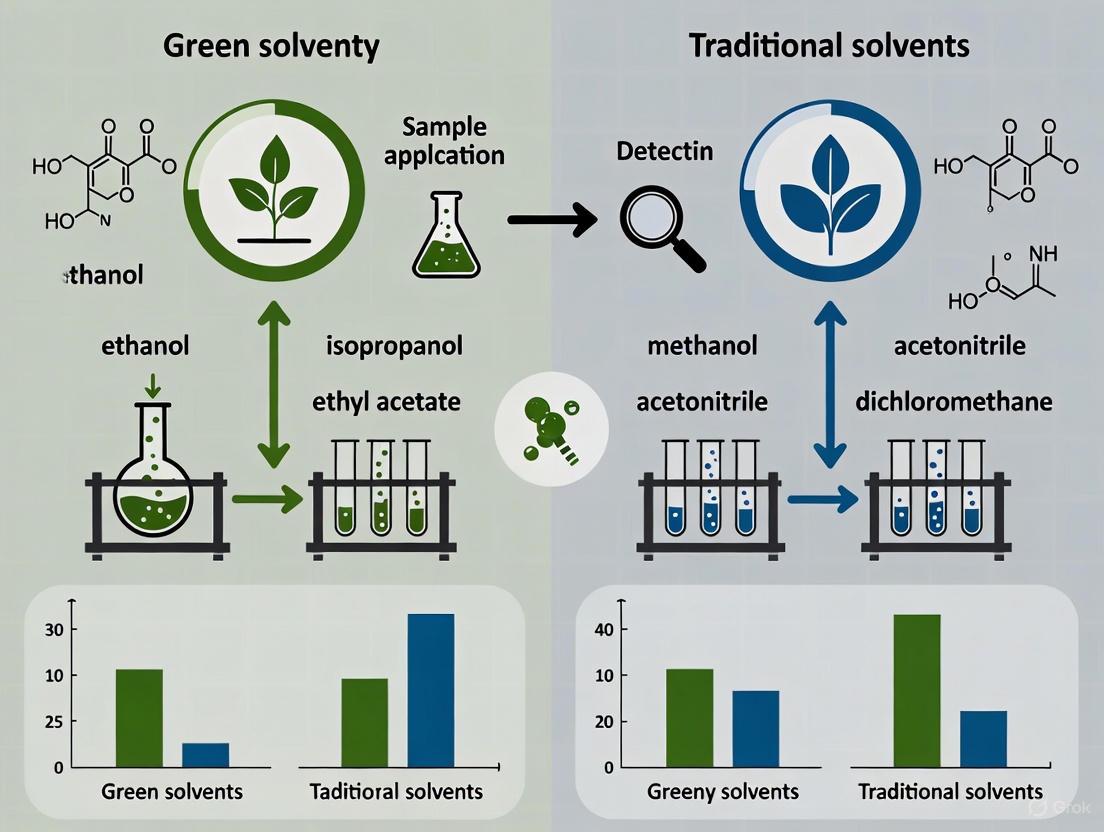
This article provides a comprehensive analysis of the performance and application of green solvents in High-Performance Thin-Layer Chromatography (HPTLC) compared to traditional organic solvents.
Green Solvents in HPTLC: A Sustainable Paradigm for Enhanced Analytical Performance in Pharmaceutical and Food Analysis
Abstract
This article provides a comprehensive analysis of the performance and application of green solvents in High-Performance Thin-Layer Chromatography (HPTLC) compared to traditional organic solvents. Tailored for researchers, scientists, and drug development professionals, it explores the foundational principles of Green Analytical Chemistry (GAC) driving this shift, presents practical methodologies for implementing eco-friendly mobile phases, and addresses common troubleshooting and optimization challenges. The content critically validates the analytical performance of green solvents against traditional methods using modern sustainability metrics like AGREE, GAPI, and NEMI, demonstrating that green HPTLC methods do not compromise—and can even enhance—analytical robustness while significantly reducing environmental impact. This synthesis of foundational knowledge, practical application, and rigorous validation offers a clear roadmap for adopting sustainable practices in analytical laboratories.
The Green Imperative: Foundations of Sustainable HPTLC Analysis
Historical Development and Philosophical Evolution
The evolution of sustainable practices in analytical chemistry has progressed from a singular environmental focus to a holistic, multi-criteria framework. Green Analytical Chemistry (GAC) emerged as the initial paradigm, directly applying the twelve principles of green chemistry established by Paul Anastas and John Warner in the 1990s to analytical laboratories [1]. Its primary objective was the reduction of environmental impact through minimizing hazardous chemical use, waste generation, and energy consumption [1]. While GAC provides the crucial ecological foundation, a key limitation observed in practice is the potential trade-off where stringent application of GAC principles can sometimes lead to compromised analytical performance, such as reduced sensitivity, precision, or accuracy [1].
White Analytical Chemistry (WAC) emerged in 2021 as an integrated evolution to address these limitations [2]. WAC expands the sustainability concept beyond ecological considerations to create a balanced framework that equally weights environmental soundness, analytical performance, and practical/economic feasibility [1] [2]. The term "white" symbolizes the purity and completeness of this holistic approach, aiming to reconcile the sometimes-competing demands of green chemistry and functional utility [2]. This philosophical shift encourages scientists to evaluate their methods through a more comprehensive lens, ensuring they are not only environmentally responsible but also analytically sound and practically viable.
Core Principles and Conceptual Frameworks
The Twelve Principles of Green Analytical Chemistry
Green Analytical Chemistry is guided by a set of twelve principles that serve as a framework for implementing sustainable practices. These principles provide the environmental foundation for GAC and include directives such as eliminating the use of hazardous chemicals, minimizing waste generation, optimizing energy efficiency, and prioritizing direct analysis techniques to reduce sample preparation steps [1]. The SIGNIFICANCE mnemonic (Figure 1) offers a practical summary of these principles, facilitating their adoption in routine analytical practice [1]. These principles collectively drive methodologies toward reduced ecological footprints, influencing choices in solvents, energy consumption, and waste management throughout the analytical lifecycle.
The RGB Model of White Analytical Chemistry
White Analytical Chemistry introduces a innovative three-dimensional assessment model using the Red-Green-Blue (RGB) color model as its conceptual foundation [1] [2]. In this framework, each color represents a critical domain of methodological evaluation:
- The Green Component incorporates the traditional GAC principles, focusing on environmental impact parameters such as solvent toxicity, waste generation, energy consumption, and operator safety [1] [2].
- The Red Component addresses analytical performance criteria, including fundamental validation parameters like accuracy, precision, sensitivity, selectivity, and robustness [1] [2]. This dimension ensures the method produces reliable, high-quality data.
- The Blue Component encompasses practical and economic considerations, evaluating factors such as cost-effectiveness, analysis time, ease of use, automation potential, and operational simplicity [1] [2].
The ultimate goal within the WAC paradigm is to achieve "method whiteness" - a balanced optimization across all three domains where the methodological profile appears "white" when visualized using the RGB model [1] [2]. This indicates a methodology that successfully integrates environmental sustainability, analytical excellence, and practical feasibility.
Figure 1: The WAC RGB Model. This diagram visualizes the three core domains of White Analytical Chemistry and their contribution to the overall "whiteness" of an analytical method.
Comparative Analysis: GAC vs. WAC
Table 1: Fundamental Comparison Between GAC and WAC Frameworks
| Aspect | Green Analytical Chemistry (GAC) | White Analytical Chemistry (WAC) |
|---|---|---|
| Primary Focus | Environmental impact reduction [1] | Holistic balance of environmental, analytical, and practical criteria [1] [2] |
| Core Philosophy | Eco-centric | Sustainable and functional balance [3] |
| Assessment Dimensions | Single (Environmental) | Three (RGB Model: Environmental, Analytical, Practical) [1] [2] |
| View on Performance Trade-offs | Environmental goals may supersede performance [1] | Seeks equilibrium; avoids sacrificing performance for greenness [1] [3] |
| Key Metrics/Tools | NEMI, Eco-Scale, GAPI, AGREE [1] [3] [2] | RGB model, RGBfast, White Score [1] [4] |
| Typical Output | Greenness profile/pictogram | Whiteness profile/RGB pictogram [1] |
Practical Applications and Experimental Data
Case Study in Pharmaceutical Analysis
The practical implementation of WAC principles is illustrated by the development of a green RP-HPLC method for the simultaneous analysis of azilsartan, medoxomil, chlorthalidone, and cilnidipine in human plasma. Researchers employed a WAC-assisted Analytical Quality by Design (AQbD) strategy, which systematically integrated understanding of method parameters and their impact on critical quality attributes [1]. This approach resulted in a validated procedure that was sustainable, cost-effective, and achieved an excellent white WAC score by successfully balancing the red (analytical performance for multiple compounds), green (reduced solvent consumption and waste), and blue (cost-effectiveness and practicality for routine use) criteria [1].
Case Study in Food and Environmental Analysis
A comparative study evaluated a method for determining manganese (Mn) and iron (Fe) in beef samples using ultrasound-assisted extraction (UAE) and Microwave-Induced Plasma Atomic Emission Spectroscopy (MP AES) [3]. The method was validated and proved to be simple and fast, requiring no external heating and only diluted acids [3]. The application of both GAC (AGREEprep) and WAC metrics provided complementary insights. While the AGREEprep tool effectively highlighted the environmental advantages of the sample preparation, the WAC holistic approach revealed the overall strengths of the analytical technique across all three RGB dimensions, demonstrating its superiority over traditional, more resource-intensive methods [3].
Table 2: Experimental Data from Comparative Studies Applying GAC and WAC Principles
| Methodology / Parameter | Traditional HPLC | HPTLC for Multi-Plant Formulations [5] | UAE-MP AES for Metal Analysis [3] |
|---|---|---|---|
| Analytical Performance (Red) | High sensitivity and precision | LOD: 0.0020 µg/band, LOQ: 0.0067 µg/band; Validated for ephedrine alkaloids [5] | Accurate measurement of Mn and Fe at a >1:100 ratio [3] |
| Environmental Impact (Green) | High solvent consumption & waste | Limited solvent/reagent use; screens 19 samples simultaneously [5] | Diluted acids only; no harsh extractants or heating; minimal waste [3] |
| Practical & Economic (Blue) | High operational cost & time | Cost-effective; low requirement method; simple & rapid [5] | Fast (10 min); uses common lab equipment (ultrasonic bath) [3] |
| Overall GAC/WAC Assessment | Low greenness score | High alignment with GAC/WAC due to minimal resource use [5] | Excellent greenness (AGREEprep) and whiteness (WAC) scores [3] |
The Scientist's Toolkit: Key Reagents and Metrics
Green Solvents and Sample Preparation Solutions
The shift toward sustainable analytical chemistry has driven the adoption of greener solvents and miniaturized sample preparation techniques. Key developments include:
- Supercritical Fluid Chromatography (SFC): Utilizes supercritical carbon dioxide (sCO₂) as the primary mobile phase, drastically reducing or eliminating the need for traditional organic solvents [6].
- Natural Deep Eutectic Solvents (NADES): Emerging as green alternatives for extraction and sample preparation, offering advantages of biodegradability and low toxicity compared to conventional solvents [6].
- Micellar Liquid Chromatography (MLC): Employs surfactant solutions above their critical micellar concentration as mobile phases, reducing the consumption of toxic organic solvents like acetonitrile [6].
- Microextraction Techniques: Methods such as Solid-Phase Microextraction (SPME) and Liquid-Phase Microextraction (LPME) significantly reduce solvent and sample volume requirements, aligning with the principles of green sample preparation (GSP) [6].
Essential Assessment Metrics and Tools
A variety of metrics have been developed to quantitatively evaluate the environmental and holistic profile of analytical methods.
Table 3: Key Metrics for Evaluating Greenness and Whiteness
| Metric Name | Type | Brief Description | What it Measures |
|---|---|---|---|
| Analytical Eco-Scale [3] [2] | GAC | Points-based system; penalizes hazardous reagents, energy, and waste. Score >75 = acceptable green method [2]. | Environmental Impact |
| AGREE & AGREEprep [3] | GAC | Pictogram based on 12 GAC principles; provides a final score (0-1) and color code [3]. | Environmental Impact |
| GAPI & ComplexGAPI [1] [2] | GAC | Comprehensive pictogram covering entire method lifecycle from sampling to waste [1] [2]. | Environmental Impact |
| RGB Model / RGBfast [1] [4] | WAC | Holistic assessment based on the Red, Green, and Blue criteria to calculate a "white" score [1] [4]. | Holistic (RGB) |
| BAGI (Blue Applicability Grade Index) [2] | WAC (Blue) | Assesses practical aspects like cost, time, and ease of use, resulting in a blue-tinted pictogram [2]. | Practicality & Economics |
| RAPI (Red Analytical Performance Index) [2] | WAC (Red) | Evaluates analytical performance parameters such as trueness, precision, and recovery [2]. | Analytical Performance |
The paradigm of sustainable analytical chemistry is dynamically evolving. Circular Analytical Chemistry (CAC) is emerging as a further extension, aiming to transition from a linear "take-make-dispose" model to a circular framework that minimizes waste and keeps materials in use [7]. However, this transition faces challenges, including a lack of clear direction and coordination failures among stakeholders like manufacturers, researchers, and policymakers [7].
To bridge the gap between GAC/WAC principles and their widespread implementation, innovative support mechanisms are being proposed. The Green Financing for Analytical Chemistry (GFAC) model suggests creating dedicated funds to sponsor innovations aligned with GAC and WAC goals, helping to overcome the financial barriers that often hinder the adoption of sustainable technologies [1].
In conclusion, while Green Analytical Chemistry established the vital foundation for reducing the environmental footprint of analytical practices, White Analytical Chemistry represents a more mature and comprehensive framework. By systematically balancing the three pillars of the RGB model—environmental impact (Green), analytical performance (Red), and practical feasibility (Blue)—WAC provides a robust pathway for developing analytical methods that are not only ecologically sound but also analytically excellent and economically viable, thereby fostering truly sustainable science.
The adoption of green solvents in High-Performance Thin-Layer Chromatography (HPTLC) represents a significant advancement in aligning analytical chemistry with the principles of environmental sustainability. Green analytical chemistry (GAC) emphasizes reducing the environmental impact of analytical methods by minimizing hazardous waste, decreasing energy consumption, and utilizing safer solvents [8]. Within pharmaceutical analysis and natural product research, HPTLC has emerged as a particularly suitable platform for implementing green chemistry principles due to its minimal solvent consumption, capacity for parallel sample processing, and reduced operational costs compared to other chromatographic techniques [6] [9]. The strategic selection of mobile phase components is fundamental to developing eco-friendly HPTLC methods, with ethanol, water, ethyl acetate, and bio-based solvents increasingly replacing traditional hazardous solvents like chloroform, acetonitrile, and n-hexane [10] [9].
The transition to green solvents in HPTLC methodologies is driven by both environmental concerns and practical analytical benefits. These solvents typically exhibit lower toxicity, higher biodegradability, reduced bioaccumulation potential, and are often derived from renewable resources [6]. From an analytical perspective, they must provide comparable or superior chromatographic performance in terms of separation efficiency, peak symmetry, and reproducibility. Modern green HPTLC methods have successfully demonstrated that environmentally responsible solvent choices do not compromise analytical performance while significantly reducing the ecological footprint of pharmaceutical quality control and natural product analysis [8] [10].
Classification and Properties of Green Solvents for HPTLC
Solvent Selection Framework
Green solvents for HPTLC are categorized based on their origin, toxicity profile, and environmental impact. The selection process prioritizes solvents that align with the 12 principles of green analytical chemistry, with particular emphasis on waste prevention, safer chemical design, and inherently benign substance selection [8] [9]. Several assessment tools have been developed to quantitatively evaluate the greenness of analytical methods, including the Analytical GREEnness (AGREE) approach, which incorporates all 12 GAC principles, Analytical Eco-Scale, Green Analytical Procedure Index (GAPI), and the National Environmental Method Index (NEMI) [11] [9]. These metrics provide researchers with standardized frameworks for comparing the environmental performance of different solvent systems and guiding method development toward more sustainable practices.
Principal Green Solvent Classes
Water and Aqueous Solutions: Water stands as the ultimate green solvent due to its non-toxic, non-flammable, and renewable properties. In HPTLC applications, water is frequently used as a component in binary or ternary mobile phase systems, particularly in reversed-phase chromatography. The polarity and hydrogen-bonding capacity of water make it ideal for separating polar compounds, and its properties can be modified through pH adjustment using ammonia or other benign additives [8] [10]. For instance, ethanol/water/ammonia solutions (50:45:5 v/v/v) have demonstrated excellent chromatographic performance for pharmaceutical compounds like tenoxicam, with an AGREE score of 0.75, indicating an outstanding greenness profile [8].
Bio-Based Alcohols: Ethanol is arguably the most versatile and widely adopted green solvent in HPTLC applications. Derived from renewable biomass through fermentation, ethanol offers favorable environmental credentials combined with excellent chromatographic properties. It exhibits moderate polarity, good dissolving power for many organic compounds, and low toxicity compared to traditional solvents like methanol or acetonitrile [10] [12]. Ethanol/water mixtures in various proportions (typically 55:45 to 80:20 v/v) have been successfully employed for analyzing diverse analytes, including caffeine, ertugliflozin, and other pharmaceuticals [10] [9]. Isopropanol represents another bio-based alcohol option, though it is less commonly used than ethanol in HPTLC methods [11].
Esters and Ketones: Ethyl acetate, derived from renewable resources, serves as an excellent green alternative to more hazardous solvents like dichloromethane. Its moderate polarity and favorable volatility characteristics make it suitable for normal-phase HPTLC separations [13] [14]. Similarly, acetone offers green credentials as a solvent with low toxicity and high biodegradability. Ethyl acetate/ethanol/ammonia mixtures (2.0:8.0:0.5 by volume) have demonstrated effective separation of alfuzosin and solifenacin in pharmaceutical formulations [13].
Natural Deep Eutectic Solvents (NADES): NADES represent an emerging class of green solvents composed of natural primary metabolites such as sugars, amino acids, and organic acids. These solvents are characterized by their biodegradability, low toxicity, and sustainability [6]. While application in HPTLC is still developing, NADES show significant promise as extraction media and potential mobile phase components, particularly in natural product analysis.
Table 1: Properties of Common Green Solvents in HPTLC Applications
| Solvent | Origin | Toxicity | Biodegradability | Typical HPTLC Use | Key Advantages |
|---|---|---|---|---|---|
| Water | Inorganic | Non-toxic | High | Reversed-phase mobile phase component | Non-flammable, renewable, safe |
| Ethanol | Bio-based | Low | High | Both normal and reversed-phase systems | Renewable, versatile, good dissolving power |
| Ethyl Acetate | Bio-based | Low | High | Normal-phase separations | Moderate polarity, renewable source |
| Acetone | Synthetic/Bio-based | Low | High | Normal-phase systems | Low toxicity, good volatility |
| Isopropanol | Synthetic/Bio-based | Low | Moderate | Normal-phase systems | Good dissolving power for APIs |
Comparative Performance Data: Green vs Traditional Solvent Systems
Chromatographic Performance Metrics
Direct comparisons between green and traditional solvent systems in HPTLC applications reveal that environmentally friendly alternatives can provide comparable, and in some cases superior, chromatographic performance. System suitability parameters such as retardation factor (Rf), asymmetry factor (As), and theoretical plates per meter (N/m) provide quantitative measures of chromatographic efficiency [8] [9].
For the analysis of tenoxicam, the green mobile phase ethanol/water/ammonia (50:45:5 v/v/v) demonstrated excellent performance with an asymmetry factor of 1.07 and theoretical plates per meter of 4971, indicating sharp, well-resolved peaks [8]. In the case of ertugliflozin analysis, a comprehensive comparison between normal-phase (chloroform/methanol) and reversed-phase (ethanol/water) systems revealed that the green RP-HPTLC method outperformed the NP method in terms of linearity range (25-1200 ng/band vs 50-600 ng/band), sensitivity, and theoretical plates (4652 N/m vs 4472 N/m) [9].
Greenness Assessment Metrics
Multiple studies have employed standardized greenness assessment tools to quantitatively compare the environmental performance of HPTLC methods. The AGREE metric, which incorporates all 12 principles of green analytical chemistry, has become a benchmark for comprehensive environmental evaluation [8] [10] [9].
For caffeine analysis using an ethanol/water (55:45 v/v) mobile phase, the AGREE score was 0.80, indicating an excellent greenness profile [10] [12]. Similarly, the tenoxicam method with ethanol/water/ammonia mobile phase achieved an AGREE score of 0.75 [8]. Comparative assessment of ertugliflozin methods demonstrated that the green RP-HPTLC approach (ethanol/water) was significantly more environmentally friendly than the NP-HPTLC method (chloroform/methanol) across multiple metrics including AGREE, Analytical Eco-Scale, NEMI, and ChlorTox [9].
Table 2: Performance Comparison of Green vs Traditional Solvent Systems in HPTLC
| Analyte | Green Solvent System | Traditional Solvent System | Key Performance Metrics | Greenness Score (AGREE) |
|---|---|---|---|---|
| Tenoxicam | Ethanol/water/ammonia (50:45:5 v/v/v) | Chloroform/methanol-based systems | As=1.07, N/m=4971, Rf=0.85 | 0.75 [8] |
| Caffeine | Ethanol/water (55:45 v/v) | Ethyl acetate/methanol | Linear range=50-800 ng/band, LOD=0.98 ng/band | 0.80 [10] [12] |
| Ertugliflozin | Ethanol/water (80:20 v/v) | Chloroform/methanol (85:15 v/v) | Linear range=25-1200 ng/band (RP) vs 50-600 ng/band (NP), N/m=4652 (RP) vs 4472 (NP) | Superior for RP method [9] |
| Carvedilol | Toluene/isopropanol/ammonia (7.5:2.5:0.1 v/v/v) | Chloroform-based systems | Linear range=20-120 ng/band, Rf=0.44±0.02 | Acceptable by NEMI, AGREE, GAPI [11] |
Experimental Protocols for Green HPTLC Methods
Method Development and Optimization
The development of green HPTLC methods follows a systematic approach that balances chromatographic performance with environmental considerations. Initial method scoping involves identifying potentially green solvent systems based on literature data and solvent selection guides. For tenoxicam analysis, researchers evaluated multiple binary and ternary mixtures including ethanol/water, acetone/water, cyclohexane/ethyl acetate, and their combinations with ammonia as a modifier [8]. The optimization process typically investigates different proportions of these solvent systems to achieve optimal separation efficiency, peak symmetry, and retention characteristics.
Experimental parameters including chamber saturation time, migration distance, application volume, and detection wavelength are systematically optimized. For the analysis of alfuzosin and solifenacin, the mobile phase ethyl acetate/ethanol/ammonia (2.0:8.0:0.5 by volume) provided optimal separation after chamber saturation for 30 minutes [13]. Method validation according to ICH guidelines confirms that the green methods meet required standards for linearity, accuracy, precision, robustness, and sensitivity [8] [10].
Detailed Protocol: Green HPTLC for Caffeine Analysis
Materials and Equipment: Caffeine standard; ethanol and water (HPLC grade); commercial energy drinks and formulations; HPTLC system (CAMAG); reverse-phase silica gel 60 F254S plates (10 × 20 cm) [10] [12].
Mobile Phase Preparation: Prepare ethanol/water mixture in proportion of 55:45 (v/v). Mix thoroughly and transfer to twin-trough glass chamber. Saturate chamber for 30 minutes at 22°C to establish equilibrium [10] [12].
Standard Solution Preparation: Dissolve caffeine standard in ethanol/water (55:45 v/v) to obtain stock solution of 100 μg/mL. Prepare calibration standards in range of 50-800 ng/band by appropriate dilution [10].
Sample Preparation: For energy drinks: degas samples using ultrasonic bath, lyophilize for five days, reconstitute in methanol/water (25:75 v/v), extract caffeine using chloroform, concentrate using rotary evaporator at 40°C. For formulations: powder tablets, extract with chloroform, concentrate, reconstitute in chloroform [10].
Chromatographic Procedure:
- Pre-wash HPTLC plates with methanol and activate at 80°C for 15 minutes
- Apply samples as 6 mm bands using automatic applicator (application rate: 150 nL/s)
- Develop plates to distance of 80 mm in saturated chamber
- Dry plates and scan at 275 nm using TLC scanner (scanning rate: 20 mm/s, slit dimensions: 4 × 0.45 mm) [10] [12]
Data Analysis: Plot peak area versus concentration to generate calibration curve. Determine caffeine content in samples using regression equation. Validate method according to ICH Q2(R1) guidelines [10].
Diagram 1: Green HPTLC Method Development and Analysis Workflow
The Scientist's Toolkit: Essential Research Reagents and Materials
Table 3: Essential Research Reagents and Equipment for Green HPTLC
| Item | Specification | Function in Green HPTLC | Example Applications |
|---|---|---|---|
| Green Solvents | Ethanol (HPLC grade), Water (HPLC grade), Ethyl acetate, Acetone | Mobile phase components with reduced environmental impact | Tenoxicam analysis [8], Caffeine determination [10], Ertugliflozin quantification [9] |
| HPTLC Plates | Silica gel 60 F254 (normal phase), RP-18 F254S (reversed phase) | Stationary phase for chromatographic separation | Reverse-phase for caffeine [10], Normal phase for carvedilol [11] |
| Application System | Automatic applicator (e.g., CAMAG Linomat) with precision syringe | Precise sample application as narrow bands | All referenced methods [8] [10] [9] |
| Development Chamber | Twin-trough glass chamber with saturation capability | Controlled mobile phase development | Saturation for 30 min for tenoxicam [8] |
| Detection System | TLC Scanner with deuterium lamp | Densitometric quantification of separated compounds | Scanning at 275 nm for caffeine [10], 375 nm for tenoxicam [8] |
| Greenness Assessment Tools | AGREE calculator, GAPI, NEMI | Quantitative evaluation of method environmental impact | All green methods validation [8] [11] [9] |
The comprehensive evaluation of green solvents in HPTLC applications demonstrates that environmentally responsible alternatives can successfully replace traditional hazardous solvents without compromising analytical performance. Ethanol, water, ethyl acetate, and their mixtures have proven effective across diverse pharmaceutical applications, providing satisfactory chromatographic parameters including retention factors, peak symmetry, and theoretical plate counts [8] [10] [9]. The quantitative greenness assessment using tools like AGREE, GAPI, and NEMI provides standardized metrics for comparing environmental performance and guiding future method development [11] [9].
Future directions in green HPTLC methodology will likely focus on several key areas: expanding the application of novel green solvents like Natural Deep Eutectic Solvents (NADES), developing integrated assessment tools that combine greenness with practical analytical metrics, and creating standardized guidelines for implementing green chemistry principles in routine pharmaceutical analysis [6]. The continued advancement of green HPTLC methods will further establish this technique as both an environmentally responsible and analytically powerful tool for pharmaceutical quality control, natural product analysis, and biomedical research.
The adoption of green solvents in High-Performance Thin-Layer Chromatography (HPTLC) represents a critical convergence of environmental responsibility, economic practicality, and analytical performance in pharmaceutical and natural product analysis. Traditional chromatographic techniques frequently rely on hazardous organic solvents such as acetonitrile, methanol, and chloroform, which pose significant environmental and health risks while generating substantial waste disposal costs [6] [15]. In response to these challenges, the principles of Green Analytical Chemistry (GAC) have emerged as a transformative framework, guiding researchers toward more sustainable practices without compromising analytical efficacy [16]. This guide provides a comprehensive comparison of green solvent performance against traditional alternatives in HPTLC applications, examining their relative environmental impacts, economic benefits, and analytical performance characteristics to support informed adoption within the scientific community.
The transition to greener methodologies is no longer merely an academic exercise but a necessity driven by regulatory pressures, escalating solvent costs, and growing corporate sustainability mandates [17] [15]. Green solvents—including bio-based ethanol, ethyl acetate, and novel natural deep eutectic solvents (NADES)—offer significantly reduced toxicity profiles, lower waste generation, and often superior economic profiles throughout their lifecycle [18]. This evaluation synthesizes current research to objectively compare these alternatives across multiple dimensions, providing researchers with evidence-based guidance for implementing sustainable HPTLC practices in drug development and quality control environments.
Green vs. Traditional Solvents: A Comparative Framework
Environmental and Health Impact Profiles
The environmental and health characteristics of solvents constitute a primary differentiator between traditional and green alternatives. Traditional solvents commonly used in HPTLC, such as acetonitrile, methanol, and chloroform, present substantial concerns regarding toxicity, environmental persistence, and occupational hazards [6] [15]. These solvents contribute significantly to laboratory pollution, pose health risks to personnel through inhalation and dermal exposure, and necessitate costly specialized disposal procedures to mitigate environmental contamination [18].
Green solvents, including ethanol, ethyl acetate, and dimethyl carbonate, demonstrate markedly improved environmental and safety profiles. Bio-based solvents derived from renewable resources (e.g., cereals, vegetable oils, or wood) offer enhanced biodegradability, lower volatility, reduced flammability, and minimal ecosystem impact [18]. The production processes for these solvents generally consume less energy and utilize renewable feedstocks, further reducing their overall environmental footprint from cradle to grave [18].
Table 1: Environmental and Health Impact Comparison of Solvents Used in HPTLC
| Solvent Type | Example Solvents | Toxicity Profile | Biodegradability | Environmental Persistence | Occupational Hazards |
|---|---|---|---|---|---|
| Traditional | Acetonitrile, Methanol, Chloroform | Moderate to High | Slow | Moderate to High | Respiratory irritation, systemic toxicity, suspected carcinogens |
| Green Alternatives | Ethanol, Ethyl Acetate, Dimethyl Carbonate | Low to Moderate | Rapid | Low | Minimal with proper handling; primarily irritants |
Economic Considerations: Direct and Indirect Costs
The economic argument for transitioning to green solvents in HPTLC encompasses both direct financial benefits and indirect cost savings. While acquisition costs for some green solvents may be comparable to traditional options, the most significant economic advantages emerge in waste management and regulatory compliance [17]. Proper disposal of hazardous traditional solvents often costs 3-5 times more than disposal of benign green alternatives due to their classification as hazardous waste, requiring specialized treatment facilities and transportation protocols [15].
The global market for high-purity solvents is projected to grow from $32.7 billion in 2025 to $45 billion by 2030, driven largely by pharmaceutical and biotechnology applications [17]. This expanding market share for green solvents reflects not only regulatory pressures but also recognized economic advantages throughout the product lifecycle. Additionally, reduced environmental footprint translates to diminished liability and potential cost savings under evolving regulatory frameworks that incentivize sustainable practices through tax advantages and reduced compliance burden [17] [16].
Table 2: Economic Comparison of Solvent Use in HPTLC
| Cost Factor | Traditional Solvents | Green Solvents | Economic Implications |
|---|---|---|---|
| Acquisition Cost | Moderate ($20-50/L for HPLC grade) | Moderate to Low ($15-40/L) | Minor advantage for green solvents |
| Disposal Cost | High ($5-15/L for hazardous waste) | Low ($1-3/L for non-hazardous) | Significant savings with green solvents |
| Regulatory Compliance | Extensive documentation, monitoring, and reporting | Simplified requirements | Reduced administrative burden and cost |
| Health & Safety Measures | Engineering controls, personal protective equipment, medical surveillance | Basic laboratory precautions | Lower capital and operational costs |
Analytical Performance Metrics
A critical consideration in solvent substitution is maintaining or enhancing analytical performance. Recent research demonstrates that green solvents can achieve separation efficiency comparable to traditional solvents when appropriately implemented. In a study evaluating the separation of non-polar and polar substances, ethanol and dimethyl carbonate demonstrated equivalent chromatographic performance to acetonitrile and methanol across multiple stationary phases, including C18, diphenyl, and perfluorinated phenyl columns [19].
HPTLC methods utilizing green solvent systems have been successfully validated according to International Council for Harmonisation (ICH) guidelines for pharmaceutical applications. For example, a recently developed HPTLC method for simultaneous quantification of bisoprolol fumarate and amlodipine besylate employed an eco-friendly mobile phase of ethyl acetate-ethanol (7:3, v/v), achieving excellent separation with Rf values of 0.72 ± 0.01 and 0.83 ± 0.01, respectively [20]. The method demonstrated linearity (R² ≥ 0.9995), precision (RSD ≤ 2%), and detection limits suitable for pharmaceutical quality control, confirming that green solvent systems do not compromise analytical rigor [20].
Experimental Evidence and Protocol Comparison
Case Study: Pharmaceutical Analysis with Green HPTLC
A direct comparison of experimental protocols reveals the practical advantages of green HPTLC methodologies. A conventional HPTLC method for salivary caffeine analysis utilized a mobile phase containing acetone/toluene/chloroform (4:3:3, v/v/v) [21], which incorporates chlorinated solvents with known toxicity and environmental concerns. Sample preparation involved complex extraction procedures with organic solvents, generating significant waste [21].
In contrast, a green HPTLC method for quantifying bisoprolol fumarate, amlodipine besylate, and mutagenic impurities employed a simplified mobile phase of ethyl acetate-ethanol (7:3, v/v) [20]. This solvent system eliminates halogenated compounds while maintaining exceptional separation efficiency. The methodology was comprehensively assessed using multiple green metrics, including AGREE, ComplexGAPI, and NEMI, achieving perfect environmental scores while meeting stringent regulatory requirements for pharmaceutical impurity quantification [20].
Greenness Assessment Tools and Metrics
Objective evaluation of method environmental performance has been standardized through several validated assessment tools. The Analytical GREEnness (AGREE) metric incorporates all 12 principles of GAC into a holistic algorithm, providing a single-score evaluation supported by intuitive graphic output [16]. The Green Analytical Procedure Index (GAPI) offers visual, semi-quantitative evaluation through a color-coded pictogram that considers the entire analytical workflow [16]. These tools enable objective comparison between conventional and green methods, with recent studies confirming the superior environmental profile of green HPTLC methods [22] [20].
A comparative study of green versus conventional solvents in reversed-phase liquid chromatography employed the Technique for Order of Preference by Similarity to Ideal Solution (TOPSIS) algorithm to integrate multiple criteria, including chromatographic run time, tailing ratios, resolution, and solvent-related environmental hazards [19]. This multi-criteria decision analysis confirmed that ethanol and dimethyl carbonate could effectively replace traditional solvents without compromising separation performance, providing a robust analytical foundation for sustainable method development [19].
The Scientist's Toolkit: Essential Research Reagents and Materials
Successful implementation of green HPTLC methodologies requires specific reagents and materials optimized for sustainable separation science. The following toolkit details essential components for developing and deploying green HPTLC methods in pharmaceutical and natural product analysis.
Table 3: Essential Research Reagents and Materials for Green HPTLC
| Item | Function | Green Characteristics | Application Notes |
|---|---|---|---|
| Ethanol (Bio-based) | Mobile phase component | Renewable feedstock, low toxicity, biodegradable | Often replaces methanol; suitable for normal and reversed-phase systems |
| Ethyl Acetate | Mobile phase modifier | Low persistence, low bioaccumulation potential | Effective for medium-polarity separations; commonly paired with ethanol |
| Dimethyl Carbonate | Mobile phase component | Biodegradable, low toxicity, non-ozone depleting | Alternative to acetonitrile in reversed-phase systems |
| Natural Deep Eutectic Solvents (NADES) | Extraction & mobile phase | Biodegradable, low toxicity, renewable origin | Emerging application in natural product analysis; tunable properties |
| Water | Mobile phase component | Non-toxic, non-flammable, zero cost | Primary green solvent; often enhanced with modifiers |
| Silica Gel HPTLC Plates | Stationary phase | Standard chromatography substrate | Compatible with green solvent systems; minimal environmental impact |
| CAMAG HPTLC System | Instrumentation | Reduced solvent consumption, minimal waste generation | Automated application, development, and detection optimized for miniaturization |
Methodological Workflow for Green HPTLC Implementation
The transition from traditional to green HPTLC methods follows a systematic workflow that integrates sustainability considerations with analytical performance requirements. This structured approach ensures method robustness while maximizing environmental and economic benefits.
The comprehensive comparison presented in this guide demonstrates that green solvents offer a viable, often superior alternative to traditional solvents in HPTLC applications across environmental, economic, and performance dimensions. The environmental advantages—including reduced toxicity, enhanced biodegradability, and diminished waste generation—translate directly into economic benefits through lower disposal costs, reduced regulatory burden, and diminished liability. Critically, these benefits do not require analytical performance compromise, as evidenced by multiple validated methods for pharmaceutical compounds and natural products.
The ongoing evolution of green solvent technologies, coupled with increasingly sophisticated assessment metrics, provides researchers with robust tools for implementing sustainable chromatography practices. As regulatory pressures intensify and the global scientific community prioritizes environmental responsibility, the adoption of green HPTLC methodologies represents both an ethical imperative and a strategic advantage for drug development professionals and analytical scientists. By embracing these approaches, the scientific community can significantly reduce the environmental footprint of chemical analysis while maintaining the rigorous standards required for pharmaceutical research and quality control.
In the pursuit of sustainability within analytical laboratories, High-Performance Thin-Layer Chromatography (HPTLC) has evolved from a simple chromatographic technique into a versatile, multimodal platform aligned with Green Analytical Chemistry (GAC) principles [23]. This transformation addresses a critical challenge in modern analysis: the significant environmental footprint of traditional methods. Conventional techniques like High-Performance Liquid Chromatography (HPLC) are often constrained by labor-intensive processes, extended analysis times (typically exceeding 30 minutes), and substantial consumption of organic solvents [23]. In contrast, HPTLC offers a paradigm shift, providing distinct advantages in speed, simplicity, and environmental sustainability [23]. The core of its green credentials lies in its minimal solvent consumption and inherent capacity for high-throughput analysis, making it particularly suitable for sustainable food, herbal, and pharmaceutical quality assurance programs that require decentralized operation and rapid results [23].
Quantitative Comparison: HPTLC Versus Traditional Chromatography
A direct comparison of solvent consumption and operational efficiency reveals HPTLC's significant environmental and practical advantages over traditional chromatographic methods.
Table 1: Solvent Consumption and Throughput Comparison
| Analytical Method | Typical Solvent Volume per Analysis | Typical Analysis Time | Sample Throughput per Run | Key Greenness Metrics |
|---|---|---|---|---|
| HPTLC | < 10 mL [23] | 5–15 minutes [23] | Multiple samples in parallel [24] | High AGREE scores, superior Analytical Eco-Scale [9] [25] |
| Traditional HPLC | Often > 500 mL/day per instrument [26] | > 30 minutes per sample sequence [23] | Single sample per injection (sequential) | Lower greenness scores due to high organic solvent use [9] |
The data in Table 1 underscores a fundamental difference: HPTLC's parallel processing capability allows multiple samples to be analyzed simultaneously using a single, small volume of mobile phase. This stands in stark contrast to the sequential nature of HPLC, which consumes solvent continuously throughout the analysis of each sample, leading to an average of 0.5 L of organic waste daily per instrument [26]. Furthermore, the drastically shorter analysis time of HPTLC (5-15 minutes) translates to lower energy consumption, further enhancing its green profile [23].
Experimental Evidence: Showcasing Solvent Reduction and High-Throughput
The theoretical advantages of HPTLC are consistently demonstrated in practical, peer-reviewed methodologies. The following case studies highlight how HPTLC methods are developed with green principles as a core objective.
Table 2: Experimental Case Studies of Green HPTLC Methods
| Analytical Target | Mobile Phase Composition | Total Mobile Phase Volume | Sample Throughput & Linearity | Greenness Assessment |
|---|---|---|---|---|
| Ertugliflozin (Antidiabetic) | Ethanol–Water (80:20 v/v) [9] | Not specified (RP-18F254S plate) | Linear range: 25–1200 ng/band [9] | AGREE score: 0.82 (out of 1.0); superior to NP-HPTLC and HPLC [9] |
| Remdesivir, Linezolid, Rivaroxaban (COVID-19 drugs) | Dichloromethane–Acetone (8.5:1.5, v/v) [25] | ~10 mL per development | Three drugs quantified simultaneously in spiked human plasma [25] | Validated by Analytical Eco-Scale, GAPI, and AGREE metrics [25] |
| Meloxicam & Piroxicam (NSAIDs) | Hexane–Ethyl Acetate–Glacial Acetic Acid (65:30:5, v/v/v) [27] | 10 mL [27] | LOD: 0.04-0.05 µg/band; cost-effective and eco-friendly [27] | Described as a simple, sensitive, stable, cost-effective, and eco-friendly method [27] |
A key experimental insight is the conscious selection of greener solvent systems. For instance, a study comparing Normal-Phase (NP-) and Reversed-Phase (RP-) HPTLC for the analysis of Ertugliflozin found that the RP-HPTLC method using a less hazardous ethanol-water mobile phase was not only more robust and sensitive but also significantly greener than the NP-HPTLC method that used a chloroform-methanol mixture [9]. This demonstrates how the choice of stationary phase directly influences the greenness of the final method.
Detailed Experimental Protocol: Green HPTLC Analysis of Pharmaceuticals
The following workflow, demonstrated in methods for drugs like Meloxicam and Ertugliflozin, outlines a typical green HPTLC protocol [9] [27]:
- Stationary Phase: HPTLC plates (e.g., silica gel 60 F254 or RP-18F254S), 10x20 or 20x20 cm.
- Sample Application: Using an automatic applicator (e.g., CAMAG Linomat 5), samples are applied as bands (e.g., 2-10 µL band volume) under a stream of inert gas.
- Chromatographic Development: The plate is developed in a twin-trough chamber previously saturated for 15-30 minutes with the mobile phase (e.g., Ethanol-Water (80:20) or Hexane-Ethyl Acetate-Glacial Acetic Acid (65:30:5)). The total mobile phase volume required is typically 10-20 mL per development [9] [27].
- Detection & Documentation: After development and drying, plates are visualized under UV light at 254 nm or 366 nm, or using a TLC visualizer and scanner.
- Quantification: Densitometric scanning is performed at the appropriate wavelength (e.g., 199 nm for Ertugliflozin, 230 nm for Meloxicam/Piroxicam), and calibration curves are constructed from the peak areas [9] [27].
Diagram Title: HPTLC Green Analysis Workflow
The Scientist's Toolkit: Essential Reagents for Green HPTLC
Developing a green HPTLC method relies on a thoughtful selection of materials and reagents to minimize environmental impact while maintaining analytical performance.
Table 3: Essential Research Reagents and Materials for Green HPTLC
| Item | Function | Green Considerations & Examples |
|---|---|---|
| RP-HPTLC Plates (e.g., RP-18F254S) [9] | Stationary phase enabling use of aqueous mobile phases. | Facilitates use of ethanol-water systems, avoiding more hazardous chlorinated solvents [9]. |
| Green Solvents (e.g., Ethanol, Water) [9] [6] | Components of the mobile phase. | Safer, biodegradable, and less toxic alternatives to solvents like chloroform or acetonitrile [9] [6]. |
| Automated Applicator (e.g., CAMAG Linomat) [27] | Precisely applies sample bands onto the HPTLC plate. | Ensures high reproducibility and minimizes human error, reducing reagent waste from repeated analyses [24]. |
| Automated Developing Chamber (e.g., CAMAG ADC 2) [27] | Houses the plate during development with the mobile phase. | Provides safety, excellent reproducibility, and controlled solvent use, independent of environmental effects [27]. |
| Densitometer Scanner (e.g., CAMAG TLC Scanner 3) [25] | Quantifies the separated analyte bands directly on the plate. | Enables highly sensitive detection (in nanograms per band) without the need for elution or additional reagents [25] [24]. |
The evidence from contemporary research solidifies the position of HPTLC as a cornerstone of green analytical chemistry. Its inherent design, characterized by minimal solvent consumption (<10 mL per run) and high-throughput parallel analysis, provides a tangible and effective strategy for laboratories to drastically reduce their environmental footprint without compromising analytical quality [23]. The advancement of "HPTLC+" multimodal platforms, which integrate mass spectrometry or Raman spectroscopy, further enhances its capability, transforming it into a high-resolution, information-rich analytical tool [23]. When combined with a conscious selection of green solvents like ethanol-water systems, HPTLC methodologies consistently achieve high scores on modern greenness assessment tools such as AGREE and Analytical Eco-Scale [9] [25]. For researchers and drug development professionals committed to sustainability, HPTLC represents a proven, efficient, and eco-friendly platform for today's analytical challenges.
Practical Implementation: Developing Robust HPTLC Methods with Green Solvents
The adoption of green solvent systems in High-Performance Thin-Layer Chromatography (HPTLC) represents a critical advancement toward sustainable pharmaceutical analysis. Driven by the principles of Green Analytical Chemistry (GAC), this shift addresses the environmental and safety concerns associated with traditional solvents like acetonitrile and methanol, which are toxic, generate significant waste, and pose health risks [6] [28]. Green HPTLC methods prioritize solvents with lower toxicity, higher biodegradability, and reduced environmental impact without compromising analytical performance.
The movement toward sustainability is further supported by the framework of White Analytical Chemistry (WAC), which seeks a balance among analytical performance (red), environmental impact (green), and practical applicability (blue) [20] [16]. This holistic approach ensures that newly developed methods are not only environmentally sound but also robust, cost-effective, and suitable for routine use in quality control laboratories. This guide provides a comparative analysis of common mobile phase combinations, supported by experimental data and detailed protocols, to assist researchers in selecting optimal green solvent systems for their HPTLC applications.
Comparison of Green vs. Traditional Solvent Systems
The following table summarizes experimental data for various green mobile phase combinations in HPTLC, demonstrating their effectiveness in separating multiple active pharmaceutical ingredients (APIs) across different therapeutic categories.
Table 1: Experimental Data for Green HPTLC Mobile Phase Combinations
| Drug Analytes (Therapeutic Category) | Green Mobile Phase Composition (v/v/v) | Retardation Factor (Rf) Values | Linearity Range (ng/band) | Detection Wavelength (nm) | Citation |
|---|---|---|---|---|---|
| Lidocaine HCl & Diltiazem HCl (Anal Fissure Treatment) | Toluene: Methanol: Ethyl Acetate (7:2:1) + 2 drops ammonia | LID: 0.59, DIL: 0.48 | 400–1200 (for both) | 220 | [29] |
| Bisoprolol Fumarate, Amlodipine Besylate, & Mutagenic Impurity (Cardiovascular) | Ethyl Acetate: Ethanol (7:3, v/v) | HBZ: 0.29, AML: 0.72, BIP: 0.83 | Not Specified | 220 | [20] |
| Phenylephrine HCl & Doxylamine Succinate (Allergic Rhinitis) | Ethanol: Methylene Chloride: Ammonia 30% (7:2.5:0.5) | PHE: 0.76, DOX: 0.65, DOX DEG: 0.16 | 4000–26000 (PHE, DOX), 500–10000 (DEG) | 260 | [30] |
| Hydroxyzine HCl, Ephedrine HCl, & Theophylline (Anti-Asthmatic) | Chloroform: Ammonium Acetate Buffer pH 6.5 (9.5:0.5, v/v) | EPH: 0.15, THP: 0.40, HYX: 0.65 | Not Specified | 220 | [31] |
| Carvedilol (Cardiovascular) | Toluene: Isopropanol: Ammonia (7.5:2.5:0.1, v/v/v) | Carvedilol: 0.44 ± 0.02 | 20–120 | 220 | [11] |
The data in Table 1 illustrates the successful application of green solvents. For instance, a mixture of ethyl acetate and ethanol enabled the baseline separation of three components, including a genotoxic impurity, with excellent resolution [20]. Similarly, a system using ethanol, methylene chloride, and ammonia proved effective as a stability-indicating method, successfully separating doxylamine from its oxidative degradation product [30]. These combinations often replace more hazardous solvents like pure chloroform or methanol-based systems.
When comparing performance, methods employing solvents like ethanol and ethyl acetate frequently achieve analytical performance on par with traditional methods. They demonstrate excellent linearity, precision (often with RSD ≤ 2%), and low detection limits [20] [30]. The key distinction lies in their enhanced sustainability profile, as reflected in high scores on greenness assessment tools such as AGREE and GAPI [11] [20].
Detailed Experimental Protocols for Key Green HPTLC Methods
Protocol for Simultaneous Analysis of Cardiovascular Drugs
This method [20] is designed for the concurrent quantification of Bisoprolol Fumarate (BIP), Amlodipine Besylate (AML), and a mutagenic impurity, 4-hydroxybenzaldehyde (HBZ).
- Instrumentation: CAMAG system with Linomat 5 autosampler, TLC Scanner 3, and WinCATS software (v. 3.15).
- Chromatographic Conditions:
- Stationary Phase: Silica gel 60 F₂₅₄ plates (10 × 10 cm, 0.2 mm thickness).
- Mobile Phase: Ethyl acetate–ethanol (7:3, v/v).
- Development: In an ADC2 automated development chamber, pre-saturated for 25 minutes at 25°C and 40% relative humidity.
- Detection: Densitometry at 220 nm in reflectance-absorbance mode.
- Sample Preparation:
- Accurately weigh standard powders of BIP, AML, and HBZ.
- Dissolve in an appropriate solvent (e.g., methanol) to prepare stock solutions of 1 mg/mL.
- Dilute serially with the same solvent to obtain working standard solutions.
- Application and Analysis:
- Apply samples as 8 mm bands onto the HPTLC plate using the Linomat 5 autosampler.
- Develop the plate in the pre-saturated chamber to a distance of 80 mm.
- Dry the plate and scan at 220 nm.
- Determine analyte concentrations using calibration curves of peak area versus concentration.
Protocol for Analysis of Anti-Allergy Drugs with Degradant
This method [30] separates Phenylephrine HCl (PHE), Doxylamine Succinate (DOX), and its oxidative degradation product (DOX DEG).
- Instrumentation: CAMAG HPTLC system with Linomat 5 autosampler and TLC Scanner 3.
- Chromatographic Conditions:
- Stationary Phase: TLC silica gel 60 F₂₅₄ aluminum sheets (20 × 20 cm).
- Mobile Phase: Ethanol, methylene chloride, and 30% ammonia (7:2.5:0.5, v/v/v).
- Detection: Densitometry at 260 nm.
- Preparation of Degradation Product:
- Reflux 100 mg of DOX in ethanol with 30% hydrogen peroxide for 7 hours.
- Evaporate the mixture to dryness.
- Dissolve the residue in ethanol and dilute to 100 mL to create a 1 mg/mL stock solution.
- Sample Application and Development:
- Spot the standard and sample solutions as 6 mm bands on the TLC plate.
- Develop the plate in a chamber pre-saturated with the mobile phase for 20 minutes.
- After development, dry the plate and scan.
Workflow for Green HPTLC Method Development
The following diagram illustrates the logical workflow for developing a green HPTLC method, from initial solvent selection to final validation and greenness assessment.
Essential Research Reagent Solutions
Successful implementation of green HPTLC methods requires specific reagents and materials. The following table details the key components of the research toolkit.
Table 2: Essential Research Reagent Solutions for Green HPTLC
| Reagent/Material | Function/Role in Green HPTLC | Examples from Studies |
|---|---|---|
| Ethanol | A common green solvent used as a less toxic alternative to methanol or acetonitrile in the mobile phase. | Used in mobile phases with ethyl acetate [20] and methylene chloride [30]. |
| Ethyl Acetate | A biodegradable solvent with favorable environmental and safety profiles, often used as a main component of the mobile phase. | Combined with ethanol (7:3) for cardiovascular drug analysis [20]. |
| Silica Gel 60 F₂₅₄ Plates | The standard stationary phase for HPTLC. The F₂₅₄ indicator allows for UV visualization. | Used across all cited studies [29] [20] [30]. |
| Ammonia Solution | A common modifier used in small quantities to control pH and improve peak shape by suppressing silanol interactions. | Added in small proportions (e.g., 0.1-0.5% v/v) to mobile phases [11] [29] [30]. |
| Water & Buffer Salts | Used in aqueous-organic mobile phases or to create pH-controlled buffer systems for better separation of ionizable compounds. | Ammonium acetate buffer used with chloroform [31]. |
| Greenness Assessment Tools | Software and metrics (e.g., AGREE, GAPI, BAGI) used to quantitatively evaluate the environmental and practical performance of the developed method. | AGREE and GAPI used to validate greenness of methods [11] [20] [16]. |
The transition to green solvent systems in HPTLC is a feasible and scientifically rigorous pursuit. As demonstrated, mobile phases incorporating ethanol, ethyl acetate, and other sustainable solvents can achieve the high-performance separations required for modern pharmaceutical analysis, including stability-indicating methods and impurity detection. The experimental protocols and data provided offer a practical foundation for researchers to implement these methods.
The ongoing development and adoption of green HPTLC methods, guided by comprehensive sustainability assessments, pave the way for more environmentally responsible and safer analytical practices in drug development and quality control.
The adoption of Green Analytical Chemistry (GAC) principles is driving a significant transformation in modern laboratories, particularly in the field of high-performance thin-layer chromatography (HPTLC). Traditional analytical methods often rely on hazardous, toxic, and environmentally damaging solvents, creating substantial ecological and occupational health concerns. This case study objectively examines the replacement of a traditional chloroform-methanol system with a greener ethanol-water alternative in HPTLC applications, evaluating both analytical performance and environmental sustainability. The transition to green solvents like ethanol and water represents a critical shift toward sustainable science, reducing toxicity and environmental impact while maintaining, and in some cases enhancing, analytical efficacy [18]. Within this framework, HPTLC has emerged as a particularly promising technique due to its inherently lower solvent consumption, capacity for parallel sample processing, and minimal waste generation compared to other chromatographic methods [6] [32].
Methodology: Experimental Protocols for Solvent System Comparison
HPTLC Instrumentation and General Conditions
The comparative data presented in this study are synthesized from rigorously controlled experiments conducted using standard HPTLC instrumentation. The core system typically consisted of CAMAG HPTLC equipment, including an Automatic TLC Sampler 4 (ATS4) for precise sample application, an Automatic Developing Chamber 2 (ADC2) for controlled mobile phase migration, and a TLC Scanner III with winCATS software for densitometric analysis [9] [10] [33]. For methods employing the ethanol-water system, separation was typically performed on reverse-phase (RP) HPTLC plates, specifically silica gel 60 RP-18 F254S, whereas methods using chloroform-methanol employed normal-phase (NP) HPTLC plates, specifically silica gel 60 F254S [9] [34]. Chamber saturation time was consistently maintained at 20-30 minutes at room temperature (22±2 °C), with a migration distance of 80 mm being standard across compared methods [10].
Sample Preparation Protocols
For the analysis of pharmaceutical compounds such as ertugliflozin, standard solutions were prepared by dissolving an accurately weighed quantity of the reference standard in an appropriate solvent (often methanol or the mobile phase itself) to obtain a primary stock solution of 100 μg/mL [9] [10]. Subsequent serial dilutions were performed to create working standards covering the required calibration range (e.g., 25-1200 ng/band for RP-HPTLC and 50-600 ng/band for NP-HPTLC). Commercial tablet formulations were processed using a standard protocol: ten tablets were weighed and finely powdered, a quantity equivalent to one tablet was accurately weighed and transferred to a volumetric flask, the powder was extracted via sonication with a suitable solvent, and the resulting extract was filtered and diluted to volume before application onto HPTLC plates [8] [9].
Greenness Assessment Methods
The environmental profiles of the solvent systems were evaluated using multiple validated greenness assessment tools. The Analytical GREEnness (AGREE)* method was employed as a comprehensive metric, which incorporates all 12 principles of GAC to generate a score between 0 (least green) and 1 (most green) [8] [9] [16]. Supplementary assessments included the Analytical Eco-Scale, which assigns penalty points for hazardous reagents and energy consumption [33], and the National Environmental Method Index (NEMI) [34]. These tools collectively provide a multi-faceted evaluation of each method's environmental impact, considering factors such as solvent toxicity, waste generation, energy consumption, and operator safety [16].
Results and Discussion: Performance and Environmental Impact
Direct Performance Comparison of Solvent Systems
The analytical performance of ethanol-water and chloroform-methanol systems was directly compared in a study quantifying the antidiabetic drug ertugliflozin, providing robust experimental data for this case study [9]. The results demonstrate that the greener ethanol-water system generally outperformed the traditional chloroform-methanol system across multiple chromatographic parameters.
Table 1: Chromatographic Performance Comparison for Ertugliflozin Analysis
| Parameter | Chloroform-Methanol (85:15) | Ethanol-Water (80:20) |
|---|---|---|
| System Type | Normal-Phase (NP-HPTLC) | Reversed-Phase (RP-HPTLC) |
| Retardation Factor (Rf) | 0.29 ± 0.01 | 0.68 ± 0.01 |
| Theoretical Plates per Meter (N/m) | 4,472 ± 4.22 | 4,652 ± 4.02 |
| Asymmetry Factor (As) | 1.06 ± 0.02 | 1.08 ± 0.03 |
| Linearity Range (ng/band) | 50-600 | 25-1200 |
| LOD (ng/band) | 7.91 | 4.85 |
| LOQ (ng/band) | 23.97 | 14.69 |
| Assay Result (%) | 87.41 | 99.28 |
The data reveal that the ethanol-water system provided superior efficiency, evidenced by the higher number of theoretical plates per meter (4,652 vs. 4,472) [9]. Additionally, the reversed-phase system demonstrated significantly enhanced sensitivity, with a lower limit of detection (4.85 ng/band vs. 7.91 ng/band) and a wider linearity range (25-1200 ng/band vs. 50-600 ng/band) [9]. The accuracy of the method was also better with the green system, yielding a more accurate assay result (99.28% vs. 87.41%) when analyzing commercial tablet formulations [9].
Greenness Profile Assessment
The environmental advantages of the ethanol-water system are substantial and quantifiable through multiple greenness assessment metrics. In the ertugliflozin study, the AGREE score for the ethanol-water system was significantly higher than that of the chloroform-methanol system, reflecting its superior environmental profile [9]. Similar results were observed in other pharmaceutical applications, including methods for tenoxicam and caffeine analysis [8] [10].
Table 2: Greenness Assessment of Solvent Systems
| Assessment Tool | Chloroform-Methanol System | Ethanol-Water System |
|---|---|---|
| AGREE Score | Lower (Specific value not reported) [9] | 0.75-0.80 [8] [10] |
| NEMI Profile | Fails due to PBT and hazardous concerns [34] | Passes all categories [34] |
| Hazard Considerations | Chloroform: toxic, carcinogenic, environmental persistent [9] [18] | Ethanol: low toxicity, biodegradable, renewable [18] [10] |
| Waste Concerns | High environmental impact, hazardous waste disposal required [16] | Low environmental impact, simpler waste stream [16] |
Ethanol is classified as a green solvent due to its low toxicity, biodegradability, and derivation from renewable plant-based materials, while water is inherently safe, non-toxic, and environmentally benign [18] [10]. In contrast, chloroform is a hazardous solvent with significant toxicity concerns, including potential carcinogenicity and environmental persistence [9]. Methanol, while less problematic than chloroform, still presents higher toxicity compared to ethanol [18]. The stark difference in environmental and safety profiles between these solvent systems is clearly reflected in their greenness scores and regulatory classifications.
Robustness and Applications Across Pharmaceutical Analyses
The ethanol-water system has demonstrated excellent robustness and versatility across various pharmaceutical applications. In the analysis of tenoxicam, a ternary mixture of ethanol/water/ammonia solution (50:45:5 v/v/v) produced outstanding chromatographic results with an asymmetry factor of 1.07, theoretical plates per meter of 4971, and well-defined peaks at Rf 0.85 [8]. This method was successfully validated according to ICH guidelines and applied to commercial tablets and capsules with accuracy between 98.46-101.24% [8]. Similarly, for caffeine analysis in energy drinks and formulations, a binary ethanol-water (55:45 v/v) system provided excellent linearity (50-800 ng/band), precision (% RSD: 0.87-1.02), and an impressive AGREE score of 0.80 [10]. These consistent results across different drug molecules highlight the robustness and broad applicability of ethanol-water systems in pharmaceutical HPTLC analysis.
Diagram 1: Decision workflow for solvent system selection in HPTLC method development, highlighting the comparative assessment of traditional versus green alternatives.
The Scientist's Toolkit: Essential Research Reagents and Materials
Successful implementation of green HPTLC methods requires specific reagents and materials optimized for environmentally conscious analytical chemistry.
Table 3: Essential Research Reagents and Materials for Green HPTLC
| Item | Function/Purpose | Green Considerations |
|---|---|---|
| Ethanol (Bio-based) | Green mobile phase component | Renewable resource, low toxicity, biodegradable [18] [10] |
| Water (HPLC Grade) | Green mobile phase component | Non-toxic, environmentally benign [10] |
| RP-HPTLC Plates | Stationary phase for reversed-phase chromatography | Compatible with ethanol-water mobile phases [9] |
| Ammonia Solution | Mobile phase modifier for peak symmetry | Used in minimal quantities (e.g., 5%) [8] |
| Standard Reference Materials | Method validation and calibration | Required for ICH-compliant validation [8] [10] |
| CAMAG HPTLC System | Automated separation and detection | Reduces human error, enhances reproducibility [32] |
This comprehensive case study demonstrates that ethanol-water systems represent a viable, and often superior, alternative to traditional chloroform-methanol systems in HPTLC analysis. The experimental data clearly show that ethanol-water systems can provide equivalent or better chromatographic performance in terms of efficiency, sensitivity, and accuracy while offering substantial environmental benefits. The significantly higher AGREE scores (0.75-0.80) for ethanol-water systems confirm their alignment with GAC principles, supporting the transition toward more sustainable laboratory practices in pharmaceutical analysis [8] [9] [10]. As the field of analytical chemistry continues to prioritize sustainability, ethanol-water systems and other green solvent approaches are poised to become the new standard for HPTLC method development, successfully replacing hazardous traditional solvents without compromising analytical performance.
High-Performance Thin-Layer Chromatography (HPTLC) has evolved from a simple qualitative tool into a sophisticated versatile platform for pharmaceutical analysis, offering rapid, cost-efficient, and sustainable screening of active pharmaceutical ingredients (APIs) and their impurities [23]. This advanced technique meets the stringent demands of modern drug development and quality control, where identifying and quantifying impurities—substances unintentionally present in APIs due to synthesis processes, excipients, residual solvents, or degradation products—is crucial for ensuring drug safety, efficacy, and stability [35]. The technique's inherent simplicity, unlimited compatibility with advanced detection methods, and alignment with Green Analytical Chemistry (GAC) principles have positioned HPTLC as a powerful alternative to traditional chromatographic methods like HPLC and GC-MS [23].
The systematic process of impurity profiling has become a critical component of pharmaceutical development, requiring highly sensitive, selective, and efficient analytical techniques to detect trace amounts of impurities that may pose significant toxicological risks [35]. Even at minute quantities, impurities can interfere with therapeutic activity, reduce drug efficacy, or accelerate product degradation, making robust analytical methods essential for regulatory compliance and public health protection [35]. HPTLC addresses these challenges through its unique capability for parallel sample processing, minimal solvent consumption, and flexibility in detection modalities, establishing it as an indispensable tool for pharmaceutical analysts and drug development professionals [23] [36].
Comparative Performance: HPTLC Versus Alternative Techniques
Analytical Capabilities and Practical Considerations
When selecting an analytical technique for pharmaceutical analysis, researchers must consider multiple factors including resolution, throughput, cost, and environmental impact. The table below provides a structured comparison of HPTLC against other common chromatographic methods:
Table 1: Comparison of HPTLC with Other Chromatographic Techniques in Pharmaceutical Analysis
| Feature | HPTLC | HPLC | GC-MS | Traditional TLC |
|---|---|---|---|---|
| Analysis Time | 5-15 minutes [23] | >30 minutes [23] | >30 minutes [23] | 20-40 minutes |
| Solvent Consumption | <10 mL [23] | High (often hundreds of mL) [37] | Moderate (organic solvents) | 20-50 mL |
| Sample Throughput | High (multiple samples simultaneously) [36] | Low (sequential analysis) | Low (sequential analysis) | Moderate (multiple samples) |
| Quantitative Capability | Excellent (densitometric detection) [38] [36] | Excellent | Excellent | Poor to moderate |
| Detection Flexibility | Multiple modes (UV, VIS, fluorescence, MS, SERS) [23] | Typically single detection | Mass spectrometry | Primarily UV/VIS |
| Cost per Analysis | Low [36] [37] | High [37] | High | Very low |
| Greenness Profile | High (AGREE score 0.80-0.83) [37] [12] | Low to moderate | Low to moderate | Moderate |
| Impurity Detection Limit | 3.56-20.52 ng/band [37] | Varies (often lower) | Varies (often lower) | >100 ng/band |
Addressing Technical Limitations
Despite its advantages, HPTLC presents certain limitations that researchers must consider. The technique offers lower resolution for highly complex mixtures compared to advanced column chromatographic techniques like HPLC [36]. Some compounds may undergo irreversible adsorption onto the stationary phase, potentially leading to poor separation or sample loss [36]. Method development and optimization require careful consideration of factors including stationary phase selection, mobile phase composition, chamber saturation time, and detection parameters to ensure robust performance [38].
The integration of multimodal detection systems and advanced chemometric approaches has substantially addressed many traditional limitations of HPTLC. For instance, coupling with mass spectrometry (HPTLC-MS) provides structural identification capabilities, while Surface-Enhanced Raman Spectroscopy (HPTLC-SERS) enables molecular fingerprinting [23]. These hybrid platforms enhance HPTLC's sensitivity, selectivity, and throughput in complex pharmaceutical matrices, making it increasingly competitive with more established techniques [23].
Green Solvent Performance in HPTLC
Greenness Assessment Metrics and Methodologies
The evaluation of analytical method environmental impact has evolved significantly, with several standardized metrics now available to quantify greenness profiles. The Analytical GREEnness (AGREE) approach utilizes all twelve principles of green analytical chemistry, providing a comprehensive 0-1 scoring system where higher values indicate superior environmental performance [9] [12]. Additional assessment tools include the National Environmental Method Index (NEMI), Analytical Eco-Scale (AES), and ChlorTox methodologies, which collectively evaluate factors such as hazardous reagent usage, waste generation, and toxicity [9].
The movement toward greener analytical methods in pharmaceutical analysis reflects broader industry trends toward sustainability and environmental responsibility. HPTLC inherently supports these goals through reduced solvent consumption, minimal energy requirements, and the capacity for parallel sample processing [23]. Quantitative assessments using the Modified Green Analytical Procedure Index (MoGAPI) and AGREE metrics consistently demonstrate HPTLC's high greenness ratings, particularly when green solvent systems are employed [23].
Experimental Data on Solvent System Performance
Recent research provides compelling experimental data on the environmental benefits of green solvent systems in HPTLC. The following table summarizes quantitative greenness assessment scores for different HPTLC methods:
Table 2: Greenness Assessment Scores for HPTLC Methods Using Different Solvent Systems
| Analytical Application | Solvent System | AGREE Score | NEMI | Other Metrics | Reference |
|---|---|---|---|---|---|
| Ertugliflozin quantification | Chloroform/methanol (85:15) | 0.72 | - | AES: <75 | [9] |
| Ertugliflozin quantification | Ethanol-water (80:20) | 0.81 | - | AES: >75 | [9] |
| Caffeine estimation | Ethanol-water (55:45) | 0.80 | - | - | [12] |
| Bisoprolol, Amlodipine, HBZ quantification | Ethyl acetate-ethanol (7:3) | 0.83 | Perfect | Carbon footprint: 0.037 kg CO₂/sample | [37] |
| Hydroxyzine, Ephedrine, Theophylline | Chloroform-ammonium acetate | 0.65 | - | - | [38] |
A direct comparison of normal-phase versus reversed-phase HPTLC for ertugliflozin analysis demonstrated the significant environmental advantages of green solvent systems. The normal-phase method utilizing chloroform/methanol (85:15 v/v) showed inferior greenness profiles across all assessment metrics compared to the reversed-phase method using ethanol-water (80:20 v/v) [9]. The RP-HPTLC approach was found to be more robust, accurate, precise, linear, sensitive, and eco-friendly than the NP-HPTLC method, with results from four greenness tools confirming its superior environmental profile [9].
Green HPTLC Protocol for Caffeine Analysis
A validated green HPTLC method for caffeine quantification in commercial energy drinks and formulations exemplifies the practical application of sustainable principles [12]. The method employs ethanol-water (55:45 v/v) as the mobile phase, with detection at 275 nm, and demonstrates linearity in the range of 50-800 ng/band [12]. The AGREE score of 0.80 confirms the method's excellent greener profile, while validation according to ICH guidelines establishes its reliability for routine analysis [12].
Sample Preparation Protocol:
- Energy Drink Processing: Degas commercial samples using an ultrasonic bath, followed by lyophilization for five days [12].
- Reconstitution: Dissolve dried samples in methanol-water (25:75 v/v) [12].
- Liquid-Liquid Extraction: Extract caffeine using chloroform, collect chloroform fractions [12].
- Concentration: Dry under reduced pressure using a rotary evaporator at 40°C [12].
- Analysis: Reconstitute in appropriate solvent for HPTLC analysis [12].
Chromatographic Conditions:
- Stationary Phase: 10 × 20 cm glass plates precoated with reverse-phase silica gel 60 F254S [12].
- Mobile Phase: Ethanol-water (55:45, v/v) [12].
- Application Rate: 150 nL/s as 6 mm bands [12].
- Development: Automatic Developing Chamber 2, 80 mm distance, 30 min saturation at 22°C [12].
- Detection: 275 nm at scanning rate of 20 mm/s, slit size 4 × 0.45 mm [12].
HPTLC Workflows for API and Impurity Analysis
Standardized Operational Procedures
The analytical process in HPTLC follows a systematic workflow that ensures reproducibility and reliability. The diagram below illustrates the generalized HPTLC workflow for pharmaceutical analysis:
Diagram 1: HPTLC Pharmaceutical Analysis Workflow
The workflow begins with sample preparation, which varies based on the pharmaceutical matrix but typically involves dissolution, extraction, and filtration steps [12]. For tablet formulations, this includes computing the average weight of tablets, powdering, extraction with appropriate solvents (e.g., chloroform), concentration, and reconstitution [12]. Energy drinks and liquid formulations require degassing and often lyophilization before extraction [12].
Method development and optimization represent critical phases where parameters are systematically refined:
- Mobile Phase Optimization: Investigate different solvent combinations and ratios to achieve optimal separation [38].
- Stationary Phase Selection: Choose between normal-phase (silica gel) and reversed-phase (RP-18) plates based on analyte polarity [9].
- Detection Wavelength: Test various wavelengths (e.g., 215 nm, 220 nm, 254 nm) to determine optimal sensitivity [38].
- Chamber Saturation: Standardize saturation time (typically 20-30 minutes) to ensure reproducible migration [38] [37].
- Derivatization Reagents: Select appropriate reagents (e.g., anisaldehyde, polyethylene glycol) for enhanced detection of specific compound classes [39].
Advanced HPTLC Integration for Impurity Profiling
The integration of HPTLC with complementary analytical techniques has significantly enhanced its capability for impurity profiling. HPTLC-MS combines the rapid separation of HPTLC with the high-resolution molecular specificity of mass spectrometry, enabling structural identification and trace quantification of impurities [23]. This coupling provides a synergistic mechanism where HPTLC pre-separates complex matrices, reducing ion suppression effects in MS by isolating target analytes from interfering substances [23].
HPTLC-bioautography represents another advanced integration, enabling function-directed screening of bioactive compounds and impurities [23]. This approach addresses the disconnect between conventional chemical fingerprinting and biological activity assessment, allowing simultaneous chemical separation and activity assessment on the same chromatographic plate [23]. The combination is particularly valuable for detecting minor phytochemicals with potent biological effects that might remain undetected in workflows focused solely on chemical characterization [23].
The incorporation of metal-organic frameworks (MOFs) into HPTLC stationary phases further enhances impurity detection capabilities [23]. These modular nanomaterials facilitate selective analyte enrichment through their tunable pore structures and functional sites, significantly improving sensitivity for trace-level contaminants in complex pharmaceutical matrices [23].
The Scientist's Toolkit: Essential Research Reagents and Materials
Successful implementation of HPTLC methods requires specific instrumentation, reagents, and materials. The following table details essential components of the HPTLC toolkit for pharmaceutical analysis:
Table 3: Essential Research Reagent Solutions for HPTLC Pharmaceutical Analysis
| Item | Specification/Example | Function/Application | Reference |
|---|---|---|---|
| HPTLC Plates | Silica gel 60 F₂₅₄, RP-18 WF₂₅₄ | Stationary phase for chromatographic separation | [37] [40] |
| Green Solvents | Ethanol, water, ethyl acetate | Mobile phase components with low environmental impact | [9] [12] |
| Traditional Solvents | Chloroform, methanol, acetonitrile | Mobile phase components for challenging separations | [9] [38] |
| Derivatization Reagents | Anisaldehyde, polyethylene glycol, 2-aminoethyl diphenylborinate (NTS) | Chemical visualization of compounds lacking chromophores | [39] |
| Reference Standards | Certified API and impurity standards | Method development, calibration, and identification | [41] |
| Sample Application Syringe | CAMAG Microliter Syringe (100 μL) | Precise sample application as bands or spots | [37] [12] |
| Automated Developing Chamber | CAMAG ADC2 | Controlled chromatogram development with humidity regulation | [37] [12] |
| Densitometer Scanner | CAMAG TLC Scanner 3 | Quantitative measurement of separated bands | [37] |
| Documentation System | CAMAG Visualizer with high-resolution camera | Chromatogram imaging and archiving | [39] |
| Software | WinCATS Planar Chromatography Manager | Data acquisition, processing, and method control | [37] |
The selection between normal-phase (silica gel) and reversed-phase (RP-18) plates represents a fundamental methodological choice that significantly impacts separation efficiency and greenness profile. Normal-phase plates typically require more hazardous organic solvents, while reversed-phase systems often achieve effective separations with greener ethanol-water mixtures [9]. The presence of F₂₅₄ indicator in plates enables UV visualization at 254 nm, facilitating initial compound detection without additional derivatization [37] [40].
Advanced instrumentation plays a crucial role in realizing HPTLC's full potential for quantitative analysis. Automated sample applicators ensure precise and reproducible sample application, minimizing human error and improving consistency [36]. Controlled development chambers with optimized solvent delivery systems, temperature control, and humidity regulation ensure consistent and reproducible chromatogram development [36]. Advanced detection systems, including densitometers and mass spectrometers, enable sensitive and specific detection of separated components [36].
HPTLC has firmly established itself as a sophisticated, versatile platform for the quantification of APIs and impurities in pharmaceutical analysis. The technique's unique combination of high sample throughput, minimal solvent consumption, and flexible detection capabilities positions it as an ideal solution for modern drug development and quality control. The integration of HPTLC with advanced detection methods such as mass spectrometry, Raman spectroscopy, and bioautography has further enhanced its analytical power, enabling comprehensive impurity profiling that meets stringent regulatory requirements [23].
The demonstrated superiority of green solvent systems in HPTLC, particularly ethanol-water mixtures, represents a significant advancement toward sustainable pharmaceutical analysis [9] [12]. The quantitative greenness assessments using AGREE, NEMI, and related metrics provide objective evidence of the environmental benefits achieved through method optimization [9] [37]. These developments align with broader industry trends toward green chemistry and responsible analytical practices while maintaining the rigorous performance standards required for pharmaceutical quality control.
For researchers and drug development professionals, HPTLC offers a compelling alternative to traditional chromatographic techniques, balancing analytical performance with practical considerations of cost, throughput, and environmental impact. As the field continues to evolve, further advancements in stationary phase technology, detection methodologies, and data analysis algorithms will likely expand HPTLC's capabilities, solidifying its role as an indispensable tool in the pharmaceutical analytical toolkit.
The global imperative to ensure the safety and authenticity of food and herbal products demands advanced analytical technologies that are not only precise but also environmentally sustainable. High-Performance Thin-Layer Chromatography (HPTLC) has evolved from a simple qualitative tool into a sophisticated versatile analytical platform capable of rapid, cost-efficient, and decentralized screening [23]. This evolution is particularly significant within the broader context of green analytical chemistry (GAC), which emphasizes the reduction of hazardous solvent use, waste generation, and energy consumption. The integration of green solvents into HPTLC methodologies represents a critical advancement, aligning analytical performance with ecological responsibility. This guide objectively compares the performance of these green solvents against traditional options, providing researchers and drug development professionals with experimental data and protocols to inform their analytical strategies.
The HPTLC Advantage in Modern Analysis
HPTLC offers a unique combination of features that make it exceptionally suitable for contemporary quality control labs. Its core advantages include inherent green attributes such as minimal solvent consumption (often <10 mL per run), low energy requirements, and the capacity for parallel analysis of multiple samples, which significantly reduces analysis time to 5-15 minutes [23]. Furthermore, HPTLC's flexibility allows for seamless integration with advanced detection techniques like mass spectrometry (MS) and Surface-Enhanced Raman Spectroscopy (SERS), creating multimodal "HPTLC+" platforms that enhance both selectivity and sensitivity for contaminant detection and authenticity verification [23].
For herbal medicine analysis, HPTLC is indispensable for tasks ranging from plant species identification and detection of active constituents to uncovering adulterants and conducting stability testing [42]. Its ability to generate unique chemical "fingerprints" for complex herbal mixtures is a cornerstone for ensuring product consistency, safety, and efficacy [42] [43].
Green vs. Traditional Solvents: A Performance Comparison
The core of green HPTLC method development often involves replacing traditional solvents like acetonitrile (ACN), methanol (MeOH), and chloroform (CHCl₃) with more environmentally benign alternatives such as ethanol (EtOH) and dimethyl carbonate (DMC) [19] [9].
Experimental Data and Comparative Metrics
The following tables summarize key experimental findings from direct comparisons between traditional and green solvent systems in HPTLC applications.
Table 1: Comparison of NP-HPTLC (Traditional) and RP-HPTLC (Green) Methods for Pharmaceutical Analysis
| Parameter | NP-HPTLC (CHCl₃/MeOH) | RP-HPTLC (EtOH/H₂O) | Inference |
|---|---|---|---|
| Mobile Phase | Chloroform/Methanol (85:15 v/v) | Ethanol/Water (80:20 v/v) | RP uses a non-toxic, green solvent system. |
| Linearity (ng/band) | 50–600 | 25–1200 | RP method demonstrates a wider linear range. |
| Tailing Factor (As) | 1.06 ± 0.02 | 1.08 ± 0.03 | Both methods achieved satisfactory symmetry (<1.5). |
| Theoretical Plates/m (N/m) | 4472 ± 4.22 | 4652 ± 4.02 | RP method offers slightly higher separation efficiency. |
| Greenness (AGREE Score) | Lower | Higher (0.88 in a similar study [44]) | The RP method is significantly more environmentally sustainable. |
Table 2: Greenness Profile Assessment Using Multiple Metric Tools
| Greenness Metric | Traditional Solvents (e.g., ACN, CHCl₃) | Green Solvents (e.g., EtOH, DMC) |
|---|---|---|
| NEMI | Often fails one or more categories (PBT, Hazardous, Corrosive) | Typically passes all four categories (green, non-hazardous) [9] |
| Analytical Eco-Scale | Lower score (higher penalty points for hazardous reagents/waste) | Higher score (indicating a more environmentally friendly method) [9] |
| AGREE | Lower score (e.g., <0.5) | Higher score (e.g., 0.88 for EtOH/H₂O method [44]) |
Interpretation of Comparative Data
The data consistently demonstrates that green solvents can match or even surpass the analytical performance of traditional solvents. A study evaluating the separation of non-polar and polar substances concluded that EtOH and DMC effectively replaced ACN and MeOH without compromising chromatographic performance [19]. Furthermore, methods employing EtOH/H₂O mobile phases have shown superior sensitivity (wider linear range) and separation efficiency (higher theoretical plates) compared to their normal-phase counterparts using CHCl₃/MeOH [9].
From an environmental perspective, the advantage of green solvents is unambiguous. Tools like the AGREE metric, which evaluates methods against all 12 principles of GAC, consistently give high scores (e.g., 0.88 out of 1.0) to methods using solvents like ethanol and water [44]. In contrast, methods employing chlorinated solvents or acetonitrile incur significant penalty points due to their toxicity, persistence, and waste generation [19] [9].
Detailed Experimental Protocols
Green HPTLC Method for Ascorbic Acid Estimation in Food Crops
This protocol details a validated, green reverse-phase HPTLC method for quantifying ascorbic acid (AA) in fruit extracts [44].
- Instrumentation: HPTLC CAMAG system with RP-18 F₂₅₄S plates (10 cm × 20 cm), automatic sample applicator (ATS4), and automated developing chamber (ADC2).
- Mobile Phase: A binary mixture of Water-Ethanol (70:30, v/v). This is the core green element, replacing more hazardous solvents.
- Sample Preparation: Fresh fruits (e.g., Phyllanthus emblica, Psidium guajava) are crushed, and 1.0 g is dispersed in 20 mL of water. The dispersion is lyophilized. For extraction, the lyophilized powder is macerated in water or processed using ultrasound-assisted extraction (UAE).
- Application and Development: Samples and standard AA solutions (25–1200 ng/band) are applied as 6 mm bands. The plate is developed in an ADC2 chamber pre-saturated with mobile phase vapor for 30 minutes at 22°C.
- Detection and Quantification: The developed plate is scanned at a wavelength of 265 nm. Quantification is based on the calibration curve of peak area versus concentration.
- Validation: The method was validated per ICH Q2(R1) guidelines, proving linearity, accuracy, precision, and robustness. Its greenness was confirmed with an AGREE score of 0.88 [44].
Stability-Indicating HPTLC Method for a Pharmaceutical Compound
This protocol compares normal-phase (traditional) and reversed-phase (green) methods for analyzing Ertugliflozin (ERZ) [9].
- Stationary Phases: Silica gel 60 F₂₅₄S plates (for NP-HPTLC) and silica gel 60 RP-18 F₂₅₄S plates (for RP-HPTLC).
- Traditional Mobile Phase (NP-HPTLC): Chloroform/Methanol (85:15, v/v).
- Green Mobile Phase (RP-HPTLC): Ethanol/Water (80:20, v/v).
- Method Optimization: Various proportions of the solvent combinations were tested. System suitability parameters (Rf, tailing factor, theoretical plates) were evaluated to select the optimal composition.
- Analysis: The plates are developed in saturated chambers, and detection is performed at 199 nm.
- Outcome: The RP-HPTLC method using EtOH/H₂O was found to be more robust, accurate, precise, sensitive, and environmentally friendly than the NP-HPTLC method using CHCl₃/MeOH [9].
Workflow and Pathway Visualization
The following diagram illustrates the logical decision-making pathway and experimental workflow for developing a green HPTLC method, from initial setup to final analysis and greenness assessment.
The Scientist's Toolkit: Essential Research Reagents and Materials
Table 3: Key Reagents and Materials for Green HPTLC Analysis
| Item | Function / Purpose | Example / Specification |
|---|---|---|
| HPTLC Plates | The stationary phase for chromatographic separation. | Pre-coated RP-18 F₂₅₄S silica gel plates (e.g., 10 cm x 20 cm from E-Merck) [44] [9] |
| Green Solvents | Components of the mobile phase; core to the method's greenness. | Ethanol (EtOH), Water (H₂O), Dimethyl Carbonate (DMC) [19] [44] [9] |
| Reference Standards | For identification and quantitative calibration. | High-purity analytical standards of target analytes (e.g., Ascorbic Acid, Ertugliflozin) [44] [9] |
| Sample Applicator | For precise, automated application of samples onto the HPTLC plate. | CAMAG Automatic TLC Sampler 4 (ATS4) [44] |
| Automated Developing Chamber | For standardized, reproducible development of the chromatogram in a saturated environment. | CAMAG Automated Developing Chamber 2 (ADC2) [44] |
| TLC/HPTLC Scanner | For densitometric quantification and documentation of the separated bands. | CAMAG TLC Scanner controlled by WinCATS software [44] [9] |
The integration of green solvents into HPTLC methodologies successfully bridges the gap between high analytical performance and environmental responsibility. Experimental evidence confirms that solvents like ethanol and water can effectively replace traditional, hazardous solvents such as acetonitrile and chloroform without compromising—and in some cases enhancing—key chromatographic parameters like linear range and separation efficiency. The subsequent high scores on comprehensive greenness metrics like AGREE provide objective, data-driven validation of these methods. For researchers and professionals in food safety and herbal product analysis, adopting these green HPTLC protocols offers a robust, sustainable, and economically viable pathway for monitoring contaminants and ensuring product authenticity, thereby contributing to a safer and more trustworthy global supply chain.
Overcoming Challenges: Optimization Strategies for Peak Performance
The adoption of green solvents in High-Performance Thin-Layer Chromatography (HPTLC) represents a critical advancement toward sustainable analytical chemistry. This transition, driven by the principles of Green Analytical Chemistry (GAC), aims to reduce the environmental impact of laboratory practices by replacing toxic conventional solvents with safer, biodegradable alternatives [6] [45]. However, this substitution introduces significant technical challenges related to separation performance. The distinct physicochemical properties of green solvents—including viscosity, polarity, and hydrogen-bonding capacity—directly influence key chromatographic parameters, potentially affecting resolution, band spreading, and spot tailing [46] [19]. Understanding these relationships is essential for method development that does not compromise analytical performance. This guide objectively compares the performance of green solvents against traditional options, providing experimental data and protocols to help researchers navigate this complex landscape while maintaining the stringent requirements of pharmaceutical analysis and natural product research.
Green vs. Traditional Solvents: A Comparative Analysis
Property Comparison and Performance Implications
Table 1: Comparison of Traditional and Green Solvent Properties in HPTLC
| Solvent Type | Examples | Toxicity | Environmental Impact | Viscosity (cP) | Polarity Index | Impact on Band Spreading | Influence on Spot Tailing |
|---|---|---|---|---|---|---|---|
| Traditional | Acetonitrile, Chloroform, Methanol | High | High | Varies (ACN: 0.34) | Varies (ACN: 5.8) | Lower viscosity reduces spreading | Can cause tailing with polar compounds |
| Green Alternatives | Ethanol, Ethyl Acetate, Dimethyl Carbonate | Low | Low | Varies (EtOH: 1.08) | Varies (EtOH: 5.2) | Higher viscosity may increase spreading | Generally reduced tailing with proper optimization |
| Advanced Green | Natural Deep Eutectic Solvents (NADES), Bio-based Solvents | Very Low | Biodegradable | Typically higher | Tunable | Potentially higher due to viscosity | Requires careful optimization |
Experimental evidence demonstrates that green solvents can achieve comparable separation efficiency to traditional systems when properly optimized. A study examining the separation of tramadol, tapentadol, and venlafaxine achieved successful resolution using a green mobile phase of heptane:acetone:ammonia (7:3:0.5 v/v), demonstrating that effective separations of structurally similar compounds are feasible with green solvents [47]. The method validation confirmed excellent linearity, accuracy, and precision, meeting International Conference on Harmonisation (ICH) guidelines.
Another investigation directly compared ethanol and dimethyl carbonate against acetonitrile and methanol in reversed-phase separations of both non-polar and polar substances [19]. Using the Technique for Order of Preference by Similarity to Ideal Solution (TOPSIS) algorithm to integrate multiple criteria including resolution, run time, and environmental impact, researchers found that the green solvents could effectively replace traditional ones without compromising separation performance when stationary phases and conditions were properly selected.
Quantitative Performance Metrics in Practical Applications
Table 2: Experimental Performance Data from Green HPTLC Applications
| Application Context | Mobile Phase Composition | Analytes | Resolution (Rs) | Spot Characteristics | Validation Outcomes |
|---|---|---|---|---|---|
| Pharmaceutical Analysis | Heptane:Acetone:Ammonia (7:3:0.5 v/v) | Tramadol, Tapentadol, Venlafaxine | Baseline separation achieved | Well-defined, minimal tailing | LOD: 0.34, 0.16, 0.084 µg/band; Linear range validated |
| Veterinary Drug Residues | Glacial Acetic Acid:Methanol:Triethylamine:Ethyl Acetate (0.05:1.00:0.10:9.00) | Florfenicol, Meloxicam | >1.5 between peaks | Minimal band spreading | Linear: 0.03-3.00 µg/band (MEL), 0.50-9.00 µg/band (FLR) |
| Multi-component Formulation | Ethyl Acetate:Methylene Chloride:Methanol:Ammonia (6:4:4:1 v/v) | Aspirin, Atorvastatin, Atenolol, Losartan, Remdesivir, Favipiravir | All components resolved in 15 min | Compact bands, no deformation | Excellent recovery in dosage forms, human plasma |
| Stability-Indicating Method | Chloroform:Methanol:Ammonia (8.5:1.5:0.05 v/v) | Thioctic Acid, Biotin | >2.0 between analytes and degradation products | Well-resolved from degradation peaks | LOD: 0.58 and 0.33 µg/band; Robustness confirmed |
The data from these diverse applications confirms that green solvent systems can deliver separation performance meeting regulatory validation standards. The successful quantification of veterinary drug residues in bovine tissue demonstrates sensitivity compatible with food safety monitoring, while the stability-indicating method for thioctic acid and biotin shows that green methods can effectively separate parent compounds from degradation products [22] [33].
Experimental Protocols for Method Optimization with Green Solvents
Systematic Mobile Phase Optimization Protocol
A Quality by Design (QbD) approach using full factorial design has proven effective for developing robust HPTLC methods with green solvents. One research group applied this methodology to simultaneously separate six co-administered COVID-19 and cardiovascular drugs [48]. The protocol involves:
Factor Identification: Select critical mobile phase parameters (typically solvent ratios and modifier percentages) based on preliminary screening.
Experimental Design: Implement a full factorial design to systematically explore the factor space. For example, in the cited study, researchers varied the proportions of ethyl acetate, methylene chloride, methanol, and ammonia to identify optimal combinations.
Response Measurement: Quantify critical responses including resolution between critical pairs, spot compactness, and development time.
Desirability Function Optimization: Use computational tools to identify conditions that maximize overall desirability across all responses.
Method Validation: Confirm performance following ICH guidelines for linearity, accuracy, precision, specificity, LOD, LOQ, and robustness.
This systematic approach efficiently navigates the complex interplay between green solvent properties and separation performance, reducing the trial-and-error typically associated with method development.
Addressing Band Spreading and Spot Tailing
Band spreading and spot tailing present particular challenges when transitioning to green solvents due to their different physicochemical properties. Specific mitigation strategies include:
For Band Spreading Control:
- Stationary Phase Selection: Modern HPTLC plates with uniform, fine-particle silica gel layers (5μm particle size) provide superior performance compared to conventional TLC plates [22].
- Application Technique: Using spray-on technique with CAMAG Linomat applicators under nitrogen stream produces compact, uniform bands essential for minimizing band spreading [47] [33].
- Controlled Development: Employing automated developing chambers with prior saturation ensures reproducible migration, critical for consistent band formation [48].
For Spot Tailing Reduction:
- Mobile Phase Modifiers: Small additions of modifiers such as ammonia (0.5-1% v/v) or triethylamine (0.1% v/v) can effectively suppress silanol interactions that cause tailing of basic compounds [47] [22].
- pH Adjustment: Strategic pH modification using glacial acetic acid (0.1% v/v) in the mobile phase improves peak symmetry for acidic compounds [49].
- Relative Humidity Control: Maintaining consistent chamber saturation and development conditions minimizes variations in water content that exacerbate tailing.
The workflow below illustrates the systematic approach to addressing these challenges:
Systematic troubleshooting workflow for common HPTLC issues with green solvents
The Scientist's Toolkit: Essential Research Reagents and Materials
Table 3: Essential Research Reagents and Materials for Green HPTLC
| Item | Function/Purpose | Green Considerations | Example Specifications |
|---|---|---|---|
| HPTLC Plates | Stationary phase for separation | - | Silica gel 60 F254, 0.25mm thickness, 20×10cm [33] |
| Ethanol | Primary green solvent | Bio-based, low toxicity, biodegradable | HPLC grade, replace methanol or acetonitrile [19] |
| Ethyl Acetate | Medium-polarity solvent | Plant-derived, lower toxicity | HPLC grade, alternative to dichloromethane [48] |
| Heptane | Non-polar solvent | Less toxic than hexane | Alternative to n-hexane in normal-phase systems [47] |
| Ammonia Solution | Modifier for tailing reduction | - | 33% extra pure, minimal usage (0.5-1% v/v) [47] |
| Triethylamine | Modifier for basic compounds | - | 0.1% v/v in mobile phase to reduce silanol interactions [22] |
| Natural Deep Eutectic Solvents (NADES) | Advanced green solvents | Biodegradable, low toxicity | Emerging option for extraction and separation [6] |
| Dimethyl Carbonate | Green organic solvent | Biodegradable, low eco-toxicity | Alternative to acetonitrile in reversed-phase systems [19] |
The selection of appropriate research materials is critical for successful implementation of green HPTLC methods. Modern HPTLC instrumentation including automated sample applicators (CAMAG Linomat), controlled development chambers, and densitometric scanners enable the precision required to overcome challenges associated with green solvents [33] [48]. These tools facilitate the exact application and detection needed to compensate for potentially higher viscosity or different selectivity of green solvent systems.
Assessment Tools for Sustainable Method Development
The greenness of analytical methods can be quantitatively evaluated using several established metrics. These tools help researchers balance environmental considerations with performance requirements:
Analytical Eco-Scale: A penalty-point-based system that quantifies deviation from ideal green methods based on reagent toxicity, energy consumption, and waste generation [45] [33]. Methods scoring above 75 are considered excellent green methods.
AGREE Metric: Integrates all 12 principles of green analytical chemistry into a comprehensive assessment with a 0-1 scoring system and visual output [45] [48].
GAPI: A visual, color-coded tool that evaluates the entire analytical workflow from sample collection to final determination [45].
BAGI: The Blue Applicability Grade Index assesses practical applicability aspects including throughput, cost, and operational complexity [45] [33].
These metrics are increasingly applied in pharmaceutical analysis to demonstrate commitment to sustainability while maintaining analytical validity. For example, one study on thioctic acid and biotin determination achieved an Eco-Scale score of 80, AGREE score of 0.72, and BAGI score of 82.5, indicating excellent green credentials and practical applicability [33].
The relationship between different assessment approaches in sustainable method development can be visualized as follows:
Holistic assessment framework for sustainable HPTLC methods
The transition to green solvents in HPTLC presents measurable challenges in resolution, band spreading, and spot tailing that can be effectively addressed through systematic method optimization. Experimental evidence demonstrates that green solvent systems can achieve separation performance comparable to traditional methods while significantly reducing environmental impact and safety concerns. Critical success factors include strategic solvent selection, application of QbD principles for method development, implementation of targeted techniques to control band spreading and tailing, and comprehensive assessment using green chemistry metrics. As pharmaceutical analysis and natural product research increasingly prioritize sustainability, these approaches provide a validated pathway for maintaining analytical excellence while advancing green chemistry principles in chromatographic practice.
High-Performance Thin-Layer Chromatography (HPTLC) has evolved into a versatile platform that aligns with the core principles of Green Analytical Chemistry (GAC), offering distinct advantages in sustainability while maintaining high analytical performance [50]. The technique has transformed from a simple chromatographic tool to a powerful analytical platform due to its inherent simplicity, minimal solvent consumption (typically <10 mL per analysis), and unlimited compatibility with advanced measurement methods [50]. Ensuring the authenticity and safety of food and herbal products has become increasingly challenging in globalized supply chains, creating an urgent need for advanced screening technologies that enable rapid, reliable, cost-efficient, decentralized, and environmentally sustainable quality management [50]. This comparison guide objectively evaluates the performance of green solvents against traditional solvents in HPTLC, providing researchers and drug development professionals with experimental data and methodologies to optimize separation efficiency through strategic solvent ratio adjustments and chamber saturation conditioning.
Comparative Experimental Data: Green vs Traditional Solvent Systems
Quantitative Performance Metrics
The transition from traditional organic solvents to greener alternatives in HPTLC methods demonstrates comparable—and in some cases enhanced—analytical performance while significantly reducing environmental impact [9] [51]. The following tables summarize key experimental data from validated studies comparing normal-phase (NP-) and reversed-phase (RP-) HPTLC methods utilizing different solvent systems.
Table 1: Comparison of NP-HPTLC and RP-HPTLC Methods for Ertugliflozin Analysis [9]
| Parameter | NP-HPTLC (CHCl₃/MeOH) | RP-HPTLC (EtOH/H₂O) |
|---|---|---|
| Mobile Phase | Chloroform/Methanol (85:15 v/v) | Ethanol/Water (80:20 v/v) |
| Linear Range | 50–600 ng/band | 25–1200 ng/band |
| Theoretical Plates/m | 4472 ± 4.22 | 4652 ± 4.02 |
| Tailing Factor | 1.06 ± 0.02 | 1.08 ± 0.03 |
| Rf Value | 0.29 ± 0.01 | 0.68 ± 0.01 |
| Greenness Score (AGREE) | Lower | Higher |
Table 2: Separation Efficiency of Amino Acids with Green Solvent System [51]
| Analyte | Rf Value | Separation Factor (α) | Resolution (Rs) | Theoretical Plates (N/m) |
|---|---|---|---|---|
| Phenylalanine | 0.55 ± 0.05 | 1.89 | 4.25 | 6210 |
| Tyrosine | 0.39 ± 0.05 | - | - | 5845 |
Table 3: Greenness Assessment Scores for Different HPTLC Methods
| Assessment Tool | NP-HPTLC [9] | RP-HPTLC [9] | FA-PLS [20] | HPTLC-Densitometry [20] |
|---|---|---|---|---|
| AGREE | Lower score | Higher score | 0.021 (kg CO₂/sample) | 0.037 (kg CO₂/sample) |
| NEMI | Imperfect | Perfect | Perfect | Perfect |
| Analytical Eco-Scale | Lower rating | Higher rating | - | - |
| GAPI | - | - | Perfect | Perfect |
Analysis of Comparative Data
The experimental data reveals that RP-HPTLC utilizing ethanol-water mobile phases demonstrates superior performance compared to NP-HPTLC with chloroform-methanol systems across multiple parameters [9]. The wider linear range (25-1200 ng/band vs 50-600 ng/band) indicates enhanced method sensitivity and applicability to a broader concentration range. The higher number of theoretical plates/meter (4652 vs 4472) suggests improved separation efficiency with the green solvent system [9]. For amino acid separation, the green solvent system acetonitrile:ethanol:ammonia solution:ethyl acetate (6.5:1.5:1:0.5, v/v/v/v) achieved excellent separation with Rf values of 0.55 for phenylalanine and 0.39 for tyrosine, with resolution factors exceeding 4.0, indicating baseline separation [51]. The comprehensive greenness assessment using multiple tools consistently demonstrates the environmental advantages of methods employing green solvents, with RP-HPTLC and optimized methods achieving perfect scores on NEMI, AGREE, and GAPI metrics [20] [9].
Detailed Experimental Protocols
Method Development and Optimization Workflow
The following diagram illustrates the systematic approach to HPTLC method development and optimization, incorporating solvent selection and chamber conditioning parameters:
HPTLC Method Development and Optimization Workflow
Chamber Saturation Optimization Protocol
Materials and Instrumentation:
- CAMAG ADC2 automated development chamber or standard twin-trough TLC chamber
- Pre-coated HPTLC plates (silica gel 60 F₂₅₄, 20 × 10 cm or 20 × 20 cm)
- Filter paper for chamber lining
- Mobile phase components (green solvents: ethanol, ethyl acetate, water, acetonitrile)
- Microsyringe (100 μL) or automated applicator (CAMAG Linomat 5)
Procedure:
- Chamber Preparation: Line the development chamber with filter paper on three sides to enhance vapor saturation [51].
- Mobile Phase Addition: Pour the optimized mobile phase into the chamber trough (approximately 50-100 mL total volume depending on chamber size) [20].
- Saturation Time: Allow the chamber to equilibrate with mobile phase vapor for a standardized period of 15-25 minutes at room temperature (25 ± 0.5°C) and controlled relative humidity (40 ± 2%) [20] [51].
- Plate Development: Introduce the spotted HPTLC plate into the saturated chamber and allow development to a migration distance of 70-80 mm [51].
- Plate Drying: After development, remove the plate and air-dry for 10 minutes before detection [51].
Critical Parameters:
- Saturation time significantly impacts reproducibility and separation efficiency
- Temperature and humidity control minimizes environmental variability
- Consistent chamber lining ensures uniform vapor distribution
Solvent System Optimization Protocol
HSPiP-Guided Solvent Selection:
- Input Parameters: Enter the chemical structures of analytes into HSPiP software (version 5.4.08) [52].
- Solvent Screening: The software calculates Hansen Solubility Parameters (δD, δP, δH) and predicts compatible green solvents based on Relative Energy Difference (RED) values [52].
- Mobile Phase Optimization: Select solvent combinations with RED < 1.0, indicating high compatibility [52].
Experimental Verification:
- Binary Combinations: Test various ratios of HSPiP-predicted solvent systems (e.g., ethanol-water, ethyl acetate-ethanol) [9] [52].
- Additive Optimization: Incorporate minimal amounts of modifiers (triethylamine, acetic acid, ammonia) to improve resolution and peak symmetry [22] [51].
- System Suitability: Evaluate critical parameters including Rf values (optimal 0.2-0.8), tailing factor (<1.5), theoretical plates/meter (>2000), and resolution (>1.5) [9].
Quality by Design (QbD) Approach:
- Risk Assessment: Identify critical method parameters (mobile phase composition, saturation time, development distance) using Fishbone diagrams [52].
- Experimental Design: Employ Box-Behnken or Central Composite Design to model factor interactions [52].
- Design Space Establishment: Define operational ranges ensuring robust method performance [52].
Essential Research Reagent Solutions
Green Solvent Alternatives and Their Applications
The transition to green solvents in HPTLC requires careful consideration of solvent properties, environmental impact, and analytical performance. The following table details key green solvent alternatives and their optimal applications in HPTLC method development.
Table 4: Green Solvent Alternatives for HPTLC Method Development
| Solvent Category | Specific Solvents | HPTLC Application | Environmental & Safety Advantages | Performance Considerations |
|---|---|---|---|---|
| Bio-based Solvents | Ethanol, Ethyl Lactate | Normal-phase & reversed-phase separations [9] [18] | Renewable feedstocks, low toxicity, biodegradable [18] | Ethanol/water (80:20) provides excellent selectivity for pharmaceuticals [9] |
| Water with Modifiers | Water with ethanol, acetonitrile | Reversed-phase HPTLC [9] [51] | Non-toxic, non-flammable, zero VOC emissions [18] | Acetonitrile:ethanol:ammonia:ethyl acetate effective for amino acids [51] |
| Terpenes | D-Limonene, α-Pinene | Normal-phase separations [18] | Derived from citrus peels or wood, low environmental persistence [18] | Requires further method development for pharmaceutical applications |
| Deep Eutectic Solvents (DES) | Choline chloride-based mixtures | Selective separations, extraction | Biodegradable, low toxicity, tunable properties [18] | Limited application in HPTLC, emerging research area |
Chamber Saturation and Instrumentation
Table 5: Essential Equipment for HPTLC Method Optimization
| Equipment | Specification | Function in Optimization | Critical Parameters |
|---|---|---|---|
| Development Chamber | CAMAG ADC2 or twin-trough chamber | Controlled mobile phase development [20] [51] | Saturation time (15-25 min), vapor equilibrium, temperature control [20] |
| Sample Applicator | CAMAG Linomat 5 with 100 μL syringe | Precise sample band application [22] [51] | Band length (6-8 mm), application position, spraying rate |
| HPTLC Plates | Silica gel 60 F₂₅₄ (NP) or RP-18 F₂₅₄S (RP) | Stationary phase for separation [9] | Layer thickness (0.2-0.25 mm), pre-washing requirements |
| Densitometer | CAMAG TLC Scanner 3 | Quantitative detection at optimal wavelength [22] [51] | Scanning speed (100 nm/s), slit dimensions, detection mode (reflectance/absorbance) |
The comprehensive comparison of solvent systems and chamber saturation conditions demonstrates that green solvents, particularly ethanol-water and ethanol-ethyl acetate combinations, can achieve separation efficiency comparable or superior to traditional solvent systems while significantly reducing environmental impact. The integration of method development tools including HSPiP for solvent prediction and Quality by Design for parameter optimization enables systematic development of robust, sustainable HPTLC methods. Chamber saturation conditions, specifically 15-25 minute pre-saturation with filter paper lining, emerge as critical factors ensuring reproducibility and optimal separation efficiency. The experimental data and protocols provided in this guide offer researchers and pharmaceutical development professionals validated strategies for implementing green analytical chemistry principles in HPTLC method development without compromising analytical performance.
Leveraging Advanced Chemometrics and Algorithm-Assisted Method Development
The adoption of green solvents represents a paradigm shift in analytical chemistry, driven by the urgent need to align laboratory practices with the principles of sustainability and environmental responsibility. Traditional organic solvents such as toluene, dichloromethane, and chloroform pose significant ecological and health risks due to their volatility, toxicity, and environmental persistence [18] [53]. In High-Performance Thin-Layer Chromatography (HPTLC), which inherently offers advantages in reduced solvent consumption and energy requirements, the transition to green solvents further enhances its environmental profile while maintaining analytical performance [23] [6]. This evolution aligns with the growing demand for advanced chemometric approaches and algorithm-assisted method development that can efficiently navigate the complex parameter space associated with green solvent implementations in analytical methodologies.
The integration of green chemistry principles into analytical techniques has gained substantial momentum, with frameworks like the Green Analytical Procedure Index (GAC) and Analytical GREEnness Metric (AGREE) providing robust metrics for evaluating method sustainability [23]. HPTLC has emerged as a frontrunner in this transition, with analysis times of 5–15 minutes and minimal solvent consumption (<10 mL) positioning it as an environmentally conscious choice compared to traditional techniques like HPLC and GC-MS [23]. The versatility of HPTLC platforms enables seamless integration with green solvent systems, creating synergistic benefits that reduce the environmental footprint of analytical procedures while maintaining or even enhancing chromatographic performance.
Green versus Traditional Solvents: A Comparative Analysis
Environmental and Health Impact Profiles
The fundamental distinction between green and traditional solvents lies in their environmental, health, and safety (EHS) profiles. Traditional solvents frequently exhibit high volatility, significant toxicity, and poor biodegradability, contributing to environmental pollution and occupational hazards [18]. For instance, halogenated solvents like dichloromethane (DCM) and chloroform are classified as likely carcinogens, while hydrocarbons such as toluene are suspected of damaging unborn children and causing organ damage through prolonged exposure [54]. These concerns have led to increasing regulatory restrictions through frameworks like REACH (Registration, Evaluation, Authorisation and Restriction of Chemicals) in Europe [54].
In contrast, green solvents are characterized by low toxicity, minimal environmental impact, and sustainable production pathways. They are often derived from renewable resources such as plants, agricultural waste, or microorganisms, reducing dependence on fossil fuels [18] [55]. The environmental benefits of green solvents include reduced volatile organic compound (VOC) emissions, enhanced biodegradability, and lower overall ecological persistence [18] [55]. When applied to HPTLC, these attributes align with the technique's inherent green advantages, creating analytical systems with significantly reduced environmental footprints.
Table 1: Comparison of Traditional and Green Solvent Profiles
| Characteristic | Traditional Solvents | Green Solvents |
|---|---|---|
| Toxicity Profile | Often high toxicity (carcinogenic, reprotoxic) | Low toxicity, safer for handlers |
| Biodegradability | Slow or non-biodegradable, environmentally persistent | Readily biodegradable |
| Source | Petroleum-based, non-renewable | Renewable resources (plants, biomass) |
| Volatility | High VOC emissions | Low volatility, reduced VOC emissions |
| Environmental Impact | Significant air/water pollution, ozone formation | Minimal environmental impact |
| Regulatory Status | Increasingly restricted under REACH, SVHC listings | Favorable regulatory status |
Chromatographic Performance and Practical Implementation
The transition to green solvents must be accompanied by rigorous assessment of chromatographic performance to ensure analytical validity. Recent research demonstrates that carefully selected green solvent systems can deliver separation efficiency comparable to or even exceeding traditional solvents in HPTLC applications. For instance, a validated HPTLC method for quantifying Florfenicol and Meloxicam in bovine tissues employed a mobile phase containing glacial acetic acid, methanol, triethylamine, and ethyl acetate, demonstrating excellent linearity and precision while aligning with green analytical principles [22]. Similarly, a salivary caffeine analysis protocol utilized acetone/toluene/chloroform (4:3:3, v/v/v) while maintaining detection and quantification limits of 2.42 and 7.34 ng/band, respectively [21].
The practical implementation of green solvents in HPTLC encompasses several strategic approaches. Bio-based solvents such as ethyl lactate (derived from lactic acid) and d-limonene (extracted from citrus peels) offer renewable alternatives with excellent solvency properties [18] [55]. Alcohols, particularly ethanol and isopropanol, provide less toxic options with favorable environmental profiles [53]. Additionally, solvent-free approaches using supercritical fluids like CO₂ represent another green alternative, though they require specialized equipment [6] [18]. The successful integration of these solvents into HPTLC methods demonstrates that environmental benefits need not come at the expense of analytical performance.
Table 2: Performance Comparison of Solvent Systems in HPTLC Applications
| Application | Traditional Solvent System | Green Solvent System | Key Performance Metrics |
|---|---|---|---|
| Veterinary Drug Residue Analysis | Conventional halogenated/organic solvent mixtures | Glacial acetic acid/methanol/triethylamine/ethyl acetate (0.05:1.00:0.10:9.00) | Linearity: 0.03-3.00 µg/band (Meloxicam), 0.50-9.00 µg/band (Florfenicol); Validation per ICH guidelines [22] |
| Salivary Caffeine Quantification | Various organic solvent combinations | Acetone/toluene/chloroform (4:3:3, v/v/v) | LOD: 2.42 ng/band, LOQ: 7.34 ng/band; RF value: 0.25; High precision (%RSD <2.74%) [21] |
| Natural Product Analysis | Toxic organic solvents (benzene, chloroform) | Micellar Liquid Chromatography (MLC), Supercritical Fluid Chromatography (SFC) with CO₂ | Reduced solvent consumption, waste generation; High analytical performance with lower ecological footprint [6] |
Experimental Protocols for Green HPTLC Method Development
Green HPTLC Method for Veterinary Drug Residue Analysis
The development and validation of an eco-friendly HPTLC method for simultaneous quantification of Florfenicol and Meloxicam in bovine tissues provides a robust template for green analytical method development [22]. The experimental protocol encompasses specific parameters that balance chromatographic performance with environmental considerations:
Chromatographic Conditions: Separation was achieved using aluminum HPTLC plates pre-coated with silica gel 60 F254 (5 µm particle size, 0.25 mm thickness). The mobile phase consisted of glacial acetic acid, methanol, triethylamine, and ethyl acetate in the ratio 0.05:1.00:0.10:9.00 (by volume). The development chamber was pre-saturated with mobile phase vapor for 15 minutes at room temperature to ensure optimal separation conditions.
Sample Preparation: Bovine muscle tissue samples (2 g) were homogenized and spiked with target analytes. Each sample was treated with 300 µL of 0.10 N EDTA and 0.50 mL of Esomeprazole (internal standard, 1000 µg/mL) before being made up to volume with methanol. The samples were filtered prior to application onto HPTLC plates.
Detection and Validation: Densitometric detection was performed at 230 nm, with the internal standard compensating for potential wavelength fluctuations. Method validation according to ICH guidelines demonstrated linearity ranges of 0.03-3.00 µg/band for meloxicam and 0.50-9.00 µg/band for florfenicol. The method's environmental impact was assessed using five greenness assessment tools, confirming its eco-friendly characteristics [22].
This protocol exemplifies how systematic method development can successfully integrate green solvent systems without compromising analytical performance, providing a validated approach for regulatory and surveillance purposes in food safety.
Salivary Caffeine Analysis Using Green HPTLC Methodology
The quantification of salivary caffeine as a probe for CYP1A2 phenotyping illustrates another application of green principles in HPTLC method development [21]. The experimental protocol emphasizes minimal sample preparation and reduced solvent consumption:
Optimized Chromatographic Conditions: HPTLC was performed on silica gel 60 F254 plates with acetone/toluene/chloroform (4:3:3, v/v/v) as the mobile phase. This solvent combination provided well-separated bands for caffeine and its metabolites (paraxanthine, theophylline, and theobromine) with distinct RF values of 0.25, 0.11, 0.15, and 0.19, respectively.
Sample Processing: Saliva samples were processed using a 1:1 dilution with methanol, eliminating the need for complex extraction procedures and overnight solvent evaporation that characterized previous methods. This simplification reduced both analysis time and solvent consumption.
Method Validation: The method demonstrated a caffeine detection limit of 2.42 ng/band and quantification limit of 7.34 ng/band. Validation included specificity, linearity (20-100 ng/band, R² > 0.99), accuracy (mean recovery 101.06-102.50%), and precision (intra-day RSD 0.97-2.23%, inter-day RSD 0.65-2.74%). Robustness testing confirmed minimal impact of small variations in mobile phase volume, saturation time, and composition [21].
This protocol highlights the advantages of green HPTLC methods for clinical applications, offering a non-invasive approach to drug metabolism studies with reduced environmental impact.
The Scientist's Toolkit: Essential Research Reagents and Materials
Successful implementation of green HPTLC methodologies requires careful selection of reagents and materials that align with sustainability principles while maintaining analytical performance. The following toolkit encompasses essential components for developing and applying green solvent systems in HPTLC:
Table 3: Essential Research Reagents for Green HPTLC Applications
| Reagent/Material | Function in HPTLC | Green Characteristics | Application Notes |
|---|---|---|---|
| Bio-based Solvents (Ethyl lactate, d-Limonene) | Mobile phase components, extraction solvents | Derived from renewable resources, biodegradable, low toxicity | Excellent solvency power; suitable for various compound classes including natural products [18] [55] |
| Alcohol Solvents (Ethanol, Isopropanol) | Mobile phase modifiers, extraction solvents | Renewable production, lower toxicity than hydrocarbons | Effective for both oil- and water-soluble components; may require emulsion management [53] |
| Ethyl Acetate | Mobile phase component | Favorable environmental profile compared to halogenated solvents | Used in validated HPTLC methods for veterinary drug residues [22] |
| Silica Gel 60 F254 HPTLC Plates | Stationary phase | Minimal material consumption per analysis | Standard 20×20 cm aluminum plates with 5 µm particle size, 0.25 mm thickness [22] [21] |
| Water | Mobile phase component | Non-toxic, ubiquitous, renewable | Universal green solvent; often enhanced with techniques like aqueous biphasic systems [53] [55] |
| Carbonate Esters (Dimethyl carbonate, Propylene carbonate) | Mobile phase alternatives | Greener alternatives to acetonitrile, biodegradable | Require co-solvents for miscibility; higher UV cut-off may impact sensitivity [46] |
| Deep Eutectic Solvents (DES) | Extraction media, potential mobile phase components | Biodegradable, low-cost, tunable properties | Formed by mixing hydrogen bond donors/acceptors; emerging application in HPTLC [18] [55] |
Advanced Chemometric Approaches for Solvent Selection and Optimization
The transition to green solvents in HPTLC benefits significantly from advanced chemometric tools and algorithm-assisted method development. These approaches provide systematic frameworks for navigating the complex parameter space associated with green solvent systems, enabling efficient optimization while maintaining chromatographic performance.
Solvent Selection Guides and Greenness Assessment Metrics
Several comprehensive solvent selection guides have been developed to facilitate the identification of environmentally preferable alternatives to traditional solvents. These guides employ multi-criteria assessment methodologies that evaluate environmental, health, and safety parameters alongside technical performance considerations [54]. The ETH Zurich solvent selection guide, for instance, combines EHS assessments with cumulative energy demand (CED) calculations, providing a holistic view of solvent impact [54]. Similarly, the Rowan University approach generates a comparative index based on 12 environmental parameters, offering a quantitative basis for solvent selection [54].
The application of greenness assessment metrics has become increasingly sophisticated, with tools like the Analytical Method Greenness Score (AMGS) providing standardized approaches for evaluating analytical procedures [46]. These metrics enable objective comparison between traditional and green methods, considering factors such as waste volume, energy consumption, solvent toxicity, biodegradability, and recyclability [46]. For HPTLC methods, which inherently generate less waste than column chromatography techniques, the adoption of these assessment tools provides quantitative validation of their environmental advantages.
Algorithm-Assisted Method Development and Optimization
The integration of algorithmic approaches and machine learning techniques represents a cutting-edge development in green HPTLC method optimization. Convolutional neural networks (CNNs) have been successfully applied to HPTLC image analysis, automating critical tasks including band detection, baseline correction, and spectral denoising [23]. These approaches enhance accuracy and efficiency while reducing human errors, contributing to more reproducible and robust analytical methods.
Ternary phase diagrams serve as powerful tools for optimizing mobile phase composition when working with partially water-miscible green solvents such as carbonate esters [46]. These diagrams enable identification of single-phase regions when using co-solvents, preventing issues such as phase separation, pressure fluctuations, and baseline drift during analysis [46]. The systematic application of these diagrammatic approaches facilitates reliable method development and transfer, particularly when implementing novel green solvent systems.
The integration of green solvents with HPTLC platforms represents a significant advancement in sustainable analytical chemistry. The comparative data presented in this review demonstrates that environmentally responsible solvent systems can deliver chromatographic performance comparable to traditional approaches while substantially reducing ecological impact. The ongoing development of advanced chemometric tools and algorithm-assisted optimization methods further enhances the efficiency and effectiveness of green HPTLC method development.
Future directions in this field will likely focus on several key areas, including the development of novel bio-based solvents with enhanced chromatographic properties, the refinement of assessment metrics for more comprehensive greenness evaluation, and the increased integration of machine learning approaches for automated method development. Additionally, the combination of HPTLC with complementary detection techniques such as mass spectrometry, surface-enhanced Raman spectroscopy, and bioautography will create multimodal analytical platforms that offer comprehensive sample characterization while maintaining environmental responsibility [23].
As regulatory pressures and sustainability concerns continue to grow, the adoption of green solvent systems in HPTLC and other chromatographic techniques will transition from optional enhancement to essential practice. The methodologies and comparative data presented in this review provide a foundation for this transition, demonstrating that analytical excellence and environmental responsibility are not merely compatible but mutually reinforcing objectives in modern analytical chemistry.
Navigating Solvent Scalability and Commercial Viability for Industrial Labs
The transition to green solvents is reshaping industrial laboratory practices, driven by stringent environmental regulations, rising costs of traditional solvents, and the growing emphasis on corporate sustainability. This shift is particularly critical in chromatographic applications like High-Performance Thin-Layer Chromatography (HPTLC), where solvent choice directly influences analytical performance, operational costs, and environmental footprint. The global green solvents market, valued at USD 2.2 Billion in 2024, is projected to exceed USD 5.51 Billion by 2035, growing at a compound annual growth rate of 8.7%, underscoring its commercial significance [56]. This guide provides a comparative analysis of green and traditional solvents, offering industrial labs a structured framework for evaluating scalability and commercial viability within the broader context of sustainable analytical science.
Green vs. Traditional Solvents: A Comparative Performance Analysis
Selecting a solvent system requires balancing analytical performance with environmental and economic considerations. The following comparison details key characteristics of solvent types used in HPTLC, with quantitative data summarized in Table 1.
Traditional solvents, such as acetonitrile, chloroform, and methanol, have been the historical backbone of HPTLC methods due to their well-understood elution strength and ability to produce high-resolution separations. For instance, a validated HPTLC method for salivary caffeine employs a mobile phase of acetone/toluene/chloroform (4:3:3, v/v/v), demonstrating excellent precision with percent recovery values between 96.63% and 104.37% [21]. Similarly, a stability-indicating method for Thioctic acid and Biotin uses chloroform: methanol: ammonia (8.5:1.5:0.05, v/v) [33]. However, these methods often rely on solvents with significant toxicity and environmental persistence, leading to high waste disposal costs and regulatory burdens.
Green solvent alternatives are gaining traction due to their renewable origins, lower toxicity, and reduced environmental impact. Bio-based alcohols (e.g., ethanol, bio-methanol) and esters derived from corn, sugarcane, or cellulose are widely used [56]. In one HPTLC method for Rhodamine B, a simple methanol/water (1:1) extraction and mobile phase was successfully validated, proving that effective separations can be achieved with less hazardous solvents [57]. Micellar Liquid Chromatography (MLC), which uses surfactants like sodium dodecyl sulphate (SDS) in the mobile phase, represents another green approach. Surfactants can be biodegradable, operate at low concentrations, and help improve band shape, with tailing and asymmetry factors close to 1.0 for several pharmaceutical compounds [58].
Method transfer from traditional to green solvents may require re-optimization. Carbonate esters (e.g., dimethyl, diethyl, and propylene carbonate) are promising green alternatives to acetonitrile, but they come with distinct polarity indexes, dipole moments, and hydrogen-bonding abilities that influence miscibility and elution strength in various chromatographic modes [46]. Their higher UV cut-off can also impact method sensitivity, potentially necessitating a shift to longer detection wavelengths [46].
Table 1: Comparative Analysis of Solvent Types in HPTLC
| Solvent Characteristic | Traditional Solvents | Green Solvents | Experimental Context & Data |
|---|---|---|---|
| Toxicity & Environmental Impact | High (e.g., chloroform, acetonitrile) [33] [21] | Low to Moderate (e.g., ethanol, water, micellar solutions) [56] [58] | Methanol/Water (1:1): Used for Rhodamine B analysis; simple, less toxic, and effective [57]. |
| Separation Performance | Proven high resolution and efficiency | Comparable performance with proper method optimization | Acetone/Toluene/Chloroform: Achieved RF of 0.25 for caffeine, RSD for precision <2.74% [21]. SDS Micellar Solutions: Separation efficiency measured by Height of Theoretical Plate (HTP) from 39 to 73 μm for neurogenerative drugs [58]. |
| Sample Throughput | High, but sample prep can be complex | Can be higher due to simplified prep | Methanol/Water (1:1): "Rapid, easy-to-conduct... high sample throughput" for Rhodamine B screening [57]. |
| Operational Cost | High (purchase & waste disposal) | Lower (purchase for some, lower waste costs) | Solvent use and process design dominate the environmental footprint and the cost of production [59]. |
| Scalability & Commercial Viability | Established but costly to scale | Favorable due to regulatory trends and waste reduction | Green solvents market projected to reach USD 5.51 Billion by 2035 (CAGR 8.7%), indicating strong commercial viability [56]. |
Experimental Protocols for Solvent Performance Evaluation
Adopting green solvents requires rigorous, standardized experimental protocols to validate their performance against traditional benchmarks. The following methodologies provide a framework for industrial labs to assess new solvent systems.
Protocol for HPTLC Method Development with Green Solvents
This protocol is adapted from published studies for screening green mobile phases [57] [21].
- Step 1: Stationary Phase Selection. Use standard HPTLC plates (e.g., silica gel 60 F254). For greener approaches, consider methods that use water-rich mobile phases to reduce organic solvent consumption [57].
- Step 2: Mobile Phase Scouting. Begin with known green solvent mixtures. A baseline scouting system could include ethanol-water or methanol-water mixtures in varying ratios. For more complex separations, ternary systems incorporating solvents like ethyl acetate or acetone can be evaluated. The use of ternary phase diagrams is crucial when working with partially water-miscible solvents like carbonate esters to ensure a single-phase mobile phase [46].
- Step 3: Chromatogram Development. Develop the chromatogram in a twin-trough glass chamber saturated with the mobile phase for a consistent time (e.g., 20 minutes) at ambient temperature.
- Step 4: Detection & Visualization. Scan plates under UV light at appropriate wavelengths (e.g., 254 nm, 366 nm) or using a TLC scanner. For compounds like caffeine, determine the λmax (e.g., 275 nm) for optimal quantification [21].
- Step 5: Data Analysis. Calculate retention factors (R𝐹) and evaluate peak symmetry, resolution, and baseline noise. A robust method should have an RSD for precision of less than 5% [57] [21].
Protocol for Assessing Scalability and Cost-Efficiency
This procedure evaluates the commercial viability of a solvent system beyond its analytical performance.
- Step 1: Solvent Consumption Calculation. Determine the total volume of mobile phase and sample preparation solvent required per analysis. Compare green and traditional systems based on mL/sample.
- Step 2: Waste Disposal Cost Analysis. Calculate disposal costs, factoring in solvent toxicity and flammability. Green solvents often fall into lower-cost waste streams.
- Step 3: Throughput Assessment. Measure the total analysis time, including sample preparation and development. Methods that simplify sample prep (e.g., direct dissolution in methanol/water vs. multi-step extraction) offer significant throughput advantages [57] [21].
- Step 4: Method Robustness Testing. Introduce small, deliberate variations in mobile phase composition (±2-5%), saturation time, and development temperature. A robust method will maintain acceptable performance (e.g., R𝐹 variability < ±0.02) [21].
Scalability and Commercial Viability Assessment
Transitioning a green HPTLC method from research to commercial scale requires a multi-faceted assessment focusing on economic, regulatory, and technical feasibility.
Drivers of Commercial Viability
- Regulatory Compliance and Incentives: Governments worldwide are enforcing stringent regulations on emissions and chemical usage, making green solvents a necessary substitute for compliance. Regulatory bodies often incentivize their adoption through subsidies or tax benefits [56]. Frameworks like the one developed by Leiden researchers to assess the economic and environmental sustainability of medical compounds are also increasing scrutiny on solvent use and process design [59].
- Economic and Environmental Footprint: The environmental and cost footprint of pharmaceutical manufacturing is dominated by solvent use and process design [59]. Green solvents, particularly bio-based alcohols, can reduce this footprint. While some green solvents may have a higher upfront cost, the overall reduction in waste disposal expenses and the potential for simplified processes (e.g., eliminating complex extraction steps) improve long-term economic viability [57] [56].
- Market Acceptance and Trends: The expansion of green solvents into emerging industries like bio-based chemicals, pharmaceuticals, and advanced coatings creates a fertile ground for innovation and deployment. The strong market growth forecast indicates widening acceptance and a competitive landscape that will drive further innovation and cost reduction [56].
Technical Challenges in Scaling
- Performance Limitations: A key challenge is that green solvents can sometimes lack the broad spectrum of chemical properties offered by traditional solvents, which may limit their use in applications where high performance or specific characteristics are crucial [56].
- Supply Chain and Infrastructure: The limited availability of some bio-based solvents in certain regions can be a barrier to widespread adoption, requiring investments in production and distribution infrastructure [56].
Essential Research Toolkit for Green HPTLC
Implementing green HPTLC methods requires specific reagents and materials. The following toolkit, summarized in Table 2, details essential items and their functions.
Table 2: Research Reagent Solutions for Green HPTLC
| Tool/Reagent | Function & Application | Green & Performance Attributes |
|---|---|---|
| Bio-based Alcohols (e.g., Ethanol from Corn) | Mobile phase component for reverse-phase and normal-phase HPTLC [56]. | Renewable source, low toxicity, reduces reliance on petroleum-based solvents. |
| Water | Primary solvent for extraction and mobile phase [57] [6]. | Non-toxic, non-flammable, zero cost, and the ultimate green solvent. |
| Natural Deep Eutectic Solvents (NADES) | Green alternative for extraction and sample preparation [6]. | Biodegradability, low toxicity, can be tailored for specific analytes. |
| Surfactants (e.g., SDS) | Mobile phase modifier for Micellar Liquid Chromatography (MLC) [58]. | Biodegradable options available, minimizes organic solvent use, can improve band shape. |
| Carbonate Esters (e.g., Propylene Carbonate) | Alternative mobile phase component to acetonitrile [46]. | Greener profile than acetonitrile, but requires miscibility management with co-solvents. |
| Silica Gel 60 F254 HPTLC Plates | Standard stationary phase for separation. | Compatible with a wide range of aqueous-organic and micellar mobile phases. |
Strategic Framework and Future Outlook
Adopting green solvents is a strategic imperative, not just a technical choice. The following diagram illustrates the decision-making pathway for selecting and implementing scalable green solvent systems in industrial labs.
The future of green solvents in industrial chromatography will be shaped by several key trends. Advanced metrics like the Analytical Method Greenness Score (AMGS) and tools like AGREE and MoGAPI are becoming standard for quantitatively assessing environmental impact [33] [46]. Furthermore, the integration of machine learning and artificial intelligence is anticipated to accelerate the design and optimization of green solvent systems, predicting properties and performance without extensive trial-and-error [60]. The ongoing development of novel, high-performance bio-based solvents will continue to address current limitations in efficiency and applicability, further closing the performance gap with traditional options [56].
The journey toward adopting green solvents in industrial HPTLC and other chromatographic applications is a strategic alignment of analytical excellence with economic and environmental responsibility. A holistic evaluation framework that equally weights analytical performance, green metrics, and commercial viability is essential for success. The experimental data and comparative analysis presented confirm that green solvents, including aqueous systems, bio-alcohols, and micellar solutions, are not merely alternatives but are often superior choices for developing scalable, robust, and commercially viable analytical methods. As regulatory pressures mount and the market for sustainable chemicals expands, laboratories that pioneer the integration of these solvents will secure a significant competitive advantage, driving innovation in drug development and industrial analysis toward a more sustainable future.
Proof of Performance: Validating and Benchmarking Green HPTLC Methods
The validation of analytical methods is a cornerstone of pharmaceutical development and quality control, ensuring that analytical procedures yield reliable and reproducible results that are fit for their intended purpose. The International Council for Harmonisation (ICH) guidelines provide a globally recognized framework for this validation, outlining key characteristics such as linearity, precision, accuracy, and sensitivity. As the pharmaceutical industry increasingly prioritizes environmental sustainability, High-Performance Thin-Layer Chromatography (HPTLC) has emerged as a powerful technique that aligns with the principles of Green Analytical Chemistry (GAC). This guide provides a comparative analysis of HPTLC method validation, focusing on its performance when utilizing green solvents versus traditional solvents, with supporting experimental data from contemporary research.
Core ICH Validation Parameters: Definitions and Experimental Approaches
The ICH Q2(R1) guideline defines the fundamental validation characteristics that demonstrate an analytical procedure is suitable for its intended use. A robust validation strategy involves designing experiments so that multiple characteristics can be evaluated simultaneously, providing a comprehensive understanding of the method's capabilities [61].
Specificity and Selectivity: Specificity is the ability to assess the analyte unequivocally in the presence of components that may be expected to be present, such as impurities, degradants, or matrix components. In HPTLC, specificity is demonstrated by the complete separation of the analyte band from other substances in the sample, confirmed by distinct retardation factor (Rf) values. For instance, a method for salivary caffeine showed clear separation from its metabolites and saliva components, with caffeine exhibiting an Rf of 0.25 [21]. Statistical approaches for validating specificity may include using confidence intervals and equivocal zones to distinguish between statistical significance and practical relevance [61].
Linearity and Range: Linearity is the ability of the method to obtain test results that are directly proportional to the analyte concentration within a given range. A minimum of five concentration levels is recommended, each tested with multiple replicates [61]. The relationship is typically evaluated using least squares regression, with the coefficient of determination (R²) serving as a key metric. For example, a method for dapagliflozin (DAP) and vildagliptin (VIL) demonstrated excellent linearity with R² values of 0.997 and 0.998 over ranges of 0.6-1.4 µg/band and 6-14 µg/band, respectively [62].
Accuracy: Accuracy expresses the closeness of agreement between the accepted reference value and the value found. It is typically reported as percent recovery. ICH guidelines suggest testing a minimum of three replicates at three different concentrations [61]. In the development of a method for Florfenicol and Meloxicam, accuracy was confirmed through a spiked recovery study in bovine tissue, with results falling within acceptable limits [22].
Precision: Precision, comprising repeatability (intra-assay) and intermediate precision, measures the closeness of agreement between a series of measurements. A well-designed precision study includes a minimum of two analysts on two different days with three replicates at a minimum of three concentrations [61]. Variance component analysis can partition the different sources of variation (e.g., analyst, day). A caffeine HPTLC method demonstrated excellent precision with %RSD values for intra-day and inter-day precision below 2.74% [21].
Sensitivity (LOD and LOQ): Sensitivity is defined by the Limit of Detection (LOD) and Limit of Quantification (LOQ). The LOD is the lowest amount of analyte that can be detected, while the LOQ is the lowest amount that can be quantified with acceptable precision and accuracy. These are often calculated from the calibration curve data. The method for DAP and VIL achieved an LOD of 0.02 µg/band and an LOQ of 0.07 µg/band for DAP, demonstrating high sensitivity [62].
Table 1: Summary of ICH Q2(R1) Validation Parameters and Typical Experimental Designs
| Validation Parameter | Definition | Typical Experimental Design & Acceptance Criteria |
|---|---|---|
| Specificity | Ability to assess analyte in the presence of interfering components | Demonstrate separation of analyte from impurities, degradants, or matrix; distinct Rf values; statistical comparison via confidence intervals [61] [21]. |
| Linearity | Test results are proportional to analyte concentration | Minimum of 5 concentration levels; R² > 0.99 is generally acceptable; residual analysis [61] [62]. |
| Accuracy | Closeness to true value | Minimum 9 determinations across 3 concentration levels; reported as % recovery (e.g., 95-105%) [61] [22]. |
| Precision | Closeness of agreement between measurements | Repeatability: 3 replicates at 3 levels under same conditions.Intermediate Precision: Different days, analysts, equipment; %RSD < 2% is excellent [61] [21]. |
| Sensitivity | Lowest detectable/quantifiable amount | LOD: 3.3σ/SLOQ: 10σ/S (σ: residual SD, S: slope of calibration curve) [62] [21]. |
HPTLC vs. HPLC: A Sustainability-Focused Comparison
HPTLC is undergoing a transformation from a simple chromatographic tool to a versatile, high-resolution analytical platform, a shift driven in part by its inherent alignment with green chemistry principles [50]. When compared to High-Performance Liquid Chromatography (HPLC), HPTLC offers distinct advantages in solvent consumption, energy use, and throughput.
Solvent and Energy Consumption: HPTLC analysis requires a relatively short time (5–15 minutes) and consumes a minimal volume of mobile phase (<10 mL per run) [50]. In contrast, HPLC and UHPLC methods are characterized by larger solvent volumes and longer analysis times, often exceeding 30 minutes [50]. While UHPLC improves efficiency by using smaller particles and shorter columns, thereby reducing solvent use and run times, it comes with trade-offs including higher instrument costs, maintenance complexity, and more stringent requirements for solvent filtration [46]. HPTLC operates at ambient pressure and temperature, leading to significantly lower energy consumption compared to HPLC systems that operate under high pressure.
Sample Throughput and Simplicity: A key advantage of HPTLC is its ability to analyze multiple samples simultaneously on a single plate. This parallel processing capability enables high throughput and significantly reduces analysis time per sample. Furthermore, sample preparation for HPTLC is often simpler; in many cases, it requires minimal pretreatment or just a simple dilution, whereas HPLC often involves complex and time-consuming extraction and purification steps [50] [21].
Waste Generation: The minimal solvent consumption in HPTLC directly translates to a substantial reduction in the generation of hazardous waste. Quantitative assessments using modern greenness metrics, such as the Analytical GREEnness Metric (AGREE) and Green Analytical Procedure Index (GAPI), consistently demonstrate that HPTLC methods have superior environmental profiles compared to HPLC-based methods [50] [20].
Table 2: Performance and Environmental Comparison: HPTLC vs. HPLC
| Characteristic | HPTLC | Traditional HPLC |
|---|---|---|
| Typical Analysis Time | 5–15 minutes [50] | >30 minutes [50] |
| Solvent Consumption per Run | <10 mL [50] | Tens to hundreds of mL |
| Energy Consumption | Low (ambient pressure/temperature) [50] | High (high-pressure pumps, column ovens) |
| Sample Throughput | High (parallel analysis of ~20 samples/plate) | Low (sequential sample analysis) |
| Sample Preparation | Often minimal or simple dilution [21] | Often complex, requiring extraction [21] |
| Hazardous Waste Generation | Minimal | Significant |
| Operational Cost | Lower | Higher (columns, solvents, energy) |
Green Solvents vs. Traditional Solvents in HPTLC: An Experimental Data Perspective
The movement toward GAC has catalyzed the investigation and adoption of greener solvent systems in chromatographic techniques. In HPTLC, this involves replacing toxic, hazardous, or environmentally persistent solvents with safer, biodegradable alternatives without compromising analytical performance.
Case Study: Anti-diabetic Drug Analysis: A direct comparison illustrates this paradigm shift. An existing HPTLC method for DAP and VIL used a mobile phase containing the carcinogenic Class 1 solvent, benzene (acetonitrile:benzene:glacial acetic acid, 9:1:2 v/v/v) [62]. In contrast, a newly developed method achieved successful separation using a safer mobile phase of toluene:methanol:ethyl acetate (5:3:2, v/v/v). This new method demonstrated excellent validation results, with Rf values of 0.57±0.02 for DAP and 0.26±0.02 for VIL, and linearity R² > 0.997, proving that high performance can be maintained while eliminating a major hazardous solvent [62].
Emerging Green Solvent Platforms: Research into solvent replacements extends beyond HPTLC. Studies investigating carbonate esters (e.g., dimethyl carbonate, diethyl carbonate, propylene carbonate) as greener alternatives to acetonitrile in liquid chromatography have shown promise. These solvents offer distinct polarity and miscibility profiles that can influence elution strength and selectivity. However, challenges such as their higher UV cut-off (which can impact sensitivity at low wavelengths) and partial water miscibility (requiring the use of co-solvents like methanol) must be carefully managed during method development [46].
Sustainability Assessment: The greenness of modern HPTLC methods is quantitatively evaluated using sophisticated metrics. For example, a dual-platform method for cardiovascular drugs and their mutagenic impurities reported perfect scores on the NEMI, AGREE, and ComplexGAPI assessment tools, along with a minimal carbon footprint of 0.037 kg CO₂ per sample, underscoring the exceptional environmental profile of green HPTLC methodologies [20].
Table 3: Experimental Validation Data from HPTLC Methods Using Greener Solvents
| Analytical Target (Matrix) | Green Mobile Phase Composition | Key Validation Results | Reference |
|---|---|---|---|
| Dapagliflozin & Vildagliptin (Pharmaceuticals) | Toluene: Methanol: Ethyl Acetate (5:3:2, v/v/v) [62] | Linearity (R²): 0.997 (DAP), 0.998 (VIL)LOD/LOQ: 0.02/0.07 µg/band (DAP)Precision RSD: Meets ICH criteria | [62] |
| Bisoprolol, Amlodipine, Impurity (Pharmaceuticals) | Ethyl Acetate–Ethanol (7:3, v/v) [20] | LOD: 3.56–20.52 ng/bandLinearity (R²): ≥ 0.9995Precision RSD: ≤ 2% | [20] |
| Caffeine (Saliva) | Acetone/Toluene/Chloroform (4:3:3, v/v/v) [21] | LOD/LOQ: 2.42/7.34 ng/bandAccuracy (% Recovery): 96.63–104.37%Precision RSD: 0.65–2.74% | [21] |
| Florfenicol & Meloxicam (Bovine Tissue) | Glacial Acetic Acid: Methanol: Triethylamine: Ethyl Acetate (0.05:1.00:0.10:9.00) [22] | Linearity Range: 0.03–3.00 µg/band (MEL), 0.50–9.00 µg/band (FLR)Accuracy: Established via spiked recovery | [22] |
Essential Research Reagent Solutions for HPTLC Method Validation
The following toolkit is essential for developing and validating HPTLC methods in accordance with ICH guidelines.
Table 4: Essential Research Reagent Solutions for HPTLC
| Item | Function/Description | Example from Literature |
|---|---|---|
| HPTLC Plates | High-efficiency stationary phase. Silica gel 60 F₂₅₄ is most common; F₂₅₄ indicates phosphor for UV indicator. | Silica gel 60 F₂₅₄ aluminium-backed plates (Merck) [62] [20] [21]. |
| Green Solvents | Components of the mobile phase. Selected for lower toxicity, biodegradability, and reduced environmental impact. | Ethyl acetate, ethanol, methanol, toluene, acetone [62] [20] [21]. |
| Standard Reference Materials | High-purity analyte substances used to prepare calibration standards for linearity, accuracy, and sensitivity studies. | Dapagliflozin (>99%), Vildagliptin (>99%) [62]; Caffeine (>98%) [21]. |
| Derivatization Reagents | Chemical sprays used to visualize non-UV-absorbing compounds by reacting to form colored or fluorescent bands. | Aniline-diphenylamine-phosphoric acid reagent for sugars [63]. |
| Internal Standards | A compound added in constant amount to all samples and standards to correct for analytical variability. | Esomeprazole (ESO) used in method for Florfenicol and Meloxicam [22]. |
Workflow for HPTLC Method Development and Validation
The following diagram illustrates the integrated workflow for developing and validating a green HPTLC method, highlighting the interconnections between analytical science and sustainability principles.
HPTLC Method Development and Validation Workflow
The validation of HPTLC methods according to ICH Q2(R1) guidelines provides a robust foundation for ensuring data reliability in pharmaceutical analysis. The experimental data and comparisons presented in this guide clearly demonstrate that HPTLC methods utilizing green solvents can achieve performance metrics—in linearity, precision, accuracy, and sensitivity—that are on par with, or even superior to, traditional methods employing more hazardous solvents. The inherent advantages of HPTLC, including minimal solvent consumption, reduced energy requirements, and high sample throughput, are strongly aligned with the principles of Green Analytical Chemistry. As the industry continues to prioritize sustainability, the adoption of green HPTLC methodologies represents a strategic and responsible path forward for drug development professionals, enabling them to meet stringent regulatory requirements while minimizing environmental impact.
The transition toward Green Analytical Chemistry (GAC) has accelerated the adoption of environmentally sustainable solvents in analytical techniques, including High-Performance Thin-Layer Chromatography (HPTLC). This shift necessitates a critical evaluation of how these green solvents perform compared to traditional organic solvents across key chromatographic metrics. This guide provides an objective, data-driven comparison of green and traditional solvents, focusing on their impact on retardation factor (Rf), theoretical plate count (N/m), and sensitivity (LOD/LOQ) to inform method development and validation in pharmaceutical analysis.
Performance Metrics Comparison
Chromatographic Performance Data
The following table summarizes experimental data from a direct comparative study of Normal-Phase (NP-HPTLC) using traditional solvents and Reversed-Phase (RP-HPTLC) using green solvents for the analysis of Ertugliflozin (ERZ) [9].
Table 1: Direct Comparison of Chromatographic Performance for ERZ Analysis
| Parameter | NP-HPTLC (Traditional) | RP-HPTLC (Green) |
|---|---|---|
| Mobile Phase | Chloroform/Methanol (85:15 v/v) [9] | Ethanol/Water (80:20 v/v) [9] |
| Retardation Factor (Rf) | 0.29 ± 0.01 [9] | 0.68 ± 0.01 [9] |
| Theoretical Plates per Meter (N/m) | 4472 ± 4.22 [9] | 4652 ± 4.02 [9] |
| Tailing Factor (As) | 1.06 ± 0.02 [9] | 1.08 ± 0.03 [9] |
| Linearity Range | 50–600 ng/band [9] | 25–1200 ng/band [9] |
| Greenness Profile | Less green [9] | More green [9] |
Broader Method Performance Indicators
Beyond direct chromatographic parameters, the choice of solvents influences overall method performance and applicability. The table below collates data from various pharmaceutical analyses.
Table 2: Overall Method Performance with Different Solvent Systems
| Analyte (Method) | Solvent System | Key Performance Indicators | Reference |
|---|---|---|---|
| Favipiravir (RP-HPLC) | ACN/20 mM phosphate buffer (pH 3.1) [64] | Excellent linearity, RSD < 2%, Analytical Eco-Scale > 75 [64] | [64] |
| Tafamidis Meglumine (RP-HPLC) | MeOH/ACN/0.1% ortho-phosphoric acid [65] | LOD: 0.0236 µg/mL, LOQ: 0.0717 µg/mL, AGREE score: 0.83 [65] | [65] |
| Pharmaceuticals in Water (UHPLC-MS/MS) | Green/Sustainable method [66] | LOD: 100-300 ng/L, LOQ: 300-1000 ng/L, Recovery: 77-160% [66] | [66] |
Detailed Experimental Protocols
HPTLC Method for Ertugliflozin
The following workflow and detailed protocol are derived from the direct comparison study between NP- and RP-HPTLC methods [9].
Figure 1: HPTLC Experimental Workflow for ERZ Analysis.
Materials and Instrumentation
- Stationary Phases: For NP-HPTLC, pre-coated silica gel 60 NP-18F254S plates; for RP-HPTLC, pre-coated silica gel 60 RP-18F254S plates [9].
- Traditional Mobile Phase: Chloroform and methanol in a ratio of 85:15 (v/v) [9].
- Green Mobile Phase: Ethanol and water in a ratio of 80:20 (v/v) [9].
- Sample Application: An automated HPTLC applicator, such as a Linomat 5, is used to apply standard and sample bands of 6 mm width [9].
- Chromatographic Development: A twin-trough glass chamber is used under chamber saturation conditions for both methods [9].
- Detection: A TLC scanner equipped with a deuterium lamp is used for densitometric detection at 199 nm [9].
Method Optimization and Performance Assessment
- Optimization: Different ratios of binary solvent combinations were tested to achieve optimal resolution and peak shape. For the NP method, chloroform/methanol combinations from 45:55 to 95:5 (v/v) were evaluated. For the RP method, ethanol/water combinations from 40:60 to 90:10 (v/v) were tested [9].
- System Suitability: The method is considered optimized when the peak is sharp and symmetrical, and system suitability parameters (Rf, theoretical plates N/m, and tailing factor As) meet the required standards [9].
- Validation: Both methods were validated as per ICH Q2(R2) guidelines, assessing linearity, precision, accuracy, and robustness [9].
Green UHPLC-MS/MS Method for Trace Pharmaceuticals
This protocol describes a green and blue analytical method for quantifying pharmaceutical contaminants in water [66].
Materials and Instrumentation
- Mobile Phase: A sustainable solvent mixture is used, typically involving water and a green organic modifier [66].
- Column: A reverse-phase UHPLC column (e.g., C18 with sub-2µm particles) [66].
- Instrument: An UHPLC system coupled to a tandem mass spectrometer (MS/MS) with an electrospray ionization (ESI) source [66].
- Sample Preparation: Water samples are processed using solid-phase extraction (SPE). A key green aspect of this method is the omission of the evaporation step after SPE, significantly reducing solvent consumption and energy use [66].
Chromatographic and Mass Spectrometric Conditions
- Separation: A fast gradient elution is employed, achieving a total run time of 10 minutes [66].
- Detection: MS/MS detection is performed in Multiple Reaction Monitoring (MRM) mode for high sensitivity and selectivity. This allows for the unambiguous identification and quantification of target pharmaceuticals like carbamazepine, caffeine, and ibuprofen at trace levels (ng/L) [66].
- Validation: The method is validated according to ICH guidelines, demonstrating specificity, linearity (R² ≥ 0.999), precision (RSD < 5.0%), and accuracy (recovery rates of 77-160%) [66].
The Scientist's Toolkit: Essential Research Reagents & Materials
Table 3: Key Reagents and Materials for Green Analytical Methods
| Item | Function/Description | Green Considerations |
|---|---|---|
| Ethanol (Bio-based) | A common green solvent used in RP-HPTLC and LC mobile phases [9] [18]. | Renewable, biodegradable, low toxicity compared to acetonitrile [18]. |
| Water | The greenest solvent; used as a mobile phase component or in subcritical water extraction [9] [18]. | Non-toxic, non-flammable, readily available [18]. |
| Carbonate Esters (e.g., Dimethyl Carbonate) | Green alternatives to acetonitrile in HPLC and UHPLC [46]. | Lower toxicity and better biodegradability than traditional dipolar aprotic solvents [46]. |
| Cyrene (Dihydrolevoglucosenone) | Bio-derived sustainable solvent from cellulose, alternative to toxic dipolar aprotic solvents like DMF [67]. | Derived from renewable biomass; safer toxicological profile [67]. |
| Deep Eutectic Solvents (DES) | Tunable solvents for extraction and separation; mixture of hydrogen bond donor and acceptor [18]. | Low volatility, non-flammable, often made from natural compounds [18]. |
| Qualisil BDS C18 Column | Reverse-phase column used in the analysis of Tafamidis Meglumine [65]. | Enables use of simpler, buffer-free mobile phases, aligning with green principles [65]. |
| Inertsil ODS-3 C18 Column | Reverse-phase column used for Favipiravir quantification with an AQbD approach [64]. | Contributes to robust method performance within a Method Operable Design Region (MODR) [64]. |
Critical Interpretation of Performance Data
Analysis of Comparative Metrics
The data presented in Table 1 reveals critical insights into the performance debate between traditional and green solvents.
Separation Efficiency (N/m): The RP-HPTLC (green) method demonstrated a slightly higher number of theoretical plates (4652 ± 4.02) compared to the NP-HPTLC (traditional) method (4472 ± 4.22) [9]. This indicates that the green solvent system can achieve comparable, if not superior, separation efficiency. The higher plate count is correlated with a sharper, more symmetrical peak (tailing factor of 1.08 for RP vs. 1.06 for NP), which is statistically equivalent in practical terms [9].
Retention and Selectivity (Rf): The Rf value is significantly higher in the green RP system (0.68) than in the traditional NP system (0.29) [9]. This difference primarily reflects the fundamental difference in retention mechanisms between normal-phase and reversed-phase chromatography rather than a deficiency in performance. Both Rf values are within the optimal range (0.2 - 0.8), confirming that the green system provides excellent and controllable retention.
Sensitivity and Linear Range: The green RP-HPTLC method showed a wider linearity range (25–1200 ng/band) compared to the traditional NP-HPTLC method (50–600 ng/band) [9]. This broader dynamic range, coupled with a lower limit of quantification, makes the green method more versatile for analyzing samples with varying concentrations of the analyte.
Strategic Implications for Method Development
The experimental evidence supports a paradigm shift where green solvents are no longer a compromise but a viable, often superior, first choice for new analytical methods.
Green Methods as a Primary Choice: The RP-HPTLC method was found to be "more robust, accurate, precise, linear, sensitive, and eco-friendly" than its traditional NP-HPTLC counterpart [9]. This demonstrates that adhering to green principles can simultaneously enhance analytical performance.
Holistic Method Evaluation with AQbD: The development of the Favipiravir method using an Analytical Quality by Design (AQbD) approach underscores the robustness of green methods [64]. By identifying a Method Operable Design Region (MODR) through risk assessment and experimental design, the method ensures consistent performance, validating the reliability of green solvent systems [64].
Performance-Sustainability Synergy: As shown by the Tafamidis method with a high AGREE score of 0.83 and the UHPLC-MS/MS method for trace analysis, it is possible to develop methods that are both highly performant and environmentally sustainable [66] [65]. These methods successfully balance key parameters such as LOD/LOQ, accuracy, and precision with reduced environmental impact.
Utilizing Multi-Criteria Greenness Assessment Tools (AGREE, GAPI, NEMI, Analytical Eco-Scale)
The principles of Green Analytical Chemistry (GAC) have gained substantial importance in chemical research, driven by growing awareness of environmental sustainability and the ecological impact of analytical procedures [68]. In pharmaceutical analysis and natural product research, this translates to a critical need to evaluate and minimize the environmental footprint of analytical methods. High-Performance Thin-Layer Chromatography (HPTLC) is increasingly recognized for its inherent green characteristics, including lower solvent consumption and reduced energy requirements compared to many conventional chromatographic techniques [23].
This guide provides a systematic comparison of four established greenness assessment tools—AGREE, GAPI, NEMI, and Analytical Eco-Scale—equipping researchers with the knowledge to objectively evaluate the environmental performance of their HPTLC methods and solvents.
Multiple metrics have been developed to quantify the environmental impact of analytical procedures. These tools help operationalize the 12 principles of GAC, providing a structured approach to sustainability evaluation [68] [69]. The following table summarizes the core characteristics of the four tools examined in this guide.
Table 1: Fundamental Characteristics of Greenness Assessment Tools
| Tool Name | Full Name | Year Introduced | Assessment Basis | Output Type |
|---|---|---|---|---|
| NEMI | National Environmental Methods Index [70] | Early 2000s | 4 criteria: PBT, hazardous, corrosive, waste [70] | Pictogram with four colored quadrants [70] |
| Analytical Eco-Scale | Analytical Eco-Scale Assessment [70] | 2012 | Penalty points for hazardous reagents and energy consumption [70] | Numerical score (≥75 excellent, ≥50 acceptable) [70] |
| GAPI | Green Analytical Procedure Index [70] | 2018 | 5 pentagrams covering the entire analytical process [70] | Pictogram with 15 colored sub-categories [70] |
| AGREE | Analytical GREEnness Metric [70] | 2020 | 12 principles of GAC [70] | Pictogram with 12 colored sections and overall score [70] |
Detailed Tool Comparison and experimental application
Tool Methodologies and Scoring Systems
Each tool employs a distinct methodology for assessment, with specific strengths and limitations.
AGREE (Analytical GREEnness Metric): This tool evaluates methods against all 12 principles of GAC [69]. It is an open-access software that generates a circular pictogram with twelve sections. Each section corresponds to a GAC principle and is colored from red to green. The tool calculates an overall score between 0 and 1, displayed in the center, providing a quick, quantitative, and intuitive assessment [70]. Its comprehensive and digital nature makes it highly recommended.
GAPI (Green Analytical Procedure Index): GAPI provides a more detailed evaluation by assessing the entire analytical procedure, from sample collection to final determination [70]. Its pictogram uses five pentagrams divided into 15 sub-categories, which are colored green, yellow, or red to indicate the environmental friendliness of each step. This makes GAPI particularly valuable for identifying specific stages in a method that have the largest environmental footprint [70].
NEMI (National Environmental Methods Index): As one of the earliest tools, NEMI is simple and fast to use. Its pictogram features four quadrants that are colored green if the method meets basic criteria: containing no persistent, bio-accumulative, and toxic (PBT) chemicals; no hazardous reagents; no strong acids/bases (pH <2 or >12); and generating less than 50 g of waste [70]. However, its binary (yes/no) output offers limited scope and can lack granularity, potentially overlooking significant environmental hazards [70].
Analytical Eco-Scale Assessment: This tool employs a penalty points system. The assessment starts with a baseline of 100 points, and points are subtracted for the use of hazardous reagents, energy consumption, and other operational hazards [70]. The resulting score categorizes the method: >75 is an excellent green analysis, 50-75 is acceptable, and <50 is inadequate [70]. It provides a useful numerical value but lacks a detailed visual profile of the method's weaknesses.
Experimental Application and Comparative Data
The following table synthesizes data from published studies that applied these tools to evaluate chromatographic methods, providing a direct comparison of their outputs.
Table 2: Comparative Greenness Assessment of Reported Chromatographic Methods
| Analytical Method & Context | AGREE Score | GAPI Profile | NEMI Profile | Analytical Eco-Scale Score | Key Findings from Assessment |
|---|---|---|---|---|---|
| HPTLC of Anti-Asthmatic Drugs [31] | 0.51 (Reported as the highest among TLC methods) | Not the greenest profile | Information Missing | Information Missing | Use of non-eco-friendly solvents (chloroform, ammonia) limited greenness scores, but the method was superior to older HPLC methods. |
| Eco-friendly HPTLC for Veterinary Drugs [22] | Information Missing | Confirmed as eco-friendly | Information Missing | Information Missing | The method was validated as eco-friendly using a suite of five tools, including greenness, whiteness, and blueness metrics. |
| HPLC for Remdesivir in Injectable Form [70] | High Score | Greenest Profile | Information Missing | High Score | This method was identified as the greenest for Remdesivir determination in pharmaceutical forms. |
| LC-MS/MS for Remdesivir Metabolite (Nuc) in Plasma [70] | High Score | Greenest Profile | Information Missing | Information Missing | This bio-analytical method was ranked as one of the best from an environmental perspective. |
Experimental Protocols for Assessment
To ensure consistent and accurate evaluation, follow these standardized protocols for each tool.
Protocol for AGREE Assessment
- Access the free AGREE software online [70].
- Gather all method parameters: details on sample preparation, amounts and hazards of all reagents and solvents, energy consumption of instruments, and waste generation.
- Input the data into the 12 corresponding fields in the software, which are based on the 12 principles of GAC.
- Run the calculator to generate the pictogram and overall score. A score closer to 1 indicates a greener method.
Protocol for GAPI Assessment
- Obtain the GAPI template (a diagram of five pentagrams with 15 sub-categories) from the original literature [70].
- Systematically analyze each step of the analytical procedure: sample collection, preservation, transport, storage, preparation, instrumentation, and final determination.
- For each of the 15 sub-categories, assign a color: green for low environmental impact, yellow for medium impact, and red for high impact.
- The completed pictogram provides a visual map of the method's environmental hotspots.
Protocol for Analytical Eco-Scale Assessment
- Start with a perfect score of 100.
- Consult the penalty points table from the original literature [70]. Subtract points for:
- Reagents: Based on their quantity and hazard (e.g., toxicity, flammability).
- Energy consumption: Penalty points are assigned for high energy use (>1.5 kWh per sample).
- Other operational hazards.
- Calculate the final score. A score >75 is considered excellent green analysis [70].
The Scientist's Toolkit: Essential Research Reagents and Materials
Selecting the right materials is fundamental to developing greener HPTLC methods.
Table 3: Key Reagents and Materials for Green HPTLC Analysis
| Item Name | Function/Application | Green Consideration |
|---|---|---|
| Silica Gel HPTLC Plates (e.g., 60 F254) | The stationary phase for chromatographic separation [22]. | Enables low solvent consumption and high-throughput analysis [23]. |
| Green Solvents (Ethanol, Ethyl Acetate) | Components of the mobile phase [19] [71]. | Replace more toxic solvents like acetonitrile or chloroform. Ethanol is biodegradable and less toxic [19] [72]. |
| Supercritical Fluid Chromatography (SFC) | Uses supercritical CO₂ as a mobile phase [6]. | CO₂ is non-toxic, recyclable, and greatly minimizes solvent use [6]. |
| Natural Deep Eutectic Solvents (NADES) | Used for green extraction and sample preparation [6]. | Offer biodegradability and low toxicity compared to conventional organic solvents [6]. |
| Microextraction Techniques (SPME, LPME) | Miniaturized sample preparation methods [6]. | Significantly reduce solvent and sample volume requirements [6]. |
The multi-criteria comparison confirms that while NEMI offers the simplest assessment, AGREE and GAPI provide more comprehensive and nuanced evaluations of method greenness, with AGREE being particularly user-friendly due to its automated scoring [70]. The Analytical Eco-Scale is valuable for generating a single, comparable numerical score [70].
The future of green assessment lies in integrating these tools with the concept of White Analytical Chemistry (WAC), which seeks a balance between analytical performance (quality), practicality and cost-effectiveness (redness), and ecological impact (greenness) [68] [71]. Modern HPTLC methods, especially those employing green solvents like ethanol or ethyl acetate, are well-positioned to score highly in such a holistic framework. By routinely applying these assessment tools, researchers can make informed choices that advance both scientific discovery and sustainable laboratory practices.
The pursuit of sustainability in analytical chemistry has evolved from a niche concern to a central paradigm, driving innovation in pharmaceutical quality control laboratories. This endeavor requires competitive attempts to achieve sustainable development goals at every step of analytical methodology by adhering to the principles of Green Analytical Chemistry (GAC), which focuses on environmental safety, and the more comprehensive White Analytical Chemistry (WAC), which adds the dimensions of analytical performance and practicality [73]. Within this framework, High-Performance Thin-Layer Chromatography (HPTLC) has emerged as a powerful technique that aligns with green principles through its minimal solvent consumption, low energy requirements, and reduced waste generation compared to conventional HPLC [23]. When considering HPTLC methodologies, a fundamental choice arises between normal-phase (NP) and reversed-phase (RP) systems, with the latter increasingly recognized for its superior environmental profile without compromising analytical performance. This case study provides a objective comparison of these two approaches, demonstrating how reversed-phase HPTLC with greener solvent systems offers a more sustainable pathway for pharmaceutical analysis while maintaining excellent analytical performance.
Methodology Comparison: Normal-Phase vs. Reversed-Phase HPTLC
Fundamental Technical Differences
The primary distinction between normal-phase and reversed-phase HPTLC lies in the polarity of the stationary and mobile phases. Normal-phase chromatography utilizes a polar stationary phase (typically silica gel) with a non-polar mobile phase, whereas reversed-phase chromatography employs a non-polar stationary phase (often silica gel modified with C8, C18, or other alkyl chains) with a polar mobile phase [73] [23]. This fundamental difference dictates their applicability, with normal-phase being traditionally preferred for separating polar compounds and reversed-phase excelling for less polar analytes. However, advancements in stationary phase technology have expanded the applicability of reversed-phase systems.
Experimental Protocols for Comparative Assessment
A direct comparative study of NP-HPTLC versus RP-HPTLC for the concurrent quantification of three antiviral agents—Remdesivir (RMD), Favipiravir (FAV), and Molnupiravir (MOL)—provides exemplary experimental protocols for objective comparison [73].
Normal-Phase HPTLC Protocol:
- Stationary Phase: Conventional silica gel 60 F254 HPTLC plates
- Mobile Phase: Ethyl acetate:ethanol:water (9.4:0.4:0.25, v/v/v)
- Detection: RMD and MOL at 244 nm; FAV at 325 nm
- Sample Application: 50-2000 ng/band for FAV and MOL; 30-800 ng/band for RMD
Reversed-Phase HPTLC Protocol:
- Stationary Phase: RP-18 silica gel 60 F254S HPTLC plates
- Mobile Phase: Ethanol:water (6:4, v/v)
- Detection: RMD and MOL at 244 nm; FAV at 325 nm
- Sample Application: 50-2000 ng/band for FAV and MOL; 30-800 ng/band for RMD
Both methods were validated according to International Council for Harmonisation (ICH) guidelines, confirming linearity, accuracy, precision, and robustness for quantifying the drugs in bulk form and pharmaceutical formulations [73].
Figure 1: Workflow comparison between Normal-Phase and Reversed-Phase HPTLC methodologies
Performance and Greenness Assessment
Direct Comparison of Analytical Performance
The validated methods for antiviral analysis demonstrated that both NP-HPTLC and RP-HPTLC delivered excellent analytical performance, with high correlation coefficients (≥0.99988) and appropriate linearity ranges, confirming that the choice of greener solvents in RP-HPTLC does not compromise analytical quality [73].
Table 1: Quantitative Performance Comparison of NP-HPTLC vs. RP-HPTLC for Antiviral Analysis
| Parameter | NP-HPTLC Performance | RP-HPTLC Performance | Inference |
|---|---|---|---|
| Linearity Range | 50-2000 ng/band (FAV, MOL)30-800 ng/band (RMD) | 50-2000 ng/band (FAV, MOL)30-800 ng/band (RMD) | Equivalent performance |
| Correlation Coefficient | ≥0.99988 | ≥0.99988 | Equivalent performance |
| Mobile Phase Composition | Ethyl acetate:ethanol:water (9.4:0.4:0.25, v/v) | Ethanol:water (6:4, v/v) | RP uses simpler, greener system |
| Validation Compliance | ICH guidelines | ICH guidelines | Both methods validated |
Comprehensive Greenness Evaluation
The sustainability assessment using multiple complementary metrics revealed a distinct advantage for the reversed-phase approach, which utilized ethanol-water as a greener mobile phase compared to the ethyl acetate-containing system used in normal-phase chromatography [73].
Table 2: Greenness Assessment Using Multiple Metrics for NP-HPTLC vs. RP-HPTLC
| Assessment Tool | NP-HPTLC Rating | RP-HPTLC Rating | Interpretation |
|---|---|---|---|
| Analytical Eco-Scale | Lower score | Higher score | Higher score indicates greener method |
| AGREE Metric | Lower score (typically 0.70-0.75) | Higher score (typically 0.80-0.88) | 0.80-0.88 indicates excellent greenness [10] [74] |
| BAGI (Applicability) | Good | Excellent | RP-HPTLC maintains high practicality |
| RGB12 (Whiteness) | Lower rating | Higher rating | Better balance of green, blue, and white principles |
The AGREE metric, which evaluates all 12 principles of green analytical chemistry, consistently gives reversed-phase HPTLC methods higher scores (0.80-0.88) compared to normal-phase approaches [10] [74]. For instance, a reverse-phase HPTLC method for caffeine estimation using ethanol-water (55:45 v/v) achieved an AGREE score of 0.80, while a similar NP-HPTLC method would typically score lower due to less environmentally friendly solvents [10].
The Scientist's Toolkit: Essential Research Reagents and Materials
Table 3: Key Research Reagents and Materials for Green RP-HPTLC
| Item | Function | Green Characteristics |
|---|---|---|
| RP-18 HPTLC Plates | Non-polar stationary phase for separation | Reusable with proper conditioning, enables water-rich mobile phases |
| Ethanol | Primary solvent in mobile phase | Renewable, biodegradable, low toxicity [10] [8] |
| Water | Solvent modifier in mobile phase | Non-toxic, renewable, readily available |
| Ethyl Acetate | Alternative greener solvent | Preferable to acetonitrile or methanol in NP-HPTLC [73] |
| Ammonia Solution | pH modifier for selectivity adjustment | Low concentration needed, replaceable with alternatives |
Discussion: Advantages of Reversed-Phase HPTLC in Sustainable Analytical Chemistry
Environmental and Practical Benefits
The transition from normal-phase to reversed-phase HPTLC represents a significant advancement in sustainable analytical practices. The environmental benefits of RP-HPTLC stem primarily from its compatibility with ethanol-water mobile phases, which are categorized as green solvents according to GAC principles [10] [8]. Ethanol is particularly advantageous as it can be produced from renewable resources, exhibits low toxicity, and is biodegradable. In contrast, normal-phase HPTLC often relies on more problematic solvents like ethyl acetate or even chlorinated solvents in some cases [31]. Beyond environmental considerations, RP-HPTLC offers practical advantages including faster analysis times, lower operational costs due to reduced solvent consumption, and the ability to analyze multiple samples simultaneously on the same plate, significantly increasing throughput compared to column chromatographic techniques [23].
Emerging Trends and Future Directions
The evolution of HPTLC continues with the development of "HPTLC+" platforms that integrate with advanced detection systems such as mass spectrometry (MS), surface-enhanced Raman spectroscopy (SERS), and bioautography [23]. These multimodal approaches leverage the green foundations of HPTLC while adding powerful analytical capabilities for complex matrices. Furthermore, the adoption of green chemistry principles in HPTLC is being facilitated by comprehensive assessment tools like the Analytical GREEnness (AGREE) metric, Modified Green Analytical Procedure Index (MoGAPI), and Blue Applicability Grade Index (BAGI), which provide objective measures of sustainability [73]. These tools enable researchers to make informed decisions when developing new methods and to quantitatively demonstrate the environmental benefits of reversed-phase approaches over traditional normal-phase systems.
This comparative analysis demonstrates that reversed-phase HPTLC offers distinct advantages over normal-phase HPTLC in the context of green analytical chemistry. While both techniques can deliver excellent analytical performance for pharmaceutical applications, RP-HPTLC achieves this with superior environmental credentials through its compatibility with ethanol-water mobile phases. The comprehensive sustainability assessment using multiple metrics confirms that reversed-phase approaches provide a better balance of analytical efficiency, practical applicability, and ecological compatibility. As the field of analytical chemistry continues to prioritize sustainability, reversed-phase HPTLC emerges as a powerful technique that aligns with the principles of green and white analytical chemistry without compromising on performance, making it particularly suitable for pharmaceutical quality control and drug development applications where both reliability and environmental responsibility are paramount.
Conclusion
The integration of green solvents into HPTLC represents a definitive and advantageous shift in modern analytical science, successfully aligning uncompromised analytical performance with critical sustainability goals. The evidence demonstrates that solvents like ethanol, ethyl acetate, and water-based systems can match or surpass traditional solvents in terms of separation efficiency, sensitivity, and validation parameters while offering profound benefits in waste reduction, operator safety, and environmental impact. This transition, supported by robust greenness assessment metrics and alignment with global regulatory trends, is not merely an ethical choice but a practical and economically sound strategy. Future directions should focus on the development of novel bio-based solvents, deeper integration of machine learning for method optimization, and the expansion of comprehensive lifecycle assessments. For biomedical and clinical research, this evolution promises more sustainable quality control pipelines, greener pharmaceutical development, and enhanced capabilities for decentralized monitoring, ultimately contributing to a healthier ecosystem and a more responsible scientific practice.
References
- 1. Green and White Analytical Chemistry [https://www.sciencedirect.com/science/article/pii/S0022354925004599]
- 2. White Analytical Chemistry: Balancing Performance ... [https://www.chromatographyonline.com/view/white-analytical-chemistry-balancing-performance-sustainability-and-practicality-in-modern-methods]
- 3. Should we think about green or white analytical chemistry ... [https://pmc.ncbi.nlm.nih.gov/articles/PMC10589838/]
- 4. Comparison of greenness and whiteness of selected ... [https://pubs.rsc.org/en/content/articlehtml/2025/gc/d4gc05097e]
- 5. An High Performance Thin Layer Chromatography (HPTLC ... [https://pubmed.ncbi.nlm.nih.gov/40213858/]
- 6. Recent Advances In Green Chromatography Techniques ... [https://www.sciencedirect.com/science/article/pii/S2772391725000830]
- 7. HPLC 2025 Preview: The Road To Sustainable Analytical ... [https://www.chromatographyonline.com/view/hplc-2025-preview-the-road-to-sustainable-analytical-chemistry]
- 8. Eco-Friendly High-Performance Thin-Layer ... [https://pmc.ncbi.nlm.nih.gov/articles/PMC10601416/]
- 9. Comparing the Greenness and Validation Metrics of ... [https://pmc.ncbi.nlm.nih.gov/articles/PMC11137692/]
- 10. A Green High-Performance Thin-Layer Chromatography ... [https://pmc.ncbi.nlm.nih.gov/articles/PMC9103461/]
- 11. Eco-friendly and stability-indicating HPTLC method for the ... [https://www.sciencedirect.com/science/article/pii/S2772577425000333]
- 12. A Green High-Performance Thin-Layer Chromatography ... [https://www.mdpi.com/1996-1944/15/9/2965]
- 13. A novel smartphone HPTLC assaying platform versus ... [https://pmc.ncbi.nlm.nih.gov/articles/PMC10102882/]
- 14. Sustainable eco-friendly ratio-based spectrophotometric and ... [https://bmcchem.biomedcentral.com/articles/10.1186/s13065-023-01020-2]
- 15. How Green is the Future of Chromatography? [https://www.chromatographyonline.com/view/how-green-is-the-future-of-chromatography-]
- 16. Green Approaches in High-Performance Liquid ... [https://pmc.ncbi.nlm.nih.gov/articles/PMC12430196/]
- 17. High-Purity Solvents Market Analysis 2025 [https://finance.yahoo.com/news/high-purity-solvents-market-analysis-161200830.html]
- 18. Green solvents and their role in modern sample ... [https://link.springer.com/article/10.1007/s44371-025-00325-6]
- 19. Performance evaluation of green and conventional ... [https://pubs.rsc.org/en/content/articlelanding/2025/gc/d4gc05737f]
- 20. Dual-platform integration of HPTLC and firefly algorithm ... [https://pmc.ncbi.nlm.nih.gov/articles/PMC12345108/]
- 21. Development of a Validated High-Performance Thin-Layer ... [https://www.mdpi.com/1420-3049/30/19/3859]
- 22. FDA validated ecofriendly HPTLC method for quantification ... [https://www.nature.com/articles/s41598-025-18548-z]
- 23. Versatile platforms based on HPTLC: Multimodal and ... [https://www.sciencedirect.com/science/article/abs/pii/S0924224425004467]
- 24. 7 Powerful benefits of HPTLC for Precision in Chromatography [https://www.lambda-scientific.co.th/hptlc-system/]
- 25. An eco-friendly and cost-effective HPTLC method for ... [https://pmc.ncbi.nlm.nih.gov/articles/PMC11063142/]
- 26. Novel green HPTLC and organic solvent-free micellar LC ... [https://www.sciencedirect.com/science/article/abs/pii/S235255412300311X]
- 27. High-Performance Thin-Layer Chromatography (HPTLC ... [https://www.mdpi.com/2227-9717/10/2/394]
- 28. Potential of green solvents as mobile phases in liquid ... [https://www.sciencedirect.com/science/article/abs/pii/S002196732500158X]
- 29. A validated HPTLC method for quantification of a new ... [https://link.springer.com/article/10.1007/s44371-024-00014-w]
- 30. Two sustainable chromatographic approaches for ... [https://www.nature.com/articles/s41598-025-22295-6]
- 31. Assessment of the Method's Greenness and Blueness [https://www.mdpi.com/1424-8247/17/8/1002]
- 32. High-Performance Thin-Layer Chromatography (HPTLC) [https://ctlatesting.com/blogs/articles/high-performance-thin-layer-chromatography-hptlc]
- 33. Hydrolytic stress degradation study and concomitant HPTLC ... [https://pmc.ncbi.nlm.nih.gov/articles/PMC12574119/]
- 34. Implementation of green chemistry to develop HPLC/UV ... [https://www.sciencedirect.com/science/article/abs/pii/S2352554123001584]
- 35. Advances in Impurity Profiling of Pharmaceutical ... [https://biomedres.us/fulltexts/BJSTR.MS.ID.009393.php]
- 36. High Performance Thin Layer Chromatography (HPTLC) [https://forensicspedia.com/high-performance-thin-layer-chromatography-hptlc/]
- 37. Dual-platform integration of HPTLC and firefly algorithm ... [https://bmcchem.biomedcentral.com/articles/10.1186/s13065-025-01598-9]
- 38. High Performance Thin Layer Chromatography (HPTLC ... [https://pmc.ncbi.nlm.nih.gov/articles/PMC11357029/]
- 39. Application of HPTLC Multiwavelength Imaging and Color ... [https://www.mdpi.com/1420-3049/26/23/7225]
- 40. High performance thin-layer chromatography (HPTLC ... [https://www.sciencedirect.com/science/article/abs/pii/S2468170920300370]
- 41. Identification, characterization and quantification of new ... [https://www.sciencedirect.com/science/article/abs/pii/S0731708511004523]
- 42. HPTLC for Herbal Medicine: Quality Control & Standardization [https://www.apexinstrument.me/hptlc-for-herbal-medicine-analysis-authenticity-quality-control-and-standardization/]
- 43. Advancing herbal medicine: enhancing product quality and ... [https://pmc.ncbi.nlm.nih.gov/articles/PMC10561302/]
- 44. A Simple, Cost-Effective, and Green HPTLC Method for the ... [https://www.mdpi.com/2073-4395/12/5/1016]
- 45. Green Approaches in High-Performance Liquid ... [https://www.mdpi.com/1420-3049/30/17/3573]
- 46. Green Solvents and UHPLC: Balancing Chromatographic ... [https://www.chromatographyonline.com/view/green-solvents-and-uhplc-balancing-chromatographic-performance-with-environmental-sustainability]
- 47. Green innovation in analytical chemistry: A sustainable ... [https://www.sciencedirect.com/science/article/pii/S0731708524001493]
- 48. QbD-steered HPTLC approach for concurrent estimation of ... [https://www.nature.com/articles/s41598-024-83692-x]
- 49. Thin layer chromatography‒spectrodensitometric ... [https://link.springer.com/article/10.1007/s00764-023-00248-x]
- 50. Versatile Platforms based on HPTLC: Multimodal and ... [https://www.sciencedirect.com/science/article/pii/S0924224425004467?dgcid=rss_sd_all]
- 51. A sustainable HPTLC approach for green assessment of ... [https://pmc.ncbi.nlm.nih.gov/articles/PMC11570637/]
- 52. HSPiP and quality by design-assisted optimized analytical ... [https://jast-journal.springeropen.com/articles/10.1186/s40543-025-00508-x]
- 53. Green Solvents for Liquid–Liquid Extraction [https://www.mdpi.com/2673-4591/56/1/174]
- 54. Tools and techniques for solvent selection: green solvent ... [https://sustainablechemicalprocesses.springeropen.com/articles/10.1186/s40508-016-0051-z]
- 55. Green Analytical Approaches and Eco-Friendly Solvents [https://www.orientjchem.org/vol41no2/green-analytical-approaches-and-eco-friendly-solvents-advancing-industrial-applications-and-environmental-sustainability-a-comprehensive-review/]
- 56. Green Solvents Market Research 2025-2035 [https://finance.yahoo.com/news/green-solvents-market-research-2025-084800250.html]
- 57. Development and validation of high-performance thin layer ... [https://www.sciencedirect.com/science/article/pii/S0026265X25000815]
- 58. High performance thin layer chromatography with eluents ... [https://pmc.ncbi.nlm.nih.gov/articles/PMC12038010/]
- 59. Leiden researchers pioneer 'green' framework for ... [https://www.universiteitleiden.nl/en/news/2025/10/leiden-researchers-pioneer-green-framework-for-sustainable-drug-development]
- 60. Advances in Green Analytical Techniques for Impurity ... [https://jyoungpharm.org/10.5530/jyp.20250075]
- 61. Analytical Methods: A Statistical Perspective on the ICH ... [https://www.biopharminternational.com/view/analytical-methods-statistical-perspective-ich-q2a-and-q2b-guidelines-validation-analytical-methods]
- 62. Development and Validation of High-Performance Thin ... - PMC [https://pmc.ncbi.nlm.nih.gov/articles/PMC12628033/]
- 63. JPC – Journal of Planar Chromatography – Modern TLC [https://link.springer.com/article/10.1007/s00764-023-00243-2]
- 64. Development and validation of a novel isocratic RP-HPLC ... [https://www.sciencedirect.com/science/article/pii/S092809872500274X]
- 65. QbD-based development and AGREE-guided validation of ... [https://link.springer.com/article/10.1007/s44371-025-00319-4]
- 66. Development and validation of a green/blue UHPLC-MS ... [https://www.nature.com/articles/s41598-025-15614-4]
- 67. Complementary liquid and gas chromatographic-mass ... [https://pubs.rsc.org/en/content/articlelanding/2025/ay/d5ay01597a]
- 68. Green metrics and green analytical applications [https://www.sciencedirect.com/science/article/pii/S2772577424000685]
- 69. Greenness evaluation metric for analytical methods and ... [https://pmc.ncbi.nlm.nih.gov/articles/PMC12318332/]
- 70. Environmental impact of the reported chromatographic ... - PMC [https://pmc.ncbi.nlm.nih.gov/articles/PMC8801062/]
- 71. comparison with the published methods [https://pmc.ncbi.nlm.nih.gov/articles/PMC11705924/]
- 72. Solvent Selection from the Green Perspective [https://www.chromatographyonline.com/view/solvent-selection-from-the-green-perspective]
- 73. Comparative study of Normal-phase versus ... - BMC Chemistry [https://bmcchem.biomedcentral.com/articles/10.1186/s13065-025-01439-9]
- 74. Green stability-indicating RP-HPTLC approach for ... [https://bmcchem.biomedcentral.com/articles/10.1186/s13065-025-01431-3]