Green Solvent Systems: Sustainable Solutions for Industrial Applications and Drug Development
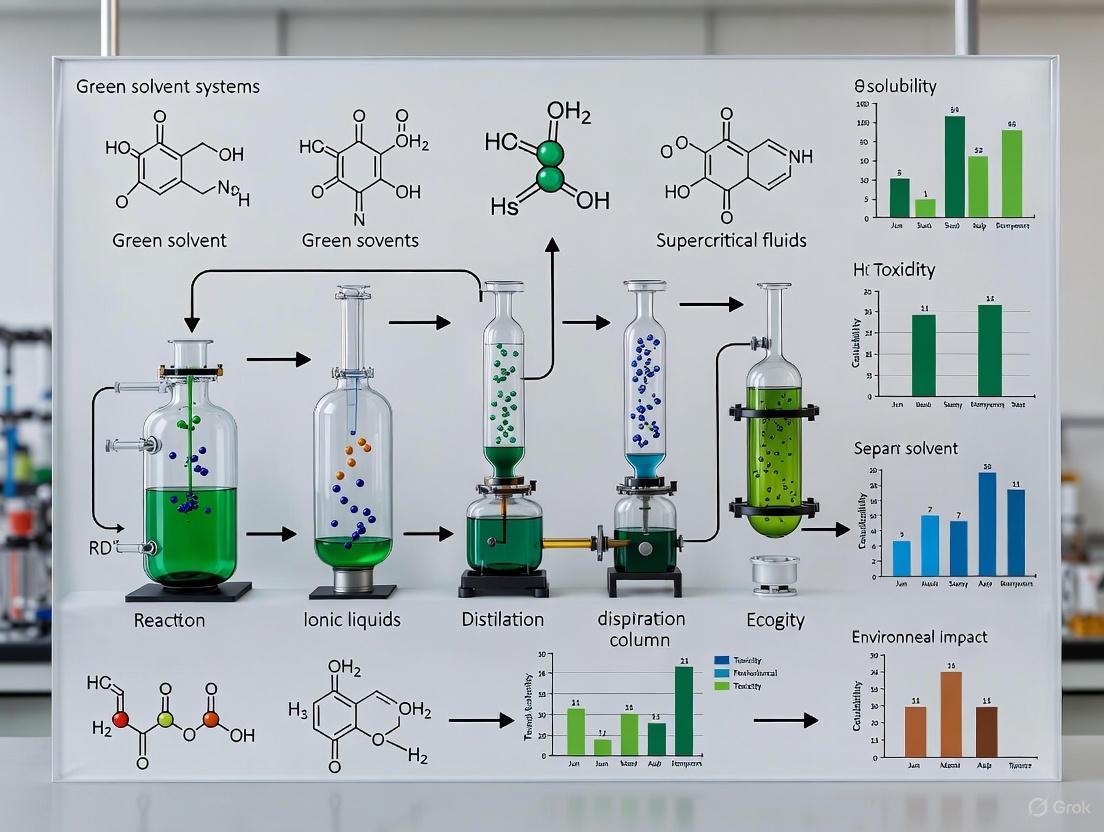
This article provides a comprehensive analysis of green solvent systems, exploring their foundational principles, diverse industrial applications, and growing importance in sustainable drug development.
Green Solvent Systems: Sustainable Solutions for Industrial Applications and Drug Development
Abstract
This article provides a comprehensive analysis of green solvent systems, exploring their foundational principles, diverse industrial applications, and growing importance in sustainable drug development. Tailored for researchers, scientists, and drug development professionals, it covers the market drivers and regulatory landscape, offers practical guidance for solvent substitution and implementation, addresses key performance and economic challenges, and presents validating case studies and comparative assessments. The content synthesizes the latest research and real-world data to serve as a strategic resource for adopting safer, more sustainable chemical processes.
The Rise of Green Solvents: Principles, Market Drivers, and Regulatory Shifts
The concept of "green solvents" has emerged from the broader principles of green chemistry, expressing the goal to minimize the environmental impact of solvents used in chemical production [1]. Solvents are crucial in most industrial and domestic applications, from chemical synthesis and pharmaceuticals to paints, coatings, and cleaning products [1]. The global green solvents market, valued between approximately USD 2.2 billion and USD 5.81 billion in 2024-2025, is projected to grow at a compound annual growth rate (CAGR) of 7.1% to 11.5%, reaching up to USD 11.54 billion by 2035 [2] [3] [4]. This growth is propelled by stringent government regulations, rising consumer awareness of environmental and health hazards, and a shifting industrial focus toward sustainable operations [2] [5].
Traditional petroleum-based solvents (e.g., benzene, toluene) often raise significant concerns regarding toxicity, flammability, and environmental pollution [1]. In contrast, green solvents are defined as bio-based or environmentally benign alternatives designed to reduce or eliminate these negative consequences [6]. They are typically derived from renewable resources such as agricultural crops (e.g., corn, sugarcane), cellulose, biomass, and other sustainable feedstocks [2]. Their key advantages include biodegradability, low toxicity, and minimal volatile organic compound (VOC) emissions, which collectively help reduce environmental contamination and health risks [3] [6].
Core Principles of Green Solvents
The "greenness" of a solvent is not an absolute characteristic but a relative measure assessed against multiple environmental, health, safety, and functional criteria [7] [1]. A comprehensive framework for evaluating green solvents integrates several core principles:
- Waste Minimization and Life Cycle Assessment (LCA): The waste hierarchy—avoidance, minimization, and safe disposal—guides solvent use [1]. LCA evaluates the environmental impact of a solvent across its entire life cycle, from raw material extraction and production to use and disposal [8]. This holistic view helps identify hotspots and opportunities for reducing the overall environmental footprint.
- Environmental, Health, and Safety (EHS) Profiling: This principle focuses on the hazards and risks associated with solvent use. Key parameters include toxicity (acute and chronic), flammability, potential for atmospheric ozone creation, and other inherent safety concerns [8] [7]. Solvents with favorable EHS profiles are preferred to protect workers, consumers, and ecosystems.
- Renewable Feedstock and Bio-based Content: Green solvents are predominantly derived from renewable biomass rather than finite fossil resources [2] [6]. This shift supports a circular economy, reduces dependency on petroleum, and can lower the carbon footprint of solvent production.
- Functional Performance and Efficiency: A solvent must be technically effective for its intended application, whether as a reaction medium, cleaning agent, or formulation component [6]. Key performance properties include solvation power, boiling point, volatility, and stability. An ideal green solvent matches or exceeds the performance of conventional solvents while offering environmental benefits [6].
- Economic Viability and Cost-Effectiveness: Although many green solvents currently have higher production costs than traditional alternatives, advancements in production technologies and increasing scale are improving their economic competitiveness [3] [5]. The total cost of ownership, including disposal, regulatory compliance, and potential safety advantages, often favors green solvents over time [6].
Table 1: Core Principles and Assessment Criteria for Green Solvents
| Principle | Key Assessment Parameters | Description & Goal |
|---|---|---|
| Waste Minimization & LCA [1] | Resource use, Energy consumption, Emissions (VOCs, CO₂) | Evaluate environmental impact across the entire solvent lifecycle (cradle-to-grave). |
| EHS Profiling [8] [7] | Toxicity (LD₅₀), Flammability (flash point), Health hazards | Assess direct risks to human health and safety, and environmental toxicity. |
| Renewable Feedstock [2] | Bio-based content, Sustainable agriculture, Feedstock type (e.g., corn, sugarcane) | Reduce reliance on fossil fuels and decrease the carbon footprint of solvent production. |
| Functional Performance [6] | Solvation power, Boiling point, Viscosity, Stability | Ensure the solvent is technically effective for its intended industrial application. |
| Economic Viability [3] [5] | Production cost, Recycling potential, Disposal cost | Achieve commercial feasibility and cost-competitiveness with traditional solvents. |
Comprehensive Environmental Assessment Frameworks
Selecting a truly green solvent requires a structured, multi-factorial assessment. Several comprehensive frameworks have been developed to guide researchers and industry professionals in this process.
The Capello et al. Framework
The seminal framework proposed by Capello, Fischer, and Hungerbühler combines Life Cycle Assessment (LCA) and Environmental, Health, and Safety (EHS) evaluation into a comprehensive methodology [8]. This integrated approach avoids the pitfalls of using either method in isolation. For instance, a solvent might have a favorable EHS profile (e.g., low toxicity) but a high overall environmental impact when its full life cycle (production, transportation, disposal) is considered [8] [7].
The LCA component quantifies resource consumption and environmental emissions over the solvent's complete life cycle. The EHS assessment evaluates the risks posed by the solvent during its operational use. The framework was demonstrated on 26 organic solvents, showing that simple alcohols (e.g., ethanol, methanol) often represent greener choices than many other organic solvents when both LCA and EHS dimensions are balanced [8].
The CHEM21 Selection Guide
The CHEM21 Selection Guide is a result of a public-private partnership and represents a consensus-based tool for selecting classical and less-classical solvents, particularly in the pharmaceutical industry [7]. It aligns with the Globally Harmonized System of Classification and Labelling of Chemicals (GHS) and scores solvents based on safety, health, and environmental impact.
Solvents are ranked into three categories: "Recommended," "Problematic," or "Hazardous." The scoring system is explicit:
- Safety: Considers flash point, boiling point, auto-ignition temperature, and peroxide formation potential.
- Health: Based on GHS hazard statements and adjusted for volatility (boiling point <85°C adds a penalty).
- Environment: Assesses environmental toxicity (e.g., aquatic toxicity) and fate, with scores partly based on boiling point ranges [7].
This guide provides a practical, standardized method for bench chemists to make informed, greener solvent choices early in process development.
Green Environmental Assessment and Rating for Solvents (GEARS)
The recently introduced GEARS framework is a novel, comprehensive metric designed for holistic solvent evaluation [9]. It integrates EHS criteria with LCA and economic considerations, assessing ten critical parameters:
- Toxicity
- Biodegradability
- Renewability
- Volatility
- Thermal Stability
- Flammability
- Environmental Impact
- Efficiency
- Recyclability
- Cost [9]
Each parameter is scored based on specific thresholds, and the scores are aggregated into a single overall rating. This data-driven approach facilitates direct comparison between solvents. For example, in a case study evaluating methanol, ethanol, acetonitrile, benzene, and glycerol, GEARS effectively highlighted the strengths and weaknesses of each solvent, with ethanol and glycerol performing favorably due to their renewable feedstock and lower toxicity [9]. The associated open-source software makes this tool readily accessible to the scientific community.
Table 2: Comparison of Major Green Solvent Assessment Frameworks
| Framework | Primary Focus | Key Metrics | Typical Output | Best Suited For |
|---|---|---|---|---|
| Capello et al. [8] | Integrated LCA & EHS | Cumulative energy demand, emissions, toxicity, flammability | Combined environmental impact score | Comprehensive, high-level strategic decision-making |
| CHEM21 Guide [7] | EHS & GHS Compliance | Safety (flash point), Health (GHS), Environment (toxicity, fate) | Categorical (Recommended, Problematic, Hazardous) | Practical, day-to-day solvent selection in labs (e.g., pharmaceuticals) |
| GEARS [9] | Holistic (EHS, LCA, Economic) | 10 parameters including cost, recyclability, renewability, efficiency | Aggregate numerical score & parameter-wise breakdown | Detailed, data-driven comparison and research-level analysis |
Experimental Protocols for Solvent Assessment
Protocol 1: Application of the GEARS Framework
Objective: To quantitatively evaluate and compare the greenness of candidate solvents for a specific application using the GEARS methodology [9].
Materials:
- Candidate solvents (e.g., methanol, ethanol, acetonitrile, glycerol)
- Safety data sheets (SDS) for each solvent
- GEARS open-source software (available at bit.ly/GEARS2025) [9]
- Literature/data on physicochemical properties, toxicity (LD₅₀), biodegradability, and cost
Procedure:
- Data Collection: For each solvent, gather data for the ten GEARS parameters from reliable sources (SDS, scientific literature, REACH dossiers).
- Parameter Scoring:
- Toxicity: Assign a score based on LD₅₀. For example, LD₅₀ > 2000 mg/kg scores 3 points (low toxicity), while LD₅₀ < 300 mg/kg scores 0 points (high toxicity) [9].
- Biodegradability: Score based on the biodegradation percentage in standardized tests (e.g., >60% degradation scores 3 points).
- Renewability: Assign points based on the source (e.g., bio-derived from waste: 3 points; petroleum-derived: 0 points).
- Volatility: Score according to vapor pressure (low vapor pressure scores higher).
- Repeat this threshold-based scoring for all remaining parameters (thermal stability, flammability, environmental impact, efficiency, recyclability, cost).
- Software Input: Enter the collected data and scores into the GEARS software.
- Analysis and Interpretation: The software will generate an overall score and a profile of strengths and weaknesses for each solvent. Compare the results to select the optimal solvent for the application.
Protocol 2: Implementing the CHEM21 Solvent Selection Guide
Objective: To categorize solvents as "Recommended," "Problematic," or "Hazardous" based on the CHEM21 guide for use in chemical processes, such as pharmaceutical synthesis [7].
Materials:
- Candidate solvents
- CHEM21 Solvent Selection Guide (published table or digital tool)
- GHS classification data for each solvent (available from SDS)
Procedure:
- Safety Scoring:
- Determine the solvent's flash point and boiling point.
- Assign a base score: Flash point >60°C = 1 point; 24-60°C = 3 points; 0-23°C = 4 points; -20 to -1°C = 5 points; < -20°C = 7 points.
- Add penalty points for specific hazards: auto-ignition temperature <200°C (+1), high resistivity (>10⁸ Ω·m, +1), peroxide formation potential (+1), high decomposition energy (>500 J/g, +1).
- Health Scoring:
- Assign a score based on the solvent's GHS health hazard classifications (e.g., H3XX statements).
- Add 1 point if the solvent's boiling point is <85°C.
- Environmental Scoring:
- Assign a score based on boiling point and GHS environmental hazard statements (H4XX):
- Boiling point 70-139°C and no H4xx = Score 3
- Boiling point 50-69°C or 140-200°C, with H412/H413 = Score 5
- Boiling point <50°C or >200°C, with H400/H410/H411 = Score 7
- Assign a score based on boiling point and GHS environmental hazard statements (H4XX):
- Categorization: Based on the composite of the safety, health, and environmental scores, classify the solvent per the CHEM21 guide. "Recommended" solvents should be prioritized in process design.
Workflow Visualization for Solvent Selection
The following diagram illustrates a logical, iterative workflow for selecting an optimal green solvent for an industrial application, integrating the principles and frameworks discussed above.
Green Solvent Selection Workflow: This diagram outlines a systematic process for selecting an optimal green solvent, from defining requirements to final implementation.
The Scientist's Toolkit: Key Reagents and Materials
Table 3: Essential Research Reagents and Materials for Green Solvent Evaluation
| Reagent/Material | Function/Application | Key Characteristics & Notes |
|---|---|---|
| Bio-Alcohols (e.g., Bio-ethanol) [3] [5] | Extraction, reaction medium, cleaning agent, paints & coatings. | Derived from corn or sugarcane; low toxicity, biodegradable. Most used green solvent type by volume [5]. |
| Lactate Esters (e.g., Ethyl Lactate) [3] [4] | High-performance coatings, pharmaceuticals, cosmetics, cleaning products. | Derived from lactic acid; recyclable, biodegradable, non-corrosive. Excellent profile for functional cosmetics [3]. |
| D-Limonene [3] [5] | Industrial cleaning, fragrance in F&B, adhesives. | Extracted from citrus rinds; effective degreaser. Projected to witness massive CAGR [3]. |
| Bio-Glycols & Diols [2] [5] | Antifreeze, hydraulic fluids, resins, polymer production. | Derived from biomass (e.g., sugarcane); low volatility, high boiling point. |
| Deep Eutectic Solvents (DES) & Ionic Liquids [6] [7] | Specialized reaction media, extraction processes. | Tunable properties, low volatility. Considered "neoteric" but may face scalability challenges [6] [1]. |
| Methyl Soyate [3] [5] | Solvent for inks, coatings, industrial cleaning. | Derived from soybean oil; high boiling point, low toxicity, readily biodegradable. |
The definition of a green solvent is multifaceted, extending beyond a single property to encompass a comprehensive evaluation of its environmental, health, safety, functional, and economic impacts throughout its life cycle. Frameworks such as those developed by Capello et al., the CHEM21 consortium, and the recent GEARS metric provide researchers and industry professionals with structured, data-driven methodologies for making informed solvent choices. As the chemical industry continues its transition toward sustainability, the adoption of these rigorous assessment protocols is paramount for developing cleaner, safer, and more efficient industrial processes across pharmaceuticals, coatings, and other key sectors.
The global green solvents market is experiencing significant growth, driven by stringent environmental regulations and a shift towards sustainable industrial processes. This section provides a consolidated overview of the market forecasts and key growth segments, synthesized from current market research data for easy comparison.
Table 1: Global Green Solvents Market Size Projections (2023-2035)
| Report Source | Base Year/Value | Forecast Year/Value | CAGR | Key Segments Covered |
|---|---|---|---|---|
| BCC Research [10] | $4.5B (2023) | $7.7B (2029) | 9.3% (2024-2029) | Material, Application, Region |
| ResearchAndMarkets [11] | $4.9B (2024) | $7.7B (2029) | 9.3% (2024-2029) | Material, Application, Region |
| ResearchAndMarkets (2) [2] | $2.2B (2024) | $5.51B (2035) | 8.7% (2025-2035) | Type, Source, Application, Region |
| Research Nester [3] | $5.81B (2025) | $11.54B (2035) | 7.1% (2026-2035) | Type, Application, Region |
| Technavio [4] | - | $9.23B (2029) | 11.5% (2024-2029) | Product, Application, Source, Region |
Table 2: Key Application Segment Market Share and Growth Drivers
| Application Segment | Market Size / Status | Primary Growth Drivers |
|---|---|---|
| Paints & Coatings | Segment dominance; $3.52B in 2023 [4] | Stringent VOC emission regulations; growth in construction and automotive industries; demand for bio-based coatings [11] [3]. |
| Adhesives & Sealants | Significant share [2] | Rapid growth in packaging industry; demand for non-toxic products [11] [4]. |
| Pharmaceuticals | Steady growth [2] | Need for safer synthesis processes with minimal toxic residue; stringent regulatory standards for drug development [2] [12]. |
| Cleaning Products | Expanding segment [11] | Consumer preference for eco-friendly and biodegradable ingredients; use of D-limonene in industrial and domestic cleaners [11] [3]. |
Table 3: Key Product Segment Analysis
| Product Segment | Market Position | Key Properties and Applications |
|---|---|---|
| Bio-based Alcohols, Glycols, Diols | Dominant segment by revenue [10] | Wide application in paints, coatings, and adhesives; includes bioethanol, biobutanol, and bio-based glycerol [11] [10]. |
| Lactate Esters | Significant growth segment [11] [3] | 100% biodegradable, recyclable, non-corrosive; used in pharmaceuticals, industrial applications, personal care, and cosmetics [11] [3]. |
| D-Limonene | High CAGR segment [3] | Extracted from citrus peels; used as a fragrance in food & beverages and as an active agent in cleaning products [3] [13]. |
Experimental Protocols for Green Solvent Applications
Protocol: Microwave-Assisted Extraction (MAE) of Bioactives using Natural Deep Eutectic Solvents (NADES)
Application Note: This protocol details the extraction of thermo-labile bioactive compounds (e.g., polyphenols, alkaloids) from plant waste for nutraceutical and pharmaceutical applications, utilizing a green chemistry approach [14].
1.0 Objective: To efficiently extract bioactive compounds from dried plant material (e.g., fruit peels, leaves) using a synergistic combination of microwave energy and a tailor-made natural deep eutectic solvent.
2.0 Principle: Microwave-assisted extraction (MAE) enhances extraction yield and speed by causing instantaneous heating of the solvent and plant matrix, facilitating the rupture of cells and release of contents. NADES, composed of natural primary metabolites (e.g., choline chloride and lactic acid), offers low toxicity, high biodegradability, and tunable solvency power, serving as an effective replacement for conventional petroleum-based solvents [14] [13].
3.0 Materials and Reagents:
- Plant Material: Dried and finely powdered (e.g., < 0.5 mm) orange peel or other agro-waste.
- NADES Preparation: Choline Chloride, Lactic Acid (or other HBD like Citric Acid, Glycerol), Deionized Water.
- Equipment: Microwave Reactor system with temperature and pressure control, Centrifuge, Vacuum Rotary Evaporator, Analytical Balance, Ultrasound Bath.
4.0 Procedure: Step 4.1: Synthesis of NADES 1. Molar Ratio: Weigh out Choline Chloride and Lactic Acid in a 1:2 molar ratio. 2. Heating and Stirring: Combine the components in a round-bottom flask. Heat the mixture to 80°C under continuous stirring (500 rpm) until a homogeneous, clear liquid forms (approximately 60 minutes). 3. Hydration: If necessary, add 10-20% w/w deionized water to adjust the viscosity of the final NADES.
Step 4.2: Microwave-Assisted Extraction 1. Sample Loading: Accurately weigh 2.0 g of dried plant powder into the microwave reactor vessel. Add 40 mL of the prepared NADES (solid-to-liquid ratio of 1:20). 2. Extraction Parameters: Set the microwave reactor to the following optimized conditions [14]: - Extraction Temperature: 70°C - Microwave Power: 500 W - Hold Time: 10 minutes - Stirring: Continuous at 300 rpm 3. Process Initiation: Secure the vessel and start the extraction cycle.
Step 4.3: Post-Extraction Processing 1. Cooling and Transfer: After the cycle, carefully remove the vessel and allow it to cool. Transfer the contents to a pre-weighed 50 mL centrifuge tube. 2. Centrifugation: Centrifuge at 8000 rpm for 15 minutes to separate the solid residue from the extract. 3. Supernatant Collection: Decant and collect the supernatant (the NADES extract). 4. Analysis and Storage: The extract can be analyzed directly via HPLC or LC-MS for bioactive content. For solvent recovery, proceed to vacuum evaporation at 60°C to concentrate the extract and recover the NADES for reuse.
5.0 Safety Notes:
- Wear appropriate Personal Protective Equipment (PPE) including heat-resistant gloves and safety glasses when handling the microwave reactor and hot solvents.
- Always operate the microwave reactor within its specified pressure and temperature limits.
Protocol: Formulation of a Bio-Based Industrial Cleaning Solution using D-Limonene
Application Note: This protocol outlines the development of an industrial-grade cleaning product utilizing D-Limonene, a solvent derived from citrus peel waste, aligning with circular economy principles and reducing reliance on halogenated solvents [3] [13].
1.0 Objective: To formulate a high-performance, biodegradable cleaning solution for degreasing and industrial parts cleaning.
2.0 Principle: D-Limonene is a natural terpene hydrocarbon with excellent solvency power against oils and greases. It is 100% biodegradable and has a low environmental impact compared to traditional petrochemical solvents like n-hexane, making it ideal for green cleaning formulations [3] [13].
3.0 Materials and Reagents:
- Active Ingredient: D-Limonene (technical grade).
- Surfactants: Bio-based, non-ionic surfactant (e.g., Alkyl Polyglucoside).
- Co-solvent: Bio-Ethanol (anhydrous).
- Additives: Citric acid (for pH adjustment), Preservative (as needed), Deionized Water.
- Equipment: Laboratory overhead stirrer, Beakers (500 mL, 1000 mL), pH Meter, Weighing Balance, Storage containers.
4.0 Procedure: Step 4.1: Preparation of the Solvent-Surfactant Base 1. Weighing: In a 500 mL beaker, weigh the following: - 150 g D-Limonene - 50 g Bio-Ethanol - 80 g Alkyl Polyglucoside surfactant 2. Mixing: Using the overhead stirrer, mix the components at moderate speed (400 rpm) for 15-20 minutes until a clear, homogeneous solution is obtained.
Step 4.2: Emulsification and Dilution 1. Water Addition: Slowly add 720 g of deionized water to the base mixture while maintaining continuous stirring. It is critical to add the water slowly to ensure the formation of a stable microemulsion. 2. Homogenization: Increase the stirring speed to 800 rpm for an additional 10 minutes to ensure complete homogenization.
Step 4.3: Final Product Adjustment 1. pH Adjustment: Check the pH of the formulation. For a neutral cleaner, adjust the pH to 6.5 - 7.5 using a dilute solution of citric acid. 2. Quality Check: The final product should be a clear or slightly milky, stable liquid. Test for stability by storing a sample at ambient and elevated temperatures (e.g., 40°C) for 48 hours and observing for phase separation. 3. Packaging: Transfer the final cleaning solution to appropriate storage containers.
5.0 Performance Testing:
- Grease Removal Test: Apply a standard grease soil to a metal coupon. Clean the coupon using the formulated solution according to a standard operating procedure (e.g., immersion for 5 minutes with mild agitation). Weigh the coupon before and after cleaning to determine cleaning efficiency.
- Biodegradability: Refer to standard OECD test guidelines for ready biodegradability to characterize the environmental profile of the final formulation.
Workflow Visualization for Green Solvent Extraction
Integrated Workflow for Bioactive Compound Extraction
Green Extraction Workflow
This diagram outlines the standard operational workflow for extracting bioactive compounds from plant waste using green solvents and novel techniques, highlighting key decision points for solvent and method selection [14].
Solvent Selection and Application Pathway
Solvent Selection Pathway
This decision pathway maps the relationship between renewable feedstocks, the green solvents derived from them, and their primary industrial applications, providing a strategic overview for research and development planning [2] [11] [4].
The Scientist's Toolkit: Research Reagent Solutions
Table 4: Essential Reagents and Materials for Green Solvent Research
| Reagent/Material | Function/Application in Research | Key Characteristics & Notes |
|---|---|---|
| Deep Eutectic Solvents (DES) [14] [13] | Versatile, tunable solvent for extraction, synthesis, and biomass processing. | Composed of hydrogen bond donors (e.g., lactic acid) and acceptors (e.g., choline chloride); biodegradable, low cost, and low volatility. |
| Lactate Esters (e.g., Ethyl Lactate) [11] [13] | Green solvent for chromatography, pharmaceutical synthesis, and coatings. | Derived from renewable biomass; 100% biodegradable, non-corrosive, and has excellent solvating power. |
| Supercritical CO₂ (scCO₂) [14] [13] | Solvent for supercritical fluid extraction (SFE) of delicate bioactives. | Non-toxic, non-flammable, and easily removable from the final product; requires high-pressure equipment. |
| D-Limonene [3] [13] | Bio-based hydrocarbon solvent for cleaning formulations and as a fragrance. | Extracted from citrus peels; effective degreaser but can be volatile and requires stabilization in formulations. |
| Bio-based Alcohols (Bioethanol, Biobutanol) [11] [10] | Renewable substitutes for petrochemical alcohols in coatings, inks, and disinfectants. | Produced via fermentation of sugars; reduce carbon footprint and VOC emissions compared to conventional options. |
| Ionic Liquids [14] [13] | Specialized solvents for electrochemistry, catalysis, and separations. | Negligible vapor pressure, high thermal stability, and tunable properties; require thorough cost and toxicity assessment. |
Volatile Organic Compounds (VOCs) are chemicals that vaporize at room temperature and are leading contributors to ground-level air pollution and smog formation [15]. In response to the environmental and health impacts of VOCs, regulatory frameworks have emerged as powerful drivers for the adoption of green chemistry principles across industries. The U.S. Environmental Protection Agency (EPA) establishes national VOC emission standards for various product categories under the Clean Air Act, including aerosol coatings, architectural coatings, and consumer products [15].
Concurrently, the global market for green and bio-based solvents is experiencing significant growth, projected to reach $5.51 billion by 2035 with a compound annual growth rate (CAGR) of 8.7% [2]. This growth is fueled by stringent government regulations, rising demand for eco-friendly alternatives, and advancing green chemistry technologies that enable sustainable manufacturing processes across pharmaceutical, coatings, and electronics industries [2] [16] [17].
Current Regulatory Framework for VOC Emissions
Federal VOC Standards and Recent Updates
The EPA regulates VOCs at the federal level in 40 CFR 59, which establishes National Volatile Organic Compound Emission Standards for Consumer and Commercial Products [15]. These regulations employ various control strategies based on product categories:
- Aerosol Coatings (40 CFR 59 Subpart E): Regulates "a pressurized coating product containing pigments or resins dispensed by a propellant" using a reactivity-based approach that controls the product's contribution to ozone formation by encouraging less reactive VOC ingredients [18] [15]. The compliance deadline for recent amendments has been extended to January 17, 2027 [19].
- Architectural Coatings (40 CFR 59 Subpart D): Applies to "coatings recommended for field application to stationary structures and their appurtenances" with VOC content limits measured in grams per liter of coating [15].
- Consumer Products (40 CFR 59 Subpart C): Covers "any household or institutional product" whose use may result in VOC release, with content limits typically set by weight percentage [15].
Recent regulatory activity includes the EPA's 2025 interim final rule that revised compliance deadlines and ongoing reconsideration of oil and gas methane standards, demonstrating the dynamic nature of VOC regulatory policy [19] [20].
State-Level Implementation and RACT Requirements
Beyond federal regulations, many states implement stricter VOC standards through State Implementation Plans (SIPs) to address local air quality challenges [15]. These state regulations must meet at least a stringency level called Reasonably Available Control Technology (RACT), defined as "the lowest level of emissions that can be achieved taking into account technical and economic considerations" [15]. The EPA provides guidance on RACT through Control Technique Guidelines and approves state VOC rules into SIPs, making them federally enforceable [15].
Green Solvents as a Regulatory Response
Market Growth and Segment Analysis
The transition to green and bio-based solvents represents a strategic industry response to regulatory pressures and sustainability goals. Current market analysis reveals robust growth across multiple segments:
Table 1: Green Solvents Market Overview and Projections
| Market Segment | 2024/2025 Market Size | 2030/2032 Projection | CAGR | Key Drivers |
|---|---|---|---|---|
| Global Green & Bio-Based Solvents | $2.2 Billion (2024) [2] | $5.51 Billion (2035) [2] | 8.7% [2] | Environmental regulations, consumer awareness, sustainable manufacturing |
| High-Purity Solvents | $32.7 Billion (2025) [12] | $45 Billion (2030) [12] | 6.6% [12] | Pharmaceutical and electronics industry demand |
| Paints & Coatings (Application) | $6,430.8 Million [17] | - | - | Low toxicity, low VOC emissions, workplace safety |
Table 2: Green Solvent Types and Characteristics
| Solvent Type | Renewable Sources | Key Properties | Primary Applications |
|---|---|---|---|
| Bio-Alcohols [2] | Corn, sugarcane [2] [4] | Low toxicity, biodegradable [16] | Pharmaceuticals, cosmetics [17] |
| Lactate Esters [2] [4] | Lactic acid [4] | Low volatility, high boiling point [4] | Paints, coatings [4] |
| D-Limonene [2] | Citrus peels [17] | Effective degreasing, pleasant aroma [17] | Cleaning products [17] |
| Supercritical Fluids (e.g., CO₂) [16] | - | Selective extraction, minimal environmental impact [16] | Pharmaceutical extraction [16] |
| Deep Eutectic Solvents (DES) [16] | Hydrogen bond donors/acceptors [16] | Tunable properties, biodegradable [16] | Chemical synthesis, extraction [16] |
Regional Adoption Patterns
The adoption of green solvents varies significantly by region, reflecting different regulatory environments and industrial priorities:
- North America: Estimated to contribute 40% of global market growth, driven by stringent environmental regulations and technological investments [4].
- Asia-Pacific: Experiencing rapid growth due to expanding industrial base, increasing environmental awareness, and government initiatives to reduce pollution [2] [17].
- Europe: Characterized by strong environmental regulations and leadership in bio-based solvent production facility expansions [2] [4].
Experimental Protocols for Green Solvent Evaluation
Protocol: Reactivity-Based Compliance Assessment for Aerosol Coatings
Principle: This protocol determines compliance with EPA reactivity-based standards for aerosol coatings by calculating Product-Weighted Reactivity (PWR) according to 40 CFR 59.505-59.506 [18] [15].
Procedure:
- Formulation Analysis: Identify all VOC compounds in the aerosol coating formulation and determine their percentage by weight in the total product [18] [15].
- Reactivity Factor Assignment: Assign the appropriate Reactivity Factor (RF) for each VOC compound using EPA Tables 2A, 2B, and 2C in 40 CFR 59 Subpart E [18]. For compounds not listed, use the default reactivity factor [18].
- PWR Calculation: Calculate the Product-Weighted Reactivity using the formula: PWR = Σ(Compound Mass × RF) / Total Product Mass [18] [15].
- Compliance Verification: Compare the calculated PWR value against the applicable coating category limit specified in Table 1 of the Subpart [18] [15].
- Documentation: Maintain detailed records of formulations, calculations, and compliance determinations for regulatory reporting purposes [18].
Protocol: Bio-Based Solvent Extraction of Bioactive Compounds
Principle: This method utilizes bio-based solvents like ethyl lactate or d-limonene for the extraction of bioactive compounds from natural sources, offering an environmentally friendly alternative to conventional solvents [16] [17].
Procedure:
- Sample Preparation: Dry the plant or biological source material to constant weight and grind to a uniform particle size (e.g., 0.5-1.0 mm) to maximize surface area for extraction [16].
- Solvent Selection: Select appropriate bio-based solvent based on the polarity of target compounds. Ethyl lactate is suitable for medium-polarity compounds, while d-limonene works well for non-polar compounds [16] [17].
- Extraction: For Soxhlet extraction, place sample in thimble and extract with 150-200mL solvent for 4-6 hours. For maceration, mix sample with solvent (1:10 w/v) and agitate for 12-24 hours at room temperature [16].
- Separation: Filter the extract through Whatman No. 1 filter paper or centrifuge at 4000 rpm for 15 minutes to separate solid residue [16].
- Concentration: Remove solvent under reduced pressure using a rotary evaporator at temperature not exceeding 40°C to prevent degradation of thermolabile compounds [16].
- Analysis: Analyze extract yield, composition using HPLC or GC-MS, and residual solvent content to ensure compliance with pharmaceutical standards [16].
The Scientist's Toolkit: Key Research Reagents and Materials
Table 3: Essential Materials for Green Solvent Research
| Reagent/Material | Function/Application | Key Characteristics | Regulatory & Sustainability Considerations |
|---|---|---|---|
| Ethyl Lactate [16] [17] [4] | Extraction solvent, reaction medium | Biodegradable, low toxicity, high boiling point [16] [4] | Derived from renewable resources; exempt from VOC regulations in some applications [16] |
| D-Limonene [2] [17] | Cleaning agent, degreaser, extraction solvent | Citrus-derived, pleasant aroma, effective against non-polar compounds [17] | Bio-based VOC; requires emission accounting in regulated applications [17] |
| Supercritical CO₂ [16] | Extraction solvent, reaction medium | Non-flammable, tunable solvation, easily separated from products [16] | Generally recognized as safe (GRAS); not classified as VOC [16] |
| Deep Eutectic Solvents (DES) [16] | Green reaction media, extraction solvents | Tunable properties, biodegradable, often low volatility [16] | Typically have low VOC emissions; composition-dependent regulatory status [16] |
| Bio-Based Alcohols (e.g., Bio-ethanol) [2] [4] | Solvent, cleaning agent, synthesis | Renewable feedstock, familiar properties, readily available [2] [4] | VOC with varying reactivity factors; requires compliance reporting [18] |
The convergence of stringent VOC regulations and advancing green chemistry technologies is accelerating the transition to sustainable solvent systems across industrial applications. The integration of computational design methods for solvent selection, development of hybrid solvent systems, and incorporation of renewable energy resources into solvent production processes represent the next frontier in sustainable chemistry [16]. For researchers and drug development professionals, mastering both the regulatory frameworks governing VOC emissions and the technical performance characteristics of green solvents is essential for developing innovative, compliant, and environmentally responsible products and processes. The continued growth of the green solvents market at 7.5-11.5% CAGR underscores the scientific and commercial viability of these sustainable alternatives [2] [4].
The global industrial landscape is undergoing a significant transformation, moving away from traditional petroleum-based solvents toward sustainable, bio-based alternatives. This paradigm shift is driven by increasingly stringent environmental regulations, growing consumer demand for eco-friendly products, and corporate sustainability initiatives [21]. Green solvents, derived from renewable resources such as agricultural crops, biomass, and waste materials, offer reduced environmental impact through lower VOC emissions, biodegradability, and lower toxicity profiles compared to conventional solvents [22]. The global green solvents market, valued at approximately $2.2 billion in 2024, is projected to surpass $5.5 billion by 2035, exhibiting a compound annual growth rate (CAGR) of 8.7% [21] [2]. Similarly, the bio-based solvents market volume is expected to grow from 1.3 million tons in 2024 to approximately 2.58 million tons by 2034, at a CAGR of 7.10% [23].
This application note provides a detailed technical examination of four prominent green solvent classes—bio-alcohols, lactate esters, D-limonene, and bio-based acetone—within the context of industrial applications research. For researchers and drug development professionals, understanding the chemical properties, applications, and experimental protocols for these solvents is crucial for developing sustainable industrial processes. These solvents are gaining significant traction across pharmaceuticals, paints and coatings, adhesives, cleaning products, and electronics, supported by regulatory frameworks such as the Clean Air Act in the U.S. and REACH regulations in the European Union [23]. By providing structured data, experimental methodologies, and practical workflows, this document aims to serve as a comprehensive resource for scientists integrating green chemistry principles into their research and development activities.
Green Solvent Class Profiles
Bio-alcohols
Bio-alcohols, including bioethanol and biobutanol, represent the largest product segment in the bio-based solvents market, accounting for approximately 28% of the market share in 2024 [23]. Derived from renewable sources such as corn, sugarcane, and biomass, these solvents are characterized by their low volatility, biodegradability, and versatility [23]. The bio-alcohols segment held a market value of USD 1,920.4 million in 2025 and is expected to grow at a CAGR of 4.5% [22]. Their primary applications include industrial cleaning, coatings formulations, and as ingredients in pharmaceuticals and personal care products. The United States represents the largest market for bio-alcohols, with a market size of USD 670.2 million in 2025, driven largely by ethanol blending mandates and significant consumption in cleaning products [22].
Lactate Esters
Lactate esters, particularly ethyl lactate, are recognized for their excellent solvent properties and favorable environmental profile as biodegradable and non-toxic alternatives to traditional petrochemical solvents [24]. The global lactate esters market was valued at USD 223 million in 2024 and is projected to reach USD 284 million by 2032, growing at a CAGR of 3.6% [24]. Ethyl lactate dominates this segment, commanding approximately 56% of the market share due to its high solvency power and versatility across demanding applications [24]. These esters are derived from lactic acid, which is typically sourced from corn or sugarcane [24]. The food and beverage application segment represents the largest consumer of lactate esters, primarily due to their GRAS (Generally Recognized As Safe) status, which makes them suitable for use as food-grade solvents and flavor carriers [24].
D-Limonene
D-Limonene, extracted primarily from citrus peels, serves as a powerful bio-based solvent with particularly strong performance in cleaning and degreasing applications [25]. Recent research has demonstrated its efficacy in specialized industrial processes such as the detachment of end-of-life photovoltaic solar panel components, where it successfully dissolves ethylene vinyl acetate (EVA) encapsulants under optimized conditions of sonication power and temperature [25]. D-Limonene is valued for its high biodegradability and low toxicity compared to petroleum-based alternatives, though its adoption can be limited by higher costs in some applications [25]. The solvent is categorized under the "others" segment in several green solvent market analyses, yet it represents a significant niche application in industrial cleaning and electronics recycling industries [4] [22].
Bio-based Acetone
Bio-based acetone is produced through the fermentation of biomass rather than traditional cumene processes, resulting in a sustainable alternative with identical chemical properties to its petroleum-based counterpart [26]. The global acetone market was valued at USD 6.02 billion in 2022 and is projected to reach USD 10.1 billion by 2030, exhibiting a CAGR of 6.68% [26]. While bio-based acetone currently represents a smaller segment of this overall market, its growth is fueled by the increasing demand for sustainable alternatives in key application areas such as pharmaceuticals, personal care products, and plastics manufacturing [26]. Bio-based acetone serves as a crucial feedstock for producing methyl methacrylate (MMA) and bisphenol-A (BPA), further extending its sustainability profile through green chemistry principles [26].
Table 1: Comparative Analysis of Green Solvent Classes
| Solvent Class | Market Size/Volume | Projected CAGR | Primary Feedstock | Key Applications |
|---|---|---|---|---|
| Bio-alcohols | USD 1,920.4 million (2025) [22] | 4.5% [22] | Corn, sugarcane, biomass [23] | Industrial cleaning, coatings, pharmaceuticals [23] |
| Lactate Esters | USD 223 million (2024) [24] | 3.6% (2024-2032) [24] | Corn, sugarcane [24] | Food & beverage, pharmaceuticals, electronics [24] |
| D-Limonene | Part of "others" segment [22] | N/A | Citrus peels [25] | Industrial cleaning, PV panel recycling [25] |
| Bio-based Acetone | Segment of overall acetone market USD 6.02B (2022) [26] | 6.68% (overall market) [26] | Biomass [26] | MMA, BPA, pharmaceuticals, plastics [26] |
Table 2: Regional Market Analysis for Green Solvents
| Region | Market Share (2024) | Projected Growth Trends | Dominant Solvent Classes |
|---|---|---|---|
| Europe | 38% [23] | CAGR 7.24% (2025-2034) [23] | Bio-alcohols, lactate esters [23] |
| North America | 29.31% [23] | CAGR 7.55% (2025-2034) [23] | Bio-alcohols, methyl soyate [4] |
| Asia-Pacific | 22.64% [23] | CAGR 9.01% (2025-2034) [23] | Bio-alcohols, lactate esters [23] |
| Latin America | 7.11% [23] | CAGR 8.71% (2025-2034) [23] | Bio-alcohols from sugarcane [22] |
| Middle East & Africa | 6.12% [23] | CAGR 8.31% (2025-2034) [23] | Emerging market for all classes [23] |
Application Notes and Experimental Protocols
Protocol: D-Limonene for Photovoltaic Panel Recycling
Objective: To efficiently separate end-of-life photovoltaic panel components using D-limonene as a green solvent for ethylene vinyl acetate (EVA) dissolution [25].
Materials and Equipment:
- D-limonene solvent (industrial grade)
- End-of-life photovoltaic panel fragments (approximately 10g samples)
- Ultrasonic bath with temperature control
- Analytical balance (±0.1 mg precision)
- Heating mantle with stirring capability
- Separation filters
- Glassware (reaction vessels, beakers)
Methodology:
- Sample Preparation: Cut end-of-life PV panels into standardized fragments of approximately 10g each to ensure consistent surface area exposure [25].
- Thermal Pretreatment: Heat selected samples to 60°C for 30 minutes to soften the EVA encapsulant before solvent treatment [25].
- Solvent Reaction: Immerse PV panel samples in D-limonene at a 1:5 mass ratio (sample:solvent).
- Sonication Treatment: Subject the mixture to ultrasonic treatment at varying power levels (200-700W) and temperatures (25-80°C) for different durations (50-120 minutes) [25].
- Component Separation: After EVA dissolution, manually separate detached components (glass, silicon cells, backsheet) using tweezers.
- Solvent Recycling: Filter used D-limonene through a 0.45μm membrane filter for reuse potential assessment.
Optimization Parameters:
- Complete component detachment achieved at 60°C with 120 minutes contact time [25].
- Higher sonication power (700W) reduces processing time but increases energy consumption [25].
- D-limonene demonstrated reusability for up to three cycles with maintained efficiency [25].
Protocol: Lactate Esters in Pharmaceutical Synthesis
Objective: Utilize ethyl lactate as a green solvent for active pharmaceutical ingredient (API) extraction and purification [24].
Materials and Equipment:
- High-purity ethyl lactate (pharmaceutical grade)
- API crude extract
- Rotary evaporator
- Chromatography equipment
- Fraction collector
- UV-Vis spectrophotometer
Methodology:
- Solution Preparation: Dissolve crude API extract in ethyl lactate at 10-15% (w/v) concentration with gentle heating (40-45°C) [24].
- Filtration: Remove insoluble impurities through 0.2μm syringe filtration.
- Fractional Crystallization: Cool the filtrate gradually to 4°C overnight to promote crystal formation.
- Solvent Recovery: Separate crystals via vacuum filtration and recover ethyl lactate using rotary evaporation at 50°C under reduced pressure.
- Purity Analysis: Assess API purity using HPLC and compare with petroleum-based solvent extracts.
Key Advantages:
- Ethyl lactate offers low toxicity, reducing regulatory hurdles for pharmaceutical applications [24].
- GRAS status makes it suitable for APIs with oral administration routes [24].
- Higher boiling point (154°C) allows for safer processing compared to conventional solvents [24].
Protocol: Bio-based Acetone for Polymer Synthesis
Objective: Employ bio-based acetone as a sustainable solvent for the synthesis of polymer resins [26].
Materials and Equipment:
- Bio-based acetone (technical grade)
- Monomer compounds (e.g., bisphenol-A, epichlorohydrin)
- Catalyst system
- Reactor vessel with reflux condenser
- Viscosity meter
- FTIR spectrometer
Methodology:
- Reaction Setup: Charge the reactor with bio-based acetone (30% of total volume).
- Monomer Addition: Gradually add monomer compounds while maintaining temperature at 55-60°C with continuous stirring.
- Catalyst Introduction: Introduce catalyst system at 0.5-1.0% (w/w) of total monomer content.
- Reaction Monitoring: Track conversion rates through periodic viscosity measurements and FTIR sampling.
- Solvent Recovery: Distill off acetone using fractional distillation once target molecular weight is achieved.
- Product Isolation: Recover polymer resin and characterize properties compared to petroleum-solvent synthesized equivalents.
Performance Notes:
- Bio-based acetone demonstrates equivalent solvency power to petroleum-based acetone [26].
- Polymer yields and molecular weight distributions show no significant differences between solvent sources [26].
- Life cycle assessment reveals 20-30% reduction in carbon footprint compared to conventional processes [26].
Table 3: Experimental Conditions and Performance Metrics for Green Solvent Applications
| Application Protocol | Optimal Conditions | Performance Metrics | Environmental Benefits |
|---|---|---|---|
| D-Limonene PV Recycling | 60°C, 120 min, 1:5 sample:solvent ratio [25] | 100% detachment in 3 solvent cycles [25] | Waste citrus peel utilization, biodegradable [25] |
| Lactate Esters Pharmaceutical Extraction | 40-45°C, 10-15% (w/v) concentration [24] | Equivalent purity to petroleum solvents [24] | GRAS status, reduced toxicity [24] |
| Bio-based Acetone Polymer Synthesis | 55-60°C, 30% solvent volume [26] | Equivalent yield and MW distribution [26] | 20-30% carbon footprint reduction [26] |
The Scientist's Toolkit: Research Reagent Solutions
For researchers implementing green solvent methodologies, specific reagents and materials are essential for successful experimental outcomes. The following table details key research reagent solutions and their functions in green solvent applications.
Table 4: Essential Research Reagents and Materials for Green Solvent Applications
| Reagent/Material | Specification | Function in Research | Key Suppliers |
|---|---|---|---|
| Ethyl Lactate | Pharmaceutical grade, ≥98% purity [24] | Green solvent for API extraction and purification [24] | Corbion, Vertec BioSolvents [24] [21] |
| D-Limonene | Technical grade, >95% purity [25] | Bio-based solvent for polymer dissolution and cleaning [25] | Florida Chemical Company [23] |
| Bio-based Acetone | ACS grade, ≥99.5% purity [26] | Sustainable solvent for polymer synthesis and extraction [26] | Dow Chemical Company, Cargill [26] [23] |
| Bio-ethanol | Anhydrous, ≥99.9% purity [22] | Renewable solvent for coatings and extraction processes [22] | Archer Daniels Midland, Cargill [22] [23] |
| Methyl Soyate | Industrial grade, >90% purity [4] | Vegetable oil-based solvent for cleaning and degreasing [4] | Stepan Company [21] |
Workflow and Pathway Visualization
The following diagrams illustrate key experimental workflows and decision pathways for implementing green solvent systems in industrial research applications.
Green Solvent Selection and Application Workflow
D-Limonene PV Recycling Experimental Process
The comprehensive analysis of bio-alcohols, lactate esters, D-limonene, and bio-based acetone presented in this application note demonstrates the significant potential of green solvent systems in industrial applications research. Market projections indicate robust growth across all solvent classes, with the global green solvents market expected to surpass $5.5 billion by 2035, growing at a CAGR of 8.7% [21]. This growth trajectory is supported by several converging factors: increasingly stringent environmental regulations mandating reduced VOC emissions, corporate sustainability initiatives, technological advancements in production processes, and growing consumer preference for eco-friendly products [22] [23].
For researchers and drug development professionals, the experimental protocols and application notes provided offer practical frameworks for integrating these sustainable solvents into existing and new processes. The case studies presented—ranging from D-limonene in photovoltaic panel recycling to lactate esters in pharmaceutical extraction—demonstrate that green solvents can achieve performance parity with traditional petroleum-based alternatives while offering superior environmental and safety profiles [24] [25]. Future research directions should focus on optimizing production economics through advanced biotechnology approaches, developing multi-functional solvent systems that combine solvation with other desirable properties, and expanding applications in emerging sectors such as electronics manufacturing and advanced drug delivery systems [24] [22]. As the field continues to evolve, the integration of digital solvent design platforms utilizing artificial intelligence and machine learning represents a promising frontier for accelerating the development of next-generation green solvents with tailored properties for specific industrial applications [22].
The transition toward sustainable industrial applications, particularly in green solvent systems, is fundamentally linked to advancements in renewable feedstocks. The escalating demand for eco-friendly alternatives to petroleum-derived chemicals is driving innovation in the sourcing and processing of raw materials from agricultural crops, cellulose, and other biomass. This shift is critical for reducing the environmental footprint of industrial processes, including pharmaceutical synthesis, while enhancing energy security and promoting a circular bioeconomy. This document details the latest advancements, application protocols, and analytical frameworks for utilizing these feedstocks in the development and implementation of green solvent systems for a research audience.
The foundation of green solvent production lies in the sustainable procurement of raw materials. These feedstocks are primarily categorized into agricultural crops, cellulose-based materials, and other renewable sources such as waste oils and algae. The global market for green solvents, valued at approximately $2.2 billion in 2024, is projected to surpass $5.51 billion by 2035, reflecting a compound annual growth rate (CAGR) of around 8.7% [21]. This growth is fueled by stringent environmental regulations, rising consumer demand for eco-friendly products, and ongoing technological innovations that improve the cost-effectiveness and performance of bio-based solvents [21] [9].
Table 1: Major Feedstock Categories for Green Solvents and Their Derivatives
| Feedstock Category | Example Sources | Representative Solvent Derivatives | Key Advantages |
|---|---|---|---|
| Agricultural Crops | Corn, Sugarcane [21] | Bio-alcohols (e.g., Ethanol) [21], Lactate Esters [21] | Abundant availability, established production pathways |
| Cellulose & Biomass | Wood pulp, agricultural residues (e.g., stubble, husks) [27], industrial pulps [28] | Bio-based acetone [21], Cellulose-derived solvents [21] | High renewability, potential use of non-food waste streams |
| Other Renewable Sources | Used cooking oil, tallow [27], farmed seaweed [29] | Bio-glycols, Bio-diols [21], Polyhydroxyalkanoates (PHA) [29] | Repurposes waste, utilizes non-arable land and marine resources |
Analytical Framework for Feedstock and Solvent Assessment
Selecting the optimal solvent requires a holistic assessment beyond simple functionality. The Green Environmental Assessment and Rating for Solvents (GEARS) metric is a novel, open-source tool that provides a comprehensive framework for evaluating the environmental, functional, and economic viability of solvents [9]. It integrates ten critical parameters to deliver a data-driven score, guiding researchers toward more sustainable choices.
Table 2: GEARS Metric Parameters and Scoring Criteria for Solvent Assessment [9]
| Parameter | Assessment Criteria | High-Scoring Example |
|---|---|---|
| Toxicity | Based on LD50; >2000 mg/kg scores highest [9] | Glycerol, Ethanol |
| Biodegradability | Evaluation of environmental persistence | Ethyl Lactate |
| Renewability | Sourced from biomass vs. fossil fuels [9] | Bio-ethanol, Soy-based solvents |
| Volatility | Lower volatility (high flash point) is preferred | Bio-based glycerol |
| Thermal Stability | Stability at high processing temperatures | - |
| Flammability | Higher flash point and lower flammability are preferred | - |
| Environmental Impact | Life Cycle Assessment (LCA) of overall footprint [9] | Waste-derived solvents |
| Efficiency | Performance in the intended application | - |
| Recyclability | Ease of recovery and reuse within a process | - |
| Cost | Economic competitiveness | - |
A comparative analysis using GEARS reveals clear distinctions. For instance, ethanol scores highly due to its low toxicity (LD50 >2000 mg/kg) and excellent renewability profile [9]. In contrast, a solvent like acetonitrile faces challenges due to its higher toxicity and poorer biodegradability, while glycerol, a byproduct of biodiesel production, is notable for its very low toxicity and minimal volatility [9].
Application Notes & Experimental Protocols
Protocol: Enzymatic Treatment of Cellulosic Pulps for Enhanced Performance
Objective: To sustainably produce high-performance cellulose pulps from industrial sources using enzymatic hydrolysis, reducing the energy intensity associated with conventional mechanical or chemical refining [28].
Background: Enzymatic pretreatment with cocktails rich in cellulase and xylanase promotes cellulose fibrillation and fiber modification, leading to improved physical-mechanical properties. This method is a key strategy for producing reinforcing materials for applications like packaging [28].
Materials (Research Reagent Solutions):
- Feedstock: Industrial pulps (e.g., sulphite pulp, bleached Kraft eucalyptus pulp, thermomechanical pine pulp) [28].
- Enzymes: Cellulase and xylanase enzyme cocktail. Activity measured in Filter Paper Units (FPU).
- Buffer: Appropriate buffer solution (e.g., acetate buffer) to maintain optimal pH for enzyme activity.
- Equipment: Lab-scale bioreactor or heated shaking incubator, filtration setup, standard paper testing equipment (tensile tester, air permeability tester, internal bonding tester).
Procedure:
- Pulp Preparation: Prepare a suspension of the selected industrial pulp at a consistent consistency (e.g., 1-5% w/w in buffer).
- Enzyme Loading: Add the enzyme cocktail to the pulp suspension at a targeted loading. A range of 5 to 40 FPU per gram of dry pulp (FPU/gdp) should be tested to determine the optimum for a given pulp type [28].
- Hydrolysis Reaction: Incubate the mixture with continuous agitation. The reaction time should be varied, typically from 1 to 16 hours, at the enzyme's optimal temperature (often 50°C) [28].
- Reaction Termination: After the desired time, halt the enzymatic reaction by heating the mixture to 90-100°C for 10-15 minutes.
- Washing & Characterization: Filter and wash the treated pulp thoroughly. The resulting pulp can be characterized for:
- Chemical Composition: Lignin and carbohydrate content.
- Morphology: Fiber length, coarseness, and degree of fibrillation via microscopy.
- Physical-Mechanical Properties: Tensile strength, air permeability, and internal bonding strength [28].
Notes: The optimal enzyme load and reaction time are highly dependent on the specific pulp composition. Thermomechanical pulps with higher lignin content may require different optimization parameters than chemical pulps [28].
Application Note: Bacterial Cellulose for High-Strength Materials
Overview: Bacterial cellulose represents a paradigm shift in cellulose production, moving from plant-based extraction to biofabrication via microbial fermentation. This process yields a highly pure and robust biopolymer with applications in textiles, packaging, and green electronics [30].
Key Advancement: A recent innovation involves a dynamic biosynthesis technique using a rotational bioreactor. This method directs the motion of cellulose-producing bacteria (e.g., Komagataeibacter xylinus) during growth, resulting in real-time alignment of cellulose nanofibrils [30].
Protocol Highlights:
- Feedstock: Unlike plant-based methods, bacterial cultivation typically uses a sucrose-based medium or, alternatively, processed food waste streams, enhancing sustainability [31] [30].
- Process: The rotational bioreactor introduces controlled fluid dynamics, guiding bacterial motion and leading to in situ alignment of the cellulose fibers.
- Resulting Material Properties: This alignment produces bacterial cellulose sheets with a tensile strength of up to 436 Megapascals (MPa). This performance can be further enhanced to approximately 553 MPa by incorporating additives like boron nitride nanosheets during synthesis, also improving thermal conductivity [30].
- Advantage: The process is a scalable, single-step method that creates a material stronger than many plastics and some metals, while being biodegradable and free of the harsh chemicals used in traditional wood pulping [30].
Application Note: Novel Feedstocks for Drop-in Biofuels and Biochemicals
Overview: The principles of green chemistry are being applied to develop liquid fuels and chemical precursors from non-traditional, non-food biomass, supporting decarbonization in hard-to-electrify sectors like aviation.
Feedstock Innovations:
- Agricultural Residues: Stubble, husks, and straw can be converted into bioethanol or synthetic paraffinic kerosene (SPK) for Sustainable Aviation Fuel (SAF) [27].
- Seaweed (Macroalgae): Companies like Uluu use farmed seaweed as a regenerative feedstock for fermentative production of polyhydroxyalkanoates (PHA), which can be processed into fiber-grade pellets for textiles and packaging, replacing polyester [29].
- Urban Leaf Waste: Releaf Paper France has developed a process to transform fallen urban leaves into cellulose fibers for paper and packaging, offering an alternative to hardwood pulp and repurposing organic waste [29].
Considerations for Researchers: The primary challenge with these advanced feedstocks often lies in developing efficient and cost-effective pre-treatment and conversion pathways (e.g., HEFA, Fischer-Tropsch, Alcohol-to-Jet) to break down complex lignocellulosic or algal structures into fermentable sugars or hydrocarbons [27].
The Scientist's Toolkit: Research Reagent Solutions
Table 3: Essential Materials for Research on Renewable Feedstocks and Green Solvents
| Reagent / Material | Function in Research | Example Application / Note |
|---|---|---|
| Cellulase & Xylanase Cocktail | Enzymatic hydrolysis of cellulose; reduces refining energy and improves fiber properties [28] | Protocol 4.1; Dosage: 5-40 FPU/gdp [28] |
| Cellulose-Producing Bacteria | Biofabrication of pure, high-strength cellulose via fermentation [30] | Komagataeibacter xylinus; requires sterile sucrose-based medium [30] |
| Lignocellulosic Biomass | Feedstock for advanced biofuels (SAF) and platform chemicals [27] | Includes wheat straw, corn stover; requires pre-treatment |
| Bio-alcohols (e.g., Ethanol) | Green solvent derived from corn or sugarcane; used in extraction and synthesis [21] | Assessed favorably in GEARS framework [9] |
| Lactate Esters | Biodegradable solvent derived from agricultural fermentations [21] | Used in paints, coatings, and cleaning products |
| GEARS Software | Open-source tool for holistic solvent evaluation and selection [9] | bit.ly/GEARS2025 [9] |
Implementation in Practice: Substitution Guides and Sector-Specific Applications
Within the broader thesis on implementing green solvent systems in industrial applications, this guide provides practical, data-driven protocols for replacing three common hazardous solvents: dichloromethane (DCM), n-hexane, and tetrahydrofuran (THF). The transition to safer alternatives is critical for reducing environmental impact, improving workplace safety, and maintaining research and development efficiency.
Solvent Property Comparison
The following table summarizes key properties of hazardous solvents and their potential greener alternatives, providing a quantitative basis for substitution decisions.
Table 1: Solvent Property and Hazard Comparison
| Solvent | Boiling Point (°C) | Dielectric Constant | Dipole Moment (D) | Water Solubility (g/100g) | NFPA Health | NFPA Flammability | NFPA Instability |
|---|---|---|---|---|---|---|---|
| DCM | 39.6 | 8.93 | 1.60 | 1.30 | 2 | 1 | 0 |
| Cyclopentyl Methyl Ether (CPME) | 106.0 | 4.76 | 1.21 | 1.1 | 1 | 3 | 0 |
| Ethyl Acetate | 77.1 | 6.02 | 1.88 | 8.7 | 1 | 3 | 0 |
| n-Hexane | 69.0 | 1.88 | 0.08 | 0.001 | 1 | 3 | 0 |
| Heptane | 98.0 | 1.92 | 0.0 | 0.0003 | 1 | 3 | 0 |
| 2-Methyltetrahydrofuran (2-MeTHF) | 80.2 | 6.97 | 1.63 | 14.0 | 2 | 3 | 1 |
| THF | 66.0 | 7.52 | 1.75 | Miscible | 2 | 3 | 1 |
| CPME | 106.0 | 4.76 | 1.21 | 1.1 | 1 | 3 | 0 |
| 1,3-Dioxolane | 74.8 | 7.0 | 1.6 | Miscible | 2 | 3 | 1 |
Application Notes & Protocols
Replacing Dichloromethane (DCM) in Chromatography and Extraction
Application Note: DCM is a common solvent in normal-phase flash chromatography and liquid-liquid extraction due to its high eluting strength and density. Its primary hazards include high volatility, suspected carcinogenicity, and environmental persistence.
Protocol: Normal-Phase Flash Chromatography using an Ethyl Acetate/Heptane System
Objective: To separate a mixture of organic compounds using a greener solvent system.
Materials:
- Flash chromatography system (e.g., silica gel column, pump, fraction collector)
- Silica gel (40-63 µm)
- Ethyl Acetate (HPLC grade)
- Heptane (HPLC grade)
- Sample mixture
Procedure:
- Column Packing: Slurry pack the chromatography column with silica gel using heptane.
- Sample Loading: Dissolve the sample mixture in a minimal volume of ethyl acetate and adsorb onto a small amount of silica gel. Dry the loaded silica under reduced pressure and load it onto the top of the column.
- Method Development: Begin elution with a low-polarity mobile phase (e.g., 10% Ethyl Acetate in Heptane). Gradually increase the polarity by increasing the percentage of Ethyl Acetate (e.g., 20%, 30%, 50%) as needed to elute all compounds.
- Fraction Collection: Collect fractions based on time or volume. Monitor fractions by TLC or LC-MS.
- Fraction Analysis & Evaporation: Combine pure fractions and evaporate the solvents under reduced pressure using a rotary evaporator.
Rationale: Ethyl Acetate/Heptane systems offer a tunable polarity range similar to DCM/MeOH or DCM/Hexane systems. Ethyl Acetate is biodegradable and less toxic, while heptane is less neurotoxic than n-hexane.
Replacing n-Hexane for Oil and Lipid Extraction
Application Note: n-Hexane is extensively used in the extraction of oils from seeds and lipids from biological matrices. Its high neurotoxicity is a significant occupational hazard.
Protocol: Lipid Extraction from Algal Biomass using 2-MeTHF
Objective: To efficiently extract lipids from wet algal paste using 2-MeTHF as a substitute for n-hexane.
Materials:
- Wet algal paste
- 2-Methyltetrahydrofuran (2-MeTHF)
- Methanol
- Centrifuge and tubes
- Sonicator or homogenizer
- Rotary evaporator
Procedure:
- Homogenization: Weigh approximately 1 gram of wet algal paste into a centrifuge tube.
- Solvent Addition: Add a solvent mixture of 2-MeTHF and Methanol in a 1:1 (v/v) ratio (e.g., 4 mL total volume).
- Cell Disruption: Sonicate or homogenize the mixture for 5-10 minutes to disrupt the algal cell walls.
- Phase Separation: Add an equal volume of water (e.g., 2 mL) and 2-MeTHF (e.g., 2 mL) to the mixture. Vortex vigorously for 1 minute.
- Centrifugation: Centrifuge the mixture at 3000 RCF for 10 minutes to achieve clear phase separation. The lipids will partition into the upper 2-MeTHF layer.
- Lipid Recovery: Carefully pipette the upper (2-MeTHF) layer into a pre-weighed vial.
- Solvent Evaporation: Evaporate the 2-MeTHF under a stream of nitrogen or using a rotary evaporator. Weigh the vial to determine the lipid yield.
Rationale: 2-MeTHF is derived from renewable resources, has favorable physicochemical properties for lipid solvation, and forms a biphasic system with water, simplifying recovery. It presents a lower risk of neurotoxicity compared to n-hexane.
Replacing Tetrahydrofuran (THF) as a Reaction Solvent
Application Note: THF is a ubiquitous solvent in polymer chemistry, Grignard reactions, and as a general polar aprotic solvent. Its tendency to form peroxides and its high flammability pose significant safety risks.
Protocol: Polymerization Reaction using CPME
Objective: To perform a ring-opening polymerization using the greener solvent CPME.
Materials:
- Monomer (e.g., Lactide)
- Catalyst (e.g., Sn(Oct)₂)
- Initiator (e.g., Benzyl Alcohol)
- Cyclopentyl Methyl Ether (CPME), anhydrous
- Schlenk flask or reaction vessel
- Inert atmosphere (Argon/N₂) source
Procedure:
- Reactor Setup: Dry a Schlenk flask and purge it with an inert gas (Argon or N₂).
- Charge Reactants: In the flask, combine the monomer (e.g., 1.0 g lactide), catalyst (e.g., 0.1 mol% Sn(Oct)₂), and initiator (e.g., 1.0 mol% Benzyl Alcohol) relative to the monomer.
- Solvent Addition: Add anhydrous CPME (e.g., 5 mL) to the flask to dissolve the reactants.
- Polymerization: Seal the flask and immerse it in an oil bath pre-heated to 110°C. Stir the reaction mixture for 4-6 hours.
- Termination and Analysis: Terminate the reaction by cooling to room temperature. Precipitate the polymer into cold methanol, filter, and dry under vacuum. Analyze the polymer by GPC and NMR to determine molecular weight and conversion.
Rationale: CPME has a high boiling point, excellent stability against peroxide formation, and low water solubility, facilitating drying and recovery. It is an effective substitute for THF in many organometallic and polymerization reactions.
Experimental Workflow Visualization
Title: Green Solvent Substitution Workflow
The Scientist's Toolkit: Essential Reagents for Green Solvent Substitution
Table 2: Key Research Reagent Solutions
| Reagent/Material | Function in Substitution Protocols |
|---|---|
| 2-Methyltetrahydrofuran (2-MeTHF) | A biomass-derived alternative to THF and a replacement for hexane in extraction; forms an azeotrope with water, aiding drying. |
| Cyclopentyl Methyl Ether (CPME) | A high-boiling, stable ether solvent for reactions (e.g., Grignard, polymerizations) as a substitute for THF and DCM; resistant to peroxide formation. |
| Ethyl Acetate | A biodegradable, moderately polar solvent used in chromatography and extraction to replace DCM and halogenated solvents. |
| Heptane | A less neurotoxic alternative to n-hexane for liquid-liquid extraction and as a non-polar component in chromatography. |
| Anhydrous Solvent Stills (e.g., for CPME, 2-MeTHF) | Equipment to provide dry, oxygen-free solvents for moisture-sensitive reactions, ensuring performance parity with traditional solvents. |
| Silica Gel (40-63 µm) | Stationary phase for normal-phase flash chromatography, compatible with EtOAc/Heptane solvent systems. |
The pharmaceutical industry is increasingly adopting green solvents as sustainable alternatives to conventional organic solvents, which are often characterized by volatility, toxicity, and environmental persistence [13]. This transition is driven by growing regulatory pressures, environmental sustainability goals, and the need for safer manufacturing processes [2] [16]. Green solvents—including bio-based solvents, deep eutectic solvents (DES), and supercritical fluids—offer significant advantages through their renewable feedstocks, low toxicity, biodegradability, and reduced environmental impact [13] [16]. This document details practical applications and protocols for implementing these solvent systems within pharmaceutical synthesis and extraction workflows, providing researchers with actionable methodologies aligned with green chemistry principles.
Bio-based Solvents
Bio-based solvents are derived from renewable biological sources such as corn, sugarcane, soybean, and cellulose [13] [23]. They represent a sustainable alternative to petroleum-derived solvents, contributing to a circular economy while demonstrating excellent solvency power for various applications [13]. Common examples include ethyl lactate, d-limonene, and bio-alcohols, which are valued for their low toxicity and biodegradability [13] [16].
Deep Eutectic Solvents (DES)
DES are formed by mixing a hydrogen bond acceptor (e.g., choline chloride) with a hydrogen bond donor (e.g., urea, acids, alcohols) [32]. This combination creates a eutectic mixture with a melting point lower than that of its individual components [33]. DES possess tunable physicochemical properties, high thermal stability, and negligible vapor pressure, making them versatile for pharmaceutical applications [32] [34]. Natural deep eutectic solvents (NaDES), composed entirely of primary metabolites, offer particularly promising economic, health, and environmental benefits [34].
Supercritical Fluids
Supercritical fluids, particularly supercritical CO₂ (scCO₂), exist at temperatures and pressures above their critical points, exhibiting properties intermediate between gases and liquids [35] [16]. scCO₂ is non-toxic, non-flammable, recyclable, and operates under mild critical conditions (Tc = 31.1°C, Pc = 73.8 bar), making it ideal for selective extraction of heat-sensitive bioactive compounds [13] [16].
Table 1: Comparative Analysis of Green Solvent Systems in Pharmaceutical Applications
| Solvent Type | Key Examples | Advantages | Pharmaceutical Applications | Environmental & Safety Profile |
|---|---|---|---|---|
| Bio-based | Ethyl lactate, d-Limonene, Bio-alcohols | Renewable feedstocks, low toxicity, biodegradable | Drug synthesis, formulation, cleaning products [13] [16] | Reduced VOC emissions, safer handling [13] [23] |
| Deep Eutectic Solvents (DES) | Choline Chloride:Urea, Choline Chloride:Glycerol | Tunable properties, biodegradable, low-cost preparation [32] [33] | Extraction, organic synthesis, drug delivery [34] [16] | Low toxicity, non-flammable, high biodegradability [32] [34] |
| Supercritical Fluids | scCO₂, scH₂O | Selective extraction, no solvent residues, mild operating conditions | Extraction of alkaloids, essential oils, pharmaceutical synthesis [35] [16] | Non-toxic, non-flammable, recyclable [13] [16] |
Application Notes & Experimental Protocols
Protocol 1: Bio-based Solvent Extraction of Natural Products with Ethyl Lactate
Principle: Ethyl lactate, derived from lactic acid, demonstrates excellent solvency power for a wide range of natural products with low toxicity and high biodegradability [13] [16]. This protocol applies it to extract phytoconstituents from plant materials as a replacement for conventional solvents like hexane or dichloromethane.
Materials:
- Plant Material: Dried, powdered aerial parts of Hypericum perforatum (St. John's Wort)
- Extraction Solvent: Ethyl lactate (≥98% purity)
- Equipment: Ultrasound bath, rotary evaporator, vacuum oven, analytical balance
Procedure:
- Preparation: Accurately weigh 10.0 g of dried, powdered plant material.
- Extraction: Combine with 100 mL of ethyl lactate in an Erlenmeyer flask.
- Sonication: Subject the mixture to ultrasound-assisted extraction at 40°C for 30 minutes.
- Separation: Filter the extract through a Büchner funnel with Whatman No. 1 filter paper.
- Concentration: Evaporate the filtrate under reduced pressure at 50°C using a rotary evaporator.
- Drying: Transfer the crude extract to a vacuum oven for final drying at 40°C.
- Analysis: Analyze hypericin and hyperforin content by HPLC against certified standards.
Technical Notes:
- Ethyl lactate exhibits particularly high efficiency for extracting medium-polarity compounds.
- For scale-up, consider Soxhlet extraction with ethyl lactate as a continuous process.
- Solvent recovery exceeds 90% through distillation, significantly reducing waste [13].
Protocol 2: Natural Deep Eutectic Solvent (NaDES) for Alkaloid Extraction
Principle: Natural deep eutectic solvents (NaDES) composed of primary metabolites offer superior solubility for polar compounds through hydrogen bonding and other non-covalent interactions [34]. This protocol employs a choline chloride-glycerol DES for alkaloid extraction.
Materials:
- DES Components: Choline chloride (≥98%), Glycerol (≥99.5%)
- Plant Material: Dried, powdered Chelidonium majus (celandine) herb
- Equipment: Water bath, magnetic stirrer, separation funnel, HPLC system
DES Preparation & Extraction Procedure:
- DES Synthesis: Combine choline chloride and glycerol in a 1:2 molar ratio in a round-bottom flask.
- Heating: Heat the mixture at 80°C with continuous stirring (400 rpm) until a homogeneous liquid forms (approximately 30 minutes).
- Characterization: Verify formation by measuring density and viscosity.
- Extraction: Combine 5.0 g of plant material with 50 mL of the prepared DES.
- Incubation: Heat at 50°C with stirring (300 rpm) for 60 minutes.
- Separation: Centrifuge at 5000 rpm for 10 minutes and collect the supernatant.
- Analysis: Dilute 1 mL of extract with 9 mL of methanol for HPLC analysis of chelidonine and sanguinarine.
Technical Notes:
- DES can be recovered and reused after extraction by washing with water and vacuum drying.
- This method typically increases alkaloid yield by 15-20% compared to methanol extraction [34] [33].
- For chromatographic applications, DES can serve as mobile phase additives to improve peak symmetry [33].
Protocol 3: Supercritical CO₂ Extraction of Bioactive Compounds
Principle: Supercritical CO₂ provides selective extraction based on compound solubility, which can be precisely controlled through temperature and pressure manipulation [35] [16]. This protocol outlines the extraction of essential oils from lavender flowers.
Materials:
- Plant Material: Dried Lavandula angustifolia flowers
- Extraction Solvent: Food-grade CO₂ (≥99.9% purity)
- Equipment: Supercritical fluid extraction system with co-solvent pump, cyclone separator, collection vessels
Procedure:
- Loading: Pack 50.0 g of dried lavender flowers into the extraction vessel.
- Pressurization: Pressurize the system to 250 bar and heat to 40°C.
- Dynamic Extraction: Maintain supercritical conditions with a CO₂ flow rate of 10 g/min for 120 minutes.
- Separation: Depressurize the CO₂-extract mixture into the separation vessel at 50 bar and 20°C.
- Collection: Collect the essential oil in the receiving flask.
- Analysis: Analyze linalool and linalyl acetate content by GC-MS.
Technical Notes:
- For polar compound extraction, add 5-10% ethanol as a co-solvent to enhance solubility.
- Process optimization through response surface methodology is recommended for new matrices.
- Life cycle assessment studies indicate this technology can reduce environmental impacts by 20-30% compared to conventional solvent extraction [35].
Table 2: Quantitative Performance Metrics of Green Solvent Extraction Protocols
| Extraction Method | Target Compounds | Yield (%) | Purity (%) | Process Time (min) | Solvent Consumption (mL/g biomass) | Energy Consumption (kWh/g extract) |
|---|---|---|---|---|---|---|
| Ethyl Lactate Extraction | Hypericins | 92.5 ± 2.1 | 88.3 ± 1.5 | 30 | 10 | 0.45 |
| NaDES Extraction | Isoquinoline Alkaloids | 95.8 ± 1.7 | 91.2 ± 1.8 | 60 | 10 | 0.38 |
| Supercritical CO₂ | Essential Oils | 98.2 ± 0.9 | 96.5 ± 1.2 | 120 | 5 (recyclable) | 0.52 |
The Scientist's Toolkit: Essential Research Reagents & Materials
Table 3: Key Research Reagents and Materials for Green Solvent Applications
| Reagent/Material | Specifications | Primary Function | Application Notes |
|---|---|---|---|
| Choline Chloride | ≥98% purity, hygroscopic | Hydrogen bond acceptor in DES formation [32] | Dry at 70°C before use; forms DES with HBD in 1:2 molar ratio |
| Ethyl Lactate | ≥98% purity, pharmaceutical grade | Bio-based solvent for extraction [13] [16] | Suitable for heat-sensitive compounds; recyclable by distillation |
| Glycerol | ≥99.5% purity, pharmaceutical grade | Hydrogen bond donor in DES [32] [33] | Biodegradable, non-toxic; enhances solubility of polar compounds |
| Supercritical CO₂ | ≥99.9% purity, food grade | Supercritical fluid extraction [35] [16] | Critical point: 31.1°C, 73.8 bar; tunable solvation power |
| Lactic Acid | 85-90% solution, food grade | Component of NaDES and bio-based solvents [34] | Derived from renewable resources; low toxicity profile |
| d-Limonene | ≥95% purity, from citrus peel | Bio-based solvent for non-polar compounds [13] [23] | Renewable alternative to hexane; pleasant aroma |
Workflow Visualization
Implementation Considerations
Economic and Regulatory Aspects
While green solvents offer significant environmental benefits, their implementation requires careful consideration of economic factors. Bio-based solvents and DES generally involve lower disposal costs and reduced regulatory compliance burdens due to their low toxicity profiles [13]. However, initial production costs for some green solvents remain higher than conventional alternatives, particularly for supercritical fluid technologies where high-pressure equipment represents a substantial capital investment [35] [2]. Regulatory frameworks such as REACH in Europe and the Clean Air Act in the United States are increasingly favoring green solvents, with some regulations providing incentives for their adoption [23].
Environmental Impact Assessment
Life cycle assessment (LCA) studies provide crucial data for evaluating the true sustainability of green solvent technologies. Current LCA data for supercritical fluid processes shows mixed results, with 27 studies reporting lower environmental impacts while 18 studies indicate higher impacts compared to conventional processes [35]. The primary environmental hotspot for supercritical fluid technologies is energy consumption, particularly in supercritical water gasification and transesterification processes [35]. For DES, their biodegradability, recyclability, and stability contribute to reduced environmental footprints across multiple impact categories [32] [33].
Future Perspectives
Emerging research directions in green solvent technologies include the development of hybrid solvent systems, integration of renewable energy resources, and implementation of computational methods for solvent design and process optimization [16]. The expansion of bio-refinery concepts will further enhance the economic viability of bio-based solvents by creating integrated production pathways for multiple value-added chemicals [17] [23]. For pharmaceutical applications, continued research on solvent-solute interactions will enable more precise tailoring of solvent systems for specific extraction and synthesis requirements, ultimately advancing the adoption of green chemistry principles throughout drug development pipelines [34] [16].
The paints and coatings industry is undergoing a fundamental transformation driven by environmental imperatives and stringent regulatory frameworks. This shift from traditional solvent-based systems toward green alternatives balances ecological responsibility with the demanding performance requirements of industrial applications. Volatile Organic Compounds (VOCs), which evaporate into the air during and after application, contribute to ozone formation and pose health risks including respiratory impairment and potential long-term organ damage [36]. The global market data reflects this transition, with the green solvents market projected to grow from $2.2 billion in 2024 to $5.51 billion by 2035, at a Compound Annual Growth Rate (CAGR) of 8.7% [2]. Concurrently, the low-VOC coatings market is expected to reach $15.16 billion by 2034, growing at a CAGR of 5.65% [37]. This document provides application notes and experimental protocols to facilitate this transition for researchers and industrial scientists.
Market Context and Material Segments
Quantitative Market Landscape
Table 1: Global Market Outlook for Green Solvents and Low-VOC Coatings
| Market Segment | Market Size (Year) | Projected Market Size (Year) | CAGR | Key Drivers |
|---|---|---|---|---|
| Green Solvents | $2.2 Billion (2024) [2] | $5.51 Billion (2035) [2] | 8.7% [2] | Strict government regulations, rising demand for eco-friendly products [2] |
| Green & Bio-Based Solvents | $14,147.8 Million (2025) [17] | $22,750.8 Million (2032) [17] | 7.5% [17] | Growing consumer awareness, push for sustainable alternatives [17] |
| Low-VOC Coatings | $8.75 Billion (2024) [37] | $15.16 Billion (2034) [37] | 5.65% [37] | Environmental awareness, health regulations [37] |
| Low-VOC Paints & Coatings | $28.3 Billion (2025) [38] | $36.7 Billion (2032) [38] | 3.8% [38] | Need for cleaner indoor air, green building certifications [38] |
Dominant Formulations and Regional Trends
The market is segmented by formulation, with waterborne coatings holding a dominant 50% market share due to strict environmental regulations and superior safety profiles [37]. Powder coatings represent the fastest-growing segment, driven by demand for sustainable and durable materials [37]. Geographically, the Asia-Pacific region leads in market share (35%), fueled by increasing environmental awareness and a surge in construction activities [37]. Europe is expected to grow at the fastest rate, supported by strong consumer awareness and efficient government policies [37].
Research Reagent Solutions: A Scientist's Toolkit
For researchers developing and testing next-generation coatings, a specific toolkit of reagents and materials is essential. The selection is critical for achieving desired performance while maintaining low toxicity and VOC emissions.
Table 2: Essential Research Reagents for Green Coating Formulations
| Reagent Category | Specific Examples | Function in Formulation | Performance & Environmental Rationale |
|---|---|---|---|
| Bio-Based Solvents | Lactate Esters, D-Limonene, Bio-Alcohols, Bio-Glycols [2] [17] | Dissolve binders and additives, adjust viscosity, and clean application equipment. | Derived from renewable resources (e.g., corn, sugarcane); offer low toxicity and high biodegradability [2] [17]. |
| High-Purity Solvents | HPLC Grade, Spectrophotometric Solvents [12] | Used in analytical testing and R&D for precise characterization of coating composition and VOC content. | Essential for accurate quantification of hazardous substances and ensuring regulatory compliance [12]. |
| Low/Negligible VOC Colorants | Gennex Colorants (e.g., Benjamin Moore) [39] | Provide color to the coating system without introducing significant VOCs. | Patented technology ensures color retention and performance while maintaining a zero-VOC profile even after tinting [39]. |
| Bio-Based & Low-VOC Resins | Acrylic, Polyurethane, Alkyd (modified) [37] | Form the film-forming component of the paint, responsible for adhesion, durability, and resistance properties. | Acrylics dominate (32% market share); polyurethane-based resins are the fastest-growing segment, offering enhanced durability [37]. |
| Sustainable Additives | Ethylan EF-60 (e.g., from Nouryon) [37] | Impart specific properties such as improved storage stability, flow, and leveling in VOC-free products. | Multifunctional additives that enable high performance in challenging formulations without compromising environmental goals [37]. |
Experimental Protocols for Formulation and Testing
Protocol: Formulating a High-Performance, Low-VOC Waterborne Coating
This protocol outlines the development of a model low-VOC coating for interior applications, focusing on stability and performance.
1. Materials Preparation:
- Resin: Acrylic emulsion (e.g., 50% solids, Tg ~20°C).
- Solvents: Deionized water, bio-based coalescent (e.g., D-Limonene).
- Additives: Non-ionic surfactant, mineral thickener, Ethylan EF-60 for stability [37].
- Pigments: Titanium dioxide (rutile), zero-VOC colorant dispersion.
- Equipment: Disperser (high-shear mixer), pH meter, balance, viscosity cup, draw-down bars.
2. Formulation Procedure:
- Pigment Grinding (10 mins): In a 1L beaker, combine 250g deionized water, 2g dispersant, and 200g TiO₂. Disperse at 2000 rpm for 10 minutes until a uniform paste is achieved.
- Let-Down Phase (15 mins): Reduce mixer speed to 500 rpm. Slowly add 500g of the acrylic emulsion. Sequentially add 10g of bio-based coalescent, 2g of the stabilizer additive (e.g., Ethylan EF-60), and 3g of thickener pre-dispersed in 20g water.
- Color Tinting (5 mins): Add zero-VOC colorant dropwise to achieve desired shade. Mix for an additional 5 minutes at 500 rpm.
- pH Adjustment & Final QC: Adjust pH to 8.5-9.0 using an amine-free pH adjuster. Measure viscosity and adjust with water to target 90-95 KU.
3. Key Performance Tests:
- VOC Content: Analyze per ASTM D6886.
- Drying Time: Record set-to-touch and dry-through times under standard conditions.
- Scrub Resistance: Evaluate per ASTM D2486.
Protocol: Analytical Method for Quantifying VOC Emissions
Accurate quantification of VOC emissions is critical for compliance and research. This method utilizes chamber testing.
1. Sample Preparation:
- Apply the coating to a standardized substrate (e.g., aluminum panel) at a specified wet film thickness (e.g., 150 µm).
- Condition the sample for 24 hours in a controlled environment (23°C, 50% RH).
2. Chamber Testing:
- Place the sample in a small-scale environmental chamber (e.g., 50L volume) with controlled air exchange rate (e.g., 1.0 h⁻¹).
- Maintain constant temperature (23°C) and humidity (50%).
- Sample the chamber air at specified intervals (e.g., 6, 24, 72, 336 hours) using sorbent tubes.
3. Analysis & Quantification:
- Analyze the sorbent tubes using Thermal Desorption Gas Chromatography-Mass Spectrometry (TD-GC-MS).
- Quantify individual VOCs against certified standard curves.
- Report total VOC (TVOC) emissions in µg/m³ or µg/m²/h, ensuring conformity with standards like CDPH 01350, which requires testing at 11, 12, and 14 days for classroom and office use [40].
Innovation Pathways and Strategic Workflows
The following diagrams map the logical framework for developing green coatings and the specific innovation in sustainable raw material sourcing.
Green Coating Development Workflow
Bio-Based Feedstock Innovation
The transformation of paints and coatings toward reduced toxicity and VOC emissions is firmly established, supported by robust market growth and continuous innovation. Future progress will be driven by advancements in bio-based raw materials, such as the fermentation-derived fatty alcohols recognized by the 2025 Green Chemistry Challenge Awards, which offer a sustainable alternative to palm oil [41]. The industry's trajectory points toward the normalization of high-performance, low-VOC formulations across all sectors. Success for researchers and developers will hinge on the meticulous application of formulation protocols, rigorous analytical testing, and strategic adoption of green chemistry principles to meet evolving regulatory and consumer demands.
The industrial formulation of adhesives, sealants, and cleaning products is undergoing a fundamental transformation driven by stringent environmental regulations, corporate sustainability goals, and advancing green chemistry. This shift from petroleum-derived solvents to bio-based alternatives is central to reducing volatile organic compound (VOC) emissions and improving the end-of-life profile of products through enhanced biodegradability [16] [42]. These green solvents, derived from renewable resources such as corn, sugarcane, citrus peel, and vegetable oils, offer a viable pathway for formulators to meet performance requirements while aligning with environmental and regulatory demands [22] [43]. These Application Notes provide a structured framework for researchers to integrate these advanced materials and methodologies into their development processes for high-performance, sustainable products.
Market and Material Context
The global market for green and bio-based solvents reflects their rapid integration into industrial applications. The quantitative landscape is summarized in Table 1 below.
Table 1: Global Market Overview for Green and Bio-Based Solvents
| Metric | Value | Time Period | Source/Region Highlights |
|---|---|---|---|
| Global Green Solvents Market Size | USD 4.9 Billion | 2024 | Projected to reach USD 7.7 Billion by 2029 (CAGR 9.3%) [43] |
| Global Green & Bio-Based Solvents Market Size | USD 5.81 Billion | 2025 | Projected to reach USD 11.54 Billion by 2035 (CAGR 7.1%) [3] |
| Alternative Green & Bio-Based Solvents Market Size | USD 14,147.8 Million | 2025 | Projected to reach USD 22,750.8 Million by 2032 (CAGR 7.5%) [17] |
| Paints & Coatings Application Segment | USD 6,430.8 Million | Not Specified | Largest application segment for green solvents [17] |
| Bio-alcohols Type Segment Share | ~32% | 2025 | Largest product type segment by volume [22] |
| Regional Leadership | Asia-Pacific | Current | Accounts for ~35% of global consumption [22] |
Key material classes enabling this shift include lactate esters (e.g., ethyl lactate), known for their biodegradability and low toxicity; D-limonene, a powerful solvent derived from citrus peels; bio-based alcohols and glycols (e.g., from sugarcane); and methyl soyate from soybean oil [22] [4] [3]. The performance of these solvents is critical. For instance, in the adhesives sector, the global low-VOC adhesive market was valued at $5.6 billion in 2024, while the bio-based adhesives market was valued at $6.67 billion in 2025, with both sectors showing robust growth [44].
Application Notes: Formulating with Green Solvents
Adhesives and Sealants
Formulating high-performance adhesives and sealants with green solvents requires a focus on resin compatibility, performance parity, and end-of-life considerations.
Sustainable Adhesive Types: The move is toward several key formulations:
- Bio-Based Adhesives: These use renewable resources like plant oils (e.g., soy), starches, or natural rubber to replace petroleum-derived components. An example is Lubrizol’s Pearlbond ECO 590 HMS TPU, a thermoplastic polyurethane with up to 59% bio-based content used in hot-melt adhesives [44].
- Water-Based Adhesives: Using water as the primary carrier significantly reduces VOC emissions and improves workplace safety. They are widely used in packaging, woodworking, and textiles [42].
- Solventless Adhesives: This category includes hot-melts and UV-cured systems that eliminate liquid carriers entirely, thereby removing VOC concerns and offering fast curing times [42].
Protocol 1: Formulating a Bio-Based Hot Melt Adhesive for Packaging
- Objective: To develop a high-strength, re-pulpable hot melt adhesive with significant bio-based content for case and carton sealing.
- Research Reagent Solutions:
- Polymer Base: Bio-based thermoplastic polyurethane (e.g., Pearlbond ECO 590 HMS TPU) or bio-based polyamides [44].
- Tackifier: Rosin esters or terpene phenolics derived from pine trees or citrus. Kraton's SYLVASOLV biobased hydrocarbon oils are an option [44].
- Wax Modifier: Sasol's SASOLWAX LC100, a wax grade with a 35% lower carbon footprint [44].
- Plasticizer: Low-VOC options such as bio-based citrates.
- Stabilizer: Antioxidants like those from Clariant's latest advancements to protect against thermal degradation [44].
- Methodology:
- Melt Blending: In a heated reactor with an inert atmosphere (Nitrogen), melt the polymer base at 120-150°C under constant mechanical stirring (200-300 rpm).
- Sequential Addition: Gradually add the solid tackifier, allowing full dissolution and homogenization before proceeding.
- Additive Incorporation: Incorporate the wax modifier and plasticizer, maintaining temperature and stirring for 30 minutes to ensure a homogeneous mixture.
- Stabilization: Add the stabilizer and mix for a further 15 minutes.
- Quenching and Pelletizing: Pour the molten adhesive onto a chilled conveyor belt or into a cooling bath, then pelletize the solidified material.
- Performance Testing: Evaluate bond strength (T-peel test on corrugated cardboard), set time, thermal stability (heat resistance test), and re-pulpability (following INGEDE or similar standard methods).
Cleaning Products
The cleaning products industry leverages green solvents for their efficacy and favorable environmental and toxicological profiles.
Key Solvents and Applications:
- D-Limonene: Extracted from citrus peels, it is a powerful degreaser used in industrial and household cleaners [17] [3]. Its strong, fresh scent is also a marketing advantage.
- Bio-Alcohols: Bioethanol and biobutanol are widely used in glass cleaners, disinfectants, and surface cleaners due to their miscibility, fast evaporation, and low toxicity [22].
- Lactate Esters: Such as ethyl lactate, are effective in precision cleaning applications, including electronics and metal parts, due to their high solvating power and high boiling point [4].
Protocol 2: Developing a Multi-Surface Industrial Cleaner with High Biodegradability
- Objective: To create a high-performance, readily biodegradable cleaning solution for industrial surfaces contaminated with oils and greases.
- Research Reagent Solutions:
- Primary Solvent: D-Limonene or a methyl soyate-based solvent [22] [3].
- Co-Solvent: Bioethanol to adjust evaporation rate and improve water compatibility [22].
- Surfactant System: A blend of biodegradable non-ionic surfactants (e.g., alkyl polyglucosides).
- Water: Deionized water as the bulk carrier.
- Additives: Biodegradable chelating agents (e.g., gluconic acid) and fragrance.
- Methodology:
- Phase A - Solvent Mix: In a primary vessel, combine D-limonene and bioethanol with continuous stirring (150 rpm) until a clear, homogeneous solution is achieved.
- Phase B - Aqueous Mix: In a separate vessel, dissolve the surfactant blend and chelating agents in deionized water with gentle heating (<40°C) and stirring.
- Emulsification: Slowly add Phase A (solvent mix) to Phase B (aqueous mix) under high-shear mixing (1000-1500 rpm) to form a stable microemulsion.
- Final Adjustment: Cool the mixture to room temperature, add fragrance, and adjust the pH to a neutral range (6.5-8.0).
- Performance Testing: Assess cleaning efficacy on standard soiled panels (e.g., ASTM G122), material compatibility (on plastics and metals), emulsion stability (via centrifugation and freeze-thaw cycles), and ultimate biodegradability (via OECD 301 series tests).
Experimental Protocols for Performance and Biodegradability Validation
Rigorous testing is essential to validate that formulations using green solvents meet both performance and environmental benchmarks.
Protocol 3: Comparative Solvency and Resin Compatibility Testing
- Objective: To evaluate the dissolving power and compatibility of a candidate green solvent against a traditional petroleum-based solvent in a target adhesive or coating resin.
- Materials: Candidate green solvent (e.g., ethyl lactate), reference solvent (e.g., toluene or acetone), target solid resin (e.g., epoxy, acrylic, or rosin ester).
- Methodology:
- Solution Preparation: Prepare a series of solutions with increasing concentration (e.g., 5, 10, 15, 20% w/w) of the solid resin in both the candidate and reference solvents. Use an orbital shaker for 24 hours at 25°C to ensure complete dissolution or equilibrium.
- Haze and Clarity Inspection: Visually inspect and quantify haze using a turbidimeter to identify any incompatibility or partial dissolution.
- Viscosity Profiling: Measure the viscosity of each solution using a rotational viscometer at a standard shear rate and temperature.
- Evaporation Rate Analysis: Weigh a known volume of pure solvent in a shallow dish and monitor weight loss over time under controlled conditions (e.g., 23°C, 50% RH) to determine relative evaporation rate.
- Data Analysis: Compare the saturation concentration (solubility limit) and solution viscosity profiles. A green solvent with comparable dissolution power and a similar evaporation profile is a strong candidate for direct substitution.
Protocol 4: Assessing Ultimate Biodegradability
- Objective: To determine the rate and extent of biodegradation of a formulated product or its components in an aqueous environment.
- Methodology:
- Standard Test Selection: Employ a standardized method such as the OECD 301 Ready Biodegradability Test [42].
- Inoculum and Medium Preparation: Use activated sludge from a municipal wastewater treatment plant as the microbial inoculum, diluted in a mineral salts medium.
- Test System Setup: Set up respirometric flasks containing the test substance (the green solvent or formulated product) as the sole carbon source, inoculum, and medium. Include a reference compound control (e.g., sodium acetate) and an inoculum-only blank.
- Incubation and Monitoring: Incubate the flasks in the dark at 20°C while continuously measuring CO2 production (or O2 consumption) over a 28-day period.
- Data Analysis: Calculate the percentage biodegradation based on the measured CO2 compared to the theoretical maximum (ThCO2). A substance is considered "readily biodegradable" if it achieves >60% pass level within 10 days of the inflection point, or >70% overall in 28 days.
The logical workflow for developing and validating a sustainable formulation is outlined below.
Diagram 1: Formulation Development and Validation Workflow.
The Scientist's Toolkit: Essential Research Reagent Solutions
Successful research and development in this field relies on a core set of materials and assessment tools. Key reagents and their functions are listed in Table 2.
Table 2: Essential Research Reagents and Materials for Sustainable Formulations
| Reagent/Material | Function in R&D | Example/Chemical Class |
|---|---|---|
| Lactate Esters (e.g., Ethyl Lactate) | High-boiling, biodegradable solvent for coatings and cleaning; offers high solvating power with low toxicity [16] [4]. | Esters |
| D-Limonene | Powerful bio-based degreaser derived from citrus; used in cleaning products and as a fragrance [17] [3]. | Terpene |
| Bio-Based Alcohols & Glycols | Low-toxicity, renewable solvents from sugarcane/corn; used as carriers and co-solvents in adhesives and cleaners [22] [43]. | Alcohols, Glycols |
| Methyl Soyate | Soybean oil-derived solvent; used in cleaning products, inks, and coatings for its low VOC content [22] [3]. | Fatty Acid Ester |
| Bio-Based TPU & Resins | Polymer backbone for bio-based hot-melt and structural adhesives, providing the mechanical strength matrix [44]. | Polymers |
| Bio-Based Tackifiers | Enhance surface adhesion (tack) and shear resistance in adhesive formulations [44]. | Rosin Esters, Terpenes |
| Biodegradable Surfactants | Stabilize emulsions in water-based cleaners and adhesives; must break down readily in the environment. | Alkyl Polyglucosides |
| OECD 301 Test Kits | Standardized bioreactors and chemicals for assessing ready biodegradability of formulations [42]. | Analytical Assay |
The strategic selection of reagents, combined with a structured development and validation protocol, provides a robust pathway for creating the next generation of high-performance, sustainable industrial products.
The cosmetics and personal care industry is undergoing a fundamental transformation driven by growing regulatory pressures, consumer demand for safer ingredients, and corporate sustainability initiatives. This shift is particularly evident in the transition from conventional petrochemical-based solvents to green and bio-based alternatives, which represent a critical application of green chemistry principles within industrial manufacturing. Green solvents, derived from renewable resources such as agricultural crops, cellulose, and biomass, offer reduced toxicity, lower volatile organic compound (VOC) emissions, and improved biodegradability compared to their traditional counterparts [2] [6]. The global market for these solvents is projected to grow significantly, with estimates suggesting it will reach $5.51 billion by 2035, expanding at a compound annual growth rate (CAGR) of 8.7% [2]. This growth underscores their increasing importance in developing next-generation cosmetic formulations that align with both performance requirements and environmental responsibility.
The regulatory landscape is a powerful driver of this transition. Regulations such as the European Union's REACH and microplastics regulations are restricting the use of hazardous substances and intentionally added microplastics, including those found in conventional cosmetic formulations [45] [6]. Concurrently, consumer awareness regarding ingredient safety and environmental impact is rising, creating strong market demand for non-toxic, biodegradable, and plant-based products [46] [6]. For researchers and product development scientists, this evolving context necessitates a deep understanding of the available green solvent options, their physicochemical properties, and standardized methods for evaluating their efficacy and safety in finished products. This document provides detailed application notes and experimental protocols to support this critical work, framed within the broader research context of industrial green solvent systems.
Green Solvent Classes and Key Properties
Green solvents for cosmeceutical applications can be categorized by their origin and chemical structure. The most relevant classes include bio-alcohols, lactate esters, bio-based diketones, and deep eutectic solvents (DES), each offering distinct performance and sustainability benefits [2] [16].
Table 1: Key Green Solvent Classes and Their Characteristics in Cosmetic Formulations
| Solvent Class | Representative Examples | Renewable Source | Key Functional Properties | Common Cosmetic Applications |
|---|---|---|---|---|
| Bio-Alcohols [2] [47] | Ethanol, Glycerin | Sugarcane, Corn, Vegetable Oils | Humectant, Penetration enhancer, Carrier for actives | Serums, Lotions, Toners, Hydrating formulas |
| Lactate Esters [2] | Ethyl Lactate | Corn, Sugarcane | High solvating power, Low toxicity, Biodegradable | Paints & Coatings, Cleaning products |
| Bio-Glycols [2] [46] | Propylene Glycol (bio-based) | Vegetable Oils | Hydration, Solvent, Viscosity control | Creams, Lotions, Deodorants |
| D-Limonene [2] [17] | D-Limonene | Citrus Peels | Pleasant aroma, Degreasing agent | Fragrances, Household Cleaners |
| Levulinate Esters [46] | Levulinate Ketals (e.g., NEW320) | Agri-waste, Plant biomass | Silky feel, Dissolves oils, Low irritation | Replacements for cyclomethicone in creams/serums |
| Deep Eutectic Solvents (DES) [16] [6] | Choline Chloride + Urea | Plant-based precursors | High solvation, Low volatility, Tunable properties | Extraction of bioactive compounds, Synthesis |
The selection of an appropriate green solvent is a multi-parameter optimization problem that must balance solvation capacity, safety, sensory attributes, and environmental impact. For instance, levulinate ketals such as RE:CHEMISTRY's NEW320 are engineered to replicate the silky sensory feel of cyclomethicone, a volatile silicone under regulatory scrutiny, while being derived from renewable agricultural waste [46]. Similarly, glycerin and bio-ethanol are widely used for their excellent solubilizing properties and favorable safety profile, making them suitable for a broad range of leave-on and rinse-off products [47]. When evaluating these solvents, researchers must consider the entire lifecycle, from the sustainability of the feedstock (preferring non-food competing sources like agri-waste) to the end-of-life biodegradability, ensuring a truly sustainable choice [46] [6].
Application Notes: Formulation Strategies and Material Alternatives
Direct Solvent Substitution and Performance Evaluation
A primary application of green solvents is the direct replacement of petrochemical solvents in existing formulations. This one-to-one substitution strategy requires careful verification that the alternative solvent delivers equivalent or superior performance without compromising product stability or sensory characteristics. For example, Citrolatum P, a recently developed ingredient from P2 Science, is designed as a high-performance, plant-based alternative to petrolatum [48]. It is described as a drop-in replacement that replicates the texture, occlusivity, and skin barrier benefits of conventional petrolatum while being 99% natural according to ISO 16128 [48]. The experimental protocol below (Protocol 1) provides a standardized methodology for conducting such substitution studies.
Beyond direct substitution, green solvents enable the creation of entirely new formulation platforms. They are pivotal in the extraction of bioactive compounds from botanicals using methods that align with clean beauty principles [47]. Furthermore, innovations like SilvaLuma, a 100% plant-based ingredient derived from cellulose, demonstrate how green chemistry can provide multi-functional materials. SilvaLuma can act as an SPF booster in sun care formulations, potentially doubling the SPF at a 3% dosage, while also serving as a natural white pigment and a matting agent [49]. This exemplifies the multi-functional benefits that green materials can bring to a formulation, reducing the need for multiple synthetic ingredients.
Navigating Regulatory and Consumer Landscapes
Formulating with green solvents also helps brands comply with evolving regulatory frameworks and meet consumer expectations. The EU's ban on non-biodegradable plastic glitter in rinse-off cosmetics is a direct regulatory driver pushing brands toward sustainable alternatives, such as those based on Futamura's NatureFlex films, which are compostable and marine-biodegradable [45]. From a consumer perspective, solvents like RE:CHEMISTRY's plant-based glycols and levulinate esters are marketed as being milder on the skin with a lower risk of irritation and allergies compared to petrochemical alternatives [46]. Communicating these safety and sustainability benefits transparently is becoming a key aspect of product marketing and brand identity.
Experimental Protocols
Protocol 1: Evaluation of Green Solvents as Direct Replacements for Conventional Solvents
1.0 Objective: To systematically evaluate the performance of a candidate green solvent as a direct substitute for a conventional solvent in a target cosmetic formulation.
2.0 Materials and Equipment:
- Conventional solvent (e.g., Cyclomethicone, Petrolatum)
- Candidate green solvent (e.g., NEW320 [46], Citrolatum P [48])
- Standard formulation base (e.g., O/W emulsion, serum)
- Analytical balance (±0.0001 g)
- Rheometer
- Texture Analyzer
- Spreader (e.g., drawdown bar)
- Chromatography vials and GC/HPLC system (for stability indicating methods)
- Incubators or ovens for stability studies (e.g., 4°C, 25°C, 40°C)
3.0 Procedure: 3.1 Formulation Preparation: - Prepare three identical batches of the target formulation. - In the control batch (A), use the conventional solvent. - In the test batch (B), replace the conventional solvent with the candidate green solvent at a 1:1 ratio. - A second test batch (C) with an adjusted ratio of the green solvent may be prepared if initial observations warrant optimization. - Record all weights and processing parameters meticulously.
3.2 Physicochemical Characterization: - Viscosity Profile: Measure the viscosity of all batches using a rheometer at a defined shear rate (e.g., 10 s⁻¹) at 25°C. - pH: Measure the pH of the formulations using a calibrated pH meter. - Texture and Spreadability: Using a texture analyzer, measure the spreadability of a fixed volume of product. Alternatively, perform a manual spreadability test using a spreader on a defined surface. - Accelerated Stability: Subject samples to accelerated stability testing by storing them in controlled stability cabinets (e.g., 1 month at 25°C, 40°C, and 4°C, with cyclic temperature stress). Observe for phase separation, color change, odor shift, and crystal formation at defined intervals (e.g., 24h, 1 week, 2 weeks, 1 month).
4.0 Data Analysis:
- Compare the viscosity, pH, and texture/spreadability data of Batch B (and C) against the control Batch A. Statistical analysis (e.g., t-test) should be performed to determine significance.
- Report observations from stability studies, noting any failures or significant changes in the test batches compared to the control.
The following workflow summarizes the key stages of this substitution protocol:
Protocol 2: Assessment of Ingredient Solubility and Compatibility in Green Solvent Systems
1.0 Objective: To determine the solubility profile of key active ingredients in various green solvents and assess their compatibility within a simple model system.
2.0 Materials and Equipment:
- Active ingredients (e.g., UV filters, botanical extracts, vitamins)
- Panel of green solvents (e.g., Bio-Ethanol, D-Limonene, Ethyl Lactate, Glycerin, Deep Eutectic Solvent)
- Magnetic stirrer and hot plate
- Water bath with temperature control
- Analytical balance
- Visual inspection light box
- Microscope (for crystal detection)
- Filtration setup (0.45 μm membrane filter)
3.0 Procedure: 3.1 Saturation Solubility Determination: - To a vial containing a known volume of solvent (e.g., 10 mL), add an excess of the active ingredient. - Seal the vial and agitate continuously on a magnetic stirrer for 24 hours at a controlled temperature (e.g., 25°C ± 0.5°C). - Allow the solution to equilibrate for 12 hours. - Filter the saturated solution through a 0.45 μm membrane filter, discarding the first 1 mL. - Analyze the concentration of the active in the filtrate using a validated analytical method (e.g., HPLC, UV-Vis spectroscopy). - Repeat the experiment at different temperatures (e.g., 4°C and 40°C) to determine the temperature dependence of solubility.
3.2 Compatibility Screening: - Prepare simple binary mixtures of the active ingredient and the green solvent at the target use concentration. - Store these mixtures under controlled conditions (room temperature and 40°C) for 2 weeks. - Observe visually and under a microscope for any precipitation, crystallization, color change, or haze formation at defined intervals (Day 1, 7, 14).
4.0 Data Analysis:
- Calculate the saturation solubility (e.g., in mg/mL) for each active-solvent pair at each temperature.
- Rank the solvents based on their solubilizing capacity for each active.
- Report compatibility observations, identifying solvent systems that maintain the active in a stable, dissolved state.
The Scientist's Toolkit: Essential Research Reagents and Materials
Successful development of formulations with green solvents requires a curated set of materials and reagents. The following table details key components for a research laboratory focused on this field.
Table 2: Key Research Reagent Solutions for Green Cosmetic Formulation
| Reagent/Material | Function/Application | Key Characteristics & Notes |
|---|---|---|
| Levulinate Ketals (e.g., NEW320) [46] | Silicone replacement for emolliency | Plant-derived; provides silky, non-greasy feel; alternative to cyclomethicone. |
| Citrolatum P [48] | Petrolatum alternative | Plant-based, vegan-compliant; offers similar occlusivity & texture; 99% natural (ISO 16128). |
| Bio-Based Glycerin [47] | Humectant, solvent, viscosity modifier | Derived from vegetable oils; high purity, low irritation; versatile for many formulations. |
| D-Limonene [2] [17] | Solvent for fragrances & oils | Derived from citrus peels; pleasant aroma; effective degreasing agent. |
| SilvaLuma [49] | SPF booster & natural white pigment | 100% plant-based cellulose; enhances UV protection; provides matte finish. |
| Deep Eutectic Solvents (DES) [16] | Tunable solvent for extraction | Low toxicity, biodegradable; customizable for specific solute solubility. |
| NatureFlex Films (as substrate) [45] | Biodegradable glitter/film component | Compostable cellulose film; model for assessing biodegradability of formulations. |
Data Presentation and Analysis
The quantitative evaluation of green solvents necessitates careful data collection and presentation. The following table summarizes key global market metrics, providing a macroeconomic context for research and development investments in this area.
Table 3: Quantitative Overview of the Green Solvents Market [2] [6] [17]
| Metric | Value | Time Period / Context |
|---|---|---|
| Global Market Value (2024) | USD 2.2 Billion | Base year value [2] |
| Projected Market Value (2035) | USD 5.51 Billion | Forecast [2] |
| CAGR (Compound Annual Growth Rate) | 8.7% | 2025-2035 Forecast [2] |
| Alternative CAGR Estimate | 7.5% | 2025-2032 Forecast [17] |
| Asia-Pacific Growth Potential | Highest CAGR | Among all regions [2] [6] |
| North America Market Share (2024) | 35.21% | Leading regional share by value [6] |
The process of developing a new cosmetic formulation using green solvents involves multiple iterative stages, from initial concept to a market-ready product, as visualized below:
Navigating Challenges: Performance Gaps, Economic Hurdles, and Computational Solutions
The transition from traditional, petroleum-based solvents to green alternatives is a central pillar of sustainable industrial research. However, a significant barrier to their widespread adoption, particularly in precision-driven fields like pharmaceutical development, is the perceived or real performance gap relative to conventional solvents [2] [21]. These gaps can manifest as lower solvency power for specific compound classes, inadequate stability under process conditions, or failure to achieve the desired extraction efficiency or reaction yield [6].
Addressing these limitations requires a move from simple one-to-one substitution to a systematic, strategic approach. This document outlines application notes and protocols designed for researchers and scientists to systematically evaluate, select, and engineer green solvents to bridge these efficacy gaps without compromising environmental and health benchmarks. The core strategies involve a holistic assessment of solvent properties, the utilization of modern selection tools, and the implementation of process intensification techniques to unlock performance that meets or exceeds that of traditional solvents.
Strategic Frameworks and Assessment Tools
A scientific approach to overcoming performance limitations begins with a thorough understanding of the solvent's properties and its life-cycle impact.
Life Cycle and Environmental Impact Assessment
A solvent's "greenness" must be evaluated beyond its application phase. The GreenSOL guide, tailored for analytical chemistry, provides a robust framework for this, assessing 58 solvents across their production, laboratory use, and waste phases using multiple impact categories [50]. Each solvent is assigned a composite score from 1 (least favorable) to 10 (most recommended), enabling a data-driven comparison.
Protocol: Comprehensive Solvent Greenness Assessment
- Define Assessment Scope: Identify the intended application (e.g., extraction, reaction medium, chromatography) and the key performance metrics (e.g., solubility, yield, resolution).
- Gather Life-Cycle Data: For candidate green solvents, collect data on:
- Utilize Assessment Tools: Input the data into a tool like the GreenSOL web application (https://greensol.tuc.gr/) to obtain standardized scores and compare solvents within the same chemical group [50].
- Benchmark Against Incumbent: Compare the greenness scores and performance data of the alternatives with the traditional solvent to identify the most sustainable and effective substitute.
Data-Driven Solvent Selection and Substitution
Machine learning (ML) models are now powerful tools for expanding the universe of potential green solvents. Traditional Solvent Selection Guides (SSGs) cover a limited number of solvents, but ML can predict "greenness" metrics for tens of thousands of candidates [52].
Protocol: Leveraging Machine Learning for Solvent Discovery
- Identify Target Properties: Define the key properties of the conventional solvent you wish to replace (e.g., Hansen solubility parameters, polarity, boiling point).
- Query Predictive Databases: Use resources like GreenSolventDB—a database of green solvent metrics predicted by machine learning—to identify solvents with similar properties but superior sustainability profiles [52].
- Validate Predictions: Select top candidates from the database and procure them for experimental validation in your specific application, starting with small-scale tests.
Application Notes: Overcoming Specific Performance Limitations
Application Note AN-01: Enhancing Solvency Power through Bio-Based Solvent Blends
Challenge: A single green solvent often lacks the broad solvency spectrum of traditional solvents like chloroform or DMF. Solution: Formulate binary or ternary solvent blends using bio-based components to tailor solvency power and polarity [51]. For example, lactate esters (e.g., ethyl lactate) offer high solvency for many resins and are biodegradable, while D-limonene is effective for non-polar compounds like oils and waxes [3] [13]. Blending these can create a solvent system with a wider range of applicability.
Experimental Protocol: Formulating and Testing a Bio-Based Blend for Extraction
- Objective: Develop a green solvent blend with equivalent extraction yield to toluene for a target natural product.
- Materials:
- Bio-based solvents: Ethyl lactate, D-limonene, bio-alcohols (e.g., ethanol).
- Reference solvent: Toluene.
- Plant material containing the target analyte.
- Method:
- Ternary Diagram Mapping: If using partially miscible solvents (e.g., D-limonene and water), use a ternary phase diagram to identify stable, single-phase mixing ratios [53].
- Blend Preparation: Prepare a series of blends (e.g., Ethyl lactate/EtOH, D-limonene/EtOH) at varying volume ratios.
- Extraction Test: Perform standardized solid-liquid extractions (e.g., 1g plant material, 10mL solvent, 30 min sonication).
- Analysis: Quantify the yield of the target analyte using HPLC or GC-MS and compare against the toluene control.
- Expected Outcome: Identification of one or more green blends that meet or exceed the extraction efficiency of the traditional solvent.
Application Note AN-02: Substituting Acetonitrile in Chromatography with Carbonate Esters
Challenge: Replacing acetonitrile in Reverse Phase Liquid Chromatography (RPLC) and HILIC, which is toxic and has supply chain issues, without sacrificing resolution or sensitivity. Solution: Carbonate esters such as dimethyl carbonate (DMC), diethyl carbonate (DEC), and propylene carbonate (PC) offer a greener profile [53]. Their polarity and selectivity can be finely tuned for different separation modes.
Experimental Protocol: Method Translation for RPLC using Carbonate Esters
- Objective: Develop a RPLC method using carbonate esters that maintains the resolution of an existing acetonitrile-based method.
- Materials:
- Carbonate esters (DMC, DEC, PC), Methanol, Acetonitrile (for reference).
- UHPLC system with C18 column.
- Standard mixture of model analytes.
- Method:
- Miscibility Check: Use ternary phase diagrams (Water/Carbonate Ester/Co-solvent) to determine the single-phase region. A co-solvent like methanol is typically required to ensure miscibility with water [53].
- Isocratic Scouting: Run initial isocratic tests with different carbonate ester/co-solvent ratios to understand elution strength. Note that PC is a stronger eluent than DMC/DEC.
- Gradient Optimization: Translate the original ACN/water gradient to a carbonate ester/methanol/water system, adjusting the profile to achieve similar retention times and resolution. Be mindful of the higher viscosity and UV cut-off of carbonates, which may require method adjustments [53].
- System Suitability Test: Compare peak resolution, asymmetry, and sensitivity of the new method against the original.
- Expected Outcome: A robust, greener chromatographic method with comparable performance to the acetonitrile-based method.
Data Presentation and Analysis
The following tables summarize key quantitative data for evaluating and selecting green solvents.
Table 1: Comparative Properties of Select Green Solvents and Conventional Benchmarks
| Solvent | Source | Polarity Index (P') | UV Cut-off (nm) | Viscosity (cP) | Boiling Point (°C) | Key Green Characteristics |
|---|---|---|---|---|---|---|
| Acetonitrile | Petrochemical | 5.8 | 190 | 0.34 | 82 | Toxic, hazardous waste [53] |
| Dimethyl Carbonate | Bio-based | ~3.1 | 254 | 0.63 | 90 | Biodegradable, low toxicity [53] [13] |
| Propylene Carbonate | Bio-based | ~4.9 | 215 | 2.5 | 242 | Low volatility, high boiling point [53] |
| Ethyl Lactate | Fermentation | ~4.7 | ~220 | 2.2 | 154 | Biodegradable, renewable [51] [13] |
| D-Limonene | Citrus peel | N/A | N/A | ~0.9 | 176 | Renewable, low toxicity [51] [3] |
| Water | N/A | 10.2 | - | 1.0 | 100 | Non-toxic, non-flammable [51] |
Table 2: Strategic Approaches to Bridge Performance Gaps
| Performance Limitation | Recommended Strategy | Example | Application Context |
|---|---|---|---|
| Insufficient Solvency Power | Solvent Blending | Ethyl Lactate + Ethanol [51] | Extraction of polar and mid-polar compounds |
| High Viscosity | Process Intensification | UHPLC with SPP columns [53] | Chromatography; reduces backpressure from viscous solvents |
| Low Polarity/Elution Strength | Tunable Solvent Systems | Carbonate Esters in HILIC/NPLC [53] | Chromatography; adjustable polarity for different modes |
| General Performance Deficit | Advanced Equipment | UHPLC/SPP technology [53] | General analysis; shorter columns/faster runs compensate for solvent properties |
Workflow Visualization
The following diagram illustrates a systematic decision-making workflow for selecting and optimizing green solvents to address performance gaps.
Systematic Green Solvent Selection Workflow
The Scientist's Toolkit: Essential Research Reagents and Materials
Table 3: Key Research Reagent Solutions for Green Solvent Applications
| Reagent/Material | Function & Application Notes |
|---|---|
| Ethyl Lactate | A versatile, bio-based solvent with high solvency power for resins, polymers, and oils. Used in extraction, coatings, and as a reaction medium [51] [13]. |
| D-Limonene | A terpene hydrocarbon from citrus peel. Effective for degreasing, cleaning, and extracting non-polar compounds. Low toxicity but requires careful handling due to volatility [51] [3]. |
| Carbonate Esters (DMC, DEC, PC) | A class of green solvents with tunable properties for chromatography (RPLC, HILIC, NPLC). Require co-solvents (e.g., methanol) for miscibility with water [53]. |
| Deep Eutectic Solvents (DES) | Tunable solvent systems formed from hydrogen-bond donors/acceptors. Used for metal extraction, biomass processing, and synthesis. Offer low volatility and high design flexibility [51] [13]. |
| Supercritical CO₂ | A non-toxic, recyclable solvent for extraction (e.g., decaffeination). Requires high-pressure equipment. Modifiers like ethanol can enhance polarity [51] [13]. |
| Ionic Liquids (ILs) | Salts in liquid state with negligible vapor pressure. Tunable for specific applications like catalysis and separations. Require lifecycle assessment to ensure green credentials [51]. |
| GreenSolventDB | A public database of green solvent metrics predicted by machine learning, useful for discovering new alternatives beyond traditional guides [52]. |
| Ternary Phase Diagram | A critical tool for determining miscible ratios when working with partially miscible solvent blends (e.g., water/carbonate ester/alcohol) [53]. |
The transition to bio-based solvents is a cornerstone of the broader adoption of green chemistry principles in industrial applications, particularly in pharmaceuticals. While driven by compelling environmental and safety imperatives, this transition is fraught with significant economic and technological hurdles. The core challenge lies in achieving cost competitiveness and scalable production against a backdrop of well-established, low-cost petroleum-based alternatives [54] [55]. These conventional solvents benefit from mature, optimized supply chains and production processes that have been refined over decades, making them available for "pennies a pound" [56]. This document provides a detailed analysis of the fundamental factors contributing to the high production costs and scalability challenges of bio-based solvents. Furthermore, it outlines structured application notes and experimental protocols designed to empower researchers and drug development professionals in quantitatively evaluating and strategically overcoming these barriers, thereby facilitating the integration of sustainable solvent systems into viable industrial processes.
Quantitative Analysis of Cost and Scalability Drivers
A critical first step in confronting cost challenges is a thorough understanding of their origins. The data, compiled from recent industry analyses, reveal a market poised for growth but constrained by production economics.
Table 1: Bio-Based Solvents Market Overview and Key Economic Challenges
| Metric | Market Data | Primary Economic Challenge |
|---|---|---|
| Global Bio-Solvents Market Size (2024) | USD 4.54 Billion [54] | High initial capital and production costs compared to incumbents [54] [55]. |
| Projected Market Size (2034) | USD 6.69 Billion [54] | Need for strategic investment to achieve scale and reduce costs [55]. |
| Forecast CAGR (2025-2034) | 3.95% [54] | Growth is moderated by cost competitiveness challenges [54]. |
| Global Green Solvents Market Forecast (2035) | USD 5.51 Billion [2] | Performance limitations in certain applications can increase effective cost-in-use [2]. |
| Key Hurdle | High Production Cost [54] [55] | Production costs are "slightly higher than regular petroleum-based solvents" [54], impacting new entrants and mid-size manufacturers. |
The data in Table 1 underscores that while the market is growing, the relatively moderate growth rate is partly a reflection of these persistent cost challenges. The high production costs stem from a confluence of factors detailed in Table 2.
Table 2: Underlying Factors Contributing to High Costs and Scalability Issues
| Factor Category | Specific Challenge | Impact on Cost and Scalability |
|---|---|---|
| Feedstock & Raw Materials | Fluctuating availability and cost of renewable resources (e.g., corn, sugarcane) [54] [17]. | Leads to inconsistent quality, supply chain instability, and price volatility [23] [17]. |
| Production Process | Immature production technologies and energy-intensive purification methods compared to petrochemical refining [55]. | Higher operational expenditure (OpEx) and capital expenditure (CapEx) for new production facilities [55]. |
| Supply Chain & Infrastructure | Limited commercial supply of many green solvents and reagents [55]. | Hinders reproducibility for industrial-scale operations and increases procurement costs [55]. |
| Process Scaling | Difficulties in translating lab-scale, often intensified, processes to industrial-scale batch processing [55]. | Requires new reactor designs and re-engineering, increasing development cost and time [55]. |
The following diagram synthesizes the information from the tables above to illustrate the interconnected cycle of challenges facing bio-based solvent production.
Experimental Protocols for Cost and Performance Analysis
To make informed decisions, researchers require standardized methods to evaluate and compare bio-based solvents. The following protocols provide a framework for this critical analysis.
Protocol 1: Techno-Economic Profiling of Bio-Based Solvents
Objective: To quantitatively assess the key economic and performance parameters of a bio-based solvent against a conventional benchmark. Application: Preliminary solvent screening for research and process development.
Materials & Reagents:
- Test Solvent: Bio-based solvent of interest (e.g., Ethyl Lactate, Cyrene, Bio-based alcohols).
- Benchmark Solvent: Conventional petroleum-based solvent with similar function (e.g., Acetone, DMF, NMP).
- Analytical Equipment: Gas Chromatograph (GC), HPLC, or other suitable purity analyzer.
- Data Sources: Supplier quotes, life cycle assessment (LCA) databases, safety data sheets (SDS).
Procedure:
- Data Collection:
- Price Analysis: Obtain current bulk prices (e.g., ≥ 100L) for both test and benchmark solvents from at least three commercial suppliers.
- Purity Assessment: Determine solvent purity using analytical methods (e.g., GC). Document any major impurities.
- Key Property Compilation: From SDS and technical data sheets, compile: Boiling Point, Flash Point, Vapor Pressure, and Hansen Solubility Parameters (HSP).
- Environmental & Health Metrics: Record VOC content, biodegradability data, and toxicity classifications (e.g., GHS hazard statements).
- Data Analysis & Comparison:
- Calculate the Price Premium of the bio-based solvent as:
((Price_bio - Price_petro) / Price_petro) * 100. - Create a comparative table of physicochemical properties.
- Correlate the price premium with advantages in EHS (Environmental, Health, Safety) profiles, such as reduced toxicity or higher biodegradability.
- Calculate the Price Premium of the bio-based solvent as:
Expected Output: A techno-economic profile that clearly visualizes the cost-performance-sustainability trade-offs, aiding in early-stage solvent selection.
Protocol 2 Life Cycle Assessment (LCA) for Scalability Projection
Objective: To identify environmental and economic "hotspots" in the production pathway of a bio-based solvent that may impact its scalability and long-term viability. Application: Strategic decision-making for process optimization and investment in green solvent technologies.
Materials & Reagents:
- LCA Software: Commercial LCA software (e.g., SimaPro, GaBi) or open-source alternatives.
- Inventory Data: Data on energy consumption, raw material inputs, emissions, and waste generation for the solvent's production process. (Primary data is ideal; secondary data from literature or databases can be used for screening assessments).
Procedure:
- Goal and Scope Definition:
- Define the functional unit (e.g., 1 kg of purified bio-based solvent).
- Set the system boundaries: "cradle-to-gate" (from raw material extraction to factory gate) is typically most relevant.
Life Cycle Inventory (LCI):
- Compile an inventory of all material and energy inputs and outputs within the defined system boundaries. Pay special attention to:
Impact Assessment and Interpretation:
- Calculate impact categories such as Global Warming Potential (GWP), Fossil Resource Scarcity, and Water Consumption.
- Identify Hotspots: Analyze the results to pinpoint the process stages contributing most significantly to environmental impacts and, by extension, potential costs (e.g., energy-intensive purification).
- Perform a sensitivity analysis on key parameters (e.g., source of electricity, feedstock yield) to understand their influence on the overall impact and scalability.
Expected Output: A report identifying the major environmental and economic bottlenecks in the solvent's life cycle, providing a scientific basis for targeting research and development efforts to improve scalability and reduce overall costs.
The Scientist's Toolkit: Key Research Reagent Solutions
Navigating the transition to bio-based solvents requires familiarity with both established and emerging alternatives. The following table details key solvents relevant to pharmaceutical and industrial research.
Table 3: Key Bio-Based Solvents for Industrial Research and Applications
| Research Reagent | Function & Properties | Application Notes |
|---|---|---|
| Bio-Alcohols (e.g., Bioethanol) | Versatile, low-toxicity, biodegradable solvents from corn or sugarcane [23] [16]. | Widely used in coatings, cleaners, and pharmaceuticals. Offer a direct replacement for fossil-derived alcohols in many processes [23]. |
| Lactate Esters (e.g., Ethyl Lactate) | Excellent biodegradability, low toxicity, and favorable solvent properties [23] [16]. | Approved for use in food and pharmaceutical industries. Effective replacement for halogenated solvents and solvents like DMF in extraction and reaction media [16]. |
| D-Limonene | A non-polar solvent derived from citrus peels [17] [4]. | Effective in cleaning products for degreasing. Its renewability and pleasant aroma are advantages, though its niche supply can be a constraint [17]. |
| Polar Aprotic Solvents (e.g., Cyrene) | Dipolar aprotic solvent derived from cellulosic biomass [57]. | A potential sustainable substitute for toxic polar aprotic solvents like DMF, NMP, and DMAc, particularly in polymer fabrication and organic synthesis [57]. |
| Deep Eutectic Solvents (DESs) | Tunable solvents formed from hydrogen-bond donors and acceptors [57] [16]. | Highly customizable for specific applications in extraction, synthesis, and material processing. Their high viscosity can be a challenge for some applications [16]. |
The path to widespread adoption of bio-based solvents is inextricably linked to the critical issues of production cost and scalable manufacturing. While challenges persist due to feedstock costs, immature supply chains, and process scaling complexities [54] [55], a methodical approach grounded in techno-economic analysis and life cycle thinking provides a clear strategy for progress. The protocols and tools outlined in this document equip researchers and drug development professionals to move beyond simple substitution and toward the intelligent, data-driven integration of bio-based solvents. By systematically evaluating cost drivers, environmental impacts, and performance characteristics, the scientific community can target innovations that enhance competitiveness, thereby accelerating the transition to safer and more sustainable solvent systems in industrial applications.
The design of green solvents is a critical pursuit in industrial chemistry, driven by the need to replace volatile, toxic, and environmentally persistent traditional solvents. The immense size of the possible chemical space makes identifying or designing superior solvent molecules a formidable challenge for conventional experimental approaches. Computational tools, particularly Quantitative Structure-Activity Relationship (QSAR) models and Generative Artificial Intelligence (AI), are now revolutionizing this field. These technologies enable the rapid prediction of solvent properties and the de novo design of novel, greener solvents, thereby accelerating the development of safer and more sustainable industrial processes. This document provides application notes and detailed protocols for leveraging these computational tools in green solvent discovery, framed within the context of industrial applications research.
Core Computational Methodologies
QSAR Models for Property Prediction and Toxicity Assessment
Quantitative Structure-Activity Relationship (QSAR) models establish statistical correlations between a molecule's structural features (descriptors) and its physicochemical or biological properties. In green solvent design, they are indispensable for the virtual screening of candidate molecules.
2.1.1 Key QSAR Applications
- Predicting Ecotoxicity: QSAR models can predict the potential environmental and biological toxicity of solvents. For instance, machine learning-based QSAR models using Random Forest (RF) and eXtreme Gradient Boosting (XGBoost) have been successfully employed to predict the inhibition of ionic liquids towards acetylcholinesterase (AChE), a key enzyme indicating neurotoxicity [58]. These models identified that cationic components, particularly those with high hydrophobicity, predominantly influence toxicity [58].
- High-Throughput Virtual Screening: By predicting key properties like solubility, selectivity, and environmental hazards, QSAR models can screen vast molecular databases to identify promising green solvent candidates that balance functional requirements with safety profiles [59].
2.1.2 Experimental Protocol: Building a QSAR Model for Solvent Toxicity Prediction
- Objective: To construct a QSAR model for predicting the toxicity of ionic liquids (ILs) towards acetylcholinesterase (AChE) [58].
Materials & Data:
- Dataset: Collect a curated dataset of ILs with known experimental AChE inhibition values (e.g., logEC50) [58].
- Descriptor Calculation: Use chemical software (e.g., RDKit, PaDEL) to compute a wide range of molecular descriptors (e.g., 244 descriptors) from the chemical structures, typically represented in SMILES format [58].
- Software: R or Python with machine learning libraries (e.g.,
scikit-learn,XGBoost).
Procedure:
- Data Preprocessing: Clean the dataset, handle missing values, and standardize the chemical structures.
- Descriptor Screening: Use a feature importance index (e.g., from Random Forest) to reduce dimensionality and select the most critical molecular descriptors (e.g., 14 key descriptors) that significantly impact AChE activity [58].
- Model Training: Split the data into training and test sets. Train machine learning models, such as Random Forest and XGBoost, using the selected descriptors to predict AChE inhibition.
- Model Validation: Validate the model's robustness and reliability using the test set. Common metrics include R², Mean Absolute Error (MAE), and Root Mean Squared Error (RMSE).
- Interpretation: Analyze the relationship between the important molecular descriptors and the target property to elucidate the structural features influencing toxicity, such as cation hydrophobicity [58].
Generative AI for De Novo Solvent Design
Generative AI represents a paradigm shift, moving beyond screening to the creation of novel molecular structures tailored for specific applications.
2.2.1 Key Generative AI Approaches
- Inverse Molecular Design: This approach frames solvent design as a multi-objective optimization problem. Instead of predicting properties for a given structure, it generates molecular structures that satisfy a set of desired property constraints (e.g., high selectivity, low toxicity, synthetic accessibility) [59].
- Model Architectures: Several deep learning architectures are employed:
- Graph Latent Diffusion Models: These models operate on a molecular graph representation. A graph autoencoder first compresses molecules into a latent space, and a diffusion model then learns to generate new latent points that decode into novel molecules with target properties [59].
- Transformer-Based Models: These treat molecules as text sequences (e.g., SMILES) and generate new structures token-by-task, learning the "grammar" of chemistry [60].
- Reinforcement Learning (RL): Models are rewarded for generating molecules that improve upon specified objectives, such as binding affinity or solubility [60].
2.2.2 Experimental Protocol: De Novo Green Solvent Design using a Diffusion Model
- Objective: To design novel, safer extractive solvents for separating cyclohexane/benzene mixtures using a generative graph latent diffusion model [59].
Materials & Data:
- Property Database: Construct a database covering target properties: functional (e.g., selectivity, solubility), environmental, health, and safety (EH&S) (e.g., toxicity), and process constraints (e.g., boiling point) [59].
- Screening Models: Develop QSAR models for each property in the database, potentially using pre-trained graph transformers (e.g., GROVER) fine-tuned on the specific property data [59].
- Generative Model: A graph autoencoder and latent diffusion model framework.
Procedure:
- Problem Formulation: Define the multi-objective optimization task, e.g., maximizing benzene selectivity and solubility while minimizing environmental hazards [59].
- Model Pre-training: Train the graph autoencoder to learn a compressed latent representation of molecules from a large dataset (e.g., PubChem).
- Constraint Integration: Train the latent diffusion model to generate latent vectors that, when decoded, produce molecules with desired properties. This is guided by the pre-trained screening models, which act as constraints during the generation process [59].
- Molecular Generation & Screening: Run the constrained generative model to produce candidate molecules. Automatically screen these candidates using the QSAR models and rule-based filters (e.g., for synthetic feasibility) [59].
- Validation: The final candidate molecules, including both known and novel structures, are proposed for further experimental validation [59].
Essential Research Reagent Solutions
The following table details key computational tools and data resources that form the essential "reagent solutions" for computational solvent design.
Table 1: Key Research Reagents for Computational Solvent Design
| Reagent Solution | Type | Function in Solvent Design |
|---|---|---|
| Machine Learning Algorithms (RF, XGBoost) [58] | Software Algorithm | Serves as the core engine for QSAR models, predicting properties and toxicity from molecular descriptors. |
| Graph Neural Networks (GNNs) [61] | Software Architecture | Models complex solute-solvent interactions, particularly effective for predicting properties in multi-component solvent systems. |
| Generative Models (Diffusion, Transformers) [59] | Software Architecture | Enables de novo molecular generation by creating novel chemical structures that optimize multiple target properties. |
| COSMO-RS [61] | Computational Method | Provides quantum mechanics-based calculations of solvation free energy, used for generating data to augment limited experimental datasets. |
| BigSolDB / MixSolDB [62] [61] | Database | Curated datasets of experimental solubility and other properties; crucial for training and validating robust machine learning models. |
| SMILES/String Representation [58] | Data Format | A text-based method for representing molecular structures, enabling the use of NLP-inspired models in chemistry. |
Workflow Visualization
The following diagram illustrates the integrated workflow for de novo green solvent discovery, combining the QSAR and Generative AI methodologies detailed in the protocols.
Integrated De Novo Solvent Discovery Workflow
The integration of QSAR models and Generative AI is fundamentally transforming the landscape of green solvent design. QSAR provides a powerful tool for high-throughput prediction and screening, while generative models enable a forward-thinking approach by inventing novel chemical structures optimized for performance, safety, and sustainability. The protocols and frameworks outlined herein provide researchers and drug development professionals with a roadmap to leverage these computational tools. By adopting these advanced methodologies, the industry can accelerate the discovery and adoption of greener solvents, thereby reducing environmental footprints and advancing the principles of green chemistry in industrial applications.
The integration of green solvent systems into industrial applications represents a critical advancement in sustainable chemistry, addressing the significant environmental and health risks associated with traditional organic solvents [13]. This framework establishes a multi-objective optimization strategy that balances the often-competing demands of functionality, environmental health and safety (EH&S), and economic viability [63]. The paradigm moves beyond single-property solvent design to a holistic approach essential for developing practical and sustainable solutions for industries such as pharmaceuticals and specialty chemicals [1]. The following sections detail the structured methodology, provide executable protocols, and visualize the workflow to equip researchers with the tools for implementing this framework in solvent selection and design.
Core Framework and Workflow
The proposed framework systematically navigates the complex decision space of green solvent design. The process begins with defining the fundamental process constraints and objectives, followed by a high-throughput computational screening to identify candidate molecules, and culminates in a rigorous multi-criteria assessment to select optimal solvents [64] [63]. A central component of this screening involves the prediction of key thermodynamic and EH&S properties using advanced deep learning models, which can more accurately capture complex molecular relationships than traditional group-contribution methods [64]. The final selection is made by evaluating the top candidates against a balanced set of metrics encompassing separation performance, environmental impact, and process economics.
The following workflow diagram encapsulates the entire multi-objective optimization process:
Quantitative Data and Property Analysis
The evaluation of solvent candidates relies on a comprehensive set of quantitative properties that directly influence functionality, hazards, and process economics. The following tables summarize the key properties and their target values for effective screening.
Table 1: Key Solvent Properties for Multi-Objective Optimization
| Property Category | Specific Property | Target/Requirement | Impact on Optimization Objectives |
|---|---|---|---|
| Functional Performance | Selectivity (∞) | Maximize | Functionality: Determines separation efficiency and process feasibility [64]. |
| Solution Capacity | Maximize | Functionality & Economics: Impacts solvent flow rate, column sizing, and energy consumption [63]. | |
| Infinite Dilution Activity Coefficient (IDAC) | Process-Specific | Functionality: Key parameter for predicting phase equilibrium in separation processes [63]. | |
| EH&S Profile | Toxicity (e.g., Rat LD50) | Minimize | Hazards: Directly affects workplace safety and environmental impact [64] [13]. |
| Biodegradability | Maximize | Hazards: Reduces environmental persistence and long-term ecological footprint [13]. | |
| Flash Point | Maximize | Hazards: Critical for determining fire and explosion risks, influencing storage and handling costs [64]. | |
| Economic & Process | Boiling Point | Process-Specific | Economics: Affects separation and recovery energy; should differ sufficiently from mixture components [64]. |
| Molecular Weight | Optimize | Economics: Influences solvent cost and required mass flow rate [64]. | |
| Viscosity | Minimize | Economics: Impacts pumping costs and mass transfer rates [1]. |
Table 2: Exemplar Solvent Candidate Comparison for IPA/Water Separation [64]
| Solvent Candidate | Relative Energy Consumption | Key EH&S Considerations | Functional Performance Notes |
|---|---|---|---|
| Ethylene Glycol | Lowest | Moderate toxicity, biodegradable [64]. | High selectivity for water, leading to lowest separating energy consumption. |
| Glycerol | Moderate | Low toxicity, biodegradable, derived from renewables [13]. | High boiling point, good solvent capacity but higher viscosity. |
| Ionic Liquid ([EMIM][BF4]) | Variable | Very low volatility, tunable toxicity profile [13]. | High selectivity and capacity; cost and potential complex synthesis are economic constraints. |
| Deep Eutectic Solvent (DES) | Variable | Typically low toxicity, biodegradable components [13]. | Highly customizable properties; performance and energy use are highly structure-dependent. |
Experimental Protocols
Protocol 1: High-Throughput Computational Screening of Green Solvents
Objective: To rapidly identify and shortlist potential green solvent candidates from a large molecular database using predictive models and pre-defined property constraints [64].
Materials:
- Computational workstation with access to molecular databases (e.g., ZINC, PubChem).
- Software for property prediction (e.g., deep learning models as described in [64], COSMO-based tools, group contribution methods).
Methodology:
- Define Problem Constraints: Specify the industrial separation or reaction system. For example, for separating an Isopropyl Alcohol (IPA)/water azeotrope, the solvent must have a higher boiling point than both components and exhibit high selectivity for water [64].
- Database Filtering:
- Access a molecular database and apply initial filters based on heavy atom count (e.g., <10) to focus on smaller, potentially lower-cost molecules [64].
- Filter based on simple, calculable properties like molecular weight.
- Property Prediction via Deep Learning:
- Utilize pre-trained deep learning models (e.g., HrDNN framework [64]) to predict a suite of properties for the filtered molecules.
- Key predictions include:
- Thermodynamic Properties: Melting point (target < 0°C for liquid state), boiling point.
- EH&S Properties: Flash point, Rat LD50 (toxicity), octanol-water partition coefficient (log P).
- σ-profile and VCOSMO: Use these predicted parameters to calculate selectivity and solution capacity at infinite dilution [64].
- Initial Shortlisting: Apply hard constraints to the predicted data to create a shortlist. For example:
- Melting Point < 0°C
- Selectivity > [Process-specific threshold]
- Rat LD50 > [Toxicity threshold, e.g., 500 mg/kg]
- Flash Point > [Safety threshold, e.g., 60°C]
Protocol 2: Multi-Objective Optimization and Ranking
Objective: To rank the shortlisted solvent candidates by balancing functionality, hazard, and economic objectives, identifying the Pareto-optimal set [63].
Materials:
- Shortlisted solvent candidates with their predicted properties (from Protocol 1).
- Optimization software (e.g., MATLAB, Python with libraries like SciPy or PyGMO).
Methodology:
- Define Objective Functions:
- Functionality (f₁): Maximize separation performance. This can be a composite function of selectivity and capacity. Example: f₁ = w₁ × Selectivity + w₂ × Capacity (where w are weights).
- Hazards (f₂): Minimize environmental and health impact. This can be a function of toxicity, flammability, and biodegradability. Example: f₂ = w₃ × (1/LD50) + w₄ × (1/Flash Point) - w₅ × Biodegradability_Score.
- Economics (f₃): Minimize total annualized cost. This is often proxied by a function of energy consumption for solvent recovery, which correlates with properties like boiling point and latent heat. Example: f₃ ~ Energy Consumption.
- Run Multi-Objective Optimization:
- Employ an optimization algorithm (e.g., NSGA-II) to find the set of solvents that form the Pareto front, where improving one objective worsens another [63].
- The output is a set of non-dominated solutions, not a single "best" solvent.
- Decision-Making:
- Analyze the Pareto front to select a final solvent based on project-specific priorities (e.g., a candidate that offers a good balance of performance and safety for pharmaceutical applications).
Protocol 3: Process Intensification and Energy Assessment
Objective: To evaluate and minimize the energy consumption and environmental impact of the separation process using the selected optimal solvent [64].
Materials:
- Process simulation software (e.g., Aspen Plus, ChemCAD).
- Data on the selected solvent and the mixture to be separated.
Methodology:
- Base Case Simulation: Model the extractive distillation process with the selected green solvent to establish a baseline for energy consumption (e.g., kJ/kg of product).
- Process Intensification:
- Heat Integration: Apply Pinch Analysis to identify opportunities for heat recovery between hot and cold process streams. Reconfigure the heat exchanger network to reduce external utility loads [64].
- Heat Pump Distillation: Evaluate the technical and economic feasibility of integrating a heat pump. This involves using a refrigerant cycle to upgrade the heat from the condenser for use in the reboiler, significantly reducing steam consumption [64].
- Quantify Energy Savings: Compare the energy consumption of the intensified process with the base case. Document the percentage reduction in energy use and associated greenhouse gas emissions.
The Scientist's Toolkit: Research Reagent Solutions
Table 3: Essential Materials and Reagents for Green Solvent Research
| Item/Category | Function in Research | Examples & Notes |
|---|---|---|
| Bio-Based Solvents | Serve as sustainable, renewable alternatives for extraction, reaction media, and cleaning [13]. | Ethyl Lactate: Derived from fermentation; excellent solvent for resins and coatings. d-Limonene: Citrus-derived; used in degreasing and cleaning formulations. |
| Ionic Liquids (ILs) | Act as non-volatile, tunable solvents for catalysis, electrochemistry, and separations [13]. | Salts like [EMIM][BF4]; their properties (viscosity, polarity) can be customized by altering cation/anion pairs for specific applications. |
| Deep Eutectic Solvents (DES) | Provide low-cost, low-toxicity, and biodegradable solvent options for synthesis and material processing [13]. | Mixtures like Choline Chloride/Urea; simple preparation from bulk chemicals. |
| Supercritical Fluids | Enable solvent-free or low-solvent processes for extraction and particle formation [13]. | Supercritical CO₂ (scCO₂): Most common; used in decaffeination and essential oil extraction due to its mild critical conditions. |
| Software & Computational Tools | Enable predictive screening, property estimation, and process simulation, reducing experimental trial-and-error [64] [63]. | Deep Learning Models (HrDNN): For high-accuracy property prediction [64]. Process Simulators (Aspen Plus): For energy and economic analysis. CAMD Tools: For computer-aided molecular design. |
Property Prediction and Optimization Logic
The accurate prediction of molecular properties is the foundation of the computational screening protocol. Advanced deep learning models have proven superior to traditional methods for this task, as they can learn complex, non-linear relationships within molecular structures [64]. The following diagram illustrates the logical flow from molecular input to the final optimized solvent candidate, highlighting the role of predictive models.
The separation of cyclohexane and benzene is a critically challenging and energy-intensive process in the petrochemical industry due to the close boiling points of these components and the formation of an azeotrope [65]. Traditional solvents used in extractive distillation, while effective, often raise significant environmental, health, and safety concerns. This case study explores the application of an inverse generative design framework to discover greener, high-performance solvent alternatives for this separation, contextualized within the broader thesis of implementing sustainable solvent systems in industrial applications [65].
The shift toward green chemistry principles and the enforcement of stricter environmental regulations are accelerating the need for such innovations [2] [52]. This study details a comprehensive protocol, from initial computational design to final process evaluation, providing researchers and scientists with a replicable methodology for green solvent development.
Background and Industrial Context
The Separation Challenge
Cyclohexane and benzene are fundamental building blocks in the chemical industry, but their nearly identical volatilities make pure physical separation impractical [65]. Extractive distillation, which uses a solvent to alter the relative volatility of the mixture, is the dominant industrial process. The core of this technique lies in selecting a solvent that exhibits higher affinity for one component, thereby breaking the azeotrope and enabling efficient separation.
The Drive for Green Solvents
The global market for green and bio-based solvents is projected to grow significantly, with an estimated value of USD 22.75 billion by 2032, reflecting a compound annual growth rate (CAGR) of 7.5% [17]. This growth is largely driven by:
- Stringent Government Regulations: Policies limiting the use of hazardous chemicals and volatile organic compound (VOC) emissions are compelling industries to find substitutes [2] [66].
- Industry Demand for Sustainability: Sectors like pharmaceuticals, paints and coatings, and adhesives are actively seeking safer, bio-based alternatives to reduce environmental impact and meet consumer demand [2] [12] [17]. Despite this momentum, the adoption of green solvents faces hurdles, including higher production costs and, in some cases, limited performance in specific applications compared to conventional options [2] [17].
Generative Design Framework and Protocol
This section outlines the proposed framework for the inverse design of green extractive solvents, which integrates deep learning and multi-criteria evaluation.
The framework is designed to navigate the vast chemical space purposefully and efficiently. It moves beyond traditional group contribution methods, which can struggle with complex molecules and stereoisomers, by employing a deep hierarchical molecular generative model [65]. The entire workflow is illustrated in the diagram below.
Diagram 1: Generative design workflow for green solvents.
Computational Solvent Design Protocol
Step 1: Molecular Generation
- Objective: To explore uncharted chemical spaces and generate a wide array of candidate solvent molecules.
- Tool: A deep hierarchical molecular generative model [65]. This model assembles molecules step-by-step using larger structural motifs (substructures) rather than individual atoms or simple functional groups. This approach allows for the efficient generation of complex and synthetically feasible molecules.
- Output: A large library of candidate molecules (e.g., 2,726 structures were generated in the cited study [65]).
Step 2: Prediction of Key Quantum Chemical Properties
- Objective: To rapidly and accurately obtain the parameters required for thermodynamic property calculation.
- Tool: An improved deep learning-based predictive model is used to forecast two critical properties [65]:
- VCOSMO: The COSMO cavity volume of a molecule.
- σ-profile: The surface charge density distribution.
- Rationale: These properties are prerequisites for the COSMO-SAC model. Using a deep learning model to predict them is significantly faster than direct quantum mechanical calculations, enabling high-throughput screening.
Step 3: Calculation of Infinite Dilution Activity Coefficients (γ∞)
- Objective: To determine the key thermodynamic metric that reflects the solvent's selectivity at infinite dilution.
- Tool: The COSMO-SAC (Segment Activity Coefficient) model [65].
- Protocol:
- Input the predicted VCOSMO and σ-profile for each candidate molecule and the target solutes (cyclohexane and benzene) into the COSMO-SAC model.
- The model calculates the infinite dilution activity coefficients (γ∞) for cyclohexane and benzene in the candidate solvent.
- The solvent's selectivity (S∞) at infinite dilution is then calculated as:
S∞ = γ∞(cyclohexane) / γ∞(benzene). A higher selectivity indicates a stronger ability of the solvent to separate benzene from cyclohexane.
Step 4: Multi-Index Constraint Screening
- Objective: To filter the generated molecules based on a set of performance, sustainability, and economic criteria.
- Protocol: Candidate solvents are evaluated against a series of constraints, which may include [65]:
- Technical Performance: A minimum required solvent selectivity and/or a minimum solvent-to-feed ratio.
- Sustainability Metrics: Low toxicity, high biodegradability, and a bio-based origin.
- Economic & Safety Factors: Moderate boiling point, low viscosity, and favorable cost.
Table 1: Key Properties for Solvent Screening and their Desired Ranges
| Property Category | Specific Property | Desired Range/Characteristic | Rationale |
|---|---|---|---|
| Technical Performance | Selectivity at Infinite Dilution (S∞) | As high as possible | Maximizes separation efficiency, reduces solvent circulation and energy use [65] |
| Solvent Power | Sufficiently high | Ensures adequate solubility of benzene, prevents column fouling [65] | |
| Sustainability & Safety | Toxicity | Low | Reduces health risks and regulatory burdens [52] |
| Biodegradability | High | Minimizes environmental persistence [2] | |
| VOC Character | Low or zero | Improves air quality and workplace safety [2] | |
| Process Economics | Boiling Point | Significantly higher than cyclohexane/benzene | Facilitates easy solvent recovery via distillation [65] |
| Viscosity | Low | Reduces pumping costs and improves mass transfer [65] |
Case Study Results: 5-Methylfurfural
Applying the above framework to the cyclohexane/benzene separation problem identified 5-methylfurfural as a leading green solvent candidate from the initial 2,726 generated molecules [65].
Candidate Solvent Analysis
5-Methylfurfural is a bio-based platform chemical derived from biomass, aligning with the principles of green chemistry [65]. Its performance was evaluated against the multi-index constraints.
Table 2: Comparative Analysis of Solvent Performance in Cyclohexane/Benzene Separation
| Solvent | Key Advantage | Selectivity (S∞) | Greenness / Notes |
|---|---|---|---|
| 5-Methylfurfural | High selectivity, bio-based | High (Survived screening) | Identified as optimal; balances performance with sustainability [65] |
| Ethylene Glycol | High aromatic solubility | N/A | Used in PAH separation; forms weak hydrogen bonds (e.g., O–H···π) [67] |
| N,N-Dimethylformamide (DMF) | High alkane selectivity | N/A | Effective but faces regulatory scrutiny due to toxicity [67] [66] |
| Sulfolane | Industry standard, high stability | High | Common in BTX extraction; subject to optimization for efficiency [66] |
Experimental Validation Protocol
For researchers aiming to validate a candidate solvent like 5-methylfurfural, the following experimental protocol is recommended.
Step 1: Vapor-Liquid Equilibrium (VLE) Measurement
- Objective: To experimentally confirm the solvent's ability to break the cyclohexane/benzene azeotrope.
- Materials: High-purity cyclohexane, benzene, and the candidate solvent (e.g., 5-methylfurfural).
- Equipment: A recirculating (Othmer-type) ebulliometer or a static-cell VLE apparatus.
- Procedure:
- Prepare mixtures of cyclohexane and benzene with varying compositions.
- For each mixture, add a known amount of the candidate solvent.
- At constant pressure, measure the equilibrium temperature and the composition of the vapor and liquid phases for each mixture, typically using gas chromatography (GC) for analysis.
- Construct the VLE diagram for the ternary system (cyclohexane + benzene + solvent).
Step 2: Extractive Distillation Process Simulation
- Objective: To model the complete separation process and evaluate its energy consumption and economic viability.
- Software: Commercial process simulators (e.g., Aspen Plus or CHEMCAD).
- Property Method: Use the NRTL or UNIQUAC activity coefficient model, with binary interaction parameters regressed from the experimental VLE data.
- Flowsheet Setup:
- Design a standard extractive distillation flowsheet consisting of:
- An extractive distillation column where the solvent is fed near the top to interact with the rising vapor of the cyclohexane/benzene feed.
- A solvent recovery column where the bottom product from the first column (benzene + solvent) is separated.
- The purified cyclohexane is obtained as the distillate from the first column, and benzene is obtained as the distillate from the second column. The recovered solvent from the bottom of the second column is recycled back to the first column.
- Design a standard extractive distillation flowsheet consisting of:
- Key Metrics: Calculate the minimum solvent-to-feed ratio, reboiler duty (energy consumption), and purity of the recovered cyclohexane and benzene streams.
The Scientist's Toolkit: Research Reagent Solutions
For researchers replicating this work, the following reagents, materials, and software are essential.
Table 3: Essential Research Tools for Green Solvent Design and Validation
| Category | Item | Function / Application | Example Sources / Notes |
|---|---|---|---|
| Candidate Solvents | 5-Methylfurfural | Lead green solvent for CYC/BEN separation | Bio-based; available from chemical suppliers [65] |
| Ionic Liquids (e.g., Morpholinium-based) | High-potential, low-toxicity alternatives | Pre-screened using activity coefficients [68] | |
| Deep Eutectic Solvents (DES) | Tunable, biodegradable solvents | Pre-screened for selectivity and sustainability [68] | |
| Target Solutes | Cyclohexane (High Purity) | Model component for separation studies | Essential for experimental VLE validation [65] |
| Benzene (High Purity) | Model component for separation studies | Handle with care; known carcinogen [65] | |
| Computational Tools | Deep Hierarchical Generative Model | Inverse molecular design | Generates candidate solvent structures [65] |
| FastSolv / Machine Learning Models | Predicts solubility and activity coefficients | Accelerates property prediction [62] | |
| COSMO-SAC Software | Calculates thermodynamic properties | Requires σ-profile and VCOSMO as inputs [65] | |
| Analytical Equipment | Gas Chromatograph (GC) | Analyzes vapor and liquid phase compositions | For experimental VLE data acquisition [67] |
| Vapor-Liquid Equilibrium Apparatus | Measures phase equilibrium data | Validates solvent performance [67] |
This case study demonstrates a successful and robust framework for the generative design of green solvents, specifically for the challenging separation of cyclohexane and benzene. The identification of 5-methylfurfural validates the approach, which synergistically combines deep learning-based molecular generation with high-throughput screening and rigorous multi-criteria assessment.
The broader implication for industrial research is profound. As computational power and AI models advance, the inverse design of tailored green solvents will become standard practice, drastically reducing the time and cost associated with solvent development. Future work will focus on expanding these methodologies to other complex separations, such as polycyclic aromatic hydrocarbons (PAHs) from diesel streams [67], and further integrating life-cycle assessment and techno-economic analysis directly into the generative design loop. This paradigm shift promises to accelerate the adoption of sustainable solvents across the pharmaceutical, chemical, and energy sectors, aligning industrial practices with the principles of green chemistry.
Proof of Concept: Industry Case Studies, ESG Impact, and Comparative Performance Analysis
Within the broader context of green solvent systems for industrial applications, this case study examines the tangible operational benefits achieved by substituting conventional solvents with safer, sustainable alternatives. Industrial facilities face mounting pressure from stringent environmental regulations, rising solvent costs, and workplace safety requirements [69] [70]. This document provides detailed application notes and protocols demonstrating how strategic solvent substitutions can simultaneously reduce hazards and generate significant cost savings, with particular relevance to pharmaceutical and specialty chemical manufacturing.
The transition aligns with the 12 Principles of Green Chemistry, specifically emphasizing the use of safer solvents and accident prevention [70]. Real-world data from the U.S. Environmental Protection Agency's Toxics Release Inventory (TRI) program confirms this is an active and growing trend across industries [69].
Application Notes: Documented Substitution Cases
The following cases document specific solvent substitutions, their implementation, and the resulting benefits.
Case Study 1: Adhesive Removal in Metal Fabrication
- Original Solvent & Process: A fabricated structural metal manufacturing facility in Michigan used a spray painting process involving xylene, a hazardous and volatile organic compound (VOC) [69].
- Substitute & New Process: The facility eliminated xylene by switching to powder coating for some products [69]. Powder coatings are typically thermoset polymers applied electrostatically and then cured with heat, requiring no solvents.
- Quantified Outcomes:
- Hazard Reduction: Complete elimination of xylene, a flammable liquid and VOC, from the process [69]. This reduces inhalation risks, fire hazard, and overall chemical exposure for workers.
- Cost Savings: Elimination of recurring costs for xylene purchase, hazardous waste disposal related to solvent use, and associated air emissions permitting [69].
Case Study 2: Transition to Bio-Based and Recycled Solvents
- Original Solvent & Process: Widespread use of petroleum-based solvents like toluene, xylene, and methylene chloride in cleaning, degreasing, and as reaction media [69] [71] [70].
- Substitute & New Process:
- Bio-Based Solvents: Adoption of solvents derived from renewable resources like lactate esters (e.g., ethyl lactate), d-limonene (from citrus peels), and bio-alcohols [2] [16] [4]. These are biodegradable and often less toxic.
- Solvent Recovery: Implementing recovery systems (e.g., distillation) to capture and purify used solvents for reuse, creating a circular process [72].
- Quantified Outcomes:
- Hazard Reduction: Bio-based solvents generally have low toxicity and biodegradable properties and ensure decreased release of VOCs [16]. Recycling reduces the volume of hazardous waste generated [72].
- Cost Savings: Companies report 25% reduction in solvent usage and a 30% decrease in energy consumption with green technologies [4]. Solvent recovery transforms waste disposal costs into recycled material, with one company, CleanPlanet Chemical, reporting "substantial cost savings and operational efficiencies" for its clients [73] [74].
Case Study 3: Printing Industry Formulation Change
- Original Solvent & Process: A commercial lithographic printer in Maine used a methanol-based ink for catalog address labeling [69].
- Substitute & New Process: The printer eliminated methanol by converting to an acetone-based ink [69].
- Quantified Outcomes:
- Hazard Reduction: Methanol is highly toxic and can cause systemic health effects upon ingestion, inhalation, or skin absorption. Acetone, while flammable, has a more favorable toxicity profile [69].
- Cost Savings: Reduced costs for managing the toxic chemical methanol, including potential reductions in personal protective equipment (PPE) and liability insurance.
Table 1: Comparative Analysis of Conventional Solvents and Their Substitutes
| Application Area | Conventional Solvent | Green Substitute | Key Hazard Reduction | Documented Economic Benefit |
|---|---|---|---|---|
| Paints & Coatings | Xylene [69] | Powder Coating [69] | Eliminates flammable VOC [69] | Eliminates solvent purchase & waste disposal costs [69] |
| Industrial Cleaning | Petroleum distillates, d-Limonene [71] | Sta-Sol Microemulsions [71] | Non-flammable, low VOC, non-etching [71] | Longer equipment lifespan, reduced downtime [72] |
| Adhesives Removal | Acetone, MEK, Toluene [71] | Microemulsion-based removers [71] | Non-flammable, safer worker exposure [71] | Lower compliance costs, stable solvent supply [72] |
| Pharmaceutical Synthesis | Traditional petroleum-based solvents [70] | Bio-based solvents, Biocatalysis [70] | Aqueous processes, less hazardous synthesis [70] | 30-50% cost reduction in some drug production [70] |
| General Manufacturing | Virgin Petroleum Solvents [72] | Recycled/Solvent Recovery [72] | Reduces hazardous waste volume [72] | Lowers raw material purchases & waste disposal expenses [72] |
Experimental Protocols for Solvent Substitution
This section provides a methodological framework for evaluating and implementing solvent substitutions in a industrial or lab setting.
Protocol 1: Performance Validation for Cleaning Solvents
Aim: To compare the cleaning efficacy of a conventional solvent against a proposed green substitute.
- Sample Preparation: Prepare standardized soiled substrates (e.g., metal coupons coated with a specific grease, adhesive residue, or industrial soil).
- Cleaning Method:
- Use an ultrasonic bath or standardized wiping technique.
- For each solvent, use identical volumes, temperatures, and contact times.
- Evaluation Metrics:
- Visual Inspection: Under controlled lighting.
- Gravimetric Analysis: Weigh coupons before soiling, after soiling, and after cleaning to calculate percent soil removal.
- Surface Analysis: Use techniques like FTIR to detect residual organic contamination.
- Data Analysis: Compare the performance of the green substitute against the conventional benchmark. A successful substitute should meet or exceed 90-95% of the benchmark's performance.
Protocol 2: Techno-Economic and Hazard Assessment
Aim: To holistically evaluate the financial and safety impact of a solvent substitution.
- Cost Analysis:
- Direct Input Costs: Calculate cost per liter/kg for both conventional and substitute solvents.
- Waste Management Costs: Factor in costs for disposal of each solvent as hazardous waste.
- Compliance & Operational Costs: Estimate potential savings from reduced permitting, PPE, insurance, and downtime.
- Hazard Assessment:
- Consult SDS: Review Safety Data Sheets for both solvents, focusing on:
- Flammability (Flash point)
- Toxicity (Acute and chronic health hazards)
- Environmental Impact (Biodegradability, aquatic toxicity)
- Regulatory Status: Verify if the substitute is exempt from VOC regulations or listed as a hazardous air pollutant [71].
- Consult SDS: Review Safety Data Sheets for both solvents, focusing on:
- Lifecycle Consideration: For bio-based solvents, assess the sustainability of the feedstock (e.g., corn, sugarcane) [4].
The following workflow outlines the iterative decision-making process for selecting an optimal solvent substitute, integrating both technical performance and strategic business factors.
Protocol 3: Pilot-Scale Implementation and Monitoring
Aim: To validate the substitute solvent's performance and economic benefits in a real-world, controlled operational setting.
- Pilot Setup: Implement the new solvent or process in a designated, limited-scale production line.
- Data Collection:
- Operational Data: Track solvent consumption rates, production throughput, and any changes to cycle time.
- Quality Control: Intensify quality checks on finished products to ensure no adverse effects.
- Cost Tracking: Meticulously track all costs associated with the new process, including solvent purchase, waste disposal, energy usage, and labor.
- Evaluation Period: Run the pilot for a sufficient duration (e.g., 1-3 months) to collect statistically significant data.
- Full-Scale Rollout: Based on positive pilot results, plan and execute a phased rollout to other areas of the facility.
The Researcher's Toolkit: Essential Reagent Solutions
Table 2: Key Reagents and Technologies for Green Solvent Research
| Reagent/Technology | Function & Application | Key Characteristics |
|---|---|---|
| Sta-Sol Microemulsions [71] | Water-based cleaning for adhesives, electronics, and degreasing. | Non-flammable, biodegradable, low VOC, pH neutral [71]. |
| Bio-Based Lactate Esters (e.g., Ethyl Lactate) [16] [4] | Substitute for halogenated and petroleum-based solvents in extraction and coatings. | Derivable from renewable resources, low toxicity, biodegradable [16]. |
| Deep Eutectic Solvents (DES) [16] | Application in extraction and organic synthesis for pharmaceuticals. | Tunable properties, can be made from natural, non-toxic components [16]. |
| d-Limonene [71] [4] | Bio-based solvent for degreasing and cleaning. | Derived from citrus waste, high solvency power [71]. Note: Flammable and a VOC [71]. |
| Solvent Recovery Systems [72] | On-site distillation and purification of used solvents for reuse. | Reduces raw material costs and hazardous waste volume [72]. |
This case study demonstrates that solvent substitution is a viable and powerful strategy for achieving simultaneous hazard reduction and cost savings in industrial manufacturing. The documented examples and provided protocols offer researchers and drug development professionals a practical framework for evaluating and implementing greener solvent systems. The transition to bio-based solvents, water-based microemulsions, and the implementation of solvent recovery technologies represent concrete steps toward sustainable and economically competitive manufacturing processes. As regulatory pressures intensify and the market for green chemicals expands—projected to reach $5.51 billion by 2035—the adoption of these principles will become increasingly critical for innovation and long-term viability in the pharmaceutical and chemical industries [2].
The selection of solvents is a critical determinant in the environmental footprint and occupational safety of industrial and research applications, particularly in sectors such as pharmaceuticals and analytical chemistry. Growing regulatory pressures and a heightened focus on sustainability are driving a paradigm shift from traditional, hazardous solvents towards greener alternatives. This shift is central to the principles of green chemistry, which aim to design chemical products and processes that reduce or eliminate the use and generation of hazardous substances [75] [51]. A comparative analysis of these solvent classes provides a scientific foundation for making informed, sustainable choices in drug development and industrial research. This document provides a detailed comparative analysis, structured with application notes and experimental protocols to guide researchers and scientists in the adoption of green solvent systems.
Comparative Data Analysis: Conventional vs. Green Solvents
A quantitative comparison of solvent properties and hazards is essential for objective evaluation. The following tables summarize key environmental, health, and safety (EHS) data for common solvents, drawing from established selection guides like the CHEM21 framework [7].
Table 1: Environmental, Health, and Safety (EHS) Profile of Common Conventional Solvents
| Solvent | Flash Point (°C) | TLV (ppm) | Key Hazards | CHEM21 Recommendation [7] |
|---|---|---|---|---|
| Benzene | -11 | 0.5 | Known human carcinogen, reproductive toxicant [76] | Hazardous |
| Carbon Tetrachloride | N/A | 5 | Carcinogen, toxic, ozone-depleting [76] | Hazardous |
| Chloroform | N/A | 10 | Carcinogen, reproductive toxicant [76] | Hazardous |
| Dichloromethane (DCM) | N/A | 100 | Carcinogen, classified as a hazardous airborne pollutant [76] | Problematic |
| Diethyl Ether | -40 | 400 | Extremely low flash point, peroxide former [76] | Problematic |
| n-Hexane | -23 | 50 | Reproductive toxicant, neurotoxic [76] | Problematic |
| 1,4-Dioxane | 12 | 20 | Carcinogen, classified as a hazardous airborne pollutant [76] | Hazardous |
Table 2: Environmental, Health, and Safety (EHS) Profile of Promising Green Solvents
| Solvent | Source/Type | Key Advantages | CHEM21 Recommendation [7] & Notes |
|---|---|---|---|
| Propylene Carbonate | Bio-based/Synthetic | Ranked among the greenest solvents environmentally and economically; ideal for chromatography [77] [76] | Recommended |
| Ethyl Lactate | Bio-based (from lactic acid) | Biodegradable, low toxicity, excellent solvency power [13] [16] | Recommended |
| 2-Methyltetrahydrofuran (2-MeTHF) | Bio-based (from furfural) | Replacement for THF and ethers; not a peroxide former [76] | Recommended |
| Dimethyl Sulfoxide (DMSO) | Conventional (with green potential) | High extraction capacity for antibiotics via H-bonding; ranked 3rd environmentally [77] | Problematic (but greener than many alternatives) |
| Supercritical CO₂ (scCO₂) | Supercritical Fluid | Non-toxic, non-flammable, tunable solvent properties [13] [75] | Recommended (requires specialized equipment) |
| Limonene | Bio-based (from citrus) | Renewable, effective degreaser, low toxicity [13] [51] | Recommended |
| Water | N/A | Non-toxic, non-flammable, inexpensive [13] [51] | Recommended (with process modifications) |
Key Implications of Comparative Data
- Environmental Impact: Conventional solvents like chlorinated compounds (e.g., chloroform, DCM) are often persistent in the environment, threatening groundwater and ecosystems [78]. In contrast, green solvents such as ethyl lactate and limonene are biodegradable, minimizing long-term contamination [13] [16].
- Occupational Health: Solvents with low Threshold Limit Values (TLV), such as benzene (0.5 ppm) and dimethylformamide (DMF, 10 ppm), indicate high toxicity and require stringent exposure controls [76]. Green alternatives generally have higher TLVs and fewer chronic health risks.
- Process Safety: The flash point is a critical indicator of flammability risk. Solvents like diethyl ether (-40°C) and pentane (-49°C) pose severe fire hazards, whereas many green solvents like ionic liquids and deep eutectic solvents (DES) are non-flammable [51] [76].
The following diagram illustrates the core decision-making workflow for solvent selection based on the principles of green chemistry and EHS criteria.
Experimental Protocols
Protocol 1: COSMO-RS Screening for Solvent Efficiency
Application Note: This computational protocol allows for the prediction of a solvent's thermodynamic properties and extraction efficiency for target analytes (e.g., active pharmaceutical ingredients) without extensive laboratory experimentation. It is particularly valuable in the early stages of method development for identifying promising green solvent candidates [77].
Objective: To identify the most effective green solvent for the extraction of a target compound (e.g., an antibiotic) from an aqueous matrix using the Conductor-like Screening Model for Real Solvents (COSMO-RS).
Materials & Reagents:
- COSMO-RS Software: Commercial software package (e.g., COSMOtherm, TURBOMOLE).
- Target Compound Structure: 3D molecular structure file of the analyte (e.g., Ciprofloxacin, Sulfamethoxazole).
- Solvent Library: Database files for a wide range of conventional and green solvents (e.g., DMSO, methyl acetate, propylene carbonate, ionic liquids).
Procedure:
- Geometry Optimization: For the target analyte and all candidate solvents, perform a quantum-chemical geometry optimization to obtain their most stable molecular conformations.
- COSMO File Generation: Calculate the ideal screening charge density (the "σ-profile") for each optimized molecule. This step is computationally intensive and provides the key input for the model.
- Activity Coefficient Prediction: Using the generated σ-profiles, run the COSMO-RS simulation to predict the activity coefficient at infinite dilution (γ∞) of the target analyte in each solvent. A lower γ∞ indicates a higher affinity and better extraction potential.
- Data Analysis: Rank the solvents based on the predicted activity coefficients. Solvents with the lowest γ∞ values for the target analyte are the most promising candidates for experimental validation.
Expected Outcome: A ranked list of solvents based on predicted extraction efficiency. For instance, one study predicted dimethyl sulfoxide (DMSO) as the most suitable for antibiotic extraction due to its ability to interact via hydrophobic interactions and hydrogen bonding, despite it not being traditionally used for this purpose [77].
Protocol 2: Solid-Phase Extraction (SPE) Using Green Solvent Eluents
Application Note: This protocol describes the modification of a standard SPE method by replacing hazardous elution solvents (e.g., dichloromethane, chloroform) with greener alternatives, thereby reducing toxic waste and operator exposure while maintaining analyte recovery [77] [76].
Objective: To extract and concentrate pharmaceutical residues from wastewater samples using a green solvent-based SPE method.
Materials & Reagents:
- SPE Cartridges: Reversed-phase C18 cartridges (e.g., 500 mg, 6 mL).
- Green Elution Solvents: Ethyl acetate, ethyl acetate/ethanol mixtures, or propylene carbonate.
- Sample: Acidified wastewater sample (pH adjusted to optimize retention).
- Equipment: Vacuum manifold, collection tubes, nitrogen evaporator, and LC-MS system.
Procedure:
- Conditioning: Condition the SPE cartridge with 5-10 mL of methanol, followed by 5-10 mL of reagent-grade water. Do not allow the sorbent bed to dry out.
- Loading: Load the acidified water sample (e.g., 100 mL) onto the cartridge at a controlled flow rate of 5-10 mL/min.
- Washing: Wash the cartridge with 5-10 mL of a mild aqueous solution (e.g., 5% methanol in water) to remove weakly retained matrix interferences.
- Drying: Dry the cartridge by applying vacuum or passing air for 10-20 minutes to remove residual water.
- Elution (Green Solvent): Elute the target analytes into a clean collection tube using 2 x 5 mL of the selected green elution solvent (e.g., ethyl acetate). Ensure the flow rate is slow to maximize contact time.
- Concentration: Gently evaporate the eluate to near dryness under a stream of nitrogen. Reconstitute the residue in 1 mL of a solvent compatible with the subsequent analytical method (e.g., LC-MS mobile phase).
- Analysis: Analyze the reconstituted extract using Liquid Chromatography-Mass Spectrometry (LC-MS). Compare the recovery and chromatographic performance against a control method using traditional solvents.
Expected Outcome: Successful extraction and quantification of target pharmaceuticals with recovery rates comparable to or better than methods using traditional, more hazardous solvents. For example, a mixture of ethyl acetate and heptane can effectively replace dichloromethane for many extractions [76].
The Scientist's Toolkit: Essential Research Reagent Solutions
Table 3: Key Reagents for Green Solvent Research
| Reagent / Material | Function / Application | Key Green Characteristics |
|---|---|---|
| Ionic Liquids (ILs) | Tunable solvents for catalysis, extraction, and electrochemical applications [13] [51]. | Negligible vapor pressure, high thermal stability, designable for specific tasks. |
| Deep Eutectic Solvents (DES) | Biodegradable solvents for synthesis, metal extraction, and biomass processing [51] [16]. | Low cost, simple synthesis from natural components (e.g., choline chloride + urea). |
| Supercritical CO₂ (scCO₂) | Extraction solvent for decaffeination, natural product isolation, and material processing [13] [75]. | Non-toxic, non-flammable, easily removed by depressurization, leaves no residue. |
| Ethyl Lactate | Bio-based solvent for cleaning, coatings, and as a reaction medium [13] [16]. | Derived from renewable biomass (lactic acid), biodegradable, low toxicity. |
| 2-MeTHF | Replacement for tetrahydrofuran (THF) in reactions and extractions [76]. | Derived from renewable resources (e.g., furfural), not a peroxide former. |
| Propylene Carbonate | Polar aprotic solvent for chromatography, polymer synthesis, and separations [77] [76]. | Biodegradable, low toxicity, high boiling point, and ranked as a top green solvent. |
| D-Limonene | Solvent for degreasing, cleaning, and natural product extraction [13] [51]. | Sourced from citrus peel waste, readily biodegradable. |
The relationships and primary applications of these key green solvent classes within a research and development context are summarized below.
The transition from conventional to green solvents is a cornerstone of sustainable development in industrial chemistry and drug development. The comparative data and protocols provided herein demonstrate that green solvents—such as bio-based alcohols, lactate esters, supercritical CO₂, and deep eutectic solvents—offer a viable pathway to significantly reduce environmental impact, enhance workplace safety, and maintain high process performance. While challenges related to cost, scalability, and performance in specific applications persist [13] [21], ongoing research and the development of robust selection tools like the CHEM21 guide are rapidly addressing these barriers. The integration of computational screening and experimental validation provides a powerful framework for researchers to systematically adopt green solvent systems, thereby aligning scientific innovation with the principles of environmental stewardship and occupational health.
The integration of Environmental, Social, and Governance (ESG) principles has become a pivotal factor shaping corporate sustainability strategies, driving industries to adopt eco-friendly alternatives like green solvents. These solvents, characterized by their biodegradability, low toxicity, and renewable sourcing, align closely with ESG objectives by reducing ecological footprints and improving workplace safety [79]. The global green solvents market, projected to grow from USD 2.2 billion in 2024 to USD 5.51 billion by 2035 at a CAGR of 8.7%, reflects this strategic shift toward sustainable chemical processes [21]. For researchers and drug development professionals, adopting green solvents is not merely an ethical choice but an economically sound strategy that enhances brand reputation, mitigates regulatory risks, and appeals to eco-conscious consumers [13]. This document provides a detailed framework for evaluating the ESG performance of green solvent systems through standardized metrics, experimental protocols, and implementation guidelines tailored for industrial research applications.
ESG Impact Metrics and Quantitative Performance Indicators
Direct ESG Benefits of Green Solvent Adoption
Green solvents contribute to ESG performance across multiple dimensions. Environmentally, they reduce toxicity, enhance biodegradability, and lower volatile organic compound (VOC) emissions, directly minimizing pollution and health hazards associated with traditional solvents [21] [13]. Socially, the adoption of green solvents significantly improves health and safety standards within workplaces and communities by reducing exposure to hazardous chemicals, thereby minimizing respiratory issues and other pollution-related health problems [79]. From a governance perspective, the emphasis on transparency, ethical sourcing, and compliance with environmental regulations positions organizations favorably to attract sustainable investment and build trust with stakeholders [79].
Emission Reduction Quantification
A critical aspect of ESG performance involves tracking greenhouse gas (GHG) emissions across Scope 1, 2, and 3 categories. Solvent recycling and bio-based alternatives directly impact these metrics:
- Scope 1 Emissions: Direct GHG emissions from company-owned facilities and processes. On-site solvent recycling significantly reduces Scope 1 emissions by minimizing waste incineration and virgin solvent production [80].
- Scope 2 Emissions: Indirect emissions from purchased electricity, steam, heating, and cooling. Green solvent processes often demonstrate enhanced energy efficiency, reducing Scope 2 emissions [80].
- Scope 3 Emissions: All indirect emissions in a company's value chain, including upstream and downstream activities. Procuring green solvents from suppliers with strong ESG profiles reduces upstream Scope 3 emissions, while providing sustainable products to customers lowers downstream Scope 3 emissions [80].
Table 1: ESG Impact Quantification of Green Solvents Versus Conventional Solvents
| ESG Indicator | Conventional Solvents | Green Solvents | Measurement Methodology |
|---|---|---|---|
| GHG Emission Reduction | Baseline | 46-92% savings [80] | Life-cycle assessment (cradle-to-gate) |
| Biodegradability | Low to negligible | High to moderate | OECD 301/310 standard tests |
| VOC Emissions | High | Low to negligible | EPA Method 24/TO-15 analyses |
| Toxicity (LD50) | Moderate to high | Low to very low | OECD 423/425 guidelines |
| Renewable Carbon Index | 0% (fossil-based) | 50-100% [13] | C14 radiometric analysis |
Market Drivers and Regulatory Alignment
The transition to green solvents is accelerated by stringent global regulations on emissions and chemical usage, incentivizing industries to adopt sustainable alternatives to comply with legal frameworks [21]. Government policies often encourage this shift through subsidies or tax benefits, further motivating corporate adoption [21]. The expanding applications of green solvents in emerging sectors like bio-based chemicals, pharmaceuticals, and advanced coatings provide additional market momentum, with the Asia-Pacific region experiencing particularly rapid growth due to increasing regulatory focus on environmental sustainability [21] [79].
Table 2: Green Solvents Market Forecast by Application (2024-2035)
| Application Sector | Market Share (2024) | Projected CAGR (%) | Key Growth Drivers |
|---|---|---|---|
| Paints & Coatings | 28.5% | 8.9% | VOC emission regulations [21] |
| Pharmaceuticals | 18.2% | 9.3% | Green chemistry principles [13] |
| Adhesives & Sealants | 15.7% | 8.5% | Consumer demand for non-toxic products [21] |
| Industrial Cleaners | 12.4% | 8.2% | Workplace safety standards [79] |
| Personal Care | 9.8% | 9.1% | Natural ingredient trends [21] |
| Others | 15.4% | 7.8% | Regional sustainability policies |
Experimental Protocols for Green Solvent Evaluation
Protocol 1: Solvent Replacement Assessment in Pharmaceutical Synthesis
Objective: Systematically evaluate and replace traditional solvents with green alternatives in API synthesis while maintaining reaction efficiency and purity.
Materials:
- Active Pharmaceutical Ingredient (sulfamethizole as model compound)
- Traditional solvents (DMF, DMSO, acetonitrile, 1,4-dioxane, methanol)
- Green solvent candidates (4-formylmorpholine, ethyl lactate, Cyrene, PolarClean, ionic liquids)
- Analytical equipment (HPLC, FTIR, DSC)
Methodology:
- Baseline Establishment: Determine solubility profile of API in traditional solvents using shake-flask method [81].
- Green Solvent Screening: Test solubility in green alternatives following standardized procedures.
- Process Optimization: Fine-tune reaction parameters (temperature, concentration) for optimal performance in green solvents.
- Lifecycle Assessment: Evaluate environmental footprint of each solvent option using standardized metrics.
Experimental Workflow:
ESG Evaluation Metrics:
- Environmental: Solvent biodegradability, carbon footprint, waste generation
- Social: Workplace safety, toxicity profile, exposure risks
- Governance: Regulatory compliance, supply chain transparency, documentation
Protocol 2: ESG Performance Quantification for Solvent Systems
Objective: Develop standardized metrics to quantify the ESG benefits of green solvent implementation across operational boundaries.
Materials:
- Solvent recycling equipment (e.g., AlwaysClean recycler)
- MyCleanPlanet monitoring portal or equivalent LCA software
- Analytical instruments for solvent purity verification
Methodology:
- Scope 1 Tracking: Monitor direct emissions reduction through on-site solvent recycling [80].
- Scope 2 Assessment: Quantify energy consumption differences between traditional and green processes.
- Scope 3 Accounting: Document reduced upstream/downstream emissions in value chain.
- Social Impact Measurement: Assess workplace safety improvements through exposure monitoring.
Data Analysis Workflow:
The Scientist's Toolkit: Research Reagent Solutions
Table 3: Essential Green Solvents for Pharmaceutical Research and Development
| Solvent Category | Representative Examples | Key Properties | Pharmaceutical Applications |
|---|---|---|---|
| Bio-based Alcohols | Bio-ethanol, glycerol [13] [51] | Renewable, low toxicity, biodegradable | Extraction, reaction medium, crystallization |
| Lactate Esters | Ethyl lactate [13] | Excellent solvency, biodegradable | Cleaning, coatings, API synthesis |
| Deep Eutectic Solvents (DES) | Choline chloride-based [13] [51] | Tunable polarity, low volatility | Biomass processing, extraction |
| Ionic Liquids | Imidazolium-based [13] [57] | Negligible vapor pressure, recyclable | Electrochemistry, separations |
| Supercritical Fluids | scCO₂ [13] | Non-toxic, temperature-tunable | Decaffeination, extraction |
| Plant-derived Terpenes | d-Limonene [13] | Citrus-based, low environmental impact | Degreasing, cleaning applications |
Implementation Framework and Strategic Adoption Pathway
Green Solvent Integration Roadmap
Successfully implementing green solvents requires a systematic approach that addresses both technical and organizational considerations. The following pathway outlines key stages for integration:
Assessment Phase: Conduct comprehensive solvent inventory and usage analysis to identify replacement priorities based on volume, toxicity, and ESG impact [80].
Selection Phase: Evaluate green alternatives using Hansen solubility parameters and computational models like COSMO-RS to predict compatibility and performance [81] [57].
Validation Phase: Perform pilot-scale testing to verify technical performance and ESG benefits under realistic conditions [81].
Integration Phase: Develop standardized procedures, training programs, and monitoring systems for full-scale implementation [80].
Optimization Phase: Continuously improve processes using data analytics and emerging green chemistry innovations [57].
ESG Performance Monitoring and Reporting
Establishing robust monitoring systems is essential for quantifying and reporting ESG benefits. The MyCleanPlanet portal and similar technologies enable real-time tracking of sustainability metrics, providing verifiable data for ESG reporting and stakeholder communication [80]. Key performance indicators should include:
- Carbon Footprint Reduction: Track GHG emissions across all scopes
- Resource Efficiency: Monitor solvent consumption, recycling rates, and waste reduction
- Safety Performance: Document exposure incidents and workplace safety improvements
- Regulatory Compliance: Maintain audit-ready documentation of environmental performance
The adoption of green solvents represents a strategic imperative for research organizations and pharmaceutical companies committed to ESG excellence. Beyond regulatory compliance, these sustainable alternatives offer tangible business benefits including enhanced brand reputation, operational efficiency, and competitive advantage in increasingly eco-conscious markets [79] [13]. While challenges in scalability and production costs remain, continued research, industry collaboration, and regulatory support are rapidly addressing these barriers [21] [13]. By embracing the protocols and frameworks outlined in this document, researchers and drug development professionals can effectively quantify and communicate their sustainability contributions while advancing the fundamental goals of green chemistry and corporate responsibility.
The global industrial transition towards sustainable chemical processes is increasingly being shaped by regional policy frameworks. Green solvents, derived from renewable resources and characterized by low toxicity and biodegradability, represent a critical advancement in reducing the environmental footprint of various industries, including pharmaceuticals, coatings, and electronics [82]. This application note examines the policy-driven success stories behind the adoption of green solvents across three major regions: North America, Europe, and the Asia-Pacific. Designed for researchers, scientists, and drug development professionals, this document provides both quantitative regional comparisons and detailed experimental protocols that can be implemented within industrial and research settings to support the broader integration of green solvent systems.
Regional Policy Analysis and Quantitative Data
Regional adoption of green solvents is primarily driven by a combination of stringent environmental regulations, governmental incentives, and sector-specific sustainability goals. The quantitative data below summarizes the market characteristics and primary policy drivers in each region.
Table 1: Regional Green Solvents Market Overview and Policy Drivers
| Region | Market Size & Projection | Key Policy Drivers | Dominant Application Sectors |
|---|---|---|---|
| Europe | Solvents market: USD 11.59B (2024) to USD 19.48B (2033) [83]Green electronics solvents: USD 88.12M (2024) to USD 172.47M (2032) [84] | - EU Industrial Emissions Directive & VOC emission limits [83]- REACH and CLP regulations restricting high-concern solvents [83]- EU Paints Directive [83] | Paints & Coatings, Industrial Cleaners, Pharmaceuticals, Electronics [85] [84] |
| North America | Market leadership with strong infrastructure and investment [82] | - Regulatory compulsion to reduce VOC emissions [85]- Incentives for sustainable chemical adoption [85] | Paints & Coatings, Adhesives, Pharmaceuticals [85] |
| Asia-Pacific | Green chemicals market: USD 51.85B (2024) to USD 139.20B (2034) [86] | - Supportive government policies and bio-economy focus [86]- Government-led pollution control initiatives [85] [86] | Construction, Automotive, Packaging [86] |
Table 2: Green Solvent Types and Their Industrial Applications
| Solvent Type | Example Compounds | Key Industrial Uses | Advantages |
|---|---|---|---|
| Bio-Alcohols | Bio-ethanol, Bio-butanol | Paints & Coatings, Industrial Cleaners [86] | Renewable sourcing, low toxicity [86] |
| Lactate Esters | Ethyl Lactate | Paints, Coatings, Cleaning Products [85] [83] | Fully biodegradable, low aquatic toxicity [83] |
| Bio-based Esters | Bio-based Acetates | Electronics, Semiconductor Manufacturing [84] | High solvency power, low residue [83] |
| D-Limonene | Citrus-derived solvent | Cleaning Products, Formulations [85] | Derived from renewable citrus waste [85] |
Regional Success Stories
Europe: Regulatory Stringency Driving Innovation
Europe's market is characterized by some of the world's most stringent regulatory frameworks. The EU Industrial Emissions Directive and National Emission Ceilings Directive have been instrumental in compelling industries to adopt green solvents [83]. For instance, Germany's Technical Instructions on Air Quality Control require coating lines to achieve VOC abatement efficiencies of at least 90% or use formulations with less than 30 grams of VOC per liter [83]. This has propelled the demand for exempt solvents like acetone and bio-based esters such as ethyl lactate, which is fully biodegradable and REACH registered without classification [83].
The European Chips Act represents a targeted policy success, creating a significant demand for high-purity green solvents in wafer fabrication and chip packaging as part of a strategic push for semiconductor sovereignty [83]. This policy aims to double the EU's global semiconductor production share to 20% by 2030, requiring over €40 billion in investment and driving the localization of ultra-pure solvent supply chains for use in photoresist strippers and cleaning applications [83].
North America: Strategic Partnerships and Capacity Expansion
North America's leadership in the green solvents market is demonstrated through strategic corporate initiatives and capacity expansion. In January 2024, BASF and Stepan Company partnered to develop a new class of biodegradable surfactants for industrial cleaners, enhancing the sustainability profile of solvent formulations [85]. Furthermore, in July 2024, Archer Daniels Midland (ADM) announced a strategic investment to double its capacity for bio-based lactic acid and its derivatives, which are crucial for producing green solvents like ethyl lactate [85].
These industry moves are underpinned by a regulatory environment that incentivizes the shift away from traditional solvents. The region's well-established infrastructure and significant investments from leading chemical players have created a fertile ground for such partnerships and expansions, solidifying North America's position as a dominant market [82].
Asia-Pacific: Rapid Industrial Growth and Government-Led Initiatives
The Asia-Pacific region is demonstrating the most rapid expansion globally, fueled by a growing industrial base and increasing governmental focus on controlling pollution [85]. China's strong government support for green industrial policy and high investment in green chemical technologies are key growth factors [86]. The country's focus on achieving carbon neutrality has accelerated investments in biomass-based chemical production.
India is emerging as a significant player, with growth driven by supportive government policies for domestic chemical manufacturing and the national green hydrogen mission [86]. The country's startup ecosystem is rapidly expanding, with companies like Greenjoules producing biofuel using non-feed and non-food waste, showcasing innovation in feedstock sourcing [86].
Experimental Protocols for Green Solvent Application
Protocol 1: Evaluation of Bio-Based Esters in Semiconductor Cleaning
Principle: This protocol assesses the efficacy of bio-based esters (e.g., ethyl lactate, propylene glycol methyl ether acetate) for precision cleaning of semiconductor wafers, replacing traditional solvents like N-methyl-2-pyrrolidone (NMP) which faces regulatory restrictions [84] [83].
Materials:
- Silicon wafers with photoresist contamination
- Bio-based ester solvent (e.g., ≥99.5% purity)
- Reference solvent (e.g., NMP or traditional glycol ether)
- Ultrasonic cleaning bath
- Total Organic Carbon (TOC) analyzer
- Laser particle counter
Procedure:
- Sample Preparation: Cut silicon wafers into 2 cm x 2 cm squares. Contaminate uniformly with a standardized photoresist solution.
- Cleaning Process: Submerge contaminated wafers in the bio-based ester solvent at 25°C ± 2°C for 10 minutes with ultrasonic agitation (40 kHz).
- Rinsing: Rinse wafers with deionized water for 60 seconds.
- Drying: Dry wafers under a stream of nitrogen gas.
- Efficacy Assessment:
- Measure residual photoresist using TOC analyzer.
- Quantify particulate contamination using laser particle counter.
- Compare results against reference solvent.
Acceptance Criteria: Bio-based ester should demonstrate ≥90% cleaning efficiency compared to reference solvent with particulate counts <10 particles/cm².
Protocol 2: Green Solvent Screening for Pharmaceutical Extraction
Principle: This methodology screens bio-based solvents (e.g., dimethyl carbonate, limonene, ethyl lactate) for the extraction of active pharmaceutical ingredients (APIs) from natural sources, offering low toxicity and biodegradable alternatives to conventional solvents like hexane or dichloromethane [16].
Materials:
- Plant biomass containing target API
- Candidate green solvents (≥98% purity)
- Rotary evaporator
- High-Performance Liquid Chromatography (HPLC) system
- Analytical balance
Procedure:
- Extraction: Mix 1.0 g of finely ground plant material with 10 mL of each candidate solvent. Shake at 150 rpm for 6 hours at 25°C.
- Separation: Centrifuge at 5000 rpm for 10 minutes. Filter supernatant through a 0.45 μm membrane.
- Concentration: Evaporate 5 mL of filtrate to dryness under reduced pressure using a rotary evaporator.
- Analysis:
- Weigh the dry extract to determine yield.
- Dissolve residue in mobile phase and analyze by HPLC to quantify API content.
- Calculate extraction efficiency for each solvent.
Evaluation Metrics: Extraction yield, API purity, solvent toxicity, and biodegradability.
Workflow Visualization
Green Solvent Selection Workflow
The Scientist's Toolkit: Research Reagent Solutions
Table 3: Essential Reagents for Green Solvent Research
| Reagent/Material | Function/Application | Example Use Cases |
|---|---|---|
| Ethyl Lactate | Bio-based solvent with low toxicity | Pharmaceutical extraction [16], Paints & coatings [85] |
| D-Limonene | Citrus-derived hydrocarbon solvent | Cleaning products, Degreasing applications [85] |
| Bio-based Alcohols (e.g., Bio-ethanol) | Renewable polar solvents | Disinfectants, Industrial cleaners [86] |
| Deep Eutectic Solvents (DES) | Customizable solvent systems | Extraction processes, Organic synthesis [16] |
| Supercritical CO₂ | Non-toxic, tunable solvent | Selective extraction of bioactive compounds [16] |
| Methyl Soyate | Vegetable oil-based solvent | Industrial cleaning, Coatings [85] |
The implementation of green solvent systems is a critical advancement in modern pharmaceutical development, aligning the pursuit of therapeutic efficacy with environmental sustainability and regulatory compliance. These solvents, which include water, supercritical CO₂, ionic liquids (ILs), deep eutectic solvents (DESs), and bio-based options, are reshaping drug development pipelines by offering safer alternatives to traditional organic solvents like chloroform and methylene chloride [87]. The drive towards green solvents is motivated by the need to reduce harmful residues, simplify waste management, and protect both human health and the environment, all while meeting increasingly stricter regulatory standards [87]. This document provides detailed application notes and experimental protocols to guide researchers and drug development professionals in the successful validation and implementation of these systems, ensuring robust integration into industrial applications.
Definition and Classification
Green solvents are characterized by a set of desirable properties that collectively reduce their environmental impact. Key attributes include low toxicity, biodegradability, renewable sourcing, and minimal waste generation [87]. The table below classifies major green solvent types and their primary characteristics relevant to pharmaceutical applications.
Table 1: Classification and Characteristics of Green Solvents in Pharma
| Solvent Type | Representative Examples | Key Characteristics | Primary Pharmaceutical Applications |
|---|---|---|---|
| Deep Eutectic Solvents (DES) | Choline Chloride + Glycerol | Biodegradable, low toxicity, tunable properties | Enhancement of drug solubility, microextraction [87] [88] |
| Ionic Liquids (ILs) | Various room-temperature salts | Tailorable, high solvating power, low volatility | Improved solubility for poorly soluble drugs [87] [88] |
| Supercritical Fluids | Supercritical CO₂ (scCO₂) | Non-toxic, non-flammable, high diffusivity | Nanoparticle production, extraction, chromatography [87] [89] |
| Bio-based Solvents | Ethyl Lactate, Ethanol | Renewable sourcing, generally recognized as safe (GRAS) | Liposomal formulations, controlled-release systems [87] |
Quantitative Performance Data
Successful implementation relies on quantitative performance data. The following table summarizes key metrics for green solvents compared to traditional solvents, based on experimental findings from recent literature.
Table 2: Quantitative Performance Metrics of Green vs. Traditional Solvents
| Performance Metric | Traditional Solvent (e.g., DMF, Acetonitrile) | Green Solvent Alternative | Reported Improvement/Performance |
|---|---|---|---|
| Solubility Enhancement | Limited for many APIs | Deep Eutectic Solvents (DES) | Significant increase; e.g., Curcumin solubility greatly enhanced by choline chloride-glycerol DES [87] |
| Drug Loading Efficiency | Variable, often lower in SLNs | Ethyl Lactate, scCO₂ | High efficiency; Improved drug loading in Solid Lipid Nanoparticles (SLNs) for cancer drugs [87] |
| Analytical Recovery Rate | Conventional SPE (<100%) | Green UHPLC-MS/MS (no evaporation) | 77-160% recovery for carbamazepine, caffeine, ibuprofen [90] |
| Residual Solvent Limit | Strict Class 2 limits (e.g., Acetonitrile) | Ethanol, Supercritical CO₂ | Reduced regulatory concerns; Ethanol is a Class 3 solvent with higher permissible limits [87] |
Experimental Protocols for Implementation
This section provides detailed methodologies for key activities in the validation and implementation pipeline.
Protocol 1: Computational Screening for Green Solvent Selection
Principle: Use of COSMO-RS (Conductor-like Screening Model for Real Solvents) methodology for the rational, first-principles selection of efficient green solvents based on predicted solubility, thereby minimizing initial experimental effort and chemical consumption [91].
Materials:
- Hardware: High-performance computer workstation.
- Software: COSMO-RS software package (e.g., COSMOquick, COSMOconf).
- Reagents: 3D molecular structure files of the target Active Pharmaceutical Ingredient (API).
Procedure:
- Input Preparation: Generate an optimized 3D molecular structure of the API. This is typically done using quantum chemistry calculation software to ensure an accurate representation of the molecule's electronic structure.
- Solvent Library Definition: Create a digital library of potential green solvent candidates, including neat solvents and aqueous binary mixtures (e.g., with water, ethanol).
- Solubility Calculation: Execute the COSMO-RS simulation to compute the activity coefficients and predicted solubility of the API in each solvent candidate from the library.
- Data Analysis & Ranking: Rank the solvent candidates based on the computed solubility values. The screening results should be considered semi-quantitative, directing experimental efforts toward the most promising 3-5 candidates [91].
Protocol 2: Validation of Solubility and Stability
Principle: Experimental verification of a solvent's ability to dissolve the API and maintain its chemical integrity over time, directly impacting bioavailability [87].
Materials:
- API, candidate green solvent(s), analytical balance, shaking water bath, HPLC system with validated method.
Procedure:
- Equilibrium Solubility Determination:
- Prepare an excess of the API in sealed vials containing the green solvent.
- Agitate the vials in a shaking water bath at a controlled temperature (e.g., 25°C ± 0.5°C) for 24-48 hours to reach equilibrium.
- Centrifuge the samples and carefully filter the supernatant through a syringe filter (e.g., 0.45 µm).
- Dilute the filtrate appropriately and analyze using HPLC to determine the saturated concentration.
- Forced Degradation Studies:
- Prepare a stable solution of the API in the green solvent at a known concentration.
- Aliquot the solution into separate vials and expose them to various stress conditions: heat (e.g., 40°C, 60°C), light, and different pH buffers.
- Sample the solutions at predetermined time points (e.g., 1, 2, 4 weeks) and analyze by HPLC for the appearance of degradation products and reduction in API potency.
Protocol 3: Residual Solvent Analysis by Gas Chromatography
Principle: Monitoring and controlling residual solvent levels in the final drug substance or product is a regulatory requirement. This protocol adapts a generic GC method for quality control [92].
Materials:
- Gas Chromatograph equipped with Flame Ionization Detector (FID), narrow-bore column, base deactivated silica wool inlet liner [92].
- Standards of target solvents (e.g., ethanol, acetone, acetonitrile).
Procedure:
- Sample Preparation: Accurately weigh the pharmaceutical sample (e.g., drug substance or solid dosage form) and dissolve or suspend it in a suitable diluent, typically water or DMSO.
- System Suitability: Prepare and inject a system suitability solution containing a subset of the target Class 2 solvents to ensure adequate peak resolution (R_S > 2.0) [92] [93].
- Chromatographic Analysis:
- Injection: Use a split or splitless injection mode with an inlet liner packed with base deactivated fused silica wool to ensure reproducible results [92].
- Oven Program: Employ a temperature gradient optimized for separating ethanol, acetone, acetonitrile, THF, and other relevant solvents.
- Detection: Use FID for quantification.
- Run Time: Approximately 12 minutes [92].
- Quantification: Use a validated calibration curve for each solvent (linearity r² ≥ 0.9998) to quantify the amount present in the sample, ensuring it is below the ICH Q3C guideline limits [92].
The following workflow diagram outlines the key stages for implementing a new green solvent system, from initial screening to final quality control.
The Scientist's Toolkit: Essential Research Reagents and Materials
Successful implementation requires specific materials and reagents. The following table details the essential components of the "Scientist's Toolkit" for working with green solvent systems.
Table 3: Key Research Reagent Solutions for Green Solvent Implementation
| Tool/Reagent | Function/Description | Application Context |
|---|---|---|
| Deep Eutectic Solvent (DES) Kits | Pre-formed mixtures of hydrogen bond donors and acceptors (e.g., Choline Chloride with Glycerol, Urea). | Rapid screening for solubility enhancement of poorly soluble APIs [87] [88]. |
| Ionic Liquid (IL) Libraries | Collections of various room-temperature ionic liquids with different cations and anions. | Tailoring solvent properties (polarity, hydrophobicity) for specific extraction or reaction needs [88]. |
| Supercritical Fluid Chromatography (SFC) System | Chromatography system using supercritical CO₂ as the primary mobile phase. | Analytical and preparative separation with dramatically reduced organic solvent consumption [89]. |
| Base Deactivated Inlet Liner (for GC) | GC inlet liner packed with base deactivated fused silica wool. | Ensures reproducible and accurate quantitation of residual solvents by preventing degradation [92]. |
| Green Mobile Phases (e.g., Ethanol-Water) | Environmentally friendly alternatives to acetonitrile or methanol in HPLC/UHPLC. | Reducing the environmental impact of analytical methods while maintaining performance [89] [90]. |
| Ultra-High Performance Liquid Chromatography (UHPLC) System | Liquid chromatography system operating at very high pressures (>1000 bar). | Faster analysis and up to 80-90% reduction in solvent consumption compared to conventional HPLC [89]. |
The strategic implementation of validated green solvent systems is no longer a niche pursuit but a fundamental component of sustainable and efficient pharmaceutical development. By leveraging computational screening, rigorous experimental validation, and modern analytical techniques like UHPLC and SFC, researchers can successfully integrate solvents such as DES, ILs, and supercritical CO₂ into the drug development pipeline. This transition, supported by the protocols and data presented herein, demonstrably leads to improved drug performance, enhanced process safety, reduced environmental impact, and robust compliance with global regulatory standards.
Conclusion
The integration of green solvent systems is a definitive and accelerating trend, critical for achieving sustainable industrial practices and drug development. Key takeaways confirm that robust market growth is driven by regulatory pressure, technological innovation, and a commitment to ESG principles. Successful implementation hinges on a balanced approach that addresses performance and cost challenges through advanced computational design and targeted R&D. Future progress will rely on the convergence of biotechnology, AI-driven discovery, and the development of hybrid solvent systems, ultimately paving the way for safer, more efficient, and environmentally responsible chemical processes across the biomedical and industrial landscape.
References
- 1. The green solvent: a critical perspective - PMC [https://pmc.ncbi.nlm.nih.gov/articles/PMC8482956/]
- 2. Green Solvents Market Research 2025-2035 [https://finance.yahoo.com/news/green-solvents-market-research-2025-084800250.html]
- 3. Green Solvents Market Size, Share & Growth Forecast 2035 [https://www.researchnester.com/reports/green-solvents-market/4327]
- 4. Green And Bio Solvent Market Size 2025-2029 [https://www.technavio.com/report/green-and-bio-solvents-market-industry-analysis]
- 5. Global Green Solvents Market Research Report [https://www.marknteladvisors.com/research-library/green-solvent-market.html]
- 6. Global Green solvents Market – Driving Sustainability [https://advantiaglobal.com/global-green-solvents-market/]
- 7. Solvent Selection from the Green Perspective [https://www.chromatographyonline.com/view/solvent-selection-from-the-green-perspective]
- 8. What is a green solvent? A comprehensive framework for ... [https://pubs.rsc.org/en/content/articlelanding/2007/gc/b617536h]
- 9. Green environmental assessment and rating for solvents ... [https://www.sciencedirect.com/science/article/abs/pii/S2352554125002554]
- 10. Green Solvents market [https://www.bccresearch.com/pressroom/chm/green-solvents-market?srsltid=AfmBOoqsgDtizUWUnngfSIxBX_DoIu9L8SKhnZ8MGAjjxXMJ23C43Dq-]
- 11. A USD 7.7 Billion Market by 2029, Rising at a CAGR of 9.3% [https://finance.yahoo.com/news/green-solvents-market-technologies-emerging-101600606.html]
- 12. High-Purity Solvents Market Analysis 2025: Opportunities [https://www.globenewswire.com/news-release/2025/09/24/3155696/0/en/High-Purity-Solvents-Market-Analysis-2025-Opportunities-for-the-45-Billion-Industry-by-2030-Insights-by-Type-Grade-Category-Application-End-Use-and-Region.html]
- 13. Green Analytical Approaches and Eco-Friendly Solvents [https://www.orientjchem.org/vol41no2/green-analytical-approaches-and-eco-friendly-solvents-advancing-industrial-applications-and-environmental-sustainability-a-comprehensive-review/]
- 14. Green solvent extraction and eco-friendly novel techniques ... [https://www.sciencedirect.com/science/article/pii/S2772502225007395]
- 15. Volatile Organic Compounds (VOCs): A Brief Regulatory ... [https://www.ul.com/news/volatile-organic-compounds-vocs-brief-regulatory-overview]
- 16. Eco-friendly alternatives to conventional solvents [https://www.sciencedirect.com/science/article/pii/S2772826925000859]
- 17. Green and Bio-Based Solvent Market Size & Share Report ... [https://www.metastatinsight.com/report/green-and-bio-based-solvent-market]
- 18. National Volatile Organic Compound Emission Standards ... [https://www.federalregister.gov/documents/2025/01/17/2025-00436/national-volatile-organic-compound-emission-standards-for-aerosol-coatings-amendments]
- 19. National Volatile Organic Compound Emission Standards ... [https://www.federalregister.gov/documents/2025/07/02/2025-12323/national-volatile-organic-compound-emission-standards-for-aerosol-coatings-interim-final-rule]
- 20. EPA VOC and Methane Standards for Oil and Gas Facilities [https://eelp.law.harvard.edu/tracker/epa-voc-and-methane-standards-for-oil-and-gas-facilities-2/]
- 21. Green Solvents Market Research 2025-2035: Increasing [https://www.globenewswire.com/news-release/2025/06/11/3097346/28124/en/Green-Solvents-Market-Research-2025-2035-Increasing-Applications-in-Emerging-Markets-and-Industries-Driving-the-Market-to-Surpass-5-5-Billion-by-2035.html]
- 22. Green & Bio-Based Solvents Market Size, Share, Forecast, 2034 [https://www.industryresearch.biz/market-reports/green-bio-based-solvents-market-106769]
- 23. Bio-based Solvents Market Volume and Share 2034 [https://www.towardschemandmaterials.com/insights/bio-based-solvents-market]
- 24. Lactate Esters Market Outlook 2025-2032 [https://www.intelmarketresearch.com/lactate-esters-market-16515]
- 25. D-Limonene as a Promising Green Solvent for the ... [https://www.mdpi.com/2227-9717/11/6/1848/review_report]
- 26. Acetone Market Outlook 2025: Solvent Power Behind ... [https://www.linkedin.com/pulse/acetone-market-outlook-2025-solvent-power-behind-hlhkc]
- 27. Sustainable Aviation Fuel: What it means for agriculture [https://www.evokeag.com/sustainable-aviation-fuel-what-it-means-for-agriculture/]
- 28. Advancing Sustainable Production of High-Performance ... [https://pubmed.ncbi.nlm.nih.gov/41227925/]
- 29. Cellulose Fibre Innovation of the Year 2025 [https://renewable-carbon.eu/news/cellulose-fibre-innovation-of-the-year-2025-six-innovations-are-nominated/]
- 30. Rice researchers develop superstrong, eco-friendly materials ... [https://news.rice.edu/news/2025/rice-researchers-develop-superstrong-eco-friendly-materials-bacteria]
- 31. from plant-based to sustainable biofabricated cellulose [https://www.cellugy.com/post/making-cellulose-greener---from-plant-based-to-sustainable-biofabricated-cellulose]
- 32. Dynamic properties and diverse applications of deep ... [https://www.sciencedirect.com/science/article/pii/S2772422025000047]
- 33. Recent Developments in Deep Eutectic Solvents ... [https://pmc.ncbi.nlm.nih.gov/articles/PMC12056473/]
- 34. Natural deep eutectic solvents (NaDES): green ... [https://pubs.rsc.org/en/content/articlelanding/2025/gc/d4gc06386d]
- 35. Environmental impacts of supercritical fluids processes [https://www.sciencedirect.com/science/article/pii/S0195925525003038]
- 36. Low VOC Paints in the Real World: 5 Uses You'll Actually ... [https://www.linkedin.com/pulse/low-voc-paints-real-world-5-uses-youll-actually-y1gzc/]
- 37. Low-VOC Coatings Market Size and Growth 2025 to 2034 [https://www.towardschemandmaterials.com/insights/low-voc-coatings-market]
- 38. Low VOC Paints and Coatings Market Set to Grow from US ... [https://www.openpr.com/news/4273798/low-voc-paints-and-coatings-market-set-to-grow-from-us-28-3]
- 39. The Best Non-Toxic Paints For Your Home (2025) [https://www.thegoodtrade.com/features/eco-friendly-paints-for-your-home/]
- 40. Non-Toxic Paint | Shop Zero-Voc, Eco-Friendly ... [https://ecospaints.net/paints?srsltid=AfmBOorYYb_TieTfTOBJ6WWDxiOOogYfY9Na90S0qL-nIV84jqGTRjKG]
- 41. ACS honors sustainable chemistry innovators with 2025 ... [https://cen.acs.org/acs-news/ACS-honors-sustainable-chemistry-innovators/103/web/2025/09]
- 42. Guide to Sustainable Environmentally Friendly Adhesives [https://www.vertecbiosolvents.com/guide-to-sustainable-environmentally-friendly-adhesives]
- 43. Green Solvents market [https://www.bccresearch.com/pressroom/chm/green-solvents-market?srsltid=AfmBOorhfu2gzPwXAu1PlLn_O1oe87TbK1rgkccPInypJt_tWnoljEd0]
- 44. Guide to Adhesive Raw Materials in 2025 [https://allanchem.com/guide-adhesive-raw-materials/]
- 45. As Glitter Bans for Cosmetics Arrive, Sustainable Films ... [https://www.gcimagazine.com/ingredients/color-cosmetics/news/22955398/as-glitter-bans-for-cosmetics-arrive-sustainable-films-make-biodegradable-glitter-a-reality]
- 46. Plant-Based Solvents: Where Green Beauty Products Start [https://www.re-chemistry.com/news/plant-based-solvents-where-green-beauty-products-start]
- 47. Green Solvents in Cosmeceutical Extraction [https://www.halecosmeceuticals.com/blog/green-solvents-cosmeceutical-extraction]
- 48. P2 Science Debuts Citrolatum P Sustainable Petrolatum ... [https://www.cosmeticsandtoiletries.com/cosmetic-ingredients/natural-sustainable/news/22955424/p2-science-inc-p2-science-debuts-citrolatum-p-sustainable-petrolatum-alternative]
- 49. Seprify's SilvaLuma: a bio-based alternative to TiO2 in ... [https://www.premiumbeautynews.com/en/seprify-s-silvaluma-a-bio-based,26685]
- 50. GreenSOL: Green Solvent Guide for Analytical Chemistry ... [https://www.sciencedirect.com/science/article/pii/S0165993625003991]
- 51. Green solvents and their role in modern sample ... [https://link.springer.com/article/10.1007/s44371-025-00325-6]
- 52. Machine Learning for Green Solvents [https://pubmed.ncbi.nlm.nih.gov/41243259/]
- 53. Green Solvents and UHPLC: Balancing Chromatographic ... [https://www.chromatographyonline.com/view/green-solvents-and-uhplc-balancing-chromatographic-performance-with-environmental-sustainability]
- 54. Bio-Solvents Market Size to Hit USD 6.69 Billion by 2034 [https://www.towardschemandmaterials.com/insights/bio-solvents-market]
- 55. Six Key Challenges When Scaling Up Sustainable Chemical… [https://www.uk-cpi.com/blog/6-key-challenges-when-scaling-up-sustainable-chemical-processes]
- 56. Scaling Sustainable Solvents: A Collaborative Path to ... [https://member.changechemistry.org/news/scaling-sustainable-solvents-a-collaborative-path-to-safer-solutions-in-2025]
- 57. Green solvents in membrane separation [https://pubs.rsc.org/en/content/articlelanding/2025/gc/d5gc03161c]
- 58. A machine learning-based QSAR model reveals important ... [https://www.sciencedirect.com/science/article/abs/pii/S0048969724001086]
- 59. A case study in green solvent design for cyclohexane ... [https://www.sciencedirect.com/science/article/abs/pii/S1001074224004194]
- 60. A Complete Guide on Generative AI for De Novo Drug ... [https://www.alliancetek.com/blog/post/2025/09/11/generative-ai-de-novo-drug-discovery.aspx]
- 61. Enhancing predictive models for solubility in multicomponent ... [https://pubs.rsc.org/en/content/articlehtml/2025/dd/d5dd00015g]
- 62. A new model predicts how molecules will dissolve in ... [https://news.mit.edu/2025/new-model-predicts-how-molecules-will-dissolve-in-different-solvents-0819]
- 63. Multi-objective optimization strategy for green solvent ... [https://pubs.rsc.org/en/content/articlelanding/2024/gc/d3gc04354a]
- 64. Deep learning-driven green solvent design and process ... [https://www.sciencedirect.com/science/article/abs/pii/S1383586624048421]
- 65. A Deep Learning-based Framework Towards inverse ... [https://www.sciencedirect.com/science/article/abs/pii/S0098135423002053]
- 66. Aromatics Extraction Solvent Optimization Market [https://dataintelo.com/report/aromatics-extraction-solvent-optimization-market]
- 67. Separation of polycyclic aromatic hydrocarbons by solvent ... [https://www.sciencedirect.com/science/article/abs/pii/S1004954125003404]
- 68. Solvent pre-selection for extractive distillation using infinite ... [https://www.sciencedirect.com/science/article/pii/S1383586621009400]
- 69. Solvent Substitutions Reported to TRI [https://www.epa.gov/toxics-release-inventory-tri-program/solvent-substitutions-reported-tri]
- 70. How Green Chemistry Principles Are Transforming the ... [https://elchemy.com/blogs/chemical-market/how-green-chemistry-principles-are-transforming-the-chemical-industry]
- 71. Replacing Conventional Solvents with Microemulsions [https://www.jrhessco.com/conventional-solvent-replacement-with-microemulsions/]
- 72. How Solvent Recovery Contributes To Achieving Economic ... [https://solventwasher.com/how-solvent-recovery-contributes-to-achieving-economic-goals/]
- 73. Global High-Purity Solvents Market Surges Amid Demand [https://www.bccresearch.com/pressroom/chm/global-high-purity-solvents-market-surges-amid-demand?srsltid=AfmBOoqA0buwve_TYiQBSEZUF21BYnhanQRDN91BTRuMhTK3laeXk5uN]
- 74. Global High-Purity Solvents Market Surges Amid Demand for [https://www.globenewswire.com/news-release/2025/11/03/3179701/0/en/Global-High-Purity-Solvents-Market-Surges-Amid-Demand-for-Precision-and-Sustainability.html]
- 75. Why Green Solvents are Ideal for Environmental ... [https://hidenisochema.com/news-press/why-green-solvents-are-ideal-for-environmental-remediation/]
- 76. Solvents for a Safer, Sustainable Lab [https://ehs.usc.edu/research/lab/sustainability-in-research-labs-at-usc/solvents-for-a-safer-sustainable-lab/]
- 77. Combining environmental, health, and safety features with ... [https://www.sciencedirect.com/science/article/abs/pii/S0013935122022897]
- 78. Some Solvents [https://greensciencepolicy.org/harmful-chemicals/some-solvents/]
- 79. Global Green Solvent Market Impact of Environmental, ... [https://www.linkedin.com/pulse/global-green-solvent-market-impact-environmental-noalf/]
- 80. How To Improve Your ESG Score By Recycling Solvents ... [https://www.cleanplanetchemical.com/how-to-improve-your-esg-score-by-recycling-solvent/]
- 81. Experimental and Theoretical Screening for Green ... [https://pmc.ncbi.nlm.nih.gov/articles/PMC8539550/]
- 82. Green Solvents Market Size 2025 Report | CAGR & ... [https://www.linkedin.com/pulse/green-solvents-market-size-2025-report-cagr-industry-iq6ie/]
- 83. Europe Solvents Market Size, Share, Growth and Trends, ... [https://www.marketdataforecast.com/market-reports/europe-solvents-market]
- 84. Europe Green Solvents in Electronics Market Size, Share ... [https://www.credenceresearch.com/report/europe-green-solvents-in-electronics-market]
- 85. Green Solvents Market Size & Industry Growth 2032 [https://www.futuredatastats.com/green-solvents-market?srsltid=AfmBOop3bShsc97Sb5Owd49duKlWl7hezeMqDvOTEvrmWRtKXex0dg82]
- 86. Asia Pacific Green Chemicals Market Size 2024 to 2034 ... [https://www.towardschemandmaterials.com/insights/asia-pacific-green-chemicals-market]
- 87. How Green Solvents Improve Drug Delivery Systems [https://allanchem.com/green-solvents-drug-delivery-systems/]
- 88. Green solvents in microextraction of pharmaceuticals [https://www.sciencedirect.com/science/article/pii/S2772577425000928]
- 89. Advances in Green Analytical Techniques for Impurity ... [https://jyoungpharm.org/10.5530/jyp.20250075]
- 90. Development and validation of a green/blue UHPLC-MS ... [https://www.nature.com/articles/s41598-025-15614-4]
- 91. New Screening Protocol for Effective Green Solvents ... [https://pmc.ncbi.nlm.nih.gov/articles/PMC9144492/]
- 92. A generic gas chromatography method for determination of ... [https://www.sciencedirect.com/science/article/pii/S0731708521005367]
- 93. Pharmeuropa: Revision of Residual Solvents Chapter 2.4. ... [https://www.gmp-compliance.org/gmp-news/pharmeuropa-revision-of-residual-solvents-chapter-2-4-24-published-for-comments]