Green HPTLC for Simultaneous Drug Determination: Sustainable Methods, Applications, and Validation Strategies
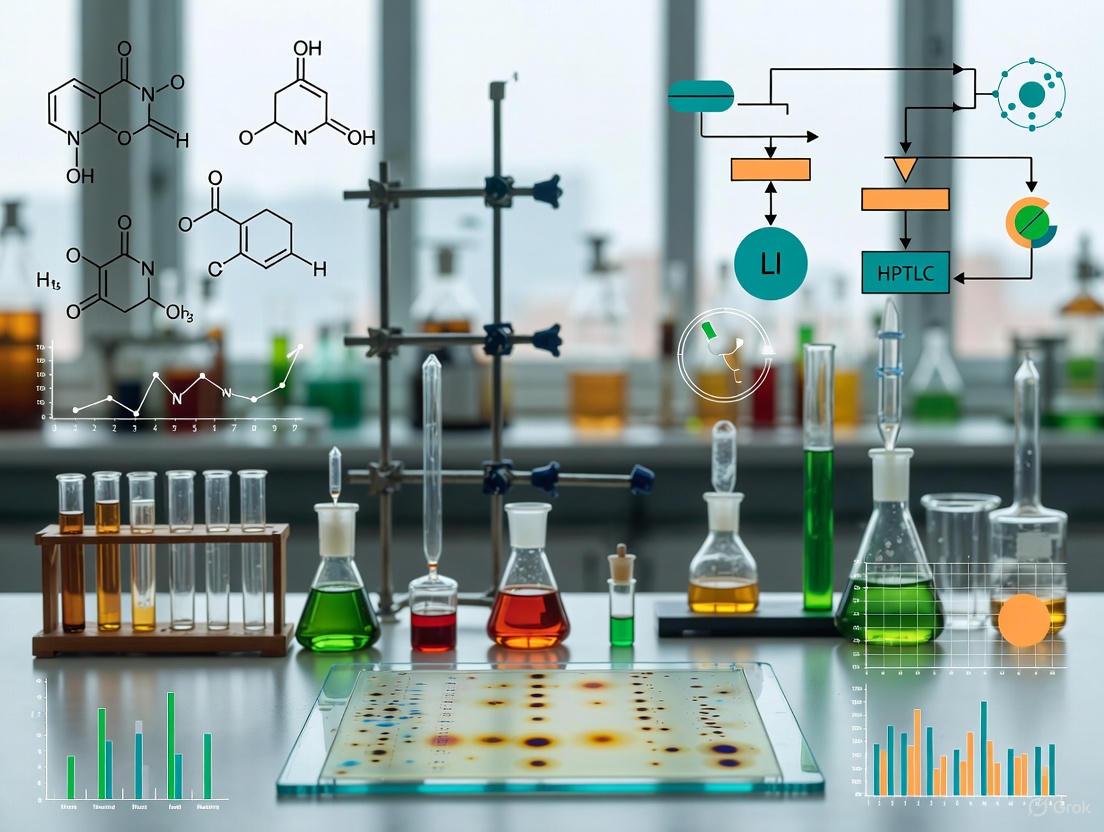
This article provides a comprehensive overview of green High-Performance Thin-Layer Chromatography (HPTLC) for the simultaneous determination of multi-drug therapies.
Green HPTLC for Simultaneous Drug Determination: Sustainable Methods, Applications, and Validation Strategies
Abstract
This article provides a comprehensive overview of green High-Performance Thin-Layer Chromatography (HPTLC) for the simultaneous determination of multi-drug therapies. It explores the foundational principles of green analytical chemistry, detailing methodological developments for analyzing drug combinations in pharmaceutical formulations and biological matrices. The content addresses common troubleshooting scenarios and optimization strategies for robust method development. Furthermore, it covers validation protocols per ICH guidelines and comparative analyses with conventional techniques. Designed for researchers, scientists, and drug development professionals, this resource highlights how green HPTLC offers a sustainable, cost-effective, and high-throughput alternative for quality control and bioanalysis, aligning with modern environmental safety standards without compromising analytical performance.
Principles and Scope of Green HPTLC in Modern Pharmaceutical Analysis
Green Analytical Chemistry (GAC) is an evolving discipline that integrates the principles of green chemistry into analytical methodologies, aiming to reduce the environmental and human health impacts traditionally associated with chemical analysis [1]. The core objective of GAC is to mitigate the detrimental effects of analytical techniques on the natural environment and human health while maintaining high standards of accuracy and precision [1] [2]. This transformative approach aligns analytical processes with the overarching goals of sustainability by minimizing the use of toxic reagents, reducing energy consumption, and preventing the generation of hazardous waste [1].
The beginnings of GAC emerged from green chemistry in 2000, focusing on the role of analytical chemists in making laboratory practices more environmentally friendly [3]. The most important challenge for this discipline is to reach a compromise between the increasing quality of analytical results and improving the environmental friendliness of analytical methods [3]. GAC represents a fundamental shift in how chemical analysis is conducted, emphasizing environmental stewardship, sustainability, and efficiency while positioning itself as a driver of innovation in sustainable chemistry [1].
The Twelve Principles of Green Analytical Chemistry
While the original 12 principles of green chemistry formulated by Anastas and Warner in 1998 were designed primarily for synthetic chemistry, they required revision for full application in analytical chemistry [3]. Key principles like atom economy (principle number 2) were found inadequate for analytical chemistry, while important GAC concepts were missing from the original set [3]. This led to the development of 12 principles specifically tailored for Green Analytical Chemistry.
The Twelve Principles of GAC
The 12 principles of GAC consist of known concepts supplemented with new ideas specifically important for analytical chemistry [3]. The principles are as follows:
- Direct analytical techniques should be applied to avoid sample treatment.
- Minimal sample size and minimal number of samples are goals.
- In situ measurements should be performed.
- Integration of analytical processes and operations saves energy and reduces the use of reagents.
- Automated and miniaturized methods should be selected.
- Derivatization should be avoided.
- Generation of a large volume of analytical waste should be avoided and proper management of analytical waste should be provided.
- Multi-analyte methods are preferred versus methods for one analyte.
- The use of energy should be minimized.
- Reagents obtained from renewable sources should be preferred.
- Toxic reagents should be eliminated or replaced.
- The safety of the operator should be increased [3].
The SIGNIFICANCE Mnemonic
To make these principles more accessible and memorable, the mnemonic SIGNIFICANCE was developed [3]:
- S - Select direct analytical techniques
- I - Integrate analytical processes and operations
- G - Generate no waste
- N - Never waste energy
- I - Implement automation and miniaturization
- F - Favor multi-analyte methods
- I - In situ measurements
- C - Choose renewable sources
- A - Avoid derivatization
- N - Note that the sample number and size should be minimal
- C - Change toxic reagents
- E - Enhance operator safety
The key components that form the backbone of these GAC principles include: (1) elimination or reduction of the use of chemical substances; (2) minimization of energy consumption; (3) proper management of analytical waste; and (4) increased safety for the operator [3].
GAC Principles in Practice: Green HPTLC for Simultaneous Drug Determination
The application of GAC principles in pharmaceutical analysis is particularly valuable in the simultaneous determination of multiple drugs, where High-Performance Thin-Layer Chromatography (HPTLC) offers several advantages for developing green analytical methods.
Green HPTLC Methodology
HPTLC presents multiple opportunities for implementing green principles through method optimization and technological innovation:
- Miniaturization and Reduced Reagent Consumption: HPTLC inherently requires small volumes of mobile phase compared to other chromatographic techniques, aligning with principles of waste prevention and reduced reagent use [4] [5].
- Alternative Detection Systems: The integration of smartphone cameras as detectors represents a recent innovation that reduces energy consumption and equipment costs while maintaining analytical performance [4].
- Green Mobile Phase Selection: Replacing hazardous solvent systems with greener alternatives is a primary approach for greening HPTLC methods. For example, a novel eco-friendly HPTLC method for simultaneous quantification of duloxetine and tadalafil utilized a mobile phase consisting of ethyl acetate, acetonitrile, and 33% ammonia (8:1:1, v/v) [5].
- Multi-analyte Determination: HPTLC readily enables simultaneous analysis of multiple compounds in a single run, supporting Principle 8 of GAC that favors multi-analyte methods over single-analyte methods [3] [4].
Experimental Protocol: Green HPTLC for Simultaneous Determination
Application: Simultaneous quantification of duloxetine (DLX) and tadalafil (TDL) in pharmaceutical formulations and spiked human plasma [5].
Chromatographic Conditions:
- Stationary Phase: Pre-coated silica gel 60 F254 HPTLC plates
- Mobile Phase: Ethyl acetate:acetonitrile:33% ammonia (8:1:1, v/v/v)
- Sample Application: 5 μL as bands with 4 mm width, 6 mm gap between bands
- Development Distance: 70 mm in twin-trough chamber pre-saturated with mobile phase for 10 minutes at room temperature
- Detection: Dual-wavelength detection at 232 nm for DLX and 222 nm for TDL
- Rf Values: 0.3 for DLX and 0.8 for TDL
Sample Preparation:
- Tablet Formulation: Accurately weigh powder equivalent to 50 mg of each drug, extract with methanol, sonicate for 30 minutes, dilute to volume with methanol, and filter.
- Spiked Human Plasma: Add standard solutions to drug-free human plasma, mix using vortex mixer, and prepare appropriate dilutions for application to HPTLC plates.
Validation Parameters (as per ICH guidelines):
- Linearity: 10-900 ng/band for DLX and 10-1200 ng/band for TDL
- Correlation Coefficient: >0.999 for both drugs
- Limit of Detection: 2.7 ng/band for DLX and 2.8 ng/band for TDL
- Limit of Quantification: 8.2 ng/band for DLX and 8.6 ng/band for TDL
- Recovery: 98.7-101.2% for both analytes [5]
Diagram 1: Green HPTLC workflow for simultaneous drug determination, highlighting GAC principles at each stage.
Research Reagent Solutions for Green HPTLC
Table 1: Essential materials and reagents for green HPTLC methods
| Item | Function | Green Considerations |
|---|---|---|
| Silica gel 60 F254 HPTLC plates | Stationary phase for chromatographic separation | Reusable with proper sample application; minimal material consumption per analysis [5] |
| Ethyl acetate | Component of green mobile phase | Relatively low toxicity compared to chlorinated solvents; biodegradable [5] |
| Ethanol or methanol | Extraction solvent | Preferable to acetonitrile; can be derived from renewable sources [6] |
| Acetonitrile | Mobile phase component for specific separations | Use minimized and replaced when possible; proper recycling and disposal required [7] |
| Water | Solvent for extraction or mobile phase | Nontoxic, safe, and readily available; ideal green solvent [1] [6] |
| Ammonia solution | Modifier for mobile phase pH | Low volume usage; replaces more hazardous ion-pair reagents [5] |
Greenness Assessment Tools for Analytical Methods
The evaluation of how "green" an analytical method is requires specialized assessment tools. Several metrics have been developed to quantitatively measure the environmental friendliness of analytical procedures.
Table 2: Greenness assessment tools for analytical methods
| Tool | Approach | Scoring System | Key Parameters Measured |
|---|---|---|---|
| Analytical Eco-Scale (AES) [2] | Penalty points system | Ideal score: 100>75: Excellent green analysis50-75: Acceptable green analysis | Reagent hazards, energy consumption, waste generation |
| Green Analytical Procedure Index (GAPI) [2] [5] | Pictogram with colored segments | 15 parameters evaluated in a pentagram diagram | Sample collection, preparation, transportation, instrumentation, method type |
| Analytical GREEnness (AGREE) [2] [5] | Weighted principles of GAC | 0-1 scale (0=poor, 1=excellent)Circular diagram with color coding | All 12 GAC principles with different weighting factors |
| National Environmental Methods Index (NEMI) [2] | Qualitative pictogram | Four criteria in a circle diagram | Persistence, bioaccumulation, toxicity, corrosivity |
| Whiteness Assessment Criteria (WAC) [2] | Holistic sustainability perspective | Balances greenness with functionality and practicality | Combines environmental impact with analytical performance |
The trend in green assessment is moving toward more comprehensive tools like AGREE that consider all 12 principles of GAC, providing a more complete picture of a method's environmental impact [2] [5]. Additionally, the concept of "whiteness" has emerged to balance environmental impact with functionality, avoiding an unconditional increase in greenness at the expense of analytical performance [2].
Recent Innovations and Future Perspectives
Green Analytical Chemistry continues to evolve with several promising innovations enhancing the sustainability of analytical practices, particularly in the field of drug analysis.
Emerging Trends in GAC
- Green Solvent Applications: The replacement of traditional hazardous solvents with greener alternatives represents a major focus in GAC. Recent research emphasizes the use of water, supercritical carbon dioxide, ionic liquids, and bio-based solvents as replacements for volatile organic compounds (VOCs) [1] [6].
- Energy-Efficient Techniques: Advanced energy utilization techniques such as microwave-assisted extraction, ultrasound-assisted processes, and photo-induced methods are gaining traction for their ability to reduce energy demands while maintaining or improving extraction efficiency [1].
- Miniaturization and Portable Devices: The development of miniaturized analytical systems and portable devices significantly reduces reagent consumption and energy requirements while enabling in-situ measurements [1] [4].
- Smartphone-Based Detection: The remarkable advancement in smartphone cameras has revolutionized their potential as highly accessible, portable, and manageable detectors in various analytical approaches, including HPTLC [4].
- Automation and Chemometric Tools: The integration of automation and chemometric tools enhances precision and efficiency while minimizing resource use through optimized experimental design and data analysis [1].
Diagram 2: The relationship between GAC principles, implementation strategies, assessment tools, and outcomes in sustainable analytical method development.
Application in Simultaneous Drug Determination
The application of GAC principles to the simultaneous determination of drugs using HPTLC has demonstrated significant environmental benefits without compromising analytical performance. Recent studies have shown:
- Waste Reduction: Green HPTLC methods can reduce organic solvent consumption by 30-90% compared to conventional HPLC methods [4] [6].
- Energy Efficiency: Room temperature development and reduced analysis time contribute to lower energy consumption [5].
- Multi-analyte Capability: Simultaneous determination of multiple drugs in a single analysis reduces overall resource consumption and analysis time [3] [4].
- Miniaturization Benefits: Small mobile phase volumes (10-20 mL per analysis) significantly reduce hazardous waste generation [4] [5].
The future of GAC looks promising, with emerging technologies like artificial intelligence and digital tools offering new ways to optimize workflows, minimize waste, and streamline analytical processes [1]. By focusing on these areas, Green Analytical Chemistry is transforming analytical methodologies into tools that not only achieve high performance but also align with global sustainability goals [1].
High-Performance Thin-Layer Chromatography (HPTLC) has emerged as a powerful, versatile technique for the simultaneous determination of multiple pharmaceutical compounds, aligning with the growing emphasis on Green Analytical Chemistry principles. The technique's inherent design provides significant advantages in solvent economy, high throughput, and miniaturization over many conventional chromatographic methods. In the context of green HPTLC research for simultaneous drug determination, these characteristics translate to reduced environmental impact, faster analysis times, and minimal sample requirements. Recent advancements have further enhanced HPTLC's capabilities, with studies demonstrating its effectiveness for analyzing complex drug combinations while incorporating greenness assessment tools like AGREE, Analytical Eco-Scale, and GAPI to quantify environmental sustainability [8] [9] [10].
The fundamental workflow of the HPTLC technique, from sample application to detection and data analysis, is visualized below. This process forms the basis for its advantages in solvent economy, throughput, and miniaturization.
Fundamental Advantages: Quantitative Comparison
The structural and operational characteristics of HPTLC create distinct advantages over other chromatographic techniques, particularly for simultaneous drug analysis. These benefits can be quantified across multiple parameters crucial for efficient pharmaceutical analysis.
Table 1: Comparative Analysis of HPTLC Advantages in Pharmaceutical Applications
| Advantage | Key Feature | Exemplary Data from Literature | Impact on Green Analysis |
|---|---|---|---|
| Solvent Economy | Minimal mobile phase consumption per sample | 10 mL mobile phase for simultaneous analysis of 3 drugs [11] | Reduced hazardous waste generation; Improved greenness scores (AGREE: 0.83-0.88) [9] [10] |
| High Throughput | Parallel processing of multiple samples | 6-8 samples/standards simultaneously on single plate [11] [12] | Reduced energy consumption per sample; Faster analysis times |
| Miniaturization | Small sample volume requirements | 100-200 nL application volume; 200-1200 ng/band analyte range [11] [9] [13] | Minimal reagent consumption; Reduced waste generation |
| Operational Simplicity | Minimal sample preparation | Direct application of extracted samples without tedious clean-up [14] | Reduced overall solvent use; Simpler workflow |
| Flexible Detection | Multiple detection options without instrumental reconfiguration | UV, visible, derivatization; smartphone-based detection alternatives [12] [15] | Adaptable to different analyte types; Cost-effective alternatives |
Detailed Experimental Protocols
Protocol 1: Simultaneous Determination of Multiple Drugs
This protocol for the simultaneous analysis of nadifloxacin, mometasone furoate, and miconazole nitrate demonstrates the core advantages of HPTLC in practice [11].
Materials and Reagents
- HPTLC Plates: Aluminum plates precoated with silica gel 60F₂₅₄ (100 μm thickness)
- Mobile Phase: Methanol:ethyl acetate:toluene:acetonitrile:3M ammonium formate in water (1:2.5:6.0:0.3:0.2, % v/v)
- Standard Solutions: Individual stock solutions (100 μg/mL) of each drug in methanol
- Sample Solutions: Cream formulations extracted with methanol
- Equipment: HPTLC system with Linomat 5 applicator, twin trough chamber, TLC scanner IV
Procedure
- Plate Prewashing: Prewash HPTLC plates with methanol to remove impurities
- Sample Application: Apply standards and samples as 6 mm bands using automated applicator
- Distance from bottom: 10 mm
- Distance from side edges: 15 mm
- Application rate: 150 nL/s
- Concentration range: 400-2400 ng/band for nadifloxacin and miconazole nitrate; 100-600 ng/band for mometasone furoate
- Chromatographic Development:
- Condition twin trough chamber with mobile phase vapor for 20 minutes
- Develop plate using ascending technique to migration distance of 85 mm
- Development time: approximately 15-20 minutes
- Densitometric Analysis:
- Dry plate in air current
- Scan at 224 nm in reflectance-absorbance mode
- Slit dimensions: 6.0 × 0.30 mm
- Scanning speed: 20 mm/s
- Data Analysis: Quantify using peak areas with linear regression
Method Performance
- Retardation Factors (Rf): Nadifloxacin (0.23), Mometasone furoate (0.70), Miconazole nitrate (0.59)
- Accuracy: 98.35-100.25% recovery for all three analytes
- Precision: %RSD < 2% for repeatability and intermediate precision
Protocol 2: Eco-Friendly HPTLC Method for Sorafenib Analysis
This protocol highlights the green chemistry aspects of HPTLC methodology for anticancer drug analysis [9].
Materials and Reagents
- HPTLC Plates: Normal phase (silica gel 60F₂₅₄) and reversed phase (RP-18F₂₅₄S)
- Mobile Phases:
- NP-HPTLC: n-butanol:ethyl acetate
- RP-HPTLC: isopropanol:water:glacial acetic acid
- Standard Solution: Sorafenib stock solution in methanol (1 mg/mL)
- Equipment: HPTLC system with automatic applicator and densitometer
Procedure
- Sample Application:
- Apply standards and samples as spots or bands
- Volume: 2-10 μL depending on concentration
- Linear range: 200-1000 ng/spot for RP-HPTLC; 200-1200 ng/spot for NP-HPTLC
- Chromatographic Development:
- Saturate chamber with mobile phase vapor for 15-20 minutes
- Develop at room temperature to distance of 70-80 mm
- Development time: 10-15 minutes
- Detection and Quantification:
- Scan at 265 nm in absorbance mode
- Measure peak areas and prepare calibration curves
- Greenness Assessment:
- Calculate AGREE scores using appropriate software
- Compare with conventional methods
Method Performance
- Greenness Metrics: AGREE score 0.83 for RP-HPTLC; 0.82 for NP-HPTLC
- Linearity: R² = 0.9998 for RP-HPTLC; R² = 0.9993 for NP-HPTLC
- Application: Successfully applied to marketed formulations with satisfactory results
The Scientist's Toolkit: Essential Research Reagents and Materials
Table 2: Key Research Reagent Solutions for HPTLC Method Development
| Item | Function | Exemplification from Literature |
|---|---|---|
| Silica Gel 60F₂₅₄ Plates | Most common stationary phase for normal-phase separation | Used in majority of methods [11] [14] [16] |
| RP-18F₂₅₄S Plates | Reversed-phase stationary phase for polar compounds | Suvorexant analysis [10] |
| Ammonium Acetate Buffer | Mobile phase modifier for pH control | Hydroxyzine, ephedrine, theophylline separation [14] |
| Derivatization Reagents | Visualize compounds with weak chromophores | Ninhydrin for pregabalin detection [15] |
| Green Solvent Systems | Environmentally friendly mobile phases | Ethanol-water for suvorexant [10]; toluene-isopropanol-ammonia for carvedilol [8] |
Applications in Simultaneous Drug Determination
The advantages of HPTLC make it particularly suitable for challenging analytical scenarios in pharmaceutical analysis:
Analysis of Drugs with Weak Chromophores: For compounds like pregabalin that lack strong UV-absorbing groups, HPTLC methods employing derivatization techniques enable sensitive detection. The method for duloxetine hydrochloride and pregabalin utilizes ninhydrin derivatization to visualize pregabalin, achieving good resolution with Rf values of 0.34 ± 0.02 and 0.52 ± 0.02 for duloxetine and pregabalin, respectively [15].
Fixed-Dose Combination Products: HPTLC excels at analyzing complex drug combinations in single runs. The simultaneous determination of vonoprazan fumarate and aspirin demonstrates this capability, with well-resolved peaks at Rf 0.45 and 0.75, respectively, using a mobile phase of methylene chloride:methanol:glacial acetic acid [12].
Stability-Indicating Methods: The technique effectively separates drugs from their degradation products. For suvorexant analysis, the method demonstrated stability-indicating capability by resolving the drug from oxidative degradation products while maintaining excellent greenness metrics (AGREE score: 0.88) [10].
HPTLC technology provides an exceptional balance of analytical performance and environmental sustainability for simultaneous drug determination. The fundamental advantages of solvent economy, high throughput, and miniaturization position HPTLC as a valuable technique for modern pharmaceutical analysis, particularly within green chemistry frameworks. As research continues to evolve, the integration of HPTLC with innovative detection methods and greener solvent systems will further enhance its applications in quality control and drug development settings.
Application Note: Green HPTLC in Pharmaceutical Analysis
High-Performance Thin-Layer Chromatography (HPTLC) has evolved into a sophisticated, versatile platform that aligns with the principles of Green Analytical Chemistry (GAC). Its key applications in modern pharmaceutical analysis include the simultaneous determination of combination therapies, stability-indicating assays, and bioanalysis. This technique offers distinct advantages of rapid analysis, minimal solvent consumption, cost-effectiveness, and compatibility with advanced detection modalities, making it particularly suitable for routine quality control and research laboratories [17].
The inherent "green" characteristics of HPTLC—including low solvent consumption (often <10 mL per analysis), minimal energy requirements, and reduced waste generation—have been quantitatively validated through modern greenness assessment tools such as AGREE, GAPI, and Analytical Eco-Scale [8] [17]. Furthermore, the development of "HPTLC+" multimodal platforms through integration with techniques like mass spectrometry (MS), surface-enhanced Raman spectroscopy (SERS), and near-infrared spectroscopy (NIR) has significantly expanded its analytical capabilities for complex pharmaceutical applications [17].
Application Areas and Experimental Protocols
Combination Therapies Analysis
Background: The pharmaceutical industry increasingly relies on fixed-dose combination (FDC) products to enhance therapeutic efficacy and patient compliance. HPTLC provides an ideal platform for the simultaneous quantification of multiple active ingredients in these formulations, offering the advantages of parallel sample processing and reduced analysis time compared to column chromatographic techniques [4].
Representative Protocol: Simultaneous Determination of Mirabegron and Tamsulosin [18]
- Pharmaceutical Context: This combination addresses overactive bladder symptoms in men with benign prostatic hyperplasia, representing a therapy with components having significantly different dosage strengths.
- Chromatographic Conditions:
- Stationary Phase: TLC silica gel 60 F₂₅₄ aluminum sheets (20 × 20 cm, 0.25 mm thickness)
- Mobile Phase: Methanol-ethyl acetate-ammonia (3:7:0.1, v/v/v)
- Development: Ascending development in twin-trough glass chamber saturated for 30 minutes, migration distance of 75 mm
- Detection: Densitometry at 270 nm
- Sample Preparation:
- Laboratory-prepared mixtures or powdered tablet contents are dissolved in and diluted with methanol.
- Solutions are sonicated and filtered through a 0.45 μm membrane filter before application.
- Key Analytical Performance:
- Retention Factors: Rf = 0.42 ± 0.02 for mirabegron, Rf = 0.63 ± 0.02 for tamsulosin
- Linearity: 0.15–7.5 μg/band for mirabegron, 0.05–2.5 μg/band for tamsulosin
- Accuracy: Mean percentage recoveries of 100.04% ± 0.56 (mirabegron) and 99.98% ± 0.95 (tamsulosin)
Table 1: Representative HPTLC Methods for Combination Therapies
| Drug Combination | Matrix | Mobile Phase Composition | Retention Factors (Rf) | Linearity Range | Greenness Metrics |
|---|---|---|---|---|---|
| Mirabegron + Tamsulosin [18] | Pharmaceutical dosage form | Methanol-ethyl acetate-ammonia (3:7:0.1, v/v) | 0.42 (MIR), 0.63 (TAM) | 0.15–7.5 μg/band (MIR), 0.05–2.5 μg/band (TAM) | AGREE: High rating |
| Dapagliflozin + Bisoprolol fumarate [19] | Combined oral formulation | Chloroform:toluene:methanol:ammonia (1:2:6:0.1 v/v/v) | 0.22 (DAPA), 0.63 (BSF) | 200–1200 ng/band (DAPA), 100–600 ng/band (BSF) | MoGAPI: Comprehensive assessment |
| Tolperisone + Aceclofenac + Paracetamol + Etodolac [4] | Combined tablets | Ethyl acetate-methanol-glacial acetic acid (8.5:1.5:0.25, v/v/v) | Not specified | 1.0–7.0 μg/band (all components) | RGB algorithm with Eco-Scale and AGREE |
| Bisoprolol fumarate + Amlodipine besylate + 4-hydroxybenzaldehyde [20] | Pharmaceutical dosage form | Ethyl acetate-ethanol (7:3, v/v) | 0.29 (HBZ), 0.72 (AML), 0.83 (BIP) | Wide linear ranges demonstrated | AGREE: Perfect score |
Stability-Indicating Assays
Background: Stability-indicating methods are crucial for pharmaceutical development to quantify active ingredients and profile degradation products under various stress conditions. HPTLC is particularly valuable for this application due to its ability to separate multiple components and degradation products simultaneously on a single plate [8] [10].
Representative Protocol: Stability-Indicating Assay for Suvorexant [10]
- Pharmaceutical Context: Suvorexant is a sedative/hypnotic drug used for insomnia treatment, requiring monitoring of stability in pharmaceutical dosage forms.
- Chromatographic Conditions:
- Stationary Phase: Silica gel 60 RP-18F₂₅₄S glass-coated plates (10 × 20 cm)
- Mobile Phase: Ethanol/water (75:25, v/v)
- Development: Linear ascending mode in automated developing chamber, migration distance of 8 cm
- Detection: Densitometry at 255 nm
- Forced Degradation Studies:
- Acidic, alkaline, oxidative, and thermal stress conditions are applied to drug substances and products.
- The method effectively separates suvorexant from its degradation products, demonstrating specificity.
- Key Analytical Performance:
- Linearity: 10–1200 ng/band
- Accuracy: Percentage recoveries of 98.18–99.30%
- Sensitivity: LOD = 3.32 ng/band, LOQ = 9.98 ng/band
- Precision: % CV = 0.78–0.94
Table 2: Stability-Indicating HPTLC Methods for Pharmaceutical Compounds
| Analytes | Stress Conditions Studied | Separation Efficiency | Linearity | Validation Parameters |
|---|---|---|---|---|
| Suvorexant [10] | Acidic, alkaline, oxidative, thermal | Baseline separation from degradants | 10–1200 ng/band | Accuracy: 98.18–99.30%, Precision: % CV ≤ 0.94 |
| Carvedilol [8] | Acidic, alkaline, oxidative, photolytic, thermal | Effective separation of carvedilol and degradants | 20–120 ng/band | Accuracy: 99–101% of label claim |
| Dapagliflozin + Bisoprolol fumarate [19] | Acidic, alkaline, oxidative, thermal, photolytic | Baseline-resolved degradation products | 200–1200 ng/band (DAPA), 100–600 ng/band (BSF) | Precision: % RSD < 2% |
| Mirabegron + Tamsulosin [18] | According to ICH guidelines | Effective separation from degradation products | 0.15–7.5 μg/band (MIR), 0.05–2.5 μg/band (TAM) | Statistical analysis showed high precision and accuracy |
Bioanalysis and Complex Matrices
Background: HPTLC demonstrates significant utility in analyzing complex biological matrices, offering simplified sample preparation and high throughput capabilities. Its application in monitoring drug residues in tissue samples is particularly valuable for food safety and regulatory compliance [21].
Representative Protocol: Determination of Florfenicol and Meloxicam in Bovine Tissue [21]
- Regulatory Context: Monitoring veterinary drug residues in edible tissues is critical for public health protection, with established maximum residue limits (MRLs).
- Chromatographic Conditions:
- Stationary Phase: Aluminum HPTLC plates coated with silica gel 60 F₂₅₄
- Mobile Phase: Glacial acetic acid-methanol-triethylamine-ethyl acetate (0.05:1.00:0.10:9.00, by volume)
- Detection: Densitometry at 230 nm with esomeprazole as internal standard
- Sample Preparation:
- Bovine muscle tissue is homogenized and spiked with target analytes.
- Samples are treated with EDTA solution followed by extraction and filtration.
- Internal standard is added to compensate for analytical variability.
- Key Analytical Performance:
- Linearity: 0.03–3.00 μg/band for meloxicam, 0.50–9.00 μg/band for florfenicol
- Application: Successfully quantified drugs in spiked quality control samples at low, medium, and high concentrations
The Scientist's Toolkit: Essential Research Reagent Solutions
Table 3: Key Reagents and Materials for Green HPTLC Methods
| Item | Specification | Function in HPTLC Analysis |
|---|---|---|
| HPTLC Plates | Silica gel 60 F₂₅₄, 10×10 cm or 20×20 cm, 0.20-0.25 mm thickness [19] [18] | Stationary phase for chromatographic separation; F₂₅₄ indicates fluorescent indicator for UV detection |
| Mobile Phase Components | HPLC-grade solvents (methanol, ethyl acetate, ethanol, toluene) with modifiers (ammonia, glacial acetic acid, triethylamine) [18] [21] | Liquid phase for compound separation through capillary flow; composition critically affects resolution and selectivity |
| Derivatization Reagents | Ninhydrin for compounds with weak chromophores [15] | Chemical visualization of non-UV-absorbing compounds through specific reactions |
| Standard Solutions | Certified reference standards of target analytes (purity >98%) [19] [10] | Quantitative calibration and method validation; essential for accuracy determination |
| Sample Application Syringe | CAMAG microsyringe (100 μL capacity) [19] [21] | Precise sample deposition onto HPTLC plates in band formation |
| Densitometer | CAMAG TLC Scanner 3 with deuterium and tungsten lamps [20] | Quantitative measurement of spot intensity after chromatographic development |
| Image Analysis Software | ImageJ (open source) or WinCATS (commercial) [4] | Quantitative analysis of chromatographic results, including spot intensity measurement |
Workflow and Pathway Diagrams
HPTLC Analysis Workflow
HPTLC Multimodal Detection
High-Performance Thin-Layer Chromatography (HPTLC) has evolved into a sophisticated analytical platform that aligns with the principles of Green Analytical Chemistry (GAC), offering rapid, cost-efficient, and sustainable analysis for pharmaceutical quality control [17]. The simultaneous determination of multiple drug compounds presents significant analytical challenges, including method selectivity, sensitivity, and the need for minimal environmental impact. Modern HPTLC addresses these challenges through intelligent selection of green solvents, advanced stationary phases, and innovative detection systems [22] [21]. This framework establishes a foundation for sustainable pharmaceutical analysis that meets rigorous validation requirements while minimizing ecological footprint, positioning HPTLC as a versatile tool for drug development professionals and researchers engaged in simultaneous drug quantification [8] [20].
Core Component I: Green Solvent Selection
The transition to green solvent systems represents a fundamental aspect of sustainable HPTLC method development, directly addressing waste reduction and safety concerns in analytical laboratories.
Green Solvent Principles and Selection Criteria
Green solvent selection in HPTLC follows core GAC principles including waste prevention, use of safer solvents, and design for energy efficiency [17]. Solvent selection directly influences method greenness, with metrics like AGREE, Analytical Eco-Scale, and GAPI providing quantitative assessment tools [8] [22]. Modern HPTLC methods specifically avoid carcinogenic solvents, instead employing environmentally benign alternatives that maintain chromatographic performance while reducing toxicity [8]. The "greenness" of HPTLC stems from significantly reduced solvent consumption (<10 mL per analysis) compared to HPLC, coupled with the ability to process multiple samples simultaneously on a single plate, dramatically reducing solvent waste per sample [17].
Green Mobile Phase Systems for Simultaneous Drug Analysis
Table 1: Green Mobile Phase Systems for Simultaneous Drug Determination
| Drug Combination | Mobile Phase Composition (v/v) | Green Attributes | Application Reference |
|---|---|---|---|
| Carvedilol | Toluene:isopropanol:ammonia (7.5:2.5:0.1) | Avoids carcinogenic solvents; minimal ammonia modifier | [8] |
| Mirabegron & Tamsulosin | Methanol:ethyl acetate:ammonia (3:7:0.1) | Reduced toxicity; simplified composition | [22] |
| Florfenicol & Meloxicam | Glacial acetic acid:methanol:triethylamine:ethyl acetate (0.05:1.0:0.1:9.0) | Low modifier percentages; ethanol-free | [21] |
| Ivabradine & Metoprolol | Chloroform:methanol:formic acid:ammonia (8.5:1.5:0.2:0.1) | Optimized for minimal harmful constituents | [23] |
| Bisoprolol & Amlodipine | Ethyl acetate:ethanol (7:3) | Solvent recyclability; ethanol as green solvent | [20] |
| Tolperisone & Pain Killers | Ethyl acetate:methanol:glacial acetic acid (8.5:1.5:0.25) | Enhanced bio-degradability; reduced waste | [4] |
Solvent Optimization Strategies
Method development employs systematic optimization through experimental designs that balance solvent strength with selectivity while maintaining green principles [24]. Strategies include using Snyder's selectivity triangle to identify alternative solvents with similar chromatographic properties but improved environmental profiles [24]. Successful approaches incorporate minimal percentages of modifiers (e.g., ammonia, acetic acid) in predominantly green base solvent systems to achieve desired separation without compromising sustainability goals [8] [22]. The transition from traditional solvent systems to greener alternatives demonstrates that environmental benefits can be achieved without sacrificing analytical performance in simultaneous drug analysis [23] [4].
Core Component II: Stationary Phases
Stationary phase selection fundamentally governs separation mechanism, selectivity, and efficiency in HPTLC methods for simultaneous drug determination.
Conventional and Advanced Stationary Phases
Silica gel 60 F₂₅₄ remains the predominant stationary phase for normal-phase HPTLC applications, providing excellent separation for a wide range of pharmaceutical compounds [8] [22] [21]. The F₂₅₄ designation indicates incorporation of a fluorescence indicator (254 nm) for UV visualization. Modern HPTLC extends beyond conventional silica phases to include reversed-phase materials (RP-18, RP-8), cyanopropyl-bonded phases, amino-bonded phases, and chiral stationary phases for specialized applications [24]. The integration of functional nanomaterials represents a significant advancement, with Metal-Organic Frameworks (MOFs) demonstrating particular utility for selective analyte enrichment and trace contaminant detection in complex matrices [17]. These material-enabled enhancements improve sensitivity and selectivity while maintaining the green advantages of HPTLC platforms.
Stationary Phase Innovations for Enhanced Separations
Innovative stationary phase engineering facilitates challenging separations required for simultaneous drug quantification. Metal-Organic Framework-modified plates create tailored selectivity through their modular architecture and tunable pore functionality, particularly beneficial for detecting trace-level contaminants in complex food and pharmaceutical matrices [17]. The development of dual-layer plates (Multi-K) enables both reversed-phase and normal-phase development on a single plate, significantly increasing separation capabilities for complex mixtures [24]. Furthermore, particle size optimization in HPTLC (typically 5-6 μm) provides superior resolution, sharper peaks, and enhanced sensitivity compared to conventional TLC, which is essential for quantifying drugs present at vastly different concentration ranges [22] [24].
Strategic Stationary Phase Selection
Table 2: Stationary Phase Selection Guide for Pharmaceutical Applications
| Stationary Phase Type | Separation Mechanism | Optimal Application | Example Drug Analysis |
|---|---|---|---|
| Silica gel 60 F₂₅₄ | Adsorption (normal-phase) | Polar pharmaceuticals; most routine analyses | Carvedilol, Tamsulosin, Ivabradine [8] [22] [23] |
| RP-18 & RP-8 | Partition (reversed-phase) | Non-polar to moderately polar compounds | Mirabegron, Florfenicol [22] [21] |
| CN, NH₂ bonded phases | Mixed-mode mechanisms | Specialized separations; complementary selectivity | Complex drug mixtures [24] |
| MOF-modified plates | Size exclusion & affinity | Trace contaminant detection; selective enrichment | Impurity profiling [17] |
| Dual-layer (Multi-K) | Sequential orthogonal mechanisms | Highly complex mixtures | Multicomponent formulations [24] |
Core Component III: Detection Systems
Modern HPTLC incorporates diverse detection modalities that significantly expand its capabilities for pharmaceutical analysis, from simple UV detection to sophisticated hyphenated techniques.
Conventional Detection Methods
Ultraviolet detection at 254 nm (fluorescence quenching) or 366 nm (native fluorescence) represents the most widely employed detection method in pharmaceutical HPTLC [22] [23]. Densitometric scanning provides quantitative analysis through reflectance-absorbance measurements at compound-specific wavelengths (e.g., 275 nm for caffeine, 270 nm for mirabegron/tamsulosin) [22] [25]. Post-chromatographic derivatization with chemical reagents (e.g., charring with sulfuric acid, ninhydrin for amines) enhances detection sensitivity and selectivity for compounds with poor UV absorbance [24]. These conventional methods offer robust, cost-effective detection suitable for routine quality control applications in pharmaceutical analysis.
Advanced Hyphenated Detection Platforms
The "HPTLC+" concept integrates planar chromatography with sophisticated detection technologies, creating multimodal platforms with enhanced capabilities [17]. HPTLC-MS coupling enables structural identification and confirmation through direct elution of zones into mass spectrometers, combining separation efficiency with high-resolution molecular specificity [17]. HPTLC-SERS (Surface-Enhanced Raman Spectroscopy) provides molecular fingerprinting through enhanced Raman scattering on nanostructured metallic surfaces, offering exceptional specificity for compound identification [17]. HPTLC-NIR (Near-Infrared Spectroscopy) facilitates non-destructive compositional profiling, ideal for food freshness monitoring and natural product analysis [17]. Bioautography interfaces HPTLC with biological detection, enabling function-directed screening of antimicrobial or enzyme-inhibiting compounds directly on the chromatographic plate [17].
Innovative and Emerging Detection Technologies
Table 3: Advanced Detection Systems in Modern HPTLC
| Detection System | Principle | Sensitivity | Primary Applications |
|---|---|---|---|
| Densitometry (UV/Vis) | Reflectance-absorbance | ng/band range | Routine quantification [22] [23] |
| HPTLC-MS | Mass spectrometry | pg/band range | Structural elucidation [17] |
| HPTLC-SERS | Surface-enhanced Raman scattering | Single molecule level | Molecular fingerprinting [17] |
| HPTLC-NIR | Near-infrared spectroscopy | Non-destructive | Compositional profiling [17] |
| Bioautography | Biological activity | Variable | Bioactive compound detection [17] |
| Smartphone-based | Image analysis | µg/band range | Point-of-care testing [4] |
Emerging detection platforms include smartphone-based quantification, where camera images of developed plates are analyzed using software like ImageJ, creating accessible, portable, and cost-effective alternatives to traditional densitometry [4]. Fluorescence detection with mercury lamps provides enhanced sensitivity and selectivity for native fluorescent compounds or those amenable to fluorescence derivatization [23]. The Camag BioLuminizer utilizes bioluminescence (Vibrio fischeri) for effect-directed analysis, identifying toxic compounds in complex mixtures [24]. These innovations significantly expand HPTLC application scope while maintaining alignment with green analytical principles.
Integrated Experimental Protocols
Protocol 1: Green HPTLC Method for Simultaneous Determination of Cardiovascular Drugs
Application: Simultaneous quantification of bisoprolol fumarate (BIP), amlodipine besylate (AML), and mutagenic impurity 4-hydroxybenzaldehyde (HBZ) in pharmaceutical formulations [20].
Materials and Reagents:
- Stationary phase: Silica gel 60 F₂₅₄ plates (10 × 10 cm, 0.2 mm thickness)
- Mobile phase: Ethyl acetate-ethanol (7:3, v/v)
- Standard solutions: 1 mg/mL BIP, AML, and HBZ in methanol
- Application: CAMAG Linomat 5 automated applicator with 100 μL syringe
- Development: CAMAG ADC2 automated development chamber
- Detection: CAMAG TLC Scanner 3 at 225 nm
Experimental Procedure:
- Plate Preparation: Pre-wash plates with methanol and activate at 100°C for 5 min
- Sample Application: Apply as 8 mm bands, 10 mm from bottom and edge, 10 mm intervals
- Chromatographic Development: Equilibrate chamber for 25 min (25°C, 40% RH), develop to 80 mm distance
- Densitometric Analysis: Scan at 225 nm with deuterium lamp, slit dimensions 8 × 0.1 mm
- Quantification: Construct calibration curves (20-200 ng/band for BIP, 10-100 ng/band for AML, 5-50 ng/band for HBZ)
Validation Parameters:
- Linearity: R² ≥ 0.9995 for all analytes
- Precision: RSD ≤ 2% (intra-day and inter-day)
- Detection limits: 3.56 ng/band (BIP), 5.42 ng/band (AML), 20.52 ng/band (HBZ)
- Greenness assessment: AGREE score > 0.85, perfect NEMI pictogram
Protocol 2: Sustainability-Focused HPTLC for Veterinary Drug Residues
Application: Simultaneous determination of florfenicol and meloxicam in bovine muscle tissue [21].
Materials and Reagents:
- Stationary phase: Silica gel 60 F₂₅₄ plates (20 × 20 cm, 0.25 mm thickness)
- Mobile phase: Glacial acetic acid:methanol:triethylamine:ethyl acetate (0.05:1.00:0.10:9.00, by volume)
- Internal standard: Esomeprazole (ESO), 1000 μg/mL in methanol
- Extraction solvent: Methanol with 0.5 mL 1N NaOH
- Tissue: Bovine muscle homogenized with mortar and pestle
Sample Preparation:
- Homogenize 2 g bovine muscle tissue
- Spike with FLR (0.50-9.00 μg/band) and MEL (0.03-3.00 μg/band)
- Add 300 μL 0.10 N EDTA and 0.50 mL ESO internal standard
- Extract with methanol:NaOH solution, vortex for 3 min, centrifuge at 5000 rpm for 10 min
- Filter through 0.45 μm nylon membrane
Chromatographic Conditions:
- Application: 10 μL samples as bands using CAMAG Linomat V
- Development: Twin-trough chamber pre-saturated for 15 min with mobile phase
- Migration distance: 70 mm at room temperature
- Detection: Densitometry at 230 nm, deuterium lamp
- Quantification: Peak area ratios (analyte/IS) versus concentration
Sustainability Metrics:
- Solvent consumption: <10 mL per analysis
- Waste generation: Minimal (<5 g hazardous waste)
- Energy consumption: Low (ambient temperature development)
- Green assessment: AGREE, NEMI, GAPI, Eco-Scale, and GEMI metrics
Protocol 3: Smartphone-Based Detection for Point-of-Care Analysis
Application: Simultaneous determination of tolperisone HCl with three co-formulated pain killers (aceclofenac, paracetamol, etodolac) [4].
Innovative Components:
- Detection: Smartphone camera with UV illumination chamber
- Analysis: ImageJ software for spot quantification
- Green Mobile Phase: Ethyl acetate:methanol:glacial acetic acid (8.5:1.5:0.25, v/v)
Procedure:
- Develop plates using standard HPTLC protocol
- Visualize under UV lamp at 254 nm
- Capture plate image using smartphone camera in fixed-position chamber
- Import image to ImageJ software, convert to 8-bit grayscale
- Measure spot intensities using gel analysis function
- Construct calibration curves (1.0-7.0 μg/band for all analytes)
Performance Comparison:
- Smartphone detection: Linear range 1.0-7.0 μg/band
- Densitometry: Linear range 100-700 ng/band (TOLP), 100-600 ng/band (ACEC)
- Sustainability: Excellent RGB 12 algorithm scores, high whiteness index
The Scientist's Toolkit: Essential Research Reagents and Materials
Table 4: Essential Research Reagents and Materials for Green HPTLC
| Item | Specification | Function | Example Sources/References |
|---|---|---|---|
| HPTLC Plates | Silica gel 60 F₂₅₄, 0.25 mm thickness | Stationary phase for separation | Merck [8] [22] [21] |
| Green Solvents | Ethyl acetate, ethanol, methanol, ethyl acetate | Mobile phase components | Fisher Scientific, EL-Nasr [22] [21] [20] |
| Application System | CAMAG Linomat 4/5 with 100 μL syringe | Precise sample application | CAMAG [26] [21] [23] |
| Development Chamber | CAMAG twin-trough or ADC2 | Controlled chromatographic development | CAMAG [26] [23] [20] |
| Densitometer | CAMAG TLC Scanner 3/4 | Quantitative zone measurement | CAMAG [22] [21] [23] |
| Documentation System | CAMAG TLC visualizer | Digital chromatogram recording | CAMAG [26] |
| Chemical Standards | Pharmaceutical reference standards | Method development and validation | Sigma-Aldrich, manufacturers [22] [21] [23] |
| Derivatization Reagents | Specific to analyte class | Zone visualization enhancement | Various [24] |
Method Validation and Sustainability Assessment
Modern HPTLC methods for simultaneous drug determination require rigorous validation per ICH guidelines, including linearity, accuracy, precision, specificity, LOD, LOQ, and robustness [8] [22] [21]. The environmental profile represents an equally critical validation parameter, assessed through multiple metrics.
Greenness Assessment Tools
Analytical Eco-Scale: Evaluates penalty points for hazardous reagents, energy consumption, and waste [22] [23]. Excellent methods score >75 [22]. AGREE Metric: Uses 0-1 scale across 12 GAC principles, providing comprehensive environmental impact assessment [8] [22] [20]. NEMI Pictogram: Four-quadrant diagram indicating whether method meets basic green criteria [8] [20]. GAPI: Full life-cycle assessment of method greenness [8] [22]. White Analytical Chemistry: Balances greenness with analytical and practical quality [8] [4].
Validation Parameters for Regulatory Compliance
HPTLC methods must demonstrate linearity across relevant concentration ranges (typically 50-120% of target concentration), with correlation coefficients (R²) ≥0.995 [8] [22]. Accuracy (recovery 98-102%) and precision (RSD ≤2%) establish method reliability [21] [23]. Forced degradation studies under acidic, alkaline, oxidative, thermal, and photolytic conditions confirm method stability-indicating capability [8] [22]. System suitability parameters ensure consistent chromatographic performance across analysts, instruments, and laboratories [21].
The strategic integration of green solvents, advanced stationary phases, and innovative detection systems establishes HPTLC as a powerful, sustainable platform for simultaneous drug determination. The methodologies and protocols detailed provide pharmaceutical researchers with validated approaches that balance analytical excellence with environmental responsibility. Future directions point toward increased integration of computational methods, nanotechnology-enhanced materials, and portable detection systems that further advance the green analytical capabilities of HPTLC. By adopting these frameworks, drug development professionals can address evolving regulatory requirements while contributing to sustainable analytical practices aligned with global environmental goals.
In the field of pharmaceutical analysis, the development of methods for the simultaneous determination of drugs is guided by two critical frameworks: regulatory standards and green chemistry principles. Regulatory guidelines, primarily those established by the International Council for Harmonisation (ICH), ensure that analytical procedures are validated, reliable, and fit for their intended purpose, providing a foundation for product quality, safety, and efficacy. Concurrently, the principles of Green Analytical Chemistry (GAC) advocate for the design of procedures that minimize environmental impact, reduce the use of hazardous substances, and enhance operator safety. The integration of these frameworks is particularly vital in high-performance thin-layer chromatography (HPTLC), a technique valued for its high-throughput capability and minimal solvent consumption [22] [27]. This document outlines the core requirements of the ICH guidelines, details the application of modern greenness assessment metrics—AGREE, GAPI, and Analytical Eco-Scale—and provides a detailed protocol for a green HPTLC method for the simultaneous quantification of pharmaceutical compounds, contextualized within broader research on sustainable analytical practices.
ICH Regulatory Guidelines for Analytical Method Validation
The ICH guideline Q2(R2) provides a comprehensive framework for the validation of analytical procedures, ensuring that the methods used in pharmaceutical analysis are suitable for their intended purpose. For the simultaneous determination of drugs using HPTLC, the following validation parameters, as demonstrated in recent studies, must be established:
Linearity and Range: The method should demonstrate a directly proportional relationship between the response (peak area) and the concentration of the analyte over a specified range. For instance, in the simultaneous analysis of Mirabegron (MIR) and Tamsulosin (TAM), linearity was confirmed over ranges of 0.15–7.5 µg/band and 0.05–2.5 µg/band, respectively, with correlation coefficients (r) of 0.9999 or better [22]. Similarly, a method for Duloxetine (DLX) and Tadalafil (TDL) showed linearity across 10–900 ng/band and 10-1200 ng/band [5].
Precision: This is evaluated as both repeatability (intra-day precision) and intermediate precision (inter-day precision). Results are typically expressed as percentage relative standard deviation (% RSD). In published green HPTLC methods, % RSD values are consistently below 2%, confirming high precision [22] [5].
Accuracy: Assessed through recovery studies by spiking a known amount of the standard into a sample matrix (e.g., pre-analyzed tablet powder or plasma). Recovery should ideally be in the range of 98–102%. Methods for Celecoxib and Tramadol in spiked human plasma have demonstrated accurate results within this acceptable range [27].
Specificity: The ability of the method to unequivocally assess the analyte in the presence of components that may be expected to be present, such as excipients, degradation products, or co-formulated drugs. Specificity is confirmed by well-separated bands with distinct Rf values, for example, Rf 0.42 for MIR and 0.63 for TAM [22]. Forced degradation studies (acid, base, oxidative, thermal, photolytic) are conducted to prove the stability-indicating property of the method.
Detection and Quantitation Limits (LOD and LOQ): LOD and LOQ represent the sensitivity of the method. They can be calculated based on the standard deviation of the response and the slope of the calibration curve. A method for DLX and TDL reported LODs of 2.7 and 2.8 ng/band, respectively, demonstrating high sensitivity [5].
Table 1: Summary of Key Validation Parameters from Case Studies
| Analytes (Drugs) | Linearity Range | Precision (% RSD) | Accuracy (% Recovery) | LOD/LOQ | Citation |
|---|---|---|---|---|---|
| Mirabegron & Tamsulosin | 0.15–7.5 µg/band & 0.05–2.5 µg/band | < 2% | ~100% | Not Specified | [22] |
| Celecoxib & Tramadol | 0.025–1 µg/band & 0.2–10 µg/mL (plasma) | Satisfying | Satisfying | Not Specified | [27] |
| Duloxetine & Tadalafil | 10–900 ng/band & 10-1200 ng/band | < 2% | Confirmed | 2.7/8.2 ng/band & 2.8/8.6 ng/band | [5] |
Greenness Assessment Metrics
The greenness of an analytical method is quantitatively and qualitatively evaluated using several established metrics. Employing more than one tool provides a synergistic and comprehensive understanding of the method's environmental impact [28].
Analytical Eco-Scale
The Analytical Eco-Scale is a semi-quantitative assessment tool that assigns penalty points to an analytical procedure based on its environmental and safety parameters. A total score out of 100 is calculated by subtracting penalty points from an ideal value of 100. Parameters penalized include the use of hazardous reagents/solvents, energy consumption, waste generation, and occupational hazards [22] [29]. The method's greenness is interpreted as:
- Excellent: >75
- Acceptable green: 50–74
- Inadequate green: <50 [29]
Green Analytical Procedure Index (GAPI)
The Green Analytical Procedure Index (GAPI) uses a colored pictogram of five pentagrams to provide a visual profile of the environmental impact across the entire analytical process, from sample collection to waste treatment [22]. Each section is colored green, yellow, or red to indicate low, medium, or high environmental impact, respectively. While highly informative, a limitation of the original GAPI is the lack of a single total score for easy comparison [29]. This has been addressed by recent modifications like the Modified GAPI (MoGAPI), which calculates a percentage score, allowing methods to be classified as excellent green (≥75), acceptable green (50–74), or inadequately green (<50) [29].
Analytical GREEnness (AGREE) Metric
The AGREE metric is a more recent, comprehensive tool that evaluates method performance against all 12 principles of GAC. It generates a circular pictogram where each section represents one principle, and the score for each principle contributes to an overall percentage in the center [5]. The output is a visually intuitive graphic where a greener color and a higher central score indicate a more environmentally friendly method. This tool is often used in parallel with GAPI and Eco-Scale for a multi-faceted assessment [22] [5].
Comparative Analysis of Greenness Tools
Table 2: Comparison of Major Greenness Assessment Metrics
| Metric | Type of Output | Key Parameters Assessed | Advantages | Disadvantages |
|---|---|---|---|---|
| Analytical Eco-Scale | Quantitative (Score out of 100) | Reagents, energy, waste, hazards [29] | Simple calculation, easy comparison [29] | Lacks visual impact; does not consider hazard severity in detail [29] |
| GAPI | Qualitative (Color Pictogram) | Sample handling, extraction, instrumentation, reagents, waste [22] | Visual, covers entire method lifecycle [22] | No single score for easy comparison (addressed in MoGAPI) [29] |
| AGREE | Semi-Quantitative (Pictogram & Score) | All 12 principles of GAC [28] | Most comprehensive, aligns with GAC principles, visual and numerical output | Requires more detailed input parameters |
The following diagram illustrates the logical workflow for integrating ICH validation with greenness assessment in method development:
Detailed Application Note: Green HPTLC Protocol for Simultaneous Drug Analysis
This protocol details a green HPTLC method for the simultaneous estimation of Mirabegron (MIR) and Tamsulosin (TAM) in a laboratory-prepared mixture, as adapted from the literature [22]. The method has been validated per ICH guidelines and its greenness assessed using multiple metrics.
The Scientist's Toolkit: Essential Materials and Reagents
Table 3: Key Research Reagent Solutions and Materials
| Item | Specification / Function | Example from Protocol |
|---|---|---|
| HPTLC Plates | Stationary phase for chromatographic separation. | TLC silica gel 60 F254 aluminum sheets, 20 × 20 cm, 0.25 mm thickness [22]. |
| Mobile Phase | Liquid solvent system that elutes analytes through the stationary phase. | Methanol-ethyl acetate-ammonia (3:7:0.1, v/v) [22]. |
| Sample Applicator | Precisely applies samples as discrete bands onto the HPTLC plate. | CAMAG Linomat autosampler with CAMAG micro syringe [22]. |
| Development Chamber | A saturated chamber where the mobile phase ascends the plate via capillary action. | CAMAG twin-trough glass chamber (20 cm × 10 cm) [22]. |
| Densitometer Scanner | Quantifies the concentration of analytes by measuring the absorbance/fluorescence of bands. | CAMAG TLC Scanner 3 with deuterium lamp, scanning at 270 nm [22]. |
| Software | Controls the instrument and processes chromatographic data. | WinCATS software [22]. |
Experimental Workflow and Protocol
The following diagram maps the entire experimental workflow from sample preparation to greenness assessment:
Sample and Standard Preparation
- Standard Stock Solutions (1 mg/mL): Accurately weigh 10 mg of MIR and TAM reference standards into separate 10 mL volumetric flasks. Dissolve and make up to volume with methanol.
- Working Standard Mixture: Transfer 7.5 mL of MIR stock and 2.5 mL of TAM stock into a 10 mL volumetric flask. Dilute to volume with methanol to obtain a solution containing 0.75 mg/mL MIR and 0.25 mg/mL TAM.
- Laboratory-Prepared Mixture (Tablet Simulation): Powder five tablets of each drug. Weigh amounts equivalent to 50 mg MIR and 0.4 mg TAM and transfer to a single 100 mL volumetric flask. Add 70 mL of methanol, sonicate for 30 minutes, dilute to volume with methanol, and filter through a 0.45 µm membrane.
Chromatographic Procedure
- Application: Using an autosampler, apply different volumes (e.g., 0.2–10.0 µL) of the working standard mixture in triplicate as 4 mm bands onto the HPTLC plate, 15 mm from the bottom edge.
- Development: Place the spotted plate in a twin-trough chamber previously saturated for 30 minutes with 20 mL of the mobile phase (methanol-ethyl acetate-ammonia, 3:7:0.1, v/v). Allow the mobile phase to ascend vertically to a distance of 75 mm (approximately 15 minutes).
- Drying and Visualization: Dry the developed plate at room temperature for 2 minutes. Analyze the plate under short-wave ultraviolet light (270 nm) to visualize the bands.
Densitometric Analysis and Validation
- Scanning: Scan the plate using a TLC scanner in reflectance-absorbance mode at 270 nm. Use a deuterium lamp with a slit dimension of 6.00 × 0.45 mm and a scanning speed of 20 mm/s.
- Calibration: Plot the mean peak area against the corresponding concentration for each drug to construct calibration curves (0.15–7.5 µg/band for MIR and 0.05–2.5 µg/band for TAM). Calculate regression equations.
- Method Validation: Establish method validation parameters as per ICH Q2(R2), including linearity, precision (repeatability and intermediate precision), accuracy (via recovery studies from the laboratory-prepared mixture), and specificity.
Greenness Assessment of the Protocol
The described HPTLC method was evaluated for its environmental impact using multiple metrics [22]:
- AGREE: The method likely achieves a high score due to minimal sample preparation, low solvent consumption, and high sample throughput.
- GAPI/Analytical Eco-Scale: The method uses methanol and ethyl acetate, which are relatively greener than chlorinated solvents, and ammonia in a small quantity. The overall solvent volume is low, and energy consumption is minimal, contributing to a high Eco-Scale score and a GAPI pictogram with predominantly green and yellow sections.
Key green features of this HPTLC method include:
- High Throughput: Multiple samples can be run on a single plate, reducing solvent consumption and waste per sample [27].
- Low Solvent Volume: The chamber saturation and development require a small volume of mobile phase (~20 mL for multiple samples) [22].
- Use of Relatively Green Solvents: Ethyl acetate and methanol are preferred over more hazardous solvents like chloroform or n-hexane [27].
The integration of ICH regulatory guidelines with modern greenness assessment metrics is no longer optional but a necessity for advancing sustainable pharmaceutical analysis. This document has detailed how ICH Q2(R2) ensures analytical robustness while metrics like AGREE, GAPI, and the Analytical Eco-Scale provide a multi-faceted view of environmental performance. The provided protocol for the simultaneous analysis of Mirabegron and Tamsulosin using HPTLC serves as a practical example of this integrated approach. By adopting these frameworks, researchers and drug development professionals can develop analytical methods that are not only precise, accurate, and reliable but also safer for operators and more environmentally sustainable, thereby contributing to the broader goals of green chemistry in the pharmaceutical industry.
Developing and Applying Green HPTLC Methods for Drug Mixtures
Within the framework of green analytical chemistry, the development of High-Performance Thin-Layer Chromatography (HPTLC) methods for the simultaneous determination of drugs necessitates a strategic and systematic approach to mobile phase selection. Traditional solvent systems often rely on toxic, hazardous, and environmentally persistent organic solvents, generating significant waste and posing health risks to analysts [30] [31]. This application note details a structured protocol for optimizing mobile phases using green solvents, aligning with the principles of green chemistry and the practical requirements of modern pharmaceutical analysis for multi-analyte determinations [30]. The objective is to provide researchers with a clear methodology for developing robust, validated, and environmentally benign HPTLC methods suitable for quality control and stability studies.
Theoretical Background and Green Solvent Principles
The transition to green solvents is guided by the 12 Principles of Green Analytical Chemistry (GAC), which emphasize waste prevention, safer chemicals, and reduced energy consumption [31]. An ideal green solvent exhibits low toxicity, high biodegradability, minimal volatility, and is derived from renewable resources, all while maintaining strong analytical performance [31].
Categories of Eco-Friendly Solvents
Several classes of solvents are recognized for their green credentials and are suitable for HPTLC mobile phases:
- Bio-based Solvents: Derived from renewable biomass, these include ethanol from plant fermentation, ethyl lactate, and D-limonene extracted from citrus peels [31].
- Deep Eutectic Solvents (DESs): Formed from a hydrogen bond donor and acceptor, DESs are characterized by low volatility, non-flammability, and simple synthesis from natural, low-cost components [31].
- Water: The ultimate green solvent, often used in optimized ratios with other green solvents like ethanol or acetone to modify polarity and improve separation [32] [33].
- Ethanol and Ethyl Acetate: Classified as preferred solvents in green chemistry, they offer a favorable toxicological and environmental profile compared to traditional solvents like chloroform or n-hexane [5] [4].
Systematic Protocol for Mobile Phase Optimization
This section provides a detailed, step-by-step workflow for developing and optimizing a green mobile phase for the simultaneous determination of drugs.
Initial Scouting and Solvent Selection
Step 1: Define Physicochemical Properties Begin by compiling the log P, pKa, and solubility profiles of all target analytes. This information is crucial for predicting interactions with the stationary phase and mobile phase components.
Step 2: Pre-select Green Solvent Systems Initiate the development process by testing binary and ternary mixtures of established green solvents. The table below summarizes successful solvent systems from recent literature for simultaneous drug analysis.
Table 1: Exemplary Green Mobile Phase Systems for Simultaneous Drug Analysis
| Drug Combinations (Analyte Count) | Green Mobile Phase Composition (v/v/v) | Separation Efficiency (Theoretical Plates/meter) | Citation |
|---|---|---|---|
| Duloxetine & Tadalafil (2) | Ethyl Acetate:Acetonitrile:33% Ammonia (8:1:1) | N/R | [5] |
| Tolperisone, Aceclofenac, Paracetamol, Etodolac (4) | Ethyl Acetate:Methanol:Glacial Acetic Acid (8.5:1.5:0.25) | N/R | [4] |
| Tenoxicam (1) | Ethanol:Water:Ammonia (50:45:5) | 4971 | [32] |
| Caffeine (1) | Ethanol:Water (55:45) | N/R | [33] |
| Carvedilol (1) | Toluene:Isopropanol:Ammonia (7.5:2.5:0.1) | N/R | [8] |
| Lornoxicam & Thiocolchicoside (2) | Methanol:Chloroform:Water (9.6:0.2:0.2) | N/R | [7] |
N/R: Not Reported in the cited source.
Step 3: Employ a Structured Scouting Protocol Test the pre-selected systems on HPTLC silica gel 60 F~254~ plates using standard solutions of the analytes. The development should be performed in a twin-trough chamber saturated with mobile phase vapor for approximately 15-20 minutes at room temperature [7] [5]. Critical parameters to assess include:
- Retardation Factor (R~f~): Target R~f~ values between 0.2 and 0.8 for all analytes.
- Band Shape and Resolution: Look for compact, symmetrical bands with baseline resolution (R~s~ > 1.5).
- Asymmetry Factor (A~s~): An A~s~ value close to 1.0 indicates a symmetric peak [32].
Optimization and Fine-Tuning
Step 4: Adjust Ratios and Add Modifiers If initial scouting yields unsatisfactory results, systematically fine-tune the mobile phase. Minor adjustments (e.g., 1-5% absolute changes) to the solvent ratios can significantly impact resolution [7]. To control band tailing, especially for basic compounds, incorporate small percentages of modifiers such as ammonia (for basic compounds) or glacial acetic acid (for acidic compounds) [8] [5] [4].
Step 5: Evaluate and Document System Suitability For the optimized mobile phase, document key chromatographic parameters to establish system suitability. As demonstrated in the tenoxicam method development, a ternary system of Ethanol/Water/Ammonia (50:45:5) achieved an excellent asymmetry factor of 1.07 and a high number of theoretical plates per meter (4971) [32].
The following diagram illustrates the complete logical workflow for systematic mobile phase optimization.
Experimental Protocols and Validation
Detailed Methodology for Method Validation
Once the mobile phase is optimized, the method must be rigorously validated as per International Council for Harmonisation (ICH) guidelines [7] [5] [32].
- Linearity and Calibration: Prepare standard solutions of all analytes across a defined concentration range (e.g., 50-800 ng/band for caffeine [33] or 10-900 ng/band for duloxetine [5]). Spot each concentration in triplicate, develop the plates, and scan. Plot average peak area versus concentration to generate a calibration curve. The correlation coefficient (r²) should typically be ≥0.995 [5] [32].
- Accuracy (Recovery Studies): Perform a standard addition method by spiking a pre-analyzed sample with known quantities of the standard drugs at three different levels (e.g., 50%, 100%, 150%). The percentage recovery, calculated as (Observed Concentration / Expected Concentration) × 100, should ideally be between 98-102% [7].
- Precision: Evaluate both intra-day (repeatability) and inter-day (intermediate precision) variations by analyzing multiple replicates (n=3-6) of quality control samples at low, medium, and high concentrations within the same day and on three different days, respectively. The relative standard deviation (RSD%) for peak areas should be less than 2% [7] [32].
- Robustness: Deliberately introduce small, intentional variations in method parameters, such as mobile phase composition (± 0.5-1%), development distance (± 5 mm), or chamber saturation time (± 5 minutes). The method is considered robust if the R~f~ values and resolution remain largely unaffected (RSD < 2%) [7].
- Sensitivity (LOD and LOQ): Determine the Limit of Detection (LOD) and Limit of Quantification (LOQ) using the formulas LOD = (3.3 × σ) / S and LOQ = (10 × σ) / S, where σ is the standard deviation of the response and S is the slope of the calibration curve [7] [5].
The Scientist's Toolkit: Essential Research Reagents and Materials
Table 2: Key Research Reagent Solutions and Materials for Green HPTLC
| Item | Function/Description | Exemplification from Literature |
|---|---|---|
| HPTLC Plates | Pre-coated silica gel 60 F~254~ on aluminum or glass backs; F~254~ indicates fluorescent indicator for UV visualization. | Used universally across all cited methods for separation [7] [5] [32]. |
| Green Solvents | Ethanol, Ethyl Acetate, Isopropanol, Acetonitrile, Water. Used as the main components of the mobile phase. | Ethanol:Water [32] [33]; Ethyl Acetate:Acetonitrile:Ammonia [5]. |
| Modifiers | Ammonia solution, Glacial Acetic Acid, Triethylamine. Added in small quantities to improve band shape and resolution. | Ammonia for basic drugs [8] [5]; Glacial Acetic Acid for acidic mixtures [4]. |
| Densitometer | Instrument for scanning developed TLC plates to quantify spot intensity and calculate Rf values and peak areas. | CAMAG TLC Scanner III controlled by WINCATS software is widely used [7] [21]. |
| Standard Drugs | High-purity reference standards of the target analytes for preparing calibration curves. | Potency should be certified, e.g., >98% [7] [32]. |
Greenness Assessment of the Developed Method
The environmental profile of the finalized HPTLC method must be quantitatively evaluated using modern assessment tools.
- AGREE (Analytical GREEnness) Metric: This software-based tool uses the 12 principles of GAC to provide a comprehensive score on a 0 to 1 scale. A score above 0.7 is generally considered excellent, as reported for methods determining tenoxicam (0.75) and caffeine (0.80) [32] [33].
- NEMI (National Environmental Methods Index) Scale: A pictogram that indicates whether a method is benign in four categories: persistent, bioaccumulative, toxic, and corrosive. A full green quadrant signifies a green method [8].
- Analytic Eco-Scale: A semi-quantitative tool where penalty points are subtracted from an ideal score of 100. A score above 75 represents an excellent green analysis [5].
This application note outlines a comprehensive and systematic strategy for developing and optimizing HPTLC mobile phases using eco-friendly solvents. By following this structured protocol—from initial solvent scouting and systematic optimization to rigorous validation and greenness assessment—researchers can establish robust, reliable, and sustainable analytical methods. This approach aligns with the growing imperative for green chemistry in pharmaceutical analysis, enabling the simultaneous determination of multiple drugs with minimal environmental impact, without compromising analytical performance.
The pharmaceutical industry increasingly relies on the simultaneous determination of multiple active compounds to support drug development, combination therapy monitoring, and quality control processes. High-performance thin-layer chromatography (HPTLC) has emerged as a powerful analytical technique that combines the simplicity of conventional TLC with enhanced resolution, accuracy, and reproducibility [34]. This application note details protocols for the green HPTLC analysis of complex drug mixtures, framed within the broader context of sustainable analytical chemistry. The methods presented emphasize reduced organic solvent consumption, minimized waste generation, and the application of modern green assessment metrics, aligning with the principles of green analytical chemistry [22] [4].
Experimental Protocols
Case Study 1: Simultaneous Determination of Mirabegron and Tamsulosin
2.1.1 Background and Applications This method addresses the need for quality control and stability testing of a combination therapy used for overactive bladder in men with benign prostatic hypertrophy. The protocol enables the separation and quantification of mirabegron (MIR) and tamsulosin (TAM) in pure forms, laboratory-prepared mixtures, and pharmaceutical dosage forms [22].
2.1.2 Detailed Methodology
- Instrumentation: CAMAG HPTLC system including autosampler (Linomat 5), TLC Scanner 3, and twin-trough glass chamber [22].
- Chromatographic Conditions:
- Stationary phase: TLC silica gel 60 F254 aluminum sheets (20 × 20 cm, 0.25 mm thickness) [22].
- Mobile phase: Methanol-ethyl acetate-ammonia (3:7:0.1, v/v) [22].
- Saturation time: 30 min [22].
- Development distance: 75 mm [22].
- Development time: Approximately 15 min [22].
- Detection wavelength: 270 nm [22].
- Standard Solution Preparation:
- Prepare individual stock solutions (1 mg/mL) by dissolving 10.0 mg of MIR and TAM in methanol in separate 10-mL volumetric flasks [22].
- Prepare working solution mixture by transferring 7.5 mL MIR and 2.5 mL TAM stock solutions into a 10-mL volumetric flask (final concentration: 0.75 mg/mL MIR and 0.25 mg/mL TAM) [22].
- Calibration Curve: Apply aliquots of 0.2–10.0 µL of working solution in triplicate to TLC plates to achieve concentration ranges of 0.15–7.5 µg/band for MIR and 0.05–2.5 µg/band for TAM [22].
- Sample Preparation (Pharmaceutical Dosage Form):
- Finely powder five Bladogra 50 mg tablets and five Tamsulosin 0.4 mg capsules [22].
- Weigh amounts equivalent to 50 mg MIR and 0.4 mg TAM, transfer to a 100-mL volumetric flask, add 70 mL methanol, and sonicate for 30 min [22].
- Dilute to volume with methanol and filter through a 0.45 μm filter [22].
- Apply 12.5, 14.0, and 15.0 µL of the filtrate to TLC plates [22].
Table 1: Chromatographic Parameters for Mirabegron and Tamsulosin Analysis
| Parameter | Mirabegron (MIR) | Tamsulosin (TAM) |
|---|---|---|
| Retention Factor (Rf) | 0.42 | 0.63 |
| Linear Range (µg/band) | 0.15 – 7.5 | 0.05 – 2.5 |
| Detection Limit | Data not available | Data not available |
| Quantitation Limit | Data not available | Data not available |
Case Study 2: Simultaneous Determination of Duloxetine and Tadalafil in Spiked Human Plasma
2.2.1 Background and Applications This protocol is particularly valuable for clinical research and therapeutic drug monitoring in patients receiving co-administered antidepressant (duloxetine, DLX) and sexual stimulant (tadalafil, TDL) medications, allowing for their measurement in biological fluids [5].
2.2.2 Detailed Methodology
- Instrumentation: CAMAG HPTLC system with TLC Scanner 3, VisionCATS software, Linomat 5 autosampler, and standard twin-trough chamber [5].
- Chromatographic Conditions:
- Stationary phase: Pre-coated silica gel 60 F254 HPTLC plates (20 × 5 cm) [5].
- Mobile phase: Ethyl acetate-acetonitrile-33% ammonia (8:1:1, v/v) [5].
- Saturation time: 10 min at room temperature [5].
- Development distance: 3.5 cm [5].
- Detection: Dual-wavelength detection at 232 nm for DLX and 222 nm for TDL [5].
- Standard Solution Preparation:
- Prepare stock solutions (1 mg/mL) by dissolving 10 mg of each drug in methanol and diluting to 10 mL [5].
- Dilute stock solutions to prepare working solutions with concentrations of 2, 10, 20, 60, 120, and 180 µg/mL for DLX and 2, 4, 10, 60, 120, and 240 µg/mL for TDL [5].
- Apply 5 µL of these solutions to achieve 10–900 ng/band for DLX and 10–1200 ng/band for TDL [5].
- Sample Preparation (Spiked Human Plasma):
Table 2: Chromatographic Parameters for Duloxetine and Tadalafil Analysis
| Parameter | Duloxetine (DLX) | Tadalafil (TDL) |
|---|---|---|
| Retention Factor (Rf) | 0.30 | 0.80 |
| Linear Range (ng/band) | 10 – 900 | 10 – 1200 |
| Detection Limit (ng/band) | 2.7 | 2.8 |
| Quantitation Limit (ng/band) | 8.2 | 8.6 |
Case Study 3: Smartphone-Based HPTLC Determination of Tolperisone with Pain Killers
2.3.1 Background and Applications This innovative approach demonstrates the potential of smartphone technology as a portable, cost-effective detector for the simultaneous analysis of tolperisone HCl (TOLP) with three co-formulated pain killers (aceclofenac, paracetamol, and etodolac), striking a balance between ecological and economic considerations [4].
2.3.2 Detailed Methodology
- Instrumentation:
- Chromatographic Conditions:
- Standard and Sample Preparation:
- Prepare standard solutions of TOLP, ACEC, PARA, and ETOD [4].
- For smartphone detection, apply 1.0–7.0 µg/band of each analyte [4].
- For densitometry, apply 100–700 ng/band for TOLP, 100–600 ng/band for ACEC, and 150–600 ng/band for PARA and ETOD [4].
- Prepare tablet samples by powdering, extracting with methanol, sonicating, and filtering [4].
Results and Discussion
Separation Efficiency and Analytical Performance
All developed methods demonstrated excellent separation efficiency with well-defined, compact bands and significantly different Rf values for all target analytes, confirming the selectivity of the proposed methods [22] [5]. The methods were validated according to ICH guidelines, demonstrating good linearity, precision, and accuracy, making them suitable for quantitative pharmaceutical analysis [22] [5].
Greenness Assessment
The greenness of the HPTLC methods was evaluated using multiple metric tools, including Analytical Eco-Scale, Analytical GREEness (AGREE), and Green Analytical Procedure Index (GAPI) [22] [5] [4]. The methods consistently scored favorably due to several factors:
- Reduced solvent consumption: HPTLC uses minimal mobile phase volumes compared to HPLC [22].
- Use of less hazardous solvents: Mobile phases often incorporate solvents like ethyl acetate and ethanol, which are more environmentally friendly than chlorinated solvents or acetonitrile [4] [35].
- Multi-analyte capability: Simultaneous analysis of multiple samples on a single plate reduces energy consumption and waste per sample [34].
Strategic Visualizations
HPTLC Analysis Workflow
The Scientist's Toolkit
Table 3: Essential Research Reagents and Materials for Green HPTLC Analysis
| Item | Function/Application | Examples from Case Studies |
|---|---|---|
| HPTLC Plates | Stationary phase for chromatographic separation | Silica gel 60 F254 aluminum sheets [22] [5] |
| Green Mobile Phase Components | Solvent system for compound separation | Ethyl acetate, methanol, ethanol, ammonia solutions [22] [5] [4] |
| Standard Compounds | Method development, calibration, and validation | Mirabegron, Tamsulosin, Duloxetine, Tadalafil [22] [5] |
| Sample Preparation Supplies | Extraction and purification of analytes | Volumetric flasks, micropipettes, syringes, 0.45 μm filters [22] [5] |
| Detection Systems | Visualization and quantification of separated bands | Densitometer (UV), smartphone camera with UV chamber [22] [5] [4] |
The case studies presented demonstrate that green HPTLC methods provide robust, sensitive, and environmentally friendly solutions for the simultaneous determination of complex drug mixtures. The protocols for urological drugs (MIR and TAM), antidepressants and sexual stimulants (DLX and TDL), and pain killers showcase the versatility of HPTLC in addressing diverse analytical challenges. The integration of modern green assessment metrics and innovative detection approaches, such as smartphone technology, positions HPTLC as a forward-looking technique that aligns with the principles of sustainable analytical chemistry. These methods offer viable alternatives to traditional HPLC, particularly for routine analysis where cost-effectiveness, simplicity, and minimal environmental impact are paramount considerations.
Sample Preparation Techniques for Pharmaceutical Dosage Forms and Biological Fluids
High-performance thin-layer chromatography (HPTLC) has emerged as a powerful analytical technique for the simultaneous determination of pharmaceutical compounds, offering significant advantages in terms of cost-effectiveness, analysis throughput, and environmental impact compared to other chromatographic methods [22]. The technique enables the parallel processing of multiple samples using minimal quantities of mobile phase, reducing both time and cost per analysis while aligning with the principles of green analytical chemistry (GAC) [22] [36]. Effective sample preparation is a critical prerequisite for obtaining reliable HPTLC results, particularly when dealing with complex matrices such as pharmaceutical dosage forms and biological fluids. This application note provides detailed protocols and strategic frameworks for sample preparation within the context of green HPTLC research for simultaneous drug quantification, addressing the specific challenges presented by different sample matrices and emphasizing solvent reduction, waste minimization, and analytical efficiency.
Theoretical Framework and Green Chemistry Principles
Green sample preparation techniques have revolutionized pharmaceutical analysis by minimizing solvent consumption, reducing waste generation, and improving operator safety [37]. The fundamental principles of green analytical chemistry provide a guideline for developing sustainable methodologies that maintain high analytical performance [22]. Within this framework, HPTLC is recognized as an inherently green technique due to its microscale operation, which utilizes only a few microliters of organic solvent and minimal solute quantities for analyte examination and quantification [22] [18]. The greenness of developed HPTLC methods can be quantitatively assessed using modern metrics such as Analytical Eco-Scale, Green Analytical Procedure Index (GAPI), and Analytical GREEness (AGREE) [22] [38] [5]. When combined with optimized sample preparation protocols that incorporate principles of miniaturization and solvent reduction, HPTLC provides researchers with an environmentally responsible analytical platform that does not compromise data quality.
Experimental Workflow and Strategic Approach
The general workflow for sample preparation in HPTLC analysis involves several critical decision points that influence both analytical performance and environmental impact. The following diagram illustrates the strategic approach to sample preparation for different matrices:
Detailed Experimental Protocols
Sample Preparation for Pharmaceutical Dosage Forms
Protocol 1: Tablet and Capsule Extraction for Simultaneous Drug Analysis
- Objective: To extract active pharmaceutical ingredients from solid dosage forms for the simultaneous quantification of multiple drugs using HPTLC.
- Materials: Analytical balance, volumetric flasks, ultrasonic bath, methanol, syringe filters (0.45 μm).
- Procedure:
- Accurately weigh and finely powder not less than 10 tablets or mix the contents of not less than 10 capsules [22] [39].
- Transfer an accurately weighed amount of the powder equivalent to the target analyte mass into an appropriate volumetric flask (typically 50-100 mL) [22] [5].
- Add a sufficient volume of methanol (approximately 70% of flask capacity) to dissolve the active ingredients [22].
- Sonicate the mixture for 30 minutes to facilitate complete drug extraction [22] [39].
- Dilute to volume with the same solvent and mix thoroughly.
- Filter the solution through a 0.45 μm membrane filter, discarding the first few mL of the filtrate [22].
- Further dilute the filtrate with methanol if necessary to obtain the desired working concentration for HPTLC analysis [38].
- Applications: This protocol has been successfully applied for the extraction of various drug combinations including tamsulosin and mirabegron [22], duloxetine and tadalafil [5], and novel oral anticoagulants with rosuvastatin [39].
Protocol 2: Laboratory-Prepared Mixture Simulation
- Objective: To prepare synthetic mixtures simulating commercial pharmaceutical combinations for method development and validation.
- Materials: Pure drug standards, methanol, volumetric flasks, analytical balance.
- Procedure:
- Prepare individual stock solutions of each drug (typically 1 mg/mL) by dissolving 10 mg of pure drug in 10 mL methanol [22] [5].
- Prepare working solutions by appropriate dilution of stock solutions with methanol.
- Transfer aliquots of each drug working solution into a volumetric flask to achieve the target ratio based on therapeutic doses [22].
- Dilute to volume with methanol and mix thoroughly.
- Apply specified volumes (e.g., 10-20 μL) directly to HPTLC plates [38] [39].
Sample Preparation for Biological Fluids
Protocol 3: Plasma Protein Precipitation and Extraction
- Objective: To extract analytes of interest from plasma samples while removing interfering proteins.
- Materials: Human plasma, centrifuge, vortex mixer, methanol, acetonitrile, micropipettes, microcentrifuge tubes.
- Procedure:
- Transfer 1 mL of plasma into a microcentrifuge tube.
- Add 2 mL of organic solvent (methanol or acetonitrile) to precipitate proteins [38] [5].
- Vortex the mixture vigorously for 1-2 minutes.
- Centrifuge at 10,000 rpm for 10 minutes to compact the protein pellet.
- Carefully collect the supernatant and evaporate to dryness under a gentle stream of nitrogen gas at 40°C [38].
- Reconstitute the residue in an appropriate volume of methanol (typically 100-500 μL) [5].
- Apply the reconstituted solution directly to HPTLC plates for analysis.
- Applications: This approach has been utilized for the determination of various drug combinations in spiked human plasma, including remdesivir, linezolid, and rivaroxaban [38], as well as duloxetine and tadalafil [5].
Protocol 4: Solid-Phase Extraction (SPE) for Biological Samples
- Objective: To achieve superior sample clean-up for complex biological matrices.
- Materials: SPE cartridges (e.g., polymeric sorbents), vacuum manifold, appropriate solvents for conditioning, washing, and elution.
- Procedure:
- Condition the SPE cartridge with methanol followed by water or buffer.
- Apply the plasma sample (after minimal processing) to the cartridge.
- Wash with a suitable solvent to remove interfering compounds.
- Elute the analytes of interest with a strong solvent (e.g., methanol).
- Evaporate the eluent to dryness and reconstitute in a small volume of mobile phase compatible with HPTLC analysis.
- Note: SPE provides enhanced clean-up but consumes more solvents than protein precipitation [37] [36].
Research Reagent Solutions and Essential Materials
Table 1: Key Research Reagents and Materials for Sample Preparation in HPTLC Analysis
| Item | Specification | Function | Application Examples |
|---|---|---|---|
| Methanol | HPLC Grade | Primary extraction solvent for APIs from dosage forms and plasma | Universal application [22] [38] [5] |
| Acetonitrile | HPLC Grade | Alternative solvent for protein precipitation in plasma | Plasma sample preparation [38] |
| Syringe Filters | 0.45 μm porosity | Removal of particulate matter from sample solutions | Pharmaceutical dosage forms [22] |
| Solid-Phase Extraction Cartridges | Polymer-based sorbents (e.g., Oasis HLB) | Selective extraction and clean-up of analytes from complex matrices | Biological fluids, food samples [37] [36] |
| Volumetric Flasks | Class A, various sizes (10-100 mL) | Precise volume measurements for standard and sample preparation | All quantitative preparations [22] [39] |
| Ammonia Solution | 25-33% analytical grade | Mobile phase component for improving separation and peak shape | Tamsulosin-mirabegron [22], duloxetine-tadalafil [5] |
Quantitative Data from Literature
Table 2: Performance Characteristics of Reported HPTLC Methods with Different Sample Preparation Approaches
| Drug Combination | Matrix | Sample Preparation Technique | Linearity Range (ng/band) | Recovery (%) | Reference |
|---|---|---|---|---|---|
| Tamsulosin + Mirabegron | Pharmaceutical dosage forms | Solvent extraction with sonication | TAM: 50-2500 MIR: 150-7500 | TAM: 99.98 ± 0.95 MIR: 100.04 ± 0.56 | [22] |
| Remdesivir + Linezolid + Rivaroxaban | Spiked human plasma | Protein precipitation with methanol | REM: 200-5500 LNZ: 200-4500 RIV: 100-3000 | 98.3 to 101.2 | [38] |
| Duloxetine + Tadalafil | Spiked human plasma | Protein precipitation | DLX: 10-900 TDL: 10-1200 | Not specified | [5] |
| Apixaban + Rosuvastatin | Pharmaceutical preparations | Solvent extraction with sonication | 5-45 μg/mL for both | Not specified | [39] |
| Aflatoxin B1 | Cereals and herbs | Solid-phase extraction | 0.8-4.8 ng | High recovery with good reproducibility | [36] |
Method Verification and Troubleshooting
Verification of Extraction Efficiency:
- Compare the detector response from extracted samples with that of standard solutions prepared in methanol at equivalent concentrations.
- Perform standard addition experiments to account for matrix effects in biological samples.
- Validate the complete method according to ICH Q2(R1) or FDA guidelines for specificity, linearity, accuracy, precision, and robustness [39].
Common Issues and Solutions:
- Poor Recovery: Increase sonication time during extraction or modify solvent composition.
- Matrix Interference: Implement additional clean-up steps such as SPE or optimize the mobile phase composition.
- Band Tailing in Chromatography: Use chamber saturation for better separation and sharper peaks [22] [39].
High-performance thin-layer chromatography (HPTLC) has evolved from a simple separation technique into a sophisticated analytical platform capable of multimodal detection. This application note details three advanced detection approaches—densitometry, smartphone-based imaging, and fluorescence detection—for the simultaneous determination of drugs, framed within the growing demand for sustainable analytical methods. These techniques offer complementary benefits in sensitivity, accessibility, and selectivity, making them invaluable for pharmaceutical analysis in both resource-limited and well-equipped laboratories. The protocols outlined herein align with Green Analytical Chemistry principles, emphasizing reduced solvent consumption, minimal sample preparation, and safer procedures without compromising analytical performance [17].
The selection of an appropriate detection method depends on the analytical requirements, available resources, and the physicochemical properties of the target analytes. The table below summarizes the key characteristics of the three detection approaches detailed in this application note.
Table 1: Comparison of HPTLC Detection Techniques
| Feature | Conventional Densitometry | Smartphone-Based Imaging | Fluorescence Densitometry |
|---|---|---|---|
| Principle | Measurement of UV/Vis absorbance or fluorescence emission using a dedicated scanner [23] | Image capture of derivatized/native plates and analysis with software (e.g., ImageJ) or apps (e.g., Color Picker) [12] [40] | Measurement of native or induced fluorescence after excitation at a specific wavelength [23] [41] |
| Typical Sensitivity | Medium to High (e.g., 50–600 ng/band for UV) [23] | Medium (e.g., 0.4–24 µg/band) [40] | Very High (e.g., 2–20 ng/band) [42] |
| Linearity | Excellent (R² ≥ 0.999) [23] [5] | Good (R² ≥ 0.999) [12] | Excellent (R² ≥ 0.999) [41] [42] |
| Key Advantage | High precision, validated quantification, wide linear range [23] [5] | Cost-effectiveness, portability, accessibility [12] [4] [40] | Superior sensitivity and selectivity for native/derivatized fluorescent compounds [41] [42] |
| Limitation | High instrument cost, laboratory-bound [12] | Lower sensitivity vs. densitometry, may require derivatization [40] | Limited to fluorescent compounds or those that can be derivatized [41] |
| Greenness (AGREE Score) | ~0.75 [5] | ~0.80 [40] | ~0.75 (method-dependent) |
Detailed Experimental Protocols
Protocol 1: Conventional UV-Densitometry for Simultaneous Assay of Ivabradine and Metoprolol
This protocol describes the simultaneous quantification of Ivabradine (IVA) and Metoprolol (MET) using UV-densitometry, demonstrating validation per ICH guidelines [23].
Materials and Reagents
- Analytical Standards: Ivabradine hydrochloride (99.90%), Metoprolol tartrate (99.90%).
- Stationary Phase: HPTLC silica gel 60 F₂₅₄ plates (10 × 10 cm, 0.20 mm thickness; E. Merck, Germany).
- Mobile Phase: Chloroform: Methanol: Formic Acid: Ammonia (8.5:1.5:0.2:0.1, v/v/v/v).
- Solvents: HPLC grade chloroform, methanol, and formic acid.
- Instrumentation: CAMAG system including Linomat 5 autosampler, TLC Scanner 3 with winCATS software, and a twin-trough glass chamber.
Chromatographic Conditions and Calibration
- Sample Application: Bands of 4 mm width, applied 10 mm from the bottom and edge of the plate using a 100 µL syringe.
- Plate Development: Ascending mode in a twin-trough chamber pre-saturated with mobile phase vapor for 30 min. The migration distance was 80 mm.
- Detection: Densitometric scanning in absorbance mode at 275 nm using a deuterium lamp. Slit dimensions were 3.0 × 0.45 mm at a speed of 20 mm/s.
- Calibration: Spotted 0.5–6.0 µL of IVA and 0.5–9.0 µL of MET working solutions (100 µg/mL) to achieve 50–600 ng/band for IVA and 50–900 ng/band for MET. The calibration curves were plotted as peak area versus concentration.
Method Validation and Application
- Linearity: Correlation coefficients (R²) were >0.999 for both drugs.
- Accuracy and Precision: The method demonstrated good accuracy (recovery %) and precision (RSD < 2%).
- Application: The method was successfully applied to the analysis of commercial tablets (Bradipect 5 mg and Seloken Zoc 25/50 mg) with no interference from excipients.
Protocol 2: Smartphone-Assisted HPTLC for Simultaneous Determination of Vonoprazan and Aspirin
This protocol outlines a cost-effective alternative to densitometry using a smartphone camera and ImageJ software for quantification [12].
Materials and Reagents
- Analytical Standards: Vonoprazan fumarate (VON, 100.54%) and Aspirin (ASP, 100.23%).
- Stationary Phase: TLC aluminum plates (20 × 20 cm) pre-coated with silica gel 60 F₂₅₄ (Merck).
- Mobile Phase: Methylene Chloride: Methanol: Glacial Acetic Acid (60:40:2, v/v/v).
- Visualization: UV lamp (254 nm, SPECTROLINER Model ENF-260 C).
- Imaging and Software: Smartphone with rear camera (e.g., Samsung Galaxy A70), ImageJ software (free download from NIH).
Chromatographic Conditions and Image Analysis
- Sample Application: Bands of 6 mm width, applied 1 cm from the bottom edge using a CAMAG Linomat V applicator.
- Plate Development: Ascending technique in a chamber pre-saturated with mobile phase for 30 min. Development distance was ~8 cm.
- Image Capture: The air-dried plate was visualized under the UV lamp at 254 nm and photographed in a dark box with the smartphone camera fixed at a distance of 15 cm.
- Quantification with ImageJ:
- Open the TLC plate image in ImageJ.
- Select the "Rectangular" tool and define each sample band.
- Go to
Analyze > Gels > Select First Laneand label each lane. - Run
Analyze > Gels > Plot Lanesto generate a profile plot for each band. - Use the "Wand" tool to measure the area under each peak.
- Calibration: The peak areas from ImageJ were plotted against concentration, yielding linear ranges of 1.0–10 µg/band for VON and 5.0–35 µg/band for ASP.
Protocol 3: Fluorescence Densitometry for Analysis of Amlodipine and Angiotensin II Receptor Antagonists
This protocol leverages the high sensitivity of fluorescence detection for quantifying drugs in complex matrices like plasma, using pH optimization to maximize the signal of co-formulated drugs [41].
Materials and Reagents
- Analytical Standards: Amlodipine (AML) and Angiotensin II Receptor Antagonists (AIIRAs: Olmesartan, Telmisartan, Candesartan, Losartan, Irbesartan).
- Stationary Phase: Silica gel 60 F₂₅₄ HPTLC plates.
- Mobile Phase: Toluene: Ethyl Acetate: Methanol: Acetone: Acetic Acid (6:1.5:1:0.5:1, v/v/v/v/v).
- Derivatization Reagent: Perchloric acid (for pH adjustment).
- Instrumentation: CAMAG HPTLC system with Linomat V autosampler and TLC Scanner III equipped with a mercury vapor lamp for fluorescence.
Chromatographic Conditions and Multi-pH Detection
- Sample Application: Bands applied to the HPTLC plate following standard procedures.
- Plate Development: Ascending mode in a chamber saturated with the mobile phase.
- Sequential Fluorescence Detection:
- First Scan (Neutral pH): After development and drying, the plate was scanned directly. AML was quantified at its maximum fluorescence (Excitation: 360 nm, Emission filter: 540 nm). Under these neutral conditions, the AIIRAs show minimal fluorescence.
- Second Scan (Acidic pH): The same plate was then sprayed uniformly with perchloric acid to create a strong acidic medium. This enhances the fluorescence of the AIIRas. The plate was rescanned (Excitation: 260-300 nm depending on the specific AIIRA, Emission filter: 400 nm).
- Calibration: The method demonstrated linearity over 18–300 ng/band for AML and 6–150 ng/band for the AIIRAs.
Figure 1: Sequential workflow for the independent fluorescence detection of co-administered drugs at different pH conditions.
The Scientist's Toolkit: Essential Research Reagents and Materials
A successful HPTLC analysis relies on a set of core components. The table below lists the essential materials and their functions based on the featured protocols.
Table 2: Key Research Reagent Solutions and Essential Materials
| Item | Function / Role | Specific Examples from Protocols |
|---|---|---|
| HPTLC Plates | The stationary phase for chromatographic separation. | Silica gel 60 F₂₅₄ plates (standard for UV detection) [12] [23]; Non-fluorescent silica gel plates (for fluorescence detection to reduce background) [23]. |
| Mobile Phase | The solvent system that carries analytes up the plate, governing separation. | Chloroform: Methanol: Formic Acid: Ammonia (8.5:1.5:0.2:0.1, v/v) for Ivabradine/Metoprolol [23]; Methylene Chloride: Methanol: Glacial Acetic Acid (60:40:2, v/v) for Vonoprazan/Aspirin [12]. |
| Visualization Agent | For rendering invisible spots visible, crucial for smartphone imaging. | UV lamp at 254 nm for native UV-absorbing compounds [12]; Dragendorff's reagent for alkaloids like Naltrexone/Bupropion [40]. |
| Fluorescence Enhancer | To induce or maximize fluorescence for sensitive detection. | Perchloric acid spray (induces fluorescence in AIIRAs) [41]; Hydrochloric acid vapor (enhances fluorescence of ARBs) [42]. |
| Imaging & Analysis Software | For capturing and quantifying chromatographic data. | winCATS (for densitometer control and data analysis) [23] [41]; ImageJ (free, open-source image analysis software) [12] [40]. |
The integration of densitometry, smartphone-based imaging, and fluorescence detection with HPTLC provides a versatile and powerful toolkit for the simultaneous determination of drugs. Conventional densitometry remains the gold standard for precision and sensitivity in regulated environments. In contrast, smartphone-based detection offers a democratizing alternative, making quantitative analysis accessible and cost-effective [12] [40]. Fluorescence densitometry stands out for applications requiring trace-level quantification, especially in biological matrices like plasma [41] [42]. Critically, all these approaches are inherently aligned with the principles of green chemistry, utilizing minimal solvents and energy compared to other chromatographic techniques [17]. The choice of method ultimately depends on the specific analytical problem, available resources, and required sensitivity.
Stability-Indicating Methods and Forced Degradation Studies
Stability-indicating methods are essential analytical techniques in pharmaceutical development, designed to accurately quantify active pharmaceutical ingredients (APIs) while effectively separating them from their degradation products. These methods are validated to demonstrate specificity, accuracy, and precision in the presence of components such as impurities, excipients, and degradation products. Forced degradation studies, also known as stress testing, represent a critical component of drug development, providing insight into the intrinsic stability of drug molecules and helping to establish degradation pathways [43].
The integration of green chemistry principles into pharmaceutical analysis has gained significant momentum, with High-Performance Thin-Layer Chromatography (HPTLC) emerging as a powerful, eco-friendly alternative to traditional chromatographic methods. HPTLC offers advantages including minimal solvent consumption, reduced analysis time, and the ability to process multiple samples simultaneously, making it particularly suitable for stability-indicating method development within a sustainable analytical framework [44] [4].
This article provides comprehensive application notes and protocols for conducting forced degradation studies and developing stability-indicating methods using green HPTLC approaches, with a specific focus on the simultaneous determination of multiple drug compounds.
Theoretical Foundations
Forced Degradation Studies: Objectives and Regulatory Significance
Forced degradation involves intentional degradation of drug substances and products under conditions more severe than accelerated stability testing. These studies serve multiple critical purposes in pharmaceutical development [43]:
- Establishing degradation pathways and intrinsic stability of drug molecules
- Identifying and characterizing degradation products
- Differentiating degradation products arising from the API versus those from non-drug components in formulations
- Validating the stability-indicating nature of analytical methods
- Providing insights for developing stable formulations and appropriate packaging
According to regulatory guidelines, forced degradation should be initiated early in drug development, preferably during preclinical phases or Phase I clinical trials. This timing allows sufficient opportunity to identify degradation products, optimize stress conditions, and implement necessary improvements to manufacturing processes and analytical procedures [43].
Principles of Stability-Indicating HPTLC Methods
Stability-indicating HPTLC methods are validated chromatographic assays that accurately measure the active ingredients without interference from degradation products, process impurities, excipients, or other potential components. The key characteristics of these methods include [44] [45]:
- Specificity: Ability to assess the analyte unequivocally in the presence of components that may be expected to be present
- Robustness: Capacity to remain unaffected by small, deliberate variations in method parameters
- Accuracy and Precision: Demonstration of reliable and reproducible results
HPTLC is particularly well-suited for stability-indicating method development due to its inherent advantages of minimal sample preparation, high sample throughput, and compatibility with a wide range of detection techniques [45] [10].
Experimental Design and Protocols
Strategic Approach to Forced Degradation Studies
A systematic approach to forced degradation study design ensures the generation of meaningful and interpretable results. The following strategic considerations are essential [43]:
- Stress Condition Selection: Stress testing should cover a range of conditions including hydrolysis (acid, base, neutral), oxidation, thermal degradation, and photolysis
- Degradation Extent: Ideally, degradation between 5-20% is considered appropriate for validating chromatographic assays, with 10% often regarded as optimal
- Drug Concentration: Studies are typically initiated at a concentration of 1 mg/mL to facilitate detection of minor degradation products
- Time Points: Multiple time points should be evaluated to distinguish primary degradation products from secondary degradation compounds
Table 1: Recommended Stress Conditions for Forced Degradation Studies
| Stress Condition | Recommended Parameters | Typical Duration | Comments |
|---|---|---|---|
| Acid Hydrolysis | 0.1-2 M HCl at 40-80°C | 1-5 days | Neutralize before analysis |
| Base Hydrolysis | 0.1-3 M NaOH at 40-80°C | 1-5 days | Neutralize before analysis |
| Oxidative Stress | 1-30% H₂O₂ at 25-60°C | 1-5 days | May use AIBN as alternative |
| Thermal Stress | 60-80°C with/without humidity | 1-5 days | Include humidity control for solid state |
| Photolysis | ICH Q1B conditions | 1-5 days | Minimum exposure: 1.2 million lux hours |
Comprehensive HPTLC Method Development Protocol
Instrumentation and Materials
The following research reagent solutions and equipment are essential for implementing stability-indicating HPTLC methods [45] [10]:
Table 2: Essential Research Reagent Solutions and Materials for HPTLC Analysis
| Item | Specification | Function/Application |
|---|---|---|
| HPTLC Plates | Silica gel 60 F₂₅₄, 10×10 cm or 10×20 cm | Stationary phase for chromatographic separation |
| Sample Applicator | CAMAG Linomat IV/V with 100 μL syringe | Precise application of samples as bands |
| Development Chamber | CAMAG twin-trough glass chamber | Controlled mobile phase development |
| Mobile Phase Components | HPLC grade solvents (ethyl acetate, methanol, chloroform, etc.) | Separation of components based on polarity |
| Densitometer Scanner | CAMAG TLC Scanner 3 with winCATS software | Quantitative measurement of separated bands |
| Derivatization Reagents | Specific to analyte (e.g., anisaldehyde, ninhydrin) | Visualization of non-UV absorbing compounds |
Detailed Method Development Procedure
Step 1: Sample Preparation
- Prepare standard stock solutions (typically 1 mg/mL) in appropriate solvents such as methanol or chloroform-acetone mixtures [44]
- For formulation analysis, extract powdered tablets/samples using sonication with suitable solvents
- Centrifuge or filter samples using 0.45 μm membrane filters before application
Step 2: Chromatographic Conditions Optimization
- Select appropriate stationary phase (normal-phase silica or reversed-phase)
- Optimize mobile phase composition through systematic trial
- For normal-phase HPTLC, balanced binary or tertiary solvent systems often provide optimal separation
- Example mobile phases:
Step 3: Application and Development
- Apply samples as 6-8 mm bands using automatic applicator
- Maintain application distance of 10-15 mm from bottom and side edges
- Pre-saturate development chamber with mobile phase for 15-30 minutes
- Develop plates to a distance of 70-80 mm in linear ascending mode
- Dry plates completely before detection
Step 4: Detection and Quantification
- Scan plates at appropriate wavelength using densitometer
- Select detection wavelength based on UV spectrum of analytes
- Common wavelengths: 229-275 nm for UV-absorbing compounds
- For non-UV absorbing compounds, employ post-chromatographic derivatization
- Use peak area vs. concentration for calibration curves
The following workflow diagram illustrates the comprehensive process for developing and validating stability-indicating HPTLC methods:
Analytical Method Validation
Validation Parameters and Acceptance Criteria
All stability-indicating methods must be comprehensively validated according to ICH guidelines to ensure reliability and reproducibility. The table below summarizes key validation parameters and typical acceptance criteria [44] [45] [10]:
Table 3: Method Validation Parameters and Acceptance Criteria for Stability-Indicating HPTLC Methods
| Validation Parameter | Experimental Approach | Acceptance Criteria |
|---|---|---|
| Specificity | Resolution between analyte and degradation products | Baseline separation (R ≥ 1.5) |
| Linearity | Calibration curve with 5-8 concentration levels | Correlation coefficient R² ≥ 0.995 |
| Range | From LOQ to 120-150% of test concentration | Appropriate accuracy, precision, and linearity |
| Accuracy | Recovery studies at 50%, 100%, 150% levels | Mean recovery 98-102% |
| Precision | Repeatability and intermediate precision | RSD ≤ 2% |
| Robustness | Deliberate variations in method parameters | RSD of results ≤ 2% |
| LOD/LOQ | Signal-to-noise ratio or residual standard deviation | S/N ≥ 3 for LOD, ≥10 for LOQ |
Application to Pharmaceutical Formulations
Validated stability-indicating HPTLC methods have been successfully applied to various pharmaceutical formulations, demonstrating their practical utility in quality control settings:
- Nitrofurazone ointment: Analysis using normal-phase HPTLC with toluene-acetonitrile-ethyl acetate-glacial acetic acid (6:2:2:0.1, v/v), demonstrating linearity in the range of 30-180 ng/band [44]
- Thioctic acid and Biotin capsules: Simultaneous determination using chloroform-methanol-ammonia (8.5:1.5:0.05, v/v) with detection at 215 nm, showing excellent linearity over 2.5-30 μg/band for TH and 2.5-20 μg/band for BO [45]
- Suvorexant tablets: RP-HPTLC method with ethanol-water (75:25, v/v) mobile phase, linear range of 10-1200 ng/band [10]
- Remogliflozin etabonate tablets: HPTLC analysis using methanol-ethyl acetate-toluene-NH₃ (2:4:4:0.1, v/v/v) with linearity in 500-8000 ng/band range [46]
Green HPTLC Methodologies and Sustainability Assessment
Principles of Green Analytical Chemistry in HPTLC
The integration of green chemistry principles into HPTLC method development focuses on reducing environmental impact while maintaining analytical efficiency. Key strategies include [4] [47]:
- Solvent selection: Preference for less hazardous, biodegradable solvents
- Miniaturization: Reduced solvent consumption through smaller plate dimensions
- Waste reduction: Minimal sample preparation and solvent usage
- Energy efficiency: Room temperature operations where possible
Sustainability Assessment Metrics
Several complementary metrics have been developed to evaluate the environmental impact and sustainability of analytical methods:
- Analytical Eco-Scale: A semi-quantitative tool that penalizes hazardous practices; scores >75 represent excellent green analysis [10]
- AGREE (Analytical GREEnness): Uses a 0-1 scale to evaluate methods based on all 12 principles of Green Analytical Chemistry [45]
- BAGI (Blue Applicability Grade Index): Assesses method practicality and applicability [47]
- RGB 12 Algorithm: Evaluates whiteness by considering analytical performance, ecological, and practical aspects [4]
Recent applications of these metrics to HPTLC methods have demonstrated their excellent sustainability profiles. For example, a recently developed HPTLC method for suvorexant analysis achieved an Analytical Eco-Scale score of 93, ChlorTox value of 0.96 g, and AGREE score of 0.88, confirming its exceptional greenness profile [10].
Advanced Applications and Case Studies
Simultaneous Determination of Multiple Drugs
HPTLC offers distinct advantages for simultaneous analysis of drug combinations, as demonstrated in these case studies:
- Ivabradine and Metoprolol: Simultaneous determination using chloroform-methanol-formic acid-ammonia (8.5:1.5:0.2:0.1, v/v) with UV detection at 275 nm and fluorescence detection (excitation 260 nm) [23]
- Quinapril hydrochloride and Hydrochlorothiazide: Analysis using ethyl acetate-acetone-acetic acid (6.5:3:0.5 v/v/v) with detection at 208 nm [48]
- Remdesivir, Favipiravir and Molnupiravir: Concurrent quantification using normal-phase (ethyl acetate-ethanol-water, 9.4:0.4:0.25, v/v) and reversed-phase (ethanol-water, 6:4, v/v) methods [47]
Degradation Kinetics Studies
Stability-indicating HPTLC methods enable comprehensive degradation kinetics studies to predict drug shelf-life and understand degradation mechanisms. A recent study on thioctic acid and biotin demonstrated their susceptibility to acidic and alkaline hydrolysis, with degradation rates determined under various stress conditions [45].
The following diagram illustrates the interrelationship between forced degradation studies, method development, and validation in the context of pharmaceutical quality control:
Stability-indicating HPTLC methods combined with forced degradation studies represent a powerful analytical approach in modern pharmaceutical development. The integration of green chemistry principles further enhances the sustainability and environmental friendliness of these methods without compromising analytical performance.
The protocols and application notes presented in this article provide a comprehensive framework for implementing these techniques in drug development and quality control settings. The case studies demonstrate the successful application of stability-indicating HPTLC methods to various pharmaceutical compounds, highlighting their versatility, reliability, and suitability for routine analysis.
As pharmaceutical analysis continues to evolve, the integration of green analytical chemistry principles with robust stability-indicating methodologies will play an increasingly important role in developing sustainable, efficient, and reliable quality control processes.
Solving Common Challenges in Green HPTLC Method Development
Optimizing Mobile Phase Composition to Resolve Co-eluting Peaks
Within the framework of developing green High-Performance Thin-Layer Chromatography (HPTLC) methods for the simultaneous determination of drugs, the challenge of resolving co-eluting peaks is frequently encountered. The mobile phase composition is one of the most powerful tools to manipulate selectivity and achieve baseline separation. This application note provides detailed protocols and strategies for systematically optimizing the mobile phase to resolve co-eluting peaks, emphasizing the use of eco-friendly solvents without compromising the analytical performance required for rigorous pharmaceutical analysis.
Core Principles of Peak Resolution
The resolution (Rs) between two adjacent peaks is governed by the equation: Rs = 1/4 × (α - 1) × √N × [k/(1+k)] Where:
- α (Alpha) is the selectivity factor, representing the relative separation between two peaks.
- N is the column efficiency, indicating the number of theoretical plates.
- k is the retention factor, a measure of how long a compound is retained on the stationary phase.
Among these parameters, α (selectivity) is the most powerful factor for improving resolution. Small changes in selectivity can lead to dramatic improvements in separation, whereas increasing N (e.g., by using a longer plate or smaller particles) offers diminishing returns and may not overcome poor selectivity [49]. Optimizing the mobile phase composition is the most direct method for adjusting selectivity to resolve co-eluting peaks.
Systematic Optimization Strategy
The following workflow provides a logical sequence for method development, from initial solvent selection to fine-tuning for maximum resolution and greenness.
Step 1: Initial Mobile Phase Selection
Begin with a binary system composed of a non-polar and a polar solvent. For green HPTLC, preferred solvents are ethanol, ethyl acetate, or methanol combined with a non-toxic non-polar solvent [50] [22].
Step 2: Adjusting Solvent Ratios
If initial results show co-elution, first adjust the ratio of the binary solvent system to ensure that the retention factor (k) for the analytes of interest falls within the optimal range of 2 to 10 [49]. This step can sometimes resolve minor overlaps.
Step 3: Changing the Organic Modifier
If co-elution persists after ratio adjustment, the most effective strategy is to change the organic modifier. This drastically alters the selectivity (α) of the separation. The solvent strength should be adjusted to maintain similar retention times. For instance, if 50% acetonitrile was used initially, switching to approximately 57% methanol or 35% tetrahydrofuran can provide comparable elution strength while potentially resolving the co-elution [49].
Step 4: Incorporating Acids or Bases
For ionizable or ionic compounds, adding a small percentage of a volatile acid (e.g., formic acid) or base (e.g., ammonia) can suppress ionization and dramatically change selectivity. This is a powerful tool for resolving co-eluting peaks of acidic or basic drugs [22] [23].
Step 5: Fine-tuning with Additives
Minor adjustments to the mobile phase with small amounts of water or other modifiers can fine-tune the separation. This step is critical for achieving baseline resolution of complex mixtures [51] [23].
Experimental Protocols
Protocol 1: Screening Green Mobile Phases for Neutral Compounds
This protocol is designed for initial method scouting for non-ionizable drug compounds.
4.1.1 Research Reagent Solutions
| Reagent | Function | Green Alternative |
|---|---|---|
| Silica Gel 60 F254 HPTLC Plates | Stationary phase for separation | N/A |
| Ethanol (Green) | Primary polar organic modifier | Preferred green solvent [50] |
| Ethyl Acetate (Green) | Alternative polar organic modifier | Preferred green solvent [22] |
| Methanol (Less Hazardous) | Polar organic modifier | Acceptable, less green than ethanol [22] |
| Toluene (Toxic) | Non-polar solvent | Use with caution; consider heptane |
| Heptane | Non-polar solvent | Less hazardous alternative to toluene |
| Ultrapure Water | Polar solvent | N/A |
4.1.2 Procedure
- Prepare Standard Solutions: Dissolve pure drug standards in methanol to obtain 1 mg/mL stock solutions. Dilute to working concentrations of 100-500 ng/µL for spotting.
- Spot Application: Using an automatic sampler (e.g., CAMAG Linomat), apply 1-5 µL of the standard mixture as 6-8 mm bands on the HPTLC plate, 10 mm from the bottom and 10 mm from the left edge.
- Mobile Phase Preparation:
- Plate Development: Develop the plate in a twin-trough chamber pre-saturated with the mobile phase vapor for 20 minutes at room temperature. Allow the mobile phase to migrate 70-80 mm from the origin.
- Densitometric Analysis: Dry the plate thoroughly in air. Scan using a TLC scanner at a selected wavelength (e.g., 270-275 nm). Record the Rf values and check for resolution of the co-eluting peaks.
Protocol 2: Optimizing for Ionizable Compounds
This protocol is specifically tailored for resolving co-eluting peaks of acidic or basic drugs, such as ivabradine and metoprolol [23].
4.2.1 Procedure
- Standard and Sample Preparation: Prepare as in Protocol 1.
- Mobile Phase Preparation:
- Basic Drugs: Chloroform : Methanol : Formic Acid : Ammonia (8.5 : 1.5 : 0.2 : 0.1, v/v) [23]. The ammonia suppresses the ionization of basic drugs, increasing their interaction with the silica gel.
- Acidic Drugs: Toluene : Ethyl Acetate : Formic Acid (36 : 12 : 7, v/v) [51]. The formic acid suppresses the ionization of acidic analytes.
- Plate Development and Analysis: Follow the same procedure as in Protocol 1. Ensure chamber saturation time is strictly controlled (e.g., 30 minutes) as this can significantly impact Rf values and resolution for these solvent systems.
Data Presentation and Analysis
Quantitative Comparison of Optimized Mobile Phases
The following table summarizes successfully developed mobile phases from the literature for simultaneous drug determination, demonstrating the principles of optimization.
Table 1: Effective Mobile Phase Systems for Resolving Drug Mixtures by HPTLC
| Drug Combination (Purpose) | Optimized Mobile Phase Composition (v/v) | Retention Factor (Rf) Values | Critical Resolution Enabler | Reference |
|---|---|---|---|---|
| Mirabegron & Tamsulosin (Stability-Indicating) | Methanol : Ethyl Acetate : Ammonia (3:7:0.1) | 0.42 (M), 0.63 (T) | Ammonia for modulating basic drugs | [22] |
| Ivabradine & Metoprolol (Assay) | Chloroform : Methanol : Formic Acid : Ammonia (8.5:1.5:0.2:0.1) | 0.45 (I), 0.89 (M) | Balanced pH adjustment for a complex mixture | [23] |
| Morin (Quantification in Plant) | Toluene : Ethyl Acetate : Formic Acid (36:12:7) | N/A | Acidic modifier for a flavonoid | [51] |
| Quinapril & Hydrochlorothiazide (Assay) | Ethyl Acetate : Acetone : Acetic Acid (6.5:3:0.5) | 0.51 (Q), 0.76 (H) | Acidic system for resolving different functionalities | [48] |
Validation Parameters for Optimized Methods
After resolving co-eluting peaks, the method must be validated. The table below shows typical results obtained from validated methods.
Table 2: Typical Validation Parameters of HPTLC Methods Post-Optimization
| Analytical Parameter | Mirabegron & Tamsulosin [22] | Ivabradine & Metoprolol (UV) [23] | Morin [51] |
|---|---|---|---|
| Linearity Range | 0.15-7.5 µg/band (M), 0.05-2.5 µg/band (T) | 50-600 ng/band (I), 50-900 ng/band (M) | 300-700 ng/band |
| Recovery (%) | 99.98 - 100.04% | Conforms to ICH guidelines | 99.37 - 100.79% |
| Precision (% RSD) | < 0.95% | Conforms to ICH guidelines | 0.212 - 0.642% (Intra-day) |
| LOD/LOQ | Not Specified | LOD: 123.0 ng/band (I), 143.8 ng/band (M) | LOD: 123.0 ng/band, LOQ: 372.8 ng/band |
Troubleshooting and Green Assessment
Common Issues and Solutions
- Streaking or Tailed Peaks: This can indicate overloading or undesirable interactions with the stationary phase. Solution: Reduce the spotting concentration or volume. For basic compounds, incorporate a small amount of ammonia into the mobile phase to improve peak shape.
- Inconsistent Rf Values: Often caused by inadequate chamber saturation. Solution: Ensure a consistent and sufficient chamber saturation time (typically 15-30 minutes) in a twin-trough chamber.
- Poor Resolution After Modifier Change: The solvent strength may not be equivalent. Solution: Refer to solvent strength tables (e.g., Figure 4 in [49]) and adjust the percentage of the new organic modifier to achieve k values in the optimal 2-10 range.
Greenness Assessment
The greenness of the optimized HPTLC method should be evaluated using metrics such as the Analytical Eco-Scale, AGREE, and GAPI [22] [23]. HPTLC is inherently greener than HPLC due to lower solvent consumption per sample. To enhance greenness:
- Prioritize ethanol and ethyl acetate over acetonitrile or methanol [50].
- Minimize the use of harmful additives like chlorinated solvents; if unavoidable, use them in the smallest proportions possible and ensure proper waste disposal.
- Design methods that use minimal volumes of mobile phase by employing smaller chambers or miniaturized plates.
Addressing Band Tailing and Asymmetry with Phase Modifiers
In the pursuit of developing green high-performance thin-layer chromatography (HPTLC) methods for the simultaneous determination of pharmaceutical compounds, band tailing and asymmetry represent significant challenges that compromise data accuracy, reproducibility, and method robustness [52] [53]. These phenomena directly impact the reliability of quantitative analysis in pharmaceutical applications, particularly for fixed-dose combination therapies becoming increasingly prevalent in modern treatment regimens [22] [27].
Band tailing occurs when the trailing edge of a chromatographic band extends abnormally, resulting from unequal interactions between the analyte, stationary phase, and mobile phase [54] [53]. In green HPTLC methodologies, where minimal solvent consumption and environmentally friendly mobile phases are prioritized, effectively controlling band tailing without resorting to hazardous chemicals requires strategic implementation of phase modifiers [22] [27]. This application note provides a comprehensive framework for addressing band tailing and asymmetry through the systematic application of phase modifiers within the context of green HPTLC research for simultaneous drug determination.
Theoretical Foundations of Band Tailing
Mechanisms and Causes
Band tailing in HPTLC primarily stems from mixed retention mechanisms and secondary interactions between analytes and the stationary phase:
- Silanol Interactions: Acidic silanol groups on silica gel surfaces can interact with basic functional groups of analytes, leading to tailing as molecules continuously adsorb and desorb during migration [52] [54]. This is particularly problematic for basic compounds like tamsulosin and mirabegron, where ionized silanols create multiple retention pathways [22] [55].
- Mixed Retention Mechanisms: In bonded phase chromatography, incompletely covered silica surfaces can allow retention through both the intended mechanism and adsorption onto exposed silica, creating band asymmetry [53].
- Ionization Effects: For ionizable compounds, varying degrees of ionization across the sample band due to unbuffered systems can cause severe tailing or fronting, especially when the mobile phase pH approximates the analyte pKa [53].
Quantification of Band Asymmetry
Band asymmetry is quantitatively assessed using the symmetry factor (As), also referred to as the tailing factor, calculated according to United States Pharmacopeia (USP) guidelines [52] [54]:
Where:
W_{0.05}= Band width at 5% heightf= Distance from the band front to the apex at 5% height
Acceptable symmetry factor values typically range from 0.8 to 1.8, with values closer to 1.0 representing ideal symmetry [54] [53]. Values exceeding 2.0 are generally considered unacceptable for analytical methods requiring high precision [52].
Phase Modifiers as a Solution to Band Tailing
Definition and Mechanism of Action
Phase modifiers are additives incorporated into the mobile phase to suppress undesirable secondary interactions between analytes and the stationary phase. They function through several mechanisms:
- Competitive Interaction: Modifiers compete with analyte molecules for active sites on the stationary phase, particularly acidic silanols, thereby reducing tailing caused by multiple retention mechanisms [52] [54].
- pH Control: Acidic or basic modifiers adjust mobile phase pH to suppress ionization of silanols or analytes, minimizing ionic interactions [52] [22].
- Masking Effects: Modifiers can effectively "mask" deleterious sites on the stationary phase through strong, reversible adsorption, creating a more uniform separation environment [52] [53].
Types of Phase Modifiers in Green HPTLC
Table 1: Classification of Phase Modifiers for Green HPTLC Applications
| Modifier Type | Representative Examples | Primary Mechanism | Optimal Application |
|---|---|---|---|
| Acidic | Formic acid, Acetic acid, Trifluoroacetic acid | Silanol protonation, pH control | Basic compounds (e.g., tamsulosin, metoprolol) |
| Basic | Ammonia, Triethylamine | Silanol deprotonation, analyte ionization suppression | Acidic compounds, ionizable analytes |
| Buffering Agents | Ammonium acetate, Phosphate buffers | pH stabilization, consistent ionization | Ionizable compounds near their pKa |
| Ionic Pairing | Alkane sulfonates, Perfluorinated acids | Ion-pair formation, masking of charged sites | Permanently charged or strongly ionizable compounds |
Application-Specific Modifier Selection
Recent green HPTLC methods for simultaneous drug determination demonstrate strategic modifier selection:
- Mirabegron and Tamsulosin: Ammonia (0.1% v/v) in methanol-ethyl acetate mobile phase effectively controlled tailing for these basic compounds, achieving symmetric bands with Rf values of 0.42 and 0.63, respectively [22].
- Celecoxib and Tramadol: Ammonia (0.05% v/v) in ethyl acetate-methanol system provided optimal band symmetry for this analgesic combination in pharmaceutical dosage forms and biological fluids [27].
- Ivabradine and Metoprolol: Combined use of formic acid (0.2% v/v) and ammonia (0.1% v/v) in chloroform-methanol mobile phase addressed the different chemical properties of both compounds simultaneously [23].
- Citicoline and Tyrosine: Phosphate buffer (pH 4) served as both modifier and aqueous component in methanol-based mobile phase, providing excellent band symmetry for these polar compounds [56].
Experimental Protocols
Systematic Approach to Modifier Optimization
Table 2: Protocol for Phase Modifier Optimization in Green HPTLC
| Step | Parameter | Experimental Conditions | Assessment Criteria |
|---|---|---|---|
| 1. Initial Assessment | Unmodified mobile phase | Silica gel F~254~ plates, neat solvent systems | Baseline band symmetry, identification of tailing |
| 2. Modifier Selection | Modifier type | Acidic (0.1-1% v/v) vs. basic (0.1-1% v/v) modifiers | Polarity and pKa of analytes |
| 3. Concentration Optimization | Modifier concentration | 0.05%, 0.1%, 0.2%, 0.5%, 1.0% (v/v) | Symmetry factor, resolution, band compactness |
| 4. pH Profiling | Mobile phase pH | pH 3-8 for aqueous-organic modifiers | Ionization control, symmetry improvement |
| 5. Robustness Testing | Minor modifier variations | ±0.05% modifier concentration | Method robustness, reproducibility |
Detailed Protocol: Ammonia as Modifier for Basic Compounds
Application Context: Simultaneous determination of mirabegron and tamsulosin using green HPTLC [22]
Materials and Reagents:
- HPTLC plates: Silica gel 60 F~254~ (10 × 10 cm, 0.25 mm thickness)
- Mobile phase: Methanol-ethyl acetate-ammonia (3:7:0.1, v/v/v)
- Standard solutions: 1 mg/mL mirabegron and tamsulosin in methanol
- Sample application: CAMAG Linomat autosampler with 100 μL syringe
- Detection: CAMAG TLC scanner with deuterium lamp, λ = 270 nm
Procedure:
- Mobile Phase Preparation: Combine 30 mL methanol, 70 mL ethyl acetate, and 1 mL ammonia (25% solution) in a graduated cylinder. Mix thoroughly and transfer to a twin-trough chamber.
- Chamber Saturation: Line the chamber with filter paper and saturate with mobile phase for 30 minutes at room temperature.
- Sample Application: Apply standards and samples as 4-mm bands, 10 mm from the bottom edge, 10 mm apart.
- Plate Development: Develop plates to a distance of 75 mm in the saturated chamber (approximately 15 minutes).
- Plate Drying: Air-dry for 2 minutes at room temperature.
- Densitometric Analysis: Scan plates at 270 nm in reflectance mode with slit dimensions of 6.00 × 0.45 mm.
- Symmetry Assessment: Calculate symmetry factors using winCATS software integration.
Expected Outcomes: This protocol should yield compact, symmetric bands with Rf values of approximately 0.42 for mirabegron and 0.63 for tamsulosin, with symmetry factors between 0.8-1.2 [22].
Protocol: Combined Acid-Base Modifier System
Application Context: Simultaneous determination of ivabradine and metoprolol using HPTLC with UV and fluorescence detection [23]
Materials and Reagents:
- Mobile phase: Chloroform-methanol-formic acid-ammonia (8.5:1.5:0.2:0.1, v/v/v/v)
- Standard solutions: 1 mg/mL ivabradine and metoprolol in methanol
- Detection: Dual-mode scanning at 275 nm (UV) and fluorescence (excitation 260 nm, filter K320)
Procedure:
- Mobile Phase Preparation: Precisely measure 85 mL chloroform, 15 mL methanol, 2 mL formic acid, and 1 mL ammonia. Mix thoroughly and use immediately.
- Chamber Conditioning: Saturate twin-trough chamber with mobile phase for 30 minutes.
- Sample Application: Apply 1-6 μL of standard solutions to non-fluorescence silica plates.
- Plate Development: Develop to 80 mm migration distance in saturated chamber.
- Dual Detection: Scan plates first in UV mode at 275 nm, then in fluorescence mode with excitation at 260 nm.
- Data Analysis: Compare symmetry factors between detection modes.
Key Considerations: The combination of formic acid and ammonia in this system addresses the different chemical properties of both compounds simultaneously, with formic acid potentially improving ivabradine symmetry while ammonia benefits metoprolol band shape [23].
The Scientist's Toolkit: Essential Research Reagents
Table 3: Key Reagent Solutions for Addressing Band Tailing in Green HPTLC
| Reagent/ Material | Function in Band Tailing Mitigation | Application Notes | Green Considerations |
|---|---|---|---|
| Ammonia (25% solution) | Basic phase modifier for acidic compounds and deprotonation of silanols | Typical concentration: 0.1-1% v/v; volatile, easily removed after development | Relatively low environmental impact; volatile organic compound |
| Triethylamine | Strong base modifier for stubborn silanol interactions | Concentration: 0.1-0.5% v/v; particularly effective for basic compounds | Higher toxicity than ammonia; use minimal concentrations |
| Formic Acid | Acidic modifier for basic compounds | Concentration: 0.1-0.5% v/v; improves band symmetry in positive ion mode | Biodegradable; natural occurrence |
| Acetic Acid | Mild acidic modifier for pH adjustment | Concentration: 0.5-5% v/v; less disruptive to silica than stronger acids | Green solvent; biodegradable |
| Phosphate Buffers | pH stabilization in aqueous-organic mobile phases | Concentration: 10-50 mM; prevents pH shifts during development | Avoid high concentrations; potential crystallization |
| End-capped Silica Plates | Stationary phase with reduced silanol activity | Pre-treatment reduces need for aggressive modifiers | Reduces modifier consumption; more sustainable |
| Methanol-Ethyl Acetate Systems | Green solvent combination with modifier compatibility | Effective solvent strength with lower toxicity than chlorinated solvents | Prefer over chlorinated solvents for green applications |
Troubleshooting Workflow
The following diagram illustrates a systematic approach to addressing band tailing in green HPTLC method development:
Data Presentation and Analysis
Quantitative Assessment of Modifier Efficacy
Table 4: Performance Data of Phase Modifiers in Published Green HPTLC Methods
| Drug Combination | Mobile Phase Composition | Phase Modifier | Symmetry Factor (As) | Reference |
|---|---|---|---|---|
| Mirabegron & Tamsulosin | Methanol-ethyl acetate-ammonia (3:7:0.1, v/v) | Ammonia (0.1%) | 0.42 (MIR), 0.63 (TAM) Rf values | [22] |
| Celecoxib & Tramadol | Ethyl acetate-methanol-ammonia (5:5:0.05, v/v) | Ammonia (0.05%) | Not specified; compact bands reported | [27] |
| Ivabradine & Metoprolol | Chloroform-methanol-formic acid-ammonia (8.5:1.5:0.2:0.1, v/v) | Formic acid (0.2%) + Ammonia (0.1%) | Validated per ICH guidelines | [23] |
| Citicoline & Tyrosine | Phosphate buffer (pH 4)-methanol (70:30, v/v) | Phosphate buffer | LOQ: 0.043 µg/band (CTN), 0.107 µg/band (TSN) | [56] |
Greenness Assessment of Modifier-Enhanced Methods
The implementation of phase modifiers in HPTLC must be balanced with green analytical chemistry principles. Recent studies demonstrate that properly optimized methods with minimal modifier concentrations can maintain excellent environmental profiles while achieving satisfactory band symmetry [22] [27] [23]. Assessment tools such as Analytical Eco-Scale, GAPI, AGREE, and BAGI provide quantitative metrics for evaluating the environmental impact of modifier-enhanced HPTLC methods [22] [27] [23].
Strategic application of phase modifiers represents an effective approach for addressing band tailing and asymmetry in green HPTLC methods for simultaneous drug determination. Through understanding the mechanisms of band tailing, systematic modifier selection, and optimized implementation, researchers can achieve symmetric bands without compromising the green credentials of their analytical methods. The protocols and data presented herein provide a foundation for developing robust, reproducible HPTLC methods that deliver reliable performance for pharmaceutical analysis while adhering to green chemistry principles.
Strategies for Analyzing Drugs with Wide Potency Differences
The simultaneous analysis of pharmaceutical compounds with significantly different potencies, and therefore concentrations, in a single dosage form presents a substantial analytical challenge. Such methods are crucial for quality control (QC) of fixed-dose combination (FDC) drugs, bioavailability studies, and therapeutic drug monitoring [57]. The primary challenge lies in developing a single, robust method that can accurately detect and quantify a high-dose drug and a low-dose drug without interference from each other or from formulation matrices [22]. This application note details the use of green High-Performance Thin-Layer Chromatography (HPTLC) as a versatile, cost-effective, and environmentally sustainable solution for this complex task, aligning with the principles of Green Analytical Chemistry (GAC) [58] [59].
The Core Analytical Challenge
In FDCs, the concentration ratio between active ingredients can be extreme. For example, in a combination for overactive bladder and benign prostatic hypertrophy, the dosage of mirabegron (50 mg) is 125 times that of tamsulosin (0.4 mg) [22]. Similar wide ranges are encountered in combinations for cardiovascular and COVID-19 therapies, which may include up to six different drugs [57]. Traditional analytical techniques like High-Performance Liquid Chromatography (HPLC) can be constrained by labor-intensive sample preparation, longer analysis times (often exceeding 30 minutes), and higher consumption of organic solvents, making them less ideal for rapid, high-throughput, or decentralized screening [58]. HPTLC addresses these limitations by offering inherent advantages in speed, simplicity, and miniaturization.
Key Advantages of Green HPTLC
- Rapid Analysis and High Throughput: Analysis times for HPTLC are relatively short (5–15 minutes), and the platform allows for the parallel analysis of multiple samples and standards on a single plate, significantly increasing throughput [58] [57].
- Minimal Solvent Consumption: HPTLC is a micro-scale technique, typically requiring less than 10 mL of mobile phase per run, which drastically reduces solvent waste and aligns with waste prevention principles of GAC [58] [22].
- Inherent Greenness: The low solvent volumes and minimal energy requirements (often operating at ambient pressure and temperature) result in high scores on greenness assessment metrics such as the Analytical GREEnness (AGREE) scale and the Green Analytical Procedure Index (GAPI) [58] [59] [8].
- Flexibility in Detection: The open-bed system of HPTLC provides unlimited compatibility with various detection methods, including ultraviolet (UV), mass spectrometry (MS), and Surface-Enhanced Raman Spectroscopy (SERS), allowing for confirmation of identity and purity [58].
Experimental Protocols
Method Development and Optimization using Experimental Design
For complex mixtures, a systematic approach to method development is recommended. The use of full factorial design (FFD) is an efficient strategy to optimize chromatographic conditions with minimal experiments.
Protocol: QbD-Steered Optimization for a Six-Drug Combination [57]
- Identify Critical Factors: Select factors significantly impacting separation quality, such as the composition of the mobile phase (e.g., volumes of ethyl acetate, methylene chloride, methanol).
- Define Response Variables: Specify the target outcomes, typically resolution between critical pairs and peak symmetry.
- Design Experiments: Use specialized software (e.g., Design Expert) to generate a set of experimental runs based on the FFD.
- Execute and Analyze: Perform the experiments, record the responses, and use the software to build a mathematical model.
- Predict Optimal Conditions: Apply the desirability function to pinpoint the mobile phase composition that provides optimal resolution. The cited study arrived at ethyl acetate: methylene chloride: methanol: ammonia (6:4:4:1, v/v).
- Validation: Validate the predicted conditions experimentally to ensure robustness.
Detailed HPTLC Protocol for Simultaneous Assay
The following generalized protocol can be adapted for the analysis of two or more drugs with wide potency differences.
Materials & Instruments (The Scientist's Toolkit)
| Item | Function / Specification |
|---|---|
| HPTLC Plates | Silica gel 60 F254, aluminum-backed, 20 x 10 cm or 20 x 20 cm [22] [57] |
| Sample Applicator | CAMAG Linomat 5 autosampler or equivalent, equipped with a 100-µL syringe [57] [60] |
| Development Chamber | CAMAG Automatic Developing Chamber (ADC 2) or twin-trough glass chamber [59] [57] |
| Densitometer | CAMAG TLC Scanner 3 or equivalent, with a deuterium lamp [22] [60] |
| Software | WincATS or equivalent for data acquisition and processing [57] |
| Micro-syringe | 22-gauge, 100 µL, for precise sample band application [57] |
| Mobile Phase | Solvents of analytical grade; specific composition is method-dependent [22] [57] [60] |
Procedure
Sample Preparation:
- For pharmaceutical formulations, powder tablets or mix capsule contents. Weigh an amount equivalent to the target analyte masses.
- For a laboratory-prepared mixture, combine standard stock solutions to reflect the expected potency ratio [22].
- Extract the analytes using an appropriate solvent (e.g., methanol) via sonication, then filter.
Spotting:
- Use the autosampler to apply samples and standards as narrow bands (typically 6 mm wide) onto the HPTLC plate, positioned 1.0 cm from the bottom edge.
- The application rate should be constant (e.g., 150 nL/s) [59].
Chromatographic Development:
- Pour the optimized mobile phase into a twin-trough chamber and saturate for 20-30 minutes.
- Develop the plate to a distance of 70-80 mm at room temperature.
- Remove the plate and air-dry thoroughly to evaporate solvents.
Detection and Quantification:
- Scan the developed plate densitometrically at a selected wavelength (e.g., 232 nm for multi-drug assays, 270 nm for specific drugs).
- Use the absorbance mode with a slit dimension of 4-6 x 0.45 mm and a scanning speed of 20 mm/s [22] [59] [57].
- Generate calibration curves by plotting the peak area against the corresponding concentration for each drug.
Greenness Assessment Protocol
To objectively evaluate the environmental friendliness of the developed method, use the following tools:
- AGREE Metric: Utilizes all 12 principles of GAC, providing an overall score between 0 and 1. A score above 0.7 is considered satisfactorily green [59] [8] [57].
- GAPI: A pictogram that evaluates the greenness of an analytical method across its entire lifecycle, from sample collection to final determination [8] [57].
- Analytical Eco-Scale: A semi-quantitative tool that penalizes methods for hazardous reagents, energy consumption, and waste; a score above 75 represents excellent green analysis [22] [60].
Data Presentation and Analysis
The following table summarizes quantitative data from published green HPTLC methods that successfully analyze drugs with wide potency ranges.
Table 1: Performance Data of Green HPTLC Methods for Drugs with Wide Potency Differences
| Drug Combination (Therapeutic Area) | Concentration Range & Ratio | Retardation Factor (Rf) | Greenness Score (AGREE) | Reference |
|---|---|---|---|---|
| Mirabegron (50 mg) & Tamsulosin (0.4 mg) (Urology) | MIR: 0.15–7.5 µg/bandTAM: 0.05–2.5 µg/bandRatio: 150:1 | MIR: 0.42TAM: 0.63 | Assessed via AGREE, GAPI, and Eco-Scale | [22] |
| Six-Drug Combination* (COVID-19 & CVD) | Ranges from 50–800 ng/band | ASP: 0.12FPV: 0.28RDV: 0.41LSP: 0.58AVC: 0.70ATL: 0.81 | AGREE: 0.80 | [57] |
| Remdesivir, Linezolid, Rivaroxaban (COVID-19) | REM: 0.2–5.5 µg/bandLNZ: 0.2–4.5 µg/bandRIV: 0.1–3.0 µg/band | REM: 0.23LNZ: 0.53RIV: 0.72 | Assessed via AGREE, GAPI, and Eco-Scale | [60] |
| Caffeine in Energy Drinks (Stimulant) | 50–800 ng/band | Not Specified | AGREE: 0.80 | [59] |
*ASP: Aspirin; FPV: Favipiravir; RDV: Remdesivir; LSP: Losartan; AVC: Atorvastatin; ATL: Atenolol.
Workflow and Logical Pathway
The following diagram illustrates the integrated workflow for method development, analysis, and greenness assessment.
Diagram 1: Integrated workflow for developing a green HPTLC method for multi-drug assay.
Green HPTLC is a powerful, versatile, and environmentally sustainable platform for the simultaneous analysis of drugs with wide differences in potency. Its ability to handle complex mixtures with minimal solvent consumption, coupled with its high throughput and compatibility with greenness assessment tools, makes it an ideal technique for modern analytical laboratories. The protocols and data presented herein provide a clear roadmap for researchers to develop, validate, and implement robust methods that meet both analytical and environmental goals.
Enhancing Detection Sensitivity and Linearity for Trace Analysis
Green High-Performance Thin-Layer Chromatography (HPTLC) represents a significant advancement in analytical chemistry, aligning with the principles of Green Analytical Chemistry (GAC) by minimizing environmental impact while maintaining high analytical performance. This application note details enhanced protocols for achieving superior detection sensitivity and linearity in the simultaneous determination of pharmaceuticals using green HPTLC techniques. The methodologies presented support the broader thesis that environmentally conscious analytical approaches can deliver performance comparable or superior to conventional methods while reducing ecological footprint.
Recent developments have demonstrated that green HPTLC methods can achieve remarkable sensitivity down to nanogram levels while maintaining wide linear dynamic ranges, making them particularly suitable for trace analysis in complex pharmaceutical matrices [4] [10]. By employing optimized instrumentation, green solvent systems, and advanced detection strategies, researchers can obtain precise and accurate quantification of multiple analytes simultaneously.
Key Advancements in Green HPTLC
Green HPTLC versus Conventional HPTLC
Table 1: Comparison of Green HPTLC Approaches with Conventional Methods
| Parameter | Conventional HPTLC | Green HPTLC | Significance |
|---|---|---|---|
| Solvent Consumption | 50-100 mL per run [61] | 15-25 mL per run [59] [10] | Reduced waste generation and environmental impact |
| Solvent Toxicity | Often includes chloroform, hexane, acetonitrile [61] | Ethanol-water mixtures, ethyl acetate-methanol [4] [59] | Safer for operators and environment |
| Detection Sensitivity | 5-40 μg/spot [61] | 10-1200 ng/band [10] | Improved trace analysis capabilities |
| Linearity Range | 5-40 μg/spot (AMD) [61] | 10-1200 ng/band (SUV) [10], 50-800 ng/band (caffeine) [59] | Wider dynamic range for quantification |
| Greenness Metrics | Not assessed | AGREE: 0.80-0.88 [59] [10] | Quantifiable environmental profile |
Quantitative Performance of Recent Green HPTLC Methods
Table 2: Sensitivity and Linearity Parameters in Recent Green HPTLC Applications
| Analyte(s) | Linear Range | LOD | LOQ | AGREE Score | Reference |
|---|---|---|---|---|---|
| Suvorexant (SUV) | 10-1200 ng/band | 3.32 ng/band | 9.98 ng/band | 0.88 | [10] |
| Caffeine | 50-800 ng/band | NR | NR | 0.80 | [59] |
| Tolperisone HCl with three pain killers | 100-700 ng/band | NR | NR | Evaluated with AES and AGREE | [4] |
| Carvedilol | 20-120 ng/band | NR | NR | Assessed with NEMI, AGREE, Eco-scale | [8] |
| Mirabegron and Tamsulosin (HPLC) | 2.5-55 μg/mL (MIR), 5-110 μg/mL (TAM) | 0.28 μg/mL (MIR), 0.55 μg/mL (TAM) | NR | 0.52 | [55] |
Enhanced Experimental Protocols
Instrumentation and Material Optimization
The foundation of sensitive HPTLC analysis begins with proper instrument selection and configuration:
Figure 1: HPTLC analysis workflow showing critical optimization points for enhanced sensitivity.
Critical Instrumentation Components
- HPTLC System: CAMAG HPTLC system with Automatic Developing Chamber 2 (ADC2) for controlled development conditions [10]
- Sample Applicator: CAMAG Automatic TLC Sampler 4 (ATS4) with Hamilton syringe, application rate of 150 nL/s for precise band formation [59] [10]
- Stationary Phase: RP-18F254S glass-backed plates (10 × 20 cm) with 5 μm particle size for improved separation efficiency [10]
- Detection System: CAMAG TLC Scanner 4 with deuterium lamp, scanning speed of 20 mm/s, slit dimensions of 4 × 0.45 mm [59]
Green Mobile Phase Optimization
The selection of environmentally benign mobile phases is critical for green HPTLC while maintaining performance:
- Ethanol-Water Systems: 75:25 (v/v) for suvorexant analysis [10], 55:45 (v/v) for caffeine determination [59]
- Ethyl Acetate-Methanol-Acetic Acid: 8.5:1.5:0.25 (by volume) for multi-analyte pain killer determination [4]
- Pre-saturation: Chamber saturation with mobile phase vapor for 30 minutes at 22°C prior to development [59]
Enhanced Sensitivity Protocol for Trace Analysis
This optimized protocol demonstrates the procedure for achieving high sensitivity in pharmaceutical analysis:
Sample Preparation
Standard Solution Preparation:
- Accurately weigh 10 mg of reference standard and transfer to 100 mL volumetric flask
- Dissolve in and dilute to volume with ethanol-water (75:25 v/v) to obtain 100 μg/mL stock solution
- Prepare working standards by serial dilution to cover concentration range of 10-1200 ng/band [10]
Sample Extraction from Formulations:
- Weight and finely powder 20 tablets
- Transfer aliquot equivalent to 10 mg API to volumetric flask
- Add 10 mL of green solvent system (ethanol-water), sonicate for 15 minutes
- Filter through 0.45 μm membrane filter
- Dilute filtrate to obtain appropriate concentration within linear range [10]
Chromatographic Procedure
- Plate Pre-conditioning: Activate RP-18 plates by heating at 60°C for 5 minutes (optional)
- Sample Application: Apply samples as 6 mm bands using ATS4 applicator, 10 mm from bottom edge
- Chromatogram Development:
- Plate Drying: Air-dry developed plates for 10 minutes before detection
Detection and Scanning
- UV Detection: Scan plates at λ_max of analyte (e.g., 255 nm for suvorexant) in densitometry mode [10]
- Scanner Settings:
- Scan speed: 20 mm/s
- Slit dimensions: 4 × 0.45 mm
- Data resolution: 100 μm per step [59]
- Alternative Detection: For enhanced accessibility, use smartphone-based detection with UV illumination chamber and ImageJ software for intensity measurement [4]
Validation for Sensitivity and Linearity
Comprehensive method validation ensures reliability for trace analysis:
Linearity Assessment
- Prepare calibration standards across intended range (e.g., 10-1200 ng/band)
- Analyze six replicates at each concentration level
- Plot peak area versus concentration, calculate regression parameters
- Acceptable criteria: correlation coefficient (R²) ≥ 0.995 [10]
Sensitivity Determination
- Limit of Detection (LOD): Calculate as 3.3 × σ/S, where σ is standard deviation of response and S is slope of calibration curve
- Limit of Quantification (LOQ): Calculate as 10 × σ/S
- Verify experimentally by analyzing samples at LOD and LOQ concentrations [10]
Precision and Accuracy
- Intra-day Precision: Analyze three concentration levels (LQC, MQC, HQC) with six replicates on same day
- Inter-day Precision: Analyze three concentration levels on three consecutive days
- Accuracy: Perform recovery studies by standard addition method at 50%, 100%, and 150% of target concentration [10]
The Scientist's Toolkit
Essential Research Reagent Solutions
Table 3: Key Reagents and Materials for Green HPTLC Analysis
| Reagent/Material | Function | Green Characteristics | Example Application |
|---|---|---|---|
| RP-18F254S HPTLC Plates | Stationary phase for reverse-phase separation | Reusable with proper cleaning, minimal waste generation | Suvorexant analysis [10] |
| Ethanol (HPLC Grade) | Green solvent for mobile phase and extraction | Biodegradable, low toxicity, renewable source | Caffeine determination [59] |
| Water (Purified) | Green solvent component | Non-toxic, environmentally benign | All green HPTLC methods [59] [10] |
| Ethyl Acetate | Green organic modifier | Preferable to acetonitrile or methanol in green chemistry | Multi-analyte pain killer analysis [4] |
| CAMAG HPTLC System | Instrumentation for separation and detection | Reduced solvent consumption compared to HPLC | All referenced methods |
Strategic Approach to Sensitivity Enhancement
Critical Factors for Optimal Performance
Figure 2: Interrelationship between sensitivity enhancement strategies and green analytical principles.
Greenness Assessment Integration
Modern green HPTLC method development requires comprehensive environmental impact assessment:
- AGREE Metric: Evaluate all 12 principles of Green Analytical Chemistry, target score >0.80 [59] [10]
- Analytical Eco-Scale: Calculate penalty points for hazardous reagents, aim for score >75 [8]
- ChlorTox Assessment: Determine chlorine content and toxicity impact [10]
- NEMI Labeling: Pictorial representation of environmental impact [8]
Discussion
The protocols and data presented demonstrate that green HPTLC methodologies can achieve detection sensitivities in the low nanogram range while maintaining excellent linearity over wide concentration ranges. The integration of green solvents like ethanol-water mixtures does not compromise analytical performance when properly optimized.
Recent innovations, particularly the incorporation of smartphone-based detection with specialized imaging chambers and analysis software like ImageJ, further enhance the accessibility and portability of sensitive HPTLC methods while maintaining green principles [4]. This approach demonstrates that sophisticated analytical capabilities need not be confined to traditional laboratory settings.
The simultaneous determination of multiple analytes in pharmaceutical formulations using these green HPTLC approaches validates their applicability to real-world analytical challenges. The methods show robustness across different pharmaceutical matrices and compatibility with stability-indicating assays, making them suitable for quality control applications in regulatory environments.
Green HPTLC methods, when optimized with the protocols described herein, provide sensitive, linear, and environmentally responsible alternatives to conventional chromatographic techniques for simultaneous drug determination. The enhanced detection sensitivity down to nanogram levels, coupled with wide linear dynamic ranges, positions these methods as viable options for trace analysis in pharmaceutical research and quality control.
Future directions should focus on further miniaturization, development of even greener solvent systems, and integration with advanced detection technologies including mass spectrometry. The continued refinement of these approaches supports the overarching thesis that pharmaceutical analysis can simultaneously achieve analytical excellence and environmental responsibility.
In the pursuit of sustainable pharmaceutical analysis, green High-Performance Thin-Layer Chromatography (HPTLC) has emerged as a powerful technique for the simultaneous determination of multiple drugs [4] [18]. Unlike conventional chromatographic methods, HPTLC significantly reduces solvent consumption and energy requirements, aligning with the core principles of Green Analytical Chemistry (GAC) [58]. However, the reproducibility and accuracy of HPTLC methods critically depend on precise control of environmental factors during the chromatographic development phase. Chamber saturation and development distance represent two pivotal parameters that directly influence separation efficiency, migration reproducibility, and band symmetry [62] [63]. This application note provides detailed protocols and quantitative insights for managing these factors within a green analytical framework, specifically focusing on methods for simultaneous drug quantification.
Quantitative Parameters in Green HPTLC Methods
The following table summarizes chamber saturation and development distance parameters from recently published green HPTLC methods for simultaneous drug determination.
Table 1: Chamber Saturation and Development Distance in Reported HPTLC Methods
| Drug Combination Analyzed | Mobile Phase Composition | Chamber Saturation Time | Development Distance | Reference |
|---|---|---|---|---|
| Tolperisone HCl with three pain killers | Ethyl acetate: methanol: glacial acetic acid (8.5:1.5:0.25, v/v) | Not explicitly stated | Not explicitly stated | [4] |
| Mycophenolate Mofetil | Toluene: acetone: methanol (6:2:2, v/v/v) | 10 minutes | 8.5 cm | [62] |
| Vonoprazan Fumarate & Aspirin | Methylene chloride: methanol: glacial acetic acid (60:40:2, v/v) | 30 minutes | 8 cm | [12] |
| Tamsulosin & Mirabegron | Methanol: ethyl acetate: ammonia (3:7:0.1, v/v) | 30 minutes | 7.5 cm | [18] |
| Diphenhydramine HCl & Naproxen Na | Toluene: methanol: glacial acetic acid (7.5:1:0.2, v/v/v) | 20 minutes | 8 cm | [63] |
Experimental Protocols
Protocol for Chamber Saturation
Principle: Chamber saturation establishes a vapor-phase equilibrium of the mobile phase within the development chamber, which is critical for achieving uniform and reproducible solvent front velocity and Rf values [62] [63].
Materials:
- Twin-trough glass chamber (or equivalent rectangular chamber)
- Mobile phase
- Filter paper (optional, for lining the chamber)
- Glass cover plate
- HPTLC plate pre-spotted with samples
Procedure:
- Chamber Preparation: Pour a sufficient volume of the pre-mixed mobile phase into one trough of a twin-trough chamber. If using a standard rectangular chamber, the mobile phase can be poured directly into the base. For enhanced saturation, line the inner walls with filter paper immersed in the mobile phase [64].
- Equilibration: Securely close the chamber with its glass lid to ensure an airtight seal. Allow the chamber to stand undisturbed at room temperature for the prescribed saturation time (typically 20-30 minutes, as indicated in Table 1). This period allows the chamber atmosphere to become saturated with mobile phase vapors [12] [18].
- Verification of Saturation: Condensation on the cooler walls of the chamber can serve as a visual indicator of vapor saturation, though consistency in timing is the most critical factor.
Protocol for Development Distance Optimization
Principle: The development distance controls the extent of migration and separation. An optimized distance provides sufficient resolution between compounds while preventing excessive band diffusion [18].
Materials:
- Saturated development chamber
- HPTLC plate with applied samples
- Ruler or calibrated scale
Procedure:
- Plate Placement: After chamber saturation, quickly place the spotted HPTLC plate vertically into the second trough of the chamber (or into the mobile phase in a standard chamber), ensuring the sample spots are above the solvent level.
- Initiate Development: Immediately re-cover the chamber to maintain vapor saturation. The mobile phase will ascend the plate via capillary action.
- Terminate Development: Allow the mobile phase to ascend to a pre-determined distance (commonly 7-8 cm from the point of application, as shown in Table 1). Do not allow the solvent to reach the top of the plate.
- Plate Removal: Carefully remove the plate from the chamber and mark the solvent front immediately with a pencil. Air-dry the plate completely in a fume hood before further analysis [63].
Workflow for Method Optimization
The following diagram illustrates the decision-making workflow for optimizing chamber saturation and development distance in HPTLC method development.
HPTLC Environmental Factor Optimization Workflow
The Scientist's Toolkit: Essential Research Reagent Solutions
Table 2: Key Reagents and Materials for HPTLC Method Development
| Item | Function/Application | Specific Example from Literature |
|---|---|---|
| Silica Gel 60 F254 HPTLC Plates | The stationary phase for separation. The F254 indicator fluoresces under 254 nm UV light for band visualization. | Used across all cited methods for drug analysis [62] [12] [18]. |
| Methanol, Ethyl Acetate, Toluene | Common organic solvents used as components of the mobile phase to achieve desired separation based on polarity. | Methanol & Ethyl Acetate [4] [18]; Toluene [62] [63]. |
| Glacial Acetic Acid / Ammonia | Modifiers added to the mobile phase in small quantities to control pH, suppress silanol ionization, and improve spot shape. | Glacial Acetic Acid [4] [12] [63]; Ammonia [18]. |
| Twin-Trough Development Chamber | A specialized chamber that allows for plate development in a pre-saturated environment, minimizing solvent consumption. | Explicitly used for saturation in multiple protocols [62] [18] [63]. |
| UV Chamber (254/366 nm) | For non-destructive visualization of separated compounds that absorb UV light or fluoresce. | Used to visualize bands before densitometry or smartphone capture [4] [12]. |
Robust HPTLC methods for the simultaneous determination of drugs demand strict control over chamber saturation and development distance. Consistent chamber saturation of 20-30 minutes promotes uniform solvent ascent and reproducible Rf values, while a development distance of 7-8 cm typically provides an optimal balance between resolution and analysis time. By adhering to the detailed protocols and optimization strategies outlined in this application note, researchers can reliably develop and transfer green HPTLC methods that align with the principles of sustainable analytical science.
Validation, Greenness Assessment, and Comparative Analysis
The International Council for Harmonisation (ICH) Q2(R1) guideline provides a foundational framework for the validation of analytical procedures, ensuring the generation of reliable, accurate, and reproducible data for drug substances and products [65]. For researchers focused on the development of green High-Performance Thin-Layer Chromatography (HPTLC) methods for the simultaneous determination of drugs, rigorous method validation is not merely a regulatory requirement but a cornerstone of scientific credibility [58] [18]. This application note delineates a detailed protocol for assessing the critical validation parameters—linearity, precision, accuracy, and robustness—within the context of a thesis exploring sustainable analytical techniques for multi-analyte quantification. Adherence to these protocols guarantees that the developed methods are fit for their intended purpose, whether for pharmaceutical quality control, stability studies, or pharmacokinetic analyses [66].
Core Principles of ICH Q2(R1)
The ICH Q2(R1) guideline, titled "Validation of Analytical Procedures," defines validation as "the process of demonstrating that an analytical procedure is suitable for its intended purpose" [65]. The guideline categorizes analytical procedures based on their purpose (identification, testing for impurities, assay, etc.) and specifies which validation parameters need to be evaluated for each category. For a quantitative assay of a drug substance, such as those developed in simultaneous determination HPTLC research, the following parameters are essential: Specificity, Accuracy, Precision, Linearity, Range, Detection Limit (LOD), Quantitation Limit (LOQ), and Robustness [67].
It is critical to distinguish between method validation and system suitability testing. Validation is performed to demonstrate the procedure itself is suitable, while system suitability tests are conducted regularly to ensure the analytical system is functioning correctly on the day of analysis [65].
Experimental Design and Workflow
A structured approach to validation, beginning with a clear definition of the method's requirements, is vital for efficiency and success. The following workflow outlines the key stages in the method validation process for a green HPTLC method.
Detailed Validation Protocols and Acceptance Criteria
This section provides step-by-step experimental protocols for evaluating the core validation parameters, with examples and acceptance criteria derived from recent green HPTLC research.
Linearity and Range
Objective: To demonstrate that the analytical procedure produces results that are directly proportional to the concentration of the analyte in a specific range.
Protocol:
- Prepare a minimum of five standard solutions at different concentration levels across the specified range [65]. For an assay, a range of 80–120% of the target concentration is typical [65].
- Spot each solution in triplicate on the HPTLC plate following the developed method.
- Develop the plate and perform densitometric analysis.
- Plot the average peak area (or height) against the corresponding concentration for each analyte.
- Calculate the regression line using the least-squares method. The correlation coefficient (r), y-intercept, and slope of the regression line should be reported.
Example from Research: In a green HPTLC method for Tamsulosin and Mirabegron, linearity was established over ranges of 0.05–2.5 µg/band and 0.15–7.5 µg/band, respectively, with a correlation coefficient (r) of not less than 0.9995 [18].
Acceptance Criteria:
- Correlation coefficient (r): Typically ≥ 0.995 [65].
- The y-intercept should not be significantly different from zero.
Precision
Precision is evaluated at three levels: repeatability, intermediate precision, and reproducibility.
Objective: To demonstrate the closeness of agreement between a series of measurements from multiple sampling of the same homogeneous sample.
Protocol:
- Repeatability (Intra-assay Precision):
- Prepare six sample solutions at 100% of the test concentration from a single homogeneous stock.
- Analyze all six samples on the same day, by the same analyst, using the same instrument.
- Calculate the % Relative Standard Deviation (%RSD) of the peak areas or results.
- Intermediate Precision:
- Perform the same analysis as for repeatability but on a different day, with a different analyst, and/or on a different HPTLC instrument within the same laboratory.
- The combined data from both days/analysts is used to calculate the overall %RSD.
Example from Research: A green HPLC-fluorescence method for Sacubitril and Valsartan reported precision with %RSD values well within acceptable limits, demonstrating the method's reliability [68].
Acceptance Criteria:
- For assay methods, an %RSD of ≤ 2.0% is generally acceptable for both repeatability and intermediate precision [65].
Accuracy
Objective: To verify that the measured value is close to the true value.
Protocol (Recovery Study):
- Prepare a placebo mixture (excipients without the active drug) in triplicate at the target concentration level (100%).
- Spike the placebo with known quantities of the drug standard at three concentration levels (e.g., 80%, 100%, 120%).
- Analyze these samples using the validated HPTLC method.
- Calculate the percentage recovery for each level and the mean recovery across all levels.
Example from Research: The HPTLC method for Tamsulosin and Mirabegron demonstrated excellent accuracy, with mean percentage recoveries of 99.98% ± 0.95 and 100.04% ± 0.56, respectively [18].
Acceptance Criteria:
- Mean recovery should be within 98.0–102.0% for the assay of a drug substance [65].
Robustness
Objective: To evaluate the method's capacity to remain unaffected by small, deliberate variations in method parameters.
Protocol:
- Identify critical method parameters that could influence the results (e.g., mobile phase composition ± 1%, development distance ± 5 mm, saturation time ± 10%, detection wavelength ± 2 nm).
- Using an experimental design (e.g., one-factor-at-a-time), analyze a standard solution at 100% concentration while introducing small, deliberate changes to each parameter.
- Monitor the impact on critical attributes such as Rf values, resolution from the nearest peak, tailing factor, and assay result.
Example from Research: Robustness is a formalized requirement under modern guidelines and is a key part of the development process [67]. It confirms method reliability against variations in environmental conditions, equipment, and reagents [65].
Acceptance Criteria:
- The system suitability parameters (e.g., resolution, tailing) should remain within predefined limits despite the variations. The assay result should not show significant deviation.
The table below summarizes the key acceptance criteria for the validation parameters discussed, providing a quick reference for researchers.
Table 1: Summary of Key ICH Q2(R1) Validation Parameters and Acceptance Criteria for Quantitative Assays
| Validation Parameter | Experimental Requirement | Acceptance Criteria |
|---|---|---|
| Linearity | Minimum of 5 concentration levels [65] | Correlation coefficient (r) ≥ 0.995 [65] |
| Range | From 80% to 120% of test concentration for assay [65] | Meets criteria for linearity, accuracy, and precision across the range |
| Precision (Repeatability) | Minimum 6 determinations at 100% concentration [65] | %RSD ≤ 2.0% [65] |
| Accuracy | Minimum of 9 determinations across 3 levels (e.g., 80%, 100%, 120%) [65] | Mean recovery 98–102% [65] |
| Robustness | Deliberate variation of method parameters | System suitability criteria are met; no significant impact on results |
The Scientist's Toolkit: Essential Research Reagents and Materials
The following table lists key materials and reagents essential for developing and validating a green HPTLC method for the simultaneous determination of drugs.
Table 2: Key Research Reagent Solutions and Materials for Green HPTLC Analysis
| Item | Function / Purpose | Example from Literature |
|---|---|---|
| HPTLC Silica Gel Plates | The stationary phase for chromatographic separation. Often with F₂₅₄ indicator for UV visualization. | Silica gel 60 F₂₅₄ plates (20 × 20 cm) are standard [18] [20]. |
| Green Solvent Systems | Mobile phase components that separate the analytes. The focus is on low toxicity and biodegradability. | Methanol-ethyl acetate-ammonia [18]; Ethyl acetate-ethanol [20]. |
| Standard Compounds | High-purity reference materials of the target analytes for preparing calibration standards. | Pharmacopoeial standards or materials with purity >98% [68] [18]. |
| Densitometer / Scanner | Instrument for quantifying the spot intensity on the developed HPTLC plate in reflectance-absorbance mode. | CAMAG TLC Scanner 3 with WinCATS software [18] [20]. |
| Image Analysis Software | Alternative quantification method using images of developed plates captured by a CCD camera or smartphone. | ImageJ software used with smartphone camera detection [4]. |
Rigorous validation of linearity, precision, accuracy, and robustness per ICH Q2(R1) is a non-negotiable standard for any analytical method intended for pharmaceutical analysis. For researchers pioneering green HPTLC methods for the simultaneous determination of drug combinations, this rigorous process provides the data to convincingly demonstrate that their sustainable methods are not only environmentally benign but also scientifically sound and capable of producing high-quality, reliable results. By adhering to the detailed protocols and acceptance criteria outlined in this application note, scientists can ensure their work meets global regulatory expectations and contributes meaningfully to the advancement of green analytical chemistry.
Determination of LOD and LOQ for Sensitive Bioanalytical Applications
In the evolving field of pharmaceutical analysis, particularly within green high-performance thin-layer chromatography (HPTLC) research, the determination of Limit of Detection (LOD) and Limit of Quantification (LOQ) is paramount for developing sensitive, reliable, and environmentally sustainable bioanalytical methods. These parameters fundamentally define the boundaries of an analytical method's capability, establishing the lowest concentrations of an analyte that can be reliably detected and quantified [69] [70]. As research progresses toward the simultaneous determination of multiple drugs using greener solvents and miniaturized techniques, the accurate determination of LOD and LOQ ensures that methods are not only eco-friendly but also sufficiently sensitive for demanding applications such as stability studies, bioanalysis, and quality control of low-dose formulations [22] [27] [5].
The principles of green analytical chemistry emphasize the reduction of hazardous solvent use, waste generation, and energy consumption [22]. Modern HPTLC aligns perfectly with these goals, as it consumes significantly smaller volumes of mobile phase and enables the simultaneous analysis of multiple samples on a single plate, thereby reducing both cost and environmental impact per analysis [36] [71]. Integrating sensitivity assessment through LOD/LOQ determination within this framework guarantees that green methods do not compromise on analytical performance, making them fit-for-purpose in advanced drug development.
Theoretical Foundations of LOD and LOQ
The LOD is defined as the lowest concentration of an analyte that an analytical method can reliably detect, but not necessarily quantify, above the background noise. The LOQ, a higher concentration, is the lowest level at which the analyte can be quantified with acceptable precision and accuracy [69] [70]. These parameters are critical for validating methods intended for detecting trace impurities, degradation products, or drugs in complex matrices like biological fluids [72].
A clear distinction exists between these limits. The LOD serves as a qualitative threshold, confirming the analyte's "presence," while the LOQ marks the beginning of the quantitative range, where results are numerically meaningful [70]. The Clinical and Laboratory Standards Institute (CLSI) guideline EP17 further refines these concepts by introducing the Limit of Blank (LoB), which describes the highest apparent signal from a blank sample [70]. These relationships are foundational to method validation.
- Limit of Blank (LoB): The highest signal you'd expect from a sample that contains no analyte.
- Limit of Detection (LoD): The lowest concentration that can be reliably distinguished from the LoB, confirming the analyte's presence.
- Limit of Quantitation (LoQ): The lowest concentration that can be measured with required precision and accuracy, defining the start of the quantitative range.
Standard Methodologies for LOD and LOQ Determination
The ICH Q2(R1) guideline outlines several accepted approaches for determining LOD and LOQ, which can be broadly categorized into statistical and visual methods [69].
Calculation Based on Standard Deviation of the Response and Slope
This is the most common and recommended method for instrumental techniques like HPTLC. It utilizes the standard deviation (σ) of the analytical response (e.g., peak area) and the slope (S) of the calibration curve to calculate the limits [7] [69].
Formulae:
- LOD = 3.3 × σ / S
- LOQ = 10 × σ / S
The standard deviation (σ) can be derived from different sources, leading to nuanced application. The ICH guideline recommends using the standard deviation of the y-intercepts of regression lines or the residual standard deviation of the regression line [69]. This approach was successfully employed in a green HPTLC method for tamsulosin and mirabegron, where LOD and LOQ were calculated from the calibration curve, demonstrating the method's high sensitivity [22].
Signal-to-Noise Ratio (S/N)
This method is applicable to techniques that exhibit a measurable baseline noise, such as chromatography. It involves comparing the signals from low-concentration analyte samples with the background noise [69].
- An S/N ratio of 3:1 is generally acceptable for estimating the LOD.
- An S/N ratio of 10:1 is typically used for the LOQ.
Visual Evaluation
This non-instrumental approach involves analyzing samples with known concentrations of the analyte and visually determining the minimum level at which the analyte can be detected or quantified. While simpler, it is more subjective and less precise than the other methods [69].
Graphical Tools: Accuracy and Uncertainty Profiles
Advanced graphical strategies, such as the uncertainty profile, provide a more rigorous and realistic assessment of LOD and LOQ, particularly in bioanalysis. This method combines the tolerance interval and measurement uncertainty to define the lowest concentration where the method's total error falls within predefined acceptability limits [72]. This approach is considered more reliable than classical statistical calculations, which can sometimes yield underestimated values [72].
Table 1: Comparison of LOD and LOQ Determination Methods
| Method | Basis of Determination | Typical Application | Key Advantage | Key Limitation |
|---|---|---|---|---|
| Standard Deviation & Slope | Statistical parameters of the calibration curve (σ, S) | Instrumental methods (HPLC, HPTLC) [7] [69] | Objective, widely accepted, recommended by ICH | Requires a linear calibration curve in the low concentration range |
| Signal-to-Noise Ratio | Measured signal vs. baseline noise | Chromatographic methods with baseline noise [69] | Simple, instrumental, directly observable | Requires a stable and measurable baseline; more subjective |
| Visual Evaluation | Visual inspection of analyte response | Non-instrumental or semi-quantitative methods [69] | Simple, low-cost, no instrumentation needed | Highly subjective, less precise, not suitable for full validation |
| Uncertainty Profile | Tolerance intervals and measurement uncertainty [72] | Bioanalytical methods requiring high reliability | Provides a realistic and reliable assessment of method capabilities | More complex calculations and data requirements |
Experimental Protocols for HPTLC Method Validation
Protocol 1: Determining LOD and LOQ via Calibration Curve (Standard Deviation/Slope Method)
This protocol is adapted from validated methods for simultaneous drug analysis, such as those for lornoxicam and thiocolchicoside and voriconazole [7] [73].
1. Solution Preparation:
- Prepare a stock solution of the analyte at a concentration of 1000 µg/mL in an appropriate solvent (e.g., methanol).
- Serially dilute the stock solution to prepare standard solutions in the expected low concentration range (e.g., 5-50% of the target LOQ).
2. Calibration and Data Acquisition:
- Apply a series of these low-concentration standards (e.g., 6 concentrations, each applied in triplicate) onto the HPTLC plate (e.g., silica gel 60 F₂₅₄).
- Develop the plate using an optimized green mobile phase (e.g., Ethyl Acetate:Ethanol, 85:15 v/v, for normal-phase, or Ethanol:Water, 50:50 v/v, for reversed-phase) [71].
- Perform densitometric scanning at the selected wavelength.
- Record the peak area response for each band.
3. Calculation:
- Construct a calibration curve by plotting peak area (y-axis) against the applied concentration (x-axis).
- Using statistical software, perform linear regression analysis on the data to obtain the slope (S) and the standard deviation of the y-intercepts (σ) or the residual standard deviation.
- Calculate LOD and LOQ using the formulae:
- LOD = 3.3 × σ / S
- LOQ = 10 × σ / S
Protocol 2: Forced Degradation Study with LOD/LOQ Application
This protocol, inspired by stability-indicating assays, demonstrates the practical application of LOD/LOQ in detecting degradation products [22].
1. Stress Conditions:
- Expose the drug substance to various stress conditions, including acidic (e.g., 0.1 M HCl), basic (e.g., 0.1 M NaOH), oxidative (e.g., 3% H₂O₂), and thermal degradation.
- Terminate the reactions after a specific duration or upon observing 10-20% degradation.
2. Sample Analysis:
- Dilute the stressed samples to appropriate concentrations.
- Apply the samples, along with a freshly prepared standard, onto the HPTLC plate.
- Develop the plate using a mobile phase that effectively separates the parent drug from its degradation products (e.g., Methanol-Ethyl acetate-Ammonia, 3:7:0.1 v/v) [22].
- Scan the plate and identify the bands of the parent drug and any degradation products.
3. Sensitivity Assessment:
- The LOD of the method determines the lowest level of degradation product that can be detected.
- The LOQ defines the lowest level at which a degradation product can be quantified with precision and accuracy, providing crucial data for stability studies.
Applications in Green HPTLC Research for Simultaneous Drug Determination
The determination of LOD and LOQ is particularly critical in the development of green HPTLC methods for simultaneous drug analysis, where the sensitivity for each component drug must be established individually despite being analyzed under the same conditions.
Table 2: Exemplary LOD and LOQ Values from Recent Green HPTLC Methods
| Drug Combination | Matrix | Linear Range | LOD | LOQ | Key Green Feature | Citation Context |
|---|---|---|---|---|---|---|
| Lornoxicam (LOR) & Thiocolchicoside (THIO) | Pharmaceutical dosage form | LOR: 60–360 ng/bandTHIO: 30–180 ng/band | Reported via calibration curve | Reported via calibration curve | Methanol:chloroform:water mobile phase [7] | [7] |
| Tamsulosin (TAM) & Mirabegron (MIR) | Pharmaceutical dosage form & lab mixture | MIR: 0.15–7.5 µg/bandTAM: 0.05–2.5 µg/band | Calculated via calibration curve | Calculated via calibration curve | Methanol-ethyl acetate-ammonia mobile phase; method assessed by AGREE, GAPI [22] | [22] |
| Duloxetine (DLX) & Tadalafil (TDL) | Bulk, lab mixture, spiked human plasma | DLX: 10–900 ng/bandTDL: 10–1200 ng/band | DLX: 2.7 ng/bandTDL: 2.8 ng/band | DLX: 8.2 ng/bandTDL: 8.6 ng/band | Ethyl acetate-acetonitrile-ammonia mobile phase; greenness evaluated via Eco-Scale, NEMI, GAPI, AGREE [5] | [5] |
| Celecoxib (CEX) & Tramadol (TRM) | Bulk, pharmaceutical dosage form, spiked human plasma | 0.025–1 μg/band | Reported | Reported | Ethyl acetate–methanol–ammonia mobile phase; greenness and blueness assessed [27] | [27] |
| Caffeine & Paracetamol | Commercial formulations | Normal-phase: 50–500 ng/bandReversed-phase: 25–800 ng/band | Calculated via calibration curve | Calculated via calibration curve | Reversed-phase used Ethanol/Water (50:50 v/v); AGREE score: 0.83 [71] | [71] |
The data in Table 2 illustrates how green HPTLC methods achieve impressive sensitivity across various drug combinations and matrices. For instance, the method for duloxetine and tadalafil demonstrates the capability to detect and quantify drugs in the low nanogram range, which is essential for bioanalytical applications in spiked human plasma [5]. Furthermore, the use of ethanol-water mixtures in reversed-phase HPTLC for caffeine and paracetamol analysis highlights a successful green alternative to traditional, more toxic solvents like acetonitrile or methanol, without sacrificing sensitivity [71].
The Scientist's Toolkit: Essential Research Reagent Solutions
Table 3: Key Reagents and Materials for Green HPTLC Method Development and Validation
| Reagent/Material | Function in HPTLC Analysis | Exemplary Green Alternative / Note |
|---|---|---|
| Silica Gel 60 F₂₅₄ HPTLC Plates | The stationary phase for chromatographic separation. Standard for normal-phase HPTLC. | -- |
| Methanol, Ethanol | Common solvent for sample preparation and as a component of the mobile phase. | Ethanol is often preferred as a greener, bio-based solvent [71]. |
| Ethyl Acetate | A common, relatively green organic solvent used in mobile phases. | Considered a preferable solvent in green chemistry metrics [22] [27] [5]. |
| Water | A green solvent used in reversed-phase HPTLC and in mobile phase mixtures. | Essential for creating greener reversed-phase methods (e.g., with ethanol) [71]. |
| Ammonia Solution | Used in small quantities to modify the pH of the mobile phase, improving band shape and resolution. | -- |
| Micro-Syringe (e.g., 100 µL) | For precise application of sample bands onto the HPTLC plate. | -- |
| Twin-Trough Glass Chamber | For the development of the HPTLC plate in a saturated atmosphere. | -- |
| Densitometry Scanner | Instrument for quantifying the intensity of the separated bands after development. | -- |
Green Profile Evaluation Using AGREE, GAPI, Analytical Eco-Scale, and BAGI Tools
The paradigm of Green Analytical Chemistry (GAC) has transformed modern pharmaceutical analysis, promoting methodologies that minimize environmental impact while maintaining analytical efficacy. Within quality control and analytical laboratories, GAC principles guide the reduction or elimination of hazardous reagents, energy consumption, and waste generation. The simultaneous determination of active pharmaceutical ingredients (APIs) using High-Performance Thin-Layer Chromatography (HPTLC) represents a significant advancement in this field, combining analytical efficiency with improved environmental profiles. This protocol details the implementation of four primary greenness assessment tools—AGREE, GAPI, Analytical Eco-Scale, and BAGI—specifically contextualized within green HPTLC methods for simultaneous drug quantification.
The demand for robust green assessment metrics has grown substantially as researchers seek to validate the environmental credentials of their analytical methods. These tools provide standardized evaluation frameworks that transcend subjective claims, offering visual and quantitative representations of a method's environmental impact. The integration of these assessments into pharmaceutical method development aligns with global sustainability initiatives and regulatory trends emphasizing environmental responsibility in pharmaceutical manufacturing and quality control processes.
Theoretical Foundations of Green Assessment Tools
The AGREE Metric
The Analytical GREEnness (AGREE) metric represents a comprehensive assessment approach that translates the 12 principles of GAC into a unified scoring system. This tool evaluates analytical procedures against all SIGNIFICANCE principles, generating a pictorial output that provides an at-a-glance evaluation of the method's greenness [74]. The assessment criteria encompass the entire analytical process, including sample preparation, reagent toxicity, energy requirements, and waste generation, with each principle scored between 0-1. The final result is presented as a clock-shaped diagram with the overall score (0-1) displayed centrally, where higher scores approaching 1 indicate superior greenness. The AGREE calculator is freely available as open-source software, making it accessible to researchers worldwide [74].
The GAPI Framework
The Green Analytical Procedure Index (GAPI) employs a multi-criteria evaluation system visualized through five colored pentagrams representing different stages of the analytical methodology. This tool provides a semi-quantitative assessment of the environmental impact of each procedural step, utilizing a traffic light color scheme (green, yellow, red) to indicate low, medium, or high environmental impact [75]. GAPI evaluates the entire analytical methodology from sample collection to final determination, offering a detailed perspective on where environmental improvements can be made. A recent advancement, the Modified GAPI (MoGAPI), addresses the limitation of the original GAPI by introducing a numerical scoring system that enables direct comparison between methods while retaining the visual assessment benefits [29].
Analytical Eco-Scale
The Analytical Eco-Scale provides a quantitative scoring approach based on assigning penalty points to aspects that decrease procedural greenness. Starting from a base of 100 points, penalties are subtracted for hazardous reagents, energy consumption, waste generation, and other environmental factors [74]. The remaining score categorizes methods as "excellent green" (score >75), "acceptable green" (score 50-75), or "inadequate green" (score <50). This approach offers straightforward numerical comparison but lacks the visual impact and detailed structural information provided by other metrics [29].
The BAGI Tool
The Blue Applicability Grade Index (BAGI) is a newer metric that evaluates the practical applicability of analytical methods alongside their environmental performance. This tool addresses the critical balance between sustainability and practical implementation in laboratory settings. BAGI scores are calculated based on multiple criteria including sample throughput, cost, instrument availability, and operational complexity, complementing purely environmental assessments to provide a more comprehensive method evaluation [76] [20]. In integrated assessments, BAGI often partners with AGREE to present a balanced view of both environmental and practical methodological attributes.
Table 1: Core Characteristics of Green Assessment Tools
| Assessment Tool | Type of Output | Scoring Range | Key Strengths | Primary Focus |
|---|---|---|---|---|
| AGREE | Pictogram (clock diagram) | 0-1 | Comprehensive (12 GAC principles), Weighted criteria | Overall environmental impact |
| GAPI | Pictogram (5 pentagrams) | Qualitative (color-coded) | Detailed process breakdown, Visual identification of weaknesses | Step-by-step environmental impact |
| Analytical Eco-Scale | Numerical score | 0-100 (100=ideal) | Simple calculation, Straightforward comparison | Penalty-based assessment |
| BAGI | Numerical score | 0-100 | Practical applicability focus, Complements environmental tools | Method practicality and feasibility |
Experimental Protocols for Greenness Assessment
AGREE Assessment Protocol
Principle: The AGREE metric evaluates analytical methods against the 12 principles of Green Analytical Chemistry, providing a comprehensive environmental profile [74].
Procedure:
- Access the AGREE software from the official repository (https://mostwiedzy.pl/AGREE).
- Input methodological details for each of the 12 SIGNIFICANCE principles:
- Principle 1: Select sample treatment approach (remote sensing, noninvasive, in-field, online, at-line, or offline analysis)
- Principle 2: Input sample size and number of samples
- Principle 3: Specify sample preparation techniques and steps
- Principle 4: Detail reagent types, quantities, and hazards
- Principle 5: Document location of analysis relative to sample source
- Principle 6: Quantify energy consumption per sample (≤0.1 kWh, >0.1-1.5 kWh, >1.5 kWh)
- Principle 7: List reagent types and their safety profiles
- Principle 8: Specify analysis throughput (samples per hour)
- Principle 9: Describe waste generation and management (volume per sample, treatment)
- Principle 10: Identify multi-analyte capability
- Principle 11: Detail automation and operator involvement requirements
- Principle 12: Document need for derivatization
- Assign weightings (0.5-1.0) to each principle based on analytical priorities.
- Generate assessment to obtain the pictogram and overall score.
- Interpret results: Scores >0.75 indicate excellent greenness; 0.5-0.75 represent acceptable greenness; <0.5 suggest inadequate greenness.
Example from Literature: An HPTLC method for trifluridine and tipiracil quantification achieved an AGREE score of 0.81, indicating excellent greenness, supported by minimal solvent consumption and energy-efficient operation [76].
GAPI Assessment Protocol
Principle: GAPI evaluates the environmental impact of each step in the analytical process using a color-coded pentagram system [75].
Procedure:
- Divide the analytical procedure into five core areas: sample collection, preservation/transportation, sample preparation, method type/reference, and reagents/instruments.
- Evaluate each sub-section against established environmental criteria.
- Assign color codes:
- Green: Minimal environmental impact (preferred)
- Yellow: Moderate environmental impact
- Red: Significant environmental impact
- Complete all pentagram sections to generate the final GAPI pictogram.
- For quantitative comparison, utilize the Modified GAPI (MoGAPI) tool (available at bit.ly/MoGAPI) to obtain a numerical score alongside the visual output [29].
Example from Literature: A green HPTLC method for carvedilol analysis demonstrated superior environmental performance through GAPI assessment, with most sections colored green, indicating minimal environmental impact across the analytical process [8].
Analytical Eco-Scale Assessment Protocol
Principle: This approach calculates greenness by subtracting penalty points from a baseline perfect score of 100 [74].
Procedure:
- Establish baseline of 100 points.
- Assign penalty points for each non-green aspect:
- Reagents: Penalty points based on quantity and hazard (1-20 points)
- Instrument energy consumption: >1.5 kWh/sample = 1 point, >0.1-1.5 kWh/sample = 0 points, ≤0.1 kWh/sample = 0 points
- Occupational hazards: 0-15 points based on risk level
- Waste: 0-15 points based on quantity and hazard
- Calculate final score: 100 - total penalty points.
- Interpret results:
- >75: Excellent green method
- 50-75: Acceptable green method
- <50: Inadequate green method
Example from Literature: An eco-friendly HPTLC method for remdesivir, linezolid, and rivaroxaban in spiked human plasma achieved an Analytical Eco-Scale score of 86, indicating excellent greenness with minimal penalty points [38].
BAGI Assessment Protocol
Principle: BAGI evaluates the practical applicability and productivity of analytical methods [76] [20].
Procedure:
- Evaluate method against applicability criteria:
- Sample throughput (analysis time)
- Cost-effectiveness
- Instrument availability and complexity
- Operational requirements
- Space requirements
- Analytical performance
- Score each criterion on a standardized scale.
- Calculate overall BAGI score (0-100).
- Interpret results: Higher scores indicate better practical applicability.
Example from Literature: In the simultaneous quantification of bisoprolol, amlodipine, and 4-hydroxybenzaldehyde, the HPTLC-densitometry method achieved a BAGI score of 87.5, while the FA-PLS spectrophotometric method scored 90.0, indicating excellent practicality for both approaches [20].
Case Study: Integrated Green Assessment of HPTLC Methods
Simultaneous Determination of Cardiovascular Drugs
A recent study demonstrated the application of all four assessment tools for the simultaneous quantification of bisoprolol fumarate (BIP), amlodipine besylate (AML), and mutagenic impurity 4-hydroxybenzaldehyde (HBZ) using green HPTLC-densitometry [20]. The method employed an eco-friendly mobile phase of ethyl acetate–ethanol (7:3, v/v) with excellent separation efficiency.
Table 2: Green Assessment Scores for Cardiovascular Drug HPTLC Method
| Assessment Tool | Score Obtained | Interpretation |
|---|---|---|
| AGREE | 0.81 | Excellent greenness |
| GAPI | Perfect score | Minimal environmental impact |
| Analytical Eco-Scale | 86 | Excellent green method |
| BAGI | 87.5 | High practical applicability |
The method demonstrated exceptional environmental profiles across all metrics, with additional sustainability benefits including minimal carbon footprints (0.037 kg CO₂/sample) and alignment with multiple UN Sustainable Development Goals, particularly SDG 3 (Good Health and Well-being), SDG 9 (Industry, Innovation and Infrastructure), and SDG 12 (Responsible Consumption and Production) [20].
Simultaneous Determination of Mirabegron and Tamsulosin
A green HPTLC method was developed for the simultaneous determination of mirabegron and tamsulosin using methanol-ethyl acetate-ammonia (3:7:0.1, v/v) as the mobile phase [22]. The method was evaluated using Analytical Eco-Scale, GAPI, and AGREE metrics, demonstrating excellent greenness credentials suitable for routine quality control applications. The method achieved complete separation with Rf values of 0.42 and 0.63 for mirabegron and tamsulosin, respectively, with linear ranges of 0.15–7.5 µg/band and 0.05–2.5 µg/band [22].
Comparative Analysis of Tool Applications
Strengths and Limitations in HPTLC Context
Each assessment tool offers unique advantages for evaluating green HPTLC methods:
- AGREE provides the most comprehensive evaluation against all 12 GAC principles but requires detailed methodological information [74].
- GAPI offers excellent visual identification of environmental hotspots within the analytical process but traditionally lacked quantitative scoring (addressed by MoGAPI) [75] [29].
- Analytical Eco-Scale enables straightforward numerical comparison but provides less granular information about specific environmental impacts [74].
- BAGI complements environmental assessments with practical applicability evaluation but should not be used alone for greenness claims [76].
Implementation Recommendations
For complete greenness assessment of HPTLC methods:
- Utilize AGREE as the primary comprehensive tool
- Supplement with GAPI for visual process breakdown
- Apply Analytical Eco-Scale for quick numerical comparison
- Include BAGI to evaluate practical implementation factors
- Contextualize results within the specific analytical requirements
The emerging trend involves integrated assessments that combine multiple tools to leverage their complementary strengths, providing both comprehensive environmental profiling and practical applicability evaluation.
The Researcher's Toolkit for Green Assessment
Table 3: Essential Resources for Green Method Development and Assessment
| Tool/Resource | Function | Access Information |
|---|---|---|
| AGREE Calculator | Comprehensive greenness assessment | https://mostwiedzy.pl/AGREE |
| MoGAPI Software | Modified GAPI with scoring system | bit.ly/MoGAPI |
| Analytical Eco-Scale | Penalty-based scoring | Manual calculation |
| BAGI Assessment | Practical applicability evaluation | Methodology in literature |
| NEMI Assessment | Basic greenness pictogram | Manual implementation |
| Green Solvent Selection Guide | Solvent environmental impact assessment | Various pharmaceutical resources |
The implementation of standardized green assessment tools represents a critical advancement in sustainable pharmaceutical analysis. The AGREE, GAPI, Analytical Eco-Scale, and BAGI metrics provide complementary frameworks for validating the environmental credentials of HPTLC methods for simultaneous drug determination. As demonstrated through case studies, modern HPTLC methodologies can achieve excellent greenness profiles while maintaining robust analytical performance, supporting the pharmaceutical industry's transition toward more sustainable quality control practices. The integration of these assessments into method development and validation protocols ensures that environmental considerations receive systematic evaluation alongside traditional analytical performance parameters.
The simultaneous determination of multiple drugs in pharmaceutical formulations and biological samples is a cornerstone of modern pharmaceutical analysis, supporting quality control, stability testing, and bioavailability studies. For decades, High-Performance Liquid Chromatography (HPLC) has been considered the "gold standard" for these analyses due to its high resolution and accuracy [77]. Similarly, conventional Thin-Layer Chromatography (TLC) has served as a simple, cost-effective qualitative tool. However, the evolving demands of green analytical chemistry (GAC) have driven the advancement of High-Performance Thin-Layer Chromatography (HPTLC), particularly in its "green" iterations that minimize environmental impact while maintaining analytical precision [17] [18].
This application note provides a detailed comparative analysis of these three chromatographic techniques—Green HPTLC, traditional HPLC, and conventional TLC—framed within the context of simultaneous drug determination. We present standardized protocols, quantitative comparisons, and visual workflows to guide researchers and drug development professionals in selecting and implementing the most appropriate, sustainable, and efficient analytical methods for their specific needs.
Comparative Technique Analysis
Fundamental Principles and Characteristics
High-Performance Thin-Layer Chromatography (HPTLC) is a sophisticated planar chromatography technique that operates on the same fundamental principle as TLC—separation based on the relative affinity of compounds towards the stationary and mobile phases [78]. However, it employs enhanced features such as higher-quality plates with finer particle sizes (5 μm) in the stationary phase, automated sample application, standardized development conditions, and advanced detection systems [34] [21]. This results in better resolution, lower limits of detection, and reliable quantitative analysis when coupled with densitometry or emerging detection methods like smartphone cameras [4] [12]. A significant advantage is its inherent alignment with green chemistry principles, consuming minimal solvent volumes (often <10 mL per analysis) and energy, as the mobile phase moves via capillary action without requiring pumps [17] [18].
Traditional High-Performance Liquid Chromatography (HPLC) is a column-based chromatography technique where a liquid mobile phase is pumped under high pressure through a packed stationary phase column. Sample components separate based on their differential distribution between the two phases and are detected online as they elute from the column [77]. It is renowned for its high resolution, accuracy, and sensitivity, with the ability to be coupled with diverse detectors like UV-Vis, fluorescence, and mass spectrometry [79] [77]. Its main drawbacks include high operational costs, significant solvent consumption and waste generation, and the risk of column contamination from complex samples [79] [24].
Conventional Thin-Layer Chromatography (TLC) is the simplest form of planar chromatography, using a stationary phase coated on a plate and a mobile phase that moves via capillary action. It is primarily used for qualitative analysis and rapid screening due to its simplicity and low cost [24]. However, it suffers from lower resolution, poorer reproducibility, and limited quantitative accuracy compared to its counterparts [17].
Direct Comparison of Key Parameters
The table below summarizes the core characteristics of the three techniques for the simultaneous determination of drugs.
Table 1: Direct comparison of Green HPTLC, Traditional HPLC, and Conventional TLC
| Parameter | Green HPTLC | Traditional HPLC | Conventional TLC |
|---|---|---|---|
| Analysis Time | Medium (5-20 min); High throughput (parallel analysis) [17] | Long (often >30 min); Sequential analysis [17] | Fast; Parallel analysis possible [24] |
| Solvent Consumption | Very Low (<10 mL per run) [17] [18] | High (hundreds of mL per run) [79] | Low |
| Quantitative Capability | Excellent with densitometry; Good with smartphone/ImageJ [4] [12] | Excellent (precise and accurate) [79] [77] | Poor; Semi-quantitative at best [79] |
| Resolution | Good to Very Good [34] | Very High [79] | Moderate to Low [17] |
| Sample Preparation | Minimal often required [34] [24] | Often extensive and required [17] | Minimal |
| Cost (Instrumentation & Operation) | Low to Medium [24] | High [79] [77] | Very Low |
| Greenness Assessment | High scores on AGREE, AES, GAPI [4] [18] [21] | Lower scores due to high solvent use and energy [17] | Moderate (low solvent use but limited quantification) |
| Key Advantage | Green, cost-effective, high-throughput, versatile detection [4] [17] | High resolution, sensitivity, and hyphenation potential [79] [77] | Simplicity, speed, and very low cost [24] |
Advanced and Hybrid HPTLC Platforms
Modern HPTLC has evolved into a versatile "HPTLC+" platform due to its unlimited compatibility with various detection techniques [17].
- HPTLC-MS/SERS/NIR: Coupling with Mass Spectrometry provides structural identity; Surface-Enhanced Raman Spectroscopy offers molecular fingerprinting; Near-Infrared Spectroscopy enables non-destructive profiling [17].
- HPTLC-Bioautography: This function-directed screening identifies bioactive compounds directly on the plate using enzymatic or microbial assays [17] [24].
- Smartphone-based Detection: Using a smartphone camera and open-source software like ImageJ provides a highly accessible, portable, and cost-effective quantitative detector, demonstrating comparable accuracy to benchtop densitometry for certain applications [4] [12].
Detailed Experimental Protocols
Protocol 1: Green HPTLC with Densitometry for Simultaneous Drug Analysis
This standardized protocol is adapted from methods used for the simultaneous determination of drugs like tamsulosin and mirabegron [18], and florfenicol and meloxicam [21].
1. Materials and Reagent Solutions Table 2: Essential research reagents and materials
| Item | Specification/Function |
|---|---|
| HPTLC Plates | Silica gel 60 F254, aluminum-backed, 20x20 cm (e.g., Merck). The F254 indicator allows UV visualization [18] [21]. |
| Sample Applicator | Automated applicator (e.g., CAMAG Linomat V) with a 100-µL syringe for precise, band-wise sample application [21]. |
| Development Chamber | Twin-trough glass chamber for chamber saturation and ascending development [24]. |
| Mobile Phase | Methanol-ethyl acetate-ammonia (3:7:0.1, v/v) [18]. Optimize ratio for target analytes. |
| Densitometer | TLC Scanner (e.g., CAMAG TLC Scanner 3) controlled by WinCATS software for quantification [21] [12]. |
| Microsyringe | For manual application if an applicator is unavailable. |
2. Procedure
- Step 1: Sample Preparation. Dissolve standard and sample powders in an appropriate solvent (e.g., methanol) to prepare stock solutions (e.g., 1000 µg/mL). Prepare working solutions by serial dilution [18] [21].
- Step 2: Plate Pre-washing (Optional but Recommended). Pre-wash the HPTLC plates with the same solvent used for the mobile phase to remove impurities. Dry in an oven at 110°C for 5-10 minutes before sample application [18].
- Step 3: Sample Application. Apply standards and samples as bands (e.g., 6 mm width) onto the plate, positioned 1 cm from the bottom and 1 cm apart. A typical application volume is 10 µL [12].
- Step 4: Chromatographic Development. Pour the mobile phase into one trough of the twin-trough chamber. Saturate the chamber for 15-30 minutes. Place the plate in the other trough and allow the mobile phase to ascend vertically (e.g., 70-80 mm). Development time is typically 7-20 minutes [18] [78].
- Step 5: Densitometric Analysis. After air-drying the plate, scan it densitometrically at the optimized wavelength (e.g., 270 nm for vonoprazan and aspirin [12]). Generate calibration curves by plotting peak area against concentration for each analyte.
3. Diagram: HPTLC Experimental Workflow
Protocol 2: Smartphone-Assisted HPTLC for Resource-Limited Settings
This protocol leverages a smartphone as a detector, offering a sustainable and economical alternative [4] [12].
1. Additional Materials
- Smartphone: With a high-resolution rear camera.
- UV Lamp: A handheld or fixed UV lamp at 254 nm or 366 nm.
- Imaging Chamber: A dark box to hold the TLC plate and UV lamp, minimizing ambient light.
- Image Analysis Software: ImageJ (freely available from the NIH).
2. Procedure (Follow Protocol 1 for Steps 1-4 and Development)
- Step 5: Image Capture. After development and drying, place the plate under the UV lamp in the imaging chamber. Capture an image using the smartphone camera, ensuring the plate is evenly illuminated and the image is in focus.
- Step 6: Image Analysis with ImageJ.
- Open the image in ImageJ.
- Convert the image to 8-bit grayscale (Image > Type > 8-bit).
- Define a rectangular selection covering a single band and use the "Plot Profile" function (Analyze > Plot Profile) to generate an intensity profile.
- The software creates a chromatogram-like peak for each band. Measure the area under each peak.
- Construct calibration curves by plotting the measured peak areas against the corresponding concentrations [12].
Visual Comparison of Analytical Pathways
The diagram below illustrates the fundamental operational differences and data generation processes between HPTLC and HPLC, highlighting HPTLC's parallel nature and post-chromatographic flexibility.
The choice between Green HPTLC, traditional HPLC, and conventional TLC for the simultaneous determination of drugs depends on the specific analytical requirements, available resources, and commitment to sustainability.
- HPLC remains the undisputed choice for applications demanding the highest possible resolution, sensitivity, and hyphenation with mass spectrometry.
- Conventional TLC is ideal for rapid, qualitative screening and educational purposes where cost and simplicity are paramount.
- Green HPTLC emerges as the superior technique for high-throughput quantitative analysis where cost-effectiveness, minimal environmental impact, and versatility in detection are critical. Its ability to provide reliable, validated data while adhering to green chemistry principles makes it an increasingly indispensable tool in modern drug development and quality control laboratories. The advent of smartphone-based detection further expands its accessibility, making sophisticated analytical science possible in resource-limited settings.
Within the framework of green analytical chemistry, the practicality and sustainability of analytical methods are paramount. High-performance thin-layer chromatography (HPTLC) has emerged as a powerful technique for the simultaneous determination of pharmaceuticals, offering significant advantages in cost, time efficiency, and waste reduction compared to conventional chromatographic methods [80]. This application note provides a detailed protocol and assessment of green HPTLC methods for simultaneous drug analysis, supporting the broader thesis that HPTLC represents an environmentally sustainable and practically efficient approach for pharmaceutical quality control and research laboratories.
Quantitative Comparison of Green HPTLC with Alternative Methods
Table 1: Comparative Analysis of Green HPTLC versus HPLC and UHPLC-MS/MS for Simultaneous Drug Determination
| Parameter | Green HPTLC Method | Conventional HPLC Method | UHPLC-MS/MS Method |
|---|---|---|---|
| Analysis Time per Sample | 6-20 min for multiple samples in parallel [80] [81] | 15-30 min typically for sequential analysis [80] | 5-15 min typically for sequential analysis [80] |
| Solvent Consumption per Analysis | ~10-20 mL [18] [27] [38] | ~25-50 mL (with 1 mL/min flow rate) [80] | ~15-30 mL (with higher flow rates) [80] |
| Solvent Waste Generation | Minimal (evaporation) [18] | Significant (effluent collection required) [80] | Significant (effluent collection required) [80] |
| Cost per Analysis | Low (minimal solvent, multiple samples/plate) [81] [38] | High (higher solvent consumption, dedicated columns) [80] | Very High (MS detection, specialized columns) [80] |
| Sample Throughput | High (multiple samples in parallel) [27] [81] | Low to Medium (sequential analysis) [80] | Low to Medium (sequential analysis) [80] |
| Sample Preparation | Minimal (often direct application after dissolution) [80] [38] | Often requires extensive sample cleanup [80] | Typically requires extensive sample cleanup and filtration [80] |
| Instrument Cost | Low to Moderate [81] | High [80] | Very High [80] |
Experimental Protocols
Standard HPTLC Protocol for Simultaneous Drug Analysis
Materials and Reagents:
- HPTLC silica gel 60 F254 plates (20 × 10 cm or 20 × 20 cm) [80] [18]
- Microliter syringe (100-200 μL) or autosampler [80] [38]
- Twin-trough glass chamber for plate development [18] [27]
- TLC scanner with densitometric detection capability [80] [38]
- Mobile phase components (HPLC or analytical grade) [80] [27]
- Standard reference compounds of target analytes [80] [38]
Procedure:
- Plate Pre-washing (Optional): Pre-wash plates with methanol if background interference is anticipated [8]
- Plate Activation: Activate HPTLC plates at 60°C for 10-15 minutes immediately before sample application [80]
- Sample Application:
- Plate Development:
- Plate Drying: Dry developed plates in a current of hot air or air dry [80]
- Detection and Quantification:
Specific Mobile Phase Compositions for Various Drug Combinations
Table 2: Optimized Mobile Phase Systems for Different Drug Combinations
| Drug Combination | Mobile Phase Composition (v/v/v/v) | Retention Factors (Rf) | Analysis Time | Reference |
|---|---|---|---|---|
| Ombitasvir, Paritaprevir, Ritonavir | Methylene chloride: methanol: ethyl acetate: ammonia (25%) (5:1:3:1) | Not specified | ~6 min | [80] |
| Tamsulosin and Mirabegron | Methanol: ethyl acetate: ammonia (3:7:0.1) | 0.63 (Tamsulosin), 0.42 (Mirabegron) | 15 min | [18] [22] |
| Celecoxib and Tramadol | Ethyl acetate: methanol: ammonia (5:5:0.05) | Not specified | Not specified | [27] |
| Remdesivir, Linezolid, Rivaroxaban | Dichloromethane: acetone (8.5:1.5) | 0.23 (Remdesivir), 0.53 (Linezolid), 0.72 (Rivaroxaban) | Not specified | [38] |
| Carvedilol | Toluene: isopropanol: ammonia (7.5:2.5:0.1) | 0.44 ± 0.02 | Not specified | [8] |
Method Validation Protocol
- Linearity: Prepare calibration standards across the concentration range (e.g., 0.1-2.0 μg/band for HPTLC [80]). Plot peak area versus concentration and calculate correlation coefficient (R² > 0.995 typically acceptable) [27] [38]
- Precision: Assess intra-day and inter-day precision using three different concentrations analyzed in triplicate on the same day and on three different days [80]
- Accuracy: Perform recovery studies by spiking placebo or blank plasma with known concentrations of analytes at multiple levels [80] [38]
- Specificity: Verify that excipients or degradation products do not interfere with analyte peaks [18] [8]
- Robustness: Evaluate method resilience to deliberate small changes in mobile phase composition, development distance, or saturation time [8]
The Scientist's Toolkit: Essential Research Reagents and Materials
Table 3: Key Research Reagent Solutions for Green HPTLC Analysis
| Item | Function | Green Considerations | Example Specifications |
|---|---|---|---|
| HPTLC Plates | Stationary phase for separation | Reusable for multiple analyses with proper cleaning | Silica gel 60 F254 on aluminum or glass support, 0.1-0.25 mm thickness [18] [81] [38] |
| Mobile Phase Solvents | Carrier for analyte separation | Preference for less hazardous, biodegradable solvents | Ethyl acetate, methanol, ethanol, ethyl acetate - classified as greener alternatives [80] [27] |
| Sample Application Syringe | Precise sample deposition | Minimal sample volume requirements | 100-200 μL microsyringe, capable of 1-10 μL applications with ±1% accuracy [80] [38] |
| Development Chamber | Controlled mobile phase migration | Reusable glass construction | Twin-trough glass chamber, allows chamber saturation [18] [27] |
| Densitometer Scanner | Quantitative detection of separated bands | Low energy consumption compared to HPLC systems | CAMAG TLC Scanner 3 with deuterium lamp, scanning speed 20 mm/s [80] [18] [38] |
| Greenness Assessment Tools | Environmental impact evaluation | Standardized sustainability metrics | AGREE, GAPI, Analytical Eco-Scale, NEMI [18] [27] [8] |
Sustainability Assessment and Waste Management
Greenness Evaluation of HPTLC Methods
Modern green HPTLC methods have been evaluated using multiple assessment tools:
- AGREE Analysis: Typically scores >0.7 for optimized methods [18] [27]
- Analytical Eco-Scale: Often achieves "excellent green analysis" classification with scores >75 [18] [38]
- GAPI: Shows reduced environmental impact compared to conventional HPLC [18] [8]
- NEMI Scale: Demonstrates compliance with multiple green chemistry principles [8]
Waste Reduction Strategies
- Solvent Consumption Minimization: HPTLC uses 10-20 mL of mobile phase per analysis versus 25-50 mL for conventional HPLC [80] [27]
- Sample Parallelization: Multiple samples analyzed simultaneously on single plate reduces solvent consumption per sample [27] [81]
- Elimination of Effluent Collection: Mobile phase evaporates, eliminating liquid waste collection and disposal requirements [18]
- Reduced Energy Consumption: Shorter analysis times and no high-pressure pumping reduces energy use [80] [81]
Workflow and Sustainability Relationship
The following diagram illustrates the integrated workflow of green HPTLC analysis and its relationship to sustainability metrics:
Figure 1: Green HPTLC Workflow and Sustainability Relationship
Green HPTLC methods provide a practical and sustainable approach for simultaneous drug determination in pharmaceutical analysis. The technique offers substantial advantages in cost reduction, time efficiency, and waste minimization compared to conventional chromatographic methods, while maintaining compliance with analytical validation requirements. The protocols outlined in this application note demonstrate that HPTLC enables high-throughput analysis with minimal environmental impact, supporting the broader thesis that green HPTLC represents a viable and sustainable solution for modern pharmaceutical analysis needs.
Conclusion
Green HPTLC has firmly established itself as a sustainable, efficient, and reliable platform for the simultaneous determination of drugs in pharmaceutical products and biological samples. By adhering to the principles of green analytical chemistry, it significantly reduces organic solvent consumption and hazardous waste generation while maintaining high analytical performance. The methodology demonstrates exceptional versatility across various drug classes, from combination analgesics to urological agents, and is enhanced by innovative detection strategies like smartphone-based imaging. Successful implementation requires rigorous validation and systematic troubleshooting to ensure robustness. Future directions should focus on expanding applications to more complex matrices, developing unified greenness assessment standards, and further integrating smart, portable detection technologies to support decentralized quality control and clinical monitoring, ultimately promoting broader adoption of sustainable practices in pharmaceutical analysis.
References
- 1. Green Analytical Chemistry—Recent Innovations [https://www.mdpi.com/2673-4532/6/1/10]
- 2. Green metrics and green analytical applications [https://www.sciencedirect.com/science/article/pii/S2772577424000685]
- 3. The 12 principles of green analytical chemistry and ... [https://www.sciencedirect.com/science/article/pii/S0165993613001234]
- 4. Sustainable and smart multi-analyte HPTLC determination ... [https://www.sciencedirect.com/science/article/pii/S2666831925000189]
- 5. Novel eco-friendly HPTLC method using dual-wavelength ... [https://www.nature.com/articles/s41598-024-73523-4]
- 6. Recent application of green analytical chemistry: eco-friendly ... [https://fjps.springeropen.com/articles/10.1186/s43094-024-00658-6]
- 7. Development and validation of a HPTLC method for ... [https://pmc.ncbi.nlm.nih.gov/articles/PMC3658059/]
- 8. Eco-friendly and stability-indicating HPTLC method for the ... [https://www.sciencedirect.com/science/article/pii/S2772577425000333]
- 9. Ecofriendly Densitometric (RP and NP) HPTLC Methods for ... [https://pubs.rsc.org/en/content/articlelanding/2025/ay/d5ay01031d]
- 10. Green stability-indicating RP-HPTLC approach for ... [https://bmcchem.biomedcentral.com/articles/10.1186/s13065-025-01431-3]
- 11. Validated high-performance thin-layer chromatographic ... [https://pmc.ncbi.nlm.nih.gov/articles/PMC9336651/]
- 12. a comparative study with HPTLC densitometry [https://www.nature.com/articles/s41598-025-26418-x]
- 13. FDA validated ecofriendly HPTLC method for quantification ... [https://pmc.ncbi.nlm.nih.gov/articles/PMC12436624/]
- 14. Assessment of the Method's Greenness and Blueness [https://www.mdpi.com/1424-8247/17/8/1002]
- 15. An Application to Pharmaceutical Analysis [https://pubmed.ncbi.nlm.nih.gov/39916641/]
- 16. Development of HPTLC method for simultaneous ... [https://www.sciencedirect.com/science/article/abs/pii/S1570023224002861]
- 17. Versatile platforms based on HPTLC: Multimodal and ... [https://www.sciencedirect.com/science/article/abs/pii/S0924224425004467]
- 18. Development of Green HPTLC method for simultaneous ... [https://bmcchem.biomedcentral.com/articles/10.1186/s13065-023-01043-9]
- 19. Greenness assessment and stability-indicating HPTLC ... [https://link.springer.com/article/10.1007/s44371-025-00348-z]
- 20. Dual-platform integration of HPTLC and firefly algorithm ... [https://pmc.ncbi.nlm.nih.gov/articles/PMC12345108/]
- 21. FDA validated ecofriendly HPTLC method for quantification ... [https://www.nature.com/articles/s41598-025-18548-z]
- 22. Development of Green HPTLC method for simultaneous ... [https://pmc.ncbi.nlm.nih.gov/articles/PMC10541718/]
- 23. Comparative HPTLC study for simultaneous determination of ... [https://bmcchem.biomedcentral.com/articles/10.1186/s13065-023-01025-x]
- 24. Stationary Phases for Modern Thin-Layer Chromatography [https://www.chromatographyonline.com/view/stationary-phases-modern-thin-layer-chromatography]
- 25. Development of a Validated High-Performance Thin-Layer ... [https://pmc.ncbi.nlm.nih.gov/articles/PMC12525945/]
- 26. HPTLC Application Notes for Various Analytical Fields [https://camag.com/industries-and-application/application-notes/]
- 27. Green and High Throughput HPTLC Method for ... [https://www.sciencedirect.com/science/article/abs/pii/S1570023224004434]
- 28. Application of new green evaluation tools to assess the ... [https://www.sciencedirect.com/science/article/pii/S2772577424000533]
- 29. Modified GAPI (MoGAPI) Tool and Software for the ... [https://www.mdpi.com/2673-4532/5/3/30]
- 30. Recent Advances In Green Chromatography Techniques ... [https://www.sciencedirect.com/science/article/pii/S2772391725000830]
- 31. Green solvents and their role in modern sample ... [https://link.springer.com/article/10.1007/s44371-025-00325-6]
- 32. Eco-Friendly High-Performance Thin-Layer ... [https://pmc.ncbi.nlm.nih.gov/articles/PMC10601416/]
- 33. A Green High-Performance Thin-Layer Chromatography ... [https://www.mdpi.com/1996-1944/15/9/2965]
- 34. High-performance thin layer chromatography: A powerful ... [https://pmc.ncbi.nlm.nih.gov/articles/PMC3658041/]
- 35. Green chromatographic methods for simultaneous ... [https://www.sciencedirect.com/science/article/abs/pii/S0026265X19313918]
- 36. Development and Validation of an HPTLC Method for ... [https://www.chromatographyonline.com/view/development-and-validation-hptlc-method-determination-aflatoxin-b1]
- 37. Green Extraction Techniques as Advanced Sample ... [https://www.mdpi.com/1420-3049/27/9/2953]
- 38. An eco-friendly and cost-effective HPTLC method for ... [https://pmc.ncbi.nlm.nih.gov/articles/PMC11063142/]
- 39. ICH and US-FDA validated HPTLC methods with ... [https://link.springer.com/article/10.1007/s00764-022-00201-4]
- 40. An eco-friendly smartphone based HPTLC method versus ... [https://pmc.ncbi.nlm.nih.gov/articles/PMC11421204/]
- 41. Independent fluorescence detection of the co ... [https://www.sciencedirect.com/science/article/pii/S1570023224001703]
- 42. HPTLC With Fluorescence Densitometry for Simultaneous ... [https://pubmed.ncbi.nlm.nih.gov/25905741/]
- 43. Development of forced degradation and stability indicating ... [https://pmc.ncbi.nlm.nih.gov/articles/PMC5761119/]
- 44. Development and Validation of a Stability-Indicating ... [https://pmc.ncbi.nlm.nih.gov/articles/PMC12388184/]
- 45. Hydrolytic stress degradation study and concomitant HPTLC ... [https://pmc.ncbi.nlm.nih.gov/articles/PMC12574119/]
- 46. Stability indicating thin-layer chromatographic method for ... [https://fjps.springeropen.com/articles/10.1186/s43094-021-00230-6]
- 47. Comparative study of Normal-phase versus ... - BMC Chemistry [https://bmcchem.biomedcentral.com/articles/10.1186/s13065-025-01439-9]
- 48. Validated HPTLC Method for Simultaneous Determination ... [https://pmc.ncbi.nlm.nih.gov/articles/PMC2792558/]
- 49. Methods for Changing Peak Resolution in HPLC [https://www.chromatographyonline.com/view/methods-changing-peak-resolution-hplc-advantages-and-limitations]
- 50. Selectivity optimization in green chromatography by ... [https://www.sciencedirect.com/science/article/abs/pii/S0021967310012495]
- 51. A validated HPTLC method for quantitative analysis of morin ... [https://pmc.ncbi.nlm.nih.gov/articles/PMC9476798/]
- 52. Tailing Peaks in HPLC: A Practical Guide to Causes ... [https://uhplcs.com/tailing-peaks-in-hplc-a-practical-guide-to-causes-effects-and-solutions/]
- 53. Peak Tailing: Phenomenon, Symptoms and Corrections [https://www.pharmagrowthhub.com/post/peak-tailing-phenomenon-symptoms-and-corrections]
- 54. Peak Tailing In Chromatography: Troubleshooting Basics [https://gmpinsiders.com/peak-tailing-in-chromatography/]
- 55. Green HPLC technique development for the simultaneous ... [https://www.nature.com/articles/s41598-025-89216-5]
- 56. Simultaneous Quantification of Citicoline and Tyrosine by ... [https://sciety-labs.elifesciences.org/articles/by?article_doi=10.21203/rs.3.rs-7835319/v1]
- 57. QbD-steered HPTLC approach for concurrent estimation of ... [https://pmc.ncbi.nlm.nih.gov/articles/PMC11842590/]
- 58. Versatile Platforms based on HPTLC: Multimodal and ... [https://www.sciencedirect.com/science/article/pii/S0924224425004467?dgcid=rss_sd_all]
- 59. A Green High-Performance Thin-Layer Chromatography ... [https://pmc.ncbi.nlm.nih.gov/articles/PMC9103461/]
- 60. An eco-friendly and cost-effective HPTLC method for ... [https://www.nature.com/articles/s41598-024-56923-4]
- 61. Quantitative Thin-Layer Chromatographic Method for ... [https://pmc.ncbi.nlm.nih.gov/articles/PMC3614699/]
- 62. Development and validation of HPTLC method for the ... [https://pmc.ncbi.nlm.nih.gov/articles/PMC3658090/]
- 63. A High-Performance Thin Layer Chromatography (HPTLC ... [https://pmc.ncbi.nlm.nih.gov/articles/PMC4670047/]
- 64. How HPTLC Works: A Guide for Researchers at the Bench [https://bitesizebio.com/47784/hptlc-basics-and-instrumentation/]
- 65. Key ICH Method Validation Parameters to Know [https://altabrisagroup.com/ich-method-validation-parameters/]
- 66. ICH Guidelines for Analytical Method Validation Explained [https://amsbiopharma.com/ich-guidelines-analytical-method/]
- 67. ICH and FDA Guidelines for Analytical Method Validation [https://www.labmanager.com/ich-and-fda-guidelines-for-analytical-method-validation-34252]
- 68. A sensitive green HPLC-fluorescence method for ... [https://www.nature.com/articles/s41598-025-23181-x]
- 69. What is meant by the limit of detection and quantification (LOD ... [https://mpl.loesungsfabrik.de/en/english-blog/method-validation/limit-of-detection-quantifcation]
- 70. Limit of Blank, Limit of Detection and Limit of Quantitation [https://pmc.ncbi.nlm.nih.gov/articles/PMC2556583/]
- 71. Simultaneous Determination of Caffeine and Paracetamol ... [https://www.mdpi.com/1420-3049/27/2/405]
- 72. Comparison of approaches for assessing detection and ... [https://www.nature.com/articles/s41598-024-83474-5]
- 73. RP-HPTLC method for determination of Voriconazole in ... [https://www.sciencedirect.com/science/article/pii/S1878535212002225]
- 74. AGREE—Analytical GREEnness Metric Approach and ... [https://pmc.ncbi.nlm.nih.gov/articles/PMC7588019/]
- 75. A new tool for the evaluation of the analytical procedure [https://www.sciencedirect.com/science/article/abs/pii/S0039914018300195]
- 76. Eco-friendly HPTLC method for Trifluridine and Tipiracil ... [https://www.sciencedirect.com/science/article/pii/S2772577425000308]
- 77. High-Performance Liquid Chromatography (HPLC): Principles ... [https://www.openaccessjournals.com/articles/highperformance-liquid-chromatography-hplc-principles-applications-versatality--efficiency-innovation--and-comparative-analysis-in-18065.html]
- 78. - High in the Pharma... performance Thin Layer Chromatography [https://www.news-medical.net/life-sciences/High-performance-Thin-Layer-Chromatography-(HPTLC)-in-the-Pharmaceutical-Industry.aspx]
- 79. Advantages of HPLC over Thin-layer Chromatography (TLC) [https://lab-training.com/advantages-of-hplc-over-thin-layer-chromatography-tlc/]
- 80. Development and validation of eco-friendly micellar-HPLC and... [https://pmc.ncbi.nlm.nih.gov/articles/PMC6479116/]
- 81. Stationary Phases for Planar Separations — Plates ... [https://www.chromatographyonline.com/view/stationary-phases-planar-separations-plates-modern-tlc]