Green HPLC Transformation: A Practical Guide to Sustainable and Compliant Method Conversion
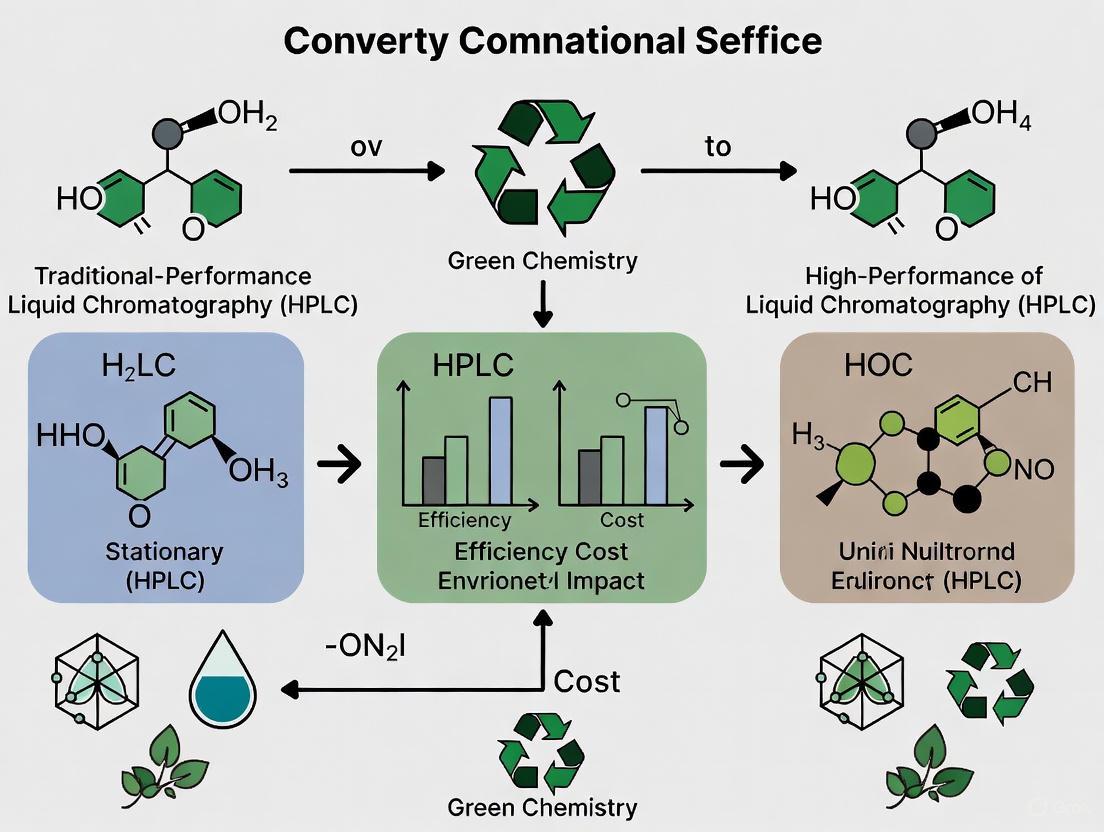
This article provides a comprehensive roadmap for researchers, scientists, and drug development professionals seeking to convert traditional High-Performance Liquid Chromatography (HPLC) methods into greener, more sustainable alternatives.
Green HPLC Transformation: A Practical Guide to Sustainable and Compliant Method Conversion
Abstract
This article provides a comprehensive roadmap for researchers, scientists, and drug development professionals seeking to convert traditional High-Performance Liquid Chromatography (HPLC) methods into greener, more sustainable alternatives. Aligned with the 12 principles of Green Analytical Chemistry (GAC), the content explores the foundational drivers for this transition, details practical strategies like solvent substitution and hardware optimization, and addresses common troubleshooting scenarios. It further guides the reader through rigorous validation protocols and the application of modern greenness assessment tools, such as AGREE and Analytical Eco-Scale, to ensure methods are not only environmentally benign but also analytically sound and compliant with industry standards.
The Why and What of Green HPLC: Principles, Drivers, and Greenness Metrics
The 12 Principles of Green Analytical Chemistry (GAC) as a Framework for HPLC
Troubleshooting Guides for Green HPLC Method Development
Converting traditional HPLC methods to greener alternatives can introduce new challenges. The following table addresses common issues and their solutions, guided by the principles of GAC.
| Problem | Possible Cause | Green GAC Principle Applied | Recommended Solution |
|---|---|---|---|
| Increased backpressure | Higher viscosity of green solvents (e.g., ethanol) [1] | Principle 7: Energy Efficiency | Use a UHPLC system rated for higher pressure or slightly increase column temperature to reduce solvent viscosity [2]. |
| Poor peak resolution | Incorrect solvent strength or selectivity of green alternative [3] | Principle 5: Safer Solvents/Reagents | Use predictive modeling software (in silico) to optimize method conditions and find a viable green solvent mixture before lab experimentation [3]. |
| Long analysis times | Method not optimized for smaller column dimensions or alternative solvent [3] | Principle 2: Reduced Sample Size | Transition to narrow-bore columns (e.g., 2.1 mm i.d.) packed with sub-2-µm particles to increase efficiency and reduce solvent consumption [1] [3]. |
| High solvent waste generation | Use of standard 4.6 mm i.d. columns with high flow rates [1] | Principle 4: Waste Minimization | Switch to narrow-bore or capillary columns, which can reduce solvent consumption and waste by over 80% [1] [3]. |
| Difficulty replacing Acetonitrile in HILIC | Unique properties of ACN are essential for HILIC mechanism [3] | Principle 5: Safer Solvents/Reagents | Consider if Ion-Exchange (IEX) chromatography is a suitable alternative. If not, apply reduction strategies (shorter, narrower columns) to minimize ACN use [3]. |
Frequently Asked Questions (FAQs)
Q1: Can I truly replace acetonitrile with a greener solvent in reversed-phase HPLC?
Yes, in many applications. Ethanol is a leading bio-based, less toxic, and biodegradable alternative to acetonitrile [1] [4] [5]. However, its higher viscosity can lead to increased backpressure, which may require method adjustments such as using a UHPLC system, increasing column temperature, or using a mixture of ethanol with another solvent [1] [2]. Method re-validation is necessary after any mobile phase change [1].
Q2: How can I reduce the environmental impact of my existing HPLC method without changing the solvent?
You can significantly reduce solvent consumption by scaling down the separation. Transitioning from a standard 4.6 mm i.d. column to a 2.1 mm i.d. column reduces solvent use by approximately 80% for the same method [3]. This approach also aligns with GAC Principle 2 (Reduced sample size) and Principle 7 (Energy efficiency) by lowering waste and energy consumption per analysis [1] [3].
Q3: What tools can I use to objectively assess the "greenness" of my HPLC method?
Several metrics have been developed to evaluate method greenness:
- AGREE (Analytical GREEnness): Provides a comprehensive score based on all 12 GAC principles, output as an intuitive radial diagram [6] [7] [5].
- GAPI (Green Analytical Procedure Index): Uses a color-coded pictogram to evaluate the environmental impact across the entire analytical workflow [6] [7].
- BAGI (Blue Applicability Grade Index): Assesses the practical applicability and cost-effectiveness of a method, helping to balance environmental and practical needs [6] [7].
Q4: My method uses HILIC; are there any green options for me?
HILIC presents a significant challenge for solvent replacement because acetonitrile's unique properties are often crucial for the separation mechanism [3]. Direct substitution with ethanol or methanol has seen limited success. The recommended strategies are reduction—using narrower-bore columns and shorter column lengths—or investigating if an alternative mode like ion-exchange (IEX) chromatography can achieve the separation with a predominantly aqueous mobile phase [3].
Q5: Are there instrument features that can make my HPLC practice more sustainable?
Yes. Look for modern systems with:
- Standby modes for autosamplers and detectors to cut energy use when idle [4].
- Low-dwell-volume systems that are optimized for use with smaller-volume columns and faster method gradients.
- LED-based UV detectors that consume less power and have longer lifetimes than traditional lamps [4].
Workflow and Strategy Diagrams
Green HPLC Conversion Strategy
White Analytical Chemistry Balance
The modern goal is "white" methods that balance three key aspects, moving beyond just environmental impact [6] [2].
Research Reagent Solutions for Green HPLC
This table lists key tools and materials essential for developing and implementing green HPLC methods.
| Item | Function in Green HPLC | Example / Note |
|---|---|---|
| Ethanol | Bio-based, less toxic alternative to acetonitrile for reversed-phase mobile phases [1] [4] [5]. | Prefer anhydrous or HPLC-grade. Consider high viscosity. |
| Narrow-Bore Columns | Drastically reduce mobile phase consumption and waste generation (Principle 4) [1] [3]. | e.g., 2.1 mm internal diameter columns. |
| Sub-2-µm Particles | Provide high efficiency, enabling faster separations and shorter run times, saving solvent and energy [3] [4]. | Requires UHPLC instrumentation. |
| Alternative Stationary Phases | Phases with different selectivity (e.g., C18-PFP) can provide better resolution, allowing for shorter columns and less solvent [3]. | Increases method efficiency. |
| Supercritical CO₂ | Non-toxic, reusable mobile phase for Supercritical Fluid Chromatography (SFC), replacing organic solvents [1] [8]. | Primarily for non-polar to moderately polar compounds. |
| Software for In Silico Modeling | Predicts separation outcomes, reducing the number of physical experiments and saving solvents and time (Principle 9) [3]. | A key tool for virtual method development. |
Environmental, Safety, and Economic Drivers for Method Conversion
Troubleshooting Guide: Common Issues in HPLC Method Conversion
| Problem Area | Common Issue & Symptoms | Probable Cause | Green Solution & Recommended Action |
|---|---|---|---|
| Solvent Selection | Poor peak shape, altered selectivity, or increased backpressure after replacing acetonitrile. | Cause: Inadequate method re-optimization when switching to a greener solvent (e.g., ethanol). Ethanol has higher viscosity and different elution strength [9] [10].Action: Re-optimize gradient profile and mobile phase composition. Consider using ethanol-water mixtures at elevated temperatures to reduce viscosity, or explore other alternatives like propylene carbonate [10]. | |
| Method Performance | Longer analysis times or insufficient resolution after switching to a narrower-bore column or smaller particle sizes. | Cause: Direct scale-down without adjusting method parameters (flow rate, injection volume, gradient) for UHPLC or micro-HPLC systems [9] [11].Action: Systematically re-develop and validate the method for the new column dimensions. Use scaling equations to adjust flow rates and gradients correctly. | |
| Sample Preparation | High analytical error or poor recovery when implementing miniaturized or solvent-free techniques. | Cause: Inefficient extraction or matrix effects in micro-extraction techniques like QuEChERS or SPME [9] [12].Action: Optimize extraction time, sorbent chemistry, and sample pH. Incorporate automation to improve reproducibility and throughput [13]. | |
| System & Hardware | System pressure fluctuations or leaks after modifying for solvent recycling. | Cause: Incompatibility of tubing, seals, or pump components with new solvent types or recycled mobile phases [14].Action: Ensure all wetted parts are compatible with the new solvents. Integrate dedicated solvent recycling systems (e.g., UFO Solvent Recycler) designed for HPLC to maintain system integrity and prevent leaks [14]. | |
| Waste Management | High costs and environmental concerns from solvent disposal persist despite method changes. | Cause: The "rebound effect," where a greener, cheaper method leads to a significant increase in the number of analyses performed, offsetting waste reduction benefits [13].Action: Implement smart testing protocols and data management to avoid unnecessary analyses. Use solvent recycling units to drastically reduce the volume of fresh solvent required and waste generated [13] [14]. |
Frequently Asked Questions (FAQs)
General Principles
Q1: What is the fundamental difference between "green" and "sustainable" in analytical chemistry? While often used interchangeably, sustainability is a broader concept based on the "triple bottom line," balancing economic, social, and environmental pillars. Greenness is more focused on the environmental dimension. A "green" method minimizes environmental impact, while a "sustainable" method also considers economic viability and social well-being, such as operator safety [13].
Q2: What is "White Analytical Chemistry" and why is it important? White Analytical Chemistry (WAC) is a model that aims to balance the three key aspects of an analytical method: Red (Analytical Performance), Green (Environmental Impact), and Blue (Practical & Economic Applicability). An ideal "white" method harmonizes all three, ensuring it is analytically sound, environmentally friendly, and practical to implement in routine labs [9] [15].
Technical Implementation
Q3: How can I objectively prove that my new HPLC method is "greener" than the old one? You can use standardized greenness assessment tools. The most common metrics are:
- AGREE: Provides a comprehensive score (0-1) based on all 12 GAC principles, with an intuitive circular pictogram [9] [15].
- Analytical Eco-Scale: A penalty-point system where a score above 75 represents an excellent green method, and a score below 50 is inadequate [9] [10].
- GAPI: A visual tool that uses a color-coded pictogram to evaluate the entire analytical procedure from sample collection to final determination [9] [15]. Using these tools to evaluate both the old and new methods provides quantitative and visual proof of improved greenness.
Q4: What are the most effective green solvents for Reversed-Phase HPLC? The most common and effective strategy is to replace hazardous solvents like acetonitrile and methanol with safer alternatives.
- Ethanol: A popular, bio-based, and less toxic alternative to acetonitrile. Its higher viscosity can be managed by using it in mixtures with water at elevated temperatures [9] [10].
- Propylene Carbonate: A less common but effective solvent with a favorable toxicological profile [10].
- Water: The greenest solvent. Methods can be designed using pure water with specially designed columns (Per Aqueous Liquid Chromatography) or with modifiers [10].
Q5: Can I make my existing HPLC method greener without buying new equipment? Yes. Several strategies can be implemented on conventional instruments:
- Solvent Replacement: Substitute acetonitrile with ethanol or methanol [10].
- Method Optimization: Shorten run times, use isocratic elution where possible, and optimize flow rates to reduce solvent consumption [14].
- Solvent Recycling: Integrate a solvent recycling system that collects and purifies the waste mobile phase for reuse, potentially reducing solvent consumption by up to 80% [14].
Economic and Regulatory Considerations
Q6: What is the business case for converting to green HPLC methods? The economic drivers are strong and include:
- Reduced Operational Costs: Significantly lower spending on purchasing and disposing of hazardous solvents [10] [14].
- Regulatory Alignment: Proactively meeting increasingly stringent environmental and safety regulations, avoiding future compliance costs [11].
- Improved Safety: Lower risks of operator exposure to toxic chemicals, reducing associated health and safety costs [13] [9].
Q7: Why are regulatory standard methods often not green, and how can this be overcome? Many official standard methods (from CEN, ISO, Pharmacopoeias) were developed years ago and rely on resource-intensive techniques. A recent evaluation showed that 67% of these methods score poorly on greenness metrics [13]. To drive change, regulatory agencies are encouraged to integrate green metrics into method validation and establish clear timelines for phasing out outdated methods, while providing labs with guidance and financial incentives for early adoption [13].
Workflow and Tools for Green Method Conversion
Visual Guide to Greenness Assessment
The following diagram illustrates the decision-making workflow for selecting and implementing a greenness assessment tool for your HPLC method.
The Scientist's Toolkit: Essential Reagents and Materials for Green HPLC
| Item Category | Specific Examples | Function & Role in Green Conversion |
|---|---|---|
| Green Solvents | Ethanol, Propylene Carbonate, Water [10] | Replaces hazardous solvents like acetonitrile, reducing toxicity and environmental impact. Often derived from renewable sources. |
| Alternative Sorbents | Molecularly Imprinted Polymers (MIPs), Metal-Organic Frameworks (MOFs) [12] | Used in advanced sample preparation (e.g., micro-extraction) for highly selective extraction, minimizing solvent and sample volume. |
| Miniaturized Columns | UHPLC columns (sub-2µm particles), narrow-bore columns [9] [11] | Enables faster separations with significantly lower solvent consumption (flow rates of µL- to sub-mL/min) and reduced waste generation. |
| Automation & Micro-Extraction | Automated Solid Phase Extraction (SPE), QuEChERS, Solid-Phase Microextraction (SPME) [9] [12] | Increases throughput, improves reproducibility, minimizes human error and exposure, and drastically reduces solvent use in sample preparation. |
| Solvent Recycling Units | Dedicated HPLC solvent recyclers [14] | Collects and purifies waste mobile phase for reuse, leading to major cost savings and waste reduction (up to 80%). |
White Analytical Chemistry (WAC) represents a significant evolution in sustainable science, moving beyond the environmental focus of Green Analytical Chemistry (GAC) to embrace a more holistic framework. While GAC primarily addresses ecological concerns, WAC strives for a balanced compromise that integrates analytical performance, environmental sustainability, and practical usability [16] [17]. This approach avoids sacrificing functionality for greenness alone and is better aligned with the principles of sustainable development [16].
The concept is visualized through the RGB color model: the combination of Red (analytical performance), Green (environmental impact), and Blue (practical/economic aspects) creates the impression of "whiteness," signifying a method where all key attributes are in harmony [16] [17]. This article provides a technical overview of WAC, complete with troubleshooting guidance for researchers, particularly those working on converting traditional High-Performance Liquid Chromatography (HPLC) methods to sustainable alternatives.
Understanding the WAC Framework and RGB Model
White Analytical Chemistry introduces a balanced perspective for evaluating analytical methods. Its core principles are designed to ensure that methods are not only environmentally friendly but also analytically sound and practically feasible.
The Twelve Principles of White Analytical Chemistry
WAC is structured around 12 principles that serve as an alternative to the 12 principles of GAC [16]. These principles expand the scope of evaluation to include:
- Red (Analytical) Principles: Focus on method validation, accuracy, precision, sensitivity, selectivity, and robustness.
- Green (Ecological) Principles: Address waste generation, energy consumption, use of hazardous chemicals, and operator safety.
- Blue (Practical) Principles: Encompass cost-effectiveness, throughput, ease of use, and integration into routine workflows [16] [17].
The RGB Algorithm for Method Assessment
A practical algorithm, known as the RGB 12 model, has been proposed to assess analytical methods quantitatively [16]. By scoring a method against the 12 principles, its overall "whiteness" can be calculated, providing a convenient parameter for comparison and selection of the optimal method [16]. A method with high whiteness demonstrates synergy and balance between its analytical, ecological, and practical attributes.
Key Assessment Tools for WAC
The implementation of WAC is supported by several metric tools that allow for the quantitative and qualitative assessment of a method's greenness and practicality.
Greenness Assessment Tools
| Tool Name | Primary Focus | Output Type | Key Features |
|---|---|---|---|
| AGREE [9] | Overall method greenness | Single score (0-1) & circular diagram | Integrates all 12 GAC principles; open-source software available. |
| Analytical Eco-Scale [9] | Penalty-based assessment | Numerical score | Assigns penalty points for hazardous reagents, energy consumption, and waste. |
| GAPI [9] | Entire analytical workflow | Color-coded pictogram | Visual assessment from sample collection to final determination. |
| ComplexGAPI [9] | Comprehensive workflow | Extended pictogram | Incorporates pre-analytical procedures for a more complete evaluation. |
Assessing Practicality with BAGI
The Blue Applicability Grade Index (BAGI) is a recent tool designed to evaluate the practical aspects of an analytical method, corresponding to the "Blue" component of WAC [9]. It assesses ten key attributes, including:
- Type of analysis
- Throughput
- Cost per analysis
- Availability of reagents
- Degree of automation
- Sample preparation complexity [9]
BAGI provides a numeric score and a visual "asteroid" pictogram, helping researchers identify strengths and weaknesses in the practical viability of their methods for routine laboratory use [9].
The Scientist's Toolkit: Essential Reagents and Materials for Green HPLC
Transitioning to greener HPLC methods often involves replacing traditional solvents and materials with safer, more sustainable alternatives.
| Reagent/Material | Traditional Example | Greener Alternative | Function & Rationale |
|---|---|---|---|
| Mobile Phase Solvent | Acetonitrile [9] | Ethanol, water [9] | Function: Elutes analytes from the column. Rationale: Ethanol is less toxic and biodegradable compared to acetonitrile. |
| Extraction Solvent | Hexane, dichloromethane [9] | Ethyl acetate, supercritical CO₂ [9] | Function: Extracts target compounds from samples. Rationale: Ethyl acetate is less hazardous; supercritical fluid extraction is solvent-free. |
| Sample Preparation Sorbent | Traditional C18 | Bonded Silica Phases [9] | Function: Purifies and concentrates samples. Rationale: Enables miniaturization (e.g., micro-extraction), reducing solvent consumption. |
| Chromatography Column | Standard 4.6mm x 250mm column | Miniaturized Columns (e.g., 2.1mm x 100mm) [9] | Function: Separates analyte mixture. Rationale: Smaller columns reduce mobile phase consumption and waste generation per analysis. |
Troubleshooting Guides and FAQs for WAC Implementation
FAQ 1: How is White Analytical Chemistry different from Green Analytical Chemistry?
Answer: While both aim to make analytical practices more sustainable, their focus differs.
- Green Analytical Chemistry (GAC) is primarily concerned with reducing the ecological impact of analytical methods by minimizing waste, energy use, and hazardous chemicals [16] [9].
- White Analytical Chemistry (WAC) is an extension of GAC that adds two more dimensions: analytical performance (Red) and practical/economic aspects (Blue) [16] [17]. A "white" method is one that successfully balances all three criteria, ensuring it is not only green but also effective and feasible for routine use [16].
FAQ 2: I need to convert a traditional HPLC method for drug analysis to a greener one. Where do I start?
Answer: A systematic approach is key. The workflow below outlines the core steps for converting a traditional HPLC method, incorporating WAC principles to ensure the final method is balanced and sustainable.
FAQ 3: My new green HPLC method doesn't meet the required sensitivity. What can I do?
Problem: The analytical performance (Red component) is compromised in the new green method.
Troubleshooting Guide:
- Potential Cause 1: Inefficient sample preparation or pre-concentration.
- Solution: Re-evaluate your extraction technique. Consider switching to or optimizing a micro-extraction technique (e.g., Solid-Phase Microextraction - SPME) that can effectively pre-concentrate the analyte, thereby improving sensitivity without large solvent volumes [9].
- Potential Cause 2: The greener mobile phase (e.g., ethanol-water) provides different separation selectivity, leading to peak broadening or co-elution.
- Solution: Systematically optimize the gradient profile and temperature. Use Design of Experiment (DoE) and Analytical Quality by Design (AQbD) principles to efficiently find the optimal conditions that maximize resolution and peak shape, which can enhance sensitivity [17].
- Potential Cause 3: The detector settings are not optimized for the new mobile phase or the specific analyte.
- Solution: Re-optimize detector parameters (e.g., wavelength for a UV detector). If possible, explore alternative detection modes that might offer better sensitivity for your analyte under the new green conditions.
FAQ 4: My method is green and analytically sound, but it's too expensive or slow for my quality control lab. How can I improve its practicality?
Problem: The method scores poorly on the Blue (practicality) component of WAC.
Troubleshooting Guide:
- Potential Cause 1: High cost per analysis due to expensive green solvents or reagents.
- Solution: Investigate the potential for solvent recycling. Furthermore, perform a lifecycle cost analysis; while a solvent might have a higher upfront cost, it could lead to savings in waste disposal. Also, explore if a different, more cost-effective green solvent (e.g., water with modifiers) can be used [9].
- Potential Cause 2: Low sample throughput, making it unsuitable for high-volume routine testing.
- Solution: Look for opportunities to automate sample preparation steps. Techniques like online SPE-HPLC can significantly reduce hands-on time and increase throughput. Also, verify if the analysis time can be shortened by using a core-shell column or a slightly steeper gradient without compromising resolution [9].
- Potential Cause 3: The method is too complex and requires specialized skills or equipment not available in a routine lab.
Experimental Protocol: A WAC-Based Case Study
The following case study illustrates how WAC principles can be applied to develop a sustainable and effective analytical method.
Title: Application of a WAC-Assisted AQbD Strategy to Develop a Green RP-HPLC Method for Drug Analysis in Human Plasma [17].
1. Objective: To develop and validate a reversed-phase HPLC method for the simultaneous determination of azilsartan, medoxomil, chlorthalidone, and cilnidipine in human plasma that is aligned with White Analytical Chemistry principles.
2. Materials:
- Drug Standards: Azilsartan, medoxomil, chlorthalidone, cilnidipine.
- Solvents: Ethanol, water (as greener alternatives to acetonitrile).
- Equipment: HPLC system with UV detector, analytical column.
3. Method Overview and Workflow: The methodology involved a structured approach from sample preparation to final analysis, ensuring alignment with WAC principles.
4. Key WAC Features:
- Green (Ecological): The method utilized an AQbD strategy to optimize chromatographic conditions, minimizing the consumption of ethanol and water. This led to a significant reduction in hazardous waste compared to methods using acetonitrile [17].
- Red (Analytical): The method underwent full validation according to regulatory standards, confirming its accuracy, precision, sensitivity, and specificity for the simultaneous quantification of multiple drugs in a complex biological matrix [17].
- Blue (Practical): The procedure was designed to be cost-effective and applicable for routine analysis in a bioanalytical setting, demonstrating high throughput and reliability [17].
5. Outcome: The method achieved an excellent white WAC score, demonstrating that it is possible to develop a method that is sustainable, analytically powerful, and practically viable [17].
Frequently Asked Questions
1. What is the purpose of a greenness assessment tool? Greenness assessment tools are designed to evaluate the environmental impact of analytical methods, such as HPLC. They help researchers identify and reduce negative effects on human health and the environment by quantifying factors like hazardous reagent use, energy consumption, and waste generation [15] [19].
2. I need a simple, quick check. Which tool should I start with? For a rapid, basic evaluation, the National Environmental Methods Index (NEMI) is a good starting point. Its pictogram offers a simple "yes/no" check against four environmental criteria. For a slightly more detailed but still straightforward quantitative score, the Analytical Eco-Scale is ideal, as it provides a numerical value where a higher score (closer to 100) indicates a greener method [15].
3. My method involves complex sample preparation. Which tool is most comprehensive? For methods with complex workflows, the Green Analytical Procedure Index (GAPI) is highly recommended. It provides a visual map of the environmental impact across the entire analytical process, from sample collection to final detection, using a color-coded pictogram. For the most comprehensive evaluation that covers all 12 principles of Green Analytical Chemistry (GAC), AGREE is the best choice, as it provides both a unified pictogram and a final score between 0 and 1 [15] [9].
4. My AGREE score was low. How can I improve it? A low AGREE score typically highlights issues in specific areas of your method. Focus on these common improvements:
- Solvent Replacement: Substitute hazardous solvents like acetonitrile and methanol with safer alternatives, such as ethanol or water-based mobile phases [20] [9].
- Miniaturization: Reduce scale of sample preparation and analysis to cut down solvent consumption and waste [15] [19].
- Waste Management: Implement procedures for treating or neutralizing chemical waste before disposal [15].
- Energy Efficiency: Use energy-efficient instruments and lower analysis temperatures where possible [19].
5. How do I choose the right tool for my research? The choice depends on your goal. Use multiple tools for a complete picture. The table below compares the core features of each tool to guide your selection.
Table 1: Comparison of Key Greenness Assessment Tools
| Tool Name | Type of Output | Scope of Assessment | Scoring System | Primary Use Case |
|---|---|---|---|---|
| NEMI [15] | Pictogram (4 quadrants) | Basic environmental criteria | Binary (Pass/Fail) | Quick, initial screening |
| Analytical Eco-Scale [15] | Numerical score | Reagents, energy, waste | Penalty points (0-100 scale) | Quantitative, direct method comparison |
| GAPI [15] [9] | Color-coded pictogram | Entire analytical workflow | Semi-quantitative (color-coded) | Identifying "hotspots" in a multi-step method |
| AGREE [15] [9] | Pictogram & numerical score | All 12 GAC principles | Numerical (0-1) | Comprehensive, standards-aligned evaluation |
Troubleshooting Guides
Issue 1: Inconsistent Results Between Different Assessment Tools
Problem: You have evaluated your HPLC method with two different tools (e.g., NEMI and GAPI) and received seemingly conflicting results about its greenness.
Explanation: This is a common occurrence because each tool evaluates different aspects and uses different criteria and weighting systems [15]. NEMI gives a basic pass/fail, while GAPI and AGREE perform a more granular assessment. A method might pass NEMI by not using persistent chemicals but score poorly on AGREE due to high energy consumption.
Solution:
- Use Complementary Tools: Do not rely on a single tool. Use NEMI for a basic check and AGREE or GAPI for a deeper, more defensible analysis [15].
- Contextualize the Results: Understand what each tool measures. AGREE's comprehensive nature makes it excellent for supporting research conclusions, while GAPI is perfect for visualizing where a method can be improved [9].
- Report Multiple Metrics: In publications or internal reports, include results from more than one tool (e.g., both AGREE and Analytical Eco-Scale scores) to provide a transparent and multi-faceted view of your method's environmental profile [21].
Issue 2: Low Analytical Eco-Scale Score
Problem: Your method received a low score (e.g., below 75) on the Analytical Eco-Scale, categorizing it as an "insufficiently green" method [15].
Solution: The Eco-Scale assigns penalty points for non-green parameters. Identify the major sources of penalties and address them.
Table 2: Troubleshooting a Low Analytical Eco-Scale Score
| Penalty Source | Possible Corrections |
|---|---|
| Hazardous Solvents [22] | Replace acetonitrile with ethanol [20] or methanol. Use water-based mobile phases where possible. |
| Large Solvent Volume [20] [22] | Switch to a method with reduced sample preparation (e.g., direct injection). Use micro-HPLC or UHPLC to reduce flow rates and total solvent consumption. |
| High Energy Consumption | Lower column oven temperature. Use shorter analysis times. Turn off instruments when not in use. |
| Large Amount of Waste | Implement solvent recycling systems for sample preparation. Use miniaturized extraction techniques. |
Issue 3: Difficulty Implementing AGREE for Complex Sample Preparation
Problem: The AGREE tool does not seem to adequately capture the environmental impact of your complex, multi-stage sample preparation protocol.
Explanation: While AGREE is comprehensive, it may not assign sufficient weight to the sample preparation stage, which is often a significant source of waste and reagent use [19].
Solution:
- Use a Specialized Tool: Employ AGREEprep, a dedicated tool designed specifically for evaluating the greenness of sample preparation steps. It uses 10 assessment criteria to provide a detailed score and pictogram for this critical part of the workflow [15] [9].
- Combine with GAPI: Use the GAPI tool alongside AGREE. GAPI's strength is visually breaking down the environmental impact of each stage, including sample preparation, helping you pinpoint exact areas for improvement [15].
The following diagram outlines the decision-making process for selecting and applying these greenness assessment tools.
Issue 4: Method Transfer Failure After "Greening" an HPLC Method
Problem: After modifying a traditional HPLC method to make it greener (e.g., by switching solvents), the method no longer produces valid results when transferred to another laboratory or instrument.
Explanation: This often occurs when method robustness is sacrificed for greenness. Changes like switching solvents can affect critical method parameters like resolution, peak symmetry, and retention times.
Solution: Integrate Analytical Quality by Design (AQbD) principles with Green Analytical Chemistry from the beginning.
- Risk Assessment: Use a risk assessment (e.g., an Ishikawa diagram) to identify which method parameters (like mobile phase pH or solvent ratio) are critical for both performance and greenness [20] [23].
- Design of Experiments (DoE): Instead of a trial-and-error approach, use a statistical DoE to optimize multiple parameters simultaneously. This helps find a "design space" where the method is both robust and green [20]. For example, a study on thalassemia drugs used a custom experimental design to find optimal conditions that achieved the highest resolution with acceptable peak symmetry within the shortest run time, using an eco-friendly ethanol-water mobile phase [20].
The Scientist's Toolkit: Key Reagent Solutions
When converting traditional HPLC methods to greener alternatives, the choice of reagents is critical. The following table lists common hazardous chemicals and their greener substitutes.
Table 3: Research Reagent Solutions for Green HPLC
| Traditional Reagent/Item | Function | Greener Alternative | Benefit of Alternative |
|---|---|---|---|
| Acetonitrile [20] [22] | Organic mobile phase modifier | Ethanol [20] or Methanol | Ethanol is less toxic, biodegradable, and from renewable sources. |
| n-Hexane | Extraction solvent | Ethyl Acetate or Cyclopentyl Methyl Ether (CPME) | Less hazardous and toxic profiles. |
| High-purity Silica Columns | Chromatographic separation | Monolithic Columns [23] | Allows for higher flow rates with lower backpressure, reducing analysis time and solvent consumption. |
| Trifluoroacetic Acid (TFA) | Ion-pairing reagent / pH modifier | Phosphoric Acid [20] or Formic Acid | Less persistent and hazardous in the environment. |
| Large Sample Volumes (>1 mL) | Injection for sensitivity | Micro-HPLC/UHPLC systems | Dramatically reduces mobile phase consumption and waste generation per analysis. |
Practical Strategies for Greening Your HPLC Method: Solvents, Hardware, and Modes
FAQs on Solvent Substitution in HPLC
1. Why should I consider replacing acetonitrile in my HPLC methods?
Acetonitrile is classified as a hazardous Class II solvent. It is toxic, poses occupational health risks, and its waste disposal contributes to environmental pollution and higher operational costs [9] [24]. Replacing it with greener alternatives like ethanol or methanol aligns with the principles of Green Analytical Chemistry (GAC), which aim to reduce the environmental impact of analytical processes while maintaining analytical performance [25] [10].
2. What are the primary green alternatives to acetonitrile?
Ethanol is widely recognized as one of the greenest alternatives. It is less toxic, biodegradable, often bio-based, and has a lower environmental impact [26] [24]. Methanol is another common substitute; while still hazardous, it is considered more environmentally friendly than acetonitrile and should be preferred over it when possible [24]. Other alternatives mentioned in research include propylene carbonate and solvents like acetone or ethyl acetate in specific applications [27] [24].
3. What are the main challenges when switching to ethanol or methanol?
The primary challenge is their higher viscosity compared to acetonitrile. When mixed with water, ethanol and methanol create mobile phases with higher viscosity, leading to increased backpressure in the HPLC system [26] [24]. This can potentially exceed the pressure limits of conventional HPLC systems. Additionally, methanol has a higher UV cut-off (~205 nm) than acetonitrile (~190 nm), which might interfere with the detection of compounds that absorb at low wavelengths [24].
4. How can I manage the increased backpressure when using ethanol?
Several strategies can mitigate high backpressure:
- Use a longer equilibration time for the system to stabilize at the higher pressure.
- Reduce the mobile phase flow rate.
- Increase the column temperature, as this lowers the viscosity of the mobile phase [26] [24].
- Consider using columns packed with superficially porous or smaller particles that can operate more efficiently at higher pressures [26].
5. Can I directly substitute acetonitrile with ethanol or methanol in my existing method?
A direct, one-to-one substitution is rarely successful due to differences in solvent strength and selectivity. Ethanol and methanol have different elution strengths and belong to a different selectivity group than acetonitrile [24]. Method re-optimization is typically necessary. For validated methods (e.g., in pharmacopoeias), any change in mobile phase composition requires a full method re-validation [26].
6. Are there tools to assess the "greenness" of my new HPLC method?
Yes, several metrics have been developed:
- AGREE (Analytical GREEnness Metric): Provides a comprehensive score based on all 12 GAC principles, with an intuitive graphic output [9] [28].
- GAPI (Green Analytical Procedure Index): A visual, semi-quantitative tool that evaluates the entire analytical workflow from sample collection to final determination [9] [29].
- Analytical Eco-Scale: A penalty-point-based system that quantifies deviation from an ideal green method [9] [10].
Troubleshooting Guide for Green Solvent Transition
| Problem | Possible Cause | Suggested Solution |
|---|---|---|
| High System Backpressure | Higher viscosity of ethanol/water or methanol/water mobile phases [24]. | • Reduce flow rate.• Increase column temperature [26] [24].• Ensure proper column cleaning. |
| Peak Tailing or Poor Resolution | Alteration in analyte retention and selectivity; method not re-optimized for new solvent [24]. | • Re-optimize gradient profile or isocratic composition.• Adjust pH of aqueous buffer.• Consider a different C18 column or stationary phase. |
| Shift in Retention Times | Difference in elution strength of the new organic modifier. | • Re-calibrate method with new mobile phase.• Re-establish system suitability criteria. |
| High Baseline Noise in UV Detection | Using methanol with detection at low UV wavelengths (near its 205 nm cut-off) [24]. | • Use high-purity HPLC-grade solvents.• Shift to a higher detection wavelength if feasible. |
| Poor Peak Shape for Basic Compounds | Insufficient buffering or interaction with residual silanols; effect exacerbated by solvent change. | • Optimize buffer concentration and pH.• Use a column specifically designed for basic compounds. |
Experimental Protocols and Data
Detailed Methodology: Developing a Green Micellar Liquid Chromatography Method
This protocol outlines the development of an organic solvent-free method using a mixed micellar mobile phase, as described in [29].
1. Principle: Micellar Liquid Chromatography (MLC) replaces traditional organic solvents with an aqueous solution of surfactants at a concentration above their critical micelle concentration (CMC). This eliminates the need for hazardous organic solvents entirely [29].
2. Materials and Reagents:
- Surfactants: Sodium dodecyl sulphate (SDS) and Brij-35 [29].
- Buffer: Phosphate buffer for pH adjustment.
- HPLC System: Equipped with a PDA or UV-Vis detector and a C18 column (e.g., Symmetry C18, 75 mm x 4.6 mm, 3.5 µm) [29].
- Software: For data acquisition and statistical design of experiments (e.g., Design-Expert).
3. Optimization via Experimental Design (DoE):
- Critical Factors: Identify key parameters: concentrations of SDS and Brij-35, and mobile phase pH [29].
- Experimental Design: Use a Central Composite Design (CCD) within Response Surface Methodology (RSM) to efficiently explore the factor space.
- Responses: Model critical responses like retention times, resolution between critical peak pairs, and peak symmetry [29].
- Optimal Conditions (Example): The method may achieve separation using a mobile phase of 70.76 mM SDS and 21.38 mM Brij-35 in a buffered solution at pH 2.76, with a flow rate of 1 mL/min and a column temperature of 40°C [29].
4. Method Validation: Validate the final method according to ICH guidelines for parameters such as linearity, precision, accuracy, and robustness [29].
Quantitative Comparison of Solvent Properties
The table below summarizes key properties of acetonitrile and its green alternatives to guide solvent selection [24].
| Solvent | EPA Listed Hazard | Viscosity of Water Mixture (cP) | UV Cut-off (nm) | Relative Elution Strength (in RP-HPLC) | Key Greenness Consideration |
|---|---|---|---|---|---|
| Acetonitrile | Class II (Toxic) | Low (e.g., ~0.8 for ACN/H₂O) | ~190 | Strong | High toxicity; hazardous waste [24]. |
| Methanol | Class II (Toxic) | Moderate (e.g., ~1.2 for MeOH/H₂O) | ~205 | Medium | Less toxic than ACN; preferred if organic modifier is essential [24]. |
| Ethanol | Preferred | High (e.g., ~1.5 for EtOH/H₂O) | ~210 | Medium | Greenest option; bio-based, low toxicity [26] [24]. |
| Propylene Carbonate | N/A | High | ~210 | Similar to MeOH/ACN | A suitable green alternative with comparable performance [27]. |
The Scientist's Toolkit: Essential Research Reagents & Materials
| Item | Function in Green HPLC Method Development |
|---|---|
| Ethanol (HPLC Grade) | Primary green organic modifier for reversed-phase mobile phases [24] [10]. |
| Methanol (HPLC Grade) | Alternative organic modifier, less green than ethanol but preferable to acetonitrile [24]. |
| Sodium Dodecyl Sulphate (SDS) | Ionic surfactant used in Micellar Liquid Chromatography (MLC) to create organic solvent-free mobile phases [29]. |
| Brij-35 | Non-ionic surfactant often used in combination with SDS in mixed MLC methods [29]. |
| C18 or C8 Column | Standard reversed-phase columns; method re-optimization is required when changing solvents [30] [29]. |
| Phosphate Buffers | For adjusting pH and ionic strength of the aqueous component of the mobile phase. |
| AGREE or GAPI Software | Open-source software tools used to quantitatively assess the environmental friendliness of the developed analytical method [9] [28]. |
Workflow and Strategy Diagrams
Green Solvent Implementation Pathway
Managing Increased Backpressure with Green Solvents
Transitioning from traditional High-Performance Liquid Chromatography (HPLC) to greener methods is a strategic priority in modern laboratories. Leveraging narrow-bore columns and sub-2-µm particles is a highly effective strategy to achieve this, primarily by dramatically reducing solvent consumption and waste generation without sacrificing analytical performance [3].
Narrow-bore columns, typically with internal diameters of 2.1 mm, and sub-2-µm particles, used in Ultra-High-Performance Liquid Chromatography (UHPLC), work synergistically to enable faster, more efficient separations. The following table summarizes the significant environmental and operational benefits of this hardware optimization.
Table 1: Environmental and Operational Benefits of Hardware Optimization
| Optimization Strategy | Key Feature | Reported Solvent Reduction | Additional Benefits |
|---|---|---|---|
| Narrow-Bore Columns [3] | Reducing column internal diameter from 4.6 mm to 2.1 mm | Up to 80% reduction in solvent use for continuous operation | Lowers solvent procurement and disposal costs; decreases energy consumption |
| Sub-2-µm Particles (UHPLC) [3] | Using smaller, high-efficiency particles (e.g., 1.7 µm vs. 5 µm) | Up to 85% savings via faster analysis times (e.g., 30 min to under 5 min) | Dramatic improvements in separation efficiency and analysis speed |
| Superficially Porous Particles (SPP) [3] | Using particles with a solid core and porous shell | Over 50% reduction compared to same-size Fully Porous Particles (FPP) | Provides high efficiency without requiring ultra-high pressure systems |
Beyond solvent savings, the enhanced efficiency of sub-2-µm particles often provides superior resolution or allows for the use of shorter columns, further contributing to greener outcomes [31] [4].
Troubleshooting Common Hardware Implementation Issues
Adopting new column technologies can present challenges. Below is a guide to common issues, their root causes, and solutions.
Table 2: Troubleshooting Guide for Narrow-Bore and Sub-2-µm Columns
| Problem | Possible Cause | Green Solution |
|---|---|---|
| Poor Chromatography (Broad Peaks, Loss of Efficiency) | Extra-column band broadening: tubing, detector cell | Action: Minimize all connection volumes. Use short, narrow-i.d. tubing (e.g., 0.005"). Ensure the system is configured for UHPLC or narrow-bore applications [31] [32]. |
| High Backpressure | Column clogging from particulates or strongly retained compounds | Action: Centrifuge or filter samples. Use a guard column. Prevention: Implement robust sample cleanup, a key green practice for extending column life and reducing waste [33]. |
| Irreproducible Retention Times | Viscous heating effects in narrow-bore columns; frictional heating | Action: Use a column oven for stable temperature control. For methods with high flow rates or high organic content, consider active flow technology (AFT) columns to mitigate radial temperature gradients [32]. |
| Insufficient Resolution | Method not fully optimized for new hardware | Action: Leverage selectivity. Switch to a more selective stationary phase (e.g., C18-PFP). This can maintain resolution on a shorter column, saving more solvent than a simple particle size reduction [3]. |
Frequently Asked Questions (FAQs)
Q1: Can I simply use my existing HPLC methods with a 2.1 mm narrow-bore column? No, a direct translation is not recommended. When switching from a 4.6 mm i.d. column to a 2.1 mm i.d. column, you must adjust the flow rate to maintain the same linear velocity. A good starting point is to apply a scaling factor of (2.1/4.6)² ≈ 0.21 to your original flow rate. For example, a 1.0 mL/min flow on a 4.6 mm column scales to approximately 0.21 mL/min on a 2.1 mm column. Method parameters, including gradient times, may also need re-optimization [3] [4].
Q2: My lab doesn't have a UHPLC system. Can I still benefit from sub-2-µm particles? Yes, but with limitations. While sub-2-µm particles are designed for ultra-high pressures, you can use superficially porous particles (SPP or core-shell) which are often available in sizes around 2.6-2.7 µm. These particles provide efficiency similar to sub-2-µm fully porous particles but at significantly lower backpressures, making them compatible with many modern HPLC systems that can operate up to 600 bar [3].
Q3: How does this hardware optimization align with the principles of Green Analytical Chemistry (GAC)? This approach directly addresses multiple GAC principles [6]:
- Minimizes Waste Generation: The primary benefit is a drastic reduction in solvent waste.
- Improves Energy Efficiency: Faster run times and lower flow rates reduce the energy consumption of pumps and column ovens.
- Uses Safer Reagents: While not a direct substitution, the significant reduction in solvent volume inherently lowers the lab's overall exposure to and consumption of hazardous chemicals.
Q4: Are there specific applications where narrow-bore columns and small particles are not suitable? These technologies are highly versatile but may have limitations with certain detection techniques that require higher flow rates (e.g., some evaporative light-scattering detectors) or when analyzing very complex samples that require very long columns for maximum resolution. In techniques like Hydrophilic Interaction Liquid Chromatography (HILIC), which relies on acetonitrile, the primary green benefit comes from solvent reduction via narrow-bore columns, as direct solvent substitution is often problematic [3].
Experimental Protocol: Converting a Traditional HPLC Method
This workflow outlines the key steps for transitioning a method from a conventional 4.6 mm, 5-µm column to a greener 2.1 mm, sub-2-µm (or SPP) method. The process can be visualized as a logical pathway of decisions and optimizations.
Method Conversion Workflow
Step-by-Step Procedure:
- Column Selection: Select a 2.1 mm internal diameter column with the same stationary phase chemistry (e.g., C18) as your original method. For the particle type, choose either sub-2-µm fully porous particles (requires UHPLC system) or ~2.6-2.7 µm superficially porous particles (compatible with many HPLC systems) [3] [31].
- Flow Rate Scaling: Calculate the new initial flow rate using the squared ratio of the column internal diameters:
- Gradient Scaling: Adjust the gradient time proportionally to maintain the same number of column volumes. The scaling factor is the same as for the flow rate.
- New Gradient Time = Original Gradient Time × 0.21
- Injection Volume Scaling: Scale the injection volume by the same factor to maintain comparable mass load and detection sensitivity.
- New Injection Volume = Original Injection Volume × 0.21
- System Setup and Initial Run: Ensure your system is configured for low-dispersion (e.g., using narrow-i.d. tubing). Perform an initial run with the scaled parameters [32].
- Method Fine-Tuning:
- If resolution is insufficient, leverage selectivity. Test an alternative stationary phase (e.g., phenyl-hexyl, cyano). This is often more effective than simply increasing column length [3].
- Optimize the gradient profile or temperature if needed.
- Use in-silico modeling software if available to predict optimal conditions, reducing laboratory experimentation and solvent waste [3].
- Final Method Validation: Validate the new, greener method according to relevant guidelines (e.g., ICH Q2(R1)) to ensure it meets all required performance criteria [34] [5] [35].
The Scientist's Toolkit: Essential Research Reagents & Materials
The following table details key materials and tools required for successfully implementing and optimizing methods with narrow-bore columns and sub-2-µm particles.
Table 3: Essential Research Reagents and Materials for Method Conversion
| Item | Function/Description | Green Consideration |
|---|---|---|
| Narrow-Bore Columns [3] | Columns with 2.1 mm internal diameter packed with sub-2-µm or SPP particles. The core tool for reducing solvent consumption. | Directly reduces solvent use by up to 80% compared to 4.6 mm columns. |
| Guard Columns | Small, disposable cartridges placed before the analytical column to trap particulates and contaminants. | Extends the lifetime of the more expensive analytical column, reducing solid waste. |
| Methanol or Ethanol [5] [4] | Greener alternative solvents to acetonitrile for the mobile phase. Ethanol is particularly favored for its low toxicity and renewable origin. | Replaces more hazardous and resource-intensive acetonitrile, improving workplace safety and environmental impact. |
| In-Silico Modeling Software [3] | Predictive chromatography software that simulates separations under different conditions. | Drastically reduces the number of physical experiments needed for method development, saving solvents, time, and energy. |
| U/HPLC System | Instrumentation capable of operating at high pressures (e.g., >600 bar) with low extra-column volume. | Necessary to harness the full performance of sub-2-µm particles. Modern systems are also more energy-efficient. |
Within the framework of green analytical chemistry, converting traditional High-Performance Liquid Chromatography (HPLC) methods to Ultra-High-Performance Liquid Chromatography (UHPLC) represents a significant stride toward sustainable laboratory practices. This transition aligns with the core principles of Green Analytical Chemistry (GAC), which advocate for reducing solvent consumption, minimizing waste generation, and improving energy efficiency without compromising analytical performance [6] [36]. UHPLC technology facilitates this by utilizing columns packed with smaller particles (typically below 2 µm) and systems capable of operating at higher pressures, leading to faster separations, lower solvent consumption, and enhanced sensitivity [37]. This guide provides detailed troubleshooting and FAQs to support researchers and drug development professionals in successfully navigating this method transfer.
Systematic Method Transfer Methodology
Core Scaling Calculations
A successful HPLC to UHPLC method transfer requires systematic scaling based on column parameters and the van Deemter equation. The goal is to maintain equivalent separation performance (resolution) while leveraging the speed and efficiency benefits of UHPLC [37] [38].
Key Scaling Equations:
| Parameter | Goal | Calculation Formula | Example Transformation |
|---|---|---|---|
| Flow Rate (F) | Maintain linear velocity | ( F2 = F1 \times (d{c2}^2 / d{c1}^2) ) | HPLC: 4.6 mm ID, 1.0 mL/min → UHPLC: 2.1 mm ID, 0.21 mL/min [38] |
| Injection Volume (V_inj) | Maintain loading | ( V{inj2} = V{inj1} \times (d{c2}^2 / d{c1}^2) \times (L2 / L1) ) | Adjust for column volume change. |
| Gradient Time (t_G) | Maintain gradient steepness | ( t{G2} = t{G1} \times (F1 / F2) \times (V{D2} / V{D1}) ) | Must account for flow rate and gradient delay volume (GDV) differences [39]. |
where ( dc ) is the column inner diameter, ( L ) is the column length, and ( VD ) is the system gradient delay volume.
Experimental Protocol for Method Transfer
- Column Selection: Choose a UHPLC column with the same stationary phase chemistry (e.g., C18) as the original HPLC method. The particle size should be smaller (e.g., 1.7-1.9 µm vs. 3-5 µm) [37]. A shorter column length can often be used to maintain resolution while reducing run time.
- Parameter Re-calculation: Using the formulas above, calculate the new UHPLC flow rate, injection volume, and gradient time.
- System Configuration: Use capillaries with minimal internal diameter (e.g., 0.13 mm for UHPLC) and a low-volume detector flow cell to reduce extra-column band broadening [40] [39].
- Execution and Verification: Perform the scaled method and compare key performance criteria—such as resolution, retention time, and peak shape—against the original HPLC method. The system suitability test must be passed.
Troubleshooting Common Issues
| Symptom | Possible Cause | Recommended Solution |
|---|---|---|
| Poor Peak Shape (Tailing) | Silanol interaction (basic compounds) [40]. | Use high-purity silica (type B) or charged surface hybrid columns. Add a competing base like triethylamine to mobile phase. |
| Poor Peak Shape (Fronting) | Column voiding or blocked frit [40]. | Reverse-flush and clean the column. If persistent, replace the column. Ensure in-line filters are used. |
| Loss of Resolution | Extra-column volume too high [40]; Gradient delay volume mismatch [39]. | Reduce capillary ID/length, use smaller detector cell. Adjust initial gradient conditions to compensate for GDV difference. |
| Retention Time Shifts | Temperature mismatch/frictional heating [37] [39]. | Use a column oven with pre-heater for consistent temperature control. |
| Pressure Fluctuations or High Backpressure | Column blockage; Pressure shock from rapid change [40]. | Filter samples and mobile phases. Use a guard column. Increase pressure gradually. |
| Low Sensitivity | Large detector flow cell volume [40] [41]; High baseline noise. | Use a flow cell volume appropriate for UHPLC peak volumes. Check for UV lamp age, mobile phase purity, and column bleeding. |
FAQs for a Smooth Transition
Q1: Is re-validation required after transferring a validated HPLC method to UHPLC? While a full re-validation may not always be mandatory, a rigorous demonstration of equivalency is essential. This typically involves passing a system suitability test and comparing the performance of the new method against the original validated method for key parameters such as precision, accuracy, specificity, and linearity. The transfer process and results must be thoroughly documented [38].
Q2: How does UHPLC specifically contribute to "greener" chromatography? UHPLC reduces environmental impact primarily by significantly cutting solvent consumption and waste generation, often by over 80% due to lower flow rates and shorter run times [37]. This also decreases energy usage for solvent disposal and storage. Furthermore, the technique's enhanced sensitivity supports the analysis of smaller sample volumes, contributing to the principles of waste minimization and energy efficiency in Green Analytical Chemistry [6] [42].
Q3: Can I use my original HPLC columns on a UHPLC system? Generally, no. HPLC columns packed with larger particles (e.g., 3 µm or 5 µm) are not rated for the very high pressures generated by UHPLC systems and could be damaged. You must use columns specifically designed and pressure-rated for UHPLC applications [37].
Q4: Why is the gradient delay volume (GDV) critical in method transfer? The GDV is the volume between the point where the mobile phase is mixed and the head of the column. Differences in GDV between HPLC and UHPLC systems can cause significant shifts in retention times and alter resolution because the programmed gradient reaches the column at a different time. Modern UHPLC systems typically have a much lower GDV than older HPLC systems, which must be considered when transferring gradient methods [39].
The Scientist's Toolkit: Essential Research Reagent Solutions
| Item | Function & Green Benefit |
|---|---|
| Ethanol (Bio-based) | A less toxic, biodegradable, and renewable alternative to acetonitrile in reversed-phase mobile phases [5] [42]. |
| Superficially Porous Particles (SPP) | HPLC/UHPLC columns with core-shell technology provide high efficiency similar to sub-2µm particles but with lower backpressure, facilitating faster separations on some systems [41]. |
| Hybrid Stationary Phases | Columns with improved chemical stability (e.g., across a wider pH range), reducing column degradation and consumption, thereby enhancing method robustness and sustainability [37]. |
| Acetate/Formate Buffers | MS-compatible volatile buffers that are less harmful than traditional phosphate buffers and facilitate direct coupling with mass spectrometry for detection [43]. |
Workflow and Decision Pathway
The following diagram illustrates the logical workflow for converting an HPLC method to a greener UHPLC system.
Diagram Title: HPLC to UHPLC Method Transfer Workflow
As pharmaceutical researchers and scientists seek to align their laboratories with Green Analytical Chemistry (GAC) principles, reevaluating established high-performance liquid chromatography (HPLC) methods has become essential. Hydrophilic interaction liquid chromatography (HILIC) is a powerful technique for analyzing polar compounds but often relies heavily on acetonitrile, a solvent with significant environmental and safety concerns. This guide explores the strategic substitution of HEC methods with more sustainable Ion-Exchange Chromatography (IEX) where applicable. You will find practical troubleshooting advice and detailed protocols to facilitate this green transition without compromising analytical performance.
FAQs: Substituting HILIC with Ion-Exchange Chromatography
1. Why should I consider replacing a HILIC method with IEX?
The primary motivation is to reduce environmental impact. HILIC mobile phases typically contain a high proportion (often >70%) of acetonitrile [44]. Acetonitrile is toxic, poses disposal challenges, and is derived from non-renewable resources [3] [24]. IEX separations, in contrast, use predominantly aqueous buffer systems, which are generally greener and more sustainable [3]. This substitution also aligns with green chemistry principles by reducing reliance on hazardous organic solvents [10].
2. When is IEX a suitable substitute for HILIC?
IEX is a strong candidate when the retention mechanism in your HILIC method is dominated by electrostatic interactions rather than hydrophilic partitioning. This is often the case when analyzing charged analytes, such as peptides or ionizable pharmaceuticals, on a charged HILIC stationary phase (e.g., bare silica) [45]. If you find that you require a minimum salt concentration (e.g., 20 mM) in the mobile phase to elute your compounds or to obtain sharp peaks, it indicates that ion-exchange is a significant retention mechanism in your separation [45].
3. What are the potential challenges when switching from HILIC to IEX?
The main challenges involve re-optimizing the method conditions. The selectivity (elution order) of your separation will likely change, as you are switching from a mixed-mode mechanism (partitioning, ion-exchange, hydrogen bonding) in HILIC to a primarily electrostatic mechanism in IEX [46] [44]. You will need to re-optimize parameters like buffer pH, buffer type, and salt gradient to achieve the desired resolution. Furthermore, the compatibility with mass spectrometry (MS) detection needs careful evaluation, as high salt concentrations in IEX can cause ion suppression and source contamination [44].
4. How do I know if my HILIC separation is dominated by ion-exchange?
A clear indicator is the need for salt to achieve elution. If you observe little to no elution of charged analytes with a gradient that only increases water content, but you get sharp, well-resolved peaks when implementing a salt gradient, your separation is likely operating in an ion-exchange mode [45]. This is common on uncoated silica phases, which possess silanol groups (pKa ~4) that act as cation-exchange sites at pH above 3 [45].
5. Can I use IEX for all my polar compound separations?
No, IEX is not a universal substitute. It is specifically suitable for charged or ionizable compounds. For neutral, highly polar molecules whose retention in HILIC is primarily driven by hydrophilic partitioning, IEX may not be an effective replacement. In such cases, other green strategies for HILIC, such as using narrower-bore columns or advanced particle technologies to reduce solvent consumption, should be explored [3].
Troubleshooting Guide: Transitioning from HILIC to IEX
| Problem | Possible Cause | Suggested Solution |
|---|---|---|
| Poor Retention | Analyte and stationary phase have the same charge (electrostatic repulsion). | Switch exchanger type: for cationic analytes, use a cation exchanger (CEX); for anionic analytes, use an anion exchanger (AEX) [46]. |
| Poor Peak Shape | Insufficient buffering capacity leading to secondary interactions. | Increase the buffer concentration (e.g., 10-20 mM). This enhances hydrogen bonding and can mask other interactions that cause tailing [47]. |
| Inadequate Resolution | Shallow or incorrect elution gradient. | Optimize the salt (ionic strength) gradient. A steeper gradient or a different salt type may be needed. Alternatively, adjust the mobile phase pH to alter analyte charge [46]. |
| Low MS Sensitivity | High buffer concentration causing ion suppression. | For IEX-MS, use volatile buffers like ammonium acetate or formate at lower concentrations (<20 mM). Consider a post-column make-up flow to aid desolvation [44]. |
| Long Analysis Time | The initial method is over-engineered for its current purpose. | Re-assess the true resolution requirements for your application. A shorter column or a faster gradient may be sufficient, saving solvent and time [3]. |
Experimental Protocol: Converting a HILIC Method to IEX
This protocol provides a step-by-step methodology for evaluating and implementing IEX as a substitute for a HILIC method, with a focus on peptide analysis.
Preliminary Assessment and Stationary Phase Selection
Objective: Confirm that ion-exchange is a significant retention mechanism in your current HILIC method.
- Action: If using a bare silica HILIC column, note that it acts as a weak cation exchanger above pH 3 [45]. For a dedicated IEX column, select a weak cation exchanger (WCX) for basic/positively charged peptides, as it can be uncharged with a decreasing pH gradient, offering an alternative elution strategy [45].
Mobile Phase Preparation
Objective: Create buffered mobile phases for IEX separation.
- Mobile Phase A (Equilibration/Loading): 20 mM volatile buffer (e.g., Ammonium Acetate, Ammonium Formate) in water. Adjust the pH to a value where your analytes are charged and will bind to the stationary phase. For cationic peptides on a WCX column, a pH of 4.0-6.0 is typical [45].
- Mobile Phase B (Elution): Mobile Phase A supplemented with 0.5-1.0 M of the same salt (e.g., Ammonium Acetate) or an alternative like Sodium Sulfate (for low-UV detection) [45]. Note: Ensure salt solubility, especially if using non-aqueous modifiers.
- Filter and degas all mobile phases.
Instrument Setup and Method Transfer
Objective: Establish the initial IEX method parameters on the HPLC/UHPLC system.
- Column: Install the selected IEX column (e.g., 50 mm x 2.1 mm, 1.7-µm for UHPLC efficiency).
- Gradient Table: The table below provides a starting point for transferring from a HILIC salt gradient.
| Time (min) | % Mobile Phase B (Eluent) | Function |
|---|---|---|
| 0.0 | 0 | Equilibrate column |
| 2.0 | 0 | Inject sample |
| 2.1 | 0 | Start gradient |
| 15.0 | 100 | Linear gradient to elute analytes |
| 17.0 | 100 | Wash column |
| 17.1 | 0 | Re-equilibration |
| 25.0 | 0 | Re-equilibration |
- Flow Rate: 0.2 - 0.4 mL/min for a 2.1 mm i.d. column.
- Detection: UV/VIS or MS, as required.
Sample Preparation
Objective: Ensure the sample solvent does not disrupt the IEX separation.
- Action: Dissolve or reconstitute the sample in a solvent that is weaker than the starting mobile phase. Ideally, use Mobile Phase A or a solvent with low ionic strength and a pH that promotes analyte binding. Avoid strong eluents in the injection solvent [47].
Method Optimization and Greenness Evaluation
Objective: Fine-tune the separation and assess its environmental improvement.
- Optimization: Systematically adjust the gradient profile (slope, shape), buffer pH, and salt concentration to achieve optimal resolution [46].
- Greenness Evaluation: Use a tool like the Analytical Eco-Scale to quantitatively compare the new IEX method with the original HILIC method. Penalty points are assigned for hazardous reagents, energy use, and waste; a higher score (closer to 100) indicates a greener method [10] [24]. The replacement of acetonitrile with aqueous buffers will significantly improve your score.
Decision Workflow for Method Conversion
The following diagram outlines the logical process for determining if your HILIC method is a candidate for substitution with IEX.
Research Reagent Solutions
The table below lists key materials required for the experimental conversion from HILIC to IEX.
| Item | Function & Rationale |
|---|---|
| Weak Cation Exchange (WCX) Column | A stationary phase with carboxylic acid groups. Preferred for its ability to be uncharged via a pH gradient, offering a versatile elution method alongside salt gradients [45]. |
| Volatile Salts (Ammonium Acetate/Formate) | Used to prepare mobile phases for IEX-MS. They provide the necessary ionic strength for elution while being compatible with mass spectrometry due to their volatility [44]. |
| Alternative Salts (e.g., Na₂SO₄) | For applications requiring low-UV detection without MS, salts like sodium sulfate offer low UV cut-off but require careful consideration of solubility in aqueous-organic mixtures [45]. |
| pH Buffers (e.g., Phosphates) | Provide pH control during separation, crucial for maintaining consistent analyte and stationary phase charge. Triethylammonium phosphate can be used for low-UV applications [45]. |
Overcoming Conversion Challenges: Method Robustness and Performance Trade-offs
Addressing Backpressure and Viscosity Issues with Green Solvent Blends
Frequently Asked Questions (FAQs)
Q1: Why do green solvent blends often cause higher backpressure than traditional solvents like acetonitrile?
The higher backpressure is primarily due to the increased viscosity of many green solvents and their aqueous blends [48]. For instance, methanol-water mobile phases generate higher backpressure than acetonitrile-water mixtures because methanol is more viscous [49]. Similarly, solvents like propylene carbonate (∼2.5 cP) and glycerol have significantly higher viscosities compared to acetonitrile (0.37 cP) [50]. Higher viscosity creates more resistance to flow through the tightly packed HPLC column, resulting in elevated system pressure [51].
Q2: What are the most common green solvent alternatives for acetonitrile and methanol?
Established and emerging green solvents for reversed-phase HPLC include [52] [53]:
- Ethanol (EtOH): A widely used, bio-based solvent. Its key challenge is higher viscosity [52] [48].
- Dimethyl Carbonate (DMC) and Propylene Carbonate: Carbonate esters considered greener alternatives [50] [53].
- Acetone: Over 20 years of use, though it has high UV absorbance [52].
- Superheated Water: Can potentially eliminate organic modifiers but requires specialized equipment and stable stationary phases [52].
Q3: Can I directly substitute a green solvent into my existing HPLC method?
A direct, one-to-one volumetric substitution is not recommended and will likely fail. Green solvents have different elution strengths, viscosities, and miscibility properties [50]. A successful conversion requires systematic method re-development and optimization to account for these differences, often using multivariate experimental designs [54]. Furthermore, for validated methods, any change in mobile phase composition requires a full re-validation according to Pharmacopoeias [48].
Q4: How does high backpressure damage my HPLC system or analysis?
Sustained high backpressure can [49] [51]:
- Strain the pump and damage pump seals.
- Cause premature column failure.
- Lead to pressure fluctuations, resulting in retention time drift and poor quantification.
- Exceed the instrument's pressure limit, causing system shutdown and analysis interruption.
Q5: Are there specific detectors that work better with green solvents?
The primary detector consideration is the solvent's UV cut-off. Many green solvents, like acetone and carbonate esters, have a higher UV cut-off than acetonitrile, which can raise the baseline and limit sensitivity at low wavelengths (e.g., below 220 nm) [52] [50]. Strategies to overcome this include [50]:
- Using a longer detection wavelength where the solvent is more transparent.
- Employing alternative detection techniques like Evaporative Light Scattering (ELSD) or Mass Spectrometry (MS) which are not affected by UV absorbance [54].
Troubleshooting Guide: High Backpressure with Green Solvents
Symptom: Abrupt or steady increase in system backpressure after switching to a green solvent blend.
| Step | Action & Investigation | Underlying Cause & Solution |
|---|---|---|
| 1 | Check Pressure Without ColumnReplace the column with a zero-dead-volume union and measure the system pressure. | Cause: Isolates the problem to the column (if pressure is normal) or the instrument (if pressure remains high).Solution: If system pressure is high, proceed to Step 2. If normal, the issue is column-related; proceed to Step 5 [49]. |
| 2 | Inspect the Mobile PhaseVerify mobile phase composition, filter solvents (0.2 µm), and ensure fresh preparation. | Cause: Bacterial growth in aqueous phases or buffer precipitation, especially in high-organic blends, can cause clogs [49]. High inherent viscosity of the green solvent [52].Solution: Always use HPLC-grade solvents, prepare fresh mobile phases, and use in-line solvent filters. |
| 3 | Check for Miscibility IssuesReview ternary phase diagrams for your solvent blend (Water/Co-solvent/Green Solvent). | Cause: Some green solvents (e.g., dimethyl carbonate, propylene carbonate) are only partially miscible with water and can cause phase separation without a co-solvent (e.g., methanol or ACN), leading to clogs [50].Solution: Use ternary phase diagrams to ensure your mobile phase composition lies in a stable, single-phase region throughout the gradient [50]. |
| 4 | Inspect System ComponentsCheck and replace, if necessary: a) in-line filter frits, b) pump seals, c) needle seat. | Cause: Particulates from worn pump seals or a clogged injector needle seat can obstruct flow [49].Solution: Follow a preventative maintenance schedule. Replace worn parts with manufacturer-recommended kits. |
| 5 | Address Column-Related IssuesIf the column is clogged, reverse and flush according to manufacturer's instructions. Use a guard column. | Cause: Sample matrix components may have precipitated upon encountering the new green mobile phase, clogging the column frit [49].Solution: Always use a guard column. For a clogged analytical column, reverse and flush with a strong solvent. If pressure remains high, the column may be irreversibly fouled. |
Symptom: Backpressure is acceptable at system start-up but rises steeply during a gradient run.
| Step | Action & Investigation | Underlying Cause & Solution |
|---|---|---|
| 1 | Analyze Gradient ProfileCheck if the gradient program moves into a mobile phase region with higher viscosity. | Cause: The viscosity of water-solvent mixtures is often non-linear. For example, water-ethanol blends reach a maximum viscosity at intermediate compositions (e.g., 20-40% organic), which can cause a mid-gradient pressure peak [52].Solution: Use shorter columns with smaller particles (e.g., UHPLC) or adjust the gradient profile to avoid prolonged time in high-viscosity zones [52] [50]. |
Experimental Protocols for Method Conversion
Protocol 1: Systematic Scouting of Green Solvent Elution Strength
Objective: To identify a suitable green solvent and its starting concentration for method development by comparing elution strengths [54].
- Materials:
- Test Analytes: A mixture of your target compounds.
- Stationary Phase: A standard C18 column (e.g., 150 mm x 4.6 mm, 5 µm).
- Solvents: Water (with necessary additives), and the candidate green solvents (e.g., Ethanol, Methanol, Dimethyl Carbonate, Acetone).
- Method:
- Prepare a series of isocratic mobile phases for each green solvent. Test a wide range (e.g., 10%, 30%, 50%, 70% organic in water).
- Inject the test mixture and record the retention factor (k) for each analyte.
- Plot the log(k) vs. %organic for each solvent. The relative elution strength is indicated by the slope of the curve.
- Data Interpretation: A solvent that requires a lower percentage to achieve the same k-value as acetonitrile is a stronger eluent. This scouting helps establish the starting point for a gradient method.
Protocol 2: Optimization Using a Multivariate Design
Objective: To efficiently optimize multiple method parameters (e.g., gradient time, temperature, solvent pH) simultaneously for the best resolution and peak shape [54].
- Define Factors and Ranges: Based on initial scouting, select critical factors. Example:
- Factor A: Initial % of Green Solvent (e.g., 20% - 40%)
- Factor B: Gradient Time (e.g., 10 - 20 min)
- Factor C: Column Temperature (e.g., 30°C - 50°C)
- Design the Experiment: Use a software tool to create a Design of Experiments (DoE) matrix, such as a Central Composite Design.
- Run Experiments & Analyze: Execute the runs in the randomized order suggested by the DoE. Model the response (e.g, critical resolution) and identify the optimal conditions that provide robust separation [54].
Research Reagent Solutions
| Item | Function & Relevance to Green HPLC | Key Considerations |
|---|---|---|
| Guard Column | Protects the expensive analytical column by trapping particulates and contaminants from the sample and mobile phase [49] [51]. | Essential when testing new solvent-sample matrix interactions to prevent irreversible column fouling. |
| In-Line Solvent Filters | Placed between the solvent reservoir and the pump, they remove fine particulates from the mobile phase [51]. | Critical for preventing pump and check valve damage, especially with new solvent types. |
| UHPLC Systems | Designed to operate at very high pressures (>400 bar), they are more tolerant of the high backpressure generated by viscous green solvents [50]. | Enable the use of shorter columns packed with smaller particles, reducing solvent consumption and analysis time. |
| Superficially Porous Particle (SPP) Columns | These "core-shell" particles provide high efficiency with lower backpressure compared to fully porous particles of the same size [50]. | A key tool for maintaining performance while mitigating the high viscosity of solvents like ethanol. |
| Pre-column In-line Filters | Trap debris from system wear (e.g., pump seal particles) before they reach the column [49]. | A low-cost insurance policy during method development when system compatibility is being tested. |
Properties of Common Traditional and Green Solvents
The following table provides key properties that influence backpressure and separation performance, allowing for a direct comparison [52] [50] [53].
| Solvent | Viscosity (cP at 25°C) | UV Cut-off (nm) | Elution Strength in RPLC (Relative to MeOH) | Miscibility with Water |
|---|---|---|---|---|
| Acetonitrile (ACN) | 0.34 | 190 | 1.00 | Complete |
| Methanol (MeOH) | 0.55 | 205 | 0.73 | Complete |
| Ethanol (EtOH) | 1.08 | 210 | 0.65 | Complete |
| Acetone | 0.30 | 330 | ~1.40 | Complete |
| Dimethyl Carbonate (DMC) | 0.59 | 254 | N/A | Partial (requires co-solvent) |
| Propylene Carbonate (PC) | 2.53 | 255 | N/A | Partial (requires co-solvent) |
Workflow Diagrams
Green HPLC Conversion Workflow
High Backpressure Troubleshooting
Managing Selectity and Resolution Changes in Alternative Stationary Phases
Transitioning traditional High-Performance Liquid Chromatography (HPLC) methods to greener alternatives is a strategic priority in modern laboratories. This process often involves replacing hazardous solvents like acetonitrile and methanol with more sustainable options, primarily ethanol, or even moving to purely aqueous mobile phases using specialized stationary phases [55] [56] [57]. However, such changes directly impact the critical chromatographic parameters of selectivity (α) and resolution (Rs). Selectivity defines the relative spacing between peaks, while resolution measures the degree of separation between them [58]. A successful green conversion requires a systematic approach to manage these changes, ensuring methods remain robust, reliable, and compliant while reducing environmental impact [6].
This guide provides targeted troubleshooting advice and protocols to help you navigate selectivity and resolution challenges during this method transformation.
Fundamental Concepts: The Resolution Equation
Chromatographic resolution is governed by the fundamental resolution equation, which identifies three major influencing factors [59] [58]:
Rs = 1/4 √N (α - 1/α) (k'/1 + k')
Where:
- Rs: Resolution
- N: Column efficiency (plate number), influencing peak width
- α: Selectivity (ratio of retention factors), influencing peak spacing
- k': Retention factor, influencing peak retention time
When altering the stationary phase or mobile phase for green conversion, changing selectivity (α) is the most powerful lever for improving resolution [59] [58]. A small increase in selectivity yields a much larger improvement in resolution than a similar percentage increase in efficiency [58].
Frequently Asked Questions (FAQs)
1. Why does changing to a green solvent like ethanol cause my peaks to co-elute? Replacing acetonitrile or methanol with ethanol changes the elution strength and chemical nature of the mobile phase. This directly alters the selectivity (α) of the separation. The new solvent strength might also result in suboptimal retention (k'), compressing the chromatogram. Using established isoeluotropic relationships to determine the correct starting concentration of ethanol is crucial to maintain retention and achieve separation [57].
2. Can I use my existing C18 column with pure water as the mobile phase? Traditional C18 columns are prone to "phase collapse" or poor retention of hydrophobic analytes in purely aqueous mobile phases. For successful operation with 100% water, specific stationary phases are required, such as those with shorter alkyl chains (e.g., C4, C8), polar-embedded groups, or specially engineered materials that remain solvated and stable under these conditions [56].
3. How does increasing the temperature help in green chromatography? Elevating the column temperature reduces the viscosity of the mobile phase, which lowers backpressure. It also increases the elution strength of water, making it behave more like an organic solvent. This allows for a reduction in the percentage of organic modifier needed, or even enables the use of pure water for eluting non-polar compounds, provided the stationary phase and analytes are thermally stable [55] [56].
4. What is the most effective single change to recover lost resolution during method conversion? Changing the stationary phase chemistry is typically the most effective way to alter selectivity and recover resolution. If the new green mobile phase does not provide sufficient separation on the original column, switching to a stationary phase with different ligand chemistry (e.g., from C18 to phenyl, cyano, or a polar-embedded phase) can significantly reposition peaks and restore resolution [59] [58].
Troubleshooting Guide: Common Issues and Solutions
| Problem | Possible Cause | Recommended Solution |
|---|---|---|
| Poor resolution after solvent substitution | Incorrect elution strength of new green solvent; lack of selectivity change. | Use isoeluotropic tables to find correct ethanol concentration [57]. Change organic modifier type (e.g., MeOH to EtOH) to alter selectivity [59]. |
| Peak tailing or broadening in new method | Incompatibility of new mobile phase (e.g., pH, ionic strength) with stationary phase or analyte. | Optimize mobile phase pH and buffer concentration to control ionization [60]. Ensure sample solvent is compatible with the new mobile phase [60]. |
| Long run times or excessive backpressure | Higher viscosity of ethanol/water mixtures compared to acetonitrile/water. | Increase column temperature to reduce mobile phase viscosity [55] [57]. Consider using a column packed with smaller or superficially porous particles for higher efficiency at lower pressures [59] [55]. |
| Insufficient retention in pure aqueous mode | Stationary phase not suitable for 100% aqueous mobile phases. | Switch to a stationary phase designed for aqueous operation (e.g., shorter alkyl chains, polar-embedded) [56]. Increase column temperature to enhance water's elution strength [56]. |
| Variable retention times and selectivity | Inadequate control of column temperature, affecting partitioning. | Use a column oven to maintain a stable, elevated temperature [61]. Ensure the method specifies and controls a consistent temperature [60]. |
Experimental Protocols for Method Conversion
Protocol 1: Direct Solvent Substitution using Isoeluotropic Relationships
This protocol provides a calculated starting point for replacing acetonitrile or methanol with ethanol.
1. Principle: Based on the adsorption (log-log) retention model, empirical relationships have been established to find ethanol concentrations that provide equivalent elution strength to original methods using acetonitrile (ACN) or methanol (MeOH) [57].
2. Materials:
- HPLC system with column oven and suitable detector
- Original C18 column (or equivalent to existing method)
- Ethanol (HPLC grade), Water (HPLC grade)
- Appropriate buffers or additives
3. Step-by-Step Methodology:
- Step 1: Determine the volume fraction (φ, in %) of the organic modifier (ACN or MeOH) in the original method.
- Step 2: Calculate the starting volume fraction of ethanol (φ EtOH) using the established relationships [57]:
- To replace MeOH: φ EtOH = φ MeOH / 1.46
- To replace ACN: φ EtOH = φ ACN / 1.03
- Step 3: Prepare the new mobile phase using the calculated φ EtOH and the same aqueous buffer as the original method.
- Step 4: Perform the analysis using the original method's flow rate, temperature, and gradient profile (if applicable).
- Step 5: Fine-tune the ethanol percentage and other parameters (temperature, pH) to optimize resolution and retention [59] [57].
Protocol 2: Screening Alternative Stationary Phases for Selectivity
When solvent substitution alone is insufficient, this protocol helps find a stationary phase that provides the necessary selectivity with the green mobile phase.
1. Principle: Different stationary phase chemistries interact uniquely with analytes, leading to changes in relative retention (selectivity). Systematically testing columns can identify one that resolves critical peak pairs [59] [58].
2. Materials:
- HPLC system with column oven
- A set of columns (e.g., C18, C8, Phenyl, Cyano, Polar-embedded C18) with identical dimensions
- Optimized green mobile phase (e.g., Ethanol/Water or Methanol/Water)
3. Step-by-Step Methodology:
- Step 1: Using the green mobile phase from Protocol 1, analyze the sample on the original column to establish a baseline chromatogram.
- Step 2: Switch to an alternative stationary phase (e.g., a phenyl column). Flush the system thoroughly and re-equilibrate with the mobile phase.
- Step 3: Inject the sample using the same method conditions. Note the changes in elution order and resolution, particularly for the critical pair.
- Step 4: Repeat Step 3 for each column in the screening set.
- Step 5: Select the column that provides the best resolution for the critical peak pair (Rs ≥ 1.5 is typically desired for baseline separation [58]). Further optimize temperature or gradient conditions if needed.
Research Reagent Solutions
| Reagent / Material | Function in Green HPLC Conversion |
|---|---|
| Ethanol (EtOH) | A primary green alternative to acetonitrile and methanol. It is less toxic, bio-renewable, and biodegradable [55] [57]. |
| Short-chain Alkyl Phases (C4, C8) | Stationary phases resistant to "phase collapse" in highly aqueous or pure water mobile phases, enabling separations with low organic solvent content [56]. |
| Polar-embedded Phases | Stationary phases (e.g., with amide or ether groups) that offer unique selectivity and enhanced stability in aqueous-rich eluents [56]. |
| Superficially Porous Particles | Column packing particles (also known as core-shell) that provide high efficiency with lower backpressure, allowing for faster separations and reduced solvent consumption [59] [62]. |
| Buffers (e.g., Acetate, Phosphate) | Used to control mobile phase pH, which is critical for maintaining consistent ionization of analytes and reproducible retention, especially after major solvent changes [60]. |
| Temperature-Controlled Column Oven | Essential for reducing mobile phase viscosity (especially for EtOH/water), modifying selectivity, and enabling methods that use superheated water [59] [55] [56]. |
The following table summarizes key quantitative relationships useful for calculating initial conditions during green method development.
| Relationship Type | Quantitative Relationship | Application Note |
|---|---|---|
| Isoeluotropic Solvent Strength (on C18) [57] | φ MeOH = 1.46 × φ EtOHφ ACN = 1.03 × φ EtOH | For isocratic methods: Use to find a starting concentration of EtOH that provides similar retention to the original MeOH or ACN percentage. |
| Temperature vs. Organic Modifier [56] | 1% MeOH ≈ 3.75°C increase1% ACN ≈ 5°C increase | The effect is stationary phase dependent. Useful for fine-tuning retention and optimizing viscosity after initial solvent substitution. |
| Target Resolution [58] | Rs ≥ 1.5 | Considered sufficient for baseline separation. This is a common target during method optimization. |
Technical Troubleshooting Guides
Common HILIC Problems and Solutions
Table 1: Troubleshooting Common HILIC Issues
| Problem | Possible Cause | Corrective Action |
|---|---|---|
| Retention Time Drift | Slow column equilibration [47] | Post-gradient re-equilibrate with ~20 column volumes [47]. For isocratic methods, condition with at least 50 column volumes initially [63]. |
| Ions leaching from borosilicate glass solvent bottles [64] | Replace borosilicate glass solvent bottles with PFA (plastic) bottles [64]. | |
| Mobile phase pH close to analyte pKa [47] | Adjust buffer pH or choose an alternative buffer [47]. | |
| Poor Peak Shape | Injection solvent too strong (high aqueous content) [47] [63] | Match injection solvent to initial mobile phase conditions (high organic content, >50% organic) [47] [63]. For low solubility, replace water with methanol [47]. |
| Insufficient buffering [47] | Increase concentration of volatile buffers (e.g., ammonium formate/acetate) to 10-20 mM to mask secondary interactions [65] [47]. | |
| Low Sensitivity (MS) | High buffer concentration causing ion suppression [65] | Use a buffer concentration of 10-20 mM maximum for MS compatibility [65]. |
| Incomplete analyte elution | Ensure thorough column cleaning between analyses [66]. | |
| Increased Backpressure | Buffer salt precipitation in the system [63] | Ensure buffer solubility in high organic mobile phases; flush system thoroughly [63]. |
| Column contamination [47] | Flush column in reverse direction with strong solvents (e.g., 50:50 methanol:water) [47]. |
Essential Column Care Protocols
Detailed Column Washing Procedure [66]
- Flush with mobile phase: Flush the column with the original mobile phase until all sample components have eluted.
- Remove buffers: Flush with 20 column volumes of an intermediate mobile phase (original mobile phase without buffers).
- Clean polar contaminants: Flush with 20 column volumes of a 50/50 Acetonitrile/Water solution.
- For persistent issues: If peak distortion or retention time shifts remain, clean the column with 100% water for at least 30 minutes.
- For Amino columns: If problems persist, clean with 20 volumes of 50 mM ammonium formate (or acetate) aqueous solution/acetonitrile (50/50).
- Re-equilibration: After cleaning, thoroughly re-equilibrate the column with the analytical mobile phase before use.
Column Storage Guidelines [66]
- Short-term: Store the column in the mobile phase (without additives or buffers).
- Long-term: Store the column in 100% Acetonitrile.
Frequently Asked Questions (FAQs)
Method Development Fundamentals
Q1: What is the basic HILIC mechanism and how does it differ from RPLC?
HILIC combines a polar stationary phase with a mobile phase that is highly organic (>70% acetonitrile) but contains a small percentage of aqueous buffer [65] [67]. Retention is primarily achieved through partitioning of analytes into a water-rich layer that is immobilized on the polar stationary phase surface [67] [63]. The elution order in HILIC is roughly the reverse of Reversed-Phase LC (RPLC). A compound that elutes early in RPLC typically has high retention in HILIC, and vice versa [67].
Q2: What is a good starting point for a scouting gradient in HILIC?
A common mistake is applying an RPLC-minded gradient. A proper HILIC gradient should start with a high percentage of organic solvent and gradually increase the aqueous content. A recommended scouting gradient runs from 5% to 40% aqueous [68]. Exceeding approximately 50% aqueous can cause the water layer to dissipate, losing the HILIC retention mechanism [68].
Q3: How does column chemistry affect my HILIC separation?
Different stationary phases provide different selectivity and secondary interactions. The choice of chemistry should be based on the properties of your analytes [68].
Table 2: HILIC Stationary Phase Selection Guide [68]
| Stationary Phase | Retention of Acids | Retention of Bases | Retention of Neutrals |
|---|---|---|---|
| Silica | Weak | Very Strong | Medium |
| Diol | Strong | Weak | Strong |
| Amide | Weak | Medium | Strong |
| Zwitterionic | Strong | Medium | Strong |
Mobile Phase and Buffer Considerations
Q4: Why is it critical to use buffered mobile phases in HILIC?
Buffers control the pH, which affects the charge state of ionizable analytes and the stationary phase itself, thereby controlling retention [47] [69]. Insufficient buffer concentration can lead to peak tailing, while adequate buffering (e.g., 10-20 mM) improves peak shape by masking secondary interactions [65] [47].
Q5: How should I prepare mobile phases for a gradient to ensure robustness?
To avoid retention time drift during gradients, prepare combined mobile phases to maintain a constant buffer concentration throughout the gradient [68].
- Mobile Phase A: 95/5 mixture of Acetonitrile / 200 mM Ammonium Acetate
- Mobile Phase B: 5/95 mixture of Acetonitrile / 10.5 mM Ammonium Acetate This results in a constant ~10 mM buffer concentration flowing through the column, improving method robustness [68].
Q6: Are there "greener" alternatives to acetonitrile in HILIC?
Research indicates that ethanol-water mixtures with added carbon dioxide can provide separations similar to acetonitrile without CO₂ addition [70]. While method re-optimization is necessary, this approach represents a promising avenue for greener HILIC methods.
Enhancing Reproducibility and Sensitivity
Q7: My retention times are not reproducible, even with long equilibration. What could be wrong?
A recent study identified that borosilicate glass solvent bottles can release ions (sodium, potassium, borate) into the mobile phase. These ions alter the water layer on the stationary phase, causing significant retention time shifts [64]. The simple and highly effective solution is to replace borosilicate glass bottles with PFA (plastic) solvent bottles, which improved retention time repeatability from 8.4% RSD to 0.14% RSD in one study [64].
Q8: Why does HILIC often provide higher sensitivity in ESI-MS?
The high organic solvent content in HILIC mobile phases lowers the surface tension, which improves droplet formation and desolvation during the electrospray process. This significantly enhances the formation of ions in the gas phase, typically leading to a 10-100 fold increase in sensitivity compared to RPLC-MS [65] [67].
The Scientist's Toolkit
Table 3: Key Research Reagent Solutions for HILIC
| Item | Function / Explanation |
|---|---|
| PFA Solvent Bottles | Prevents leaching of ions that disrupt the water layer on the stationary phase, solving major retention time reproducibility issues [64]. |
| Volatile Buffers | Ammonium formate and ammonium acetate are MS-compatible and help control pH and ionic strength, improving peak shape and controlling analyte retention [65] [47] [69]. |
| Combined Mobile Phases | Mobile phases prepared to maintain a constant buffer concentration during a gradient, ensuring robust and reproducible retention times [68]. |
| Ethanol-CO₂ Mixtures | A potential "green" alternative mobile phase system that can mimic the elution characteristics of acetonitrile-based HILIC methods [70]. |
Workflow and Mechanism Visualizations
HILIC Retention Mechanism
HILIC Column Washing Workflow
Frequently Asked Questions (FAQs)
Q1: What does "Fit-for-Purpose" mean in the context of a Green HPLC method? A "Fit-for-Purpose" method is one that is suitable for its intended use—such as routine quality control—without being unnecessarily complex or resource-intensive. It must satisfy the required performance criteria (accuracy, precision, etc.) for a specific application while minimizing environmental impact through reduced solvent toxicity, waste generation, and energy consumption [71] [6].
Q2: When converting a method to be greener, my peak resolution dropped significantly. What is the most likely cause? This is a common issue. The most likely cause is an incorrect strength of the green solvent compared to the original solvent. For instance, when replacing methanol or acetonitrile with ethanol, the elution strength differs. To achieve similar retention, you may need to adjust the percentage of the green solvent in the mobile phase based on established isoeluotropic relationships [57].
Q3: My new green method works perfectly on my HPLC, but fails during transfer to a QC lab. What parameters should we check? Method transfer failures often stem from instrumental differences, not the method itself. Key parameters to align between the two systems include [72]:
- Gradient Delay Volume: Affects retention times in gradient methods.
- Column Oven Temperature & Heater Type: Impacts resolution and retention time.
- Detector Flow Cell Volume: If too large, it can cause peak broadening and reduce sensitivity.
Q4: How can I objectively prove that my converted method is "greener"? You can use several recognized greenness assessment tools. These provide quantitative scores or visual pictograms to evaluate and compare the environmental impact of analytical methods. Common tools include [20] [15] [6]:
- AGREE (Analytical GREEnness): Provides a score from 0-1 based on all 12 GAC principles.
- GAPI (Green Analytical Procedure Index): A color-coded pictogram for the entire method workflow.
- Analytical Eco-Scale: A penalty-point system where a score above 75 is considered an excellent green method.
Q5: I have high backpressure after switching to an Ethanol-water mobile phase. How can I resolve this? Ethanol-water mixtures have higher viscosity than acetonitrile-water. You can mitigate this by increasing the column temperature (e.g., to 35-40°C), which lowers the mobile phase viscosity and reduces backpressure [57].
Troubleshooting Guide
| Problem Area | Specific Symptom | Possible Cause | Recommended Solution |
|---|---|---|---|
| Retention & Selectivity | Retention times are too short; loss of resolution. | Elution strength of green solvent is too high. | Decrease the volume fraction of the organic modifier (e.g., ethanol) in the mobile phase. Refer to isoeluotropic substitution ratios [57]. |
| Retention & Selectivity | Retention times are too long; analysis time is excessive. | Elution strength of green solvent is too low. | Increase the volume fraction of the organic modifier. Consider a steeper gradient profile if using gradient elution [57]. |
| Peak Shape | Peak tailing or fronting. | Silanol activity mismatch or insufficient mobile phase buffering. | Ensure mobile phase pH is appropriately adjusted (e.g., with phosphoric acid). Consider using a different C18 column chemistry designed for high aqueous content or low-pH conditions [20]. |
| System Pressure | Unusually high backpressure. | High viscosity of the green solvent mixture (e.g., Ethanol-water). | Increase the column temperature. If possible, consider using a column with a wider internal diameter or smaller particle size that your system pressure can accommodate [57]. |
| Sensitivity | Reduced signal-to-noise ratio. | Detector settings not optimized for the new method or higher UV cut-off of solvent. | Match detector settings (e.g., flow cell volume, wavelength) to the original method. Ensure the detection wavelength is above the UV cut-off of ethanol (~210 nm) [57] [72]. |
| Method Transfer | Shifting retention times or changed selectivity on a different instrument. | Differences in gradient delay volume, dwell volume, or column oven thermal equilibration. | Characterize the instrumental dwell volume and adjust the gradient program accordingly. Ensure column temperature settings and pre-heater configurations are matched [72]. |
Experimental Protocol: A Practical Guide to Green HPLC Method Conversion
This protocol provides a step-by-step methodology for converting a conventional reversed-phase HPLC method to a greener alternative using ethanol, based on the principles of Analytical Quality by Design (AQbD) [20] [57].
Objective
To systematically replace toxic solvents (acetonitrile, methanol) with ethanol in an existing HPLC method while maintaining chromatographic performance and ensuring the method remains fit-for-purpose.
Key Research Reagent Solutions
| Item | Function in the Experiment | Green Consideration |
|---|---|---|
| Ethanol (Absolute) | Primary organic modifier in the mobile phase, replacing acetonitrile or methanol. | Less toxic, biodegradable, and produced from renewable resources [57] [10]. |
| Phosphoric Acid | For adjusting the pH of the aqueous mobile phase component. | A common acid with a better safety profile compared to some alternatives [20]. |
| XBridge C18 Column | Stationary phase for separation. Robust under high aqueous conditions. | Ensures method robustness when using viscous ethanol-water mobile phases [20]. |
| Reference Standards | Used to monitor critical method performance attributes (retention, resolution, etc.). | Enables quantitative assessment of the method's fitness-for-purpose post-conversion. |
Methodology
Define Analytical Target Profile (ATP):
- Identify the Critical Quality Attributes (CQAs) that the method must achieve. These are the non-negotiable performance criteria that define "fit-for-purpose." Examples include:
- Resolution (Rs) between critical pair of peaks ≥ 2.0
- Tailing factor (T) ≤ 1.5
- Total run time ≤ 10 minutes
- Identify the Critical Quality Attributes (CQAs) that the method must achieve. These are the non-negotiable performance criteria that define "fit-for-purpose." Examples include:
Establish Initial Conditions & Risk Assessment:
- Start with the original method parameters (column, temperature, flow rate, detection wavelength).
- Replace the organic solvent with ethanol using isoeluotropic substitution ratios as an initial guide [57]:
- φ MeOH = 1.46 φ EtOH (To replace methanol, use a volume of ethanol that is 1.46 times smaller).
- φ ACN = 1.03 φ EtOH (To replace acetonitrile, use a nearly equivalent volume of ethanol).
- Example: If the original method uses 40% methanol, the starting point for ethanol would be ~40% / 1.46 ≈ 27.4% ethanol.
Screening and Optimization via DoE:
- Use a Design of Experiments (DoE) approach to efficiently optimize the critical method parameters.
- Typical factors to optimize are the % of Ethanol and the pH of the aqueous phase.
- The responses to monitor are the CQAs defined in the ATP (e.g., Resolution, Run Time).
- Perform a minimal number of experiments (as dictated by the DoE) and use a desirability function to find the optimal conditions that fulfill all CQAs [20].
Method Validation and Greenness Assessment:
Workflow for Converting a Traditional HPLC Method to a Green Method
The following diagram illustrates the logical workflow and decision points in the method conversion process.
Quantitative Data for Method Conversion
Table 1: Isoeluotropic Solvent Substitution Guide for Lipophilic Acids
This table provides practical conversion factors for replacing conventional solvents with ethanol on C18 stationary phases, enabling a direct and rational starting point for method transformation [57].
| Conventional Solvent | Relationship to Ethanol (EtOH) | Practical Example Conversion |
|---|---|---|
| Methanol (MeOH) | φ MeOH = 1.46 φ EtOH | An original method with 40% MeOH should start with ~27% EtOH. |
| Acetonitrile (ACN) | φ ACN = 1.03 φ EtOH | An original method with 40% ACN should start with ~39% EtOH. |
Table 2: Comparison of Common HPLC Organic Solvents
This table compares key properties of common solvents to highlight the green advantages of ethanol [57] [10].
| Solvent | UV Cut-Off (nm) | Toxicity | Environmental Impact | Greenness Profile |
|---|---|---|---|---|
| Acetonitrile | ~190 | High | High | Poor |
| Methanol | ~205 | Moderate | Moderate | Moderate |
| Ethanol | ~210 | Low | Low (Renewable) | Excellent |
Ensuring Analytical Confidence: Validation, Greenness Scoring, and Case Studies
Validating Green Methods According to ICH Q2(R2) Guidelines
Frequently Asked Questions
Q1: How do ICH Q2(R2) guidelines specifically support the validation of greener HPLC methods?
ICH Q2(R2) encourages a more flexible, scientific approach to validation that aligns perfectly with green chemistry goals. The revised guideline explicitly allows for the use of data from analytical procedure development (as described in ICH Q14) to be incorporated into your validation data. This means that the extensive studies you perform while optimizing for green parameters—such as reduced solvent consumption or alternative solvent testing—can contribute directly to your validation package [73]. Furthermore, when using an established platform analytical procedure for a new purpose, reduced validation testing is permitted with scientific justification, facilitating the adaptation of greener methods across different applications [73].
Q2: When converting a traditional HPLC method to a greener alternative, which validation parameters are most critical to reassess?
When greening an HPLC method, the most critical parameters to reassess are specificity and precision. Specificity must be demonstrated to ensure that your green modifications (such as alternative solvents or stationary phases) maintain the ability to unequivocally identify and quantify the analyte despite potential changes in selectivity [3] [74]. Precision becomes crucial because method modifications can affect reproducibility, particularly when implementing significant changes like reduced column dimensions or alternative solvents [74]. Additionally, you should verify that the reportable range (a revised concept replacing linearity in ICH Q2(R2)) still covers the necessary concentration levels with acceptable accuracy and precision [73].
Q3: What are the common validation challenges when substituting acetonitrile with greener solvents like ethanol or methanol?
The primary challenge lies in maintaining chromatographic performance, particularly selectivity and efficiency, which directly impacts specificity and precision validation parameters. Methanol and ethanol have different solvent strength, viscosity, and UV cutoff characteristics compared to acetonitrile, potentially leading to altered selectivity, increased backpressure, or baseline issues [3] [20]. Method robustness often becomes more challenging to establish with alternative solvents. To address this, ICH Q2(R2)'s enhanced focus on understanding the analytical procedure through Q14 provides a framework to systematically evaluate and validate these modifications [73].
Q4: How can I demonstrate that my greener HPLC method maintains the required precision, especially when using miniaturized systems?
For miniaturized systems (such as narrow-bore columns), precision validation should specifically address the potentially increased sensitivity to injection volume variability and sample preparation inconsistencies. Follow the ICH Q2(R2) recommendation to assess precision across the entire reportable range using a minimum of 9 determinations covering at least 3 concentration levels rather than just 6 determinations at 100% test concentration [74]. This approach ensures precision is demonstrated at both upper and lower specification limits, which is particularly important when method sensitivity might be affected by scale reduction. Experimental designs that incorporate multiple analysts, instruments, and columns in intermediate precision studies are especially valuable for validating the reliability of greener, miniaturized methods [74].
Q5: How do I incorporate greenness assessment into my validation documentation as required by Q2(R2)?
While ICH Q2(R2) doesn't explicitly mandate greenness assessment, it emphasizes a science-based approach where environmental considerations can be documented as part of the analytical procedure development and validation rationale. Include greenness assessment metrics such as AGREE (Analytical GREEnness) or GAPI (Green Analytical Procedure Index) scores in your method development reports [6] [20]. These tools provide standardized, visual representations of your method's environmental performance that can be referenced in validation documentation to justify greener choices, such as solvent substitutions or waste reduction strategies, based on scientific evidence [6].
Troubleshooting Guides
Issue 1: Inadequate Separation After Solvent Substitution
Problem: After replacing acetonitrile with ethanol or methanol in a reversed-phase method, critical peak pairs co-elute, compromising specificity.
Investigation Steps:
- Check the original method's selectivity factors (α) for critical peak pairs
- Evaluate the new solvent's strength using eluotropic series calculations (methanol is weaker, ethanol intermediate versus acetonitrile)
- Assess whether pH adjustment or temperature modification can restore separation
Solutions:
- Adjust gradient profile: Extend the runtime or modify gradient slope to compensate for different solvent strength [3]
- Modify mobile phase pH: Small pH adjustments (0.1-0.2 units) can significantly impact selectivity for ionizable compounds [20]
- Consider alternative stationary phases: Implement more selective columns (e.g., C18-PFP instead of C18) to regain separation without reverting to acetonitrile [3]
- Use predictive modeling software: Leverage in silico tools to simulate separations and identify optimal conditions without extensive laboratory experimentation [3]
Issue 2: Precision Failure with Miniaturized Systems
Problem: When transitioning to narrow-bore (2.1 mm ID) columns from conventional (4.6 mm ID) columns to reduce solvent consumption, method precision fails to meet acceptance criteria.
Investigation Steps:
- Verify autosampler injection precision at reduced volumes
- Check for system dwell volume effects on gradient precision
- Confirm detector sampling rate adequacy for narrower peaks
- Assess sample filtration consistency with smaller injection volumes
Solutions:
- Optimize injection technique: Use needle washes or modified injection cycles to improve precision with small volumes [3]
- Increase data acquisition rate: Adjust detector sampling rate to capture 20-30 data points across the peak width [74]
- Modify system configuration: Reduce extra-column volume with narrower connection tubing
- Implement advanced statistical evaluation: Use ANOVA to properly assess precision across the concentration range, as variability may be concentration-dependent [74]
Issue 3: Method Transfer Challenges with Greener Methods
Problem: A successfully validated green HPLC method exhibits performance issues when transferred to a quality control laboratory, particularly for intermediate precision.
Investigation Steps:
- Document all method parameters in detail, including equipment-specific settings
- Conduct comparative testing between development and receiving laboratories
- Identify specific parameters causing variability (e.g., mixing efficiency, temperature control)
- Assess reagent source variability, particularly for alternative solvents
Solutions:
- Enhanced system suitability tests: Include additional criteria that address green method specifics, such as resolution for critical peak pairs known to be sensitive to solvent changes [74]
- Comprehensive intermediate precision studies: Follow ICH Q2(R2) recommendations for experimental designs that incorporate variations in analysts, instruments, and columns during validation [74]
- Detailed method documentation: Explicitly document green parameters such as solvent sources, purification methods, and column lot acceptance criteria [73]
- Leverage platform procedures: When possible, use established platform methods with proven transfer history, applying ICH Q2(R2)'s reduced validation approach for qualified platform methods [73]
Experimental Protocols
Protocol 1: Systematic Solvent Substitution for Reversed-Phase HPLC
Purpose: To replace acetonitrile with greener alternatives while maintaining chromatographic performance.
Materials:
- HPLC system with quaternary pump, DAD detector, and column thermostat
- Columns: C18, C8, and alternative selective phases (e.g., PFP, phenyl-hexyl)
- Solvents: HPLC-grade acetonitrile, methanol, ethanol, and water
- Modifiers: Phosphoric acid, formic acid, ammonium formate/acetate buffers
Procedure:
- Initial method translation: Isocratically replace acetonitrile with methanol or ethanol at equivalent elution strength using conversion calculators or software tools [3]
- Gradient re-equilibration: Adjust gradient segments to maintain separation, typically requiring longer gradients with methanol due to its weaker eluting strength
- Selectivity optimization: Fine-temperature (30-45°C range) and pH (2-5 range for reversed-phase) to maximize resolution of critical pairs [20]
- Performance verification: Confirm resolution, peak symmetry, and sensitivity meet method requirements
- Greenness assessment: Calculate AGREE or GAPI scores to document environmental improvement [6]
Protocol 2: Method Miniaturization for Reduced Solvent Consumption
Purpose: To scale conventional HPLC methods to narrow-bore dimensions while maintaining analytical performance.
Materials:
- UHPLC/HPLC system compatible with 2.1 mm ID columns
- Narrow-bore columns with equivalent stationary phase chemistry in 2.1 mm ID formats
- Capillary tubing and low-volume connections
- Calibrated autosampler for precise low-volume injections
Procedure:
- Flow rate calculation: Adjust flow rate based on cross-sectional area ratio: Flow₂.₁mm = Flow₄.₆mm × (2.1/4.6)² ≈ 0.21 × Flow₄.₆mm [3]
- Injection volume adjustment: Scale injection volume proportionally to maintain mass load: Inj₂.₁mm = Inj₄.₆mm × (2.1/4.6)² ≈ 0.21 × Inj₄.₆mm
- Gradient adjustment: Maintain original gradient time but adjust gradient volume calculated as: Gradient volume = flow rate × gradient time
- Detection optimization: Increase detector sampling rate to maintain data density for narrower peaks
- System suitability verification: Confirm key parameters (resolution, tailing, sensitivity) meet acceptance criteria [74]
Protocol 3: Greenness Assessment Using AGREE Metric
Purpose: To quantitatively evaluate and document the environmental performance of HPLC methods.
Materials:
- AGREE calculator (available as open-access software)
- Method details: Complete method parameters including sample preparation, chromatography, and detection
- Safety data sheets: For all chemicals and solvents used
Procedure:
- Data collection: Compile complete method details including sample size, solvent volumes, energy consumption, waste generation, and operator hazards [6]
- Parameter scoring: Input data for all 12 GAC principles into the AGREE calculator:
- Principle 1: Direct analysis techniques
- Principle 2: Sample size and number
- Principle 3: Sample preparation automation
- Principle 4: Waste generation
- Principle 5: Toxicity of chemicals
- Principle 6: Derivatization requirements
- Principle 7: Energy consumption
- Principle 8: Reagent-free techniques
- Principle 9: Operator safety
- Principle 10: Throughput capability
- Principle 11: Real-time analysis potential
- Principle 12: Use of renewable resources [6]
- Score interpretation: Evaluate the resulting score (0-1 scale) and pictogram to identify areas for improvement
- Comparative assessment: Compare AGREE scores between traditional and green methods to document sustainability improvements [6]
Research Reagent Solutions
Table: Green Alternatives for Conventional HPLC Reagents
| Conventional Reagent | Green Alternative | Function | Implementation Considerations |
|---|---|---|---|
| Acetonitrile | Ethanol or Methanol | Organic modifier in reversed-phase HPLC | Weaker elution strength requires method adjustment; check UV cutoff for detection [3] [20] |
| Tetrahydrofuran (THF) | Ethanol or Isopropanol | Strong solvent for challenging separations | Different selectivity may require column chemistry adjustment [3] |
| Phosphate buffers | Ammonium acetate/formate buffers | Mobile phase modifier for pH control | Improved MS compatibility but potentially different buffering capacity [20] |
| Halogenated solvents | Ethyl acetate or MTBE | Normal-phase chromatography | Different polarity and selectivity; adjust proportions accordingly [6] |
| Traditional C18 columns | Advanced FPP or SPP columns | Stationary phase for separation | Improved efficiency allows shorter columns and reduced solvent consumption [3] |
Green Method Validation Workflows
Green HPLC Method Validation Workflow
Precision Study Design for Green Methods
Greenness Assessment Tools Comparison
Table: Analytical Method Greenness Assessment Metrics
| Assessment Tool | Output Format | Key Metrics Evaluated | Advantages for HPLC Methods | Reference |
|---|---|---|---|---|
| AGREE | Radial chart (0-1 score) | All 12 GAC principles | Comprehensive, single-score output for easy comparison | [6] |
| GAPI | Color-coded pictogram | Entire analytical workflow | Visual identification of environmental impact hotspots | [6] [20] |
| Analytical Eco-Scale | Penalty point system | Toxicity, waste, energy | Simple quantitative assessment suitable for routine analysis | [6] [20] |
| NEMI | Four-quadrant pictogram | PBT, hazardous, corrosive, waste | Quick pass/fail assessment for regulatory compliance | [20] |
| BAGI | Asteroid pictogram + score | Practical applicability aspects | Balances greenness with practical utility in routine labs | [6] |
A Step-by-Step Guide to Quantitative Greenness Profiling with AGREE and AES
Frequently Asked Questions (FAQs)
Q1: What are AGREE and AES, and how do they differ in assessing my HPLC method's greenness?
- A: AGREE (Analytical GREEnness Metric Approach) is a comprehensive calculator that scores your method from 0 to 1 based on all 12 principles of Green Analytical Chemistry (GAC). It provides an intuitive, clock-like pictogram, offering a detailed breakdown of your method's performance across each principle [75] [15]. AES (Analytical Eco-Scale) is a simpler assessment tool. It starts with a base score of 100 and subtracts penalty points for hazardous reagents, energy consumption, and waste generation. The remaining score categorizes your method's greenness: >75 (excellent), >50 (acceptable), and <50 (insensitive) [76] [15]. AGREE offers a nuanced, multi-criteria profile, while AES provides a rapid, overall score.
Q2: I've optimized my HPLC method with a shorter column. How will this improvement be reflected in the AGREE and AES scores?
- A: Using a shorter, more efficient column is an excellent green strategy [77] [78]. In the AGREE assessment, this directly improves several principles:
- Principle 2 (Minimal Sample Size): Smaller columns often require smaller sample volumes [75].
- Principle 6 (Energy Consumption): Shorter columns can operate with lower backpressures or shorter run times, reducing energy use [75] [15].
- Principle 9 (Miniaturization): This is a direct application of miniaturization, which is highly rewarded [75]. In the AES assessment, this optimization reduces solvent consumption per run, leading to fewer penalty points for waste generation and potentially for reagent quantity and hazard [76] [15].
Q3: My validated HPLC method uses acetonitrile. Can I still achieve a good greenness score?
- A: Yes, but the scores will highlight the use of a hazardous solvent, indicating room for improvement. In AGREE, Principle 5 (Toxicity of Reagents) would likely result in a lower score for that segment. In AES, you would receive penalty points for the amount and toxicity of acetonitrile used [77]. For future method development, you could investigate greener alternatives like ethanol or methanol-water mixtures, but for a validated method, any change would require a full re-validation [77] [78].
Q4: Why does my method have a high AGREE score but a moderate AES score? How should I interpret this?
- A: This discrepancy arises from the fundamental differences between the tools. A high AGREE score indicates strong performance across a wide range of 12 GAC principles, including factors like directness of analysis and operator safety [75]. A moderate AES score suggests that specific, high-penalty issues exist, such as the use of a particularly hazardous reagent or high energy demand, which significantly impact the total penalty points [15]. You should interpret this as your method being holistically well-designed (AGREE) but having one or two key environmental hotspots (AES) that could be targets for future optimization.
Troubleshooting Guides
Problem: The overall AGREE score for your HPLC method is below 0.5, indicating poor greenness performance.
| Potential Cause | Diagnostic Steps | Solution |
|---|---|---|
| High solvent toxicity and consumption. | Review the mobile phase composition and flow rate. Check the color for Principle 5 in the AGREE pictogram. | Substitute toxic solvents (e.g., acetonitrile) with greener alternatives like ethanol or water [77]. Reduce column dimensions to lower solvent consumption [77] [78]. |
| Excessive and hazardous waste generation. | Calculate the total waste volume per analysis. Check Principles 3 and 4 in the AGREE pictogram. | Miniaturize the method. Implement solvent recycling for isocratic methods [77] [15]. |
| High energy demand and non-direct analysis. | Check if the method requires lengthy sample preparation and long run times. Review Principles 1 and 6. | Automate sample preparation to reduce steps and time. Use shorter columns with smaller particles to reduce run time [75] [78]. |
Issue 2: Receiving Heavy Penalties on the Analytical Eco-Scale (AES)
Problem: Your HPLC method receives a large number of penalty points, resulting in an "unacceptable" AES score (below 50).
| Potential Cause | Diagnostic Steps | Solution |
|---|---|---|
| Use of large quantities of hazardous reagents. | List all reagents and their associated Hazard Pictograms. Calculate the total amount used per analysis. | Opt for reagents with fewer or no hazard warnings. Scale down the method to use minimal volumes [79]. |
| Large waste volume per analysis. | Multiply the total flow rate by the run time to find waste per run. | Switch to a micro-bore or narrow-bore column to drastically reduce flow rates and waste [77] [15]. |
| High energy consumption due to equipment or long runtime. | Note the instrument type and method duration. | Utilize modern, energy-efficient HPLC systems. Optimize the gradient to shorten the run time without sacrificing resolution [78]. |
The following table summarizes the key characteristics of the AGREE and AES metrics for easy comparison and reference.
Table 1: Comparative Overview of AGREE and AES Greenness Assessment Tools
| Feature | AGREE (Analytical GREEnness) | AES (Analytical Eco-Scale) |
|---|---|---|
| Core Basis | 12 Principles of Green Analytical Chemistry [75] | Penalty points for non-green parameters [15] |
| Output Format | Pictogram (clock-style) & numerical score (0-1) [75] | Numerical score (from 100) [76] |
| Score Interpretation | 1 = Ideal greenness; 0 = Poor greenness [75] | 100 = Perfect; >75 = Excellent; >50 = Acceptable [15] |
| Key Assessed Elements | Directness, sample size, reagent toxicity, waste, energy, operator safety, miniaturization, etc. [75] | Reagent amount/hazard, waste, energy [15] |
| Primary Application | Comprehensive, nuanced profiling of the entire method [75] [15] | Quick, overall evaluation of environmental impact [15] |
Experimental Protocols for Greenness Profiling
Protocol 1: Implementing the AGREE Calculator for an HPLC Method
This protocol details the steps to obtain a quantitative greenness profile using the AGREE software.
- Download the Tool: Access the free, open-source AGREE calculator from the official website:
https://mostwiedzy.pl/AGREE[75]. - Gather Method Data: Compile all relevant parameters for your HPLC method:
- Sample Preparation: Number of steps, if analysis is direct, on-line, at-line, or off-line [75].
- Consumables: Sample volume/size, volumes and full safety data (GHS Hazard Pictograms) of all solvents and chemicals used [75].
- Instrumental: Instrument type, flow rate, run time, and total energy consumption per analysis.
- Outputs: Total waste volume generated and any implemented waste treatment procedure.
- Input Data into AGREE: Launch the software and enter the collected data into the corresponding fields for the 12 principles.
- Assign Weights (Optional): Adjust the importance (weight) of each principle if certain criteria are more critical for your specific application [75].
- Generate and Interpret the Report: The software will produce a pictogram and a final score. Analyze the color of each segment to identify weaknesses (red/yellow) and strengths (green) in your method's profile [75].
Protocol 2: Calculating the Analytical Eco-Scale Score for an HPLC Method
This protocol outlines the manual calculation of the AES score.
- Start with a Base Score: Begin with a perfect score of 100 [15].
Assign Penalty Points: Subtract points for each non-green aspect of your method based on the tables below [15]:
Table 2: AES Penalty Points for Reagents
Reagent Hazard Penalty Points >10 mL of a reagent with a single hazard pictogram (e.g., Irritant) 1 >10 mL of a reagent with multiple pictograms or more severe hazards (e.g., Toxic, Flammable) 2 >1 g of a solid reagent with hazardous properties 1-2 Table 3: AES Penalty Points for Other Parameters
Parameter Penalty Points Energy >1.5 kWh per analysis: 1 point Occupational Hazard Use of reagents requiring special handling (e.g., carcinogens): 3 points Waste >10 mL per analysis: 1 point - Calculate Final Score: Final AES Score = 100 - Total Penalty Points.
- Classify Greenness: Use the final score to categorize your method as Excellent, Acceptable, or Inadequate [15].
Workflow Visualization
The following diagram illustrates the logical relationship and workflow for using AGREE and AES metrics to profile an HPLC method.
The Scientist's Toolkit: Essential Reagents and Materials
This table lists key solutions and materials that are foundational for developing greener HPLC methods.
Table 4: Research Reagent Solutions for Green HPLC
| Item | Function in Green HPLC | Rationale & Green Benefit |
|---|---|---|
| Bio-based Solvents (e.g., Ethanol, Bio-MeOH) | Replacement for traditional organic solvents (e.g., acetonitrile) in the mobile phase [77]. | Derived from renewable resources; generally less toxic and more biodegradable [77]. |
| Water (especially Superheated) | Primary solvent in reversed-phase mobile phases [77]. | The greenest solvent; superheated water can reduce or eliminate the need for organic modifiers [77]. |
| Smaller Dimension Columns | (e.g., 150 x 4.6 mm, 100 x 2.1 mm, or smaller) for separation [77] [78]. | Drastically reduces solvent consumption and waste generation while maintaining efficiency [77] [78]. |
| Supercritical CO₂ | Mobile phase in Supercritical Fluid Chromatography (SFC) [77]. | A non-toxic, non-flammable, and recyclable alternative to liquid organic solvents [77]. |
| Modern, Energy-Efficient HPLC Systems | Instrumentation for running analytical methods [77] [78]. | Lower base energy consumption; some systems may offer features for solvent recycling [78]. |
This technical support center provides practical guidance for researchers aiming to replace traditional Reverse-Phase High-Performance Liquid Chromatography (RP-HPLC) methods with sustainable alternatives. The resources below are framed within a broader thesis on converting traditional methods to green analytical chemistry principles.
Quantitative Comparison: Traditional vs. Green RP-HPLC
The following tables summarize performance and environmental data from published studies, providing a benchmark for method conversion.
Table 1: Method Performance and Validation Metrics
This table compares key performance indicators between a traditional and a green analytical method as reported in the literature.
| Parameter | Traditional NP-HPTLC Method for Ertugliflozin [80] | Green RP-HPTLC Method for Ertugliflozin [80] | Green RP-HPLC Method for Favipiravir [81] |
|---|---|---|---|
| Stationary Phase | Silica gel 60 NP-18F254S | 60 RP-18F254S | Inertsil ODS-3 C18 |
| Mobile Phase | Chloroform/Methanol (85:15 v/v) | Ethanol-Water (80:20 v/v) | ACN: Phosphate Buffer (18:82 v/v) |
| Linearity Range | 50–600 ng/band | 25–1200 ng/band | Not Specified |
| Tailing Factor (As) | ~1.15 | ~1.08 | Within USP limits |
| Theoretical Plates/m (N/m) | ~3842 | ~4652 | Not Specified |
| Analysis Outcome | 87.41% assay | 99.28% assay | Successful quantification |
Table 2: Greenness Assessment Scores
Modern greenness assessment tools provide a quantitative measure of a method's environmental impact. Higher scores indicate greener methods.
| Greenness Metric | Traditional NP-HPTLC Method [80] | Green RP-HPTLC Method [80] | Green RP-HPLC Method for Favipiravir [81] |
|---|---|---|---|
| Analytical Eco-Scale | Lower score (Specific value not stated) | Higher score (Specific value not stated) | > 75 (Excellent) |
| AGREE Score | Lower | Higher | Not Specified |
| NEMI Profile | Less Green | More Green | Not Specified |
| ChlorTox Score | Less Green | More Green | Not Specified |
Troubleshooting Guides and FAQs
Conversion-Specific Issues
Q1: My converted green method shows peak tailing. What could be the cause? A: Peak tailing in green methods can often be traced to secondary interactions with the column. To resolve this [82]:
- Solution A: Use end-capped columns to reduce interactions with residual silanol groups.
- Solution B: Adjust the mobile phase pH to minimize ionic interactions.
- Solution C: Ensure the column is not contaminated; flush or regenerate it.
Q2: After switching to an ethanol-water mobile phase, I'm experiencing a significant increase in backpressure. How can I manage this? A: Ethanol has a higher viscosity than acetonitrile or methanol, which can increase system pressure [83] [82].
- Solution A: Increase the column temperature to reduce mobile phase viscosity.
- Solution B: Ensure your system and column are rated for the pressures you are observing.
- Solution C: Check for blockages in the column, tubing, or in-line filters that may be exacerbated by the higher viscosity.
Q3: My retention times are shifting unpredictably during method development. What factors should I check? A: Retention time shifts indicate a lack of robustness. Key factors to control are [83] [82]:
- Mobile Phase: Re-prepare the mobile phase with precise ratios and ensure it is freshly prepared.
- Temperature: Ensure stable and correct column temperature by using a column oven.
- Flow Rate: Calibrate the pump and check for air bubbles that can cause flow inconsistencies.
- Column Equilibration: Increase column equilibration time when changing to a new mobile phase.
General HPLC Troubleshooting
Q4: The baseline in my chromatogram is noisy or drifting. A: This is a common issue with several potential causes [83] [82]:
- Cause 1: Air bubbles in the system or detector cell.
- Fix: Degas the mobile phase thoroughly and purge the system.
- Cause 2: Contaminated mobile phase or detector flow cell.
- Fix: Use fresh, high-quality solvents. Flush the detector flow cell with a strong organic solvent.
- Cause 3: Fluctuations in temperature or mobile phase composition.
- Fix: Use a column oven for temperature stability and prepare mobile phase consistently.
Q5: I am getting broad peaks and poor resolution. A: This affects the quality of the separation [82]:
- Cause 1: Column degradation or contamination.
- Fix: Replace the guard column, flush the analytical column, or replace it.
- Cause 2: Incorrect mobile phase composition or flow rate.
- Fix: Optimize the mobile phase for better separation and ensure the flow rate is consistent.
- Cause 3: Column temperature is too low.
- Fix: Increase the column temperature.
- Cause 4: Extra-column volume (tubing, fittings) is too high.
- Fix: Use shorter, narrower internal diameter tubing between the column and detector.
Q6: The system pressure is abnormally high. What should I do? A: High backpressure often indicates a blockage [83] [82]:
- Step 1: Identify the location of the blockage by disconnecting parts of the system sequentially (e.g., after the pump, before the column, after the column).
- Step 2: If the blockage is in the column, try reversing and flushing it according to the manufacturer's instructions. If this fails, replace the column.
- Step 3: Check and clean or replace the in-line filter and guard column.
- Step 4: Ensure the mobile phase is properly filtered and degassed to prevent future blockages.
Experimental Protocol for a Green RP-HPLC Method
The following workflow, based on a validated method for Favipiravir, outlines a systematic approach for developing a green RP-HPLC method using an Analytical Quality by Design (AQbD) framework [81].
Detailed Methodology from a Green RP-HPLC Study [81]:
- Instrumentation: Standard HPLC system with a DAD detector.
- Column: Inertsil ODS-3 C18 column (250 mm × 4.6 mm, 5 μm).
- Mobile Phase: Acetonitrile and 20 mM disodium hydrogen phosphate anhydrous buffer (pH 3.1) in a ratio of 18:82 (v/v). This low organic solvent ratio is a key green feature.
- Flow Rate: 1.0 mL/min in isocratic mode.
- Temperature: 30 °C.
- Detection: 323 nm.
- Validation: The method was validated per ICH and USP guidelines, showing excellent linearity, precision (RSD < 2%), accuracy, and robustness.
The Scientist's Toolkit: Research Reagent Solutions
Table 3: Essential Materials for Green HPLC Conversion
| Item / Reagent | Function & Rationale in Green Method Development |
|---|---|
| AQbD Software (e.g., MODDE Pro) | Utilized for experimental design, modeling, and defining the Method Operable Design Region (MODR), ensuring a robust and right-first-time method [81]. |
| C18 Column (e.g., Inertsil ODS-3) | The standard workhorse column for RP-HPLC; end-capped versions help reduce peak tailing [81] [82]. |
| Ethanol | A preferred green solvent for mobile phases due to its lower toxicity and biodegradability compared to acetonitrile and methanol [80] [6]. |
| Water | The primary green solvent. Its use is maximized in green methods to reduce the proportion of organic solvents [80]. |
| Phosphate Buffer | Used to control mobile phase pH, which is critical for achieving good peak shape and retention of ionizable compounds [81]. |
| Formic Acid | A volatile acid used for pH adjustment in mobile phases, especially when hyphenating with Mass Spectrometry (MS) [84]. |
| Guard Column | Protects the expensive analytical column from contaminants and extends its lifetime, improving cost-effectiveness [82]. |
| Greenness Assessment Tools (AGREE, Analytical Eco-Scale) | Software and metrics used to quantitatively evaluate and demonstrate the improved environmental footprint of the new method [80] [6]. |
Integrating Greenness and Life Cycle Assessment (LCA) into Method Validation
The integration of Green Analytical Chemistry (GAC) and Life Cycle Assessment (LCA) into method validation represents a paradigm shift in modern laboratories, moving beyond traditional parameters like precision and accuracy to include environmental impact assessment. This evolution is particularly crucial in high-performance liquid chromatography (HPLC), where traditional methods often consume significant amounts of toxic solvents and generate substantial waste [13] [85]. The pharmaceutical industry, for instance, faces mounting pressure to address sustainability; a case study on rosuvastatin calcium revealed that approximately 25 LC analyses per batch consume about 18 liters of mobile phase, scaling to 18,000 liters annually for global production of a single active pharmaceutical ingredient (API) [85]. This underscores the critical need for green validation practices that align with the United Nations Sustainable Development Goals while maintaining analytical robustness [86].
The fundamental premise of green method validation is that a method cannot be considered "valid" if it imposes unnecessary environmental burdens. This approach requires a holistic assessment framework that balances the traditional pillars of analytical performance with emerging environmental metrics. As regulatory agencies increasingly emphasize sustainability, laboratories must now demonstrate not only that their methods work but that they work efficiently with minimal ecological impact [13]. This technical support guide provides practical solutions for implementing this integrated approach, specifically focusing on converting traditional HPLC methods to greener alternatives while maintaining regulatory compliance and analytical integrity.
Theoretical Framework: Concepts and Metrics
Defining Greenness in Analytical Chemistry
Understanding the terminology and conceptual frameworks is essential for proper implementation of green validation principles:
Green Analytical Chemistry (GAC): Focuses primarily on reducing environmental impact through minimizing hazardous waste, reducing energy consumption, and using safer solvents [87] [88]. The 12 principles of GAC provide a foundational framework for designing sustainable analytical methods [6].
White Analytical Chemistry (WAC): An evolution beyond GAC that incorporates a balanced triad of requirements: analytical performance (Red), environmental impact (Green), and practical/economic feasibility (Blue) [87] [89]. A "white" method successfully harmonizes all three dimensions.
Circular Analytical Chemistry (CAC): Extends sustainability concepts by applying circular economy principles to analytical practices, aiming to eliminate waste, circulate products and materials, and minimize hazards throughout the analytical lifecycle [13] [89].
Life Cycle Assessment (LCA): A comprehensive methodology that evaluates environmental impacts across all stages of a method's life cycle, from raw material extraction to waste disposal [87] [88]. LCA provides a systemic view that captures often-overlooked environmental burdens, such as energy demands from instrument manufacturing or agricultural production of bio-based solvents [88].
Greenness Assessment Metrics and Tools
Several standardized metrics have been developed to quantitatively evaluate method greenness:
Table 1: Comparison of Major Greenness Assessment Tools
| Tool Name | Graphical Representation | Main Focus | Output Type | Notable Features | Reference |
|---|---|---|---|---|---|
| AGREE | All 12 GAC principles | Radial chart (0-1 score) | Holistic single-score metric | [6] [89] | |
| GAPI | Entire analytical workflow | Color-coded pictogram | Easy visualization of impact across stages | [6] [85] | |
| Analytical Eco-Scale | N/A | Reagent toxicity, energy, waste | Penalty-point system | Simple semi-quantitative evaluation | [6] [85] |
| NEMI | Environmental impact | Colored pictogram | Simple pass/fail assessment | [89] | |
| AMGS | N/A | Chromatographic methods | Numerical score | Incorporates solvent EHS and instrument energy | [85] |
| AGREEprep | Sample preparation | Pictogram + score | First dedicated sample prep metric | [6] | |
| Complex GAPI | Includes pre-analytical steps | Extended pictogram | More comprehensive greenness coverage | [6] [89] |
These tools enable objective assessment and comparison of method environmental performance. For example, AGREE evaluates all 12 GAC principles through a holistic algorithm that generates a single score from 0-1, supported by an intuitive graphic output [6]. The Analytical Method Greenness Score (AMGS), developed by the ACS Green Chemistry Institute with industry partners, uniquely incorporates instrument energy consumption alongside solvent safety/toxicity and production energy [85].
Troubleshooting Guide: Common Challenges and Solutions
FAQ 1: How can I convert my traditional HPLC method to a greener alternative without compromising analytical performance?
Challenge: Method conversion risks altering selectivity, sensitivity, or resolution.
Solution: Implement a systematic method transfer protocol:
- Begin with solvent substitution: Replace classical solvents with greener alternatives. Refer to Table 2 for recommended substitutions.
- Optimize column technology: Shift to smaller particle columns (sub-2µm), core-shell, or monolithic columns to improve efficiency, allowing shorter columns and reduced solvent consumption [86].
- Adjust flow rates and gradient programs: Fine-tune these parameters to maintain separation efficiency with greener solvent systems.
- Validate comprehensively: Ensure the modified method meets all validation parameters against the original method.
Table 2: Green Solvent Substitution Guide for HPLC
| Traditional Solvent | Green Alternative | Key Advantages | Chromatographic Considerations |
|---|---|---|---|
| Acetonitrile | Ethanol | Low toxicity, biodegradable, renewable | Higher viscosity, may require lower flow rates or higher temperature |
| n-Hexane | Heptane or Cyclopentyl methyl ether | Safer toxicological profile | Similar chromatographic properties, may require selectivity adjustment |
| Chloroform | Ethyl acetate | Low toxicity, biodegradable | Strong eluting strength, UV transparency |
| Dichloromethane | 2-Methyltetrahydrofuran | Renewable feedstock, lower toxicity | Similar elution strength, may affect selectivity |
| N,N-Dimethylformamide | Dihydrolevoglucosenone (Cyrene) | Bio-based, favorable toxicology | High boiling point enables heated LC applications [86] |
Case Study Example: A successful conversion of a classical HPLC method to a greener alternative was demonstrated for the analysis of pharmaceuticals in water samples. The method utilized ethanol-water mobile phases instead of acetonitrile-water, coupled with a fused-core column technology to maintain separation efficiency while reducing environmental impact [43] [89].
FAQ 2: What strategies effectively reduce energy consumption in HPLC methods during validation?
Challenge: High energy consumption from lengthy run times, high flow rates, and elevated column temperatures.
Solution: Implement these energy-reduction strategies:
- Shorten run times: Method optimization should target the minimum effective runtime. A 10-minute UHPLC-MS/MS method for pharmaceutical contaminants demonstrated that shorter runs directly reduce energy consumption while maintaining analytical performance [43].
- Utilize high-efficiency columns: Sub-2µm particles, fused-core, or monolithic columns provide superior efficiency, enabling shorter columns or faster flow rates.
- Lower column temperatures: Where possible, operate at ambient temperature or minimally elevated temperatures.
- Implement instrument sleep modes: Utilize modern instrument features that automatically enter low-power states between runs.
Preventive Measure: Calculate the energy footprint during method development rather than as an afterthought. The AMGS metric specifically incorporates instrument energy consumption, providing a quantitative assessment of this parameter [85].
FAQ 3: How do I apply Life Cycle Assessment to my analytical method validation?
Challenge: LCA implementation seems complex and data-intensive for routine analytical methods.
Solution: Follow a simplified LCA framework focused on the most impactful elements:
- Define assessment boundaries: Include solvent production, instrument energy consumption during analysis, and waste disposal [88].
- Quantify key inputs: Measure solvent volumes, energy consumption (kWh), and waste generation for each analysis.
- Use specialized software: Tools like AGREE and AMGS incorporate LCA principles into user-friendly formats specifically designed for analytical chemistry [85] [89].
- Compare against benchmarks: Evaluate your method against traditional approaches or industry standards.
Visualization Guide: The following workflow diagram illustrates the LCA integration process for method validation:
Figure 1: LCA Integration Workflow for Method Validation
FAQ 4: How can I avoid the "rebound effect" when implementing greener methods?
Challenge: Efficiency gains leading to increased overall resource consumption through more frequent analysis.
Solution: Implement these mitigation strategies:
- Establish testing protocols: Define clear criteria for when analyses are necessary to prevent over-testing.
- Implement smart data management: Use predictive analytics to optimize testing frequency.
- Include sustainability checkpoints in standard operating procedures.
- Train personnel on the implications of the rebound effect and foster a mindful laboratory culture where resource consumption is actively monitored [13].
Regulatory Consideration: Document these controls in method validation protocols to demonstrate comprehensive environmental stewardship to regulators.
FAQ 5: How do I balance the three dimensions of White Analytical Chemistry during validation?
Challenge: Optimizing environmental benefits without compromising analytical performance or practical utility.
Solution: Use the WAC framework to evaluate methods across all three dimensions:
Visualization Guide: The following diagram illustrates the interrelationship between the three WAC components:
Figure 2: White Analytical Chemistry (WAC) Framework
For each dimension, specific validation checkpoints should be established:
- Red (Analytical Performance): Accuracy, precision, sensitivity, selectivity, linearity, robustness [87] [89]
- Green (Environmental Impact): Solvent toxicity, waste generation, energy consumption, carbon footprint [87]
- Blue (Practical Feasibility): Cost, time, operational complexity, safety [87] [86]
Implementation Tip: Use the Blue Applicability Grade Index (BAGI) alongside green metrics to evaluate practical feasibility aspects such as analysis type, throughput, reagent availability, automation, and sample preparation complexity [6].
FAQ 6: What are the main barriers to adopting green validation practices, and how can I overcome them?
Challenge: Organizational resistance, regulatory concerns, and perceived performance trade-offs.
Solutions:
- Address regulatory hesitation by demonstrating that green methods meet all traditional validation criteria while reducing environmental impact. Cite successful implementations, such as the green UHPLC-MS/MS method for pharmaceutical monitoring that achieved ICH validation compliance while significantly reducing environmental impact [43].
- Overcome performance concerns through pilot studies comparing green and traditional methods. For example, a stability-indicating HPTLC method for thiocolchicoside and aceclofenac demonstrated that greener approaches can maintain analytical performance [87].
- Build business cases highlighting economic benefits: Reduced solvent costs, lower waste disposal fees, and improved laboratory safety.
- Pursue industry partnerships to bridge the innovation-commercialization gap and access shared resources [13].
Research Reagent Solutions
Table 3: Essential Materials for Green HPLC Method Development
| Item Category | Specific Examples | Function in Green Analysis | Implementation Tips |
|---|---|---|---|
| Green Solvents | Ethanol, ethyl acetate, 2-methyltetrahydrofuran, Cyrene | Replace toxic conventional solvents while maintaining chromatographic performance | Consider viscosity differences; may require method re-optimization [86] |
| Advanced Columns | Fused-core, monolithic, sub-2µm particles, shorter columns (e.g., 50-100mm) | Improve efficiency enabling faster analysis and reduced solvent consumption | Monitor pressure limits; UHPLC systems often required for sub-2µm particles [86] |
| Sample Prep Materials | SPME fibers, microextraction devices, biodegradable solvents | Minimize solvent use in sample preparation | Integrate with analytical method for complete workflow greenness [8] [6] |
| Green Metrics Software | AGREE calculator, AMGS tools, GAPI templates | Quantitatively assess method environmental performance | Use multiple tools for comprehensive assessment [6] [85] [89] |
| Alternative Mobile Phases | Micellar liquid chromatography, supercritical CO₂, water-ethanol mixtures | Eliminate or reduce organic solvent consumption | SFC with CO₂ particularly effective for non-polar analytes [8] |
Experimental Protocol: Converting a Traditional Reversed-Phase HPLC Method to a Greener Alternative
This protocol provides a step-by-step methodology for converting a traditional HPLC method to align with green validation principles:
Method Assessment Phase:
Solvent Substitution:
- Replace acetonitrile with ethanol or methanol using conversion tables accounting for elution strength differences.
- For normal-phase methods, replace hexane with heptane or other alternatives from Table 2.
Column Optimization:
- Transition to a fused-core or sub-2µm particle column with shorter length (e.g., 100mm instead of 150mm).
- Adjust flow rate proportionally to maintain linear velocity while reducing runtime.
Parameter Re-optimization:
Comprehensive Validation:
- Validate against original method ensuring non-inferiority on all key parameters: specificity, accuracy, precision, linearity, range, detection and quantification limits, and robustness.
- Include system suitability testing against original method benchmarks.
Greenness Documentation:
- Calculate final greenness scores using multiple metrics (AGREE, GAPI, AMGS).
- Document environmental benefits including reduced solvent consumption, waste generation, and energy use [85].
This protocol successfully converted a conventional HPLC method for pharmaceutical analysis to a greener alternative, reducing solvent consumption by 60% and improving the AGREE score from 0.41 to 0.72 while maintaining all critical analytical performance criteria [89].
Integrating greenness and LCA into method validation requires a fundamental shift from viewing environmental considerations as separate from analytical quality to seeing them as intrinsically linked. The frameworks, tools, and troubleshooting guides presented here provide practical pathways for laboratories to implement these principles effectively. As the field evolves toward White Analytical Chemistry, the most successful methods will be those that harmonize analytical performance, environmental sustainability, and practical feasibility [87]. The future of analytical validation will increasingly require demonstration of environmental responsibility alongside technical excellence, making these practices essential for progressive laboratories.
Conclusion
Converting traditional HPLC methods to greener alternatives is an achievable and critical evolution for modern laboratories. By systematically applying the strategies outlined—from foundational principles and solvent substitution to hardware optimization and rigorous validation—researchers can significantly reduce the environmental impact of analytical workflows without sacrificing analytical performance. The future of pharmaceutical analysis lies in embracing frameworks like White Analytical Chemistry, which balances ecological goals with practical and analytical merits. Widespread adoption, supported by ongoing innovation in green solvents, column technology, and predictive software, will position the biomedical and clinical research sectors as leaders in sustainable science, driving compliance with global environmental goals and creating safer, more efficient laboratories.
References
- 1. HPLC Tips & Tricks: Getting Greener in HPLC [https://www.sigmaaldrich.com/US/en/technical-documents/technical-article/analytical-chemistry/small-molecule-hplc/getting-greener-in-hplc?srsltid=AfmBOorBgFakD9P1ezO2IP60VIsI_-tttRi5_V6x3bA4o0dnmzhCtRjA]
- 2. Enhancing Sustainable Analytical Chemistry in Liquid ... [https://pmc.ncbi.nlm.nih.gov/articles/PMC11243568/]
- 3. The Role of HPLC Columns in Shaping a Greener ... [https://www.chromatographyonline.com/view/the-role-of-hplc-columns-in-shaping-a-greener-analytical-future]
- 4. Green HPLC: How Eco-Friendly Practices Are Transforming ... [https://www.mastelf.com/green-hplc-how-eco-friendly-practices-are-transforming-chromatography/]
- 5. Development of eco-friendly sensitive HPLC method for ... [https://www.sciencedirect.com/science/article/pii/S2666831925000281]
- 6. Green Approaches in High-Performance Liquid ... [https://pmc.ncbi.nlm.nih.gov/articles/PMC12430196/]
- 7. Green chemistry approaches in the analytical validation of ... [https://www.sciencedirect.com/science/article/pii/S2772577425000126]
- 8. Recent Advances In Green Chromatography Techniques ... [https://www.sciencedirect.com/science/article/pii/S2772391725000830]
- 9. Green Approaches in High-Performance Liquid ... [https://www.mdpi.com/1420-3049/30/17/3573]
- 10. Green Strategies toward Eco-Friendly HPLC Methods in ... [https://www.intechopen.com/chapters/85926]
- 11. High-Performance Liquid Chromatography (HPLC) Market ... [https://www.mordorintelligence.com/industry-reports/high-performance-liquid-chromatography-market]
- 12. Paving the way towards green contaminant analysis [https://www.sciencedirect.com/science/article/pii/S2772577425000187]
- 13. HPLC 2025 Preview: The Road To Sustainable Analytical ... [https://www.chromatographyonline.com/view/hplc-2025-preview-the-road-to-sustainable-analytical-chemistry]
- 14. Green Chromatography: How to Make HPLC More Eco-Friendly [https://watrex.com/green-chromatography-how-to-make-hplc-more-eco-friendly/]
- 15. Assessing the Environmental Impact of Analytical Methods [https://www.chromatographyonline.com/view/the-green-component-assessing-the-environmental-impact-of-analytical-methods]
- 16. White Analytical Chemistry: An approach to reconcile ... [https://www.sciencedirect.com/science/article/pii/S0165993621000455]
- 17. Green and White Analytical Chemistry [https://pubmed.ncbi.nlm.nih.gov/40998048/]
- 18. Ten principles for developing and implementing tools in the ... [https://www.sciencedirect.com/science/article/pii/S2352554125001299]
- 19. Greenness evaluation metric for analytical methods and ... [https://pmc.ncbi.nlm.nih.gov/articles/PMC12318332/]
- 20. Quality by design approach for green HPLC method ... [https://pmc.ncbi.nlm.nih.gov/articles/PMC9084420/]
- 21. Greenness assessment of analytical methods for ... [https://pubmed.ncbi.nlm.nih.gov/39161240/]
- 22. Mathematically assisted UV-spectrophotometry as a ... [https://www.sciencedirect.com/science/article/abs/pii/S0026265X21007244]
- 23. Quality by Design and Green Analytical Chemistry [https://www.biotech-asia.org/vol22no2/quality-by-design-and-green-analytical-chemistry-a-review-of-novel-approaches-to-chromatographic-method-development/]
- 24. Greening Reversed-Phase Liquid Chromatography ... [https://pmc.ncbi.nlm.nih.gov/articles/PMC6100308/]
- 25. Recent application of green analytical chemistry: eco-friendly approaches for pharmaceutical analysis | Future Journal of Pharmaceutical Sciences | Full Text [https://fjps.springeropen.com/articles/10.1186/s43094-024-00658-6]
- 26. HPLC Tips & Tricks: Getting Greener in HPLC [https://www.sigmaaldrich.com/US/en/technical-documents/technical-article/analytical-chemistry/small-molecule-hplc/getting-greener-in-hplc?srsltid=AfmBOoob1YXJrYnume9Lpa5VOzSA6jp6i1lSTjnp8sQsgKhU3E1Qi_7M]
- 27. Green approaches to comprehensive two-dimensional ... [https://www.sciencedirect.com/science/article/pii/S2772391722000172]
- 28. PMC - PubMed Central [https://pmc.ncbi.nlm.nih.gov/articles/PMC12117729/]
- 29. The application of experimental design and green ... [https://www.sciencedirect.com/science/article/abs/pii/S0026265X23005337]
- 30. Green RP-HPLC method for simultaneous quantification of ... [https://www.sciencedirect.com/science/article/pii/S2772577424000624]
- 31. The use of columns packed with sub-2 µm particles in ... [https://www.sciencedirect.com/science/article/abs/pii/S0165993614001903]
- 32. Improving the performance of narrow-bore HPLC columns ... [https://www.sciencedirect.com/science/article/abs/pii/S0026265X14000824]
- 33. Optimization and Validation of an HPLC Method ... [https://pmc.ncbi.nlm.nih.gov/articles/PMC12409534/]
- 34. Quality-by-design optimized HPLC approach for the ... [https://www.sciencedirect.com/science/article/pii/S2666831925001420]
- 35. Quality by design based ecofriendly HPLC analytical ... [https://www.nature.com/articles/s41598-025-93331-8]
- 36. Recent approaches in green liquid chromatography for ... [https://www.sciencedirect.com/science/article/abs/pii/S2950357425000265]
- 37. UHPLC: The Greening Face of Liquid Chromatography [https://pmc.ncbi.nlm.nih.gov/articles/PMC3825615/]
- 38. Method Transfer in HPLC [https://www.chromatographyonline.com/view/method-transfer-hplc-0]
- 39. HPLC Method Transfer | Thermo Fisher Scientific - US [https://www.thermofisher.com/us/en/home/industrial/chromatography/chromatography-learning-center/liquid-chromatography-information/hplc-method-transfer.html]
- 40. HPLC Troubleshooting Guide [https://www.thermofisher.com/us/en/home/industrial/chromatography/chromatography-learning-center/high-performance-liquid-chromatography-hplc-support/hplc-troubleshooting.html]
- 41. HPLC Tips & Tricks: Increase Your HPLC/UHPLC Method ... [https://www.sigmaaldrich.com/US/en/technical-documents/technical-article/analytical-chemistry/small-molecule-hplc/increase-your-hplc-uhplc-method-sensitivity?srsltid=AfmBOorZPfYjegWHkkhJaFUYZrMCZbebdudGVdB7dPwgnB3Wjhh04rAK]
- 42. HPLC Tips & Tricks: Getting Greener in HPLC [https://www.sigmaaldrich.com/US/en/technical-documents/technical-article/analytical-chemistry/small-molecule-hplc/getting-greener-in-hplc?srsltid=AfmBOopmSfcUnAAhW7Dtp_s6ZNMLcbfe5uIr0Xn7yg9iKgElazxSKysl]
- 43. Development and validation of a green/blue UHPLC-MS ... [https://www.nature.com/articles/s41598-025-15614-4]
- 44. HILIC: The Pros and Cons [https://www.chromatographyonline.com/view/hilic-pros-and-cons]
- 45. HILIC or ion-exchange [http://www.chromforum.org/viewtopic.php?t=48194]
- 46. RPLC vs. HILIC vs. IEX vs. GPC/SEC vs. AC [https://www.metwarebio.com/protein-separation-chromatography-guide-rplc-hilic-iex-gpc-sec-ac/]
- 47. HILIC Troubleshooting | Thermo Fisher Scientific - US [https://www.thermofisher.com/us/en/home/industrial/chromatography/chromatography-learning-center/liquid-chromatography-information/hilic-hplc-uhplc-columns-information/hilic-troubleshooting.html]
- 48. HPLC Tips & Tricks: Getting Greener in HPLC [https://www.sigmaaldrich.com/US/en/technical-documents/technical-article/analytical-chemistry/small-molecule-hplc/getting-greener-in-hplc?srsltid=AfmBOopA0YPjDA6S2skpS55GM44CJCMiErGxDf7zOwGwzgzRrm_dJZeu]
- 49. Diagnosing and Preventing High Back Pressure in LC ... [https://www.restek.com/articles/diagnosing-and-preventing-high-back-pressure-in-lc-systems?srsltid=AfmBOooQKUYD2wG5Bh5eZXodqgQWgVY4U2MHKGKSeniTTl5zyIY_slIT]
- 50. Green Solvents and UHPLC: Balancing Chromatographic ... [https://www.chromatographyonline.com/view/green-solvents-and-uhplc-balancing-chromatographic-performance-with-environmental-sustainability]
- 51. Step-by-step Troubleshooting Back Pressure Issue In HPLC [https://uhplcs.com/step-by-step-troubleshooting-back-pressure-issue-in-hplc/]
- 52. Potential of green solvents as mobile phases in liquid ... [https://www.sciencedirect.com/science/article/abs/pii/S002196732500158X]
- 53. Performance evaluation of green and conventional ... [https://pubs.rsc.org/en/content/articlelanding/2025/gc/d4gc05737f]
- 54. Strategies for the development and optimization of green ... [https://www.sciencedirect.com/science/article/abs/pii/S0026265X25010136]
- 55. HPLC Tips & Tricks: Getting Greener in HPLC [https://www.sigmaaldrich.com/US/en/technical-documents/technical-article/analytical-chemistry/small-molecule-hplc/getting-greener-in-hplc?srsltid=AfmBOopIh8RQ1JLzrYZrXesWTbXAe50IIVEyXS445Vyo7N6Oe8zk0hL0]
- 56. Stationary Phases for Green Liquid Chromatography - PMC [https://pmc.ncbi.nlm.nih.gov/articles/PMC8778826/]
- 57. Transformation model to green HPLC methods for ... [https://www.sciencedirect.com/science/article/abs/pii/S0026265X2501207X]
- 58. Resolution, Selectivity & Efficiency In Liquid ... [https://www.millennialscientific.com/post/resolution-selectivity-efficiency-in-liquid-chromatography-part-1-primer?srsltid=AfmBOoqJC0TWhmLp2yI2fCrulF2RgoOdO9B_q3RZDuFE162NOFkamgj0]
- 59. Methods for Changing Peak Resolution in HPLC [https://www.chromatographyonline.com/view/methods-changing-peak-resolution-hplc-advantages-and-limitations]
- 60. Causes Of Poor Resolution in High-Performance Liquid ... [https://www.alwsci.com/news/causes-of-poor-resolution-in-high-performance-85306834.html]
- 61. Troubleshooting GC Selectivity, Resolution, and Baseline ... [https://www.chromatographyonline.com/view/troubleshooting-gc-selectivity-resolution-and-baseline-issues]
- 62. HPLC Sustainability: Utilizing Advances in Column ... [https://www.chromatographyonline.com/view/hplc-sustainability-utilizing-advances-in-column-technology-to-develop-greener-more-efficient-methods]
- 63. How to Avoid Common Problems with HILIC Methods [https://www.restek.com/articles/how-to-avoid-common-problems-with-hilic-methods?srsltid=AfmBOoocb4cHoKeTMNEiK87qWm9Vhgx46l6lq_geDJMfUreZCiUa1KOP]
- 64. Solving the retention time repeatability problem of ... [https://www.sciencedirect.com/science/article/pii/S0021967324004345]
- 65. What You Need to Know About HILIC [https://www.chromatographyonline.com/view/what-you-need-know-about-hilic]
- 66. Normal Phase & HILIC Column Washing [https://glantreo.com/column-tips-series-2-normal-hilic-column-washing/?srsltid=AfmBOopKuFyEPBNRnJ2UFKBC87oGp75ki87zgaKnRz3GQVtl48y0d3cd]
- 67. Hydrophilic Interaction Liquid Chromatography [https://www.sigmaaldrich.com/US/en/technical-documents/technical-article/analytical-chemistry/small-molecule-hplc/hilic?srsltid=AfmBOoqmFy_NeVGi2nTdlpe73XQ3Q1vwpoiXpszFVd_aJzDYxgC65d_I]
- 68. HILIC method optimisation using combined mobile phases [https://www.elementlabsolutions.com/uk/chromatography-blog/post/hilic-method-optimisation-combined-mobile-phases]
- 69. HILIC Method Development | Thermo Fisher Scientific - US [https://www.thermofisher.com/us/en/home/industrial/chromatography/chromatography-learning-center/liquid-chromatography-information/hilic-hplc-uhplc-columns-information/hilic-method-development.html]
- 70. Green hydrophilic interaction chromatography using ... [https://pubmed.ncbi.nlm.nih.gov/20222079/]
- 71. Everything to Know about Fit For Purpose Risk [https://www.mastt.com/risks/fit-for-purpose]
- 72. 5 Ways to Prevent HPLC Method Transfer Failures [https://www.thermofisher.com/blog/analyteguru/5-ways-to-prevent-hplc-method-transfer-failures/]
- 73. ICH Q2(R2) Validation of Analytical Procedures [https://www.qbdgroup.com/en/blog/ich-q2r2-validation-of-analytical-procedures-an-overview-of-the-revised-guideline/]
- 74. New ICH Q2 guideline: A closer look at study set-up and ... [https://www.linkedin.com/pulse/new-ich-q2-guideline-closer-look-study-set-up-m5kde]
- 75. AGREE—Analytical GREEnness Metric Approach and ... [https://pmc.ncbi.nlm.nih.gov/articles/PMC7588019/]
- 76. Development and validation of a novel RP-HPLC method ... [https://www.sciencedirect.com/science/article/pii/S2211715625003650]
- 77. HPLC Tips & Tricks: Getting Greener in HPLC [https://www.sigmaaldrich.com/US/en/technical-documents/technical-article/analytical-chemistry/small-molecule-hplc/getting-greener-in-hplc?srsltid=AfmBOopDA3Ti2pwkglydPVYIP_euHHxZM91GgvS8afSceddXgSfefixi]
- 78. HPLC Tips & Tricks: Getting Greener in HPLC [https://www.sepscience.com/hplc-tips-tricks-getting-greener-in-hplc-8449]
- 79. FIA- spectrophotometric method for the determination of ... [https://pmc.ncbi.nlm.nih.gov/articles/PMC10622687/]
- 80. Comparing the Greenness and Validation Metrics of ... [https://pmc.ncbi.nlm.nih.gov/articles/PMC11137692/]
- 81. Development and validation of a novel isocratic RP-HPLC ... [https://www.sciencedirect.com/science/article/pii/S092809872500274X]
- 82. HPLC Troubleshooting: 5+ Common Problems and Their ... [https://pharmaguru.co/hplc-troubleshooting/]
- 83. HPLC Troubleshooting Guide [https://scioninstruments.com/us/blog/hplc-troubleshooting-guide-2/]
- 84. a selective Janus kinase (JAK) inhibitor | Discover Chemistry [https://link.springer.com/article/10.1007/s44371-025-00310-z]
- 85. Utilisation of Analytical Method Greenness Score to drive ... [https://pubs.rsc.org/pt-br/content/articlehtml/2025/gc/d5gc01574j]
- 86. Enhancing Sustainable Analytical Chemistry in Liquid ... [https://www.preprints.org/manuscript/202406.0778]
- 87. Green and white analytical chemistry: Advances ... [https://www.sciencedirect.com/science/article/abs/pii/S0022354925004599]
- 88. Green Analytical Chemistry—Recent Innovations [https://www.mdpi.com/2673-4532/6/1/10]
- 89. Review Article Advances in green liquid chromatography ... [https://www.sciencedirect.com/science/article/abs/pii/S0026265X24015121]