Green Analytical Chemistry: Principles, Practice, and Future Directions
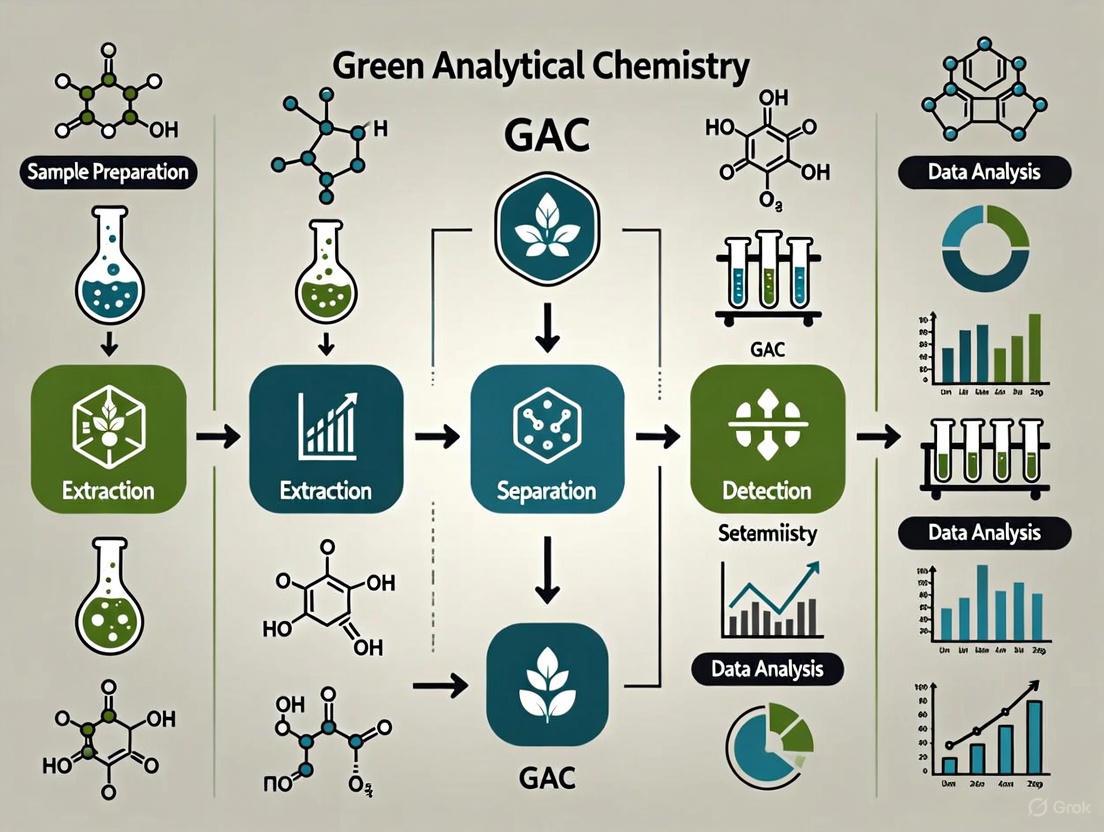
This article provides a comprehensive overview of Green Analytical Chemistry (GAC), a transformative discipline that integrates sustainability into analytical science.
Green Analytical Chemistry: Principles, Practice, and Future Directions
Abstract
This article provides a comprehensive overview of Green Analytical Chemistry (GAC), a transformative discipline that integrates sustainability into analytical science. Tailored for researchers, scientists, and drug development professionals, it explores the foundational 12 principles of GAC and their practical application in modern laboratories. The scope extends from core concepts and methodologies—including green solvents, energy-efficient techniques, and miniaturization—to strategies for troubleshooting common implementation challenges. It further covers the essential frameworks for validating and comparing method greenness, introducing the evolving paradigm of White Analytical Chemistry (WAC) which balances environmental, analytical, and practical feasibility. This guide serves as a roadmap for adopting sustainable practices that maintain high analytical performance while reducing ecological impact.
The Foundations of Green Analytical Chemistry: From Core Principles to Modern Frameworks
The evolution of Green Analytical Chemistry (GAC) represents a significant paradigm shift in analytical science, emerging from the broader green chemistry movement that gained momentum in the late 20th century. This transformation was driven by growing recognition of the environmental consequences of chemical processes, including those used in analytical laboratories. The foundational philosophy of GAC centers on redesigning analytical methodologies to minimize their environmental footprint while maintaining, and often enhancing, their analytical performance [1] [2]. This whitepaper traces the historical development of GAC, examines its core principles in relation to green chemistry, presents contemporary applications with detailed experimental protocols, and explores the metrics and tools driving its continued evolution within research and drug development.
The significance of GAC extends beyond environmental stewardship; it represents a comprehensive framework for developing more efficient, cost-effective, and safer analytical procedures. Traditional analytical methods often relied heavily on toxic reagents, hazardous solvents, and energy-intensive processes that generated significant waste [3] [2]. GAC addresses these challenges through a fundamental rethinking of how analytical processes are designed, implemented, and evaluated. For researchers and drug development professionals, adopting GAC principles not only reduces environmental impact but also aligns with increasing regulatory pressures and the broader pharmaceutical industry's goals toward sustainable science [4] [1].
Historical Foundations: From Green Chemistry to GAC
The Environmental Awakening and Birth of Green Chemistry
The conceptual origins of green chemistry can be traced to a growing environmental awareness that intensified throughout the 1960s and 1970s. Key milestones included the 1962 publication of Rachel Carson's "Silent Spring," which stimulated public consciousness about ecological degradation, and the 1972 United Nations Conference on the Human Environment in Stockholm, which marked environmental protection as a global priority [1]. These developments created the necessary backdrop for re-evaluating the chemical industry's environmental footprint.
The formal establishment of green chemistry as a distinct discipline occurred in the 1990s, largely catalyzed by governmental initiatives. In 1991, the U.S. Environmental Protection Agency launched the "Alternative Synthetic Routes for Pollution Prevention" program, which officially adopted the term "green chemistry" in 1992 [1]. The theoretical foundation was solidified in 1998 with the publication of "Green Chemistry: Theory and Practice" by Paul Anastas and John Warner, who systematically outlined the 12 Principles of Green Chemistry that would become the cornerstone of the field [5] [1]. These principles provided a comprehensive framework for designing chemical products and processes that reduce or eliminate the use and generation of hazardous substances.
The Specialization into Green Analytical Chemistry
While green chemistry principles initially focused predominantly on synthetic chemistry, their relevance to analytical chemistry quickly became apparent. Paul Anastas himself highlighted the importance of applying these principles to analytical method development [1]. Analytical laboratories were identified as significant contributors to chemical waste due to their extensive use of organic solvents, toxic reagents, and energy-intensive instrumentation [3].
The specialization into Green Analytical Chemistry gained formal structure in 2013 when Galuszka, Migaszewski, and Namieśniki adapted the 12 principles of green chemistry to better fit the specific context of analytical practices [1]. This adaptation marked GAC's emergence as a distinct subdiscipline, with its own research agenda, methodologies, and assessment criteria. The core objective shifted toward developing analytical methods that prioritize operator safety, reduced energy consumption, effective waste management, and the minimization or elimination of hazardous chemicals [6].
The diagram below illustrates the key historical milestones in the development of Green Chemistry and GAC:
Core Principles: From Theory to Analytical Practice
The Foundational Frameworks
The 12 Principles of Green Chemistry established by Anastas and Warner provide the philosophical foundation for both synthetic and analytical chemistry applications [5]. These principles emphasize waste prevention, atom economy, less hazardous chemical syntheses, and designing safer chemicals [5] [2]. For analytical chemistry, several principles have particular relevance, including the use of safer solvents and auxiliaries, design for energy efficiency, and real-time analysis for pollution prevention [2].
When applied specifically to analytical chemistry, these principles were adapted to address the unique challenges and opportunities in chemical analysis. The resulting GAC principles emphasize direct energy reduction, minimized sample treatment, safety for operators, and method integration [3] [2]. A key conceptual shift in GAC involves moving from traditional laboratory-based analysis to on-site and in-vivo analysis to avoid sample transportation and complex treatment procedures [4].
Comparative Analysis of Principles
Table 1: Comparison of Select Green Chemistry and Green Analytical Chemistry Principles
| Green Chemistry Principle | Corresponding GAC Emphasis | Practical Application in Analysis |
|---|---|---|
| Prevention of waste | Directness and minimal sample preparation | On-site analysis to avoid sample transport and treatment [4] |
| Safer solvents and auxiliaries | Alternative solvents and reagent replacement | Use of water, supercritical CO₂, or ionic liquids instead of organic solvents [2] |
| Energy efficiency | Reduced total energy consumption of method | Miniaturized instruments, ambient temperature processes [4] [2] |
| Real-time analysis for pollution prevention | In-line, real-time measurements | Process Analytical Technology (PAT) for continuous monitoring [2] |
| Safer chemistry for accident prevention | Operator safety through reduced toxicity | Replacement of hazardous derivatization agents [3] |
Modern GAC Innovations and Experimental Approaches
Sustainable Materials in Sample Preparation
Recent innovations in GAC have focused heavily on developing more sustainable materials for sample preparation, particularly in extraction techniques. The emergence of next-generation sustainable adsorbent materials (N-GSAMs) represents a significant advancement toward greener analytical methodologies [6]. These materials offer enhanced efficiency, selectivity, and environmental compatibility compared to traditional adsorbents.
Key categories of N-GSAMs include metal-organic frameworks (MOFs), covalent organic frameworks (COFs), molecularly imprinted polymers (MIPs), and various hybrid materials [6]. Their development aligns with multiple GAC principles through minimized reagent consumption, reduced waste generation, and improved analytical performance. For instance, MOFs and COFs exhibit exceptionally high surface areas and tunable porosity, allowing for efficient extraction of target analytes while minimizing solvent requirements [6].
Detailed Experimental Protocol: Microporous Carbon Synthesis for Pollutant Removal
The following protocol details a recently published method for synthesizing ordered microporous carbons with tunable pore sizes for enhanced pollutant removal, demonstrating the application of GAC principles in materials development [7]:
Materials and Reagents
Table 2: Research Reagent Solutions for Microporous Carbon Synthesis
| Reagent/Material | Function in Protocol | Green Chemistry Considerations |
|---|---|---|
| Pluronic P-123 triblock copolymer (EO₂₀PO₇₀EO₂₀) | Structure-directing agent for mesoporous silica template | Potential for recovery and reuse in process [7] |
| Tetraethyl orthosilicate (TEOS) | Silica source for template synthesis | Hydrolyzes to ethanol and silica; ethanol can be recovered [7] |
| Sucrose | Carbon precursor | Renewable, bio-based feedstock [7] |
| Sulfuric acid (H₂SO₄) | Catalyst for carbonization | Used in minimal quantities; can be neutralized and managed as waste [7] |
| Hydrofluoric acid (HF) or Sodium hydroxide (NaOH) | Template removal agent | HF is highly hazardous; NaOH is preferred as safer alternative [7] |
Step-by-Step Procedure
Mesoporous Silica Template Synthesis: Prepare a homogeneous solution of Pluronic P-123 in aqueous HCl (2M) at 40°C. Add tetraethyl orthosilicate (TEOS) dropwise with vigorous stirring. Continue stirring for 24 hours at 40°C [7].
Hydrothermal Treatment for Pore Size Tuning: Transfer the mixture to an autoclave for hydrothermal treatment at temperatures ranging from 40°C to 140°C for 24 hours. Note that varying the hydrothermal temperature (40°C, 80°C, 100°C, 120°C, 140°C) enables precise control of resulting carbon pore size from 5.33 nm down to 0.83 nm [7].
Template Recovery and Calcination: Recover the solid product by filtration, dry at 100°C, and calcine at 550°C for 6 hours to remove the surfactant and obtain the mesoporous silica template.
Carbon Precursor Incorporation: Prepare a solution containing sucrose, deionized water, and H₂SO₄ as a catalyst. Infiltrate the silica template with this solution [7].
Carbonization Process: Heat the mixture to 160°C for 6 hours, then to 890°C under nitrogen atmosphere for additional 6 hours to complete the carbonization process [7].
Template Removal: Remove the silica template using 2M NaOH solution (preferred green alternative to HF) at room temperature, followed by washing with deionized water and ethanol [7].
Material Characterization: Characterize the resulting ordered microporous carbon using nitrogen adsorption-desorption isotherms, transmission electron microscopy, and X-ray diffraction to confirm pore structure and ordering [7].
This method demonstrates key GAC principles through its ability to fine-tune material properties for specific applications, potentially reducing the amount of adsorbent needed and improving remediation efficiency. The synthesis of materials with precisely controlled pore sizes (0.83-5.33 nm) enables more selective adsorption of target pollutants, reducing the need for multiple treatment steps and additional reagents [7].
Detailed Experimental Protocol: GAC-Enhanced Biofilm Systems for Wastewater Treatment
Another significant application of GAC principles appears in environmental monitoring and remediation. The following protocol details the use of granular activated carbon (GAC) to enhance microbial electron transfer in biofilm systems for improved denitrification under challenging conditions [8]:
Materials and Reagents
Table 3: Research Reagent Solutions for GAC-Enhanced Biofilm Systems
| Reagent/Material | Function in Protocol | Green Chemistry Considerations |
|---|---|---|
| Granular Activated Carbon (GAC), 2-3 mm diameter | Electron mediator enhancing interspecies electron transfer | Recyclable material with potential for regeneration and reuse [8] |
| Ceramsite (2-3 mm diameter) | Conventional biofilm carrier | Inert, reusable support material [8] |
| Synthetic wastewater components | Simulation of real wastewater | Avoids use of actual wastewater, reducing hazard [8] |
| Sodium acetate | Carbon source for denitrifying bacteria | Readily biodegradable organic substrate [8] |
| Potassium nitrate (KNO₃) | Nitrogen source | Targeted pollutant for removal [8] |
Step-by-Step Procedure
Experimental System Setup: Prepare 24 microcosm systems in 250-mL serum bottles. For control groups (CK), use only ceramsite as biofilm carrier. For GAC-treated groups, use a 3:1 volume ratio mixture of ceramsite and GAC [8].
Temperature and Carbon Conditions: Maintain half of the serum bottles at 25±1°C (normal temperature) and the other half at 4-6°C (cool temperature) to simulate challenging environmental conditions. Use two different carbon-to-nitrogen (C/N) ratios: 8 (high carbon) and 4 (low carbon) by adjusting total organic carbon levels to 400 mg/L and 200 mg/L respectively, with constant 50 mg/L nitrate (NO₃⁻-N) [8].
Biofilm Acclimation: Acclimate seeding sludge for 3 months using synthetic wastewater in batch mode with a 3-day hydraulic retention time. Allow approximately 3 months for biofilm growth until denitrification efficiency stabilizes [8].
Water Sampling and Analysis: Collect water samples at 0, 2, 4, 8, 12, 18, 24, 36, 48, 60, and 72-hour intervals during a typical operational batch. Analyze immediately or store at -20°C until analysis using segmented flow analyzer for nitrogen species quantification [8].
Gas Sampling and Analysis: Collect headspace gas samples at the end of each batch using gas-tight syringes. Transfer to 10-mL gas-sampling bags and analyze using gas chromatography to quantify N₂O emissions, a potent greenhouse gas [8].
Biofilm Morphology and Microbial Analysis: After experimentation, sample ceramsite and GAC particles covered by biofilm. Process for scanning electron microscopy (SEM) and fluorescence in situ hybridization (FISH) analysis to observe biofilm morphology and spatial organization of electroactive microorganisms and denitrifiers [8].
Microbial Activity Assessment: Determine ATP concentrations as a measure of microbial activity using Water-Glo reagent and a luminometer according to manufacturer protocols [8].
This protocol demonstrates the application of GAC principles through its focus on enhancing natural biological processes rather than introducing energy-intensive or chemically demanding treatment methods. The use of GAC as an electron mediator improved denitrification efficiency by 19.4-21.9% and reduced N₂O emissions by 10.6-22.9% under low-temperature and low-carbon conditions, showcasing how GAC-aligned approaches can simultaneously improve efficiency and reduce environmental impact [8].
The following diagram illustrates the experimental workflow for the GAC-enhanced biofilm system:
Assessment Methodologies and Future Directions
Metrics and Tools for Evaluating Greenness
The evolution of GAC has necessitated the development of standardized assessment tools to quantitatively evaluate the environmental performance of analytical methods. Several metrics and tools have emerged to help researchers and practitioners systematically assess and compare the greenness of their methodologies [3].
Key assessment tools include:
NEMI (National Environmental Methods Index): An early tool that uses a pictogram to represent whether a method meets basic green criteria regarding persistence, bioaccumulation, toxicity, and corrosiveness of chemicals used [3].
GAPI (Green Analytical Procedure Index): A more comprehensive assessment tool that employs a color-coded system to evaluate the environmental impact of each step in an analytical procedure, from sample collection through final determination [3].
AGREE (Analytical GREEnness) Tool: A recently developed software-based tool that provides a holistic evaluation of method greenness based on all 12 GAC principles, offering a total score and visual output to facilitate interpretation and comparison [3].
The implementation of these assessment tools enables researchers to identify environmental hotspots in their analytical methods and make informed decisions when developing greener alternatives. For the pharmaceutical industry, where regulatory compliance is paramount, these tools provide a structured approach to demonstrating adherence to increasingly stringent environmental standards [3].
Future Perspectives in GAC Research
The future trajectory of GAC points toward increased integration with emerging technologies and more systematic implementation across research and industrial sectors. Key future directions include:
Integration with Artificial Intelligence and Digital Tools: AI and machine learning algorithms are increasingly being applied to optimize analytical workflows, minimize waste, and streamline method development processes [2]. These technologies can help identify greener alternatives more efficiently than traditional trial-and-error approaches.
Advanced Materials Development: Research continues into more sustainable adsorbent materials with enhanced selectivity and reduced environmental impact [6]. Future work will likely focus on bio-based materials, reusable platforms, and materials that facilitate direct analysis without extensive sample preparation.
System-Level Assessments: There is growing recognition of the need for life cycle assessment (LCA) approaches that evaluate the total environmental impact of analytical methods, from raw material extraction through to waste disposal [2]. This systems thinking represents a maturation of the GAC field beyond simple reagent substitution.
Educational Integration: As GAC becomes more established, its principles are being incorporated into analytical chemistry curricula to equip the next generation of scientists with the mindset and tools needed to develop sustainable methodologies [3]. This includes hands-on courses specifically dedicated to GAC principles and applications.
For drug development professionals, these advancements promise to deliver analytical methods that not only meet regulatory requirements for pharmaceutical quality control but also align with corporate sustainability goals and reduce the environmental footprint of drug development processes.
The evolution from Green Chemistry to Green Analytical Chemistry represents more than a simple specialization; it marks a fundamental transformation in how analytical science is conceptualized, developed, and practiced. By tracing this historical path, examining the adapted principles, and exploring contemporary applications with detailed experimental protocols, this whitepaper demonstrates how GAC has emerged as a robust framework for sustainable science.
For researchers and drug development professionals, embracing GAC principles offers a pathway to reconcile analytical performance with environmental responsibility. The ongoing development of assessment tools, sustainable materials, and innovative methodologies continues to expand the possibilities for green analysis. As the field advances, the integration of GAC principles promises to deliver analytical solutions that not only protect human health and the environment but also enhance efficiency, reduce costs, and support the broader transition toward sustainable pharmaceutical development.
Green Chemistry, defined as the design of chemical products and processes that reduce or eliminate the use or generation of hazardous substances, represents a fundamental shift in chemical philosophy [9]. Developed by Paul Anastas and John Warner in 1998, the 12 Principles of Green Chemistry provide a systematic framework for achieving sustainability across chemical disciplines [5]. Within this broader context, Green Analytical Chemistry (GAC) has emerged as a specialized field focused on applying these principles to analytical methodologies, with the objective to minimize or eliminate the use of toxic substances and generation of waste throughout the analytical workflow [4].
The traditional approach to environmental protection has often focused on remediation—cleaning up waste after it has been created. In contrast, Green Chemistry emphasizes prevention at the molecular level, making it inherently more efficient and sustainable [9]. This proactive approach is particularly relevant for analytical laboratories, which frequently consume significant quantities of solvents and reagents while generating substantial waste streams. The integration of green principles into analytical science represents not merely an environmental imperative but also an opportunity to develop more efficient, cost-effective, and safer analytical methods.
The 12 Principles of Green Chemistry: Detailed Framework
Foundation Principles
The foundational principles of Green Chemistry establish the fundamental mindset for sustainable chemical design and directly inform greener analytical approaches.
Prevention The first principle states that "It is better to prevent waste than to treat or clean up waste after it has been created" [5] [10]. This cornerstone principle emphasizes proactive waste avoidance rather than end-of-pipe treatment. In analytical chemistry, this translates to designing methods that minimize solvent consumption, sample requirements, and disposable materials throughout the analytical process. The Environmental Factor (E-factor), developed by Roger Sheldon, provides a key metric for measuring waste production by calculating the ratio of waste mass to product mass [5]. In pharmaceutical applications, the ACS Green Chemistry Institute Pharmaceutical Roundtable has favored Process Mass Intensity (PMI), which expresses the ratio of the weights of all materials (including water, solvents, raw materials) to the weight of the active product [5]. These metrics allow analytical chemists to quantify and improve the environmental performance of their methods.
Atom Economy Principle 2 advocates that "Synthetic methods should be designed to maximize the incorporation of all materials used in the process into the final product" [5] [10]. While originally conceived for synthetic chemistry, this principle finds analytical relevance in maximizing the information obtained from minimal material inputs. Atom economy, developed by Barry Trost, questions which atoms of the reactants are incorporated into the final desired product and which are wasted [5]. In analytical contexts, this can be interpreted as optimizing extraction and derivatization efficiency to obtain maximum analytical signal from minimal reagent use.
Less Hazardous Chemical Syntheses The third principle recommends that "synthetic methods should be designed to use and generate substances that possess little or no toxicity to human health and the environment" [5] [10]. For analytical chemistry, this necessitates selecting reagents and procedures that minimize toxicity throughout the method lifecycle. This principle presents implementation challenges, as noted by Constable: "reactive chemicals afford reactions that are kinetically and thermodynamically favorable" and chemists often continue using inherently toxic materials unless replacement protocols are developed [5]. However, the principle encourages analytical chemists to broaden their definition of methodological quality beyond just analytical performance to include environmental and safety considerations.
Safer Design Principles
This category focuses on the inherent safety and environmental profile of chemicals and processes used throughout the analytical workflow.
Designing Safer Chemicals Principle 4 states that "Chemical products should be designed to preserve efficacy of function while reducing toxicity" [5] [10]. For analytical chemistry, this involves designing detection molecules, derivatization agents, and other analytical reagents that maintain high performance while exhibiting reduced toxicity. As Nicholas Anastas explains, this requires "an understanding of not only chemistry but also of the principles of toxicology and environmental science" [5]. Highly reactive chemicals often used in analytical procedures are "more likely to react with unintended biological targets, human and ecological, resulting in unwanted adverse effects" [5].
Safer Solvents and Auxiliaries The fifth principle recommends that "The use of auxiliary substances (e.g., solvents, separation agents, etc.) should be made unnecessary wherever possible and innocuous when used" [10]. This is particularly significant for analytical chemistry, where solvents often constitute the majority of waste generated. Current research focuses on identifying alternative solvents that maintain analytical performance while reducing environmental impact. Recent studies have demonstrated successful applications of deep eutectic solvents (DES) and ionic liquids as greener alternatives in microextraction techniques for pharmaceutical analysis [11]. These solvents typically offer lower toxicity, reduced environmental persistence, and improved recyclability compared to traditional organic solvents.
Design for Energy Efficiency Principle 6 indicates that "Energy requirements of chemical processes should be recognized for their environmental and economic impacts and should be minimized" [10]. In analytical practice, this involves selecting methods that operate at ambient temperature and pressure when possible, and optimizing instrumental parameters to reduce power consumption. Energy-intensive techniques like GC-MS, HPLC, and ICP-OES offer particular opportunities for improvement through method optimization and instrument selection [11].
Renewable and Efficient Process Principles
These principles address the sourcing of materials and efficiency of chemical processes, with direct applications to analytical method development.
Use of Renewable Feedstocks The seventh principle advocates that "A raw material or feedstock should be renewable rather than depleting whenever technically and economically practicable" [10]. While more challenging for analytical chemistry, this principle can be applied through the selection of reagents derived from renewable resources rather than petrochemical sources. Recent research has explored bio-based solvents and reagents, though implementation in analytical practice remains limited [12].
Reduce Derivatives Principle 8 recommends that "Unnecessary derivatization should be minimized or avoided if possible, because such steps require additional reagents and can generate waste" [10]. In analytical chemistry, derivatization is frequently used to enhance detectability or chromatographic behavior. This principle encourages the development of direct analysis methods that eliminate derivative steps. Enzymatic approaches and selective detection technologies offer pathways to avoid derivatization while maintaining analytical performance [12].
Catalysis The ninth principle states that "Catalytic reagents (as selective as possible) are superior to stoichiometric reagents" [10]. While more common in synthesis, catalysis finds analytical applications in sample preparation, digestion, and derivatization. Catalysts enable these processes with reduced reagent consumption and waste generation. Enzymatic catalysis, in particular, offers high selectivity under mild conditions, aligning with multiple green principles [12].
End-of-Life and Safety Principles
These final principles address the complete lifecycle of chemical products and processes, including their ultimate environmental fate and safety profile.
Design for Degradation Principle 10 recommends that "Chemical products should be designed so that at the end of their function they break down into innocuous degradation products and do not persist in the environment" [10]. For analytical chemistry, this involves selecting reagents and materials that readily biodegrade after disposal. This principle specifically targets persistent organic pollutants, which "typically [include] halogenated compounds" that resist environmental breakdown [12].
Real-time Analysis for Pollution Prevention Principle 11 indicates that "Analytical methodologies need to be further developed to allow for real-time, in-process monitoring and control prior to the formation of hazardous substances" [10]. This principle uniquely positions analytical chemistry as both a beneficiary and enabler of green chemistry. Recent advancements include real-time monitoring of tea volatiles using soft ionization and online sampling interfaces [11], and the development of process analytical technology (PAT) for pharmaceutical manufacturing.
Inherently Safer Chemistry for Accident Prevention The final principle states that "Substances and the form of a substance used in a chemical process should be chosen to minimize the potential for chemical accidents" [10]. In analytical laboratories, this involves selecting less hazardous reagent forms, minimizing inventory of hazardous chemicals, and designing methods with reduced accident potential. This principle connects strongly with Principle 3 regarding less hazardous syntheses, together forming a comprehensive safety framework [12].
Green Analytical Chemistry Methodologies and Applications
Greenness Assessment Metrics and Tools
The implementation of Green Analytical Chemistry requires systematic assessment tools to evaluate and compare the environmental performance of analytical methods. Multiple metrics and tools have been developed for this purpose.
Table 1: Greenness Assessment Metrics for Analytical Methods
| Metric/Tool | Application | Key Parameters Measured | References |
|---|---|---|---|
| NEMI Scale | Categorizes methods based on four criteria | Persistence, bioaccumulation, toxicity, hazardous waste generation | [11] |
| AGREE | Comprehensive greenness score based on 12 principles | Evaluates all 12 GAC principles with weighted scoring | [11] |
| Analytical Method Greenness Score (AMGS) | Quantitative environmental impact assessment | Solvent toxicity, waste production, energy consumption | [13] |
| ComplexGAPI | Holistic greenness visualization | Multiple environmental and safety parameters | [14] |
Recent research has demonstrated the application of these metrics across various analytical techniques. For example, a 2025 study developed an eco-friendly HPTLC method for trifluridine and tipiracil determination using Quality-by-Design principles alongside greenness assessment via NEMI, AGREE, and White Analytical Chemistry metrics [11]. Similarly, another 2025 study applied greenness assessment to ICP-OES methods for metal determination [11].
Emerging Trends: White Analytical Chemistry
White Analytical Chemistry (WAC) represents an evolution beyond traditional GAC, adopting a more holistic framework that balances environmental sustainability with analytical practicality and economic feasibility [14]. WAC utilizes the RGB model, where the green component incorporates traditional GAC metrics, the red component addresses analytical performance, and the blue component considers economic aspects [14].
This integrated approach ensures that green methods maintain the rigorous performance standards required for analytical applications while remaining economically viable. A 2025 review highlights WAC's application in developing stability-indicating HPTLC methods for thiocolchicoside and aceclofenac, as well as a green RP-HPLC method for multiple drugs in human plasma, where "a WAC-assisted AQbD strategy led to a validated, sustainable, and cost-effective procedure with an excellent white WAC score" [14].
Green Analytical Techniques and Applications
Recent advancements in GAC have yielded numerous practical methodologies across analytical application areas:
Green Sample Preparation Techniques
- Vortex-assisted deep eutectic solvent-based dispersive liquid-liquid microextraction for spectroscopic determination of Hg in fuels [11]
- Waste PET-derived UIO-66 as adsorbent for preconcentration of selected cephalosporins before HPLC-DAD quantification [11]
- Solventless extraction techniques and assisted extractions at both laboratory and industrial scales [4]
Green Separation Methods
- In silico modeling for greener chromatographic methods: Computer-assisted method development enables replacement of hazardous solvents while maintaining separation performance. Recent research demonstrates replacement of fluorinated mobile phase additives with less hazardous alternatives, reducing the Analytical Method Greenness Score (AMGS) from 9.46 to 4.49 while maintaining resolution [13]
- Replacement of acetonitrile with methanol in mobile phases, reducing AMGS from 7.79 to 5.09 while preserving critical resolution [13]
- Nitrogen and hydrogen as alternatives to helium using wide-bore columns in preparative multidimensional gas chromatography [11]
On-Site and Miniaturized Analytical Technologies
- Development of chemical and biochemical sensors with device reuse to reduce waste [4]
- Miniaturization to dramatically reduce reagent consumption and waste generation [4]
- Microfluidic paper-based analytical devices for non-enzymatic detection of glucose-ketone ratio [11]
- Direct infusion into Rapid Evaporative Ionization Mass Spectrometry for metabolomics fingerprinting [11]
Implementation Framework for Analytical Researchers
Practical Methodologies and Protocols
Successful implementation of GAC requires practical methodologies that researchers can adopt in their analytical workflows. The following experimental protocols represent current best practices in the field.
Vortex-Assisted Deep Eutectic Solvent-Based Dispersive Liquid-Liquid Microextraction (VA-DES-DLLME) This protocol exemplifies Principles 5 (Safer Solvents) and 1 (Waste Prevention) through the use of green solvents and minimal waste generation.
Table 2: Research Reagent Solutions for VA-DES-DLLME
| Reagent/Material | Function | Green Alternative | Traditional Approach |
|---|---|---|---|
| Deep Eutectic Solvent (DES) | Extraction solvent | Natural product-based solvents (e.g., choline chloride + urea) | Halogenated organic solvents |
| Aqueous sample | Analysis matrix | Minimal sample volume (< 10 mL) | Large volume extractions |
| Vortex mixer | Assistance of dispersion | Energy-efficient mixing | Sonication or mechanical stirring |
| Centrifuge | Phase separation | Low-energy models | Standard energy-intensive models |
Experimental Workflow:
- DES Preparation: Prepare deep eutectic solvent by mixing hydrogen bond donor (e.g., urea) and hydrogen bond acceptor (e.g., choline chloride) at 80°C until homogeneous liquid forms.
- Sample Preparation: Transfer 10 mL of aqueous sample to glass centrifuge tube.
- Extraction: Rapidly inject DES extractant (≤ 100 μL) into sample solution using microsyringe.
- Dispersion: Vortex mixture vigorously for 60 seconds to form cloudy solution.
- Phase Separation: Centrifuge at 4000 rpm for 5 minutes to separate phases.
- Analysis: Collect sedimented DES phase for direct analysis or minimal dilution.
This method has been successfully applied for spectroscopic determination of Hg in fuels, demonstrating comparable performance to conventional methods with significantly reduced environmental impact [11].
In Silico-Assisted Greener Chromatographic Method Development This protocol applies computational approaches to implement Principles 6 (Energy Efficiency) and 11 (Real-time Analysis) by minimizing experimental trial-and-error.
Table 3: Research Reagent Solutions for In Silico Chromatography
| Reagent/Material | Function | Green Alternative | Traditional Approach |
|---|---|---|---|
| Chromatography modeling software | Method development | Virtual screening of conditions | Experimental trial-and-error |
| Methanol | Mobile phase component | Lower toxicity solvent | Acetonitrile |
| Ethanol-based mobile phases | Green solvent alternative | Renewable feedstock source | Petroleum-based solvents |
| Wide-bore GC columns | Carrier gas reduction | Enable use of H₂ or N₂ | Helium with narrow-bore columns |
Experimental Workflow:
- Initial Scouting: Perform limited initial experiments to characterize analyte behavior across different conditions.
- Model Building: Input retention data into chromatography modeling software to build predictive retention models.
- Separation Modeling: Virtually screen different mobile phase compositions, gradients, and temperatures to identify optimal conditions.
- Greenness Assessment: Calculate Analytical Method Greenness Score (AMGS) for promising method conditions.
- Experimental Verification: Validate top predicted methods experimentally with minimal adjustments.
- Method Implementation: Apply optimized green method to actual samples.
This approach has demonstrated reduction of AMGS from 9.46 to 4.49 in specific pharmaceutical applications while maintaining chromatographic resolution [13].
Educational and Implementation Strategies
The successful implementation of GAC requires systematic educational approaches and implementation strategies. Recent initiatives include:
University Curriculum Development Integration of GAC principles into analytical chemistry courses using published research as teaching materials [4]. Specialized journals like Green Analytical Chemistry provide resources for educators to incorporate green approaches into their courses [4].
Green Financing for Analytical Chemistry (GFAC) An emerging dedicated funding model designed to promote innovations aligned with GAC and WAC goals, helping bridge gaps in current practices [14]. This financial support mechanism recognizes that initial implementation of greener methods may require investment in new equipment or training.
Industry-Academia Collaboration Partnerships between pharmaceutical companies, regulatory authorities, and academia to develop and validate greener analytical methods ready for regulatory adoption [4] [15]. Such collaborations are essential for transitioning green methods from research laboratories to routine practice.
The 12 Principles of Green Chemistry provide a comprehensive, systematic framework for advancing sustainability in analytical science. As this technical guide has demonstrated, these principles directly inform practical methodologies across the analytical workflow—from sample preparation to separation and detection. The emerging paradigm of White Analytical Chemistry represents a significant evolution, balancing environmental objectives with analytical performance and practical implementation requirements.
For researchers and drug development professionals, implementing GAC principles offers multiple benefits: reduced environmental impact, lower operating costs, improved safety profiles, and alignment with regulatory trends toward sustainable science. The experimental protocols and assessment metrics detailed in this guide provide practical starting points for method development and optimization.
As the field continues to evolve, future directions will likely include increased integration of in silico modeling, further development of miniaturized and on-site analysis technologies, and standardized greenness assessment protocols. Through continued innovation and implementation of these principles, analytical chemistry can significantly contribute to broader sustainability goals while maintaining the high-quality data generation required for scientific advancement and regulatory compliance.
Core GAC Principles and the SIGNIFICANCE Mnemonic
Green Analytical Chemistry (GAC) is an evolving discipline that integrates the principles of green chemistry into analytical methodologies, aiming to reduce the environmental and human health impacts traditionally associated with chemical analysis [2]. The foundation of GAC lies in the 12 principles of green chemistry, which provide a comprehensive framework for designing and implementing environmentally benign analytical techniques [2]. This transformative approach emphasizes sustainability and environmental stewardship while maintaining high standards of accuracy and precision, reimagining the role of analytical chemistry in today's environmental and industrial landscape [2].
GAC addresses the environmental footprint of traditional analytical methods by minimizing the use of toxic reagents, reducing energy consumption, and preventing the generation of hazardous waste [2]. The discipline has gained significant momentum with the emergence of White Analytical Chemistry (WAC) as the next iteration of sustainable analytical chemistry. WAC strengthens traditional GAC through the addition of criteria assessing performance and practical usability of analytical practices, following a holistic framework that integrates analytical accuracy, environmental sustainability, and practical aspects like cost and usability [14].
The 12 Principles of Green Analytical Chemistry
The 12 principles of green chemistry provide a foundational framework for designing chemical processes and products that prioritize environmental and human health. When applied to analytical techniques, these principles drive the development of methodologies that are safer, more efficient, and environmentally benign [2]. The table below summarizes these core principles and their applications in analytical chemistry.
Table 1: The 12 Principles of Green Analytical Chemistry and Their Applications
| Principle Number | Principle Name | Core Concept | Application in Analytical Chemistry |
|---|---|---|---|
| 1 | Waste Prevention | Designing processes to avoid generating waste | Minimizing solvent and reagent use through micro-extraction techniques and direct analysis |
| 2 | Atom Economy | Maximizing incorporation of materials into final product | Optimizing sample preparation to reduce derivatives and by-products |
| 3 | Less Hazardous Chemical Syntheses | Using safer substances and synthetic methods | Replacing toxic reagents with biodegradable or less hazardous alternatives |
| 4 | Designing Safer Chemicals | Creating effective chemicals with minimal toxicity | Developing new analytical reagents with reduced environmental persistence |
| 5 | Safer Solvents and Auxiliaries | Using safer reaction media | Employing water, ionic liquids, or supercritical CO₂ instead of hazardous organic solvents |
| 6 | Design for Energy Efficiency | Conducting reactions at ambient conditions | Utilizing room temperature processes and energy-efficient equipment |
| 7 | Use of Renewable Feedstocks | Employing biomass-based raw materials | Sourcing solvents from renewable resources like bio-based alternatives |
| 8 | Reduce Derivatives | Minimizing temporary chemical modifications | Streamlining analytical methods to eliminate protection/deprotection steps |
| 9 | Catalysis | Using catalytic versus stoichiometric reagents | Implementing catalytic systems for sample digestion and derivatization |
| 10 | Design for Degradation | Creating chemicals that break down harmlessly | Using reagents that decompose into non-toxic environmental products |
| 11 | Real-time Analysis for Pollution Prevention | In-process monitoring and control | Developing direct measurement techniques to prevent hazardous by-product formation |
| 12 | Inherently Safer Chemistry for Accident Prevention | Minimizing potential for chemical accidents | Designing analytical workflows with reduced risk of explosions or hazardous releases |
These principles collectively provide a comprehensive strategy for reimagining analytical chemistry to meet the demands of sustainability, safety, and environmental responsibility. By embedding these principles into the development of analytical techniques, the discipline not only aligns with green chemistry's ethos but also actively contributes to reducing the ecological footprint of scientific research and industrial processes [2].
The SIGNIFICANCE Mnemonic: A Framework for GAC Implementation
To facilitate the practical implementation of GAC principles, we introduce the SIGNIFICANCE mnemonic—a comprehensive framework designed to guide researchers in developing and evaluating green analytical methods. This framework translates theoretical principles into actionable strategies that can be systematically applied across various analytical workflows.
Decoding the SIGNIFICANCE Framework
The SIGNIFICANCE mnemonic breaks down into ten key components that cover both fundamental and advanced aspects of GAC implementation:
S - Solvent Selection and Substitution: Prioritize safer solvents such as water, supercritical carbon dioxide, ionic liquids, and bio-based alternatives to replace volatile organic compounds (VOCs) and reduce toxicity [2]. This aligns with Principle 5 of green chemistry, focusing on safer solvents and auxiliaries.
I - Instrumentation Greenness: Utilize miniaturized, portable, and energy-efficient devices that reduce resource consumption and operational costs while maintaining analytical performance [2]. This approach directly supports Principle 6 (Design for Energy Efficiency).
G - Green Sample Preparation: Implement direct analysis techniques and minimal sample processing to reduce solvents, energy, and time [2]. Methods such as solid-phase microextraction (SPME) exemplify this approach by minimizing solvent usage and waste generation.
N - Non-Derivatization Approaches: Develop methods that eliminate or reduce the need for chemical derivatization, thus minimizing reagent use and waste generation [2]. This aligns with Principle 8 (Reduce Derivatives) by streamlining analytical methods.
I - In-situ and Real-time Monitoring: Employ direct measurement techniques that enable real-time analysis for pollution prevention, allowing for immediate process control and reducing the need for extensive laboratory analysis [2]. This directly implements Principle 11 of green chemistry.
F - Flow-Based and Automated Systems: Transition from batch processes to continuous-flow systems and automated platforms for more efficient resource utilization and reduced environmental impact [2]. Automation enhances precision while minimizing reagent consumption and human error.
I - Integration of Green Metrics: Apply comprehensive assessment tools like Life Cycle Assessment (LCA) to evaluate the environmental impact of analytical methods across all stages, from raw material extraction to disposal [2]. LCA provides a systemic view, capturing often-overlooked environmental burdens.
C - Carbon and Energy Reduction: Focus on reducing the carbon footprint through alternative energy sources like microwave-assisted, ultrasound-assisted, and photo-induced processes that lower energy demands while maintaining efficiency [2].
A - Analytical Quality by Design (AQbD): Implement AQbD and Design of Experiment (DoE) methodologies to develop robust, efficient methods that minimize experimental trials and resource consumption while ensuring quality [14]. This systematic approach aligns with multiple green chemistry principles.
N - Non-Thermal and Alternative Energy Sources: Utilize energy sources such as microwaves, ultrasound, and photons to enhance reaction rates and extraction efficiency under milder conditions, significantly reducing energy consumption compared to conventional heating methods [2].
C - Consumption and Waste Reduction: Emphasize waste prevention as the primary goal (Principle 1) through micro-scale techniques, reagent recycling, and methods that generate minimal or biodegradable waste [2].
E - Eco-friendly End-of-Life Management: Design methods considering the complete lifecycle, including proper disposal or degradation of analytical wastes to prevent persistent environmental contamination [2]. This implements Principle 10 (Design for Degradation).
Visualizing the SIGNIFICANCE Framework
The following diagram illustrates the interconnected relationships between the components of the SIGNIFICANCE framework and their contributions to sustainable analytical practices:
Diagram Title: SIGNIFICANCE Framework Components and Outcomes
Advanced GAC Frameworks: From Green to White Analytical Chemistry
The Evolution to White Analytical Chemistry (WAC)
White Analytical Chemistry (WAC) represents the next evolution of sustainable analytical chemistry, strengthening traditional GAC through the addition of criteria assessing performance and practical usability [14]. While GAC has largely concentrated on reducing negative environmental externalities, WAC follows a holistic framework that integrates analytical accuracy, environmental sustainability, and practical aspects like cost and usability [14].
These concepts are color-coded within WAC following the Red-Green-Blue (RGB) model. Under this new framework:
- The green component incorporates traditional GAC metrics
- The red component adds analytical performance
- The blue component considers economic aspects [14]
This balanced approach ensures that environmental goals do not compromise analytical effectiveness or practical implementation, addressing one of the key challenges in GAC implementation.
WAC Assessment and Implementation
The RGB model provides a systematic approach for evaluating analytical methods. A perfect "white" method would score highly in all three components (green = environmental, red = analytical, blue = practical/economic), representing an ideal balance between sustainability, performance, and practicality [14].
The application of WAC is further enhanced through tools like Analytical Quality by Design (AQbD) and Design of Experiment (DoE), which contribute to method optimization and provide a structured approach to developing methods that meet WAC criteria [14]. ComplexGAPI has been introduced as a holistic metric for assessing WAC procedures, offering a more comprehensive evaluation than previous tools [14].
Table 2: Comparison of GAC and WAC Frameworks
| Aspect | Green Analytical Chemistry (GAC) | White Analytical Chemistry (WAC) |
|---|---|---|
| Primary Focus | Reducing environmental impact | Balancing environmental, performance, and practical aspects |
| Evaluation Dimensions | Primarily environmental metrics | RGB model: Green (environmental), Red (analytical), Blue (practical) |
| Method Development Approach | Traditional method development with green principles | AQbD and DoE for optimized, balanced methods |
| Assessment Tools | Primarily green metrics | ComplexGAPI and comprehensive scoring systems |
| Key Strengths | Strong environmental focus | Holistic balance of competing method requirements |
| Implementation Challenges | Potential trade-offs with analytical performance | More complex assessment and optimization process |
Experimental Protocols and Methodologies
Green Method Development Workflow
The following diagram outlines a systematic workflow for developing green analytical methods using the SIGNIFICANCE framework and WAC principles:
Diagram Title: Green Analytical Method Development Workflow
Case Study: Green RP-HPLC Method Development
A practical example of GAC/WAC implementation can be found in the development of a green RP-HPLC method for the simultaneous determination of azilsartan, medoxomil, chlorthalidone, and cilnidipine in human plasma [14]. The methodology followed a WAC-assisted AQbD strategy that led to a validated, sustainable, and cost-effective procedure with an excellent white WAC score [14].
Experimental Protocol:
Sample Preparation: Used protein precipitation with green solvents, minimizing organic waste generation while maintaining high recovery rates.
Chromatographic Conditions:
- Employed a green solvent gradient based on ethanol-water instead of traditional acetonitrile-water
- Used a core-shell column for improved efficiency with lower backpressure
- Optimized flow rate and temperature for energy efficiency
Method Optimization:
- Applied DoE to systematically evaluate critical method parameters
- Used AQbD principles to establish method operable design region
- Balanced separation quality with environmental impact
Validation:
- Conducted comprehensive validation following ICH guidelines
- Assessed greenness using GAC and WAC metrics
- Evaluated practical aspects including cost and throughput
This approach demonstrates how the SIGNIFICANCE framework can be successfully implemented in pharmaceutical analysis, achieving both environmental and analytical objectives.
The Scientist's Toolkit: Essential GAC Reagents and Materials
Table 3: Key Research Reagent Solutions for Green Analytical Chemistry
| Reagent/Material | Function in GAC | Traditional Alternative | Environmental Advantage |
|---|---|---|---|
| Supercritical CO₂ | Extraction and chromatography solvent | Organic solvents (hexane, methanol) | Non-toxic, non-flammable, easily removed from products [2] |
| Ionic Liquids | Green solvents for extraction and separation | Volatile organic compounds | Negligible vapor pressure, recyclable, tunable properties [2] |
| Bio-Based Solvents | Replacement for petroleum-based solvents | Traditional organic solvents | Derived from renewable resources, biodegradable [2] |
| Water at elevated temperatures | Green solvent for chromatography and extraction | Buffers with organic modifiers | Non-toxic, readily available, eliminates organic waste [2] |
| Solid-Phase Microextraction (SPME) fibers | Solvent-free sample preparation | Liquid-liquid extraction | Eliminates solvent use, minimal waste generation [2] |
| Microwave-Assisted Extraction systems | Energy-efficient sample preparation | Soxhlet extraction | Reduced extraction time and energy consumption [2] |
| Miniaturized and portable sensors | On-site analysis to reduce transportation | Laboratory-based analysis | Reduced energy for sample transport/storage, smaller sample sizes [2] |
The SIGNIFICANCE mnemonic provides a comprehensive framework for implementing Green Analytical Chemistry principles in research and industrial practice. By addressing Solvent selection, Instrumentation greenness, Green sample preparation, Non-derivatization approaches, In-situ monitoring, Flow-based systems, Integration of green metrics, Carbon reduction, AQbD implementation, Non-thermal energy sources, Consumption reduction, and Eco-friendly waste management, this framework offers a systematic approach to developing sustainable analytical methods.
The evolution from GAC to White Analytical Chemistry represents significant progress in sustainable science, acknowledging that environmental goals must be balanced with analytical performance and practical considerations. The RGB model of WAC provides a more holistic assessment framework that promotes methods excellence across multiple dimensions rather than focusing solely on environmental metrics.
For researchers and drug development professionals, adopting these principles and frameworks is increasingly essential for meeting regulatory requirements, reducing environmental impact, and developing more sustainable analytical practices. The ongoing innovation in green solvents, energy-efficient techniques, and assessment tools will continue to advance the field, supported by emerging technologies like artificial intelligence and digital tools that offer new ways to optimize workflows and minimize waste [2].
Green Analytical Chemistry (GAC) represents a paradigm shift in chemical analysis, transforming traditional methodologies into sustainable practices that minimize environmental impact while maintaining analytical efficacy. For researchers, scientists, and drug development professionals, adopting GAC principles is no longer optional but a critical component of modern scientific practice, driven by tightening environmental regulations, economic efficiency, and ethical responsibility. This technical guide details the implementation of three foundational pillars of GAC—Waste Prevention, Atom Economy, and Safer Solvents—within the context of analytical research and pharmaceutical development. These principles align with the broader goals of green chemistry to design chemical products and processes that reduce or eliminate the use or generation of hazardous substances [9]. The integration of these concepts into analytical workflows ensures that environmental impact, operator safety, and resource efficiency become central considerations in method development alongside traditional figures of merit like accuracy, precision, and sensitivity.
The transition to greener analytical practices requires both a philosophical shift and practical toolsets. This guide provides researchers with the theoretical framework, quantitative metrics, and experimental protocols needed to systematically green their analytical methods, particularly in pharmaceutical applications where solvent usage and waste generation are historically high. By embracing these principles, the analytical community can significantly reduce its environmental footprint while pioneering innovative approaches that do not compromise analytical performance.
The Principle of Waste Prevention
Theoretical Foundation
The first principle of green chemistry, Prevention, asserts that it is better to prevent waste formation than to treat or clean up waste after it is created [5]. In analytical chemistry, this translates to designing methods that minimize or eliminate waste streams at the outset, fundamentally re-engineering processes rather than employing end-of-pipe solutions. Traditional analytical methods, particularly in chromatography, often generate significant waste through solvent-intensive mobile phases, sample preparation steps, and purification processes. The green chemistry approach prioritizes source reduction through innovative technologies and methodological improvements that avoid waste generation entirely.
The environmental and economic imperative for waste prevention is substantial. In pharmaceutical manufacturing, waste production historically exceeded 100 kilograms per kilogram of active pharmaceutical ingredient (API) in many cases [5]. The ACS Green Chemistry Institute Pharmaceutical Roundtable has championed Process Mass Intensity (PMI) as a key metric, expressing the ratio of the total mass of all materials used (including water, solvents, raw materials, reagents, and process aids) to the mass of the final product [5]. This comprehensive metric provides a more complete environmental picture than yield alone and drives efficiency improvements across the analytical and manufacturing workflow.
Quantitative Assessment Metrics
Researchers must employ standardized metrics to quantify waste generation and track improvement. The following table summarizes key waste assessment metrics used in green analytical chemistry:
Table 1: Waste Assessment Metrics for Analytical Chemistry
| Metric | Calculation | Application | Optimal Value |
|---|---|---|---|
| Process Mass Intensity (PMI) | Total mass of materials used in process (kg) / Mass of product (kg) [5] | Overall process efficiency assessment | Lower values indicate less waste |
| E-Factor | Total mass of waste (kg) / Mass of product (kg) [5] | Traditional measure of process waste | Lower values indicate less waste |
| Analytical Method Volume Intensity (AMVI) | Total volume of solvents/reagents per analysis [3] | Specific to analytical method assessment | Lower values indicate greener methods |
Experimental Protocols for Waste Prevention
Miniaturization of Chromatographic Methods
Objective: Reduce solvent consumption in High-Performance Liquid Chromatography (HPLC) by transitioning from conventional columns (4.6 mm ID) to narrow-bore (2.1 mm ID) or capillary (0.1-0.5 mm ID) formats while maintaining chromatographic resolution.
Materials:
- HPLC system capable of low flow rates and low dispersion
- Conventional, narrow-bore, and capillary columns of equivalent stationary phase
- Standard analyte solutions
- Appropriate solvents
Methodology:
- Method Translation: Calculate scaled method parameters using established translation equations. Reduce flow rate proportionally to the square of the column diameter ratio. For example, when moving from a 4.6 mm ID column to a 2.1 mm ID column:
- Flow Rate Adjustment: (2.1/4.6)² ≈ 0.21 × original flow rate
- Injection Volume: (2.1/4.6)² ≈ 0.21 × original injection volume
- Gradient Time: Maintain same gradient time if possible [3]
Performance Validation: Verify that key method parameters (resolution, peak capacity, sensitivity) meet acceptance criteria after scaling.
Waste Assessment: Quantify solvent savings by comparing total mobile phase consumption per analysis before and after miniaturization.
Expected Outcome: Reduction in solvent consumption by 70-95% while maintaining analytical performance [3].
On-Site Analysis and Real-Time Monitoring
Objective: Eliminate waste associated with sample storage, transport, and extensive preparation through implementation of on-site analysis techniques.
Materials:
- Portable analytical instruments (e.g., handheld spectrometers, sensors)
- Sample introduction systems suitable for field use
- On-site calibration standards
Methodology:
- Technology Selection: Identify appropriate on-site technology based on analytical requirements (e.g., Raman spectroscopy for API identification, electrochemical sensors for environmental monitoring).
Method Validation: Establish correlation between on-site methods and laboratory reference methods.
Workflow Integration: Design sampling protocols that minimize reagent use and generate negligible waste through direct analysis of minimally processed samples [4].
Expected Outcome: Near-total elimination of waste associated with sample preservation, transport, and laboratory processing.
The Principle of Atom Economy
Theoretical Foundation
Atom Economy, the second principle of green chemistry, requires that synthetic methods be designed to maximize the incorporation of all materials used in the process into the final product [5] [16]. Developed by Barry Trost in 1991, atom economy challenges researchers to consider the ultimate destination of every atom in a reaction, minimizing byproduct formation through thoughtful reaction design [16]. While traditionally applied to synthetic chemistry, this principle has profound implications for analytical method development, particularly in derivatization reactions, reagent-intensive detection schemes, and sample preparation techniques that employ stoichiometric reagents.
Atom economy provides a complementary perspective to traditional yield calculations. A reaction may proceed in high yield while generating substantial byproducts, whereas an atom-economic reaction incorporates most starting atoms into the desired product [16]. This distinction is crucial for sustainability, as waste atoms represent both resource inefficiency and potential environmental burden. In pharmaceutical analysis, where complex molecules often require multi-step derivatization for detection, improving atom economy can dramatically reduce the environmental footprint of analytical methods.
Quantitative Assessment Metrics
The fundamental calculation for atom economy is:
Atom Economy = (Molecular Weight of Desired Product / Molecular Weight of All Reactants) × 100% [16]
Table 2: Atom Economy Comparison of Common Reaction Types
| Reaction Type | Typical Atom Economy | Greenness Assessment | Common Analytical Applications |
|---|---|---|---|
| Addition Reactions | 100% | Excellent | Hydrogenation, cycloadditions |
| Rearrangement Reactions | 100% | Excellent | Isomerization methods |
| Substitution Reactions | Variable (often <100%) | Moderate to Poor | Derivatization for detection |
| Elimination Reactions | Variable (often <100%) | Poor | Dehydration methods |
Experimental Protocols for High Atom Economy
Catalytic Derivatization for Enhanced Detection
Objective: Replace stoichiometric derivatization reagents with catalytic systems to improve atom economy in sample preparation for chromatographic analysis.
Materials:
- Target analytes requiring derivatization
- Traditional stoichiometric derivatization reagent
- Catalytic system (enzyme or chemical catalyst)
- Appropriate solvents and buffers
Methodology:
- Catalyst Selection: Identify catalysts compatible with the analytical system and derivatization chemistry. Biocatalysts (e.g., lipases, oxidases) often provide high selectivity and mild reaction conditions.
Reaction Optimization: Systematically vary catalyst loading, temperature, solvent, and reaction time to achieve complete derivatization with minimal catalyst usage.
Atom Economy Calculation: Compare atom economy for traditional vs. catalytic approach:
Expected Outcome: Significant improvement in atom economy (potentially approaching 100% for the derivatizing agent) while maintaining or improving detection sensitivity.
Direct Analysis Methods to Avoid Derivatization
Objective: Eliminate derivatization steps entirely through implementation of direct analysis techniques.
Materials:
- Analytical instrumentation capable of direct analysis (e.g., MS, NMR, IR)
- Appropriate calibration standards
- Minimal sample preparation materials
Methodology:
- Technology Evaluation: Assess available direct analysis techniques for compatibility with target analytes and required sensitivity.
Method Development: Optimize instrumental parameters to achieve required detection limits without chemical modification of analytes.
Validation: Establish method accuracy, precision, and sensitivity comparable to or better than derivatization-based approaches.
Expected Outcome: 100% atom economy for the detection step with simultaneous reduction in analysis time, complexity, and waste generation.
The Principle of Safer Solvents
Theoretical Foundation
The principle of Safer Solvents and Auxiliaries demands that analytical methods avoid using solvents, separation agents, or other auxiliary chemicals where possible. When these chemicals are necessary, safer alternatives should be selected [9]. Solvents typically constitute the majority of mass in analytical methods, particularly in liquid chromatography and extraction procedures, making them a primary focus for greening efforts. The definition of "safer" encompasses multiple dimensions, including environmental impact, human health effects, and safety hazards such as flammability and explosiveness.
The green chemistry perspective on solvents represents a fundamental shift from traditional practices. Whereas analytical methods historically prioritized solubility and chromatographic performance with limited consideration of environmental impact, the GAC framework requires balanced consideration of performance, safety, and environmental footprint. This holistic assessment has driven innovation in solvent selection, with emerging guidelines and tools providing researchers with structured approaches to solvent substitution [17].
Quantitative Assessment and Selection Tools
The CHEM21 solvent selection guide provides a standardized approach to evaluating solvent greenness, categorizing solvents as "recommended," "problematic," or "hazardous" based on safety, health, and environmental criteria [17]. Key assessment parameters include:
Safety: Flash point, boiling point, peroxide formation tendency Health: Carcinogenicity, mutagenicity, reproductive toxicity, skin sensitization Environment: Aquatic toxicity, biodegradability, ozone depletion potential
Table 3: CHEM21 Solvent Guide Classifications (Selected Examples)
| Solvent | CHEM21 Category | Key Hazards | Recommended Alternatives |
|---|---|---|---|
| n-Hexane | Hazardous | Neurotoxicity, high flammability | Heptane, cyclopentyl methyl ether |
| Dichloromethane | Hazardous | Carcinogenicity, ozone depletion | Ethyl acetate, 2-methyltetrahydrofuran |
| Diethyl Ether | Problematic | Extreme flammability, peroxide formation | 2-Methyltetrahydrofuran, methyl tert-butyl ether |
| Acetone | Recommended | Low toxicity, low environmental impact | - |
| Ethanol | Recommended | Renewable source, low toxicity | - |
| Water | Recommended | Non-toxic, non-flammable | - |
Experimental Protocols for Safer Solvent Implementation
Alternative Solvent Screening for Chromatography
Objective: Identify and validate greener solvent alternatives for reversed-phase HPLC methods while maintaining chromatographic performance.
Materials:
- HPLC system with PDA or MS detection
- Test mixture of representative analytes
- Traditional solvents (acetonitrile, methanol)
- Alternative solvents (ethanol, acetone, isopropanol)
- Columns compatible with alternative solvents
Methodology:
- Solvent Selection: Identify potential alternative solvents using the CHEM21 guide, prioritizing "recommended" solvents [17].
Method Translation: Develop initial gradient programs using solvent strength calculators to achieve equivalent elution strength.
Performance Optimization: Systematically adjust mobile phase composition, pH, and temperature to achieve baseline resolution of critical peak pairs.
Greenness Assessment: Apply greenness assessment tools (GAPI, AGREE) to compare original and modified methods [3].
Expected Outcome: Successful replacement of hazardous solvents with safer alternatives while maintaining resolution, peak shape, and analysis time.
Solvent-Free Extraction Techniques
Objective: Eliminate solvent use in sample preparation through implementation of solvent-free extraction technologies.
Materials:
- Solid-phase microextraction (SPME) fibers or stir-bar sorptive extraction (SBSE) devices
- Appropriate calibration standards
- Instrumentation for thermal desorption (for GC analysis) or liquid desorption (for LC analysis)
Methodology:
- Extraction Phase Selection: Choose SPME fiber coating or SBSE phase based on analyte physicochemical properties (log P, volatility, polarity).
Extraction Optimization: Systematically vary extraction time, temperature, ionic strength, and agitation to maximize extraction efficiency.
Desorption Optimization: Establish optimal desorption conditions (time, temperature, solvent) to ensure complete transfer to analytical instrument.
Method Validation: Establish linearity, accuracy, precision, and detection limits comparable to traditional solvent-based extraction.
Expected Outcome: Complete elimination of solvent consumption in sample preparation with potential for automation and high-throughput implementation.
Integrated Application in Pharmaceutical Analysis
Case Study: Greening an HPTLC Method for Barnidipine HCl
A recent study demonstrates the simultaneous application of waste prevention, atom economy, and safer solvent principles in pharmaceutical analysis. Researchers combined Analytical Quality by Design (AQbD) with Green Analytical Chemistry approaches to develop a high-performance thin-layer chromatography (HPTLC) method for barnidipine hydrochloride [18].
Integrated Green Strategy:
- Waste Prevention: Method optimization through AQbD principles minimized experimental trials, reducing reagent consumption during method development.
Atom Economy: Selection of efficient mobile phase systems minimized derivatization requirements and reduced overall material consumption.
Safer Solvents: Systematic screening identified the greenest possible solvent combination that maintained analytical performance.
The resulting method demonstrated that green principles can be integrated without compromising analytical quality, providing a template for systematic greening of pharmaceutical analytical methods [18].
The Scientist's Toolkit: Research Reagent Solutions
Table 4: Green Research Reagents and Materials
| Reagent/Material | Function | Traditional Hazardous Alternative | Key Green Advantages |
|---|---|---|---|
| Deep Eutectic Solvents (DES) | Extraction medium [19] | Volatile Organic Compounds (VOCs) | Biodegradable, low toxicity, renewable sourcing |
| Supercritical CO₂ | Extraction and chromatography [19] | Halogenated solvents | Non-flammable, non-toxic, easily removed |
| Water as Reaction Medium | Solvent for reactions [19] | Organic solvents | Non-toxic, non-flammable, inexpensive |
| Mechanochemistry | Solvent-free synthesis [19] | Solution-phase reactions | Eliminates solvent use entirely |
| Tetrataenite (FeNi) | Permanent magnets [19] | Rare-earth magnets | Earth-abundant elements, reduced mining impact |
| Bio-based Surfactants | Stabilization, extraction [19] | Synthetic surfactants | Biodegradable, low toxicity |
The integration of waste prevention, atom economy, and safer solvent principles represents a fundamental evolution in analytical chemistry practice. For researchers and drug development professionals, these concepts provide a framework for developing methods that are not only scientifically rigorous but also environmentally responsible and economically efficient. The experimental protocols and assessment tools detailed in this guide provide a practical foundation for implementing these principles across diverse analytical applications.
As green analytical chemistry continues to evolve, emerging technologies—including artificial intelligence for reaction optimization, continuous flow systems for miniaturization, and novel biodegradable materials—will further enhance the sustainability of chemical analysis [19]. By embracing these innovations and adhering to the core principles outlined in this guide, the analytical community can lead the transition toward a more sustainable scientific future while maintaining the highest standards of analytical excellence.
Visual Workflows
Solvent Selection and Implementation Strategy
Integrated Waste Prevention Strategy
The Emergence of White Analytical Chemistry (WAC) and the RGB Model
The foundational principles of Green Analytical Chemistry (GAC) have revolutionized how scientists consider the environmental impact of analytical processes. Guided by the 12 principles of green chemistry, GAC focuses on minimizing the use of toxic reagents, reducing energy consumption, and preventing the generation of hazardous waste [2] [3]. While this represents a significant advancement over traditional approaches, a limitation remained: GAC's primary focus on environmental metrics often occurred in isolation from other critical performance characteristics. Laboratories require methods that are not only environmentally sound but also analytically robust and practically feasible. This recognition prompted the evolution toward a more holistic framework known as White Analytical Chemistry (WAC).
White Analytical Chemistry emerges as an integrated paradigm that expands upon the eco-centric focus of GAC to encompass the full spectrum of analytical method development [20]. The term "white" symbolizes purity and the balanced combination of quality, sensitivity, and selectivity with an eco-friendly and safe approach for analysts [20]. Founded in 2021, WAC addresses a critical gap in evaluation protocols by ensuring that environmental benefits do not come at the expense of analytical performance or practical implementation. This framework is particularly relevant for drug development professionals and researchers who must balance stringent regulatory requirements for analytical validation with growing sustainability mandates from institutions and funding bodies.
The RGB Model: Core Framework of White Analytical Chemistry
Fundamental Principles and Color Dimensions
The operational heart of White Analytical Chemistry is the RGB model, an evaluative framework adapted from the additive color model used in electronics [21]. This model proposes that any analytical method can be assessed through three independent dimensions, each represented by a primary color [20]. The resulting "color" of a method provides an immediate visual representation of its overall profile and strengths.
Red (Analytical Performance): The red dimension encompasses the traditional figures of merit that determine the analytical quality and reliability of a method. This includes parameters such as sensitivity, selectivity, accuracy, precision, linearity, range, and limits of detection and quantification [20] [22]. These criteria are typically validated according to established guidelines, such as those from the International Council for Harmonisation (ICH), and are non-negotiable for methods used in regulated environments like pharmaceutical development.
Green (Environmental Impact): The green dimension incorporates the principles of GAC, focusing on the method's environmental footprint. Key considerations include waste prevention, use of safer solvents and reagents, energy efficiency, and operator safety [2] [20]. This dimension encourages the use of green solvents (e.g., water, ionic liquids, supercritical CO₂), miniaturized techniques, and alternative energy sources (e.g., microwave- or ultrasound-assisted extraction) to reduce ecological impact [2].
Blue (Practical & Economic Factors): The blue dimension addresses the practical aspects that affect a method's implementation in routine laboratory practice. This includes cost-effectiveness, analysis time, sample throughput, ease of use, automation potential, and equipment requirements [20] [22]. A method with strong blue attributes is accessible to a wide range of laboratories and can be efficiently integrated into existing workflows.
The ultimate goal within the RGB framework is to achieve a balanced "white" method, where the three primary colors combine to produce a harmonious outcome that excels across all dimensions [20]. A method that appears purely "green" may be environmentally friendly but analytically or practically inadequate, while a method that is intensely "red" might offer superb performance at an unacceptable environmental or economic cost.
RGB Workflow and Method Evaluation
The following diagram illustrates the integrative evaluation process of an analytical method within the White Analytical Chemistry framework:
Quantitative Assessment Tools and Metrics
The RGBfast Model and Method Brilliance
To translate the conceptual RGB model into a practical, quantitative tool, Nowak et al. developed RGBfast, a user-friendly version that automates the assessment process [23]. RGBfast simplifies evaluation by limiting criteria to six key, objectively quantifiable parameters that combine various features determining a method's functionality and sustainability. The model eliminates subjective points awarding, enhancing its reliability for comparing alternative procedures [23].
The six criteria in RGBfast are distributed across the RGB dimensions:
- Red Criteria: Trueness, Precision, Limit of Detection.
- Green Criteria: ChlorTox Scale (a main greenness indicator), Energy Demand.
- Blue Criteria: Energy Demand, Sample Throughput.
A significant innovation within the RGB model is the calculation of "method brilliance" [21]. This quantitative parameter integrates all primary colors, treating them with varying importance that can be adjusted based on the evaluation context and user preferences. For instance, a method intended for a high-throughput quality control laboratory might assign greater weight to the blue (practicality) score, whereas a research method for detecting trace contaminants might prioritize the red (performance) score. The model is typically implemented using standardized Excel worksheets that generate easy-to-interpret pictograms after inputting the relevant data [23].
Expanded Toolkit for Holistic Method Assessment
The rise of WAC has spurred the development of specialized metrics to deeply evaluate each dimension of the RGB model. These tools can be used independently or in combination to provide a comprehensive profile of an analytical method. The table below summarizes the key assessment tools available to researchers.
Table 1: Key Assessment Tools for the RGB Framework and Beyond
| Tool Name | Focus Dimension | Key Evaluated Parameters | Output |
|---|---|---|---|
| AGREE/AGREEprep [3] [22] | Green | All 12 principles of GAC, including toxicity, sample preparation, energy, and waste. | Pictogram with a score (0-1) and color. |
| RAPI (Red Analytical Performance Index) [22] | Red | Analytical validation parameters: trueness, precision, sensitivity, robustness, matrix effect. | Numerical and graphical score. |
| BAGI (Blue Applicability Grade Index) [20] [22] | Blue | Cost, time, simplicity, automation, number of analytes, and instrumentation type. | Pictogram with varying shades of blue. |
| RGBfast [23] | White (Holistic) | Six key criteria: trueness, precision, LOD, ChlorTox, energy, throughput. | Integrated pictogram and "method brilliance" score. |
| VIGI (Violet Innovation Grade Index) [22] | Innovation (Violet) | Sample prep, instrumentation, data processing, automation, interdisciplinarity. | 10-pointed star with violet intensity. |
| GAPI/ComplexGAPI [3] [24] | Green | Entire method life cycle: from sample collection to reagents, instrumentation, and waste. | Color-coded pictogram with five sections. |
Experimental Protocols and Application Frameworks
Protocol for Comparative Whiteness Assessment of Sample Preparation Techniques
Objective: To quantitatively compare the whiteness of different sample preparation methods (e.g., Solid-Phase Extraction [SPE] vs. Fabric Phase Sorptive Extraction [FPSE]) for the determination of a target analyte in a pharmaceutical matrix.
Methodology:
- Method Validation: Perform and validate both analytical methods according to ICH Q2(R1) guidelines to obtain the "Red" parameters [24]. Key data include:
- Accuracy and Precision: Determined by analyzing spiked samples at multiple concentration levels (e.g., 50%, 100%, 150% of target). Report % recovery and % RSD.
- Linearity and Range: Prepare a calibration curve with a minimum of 5 concentrations. Report the correlation coefficient (r²) and the linear range.
- Limit of Detection (LOD) and Quantification (LOQ): Calculated based on the standard deviation of the response and the slope of the calibration curve (e.g., LOD = 3.3σ/S, LOQ = 10σ/S).
Greenness Profiling: Apply dedicated greenness assessment tools to obtain the "Green" score.
- Use the AGREEprep software to evaluate the sample preparation step specifically [22]. Input data on the type and volume of solvents, energy consumption (e.g., for evaporation or heating), and waste generated.
- Calculate the ChlorTox Scale value, which estimates the overall chemical risk based on the quantities and hazards (from Safety Data Sheets) of all reagents used [23] [25].
Practicality Assessment: Collect data for the "Blue" dimension.
- Total Analysis Time: Record the hands-on and total operational time per sample.
- Cost per Analysis: Calculate the cost of solvents, consumables, and reagents required for a single sample preparation.
- Sample Throughput: Determine the number of samples that can be processed in parallel or within a standard workday (e.g., 8 hours).
Data Integration and Whiteness Calculation:
- Input all collected parameters (from steps 1-3) into the RGBfast Excel spreadsheet [23].
- The tool will automatically normalize the scores, calculate the individual Red, Green, and Blue indices, and synthesize them into a final whiteness score and visual pictogram.
- The method with the higher overall "method brilliance" and a more balanced color profile is considered the whiter choice.
Research Reagent Solutions for White Analytical Chemistry
Implementing greener methodologies often requires specific reagents and materials. The following table details key solutions that enhance the "Green" and "Blue" dimensions without compromising the "Red" performance.
Table 2: Essential Research Reagents and Materials for WAC-aligned Methods
| Item | Function | Benefit to WAC Dimensions |
|---|---|---|
| Ionic Liquids | Alternative green solvents for extraction and chromatography. | Green: Replace volatile organic compounds (VOCs), reduce toxicity. Blue/Red: Can offer high selectivity, improving performance. [2] |
| Supercritical CO₂ | Solvent for extraction (SFE) and chromatography (SFC). | Green: Non-toxic, non-flammable, easily removed. Blue: Reduces post-processing time. Red: Excellent for thermally labile compounds. [2] |
| Bio-Based Solvents (e.g., Ethanol, Cyrene) | Solvents derived from renewable biomass. | Green: Biodegradable, from renewable feedstocks. Blue: Often cost-competitive and readily available. [2] [26] |
| Fabric Phase Sorptive Extraction (FPSE) Membranes | Solid-phase microextraction sorbents coated onto fabric substrates. | Green: Minimal solvent consumption. Blue: Fast equilibrium, easy to handle. Red: High extraction efficiency and selectivity. [20] |
| Magnetic Nanoparticles | Sorbents for dispersive solid-phase extraction (dSPE). | Green: Reduce solvent use. Blue: Rapid separation via external magnet, simplifying workflow and saving time. Red: High surface area for efficient extraction. [20] |
The Future of White Analytical Chemistry
The evaluation of analytical methods continues to evolve beyond the foundational RGB model. Emerging tools are addressing additional dimensions such as innovation, digital utility, and pedagogical value. The Violet Innovation Grade Index (VIGI) assesses the innovative strength of a method across ten criteria, including data processing, automation, and interdisciplinarity, generating a 10-pointed star pictogram [22]. Similarly, the Graphical Layout for Analytical Chemistry Evaluation (GLANCE) provides a canvas-based template to condense complex method descriptions into 12 key blocks, enhancing clarity and reproducibility in communication [22].
Future developments point toward the integration of Artificial Intelligence (AI) to optimize workflows, minimize waste, and streamline analytical processes [2]. A major challenge remains the lack of a unified framework, with multiple, sometimes overlapping, tools creating potential confusion. The future likely lies in flexible digital platforms that can integrate inputs from various metrics (AGREE, RAPI, BAGI, VIGI) to provide a comprehensive, context-aware evaluation dashboard [22]. This will be crucial for fostering the widespread adoption of WAC principles, ultimately enabling researchers, drug developers, and scientists to make informed decisions that balance analytical excellence, environmental responsibility, and practical reality.
Implementing GAC: Green Solvents, Sample Preparation, and Instrumentation
The transition from traditional solvents to greener alternatives represents a pivotal shift within modern analytical chemistry, aligning with the core principles of Green Analytical Chemistry (GAC). This movement is driven by the need to reduce the environmental and health impacts of chemical analysis while maintaining high analytical performance [2]. Solvents are fundamental to many analytical techniques, particularly in sample preparation, yet conventional organic solvents like benzene and chloroform are often volatile, toxic, and persistent in the environment [27]. The adoption of safer solvents is a direct application of GAC's principles, which emphasize waste prevention, the use of safer chemicals and solvents, and energy efficiency [2] [3].
This technical guide provides an in-depth examination of three key safer solvents—water, ionic liquids, and supercritical CO₂—framed within the context of GAC. These solvents were selected for their unique abilities to reduce toxicity, minimize waste, and lower the overall environmental footprint of analytical processes, all while delivering robust analytical performance crucial for researchers and drug development professionals. By integrating these solvents, laboratories can contribute to environmental stewardship, improve workplace safety, achieve economic efficiency through reduced reagent consumption and waste disposal costs, and ensure compliance with increasingly stringent environmental regulations [3].
Principles of Green Analytical Chemistry and Solvent Selection
Green Analytical Chemistry is guided by a framework of 12 principles that provide a strategic roadmap for designing sustainable analytical methods [2] [24]. When applied to solvent selection, these principles translate into a set of actionable criteria for evaluating and choosing environmentally benign alternatives.
The ideal green solvent exhibits a combination of characteristics that address both environmental and functional requirements. Key characteristics include [27]:
- Biodegradability and Low Toxicity: The solvent should break down into harmless substances and pose minimal risk to human health and ecosystems.
- Low Volatility and Reduced Flammability: These properties minimize VOC emissions, improve air quality, and reduce occupational hazards associated with inhalation and fire risks.
- Sustainable Manufacturing: The solvent should be produced from renewable feedstocks (e.g., plant-based materials) using energy-efficient processes, rather than from finite petroleum resources.
- Compatibility with Analytical Techniques: An ideal green solvent must be effective in extraction, separation, and detection processes without interfering with analytical methods such as chromatography or mass spectrometry.
It is important to recognize that no single solvent fulfills all twelve principles of GAC perfectly [27]. Therefore, the choice often involves a balanced evaluation, using these principles as a guide to select the option with the most favorable environmental and functional profile for a given application.
In-Depth Analysis of Safer Solvents
Water as a Green Solvent
Water, the simplest and most abundant solvent, is a cornerstone of green chemistry. Its utility stems from its unique physical and chemical properties, which can be finely tuned by adjusting temperature and pressure to dissolve a wider range of analytes.
- Mechanism and Properties: Under subcritical conditions (between its boiling point of 100°C and critical point of 374°C), water's dielectric constant decreases significantly, reducing its polarity. This transformation allows subcritical water to dissolve a wide range of medium- and low-polarity organic compounds that are otherwise insoluble in water at room temperature, effectively mimicking organic solvents like methanol or ethanol [27].
- Environmental and Safety Advantages: Water is non-toxic, non-flammable, and readily available from renewable sources. Its use eliminates concerns about VOC emissions and occupational exposure to hazardous solvents, while also simplifying waste disposal [27] [28].
- Key Considerations: A primary challenge is its high surface tension, which can limit wettability and penetration into some sample matrices. Furthermore, its effectiveness is highly dependent on the polarity of the target analytes, though this can be modulated by creating subcritical conditions [27].
Ionic Liquids (ILs) as Designer Solvents
Ionic Liquids (ILs) are salts that exist in a liquid state below 100°C, composed entirely of ions. They are often termed "designer solvents" due to the exceptional tunability of their physicochemical properties.
- Mechanism and Properties: The solvation power of ILs is governed by a complex interplay of electrostatic forces, van der Waals interactions, and hydrogen bonding. Their properties are determined by the selection of cation and anion. Key properties include negligible vapor pressure, high thermal stability, and the ability to dissolve a wide variety of organic, inorganic, and polymeric materials [27] [29].
- Environmental and Safety Advantages: Their negligible vapor pressure is a major advantage, as it eliminates inhalatory exposure risks and atmospheric VOC pollution. Their non-flammability also enhances laboratory safety [27].
- Key Considerations: The "green" status of an IL is conditional and requires a full life-cycle assessment. Some ILs can be toxic and persistent in the environment, with toxicity often increasing with longer alkyl chains on the cation. Their synthesis can also be energy-intensive [27].
Supercritical CO₂ as an Energy-Efficient Solvent
Supercritical CO₂ (scCO₂) is carbon dioxide held above its critical temperature (31.1°C) and critical pressure (72.8 bar), where it exhibits properties intermediate between a gas and a liquid.
- Mechanism and Properties: In its supercritical state, CO₂ possesses a high diffusion coefficient (like a gas) and a high solvent density (like a liquid). This combination allows for exceptional penetration into matrices and efficient dissolution of target compounds. A key feature is the tunability of its solvation power; by simply adjusting pressure and temperature, the density, and thus the solvent strength, can be precisely controlled [27] [30].
- Environmental and Safety Advantages: scCO₂ is non-toxic, non-flammable, and chemically inert. It is also relatively inexpensive and can be obtained as a by-product of industrial processes. Since it reverts to a gaseous state upon depressurization, it leaves no solvent residue in the extract, simplifying product recovery and eliminating solvent waste [27] [28] [30].
- Key Considerations: Its primary limitation is low inherent polarity, making it less effective for dissolving highly polar molecules without the addition of polar co-solvents (modifiers) like ethanol or methanol. The process also requires specialized equipment capable of withstanding high pressures, and the pressurization and heating steps can be energy-intensive [27].
Table 1: Comparative Analysis of Safer Solvents
| Characteristic | Water (Subcritical) | Ionic Liquids (ILs) | Supercritical CO₂ |
|---|---|---|---|
| Primary Green Attribute | Non-toxic, renewable | Non-volatile, non-flammable | Non-toxic, waste-free |
| Polarity/Tunability | Tunable with temperature/pressure | Highly tunable via ion selection | Tunable with pressure/density |
| Vapor Pressure | Low | Negligible | N/A (Supercritical fluid) |
| Typical Applications | Extraction of polar to mid-polar organics | Biomass dissolution, extraction, chromatography | Extraction of non-polar compounds, chromatography |
| Key Limitations | High surface tension, limited for non-polars | Potential toxicity, complex synthesis | Low polarity for polar compounds, high energy input |
| Waste Generation | Aqueous waste stream | Potential for persistence | No liquid solvent waste |
Advanced Applications and Synergistic Methodologies
Innovative research explores the combination of different green solvents to leverage their complementary properties, creating synergistic systems with enhanced capabilities.
A powerful example is the combination of Ionic Liquids with supercritical CO₂ for the extraction of bioactive compounds from plant material. This hybrid approach, termed IL-based supercritical CO₂ extraction, was successfully demonstrated for the extraction of cannabinoids from industrial hemp [30]. The IL acts as an efficient pre-treatment solvent, disrupting the plant's lignocellulosic structure and improving access to the embedded compounds. The scCO₂ then penetrates the IL phase and selectively extracts the target cannabinoids, which are recovered in a pure, solvent-free form after depressurization. This method avoids the need for tedious back-extraction steps and organic solvents, demonstrating an effective and reliable alternative to established methods [30].
Diagram 1: IL-scCO₂ Extraction Workflow
Practical Implementation: Experimental Protocols
Protocol for Ionic Liquid-Based Supercritical CO₂ Extraction of Cannabinoids
This protocol outlines the methodology for the synergistic extraction of cannabinoids from industrial hemp (Cannabis sativa L.) using an IL pre-treatment followed by scCO₂ extraction [30].
- Objective: To efficiently extract cannabinoids (e.g., CBD, CBDA, Δ9-THC, THCA, CBG, CBGA) from hemp biomass in a solvent-free manner, minimizing post-processing steps.
- Materials and Reagents:
- Plant Material: Dried and ground industrial hemp biomass.
- Ionic Liquids: 1-ethyl-3-methylimidazolium acetate ([C₂C₁Im][OAc]), choline acetate, or 1-ethyl-3-methylimidazolium dimethylphosphate.
- Extraction Gas: High-purity carbon dioxide (CO₂).
- Equipment: High-pressure extraction vessel, CO₂ pump, heating oven, back-pressure regulator, collection vessel.
- Methodology:
- IL Pre-treatment:
- Mix the ground hemp biomass with the selected ionic liquid in a defined ratio.
- Incubate the mixture for a specified time (e.g., several hours) at an optimized temperature (e.g., 80-100°C) to allow for dissolution of the lignocellulosic matrix.
- Supercritical CO₂ Extraction:
- Transfer the IL-biomass mixture to the high-pressure extraction vessel.
- Pressurize the system with CO₂ to the target pressure (e.g., 250-350 bar) and heat to the target temperature (e.g., 50-60°C) to achieve supercritical conditions.
- Perform a dynamic extraction, where scCO₂ is continuously passed through the vessel for a set period (e.g., 1-3 hours).
- The scCO₂ penetrates the IL phase, dissolving the cannabinoids and carrying them out of the vessel.
- Product Recovery and Solvent Recycling:
- The CO₂ stream containing the dissolved cannabinoids is passed through a back-pressure regulator, causing depressurization.
- The loss of solvent power leads to the precipitation of the cannabinoids as a solid, solvent-free extract in the collection vessel.
- The CO₂ gas can be liquefied and recycled.
- The remaining ionic liquid can be recovered and potentially reused for subsequent extraction cycles.
- IL Pre-treatment:
- Critical Parameters:
- IL Pre-treatment: Time and temperature are crucial for efficient biomass disruption.
- scCO₂ Extraction: Pressure and temperature directly control solvent density and selectivity.
- IL Selection: The choice of IL (cation/anion combination) impacts biomass dissolution efficiency and should be optimized for the specific application.
The Scientist's Toolkit: Essential Reagents and Materials
Table 2: Research Reagent Solutions for Green Solvent Applications
| Reagent/Material | Function/Application | Key Considerations |
|---|---|---|
| Imidazolium-based ILs (e.g., [C₂C₁Im][OAc]) | Efficient solvent for pre-treatment and dissolution of lignocellulosic plant biomass [30]. | Select anion for H-bond basicity (e.g., acetate, chloride); assess toxicity and recyclability. |
| Supercritical CO₂ with Modifiers | Primary extraction fluid for non-polar to moderately polar compounds; ethanol or methanol can be added as co-solvents to increase polarity [27]. | Ensure high-pressure compatibility of all system components; modifier purity is critical. |
| Bio-based Solvents (e.g., Ethyl Lactate, D-Limonene) | Renewable replacements for petroleum-based solvents in extraction and cleaning [27] [28]. | D-Limonene is excellent for non-polar compounds (e.g., oils, waxes); verify compatibility with instrumentation. |
| Deep Eutectic Solvents (DES) | Low-cost, biodegradable alternatives to ILs for extraction and synthesis; easily prepared from natural components [27]. | Tunable properties based on H-bond donor/acceptor ratio; viscosity can be a limiting factor. |
The adoption of safer solvents like water, ionic liquids, and supercritical CO₂ is a definitive and necessary step toward aligning analytical chemistry with the principles of sustainability and environmental responsibility. Each solvent offers a unique profile of benefits and limitations, but collectively, they provide a powerful toolkit for reducing the ecological footprint of chemical analysis. The ongoing innovation in this field, including the development of synergistic systems like IL-scCO₂, demonstrates that green alternatives can simultaneously achieve high analytical performance and minimized environmental impact. For researchers and drug development professionals, mastering these solvents and their applications is no longer a niche specialty but a core competency for designing modern, efficient, and responsible analytical workflows. The future of analytical chemistry lies in this balanced pursuit of scientific rigor and planetary stewardship.
The adoption of Green Analytical Chemistry (GAC) represents a transformative approach to analytical science, redefining traditional sample preparation methodologies by emphasizing sustainability, environmental stewardship, and operator safety without compromising analytical performance [2]. This paradigm shift is driven by the recognition that conventional sample preparation techniques are often the most polluting and resource-intensive stage of analysis, accounting for approximately 30% of experimental errors and 60% of the total time spent in analytical laboratories [31]. The foundational framework for GAC is built upon the 12 Principles of Green Chemistry, which provide a systematic approach for designing environmentally benign analytical techniques that minimize waste, reduce energy consumption, and avoid hazardous substances [2] [5].
Within this framework, microextraction and automation have emerged as cornerstone technologies enabling the practical implementation of GAC principles. The evolution toward miniaturized, automated systems addresses critical environmental concerns while simultaneously enhancing analytical efficiency, reproducibility, and data quality [32] [31]. This technical guide examines the current state of green sample preparation, focusing on the principles, methodologies, and practical applications of microextraction techniques and automated workflows within the broader context of GAC, providing researchers and drug development professionals with comprehensive protocols and assessment tools for implementing sustainable analytical practices.
Fundamental Principles of Green Analytical Chemistry
Green Analytical Chemistry operationalizes the 12 principles of green chemistry specifically for analytical methodologies, with particular relevance to sample preparation [2]. Several principles are especially pertinent to microextraction and automation. The principle of Prevention emphasizes waste avoidance rather than treatment, fundamentally favoring minimal sample and solvent consumption from the outset [5]. Atom Economy and Less Hazardous Chemical Syntheses guide the selection of reagents and solvents that pose minimal environmental and health risks while maximizing efficiency [5]. The principle of Safer Solvents and Auxiliaries directly motivates the replacement of traditional volatile organic compounds with alternatives like ionic liquids, supercritical fluids, or water-based systems [2] [5].
The concept of Design for Energy Efficiency encourages techniques that operate under milder conditions or require less energy, while Real-Time Analysis for Pollution Prevention promotes methodologies that enable in-process monitoring to prevent waste generation [2]. For analytical chemists, these principles translate into practical objectives: minimizing sample size, integrating analytical steps, automating procedures, reducing or eliminating toxic reagents, and prioritizing in-situ measurement where possible [31]. The overarching goal is to align analytical workflows with sustainability goals while maintaining, or even enhancing, the reliability, accuracy, and precision of the analytical data [2].
Microextraction Techniques: Principles and Methodologies
Sorbent-Based Microextraction Approaches
Sorbent-based microextraction techniques utilize a solid-phase material to selectively adsorb analytes from sample matrices, significantly reducing or eliminating solvent use.
Solid-Phase Microextraction (SPME): Invented by Arthur and Pawliszyn in the 1990s, SPME is an equilibrium-based, solvent-free technique where analytes partition from the sample matrix into a sorbent coating on a fiber [31]. The process integrates sampling, extraction, concentration, and sample introduction into a single step. SPME configurations include direct immersion, headspace, and in-tube modes, with various sorbent coatings available to target different analyte classes [31]. Key advantages include simplicity, minimal sample requirement, and compatibility with automation. A recent application demonstrated its effectiveness in profiling biogenic volatile organic compounds (BVOCs) from Spanish trees using only 0.20 g of plant material without solvents or hazardous reagents [33].
Fabric-Phase Sorbent Extraction (FPSE): Developed in 2014 by Kabir and Furton, FPSE utilizes a natural or synthetic fabric substrate coated with a sol-gel organic-inorganic hybrid sorbent [31]. This technique allows direct extraction without extensive sample pretreatment, minimizing analyte loss. The covalent bonding between fabric and sorbent ensures chemical stability under extreme conditions. While offering high flexibility and extraction efficiency, FPSE has limitations in sample capacity and preparation time compared to some other microextraction formats [31].
Stir-Bar Sorptive Extraction (SBSE): This technique features a magnetic stir bar coated with a sorbent phase, typically polydimethylsiloxane. The large sorbent volume compared to SPME fibers provides higher sensitivity and extraction capacity for trace analysis. SBSE operates by continuous stirring of the sample with the coated bar, allowing efficient extraction of analytes, followed by thermal desorption or liquid desorption for analysis [31].
Table 1: Comparison of Sorbent-Based Microextraction Techniques
| Technique | Sorbent Phase | Sample Volume | Extraction Time | Key Advantages | Common Applications |
|---|---|---|---|---|---|
| SPME | Fiber coatings (e.g., PDMS, DVB/CAR/PDMS) | 1-10 mL | 10-60 min | Solventless, simple, automatable | Environmental VOCs, pharmaceutical analysis [31] [33] |
| FPSE | Sol-gel hybrid coatings on fabric | 1-50 mL | 20-90 min | Chemical stability, minimal pretreatment | Biological fluids, food analysis [31] |
| SBSE | PDMS or other polymeric coatings on stir bar | 10-100 mL | 30-120 min | High sensitivity, large sorbent volume | Trace analysis in environmental, food samples [31] |
Liquid-Phase Microextraction Approaches
Liquid-phase microextraction techniques utilize minimal volumes of liquid extractants for analyte isolation and preconcentration, offering significant solvent reduction compared to traditional liquid-liquid extraction.
Dispersive Liquid-Liquid Microextraction (DLLME): This technique involves the rapid injection of a mixture of extraction and disperser solvents into an aqueous sample, forming a cloudy solution with numerous fine droplets that provide extensive surface area for efficient extraction [32]. After centrifugation, the sedimented phase is collected for analysis. DLLME achieves high enrichment factors and recovery through rapid mass transfer. Recent green implementations utilize low-toxicity solvents like ionic liquids or deep eutectic solvents instead of traditional chlorinated solvents [31] [34].
Hollow-Fiber Liquid-Phase Microextraction (HF-LPME): HF-LPME employs a porous hollow fiber membrane filled with a few microliters of organic solvent, forming a supported liquid membrane [32] [31]. The technique operates in two- or three-phase mode, providing excellent sample clean-up by excluding macromolecules and particulate matter, making it particularly suitable for complex biological matrices like plasma, urine, or whole blood [31].
Single-Drop Microextraction (SDME): SDME utilizes a single microdrop of organic solvent suspended from the tip of a syringe needle and exposed to the sample (direct immersion) or its headspace [32] [31]. After extraction, the droplet is retracted into the syringe and directly injected into the analytical instrument. While extremely solvent-efficient, SDME can suffer from drop instability, especially in complex matrices or with vigorous stirring [31].
Table 2: Comparison of Liquid-Phase Microextraction Techniques
| Technique | Extraction Phase Volume | Extraction Time | Enrichment Factor | Key Advantages | Limitations |
|---|---|---|---|---|---|
| DLLME | 10-50 µL | 1-5 min | 50-500 | Rapid, high enrichment, simple | Limited solvent choice, disperser solvent use [31] |
| HF-LPME | 5-25 µL | 15-45 min | 50-200 | Excellent clean-up, reusable fiber | Longer extraction time, fiber fragility [31] |
| SDME | 1-3 µL | 10-30 min | 10-100 | Minimal solvent, simple setup | Drop instability, limited stirring [31] |
Automation in Green Sample Preparation
Automation represents a critical advancement in green sample preparation, enhancing reproducibility, throughput, and operational safety while reducing human error and intervention [32] [31]. Modern automated systems integrate microextraction techniques with analytical instrumentation, creating seamless workflows that align with GAC principles.
The implementation of automation occurs through several platforms. Robotic autosamplers for chromatographic systems enable automated SPME, SDME, and other microextraction techniques with precise control of extraction times, temperatures, and injection parameters [32]. Flow-based techniques including microfluidic and lab-on-a-chip devices miniaturize and integrate multiple sample preparation steps such as extraction, purification, and derivatization on a single platform, dramatically reducing reagent consumption and waste generation [34]. 96-well plate systems allow high-throughput processing of multiple samples simultaneously for techniques like μQuEChERS (micro quick, easy, cheap, effective, rugged, and safe) and other miniaturized formats, particularly beneficial in pharmaceutical and bioanalytical applications where large sample batches are common [31].
Automated systems facilitate the implementation of Real-Time Analysis, a key green chemistry principle that enables in-process monitoring and control to prevent the generation of hazardous by-products or off-spec materials [2]. In pharmaceutical development, automated microextraction coupled with real-time monitoring supports Quality by Design (QbD) approaches, allowing continuous process verification rather than end-product testing alone [35]. The integration of Artificial Intelligence (AI) and machine learning further enhances these automated systems by predicting optimal extraction parameters, detecting deviations, and automatically adjusting process conditions to maintain efficiency and reduce waste [2] [35].
Quantitative Assessment of Green Methodologies
The transition to greener sample preparation requires objective assessment tools to evaluate and compare the environmental footprint of analytical methods. Several metric-based approaches have been developed to quantify method greenness.
The DOZN 2.0 system is a quantitative green chemistry evaluator that groups the 12 principles of green chemistry into three categories: improved resource use, increased energy efficiency, and reduced human and environmental hazards [36]. It calculates scores based on manufacturing inputs, Globally Harmonized System (GHS) information, and Safety Data Sheet (SDS) data, providing a green score from 0-100 (with 0 being most desirable) for products or processes. For example, application to 1-Aminobenzotriazole processes demonstrated a significant improvement from an aggregate score of 93 (original process) to 46 (re-engineered process) [36].
Specialized green assessment tools for analytical methods include the Analytical Greenness Calculator (AGREE), Analytical Greenness Metric for Sample Preparation (AGREEprep), and the Complex Green Analytical Procedure Index (ComplexGAPI) [33]. These tools evaluate multiple criteria including sample preparation, reagents and solvents, instrumentation, and waste, generating combined scores that reflect overall method greenness. In a recent HS-SPME-GC-QTOF-MS method for analyzing biogenic volatile organic compounds, these metrics highlighted strengths such as solvent-free microextraction and miniaturization, while identifying energy consumption as a limitation (over 1.5 kWh per sample) [33].
Life Cycle Assessment (LCA) provides a comprehensive, systemic evaluation of environmental impacts across the entire life cycle of analytical methods, from raw material extraction to disposal [2]. LCA helps identify environmental hotspots in analytical workflows and enables balanced decision-making when trade-offs exist between different environmental impact categories.
Table 3: Green Assessment Tools for Analytical Methods
| Assessment Tool | Evaluated Parameters | Output Format | Key Strengths | Application Example |
|---|---|---|---|---|
| DOZN 2.0 [36] | Resource use, energy efficiency, hazard reduction | Numerical score (0-100) | Comprehensive manufacturing focus, covers all 12 principles | Chemical process evaluation [36] |
| AGREE/AGREEprep [33] | Sample preparation, solvents, energy, waste | Pictogram with score (0-1) | Analytical method specificity, user-friendly | HS-SPME-GC-QTOF-MS method [33] |
| ComplexGAPI [33] | Multiple procedure steps, materials, hazards | Multi-colored pictogram | Detailed procedure visualization, comprehensive | Comparison of chromatographic methods [33] |
| Life Cycle Assessment (LCA) [2] | Full life cycle impacts, carbon footprint, resource depletion | Impact category scores | Holistic perspective, avoids burden shifting | Comparative method evaluation [2] |
Experimental Protocols and Workflows
Detailed Protocol: HS-SPME for VOC Analysis
This optimized protocol for analyzing biogenic volatile organic compounds from plant material demonstrates the application of green principles in practice [33]:
- Sample Preparation: Accurately weigh 0.20 g of fresh or frozen plant material. For field samples, immediately freeze after collection and store at -86°C to preserve volatile profiles. Homogenize using a minimal sample handling approach.
- HS-SPME Extraction: Place the sample in a 10 mL headspace vial. Use a DVB/CAR/PDMS (divinylbenzene/carboxen/polydimethylsiloxane) fiber assembly for broad VOC coverage. Implement the following automated sequence using a GC autosampler: (1) Pre-incubation for 5 min at 40°C with agitation; (2) Fiber exposure to the headspace for 30 min at 40°C; (3) Thermal desorption in the GC injector at 250°C for 5 min in splitless mode.
- GC-QTOF-MS Analysis: Utilize a 30 m × 0.25 mm ID, 0.25 μm film thickness mid-polarity column (e.g., DB-624UI). Apply the following temperature program: 40°C (hold 3 min), ramp to 250°C at 10°C/min, hold 5 min. Use helium carrier gas at 1.0 mL/min constant flow. Set QTOF-MS acquisition in full-scan mode (m/z 35-350).
- Data Processing: Employ chemometric tools including Principal Component Analysis (PCA) and Hierarchical Cluster Analysis (HCA) for pattern recognition and method validation. A Kaiser-Meyer-Olkin (KMO) value >0.8 indicates suitable data structure for multivariate analysis.
The entire workflow from sample preparation to data analysis is visualized below:
Detailed Protocol: DLLME for Liquid Samples
This generic protocol for dispersive liquid-liquid microextraction can be adapted for various aqueous samples including environmental waters and biological fluids:
- Extraction Procedure: Transfer 5.0 mL of aqueous sample (pH adjusted if necessary) to a 10 mL conical centrifuge tube. Rapidly inject a mixture containing 1.0 mL of disperser solvent (methanol or acetone) and 50 μL of extraction solvent (low-toxicity option: 1-dodecanol or ionic liquid) using a microsyringe. The solution will turn cloudy immediately.
- Phase Separation: Centrifuge at 4000 rpm for 5 minutes to sediment the extraction solvent. Cool the tube in an ice bath if needed to solidify the organic droplet (for solvents with appropriate melting points).
- Analysis: Carefully collect the sedimented phase using a microsyringe. Either inject directly into GC or HPLC, or dilute if necessary for compatibility with the analytical instrument.
- Method Optimization: Systematically vary parameters including extraction solvent type and volume, disperser solvent type and volume, sample pH, ionic strength, and centrifugation time/speed using univariate approach or experimental design.
Essential Research Reagent Solutions
Successful implementation of green microextraction techniques requires specific reagents and materials that align with GAC principles while maintaining analytical performance.
Table 4: Essential Reagents and Materials for Green Microextraction
| Category | Specific Examples | Function | Green Advantages |
|---|---|---|---|
| SPME Fibers [31] [33] | PDMS, DVB/CAR/PDMS, PA, CW/DVB | Sorbent coating for solventless extraction | Reusable, minimal solvent, reduced waste |
| Green Solvents [2] [31] [34] | Ionic liquids, deep eutectic solvents, supercritical CO₂, 1-dodecanol | Extraction phase replacement for VOCs | Low volatility, reduced toxicity, biodegradable options |
| Alternative Mobile Phases [34] | Ethanol-water, methanol-water, aqueous mobile phases | Replacement for acetonitrile in chromatography | Reduced toxicity, better sustainability profile |
| Microextraction Devices [31] | Hollow fibers, fabric phases, 96-well plate systems | Miniaturized format for sample preparation | Reduced sample and solvent consumption, higher throughput |
| Sorbent Materials [31] [34] | Molecularly imprinted polymers, sol-gel hybrid coatings | Selective extraction phases | Enhanced selectivity reduces need for clean-up, reusable |
Green sample preparation through microextraction and automation represents a fundamental advancement in analytical chemistry, aligning laboratory practices with global sustainability goals while maintaining, and often enhancing, analytical performance. The integration of miniaturized techniques with automated workflows addresses the historical environmental challenges of analytical laboratories—particularly high solvent consumption, waste generation, and energy usage—while improving reproducibility, throughput, and operator safety [2] [32] [31].
Future developments in this field will likely focus on several key areas. The integration of artificial intelligence and machine learning will enable smarter method development, real-time optimization, and predictive maintenance, further reducing resource consumption [2] [35]. The continued innovation in green materials, including novel sorbents, solvents, and biodegradable substrates, will expand the applications and improve the sustainability profile of microextraction techniques [31] [34]. The growing emphasis on circular economy principles in analytical chemistry will promote the development of reusable, recyclable, and regenerative sample preparation devices [2]. Additionally, the harmonization of green assessment metrics will provide clearer guidelines and standards for evaluating and comparing the environmental performance of analytical methods [37] [36] [33].
For researchers and drug development professionals, adopting these green methodologies requires both a mindset shift and practical implementation strategy. Start with a thorough assessment of current methods using green metrics, prioritize areas with the greatest environmental impact, systematically implement microextraction and automation technologies, and continuously monitor and improve methods using green chemistry principles as guidance. As the field evolves, green sample preparation will transition from a specialized approach to a standard practice, embedding sustainability as a core value in analytical science and pharmaceutical development [2] [35] [34].
The principles of Green Analytical Chemistry (GAC) provide a comprehensive framework for minimizing the environmental impact of chemical analyses while maintaining analytical performance [38]. Among the twelve principles of GAC, the minimization of energy consumption and the development of direct analytical techniques stand as pivotal objectives [38]. Energy-efficient instrumentation, particularly microwave- and ultrasound-assisted systems, has emerged as a cornerstone technology in achieving these green objectives. These alternative energy sources enable more efficient sample preparation—traditionally the most time- and energy-intensive stage of analysis—by dramatically accelerating extraction and digestion processes while reducing solvent consumption and waste generation [39] [40].
This technical guide examines the fundamental principles, methodologies, and applications of microwave- and ultrasound-assisted techniques within the context of GAC. By exploring their mechanisms, experimental protocols, and environmental benefits, this review provides researchers and drug development professionals with a comprehensive resource for implementing these sustainable technologies across various analytical workflows, ultimately supporting the transition toward more environmentally responsible laboratory practices.
Fundamental Principles of Green Analytical Chemistry
Green Analytical Chemistry represents a strategic evolution in analytical methodology, prioritizing environmental sustainability throughout the analytical workflow. The twelve principles of GAC, as established by Gałuszka et al., provide a systematic framework for assessing and improving the environmental footprint of analytical methods [38]. These principles emphasize not only the reduction of hazardous reagent consumption and waste generation but also innovations in energy efficiency, miniaturization, and process integration [38].
Energy-efficient instrumentation directly addresses multiple GAC principles, including:
- Principle 4: Integration of analytical processes and operations to save energy and reagents
- Principle 5: Development of automated and miniaturized methods
- Principle 9: Minimization of energy consumption
- Principle 1: Direct analytical techniques to eliminate sample treatment [38]
Microwave- and ultrasound-assisted methods align perfectly with these directives by enabling faster extraction and digestion processes, reducing overall energy requirements, and facilitating miniaturized approaches that decrease solvent consumption [39] [40]. The significant reduction in processing time—from hours to minutes—represents a substantial advancement in analytical greenness while simultaneously improving throughput for routine laboratories [38].
Microwave-Assisted Methods
Principles and Mechanisms
Microwave-assisted extraction (MAE) employs electromagnetic radiation in the frequency range of 300 MHz to 300 GHz to heat materials directly and rapidly. The mechanism operates through two primary pathways: dipole rotation and ionic conduction. Polar molecules align themselves with the oscillating electric field of the microwave radiation, generating molecular friction and heat through rapid reorientation. Simultaneously, dissolved ions migrate through the solution under the changing electric field, resulting in collisional heating [41]. This direct energy transfer enables uniform and rapid heating throughout the sample matrix, unlike conventional conduction-based heating which experiences thermal gradients [42].
The efficiency of MAE depends on several factors, including the dielectric properties of the solvent and matrix, microwave power, temperature, extraction time, and solvent volume [41]. Solvents with high dielectric constants, such as water and ethanol, absorb microwave energy efficiently, making them ideal for MAE while aligning with GAC principles through the preference for safer, renewable reagents [38].
Instrumentation and System Configuration
Modern microwave-assisted systems comprise several key components: a microwave generator (magnetron), a resonant cavity, waveguide technology, temperature and pressure sensors, and vessel rotation systems for homogeneous energy distribution [41]. Advanced instruments feature closed-vessel configurations that enable operations above the normal boiling point of solvents, significantly accelerating extraction kinetics while maintaining system safety.
These systems often incorporate multiple safety mechanisms, including pressure relief valves, temperature monitoring, and pressure-resistant vessel materials. Modern instrumentation also includes computer-controlled programming for precise regulation of power, temperature, and pressure profiles throughout the extraction process, enabling method optimization and reproducibility [41].
Applications and Performance
Microwave-assisted methods have demonstrated exceptional efficiency across diverse applications. In collagen quantification from meat products—a critical analysis for quality control and regulatory compliance—microwave-assisted digestion (MAD) reduced hydrolysis time from 18-24 hours required by the AOAC 990.26 reference method to just 20 minutes [38]. This represents a 98.6% reduction in processing time while maintaining excellent analytical performance with recovery rates of 103-104% and precision (CV ≤ 8.8%) suitable for regulatory analysis [38].
Similarly, in the extraction of antioxidant compounds from spring onion leaves, MAE optimized through Box-Behnken design achieved maximal polyphenol recovery at 60°C in 22 minutes using 51% ethanol [41]. The resulting extracts demonstrated significant antioxidant activity of 14.02 mmol Fe(II)E g−1 dw in FRAP assays, highlighting the effectiveness of MAE for thermolabile bioactive compounds [41].
Table 1: Performance Metrics of Microwave-Assisted Extraction vs Conventional Methods
| Parameter | Microwave-Assisted | Conventional Methods | Improvement |
|---|---|---|---|
| Extraction Time | 20-25 minutes | 18-24 hours | ~98% reduction |
| Temperature | 60-100°C | 100-120°C | 20-50% lower |
| Solvent Volume | 6-12 mL | 50-200 mL | 70-90% reduction |
| Energy Consumption | 0.1-0.3 kWh/sample | 1.5-3.0 kWh/sample | 80-90% reduction |
| Recovery Rates | 90-107% | 85-95% | Improved accuracy |
Ultrasound-Assisted Methods
Principles and Mechanisms
Ultrasound-assisted extraction (UAE) and ultrasound-assisted microextraction (UAME) utilize high-frequency sound waves (typically 20-500 kHz) to enhance mass transfer and extraction efficiency [39]. The fundamental mechanism centers on acoustic cavitation—the formation, growth, and implosive collapse of microscopic bubbles within a liquid medium [39].
When ultrasonic waves pass through a liquid, they generate alternating compression and rarefaction cycles. During rarefaction phases, negative pressure creates microscopic vapor bubbles that expand over successive cycles until they reach unstable sizes and collapse violently [39]. This implosion releases concentrated energy, producing localized temperatures up to 5000 K and pressures exceeding 100 MPa, along with intense shear forces, microjets, and turbulent flow [39]. These physical effects disrupt cellular structures, enhance solvent penetration into matrices, and increase the surface area available for mass transfer, significantly accelerating extraction kinetics.
Instrumentation and System Configuration
Ultrasound-assisted systems are categorized into two primary configurations: ultrasonic bath systems and probe-type ultrasonication. Bath systems provide indirect, lower-intensity ultrasound suitable for gentle extractions and multiple samples. Probe systems deliver focused, high-intensity ultrasound directly into the sample, generating more intense cavitation suitable for challenging matrices [39].
Key instrumentation parameters include frequency (20-500 kHz), power density (50-500 W/cm²), amplitude settings, pulse duration, and vessel design. Advanced UAME systems often integrate with temperature control to prevent degradation of thermolabile compounds, maintaining extraction efficiency while preserving analyte integrity [39].
Applications and Performance
Ultrasound-assisted microextraction has demonstrated remarkable efficiency in food contaminant analysis, enabling rapid extraction of pesticide residues, potentially toxic elements, mycotoxins, and veterinary drugs from complex matrices [39]. The technique achieves quantitative recoveries (>90%) for multiple analyte classes within 2-15 minutes using only microliters of solvent—a significant improvement over conventional liquid-liquid extraction which typically requires 30-60 minutes and larger solvent volumes [39].
The miniaturized nature of UAME drastically reduces solvent consumption to the microliter scale while maintaining or improving analytical sensitivity through inherent preconcentration effects [39]. This aligns with multiple GAC principles, including waste minimization, reduced reagent consumption, and improved operator safety [38].
Table 2: Analytical Performance of Ultrasound-Assisted Microextraction Techniques
| Analyte Class | Matrix | Extraction Time | Recovery (%) | Solvent Volume |
|---|---|---|---|---|
| Pesticide residues | Fruits, vegetables | 5-10 minutes | 92-105% | 50-200 µL |
| Mycotoxins | Cereals, nuts | 10-15 minutes | 88-102% | 100-300 µL |
| Veterinary drugs | Meat, dairy | 8-12 minutes | 85-98% | 50-150 µL |
| Environmental pollutants | Water, soil | 5-8 minutes | 90-107% | 20-100 µL |
Experimental Protocols
Microwave-Assisted Digestion for Collagen Quantification
Principle: This method adapts the traditional AOAC 990.26 collagen quantification method by replacing conventional heating with microwave-assisted digestion to dramatically reduce hydrolysis time from hours to minutes while maintaining analytical accuracy [38].
Materials and Reagents:
- Hydrochloric acid (37%, analytical grade)
- Chloramine-T reagent
- 4-dimethylaminobenzaldehyde (DMAB)
- Sodium acetate trihydrate
- Citric acid
- Hydroxyproline standard
- Meat sample (homogenized)
Equipment:
- Microwave digestion system (e.g., PreeKem M3, 2450 MHz)
- Analytical balance
- UV-Vis spectrophotometer
- Vortex mixer
- Centrifuge
Procedure:
- Precisely weigh 0.5 g of homogenized meat sample into microwave digestion vessels.
- Add 5 mL of 6M hydrochloric acid to each vessel, ensuring complete sample immersion.
- Seal vessels according to manufacturer specifications and load into microwave system.
- Program the microwave with the following parameters:
- Ramp to 100°C over 5 minutes
- Maintain at 100°C for 20 minutes
- Maximum power: 500 W
- After digestion, cool vessels to room temperature before opening.
- Neutralize hydrolysate with sodium hydroxide and filter if necessary.
- Proceed with hydroxyproline quantification via chloramine-T/DMAB spectrophotometric assay at 558 nm.
- Calculate collagen content using hydroxyproline-to-collagen conversion factor of 8.19 [38].
Validation Parameters:
- Linearity: R² = 0.9990 for hydroxyproline calibration curve
- Accuracy: 103-104% recovery rate
- Precision: CV ≤ 8.8%
- Limit of quantification: Suitable for regulatory needs [38]
Ultrasound-Assisted Microextraction for Food Contaminants
Principle: This generic protocol utilizes acoustic cavitation to enhance the extraction efficiency of chemical contaminants from food matrices while minimizing solvent consumption and processing time [39].
Materials and Reagents:
- Extraction solvent (acetonitrile, ethyl acetate, or suitable alternative)
- Dispersive solvent (methanol, acetone)
- Salt-out agents (anhydrous MgSO₄, NaCl)
- Deep eutectic solvents (for green alternative)
- Standard solutions for calibration
Equipment:
- Ultrasonic probe system or bath
- Centrifuge
- Vortex mixer
- Analytical balance
- LC-MS/MS or GC-MS system for analysis
Procedure:
- Precisely weigh 2 g of homogenized sample into 15 mL centrifuge tube.
- Add 10 mL of water to liquid samples or 5 mL to solid samples (pre-hydrated).
- Add 1 mL of appropriate internal standard solution.
- For UA-DLLME: Add mixture of extraction solvent (100-300 µL) and disperser solvent (1 mL) rapidly via syringe.
- Immediately subject mixture to ultrasonication:
- Probe system: 40-60% amplitude for 3-5 minutes
- Bath system: 100% power for 10-15 minutes
- Centrifuge at 5000 rpm for 5 minutes to separate phases.
- Collect the extraction solvent phase (lower or upper depending on density).
- Dilute if necessary and analyze by LC-MS/MS or GC-MS.
- For quantitative analysis, use matrix-matched calibration standards [39].
Method Optimization:
- Critical factors: solvent selection, ultrasonic frequency/power, extraction time, temperature
- Green metrics: Prefer biodegradable solvents (ethyl acetate) or deep eutectic solvents
- Performance criteria: Recovery 70-120%, precision RSD < 15% [39]
Comparative Analysis and Green Metrics
Environmental Impact Assessment
The greenness of microwave- and ultrasound-assisted methods can be quantitatively evaluated using metrics such as AGREE and AGREEprep assessments [38]. These tools provide comprehensive scoring based on multiple GAC principles, including energy consumption, waste generation, operator safety, and procedural efficiency.
Microwave-assisted collagen digestion demonstrated significantly improved green metrics compared to conventional methods, with particular advantages in:
- 90% reduction in energy consumption
- 80% reduction in acid usage
- 95% reduction in processing time
- Elimination of continuous heating requirements [38]
Similarly, ultrasound-assisted microextraction techniques show marked improvements over conventional solid-liquid extraction:
- Solvent reduction: 90-99% less solvent consumption
- Time savings: 50-80% faster processing
- Waste minimization: 85-95% less hazardous waste generation
- Energy efficiency: 60-75% lower energy requirements [39]
Economic and Operational Considerations
While initial capital investment for specialized microwave or ultrasound equipment may be higher than conventional heating systems, the operational cost savings are substantial. Reduced solvent consumption, shorter processing times, decreased energy requirements, and higher sample throughput contribute to favorable return on investment, particularly in high-volume analytical laboratories [38] [39].
Table 3: Economic Comparison of Energy-Efficient Extraction Methods
| Cost Factor | Microwave-Assisted | Ultrasound-Assisted | Conventional Methods |
|---|---|---|---|
| Equipment Cost | High ($15-50k) | Medium ($5-20k) | Low ($1-5k) |
| Solvent Cost/Sample | $0.50-2.00 | $0.10-1.00 | $5-20 |
| Energy Cost/Sample | $0.05-0.15 | $0.02-0.08 | $0.50-1.50 |
| Labor Cost/Sample | $1-3 | $1-2 | $5-15 |
| Throughput (samples/day) | 30-50 | 40-60 | 10-20 |
Research Reagent Solutions
Table 4: Essential Research Reagents for Energy-Efficient Extraction Methods
| Reagent/Material | Function | Application Examples | Green Alternatives |
|---|---|---|---|
| Hydrochloric acid (37%) | Protein hydrolysis, digestion | Collagen digestion in meat products [38] | Biodegradable acids (citric, tartaric) |
| Ethanol (aqueous) | Extraction solvent | Polyphenol extraction from plants [41] | Bio-based ethanol |
| Deep Eutectic Solvents | Green extraction media | Contaminant extraction from food [39] | Natural DES (choline chloride + urea) |
| Chloramine-T | Oxidizing agent | Hydroxyproline quantification [38] | Enzyme-based oxidation |
| 4-dimethylaminobenzaldehyde | Chromogenic reagent | Hydroxyproline derivatization [38] | - |
| Acetonitrile | Extraction solvent | Pesticide residue analysis [39] | Ethyl acetate, propylene carbonate |
| Magnesium sulfate | Water removal, salting-out | QuEChERS methods [39] | - |
Workflow Integration and Automation
The integration of microwave- and ultrasound-assisted methods into automated analytical workflows represents a significant advancement in high-throughput analysis while aligning with GAC principles. Modern systems enable seamless connection with subsequent analytical techniques such as LC-MS, GC-MS, and ICP-MS, facilitating uninterrupted sample preparation-to-analysis sequences [39].
Future developments focus on increased automation, on-line coupling, and real-time monitoring capabilities. These advancements will further reduce human intervention, enhance reproducibility, and minimize analytical errors while optimizing resource utilization [38] [39]. The incorporation of smart sensors and adaptive feedback control systems will enable real-time method optimization based on matrix characteristics, pushing the boundaries of analytical greenness and efficiency.
Microwave- and ultrasound-assisted methods represent transformative technologies in the implementation of Green Analytical Chemistry principles. By significantly reducing energy consumption, processing time, and reagent requirements while maintaining or improving analytical performance, these energy-efficient instrumentation approaches address critical environmental challenges facing modern analytical laboratories. The continued development and integration of these technologies, coupled with advancements in automation and green solvent systems, will further advance the sustainability of chemical analysis across research, regulatory, and industrial contexts. As demonstrated through numerous applications in food analysis, environmental monitoring, and pharmaceutical development, these methodologies provide viable, economically feasible pathways toward more environmentally responsible analytical practices without compromising data quality or regulatory compliance.
The Power of Miniaturization and Portable Devices
The field of analytical chemistry is undergoing a profound transformation driven by the parallel imperatives of sustainability and technological innovation. Green Analytical Chemistry (GAC) has emerged as a disciplined framework for reducing the environmental impact of chemical analyses, guided by specifically formulated principles that address the unique requirements of analytical practice [43]. Within this framework, miniaturization and portable analytical devices represent not merely technological advancements but fundamental enablers of green principles. By systematically reducing the scale of analytical operations, these technologies directly address core GAC objectives including waste minimization, reduced energy consumption, and decreased use of hazardous reagents [44] [43].
The evolution toward miniaturized systems reflects a strategic alignment with the 12 principles of Green Analytical Chemistry, which include direct analytical techniques to avoid sample treatment, minimal sample size, in-situ measurements, integration of analytical processes, and automated and miniaturized methods [43]. This alignment positions miniaturization as both a philosophical and practical approach to sustainable science, creating synergies between analytical performance and environmental responsibility. The following sections explore the quantitative benefits, technological implementations, experimental applications, and future trajectories of miniaturized and portable systems within the GAC paradigm.
Quantitative Green Benefits of Miniaturization
The transition from conventional analytical methods to miniaturized alternatives yields measurable improvements across multiple environmental and operational parameters. These benefits can be systematically quantified in terms of reagent consumption, waste generation, energy requirements, and analytical throughput, providing compelling evidence for the superiority of miniaturized approaches within the GAC framework.
Table 1: Comparative Analysis of Conventional vs. Miniaturized Analytical Techniques
| Analytical Technique | Reagent Consumption (mL/analysis) | Waste Generation (mL/analysis) | Energy Consumption (kWh/analysis) | Analysis Time (minutes) |
|---|---|---|---|---|
| Conventional Liquid Chromatography | 1000-2000 [45] | 900-1900 [45] | 1.5-2.5 [45] | 20-60 [45] |
| Nano-Liquid Chromatography | 1-10 [46] | 0.9-9 [46] | 0.3-0.8 [46] | 15-45 [46] |
| Capillary Electrophoresis | 0.1-1 [46] | 0.05-0.5 [46] | 0.1-0.3 [46] | 5-20 [46] |
| Microchip Electrophoresis | 0.01-0.1 [47] | 0.005-0.05 [47] | 0.05-0.2 [47] | 1-10 [47] |
| Portable XRF | 0 [48] | 0 [48] | 0.01-0.05 [48] | 1-5 [48] |
The data reveal order-of-magnitude reductions in resource consumption across miniaturized platforms. Nano-liquid chromatography achieves 100-200 times reduction in solvent usage compared to conventional systems, while capillary and microchip electrophoresis reduce consumption by 3-5 additional orders of magnitude [45] [46] [47]. These dramatic improvements directly fulfill the first GAC principle of waste prevention and the seventh principle addressing waste volume reduction [43]. The environmental significance extends beyond the analytical procedure itself to encompass the entire lifecycle impact, including manufacturing, transportation, and disposal of reagents and solvents.
Table 2: Greenness Assessment Metrics for Miniaturized Analytical Systems
| Assessment Metric | Conventional Systems | Miniaturized Systems | Improvement Factor |
|---|---|---|---|
| Process Mass Intensity (g waste/g product) | >100 [5] | 1-10 [47] | 10-100x |
| E-factor (kg waste/kg product) | 50-100 [5] | 0.5-5 [47] | 100-200x |
| Sample Volume (μL) | 100-1000 [43] | 1-50 [43] [47] | 20-100x |
| Solvent Consumption (mL/day) | 500-2000 [45] | 5-50 [46] [47] | 40-100x |
| Energy Demand (kW/analysis) | 1-3 [45] | 0.01-0.5 [48] | 10-300x |
The metrics in Table 2 demonstrate that miniaturized systems achieve substantial improvements in environmental performance indicators while maintaining or enhancing analytical capabilities. The reduction in Process Mass Intensity and E-factor values directly corresponds to the foundational GAC principle advocating prevention of waste generation rather than subsequent treatment [43] [5]. Additionally, the decreased energy requirements align with the sixth GAC principle of energy efficiency, while the minimal sample sizes fulfill the second principle regarding minimal sample and reagent consumption [43].
Key Miniaturized Technologies and Their GAC Alignment
Separation Techniques
Capillary and Nano-Liquid Chromatography: These techniques represent the logical miniaturization of conventional HPLC systems, with column diameters reduced to 10-100 μm and flow rates decreased to 100-1000 nL/min [46]. The fundamental principle involves maintaining separation efficiency while dramatically reducing mobile phase consumption through exploitation of the improved surface-to-volume ratio at micro-scales [45]. When applied to pharmaceutical analysis, nano-LC systems have demonstrated capability for chiral separation of active pharmaceutical ingredients while consuming less than 1% of the solvent required by conventional methods [46]. This direct correspondence with GAC principles 5 (automation and miniaturization) and 7 (waste reduction) establishes nano-LC as a cornerstone technique for sustainable analytical development [43].
Microfluidic and Lab-on-a-Chip Electrophoresis: The integration of separation channels, detection systems, and sample handling onto monolithic microchips represents the ultimate implementation of GAC principle 4 (integration of analytical processes) [43]. These systems typically consume samples in the nanoliter to picoliter range and complete separations in seconds to minutes, compared to minutes to hours for conventional systems [47] [48]. The miniaturization of electrophoretic separations has found particular application in pharmaceutical analysis for monitoring reaction progress, quality control, and bioanalysis of active compounds [47]. The ability to perform these analyses with minimal reagent consumption and waste generation while maintaining high throughput exemplifies the practical synergy between analytical performance and environmental responsibility.
Detection and Analysis Systems
Portable Spectroscopic Instruments: The miniaturization of spectroscopic technologies including X-ray fluorescence (XRF), laser-induced breakdown spectroscopy (LIBS), and Raman spectrometry has enabled high-performance elemental and molecular analysis outside traditional laboratory settings [48]. Portable XRF instruments, for instance, have evolved from room-sized systems to handheld devices weighing 1-2 kg while maintaining capability for quantitative multielement analysis with limits of detection in the μg/g range [48]. The elimination of reagent consumption and minimal power requirements of these devices directly fulfill GAC principles 3 (in-situ measurements) and 7 (waste avoidance) [43]. Applications in pharmaceutical analysis include rapid identification of active compounds and detection of metallic impurities in raw materials, performed directly at the point of need without sample transport or extensive preparation [48].
Portable Mass Spectrometers: The development of handheld or transportable mass spectrometers represents one of the most technologically challenging advancements in miniaturized analysis [48]. These systems utilize miniaturized ion traps, quadrupoles, or sector instruments coupled with microfluidic sample introduction systems to provide laboratory-grade analytical performance in field-deployable packages [48]. The environmental benefits include elimination of sample transport, reduced energy consumption compared to laboratory systems, and minimal calibration standard requirements. When applied to pharmaceutical analysis, these systems enable real-time monitoring of manufacturing processes, identification of counterfeit drugs, and environmental screening of pharmaceutical residues in water systems [48].
Experimental Protocols and Implementation
Development of a Portable Electrospinning Device for Pharmaceutical Applications
The principles of miniaturization and portability extend beyond analytical instrumentation to include pharmaceutical manufacturing systems. The following experimental protocol details the development and implementation of a portable electrospinning device for on-demand production of multilayer drug-loaded fibers, demonstrating the application of GAC principles to pharmaceutical formulation [49].
Table 3: Research Reagent Solutions for Portable Electrospinning
| Reagent/Material | Function | Concentration/Formula |
|---|---|---|
| Polycaprolactone (PCL) | Biodegradable polymer for slow-release drug core | 10% w/v in DCM:DMF (7:3) [49] |
| Metronidazole (MTZ) | Antibiotic agent for anaerobic bacteria | 1% w/w in PCL matrix [49] |
| Polyvinylpyrrolidone-Iodine (PVP-I) | Antiseptic middle layer | 5% w/v in ethanol [49] |
| Polyethylene Glycol (PEG) | Structural outer layer | 8% w/v in DCM:DMF (8:2) [49] |
| Dichloromethane (DCM) | Solvent for polymer dissolution | 99.8% purity [49] |
| Dimethylformamide (DMF) | Co-solvent for fiber formation | 99.9% purity [49] |
Methodology:
- Solution Preparation: Prepare three separate polymer solutions as specified in Table 3. The PCL-MTZ solution constitutes the inner drug-loaded core, PVP-I solution forms the antimicrobial middle layer, and PEG solution creates the protective outer layer [49].
- Device Assembly: Configure the handheld electrospinning device with a tri-axial nozzle system allowing simultaneous extrusion of the three solutions. The device incorporates a high-voltage power supply (5-15 kV), syringe pumps for controlled flow (0.1-1 mL/h), and a collector plate positioned 10-15 cm from the nozzle [49].
- Fiber Production: Apply voltage to initiate Taylor cone formation and fiber elongation. Collect the resulting trilayered fibers on the target surface (e.g., wound site). Typical fiber diameters range from 1-5 μm with production rates of 10-50 mg/min [49].
- Characterization: Analyze fiber morphology by scanning electron microscopy, drug distribution by confocal microscopy, and release kinetics by UV-Vis spectroscopy in physiological buffer [49].
This protocol exemplifies multiple GAC principles including in-situ measurement and analysis (principle 3), integration of processes (principle 4), and miniaturization (principle 5) [43]. The portable system eliminates the need for separate manufacturing, packaging, and transportation of pharmaceutical products, significantly reducing the environmental footprint of drug delivery system production while enabling personalized therapeutic approaches [49].
On-Demand Biopharmaceutical Production System
A second experimental protocol demonstrates the implementation of a table-top microbioreactor for portable production of therapeutic proteins, representing the convergence of biomanufacturing and GAC principles [50].
System Configuration:
Figure 1: System Architecture for Portable Biopharmaceutical Production
Procedure:
- Strain Preparation: Genetically engineer Pichia pastoris yeast to express recombinant human growth hormone (rHGH) when exposed to β-estradiol and interferon when exposed to methanol [50].
- Bioreactor Operation: Load the microbial suspension into the microfluidic chip (1 mL working volume). Activate the mixing system via gas-permeable membrane pulsation to maintain homogeneity [50].
- Induction and Production: Introduce specific chemical triggers through the microfluidic network to initiate protein expression. Maintain optimal conditions through continuous monitoring of dissolved oxygen, pH, and temperature [50].
- Product Recovery and System Reconfiguration: Upon completion of production, flush the liquid medium through a retention filter that captures the yeast cells. Introduce new induction triggers to initiate production of alternative therapeutics without system replacement [50].
This system demonstrates the practical application of GAC principles 5 (miniaturization and automation) and 12 (safe materials) through the use of biological production systems rather than traditional chemical synthesis [43] [50]. The platform significantly reduces the environmental footprint of biopharmaceutical manufacturing by eliminating complex supply chains and enabling point-of-care production with minimal resource consumption [50].
Visualization of Miniaturized System Workflows
The integration of miniaturized components into complete analytical or manufacturing systems requires careful design to maximize efficiency while minimizing resource consumption. The following workflow diagrams illustrate the operational principles of portable analysis and manufacturing systems that align with GAC principles.
Figure 2: Green Analytical Workflow for Miniaturized Systems
The workflow depicted in Figure 2 demonstrates how miniaturized systems integrate each step of the analytical process while minimizing environmental impact. The system begins with minimal sample collection directly at the source, eliminating transportation requirements and preserving sample integrity (GAC principle 3) [43]. Micro-scale preparation techniques including solid-phase microextraction and liquid-phase microextraction significantly reduce or eliminate solvent consumption compared to conventional methods (GAC principles 1 and 2) [43] [47]. The separation and detection modules leverage miniaturized technologies including capillary LC, microchip electrophoresis, and portable spectrometers to maintain analytical performance while reducing resource consumption by orders of magnitude (GAC principles 5 and 7) [43] [48]. Finally, the system incorporates appropriate management of the minimal waste generated, completing the green analytical lifecycle.
Essential Research Reagent Solutions for Miniaturized Systems
The implementation of miniaturized analytical and pharmaceutical systems requires specialized materials and reagents optimized for micro-scale operations. The following table details essential research reagent solutions that enable the practical application of GAC principles in miniaturized contexts.
Table 4: Essential Research Reagent Solutions for Miniaturized Systems
| Reagent Category | Specific Examples | Function in Miniaturized Systems | GAC Principle Alignment |
|---|---|---|---|
| Green Solvents | Ionic liquids, supercritical CO₂, deep eutectic solvents [43] [47] | Reduce toxicity while maintaining performance in microextraction and microfluidic applications | Safer solvents and auxiliaries (Principle 5) |
| Microextraction Phases | Solid-phase microextraction fibers, stir bar sorptive extraction coatings, liquid-phase microextraction acceptors [47] | Enable high-efficiency analyte preconcentration with minimal solvent consumption | Minimal sample size and number (Principle 2) |
| Polymeric Materials | Polycaprolactone, polyethylene glycol, polyvinylpyrrolidone [49] | Provide structural and functional components for portable drug delivery systems | Designing safer chemicals (Principle 4) |
| Chiral Selectors | Cyclodextrins, proteins, macrocyclic antibiotics [46] | Enable enantiomeric separations in capillary electrophoresis and nano-LC without derivatization | Avoidance of derivatization (Principle 6) |
| Biological Production Systems | Programmable Pichia pastoris yeast strains [50] | Serve as flexible platforms for on-demand biopharmaceutical manufacturing | Renewable feedstocks (Principle 7) |
The reagent solutions highlighted in Table 4 demonstrate how chemical innovation supports the technical implementation of GAC principles in miniaturized systems. Green solvents, for instance, directly address the fifth GAC principle by replacing hazardous organic solvents with safer alternatives while maintaining analytical performance in micro-extraction and micro-separation techniques [43]. Similarly, advanced microextraction phases enable dramatic reductions in sample and reagent consumption, directly fulfilling the second GAC principle of minimal sample size [43] [47]. The biological production systems represent particularly innovative approaches that utilize programmable microorganisms as sustainable manufacturing platforms, eliminating many traditional chemical synthesis steps and their associated environmental burdens [50].
The integration of miniaturized and portable technologies within analytical chemistry and pharmaceutical development represents a paradigm shift toward sustainable scientific practice. These approaches systematically address the foundational principles of Green Analytical Chemistry through measurable reductions in resource consumption, waste generation, and environmental impact while maintaining or enhancing analytical performance. The documented order-of-magnitude improvements in solvent consumption, energy requirements, and waste production demonstrate the transformative potential of miniaturization as a strategic approach to green chemistry implementation [44] [45] [46].
Future developments in this field will likely focus on increased integration of miniaturized components, enhanced connectivity for data processing and sharing, and expanded application domains. The emerging capabilities of 3D printing technologies for rapid prototyping of microfluidic devices [45], the development of increasingly sophisticated portable mass spectrometers [48], and the creation of automated portable manufacturing systems for pharmaceuticals [49] [50] all point toward a future where high-quality chemical analysis and production become increasingly decentralized, personalized, and sustainable. As these technologies continue to evolve, their alignment with Green Analytical Chemistry principles will ensure that scientific progress remains compatible with environmental responsibility, creating a foundation for sustainable innovation across pharmaceutical and analytical sciences.
The pharmaceutical industry faces increasing pressure to align its practices with global sustainability goals, and analytical laboratories are a significant focus for improvement. Green Analytical Chemistry (GAC) represents a transformative approach that integrates environmental considerations into analytical method development without compromising data quality [2]. High-Performance Liquid Chromatography (HPLC), a workhorse technique in pharmaceutical analysis, traditionally relies on large volumes of hazardous solvents, generates substantial waste, and consumes considerable energy [51]. This case study explores the framework for designing a sustainable HPLC method grounded in the 12 principles of green chemistry, demonstrating how environmental footprint reduction can be achieved while maintaining rigorous analytical performance suitable for pharmaceutical applications [5]. The discipline has evolved beyond GAC to encompass White Analytical Chemistry (WAC), which balances environmental impact with analytical effectiveness and practical viability, creating a holistic sustainability assessment framework [51].
Theoretical Framework: Principles of Green Analytical Chemistry
The foundation of sustainable method development rests on the 12 principles of Green Analytical Chemistry, which adapt the broader principles of green chemistry specifically to analytical practices [2] [3]. These principles provide a systematic framework for evaluating and improving the environmental profile of analytical methods.
Several principles are particularly relevant to HPLC method development: waste prevention (Principle 1) emphasizes designing methods that minimize waste generation rather than treating it after creation; safer solvents and auxiliaries (Principle 5) encourages the substitution of hazardous solvents with greener alternatives; energy efficiency (Principle 6) promotes reducing energy consumption through optimized operational parameters; and design for degradation (Principle 10) ensures that chemicals used break down into harmless substances after disposal [2] [5].
Life Cycle Assessment (LCA) provides a comprehensive methodology for evaluating the environmental impact of analytical methods across their entire lifespan, from raw material extraction to waste disposal [2]. For HPLC methods, this means considering not only the direct solvent consumption during analysis but also the energy required for instrument operation, manufacturing of columns and equipment, and waste treatment processes. This systemic view helps identify significant environmental hotspots and enables informed decision-making when comparing methodological approaches [2].
White Analytical Chemistry: Balancing Multiple Objectives
A recent advancement in this field is the concept of White Analytical Chemistry (WAC), which expands the sustainability assessment beyond environmental factors alone [51]. WAC incorporates three equally weighted components: greenness (environmental impact), redness (analytical performance efficiency), and blueness (practicality and cost-effectiveness) [51]. This holistic approach acknowledges that a truly sustainable method must balance all three dimensions to be viable for routine implementation in pharmaceutical quality control environments.
Strategic Approaches for Sustainable HPLC Method Development
Green Solvent Selection and Replacement
Solvent selection represents one of the most significant opportunities for greening HPLC methods. Traditional reversed-phase chromatography frequently uses acetonitrile and methanol, both of which present environmental and safety concerns [51]. Acetonitrile, while offering excellent chromatographic properties, has higher toxicity and environmental persistence [52].
Table 1: Greenness Assessment of Common HPLC Solvents
| Solvent | Environmental Impact | Health & Safety Concerns | Chromatographic Suitability | Green Alternatives |
|---|---|---|---|---|
| Acetonitrile | High environmental footprint; poor biodegradability | Toxic; requires special handling | Excellent for UV detection; low viscosity | Ethanol; methanol |
| Methanol | Moderate environmental impact; biodegradable | Toxic but less than acetonitrile | Higher UV cutoff; higher backpressure | Ethanol; propane-2-ol |
| n-Hexane | High volatility; contributes to smog formation | Highly flammable; neurotoxic | Excellent for normal-phase | Heptane; ethyl acetate |
| Tetrahydrofuran | Forms peroxides; poor biodegradability | Irritant; peroxide formation risk | Strong eluting strength | 2-Methyltetrahydrofuran |
| Chloroform | Ozone-depleting; persistent in environment | Carcinogenic; toxic | Useful for specific separations | Dichloromethane (less preferred) |
When substituting solvents, ethanol has emerged as a particularly promising alternative to acetonitrile in many applications. Ethanol is biodegradable, can be produced from renewable resources, and presents lower toxicity concerns [51]. Although method adaptation is often necessary due to differences in solvent strength and viscosity, the environmental benefits can be substantial. For normal-phase chromatography, ethyl acetate and 2-methyltetrahydrofuran offer greener profiles than traditional hydrocarbons like n-hexane [51].
Instrumentation and Column Advancements
Column geometry and particle technology significantly influence solvent consumption and analysis time. Narrow-bore columns (e.g., 2.1 mm internal diameter) reduce solvent flow rates by approximately 80% compared to standard 4.6 mm columns without sacrificing separation efficiency [52]. When combined with advanced particle technologies, these savings can be substantial.
Table 2: Impact of Column Parameters on Solvent Consumption
| Column Parameter | Traditional Approach | Green Approach | Solvent Reduction | Efficiency Impact |
|---|---|---|---|---|
| Column Internal Diameter | 4.6 mm | 2.1 mm | ~80% | Maintained or improved |
| Particle Size | 5 µm fully porous | Sub-2 µm fully porous | ~85% | Significant improvement |
| Particle Architecture | 5 µm fully porous | 5 µm superficially porous | ~50% | Significant improvement |
| Column Length | 150 mm | 50-100 mm | 50-67% | May require selectivity adjustment |
The transition to sub-2-µm particles for UHPLC methods dramatically improves efficiency, allowing shorter columns and faster analyses [52]. Superficially porous particles (SPP) offer another advancement, providing efficiency similar to smaller fully porous particles but with lower backpressure, enabling faster separations on conventional HPLC instrumentation [52]. The strategic selection of alternative stationary phases with enhanced selectivity (e.g., C18-PFP) can also achieve superior separations with shorter analysis times compared to conventional C18 phases [52].
Method Optimization and Automation
In-silico method development using predictive software tools represents a powerful approach to sustainability by reducing laboratory experimentation [52]. These platforms enable virtual modeling of method conditions, including solvent substitutions and parameter optimizations, without consuming reagents or generating waste. For instance, converting a method from acetonitrile to methanol can be computationally modeled to predict separation outcomes before laboratory verification [52].
Automation and artificial intelligence are transforming sustainable method development. Machine learning algorithms can autonomously optimize chromatographic gradients to meet resolution targets while minimizing solvent consumption and analysis time [53]. Recent advancements include AI-powered liquid chromatography systems that optimize gradients autonomously and integrate seamlessly with digital lab environments [53]. These approaches enhance both reproducibility and resource efficiency, aligning with GAC principles.
Experimental Protocol: A Practical Guide to Sustainable HPLC Method Development
Systematic Method Development Approach
This protocol outlines a systematic approach for developing a sustainable HPLC method for pharmaceutical analysis, incorporating Quality by Design (QbD) principles and green chemistry considerations.
Step 1: Define Analytical Target Profile (ATP) and Quality Attributes
- Identify critical quality attributes (CQAs) including resolution, peak symmetry, and run time
- Establish sustainability targets: solvent consumption, waste generation, and energy use
- Define method requirements: specificity, accuracy, precision, and robustness [54]
Step 2: Risk Assessment and Initial Screening
- Employ Ishikawa fishbone diagram to identify factors affecting method performance
- Calculate Risk Priority Number (RPN) scores to prioritize high-impact parameters [54]
- Use Taguchi Orthogonal Array design for efficient screening of critical method parameters [54]
Step 3: Systematic Optimization with Green Considerations
- Apply Box-Behnken design or similar response surface methodology for optimization
- Include green parameters: % organic phase, flow rate, and column temperature [54]
- Monitor responses: retention time, tailing factor, theoretical plates, and resolution [54]
- Prioritize conditions that minimize organic modifier content and energy consumption
Step 4: Greenness Assessment and Method Validation
- Evaluate method greenness using AGREE or GAPI tools [3]
- Validate according to ICH Q2(R2) guidelines: specificity, linearity, accuracy, precision, range, detection limit, and quantitation limit [55] [56]
- Incorporate green metrics: process mass intensity, E-factor, and carbon footprint [5]
Experimental Workflow for Sustainable HPLC
The following diagram illustrates the systematic workflow for developing a sustainable HPLC method, integrating QbD principles with green chemistry considerations:
Application Example: Simultaneous Quantification of EGCG and RA
A recent study demonstrated the development of a green RP-HPLC method for simultaneous quantification of epigallocatechin gallate (EGCG) and rosmarinic acid (RA) in lipid-based nanocarriers and biological fluids [54]. The method employed a systematic QbD approach with the following green characteristics:
- Mobile phase: Methanol and 0.1% formic acid (60:40) in isocratic mode, eliminating toxic solvents
- Column: Phenomenex Luna C18 column (4.6 × 250 mm, 5 μm) at 1 mL/min flow rate
- Optimization: Box-Behnken design with % organic phase, flow rate, and column temperature as variables
- Performance: Linearity range of 2-10 μg/mL with correlation coefficients >0.998, %RSD <2% for all validation parameters
- Application: Successful quantification in nanocarriers, blood plasma, and urine with excellent recoveries (96.2-102.1%) [54]
The method's greenness was systematically assessed using multiple tools, and its accuracy was evaluated using Six Sigma methodology, demonstrating that rigorous analytical performance can be maintained while implementing green principles [54].
Greenness Assessment Tools and Validation
Comprehensive Greenness Evaluation
Evaluating the environmental performance of analytical methods requires specialized metrics and tools. Several established frameworks are available for this purpose:
The Analytical GREEnness (AGREE) tool provides a holistic assessment based on all 12 GAC principles, generating a score from 0-1 that reflects overall method greenness [3]. This software-based tool offers a visual output (circular diagram) with colored segments for each principle, enabling immediate identification of strengths and weaknesses in method sustainability.
The Green Analytical Procedure Index (GAPI) employs a color-coded pictogram to evaluate environmental impact across the entire method lifecycle, from sample collection to waste disposal [3]. This tool provides a comprehensive assessment with five pentagrams representing different method stages, each color-coded from green to red based on environmental impact.
The Analytical Method Volume Intensity (AMVI) calculates the total volume of solvents and reagents consumed per analysis, providing a straightforward metric for comparing methods [3]. This simple calculation helps chromatographers quantify direct solvent reductions achieved through method improvements.
Integration with Regulatory Validation
Sustainable HPLC methods must satisfy the same rigorous validation requirements as conventional methods. The ICH Q2(R2) guideline provides the framework for validating analytical procedures, including parameters such as specificity, accuracy, precision, detection limit, quantitation limit, linearity, and range [55] [56]. The recent revision to this guideline (March 2024) offers updated recommendations for demonstrating method suitability for intended applications [56].
Table 3: Research Reagent Solutions for Sustainable HPLC
| Category | Item | Function | Green Alternatives |
|---|---|---|---|
| Solvents | Acetonitrile | Organic modifier in reversed-phase | Ethanol, methanol |
| n-Hexane | Non-polar solvent for normal-phase | Heptane, ethyl acetate | |
| Tetrahydrofuran | Strong eluting solvent | 2-Methyltetrahydrofuran | |
| Columns | Narrow-bore (2.1 mm i.d.) | Reduced solvent consumption | - |
| Superficially porous particles | High efficiency with lower pressure | - | |
| Selective stationary phases (e.g., C18-PFP) | Enhanced selectivity for faster separations | - | |
| Software | Method modeling software | In-silico optimization reduces laboratory experiments | - |
| AGREE software | Comprehensive greenness assessment | - | |
| Instrumentation | UHPLC systems | Compatibility with sub-2-µm particles | - |
| Automated method optimization | AI-driven parameter optimization | - |
The transition to sustainable HPLC methods in pharmaceutical analysis represents both an environmental imperative and an opportunity for analytical innovation. This case study demonstrates that through strategic solvent selection, column technology optimization, and systematic method development approaches, significant reductions in environmental impact can be achieved while maintaining rigorous analytical performance. The integration of GAC principles with QbD methodologies provides a robust framework for developing methods that align with broader sustainability goals.
Future advancements in white analytical chemistry will further refine the balance between environmental impact, analytical performance, and practical utility [51]. The growing adoption of artificial intelligence and machine learning for autonomous method optimization promises to accelerate the development of sustainable methods while reducing experimental waste [53]. Additionally, initiatives to include environmental metrics alongside traditional validation parameters in regulatory submissions may drive broader implementation of green analytical practices across the pharmaceutical industry [51].
As the field evolves, the collaboration between instrument manufacturers, regulatory agencies, and pharmaceutical companies will be essential to establish standardized green metrics and implement sustainable methods in pharmacopeial standards. By embracing these approaches, analytical scientists can play a pivotal role in reducing the environmental footprint of pharmaceutical development while maintaining the highest standards of product quality and patient safety.
Overcoming GAC Challenges: Balancing Performance, Cost, and Sustainability
The foundational principles of Green Analytical Chemistry (GAC) aim to mitigate the negative environmental impacts of analytical processes by reducing toxic solvent consumption, minimizing waste generation, and optimizing energy efficiency [57]. However, a significant limitation has been observed in practically implementing GAC: the frequent trade-off between environmental sustainability and analytical capability [57]. The primary focus on ecological considerations can sometimes lead to compromised analytical performance, manifesting as reduced sensitivity, poorer precision, or diminished accuracy—all fundamental requirements for reliable analytical results [57]. This whitepaper examines this critical challenge within the broader thesis of GAC research and presents advanced methodological frameworks and technical solutions to successfully balance these competing demands.
A new approach termed White Analytical Chemistry (WAC) has emerged to address these limitations directly. WAC expands beyond ecological considerations to integrate three equally weighted aspects: analytical performance (red), environmental sustainability (green), and practical/economic feasibility (blue) [57]. This integrated framework guarantees that methodologies meet sustainability goals while maintaining functionality, affordability, and efficiency in analytical procedures, thus providing a comprehensive solution to the performance trade-off problem [57].
Theoretical Framework: Reconciling Green and White Analytical Chemistry
The White Analytical Chemistry (WAC) Model
The WAC model introduces an integrated approach by incorporating red, green, and blue principles into method development and validation [57]. As shown in Figure 1, this framework visually represents the balanced integration of these three critical dimensions:
- Red Aspect: Incorporates essential analytical parameters including accuracy, precision, sensitivity, selectivity, and robustness [57].
- Green Aspect: Focuses on environmental impact through waste reduction, energy efficiency, and use of safer chemicals [57].
- Blue Aspect: Addresses practical considerations such as cost-effectiveness, time efficiency, scalability, and ease of implementation [57].
Diagram Title: WAC Framework for Analytical Methods
Evaluating WAC methods involves comparing the red, green, and blue criteria to determine 'method whiteness'—an indicator of how well an approach satisfies sustainability, analytical capability, and practical applicability criteria simultaneously [57]. This balanced position makes WAC an effective tool for researchers and laboratories seeking to maintain analytical excellence while advancing sustainability goals [57].
Strategic NOISE Analysis in Method Development
The NOISE framework offers a strategic approach to decision-making when evaluating analytical method development or modification within the WAC paradigm [57]. This framework encompasses:
- Need: Identifying essential analytical performance requirements
- Opportunity: Spotting possibilities for green improvements
- Impact: Assessing environmental consequences of methodological choices
- Strategy: Developing approaches that balance all three WAC dimensions
- Effectiveness: Evaluating the final method against all criteria
For example, in a pharmaceutical quality control setting, replacing an existing HPLC method that consumes high volumes of acetonitrile (a toxic and costly solvent) with a greener alternative would be evaluated not only for environmental benefits but also for maintaining precision, accuracy, and detection limits required for regulatory compliance [57].
Methodological Approaches to Balance Performance and Sustainability
Green Solvent Substitution with Performance Validation
A primary strategy in GAC involves replacing hazardous solvents with greener alternatives while systematically validating that analytical performance is maintained or enhanced. Table 1 summarizes common solvent substitutions and their impact on key performance parameters.
Table 1: Green Solvent Substitutions and Analytical Performance Considerations
| Traditional Solvent | Green Alternative | Performance Impact | Validation Requirements |
|---|---|---|---|
| Acetonitrile | Ethanol | May alter selectivity; requires method revalidation | Retention factors, peak symmetry, resolution [58] |
| Methanol | Ethanol | Similar elution strength; minor selectivity changes | System suitability, precision, sensitivity [58] |
| Dichloromethane | Ethyl acetate | Different polarity; may require gradient optimization | Extraction efficiency, recovery studies [2] |
| Hexane | Heptane | Similar hydrophobicity; safer profile | Retention time reproducibility, plate count [2] |
| Tetrahydrofuran | 2-MeTHF | Improved environmental profile; different selectivity | Peak shape, sensitivity, linearity range [2] |
Recent research demonstrates successful applications of this approach. A stability-indicating HPLC method for Zonisamide was developed using ethanol-water (30:70 v/v) as a mobile phase, replacing more toxic solvents while maintaining excellent reproducibility and sensitivity across a concentration range of 0.5–10 µg/mL [58]. The method was validated following ICH guidelines and showed no statistically significant differences from the official USP method, demonstrating that green principles can be successfully implemented without sacrificing analytical performance [58].
Integration of Quality by Design (QbD) and Experimental Design
The adoption of Analytical Quality by Design (AQbD) and Design of Experiments (DoE) represents a powerful approach for developing robust methods that simultaneously optimize environmental and performance factors [57] [59].
Diagram Title: QbD-Driven Green Method Development
A practical implementation of this approach utilized a Central Composite Design with response surface methodology to optimize three chromatographic parameters for the Zonisamide HPLC method while minimizing solvent consumption and waste generation [58]. The experimental design significantly reduced the number of required experiments compared to one-factor-at-a-time approaches, resulting in substantial solvent savings during method development while simultaneously ensuring robust analytical performance [58].
Miniaturization and Automation Strategies
Miniaturization of analytical systems directly addresses GAC principles while potentially enhancing analytical performance:
- Miniaturized Separation Techniques: Capillary LC and microfluidic devices reduce mobile phase consumption by up to 90% while potentially increasing sensitivity through sample focusing [2].
- Microextraction Techniques: Solid-phase microextraction (SPME) and liquid-phase microextraction (LPME) significantly reduce solvent consumption in sample preparation while maintaining or improving precision through better control of extraction conditions [2].
- Automated Systems: Automated sample preparation and analysis improve precision by reducing human error while minimizing reagent consumption through exact volume dispensing [60].
Assessment Metrics and Validation Protocols
Comprehensive Greenness Assessment Tools
Multiple metrics have been developed to quantify the environmental impact of analytical methods, each with distinct approaches and applications as summarized in Table 2.
Table 2: Greenness Assessment Metrics for Analytical Methods
| Metric | Assessment Methodology | Performance Integration | Application Context |
|---|---|---|---|
| AGREE | Multi-criteria scoring (0-1) based on 12 GAC principles | Separate performance validation required | Comprehensive method evaluation [59] |
| Analytical Eco-Scale | Penalty points for hazardous practices; higher score = greener | Analytical quality verified separately | Rapid assessment of existing methods [58] |
| GAPI | Pictorial representation with colored segments | Performance parameters included in assessment | Visual comparison of methods [58] |
| NEMI | Simple pictogram (pass/fail 4 criteria) | No performance consideration | Quick screening tool [57] |
| White Assessment | RGB scoring (0-1) for each WAC dimension | Integrated performance evaluation | Holistic method development [57] |
Recent assessments of standard methods reveal significant opportunities for improvement. An evaluation of 174 standard methods and their 332 sub-method variations from CEN, ISO, and Pharmacopoeias using the AGREEprep metric revealed that 67% of methods scored below 0.2 on a 0-1 scale, highlighting the urgent need for updating standard methods with greener approaches that maintain analytical performance [60].
Lifecycle Assessment (LCA) Integration
Incorporating Lifecycle Assessment (LCA) into analytical method development provides a comprehensive environmental evaluation that extends beyond laboratory operations to include raw material extraction, instrument manufacturing, transportation, and disposal phases [57]. This broader perspective reveals often-overlooked environmental impacts, such as the energy demands of instrument manufacturing or the environmental burdens associated with solvent production [2]. Similarly, Greenhouse Gas Inventories (GHGI) can quantify the carbon footprint of analytical procedures, creating a more complete picture of their environmental impact [57].
Experimental Protocols and Technical Implementation
Case Study: Green HPLC Method Development with DoE
The following protocol details the development of a green HPLC method using Quality by Design principles, based on the successful implementation for Zonisamide analysis [58]:
Experimental Protocol: Green HPLC Method Optimization
Define Analytical Target Profile (ATP)
- Analytical objective: Quantify active pharmaceutical ingredient (API) in presence of degradation products
- Required sensitivity: LOD ≤ 0.1 µg/mL, LOQ ≤ 0.5 µg/mL
- Precision: RSD ≤ 2% for retention time, RSD ≤ 5% for peak area
- Green objective: Replace acetonitrile with ethanol, reduce solvent consumption by ≥40%
Identify Critical Method Parameters (CMPs)
- Mobile phase composition (ethanol:water ratio)
- Flow rate (0.8-1.2 mL/min)
- Column temperature (25-45°C)
- pH of aqueous phase (3-7)
Risk Assessment and Experimental Design
- Create Ishikawa diagram to identify factors affecting critical quality attributes
- Implement Central Composite Design (CCD) with 4 factors and 3 center points
- Response variables: resolution, peak symmetry, run time, solvent consumption
Method Optimization and Validation
- Perform experiments according to DoE matrix
- Build response surface models for each critical quality attribute
- Identify optimal conditions satisfying all ATP requirements
- Validate method according to ICH Q2(R1) guidelines
Greenness Assessment
- Calculate Analytical Eco-Scale score
- Apply AGREE metric for comprehensive evaluation
- Compare with original method environmental impact
Research Reagent Solutions for Green Analytical Chemistry
Table 3: Essential Materials for Green Analytical Methods Development
| Reagent/ Material | Function | Green Alternative | Performance Consideration |
|---|---|---|---|
| Ethanol | Mobile phase modifier | Replaces acetonitrile/methanol | Adjust selectivity with temperature [58] |
| Supercritical CO₂ | Extraction solvent | Replaces organic solvents | Requires specialized instrumentation [2] |
| Water | Mobile phase component | Replaces buffer solutions | pH and temperature control critical [59] |
| Ionic Liquids | Extraction media | Replace volatile organic compounds | May require method optimization [2] |
| Bio-based Solvents | Sample preparation | Petroleum-derived solvents | Potential batch-to-batch variability [2] |
The integration of circular economy principles represents the next frontier in sustainable analytical chemistry. The proposed "Green Financing for Analytical Chemistry" (GFAC) model aims to create dedicated funds to finance innovation in sustainable analytical chemistry, addressing the resource intensity of early-stage method development [57]. This phase typically involves significant trial-and-error experimentation—testing multiple mobile phase combinations, gradients, columns, and instrument settings across several HPLC systems—activities that consume large volumes of solvents and energy while generating substantial waste [57].
Emerging technologies including artificial intelligence and machine learning offer promising approaches to optimize analytical workflows, minimize waste, and streamline method development processes [2]. These tools can predict optimal separation conditions, reducing the experimental screening required during method development and directly addressing the resource consumption issues in this critical phase.
In conclusion, addressing the performance trade-off between sensitivity/precision and greenness requires a fundamental shift from traditional analytical approaches to integrated frameworks like White Analytical Chemistry. By simultaneously considering analytical performance, environmental impact, and practical feasibility throughout method development and employing strategic tools including Quality by Design, Design of Experiments, and comprehensive greenness assessment metrics, researchers can successfully develop analytical methods that advance sustainability goals without compromising the analytical integrity required for pharmaceutical development and other critical applications.
The adoption of Green Analytical Chemistry (GAC) represents a critical shift toward sustainable scientific practices, yet its implementation faces significant practical challenges. Researchers and pharmaceutical development professionals often encounter hurdles related to cost-effectiveness, scalability for industrial applications, and day-to-day usability in quality control environments. This whitepaper examines how the emerging framework of White Analytical Chemistry (WAC) addresses these limitations by balancing environmental sustainability with analytical performance and practical feasibility. Through case studies, metric evaluations, and systematic methodologies, we demonstrate that a holistic approach integrating GAC principles with practical considerations enables the development of truly sustainable, economically viable, and technically robust analytical methods suitable for modern drug development and regulatory environments.
Green Analytical Chemistry has fundamentally transformed how analytical methods are designed and evaluated, with its core principles focusing on minimizing environmental impact through reduced hazardous waste, lower energy consumption, and safer chemicals [57] [2]. While these environmental objectives are commendable, practitioners face significant implementation barriers that have limited GAC's widespread adoption in demanding sectors like pharmaceutical development.
The primary challenge lies in GAC's primary focus on environmental sustainability, which can sometimes come at the expense of analytical performance characteristics essential for regulatory compliance and quality control [57] [20]. Method sensitivity, precision, and accuracy may be compromised when environmental considerations dominate method development [57]. Additionally, the resource requirements for implementing GAC principles—including instrument modifications, solvent replacement, and process re-engineering—often create substantial economic barriers, particularly for smaller laboratories and manufacturing facilities [57] [59].
Scalability presents another critical hurdle, as methods optimized for environmental benefits at research scale may prove impractical for high-throughput quality control environments where speed, cost-per-analysis, and operational simplicity are paramount [20]. These practical limitations have prompted the development of a more comprehensive framework that maintains environmental stewardship while addressing the real-world constraints faced by scientists and drug development professionals.
White Analytical Chemistry: A Holistic Framework
The RGB Model: Integrating Sustainability with Practical Requirements
White Analytical Chemistry has emerged as an evolutionary framework that addresses GAC's limitations through its integrated RGB model [57] [20] [14]. This model evaluates analytical methods across three complementary dimensions:
Red Component: Represents analytical performance parameters including accuracy, precision, sensitivity, selectivity, and robustness [20] [14]. These characteristics are non-negotiable in regulated environments like pharmaceutical quality control, where method reliability directly impacts product quality and patient safety.
Green Component: Encompasses the environmental sustainability principles of GAC, focusing on waste reduction, energy efficiency, and use of safer chemicals [20] [61]. This dimension ensures methods remain environmentally responsible throughout their lifecycle.
Blue Component: Addresses practical and economic considerations including cost-effectiveness, operational simplicity, time efficiency, and ease of implementation [20] [14]. This dimension critically bridges the gap between theoretical green ideals and practical laboratory constraints.
The "whiteness" of a method represents how well it balances these three dimensions, with ideal methods demonstrating excellence across all categories rather than optimizing one at the expense of others [20]. This balanced approach makes WAC particularly suitable for pharmaceutical applications where regulatory compliance, economic viability, and environmental responsibility must coexist.
The Relationship Between GAC and WAC
The diagram above illustrates the evolutionary relationship between GAC and WAC, showing how WAC incorporates GAC principles as one component of a more comprehensive framework. Where GAC primarily focuses on environmental impact, WAC expands this perspective to include analytical reliability and practical implementation factors essential for successful industrial adoption [57] [20].
Quantitative Assessment of Practical Hurdles and Solutions
Comparative Analysis of GAC Limitations and WAC Solutions
Table 1: Practical Implementation Hurdles in GAC and Corresponding WAC Approaches
| Practical Hurdle | GAC Limitation | WAC Solution | Impact on Implementation |
|---|---|---|---|
| Cost Considerations | Focus on environmental benefits may increase operational costs through specialized solvents or equipment [57] | Balanced consideration of economic factors (Blue component) alongside environmental benefits [20] | Improved cost-effectiveness and return on investment for sustainable methods |
| Analytical Performance | Potential compromise of sensitivity, accuracy, or precision when prioritizing greenness [57] | Equal weighting of analytical performance (Red component) with environmental factors [57] [14] | Maintenance of regulatory compliance and data quality while improving sustainability |
| Scalability | Research-scale green methods may not translate effectively to industrial production environments [20] | Incorporation of scalability assessment during method development [20] | Smoother technology transfer from R&D to quality control settings |
| Usability & Training | Complex green methods may require specialized expertise not available in all settings [2] | Emphasis on operational simplicity and ease of use (Blue component) [20] | Reduced training requirements and broader adoption across skill levels |
| Regulatory Acceptance | Uncertainty about regulatory acceptance of novel green approaches [59] | Demonstration that methods meet all validation parameters while incorporating green principles [14] | Increased confidence in regulatory submissions employing sustainable methods |
Greenness Assessment Tools and Metrics
The evolution of assessment tools has been critical for quantifying and comparing the environmental and practical attributes of analytical methods. These tools have progressed from simple binary evaluations to sophisticated multi-parameter systems that support more comprehensive method development decisions [61].
Table 2: Metrics for Assessing Environmental Impact and Practical Considerations in Analytical Methods
| Assessment Tool | Type of Evaluation | Key Parameters Measured | Practical Utility |
|---|---|---|---|
| NEMI | Basic pictogram with binary assessment | Toxicity, persistence, waste generation, corrosiveness [61] | Simple visual assessment but limited discrimination capability |
| Analytical Eco-Scale | Semi-quantitative scoring system | Hazardous reagents, energy consumption, waste [61] | Enables numerical comparison but relies on expert judgment |
| GAPI | Comprehensive pictogram | Sample collection through final detection [61] | Visual identification of high-impact stages across workflow |
| AGREE | Quantitative score (0-1) with pictogram | All 12 GAC principles [61] | Comprehensive coverage with user-friendly output |
| BAGI | Blue component assessment | Applicability, cost, time, operational simplicity [20] | Focuses specifically on practical and economic factors |
| AGSA | Star-shaped diagram with area scoring | Reagent toxicity, waste, energy, solvent consumption [61] | Visual method comparison across multiple criteria |
Methodologies for Integrated Method Development
Systematic Approach to Green and Practical Method Development
The development of analytical methods that successfully balance environmental sustainability with practical requirements demands a systematic approach. The following workflow illustrates a comprehensive methodology for creating methods that excel across the RGB spectrum:
Experimental Protocol: UHPLC-MS/MS for Pharmaceutical Monitoring
A recently developed green/blue UHPLC-MS/MS method for trace pharmaceutical monitoring in water demonstrates the practical application of WAC principles [62]. This method addresses the critical need for monitoring emerging contaminants while maintaining environmental responsibility and practical feasibility.
Methodology Overview:
- Analytes: Carbamazepine, caffeine, and ibuprofen as indicator pharmaceuticals
- Sample Preparation: Solid-phase extraction (SPE) with elimination of energy-intensive evaporation step
- Chromatography: Ultra-high-performance liquid chromatography with 10-minute runtime
- Detection: Tandem mass spectrometry with multiple reaction monitoring (MRM)
- Validation: Following ICH Q2(R2) guidelines for specificity, linearity, precision, and accuracy
Key Green and Practical Innovations:
- Solvent Consumption Reduction: Elimination of evaporation step after SPE significantly reduces solvent usage and waste generation [62]
- Energy Efficiency: Short analysis time (10 minutes) decreases energy consumption per sample
- Analytical Performance: Maintains excellent sensitivity (LOD 100-300 ng/L) and precision (RSD <5.0%) despite simplified sample preparation [62]
- Practical Implementation: Simplified workflow increases throughput and reduces operational complexity for routine monitoring
This method exemplifies how strategic modifications to conventional approaches can simultaneously address environmental concerns while maintaining or improving practical utility in pharmaceutical analysis.
The Scientist's Toolkit: Essential Research Reagent Solutions
Table 3: Key Reagents and Materials for Sustainable Analytical Methods
| Reagent/Material | Function | Green & Practical Advantages |
|---|---|---|
| Bio-Based Solvents | Replacement for traditional organic solvents | Reduced toxicity, renewable sourcing, improved waste profile [2] |
| Water as Solvent | Mobile phase or extraction solvent | Non-toxic, inexpensive, readily available [2] [59] |
| Ionic Liquids | Alternative solvents for extraction | Low volatility, tunable properties, reduced evaporation losses [2] |
| Supercritical CO₂ | Extraction and chromatography mobile phase | Non-toxic, easily removed, tunable solvation power [2] |
| Microextraction Phases | Sample preparation and concentration | Minimal solvent consumption, integration potential [20] |
| Longer-Lifetime Columns | Chromatographic separation | Reduced consumable waste, lower long-term costs [20] |
Case Study: Pharmaceutical Quality Control Implementation
Stability-Indicating HPTLC Method Development
A practical implementation of WAC principles in pharmaceutical quality control demonstrates the framework's utility for method development that balances regulatory requirements with sustainability goals. The development of a stability-indicating High-Performance Thin-Layer Chromatography (HPTLC) method for simultaneous estimation of thiocolchicoside and aceclofenac illustrates this balanced approach [57] [14].
Strategic Method Selection Rationale:
- Environmental Considerations (Green): HPTLC was preferred over conventional HPLC due to significantly lower solvent consumption per analysis, reducing environmental impact from solvent production and waste disposal [57]
- Analytical Performance (Red): The method demonstrated adequate specificity, accuracy, and precision for quality control applications while incorporating forced degradation studies to establish stability-indicating capability [14]
- Practical Considerations (Blue): HPTLC offers operational advantages including higher throughput potential, lower instrument costs, and simplified method transfer between facilities [57]
WAC Assessment Outcome: The developed method achieved an excellent "whiteness" score when evaluated using the RGB model, demonstrating that environmental improvements need not compromise analytical reliability or practical utility in pharmaceutical quality control settings [14]. This case study exemplifies how conscious method selection based on comprehensive criteria rather than single-dimensional optimization can yield techniques that successfully address multiple objectives simultaneously.
Future Perspectives and Implementation Strategy
Green Financing for Analytical Chemistry (GFAC)
Addressing the economic barriers to implementing sustainable analytical methods requires innovative funding approaches. The proposed Green Financing for Analytical Chemistry (GFAC) model represents a promising mechanism to support the transition to more sustainable practices [57] [14]. This dedicated funding approach would provide resources for:
- Research and Development: Supporting innovation in green method development, particularly for early-stage research where traditional funding may be limited
- Instrumentation Upgrades: Facilitating investment in modern, energy-efficient analytical equipment with lower environmental impact
- Training and Education: Building expertise in sustainable analytical practices across the scientific workforce
- Method Transfer Programs: Supporting the transition from conventional to green methods in industrial settings
By specifically targeting the financial barriers to GAC and WAC implementation, the GFAC model addresses a critical gap in the current research and development ecosystem [57].
Integrated Implementation Roadmap
Successful adoption of sustainable analytical practices requires a structured implementation approach:
- Assessment Phase: Evaluate current methods using multiple metrics (GAPI, AGREE, BAGI) to establish baseline environmental and practical performance [61]
- Prioritization: Identify methods with the highest environmental impact or poorest practical performance as initial candidates for optimization or replacement
- Method Development: Apply AQbD and DoE principles to develop new methods that explicitly balance RGB criteria [14] [59]
- Validation and Verification: Confirm that new methods meet all analytical performance requirements while demonstrating improved sustainability
- Technology Transfer: Implement updated methods with appropriate training and documentation to ensure successful adoption
- Continuous Monitoring: Regularly reassess method performance using WAC criteria to identify opportunities for further improvement
This systematic approach ensures that practical considerations remain central to sustainability efforts, increasing the likelihood of successful long-term implementation in pharmaceutical development and quality control environments.
The practical implementation hurdles of cost, scalability, and usability present significant but surmountable challenges for Green Analytical Chemistry. The White Analytical Chemistry framework, with its integrated RGB model, provides a comprehensive approach for balancing environmental sustainability with essential analytical performance characteristics and practical implementation requirements. Through strategic method development, application of appropriate assessment metrics, and systematic implementation approaches, researchers and drug development professionals can successfully navigate these practical hurdles while advancing the broader goals of sustainable science. The continued evolution of assessment tools, financing mechanisms, and educational resources will further support this transition, enabling the analytical chemistry community to meet its environmental responsibilities without compromising the quality, reliability, and practicality essential for pharmaceutical applications.
Optimizing Methods with Life Cycle Assessment (LCA) and Analytical Quality by Design (AQbD)
The modern analytical laboratory operates at the intersection of rigorous quality standards and increasing environmental responsibility. While traditional method development focused primarily on performance metrics, contemporary frameworks recognize that analytical procedures must be both scientifically sound and environmentally sustainable. The integration of Life Cycle Assessment (LCA) and Analytical Quality by Design (AQbD) represents a transformative approach that aligns analytical methodologies with the principles of Green Analytical Chemistry (GAC). This paradigm shift moves beyond isolated efficiency improvements to embrace a holistic view of method sustainability across its entire lifecycle, from design and development to deployment and decommissioning [2] [60].
Within the pharmaceutical industry and related fields, this convergence addresses a critical need: reconciling regulatory requirements for method robustness with sustainability mandates for reducing environmental impact. AQbD provides a systematic framework for developing methods that remain reliable throughout their lifecycle, while LCA offers a scientific basis for quantifying and minimizing environmental footprint [63] [64]. When implemented together, these approaches enable researchers to create analytical methods that are not only technically superior but also environmentally responsible, establishing a new standard for excellence in analytical science that aligns with global sustainability goals [65] [59].
Theoretical Foundations: AQbD, LCA, and Green Analytical Chemistry
Analytical Quality by Design (AQbD) Framework
AQbD is a systematic approach to analytical method development that emphasizes proactive understanding and risk management throughout the method lifecycle. Rooted in ICH guidelines Q8, Q9, and Q10 for pharmaceutical development, AQbD translates Quality by Design principles to the analytical space [63]. The framework begins with defining an Analytical Target Profile (ATP), which prospectively describes the desired performance characteristics of an analytical procedure based on its intended purpose [64]. The ATP serves as the foundation for all subsequent development activities, ensuring the method remains fit-for-purpose despite potential changes in materials, equipment, or conditions [63].
The AQbD workflow comprises several interconnected elements: (1) establishing the ATP; (2) identifying Critical Method Attributes (CMAs) that significantly impact method performance; (3) determining Critical Method Parameters (CMPs) through risk assessment; (4) developing a Method Operable Design Region (MODR) through systematic experimentation; (5) implementing a control strategy; and (6) maintaining the method through lifecycle management [64]. This structured approach contrasts with traditional "one-factor-at-a-time" method development by providing a scientifically rigorous framework for understanding method robustness and facilitating continuous improvement [64]. The MODR, in particular, offers technical flexibility by defining a multidimensional space where method parameters can be adjusted without compromising the ATP, thereby supporting regulatory flexibility through enhanced understanding [63].
Life Cycle Assessment (LCA) in Analytical Chemistry
Life Cycle Assessment provides a comprehensive, systematic methodology for evaluating the environmental impacts associated with all stages of an analytical method's life, from raw material extraction (cradle) to end-of-life disposal (grave) [2] [66]. When applied to analytical chemistry, LCA moves beyond simplistic metrics like solvent consumption to provide a holistic environmental profile that accounts for often-overlooked factors such as instrument manufacturing, energy sources, transportation, and waste treatment [2].
The standardized LCA framework, as defined by ISO 14040/14044, consists of four interrelated phases: (1) goal and scope definition, which establishes the objectives, system boundaries, and functional unit; (2) life cycle inventory analysis, involving data collection on all relevant inputs and outputs; (3) life cycle impact assessment, which translates inventory data into environmental impact categories; and (4) interpretation, where results are analyzed, limitations discussed, and conclusions drawn [66]. For analytical methods, impact categories typically include global warming potential, resource depletion, water use, acidification, and eutrophication, among others [66]. By quantifying these impacts, LCA enables informed decision-making that balances analytical performance with environmental considerations, providing a scientific basis for the "greenness" claims of analytical methods [2].
Green and White Analytical Chemistry Principles
Green Analytical Chemistry emerged as a specialized application of green chemistry principles to analytical methodologies. The 12 principles of GAC provide a framework for designing analytical processes that minimize environmental impact while maintaining analytical performance [2] [57]. These principles emphasize waste prevention, safer solvents and auxiliaries, energy efficiency, renewable feedstocks, and real-time analysis for pollution prevention [2]. The SIGNIFICANCE mnemonic (Sample-size reduction, In-situ measurements, Non-invasive approaches, Integrated processes, Green reagents, Automation, Miniaturization, Elimination of steps, Low energy consumption, and Derivative reduction) offers practical guidance for implementing GAC principles [57].
Recognizing limitations in GAC's primary focus on environmental aspects, the concept of White Analytical Chemistry (WAC) has emerged to balance environmental sustainability with analytical performance and practical feasibility [57]. WAC integrates three equally important dimensions: red (analytical performance including accuracy, precision, and sensitivity), green (environmental impact), and blue (practical and economic considerations) [57]. This holistic framework ensures that methods are not only environmentally friendly but also technically sound and practically implementable, addressing a key challenge in conventional GAC approaches where environmental benefits sometimes come at the expense of analytical capability [57].
Table 1: Comparison of Analytical Method Development Frameworks
| Aspect | Traditional Approach | AQbD | GAC | Integrated AQbD-LCA |
|---|---|---|---|---|
| Primary Focus | Method performance | Method robustness & understanding | Environmental impact | Holistic quality & sustainability |
| Development Basis | Trial-and-error or one-factor-at-a-time | Systematic, science-based risk management | 12 principles of green chemistry | Combination of all three approaches |
| Environmental Consideration | Limited or secondary | Secondary, but can be incorporated | Primary | Integral to method design |
| Regulatory Flexibility | Limited | High within established MODR | Variable | High with documented understanding |
| Lifecycle Perspective | Limited validation focus | Comprehensive lifecycle management | Limited emphasis | Full cradle-to-grave assessment |
Integrated AQbD-LCA Methodology: A Systematic Workflow
Strategic Planning and Analytical Target Profile (ATP) Definition
The integration of AQbD and LCA begins with a comprehensive planning phase that establishes both quality and sustainability objectives. The foundation of this approach is defining an ATP that incorporates environmental considerations alongside traditional performance requirements. A well-constructed ATP should specify the quality attributes to be measured, required precision and accuracy levels, applicable range and detection limits, and explicitly include sustainability targets such as maximum solvent consumption, energy use, or waste generation [63] [64]. For example, an ATP might specify that a method must quantify an active pharmaceutical ingredient with ±2% accuracy while generating less than 100 mL of hazardous waste per analysis and consuming less than 0.5 kWh of energy per run.
Following ATP definition, a preliminary risk assessment identifies factors that could impact both method performance and environmental footprint. Tools such as Ishikawa diagrams and Failure Mode and Effects Analysis (FMEA) are valuable for visualizing the relationship between method parameters and potential failures in quality or sustainability [64]. This assessment should consider the entire method lifecycle, including sample preparation, analysis, data processing, and waste management. The output of this phase is a prioritized list of Critical Method Attributes (CMAs) that affect quality and Environmental Critical Aspects (ECAs) that influence sustainability, providing focus for subsequent development activities [64].
Method Design and Development with DoE and Environmental Considerations
The method design phase employs Design of Experiments (DoE) to systematically explore the relationship between Critical Method Parameters (CMPs) and both CMAs and ECAs [64]. DoE approaches such as response surface methodology enable efficient optimization of multiple parameters simultaneously, revealing interactions that might be missed in one-factor-at-a-time experimentation [64]. For example, a Central Composite Design might be used to investigate the effects of mobile phase composition, flow rate, and column temperature on chromatographic resolution (CMA) and solvent consumption (ECA) [67].
During this phase, green chemistry principles should actively guide parameter selection and material choices. Key strategies include:
- Solvent selection: Preferring water, ethanol, or supercritical CO₂ over acetonitrile or methanol when possible [67]
- Miniaturization: Reducing sample and solvent volumes through microscale techniques [60]
- Energy optimization: Lowering analysis temperatures and shortening run times [67]
- Waste minimization: Implementing recycling or on-line decontamination where feasible [59]
The output of this phase is a Method Operable Design Region (MODR) - a multidimensional combination of CMPs that consistently deliver acceptable method performance per the ATP requirements [63] [64]. The MODR represents the space within which method parameters can be adjusted without compromising quality, providing operational flexibility that can be leveraged to enhance sustainability when circumstances allow.
Life Cycle Inventory Analysis and Impact Assessment for Analytical Methods
With a developed method design, a comprehensive Life Cycle Inventory (LCI) is compiled for the analytical procedure. This involves quantifying all material and energy inputs, as well as emissions and waste outputs, across the method's lifecycle [66]. For a typical chromatographic method, this includes:
- Reagent production: Solvents, salts, standards, and their transportation
- Energy consumption: Instrument operation, data processing, and climate control
- Equipment manufacturing: Column production, instrument fabrication
- Waste management: Solvent disposal, column recycling, instrument end-of-life
Specialized software tools such as SimaPro, GaBi, or openLCA facilitate this inventory compilation and subsequent impact assessment [66]. The LCI data are then translated into environmental impact categories using established methodologies like ReCiPe, which evaluates impacts at midpoint (e.g., climate change, freshwater eutrophication) and endpoint (human health, ecosystem quality, resource scarcity) levels [66].
The resulting environmental profile enables objective comparison between method options and identification of environmental "hotspots" where improvements yield the greatest benefits. This analysis might reveal, for instance, that column manufacturing contributes significantly to the carbon footprint of an HPLC method, suggesting opportunities for column longevity extension or recycling programs [66].
Control Strategy and Continuous Improvement
The final methodological phase establishes a comprehensive control strategy that maintains both method performance and environmental sustainability throughout the method lifecycle [63] [64]. This strategy includes:
- Parameter monitoring: Tracking CMPs to ensure operation within the MODR
- System suitability tests: Verifying method performance before each use
- Environmental performance indicators: Monitoring key sustainability metrics such as solvent consumption, energy use, and waste generation
- Periodic review: Assessing method and environmental performance at defined intervals
A robust control strategy facilitates continuous improvement by identifying opportunities to enhance both quality and sustainability over time [64]. For example, as new green solvents become available or instrument efficiency improves, the method can be adapted within the MODR to incorporate these advances without the need for complete revalidation [63]. This approach aligns with regulatory frameworks such as ICH Q12, which supports post-approval changes based on demonstrated product and process understanding [63].
Experimental Protocols and Implementation Guidelines
Protocol for Sustainable RP-HPLC Method Development Using AQbD-LCA
The following detailed protocol illustrates the practical implementation of an integrated AQbD-LCA approach for developing a reversed-phase high-performance liquid chromatography (RP-HPLC) method, adapted from pharmaceutical applications [67]:
Step 1: ATP Definition
- Define quantitative targets: Resolution ≥2.0 between all peaks, retention factor 2-10, tailing factor ≤1.5, analysis time ≤15 minutes
- Establish sustainability limits: Organic solvent consumption ≤50 mL per sample, energy consumption ≤0.8 kWh per run, waste generation ≤100 mL per analysis
- Document the ATP and obtain stakeholder approval
Step 2: Criticality Assessment
- Identify CMAs: Resolution, retention time, peak symmetry, peak capacity
- Identify CMPs: Mobile phase pH, organic modifier percentage, buffer concentration, column temperature, flow rate, gradient profile
- Identify ECAs: Acetonitrile consumption, energy use, waste classification
- Conduct risk assessment using FMEA to prioritize high-risk factors
Step 3: DoE for MODR Establishment
- Select screening design (e.g., Plackett-Burman) to identify significant factors
- Employ response surface methodology (e.g., Central Composite Design) for optimization
- For each experimental run, measure both quality responses (resolution, efficiency) and environmental parameters (solvent volume, energy use)
- Model the relationship between CMPs and responses using statistical software
- Define MODR as the region where all CMAs meet ATP requirements
Step 4: Green Solvent Selection and Optimization
- Evaluate alternative solvents using greenness assessment tools
- Test ethanol-water or ethanol-buffer mixtures as replacements for acetonitrile-water [67]
- Optimize column selection (e.g., specialized C18 columns) to enhance separation efficiency with greener solvents [67]
- Refine gradient programs to minimize solvent consumption while maintaining resolution [67]
Step 5: LCA Implementation
- Compile inventory data for all inputs (solvents, electricity, columns) and outputs (waste solvents, packaging)
- Calculate environmental impacts using ReCiPe or similar methodology
- Compare environmental profile with conventional methods
- Identify improvement opportunities through hotspot analysis
Step 6: Control Strategy Development
- Define system suitability tests aligned with ATP requirements
- Establish monitoring procedures for environmental indicators
- Document MODR boundaries and allowable parameter adjustments
- Develop lifecycle management plan including periodic review
AQbD-LCA Workflow Visualization
The following diagram illustrates the integrated AQbD-LCA workflow, showing the systematic relationship between quality and sustainability assessment throughout the method lifecycle:
Diagram 1: Integrated AQbD-LCA workflow for sustainable method development
Essential Research Reagents and Materials for Sustainable Analytical Methods
Table 2: Key Reagents and Materials for Sustainable Analytical Chemistry
| Category | Examples | Function | Environmental Considerations |
|---|---|---|---|
| Green Solvents | Ethanol, water, supercritical CO₂, ionic liquids, deep eutectic solvents (DES) | Mobile phase components, extraction media | Renewable feedstocks, biodegradability, low toxicity, reduced VOC emissions [2] [19] [67] |
| Buffer Systems | Potassium dihydrogen phosphate (KH₂PO₄), ammonium acetate, ammonium formate | pH control, ion pairing | Biodegradability, low environmental toxicity, compatibility with MS detection [67] |
| Stationary Phases | Specialized C18 columns, hydrophilic interaction chromatography (HILIC) columns, fused-core particles | Separation mechanism | Longevity, compatibility with green mobile phases, reduced backpressure for energy savings [67] |
| Extraction Sorbents | Molecularly imprinted polymers, restricted access media, magnetic nanoparticles | Sample preparation, clean-up | Reusability, reduced solvent consumption, improved selectivity [2] |
| Derivatization Agents | Safe fluorescent tags, bio-based reagents | Analyte detection enhancement | Reduced toxicity, biodegradable byproducts [59] |
Assessment Tools and Metrics for Method Evaluation
Greenness Assessment Metrics
Several specialized metrics have been developed to evaluate the environmental performance of analytical methods:
AGREE (Analytical GREEnness) metric provides a comprehensive scoring system (0-1) based on multiple GAC principles, offering a pictogram that visually communicates method greenness [57]. The AGREEprep variant specifically addresses sample preparation methods [60].
NEMI (National Environmental Methods Index) uses a simple pictogram with four quadrants indicating whether a method meets benchmarks for persistence, bioaccumulation, toxicity, and waste generation [57].
Analytical Eco-Scale assigns penalty points to method aspects that deviate from ideal green conditions, with higher scores indicating greener methods [57].
GAPI (Green Analytical Procedure Index) employs a colored pictogram with five pentagrams representing environmental impacts across the method lifecycle [59].
ChlorTox Scale recently introduced metric that evaluates chlorine content and toxicity of reagents [67].
White Analytical Chemistry Assessment
White Analytical Chemistry introduces a balanced evaluation framework that simultaneously assesses the red (analytical quality), green (environmental impact), and blue (practical/economic) aspects of analytical methods [57]. The whiteness score is calculated using the formula:
[ \text{Whiteness (\%)} = \frac{(\text{Red score} + \text{Green score} + \text{Blue score})}{3} ]
Where each dimension is scored from 0-100, with 100 representing ideal performance. This integrated scoring enables objective comparison of methods across all three critical dimensions, supporting balanced decision-making that doesn't prioritize one aspect at the expense of others [57].
Table 3: Comparison of Greenness Assessment Tools
| Tool | Scoring System | Key Criteria | Strengths | Limitations |
|---|---|---|---|---|
| AGREE | 0-1 scale with color-coded pictogram | All 12 GAC principles | Comprehensive, visual, user-friendly | Requires specialized software |
| NEMI | Pass/fail pictogram | Persistence, bioaccumulation, toxicity, waste generation | Simple, quick assessment | Limited granularity, binary output |
| Analytical Eco-Scale | Penalty point system with total score | Reagents, energy, waste, hazards | Quantitative, easy calculation | Subjective penalty assignments |
| GAPI | Color-coded pentagrams (green-yellow-red) | Multiple lifecycle stages | Detailed lifecycle perspective | Complex to apply, qualitative |
| White Assessment | 0-100 score for red, green, blue dimensions | Analytical, environmental, practical factors | Holistic, balanced evaluation | Requires multiple assessments |
Case Studies and Applications
Pharmaceutical Quality Control Application
A compelling implementation of integrated AQbD-LCA comes from the development of an RP-HPLC method for simultaneous separation of a triple antihypertensive combination therapy [67]. Researchers applied AQbD principles to define an ATP requiring specific resolution between all peaks while explicitly limiting solvent consumption and waste generation. Through systematic DoE, they optimized CMPs including mobile phase composition, gradient program, and column temperature to establish an MODR that met all quality requirements [67].
Environmental considerations were integrated throughout the development process. The team replaced conventional acetonitrile with ethanol, a greener alternative derived from renewable resources with lower toxicity and better biodegradability [67]. They selected KH₂PO₄ as a buffer salt due to its low environmental impact and compatibility with mass spectrometry detection [67]. A specialized C18 column provided excellent separation efficiency with the ethanol-based mobile phase while offering extended longevity, reducing column replacement frequency and associated waste [67].
The resulting method demonstrated that environmental improvements can coincide with enhanced technical performance. The green solvent system provided superior selectivity for the target analytes while reducing toxicity concerns and environmental impact. Method robustness was maintained through the established MODR, and the control strategy included monitoring of both quality attributes and environmental indicators [67]. LCA confirmed significant reductions in environmental impact across multiple categories compared to conventional methods, particularly in human toxicity and resource depletion [67].
Circular Analytical Chemistry Implementation
A emerging application of lifecycle thinking in analytical chemistry is the transition from traditional linear models to Circular Analytical Chemistry (CAC) frameworks [60]. Where conventional approaches follow a "take-make-dispose" pattern, CAC emphasizes resource recovery, waste minimization, and extended resource utility throughout the analytical lifecycle [60].
Practical implementation includes strategies such as:
- Solvent recycling: Implementing systems to purify and reuse mobile phases and extraction solvents
- Column regeneration: Extending column lifetime through proper maintenance and regeneration protocols
- Equipment refurbishment: Partnering with manufacturers to refurbish and upgrade instruments rather than replacement
- Method stacking: Designing sequential analyses to use similar mobile phases, reducing changeover solvent waste
- Waste valorization: Converting analytical waste into valuable byproducts through partnerships with other industries
This circular approach represents an evolution beyond simple green chemistry toward truly sustainable analytical practices that consider economic and social dimensions alongside environmental impacts [60]. The transition requires coordination across all stakeholders, including manufacturers, researchers, routine laboratories, and policymakers, highlighting the systemic nature of sustainability in analytical chemistry [60].
Future Perspectives and Emerging Trends
The integration of AQbD and LCA continues to evolve with several promising developments on the horizon. Artificial intelligence and machine learning are increasingly being applied to optimize both method performance and environmental sustainability simultaneously [19]. AI algorithms can predict optimal method parameters based on desired ATP requirements while minimizing environmental impact, potentially revolutionizing method development efficiency [19].
The concept of digital twins for analytical methods - virtual replicas that simulate method performance under different conditions - shows promise for reducing experimental waste during development while enhancing understanding of method robustness [19]. These digital representations allow researchers to explore "what-if" scenarios without consuming reagents or generating physical waste.
Regulatory frameworks are also evolving to support sustainable analytical chemistry. The ICH Q14 guideline on analytical procedure development provides a structured approach that aligns with AQbD principles, while emerging initiatives encourage the assessment and phased replacement of outdated, environmentally problematic standard methods [63] [60]. As regulatory agencies increasingly incorporate environmental considerations into method approvals, the adoption of integrated AQbD-LCA approaches is likely to accelerate [60].
Finally, the analytical instrument industry is responding with inherently greener technologies including energy-efficient instruments, miniaturized systems requiring smaller sample and solvent volumes, and equipment designed for disassembly and recycling [60]. These technological advances, combined with systematic frameworks like AQbD-LCA, promise to transform analytical chemistry into a field that not only measures environmental impact but actively minimizes its own footprint while delivering high-quality data.
The integration of Life Cycle Assessment and Analytical Quality by Design represents a paradigm shift in analytical method development that systematically addresses both quality requirements and sustainability imperatives. This approach moves beyond isolated technical or environmental considerations to embrace a holistic perspective that recognizes the interconnectedness of method performance, practical implementation, and environmental impact throughout the analytical lifecycle.
The structured framework provided by AQbD ensures method robustness and reliability while offering operational flexibility through the Method Operable Design Region. Simultaneously, LCA provides the scientific basis for quantifying and minimizing environmental impacts across the method's entire lifecycle. When combined with the balanced perspective of White Analytical Chemistry, this integrated approach enables the development of methods that excel across all dimensions of performance, practicality, and sustainability.
As analytical chemistry continues to evolve in an increasingly sustainability-conscious world, the AQbD-LCA framework offers a comprehensive methodology for creating analytical methods that meet the dual challenges of data quality and environmental responsibility. By adopting this approach, researchers and laboratories can contribute to broader sustainability goals while maintaining the high standards of analytical excellence required in pharmaceutical development and other critical fields.
Avoiding the Rebound Effect in Green Methodologies
The integration of Green Analytical Chemistry (GAC) principles into research and industrial practice represents a paradigm shift toward sustainable science. However, this progress faces a significant challenge: the rebound effect. Within analytical chemistry, this phenomenon occurs when efficiency gains from green methodologies are partially or completely offset by subsequent increases in consumption or additional resource-intensive activities [60]. This effect undermines the environmental benefits of sustainable technologies and poses a substantial threat to achieving meaningful reductions in the ecological footprint of chemical research and pharmaceutical development.
The analytical chemistry community has increasingly recognized that technological improvements alone cannot guarantee net positive environmental outcomes without addressing these systemic behavioral and operational responses. As noted in research on sustainable analytical practices, a novel, low-cost microextraction method that uses minimal solvents and energy might intuitively seem like a green breakthrough [60]. However, its affordability and accessibility can lead laboratories to perform significantly more extractions than before, potentially increasing the total volume of chemicals used and waste generated—thus diminishing the intended environmental benefits [60]. Similarly, while automation saves time and enhances efficiency, it may also encourage over-testing where analyses are performed more frequently than necessary simply because the technology allows it [60].
Understanding and mitigating these rebound effects is thus essential for researchers and drug development professionals committed to implementing authentically sustainable practices. This guide provides a comprehensive technical framework for identifying, quantifying, and preventing rebound effects within the context of GAC principles, ensuring that green methodologies deliver their full potential environmental benefits.
Theoretical Framework: Rebound Mechanisms in Analytical Chemistry
Categorizing Rebound Effects
Rebound effects in analytical chemistry manifest through distinct mechanisms, each requiring specific detection and mitigation strategies. Based on sustainability transition research, these effects can be categorized into four primary types [68]:
- Direct Rebound Effects: Occur when improved efficiency in a specific analytical process leads to increased use of that same process. For example, reducing solvent consumption per analysis might encourage more routine testing due to perceived lower operational costs.
- Indirect Rebound Effects: Emerge when resource savings from efficiency gains are reallocated to other resource-intensive activities. Financial savings from reduced solvent consumption might be diverted to energy-intensive instrumentation.
- Economy-Wide Effects: Result from aggregated efficiency changes that alter market prices and consumption patterns across the analytical chemistry ecosystem, potentially increasing overall resource demand.
- Transformational Effects: Occur when green technologies fundamentally reshape researcher behaviors and organizational practices, potentially leading to new patterns of resource consumption.
The Systems Perspective
Addressing rebound effects requires a systems thinking approach that views analytical laboratories as complex systems with interconnected components [68]. The Leverage Points Framework provides a valuable analytical tool for intervening in these systems at different levels of effectiveness [68]. In order of increasing impact, key leverage points include:
- Parameters: Adjusting quantitative metrics (e.g., solvent volumes, energy settings)
- Feedbacks: Establishing monitoring systems that provide real-time data on resource consumption
- System Design: Restructuring physical and organizational laboratory layouts
- Paradigms: Transforming fundamental assumptions about what constitutes successful analytical practice
Research indicates that focusing solely on parameter-level adjustments (e.g., slightly reducing solvent use per test) typically yields minimal protection against rebound effects, whereas addressing feedback mechanisms and system design creates more resilient interventions [68].
Quantitative Assessment Framework
Greenness Assessment Tools
Implementing a robust quantitative assessment framework is essential for benchmarking methodological improvements and detecting rebound effects. Several standardized metrics have been developed to evaluate the greenness of analytical methods:
Table 1: Greenness Assessment Tools for Analytical Methods
| Tool Name | Type | Output Format | Parameters Assessed | Utility in Rebound Detection |
|---|---|---|---|---|
| AGREE | Software | 0-1 Score (1=greenest) & Circular Pictogram | All 12 GAC Principles | Tracks multi-dimensional impacts across all GAC principles [3] |
| GAPI | Pictogram | Color-coded Pentagrams (Green-Red) | 5 Lifecycle Stages | Visualizes hotspots across method lifecycle [3] [57] |
| NEMI | Pictogram | Quadrant Diagram (Pass/Fail) | 4 Criteria: PBT, Hazardous, Corrosivity, Waste | Simple preliminary assessment [3] |
| Eco-Scale | Points System | Numerical Score (100=ideal) | Reagents, Instruments, Waste | Provides quantitative overall score [57] |
These tools enable researchers to establish baseline environmental impact assessments before implementing green methodologies, creating reference points for subsequent monitoring of potential rebound effects [3].
Life Cycle Assessment (LCA) Integration
While standard greenness metrics evaluate methodological parameters, Life Cycle Assessment (LCA) provides a comprehensive framework for quantifying broader environmental impacts across the entire lifecycle of analytical processes [2]. LCA systematically evaluates cumulative environmental impacts from raw material extraction through materials processing, manufacture, distribution, use, and disposal [2].
For pharmaceutical development contexts, LCA can be integrated with Greenhouse Gas Inventories (GHGI) to provide a more rigorous environmental evaluation, particularly enriching both the environmental sustainability and practical feasibility components of method development [57]. This combined approach is especially valuable for identifying potential rebound effects that might manifest outside the immediate analytical process, such as increased energy consumption during solvent production or end-of-life treatment of specialized green materials [2].
Practical Mitigation Strategies
Methodological Optimization
Preventing rebound effects requires strategic interventions at the methodological development stage. The following approaches have demonstrated effectiveness in maintaining sustainability gains:
Table 2: Methodological Strategies to Prevent Rebound Effects
| Strategy | Implementation Example | Rebound Addressed |
|---|---|---|
| Miniaturization & Automation | Using <1mg starting material for thousands of reactions via high-throughput experimentation [69] | Prevents overconsumption through physical limits and standardized protocols |
| Green Solvent Replacement | Switching to water, supercritical CO₂, ionic liquids, or bio-based solvents [2] [3] | Reduces toxicity concerns that might limit application |
| Alternative Energy Sources | Implementing microwave-assisted, ultrasound-assisted, or photo-induced processes [2] [70] | Decouples efficiency from energy intensity |
| White Analytical Chemistry (WAC) | Applying the RGB model to balance analytical performance (Red), environmental impact (Green), and practical feasibility (Blue) [57] | Creates inherent trade-off awareness during method development |
The emerging framework of White Analytical Chemistry (WAC) deserves particular emphasis as it specifically addresses the limitation of focusing solely on environmental metrics without considering analytical performance and practical implementation [57]. By explicitly balancing the red (analytical performance), green (environmental impact), and blue (practical/economic) criteria, WAC encourages methodologies that are less susceptible to rebound effects due to their inherent equilibrium across multiple domains [57].
Laboratory Management Protocols
Effective operational management provides critical safeguards against rebound effects in daily practice:
Diagram 1: Rebound prevention framework.
Implementing these protocols requires establishing sustainability checkpoints within standard operating procedures, particularly for methodologies with improved efficiency [60]. These checkpoints should mandate periodic reviews of actual versus projected resource consumption, enabling early detection of rebound patterns.
Experimental Protocols for Rebound Effect Quantification
Establishing Baseline Metrics
Before implementing green methodology improvements, researchers must establish comprehensive baseline measurements:
- Resource Consumption Inventory: Document total volumes of solvents, reagents, water, and energy (kWh) consumed per analysis, including upstream production impacts where feasible using LCA data [2]
- Waste Stream Characterization: Quantify hazardous and non-hazardous waste generation by mass and toxicity per analytical batch
- Throughput Analysis: Record current analytical throughput (samples per unit time) and identify any existing testing redundancies
- Economic Cost Assessment: Calculate direct costs per analysis, separating materials, energy, labor, and waste disposal components
This baseline should span a representative period (typically 1-3 months) to capture normal operational variability and establish statistically significant reference values.
Monitoring During Transition
When implementing green methodology improvements, implement a structured monitoring protocol:
- Parallel Tracking: Maintain simultaneous records of both old and new methodologies for a transition period (2-4 weeks) to validate expected efficiency gains
- Consumption Normalization: Express all resource consumption data normalized per sample analyzed and per unit time to detect both immediate and gradual rebound effects
- Behavioral Observation: Document changes in researcher behavior and testing patterns that might indicate compensatory usage increases
- Cost Redistribution Analysis: Track how financial savings are reallocated within the laboratory budget to identify potential indirect rebound investments
Longitudinal Reassessment
Establish ongoing monitoring after full implementation of green methodologies:
- Quarterly Greenness Audits: Re-evaluate methodology using AGREE, GAPI, or other assessment tools to detect performance drift [3] [57]
- Usage Pattern Analysis: Compare actual consumption patterns against projected values based on efficiency improvements alone
- Cumulative Impact Assessment: Calculate net environmental benefit using the formula: Net Benefit = Projected Savings - (Actual Consumption - Baseline + Rebound Consumption)
- Corrective Action Triggers: Define specific thresholds (e.g., >15% deviation from projected savings) that initiate protocol reviews and countermeasures
The Scientist's Toolkit: Essential Research Reagents and Solutions
Table 3: Key Reagent Solutions for Green Methodologies
| Reagent Category | Specific Examples | Function in Green Methodologies | Rebound Consideration |
|---|---|---|---|
| Green Solvents | Water, supercritical CO₂, ionic liquids, bio-based solvents [2] | Replace volatile organic compounds (VOCs) and reduce toxicity | Bulk availability may encourage overuse; implement usage tracking |
| Sustainable Catalysts | Nickel-based catalysts, biocatalysts, photocatalysts [69] [70] | Enable efficient reactions with reduced energy and resource requirements | Superior efficiency may increase testing frequency; establish testing justification protocols |
| Alternative Energy Sources | Microwave, ultrasound, photochemical, electrochemical systems [69] [70] | Provide energy-efficient alternatives to conventional heating | Lower operational costs may lead to extended instrument runtimes; implement automated shutdown protocols |
| Miniaturized Platforms | Microextraction devices, lab-on-a-chip systems, high-throughput screening plates [60] [69] | Dramatically reduce sample and solvent consumption while maintaining analytical performance | Physical design imposes upper limits on consumption, creating inherent rebound protection |
Avoiding rebound effects in green methodologies requires moving beyond technological innovation to embrace systemic thinking, rigorous monitoring, and organizational culture change. By implementing the comprehensive framework outlined in this guide—incorporating robust assessment tools, preventive methodological design, structured experimental protocols, and continuous improvement mechanisms—researchers and drug development professionals can ensure that their sustainability investments deliver meaningful environmental benefits.
The most effective approaches address multiple leverage points simultaneously: physical design constraints that inherently limit resource consumption, feedback systems that provide real-time sustainability metrics, and paradigm shifts that redefine analytical success to include environmental stewardship alongside technical performance. Through this integrated strategy, the analytical chemistry community can authentically align with GAC principles while avoiding the paradoxical outcomes that undermine sustainability progress.
Diagram 2: Decision pathway for rebound prevention.
The evolution of sustainable analytical practices has progressed from Green Analytical Chemistry (GAC) to a more holistic framework known as White Analytical Chemistry (WAC). GAC emerged as a specialized discipline focused primarily on minimizing environmental impacts of analytical processes through reduced toxic solvent usage, lower energy consumption, and decreased waste generation [57] [2]. While GAC provides essential environmental safeguards, its primary limitation lies in potentially compromising analytical performance when sustainability becomes the exclusive focus [57]. This limitation led to the development of White Analytical Chemistry (WAC), which integrates three equally critical dimensions: analytical performance (red), environmental sustainability (green), and practical/economic feasibility (blue) [57] [14]. This RGB model ensures that methodologies maintain analytical excellence while addressing environmental and practical concerns [71].
The pharmaceutical industry faces increasing pressure to adopt sustainable practices while maintaining rigorous quality standards. Within this context, NOISE analysis emerges as a strategic decision-making framework that enables systematic evaluation of analytical methods against WAC principles [57]. By examining Needs, Opportunities, Improvements, Strengths, and Exceptions, laboratory managers and researchers can transform existing methods into more sustainable alternatives without sacrificing analytical integrity or practical utility [57]. This technical guide provides a comprehensive framework for implementing NOISE analysis within pharmaceutical development and quality control settings, supported by practical case examples and validated assessment tools.
Theoretical Foundations: From GAC to WAC
The Principles of Green Analytical Chemistry
Green Analytical Chemistry is founded upon twelve fundamental principles that provide a systematic framework for reducing the environmental impact of analytical methods [2] [3]. These principles are encapsulated in the SIGNIFICANCE mnemonic, which serves as a practical guide for implementation [57]. Key GAC principles include selecting safer solvents and reagents, minimizing energy consumption, implementing real-time analysis for pollution prevention, and designing processes for waste reduction [2] [24]. The foundational strategy involves replacing traditional analytical approaches with miniaturized systems, alternative solvent-based methods, and direct analytical techniques that eliminate extensive sample preparation [72].
The implementation of GAC principles faces the significant challenge of balancing ecological benefits with methodological rigor. In some cases, the pursuit of greener methods can result in compromised sensitivity, precision, or accuracy [57]. This limitation has driven the development of more comprehensive assessment frameworks that can simultaneously optimize environmental benefits and analytical performance, ultimately leading to the emergence of White Analytical Chemistry as a more balanced approach [57].
White Analytical Chemistry: The RGB Model
White Analytical Chemistry represents a paradigm shift in sustainable method development by addressing the critical limitations of GAC through its three-dimensional RGB model [57] [14]. The red dimension focuses on analytical performance parameters including accuracy, precision, sensitivity, selectivity, and robustness [57] [71]. The green dimension encompasses environmental impact factors such as solvent toxicity, waste generation, energy consumption, and operator safety [14]. The blue dimension addresses practical considerations including cost-effectiveness, equipment availability, sample throughput, and ease of implementation [57].
This integrated approach ensures that no single dimension is prioritized at the expense of others, creating methodologies that are analytically superior, environmentally responsible, and practically feasible [71]. The whiteness of a method is quantified using specialized metrics that evaluate performance across all three dimensions, providing a composite score that reflects overall method quality [57] [72]. This balanced evaluation framework enables pharmaceutical scientists to make informed decisions that align with both sustainability goals and business objectives [71].
NOISE Analysis Framework for Method Transformation
Components of NOISE Analysis
NOISE analysis provides a structured methodology for evaluating and improving existing analytical procedures within the WAC framework. This systematic approach examines five interconnected domains that collectively determine method effectiveness and sustainability [57].
Needs: This component identifies critical analytical requirements and regulatory obligations that must be maintained throughout method transformation. It defines the non-negotiable parameters such as detection limits, precision thresholds, and compliance requirements that ensure method validity [57].
Opportunities: This element focuses on identifying potential improvements across the RGB spectrum. Examples include substituting toxic solvents with greener alternatives, implementing automation to enhance precision, or adopting miniaturized techniques to reduce waste [57] [2].
Improvements: This domain involves implementing specific modifications to existing methods that enhance their whiteness score. This may include optimizing chromatographic conditions, reducing separation times, or incorporating in-line waste treatment processes [57].
Strengths: This component catalogues inherent advantages of current methods that should be preserved during transformation. These may include established robustness, proven selectivity for complex matrices, or existing regulatory acceptance [57].
Exceptions: This element identifies practical constraints and methodological limitations that may restrict implementation options. These can include equipment limitations, budget constraints, or technical barriers that require specialized expertise [57].
Implementation Workflow
The implementation of NOISE analysis follows a sequential workflow that ensures comprehensive method evaluation and systematic improvement. The process begins with method characterization, proceeds through assessment and optimization, and concludes with validation and implementation [57].
Diagram: NOISE Analysis Implementation Workflow. This structured approach ensures systematic method improvement aligned with White Analytical Chemistry principles.
Assessment Tools and Metrics for GAC and WAC
Greenness Assessment Metrics
Multiple standardized metrics have been developed to quantitatively evaluate the environmental performance of analytical methods [72] [24]. These tools provide objective measures of greenness that enable comparative analysis between different methodologies [72].
Table 1: Comprehensive Greenness Assessment Tools for Analytical Methods
| Metric | Assessment Scope | Scoring System | Key Parameters | Applications |
|---|---|---|---|---|
| NEMI [72] | Solvent toxicity, waste volume | Pictogram (4 quadrants) | PBT chemicals, hazardous waste, pH, waste amount | Initial greenness screening |
| Analytical Eco-Scale [72] [24] | Reagents, energy, waste | Points system (ideal=100) | Hazardous substances, energy consumption, waste | Quantitative greenness ranking |
| GAPI [72] [24] | Entire method lifecycle | Pictogram (5 parameters) | Sample collection, preparation, reagents, instrumentation | Comprehensive method evaluation |
| AGREE [24] [71] | 12 GAC principles | 0-1 scale (pictogram) | All 12 GAC principles, weighted assessment | Holistic greenness evaluation |
| ComplexGAPI [72] | Advanced method assessment | Multi-stage pictogram | Sample preparation to final determination | Complex analytical procedures |
These metrics enable researchers to systematically quantify environmental impacts and identify specific areas for improvement [72]. The AGREE metric is particularly valuable as it incorporates all twelve GAC principles into a single, visually intuitive output that provides both a numerical score and color-coded assessment [24].
Whiteness Assessment Metrics
White Analytical Chemistry requires integrated metrics that simultaneously evaluate analytical performance, environmental impact, and practical feasibility [57] [71]. The RGB model provides the foundation for these comprehensive assessment tools [14].
Table 2: White Analytical Chemistry Assessment Metrics
| Metric | RGB Dimensions | Output Format | Key Advantages | Implementation Context |
|---|---|---|---|---|
| RGB 12 Algorithm [72] [71] | Analytical (Red), Ecological (Green), Practical (Blue) | 0-1 scale for each dimension | Balanced assessment across all domains | Method development and optimization |
| BAGI [72] [71] | Practical feasibility focus with green considerations | Numerical score | Emphasizes applicability and cost-effectiveness | Quality control laboratories |
| Hexagon Tool [72] | Six key criteria | Hexagonal diagram | Visual representation of method characteristics | Comparative method evaluation |
| WAC Composite Score [57] | Integrated RGB assessment | Overall whiteness percentage | Single value for method comparison | Decision-making for method selection |
The application of these metrics enables researchers to calculate a quantitative whiteness score that reflects overall method quality across all three dimensions [57]. Methods achieving scores above 75% are generally considered to exhibit excellent balance across analytical, ecological, and practical domains [71].
Experimental Protocols and Case Studies
Case Study 1: HPLC Method Transformation
A practical application of NOISE analysis demonstrates the systematic transformation of a conventional HPLC method for the simultaneous determination of gabapentin and methylcobalamin in pharmaceutical products [71].
Original Method Characterization: The existing approach utilized a mobile phase containing 30-50% acetonitrile with analysis times of 15-30 minutes, generating significant waste and utilizing substantial volumes of hazardous solvents [71].
NOISE Analysis Application:
- Needs: Maintain resolution between analytes, achieve ICH validation criteria, ensure stability-indicating capability [71].
- Opportunities: Reduce organic solvent consumption, shorten analysis time, improve energy efficiency [71].
- Improvements: Optimize mobile phase composition, implement method robustness testing, validate forced degradation studies [71].
- Strengths: Pharmaceutical matrix compatibility, proven selectivity, regulatory compliance [71].
- Exceptions: Equipment compatibility, method transfer requirements, staff training needs [71].
Transformed Method: The improved approach utilized a green mobile phase of potassium phosphate buffer (pH 6.9)/acetonitrile (95:5 v/v) with a flow rate of 2.0 mL/min, reducing acetonitrile consumption by over 80% while maintaining excellent resolution [71]. The analysis time was reduced to 10 minutes, significantly improving sample throughput and reducing energy consumption [71].
Validation Outcomes: The transformed method demonstrated excellent linearity (R² > 0.9998), precision (RSD < 1.0%), and sensitivity (LODs 0.60-0.80 μg/mL) while achieving superior greenness scores: AGREE (0.70), AGREEprep (0.71), and Analytical Eco-Scale (80) [71].
Case Study 2: HPTLC Method Development
The implementation of WAC principles in the development of a stability-indicating HPTLC method for thiocolchicoside and aceclofenac demonstrates the practical balancing of RGB criteria [57] [14].
Red Dimension (Analytical Performance): The method achieved satisfactory accuracy, precision, sensitivity, and selectivity while demonstrating stability-indicating capability through forced degradation studies [57].
Green Dimension (Environmental Impact): HPTLC was selected over conventional HPLC due to substantially lower solvent consumption, reduced energy requirements, and minimal waste generation [57] [14].
Blue Dimension (Practical Feasibility): The methodology offered reduced operational costs, simpler implementation, faster analysis times, and lower infrastructure requirements compared to alternative techniques [57].
This case study exemplifies how WAC principles guide informed technique selection based on comprehensive RGB evaluation rather than defaulting to traditionally favored technologies [57].
Research Reagent Solutions and Materials
The implementation of Green and White Analytical Chemistry requires specific reagents, materials, and instrumentation that enable sustainable method development without compromising analytical performance [2] [71].
Table 3: Essential Research Reagents and Materials for Sustainable Analytical Chemistry
| Category | Specific Examples | Function in Method Development | Green Alternatives |
|---|---|---|---|
| Green Solvents [2] [71] | Water, ethanol, supercritical CO₂, ionic liquids, bio-based solvents | Mobile phase components, extraction solvents | Replace acetonitrile, methanol, chlorinated solvents |
| Sample Preparation Materials [72] [73] | Solid-phase microextraction (SPME) devices, molecularly imprinted polymers, switchable solvents | Sample cleanup, analyte concentration, matrix component removal | Minimize solvent use, enable automation |
| Chromatographic Columns [71] | Core-shell technology, monolithic columns, narrow-bore columns | Stationary phases for separation | Reduce analysis time, solvent consumption |
| Analytical Instruments [2] [73] | Miniaturized detectors, automated systems, low-energy consumption instruments | Detection, quantification, data processing | Reduce energy requirements, enable direct analysis |
The strategic selection of reagents and materials significantly influences the greenness and practicality of analytical methods [2]. For instance, replacing traditional solvents with green alternatives directly impacts waste toxicity, while implementing miniaturized equipment reduces both energy and material consumption [73].
Integration with Quality by Design (QbD)
The principles of White Analytical Chemistry align synergistically with Quality by Design methodologies, creating a comprehensive framework for developing robust, sustainable analytical methods [57] [59]. The integration of AQbD (Analytical Quality by Design) and DoE (Design of Experiments) with WAC enables systematic optimization of all three RGB dimensions [57].
The AQbD approach begins with defining the Analytical Target Profile (ATP), which specifies required method performance characteristics [59]. Through risk assessment tools like Ishikawa diagrams, critical method parameters are identified and systematically optimized using statistical DoE approaches [57] [59]. This methodology enables researchers to establish a design space where method robustness is guaranteed while simultaneously maximizing greenness and practical feasibility [57].
The combination of AQbD and WAC creates a powerful paradigm for systematic method development that balances multiple objectives rather than optimizing single parameters in isolation [57]. This integrated approach facilitates regulatory compliance while ensuring environmental responsibility and economic viability [59].
The application of NOISE analysis within the White Analytical Chemistry framework provides a systematic methodology for transforming conventional analytical methods into sustainable alternatives that maintain analytical excellence and practical utility [57]. This approach represents a significant advancement over traditional GAC by explicitly addressing the necessary balance between environmental concerns, analytical performance, and practical implementation [57] [14].
Future developments in sustainable analytical chemistry will likely include increased integration of artificial intelligence for method optimization, advancement of miniaturized and portable devices, and development of standardized whiteness metrics for regulatory applications [57] [2]. The proposed Green Financing for Analytical Chemistry (GFAC) model may further accelerate adoption by providing dedicated resources for sustainable method development [57] [14].
The strategic framework presented in this guide enables researchers and pharmaceutical professionals to systematically evaluate and improve analytical methods using NOISE analysis within the comprehensive WAC paradigm [57]. By adopting this approach, laboratories can significantly reduce their environmental footprint while maintaining the rigorous analytical standards required for pharmaceutical development and quality control [71].
Validating Green Methods: Metrics, Tools, and the Rise of White Analytical Chemistry
Green Analytical Chemistry (GAC) has emerged as a fundamental scientific discipline focused on mitigating the adverse effects of analytical activities on human safety, health, and the environment [74]. This field expands upon the foundational principles of green chemistry by addressing the specific challenges and requirements of analytical procedures, which often involve complex processes from sample collection to final determination. The core mission of GAC is to reduce or eliminate the consumption of hazardous reagents, minimize energy requirements, decrease waste generation, and enhance overall safety throughout analytical workflows [73] [75]. As analytical methodologies become increasingly sophisticated, the need for standardized, comprehensive evaluation tools has become paramount for researchers seeking to assess and improve the environmental footprint of their methods.
The development of GAC metrics represents a critical advancement in the field, providing researchers with standardized tools to quantify, compare, and communicate the environmental performance of analytical methods [74]. These metrics transform the conceptual framework of GAC principles into practical assessment protocols that enable objective evaluation of method greenness. Without such tools, claims about environmental sustainability would remain subjective and difficult to verify. The evolution of these metrics reflects a growing recognition that analytical chemistry must align with broader sustainability goals while maintaining the high-quality data required for scientific and regulatory purposes [75]. This review comprehensively examines four principal GAC metrics—NEMI, Eco-Scale, GAPI, and AGREE—that have gained significant traction within the scientific community for evaluating the environmental footprint of analytical procedures.
Foundational Principles of Green Analytical Chemistry
The theoretical foundation of GAC assessment metrics rests upon systematically applied principles that guide environmentally conscious analytical practices. While several frameworks exist, the 12 principles of GAC (summarized by the acronym "SIGNIFICANCE") provide the most comprehensive guidance for developing and evaluating analytical methods [76]. These principles encompass direct analysis techniques to avoid sample treatment, minimization of sample size and number, reduction in reagent consumption and waste generation, implementation of energy-efficient operations, enhancement of operator safety, and prioritization of real-time analysis and miniaturization [76].
Complementing these core principles, López-Lorente et al. developed 10 principles of Green Sample Preparation (GSP) that specifically address the often resource-intensive sample preparation stages of analytical methods [73]. These principles emphasize the importance of minimizing sample manipulation, reducing solvent consumption, implementing automation, and avoiding derivatization wherever possible. The synergy between the 12 GAC principles and 10 GSP principles provides a robust framework for evaluating the entire analytical workflow, from sample collection to final determination [73]. Modern GAC metrics operationalize these principles by creating standardized assessment protocols that translate conceptual guidelines into quantifiable parameters, enabling researchers to make informed decisions when developing or selecting analytical methods.
Comprehensive Review of Major GAC Metrics
National Environmental Methods Index (NEMI)
The National Environmental Methods Index (NEMI) represents one of the pioneering efforts to create a standardized assessment tool for green analytical methods [74] [76]. Developed as a simple pictogram-based system, NEMI evaluates analytical procedures against four primary criteria: (1) whether the method generates less than 50 mL of waste, (2) whether any reagent used does not appear on the Persistent, Bioaccumulative, and Toxic (PBT) chemical list, (3) whether no reagent possesses corrosive properties under normal usage conditions (pH outside the 2-12 range), and (4) whether no substance used is classified as hazardous [76].
The NEMI assessment results in a pictogram divided into four quadrants, with each quadrant colored green if the corresponding criterion is met or left blank if not met [76]. This binary approach offers immediate visual feedback on method performance against these fundamental environmental criteria. While its simplicity facilitates rapid assessment, this same characteristic represents NEMI's primary limitation, as it fails to capture the nuanced variations in environmental impact between different methods that may all meet the same basic criteria [73]. Additionally, NEMI does not consider critical factors such as energy consumption, sample collection procedures, or operator safety, resulting in an incomplete greenness profile [73].
Analytical Eco-Scale
The Analytical Eco-Scale presents an alternative approach to greenness assessment based on the assignment of penalty points [77]. This semi-quantitative method begins with a baseline score of 100 points representing an ideal green method and subtracts penalty points for each element that deviates from ideal green conditions [75] [77]. Penalties are assigned based on the amount and toxicity of reagents, energy consumption, waste generation, and other operational parameters [77].
The final score provides a quantitative measure of method greenness, with scores above 75 representing "excellent green analysis," scores between 50 and 75 indicating "acceptable green analysis," and scores below 50 signifying "insufficient greenness" [77]. Unlike NEMI's binary assessment, the Analytical Eco-Scale accommodates varying degrees of environmental impact through its penalty system, offering a more nuanced evaluation [77]. However, critics note that the penalty assignment can involve subjective judgments, and the approach lacks a visual component for quick comparison [73]. Additionally, the Eco-Scale does not systematically cover all 12 principles of GAC, potentially overlooking important environmental aspects [73].
Green Analytical Procedure Index (GAPI)
The Green Analytical Procedure Index (GAPI) was developed to address the limitations of previous metrics by providing a more comprehensive visual assessment tool [77]. GAPI employs a structured pictogram consisting of five pentagrams that collectively evaluate the environmental impact across multiple stages of the analytical procedure, including sample collection, preservation, transportation, preparation, and final analysis [77]. Each pentagram section is colored green, yellow, or red to represent low, medium, or high environmental impact, respectively [77].
This multi-stage approach allows GAPI to capture environmental impacts throughout the entire analytical workflow rather than focusing solely on the analytical step [73]. The color-coded system provides immediate visual feedback while retaining detailed information about specific areas of environmental concern. GAPI has gained significant acceptance within the analytical chemistry community due to its balanced approach between comprehensiveness and usability [78]. Building upon GAPI's success, researchers developed ComplexGAPI, which expands the assessment to include processes performed prior to the analytical procedure itself, such as the synthesis of reagents or materials used in the analysis [78]. Each field of the ComplexGAPI hexagon corresponds to a different aspect of the described process and is colored green if specific requirements are met [78].
Analytical GREEnness (AGREE) Metric
The Analytical GREEnness (AGREE) metric represents one of the most recent and comprehensive approaches to greenness assessment [76]. Developed to address limitations of previous tools, AGREE incorporates all 12 principles of GAC into a unified scoring system that transforms each principle into a score on a 0-1 scale [76]. The final assessment is presented through an intuitive clock-like pictogram that displays both an overall score (0-1) and performance on each individual principle [76].
A key innovation of AGREE is its flexibility in allowing users to assign different weights to each principle based on their relative importance in specific analytical contexts [76]. These weights are visually represented in the pictogram through varying segment widths, providing immediate insight into assessment priorities [76]. The AGREE calculator, available as freeware, automates the assessment process and generates consistent, reproducible evaluations [76]. The comprehensive nature of AGREE, combined with its quantitative output and visual clarity, has positioned it as one of the most robust GAC assessment tools currently available [73]. Subsequent developments have built upon the AGREE framework, including AGREEprep, which specializes in evaluating sample preparation methods [73].
Table 1: Comparative Analysis of Major GAC Metrics
| Metric | Evaluation Scope | Output Format | Scoring System | Key Advantages | Main Limitations |
|---|---|---|---|---|---|
| NEMI | 4 criteria: waste volume, PBT reagents, corrosivity, hazard [76] | 4-quadrant pictogram [76] | Binary (green/uncolored) [76] | Simple, quick visual assessment [76] | Limited criteria, binary assessment, ignores energy & safety [73] |
| Analytical Eco-Scale | Reagents, waste, energy, safety [77] | Numerical score (0-100) [77] | Penalty points subtracted from 100 [77] | Semi-quantitative, accommodates varying impacts [77] | Subjective penalty assignments, no visual pictogram [73] |
| GAPI | Entire analytical procedure from sampling to detection [77] | 5 pentagrams with color coding [77] | Three-level color scale (green/yellow/red) [77] | Comprehensive scope, visual but detailed [73] | Qualitative only, no quantitative score [73] |
| AGREE | All 12 GAC principles [76] | Clock-like diagram with overall score [76] | 0-1 scale for each principle [76] | Most comprehensive, flexible weighting, quantitative [76] | Requires specialized software for optimal use [76] |
Methodological Protocols for GAC Metric Implementation
Protocol for NEMI Assessment
Implementing NEMI assessment requires a systematic evaluation of the analytical method against four specific criteria. First, calculate the total waste generated per analytical run, including all solvents, reagents, and consumables; the criterion is met if this volume is less than 50 mL [76]. Second, review all reagents against the Persistent, Bioaccumulative, and Toxic (PBT) chemical list; the method satisfies this criterion if none of the reagents appear on this list [76]. Third, evaluate the procedural conditions to ensure no step operates at pH extremes (<2 or >12) that would qualify as corrosive [76]. Fourth, verify that none of the substances used are classified as hazardous according to regulatory standards [76]. Document each assessment outcome and complete the NEMI pictogram by coloring only the quadrants whose criteria are fully met.
Protocol for Analytical Eco-Scale Assessment
The Analytical Eco-Scale protocol begins with establishing a baseline score of 100 points. Then, systematically assign penalty points for each deviation from ideal green conditions: (1) for reagents, subtract points based on quantity and hazard level (e.g., 1-5 points for less hazardous reagents, higher penalties for highly toxic substances) [77]; (2) for energy consumption, deduct points proportional to kWh per sample, with higher penalties for energy-intensive techniques [77]; (3) for waste, subtract points based on volume and hazardous characteristics [77]; (4) for occupational hazards, deduct points for procedures requiring special safety measures [77]. Sum all penalty points and subtract from 100 to obtain the final Eco-Scale score. Classify the method based on the resulting score: excellent green analysis (>75), acceptable green analysis (50-75), or insufficient greenness (<50).
Protocol for GAPI Assessment
GAPI implementation requires a structured five-stage evaluation process corresponding to the pentagrams in the pictogram. For Sample Collection, evaluate the sampling technique, preservation requirements, and transportation needs, assigning green for minimal impact (e.g., direct analysis), yellow for moderate impact, or red for high impact (e.g., complex preservation and long-distance transport) [77]. For Sample Preparation, assess the number of steps, reagent consumption, and energy requirements, with green representing minimal or no preparation and red indicating multi-step, resource-intensive preparation [77]. For Reagents and Solvents, classify based on toxicity, biodegradability, and consumption, favoring green alternatives [77]. For Instrumentation, evaluate energy consumption, miniaturization, and automation potential [77]. For Detection and Data Analysis, consider the analysis time, solvent consumption in chromatographic methods, and waste generation [77]. Complete the pictogram by coloring each section according to the assessment outcomes.
Protocol for AGREE Assessment
AGREE assessment requires evaluation against all 12 GAC principles using dedicated software [76]. Begin by gathering complete methodological details, including sample size, reagent types and quantities, energy consumption, waste generation, safety requirements, and analytical performance characteristics. For Principle 1 (Direct Techniques), score based on sample treatment requirements, with remote sensing without sample damage receiving the highest score (1.00) and multi-step external pretreatment receiving the lowest (0.00) [76]. For Principle 2 (Minimal Sample Size), calculate scores based on sample mass or volume, with micro-scale analyses (<0.1 mL/mg) receiving full points and macro-scale (>10 mL/mg) receiving minimal points [76]. Continue this systematic assessment for all remaining principles, adjusting weights if specific principles are more relevant to the analytical context. Input all data into the AGREE software to generate the final assessment pictogram and numerical score [76].
Table 2: Quantitative Scoring Systems in GAC Metrics
| Assessment Category | NEMI | Analytical Eco-Scale | GAPI | AGREE |
|---|---|---|---|---|
| Reagent Toxicity | Binary (PBT list) [76] | Penalty points (1-5 per reagent) [77] | 3-level color scale [77] | 0-1 scale based on amount & hazard [76] |
| Waste Generation | Binary (<50 mL) [76] | Penalty points based on volume & hazard [77] | 3-level color scale [77] | 0-1 scale based on amount & treatment [76] |
| Energy Consumption | Not assessed | Penalty points based on kWh [77] | 3-level color scale [77] | 0-1 scale based on amount & source [76] |
| Sample Treatment | Not assessed | Not specifically scored | 3-level color scale [77] | 0-1 scale (direct=1.0, multi-step=0.0) [76] |
| Operator Safety | Not assessed | Penalty points for hazards [77] | 3-level color scale [77] | 0-1 scale based on risk level [76] |
| Overall Score | 0-4 green quadrants | 0-100 points | 15 colored sections | 0-1 overall score |
Visualizing GAC Metric Relationships and Applications
The following diagram illustrates the complementary relationships between major GAC metrics and their application points within the analytical methodology development workflow:
GAC Metric Selection and Application Workflow
This workflow visualization demonstrates how different GAC metrics serve complementary roles in method development, with simpler metrics like NEMI providing rapid initial screening while more comprehensive tools like GAPI and AGREE enable detailed evaluation of complex methods, collectively guiding analysts toward more environmentally sustainable analytical practices.
Successful implementation of GAC principles requires both conceptual understanding and practical tools. The following toolkit summarizes key resources available to researchers seeking to evaluate and improve the greenness of their analytical methods:
Table 3: Essential GAC Assessment Tools and Resources
| Tool/Resource | Type | Key Function | Access Information |
|---|---|---|---|
| AGREE Calculator | Software | Comprehensive assessment based on 12 GAC principles [76] | Freely available at: https://mostwiedzy.pl/AGREE [76] |
| ComplexGAPI Software | Software | Evaluation of procedures including pre-analytical processes [78] | Freeware available from original publication [78] |
| GEMAM Software | Software | Greenness evaluation based on GAC principles and GSP factors [73] | Freely available at: https://gitee.com/xtDLUT/Gemam/releases/tag/Gemam-v1 [73] |
| NEMI Database | Online Database | Method screening and preliminary greenness assessment [76] | Publicly accessible database |
| Analytical Eco-Scale | Protocol | Semi-quantitative penalty-based assessment [77] | Detailed protocol in original publication [77] |
| GAPI Pictogram | Assessment Framework | Visual evaluation of entire analytical procedure [77] | Template available in original publication [77] |
The evolution of GAC metrics from simple binary tools like NEMI to comprehensive assessment systems like AGREE and ComplexGAPI reflects significant progress in the field of green analytical chemistry [74]. Each metric offers distinct advantages and suffers from particular limitations, making them complementary rather than competitive assessment approaches [73]. While NEMI provides rapid screening capabilities and the Analytical Eco-Scale enables semi-quantitative comparison, GAPI and AGREE offer more comprehensive evaluations that align with the complete set of GAC principles [76]. The ongoing development of specialized metrics such as AGREEprep for sample preparation and ComplexGAPI for including pre-analytical processes further enhances the analytical chemist's ability to conduct thorough environmental assessments [78] [73].
As GAC continues to evolve, future metrics will likely address current limitations, particularly regarding the integration of life cycle assessment principles, economic considerations, and more sophisticated weighting systems for different environmental impacts [73]. The ideal GAC metric of the future would combine the comprehensiveness of AGREE, the visual clarity of GAPI, the quantitative output of the Analytical Eco-Scale, and user-friendly implementation through standardized software tools [76]. Regardless of these future developments, the current suite of GAC metrics already provides researchers with powerful tools to quantify, compare, and improve the environmental performance of analytical methods, contributing meaningfully to the broader goals of sustainable science and environmental protection.
Green Analytical Chemistry (GAC) is a transformative discipline focused on minimizing the environmental impact of analytical procedures while maintaining high standards of accuracy and precision. Guided by 12 core principles, GAC aims to reduce hazardous waste, energy consumption, and the use of toxic reagents [3] [2]. As environmental regulations tighten and industries shift toward sustainable practices, the ability to objectively evaluate the greenness of analytical methods has become increasingly important for researchers, scientists, and drug development professionals [3].
The development of standardized assessment tools has emerged as a critical component in implementing GAC principles effectively. These metrics provide frameworks for evaluating the environmental footprint of analytical methods, allowing researchers to compare conventional and green alternatives objectively [74] [72]. This comparative analysis examines the operational mechanisms, applications, strengths, and limitations of major GAC assessment tools, providing researchers with a scientific basis for selecting appropriate metrics for their specific analytical challenges.
Principles and Framework of Green Analytical Chemistry
The foundation of GAC rests on 12 principles that provide a comprehensive framework for designing environmentally benign analytical techniques. These principles emphasize waste prevention, atom economy, less hazardous chemical syntheses, safer solvents and auxiliaries, energy efficiency, renewable feedstocks, reduced derivatives, catalysis, real-time analysis for pollution prevention, and inherently safer chemistry for accident prevention [2]. When applied to analytical chemistry, these principles drive the development of methodologies that are safer, more efficient, and environmentally responsible.
GAC serves as a catalyst for advancing analytical chemistry by balancing the reduction of adverse environmental effects with the improvement of analytical results quality [72]. The primary challenge lies in implementing these principles across diverse analytical procedures with varying requirements and constraints. This has led to the development of specialized metrics that can quantitatively and qualitatively assess the greenness of analytical methods, providing researchers with practical tools to align their work with GAC principles [74] [72].
National Environmental Methods Index (NEMI) and Its Derivatives
The National Environmental Methods Index (NEMI), developed in 2002, represents one of the earliest systematic approaches to greenness assessment in analytical chemistry [72]. Its pictogram employs a simple circle divided into four quadrants, each representing a different environmental criterion: PBT chemicals (persistent, bioaccumulative, toxic), hazardous waste, corrosivity (pH between 2-12), and waste generation (≤50 g) [72]. Each quadrant is colored green only if the method meets the specific criterion, providing an immediate visual assessment.
Despite its pioneering status, NEMI faces significant limitations. The information provided is primarily qualitative and general, lacking granularity to distinguish between methods that meet all basic criteria [72]. The binary nature (green/uncolored) of its assessment offers limited differentiation capability, and the searching and operation processes are relatively time-consuming [72].
To address these limitations, researchers developed Advanced NEMI, which introduces a color scale (green, yellow, red) to provide quantitative capabilities and a more nuanced perspective on method greenness [72]. The Assessment of Green Profile (AGP) further expanded this approach by dividing the assessment into five sections evaluating safety, health, energy, waste, and environment, using National Fire Protection Association (NFPA) scores and specified dosage ranges for more comprehensive evaluation [72].
Analytical Eco-Scale
The Analytical Eco-Scale, proposed in 2012, operates on a penalty point system based on the ideal of a perfect green analysis worth 100 points [72]. Points are deducted for hazardous reagents/solvents, energy consumption exceeding 0.1 kWh per sample, and waste generation [72]. The penalty points assigned are proportional to the amount and hazard level of each substance used.
An "ideal green analysis" must meet three strict conditions: (1) solvents/reagents pose no health, environmental, or physical hazards; (2) energy consumption <0.1 kWh per sample; and (3) no waste production [72]. In practice, few analytical methods meet all these criteria, with only some direct analytical assays without sample processing qualifying as ideal green analyses [72].
The major advantage of Analytical Eco-Scale is its semi-quantitative nature, allowing direct comparison between different methods. However, its limitation lies in not accounting for the analytical performance or practical applicability of the methods being assessed [72].
Green Analytical Procedure Index (GAPI)
The Green Analytical Procedure Index (GAPI) provides a more comprehensive visual assessment tool that evaluates the entire analytical method lifecycle [3]. It employs a color-coded system (green, yellow, red) across multiple parameters related to sample collection, preparation, transportation, storage, and analysis [3].
GAPI's strength lies in its comprehensive approach, considering environmental impacts across all stages of the analytical process. The tool uses a straightforward pictogram with five pentagrams, each divided into segments representing different assessment criteria, allowing for quick visual interpretation of a method's environmental performance [3].
ComplexGAPI represents an advanced version of this tool, offering more detailed evaluation capabilities for sophisticated analytical procedures [74].
Analytical GREEnness (AGREE) Metric
The Analytical GREEnness (AGREE) calculator represents a significant advancement in GAC metrics by incorporating all 12 principles of GAC into its evaluation framework [74] [3]. This tool provides a holistic evaluation based on 12 distinct criteria corresponding to each principle, generating a final score between 0-1, where 1 represents ideal greenness [3].
AGREEprep is a specialized version focused specifically on sample preparation steps, addressing the significant environmental impact of sample processing in analytical workflows [74] [72]. The strengths of AGREE include its comprehensive coverage of GAC principles, user-friendly digital implementation, and quantitative output that facilitates method comparison [3].
Blue Applicability Grade Index (BAGI)
The Blue Applicability Grade Index (BAGI) focuses on evaluating the practical applicability of analytical methods alongside their greenness [79]. It employs a pictogram index that scores methods from 0-100, with higher scores indicating better practical applicability [79].
In comparative studies of methods for determining atorvastatin in pharmaceuticals, BAGI scores ranged from 75-82.5, suggesting good practical applicability of the reported methods [79]. This tool is particularly valuable when methods must balance environmental considerations with practical constraints in pharmaceutical analysis and other applied fields.
RGB Model and Whiteness Assessment
The red-green-blue (RGB) model and whiteness assessment represent an integrated approach to method evaluation. This model combines greenness assessment with practical applicability (blue) and analytical quality (red) to provide a comprehensive picture of method performance [79].
In studies of atorvastatin determination methods, whiteness assessment calculated using the RGB model yielded scores between 77.6 and 91, demonstrating how methods can be evaluated across multiple dimensions simultaneously [79]. This integrated approach helps researchers balance sometimes competing priorities of greenness, practicality, and analytical performance.
Comparative Analysis of GAC Tools
Quantitative Comparison of Assessment Metrics
Table 1: Comprehensive Comparison of Major GAC Assessment Tools
| Assessment Tool | Scoring System | Key Parameters Evaluated | Output Format | Primary Applications |
|---|---|---|---|---|
| NEMI [72] | Binary (Pass/Fail) | PBT chemicals, hazardous waste, pH, waste amount (<50 g) | 4-quadrant pictogram | General analytical methods |
| Advanced NEMI [72] | Semi-quantitative (Green/Yellow/Red) | Enhanced criteria with quantitative capabilities | Color-scaled pictogram | General analytical methods |
| AGP [72] | Semi-quantitative | Safety, health, energy, waste, environment | 5-section pictogram | Comprehensive method assessment |
| Analytical Eco-Scale [72] | Quantitative (0-100 points) | Reagent hazards, energy use, waste generation | Numerical score with penalty points | Direct method comparison |
| GAPI [3] | Semi-quantitative (Green/Yellow/Red) | Sample collection to final analysis | Multi-section pentagram | Full method lifecycle assessment |
| AGREE [3] | Quantitative (0-1) | All 12 GAC principles | Circular diagram with score | Holistic greenness evaluation |
| BAGI [79] | Quantitative (0-100) | Practical applicability | Pictogram index | Pharmaceutical analysis |
| RGB Model [79] | Quantitative (0-100) | Greenness, quality, applicability | Integrated score | Balanced method assessment |
Case Study: Assessment of Atorvastatin Determination Methods
A recent comparative study applied multiple GAC tools to evaluate methods for determining atorvastatin in pharmaceuticals, including ultraviolet spectrophotometry, high-performance liquid chromatography, ultra-pressure liquid chromatography, and liquid chromatography-mass spectrometry [79]. The results demonstrated how different tools provide complementary insights:
- Analytical Eco-Scale scores ranged from 79-91, indicating generally good greenness [79]
- AGREE scores varied between 0.54-0.86, providing a normalized greenness assessment [79]
- BAGI scores of 75-82.5 confirmed good practical applicability [79]
- Whiteness Assessment scores of 77.6-91 reflected balanced performance across greenness, quality, and practicality [79]
This multi-tool approach provided synergistic results, enhancing understanding of both GAC and Whiteness Assessment principles and demonstrating that applying multiple assessment tools yields a more comprehensive evaluation than any single metric [79].
GAC Tool Selection and Application Workflow
Experimental Protocols for GAC Assessment
Standardized Methodology for Tool Application
Implementing GAC assessment tools requires systematic protocols to ensure consistent and comparable results:
Method Documentation: Compile complete details of the analytical method, including all reagents, solvents, equipment, energy consumption, waste generation, and sample throughput [3] [72].
Tool Selection: Choose appropriate assessment metrics based on the method type and assessment goals. For initial screening, NEMI or GAPI provide quick visual assessment. For comprehensive evaluation, AGREE or Analytical Eco-Scale offer quantitative comparison [74] [72].
Data Collection: Quantify all method parameters, including:
Score Calculation: Apply the specific algorithm for each selected tool:
- For Analytical Eco-Scale: Start with 100 points and subtract penalty points based on hazardous substances, energy consumption >0.1 kWh/sample, and waste generation [72].
- For AGREE: Input method parameters corresponding to each of the 12 GAC principles to generate a score between 0-1 [3].
- For BAGI: Evaluate practical applicability factors to generate a score between 0-100 [79].
Result Interpretation: Compare scores across methods and tools to identify environmental hotspots and optimization opportunities [79] [72].
Integrated Assessment Protocol
For comprehensive evaluation, researchers should employ a sequential protocol:
- Initial Screening: Use simple pictogram-based tools (NEMI, GAPI) for rapid assessment of multiple methods [72].
- Quantitative Analysis: Apply scoring tools (Analytical Eco-Scale, AGREE) for methods passing initial screening [3] [72].
- Practical Evaluation: Assess promising methods using applicability-focused tools (BAGI) [79].
- Integrated Assessment: Employ whiteness assessment (RGB model) to balance greenness, quality, and practicality [79].
This protocol ensures thorough evaluation while efficiently allocating assessment resources.
Essential Research Reagent Solutions
Table 2: Key Reagents and Materials for Green Analytical Chemistry
| Reagent/Material | Function in GAC | Green Alternatives | Application Context |
|---|---|---|---|
| Green Solvents [2] | Replace hazardous organic solvents | Water, supercritical CO₂, ionic liquids, bio-based solvents | Extraction, chromatography |
| Miniaturized Equipment [3] | Reduce reagent consumption and waste | Micro-extraction devices, lab-on-chip technology | Sample preparation |
| Alternative Energy Sources [2] | Reduce energy consumption | Microwave-assisted, ultrasound-assisted processes | Extraction, synthesis |
| Solid-Phase Microextraction (SPME) [2] | Solvent-free extraction | SPME fibers, fabric phase sorptive extraction | Sample preparation |
| Renewable Sorbents [2] | Sustainable sample treatment | Bio-based sorbents, natural materials | Extraction, purification |
| Automated Systems [2] | Improve efficiency and reduce waste | Flow analysis, continuous processing | High-throughput analysis |
The comparative analysis of GAC assessment tools reveals a diverse ecosystem of metrics, each with distinct strengths and applications. Simple pictogram-based tools like NEMI and GAPI offer rapid visual assessment, while quantitative tools like Analytical Eco-Scale and AGREE enable precise method comparison and optimization. Integrated approaches like the RGB model provide balanced evaluation across multiple performance dimensions.
For researchers and drug development professionals, selecting appropriate assessment tools requires consideration of specific analytical contexts and goals. A multi-tool approach generally provides the most comprehensive insights, as demonstrated in the atorvastatin case study where complementary tools yielded synergistic understanding of method performance [79].
As GAC continues to evolve, assessment metrics will likely incorporate life cycle assessment more comprehensively [2], address emerging contaminants [80], and integrate with artificial intelligence for optimized method development [2]. These advancements will further strengthen the scientific community's ability to develop analytical methods that align technical excellence with environmental responsibility.
White Analytical Chemistry (WAC) represents a transformative, holistic framework for developing and evaluating analytical methods that balance environmental sustainability with analytical excellence and practical feasibility. Emerging as an evolution of Green Analytical Chemistry (GAC), WAC addresses critical limitations in traditional sustainable chemistry approaches by integrating three equally vital components: analytical performance (Red), environmental impact (Green), and practicality and economic factors (Blue). This paradigm shift ensures that methods are not only environmentally benign but also analytically sound and readily implementable in real-world laboratory settings, particularly within pharmaceutical development and other regulated industries. The WAC framework provides researchers with standardized metrics and tools to quantify and optimize this balance, representing a significant advancement toward truly sustainable analytical science.
Green Analytical Chemistry (GAC) has historically focused on minimizing the environmental footprint of analytical processes by reducing toxic solvent use, energy consumption, and waste generation [57]. While groundbreaking in raising environmental awareness, GAC's primary focus on ecological concerns often created implementation challenges, particularly when environmental goals conflicted with analytical performance or practical feasibility [57] [61]. In practice, this narrow focus sometimes resulted in methods with compromised sensitivity, precision, or accuracy—fundamental requirements for analytical validity, especially in drug development [57].
White Analytical Chemistry (WAC) emerged to address these limitations through a more integrated philosophy. Nowak and colleagues formally introduced WAC as a comprehensive framework that complements GAC's environmental focus with two additional critical dimensions: analytical performance (Red) and practical/economic feasibility (Blue) [81]. This triadic approach ensures that sustainability efforts do not come at the expense of methodological reliability or practical implementation, particularly important in resource-constrained quality control laboratories [81]. The ultimate goal of WAC is to achieve "method whiteness"—a balanced satisfaction of all three criteria that signifies an ideal analytical procedure [57].
The RGB Framework: Core Components of WAC
The WAC framework utilizes a color-coded RGB model to visually represent and systematically evaluate its three foundational pillars. The following diagram illustrates the interconnected relationship between these components and how their integration leads to the ideal "white" method:
The Red Component: Analytical Performance
The Red component encompasses the fundamental analytical parameters that determine a method's technical validity and reliability. This dimension focuses exclusively on the ability of a method to produce accurate, precise, and reproducible results that meet specific analytical requirements [57] [81]. Key criteria evaluated under the Red component include:
- Accuracy and Precision: The closeness of measured values to true values and the reproducibility of results across multiple trials [57].
- Sensitivity and Detection Limits: The method's ability to detect and quantify analytes at low concentrations, including limits of detection (LOD) and quantification (LOQ) [57].
- Selectivity and Specificity: The capacity to accurately measure the analyte in the presence of potential interferences from the sample matrix or other components [82].
- Linearity and Dynamic Range: The method's response proportionality to analyte concentration across a specified range [57].
- Robustness and Ruggedness: The resilience of method performance to small, deliberate variations in operational parameters and different environmental conditions [57].
The Green Component: Environmental Impact
The Green component incorporates the established principles of Green Analytical Chemistry, focusing on minimizing the environmental, health, and safety impacts of analytical procedures [57] [61]. This dimension encourages the use of safer chemicals, reduced energy consumption, and minimized waste generation throughout the analytical lifecycle. Key principles include:
- Waste Prevention: Designing analytical processes that avoid generating hazardous waste rather than managing it after formation [2].
- Safer Solvents and Reagents: Prioritizing non-toxic, biodegradable, or less hazardous alternatives, such as water, ionic liquids, or supercritical carbon dioxide [61] [2].
- Energy Efficiency: Employing techniques that operate under milder conditions and utilize alternative energy sources like microwave- or ultrasound-assisted methods [2].
- Renewable Feedstocks: Incorporating bio-based solvents or reagents derived from natural materials instead of finite resources [2].
- Real-time Analysis for Pollution Prevention: Implementing in-process monitoring to detect and control hazardous by-products before they form [2].
The Blue Component: Practical and Economic Feasibility
The Blue component addresses the practical implementation and economic viability of analytical methods, ensuring they are accessible, cost-effective, and user-friendly [81]. This dimension emphasizes that even environmentally perfect methods with excellent analytical performance are impractical if they require exotic instrumentation, extensive training, or prohibitive costs. Key blue criteria include:
- Operational Simplicity: Methods that are straightforward to execute without requiring specialized expertise or complex procedures [81].
- Time and Cost Efficiency: Procedures that are rapid, economical in terms of reagents and materials, and require affordable, readily available instrumentation [81].
- Sample Throughput: Capability to process multiple samples simultaneously or sequentially within a reasonable timeframe [81].
- Automation Potential: Compatibility with automated or semi-automated systems to enhance reproducibility and reduce manual labor [81].
- Accessibility of Materials: Use of commercially available, common reagents and materials rather than specialized, hard-to-source components [81].
Quantitative Assessment Tools and Metrics for WAC
The WAC framework is supported by standardized metric tools that enable researchers to quantitatively evaluate and compare methods across the three RGB dimensions. These tools provide both numerical scores and visual representations to facilitate comprehensive assessment.
Greenness Assessment Tools
Table 1: Comparison of Major Greenness Assessment Metrics
| Metric Tool | Assessment Focus | Output Type | Key Advantages | Limitations |
|---|---|---|---|---|
| NEMI (National Environmental Methods Index) | Basic environmental criteria | Binary pictogram | Simple, user-friendly | Lacks granularity; doesn't assess full workflow [61] |
| Eco-Scale | Penalty points for non-green attributes | Numerical score (0-100) | Facilitates direct comparison between methods | Relies on expert judgment; no visual component [61] |
| GAPI (Green Analytical Procedure Index) | Entire analytical process | Color-coded pictogram | Comprehensive; visual identification of high-impact stages | No overall score; somewhat subjective [61] |
| AGREE (Analytical Greenness) | 12 principles of GAC | Numerical score (0-1) + pictogram | Comprehensive coverage; user-friendly interface | Subjective weighting; limited pre-analytical assessment [61] |
| AGREEprep | Sample preparation specifically | Numerical score + pictogram | Addresses often-overlooked high-impact step | Must be used with broader tools for full method evaluation [61] |
Practicality Assessment: The BAGI Tool
The Blue Applicability Grade Index (BAGI) is the first dedicated metric tool for evaluating the practical (blue) dimension of analytical methods [81]. BAGI assesses 10 key criteria related to practical implementation:
- Analysis Type (qualitative vs. quantitative)
- Number and Type of Analytes
- Analytical Technique
- Simultaneous Sample Preparation
- Type of Sample Preparation
- Sample Throughput
- Availability of Reagents and Materials
- Need for Preconcentration
- Degree of Automation
- Sample Amount Requirements
Each criterion receives a score of 10.0, 7.5, 5.0, or 2.5 points, corresponding to high, medium, low, and no practicality, respectively [81]. The total BAGI score ranges from 25.0 to 100.0, with scores above 60.0 indicating a genuinely practical method [81]. The tool also generates a visual asteroid pictogram with color-coded sections representing performance in each criterion.
Integrated WAC Assessment
A complete WAC evaluation involves assessing all three dimensions and calculating an overall "whiteness" score. The ideal method demonstrates strong performance across all areas, represented visually as a balanced combination of red, green, and blue that results in white light. The evaluation typically follows this process:
- Individual Dimension Scoring: Each dimension (Red, Green, Blue) is evaluated using appropriate metric tools.
- Weighted Integration: Scores are combined, often with equal weighting, though specific applications may prioritize certain dimensions.
- Visual Representation: Results are presented using combined pictograms or radar charts.
- Comparative Analysis: Methods are compared based on their overall whiteness and balance across dimensions.
Experimental Protocols and Case Studies
Case Study 1: Stability-Indicating HPTLC Method for Thiocolchicoside and Aceclofenac
This case study demonstrates the practical application of WAC principles in pharmaceutical analysis [57] [14].
Experimental Protocol:
- Analytical Technique: High-Performance Thin-Layer Chromatography (HPTLC) was selected over conventional HPLC due to significantly lower solvent consumption and reduced environmental impact [57].
- Stationary Phase: Silica gel 60 F254 HPTLC plates.
- Mobile Phase: Optimization focused on greener solvent systems, ultimately selecting a mixture of ethyl acetate, methanol, and ammonia in a ratio of 8:2:0.1 (v/v/v).
- Detection: Densitometric detection at 302 nm.
- Sample Preparation: Minimal preparation involving extraction with methanol, followed by filtration.
WAC Assessment:
- Red Component: Method validation demonstrated excellent linearity (r² > 0.995), precision (RSD < 2%), and accuracy (98-102% recovery) for both compounds. The method effectively separated degradation products, confirming stability-indicating capability [14].
- Green Component: HPTLC's inherent advantages included dramatically reduced solvent consumption (approximately 10-15 mL per run versus 500-1000 mL for HPLC) and minimal waste generation. AGREE and GAPI assessments confirmed high greenness scores [57] [14].
- Blue Component: The method offered practical advantages including cost-effectiveness (lower instrument costs), high sample throughput (multiple samples per plate), and operational simplicity. BAGI evaluation yielded a high practicality score (>75) [14].
Case Study 2: RP-HPLC Method for Antihypertensive Drugs in Human Plasma
This case study illustrates WAC-assisted Analytical Quality by Design (AQbD) for bioanalytical method development [14].
Experimental Protocol:
- Analytical Technique: Reversed-Phase High-Performance Liquid Chromatography (RP-HPLC) with diode array detection.
- AQbD Approach: Systematic method development employing Design of Experiments (DoE) to optimize critical parameters including mobile phase composition, pH, and column temperature [14].
- Green Solvent Selection: Method optimization prioritized less toxic solvents, selecting ethanol-water mixtures over traditional acetonitrile-water systems where possible.
- Sample Preparation: Miniaturized protein precipitation approach requiring only 100 μL of plasma sample.
WAC Assessment:
- Red Component: The AQbD approach ensured robust method performance with excellent sensitivity (LOQ < 10 ng/mL for all analytes), precision (RSD < 5%), and accuracy (95-105% recovery) [14].
- Green Component: Solvent replacement and miniaturization significantly reduced environmental impact. AGREE assessment demonstrated substantial improvement over conventional HPLC methods [14].
- Blue Component: The validated method offered practical advantages for clinical monitoring, including cost-effectiveness (green solvents typically cheaper), reasonable analysis time (<10 minutes), and compatibility with standard HPLC instrumentation [14].
The Scientist's Toolkit: Essential Research Reagent Solutions
Table 2: Key Reagents and Materials for WAC-Compliant Method Development
| Reagent/Material | Function in Analytical Chemistry | WAC Considerations | Green Alternatives |
|---|---|---|---|
| Extraction Solvents | Sample preparation, analyte isolation | Toxicity, waste generation, renewability | Bio-based solvents, water, supercritical CO₂, ionic liquids [2] |
| Chromatographic Mobile Phases | Separation medium in LC techniques | Toxicity, biodegradability, sourcing | Ethanol-water, methanol-water, supercritical fluid chromatography [61] |
| Derivatization Reagents | Enhancing detection of non-chromophoric analytes | Toxicity, waste generation, step reduction | Avoidance through alternative detection techniques; greener reagents [61] |
| Sorbents for Sample Preparation | Extraction, clean-up, preconcentration | Reusability, synthetic route, disposal | Biobased sorbents, molecularly imprinted polymers [61] |
| Calibration Standards | Quantification reference | Sustainable sourcing, waste minimization | In-house preparation from pure substances; proper disposal [57] |
Implementation Strategies and Future Directions
Systematic Implementation of WAC
Successfully implementing WAC requires a systematic approach to method development and evaluation:
- Integrated Method Design: Incorporate RGB criteria from the initial planning stages rather than as a retrospective assessment [82].
- Analytical Quality by Design (AQbD): Employ AQbD principles with DoE to systematically optimize methods for all three dimensions simultaneously [57] [14].
- Lifecycle Assessment (LCA) Integration: Expand environmental assessment beyond immediate laboratory impacts to include full lifecycle considerations from reagent production to waste disposal [57] [2].
- Balanced Validation Protocols: Develop validation criteria that address not only traditional performance parameters but also environmental impact and practical feasibility.
The NOISE Analysis Framework
The NOISE analysis provides a strategic framework for evaluating WAC implementation:
- Needs: Balance analytical performance, environmental sustainability, and practical feasibility without compromising any dimension [57].
- Opportunities: WAC enables development of methods that are not only scientifically valid but also environmentally responsible and economically viable [57] [14].
- Improvements: Address current limitations in green metrics, expand practical assessment tools, and develop more integrated evaluation frameworks [61].
- Strengths: WAC's holistic approach leads to more sustainable, practical, and analytically sound methods with greater real-world applicability [57] [81].
- Exceptions: Recognize that specific applications may require weighting one dimension more heavily, though all three should be considered [57].
Future Perspectives
WAC continues to evolve with several promising developments:
- Green Financing for Analytical Chemistry (GFAC): A proposed funding model designed to promote innovations aligned with GAC and WAC goals, addressing resource-intensive early-stage method development [57] [14].
- Digital Transformation: Integration of artificial intelligence and machine learning to optimize methods across multiple criteria simultaneously [2].
- Standardization Efforts: Development of universally accepted assessment criteria and weighting systems for more consistent WAC evaluations [57].
- Educational Integration: Incorporation of WAC principles into analytical chemistry curricula to train the next generation of chemists [57].
White Analytical Chemistry represents a paradigm shift in how analytical methods are developed, evaluated, and implemented. By integrating the three critical dimensions of analytical performance (Red), environmental impact (Green), and practical feasibility (Blue), WAC provides a comprehensive framework that addresses the limitations of traditional single-focus approaches. The standardized metrics and assessment tools now available enable researchers to quantitatively evaluate and optimize this balance, leading to methods that are not only scientifically valid but also environmentally sustainable and practically implementable.
As the field continues to evolve, WAC promises to transform analytical practice across pharmaceutical development, environmental monitoring, and clinical analysis. By adopting this holistic framework, researchers and drug development professionals can contribute to a more sustainable future without compromising the analytical excellence required for rigorous scientific research and regulatory compliance.
The evolution of sustainable science has progressed from a foundational focus on environmental impact to a more comprehensive paradigm. Green Analytical Chemistry (GAC) emerged as a translation of the Twelve Principles of Green Chemistry to analytical practice, primarily concentrating on minimizing waste, reducing energy consumption, and eliminating hazardous substances [20] [24]. While this eco-centric approach has been crucial, it represents only one dimension of a truly sustainable and practical analytical method. A method that is environmentally benign but fails to deliver reliable results or is impractical for routine use cannot be considered truly sustainable [20].
White Analytical Chemistry (WAC) has therefore been introduced as a holistic framework that balances environmental, functional, and practical requirements [20]. The term "white" signifies purity and the harmonious combination of quality, sensitivity, and selectivity with an eco-friendly and safe approach for analysts [20]. This paradigm recognizes that for a method to be widely adopted and effective, it must excel not only in its greenness but also in its analytical performance and operational practicality. This whitepaper elaborates on the core concepts of WAC, its implementation framework, and practical guidance for researchers and scientists in the drug development sector, contextualized within the broader thesis of GAC research.
The Conceptual Framework of White Analytical Chemistry
The RGB Model: The Three Pillars of Whiteness
The core of WAC is the red-green-blue (RGB) model, which evaluates analytical methods across three independent dimensions [20] [25]. The resulting "whiteness" is a measure of the overall quality and sustainability of a method, achieved when the three primary colors are balanced.
- Green (Environmental Impact): This dimension encompasses the principles of GAC. It focuses on the method's environmental footprint, including waste prevention, the use of safer solvents and reagents, energy efficiency, and operator safety [20]. It directly addresses the reduction of environmental hazards throughout the analytical process.
- Red (Analytical Performance): This pillar represents the traditional metrics of analytical method validation. It ensures the method is functionally effective, with parameters such as sensitivity, selectivity, accuracy, precision, linearity, and robustness taking center stage [20] [25]. A method cannot be considered "white" if it is green but fails to produce reliable, high-quality data.
- Blue (Practical & Economic Factors): This dimension addresses the practical aspects of implementing the method in a real-world laboratory setting. Key considerations include cost-effectiveness, analysis time, simplicity of operation, ease of automation, and the availability of equipment [20]. A method that is performant and green but exorbitantly expensive or overly complex will not be sustainable for routine use.
The following diagram illustrates the relationships between these three pillars and the overarching goal of method whiteness.
The Relationship Between GAC and WAC
WAC does not seek to replace GAC; rather, it builds upon it as a foundational component. GAC research provides the crucial foundation of the "Green" pillar. WAC then integrates this with the "Red" and "Blue" pillars to form a complete picture. This integration is vital for the advancement of sustainable science, as it moves beyond a singular environmental focus to a multi-criteria decision-making process that reflects the complex realities of analytical method development, validation, and transfer in industries like pharmaceuticals [20]. The goal is to find the "golden mean" where a method is not only the greenest but also the most functionally effective and practical—the whitest option available [25].
Quantitative Assessment of Whiteness and Greenness
Tools for Measuring the Green Component
A variety of metric tools have been developed to quantitatively assess the greenness of analytical methods, providing a score that feeds into the overall whiteness assessment.
Table 1: Key Greenness Assessment Tools for Analytical Methods
| Tool Name | Year Introduced | Scoring System | Key Assessment Criteria | Advantages |
|---|---|---|---|---|
| NEMI (National Environmental Method Index) [24] | Early 2000s | Pictogram (4 quadrants) | PBT (Persistence, Bioaccumulation, Toxicity), Hazardous, Corrosive, Waste Quantity. | Simple, easy to comprehend. |
| Analytical Eco-Scale [24] | 2012 | Points (100 = Ideal) | Penalty points for hazardous reagents, solvents, energy, waste. | Provides a numerical score; easy to calculate. |
| GAPI (Green Analytical Procedure Index) [24] | 2018 | Pictogram (5 pentagrams) | Sample collection, preparation, reagents, instrumentation, method type. | More comprehensive than NEMI; covers entire process. |
| AGREE (Analytical GREEnness) [24] | 2020 | Score 0-1 & Pictogram | All 12 principles of GAC. | Most comprehensive; considers all GAC principles. |
| AGREEprep [24] | 2022 | Score 0-1 & Pictogram | Sample preparation-specific criteria. | Specialized for the often least-green part of analysis. |
The field is rapidly evolving to provide tools for the other RGB dimensions and a unified whiteness score.
- Red Metrics: The Red Analytical Performance Index (RAPI), published in 2025, quantitatively assesses parameters like reproducibility, trueness, recovery, and matrix effect [20].
- Blue Metrics: The Blue Applicability Grade Index (BAGI), introduced in 2024, evaluates practical aspects such as cost, time, operational simplicity, and automation potential, generating a pictogram colored in shades of blue [20].
- Unified Whiteness Models: The RGBfast model (2024) automates the assessment of all three dimensions (trueness, precision, ChlorTox, energy, etc.) for a set of analytical methods, providing a comparative whiteness score [25]. This concept has been successfully adapted for chemical synthesis in the RGBsynt model, which uses parameters like yield (Red), E-factor (Green/Blue), and time-efficiency (Blue) to compare synthesis methods [25].
Practical Implementation: A Workflow for Achieving Whiter Methods
Implementing a WAC framework requires a structured approach from method development through to validation and reporting.
The WAC Implementation Workflow
The following workflow provides a roadmap for integrating WAC principles into your analytical development process.
Detailed Experimental Protocols for Key Techniques
To achieve whiteness, specific experimental protocols must be employed. The following are detailed methodologies aligned with WAC principles, focusing on micro-extraction and alternative separation techniques.
Protocol 1: Fabric Phase Sorptive Extraction (FPSE) for Sample Preparation
FPSE is a representative green sample preparation technique that minimizes solvent use and increases throughput [20].
- Materials:
- FPSE Media: A small piece of cellulose or polyester fabric chemically modified with a sol-gel organic-inorganic hybrid sorbent coating.
- Sample: Aqueous solution (e.g., environmental water, biological fluid).
- Elution Solvent: A small volume (e.g., 1-2 mL) of a green solvent like ethyl acetate or methanol.
- Procedure:
- Conditioning: Immerse the FPSE media in the elution solvent for 5 minutes, then in a solvent with high water miscibility (e.g., methanol) for another 5 minutes. Finally, rinse with ultrapure water.
- Extraction: Place the conditioned FPSE media into the sample vial containing the aqueous sample. Stir for a predetermined time (e.g., 15-60 minutes) to allow analytes to partition into the sorbent coating.
- Elution: Remove the FPSE media from the sample and place it in a small vial. Add the elution solvent and agitate for 5-10 minutes to desorb the analytes.
- Analysis: The eluent can be directly injected into an HPLC or GC system, often without a need for further concentration.
- Whiteness Alignment:
- Green: Drastically reduces organic solvent consumption (Blue) compared to traditional Liquid-Liquid Extraction (LLE).
- Red: High selectivity and pre-concentration lead to excellent sensitivity and low limits of detection.
- Blue: Simple procedure, low cost per sample, and potential for automation or batch processing.
Protocol 2: Developing a Fast, High-Efficiency Liquid Chromatography Method
- Materials:
- Column: A narrow-bore column (e.g., 2.1 mm ID) packed with sub-2µm core-shell or fully porous particles.
- Mobile Phase: Explore green solvent alternatives (e.g., ethanol, acetone) as replacements for acetonitrile in reversed-phase chromatography [20].
- System: UHPLC system capable of withstanding high backpressures.
- Procedure:
- Scouting: Begin with a short column (e.g., 50 mm length) and a fast gradient (e.g., 5-95% organic modifier in 5 minutes).
- Optimization: Adjust gradient slope, temperature, and flow rate to achieve baseline separation of all analytes of interest in the shortest possible runtime.
- Method Validation: Perform validation according to ICH guidelines Q2(R1), assessing precision, accuracy, linearity, range, LOD, LOQ, and robustness [24].
- Whiteness Alignment:
- Green: Reduced solvent consumption per analysis due to shorter runtimes and narrower columns. Use of greener solvents reduces hazardous waste.
- Red: Improved peak efficiency and resolution. High sensitivity allows for low injection volumes.
- Blue: Higher sample throughput due to faster runs. Lower solvent consumption reduces operational costs.
The Scientist's Toolkit: Essential Reagents and Materials
Selecting the right materials is critical for developing white methods. This table details key solutions for enhancing method sustainability.
Table 2: Research Reagent Solutions for White Analytical Chemistry
| Item / Technique | Function in WAC | Green & Practical Benefits | Example Application |
|---|---|---|---|
| Microextraction Phases (e.g., FPSE, CPME) [20] | Sample clean-up and analyte pre-concentration. | Minimal solvent use (µL volumes), reusable phases, high throughput. | Extraction of drugs from plasma, pollutants from water. |
| Green Solvents (e.g., Ethanol, Ethyl Acetate, Deep Eutectic Solvents) | Replacement for hazardous solvents in extraction and chromatography. | Biodegradable, less toxic, often cheaper, safer for operators. | Mobile phase modifier in HPLC, elution solvent in SPE. |
| Sub-2µm or Core-Shell UHPLC Columns | High-efficiency chromatographic separation. | Enables faster separations, reducing analysis time and solvent waste per run. | High-throughput analysis of pharmaceutical formulations. |
| Dilute-and-Shoot [20] | Minimal sample preparation. | Eliminates extensive sample prep, saving time, reagents, and labor. | Direct analysis of samples with simple matrices. |
| Mechanochemical Synthesis (for reference standards) [25] | Solvent-less synthesis of analytical standards or reagents. | Eliminates solvent waste, often higher yields, safer (no solvent vapors). | Preparing pure analytical standards or drug metabolites. |
Case Study: Quantifying the Superiority of a White Method
A 2025 study in Green Chemistry provides a compelling case for using whiteness metrics. The study used the RGBsynt model to compare 17 mechanochemical synthesis methods against their traditional solution-based counterparts for reactions like O- and N-alkylation [25].
- Parameters Measured: The evaluation was based on six key parameters: yield (Red), product purity (Red), E-factor (Green/Blue), ChlorTox (Green), time-efficiency (Blue), and energy demand (Green/Blue) [25].
- Results: The evaluation "clearly indicate[d] the superiority of mechanochemistry, both in reducing environmental impact (greenness), and in overall potential (whiteness)" [25]. This demonstrates that in many cases, methods designed with sustainability in mind can simultaneously outperform traditional methods across all three RGB pillars, achieving a higher level of whiteness without compromising performance or practicality.
White Analytical Chemistry represents a necessary evolution in the mindset of researchers and drug development professionals. By adopting the holistic RGB framework, scientists can move beyond a narrow focus on environmental metrics and develop analytical methods that are truly sustainable—methods that are not only green but also produce high-quality data and are practical for routine implementation. The ongoing development of quantitative assessment tools like AGREE, BAGI, RAPI, and unified whiteness models like RGBfast is making this paradigm shift increasingly accessible and objective.
The future of WAC is intertwined with technological innovation, including further miniaturization and automation of sample preparation, the development of new, safer materials and solvents, and the intelligent application of AI for optimizing methods towards multiple RGB criteria simultaneously [83] [20]. As the chemical enterprise continues to strive for greater sustainability, embracing the comprehensive vision of White Analytical Chemistry will be paramount for ensuring that our analytical practices are not merely less harmful, but are holistically designed for performance, practicality, and planetary health.
HERE IS THE WHITE PAPER
Future-Proofing with Green Financing for Analytical Chemistry (GFAC)
The principles of Green Analytical Chemistry (GAC) and its evolution, White Analytical Chemistry (WAC), are increasingly recognized as essential to sustainable laboratory practices. However, their widespread adoption is critically hampered by a significant barrier: the resource-intensive nature of analytical method development and the limited availability of green analytical products and services. This whitepaper proposes the Green Financing for Analytical Chemistry (GFAC) model, a dedicated funding framework designed to bridge this gap. By creating targeted financial instruments and allocating capital towards innovation in sustainable analytical chemistry, GFAC aims to accelerate the transition to analytical practices that are not only environmentally sound but also analytically proficient and economically viable. This document outlines the strategic necessity of GFAC, provides a technical framework for its implementation, and demonstrates its application through experimental case studies, positioning it as an indispensable tool for researchers and drug development professionals committed to future-proofing their scientific endeavors.
Analytical chemistry, particularly in the pharmaceutical industry, has traditionally relied on resource-intensive methods characterized by high consumption of toxic solvents, substantial energy demands, and excessive generation of hazardous waste [57]. In response, Green Analytical Chemistry (GAC) emerged, founded on 12 principles that guide the minimization of this environmental impact [2]. While GAC has successfully raised awareness, its primary focus on ecological aspects can sometimes lead to trade-offs with analytical performance (e.g., sensitivity, precision) and practical feasibility, limiting its widespread adoption [57].
This challenge has spurred the development of White Analytical Chemistry (WAC), a holistic paradigm that integrates three critical dimensions, often visualized using an RGB model [20]:
- Red (
R): Represents analytical performance, including accuracy, precision, sensitivity, and selectivity. - Green (
G): Encapsulates the principles of GAC and environmental sustainability. - Blue (
B): Covers practical and economic aspects, such as cost, time, simplicity, and operational safety [14].
A method achieves "whiteness" when it optimally balances all three dimensions. However, a key obstacle persists: the early stages of analytical method development are inherently resource-heavy. This phase often involves testing numerous parameters—mobile phases, columns, gradients—across multiple instruments, consuming large volumes of solvents and energy while generating significant waste long before a validated, green method is established [57]. The GFAC model is proposed to directly address this innovation valley of death by providing the necessary capital to de-risk and incentivize the development of sustainable analytical technologies from conception to commercialization.
The GFAC Model: A Technical Framework
The GFAC model is a strategic financial framework designed to catalyze the development and adoption of sustainable technologies within analytical chemistry. It operates on the premise that targeted financial investment can overcome the initial cost and risk barriers associated with transitioning from traditional to green and white analytical practices.
Strategic Pillars of GFAC
GFAC is built upon three core strategic pillars that guide its investment focus:
- Pillar 1: Funding Innovation in Green Method Development: Directly financing research dedicated to creating new, sustainable analytical procedures. This includes exploring alternatives like supercritical fluid chromatography (SFC), capillary electrophoresis, and miniaturized systems to replace older, more wasteful methods [57].
- Pillar 2: De-risking Sustainable Technology Scale-Up: Providing capital to bridge the gap between laboratory-scale success and commercial-scale implementation. This is crucial for technologies like membrane-based separations, bio-based solvents, and continuous flow analysis, which often struggle with scale-up costs [57].
- Pillar 3: Building Capacity and Ecosystems: Supporting the creation of a robust ecosystem for sustainable analytics through investments in education, specialized service providers, and the development of standardized assessment tools like AGREE, GAPI, and ComplexGAPI [61].
Proposed Financing Instruments
To implement these strategic pillars, GFAC proposes a suite of specialized financial instruments, detailed in Table 1 below.
Table 1: GFAC Financial Instruments and Their Applications
| Instrument | Funding Scope | Ideal for GFAC Phase | Key Features |
|---|---|---|---|
| Ignition Grants | High-risk, high-reward foundational research [84]. | Early-stage R&D | • Smaller funding amounts (~$40,000) [84]. • Short project timelines (e.g., 6 months) [84]. • Focus on proof-of-concept. |
| Key Research Area Grants | Targeted projects in pre-identified strategic areas [84]. | Mid-stage Development | • Larger funding amounts (~$80,000) [84]. • 12-month commitments [84]. • Close collaboration with industry focus teams. |
| Project-Level Green Bonds | Capital-intensive projects (e.g., biorefineries, green solvent production) [85]. | Commercial Scale-Up | • Tied to specific, auditable projects. • Attracts institutional investors. • Requires transparent reporting on environmental impact. |
| Blended Finance Structures | De-risking investments in emerging markets or unproven technologies. | All Phases | • Combines public and private capital. • Uses public funds to leverage private investment. • Crucial for projects with high technical risk. |
The following workflow diagram illustrates how a project would typically progress through the GFAC system, from application to impact assessment.
Experimental Protocols: GFAC in Action
To illustrate the practical impact of GFAC funding, this section details two experimental protocols that embody the principles of sustainable method development, representing the types of projects GFAC aims to support.
Stability-Indicating HPTLC Method for Thiocolchicoside and Aceclofenac
This protocol demonstrates a direct application of WAC principles, favoring the more sustainable HPTLC technique over conventional HPLC.
1. Problem Statement: Develop a stability-indicating method for simultaneous estimation of thiocolchicoside and aceclofenac that balances analytical performance with reduced environmental impact [14].
2. GAC/WAC Rationale: HPTLC was selected over HPLC due to its significantly lower solvent consumption, reduced energy use, and higher throughput, directly addressing the Green (G) dimension. The method was designed and validated to ensure it also met Red (R) (analytical performance) and Blue (B) (cost-effectiveness, simplicity) criteria [14].
3. Detailed Methodology:
- Stationary Phase: HPTLC silica gel 60 F254 plates.
- Mobile Phase: A mixture of
Ethyl Acetate : Methanol : Ammoniain a ratio of8 : 2 : 0.1(v/v/v). - Sample Application: Samples were applied as bands using an automated applicator.
- Chromatographic Development: The mobile phase was allowed to ascend to 80 mm in a twin-trough glass chamber pre-saturated with mobile phase vapor for 20 minutes.
- Detection and Densitometry: The developed plates were scanned at 302 nm using a densitometer.
- Forced Degradation Studies: The drug substances were subjected to acid, base, oxidative, photolytic, and thermal stress conditions to demonstrate the method's stability-indicating capability.
4. Key Results: The method was successfully validated for accuracy, precision, specificity, and robustness per ICH guidelines. It provided a clear separation of degradation products, proving its stability-indicating property while using far less solvent per sample than a comparable HPLC method [14].
Green RP-HPLC Method for Antihypertensive Drugs in Human Plasma
This protocol exemplifies the use of Analytical Quality by Design (AQbD) and Design of Experiments (DoE) under a WAC framework, a methodology GFAC would fund to optimize sustainability and performance concurrently.
1. Problem Statement: Develop a sensitive, sustainable, and robust RP-HPLC method for the simultaneous determination of azilsartan, medoxomil, chlorthalidone, and cilnidipine in human plasma [14].
2. GAC/WAC Rationale: An AQbD approach was employed to systematically optimize method conditions, minimizing wasteful trial-and-error experimentation. This aligns with the GFAC objective of reducing the environmental footprint of the method development phase itself [57].
3. Detailed Methodology:
- Sample Preparation: Plasma samples were processed using protein precipitation, a simple and rapid technique.
- AQbD/DoE Workflow: a. Critical Quality Attributes (CQAs): Defined as resolution between critical peak pairs and total run time. b. Risk Assessment: Plackett-Burman design was used to screen and identify critical method parameters (e.g., pH of mobile phase, gradient time, column temperature). c. Optimization: A Central Composite Design (CCD) was used to model the relationship between the critical parameters and the CQAs, establishing a Method Operable Design Region (MODR).
- Chromatographic Conditions:
- Column: C18 column (e.g., 150 mm x 4.6 mm, 2.7 µm).
- Mobile Phase: A gradient mixture of
solvent A (0.1% Formic Acid)andsolvent B (Acetonitrile). - Flow Rate: 1.0 mL/min.
- Detection: PDA detection at specified wavelengths.
4. Key Results: The AQbD-driven method was optimized with fewer experimental runs, reducing solvent waste during development. The final validated method was robust, sensitive, and more sustainable, achieving an excellent "whiteness" score when evaluated using WAC metrics [14].
The Scientist's Toolkit: Essential Reagents and Materials for Sustainable Analytics
Transitioning to greener analytical methods requires a shift in the materials and technologies used in the laboratory. Table 2 below catalogues key research reagent solutions and instrumentation that form the foundation of modern, sustainable analytical chemistry.
Table 2: Key Reagents and Materials for Green and White Analytical Chemistry
| Item / Technology | Function / Purpose | Green & White Advantage |
|---|---|---|
| Bio-Based Solvents (e.g., Cyrene, Ethyl Lactate) [2] | Replacement for traditional toxic solvents (e.g., acetonitrile, DMF) in extraction and chromatography. | Derived from renewable feedstocks; often biodegradable; less hazardous to operator health. |
| Ionic Liquids [2] | Versatile solvents for extraction, as electrolytes, or as stationary phase modifiers. | Low volatility reduces atmospheric pollution and inhalation risk; highly tunable properties. |
| Supercritical CO₂ [2] | Extraction fluid and mobile phase (e.g., in Supercritical Fluid Chromatography, SFC). | Non-toxic, non-flammable, and readily available; eliminates large volumes of organic solvent waste. |
| Water as a Mobile Phase | A component of the mobile phase in reversed-phase HPLC. | Non-toxic, safe, and inexpensive; reduces or eliminates need for organic modifiers. |
| Fused-Core Silica Particles | Stationary phase for high-efficiency liquid chromatography. | Enables faster separations with lower backpressure than fully porous particles, reducing solvent consumption and analysis time. |
| Solid-Phase Microextraction (SPME) | Solvent-less sample preparation and extraction technique. | Eliminates use of bulk solvents; integrates sampling, extraction, and concentration into one step. |
| Fabric Phase Sorptive Extraction (FPSE) [20] | Sample preparation technique using a coated fabric medium. | High extraction efficiency with minimal solvent volume; fast equilibrium; reusable materials. |
| Magnetic Nanoparticles [20] | Used in magnetic solid-phase extraction (MSPE). | Enable rapid separation from the sample matrix using a magnet, simplifying the process and reducing solvent use. |
| Miniaturized and Portable Devices [2] | On-site or in-field analysis (e.g., portable GC-MS, capillary electrophoresis). | Reduces or eliminates sample transport; lower energy consumption per analysis; enables real-time monitoring. |
The relationship between these tools and the overarching WAC framework is strategic. The following diagram maps how different technological advancements contribute to achieving balance within the RGB model.
The Green Financing for Analytical Chemistry (GFAC) model represents a pragmatic and necessary evolution in the support structure for chemical research. By strategically aligning financial capital with the principles of Green and White Analytical Chemistry, GFAC directly addresses the critical economic barriers that have slowed the adoption of sustainable laboratory practices. It is not merely a funding mechanism but a comprehensive strategy to de-risk innovation, accelerate the commercialization of green technologies, and build a resilient ecosystem where economic and environmental objectives are mutually reinforcing.
The future of GFAC is inextricably linked to broader technological and regulatory trends. The integration of Artificial Intelligence (AI) and digital chemistry promises to further streamline method development, using predictive modeling to drastically cut down on wasteful experimentation [85]. Furthermore, the growing emphasis on Life Cycle Assessment (LCA) and carbon footprint accounting (e.g., using tools like the Carbon Footprint Reduction Index, CaFRI) will provide the rigorous, quantitative data needed to validate the environmental impact of GFAC-funded projects and attract sustainability-linked investment [61]. For researchers, scientists, and pharmaceutical development professionals, actively engaging with and advocating for GFAC-like initiatives is no longer a niche concern but a core component of future-proofing their work, ensuring it remains scientifically excellent, economically competitive, and environmentally responsible for decades to come.
Conclusion
Green Analytical Chemistry has matured from a conceptual framework into an essential, practical approach for modern laboratories. Its core principles provide a proven path to significantly reduce the environmental footprint of analytical workflows without compromising on quality. The field is now evolving towards the more holistic framework of White Analytical Chemistry (WAC), which successfully balances the three critical pillars of analytical performance (Red), environmental impact (Green), and practical/economic feasibility (Blue). For biomedical and clinical research, the adoption of GAC and WAC is not merely an ecological imperative but a strategic advantage. It leads to more robust, cost-effective, and future-proof methods. The future will be shaped by the wider integration of tools like Life Cycle Assessment (LCA) and Analytical Quality by Design (AQbD), supported by emerging green financing models (GFAC) and digital technologies like AI, ultimately fostering a culture of sustainability that aligns scientific progress with planetary health.
References
- 1. Evolution of green chemistry and its multidimensional impacts [https://pmc.ncbi.nlm.nih.gov/articles/PMC6323129/]
- 2. Green Analytical Chemistry—Recent Innovations [https://www.mdpi.com/2673-4532/6/1/10]
- 3. Green analytical chemistry: integrating sustainability into ... [https://pmc.ncbi.nlm.nih.gov/articles/PMC11772533/]
- 4. Green Analytical Chemistry | Journal [https://www.sciencedirect.com/journal/green-analytical-chemistry]
- 5. 12 Principles of Green Chemistry [https://www.acs.org/green-chemistry-sustainability/principles/12-principles-of-green-chemistry.html]
- 6. Current development in extraction methods using next- ... [https://www.sciencedirect.com/science/article/abs/pii/S0026265X25032321]
- 7. A new method for synthesizing ordered microporous carbons ... [https://pubs.rsc.org/en/content/articlehtml/2025/va/d4va00414k]
- 8. Granular activated carbon (GAC)-driven microbial electron ... [https://microbiomejournal.biomedcentral.com/articles/10.1186/s40168-025-02161-3]
- 9. Basics of Green Chemistry [https://www.epa.gov/greenchemistry/basics-green-chemistry]
- 10. Principles of Green Chemistry [https://greenchemistry.yale.edu/about/principles-green-chemistry]
- 11. Top 9 Green Analytical Chemistry papers published in 2025 [https://scispace.com/journals/green-analytical-chemistry-2vfabke4/2025]
- 12. The Twelve Principles of Green Chemistry: What it is, & ... [https://www.compoundchem.com/2015/09/24/green-chemistry/]
- 13. In silico modeling enables greener analytical and ... [https://pubs.rsc.org/en/content/articlelanding/2025/gc/d4gc04300f]
- 14. Green and White Analytical Chemistry [https://pubmed.ncbi.nlm.nih.gov/40998048/]
- 15. Harnessing the 12 Green Chemistry Principles for Sustainable ... [https://pmc.ncbi.nlm.nih.gov/articles/PMC11184551/]
- 16. Atom economy [https://en.wikipedia.org/wiki/Atom_economy]
- 17. Solvent Selection from the Green Perspective [https://www.chromatographyonline.com/view/solvent-selection-from-the-green-perspective]
- 18. Exploring an experimental combination of analytical quality by design... [https://pubmed.ncbi.nlm.nih.gov/34528268/]
- 19. Green chemistry: Six key trends to watch [https://www.cas.org/resources/cas-insights/green-chemistry-trends]
- 20. White Analytical Chemistry: Balancing Performance ... [https://www.chromatographyonline.com/view/white-analytical-chemistry-balancing-performance-sustainability-and-practicality-in-modern-methods]
- 21. What Color Is Your Method? Adaptation of the RGB ... [https://pubmed.ncbi.nlm.nih.gov/31305064/]
- 22. Emerging Tools for Holistic Evaluation of Analytical Methods [https://www.chromatographyonline.com/view/emerging-tools-for-holistic-evaluation-of-analytical-methods]
- 23. RGBfast – A user-friendly version of the Red-Green-Blue ... [https://www.sciencedirect.com/science/article/pii/S2772577424000296]
- 24. An overview of the current progress in green analytical ... [https://www.sciencedirect.com/science/article/abs/pii/S016599362300417X]
- 25. Comparison of greenness and whiteness of selected ... [https://pubs.rsc.org/en/content/articlehtml/2025/gc/d4gc05097e]
- 26. Principles of green chemistry: building a sustainable future [https://link.springer.com/article/10.1007/s44371-025-00152-9]
- 27. Green solvents and their role in modern sample ... [https://link.springer.com/article/10.1007/s44371-025-00325-6]
- 28. Eco-friendly alternatives to conventional solvents [https://www.sciencedirect.com/science/article/pii/S2772826925000859]
- 29. Application of Recently used Green Solvents in Sample ... [https://pubmed.ncbi.nlm.nih.gov/37067946/]
- 30. Combined ionic liquid and supercritical carbon dioxide based ... [https://pmc.ncbi.nlm.nih.gov/articles/PMC8667783/]
- 31. Green Extraction Techniques as Advanced Sample ... [https://pmc.ncbi.nlm.nih.gov/articles/PMC9101692/]
- 32. Green microextraction methodologies for sample ... [https://www.sciencedirect.com/science/article/pii/S2772577422000222]
- 33. A Sustainable Approach to Green Sample Preparation and ... [https://www.chromatographyonline.com/view/a-sustainable-approach-to-green-sample-preparation-and-analytical-performance-using-hs-spme-gc-qtof-ms]
- 34. Advances in Green Analytical Techniques for Impurity ... [https://jyoungpharm.org/10.5530/jyp.20250075]
- 35. The Future of CMC in Drug Development: Trends to Watch ... [https://synergbiopharma.com/cmc-trends-drug-development/]
- 36. approach to Quantitative made easi... Green Chemistry [https://communities.acs.org/t5/GCI-Nexus-Blog/Quantitative-approach-to-Green-Chemistry-made-easier-with-DOZN-2/ba-p/15584]
- 37. From qualitative analysis to quantitative insights: a systematic review... [https://pubs.rsc.org/en/content/articlehtml/2025/gc/d5gc02565f]
- 38. Green analytical chemistry approach for microwave ... [https://www.sciencedirect.com/science/article/abs/pii/S0963996925021003]
- 39. Ultrasound-Assisted Microextraction for Food Chemical ... [https://www.mdpi.com/2227-9717/13/11/3677]
- 40. A comprehensive review of modern green analytical methods [https://www.sciencedirect.com/science/article/pii/S2772826924000178]
- 41. Optimization of microwave-assisted extraction ... [https://www.nature.com/articles/s41598-023-42303-x]
- 42. a green chemistry perspective and sustainability assessment [https://pubs.rsc.org/en/content/articlelanding/2025/su/d5su00584a]
- 43. The 12 principles of green analytical chemistry and ... [https://www.sciencedirect.com/science/article/pii/S0165993613001234]
- 44. Green Analytical Chemistry | Miniaturized, portable and ... [https://www.sciencedirect.com/journal/green-analytical-chemistry/special-issue/106B6GLGW28]
- 45. Chemical analysis using miniaturized and Portable 3D ... [https://www.sciencedirect.com/science/article/pii/S2772391725000398]
- 46. Miniaturization in action: High-resolution, low-cost ... [https://www.sciencedirect.com/science/article/pii/S2949771X25000404]
- 47. A Comprehensive Review On The Miniaturized Analytical ... [https://journals.stmjournals.com/article/article=2025/view=232774/]
- 48. Current Advances in the Miniaturization of Analytical ... [https://www.spectroscopyonline.com/view/current-advances-miniaturization-analytical-instruments-applications-cosmochemistry-geochemistry-exp]
- 49. A Portable Device for the Generation of Drug-Loaded ... [https://pmc.ncbi.nlm.nih.gov/articles/PMC7238112/]
- 50. Portable device produces biopharmaceuticals on demand [https://news.mit.edu/2016/portable-device-produces-biopharmaceuticals-on-demand-0729]
- 51. Enhancing Sustainable Analytical Chemistry in Liquid ... [https://pmc.ncbi.nlm.nih.gov/articles/PMC11243568/]
- 52. The Role of HPLC Columns in Shaping a Greener ... [https://www.chromatographyonline.com/view/the-role-of-hplc-columns-in-shaping-a-greener-analytical-future]
- 53. HPLC 2025 Day 1: Automating The Analytical Laboratory [https://www.chromatographyonline.com/view/hplc-2025-day-1-automation]
- 54. Green RP-HPLC method for simultaneous quantification of ... [https://www.sciencedirect.com/science/article/pii/S2772577424000624]
- 55. ICH Q2(R2) Validation of analytical procedures [https://www.ema.europa.eu/en/ich-q2r2-validation-analytical-procedures-scientific-guideline]
- 56. Q2(R2) Validation of Analytical Procedures March 2024 [https://www.fda.gov/regulatory-information/search-fda-guidance-documents/q2r2-validation-analytical-procedures]
- 57. Green and white analytical chemistry: Advances ... [https://www.sciencedirect.com/science/article/abs/pii/S0022354925004599]
- 58. Green analytical chemistry and experimental design [https://pmc.ncbi.nlm.nih.gov/articles/PMC10108544/]
- 59. Quality by Design and Green Analytical Chemistry [https://www.biotech-asia.org/vol22no2/quality-by-design-and-green-analytical-chemistry-a-review-of-novel-approaches-to-chromatographic-method-development/]
- 60. HPLC 2025 Preview: The Road To Sustainable Analytical ... [https://www.chromatographyonline.com/view/hplc-2025-preview-the-road-to-sustainable-analytical-chemistry]
- 61. Assessing the Environmental Impact of Analytical Methods [https://www.chromatographyonline.com/view/the-green-component-assessing-the-environmental-impact-of-analytical-methods]
- 62. Development and validation of a green/blue UHPLC-MS ... [https://www.nature.com/articles/s41598-025-15614-4]
- 63. Analytical Quality by Design, Life Cycle Management, and ... [https://link.springer.com/article/10.1208/s12248-022-00685-2]
- 64. Analytical Quality by Design (AQbD) Approach to the ... [https://pmc.ncbi.nlm.nih.gov/articles/PMC9653622/]
- 65. Implementing greening into design in analytical chemistry [https://www.sciencedirect.com/science/article/pii/S2666831922000534]
- 66. Life cycle optimisation tool development for process systems ... [https://pubs.rsc.org/en/content/articlehtml/2023/su/d3su00251a]
- 67. An Integrative Analytical Quality by Design (AQbD), Up-To ... [https://www.chromatographyonline.com/view/an-integrative-analytical-quality-by-design-aqbd-up-to-date-greenness-and-whiteness-set-of-tools-for-evaluation-of-a-sustainable-rp-hplc-method-for-regulated-products]
- 68. Leverage Points as an Analytical Framework for Preventing ... [https://journals.aau.dk/index.php/plate2025/article/view/10314]
- 69. Sustainable drug discovery using Green Chemistry [https://www.astrazeneca.com/content/astraz/what-science-can-do/topics/sustainability/sustainable-drug-discovery-using-green-chemistry.html]
- 70. Green Chemistry Approaches in Pharmaceutical Synthesis [https://www.mdpi.com/2673-9623/5/2/13]
- 71. Green and white analytical approach for parallel ... [https://www.nature.com/articles/s41598-025-07056-9]
- 72. Green analytical chemistry metrics for evaluating the ... [https://pmc.ncbi.nlm.nih.gov/articles/PMC11697060/]
- 73. Greenness evaluation metric for analytical methods and ... [https://pmc.ncbi.nlm.nih.gov/articles/PMC12318332/]
- 74. Green analytical chemistry metrics for evaluating the ... [https://www.sciencedirect.com/science/article/pii/S2095177924001102]
- 75. Green Analytical Chemistry: A Comprehensive Review ... [https://jddtonline.info/index.php/jddt/article/view/7089]
- 76. AGREE—Analytical GREEnness Metric Approach and ... [https://pmc.ncbi.nlm.nih.gov/articles/PMC7588019/]
- 77. A new tool for the evaluation of the analytical procedure: Green ... [https://pubmed.ncbi.nlm.nih.gov/29426502/]
- 78. Complementary green procedure index (ComplexGAPI) and... analytical [https://pubs.rsc.org/en/content/articlelanding/2021/gc/d1gc02318g]
- 79. Comparative Studies of GAC Metric Tools AGREE, ... [https://pubmed.ncbi.nlm.nih.gov/40411436/]
- 80. Modeling PFAS Removal Using Granular Activated Carbon ... [https://pmc.ncbi.nlm.nih.gov/articles/PMC8864563/]
- 81. The Blue Component of Analytical Chemistry: Assessing ... [https://www.chromatographyonline.com/view/the-blue-component-of-analytical-chemistry-assessing-the-practicality-of-analytical-methods]
- 82. Integrating green and white analytical principles for ... [https://www.sciencedirect.com/science/article/pii/S2772577424000958]
- 83. Top 10 Corporate Sustainability Priorities for 2025 [https://corpgov.law.harvard.edu/2025/06/24/top-10-corporate-sustainability-priorities-for-2025/]
- 84. Research Grants – ACSGCIPR [https://acsgcipr.org/funding-awards/research-grants/]
- 85. Green Chemistry Market 2025: Growth and Innovations [https://www.datamaticsbpm.com/blog/growth-innovation-and-sustainability-in-the-green-chemistry-market/]