Green Analytical Chemistry in Pharma: Implementing Sustainable Practices from Principles to Validation
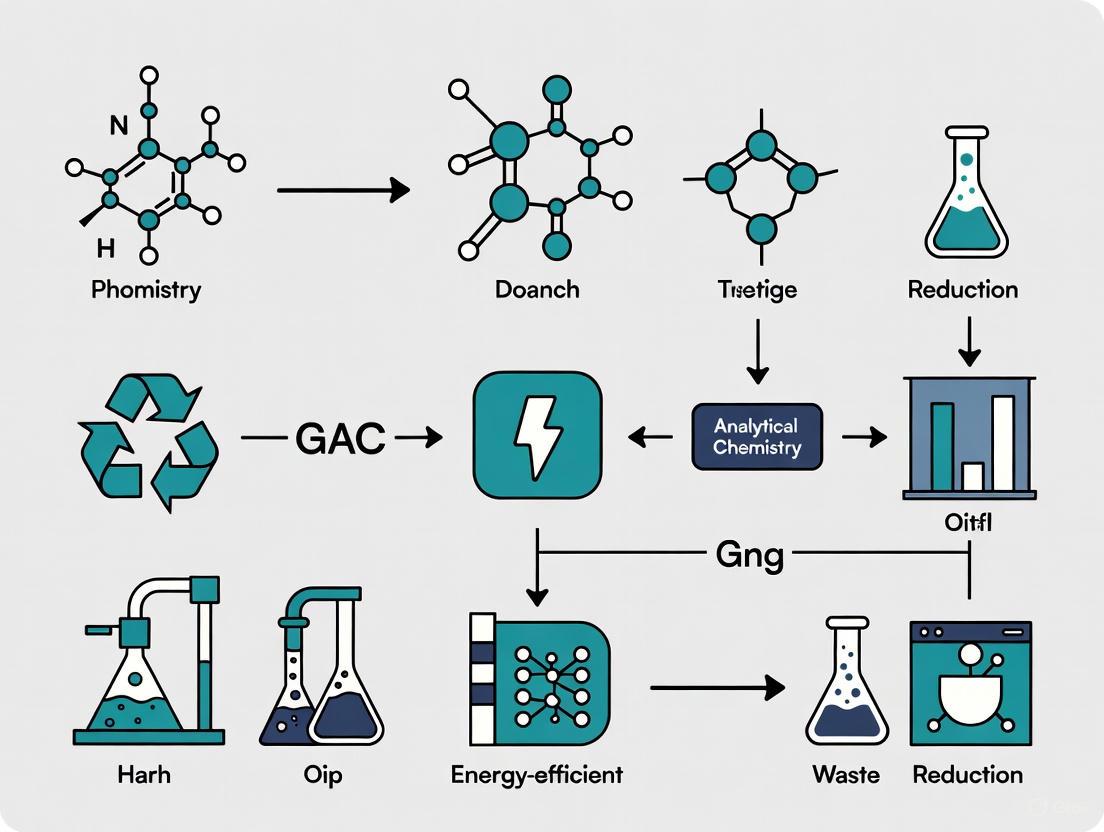
This article provides a comprehensive roadmap for researchers, scientists, and drug development professionals to effectively implement Green Analytical Chemistry (GAC) principles in pharmaceutical analysis.
Green Analytical Chemistry in Pharma: Implementing Sustainable Practices from Principles to Validation
Abstract
This article provides a comprehensive roadmap for researchers, scientists, and drug development professionals to effectively implement Green Analytical Chemistry (GAC) principles in pharmaceutical analysis. It covers the foundational shift from traditional methods to the holistic White Analytical Chemistry (WAC) framework, details practical strategies for greening techniques like HPLC/UHPLC, addresses common troubleshooting and optimization challenges, and guides the validation of method greenness using modern metrics (AGREE, GAPI, BAGI). By synthesizing current trends and case studies, the content aims to equip laboratories with the knowledge to achieve robust, compliant, and environmentally sustainable analytical practices.
From Green to White: The Foundational Shift in Sustainable Pharmaceutical Analysis
The pharmaceutical industry faces increasing pressure to adopt sustainable practices that minimize environmental impact while maintaining scientific rigor and product quality. Green Analytical Chemistry (GAC) has emerged as a transformative framework for developing analytical methods that reduce or eliminate hazardous substances, decrease energy consumption, and improve operator safety. Within pharmaceutical research and quality control, High-Performance Liquid Chromatography (HPLC) represents a significant environmental concern due to its substantial consumption of organic solvents, which are often toxic and generate large volumes of hazardous waste [1]. The implementation of GAC principles addresses these issues by promoting alternative solvents, energy-efficient instrumentation, and waste reduction strategies without compromising analytical performance [2] [3] [1].
The urgency for adopting GAC principles stems from both environmental responsibility and regulatory alignment. With hundreds of chromatographic systems operating daily in pharmaceutical quality control laboratories worldwide, the cumulative environmental footprint of traditional analytical methods is substantial [1]. The 12 principles of GAC provide a systematic framework for introducing sustainability into analytical processes, focusing on minimizing hazardous chemical use, reducing energy requirements, and implementing proper waste management protocols [1]. This application note details practical strategies and protocols for implementing GAC principles in pharmaceutical analysis, specifically focusing on HPLC methodologies that align with sustainability goals.
GAC Implementation Strategies for HPLC Analysis
Alternative Solvent Systems
A primary strategy for greening HPLC methods involves replacing conventional organic solvents with safer alternatives. Micellar Liquid Chromatography (MLC) has gained prominence as an effective organic solvent-free approach that utilizes surfactants at concentrations above their critical micelle concentration as mobile phase components [2]. This technique employs environmentally benign surfactants such as sodium dodecyl sulfate (SDS) and Brij-35, which demonstrate low environmental persistence and biodegradability [2]. Research confirms that mixed micellar mobile phases containing both ionic and non-ionic surfactants can effectively separate complex drug mixtures without requiring organic solvents, significantly reducing toxicity and waste hazards [2].
Another established approach involves replacing hazardous solvents like acetonitrile, methanol, and tetrahydrofuran with green solvent alternatives such as ethanol or isopropanol, which offer improved safety profiles and reduced environmental impact [3] [1]. The effectiveness of these substitutions has been demonstrated in multiple pharmaceutical applications, including the analysis of clonazepam and its related substances, where a mobile phase composed of isopropanol, sodium dodecyl sulfate, and sodium acetate buffer successfully replaced more hazardous solvent systems while maintaining robust analytical performance [3].
Method Optimization and Miniaturization
Advanced optimization techniques like Design of Experiments (DOE) and Response Surface Methodology (RSM) enable development of highly efficient chromatographic methods with minimized environmental impact [2]. These statistical approaches facilitate understanding of factor interactions and systematic optimization of critical method parameters, resulting in reduced analysis time and solvent consumption [2]. The implementation of Central Composite Design (CCD) has proven particularly effective for optimizing surfactant concentrations, pH, and other variables to achieve optimal resolution while maintaining green principles [2].
Instrumentation miniaturization represents another significant advancement, with Ultra-High-Performance Liquid Chromatography (UHPLC) enabling faster analysis times and substantially reduced solvent consumption compared to conventional HPLC [1]. The convergence of alternative solvents, method optimization, and instrumentation advances provides pharmaceutical analysts with multiple pathways to implement GAC principles while maintaining methodological rigor.
Table 1: Comparison of Traditional vs. Green HPLC Approaches in Pharmaceutical Analysis
| Parameter | Traditional HPLC | Green HPLC Alternatives |
|---|---|---|
| Solvent Type | Acetonitrile, Methanol, Tetrahydrofuran [3] [1] | Aqueous Micellar Solutions, Ethanol, Isopropanol [2] [3] |
| Solvent Consumption | High (1-5 mL/min flow rates) [1] | Reduced (via UHPLC, method optimization) [1] |
| Toxicity | High toxicity, hazardous waste [3] [1] | Lower toxicity, biodegradable components [2] |
| Waste Generation | Substantial (50-500 mL/day) [1] | Minimal (10-100 mL/day) [1] |
| Key Advantages | Established methods, wide applicability | Reduced environmental impact, improved operator safety, lower disposal costs [3] |
Detailed Experimental Protocols
Protocol 1: Green Micellar HPLC for Antimicrobial Combination Therapy
This protocol details a green, organic solvent-free HPLC method for simultaneous determination of five antimicrobial drugs (Ciprofloxacin, Tinidazole, Dexamethasone Sodium Phosphate, Diloxanide Furoate, and Metronidazole) in pharmaceutical formulations [2].
Reagents and Materials:
- Sodium dodecyl sulfate (SDS): Anionic surfactant for micelle formation
- Brij-35: Non-ionic surfactant to enhance separation
- Orthophosphoric acid: For pH adjustment
- Reference standards: Pharmaceutical grade target analytes
- Mobile phase: 70.76 mM SDS and 21.38 mM Brij-35 in purified water, pH adjusted to 2.76
Instrumentation and Conditions:
- HPLC System: Alliance 2695 Separations Unit with photodiode array detector
- Column: Symmetry C18 (3.5 µm, 4.6 × 75 mm)
- Mobile Phase: Isocratic micellar solution of 70.76 mM SDS and 21.38 mM Brij-35, pH 2.76
- Flow Rate: 1.0 mL/min
- Temperature: 40°C ± 2°C
- Detection: 260 nm
- Injection Volume: 20 µL
Sample Preparation:
- Accurately weigh and transfer pharmaceutical formulation equivalent to 10 mg of each active ingredient into a 25 mL volumetric flask
- Add approximately 15 mL of mobile phase and sonicate for 10 minutes
- Dilute to volume with mobile phase and mix thoroughly
- Filter through 0.45 µm membrane filter before injection
Validation Parameters:
- Linearity: Prepare standard solutions at five concentration levels across the working range
- Precision: Perform six replicate injections of standard solution (%RSD < 2.0)
- Accuracy: Conduct recovery studies at 50%, 100%, and 150% of target concentration (acceptance criteria: 98-102%)
- Specificity: Demonstrate resolution from degradation products and excipients
- Robustness: Evaluate influence of small variations in pH (±0.2), temperature (±2°C), and surfactant concentrations (±5%)
This method successfully eliminates organic solvents from the mobile phase while maintaining robust performance characteristics, representing a significant advancement in green pharmaceutical analysis [2].
Protocol 2: Stability-Indicating HPLC Method for Clonazepam
This protocol describes a green stability-indicating HPLC method for determination of clonazepam and its related substances in pharmaceutical formulations [3].
Reagents and Materials:
- Sodium dodecyl sulfate: 2% solution in purified water
- Sodium acetate buffer: 0.05 M, pH 3.5 ± 0.05
- Isopropanol: HPLC grade
- Clonazepam reference standard
- Related compounds A and B
Instrumentation and Conditions:
- HPLC System: Shimadzu system with photodiode array detector
- Column: BDS C8 Hypersil (250 mm × 4.6 mm, 5 µm)
- Mobile Phase: Isopropanol:2% SDS:0.05 M sodium acetate buffer (20:25:55, v/v)
- Flow Rate: 1.5 mL/min
- Detection: 254 nm
- Injection Volume: 20 µL
- Temperature: Ambient
Forced Degradation Studies:
- Acidic Degradation: Expose sample solution in 1 M HCl at room temperature for 12 hours
- Basic Degradation: Expose sample solution in 1 M NaOH at room temperature for 12 hours
- Oxidative Degradation: Treat sample with 3% H₂O₂ at room temperature for 4 hours
- Photolytic Degradation: Expose sample to 1.2 million lux hours for 24 hours
- After degradation, neutralize solutions and dilute with mobile phase before analysis
Method Validation:
- Specificity: Verify separation of clonazepam from degradation products and related substances
- Linearity: Demonstrate linear response over concentration range of 4-140 µg/mL for clonazepam and 4-64 µg/mL for related compounds
- Quantitation Limits: Establish LOD and LOQ for clonazepam and related substances
- Solution Stability: Evaluate standard and sample solution stability over 24 hours
This method successfully replaces hazardous solvents like tetrahydrofuran and methanol traditionally used in clonazepam analysis, significantly reducing environmental impact and operator risk while maintaining stability-indicating capability [3].
Essential Research Reagent Solutions
Table 2: Key Reagents for Implementing Green HPLC Methods in Pharmaceutical Analysis
| Reagent | Function in Green HPLC | Environmental & Safety Advantages |
|---|---|---|
| Sodium Dodecyl Sulfate (SDS) | Anionic surfactant for micellar liquid chromatography [2] [3] | Low environmental persistence, biodegradable, not carcinogenic [2] |
| Brij-35 | Non-ionic surfactant in mixed micellar systems [2] | Low toxicity, biodegradable, low background UV absorption [2] |
| Ethanol | Greener organic solvent alternative [1] | Renewable source, lower toxicity compared to acetonitrile and methanol [1] |
| Isopropanol | Organic modifier in reversed-phase systems [3] | Less hazardous than acetonitrile or tetrahydrofuran [3] |
| Supercritical CO₂ | Mobile phase in supercritical fluid chromatography [1] | Non-toxic, non-flammable, easily removed from analytes [1] |
GAC Assessment Tools and Sustainability Evaluation
The implementation of GAC principles requires robust assessment tools to evaluate and compare the environmental friendliness of analytical methods. Several validated metrics have been developed specifically for this purpose:
Analytical Greenness Metric Approach (AGREE): This comprehensive assessment tool incorporates all twelve principles of GAC into a unified scoring system, providing an overall greenness score based on multiple criteria including energy consumption, waste generation, and reagent toxicity [1].
Green Analytical Procedure Index (GAPI): GAPI offers a visual representation of method greenness through a colored pictogram that evaluates environmental impact across the entire analytical process from sample collection to final determination [2] [1].
Analytic Eco-Scale Assessment (ESA): This semi-quantitative approach assigns penalty points to aspects of the method that deviate from ideal green conditions, with higher scores indicating greener methods [1].
National Environmental Methods Index (NEMI): NEMI uses a simple pictogram to indicate whether a method meets basic green criteria regarding persistence, bioaccumulation, toxicity, and waste generation [1].
Application of these assessment tools to the previously described protocols demonstrates their significant environmental advantages over traditional methods. The micellar HPLC method for antimicrobial drugs [2] and the clonazepam stability-indicating method [3] both show improved greenness profiles based on AGREE and GAPI evaluations, confirming their reduced environmental impact while maintaining analytical performance.
Visualizing GAC Implementation Workflows
GAC Implementation Workflow for Pharmaceutical Analysis
The implementation of Green Analytical Chemistry principles in pharmaceutical analysis represents both an environmental imperative and an opportunity for methodological innovation. The protocols and strategies detailed in this application note demonstrate that significant reductions in hazardous solvent consumption, waste generation, and energy use are achievable without compromising analytical performance. As regulatory focus on environmental sustainability intensifies and the pharmaceutical industry seeks to reduce its ecological footprint, GAC provides a structured framework for developing analytical methods that align with broader sustainability goals. The continued adoption and refinement of green analytical approaches will be crucial for advancing environmentally responsible pharmaceutical research and quality control while maintaining the highest standards of analytical science.
Green Analytical Chemistry (GAC) has emerged as a fundamental sub-discipline of green chemistry, focusing specifically on making analytical practices more environmentally sustainable [4]. In the pharmaceutical industry, where analytical methods are employed extensively for quality control, drug development, and regulatory compliance, the adoption of GAC principles presents significant opportunities to reduce environmental impact while maintaining analytical excellence [5]. The core philosophy of GAC aligns with the broader goals of sustainable development, emphasizing the need to minimize or eliminate hazardous substances, reduce energy consumption, and prevent waste generation throughout the analytical process [6] [7].
Traditional analytical methods in pharmaceutical settings often rely heavily on toxic reagents and solvents, generate substantial waste, and consume considerable energy [5]. The transition to greener alternatives is driven not only by environmental concerns but also by economic factors and workplace safety considerations [7]. This document outlines the 12 principles of GAC, provides practical applications for pharmaceutical analysis, and offers detailed protocols for implementing these principles in research and development settings.
The 12 Principles of Green Analytical Chemistry
The 12 principles of GAC were formulated as a revision of the original green chemistry principles to better address the specific needs and challenges of analytical chemistry [4] [6]. These principles provide a comprehensive framework for greening analytical practices in pharmaceutical research and other chemical analysis fields.
Table 1: The 12 Principles of Green Analytical Chemistry
| Principle Number | Principle Description | Key Focus Areas |
|---|---|---|
| 1 | Direct analytical techniques should be applied to avoid sample treatment [4] | Minimizing sample preparation, direct analysis |
| 2 | Minimal sample size and minimal number of samples are goals [4] | Microsampling, statistical sampling approaches |
| 3 | In situ measurements should be performed [4] | On-site analysis, field measurements |
| 4 | Integration of analytical processes and operations saves energy and reduces reagents [4] | Process integration, automated systems |
| 5 | Automated and miniaturized methods should be selected [4] | Lab automation, microfluidic devices |
| 6 | Derivatization should be avoided [4] | Direct detection methods |
| 7 | Generation of large waste volumes should be avoided and proper waste management should be implemented [4] | Waste reduction, recycling |
| 8 | Multi-analyte determinations should be preferred over single-analyte methods [4] | Multiplexed assays, multi-component analysis |
| 9 | Energy consumption should be minimized [4] | Energy-efficient instrumentation |
| 10 | Reagents from renewable sources should be preferred [4] | Bio-based solvents, natural reagents |
| 11 | Toxic reagents should be eliminated or replaced [4] | Alternative solvents, less hazardous chemicals |
| 12 | Operator safety should be increased [4] | Personal protection, exposure minimization |
These principles can be conveniently remembered using the mnemonic SIGNIFICANCE [4], which encapsulates the core values of green analytical practices:
- S - Sample treatment and size minimization
- I - In-situ measurements
- G - Green methodologies
- N - Non-heating and energy reduction
- I - Integration of processes
- F - Field portable equipment
- I - Independent identification
- C - Clean methods and waste reduction
- A - Automation and miniaturization
- N - Non-polluting methods
- C - Chemical and operator safety
- E - Eco-friendly and renewable reagents
Diagram 1: The 12 Principles of Green Analytical Chemistry organized by thematic categories.
Application Notes: Implementing GAC in Pharmaceutical Analysis
Green Sample Preparation Techniques
Sample preparation is often the most polluting stage in pharmaceutical analysis [5]. Implementing GAC principles at this stage can significantly reduce the environmental impact of analytical methods.
Solid Phase Microextraction (SPME) SPME represents a solvent-free sample preparation technique that combines extraction and enrichment into a single step [5]. This method utilizes a silica fiber coated with an appropriate adsorbent phase, which extracts analytes directly from the sample matrix. The efficiency of SPME depends on several factors including fiber type, sample stirring, and extraction time [5]. SPME can be coupled with various analytical techniques including HPLC, GC/MS, and LC-MS for pharmaceutical applications such as drug metabolite analysis and impurity profiling.
QuEChERS Extraction Methodology The QuEChERS (Quick, Easy, Cheap, Effective, Rugged, and Safe) approach, originally developed for pesticide residue analysis, has found increasing application in pharmaceutical analysis [5]. This method involves two main stages: solvent extraction using acetonitrile with buffer salts, followed by a dispersive solid-phase extraction clean-up using primary secondary amine (PSA) and magnesium sulfate [5]. QuEChERS is considered a green extraction method due to its reduced solvent consumption compared to traditional extraction techniques and has been successfully applied to the extraction of various pharmaceuticals from biological matrices including blood and plasma [5].
Green Chromatographic Approaches
Chromatographic methods, particularly liquid chromatography (LC) and gas chromatography (GC), are workhorse techniques in pharmaceutical analysis that traditionally consume large volumes of organic solvents.
Ultra-High-Performance Liquid Chromatography (UHPLC) UHPLC represents a greener alternative to conventional HPLC through its use of smaller particle size columns (<2 μm) and higher operating pressures, resulting in faster analysis times, reduced solvent consumption, and decreased waste generation [5]. The migration from HPLC to UHPLC can reduce solvent consumption by 80-90% while maintaining or improving chromatographic resolution [6].
Green Solvent Selection The replacement of traditional hazardous solvents with greener alternatives is a key aspect of implementing GAC principles in chromatographic methods [5] [8]. Water and ethanol are preferred green solvents that can sometimes replace acetonitrile and methanol in reversed-phase chromatography [5]. Supercritical fluid chromatography (SFC) using supercritical CO₂ as the mobile phase represents another green alternative, particularly for chiral separations in pharmaceutical analysis [8].
Table 2: Green Alternatives to Traditional Analytical Techniques in Pharmaceutical Analysis
| Traditional Technique | Green Alternative | Environmental Benefits | Pharmaceutical Applications |
|---|---|---|---|
| Conventional HPLC | UHPLC | Reduced solvent consumption (80-90%), shorter run times, less waste [5] [6] | Potency assays, stability testing, impurity profiling |
| Organic solvent-based extraction | Solid Phase Microextraction (SPME) | Solvent-free, minimal waste, reduced exposure [5] | Bioanalysis, therapeutic drug monitoring |
| Liquid-liquid extraction | QuEChERS | Reduced solvent volume, faster processing [5] | Drug extraction from biological matrices |
| Normal-phase chromatography | Supercritical Fluid Chromatography (SFC) | Replaces hexane and other hazardous solvents with supercritical CO₂ [8] | Chiral separations, natural product analysis |
| Traditional sample preparation | Direct chromatographic methods | Elimination of sample preparation steps [5] | Analysis of clean pharmaceutical formulations |
Greenness Assessment Tools for Analytical Methods
Evaluating the environmental impact of analytical methods is essential for implementing GAC principles. Several metrics and assessment tools have been developed to quantify and compare the greenness of analytical methods [6] [9].
Analytical Eco-Scale The Analytical Eco-Scale is a semi-quantitative assessment tool that assigns penalty points to an analytical method based on the amounts of hazardous reagents and solvents used, energy consumption, and waste generated [9] [10]. An ideal green analysis would score 100 points, with points deducted for each parameter that deviates from ideal green conditions. Methods scoring above 75 are considered excellent green analysis, while scores below 50 represent inadequate greenness [9].
Green Analytical Procedure Index (GAPI) GAPI provides a comprehensive visual assessment of the greenness of an entire analytical method using a color-coded pictogram that covers five main areas: sample collection, preservation, transportation, and preparation; reagents and chemicals used; instruments and equipment; final product form; and waste treatment [6] [7]. Each category is assigned a color (green, yellow, red) representing the environmental impact, allowing for quick visual assessment of the method's greenness.
AGREE Metric The Analytical GREEnness (AGREE) metric is a more recent assessment tool that evaluates analytical methods against all 12 principles of GAC [6] [7]. This software-based tool provides a comprehensive score from 0 to 1, with 1 representing ideal adherence to GAC principles. The output includes a circular pictogram with 12 segments, each representing one GAC principle, providing an at-a-glance assessment of the method's environmental performance [7].
Diagram 2: Greenness assessment workflow for analytical methods using established metrics.
Experimental Protocols
Protocol: Green UHPLC Method for Pharmaceutical Analysis
Objective To develop and validate a green UHPLC method for the simultaneous determination of multiple active pharmaceutical ingredients (APIs) using principles of GAC.
The Scientist's Toolkit: Essential Reagents and Materials
Table 3: Research Reagent Solutions for Green UHPLC Protocol
| Item | Function | Green Alternative |
|---|---|---|
| Ethanol or ethanol-water mixtures | Mobile phase component | Replaces acetonitrile or methanol [5] |
| Columns with sub-2μm particles | Stationary phase for UHPLC | Enables faster analysis with reduced solvent consumption [5] [6] |
| Phosphate-free buffers | Mobile phase modifiers | Reduce environmental impact [6] |
| Automated sample preparator | Sample preparation | Reduces solvent consumption and improves reproducibility [4] |
| Waste collection system | Solvent waste management | Enables recycling or proper disposal [4] |
Methodology
- Column Selection: Utilize a C18 column with sub-2μm particle chemistry (e.g., 1.7-1.8μm) with dimensions of 50-100mm × 2.1mm for optimal separation efficiency with reduced solvent consumption.
- Mobile Phase Preparation: Prepare mobile phase A using water with 0.1% formic acid and mobile phase B using ethanol or ethanol-water mixtures (e.g., 90:10 ethanol:water) instead of traditional acetonitrile or methanol [5].
- Method Optimization: Employ design of experiments (DoE) approaches to optimize separation conditions while minimizing solvent usage and analysis time. Focus on gradient elution programs that minimize high organic modifier content.
- System Suitability: Validate method performance according to ICH guidelines, ensuring resolution, precision, and accuracy meet acceptance criteria while maintaining green principles.
- Greenness Assessment: Evaluate the final method using AGREE or GAPI metrics to quantify environmental performance [6] [7].
Expected Outcomes
- Reduction in solvent consumption by 80-90% compared to conventional HPLC methods
- Analysis time reduction of 50-70% while maintaining chromatographic resolution
- Significant decrease in waste generation
- High scores on greenness assessment metrics (Eco-Scale >75, AGREE >0.8)
Protocol: Implementation of Green Sample Preparation Using SPME
Objective To implement solid-phase microextraction as a green alternative to conventional liquid-liquid extraction for the analysis of pharmaceuticals in biological matrices.
Methodology
- Fiber Selection: Choose appropriate SPME fiber coating based on the physicochemical properties of target analytes (e.g., PDMS for non-polar compounds, divinylbenzene for mid-polarity compounds).
- Sample Preparation: Adjust sample pH to ensure target analytes are in non-ionic form for optimal extraction efficiency. Use minimal sample volumes (100-500μL) to reduce biological waste.
- Extraction Conditions: Optimize extraction time, temperature, and agitation speed to maximize extraction efficiency while minimizing process time.
- Desorption Parameters: For GC applications, optimize thermal desorption time and temperature in the injector port. For LC applications, optimize desorption solvent, time, and composition for on-line or off-line analysis.
- Method Validation: Validate the SPME method for linearity, accuracy, precision, and sensitivity according to regulatory guidelines.
Greenness Assessment Compare the SPME method with traditional extraction approaches using the Analytical Eco-Scale, noting significant reductions in solvent consumption and hazardous waste generation.
The implementation of the 12 principles of Green Analytical Chemistry in pharmaceutical research represents a significant opportunity to align analytical practices with sustainability goals without compromising analytical performance. Through the adoption of green sample preparation techniques, miniaturized and automated instrumentation, alternative solvents, and comprehensive greenness assessment tools, pharmaceutical analysts can substantially reduce the environmental impact of their methods while maintaining regulatory compliance and scientific rigor. The protocols and application notes provided herein offer practical pathways for implementing GAC principles in pharmaceutical analysis, contributing to the broader adoption of sustainable practices in drug development and quality control.
White Analytical Chemistry (WAC) represents a paradigm shift in modern method development, emerging as a holistic framework that transcends the environmental focus of Green Analytical Chemistry (GAC). Established in 2021, WAC aims to reconcile ecological objectives with analytical performance and practical utility, providing a more complete evaluation framework for analytical procedures [11] [12]. The core philosophy of WAC is that a truly sustainable method must simultaneously excel across three critical dimensions: environmental impact, analytical capability, and practical implementation.
The term "white" symbolizes purity and the balanced integration of these aspects, moving beyond the singular "green" focus on environmental factors [11]. This approach acknowledges that a method with minimal environmental impact but poor analytical performance or impractical implementation requirements cannot be considered truly sustainable in laboratory practice [12]. WAC therefore strives for a compromise that avoids an unconditional increase in greenness at the expense of functionality, making it more aligned with the holistic concept of sustainable development [12].
The RGB Model: Core Framework of WAC
Theoretical Foundation
The operational framework of WAC is the Red-Green-Blue (RGB) model, inspired by the additive color theory where combining red, green, and blue light produces white light [12]. Similarly, in WAC, a "white" method emerges from the balanced integration of three primary dimensions, each representing a fundamental aspect of analytical method quality [11] [12]:
- Green Dimension: Encompasses environmental impact, safety, and sustainability parameters derived from GAC principles.
- Red Dimension: Represents analytical performance characteristics including sensitivity, selectivity, accuracy, and precision.
- Blue Dimension: Covers practical and economic considerations such as cost, time, simplicity, and operational requirements.
When these three dimensions are optimally balanced, the resulting method is considered "white" - indicating a coherent and synergistic combination of analytical, ecological, and practical attributes [12]. This RGB model provides scientists with a systematic approach to evaluate methods before validation and identifies specific areas needing improvement [11].
The 12 Principles of WAC
WAC proposes 12 principles as an alternative to the 12 principles of GAC, expanding the framework to include analytical and practical considerations [12]. These principles are distributed across the three RGB dimensions:
Green Principles (Environmental Focus)
- Direct analytical techniques should be applied to avoid sample treatment [13].
- Minimal sample size and minimal number of samples are goals [13].
- In-situ measurements should be performed [13].
- Integration of analytical processes saves energy and reduces reagent use [13].
- Automated and miniaturized methods should be selected [13].
- Derivatization should be avoided [13].
- Generation of large waste volumes should be avoided with proper waste management [13].
- Multi-analyte determinations are preferred over single-analyte methods [13].
Red Principles (Analytical Performance)
- Methods must provide high sensitivity and selectivity for target analytes [11].
- Methods must demonstrate accuracy, precision, and robustness [11].
- Methods should offer appropriate linear range and detection limits [11].
Blue Principles (Practical Considerations)
- Methods should be cost-effective, time-efficient, and simple to operate [11].
The following diagram illustrates the conceptual relationship between the RGB dimensions and the resulting "white" method:
Assessment Tools and Metrics for WAC
The RGB 12 Algorithm
The RGB 12 algorithm provides a systematic approach for quantifying method "whiteness" [14] [12]. This tool evaluates analytical methods against the 12 WAC principles, assigning scores for each dimension that are subsequently visualized in a circular diagram. The diagram features four concentric rings representing the score levels (0-3) and twelve segments corresponding to each principle [12]. The cumulative scores from each dimension are combined to calculate an overall whiteness percentage, enabling direct comparison between different methods [12].
The algorithm generates a final "whiteness" percentage that facilitates objective comparison between different analytical methods [12]. This quantitative approach helps researchers select the optimal method that balances all three dimensions rather than excelling in one at the expense of others.
Complementary Assessment Tools
Multiple specialized metrics have been developed to evaluate the individual dimensions of WAC, providing researchers with a comprehensive toolkit for method assessment:
Table 1: Assessment Tools for White Analytical Chemistry
| Tool Name | Focus Dimension | Key Parameters Assessed | Output Format |
|---|---|---|---|
| AGREE [9] | Green | 12 GAC principles | Pictogram with score (0-1) and color |
| AGREEprep [15] | Green | Sample preparation aspects | Numerical score (0-1) |
| BAGI [11] | Blue | Applicability, cost, time, simplicity | Pictogram with blue shading |
| RAPI [11] | Red | Reproducibility, trueness, recovery, matrix effects | Performance score |
| NEMI [9] | Green | PBT chemicals, hazardous waste, pH, waste amount | Circle with four quadrants |
| Analytical Eco-Scale [9] | Green | Reagents, energy, hazards, waste | Numerical score (ideal=100) |
| GAPI [11] | Green | Comprehensive lifecycle impacts | Colored pictogram |
| ComplexGAPI [11] | Green | Sample prep and instrumentation | Detailed pictogram |
These tools can be used individually for specific dimension assessment or in combination for a comprehensive WAC evaluation. For instance, a complete whiteness assessment might combine AGREE (green), RAPI (red), and BAGI (blue) to generate balanced insights across all three dimensions [9].
Experimental Protocol: Implementing WAC in Pharmaceutical Analysis
Case Study: HPLC-DAD and HPTLC Methods for Aspirin and Vonoprazan
The following protocol demonstrates the practical application of WAC principles to develop and validate chromatographic methods for the simultaneous analysis of aspirin (ASP) and vonoprazan (VON) in combined pharmaceutical dosage forms [14]. This case study exemplifies how WAC considerations can be integrated throughout method development.
Materials and Reagents
Table 2: Research Reagent Solutions for HPLC-DAD and HPTLC Analysis
| Item | Specification | Function | WAC Consideration |
|---|---|---|---|
| Vonoprazan fumarate | Purity ≥98% [14] | Active pharmaceutical ingredient | Quality ensures analytical performance (Red) |
| Aspirin | Purity ≥99% [14] | Active pharmaceutical ingredient | Quality ensures analytical performance (Red) |
| Acetonitrile | HPLC grade [14] | Mobile phase component | Minimize toxicity (Green) |
| Potassium dihydrogen orthophosphate | Analytical grade [14] | Buffer component | Reduce hazardous chemicals (Green) |
| Ethyl acetate | Analytical grade [14] | HPTLC mobile phase | Prefer less hazardous solvents (Green) |
| Ethanol (75%) | Analytical grade [14] | HPTLC mobile phase | Less toxic alternative to methanol (Green) |
| Ammonia solution | Analytical grade [14] | HPTLC mobile phase modifier | Minimize volume used (Green) |
| Laboratory-prepared tablets | ASP (100 mg) + VON (10 mg) [14] | Simulated dosage form | Avoid commercial unavailability issues (Blue) |
Instrumentation and Conditions
HPLC-DAD Method [14]
- Instrument: Agilent 1260 HPLC with Diode Array Detector
- Column: Reversed phase C18 (250 × 4.6 mm, 5 μm)
- Temperature: 30°C
- Mobile Phase: Phosphate buffer (pH 6.8, 0.01 M):acetonitrile (63:37 v/v)
- Flow Rate: 1 mL/min
- Detection: 230 nm
- Injection Volume: 30 μL
HPTLC Method [14]
- Stationary Phase: HPTLC silica gel 60 F254 plates
- Mobile Phase: Ethyl acetate:ethanol (75%):ammonia (5:5:0.05 v/v/v)
- Detection: Densitometric scanning at 230 nm
- Band Size: 5 mm
- Application Volume: 10 μL
Sample Preparation Protocol
- Prepare stock solutions of VON (20 mg/100 mL) and ASP (200 mg/100 mL) in water:acetonitrile (50:50 v/v) [14]
- Prepare calibration standards by appropriate dilution of stock solutions in the same solvent mixture:
- HPLC: VON (0.5-10 μg/mL), ASP (1-100 μg/mL)
- HPTLC: VON (0.1-2 μg/band), ASP (0.1-10 μg/band)
- For laboratory-prepared tablets, weigh and powder tablets, then extract an equivalent of one tablet containing 10 mg VON and 100 mg ASP into 100 mL solvent [14]
- Filter through 0.45 μm membrane filter, discard first few mL
- Further dilute filtrate to obtain concentrations within calibration range
The experimental workflow below outlines the key steps in this WAC-compliant analytical process:
Method Validation and WAC Assessment
Validate both methods according to ICH guidelines for linearity, precision, accuracy, specificity, LOD, and LOQ [14]. Following validation, conduct WAC assessment using the RGB 12 algorithm:
- Green Dimension Evaluation: Apply AGREE and NEMI to assess environmental impact [14] [9]
- Red Dimension Evaluation: Use validation parameters (linearity, accuracy, precision) to score analytical performance [14]
- Blue Dimension Evaluation: Assess practical aspects through BAGI focusing on cost, time, and operational simplicity [11]
- Whiteness Calculation: Combine dimension scores using RGB 12 algorithm to generate overall whiteness percentage [12]
Advanced Applications and Recent Developments
Green Sample Preparation in Pharmaceutical Analysis
The implementation of WAC principles has driven significant innovations in sample preparation, particularly through miniaturization and solvent reduction strategies [16]. Current trends include:
- Micro-extraction techniques: Fabric phase sorptive extraction (FPSE), magnetic SPE, capsule phase microextraction (CPME), and ultrasound-assisted microextraction dramatically reduce solvent consumption [11]
- Green solvents: Increased application of deep eutectic solvents (DES), supercritical fluids, and ionic liquids as safer alternatives to traditional organic solvents [16] [17]
- Miniaturized systems: Dramatic reduction of sample sizes and solvent volumes through microfluidic devices and lab-on-a-chip technologies [11]
- Automation and integration: Automated systems that reduce human intervention, minimize errors, and enhance safety [15]
Good Evaluation Practice (GEP) for WAC Assessment
As WAC assessment gains popularity, researchers should adhere to Good Evaluation Practice (GEP) guidelines to ensure meaningful and reliable results [18]. Key GEP principles include:
- Use quantitative indicators based on empirical data rather than estimations
- Combine multiple assessment models with different structures to compensate for individual limitations
- Ensure transparency by documenting all assumptions and calculation methods
- Contextualize results by comparing with existing methods for similar analytes
- Acknowledge limitations and avoid overinterpreting assessment results [18]
These practices help maintain scientific rigor in WAC assessments and prevent the misuse of metrics solely for publication purposes without genuine sustainability improvements.
White Analytical Chemistry represents a significant evolution beyond Green Analytical Chemistry by integrating environmental, analytical, and practical considerations into a unified framework. The RGB model provides a structured approach for developing and evaluating analytical methods that are not only environmentally friendly but also analytically sound and practically feasible. As demonstrated in the pharmaceutical analysis case study, implementing WAC principles leads to more sustainable and practical analytical methods without compromising performance. The ongoing development of assessment tools and methodologies continues to support the adoption of WAC across various analytical domains, promoting truly sustainable practices in analytical chemistry.
The implementation of Green Analytical Chemistry (GAC) principles in pharmaceutical analysis has evolved from a voluntary environmental initiative to a strategic imperative driven by regulatory requirements, compelling cost benefits, and significant competitive advantages. GAC focuses on designing analytical methods that minimize environmental impact through reduced hazardous waste generation, lower energy consumption, and safer chemicals while maintaining high-quality standards [19]. This paradigm shift represents a fundamental transformation in how pharmaceutical companies approach compliance and operational excellence, moving beyond merely meeting regulatory minimums to building robust, sustainable quality systems that deliver measurable business value.
The pharmaceutical industry currently invests approximately $50 billion annually in global compliance activities, with costs rising at 7.17% per year [20]. Within this context, GAC implementation offers a pathway to transform compliance from a cost center into a strategic advantage while addressing increasing regulatory scrutiny of environmental impacts and sustainable practices. Leading pharmaceutical manufacturers are discovering that GAC principles align with operational excellence, resulting in 22% reductions in quality-related costs and 15% improvements in gross margins for top performers [20].
Regulatory Framework: CGMP and Evolving Environmental Expectations
Current Good Manufacturing Practice Foundations
The Current Good Manufacturing Practice (CGMP) regulations enforced by the U.S. Food and Drug Administration (FDA) establish the foundational framework for pharmaceutical quality. These regulations contain minimum requirements for the methods, facilities, and controls used in manufacturing, processing, and packing of drug products, ensuring that products are safe for use and contain the ingredients and strength they claim to have [21]. The "C" in CGMP stands for "current," requiring companies to use technologies and systems that are up-to-date to comply with regulations, inherently encouraging the adoption of improved methodologies including environmentally sustainable approaches [22].
The CGMP regulations are structured throughout Title 21 of the Code of Federal Regulations, with key sections including:
- 21 CFR Part 210: Current Good Manufacturing Practice in Manufacturing, Processing, Packing, or Holding of Drugs
- 21 CFR Part 211: Current Good Manufacturing Practice for Finished Pharmaceuticals
- 21 CFR Part 314: Applications for FDA Approval to Market a New Drug [21]
While CGMP regulations primarily focus on product quality and safety, they establish a system of controls that provides the framework for implementing GAC principles through requirements for proper design, monitoring, and control of manufacturing processes and facilities [22].
International Regulatory Alignment
Globally, regulatory harmonization has advanced more rapidly than predicted, with organizations like the International Council for Harmonization (ICH) working to align technical requirements across markets [23]. The European Medicines Agency (EMA) has explicitly recognized environmental considerations, classifying solvents like methanol and tetrahydrofuran as hazardous and encouraging their replacement with safer alternatives [3]. This global regulatory alignment creates a consistent framework that enables pharmaceutical companies to implement unified GAC strategies across international operations.
Business Case: Quantifying the Value of GAC Implementation
Compliance Cost Avoidance
The business case for GAC implementation begins with significant cost avoidance through reduced compliance failures. The pharmaceutical industry has incurred $1.1 billion in penalties over the past five years due to compliance failures, with a single significant compliance misstep triggering remediation costs exceeding $12 million [20]. By implementing robust GAC methodologies that exceed minimum compliance requirements, companies can avoid these substantial financial impacts.
Table 1: Financial Impact of Compliance Performance
| Metric | Compliance Leaders | Industry Average | Business Impact |
|---|---|---|---|
| Batch Right-First-Time Rate | 98-99% | 85-90% | $2.1M annual savings in rework costs |
| Regulatory Inspection Success | <1 critical finding per 5 inspections | 2-3 critical findings per 5 inspections | Avoids $750K/day in remediation costs |
| Product Release Cycle | 5-7 days | 12-15 days | 40% reduction in inventory holding costs |
| Time-to-Market (New Products) | 15-18 months | 18-24 months | Captures 30% more market share [20] |
Operational Efficiency Gains
GAC implementation drives substantial operational efficiencies by reducing solvent consumption, minimizing waste disposal costs, and streamlining analytical procedures. Companies achieving top-quartile compliance performance report batch right-first-time rates of 98-99%, significantly higher than the industry average of 85-90% [20]. These efficiency gains directly impact profitability through reduced rework requirements and faster release cycles.
The transition to green liquid chromatography methods exemplifies these efficiency improvements. One study developing a stability-indicating HPLC method for clonazepam demonstrated that the green method was "not only ecofriendly but also faster than the conventional liquid chromatographic system official in the USP-36" [24]. This dual benefit of environmental improvement and operational efficiency characterizes the GAC value proposition.
Strategic Competitive Advantages
Beyond cost savings, GAC implementation delivers strategic competitive advantages including enhanced corporate reputation, faster time-to-market, and improved stakeholder relationships. Companies with leading compliance practices demonstrate 16% higher market share growth compared to industry averages [20]. Additionally, regulatory innovation in GAC methodologies can create barriers to entry for competitors and establish companies as industry leaders in sustainable pharmaceutical manufacturing.
Implementation Framework: GAC Integration Pathways
Green Analytical Chemistry Principles
GAC implementation follows 12 core principles that provide a comprehensive framework for developing sustainable analytical methods:
- Direct analytical techniques should be applied to avoid sample treatment
- Minimal sample size and minimal number of samples are goals
- Measurement should be performed in situ if possible
- Integration of analytical processes and operations saves energy and reduces waste
- Automated and miniaturized methods should be selected
- Derivatization should be avoided
- Generation of a large volume of waste should be avoided and proper management of waste should be provided
- Multi-analyte or multi-parameter methods are preferred versus methods using one analyte at a time
- The use of energy should be minimized
- Reagents obtained from renewable sources should be preferred
- Toxic reagents should be eliminated or replaced
- Worker safety should be increased [6]
These principles guide the development and optimization of analytical methods to align environmental objectives with analytical quality requirements.
Assessment Tools and Metrics
Several standardized tools have been developed to evaluate the greenness of analytical methods, enabling objective assessment and continuous improvement:
- NEMI (National Environmental Methods Index): Provides a simple pictogram indicating whether a method meets basic green chemistry criteria
- Analytical Eco-Scale: Offers a semi-quantitative assessment based on penalty points for hazardous practices
- GAPI (Green Analytical Procedure Index): Evaluates the environmental impact of each step in an analytical method
- AGREE (Analytical GREEnness Metric): Uses a multi-criteria assessment based on the 12 principles of GAC [6]
These assessment tools enable researchers to quantify the environmental performance of analytical methods and identify opportunities for improvement.
Application Note: Development of a Green Stability-Indicating HPLC Method for Clonazepam
Experimental Protocol
Objective: Develop and validate a green stability-indicating reversed-phase HPLC method for determining clonazepam and its related substances in pharmaceutical formulations [24].
Materials and Reagents:
- Clonazepam Reference Standard: USP-grade (99.88% purity)
- Related Compounds A and B: USP-reference standard materials
- Sodium Dodecyl Sulfate (SDS): HPLC grade, 2% solution in water
- Sodium Acetate Buffer: 0.05 M, pH 3.5 ± 0.05
- Isopropanol: HPLC grade
- Water: HPLC grade obtained through Milli-Q system
- Pharmaceutical Formulation: Clonazepam tablets
Instrumentation and Conditions:
- HPLC System: Shimadzu system equipped with CBM-20A system controller, LC-20A solvent delivery unit, DGU-20A degassing unit, SPD-M20A photo-diode array detector, and SIL-20A auto-sampler
- Column: BDS C8 Hypersil column (250 mm × 4.6 mm, 5 μm particle size)
- Mobile Phase: Isopropanol:2% SDS:0.05 M sodium acetate buffer pH 3.5 (20:25:55, v/v/v)
- Flow Rate: 1.5 mL/min
- Detection: DAD at 254 nm
- Injection Volume: 20 μL
- Temperature: Ambient [3]
Sample Preparation:
- Standard Solution: Prepare stock standard solution of clonazepam, related compound A, and related compound B in mobile phase at concentration of 0.2 mg/mL
- Working Standards: Prepare series of dilutions from stock solution in mobile phase to obtain concentration range of 4-140 μg/mL for clonazepam and 4-64 μg/mL for related compounds
- Tablet Sample Solution: Randomly select and weigh clonazepam tablets, dissolve and dilute with mobile phase to obtain concentration of 0.04 mg/mL
- Filtration: Filter all solutions through nylon sample filter (0.22 μm) before injection [3]
Forced Degradation Studies:
- Acidic Degradation: Prepare standard solution in 1 M hydrochloric acid, keep at ambient temperature for 12 hours
- Basic Degradation: Prepare standard solution in 1 M sodium hydroxide, keep at ambient temperature for 12 hours
- Oxidative Degradation: Prepare solution in 3% hydrogen peroxide solution, keep at ambient temperature for 4 hours
- Photolytic Degradation: Irradiate neutral solution at 1.2 million lux hours for 24 hours with distance between light source and sample maintained at 25 cm
- Sample Preparation for Chromatography: Dilute all stressed samples with mobile phase to final concentration of 40 μg/mL and inject into chromatographic system [3]
Method Validation:
- Linearity: Prepare thirteen standard solutions of clonazepam (4-140 μg/mL) and nine standard solutions of related compounds (4-64 μg/mL), inject each dilution in triplicate
- Precision:
- Repeatability (Intra-day): Perform assay of authentic sample solutions six times on same day
- Reproducibility (Inter-day): Analyze freshly prepared solutions at different days
- Accuracy: Spike placebo with clonazepam and related compounds at three concentration levels (30, 40, and 50 μg/mL), inject each solution in triplicate
- Specificity: Verify absence of excipient interference at retention times of clonazepam and related compounds
- Robustness: Evaluate effect of deliberate variations in flow rate (±0.01 mL/min) and buffer pH (±0.1 units)
- LOD/LOQ Determination: Calculate from linear calibration curve using residual standard deviation of regression line and slope [3]
The Scientist's Toolkit: Essential Research Reagent Solutions
Table 2: Key Research Reagents and Materials for GAC HPLC Method Development
| Item | Function | GAC Considerations |
|---|---|---|
| BDS C8 Hypersil Column | Stationary phase for chromatographic separation | Enables use of greener mobile phase components compared to traditional C18 columns |
| Sodium Dodecyl Sulfate (SDS) | Surfactant component of mobile phase | Replaces more hazardous solvents like tetrahydrofuran; biodegradable |
| Isopropanol | Organic modifier in mobile phase | Less hazardous alternative to acetonitrile; reduced environmental impact |
| Sodium Acetate Buffer | Aqueous component for pH control | Biodegradable and less toxic than ammonium-based buffers |
| Photo-diode Array Detector | Multi-wavelength detection for peak purity | Eliminates need for multiple detection methods or derivatization |
| Nylon Sample Filters | Particulate removal from samples | Reduced extractables compared to other membrane materials [3] |
Results and Green Profile Assessment
The developed method demonstrated excellent resolution between clonazepam, related substances, and degradation products with an expanded uncertainty of 0.33%. Validation results confirmed linearity (R² ≥ 0.999), precision (RSD < 1%), accuracy (recovery rates 98-102%), and robustness to minor method parameter variations [3].
The green profile assessment using GAPI and Analytical Eco-Scale tools demonstrated significant environmental advantages compared to the conventional USP method:
- Solvent Reduction: Elimination of tetrahydrofuran and methanol, classified as hazardous solvents by EMA
- Waste Minimization: Isocratic elution reduced solvent consumption compared to gradient methods
- Energy Efficiency: Shorter analysis time reduced energy consumption
- Safety Improvement: Replacement with less toxic solvents enhanced operator safety [3]
Implementation Workflow: Strategic Integration of GAC Principles
The following diagram illustrates the systematic workflow for implementing GAC principles in pharmaceutical analysis, from initial assessment to continuous improvement:
Diagram 1: GAC Implementation Workflow
Business Integration: From Compliance to Competitive Advantage
Technology-Enabled Compliance
Digital transformation plays a crucial role in scaling GAC implementation across pharmaceutical organizations. Companies embracing technology-enabled compliance report dramatic improvements, with electronic batch record systems reducing documentation time by up to 80% while simultaneously improving data integrity [20]. These technologies eliminate transcription errors, enforce procedural compliance, and enable real-time quality oversight while reducing paper consumption and storage requirements.
Advanced analytical systems incorporating GAC principles further enhance business value through:
- Predictive Compliance Models: AI systems that analyze patterns from regulatory observations to identify potential GAC compliance risks before they trigger regulatory action
- Continuous Process Verification: Real-time monitoring of analytical method parameters to detect trends before quality specifications are compromised
- Integrated Quality Management: Modern QMS platforms connecting previously siloed processes including document control, deviation management, and CAPA tracking [20]
Cultural Transformation
Successful GAC implementation requires more than technological change; it demands cultural transformation where quality and sustainability become shared values across the organization. The FDA cites quality culture deficiencies as a root cause in approximately 40% of significant compliance actions [20]. Companies where leadership actively champions GAC principles experience roughly half as many serious compliance issues as those where compliance is viewed merely as a regulatory requirement.
Cultural transformation strategies include:
- Leadership Engagement: Executives personally reviewing GAC metrics and recognizing employees who identify potential improvements
- Cross-Functional Collaboration: Integrating GAC objectives across R&D, manufacturing, quality control, and regulatory affairs
- Training and Development: Building GAC expertise through targeted programs addressing specific methodological approaches
- Performance Metrics: Incorporating GAC indicators into quality performance assessments and incentive structures [20]
The implementation of Green Analytical Chemistry principles represents a strategic opportunity for pharmaceutical companies to transform regulatory compliance from a cost center into a source of competitive advantage. By aligning environmental objectives with operational excellence, organizations can achieve simultaneous improvements in regulatory performance, cost efficiency, and sustainability metrics.
The business case for GAC implementation is compelling: industry leaders demonstrate 98-99% batch right-first-time rates, 22% reductions in quality-related costs, 15% improvements in gross margins, and 16% higher market share growth compared to industry averages [20]. These quantitative benefits, combined with enhanced regulatory standing and corporate reputation, create a powerful value proposition for strategic investment in GAC methodologies.
As regulatory expectations continue to evolve toward greater environmental accountability, pharmaceutical companies that proactively implement GAC principles will be better positioned to navigate the complex landscape of global compliance while building sustainable business models for long-term success. The integration of GAC into pharmaceutical analysis represents not merely a technical improvement, but a fundamental strategic approach to quality management in the modern healthcare ecosystem.
Practical Strategies: Greening HPLC, Sample Preparation, and Instrumentation
In the pharmaceutical industry, High-Performance Liquid Chromatography (HPLC) and Ultra-High-Performance Liquid Chromatography (UHPLC) are cornerstone techniques for drug analysis, quality control, and ensuring product safety [1] [25]. However, a significant environmental and safety concern stems from the prevalent use of acetonitrile (ACN) as an organic modifier in reversed-phase chromatography. Acetonitrile is toxic, flammable, and poses health risks to analysts through inhalation or skin contact, as it is metabolized in the body to cyanide, leading to cytotoxic anoxia [25] [26]. Furthermore, a single conventional HPLC system can generate approximately 500 liters of hazardous waste annually, creating a substantial environmental footprint and disposal burden [26].
This application note, framed within the broader thesis of implementing Green Analytical Chemistry (GAC) principles in pharmaceutical research, provides a structured guide for replacing acetonitrile with safer, more sustainable solvent alternatives. The content aligns with the 12 principles of GAC, which aim to minimize the use of hazardous chemicals, reduce energy consumption, and improve operator safety [1] [27]. We will explore the properties of various green solvents, detail practical protocols for method development and transfer, and provide tools for quantitatively assessing the environmental benefits of adopting these sustainable practices.
Green Solvent Alternatives: Properties and Selection
A successful transition from acetonitrile requires a deep understanding of the properties and chromatographic behaviors of potential replacement solvents. No single solvent is a perfect "drop-in" replacement; each has distinct advantages and limitations that must be considered during method development.
Table 1: Properties of Common HPLC Solvents and Green Alternatives
| Solvent | Greenness | Toxicity | UV Cut-Off (nm) | Viscosity (cP) | Elution Strength (RP-HPLC) | Key Advantages | Key Limitations |
|---|---|---|---|---|---|---|---|
| Acetonitrile | Poor | High (Toxic) | 190 | 0.34 | Moderate | Low viscosity, low UV cut-off | Hazardous, toxic, high environmental impact |
| Methanol | Moderate | Moderate | 205 | 0.55 | Moderate | Readily available, lower cost than ACN | More toxic than other alternatives, higher UV cut-off |
| Ethanol | High | Low | 210 | 1.08 | Similar to MeOH | Bio-based, low toxicity, biodegradable, inexpensive [26] [28] | Higher viscosity, higher UV cut-off |
| Dimethyl Carbonate | High | Low | 235 | 0.63 | Lower than ACN | Biodegradable, low toxicity [29] [25] | Partial water miscibility, high UV cut-off |
| Propylene Carbonate | High | Low | 240 | 2.5 | Stronger elution | Green profile, high elution strength [29] | High viscosity, high UV cut-off, partial water miscibility |
| Glycerol | High | Very Low | 205 | 934 | N/A | Non-toxic, non-volatile, high polarity [25] | Very high viscosity, requires elevated temperature |
Detailed Solvent Profiles
Ethanol: Often regarded as the most desirable green solvent for liquid chromatography, ethanol is less toxic than ACN, has a lower vapor pressure, and is widely available from renewable bio-based sources [26] [28]. Chromatographically, it often provides similar selectivity to methanol. Its primary drawback is a higher viscosity, which can lead to increased backpressure, and a UV cut-off around 210 nm, which may limit its use for low-wavelength UV detection [26].
Carbonate Esters (Dimethyl Carbonate, Propylene Carbonate): These solvents represent a class of green alternatives with low toxicity and good environmental profiles [29] [25]. A critical consideration is their partial miscibility with water, requiring the use of a co-solvent (e.g., a small percentage of methanol or ACN) to maintain a single-phase mobile phase throughout a gradient elution. Their high UV cut-off can also be a limitation, but this can be managed by using longer detection wavelengths [29].
Glycerol: While its extremely high viscosity makes it unsuitable as a primary organic modifier, glycerol has been successfully used as a green mobile phase additive or modifier in aqueous mixtures (e.g., 7% glycerol). It can enhance the retention of hydrophilic compounds and is non-toxic and biodegradable [25].
The following decision diagram outlines the process for selecting an appropriate green solvent based on method requirements.
Quantitative Greenness Assessment Tools
Adopting GAC principles requires objective measurement. Several metrics have been developed to evaluate and compare the environmental friendliness of analytical methods.
Table 2: Greenness Assessment Metrics for Analytical Methods
| Metric Tool | Type of Output | Key Parameters Assessed | Advantages | Limitations |
|---|---|---|---|---|
| NEMI [30] [9] | Pictogram (4-quadrant) | PBT chemicals, hazardous waste, corrosivity, waste amount | Simple, visual, easy to interpret | Qualitative, lacks granularity |
| Analytical Eco-Scale [27] [9] | Score (0-100) | Reagent toxicity, energy use, waste | Quantitative, allows direct comparison | Relies on expert judgment for penalties |
| GAPI [27] [30] | Color-coded pictogram | Entire workflow from sampling to detection | Comprehensive, visualizes impact hotspots | No single overall score |
| AGREE [27] [30] [9] | Score (0-1) & circular pictogram | All 12 principles of GAC | Holistic, user-friendly, comprehensive | Subjective weighting of criteria |
| AGREEprep [30] [9] | Score (0-1) & pictogram | Sample preparation specifically | Focuses on often most polluting step | Must be used with another full-method tool |
Experimental Protocols
Protocol 1: Scouting the Viability of Ethanol as an ACN Replacement
This protocol provides a systematic approach for an initial assessment of ethanol-based mobile phases.
- Objective: To rapidly evaluate whether ethanol can achieve a comparable separation to a reference ACN method for a given mixture of analytes.
- Materials & Equipment:
- HPLC/UHPLC System: Standard system with UV detector.
- Columns: C18 column (e.g., 150 mm x 4.6 mm, 5 µm) or a suitable UHPLC column (e.g., 100 mm x 2.1 mm, sub-2 µm).
- Chemicals: HPLC-grade ethanol, water, phosphoric acid/ammonium phosphate, or other pH buffers as needed.
- Samples: Standard solution of target analytes.
- Procedure:
- System Preparation: Prepare a water-rich mobile phase (e.g., 95:5 Water:Ethanol) and an ethanol-rich mobile phase (e.g., 5:95 Water:Ethanol). For isocratic screening, prepare 3-5 intermediate compositions.
- Method Transfer:
- Start with a linear gradient method that covers a wide range from 5% to 95% of the organic modifier.
- Use a flow rate and gradient time scaled appropriately for the column dimensions.
- Maintain the same column temperature and detection wavelength as the original ACN method, if applicable.
- Execution:
- Inject the standard mixture and run the gradient method.
- Observe retention times, peak shapes (asymmetry factor), and resolution between critical pairs.
- Data Analysis:
- Compare the chromatogram with the one obtained using the ACN method.
- Calculate key performance indicators: plate count, resolution, and retention factor.
- Note the backpressure and baseline stability, particularly at low wavelengths.
- Troubleshooting:
- High Backpressure: Due to higher viscosity of ethanol-water mixes. Consider reducing flow rate, using a shorter column, or increasing column temperature slightly.
- Poor Peak Shape: May indicate need for pH adjustment or a different buffer. The selectivity of ethanol is similar to methanol, so methods originally developed with methanol may transfer more easily.
Protocol 2: Method Development with Partially Miscible Solvents (e.g., Carbonate Esters)
This protocol addresses the unique challenges of using solvents like dimethyl carbonate (DMC) which are not fully miscible with water in all proportions [29].
- Objective: To develop a robust HPLC method using a carbonate ester as the primary organic modifier.
- Materials & Equipment:
- HPLC System, Columns (as in Protocol 1).
- Chemicals: Dimethyl carbonate (HPLC grade), co-solvent (Methanol or ACN), water, additives.
- Special Consideration: Ternary Phase Diagrams for the water/co-solvent/carbonate ester system are essential to identify stable, single-phase mobile phase compositions [29].
- Procedure:
- Phase Behavior Study:
- Consult or create a ternary phase diagram for Water/MeOH/DMC.
- Identify a composition zone that remains a single phase across the entire range of your intended gradient. For example, a minimum of 5-10% MeOH might be required to keep DMC miscible in aqueous phases.
- Method Design:
- Design a gradient method where the DMC percentage varies, but the co-solvent percentage is kept constant at a level that ensures miscibility (e.g., 5% MeOH held isocratically, while DMC is ramped from 10% to 60%).
- Ensure the starting and ending mobile phase compositions are within the single-phase region of the ternary diagram.
- Chromatographic Evaluation:
- Run the method and evaluate separation performance.
- Pay close attention to baseline noise and drift due to the higher UV cut-off of DMC. Adjusting the detection wavelength above 240 nm may be necessary.
- Phase Behavior Study:
- Troubleshooting:
- Pressure Fluctuations or Cloudy Eluents: Indicates phase separation. Revisit the ternary diagram and increase the percentage of the co-solvent.
- Low Sensitivity: Caused by high UV cut-off. Try switching to a longer wavelength or using a different detection technique (e.g., Charged Aerosol Detection) if available.
The Scientist's Toolkit: Research Reagent Solutions
Table 3: Essential Materials for Green HPLC Solvent Substitution
| Item | Function/Description | Example & Notes |
|---|---|---|
| Green Solvents | Primary replacement for acetonitrile in the mobile phase. | Ethanol (96% or absolute, HPLC grade), Dimethyl Carbonate (HPLC grade), Propylene Carbonate (HPLC grade). |
| Co-solvents | Ensure miscibility of green solvents with aqueous phases. | Methanol (HPLC grade), Acetonitrile (HPLC grade, used minimally). |
| Stationary Phases | The analytical column for separation. | C18, C8, or phenyl-based columns, including those designed for low-dispersion UHPLC (e.g., 1.7-2.6 µm particles). |
| Buffer Salts & Additives | Control mobile phase pH and ionic strength to optimize peak shape and retention. | Ammonium formate, ammonium acetate, phosphoric acid, trifluoroacetic acid (TFA). |
| Greenness Assessment Software | Quantify and report the environmental benefits of the new method. | AGREE calculator (open access), other software supporting GAPI, AGREEprep. |
Advanced Strategy: Instrumental and Operational Enhancements
Beyond solvent substitution, further significant reductions in environmental impact can be achieved through instrumental advances and operational changes.
Adoption of UHPLC and SPP Technology: Ultra-High-Performance Liquid Chromatography (UHPLC) using columns packed with sub-2-µm fully porous or superficially porous particles (SPP) provides higher efficiency per unit time [29] [31]. This allows the use of shorter columns, which directly translates to reduced solvent consumption and faster analysis times, thereby lowering waste generation and energy use per analysis [29] [31]. The van Deemter equation explains the superior efficiency of smaller particles, enabling high-resolution separations at higher flow rates without significant loss of efficiency [29].
Miniaturization of Column Dimensions: A highly effective strategy is to transfer methods from traditional columns (e.g., 4.6 mm internal diameter) to columns with smaller internal diameters (e.g., 2.1 mm or 1.0 mm). The reduction in solvent flow rate is proportional to the square of the reduction in internal diameter, potentially leading to 75-90% reduction in solvent consumption for the same method timeline [28].
Alternative Chromatographic Modes:
- Micellar Liquid Chromatography (MLC): Uses aqueous solutions of surfactants above their critical micellar concentration as mobile phases, potentially eliminating or drastically reducing the need for organic solvents [26].
- Supercritical Fluid Chromatography (SFC): Utilizes supercritical CO2 as the primary mobile phase. CO2 is non-toxic, non-flammable, and can be easily recycled, making SFC an exceptionally green technique for suitable analytes [25] [28].
The integration of these strategies creates a comprehensive workflow for developing sustainable analytical methods, as summarized below.
Regulatory and Practical Considerations in Pharmaceuticals
Transitioning to greener methods in a regulated environment requires careful planning.
- Method Validation: Any change in the mobile phase composition for a pharmacopeial or validated quality control method is considered a major modification, requiring a full re-validation to demonstrate that the new method is equivalent or superior to the original in terms of accuracy, precision, specificity, linearity, and robustness [28].
- Method Transfer and Documentation: The transfer of an established method to a greener version should be managed through a formal Method Transfer Protocol. Documentation should include the rationale for the change (e.g., GAC principles, operator safety, cost reduction), all development data, and a comparative greenness assessment using tools like AGREE or Analytical Eco-Scale [30].
- Balancing Greenness and Practicality: A pure greenness metric score must be balanced with practical requirements (Blue Applicability Grade Index - BAGI) and analytical performance (Red) in what is known as the White Analytical Chemistry (WAC) concept [30]. The ideal "white" method finds a harmonious balance between environmental sustainability, practical feasibility, and excellent analytical performance.
The evolution of sample preparation strategies has been marked by a significant shift from conventional, large-scale techniques towards miniaturized and micro-scale approaches. This transition is a cornerstone of Green Analytical Chemistry (GAC), which aims to develop analytical methods that minimize environmental impact while maintaining robust analytical performance [32]. The drive for sustainability in pharmaceutical analysis has positioned miniaturization as a smart strategy, directly addressing key environmental concerns such as hazardous solvent consumption, waste generation, and operator safety [1].
Traditional sample preparation methods, particularly in pharmaceutical High-Performance Liquid Chromatography (HPLC), often involve substantial volumes of organic solvents, generate large quantities of hazardous waste, and pose risks to analysts [1]. In contrast, miniaturized extraction techniques have been developed not only to enhance analytical performance but also to improve safety and reduce the ecological footprint of analytical operations [32]. The greenness of these modern methods can be systematically evaluated using metric tools such as AGREEprep, which provides a comprehensive assessment of environmental impact [32].
This document provides detailed application notes and protocols for implementing miniaturized sample preparation strategies within pharmaceutical research and development. By adopting these approaches, scientists and drug development professionals can significantly advance the implementation of GAC principles in their laboratories.
Quantitative Comparison: Conventional vs. Miniaturized Methods
The environmental and practical advantages of miniaturized methods become clear through direct quantitative comparison with conventional approaches. The following tables summarize key performance and environmental metrics.
Table 1: Environmental and Operational Comparison of Sample Preparation Techniques
| Parameter | Conventional Liquid-Liquid Extraction (LLE) | Miniaturized Techniques (e.g., SULLME) |
|---|---|---|
| Typical Solvent Volume | 50 - 150 mL per sample [1] | < 10 mL per sample [30] |
| Waste Generation | High (> 50 mL/sample) [1] | Significantly Reduced (< 10 mL/sample) [30] |
| Analytical Eco-Scale Score | Lower (Higher Penalty Points) [30] | Higher (Approximately 56-60 in case studies) [30] |
| Hazardous Reagent Use | Common | Reduced, with a shift toward safer alternatives [30] |
| Operator Safety | Lower (Exposure to larger solvent volumes) | Enhanced (Smaller volumes, enclosed systems) [32] |
| Throughput | Often lower due to longer steps | Potential for higher throughput (e.g., 2 samples/hour in a SULLME case study) [30] |
Table 2: Greenness Assessment Scores of a Miniaturized Method (SULLME) Using Different Metrics Data derived from a case study on sugaring-out liquid-liquid microextraction [30]
| Greenness Metric Tool | Score | Key Strengths | Key Weaknesses |
|---|---|---|---|
| Modified GAPI (MoGAPI) | 60 / 100 | Use of green solvents; microextraction scale | Waste >10 mL; moderately toxic substances; specific storage needs |
| AGREE | 56 / 100 | Miniaturization; semiautomation; small sample volume (1 mL) | Use of toxic/flammable solvents; moderate waste; low throughput (2 samples/hour) |
| Analytical Green Star (AGSA) | 58.33 / 100 | Semi-miniaturization; no derivatization | Manual handling; multiple pretreatment steps; hazardous reagents |
| Carbon Footprint (CaFRI) | 60 / 100 | Low energy consumption (0.1–1.5 kWh/sample) | No renewable energy; no CO2 tracking; long transport distances |
Detailed Experimental Protocols
Protocol 1: Sugaring-Out Induced Homogeneous Liquid-Liquid Microextraction (SULLME)
Principle: This technique utilizes a water-miscible solvent and a sugar-based agent to induce phase separation, concentrating analytes into a small organic solvent layer [30].
1. Reagents and Solutions
- Sample Solution: Aqueous solution containing the target pharmaceutical analytes.
- Extraction Solvent: A water-miscible organic solvent (e.g., acetonitrile, acetone).
- Sugaring-Out Agent: Anhydrous glucose or fructose.
2. Equipment
- 10-15 mL conical centrifuge tubes
- Micropipettes (100 - 1000 µL)
- Vortex mixer
- Centrifuge
- Analytical instrument for detection (e.g., HPLC-MS)
3. Step-by-Step Procedure
- Sample Introduction: Transfer a 1.0 mL aqueous sample aliquot into a 15 mL centrifuge tube [30].
- Solvent Addition: Add 500 µL of a selected water-miscible organic solvent (e.g., acetonitrile) to the sample. Cap the tube and vortex for 30-60 seconds to form a homogeneous solution.
- Phase Separation Induction: Add a predetermined amount of sugaring-out agent (e.g., 1.0 g of anhydrous glucose). Cap the tube and vortex vigorously for 60 seconds. A cloudy solution with fine droplets of the separated organic phase will form.
- Centrifugation: Centrifuge the mixture at 4000 rpm for 5 minutes to complete phase separation and consolidate the organic extract at the top of the tube.
- Collection: Carefully collect the upper organic layer (typically 200-400 µL) using a micro-syringe or pipette.
- Analysis: Transfer the extract to a vial for direct analysis or perform a solvent exchange if required by the detection system.
4. Method Notes
- The volumes of sample, solvent, and mass of the sugaring-out agent should be optimized for specific analytes.
- This method is considered semi-miniaturized and avoids derivatization, contributing to its greenness profile [30].
Protocol 2: General Framework for Micro-Sampling in Sample Preparation
Principle: Minimize all scales of an analytical method, including sample size, solvent consumption, and waste generation, through direct miniaturization of classical techniques.
1. Reagents and Solutions
- Sample: Liquid or dissolved solid sample.
- Miniaturized Extraction Solvent: A small volume of an organic solvent appropriate for the extraction (e.g., ethyl acetate for SDME, a polymeric coating for SPME).
2. Equipment
- Low-volume vials (1-2 mL) or 96-well plates
- Micro-syringes (10 - 250 µL)
- Automated or semi-automated handling systems (for higher throughput)
- Agitation platform (e.g., vibratory shaker)
- Centrifuge for low-volume tubes
- Analytical instrument for detection
3. Step-by-Step Procedure
- Sample Measurement: Accurately measure a small, representative sample (e.g., 100 - 500 µL) into a low-volume vial.
- Micro-Extraction:
- For Liquid-Liquid Microextraction: Add a tiny volume (10 - 100 µL) of extraction solvent. Agitate to facilitate partitioning. If an emulsion forms, proceed to step 3.
- For Solid-Phase Microextraction (SPME): Expose the coated fiber to the sample headspace or immerse it directly into the sample solution under agitation for a predetermined time.
- Phase Separation (if applicable): Centrifuge the vial at high speed for 2-3 minutes to separate the phases.
- Extract Handling:
- For Liquid-Liquid Microextraction: Carefully withdraw the extractant phase using a micro-syringe.
- For SPME: Retract the fiber into the needle housing.
- Introduction to Analyzer:
- For liquid extracts, inject a portion directly into an HPLC or GC.
- For SPME, introduce the fiber directly into the GC injection port for thermal desorption.
4. Method Notes
- The core principle is the drastic reduction in sample and solvent volumes, directly leading to reduced waste [32].
- These methods can be automated or semi-automated to improve throughput and reproducibility while aligning with GAC principles [30].
Workflow Visualization
The following diagrams illustrate the logical workflow and component relationships for the miniaturized methods discussed.
SULLME Workflow
General Micro-Sampling Pathways
The Scientist's Toolkit: Research Reagent Solutions
Successful implementation of miniaturized methods relies on careful selection of reagents and materials. The following table details key components and their functions.
Table 3: Essential Materials for Miniaturized and Micro-Sampling Techniques
| Reagent/Material | Function/Application | Greenness & Safety Considerations |
|---|---|---|
| Water-Miscible Solvents (e.g., Acetonitrile, Acetone) | Acts as the extraction solvent in techniques like SULLME; forms a homogeneous phase with water initially [30]. | Prefer less toxic options (e.g., acetone) where analytically feasible. Acetonitrile requires careful handling and waste management [30]. |
| Sugaring-Out Agents (e.g., Glucose, Fructose) | Induces phase separation in SULLME by reducing the solubility of the organic solvent in water [30]. | Biobased, biodegradable, and low-hazard reagents, offering a safer alternative to salt-based separations [30]. |
| Low-Density Extraction Solvents (e.g., Toluene, Cyclohexane) | Used in liquid-liquid microextraction where the solvent forms a layer on top of the aqueous sample for easy collection. | Often hazardous and flammable. Efforts should focus on finding greener substitutes or using minimal volumes [32]. |
| SPME Fibers (various coatings like PDMS, PA) | A solid micro-extraction medium that extracts and pre-concentrates analytes from sample headspace or direct immersion. | Solvent-less technique, representing one of the greenest sample preparation options [32]. |
| Micro-Syringes & Pipettes | Critical for accurate handling and transfer of microliter-volume samples and solvents. | Enables miniaturization; reduces exposure and accidental release of chemicals. |
| Ionic Liquids | Designer solvents that can be tailored for specific extractions; used as green alternatives to volatile organic solvents. | Low volatility reduces inhalation hazards, but their overall environmental impact and biodegradability require assessment [1]. |
The adoption of miniaturization and micro-sampling is a demonstrably effective strategy for aligning pharmaceutical analysis with the principles of Green Analytical Chemistry. As quantified in this document, these approaches lead to substantial reductions in solvent consumption and hazardous waste generation, while also improving operator safety [32] [30]. The move from conventional methods to microextraction techniques represents a clear evolution toward greener sample preparation [32].
To successfully implement these strategies, laboratories should:
- Systematically Evaluate Greenness: Utilize metric tools like AGREE and GAPI during method development and validation to quantitatively assess and communicate environmental performance [30].
- Prioritize Solvent Replacement and Reduction: Actively seek opportunities to replace hazardous solvents with safer, biobased alternatives and leverage miniaturization to reduce volumes across all workflows [1] [30].
- Integrate Waste Management: View waste reduction as an integral part of the analytical process. On-site solvent recycling, as demonstrated in industrial projects that enable the reuse of up to 80% of waste solvents, presents a significant opportunity for closing the loop and advancing toward a circular economy model in the lab [33].
By embedding these protocols and principles into routine practice, researchers and drug development professionals will not only achieve the required analytical performance but also contribute meaningfully to the broader goals of sustainability and environmental responsibility.
The pharmaceutical industry is increasingly adopting Green Analytical Chemistry (GAC) to minimize the environmental impact of analytical methods while maintaining data quality. A significant source of environmental impact in analytical laboratories originates from the large volumes of organic solvents used in high-performance liquid chromatography (HPLC) [13] [19]. Within the framework of GAC principles, which aim to reduce reagent use, energy consumption, and waste generation, exploring alternative techniques with greener profiles is paramount [13].
This application note details three promising approaches—Supercritical Fluid Chromatography (SFC), Hydrophilic Interaction Liquid Chromatography (HILIC), and the use of Pure Water as a Mobile Phase—that align with GAC objectives in pharmaceutical analysis. We provide a comparative summary of these techniques, detailed experimental protocols, and a logical guide for technique selection to facilitate their implementation in drug development workflows.
Core Principles and GAC Alignment
Supercritical Fluid Chromatography (SFC): SFC utilizes supercritical carbon dioxide (CO₂) as the primary component of the mobile phase, significantly reducing the consumption of toxic organic solvents [34] [35]. Its high efficiency and speed, stemming from the low viscosity of supercritical fluids, contribute to lower energy consumption per analysis, aligning with GAC principles of energy reduction and safer solvents [13].
Hydrophilic Interaction Liquid Chromatography (HILIC): HILIC is particularly valuable for separating polar compounds that are poorly retained in reversed-phase HPLC [34]. It typically uses a high percentage of acetonitrile (>70%) in the mobile phase, which, while still an organic solvent, can be advantageous for certain applications and MS detection [34].
Pure Water as a Mobile Phase: Employing pure water in liquid chromatography, notably in Reversed-Phase HPLC, directly eliminates hazardous solvent use [36]. This approach enhances operator safety, reduces waste disposal risks, and is highly cost-effective, supporting the GAC goals of waste prevention and the use of safer solvents [13] [36].
Quantitative Technique Comparison
The table below summarizes the key characteristics of these techniques from an application and greenness perspective.
Table 1: Comparison of Alternative Green Chromatographic Techniques
| Feature | SFC | HILIC | Pure Water Mobile Phase |
|---|---|---|---|
| Primary Mobile Phase | Supercritical CO₂ with organic modifier (e.g., Methanol) [34] [35] | High % organic solvent (e.g., Acetonitrile) in water (>70%) [34] | 100% Pure Water [36] |
| Ideal Application | Chiral & achiral separations; polar compounds; high-throughput analysis [34] [35] | Polar, hydrophilic compounds that are poorly retained in RP-HPLC [34] | Compounds soluble in and separable under aqueous conditions [36] |
| Key GAC Advantages | Drastically reduces organic solvent use; fast analysis saves energy [13] [35] | Offers an alternative selectivity for polar analytes, can be MS-friendly [34] | Eliminates organic solvent use and waste; non-toxic; safe [36] |
| Potential Limitations | May require additives for peak shape; not universal for all compound types [34] | High acetonitrile consumption; potential for solvent waste [34] | Limited applicability for non-polar compounds; potential for stationary phase instability [36] |
| Greenness Score (Analytical Eco-Scale Example) | High (Reduced solvent volume & hazard) [9] | Moderate to Low (High volume of organic solvent) [34] | Very High (No organic solvent, minimal hazard) [9] [36] |
Experimental Protocols
Protocol for SFC Analysis of Polar Pharmaceutical Compounds
This protocol is adapted from empirical evaluations demonstrating effective separation of polar bases and acids using SFC [34].
1. Instrumentation and Materials:
- SFC System: Equipped with a binary pump, autosampler, column oven, and diode array detector (DAD) [34].
- Back Pressure Regulator (BPR): To maintain the supercritical state of CO₂.
- Columns: Silica-based columns such as ethylene-bridged hybrid (BEH) HILIC or monolithic silica columns (e.g., 4.6 x 100 mm, 5 µm) [34].
- Chemicals: LC-MS grade Methanol (modifier). Additives like dimethylethylamine or isopropylamine (e.g., 0.1-0.5%) may be used to improve peak shape for basic compounds [34].
- CO₂ Source: High-purity carbon dioxide with a siphon tube.
2. Mobile Phase Preparation:
- Mobile Phase A: Supercritical CO₂.
- Mobile Phase B: Methanol, optionally containing a specified percentage of additive.
- Degas the modifier solvent (methanol) using an inert gas sparge or vacuum filtration to prevent bubble formation [37].
3. Chromatographic Conditions:
- Flow Rate: 4 mL/min [34].
- Column Temperature: 40 °C [34].
- Back Pressure: 150 bar [34].
- Gradient Program: 5-40% B over 5 minutes, hold at 40% B for 1 minute, return to 5% B over 2 minutes, and re-equilibrate at 5% B for 2 minutes [34].
- Detection: DAD, wavelength scan range 220-300 nm [34].
- Injection Volume: 5 µL (full loop injection) [34].
4. Procedure:
- Install and condition the column according to the SFC method conditions.
- Set the BPR to 150 bar and allow the system to stabilize.
- Perform at least three blank injections (modifier only) to ensure system equilibration.
- Inject the sample solution (prepared in 70:30 v/v methanol/water) and run the gradient method [34].
- After the sequence, flush the system with pure modifier (100% B) for 10-15 minutes, followed by a storage solvent as per the column manufacturer's instructions.
Protocol for HILIC Method Development
1. Instrumentation and Materials:
- HPLC/UHPLC System: Compatible with high organic solvent compositions.
- Column: HILIC-specific column (e.g., bare silica, amino, cyano, or diol phases), 4.6 x 100 mm, 5 µm or equivalent [34].
- Chemicals: LC-MS grade Acetonitrile and Water. Ammonium acetate or formate (e.g., 10-20 mM) for buffer preparation. Acids/bases (formic acid, ammonium hydroxide) for pH adjustment.
2. Mobile Phase Preparation:
- Mobile Phase A: 10-20 mM Ammonium acetate buffer in water, pH-adjusted if necessary. Note: Measure pH of the aqueous buffer before adding organic solvent. [37]
- Mobile Phase B: Acetonitrile.
- Filter all mobile phases through a 0.45 µm membrane filter and degas thoroughly [37].
3. Initial Chromatographic Conditions:
- Flow Rate: 1.0 mL/min (for 4.6 mm ID column).
- Column Temperature: 30 °C.
- Gradient Program: Start with 90% B for 2 minutes, then gradient to 50% B over 10 minutes.
- Detection: UV or MS.
- Injection Volume: 1-5 µL.
4. Method Development Steps:
- Begin with a scouting gradient (e.g., 90-50% B) on a bare silica column to assess retention.
- If retention is too strong/weak, adjust the starting %B or gradient slope.
- If peak shape is poor for ionizable compounds, adjust buffer concentration (10-50 mM) and pH (3.0-6.0 for acidic, 4.5-7.5 for basic compounds) to control ionization.
- Fine-tune the method using isocratic or shallow gradient segments around the elution window for critical peak pairs.
Protocol for Pure Water Mobile Phase in Reversed-Phase HPLC
1. Instrumentation and Materials:
- HPLC System: Standard HPLC system.
- Column: Polar-embedded or aqua-specific C18 columns are recommended for stability with 100% aqueous mobile phases. Avoid standard C18 columns prone to phase "collapse".
- Water: Ultra-pure water (18.2 MΩ·cm resistivity) is critical to avoid baseline drift and ghost peaks [36].
2. Mobile Phase Preparation:
- Use freshly produced or properly stored ultra-pure water.
- No organic solvent or buffer is added unless necessary. If pH control is needed, use minimal concentrations of volatile additives (e.g., 0.1% formic acid).
- Filter through a 0.45 µm or 0.22 µm filter and degas thoroughly [37].
3. Chromatographic Conditions:
- Flow Rate: 1.0 mL/min (adjust as needed).
- Column Temperature: 30-60 °C. Increasing temperature can reduce backpressure and improve efficiency with pure water.
- Isocratic Elution: 100% Water.
- Detection: UV-Vis or DAD.
- Injection Volume: 1-10 µL.
4. Procedure:
- Equilibrate the column with pure water for at least 10-15 column volumes until a stable baseline is achieved [36].
- Inject the sample dissolved in water or a high-aqueous solvent.
- After analysis, flush the system thoroughly with pure water (if used continuously) or a water/organic mixture (e.g., 50:50 water/methanol) for storage if the column will not be used with pure water for an extended period.
The Scientist's Toolkit: Essential Research Reagent Solutions
Table 2: Key Reagents and Materials for Green Chromatographic Techniques
| Item | Function | GAC & Practical Consideration |
|---|---|---|
| Supercritical CO₂ | Primary mobile phase in SFC; replaces a large portion of organic solvents [35]. | The core of SFC's green credentials; non-toxic, non-flammable, and readily available [35]. |
| Methanol (LC-MS Grade) | Common modifier in SFC; can be used as a less toxic alternative to acetonitrile in HPLC [34]. | Preferable to acetonitrile based on toxicity and waste profile; used in lower volumes in SFC [13]. |
| Acetonitrile (LC-MS Grade) | Primary organic solvent in HILIC and many HPLC methods [34]. | Toxic and generates hazardous waste; its use, especially in high percentages, should be justified and minimized [13]. |
| Ultra-Pure Water | Mobile phase for 100% aqueous HPLC; component of all HPLC mobile phases [36]. | The greenest solvent; eliminates organic solvent use. Purity is critical for performance and baseline stability [36]. |
| Ammonium Acetate/Formate | Volatile buffers for pH control in HILIC and other methods coupled with MS [37]. | Enable MS compatibility and reduce residue formation, simplifying waste handling and instrument cleaning [37]. |
| Ethylene-Bridged Hybrid (BEH) Silica Column | Stationary phase for HILIC and SFC offering improved stability and reduced active silanol sites [34]. | Provides symmetric peak shapes for basic compounds in SFC/HILIC, improving data quality and reducing need for additives [34]. |
Technique Selection Workflow
The following diagram illustrates a logical pathway for selecting the most appropriate green technique based on the physicochemical properties of the analyte and the analytical goals.
Diagram 1: Technique selection workflow for SFC, HILIC, and pure water.
The adoption of SFC, HILIC, and pure water mobile phases represents a significant stride toward implementing GAC principles in pharmaceutical analysis. Each technique offers a distinct path to reducing environmental impact: SFC through solvent volume reduction, HILIC by providing alternative selectivity for challenging polar analytes, and pure water HPLC by eliminating organic solvents entirely. The choice of technique must be guided by the analyte's properties and the analytical objectives. By integrating these green techniques, pharmaceutical researchers and drug development professionals can enhance the sustainability of their analytical workflows without compromising data quality, contributing to a more environmentally responsible industry.
Green Sample Preparation (GSP) is a guiding principle that promotes sustainable development through the adoption of environmentally benign sample preparation procedures [38]. The ten principles of GSP establish a roadmap for developing greener analytical methodologies, emphasizing the use of safe solvents/reagents, renewable materials, waste minimization, and high sample throughput through automation and miniaturization [38]. In pharmaceutical analysis, two prominent approaches have emerged as leaders in green sample preparation: micro-extraction techniques and the dilute-and-shoot (DnS) approach. These methodologies align with the broader principles of Green Analytical Chemistry (GAC) and its evolution toward White Analytical Chemistry (WAC), which integrates environmental sustainability with analytical performance and practical economic considerations [39]. This application note provides detailed protocols and implementation guidance for researchers seeking to adopt these sustainable techniques in drug development and analysis.
Micro-Extraction Techniques in Pharmaceutical Analysis
Principles and Benefits of Micro-Extraction
Micro-extraction techniques represent a paradigm shift in sample preparation, focusing on miniaturization, solvent reduction or elimination, and integration of extraction steps. These techniques have gained special relevance since the 1990s by providing significant advantages over traditional extraction methods [40]. The core benefits include miniaturization of extraction devices, elimination of hazardous solvents, reduction of extraction time, and minimization of sample volume requirements [41]. These improvements ensure method congruency with GAC principles while advancing sustainability in pharmaceutical analysis.
Micro-extraction techniques integrate sampling, extraction, and analyte pre-concentration into a single step, resulting in low cost, reduced labor, increased sensitivity, and minimal sample losses [41]. By dramatically reducing or eliminating organic solvents, these approaches address one of the most significant environmental concerns in traditional sample preparation methods. The miniaturized format also enables easier automation and higher sample throughput, making these techniques particularly valuable for busy analytical laboratories handling large numbers of pharmaceutical samples.
Solid-Phase Microextraction (SPME) Protocols
SPME Fundamental Principle: Solid-Phase Microextraction (SPME) presents a cornerstone for a new era of solventless extraction, miniaturization, and automation in pharmaceutical analysis [41]. The technique assimilates sampling, extraction, and analyte pre-concentration into one single step using a fused-silica fiber coated with a stationary phase.
Basic SPME Protocol:
- Fiber Selection: Choose appropriate fiber coating based on analyte properties (molecular weight, polarity, volatility). Common coatings include Polydimethylsiloxane (PDMS), Polydimethylsiloxane/Divinylbenzene (PDMS/DVB), and Divinylbenzene/Carboxen/Polydimethylsiloxane (DVB/CAR/PDMS) [41].
- Sample Preparation: Adjust sample pH and ionic strength as needed to optimize extraction efficiency. For complex matrices, consider filtration or centrifugation prior to extraction.
- Extraction: Immerse the SPME fiber directly into the sample (Direct Immersion, DI-SPME) or position it in the headspace above the sample (Headspace, HS-SPME). Extraction times typically range from 15-60 minutes with continuous agitation.
- Desorption: Insert the fiber into the GC or HPLC injection port for thermal or solvent desorption. GC desorption typically occurs at 250-300°C for 2-5 minutes; HPLC solvent desorption uses appropriate mobile phase.
- Analysis: Proceed with chromatographic separation and detection.
Table 1: SPME Fiber Coating Types and Applications
| Coating Type | Common Phases | Optimal For | Stability |
|---|---|---|---|
| Non-bonded | PDMS | Non-polar compounds | Low |
| Bonded | PDMS/DVB | Semi-polar compounds | Moderate |
| Partially cross-linked | CW/DVB | Polar compounds | Good |
| Highly cross-linked | DVB/CAR/PDMS | Volatiles, trace analysis | Excellent |
Advanced SPME Fiber Coatings:
Ionic Liquid-Based Coatings: Prepare by immersion-agglutination techniques for both fused silica and metallic supports. Ionic liquids provide high viscosity, enhanced coatings, improved film homogeneity, and superior thermal stability. Polymeric ionic liquids (PILs) offer even higher viscosity and thermal/mechanical/chemical resistance [41].
Molecularly Imprinted Polymer (MIP) Coatings: Fabricate through monomer polymerization with a cross-linking agent using a selected template molecule (typically through free radical polymerization). Common templates include drugs, amino acids, proteins, and hormones. MIP-SPME fibers exhibit high solvent resistance and wide pH stability, making them suitable for direct immersion [41].
Carbon-Based Coatings: Utilize carbon nanotubes (CNTs), graphene, graphene oxide (GO), or fullerenes to create high-surface-area coatings with exceptional mechanical, chemical, and thermal stability. Graphene-based fibers demonstrate approximately 1.5 times higher extraction efficiencies than commercial PDMS and PDMS/DVB fibers [41].
Related Micro-Extraction Techniques
Beyond SPME, several related micro-extraction techniques offer additional options for green sample preparation:
Stir Bar Sorptive Extraction (SBSE): Utilizes a magnetic stir bar coated with extraction phase, providing higher capacity than SPME due to greater coating volume.
Microextraction by Packed Sorbent (MEPS): Miniaturizes solid-phase extraction to microliter volumes, allowing for efficient extraction with minimal solvent consumption.
Fabric Phase Sorptive Extraction (FPSE): Uses sol-gel coating technology to create permeable sorptive membranes, combining extraction and filtration in a single step.
In-Tube Extraction Dynamic Headspace (ITEX-DHS): Automates headspace sampling with thermal desorption for high-sensitivity analysis of volatiles.
SPME Workflow Visualization
Dilute-and-Shoot Approach
Principles and Applications
The dilute-and-shoot (DnS) method represents one of the simplest green sample preparation approaches, consisting of minimal sample dilution before direct injection into liquid chromatography-mass spectrometry (LC-MS) systems [42]. This technique is particularly valuable for high-throughput testing in busy laboratories, offering significant advantages in simplicity, speed, and cost-effectiveness [43]. The approach is primarily applicable to protein-poor liquid specimens such as urine, saliva, and diluted plasma samples [42] [44].
The fundamental principle behind DnS involves minimizing matrix effects through strategic dilution rather than extensive sample clean-up. This approach preserves a wide analytical scope since no analytes are lost through selective extraction, making it ideal for comprehensive multi-class, multi-analyte screening methods [43]. The technique has found successful application across various fields including clinical toxicology, forensic analysis, doping control, and pharmaceutical analysis [42] [43].
Standard DnS Protocol for Urine Analysis
Scope: This protocol describes the DnS procedure for urine drug screening using LC-MS, adaptable for pharmaceutical analysis in research settings.
Reagents and Materials:
- Sample material (urine, diluted plasma, or saliva)
- Internal standard solution
- Dilution solvent (typically methanol-water or acetonitrile-water mixtures)
- LC-MS quality water and mobile phase components
Equipment:
- Analytical balance
- Vortex mixer
- Centrifuge
- Micropipettes and disposable tips
- LC-MS system with appropriate chromatographic column
Procedure:
- Sample Collection and Storage: Collect samples in appropriate containers and store at -20°C or -80°C until analysis. Avoid repeated freeze-thaw cycles.
- Thawing and Homogenization: Thaw frozen samples at room temperature or under refrigeration. Mix thoroughly by vortexing for 30-60 seconds.
- Dilution Preparation: Prepare dilution solvent containing appropriate internal standards. Common dilution factors range from 2-fold to 100-fold depending on analyte concentration and matrix complexity [42] [44].
- Dilution Step: Pipette appropriate volume of sample (typically 10-50 µL) into autosampler vials containing predetermined volume of dilution solvent (e.g., 100-1000 µL).
- Mixing and Centrifugation: Mix thoroughly by vortexing for 30-60 seconds. Centrifuge at high speed (≥10,000 × g) for 5-10 minutes to precipitate particulates.
- LC-MS Analysis: Transfer supernatant to autosampler vials and inject into LC-MS system.
Method Optimization Considerations:
- Dilution Factor: Higher dilution reduces matrix effects but may compromise sensitivity for low-abundance analytes. Test multiple dilution factors during method development.
- Dilution Solvent Composition: Optimize organic:aqueous ratio to balance protein precipitation, solubility, and chromatographic performance.
- Injection Volume: Lower injection volumes may reduce matrix effects but require higher analyte concentrations.
DnS Protocol for Plasma Samples
While DnS is most straightforward for urine samples, the approach can be adapted for plasma samples with appropriate modification:
Modified Protocol for Plasma:
- Higher Dilution Factors: Use dilution factors of 10- to 100-fold to adequately reduce protein content and matrix effects [44].
- Organic Solvent Addition: Incorporate sufficient organic solvent (acetonitrile or methanol) in dilution solvent to precipitate proteins (typically ≥50% organic).
- Enhanced Centrifugation: Extend centrifugation time or speed to ensure complete removal of precipitated proteins.
- Small Sample Volumes: Utilize minimal sample volumes (as low as 5 µL) to enable higher dilution factors while maintaining reasonable overall volumes [44].
DnS Workflow Visualization
Comparative Analysis and Green Metrics
Greenness Assessment of Sample Preparation Methods
Evaluating the environmental sustainability of analytical methods requires standardized metrics. Multiple greenness assessment tools have been developed, each with specific strengths and applications [9]. The most widely used Green Analytical Chemistry (GAC) metrics include NEMI, Analytical Eco-Scale, GAPI, ComplexGAPI, AGREE, and BAGI [9].
Table 2: Comparison of Green Sample Preparation Techniques
| Parameter | Traditional SPE | Micro-Extraction | Dilute-and-Shoot |
|---|---|---|---|
| Solvent Consumption | High (10-100 mL/sample) | Very low (<1 mL/sample) | Low (1-5 mL/sample) |
| Sample Volume | Moderate (1-10 mL) | Small (0.1-2 mL) | Small (0.01-0.5 mL) |
| Preparation Time | Lengthy (30-60 min) | Moderate (15-45 min) | Minimal (5-10 min) |
| Cost per Sample | High | Low | Very low |
| Automation Potential | Moderate | High | Very high |
| Throughput | Low to moderate | Moderate | High |
| Applicability Scope | Targeted analysis | Targeted to moderate | Comprehensive screening |
| Waste Generation | Significant | Minimal | Low |
White Analytical Chemistry Assessment
White Analytical Chemistry (WAC) represents the next evolution of sustainable analytical chemistry, expanding beyond environmental considerations to include analytical performance and practical usability [39]. The WAC framework uses the Red-Green-Blue (RGB) model, where the green component incorporates traditional GAC metrics, the red component assesses analytical performance, and the blue component considers economic aspects [39].
For a balanced sustainable method, all three components should be optimized:
- Micro-extraction techniques typically score high on green and blue components but may have variable red component scores depending on the specific application and analyte properties.
- Dilute-and-shoot approaches typically excel in blue (economic) and red (performance for multi-analyte screening) components but may have moderate green scores due to dilution solvents and potential matrix effects.
Troubleshooting Common Issues
Micro-Extraction Challenges:
- Fiber Degradation: Implement regular performance verification and establish replacement schedules. Consider more durable coatings like ionic liquids or carbon-based materials [41].
- Reproducibility Issues: Standardize extraction conditions (time, temperature, agitation), control sample matrix variations, and use appropriate internal standards.
- Carryover: Optimize desorption conditions and implement thorough cleaning steps between samples.
Dilute-and-Shoot Challenges:
- Matrix Effects: Address through higher dilution factors, optimized chromatographic separation, matrix-matched calibration, and effective internal standardization [42].
- Sensitivity Limitations: Counteract with sensitivity-enhanced LC-MS instrumentation, larger injection volumes (when compatible with chromatography), or selective concentration of specific analyte classes.
- System Contamination: Implement guard columns, regular maintenance cycles, and effective sample cleaning through centrifugation or filtration.
Research Reagent Solutions and Materials
Table 3: Essential Research Reagents and Materials for Green Sample Preparation
| Item | Function | Green Alternatives |
|---|---|---|
| SPME Fibers | Solventless extraction and concentration | Ionic liquid coatings, molecularly imprinted polymers, carbon-based coatings |
| Internal Standards | Quantification and process control | Stable isotope-labeled analogs for accurate compensation of matrix effects |
| Dilution Solvents | Sample dilution and matrix effect reduction | Aqueous-organic mixtures with reduced toxicity (e.g., ethanol-water instead of acetonitrile-water) |
| LC-MS Mobile Phases | Chromatographic separation | Green solvent replacements (e.g., ethanol instead of methanol), reduced flow rates |
| Automation Platforms | High-throughput processing | Multi-well format SPME, automated DnS liquid handlers |
| Green Assessment Tools | Method environmental impact evaluation | AGREE, GAPI, Analytical Eco-Scale software and calculators |
The implementation of micro-extraction techniques and dilute-and-shoot approaches represents a significant advancement in greening pharmaceutical analysis. These methodologies effectively address the core principles of Green Sample Preparation by minimizing solvent consumption, reducing waste generation, enabling high throughput, and simplifying procedures [38]. When properly optimized and validated, these techniques provide robust, cost-effective, and environmentally friendly alternatives to traditional sample preparation methods.
The successful implementation of these green approaches requires careful consideration of analytical requirements, matrix properties, and detection system capabilities. Method development should incorporate greenness assessment tools from the initial stages to ensure optimal sustainability profiles [9]. Furthermore, the emerging framework of White Analytical Chemistry provides a holistic perspective for evaluating methods based on environmental impact, analytical performance, and economic practicality [39].
As pharmaceutical analysis continues to evolve toward more sustainable practices, micro-extraction and dilute-and-shoot methodologies offer practical pathways for laboratories to reduce their environmental footprint while maintaining analytical quality and efficiency.
The adoption of Green Analytical Chemistry (GAC) principles in pharmaceutical analysis is driven by the need to minimize the environmental impact of analytical methods while maintaining high analytical performance [27]. Among the twelve principles of GAC are the reduction of reagent use, minimization of energy consumption, and the use of safer solvents [27]. Conventional High-Performance Liquid Chromatography (HPLC) presents significant environmental challenges due to its high consumption of organic solvents and energy-intensive operation [45] [1].
Ultra-High-Performance Liquid Chromatography (UHPLC) has emerged as a cornerstone technology for implementing GAC principles in analytical laboratories [45]. By utilizing columns packed with smaller particles (typically less than 2 µm) and operating at higher pressures, UHPLC provides superior separation efficiency, which directly translates to reduced analysis times, lower solvent consumption, and decreased energy usage per analysis [46] [45]. This technique aligns with the "Reduce" principle of the 3Rs (Reduce-Replace-Recycle) strategy in green chemistry by substantially cutting down on resource utilization [45].
Core Principles of UHPLC for Energy-Efficient Analysis
Technological Foundation
The enhanced efficiency of UHPLC systems is rooted in fundamental chromatographic principles governed by the Van Deemter equation [45]. This equation describes the relationship between linear velocity and plate height (HETP). With stationary phases of particle sizes below 2 µm, the HETP remains nearly constant across a wide range of linear velocities [45]. This phenomenon allows UHPLC systems to operate at higher flow rates without sacrificing separation efficiency, enabling faster analyses and reduced solvent consumption.
The relationship for transferring methods from HPLC to UHPLC under isocratic conditions is defined by:
t₂ = t₁ × (F₁/F₂) × (V₂/V₁)
Where t is the total analysis time, F is the flow rate, and V is the dwell volume [45]. For gradient methods, the transfer involves adjusting the gradient time according to:
t₂ = t₁ × (F₁/F₂) × (V₂/V₁) × (Bfinal₁ - Binitial₁)/(Bfinal₂ - Binitial₂)
These mathematical relationships enable the direct translation of methods to faster, more resource-efficient protocols [45].
Environmental Impact Mechanisms
The environmental advantages of UHPLC systems manifest through multiple mechanisms. Reduced solvent consumption directly decreases the procurement, storage, and waste disposal burdens [46]. Shorter analysis times translate to lower energy consumption for instrument operation, particularly for modules like column ovens, pumps, and detectors [46]. A study comparing HPLC and UHPLC methods for analyzing a heterocyclic drug demonstrated a dramatic reduction in total solvent consumption from 31.5 mL in HPLC to just 1.19 mL in UHPLC—a 96% reduction in solvent use [45]. This substantial decrease in solvent volume also reduces the energy required for solvent waste management and disposal [46].
Quantitative Comparison: UHPLC vs. HPLC
Table 1: Method parameter comparison for heterocyclic drug analysis
| Parameters | HPLC Method | UHPLC Method | Reduction |
|---|---|---|---|
| Column | XTerra C18, 50 × 4.6 mm, 4 µm particles | ACQUITY UPLC BEH C18, 50 × 2.1 mm, 1.7 µm particles | - |
| Flow Rate | 3.0 mL/min | 0.6 mL/min | 80% |
| Injection Volume | 20 µL | 3-5 µL | 75-85% |
| Total Run Time | 10 min | 1.5 min | 85% |
| Total Solvent Consumption | 31.5 mL | 1.19 mL | 96% |
| Plate Count for API | 2,000 | 7,500 | 275% increase |
| Carry-over | < 0.05% | 0.01% | 80% |
Data adapted from a pharmaceutical analysis study [45].
Table 2: Environmental and performance metrics comparison
| Metric | HPLC | UHPLC | Advantage |
|---|---|---|---|
| Analysis Time | ~10-30 min | ~1-5 min | 70-90% reduction |
| Solvent Consumption per Run | High (mL range) | Low (µL-µL range) | 70-95% reduction |
| Energy Consumption per Analysis | High | Significantly Lower | Reduced carbon footprint |
| Sensitivity | Standard | 2-3 times higher | Improved detection limits |
| Sample Throughput | Low | High | Increased laboratory efficiency |
| Waste Generation | High | Minimal | Reduced disposal costs & environmental impact |
Data compiled from multiple pharmaceutical analysis studies [46] [45] [1].
Experimental Protocols for Green UHPLC Analysis
Protocol 1: Method Transfer from HPLC to UHPLC
Principle: Convert existing HPLC methods to UHPLC to maintain analytical performance while enhancing green metrics [45].
Equipment and Reagents:
- UHPLC system capable of withstanding high pressures (≥1000 bar)
- BEH C18 column (50 × 2.1 mm, 1.7 µm) or equivalent
- Mobile phase components: Acetonitrile, methanol, or ethanol; water; potential modifiers (formic acid, ammonium formate)
- Reference standards of target analytes
Procedure:
- Column Selection: Choose a UHPLC column with similar chemistry to the original HPLC column but with smaller particle size (1.7-1.8 µm).
- Flow Rate Adjustment: Calculate initial UHPLC flow rate using the formula:
F₂ = F₁ × (d₂²/d₁²)wheredrepresents column diameter. - Gradient Transfer: Apply the gradient transfer equation:
t₂ = t₁ × (F₁/F₂) × (V₂/V₁) × (Bfinal₁ - Binitial₁)/(Bfinal₂ - Binitial₂). - Injection Volume: Reduce injection volume proportionally to column volume change.
- System Optimization: Fine-tune gradient slope, temperature, and mobile phase composition to achieve optimal resolution.
- Method Validation: Validate the transferred method according to ICH guidelines for specificity, linearity, accuracy, precision, and robustness [47].
Green Metrics Assessment:
- Calculate solvent reduction:
(1 - (UHPLC solvent volume/HPLC solvent volume)) × 100 - Determine time reduction:
(1 - (UHPLC run time/HPLC run time)) × 100 - Evaluate energy savings based on reduced run time and system operation
Protocol 2: Green UHPLC-MS/MS for Trace Pharmaceutical Analysis
Principle: Develop a sensitive UHPLC-MS/MS method with minimal environmental impact for trace-level pharmaceutical monitoring in aqueous matrices [48].
Equipment and Reagents:
- UHPLC system coupled to tandem mass spectrometer
- HSS C18 column (100 × 2.1 mm, 1.8 µm) or equivalent
- Pharmaceutical standards (carbamazepine, caffeine, ibuprofen)
- Green solvents (ethanol or reduced toxicity alternatives)
- Solid-phase extraction (SPE) cartridges
Procedure:
- Sample Preparation: Perform SPE without evaporation step to reduce energy consumption [48].
- Mobile Phase Selection: Opt for ethanol-water mixtures or other green alternatives instead of acetonitrile-water [46] [47].
- Chromatographic Conditions:
- Column temperature: 30-40°C
- Flow rate: 0.2-0.6 mL/min
- Injection volume: 1-5 µL
- Gradient program: Optimized for 5-10 minute run time
- MS/MS Detection: Apply multiple reaction monitoring (MRM) for high sensitivity and selectivity.
- Method Validation: Assess specificity, linearity (R² ≥ 0.999), precision (RSD < 5.0%), accuracy (recovery rates), LOD, and LOQ [48].
Green Attributes:
- Omission of energy-intensive evaporation step post-SPE
- Reduced solvent consumption through miniaturization
- Short analysis time (10 minutes) decreasing energy usage
- Use of greener solvent alternatives where possible
Implementation Strategy and Tools
The Scientist's Toolkit
Table 3: Essential research reagent solutions for green UHPLC
| Item | Function | Green Considerations |
|---|---|---|
| BEH C18 Column (1.7 µm) | High-efficiency separation with enhanced resolution | Enables faster analysis with reduced solvent consumption |
| Ethanol | Alternative organic modifier in mobile phase | Less toxic and biodegradable compared to acetonitrile [47] |
| Formic Acid | Mobile phase additive for improved ionization in MS | Used in minimal quantities; less hazardous than alternatives |
| Solid-Phase Extraction (SPE) Cartridges | Sample clean-up and pre-concentration | Reduces need for large solvent volumes in sample preparation |
| Water (HPLC Grade) | Aqueous component of mobile phase | Solvent-free extraction alternative |
Greenness Assessment Tools
Implementing green UHPLC methods requires validation of both analytical performance and environmental benefits. Several tools are available for comprehensive assessment:
- AGREE Metric: Provides a holistic single-score evaluation based on all 12 GAC principles, with output displayed in an intuitive radial chart [27].
- Analytical Eco-Scale: Assigns penalty points for hazardous reagents, energy consumption, and waste, with higher scores indicating greener methods [27] [1].
- GAPI (Green Analytical Procedure Index): Offers a visual, color-coded pictogram representing environmental impact across the entire analytical workflow [27] [1].
- BAGI (Blue Applicability Grade Index): Assesses practical applicability aspects alongside environmental considerations, aligning with White Analytical Chemistry principles [27].
Workflow Visualization
Diagram 1: UHPLC Method Greenification Workflow. This flowchart illustrates the systematic approach for converting conventional HPLC methods into greener UHPLC alternatives through column selection, solvent optimization, and parameter adjustment, followed by validation and greenness assessment.
Diagram 2: White Analytical Chemistry Framework. This diagram visualizes the three complementary components of White Analytical Chemistry, which balances analytical performance (Red), environmental impact (Green), and practical applicability (Blue) for sustainable method development.
The strategic implementation of UHPLC technology represents a significant advancement in aligning pharmaceutical analysis with Green Analytical Chemistry principles. Through method transfer from HPLC to UHPLC and the development of new green UHPLC methods, laboratories can achieve substantial reductions in solvent consumption, shorter analysis times, and lower energy requirements while maintaining or even improving analytical performance [45] [47].
The transition to UHPLC should be viewed as part of a comprehensive green chemistry strategy that also includes solvent replacement with eco-friendly alternatives, method miniaturization, and waste reduction protocols [46] [1]. By adopting the protocols and assessment metrics outlined in this document, pharmaceutical researchers and drug development professionals can significantly reduce the environmental footprint of their analytical operations while enhancing productivity and maintaining regulatory compliance.
Future developments in UHPLC technology, including further instrument miniaturization, improved column chemistries, and enhanced energy-efficient modules, will continue to expand the possibilities for sustainable pharmaceutical analysis [46] [49].
Overcoming Implementation Hurdles: Balancing Greenness with Analytical Performance
The implementation of Green Analytical Chemistry (GAC) principles in pharmaceutical analysis introduces a fundamental performance trade-off: the potential compromise of traditional analytical metrics, including sensitivity, precision, and accuracy, in pursuit of environmental sustainability. This paradigm challenges researchers to navigate the delicate balance between reducing ecological impact and maintaining the data quality required for rigorous pharmaceutical development and quality control. The 12 principles of GAC provide a framework for this transition, emphasizing direct analytical techniques, minimal sample size, reduced derivatization, and proper waste management [13]. However, the practical application of these principles often raises legitimate concerns regarding analytical performance, particularly when methods are scaled down or hazardous but effective reagents are replaced with more benign alternatives.
The emergence of White Analytical Chemistry (WAC) represents an evolution in sustainable method development, directly addressing these performance concerns through its tripartite model. WAC expands beyond the eco-centric focus of GAC by explicitly incorporating analytical performance (red criteria) and practical/economic considerations (blue criteria) alongside environmental impact (green criteria) [39] [11]. This holistic framework acknowledges that for green methods to achieve widespread adoption in pharmaceutical research, they must demonstrate not only reduced environmental footprint but also uncompromised reliability, sensitivity, and practical feasibility for routine application in quality control laboratories.
Quantitative Analysis of Performance Trade-offs
Documented Performance Metrics in Green Method Transitions
The transition from conventional analytical methods to greener alternatives demonstrates measurable impacts on key performance parameters. The following table summarizes documented performance changes across multiple pharmaceutical analysis applications, illustrating that proper method optimization can maintain or even enhance analytical performance while improving environmental footprint.
Table 1: Performance Comparison Between Conventional and Green Analytical Methods in Pharmaceutical Analysis
| Analytical Target | Conventional Method | Green Alternative | Impact on Sensitivity | Impact on Precision (%RSD) | Key Green Improvements |
|---|---|---|---|---|---|
| Ketoprofen in urine | Traditional LLE with organic solvents | FPSE with Carbowax 20 M-modified cellulose membrane | LOD: 8 ng/mL maintained | Precision: <10.2% (acceptable for bioanalysis) | <30 reuses, reduced solvent consumption [50] |
| Pharmaceutical residues in water | HPLC with large solvent volumes | UHPLC with minimized solvent use | Improved sensitivity through concentration | Comparable precision demonstrated | 50-70% reduction in solvent waste [5] |
| Multiple pharmaceuticals in sewage | Offline SPE with HPLC analysis | Direct aqueous injection GC techniques | Sufficient for μg L−1 level determination | Maintained acceptable precision for monitoring | Elimination of sample preparation, reduced reagents [5] |
| Thiocolchicoside and aceclofenac | Conventional HPLC | HPTLC | Adequate for quality control requirements | Within acceptance criteria | Lower environmental impact from reduced solvent use [39] |
The WAC RGB Model: Balancing Competing Priorities
White Analytical Chemistry provides a structured framework for quantifying and balancing the performance trade-offs inherent in green method implementation. The RGB model assigns equal weight to three critical dimensions, with specific metrics for evaluating analytical performance within the red dimension [39] [11]:
- Red Criteria (Analytical Performance): Accuracy, precision, sensitivity, selectivity, linearity, robustness, and reproducibility.
- Green Criteria (Environmental Impact): Solvent and reagent toxicity, waste generation, energy consumption, and operator safety.
- Blue Criteria (Practical & Economic Factors): Cost, analysis time, instrumental requirements, simplicity, and scalability.
The application of this model to method development reveals that performance compromises often stem from inadequate optimization rather than inherent limitations of green approaches. For instance, a properly optimized fabric phase sorptive extraction (FPSE) method for ketoprofen determination in urine achieved satisfactory sensitivity (LOD of 8 ng/mL) and precision (<10.2% RSD) while enabling significant green advantages, including membrane reusability for at least 30 extractions and reduced solvent consumption [50].
Experimental Protocols for Performance-Optimized Green Methods
Protocol 1: Fabric Phase Sorptive Extraction for Pharmaceutical Analysis in Biological Fluids
Principle: FPSE utilizes sol-gel derived sorbents coated on fabric substrates to simultaneously extract analytes with wide polarity ranges while minimizing solvent consumption [50].
Reagents and Materials:
- Carbowax 20 M-modified cellulose FPSE membrane
- HPLC-grade methanol, acetonitrile, and water
- Standard solutions of target pharmaceutical compounds
- Biological samples (urine, plasma)
- HPLC system with UV or MS detection
Procedure:
- Membrane Conditioning: Immerse FPSE membrane in 5 mL methanol for 5 minutes, followed by 5 mL deionized water.
- Sample Loading: Adjust urine pH to 2.5 using 1M HCl. Load 10 mL sample onto FPSE membrane at flow rate of 1 mL/min.
- Analyte Elution: Elute extracted analytes with 2 mL methanol:acetonitrile (80:20, v/v) mixture.
- Concentration and Reconstitution: Evaporate eluent under nitrogen stream at 40°C. Reconstitute in 200 μL mobile phase.
- Chromatographic Analysis: Inject 20 μL into HPLC system with C18 column (150 × 4.6 mm, 5 μm). Use gradient elution with 0.1% formic acid in water and acetonitrile.
- Membrane Regeneration: Clean membrane with 2 mL methanol and 2 mL deionized water between extractions.
Performance Optimization Notes:
- For sensitivity enhancement, optimize elution solvent composition and volume using Design of Experiments.
- To improve precision, standardize immersion time and shaking speed during extraction.
- Membrane reuse (up to 30 times) demonstrates the green advantage without performance deterioration when properly maintained [50].
Protocol 2: Green Chromatographic Method Development Using Analytical Quality by Design
Principle: Analytical Quality by Design (AQbD) applies systematic methodology to develop robust, transferable methods that maintain performance while incorporating green principles [39].
Reagents and Materials:
- Green solvent alternatives (ethanol, water, ethyl acetate, acetone)
- Pharmaceutical standards
- UHPLC or HPTLC system
- Design of Experiments software
Procedure:
- Define Analytical Target Profile: Specify required performance criteria (precision ≤2% RSD, accuracy 98-102%, LOD appropriate for application).
- Identify Critical Method Parameters: Select factors significantly affecting critical quality attributes (e.g., mobile phase composition, column temperature, gradient time).
- Design of Experiments: Implement full factorial or response surface design to model method performance.
- Establish Method Operable Design Region: Define multidimensional space where method meets all performance criteria.
- Greenness Assessment: Evaluate optimized method using AGREE, GAPI, or ComplexGAPI metrics [9].
- Control Strategy: Implement system suitability tests to ensure ongoing method performance.
Performance Verification:
- Conduct method validation per ICH guidelines to verify precision, accuracy, and sensitivity.
- Compare greenness scores using multiple metrics to quantify environmental improvement.
- Apply WAC RGB scoring to demonstrate balance between performance, sustainability, and practicality [39].
The Scientist's Toolkit: Essential Research Reagent Solutions
Table 2: Key Reagents and Materials for Performance-Optimized Green Pharmaceutical Analysis
| Reagent/Material | Function in Green Analysis | Performance Benefit | Application Example |
|---|---|---|---|
| Carbowax 20 M-modified cellulose membrane | FPSE sorbent with high permeability and engineered affinity | Efficient extraction without sample pretreatment, reusable >30 times | Ketoprofen extraction from urine [50] |
| Ethanol-water mobile phases | Green alternative to acetonitrile in reversed-phase chromatography | Reduced toxicity while maintaining adequate separation efficiency | HPLC analysis of pharmaceutical compounds [5] |
| Primary Secondary Amine (PSA) | Clean-up sorbent in QuEChERS for dispersive SPE | Effective removal of fatty acids and other interferents | Multi-residue pharmaceutical analysis [5] |
| Magnetic nanoparticles | Solvent-free extraction through external magnetic field | High surface area for efficient extraction, minimal solvent use | Pre-concentration of analytes from complex matrices |
| Granular Activated Carbon (GAC) | Adsorbent for pharmaceutical removal from wastewater | High surface area (1156 m²/g), reusable, cost-effective | Diclofenac, naproxen, and carbamazepine removal [51] [52] |
Visualization of Performance-Optimized Green Analytical Workflows
WAC RGB Balancing Framework
Green Method Development with Performance Assurance
The perceived performance trade-off between green principles and analytical quality represents not an insurmountable barrier, but an optimization challenge that can be successfully addressed through strategic methodological approaches. By implementing the frameworks, protocols, and tools detailed in this application note, pharmaceutical researchers can develop analytical methods that simultaneously achieve environmental sustainability and uncompromised analytical performance. The integration of Green Analytical Chemistry with White Analytical Chemistry principles provides a structured pathway to reconcile these seemingly competing objectives, enabling the pharmaceutical analysis community to advance both scientific rigor and environmental responsibility in their research practices.
The implementation of Green Analytical Chemistry (GAC) principles represents a fundamental shift in pharmaceutical analysis, moving beyond mere regulatory compliance toward sustainable scientific practice. This transition introduces critical challenges during method transfer between laboratories and analysts. Consistent adherence to GAC principles requires robust transfer protocols and comprehensive training programs to ensure that environmental benefits do not come at the expense of data integrity or product quality.
The regulatory landscape is increasingly aligning with this approach. Recent revisions to USP <1225> emphasize "Fitness for Purpose" as the overarching goal of validation, connecting method performance directly to decision risk [53]. Simultaneously, modernized ICH Q2(R2) guidelines expand their scope to include contemporary technologies and encourage a science-based approach to validation [54]. This evolving framework supports the pharmaceutical industry's adoption of greener methodologies while maintaining the rigorous standards required for drug development and quality control.
Regulatory Framework and Green Method Validation
Modernized Regulatory Guidelines
The recent integration of International Council for Harmonisation (ICH) guidelines provides a structured framework for validating green analytical methods while ensuring global regulatory acceptance.
ICH Q2(R2): Validation of Analytical Procedures: This revised guideline modernizes validation principles by expanding to include modern technologies and emphasizing a science- and risk-based approach to validation. It outlines core performance characteristics that must be evaluated to demonstrate a method is fit-for-purpose, including accuracy, precision, specificity, and robustness [54].
ICH Q14: Analytical Procedure Development: This complementary guideline introduces a systematic framework for analytical procedure development, including the Analytical Target Profile (ATP) concept. The ATP proactively defines the method's intended purpose and required performance characteristics, enabling laboratories to design environmentally conscious methods that maintain analytical reliability [54].
USP <1225> Revision: The proposed revision aligns closely with ICH Q2(R2) principles, positioning "Fitness for Purpose" as the primary validation objective and introducing statistical intervals for evaluating precision and accuracy in relation to decision risk [53].
Controlled Change Management Under GAC
Successful implementation of GAC principles requires a controlled approach to method changes throughout the analytical procedure lifecycle:
Enhanced vs. Minimal Approach: ICH guidelines describe two pathways for method development. The enhanced approach, while requiring deeper method understanding, allows greater flexibility for post-approval changes through risk-based control strategies [54].
Lifecycle Management: Modern guidelines emphasize that validation is not a one-time event but a continuous process from development through retirement. This lifecycle model facilitates the incorporation of greener technologies and methodologies over time while maintaining regulatory compliance [54].
Strategic Framework for Green Method Transfer
Method Transfer Protocol Components
A comprehensive transfer protocol for green analytical methods should contain these essential elements:
Table 1: Essential Components of a Green Method Transfer Protocol
| Component | Description | GAC Considerations |
|---|---|---|
| Analytical Target Profile (ATP) | Prospective summary of method's intended purpose and performance requirements | Includes environmental impact metrics alongside technical specifications |
| Risk Assessment | Identification of potential failure points in method performance | Evaluates environmental and technical risks simultaneously |
| Transfer Acceptance Criteria | Predefined metrics for successful transfer | Balance statistical quality controls with green metrics |
| Training Requirements | Specifications for theoretical and practical instruction | Includes GAC principle education and solvent handling procedures |
| Comparative Testing Protocol | Side-by-side methodology comparison between sending and receiving units | Documents maintained performance with reduced environmental impact |
| Contingency Plans | Procedures for addressing transfer challenges | Includes alternatives for green solvents or reagents if performance criteria aren't met |
Method Transfer Workflow
The following diagram illustrates the comprehensive workflow for transferring green analytical methods between laboratories:
Experimental Protocol: Green GC-MS Method Transfer
This protocol outlines the transfer of a green Gas Chromatography-Mass Spectrometry (GC-MS) method for simultaneous quantification of paracetamol and metoclopramide in pharmaceutical formulations and biological matrices [55]. The method offers significant environmental advantages over conventional liquid chromatography approaches by eliminating liquid mobile phases, reducing solvent waste, and shortening analysis time.
Key Green Advantages:
- Solvent Waste Elimination: GC-MS eliminates daily liquid mobile phase consumption and disposal
- Reduced Analysis Time: 5-minute runtime decreases energy consumption
- Miniaturized Sample Preparation: Reduced solvent volumes in sample preparation
- Green Assessment Score: BAGI tool score of 82.5 confirms environmental superiority [55]
Equipment and Reagents
Table 2: Research Reagent Solutions for Green GC-MS Analysis
| Item | Specification | Function | Green Consideration |
|---|---|---|---|
| GC-MS System | Agilent 7890A GC with 5975C MSD | Separation and detection | Energy-efficient operation with fast temperature programming |
| Analytical Column | Agilent 19091S-433 (5% Phenyl Methyl Silox) | Compound separation | Longevity reduces column waste |
| Carrier Gas | Helium, purity grade | Mobile phase | Inert, non-toxic alternative to liquid mobile phases |
| Sample Solvent | Ethanol, HPLC grade | Sample preparation | Biodegradable, less hazardous than acetonitrile or methanol |
| Reference Standards | Paracetamol and Metoclopramide (>99%) | Method calibration | Minimal quantities required |
| Internal Standard | Appropriate volatile compound | Quantification accuracy | Enables minimal sample sizes |
Detailed Transfer Experimental Procedure
Instrument Setup and Calibration
Chromatographic Conditions
- Install specified capillary column (30 m × 250 μm × 0.25 μm)
- Set helium carrier gas flow rate to 2.0 mL/min constant flow
- Program oven temperature: 40°C (hold 0.5 min), ramp to 240°C at 25°C/min, hold 2 min
- Configure injector temperature: 220°C with 1:5 split ratio
- Set transfer line temperature: 280°C, ion source temperature: 230°C [55]
Mass Spectrometric Detection
- Operate in Selected Ion Monitoring (SIM) mode
- Monitor quantifier ions: m/z 109 for paracetamol, m/z 86 for metoclopramide
- Set solvent delay: 2.0 minutes
- Establish detector voltage relative to tuning performance
System Suitability Testing
- Prepare standard solution containing both analytes at 100% target concentration
- Inject six replicates to establish precision (RSD ≤ 5.0%)
- Confirm resolution between critical peak pairs (Rs ≥ 2.0)
- Verify tailing factor (T ≤ 1.5 for both analytes)
Comparative Testing Protocol
Sample Preparation
- Prepare identical sets of calibration standards in ethanol (0.2-80 μg/mL paracetamol; 0.3-90 μg/mL metoclopramide)
- Prepare quality control samples at three concentrations (low, medium, high) in triplicate
- Process pharmaceutical formulations: weigh and powder tablets, extract with ethanol, filter
- Process plasma samples: protein precipitation with ethanol, centrifugation, supernatant collection [55]
Cross-Laboratory Analysis
- Sending and receiving laboratories analyze identical sample sets
- Each laboratory performs three independent analytical runs
- Each run includes calibration standards and QC samples at three concentrations
- Maintain detailed documentation of all modifications to standard procedures
Green Assessment
- Both laboratories complete BAGI assessment checklist
- Document solvent consumption, waste generation, and energy usage
- Compare green metrics against conventional LC methods
Method Validation Parameters
The transfer process must verify that the receiving laboratory can meet all validated method performance characteristics established during development:
Table 3: Validation Parameters and Acceptance Criteria for Method Transfer
| Validation Parameter | Acceptance Criteria | Transfer Verification Approach |
|---|---|---|
| Accuracy (Recovery %) | 92.79-102.87% for both matrices | Compare QC sample results between laboratories |
| Precision (RSD %) | ≤3.605% for tablets; ≤2.153% for plasma | Calculate inter-laboratory RSD for QC samples |
| Linearity (r²) | ≥0.9988 for both analytes | Compare calibration curves generated independently |
| Specificity | No interference from matrix components | Compare chromatograms of blank matrices |
| Limit of Quantification | 0.2 μg/mL PAR; 0.3 μg/mL MET | Verify signal-to-noise ≥10:1 at LOQ |
| Robustness | RSD ≤5.0% with deliberate variations | Test minor method modifications in both labs |
Training Program for Sustainable Analytical Practices
Core Training Curriculum
Effective knowledge transfer for green analytical methods requires a structured training approach:
Theoretical Foundation (4 hours)
- GAC principles and their application in pharmaceutical analysis
- Regulatory landscape for green methods (ICH Q2(R2), Q14, USP <1225>)
- Environmental impact assessment tools (BAGI, GAPI, AGREE)
- Lifecycle management of analytical procedures
Hands-On Instrument Training (8 hours)
- Instrument operation with emphasis on energy-efficient practices
- Method-specific parameters and their impact on green metrics
- Troubleshooting common issues while maintaining green principles
- Data integrity requirements in environmentally conscious workflows
Data Analysis and Interpretation (3 hours)
- Processing chromatographic data with green metrics calculation
- Statistical comparison of method performance
- Environmental impact assessment and reporting
- Documentation requirements for regulatory compliance
Competency Assessment
Ensure training effectiveness through multi-faceted evaluation:
Theoretical Knowledge
- Written examination on GAC principles and method specifics
- Score ≥85% required for practical training progression
Practical Proficiency
- Direct observation of technique by qualified trainer
- Successful preparation and analysis of QC samples
- Demonstration of solvent minimization practices
Data Interpretation Skills
- Evaluation of generated data for accuracy and precision
- Assessment of problem-solving capabilities with method challenges
- Verification of proper green metrics calculation and reporting
Data Analysis and Acceptance Criteria
Statistical Comparison Methods
Successful method transfer requires statistical demonstration of equivalence between sending and receiving unit results:
Equivalence Testing
- Calculate 90% confidence intervals for difference between laboratory means
- Establish equivalence acceptance criterion of ±5.0% for potency assays
- Apply appropriate statistical model accounting for run, day, and analyst effects
Outlier Evaluation
- Apply standardized outlier tests (e.g., Grubbs', Dixon's)
- Justify and document any outlier exclusion with scientific rationale
- Ensure outlier analysis doesn't mask systematic differences
Green Metrics Assessment
In addition to analytical performance, document environmental benefits:
Solvent Consumption Comparison
- Quantify solvent volume reduction compared to conventional methods
- Document waste stream reductions and disposal cost savings
- Calculate carbon footprint reduction from solvent manufacturing and disposal
Energy Efficiency Assessment
- Compare analysis time and energy consumption
- Document throughput improvements and resource utilization
- Calculate operational cost savings from green method implementation
The successful transfer of green analytical methods represents a critical step in pharmaceutical quality systems' evolution toward sustainable practices. By implementing structured transfer protocols, comprehensive training programs, and rigorous assessment criteria, organizations can consistently reproduce analytical performance while reducing environmental impact. The framework presented in this application note enables laboratories to maintain data integrity and regulatory compliance while advancing Green Analytical Chemistry principles.
The convergence of modernized regulatory guidelines with environmental consciousness creates an opportunity to embed sustainability throughout the analytical procedure lifecycle. This approach not only meets current compliance requirements but also positions organizations for future regulatory expectations as health authorities increasingly recognize the importance of environmental considerations in pharmaceutical manufacturing and quality control.
Within pharmaceutical analysis research, effective solvent and waste management is a critical component of laboratory operations, directly impacting research integrity, safety, and environmental compliance. This document frames these essential practices within the broader context of implementing Good Analytical Chemistry (GAC) principles, which provide a systematic framework for ensuring quality, accountability, and sustainability throughout the analytical workflow. For researchers, scientists, and drug development professionals, adhering to GAC principles means establishing rigorous protocols that extend from reagent sourcing to final waste disposal. This application note provides detailed guidance on managing key materials, with a specific focus on Granular Activated Carbon (GAC)—both as a powerful purification reagent and as a resulting waste stream that requires careful handling. The following sections outline practical protocols for the sourcing, storage, and disposal of GAC and associated wastes, supported by data-driven insights and compliant methodologies.
Sourcing and Selection of Granular Activated Carbon (GAC)
Selecting the appropriate Granular Activated Carbon is fundamental to the success of purification steps in pharmaceutical analysis. The choice depends on the specific application, required purity, and the physical and chemical properties of the carbon.
The global activated carbon market is experiencing significant growth, driven by stringent purification requirements across industries. The market was valued at approximately USD 5.70 billion in 2024 and is projected to reach USD 10.04 billion by 2032, growing at a compound annual growth rate (CAGR) of 8.7% [56]. The GAC segment is the fastest-growing type due to its extensive use in air & gas purification and water treatment [56]. When sourcing GAC for pharmaceutical applications, it is crucial to select vendors that supply products meeting pharmaceutical-grade standards, such as those set by the FDA and EMA [57].
Table 1: Leading Manufacturers and Suppliers of Activated Carbon
| Company | Region | Notable Characteristics |
|---|---|---|
| Cabot Corporation [56] | U.S. | Offers sustainable reinforcing carbons; launched EVOLVE technology for carbon recovery. |
| Kuraray Co., Ltd. [56] | Japan | Parent company of Calgon Carbon Corporation; active in acquisitions to expand market presence. |
| Donau Carbon GmbH [56] | Germany | Specializes in activated carbon for various applications. |
| PURAGEN ACTIVATED CARBONS [56] | U.S. | Provides activated carbon solutions for purification. |
| Calgon Carbon Corporation [57] | U.S. | A subsidiary of Kuraray; a well-established leader in activated carbon solutions. |
Selection Criteria for Pharmaceutical Applications
When selecting GAC for pharmaceutical research, consider the following parameters to ensure it meets the necessary quality and performance standards:
- Purity and Grade: Ensure the GAC is classified as pharmaceutical-grade. This grade is produced and tested to meet stringent regulatory standards for impurity profiles and biocompatibility, essential for use in drug formulation and purification [57].
- Pore Structure and Surface Area: Select GAC with a pore structure tailored to the molecular weight of the target pharmaceutical compounds to be removed. A high surface area typically correlates with greater adsorption capacity.
- Raw Material Base: GAC can be produced from various raw materials, including coal, coconut shells, and wood. The source material can influence the pore size distribution and should be chosen based on the specific application.
Storage and Handling Protocols
Proper storage and handling are critical to maintaining the efficacy of GAC and ensuring laboratory safety.
Optimal Storage Conditions
To preserve the adsorptive capacity of GAC, adhere to the following storage protocol:
- Container: Store in a sealed, airtight container to prevent the absorption of moisture and volatile organic compounds from the atmosphere.
- Environment: Keep the container in a cool, dry, and dark place. Avoid exposure to direct sunlight and heat sources, as elevated temperatures can affect the carbon's properties.
- Labeling: Clearly label the container with the product name, date of receipt, and any specific batch number for traceability.
Safe Handling Procedures
- Personal Protective Equipment (PPE): Wear appropriate PPE, including nitrile gloves, safety glasses, and a lab coat, to prevent skin and eye irritation from carbon dust.
- Dust Control: GAC can generate fine dust upon handling. To minimize airborne particles, transfer and weigh GAC in a fume hood or under local exhaust ventilation.
Experimental Application and Workflow
GAC is employed in pharmaceutical research primarily for the purification of drug substances and the treatment of process wastewater. The following section outlines a typical experimental workflow.
Research Reagent Solutions
Table 2: Essential Materials for GAC Purification Experiments
| Item | Function in Experiment |
|---|---|
| Granular Activated Carbon (GAC) | The primary adsorbent medium for removing impurities, toxins, or color from solutions. |
| Aquarium or Specific Filter Housing | A small-scale, transparent column ideal for lab-scale filtration and observing the process. |
| Peristaltic Pump | Provides a controlled and consistent flow rate of the solution through the GAC bed. |
| Source Solution | The pharmaceutical solution or wastewater effluent requiring purification. |
| Analysis Equipment (e.g., HPLC, GC-MS) | Used to measure the concentration of target analytes in the solution before and after GAC treatment to determine removal efficiency. |
Experimental Protocol: Pharmaceutical Removal from Wastewater Effluent
This protocol is adapted from methodologies reviewed in scientific literature for evaluating the efficacy of GAC and Biological Activated Carbon (BAC) filters [58].
Objective: To assess the efficiency of a GAC filter in removing specific pharmaceutical residues from a simulated or real wastewater effluent.
Procedure:
- Column Preparation: Pack a laboratory-scale glass column with a known mass of virgin GAC. The bed volume (BV) should be recorded.
- System Setup: Connect the peristaltic pump to the column inlet to control the influent flow. Set up an effluent collection system at the outlet.
- Conditioning: Pass ultra-pure water through the column for at least 30 minutes to wet the carbon and remove fine particles.
- Influent Preparation: Prepare a synthetic wastewater solution spiked with target pharmaceutical compounds (e.g., Diclofenac, Carbamazepine) at concentrations typical of municipal wastewater (ng/L to μg/L) [58].
- Filtration Run: Pump the influent solution through the GAC column at a predetermined flow rate to achieve a desired Empty Bed Contact Time (EBCT). EBCT is a critical operational parameter calculated as Bed Volume / Flow Rate.
- Sampling: Collect effluent samples at regular intervals (e.g., after every 10 BV processed).
- Analysis: Analyze the influent and effluent samples using HPLC-MS/MS to quantify the concentration of each target pharmaceutical.
- Data Analysis: Calculate the percentage removal for each compound using the formula:
Removal Efficiency (%) = (1 - C_effluent / C_influent) * 100
Visual Workflow: The following diagram illustrates the logical flow and key control points of the described experiment.
Waste Management and Disposal Solutions
Spent GAC, saturated with adsorbed pharmaceuticals, constitutes a potential waste stream that must be managed responsibly to ensure environmental compliance and safety.
Characterization of Spent GAC
The first and most critical step in disposal is characterization. Spent GAC must be tested to determine if it is classified as hazardous waste under the Resource Conservation and Recovery Act (RCRA) [59] [60].
- Leachate Testing: Perform tests like the Toxicity Characteristic Leaching Procedure (TCLP) to ascertain if the adsorbed contaminants leach at concentrations above regulatory thresholds [59].
- Contaminant Profiling: Identify the specific adsorbed pharmaceuticals, as certain drugs (e.g., chemotherapeutic agents) can cause the waste to be classified as hazardous (P-listed or U-listed waste) [60].
Disposal Methods and Compliance
The disposal pathway depends entirely on the results of the characterization.
Table 3: Spent GAC Disposal Methods and Key Considerations
| Disposal Method | Description | Key Considerations & Compliance Requirements |
|---|---|---|
| Regeneration [59] | Thermal or chemical processes that restore the adsorptive capacity of spent GAC. | - Microwave Regeneration: Energy-efficient. - Chemical Regeneration: Uses acids/alkalis. - Not always feasible for complex contaminant mixes. |
| Incineration [59] [60] | High-temperature combustion in RCRA-permitted facilities. | - Required for hazardous waste pharmaceuticals [60]. - Must have sophisticated pollution control systems. - Provides complete destruction. |
| Landfilling [59] | Disposal in a permitted hazardous or non-hazardous waste landfill. | - Only for non-hazardous characterized waste. - Must meet stringent leachate standards. - Cost: \$200-\$400 per ton [59]. |
| Reuse/Recycling [59] | Repurposing spent GAC in construction materials or for energy recovery. | - An emerging, sustainable alternative. - Contaminants must be immobilized and non-teaching. |
Disposal Workflow and Documentation
A compliant disposal process requires meticulous documentation and partner engagement. The workflow below outlines the key steps from waste generation to final disposal, which must be tracked via a waste manifest system for hazardous materials [59] [60].
Essential Documentation: Maintain thorough records of waste characterization, disposal method selection, transportation manifests, and the Certificate of Disposal (COD). This documentation is required for regulatory compliance and audits [59] [60].
Regulatory and Environmental Considerations
Adherence to regulatory standards is non-negotiable in pharmaceutical research. Key agencies and principles include:
- Environmental Protection Agency (EPA): Enforces RCRA regulations for hazardous waste identification, transportation, and destruction [60].
- Drug Enforcement Administration (DEA): Governs the disposal of controlled substances (Schedules I-V). Disposal typically requires using a DEA-registered reverse distributor and filing DEA Form 41 for destruction [60].
- Good Distribution Practices (GDP): While often associated with supply chain integrity, the principles of GDP—such as documentation, quality control, and auditable processes—are directly applicable to managing the lifecycle of critical reagents like GAC [61].
By integrating these sourcing, storage, application, and disposal protocols into your research framework, you uphold the core tenets of GAC principles, ensuring data quality, operational safety, and environmental stewardship.
Integrating AQbD and DoE for Inherently Green and Robust Method Development
The convergence of Analytical Quality by Design (AQbD), Design of Experiments (DoE), and Green Analytical Chemistry (GAC) principles represents a paradigm shift in pharmaceutical analysis, moving away from traditional, wasteful trial-and-error approaches toward systematic, sustainable, and robust method development [62]. This integrated framework ensures that analytical methods are inherently green from their inception, aligning with global sustainability goals and stringent regulatory expectations without compromising on quality or performance [63].
The pharmaceutical industry, a significant generator of chemical waste, is increasingly driven by regulatory incentives like the European Green Deal and a growing corporate commitment to environmental responsibility to adopt greener laboratory practices [63]. This application note provides detailed protocols and case studies for implementing this integrated AQbD-GAC approach, framed within the broader context of a thesis on implementing GAC principles in pharmaceutical analysis research.
Theoretical Framework and Core Principles
The Synergy Between AQbD and GAC
Analytical Quality by Design (AQbD) is a systematic, risk-based approach to analytical method development that emphasizes profound prior understanding of the method [64]. Its core objective is to ensure method robustness within a predefined Method Operable Design Region (MODR), thereby minimizing out-of-trend (OOT) and out-of-specification (OOS) results [64]. The AQbD workflow progresses through several key stages: defining the Analytical Target Profile (ATP), identifying Critical Method Attributes (CMAs), risk assessment, experimental design via DoE, establishment of the MODR, and implementing a control strategy [62] [64].
Green Analytical Chemistry (GAC), evolving from the broader green chemistry movement, provides 12 principles specifically adapted to analytical practices [13]. These principles focus on minimizing the environmental footprint of analytical methods by reducing hazardous solvent use, decreasing energy consumption, preventing waste generation, and enhancing operator safety [62] [13]. The SIGNIFICANCE mnemonic is a useful tool for recalling these core principles [13].
When integrated, AQbD and GAC create a powerful synergy. The structured, optimization-focused framework of AQbD provides the perfect vehicle for systematically incorporating GAC principles directly into the method development process, ensuring the resulting methods are both high-performing and environmentally sustainable [62].
The 12 Principles of Green Analytical Chemistry
The following table summarizes the 12 principles of GAC, which serve as a guideline for greening analytical practices.
Table 1: The 12 Principles of Green Analytical Chemistry [13]
| Principle Number | Principle Description |
|---|---|
| 1 | Direct analytical techniques should be applied to avoid sample treatment. |
| 2 | Minimal sample size and minimal number of samples are goals. |
| 3 | In-situ measurements should be performed. |
| 4 | Integration of analytical processes and operations saves energy and reduces the use of reagents. |
| 5 | Automated and miniaturized methods should be selected. |
| 6 | Derivatization should be avoided. |
| 7 | Generation of a large volume of analytical waste should be avoided and proper management of waste should be provided. |
| 8 | Multi-analyte or multi-parameter methods should be selected. |
| 9 | The use of energy should be minimized. |
| 10 | Reagents obtained from renewable sources should be preferred. |
| 11 | Toxic reagents should be eliminated or replaced. |
| 12 | The safety of the operator should be increased. |
Protocol for Integrated AQbD-GAC Method Development
This section provides a step-by-step experimental protocol for developing an analytical method that is both robust and green.
Stage 1: Define the Analytical Target Profile (ATP) and Green Objectives
Objective: Establish the method's purpose and integrate sustainability as a core performance criterion.
Procedure:
- Define the method's scope (e.g., simultaneous assay of a triple drug combination) [65].
- Set predefined performance criteria for the target analytes, including accuracy, precision, linearity, specificity, and sensitivity (LOD, LOQ) [62].
- Integrate Green Objectives: Define explicit environmental goals, such as:
Stage 2: Identify Critical Method Attributes and Risk Assessment
Objective: Identify factors critical to method performance and environmental impact.
Procedure:
- Identify Critical Method Attributes (CMAs), such as resolution, peak symmetry, retention time, and tailing factor [64].
- Identify Critical Method Parameters (CMPs) that can influence the CMAs, including mobile phase composition/pH, type of organic modifier, column temperature, flow rate, and detection wavelength [62] [65].
- Conduct an Initial Risk Assessment:
- Use an Ishikawa (Fishbone) Diagram to visually map potential sources of variability related to method, instrument, materials, and environment [64].
- Use a Risk Estimation Matrix (REM) or Failure Mode and Effects Analysis (FMEA) to prioritize high-risk parameters for further investigation [64]. This prioritization ensures experimental resources are focused efficiently, aligning with GAC's waste reduction principle.
The following diagram illustrates the logical workflow and the relationships between the key stages of the AQbD-GAC methodology.
Stage 3: Screening and Optimization via Design of Experiments (DoE)
Objective: Systematically identify and optimize critical parameters to define the Method Operable Design Region (MODR).
Procedure:
- Screening Design:
- Use a Plackett-Burman Design or a Fractional Factorial Design to screen a large number of CMPs and identify the few that have significant effects on the CMAs [66].
- Optimization Design:
- Apply a Response Surface Methodology (RSM) design, such as Central Composite Design (CCD) or Box-Behnken Design, to the significant factors identified in the screening phase [62] [65].
- The experimental runs are performed, and responses (e.g., resolution, analysis time) are recorded.
- Use statistical software to generate mathematical models and overlay contour plots to visually identify the region where all CMA criteria are met—this region constitutes the MODR [64].
Stage 4: Method Validation and Greenness Assessment
Objective: Validate the method's performance within the MODR and quantitatively evaluate its environmental sustainability.
Procedure:
- Method Validation: Validate the method according to ICH Q2(R1) guidelines, assessing specificity, accuracy, precision, linearity, and robustness within the MODR [65].
- Greenness Assessment: Employ modern green metrics to provide a quantitative evaluation of the method's environmental impact:
- AGREE Calculator: Provides a comprehensive score between 0-1 based on the 12 principles of GAC [62] [65]. A score of 0.85 indicates excellent greenness [65].
- GAPI (Green Analytical Procedure Index): A pictogram that evaluates the environmental impact of each step of the analytical process [62].
- Analytic Eco-Scale: An open-source assessment tool that penalizes hazardous reagents, energy consumption, and waste [13].
Case Study: AQbD-Driven Green RP-UPLC for Triple Drug Combination
This case study details the application of the above protocol for the simultaneous analysis of Omeprazole (OMP), Amoxicillin (AMX), and Rifabutin (RFB) in a fixed-dose combination therapy [65].
Experimental Conditions and Reagents
Table 2: Research Reagent Solutions and Essential Materials
| Item | Function / Role in the Experiment | Specification / Notes |
|---|---|---|
| Thermo C18 Column | Stationary phase for chromatographic separation. | 100 mm × 2.1 mm, 1.7 µm particle size. Enhances efficiency and reduces run time/solvent use [65]. |
| Ethanol (HPLC Grade) | Green organic modifier in the mobile phase. | Replaces toxic solvents like acetonitrile or methanol. Sourced from Hayman Group Ltd. [65]. |
| Formic Acid | Mobile phase additive to modify pH and improve peak shape. | Used in aqueous phase (0.1% v/v) [65]. |
| Water (HPLC Grade) | Aqueous component of the mobile phase. | -- |
| PVDF Syringe Filter | For sample filtration prior to injection. | 0.22 µm pore size [65]. |
| Agilent 1290 Infinity II LC | UPLC system for high-pressure separation. | Equipped with a Photo Diode Array (PDA) detector. Data processed with Empower 2 software [65]. |
Detailed Chromatographic Protocol
Chromatographic Conditions:
- Mobile Phase: Ethanol and 0.1% Formic acid in water (57:43, v/v) [65].
- Flow Rate: 0.2 ml/min [65].
- Column Temperature: Ambient [65].
- Detection Wavelength: 272 nm [65].
- Injection Volume: 2 µL.
- Run Time: 5 minutes [65].
Sample Preparation:
- Accurately weigh and transfer OMP (20 mg), AMX (500 mg), and RFB (25 mg) to a 100 mL volumetric flask.
- Dissolve in and dilute to volume with ethanol to prepare the stock solution.
- Dilute 1.0 mL of this stock solution to 10 mL with the mobile phase to obtain the working standard solution.
- Filter the solution through a 0.22 µm PVDF filter before injection [65].
Application of AQbD and DoE
- ATP: To develop a single, robust UPLC method for the simultaneous quantification of OMP, AMX, and RFB in a fixed-dose combination, with explicit goals of using a green solvent (ethanol) and a short analysis time [65].
- Risk Assessment: An Ishikawa diagram was used to identify CMPs, including the concentration of formic acid, the ratio of ethanol to aqueous phase, and column temperature [65].
- DoE and MODR: A Box-Behnken design was employed to optimize the significant factors. The overlay of contour plots defined the MODR, with the optimal conditions set at an ethanol-to-aqueous phase ratio of 57:43 and a formic acid concentration of 0.1% v/v [65].
Results and Greenness Evaluation
The method demonstrated excellent performance and sustainability:
Table 3: Summary of Method Validation and Greenness Data [65]
| Parameter | Result for OMP | Result for AMX | Result for RFB |
|---|---|---|---|
| Linearity (R²) | 0.9995 | 0.9993 | 0.9997 |
| Precision (%RSD) | < 2% | < 2% | < 2% |
| Forced Degradation | Stable in acid, base, and oxidative conditions | Stable in acid, base, and oxidative conditions | Stable in acid, base, and oxidative conditions |
| Green Metric: AGREE Score | 0.85 (Excellent Greenness) | ||
| Green Metric: GAPI | Pictogram showing predominantly green/yellow sections |
The integrated AQbD-GAC framework, powered by DoE, provides a systematic and proactive roadmap for developing analytical methods that are inherently robust, compliant, and sustainable. The presented protocols and case study offer researchers a clear, actionable guide for implementing this approach, demonstrating that high analytical quality and environmental responsibility are not mutually exclusive but are synergistic goals. The future of pharmaceutical analysis lies in embracing these integrated principles, potentially augmented by Artificial Intelligence for predictive modeling, to continue advancing both scientific and sustainability objectives [62].
The implementation of Green Analytical Chemistry (GAC) principles in pharmaceutical analysis is increasingly crucial for developing sustainable and environmentally responsible methodologies. This case study details the development, troubleshooting, and greenness assessment of an Ultra-High-Performance Liquid Chromatography (UHPLC) method for the trace analysis of paclitaxel in a complex plant matrix. The work is framed within a broader thesis on implementing GAC principles in pharmaceutical research, demonstrating how eco-friendly practices can be integrated without compromising analytical performance. UHPLC is inherently greener than traditional HPLC due to its use of smaller particle sizes and higher pressures, which lead to reduced solvent consumption, shorter analysis times, and lower energy usage per sample [5] [67]. The objective was to create a robust, sensitive, and green UHPLC method, documenting the challenges encountered and the systematic approach used to resolve them.
Background and GAC Principles
Green Analytical Chemistry aims to make analytical practices safer for operators and more environmentally benign. Its principles can be summarized by the acronym SIGNIFICANCE [68]:
- Select direct analytical procedures.
- Integrate the analytical process.
- Generate minimal waste.
- Never waste energy.
- Implement automated and miniaturized procedures.
- Favor chemicals from renewable sources.
- Increase operator safety.
- Carry out in-situ measurements.
- Avoid derivatization.
- Note the significance of minimizing sample size.
- Choose multi-analyte techniques.
- Eliminate or exchange hazardous chemicals.
In the context of liquid chromatography, this translates to replacing toxic solvents like acetonitrile with greener alternatives such as ethanol or methanol, minimizing solvent consumption through method miniaturization, and reducing overall energy and waste [5] [67]. These principles guided our methodological choices throughout this study.
Experimental Setup and Initial Method Conditions
Instrumentation and Materials
- UHPLC System: Thermo Scientific Vanquish system with a quaternary pump, autosampler, thermostatted column compartment, and diode array detector (DAD).
- Data System: Chromeleon Chromatography Data System (CDS), version 7.3.2.
- Analytical Column: Thermo Scientific Accucore C18 (100 mm x 2.1 mm, 1.8 µm).
- Chemicals: Paclitaxel standard. Methanol (HPLC grade), ethanol (absolute, HPLC grade), and water (HPLC grade) were used for mobile phase preparation.
- Sample: Purified extract from Taxus biomass.
Initial Chromatographic Conditions
- Mobile Phase: Ethanol:Water (55:45, v/v) – selected as a green alternative to acetonitrile [5].
- Flow Rate: 0.4 mL/min.
- Column Temperature: 40 °C.
- Injection Volume: 5 µL.
- Detection: DAD at 227 nm.
- Run Time: 10 minutes.
Observed Challenges and Systematic Troubleshooting
During the initial validation, several performance issues were observed. The table below summarizes the symptoms, root causes, and implemented solutions.
Table 1: Summary of UHPLC Troubleshooting Challenges and Solutions
| Observed Symptom | Root Cause | Investigation & Confirmation | Corrective Action |
|---|---|---|---|
| High Backpressure & Fluctuations | Particulate matter from sample matrix accumulating on column inlet frit [69]. | Pressure 15% above method baseline; pre-column guard filter showed discoloration. | Installed a 0.5 µm in-line filter before the analytical column; implemented sample cleanup via Solid Phase Extraction (SPE) [5]. |
| Peak Tailing (Asymmetry > 2.0) | 1. Secondary interactions of analytes with residual silanols on the stationary phase [69]. 2. Possible column voiding at UHPLC pressures [69]. | Tailing persisted with test mixture, confirming a column/mobile phase issue. | 1. Switched to a high-purity silica C18 column (Type B) [69]. 2. Ensured mobile phase pH was buffered appropriately. |
| Poor Peak Shape (Fronting) | Sample dissolved in a solvent stronger than the mobile phase [69]. | Sample was initially dissolved in pure ethanol, which is a stronger eluent than the 55% ethanol mobile phase. | Re-dissolved the sample in the initial mobile phase composition (Ethanol:Water, 55:45) [69]. |
| Retention Time Drift | Inadequate control of column temperature and mobile phase composition [70]. | Retention time decreased progressively over consecutive runs. | Ensured the column compartment was properly sealed and operating at a stable 40 °C; mobile phase was prepared daily in a single batch. |
| Low Recovery & Irreproducible Area Counts | 1. Sample adsorption to vial/ tubing surfaces. 2. Inconsistent injection volume due to air bubbles in the autosampler [69]. | Poor precision in peak areas for replicate injections. | 1. Used low-adsorption vials. 2. Reduced autosampler draw speed and programmed a delay after sample drawing to ensure no air was aspirated [69]. |
Troubleshooting Workflow Diagram
The following diagram visualizes the logical, systematic workflow used to diagnose and resolve the analytical challenges.
Greenness Assessment of the Optimized Method
The greenness of the final optimized method was evaluated using multiple established GAC metrics to ensure its environmental sustainability [71] [72].
Table 2: Greenness Assessment of the Optimized UHPLC Method Using Multiple Metrics
| Assessment Tool | Score / Profile | Interpretation & Greenness Rationale |
|---|---|---|
| Analytical Eco-Scale [72] | Score: 85 (Excellent) | Ideal green method scores 100. Penalties: -5 for ethanol (low hazard), -5 for energy use, -5 for waste. Score > 75 classifies as "Excellent green analysis". |
| NEMI (National Environmental Methods Index) [72] | All quadrants green | Criteria met: No PBT chemicals; ethanol not hazardous per RCRA; pH between 2-12; waste < 50 g per run. |
| AGREE (Analytical GREEness) [68] | Score: 0.82 (Estimated) | High score due to direct analysis, miniaturization (low sample/solvent volume), low waste generation, and use of a greener solvent (ethanol). |
| BAGI (Blue Applicability Grade Index) [72] | High Score | Reflects high method practicality and effectiveness combined with the green character of the chosen parameters. |
Greenness Assessment Workflow Diagram
The following diagram illustrates the multi-criteria decision-making process for assessing the method's environmental impact.
Detailed Protocols
Protocol 1: Green Sample Preparation Using Solid Phase Extraction (SPE)
This protocol is adapted for the purification of paclitaxel from a plant matrix [5].
- Principle: SPE concentrates and purifies the analyte by adsorbing it onto a solid sorbent, followed by washing and elution with a small volume of solvent, minimizing waste [5].
- Materials:
- SPE Cartridges: C18, 500 mg/6 mL.
- Solvents: Methanol (HPLC grade), Ethanol (HPLC grade), Deionized Water.
- Equipment: Vacuum manifold, collection tubes.
- Procedure:
- Conditioning: Sequentially pass 5 mL of methanol and 5 mL of deionized water through the cartridge under low vacuum. Do not let the cartridge run dry.
- Loading: Load the clarified plant extract (in a weak aqueous solvent) onto the cartridge at a flow rate of 2-3 mL/min.
- Washing: Wash with 5 mL of a 20% ethanol/water solution to remove unwanted matrix components.
- Elution: Elute the target paclitaxel fraction into a clean collection tube using 3 mL of 80% ethanol/water.
- Analysis: The eluate can be directly injected or gently evaporated under nitrogen and reconstituted in the initial mobile phase for UHPLC analysis.
Protocol 2: Robustness Testing Using a Screening Design
Robustness measures a method's capacity to remain unaffected by small, deliberate variations in procedural parameters [73]. This is typically assessed before formal validation.
- Principle: A Plackett-Burman screening design is an efficient way to evaluate the impact of multiple factors with a minimal number of experimental runs [73].
- Experimental Design:
- Selected Factors and Variations (based on the final UHPLC method):
- Flow Rate (± 0.05 mL/min from nominal 0.4 mL/min)
- Column Temperature (± 2 °C from nominal 40 °C)
- Ethanol Proportion in Mobile Phase (± 2% from nominal 55%)
- Buffer pH (± 0.1 units, if applicable)
- The experimental setup for 4 factors in 12 runs, as per a standard Plackett-Burman design table, is followed [73].
- Selected Factors and Variations (based on the final UHPLC method):
- Analysis: For each of the 12 experimental runs, critical method responses are recorded: paclitaxel retention time, peak area, and tailing factor. The effect of each factor on each response is calculated. The method is considered robust if these small variations do not significantly alter the critical responses, ensuring reliability during routine use.
Protocol 3: Method Validation as per ICH Q2(R1)
The optimized and robustness-tested method was validated according to International Council for Harmonisation (ICH) guidelines [68] [74].
- Linearity & Range: A minimum of five concentrations of paclitaxel standard, prepared in duplicate, are analyzed across the specified range. The correlation coefficient (r²) should be >0.999.
- Accuracy (Trueness): Determined by standard addition/recovery experiments. A blank matrix is spiked with paclitaxel at three concentration levels (low, medium, high), each in triplicate. Percentage recovery is calculated, with acceptable limits of 98-102% [74].
- Precision:
- Repeatability (Intra-day): Six replicates of a sample at 100% of the test concentration are injected on the same day. The %RSD of the peak area should be ≤ 1.0%.
- Intermediate Precision (Inter-day): The same sample is analyzed over three consecutive days by two different analysts. The combined %RSD should be within acceptable limits (e.g., ≤ 2.0%) [74].
- Limit of Detection (LOD) & Quantification (LOQ): Determined from the signal-to-noise ratio. LOD is an S/N of 3:1, and LOQ is an S/N of 10:1 [74].
- Specificity: Verified by analyzing a blank matrix and spiked samples to demonstrate that the paclitaxel peak is pure, well-resolved, and free from interference from other matrix components.
The Scientist's Toolkit: Essential Reagents and Materials
Table 3: Key Research Reagent Solutions for Green UHPLC Analysis
| Item | Function / Purpose | Green & Practical Considerations |
|---|---|---|
| Ethanol (HPLC Grade) | Green organic solvent for mobile phase and sample preparation [5]. | Less toxic and bio-derived alternative to acetonitrile. Requires method re-development due to different elution strength. |
| High-Purity Silica C18 Column | Stationary phase for chromatographic separation. | Type B silica with high purity minimizes peak tailing for basic analytes, improving sensitivity and reducing the need for ion-pairing reagents [69]. |
| In-Line Filter (0.5 µm) | Placed between injector and column to protect it from particulates. | Crucial for UHPLC column longevity when dealing with complex samples, preventing clogging and pressure spikes [69]. |
| Solid Phase Extraction (SPE) Cartridges | For sample cleanup and pre-concentration of the analyte. | Reduces matrix interference and protects the analytical column. Uses smaller solvent volumes than liquid-liquid extraction [5]. |
| Plackett-Burman Experimental Design | Statistical screening design for robustness testing. | Identifies critical method parameters efficiently with fewer runs than a "one-variable-at-a-time" approach, saving time and resources [73]. |
This case study successfully demonstrates the development and troubleshooting of a green UHPLC method for the trace analysis of paclitaxel. By systematically addressing challenges such as backpressure, peak shape, and reproducibility, a robust method was achieved. Crucially, the method was designed with GAC principles at its core, primarily through the replacement of acetonitrile with ethanol and the minimization of waste. The application of multiple greenness assessment tools (NEMI, Analytical Eco-Scale, AGREE) provided a comprehensive and objective evaluation of the method's environmental footprint, confirming its excellent green credentials. This work serves as a practical blueprint for integrating sustainability into pharmaceutical analytical research without compromising on data quality, performance, or regulatory compliance.
Metrics and Validation: Quantifying and Proving Your Method's Greenness
The pharmaceutical industry is increasingly prioritizing sustainability, driven by awareness of the environmental impacts associated with drug development and manufacturing [75]. Green Analytical Chemistry (GAC) has emerged as a fundamental discipline to minimize the ecological footprint of analytical activities while maintaining the high-quality standards required for patient safety and regulatory compliance [13] [75]. The core challenge of GAC lies in balancing the reduction of environmental impact with the maintenance—or enhancement—of analytical performance and result quality [13].
The foundational framework for GAC was established through 12 principles that provide specific guidance for greening analytical laboratory practices [13]. These principles address the entire analytical process and can be remembered through the mnemonic SIGNIFICANCE [13]. They include concepts such as direct analysis techniques to avoid sample treatment, minimal sample size, in-situ measurements, integration of analytical processes, automation and miniaturization, waste avoidance, and operator safety [13] [76]. For pharmaceutical analysts implementing GAC, several assessment tools have been developed to quantitatively and qualitatively evaluate the environmental impact of analytical methods, with NEMI, Analytical Eco-Scale, GAPI, and AGREE emerging as prominent metrics [71] [9] [76].
Greenness Assessment Metrics: Principles and Applications
National Environmental Methods Index (NEMI)
NEMI is one of the oldest greenness assessment tools, functioning as a searchable database maintained by the Methods and Data Comparability Board [9]. Its evaluation system uses a simple pictogram—a circle divided into four quadrants—where each colored green quadrant indicates compliance with specific environmental criteria [9] [76].
Table 1: NEMI Pictogram Evaluation Criteria
| Pictogram Section | Criterion for Green Color |
|---|---|
| PBT | Chemicals used are not on the Persistent, Bioaccumulative, and Toxic list |
| Hazardous | No solvents are on the D, F, P, or U hazardous wastes lists |
| Corrosive | Sample pH is between 2 and 12 during the procedure |
| Waste | Waste generated is ≤ 50 g per analysis |
NEMI provides a quick, visual assessment of a method's environmental performance based on these four criteria [9]. However, its limitations include providing only qualitative (pass/fail) information without granularity on the degree of greenness, and the assessment process can be time-consuming [9].
Analytical Eco-Scale Assessment
The Analytical Eco-Scale is a semi-quantitative assessment tool that assigns penalty points to analytical procedures based on their environmental impact [77] [9]. It begins with a perfect score of 100 points for an "ideal green analysis" and subtracts points for the use of hazardous reagents, energy consumption exceeding 0.1 kWh per sample, and waste generation [9]. The final score provides a clear numerical indicator of environmental friendliness:
- Excellent green analysis: Score > 75 [76]
- Acceptable green analysis: Score between 50 and 75 [76]
- Inadequate green analysis: Score < 50 [76]
Penalty points are assigned based on reagent amount and hazard profile, with more hazardous substances receiving higher penalties [9]. This approach encourages the minimization of hazardous chemical use and promotes substitution with safer alternatives.
Green Analytical Procedure Index (GAPI)
GAPI offers a more comprehensive visual assessment tool that evaluates the environmental impact across multiple stages of the analytical procedure [76]. The GAPI pictogram employs a color-coded system with five pentagrams, each representing different stages of analysis: sample collection, preservation, transportation, storage, and sample preparation; extraction; instrumentation; type of method; and reagent/corporate production [75] [76].
Table 2: GAPI Color Scoring System
| Color | Environmental Impact Level |
|---|---|
| Green | Low environmental impact |
| Yellow | Moderate environmental impact |
| Red | High environmental impact |
GAPI's strength lies in its ability to provide a detailed, multi-stage evaluation that helps identify specific areas within an analytical method that require improvement to enhance greenness [75]. This comprehensive approach makes it particularly valuable for method development and optimization in pharmaceutical analysis.
Analytical GREEnness (AGREE) Metric
AGREE is a comprehensive greenness assessment tool that evaluates analytical methods against all 12 principles of GAC [9] [78]. It employs a circular pictogram divided into 12 sections, with each section corresponding to one GAC principle [9]. The tool uses a 0-1 scoring system for each principle and calculates an overall composite score, providing both visual and numerical representations of a method's environmental performance [75] [9].
AGREE's significant advantage is its direct alignment with the foundational principles of GAC, offering a holistic assessment that considers the entire analytical lifecycle [9]. An online calculator is available to facilitate easy use of this metric [75]. The tool outputs a pictogram where the background color intensity reflects the overall score, with darker green indicating better environmental performance [9].
Comparative Analysis of GAC Metrics
Each greenness assessment tool offers distinct advantages and limitations, making them suitable for different applications within pharmaceutical analysis.
Table 3: Comparison of Key GAC Metrics
| Metric | Assessment Approach | Scoring System | Key Advantages | Key Limitations |
|---|---|---|---|---|
| NEMI | Qualitative pictogram | Pass/Fail (4 criteria) | Simple, quick visual assessment | Qualitative only; limited criteria scope |
| Analytical Eco-Scale | Semi-quantitative | Penalty points (0-100 scale) | Provides numerical score; encourages hazard reduction | Does not include pictogram; complex calculation |
| GAPI | Semi-quantitative pictogram | Color-coded (green/yellow/red) | Comprehensive multi-stage evaluation | Qualitative only; no single numerical score |
| AGREE | Quantitative/semi-quantitative | 0-1 scale for 12 principles | Holistic assessment; numerical overall score | Complex calculation without software |
The selection of an appropriate metric depends on the specific needs of the assessment. For a rapid preliminary evaluation, NEMI provides immediate visual feedback. For method development and optimization, GAPI and AGREE offer more detailed insights into specific areas for improvement. When numerical scoring is required for comparison purposes, Analytical Eco-Scale and AGREE are particularly valuable.
Experimental Protocols for GAC Metric Application
Protocol for Analytical Eco-Scale Assessment
Principle: This protocol provides a standardized methodology for calculating the Analytical Eco-Scale score to evaluate the greenness of analytical methods [9].
Procedure:
- Establish Baseline: Begin with a baseline score of 100 points, representing an ideal green analysis.
- Reagent Assessment:
- Identify all reagents, solvents, and chemicals used in the analytical procedure.
- Assign penalty points based on amount and hazard characteristics:
- 1-4 points for reagent amount (increasing with quantity)
- 2-6 points for reagent hazard (increasing with toxicity)
- Energy Consumption Evaluation:
- Calculate total energy consumption per sample in kWh.
- Assign 1 penalty point if energy consumption exceeds 0.1 kWh per sample.
- Assign 2 penalty points if energy consumption exceeds 1.5 kWh per sample.
- Waste Generation Assessment:
- Quantify total waste generated per analysis.
- Assign 1 penalty point for waste generation.
- Assign additional penalty points (0-5) based on waste hazard.
- Final Score Calculation: Subtract all penalty points from the baseline 100 points.
- Interpretation: Classify the method as excellent (>75), acceptable (50-75), or inadequate (<50) based on the final score [76].
Protocol for AGREE Metric Assessment
Principle: This protocol outlines the procedure for using the AGREE metric to assess analytical methods against the 12 principles of GAC [9] [78].
Procedure:
- Data Collection: Gather complete methodological details including:
- Sample preparation techniques and solvents used
- Instrumentation and energy requirements
- Reagent types, amounts, and hazards
- Waste generation and management procedures
- Operator safety measures
- Online Calculator Preparation:
- Access the AGREE calculator (available at).
- Prepare input data corresponding to each of the 12 GAC principles.
- Parameter Input:
- For each principle, input the relevant methodological parameters.
- The calculator automatically scores each principle on a 0-1 scale.
- Result Interpretation:
- Review the generated pictogram with 12 sections.
- Note the overall composite score (0-1) displayed in the center.
- Higher scores (closer to 1) indicate superior greenness.
- Use the color intensity of the pictogram background for quick visual assessment.
Protocol for Comparative Greenness Assessment
Principle: This protocol enables the systematic comparison of multiple analytical methods using different GAC metrics to provide a comprehensive greenness profile.
Procedure:
- Method Selection: Identify 2-3 analytical methods for the same analyte(s).
- Parallel Assessment:
- Apply the NEMI criteria to each method and create the corresponding pictograms.
- Calculate the Analytical Eco-Scale score for each method.
- Perform GAPI assessment for each method, noting color codes for each stage.
- Calculate AGREE scores and generate pictograms for each method.
- Data Compilation: Create a comparison table summarizing results from all metrics.
- Holistic Interpretation:
- Identify methods that perform consistently well across multiple metrics.
- Note discrepancies between metric results and investigate causes.
- Consider both numerical scores and visual representations.
- Improvement Opportunities: Based on the results, identify specific aspects of each method that could be modified to improve greenness.
GAC Implementation Workflow and Relationships
The following diagram illustrates the systematic workflow for implementing Green Analytical Chemistry principles and the relationships between different assessment metrics in pharmaceutical analysis:
The Scientist's Toolkit: Essential Research Reagent Solutions
Table 4: Key Reagent Solutions for Green Pharmaceutical Analysis
| Reagent/Material | Function in Analysis | Green Alternatives & Considerations |
|---|---|---|
| Acetonitrile (ACN) | HPLC mobile phase | Replace with ethanol, methanol, or water where possible [77] |
| Methanol | Extraction solvent, mobile phase | Consider ethanol or water-ethanol mixtures [77] |
| n-Hexane | Extraction solvent | Replace with limonene or other bio-based solvents [13] |
| Chlorinated Solvents | Various applications | Eliminate or replace with safer alternatives [9] |
| Toxic Derivatization Agents | Analyte modification | Avoid derivatization; use direct techniques [13] |
| Water-Ethanol Mixtures | Solvent systems | Preferred green solvents from renewable sources [13] [77] |
| Ionic Liquids | Alternative solvents | Use with caution; assess full environmental impact [13] |
The landscape of greenness metrics for analytical chemistry provides pharmaceutical researchers with diverse tools to evaluate and improve the environmental sustainability of their methods. NEMI offers rapid preliminary assessment, Analytical Eco-Scale provides valuable numerical scoring, GAPI enables detailed multi-stage evaluation, and AGREE delivers a comprehensive principles-based assessment. The optimal approach for implementing GAC in pharmaceutical analysis involves using these metrics complementarily throughout method development and validation. As the field evolves, the continued refinement and application of these tools will be essential for balancing analytical quality with environmental responsibility in drug development.
A Practical Guide to Using AGREE and AGREEprep for Comprehensive Assessment
The implementation of Green Analytical Chemistry (GAC) principles is increasingly crucial in pharmaceutical research and drug development. As the industry moves toward more sustainable practices, analysts require robust, standardized methods to evaluate and improve the environmental impact of their analytical procedures. Within this framework, the AGREE (Analytical GREEnness Metric) and AGREEprep tools have emerged as critical instruments for quantifying the greenness of analytical methods, with AGREEprep specifically designed to address the often environmentally intensive sample preparation step [79]. These metrics provide a harmonized approach to greening analytical practices, aligning with broader regulatory and quality standards, such as the ICH E6(R3) guideline for Good Clinical Practice, which emphasizes fit-for-purpose, risk-based approaches in all stages of drug development [80].
This guide provides practical protocols for using the AGREEprep metric, enabling pharmaceutical scientists and drug development professionals to systematically assess and enhance the sustainability of their sample preparation methodologies.
AGREEprep: The Specialist Tool for Sample Preparation
AGREEprep is the first dedicated metric tool designed to evaluate the environmental impact of the sample preparation stage of an analytical procedure [79] [81]. Sample preparation is frequently identified as the most critical step from a GAC perspective due to its substantial consumption of solvents, sorbents, reagents, and energy [79]. While the broader AGREE tool assesses the entire analytical method, AGREEprep provides a more focused and accurate evaluation of this specific, high-impact step.
The following table summarizes the core distinctions between the two tools:
| Feature | AGREE | AGREEprep |
|---|---|---|
| Scope of Assessment | Entire analytical method | Sample preparation step specifically |
| Underlying Principles | 12 Principles of Green Analytical Chemistry (GAC) | 10 Principles of Green Sample Preparation (GSP) |
| Number of Criteria | 12 | 10 |
| Primary Output | Pictogram with a score from 0-1 | Pictogram with a score from 0-1 |
The 10 Assessment Criteria and Their Weighting
The AGREEprep assessment is based on ten criteria, each corresponding to one of the principles of Green Sample Preparation. Each criterion is scored between 0 and 1. A key feature of AGREEprep is the ability to assign weights to these criteria, acknowledging that they are not all equal in importance [79]. The default weights are suggested as follows:
| Criterion | Description | Default Weight |
|---|---|---|
| 1 | Favor in situ sample preparation | 2 |
| 2 | Use safer solvents and reagents | 3 |
| 3 | Target sustainable, reusable, and renewable materials | 2 |
| 4 | Minimize waste | 3 |
| 5 | Minimize sample, chemical, and material amounts | 3 |
| 6 | Maximize sample throughput | 2 |
| 7 | Integrate steps and promote automation | 2 |
| 8 | Minimize energy consumption | 3 |
| 9 | Choose the greenest possible post-sample preparation configuration | 2 |
| 10 | Ensure safe procedures for the operator | 3 |
These weights can be modified within the software to reflect specific analytical goals or laboratory priorities, allowing for a customized and proportionate risk-based assessment [79] [81].
Protocol for Conducting an AGREEprep Assessment
Software and Data Requirements
The AGREEprep tool is available as open-access, intuitive, and free-to-download software [79]. Analysts can obtain the compiled version from official repositories such as mostwiedzy.pl/AGREEprep [79]. To perform an assessment, you must gather all relevant data for your sample preparation method. This can sometimes be challenging when assessing literature procedures, as critical data is often not reported [81]. The essential data points include:
- Solvents and Reagents: Types and exact volumes used.
- Materials: Type and quantity of sorbents, cartridges, filters, etc.
- Energy: Consumption in kWh for heating, cooling, or agitation.
- Time: Total hands-on and processing time.
- Throughput: Number of samples processed per unit time.
- Waste: Total volume or mass of waste generated.
- Hazard Information: Safety data for all chemicals used.
Step-by-Step Workflow
The logical workflow for a comprehensive greenness assessment using AGREEprep is designed to be straightforward, guiding the user from data collection to interpretation and improvement.
- Gather Method Data: Compile all quantitative and qualitative data related to the sample preparation method, as listed in Section 3.1.
- Input Data into Software: Launch the AGREEprep software and input the collected data into the relevant fields for the ten criteria.
- Adjust Criteria Weights (Optional): Decide if the default weighting scheme is appropriate for your assessment context. If certain criteria are more critical to your lab's goals, adjust their weights accordingly [79].
- Calculate Score and Generate Pictogram: The software will automatically calculate a final score between 0 and 1 and generate a circular pictogram.
- Interpret the Results: The pictogram provides an at-a-glance evaluation. The overall score in the center indicates general performance. The colored segments surrounding the score correspond to each of the ten criteria, with green indicating better performance and red indicating areas of concern [79].
- Optimize and Implement: Use the results to identify the least green aspects of your method (e.g., high waste generation, use of hazardous solvents) and focus optimization efforts there. Re-assess the modified method to confirm improved greenness.
Case Study: Application in Pharmaceutical Analysis
Comparative Assessment of Sample Preparation Methods
To demonstrate the practical application of AGREEprep, consider its use in evaluating different sample preparation methods for the determination of phthalate esters in water, a relevant analyte in environmental monitoring for pharmaceutical manufacturing [79].
A comparative assessment was performed between a traditional Liquid-Liquid Extraction (LLE) method (EPA 8061A with method 3510C) and a modern Solid-Phase Microextraction (SPME) method [79]. The LLE procedure consumed 180 mL of dichloromethane (a hazardous solvent) and generated corresponding waste. In contrast, the SPME method used a minimal amount of solvent and was automated.
When evaluated with AGREEprep, the LLE method received a low overall score, with its segments for "safer solvents and reagents" (Criterion 2) and "waste minimization" (Criterion 4) appearing in red. The SPME method achieved a significantly higher score, with most segments colored green, reflecting its superior environmental profile due to solvent elimination and automation [79]. This case highlights how AGREEprep can objectively justify the adoption of modern, greener techniques in a pharmaceutical lab setting.
Essential Reagents and Materials for Green Sample Preparation
The following table details key reagents and materials that can contribute to greener sample preparation protocols, along with their functions in the context of the AGREEprep criteria.
| Reagent/Material | Function in Sample Preparation | Relevance to AGREEprep Criteria |
|---|---|---|
| Bio-based Solvents (e.g., Cyrene, Ethyl Lactate) | Replacement for hazardous solvents like dichloromethane or hexane. | Criterion 2 (Safer Solvents) |
| Reusable Sorbents (e.g., functionalized magnetic particles) | For extraction and clean-up; can be regenerated and used multiple times. | Criterion 3 (Sustainable Materials), Criterion 4 (Minimize Waste) |
| Automated Systems (e.g., robotic liquid handlers) | Handle multiple samples simultaneously with minimal manual intervention. | Criterion 6 (Throughput), Criterion 7 (Automation), Criterion 10 (Operator Safety) |
| Low-volume Consumables (e.g., 96-well plates for SPE) | Dramatically reduce solvent and reagent consumption per sample. | Criterion 5 (Minimize Amounts), Criterion 4 (Minimize Waste) |
| In-tube SPME or MEPS devices | Integrate extraction with analytical instrumentation, minimizing manual steps. | Criterion 1 (In situ prep), Criterion 7 (Integration), Criterion 5 (Minimize Amounts) |
The AGREEprep metric provides a standardized, transparent, and practical means for pharmaceutical analysts to quantify and improve the environmental footprint of their sample preparation methods. By integrating this tool into routine method development and validation, as encouraged by quality-by-design principles and evolving regulatory expectations like ICH E6(R3), research and development laboratories can make significant strides toward implementing GAC principles. This fosters not only a more sustainable pharmaceutical industry but also leads to more efficient, cost-effective, and safer analytical operations.
White Analytical Chemistry (WAC) represents a transformative, holistic framework for developing and assessing analytical methods, moving beyond the primary environmental focus of Green Analytical Chemistry (GAC) to integrate three equally critical pillars: analytical performance (Red), environmental sustainability (Green), and practical/economic feasibility (Blue) [39]. This RGB model ensures that methods are not only ecologically sound but also produce reliable, high-quality results and are practical for routine use in settings like pharmaceutical quality control labs [39]. The WAC scorecard emerges as a vital tool for quantitatively evaluating these three dimensions, providing researchers and drug development professionals with a clear, visual metric to guide the development of truly sustainable and effective analytical practices [39].
The RGB Model: Deconstructing the WAC Principles
The WAC framework is built upon a color-coded system that consolidates and expands upon the 12 principles of GAC. This integrated approach ensures a balanced consideration of all aspects critical to a modern analytical method [39].
The Red Component: Analytical Performance
The Red component focuses on the core analytical validity of the method, ensuring the results are trustworthy and fit-for-purpose [39]. Its principles include:
- Accuracy and Precision: The method must deliver results that are close to the true value and show minimal variability between measurements [39].
- Sensitivity and Selectivity: It must be capable of detecting and quantifying the analyte at the required levels, even in complex matrices like human plasma, without interference [39].
- Linearity and Robustness: The method's response should be proportional to the analyte concentration across a specified range, and its performance should be unaffected by small, deliberate variations in method parameters [39].
- High Sample Throughput: The design should enable efficient analysis of a large number of samples, which is crucial for productivity in drug development and quality control [39].
The Green Component: Environmental Sustainability
The Green component is derived from the 12 principles of GAC, focusing on minimizing the environmental and safety impact of the analytical process [6] [9]. Key principles include:
- Prevention of Waste: It is paramount to prevent waste generation rather than treating or cleaning it up after it is formed [6].
- Safe Reagents and Solvents: The method should prioritize the use of non-toxic, biodegradable solvents, reducing hazards to human health and the environment [6] [9].
- Energy Minimization: The overall energy consumption of the analytical process should be reduced, for example, by using room-temperature reactions instead of those requiring heating [6].
- Direct Analysis and Miniaturization: Wherever possible, direct analysis without extensive sample preparation should be employed. When preparation is necessary, miniaturized techniques should be used to drastically reduce reagent consumption [6] [9].
The Blue Component: Practicality and Economic Feasibility
The Blue component addresses the practical realities of implementing a method in a routine laboratory setting [39]. Its principles include:
- Cost-Effectiveness: The method should utilize affordable, readily available reagents and instrumentation to keep operational costs low [39].
- Ease of Integration and Use: The procedure should be straightforward to implement and perform, without requiring highly specialized expertise [39].
- Instrument Portability and Accessibility: The feasibility of using portable instruments for on-site analysis is valued, as is the method's accessibility to labs with varying resource levels [39].
- Time Efficiency: The method should be optimized for speed, from sample preparation to final analysis, to enhance laboratory efficiency [39].
The following diagram illustrates the logical relationships and integration of the Red, Green, and Blue principles within the WAC framework:
WAC RGB Framework: This diagram shows the three core components of White Analytical Chemistry and their constituent principles.
Quantitative Assessment with the WAC Scorecard
The WAC scorecard transforms the qualitative RGB principles into a quantitative evaluation system. The most advanced tool for this purpose is the RGB 12 algorithm, which calculates a single, overall "whiteness" score, providing a clear metric for method comparison and optimization [39].
Calculation Methodology
The assessment involves scoring each of the 12 principles (4 red, 4 green, 4 blue) on a scale of 0 to 10, where a higher score indicates better performance in that area [39]. The overall WAC score is then calculated using the following formula:
Overall WAC Score = (Red Principles Score + Green Principles Score + Blue Principles Score) / 3
This calculation results in a final score between 0 and 100, where 100 represents an ideal method that excels in all three dimensions [39]. The scores can be visually represented in a radial plot, making it easy to identify a method's strengths and weaknesses across the RGB criteria.
WAC Scoring Criteria and Interpretation
The table below details the specific criteria for scoring each of the 12 principles.
Table 1: WAC Scorecard Evaluation Criteria
| Component | Principle | Score 0-2 (Poor) | Score 3-5 (Moderate) | Score 6-8 (Good) | Score 9-10 (Excellent) |
|---|---|---|---|---|---|
| Red | Accuracy | >5% deviation from true value | 2-5% deviation | 1-2% deviation | <1% deviation |
| Precision | RSD >5% | RSD 3-5% | RSD 1-3% | RSD <1% | |
| Sensitivity (LOD) | LOD above required level | LOD meets minimum requirement | LOD 5x lower than required | LOD 10x lower than required | |
| Sample Throughput | <10 samples/day | 10-50 samples/day | 50-100 samples/day | >100 samples/day | |
| Green | Waste Production | >50 g/sample | 10-50 g/sample | 1-10 g/sample | <1 g/sample |
| Reagent Toxicity | Highly toxic reagents used | Moderate toxicity reagents | Low toxicity reagents | Non-toxic, green solvents | |
| Energy Consumption | >1 kWh/sample | 0.5-1 kWh/sample | 0.1-0.5 kWh/sample | <0.1 kWh/sample | |
| Sample Preparation | Extensive, multi-step preparation | Moderate preparation | Minimal, one-step preparation | Direct analysis | |
| Blue | Cost per Analysis | >$100/sample | $25-$100/sample | $5-$25/sample | <$5/sample |
| Ease of Use | Requires highly specialized expert | Requires trained analyst | Easily performed by most staff | Fully automated | |
| Equipment Needs | Highly specialized, custom equipment | Standard but complex equipment | Common lab equipment | Portable, simple device | |
| Analysis Time | >2 hours/sample | 30 min - 2 hours/sample | 5-30 min/sample | <5 min/sample |
Experimental Protocol: Implementing a WAC-Assisted AQbD for HPLC Method Development
This protocol details the application of the WAC scorecard within an Analytical Quality by Design (AQbD) framework to develop a robust, sustainable, and cost-effective Reverse-Phase High-Performance Liquid Chromatography (RP-HPLC) method for the simultaneous determination of multiple drugs, such as azilsartan, medoxomil, chlorthalidone, and cilnidipine, in human plasma [39].
Materials and Reagents
Table 2: Research Reagent Solutions and Materials
| Item | Function/Specification | Green & Blue Considerations |
|---|---|---|
| HPLC System | UV-Vis or PDA detector, binary or quaternary pump, auto-sampler. | Choose energy-efficient models; Blue: Prefer widely available models. |
| Chromatography Column | C18 column (e.g., 150 mm x 4.6 mm, 5 µm). | Blue: A common column type enhances practicality. |
| Azilsartan, Medoxomil, Chlorthalidone, Cilnidipine | Reference standards of the analytes. | Use minimal required amounts. |
| Acetonitrile (HPLC Grade) | Organic mobile phase component. | Green: High penalty; aim to minimize volume. Consider ethanol as a potential alternative. |
| Methanol (HPLC Grade) | Organic mobile phase component or solvent. | Green: Lower penalty than acetonitrile but still hazardous. |
| Water (HPLC Grade) | Aqueous mobile phase component. | Green: The most benign solvent. |
| Phosphate or Formate Buffers | For adjusting pH of aqueous mobile phase. | Green: Prefer low-concentration, non-hazardous buffers. |
| Human Plasma | Biological matrix for method validation. | Source from ethical suppliers. |
| Micro-Sampling Tubes | For sample preparation. | Green & Blue: Use low-volume (e.g., 1-2 mL) tubes to reduce plastic waste and cost. |
Step-by-Step Procedure
Step 1: Define Analytical Target Profile (ATP) and WAC Objectives
- ATP: Clearly state the method's goal: "To simultaneously separate and quantify azilsartan, chlorthalidone, and cilnidipine in human plasma with a resolution >2.0, precision of RSD <2%, and a total run time of less than 15 minutes."
- WAC Objectives: Set target scores for the WAC evaluation. For example, aim for an overall WAC score >85, with no individual RGB component scoring below 80.
Step 2: Risk Assessment and Scouting Experiments
- Use Design of Experiments (DoE), such as a Full Factorial or Central Composite Design, to identify Critical Method Parameters (CMPs) that impact Critical Quality Attributes (CQAs) like resolution and peak asymmetry [39].
- CMPs typically include: pH of the aqueous buffer, gradient time, flow rate, and column temperature.
- CQAs typically include: Resolution between critical pairs, tailing factor, and retention time.
- Perform initial scouting runs with different mobile phase compositions (e.g., methanol vs. acetonitrile) and columns to gather preliminary data on performance and greenness.
Step 3: Chromatographic Method Development and Optimization
- Based on the DoE results, establish the initial chromatographic conditions. For example:
- Mobile Phase: A gradient of phosphate buffer (pH 3.5) and methanol.
- Flow Rate: 1.0 mL/min.
- Detection: UV at 230 nm.
- Optimize the method by fine-tuning the CMPs to achieve the desired CQAs as defined in the ATP.
Step 4: Sample Preparation Protocol
- Protein Precipitation:
- Pipette 500 µL of human plasma sample into a 1.5 mL microcentrifuge tube.
- Add 1000 µL of ice-cold methanol as the precipitating solvent.
- Vortex the mixture vigorously for 3 minutes.
- Centrifuge at 12,000 rpm for 10 minutes at 4°C.
- Carefully collect the clear supernatant and filter it through a 0.22 µm PVDF syringe filter.
- Inject 20 µL of the filtrate into the HPLC system.
- WAC Consideration: This miniaturized protein precipitation protocol reduces solvent consumption compared to traditional liquid-liquid extraction, improving the Green score.
Step 5: Method Validation
Validate the method according to ICH Q2(R1) guidelines, assessing the following parameters to generate data for the Red (Performance) score [39]:
- Linearity: Analyze at least 5 concentrations of each analyte in triplicate. Calculate the correlation coefficient (r²), which should be >0.995.
- Accuracy and Precision: Perform recovery studies using QC samples at low, medium, and high concentrations. Calculate % recovery (accuracy) and intra-/inter-day RSD (precision).
- Sensitivity: Determine the Limit of Detection (LOD) and Limit of Quantification (LOQ) based on signal-to-noise ratios of 3:1 and 10:1, respectively.
- Robustness: Deliberately introduce small variations in CMPs (e.g., flow rate ±0.1 mL/min, temperature ±2°C) and monitor the impact on CQAs.
Step 6: WAC Evaluation and Continuous Improvement
- Using the data from validation and the experimental setup, score each of the 12 principles in the WAC scorecard (Table 1).
- Calculate the overall WAC score.
- Iterate: If the score is unsatisfactory, revisit the method parameters. For instance, if the Green score is low due to high methanol consumption, attempt to further reduce the flow rate or shorten the run time. If the Blue score is low due to long analysis time, optimize the gradient to achieve faster elution.
Case Study and Application Notes
Case Study: Green Chemometric UV Analysis of Montelukast and Levocetirizine
A recent study demonstrates the power of WAC in practice. Researchers developed a green, chemometrics-assisted UV spectrophotometric method for the simultaneous quantification of Montelukast sodium (MLK) and Levocetirizine dihydrochloride (LCZ) [82].
- Method Overview: The method combined UV spectroscopy with advanced multivariate calibration models (like GA-PLS), eliminating the need for costly and solvent-intensive chromatographic separation [82].
- WAC Assessment Results:
- Green Profile: The method achieved an excellent AGREE score of 0.90 (out of 1.0) and a very low calculated carbon footprint of 0.021, confirming its high environmental friendliness [82]. It also earned green quadrants in the ComplexGAPI assessment [82].
- Blue Profile: It received a high Blue Applicability Grade Index (BAGI) score of 90, underscoring its cost-effectiveness, minimal equipment needs, and high practicality for resource-limited labs [82].
- Red Profile: The GA-PLS model demonstrated excellent accuracy, with recovery percentages between 98% and 102% for both analytes, confirming high analytical performance [82].
- Overall Whiteness: The method attained an outstanding overall RGB 12 score of 90.8, classifying it as an excellent white method that successfully balances the three pillars of WAC [82].
This case study showcases how moving away from traditional "status quo" methods towards innovative, WAC-driven approaches can yield highly sustainable and effective analytical procedures.
Application Notes for Pharmaceutical Analysis
- Early Implementation: The WAC scorecard should be applied during the initial stages of method development, not as an afterthought. This ensures that sustainability and practicality are built into the method's DNA.
- Tool for Justification: A high WAC score provides a strong, data-driven justification for adopting new, greener methods in regulated pharmaceutical environments, where change can be challenging to implement.
- Comparative Decision-Making: When multiple validated methods exist, the WAC score serves as an objective metric to select the optimal method for deployment, considering the full spectrum of analytical, ecological, and economic factors.
The workflow below outlines the strategic process for developing and evaluating an analytical method under the WAC framework.
WAC Implementation Workflow: A strategic pathway for developing analytical methods using the WAC framework.
The pharmaceutical industry is increasingly prioritizing sustainability, driving the integration of Green Analytical Chemistry (GAC) principles into analytical research and quality control laboratories. GAC aims to minimize the environmental impact of analytical methods by reducing or eliminating hazardous solvents, energy consumption, and waste generation [8]. This application note provides a comparative analysis of traditional versus green analytical methods, contextualized within a broader thesis on implementing GAC in pharmaceutical analysis. We detail experimental protocols, quantitative benchmarking data, and practical pathways for adopting sustainable methodologies that maintain analytical robustness and regulatory compliance.
A significant evolution in this field is the emergence of White Analytical Chemistry (WAC), a holistic framework that strengthens GAC by adding criteria for analytical performance (the "red" component) and practical, economic feasibility (the "blue" component) alongside environmental sustainability (the "green" component) [39] [83]. This RGB model ensures methodologies are not only environmentally sound but also analytically precise and practically viable for routine use [39].
Theoretical Framework: From GAC to WAC
The Principles of Green Analytical Chemistry
Green Analytical Chemistry is founded on 12 principles that provide a framework for designing environmentally benign analytical techniques [8]. These include waste prevention, safer solvents and auxiliaries, energy efficiency, and real-time analysis for pollution prevention [8]. The core objective is to align analytical processes with overarching sustainability goals while maintaining high standards of accuracy and precision.
White Analytical Chemistry: An Integrated RGB Model
White Analytical Chemistry addresses a key limitation of GAC: the potential trade-off between environmental sustainability and analytical performance. WAC integrates three critical dimensions, color-coded following the Red-Green-Blue (RGB) model [39]:
- Red Component: Focuses on analytical performance, including accuracy, precision, sensitivity, and reproducibility.
- Green Component: Incorporates traditional GAC metrics, assessing environmental impact via solvent toxicity, waste generation, and energy consumption.
- Blue Component: Considers practical and economic aspects, such as cost, time, and operational simplicity [39].
This integrated framework guarantees that methodologies are not only environmentally sound but also analytically precise and practically viable for routine use in quality control and research settings [39].
Comparative Benchmarking: Quantitative Data
The following tables provide a systematic comparison between traditional and green analytical methods, summarizing key performance, environmental, and practical metrics.
Table 1: Method Performance and Environmental Impact Comparison
| Parameter | Traditional HPLC | Green UHPLC | Supercritical Fluid Chromatography (SFC) |
|---|---|---|---|
| Solvent Consumption per Run | ~50 mL [84] | Reduction of up to 80-90% [84] | Significantly reduced via supercritical CO₂ [84] |
| Analysis Time | Longer (e.g., 20-30 min) | Shorter [84] | Fast separations [84] |
| Primary Solvent | Acetonitrile (often hazardous) | Ethanol-water mixtures; Aqueous phases [84] | Supercritical CO₂ [84] |
| Waste Generation | High (>50 mL/sample in some cases [30]) | Low | Very Low |
| Energy Consumption | High (standard systems) | Moderate (high-pressure systems) | Varies |
| Key Applications | Universal | Pharmaceutical impurity profiling; Complex mixtures [84] | Chiral separations; Lipophilic compounds [84] |
Table 2: Greenness Assessment Metrics for Analytical Methods
| Assessment Tool | What It Measures | Scoring/Output | Ideal For |
|---|---|---|---|
| NEMI [30] | Basic compliance (toxicity, waste, corrosivity) | Binary pictogram (Pass/Fail) | Quick, initial screening |
| Analytical Eco-Scale [30] | Penalties for non-green attributes (reagents, energy, waste) | Score out of 100 (higher = greener) | Direct method comparison |
| GAPI [30] | Entire process from sampling to detection | Color-coded pictogram (5 sections) | Visual identification of hotspots |
| AGREE [30] | All 12 GAC principles | Score 0-1 and circular pictogram | Comprehensive, easy comparison |
| AGREEprep [30] | Sample preparation steps only | Score 0-1 and circular pictogram | Focused evaluation of sample prep |
| ComplexGAPI [39] | Includes preliminary and synthesis steps | Detailed pictogram | Advanced, material-based methods |
| AGSA [30] | Multiple green criteria (toxicity, waste, energy) | Score and star-shaped diagram | Intuitive visual comparison |
| CaFRI [30] | Carbon footprint and lifecycle impact | Score | Climate-impact focus |
Detailed Experimental Protocols
Protocol 1: Development of a Green RP-UPLC Method using AQbD
This protocol details the development and validation of a Reverse-Phase Ultra-Performance Liquid Chromatography (RP-UPLC) method for Ensifentrine, integrating Analytical Quality by Design (AQbD) and GAC principles [85].
Research Reagent Solutions
Table 3: Essential Materials for RP-UPLC Method
| Item | Function | Specifications/Notes |
|---|---|---|
| ACQUITY UPLC HSS C18 SB Column | Stationary phase for separation | High-strength silica; sub-2µm particles for high efficiency and reduced analysis time. |
| Potassium Dihydrogen Phosphate (KH₂PO₄) | Buffer component in mobile phase | Prep as 0.01 N solution, pH adjusted to 5.4. |
| Acetonitrile (HPLC Grade) | Organic modifier in mobile phase | Used in optimized ratio of 33.6% (v/v) with buffer. |
| HPLC-grade Water | Aqueous component of mobile phase | Used for buffer preparation and dilutions. |
| Design-Expert Software | Statistical tool for AQbD | Used for experimental design (e.g., Central Composite Design), modeling, and optimization. |
Step-by-Step Procedure
- Analytical Target Profile (ATP) Definition: Define the method objectives: to quantify Ensifentrine in bulk and inhalation formulations with specificity, accuracy (RSD < 2%), and precision.
- Critical Method Attributes (CMAs) Identification: Identify CMAs such as retention time, peak area, and resolution.
- Risk Assessment and Critical Process Parameters (CPPs) Screening: Using tools like Ishikawa diagrams, screen CPPs including mobile phase composition, pH, flow rate, and column temperature.
- Experimental Design (DoE): Utilize a Central Composite Design via Design-Expert software to systematically vary the CPPs and understand their impact on CMAs.
- Method Optimization and Chromatographic Conditions:
- Column: ACQUITY UPLC HSS C18 SB at ambient temperature.
- Mobile Phase: 0.01 N KH₂PO₄ (pH 5.4) and Acetonitrile in a ratio of 66.4:33.6 v/v.
- Flow Rate: 0.27 mL/min (optimized for speed and backpressure).
- Detection: PDA detector at 272.0 nm.
- Injection Volume: 2 µL.
- Sample Concentration: 3.75-22.5 µg/mL.
- Method Validation: Validate the final method per ICH guidelines for linearity, accuracy, precision, LOD, and LOQ. Results showed good linearity (r² = 0.9997) over the specified range [85].
- Greenness Assessment: Evaluate the method's environmental impact using tools like ComplexMoGAPI, AGREE, and the ChlorTox Scale [85].
The following workflow diagram illustrates the AQbD-driven method development process:
Figure 1: AQbD-Driven Method Development Workflow.
Protocol 2: Green Liquid Chromatography (GLC) for Impurity Profiling
This protocol outlines strategies for making traditional Liquid Chromatography methods greener, specifically for pharmaceutical impurity profiling [84].
Research Reagent Solutions
Table 4: Essential Materials for Green Liquid Chromatography
| Item | Function | Specifications/Notes |
|---|---|---|
| Narrow-Bore Columns | Chromatographic separation | Inner diameter ≤ 2.1 mm; reduces mobile phase consumption by up to 90%. |
| Ethanol or Methanol | Green solvent replacement | Replaces acetonitrile in mobile phases. |
| Ionic Liquids | Green mobile phase additives | Improve peak shape and reduce organic solvent needs. |
| Ultra-High Performance LC (UHPLC) System | Instrumentation | Uses sub-2µm particles and higher pressures for faster analysis and lower solvent use. |
Step-by-Step Procedure
- Solvent Replacement:
- Instrument and Column Selection:
- Transition from standard HPLC to UHPLC systems, which operate at higher pressures and use smaller particle columns, drastically reducing analysis time and solvent use [84].
- Employ narrow-bore columns (e.g., with an inner diameter of 1.0 mm instead of 4.6 mm) to achieve up to a 90% reduction in mobile phase consumption without compromising performance [84].
- Temperature Optimization:
- Implement Elevated Temperature Liquid Chromatography. Higher column temperatures reduce mobile phase viscosity, allowing for faster flow rates or the use of longer columns with smaller particles without generating excessive backpressure, thus saving time and solvent [84].
- Method Validation and Application:
- Validate the green method as per ICH guidelines for specificity, linearity, accuracy, and precision.
- Apply the method to real samples for impurity profiling, demonstrating comparable or superior performance to traditional methods.
Greenness Evaluation and the WAC Score
After developing a green method, a crucial final step is its comprehensive evaluation using the WAC framework and dedicated greenness assessment tools.
The WAC RGB Model in Practice
An ideal "white" method scores highly in all three RGB dimensions [39]:
- Red (Analytical Performance): The method must meet validation parameters (linearity, accuracy, precision, LOD/LOQ).
- Green (Environmental Impact): Assessed using tools like AGREE and ComplexGAPI, focusing on waste, energy, and reagent toxicity.
- Blue (Practicality & Economy): The method should be cost-effective, simple to operate, and time-efficient.
Applying Assessment Tools: A Case Study
A sugaring-out liquid-liquid microextraction (SULLME) method for antiviral compounds was evaluated with multiple metrics, yielding a multi-faceted view of its sustainability [30]:
- MoGAPI: Score of 60/100. Strengths included green solvents and miniaturization; weaknesses were specific storage needs and waste generation >10 mL/sample without treatment [30].
- AGREE: Score of 0.56/1.0. Praised for miniaturization and automation; marked down for use of toxic solvents and low throughput [30].
- AGSA: Score of 58.33/100. Highlighted strengths in miniaturization but noted manual handling and numerous hazard pictograms on reagents [30].
- CaFRI: Score of 60/100. Noted low energy consumption (0.1–1.5 kWh/sample) but flagged the lack of renewable energy and waste disposal procedures [30].
This multi-metric approach provides a robust and holistic alternative to single-score evaluations, enabling researchers to identify specific areas for improvement.
The following diagram visualizes the three-pillar structure of White Analytical Chemistry and its evaluation process:
Figure 2: The Three Pillars of White Analytical Chemistry (WAC).
The transition from traditional to green analytical methods, guided by the holistic framework of White Analytical Chemistry, is both a scientific and an operational imperative for modern pharmaceutical analysis. As demonstrated, strategies like solvent substitution, miniaturization, UHPLC adoption, and AQbD-led development can significantly reduce environmental impact while maintaining or even enhancing analytical performance. The comprehensive evaluation of methods using multi-faceted tools like AGREE, ComplexGAPI, and the WAC RGB model provides a clear, quantitative benchmark for this transition. For researchers and drug development professionals, adopting these protocols and this mindset is a definitive step towards aligning laboratory practices with the broader goals of sustainability and responsible science, without compromising on the quality and reliability of analytical data.
Aligning Green Validation with ICH Q2(R2) and Lifecycle Management
The convergence of Green Analytical Chemistry (GAC) principles with modern regulatory frameworks presents a transformative opportunity for pharmaceutical analysis. This application note provides a detailed framework for aligning sustainable laboratory practices with the enhanced validation requirements of ICH Q2(R2) and an Analytical Procedure Lifecycle Management (APLM) approach. The ICH Q2(R2) guideline, which became effective in 2023, introduces a more holistic framework for analytical procedure validation, emphasizing scientific understanding and risk-based approaches [86]. When integrated with the lifecycle management concepts outlined in the companion ICH Q14 guideline, it creates a structured opportunity to incorporate environmental considerations directly into analytical procedure development and validation [86]. This alignment enables laboratories to maintain rigorous regulatory compliance while reducing their environmental footprint through minimized resource consumption, waste generation, and hazardous chemical use.
Core Principles and Regulatory Alignment
ICH Q2(R2) and Q14: A Foundation for Green Validation
The updated ICH Q2(R2) guideline represents a significant evolution in analytical validation, moving beyond a simple checklist of validation characteristics toward an integrated approach that considers the entire analytical procedure lifecycle [86]. Key updates that facilitate green alignment include:
- "All-in-one" Experimental Design: The guideline explicitly endorses designing "experimental work so that the appropriate performance characteristics are considered simultaneously" [86]. This integrated approach reduces the total number of experiments required, directly conserving reagents, solvents, and energy.
- Focus on the "Reportable Result": By emphasizing that the purpose of validation is to demonstrate the procedure is "fit for the intended purpose" and focusing on the trustworthiness of the final reportable result, the guideline encourages right-first-time approaches that minimize rework and waste [86].
- Statistical Sophistication: The recommendation to use "appropriate 100(1-α)% confidence intervals" and statistical intervals for accuracy and precision evaluation enables more meaningful validation with potentially fewer replicates [86].
- Lifecycle Integration: ICH Q2(R2) is designed to be implemented in conjunction with ICH Q14, which formalizes the Analytical Procedure Lifecycle concept, creating a structured framework for continuous improvement that can incorporate environmental metrics [86].
Green Analytical Chemistry Principles
The core principles of GAC provide a complementary framework to the regulatory requirements, focusing on reducing the environmental impact of analytical practices while maintaining data quality. The GAC principles most relevant to validation include:
- Reducing sample and reagent consumption
- Minimizing waste generation
- Replacing hazardous chemicals with safer alternatives
- Implementing energy-efficient technologies
- Enabling reagent recycling and waste management
Quantitative Framework for Green Validation
The integration of GAC principles into analytical validation requires quantitative assessment of both methodological and environmental parameters. The following metrics should be evaluated during procedure development and validation studies.
Table 1: Key Performance Indicators for Green Validation Alignment
| Validation Parameter | Traditional Approach | Green-Aligned Approach | Environmental Impact Metric |
|---|---|---|---|
| Linearity & Range | 5 concentration levels, 3 replicates each | 3-5 concentration levels using "all-in-one" design [86] | 30-40% reduction in prepared standards and solvents |
| Accuracy & Precision | Individual assessment with multiple complete runs | Combined Accuracy & Precision using Total Analytical Error [86] | Reduced analysis time and solvent consumption by 25% |
| Robustness | Separate experimental testing of multiple factors | Incorporated into development phase per ICH Q14 [86] | Minimizes follow-up studies and resource use |
| Sample Preparation | Traditional extraction (e.g., 10-50 mL solvent) | Miniaturized/automated systems (e.g., 1-5 mL solvent) | 60-90% reduction in solvent waste |
| System Suitability | Daily testing with multiple injections | Risk-based frequency based on performance history | 30-50% reduction in solvent and column usage |
Table 2: Environmental Impact Assessment for Common Analytical Techniques
| Analytical Technique | Traditional Method Environmental Footprint | Green-Aligned Alternative | Waste Reduction Potential | Energy Efficiency Gain |
|---|---|---|---|---|
| Reversed-Phase HPLC | 1 L/day organic solvent; 5 L/day aqueous waste | UPLC/MS with smaller columns; solvent recycling | 70-80% solvent reduction | 40% reduction in analysis time and energy use |
| Sample Preparation | Liquid-liquid extraction (100-250 mL solvents) | Solid-phase microextraction; microwave-assisted extraction | 90-95% solvent elimination | 60% reduction in processing time |
| Titration | 50-100 mL reagent per determination; chemical waste | Microfluidic titration; electrochemical sensors | 85-90% reagent reduction | 75% less energy for endpoint detection |
| Spectrophotometry | 1-10 mL cuvette volumes; chemical derivatization | Micro-volume UV; fiber-optic probes | 99% sample volume reduction | Minimal energy requirements |
Experimental Protocols
Protocol 1: Green Validation of an HPLC-UV Method for Active Pharmaceutical Ingredient (API) Quantification
Objective: To validate an HPLC-UV method for API quantification in accordance with ICH Q2(R2) requirements while implementing GAC principles through method miniaturization and solvent reduction.
Materials and Reagents:
- API reference standard (≥98.5% purity)
- Formulation placebo (excipients only)
- HPLC-grade acetonitrile (ACN) and methanol
- Type I water (purified, 18.2 MΩ·cm)
- Phosphoric acid (analytical grade)
- UPLC/HPLC system with photodiode array detector
- Miniaturized chromatography column (e.g., 50-100 mm length, 2.1 mm i.d., sub-2μm particles)
- Automated diluter for precise micro-volume handling
Methodology:
Analytical Target Profile (ATP) Definition:
- Define the ATP: "The method must quantify API in the range of 70-130% of label claim with an accuracy of 98.0-102.0% and precision of ≤2.0% RSD"
- Identify Critical Method Parameters (CMPs) and Critical Quality Attributes (CQAs) through risk assessment
Chromatographic Conditions:
- Column: C18 (50 mm × 2.1 mm, 1.7-1.8 μm)
- Mobile Phase: ACN:20 mM phosphate buffer pH 3.0 (30:70, v/v)
- Flow Rate: 0.3 mL/min (reduced from traditional 1.0 mL/min)
- Injection Volume: 2 μL (reduced from traditional 10-20 μL)
- Column Temperature: 35°C
- Detection: 230 nm
- Run Time: 5 minutes (optimized from traditional 10-15 minutes)
Sample Preparation:
- Standard Solution: Accurately weigh 10 mg API reference standard into 10 mL volumetric flask, dissolve and dilute to volume with diluent (50% reduction from traditional 20 mg)
- Test Solution: Weigh powdered tablet equivalent to 10 mg API into 10 mL volumetric flask, add 7 mL diluent, sonicate for 5 minutes, dilute to volume, and filter
Validation Procedure Using "All-in-one" Design:
- Prepare a single set of samples at 5 concentration levels (70%, 85%, 100%, 115%, 130% of target)
- Analyze each level with 3 replicates in a randomized sequence within the same day (intra-day precision/accuracy)
- Repeat the complete sequence on two additional days (intermediate precision)
- Record peak area, retention time, symmetry factor, and plate count for each injection
- Apply the Total Analytical Error approach by calculating prediction intervals that combine accuracy and precision [86]
Data Analysis:
- Calculate accuracy as percent recovery for each concentration
- Determine precision as RSD for repeatability and intermediate precision
- Construct a Total Error Profile to graphically represent the combined accuracy and precision across the validated range [86]
- Verify the working range meets ATP requirements with appropriate statistical intervals
Environmental Impact Assessment:
- Solvent Consumption: 1.5 mL/analysis vs. 10 mL/analysis in traditional HPLC (85% reduction)
- Analysis Time: 5 minutes/run vs. 15 minutes/run (67% reduction with energy savings)
- Waste Generation: 1.5 mL waste/run vs. 10 mL waste/run (85% reduction)
Protocol 2: Lifecycle Management for Continuous Green Improvement
Objective: To establish a systematic approach for monitoring analytical procedure performance and implementing green enhancements throughout the procedure lifecycle.
Materials:
- Laboratory Information Management System (LIMS)
- Electronic Laboratory Notebook (ELN)
- Statistical analysis software (e.g., Enoval, JMP, Minitab)
- Environmental impact assessment tools
Methodology:
Procedure Performance Monitoring:
- Establish control charts for Critical Procedure Performance Characteristics
- Track system suitability test parameters to identify trends
- Monitor environmental metrics (solvent consumption, waste generation, energy use)
- Implement Out of Specification (OOS) and Out of Trend (OOT) investigation procedures
Continuous Improvement Cycle:
- Quarterly review of procedure performance against sustainability targets
- Evaluate new technologies for potential environmental improvements
- Assess opportunities for further miniaturization or automation
- Implement changes through formal change control process
Procedure Redesign and Optimization:
- When performance monitoring indicates declining procedure performance or new green technologies become available
- Apply Analytical Quality by Design (AQbD) principles to redesign the procedure
- Use risk assessment tools to identify critical parameters
- Define the Analytical Design Space through Design of Experiments (DOE)
- Revalidate the optimized procedure following ICH Q2(R2) requirements
Visualization of the Integrated Framework
The following workflow diagram illustrates the integrated approach combining ICH Q2(R2) validation, lifecycle management, and Green Analytical Chemistry principles.
Green Validation and Lifecycle Management Workflow
The Scientist's Toolkit: Essential Research Reagent Solutions
Successful implementation of green validation strategies requires careful selection of reagents, materials, and technologies that enable both regulatory compliance and environmental sustainability.
Table 3: Essential Research Reagent Solutions for Green Validation
| Tool Category | Specific Products/Technologies | Function in Green Validation | Environmental Benefit |
|---|---|---|---|
| Green Solvents | Cyclopentyl methyl ether (CPME)2-Methyltetrahydrofuran (2-MeTHF)Bio-derived ethanol | Replacement for halogenatedand toxic solvents in extractionand chromatography | Reduced toxicityBiodegradableRenewable sources |
| Miniaturized Chromatography | UPLC systems with 2.1 mm ID columnsCore-shell technology columnsMicrofluidic chip-based systems | High efficiency separationwith reduced solvent consumption | 60-90% solvent reductionLower waste generationReduced energy use |
| Alternative Sample Preparation | Solid-phase microextraction (SPME)Micro-extraction by packed sorbent (MEPS)Dispersive liquid-liquid microextraction (DLLME) | Minimal or solvent-freesample preparation techniques | 90-99% solvent reductionMinimal waste generation |
| Automated Systems | Automated liquid handlersRobotic sample preparation systemsHigh-throughput screening platforms | Precise micro-volume handlingReduced manual operationsImproved reproducibility | Reduced reagent consumptionMinimized human errorEnergy-efficient processing |
| Statistical Software | Enoval validation softwareJMP, Minitab, R with custom scripts | Implementation of "all-in-one"designs and Total Error approachGAMP 5 validated, 21 CFR Part 11 compliant [86] | Reduced experimental runsOptimized resource utilizationPaperless validation documentation |
The alignment of Green Analytical Chemistry principles with ICH Q2(R2) validation requirements and lifecycle management approaches represents a significant advancement in sustainable pharmaceutical analysis. By implementing the strategies outlined in this application note, laboratories can achieve dual objectives: maintaining rigorous regulatory compliance while substantially reducing their environmental footprint. The integrated framework enables a systematic approach to green validation, from initial procedure development through ongoing lifecycle management. The experimental protocols and toolkit provided offer practical implementation guidance that balances scientific rigor with environmental responsibility, creating a foundation for continuous improvement in sustainable analytical practices.
Conclusion
Implementing GAC principles is no longer optional but a fundamental component of modern, responsible pharmaceutical analysis. The transition from a singular focus on environmental impact (GAC) to a balanced approach that equally weighs analytical performance and practical feasibility (WAC) is the clear path forward. By adopting the strategies outlined—from solvent substitution and miniaturization to rigorous validation with modern metrics—labs can significantly reduce their environmental footprint without compromising data quality. The future of pharmaceutical analysis lies in the seamless integration of sustainability with cutting-edge science, driven by AQbD, digitalization, and continuous innovation. This evolution will not only ensure regulatory compliance and cost savings but also position the industry as a leader in global environmental stewardship, ultimately contributing to the development of greener therapeutics.
References
- 1. Recent approaches in green liquid chromatography for ... [https://www.sciencedirect.com/science/article/abs/pii/S2950357425000265]
- 2. The application of experimental design and green ... [https://www.sciencedirect.com/science/article/abs/pii/S0026265X23005337]
- 3. Applying green analytical chemistry (GAC) for development of ... [https://arabjchem.org/applying-green-analytical-chemistry-gac-for-development-of-stability-indicating-hplc-method-for-determining-clonazepam-and-its-related-substances-in-pharmaceutical-formulations-and-calculating-uncer/]
- 4. The 12 principles of green analytical chemistry and ... [https://www.sciencedirect.com/science/article/pii/S0165993613001234]
- 5. Recent application of green analytical chemistry: eco-friendly ... [https://fjps.springeropen.com/articles/10.1186/s43094-024-00658-6]
- 6. Review Article Advances in green liquid chromatography ... [https://www.sciencedirect.com/science/article/abs/pii/S0026265X24015121]
- 7. Green analytical chemistry: integrating sustainability into ... [https://pmc.ncbi.nlm.nih.gov/articles/PMC11772533/]
- 8. Green Analytical Chemistry—Recent Innovations [https://www.mdpi.com/2673-4532/6/1/10]
- 9. Green analytical chemistry metrics for evaluating the ... [https://pmc.ncbi.nlm.nih.gov/articles/PMC11697060/]
- 10. Green Analytical Chemistry: A Comprehensive Review ... [https://jddtonline.info/index.php/jddt/article/view/7089]
- 11. White Analytical Chemistry: Balancing Performance ... [https://www.chromatographyonline.com/view/white-analytical-chemistry-balancing-performance-sustainability-and-practicality-in-modern-methods]
- 12. White Analytical Chemistry: An approach to reconcile ... [https://www.sciencedirect.com/science/article/pii/S0165993621000455]
- 13. The 12 principles of green analytical chemistry and ... [https://www.sciencedirect.com/science/article/abs/pii/S0165993613001234]
- 14. AGREE, Complex MoGAPI, and RGB 12-model assessments [https://pmc.ncbi.nlm.nih.gov/articles/PMC11568669/]
- 15. HPLC 2025 Preview: The Road To Sustainable Analytical ... [https://www.chromatographyonline.com/view/hplc-2025-preview-the-road-to-sustainable-analytical-chemistry]
- 16. Miniaturized green sample preparation approaches for ... [https://www.sciencedirect.com/science/article/pii/S0731708521005161]
- 17. Green chemistry: Six key trends to watch [https://www.cas.org/resources/cas-insights/green-chemistry-trends]
- 18. How to correctly evaluate greenness, whiteness and other ... [https://pubs.rsc.org/en/content/articlehtml/2025/gc/d5gc00615e]
- 19. Green Analytical Chemistry in Pharmaceuticals (GAC) [https://www.nrigroupindia.com/green-analytical-chemistry-eco-friendly-drug-analysis/]
- 20. Navigating the Complex World of Pharma Regulatory ... [https://gmppros.com/pharma-regulatory-compliance/]
- 21. Current Good Manufacturing Practice (CGMP) Regulations [https://www.fda.gov/drugs/pharmaceutical-quality-resources/current-good-manufacturing-practice-cgmp-regulations]
- 22. Facts About the Current Good Manufacturing Practice ... [https://www.fda.gov/drugs/pharmaceutical-quality-resources/facts-about-current-good-manufacturing-practice-cgmp]
- 23. Why Pharmaceutical Trends in 2025 Are Not What Experts ... [https://blog.pharmadiversityjobboard.com/?p=440]
- 24. Applying green analytical chemistry (GAC) for development ... [https://www.sciencedirect.com/science/article/pii/S1878535214002925]
- 25. Solvents for Green Pharmaceutical Liquid Chromatography [https://www.sciencedirect.com/science/article/abs/pii/S0731708525005795]
- 26. Greening Reversed-Phase Liquid Chromatography ... [https://pmc.ncbi.nlm.nih.gov/articles/PMC6100308/]
- 27. Green Approaches in High-Performance Liquid ... [https://pmc.ncbi.nlm.nih.gov/articles/PMC12430196/]
- 28. HPLC Tips & Tricks: Getting Greener in HPLC [https://www.sigmaaldrich.com/US/en/technical-documents/technical-article/analytical-chemistry/small-molecule-hplc/getting-greener-in-hplc?srsltid=AfmBOoozaV34qrdcP9OziP5_kB8mkryLxjv4O3BHfQ_HmazaGA3bouZm]
- 29. Green Solvents and UHPLC: Balancing Chromatographic ... [https://www.chromatographyonline.com/view/green-solvents-and-uhplc-balancing-chromatographic-performance-with-environmental-sustainability]
- 30. Assessing the Environmental Impact of Analytical Methods [https://www.chromatographyonline.com/view/the-green-component-assessing-the-environmental-impact-of-analytical-methods]
- 31. Ultrahigh-Pressure LC in Pharmaceutical Analysis [https://www.chromatographyonline.com/view/ultrahigh-pressure-lc-pharmaceutical-analysis-performance-and-practical-issues]
- 32. Miniaturization as a smart strategy to achieve greener ... [https://www.sciencedirect.com/science/article/pii/S0165993623005216]
- 33. PPG, SAIC General Motors launch cleaning solvent ... [https://news.ppg.com/Press-Releases/news-details/2025/PPG-SAIC-General-Motors-launch-cleaning-solvent-recycling-project/default.aspx]
- 34. An Empirical Evaluation of HILIC and Monolithic Columns ... [https://www.chromatographyonline.com/view/empirical-evaluation-hilic-and-monolithic-columns-sfc-applications]
- 35. Comparison of Retention Behavior between Supercritical ... [https://pmc.ncbi.nlm.nih.gov/articles/PMC6650800/]
- 36. Application of Pure Water in the Liquid Chromatography [https://www.innovabiomed.com/application-of-pure-water-in-the-liquid-chromatography.html]
- 37. Mobile Phase Optimization: A Critical Factor in HPLC [https://www.phenomenex.com/knowledge-center/hplc-knowledge-center/mobile-phase-in-chromatography?srsltid=AfmBOopVXQDaz0Mg1zidvAIaXHyRBlAXs2h5SQo3r76lhhlQQcMtTu2f]
- 38. The ten principles of green sample preparation [https://www.sciencedirect.com/science/article/pii/S0165993622000139]
- 39. Green and white analytical chemistry: Advances ... [https://www.sciencedirect.com/science/article/abs/pii/S0022354925004599]
- 40. A comprehensive review on the use of microextraction ... [https://www.sciencedirect.com/science/article/pii/S2772582022000213]
- 41. Solventless Microextration Techniques for Pharmaceutical ... [https://pmc.ncbi.nlm.nih.gov/articles/PMC8792605/]
- 42. Dilute and shoot approach for toxicology testing - PMC [https://pmc.ncbi.nlm.nih.gov/articles/PMC10749341/]
- 43. Redefining dilute and shoot: The evolution of the technique ... [https://www.sciencedirect.com/science/article/pii/S0165993621001072]
- 44. Using "Dilute-and-Shoot" Methods in Preclinical Studies [https://www.thermofisher.com/blog/proteomics/using-dilute-and-shoot-methods-in-preclinical-studies/]
- 45. UHPLC: The Greening Face of Liquid Chromatography [https://pmc.ncbi.nlm.nih.gov/articles/PMC3825615/]
- 46. Enhancing Sustainable Analytical Chemistry in Liquid ... [https://pmc.ncbi.nlm.nih.gov/articles/PMC11243568/]
- 47. Development of a quality by design-based ultra ... [https://www.sciencedirect.com/science/article/pii/S2772577425000448]
- 48. Development and validation of a green/blue UHPLC-MS ... [https://www.nature.com/articles/s41598-025-15614-4]
- 49. HPLC 2025 Companion: Hot Topics in (U)HPLC [https://www.chromatographyonline.com/journals/lcgc-supplements/hplc-2025-companion-hot-topics-in-u-hplc]
- 50. Green analytical protocol for the liquid chromatographic ... [https://www.sciencedirect.com/science/article/pii/S2772391725000155]
- 51. Adsorption of Selected Pharmaceutical Compounds onto ... [https://pmc.ncbi.nlm.nih.gov/articles/PMC4452490/]
- 52. Removal of selected pharmaceuticals from aqueous ... [https://www.sciencedirect.com/science/article/abs/pii/S0026265X19301298]
- 53. Proposed Revision of USP <1225> Published in the ... [https://www.gmp-compliance.org/gmp-news/proposed-revision-of-usp-1225-published-in-the-pharmacopeial-forum]
- 54. ICH and FDA Guidelines for Analytical Method Validation [https://www.labmanager.com/ich-and-fda-guidelines-for-analytical-method-validation-34252]
- 55. BAGI-assessed green GC-MS method for rapid analysis of ... [https://www.nature.com/articles/s41598-025-25388-4]
- 56. Activated Carbon Market Share Analysis, Competitive ... [https://knowledge-hub.circle-economy.com/article/30783?n=Activated-Carbon-Market-Share-Analysis%2C-Competitive-Landscape%2C-and-Forecast-2025-2032]
- 57. United States Activated Carbon for Pharmaceuticals Market ... [https://www.linkedin.com/pulse/united-states-activated-carbon-pharmaceuticals-hqwlf/]
- 58. Implications of biological activated carbon (BAC) filters for ... [https://www.sciencedirect.com/science/article/abs/pii/S2214714425020471]
- 59. Spent GAC Disposal - Water & Wastewater [https://www.waterandwastewater.com/spent-gac-disposal/]
- 60. Pharmaceutical Waste Disposal & Management Guide for ... [https://easyrxcycle.com/blog/what-is-pharmaceutical-waste-management-a-complete-guide-for-the-southeast]
- 61. Healthcare & Pharma Logistics & Supply Chain at GAC [https://www.gac.com/sectors/healthcare]
- 62. Eco-Friendly AQbD -Driven HPLC: A Sustainable Approach to Method ... [https://jyoungpharm.org/10.5530/jyp.20250087]
- 63. Scaling up green chemistry principles for pharma ... [https://pharmaceuticalmanufacturer.media/pharmaceutical-industry-insights/latest-pharmaceutical-manufacturing-industry-insights/scaling-up-green-chemistry-principles-for-pharma-manufacturi/]
- 64. -novel strategy for AQbD | Future Journal of... analytical methods [https://fjps.springeropen.com/articles/10.1186/s43094-024-00706-1]
- 65. -enhanced AQbD RP-UPLC-PDA methodology for quantification... green [https://link.springer.com/article/10.1186/s13065-024-01337-6]
- 66. Enhancing Pharmaceutical with Analysis Quality by... Analytical [https://pubmed.ncbi.nlm.nih.gov/40503695/]
- 67. Pharmaceutical Analysis from a Green Perspective [https://austinpublishinggroup.com/analytical-pharmaceutical-chemistry/fulltext/ajapc-v1-id1016.php]
- 68. Development, validation and greenness assessment of a ... [https://pmc.ncbi.nlm.nih.gov/articles/PMC10548557/]
- 69. HPLC Troubleshooting Guide [https://www.thermofisher.com/us/en/home/industrial/chromatography/chromatography-learning-center/high-performance-liquid-chromatography-hplc-support/hplc-troubleshooting.html]
- 70. Article 13: Troubleshooting UHPLC:6 Common Challenges ... [https://www.linkedin.com/pulse/article-13-troubleshooting-uhplc6-common-challenges-solutions-van]
- 71. Green analytical chemistry metrics for evaluating the ... [https://www.sciencedirect.com/science/article/pii/S2095177924001102]
- 72. Sustainability in pharmaceutical analysis: greenness assessment of... [https://link.springer.com/article/10.1007/s44371-025-00166-3]
- 73. Method Validation and Robustness [https://www.chromatographyonline.com/view/method-validation-and-robustness]
- 74. 3.5. Optimization and Validation of Chromatographic Analysis [https://bio-protocol.org/exchange/minidetail?id=9257690&type=30]
- 75. Utilisation of Analytical Method Greenness Score to drive ... [https://pubs.rsc.org/pt-br/content/articlehtml/2025/gc/d5gc01574j]
- 76. Green Analytical Chemistry: A Comprehensive Review ... [https://www.jddtonline.info/index.php/jddt/article/download/7089/6718/21643?inline=1]
- 77. Eco-friendly method by Eco-Scale Assessment for ... [https://www.sciencedirect.com/science/article/pii/S277257742400048X]
- 78. Comparative Studies of GAC Metric Tools AGREE, ... [https://pubmed.ncbi.nlm.nih.gov/40411436/]
- 79. AGREEprep – Analytical greenness metric for sample ... [https://www.sciencedirect.com/science/article/abs/pii/S016599362200036X]
- 80. ICH E6 Good clinical practice - Scientific guideline [https://www.ema.europa.eu/en/ich-e6-good-clinical-practice-scientific-guideline]
- 81. A Tutorial on AGREEprep an Analytical Greenness Metric ... [https://www.bohrium.com/paper-details/a-tutorial-on-agreeprep-an-analytical-greenness-metric-for-sample-preparation/817060463580807170-92504]
- 82. Four chemometric models enhanced by Latin hypercube sampling design for quantification of anti-COVID drugs: sustainability profiling through multiple greenness, carbon footprint, blueness, and whiteness metrics - PMC [https://pmc.ncbi.nlm.nih.gov/articles/PMC10949693/]
- 83. Green and White Analytical Chemistry [https://pubmed.ncbi.nlm.nih.gov/40998048/]
- 84. Advances in Green Analytical Techniques for Impurity ... [https://jyoungpharm.org/10.5530/jyp.20250075]
- 85. an innovative approach for RP-UPLC method development ... [https://pubmed.ncbi.nlm.nih.gov/40089734/]
- 86. What's new in ICH Q2(R2) ? The Enoval software can help ... [https://www.pharmalex.com/thought-leadership/blogs/whats-new-in-ich-q2r2-the-enoval-software-can-help-you-be-compliant/]