From Principles to Practice: The Evolution and Impact of Green Chemistry in Drug Development
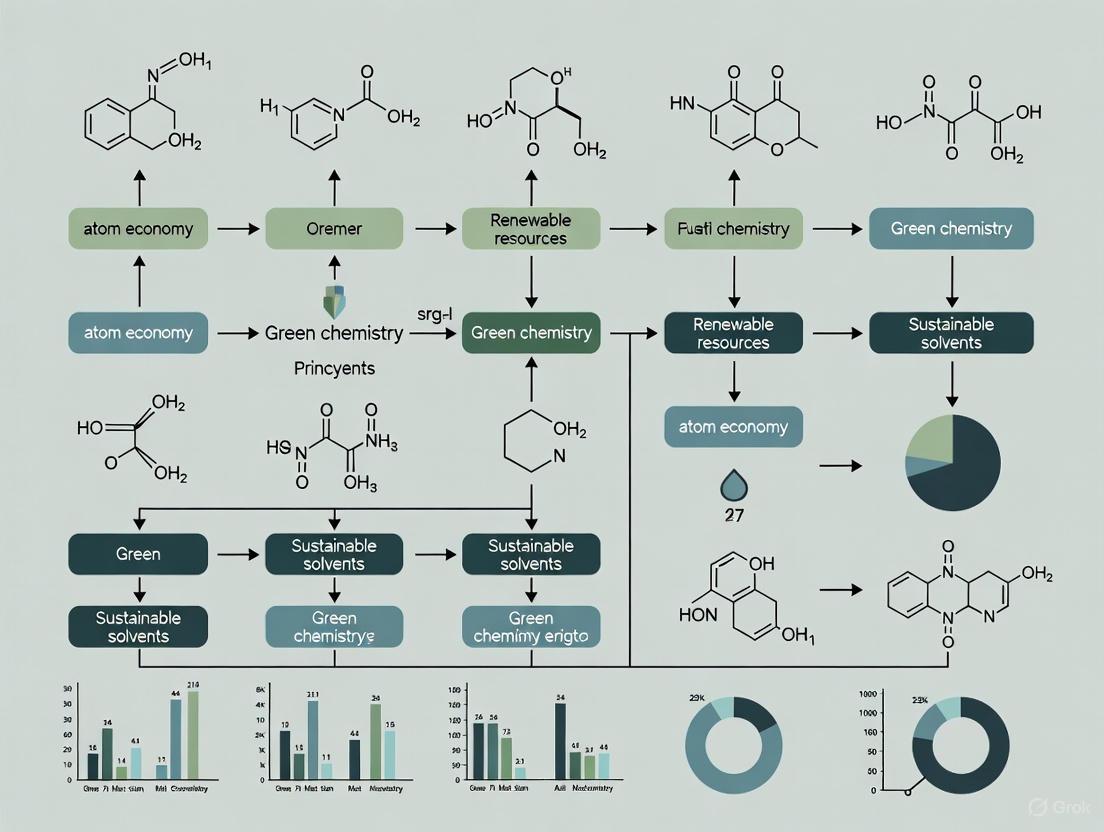
This article traces the historical journey of green chemistry from its conceptual origins to its current status as a driver of innovation in pharmaceutical research and development.
From Principles to Practice: The Evolution and Impact of Green Chemistry in Drug Development
Abstract
This article traces the historical journey of green chemistry from its conceptual origins to its current status as a driver of innovation in pharmaceutical research and development. It explores the foundational principles established by Anastas and Warner, examines modern methodologies like solvent-free synthesis and biocatalysis, and addresses key challenges in optimization and scaling. Through comparative case studies from industry leaders like Merck and Pfizer, it validates the significant economic and environmental benefits of green chemistry. Aimed at researchers, scientists, and drug development professionals, this review synthesizes how green chemistry principles are being integrated to create more efficient, sustainable, and cost-effective biomedical research and manufacturing processes.
The Origins and Defining Principles of Green Chemistry
The late 20th century witnessed a profound transformation in the chemical sciences, born from escalating environmental degradation and subsequent public and legislative pressure. This period marked a critical pivot from reactionary environmental cleanup to proactive prevention, fundamentally reshaping chemical design, synthesis, and industrial processing. The concept of green chemistry emerged not merely as a technical specialization but as a holistic framework for addressing the inherent environmental and health impacts of chemical products and processes [1]. Growing public awareness of environmental damage caused by chemical pesticides such as DDT, combined with mounting outrage at chemical dumping practices, created a potent catalyst for change [2]. These converging pressures culminated in a paradigm shift, moving the chemical industry beyond traditional "command and control" regulation toward an innovative approach that prioritized pollution prevention at its source [3] [4]. This article examines the historical context, legislative drivers, and scientific principles that crystallized during this formative period for green chemistry, with particular focus on their lasting impact on modern chemical research and pharmaceutical development.
Historical Context: The Gathering Storm (1960s-1980s)
The rise of the environmental movement in the 1960s and 1970s created the essential preconditions for the development of green chemistry. Widespread public concern began to coalesce following several environmental disasters and the publication of influential works that highlighted the dark side of chemical progress. Rachel Carson's 1962 book Silent Spring served as a seminal text, scrutinizing the detrimental effects of chemical pesticides on ecosystems and human health and fundamentally shifting public perception of industrial chemistry [1] [5]. Carson's powerful examination, described by some as "the book that changed America," revealed the ecological perils of indiscriminate pesticide use and sparked rigorous scrutiny of chemical industries [1] [5].
This growing environmental consciousness manifested in significant political action throughout the 1970s, including the establishment of the U.S. Environmental Protection Agency (EPA) in 1970 and the passage of foundational environmental legislation such as the Clean Air Act, Clean Water Act, Toxic Substances Control Act (TSCA), and the Resource Conservation and Recovery Act (RCRA) [6]. Internationally, the 1972 Stockholm Conference brought together representatives from United Nations member states and non-governmental organizations to formally consider environmental protection as a global priority [1]. The following decades witnessed increasing recognition that traditional development patterns were environmentally unsustainable, leading to the 1987 Brundtland Report which formally defined "sustainable development" as development that "meets the needs of the present without compromising the ability of future generations to meet their own needs" [1].
Throughout the 1980s, a significant philosophical shift occurred within regulatory bodies and industry, moving from pollution control (managing waste after creation) to pollution prevention (avoiding waste generation entirely) [4]. This transition was formalized internationally through the Organisation for Economic Co-operation and Development (OECD), which emphasized pollution prevention and control in its ministerial decisions [1] [4]. This evolving mindset, coupled with public outrage over continuing environmental incidents, set the stage for transformative legislative action in the 1990s that would formally establish green chemistry as a distinct discipline.
Legislative Catalysts: The Policy Framework for Change
The single most significant legislative driver for green chemistry emerged in 1990 with the passage of the U.S. Pollution Prevention Act [2] [3] [4]. This landmark legislation established a national policy declaring that pollution "should be prevented or reduced at the source whenever feasible," fundamentally shifting the regulatory focus from end-of-pipe solutions to proactive prevention [3] [4]. The Act explicitly stated that pollution should be prevented through cost-effective changes in products, processes, and raw materials, positioning source reduction as the environmentally preferred approach [3].
In response to this legislative mandate, the U.S. Environmental Protection Agency launched new research initiatives aimed at pollution prevention, including the "Alternative Synthetic Routes for Pollution Prevention" program in 1991 [1]. This program, which was later expanded and renamed, officially adopted the term "green chemistry" in 1992 and represented the formal beginning of coordinated green chemistry research and development [1]. The EPA's Green Chemistry Program, led in its early years by Paul Anastas, became instrumental in mobilizing policymakers and promoting green chemistry innovations [6].
Further institutionalization occurred through the Presidential Green Chemistry Challenge Awards (PGCC), established in 1995 and first awarded in 1996 [1] [6]. These awards recognized and promoted innovative chemical technologies that prevented pollution and had broad applicability in industry, providing both recognition and incentive for green chemistry advancements [1] [6]. Additional momentum came from the founding of the Green Chemistry Institute (GCI) in 1997 as a non-profit corporation dedicated to promoting chemical sustainability; it later joined the American Chemical Society (ACS) in 2001, signaling green chemistry's growing prominence within the mainstream chemical community [1] [6].
Table 1: Key Legislative and Policy Developments in Green Chemistry
| Year | Policy/Initiative | Significance |
|---|---|---|
| 1990 | U.S. Pollution Prevention Act | Established national preference for pollution prevention over end-of-pipe solutions [3] [4] |
| 1991 | EPA Alternative Synthetic Routes Program | First formal green chemistry research program; initially focused on pollution prevention [1] |
| 1995 | Presidential Green Chemistry Challenge Awards | Created recognition system for industrial and academic green chemistry innovations [1] [6] |
| 1997 | Green Chemistry Institute founded | Non-profit organization dedicated to promoting and advancing green chemistry [1] [6] |
The Twelve Principles of Green Chemistry: A Scientific Framework
In 1998, Paul Anastas and John Warner published Green Chemistry: Theory and Practice, systematically outlining the 12 Principles of Green Chemistry that have since become the cornerstone of the field [2] [7] [1]. These principles provided chemists and chemical engineers with a comprehensive framework for designing chemical products and processes that reduce or eliminate the use and generation of hazardous substances [3]. The principles address both molecular-level concerns and broader system-wide impacts, creating a holistic approach to sustainable chemical design.
Several principles have proven particularly influential in reshaping pharmaceutical development and synthetic chemistry. The principle of Atom Economy (Principle 2), introduced by Barry Trost in 1991, emphasizes maximizing the incorporation of starting materials into the final product, providing a crucial metric for evaluating synthetic efficiency beyond traditional yield measurements [2] [8]. The related concept of Waste Prevention (Principle 1) establishes that preventing waste is superior to treating or cleaning it up after formation, fundamentally changing how chemists approach synthesis design [2] [5].
The principles advocating for safer solvents and auxiliaries (Principle 5) and catalysis (Principle 9) have driven significant methodological changes in pharmaceutical manufacturing [2] [8]. Similarly, the principle of designing for degradation (Principle 10) addresses concerns about persistent environmental pollutants by encouraging creation of chemicals that break down into innocuous substances after fulfilling their function [2] [5].
Table 2: Key Metrics for Assessing Green Chemistry Principles in Practice
| Principle | Metric/Tool | Application in Pharmaceutical Industry |
|---|---|---|
| Waste Prevention | E-Factor (kg waste/kg product) | Pharmaceutical E-factors historically high (25-100+); significant improvements through process redesign [7] [5] |
| Atom Economy | % Atom Economy (MW product/Σ MW reactants) | Emphasis on reactions with high atom economy (e.g., rearrangement, addition); contrast with traditional yield calculations [2] [8] |
| Safer Solvents | Solvent Selection Guides | Preference for water, CO₂, less hazardous alternatives; solvent recycling [2] [8] |
| Energy Efficiency | Process Mass Intensity (PMI) | Comprehensive measure including water, solvents; drives reductions in energy consumption [2] |
Quantitative Assessment Frameworks in Green Chemistry
The implementation of green chemistry principles necessitated the development of robust quantitative assessment tools to measure environmental impact and synthetic efficiency. Among these, the E-Factor, introduced by Roger Sheldon, emerged as a crucial metric for evaluating process waste [7] [5]. Calculated as the total mass of waste divided by the mass of product, the E-Factor provides a straightforward measure of environmental impact, with lower values indicating cleaner processes. Notably, application of this metric revealed striking disparities between industrial sectors, with the pharmaceutical industry initially identified as particularly wasteful due to its historically high E-Factors, sometimes reaching 25-100 or more [7].
Atom economy complements traditional yield calculations by evaluating the fraction of starting material atoms incorporated into the final product [2] [8]. This approach reveals the inherent efficiency of different reaction types, with addition and rearrangement reactions typically demonstrating high atom economy, while substitution and elimination reactions often perform poorly by this metric [8]. For example, a traditional phenol synthesis process showed only 37% atom economy when accounting for waste coproducts, while an alternative cumene process achieved effectively 100% atom economy by creating two valuable products [8].
These quantitative frameworks created economic drivers for green chemistry adoption by demonstrating that environmental improvements frequently aligned with cost reduction. As the petrochemical industry had already discovered, minimizing waste directly improved profitability, creating a powerful business case for sustainable practices [7]. This alignment between economic and environmental interests proved essential for widespread industry adoption of green chemistry principles.
Case Studies: Green Chemistry Principles in Pharmaceutical Research
Methodologies: One-Pot Synthesis and Catalysis
The implementation of green chemistry principles has led to significant methodological innovations in pharmaceutical research, particularly through the adoption of one-pot synthesis and advanced catalytic processes. One-pot synthesis exemplifies multiple green chemistry principles by conducting multiple synthetic steps in a single reaction vessel, eliminating intermediate isolation and purification stages that typically generate substantial waste [2]. A prominent example is Amgen's synthesis of the lung cancer drug Lumakras (sotorasib), where researchers developed a one-pot reaction that converted a less potent drug version into the more active form, eliminating several purification steps and reducing waste by an estimated 14.4 million kg annually [2].
Catalysis represents another cornerstone of green pharmaceutical synthesis, enabling reactions with higher atom economy and reduced energy requirements [2] [5]. The development of click chemistry—recognized by the 2022 Nobel Prize in Chemistry—provides powerful tools for late-stage functionalization that avoid traditional protecting group strategies, significantly reducing waste generation [2]. Similarly, olefin metathesis reactions (2005 Nobel Prize in Chemistry) offer atom-economical pathways for carbon-carbon bond formation that have been widely adopted in pharmaceutical synthesis [2] [6].
Solvent Reduction and Alternative Activation Methods
The principle advocating safer solvents has driven substantial innovation in solvent selection and elimination. Approaches include:
- Mechanochemistry: Using ball milling to conduct reactions without solvents through mechanical force [2]
- Reactions in water: Developing methods to conduct traditionally organic-phase reactions in aqueous media using surfactants or other mediators [2]
- Supercritical fluids: Utilizing substances like supercritical CO₂ as alternative reaction media [8]
Recent advances in non-traditional activation methods represent the continuing evolution of green chemistry. Techniques including microwave irradiation, ultrasound, and high hydrostatic pressure (barochemistry) enable reactions with improved yields and selectivity, often under milder conditions with reduced energy requirements [9]. High hydrostatic pressure (HHP) activation, operating at 2-20 kbar, offers particular promise for industrial application through its ability to enhance reaction rates and selectivity while frequently operating at ambient temperature [9] [10].
Diagram 1: The Evolution of Green Chemistry from Pressure to Practice
The Researcher's Toolkit: Essential Reagents and Methodologies
Modern green chemistry research employs a sophisticated toolkit of reagents, catalysts, and methodologies designed to minimize environmental impact while maintaining synthetic efficiency. This toolkit continues to evolve through interdisciplinary collaboration and advancing technological capabilities.
Table 3: Essential Research Reagents and Solutions in Green Chemistry
| Reagent/Methodology | Function/Application | Green Chemistry Principle |
|---|---|---|
| Grubbs Catalysts | Olefin metathesis reactions with high atom economy [2] | Atom Economy, Catalysis |
| Polyoxyethanyl α-tocopheryl sebacate | Surfactant for aqueous Suzuki-Miyaura cross-coupling [2] | Safer Solvents, Energy Efficiency |
| Biocatalysts (Enzymes) | Highly selective transformations without protecting groups [5] | Reduce Derivatives, Catalysis |
| High Hydrostatic Pressure (HHP) | Non-thermal reaction activation; 2-20 kbar range [9] [10] | Energy Efficiency, Safer Solvents |
| Ball Milling (Mechanochemistry) | Solvent-free reactions through mechanical force [2] | Safer Solvents, Waste Prevention |
The experimental protocol for implementing green chemistry principles typically follows a systematic approach:
- Reaction Design Phase: Prioritize synthetic routes with inherent atom economy, selecting addition or rearrangement reactions over substitutions or eliminations where feasible [8]
- Solvent Selection: Consult solvent selection guides to identify less hazardous alternatives; consider solvent-free mechanochemical approaches [2] [8]
- Catalyst Implementation: Incorporate selective catalytic systems to replace stoichiometric reagents, enabling lower energy pathways [2] [5]
- Process Optimization: Design one-pot synthetic sequences to minimize intermediate isolation and purification [2]
- Analytical Monitoring: Implement real-time analysis to prevent hazardous substance formation and enable rapid optimization [5] [8]
For emerging methodologies like high hydrostatic pressure (HHP) synthesis, specific protocols include:
- Sample preparation in flexible sealed containers
- Pressure transmission using water as non-toxic medium
- Application of static pressure (constant) or pressure cycling (repeated compression-decompression)
- Reaction monitoring and optimization through pressure-temperature parameter variation [9]
The environmental catalysts of the late 20th century—legislative action and public pressure—created a transformative foundation for modern green chemistry. The framework established during this formative period continues to guide chemical innovation, with the 12 Principles providing a durable blueprint for sustainable molecular design. The integration of green chemistry into pharmaceutical research has demonstrated that environmental and economic objectives can align, creating synergies that drive both ecological protection and business success.
Current research continues to build upon this foundation, with emerging areas including:
- Predictive toxicology: Utilizing tools like the EPA's Generalized Read-Across (GenRA) and ToxCast to design inherently safer chemicals [2]
- Advanced materials: Developing biodegradable polymers with engineered lifespans through incorporation of enzymatically cleavable linkages [2]
- Continuous flow processing: Enabling more efficient, smaller-footprint chemical manufacturing [9]
- Biobased feedstocks: Transitioning from petroleum-derived starting materials to renewable resources [5] [8]
The ultimate success of green chemistry, as envisioned by its founders, will be realized when the qualifier "green" becomes unnecessary—when sustainable design is fully integrated into all chemical practices [2]. The legacy of the late 20th-century environmental catalyst endures in this ongoing transformation, as researchers, scientists, and drug development professionals continue to advance toward chemistry that is inherently safer, more efficient, and sustainable for future generations.
The field of green chemistry represents a fundamental transformation in the approach to chemical design, synthesis, and production. Formally established in the 1990s, green chemistry emerged as a proactive response to the recognition that traditional pollution control strategies—focusing on waste treatment and disposal at the "end of the pipe"—were insufficient for addressing the environmental impact of chemical processes [3]. The conceptual foundation of green chemistry developed against a backdrop of increasing environmental awareness, catalyzed by pivotal events such as the 1962 publication of "Silent Spring," the 1972 Stockholm Conference, and the 1990 U.S. Pollution Prevention Act, which collectively shifted focus toward pollution prevention at the source [1] [3]. It was within this context that Paul Anastas and John Warner articulated a comprehensive framework that would systematically guide chemists toward more sustainable practices, fundamentally changing how chemical processes are designed and evaluated.
The core philosophy of green chemistry is encapsulated in its definition as "the design of chemical products and processes that reduce or eliminate the use and generation of hazardous substances" [3]. This approach represents a strategic departure from traditional risk management, which primarily focuses on controlling exposure to hazardous substances. Instead, green chemistry aims to reduce risk by minimizing or eliminating the inherent hazard of chemical substances and processes altogether [11]. This paradigm shift recognizes that eliminating hazard at the molecular design stage provides a more robust and fundamental form of protection than relying on engineering controls, personal protective equipment, or post-production waste treatment [11]. The field has gained significant traction over the past three decades, evolving from a conceptual framework to an applied scientific discipline with global impact, particularly in industries such as pharmaceuticals where the environmental footprint of manufacturing processes has drawn increased scrutiny [12] [1].
Historical Context and Founding Vision
The development of green chemistry as a formal discipline was inextricably linked to both regulatory evolution and scientific advancement. The U.S. Pollution Prevention Act of 1990 marked a critical turning point by establishing a national policy that prioritized pollution prevention through improved design rather than end-of-pipe treatment [3]. In 1991, the U.S. Environmental Protection Agency's Office of Pollution Prevention and Toxics launched a research grant program encouraging the redesign of chemical products and processes, signaling an institutional commitment to this new approach [3]. The mid-1990s witnessed key milestones including the introduction of the Presidential Green Chemistry Challenge Awards in 1996, which recognized and promoted both academic and industrial innovations in the field [1] [3].
It was within this context of growing institutional support and scientific interest that Paul Anastas and John Warner made their seminal contribution. In 1998, they published "Green Chemistry: Theory and Practice," which formally introduced the 12 Principles of Green Chemistry [12] [3] [13]. Anastas, then directing the Green Chemistry Program at the US EPA, and Warner, of Polaroid Corporation, synthesized existing concepts and research efforts into a coherent framework that would guide chemists in designing safer, more efficient chemical processes and products [13]. Their work built upon earlier innovations such as Barry Trost's concept of atom economy (developed in 1991) and existing practices in catalysis, but integrated these ideas into a comprehensive, principled approach [12] [13].
The timing of their publication coincided with other significant institutional developments, including the establishment of the Green Chemistry Institute in 1997 (which joined the American Chemical Society in 2001) and the launch of the Royal Society of Chemistry's journal Green Chemistry in 1999 [1] [3]. This coalescence of conceptual frameworks, institutional support, and scientific publishing platforms provided the necessary infrastructure for green chemistry to emerge as a distinct and influential scientific discipline. The field has continued to evolve, with the 2005 Nobel Prize in Chemistry awarded to Chauvin, Grubbs, and Schrock explicitly recognizing contributions to green chemistry through the development of the metathesis method in organic synthesis [3] [13].
Historical Evolution of Green Chemistry
The 12 Principles of Green Chemistry: A Detailed Framework
The 12 Principles of Green Chemistry provide a comprehensive framework for designing chemical products and processes that minimize environmental impact and health risks. These principles address the entire life cycle of chemicals, from initial design to ultimate disposal, encouraging a holistic approach to sustainability in chemical research and industry [12] [13]. Below we examine each principle in detail, with particular attention to their application in pharmaceutical research and drug development.
Prevention
The first principle establishes that preventing waste is superior to treating or cleaning up waste after it is created [12] [14]. This foundational concept shifts the focus from remediation to proactive design. In pharmaceutical manufacturing, where waste generation can be substantial, this principle has driven significant process innovations. The pharmaceutical industry has historically generated substantial waste, with some processes producing over 100 kilograms of waste per kilogram of active pharmaceutical ingredient (API) [12]. Through application of green chemistry principles, companies have achieved dramatic reductions—sometimes as much as ten-fold—in waste generation [12]. Key metrics for evaluating waste prevention include the E-factor and Process Mass Intensity (PMI), which provide quantitative measures of waste generation relative to product output [12] [14].
Atom Economy
Developed by Barry Trost in 1991, atom economy emphasizes designing synthetic methods to maximize the incorporation of all starting materials into the final product [12] [14]. This principle challenges the traditional focus solely on percent yield by considering the fate of all atoms involved in a reaction. A reaction with 100% yield may still have poor atom economy if significant portions of reactant atoms are excluded from the desired product. For example, a substitution reaction producing 1-bromobutane from 1-butanol, NaBr, and H₂SO₄ has only 50% atom economy, meaning half the mass of reactants becomes waste even at perfect yield [12]. Atom economy is particularly valuable in pharmaceutical synthesis, where efficient use of often expensive starting materials directly impacts both economic and environmental performance [12].
Less Hazardous Chemical Syntheses
This principle advocates designing synthetic methods that use and generate substances with little or no toxicity to human health or the environment [12]. The qualification "wherever practicable" acknowledges that completely non-hazardous syntheses may not always be immediately achievable, but encourages continuous progress toward this goal [12]. The pharmaceutical industry faces particular challenges with this principle, as the biologically active molecules being synthesized are often inherently toxic by design [12]. However, significant progress can be made by focusing on the solvents, reagents, and other components of the reaction system, which often constitute the majority of the hazard profile [12]. This principle represents both a technical challenge and a cultural shift in how chemists define successful synthetic design [12].
Designing Safer Chemicals
This principle calls for chemical products to be designed to preserve efficacy of function while reducing toxicity [12]. It requires understanding not only chemistry but also principles of toxicology and environmental science [12]. The approach treats hazard as a design flaw rather than an inevitable property, seeking to address toxicity at the molecular design stage [12]. For pharmaceutical researchers, this creates the challenge of balancing biological activity (which is often the desired function) with minimizing unwanted toxicity [12]. Modern approaches include using predictive toxicology and understanding structure-activity relationships to design molecules that maintain therapeutic efficacy while reducing adverse effects [12].
Safer Solvents and Auxiliaries
The use of auxiliary substances like solvents should be minimized or made safer whenever possible [12] [13]. Solvents often constitute the bulk of material used in pharmaceutical processes and contribute significantly to waste and hazard [12]. The pharmaceutical industry has developed solvent selection guides that rank solvents based on health, safety, and environmental metrics, encouraging substitution of hazardous solvents like dichloromethane and benzene with safer alternatives such as ethyl acetate, 2-methyltetrahydrofuran, or water [12]. The ideal is to choose solvents that "make sense chemically, reduce the energy requirements, have the least toxicity, have the fewest life cycle environmental impacts and don't have major safety impacts" [15].
Design for Energy Efficiency
Energy requirements of chemical processes should be recognized for their environmental and economic implications and should be minimized [13] [11]. This principle encourages conducting reactions at ambient temperature and pressure whenever possible, and developing energy-efficient reactions and separation techniques [15] [11]. As energy costs and climate concerns grow, this principle has gained increasing importance. Nature provides inspiration through chemistry conducted efficiently at ambient conditions, suggesting opportunities for biomimetic approaches [15]. In pharmaceutical manufacturing, energy-intensive processes not only increase environmental impact but also operational costs, creating dual incentives for efficiency improvements [11].
Use of Renewable Feedstocks
Whenever technically and economically practicable, raw materials should be derived from renewable rather than depleting sources [13] [11]. This principle promotes the use of biomass, agricultural waste, and other sustainable feedstocks [15] [11]. Currently, approximately 98% of organic chemicals in the United States are produced from petroleum, an energy-intensive process that accounts for about 15% of total national energy use [11]. Research has demonstrated that many agricultural products (e.g., corn, soy, molasses) can be transformed into various chemicals and materials, providing renewable alternatives [11]. For pharmaceutical applications, renewable feedstocks can reduce dependence on petrochemical resources and potentially provide more biodegradable chemical structures [13].
Reduce Derivatives
Unnecessary derivatization (such as protection/deprotection steps, temporary modification of physical/chemical processes) should be minimized or avoided because such steps require additional reagents and can generate waste [13]. Each protecting group or temporary modification requires at least two additional steps (installation and removal), increasing material use, waste generation, and process complexity. In complex molecule synthesis such as for pharmaceuticals, where multiple functional groups may require selective manipulation, minimizing protection can significantly improve overall efficiency. This principle encourages the development of synthetic strategies that achieve selectivity through means other than protection, such as chemo-selective reactions or catalytic methods that distinguish between functional groups [13].
Catalysis
Catalytic reagents (which can be used in small quantities to multiple cycles) are superior to stoichiometric reagents (which are consumed in the reaction) [13]. Catalysis can enable more efficient reactions, reduce the amount of reagents needed, minimize waste, and provide opportunities for better selectivity [15] [16]. While catalysis offers significant advantages, the choice of catalyst must consider potential toxicity, particularly with heavy metal catalysts [11]. The 2005 Nobel Prize in Chemistry recognized the importance of catalytic methods, specifically highlighting metathesis as a contribution to greener synthesis [3] [13]. In pharmaceutical manufacturing, catalytic methods can dramatically improve efficiency and reduce the environmental footprint of API synthesis [16].
Design for Degradation
Chemical products should be designed so that at the end of their function they break down into innocuous degradation products and do not persist in the environment [13] [11]. This principle is particularly important for chemicals that may be released into the environment after use. The problematic persistence of materials like conventional plastics and per- and polyfluoroalkyl substances (PFAS) exemplifies the consequences of neglecting this principle [15]. For pharmaceuticals, this creates a complex challenge, as molecules must remain stable long enough to provide therapeutic benefit but ideally should not persist indefinitely in the environment. Designing for controlled degradation requires careful consideration of molecular structure and the environmental conditions under which degradation will occur [13].
Real-time Analysis for Pollution Prevention
Analytical methodologies need to be developed to allow for real-time, in-process monitoring and control before hazardous substances form [13]. This principle emphasizes process analytical technology (PAT) to enable continuous monitoring and immediate correction of process parameters, preventing the formation of hazardous substances and ensuring consistent product quality [13] [11]. In pharmaceutical manufacturing, real-time monitoring can help maintain optimal reaction conditions, detect impurities early, and prevent the generation of hazardous by-products. Advanced analytical techniques including spectroscopy, chromatography, and sensor technologies support this principle by providing immediate feedback on reaction progress and composition [13].
Inherently Safer Chemistry for Accident Prevention
Substances and the form of a substance used in a chemical process should be chosen to minimize the potential for chemical accidents, including releases, explosions, and fires [13] [11]. This principle focuses on inherent safety rather than relying solely on engineering controls and procedures to manage hazards [11]. For example, choosing less volatile or reactive starting materials, avoiding extreme temperatures and pressures, and designing processes with smaller inventories of hazardous materials can reduce the potential for accidents [11]. The 2015 chemical accident at Warsaw Chemical Company, where a fire caused a methanol spill, illustrates how even with exposure controls in place, accidents can release hazards into the environment [11]. In pharmaceutical manufacturing, where potentially hazardous reagents are often used, this principle encourages careful selection of chemical forms and process conditions to minimize intrinsic hazards [11].
Table 1: The 12 Principles of Green Chemistry and Their Applications in Pharmaceutical Research
| Principle | Key Concept | Pharmaceutical Application | Key Metrics |
|---|---|---|---|
| 1. Prevention | Prevent waste rather than treat it | Redesign API synthesis to minimize by-products | E-factor, PMI |
| 2. Atom Economy | Maximize incorporation of materials into product | Design synthetic routes with minimal molecular weight loss | Atom Economy % |
| 3. Less Hazardous Syntheses | Use/generate non-toxic substances | Replace hazardous reagents with safer alternatives | Hazard classification |
| 4. Designing Safer Chemicals | Balance efficacy with reduced toxicity | Structure-activity relationship analysis | Therapeutic index |
| 5. Safer Solvents & Auxiliaries | Minimize use of hazardous auxiliaries | Implement solvent selection guides | Solvent greenness score |
| 6. Energy Efficiency | Minimize energy requirements | Develop ambient temperature processes | Energy intensity |
| 7. Renewable Feedstocks | Use renewable raw materials | Biomass-derived starting materials | Renewable content % |
| 8. Reduce Derivatives | Avoid unnecessary protecting groups | Convergent synthesis strategies | Step count reduction |
| 9. Catalysis | Prefer catalytic over stoichiometric reagents | Enzymatic and metal catalysis | Turnover number |
| 10. Design for Degradation | Design products to break down after use | Controlled metabolic degradation | Environmental half-life |
| 11. Real-time Analysis | Monitor processes in real time | Process Analytical Technology (PAT) | Detection limits |
| 12. Inherently Safer Chemistry | Minimize accident potential | Select safer chemical forms | Safety indices |
Quantitative Metrics and Assessment Tools
The implementation of green chemistry principles requires robust metrics to evaluate and compare the environmental performance of chemical processes. Several quantitative tools have been developed to assess how effectively a process aligns with green chemistry goals, particularly in pharmaceutical applications where efficiency and waste reduction are critical.
Process Mass Intensity (PMI)
Process Mass Intensity represents the total mass of materials used in a process relative to the mass of the final product [12] [14]. It is calculated as:
[ \text{PMI} = \frac{\text{total mass in a process or process step (kg)}}{\text{mass of product (kg)}} ]
PMI provides a comprehensive assessment of resource efficiency by accounting for all materials used in a process, including reactants, solvents, catalysts, and process aids [12]. The ACS Green Chemistry Institute Pharmaceutical Roundtable has favored PMI as a key metric because it captures the complete material input required for pharmaceutical manufacturing [12]. The ideal PMI is 1, indicating perfect efficiency where all input mass is incorporated into the product. In practice, pharmaceutical processes often have much higher PMI values, though significant improvements have been achieved through green chemistry innovations [12].
E-Factor
The E-factor, developed by Roger Sheldon, focuses specifically on waste generation [12] [14]. It is defined as:
[ \text{E-factor} = \frac{\text{amount (kg) of waste}}{\text{amount (kg) of desired product}} ]
Unlike PMI, the E-factor specifically excludes water from the calculation, reflecting the perception that water-based processes are generally greener [14]. E-factor values vary significantly across different industry sectors, with oil refining typically below 0.1, bulk chemicals between 1-5, and pharmaceuticals ranging from 25 to over 100 [14]. This metric highlights the substantial waste generation in pharmaceutical manufacturing and provides a clear target for improvement through application of green chemistry principles [12].
Atom Economy
Atom economy, developed by Barry Trost, evaluates the efficiency of a chemical reaction at the molecular level [12] [14]. It is calculated as:
[ \text{Atom Economy (\%)} = \frac{\text{formula weight of atoms utilized}}{\text{sum of formula weights of all reactants}} \times 100 ]
Atom economy differs from reaction yield in that it considers the fate of all atoms in the reactants, not just the conversion to the desired product [12]. A reaction with 100% yield may have poor atom economy if significant portions of reactant molecules become by-products. This metric encourages the design of synthetic routes where most reactant atoms are incorporated into the final product, minimizing molecular weight loss as waste [12] [14].
EcoScale
The EcoScale provides a more comprehensive assessment by incorporating multiple parameters including yield, cost, safety, technical setup, temperature/time requirements, and workup/purification complexity [14]. It assigns penalty points across these categories, with a higher final score indicating a greener process [14]. The EcoScale recognizes that an ideal chemical process should not only be efficient but also safe, economical, and practical [14]. This holistic approach makes it particularly valuable for comparing different synthetic routes to the same target molecule in pharmaceutical research.
Table 2: Green Chemistry Metrics for Process Evaluation
| Metric | Calculation | Ideal Value | Application Focus |
|---|---|---|---|
| Process Mass Intensity (PMI) | Total process mass / Product mass | 1 | Comprehensive resource efficiency |
| E-Factor | Waste mass / Product mass | 0 | Waste generation |
| Atom Economy | (FW of desired product / Σ FW of reactants) × 100 | 100% | Synthetic route efficiency |
| EcoScale | 100 - Σ penalty points | 100 | Overall process greenness |
Implementation in Pharmaceutical Research and Development
The pharmaceutical industry has emerged as a prominent adopter of green chemistry principles, driven by both economic factors and regulatory pressures. The high material costs, complex syntheses, and substantial waste generation associated with drug manufacturing create strong incentives for greener approaches. Several case studies demonstrate successful implementation of green chemistry in pharmaceutical development.
Pfizer's Sertraline Process Redesign
Pfizer's redesign of the sertraline (active ingredient in Zoloft) manufacturing process exemplifies multiple green chemistry principles applied to pharmaceutical production [12]. The original process generated significant waste and used hazardous reagents. Through process intensification and optimization, Pfizer achieved:
- Reduction from three synthetic steps to one
- Elimination of 140 metric tons of titanium dioxide waste annually
- Removal of hazardous solvents including dichloromethane, tetrahydrofuran, and hexane
- Improved overall yield and reduced raw material requirements
This redesign demonstrates principles including waste prevention (Principle 1), safer solvents (Principle 5), energy efficiency (Principle 6), and catalysis (Principle 9) [12]. The environmental benefits were accompanied by significant economic advantages, illustrating the business case for green chemistry in pharmaceutical manufacturing.
Codexis and Yi Tang's Biocatalytic Simvastatin
The development of a biocatalytic process for manufacturing simvastatin by Codexis Inc. and Professor Yi Tang (University of California, Los Angeles) earned a 2012 Presidential Green Chemistry Challenge Award [12]. This innovation replaced a traditional chemical synthesis with an enzymatic approach that:
- Reduced solvent use and waste generation
- Improved energy efficiency through milder reaction conditions
- Enhanced selectivity, reducing the need for protection/deprotection steps
- Utilized a renewable enzyme catalyst
This approach exemplifies multiple green chemistry principles, including less hazardous chemical syntheses (Principle 3), catalysis (Principle 9), and design for energy efficiency (Principle 6) [12]. The biocatalytic process demonstrates how biotechnology can enable greener pharmaceutical manufacturing while maintaining economic viability.
Solvent Selection and Management
Solvent use typically constitutes the majority of mass input in pharmaceutical manufacturing, making solvent selection a critical focus for green chemistry implementation [12]. The pharmaceutical industry has developed comprehensive solvent selection guides that rank solvents based on multiple criteria including health, safety, and environmental impact [12]. These guides facilitate the substitution of hazardous solvents like benzene, chlorinated solvents, and ethers with safer alternatives such as 2-methyltetrahydrofuran, ethyl acetate, and water [12]. Effective solvent management also includes recovery and reuse systems that significantly reduce waste generation and raw material consumption [12].
Green Chemistry Implementation Workflow
Research Reagents and Methodologies
The implementation of green chemistry principles requires specific reagents, solvents, and methodologies that enable safer, more efficient synthesis. The following table highlights key research tools that support green chemistry in pharmaceutical research and development.
Table 3: Green Chemistry Research Reagents and Methodologies
| Reagent/Methodology | Function | Green Chemistry Principle | Application Example |
|---|---|---|---|
| Biocatalysts (Enzymes) | Selective catalytic transformations | Catalysis (Principle 9) | Simvastatin synthesis (Codexis) |
| Metathesis Catalysts | Olefin metathesis for C-C bond formation | Catalysis (Principle 9) | Nobel Prize 2005 (Chauvin, Grubbs, Schrock) |
| Water as Solvent | Replacement for organic solvents | Safer Solvents (Principle 5) | Industrial cleaning products |
| Ionic Liquids | Non-volatile, tunable solvents | Safer Solvents (Principle 5) | Specialized synthesis media |
| Supercritical CO₂ | Non-toxic, non-flammable solvent | Safer Solvents (Principle 5) | Polymerization, extraction |
| Hydrogen Peroxide | Green oxidant (water as by-product) | Less Hazardous Synthesis (Principle 3) | Hydrazine production |
| Polystyrene-supported Reagents | Simplified purification and recycling | Reduce Derivatives (Principle 8) | Solid-phase synthesis |
| Microwave Irradiation | Enhanced reaction efficiency | Energy Efficiency (Principle 6) | Accelerated synthetic steps |
| Flow Chemistry | Improved heat/mass transfer, safety | Energy Efficiency (Principle 6) | Continuous pharmaceutical manufacturing |
| Process Analytical Technology (PAT) | Real-time reaction monitoring | Real-time Analysis (Principle 11) | Quality control in API manufacturing |
Future Directions and Challenges
As green chemistry continues to evolve, several emerging trends and persistent challenges shape its trajectory in pharmaceutical research and broader chemical applications. The field is moving toward a more integrated, systems-based approach that recognizes the interconnected nature of the 12 principles rather than treating them as isolated parameters to be optimized separately [3]. This holistic perspective acknowledges that sustainability challenges are multifaceted and require coordinated solutions addressing multiple principles simultaneously [3].
The interface between chemistry and toxicology represents a critical frontier for green chemistry advancement. Developments in predictive toxicology, toxicogenomics, and structure-activity relationship modeling are creating new opportunities to design chemicals with reduced hazard [3]. These tools enable chemists to identify and avoid structural features associated with toxicity early in the design process, potentially revolutionizing how chemicals are created and selected for development [12] [3]. The training of next-generation chemists must increasingly incorporate principles of toxicology and environmental science to fully realize this potential [12].
Nanotechnology presents both opportunities and challenges for green chemistry. While offering potential environmental benefits through catalysis, energy applications, and materials efficiency, nanomaterials also raise concerns about potential nanotoxicity and environmental persistence [13]. Green chemistry principles are being applied to guide the development of nanomaterials with reduced life-cycle impacts, though this area requires continued research and careful assessment [13].
The transition to renewable feedstocks remains a significant challenge, particularly for complex pharmaceutical molecules traditionally derived from petrochemical sources. While advances in biocatalysis and biomass conversion are creating new pathways, technical and economic barriers persist [11]. The development of efficient processes for converting renewable resources into complex molecular structures represents an important research direction that aligns with multiple green chemistry principles [13] [11].
Perhaps the most persistent challenge is the cultural and educational transformation needed to fully embed green chemistry principles into scientific practice. As noted by David Constable of the ACS Green Chemistry Institute, chemists often remain focused primarily on synthetic efficiency rather than considering the broader environmental and health implications of their choices [12]. Overcoming this requires continued education, development of better metrics and assessment tools, and recognition systems that reward green chemistry innovations [12].
The future of green chemistry will likely involve greater integration with adjacent fields including green engineering, industrial ecology, and circular economy principles. This interdisciplinary approach recognizes that molecular design represents just one element of a sustainable chemical enterprise, which must also consider process design, material flows, and system-level impacts [3]. As these integrated approaches mature, green chemistry will continue to provide essential molecular-level strategies for addressing sustainability challenges across multiple sectors, with pharmaceutical research serving as an important proving ground and innovation source.
The 12 Principles of Green Chemistry articulated by Paul Anastas and John Warner have provided a durable framework for transforming chemical design, manufacture, and use over the past three decades. By shifting focus from pollution control to pollution prevention, from hazard management to hazard reduction, and from efficiency as an economic concern to efficiency as an environmental imperative, these principles have redefined the boundaries of chemical innovation. In pharmaceutical research and development, where complex syntheses and significant waste generation present both challenges and opportunities, green chemistry principles have driven substantial improvements in process efficiency, safety, and environmental performance.
The continued evolution of green chemistry will depend on advances across multiple fronts: development of greener reagents and catalysts, improved analytical and monitoring technologies, better predictive tools for assessing chemical hazard, and educational approaches that equip chemists to consider the full life-cycle impacts of their work. As these developments proceed, the foundational framework provided by Anastas and Warner's 12 principles will continue to guide progress toward a more sustainable chemical enterprise. The principles have demonstrated remarkable resilience and adaptability across diverse chemical sectors, suggesting their enduring value for directing innovation toward solutions that simultaneously advance economic, environmental, and social goals.
The evolution of green chemistry from a theoretical concept to an integral component of global chemical research and industry represents a significant transformation in scientific practice. This transition has been fundamentally guided and accelerated by key institutions that provided the necessary framework for development, recognition, and adoption. The United States Environmental Protection Agency (EPA), the American Chemical Society Green Chemistry Institute (ACS GCI), and the Presidential Green Chemistry Challenge Awards have collectively created an ecosystem that fosters innovation in sustainable chemical design. These organizations have established critical pathways for integrating green chemistry principles into pharmaceutical development, industrial processes, and academic research, creating a robust infrastructure for advancing sustainability goals through scientific excellence. The institutionalization of green chemistry has transformed it from a peripheral concern to a central pillar of modern chemical innovation, with demonstrated impacts on hazard reduction, resource conservation, and economic viability within the chemical enterprise [1] [4].
Historical Foundations and Institutional Genesis
The conceptual origins of green chemistry emerged from a growing environmental consciousness that gained momentum throughout the latter half of the 20th century. Seminal works like Rachel Carson's Silent Spring (1962) awakened scientific and public awareness to the environmental consequences of chemical pollution [17]. This emerging consciousness catalyzed regulatory responses, including the establishment of the EPA in 1970 and the passage of foundational environmental legislation throughout the 1970s and 1980s [17] [3]. A critical paradigm shift occurred with the recognition that pollution control strategies focused on "end-of-pipe" treatment were insufficient; prevention offered a more effective and economically viable approach [4].
The formal political foundation for green chemistry was established with the Pollution Prevention Act of 1990, which declared U.S. national policy should prioritize source reduction over treatment and disposal [17] [3]. In response to this legislative mandate, the EPA's Office of Pollution Prevention and Toxics launched research initiatives encouraging the redesign of chemical products and processes [3]. The term "Green Chemistry" was subsequently coined by EPA staff to describe this emerging focus on pollution prevention through molecular design [17] [4]. The period from 1991-1996 saw the EPA partner with the National Science Foundation (NSF) to fund basic research in green chemistry, establishing it as a legitimate scientific field [3].
A theoretical framework was formalized in 1998 with the publication of Green Chemistry: Theory and Practice by Paul Anastas and John C. Warner, which outlined the Twelve Principles of Green Chemistry [1] [17]. These principles provided a comprehensive set of design guidelines that have directed green chemistry development for nearly three decades, addressing factors such as waste prevention, atom economy, safer chemicals, and accident prevention [1] [3]. The coining of the term and establishment of these principles provided the philosophical and practical foundation for the institutional adoption and development that followed [4].
Table: Historical Milestones in the Foundation of Green Chemistry
| Year | Event | Significance |
|---|---|---|
| 1962 | Publication of Silent Spring | Catalyzed environmental movement and awareness of chemical impacts [17] |
| 1970 | Establishment of the U.S. EPA | Created federal agency dedicated to environmental protection [17] |
| 1990 | Pollution Prevention Act | Shifted U.S. policy from pollution control to pollution prevention [17] [3] |
| 1991 | EPA research grant program | First funding initiatives for green chemistry research and redesign [3] |
| 1995 | Presidential Green Chemistry Challenge | Established awards program to recognize and promote innovation [17] |
| 1997 | Green Chemistry Institute founded | Created independent nonprofit to advance green chemistry [17] |
| 1998 | Twelve Principles published | Provided philosophical and practical framework for the field [1] [17] |
Institutional Frameworks and Governance
U.S. Environmental Protection Agency (EPA)
The EPA has served as the foundational governmental institution for green chemistry advancement, initiating its formal programming in the early 1990s. The Agency's primary mechanism for promoting green chemistry is the Green Chemistry Challenge Awards program, which sponsors and recognizes innovative chemical technologies that reduce or eliminate the generation of hazardous substances [18] [19]. Administered by the EPA's Office of Chemical Safety and Pollution Prevention, this program partners with the ACS Green Chemistry Institute and other members of the chemical community to evaluate and honor groundbreaking technologies [18]. The EPA defines green chemistry as "the design of chemical products and processes that reduce or eliminate the generation of hazardous substances" [20], emphasizing source reduction as its core objective rather than pollution control or remediation [19].
The EPA's governance of the awards program establishes specific eligibility criteria that technologies must meet, including: incorporating significant chemistry components; demonstrating source reduction; achieving a significant developmental milestone within the past five years; having substantial U.S. research and development components; and fitting within at least one of three focus areas (Greener Synthetic Pathways, Greener Reaction Conditions, or Design of Greener Chemicals) [19]. This structured approach ensures recognized technologies deliver measurable environmental and economic benefits while advancing the field's scientific frontiers.
ACS Green Chemistry Institute (GCI)
The Green Chemistry Institute, founded in 1997 as an independent non-profit organization, became part of the American Chemical Society in 2001, signaling the mainstream incorporation of green chemistry into the central discipline of chemistry [17]. This merger represented a critical validation of green chemistry as essential to chemistry's toolkit rather than a peripheral specialty. The ACS GCI serves as a clearinghouse for information, connection, and research sharing through multiple channels: The Nexus Newsletter and Blog, the annual Green Chemistry & Engineering (GC&E) Conference, industrial roundtables, and educational programs [17].
A particularly significant ACS GCI initiative is the Pharmaceutical Roundtable (GCIPR), established in 2005 as a forum where global pharmaceutical and allied industries collaborate to advance the sustainability of manufacturing medicines through green chemistry and engineering implementation [21]. As the leading organization dedicated to catalyzing green chemistry in the global pharmaceutical industry, the Roundtable advances research, develops tools and metrics, catalyses best practices, provides education, and influences the industry toward reducing the environmental footprint of pharmaceutical production [21]. This industry-specific collaboration has been instrumental in driving practical implementation of green chemistry principles in drug development and manufacturing.
Presidential Green Chemistry Challenge Awards
The Presidential Green Chemistry Challenge Awards, established in 1995 under the Clinton Administration and first awarded in 1996, represent the highest level of national recognition for innovations in cleaner, cheaper, and smarter chemistry [22] [17] [19]. This prestigious program provides national recognition of outstanding chemical technologies that incorporate green chemistry principles into chemical design, manufacture, and use, and that can be utilized by industry in achieving pollution prevention goals [22]. The Presidential designation elevates the visibility and importance of green chemistry advancements, attracting broader participation from industry and academia.
The awards process employs rigorous evaluation criteria, assessing nominated technologies based on: (1) the scientific merit and innovation of the chemistry; (2) the human health and environmental benefits achieved at some point in the chemical's lifecycle; and (3) the applicability and impact of the technology, including its practical, cost-effective approach and transferability to other processes or sectors [19]. This comprehensive evaluation ensures that recognized technologies represent meaningful advancements that deliver both environmental and economic value.
Quantitative Impacts and Demonstrated Outcomes
The institutional adoption of green chemistry has yielded substantial, quantifiable environmental benefits, particularly through technologies recognized by the Presidential Green Chemistry Challenge Awards. Through 2022, the 133 winning technologies have achieved remarkable pollution prevention and resource conservation outcomes, demonstrating the tangible impact of coordinated green chemistry implementation [18]. These technologies have significantly reduced the use and generation of hazardous substances, conserved water resources, and decreased atmospheric emissions, establishing a compelling case for the continued advancement and adoption of green chemistry principles.
Table: Cumulative Environmental Benefits from Green Chemistry Challenge Award Winners (Through 2022)
| Environmental Metric | Annual Reduction/Savings | Equivalent Impact |
|---|---|---|
| Hazardous Chemicals & Solvents | 830 million pounds eliminated | Enough to fill 3,800 railroad tank cars or a train 47 miles long [18] |
| Water Usage | 21 billion gallons saved | Annual water use for 980,000 people [18] |
| CO₂ Emissions | 7.8 billion pounds eliminated | Equivalent to removing 770,000 automobiles from roads [18] |
The cumulative impact of these award-winning technologies demonstrates the powerful environmental and economic benefits achievable through systematic application of green chemistry principles. Since the awards program began more than a quarter-century ago, EPA and ACS have presented awards to 144 technologies that have collectively decreased hazardous chemical use, conserved resources, reduced costs, and protected public health [18]. These documented successes provide compelling evidence for the continued investment in and expansion of green chemistry initiatives across industry and academia.
Beyond these quantified benefits, the awards program has successfully stimulated innovation across multiple chemical sectors, with EPA receiving over 1,600 nominations since the program's inception in 1996 [19]. This substantial participation rate indicates widespread engagement with green chemistry principles across the chemical enterprise and demonstrates the effectiveness of recognition programs in driving technological innovation toward sustainability goals.
Methodological Framework for Green Chemistry Implementation
Experimental Design Principles
Implementing green chemistry in research and development requires adherence to foundational design principles that guide experimental planning and process development. The Twelve Principles of Green Chemistry provide the philosophical framework, while practical implementation involves specific methodological approaches:
Atom Economy Optimization: Design synthetic routes that maximize the incorporation of all starting materials into the final product, minimizing molecular weight loss as byproducts. This principle requires careful stoichiometric planning and reaction mechanism analysis to reduce waste generation at the molecular design stage [1] [3].
Hazard Reduction Strategy: Employ predictive toxicology and molecular design to create less hazardous chemical products. This methodology involves assessing molecular structure-activity relationships to reduce toxicity while maintaining efficacy, applying the principle that "hazard is a molecular property" that can be designed out of chemical products [3].
Solvent System Evaluation: Systematically assess and select solvents based on comprehensive environmental, health, and safety criteria. Preferred methodologies include substitution of hazardous solvents with greener alternatives, implementation of solventless reaction conditions, or use of novel processing methods that prevent pollution at its source [1] [19].
Analytical Methodologies and Assessment Protocols
Green analytical chemistry requires specialized methodologies that reduce environmental impact while maintaining analytical precision and accuracy:
Life Cycle Assessment (LCA) Integration: Implement comprehensive cradle-to-grave analysis of chemical processes and products to quantify environmental impacts across all stages: feedstock extraction, synthesis, use, and ultimate fate. This methodology provides holistic environmental impact assessment beyond single-parameter evaluations [1].
Green Chemistry Metrics Application: Employ standardized metrics to quantitatively evaluate the environmental performance of chemical processes, including E-factor (mass of waste per mass of product), process mass intensity, and other green chemistry metrics developed by organizations like the ACS GCI Pharmaceutical Roundtable [21].
Catalysis Development Protocols: Design and implement novel catalytic systems (including biocatalysts, microorganisms, and heterogeneous catalysts) that improve energy efficiency, enable reactions at ambient conditions, and reduce separation and purification steps [19].
Research Reagent Solutions for Green Chemistry
Table: Essential Reagents and Materials for Green Chemistry Implementation
| Reagent/Material | Function in Green Chemistry | Environmental Advantage |
|---|---|---|
| Biocatalysts (Enzymes) | Selective catalysis for synthetic transformations | Biodegradable, renewable, high selectivity reduces waste [19] |
| Renewable Feedstocks (Biomass) | Raw material substitution for fossil-based inputs | Reduced carbon footprint, sustainable sourcing [19] |
| Green Solvents (Water, CO₂) | Replacement of hazardous organic solvents | Reduced toxicity, flammability, and environmental persistence [1] [19] |
| Heterogeneous Catalysts | Reusable catalytic systems for various reactions | Separation efficiency, reduced metal leaching and waste [19] |
| Sustainable Polymers | Biodegradable material design | Reduced environmental persistence and accumulation [19] |
Current Trends and Future Directions in Green Chemistry
The institutional framework for green chemistry continues to evolve, with current trends reflecting increased global collaboration and educational expansion. The ACS GCI now maintains multiple industrial roundtables beyond pharmaceuticals, including the Oilfield Chemistry Roundtable and Natural Polymers Consortium, extending green chemistry principles across chemical sectors [17]. Educational initiatives have grown substantially, with programs like the ACS GCI Green and Sustainable Chemistry Summer School training over 1,350 graduate students and postdocs since 2003 [23]. These programs emphasize both technical proficiency and community building to create a resilient network of scientists with shared sustainability values [23].
Future directions focus on addressing persistent challenges, particularly the continued reliance on fossil-based feedstocks, which still account for nearly 90% of chemical production inputs [17]. Next-generation green chemistry aims to develop comprehensive systems approaches that treat the Twelve Principles as a cohesive system with mutually reinforcing components rather than isolated parameters [3]. This integrated perspective acknowledges the interconnected nature of sustainability challenges and seeks molecular-level solutions that address multiple environmental issues simultaneously [3].
The 2025 celebration of the ACS GCI Pharmaceutical Roundtable's 20th anniversary milestone highlights the continued growth and maturation of green chemistry initiatives, with planned scientific workshops and symposia in the U.S. and U.K. alongside virtual events for global audiences [21]. Such events facilitate knowledge sharing and collaborative problem-solving, further embedding green chemistry into mainstream chemical research and development. As green chemistry continues to evolve, its institutional supporters will play increasingly important roles in harmonizing human well-being with planetary health through molecular design [17].
The institutional adoption of green chemistry through the coordinated efforts of the EPA, ACS Green Chemistry Institute, and Presidential Green Chemistry Challenge Awards has fundamentally transformed chemical research, development, and production. These organizations have created a robust ecosystem that recognizes innovation, establishes methodological standards, fosters collaboration, and demonstrates tangible environmental and economic benefits. The documented achievements of this institutional framework—including the reduction of billions of pounds of hazardous chemicals, conservation of trillions of gallons of water, and elimination of millions of pounds of CO₂ emissions—provide compelling evidence for its efficacy. As green chemistry continues to evolve, these institutions will remain essential for catalyzing further advancements, addressing ongoing sustainability challenges, and fulfilling the original vision of pollution prevention through molecular design. The historical success of this institutional framework offers a model for future scientific transformations aimed at aligning technological progress with environmental sustainability.
The emergence of green chemistry in the 1990s represented a paradigm shift in chemical thinking, moving from pollution control to pollution prevention through fundamental molecular design [1] [3]. As articulated by Paul Anastas and John Warner in their groundbreaking 1998 book Green Chemistry: Theory and Practice, this new approach required a comprehensive framework, leading to the formulation of the 12 Principles of Green Chemistry that have guided the field's development [1] [24]. The institutionalization of these concepts through academic structures became crucial for the discipline's maturation and longevity. This whitepaper examines the trajectory of green chemistry's integration into doctoral education, from early specialized courses to its current manifestation in dedicated PhD tracks and immersive training programs, providing drug development professionals and researchers with a comprehensive overview of available advanced training resources.
The evolution of academic integration has progressed through distinct phases: initial awareness through specialized courses and summer schools in the early 2000s, followed by the incorporation of green chemistry modules into traditional chemistry curricula, and culminating in the recent establishment of dedicated PhD tracks and specializations [24]. This progression mirrors the field's own development from a niche interest to a mainstream chemical discipline recognized as essential for addressing global sustainability challenges. For researchers in pharmaceutical development, this academic evolution has created formally trained scientists equipped to design syntheses that minimize hazardous substances while maximizing efficiency – crucial considerations for both environmental impact and drug development economics [1] [25].
Historical Context: From Concept to Academic Discipline
The intellectual foundations of green chemistry were established in response to growing environmental concerns throughout the late 20th century. The Pollution Prevention Act of 1990 in the United States marked a critical policy shift from "end-of-pipe" pollution control to improved design, providing the initial impetus for what would become green chemistry [3]. By 1991, the U.S. Environmental Protection Agency (EPA) had launched a research grant program encouraging the redesign of chemical products and processes, formally establishing the EPA's "green chemistry" program [3]. The mid-to-late 1990s witnessed the crystallization of the field with the publication of the 12 Principles of Green Chemistry [3] and the introduction of the Presidential Green Chemistry Challenge Awards in 1996, which served to highlight both academic and industrial success stories [1] [3].
The academic recognition of green chemistry progressed rapidly following these developments. The year 1999 marked a significant milestone with the Royal Society of Chemistry's launch of the specialized journal Green Chemistry, providing an academic forum for research in the field [3] [25]. As noted by journal editors reflecting on its 15-year history, "In the early days many academics were hesitant to publish in the fledgling journal. The discipline of green chemistry was perceived by some as not being conducive to excellent science" [25]. This initial skepticism gradually gave way to acceptance as the journal established itself as a top-ranking publication, reflecting the field's growing scientific rigor and importance.
Parallel to these developments, the first educational initiatives began to emerge. The American Chemical Society's Green Chemistry Institute (ACS GCI) established its annual Green and Sustainable Chemistry Summer School (GSCSS) in 2003, creating a dedicated training ground for graduate students and postdoctoral researchers [23]. This program, which has trained over 1,350 students from more than 230 universities across 13 countries, represents one of the earliest structured educational initiatives in the field [23]. Similarly, the Venice Summer School on Green Chemistry, now in its 18th edition, has provided specialized postgraduate training since the early 2000s [26]. These programs were foundational in establishing green chemistry pedagogy before its integration into formal doctoral programs.
The Evolution of PhD Programs in Green Chemistry
Integration Pathways in Doctoral Education
The incorporation of green chemistry into doctoral education has followed two primary pathways: dedicated PhD tracks specifically in green or environmental chemistry, and the infusion of green chemistry principles into traditional chemistry specializations. The interdisciplinary nature of green chemistry has facilitated its integration across chemical subdisciplines, particularly in areas like organic synthesis, catalysis, and materials science where green principles can directly influence research approaches and methodologies [24].
The structured PhD in Organic and Pharmaceutical Chemistry at University College Cork exemplifies how green chemistry principles are embedded within traditional specializations [27]. While not exclusively a "green chemistry" program, its focus on sustainable synthetic methods and pharmaceutical applications integrates core green chemistry tenets. Similarly, Temple University's Chemistry PhD program offers specializations across traditional disciplines while emphasizing research areas like catalysis and environmental chemistry that align with green chemistry priorities [28]. This integration model allows students to develop deep expertise in a chemical subdiscipline while applying green chemistry principles to their specific research challenges.
Dedicated environmental chemistry tracks represent another significant pathway for green chemistry education. The University of Alaska Fairbanks offers graduate programs specifically in Environmental Chemistry, focusing on "chemical aspects of contaminant remediation and pollution prevention (green chemistry)" [29]. Such programs typically require core training across chemical subdisciplines while emphasizing environmental applications and green chemistry principles, creating specialists capable of addressing complex sustainability challenges.
A notable innovation in doctoral education is the emergence of Chemistry Education Research PhD programs with a focus on green chemistry, such as the program at the University of New Hampshire [30]. These programs prepare graduates to transform chemistry teaching and curriculum development, potentially accelerating the integration of green chemistry principles into broader chemical education. As the field matures, such educational research initiatives become increasingly important for developing evidence-based pedagogical approaches to green chemistry.
Current Landscape of Doctoral Training Opportunities
Table 1: Representative PhD Programs Incorporating Green Chemistry Principles
| Institution | Program Type | Key Green Chemistry Elements | Research Focus Areas |
|---|---|---|---|
| University College Cork [27] | Structured PhD in Organic & Pharmaceutical Chemistry | Sustainable synthetic methods, green catalysis | Organic synthesis, pharmaceutical chemistry |
| Temple University [28] | Chemistry PhD with various specializations | Catalysis, environmental chemistry, materials | Catalysis, nanomaterials, renewable energy |
| University of Alaska Fairbanks [29] | Environmental Chemistry Graduate Program | Pollution prevention, contaminant remediation | Environmental chemistry, geochemistry |
| University of New Hampshire [30] | Chemistry Education PhD | Green chemistry curriculum development | STEM education, assessment methods |
The educational objectives of these doctoral programs extend beyond technical mastery to encompass broader professional skills. As articulated by the ACS Green Chemistry Institute's Summer School, goals include increasing "student understanding of the central tenets of green chemistry" and instilling "confidence to start reimagining every aspect of research, development, teaching, and collaborations to leverage an inclusive, systems-level mindset while tackling global sustainability challenges" [23]. This comprehensive approach prepares graduates not only to conduct green chemistry research but also to advocate for and implement sustainable practices across their professional domains.
Immersive Learning Experiences
Beyond formal degree programs, specialized training initiatives play a crucial role in advancing green chemistry expertise among researchers and drug development professionals. The ACS GCI Green and Sustainable Chemistry Summer School represents a premier opportunity for graduate students and postdoctoral scholars to deepen their understanding of green chemistry principles [23]. The 2025 program, hosted at the University of Vermont, featured 24 instructional modules covering topics such as "toxicology, greener synthesis, life cycle analysis, circularity, sustainable polymers, and many others" [23]. This intensive, week-long program emphasizes both technical knowledge and community building, creating networks of scientists with "shared values and interests" that persist beyond the formal training period [23].
Similarly, the International Postgraduate Summer School on Green Chemistry in Venice, Italy, now in its 18th edition, provides focused training on key green chemistry topics including "benign synthesis routes, green catalysis, alternative solvents, renewable and green raw materials, [and] green chemistry for energy" [26]. These specialized programs address specific needs in pharmaceutical development, particularly through their focus on alternative solvents and benign synthesis routes – critical considerations for designing sustainable drug manufacturing processes.
Core Components of Green Chemistry Education
Table 2: Essential Educational Components in Green Chemistry Doctoral Training
| Component | Description | Relevance to Drug Development |
|---|---|---|
| Green Catalysis | Study of catalytic processes that improve atom economy and reduce waste | Enables more efficient API synthesis with reduced byproducts |
| Alternative Solvents | Evaluation of bio-based, ionic liquid, and supercritical CO₂ solvent systems | Reduces use of hazardous solvents in pharmaceutical manufacturing |
| - Life Cycle Assessment | Methodology for evaluating environmental impacts across product lifecycles | Informs sustainable decision-making in drug development processes |
| Toxicology & Safer Chemical Design | Principles of molecular design to minimize hazard and toxicity | Supports development of safer pharmaceuticals with reduced environmental impact |
| Renewable Feedstocks | Utilization of biomass-derived materials as chemical starting points | Enables transition from petrochemical-based drug precursors |
These educational components reflect the multidimensional impacts of green chemistry identified in early literature, where "every choice and analytical attitude has consequences both in the final product and in everything that surrounds it" [1]. For drug development professionals, this systems-thinking approach is increasingly valuable in addressing regulatory requirements and sustainability goals simultaneously.
Experimental & Methodological Approaches
Fundamental Workflows in Green Chemistry Research
The methodology of green chemistry research incorporates both traditional chemical techniques and specialized approaches for evaluating environmental and human health impacts. The fundamental workflow typically begins with molecular design informed by green chemistry principles, proceeds through synthesis and analysis, and concludes with assessment and optimization using green metrics.
Diagram 1: Green chemistry research methodology workflow. This framework illustrates the iterative process of designing, evaluating, and optimizing chemical processes according to green chemistry principles.
Essential Research Tools and Reagents
The experimental practice of green chemistry relies on specialized reagents, solvents, and analytical approaches that enable more sustainable chemical research. The pharmaceutical industry has been particularly active in developing tools to guide green chemistry implementation, such as GSK's reagent guides which embed sustainability into reagent selection [24].
Table 3: Key Research Reagent Solutions in Green Chemistry
| Reagent/Category | Function | Green Chemistry Advantage |
|---|---|---|
| Heterogeneous Catalysts | Facilitate chemical transformations | Reusable, separable from reaction mixtures |
| - Biocatalysts (Enzymes) | Enable selective transformations under mild conditions | Biodegradable, derived from renewable resources |
| - Renewable Solvents (e.g., Cyrene) | Reaction media | Bio-derived, reduced toxicity |
| - Supercritical CO₂ | Alternative reaction medium | Non-toxic, non-flammable, easily removed |
| - Solid-Supported Reagents | Facilit chemical reactions | Minimize waste, enable recycling |
The development and application of these tools reflects the field's aspiration toward what Anastas described as changing "the nature of the innovation for its implementation, from incremental to transformative" [24]. For drug development researchers, these reagent solutions offer practical pathways to implement green chemistry principles in everyday synthetic challenges.
Implementation in Pharmaceutical Research & Development
The integration of green chemistry into pharmaceutical research has progressed significantly since the early 2000s, driven by both regulatory pressures and economic considerations. In 2005, the ACS Green Chemistry Institute partnered with global pharmaceutical corporations to "enable and encourage green chemistry and green engineering in the pharmaceutical industries" [1]. This collaboration represented a significant milestone in translating academic principles to industrial practice.
For drug development professionals, key implementation areas include:
Green synthetic route selection - Designing synthetic pathways that maximize atom economy and minimize hazardous byproducts, directly applying the principle that "prevention is better than cure" [25].
Solvent substitution and optimization - Replacing hazardous solvents with safer alternatives, guided by tools such as solvent selection guides that have become standard in pharmaceutical development [24].
Catalytic process development - Implementing catalytic reactions rather than stoichiometric processes, reflecting the early recognition that "of the twelve scientific articles published in the first edition [of Green Chemistry], eight were concerned with catalytic processes" [25].
Continuous flow manufacturing - Transitioning from batch to continuous processing, which "can lead to enhanced reaction specificity and selectivity, thereby avoiding by-products, and can contribute to a significantly lower cost of subsequent product processing" [25].
The business case for green chemistry in pharmaceutical development has strengthened as metrics demonstrate simultaneous economic and environmental benefits. As noted in analyses of the field's evolution, "the implementation of green chemistry is recognized as not only being good for the environment but also good for business" [25]. This alignment of economic and environmental objectives has been crucial for widespread adoption in drug development.
The academic integration of green chemistry continues to evolve, with several emerging trends likely to shape future PhD programs and educational resources. The field has been progressively "framed in sustainability" with aspirations toward "a holistic frame (but it is still dominated by its original reductionism)" [24]. This evolution toward systems thinking aligns with the needs of pharmaceutical professionals addressing complex sustainability challenges across the drug development lifecycle.
Future developments in green chemistry education will likely include:
Enhanced interdisciplinary - Greater integration with toxicology, engineering, and environmental science to address the "inextricably linked" elements of sustainability [3].
Advanced metrics development - Continued refinement of "meaningful metrics, such as eco-efficiency analysis, for quantifying the environmental impact" of chemical processes [25], providing drug developers with improved decision-making tools.
Digitalization and green chemistry - Incorporation of computational methods, artificial intelligence, and digital tools for molecular design and process optimization.
Global educational partnerships - Expansion of international training collaborations, building on models like the ACS GCI Summer School that bring together "students from across the Americas" [23].
For researchers and drug development professionals, the ongoing academic integration of green chemistry represents both a challenge and opportunity. The "full validation of chemical greenness by metrics" and "increased integration between academy and industry" identified as needs in the literature [24] remain important goals. As these developments progress, they will further strengthen the foundation for designing sustainable pharmaceutical products and processes that align with the principles of green chemistry while meeting critical human health needs.
The trajectory of green chemistry education, from specialized summer schools to formal doctoral tracks, reflects the field's maturation from a conceptual framework to an essential chemical discipline. This academic evolution ensures that future drug development professionals will be equipped with both the philosophical foundation and practical tools to advance sustainable pharmaceutical innovation.
Modern Green Chemistry Tools and Techniques in Pharmaceutical R&D
The evolution of green chemistry represents a paradigm shift from pollution control to pollution prevention, fundamentally reorienting chemical synthesis toward sustainability. The field formally emerged in the early 1990s as a response to the Pollution Prevention Act of 1990, which established that U.S. national policy should eliminate pollution through improved design rather than through treatment and disposal [3]. This legislative catalyst moved chemical philosophy away from "end-of-pipe" solutions and toward intrinsic hazard reduction.
The foundational framework was codified in 1998 when Paul Anastas and John Warner postulated the 12 Principles of Green Chemistry, providing a comprehensive set of design guidelines that remain central to the field's development [1] [3]. These principles emphasize the minimization or non-use of toxic solvents, the non-generation of waste, and the design of safer chemicals and processes. The mid-to-late 1990s witnessed the institutionalization of green chemistry through initiatives like the annual Presidential Green Chemistry Challenge Awards (1996), the launch of the Royal Society of Chemistry's journal Green Chemistry (1999), and the establishment of the Green Chemistry Institute (1997), which later joined the American Chemical Society in 2001 [1] [3]. This historical context frames our examination of three transformative approaches that exemplify these principles: water-based reactions, mechanochemistry, and deep eutectic solvents.
Core Methodologies and Technical Foundations
Water-Based Reactions: In-Water and On-Water Chemistry
Principles and Mechanisms: For decades, water was considered an unsuitable medium for organic catalysis due to assumptions about reactant instability or incompatibility. Recent breakthroughs have overturned this paradigm, demonstrating that many reactions proceed efficiently in-water (within water as a solvent) or on-water (at the interface between water and water-insoluble reactants) [31]. These processes leverage water's unique properties—including hydrogen bonding, polarity, and surface tension—to facilitate or accelerate chemical transformations. Remarkably, on-water reactions often exhibit enhanced rates even when reactants are not water-soluble, suggesting that the water-organic interface plays an catalytically active role [31].
Experimental Protocol: Large Scale Biginelli Reaction via Water-Based Biphasic Media
- Objective: Kilogram-scale synthesis of dihydropyrimidinones via an energy-efficient, solvent-free green chemistry procedure [32].
- Reaction Setup: A 1:2:1 molar ratio of aromatic aldehyde, urea/thiourea, and ethylacetoacetate, respectively, with p-toluenesulfonic acid (p-TsOH) as a catalyst [32].
- Procedure: The aromatic aldehyde (1 mol) is added to 150 mL of water with vigorous stirring. Urea/thiourea (2 mol) is added, followed by ethylacetoacetate (1 mol). Finally, 5 g of p-toluenesulfonic acid is added to the reaction mixture. A white crystalline solid separates during stirring [32].
- Work-up: After 15-30 minutes of stirring, the solid is filtered, washed with water, and dried. The product typically requires no further recrystallization, yielding high-purity dihydropyrimidinones in over 90% yield [32].
- Key Advantages: The water-based biphasic medium enables efficient thermal management of the exothermic reaction, eliminates organic solvents, simplifies work-up, and facilitates direct crystallization of the product. The protocol has been successfully demonstrated on scales up to 250 grams [32].
Table 1: Quantitative Performance Metrics for Green Solvent Methodologies
| Methodology | Typical Yield Range | Solvent Reduction | Energy Efficiency | Key Applications |
|---|---|---|---|---|
| Water-Based Reactions | >90% [32] | 100% replacement of organic solvents [31] | High (ambient temperature, rapid kinetics) [32] | Biginelli reaction, Diels-Alder reaction, pharmaceutical R&D [31] [32] |
| Mechanochemistry | High yields [33] | Elimination of bulk solvents [34] [33] | High (room temperature, no solvent heating) [34] | API synthesis, co-crystal formation, C-N coupling, polymer synthesis [31] [34] [33] |
| Deep Eutectic Solvents | Quantitative conversions achieved [35] | Replacement of volatile organic compounds [36] [35] | Moderate to High (mild conditions, but may require viscosity management) [35] | Biocatalysis, metal extraction, synthesis of bioactive molecules [31] [35] |
Mechanochemistry: Solvent-Free Synthesis
Principles and Mechanisms: Mechanochemistry involves the physicochemical transformation of substances induced by external mechanical energy, typically through grinding, milling, or other forms of mechanical agitation [34]. This approach enables conventional and novel transformations without solvents, including reactions involving low-solubility reactants or compounds unstable in solution [31]. The precise control over stoichiometry eliminates the need for reagent excess, leading to more selective reactions and simplified work-up procedures [33].
Experimental Protocol: Mechanochemical Synthesis via Ball Milling
- Objective: Solvent-free synthesis of various organic compounds, including co-crystals, metal-organic complexes, and active pharmaceutical ingredients (APIs) [34] [33].
- Reaction Setup: A ball mill (vibrational or planetary) containing milling jars and grinding media (balls of different sizes and materials).
- Procedure: Solid reactants are precisely weighed according to the desired stoichiometry and placed in the milling jar with the grinding balls. The milling process is conducted for a specified time and frequency. For some reactions, small amounts of liquid or catalysts are added in a process termed Liquid-Assisted Grinding (LAG) to enhance reactivity [34].
- In-situ Monitoring: The reaction progress can be monitored in real-time using techniques like in-situ Raman spectroscopy, providing insights into reaction mechanisms and kinetics [34].
- Work-up: The resulting powder is typically the pure product or may require minimal washing. This simplifies purification and significantly reduces waste generation compared to solution-based methods [33].
- Key Advantages: Generalized absence of bulk solvents, precise stoichiometric control, enhanced selectivity, simplified work-up procedures, and applicability to a wide range of chemical transformations, including the synthesis of amide bonds, carbamates, heterocycles, and porous organic polymers [31] [33].
Diagram 1: Mechanochemistry workflow showing the two primary approaches: neat grinding and liquid-assisted grinding (LAG).
Deep Eutectic Solvents: Bio-Based Reaction Media
Principles and Mechanisms: Deep Eutectic Solvents (DES) are mixtures of hydrogen bond donors (HBD) and acceptors (HBA) that form a eutectic with a melting point lower than that of each individual component [36]. A prototypical example is a mixture of choline chloride and urea in a 1:2 molar ratio—both solids at room temperature—which forms a liquid with a melting point of -12°C [35]. DES are characterized by properties highly suited to green chemistry: non-flammability, non-volatility, thermal stability, low toxicity, high biodegradability, and customizable polarity [36] [35]. When used in chemical synthesis, they often function not merely as solvents but as active participants in the reaction, leading to their designation as deep eutectic systems [35].
Experimental Protocol: Biocatalytic Reduction in DES Media
- Objective: Enzymatic reduction of ketones or aldehydes to enantiomerically pure alcohols using alcohol dehydrogenases (ADHs) in DES-based reaction media [35].
- Reaction Setup: A DES composed of choline chloride and glycerol (1:2 or other optimized ratios) is prepared. This DES is then mixed with an aqueous buffer (e.g., 20-50% v/v) to reduce viscosity and maintain enzyme activity [35].
- Procedure: The substrate (e.g., cyclohexanone or cinnamaldehyde) is added to the DES-buffer mixture. The enzyme (e.g., ADH from horse liver, HLADH) and any necessary cofactors (e.g., NADH) are introduced. The reaction proceeds with stirring at mild temperatures (e.g., 30-37°C) [35].
- Work-up: The product can be extracted or separated based on its physicochemical properties. DES can often be recovered and recycled for subsequent reactions.
- Key Advantages: DES enable high enzyme stability and activity, often enhancing stereoselectivity compared to pure aqueous buffer (>99% enantiomeric excess reported). They improve the solubility of non-polar substrates, shifting reaction equilibria and enabling quantitative conversions. The model reaction reducing cinnamaldehyde to cinnamyl alcohol (an intermediate for the drug flunarizine) demonstrates high industrial relevance [35].
Table 2: The Scientist's Toolkit: Key Reagents and Materials
| Reagent/Material | Function/Application | Green Chemistry Advantage |
|---|---|---|
| p-Toluenesulfonic Acid (p-TsOH) | Catalyst for water-based Biginelli reactions [32] | Enables high-yield reactions in water without metal catalysts [32] |
| Ball Mill | Equipment for mechanochemical synthesis via impact and friction [34] | Eliminates bulk solvent use; enables precise stoichiometric control [33] |
| Choline Chloride | Hydrogen Bond Acceptor (HBA) for DES formation [31] [35] | Low-cost, biodegradable, and non-toxic component of many NADES [36] |
| Urea | Hydrogen Bond Donor (HBD) for DES formation [35] | Natural metabolite; enables creation of low-melting eutectics with choline chloride [35] |
| Ketoreductases (KREDs) | Enzymes for asymmetric bioreductions in DES [35] | Provides high enantioselectivity in sustainable media, avoiding traditional organic solvents [35] |
Diagram 2: Deep eutectic solvent formation and multi-functional applications in green chemistry.
Quantitative Assessment: Green Metrics and Sustainability Impact
The adoption of alternative solvent methodologies must be objectively evaluated using green metrics that quantify environmental and efficiency parameters. Several key metrics demonstrate the advantages of these green approaches [33]:
- E-factor: (Total mass of waste / Mass of product). Mechanochemistry typically achieves significantly lower E-factors than solution-based chemistry due to solvent elimination and precise stoichiometry [33].
- Atom Economy: (Molecular weight of desired product / Molecular weight of all reactants) × 100. Water-based reactions and mechanochemistry often exhibit high atom economy by avoiding protective groups and stoichiometric reagents [32] [33].
- Process Mass Intensity (PMI): (Total mass used in a process / Mass of product). Lower PMI values indicate more efficient resource utilization, a key advantage of solvent-free methods [33].
Life Cycle Assessment (LCA) studies and tools like the DOZN quantitative green chemistry evaluator provide comprehensive sustainability assessments, considering factors beyond waste production, including energy consumption, water usage, and environmental impact [33]. When evaluated using these metrics, mechanochemical and DES-based processes consistently demonstrate a lower environmental footprint compared to traditional solution-based protocols [33].
The transition beyond organic solvents to water-based systems, mechanochemistry, and deep eutectic solvents represents a fundamental advancement in sustainable chemical synthesis. These approaches align with the foundational principles of green chemistry by reducing or eliminating hazardous substances, minimizing waste, and improving energy efficiency. Their application across pharmaceutical development, materials science, and industrial chemistry demonstrates both their versatility and their potential for significant environmental impact reduction.
Future developments will likely focus on scaling these technologies for industrial application, advancing continuous manufacturing processes, and integrating artificial intelligence for reaction optimization and discovery [31]. The maturation of green metrics and sustainability scoring systems will further enable objective comparisons and guide innovation toward the most impactful applications [33]. As these methodologies evolve, they will continue to transform chemical synthesis, moving the field closer to the ultimate goal of sustainability while maintaining synthetic efficiency and economic viability.
The evolution of green chemistry concepts has fundamentally reshaped modern chemical synthesis, with catalysis emerging as a cornerstone for sustainable development. Among catalytic strategies, biocatalysis and asymmetric synthesis represent powerful paradigms that directly enhance atom economy and reduce environmental impact. These approaches leverage the exquisite selectivity of biological systems and chiral catalysts to streamline synthetic routes, minimize waste generation, and enable precise construction of complex molecules.
The pharmaceutical industry, in particular, has embraced these technologies to address the critical challenge of producing enantiopure compounds. With approximately 57% of active pharmaceutical ingredients (APIs) being chiral molecules and most modern chiral drugs marketed as single enantiomers, the demand for efficient stereoselective synthesis has never been greater [37]. This technical review examines the convergence of biocatalysis and asymmetric synthesis as a transformative framework for advancing green chemistry principles in pharmaceutical research and development.
Fundamental Concepts and Green Chemistry Principles
The Pillars of Sustainable Catalysis
Biocatalysis utilizes natural catalysts, primarily enzymes or whole cells, to perform chemical transformations on organic compounds [38]. This approach harnesses nature's synthetic capabilities, often enabling reactions that are difficult or impossible to achieve using classical synthetic organic chemistry. Modern biotechnology, particularly directed evolution, has further expanded this potential by producing modified enzymes capable of catalyzing novel transformations [38].
Asymmetric synthesis creates molecules with specific chirality through the action of chiral catalysts, which can include transition metal complexes, enzymes, or organocatalysts [39]. The significance of chirality is particularly pronounced in pharmaceutical sciences, where enantiomers of the same compound may exhibit drastically different biological effects—one enantiomer may provide therapeutic benefit while its counterpart may be inactive or possess unintended biological activities [39].
The concept of atom economy, a key green chemistry metric, measures the efficiency of a chemical transformation by calculating the proportion of reactant atoms incorporated into the final product [40]. Catalytic methods generally demonstrate superior atom economy compared to stoichiometric reactions, with biocatalysis and asymmetric catalysis often achieving near-perfect atom utilization.
Green Chemistry Metrics in Pharmaceutical Development
The pharmaceutical industry increasingly employs green chemistry metrics—including Environmental Factor (E-factor), Atom Economy, and Process Mass Intensity—to improve process efficiency, reduce waste generation, and decrease energy consumption [40]. E-factor, defined as the ratio of waste produced to the amount of product obtained (E = wastes/product), has become a standard benchmark for evaluating process sustainability [40].
Table 1: Green Chemistry Metrics for Evaluating Synthetic Efficiency
| Metric | Calculation | Application | Ideal Value |
|---|---|---|---|
| Atom Economy | (MW of Product / Σ MW of Reactants) × 100% | Reaction Design | 100% |
| E-Factor | Total waste (kg) / Product (kg) | Process Evaluation | 0 |
| Process Mass Intensity | Total mass in process (kg) / Product (kg) | Overall Efficiency | 1 |
Biocatalysis: Nature's Synthetic Machinery
Enzyme Classes and Synthetic Applications
Biocatalysis employs enzymes as biodegradable catalysts that operate under mild conditions—typically at room temperature and atmospheric pressure—thereby limiting isomerization, racemization, epimerization, and rearrangement that often plague traditional methodology [37]. The Enzyme Commission (EC) number system classifies enzymes based on their catalytic activity, with several classes being particularly valuable for pharmaceutical synthesis [41]:
- Oxidoreductases (EC 1): Facilitate electron transfer reactions, using cofactors such as NADPH or flavin. Recent applications include the synthesis of vancomycin aglycone derivatives using a cascade of oxygenase enzymes (OxyA, OxyB, OxyC) to install crucial bisaryl ether linkages and carbon-carbon crosslinks [41].
- Hydrolases (EC 3): Catalyze bond cleavage with water addition. Lipases have been extensively applied in kinetic resolutions and asymmetric synthesis.
- Lyases (EC 4): Form or cleave bonds without hydrolysis or oxidation-reduction, enabling carbon-carbon bond formation.
The exceptional selectivity profiles of enzymes represent their most significant advantage for synthetic applications. Enzymes typically display three major types of selectivity: chemoselectivity (acting on a single type of functional group), regioselectivity and diastereoselectivity (distinguishing between functional groups in different molecular regions), and enantioselectivity (recognizing and differentiating chiral centers) [38].
Strategies for Enantiopure Compound Synthesis
Biocatalysis offers two primary strategies for obtaining enantiopure compounds:
Kinetic resolution separates racemic mixtures by exploiting differential reaction rates between enantiomers. The maximum theoretical yield in classical kinetic resolution is 50%, though dynamic kinetic resolution—where the substrate enantiomers continuously racemize—can theoretically convert all substrate into enantiopure product [38].
Biocatalyzed asymmetric synthesis introduces chirality into prochiral substrates through the influence of chiral enzymes, enabling the preferential formation of one stereoisomer [38]. This approach avoids the inherent yield limitations of resolution methods.
Diagram 1: Kinetic Resolution of Racemic Mixtures
Advanced Biocatalytic Technologies and Methodologies
Enzyme Engineering and Immobilization
Modern biocatalysis has been revolutionized by protein engineering strategies, particularly directed evolution, which enables the optimization of enzyme properties to meet specific process metrics [40]. Through iterative rounds of mutagenesis and screening, researchers can enhance enzyme activity, stability, substrate specificity, and enantioselectivity.
Enzyme immobilization has emerged as a critical technology for improving biocatalyst performance and reusability. Immobilization techniques can be broadly categorized into physical methods (based on hydrophobic interactions, van der Waals forces, or ionic interactions) and chemical methods (involving covalent attachment to solid supports) [37]:
- Physical immobilization includes entrapment within polymeric networks and encapsulation within membranes or vesicles, which maintain structural integrity while facilitating catalyst recovery.
- Chemical immobilization involves covalent attachment to solid supports or cross-linking enzyme molecules to create carrier-free immobilized systems.
Recent advances in nanobiocatalysis utilize nanostructured materials as supports for enzyme immobilization, resulting in enhanced stability and catalytic efficiency due to the high surface-to-volume ratios of nanomaterials [37].
Table 2: Immobilized Enzymes in Pharmaceutical Production
| Immobilized Enzyme | Immobilization Method | Pharmaceutical Application |
|---|---|---|
| Galactose oxidase (evolved) | Affinity on Nuvia IMAC resin | Islatravir synthesis |
| Lipase B from Candida antarctica | Adsorption on methacrylate/divinylbenzene copolymer | Sofosbuvir intermediate synthesis |
| Penicillin G amidase | Covalent on epoxy methacrylate polymer | Amoxicillin/Ampicillin production |
| Transaminase | Adsorption | Sitagliptin synthesis |
Experimental Protocol: Biocatalytic Asymmetric Reduction
Objective: Enantioselective reduction of prochiral ketones to chiral alcohols using alcohol dehydrogenases.
Materials:
- Alcohol dehydrogenase (commercially available or isolated from suitable source)
- NAD(P)H cofactor (enzyme-specific)
- Prochiral ketone substrate
- Buffer system (typically phosphate buffer, pH 7.0-8.0)
- Cofactor regeneration system (e.g., glucose/glucose dehydrogenase)
Procedure:
- Prepare reaction mixture containing buffer (50 mM, pH 7.5), ketone substrate (10-100 mM), and NAD(P)H (0.1-1 mM).
- Add cofactor regeneration system components if required (e.g., glucose 100 mM and glucose dehydrogenase 1-5 U/mL).
- Initiate reaction by adding alcohol dehydrogenase (0.1-10 mg/mL final concentration).
- Incubate with agitation at 25-30°C for 2-24 hours.
- Monitor reaction progress by HPLC or GC analysis.
- Upon completion, extract product using appropriate organic solvent.
- Purify chiral alcohol using standard techniques (e.g., column chromatography).
Key Considerations:
- Enzyme and cofactor specificity must be matched
- pH optimization is critical for activity and stability
- Cofactor regeneration enables catalytic rather than stoichiometric cofactor use
Industrial Applications in Pharmaceutical Synthesis
Case Studies in Drug Manufacturing
The implementation of biocatalysis in pharmaceutical processes has demonstrated substantial improvements in sustainability and efficiency across numerous commercial syntheses:
Simvastatin (Zocor): Traditional chemical synthesis involved multiple steps with poor atom economy. A biocatalytic process using whole-cell catalysts enabled direct conversion of monacolin J to simvastatin, significantly reducing step count and waste generation [40].
Atorvastatin (Lipitor): A key intermediate, (R)-4-cyano-3-hydroxybutyrate, was originally obtained from chiral pool starting materials. Implementation of a ketoreductase enzyme achieved asymmetric reduction with excellent enantioselectivity, eliminating cryogenic conditions (-70°C) required in the chemical process [40].
Pregabalin (Lyrica): The first-generation manufacturing process involved resolution of a racemic γ-amino acid. A redesigned biocatalytic route employed lipase-catalyzed asymmetric synthesis, increasing overall yield and eliminating the need for resolution [40].
Table 3: Quantitative Comparison of Chemical vs. Biocatalytic Processes
| Pharmaceutical | Traditional Process | Biocatalytic Process | Improvement |
|---|---|---|---|
| Simvastatin | Multiple protection/deprotection steps | Direct enzymatic conversion | 60% reduction in step count |
| Atorvastatin Intermediate | Chemical reduction at -70°C | Ketoreductase at 30-40°C | Eliminated cryogenic requirements |
| Pregabalin | Racemic synthesis + resolution | Lipase-catalyzed asymmetric synthesis | Increased overall yield |
| Sitagliptin | Rhodium-catalyzed asymmetric enamine hydrogenation | Transaminase-catalyzed amination | Higher enantioselectivity, milder conditions |
Experimental Protocol: Kinetic Resolution of Racemic Amines
Objective: Enzymatic resolution of racemic amines using lipases or acylases.
Materials:
- Lipase or acylase enzyme (e.g., Candida antarctica lipase B)
- Racemic amine substrate
- Acyl donor (e.g., vinyl acetate, ethyl methoxyacetate)
- Organic solvent (e.g., MTBE, toluene)
- Buffer solutions (for extraction)
Procedure:
- Dissolve racemic amine (50-100 mM) and acyl donor (1.0-1.5 equiv) in appropriate organic solvent.
- Add immobilized lipase (10-50% w/w relative to substrate).
- Incubate with agitation at 25-40°C.
- Monitor reaction progress by chiral HPLC or GC.
- Terminate reaction at ~50% conversion (by filtering off enzyme).
- Separate the acylated product from unreacted amine using extraction or chromatography.
- Hydrolyze acylated product if free enantiopure amine is required.
Key Considerations:
- Reaction must be monitored carefully to maintain high enantiomeric excess
- Solvent choice significantly influences enzyme activity and selectivity
- Acyl donor selection affects reaction rate and irreversibility
Emerging Technologies and Future Directions
Integrated Catalytic Systems
The convergence of multiple catalytic strategies has enabled increasingly sophisticated synthetic methodologies. Photoredox-enabled biocatalysis represents a cutting-edge approach that combines light-driven radical chemistry with enzymatic stereocontrol [38]. This hybrid methodology enables transformations inaccessible to either system alone:
- Internal coenzyme photocatalysis: Natural cofactors like NADPH and flavin can operate as single-electron transfer reagents under visible light irradiation, enabling radical reactions within enzyme active sites [38].
- External photocatalyst systems: Synthetic photocatalysts such as rose bengal can be combined with oxidoreductases to achieve enantioselective transformations through energy transfer mechanisms [38].
Multi-catalytic strategies that integrate organo-, photo-, and hydrogen atom transfer (HAT) catalysis have been developed for challenging transformations, such as the synthesis of α-chiral bicyclo[1.1.1]pentanes (BCPs)—important bioisosteres for disubstituted arenes, alkynes, and tert-butyl groups [42].
Diagram 2: Photoredox-Biocatalytic Hybrid System
The Scientist's Toolkit: Essential Research Reagents
Table 4: Key Reagent Solutions for Biocatalytic and Asymmetric Synthesis
| Reagent/Catalyst | Function | Application Examples |
|---|---|---|
| Ketoreductases (KREDs) | Enantioselective carbonyl reduction | Synthesis of statin side chains, chiral alcohols |
| Transaminases | Asymmetric amine synthesis | Sitagliptin intermediate, chiral amines |
| Lipases | Kinetic resolution, esterification | Paroxetine intermediate, racemic resolution |
| Candida antarctica Lipase B | Versatile acyltransferase | Dynamic kinetic resolution, amide formation |
| Alcohol Dehydrogenases | Redox biocatalysis | Chiral alcohol synthesis |
| Chiral Phosphoric Acids | Brønsted acid organocatalysis | Asymmetric addition reactions |
| Directed Evolution Kits | Enzyme engineering | Optimizing activity, stability, selectivity |
| NAD(P)H Cofactors | Redox cofactors | Oxidoreductase-dependent reactions |
| Immobilization Supports | Enzyme stabilization/reuse | Methacrylate resins, epoxy-functionalized supports |
Biocatalysis and asymmetric synthesis represent transformative technologies that align perfectly with green chemistry principles, offering substantial improvements in atom economy, selectivity, and sustainability. The integration of these approaches into pharmaceutical development has demonstrated remarkable efficiencies, evidenced by commercial processes for drugs like simvastatin, atorvastatin, and pregabalin.
Future advancements will likely emerge from the continued convergence of biotechnology with synthetic chemistry, including the development of artificial metalloenzymes, engineered cascade reactions, and integrated multi-catalytic systems. As the field evolves, these catalytic strategies will play an increasingly vital role in addressing the complex challenges of modern drug development while advancing the core principles of green chemistry.
The evolution of green chemistry has been marked by a fundamental shift in feedstock sourcing, transitioning from a fossil-based linear economy toward a circular bioeconomy. This transition represents the third major feedstock evolution in the chemical industry, following historical shifts from coal to oil-based production [43]. The concept of valorizing waste streams has emerged as a central pillar of sustainable chemistry, driven by the urgent need to reduce the approximately 6% of global greenhouse gas emissions attributable to the conventional chemical industry [44]. Where traditional waste management focused on disposal, the modern approach seeks to transform these streams into value-added products, thereby addressing both environmental concerns and resource efficiency simultaneously [45].
The development of next-generation feedstocks represents a significant advancement beyond first-generation bio-based chemicals derived from food crops. Instead, these innovative feedstocks utilize non-food materials including lignocellulosic biomass, agricultural residues, municipal solid waste, plastic waste, and even captured carbon dioxide [46] [47]. This evolution in sourcing supports a circular bioeconomy by providing renewable carbon sources while significantly reducing Scope 3 emissions across the chemical value chain [47]. The global production capacity for chemicals derived from these next-generation feedstocks is projected to grow at a compound annual growth rate (CAGR) of 16% between 2025 and 2035, reaching over 11 million tonnes by 2035 [46] [43] [47]. This growth trajectory signals a fundamental restructuring of chemical production paradigms that aligns with broader sustainability goals.
Current Landscape of Renewable Feedstocks
The diversity of renewable feedstocks available for valorization provides multiple pathways for sustainable chemical production. These feedstocks are predominantly derived from agricultural and forestry residues, industrial bio-wastes, and municipal solid waste, each offering distinct advantages and technical challenges [45].
Lignocellulosic Biomass: This category represents the most abundant renewable carbon source on earth, comprising agricultural residues (wheat straw, corn stover, sugarcane bagasse), forestry residues (wood chips, sawdust), and dedicated energy crops. The global generation of major agricultural residues alone is immense, with rice straw (731 million tons/year), wheat straw (354 million tons/year), and corn straw (204 million tons/year) representing significant feedstock potential [45]. These materials consist primarily of cellulose (25-45%), hemicellulose (18-35%), and lignin (17-31%), which can be deconstructed into platform chemicals, polymers, and materials [45].
Municipal and Industrial Waste: The increasing generation of municipal solid waste presents both disposal challenges and valorization opportunities. Plastic waste streams are particularly targeted for chemical recycling technologies that can transform them back into valuable chemical products. Major industry players like Dow Chemical are investing in technologies to process plastic waste into circular solutions, with projects such as Xycle's Rotterdam facility aiming to process 21 kT of plastic waste annually [46] [47].
Carbon Dioxide Utilization: Emerging technologies are increasingly focusing on captured CO2 as a feedstock for chemical production, supporting emissions reduction while creating valuable products. This approach aligns with IPCC recommendations for achieving net CO2 sequestration to limit global temperature rise below 1.5°C [48].
Table 1: Global Production Capacity Forecast for Next-Generation Feedstocks
| Year | Production Capacity (Million Tonnes) | Key Growth Drivers |
|---|---|---|
| 2024 | ~4.5 | Regulatory pressure, corporate sustainability commitments |
| 2025 | ~5.2 | Increasing investments in recycling infrastructure |
| 2030 | ~9.0 | Advancements in conversion technologies |
| 2035 | 11.0+ | Carbon pricing mechanisms, circular economy mandates |
Market Context and Growth Trajectory
The transition to sustainable chemical production requires substantial investment, with estimates ranging between $440 billion and $1 trillion through 2040, potentially reaching $1.5 trillion to $3.3 trillion by 2050 [43]. This investment will support the technological innovations and infrastructure needed to scale up renewable feedstock utilization.
The broader green chemicals market, valued at $111.8 billion in 2023, is projected to grow at a CAGR of 10.8%, reaching $274.6 billion by 2032 [48]. This growth is distributed across various product segments, with bio-alcohols currently representing the largest segment, followed by biopolymers and bio-organic acids [49]. The increasing adoption of green chemicals is further demonstrated by the rising share of green chemistry-marketed products, which grew from 10.10% in 2015 to 15.10% in 2020 [48].
Regionally, Asia has emerged as the dominant player in bioplastics production, contributing 51.6% of total production capacity in 2024, followed by Europe (28.1%) and North America (13.3%) [48]. This geographical distribution reflects varying regulatory environments, investment patterns, and feedstock availability across global markets.
Technical Processes and Experimental Methodologies
Thermochemical Conversion Pathways
Thermochemical conversion represents a promising route for valorizing biomass wastes into fuels and chemicals while enabling circular carbon utilization. Among these processes, catalytic fast pyrolysis (CFP) has gained significant research interest due to its scalability, correspondence to established petrochemical operations, and high-throughput capabilities with residence times of 1-2 seconds [50].
CFP deconstructs biomass in the absence of oxygen and catalytically upgrades the resulting vapors to produce an oil product and an aqueous stream. A significant challenge in this process is the theoretical maximum water formation of over 50 wt%, with typical aqueous streams amounting to approximately 30 wt% of the biomass feed [50]. These aqueous streams contain valuable but dilute organic compounds, making separation economically challenging.
The atom efficiency of thermochemical processes can be improved through two primary approaches: (1) process optimization and catalyst design to increase selectivity toward desired products, and (2) separation of chemical co-products that would otherwise be treated as waste [50]. The latter approach is particularly valuable for transforming wastewater treatment costs into revenue-generating streams.
Figure 1: Catalytic Fast Pyrolysis Process Workflow for Biomass Conversion
Separation and Purification Methodologies
The isolation of high-value chemicals from complex biomass-derived streams requires sophisticated separation approaches. Research at the National Renewable Energy Laboratory (NREL) has demonstrated an industrially relevant process for recovering high-purity phenol and catechol from aqueous waste streams generated during catalytic fast pyrolysis [50] [51].
The separation train employs three established unit operations: liquid-liquid extraction (LLE), distillation, and recrystallization. This approach successfully achieves 97 wt% purity for both phenol and catechol, meeting the strict quality targets required for chemical manufacturing applications [50] [51]. The techno-economic analysis of this process indicates that a mixed phenolics stream can be produced at a minimum selling price of $1.06/kg, competitive with conventional phenol priced at approximately $1.10/kg [51].
Table 2: Experimental Protocol for Monomer Recovery from Aqueous Waste Streams
| Process Step | Key Parameters | Equipment | Output |
|---|---|---|---|
| Liquid-Liquid Extraction | Ethyl acetate solvent, 1:1 solvent-to-feed ratio, room temperature | Separatory funnel | Concentrated organic extract |
| Solvent Removal | Rotary evaporation, 40°C, reduced pressure | Rotary evaporator | Aqueous-free organics |
| Fractional Distillation | Vacuum distillation, temperature gradients | Short-path distillation apparatus | Crude phenol and catechol fractions |
| Recrystallization | Hexane/ethyl acetate solvent system, slow cooling | Crystallization dish | 97% pure phenol and catechol crystals |
The extraction process specifically targets oxygenated aromatic compounds, which are not only valuable chemical products but also known for their toxicity to wastewater treatment microorganisms. By removing these compounds, the necessity and severity of subsequent wastewater treatment is minimized, providing both economic and environmental benefits [50].
The Scientist's Toolkit: Research Reagent Solutions
Successful valorization of biomass and waste streams requires specialized reagents, catalysts, and materials designed for handling complex feedstock compositions. The following table details essential research tools and their applications in renewable feedstock conversion.
Table 3: Essential Research Reagents for Biomass Valorization
| Reagent/Catalyst | Function | Application Example |
|---|---|---|
| Zeolite Catalysts (ZSM-5) | Vapor phase upgrading during CFP, deoxygenation | Production of aromatic hydrocarbons from lignocellulosic biomass |
| Ionic Liquids | Solvent and catalyst for lignin dissolution | Advanced lignin extraction technologies (e.g., Lixea process) |
| Biocatalytic Enzymes | Selective transformation under mild conditions | Codexis CodeEvolver platform for pharmaceutical intermediates |
| Ethyl Acetate | Extraction solvent for phenolics | Liquid-liquid extraction of phenol/catechol from aqueous streams |
| Ni/NiO Catalysts | Hydrogenation and dehydrogenation reactions | Conversion of levulinic acid to γ-valerolactone from bagasse |
Advanced processing technologies are continually emerging to improve the efficiency and economics of biomass conversion. Companies such as Sonichem and Lixea are commercializing advanced lignin extraction technologies using ultrasonic cavitation and ionic liquid processes respectively, enabling the production of higher-value, odor-free lignin with applications beyond burning for energy [46] [47]. Similarly, pioneers including Anellotech and BioBTX are making headway in BTX (benzene, toluene, xylene) production from municipal waste, creating pathways for sustainable aromatics production [46].
Analytical Framework and Techno-Economic Assessment
Process Economics and Viability
The economic viability of waste stream valorization depends critically on the complex interplay of capital costs, operational expenses, and market prices for the resulting products. Techno-economic analysis (TEA) has become an essential tool for evaluating these factors during process development.
NREL's TEA of phenol and catechol recovery from aqueous waste streams demonstrates the potential for transforming wastewater treatment liabilities into revenue-generating streams [50] [51]. The analysis predicts a minimum selling price of $1.06/kg for mixed phenolics, which is competitive with conventional phenol at $1.10/kg [51]. This cost structure suggests that valorization approaches can be economically feasible without requiring significant price premiums for "green" attributes.
The broader market for chemicals from next-generation feedstocks still faces economic challenges, as extraction and processing costs often exceed those of conventional fossil-based production due to the requirement for multiple pretreatment steps [46]. However, several factors are improving the economic outlook:
- Regulatory Drivers: Policies such as carbon taxes and broader sustainability legislation are accelerating the transition to next-generation chemical feedstocks [46] [47]
- Corporate Sustainability Commitments: Major brands are increasingly demanding sustainable materials, creating stable markets for bio-based chemicals [43]
- Technological Innovation: Advancements in conversion technologies are steadily reducing production costs and improving yields [46]
Figure 2: Monomer Recovery Process from Aqueous Waste Streams
Sustainability Metrics and Environmental Impact
The environmental benefits of waste stream valorization extend beyond simple waste reduction to include broader systemic advantages. By providing renewable sources of carbon, these approaches significantly lower Scope 3 emissions across the value chain [47]. Additionally, many of these feedstocks are by-products from other sectors, supporting the development of a circular bioeconomy that transforms waste into high-value green chemicals, specialty materials, and sustainable polymers [46].
The atom efficiency of thermochemical conversion processes is substantially improved through co-product recovery from waste streams. In conventional biorefining, aqueous waste streams represent both a disposal challenge and a loss of potential carbon products. By recovering high-value monomers such as phenol and catechol, the overall carbon efficiency of the process increases without affecting fuel yield from the primary biorefinery operations [50].
The pharmaceutical industry specifically stands to benefit significantly from adopting green chemistry principles, as conventional drug manufacturing is energy-intensive and generates substantial waste. A study estimates that global production of active pharmaceutical ingredients (APIs) reaches 65-100 million kilograms annually, generating approximately 10 billion kilograms of waste with disposal costs estimated at $20 billion [52]. The pharmaceutical industry contributes approximately 17% of global carbon emissions, with nearly 50% of this footprint generated from API manufacturing and their raw materials [52].
Future Perspectives and Research Directions
The continued evolution of renewable feedstock valorization will be shaped by several converging technological trends and market developments. The integration of digital tools including artificial intelligence, machine learning, and blockchain is increasingly supporting sustainable practices in chemical manufacturing [43] [44]. Digital twins of processes enable operators to test changes virtually before implementation, enhancing both safety and efficiency while reducing energy consumption and waste [44].
Advanced separation technologies will play a crucial role in improving the economics of waste stream valorization. While current approaches utilize established unit operations like extraction and distillation, emerging technologies including advanced adsorbents, membrane separations, and hybrid processes may enable more efficient recovery of target compounds from complex streams [50].
The convergence of biotechnology and chemical processing represents another significant frontier. Companies such as ZYMVOL and ChiralVision are advancing enzyme technologies for more efficient and sustainable industrial processes [52]. It is estimated that up to 75% of the pharmaceutical pipeline could benefit from biocatalytic methods, offering improvements in yield and reductions in waste while optimizing manufacturing time and solvent use [52].
As research advances, the valorization of biomass and waste streams will continue to evolve from a niche sustainability initiative to a fundamental component of chemical production. With projected investment requirements ranging from $440 billion to $1 trillion through 2040 [43], this transition represents both a substantial challenge and significant opportunity for innovation in green chemistry and sustainable chemical production.
The foundational philosophy of green chemistry, formally articulated by Paul Anastas and John Warner in the 1990s through its 12 principles, provides a framework for designing chemical products and processes that reduce or eliminate the use and generation of hazardous substances [1] [53] [14]. For decades, the implementation of these principles has relied on incremental experimental improvements and developed metrics—such as E-factor and Atom Economy—to quantify environmental impact [54] [14]. However, the field is now undergoing a transformative shift. The integration of artificial intelligence (AI) and sophisticated predictive modeling is moving green chemistry from a paradigm of retrospective assessment to one of prospective, in-silico design. This evolution enables researchers to embed safety, efficiency, and sustainability criteria at the earliest stages of molecular and process design, thereby accelerating the development of safer chemicals and more efficient syntheses within the broader historical context of sustainable chemistry [24]. This technical guide explores the core AI methodologies, experimental protocols, and tools that are defining this new frontier.
Foundational Concepts and Metrics for Green Chemistry
Before delving into digital tools, it is crucial to understand the established metrics used to evaluate the "greenness" of a chemical process. These metrics provide the quantitative targets that AI models are trained to optimize.
Core Green Chemistry Metrics
The following table summarizes the key metrics central to assessing the environmental impact of chemical syntheses.
Table 1: Foundational Green Chemistry Metrics for Synthesis Optimization
| Metric Name | Calculation Formula | Ideal Value | What It Measures |
|---|---|---|---|
| E-Factor [54] [14] | Total mass of waste (kg) / Mass of product (kg) | 0 (Lower is better) | The total waste generated per mass of product. |
| Atom Economy [14] | (FW of atoms utilized / FW of all reactants) x 100% | 100% (Higher is better) | The efficiency of incorporating starting materials into the final product. |
| Process Mass Intensity (PMI) [14] | Total mass in a process (kg) / Mass of product (kg) | 1 (Lower is better) | The total mass of materials used per mass of product. Related to E-Factor (PMI = E-Factor + 1). |
| Analytical Eco-Scale [55] | 100 points minus penalty points for hazardous reagents, waste, energy, etc. | 100 (Higher is better) | A semi-quantitative score for analytical procedures, factoring in hazard and energy use. |
The Digital Evolution of Green Chemistry
The progression towards digitalization in chemistry can be visualized as a logical workflow where traditional principles inform modern computational approaches.
AI and Predictive Modeling Toolbox for Chemical Research
The implementation of AI-driven design relies on a suite of computational tools and algorithms, each serving a distinct function in the pipeline from molecular design to synthesized product.
Key AI Tasks in Chemical Synthesis Planning (CASP)
Computer-Aided Synthesis Planning (CASP) encompasses several critical AI tasks that augment the chemist's workflow [56]:
- Retrosynthetic Analysis: The AI-driven task of deconstructing a target molecule into simpler, commercially available precursors.
- Reaction Prediction: Forecasting the major product(s) of a reaction given a set of precursors and conditions.
- Reaction Condition Recommendation: Predicting optimal catalysts, solvents, temperatures, and other parameters to maximize yield and selectivity.
- Reaction Optimization: Using algorithms to adjust reaction conditions to improve a pre-defined objective, such as yield, purity, or a green metric [56] [57].
Essential Digital Research Reagents and Tools
For researchers embarking on AI-driven chemistry projects, the following table details key software "reagents" and their functions.
Table 2: Essential AI and Modeling Tools for Digital Chemical Design
| Tool Name / Category | Primary Function | Application in Green Chemistry |
|---|---|---|
| Density Functional Theory (DFT) [58] | Quantum mechanical modeling of electronic structure. | Predicts reaction pathways and transition states to identify low-energy, efficient routes and catalyst behavior. |
| IBM RXN [59] | AI-powered reaction prediction and retrosynthesis. | Proposes synthetic routes, helping to avoid hazardous intermediates or inefficient steps early in planning. |
| Chemprop [59] | Message-passing neural network for molecular property prediction. | Predicts toxicity, solubility, and other properties critical to designing safer chemicals. |
| DeepChem [59] | Open-source toolkit for deep learning in chemistry. | Provides a flexible framework for building custom models to predict green metrics (e.g., E-Factor) or performance. |
| Reaction Optimization Spreadsheets [57] | Combines kinetics (VTNA), solvent effects (LSER), and green metrics. | A practical tool for experimentally determining the variables that control a reaction to minimize waste and hazard. |
| Microkinetic Modeling [58] | Simulates complex reaction networks based on DFT-calculated parameters. | Enables "tight" modeling of dominant reaction mechanisms, reducing computational cost and identifying key levers for optimization. |
Detailed Experimental Protocols for AI-Augmented Chemistry
Protocol: Developing a Linear Solvation Energy Relationship (LSER) for Greener Solvent Selection
This methodology allows for the rational selection of high-performing, green solvents based on a quantitative understanding of solvent effects [57].
- Reaction Execution: Run the reaction of interest in a diverse set of ~10-15 solvents with varying polarities (e.g., water, alcohols, DMSO, ethers, hydrocarbons). Maintain consistent temperature, concentration, and catalyst loading across all experiments.
- Kinetic Monitoring: Use a technique like 1H NMR spectroscopy or HPLC to monitor the concentration of reactants and/or products at regular time intervals until the reaction reaches completion or a steady state.
- Rate Constant Determination: Use Variable Time Normalization Analysis (VTNA)—a spreadsheet-based method—to determine the reaction order with respect to each reactant and then calculate the apparent rate constant (k) for the reaction in each solvent [57].
- Data Correlation via LSER: Perform a multiple linear regression analysis (e.g., using the LINEST function in Excel or statistical software) to correlate the natural logarithm of the rate constant (ln(k)) with the Kamlet-Abboud-Taft solvatochromic parameters: > ln(k) = c + aα + bβ + pπ > > Where *α is the solvent's hydrogen-bond donor acidity, β is the hydrogen-bond acceptor basicity, and π* is the solvent's dipolarity/polarizability [57].
- Solvent Selection & Prediction:
- Interpret the coefficients (a, b, p) to understand the reaction mechanism (e.g., favored by hydrogen-bond accepting solvents).
- Use the derived equation to predict the performance (ln(k)) of other solvents not experimentally tested.
- Plot predicted ln(k) against a solvent greenness score (e.g., from the CHEM21 guide) to identify solvents that are both high-performing and environmentally benign [57].
Protocol: A "Tight" DFT Microkinetic Modeling for Route Scouting
This protocol outlines a computationally efficient method for modeling and optimizing catalytic cycles, reducing the need for extensive trial-and-error experimentation [58].
- Define a Minimal Reaction Scheme: Start with a "tight" model containing only the dominant, hypothesized reaction mechanism (typically 5-10 key steps in the catalytic cycle). Avoid the "loose" approach of including every conceivable pathway initially.
- Calculate Energetics with DFT: Use Density Functional Theory to calculate the activation energies (transition states) and reaction energies for each elementary step in the minimal scheme.
- Build and Train the Microkinetic Model:
- Construct a set of differential equations describing the rate of change of concentration for all species in the scheme.
- Use a limited set of experimental data (e.g., 3-5 time-concentration data points) to fine-tune the DFT-calculated parameters within their error boundaries. This calibration step is crucial for accuracy.
- Model Validation and Expansion:
- Validate the model by comparing its predictions against a separate set of experimental data not used in the training.
- Once the core model is robust, incrementally add important secondary reactions (e.g., catalyst deactivation pathways, side-product formation) to improve its predictive fidelity and explanatory power [58].
The interplay between computational prediction and experimental validation in an AI-driven workflow is complex and iterative, as shown in the following diagram.
The integration of digital and AI-driven design represents a revolutionary leap forward for green chemistry. By moving beyond simple post-hoc metric calculation and embedding predictive modeling into the very fabric of chemical research, scientists can now proactively design syntheses that are intrinsically safer and more efficient. These tools—from CASP and machine learning property predictors to DFT-based microkinetic modeling—are augmenting the capabilities of researchers, enabling a future where the design of chemicals and their manufacturing processes aligns seamlessly with the principles of sustainability. As these technologies continue to mature and become more deeply integrated into automated platforms, they promise to significantly accelerate the delivery of greener chemicals and pharmaceuticals.
The development of the Green Chemistry movement, catalyzed by growing environmental concerns since the 1940s, has fundamentally reshaped pharmaceutical manufacturing [1]. The formalization of the 12 Principles of Green Chemistry in the 1990s by Paul Anastas and John Warner provided a systematic framework for designing chemical processes that minimize environmental impact and hazardous waste generation [1] [53]. This philosophical shift has progressed through distinct phases of emergence, divulgation, and consolidation, becoming increasingly framed within the broader context of sustainability [24].
The pharmaceutical industry presents a particular challenge for green chemistry implementation due to the structural complexity of active pharmaceutical ingredients (APIs) which often require multi-step syntheses, leading to high waste generation [54]. Metrics such as the E-Factor (environmental factor), which measures waste produced per kilogram of product, reveal that pharmaceutical manufacturing typically generates 25 to over 100 kg of waste per kg of API [54]. This case study examines how green chemistry principles have been successfully applied to the synthesis of two important pharmaceuticals: letermovir and pregabalin, demonstrating measurable improvements in sustainability metrics while maintaining economic viability.
Green Chemistry in Practice: Metrics and Assessment Frameworks
The evaluation of green chemistry adoption requires robust, quantitative metrics that enable objective comparison between traditional and innovative processes. Several key metrics have been developed to assess environmental impact:
- E-Factor: Total waste (kg) per kg of product [54] [60]
- Process Mass Intensity (PMI): Total materials used (kg) per kg of product (PMI = E-Factor + 1) [54] [60]
- Atom Economy: Molecular weight of product divided by molecular weights of all reactants [54] [60]
- Reaction Mass Efficiency: (Mass of product / Total mass of reactants) × 100% [60]
Advanced assessment frameworks like DOZN 2.0 provide a quantitative approach to evaluating processes against the 12 principles of green chemistry, grouping them into three overarching categories: improved resource use, increased energy efficiency, and reduced human and environmental hazards [61]. This systematic evaluation generates aggregate scores from 0-100 (0 being most desirable), enabling direct comparison between alternative synthetic routes [61].
Table 1: Key Green Chemistry Metrics and Their Applications
| Metric | Formula | Application | Industry Benchmark |
|---|---|---|---|
| E-Factor | Total waste (kg) / product (kg) | Waste generation assessment | Pharma: 25-100+ [54] |
| Atom Economy | (MW product / ΣMW reactants) × 100% | Reaction efficiency evaluation | Ideal: 100% [54] |
| Process Mass Intensity | Total materials (kg) / product (kg) | Resource consumption measurement | Lower values preferred [54] |
| Reaction Mass Efficiency | (Mass product / Total mass reactants) × 100% | Reaction efficiency | Higher values preferred [60] |
Case Study 1: Greener Synthesis of Letermovir
Process Development and Optimization
Letermovir is an antiviral drug developed for the treatment of cytomegalovirus infections. Merck's process chemistry team implemented an innovative, "green by design" development strategy to transform the initial synthetic route into a sustainable commercial manufacturing process [62]. The key advancement involved the discovery of a chemically stable and fully recyclable organocatalyst to promote a novel asymmetric aza-Michael cyclization [62].
The synthetic approach was systematically optimized to incorporate multiple green chemistry principles:
- Minimized solvent usage and implementation of telescoped processing to reduce waste
- Maximized atom economy through careful selection of synthetic transformations
- Reduced catalyst loading while maintaining reaction efficiency
- Optimized energy efficiency through milder reaction conditions [62]
Quantitative Environmental Impact Assessment
The implementation of this innovative synthetic route resulted in dramatic improvements across multiple sustainability metrics compared to the benchmark process used for initial phase III clinical supplies:
- 73% reduction in Process Mass Intensity (PMI)
- 93% reduction in raw material costs
- 60% increase in overall yield
- 89% reduction in carbon footprint
- 90% reduction in water usage [62]
These improvements demonstrate the profound environmental and economic benefits achievable through dedicated application of green chemistry principles in pharmaceutical process development.
Case Study 2: Greener Synthesis of Pregabalin
Traditional vs. Improved Synthetic Routes
Pregabalin [(S)-3-(aminomethyl)-5-methylhexanoic acid] is a widely prescribed anticonvulsant drug. Traditional synthetic routes faced significant environmental challenges, including the use of expensive and environmentally problematic reagents, generation of substantial waste, and inefficient isolation of intermediates [63]. The conventional manufacturing process began with an enzymatic resolution of a β-cyanodiester followed by decarboxylation, which presented limitations in overall efficiency [64].
Green Chemistry Innovations
Recent research has focused on developing more sustainable synthetic approaches to pregabalin through several key innovations:
- Solvent and Reagent Optimization: A new synthesis approach avoids expensive, environmentally pollutant reagents and solvents while incorporating recoverable reagents, significantly improving the environmental profile [63].
- Asymmetric Bioreduction: Implementation of ene-reductases (members of the old yellow enzyme family) enables asymmetric reduction of β-cyanoacrylate esters to provide precursors for pregabalin [64]. This biocatalytic approach offers a green alternative to metal-dependent hydrogenation protocols, utilizing enzymes as highly selective and biodegradable catalysts [64].
- Waste Minimization: The improved process prevents discarding of intermediates and reagents while achieving higher yields of the final product [63].
Enzyme Engineering for Enhanced Performance
The stereochemical outcome of the asymmetric bioreduction can be controlled through substrate engineering and enzyme optimization [64]:
- Size variation of the ester moiety in β-cyanoacrylate esters influences enzyme activity and selectivity
- Use of stereochemically pure (E)- or (Z)-isomers enables access to both enantiomers of products
- Mutant variants of enzymes such as OPR1 (e.g., Cys20Tyr, Ile287His, His245Asp) show improved conversions and stereoselectivities for challenging substrates [64]
Table 2: Comparison of Pregabalin Synthesis Methods
| Synthetic Method | Key Features | Advantages | Limitations |
|---|---|---|---|
| Traditional Route | Enzymatic resolution of β-cyanodiester | Established process | Moderate efficiency [64] |
| Optimized Chemical Synthesis | Avoids pollutant reagents; recoverable solvents | Reduced environmental impact; higher yield [63] | - |
| Biocatalytic Approach | Ene-reductase mediated asymmetric reduction | High enantioselectivity; mild conditions [64] | Substrate specificity |
Experimental Protocols and Methodologies
Asymmetric Aza-Michael Cyclization for Letermovir
The key transformation in the greener letermovir synthesis involves an organocatalytic asymmetric aza-Michael cyclization [62]:
Catalyst Preparation: The chemically stable and fully recyclable organocatalyst is synthesized and characterized for optimal performance. Catalyst recovery and reuse protocols are implemented to minimize waste.
Reaction Conditions:
- Solvent system optimized for both reactivity and environmental impact
- Catalyst loading typically 0.5-5 mol% based on substrate
- Reaction temperature maintained between 20-50°C to balance energy efficiency and reaction rate
- Concentration optimized to maximize throughput while maintaining reaction control
Workup Procedure:
- Telescoped processing eliminates intermediate isolation
- Catalyst recovery through filtration or extraction
- Solvent recovery systems implemented to minimize waste
Biocatalytic Asymmetric Bioreduction for Pregabalin Precursors
The enzymatic synthesis of pregabalin precursors employs ene-reductases for asymmetric reduction [64]:
Enzyme Selection and Preparation:
- Native ene-reductases (OYE1, OYE2, OYE3, NCR) screened for activity and selectivity
- Engineered mutants (OPR1 variants) developed for improved performance with specific substrates
- Enzymes expressed in suitable host systems and purified using standard protocols
Bioreduction Reaction Setup:
- Substrate preparation: β-cyanoacrylate esters synthesized from corresponding β-keto esters via enol triflate intermediates
- Reaction conditions: pH maintained at 7.0-7.5 using appropriate buffer systems
- Cofactor regeneration: NADH recycling system implemented using glucose dehydrogenase or formate dehydrogenase
- Substrate concentration: Typically 10-100 mM, depending on enzyme tolerance
- Temperature: 25-30°C to maintain enzyme stability and activity
Analytical Monitoring:
- Reaction progress monitored by TLC, GC, or HPLC
- Enantiomeric excess determined by chiral HPLC or GC
- Conversion calculated based on substrate consumption and product formation
Visualization of Synthetic Workflows
Greener Letermovir Synthesis Workflow
Biocatalytic Pregabalin Synthesis Pathway
The Scientist's Toolkit: Essential Research Reagents and Solutions
Table 3: Key Research Reagents for Greener Pharmaceutical Synthesis
| Reagent/Enzyme | Function | Application Examples | Green Chemistry Advantages |
|---|---|---|---|
| Recyclable Organocatalysts | Promotes asymmetric cyclizations | Letermovir aza-Michael reaction [62] | Reduced catalyst waste; reusable |
| Ene-Reductases (OYEs) | Asymmetric reduction of activated alkenes | Pregabalin precursor synthesis [64] | Biodegradable catalysts; high selectivity |
| Engineered Enzyme Variants | Enhanced activity and selectivity | OPR1 mutants for specific substrates [64] | Reduced waste; improved efficiency |
| Green Solvents | Alternative reaction media | Solvent optimization in pregabalin synthesis [63] | Reduced environmental impact |
| Cofactor Recycling Systems | Regenerates NADH for biocatalysis | Ene-reductase mediated reductions [64] | Reduced cost and waste |
The case studies of letermovir and pregabalin demonstrate that the application of green chemistry principles in pharmaceutical process development delivers substantial environmental and economic benefits. The measurable improvements in key metrics such as E-Factor, PMI, and overall yield underscore the transformative potential of green chemistry approaches [62] [63]. The continued evolution of green chemistry—from its emergence as a conceptual framework to its current state as an essential component of sustainable pharmaceutical manufacturing—highlights its critical role in addressing the environmental challenges of chemical synthesis [1] [24].
Future developments in green chemistry will likely focus on increased integration of biocatalysis, continuous flow processing, and artificial intelligence-assisted reaction design to further enhance efficiency and sustainability [65]. As the field matures, standardized metrics and assessment tools like DOZN 2.0 will play an increasingly important role in quantifying and communicating environmental benefits [61]. The ongoing challenge for researchers and pharmaceutical manufacturers will be to balance economic constraints with environmental stewardship while continuing to deliver high-quality therapeutics through sustainable synthetic methodologies.
Overcoming Barriers to Green Chemistry Implementation in Industry
The evolution of green chemistry has fundamentally reshaped synthetic organic chemistry, driving a paradigm shift from traditional solvent-reliant processes toward more sustainable approaches. This transformation is particularly evident in the pharmaceutical industry, where organic solvent use accounts for approximately 80% of the waste generated during typical pharmaceutical processing [66]. The environmental impact of these processes is quantified by the E factor—the ratio of waste to product weight—which ranges from 25 to 200 for pharmaceutical compounds, significantly higher than other chemical industries [66]. Within this context, solvent-free and aqueous reaction systems have emerged as powerful strategies to reduce the ecological footprint of chemical synthesis while maintaining, and in some cases enhancing, synthetic efficiency. These approaches align with multiple principles of green chemistry, including waste prevention, safer solvent design, and reduced environmental impact [67]. Despite their apparent advantages, the implementation of these methodologies at scale presents distinct technical challenges that require careful navigation. This review examines the fundamental principles, practical applications, and scaling considerations for solvent-free and aqueous reaction systems, providing researchers with a framework for their implementation in pharmaceutical and fine chemical development.
Solvent-Free Reactions: Fundamentals and Scaling Challenges
Principles and Advantages
Solvent-free reactions, also termed "dry media" or solid-state reactions, represent the ultimate approach to minimizing solvent waste in chemical synthesis. These systems involve reactions between neat reactants, often facilitated by grinding, ultrasonic irradiation, or microwave irradiation of undiluted reactants [68]. The methodology eliminates the need for volatile organic compounds (VOCs) as reaction media, addressing a significant source of waste and potential hazard in chemical processes. Beyond environmental benefits, solvent-free conditions often confer synthetic advantages, including enhanced selectivity, improved reaction rates, and simplified purification [68] [69]. These benefits stem from the unique reaction environment where reactant molecules interact in the absence of solvation effects, potentially leading to different molecular orientations and reaction pathways compared to solution-phase chemistry.
From a practical perspective, solvent-free approaches offer operational simplicity and economic advantages. The absence of solvent translates to reduced reactor size, lower energy consumption for solvent removal, and decreased capital investment [70]. Additionally, many solvent-free protocols employ catalysis supported on mineral surfaces (e.g., alumina, silica, clay) which can be easily separated and potentially recycled [68]. These characteristics make solvent-free reactions particularly attractive for industrial applications where waste reduction and process intensification are prioritized.
Thermodynamic Considerations and Heat Management
The transition from solvent-based to solvent-free systems introduces significant thermodynamic challenges, particularly regarding heat management during scale-up. In traditional solvent-based reactions, solvents function as effective heat sinks, absorbing and dissipating the energy generated by exothermic processes [71]. This crucial safety function is eliminated under solvent-free conditions, creating potential for thermal runaways if exotherms are not properly controlled. The consequences can be severe, including over-pressurization, violent boiling, or initiation of secondary decomposition reactions [71].
A detailed calorimetric investigation of solvent-free Knoevenagel condensations—key reactions in the production of 1,4-dihydropyridine drugs—revealed substantial exotherms attributed primarily to the formation of iminium intermediates [71]. The study demonstrated that heat evolution could be regulated through careful control of catalyst quantity, providing a crucial parameter for process safety. The time-dependent heat flow profile for these reactions typically shows a rapid, highly exothermic event followed by slower secondary processes [71]. Understanding these thermal characteristics is essential for the safe design of larger-scale processes, informing decisions about reactant addition rates, cooling capacity, and reactor design.
Table 1: Thermodynamic Parameters for Solvent-Free Knoevenagel Reactions [71]
| Reactants | Product | Enthalpy (ΔH/kJ mol⁻¹) |
|---|---|---|
| Benzaldehyde + Ethyl acetoacetate | 3a | -26.3 ± 0.9 |
| 3-Chlorobenzaldehyde + Ethyl acetoacetate | 3b | -31.0 ± 1.7 |
| Piperidine + Benzaldehyde | 8a | -46.9 ± 1.6 |
| Piperidine + 3-Chlorobenzaldehyde | 8b | -47.5 ± 2.5 |
Experimental Protocols and Methodologies
Solvent-Free Knoevenagel Condensation
The Knoevenagel reaction between benzaldehydes and ethyl acetoacetate or cyanoamide derivatives serves as a model system for developing solvent-free protocols with pharmaceutical relevance [71]. The following methodology outlines a typical small-scale procedure:
- Reaction Setup: In a typical experiment, benzaldehyde (1a, 1.0 mmol) is added to a premixed combination of ethyl acetoacetate (2, 1.0 mmol) and piperidine catalyst (0.02 mmol) without additional solvent [71].
- Mixing and Reaction Conditions: The reaction mixture is thoroughly mixed using a vortex mixer or magnetic stirrer. The exothermic nature of the reaction necessitates temperature monitoring, with the initial temperature spike occurring within minutes of mixing.
- Reaction Monitoring: Reaction progress can be monitored by thin-layer chromatography (TLC) or in situ spectroscopic methods. The highly exothermic initial phase is typically complete within the first minutes, followed by a slower secondary process [71].
- Work-up Procedure: Upon completion, the product can often be isolated directly by cooling and crystallization, or through minimal solvent-assisted purification. For the Knoevenagel products, extraction with a minimal volume of ethyl acetate followed by evaporation provides the pure product [71].
Mechanochemical Approaches
Mechanochemical techniques utilizing grinding or ball milling represent a powerful variant of solvent-free synthesis. These methods employ mechanical energy to initiate and sustain chemical reactions through repeated impact and shear forces [68]. A representative procedure for the aldol condensation to form chalcones illustrates this approach:
- Procedure: Equimolar quantities of an aromatic aldehyde and ketone are combined with a catalytic amount of solid sodium hydroxide in a mortar and pestle or ball mill [69].
- Grinding Protocol: The solid mixture is ground continuously at room temperature for approximately 5 minutes. The mechanical action provides intimate mixing and energy transfer sufficient to initiate the reaction.
- Product Isolation: The resulting solid is neutralized with dilute acid and washed with water. The product chalcone is typically obtained in high purity with minimal further purification required [69].
- Advantages: This approach demonstrates remarkable efficiency, with the absence of solvent facilitating dehydration to the unsaturated chalcone more readily than in solution-phase reactions [69].
Diagram 1: Solvent-free reaction systems face specific scaling challenges related to thermal management and mixing efficiency.
Aqueous Reaction Systems: Expanding the Boundaries of Water as a Solvent
Fundamental Principles of "On-Water" and "In-Water" Chemistry
The use of water as a reaction medium represents another cornerstone of green chemistry, though its implementation extends beyond simply replacing organic solvents with water. Two distinct methodologies have emerged: "in-water" reactions, where chemical processes occur in a homogeneous aqueous solution, and "on-water" reactions, where water-insoluble organic compounds react at the aqueous interface [72]. The latter approach has demonstrated remarkable rate accelerations for several reaction classes, including Diels-Alder cycloadditions and Claisen rearrangements [72]. These enhancements are attributed to unique properties of the water interface, including hydrogen bonding catalysis and the hydrophobic effect that drives nonpolar reactants together.
The mechanistic basis for "on-water" catalysis involves complex interfacial phenomena. When water surrounds small hydrophobic solutes, hydrogen bonds within the clathrate structure must be broken to activate substrates, requiring significant energy [72]. At the oil-water interface, stronger hydrogen bonds form between dangling -OH groups and lipophilic substrates in the transition state, leading to catalytic acceleration. This "H-bonding catalyst" effect is particularly pronounced in heterogeneous systems where the energy required to break interfacial hydrogen bonds is lower than in bulk water [72]. These fundamental insights have transformed water from a passive medium to an active participant in chemical transformations.
Micellar Catalysis: Bridging the Hydrophobicity Gap
A revolutionary approach to aqueous-phase synthesis involves the use of designer surfactants that form nanomicelles as reaction compartments in water [66]. These amphiphilic molecules, typically composed of environmentally benign components like α-tocopherol (vitamin E), succinic acid, and polyethylene glycol, self-assemble in water to create nanoscale hydrophobic domains that can solubilize organic reactants while the bulk medium remains aqueous [66]. The lipophilic vitamin E orients toward the center of the nanomicelles, creating a nonpolar environment conducive to organic reactions, while the hydrophilic polyethylene glycol extends into the aqueous phase.
The practical advantages of micellar catalysis are substantial. These systems enable common transition-metal-catalyzed reactions to proceed efficiently in water at ambient temperature, with the nanomicellar environment often leading to increased reaction rates due to high local reactant concentrations [66]. Additionally, products can typically be extracted using minimal volumes of eco-friendly solvents like ethyl acetate, while the surfactant-containing aqueous phase can be reused multiple times [66]. This technology has demonstrated dramatic reductions in E factors; for example, Heck coupling in micellar systems reduced the E factor from 137 to 7.5 compared to traditional DMF-based processes [66].
Table 2: Performance Comparison of Micellar vs. Traditional Reaction Systems [66]
| Reaction Type | Traditional System | E Factor | Micellar System | E Factor |
|---|---|---|---|---|
| Heck Coupling | DMF, 140°C | 137 | Water, Room Temp | 7.5 |
| Suzuki-Miyaura | Organic Solvent | 25-100 | Water, Room Temp | <10 |
| Sonogashira | Organic Solvent | 25-100 | Water, Room Temp | <10 |
Experimental Protocols for Aqueous Systems
"On-Water" Diels-Alder Reaction Protocol
The Diels-Alder reaction exemplifies the dramatic rate enhancements possible under "on-water" conditions, completing in just 10 minutes compared to hours in organic solvents [72]. A representative procedure follows:
- Reaction Setup: A water-insoluble diene (1.0 mmol) and dienophile (1.0-1.2 mmol) are combined in a reaction vessel with water (10 mL). The mixture is vigorously stirred to create a fine suspension, maximizing the interfacial area between organic and aqueous phases.
- Reaction Conditions: The reaction proceeds at room temperature or with mild heating (typically 25-40°C) with efficient stirring. Progress can be monitored by TLC or GC-MS.
- Product Isolation: Upon completion, the product is extracted with ethyl acetate (2 × 5 mL). The combined organic extracts are dried and concentrated to yield the cycloadduct.
- Applications: This methodology has significant implications for pharmaceutical synthesis, particularly in constructing complex molecular architectures found in natural products and active pharmaceutical ingredients [72].
Micellar Cross-Coupling Protocol
The implementation of micellar catalysis for Suzuki-Miyaura coupling—one of the most prevalent reactions in pharmaceutical development—demonstrates the practical advantages of this approach:
- Surfactant Solution Preparation: A solution of designer surfactant (e.g., TPGS-750-M, 2 wt%) in water is prepared. The concentration is optimized to form nanomicelles of 50-100 nm diameter, ideal for accommodating reactants and catalysts [66].
- Reaction Setup: Aryl halide (1.0 mmol), boronic acid (1.2 mmol), and palladium catalyst (0.5-2 mol%) are added to the surfactant solution. The reaction mixture appears as a slightly turbid solution or fine emulsion.
- Reaction Conditions: The reaction proceeds at room temperature or with mild heating (25-50°C) with efficient stirring. Reaction times are typically comparable to or shorter than organic solvent systems.
- Product Isolation: Upon completion, the product is extracted with ethyl acetate or diethyl ether (2 × 5 mL). The aqueous surfactant solution can be reused for subsequent reactions after replenishing water lost to evaporation.
- Advantages: This approach eliminates the need for dry, degassed solvents and inert atmospheres typically required for palladium-catalyzed reactions, significantly simplifying operational procedures [66].
Diagram 2: Aqueous reaction systems encompass distinct methodologies with different mechanistic bases and applications.
The Researcher's Toolkit: Essential Reagents and Materials
Successful implementation of solvent-free and aqueous reaction systems requires specific reagents and materials tailored to these unconventional environments. The following table summarizes key components for developing these green synthetic methodologies:
Table 3: Essential Research Reagents for Green Reaction Systems
| Reagent/Material | Function | Application Examples |
|---|---|---|
| Piperidine | Base catalyst | Knoevenagel condensations under solvent-free conditions [71] |
| Designer Surfactants (TPGS-750-M) | Nanomicelle formation | Micellar catalysis for cross-coupling reactions in water [66] |
| Polyethylene Glycol (PEG) | Green solvent/reaction medium | Synthesis of nitrogen heterocycles [73] |
| Dimethyl Carbonate | Green methylating agent | O-methylation of phenolic compounds [73] |
| Montmorillonite K10 | Solid acid catalyst | Beckmann rearrangements under solvent-free conditions [69] |
| Ionic Liquids (e.g., 1-Butylpyridinium Iodide) | Green reaction media | Metal-free oxidative coupling reactions [73] |
| Water (as reaction medium) | Green solvent | "On-water" and micellar catalytic reactions [72] |
| Phase-Transfer Catalysts (PEG derivatives) | Facilitate reactions between immiscible phases | Isomerization and O-methylation reactions [73] |
The evolution and implementation of solvent-free and aqueous reaction systems represent significant milestones in the ongoing development of sustainable synthetic methodologies. While these approaches present distinct technical challenges—particularly regarding thermal management in solvent-free systems and substrate solubility in aqueous media—continued research has yielded innovative solutions that maintain synthetic efficiency while reducing environmental impact. The remarkable rate accelerations observed in "on-water" reactions and the dramatic waste reduction achieved through micellar catalysis demonstrate that green chemistry principles can align with enhanced synthetic performance.
For researchers navigating the technical hurdles of scaling these methodologies, successful implementation requires careful attention to reaction thermodynamics, mixing efficiency, and phase behavior. The experimental protocols and fundamental principles outlined in this review provide a foundation for the continued integration of these approaches into pharmaceutical development and fine chemical synthesis. As global environmental regulations become increasingly stringent and the demand for sustainable technologies grows, solvent-free and aqueous reaction systems will undoubtedly play an expanding role in the synthetic chemist's toolkit, representing both a practical response to environmental challenges and a testament to the innovative capacity of the chemical sciences.
The transition to renewable feedstocks represents a core pillar of the green chemistry revolution, an ideological and practical shift that began in the 1990s with the formalization of the 12 Principles of Green Chemistry [74]. This framework established a code of conduct aimed at reducing the environmental impact of chemical processes across all stages of a product's life cycle [74]. For the pharmaceutical industry and allied sectors, this shift is driven by profound environmental and regulatory pressures. The European Union's Chemical Strategy and Zero Pollution Action Plan exemplify the stringent regulatory landscape compelling industries to reformulate their processes [74]. The central challenge, however, lies in overcoming the significant economic and logistical hurdles associated with replacing established, fossil-based feedstocks with sustainable alternatives—a transition demanding massive capital investment, estimated between $440 billion and $1 trillion through 2040 [43] [75]. This paper analyzes these challenges within the historical context of green chemistry's evolution, providing a technical guide for researchers and drug development professionals navigating this complex transformation.
The Economic Landscape of Feedstock Transition
Capital Investment and Market Trajectories
The scale of investment required to decarbonize the global chemical industry is unprecedented. Current analyses project that the complete transition to a sustainable chemical industry will require cumulative investments ranging from $1.5 trillion to $3.3 trillion by 2050 [43] [75]. This financial outlay is necessary to build new production capacities, develop novel conversion technologies, and establish new supply chain infrastructures. The market for next-generation chemical feedstocks is experiencing correspondingly significant growth, with production capacity projected to expand at a robust Compound Annual Growth Rate (CAGR) of 16% from 2025 to 2035 [43] [75]. This growth is fundamentally propelled by regulatory pressures, corporate sustainability commitments, and increasing demand for circular economy solutions across consumer markets [43].
Table 1: Global Market Projections for Sustainable Feedstocks
| Metric | 2024/2025 Baseline | 2032/2035 Projection | CAGR | Source |
|---|---|---|---|---|
| Sustainable Feedstock Market | USD 50.69 billion (2024) | USD 82.37 billion (2029) | 10.2% | [76] |
| Bio-based Feedstock Market | USD 46.8 billion (2024) | USD 98.7 billion (2032) | 9.3% | [77] |
| Next-Gen Feedstock Capacity | - | - | 16% (2025-2035) | [43] [75] |
Comparative Cost Structures and Key Economic Challenges
The economic viability of renewable feedstocks remains a primary concern. Bio-based and waste-derived feedstocks often struggle to compete with conventional fossil fuels on a pure cost basis, a challenge exacerbated by several key factors:
- High Production Costs: The pre-processing of raw biomass—including drying, densification, and handling—incurs significant costs and complexity, placing renewable feedstocks at an economic disadvantage [76]. For instance, the delivered cost of corn stover and switchgrass in rectangular bale format can vary between $48–$111/ton and $71–$126/ton, respectively, reflecting the substantial costs of collection, transportation, and storage [78].
- Feedstock Price Volatility: The costs of bio-based feedstocks are susceptible to agricultural market fluctuations. Prices for key inputs like corn starch and vegetable oils have shown 30–40% annual volatility, creating uncertainty that complicates long-term planning and contracting [77].
- Infrastructure and Regulatory Costs: The specialized handling requirements for many bio-based feedstocks necessitate massive new infrastructure investments, estimated at $8–10 billion in North America alone for biomass logistics [77]. Furthermore, navigating divergent international sustainability standards can add 10–15% to administrative costs [77].
Table 2: Economic Challenges in the Transition to Renewable Feedstocks
| Challenge Category | Specific Impact | Quantitative Example |
|---|---|---|
| Capital Investment | Massive upfront investment required for new infrastructure and technologies. | $440B - $1T required by 2040; $1.5T - $3.3T by 2050 [43] [75]. |
| Production Cost | Higher costs for pre-processing and conversion compared to fossil-based alternatives. | Delivered biomass cost: $48–$126/ton [78]. |
| Price Volatility | Uncertainty in long-term budgeting and planning due to agricultural market swings. | 30-40% annual price volatility for corn starch and vegetable oils [77]. |
| Infrastructure Gap | Lack of specialized collection, storage, and transportation systems for biomass. | North America requires $8-10B investment for biomass logistics [77]. |
Logistical Hurdles in Biomass Supply Chains
The journey of renewable carbon from the field to the biorefinery involves a multi-step logistics chain that presents unique operational challenges, particularly for lignocellulosic biomass like agricultural residues and dedicated energy crops [78] [79].
The Biomass Logistics Workflow
The supply system for agricultural residues and energy crops encompasses harvesting or collecting, handling, transporting, storing, and finally delivering the feedstock to the biorefinery gate, ensuring it is "conversion-ready" [78] [79]. The following diagram illustrates this complex workflow and its associated challenges.
The logistical process is susceptible to several critical limitations. The low bulk density and irregular shapes of raw biomass increase transportation costs and complexity [78]. Furthermore, materials are often perishable and must be processed quickly to avoid degradation, creating tight scheduling constraints [76]. Seasonal availability of agricultural residues leads to a short harvest window, requiring extensive storage to maintain a year-round biorefinery supply [78]. Finally, the variable quality and composition of organic feedstock can significantly affect the efficiency and yield of downstream conversion processes [76].
Methodologies for Logistics Cost Analysis
Research into feedstock logistics employs detailed techno-economic analysis (TEA) to quantify costs and identify optimization opportunities. The integrated biomass supply analysis and logistics model (IBSAL) is a key methodological framework that simulates the entire supply chain from harvest to biorefinery gate [78]. This model accounts for critical variables including:
- Equipment Selection and Utilization: Modeling the performance and costs of harvesting machinery, baling equipment, transportation modes (e.g., trucks with 48-53 ft. trailers carrying 36-39 bales), and handling systems like squeeze loaders [78].
- Resource and Timing Constraints: Simulating weather-dependent operational windows, equipment breakdowns, and labor requirements [78].
- Dry Matter Losses: Quantifying biomass degradation during storage (typically 5-7% for tarp-covered storage) and handling, which directly impacts feedstock quantity and quality [78].
- Grower Payment and Nutrient Replacement: Including costs paid to farmers for agricultural residues (e.g., $9–$24/ton) to compensate for soil nutrient removal [78].
These models enable the comparison of different feedstock formats, such as bales, chops, or pellets, and have shown that the total delivered cost for corn stover in square bale format ($66/ton) can be lower than for chopped ($78/ton) or pelletized ($76/ton) formats [78].
Technical and Operational Pathways Forward
Innovations in Preprocessing and Conversion
Overcoming logistical and economic barriers requires technological innovation across the supply chain. Preprocessing operations are critical for transforming raw biomass into a stable, standardized feedstock that meets biorefinery quality specifications [79]. Key innovations include:
- Mechanical Densification: Processes like pelletization increase bulk density, improving storability and reducing transportation costs per unit of energy [78] [79].
- Thermochemical Treatments: Technologies like torrefaction (mild pyrolysis) upgrade biomass into a more energy-dense, hydrophobic, and stable material resembling coal, facilitating longer storage and more efficient transport [78].
- Blending and Formulation: Combining different biomass streams to create a more consistent and homogeneous feedstock with reduced physical and chemical variability, leading to more reliable and predictable performance in downstream conversion reactors [79].
In the realm of conversion technologies, breakthroughs in enzymatic conversion and fermentation are improving process economics. Novel pretreatment technologies can now extract 85–90% of available sugars from lignocellulosic materials, a significant increase from the 50–60% efficiency of a decade ago [77]. Advanced fermentation techniques are also enabling the production of platform chemicals like bio-ethylene at costs competitive with their petrochemical equivalents [77].
A Framework for Economic and Logistical Assessment
For researchers and process developers evaluating renewable feedstock options, a structured assessment methodology is essential. The following workflow outlines a multi-stage approach to evaluate feasibility, from initial screening to implementation.
This framework emphasizes the interconnectedness of technological, economic, and logistical factors. It guides professionals to systematically evaluate feedstock availability and properties, assess the technological readiness of conversion pathways, model costs under various scenarios, design robust logistical plans, conduct full lifecycle and techno-economic analyses, and finally, develop a de-risked implementation strategy that may include phased scaling and strategic partnerships.
Case Studies and Industry Applications
Pharmaceutical Industry Leadership
The pharmaceutical industry, with its historically high environmental footprint (E-Factors of 25 to over 100), has emerged as a pioneer in adopting green chemistry principles and renewable feedstocks [74]. Awards from the ACS Green Chemistry Institute Pharmaceutical Roundtable showcase successful implementations:
- Corteva Agriscience developed a sustainably-designed manufacturing process for Adavelt active using renewable feedstocks, incorporating green chemistry principles to maximize efficiency and minimize environmental impact [80].
- Merck leveraged innovative manufacturing technologies to produce an investigational leukemia drug, nemtabrutinib, starting from a commodity material derived from wood pulp, demonstrating the integration of biorenewable resources into complex pharmaceutical synthesis [80].
- Bristol Myers Squibb employed an ene-reductase/keto-reductase (ERED/KRED) biocatalytic cascade for the sustainable manufacturing of BMS-986278, enabling the efficient installation of two stereocenters with high selectivity [80].
These cases highlight a strategic shift towards biocatalysis, continuous flow chemistry, and the use of renewable starting materials to reduce the environmental impact of drug development and manufacturing.
The Scientist's Toolkit: Research Reagent Solutions
For scientists engaged in R&D for renewable feedstock utilization, certain classes of reagents and materials are essential. The following table details key research reagent solutions for developing sustainable chemical processes.
Table 3: Key Research Reagent Solutions for Renewable Feedstock Conversion
| Reagent/Material | Function in Research & Development | Application Example |
|---|---|---|
| Specialized Enzymes | Catalyze the breakdown of complex biomass (cellulose, hemicellulose) into fermentable sugars. | Production of platform chemicals from lignocellulosic biomass [77]. |
| Advanced Catalysts | Enable efficient conversion of syngas, CO₂, or intermediate compounds into target molecules. | CO₂ hydrogenation to green methanol; synthesis of bio-based polymers [81] [82]. |
| Engineered Microbial Strains | Convert sugars and other biomass-derived compounds into high-value chemicals via fermentation. | Synthesis of therapeutic peptides; production of bio-acrylic acid [80] [77]. |
| Green Solvents | Serve as reaction media with reduced toxicity and environmental impact compared to traditional solvents. | Water as a solvent in API synthesis; bio-derived solvents like cyrene [74] [80]. |
The transition to renewable feedstocks, while fraught with significant economic and logistical challenges, is an indispensable component of the ongoing evolution of green chemistry. The path forward requires a concerted, multi-faceted approach that combines technological innovation in preprocessing and conversion, strategic investment in supply chain infrastructure, and supportive policy frameworks. For researchers, scientists, and drug development professionals, success will depend on the systematic application of structured assessment methodologies and the adoption of emerging reagent solutions and platform technologies. By learning from the pioneering case studies in the pharmaceutical industry and beyond, the broader chemical sector can navigate the complex cost and logistics landscape to build a technically viable, economically sustainable, and environmentally responsible future.
The global chemical enterprise stands at a crossroads, facing unprecedented challenges in sustainability, resource efficiency, and environmental impact. The field of green and sustainable chemistry has evolved from a niche speciality to a fundamental pillar of modern chemical research and industry. As the ACS Green Chemistry Institute commemorates 30 years of progress, data reveals that technologies recognized by the Green Chemistry Challenge Awards have collectively eliminated 830 million pounds of hazardous chemicals and solvents, saved over 21 billion gallons of water, and prevented 7.8 billion pounds of carbon dioxide emissions [83]. These achievements underscore the transformative power of green chemistry while highlighting the critical need for a workforce equipped with specialized sustainability skills. The burgeoning demand for expertise in sustainable chemical processes, green metrics, and alternative technologies has revealed significant gaps in conventional chemical education, necessitating a fundamental rethinking of how we prepare chemists for future challenges.
The historical development of green chemistry provides essential context for current workforce needs. Originating from environmental activism in the 1960s inspired by Rachel Carson's "Silent Spring," green chemistry was formally established in the 1990s through the 12 principles set by Paul Anastas and John C. Warner [84]. This foundational framework emphasizes waste prevention, atom economy, reduced hazard, and renewable materials—concepts that have since become central to sustainable chemical design. The subsequent decades have witnessed rapid expansion of the field, with international symposia, specialized journals, and global initiatives cementing green chemistry's role in addressing planetary challenges [84]. Today, the integration of artificial intelligence and machine learning with green chemistry principles represents the latest evolutionary stage, creating new skill requirements that extend beyond traditional chemical training [84].
Current Landscape and Quantitative Metrics
The research and publication landscape in green chemistry reveals a vibrant, rapidly evolving field with distinct geographic and institutional patterns of productivity. Analysis of leading journals provides quantitative insight into the current state of green chemistry research and the institutions producing cutting-edge work.
Table 1: Research Output and Impact Metrics in Green Chemistry
| Metric Category | Journal/Publisher | Specific Metric | Value |
|---|---|---|---|
| Journal Impact | Green Chemistry (RSC) | Impact Factor (2024) | 9.2 [85] |
| Green Chemistry | CiteScore | 9.3 [86] | |
| Current Opinion in Green and Sustainable Chemistry | CiteScore | 4.36 [87] | |
| Publication Speed | Current Research in Green and Sustainable Chemistry | First decision | 7 days [87] |
| Green Chemistry (RSC) | First decision (all) | 8 days [85] | |
| Green Chemistry (RSC) | First decision (peer reviewed) | 35 days [85] | |
| Research Volume | Green Chemistry | Total Documents (2023) | 941 [88] |
Table 2: Leading Institutions in Green Chemistry Research
| Institution | Country | Publications | Key Research Areas |
|---|---|---|---|
| Chinese Academy of Sciences | China | 634 | Catalysis, renewable energy, sustainable materials [86] |
| University of York | United Kingdom | 130 | Green solvents, biorefineries, biomass valorization [86] |
| Dalian Institute of Chemical Physics | China | 125 | Catalysis, process intensification, CO2 utilization [86] |
| RWTH Aachen University | Germany | 113 | Process design, renewable energy, catalyst development [86] |
| South China University of Technology | China | 105 | Biomass conversion, sustainable polymers [86] |
The data reveals a field with robust growth and substantial global interest. The increasing number of publications in Green Chemistry journal—from 68 in its inaugural 1999 volume to 941 in 2023—demonstrates sustained expansion of research activity [88]. The high impact factors and rapid publication times indicate both the quality of research and the field's dynamic nature. Geographically, Chinese institutions have emerged as dominant contributors, with the Chinese Academy of Sciences producing nearly five times the research output of the second-ranked University of York [86]. This distribution highlights opportunities for more balanced global participation and the need for workforce development initiatives across all regions.
Core Competency Gaps and Educational Challenges
Analysis of industry trends and research priorities reveals several critical areas where current chemical education fails to equip graduates with necessary skills. These competency gaps represent the most pressing challenges in preparing the next generation of chemists.
Multidisciplinary Integration Deficits
Modern green chemistry requires seamless integration across traditionally separate disciplines. The mini-summit hosted by ACS GCI and the Gordon and Betty Moore Foundation identified five cross-cutting themes essential for future innovation: transforming research funding models, AI-driven chemistry, materials circularity, metrics for sustainability, and societal trust [83]. Each of these areas demands skills beyond conventional chemistry training. AI and machine learning applications in chemistry require computational literacy and data science capabilities rarely included in standard chemistry curricula. Similarly, the development of effective sustainability metrics necessitates understanding of life cycle assessment, environmental impact analysis, and quantitative sustainability indicators—competencies typically associated with environmental engineering rather than chemistry.
Practical Implementation Barriers
There exists a significant disconnect between theoretical knowledge of green chemistry principles and practical implementation in research and development settings. While most graduating chemists encounter the 12 principles of green chemistry in their education, far fewer receive training in applying these principles to experimental design, process optimization, and technology scale-up [84]. The special issues and article collections in journals like Current Research in Green and Sustainable Chemistry highlight emerging areas such as "Electroorganic Synthesis" and "Metrics for Sustainable Chemistry" that represent specialized skills not yet widely incorporated into undergraduate or graduate programs [87]. This implementation gap is particularly evident in the pharmaceutical industry, where green chemistry fosters environmentally safer analytical methods but requires specialized training for widespread adoption [89] [84].
Systems Thinking and Circular Economy Literacy
Conventional chemistry education emphasizes linear synthetic pathways and isolated process optimization, with insufficient attention to systems-level thinking and circular economy principles. The scope of Green Chemistry journal includes coverage of "circular, sustainable, chemical processes and recycling" and "new business models, ethics, legislation and economics" [87] [88], all requiring broader contextual understanding. The two-stage cultivation system for Scenedesmus sp. microalgae demonstrating enhanced biomass growth and lipid content for biofuel production exemplifies the integrated systems approach needed for sustainable technology development [90]. Such systems combine biological principles, process engineering, and sustainability metrics—a multidisciplinary combination not adequately addressed in current chemical education.
Experimental Protocols and Methodologies
Bridging the skills gap requires incorporating representative green chemistry experiments and methodologies into educational programs. The following protocols illustrate the integration of green principles with technical execution.
Green Synthesis of ZnO Nanoparticles
Principle: This experiment demonstrates the green synthesis of zinc oxide nanoparticles using plant extracts, replacing traditional chemical reduction methods with biologically mediated synthesis [90] [84].
Detailed Methodology:
- Extract Preparation: Collect fresh leaves of Amaranthus dubius, wash thoroughly with deionized water, and air-dry. Homogenize 10 g of leaves in 100 mL of deionized water using a blender. Filter the homogenate through Whatman No. 1 filter paper and centrifuge at 5000 rpm for 10 minutes. Collect the supernatant as the reducing and stabilizing extract.
- Reaction Setup: Prepare 100 mL of 0.1 M zinc acetate solution in deionized water. Mix with the plant extract in a 2:1 volume ratio (e.g., 40 mL zinc acetate + 20 mL extract) with constant stirring at 60°C.
- pH Adjustment: Adjust the solution to pH 12 using 1 M NaOH solution, which initiates nanoparticle formation.
- Incubation and Recovery: Maintain the reaction mixture at 60°C for 2 hours with continuous stirring until a pale yellow precipitate forms. Centrifuge the suspension at 10,000 rpm for 15 minutes, then wash the precipitate three times with deionized water and once with ethanol.
- Characterization: Dry the nanoparticles at 60°C for 24 hours and characterize using XRD for crystalline structure, FTIR for functional groups, and SEM for morphology [90].
Educational Applications: Students learn biologically mediated synthesis, nanoparticle characterization, and comparative analysis of green versus conventional synthesis routes.
Mechanochemical Synthesis of Pd(II) Pincer Complexes
Principle: This protocol demonstrates solvent-free mechanochemical synthesis as an alternative to traditional solution-based methods, aligning with multiple green chemistry principles including waste reduction and safer synthesis [90].
Detailed Methodology:
- Reagent Preparation: Weigh 1.0 mmol of symmetrical or unsymmetrical pincer ligand and 1.1 mmol of PdCl₂.
- Mechanochemical Reaction: Transfer the reagents to a ball mill jar with two stainless steel balls (10 mm diameter). Add 200 μL of DMSO as a liquid-assisted grinding agent.
- Milling Parameters: Process the mixture in a ball mill at 30 Hz for 20 minutes. Monitor temperature to ensure it remains below 50°C.
- Product Recovery: After milling, wash the solid product with 10 mL of cold ethanol to remove excess DMSO and unreacted starting materials.
- Purification and Analysis: Filter the product and dry under vacuum. Characterize using ¹H NMR, FTIR, and elemental analysis. Calculate reaction mass efficiency and compare to solution-based methods [90].
Educational Applications: Introduces mechanochemistry, solvent-free synthesis, and quantitative green metrics assessment.
Essential Research Reagents and Green Alternatives
The transition to sustainable chemistry requires replacing conventional reagents with greener alternatives while maintaining functionality. The following table details key research reagents and their sustainable substitutes.
Table 3: Essential Research Reagents and Green Alternatives
| Reagent Category | Traditional Material | Green Alternative | Function & Applications |
|---|---|---|---|
| Solvents | Halogenated solvents (DCM, chloroform) | Bio-based solvents, ionic liquids, water [84] | Reaction medium, extraction; renewable sources reduce environmental persistence |
| Catalysts | Heavy metal catalysts (Pd, Pt) | Biocatalysts, enzyme mimics, earth-abundant metals [85] | Reaction acceleration; reduced toxicity, improved selectivity |
| Reducing Agents | Sodium borohydride, lithium aluminum hydride | Plant extracts, biomass derivatives [90] [84] | Nanoparticle synthesis; biodegradable, non-toxic alternatives |
| Nanoparticle Precursors | Synthetic metal salts | Biogenic sources, waste streams [90] | Nanomaterial production; utilizes renewable or waste resources |
| Ligands/Complexing Agents | Synthetic organophosphines | Biomolecule-derived ligands, pincer complexes [90] | Catalyst design; improved biodegradability, reduced preparation steps |
The movement toward green reagents represents a fundamental shift in chemical practice. Ionic liquids, for example, serve as green solvents and templating agents in nanomaterial synthesis, as demonstrated in the preparation of CsPbBr3:Er/Yb nanomaterials where 1-butyl 3-methyl imidazolium bromide ([C4mim]Br) functioned as both reaction medium and reagent [90]. Similarly, plant-derived extracts have shown remarkable efficacy as reducing and stabilizing agents in nanoparticle synthesis, eliminating the need for toxic chemicals while producing biocompatible nanomaterials with enhanced antimicrobial and catalytic properties [84]. These alternatives align with the principles of green chemistry while expanding the available toolbox for sustainable research and development.
Curriculum Framework and Implementation Strategy
Addressing the workforce skills gap requires a systematic approach to curriculum development that integrates green chemistry principles throughout chemical education. The following framework provides a comprehensive structure for educational reform.
Foundational Knowledge Integration
Green chemistry principles must be embedded throughout the core chemistry curriculum rather than isolated in specialized courses. The 12 principles of green chemistry provide a conceptual framework for reorienting traditional content [84]. In organic chemistry, emphasis should shift to atom economy, with the Diels-Alder reaction serving as an exemplary model with theoretical 100% efficiency [84]. In analytical chemistry, green analytical chemistry principles should be introduced, emphasizing solvent-free methodologies, real-time pollution tracking, and waste minimization techniques [84]. Laboratory courses should systematically incorporate green metrics calculation, including atom economy, environmental factor (E-factor), and process mass intensity, enabling students to quantitatively assess the environmental performance of chemical processes.
Advanced Application Modules
Specialized modules should address emerging areas in green chemistry, providing students with exposure to cutting-edge research and industrial applications. These modules should include:
- Sustainable Nanotechnology: Covering biogenic synthesis strategies for metal and metal oxide nanoparticles using natural sources such as Curcuma species, emphasizing eco-friendly approaches that eliminate hazardous chemicals while yielding biocompatible nanomaterials [90] [84].
- Circular Economy Systems: Exploring two-stage cultivation systems like the photobioreactor and open raceway pond combination for Scenedesmus sp. microalgae that enhances biomass growth and lipid content for biofuel production [90].
- AI-Driven Green Chemistry: Introducing machine learning applications for catalyst design, reaction optimization, and materials discovery, reflecting the increasing role of computational methods in sustainable chemistry research [83].
Assessment and Competency Verification
Effective curriculum implementation requires robust assessment methods to verify competency development. Assessment should include traditional knowledge evaluation alongside practical skills demonstration and systems thinking analysis. Quantitative metrics should track student proficiency in green metrics calculation, solvent selection tools, and life cycle assessment basics. Qualitative assessment should evaluate student ability to design synthetic routes incorporating green principles, analyze trade-offs in process design, and communicate sustainability considerations to diverse audiences.
The successful transition to a sustainable chemical enterprise depends fundamentally on closing the workforce skills gap through comprehensive educational reform. As the ACS Green Chemistry Institute looks toward the future, their partnership with the Gordon and Betty Moore Foundation highlights emerging priorities that must shape curriculum development: AI-driven chemistry, materials circularity, advanced sustainability metrics, and societal trust [83]. These areas represent not merely technical challenges but fundamental shifts in how chemists approach problem-solving and innovation.
The remarkable progress in green chemistry over the past three decades—documented through the elimination of hundreds of millions of pounds of hazardous chemicals and billions of gallons of water saved [83]—provides a compelling foundation for future advancement. By systematically addressing the identified skills gaps through the proposed educational framework, the chemical community can equip the next generation with the multidisciplinary competencies needed to accelerate this progress. The integration of green chemistry principles throughout chemical education, coupled with hands-on experience in sustainable methodologies and systems thinking, will empower chemists to design inherently safer, more efficient, and more sustainable chemicals and processes. This educational transformation represents not merely an academic exercise but an essential investment in developing the human capital required to address the profound sustainability challenges facing our planet.
The evolution of green chemistry from a conceptual framework to an industrial imperative represents a critical pathway for sustainable development in the chemical and pharmaceutical sectors. Grounded in the 12 principles established by Anastas and Warner in the 1990s, green chemistry has expanded beyond environmental stewardship to encompass compelling business drivers including cost efficiency, resource optimization, and regulatory compliance [1]. This transformation reflects a broader thesis in chemical research: that environmental and economic objectives are not merely compatible but mutually reinforcing. The pharmaceutical industry, which generates approximately 10 billion kilograms of waste annually at disposal costs estimated at $20 billion, faces particular pressure to adopt sustainable practices [52]. Within this context, strategic implementation of cost-reduction programs, asset rationalization, and cross-disciplinary collaboration emerges as essential for aligning green chemistry principles with business imperatives.
This technical guide examines evidence-based strategies that integrate green chemistry methodologies with business optimization frameworks. We explore how biocatalysis, continuous flow chemistry, and solvent substitution not only reduce environmental impact but also deliver substantial economic benefits through decreased energy consumption, reduced raw material usage, and simplified purification processes. Furthermore, we analyze how asset rationalization—including the repurposing of existing infrastructure and strategic investment in new technologies—enables organizations to navigate the transition toward sustainable operations without sacrificing competitiveness. Finally, we demonstrate how cross-disciplinary collaboration among chemists, engineers, biologists, and data scientists accelerates innovation cycles and de-risks technology scale-up. Together, these approaches form a cohesive strategy for achieving the dual objectives of environmental sustainability and economic viability in chemical research and development.
Strategic Frameworks for Green Chemistry Implementation
Quantitative Impact of Green Chemistry Initiatives
The implementation of green chemistry principles has demonstrated measurable benefits across economic and environmental dimensions. The American Chemical Society Green Chemistry Institute (ACS GCI) has documented the cumulative impact of 155 award-winning technologies, which have collectively eliminated 830 million pounds of hazardous chemicals and solvents, saved over 21 billion gallons of water, and prevented 7.8 billion pounds of carbon dioxide emissions [83]. These environmental benefits coincide with significant operational improvements, including an 80% reduction in manufacturing time and doubled production yield in specific biocatalysis applications [52]. The strategic alignment of environmental and economic objectives enables organizations to achieve compounding returns on sustainability investments.
Table 1: Documented Impacts of Green Chemistry Implementation in Pharmaceutical Applications
| Green Chemistry Method | Reported Efficiency Gains | Economic Impact | Environmental Impact |
|---|---|---|---|
| Biocatalysis | 80% reduction in manufacturing time; doubled production yield [52] | >99% reduction in starting material cost; elimination of organic solvent purification [52] | Up to 75% of pharmaceutical pipeline potentially benefited [52] |
| Photochemistry & Electrochemistry | Kilogram-scale radical trifluoromethylation with 60-65% isolated yield [91] | Resolution of organic synthesis scaling issues; reduced raw material costs [91] | New reaction pathways with reduced hazardous waste |
| Continuous Flow Processes | Enhanced process control and safety [52] | Reduced capital and operating expenses [52] | Smaller environmental footprint through compact reactor design |
| Triphase Catalysis | Confinement of toxic reagents to specific phases [92] | Simplified product isolation and catalyst recovery [92] | Minimized hazardous waste generation |
Technology Readiness Levels as Strategic Framework
The successful translation of green chemistry innovations from laboratory research to commercial implementation requires careful navigation of the technology development pipeline. The Technology Readiness Level (TRL) framework provides a structured approach for assessing development progress and allocating resources strategically. Academic research typically reaches TRL4 (laboratory validation) before requiring transition to commercial development environments [93]. The period between TRL4-6 represents a critical "valley of death" where many promising technologies fail due to insufficient funding or inadequate scale-up planning [93]. Strategic resource allocation during these phases is essential for de-risking the transition from gram to kilogram scale and beyond.
Green chemistry startups have developed specialized approaches to bridge this valley of death. For example, Lixea built a pilot plant primarily to demonstrate ionic liquid recycling over extended operational periods—a validation that would have required an estimated 2000 years of student effort at laboratory scale [93]. This strategic focus on the most critical technical risks enabled efficient resource deployment. Similarly, Origin Materials successfully commercialized bio-derived polyethylene terephthalate (PET) by focusing on "drop-in" replacement chemistry that minimized disruption to existing manufacturing infrastructure [93]. This approach contrasts with more disruptive alternatives such as Avantium's polyethylene furoate (PEF), which faced slower market adoption despite superior performance characteristics in certain applications [93]. These case studies highlight the strategic importance of balancing innovation with compatibility when selecting green chemistry technologies for commercialization.
Methodologies for Cost-Reduction and Asset Rationalization
Experimental Protocols for Green Chemistry Processes
Photoredox Catalysis in Continuous Flow Reactors
The implementation of photoredox catalysis in continuous flow systems represents a significant advancement in sustainable reaction engineering. The following protocol details the methodology for kilogram-scale radical trifluoromethylation developed through academia-industry collaboration [91]:
Reactor Setup: Employ small-bore continuous flow reactors (typically 1-2 mm internal diameter) to ensure uniform light penetration throughout the reaction mixture. This addresses the fundamental scaling limitation of photochemical reactions where light intensity decreases exponentially with path length.
Catalyst System Preparation: Combine photocatalyst (e.g., fac-Ir(ppy)₃ at 0.5-2 mol%), trifluoromethylation reagent (e.g., Umemoto reagent or Togni reagent), and substrate in aprotic solvent (acetonitrile or DMF) at 0.1-0.5 M concentration. Degas the solution via sparging with inert gas (N₂ or Ar) for 15-30 minutes to prevent oxygen quenching of photoexcited states.
Continuous Operation: Pump the reaction mixture through the flow reactor at controlled residence times (typically 5-30 minutes) using syringe or diaphragm pumps. Maintain reaction temperature at 25-40°C using integrated Peltier coolers or heating jackets.
Process Monitoring: Implement inline IR or UV-Vis spectroscopy to monitor conversion in real-time. Collect fractions and analyze by HPLC-MS to determine conversion and selectivity.
Work-up and Purification: Direct the reactor outflow through a scavenger cartridge (e.g., silica or thiourea-functionalized resin) to remove residual catalyst and byproducts. Concentrate the eluent under reduced pressure and purify via crystallization or flash chromatography.
This methodology enables kilogram-scale synthesis with isolated yields of 60-65%, addressing traditional limitations in photochemical scale-up [91]. The continuous flow approach reduces reaction times from hours to minutes while improving safety profile and reproducibility compared to batch processes.
Biocatalytic Process Development
Enzyme-catalyzed transformations offer significant advantages in selectivity and sustainability. The following protocol outlines a standardized approach for implementing biocatalysis in pharmaceutical synthesis, as demonstrated by Boehringer Ingelheim [91]:
Enzyme Screening:
- Prepare a diverse panel of commercial and proprietary enzymes (minimum 20-30 variants) encompassing multiple enzyme classes (ketoreductases, transaminases, nitrilases, etc.).
- Set up parallel microtiter plate reactions containing substrate (1-10 mM), enzyme lysate or whole cells, and necessary cofactors in appropriate buffer (50-100 mM, pH 7-9).
- Incubate with shaking (200-300 rpm) at 25-37°C for 4-24 hours.
- Quench reactions by addition of organic solvent (acetonitrile or methanol) and analyze conversion by UPLC-MS.
Enzyme Engineering:
- For hits showing >20% conversion but insufficient selectivity or activity, initiate protein engineering campaign.
- Employ structure-guided mutagenesis or directed evolution using error-prone PCR and DNA shuffling.
- Develop high-throughput screening assay based on colorimetric change, HPLC analysis, or mass spectrometry.
Reaction Optimization:
- Systemically vary key parameters: pH (5-9), temperature (20-45°C), cofactor concentration (0-5 mM), cosolvent percentage (0-30% v/v), and substrate loading (5-100 mM).
- Use design of experiments (DoE) methodology to identify optimal conditions and interaction effects.
- Scale up promising conditions to 100 mL - 1 L scale for process validation.
Supply Chain Assurance:
- Establish reliable sourcing for enzymes, cofactors, and specialty chemicals.
- Develop in-house expression system for proprietary enzymes using E. coli or P. pastoris expression systems.
- Implement quality control protocols for enzyme activity and stability.
This systematic approach has enabled the implementation of biocatalysis across multiple pharmaceutical manufacturing processes, resulting in significant reductions in step count, waste generation, and cost [91].
Asset Rationalization through Process Intensification
Asset rationalization in green chemistry emphasizes maximizing value from existing infrastructure while strategically investing in technologies that enable process intensification. Continuous flow chemistry represents a paradigm shift from traditional batch processing, offering multiple avenues for asset optimization [52]. The transition from batch to continuous processing typically reduces reactor volume requirements by 80-90% while improving heat and mass transfer efficiencies. This enables manufacturers to achieve higher production capacities within existing facilities or reduce the physical footprint of new installations.
The implementation of Life Cycle Assessment (LCA) methodologies provides a quantitative framework for asset rationalization decisions. As demonstrated in the synthesis of the antiviral drug letermovir, multi-round LCA iterations enable comparative analysis of different synthetic routes based on environmental impact metrics including global warming potential and ecosystem damage [91]. This data-driven approach guides strategic investment in technologies that deliver the greatest environmental and economic returns. Furthermore, the development of specialized assessment tools such as Merck's SMART PMI matrix enables real-time analysis of manufacturing processes, facilitating informed decision-making to optimize operations and prioritize capital investments [52].
Table 2: Green Chemistry Metrics and Assessment Tools for Asset Rationalization
| Assessment Method | Application | Key Output Metrics | Implementation Example |
|---|---|---|---|
| Life Cycle Assessment (LCA) | Comparative analysis of synthetic routes [91] | Global warming potential, ecosystem damage, resource consumption [91] | Letermovir synthesis route optimization [91] |
| Process Mass Intensity (PMI) | Manufacturing process efficiency [52] | Mass of inputs per mass of product, waste generation [52] | SMART PMI matrix for real-time analysis [52] |
| Dozn Laboratory-scale Tool | Chemical process "greenness" comparison [94] | Relative greenness score across multiple criteria [94] | Used by 1,500 scientists from 60 countries [94] |
| Technology Readiness Level (TRL) | Development progression tracking [93] | Standardized 1-9 scale measuring commercial readiness [93] | Academic-industry translation planning [93] |
Cross-Disciplinary Collaboration Frameworks
Integrated Workflows for Green Chemistry Innovation
The complexity of modern green chemistry challenges necessitates integrated approaches that transcend traditional disciplinary boundaries. The "Sample-then-Select" strategy for site-precise C−H functionalization, developed at Peking University, exemplifies how principles from physical organic chemistry (the Curtin-Hammett principle) can be applied to overcome long-standing challenges in synthetic chemistry [91]. This approach has enabled precise functionalization of unactivated C−H bonds including direct CN transfer, boryl transfer, acyl transfer, and C−H cyclization with site selectivity >20:1 across more than 40 documented cases [91].
The conceptual framework for this methodology can be visualized through the following workflow:
This workflow demonstrates how cross-disciplinary thinking enables paradigm shifts in chemical synthesis. By reimagining the fundamental mechanism of C−H functionalization, researchers developed a more efficient and selective approach that simplifies molecular synthesis and enables direct skeletal editing of complex molecules [91].
Academia-Industry-Government Collaboration Models
Strategic partnerships across academia, industry, and government institutions create ecosystems that accelerate green chemistry innovation. The ACS Green Chemistry Institute (GCI) has established a collaborative framework that brings together stakeholders from multiple sectors to address shared sustainability challenges [83]. Since joining the American Chemical Society in 2001, the GCI has worked to "integrate green chemistry in every aspect such as industries, business, education, planning conferences as well as organizing efforts with international networks" [1]. This integrated approach has facilitated knowledge exchange, established common metrics and standards, and aligned research priorities with industrial needs.
The Green Chemistry Challenge Awards (GCCA) program, established in 1996, represents another successful collaboration model that has recognized 155 breakthrough technologies over three decades [83]. By highlighting exemplary achievements in green chemistry, this program creates incentives for innovation while disseminating best practices across the chemical enterprise. Furthermore, industry-specific collaborations such as the ACS GCI Pharmaceutical Roundtable, established in 2005, enable competing companies to collaborate on pre-competitive challenges including solvent selection guides, process metrics, and educational resources [1]. These initiatives demonstrate how structured collaboration frameworks can accelerate the adoption of green chemistry principles while reducing duplication of effort across the industry.
Implementation Tools and Resource Planning
Research Reagent Solutions for Green Chemistry
The successful implementation of green chemistry methodologies requires access to specialized reagents, catalysts, and analytical tools. The following table details essential research reagents and their functions in green chemistry applications:
Table 3: Essential Research Reagent Solutions for Green Chemistry Applications
| Reagent/Catalyst | Function | Green Chemistry Advantages | Application Examples |
|---|---|---|---|
| Supported Phase Transfer Catalysts [92] | Facilitate reactions between immiscible phases | Enable triphase catalysis; confine toxic reagents to specific phases [92] | Nucleophilic substitution, Stille coupling, conjugate additions [92] |
| Biocatalytic Enzymes (CodeEvolver) [52] | Enable selective transformations under mild conditions | Reduce hazardous by-products; increase process efficiency [52] | Pharmaceutical intermediate synthesis; chiral resolution [52] |
| Photoredox Catalysts (e.g., fac-Ir(ppy)₃) [91] | Initiate radical reactions via single-electron transfer | Use visible light as energy source; enable novel bond formations [91] | Radical trifluoromethylation; C-H functionalization [91] |
| Ionic Liquids (e.g., ionoSolv) [93] | Serve as tunable solvents for biomass processing | Recyclable design; renewable feedstock utilization [93] | Lignocellulosic biomass fractionation [93] |
| Thiamine Diphosphate Enzymes [91] | Catalyze C-C bond formations via umpolung chemistry | Repurposing for radical reactions; asymmetric control [91] | Asymmetric radical reactions of aldehyde substrates [91] |
Strategic Roadmap for Green Chemistry Implementation
Based on successful case studies and emerging trends, the following roadmap provides a structured approach for implementing green chemistry strategies in research and development organizations:
Technology Assessment and Prioritization
- Conduct comprehensive audit of existing chemical processes using green chemistry metrics (PMI, E-factor, LCA)
- Identify high-impact opportunities based on volume, waste generation, and hazard profile
- Evaluate emerging technologies (biocatalysis, photochemistry, electrochemistry) for applicability to priority areas
- Establish cross-functional team with representation from R&D, manufacturing, and business development
Collaboration Ecosystem Development
- Identify potential academic partners with complementary expertise in target technology areas
- Participate in pre-competitive consortia (ACS GCI Roundtables, Beyond Benign initiatives)
- Establish structured postdoctoral exchange programs with key academic institutions
- Develop clear intellectual property frameworks to facilitate knowledge sharing
Pilot-Scale Validation
- Design focused experiments to address critical scale-up risks (catalyst recycling, impurity profile)
- Implement high-throughput screening platforms for rapid parameter optimization
- Utilize modular continuous flow systems for flexible, small-footprint piloting
- Establish analytical capabilities for real-time process monitoring and control
Commercial-Scale Implementation
- Develop phased technology transfer plan with clear milestones and success criteria
- Implement process analytical technology (PAT) for quality control
- Establish supply chain for critical reagents and catalysts
- Train operations personnel on new technology fundamentals and troubleshooting
Continuous Improvement and Knowledge Management
- Document lessons learned throughout development and implementation
- Establish performance tracking against sustainability metrics
- Create mechanisms for feedback between manufacturing and R&D
- Regularly review emerging technologies for potential application
This implementation roadmap emphasizes the iterative nature of green chemistry adoption, where lessons from early implementations inform subsequent technology selections and process optimizations. By taking a systematic approach to technology assessment, collaboration, and scale-up, organizations can maximize returns on their green chemistry investments while accelerating progress toward sustainability goals.
The strategic integration of cost-reduction programs, asset rationalization, and cross-disciplinary collaboration represents a powerful framework for advancing green chemistry principles while enhancing business competitiveness. The evidence presented in this technical guide demonstrates that environmental and economic objectives are not merely compatible but mutually reinforcing when approached through the lens of green chemistry. The pharmaceutical industry's adoption of green chemistry methodologies—including biocatalysis, continuous flow processing, and novel activation strategies—has yielded compelling results: an 80% reduction in manufacturing time, doubled production yields, and elimination of 830 million pounds of hazardous chemicals through recognized initiatives alone [83] [52].
Looking forward, several emerging trends are poised to shape the future of green chemistry implementation. The convergence of artificial intelligence and machine learning with experimental science is accelerating the discovery and optimization of sustainable chemical processes [83] [52]. Companies like ZYMVOL are leveraging these technologies to advance enzyme engineering platforms, receiving €3 million in seed funding to support these initiatives [52]. Simultaneously, the growing emphasis on circular economy principles is driving innovation in waste valorization and resource efficiency [83]. These advancements, coupled with increasing regulatory pressure and stakeholder expectations, create a compelling case for strategic investment in green chemistry capabilities.
For researchers, scientists, and drug development professionals, the imperative is clear: embrace green chemistry not as a regulatory burden but as a strategic opportunity. By implementing the methodologies, collaboration frameworks, and implementation tools outlined in this guide, organizations can position themselves at the forefront of sustainable innovation while delivering measurable business value. The evolution of green chemistry from specialized research area to industrial imperative underscores its essential role in addressing the dual challenges of environmental sustainability and economic competitiveness in the chemical enterprise.
Measuring Success: Economic and Environmental Impact of Green Chemistry
Green chemistry represents a transformative approach to chemical design, manufacturing, and application that systematically seeks to reduce or eliminate the use and generation of hazardous substances. This paradigm shift is driven by the 12 fundamental principles established by Paul Anastas and John Warner in 1998, which provide a comprehensive framework for designing chemical products and processes that minimize environmental impact and enhance efficiency [95] [1]. Within pharmaceutical development and industrial chemical manufacturing, the adoption of green chemistry principles has transitioned from a voluntary initiative to a strategic imperative, creating tangible value through waste reduction, significant cost savings, and lowered carbon footprint across research and production workflows.
The evolution of green chemistry has been marked by growing environmental awareness since the 1960s, catalyzed by seminal works such as Rachel Carson's "Silent Spring" and institutionalized through initiatives like the U.S. Environmental Protection Agency's Green Chemistry Program [96] [1]. Today, the global green chemicals market demonstrates remarkable growth projections, expected to expand from approximately $14.2 billion in 2025 to $30.2 billion by 2035, reflecting a compound annual growth rate (CAGR) of 7.8% [97]. This growth underscores the increasing integration of sustainability metrics into chemical research and development, particularly within the pharmaceutical industry where innovation in synthetic pathways and process optimization yields multidimensional benefits for both economic and environmental performance.
Quantitative Benefits of Green Chemistry Implementation
Market Growth and Environmental Impact Metrics
The adoption of green chemistry principles correlates strongly with measurable improvements in environmental and economic performance across multiple sectors. Comprehensive assessments of green chemistry implementation reveal compelling data on resource conservation, emission reduction, and market expansion:
Table 1: Environmental Impact Metrics of Green Chemistry Practices
| Metric Category | Quantitative Impact | Source/Region | Timeframe |
|---|---|---|---|
| Hazardous Substance Reduction | Prevents over 1 billion pounds of hazardous substances annually | U.S. EPA | Annual [98] |
| Water Conservation | Saves over 21 billion gallons of water annually | U.S. Industries | Annual [98] |
| Energy Savings | Exceeds 500 trillion BTUs annually | U.S. EPA | Annual [98] |
| Greenhouse Gas Reduction | Up to 65% reduction compared to fossil-based alternatives | European Union | Annual [98] |
| Market Growth | Projected CAGR of 7.8% (2025-2035) | Global Market | Forecast [97] |
Table 2: Pharmaceutical Industry Case Studies in Green Chemistry
| Company/Initiative | Process Improvement | Quantitative Benefits | Recognition/Award |
|---|---|---|---|
| Merck (molnupiravir synthesis) | Reduced from 5-step to 3-step process; reduced solvent waste | 1.6x yield increase; Significant waste reduction | EPA Greener Reaction Conditions Award [99] |
| Amgen (LUMAKRAS synthesis) | Eliminated purification step generating solvent waste | Saved £3.17M per year; Increased yield | EPA Greener Reaction Conditions Award [99] |
| Pfizer (general green chemistry adoption) | Application across drug development pipeline | 19% waste reduction; 56% productivity improvement | Corporate sustainability goals [96] |
| ACS GCI Pharmaceutical Roundtable | Industry-wide collaboration on green chemistry | Accelerated adoption across member companies | Includes AstraZeneca, Bayer, Lilly, GSK, Novartis [99] |
Carbon Footprint Reduction and Economic Advantages
The transition to green chemicals demonstrates significant advantages in carbon footprint reduction and economic performance, with regional initiatives driving substantial environmental benefits:
Table 3: Carbon Footprint and Economic Impact Assessment
| Initiative/Region | Primary Focus | Quantitative Impact | Timeframe/Projection |
|---|---|---|---|
| EU Green Deal | Climate neutrality and circular economy | 55% reduction in greenhouse gas emissions | Target by 2030 [98] |
| U.S. Bioeconomy | Biofuels and bio-based chemicals | 20% reduction in petroleum dependence | Annual impact [98] |
| Corporate ESG Commitments | Portfolio-wide sustainability | 90-95% reduction in value chain emissions | Pfizer goal by 2040 [96] |
| Renewable Chemical Production | Lower carbon intensity | Up to 80% lower carbon intensity vs. conventional | U.S. Department of Energy [98] |
Methodologies for Quantifying Green Chemistry Benefits
Green Analytical Chemistry (GAC) Assessment Tools
The emergence of Green Analytical Chemistry (GAC) has provided researchers with standardized methodologies for evaluating the environmental impact of analytical procedures and chemical processes. These assessment tools enable quantitative comparison between conventional and green approaches, facilitating data-driven decisions in research and development [100].
Comprehensive Assessment Frameworks:
National Environmental Methods Index (NEMI): An early foundational tool utilizing a simple pictogram to indicate whether a method meets basic environmental criteria related to toxicity, waste, and corrosiveness. While accessible, its binary assessment structure offers limited granularity for comparative analysis [100].
Analytical Eco-Scale (AES): Provides a semi-quantitative scoring system that assigns penalty points to non-green attributes of analytical methods. The approach subtracts points from a base score of 100 for hazardous reagent use, energy consumption, and waste generation, enabling direct comparison between methodologies [100].
Green Analytical Procedure Index (GAPI): Offers a more comprehensive visual assessment using a five-part, color-coded pictogram that evaluates the entire analytical process from sample collection to final detection. This tool helps researchers identify high-impact stages within a method that would benefit from green chemistry optimization [100].
Analytical Greenness (AGREE): incorporates all 12 principles of GAC through a unified circular pictogram and generates a numerical score between 0 and 1, enhancing interpretability and facilitating direct comparison between methods. This tool provides both visual and quantitative outputs for comprehensive assessment [100].
AGREEprep and Modified GAPI (MoGAPI): These specialized tools extend greenness evaluation to specific process stages, with AGREEprep focusing exclusively on sample preparation and MoGAPI introducing cumulative scoring systems to improve comparability between methods [100].
Carbon Footprint Reduction Index (CaFRI): A recently developed tool that specifically estimates and encourages reduction of carbon emissions associated with analytical procedures, aligning analytical chemistry with broader climate targets [100].
The following diagram illustrates the relationships and evolution of these key assessment methodologies:
Figure 1: Evolution of Green Assessment Tools
Experimental Protocols for Green Chemistry Assessment
Case Study: Evaluation of SUGALLME Method Using Multiple Metrics
A recent case study evaluating the environmental profile of a sugaring-out liquid-liquid microextraction (SUGALLME) method for determining antiviral compounds demonstrates the application of complementary GAC metrics [100]. The integrated assessment approach provides a multidimensional perspective on method sustainability:
Experimental Workflow:
- Sample Preparation: Homogeneous liquid-liquid microextraction using sugaring-out phenomenon induced by monosaccharides and disaccharides
- Analytical Determination: Quantification of antiviral compounds using appropriate detection techniques
- Greenness Assessment: Application of MoGAPI, AGREE, AGREEprep, and CaFRI metrics to evaluate environmental footprint
Assessment Results:
- MoGAPI Score: 60/100, indicating moderate greenness with strengths in green solvent use but weaknesses in waste management
- AGREE Score: 56/100, reflecting balanced green profile with benefits from miniaturization but concerns about toxic solvents
- CaFRI Score: 60/100, showing moderate carbon footprint with low energy consumption but absence of renewable energy sources
The following workflow diagram illustrates the application of green chemistry assessment tools:
Figure 2: Green Chemistry Assessment Workflow
The Researcher's Toolkit: Essential Solutions for Green Chemistry Implementation
Successful implementation of green chemistry principles requires both conceptual frameworks and practical tools. The following research reagent solutions and methodologies represent essential components for advancing sustainable chemistry practices in pharmaceutical development and chemical research:
Table 4: Green Chemistry Research Reagents and Methodologies
| Reagent/Solution | Function | Environmental Advantage | Application Example |
|---|---|---|---|
| Bio-based Solvents (Ethyl Lactate) | Replacement for volatile organic compounds | Biodegradable, low toxicity | Cleaning and degreasing applications [95] |
| Nickel Catalysts | Alternative to precious metal catalysts | More abundant, cheaper, less waste | Pharmaceutical manufacturing [96] |
| Bio-alcohols (Bioethanol, Biobutanol) | Solvents, fuels, chemical intermediates | Renewable feedstocks, reduced emissions | Transportation fuels, industrial solvents [95] [97] |
| Biopolymers (PLA, PHA) | Packaging materials, medical devices | Biodegradable, from renewable resources | Food packaging, disposable items [95] |
| Enzymatic Catalysts | Biocatalysis for specific reactions | Higher selectivity, milder conditions | Specialty chemical synthesis [98] |
The implementation of green chemistry principles delivers quantitatively demonstrated benefits across three critical dimensions: substantial waste reduction, significant cost savings, and markedly lowered carbon footprint. The case studies and metrics presented in this assessment provide researchers and drug development professionals with validated methodologies for quantifying these advantages in their own workflows. The continued evolution of assessment tools like AGREE, GAPI, and CaFRI enables increasingly sophisticated evaluation of environmental impact, creating opportunities for targeted optimization of chemical processes and analytical methods.
For the research community, the integration of these quantitative assessment frameworks represents not merely a compliance exercise, but a strategic opportunity to drive innovation while advancing sustainability goals. As green chemistry continues to mature, the systematic quantification of its benefits will play an increasingly crucial role in guiding research investments, process optimization, and the development of next-generation sustainable chemical technologies. This approach ensures that the historical evolution of green chemistry concepts translates into tangible environmental and economic value across the pharmaceutical and chemical industries.
The evolution of green chemistry represents a paradigm shift from traditional chemical synthesis, moving beyond end-of-pipe pollution control to the intrinsic design of environmentally benign processes. Conventional wisdom often traces the origins of green chemistry to governmental actions at the U.S. Environmental Protection Agency in the early 1990s [101]. However, historical analysis reveals that industrial examples of environmentally friendly commercial processes existed decades prior in commodity chemicals and pharmaceutical industries, driven by economic efficiency, competitive pressures, and quality management principles rather than solely regulatory mandates [101] [102]. The Boots/Hoechst Celanese (BHC) Ibuprofen process, conceived in 1984 and commercialized in 1992, stands as one of the earliest and most celebrated multiple-award-winning examples of industrial green chemistry in the fine chemical/pharmaceutical sector [101] [102].
This whitepaper provides a technical comparison between conventional and green synthesis routes, using Ibuprofen as a detailed case study. The analysis situates these technological advancements within the broader historical context of green chemistry's evolution, examining how economic, technical, and cultural factors converged to drive sustainable innovation. For Aircarbon, a biomaterial produced by Newlight Technologies, the analysis focuses on its foundational green chemistry principles despite proprietary synthesis details. The comparison employs standardized green metrics—including Atom Economy (AE), E-Factor, and Reaction Mass Efficiency (RME)—to quantitatively assess environmental performance [54] [103], providing researchers and drug development professionals with a framework for evaluating sustainable process design.
The Evolution of Green Chemistry: Historical Context
The conceptual foundation of green chemistry emerged from a confluence of scientific progress and evolving industrial practices rather than a single regulatory event. While the term "Green Chemistry" was formally defined and promoted by the EPA in the 1990s, the principles were already embedded in industrial operations, particularly in oil refining and bulk chemicals where economic efficiency naturally aligned with waste reduction [101]. Professor Roger Sheldon's development of the E-Factor (Environmental Factor) in the early 1990s provided a simple metric to quantify waste generation across industry sectors, revealing that oil refining (E-Factor <0.1) and bulk chemicals (E-Factor <1-5) had already achieved remarkable efficiency compared to fine chemicals (E-Factor 5-50) and pharmaceuticals (E-Factor 25->100) [54] [101].
The 1980s quality movement, particularly Deming's principles of continuous improvement, significantly influenced chemical industry culture, creating an environment where waste reduction was pursued for both economic and quality reasons [101] [102]. This industrial culture fostered innovations like the BHC Ibuprofen process, which was awarded the Kirkpatrick Award in 1993 for outstanding chemical process technology development [101]. Concurrently, academic research contributed foundational concepts such as Professor Barry Trost's "Atom Economy" in 1991, which provided a theoretical framework for evaluating synthetic efficiency [101]. The formal establishment of the Presidential Green Chemistry Challenge in 1995 created a platform for recognizing industrial achievements, further accelerating adoption of these principles [101].
Case Study 1: Ibuprofen Synthesis
Conventional Synthesis (Boots Process)
The original Boots Company synthesis of Ibuprofen, developed in the 1960s, established a six-step sequential process with inherent inefficiencies [104] [105]. The methodology followed a linear approach with limited atom incorporation and significant waste generation.
Experimental Protocol:
- Step 1 (Friedel-Crafts Acylation): Isobutylbenzene reacts with acetic anhydride in the presence of aluminum chloride (AlCl₃) catalyst to form 4-isobutylacetophenone [104].
- Step 2 (Darzens Reaction): The ketone undergoes condensation with ethyl chloroacetate to produce an α,β-epoxy ester [104].
- Step 3 (Hydrolysis & Decarboxylation): The epoxy ester is hydrolyzed and decarboxylated under acidic conditions to yield an aldehyde intermediate [104].
- Step 4 (Oxime Formation): The aldehyde reacts with hydroxylamine to form an oxime derivative [104].
- Step 5 (Nitrile Formation): The oxime is dehydrated to form a nitrile compound [104].
- Step 6 (Hydrolysis to Carboxylic Acid): The nitrile is hydrolyzed under acidic or basic conditions to produce Ibuprofen [104].
Table 1: Quantitative Metrics for Conventional Ibuprofen Synthesis
| Metric | Calculation | Value | Interpretation |
|---|---|---|---|
| Number of Steps | - | 6 steps | Higher complexity, energy, and solvent use |
| Atom Economy | (Mass of Ibuprofen / Mass of all reactants) × 100% | ~40% [104] | Low incorporation of atoms into final product |
| Overall Yield | - | - | Moderate (exact value not specified in sources) |
| Key Issues | Use of stoichiometric AlCl₃ (generates aqueous waste), multiple isolation steps, poor atom economy [104] [105] |
Green Synthesis (BHC Process)
The BHC Ibuprofen process revolutionized production through a streamlined three-step catalytic approach that exemplifies green chemistry principles [104] [105]. Recognized with a Presidential Green Chemistry Challenge Award in 1997, this process dramatically improved efficiency and reduced environmental impact.
Experimental Protocol:
- Step 1 (Acylation): Isobutylbenzene reacts with acetic anhydride in the presence of hydrogen fluoride (HF) as a catalyst and solvent [104] [105]. HF is recycled in a closed-loop system, and the acetic acid byproduct is recovered for use in other applications [104].
- Step 2 (Reduction): The ketone intermediate (4-isobutylacetophenone) is reduced to a corresponding alcohol using Raney nickel catalyst [104]. This step achieves 100% atom economy as hydrogen is incorporated into the product [104].
- Step 3 (Carbonylation): The alcohol undergoes palladium-catalyzed carbonylation with carbon monoxide to form Ibuprofen directly [104] [105]. This step also achieves 100% atom economy and uses a recyclable palladium catalyst [104].
Table 2: Quantitative Metrics for Green (BHC) Ibuprofen Synthesis
| Metric | Calculation | Value | Interpretation |
|---|---|---|---|
| Number of Steps | - | 3 steps [104] | Reduced complexity and energy use |
| Atom Economy | (Mass of Ibuprofen / Mass of all reactants) × 100% | ~77% [104] | High incorporation of atoms into final product |
| Overall Yield | - | High (exact value not specified) | More efficient |
| E-Factor | kg waste/kg product | Significantly lower than conventional | Drastic waste reduction |
| Key Advantages | Fewer reagents, catalyst recovery and recycling, nearly 100% atom incorporation in last two steps, recovery of acetic acid [104] [105] |
Comparative Analysis of Ibuprofen Synthesis Routes
The BHC process demonstrates fundamental advances in green chemistry principles compared to the conventional Boots process. The atom economy improvement from approximately 40% to 77% represents substantially more efficient material utilization [104]. The E-Factor reduction indicates dramatically lower waste generation per kilogram of product, aligning the pharmaceutical process more closely with the efficiency of bulk chemicals [54]. The strategic use of recyclable catalysts (HF, Raney nickel, and palladium) in the BHC process replaces stoichiometric reagents, particularly eliminating the aluminum chloride waste streams that plagued the conventional process [104] [105].
The BHC process also exemplifies process intensification by reducing the synthesis from six to three steps, thereby lowering energy consumption, solvent use, and capital equipment requirements [104]. The closed-loop system for HF recovery and acetic acid byproduct utilization further demonstrates industrial ecology principles applied to pharmaceutical manufacturing [104]. These technological advances were not isolated developments but emerged from an evolving industrial culture that valued waste reduction and process efficiency as integral to quality management and economic competitiveness [101] [102].
Case Study 2: Aircarbon Synthesis
Conventional Plastics Production
Traditional petroleum-based plastics manufacturing provides a relevant comparison baseline for evaluating Aircarbon's green chemistry advancements. Conventional polyethylene and polypropylene production typically begins with naphtha cracking from petroleum, followed by energy-intensive polymerization processes.
Table 3: Conventional Plastics Production Metrics
| Metric | Polyethylene | Polypropylene |
|---|---|---|
| Feedstock Source | Petroleum (non-renewable) | Petroleum (non-renewable) |
| Energy Intensity | High (cracking, polymerization) | High (cracking, polymerization) |
| CO₂ Emissions | ~1.7-3.5 kg CO₂/kg plastic [54] | ~1.9-3.8 kg CO₂/kg plastic [54] |
| E-Factor | <0.1-1.0 [54] | <0.1-1.0 [54] |
| Key Environmental Issues | Fossil fuel depletion, greenhouse gas emissions, persistence in environment | Fossil fuel depletion, greenhouse gas emissions, persistence in environment |
Green Synthesis: Aircarbon
Aircarbon, produced by Newlight Technologies, represents a revolutionary approach to plastic synthesis that addresses the fundamental sustainability challenges of conventional plastics. While proprietary details are limited in public literature, the process is based on biological systems that convert greenhouse gases into functional polymers.
Experimental Protocol:
- Feedstock Capture: Greenhouse gases (including methane and carbon dioxide) are captured from various emission sources, including agricultural operations, landfills, and energy facilities [54].
- Biopolymer Synthesis: Microorganisms are employed in bioreactors to consume these greenhouse gases and convert them into polyhydroxyalkanoate (PHA) polymers through natural metabolic processes [106].
- Polymer Purification: The resulting biopolymer is harvested and processed into Aircarbon pellets suitable for conventional manufacturing equipment [106].
Table 4: Aircarbon Production Metrics
| Metric | Calculation/Value | Significance |
|---|---|---|
| Feedstock Source | Greenhouse gases (methane, CO₂) | Utilizes carbon-negative inputs, addresses climate change |
| Renewability | Fully bio-based and biodegradable [106] | Circular economy model, reduces plastic pollution |
| Carbon Footprint | Carbon-negative (net reduction in GHG) | Reverses traditional plastic emissions profile |
| E-Factor | Expected to be low due to biological efficiency | Minimal waste generation |
| Key Advantages | Carbon-negative, biodegradable, uses waste feedstocks, reduces fossil fuel dependence [106] |
Comparative Analysis of Plastic Synthesis Routes
Aircarbon exemplifies the next generation of green chemistry principles applied to materials science. Unlike conventional petroleum-based plastics that contribute to fossil fuel depletion and climate change, Aircarbon transforms greenhouse gases from environmental pollutants into valuable materials [106]. This process operates within a carbon-negative framework, actively reducing atmospheric carbon concentrations during production—a fundamental reversal of traditional plastic manufacturing impacts.
The biological synthesis approach demonstrates high atom economy characteristic of enzymatic processes, with minimal waste generation compared to petrochemical routes [106]. Furthermore, the resulting material is inherently biodegradable, addressing the persistent pollution problems associated with conventional plastics [106]. This cradle-to-cradle design philosophy represents the evolution of green chemistry from simply reducing environmental impact to creating regenerative technological systems.
The Scientist's Toolkit: Research Reagent Solutions
Table 5: Essential Reagents and Materials for Green Synthesis Research
| Reagent/Material | Function in Green Synthesis | Example Applications |
|---|---|---|
| Hydrogen Fluoride (HF) | Catalyst and solvent in closed-loop systems | BHC Ibuprofen process acylation step [104] |
| Palladium Catalysts | Carbonylation and coupling reactions | BHC Ibuprofen process final step [104] [105] |
| Raney Nickel | Reduction catalyst | BHC Ibuprofen process alcohol formation [104] |
| Dimethyl Carbonate (DMC) | Green methylating agent, solvent | Replaces toxic methyl halides and dimethyl sulfate [73] |
| Ionic Liquids | Green reaction media with negligible vapor pressure | Solvent for metal-catalyzed C-H activation [73] |
| Polyethylene Glycol (PEG) | Phase-transfer catalyst, green solvent | Synthesis of heterocycles, substitution reactions [73] |
| Plant Extracts | Source of natural reducing/capping agents | Green synthesis of nanoparticles [106] |
| Microorganisms | Biocatalysts for polymer synthesis | Aircarbon production from greenhouse gases [106] |
The comparative analysis of conventional versus green synthesis routes for both Ibuprofen and Aircarbon demonstrates the transformative potential of green chemistry principles in advancing sustainable chemical manufacturing. The historical evolution from the BHC Ibuprofen process in the 1980s to contemporary innovations like Aircarbon reveals a consistent trajectory toward atom economy, waste reduction, and renewable feedstocks [101] [104] [106].
The quantitative metrics presented in this analysis provide researchers and industrial practitioners with standardized tools for evaluating process greenness, enabling informed decision-making in chemical development [54] [103]. As the field continues to evolve, emerging approaches including continuous-flow synthesis, microwave-assisted reactions, and biocatalysis offer additional pathways for improving the sustainability of chemical production [73] [105].
This technical comparison underscores how green chemistry has matured from isolated industrial examples to a comprehensive framework for chemical design, driven by the convergence of economic incentives, environmental imperatives, and technical innovation. The continued advancement of these principles remains essential for addressing global challenges in resource conservation, pollution prevention, and climate change mitigation across the chemical industry.
The chemical and pharmaceutical industries are undergoing a profound transformation, driven by the integration of Environmental, Social, and Governance (ESG) principles into core business strategies. Within this shift, green chemistry has emerged as a critical operational framework, moving from a niche concept to a central pillar of sustainable industrial evolution [107]. This whitepaper examines the key regulatory and market drivers propelling this change, with a specific focus on implications for researchers, scientists, and drug development professionals. The transition is no longer merely optional; in today's world, where environmental responsibility reigns supreme, sustainability has become an imperative for long-term business viability and innovation [107]. The evolution of green chemistry concepts is now intrinsically linked to corporate ESG performance, creating a complex landscape of reporting requirements, consumer pressures, and policy incentives that are reshaping research and development priorities.
Quantitative Market Landscape and Growth Trajectory
The green chemicals market is experiencing robust growth, a clear indicator of its increasing economic and industrial importance. The table below summarizes the current market size and projected growth, illustrating a significant expansion driven by the very drivers this whitepaper explores.
Table 1: Green Chemicals Market Size and Growth Projections
| Market Aspect | Data | Source/Timeframe |
|---|---|---|
| Market Size in 2024 | USD 112.88 Billion [108] | Base Year 2024 |
| Market Size in 2025 | USD 121.9 Billion [109] [110] | Base Year 2025 |
| Projected Market Size by 2033 | USD 271.5 Billion [109] [110] | Forecast Period |
| Projected Market Size by 2034 | USD 284.89 Billion [108] | Forecast Period |
| Compound Annual Growth Rate (CAGR) | 10.5% (2025-2033) [109] [110] | Forecast Period |
| Alternative CAGR | 9.70% (2025-2034) [108] | Forecast Period |
This growth is not uniform across all product types or geographic regions. Certain segments and areas are demonstrating accelerated adoption, offering strategic insights for research and investment focus.
Table 2: Growth Rates by Product Type, Application, and Region
| Category | Segment | Projected CAGR (%) | Timeframe |
|---|---|---|---|
| Product Type | Bio-Alcohols [108] | 11.0% | 2025-2034 |
| Biopolymers [108] | 10.4% | 2025-2034 | |
| Application | Industrial and Domestic Cleaners [108] | 11.1% | 2025-2034 |
| Bio-Plastics [108] | 10.4% | 2025-2034 | |
| Region | Asia Pacific [108] | 12.6% | 2025-2034 |
| India [108] | 14.4% | 2025-2034 | |
| China [108] | 12.0% | 2025-2034 |
Regulatory Drivers and Policy Incentives
Evolving Global Regulatory Frameworks
A complex web of binding regulations and supportive government policies is creating a compelling regulatory case for adopting green chemistry principles. These frameworks are shifting from voluntary guidelines to mandatory requirements with significant compliance implications.
Stringent Environmental Regulations: Governments worldwide are implementing stricter regulations to curb emissions and restrict hazardous substances, compelling industries to replace traditional chemicals with eco-friendly alternatives to avoid penalties [109] [110]. The European Union's REACH regulation mandates the responsible handling of chemicals, emphasizing safety and environmental protection [107]. Furthermore, the EU's Green Deal framework has prompted chemical manufacturers to pivot swiftly toward sustainable production methods [109] [110].
Push for a Circular Economy: The global transition toward a circular economy necessitates the chemical industry's commitment to recycling, reducing waste, and optimizing resource use [107]. This shift is accelerating investments in carbon-negative and circular chemistry solutions, which are attracting both private equity and public sector funding, particularly in Europe and North America [109] [110].
Mandatory ESG Disclosure Regimes: The regulatory landscape for corporate sustainability reporting is tightening, particularly in the EU. The Corporate Sustainability Reporting Directive (CSRD) requires even non-EU companies doing business in the bloc to disclose detailed sustainability information, from greenhouse-gas emissions to social metrics [111]. This creates a direct link between operational practices, including chemistry choices, and financial reporting.
Financial and Policy Incentives
Alongside regulation, positive incentives are crucial market drivers.
Government Grants and Subsidies: National and regional governments are actively promoting infrastructure development and innovation in bio-based chemical manufacturing through incentives, subsidies, and green investment programs [109] [110]. For instance, North America has seen increased federal and state-level grants for bio-refineries and circular chemical processes [109] [110].
Task Forces on Nature-Related Financial Disclosures (TNFD): The market-led TNFD provides a framework for financial institutions and companies to understand the financial risks associated with nature loss [112]. This is making biodiversity loss a mainstream financial issue and positioning green chemistry as a risk mitigation strategy, as the chemical industry is a recognized driver of accelerated nature-related losses [112].
Consumer and Market Demand Drivers
Beyond regulation, powerful market forces are pulling green chemistry innovations into the mainstream.
Rising Consumer Awareness: A significant driver is the rising consumer awareness about health and environmental impacts, which is fueling demand for sustainable and toxin-free products, especially in packaging and personal care sectors [109] [108] [110]. Consumers are increasingly making purchasing decisions based on a brand's ethics and environmental reputation [111].
Corporate ESG Goals and Brand Differentiation: Corporate ESG goals and climate commitments are driving companies to invest in sustainable materials and processes across their production lines [109] [110]. For pharmaceutical companies, a strong ESG narrative is an opportunity to build trust with employees, investors, and the public through responsible business practices [113]. Companies are differentiating themselves by acting early to build ESG strategies that enhance their reputation [114].
Investor Preferences and Financial Valuation: Investors are increasingly using ESG performance as a indicator of long-term business viability and risk management [113] [114]. Top executives recognize that ESG initiatives are critical to long-term value, with 87% of surveyed executives from large companies believing they are "very to extremely important" [111]. This aligns investor preferences with sustainability goals.
Implementation in Highly Regulated Sectors: A Pharmaceutical Case Study
The pharmaceutical industry, operating at the intersection of intense regulation, complex supply chains, and public health, provides a compelling case study for implementing green chemistry within an ESG framework.
Experimental Protocol: Establishing Investor-Grade ESG Reporting
A documented methodology from a global pharmaceutical leader, developed with PwC, outlines a process for creating a credible ESG reporting system, which inherently requires green chemistry data [113].
1. Stakeholder Alignment and Materiality Assessment:
- Objective: Identify key investor and internal priorities.
- Method: Engage top investors and department leaders to understand requirements and challenges. Distill feedback into actionable areas (e.g., employee upskilling, reporting speed, controls, technology) [113].
2. Controls and Governance Framework Development:
- Objective: Ensure data is "investor-grade."
- Method: Collaborate with controls and internal audit teams to identify the data source for each ESG metric. Build controls to verify data completeness and accuracy, integrating them into existing enterprise financial reporting systems [113].
3. Technology Integration for Data Automation and Analytics:
- Objective: Improve reporting speed and unlock strategic value.
- Method: Build a proof-of-concept using a small data sample. Use automation to reduce manual processes and create custom analytics dashboards for real-time sustainability metrics. This transforms data from a static report into a dynamic management tool [113].
4. Continuous Monitoring and Internal Communication:
- Objective: Embed a sustainability mindset across the organization.
- Method: Implement regular (e.g., monthly) updates to leadership on sustainability metrics. Use the robust reporting process to foster transparency and cooperation across different business units, moving sustainability beyond a specialized office [113].
The Scientist's Toolkit: Key Green Chemistry Research Reagents and Solutions
For researchers and drug development professionals, the adoption of green chemistry involves utilizing a new suite of tools and reagents derived from renewable sources and designed to minimize environmental impact.
Table 3: Key Research Reagent Solutions in Green Chemistry
| Reagent Category | Function in Research & Development | ESG & Green Chemistry Value |
|---|---|---|
| Bio-Based Solvents [115] | Replace traditional petroleum-derived solvents in synthesis, extraction, and purification. | Reduce toxicity and VOC emissions; derived from renewable biomass [112]. |
| Biocatalysts (Enzymes) [109] [115] | Enable highly selective and efficient chemical reactions under mild conditions. | Lower energy consumption, reduce waste, and are biodegradable [109]. |
| Renewable Feedstocks (e.g., Agricultural Waste, Biomass) [109] [110] | Serve as raw materials for synthesizing bio-alcohols, bio-ketones, and biopolymers. | Enable transition from petrochemicals, support circular economy by utilizing waste streams [109]. |
| Sustainable Catalysts (e.g., Metal-Organic Frameworks) [115] | Increase reaction efficiency and selectivity while minimizing catalyst usage and waste. | Reduce or eliminate the need for heavy metals and hazardous reagents [115]. |
| Biopolymers [109] [108] | Used in drug delivery systems, medical devices, and sustainable packaging. | Biodegradable and compostable, addressing plastic pollution and fossil fuel dependence [109]. |
Logical Workflows and Strategic Pathways
The interplay between drivers, corporate strategy, and R&D outcomes can be visualized as a cohesive workflow. The following diagram outlines the strategic pathway from external drivers to implemented solutions and ultimate value creation, a process highly relevant for research and development managers.
Diagram 1: Strategic Pathway from ESG Drivers to Value Creation
For the research scientist, the adoption of green chemistry translates into specific experimental workflows. The following diagram contrasts a traditional linear process with a sustainable, circular approach informed by green chemistry principles, providing a practical guide for laboratory practice.
Diagram 2: Contrasting Traditional and Green Chemistry Research Workflows
The evolution of green chemistry is inextricably linked to the powerful, converging forces of ESG reporting requirements, robust consumer demand, and strategic policy incentives. For researchers, scientists, and drug development professionals, this is not merely a compliance issue but a paradigm shift that promises a greener, more responsible, and profitable path forward [107]. The market data confirms a decisive turn in the industry’s evolution, with green chemistry maturing from a niche segment to a central pillar of the global chemicals economy [109] [110]. The technical protocols and reagent toolkits outlined provide a foundational roadmap for integrating these principles into R&D operations. By embracing this transition, the scientific community can unlock doors to innovation, market leadership, and long-term success, ultimately contributing to an industry that thrives while safeguarding planetary health [107].
The Presidential Green Chemistry Challenge Awards (PGCCA) represent a formal recognition of chemical innovation that aligns with the principles of sustainable and environmentally benign chemical design. To fully appreciate their significance, one must understand that these awards are not an isolated phenomenon but the result of a deliberate and decades-long evolution in environmental policy and chemical philosophy. The origins of green chemistry are deeply rooted in a paradigm shift away from end-of-pipeline pollution control and toward pollution prevention at the source [4]. This shift was formally catalyzed in the United States by the Pollution Prevention Act of 1990, which established a national policy to prevent or reduce pollution at its source whenever feasible [4]. The U.S. Environmental Protection Agency (EPA), which had established its Office of Pollution Prevention and Toxics in 1988, began developing programs such as "Alternative Synthetic Design for Pollution Prevention" [4].
The term "green chemistry" was crystallized and given a foundational framework in the 1990s when Paul Anastas and John Warner postulated the 12 Principles of Green Chemistry [1]. These principles provide a systematic guide for designing chemical products and processes that reduce or eliminate the use and generation of hazardous substances [116]. The PGCCA, established in 1995 and first awarded in 1996, became the primary vehicle for the U.S. EPA to recognize and promote voluntary innovations that embodied this new philosophy [1] [117] [118]. The program was designed to "raise awareness" and "identify opportunities to educate the public, elected officials, public officials and industries in the opportunities around green chemistry" [118]. Thus, the history of the PGCCA is inextricably linked to the broader history of green chemistry, serving as both a mirror reflecting its progress and an engine driving its adoption.
Quantitative Analysis of Award-Winning Technologies
A analysis of PGCCA winners reveals clear trends in innovation focus, targeted industry sectors, and the specific environmental challenges being addressed. The following tables synthesize quantitative data and key characteristics from recent award-winning technologies, providing a structured overview of the field's evolution.
Table 1: Distribution of PGCCA Winners by Industry Sector (2020-2024)
| Industry Sector | Number of Awards (2020-2024) | Representative Technologies |
|---|---|---|
| Pharmaceuticals | 5 | Continuous manufacturing of KEYTRUDA (2024), Greener synthesis of LAGEVRIO (2022), Sustainable process for Zerbaxa (2019) |
| Bulk & Specialty Chemicals | 5 | Bio-based ethyl acetate (2024), Renewable lubricant oils (2024), Decarbonizing chemicals (Solugen, 2023) |
| Agriculture & Agrochemicals | 4 | RinoTec seed treatment (2024), Provivi FAW pheromone product (2022), SPEAR biopesticide (2020) |
| Fuels & Energy | 2 | AIRMADE Carbon Technology (2023), Algenol Biofuel Process (2015) |
| Polymers & Plastics | 2 | AirCarbon thermoplastic (2016), Renewable Nylon (2016) |
| Other Sectors | 5 | Formulated cleaners, batteries, coatings, imaging technology |
Table 2: Analysis of Key Green Chemistry Principles Addressed by Award-Winning Technologies
| Primary Green Chemistry Principle | Number of Recent Awards Exemplifying Principle | Specific Technology Example |
|---|---|---|
| Use of Renewable Feedstocks | 8 | LanzaTech Gas Fermentation (2015), AirCarbon (2016), Renewable lubricant oils (2024) |
| Design for Degradation | 3 | RinoTec (2024), Clorox EcoClean (2023), Provivi FAW (2022) |
| Waste Reduction | 7 | CB&I & Albemarle's AlkyClean (2016), Sertraline process redesign (E-Factor reduction) |
| Safer Solvents & Auxiliaries | 4 | UV-curable coatings [118], Supercritical water in Plantrose Process (2015) |
| Inherently Benign Chemistry | 6 | Sea-Nine marine antifoulant (1996), Non-isocyanate polyurethane (2015) |
| Catalysis | 6 | Merck's multifunctional catalyst for ProTide synthesis (2020), CB&I & Albemarle's solid catalyst (2016) |
The data in Table 1 shows a strong and consistent focus on innovating within the pharmaceutical and agricultural sectors, where the environmental impact of synthesis and product use is significant. Furthermore, the rise of bio-based and renewable feedstocks is a dominant trend, as evidenced in Table 2. This is coupled with a strong emphasis on catalysis as a means to improve reaction efficiency, reduce energy consumption, and minimize waste. The quantitative success of these technologies is often measured using green chemistry metrics, such as the E-Factor (environmental factor), which is calculated as the total weight of waste generated per kilogram of product [54]. For instance, the pharmaceutical industry, which traditionally exhibits high E-Factors between 25 and >100, has seen significant reductions through process redesign, as in the case of sertraline hydrochloride, where manufacturers achieved an E-Factor of 8 [54].
Detailed Methodologies and Experimental Protocols
Award-winning green chemistry innovations often involve a complete re-imagining of synthetic pathways or the application of novel biological and chemical systems. The following protocols detail the methodologies behind two representative classes of winning technologies: bio-catalysis and catalyst-driven waste reduction.
Protocol 1: Development of a Continuous Fermentation Process for Bio-Based Chemicals
This protocol outlines the general methodology for technologies like the LanzaTech Gas Fermentation Process (2015 winner) or Genomatica's Bio-based Butylene Glycol (2020 winner).
Strain Identification and Engineering:
- Objective: Identify or genetically engineer a microbial strain (e.g., bacteria, yeast) capable of metabolizing the target low-cost feedstock (e.g., waste gases, lignocellulosic sugars) into the desired chemical.
- Procedure: a. Gene Identification: Identify genes from other organisms or from metagenomic libraries that code for enzymes in the desired biosynthetic pathway. b. Vector Construction: Insert these genes into a suitable expression vector (plasmid) under the control of a strong, inducible promoter. c. Transformation: Introduce the constructed vector into the host microbial strain. d. Screening: Screen transformed colonies for high production titers of the target chemical using analytical methods like HPLC or GC-MS.
Bioreactor Optimization and Scale-Up:
- Objective: Maximize the yield and productivity of the bio-process in a controlled bioreactor environment.
- Procedure: a. Batch Fermentation: Conduct small-scale batch fermentations to determine optimal growth media composition, pH, and temperature. b. Continuous Process Development: Transition to a continuous fermentation mode where fresh media is continuously fed, and product broth is continuously removed. This enhances productivity and reduces downtime. c. Process Parameter Monitoring: Continuously monitor and control dissolved oxygen, agitation speed, feed rate, and off-gas composition. d. Pilot-Scale Validation: Scale the process from laboratory (e.g., 5 L) to pilot (e.g., 1,000 L) bioreactors to validate performance under industrially relevant conditions.
Product Separation and Purification:
- Objective: Isolate the target chemical from the fermentation broth with high purity and minimal energy input.
- Procedure: a. Broth Clarification: Remove microbial biomass via centrifugation or microfiltration. b. Primary Separation: Recover the chemical from the clarified broth using energy-efficient methods such as distillation, liquid-liquid extraction, or membrane filtration. c. Final Purification: Polish the product to the required specification using techniques like adsorption chromatography or crystallization.
Protocol 2: Implementation of a Solid Catalyst for Greener Synthetic Pathways
This protocol is based on technologies such as CB&I and Albemarle's AlkyClean Technology (2016 winner) for alkylate production, which replaced traditional liquid acid catalysts.
Catalyst Synthesis and Characterization:
- Objective: Prepare and characterize a solid acid catalyst (e.g., zeolite, solid-supported metal oxide) with high activity and stability.
- Procedure: a. Synthesis: Prepare the catalyst via methods such as precipitation, impregnation, or hydrothermal synthesis. b. Physicochemical Characterization: Analyze the catalyst using: * Surface Area and Porosity (BET): To determine active surface area. * Acid Site Strength and Density (NH3-TPD): To quantify catalytic active sites. * X-ray Diffraction (XRD): To confirm crystal structure. * Electron Microscopy (SEM/TEM): To examine morphology.
Catalytic Reaction and Kinetic Analysis:
- Objective: Test catalyst performance in the target reaction and establish reaction kinetics.
- Procedure: a. Fixed-Bed Reactor Setup: Pack the solid catalyst into a fixed-bed flow reactor. b. Parameter Screening: Vary reaction parameters including temperature, pressure, and feedstock flow rate (Weight Hourly Space Velocity, WHSV) to determine optimal conditions for conversion and selectivity. c. Product Analysis: Analyze reactor effluent periodically using Gas Chromatography (GC) to determine reactant conversion and product selectivity. d. Stability Testing: Run the catalyst for an extended period (e.g., 100+ hours) to assess deactivation rates and long-term stability.
Process Integration and Waste Stream Management:
- Objective: Integrate the new catalytic process into the existing plant design and manage any new waste streams.
- Procedure: a. Process Flow Diagram (PFD) Development: Create an updated PFD incorporating the solid catalyst reactor, product separation units, and catalyst regeneration loop [119]. b. Waste Audit: Compare waste generation against the former process using the E-Factor metric [54]. The E-Factor is calculated as: E-Factor = Total weight of waste (kg) / Weight of product (kg). The goal is a significant reduction. c. Catalyst Regeneration: Develop a protocol for in-situ or ex-situ regeneration of the spent catalyst (e.g., calcination in air to remove coke deposits) to enable multiple re-use cycles.
Visualizing the Innovation Workflow: From Concept to Implementation
The development of a green chemistry innovation follows a logical pathway from identifying an environmental problem to implementing a market-ready solution. The diagram below visualizes this workflow, highlighting key decision points and iterative processes.
Diagram 1: Green Chemistry Innovation Workflow. This diagram outlines the staged process from problem identification to commercialization, emphasizing the critical feedback loop for optimization based on green metrics analysis.
The Scientist's Toolkit: Essential Reagents and Materials for Green Chemistry Innovation
The implementation of green chemistry principles in research and development relies on a specific set of reagents, materials, and tools. This toolkit enables scientists to design safer, more efficient, and more sustainable chemical processes.
Table 3: Essential Research Reagent Solutions for Green Chemistry
| Tool/Reagent Category | Specific Examples | Function & Role in Green Chemistry |
|---|---|---|
| Benign Solvents | Water, Supercritical CO₂, Ethyl Lactate, Cyrene (dihydrolevoglucosenone), 2-Methyltetrahydrofuran (2-MeTHF) | Replaces hazardous volatile organic compounds (VOCs). Reduces toxicity, flammability, and environmental persistence. Supercritical CO₂ is used for extraction and reaction media (e.g., Plantrose Process) [120]. |
| Catalysts | Solid Acid Catalysts (e.g., Zeolites), Immobilized Enzymes, Earth-Abundant Metal Catalysts (e.g., Fe, Cu), Biphasic Catalysts | Increases reaction efficiency and selectivity, reduces energy requirements, and minimizes waste. Solid catalysts can be easily separated and reused, as in AlkyClean technology [120]. |
| Renewable Feedstocks | Bio-based Sugars (e.g., from cellulose), Waste Gases (CO, CO₂), Vegetable Oils, Lignin Derivatives | Replaces depleting petroleum-based feedstocks. Closes the carbon cycle. Used in technologies like LanzaTech's gas fermentation [120] and the production of bio-based polymers. |
| Safer Chemical Building Blocks | Non-Isocyanate Precursors for Polyurethanes, Green Oxidants (e.g., hydrogen peroxide), Biobased Monomers | Designed to be less toxic and to generate less hazardous intermediates and waste. A key principle in designing greener chemicals, such as Hybrid Coating Technologies' polyurethane [120]. |
| Analytical Assessment Tools | DOZN 2.0 (MilliporeSigma), Analytical Eco-Scale, E-Factor Calculator | Quantitative tools for evaluating and comparing the greenness of chemical processes against the 12 Principles, enabling data-driven decisions [54] [116]. |
The analysis of Presidential Green Chemistry Challenge Award winners demonstrates a clear and accelerating trajectory toward truly sustainable chemical technologies. The field has moved beyond incremental improvements to achieve fundamental breakthroughs in using renewable feedstocks, designing for molecular degradation, and developing highly selective catalytic processes. The continued adoption of rigorous quantitative metrics like E-Factor and Atom Economy provides a solid foundation for evaluating progress [54]. Future innovation will likely be driven by the integration of biocatalysis with chemical synthesis, the upcycling of waste materials (including CO₂) into valuable products, and the application of artificial intelligence to rapidly design greener molecules and optimize synthetic pathways. As supply chain pressures and climate concerns intensify, the principles of green chemistry, championed for nearly three decades by the PGCCA, will become increasingly central to the global chemical enterprise, transforming it from a source of environmental problems into a core component of the solution.
Conclusion
The evolution of green chemistry from a theoretical framework to an integral component of modern pharmaceutical development demonstrates that sustainability and profitability are not mutually exclusive. The foundational principles have provided a robust guide for methodological innovations, leading to demonstrable success in troubleshooting complex syntheses and optimizing industrial processes. Validated by significant reductions in waste, cost, and environmental impact, green chemistry is now a cornerstone of resilient and forward-thinking drug development. For biomedical and clinical research, the future will be shaped by the deeper integration of AI for reaction design, the continued push for a circular economy through advanced recycling, and the development of inherently biodegradable pharmaceuticals and materials. Embracing these principles is no longer optional but a strategic imperative for driving innovation, ensuring regulatory compliance, and fulfilling the growing demand for sustainable and ethical scientific practices.
References
- 1. Evolution of green chemistry and its multidimensional impacts: A review - PMC [https://pmc.ncbi.nlm.nih.gov/articles/PMC6323129/]
- 2. The birth of green | chemistry & Engineering News Chemical [https://cen.acs.org/environment/green-chemistry/The-birth-of-green-chemistry/101/i26]
- 3. History of Green Chemistry | Center for Green Chemistry & Green Engineering at Yale [https://greenchemistry.yale.edu/about/history-green-chemistry]
- 4. An overview: origins and development of green chemistry | Foundations of Chemistry [https://link.springer.com/article/10.1007/s10698-009-9079-4]
- 5. Compound Interest: The Twelve Principles of Green Chemistry: What it is, & Why it Matters [https://www.compoundchem.com/2015/09/24/green-chemistry/]
- 6. History of Green Chemistry | Chemistry For Sustainability [https://chemistryforsustainability.org/history-green-chemistry]
- 7. The Golden Age of Green Chemistry | Laboratory News [https://www.labnews.co.uk/article/2025983/the_golden_age_of_green_chemistry]
- 8. Green chemistry [https://www.essentialchemicalindustry.org/processes/green-chemistry.html]
- 9. Green synthesis of building blocks, drug candidates and fine chemicals by barochemistry: application of high pressure in organic synthesis - Green Chemistry (RSC Publishing) DOI:10.1039/D5GC01075F [https://pubs.rsc.org/en/content/articlehtml/2025/gc/d5gc01075f]
- 10. synthesis of building blocks, drug candidates and fine... Green [https://pubs.rsc.org/en/content/articlelanding/2025/gc/d5gc01075f]
- 11. 4.1. Principles of Green Chemistry | EME 807: Technologies for Sustainability Systems [https://www.e-education.psu.edu/eme807/node/534]
- 12. - American 12 Society Principles of Green Chemistry Chemical [https://www.acs.org/green-chemistry-sustainability/principles/12-principles-of-green-chemistry.html]
- 13. Green chemistry - Wikipedia [https://en.wikipedia.org/wiki/Green_chemistry]
- 14. – Cooperative Organic... Twelve Principles of Green Chemistry [https://openbooks.lib.msu.edu/orgchemlabmanual/chapter/twelve-principles-of-green-chemistry/]
- 15. Colabs - 12 Principles of Green Chemistry [https://colabs.com.au/community/12-principles-of-green-chemistry]
- 16. 12 Principles of Green Chemistry | Sustainability Global [https://sustainabilityglobal.org/12-principles-of-green-chemistry/]
- 17. - Green Chemistry History American Chemical Society [https://www.acs.org/green-chemistry-sustainability/what-is-green-chemistry/history-of-green-chemistry.html]
- 18. Information About the Green Challenge | US Chemistry EPA [https://www.epa.gov/greenchemistry/information-about-green-chemistry-challenge]
- 19. Information about the Presidential Green Chemistry Challenge | Green Chemistry | US EPA [https://19january2017snapshot.epa.gov/greenchemistry/information-about-presidential-green-chemistry-challenge_.html]
- 20. | US Green Chemistry EPA [https://www.epa.gov/greenchemistry]
- 21. ACS GCI Pharmaceutical Roundtable [https://acsgcipr.org/]
- 22. FedCenter - Presidential Green Chemistry Challenge Award Winners [https://www.fedcenter.gov/Bookmarks/index.cfm?id=1205]
- 23. Reporting on the 2025 ACS GCI Green and Sustainable Chemistry Summer School [https://communities.acs.org/t5/GCI-Nexus-Blog/Reporting-on-the-2025-ACS-GCI-Green-and-Sustainable-Chemistry/ba-p/99422]
- 24. An integrated vision of the Green along 25 years Chemistry evolution [https://link.springer.com/article/10.1007/s10698-021-09396-6]
- 25. 15 years of Green - Chemistry (RSC Publishing)... Green Chemistry [https://pubs.rsc.org/en/content/articlehtml/2014/gc/c3gc90047a]
- 26. Summer School | Sustainable Development through... Green Chemistry [https://www.greenchemistry.school/]
- 27. Degrees | School of PhD | University College... Chemistry Chemistry [https://www.ucc.ie/en/chemistry/courses/phd/phddegrees/]
- 28. Chemistry PhD | Temple University | Temple University [https://www.temple.edu/academics/degree-programs/chemistry-phd-st-chem-phd]
- 29. Environmental Chemistry Graduate Program | Department of Chemistry and Biochemistry [https://www.uaf.edu/chem/graduate/echem/]
- 30. : Chemistry ( Chemistry . Education .) | Ph D Chemistry [https://ceps.unh.edu/chemistry/program/phd/chemistry-chemistry-education]
- 31. : Six key trends to watch | CAS Green chemistry [https://www.cas.org/ja/resources/cas-insights/green-chemistry-trends]
- 32. (PDF) Large scale Biginelli reaction via water - based biphasic media... [https://www.academia.edu/8177177/Large_scale_Biginelli_reaction_via_water_based_biphasic_media_a_green_chemistry_strategy]
- 33. metrics in Green - mechanochemistry Society Reviews... Chemical [https://pubs.rsc.org/en/content/articlehtml/2023/cs/d2cs00997h]
- 34. Research Journal of Chemical Sciences : Mechanochemistry ... - ISCA [https://isca.me/rjcs/Archives/v14/i1/8.ISCA-RJCS-2023-022.php]
- 35. How Can Deep Eutectic Systems Promote Greener Processes in Medicinal Chemistry and Drug Discovery? - PMC [https://pmc.ncbi.nlm.nih.gov/articles/PMC10892015/]
- 36. Natural deep eutectic solvents as new potential media for green technology - PubMed [https://pubmed.ncbi.nlm.nih.gov/23427801/]
- 37. Biocatalysis: A smart and green tool for the preparation of chiral drugs - PMC [https://pmc.ncbi.nlm.nih.gov/articles/PMC9805200/]
- 38. - Wikipedia Biocatalysis [https://en.wikipedia.org/wiki/Biocatalysis]
- 39. Catalyzed Enantioselective Organic Synthesis - PMC [https://pmc.ncbi.nlm.nih.gov/articles/PMC12550611/]
- 40. Biocatalysis in development of green pharmaceutical processes - ScienceDirect [https://www.sciencedirect.com/science/article/abs/pii/S1367593109000064]
- 41. Harnessing biocatalysis as a green tool in antibiotic synthesis and discovery - RSC Advances (RSC Publishing) DOI:10.1039/D4RA04824E [https://pubs.rsc.org/en/content/articlehtml/2024/ra/d4ra04824e]
- 42. Frontiers | Recent advances in catalytic asymmetric synthesis [https://www.frontiersin.org/journals/chemistry/articles/10.3389/fchem.2024.1398397/full]
- 43. Sustainable Chemical -2035: Transition to... Feedstocks 2025 [https://finance.yahoo.com/news/sustainable-chemical-feedstocks-2025-2035-081000465.html]
- 44. Sustainable Chemistry : Trends Transforming Industry 2025 [https://www.custommarketinsights.com/chemical-and-materials/sustainable-chemistry-2025/]
- 45. Recent progress in the conversion of biomass wastes into functional materials for value-added applications - PMC [https://pmc.ncbi.nlm.nih.gov/articles/PMC7738282/]
- 46. Next-gen feedstocks fuel green revolution with 16% CAGR... chemical [https://www.dqindia.com/esdm/next-gen-feedstocks-fuel-green-chemical-revolution-with-16-cagr-2025-2035-9017379]
- 47. 16% CAGR 2025 -2035 Fuels Green ... | IDTechEx Research Article [https://www.idtechex.com/en/research-article/16-cagr-2025-2035-fuels-green-chemical-revolution/33137]
- 48. Green Chemicals Statistics and Facts (2025) [https://media.market.us/green-chemicals-statistics/]
- 49. Green Chemicals Market Size, Share and Report 2033 [https://www.imarcgroup.com/green-chemicals-market]
- 50. Valorization of aqueous waste streams from thermochemical biorefineries - Green Chemistry (RSC Publishing) DOI:10.1039/C9GC00902G [https://pubs.rsc.org/en/content/articlehtml/2019/gc/c9gc00902g]
- 51. NREL Recycles Biorefinery Waste Streams to Create High-Value Chemical Products | Department of Energy [https://www.energy.gov/eere/bioenergy/articles/nrel-recycles-biorefinery-waste-streams-create-high-value-chemical-products]
- 52. Green Chemistry Market Trends, Industry Report 2035 [https://www.rootsanalysis.com/reports/green-chemistry-market.html]
- 53. (PDF) An overview: origins and development of green chemistry [https://www.academia.edu/80379140/An_overview_origins_and_development_of_green_chemistry]
- 54. Green Chemistry Metrics with Special Reference to Green Analytical Chemistry - PMC [https://pmc.ncbi.nlm.nih.gov/articles/PMC6272361/]
- 55. Green analytical chemistry metrics for evaluating the greenness of analytical procedures - PMC [https://pmc.ncbi.nlm.nih.gov/articles/PMC11697060/]
- 56. Artificial intelligence and automation in computer aided synthesis ... [https://pubs.rsc.org/en/content/articlehtml/2021/re/d0re00340a]
- 57. Reaction Optimization for Greener Chemistry with a Comprehensive Spreadsheet Tool - PMC [https://pmc.ncbi.nlm.nih.gov/articles/PMC9738638/]
- 58. Quantum molecular modelling for efficient chemical synthesis [https://researchoutreach.org/articles/quantum-molecular-modelling-efficient-chemical-synthesis/]
- 59. Formulation Machine Learning Tools: How AI Is Optimizing Chemical ... [https://www.chemcopilot.com/blog/formulation-machine-learning-tools-how-ai-is-optimizing-chemical-synthesis-and-product-performance]
- 60. Evaluation of green chemistry metrics for sustainable recycling of platinum group metals from spent automotive catalysts via bioleaching - Green Chemistry (RSC Publishing) DOI:10.1039/D3GC03918H [https://pubs.rsc.org/en/content/articlehtml/2024/gc/d3gc03918h]
- 61. Quantitative approach to Green Chemistry made easier with DOZN 2.0 from MilliporeSigma [https://communities.acs.org/t5/GCI-Nexus-Blog/Quantitative-approach-to-Green-Chemistry-made-easier-with-DOZN-2/ba-p/15584]
- 62. Process development towards a green manufacturing route for leter [https://www.longdom.org/proceedings/process-development-towards-a-green-manufacturing-route-for-letermovir-exploiting-novel-asymmetric-reactions-37684.html]
- 63. Development of a new synthesis approach for S-pregabalin by optimizing the preparation stages | Journal of the Iranian Chemical Society [https://link.springer.com/article/10.1007/s13738-019-01759-3]
- 64. Chemoenzymatic Asymmetric Synthesis of Pregabalin Precursors via Asymmetric Bioreduction of β-Cyanoacrylate Esters Using Ene-Reductases - PMC [https://pmc.ncbi.nlm.nih.gov/articles/PMC3579311/]
- 65. Advances on Greener Asymmetric Synthesis of Antiviral Drugs via... [https://pmc.ncbi.nlm.nih.gov/articles/PMC8625736/]
- 66. Reducing Environmental Impact Of Organic Synthesis [https://cen.acs.org/articles/91/i15/Reducing-Environmental-Impact-Organic-Synthesis.html]
- 67. Green Chemistry [https://www.organic-chemistry.org/topics/green-chemistry.shtm]
- 68. Green Chemistry and Organic Reactions | Sustainable Practices | US EPA [https://archive.epa.gov/nrmrl/archive-std/web/html/organic_reactions.html]
- 69. Solventless reaction in green | PPTX chemistry [https://www.slideshare.net/slideshow/solventless-reaction/79854036]
- 70. A Green Chemistry Approach to Asymmetric Catalysis: Solvent-Free and Highly Concentrated Reactions - PMC [https://pmc.ncbi.nlm.nih.gov/articles/PMC2525622/]
- 71. A thermodynamic investigation of solvent - free - reactions ... Green [https://pubs.rsc.org/en/content/articlehtml/2003/gc/b210220j]
- 72. How water could replace some organic solvents and make chemical ... [https://www.cas.org/resources/cas-insights/organic-solvents]
- 73. Frontiers | Revolutionizing organic synthesis through green chemistry: metal-free, bio-based, and microwave-assisted methods [https://www.frontiersin.org/journals/chemistry/articles/10.3389/fchem.2025.1656935/full]
- 74. Green Chemistry Approaches in Pharmaceutical Synthesis: Sustainable Methods for Drug Development [https://www.mdpi.com/2673-9623/5/2/13]
- 75. Sustainable Chemical 2025-2035: Feedstocks to Transition [https://www.globenewswire.com/news-release/2025/04/22/3065211/0/en/Sustainable-Chemical-Feedstocks-2025-2035-Transition-to-Sustainable-Chemical-Feedstocks-Demands-Investment-between-440-Billion-and-1-Trillion-through-2040-and-3-3-Trillion-by-2050.html]
- 76. Sustainable Feedstock Market by Type & Region - Global Forecast 2029 | MarketsandMarkets [https://www.marketsandmarkets.com/Market-Reports/sustainable-feedstock-market-102788058.html]
- 77. Bio-based Feedstock Market, Global Outlook and Forecast 2025-2032 [https://www.24chemicalresearch.com/reports/261008/global-biobased-feedstock-forecast-market]
- 78. Feedstock Logistics for Agricultural Residues and Energy Crops: Moving Biomass from the Field to Biorefinery Gate | Ohioline [https://ohioline.osu.edu/factsheet/fabe-6604]
- 79. Feedstock Logistics | Department of Energy [https://www.energy.gov/eere/bioenergy/feedstock-logistics]
- 80. Industry Awards – ACSGCIPR [https://acsgcipr.org/funding-awards/industry-awards/]
- 81. From fossil to green : sustainable pathways and new carbon... chemicals [https://pubs.rsc.org/en/content/articlehtml/2023/ee/d3ee00478c]
- 82. Methanol Production Green Analysis Report Cost : Plant Setup... 2025 [https://www.linkedin.com/pulse/green-methanol-production-cost-analysis-report-2025-singh-rajput-b8qpc]
- 83. 30 Years of Progress—and Shaping the Future of Gre... - ACS... [https://communities.acs.org/t5/GCI-Nexus-Blog/30-Years-of-Progress-and-Shaping-the-Future-of-Green-Chemistry/ba-p/99466]
- 84. Principles of green : building a sustainable future chemistry [https://link.springer.com/article/10.1007/s44371-025-00152-9]
- 85. Green Chemistry [https://www.rsc.org/publishing/journals/green-chemistry]
- 86. Green Chemistry - Impact Factor & Score 2025 | Research.com [https://research.com/journal/green-chemistry]
- 87. sciencedirect.com/journal/current- research -in- green -and-sustainable... [https://www.sciencedirect.com/journal/current-research-in-green-and-sustainable-chemistry]
- 88. Green Chemistry [https://www.scimagojr.com/journalsearch.php?q=24069&tip=sid&clean=0]
- 89. of Evolution and its multidimensional impacts... green chemistry [https://pubmed.ncbi.nlm.nih.gov/30627046/]
- 90. Top 4 Green Letters and Reviews Chemistry published in papers 2025 [https://scispace.com/journals/green-chemistry-letters-and-reviews-c70o0cum/2025]
- 91. Insight-Packed PharmaBlock's 2nd Green Symposium... Chemistry [https://www.linkedin.com/pulse/insight-packed-pharmablocks-2nd-green-chemistry-symposium-rhqjc]
- 92. Reactions: Green , chemistry cutting, and ‘gold standard’ science cost [https://cen.acs.org/environment/green-chemistry/Reactions-Green-chemistry-cost-cutting/103/web/2025/07]
- 93. Green chemistry startups: some lessons learned - Green Chemistry (RSC Publishing) DOI:10.1039/D3GC05187K [https://pubs.rsc.org/en/content/articlehtml/2025/gc/d3gc05187k]
- 94. Will 2024 Be the Year the Green Chemistry Trend Takes Off? [https://www.triplepundit.com/story/2023/green-chemistry-sustainability-2024/791856]
- 95. Market Size | Companies Analysis Green - 2034 Chemicals 2025 [https://finance.yahoo.com/news/green-chemicals-market-size-companies-185200696.html]
- 96. Green Chemistry: A More Sustainable Approach to Medicine Development | Pfizer [https://www.pfizer.com/news/articles/green_chemistry_a_more_sustainable_approach_to_medicine_development]
- 97. Market | Global Market Analysis Report - 2035 Green Chemicals [https://www.futuremarketinsights.com/reports/green-chemicals-market]
- 98. Market Size to Reach USD 31.2 Bn by 2034 | DMR Green Chemicals [https://dimensionmarketresearch.com/report/green-chemicals-market/]
- 99. Green chemistry in the pharma industry: Sustainable pastures for those who innovat | CAS [https://www.cas.org/resources/cas-insights/green-chemistry-pharma-industry]
- 100. The Green Component: Assessing the Environmental Impact of Analytical Methods | LCGC International [https://www.chromatographyonline.com/view/the-green-component-assessing-the-environmental-impact-of-analytical-methods]
- 101. Early Industrial Roots of Green and the Chemistry of the BHC... history [https://link.springer.com/article/10.1007/s10698-017-9300-9]
- 102. (PDF) Early Industrial Roots of Green and the Chemistry of... history [https://www.academia.edu/77114768/Early_Industrial_Roots_of_Green_Chemistry_and_the_history_of_the_BHC_Ibuprofen_process_invention_and_its_Quality_connection]
- 103. Green chemistry metrics: Insights from case studies in fine chemical processes - ScienceDirect [https://www.sciencedirect.com/science/article/pii/S2352554125001603]
- 104. _ Green _of_ Synthesis and Ibuprofen | PPTX comparison [https://www.slideshare.net/slideshow/green_synthesis_of_ibuprofen-and-comparison/281336374]
- 105. Recent Advances in the Synthesis of Ibuprofen and Naproxen - PMC [https://pmc.ncbi.nlm.nih.gov/articles/PMC8399189/]
- 106. Green Synthesis - an overview | ScienceDirect Topics [https://www.sciencedirect.com/topics/engineering/green-synthesis]
- 107. Industry's Sustainable Chemical : Navigating Evolution Excellence ESG [https://www.linkedin.com/pulse/chemical-industrys-sustainable-evolution-navigating-esg-rashmi-singh-hwldf]
- 108. Share Green -2034 Chemicals Market 2025 [https://www.expertmarketresearch.com/reports/green-chemicals-market/market-share]
- 109. Outlook Report: Industry Size, 2025 ... Green Chemicals Market Market [https://www.researchandmarkets.com/reports/5688813/2025-green-chemicals-market-outlook-report]
- 110. Growth Analysis Report Green -2033 Chemicals Market 2025 [https://finance.yahoo.com/news/green-chemicals-market-growth-analysis-101300108.html]
- 111. ESG Pulse of Pharmaceutical Companies in Highly Regulated Markets [https://apcoworldwide.com/blog/esg-pulse-of-pharmaceutical-companies-in-highly-regulated-markets/]
- 112. Scaling green is a requirement... - Thomson Reuters Institute chemistry [https://www.thomsonreuters.com/en-us/posts/esg/green-chemistry/]
- 113. Taking a bold lead on ESG reporting in the pharma industry [https://www.pwc.com/us/en/library/case-studies/esg-reporting-pharma.html]
- 114. How health organizations can integrate ESG priorities [https://www.pwc.com/us/en/industries/health-industries/library/esg-health-industry.html]
- 115. Size, Share & Forecast Report... Green Chemistry Chemicals Market [https://www.marketresearchfuture.com/reports/green-chemistry-chemicals-market-28270]
- 116. Green Chemistry – EHS [https://ehs.mit.edu/green-chemistry/]
- 117. Of Yore: Where Are They Now? PGCCA Winners [https://www.lawbc.com/pgcca-winners-of-yore-where-are-they-now/]
- 118. Forget Going for the Gold; We're Going for Green! ... - ACS Community [https://communities.acs.org/t5/GCI-Nexus-Blog/Forget-Going-for-the-Gold-We-re-Going-for-Green-How-U-S-EPA/ba-p/15998]
- 119. Diagrams for Understanding Chemical Processes | 1.1. Block Flow Diagram (BFD) | InformIT [https://www.informit.com/articles/article.aspx?p=1915161]
- 120. | US EPA Green Chemistry Challenge Winners [https://www.epa.gov/greenchemistry/green-chemistry-challenge-winners]