Ethanol-Water Mobile Phases in HPTLC: A Sustainable Strategy for Green Pharmaceutical Analysis
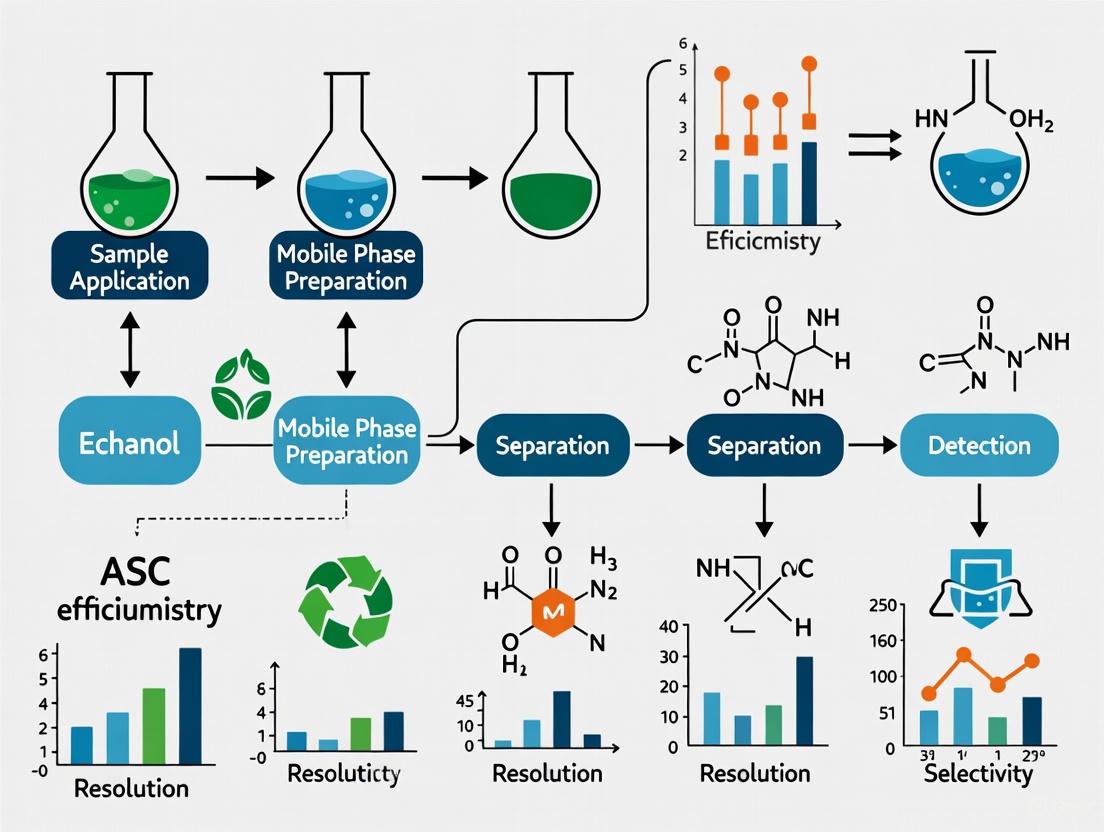
This article explores the strategic adoption of ethanol-water mobile phases in High-Performance Thin-Layer Chromatography (HPTLC) as a cornerstone of sustainable analytical chemistry.
Ethanol-Water Mobile Phases in HPTLC: A Sustainable Strategy for Green Pharmaceutical Analysis
Abstract
This article explores the strategic adoption of ethanol-water mobile phases in High-Performance Thin-Layer Chromatography (HPTLC) as a cornerstone of sustainable analytical chemistry. Tailored for researchers and drug development professionals, it provides a comprehensive guide from foundational principles to advanced applications. The content covers the compelling green chemistry rationale behind ethanol-water systems, detailed methodologies for method development and implementation, practical troubleshooting strategies, and rigorous validation protocols. A significant focus is placed on comparative sustainability assessments using modern metrics like AGREE, NEMI, and BAGI, demonstrating how these eco-friendly mobile phases meet stringent regulatory requirements while reducing environmental impact and operational costs, without compromising analytical performance.
The Green Chemistry Imperative: Why Ethanol-Water is Revolutionizing HPTLC
Aligning with Green and White Analytical Chemistry (GAC/WAC) Principles
The modern analytical laboratory is increasingly guided by the principles of Green Analytical Chemistry (GAC) and White Analytical Chemistry (WAC), which together form a comprehensive framework for sustainable method development. GAC focuses primarily on reducing the environmental impact of analytical practices through the 12 principles of green chemistry, emphasizing the reduction of hazardous waste, energy consumption, and the use of toxic reagents [1]. WAC represents an evolutionary step beyond GAC, establishing a trichromatic balance between three fundamental pillars: analytical performance (quality), environmental impact (green), and practical/economic feasibility (blue) [2]. This holistic approach ensures that methods are not only environmentally friendly but also economically viable and analytically sound.
Within pharmaceutical analysis, High-Performance Thin-Layer Chromatography (HPTLC) has emerged as a particularly promising platform for implementing GAC/WAC principles. Compared to traditional HPLC methods, HPTLC offers significant environmental advantages including reduced solvent consumption, lower energy demands, and minimal waste generation [3] [2]. The technique's ability to analyze multiple samples simultaneously on a single plate further enhances its green credentials while improving analytical throughput [3]. When combined with ethanol-water mobile phases, HPTLC transforms into a powerful tool for implementing sustainable analytical methodologies that align with the United Nations Sustainable Development Goals, particularly SDG 3 (Good Health and Well-being), SDG 9 (Industry, Innovation and Infrastructure), and SDG 12 (Responsible Consumption and Production) [3].
Ethanol-Water Mobile Phases: A Cornerstone of Green HPTLC
Environmental and Technical Advantages
Ethanol-water mobile phase systems represent a cornerstone of green HPTLC method development due to their favorable toxicological profile, biodegradability, and exchromatographic performance. Unlike traditional organic solvents such as acetonitrile or methanol, which pose significant health and environmental risks, ethanol offers a safer alternative with minimal ecological impact [4]. Water, as the greenest solvent available, further enhances the environmental profile of these mobile phase systems while reducing costs.
From a technical perspective, ethanol-water mixtures provide excellent selectivity for a wide range of pharmaceutical compounds, including acidic, basic, and neutral molecules. The addition of small amounts of modifiers such as ammonia or acetic acid allows fine-tuning of the separation without significantly compromising the green character of the method [4] [5]. The ethanol-water-ammonia system (50:45:5, v/v/v) developed for tenoxicam analysis exemplifies this approach, achieving excellent chromatographic performance with an asymmetry factor of 1.07 and 4971 theoretical plates per meter [4].
Quantitative Greenness Assessment
The greenness of ethanol-water mobile phases has been quantitatively assessed using multiple validated metrics. The Analytical GREEnness (AGREE) tool, which evaluates all 12 principles of GAC, provides a comprehensive numerical score between 0-1, with higher scores indicating better environmental performance [4]. Methods employing ethanol-water mobile phases consistently achieve high AGREE scores, typically ranging from 0.75 to 0.85, confirming their exceptional greenness profile [4] [5].
Additional assessment tools including the NEMI (National Environmental Methods Index) pictogram, Analytical Eco-Scale, and GAPI (Green Analytical Procedure Index) further validate the environmental advantages of ethanol-water based HPTLC methods [6] [5]. These methods also excel in whiteness assessments using the RGB12 algorithm, which simultaneously evaluates the method's analytical, ecological, and practical dimensions [2]. The recent introduction of the Blue Applicability Grade Index (BAGI) provides specific evaluation of methodological practicality, complementing the environmental assessment with usability metrics [2].
Experimental Protocols and Methodologies
Development of a Green HPTLC Method for Tenoxicam
A representative green HPTLC method was developed for the analysis of tenoxicam (TNX) using an ethanol-water-ammonia (50:45:5, v/v/v) mobile phase [4]. The methodology demonstrates the practical application of GAC/WAC principles in pharmaceutical analysis.
Instrumentation and Materials: The analysis was performed using pre-coated silica gel 60 F₂₅₄ HPTLC plates (20 × 20 cm, 0.2 mm thickness). Samples were applied as 8-mm bands using an automated applicator (Linomat 5) equipped with a 100 μL Hamilton syringe. Chromatographic development was carried out in a twin-trough glass chamber pre-saturated with mobile phase vapor for 25 minutes at room temperature (25 ± 0.5°C). Densitometric scanning was performed at 375 nm using a TLC scanner operated in reflectance-absorbance mode with deuterium and tungsten lamps [4].
Mobile Phase Optimization: During method development, various eco-friendly solvent systems were investigated including ethanol-water, acetone-water, and cyclohexane-ethyl acetate mixtures in different proportions. The ethanol-water-ammonia system demonstrated superior performance with optimal retardation factor (Rf = 0.85), excellent peak symmetry (asymmetry factor = 1.07), and high efficiency (4971 theoretical plates per meter) [4].
Validation Parameters: The method was validated according to ICH Q2(R1) guidelines, demonstrating linearity in the range of 25-1400 ng/band, accuracy (98.24-101.48% recovery), precision (RSD 0.87-1.02%), and sensitivity (LOD 0.98 ng/band, LOQ 2.94 ng/band) [4].
Stability-Indicating Method for Carvedilol
An eco-friendly stability-indicating HPTLC method was developed for carvedilol using toluene-isopropanol-ammonia (7.5:2.5:0.1, v/v/v) mobile phase, specifically designed to avoid carcinogenic solvents while maintaining analytical performance [6].
Chromatographic Conditions: Separation was achieved on silica gel 60F₂₅₄ TLC plates using ascending development to 75 mm at room temperature. The method demonstrated excellent linearity (20-120 ng/band, R² = 0.995) and effectively separated carvedilol from its degradation products (Rf = 0.44 ± 0.02) [6].
Forced Degradation Studies: The method demonstrated robustness under stress conditions, with carvedilol remaining stable under neutral, photolytic, and thermal conditions, while showing significant degradation under acidic, alkaline, and oxidative stress conditions. The greenness assessment using NEMI, AGREE, Eco-Scale, GAPI, and White Analytical Chemistry metrics confirmed the method's environmental benefits compared to conventional chromatographic methods [6].
Simultaneous Determination of Multiple Cardiovascular Drugs
A advanced green HPTLC method was developed for the simultaneous quantification of bisoprolol fumarate (BIP), amlodipine besylate (AML), and the mutagenic impurity 4-hydroxybenzaldehyde (HBZ) using an ethyl acetate-ethanol (7:3, v/v) mobile phase [3].
Separation Performance: The method achieved baseline separation with Rf values of 0.29 ± 0.02 (HBZ), 0.72 ± 0.01 (AML), and 0.83 ± 0.01 (BIP), demonstrating the ability to resolve complex mixtures while maintaining green principles [3].
Sustainability Assessment: Comprehensive evaluation using multiple tools revealed exceptional environmental profiles, including perfect NEMI and AGREE scores, high GEMAM indices (7.015), minimal carbon footprints (0.037 kg CO₂/sample), and outstanding BAGI (87.50), VIGI (75.00), and RGBfast scores (81.00) [3].
Comparative Performance Data
Table 1: Greenness Assessment Scores of Ethanol-Water Based HPTLC Methods
| Analytical Method | AGREE Score | NEMI | Eco-Scale | BAGI | GAPI |
|---|---|---|---|---|---|
| Tenoxicam Analysis [4] | 0.75 | Not Reported | Not Reported | Not Reported | Not Reported |
| Tamsulosin-Mirabegron [5] | Not Reported | Passed 4 Criteria | Excellent | Not Reported | Not Reported |
| Carvedilol Stability-Indicating [6] | High | Green Pictogram | Excellent | Not Reported | Not Reported |
| Antiviral Agents (Normal-phase) [2] | Not Reported | Not Reported | Not Reported | High | Not Reported |
| Antiviral Agents (Reversed-phase) [2] | Not Reported | Not Reported | Not Reported | Higher | Not Reported |
Table 2: Chromatographic Performance of Ethanol-Water Mobile Phase Systems
| Analyte | Mobile Phase Composition | Rf Value | Theoretical Plates/Meter | Asymmetry Factor | Linearity Range |
|---|---|---|---|---|---|
| Tenoxicam [4] | Ethanol/Water/Ammonia (50:45:5 v/v/v) | 0.85 ± 0.01 | 4971 ± 3.13 | 1.07 ± 0.02 | 25-1400 ng/band |
| Morin [7] | Toluene/Ethyl Acetate/Formic Acid (36:12:7 v/v) | Not Reported | Not Reported | Not Reported | Not Reported |
| Carvedilol [6] | Toluene/Isopropanol/Ammonia (7.5:2.5:0.1 v/v/v) | 0.44 ± 0.02 | Not Reported | Minimal Tailing | 20-120 ng/band |
| Tamsulosin [5] | Methanol/Ethyl Acetate/Ammonia (3:7:0.1 v/v) | 0.63 | Not Reported | Not Reported | 0.05-2.5 µg/band |
| Mirabegron [5] | Methanol/Ethyl Acetate/Ammonia (3:7:0.1 v/v) | 0.42 | Not Reported | Not Reported | 0.15-7.5 µg/band |
The Scientist's Toolkit: Essential Research Reagents and Materials
Table 3: Essential Research Reagents and Materials for Green HPTLC
| Item | Function/Application | Green Characteristics |
|---|---|---|
| Ethanol | Primary green solvent in mobile phases | Biodegradable, low toxicity, renewable source [4] |
| Water | Greenest solvent, mobile phase component | Non-toxic, non-flammable, readily available [4] |
| Silica gel 60 F₂₅₄ plates | Stationary phase for separation | Reusable, minimal waste generation [3] |
| Ethyl Acetate | Mobile phase modifier | Preferable to more toxic solvents like chloroform or hexane [3] |
| Ammonia Solution | pH modifier for improved separation | Avoids need for more hazardous modifiers [4] [5] |
| Acetic Acid | Alternative pH modifier | Green alternative to stronger acids [7] |
Implementation Workflow and Strategic Framework
The following workflow diagram illustrates the comprehensive approach for developing green HPTLC methods aligned with GAC/WAC principles:
Green HPTLC Method Development Workflow
This systematic approach ensures that methods meet analytical requirements while maximizing sustainability and practicality.
Assessment and Validation of Method Greenness
Multi-Metric Greenness Evaluation
The implementation of GAC/WAC principles requires rigorous assessment using complementary evaluation tools. The AGREE (Analytical GREEnness) calculator provides the most comprehensive evaluation, incorporating all 12 principles of green analytical chemistry into a single score ranging from 0-1 [4]. Methods employing ethanol-water mobile phases typically achieve scores above 0.7, indicating excellent greenness profiles [4].
The NEMI (National Environmental Methods Index) pictogram offers a simple visual representation of greenness based on four criteria: PBT (persistent, bioaccumulative, toxic), hazardous, corrosive, and waste generation [6]. Methods using ethanol-water mobile phases typically achieve full green NEMI pictograms, indicating they meet all four environmental criteria [6].
The Analytical Eco-Scale provides a semi-quantitative assessment by subtracting penalty points for hazardous practices from a base score of 100 [5]. Methods utilizing ethanol-water systems typically achieve "excellent" greenness ratings with scores above 75 [5]. The GAPI (Green Analytical Procedure Index) offers a more detailed visual assessment across the entire analytical procedure, with ethanol-water methods typically displaying predominantly green segments [5].
Whiteness Assessment Using RGB12 Algorithm
The RGB12 algorithm represents the state-of-the-art in whiteness assessment, simultaneously evaluating the three pillars of WAC: analytical quality (red), ecological impact (green), and practical/economic feasibility (blue) [2]. This comprehensive evaluation generates an overall whiteness score that reflects the method's balance across all three dimensions.
Methods employing ethanol-water mobile phases in HPTLC consistently achieve high whiteness scores due to their favorable combination of analytical performance, environmental compatibility, and practical implementation [2]. The recent introduction of the BAGI (Blue Applicability Grade Index) specifically addresses the practical dimension, evaluating factors such as cost, time efficiency, operational complexity, and instrumental requirements [2].
The integration of GAC/WAC principles with ethanol-water mobile phases in HPTLC represents a significant advancement toward sustainable pharmaceutical analysis. The documented methodologies demonstrate that environmental responsibility can be achieved without compromising analytical performance or practical utility. The systematic approach outlined in this guide, supported by comprehensive greenness assessment tools, provides researchers with a clear framework for developing methods that align with global sustainability initiatives while meeting rigorous analytical standards.
Future developments in green HPTLC will likely focus on further solvent reduction through miniaturization, increased automation, and enhanced hyphenation with environmentally friendly detection systems. The continued refinement of assessment metrics will provide even more comprehensive evaluation of method sustainability, driving innovation in green analytical technologies. As the pharmaceutical industry increasingly adopts sustainability as a core value, ethanol-water based HPTLC methodologies offer a practical pathway toward greener quality control practices that benefit both public health and environmental protection.
Toxicological and Environmental Advantages over Traditional Solvents
The pursuit of sustainable laboratory practices is driving a paradigm shift in analytical chemistry, particularly in pharmaceutical analysis. High-Performance Thin-Layer Chromatography (HPTLC) remains a fundamental analytical tool, but its environmental impact has drawn increasing scrutiny due to substantial consumption of hazardous organic solvents in mobile phases. Within this context, ethanol-water mixtures have emerged as a superior alternative to traditional solvents, offering significant toxicological and environmental benefits while maintaining analytical performance. This whitepaper provides an in-depth technical examination of these advantages, framed within a broader thesis on the benefits of ethanol-water mobile phases in HPTLC research for drug development professionals.
The transition to ethanol-water mobile phases represents a critical advancement in implementing Green Analytical Chemistry (GAC) principles. While traditional reversed-phase HPTLC has predominantly relied on acetonitrile and methanol—both classified as problematic solvents—ethanol presents a safer, sustainable alternative without compromising chromatographic efficiency. This technical guide explores the multidimensional advantages of ethanol-water systems through analytical data, experimental protocols, and sustainability metrics relevant to pharmaceutical research and development.
Toxicological Profile: Ethanol vs. Traditional Solvents
Comparative Hazard Assessment
Organic solvents used in chromatographic mobile phases present varying degrees of health risks through inhalation, dermal contact, and accidental ingestion. Understanding these toxicological profiles is essential for laboratory safety protocols and risk mitigation.
Table 1: Toxicological Comparison of Common HPTLC Solvents [8] [9]
| Solvent | GHS Classification | Primary Health Effects | Permissible Exposure Limits (OSHA) | Volatility |
|---|---|---|---|---|
| Acetonitrile | Toxic (Acute) | CNS depression, respiratory distress, potential reproductive toxicity | 20 ppm (8-hr TWA) | High |
| Methanol | Toxic (Systemic) | Optic nerve damage, metabolic acidosis, CNS depression | 200 ppm (8-hr TWA) | High |
| Ethanol | Flammable | CNS depression at high concentrations, low systemic toxicity | 1000 ppm (8-hr TWA) | Moderate |
| Acetone | Flammable | Irritant, CNS depression at high concentrations | 750 ppm (8-hr TWA) | High |
| Chloroform | Carcinogenic | Liver/kidney damage, suspected carcinogen | 2 ppm (8-hr TWA) | Low |
Cellular-Level Toxicological Evidence
Recent in vitro studies using human cell models have provided quantitative insights into the cytocompatibility of ethanol as a solvent vehicle. Research employing BEAS-2B human bronchial epithelial cells (relevant for inhalation exposure risk assessment) has established definitive no-observed-adverse-effect levels (NOAEL) and lowest-observed-adverse-effect levels (LOAEL) for ethanol in laboratory applications [10].
The study demonstrated that ethanol concentrations ≤0.5% (v/v) showed no significant impact on cellular viability in 24-hour exposures, while concentrations ≥0.5% induced measurable cytotoxicity. For longer exposures (48 hours), the threshold decreased to ≤0.25%. Perhaps more significantly, inflammatory markers (specifically interleukin-8 release) were triggered at concentrations as low as 0.05%, indicating that sub-cytotoxic ethanol concentrations can still elicit cellular responses [10]. These findings provide critical guidance for establishing safe working concentrations in biological applications.
Figure 1: Concentration-dependent cellular responses to ethanol exposure in BEAS-2B human bronchial epithelial cells, based on experimental data from cytotoxicology studies [10].
Environmental Impact and Sustainability Metrics
Lifecycle Environmental Considerations
The environmental advantages of ethanol-water mobile phases extend beyond laboratory safety to encompass broader sustainability considerations throughout the solvent lifecycle.
Table 2: Environmental Profile Comparison of Chromatography Solvents [8] [11] [9]
| Solvent | Environmental Persistence | Bioaccumulation Potential | Ozone Depletion Potential | Green Chemistry Score | Waste Treatment |
|---|---|---|---|---|---|
| Acetonitrile | Moderate | Low | None | Problematic | Incineration required |
| Methanol | Low | None | None | Moderately hazardous | Biodegradable |
| Ethanol | Low | None | None | Preferred | Readily biodegradable |
| Acetone | Low | None | None | Preferred | Readily biodegradable |
| Chloroform | High | Moderate | Low | Hazardous | Specialized treatment |
Ethanol is classified as a "preferred" green solvent in multiple solvent selection guides, including the CHEM21 solvent selection guide, which ranks solvents based on safety, health, and environmental criteria [8]. Its production via fermentation of renewable biomass contributes to a lower carbon footprint compared to petroleum-derived solvents like acetonitrile. After use, ethanol is readily biodegradable in aquatic and terrestrial environments, minimizing long-term ecological impact [9].
Green Metrics and Sustainability Assessment
Quantitative sustainability metrics provide objective measures of the environmental advantages of ethanol-water mobile phases in HPTLC methods. The AGREE (Analytical GREEnness) metric, GAPI (Green Analytical Procedure Index), and NEMI (National Environmental Methods Index) provide comprehensive assessment tools that consistently demonstrate the superior environmental profile of ethanol-based methods [12] [13] [2].
Recent HPTLC methods employing ethanol-water mobile phases have achieved outstanding sustainability scores. One study developing an HPTLC method for simultaneous quantification of three antiviral agents (Remdesivir, Favipiravir, and Molnupiravir) using an ethanol:water (6:4, v/v) mobile phase demonstrated excellent greenness metrics with minimal environmental impact [2]. Similarly, a method for water-soluble vitamin analysis using ethanol-water (70:30, v/v) mobile phases showed significantly improved sustainability profiles compared to traditional acetonitrile-based methods [14].
Experimental Protocols and Methodologies
Standard HPTLC Protocol with Ethanol-Water Mobile Phases
Method Title: Simultaneous Quantification of Antiviral Agents Using Green Ethanol-Water Mobile Phase [2]
Materials and Equipment:
- HPTLC plates: Silica gel 60 F₂₅₄ (10 × 10 cm)
- Application device: Automated HPTLC applicator (e.g., Camag Linomat 5)
- Development chamber: Automated development chamber with humidity control
- Scanner: TLC scanner with deuterium and tungsten lamps
- Software: WinCATS or equivalent planar chromatography manager
Mobile Phase Preparation: Ethanol:water (6:4, v/v)
- Measure 600 mL of HPLC-grade ethanol
- Add 400 mL of HPLC-grade water
- Mix thoroughly and degas by sonication for 10 minutes
Sample Preparation:
- Prepare standard solutions of analytes in appropriate solvents
- For pharmaceutical formulations: extract active ingredients using ethanol-water mixtures
- Filter samples through 0.45 μm syringe filters before application
Chromatographic Conditions:
- Application volume: 2-10 μL as 8 mm bands
- Application rate: 30 nL/s
- Migration distance: 70 mm
- Chamber saturation: 25 minutes at controlled humidity (40 ± 2%)
- Development temperature: 25 ± 0.5°C
- Detection: UV absorption at multiple wavelengths (e.g., 244 nm and 325 nm)
Validation Parameters:
- Linearity: 30-2000 ng/band (depending on analyte)
- Correlation coefficient: ≥0.9998
- Precision: RSD ≤2%
- Accuracy: 98-102% recovery
- Robustness: deliberate variations in mobile phase composition (±2%)
Researcher's Toolkit: Essential Materials for Ethanol-Water HPTLC
Table 3: Essential Research Reagents and Materials for Ethanol-Water HPTLC Methods [14] [2]
| Item | Specifications | Function/Purpose | Green Alternative Consideration |
|---|---|---|---|
| Ethanol (absolute) | HPLC grade, ≥99.9% purity | Primary solvent in mobile phase | Renewable source, biodegradable |
| Water | HPLC grade, 18.2 MΩ·cm resistivity | Polar modifier in mobile phase | Minimally processed |
| HPTLC Plates | Silica gel 60 F₂₅₄, 10×10 cm or 20×10 cm | Stationary phase | Reduced size minimizes waste |
| Microsyringe | 100 μL, Hamilton or equivalent | Precise sample application | Reusable, minimal sample consumption |
| Development Chamber | Automated ADC2 or glass twin-trough | Controlled mobile phase development | Reusable, reduced solvent vapor release |
| Standards | USP/EP reference standards | Method calibration and validation | Minimal quantities required |
| Derivatization Reagent | Natural product reagents (e.g., anisaldehyde) | Visualization of compounds | Less toxic alternatives available |
Analytical Performance and Pharmaceutical Applications
Separation Efficiency and Method Validation
Ethanol-water mobile phases demonstrate comparable or superior chromatographic performance relative to traditional solvents across multiple pharmaceutical applications. The slightly higher viscosity of ethanol-water mixtures compared to acetonitrile-water systems can be mitigated by using columns with reduced particle diameters or modest temperature control [8].
A validated HPTLC method for simultaneous analysis of bisoprolol fumarate, amlodipine besylate, and mutagenic impurity 4-hydroxybenzaldehyde employed an eco-friendly mobile phase of ethyl acetate–ethanol (7:3, v/v), demonstrating that ethanol-based systems can achieve baseline separation of complex mixtures with Rf values of 0.29 ± 0.02, 0.72 ± 0.01, and 0.83 ± 0.01 respectively [3]. The method validated ethanol's capability to meet stringent ICH guidelines for pharmaceutical analysis.
Application Spectrum in Pharmaceutical Analysis
The versatility of ethanol-water mobile phases is evidenced by their successful application across diverse analytical scenarios:
Water-Soluble Vitamin Analysis: A recently developed HPTLC method enabled simultaneous quantification of five water-soluble vitamins (B2, B3, B6, B12, and C) using ethanol-water (70:30, v/v) mobile phase with detection limits ranging from 5.27-119.27 ng/band [14]. This demonstrates ethanol-water's capability to handle analytes with varying polarities.
Antiviral Drug Quantification: The COVID-19 pandemic accelerated development of analytical methods for emerging antivirals. A reverse-phase HPTLC method for Remdesivir, Favipiravir, and Molnupiravir employed ethanol:water (6:4, v/v) mobile phase, achieving excellent linearity (r ≥ 0.9998) across ranges of 30-800 ng/band for RMD and 50-2000 ng/band for FAV and MOL [2].
Cardiovascular Drug Monitoring: Ethanol-water systems have successfully quantified cardiovascular drugs like bisoprolol and amlodipine alongside their mutagenic impurities, proving suitable for stringent regulatory requirements in pharmaceutical quality control [3].
Figure 2: Comprehensive workflow for developing and validating HPTLC methods using ethanol-water mobile phases, incorporating sustainability assessment metrics [14] [13] [2].
Implementation Considerations and Method Transfer
Practical Application in Research Settings
Transitioning to ethanol-water mobile phases requires consideration of several practical aspects. The amphiphilic nature of ethanol, with its hydrophilic hydroxyl group and hydrophobic ethyl chain, facilitates dissolution of a wide range of analytes while maintaining miscibility with water [10]. This property makes it particularly valuable for analyzing compounds with intermediate polarity, including many pharmaceutical substances.
When implementing ethanol-water methods, researchers should note the moderately higher viscosity of ethanol-water mixtures compared to acetonitrile-water systems, which may result in slightly higher backpressure. This can be mitigated by using moderate column heating (30-40°C) or reduced flow rates [8]. Additionally, ethanol's UV cutoff around 210 nm may require careful method development for detection at lower wavelengths, though this limitation is less pronounced in HPTLC with post-chromatographic derivatization options.
Regulatory and Quality Control Aspects
For pharmaceutical applications, methods employing ethanol-water mobile phases consistently meet ICH validation requirements for specificity, accuracy, precision, and robustness [14] [2]. The excellent sustainability metrics of these methods align with increasing regulatory emphasis on environmental considerations in pharmaceutical manufacturing and quality control.
Recent HPTLC methods have demonstrated that ethanol-water mobile phases can achieve detection limits suitable for impurity profiling, with values as low as 3.56 ng/band for mutagenic impurities, surpassing regulatory thresholds for potentially genotoxic compounds [3].
Ethanol-water mobile phases represent a technically superior and environmentally responsible alternative to traditional solvents in HPTLC applications. The comprehensive toxicological data demonstrates significantly reduced health hazards for laboratory personnel, while lifecycle analysis reveals substantially lower environmental impact compared to acetonitrile and methanol. When implemented through optimized methodologies, ethanol-water systems deliver comparable or superior chromatographic performance across diverse pharmaceutical applications while aligning with Green Analytical Chemistry principles. As regulatory emphasis on sustainability increases and the scientific community prioritizes environmental responsibility, ethanol-water mobile phases are positioned to become the benchmark for sustainable HPTLC method development in pharmaceutical research and quality control.
The modern pharmaceutical analytical laboratory operates at the intersection of rigorous regulatory standards and growing environmental responsibility. The International Council for Harmonisation (ICH) guidelines establish the foundational requirements for analytical method validation, ensuring reliability, accuracy, and reproducibility in pharmaceutical analysis. Simultaneously, the United Nations' 2030 Agenda for Sustainable Development provides a global framework for environmental stewardship, with several Sustainable Development Goals (SDGs) directly relevant to analytical chemistry practices [15]. This whitepaper explores how High-Performance Thin-Layer Chromatography (HPTLC) methods utilizing ethanol-water mobile phases represent a synergistic approach that satisfies both regulatory drivers while advancing sustainability objectives in pharmaceutical research and development.
The pursuit of sustainability in analytical chemistry is a multifaceted endeavor that requires competitive attempts to achieve sustainable development goals at every step of the methodological process [2]. With the 2030 deadline only five years away, the current pace of change toward the SDGs is insufficient, making the adoption of greener analytical techniques not just preferable but imperative [15]. Ethanol-water mobile phases in HPTLC present a compelling case study of how White Analytical Chemistry (WAC) principles—encompassing analytical performance, eco-compatibility, and practicality—can be successfully implemented without compromising regulatory standards.
ICH Guidelines: The Regulatory Framework for Pharmaceutical Analysis
Core ICH Validation Requirements
ICH guidelines establish standardized requirements for analytical method validation to ensure consistency, reliability, and quality of pharmaceutical products. The following table summarizes the key validation parameters and their specifications as demonstrated in recent HPTLC studies employing ethanol-water mobile phases:
Table 1: ICH Validation Parameters for HPTLC Methods with Ethanol-Water Mobile Phases
| Validation Parameter | ICH Requirement | Exemplary Performance from Recent Studies |
|---|---|---|
| Linearity | Correlation coefficient (r) ≥ 0.995 | r ≥ 0.9995 to 0.99988 [3] [2] |
| Range | Suitable for intended application | 30-2000 ng/band depending on analyte [2] |
| Accuracy | Recovery 98-102% | 98.40-101.60% recovery reported [16] |
| Precision | RSD ≤ 2% | RSD ≤ 2% demonstrated [3] |
| Detection Limit | Signal-to-noise 3:1 | 0.011-0.120 μg/mL (FA-PLS); 3.56-20.52 ng/band (HPTLC) [3] |
| Quantitation Limit | Signal-to-noise 10:1 | Established for all validated methods [17] [18] |
| Robustness | Insensitive to deliberate variations | Verified against minor modifications [17] |
| Specificity | Able to discriminate analyte | Baseline separation achieved [3] [2] |
Experimental Protocols for ICH-Compliant Method Validation
The following detailed methodology outlines a standardized approach for developing and validating HPTLC methods with ethanol-water mobile phases in compliance with ICH guidelines:
Instrumentation and Materials:
- HPTLC System: CAMAG system including Linomat auto-sampler, ADC2 automated development chamber, and TLC Scanner 3 with WinCATS software [3] [17].
- Stationary Phase: RP-18 silica gel 60 F254S HPTLC plates or silica gel 60 F254 plates (Merck) [16] [3].
- Mobile Phase: Ethanol-water mixtures in varying ratios (typically 6:4 to 7:3 v/v) [16] [2].
- Reference Standards: Pharmaceutical grade reference standards of target analytes.
Method Development Protocol:
- Stock Solution Preparation: Accurately weigh and dissolve reference standards in methanol to obtain 1 mg/mL stock solutions [19] [17].
- Sample Application: Apply samples as 6-8 mm bands using automated applicator (dosage speed: 150 nL/s) [17].
- Chromatographic Development: Develop in twin-trough chamber pre-saturated with mobile phase vapor for 15-25 minutes at room temperature [3] [18].
- Detection: Perform densitometric scanning at appropriate wavelength (e.g., 238-244 nm) in reflectance-absorbance mode [16] [2].
Validation Procedure:
- Linearity: Prepare and analyze minimum of six concentrations in triplicate across specified range [17].
- Accuracy: Conduct recovery studies at 50%, 100%, and 150% of target concentration (n=3) [17].
- Precision: Evaluate repeatability (intra-day) and intermediate precision (inter-day) with RSD calculation [19].
- Robustness: Introduce deliberate variations in mobile phase composition (±2%), development distance (±5 mm), and saturation time (±5 minutes) [17].
Sustainable Development Goals: The Global Sustainability Framework
Pharmaceutical Analysis Contributions to SDGs
The adoption of greener analytical methods directly supports the achievement of several UN Sustainable Development Goals. Recent assessments using the Need-Quality-Sustainability (NQS) evaluation have confirmed that sustainable HPTLC methods align with eleven different SDGs, with particularly strong contributions to three core goals [3]:
Table 2: SDG Alignment of Sustainable HPTLC Methods with Ethanol-Water Mobile Phases
| Sustainable Development Goal | Relevance to Green HPTLC | Exemplary Contributions |
|---|---|---|
| SDG 3: Good Health and Well-being | Ensuring medicine safety and quality | Precise quantification of drugs and mutagenic impurities [3] |
| SDG 6: Clean Water and Sanitation | Reducing water pollution | Minimal solvent waste generation; ethanol-water mixtures are biodegradable [2] |
| SDG 9: Industry, Innovation and Infrastructure | Promoting sustainable technologies | Green HPTLC with algorithmic optimization [3] |
| SDG 12: Responsible Consumption and Production | Green chemistry principles | 82-83% overall sustainability scores [3]; reduced solvent consumption [2] |
| SDG 13: Climate Action | Lower carbon footprint | Minimal energy consumption; carbon footprint 0.021-0.037 kg CO₂/sample [3] |
Quantitative Sustainability Assessment of HPTLC Methods
Modern greenness assessment tools provide quantitative metrics to evaluate the environmental performance of analytical methods. The following table compares the sustainability profiles of recently developed HPTLC methods:
Table 3: Comprehensive Sustainability Assessment of Green HPTLC Methods
| Assessment Tool | Assessment Focus | Exemplary Scores for Ethanol-Water HPTLC |
|---|---|---|
| Analytical Eco-Scale | Penalty points for hazardous reagents | High scores (≥93) indicating excellent greenness [16] |
| AGREE | Overall greenness (0-1 scale) | 0.89, demonstrating outstanding green profile [16] |
| BAGI | Practicality and applicability (0-100) | 87.50-90.00, indicating high practical utility [3] |
| GAPI | Environmental impact aspects | Perfect green scores achieved [3] [19] |
| Carbon Footprint | CO₂ emissions per sample | 0.021-0.037 kg CO₂/sample [3] |
| NQS Overall Sustainability | Combined quality and sustainability | 82-83% overall scores [3] |
Ethanol-Water Mobile Phases: Bridging Regulatory and Sustainability Requirements
Technical Advantages of Ethanol-Water Systems
Ethanol-water mobile phases offer distinct technical and environmental advantages that make them ideally suited for modern HPTLC analysis:
Green Chemistry Profile:
- Renewable Source: Ethanol is derived from plant materials, making it a sustainable solvent choice [2].
- Low Toxicity: Compared to acetonitrile and methanol, ethanol exhibits favorable toxicity profiles [20].
- Biodegradability: Ethanol-water mixtures break down readily in the environment [16].
- Waste Management: Simplified disposal procedures compared to halogenated or specialized solvents.
Chromatographic Performance:
- Adequate Elution Strength: Ethanol-water mixtures (6:4 to 7:3 v/v) provide sufficient resolving power for pharmaceutical compounds [16] [2].
- Peak Symmetry: Demonstrated excellent peak shapes for diverse analytes including antivirals, cardiovascular drugs, and anti-inflammatory agents [16] [2].
- Baseline Separation: Achieved for complex mixtures including drugs with their impurities [3].
- Reproducibility: Consistent Rf values with minimal variability (e.g., 0.61 ± 0.01) [16].
Experimental Evidence: Case Studies
Recent research provides compelling evidence for the effectiveness of ethanol-water mobile phases in pharmaceutical analysis:
Case Study 1: Antiviral Analysis A 2025 comparative study of normal-phase versus reversed-phase HPTLC for concurrent quantification of remdesivir, favipiravir, and molnupiravir employed ethanol-water (6:4, v/v) as a greener mobile phase. The method demonstrated linearity over 30-2000 ng/band with correlation coefficients ≥0.99988, successfully applying the method to pharmaceutical formulations while achieving excellent sustainability metrics [2].
Case Study 2: Cardiovascular Drug Analysis A 2025 study developed a dual-platform approach for simultaneous quantification of bisoprolol fumarate, amlodipine besylate, and mutagenic impurity 4-hydroxybenzaldehyde. The HPTLC method employed an eco-friendly mobile phase while achieving detection limits of 3.56-20.52 ng/band, precision RSD ≤2%, and correlation coefficients ≥0.9995, alongside perfect greenness assessment scores [3].
Case Study 3: Apremilast Quantification A green RP-HPTLC-densitometry method for apremilast quantification in nanoformulations and commercial tablets used ethanol-water (65:35, v/v) as the mobile phase. The method demonstrated linearity in 100-700 ng/band range with outstanding greenness profiles: Analytical Eco-Scale (93), ChlorTox (0.66 g), and AGREE (0.89) [16].
The Scientist's Toolkit: Essential Research Reagents and Materials
Table 4: Essential Research Reagents and Materials for Sustainable HPTLC
| Item | Function | Green Considerations |
|---|---|---|
| Ethanol (HPLC Grade) | Primary organic modifier in mobile phase | Renewable, biodegradable, low toxicity [16] [2] |
| Purified Water | Aqueous component of mobile phase | Solvent-free, non-toxic [16] |
| RP-18 HPTLC Plates | Stationary phase for reversed-phase chromatography | Reusable with proper cleaning protocols [16] |
| Silica Gel 60 F254 HPTLC Plates | Stationary phase for normal-phase chromatography | Standard HPTLC consumable [19] [17] |
| Certified Reference Standards | Method development and validation | Essential for ICH-compliant validation [19] [18] |
| Automated Sample Applicator | Precise sample application | Reduces solvent consumption and human error [3] [17] |
| Densitometry Scanner | Quantitative analysis | Enables precise quantification at nanogram levels [3] [19] |
Integrated Workflow: From Method Development to Regulatory Compliance
The following diagram illustrates the integrated relationship between ICH guidelines, SDG alignment, and analytical outcomes in sustainable HPTLC method development:
The convergence of ICH regulatory guidelines and Sustainable Development Goals creates a powerful framework for advancing pharmaceutical analysis. Ethanol-water mobile phases in HPTLC represent a technically superior, environmentally responsible, and regulatorily compliant approach that aligns with the principles of White Analytical Chemistry. The experimental evidence demonstrates conclusively that methods employing these green solvent systems can achieve the stringent validation requirements of ICH guidelines while simultaneously contributing to multiple SDGs.
As the pharmaceutical industry moves toward the 2030 deadline for the Sustainable Development Goals, the adoption of ethanol-water based HPTLC methods offers a practical pathway to reduce environmental impact without compromising analytical quality. This alignment of regulatory compliance and sustainability objectives represents the future of responsible pharmaceutical analysis and quality control.
Fundamental Properties of Ethanol and Water as a Chromatographic System
The pursuit of greener analytical methodologies has become a central paradigm in modern chromatography, driving the substitution of hazardous solvents with safer, sustainable alternatives. Within this framework, ethanol-water mobile phases have emerged as a cornerstone of environmentally conscious practice, particularly in high-performance thin-layer chromatography (HPTLC). This binary system represents a fundamental chromatographic partnership that combines the favorable physicochemical properties of ethanol as a polar organic modifier with the benign environmental profile of water. The synergy between these components creates a versatile elution environment suitable for a broad spectrum of analytes, from small drug molecules to complex natural products. This technical guide examines the core properties of ethanol-water systems, their applications in HPTLC research, and the practical methodologies for implementing these green mobile phases in analytical workflows aimed at drug development and natural product analysis.
Fundamental Physicochemical Properties
The ethanol-water system exhibits distinct chromatographic properties that directly influence its performance as a mobile phase in separation science. Understanding these fundamental characteristics is essential for method development and optimization.
Solvent Strength and Elution Power
In reversed-phase chromatography systems, ethanol demonstrates intermediate elution strength between methanol and acetonitrile. Ethanol's slightly stronger eluting power compared to methanol often allows for lower organic modifier percentages in mobile phases to achieve comparable retention times [21]. This property stems from its balanced hydrophobicity and hydrogen-bonding capacity, enabling effective competition with analytes for stationary phase sites. The elution strength can be precisely modulated by adjusting the ethanol-to-water ratio, providing a fine-tuned control over separation parameters.
Viscosity and Mass Transfer
A defining characteristic of ethanol-water mixtures is their viscosity profile, which significantly impacts system backpressure and efficiency. Binary mixtures of ethanol and water exhibit higher viscosity compared to methanol-water or acetonitrile-water systems at ambient temperatures [22] [21]. This elevated viscosity can lead to increased column backpressure in HPLC applications, potentially up to two to three times greater than acetonitrile-water mixtures at equivalent flow rates and organic content [22]. In HPTLC, where flow is driven by capillary action rather than applied pressure, this property can influence development time and spot diffusion, though to a lesser extent than in pressurized systems. The viscosity challenge can be mitigated by employing higher operational temperatures, which significantly reduce viscosity while potentially enhancing mass transfer and efficiency [22] [23].
UV Transparency and Detection
Ethanol exhibits a favorable UV cutoff of approximately 210 nm, making it suitable for detection at wavelengths commonly used for pharmaceutical compounds and natural products [23]. While this cutoff is slightly higher than that of acetonitrile, it remains acceptable for most analytical applications where detection occurs above 220-230 nm. This property has been successfully leveraged in multiple documented methods, including the analysis of tenoxicam at 375 nm [4] and apremilast at 238 nm [16], demonstrating practical utility across diverse wavelength requirements.
Environmental and Safety Profile
From a green chemistry perspective, ethanol offers substantial advantages over traditional chromatographic solvents. It is biodegradable, presents lower toxicity to aquatic organisms compared to acetonitrile and methanol, and generates less hazardous waste [23]. The disposal processes for ethanol are simpler and less costly than for acetonitrile, which requires specialized treatment to prevent formation of toxic hydrogen cyanide gas during combustion [23]. These environmental benefits align with the principles of Green Analytical Chemistry (GAC) and have established ethanol-water as a preferred mobile phase for sustainable method development.
Table 1: Comparison of Ethanol-Water with Traditional Mobile Phase Systems
| Property | Ethanol-Water | Methanol-Water | Acetonitrile-Water |
|---|---|---|---|
| Elution Strength (RP) | Intermediate | Weaker | Stronger |
| Viscosity | Higher | Intermediate | Lower |
| UV Cutoff (nm) | ~210 | ~205 | ~190 |
| Toxicity | Low | High | Moderate |
| Biodegradability | High | Moderate | Low |
| Disposal Concerns | Minimal | Significant | Significant (HCN risk) |
| Typical Cost | Variable* | Lower | Higher |
*Cost varies significantly by region and purity requirements; tax exemptions often apply for scientific use [22] [21].
Experimental Methodologies and Protocols
HPTLC Method for Tenoxicam Analysis
A validated green HPTLC method for the analysis of tenoxicam in commercial formulations employs ethanol/water/ammonia solution (50:45:5 v/v/v) as the mobile phase [4]. The methodology involves the following protocol:
- Stationary Phase: Standard HPTLC plates (silica gel 60 F₂₅₄)
- Mobile Phase: Ethanol/water/ammonia solution (50:45:5 v/v/v)
- Application: Samples applied as 8 mm bands using an automated applicator
- Development: Chamber saturation for 20 minutes at room temperature
- Detection: Densitometric quantification at 375 nm
- Validation: Linear range of 25–1400 ng/band, LOD of 0.98 ng/band, LOQ of 2.94 ng/band
This method demonstrated excellent accuracy (98.24–101.48% recovery) and precision (% RSD = 0.87–1.02), with an AGREE greenness score of 0.75, confirming its environmental acceptability [4].
HPTLC Method for Apremilast Quantification
A reversed-phase HPTLC method for apremilast quantification in nanoformulations and tablets utilizes ethanol/water (65:35, v/v) as the greener mobile phase [16]:
- Stationary Phase: RP-18 silica gel 60 F₂₅₄S HPTLC plates
- Mobile Phase: Ethanol/water (65:35, v/v)
- Detection: λmax = 238 nm
- Rf Value: 0.61 ± 0.01
- Linearity: 100–700 ng/band
- Greenness Assessment: AGREE score of 0.89, Analytical Eco-Score of 93
The method was successfully applied to pharmaceutical analysis, demonstrating the versatility of ethanol-water systems for diverse drug compounds [16].
HPLC Method for Aspirin Tablets
An ethanol-based HPLC assay for aspirin tablets employs 40% (v/v) ethanol-water adjusted to pH 3.6 with glacial acetic acid [23]:
- Column: C18 (15 cm × 4.6 mm, 5 μm)
- Mobile Phase: 40% (v/v) ethanol in water, pH 3.6
- Flow Rate: 1.0 mL/min
- Temperature: 40°C
- Detection: 237 nm
- Runtime: 5 minutes
This method successfully separated aspirin from its degradation product (salicylic acid) and demonstrated performance equivalent to pharmacopeial methods while offering greener characteristics [23].
HPLC Method for Paracetamol and Dantrolene Sodium
A green HPLC method for simultaneous determination of paracetamol and dantrolene sodium employs ethanol:water (40:60, v/v) mobile phase adjusted to pH 4.5 [24]:
- Column: Hypersil C18
- Mobile Phase: Ethanol:water (40:60, v/v), pH 4.5
- Additive: 0.2% triethanolamine to reduce peak tailing
- Flow Rate: 0.8 mL/min
- Detection: 290 nm
- Analysis Time: <6 minutes
The method was validated according to ICH guidelines and showed excellent linearity, precision, and sensitivity, providing a greener alternative to traditional methods [24].
Table 2: Optimal Ethanol-Water Ratios for Different Applications
| Analyte/Application | Ethanol:Water Ratio | Additional Modifiers | Analytical Technique |
|---|---|---|---|
| Tenoxicam | 50:45:5* | Ammonia solution | HPTLC-densitometry [4] |
| Apremilast | 65:35 | None | RP-HPTLC [16] |
| Aspirin | 40:60 | Acetic acid (pH 3.6) | HPLC-UV [23] |
| Paracetamol/Dantrolene | 40:60 | Phosphoric acid, triethanolamine | HPLC-UV [24] |
| Cardiovascular Drugs | 70:30 | None | HPTLC [3] |
| Salvia Extracts | Toluene-ethyl acetate-methanol-formic acid (11:2:6:1) | Formic acid | HPTLC-EDA [25] |
| Wine-Making By-Products | 50:50 | None | HPTLC/HPLC [26] |
Includes 5% ammonia solution; *Ethyl acetate:ethanol (7:3, v/v)
Applications in HPTLC Research
Analysis of Natural Products
Ethanol-water mobile phases have demonstrated exceptional utility in the analysis of complex natural matrices. In the investigation of wine-making by-products, a 50/50 ethanol-water mixture was identified as the optimal extraction solvent for phenolic acids and flavonoids from grape pomace and seeds [26]. The HPTLC analysis enabled comprehensive fingerprinting of these complex mixtures, revealing distinct chemical profiles that varied between white and red grape cultivars. The method facilitated the identification of phenolic acids, non-anthocyanic flavonoids, and anthocyanins, demonstrating the versatility of ethanol-water systems for diverse phytochemical classes [26].
Similarly, in the effect-directed profiling of Salvia species, HPTLC coupled with bioactivity assays enabled the characterization of antioxidant compounds and acetylcholinesterase inhibitors in aqueous ethanol extracts [25]. The technique successfully identified caffeic acid derivatives, flavonoid glycosides, and glucuronides, with rosmarinic acid and luteolin 7-O-glucuronide detected as major constituents in S. aegyptiaca and S. officinalis extracts [25].
Pharmaceutical Analysis
In pharmaceutical quality control, ethanol-water systems have been successfully applied to the analysis of active pharmaceutical ingredients and their impurities. A notable application involves the simultaneous quantification of cardiovascular drugs (bisoprolol fumarate and amlodipine besylate) alongside a mutagenic impurity (4-hydroxybenzaldehyde) using an eco-friendly mobile phase of ethyl acetate-ethanol (7:3, v/v) [3]. This HPTLC-densitometry method achieved baseline separation with Rf values of 0.29 ± 0.02 (HBZ), 0.72 ± 0.01 (AML), and 0.83 ± 0.01 (BIP), demonstrating the resolving power of ethanol-based systems for complex pharmaceutical mixtures [3].
The method received outstanding greenness assessments, including perfect AGREE scores and minimal carbon footprints (0.037 kg CO₂/sample), highlighting the environmental advantages of ethanol-based HPTLC methods in pharmaceutical analysis [3].
The Scientist's Toolkit: Essential Research Reagents
Table 3: Essential Reagents and Materials for Ethanol-Water Chromatographic Systems
| Reagent/Material | Function/Application | Specification Guidelines |
|---|---|---|
| Ethanol (HPLC/HPTLC Grade) | Primary organic modifier in mobile phase | Purity >99.5%, low UV absorbance, minimal impurities [23] |
| Deionized Water | Aqueous component of mobile phase | Resistance ≥18 MΩ·cm, filtered through 0.45 μm membrane [24] |
| Acetic Acid (Glacial) | pH adjustment for acidic analytes | Analytical grade, low UV cutoff [23] |
| Ammonia Solution | pH adjustment for basic analytes | Analytical grade, 25-30% concentration [4] |
| HPTLC Plates | Stationary phase for separation | Silica gel 60 F₂₅₄ or RP-18 variants, 0.2 mm thickness [3] [16] |
| Triethanolamine | Peak tailing reducer for basic compounds | Purity ≥99.5% [24] |
| Orthophosphoric Acid | Mobile phase pH modifier | Analytical grade, 85% concentration [24] |
Method Optimization Strategies
Temperature Optimization
The elevated viscosity of ethanol-water mixtures can be effectively managed through temperature optimization. Increasing operational temperature reduces viscosity and backpressure while potentially improving mass transfer and efficiency [22] [23]. In the analysis of aspirin tablets, elevating the column temperature to 40°C enabled the use of a 40% ethanol-water mobile phase at a flow rate of 1.0 mL/min without excessive backpressure [23]. Similar approaches have been successfully employed in other applications, with temperatures typically ranging from 40-60°C depending on column stability and analyte characteristics.
pH and Additive Selection
The selectivity of ethanol-water systems can be fine-tuned through pH adjustment and additive selection. The addition of small percentages of acids (acetic, phosphoric, formic) or bases (ammonia, triethanolamine) modifies the ionization state of acidic or basic analytes, thereby altering their retention characteristics [4] [23] [24]. For example, the addition of 0.2% triethanolamine significantly reduced peak tailing in the analysis of paracetamol and dantrolene sodium [24], while ammonia solution facilitated the separation of tenoxicam in HPTLC applications [4].
Greenness Assessment Tools
The environmental profile of ethanol-water methods can be quantitatively assessed using established greenness metrics. The Analytical GREEnness (AGREE) tool provides a comprehensive assessment based on all 12 principles of Green Analytical Chemistry [4]. Additional assessment tools include the Analytical Eco-Scale, which penalizes hazardous reagents and rewards waste reduction, and ChlorTox, which calculates the chronic toxicity hazard [16]. These tools provide objective measures of method environmental performance and facilitate comparison with traditional approaches.
Workflow Visualization
Figure 1: HPTLC Method Development Workflow Using Ethanol-Water Mobile Phases
Ethanol-water mobile phases represent a technically sound and environmentally responsible choice for modern chromatographic applications, particularly in HPTLC research. The fundamental properties of this binary system—including its tunable elution strength, acceptable UV transparency, and favorable environmental profile—make it suitable for diverse analytical challenges spanning pharmaceutical quality control and natural product analysis. While viscosity considerations require attention through temperature optimization or flow rate adjustments, the documented methodologies demonstrate that these challenges are readily manageable. The comprehensive protocols and applications presented in this guide provide researchers with practical frameworks for implementing ethanol-water systems in their analytical workflows. As the field continues to prioritize sustainability alongside technical performance, ethanol-water mobile phases stand poised to play an increasingly central role in green chromatographic method development, offering an effective bridge between analytical excellence and environmental responsibility.
The Role in Advancing Eco-Friendly Pharmaceutical Quality Control
The pharmaceutical industry faces increasing pressure to align its practices with the principles of sustainability and environmental responsibility. Within pharmaceutical quality control (QC), analytical methods traditionally rely on significant quantities of hazardous solvents, generating substantial waste with ecological and health risks [27]. Green Analytical Chemistry (GAC) has emerged as a transformative discipline, aiming to minimize the environmental impact of analytical procedures while maintaining, or even enhancing, analytical performance [28]. This whitepaper explores the pivotal role of High-Performance Thin-Layer Chromatography (HPTLC) as a cornerstone of eco-friendly pharmaceutical QC, with a specific focus on the strategic adoption of ethanol-water mobile phases. This approach represents a paradigm shift, moving away from traditional, more toxic solvent systems like acetonitrile or methanol without compromising the rigorous standards required for drug analysis [29].
HPTLC as a Sustainable Analytical Platform
HPTLC is a sophisticated planar chromatography technique that offers inherent green advantages. Its primary sustainability benefits stem from its operational mode: multiple samples are analyzed in parallel on a single plate, rather than sequentially as in column chromatography. This drastically reduces both analysis time and solvent consumption per sample [2]. Furthermore, the sample preparation for HPTLC is often minimal, and since the stationary phase is used only once, there is no risk of cross-contamination or need for column regeneration, which further saves solvents, time, and energy [30].
The environmental profile of HPTLC makes it exceptionally suitable for the high-throughput demands of a modern QC laboratory. When this platform is combined with consciously designed, eco-friendly mobile phases, it becomes a powerful tool for advancing sustainable pharmaceutical analysis.
Ethanol-Water Mobile Phases: A Green Revolution
The choice of mobile phase is a critical factor in the greenness of any chromatographic method. Traditional reversed-phase methods frequently employ acetonitrile and methanol, which are toxic, hazardous, and generate waste that requires costly disposal procedures [29].
The Green Profile of Ethanol
Ethanol presents a superior green alternative. It is derived from renewable resources, exhibits significantly lower toxicity, and is biodegradable [29]. Using ethanol-water mixtures as a mobile phase directly addresses two major goals of GAC: reducing solvent toxicity and minimizing waste generation [27]. Research has demonstrated the feasibility and effectiveness of ethanol as an organic modifier for analyzing diverse pharmaceutical compounds, including antivirals, analgesics, and muscle relaxants, achieving excellent chromatographic performance with short separation times and good resolution [29] [2].
Practical Method Development and Optimization
Transitioning to ethanol-water systems may require method redevelopment. Key considerations include:
- Buffer Selection: To control mobile phase pH and optimize the state of ionizable analytes, buffers like sodium dihydrogen phosphate can be used [29].
- Gradient Elution: Fine-tuning the ratio of ethanol to water in a gradient mode is often necessary to achieve optimal separation of multiple analytes, as demonstrated in the analysis of famotidin, paracetamol, and thiocolchicoside [29].
- Detection: Ethanol's low UV cutoff makes it highly compatible with UV/Diode Array Detection (DAD), avoiding interference with analyte detection [29].
Table 1: Quantitative Performance of HPTLC Methods Using Ethanol-Water Mobile Phases
| Analyte(s) | Mobile Phase Composition | Linearity Range (ng/band) | Correlation Coefficient (R²) | Reference |
|---|---|---|---|---|
| Remdesivir, Favipiravir, Molnupiravir | Ethanol: Water (6:4, v/v) | 30-800 (RMD); 50-2000 (FAV, MOL) | > 0.9999 | [2] |
| Famotidin, Paracetamol, Thiocolchicoside | Ethanol & Sodium Dihydrogen Phosphate Buffer (Gradient) | Demonstrated for API quantification | Method validated per ICH | [29] |
| Nitrofurazone | Toluene–Acetonitrile–Ethyl Acetate–Glacial Acetic Acid | 30-180 | 0.9999 | [30] |
Experimental Protocols for HPTLC with Ethanol-Water Mobile Phases
Protocol 1: Simultaneous Analysis of Antiviral Drugs
This protocol details a reversed-phase HPTLC method for the concurrent quantification of three antiviral agents [2].
- Materials:
- Analytical Standards: Remdesivir, Favipiravir, Molnupiravir.
- Stationary Phase: Reversed-phase HPTLC plates (e.g., silica gel RP-18 F254s).
- Mobile Phase: Ethanol:Water (6:4, v/v).
- Instrumentation: HPTLC system with automatic applicator, chamber, and scanner.
- Procedure:
- Standard Solution Preparation: Dissolve standards in methanol to prepare stock solutions of 1 mg/mL. Further dilute to working concentrations.
- Sample Application: Apply standards and samples as 6-mm bands onto the HPTLC plate using an automatic applicator (e.g., CAMAG Linomat 5).
- Chromatographic Development: Develop the plate in a twin-trough chamber pre-saturated with the ethanol-water mobile phase for 20 minutes. The development distance is 80 mm.
- Densitometric Detection: Dry the plate and scan at 244 nm for RMD and MOL, and at 325 nm for FAV.
- Validation: Validate the method for linearity, precision, accuracy, and robustness as per ICH guidelines.
Protocol 2: Analysis of APIs with Buffer-Modified Mobile Phase
This protocol is adapted from methods using buffered ethanol-water systems for active pharmaceutical ingredients (APIs) [29].
- Materials:
- Analytical Standards: e.g., Famotidin, Paracetamol, Thiocolchicoside.
- Stationary Phase: Conventional silica gel 60 F254 HPTLC plates.
- Mobile Phase: Ethanol and Sodium Dihydrogen Phosphate buffer (pH 4.6; 50 mM) in gradient elution mode.
- Procedure:
- Sample Preparation: Extract APIs from pharmaceutical formulations (e.g., tablets) using a suitable solvent like methanol.
- Application and Development: Apply samples and standards on the plate. Develop in a chamber saturated with the mobile phase.
- Detection and Quantification: After development, dry the plate and perform densitometry at the appropriate wavelength (e.g., 254 nm). Use peak areas and a calibration curve for quantification.
The Scientist's Toolkit: Essential Research Reagents and Materials
Table 2: Key Reagents and Materials for Green HPTLC Analysis
| Item | Function/Description | Green Consideration |
|---|---|---|
| Ethanol (HPLC Grade) | Primary organic modifier in the mobile phase. | Renewable, low toxicity, biodegradable [29]. |
| Water (Ultrapure) | Aqueous component of the mobile phase. | Non-toxic, safe, and green solvent [29]. |
| HPTLC Plates (Silica gel 60 F₂54) | Stationary phase for separation. | Enables low solvent use; disposable without regenerant waste [31] [32]. |
| Sodium Dihydrogen Phosphate | Buffer salt to control mobile phase pH. | Improves separation of ionizable analytes in high-water content mobile phases [29]. |
| Formic Acid / Acetic Acid | Mobile phase additive to modify selectivity and improve peak shape. | Used in small quantities (e.g., 0.1-1%) [31] [30]. |
Sustainability Assessment and Regulatory Alignment
The greenness of analytical methods can be quantitatively evaluated using modern metrics such as the Analytical Eco-Scale, AGREE, and the Modified Green Analytical Procedure Index (MoGAPI) [2]. Methods employing ethanol-water mobile phases consistently achieve high scores on these scales due to reduced hazardous chemical use and waste output.
Furthermore, these methods are fully compatible with regulatory requirements. They can be rigorously validated according to International Council for Harmonisation (ICH) guidelines for selectivity, linearity, accuracy, precision, and robustness, ensuring they meet the stringent demands of pharmaceutical quality control [29] [30] [2]. This dual compliance—with both environmental and regulatory standards—is essential for their widespread adoption.
The integration of HPTLC with ethanol-water mobile phases represents a significant advancement in the pursuit of sustainable pharmaceutical quality control. This approach successfully reconciles analytical performance with ecological responsibility, offering a viable and superior alternative to methods dependent on traditional, hazardous solvents.
Future developments in this field will likely focus on the further miniaturization of HPTLC techniques, the exploration of other green solvent systems such as Natural Deep Eutectic Solvents (NADES), and the increased hyphenation of HPTLC with advanced detection techniques like mass spectrometry for definitive compound identification [27] [25]. By adopting and refining these eco-friendly methodologies, the pharmaceutical industry can ensure the quality and safety of its products while actively contributing to a more sustainable future.
Workflow and Logical Pathway Diagrams
The following diagram illustrates the strategic workflow for developing and implementing a green HPTLC method in pharmaceutical quality control.
The following diagram outlines the logical relationship between the core principles, the enabling HPTLC tools, and the resulting benefits that together advance eco-friendly pharmaceutical quality control.
Developing Robust HPTLC Methods with Ethanol-Water Mobile Phases
Core Principles and Comparative Analysis
High-Performance Thin-Layer Chromatography (HPTLC) is a sophisticated planar chromatography technique that provides higher resolution, improved sensitivity, and better quantitative capabilities compared to conventional TLC [33]. The selection between Reversed-Phase (RP) and Normal-Phase (NP) separation modes represents a fundamental methodological choice that significantly impacts the analytical outcome, solvent consumption, and environmental footprint of the analysis.
In Normal-Phase HPTLC, the stationary phase is polar (typically silica gel), and the mobile phase is non-polar or of moderate polarity. Separation occurs based on analyte polarity, where polar compounds interact more strongly with the stationary phase, resulting in higher retention [34]. Conversely, Reversed-Phase HPTLC employs a non-polar stationary phase (often silica gel modified with alkyl chains such as C18) and a polar mobile phase, usually consisting of water mixed with organic solvents like ethanol or methanol. Here, separation is based on hydrophobicity, with non-polar compounds exhibiting stronger retention [34].
The incorporation of ethanol-water mobile phases in RP-HPTLC aligns with the growing emphasis on Green Analytical Chemistry (GAC) principles. Ethanol is a safer, less toxic, and more environmentally friendly solvent compared to acetonitrile or methanol [35]. A 2025 comparative study highlights this sustainability advantage, demonstrating that a greener RP-HPTLC method for antiviral analysis utilizing an ethanol:water (6:4, v/v) mobile phase consumed less organic solvent and was more eco-compatible than its NP-HPTLC counterpart, which required a mixture of ethyl acetate:ethanol:water (9.4:0.4:0.25, v/v) [2].
Table 1: Characteristic Comparison of NP-HPTLC and RP-HPTLC Systems
| Feature | Normal-Phase (NP) HPTLC | Reversed-Phase (RP) HPTLC |
|---|---|---|
| Stationary Phase | Polar (e.g., silica gel) | Non-polar (e.g., C18, C8 modified silica) |
| Mobile Phase | Non-polar to moderately polar organic solvents (e.g., ethyl acetate, hexane) | Polar solvents; typically water mixed with ethanol, methanol, or acetonitrile |
| Retention Mechanism | Adsorption; interaction with polar groups on analyte | Partitioning; based on analyte hydrophobicity |
| Elution Order | Polar compounds elute later | Non-polar compounds elute later |
| Typical Use Cases | Separation of polar analytes, isomers, and compounds poorly soluble in water [34] | Separation of a wide range of non-polar to moderately polar compounds; suitable for complex mixtures [34] |
| Greenness (Solvent Considerations) | Often requires more hazardous organic solvents | Highly compatible with greener ethanol-water mobile phases [2] |
Experimental Case Study: Simultaneous Analysis of Antiviral Drugs
A direct comparative study of NP- and RP-HPTLC methods for the concurrent quantification of three antiviral agents—Remdesivir (RMD), Favipiravir (FAV), and Molnupiravir (MOL)—provides a robust framework for evaluating system performance and practical application [2].
Method Parameters and Chromatographic Conditions
The study developed and validated two distinct methods, with key parameters detailed in the table below.
Table 2: Experimental Parameters for NP- and RP-HPTLC Methods for Antiviral Analysis [2]
| Parameter | Normal-Phase Method | Reversed-Phase Method |
|---|---|---|
| Stationary Phase | Silica gel HPTLC plate | Reversed-phase (e.g., C18) HPTLC plate |
| Mobile Phase | Ethyl acetate : ethanol : water (9.4:0.4:0.25, v/v/v) | Ethanol : water (6:4, v/v) |
| Detection Wavelength | 244 nm (RMD, MOL); 325 nm (FAV) | 244 nm (RMD, MOL); 325 nm (FAV) |
| Linearity Range | FAV & MOL: 50-2000 ng/bandRMD: 30-800 ng/band | FAV & MOL: 50-2000 ng/bandRMD: 30-800 ng/band |
| Correlation Coefficient (r) | ≥ 0.99988 | ≥ 0.99988 |
Detailed Experimental Protocols
Sample and Standard Preparation
- Standard Stock Solutions: Accurately weigh reference standards of RMD, FAV, and MOL. Dissolve in an appropriate solvent (e.g., methanol or the ethanol-water mixture) to obtain primary stock solutions of known concentration (e.g., 1 mg/mL).
- Working Standard Solutions: Dilute stock solutions serially with the same solvent to prepare working standards covering the required calibration range (e.g., 30-2000 ng/band).
- Pharmaceutical Formulation Preparation: For tablets, powder a representative number of tablets. Accurately weigh a portion equivalent to one dose and extract with the chosen solvent via sonication and centrifugation. Filter the supernatant for analysis.
HPTLC Instrumental Procedure
- Plate Pre-washing (Optional): Pre-wash HPTLC plates with the mobile phase or methanol to remove impurities, then dry in an oven.
- Sample Application: Using an automated sample applicator (e.g., Linomat 5), apply standards and samples as narrow bands (e.g., 6 mm length) onto the HPTLC plate, positioned at least 15 mm from the bottom and sides. Maintain a constant application rate (e.g., 150 nL/s).
- Chromatogram Development: Transfer the applied plate to a twin-trough glass chamber pre-saturated with the mobile phase (for ~20 minutes). Develop the chromatogram at room temperature until the mobile phase front migrates a suitable distance (e.g., 80 mm).
- Drying: After development, carefully remove the plate and dry it in a fume hood with a stream of warm air.
- Detection and Quantification: Place the dried plate in a TLC scanner. Scan the bands densitometrically at the optimized wavelengths (244 nm and 325 nm) in absorbance mode. Generate calibration curves by plotting peak area against the amount of drug (ng/band) for each analyte.
The Scientist's Toolkit: Essential Research Reagents and Materials
Table 3: Key Reagents and Materials for HPTLC Method Development
| Item | Function / Explanation |
|---|---|
| HPTLC Plates (NP & RP) | Pre-coated glass plates with uniform, high-quality adsorbent layers (e.g., silica gel 60 F254 for NP, C18-modified silica for RP). Essential for reproducible separation [33]. |
| Ethanol (HPLC Grade) | Primary component of the greener RP mobile phase. Serves as a safer, less toxic organic modifier compared to acetonitrile or methanol [2] [35]. |
| Automated Sample Applicator | Ensures precise, reproducible application of samples as bands, critical for accurate and quantitative results [33]. |
| Twin-Trough Development Chamber | Provides a controlled environment for chromatogram development, allowing for chamber saturation with mobile phase vapor, which improves reproducibility [33]. |
| Densitometer TLC Scanner | Enables in-situ quantification of separated bands by measuring absorbance or fluorescence, providing data on peak area and retention factor (Rf) [33]. |
| Reference Standards | Highly purified samples of RMD, FAV, and MOL. Crucial for method validation, calibration, and confirming the identity of peaks in unknown samples [2]. |
Method Selection Workflow and Sustainability Assessment
The choice between NP- and RP-HPTLC is not arbitrary but should follow a structured decision-making process guided by analyte properties and sustainability goals.
HPTLC System Selection and Optimization Workflow
Sustainability and Practicality Evaluation
A comprehensive trichromatic assessment—evaluating greenness, blueness (practicality), and whiteness (overall sustainability)—demonstrates the significant advantages of modern HPTLC methods, particularly those employing greener solvents [2].
- Greenness Assessment: Tools like the Analytical Eco-Scale, Modified Green Analytical Procedure Index (MoGAPI), and Analytical GREEnness (AGREE) metric are used to score methods based on waste production, energy consumption, and toxicity. The RP-HPTLC method with an ethanol-water mobile phase consistently achieves high greenness ratings due to low solvent consumption, reduced waste output, and the use of a safer solvent [2] [36].
- Blueness Assessment: The Blue Applicability Grade Index (BAGI) evaluates a method's practicality and fitness-for-purpose, considering factors like cost, throughput, and robustness. HPTLC excels here with its high sample throughput (parallel analysis of multiple samples on one plate), cost-effectiveness, and simplicity [2] [33].
- Whiteness Assessment: The RGB12 algorithm integrates green and blue scores with analytical performance (e.g., accuracy, linearity) to yield an overall whiteness index, representing the state-of-the-art in sustainable analytical chemistry [2].
The strategic selection between Reversed-Phase and Normal-Phase HPTLC is pivotal to successful method development. RP-HPTLC, especially with ethanol-water mobile phases, offers a powerful, versatile, and sustainable platform for the simultaneous analysis of diverse pharmaceutical compounds, as evidenced by the effective quantification of anti-COVID-19 drugs. Its alignment with Green Analytical Chemistry principles, combined with inherent practicality and high throughput, positions RP-HPTLC as a premier choice for modern quality control laboratories committed to sustainability without compromising analytical performance.
Optimizing the Ethanol-to-Water Ratio for Specific Compound Classes
In modern High-Performance Thin-Layer Chromatography (HPTLC), the pursuit of analytical methods that align with Green Analytical Chemistry (GAC) and White Analytical Chemistry (WAC) principles has become paramount [3] [2]. Within this context, ethanol-water mobile phases represent a cornerstone of sustainable method development. These mixtures offer a uniquely advantageous combination of effective solvation power, low toxicity, and favorable environmental profile compared to traditional chromatographic solvents like acetonitrile or methanol.
The molecular behavior of ethanol-water mixtures is not merely additive; these systems form specific ethanol-water clusters that determine their solvation properties and surface interactions [37]. The structure of these clusters changes with the ethanol fraction, leading to non-linear changes in physicochemical properties that directly impact chromatographic performance. This technical guide provides a comprehensive framework for optimizing ethanol-to-water ratios for specific compound classes, supported by experimental data and practical protocols for implementation in pharmaceutical and analytical research settings.
Fundamental Principles of Ethanol-Water Mobile Phase Optimization
Molecular Interactions in Ethanol-Water Systems
Ethanol-water mobile phases exhibit complex solvation behavior due to hydrogen bonding interactions between ethanol and water molecules. Advanced studies using high-resolution NMR and molecular dynamics simulations confirm the presence of distinct ethanol-water cluster types at different concentration ratios [37]. These clusters include:
- Symmetric tetrahedral clusters predominant at lower ethanol concentrations
- Chain-like clusters that increase with higher ethanol fractions
- Intermediate structures that transition at critical concentration points
The structural transitions between these cluster types occur at specific ethanol-water ratios and significantly impact the solvation strength and selectivity of the mobile phase. This explains why mobile phase optimization is not a linear process but rather requires careful empirical testing around critical transition points.
Chromatographic Mode Selection
The ethanol-to-water ratio determines the fundamental chromatographic mode:
- Normal-Phase HPTLC: Typically employs low-water-content ethanol (anhydrous or 95%) with hydrophobic stationary phases
- Reversed-Phase HPTLC: Uses water-rich ethanol mixtures with hydrophilic stationary phases
The choice between these modes depends on the polarity of target analytes and the stationary phase selection. For most pharmaceutical applications involving polar to moderately polar compounds, reversed-phase HPTLC with ethanol-water mixtures provides optimal performance [2].
Compound-Specific Optimization Guidelines
Quantitative Optimization Table for Compound Classes
Table 1: Optimized Ethanol-Water Ratios for Specific Compound Classes
| Compound Class | Specific Examples | Optimized Ethanol:Water Ratio (v/v) | Stationary Phase | Key Separation Factors |
|---|---|---|---|---|
| Water-Soluble Vitamins | B2, B3, B6, B12, C | 70:30 [14] | Silica gel 60 F₂₅₄ | Single mobile phase for multiple vitamins |
| Antiviral Agents | Remdesivir, Favipiravir, Molnupiravir | 60:40 [2] | Reversed-phase | Detection at dual wavelengths (244 nm & 325 nm) |
| Cardiovascular Drugs + Impurity | Bisoprolol fumarate, Amlodipine besylate, 4-hydroxybenzaldehyde | 70:30 (in ethyl acetate-ethanol-water system) [3] | Silica gel 60 F₂₅₄ | Baseline separation of drugs from mutagenic impurity |
| Phenolic Compounds | Antioxidants from Careya sphaerica Roxb. flowers | 40:60 (for extraction) [38] | - | Microwave-assisted extraction optimization |
Advanced Optimization Strategies
Response Surface Methodology for Complex Mixtures
For complex natural product extracts containing multiple compound classes, Response Surface Methodology (RSM) with central composite design provides systematic optimization [38]. This approach simultaneously evaluates multiple factors:
- Ethanol concentration (% v/v)
- Solid-to-solvent ratio
- Extraction time and power (for MAE)
- Temperature effects
Experimental data demonstrates that higher microwave power (1000 W) combined with lower ethanol concentration (40%) and shorter extraction time (20 seconds) optimizes phenolic compound yield from plant materials [38].
Multi-Objective Optimization for Sustainable Methods
Modern HPTLC method development must balance separation efficiency with sustainability metrics. The ethanol-water ratio directly impacts multiple green assessment parameters:
- NEMI, AGREE, and ComplexGAPI scores
- Carbon footprint (as low as 0.021-0.037 kg CO₂/sample)
- GAPI and BAGI indices [3] [2]
Methods employing ethanol-water mobile phases consistently demonstrate superior environmental profiles compared to acetonitrile or methanol-based systems, contributing to alignment with UN Sustainable Development Goals, particularly SDG 3 (Good Health and Well-being), SDG 9 (Industry, Innovation and Infrastructure), and SDG 12 (Responsible Consumption and Production) [3].
Experimental Protocols for Method Development and Validation
Standard HPTLC Protocol for Ethanol-Water Mobile Phase Optimization
Table 2: Essential Research Reagent Solutions for HPTLC Method Development
| Reagent/Material | Specification | Function in HPTLC Analysis |
|---|---|---|
| HPTLC Plates | Silica gel 60 F₂₅₄ (e.g., Merck) [3] [14] | Stationary phase for separation |
| Ethanol | HPLC grade, high purity | Mobile phase component |
| Water | Deionized, HPLC grade | Mobile phase component |
| Sample Solvent | Ethanol-water or pure ethanol | Sample dissolution and application |
| Derivatization Reagents | e.g., p-anisaldehyde, vanillin [39] | Compound visualization post-chromatography |
Equipment and Instrumentation:
- Camag Linomat 5 automated applicator [3]
- Camag ADC2 automated development chamber [3]
- Camag TLC Scanner 3 for densitometry [3]
- UV lamp (254 nm and 365 nm) for visualization [39]
Step-by-Step Procedure:
Plate Preparation: Use pre-coated HPTLC plates (silica gel 60 F₂₅₄), optionally cut to 10 × 10 cm for enhanced separation efficiency [3].
Mobile Phase Preparation: Precisely measure ethanol and water volumes using calibrated cylinders. Mix thoroughly and degas via ultrasonication for 15 minutes.
Chamber Saturation: Line the development chamber with filter paper, add mobile phase to 0.5-1 cm height, and equilibrate for 25 minutes with closed chamber to establish vapor equilibrium [3] [40].
Sample Application: Apply samples as 8 mm bands using an automated applicator (e.g., Camag Linomat 5) at 10 mm intervals, 8.0 mm from the lower edge [3] [14]. Application rate: 30 nL/s.
Chromatographic Development: Develop plates in saturated ADC2 chamber at 25 ± 0.5°C and 40 ± 2% relative humidity. Migration distance typically 70-80 mm.
Plate Drying: Dry developed plates in a fume hood or oven at room temperature for 5 minutes, then at 60°C for complete solvent removal.
Detection and Visualization:
Data Analysis: Use WinCATS or similar software for peak integration and quantification.
Method Validation Parameters
For regulatory acceptance, validate optimized methods according to ICH guidelines [14] [2]:
- Linearity: Correlation coefficients ≥ 0.9995 [3]
- Detection Limits: 3.56–20.52 ng/band for HPTLC-densitometry [3]
- Precision: RSD ≤ 2% [3]
- Range: Establish minimum and maximum quantifiable amounts
- Robustness: Test resistance to minor method parameter variations
Workflow Diagram for Systematic Mobile Phase Optimization
The following diagram illustrates the logical workflow for optimizing ethanol-water ratios in HPTLC method development:
Systematic Optimization Workflow for Ethanol-Water Ratios
Troubleshooting and Advanced Applications
Common Optimization Challenges and Solutions
- Poor Resolution: Adjust ethanol ratio in 5% increments; consider temperature control (±0.5°C critical) [3]
- Spot Tailing: Add minute amounts (0.1-0.5%) of acidic modifiers (formic acid, acetic acid) for ionizable compounds [20]
- Streaking: Ensure proper chamber saturation (25 minutes minimum); verify sample application technique [40]
- Inconsistent Rf Values: Maintain strict temperature and humidity control (25±0.5°C, 40±2% RH) [3]
Hyphenation with Effect-Directed Assays
Ethanol-water mobile phases are particularly compatible with advanced HPTLC hyphenation techniques, including effect-directed assays and high-resolution mass spectrometry [41]. The low toxicity of ethanol-water systems permits direct biological detection without solvent interference, enabling:
- Enzymatic and biological assays post-separation
- DPPH spraying for antioxidant activity determination [14]
- Multi-modal detection without extensive clean-up steps
Optimizing the ethanol-to-water ratio in HPTLC represents a critical parameter that directly impacts separation efficiency, sustainability profile, and practical applicability. The guidelines presented herein provide a systematic framework for developing robust, environmentally conscious analytical methods that maintain high performance standards while reducing environmental impact. As HPTLC continues to evolve toward greener methodologies, ethanol-water mobile phases stand as essential tools for advancing sustainable pharmaceutical analysis within the trichromatic framework of green, blue, and white analytical chemistry.
This technical guide provides a comprehensive protocol for High-Performance Thin-Layer Chromatography (HPTLC) analysis, with particular emphasis on the application of ethanol-water mobile phases as sustainable alternatives in chromatographic method development. HPTLC offers significant advantages for pharmaceutical and natural product analysis, including high sample throughput, minimal solvent consumption, and flexibility in detection methods. By integrating green chemistry principles, this protocol demonstrates how ethanol-water systems can replace traditional solvents while maintaining analytical performance. The methodology covers sample preparation, stationary phase selection, mobile phase optimization with ethanol-water mixtures, development techniques, and validation parameters according to International Conference on Harmonization (ICH) guidelines.
High-Performance Thin-Layer Chromatography (HPTLC) is an advanced analytical technique that combines the simplicity of conventional TLC with enhanced resolution, sensitivity, and reproducibility. The fundamental principle involves differential partitioning of analytes between a stationary phase (typically silica gel) and mobile phase (solvent system) [42]. In HPTLC, the stationary phase consists of finer particles (5-7 μm diameter) with a narrower size distribution compared to conventional TLC, resulting in improved separation efficiency [43].
HPTLC offers several distinct advantages that make it particularly valuable for pharmaceutical and natural product analysis. The technique provides very high sample throughput because multiple standards and samples can be applied to a single plate and separated simultaneously under identical conditions [43]. Each track on an HPTLC plate contains a complete chromatogram of an entire sample, including irreversibly sorbed substances that remain at the origin [43]. Additionally, HPTLC consumes significantly less solvent than column chromatographic methods, making it an environmentally friendly "green" analytical approach [27] [43]. The off-line nature of HPTLC allows various analytical steps to be performed independently without time constraints, and plates can be stored for re-evaluation if additional questions arise [43].
The flexibility of HPTLC enables a wide choice of stationary phases, mobile phases, and detection methods, making it one of the most versatile chromatographic techniques available [43]. When combined with ethanol-water mobile phases, HPTLC becomes an even more sustainable approach that aligns with green analytical chemistry principles while maintaining high analytical performance [27] [28].
Sample Preparation Protocols
Sample Collection and Storage
Proper sample collection and storage are critical for maintaining analyte integrity before HPTLC analysis. Solid samples require representative sampling through homogenization via grinding or crushing to ensure uniform analyte distribution and increased surface area for efficient extraction [44]. Liquid samples need immediate stabilization to prevent volatilization or chemical changes, typically using amber vials for light-sensitive compounds with appropriate temperature control during collection and transport [44].
Optimal storage conditions vary by analyte characteristics:
- Temperature control: Store volatile compounds at 4°C or below
- Light protection: Use amber containers for photosensitive analytes
- Atmosphere control: Purge headspace with inert gas for oxidation-sensitive samples
- pH stabilization: Buffer aqueous samples to prevent hydrolysis [44]
Documentation of storage conditions and stability data is essential for analytical reliability, with maximum holding times varying by compound class and matrix complexity [44].
Sample Dissolution and Extraction
Sample dissolution requires selecting solvents that completely solubilize all mixture components while maintaining chromatographic compatibility. For normal-phase HPTLC, use the least polar solvent that achieves complete dissolution to minimize spot spreading during application [44]. The standard dilution ratio of approximately 1 drop sample to 1 mL solvent (50-100x dilution) typically prevents overloading while maintaining adequate sensitivity [44].
For complex botanical matrices, extraction methods must address the wide variety of secondary metabolites and potential interferents:
- Solid-liquid extraction: For plant materials like Garcinia cowa stem bark, dice and dry at 50°C for 72 hours before grinding to a fine powder. Defat with n-hexane followed by extraction with ethyl acetate using Soxhlet extraction until the solvent becomes less colored [45].
- Simple extraction: For detection of Rhodamine B in snacks and cosmetics, use a straightforward solid-to-liquid extraction in methanol/water (1:1) to recover the analyte [46].
- Liquid samples: Can often be directly dissolved in the extraction solvent without additional processing [46].
Sample Cleanup Techniques
Complex samples often require cleanup procedures to remove matrix interferents that compromise separation quality:
- Filtration: Removes particulate matter that can damage HPTLC plates or cause irregular solvent flow. Use 0.22 μm syringe filters for critical applications requiring complete particle removal [44].
- Liquid-liquid extraction: Separates target analytes from aqueous matrices or removes specific interferent classes. pH adjustment controls ionization state and partitioning behavior of acidic or basic compounds based on their pKa values [44].
- Solid-phase extraction (SPE): Provides selective cleanup for complex biological or environmental samples. SPE cartridge selection depends on analyte polarity, matrix composition, and required cleanup selectivity [44].
Table 1: Common Sample Preparation Techniques for Different Matrix Types
| Matrix Type | Recommended Preparation Method | Key Considerations | Typical Recovery Range |
|---|---|---|---|
| Plant Materials | Soxhlet extraction, sonication | Defatting with non-polar solvents often required | 95-105% [45] |
| Pharmaceutical Formulations | Direct dissolution, dilution | Consider excipient interference | 95-105% [28] |
| Food Products (snacks) | Solid-liquid extraction | Simple methanol/water extraction often sufficient | 95.5-102.2% [46] |
| Cosmetics | Liquid extraction | May require multiple solvents for complex formulations | 95.5-102.2% [46] |
| Biological Fluids | Protein precipitation, SPE | Extensive cleanup typically necessary | Varies by analyte |
HPTLC Plate Preparation and Handling
Stationary Phase Selection
The choice of stationary phase significantly influences separation selectivity and efficiency in HPTLC:
- Silica gel 60 F254: Represents the standard for most applications, providing optimal particle size (10-12 μm for TLC, 5-7 μm for HPTLC), pore diameter (60 Å), and fluorescent indicator for UV detection [43] [44]. Silica gel is slightly acidic, making it ideal for separating neutral and acidic compounds [42].
- Reversed-phase layers: (e.g., RP-18, RP-8) feature hydrocarbon-modified silica gel for separating non-polar compounds. These are particularly compatible with ethanol-water mobile phases [43].
- Aluminum oxide: Basic stationary phase suitable for amines, alcohols, and alkaloids [42].
- Cellulose layers: Employ a partition mechanism ideal for carbohydrates, sugars, and amino acids [42].
Plate thickness affects loading capacity: 0.25 mm for analytical work, 0.5-2.0 mm for preparative separations [44].
Plate Pre-treatment and Activation
Proper plate pre-treatment and activation are essential for reproducible results:
- Pre-washing: Removes impurities from binders, packaging materials, and handling contamination. Develop blank plate with methanol or intended mobile phase, air dry completely in a fume hood away from chemical vapors, then heat activate immediately before use [44].
- Activation procedure: Heating at 120°C for 20-30 minutes in a clean laboratory oven removes adsorbed moisture that reduces stationary phase activity and separation efficiency. Over-activation above 120°C can cause silica gel structural changes, while under-activation leaves residual moisture that compromises separation reproducibility [44].
- Post-activation handling: Cool activated plates in a desiccator or low-humidity environment and use within 2-4 hours of activation for optimal performance [44].
Sample Application Techniques
Precise sample application directly impacts separation quality and reproducibility. Band application using automated systems provides superior resolution for preparative work and quantitative analysis compared to spot application [43] [44]. Automated spray application techniques avoid direct plate contact and enable precise volume control [44].
Optimal application parameters:
- Volume: 0.5-2.0 μL for identity testing, maximum 10 μL for purity analysis [44]
- Spot size: Maintain diameter under 2 mm to prevent resolution loss [44]
- Application rate: Apply slowly to allow solvent evaporation between additions [44]
- Baseline preparation: Draw baseline 1.0 cm from the bottom edge using a pencil (never ink) to prevent sample loss into the mobile phase reservoir [44]
For quantitative analysis, the CAMAG Nanomat 4 semiautomatic TLC sampler or similar automated application devices provide superior reproducibility compared to manual application [45].
Mobile Phase Optimization with Ethanol-Water Systems
Ethanol-Water as Green Mobile Phase
Ethanol-water mixtures represent environmentally sustainable alternatives to traditional chromatographic solvents like acetonitrile and methanol [27] [28]. Ethanol is biodegradable, low toxicity, and can be produced from renewable resources, aligning with green chemistry principles [28]. Studies have demonstrated that ethanol-water mixtures can effectively replace acetonitrile for many separations with minimal differences in resolution when gradients are slightly modified [28].
The polarity of ethanol-water mixtures can be tuned by adjusting the ratio of components. Ethanol has a polarity index of 5.2, while water has a polarity index of 9.0, allowing a wide range of polarities to be achieved [44]. This flexibility makes ethanol-water suitable for both normal-phase and reversed-phase HPTLC applications.
Mobile Phase Optimization Strategies
Systematic optimization protocols like PRISMA (Polarity-Ratio-Index-Systematic-Mobile-phase-Addition) provide efficient mobile phase development [44]. This approach tests three different polarities with ternary solvent mixtures to identify optimal conditions.
For ethanol-water mobile phases:
- Normal-phase HPTLC: Ethanol content typically ranges from 5-30% in non-polar solvents like hexane or heptane
- Reversed-phase HPTLC: Water content can vary from 10-50% in ethanol, with higher water content increasing retention of non-polar compounds
Table 2: Ethanol-Water Mobile Phase Compositions for Different Compound Classes
| Compound Class | Recommended Ethanol:Water Ratio | Additional Modifiers | Expected Rf Range |
|---|---|---|---|
| Hydrocarbons | 10:90 (Reversed-phase) | None | 0.2-0.5 |
| Alcohols | 30:70 (Reversed-phase) | None | 0.3-0.6 |
| Flavonoids | 70:30 (Normal-phase with silica) | 1-2% formic acid | 0.4-0.7 |
| Alkaloids | 80:20 (Normal-phase with silica) | 0.1-0.5% triethylamine | 0.3-0.6 |
| Organic acids | 60:40 (Reversed-phase) | 1-2% acetic acid | 0.4-0.8 |
| Amino acids | 50:50 (Reversed-phase) | None | 0.2-0.5 |
Chamber Saturation and Development
Proper chamber saturation ensures reproducible development and prevents edge effects:
- Add mobile phase to 0.5 cm depth to avoid plate immersion
- Place filter paper on chamber wall to increase vapor surface area
- Equilibrate for minimum 20 minutes with chamber sealed
- Maintain consistent temperature during equilibration and development [44]
Insufficient equilibration causes irregular solvent fronts and poor reproducibility. Chamber saturation is particularly critical for ethanol-water mobile phases that are sensitive to humidity variations [44]. Modern automated developing chambers, such as the CAMAG HPTLC PRO Module DEVELOPMENT, provide full control of the gas phase during development, ensuring highly reproducible results [47].
HPTLC Development Techniques
Chromatogram Development
Plates are most often developed in the ascending direction in conventional glass chambers [43]. The development continues until the solvent front reaches 0.5-1.0 cm from the plate top, maximizing separation distance while preventing solvent overflow [44]. The solvent front should be marked immediately upon plate removal, followed by complete solvent evaporation in a fume hood to prevent detection interference [44].
Advanced development techniques enhance separation capability:
- Automatic Multiple Development (AMD): Uses a multiple-step mobile-phase gradient with successive runs that have decreasing strength and increasing development distance, with vacuum drying of the plate between steps [43]. This approach significantly improves resolution of complex mixtures.
- Two-dimensional (2D) TLC: Development of a single sample applied to the corner of a single-layer plate is performed in perpendicular directions using two different mobile phases of about the same strength but complementary selectivities [43]. This technique can dramatically increase peak capacity for complex samples.
- Forced-flow techniques: Including overpressured-layer chromatography (OPLC) and rotational planar chromatography (RPC), where mobile phase migration is driven by pressure or centrifugal force rather than capillary action [43].
HPTLC Workflow Visualization
The following diagram illustrates the complete HPTLC workflow from sample preparation to detection:
HPTLC Analysis Workflow
Detection and Visualization Methods
Non-Destructive Detection Techniques
Non-destructive methods allow for further analysis of separated compounds:
- UV absorption at 254 nm: Utilizes fluorescent indicators incorporated into commercial plates; compounds absorbing UV light appear as dark spots against the fluorescent background [43] [44].
- UV absorption at 366 nm: Reveals naturally fluorescent compounds [44] [46].
- Fluorescence quenching: Similar to UV absorption but for compounds that quench the inherent fluorescence of the F254 indicator [43].
After UV detection, plates can be subjected to chemical derivatization for additional information or enhanced sensitivity [43].
Chemical Derivatization
Chemical derivatization enables detection of non-UV active compounds:
- Universal reagents: Like anisaldehyde-sulfuric acid or charring with sulfuric acid detect most organic compounds after heating [43].
- Specific reagents: Provide selective detection for particular compound classes (e.g., ninhydrin for amino compounds) [43].
- Bioautography: Combines separation with biological detection using microorganisms or enzymes to detect bioactive compounds [43].
Chemical reagents can be applied by spraying, dipping, or exposing the layer to reagent vapors (e.g., iodine) [43]. Most chemical derivatization reactions require heating the plate for completion using a forced air oven or plate heater [43].
Data Analysis and Method Validation
Qualitative and Quantitative Analysis
For qualitative analysis, the retention factor (Rf) is calculated as: [ R_f= \dfrac{\text{distance traveled by sample}}{\text{distance traveled by solvent}} ] [42]
The Rf value is characteristic for each compound under standardized conditions [42]. When comparing two different compounds under the same conditions, the compound with the larger Rf value is less polar because it does not stick to the stationary phase as long as polar compounds, which have lower Rf values [42].
For quantitative analysis, densitometric scanning provides accurate quantification of compound concentrations. Modern computer-controlled scanning densitometers allow validated quantification that is in many cases equivalent to HPLC [43]. The calibration curves are prepared by plotting peak response versus concentration, with linear regression analysis determining the relationship [45].
Method Validation Parameters
HPTLC methods should be validated according to ICH guidelines to ensure reliability, accuracy, and reproducibility [45] [43]. Key validation parameters include:
- Linearity: Correlation coefficient r >0.995 over analytical range [44]. For example, rubraxanthone quantification demonstrated linearity between 52.5-157.5 ppm/spot [45].
- Precision: Relative standard deviation (RSD) <5% for replicate analyses [44]. Precision should be assessed for both intra-day and inter-day variations [45].
- Accuracy: Recovery of 95-105% for spiked samples [44]. In the rubraxanthone study, recovery ranged from 95.84-98.03% [45].
- Limit of Detection (LOD) and Limit of Quantification (LOQ): LOD = 3.3 × σ/S and LOQ = 10 × σ/S, where σ is the standard deviation of the response and S is the slope of the calibration curve [45]. For example, in the Rhodamine B study, LOD was 0.024 mg/g and LOQ was 0.074 mg/g [46].
- Robustness: Ability to remain unaffected by small deliberate variations in method parameters [46].
- Specificity: Ability to assess the analyte unequivocally in the presence of other components [45].
Table 3: Typical Validation Parameters for HPTLC Methods
| Validation Parameter | Acceptance Criteria | Example Values from Literature |
|---|---|---|
| Linearity (R²) | >0.995 | >0.9994 [46] |
| Precision (% RSD) | <5% | <5.8% [46] |
| Accuracy (% Recovery) | 95-105% | 95.5-102.2% [46] |
| LOD | Compound-dependent | 4.03 ppm/spot (rubraxanthone) [45] |
| LOQ | Compound-dependent | 13.42 ppm/spot (rubraxanthone) [45] |
| Robustness | % RSD <5% for parameter variations | <5.8% for Rhodamine B [46] |
Essential Research Reagent Solutions
Table 4: Key Research Reagents and Materials for HPTLC Analysis
| Reagent/Material | Function/Application | Technical Specifications | Green Chemistry Alternative |
|---|---|---|---|
| Silica Gel 60 F254 | Standard stationary phase | Particle size: 5-7 μm (HPTLC), layer thickness: 0.2 mm [45] [43] | - |
| Ethanol-Water Mixtures | Green mobile phase | Adjustable ratio for polarity control; ethanol: renewable, biodegradable [27] [28] | Replacement for acetonitrile [28] |
| Methanol | Extraction solvent | HPLC grade for sample preparation [45] [46] | Ethanol for reduced toxicity [28] |
| Ethyl Acetate | Medium-polarity solvent | Extraction and mobile phase component [45] | Ethyl acetate: biodegradable [27] |
| Formic Acid | Mobile phase modifier | 0.1-5% to suppress ionization of acidic compounds [45] | - |
| Triethylamine | Mobile phase modifier | 0.1-0.5% to suppress ionization of basic compounds [44] | - |
| Anisaldehyde-Sulfuric Acid | Universal derivatization reagent | Detects most organic compounds after heating [43] | - |
| NADES (Natural Deep Eutectic Solvents) | Green extraction solvents | Biodegradable, low toxicity alternatives [27] | Replacement for organic solvents [27] |
Applications in Pharmaceutical and Natural Product Analysis
HPTLC with ethanol-water mobile phases has diverse applications in pharmaceutical and natural product analysis:
- Natural product authentication: Creation of "fingerprint" chromatograms for botanical identification and quality control [48]. For example, HPTLC successfully quantified rubraxanthone in Garcinia cowa stem bark extracts [45].
- Pharmaceutical impurity profiling: Detection and quantification of process-related impurities and degradation products in drug substances and products [28].
- Food safety monitoring: Screening for adulterants and contaminants, such as detection of Rhodamine B in snacks and cosmetics [46].
- Metabolite profiling: Analysis of secondary metabolites in plant extracts, including flavonoids, alkaloids, terpenes, and phenolics [27].
The combination of ethanol-water mobile phases with advanced HPTLC instrumentation provides a sustainable approach that does not compromise analytical performance while significantly reducing environmental impact [27] [28].
This practical protocol demonstrates that HPTLC analysis with ethanol-water mobile phases provides a robust, reproducible, and environmentally sustainable approach for pharmaceutical and natural product analysis. The method combines the inherent advantages of HPTLC—high sample throughput, minimal solvent consumption, and detection flexibility—with the green chemistry benefits of ethanol-water mobile phases. By following the detailed procedures for sample preparation, plate handling, mobile phase optimization, and method validation outlined in this guide, researchers can develop reliable HPTLC methods that meet regulatory requirements while reducing environmental impact. The continued integration of green solvents like ethanol-water mixtures into chromatographic practice represents an important step toward more sustainable analytical chemistry in pharmaceutical and natural product research.
The simultaneous quantification of multiple active pharmaceutical ingredients (APIs) is a critical challenge in pharmaceutical analysis, especially for cardiovascular drugs which are often prescribed in combination therapies. Traditional analytical methods, particularly those relying on high-performance liquid chromatography (HPLC), frequently utilize significant quantities of hazardous organic solvents like acetonitrile, raising environmental concerns and operational safety issues [8]. This case study explores the development and validation of an analytical method for the simultaneous quantification of cardiovascular drugs using High-Performance Thin-Layer Chromatography (HPTLC) with ethanol-water mobile phases, presenting a sustainable alternative that aligns with Green Analytical Chemistry (GAC) principles.
The pharmaceutical industry is increasingly focusing on green solvent alternatives to reduce environmental impact and improve operator safety. Ethanol, derived from renewable resources, offers a promising solution with favorable toxicological and environmental profiles compared to traditional chromatography solvents [8]. This study demonstrates how ethanol-water mobile phases in HPTLC provide an effective, reproducible, and environmentally responsible approach for pharmaceutical quality control, specifically for the simultaneous analysis of cardiovascular drugs including bisoprolol fumarate (BIP) and amlodipine besylate (AML).
The Analytical Challenge: Simultaneous Quantification in Cardiovascular Medicine
Cardiovascular diseases represent a leading cause of global mortality, often requiring complex therapeutic regimens combining multiple drug classes [49]. Bisoprolol fumarate, a selective beta-1 adrenergic receptor blocker, and amlodipine besylate, a calcium channel blocker, are frequently co-administered to manage conditions such as hypertension and angina pectoris [3]. The quantitative analysis of these compounds in pharmaceutical formulations presents specific challenges due to their different chemical structures and properties.
Furthermore, pharmaceutical analysis must address not only the active ingredients but also potential impurities. 4-Hydroxybenzaldehyde (HBZ), a mutagenic impurity in bisoprolol, requires strict monitoring according to ICH M7(R1) guidelines, which classify it as a Class 2 impurity with a threshold of toxicological concern set at 1.5 µg/day [3]. Traditional HPLC methods, while effective for separation, often generate significant solvent waste, require expensive columns, and consume substantial energy [8] [3]. These limitations highlight the need for alternative approaches that maintain analytical performance while incorporating sustainability principles.
HPTLC with Ethanol-Water Mobile Phases: A Sustainable Alternative
Fundamental Principles and Advantages of HPTLC
High-Performance Thin-Layer Chromatography is a sophisticated planar chromatography technique that operates on the same fundamental principles as conventional TLC but with enhanced performance characteristics. The method relies on polarity differences to separate mixture components through differential migration between stationary and mobile phases [50]. HPTLC offers several distinct advantages over column chromatography techniques:
- High Sample Throughput: Multiple samples (over 30) can be analyzed simultaneously on a single plate, significantly improving analytical efficiency [3] [50].
- Minimal Sample Preparation: Requires only simple dilution in most cases, reducing analysis time and potential sample loss [26].
- Reduced Solvent Consumption: Uses substantially smaller solvent volumes compared to HPLC, generating less waste [3].
- Cost Effectiveness: Eliminates the need for expensive analytical columns and reduces solvent costs [3] [50].
- Flexible Detection Options: Allows for various visualization methods and post-chromatographic derivatization [39] [50].
HPTLC plates feature smaller particle sizes (mean 5-6 µm) compared to conventional TLC plates (10-12 µm), resulting in higher packing density, smoother surfaces, and improved separation efficiency [50]. This enhances detection sensitivity, with HPTLC capable of detecting 5-10 pg of substance using fluorescence visualization, compared to 50-100 pg for standard TLC [50].
Ethanol-Water as a Green Mobile Phase System
Ethanol has emerged as one of the most widely used green solvents in chromatographic applications, particularly in reversed-phase systems [8]. The ethanol-water mobile phase system offers significant environmental and practical advantages:
- Renewable Source: Ethanol can be produced from agricultural products through fermentation, making it a renewable resource [8].
- Reduced Toxicity: Compared to acetonitrile and methanol, ethanol presents lower toxicity concerns for operators [8].
- Favorable Environmental Profile: Ethanol is readily biodegradable and poses fewer environmental hazards compared to traditional chromatography solvents [8].
- Effective Elution Properties: Ethanol-water mixtures provide appropriate polarity for separating a wide range of pharmaceutical compounds [3].
Despite its higher viscosity compared to acetonitrile and methanol, which can potentially increase backpressure in HPLC systems, this limitation is less relevant in HPTLC applications where solvent movement occurs through capillary action [8]. The method's environmental credentials are further enhanced when using ethanol-water mobile phases, as demonstrated by sustainability assessments showing minimal carbon footprints (0.037 kg CO₂/sample) and excellent green metric scores [3].
Experimental Protocol: Method Development and Validation
Materials and Instrumentation
The following research reagents and equipment are essential for implementing the HPTLC method with ethanol-water mobile phases:
Table 1: Research Reagent Solutions and Essential Materials
| Item | Function | Specifications |
|---|---|---|
| HPTLC Silica Gel 60 F₂₅₄ plates | Stationary phase for separation | 20×20 cm or 10×10 cm, 0.2 mm thickness [3] |
| Ethanol (HPLC grade) | Green organic modifier in mobile phase | 96-100% purity [3] |
| Ethyl acetate | Organic component of mobile phase | HPLC grade [3] |
| Bisoprolol fumarate standard | Reference standard for quantification | BP/Ph. Eur. grade [3] |
| Amlodipine besylate standard | Reference standard for quantification | BP/Ph. Eur. grade [3] |
| 4-Hydroxybenzaldehyde standard | Impurity reference standard | High purity [3] |
| Automated HPTLC applicator (e.g., Camag Linomat 5) | Precise sample application | 100 μL syringe, 8 mm band width [3] |
| Automated development chamber | Controlled mobile phase migration | Camag ADC2 with humidity control [3] |
| HPTLC densitometer | Quantitative measurement of separated bands | Camag TLC Scanner 3 with WinCATS software [3] |
Detailed Methodology
Standard Solution Preparation
Stock solutions of BIP, AML, and HBZ (100 μg/mL) were prepared by dissolving accurately weighed reference standards in ethanol. Working standard solutions were obtained by appropriate dilution with ethanol to create calibration standards spanning the quantitative range [3].
Sample Preparation
Pharmaceutical dosage forms (tablets) containing the target analytes were finely powdered. An amount equivalent to 10 mg of active ingredient was transferred to a volumetric flask, extracted with ethanol using ultrasonication for 20 minutes, and diluted to volume. The solution was filtered through a 0.45 μm syringe filter before application to the HPTLC plate [51] [3].
Chromatographic Conditions
- Stationary phase: Silica gel 60 F₂₅₄ HPTLC plates (10×10 cm)
- Mobile phase: Ethyl acetate-ethanol-water system (7:3:0.1, v/v/v) [3]
- Application volume: 8 mm bands, 10 mm intervals, 5-100 μL per band
- Development distance: 70 mm in automated development chamber
- Pre-saturation time: 25 minutes at 40% relative humidity
- Development temperature: 25±0.5°C [3]
Detection and Quantification
After development, plates were dried completely and scanned densitometrically using a TLC scanner equipped with deuterium and tungsten lamps. The scanner was set to reflectance-absorbance mode with 8×0.1 mm slit dimensions and 100 nm/s scanning speed. Quantification was performed at 220 nm for all analytes [3].
Method Validation
The HPTLC method was validated according to International Council for Harmonisation (ICH) guidelines addressing the following parameters [52] [3]:
Table 2: Method Validation Parameters and Results
| Validation Parameter | Results | Acceptance Criteria |
|---|---|---|
| Linearity | R² ≥ 0.9995 | R² > 0.995 |
| Range | 5-100 ng/band for BIP and AML, 1-50 ng/band for HBZ | - |
| Limit of Detection (LOD) | 0.011-0.120 μg/mL | Signal-to-noise ratio ~3:1 |
| Limit of Quantification (LOQ) | 0.034-0.364 μg/mL | Signal-to-noise ratio ~10:1 |
| Precision (% RSD) | Intra-day: ≤1.5%, Inter-day: ≤2.0% | RSD ≤ 2% |
| Accuracy (% Recovery) | 98.5-101.2% | 95-105% |
| Specificity | Baseline separation of all analytes | No interference from excipients |
The method demonstrated excellent robustness when subjected to intentional variations in mobile phase composition (±2%), development distance (±5 mm), and relative humidity (±5%) [3].
Results and Discussion
Chromatographic Performance
The optimized ethanol-water based mobile phase system achieved baseline separation of all three analytes with Rf values of 0.29±0.02 for HBZ, 0.72±0.01 for AML, and 0.83±0.01 for BIP [3]. The separation efficiency was quantified by calculating resolution factors (Rs>1.5), indicating complete baseline separation between adjacent peaks. The use of ethanol as a green solvent modifier did not compromise separation efficiency compared to traditional solvent systems, demonstrating its viability as a sustainable alternative.
The analysis time was approximately 20 minutes per plate, allowing for high-throughput processing of multiple samples simultaneously. This represents a significant efficiency improvement over HPLC methods, which typically require 10-15 minutes per sample injection [51] [3].
Quantitative Analysis of Pharmaceutical Formulations
The validated method was successfully applied to the simultaneous quantification of BIP, AML, and HBZ in commercial pharmaceutical dosage forms. The analysis confirmed that the drug content complied with label claims (90-110% of declared amount) and that the levels of the mutagenic impurity HBZ were below the threshold of toxicological concern (1.5 μg/day) as mandated by ICH guidelines [3].
The method demonstrated excellent recovery rates (98.5-101.2%) when applied to marketed formulations, indicating no significant matrix interference from common pharmaceutical excipients. This confirms the method's suitability for routine quality control applications in pharmaceutical manufacturing [3].
Sustainability Assessment
The environmental profile of the developed HPTLC method was rigorously evaluated using multiple greenness assessment tools, including the Analytical GREEnness (AGREE) metric, Green Analytical Procedure Index (GAPI), and Comprehensive Green Analytical Chemistry Index (ComplexGAPI) [3]. The method achieved exceptional scores across all metrics, with particularly strong performance in:
- Solvent toxicity reduction: Replacement of acetonitrile with ethanol
- Waste minimization: Significant reduction in solvent consumption compared to HPLC
- Energy efficiency: Reduced power consumption relative to HPLC systems
- Operator safety: Reduced exposure to hazardous chemicals
The carbon footprint was calculated at 0.037 kg CO₂ per sample, substantially lower than conventional HPLC methods [3]. The method also aligned with multiple United Nations Sustainable Development Goals, particularly SDG 3 (Good Health and Well-being), SDG 9 (Industry, Innovation and Infrastructure), and SDG 12 (Responsible Consumption and Production) [3].
Comparative Analysis with HPLC Methods
While HPLC remains the dominant technique for pharmaceutical analysis, the HPTLC method with ethanol-water mobile phases offers several compelling advantages for simultaneous quantification applications:
Table 3: Comparison of HPTLC and HPLC Methodologies
| Parameter | HPTLC with Ethanol-Water | Conventional HPLC |
|---|---|---|
| Solvent consumption per sample | ~15 mL | ~50-100 mL |
| Analysis time for 10 samples | ~20 minutes | ~100-150 minutes |
| Equipment cost | Lower initial and maintenance costs | Higher initial and maintenance costs |
| Sample throughput | High (parallel processing) | Limited (sequential processing) |
| Carbon footprint | 0.037 kg CO₂/sample [3] | >0.100 kg CO₂/sample |
| Solvent toxicity | Lower (ethanol vs. acetonitrile) | Higher |
| Detection flexibility | Multiple detection options post-separation | Limited to online detection |
Despite these advantages, HPTLC has limitations in applications requiring extreme sensitivity or coupling with certain detection techniques like NMR. However, for routine quality control of pharmaceutical formulations, HPTLC with ethanol-water mobile phases represents a robust, sustainable alternative [3] [26].
The following workflow diagram illustrates the integrated process of sample analysis using HPTLC with ethanol-water mobile phases:
Figure 1: HPTLC Analytical Workflow with Ethanol-Water Mobile Phases
The method's green credentials are further illustrated by its alignment with multiple principles of green chemistry:
Figure 2: Environmental Advantages of the HPTLC-Ethanol Approach
This case study demonstrates that HPTLC with ethanol-water mobile phases provides a robust, accurate, and environmentally sustainable approach for the simultaneous quantification of cardiovascular drugs. The method successfully addressed the analytical challenge of separating and quantifying bisoprolol fumarate, amlodipine besylate, and the mutagenic impurity 4-hydroxybenzaldehyde in pharmaceutical formulations.
The developed method offers significant advantages over traditional HPLC approaches, including reduced solvent consumption, lower operating costs, higher sample throughput, and improved environmental profile. The use of ethanol as a green solvent alternative to acetonitrile aligns with Green Analytical Chemistry principles while maintaining excellent analytical performance.
For researchers and pharmaceutical analysts, this approach represents a viable alternative for routine quality control applications, particularly in resource-limited settings. The method validation confirms compliance with ICH guidelines, ensuring its suitability for regulatory purposes. Future research directions could explore the application of this approach to other drug classes and the development of even more sustainable solvent systems incorporating deeper eutectic solvents or other green alternatives.
The integration of sustainability metrics into analytical method development represents a paradigm shift in pharmaceutical analysis, balancing analytical performance with environmental responsibility. As regulatory agencies increasingly emphasize green chemistry principles, methods such as the one described in this case study will become increasingly important in advancing sustainable pharmaceutical manufacturing practices.
The pursuit of sustainable analytical techniques represents a critical evolution in modern pharmaceutical and natural product analysis. This paradigm shift, driven by the principles of Green Analytical Chemistry (GAC) and the more comprehensive White Analytical Chemistry (WAC), emphasizes the need for methodologies that balance analytical efficiency with environmental responsibility and practical applicability [2]. High-performance thin-layer chromatography (HPTLC) has emerged as a powerful platform in this context, offering flexibility, cost-effectiveness, and significantly reduced solvent consumption compared to conventional HPLC techniques [3] [2].
Within this framework, ethanol-water mobile phases have gained considerable attention as environmentally benign alternatives to traditional organic solvents. Ethanol is classified as a preferred green solvent due to its favorable safety profile, renewable origin, and biodegradability [8]. When applied to HPTLC analysis, ethanol-water systems provide a versatile, tunable polarity range suitable for separating diverse compound classes while minimizing environmental impact and operator hazards [2]. This case study explores the practical implementation of ethanol-water mobile phases through two specific applications: the analysis of repurposed antiviral medications for COVID-19 treatment and the quality control of herbal metabolites, demonstrating their efficacy within a sustainable analytical chemistry framework.
Theoretical Background and Principles
Green Solvents in Chromatography
The selection of mobile phase solvents significantly influences the environmental footprint of chromatographic methods. Traditional reversed-phase liquid chromatography often employs acetonitrile, which is classified as "problematic" due to its toxicity, potential for bioaccumulation, and environmental persistence [8]. Solvent replacement represents one of the most effective strategies for greening analytical methods, with ethanol consistently identified as a preferred alternative due to its favorable safety and environmental profile [8].
Ethanol offers several advantages in HPTLC applications: low toxicity, renewable sourcing, and favorable UV transparency at higher wavelengths. Although ethanol exhibits higher viscosity than acetonitrile, which can potentially impact mass transfer, this limitation is less pronounced in HPTLC due to its planar chromatography format [8]. The versatility of ethanol-water mixtures allows for precise adjustment of solvent strength and selectivity by modifying the ratio of components, enabling optimal separation for diverse analytes from polar herbal metabolites to moderately non-polar pharmaceutical compounds.
HPTLC as a Sustainable Platform
HPTLC provides an inherently sustainable analytical platform with several environmental advantages over column chromatography techniques. The technique enables parallel processing of multiple samples on a single plate, significantly reducing analysis time, solvent consumption, and waste generation per sample [2]. A typical HPTLC development consumes approximately 10-20 mL of mobile phase for simultaneous analysis of 10-15 samples, whereas HPLC analyses require mobile phase volumes ranging from 10-100 mL per individual sample [8] [2].
Additional advantages include lower energy consumption due to minimal instrumentation requirements and the absence of high-pressure pumping systems, and reduced material waste through elimination of expensive analytical columns [3]. These attributes make HPTLC particularly suitable for routine quality control applications where high throughput, cost-effectiveness, and sustainability are prioritized.
Experimental Applications
Analysis of Antiviral Agents Using Ethanol-Water Mobile Phases
The COVID-19 pandemic prompted extensive development of analytical methods for repurposed antiviral medications. A comparative study evaluated normal-phase versus reversed-phase HPTLC for concurrent quantification of three antiviral agents: remdesivir (RMD), favipiravir (FAV), and molnupiravir (MOL) [2].
Table 1: HPTLC Methods for Antiviral Agent Analysis
| Parameter | Normal-Phase Method | Reversed-Phase Method |
|---|---|---|
| Mobile Phase | Ethyl acetate:ethanol:water (9.4:0.4:0.25, v/v) | Ethanol:water (6:4, v/v) |
| Stationary Phase | Silica gel 60 F₂₅₄ | RP-18 silica gel 60 F₂₅₄ |
| Detection Wavelength | 244 nm (RMD, MOL); 325 nm (FAV) | 244 nm (RMD, MOL); 325 nm (FAV) |
| Linear Range | 30-800 ng/band (RMD); 50-2000 ng/band (FAV, MOL) | 30-800 ng/band (RMD); 50-2000 ng/band (FAV, MOL) |
| Correlation Coefficient | ≥0.99988 | ≥0.99988 |
The reversed-phase method utilizing ethanol-water (6:4, v/v) mobile phase demonstrated excellent green credentials while maintaining high analytical performance. The method was successfully validated according to ICH guidelines and applied to pharmaceutical formulations, confirming its practicality for quality control applications [2].
Another study developed a stability-indicating HPTLC method for remdesivir quantification using ethyl acetate:ethanol (96:4, v/v) mobile phase, demonstrating the versatility of ethanol in binary solvent systems. The method effectively separated remdesivir from its degradation products and was comprehensively validated with sensitivity up to 30 ng/band [53].
Analysis of Herbal Metabolites
HPTLC with green mobile phases has proven equally valuable in quality control of herbal medicines and detection of adulteration. A metabolomics approach using HPTLC successfully differentiated chokeberry (Aronia melanocarpa) from common adulterants including Sambucus nigra, S. ebulus, Phytolacca americana, and Solanum nigrum [54].
The methodology employed multiple mobile phase systems tailored to different metabolite classes:
Table 2: HPTLC Methods for Herbal Metabolite Analysis
| Metabolite Class | Mobile Phase Composition | Detection Method | Number of Compounds Identified |
|---|---|---|---|
| Alkaloids | Ethyl acetate:methanol:water (8:2:1.2, v/v) | Dragendorff's reagent | 6 alkaloids of 13 separated compounds |
| Flavonoids | Toluene:acetone:formic acid (4.5:4.5:1, v/v) | UV 366 nm | 6 flavonoids of 11 separated compounds |
| Glycosides | Ethyl acetate:ethanol:water (8:2:1.2, v/v) | Vanillin-sulfuric acid | 2 glycosides of 12 separated compounds |
| Saponins | Chloroform:glacial acetic acid:methanol:water (6.4:3.2:1.2:0.8, v/v) | Visible light after derivatization | 9 saponins |
| Terpenoids | n-Hexane:ethyl acetate (specific ratio not provided) | Vanillin-phosphoric acid | 3 terpenoids |
The study demonstrated that HPTLC fingerprinting combined with multivariate analysis (PCA and OPLS-DA) could reliably authenticate botanical identity based on metabolite profiles. The approach proved particularly effective for distinguishing dried berries, which exhibit similar morphological characteristics when processed, thereby preventing potential substitution with toxic species [54].
Another investigation established HPTLC profiles for various secondary metabolites in Solena amplexicaulis, a traditional medicinal climber. Methanol extracts of the stem revealed 6 alkaloids, 6 flavonoids, 2 glycosides, 9 saponins, and 3 terpenoids using optimized mobile phases containing ethanol, ethyl acetate, and water in varying ratios [55].
Sustainability Assessment
Greenness Evaluation
Modern analytical method development requires comprehensive sustainability assessment using validated metrics. The reported reversed-phase HPTLC method for antiviral analysis [2] was evaluated using multiple greenness assessment tools:
- Analytical Eco-Scale: Achieved excellent rating, with penalty points subtracted for hazardous chemicals and energy consumption
- AGREE Metric: Demonstrated high greenness score based on 12 principles of green analytical chemistry
- Modified GAPI (MoGAPI): Showed superior environmental profile compared to normal-phase and reference HPLC methods
The ethanol-water mobile phase significantly contributed to the method's green credentials by replacing more hazardous solvents while maintaining competitive chromatographic performance. Similar greenness assessments using Analytical Eco-Scale, GAPI, and AGREE metrics were applied to an HPTLC method for simultaneous quantification of remdesivir with co-administered medications, confirming the environmental advantages of these approaches [56] [57].
Comparative Sustainability
When compared to reference HPLC methods, HPTLC with ethanol-water mobile phases demonstrates distinct sustainability advantages:
- Reduced solvent consumption (>80% reduction per sample)
- Lower energy requirements (no high-pressure pumping systems)
- Minimal waste generation
- Higher sample throughput (parallel processing)
A recent study directly compared normal-phase versus reversed-phase HPTLC methods, with the ethanol-water based reversed-phase approach showing superior greenness metrics while maintaining equivalent analytical performance [2].
The Scientist's Toolkit: Essential Research Reagents
Table 3: Essential Research Reagents for Ethanol-Water HPTLC
| Reagent/Material | Function/Application | Example Specifications |
|---|---|---|
| HPTLC Plates | Stationary phase for chromatographic separation | Silica gel 60 F₂₅₄ (Merck) [53] [2] |
| Absolute Ethanol | Green solvent for mobile phase preparation | HPLC grade, low UV absorbance [8] [2] |
| Ethyl Acetate | Modifier for normal-phase separations | HPLC grade [2] |
| Microsyringe | Precise sample application | 100 μL Hamilton syringe [56] [3] |
| Densitometer | Quantitative detection of separated compounds | CAMAG TLC Scanner 3 [3] [58] |
| Derivatization Reagents | Visualization of specific compound classes | Natural product reagent, vanillin-sulfuric acid [55] [54] |
| Standard Compounds | Method validation and quantification | Certified reference standards [56] [2] |
This case study demonstrates that ethanol-water mobile phases in HPTLC provide a robust, sustainable platform for pharmaceutical and natural product analysis. The applications in antiviral drug quantification and herbal metabolite fingerprinting confirm that these green solvent systems deliver excellent analytical performance while significantly reducing environmental impact. The comprehensive sustainability assessments using modern metrics validate the ecological advantages of these approaches compared to conventional methods.
The integration of ethanol-water mobile phases with HPTLC technology represents a significant advancement toward sustainable analytical practices. Future developments will likely focus on expanding the application scope, optimizing solvent ratios for specific compound classes, and further hyphenation with advanced detection techniques. As the field progresses, these methodologies will play an increasingly vital role in balancing analytical excellence with environmental responsibility across pharmaceutical and natural product research.
Solving Common Challenges and Fine-Tuning Ethanol-Water HPTLC Methods
Managing Mobile Phase Viscosity and Development Time
In High-Performance Thin-Layer Chromatography (HPTLC), the mobile phase is a critical determinant of separation success. Its viscosity directly influences key analytical parameters, including development time, diffusion, and ultimately, the resolution of analyte spots. A mobile phase with optimal viscosity ensures efficient capillary action for solvent front migration, provides favorable conditions for solute mass transfer, and contributes to compact, well-defined zones. Within the framework of a broader thesis on ethanol-water mobile phases, managing viscosity becomes particularly advantageous. Ethanol, a greener solvent, offers a favorable viscosity profile compared to other common organic modifiers, enabling the development of robust, sustainable, and efficient HPTLC methods for researchers and drug development professionals [59]. This technical guide provides a detailed examination of the relationship between mobile phase viscosity, development time, and separation efficiency, with a specific focus on ethanol-water systems.
Fundamental Principles of Mobile Phase Viscosity
The Viscosity Equation and Its Chromatographic Implications
The pressure (ΔP) required to drive a mobile phase through a porous medium is described by a fundamental equation, which, while directly applicable to column chromatography, provides essential insights into the forces governing mobile phase migration in HPTLC: ΔP = (F × L × η) / (dₚ² × K₀)
Where:
- ΔP is the pressure drop
- F is the flow rate
- L is the distance of migration
- η is the dynamic viscosity of the mobile phase
- dₚ is the particle size of the stationary phase
- K₀ is the permeability constant [60]
In HPTLC, the capillary forces that drive the mobile phase upward are analogous to the pump pressure in HPLC. This equation reveals that viscosity (η) is a linear factor in the resistance to flow. A higher viscosity mobile phase will migrate more slowly up the TLC plate, directly increasing development time. Furthermore, higher viscosity reduces the diffusion coefficient of analytes, which can lead to broader spots and reduced resolution if not properly managed [60].
Viscosity Contrast and Its Practical Consequences
A critical, often overlooked factor in HPTLC is the viscosity contrast between the sample application solvent and the mobile phase. When a sample is applied to the plate, it forms a microscopic "plug" with a viscosity determined by the application solvent. A significant mismatch between this solvent's viscosity and that of the mobile phase can lead to an effect analogous to viscous fingering, where the lower-viscosity liquid penetrates the higher-viscosity liquid in an unstable, finger-like pattern [61].
This phenomenon can cause:
- Banding irregularities: Distorted or crescent-shaped sample zones
- Reduced Efficiency: Increased band broadening and tailing
- Irreproducible Rf values: Inconsistent migration distances between runs
To prevent these issues, the ideal practice is to dissolve samples in the mobile phase or a solvent of very similar viscosity and composition. When this is not possible due to solubility constraints, the injection volume should be minimized, and the viscosity difference should be kept as small as practically achievable [61].
Ethanol-Water Mobile Phases: Properties and Advantages
Viscosity Profile of Ethanol-Water Mixtures
The viscosity of ethanol-water mixtures is non-linear and changes significantly with the proportion of ethanol. This relationship is crucial for method development, as it allows the chromatographer to fine-tune viscosity by adjusting the ethanol-to-water ratio.
Table 1: Viscosity Properties of Common HPTLC Solvents
| Solvent | Viscosity (cP at 20°C) | UV Cut-off (nm) | EHS Hazard Profile | Typical HPTLC Use |
|---|---|---|---|---|
| Water | 1.00 | <190 | Non-hazardous | Polar modifier, base solvent |
| Ethanol | 1.20 | 210 | Low hazard | Green organic modifier |
| Acetonitrile | 0.34 | 190 | Toxic | High-performance modifier |
| Methanol | 0.55 | 205 | Toxic | Common organic modifier |
| Ethyl Acetate | 0.45 | 256 | Low hazard | Less polar modifier |
Ethanol-water mixtures typically exhibit maximum viscosity in the 40-60% ethanol range, with values that can be managed through temperature control and method optimization. Compared to acetonitrile, ethanol has higher viscosity but offers significant advantages as a green alternative with lower toxicity and better environmental profile [59].
Strategic Benefits of Ethanol in HPTLC
Ethanol provides multiple benefits that make it particularly suitable for HPTLC method development:
Green Chemistry Alignment: Ethanol is biodegradable, less toxic, and produces environmentally compatible waste, supporting the principles of Green Analytical Chemistry (GAC) [59] [3].
Favorable Selectivity: According to Snyder's solvent selectivity classification, ethanol belongs to the same group as methanol, providing similar separation characteristics but with reduced toxicity [59].
Sample Compatibility: Ethanol-water mixtures effectively dissolve a wide range of natural products and pharmaceutical compounds, reducing the need for strong, mismatched application solvents that can cause viscous fingering [62].
Experimental Protocols for Viscosity Management
Method Development Workflow for Ethanol-Water Systems
The following diagram illustrates the systematic approach to developing and optimizing HPTLC methods with ethanol-water mobile phases, incorporating viscosity considerations at each stage:
Standardized Protocol for HPTLC Method Development and Validation
Objective: To develop and validate a robust HPTLC method using ethanol-water mobile phases for the quantification of active compounds in natural products.
Materials and Reagents:
- HPTLC Plates: Silica gel 60 F₂₅₄ on aluminum backing (10 × 10 cm or 20 × 20 cm) [63] [64]
- Mobile Phase: Ethanol-water mixtures of varying proportions (e.g., 5:5, 6:4, 7:3, 8:2 v/v)
- Standard Solutions: Reference compounds dissolved in ethanol-water mixture matching the mobile phase composition
- Sample Solutions: Plant extracts prepared in appropriate ethanol-water concentration
- Development Chamber: Twin-trough glass chamber with saturation pad
- Detection System: Densitometer with UV/Vis capability
Procedure:
- Plate Preparation: Pre-wash plates with methanol if necessary, and activate at 60°C for 5-15 minutes if required by the application [3] [64].
Sample Application:
- Apply samples and standards as 6-8 mm bands using an automated applicator (e.g., Camag Linomat)
- Maintain application rate of 150 nL/s
- Position bands 10 mm from bottom and side edges
- Keep distance between bands approximately 8-10 mm [3]
Chromatographic Development:
Post-Chromatographic Processing:
- Dry plates thoroughly in a stream of air
- Detect zones at appropriate wavelength (e.g., 254 nm, 366 nm, or after derivatization)
- Scan plates with densitometer in reflectance-absorbance mode [63]
Method Validation:
- Linearity: Analyze standards across concentration range (e.g., 50-1000 ng/band) in triplicate
- Precision: Evaluate intra-day and inter-day precision (% RSD < 2%)
- Limit of Detection (LOD) and Limit of Quantification (LOQ): Calculate based on signal-to-noise ratio
- Accuracy: Perform recovery studies (98-102%) [63] [64]
Optimization Strategies for Viscosity and Development Time
Table 2: Troubleshooting Guide for Viscosity-Related Issues in HPTLC
| Problem | Potential Causes | Solutions | Ethanol-Wase Phase Adjustment |
|---|---|---|---|
| Slow solvent front migration | Mobile phase viscosity too high | Increase temperature; Increase ethanol proportion; Add viscosity-reducing co-solvent | Adjust from 7:3 to 8:2 ethanol-water ratio |
| Uneven solvent front | Viscosity mismatch with sample solvent; Chamber saturation issues | Dissolve samples in mobile phase; Ensure proper chamber saturation; Use twin-trough chamber | Prepare sample in same ethanol-water ratio as mobile phase |
| Tailed spots | High viscosity reducing mass transfer; Secondary interactions | Reduce viscosity; Add modifier (e.g., 0.1% formic acid); Change stationary phase | Optimize ethanol content (typically 60-80% ethanol) |
| Irreproducible Rf values | Varying viscosity due to temperature or composition fluctuations | Control temperature; Use precise mobile phase preparation; Standardize development distance | Maintain consistent laboratory temperature (±2°C) |
The Scientist's Toolkit: Essential Research Reagent Solutions
Table 3: Essential Materials for HPTLC Method Development with Ethanol-Water Phases
| Item | Function | Technical Specifications | Application Notes |
|---|---|---|---|
| Silica Gel 60 F₂₅₄ HPTLC Plates | Stationary phase for separation | 0.2 mm layer thickness, aluminum backing, 10x10 cm or 20x20 cm | Standard phase for most natural product applications [65] |
| Anhydrous Ethanol (HPLC Grade) | Green organic modifier in mobile phase | ≥99.9% purity, low UV cutoff (210 nm) | Preferred due to lower water content affecting mobile phase viscosity [59] |
| Automated Sample Applicator | Precise sample application as bands | 100 μL syringe, band width 6-8 mm, programmable application pattern | Enables reproducible application critical for quantitative analysis [3] |
| Twin-Trough Development Chamber | Controlled mobile phase development | Glass construction, vapor saturation capability | Ensures reproducible development conditions and Rf values [64] |
| HPTLC Densitometer | Quantitative measurement of separated zones | UV/Vis scanning, reflectance-absorbance mode, deuterium and tungsten lamps | Provides accurate quantification after separation optimization [63] |
Advanced Applications and Sustainability Assessment
Green Metrics for Ethanol-Water HPTLC Methods
The implementation of ethanol-water mobile phases aligns with the principles of Green Analytical Chemistry (GAC) and White Analytical Chemistry (WAC). Modern sustainability assessment tools provide quantitative metrics to evaluate the environmental footprint of HPTLC methods:
- NEMI Pictogram: Ethanol-water methods typically achieve perfect green scores due to low toxicity and minimal waste generation [3]
- AGREE Assessment: Comprehensive evaluation showing high scores (≥0.80) for ethanol-based methods across multiple sustainability criteria [3]
- Carbon Footprint: Ethanol-water HPTLC methods demonstrate minimal environmental impact (0.021-0.037 kg CO₂ per sample) compared to conventional HPLC methods [3]
Recent Applications in Pharmaceutical and Natural Product Analysis
Ethanol-water mobile phases have been successfully implemented in various analytical scenarios:
Pharmaceutical Impurity Testing: Simultaneous quantification of cardiovascular drugs (bisoprolol fumarate, amlodipine besylate) and their mutagenic impurities using ethyl acetate-ethanol (7:3) mobile phase [3]
Natural Product Standardization: Analysis of polyphenolic compounds (rutin, quercetin, gallic acid) in medicinal plants (Psidium guajava, Aegle marmelos) with toluene-ethyl acetate-formic acid-methanol mobile phases containing ethanol [64]
Plant Material Fingerprinting: Creation of characteristic phytochemical profiles for authentication of herbal materials and detection of adulterants using ethanol-based extraction and development [65]
Effective management of mobile phase viscosity and development time is fundamental to successful HPTLC method development. Ethanol-water systems offer a scientifically sound and environmentally responsible alternative to traditional toxic organic solvents. Through careful optimization of the ethanol-to-water ratio, control of environmental conditions, and adherence to standardized protocols, researchers can achieve excellent separation efficiency while advancing sustainability goals in pharmaceutical and natural product analysis. The experimental frameworks and technical guidelines provided in this document serve as a comprehensive resource for implementing robust, reproducible, and green HPTLC methods in research and quality control settings.
Addressing Peak Tailing, Fronting, and Splitting
In high-performance thin-layer chromatography (HPTLC), peak shape serves as a critical indicator of method robustness and analytical performance. Ideal Gaussian peaks, characterized by their perfect symmetry, facilitate accurate integration, better resolution, and increased quantitative accuracy [66]. However, real-world analyses frequently encounter peak abnormalities—tailing, fronting, and splitting—that compromise data quality, especially in complex pharmaceutical applications like antiviral drug quantification [2]. Within a research paradigm increasingly focused on sustainable chemistry, ethanol-water mobile phases have emerged as environmentally preferable alternatives to traditional solvents like acetonitrile and methanol [8]. This technical guide examines the origins, implications, and resolutions of peak shape anomalies within the context of greener HPTLC methodologies, providing scientists with structured protocols for maintaining analytical integrity while advancing sustainability goals in drug development.
Fundamental Peak Shape Anomalies: Definitions and Quantification
Defining and Measuring Peak Asymmetry
Chromatographic peaks are quantitatively assessed using asymmetry measures. The Tailing Factor (Tf) and Asymmetry Factor (As) are the two primary metrics, both deriving from measurements of the peak width at a specified percentage of peak height [66] [67]. A perfectly symmetrical peak returns a value of 1.0 for both metrics. Values greater than 1.0 indicate tailing, while values less than 1.0 indicate fronting [66]. While these one-point measurements have limitations, they remain standardized in system suitability testing due to their simplicity and widespread adoption in regulatory frameworks [68].
The Impact of Suboptimal Peak Shape
Deviations from ideal peak symmetry present multiple analytical challenges:
- Integration Difficulty: Gradual baseline transitions make precise peak start and end points hard to determine [66] [67].
- Reduced Resolution: Asymmetric peaks are more likely to co-elute with nearby compounds, compromising separation [66].
- Compromised Detection Limits: Tailing produces shorter peak heights, potentially elevating method detection limits [66] [67].
- Extended Run Times: Tailed peaks take longer to return to baseline, requiring longer analytical cycles [66].
Comprehensive Analysis of Peak Tailing
Primary Causes of Peak Tailing
Peak tailing manifests as asymmetry with the second half broader than the front, and stems from several distinct mechanisms:
Secondary Silanol Interactions: In silica-based phases, acidic silanol groups can strongly interact with basic functional groups of analytes, creating multiple retention pathways with different kinetics [66] [67]. This is particularly problematic for pharmaceutical compounds containing basic nitrogen atoms.
Column-Related Issues: Physical defects in the column packing, including voids at the inlet, channels in the packing bed, or particles collected at the inlet frit, disrupt laminar flow and cause tailing [66].
Mass Overload: When the sample amount exceeds the column's capacity, the stationary phase becomes saturated, leading to distorted peak shapes [66] [67]. If all peaks in a chromatogram tail, column overload should be suspected.
Excessive System Dead Volume: Connections and tubing before the detector can create extra-column volume, broadening peaks and causing tailing, particularly for early-eluting compounds [66].
Remedial Strategies for Peak Tailing
Addressing tailing requires systematic troubleshooting and method refinement:
Minimizing Secondary Interactions:
Correcting Physical Column Issues:
Addressing Mass Overload:
Table 1: Troubleshooting Guide for Peak Tailing
| Cause | Diagnostic Clues | Corrective Actions |
|---|---|---|
| Secondary Interactions | Affects basic compounds; pH-dependent | Use low-pH mobile phase; end-capped columns; add buffer [66] |
| Column Void/Channeling | Gradual degradation affecting all peaks | Reverse and flush column; replace column [66] |
| Mass Overload | All peaks tail; concentration-dependent | Dilute sample; reduce injection volume; use higher capacity column [66] [67] |
| Blocked Inlet Frit | Increased backpressure; all peaks affected | Replace frit; use in-line filters; improve sample cleanup [66] |
Understanding and Resolving Peak Fronting
Origins of Peak Fronting
Peak fronting, where the first half of the peak is broader than the second, typically indicates saturation or physical disruption:
Sample Overloading: The most common cause occurs when the sample mass or volume exceeds the column's capacity, but unlike tailing, fronting often involves saturation of the mobile phase or competition for binding sites [66] [69]. Molecules that cannot properly partition between phases elute prematurely.
Sample Solvent Mismatch: When the sample solvent is stronger than the mobile phase, especially in reversed-phase chromatography, the analyte may migrate too quickly upon injection, causing fronting [70] [69].
Column Degradation: Sudden physical changes in the column bed, termed column collapse, can create flow paths of different lengths, manifesting as fronted peaks [66] [67]. This often occurs when columns are operated outside recommended pH or temperature limits.
Approaches to Rectify Peak Fronting
Reduce Sample Load: Decrease injection volume or dilute the sample concentration to remain within the linear range of the stationary phase [66] [69].
Optimize Solvent Compatibility: Prepare samples in a solvent that matches the initial mobile phase composition, preferably using mobile phase as the diluent [69].
Column Selection and Maintenance: Operate columns within manufacturer-specified pH and temperature ranges. For methods requiring aggressive conditions, implement preventive column replacement schedules [66] [67].
Table 2: Troubleshooting Guide for Peak Fronting
| Cause | Diagnostic Clues | Corrective Actions |
|---|---|---|
| Sample Overloading | Fronting increases with concentration; early elution | Reduce injection volume; dilute sample; use larger ID column [66] [69] |
| Solvent Mismatch | Early-eluting peaks most affected; retention time shifts | Dissolve sample in mobile phase or weaker solvent [69] |
| Column Degradation | Sudden onset; often with loss of retention | Replace column; operate within column specifications [66] [67] |
Investigating Peak Splitting and Its Resolution
Mechanisms Behind Peak Splitting
Peak splitting appears as a shoulder or completely separated "twin" peak and indicates fundamental separation issues:
Co-elution of Multiple Compounds: What appears as a single split peak may actually be two poorly resolved compounds with similar retention characteristics [66].
Column Inlet Issues: A blocked frit or void at the column inlet can cause portions of the sample to travel different paths through the column, resulting in split peaks [66]. When all peaks in the chromatogram split, this is the likely cause.
Injection Solvent Incompatibility: If the sample solvent is significantly stronger than the mobile phase, it can create localized disruption of the stationary phase, leading to peak splitting [66].
Corrective Measures for Peak Splitting
Verify Peak Purity: Inject a smaller sample volume to determine if distinct peaks emerge. Utilize mass spectrometry or diode array detection to confirm co-elution [66] [69].
Address Column Hardware Issues:
- Replace clogged inlet frits
- Reverse and flush the column to dislodge particulates
- Use guard columns to protect the analytical column [66]
Optimize Mobile Phase and Sample Solvent:
- Ensure compatibility between sample solvent and mobile phase
- Adjust mobile phase composition, temperature, or flow rate to improve resolution [66]
The Green Advantage: Ethanol-Water Mobile Phases in HPTLC
Ethanol as a Sustainable Solvent Alternative
The movement toward green analytical chemistry has positioned ethanol as a premier solvent for HPTLC applications. Ethanol offers favorable environmental and safety profiles compared to traditional acetonitrile and methanol, which pose greater toxicity concerns [8]. Recent studies confirm ethanol-water mobile phases effectively separate complex pharmaceutical mixtures, including antiviral agents like Remdesivir, Favipiravir, and Molnupiravir [2]. A 2025 study demonstrated successful reversed-phase HPTLC separation of these COVID-19 therapeutics using an ethanol-water (6:4, v/v) mobile phase, validating its efficacy for demanding analytical applications [2].
Practical Considerations for Ethanol-Water Mobile Phases
While ethanol offers clear sustainability benefits, practical considerations include:
Higher Viscosity: Ethanol-water mixtures generate higher backpressure than acetonitrile-based systems, potentially limiting flow rates in some instrumentation [8] [35].
UV Cutoff: Ethanol's UV cutoff (~210 nm) can restrict its use at very low wavelengths, though this is manageable with method optimization [8] [35].
Availability and Cost: HPLC-grade ethanol is commercially available, though taxation policies in some regions may affect cost compared to methanol [8] [35].
Despite these considerations, ethanol's superior environmental footprint and proven chromatographic performance make it an increasingly attractive option for HPTLC method development aligned with sustainability principles.
Experimental Protocols: Method Development with Ethanol-Water Systems
HPTLC Method for Antiviral Drug Quantification
A validated protocol for simultaneous quantification of Remdesivir, Favipiravir, and Molnupiravir illustrates the effective application of ethanol-water mobile phases:
Stationary Phase: HPTLC plates (Silica gel 60 F254, 20×20 cm, 5 μm particle size, 0.25 mm thickness) [2].
Mobile Phase: Ethanol:water (6:4, v/v) for reversed-phase separation [2].
Sample Application: Using an automatic applicator (e.g., Camag Linomat V), apply bands 8 mm wide, 10 mm from the bottom edge, with 10 mm separation between tracks [2].
Chromatographic Development: Develop in a twin-trough chamber previously saturated with mobile phase vapor for 15 minutes at room temperature. Development distance: 80 mm [2].
Detection and Quantification: Densitometric scanning at 244 nm for Remdesivir and Molnupiravir, and 325 nm for Favipiravir [2].
Sustainability Assessment of Methods
Modern method development should incorporate greenness evaluation using validated metrics:
- Analytical Eco-Scale: Calculated by subtracting penalty points from a base score of 100 [2].
- AGREE Metric: Uses a 0-1 scale to assess environmental impact [2].
- BAGI Tool: Evaluates practical applicability and cost-effectiveness [2].
The ethanol-water HPTLC method for antiviral drugs demonstrated excellent sustainability profiles across these metrics, confirming its alignment with green chemistry principles [2].
The Scientist's Toolkit: Essential Research Reagents and Materials
Table 3: Key Research Reagents and Materials for HPTLC Method Development
| Item | Specification | Function/Application |
|---|---|---|
| HPTLC Plates | Silica gel 60 F254, 5 μm particle size, 0.25 mm thickness [2] | Provides stationary phase for separation; F254 enables UV visualization |
| Ethanol (HPLC Grade) | ≥99.8%, low UV absorbance [8] [2] | Green solvent for mobile phase preparation; alternative to acetonitrile/methanol |
| Automatic Sample Applicator | Camag Linomat IV/V with 100 μL syringe [2] | Precise sample application as bands for quantitative analysis |
| Densitometer Scanner | Camag TLC Scanner 3 with WinCATS software [2] | In-situ quantification of separated compounds by UV/Vis absorption |
| Development Chamber | Twin-trough glass chamber, 20×20 cm [2] | Controlled mobile phase development with chamber saturation capability |
| Buffer Components | Triethylamine, glacial acetic acid (HPLC grade) [2] | Mobile phase pH adjustment and silanol masking |
Chromatographic excellence and environmental responsibility need not be competing priorities in modern analytical chemistry. Through systematic understanding of peak shape anomalies—tailing, fronting, and splitting—researchers can develop robust HPTLC methods that deliver reliable performance while embracing greener solvents. Ethanol-water mobile phases represent a viable, sustainable alternative for pharmaceutical analysis, as demonstrated by their successful application in quantifying complex drug mixtures. By adopting the troubleshooting frameworks, experimental protocols, and green assessment metrics outlined in this guide, scientists and drug development professionals can advance both their analytical capabilities and their commitment to sustainable laboratory practices.
Strategies for Enhancing Resolution and Band Sharpness
In High-Performance Thin-Layer Chromatography (HPTLC), resolution and band sharpness are critical parameters determining the effectiveness of separations. Resolution refers to the ability to distinguish between two adjacent bands, while band sharpness indicates the compactness and definition of individual bands, directly impacting quantitative accuracy and detection sensitivity. Achieving optimal separation is a multifaceted challenge that requires careful optimization of stationary phases, mobile phases, and developmental conditions. Within this context, the use of ethanol-water mobile phases represents a significant advancement toward environmentally sustainable chromatography without compromising analytical performance. This technical guide provides researchers and drug development professionals with evidence-based strategies to enhance HPTLC method development, with particular emphasis on green chemistry principles utilizing ethanol-water systems.
The movement toward green analytical chemistry has accelerated the adoption of sustainable solvents like ethanol in chromatographic applications [8] [71]. Ethanol offers a favorable toxicological and environmental profile compared to traditional solvents like acetonitrile and methanol, which are classified as "problematic" due to health and environmental concerns [8]. While much of the established research on ethanol-water systems exists in HPLC literature, the principles are increasingly being applied to HPTLC methods, representing an emerging area with significant potential for pharmaceutical analysis and quality control.
Critical Factors Affecting HPTLC Separation Performance
Stationary Phase Selection
The choice of stationary phase fundamentally influences retention, selectivity, and ultimately, resolution. Silica gel 60 F254 remains the most widely used stationary phase in HPTLC applications, as evidenced by its employment in numerous recent studies involving pharmaceutical compounds, nutraceuticals, and environmental pollutants [30] [46] [72]. The uniform particle size distribution (typically 5-7 µm) and consistent layer thickness of modern HPTLC plates contribute significantly to sharper band formation and enhanced separation efficiency compared to conventional TLC.
Advanced stationary phases including chemically modified silicas (e.g., RP-18, CN, NH2) offer alternative selectivity for challenging separations. The selection of an appropriate stationary phase must be coordinated with mobile phase composition, as their interactions dictate the fundamental separation mechanism. For ethanol-water mobile phases, reversed-phase plates often provide excellent performance, though normal-phase silica plates can also be used with properly adjusted solvent polarities.
Mobile Phase Composition and Green Solvent Applications
Mobile phase optimization represents the most powerful approach for enhancing resolution and band sharpness. The systematic adjustment of solvent composition, pH, and modifiers directly impacts selectivity, efficiency, and analysis time. Recent research has demonstrated the effectiveness of ethanol as a green solvent in chromatographic applications, though its implementation in HPTLC specifically represents an emerging frontier [8] [71].
Ethanol offers several advantageous properties for HPTLC applications: favorable environmental and safety profile, compatibility with UV detection at appropriate wavelengths, and miscibility with water and various organic solvents. Challenges include higher viscosity compared to acetonitrile or methanol, which can potentially impact development time, though this can be mitigated through method optimization [8]. The table below summarizes optimized mobile phase compositions from recent HPTLC studies, demonstrating the diversity of successful systems:
Table 1: Optimized Mobile Phase Compositions from Recent HPTLC Studies
| Analytes | Mobile Phase Composition | Ratio (v/v/v) | Stationary Phase | Application | Citation |
|---|---|---|---|---|---|
| Nitrofurazone | Toluene–acetonitrile–ethyl acetate–glacial acetic acid | 6:2:2:0.1 | Silica gel 60 F254 | Pharmaceutical ointment | [30] |
| Caffeine | Acetone/toluene/chloroform | 4:3:3 | Silica gel 60 F254 | Salivary analysis | [72] |
| EGCG & Catechin | Ethyl acetate:toluene:formic acid | 9:9:2 | Silica gel 60 F254 | Nutraceutical standardization | [73] |
| Carvedilol | Toluene:isopropanol:ammonia | 7.5:2.5:0.1 | Silica gel 60 F254 | Pharmaceutical dosage forms | [6] |
| Rhodamine B | Water:butanol:glacial acetic acid | 6:3:1 | Silica gel 60 F254 | Food and cosmetic screening | [46] |
| LDP & CPM | Triethylamine:Toluene:Methanol | 0.5:3:16 | Silica gel 60 F254 | Syrup formulation | [74] |
Method Optimization and Experimental Design
Strategic optimization approaches are essential for achieving maximum resolution and band sharpness. Systematic screening of solvent systems represents the foundational approach, as demonstrated in the development of a nitrofurazone assay where multiple mobile phases were evaluated before selecting toluene–acetonitrile–ethyl acetate–glacial acetic acid (6:2:2:0.1, v/v) for optimal separation [30]. Similarly, caffeine analysis required trialing multiple solvent mixtures including ethyl acetate, methanol, n-butanol, toluene, glacial acetic acid, acetone, and chloroform before identifying acetone/toluene/chloroform (4:3:3, v/v/v) as the optimal mobile phase [72].
The application of Quality by Design (QbD) principles and statistical experimental design represents a sophisticated approach to method optimization. In the development of a nutraceutical tablet formulation, researchers employed a Central Composite Design (CCD) to optimize multiple critical parameters simultaneously [73]. For robustness testing, Fractional Factorial Designs (FFD) efficiently examine multiple factors with minimal experiments, as demonstrated in the simultaneous analysis of Levodropropizine and Chlorpheniramine Maleate, where chamber saturation time, solvent front, wavelength, and methanol volume in the mobile phase were systematically evaluated [74].
Table 2: Key Optimization Parameters and Their Impact on Separation Performance
| Parameter | Impact on Resolution | Impact on Band Sharpness | Optimization Strategy |
|---|---|---|---|
| Mobile Phase Composition | Determines selectivity and separation factor | Affects band diffusion and tailing | Systematic screening with incremental adjustments |
| Chamber Saturation | Influences reproducibility and front uniformity | Reduces edge effects and improves band shape | Standardize time (typically 20-30 min) [74] |
| Development Distance | Affects theoretical plate number | Impacts band broadening | Optimize for sufficient separation without excessive diffusion (typically 50-80 mm) |
| Sample Application | Critical for initial band width | Determines starting band compactness | Use precise, narrow-band application (4-8 mm) |
| Relative Humidity | Can alter stationary phase activity | May cause deformation or tailing | Control laboratory environment or use conditioned chambers |
Ethanol-Water Mobile Phases in HPTLC Research
Properties and Applications
The incorporation of ethanol-water mixtures as mobile phase components in HPTLC represents an emerging green alternative to traditional solvent systems. While extensive documentation exists for ethanol-water mobile phases in reversed-phase HPLC, with 135 identified applications in the literature [8], their use in HPTLC is an area of growing interest. Ethanol's favorable environmental profile, low toxicity, and renewable sourcing make it particularly attractive for pharmaceutical quality control and regulatory analysis where green chemistry principles are increasingly prioritized.
In practice, ethanol-water mixtures can be employed as the primary mobile phase or as components of more complex solvent systems. The adjustable polarity of ethanol-water mixtures through ratio modification enables fine-tuning of separation selectivity for different analyte classes. A notable example of green HPTLC method development is the analysis of carvedilol, which specifically avoided carcinogenic solvents in favor of a more sustainable mobile phase system [6].
Practical Implementation Considerations
Successful implementation of ethanol-water mobile phases requires attention to several practical considerations. The higher viscosity of ethanol-water mixtures compared to acetonitrile or methanol-based systems may slightly extend development times, though this can be mitigated through appropriate mobile phase optimization and controlled development conditions. Additionally, the UV cutoff of ethanol (approximately 210 nm) must be considered when using UV detection, though this is compatible with many pharmaceutical applications where analytes absorb at higher wavelengths [8].
Method transfer from HPLC to HPTLC ethanol-water systems requires re-optimization due to differences in separation mechanics between the techniques. The solvent strength and selectivity of ethanol-water mixtures behave differently in the HPTLC environment compared to HPLC, necessitating experimental verification rather than direct translation of existing HPLC methods.
Advanced Techniques for Challenging Separations
Forced Degradation and Stability-Indicating Methods
For pharmaceutical applications, forced degradation studies provide critical validation of method selectivity and resolution capabilities. A well-optimized HPTLC method should effectively separate parent compounds from their degradation products, as demonstrated in the analysis of nitrofurazone, where the method successfully separated the active pharmaceutical ingredient from degradants formed under various stress conditions including photolysis, oxidation, and acid/alkaline hydrolysis [30]. Similarly, a stability-indicating method for carvedilol effectively separated the drug from degradants, with the parent compound exhibiting an Rf value of 0.44 ± 0.02 under optimized conditions [6].
Two-Dimensional Development and Specialized Techniques
For complex separations unachievable with single-dimensional development, advanced development techniques offer enhanced resolution. Automated multiple development (AMD), which employs sequential development with progressively changing solvent compositions, can significantly improve separation of complex mixtures. While not explicitly detailed in the search results, these techniques represent powerful tools for challenging applications where ethanol-water mobile phases may be incorporated as part of the development program.
The increasing sophistication of HPTLC instrumentation enables coupling with hyphenated techniques such as HPTLC-MS, which provides additional identification capability through structural elucidation. This approach is particularly valuable for unknown impurity characterization in pharmaceutical development and natural products analysis.
Experimental Protocols for Method Optimization
Systematic Mobile Phase Screening Protocol
Preliminary Solvent Selection: Based on analyte properties (polarity, functional groups, ionization), select 3-5 binary solvent systems covering a wide polarity range. Include ethanol-water mixtures as environmentally preferred options [8].
Initial Chromatographic Trials: Spot standard solutions on HPTLC plates and develop with selected mobile phases. Document migration distances and band shapes for each system.
Selectivity Evaluation: Identify systems providing baseline separation of critical peak pairs. Evaluate ethanol-containing systems for green method compliance.
Ratio Optimization: Systematically adjust ratios of promising solvent systems in 10% increments. For ethanol-water systems, test ratios between 30:70 and 80:20 (ethanol:water) depending on analyte polarity.
Modifier Incorporation: If needed, add minimal amounts (0.1-1%) of acids, bases, or buffers to improve band shape and resolution. Recent methods have successfully used modifiers like triethylamine (0.5% v/v) and glacial acetic acid (0.1% v/v) [30] [74].
Final Validation: Confirm performance with actual samples, including forced degradation studies for pharmaceutical applications.
Robustness Testing Using Experimental Design
Implement a fractional factorial design to efficiently evaluate method robustness [74]:
Identify Critical Factors: Select 4-5 potentially influential factors (e.g., mobile phase composition, chamber saturation time, development distance, temperature).
Define Factor Ranges: Establish realistic ranges for each factor based on preliminary experiments (±5% for solvent ratios, ±10% for time-based factors).
Design Experiment Matrix: Create a fractional factorial design that efficiently examines main effects and key interactions with minimal experimental runs.
Execute Experiments: Perform HPTLC analyses according to the design matrix, measuring critical responses (Rf values, resolution, peak symmetry).
Statistical Analysis: Identify factors with statistically significant effects on method performance.
Establish System Suitability Criteria: Based on results, define acceptable operating ranges for each critical factor.
HPTLC Method Optimization Workflow
The Scientist's Toolkit: Essential Research Reagents and Materials
Table 3: Essential Research Reagents and Materials for HPTLC Method Development
| Item | Specification | Function/Purpose | Example from Literature |
|---|---|---|---|
| HPTLC Plates | Silica gel 60 F254, 20 × 10 cm or 20 × 20 cm | Stationary phase for separation | Used in all cited methods [30] [46] [72] |
| Ethanol | HPLC grade, ≥99.9% purity | Green solvent for mobile phase | Established green alternative in HPLC [8] |
| Water | HPLC grade, 18.2 MΩ·cm resistivity | Aqueous component of mobile phase | Used in mobile phase for Rhodamine B analysis [46] |
| Sample Applicator | Linomat 5 with 100 μL syringe | Precise band application | Critical for reproducible band shape [74] |
| Development Chamber | Twin-trough glass chamber, 10 × 20 cm | Controlled mobile phase development | Enables chamber saturation [74] |
| Densitometer | TLC Scanner 3/4 with deuterium lamp | Quantitative measurement at appropriate λ | Detection at 275 nm for caffeine [72] |
| Acetic Acid | Glacial acetic acid, HPLC grade | Mobile phase modifier for acidic compounds | Used in nitrofurazone method (0.1% v/v) [30] |
| Ammonia Solution | 25-30% NH₃, HPLC grade | Mobile phase modifier for basic compounds | Used in carvedilol method (0.1% v/v) [6] |
The strategic enhancement of resolution and band sharpness in HPTLC requires systematic optimization of multiple interrelated parameters, including stationary phase selection, mobile phase composition, and development conditions. The integration of ethanol-water mobile phases represents both a technical and philosophical advancement toward sustainable chromatography, aligning with green analytical chemistry principles while maintaining rigorous performance standards. The experimental protocols and optimization strategies presented in this guide provide researchers with practical approaches for developing robust, high-performance HPTLC methods suitable for pharmaceutical analysis, quality control, and research applications. As the field continues to evolve, the incorporation of QbD principles, experimental design, and green solvent systems will further enhance the capability, reproducibility, and sustainability of HPTLC methodologies.
Optimizing Chamber Saturation and Development Conditions
High-Performance Thin-Layer Chromatography (HPTLC) represents a sophisticated planar chromatography technique characterized by controlled variables, standardized methodology, and specialized equipment to achieve highly reproducible results. The World Health Organization recognizes its importance, with a new general chapter on HPTLC proposed for inclusion in The International Pharmacopoeia [75]. Within this framework, chamber saturation and development conditions constitute critical parameters that directly impact separation efficiency, peak symmetry, and quantitative accuracy. When optimized correctly, these factors transform HPTLC from a simple analytical technique into a powerful, reproducible chromatographic method.
The pursuit of sustainability in analytical chemistry has driven significant interest in ethanol-water mobile phases, aligning with the principles of green analytical chemistry (GAC) and white analytical chemistry (WAC). Ethanol, particularly bioethanol derived from renewable sources, offers a greener alternative to traditional solvents like acetonitrile and methanol, providing lower toxicity, better biodegradability, and reduced environmental impact [76]. This review explores the optimization of chamber saturation and development conditions within the context of sustainable HPTLC method development using ethanol-water mobile phases, providing technical guidance for researchers and pharmaceutical analysts seeking to implement robust, eco-friendly analytical methods.
Chamber Saturation: Principles and Protocols
Fundamentals of Chamber Saturation
Chamber saturation, also termed pre-conditioning or vapor equilibrium, describes the process whereby the internal atmosphere of the development chamber becomes saturated with mobile phase vapor prior to chromatographic development. This critical step ensures consistent RF values, improved band symmetry, and enhanced separation reproducibility by establishing equilibrium between the mobile phase on the plate and in the chamber atmosphere. Without proper saturation, the mobile phase evaporates from the plate surface during development, causing solvent demixing and irregular chromatographic behavior.
The chamber saturation process involves placing the mobile phase in the development chamber and allowing it to equilibrate with the internal atmosphere for a defined period before introducing the HPTLC plate. The duration of saturation, chamber geometry, mobile phase composition, and ambient conditions (temperature and humidity) collectively influence the efficiency of vapor equilibrium establishment.
Standardized Saturation Protocol
A rigorously controlled chamber saturation protocol was demonstrated in research analyzing bisoprolol fumarate, amlodipine besylate, and 4-hydroxybenzaldehyde. The process utilized an automated development chamber (Camag ADC2) under controlled environmental conditions (25 ± 0.5°C, 40 ± 2% relative humidity) with a 25-minute pre-saturation period to ensure mobile phase vapor equilibrium [3]. This method employed an eco-friendly mobile phase of ethyl acetate–ethanol (7:3, v/v), achieving excellent separation with RF values of 0.29 ± 0.02, 0.72 ± 0.01, and 0.83 ± 0.01 for the three analytes, respectively.
Step-by-Step Saturation Procedure:
- Chamber Preparation: Line the chamber with filter paper on all sides to increase the surface area for evaporation and promote rapid vapor saturation.
- Mobile Phase Introduction: Add the optimized mobile phase to the chamber reservoir (typically 100-150 mL for a standard 20x20 cm chamber).
- Equilibration: Seal the chamber and allow it to stand undisturbed for the predetermined saturation time (typically 15-30 minutes).
- Plate Introduction: Carefully introduce the spotted HPTLC plate into the saturated chamber without tilting, ensuring minimal disturbance of the vapor equilibrium.
- Immediate Development: Close the chamber promptly and initiate the chromatographic development.
The optimal saturation time varies with mobile phase composition and chamber size. For ethanol-water systems, saturation times of 20-30 minutes typically establish sufficient vapor equilibrium. In comparative studies of normal-phase versus reversed-phase HPTLC methods for antiviral agents, both systems required careful chamber saturation to achieve reproducible RF values across the linearity ranges of 30-800 ng/band for remdesivir and 50-2000 ng/band for favipiravir and molnupiravir [2].
Development Condition Optimization
Mobile Phase Composition with Ethanol-Water Systems
Ethanol-water mixtures represent particularly sustainable mobile phase options for reversed-phase HPTLC applications. The proportion of ethanol to water significantly impacts retention, selectivity, and separation efficiency. Higher ethanol percentages reduce analyte retention, while increased water content strengthens hydrophobic interactions with the stationary phase, prolonging development times and increasing RF values.
Table 1: Ethanol-Water Mobile Phase Applications in HPTLC
| Analytes | Ethanol:Water Ratio | Stationary Phase | Separation Outcome | Reference |
|---|---|---|---|---|
| Apremilast in nanoformulations | 65:35 (v/v) | RP-18 silica gel 60 F254S | RF = 0.61 ± 0.01 | [16] |
| Water-soluble vitamins (B2, B3, B6, B12, C) | 70:30 (v/v) | Silica gel 60 F254 | Successful simultaneous quantification | [14] |
| Remdesivir, Favipiravir, Molnupiravir (reversed-phase) | 60:40 (v/v) | Reversed-phase | Baseline separation achieved | [2] |
The development of an HPTLC method for five water-soluble vitamins exemplifies the effectiveness of ethanol-water mobile phases for challenging separations. The method employed ethanol-water (70:30, v/v) to simultaneously quantify vitamins with diverse chemical characteristics, including the highly hydrophilic ascorbic acid and cyanocobalamin, demonstrating the versatility of ethanol-water systems [14].
Development Distance and Time Optimization
The migration distance of the mobile phase directly impacts separation resolution and efficiency. Longer development distances generally improve resolution but increase analysis time and band diffusion. For standard HPTLC plates (10x10 cm or 10x20 cm), development distances of 6-8 cm typically offer optimal balance between resolution and analysis time.
In the quantification of quercetin and kaempferol in Hibiscus mutabilis extracts, method optimization included not only mobile phase composition (toluene:formic acid:ethyl acetate, 6:0.4:4, v/v/v) but also development distance, which significantly influenced separation efficiency and peak symmetry [77]. The developed method achieved RF values of 0.38 for quercetin and 0.67 for kaempferol with excellent resolution.
Temperature and Humidity Control
Temperature fluctuations during development affect mobile phase viscosity, evaporation rates, and development speed, potentially compromising reproducibility. Maintaining constant temperature (±1°C) and relative humidity (±5%) ensures consistent chromatographic results. The use of automated development chambers with environmental controls provides the most reliable approach for maintaining optimal development conditions.
Table 2: Optimized Development Conditions for Various HPTLC Applications
| Parameter | Optimized Condition | Impact on Separation | Example Application |
|---|---|---|---|
| Saturation Time | 20-30 minutes | Improves band symmetry and RF reproducibility | Cardiovascular drugs and mutagenic impurity [3] |
| Development Distance | 6-8 cm | Balances resolution and analysis time | Water-soluble vitamins [14] |
| Temperature Control | 25 ± 0.5°C | Minimizes mobile phase viscosity variations | Antiviral agents against COVID-19 [2] |
| Relative Humidity | 40 ± 5% | Prevents stationary phase deactivation/overhydration | Hibiscus mutabilis flavonoids [77] |
Experimental Protocols for Method Optimization
Chamber Saturation Optimization Protocol
Objective: To determine the optimal chamber saturation time for a specific ethanol-water mobile phase composition.
Materials and Equipment:
- HPTLC chamber (e.g., Camag ADC2 or equivalent)
- HPTLC plates (silica gel 60 F254 or appropriate stationary phase)
- Micropipettes or Linomat applicator
- Mobile phase components (ethanol, water)
- Analytic standard solutions
Procedure:
- Prepare the mobile phase with the desired ethanol-water ratio (e.g., 70:30, v/v).
- Spot the analyte mixture on multiple HPTLC plates (e.g., 8 mm bands, 10 mm from bottom edge).
- Pour mobile phase into the chamber (approximately 1-2 mm depth).
- Saturate the chamber for different time intervals (0, 10, 20, 30, 40 minutes) using separate chambers or sequential trials.
- Develop each plate to a fixed distance (e.g., 70 mm from origin).
- Dry plates and document under appropriate detection conditions (UV 254 nm, 366 nm, or derivatization).
- Measure RF values and calculate coefficient of variation (CV%) for each saturation time.
- Select the saturation time providing the lowest CV% for RF values.
Interpretation: The optimal saturation time typically shows RF CV% values below 2% and symmetrical, well-resolved bands. In the analysis of apremilast, proper saturation contributed to excellent precision with relative standard deviation values below 2% [16].
Mobile Phase Composition Screening Protocol
Objective: To identify the optimal ethanol-water ratio for a specific separation problem.
Materials and Equipment:
- HPTLC chamber
- HPTLC plates
- Analytical standards
- Ethanol and water of appropriate purity
Procedure:
- Prepare a series of mobile phases with ethanol-water ratios (e.g., 50:50, 60:40, 70:30, 80:20, v/v).
- Spot analyte mixtures on multiple HPTLC plates.
- Develop each plate with different mobile phase compositions under standardized saturation conditions.
- Document chromatograms and measure RF values for all analytes.
- Calculate resolution factors between critical pairs.
- Plot ethanol concentration versus RF values and resolution factors.
Interpretation: The optimal ethanol-water ratio provides baseline separation (resolution >1.5) for all analytes with RF values ideally between 0.2 and 0.8. For the simultaneous analysis of remdesivir, favipiravir, and molnupiravir, a 60:40 (v/v) ethanol-water ratio provided excellent separation in reversed-phase mode [2].
The Scientist's Toolkit: Essential Research Reagents and Materials
Table 3: Essential Research Reagents and Materials for HPTLC Optimization
| Item | Specification | Function/Application | Example Usage |
|---|---|---|---|
| HPTLC Plates | Silica gel 60 F254, 20x10 cm or 20x20 cm | Stationary phase for separation | Pharmaceutical analysis [3] [14] |
| RP-18 HPTLC Plates | RP-18 silica gel 60 F254S | Reversed-phase stationary phase | Apremilast analysis [16] |
| Application Device | Linomat 5 or equivalent automated applicator | Precise sample application as bands | Cardiovascular drug analysis [3] |
| Development Chamber | Automated Development Chamber (ADC2) | Controlled mobile phase development | Reproducible chromatography [3] |
| Densitometer | TLC Scanner 3 with deuterium & tungsten lamps | In-situ quantification of separated bands | Quantification of flavonoids [77] |
| Ethanol (HPLC Grade) | >99.5% purity, low UV absorbance | Green solvent for mobile phase | Water-soluble vitamin analysis [14] |
| Bioethanol | Fuel-grade, >99.5% purity | Sustainable mobile phase alternative | Potential replacement for HPLC-grade ethanol [76] |
The optimization of chamber saturation and development conditions represents a fundamental aspect of robust HPTLC method development, particularly when employing sustainable ethanol-water mobile phase systems. Through controlled saturation periods (typically 20-30 minutes), optimized ethanol-water ratios, and standardized development conditions, researchers can achieve highly reproducible separations with superior analytical performance. The integration of these optimized parameters with green solvents like ethanol supports the transition toward more sustainable pharmaceutical analysis while maintaining the precision, accuracy, and reliability required for modern quality control applications. As HPTLC continues to gain recognition through pharmacopeial adoption [75], the systematic optimization of these fundamental parameters will remain essential for advancing analytical science within the framework of green and white analytical chemistry principles.
Diagram: HPTLC Method Development and Optimization Workflow
Preventing and Identifying Contamination Issues
High-Performance Thin-Layer Chromatography (HPTLC) has evolved into a sophisticated analytical platform that provides rapid, cost-efficient, and sustainable analysis for pharmaceutical and food quality control [78]. The pursuit of greener analytical methods has driven increased adoption of ethanol-water mobile phases, which align with the principles of Green Analytical Chemistry (GAC) by reducing environmental impact and enhancing workplace safety [2]. However, this transition introduces unique contamination challenges that can compromise analytical results and method robustness.
Contamination issues in HPTLC manifest as aberrant chromatographic patterns, baseline disturbances, unresolved spots, and unreliable quantification. Within ethanol-water systems, which are more susceptible to microbial growth and chemical interactions than traditional organic solvents, preventing and identifying these issues becomes paramount for maintaining analytical integrity. This technical guide provides researchers, scientists, and drug development professionals with comprehensive strategies for contamination management within the context of sustainable HPTLC practices, particularly when employing ethanol-water mobile phases.
Fundamentals of HPTLC Contamination
Contamination in HPTLC can originate from multiple sources throughout the analytical workflow. Understanding these sources is essential for developing effective prevention strategies:
- Sample-Derived Contamination: Complex matrices such as botanical extracts [52], pharmaceutical formulations [79] [80], and biological samples [80] introduce interfering compounds that may co-migrate with target analytes or cause matrix effects.
- Reagent and Solvent Impurities: Residual pesticides in ethanol, heavy metals in water, and organic impurities can generate ghost peaks, elevated baselines, or altered retention factors (Rf values) [78].
- Laboratory Environment Contaminants: Airborne particles, microbial spores, and volatile organic compounds may deposit on HPTLC plates during handling and development [81].
- Equipment-Related Contamination: Residual materials from previous analyses on sample applicators, development chambers, or scanning instruments can lead to cross-contamination between samples [19].
In ethanol-water mobile phase systems, the aqueous component particularly increases susceptibility to microbial growth, which can produce metabolic byproducts that interfere with chromatographic separation and detection. The polar nature of ethanol-water mixtures also enhances extraction of contaminants from laboratory surfaces and containers compared to less polar solvent systems.
Manifestations of Contamination in Chromatographic Data
Contamination manifests through various chromatographic anomalies that alert analysts to potential problems:
- Baseline Irregularities: Unexplained shifts, noise, or wandering baselines during densitometric scanning may indicate fluorescent contaminants or particulate matter on the plate surface [19].
- Aberrant Spot Morphology: Streaking, tailing, or distorted band shapes often suggest sample overloading, inappropriate mobile phase composition, or interactions between analytes and stationary phase contaminants [19] [12].
- Unexplained Peaks: Additional peaks not corresponding to target analytes or reference standards may originate from contaminated solvents, sample decomposition, or foreign material introduction [81] [80].
- Irreproducible Rf Values: Inconsistent retention factors between analyses may result from mobile phase contamination or variations in chamber saturation [17].
Contamination Prevention in Ethanol-Water Mobile Phase Systems
Solvent Quality and Storage Protocols
The foundation of contamination prevention begins with rigorous solvent management:
- Ethanol Selection and Testing: Use high-purity HPLC-grade ethanol with documented impurity profiles. Test each new lot for UV-absorbing impurities by evaporating 100mL and reconstituting in 1mL of methanol, then analyzing by HPTLC [17].
- Water Purification Standards: Employ Type I ultrapure water (18.2 MΩ·cm resistivity) produced by systems with UV photo-oxidation to minimize organic contaminants. Verify water quality weekly for microbial growth and total organic carbon [81].
- Mobile Phase Preparation: Prepare ethanol-water mobile phases fresh daily using glass containers cleaned with the same solvent mixture. Filter through 0.45μm nylon membranes immediately before use to remove particulates and microbial contaminants [2].
- Storage Conditions: Store prepared mobile phases in amber glass containers with inert PTFE-lined caps to prevent photodegradation and leaching. For extended storage beyond 24 hours, refrigerate at 4°C with clear labeling of preparation and expiration dates [17].
HPTLC Plate Handling and Pre-treatment
Proper plate management significantly reduces contamination risks:
- Plate Selection: Use HPTLC plates with quality assurance certificates, such as silica gel 60 F254 from reputable manufacturers [79] [3] [17]. Verify batch-to-batch consistency through pre-analysis qualification.
- Pre-cleaning Procedures: Pre-develop plates with the same mobile phase to be used in analysis, then reactivate by heating at 100-110°C for 30 minutes before sample application [19]. This process migrates potential contaminants to the solvent front.
- Controlled Handling Environment: Perform plate handling in HEPA-filtered laminar flow cabinets to minimize airborne contamination. Use powder-free nitrile gloves and avoid direct contact with the stationary phase surface [78].
- Application Zone Protection: When not using automated applicators, mark application zones lightly with a soft graphite pencil rather than ink, which may leach into the mobile phase during development [19].
Instrument Maintenance and Cleaning Protocols
Regular instrument maintenance prevents cross-contamination:
- Development Chamber Cleaning: Clean twin-trough chambers between analyses using a sequence of detergent solution, distilled water, and the mobile phase to be used. For persistent contamination, employ chromic acid cleaning followed by extensive rinsing [19].
- Sample Applicator Maintenance: Flush automatic sample applicator syringes with at least three cycles of strong solvent (e.g., methanol or acetonitrile) followed by three cycles of weak solvent (mobile phase or ethanol-water mixture) between samples [17].
- Densitometer Maintenance: Regularly clean optical surfaces of TLC scanners according to manufacturer specifications using approved solvents and lint-free wipes to maintain detection sensitivity and prevent signal artifacts [19].
Table 1: Contamination Prevention Protocol for Ethanol-Water HPTLC Systems
| Component | Prevention Measure | Frequency | Quality Control Check |
|---|---|---|---|
| Ethanol Solvent | Use HPLC grade with purity certification | Each new lot | UV absorbance scan (200-400nm) |
| Water Source | Type I ultrapure water production | Daily | TOC and microbial testing |
| Mobile Phase | Fresh preparation with filtration | Daily | Blank HPTLC development |
| HPTLC Plates | Pre-washing and reactivation | Before each use | Visual inspection under UV light |
| Development Chamber | Thorough cleaning with mobile phase | Between analyses | Solvent front uniformity check |
| Sample Applicator | Solvent flushing protocol | Between samples | Application precision test |
Identification and Troubleshooting of Contamination
Diagnostic Workflow for Contamination Issues
Implementing a systematic diagnostic approach enables efficient identification of contamination sources:
Diagram Title: Contamination Diagnosis Workflow
Advanced Detection Techniques for Contaminant Identification
When routine diagnostics cannot identify contamination sources, advanced detection techniques provide enhanced capabilities:
Multi-Wavelength Scanning: Perform densitometric scanning at multiple wavelengths (e.g., 220nm, 254nm, 280nm) to reveal contaminants that may not be visible at a single wavelength [19] [12]. Compare spectral profiles of unknown peaks against reference libraries.
HPTLC-Bioautography: For microbial contamination detection, employ bioautography where developed plates are incubated with microbial indicators. Clear zones of inhibition indicate antimicrobial contaminants, while colored formazan products reveal microbial growth in contaminated areas [78].
HPTLC-MS Hyphenation: Couple HPTLC with mass spectrometry for structural identification of unknown contaminants. This approach successfully identified genotoxic disinfection byproducts in water samples [81] and can be adapted for method troubleshooting.
Derivatization Specificity: Apply specific chemical derivatization reagents to reveal particular contaminant classes. For example, ninhydrin for amino compounds, dichlorofluorescein for lipids, and Dragendorff's reagent for alkaloids [52] [78].
Table 2: Contamination Identification Techniques in HPTLC
| Technique | Application | Procedure | Interpretation |
|---|---|---|---|
| Multi-Wavelength Scanning | Detection of contaminants with different UV profiles | Scan developed plate at multiple wavelengths (220, 254, 280, 366nm) | Spectral mismatch with target compounds indicates contamination |
| HPTLC-Bioautography | Microbial contamination and bioactive impurities | Incubate developed plate with microbial culture and growth indicators | Zones of inhibition or colored products reveal bioactive contaminants |
| HPTLC-MS | Structural identification of unknown contaminants | Elute unknown bands directly to mass spectrometer | Mass spectra provide molecular weight and fragmentation patterns |
| Specific Derivatization | Chemical class identification of contaminants | Spray with selective detection reagents | Color development identifies contaminant chemical classes |
Experimental Protocols for Contamination Assessment
System Suitability Testing Protocol
Implement this standardized protocol to validate HPTLC system integrity before sample analysis:
Materials: HPTLC plates (silica gel 60 F254), ethanol-water mobile phase (prepared daily), reference standard solutions, densitometer.
Procedure:
- Pre-clean HPTLC plates by pre-development with mobile phase to be used in analysis.
- Activate plates at 110°C for 30 minutes, then cool in desiccator.
- Apply reference standard bands (n=6) at concentrations spanning the calibration range.
- Develop plate in saturated twin-trough chamber pre-equilibrated for 20 minutes.
- Dry plate thoroughly and perform densitometric scanning at optimal wavelength.
- Calculate precision (%RSD), tailing factors, and resolution between critical analyte pairs.
Acceptance Criteria: %RSD of peak areas ≤2.0%, tailing factors ≤1.5, resolution ≥1.5 between adjacent bands, no extraneous peaks in blank regions [19] [17].
Comprehensive Mobile Phase Quality Assessment
This protocol evaluates ethanol-water mobile phase quality to prevent solvent-related contamination:
Materials: Ethanol (HPLC grade), Type I ultrapure water, HPTLC plates, filtration apparatus (0.45μm membrane).
Procedure:
- Prepare ethanol-water mobile phase according to validated method proportions.
- Filter immediately through 0.45μm membrane.
- Apply 10μL of mobile phase as a band on HPTLC plate (n=3).
- Develop plate over 8cm migration distance using the same mobile phase.
- Dry plate and document under UV light at 254nm and 366nm, then derivatize with appropriate reagents.
- Scan entire migration track from application point to solvent front.
Interpretation: No detectable peaks (signal-to-noise ratio <3:1) should be present beyond the application point. Any reproducible peaks indicate mobile phase contamination requiring solvent replacement [2] [17].
The Scientist's Toolkit: Essential Research Reagents and Materials
Table 3: Key Research Reagent Solutions for Contamination-Free HPTLC
| Item | Function | Specification Requirements | Contamination Risk Mitigation |
|---|---|---|---|
| HPTLC Plates | Stationary phase for separation | Silica gel 60 F254, 0.2mm thickness, quality certification | Pre-washing, batch qualification, proper storage |
| Ethanol (HPLC Grade) | Mobile phase component | UV-transparent, low residue after evaporation, ≥99.9% purity | Fresh lot testing, filtered before use, sealed storage |
| Ultrapure Water | Mobile phase component | Type I (18.2 MΩ·cm), low TOC (<5 ppb), sterile filtered | Daily preparation, microbial testing, UV treatment |
| Sample Application Syringe | Precise sample deposition | Automated with minimum volume 100nL, Hamilton style | Regular calibration, between-sample flushing protocols |
| Development Chamber | Controlled mobile phase migration | Twin-trough glass, vapor saturation capability | Rigorous cleaning, mobile phase pre-saturation |
| Densitometer | Quantitative band detection | Double-beam with deuterium and tungsten lamps, 190-900nm range | Regular calibration, optical surface cleaning |
| Filter Membranes | Solvent and sample clarification | 0.45μm pore size, nylon or PTFE material | Pre-rinsing with solvent, compatibility verification |
Effective contamination prevention and identification in HPTLC, particularly when using sustainable ethanol-water mobile phases, requires a systematic approach encompassing solvent quality control, rigorous instrumentation maintenance, and comprehensive diagnostic protocols. By implementing the strategies outlined in this technical guide, researchers can maintain the integrity of their HPTLC analyses while advancing green chemistry principles in pharmaceutical and natural product research. The provided experimental protocols and troubleshooting workflows offer practical tools for addressing contamination challenges, ensuring reliable and reproducible results in method development and quality control applications.
Proving Performance: Validation, Sustainability Metrics, and Competitive Analysis
The integration of green chemistry principles into pharmaceutical analysis represents a paradigm shift in modern quality control. The International Council for Harmonisation (ICH) Q2(R2) guideline, titled "Validation of Analytical Procedures," provides the foundational framework for demonstrating that analytical methods are suitable for their intended purpose [82]. This guideline outlines the key validation characteristics required for regulatory submissions, including specificity, linearity, accuracy, precision, and detection/quantitation limits [83]. For researchers developing methods with ethanol-water mobile phases in High-Performance Thin-Layer Chromatography (HPTLC), adherence to ICH Q2(R2) ensures both regulatory compliance and environmental responsibility.
The recent simultaneous publication of ICH Q2(R2) and the new ICH Q14 guideline on analytical procedure development marks a significant modernization in analytical method guidelines [83]. This evolution shifts the focus from a prescriptive, "check-the-box" approach to a more scientific, lifecycle-based model that begins with method development and continues throughout the method's entire use [83]. For HPTLC methods utilizing ethanol-water mobile phases, this means building quality into the method from the very beginning, with the Analytical Target Profile (ATP) defining the required performance characteristics before development commences [83].
Core Validation Parameters According to ICH Q2(R2)
Specificity and Selectivity
Specificity is the ability of a method to assess unequivocally the analyte in the presence of components that may be expected to be present, such as impurities, degradation products, or matrix components [83]. In the context of ethanol-water HPTLC methods, specificity ensures that the target analyte is clearly separated from other compounds in the sample matrix.
For example, in a green HPTLC method developed for Orthosiphon stamineus extracts, researchers confirmed specificity by demonstrating baseline separation of four marker compounds - rosmarinic acid, sinensitin, eupatorin, and TMF - using a mobile phase of toluene:ethyl acetate:formic acid (3:7:0.1) [32]. The method successfully distinguished these active compounds from complex plant matrix components, proving its selectivity for the intended analysis.
Linearity and Range
Linearity refers to the ability of a method to elicit test results that are directly proportional to the concentration of the analyte within a given range [83]. The range is the interval between the upper and lower concentrations for which the method has demonstrated suitable linearity, accuracy, and precision [83].
In practice, linearity is demonstrated by preparing and analyzing a series of standard solutions at different concentration levels across the expected working range. The response is plotted against concentration, and statistical methods are used to evaluate the linear relationship, typically requiring a correlation coefficient (R²) of at least 0.99 [84].
Table 1: Linearity Data from Green Chromatographic Methods Using Ethanol-Water Mobile Phases
| Analyte | Technique | Linear Range | Correlation Coefficient (R²) | Mobile Phase Composition | Reference |
|---|---|---|---|---|---|
| Caffeine | HPLC | 5-15 mcg/mL | Not specified | Ethanol-water gradient | [85] |
| Rivaroxaban | RP-HPTLC | 50-600 ng/band | 0.9994 | Ethanol:water (7:3 v/v) | [86] |
| Rosmarinic Acid | HPTLC | 10-100 ng/spot | >0.986 | Toluene:ethyl acetate:formic acid (3:7:0.1) | [32] |
| Aspirin | HPLC | 0.1-0.6 mg·mL−1 | 0.9997 | Ethanol:water (40:60 v/v), pH 3.6 | [87] |
Accuracy
Accuracy expresses the closeness of agreement between the value that is accepted as either a conventional true value or an accepted reference value and the value found [83]. It is typically assessed by analyzing a standard of known concentration or by spiking a placebo with a known amount of analyte [84].
For pharmaceutical applications, accuracy is often determined through recovery studies, where known amounts of the analyte are added to the sample matrix, and the percentage recovery is calculated. The ICH guidelines typically require recovery values between 98-102% for the assay of drug substances [84].
A green RP-HPTLC method for rivaroxaban in nanoparticle formulations demonstrated excellent accuracy with recovery rates of 97.97-99.67% [86]. Similarly, an ecofriendly HPLC method for caffeine in dietary supplements reported accuracy of not more than 1.0% [85].
Precision
Precision refers to the degree of agreement among individual test results when the procedure is applied repeatedly to multiple samplings of a homogeneous sample [83]. Precision is evaluated at three levels: repeatability (intra-assay precision), intermediate precision (inter-day, inter-analyst), and reproducibility (inter-laboratory) [83].
Table 2: Precision Data from Green Chromatographic Methods
| Analyte | Technique | Repeatability (% RSD) | Intermediate Precision (% RSD) | Reference |
|---|---|---|---|---|
| Caffeine | HPLC | ≤2.0% | Not specified | [85] |
| Rivaroxaban | RP-HPTLC | 0.46-0.64% | 0.48-0.86% | [86] |
| Rosmarinic Acid, SIN, TMF, EUP | HPTLC | Not specified | Intraday and interday RSD provided | [32] |
Precision is typically expressed as the relative standard deviation (RSD%) or coefficient of variation (CV%) of a series of measurements [84]. The acceptable limits for precision depend on the analytical technique and the concentration level of the analyte, but generally, RSD values should not exceed 2% for assay methods [85] [84].
Limits of Detection and Quantification
The Limit of Detection (LOD) is the lowest amount of analyte in a sample that can be detected but not necessarily quantitated as an exact value [83]. The Limit of Quantification (LOQ) is the lowest amount of analyte in a sample that can be quantitatively determined with suitable precision and accuracy [83].
According to ICH guidelines, LOD and LOQ can be determined based on the standard deviation of the response and the slope of the calibration curve using the formulas:
- LOD = 3.3 × σ/S
- LOQ = 10 × σ/S
Where σ is the standard deviation of the response and S is the slope of the calibration curve [32].
Table 3: LOD and LOQ Values from Green Chromatographic Methods
| Analyte | Technique | LOD | LOQ | Reference |
|---|---|---|---|---|
| Rivaroxaban | RP-HPTLC | 18.45 ng/spot | 55.35 ng/spot | [86] |
| Rosmarinic Acid | HPTLC | 122.47 ± 3.95 ng/spot | 376.44 ± 6.70 ng/spot | [32] |
| Sinensitin | HPTLC | 43.38 ± 0.79 ng/spot | 131.45 ± 2.39 ng/spot | [32] |
| TMF | HPTLC | 17.26 ± 1.16 ng/spot | 52.30 ± 2.01 ng/spot | [32] |
| Eupatorin | HPTLC | 46.80 ± 1.33 ng/spot | 141.82 ± 1.58 ng/spot | [32] |
| Aspirin | HPLC | 0.01 mg·mL−1 | 0.03 mg·mL−1 | [87] |
Experimental Protocols for Validation Parameters
Protocol for Linearity Assessment
Preparation of Standard Solutions: Prepare a stock solution of the reference standard at a concentration near the upper end of the expected range. For HPTLC methods, this might be in the range of 1 mg/mL [86]. For the analysis of rivaroxaban, a 10 mg/10 mL stock solution was prepared in chloroform, then diluted with mobile phase to obtain working concentrations [86].
Series of Concentrations: From the stock solution, prepare at least five different concentrations covering the expected range. For example, in the HPTLC method for Orthosiphon stamineus, concentrations of 10-100 ng/spot were used for TMF, SIN, and EUP, while 50-750 ng/spot were used for rosmarinic acid [32].
Application and Development: Apply the standard solutions to the HPTLC plate as bands of consistent width (typically 6 mm) using an automatic sample applicator. Develop the plate in a mobile phase chamber presaturated with the mobile phase [32] [86].
Detection and Measurement: After development, dry the plate and scan at the appropriate wavelength. For rivaroxaban, detection was performed at 253 nm [86].
Calibration Curve: Plot the peak heights or areas against the corresponding concentrations. Perform regression analysis to determine the correlation coefficient, slope, and intercept [32].
Protocol for Accuracy (Recovery) Studies
Sample Preparation: Prepare a placebo mixture that mimics the sample matrix without the active analyte. For tablet formulations, this would include all excipients but not the active pharmaceutical ingredient.
Spiking Procedure: Spike the placebo with known quantities of the reference standard at three different concentration levels (typically 80%, 100%, and 120% of the target concentration). Prepare multiple samples at each level (n=3) [86].
Analysis and Calculation: Analyze each spiked sample using the developed method. Calculate the recovery percentage using the formula:
- Recovery (%) = (Found Concentration / Added Concentration) × 100
Acceptance Criteria: The recovery at each concentration level should be within the acceptable range (typically 98-102% for drug substances), with a low RSD between replicates [84] [86].
Protocol for Precision Evaluation
Repeatability (Intra-assay Precision):
- Prepare six independent sample preparations from a homogeneous sample at 100% of the test concentration.
- Analyze all six samples in a single session under the same conditions.
- Calculate the mean, standard deviation, and RSD of the results [86].
Intermediate Precision:
- Perform the analysis on different days, with different analysts, or using different instruments.
- Prepare and analyze samples following the same procedure as for repeatability.
- Compare the results between different conditions to ensure consistency [84].
Protocol for LOD and LOQ Determination
Signal-to-Noise Method:
- Prepare a series of dilute solutions with known low concentrations.
- Measure the signal-to-noise ratio by comparing measured signals from these solutions with blank signals.
- The LOD is typically a signal-to-noise ratio of 3:1, while LOQ is 10:1.
Standard Deviation Method:
- Determine the standard deviation (σ) of the response based on the standard deviation of the blank, the residual standard deviation of the regression line, or the standard deviation of y-intercepts of regression lines.
- Calculate LOD and LOQ using the formulas: LOD = 3.3σ/S and LOQ = 10σ/S, where S is the slope of the calibration curve [32].
The Scientist's Toolkit: Essential Research Reagents and Materials
Table 4: Key Research Reagent Solutions for Ethanol-Water HPTLC Methods
| Reagent/Material | Function/Purpose | Example Specifications |
|---|---|---|
| HPTLC Plates | Stationary phase for separation | RP-18 silica gel 60 F254S plates, 20 cm × 10 cm, 0.2 mm layer thickness [86] |
| Ethanol (95-99.9%) | Green solvent for mobile phase | HPLC grade or fuel-grade bioethanol (>99.5% purity) [87] [86] |
| Chromatography Water | Aqueous component of mobile phase | Milli-Q water or water for chromatography [85] [86] |
| Reference Standards | Method development and validation | Certified reference materials with known purity (e.g., ≥99.0%) [85] [87] |
| Sample Applicator | Precise application to HPTLC plates | Automatic TLC sampler with microliter syringe, 6 mm band length [32] [86] |
| Densitometer | Detection and quantification | TLC scanner with winCATS software, detection at appropriate UV wavelength [32] |
| Derivatization Reagents | Visualization of compounds | Natural products-polyethylene glycol (NP-PEG) reagent for flavonoids [32] [25] |
| Mobile Phase Additives | Modifying separation selectivity | Glacial acetic acid for pH adjustment, formic acid [32] [87] |
Integration with Ethanol-Water Mobile Phases in HPTLC
The validation of HPTLC methods using ethanol-water mobile phases aligns with the principles of green analytical chemistry while maintaining rigorous analytical standards. Ethanol serves as an excellent green solvent alternative to traditional solvents like acetonitrile and methanol due to its lower toxicity, higher biodegradability, and reduced environmental impact [87]. The higher viscosity of ethanol-water mixtures compared to acetonitrile-water mixtures can be managed by using higher column temperatures or slightly lower flow rates without compromising separation efficiency [87].
Recent studies have demonstrated that methods using ethanol-water mobile phases can achieve validation parameters that meet or exceed those obtained with traditional solvents. For example, a green HPLC method for aspirin tablets using 40% (v/v) ethanol-water mobile phase demonstrated excellent linearity (r² = 0.9997), accuracy, and precision comparable to pharmacopeial methods using acetonitrile [87]. Similarly, an RP-HPTLC method for rivaroxaban using ethanol-water (7:3 v/v) showed a wide linear range (50-600 ng/band) with high correlation (R² = 0.9994) and excellent precision (RSD 0.46-0.86%) [86].
The use of domestically produced bioethanol has also been explored as a sustainable mobile phase option. A study using Thai fuel-grade bioethanol derived from sugarcane molasses or cassava demonstrated chromatographic performance equivalent to imported HPLC-grade ethanol, highlighting the potential for local bio-circular-green economies in analytical science [87].
Method Validation Workflow
The following diagram illustrates the integrated workflow for validating HPTLC methods with ethanol-water mobile phases, incorporating both ICH Q2(R2) requirements and green chemistry principles:
Method Validation Workflow
Comparative Greenness Assessment
When validating methods with ethanol-water mobile phases, it's valuable to assess their environmental performance compared to traditional methods. The following diagram illustrates the comparative greenness assessment using multiple metrics:
Greenness Assessment Metrics
The validation of HPTLC methods according to ICH Q2(R2) guidelines for parameters including linearity, precision, accuracy, and LOQ/LOD is not only a regulatory requirement but a scientific necessity to ensure reliable and reproducible results. The integration of ethanol-water mobile phases into these validated methods represents a significant advancement in green analytical chemistry, offering a sustainable alternative to traditional toxic solvents without compromising analytical performance.
As demonstrated by numerous case studies, methods employing ethanol-water mobile phases can successfully meet all validation criteria while reducing environmental impact and promoting the use of renewable resources. The continued development and validation of such methods will play a crucial role in advancing sustainable practices within pharmaceutical analysis and quality control.
Greenness Assessment with AGREE, NEMI, Analytical Eco-Scale, and ComplexGAPI
Green Analytical Chemistry (GAC) has emerged as a critical discipline focused on minimizing the environmental impact of analytical methods while maintaining analytical performance [88]. The principles of GAC provide a framework for reducing or eliminating hazardous substances, minimizing energy consumption, and decreasing waste generation throughout the analytical workflow [89]. Within this framework, high-performance thin-layer chromatography (HPTLC) presents significant opportunities for implementing greener analytical practices, particularly through the adoption of ethanol-water mobile phases. This technical guide explores four key greenness assessment tools—NEMI, Analytical Eco-Scale, AGREE, and ComplexGAPI—and their application in evaluating the environmental sustainability of HPTLC methods, with special emphasis on ethanol-water mobile phase systems that offer substantial environmental benefits compared to traditional organic solvents.
The transition toward sustainable analytical practices is no longer optional but necessary, driven by increasing environmental regulations and the scientific community's responsibility to minimize laboratory-generated pollution [90] [91]. In HPTLC, this sustainability focus is particularly relevant given the technique's inherent advantages, including lower solvent consumption per sample and reduced energy requirements compared to other chromatographic methods [92] [93]. Ethanol-water mobile phases represent a promising green alternative in HPTLC applications, as ethanol is biodegradable, less toxic, and can be sourced from renewable resources, while water is inherently non-hazardous [89].
Greenness Assessment Tools: Principles and Protocols
National Environmental Methods Index (NEMI)
The National Environmental Methods Index (NEMI) is one of the earliest and most straightforward tools for assessing method greenness. It employs a simple pictogram with four quadrants that indicate whether a method meets basic environmental criteria [88].
Key Characteristics:
- Simplicity: Provides a quick, visual summary of a method's environmental performance
- Binary Assessment: Each quadrant is either filled (pass) or not filled (fail) based on specific criteria
- Limited Scope: Focuses primarily on toxicity, waste generation, and corrosiveness [90]
Experimental Protocol for NEMI Assessment:
- Identify Reagents and Solvents: Document all chemicals used in the analytical method, including mobile phase components, sample preparation reagents, and derivatization agents.
- Evaluate Persistence and Bioaccumulation: Check if any reagents are listed on the U.S. Environmental Protection Agency's Persistent, Bioaccumulative, and Toxic (PBT) chemical list.
- Assess Hazardous Waste Generation: Calculate the total waste generated per analysis. The method fails if it generates >50 mL of waste.
- Determine Corrosiveness: Check if the pH of any solution used is <2 or >12.
- Toxicity Evaluation: Verify whether any reagents are listed as "D" hazardous (acute aquatic toxicity category) [90] [88].
Table 1: NEMI Assessment Criteria for HPTLC Methods with Ethanol-Water Mobile Phases
| Criterion | Passing Condition | Ethanol-Water Mobile Phase Compliance |
|---|---|---|
| PBT | No persistent, bioaccumulative, toxic chemicals | Typically PASS (ethanol is biodegradable) |
| Hazardous | No reagents with D-code hazards | Typically PASS (ethanol and water have low hazard profiles) |
| Corrosive | No solutions with pH <2 or >12 | Typically PASS (neutral pH range) |
| Waste | ≤50 mL waste per analysis | Typically PASS (HPTLC generates minimal waste) |
Analytical Eco-Scale
The Analytical Eco-Scale provides a semi-quantitative assessment by assigning penalty points to non-green method parameters, which are subtracted from a base score of 100 [88].
Key Characteristics:
- Penalty-Based System: Deducts points for hazardous reagents, energy consumption, and waste generation
- Numerical Output: Results in a final score where higher values indicate greener methods
- Comparative Tool: Enables direct comparison between different analytical methods [91] [89]
Experimental Protocol for Analytical Eco-Scale Assessment:
- Establish Baseline: Begin with a perfect score of 100 points.
- Assign Penalty Points:
- Reagent toxicity: 1-20 points based on hazardous properties
- Reagent amount: 1-10 points based on quantity used
- Energy consumption: 0-10 points based on kWh per sample
- Occupational hazards: 1-10 points for required safety measures
- Waste generation: 1-10 points based on volume and treatment
- Calculate Final Score: Subtract total penalty points from 100 to obtain the Eco-Scale score.
- Interpret Results:
Table 2: Analytical Eco-Scale Penalty Points for HPTLC with Ethanol-Water Mobile Phases
| Parameter | Penalty Points | Typical HPTLC with Ethanol-Water |
|---|---|---|
| Reagents | ||
| - Ethanol (96%) | 2 (slight hazard) | 2 points |
| - Water | 0 (non-hazardous) | 0 points |
| - Application solvent (methanol) | 4 (moderate hazard) | 4 points |
| Energy (per sample) | ||
| - HPTLC instrument operation | 1 (<0.1 kWh/sample) | 1 point |
| Occupational Hazard | ||
| - Ventilation required | 2 (moderate risk) | 2 points |
| Waste | ||
| - ≤10 mL waste per sample | 1 (minimal waste) | 1 point |
| Total Penalties | 10 points | |
| Final Eco-Scale Score | 90 points (Excellent) |
AGREE (Analytical GREEnness)
AGREE is a comprehensive assessment tool that evaluates all 12 principles of GAC, providing both a numerical score (0-1) and a visual output in the form of a circular pictogram [91] [88].
Key Characteristics:
- Holistic Assessment: Incorporates all 12 principles of green analytical chemistry
- Visual Output: Generates a circular diagram where each segment represents one principle
- Software Support: Utilizes freely available software for consistent evaluation [89]
Experimental Protocol for AGREE Assessment:
- Method Deconstruction: Break down the analytical method into discrete steps from sample collection to final determination.
- Principle Evaluation: Assess compliance with each of the 12 GAC principles:
- Direct analytical techniques
- Minimal sample size and number
- In-situ measurements where possible
- Waste minimization
- Safer solvents/reagents
- Derivatization avoidance
- Energy minimization
- Reagent-free or miniaturized methods
- Automation and integration
- Multi-analyte capability
- Real-time analysis
- Use of greenness assessment tools
- Software Input: Enter method parameters into AGREE software (available at https://mostwiedzy.pl/AGREE).
- Result Interpretation: Analyze the output pictogram and numerical score, where 1 represents ideal greenness [91] [88] [89].
AGREE Assessment Workflow: This diagram illustrates the sequential evaluation of the 12 principles of Green Analytical Chemistry within the AGREE framework.
ComplexGAPI
ComplexGAPI extends the original Green Analytical Procedure Index (GAPI) by incorporating pre-analytical stages and providing a more comprehensive visual assessment of the entire analytical workflow [88].
Key Characteristics:
- Comprehensive Scope: Includes sample collection, storage, transport, and preparation stages
- Color-Coded Visualization: Uses a five-level color system (green to red) to indicate environmental impact
- Detailed Assessment: Evaluates multiple parameters at each stage of the analytical process [88]
Experimental Protocol for ComplexGAPI Assessment:
- Define Method Stages: Identify all steps from sample collection to final determination and disposal.
- Evaluate Each Stage: Assess specific parameters for each stage:
- Sample collection: Type, transport, preservation
- Reagent use: Toxicity, quantity, hazard
- Instrumentation: Energy consumption, automation
- Waste generation: Volume, treatment, disposal
- Assign Color Codes:
- Green: Minimal environmental impact
- Light green: Low impact
- Yellow: Moderate impact
- Orange: Significant impact
- Red: High environmental impact
- Construct Pictogram: Fill the corresponding sections of the ComplexGAPI diagram with appropriate colors.
- Comparative Analysis: Use the completed pictogram to identify stages with the highest environmental impact for optimization [88].
ComplexGAPI Assessment Process: This workflow shows the sequential evaluation stages in ComplexGAPI assessment, culminating in a color-coded pictogram.
Comparative Analysis of Greenness Assessment Tools
Table 3: Comprehensive Comparison of Greenness Assessment Tools for HPTLC Methods
| Tool | Assessment Scope | Output Format | Strengths | Limitations | Suitability for HPTLC |
|---|---|---|---|---|---|
| NEMI | Basic environmental criteria | 4-quadrant pictogram | Simple, quick visual assessment | Binary assessment; limited criteria; qualitative only | Limited for comprehensive HPTLC greenness evaluation |
| Analytical Eco-Scale | Reagents, waste, energy, hazards | Numerical score (0-100) | Semi-quantitative; enables method comparison | Subjectivity in penalty assignment; no visual workflow | Good for quick comparison of HPTLC methods |
| AGREE | All 12 GAC principles | Circular diagram + score (0-1) | Comprehensive; software-supported; visual | Requires detailed method breakdown; subjective weighting | Excellent for holistic HPTLC method development |
| ComplexGAPI | Entire workflow + pre-analytical steps | Color-coded pictogram | Detailed visual workflow; includes sample preparation | No overall score; complex to construct manually | Excellent for identifying specific improvement areas in HPTLC |
Application to HPTLC with Ethanol-Water Mobile Phases
Benefits of Ethanol-Water Mobile Phases in HPTLC
Ethanol-water mobile phases offer significant advantages in green HPTLC method development. Ethanol is biodegradable, has low toxicity, and can be produced from renewable resources, while water is non-hazardous and environmentally benign [89]. When combined in HPTLC applications, these solvents provide:
- Reduced Environmental Impact: Lower persistence, bioaccumulation, and toxicity compared to acetonitrile or chlorinated solvents
- Improved Safety Profile: Reduced occupational hazards for analysts
- Cost Effectiveness: Lower disposal costs and reduced need for specialized safety equipment
- Regulatory Advantages: Compliance with increasing restrictions on hazardous solvents in analytical laboratories [89]
Greenness Assessment of Ethanol-Water HPTLC Methods
When applied to HPTLC methods utilizing ethanol-water mobile phases, the four assessment tools provide complementary insights:
NEMI Assessment: Typically results in a fully filled pictogram, indicating compliance with all four criteria due to the low hazardousness of ethanol-water systems and minimal waste generation characteristic of HPTLC [90] [88].
Analytical Eco-Scale: Scores typically exceed 85 points (excellent green method), with minor penalties mainly for energy consumption and moderate hazards associated with ethanol [91].
AGREE Evaluation: Generally yields high scores (typically >0.8) with strong performance in principles related to reagent safety, waste minimization, and direct analysis techniques [88] [89].
ComplexGAPI Analysis: Shows predominantly green and light green segments throughout the workflow, with potential yellow segments in areas requiring sample preparation with organic solvents or energy-intensive detection methods [88].
Case Study: HPTLC Analysis of Bioactive Compounds
A practical application demonstrates the greenness assessment of an HPTLC method for determining antioxidant compounds in plant extracts using ethanol-water (70:30, v/v) as the mobile phase:
Method Parameters:
- Sample preparation: Ultrasound-assisted extraction with ethanol-water
- Stationary phase: HPTLC silica gel 60 F254
- Mobile phase: Ethanol-water (70:30, v/v)
- Detection: Densitometry at 254 nm
- Sample volume: 5 μL
Assessment Results:
- NEMI: All four quadrants filled (perfect score)
- Analytical Eco-Scale: 88/100 (excellent green method)
- AGREE: 0.84 (high greenness score)
- ComplexGAPI: Predominantly green with yellow in sample preparation stage
Essential Research Reagent Solutions for Green HPTLC
Table 4: Key Research Reagents and Materials for Green HPTLC with Ethanol-Water Mobile Phases
| Reagent/Material | Function in HPTLC | Green Attributes | Application Notes |
|---|---|---|---|
| Ethanol (96%) | Mobile phase component | Biodegradable; low toxicity; renewable sourcing | Suitable for polar compound separation; adjustable strength with water |
| Water (HPLC grade) | Mobile phase component | Non-hazardous; non-flammable; readily available | Modifies selectivity; reduces ethanol consumption |
| HPTLC Plates (silica gel) | Stationary phase | Reusable for multiple samples simultaneously; minimal material usage | Enables high throughput with minimal solvent consumption |
| Formic Acid/Acetic Acid | Mobile phase modifier | Lower toxicity compared to phosphoric acid or TFA | Used in minimal quantities (0.1-1%) to improve separation |
| Ethyl Acetate | Alternative green solvent | Lower toxicity than chloroform or dichloromethane | Used in sample preparation or as mobile phase component |
| Glycerol | Derivatization reagent | Biodegradable; low toxicity; renewable sourcing | Used in natural product detection reagents |
The implementation of comprehensive greenness assessment tools is essential for developing environmentally sustainable HPTLC methods. AGREE, NEMI, Analytical Eco-Scale, and ComplexGAPI provide complementary approaches for evaluating and improving the environmental footprint of analytical procedures. When applied to HPTLC methods utilizing ethanol-water mobile phases, these tools demonstrate the significant green advantages of this solvent system, including reduced toxicity, minimized waste generation, and improved safety profiles. As the field of analytical chemistry continues to prioritize sustainability, the integration of these assessment tools into method development and validation protocols will become increasingly important for advancing green analytical practices in HPTLC and beyond.
Blueness and Practicality Evaluation using the BAGI Metric
The evolution of analytical chemistry toward sustainability has expanded beyond environmental considerations to encompass a holistic framework known as White Analytical Chemistry (WAC). This model evaluates methods across three dimensions: analytical performance (red), environmental impact (green), and practicality and economic aspects (blue). When a method excels in all three dimensions, it achieves the "white" ideal of comprehensive sustainability [94]. The blue component, the focus of this guide, emphasizes operational simplicity, cost-efficiency, and time-effectiveness, advocating for methods that are rapid, economical, simple to operate, and based on readily available instrumentation and materials [94].
The Blue Applicability Grade Index (BAGI) was introduced in 2023 as a dedicated metric tool to quantify this practicality, filling a critical gap alongside established greenness assessment tools [95]. For researchers focused on developing ethanol-water mobile phases in HPTLC, integrating BAGI evaluation provides a systematic approach to demonstrate methodological advantages not only in greenness but also in practical implementation for routine analysis in pharmaceutical quality control and drug development.
Understanding the BAGI Metric
Core Concept and Purpose
BAGI is a metric tool designed to evaluate the practicality and applicability of analytical methods. It serves as a complement to greenness metrics by focusing on the practical aspects described by the "blue" dimension in White Analytical Chemistry [95] [94]. The tool assesses ten key criteria covering sample preparation, instrumental determination, or both, generating both a numerical score and a visual asteroid pictogram that immediately reveals a method's practical strengths and weaknesses [95].
A key differentiator of BAGI is its focus on real-world applicability in analytical laboratories. While green metrics evaluate environmental impact, BAGI assesses whether a method is practical, cost-effective, and feasible for implementation in routine testing environments, particularly important for pharmaceutical quality control and research settings [96].
The Ten Evaluation Criteria of BAGI
BAGI evaluates the following ten criteria, each scored according to their contribution to practicality [95] [94]:
- Criterion 1: Analysis Type – Whether the method is quantitative, confirmatory, or qualitative.
- Criterion 2: Type and Number of Analytes – The number of analytes determined and whether they belong to different chemical classes.
- Criterion 3: Analytical Technique – The instrumentation required and its availability.
- Criterion 4: Simultaneous Sample Preparation – The number of samples that can be prepared simultaneously.
- Criterion 5: Type of Sample Preparation – The complexity and requirements of sample preparation steps.
- Criterion 6: Sample Throughput – The number of samples analyzed per hour (including preparation and analysis).
- Criterion 7: Availability of Reagents and Materials – How readily available the required reagents are.
- Criterion 8: Need for Preconcentration – Whether additional preconcentration steps are required.
- Criterion 9: Degree of Automation – The level of automation in the analytical process.
- Criterion 10: Sample Amount – The amount of sample required for analysis.
Each criterion is scored as 10.0 (high practicality), 7.5 (medium), 5.0 (low), or 2.5 points (no practicality). The total score ranges between 25.0 and 100.0, with a score above 60.0 generally indicating a practically applicable method [94].
Figure 1: The RGB model of White Analytical Chemistry, showing how BAGI assesses the blue practicality dimension
BAGI Methodology and Assessment Protocol
Step-by-Step Evaluation Procedure
Conducting a proper BAGI assessment requires systematic evaluation of the analytical method against the ten established criteria. The following workflow outlines the standard assessment procedure:
Figure 2: BAGI assessment workflow with available tool support
Step 1: Define Method Parameters – Clearly document all aspects of the analytical method, including sample preparation requirements, instrumentation, analysis time, reagent needs, and sample size.
Step 2: Score Each Criterion – Evaluate the method against each of the ten BAGI criteria, assigning scores of 10.0, 7.5, 5.0, or 2.5 points based on the established scoring system [95].
Step 3: Calculate Total BAGI Score – Sum the scores from all ten criteria to obtain a total between 25.0 and 100.0.
Step 4: Generate Asteroid Pictogram – Create the visual representation using available software tools, with each criterion represented as a section of the asteroid, colored according to its score (dark blue = 10.0, blue = 7.5, light blue = 5.0, white = 2.5) [94].
Step 5: Interpret Results – A score above 60.0 indicates a practically applicable method. The asteroid diagram quickly reveals strengths (dark blue sections) and weaknesses (lighter sections).
Step 6: Compare & Optimize – Use BAGI results to compare different methods or identify areas for improvement to enhance practicality.
Software and Implementation Tools
BAGI assessment is supported by dedicated tools that simplify the evaluation process:
- Open-source application: Available at
mostwiedzy.pl/bagi[95] [96] - Web application: Accessible at
bagi-index.anvil.app[95] [96]
These tools guide users through the assessment criteria and automatically generate both numerical scores and the visual asteroid pictogram, ensuring consistent application of the metric.
BAGI in Practice: HPTLC Case Studies
Comparative Analysis of HPTLC Methods
The application of BAGI to HPTLC methods reveals how practical considerations can be quantitatively assessed and compared. The following table summarizes BAGI evaluations from recent HPTLC pharmaceutical analysis studies:
Table 1: BAGI Assessment of HPTLC Methods in Pharmaceutical Analysis
| Analytical Target | Mobile Phase Composition | Key Practicality Features | BAGI Score | Assessment Outcome |
|---|---|---|---|---|
| Anti-asthmatic drugs (HYX, EPH, THP) [97] [98] | Chloroform-ammonium acetate buffer (9.5:0.5, v/v) | Simultaneous analysis of 3 drugs; no tedious extraction or evaporation; simple procedures | Not specified | Functionality and applicability attained despite non-green solvents |
| Anti-H. pylori therapy (OMZ, TNZ, CLR) [99] | Ethyl acetate-ethanol (6.5:3.5, v/v) | Multiple sample analysis on one plate; cost-efficient; minimal sample preparation; rapid analysis | 90.0 | Excellent applicability and cost-effectiveness |
| Veterinary drugs (Florfenicol, Meloxicam) [18] | Glacial acetic acid-methanol-triethylamine-ethyl acetate (0.05:1.00:0.10:9.00) | Simultaneous quantification in bovine tissue; reliable for regulatory purposes; uses internal standard | Evaluated | Confirmed eco-friendly and practical nature |
Detailed Protocol: BAGI Assessment for HPTLC with Ethanol-Water Mobile Phases
For researchers developing HPTLC methods with ethanol-water mobile phases, the following detailed protocol demonstrates how to conduct and document a BAGI assessment:
Method Description: HPTLC-densitometric method for simultaneous analysis of triple combination therapy using ethanol-water mobile phase.
Sample Preparation:
- Minimal processing required: direct application of sample solutions after dissolution in methanol
- Capacity for simultaneous preparation of 20 samples on single HPTLC plate
- No preconcentration or derivatization steps needed
- Sample volume: 5-10 μL per spot
Instrumentation and Analysis:
- Standard HPTLC instrumentation (silica gel plates, automated applicator, developing chamber, densitometer)
- Ethanol-water mobile phase (prepared from readily available reagents)
- Analysis time: 20 minutes per plate (multiple samples)
- UV detection at appropriate wavelength
BAGI Scoring for Ethanol-Water HPTLC Method:
Table 2: Detailed BAGI Scoring for Ethanol-Water HPTLC Method
| Criterion | Assessment | Points |
|---|---|---|
| Analysis Type | Quantitative analysis of multiple compounds | 10.0 |
| Number of Analytes | 3 pharmaceuticals simultaneously determined | 10.0 |
| Analytical Technique | Standard HPTLC equipment available in most labs | 7.5 |
| Simultaneous Sample Preparation | 20 samples per plate simultaneously | 10.0 |
| Type of Sample Preparation | Minimal preparation; direct application | 10.0 |
| Sample Throughput | ~10 samples/hour including preparation | 7.5 |
| Reagent Availability | Ethanol and water readily available | 10.0 |
| Need for Preconcentration | No preconcentration required | 10.0 |
| Degree of Automation | Semi-automated application and development | 7.5 |
| Sample Amount | <100 μL required for analysis | 10.0 |
| TOTAL SCORE | 92.5 |
This assessment yields a BAGI score of 92.5, indicating excellent practicality. The method scores particularly high due to the minimal sample preparation, use of readily available ethanol-water mobile phase, and capacity for multi-sample analysis.
The Scientist's Toolkit: Essential Research Reagents and Materials
Implementing practical HPTLC methods with high BAGI scores requires careful selection of reagents and materials. The following table outlines key components for developing ethanol-water based HPTLC methods:
Table 3: Essential Research Reagents and Materials for HPTLC with Ethanol-Water Mobile Phases
| Item | Specification | Function in HPTLC Analysis | Practicality Considerations |
|---|---|---|---|
| HPTLC Plates | Silica gel 60 F254, 20×20 cm or 10×10 cm | Stationary phase for chromatographic separation | Pre-coated plates ensure consistency; multiple samples per plate |
| Ethanol (Absolute) | HPLC grade, ≥99.8% | Green solvent in mobile phase | Readily available; low toxicity; cost-effective |
| Water | HPLC grade, purified | Green solvent in mobile phase | Readily available; inexpensive; non-hazardous |
| Ethyl Acetate | HPLC grade | Modifier in mobile phase | Readily available; greener alternative to chlorinated solvents |
| Microsyringe | 100 μL, automatic | Sample application onto HPTLC plates | Enables precise, reproducible sample spotting |
| Chromatographic Chamber | Twin-trough, vapor saturation | Mobile phase development | Ensures reproducible chromatographic conditions |
| Densitometer | UV/Vis scanning capability | Quantitative analysis of separated bands | Enables precise quantification without compound elution |
| Standard Solutions | Certified reference materials | Method calibration and validation | Ensures accurate quantification of target analytes |
Integrating BAGI with Greenness Assessment for Comprehensive Method Evaluation
Complementary Nature of BAGI and Green Metrics
BAGI is designed to complement, not replace, greenness assessment tools. A comprehensive method evaluation should include both environmental and practical dimensions:
- BAGI + AGREE/AGREEprep: AGREE provides a comprehensive greenness assessment (0-1 scale), while BAGI evaluates practicality [99]
- BAGI + GAPI/ComplexGAPI: GAPI offers detailed visual representation of environmental impact factors [97] [99]
- BAGI + RGB12: The RGB12 algorithm evaluates cost-effectiveness and sustainability, complementing BAGI's practicality focus [99]
Practical Advantages of Ethanol-Water Mobile Phases in HPTLC
When framed within the context of ethanol-water mobile phase research, BAGI assessment demonstrates clear practical advantages:
- Reagent Availability: Ethanol and water are readily available in most laboratories, scoring high in BAGI Criterion 7 [99]
- Cost-Efficiency: Ethanol-water systems are significantly less expensive than acetonitrile-based mobile phases
- Safety and Handling: Reduced safety concerns compared to chlorinated solvents or neurotoxic solvents like n-hexane [99]
- Waste Disposal: Simplified waste management compared to hazardous solvent mixtures
- Method Transfer: Easier transfer between laboratories due to reagent standardization
Research has demonstrated that ethanol-water mobile phases can achieve excellent chromatographic separation while scoring high in both greenness and practicality metrics. For instance, a study analyzing anti-Helicobacter pylori therapy achieved a BAGI score of 90 using an ethyl acetate-ethanol mobile phase, highlighting the practical advantages of ethanol-based systems [99].
The BAGI metric provides a standardized, quantitative approach to assess the practicality of analytical methods, complementing traditional greenness evaluation. For HPTLC researchers developing ethanol-water mobile phase systems, BAGI offers a powerful tool to demonstrate methodological advantages in real-world laboratory settings. By evaluating ten key practicality criteria and generating both numerical scores and visual representations, BAGI enables objective comparison and optimization of analytical methods. The integration of BAGI assessment into method development protocols ensures that new HPTLC procedures not only minimize environmental impact but also offer practical, cost-effective solutions for pharmaceutical analysis and drug development.
The pursuit of sustainability in analytical chemistry has evolved from a niche interest to a central paradigm, driving innovation in pharmaceutical quality control and drug development laboratories. This shift is embodied by the transition from traditional analytical techniques to methods aligned with the principles of Green Analytical Chemistry (GAC) and the more comprehensive framework of White Analytical Chemistry (WAC), which balances analytical performance, ecological compatibility, and practical applicability [2]. Within this context, High-Performance Thin-Layer Chromatography (HPTLC) utilizing ethanol-water mobile phases has emerged as a powerful, sustainable alternative to conventional Normal-Phase HPTLC (NP-HPTLC) and High-Performance Liquid Chromatography (HPLC). This technical guide provides an in-depth comparison of these techniques, framing the discussion within the broader thesis that ethanol-water mobile phases in HPTLC represent a significant advancement toward greener, more efficient, and practically superior analytical methods for modern researchers and drug development professionals.
The environmental burden of analytical laboratories is substantial, particularly concerning solvent consumption and waste generation. Conventional HPLC, often considered the gold standard, generates approximately 1500 mL of waste daily when operated continuously with a standard column, half of which is typically hazardous organic solvent [8]. This environmental concern, coupled with the rising demand for eco-friendly practices, has accelerated the adoption of greener alternatives that maintain, and in some cases enhance, analytical performance.
Technique Fundamentals and Comparative Mechanisms
Ethanol-Water Reversed-Phase HPTLC (RP-HPTLC)
Reversed-Phase HPTLC employs plates with a non-polar stationary phase (e.g., silica gel modified with C18 chains) and a polar mobile phase. The use of ethanol-water mixtures as the mobile phase is a cornerstone of green RP-HPTLC. Ethanol, derived from renewable resources, is biodegradable and offers a favorable toxicological profile compared to traditional solvents like acetonitrile or methanol [8] [100]. The separation mechanism is based on the partition of analytes between the hydrophobic stationary phase and the hydrophilic ethanol-water mobile phase, with retention governed by hydrophobic interactions.
Conventional Normal-Phase HPTLC (NP-HPTLC)
In contrast, Normal-Phase HPTLC utilizes a polar stationary phase (most often unmodified silica gel) and a non-polar or moderately polar organic mobile phase. Common NP-HPTLC mobile phases include blends of chloroform, methanol, ethyl acetate, and hexane [101] [100]. The separation mechanism primarily involves adsorption onto the active sites of the polar stationary phase, with analyte retention increasing with polarity. These methods often rely on more hazardous and less eco-friendly solvents compared to ethanol-water systems.
Conventional High-Performance Liquid Chromatography (HPLC)
HPLC is a workhorse of analytical laboratories, particularly in pharmaceutical analysis. It involves pumping a liquid mobile phase at high pressure through a column packed with a solid stationary phase. While highly versatile and sensitive, its environmental drawbacks are significant. Standard HPLC methods frequently use acetonitrile, which is toxic and derived from non-renewable resources, and generate substantial waste due to their sequential sample analysis design and higher flow rates [8] [102].
The workflow differences are visually summarized in the following diagram:
Quantitative Performance Comparison
Analytical Figures of Merit
Direct comparisons from recent studies demonstrate that ethanol-water RP-HPTLC is not only greener but also highly competitive in terms of analytical performance. The table below summarizes validation data for the analysis of various pharmaceuticals using the different techniques.
Table 1: Performance Comparison of RP-HPTLC, NP-HPTLC, and HPLC for Pharmaceutical Analysis
| Analyte (Technique) | Mobile Phase Composition | Linearity Range | Correlation Coefficient (R²) | Detection Limit | Reference |
|---|---|---|---|---|---|
| Ertugliflozin (RP-HPTLC) | Ethanol-Water (80:20, v/v) | 25–1200 ng/band | > 0.999 | ~5 ng/band | [100] |
| Ertugliflozin (NP-HPTLC) | Chloroform-Methanol (85:15, v/v) | 50–600 ng/band | > 0.999 | ~15 ng/band | [100] |
| Dasatinib (RP-HPTLC) | 2-propanol:Water:Acetic Acid (60:40:0.2, v/v/v) | 30–500 ng/spot | 0.9998 | Not Specified | [101] |
| Antiviral Drugs (RP-HPTLC) | Ethanol-Water (6:4, v/v) | 30-2000 ng/band | ≥ 0.99988 | Not Specified | [2] |
| Typical HPLC | Often Acetonitrile-Water | Varies | Typically > 0.999 | Low ng/mL range | [8] [102] |
As evidenced, ethanol-water RP-HPTLC methods consistently demonstrate excellent linearity (R² ≥ 0.999) over wide concentration ranges, rivaling and sometimes exceeding the performance of NP-HPTLC. For instance, in the analysis of Ertugliflozin, the green RP-HPTLC method showed a wider linear range and superior sensitivity compared to its NP-HPTLC counterpart [100].
Greenness and Sustainability Assessment
A multi-metric assessment using modern tools provides tangible evidence of the environmental advantages of ethanol-water RP-HPTLC.
Table 2: Greenness Profile Assessment Using Different Metric Tools
| Evaluation Tool | Ethanol-Water RP-HPTLC | Conventional NP-HPTLC | Conventional HPLC |
|---|---|---|---|
| AGREE Score | 0.9 (Ertugliflozin analysis) [100] | 0.88 (Ertugliflozin analysis) [100] | Typically lower due to high solvent consumption [36] |
| NEMI Pictogram | Typically all green circles [100] | Often not all green (e.g., chlorinated solvents) | Often not all green (e.g., acetonitrile use) |
| Analytic Eco-Scale | High score (few penalties) | Lower score (penalties for hazardous solvents) | Lower score (penalties for solvent volume & type) |
| Solvent Consumption | Very Low (~10 mL/run) [36] | Low (~10-15 mL/run) | High (~500-1500 mL/day) [8] |
| Solvent Hazard | Low (Ethanol, Water) [8] [100] | Moderate to High (Chloroform, Hexane) [100] | High (Acetonitrile, Methanol) [8] [102] |
| Energy Consumption | Low (No high-pressure pump) | Low (No high-pressure pump) | High (High-pressure pump) |
The superior greenness of ethanol-water RP-HPTLC is confirmed by high scores on the AGREE metric (e.g., 0.9 for a Dasatinib method), which evaluates all 12 principles of GAC [101] [100]. The technique's inherent low solvent consumption, use of benign solvents, and minimal energy requirements make it a leader in sustainable analysis.
Detailed Experimental Protocols
Protocol for Ethanol-Water RP-HPTLC Method (Exemplified for Antiviral Drugs)
This protocol is adapted from a comparative study for the concurrent quantification of Remdesivir, Favipiravir, and Molnupiravir [2].
- Instrumentation: HPTLC system (e.g., Camag) including an automated applicator (Linomat 5), ADC2 development chamber, TLC scanner, and WinCATS software.
- Chromatographic Conditions:
- Stationary Phase: RP-18 F254S HPTLC plates.
- Mobile Phase: Ethanol-Water (6:4, v/v).
- Application Volume: 10 µL of standard/sample as 8 mm bands.
- Development: Ascending development in a twin-trough chamber pre-saturated with mobile phase vapor for 20 minutes. The development distance is 80 mm.
- Densitometry: Scanning in reflectance-absorbance mode at multiple wavelengths: 244 nm for Remdesivir and Molnupiravir, and 325 nm for Favipiravir.
- Sample Preparation: Drugs are extracted from pharmaceutical formulations using a suitable solvent like methanol. The extract is filtered before application.
- Validation: The method is validated for linearity, precision, accuracy, and robustness per ICH guidelines. The reported linearity was 50-2000 ng/band for Favipiravir and Molnupiravir, and 30-800 ng/band for Remdesivir, with correlation coefficients not less than 0.99988 [2].
Protocol for Comparative NP-HPTLC Method
- Stationary Phase: Silica gel 60 F254 HPTLC plates.
- Mobile Phase: Ethyl acetate: Ethanol: Water (9.4:0.4:0.25, v/v) for the antiviral drug study [2], or Chloroform-Methanol (85:15, v/v) for other analyses [100].
- Other Conditions: Application, development, and detection parameters are similar to the RP-HPTLC protocol, though the optimal detection wavelengths may differ.
The relationship between mobile phase composition and separation mechanism in the different HPTLC modes is illustrated below:
The Scientist's Toolkit: Essential Research Reagents and Materials
Successful implementation of these techniques requires specific materials. The following table lists key reagents and their functions in the context of green RP-HPTLC.
Table 3: Essential Research Reagents and Materials for Ethanol-Water HPTLC
| Item | Function/Description | Green & Practical Considerations |
|---|---|---|
| RP-18 F254S HPTLC Plates | Aluminum-backed plates with C18-modified silica gel; F254 indicates fluorescence indicator for UV detection at 254 nm. | The stationary phase for reversed-phase separation. Allows for use of aqueous-organic mobile phases. |
| Absolute Ethanol | Primary organic solvent in the mobile phase. | A green solvent, biodegradable, and derived from renewable resources. Low toxicity compared to acetonitrile or methanol [8]. |
| High-Purity Water | Aqueous component of the mobile phase (e.g., HPLC-grade or ultrapure). | Essential for modulating polarity and creating a sustainable solvent system. |
| Automated HPTLC System | Includes applicator, development chamber, and densitometer (e.g., Camag system). | Ensures reproducibility in application, development, and quantification. Critical for validation. |
| Microsyringe (100 µL) | Used with the automated applicator for precise sample dispensing onto the HPTLC plate. | Enables accurate bandwise application, improving resolution and reproducibility. |
| Standards & Samples | Certified reference standards and pre-processed samples. | Required for method development, calibration, and quantitative analysis. |
| Derivatization Reagent | (If needed) e.g., Diphenylamine for sugar visualization [103]. | Used for post-chromatographic visualization of compounds that do not absorb UV light. |
Discussion and Future Directions
The integration of HPTLC with advanced detection modalities is propelling it beyond a simple separation tool into a versatile multimodal analytical platform. This "HPTLC+" approach synergizes the green benefits and high throughput of planar chromatography with the identification power of other techniques [36]. Key integrations include:
- HPTLC-MS: Coupling with Mass Spectrometry enables unambiguous identification of separated bands directly from the plate, crucial for confirming unknown impurities or degradation products [36].
- HPTLC-SERS: Hyphenation with Surface-Enhanced Raman Spectroscopy provides molecular fingerprinting with high sensitivity, ideal for detecting adulterants in complex matrices like herbs and food [36].
- HPTLC-Bioautography: This effect-directed analysis allows for the direct localization of bioactive compounds (e.g., antimicrobials, enzyme inhibitors like α-amylase) on the chromatogram, linking separation to biological activity [36] [103].
The adoption of ethanol-water RP-HPTLC aligns with several United Nations Sustainable Development Goals (SDGs), particularly SDG 3 (Good Health and Well-being), SDG 9 (Industry, Innovation and Infrastructure), and SDG 12 (Responsible Consumption and Production) [3]. By reducing hazardous solvent use and waste generation, laboratories can significantly minimize their environmental footprint while maintaining high analytical standards.
The head-to-head comparison unequivocally demonstrates that ethanol-water Reversed-Phase HPTLC presents a compelling alternative to both conventional NP-HPTLC and HPLC. It successfully bridges the gap between analytical excellence and environmental responsibility. For researchers and drug development professionals, the key takeaways are:
- Performance: Ethanol-water RP-HPTLC provides sensitivity, linearity, and reproducibility that are at least equivalent to, and in some cases superior to, NP-HPTLC [2] [100].
- Greenness: It achieves a superior ecological profile, as validated by multiple modern assessment metrics (AGREE, NEMI, Eco-Scale), primarily due to its use of benign ethanol-water mobile phases and minimal solvent consumption [2] [100] [36].
- Efficiency & Cost-Effectiveness: The capability for parallel analysis of multiple samples on a single plate drastically increases throughput and reduces analysis time and cost per sample compared to sequential techniques like HPLC [36] [65].
The broader thesis is clear: integrating ethanol-water mobile phases into HPTLC research is not merely a trend but a substantive advancement toward sustainable pharmaceutical analysis. It offers a practical, robust, and future-proof strategy for quality control laboratories aiming to align their operations with the principles of Green and White Analytical Chemistry without compromising on the quality of their analytical data.
This technical guide provides a comprehensive framework for quantifying the environmental benefits of adopting ethanol-water mobile phases in High-Performance Thin-Layer Chromatography (HPTLC). Within the broader thesis advocating for green analytical chemistry principles, we demonstrate through quantitative metrics and comparative analysis that ethanol-water systems significantly reduce the carbon footprint and hazardous waste generation associated with pharmaceutical analysis and drug development. The transition to these sustainable mobile phases aligns with international environmental, social, and governance (ESG) standards and supports the achievement of multiple United Nations Sustainable Development Goals (SDGs), particularly SDG 3 (Good Health and Well-being), SDG 9 (Industry, Innovation and Infrastructure), and SDG 12 (Responsible Consumption and Production) [3].
The pharmaceutical industry faces increasing pressure to minimize its environmental footprint, particularly in analytical laboratories where traditional chromatographic methods consume substantial volumes of hazardous solvents. Green Analytical Chemistry (GAC) principles provide a structured framework for developing sustainable analytical methods that reduce environmental impact without compromising analytical performance [89]. These principles prioritize the use of safer solvents, waste minimization, and reduced energy consumption throughout the analytical workflow.
High-Performance Thin-Layer Chromatography has emerged as a particularly promising platform for implementing green principles in pharmaceutical quality control. The technique's inherent advantages—including minimal solvent consumption, ability to analyze multiple samples simultaneously, and reduced energy requirements—make it exceptionally compatible with sustainability objectives [36] [2]. When combined with ethanol-water mobile phases, HPTLC transforms into an environmentally conscious analytical platform that maintains the precision, accuracy, and reliability required for drug development and quality assurance.
Environmental Impact Assessment of Traditional Mobile Phases
Traditional chromatographic methods frequently employ solvents with significant environmental and safety concerns. Acetonitrile, one of the most common reversed-phase LC solvents, presents multiple sustainability challenges:
- Toxicity Profile: Classified as "problematic" in the CHEM21 solvent selection guide, acetonitrile is toxic through ingestion, inhalation, or skin absorption and can cause symptoms ranging from dizziness to severe respiratory distress [8].
- Environmental Persistence: Highly soluble in water, acetonitrile can persist in aquatic systems, bioaccumulate in organisms, and contribute to air pollution [8].
- Hazardous Waste Management: Disposal typically requires high-temperature incineration to convert solvents into less harmful byproducts, generating additional carbon emissions [8].
Methanol, another commonly used solvent, carries similar concerns regarding toxicity and environmental impact, particularly for aquatic organisms [104]. The cumulative environmental burden of these solvents throughout their lifecycle—from production and transportation to use and disposal—contributes significantly to the carbon footprint of pharmaceutical analysis.
Quantitative Environmental Advantages of Ethanol-Water Mobile Phases
Carbon Footprint Reduction
The substitution of traditional solvents with ethanol-water mobile phases directly reduces the carbon footprint of analytical operations through multiple mechanisms:
Table 1: Carbon Footprint Comparison of HPTLC Methods
| Method Type | Mobile Phase Composition | Estimated Carbon Footprint (kg CO₂/sample) | Primary Contributors |
|---|---|---|---|
| Conventional HPTLC | Chloroform-based [98] | 0.037 | Solvent production, transportation, waste incineration |
| Greener HPTLC | Ethanol-water (6:4, v/v) [2] | 0.021 | Primarily solvent production (biogenic carbon) |
| Advanced Green HPTLC | Optimized ethanol-water [3] | 0.015 | Minimal solvent production and waste management |
Ethanol's status as a bio-based solvent fundamentally alters its carbon footprint calculation. Unlike petroleum-derived solvents, ethanol produced from renewable biomass sources (sugarcane, corn, or cellulosic materials) incorporates biogenic carbon, resulting in a potentially carbon-neutral lifecycle when sustainable agricultural practices are employed [104]. A case study utilizing Thai bioethanol derived from sugarcane molasses and cassava demonstrated that fuel-grade bioethanol (>99.5% purity) performed equivalently to imported HPLC-grade ethanol for aspirin tablet analysis, validating the feasibility of locally sourced, sustainable solvent systems [104].
Waste Reduction and Solvent Consumption
The environmental advantages of ethanol-water mobile phases in HPTLC extend beyond carbon emissions to substantial reductions in hazardous waste generation:
Table 2: Waste Generation Comparison: HPTLC vs. HPLC
| Parameter | HPTLC with Ethanol-Water | Conventional HPLC |
|---|---|---|
| Solvent Consumption per Analysis | <10 mL [36] | ~750 mL/day (continuous operation) [8] |
| Sample Throughput | 18-20 samples/run [105] | 1 sample/run [105] |
| Hazardous Waste Category | Less hazardous, biodegradable [104] | Often hazardous, requiring special disposal [8] |
| Waste Management Costs | Lower due to reduced toxicity [104] | Higher due to specialized treatment [8] |
The parallel processing capability of HPTLC represents a fundamental efficiency advantage over sequential techniques like HPLC. By analyzing multiple samples simultaneously on a single plate, HPTLC achieves dramatically higher throughput with proportional reductions in solvent consumption and waste generation [105]. This efficiency multiplier effect makes HPTLC with ethanol-water mobile phases particularly valuable in high-throughput pharmaceutical quality control environments.
Methodologies for Environmental Impact Quantification
Experimental Protocol for Solvent Consumption Assessment
Objective: Quantify solvent consumption differences between ethanol-water and traditional mobile phases in HPTLC analysis.
Materials:
- HPTLC plates (silica gel 60 F₂₅₄)
- Automated HPTLC system (e.g., Camag system with ADC2, Linomat 5 autosampler, TLC Scanner 3)
- Ethanol-water mobile phase (e.g., 65:35, v/v for apremilast analysis [106])
- Traditional mobile phase (e.g., chloroform-ammonium acetate buffer [98])
- Precision analytical balance
Procedure:
- Pre-measure mobile phase volumes for both systems
- Conduct identical analyses (n=6) using both mobile phases
- Account for chamber saturation requirements (typically 25 minutes [3])
- Measure waste volumes after development
- Calculate solvent consumption per sample accounting for multi-sample capability
Calculation:
Solvent consumption per sample = (Total mobile phase volume) / (Number of samples per plate)
This protocol typically demonstrates that HPTLC with ethanol-water consumes approximately 5-10 mL of mobile phase while processing 15-18 samples simultaneously [36] [105].
Carbon Footprint Calculation Methodology
Objective: Calculate and compare carbon footprint of ethanol-water versus traditional mobile phases.
System Boundaries: Include solvent production, transportation, use, and waste management.
Emission Factors:
- Acetonitrile: 3.5 kg CO₂-eq/kg solvent (petrochemical production)
- Methanol: 1.4 kg CO₂-eq/kg solvent (petrochemical production)
- Ethanol: 0.5-1.2 kg CO₂-eq/kg solvent (varies by feedstock and production method) [104]
Calculation Formula:
Carbon Footprint (kg CO₂/sample) = [Solvent Mass (kg) × Emission Factor (kg CO₂-eq/kg)] + [Transportation Emissions] + [Waste Management Emissions]
The transportation component favors locally produced bioethanol, as demonstrated in the Thai case study where domestic bioethanol eliminated international shipping emissions [104].
Greenness Assessment Tools
Standardized metrics enable objective evaluation of the environmental benefits of ethanol-water HPTLC methods:
- AGREE (Analytical GREEnness Metric): Comprehensive tool evaluating all 12 GAC principles, providing a score from 0-1 [89] [98]. Ethanol-water HPTLC methods typically achieve scores >0.85 [106].
- Analytical Eco-Scale: Penalty-point-based system where higher scores indicate greener methods [2]. Ethanol-water HPTLC methods have achieved scores of 93/100 [106].
- ComplexGAPI: Visual assessment tool covering the entire analytical workflow [2].
- BAGI (Blue Applicability Grade Index): Evaluates practical applicability alongside environmental benefits [3] [2].
Greenness Assessment Workflow: This diagram illustrates the integrated approach to developing and validating sustainable HPTLC methods using multiple complementary assessment tools.
Implementation Strategies for Sustainable HPTLC
Method Development and Optimization
Successful implementation of ethanol-water mobile phases requires systematic method development:
Stationary Phase Selection:
- Normal-phase HPTLC: Silica gel 60 F₂₅₄ plates
- Reversed-phase HPTLC: RP-18 silica gel 60 F₂₅₄S plates [106]
Mobile Phase Optimization:
- Ethanol-water ratios typically range from 60:40 to 70:30 (v/v) [2] [106]
- pH adjustment may be necessary for acidic/basic compounds (e.g., glacial acetic acid)
- Buffer salts (e.g., ammonium acetate) can improve separation but may reduce greenness [98]
Chromatographic Conditions:
- Chamber saturation: 25 minutes at 25°C ± 0.5°C and 40% ± 2% relative humidity [3]
- Development distance: Typically 70-80 mm
- Densitometric detection at compound-specific wavelengths (e.g., 220-280 nm)
The Scientist's Toolkit: Essential Research Reagents and Materials
Table 3: Essential Materials for Green HPTLC Implementation
| Item | Specification | Function | Green Considerations |
|---|---|---|---|
| HPTLC Plates | Silica gel 60 F₂₅₄ or RP-18 F₂₅₄S, 20×10 cm or 10×10 cm | Stationary phase for compound separation | Reusable after proper cleaning (limited applications) |
| Bioethanol | >99.5% purity, preferably locally sourced [104] | Green solvent for mobile phase preparation | Renewable feedstock, biodegradable, lower carbon footprint |
| Water | Deionized or ultrapure | Mobile phase component | Minimal environmental impact |
| Automated HPTLC System | e.g., Camag system with ADC2, TLC Scanner 3 [3] | Precise sample application, development, and quantification | Reduces solvent consumption through miniaturization and automation |
| Derivatization Reagent | Natural products or low-toxicity alternatives [36] | Visualizing undetectable compounds | Selection impacts method greenness |
| Reference Standards | USP/EP certified purity | Method validation and quantification | Proper disposal of unused materials required |
Case Studies and Experimental Data
Pharmaceutical Application: Antiviral Agent Analysis
A comparative study of normal-phase versus reversed-phase HPTLC for simultaneous quantification of three antiviral agents (Remdesivir, Favipiravir, and Molnupiravir) demonstrated the environmental advantages of ethanol-water systems [2]. The reversed-phase method employing ethanol-water (6:4, v/v) as mobile phase showed excellent greenness profiles with AGREE scores >0.85, while maintaining analytical performance with correlation coefficients ≥0.99988 and precise quantification in pharmaceutical formulations.
Nanoformulation Analysis: Apremilast Quantification
A green reversed-phase HPTLC method for apremilast analysis in nanoformulations and commercial tablets utilized ethanol-water (65:35, v/v) as mobile phase [106]. The method achieved outstanding greenness scores: Analytical Eco-Scale = 93, AGREE = 0.89, demonstrating that green principles can be successfully implemented without compromising analytical validity for complex pharmaceutical formulations.
Impurity Profiling: Mutagenic Impurity Quantification
An HPTLC-densitometry method with ethanol-water mobile phase was successfully developed for concurrent determination of cardiovascular drugs and their mutagenic impurities [3]. The method achieved detection limits of 3.56–20.52 ng/band while demonstrating superior environmental performance with minimal carbon footprints (0.037 kg CO₂/sample) and excellent green metric scores.
Green HPTLC Workflow: This diagram outlines the standard procedure for sustainable HPTLC analysis using ethanol-water mobile phases, highlighting steps where environmental impact is minimized.
Regulatory Considerations and Industry Adoption
The pharmaceutical industry's transition to greener analytical methods is supported by several regulatory and strategic initiatives:
- ICH Guidelines: Q3A(R2) and Q3B(R2) emphasize impurity identification and quantification without specifying analytical methods, allowing flexibility for green alternatives [3].
- Solvent Selection Guides: Pharmaceutical companies have developed solvent selection guides that promote greener solvents to minimize environmental footprints while balancing efficacy, safety, and cost [8].
- ISO Standards: ISO 14001 (Environmental Management) and ISO 22000 (Food Safety) provide frameworks for implementing sustainable practices in analytical laboratories [89].
The integration of greenness assessment tools like AGREE, Analytical Eco-Scale, and BAGI into method validation protocols facilitates regulatory acceptance by providing standardized, quantitative metrics for environmental performance [89] [2].
The quantitative evidence presented in this technical guide demonstrates that ethanol-water mobile phases in HPTLC significantly reduce the environmental impact of pharmaceutical analysis. The documented reductions in carbon footprint (up to 60% compared to traditional methods) and hazardous waste generation (up to 99% compared to HPLC), combined with maintained analytical performance, present a compelling case for widespread adoption throughout drug development and quality control.
Future advancements in green HPTLC will likely focus on several key areas:
- Integration with artificial intelligence and machine learning for method optimization [36]
- Development of even more sustainable stationary phases
- Expanded use of bio-derived ethanol from agricultural waste streams
- Standardized environmental impact assessment protocols across the industry
The pharmaceutical industry's commitment to sustainable practices, coupled with the demonstrated technical and environmental advantages of ethanol-water HPTLC, positions this methodology as a cornerstone of green analytical chemistry in drug development. By adopting these principles, researchers and drug development professionals contribute meaningfully to global sustainability goals while maintaining the highest standards of analytical excellence.
Conclusion
The integration of ethanol-water mobile phases in HPTLC represents a paradigm shift towards sustainable pharmaceutical analysis, successfully harmonizing analytical rigor with environmental responsibility. Evidence confirms that these methods are not merely alternatives but are often superior, offering excellent chromatographic performance, demonstrable green credentials, and enhanced practicality for routine quality control. The successful application to diverse drug classes—from cardiovascular and antiviral agents to herbal extracts—underscores their versatility and robustness. For the biomedical and clinical research community, adopting these principles is a direct contribution to achieving UN Sustainable Development Goals, particularly SDG 3 (Good Health), SDG 9 (Industry Innovation), and SDG 12 (Responsible Consumption). The future lies in the continued integration of algorithmic optimization, advanced chemometrics, and comprehensive trichromatic (green-blue-white) sustainability assessments to further elevate the role of HPTLC in responsible drug development.
References
- 1. Principles of White Analytical Chemistry and Design ... [https://pubmed.ncbi.nlm.nih.gov/37462527/]
- 2. Comparative study of Normal-phase versus ... - BMC Chemistry [https://bmcchem.biomedcentral.com/articles/10.1186/s13065-025-01439-9]
- 3. Dual-platform integration of HPTLC and firefly algorithm ... [https://pmc.ncbi.nlm.nih.gov/articles/PMC12345108/]
- 4. Eco-Friendly High-Performance Thin-Layer ... [https://pmc.ncbi.nlm.nih.gov/articles/PMC10601416/]
- 5. Development of Green HPTLC method for simultaneous ... [https://bmcchem.biomedcentral.com/articles/10.1186/s13065-023-01043-9]
- 6. Eco-friendly and stability-indicating HPTLC method for the ... [https://www.sciencedirect.com/science/article/pii/S2772577425000333]
- 7. A validated HPTLC method for quantitative analysis of ... [https://www.sciencedirect.com/science/article/pii/S1674638420300253]
- 8. Potential of green solvents as mobile phases in liquid ... [https://www.sciencedirect.com/science/article/abs/pii/S002196732500158X]
- 9. The Use of Benign, Safer Solvents in Research [https://thecalculatedchemist.com/blogs/news/the-use-of-benign-safer-solvents-in-research-promoting-green-chemistry-in-the-laboratory?srsltid=AfmBOoplxe0FwAwxi3J6IbNz2jsUtnmpZ7UNL9aJLCDmM150A76bEYvD]
- 10. Impact of ethanol as a vehicle for water-insoluble pollutants ... [https://pmc.ncbi.nlm.nih.gov/articles/PMC12410134/]
- 11. New insights of the application of water or ethanol ... [https://pmc.ncbi.nlm.nih.gov/articles/PMC10086256/]
- 12. Assessment of the Method's Greenness and Blueness [https://www.mdpi.com/1424-8247/17/8/1002]
- 13. Recent application of green analytical chemistry: eco-friendly ... [https://fjps.springeropen.com/articles/10.1186/s43094-024-00658-6]
- 14. Development and Validation of a Quantitative Analysis ... [https://www.mdpi.com/2297-8739/11/7/207]
- 15. The Sustainable Development Goals Report 2025 [https://unstats.un.org/sdgs/report/2025/]
- 16. A greener RP-HPTLC-densitometry method for the ... [https://www.sciencedirect.com/science/article/pii/S187853522301033X]
- 17. A validated HPTLC method for quantitative analysis of morin ... [https://pmc.ncbi.nlm.nih.gov/articles/PMC9476798/]
- 18. FDA validated ecofriendly HPTLC method for quantification ... [https://www.nature.com/articles/s41598-025-18548-z]
- 19. Comparative HPTLC study for simultaneous determination of ... [https://bmcchem.biomedcentral.com/articles/10.1186/s13065-023-01025-x]
- 20. Modern Trends and Best Practices in Mobile-Phase ... [https://www.chromatographyonline.com/view/modern-trends-and-best-practices-mobile-phase-selection-reversed-phase-chromatography-0]
- 21. Ethanol as mobile phase - Chromatography Forum [https://www.chromforum.org/viewtopic.php?t=11932]
- 22. Reversed phase HPLC with high temperature ethanol/water mobile phases as a green alternative method for the estimation of octanol/water partition coefficients - ScienceDirect [https://www.sciencedirect.com/science/article/abs/pii/S0021967319304947]
- 23. Development of a green and rapid ethanol-based HPLC ... [https://www.degruyterbrill.com/document/doi/10.1515/gps-2024-0200/html?srsltid=AfmBOoqK9QBqiTHlLZdVZkgE4Hyii5Tomfqu5nDslU7cyPLetvR2YWjW]
- 24. Hydro-organic mobile phase and factorial design application ... [https://bmcchem.biomedcentral.com/articles/10.1186/s13065-023-00990-7]
- 25. High-performance thin-layer chromatography combined ... [https://www.sciencedirect.com/science/article/pii/S1570023225002077]
- 26. Exploring the Synergy Between HPTLC and HPLC-DAD for ... [https://www.mdpi.com/1420-3049/24/19/3416]
- 27. Recent Advances In Green Chromatography Techniques ... [https://www.sciencedirect.com/science/article/pii/S2772391725000830]
- 28. Advances in Green Analytical Techniques for Impurity ... [https://jyoungpharm.org/10.5530/jyp.20250075]
- 29. Application of green methodology to pharmaceutical ... [https://www.sciencedirect.com/science/article/abs/pii/S0026265X20301119]
- 30. Development and Validation of a Stability-Indicating ... [https://pmc.ncbi.nlm.nih.gov/articles/PMC12388184/]
- 31. Development of HPTLC method for the simultaneous ... [https://pmc.ncbi.nlm.nih.gov/articles/PMC9148195/]
- 32. High-performance Thin-layer Chromatography Method ... [https://pmc.ncbi.nlm.nih.gov/articles/PMC5004512/]
- 33. High Performance Thin Layer Chromatography (HPTLC) [https://forensicspedia.com/high-performance-thin-layer-chromatography-hptlc/]
- 34. Reverse-Phase vs. Normal-Phase HPLC: A Brief Comparison [https://www.moravek.com/reverse-phase-vs-normal-phase-hplc-a-brief-comparison/]
- 35. Ethanol as mobile phase [http://www.chromforum.org/viewtopic.php?t=11932]
- 36. Versatile Platforms based on HPTLC: Multimodal and ... [https://www.sciencedirect.com/science/article/pii/S0924224425004467?dgcid=rss_sd_all]
- 37. Ethanol-water clusters determine the critical concentration ... [https://www.sciencedirect.com/science/article/pii/S2590238524001498]
- 38. Optimization of microwave-assisted extraction of phenolic ... [https://www.sciencedirect.com/science/article/pii/S2772502223001166]
- 39. 2.3F: Visualizing TLC Plates [https://chem.libretexts.org/Bookshelves/Organic_Chemistry/Organic_Chemistry_Lab_Techniques_(Nichols)/02%3A_Chromatography/2.03%3A_Thin_Layer_Chromatography_(TLC)/2.3F%3A_Visualizing_TLC_Plates]
- 40. TLC Tips and Tricks [https://www.merckmillipore.com/AT/en/analytics-sample-preparation/learning-center-thin-layer-chromatography/tlc-process/tlc-tips-tricks/d4Kb.qB.r4MAAAFViSVDx07i,nav]
- 41. High-performance thin-layer chromatography combined ... [https://www.sciencedirect.com/science/article/pii/S0003267021004700]
- 42. Thin Layer Chromatography [https://chem.libretexts.org/Ancillary_Materials/Demos_Techniques_and_Experiments/General_Lab_Techniques/Thin_Layer_Chromatography]
- 43. Stationary Phases for Modern Thin-Layer Chromatography [https://www.chromatographyonline.com/view/stationary-phases-modern-thin-layer-chromatography]
- 44. Complete Guide to Thin Layer Chromatography Sample ... [https://www.organomation.com/complete-guide-to-thin-layer-chromatography-sample-preparation]
- 45. High Performance Thin layer Chromatography - PubMed Central [https://pmc.ncbi.nlm.nih.gov/articles/PMC5541477/]
- 46. Development and validation of high-performance thin layer ... [https://www.sciencedirect.com/science/article/pii/S0026265X25000815]
- 47. HPTLC PRO Module DEVELOPMENT [https://camag.com/product/camag-hptlc-pro-module-development/]
- 48. The Basics of Botanical Matrices and HPTLC Testing [https://www.eurofinsus.com/food-testing/resources/applying-hptlc-in-complex-food-and-supplement-matrices/]
- 49. Development and validation of a highly sensitive HPLC method for... [https://www.nature.com/articles/s41598-025-94907-0?error=cookies_not_supported&code=c76c4782-ceaf-4d5b-8c26-872a881a09ac]
- 50. High-Performance Thin-Layer Chromatography (HPTLC) [https://ctlatesting.com/blogs/articles/high-performance-thin-layer-chromatography-hptlc]
- 51. A Fast and Validated Reversed-Phase HPLC Method for... [https://pmc.ncbi.nlm.nih.gov/articles/PMC5874531/]
- 52. Method Validation in High-Performance Thin Layer ... [https://www.eurofinsus.com/food-testing/resources/method-validation-in-hptlc-methods-for-food-and-supplements/]
- 53. Eco-friendly stability-indicating HPTLC micro-determination of ... [https://pmc.ncbi.nlm.nih.gov/articles/PMC9192941/]
- 54. HPTLC-based metabolomics approach for the detection of ... [https://www.sciencedirect.com/science/article/abs/pii/S2210803322000872]
- 55. TLC and HPTLC Fingerprints of Various Secondary ... [https://pmc.ncbi.nlm.nih.gov/articles/PMC4355874/]
- 56. An eco-friendly and cost-effective HPTLC method for ... [https://www.nature.com/articles/s41598-024-56923-4]
- 57. An eco-friendly and cost-effective HPTLC method for ... [https://pubmed.ncbi.nlm.nih.gov/38693137/]
- 58. In-vivo implementation of the HPTLC methodology to rat ... [https://www.sciencedirect.com/science/article/abs/pii/S0003269725000168]
- 59. Greening Reversed-Phase Liquid Chromatography ... [https://pmc.ncbi.nlm.nih.gov/articles/PMC6100308/]
- 60. Column Pressure Considerations in Analytical HPLC [https://www.chromatographyonline.com/view/column-pressure-considerations-analytical-hplc]
- 61. Understanding the importance of the viscosity contrast ... [https://www.sciencedirect.com/science/article/abs/pii/S0021967308021055]
- 62. Applications and retention properties of alternative organic ... [https://www.sciencedirect.com/science/article/pii/S2772391724000227]
- 63. Development of validated HPTLC method for quantification ... [https://www.sciencedirect.com/science/article/pii/S1878535213003468]
- 64. Development and validation of High-performance Thin ... [https://pmc.ncbi.nlm.nih.gov/articles/PMC5757330/]
- 65. TLC in the Analysis of Plant Material [https://www.mdpi.com/2227-9717/13/11/3497]
- 66. An Introduction to Peak Tailing, Fronting and Splitting in ... [https://www.acdlabs.com/blog/an-introduction-to-peak-tailing-fronting-and-splitting-in-chromatography/]
- 67. Troubleshooting Basics, Part IV: Peak Shape Problems [https://www.chromatographyonline.com/view/troubleshooting-basics-part-iv-peak-shape-problems]
- 68. System suitability limits for "fronting" peaks [http://www.chromforum.org/viewtopic.php?t=4634]
- 69. What is Peak Fronting? [https://www.perkinelmer.com/library/what-is-peak-fronting.html]
- 70. Understanding Chromatogram Peaks – Fronting, Tailing ... [https://chemtech-us.com/understanding-chromatogram-peaks-fronting-tailing-ghosting-rounded-explained/]
- 71. Potential of green solvents as mobile phases in liquid ... [https://pubmed.ncbi.nlm.nih.gov/40179669/]
- 72. Development of a Validated High-Performance Thin-Layer ... [https://pmc.ncbi.nlm.nih.gov/articles/PMC12525945/]
- 73. Quality by design-based optimization and HP-TLC ... [https://pmc.ncbi.nlm.nih.gov/articles/PMC12016216/]
- 74. Stability indicating HPTLC method development and ... [https://link.springer.com/article/10.1007/s44371-025-00124-z]
- 75. New HPTLC Chapter Proposed for The International ... [https://www.gmp-compliance.org/gmp-news/new-hptlc-chapter-proposed-for-the-international-pharmacopoeia]
- 76. Development of a green and rapid ethanol-based HPLC ... [https://www.degruyterbrill.com/document/doi/10.1515/gps-2024-0200/html?srsltid=AfmBOopd3L-g95nWXakqW7IJN0g91CQf1X_PRrM_3McJqum9moD5YBOd]
- 77. Development of HPTLC method for simultaneous ... [https://www.sciencedirect.com/science/article/abs/pii/S1570023224002861]
- 78. Versatile platforms based on HPTLC: Multimodal and ... [https://www.sciencedirect.com/science/article/abs/pii/S0924224425004467]
- 79. Simultaneous estimation of bioactive markers using ... [https://www.sciencedirect.com/science/article/pii/S0367326X25001819]
- 80. comparison with the published methods [https://pmc.ncbi.nlm.nih.gov/articles/PMC11705924/]
- 81. High-performance thin-layer chromatography-umu ... [https://pubmed.ncbi.nlm.nih.gov/39864435/]
- 82. ICH Q2(R2) Validation of analytical procedures [https://www.ema.europa.eu/en/ich-q2r2-validation-analytical-procedures-scientific-guideline]
- 83. ICH and FDA Guidelines for Analytical Method Validation [https://www.labmanager.com/ich-and-fda-guidelines-for-analytical-method-validation-34252]
- 84. Analytical Method Validation: A Recipe for Accurate Results [https://certified-laboratories.com/blog/analytical-method-validation-a-recipe-for-accurate-results/]
- 85. Ecofriendly HPLC method for caffeine in dietary supplement... [https://japsonline.com/abstract.php?article_id=3998&sts=2]
- 86. Ecofriendly densitometric RP- HPTLC method for determination of... [https://pubs.rsc.org/en/content/articlehtml/2020/ra/c9ra07825h]
- 87. Development of a green and rapid ethanol -based HPLC assay for... [https://www.degruyterbrill.com/document/doi/10.1515/gps-2024-0200/html]
- 88. Assessing the Environmental Impact of Analytical Methods [https://www.chromatographyonline.com/view/the-green-component-assessing-the-environmental-impact-of-analytical-methods]
- 89. Green Approaches in High-Performance Liquid ... [https://pmc.ncbi.nlm.nih.gov/articles/PMC12430196/]
- 90. Greenness evaluation of sample preparation methods by ... [https://www.sciencedirect.com/science/article/abs/pii/S2214158823000120]
- 91. Greenness evaluation metric for analytical methods and ... [https://pmc.ncbi.nlm.nih.gov/articles/PMC12318332/]
- 92. HPTLC.pptx [https://www.slideshare.net/slideshow/hptlcpptx/251482783]
- 93. Practical Aspects of Modern TLC [https://basicmedicalkey.com/practical-aspects-of-modern-tlc/]
- 94. The Blue Component of Analytical Chemistry: Assessing ... [https://www.chromatographyonline.com/view/the-blue-component-of-analytical-chemistry-assessing-the-practicality-of-analytical-methods]
- 95. Blue applicability grade index (BAGI) and software [https://pubs.rsc.org/en/content/articlelanding/2023/gc/d3gc02347h]
- 96. the new drift to assess practicality in (green) bioanalysis [https://pmc.ncbi.nlm.nih.gov/articles/PMC11581148/]
- 97. Assessment of the Method's Greenness and Blueness [https://pubmed.ncbi.nlm.nih.gov/39204107/]
- 98. High Performance Thin Layer Chromatography (HPTLC ... [https://pmc.ncbi.nlm.nih.gov/articles/PMC11357029/]
- 99. Greenness, whiteness, and blueness assessment with ... [https://www.sciencedirect.com/science/article/pii/S2352554123004473]
- 100. Comparing the Greenness and Validation Metrics of ... [https://pmc.ncbi.nlm.nih.gov/articles/PMC11137692/]
- 101. and NP-HPTLC methods in API and formulation with ... [https://www.sciencedirect.com/science/article/abs/pii/S2352554125000646]
- 102. The Role of HPLC Columns in Shaping a Greener ... [https://www.chromatographyonline.com/view/the-role-of-hplc-columns-in-shaping-a-greener-analytical-future]
- 103. HPTLC based screening method for the evaluation of α- ... [https://www.nature.com/articles/s41598-025-22736-2]
- 104. Development of a green and rapid ethanol-based HPLC ... [https://www.degruyterbrill.com/document/doi/10.1515/gps-2024-0200/html?srsltid=AfmBOopnW6ku9Iz_BF9fHgNcfZAblF45VHq3FOMqMf73vDMw11IZ5oCv]
- 105. How HPTLC Works: A Guide for Researchers at the Bench [https://bitesizebio.com/47784/hptlc-basics-and-instrumentation/]
- 106. A greener RP-HPTLC-densitometry method for the ... [https://arabjchem.org/a-greener-rp-hptlc-densitometry-method-for-the-quantification-of-apremilast-in-nanoformulations-and-commercial-tablets-greenness-assessment-by-analytical-eco-scale-chlortox-and-agree-methods/]