Development and Validation of a Green Stability-Indicating HPTLC Method for Simultaneous Determination of Tamsulosin and Mirabegron
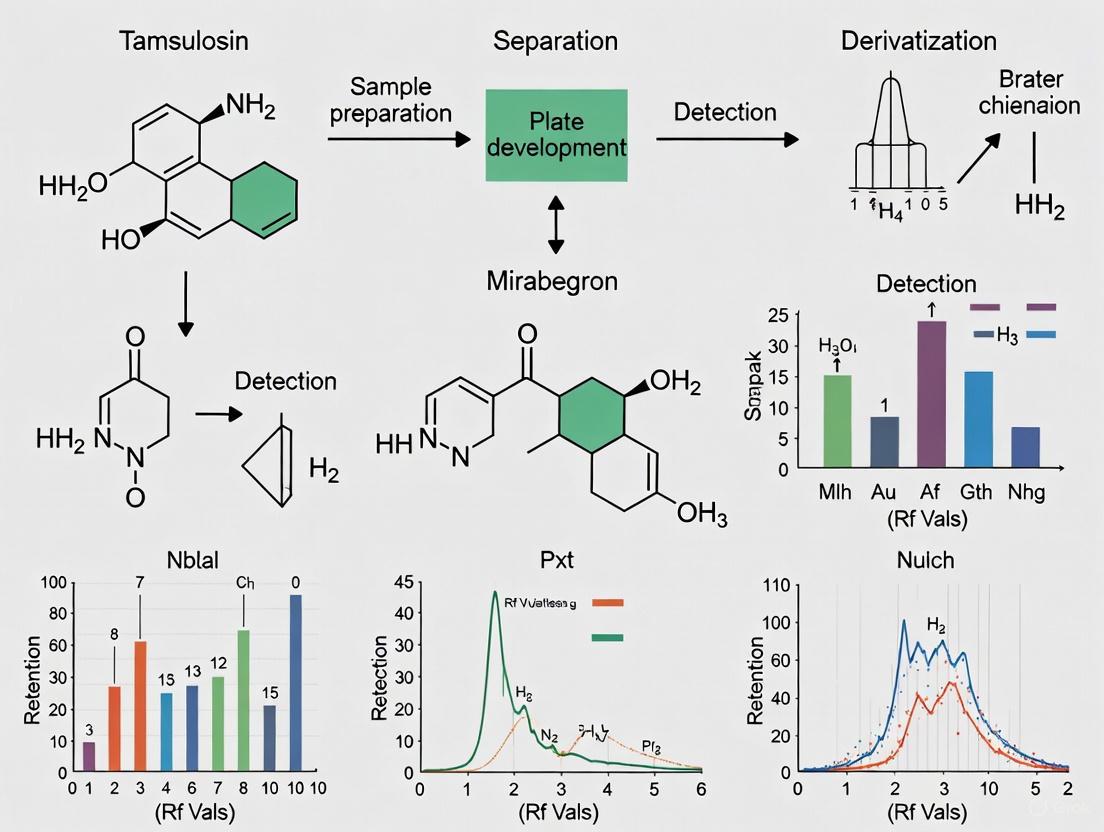
This article presents a novel, green, and stability-indicating High-Performance Thin-Layer Chromatographic (HPTLC) method for the simultaneous quantification of tamsulosin (TAM) and mirabegron (MIR) in bulk and pharmaceutical dosage forms.
Development and Validation of a Green Stability-Indicating HPTLC Method for Simultaneous Determination of Tamsulosin and Mirabegron
Abstract
This article presents a novel, green, and stability-indicating High-Performance Thin-Layer Chromatographic (HPTLC) method for the simultaneous quantification of tamsulosin (TAM) and mirabegron (MIR) in bulk and pharmaceutical dosage forms. The method addresses the critical need for specific analytical techniques to support the growing use of this combination therapy for benign prostatic hyperplasia (BPH) with overactive bladder (OAB) symptoms. It is developed in accordance with green analytical chemistry (GAC) principles and validated as per International Council for Harmonisation (ICH) guidelines. The scope encompasses foundational rationale, detailed methodology, systematic troubleshooting, and comprehensive validation against other techniques, providing a complete framework for researchers and pharmaceutical analysis professionals.
Therapeutic Rationale and Analytical Challenge: Why a Green HPTLC Method for Tamsulosin and Mirabegron is Needed
Benign Prostatic Hyperplasia (BPH) is a prevalent condition whose incidence increases with age, often leading to Lower Urinary Tract Symptoms (LUTS) that include storage symptoms (e.g., frequency, urgency), voiding symptoms (e.g., weak stream, hesitancy), and postmicturition symptoms [1]. A significant clinical challenge is that 40% to 50% of BPH patients experience Overactive Bladder (OAB) symptoms, and approximately 38% continue to have OAB even after initial BPH treatment [1]. Storage symptoms caused by OAB are known to cause greater patient distress than voiding symptoms [1].
While α-blockers like tamsulosin (TAM) have been widely used as first-line treatment for BPH and are effective for voiding symptoms, they demonstrate limitations in addressing storage symptoms [1]. Antimuscarinic agents, commonly used for OAB, can potentially reduce detrusor contractility and increase residual urine volume, risking acute urinary retention in men with bladder outlet obstruction [1]. Mirabegron (MIR), a selective β3-adrenergic receptor agonist, offers a distinct mechanism that relaxes the detrusor smooth muscle during bladder filling without impairing normal contractions, thereby minimizing the risk of increased residual urine or acute urinary retention [1].
Recent clinical evidence supports the therapeutic synergy of combining these agents, and analytical researchers have responded by developing green high-performance thin-layer chromatography (HPTLC) methods for simultaneous quantification of this promising combination. This review integrates clinical trial outcomes with advanced analytical protocols to provide a comprehensive resource for therapeutic development and quality control.
Clinical Evidence for Combination Therapy
Efficacy Outcomes from Phase III Clinical Trials
A recent multicenter, randomized, double-blind, phase III clinical trial directly compared the efficacy and safety of mirabegron and tamsulosin combination therapy versus tamsulosin monotherapy in BPH patients with LUTS [2] [1]. The study randomized 795 participants to either combination therapy (n=398) or monotherapy (n=397) for 12 weeks [2] [1].
Table 1: Primary Efficacy Endpoints at 12 Weeks
| Treatment Group | Change in TUFS | Change in Total IPSS | Statistical Significance |
|---|---|---|---|
| Combination Therapy (n=398) | -11.28 | -10.85 | TUFS: p<0.0001IPSS: p=0.0325 |
| Monotherapy (n=397) | -8.30 | -9.85 | Reference group |
The combination therapy group demonstrated significantly greater improvement in both primary efficacy endpoints: Total Urinary Frequency Score (TUFS) and International Prostate Symptom Score (IPSS) [2] [1]. The TUFS was calculated based on urination frequency recorded in voiding diaries and urgency scores assessed using the Patient Perception of Intensity of Urgency Scale (PPIUS) [1].
Table 2: Secondary Efficacy Endpoints at 12 Weeks
| Symptom Domain | Combination Therapy Advantage | Clinical Implications |
|---|---|---|
| Storage Symptoms | Significant improvement | Better control of urgency, frequency |
| Voiding Diary Variables | Significant improvement in daytime frequency, urgency, and incontinence | Enhanced daily functioning |
| Quality of Life Scores | Greater improvement | Overall patient benefit |
Secondary endpoints revealed that combination therapy provided significant improvements in storage symptoms and various voiding diary variables, including daytime frequency, urgency, and incontinence, compared to monotherapy [2] [1]. These findings are particularly relevant as storage symptoms are known to cause greater patient distress than voiding symptoms [1].
Safety and Tolerability Profile
The phase III trial demonstrated a comparable safety profile between treatment groups. The incidence of treatment-emergent adverse events was similar between combination therapy and monotherapy groups (13.10% vs 16.58%, p=0.1943) [2] [1]. No serious drug-related adverse events were reported, confirming an acceptable safety profile for combination therapy [2] [1].
This safety finding is consistent with the known profile of mirabegron, which causes fewer side effects such as dry mouth and dry eyes compared to antimuscarinic agents [1]. Importantly, changes in post-void residual urine volume (PVR) showed no significant difference before and after mirabegron administration, with minimal risk of urinary retention [1].
Pharmacological Rationale and Mechanism of Action
The therapeutic synergy of tamsulosin and mirabegron arises from their complementary mechanisms of action targeting different components of LUTS in BPH patients.
Tamsulosin, a selective α1-adrenoceptor antagonist, specifically targets receptors in the prostate and bladder neck. By blocking these receptors, it reduces smooth muscle tension in these tissues, thereby decreasing bladder outlet obstruction and improving urine flow [1]. This mechanism primarily addresses voiding symptoms of LUTS.
Mirabegron, as a selective β3-adrenergic receptor agonist, works through an entirely different pathway. It activates β3-receptors in the detrusor smooth muscle of the bladder wall, causing relaxation during the filling phase without impairing normal voiding contractions [1]. This action increases bladder capacity and reduces involuntary detrusor contractions, specifically targeting storage symptoms while minimizing the risk of increased residual urine or acute urinary retention associated with antimuscarinic agents.
Analytical Methods for Simultaneous Quantification
Green HPTLC Method for TAM and MIR Combination
The therapeutic promise of the TAM and MIR combination has driven the development of sophisticated analytical methods for simultaneous quantification. A green high-performance thin-layer chromatography (HPTLC) method has been established specifically for this combination [3] [4].
Table 3: Chromatographic Conditions for Green HPTLC Method
| Parameter | Specification |
|---|---|
| Stationary Phase | TLC silica gel 60 F254 aluminum sheets |
| Mobile Phase | Methanol-ethyl acetate-ammonia (3:7:0.1, v/v) |
| Detection Wavelength | 270 nm |
| Rf Values | Mirabegron: 0.42, Tamsulosin: 0.63 |
| Linear Range | MIR: 0.15–7.5 µg/band, TAM: 0.05–2.5 µg/band |
| Accuracy | MIR: 100.04 ± 0.56%, TAM: 99.98% ± 0.95% |
This HPTLC method has been validated according to International Conference on Harmonisation (ICH) guidelines and demonstrates high precision and accuracy for both compounds [3] [4]. The method successfully resolves the analytical challenge presented by the substantial dosage difference between MIR (50 mg) and TAM (0.4 mg) in commercial formulations [4].
Green HPLC Method for Combination Analysis
Complementing the HPTLC approach, a green HPLC method has also been developed for simultaneous determination of MIR and TAM [5].
Table 4: Chromatographic Conditions for Green HPLC Method
| Parameter | Specification |
|---|---|
| Column | X-Bridge C18 column (4.6 × 150 mm, 3.5 μm) |
| Mobile Phase A | Buffer (1 mL TFA + 3 mL TEA in 1000 mL water, pH 3) |
| Mobile Phase B | Acetonitrile |
| Gradient Program | Initial: 80:20 (A:B) for 5 min, then to 60:40 over 4 min |
| Flow Rate | 1 mL/min |
| Detection | 220 nm |
| Retention Times | MIR: 2.4 min, TAM: 8.9 min |
| Linear Range | MIR: 2.5–55 μg/mL, TAM: 5–110 μg/mL |
The greenness of this HPLC method was evaluated using the Analytical GREEness (AGREE) metric, which yielded a score of 0.52, and the Blue Applicability Grade Index (BAGI) assessment, which scored 80, confirming both its environmental sustainability and practical applicability [5].
Experimental Protocols
HPTLC Protocol for Simultaneous Determination of TAM and MIR
Materials and Reagents:
- Tamsulosin HCl (TAM) reference standard (purity ~100%)
- Mirabegron (MIR) reference standard (purity ~99.98%)
- Methanol and ethyl acetate (HPLC grade)
- Ammonia solution ( analytical grade)
- TLC silica gel 60 F254 aluminum sheets (20 × 20 cm, 0.25 mm thickness)
Instrumentation:
- CAMAG autosampler with microsyringe
- TLC Scanner 3 with WinCATS software
- Twin-trough glass chamber (20 × 10 cm)
Procedure:
- Standard Solution Preparation: Prepare individual stock solutions of TAM and MIR at concentration of 1 mg/mL in methanol.
- Working Solution: Combine aliquots of stock solutions to prepare mixed standard solution containing 0.75 mg/mL MIR and 0.25 mg/mL TAM.
- Sample Application: Apply 0.2–10.0 µL of working solution in discrete bands (4 mm width) on TLC plate using autosampler.
- Chromatographic Development: Develop plates in mobile phase of methanol-ethyl acetate-ammonia (3:7:0.1, v/v) in chamber pre-saturated for 30 minutes. Develop to distance of 75 mm (approximately 15 minutes).
- Plate Drying and Detection: Dry plates at room temperature for 2 minutes. Scan at 270 nm in absorbance mode using deuterium lamp.
- Quantification: Determine peak areas at Rf 0.42 for MIR and Rf 0.63 for TAM. Construct calibration curves in range of 0.15–7.5 µg/band for MIR and 0.05–2.5 µg/band for TAM.
Method Validation:
- Linearity: Evaluate over specified concentration ranges with correlation coefficients >0.999.
- Precision: Assess through intra-day and inter-day variations (%RSD <2%).
- Accuracy: Determine via recovery studies (98-102%).
- Specificity: Confirm using forced degradation studies under acidic, alkaline, oxidative, and thermal stress conditions.
HPLC Protocol for Simultaneous Determination
Materials and Reagents:
- Tamsulosin and Mirabegron reference standards
- Trifluoroacetic acid (TFA), triethylamine (TEA), acetonitrile (HPLC grade)
- Milli-Q water
Instrumentation:
- Agilent HPLC system (Alliance 1260) with PDA detector
- X-Bridge C18 column (4.6 × 150 mm, 3.5 μm)
Procedure:
- Mobile Phase Preparation:
- Mobile Phase A: Add 1 mL TFA and 3 mL TEA to 1000 mL water, adjust pH to 3.0 with TEA.
- Mobile Phase B: Acetonitrile
- Standard Solution Preparation: Prepare stock solutions containing 100 μg/mL MIR and 200 μg/mL TAM in methanol:water mixture.
- Chromatographic Conditions:
- Flow Rate: 1 mL/min
- Injection Volume: 10 μL
- Detection Wavelength: 220 nm
- Gradient Program:
- 0-5 min: 80% A, 20% B
- 5-9 min: Linear gradient to 60% A, 40% B
- 9-13 min: Return to initial conditions and equilibrate
- System Suitability: Ensure resolution between MIR (2.4 min) and TAM (8.9 min) peaks is >2.0.
The Scientist's Toolkit: Essential Research Materials
Table 5: Key Research Reagent Solutions and Materials
| Item | Specification | Function/Purpose |
|---|---|---|
| Tamsulosin HCl Reference Standard | Pharmaceutical secondary standard, ~100% purity | Quantitative calibration, method validation |
| Mirabegron Reference Standard | Pharmaceutical secondary standard, ~99.98% purity | Quantitative calibration, method validation |
| TLC Silica Gel 60 F254 Plates | 20×20 cm, 0.25 mm thickness, aluminum-backed | Stationary phase for HPTLC separation |
| X-Bridge C18 Column | 4.6×150 mm, 3.5 μm particle size | Stationary phase for HPLC separation |
| Methanol (HPLC Grade) | ≥99.9% purity, low UV absorbance | Solvent for standard/sample preparation, mobile phase component |
| Ethyl Acetate (HPLC Grade) | ≥99.9% purity | Mobile phase component for HPTLC |
| Acetonitrile (HPLC Grade) | ≥99.9% purity, low UV absorbance | Mobile phase component for HPLC |
| Ammonia Solution | 25-30% NH3 basis, analytical grade | Mobile phase modifier for improving separation |
| Trifluoroacetic Acid | ≥99.5% purity, for HPLC | Mobile phase additive for improving peak shape |
| Triethylamine | ≥99.5% purity, for HPLC | Mobile phase additive for reducing silanol interactions |
The combination of tamsulosin and mirabegron represents a significant advancement in the management of BPH patients with LUTS, particularly those with persistent storage symptoms related to OAB. Clinical evidence demonstrates superior efficacy of this combination compared to tamsulosin monotherapy, with significant improvements in both TUFS and IPSS scores, while maintaining a comparable safety profile [2] [1].
The development of green analytical methods, including HPTLC and HPLC protocols, provides robust tools for simultaneous quantification of these agents in pharmaceutical formulations. These methods address the analytical challenge presented by the substantial dosage difference between the two drugs and incorporate green chemistry principles to minimize environmental impact [3] [5] [4].
Future perspectives include the development of fixed-dose combination formulations to improve patient adherence and quality of life [2] [1]. The integration of clinical efficacy data with advanced analytical methods creates a solid foundation for further pharmaceutical development and quality control of this promising therapeutic combination.
The combination therapy of mirabegron (MIR), a β3-adrenoceptor agonist, and tamsulosin (TAM), a selective α1-adrenoceptor antagonist, has emerged as a promising treatment for men with overactive bladder symptoms and benign prostatic hyperplasia [4] [5]. This therapeutic strategy improves overactive bladder symptoms and reduces micturition frequency more effectively than monotherapy [4]. However, the simultaneous determination of these two drugs presents significant analytical challenges, primarily due to their substantial dosage disparity (50 mg MIR to 0.4 mg TAM) and the absence of reported analytical methods for their joint quantification until recent developments [4].
The literature reveals numerous individual analytical methods for MIR and TAM, including spectrophotometric, chromatographic, and electrochemical techniques [4] [6]. However, the combination therapy creates an urgent need for reliable analytical methods that can simultaneously quantify both compounds in pharmaceutical formulations and biological matrices. This application note addresses this methodological gap by presenting a validated green High-Performance Thin-Layer Chromatography (HPTLC) approach that successfully overcomes the challenge posed by disparate dosage levels while adhering to green analytical chemistry principles [4].
Analytical Challenges and Methodological Gap
The Dosage Disparity Challenge
The primary challenge in simultaneously determining MIR and TAM stems from their significant dosage difference. With MIR administered at 50 mg and TAM at 0.4 mg, the ratio between the two drugs is approximately 125:1 [4]. This substantial difference creates several analytical complications:
- Dynamic range requirements: Analytical methods must accommodate wide concentration ranges without compromising sensitivity for the lower-dose component (TAM)
- Detection sensitivity: Ensuring accurate quantification of TAM despite its significantly lower concentration
- Matrix effects: Potential interference from excipients and formulation components that may disproportionately affect one analyte
Previously Unaddressed Methodological Gap
Before the development of specialized methods, the scientific literature lacked robust procedures for the simultaneous quantification of MIR and TAM [4]. While individual methods existed for each drug, no approaches addressed the unique challenges presented by their co-formulation or combined administration. This gap hindered pharmaceutical analysis, quality control, and bioavailability studies for this promising therapeutic combination.
Green HPTLC Method: Principle and Advantages
High-performance thin-layer chromatography has emerged as an ideal solution for this analytical challenge due to its unique advantages over other separation techniques. HPTLC represents a major step toward improved separation quality, with smaller silica particles resulting in faster analysis, sharper peaks, improved resolution, and increased sensitivity [4].
The green aspects of the developed HPTLC method align with the twelve principles of green analytical chemistry, focusing on reducing or eliminating hazards associated with analytical processes and products [4]. Specifically, HPTLC is a micro-scale technique that requires only a few microliters of volatile solvent and a few micrograms of solute to examine and quantify target analytes [4], making it environmentally superior to conventional HPLC methods that typically consume larger volumes of organic solvents.
The method was evaluated using multiple green assessment metrics, including Analytical Eco-Scale, Green Analytical Procedure Index (GAPI), and Analytical GREEness (AGREE) metrics, confirming its environmental sustainability [4].
Detailed Experimental Protocol
Materials and Instrumentation
Table 1: Key Research Reagent Solutions
| Reagent/Instrument | Specifications | Function/Purpose |
|---|---|---|
| HPTLC Plates | Silica gel 60 F254, 20 × 20 cm, 0.25 mm thickness (E. Merck) | Stationary phase for separation |
| Mobile Phase | Methanol-ethyl acetate-ammonia (3:7:0.1, v/v) | Solvent system for chromatographic development |
| Detection | CAMAG TLC Scanner 3 with deuterium lamp | Quantification at 270 nm |
| Sample Applicator | CAMAG Linomat V with 100 μL syringe | Precise sample application |
| Development Chamber | 20 × 10 cm twin-trough glass chamber | Controlled mobile phase development |
| Mirabegron Standard | Purity 99.98% (Apex pharma, Egypt) | Reference standard for quantification |
| Tamsulosin Standard | Purity 100.31% (Macryl, Cairo, Egypt) | Reference standard for quantification |
Standard Solution Preparation
Stock standard solutions: Transfer 10.0 mg of MIR or TAM separately into 10-mL volumetric flasks, dissolve in methanol, and complete to the mark with the same solvent to obtain concentrations of 1 mg/mL [4].
Working solution mixture: Transfer aliquots of 7.5 mL and 2.5 mL from the stock solutions of MIR and TAM into a 10-mL volumetric flask to obtain final concentrations of 0.75 mg/mL MIR and 0.25 mg/mL TAM [4].
Calibration standards: Apply aliquots of 0.2-10.0 μL from the working solution in triplicate on the TLC plate to achieve concentration ranges of 0.15-7.5 μg/band for MIR and 0.05-2.5 μg/band for TAM [4].
Chromatographic Conditions
Plate pretreatment: Prewash HPTLC plates with methanol and activate at 110°C for 5 minutes before sample application [7].
Sample application: Apply samples as bands of 6 mm width using a CAMAG Linomat autosampler with a CAMAG microsyringe [4] [7].
Mobile phase: Methanol-ethyl acetate-ammonia (3:7:0.1, v/v) [4].
Development: Develop plates in a twin-trough glass chamber saturated with mobile phase vapor for 30 minutes. Develop to a distance of 75 mm over approximately 15 minutes [4].
Drying: Dry plates for 2 minutes at room temperature after development [4].
Detection and quantification: Scan plates at 270 nm in absorbance mode using a deuterium lamp. Operate the scanner with a scanning speed of 20 mm/s and slit dimensions of 6.00 × 0.45 mm [4].
Analysis of Pharmaceutical Formulations
Tablet preparation: Finely powder five Bladogra 50 mg tablets. Weigh an amount equivalent to 50 mg of MIR and transfer to a 100-mL volumetric flask [4].
Capsule preparation: Weigh five Tamsulosin 0.4 mg capsules individually, mix the contents thoroughly, and weigh an amount equivalent to 0.4 mg of TAM. Transfer to the same flask containing the MIR powder [4].
Extraction: Add 70 mL of methanol to the flask and sonicate for 30 minutes. Complete to volume with methanol and filter through a 0.45 μm membrane filter [4].
Application and analysis: Apply 12.5, 14.0, and 15.0 μL of the filtered solution onto the HPTLC plate. Develop and scan as described in sections 4.3 and 4.5 [4].
Forced Degradation Studies
Conduct forced degradation studies according to ICH guidelines to establish the stability-indicating capability of the method [4] [8]. The method should effectively separate MIR and TAM from their degradation products, demonstrating specificity [4].
Method Validation and Analytical Performance
The developed green HPTLC method was rigorously validated according to ICH guidelines, demonstrating excellent performance characteristics for the simultaneous quantification of MIR and TAM.
Table 2: Method Validation Parameters
| Parameter | Mirabegron (MIR) | Tamsulosin (TAM) |
|---|---|---|
| Linear range | 0.15–7.5 µg/band | 0.05–2.5 µg/band |
| Retention factor (Rf) | 0.42 | 0.63 |
| Correlation coefficient | >0.999 | >0.999 |
| Mean percentage recovery | 100.04 ± 0.56% | 99.98% ± 0.95% |
| Precision | High (as per statistical analysis) | High (as per statistical analysis) |
| Specificity | Specific in presence of degradation products | Specific in presence of degradation products |
The compact spots with Rf values of 0.42 for MIR and 0.63 for TAM indicate excellent separation efficiency [4]. The mean percentage recoveries of approximately 100% for both compounds demonstrate high accuracy, while the low standard deviations indicate excellent precision [4].
The method successfully addresses the dosage disparity challenge, with linearity ranges appropriately covering the relevant concentrations for both the high-dose (MIR) and low-dose (TAM) components. The statistical analysis confirmed high precision and accuracy across the validated concentration ranges [4].
Comparison with Alternative Methods
While the green HPTLC method presents an optimal solution for the simultaneous determination of MIR and TAM, other analytical approaches have been developed with varying advantages and limitations.
Table 3: Comparison of Analytical Methods for MIR and TAM
| Method | Key Features | Limitations | Green Assessment |
|---|---|---|---|
| Green HPTLC [4] | • Simultaneous determination• Stability-indicating• Wide linear range• Handles dosage disparity | • Not automated• Lower throughput than HPLC | • High green metrics• Minimal solvent consumption |
| Green HPLC [5] | • Gradient elution• X-Bridge C18 column• Detection at 220 nm• RT: 2.4 min (MIR), 8.9 min (TAM) | • Higher solvent consumption• Longer analysis time | • AGREE score: 0.52• BAGI score: 80 |
| Spectrophotometric Methods [9] | • Dual wavelength, ratio difference, derivative ratio• No separation needed• Cost-effective | • Limited specificity• Potential interference | • Eco-friendly• No organic solvents |
| Electrochemical Method [6] | • Nano ZnO-CPE modified electrode• Ultra-sensitive (LOD: 0.51 ng mL⁻¹)• Biological sample application | • Single analyte determination (MIR only)• Specialized equipment | • Minimal solvent use• Green approach |
The green HPTLC method demonstrates distinct advantages for routine analysis and quality control settings, particularly due to its simultaneous determination capability, minimal solvent consumption, and cost-effectiveness. The HPLC method, while offering high sensitivity, requires more sophisticated instrumentation and greater solvent consumption [5]. Spectrophotometric methods provide rapid analysis but may lack the specificity of chromatographic methods, especially for degraded samples [9].
Applications and Implications
The developed green HPTLC method for simultaneous determination of MIR and TAM has significant applications in pharmaceutical analysis and drug development:
Pharmaceutical Quality Control
The method enables reliable quality control of combined dosage forms, ensuring accurate dosing of both active ingredients despite their substantial concentration difference. The stability-indicating capability allows manufacturers to monitor degradation products during storage and stability studies [4].
Bioavailability and Bioequivalence Studies
While the current method focuses on pharmaceutical formulations, the approach can be adapted for bioavailability and bioequivalence studies, potentially with prior sample extraction and concentration to address the sensitivity requirements for biological samples [10].
Stability Profiling
The forced degradation studies demonstrate the method's ability to separate MIR and TAM from their degradation products, making it valuable for stability testing under various stress conditions (acid, base, oxidation, thermal, and photolytic degradation) as per ICH guidelines [4] [8].
The development of this green HPTLC method successfully addresses the previously existing gap in analytical methods for the simultaneous determination of mirabegron and tamsulosin. By overcoming the challenge posed by their disparate dosage levels and incorporating green chemistry principles, the method provides an environmentally sustainable, cost-effective, and reliable solution for pharmaceutical analysis. The validated method offers excellent separation, precision, accuracy, and specificity, making it suitable for routine quality control applications in pharmaceutical industries and regulatory settings.
Green Analytical Chemistry (GAC) has emerged as a fundamental sub-discipline of green chemistry, specifically tailored to the unique requirements and challenges of analytical practices [11]. The core objective of GAC is to make laboratory practices more environmentally friendly while maintaining the high-quality standards required for analytical results [11]. This paradigm shift is particularly crucial in pharmaceutical analysis, where traditional methods often involve substantial consumption of hazardous solvents, generate significant waste, and pose risks to operator safety [12]. The development of GAC has been driven by the recognition that the original 12 principles of green chemistry, formulated primarily for industrial-scale processes, required revision and specialization to fully address the needs of analytical chemistry [11].
The framework for GAC is built around four key goals: reduction or elimination of hazardous chemical substances, minimization of energy consumption, proper management of analytical waste, and enhancement of operator safety [11]. These objectives provide a practical foundation for implementing sustainable practices across all stages of analytical methods, from sample preparation to final analysis and waste treatment [11]. In pharmaceutical analysis, this approach has stimulated innovation in method development, instrumentation design, and solvent selection, leading to more environmentally responsible quality control procedures without compromising analytical performance [12].
The 12 Principles of Green Analytical Chemistry
The 12 principles of Green Analytical Chemistry provide a comprehensive framework for greening analytical practices [11]. These principles expand upon and specialize the original green chemistry principles to address the specific needs and challenges faced in analytical laboratories. The complete set of principles is organized into the mnemonic SIGNIFICANCE to facilitate implementation and recall [11]:
Table 1: The 12 Principles of Green Analytical Chemistry
| Principle Number | Principle Letter | Principle Description |
|---|---|---|
| 1 | S | Select direct analytical techniques to avoid sample treatment |
| 2 | I | Integrate analytical processes and operations |
| 3 | G | Generate as little waste as possible and properly manage it |
| 4 | N | Never waste energy |
| 5 | I | Implement automation and miniaturization of methods |
| 6 | F | Favor reagents from renewable sources |
| 7 | I | Increase safety for the operator |
| 8 | C | Carry out in-situ measurements |
| 9 | A | Avoid derivatization |
| 10 | N | Note that the number of samples and sample size should be minimal |
| 11 | E | Eliminate or replace toxic reagents |
| 12 | C | Combine techniques with different principles |
These principles emphasize strategies such as direct measurement techniques to minimize sample preparation, integration of analytical processes to save energy and reagents, waste minimization, and the use of automated and miniaturized methods [11]. Particularly relevant to pharmaceutical analysis is the avoidance of derivatization, which often requires additional reagents and generates supplementary waste [11]. The principles also advocate for prioritizing operator safety through improved laboratory practices and instrumentation design [11].
GAC Principles in Pharmaceutical Analysis: Application to Tamsulosin and Mirabegron Combination
The practical implementation of GAC principles in pharmaceutical analysis is effectively illustrated through the development of green methods for the simultaneous determination of tamsulosin (TAM) and mirabegron (MIR), a combination therapy used for treating overactive bladder symptoms in men with benign prostatic hyperplasia [4]. This therapeutic combination presents analytical challenges due to the significant difference in their dosage levels (MIR 50 mg vs. TAM 0.4 mg), necessitating sensitive and selective methods capable of quantifying both compounds simultaneously [4].
Green HPTLC Method Development
A green High-Performance Thin-Layer Chromatography (HPTLC) method has been developed as a sustainable alternative to conventional chromatography techniques for the simultaneous analysis of TAM and MIR [4]. The method exemplifies multiple GAC principles through its design and implementation:
- Miniaturization and reduced reagent consumption: HPTLC is inherently a micro-scale technique that requires only a few microliters of volatile solvents and minimal amounts of analytes for examination and quantification [4].
- Direct analytical techniques: The method enables direct analysis of samples with minimal pretreatment, aligning with Principle 1 of GAC [4].
- Reduced waste generation: The small volumes of mobile phase used and the minimal sample requirements significantly decrease the generation of analytical waste [4].
Table 2: Chromatographic Conditions for Green HPTLC Method
| Parameter | Specification |
|---|---|
| Stationary Phase | TLC silica gel 60 F254 plates |
| Mobile Phase | Methanol-ethyl acetate-ammonia (3:7:0.1, v/v) |
| Development Distance | 75 mm |
| Development Time | 15 minutes |
| Detection Wavelength | 270 nm |
| Retention Factor (Rf) | MIR: 0.42; TAM: 0.63 |
| Linear Range | MIR: 0.15-7.5 µg/band; TAM: 0.05-2.5 µg/band |
The method validation demonstrated excellent performance characteristics with mean percentage recoveries of 100.04% ± 0.56% for MIR and 99.98% ± 0.95% for TAM, confirming its accuracy and precision for pharmaceutical quality control applications [4]. The greenness of this HPTLC method was systematically evaluated using multiple metrics, including Analytical Eco-Scale, Green Analytical Procedure Index (GAPI), and Analytical GREEness (AGREE), confirming its environmental advantages over conventional methods [4].
Green HPLC Method Development
Complementing the HPTLC approach, a green HPLC method has also been developed for the simultaneous determination of TAM and MIR, incorporating additional principles of GAC [5]. This method utilized an X-Bridge C18 column with a gradient elution system consisting of mobile phase A (buffer solution containing 1 mL of trifluoroacetic acid and 3 mL of triethylamine in 1000 mL of water, pH adjusted to 3) and mobile phase B (acetonitrile) [5].
The chromatographic separation was achieved within 13 minutes, with MIR and TAM eluting at retention times of 2.4 min and 8.9 min, respectively [5]. The method demonstrated linearity over concentration ranges of 2.5–55 µg/mL for MIR and 5–110 µg/mL for TAM, with limits of detection of 0.28 and 0.55 µg/mL, respectively [5]. The environmental friendliness of this HPLC method was evaluated using the AGREE metric, which yielded a score of 0.52, while its practicality was confirmed through the Blue Applicability Grade Index (BAGI) with a score of 80 [5].
Diagram 1: Experimental workflow for green HPTLC method development
Greenness Assessment Metrics for Analytical Methods
The evaluation of analytical methods according to GAC principles requires standardized metrics that provide objective assessment of environmental impact [13]. Several tools have been developed specifically for this purpose, enabling researchers to quantify and compare the greenness of different analytical approaches:
- Analytical Eco-Scale: This semi-quantitative tool assigns penalty points to parameters of an analytical method that are not environmentally ideal, with higher scores indicating greener methods [4].
- Green Analytical Procedure Index (GAPI): GAPI provides a comprehensive visual assessment using a pictogram with five pentagrams that evaluate multiple aspects of the analytical process, including sample collection, preservation, preparation, transportation, and reagent consumption [12] [4].
- Analytical GREEness (AGREE) Metric: This approach uses the 12 principles of GAC as criteria, providing an overall score between 0 and 1, where 1 represents ideal greenness [5] [13]. The AGREE metric offers a comprehensive evaluation based on all SIGNIFICANCE principles [13].
- Blue Applicability Grade Index (BAGI): BAGI assesses the practicality and applicability of analytical methods, complementing greenness evaluation by ensuring that environmentally friendly methods remain practically viable for routine use [5].
These metrics have been applied to evaluate the green HPTLC method for TAM and MIR analysis, confirming its advantages over conventional approaches [4]. The AGREE metric, in particular, has become a dominant tool for comprehensive greenness assessment due to its alignment with all 12 principles of GAC [13].
Experimental Protocols for Green Pharmaceutical Analysis
Detailed HPTLC Protocol for TAM and MIR Analysis
Materials and Reagents:
- TLC silica gel 60 F254 aluminum sheets (20 × 20 cm, 0.25 mm thickness)
- Methanol (HPLC grade)
- Ethyl acetate (HPLC grade)
- Ammonia solution
- Standard compounds: TAM (purity 100.31%) and MIR (purity 99.98%)
- Pharmaceutical formulations: Bladogra 50 mg tablets and Tamsulosin 0.4 mg capsules
Instrumentation:
- CAMAG autosampler (Linomat)
- CAMAG microsyringe
- TLC Scanner 3 with WinCATS software
- Twin-trough glass development chamber (20 × 10 cm)
- Ultrasonic bath
Procedure:
- Standard Solution Preparation: Accurately weigh 10.0 mg each of MIR and TAM reference standards. Transfer to separate 10-mL volumetric flasks, dissolve in methanol, and dilute to volume to obtain stock solutions of 1 mg/mL.
- Working Solution Preparation: Transfer aliquots of 7.5 mL MIR stock solution and 2.5 mL TAM stock solution to a 10-mL volumetric flask. Dilute with methanol to obtain a working solution containing 0.75 mg/mL MIR and 0.25 mg/mL TAM.
- Sample Preparation: Weigh and powder ten Bladogra tablets. Transfer an amount equivalent to 50 mg MIR to a 100-mL volumetric flask. Weigh the contents of five Tamsulosin capsules and transfer an amount equivalent to 0.4 mg TAM to the same flask. Add 70 mL methanol, sonicate for 30 minutes, dilute to volume with methanol, and filter through a 0.45 μm membrane.
- Chromatographic Conditions:
- Application volume: 0.2-10.0 μL bands (8 mm width)
- Mobile phase: methanol-ethyl acetate-ammonia (3:7:0.1, v/v)
- Chamber saturation: 30 minutes
- Development distance: 75 mm
- Development time: 15 minutes
- Drying: 2 minutes at room temperature
- Detection: Densitometric scanning at 270 nm using deuterium lamp
- Calibration: Apply triplicate aliquots of working solution (0.2-10.0 μL) to TLC plates. Develop and scan as above. Plot average peak areas against corresponding concentrations (MIR: 0.15-7.5 μg/band; TAM: 0.05-2.5 μg/band) to construct calibration curves.
Forced Degradation Studies
Forced degradation studies were conducted according to ICH guidelines to establish the stability-indicating properties of the method [4]. The drugs were subjected to various stress conditions including acid and base hydrolysis, oxidative degradation, and thermal degradation. The developed HPTLC method effectively separated the degradation products from the parent drugs, demonstrating its specificity and stability-indicating capability [4].
Table 3: Research Reagent Solutions for Green Pharmaceutical Analysis
| Reagent/Material | Function in Analysis | Green Alternative Considerations |
|---|---|---|
| Methanol | Solvent for standard and sample preparation | Consider ethanol as a greener alternative [12] |
| Ethyl Acetate | Mobile phase component for HPTLC | Ethyl acetate is preferred over more hazardous solvents [4] |
| Ammonia Solution | Mobile phase modifier for improved separation | Minimal usage (0.1% v/v) reduces environmental impact [4] |
| Acetonitrile | Mobile phase for HPLC methods | Replacement with ethanol should be evaluated where possible [12] |
| Silica Gel F254 Plates | Stationary phase for HPTLC separation | Minimal waste generation due to small plate size [4] |
| Water | Solvent for sample dilution | Ideally substituted for organic solvents where feasible [11] |
The implementation of Green Analytical Chemistry principles in pharmaceutical analysis represents both an imperative for sustainable development and an opportunity for methodological innovation. The development of green HPTLC and HPLC methods for the simultaneous determination of tamsulosin and mirabegron demonstrates that environmental considerations can be successfully integrated into analytical procedures without compromising performance characteristics. The systematic application of greenness assessment metrics provides objective validation of these environmental benefits and guides further improvements.
Future directions in green pharmaceutical analysis will likely focus on several key areas: the development and adoption of even greener solvent systems, further miniaturization of analytical techniques, increased automation to reduce reagent consumption and human error, and the implementation of circular economy principles in analytical laboratories [12]. The integration of Quality by Design (QbD) principles with GAC offers a promising framework for developing robust methods that are both analytically sound and environmentally responsible [12]. As the field evolves, the continuous refinement of greenness assessment metrics will provide increasingly sophisticated tools for quantifying and comparing the environmental footprint of analytical methods, ultimately driving the pharmaceutical industry toward more sustainable quality control practices.
High-Performance Thin-Layer Chromatography (HPTLC) has emerged as a sophisticated, environmentally benign analytical technique that aligns with the principles of Green Analytical Chemistry (GAC). Its inherent design focuses on minimizing environmental impact through significantly reduced solvent consumption and waste generation compared to other chromatographic methods, while maintaining high analytical performance for pharmaceuticals, herbal samples, and various other applications [14] [15].
HPTLC represents a major advancement over conventional Thin-Layer Chromatography (TLC), employing pre-coated plates with uniform, fine-particle sorbents (typically 5-7 µm particle size versus 10-15 µm in TLC) which create a smoother, more homogeneous surface. This results in sharper resolution of analytes, shorter development times, and enhanced reproducibility. The technique is particularly valued in fields requiring rapid screening of complex mixtures, including pharmaceutical quality control, biomedical analysis, food safety, and environmental monitoring [16].
The fundamental procedure involves several key steps: automated sample application, chromatographic separation, optional derivatization, and detection/quantification. A distinguishing feature of HPTLC is its parallel processing capability, allowing multiple samples to be analyzed simultaneously on a single plate under identical conditions, thereby ensuring high throughput and direct comparison between samples [14] [16].
Green Advantages of HPTLC
Minimal Solvent Consumption and Reduced Waste
HPTLC offers substantial environmental advantages through drastically reduced solvent usage:
- Micro-scale operation: HPTLC requires only a few microliters of volatile solvent and micrograms of solute to examine and quantify a target analyte, significantly reducing the consumption of environmental resources per analysis [17] [4].
- Elimination of extensive sample pre-treatment: Unlike HPLC, HPTLC typically requires little to no sample pre-treatments such as liquid-liquid extraction or solid-phase extraction, further reducing solvent consumption and waste generation [14].
- Low energy demand: The minimal requirement for instrumentation and the absence of high-pressure pumping systems translate to lower energy consumption per sample analyzed [14].
High-Throughput Capabilities
The parallel processing nature of HPTLC provides exceptional throughput advantages:
- Simultaneous analysis: Numerous samples of varying complexity can be examined simultaneously and in parallel on a single plate, dramatically increasing sample throughput compared to sequential techniques like HPLC [14] [16].
- Rapid method development: The ability to test multiple mobile phases and conditions on a single plate accelerates method optimization while consuming minimal resources [14].
- Visual documentation: The entire chromatogram provides a permanent visual record that can be archived for documentation or re-examined later without reinjection [16].
Advancements in Green Solvent Applications
Current research in HPTLC method development increasingly focuses on replacing traditional organic solvents with greener alternatives:
- Solvent replacement strategies: Researchers are actively developing methods using environmentally preferable solvents without compromising analytical performance [14].
- Greenness assessment tools: Methodologies such as AGREE (Analytical GREEnness metric approach), GAPI (Green Analytical Procedure Index), and NEMI (National Environmental Methods Index) are being employed to systematically evaluate and validate the environmental friendliness of HPTLC methods [14] [17] [4].
Table 1: Quantitative Comparison of Environmental Footprint: HPTLC vs. HPLC
| Parameter | HPTLC | HPLC |
|---|---|---|
| Typical solvent volume per analysis | A few microliters [17] | Milliliters to liters per sample |
| Sample throughput | Multiple samples simultaneously (up to 70 samples/plate) [14] | Sequential sample analysis |
| Energy consumption per sample | Low (no high-pressure pumps) [14] | High (pumping systems, column heating) |
| Sample pre-treatment requirements | Minimal to none [14] | Often extensive (extraction, filtration, etc.) |
| Waste generation | Significantly reduced [14] | Substantial solvent waste |
Application Note: Green HPTLC Method for Tamsulosin and Mirabegron Combination
Therapeutic Context and Analytical Challenge
The combination of Mirabegron (MIR), a β3-adrenoreceptor agonist, and Tamsulosin (TAM), an α1-adrenoceptor antagonist, represents a promising therapeutic approach for managing overactive bladder symptoms in men with benign prostatic hypertrophy [17] [4]. The development of a simultaneous quantification method presents significant analytical challenges due to the substantial dosage difference between the drugs (MIR 50 mg vs. TAM 0.4 mg) and their different chemical properties [4].
A green HPTLC method was developed to address this challenge, providing a stability-indicating assay that can determine both compounds in pharmaceutical dosage forms without interference from degradation products, while minimizing environmental impact [17] [4].
Experimental Protocol
Materials and Instrumentation
Table 2: Research Reagent Solutions and Essential Materials
| Material/Reagent | Specifications | Function/Purpose |
|---|---|---|
| HPTLC Plates | Silica gel 60 F254 aluminum sheets, 20 × 20 cm, 0.25 mm thickness (E. Merck, Darmstadt) [17] | Stationary phase for chromatographic separation |
| Mirabegron Standard | Purity 99.98% (Apex pharma, Egypt) [17] | Reference standard for quantification |
| Tamsulosin Standard | Purity 100.31% (Macryl, Cairo, Egypt) [17] | Reference standard for quantification |
| Methanol | Fisher Chemical, HPLC grade [17] | Solvent for standard/sample preparation and mobile phase component |
| Ethyl Acetate | Fisher Chemical, HPLC grade [17] | Mobile phase component |
| Ammonia Solution | El-Nasr Company, Cairo, Egypt [17] | Mobile phase modifier (prevents tailing, improves resolution) |
| Mobile Phase | Methanol-ethyl acetate-ammonia (3:7:0.1, v/v) [17] | Optimized solvent system for separation |
| Pharmaceutical Formulations | Bladogra 50 mg (MIR), Tamsulosin 0.4 mg (TAM) [17] | Real-world samples for method application |
Instrumentation:
- Sample Applicator: CAMAG Linomat autosampler with CAMAG microsyringe (Switzerland) for precise, automated sample application as narrow bands [17] [16].
- Development Chamber: 20 cm × 10 cm twin-trough glass chamber for controlled mobile phase saturation and development [17].
- Scanner: TLC Scanner 3 with WinCATS software for densitometric analysis at 270 nm using a deuterium lamp [17].
Detailed Methodology
Step 1: Standard Solution Preparation
- Prepare individual stock solutions (1 mg/mL) by dissolving 10.0 mg of MIR and TAM separately in 10 mL volumetric flasks with methanol [17].
- Prepare working solution mixture by transferring 7.5 mL MIR stock and 2.5 mL TAM stock into a 10 mL volumetric flask (final concentration: 0.75 mg/mL MIR and 0.25 mg/mL TAM) [17].
Step 2: Sample Application
- Apply aliquots (0.2-10.0 µL) of working solution in triplicate as bands (6 mm length) onto HPTLC plates using the autosampler [17].
- Maintain a distance of 10 mm from the bottom edge and 15 mm between bands [17].
Step 3: Chromatographic Development
- Pre-saturate the twin-trough chamber with mobile phase (methanol-ethyl acetate-ammonia, 3:7:0.1, v/v) for 30 minutes to establish equilibrium [17].
- Develop the plates to a distance of 75 mm at room temperature (approximately 15 minutes development time) [17].
- Dry the developed plates for 2 minutes at room temperature [17].
Step 4: Detection and Quantification
- Scan the plates at 270 nm in absorbance mode using a deuterium lamp [17].
- Identify MIR and TAM bands at Rf values of 0.42 and 0.63, respectively [17].
- Construct calibration curves by plotting peak areas against concentrations (0.15-7.5 µg/band for MIR and 0.05-2.5 µg/band for TAM) [17].
Step 5: Pharmaceutical Formulation Analysis
- Prepare laboratory mixtures matching tablet dosage ratios (50 mg MIR:0.4 mg TAM) [17].
- Extract tablet and capsule contents with methanol using ultrasonication for 30 minutes [17].
- Filter through 0.45 µm membrane filter and apply appropriate aliquots (12.5, 14.0, 15.0 µL) to HPTLC plates [17].
Step 6: Forced Degradation Studies
- Subject samples to stress conditions (acid, base, oxidation, thermal, photolytic) according to ICH guidelines [17] [4].
- Demonstrate method specificity by resolving analytes from degradation products [17].
Step 7: Greenness Assessment
- Evaluate method environmental performance using multiple green metrics: Analytical Eco-Scale, AGREE, and GAPI [17] [4].
Diagram 1: Green HPTLC Method Development Workflow
Method Validation and Performance Data
The developed green HPTLC method was rigorously validated according to International Council for Harmonisation (ICH) guidelines, demonstrating excellent analytical performance [17] [4]:
Table 3: Validation Parameters for Tamsulosin and Mirabegron HPTLC Assay
| Validation Parameter | Mirabegron (MIR) | Tamsulosin (TAM) |
|---|---|---|
| Linearity Range | 0.15–7.5 µg/band [17] | 0.05–2.5 µg/band [17] |
| Retention Factor (Rf) | 0.42 [17] | 0.63 [17] |
| Mean Percentage Recovery | 100.04 ± 0.56% [17] | 99.98% ± 0.95 [17] |
| Precision | High precision confirmed [17] | High precision confirmed [17] |
| Specificity | Resolved from degradation products [17] | Resolved from degradation products [17] |
| Greenness Score | Favorable AGREE, GAPI, and Eco-Scale assessments [17] [4] | Favorable AGREE, GAPI, and Eco-Scale assessments [17] [4] |
Greenness Assessment and Comparison with Other Techniques
Comprehensive Green Metric Evaluation
The environmental performance of the HPTLC method for Tamsulosin and Mirabegron was systematically evaluated using multiple assessment tools [17] [4]:
- Analytical Eco-Scale: This semi-quantitative tool evaluates the environmental impact of analytical methods based on penalty points for hazardous reagents and procedures; higher scores indicate greener methods [17].
- AGREE (Analytical GREEness): A comprehensive metric that calculates overall environmental friendliness scores based on multiple GAC principles [17] [4].
- GAPI (Green Analytical Procedure Index): A pictogram-based tool that provides a visual representation of environmental impact across the entire analytical procedure [17] [4].
The developed HPTLC method demonstrated superior greenness profiles across all these metrics compared to conventional HPLC methods, primarily due to minimal solvent consumption, reduced energy requirements, and minimal waste generation [17] [4].
Comparative Analysis with Alternative Techniques
When compared with other analytical approaches for the same drug combination, HPTLC shows distinct environmental advantages:
Table 4: Technique Comparison for Mirabegron and Tamsulosin Analysis
| Technique | Environmental Advantages | Limitations | Greenness Assessment |
|---|---|---|---|
| Green HPTLC | Minimal solvent use (µL scale), no sample pre-treatment, low energy consumption, high throughput [17] [4] | Less sensitive than HPLC for trace analysis [16] | Superior greenness scores (AGREE, GAPI, Eco-Scale) [17] [4] |
| Green HPLC | Good sensitivity and precision [5] | Higher solvent consumption (mL scale), requires sample filtration, higher energy demand [5] | Moderate greenness scores (AGREE: 0.52) [5] |
| Spectrophotometric Methods | Minimal solvent use, very low energy requirements, simple instrumentation [18] | Limited to simpler mixtures, potentially less specific [18] | Favorable greenness profiles (AGREE, GAPI) [18] |
Diagram 2: Environmental Impact Comparison of Analytical Techniques
HPTLC stands as a demonstrated green alternative in analytical chemistry, particularly for pharmaceutical analysis involving combinations such as tamsulosin and mirabegron. The technique's inherent advantages—minimal solvent consumption, reduced waste generation, and high-throughput capabilities—align perfectly with the principles of Green Analytical Chemistry.
The application note presented herein provides a validated, stability-indicating method that successfully addresses the analytical challenges posed by the tamsulosin-mirabegron combination while minimizing environmental impact. The method demonstrates that excellent analytical performance (specificity, accuracy, precision, linearity) can be achieved while maintaining a favorable environmental profile, as confirmed by multiple greenness assessment metrics.
For researchers and drug development professionals, implementing green HPTLC methodologies represents a significant step toward sustainable analytical practices without compromising data quality. The continued development and application of such environmentally conscious methods will be crucial in advancing green chemistry initiatives within the pharmaceutical industry and beyond.
A Step-by-Step Guide: Developing and Applying the Green HPTLC Method
Application Notes & Protocols: A Green HPTLC Method for Tamsulosin and Mirabegron
The combination of Tamsulosin (TAM) and Mirabegron (MIR) represents an advanced therapeutic strategy for managing overactive bladder symptoms in men with benign prostatic hypertrophy [4]. This application note details the development and validation of a green, stability-indicating High-Performance Thin-Layer Chromatography (HPTLC) method for the simultaneous determination of this promising drug combination, framed within a broader thesis on advancing green analytical chemistry in pharmaceutical analysis.
The methodology aligns with the core principles of Green Analytical Chemistry (GAC), emphasizing the reduction of hazardous solvent use and environmental impact while maintaining high analytical performance [4]. HPTLC is recognized as an eco-friendly technique due to its minimal solvent consumption and energy requirements, making it an ideal choice for sustainable quality control in pharmaceutical development [19] [20].
Experimental Protocol
The Scientist's Toolkit: Essential Materials and Reagents
Table 1: Key Research Reagents and Materials
| Item | Specification | Function/Application |
|---|---|---|
| HPTLC Plates | Silica gel 60 F₂₅₄ on aluminum backing, 20 × 20 cm, 0.25 mm thickness [4] | Stationary phase for chromatographic separation |
| Mirabegron Standard | Purity ≥ 99.98% [4] | Reference standard for quantification |
| Tamsulosin Standard | Purity ≥ 100.31% [4] | Reference standard for quantification |
| Methanol | HPLC Grade [4] | Component of mobile phase and solvent for standard/sample preparation |
| Ethyl Acetate | HPLC Grade [4] | Major organic component of the mobile phase |
| Ammonia | Analytical Reagent Grade [4] | Modifier in mobile phase to improve separation |
| Microsyringe | CAMAG Linomat autosampler with CAMAG micro syringe [4] | Precise application of samples onto HPTLC plate |
Instrumentation and Chromatographic Conditions
The method was developed using a CAMAG HPTLC system, which is standard for this type of analysis [4] [21] [20]. The key components and conditions are summarized below.
Table 2: Instrumentation and Optimal Chromatographic Conditions
| Parameter | Description / Specification |
|---|---|
| Instrumentation | CAMAG HPTLC system with autosampler and TLC Scanner 3 [4] |
| Stationary Phase | Silica gel 60 F₂₅₄ plates [4] |
| Mobile Phase | Methanol - Ethyl acetate - Ammonia (3:7:0.1, v/v) [4] |
| Detection Wavelength | 270 nm (Deuterium lamp) [4] |
| Development Distance | 75 mm [4] |
| Development Time | ~15 minutes [4] |
| Saturation Time | 30 minutes (chamber pre-saturation with mobile phase vapor) [4] |
| Band Width | 6 mm [4] |
| Slit Dimension | 6.00 × 0.45 mm [4] |
Detailed Methodology
Preparation of Standard Solutions
- Stock Standard Solutions (1 mg/mL): Accurately weigh and transfer 10.0 mg of MIR and 10.0 mg of TAM into separate 10-mL volumetric flasks. Dissolve and make up to volume with methanol [4].
- Working Standard Mixture (MIR 0.75 mg/mL & TAM 0.25 mg/mL): Transfer 7.5 mL of MIR stock solution and 2.5 mL of TAM stock solution into a 10-mL volumetric flask. Dilute to volume with methanol [4].
Sample Preparation (Pharmaceutical Dosage Form)
- Tablet Powder: Finely powder five tablets of Bladogra (50 mg MIR/tablet). Weigh an amount equivalent to 50 mg of MIR and transfer to a 100-mL volumetric flask [4].
- Capsule Powder: Empty and mix the contents of five Tamsulosin (0.4 mg TAM/capsule) capsules. Weigh an amount equivalent to 0.4 mg of TAM and add to the same volumetric flask containing the tablet powder [4].
- Extraction: Add approximately 70 mL of methanol to the flask, sonicate for 30 minutes, cool, and then dilute to volume with methanol. Filter the solution through a 0.45 μm membrane filter [4].
Plate Application and Development
- Application: Using a CAMAG autosampler, apply the working standard mixture or prepared sample solutions as narrow bands (6 mm width) onto the HPTLC plate. The typical application volume range for the calibration curve is 0.2–10.0 µL [4].
- Development: Place the spotted plate in a twin-trough glass chamber previously saturated with the mobile phase vapor for 30 minutes. Develop the plate at room temperature until the solvent front migrates 75 mm [4].
- Drying and Visualization: After development, remove the plate from the chamber, air-dry for 2 minutes at room temperature, and scan at 270 nm [4].
Forced Degradation (Stability-Indicating Assay)
Forced degradation studies are conducted according to ICH guidelines to demonstrate the method's specificity as a stability-indicating assay. Stress conditions (acidic, alkaline, oxidative, thermal) are applied to the drug substances or product, and the samples are then analyzed using the developed HPTLC method to ensure that the method can effectively separate the drugs from their degradation products [4].
Results and Data Analysis
Chromatographic Performance and System Suitability
The optimized conditions successfully separated MIR and TAM with compact spots and good resolution.
Table 3: Chromatographic Performance Data
| Parameter | Mirabegron (MIR) | Tamsulosin (TAM) |
|---|---|---|
| Retention Factor (Rf) | 0.42 | 0.63 [4] |
| Linearity Range | 0.15 – 7.5 µg/band | 0.05 – 2.5 µg/band [4] |
| Mean % Recovery (± RSD) | 100.04 ± 0.56 | 99.98 ± 0.95 [4] |
The developed method was validated according to ICH Q2(R1) guidelines, fulfilling the requirements for linearity, accuracy, precision, and sensitivity for quantitative analysis [4] [22].
Table 4: Method Validation Parameters
| Validation Parameter | Result for MIR | Result for TAM |
|---|---|---|
| Linearity (Correlation Coefficient) | Not explicitly stated, but "good linearity" reported [4] | Not explicitly stated, but "good linearity" reported [4] |
| Accuracy (Mean % Recovery) | 100.04% | 99.98% [4] |
| Precision (RSD) | 0.56% | 0.95% [4] |
| Limit of Detection (LOD) | Data not explicitly provided in search results | Data not explicitly provided in search results |
| Limit of Quantification (LOQ) | Data not explicitly provided in search results | Data not explicitly provided in search results |
| Specificity | Demonstrated via stability-indicating assay (separation from degradation products) [4] | Demonstrated via stability-indicating assay (separation from degradation products) [4] |
| Robustness | Method was robust against small, deliberate variations in conditions [4] | Method was robust against small, deliberate variations in conditions [4] |
Workflow and Greenness Assessment
Experimental Workflow
The following diagram illustrates the logical workflow for the developed green HPTLC method, from sample preparation to analysis and greenness assessment.
Green Analytical Chemistry Profile
A cornerstone of this thesis is the integration of green chemistry principles into analytical method development. The proposed HPTLC method was rigorously evaluated using multiple green metrics, establishing its environmental friendliness [4]. The use of methanol and ethyl acetate, which are relatively safer and more eco-friendly compared to other solvents like benzene or chloroform, significantly contributes to the method's green profile [4] [21] [20]. The method's greenness was quantitatively assessed using:
- Analytical Eco-Scale: A semi-quantitative tool that penalizes hazardous reagents and conditions [4].
- Green Analytical Procedure Index (GAPI): A visual pictogram evaluating the environmental impact across the entire analytical process [4].
- Analytical GREEness (AGREE): A comprehensive metric that incorporates all 12 principles of green analytical chemistry, providing an overall score from 0 to 1 [4] [20]. The AGREE score for this method indicates its excellent greener profile.
This application note provides a detailed protocol for a green, validated, and stability-indicating HPTLC method for the simultaneous analysis of Tamsulosin and Mirabegron. The use of the Methanol-Ethyl acetate-Ammonia (3:7:0.1, v/v) mobile phase on Silica gel F₂₅₄ stationary phase achieves optimal separation, making it a robust and reliable tool for quality control and stability studies in pharmaceutical research and development. The method's alignment with green chemistry principles, as confirmed by multiple assessment metrics, makes it a sustainable choice for modern analytical laboratories.
High-Performance Thin-Layer Chromatography (HPTLC) serves as a sophisticated, automated form of thin-layer chromatography that enables superior separation, detection, and quantification of analytes with enhanced accuracy and reproducibility. For pharmaceutical researchers developing methods for combination drugs like tamsulosin and mirabegron, HPTLC offers significant advantages including minimal solvent consumption, capability to run multiple samples simultaneously, and high sensitivity for certain compounds compared to other chromatographic techniques like HPLC [23]. This application note details the specific instrumentation, software, and protocols for configuring an HPTLC system optimized for the analysis of the tamsulosin and mirabegron combination within a green analytical chemistry framework.
System Configuration and Key Components
A complete HPTLC system consists of several integrated instruments that automate the key steps of the chromatographic process, from sample application to quantitative analysis. The core components include a sample applicator, developing chamber, derivatization device, and densitometric scanner, all controlled by dedicated software. Table 1 provides a summary of the essential instrumentation and their primary functions.
Table 1: Core Components of an HPTLC System
| System Component | Recommended Model/Type | Primary Function | Key Specifications |
|---|---|---|---|
| Sample Applicator | CAMAG Linomat 5 [4] [24] [25] or AS30 [26] [27] | Precise automated application of samples as bands or spots | Dosage speed: 50 nL/s [24]; Application as bands: 3-6 mm length [24] [25] |
| HPTLC Plates | Silica gel 60 F254 (Merck) [4] [24] [25] | Stationary phase for chromatographic separation | Size: 20 × 10 cm or 20 × 20 cm; Thickness: 0.25 mm [4] [24] |
| Developing Chamber | CAMAG twin-trough glass chamber [4] [24] | Contains mobile phase for plate development | Chamber saturation: 20-30 min [4] [24] |
| Densitometric Scanner | CAMAG TLC Scanner 3 [28] [4] or TLC Scanner 4 [29] [30] | Quantifies analyte bands on developed chromatogram | Scanning speed: 20 mm/s; Slit dimension: 6.00 × 0.45 mm [4] |
| Software | winCATS (Camag) [4] [24] [25] | Controls instrumentation, data acquisition, and evaluation | Version 1.4.3 or higher [25] |
Sample Application System
The sample application process is a critical first step where precision directly impacts the reproducibility of the final results. Modern HPTLC systems utilize semi-automatic or fully automatic applicators that replace manual spotting with capillaries.
- Principle of Operation: The applicator employs a spray-on technique where a stream of nitrogen gas carries the sample from the cannula tip onto the HPTLC plate without contacting the layer, preventing damage to the stationary phase [26] [23]. The sample is injected into a dosing syringe, and a stepping motor controls both the piston movement for volume dosage and the lateral movement of the applicator tower across the plate [26].
- Configuration and Parameters: For the analysis of tamsulosin and mirabegron, sample application can be performed using a CAMAG Linomat 5 applicator equipped with a 100 μL syringe [4] [25]. Typical settings include a dosage speed of 50 nL/s, a predosage volume of 0.2 μL, and application of samples as bands with a length of 6 mm [24]. The plate is typically positioned with the sample application point 10 mm from the bottom edge and 10 mm from the side edge [25].
- Automation and GxP Compliance: For higher sample throughput, an autosampler like the BS35 can be coupled with the applicator (e.g., AS30) to create a fully automated workstation capable of processing up to 80 samples sequentially [26] [27]. This level of automation is a decisive contribution towards modern GxP-conform thin-layer chromatography, ensuring data integrity and traceability [26].
Densitometric Evaluation System
Following chromatographic development, quantification of the separated analytes is performed using a densitometric scanner.
- Instrument Operation: The scanner passes a light beam (UV or visible) across the developed bands on the HPTLC plate in the reflectance-absorbance mode. For the tamsulosin and mirabegron combination, scanning is performed at 270 nm using a deuterium lamp [4]. The scanner is typically operated with a scanning speed of 20 mm/s and a slit dimension of 6.00 × 0.45 mm [4].
- Wavelength Selection: During method development, an initial multi-wavelength scan (e.g., from 190 to 900 nm) is recommended to determine the optimal wavelength for your specific compounds, which would show sharper peaks and maximum absorbance [23]. For mirabegron and tamsulosin, 270 nm has been established as a suitable detection wavelength [4].
Software and Data Processing
The winCATS software (Camag) is the central platform for controlling the HPTLC instrumentation, acquiring data, and performing quantitative evaluation [4] [24] [25].
- Instrument Control and Data Acquisition: The software allows the user to define all parameters for sample application, scanning, and derivatization. It controls the scanner and acquires the chromatographic profiles, which are displayed as peaks with specific retention factor (Rf) values and integrated peak areas.
- Calibration and Quantification: The software facilitates the construction of calibration curves by plotting the peak areas of standard solutions against their corresponding concentrations. For the tamsulosin and mirabegron method, the linear range is 0.05–2.5 µg/band for tamsulosin and 0.15–7.5 µg/band for mirabegron [4]. The winCATS software uses this calibration data to automatically calculate the concentration of analytes in unknown samples.
Essential Research Reagent Solutions
Table 2: Key Reagents and Materials for HPTLC Analysis of Tamsulosin and Mirabegron
| Reagent/Material | Function | Example/Specification |
|---|---|---|
| Mirabegron Standard | Reference Standard for Quantification | Purity: 99.98% [4] |
| Tamsulosin Standard | Reference Standard for Quantification | Purity: 100.31% [4] |
| Methanol & Ethyl Acetate | Solvent for Sample Preparation & Mobile Phase Component | HPLC or Analytical Grade [4] |
| Ammonia Solution | Mobile Phase Modifier | Analytical Grade [4] |
| Silica gel 60 F254 Plates | Stationary Phase | Aluminum-backed or glass-backed, 20x20 cm [4] |
| Syringe Filter | Sample Clean-up | 0.45 μm or 0.22 μm pore size [23] |
Experimental Protocol: HPTLC Analysis of Tamsulosin and Mirabegron
Note: This protocol is adapted from the green HPTLC method for the simultaneous determination of tamsulosin and mirabegron [4].
Instrument Setup and Preparation
- HPTLC Plates: Use pre-coated silica gel 60 F254 plates (20 × 20 cm). Pre-wash the plates with methanol if necessary and activate in an oven at 110°C for 5-10 minutes before sample application.
- Sample Application: Configure the autosampler (e.g., CAMAG Linomat 5) with the following parameters:
- Band length: 6 mm
- Dosage speed: 50 nL/s (or as optimized)
- Application position: 10 mm from the bottom and 10 mm from the left edge of the plate.
- Apply standard and sample solutions in the range of 0.2–10.0 µL to achieve the desired loading (0.05–2.5 µg/band for TAM and 0.15–7.5 µg/band for MIR).
Chromatographic Development
- Mobile Phase: Prepare a mixture of Methanol - Ethyl Acetate - Ammonia in the volume ratio 3:7:0.1 [4].
- Chamber Saturation: Pour the mobile phase into a twin-trough developing chamber. Saturate the chamber for 20-30 minutes using a saturation pad [4] [24].
- Plate Development: Place the applied plate in the saturated chamber and allow the mobile phase to ascend to a distance of 75 mm from the point of application. The development time is approximately 15 minutes [4].
- Drying: After development, remove the plate and dry it in a fume hood for 2 minutes at room temperature or with a hair drier [4] [24].
Densitometric Scanning and Analysis
- Scanner Configuration: Set up the TLC scanner with the following parameters:
- Scanning Wavelength: 270 nm [4]
- Scanning Mode: Absorbance mode using a deuterium lamp.
- Scanning Speed: 20 mm/s
- Slit Dimensions: 6.00 × 0.45 mm
- Quantification: Scan the plate and record the chromatograms. Identify tamsulosin and mirabegron based on their Rf values of approximately 0.63 and 0.42, respectively [4]. Use winCATS software to generate calibration curves and calculate the concentrations in the samples.
The workflow for the entire HPTLC process, from sample preparation to final quantification, is illustrated in the following diagram:
Method Validation and Performance
The developed HPTLC method for tamsulosin and mirabegron has been validated according to ICH guidelines. Key performance characteristics are summarized in Table 3 [4].
Table 3: Validation Parameters for the Tamsulosin and Mirabegron HPTLC Method
| Validation Parameter | Result for Mirabegron (MIR) | Result for Tamsulosin (TAM) |
|---|---|---|
| Linearity Range | 0.15 – 7.5 µg/band | 0.05 – 2.5 µg/band |
| Correlation Coefficient (r) | Not explicitly stated (High linearity confirmed) | Not explicitly stated (High linearity confirmed) |
| Mean Percentage Recovery | 100.04 ± 0.56% | 99.98% ± 0.95% |
| Precision (CV %) | High precision reported (exact value not specified) | High precision reported (exact value not specified) |
| Retention Factor (Rf) | 0.42 | 0.63 |
The configuration of the HPTLC system described herein, comprising a precise sample applicator, an optimized developing system, and a sensitive densitometric scanner controlled by winCATS software, provides a robust and reliable platform for the quantitative analysis of pharmaceutical combinations. The application of this instrumentation to the simultaneous determination of tamsulosin and mirabegron results in a method that is not only accurate, precise, and sensitive but also aligns with the principles of green analytical chemistry due to its low solvent consumption and minimal waste generation [4] [23]. This makes it an excellent choice for routine quality control and stability-indicating assays in drug development.
This application note provides a detailed sample preparation protocol for the analysis of tamsulosin (TAM) and mirabegron (MIR). These drugs are increasingly prescribed in combination for the treatment of overactive bladder in men with benign prostatic hypertrophy [17] [4]. The procedures outlined herein are designed for use with a green High-Performance Thin-Layer Chromatography (HPTLC) method, aligning with the principles of Green Analytical Chemistry (GAC) to minimize environmental impact while ensuring analytical reliability [17] [4]. The protocol covers the preparation of standard solutions from bulk drugs, laboratory-prepared mixtures, and commercial tablet formulations.
Research Reagent Solutions
The following table lists the essential materials and reagents required for the sample preparation and analysis.
Table 1: Essential Research Reagents and Materials
| Item | Specification / Function |
|---|---|
| Mirabegron (MIR) Standard | Purity 99.98%; used for preparing primary standard solutions [17]. |
| Tamsulosin (TAM) Standard | Purity 100.31%; used for preparing primary standard solutions [17]. |
| Methanol | HPLC grade; used as the primary solvent for dissolving and diluting standards and samples [17] [4]. |
| Commercial Tablets | Bladogra (50 mg MIR/tablet) and Tamsulosin (0.4 mg TAM/capsule) [17]. |
| Volumetric Flasks | For accurate preparation and dilution of standard and sample solutions [17]. |
| Syringe Filters | 0.45 µm porosity; for filtration of sample solutions prior to application on HPTLC plates [17]. |
| Ultrasonic Bath | To aid in the dissolution and extraction of drug substances from powdered formulations [17]. |
Detailed Sample Preparation Protocols
Preparation of Standard Stock and Working Solutions
This procedure is used for the preparation of solutions from pure bulk drug powders for the construction of calibration curves.
Standard Stock Solutions (1 mg/mL):
Working Solution Mixture:
- Pipette 7.5 mL of the MIR stock solution and 2.5 mL of the TAM stock solution into a new 10-mL volumetric flask.
- Dilute to the mark with methanol to obtain a solution containing 0.75 mg/mL of MIR and 0.25 mg/mL of TAM [17] [4].
- This working solution is used for subsequent dilution and application onto HPTLC plates.
Preparation of Laboratory-Prepared Mixture
This protocol simulates the commercial dosage form ratio in the laboratory for method development and validation.
Tablet Powder Preparation:
- Finely powder five tablets of Bladogra (50 mg MIR each).
- Accurately weigh a portion of the powder equivalent to 50 mg of MIR and transfer it into a 100-mL volumetric flask.
Capsule Powder Preparation:
Extraction:
- Add approximately 70 mL of methanol to the flask.
- Sonicate the mixture for 30 minutes to facilitate dissolution and extraction.
- Allow the solution to cool to room temperature, then dilute to the mark with methanol and mix well.
Filtration:
Preparation of Commercial Tablet and Capsule Formulations
This procedure is for the quantitative analysis of commercially available pharmaceutical products.
Mirabegron Tablets (Betmiga/Bladogra):
- Weigh and finely powder ten tablets.
- Accurately weigh a portion of the powder equivalent to one tablet (50 mg MIR) and transfer it to a 100-mL volumetric flask.
- Add about 30 mL of methanol, sonicate for 15 minutes, cool, and dilute to volume with methanol [5] [18].
- Filter through a 0.45 µm filter. The filtrate is the test solution for MIR.
Tamsulosin Capsules (Tamsulosin/Tamsul):
- Weigh twenty capsules individually and calculate the average weight of the capsule contents.
- Mix the contents of the capsules thoroughly.
- Accurately weigh a portion equivalent to 5 mg of TAM and transfer it to a 25-mL volumetric flask.
- Add about 15 mL of methanol, sonicate for 15 minutes, cool, and dilute to volume with methanol [5] [18].
- Filter through a 0.45 µm filter. The filtrate is the test solution for TAM.
Combined Solution for HPTLC Analysis:
The following table summarizes the key quantitative parameters for the HPTLC analysis after sample preparation.
Table 2: Quantitative Parameters for HPTLC Analysis of MIR and TAM
| Parameter | Mirabegron (MIR) | Tamsulosin (TAM) |
|---|---|---|
| Calibration Range | 0.15 – 7.5 µg/band [17] | 0.05 – 2.5 µg/band [17] |
| Retention Factor (Rf) | 0.42 [17] [4] | 0.63 [17] [4] |
| Mean Percentage Recovery | 100.04 ± 0.56% [17] | 99.98 ± 0.95% [17] |
Workflow Diagram
The diagram below illustrates the complete experimental workflow from sample preparation to analysis.
Application Notes
This document details a green, stability-indicating High-Performance Thin-Layer Chromatography (HPTLC) method for the simultaneous quantification of Mirabegron (MIR) and Tamsulosin (TAM). The method achieves excellent baseline separation, making it suitable for routine analysis and stability studies in pharmaceutical formulations.
Key Separation Performance Data
The developed method successfully resolves MIR and TAM with distinct retention factors (Rf), confirming baseline separation. [17] [4]
Table 1: Chromatographic Separation Profile
| Parameter | Mirabegron (MIR) | Tamsulosin (TAM) |
|---|---|---|
| Retention Factor (Rf) | 0.42 | 0.63 |
| Linearity Range | 0.15 – 7.5 µg/band | 0.05 – 2.5 µg/band |
| Mean Percentage Recovery | 100.04 ± 0.56% | 99.98 ± 0.95% |
Table 2: Optimized Chromatographic Conditions
| Component | Specification |
|---|---|
| Stationary Phase | TLC silica gel 60 F254 plates [17] [4] |
| Mobile Phase | Methanol - Ethyl Acetate - Ammonia (3:7:0.1, v/v/v) [17] [4] |
| Detection Wavelength | 270 nm [17] [4] |
| Saturation Time | 30 minutes [17] [4] |
| Development Distance | 75 mm [17] [4] |
| Scanning Speed | 20 mm/s [17] [4] |
Experimental Protocols
Standard Solution Preparation
- MIR and TAM Stock Solutions (1 mg/mL): Accurately weigh and transfer 10.0 mg of each MIR and TAM reference standard into separate 10-mL volumetric flasks. Dissolve and make up to volume with methanol. [17] [4]
- Working Solution Mixture: Combine 7.5 mL of MIR stock solution and 2.5 mL of TAM stock solution in a 10-mL volumetric flask. Dilute to the mark with methanol to obtain a solution containing 0.75 mg/mL MIR and 0.25 mg/mL TAM. [17] [4]
Calibration Curve Construction
- Using an autosampler (e.g., CAMAG Linomat), apply triplicate aliquots (0.2–10.0 µL) of the working solution onto a TLC plate to obtain bands containing 0.15–7.5 µg of MIR and 0.05–2.5 µg of TAM. [17] [4]
- Develop the plate in a twin-trough glass chamber pre-saturated with the mobile phase for 30 minutes.
- Dry the plate at room temperature for 2 minutes.
- Scan the plate at 270 nm using a densitometer (e.g., TLC Scanner 3).
- Plot the average peak areas against the corresponding concentrations for each drug and derive the regression equations. [17] [4]
Analysis of Pharmaceutical Dosage Form
- Tablet Powder Preparation: Finely powder five tablets of Bladogra (50 mg MIR/tablet). Weigh an amount equivalent to 50 mg of MIR and transfer to a 100-mL volumetric flask. [17] [4]
- Capsule Powder Preparation: Mix the contents of five Tamsulosin (0.4 mg TAM/capsule) capsules. Weigh an amount equivalent to 0.4 mg of TAM and add to the same volumetric flask containing the tablet powder. [17] [4]
- Extraction: Add about 70 mL of methanol to the flask, sonicate for 30 minutes, then dilute to volume with methanol and mix well.
- Filtration: Filter the solution through a 0.45 µm membrane filter.
- Chromatography: Spot 12.5, 14.0, and 15.0 µL of the filtered solution onto the TLC plate. Develop and scan the plate using the established chromatographic conditions. [17] [4]
Forced Degradation Studies (Stability-Indicating Assay)
- Prepare sample solutions of MIR and TAM from their respective dosage forms as described in the analysis section. [17]
- Subject aliquots of these solutions to various stress conditions, including acidic (e.g., 2 M HCl), basic (e.g., 2 M NaOH), and oxidative (e.g., H₂O₂) environments. [17]
- Analyze the stressed samples using the developed HPTLC method to demonstrate the separation of the parent drugs from their degradation products, confirming the method's stability-indicating capability. [17] [4]
Workflow and System Diagram
The following diagram illustrates the overall experimental workflow for the HPTLC analysis.
The Scientist's Toolkit: Research Reagent Solutions
Table 3: Essential Materials and Reagents
| Reagent/Material | Function in the Analysis | Specification/Note |
|---|---|---|
| Silica gel 60 F254 plates | Stationary phase for chromatographic separation. | Aluminum-backed, 20 × 20 cm, 0.25 mm thickness. [17] [4] |
| Methanol & Ethyl Acetate | Components of the mobile phase. | HPLC grade. Used in a 3:7 ratio. [17] [4] |
| Ammonia Solution | Modifier in the mobile phase to improve separation. | Added in a small ratio (0.1) to the mobile phase. [17] [4] |
| Mirabegron (MIR) RS | Reference Standard for identification and quantification. | Purity: 99.98%. [17] [4] |
| Tamsulosin (TAM) RS | Reference Standard for identification and quantification. | Purity: 100.31%. [17] [4] |
| Bladogra Tablets | Pharmaceutical dosage form for method application. | Contains 50 mg Mirabegron per tablet. [17] [4] |
| Tamsulosin Capsules | Pharmaceutical dosage form for method application. | Contains 0.4 mg Tamsulosin per capsule. [17] [4] |
Ensuring Robustness: Troubleshooting Method Performance and Forced Degradation Studies
The development of a green High-Performance Thin-Layer Chromatography (HPTLC) method for the simultaneous analysis of tamsulosin (TAM) and mirabegron (MIR) requires meticulous optimization of critical parameters. This protocol details the establishment of a stability-indicating method that aligns with the principles of green analytical chemistry, enabling precise quantification of this combination used to treat overactive bladder in men with benign prostatic hypertrophy [4]. The optimized procedure ensures robustness, sensitivity, and minimal environmental impact.
Experimental Parameters and Data
Systematic optimization is crucial for developing a robust HPTLC method. The table below summarizes the key parameters and their optimized states for the simultaneous analysis of TAM and MIR.
Table 1: Optimized critical method parameters for the HPTLC analysis of Tamsulosin and Mirabegron.
| Parameter | Optimized State | Significance & Impact |
|---|---|---|
| Stationary Phase | Silica gel 60 F254 TLC plates [4] | Standard polar phase for normal-phase chromatography. |
| Mobile Phase | Methanol - Ethyl acetate - Ammonia (3:7:0.1, v/v) [4] | Achieves complete baseline separation (Rf MIR: 0.42, Rf TAM: 0.63). |
| Chamber Saturation Time | 30 minutes [4] | Ensures uniform solvent vapor environment for reproducible Rf values and minimal edge effect [31] [23]. |
| Scanning Wavelength | 270 nm [4] | Provides sharp, symmetrical peaks with high sensitivity for both analytes. |
| Development Distance | 75 mm [4] | Sufficient for resolution with a development time of ~15 minutes. |
| Band Width | 8 mm [21] | Optimizes sample application for accurate scanning. |
| Sample Application Volume | 0.2–10.0 µL of working solution [4] | Covers the linear range for both drugs (0.15–7.5 µg/band for MIR, 0.05–2.5 µg/band for TAM). |
Detailed Experimental Protocols
Preparation of Mobile Phase and Chamber Saturation
Principle: Chamber saturation creates a uniform solvent vapor environment, which is critical for achieving reproducible retardation factor (Rf) values and minimizing the "edge effect" where solvents migrate faster at the edges of the plate [31] [23].
Procedure:
- Mobile Phase Preparation: In a graduated glass stoppered cylinder, carefully measure 30 mL of methanol, 70 mL of ethyl acetate, and 1 mL of ammonia (33%). The mixture should be swirled gently to avoid bubble formation [4].
- Chamber Preparation: Pour approximately 50-60 mL of the prepared mobile phase into one trough of a twin-trough glass developing chamber.
- Saturation: Place a clean filter paper liner along the inner walls of the chamber to facilitate even solvent vapor distribution. Close the chamber lid and allow it to stand at room temperature for 30 minutes to achieve saturation [4].
Sample Preparation and Application
Principle: Accurate preparation and precise application of samples are fundamental for quantitative analysis.
Procedure:
- Standard Stock Solutions: Weigh and transfer 10 mg of MIR and 10 mg of TAM into separate 10 mL volumetric flasks. Dissolve and make up to volume with methanol to obtain stock solutions of 1000 µg/mL each [4].
- Working Standard Mixture: Transfer 7.5 mL of MIR stock solution and 2.5 mL of TAM stock solution into a 10 mL volumetric flask. Dilute to volume with methanol to obtain a solution containing 0.75 mg/mL of MIR and 0.25 mg/mL of TAM [4].
- Sample Application: Filter the working standard mixture and laboratory-prepared tablet samples through a 0.45 µm syringe filter. Using an HPTLC autosampler (e.g., CAMAG Linomat), apply the samples as 8 mm bands onto the TLC plate, positioned 10 mm from the bottom and 15 mm from the side. A constant application speed of 150 nL/s is recommended [21].
Chromatographic Development and Scanning
Principle: Separation occurs as the mobile phase ascends the plate via capillary action, resolving compounds based on their differential partitioning between the stationary and mobile phases.
Procedure:
- Development: Place the spotted TLC plate vertically in the pre-saturated chamber, ensuring the mobile phase level is below the application line. Close the lid and allow the development to proceed until the solvent front migrates 75 mm from the origin. This takes approximately 15 minutes [4].
- Drying: Remove the plate from the chamber and air-dry it in a fume hood for 2-5 minutes at room temperature to completely evaporate the mobile phase.
- Scanning: Place the dried plate in a TLC scanner (e.g., CAMAG TLC Scanner 3). Scan the plate in absorbance mode at a wavelength of 270 nm using a deuterium lamp. Set the slit dimensions to 6.00 x 0.45 mm and the scanning speed to 20 mm/s. Data acquisition and peak integration are performed using dedicated software (e.g., WinCATS) [4].
Optimization Workflow and Relationships
The following diagram illustrates the logical sequence and interdependence of the key optimization steps in HPTLC method development.
The Scientist's Toolkit: Essential Research Reagents and Materials
The following table lists the key materials and instruments required to execute the described HPTLC protocol successfully.
Table 2: Essential research reagents and equipment for the HPTLC method.
| Item | Function / Role | Specification / Notes |
|---|---|---|
| TLC Plates | Stationary phase for chromatographic separation. | Silica gel 60 F254 on aluminum backing, 20 x 10 cm [4] [21]. |
| Methanol & Ethyl Acetate | Components of the mobile phase. | HPLC or Analytical Grade [4]. |
| Ammonia Solution | Component of the mobile phase; modifies pH to control analyte ionization and migration. | 33% concentration [4]. |
| Twin-Trough Chamber | Container for holding mobile phase and developing TLC plate. | Allows chamber saturation and development in a controlled vapor environment [23]. |
| HPTLC Autosampler | Precise application of samples onto the TLC plate. | e.g., CAMAG Linomat V; applies sample as bands with nanoliter precision [4] [21]. |
| TLC Scanner | Densitometric quantification of separated analyte bands. | e.g., CAMAG TLC Scanner 3; measures absorbance at set wavelengths [4]. |
| Microsyringe | Used with the autosampler for sample aspiration and dispensing. | Capacity of 100 µL [21]. |
| Software | Instrument control, data acquisition, and peak integration. | e.g., WinCATS or VisionCATS [4] [21]. |
Forced degradation studies are an integral component of pharmaceutical development, providing critical insights into the stability characteristics of drug substances and products. These studies involve deliberately exposing drugs to various stress conditions—including acidic, alkaline, oxidative, thermal, and photolytic environments—to identify potential degradation products and pathways. Within the context of developing a green high-performance thin-layer chromatography (HPTLC) method for the tamsulosin and mirabegron combination, forced degradation studies serve to validate the stability-indicating capability of the analytical method. The combination of tamsulosin (an α1-adrenoceptor antagonist) and mirabegron (a β3-adrenoceptor agonist) has recently emerged as a promising therapy for managing overactive bladder symptoms in men with benign prostatic hyperplasia [3] [5] [9]. This application note provides detailed protocols for conducting forced degradation studies on this combination using green HPTLC methodologies aligned with the principles of green analytical chemistry.
Materials and Reagents
Research Reagent Solutions
The following table details essential materials and reagents required for forced degradation studies of the tamsulosin and mirabegron combination:
| Reagent/Material | Function/Application in Forced Degradation Studies |
|---|---|
| Tamsulosin HCl reference standard | Primary standard for quantification and degradation comparison |
| Mirabegron reference standard | Primary standard for quantification and degradation comparison |
| Methanol (HPLC grade) | Solvent for standard and sample preparation |
| Ethyl acetate (HPLC grade) | Green solvent component for mobile phase [3] |
| Ammonia solution | Alkaline degradation stressor and mobile phase component [3] |
| Hydrochloric acid (0.1-1M) | Acidic degradation stressor |
| Hydrogen peroxide (3-30%) | Oxidative degradation stressor |
| Silica gel 60 F254 HPTLC plates | Stationary phase for separation |
| Horizontal Camag twin trough glass chamber | Development chamber for HPTLC |
| Camag TLC scanner III | Densitometric quantification of spots |
| Camag Linomat V automatic applicator | Precise sample application onto HPTLC plates |
| UV lamp (254 nm and 365 nm) | Visual detection of degradation spots |
Green Chemistry Considerations
The move toward green HPTLC methods emphasizes replacing traditional toxic solvents with more environmentally friendly alternatives. For the tamsulosin and mirabegron combination, the recommended mobile phase system of methanol-ethyl acetate-ammonia (3:7:0.1, v/v) demonstrates excellent green credentials compared to conventional chromatographic solvents [3]. Ethyl acetate and methanol are classified as preferable solvents according to green chemistry principles, while ammonia is a low-concern additive. This solvent system effectively separates tamsulosin (Rf = 0.63) and mirabegron (Rf = 0.42), providing resolution factors greater than 1.5 between the active compounds and their degradation products [3].
Experimental Protocols
Sample Preparation for Forced Degradation Studies
Stock Solution Preparation: Accurately weigh 10 mg each of tamsulosin and mirabegron reference standards. Transfer to separate 10 mL volumetric flasks and dissolve in methanol to obtain stock solutions of 1 mg/mL concentration [32].
Working Solution Preparation: Combine appropriate aliquots from each stock solution in a 10 mL volumetric flask and dilute with methanol to obtain a mixed standard solution containing approximately 0.5 mg/mL of tamsulosin and 0.5 mg/mL of mirabegron.
Stress Solution Application: For each degradation condition, spot 5 μL of the stressed sample solution on pre-coated silica gel 60 F254 HPTLC plates (10 cm × 10 cm) using an automatic sample applicator with a 100 μL syringe [33]. Application parameters should include a band length of 6 mm, application rate of 150 nL/s, and distance from the bottom edge of 10 mm.
Detailed Forced Degradation Protocols
Acid Degradation
- Transfer 1 mL of the combined drug working solution to a 10 mL volumetric flask.
- Add 1 mL of 0.1N hydrochloric acid.
- Heat the solution at 60°C for 2 hours in a temperature-controlled water bath [34].
- Neutralize the solution with 0.1N sodium hydroxide after the degradation period.
- Dilute to volume with methanol to obtain the final concentration for analysis.
- Acceptance Criteria: Significant degradation (5-20% of parent compounds) should be observed, confirming the method's ability to separate acid-induced degradation products.
Alkaline Degradation
- Transfer 1 mL of the combined drug working solution to a 10 mL volumetric flask.
- Add 1 mL of 0.01N sodium hydroxide solution.
- Allow the solution to stand at room temperature (25°C) for 4 hours [34].
- Neutralize with 0.01N hydrochloric acid after the degradation period.
- Dilute to volume with methanol.
- Acceptance Criteria: Moderate degradation (approximately 10-15%) should be evident, with well-separated degradation product bands from the parent drugs.
Oxidative Degradation
- Transfer 1 mL of the combined drug working solution to a 10 mL volumetric flask.
- Add 1 mL of 3% hydrogen peroxide solution.
- Allow the solution to stand at room temperature for 30 minutes [34].
- Dilute to volume with methanol.
- Acceptance Criteria: Significant degradation (15-25%) should occur, with the method successfully resolving oxidative degradation products.
Thermal Degradation
- Spread a thin layer of the solid drug combination in a petri dish.
- Place in a hot air oven maintained at 60°C for 72 hours [34].
- After the degradation period, prepare a solution in methanol to obtain approximately 0.5 mg/mL of each drug.
- Acceptance Criteria: Minimal to moderate degradation (5-10%) may be observed, demonstrating the method's sensitivity to thermal degradation products.
Photolytic Degradation
- Spread a thin layer of the solid drug combination in a petri dish.
- Expose to visible light (approximately 1.2 million lux hours) and UV light (200 watt hours/m²) in a photostability chamber [34].
- After exposure, prepare a solution in methanol to obtain approximately 0.5 mg/mL of each drug.
- Acceptance Criteria: Minimal degradation (0-10%) is typically observed, with the method capable of detecting even minor photodegradation products.
Chromatographic Conditions
- Stationary Phase: HPTLC plates pre-coated with silica gel 60 F254
- Mobile Phase: Methanol-ethyl acetate-ammonia (3:7:0.1, v/v) [3]
- Development: Ascending development in a twin-trough glass chamber saturated with mobile phase vapor for 20 minutes at room temperature (25°C ± 2)
- Migration Distance: 80 mm from the point of application
- Detection: Densitometric scanning at 270 nm [3]
- Analysis Time: Approximately 20 minutes per sample
Data Analysis and Interpretation
Quantitative Assessment of Degradation
The following table summarizes expected degradation results and key method performance parameters for the tamsulosin and mirabegron combination under various stress conditions:
| Stress Condition | Expected Degradation (%) | Key Degradation Products | Resolution from Parent Compounds | Method Performance (RSD%) |
|---|---|---|---|---|
| Acidic (0.1N HCl, 60°C, 2h) | 15-20% | Hydrolyzed products | >1.5 | ≤2.0% |
| Alkaline (0.01N NaOH, RT, 4h) | 10-15% | Hydrolyzed derivatives | >1.5 | ≤2.0% |
| Oxidative (3% H2O2, RT, 30min) | 20-25% | N-Oxides, hydroxylated products | >1.8 | ≤2.0% |
| Thermal (60°C, 72h) | 5-10% | Dehydration products, dimers | >1.5 | ≤2.0% |
| Photolytic (UV/Vis, 7 days) | 0-10% | Isomerized products | >1.5 | ≤2.0% |
Method Validation Parameters
For the green HPTLC method to be considered valid for stability-indicating assays, the following validation parameters should be demonstrated:
| Validation Parameter | Acceptance Criteria | Tamsulosin | Mirabegron |
|---|---|---|---|
| Linearity range | R² > 0.999 | 0.05-2.5 µg/band [3] | 0.15-7.5 µg/band [3] |
| Precision (% RSD) | ≤2% | 0.95% [3] | 0.56% [3] |
| Accuracy (% recovery) | 98-102% | 99.98% [3] | 100.04% [3] |
| Limit of detection | Signal-to-noise ≥3 | 0.55 µg/mL [5] | 0.28 µg/mL [5] |
| Specificity | No interference from degradation products | Resolved from degradation products | Resolved from degradation products |
| Robustness | Deliberate variations in method parameters | RSD ≤2% | RSD ≤2% |
Greenness Assessment
The environmental impact of the analytical method should be evaluated using appropriate greenness assessment tools:
| Assessment Tool | Score | Interpretation |
|---|---|---|
| Analytical GREEnness (AGREE) | 0.82-0.86 [34] [35] | Excellent greenness |
| Analytical Eco-Scale | 89 [34] | Excellent greenness |
| ChlorTox | 1.08 g [34] | Low environmental impact |
Workflow and Signaling Pathways
Forced Degradation Study Workflow
Degradation Pathways Diagram
The forced degradation protocols outlined in this application note provide a comprehensive framework for evaluating the stability-indicating properties of green HPTLC methods for the tamsulosin and mirabegron combination. By subjecting the drug combination to various stress conditions including acidic, alkaline, oxidative, thermal, and photolytic environments, researchers can successfully validate the analytical method's ability to separate degradation products from parent compounds. The green HPTLC method utilizing methanol-ethyl acetate-ammonia (3:7:0.1, v/v) as the mobile phase demonstrates excellent separation efficiency, validation parameters, and greenness scores, making it suitable for routine quality control and stability studies in pharmaceutical development. These protocols not only ensure regulatory compliance but also align with the principles of green analytical chemistry by minimizing environmental impact through reduced solvent toxicity.
Within the framework of developing a green High-Performance Thin-Layer Chromatography (HPTLC) method for the analysis of tamsulosin and mirabegron, demonstrating method specificity is a critical validation step. A stability-indicating method must unequivocally prove that it can accurately quantify the active pharmaceutical ingredients (APIs) without interference from excipients or degradation products generated under stress conditions. This document details the application of a validated green HPTLC method to separate tamsulosin (TAM) and mirabegron (MIR) from their forced degradation products, thereby confirming the method's stability-indicating properties [4] [3].
Core Analytical Method
The foundation for resolving degradation products is a robust, optimized HPTLC method designed for minimal environmental impact.
Table 1: Optimized Chromatographic Conditions for Tamsulosin and Mirabegron Separation
| Parameter | Specification |
|---|---|
| Stationary Phase | TLC silica gel 60 F₂₅₄ aluminum sheets (20 × 20 cm) [4] [17] |
| Mobile Phase | Methanol - Ethyl acetate - Ammonia (3:7:0.1, v/v) [4] [17] |
| Detection Wavelength | 270 nm (Absorbance mode) [4] [17] |
| Retention Factor (Rf) | Mirabegron: 0.42 ± 0.02; Tamsulosin: 0.63 ± 0.02 [4] [3] |
| Development Distance | 75 mm [4] [17] |
| Saturation Time | 30 minutes at room temperature [4] [17] |
| Sample Application | Automated (e.g., CAMAG Linomat 5) [4] |
The greenness of this method has been assessed using modern metrics such as the Analytical Eco-Scale, AGREE, and GAPI, confirming its environmental friendliness, largely due to the low volume of organic solvents required [4] [3].
Experimental Protocol: Forced Degradation Studies
Forced degradation studies are performed on the APIs and their pharmaceutical dosage forms (e.g., Bladogra 50 mg and Tamsulosin 0.4 mg) according to ICH guidelines [4] [17] [36].
Sample Preparation
- Stock Solution: Prepare stock solutions of MIR and TAM separately in methanol at a concentration of 1 mg/mL [4] [17].
- Laboratory-Prepared Mixture: Combine aliquots of the stock solutions to create a mixture reflecting the dosage ratio (e.g., 0.75 mg/mL MIR and 0.25 mg/mL TAM) [4] [17].
- Pharmaceutical Formulation: Finely powder tablets or mix capsule contents. Weigh a quantity equivalent to the desired API mass and extract with methanol via sonication. Filter the solution through a 0.45 µm membrane [4] [17].
Stress Conditions
The following stress conditions are applied to the samples to induce degradation. The conditions must be optimized to achieve approximately 5-20% degradation [36].
Table 2: Standard Forced Degradation Conditions
| Stress Condition | Procedure Example | Monitoring |
|---|---|---|
| Acidic Hydrolysis | Treat sample with 0.1 N - 2 N HCl at room temperature for up to 24 hours [4] [36]. | Aliquots are taken at time intervals, neutralized, and spotted. |
| Alkaline Hydrolysis | Treat sample with 0.1 N - 2 N NaOH at room temperature for up to 24 hours [4] [36]. | Aliquots are taken at time intervals, neutralized, and spotted. |
| Oxidative Degradation | Treat sample with 3% - 10% H₂O₂ at room temperature for up to 24 hours [4] [36]. | Aliquots are taken at time intervals and spotted. |
| Photolytic Degradation | Expose solid drug and/or formulation to UV light (e.g., 60,000-70,000 lux for 24 hours) [36]. | Sample is dissolved after exposure and spotted. |
| Thermal Degradation | Expose solid drug to dry heat (e.g., 60°C for 24 hours) [36]. | Sample is dissolved after exposure and spotted. |
Chromatographic Procedure
- Application: Apply test solutions (8 mm bands) onto the HPTLC plate using an automatic applicator.
- Development: Develop the plate in a twin-trough glass chamber pre-saturated with the mobile phase for 30 minutes.
- Drying: Air-dry the developed plate completely.
- Detection and Scanning: Document the plate under UV 270 nm and perform densitometric scanning.
- Analysis: Use the software (e.g., visionCATS) to compare chromatograms of stressed samples with those of untreated controls and standards.
The Scientist's Toolkit: Essential Research Reagents and Materials
Table 3: Key Research Reagent Solutions and Materials
| Item | Function / Role in the Experiment |
|---|---|
| Silica gel 60 F₂₅₄ plates | The stationary phase for chromatographic separation. The F₂₅₄ indicator allows for UV visualization [4] [37]. |
| Methanol, Ethyl Acetate | Organic solvents used in the green mobile phase. Ethyl acetate is preferred over more toxic solvents like chloroform [4] [38]. |
| Ammonia Solution | A component of the mobile phase that helps modify the pH and improve spot shape and resolution [4] [36]. |
| Hydrochloric Acid (HCl) | Reagent used for forced degradation under acidic conditions [4] [36]. |
| Sodium Hydroxide (NaOH) | Reagent used for forced degradation under alkaline conditions [4] [36]. |
| Hydrogen Peroxide (H₂O₂) | Reagent used for forced degradation under oxidative conditions [4] [36]. |
| CAMAG HPTLC System | Instrumentation including an automatic applicator, development chamber, TLC scanner, and visionCATS software for precise and reproducible analysis [4] [39]. |
Data Interpretation and Specificity Assessment
Specificity is demonstrated by the clear separation of the analyte peaks from any degradation product peaks.
- Peak Purity: The software compares the spectra of the analyte peaks in the stressed samples with those from standard solutions. A high peak purity correlation (typically >0.999) confirms that the analyte peak is not co-eluting with a degradant [36].
- Resolution (Rf): The degradation products should have Rf values distinct from those of TAM (0.63) and MIR (0.42). A difference of ≥ 0.05 in Rf is generally considered adequate for resolution [4].
- Representative Outcome: The developed method has been shown to effectively resolve both TAM and MIR from their degradation products formed under various stress conditions, with no interference at the Rf values of the principal analytes [4] [3].
The detailed protocol outlined in this application note provides a reliable and green approach for demonstrating the specificity of an HPTLC method for tamsulosin and mirabegron. By systematically applying stress conditions and analyzing the resulting chromatograms, researchers can conclusively prove that the method is stability-indicating, thus ensuring accurate quantification of the APIs in stability studies and quality control.
Robustness is defined as a measure of an analytical procedure's capacity to remain unaffected by small, deliberate variations in method parameters, providing an indication of its reliability during normal usage [40]. For pharmaceutical methods, particularly those developed with green chemistry principles such as the High-Performance Thin-Layer Chromatography (HPTLC) method for tamsulosin and mirabegron combination therapy, establishing robustness is a critical validation component that ensures method reliability when transferred between laboratories, instruments, or analysts [22] [40].
The clinical relevance of this analytical focus stems from the growing importance of the tamsulosin and mirabegron combination in treating male overactive bladder symptoms caused by benign prostatic hyperplasia. Recent phase III clinical trials confirm this combination therapy significantly improves total urinary frequency and International Prostate Symptom Scores compared to tamsulosin monotherapy, with comparable safety profiles [41]. Ensuring robust analytical methods for this combination is therefore essential for quality control during pharmaceutical manufacturing.
Theoretical Framework and Experimental Design for Robustness Testing
Distinguishing Between Robustness and Related Validation Parameters
Robustness is often confused with ruggedness, but these terms represent distinct validation characteristics. Robustness evaluates the method's resilience to intentional, internal variations in procedural parameters specified in the method documentation (e.g., mobile phase pH, flow rate, temperature) [40]. In contrast, ruggedness (increasingly referred to as intermediate precision by ICH guidelines) assesses a method's reproducibility under external variations not specified in the method, such as different analysts, laboratories, instruments, or days [40].
Experimental Design Approaches
Robustness testing employs systematic, multivariate experimental designs to efficiently evaluate multiple parameters simultaneously [40]. The most common screening designs include:
- Full Factorial Designs: Measure all possible combinations of factors at high and low values. For k factors, this requires 2k runs (e.g., 4 factors need 16 runs) [40].
- Fractional Factorial Designs: Carefully chosen subsets of factor combinations that reduce experimental runs while still providing meaningful data, ideal for evaluating more than five factors [40].
- Plackett-Burman Designs: Highly economical screening designs in multiples of four runs rather than powers of two, efficient when only main effects are of interest [40].
For the HPTLC method development of tamsulosin and mirabegron, a fractional factorial design is often optimal, balancing comprehensive parameter assessment with practical laboratory efficiency.
Application to Green HPTLC Method for Tamsulosin and Mirabegron
Specific HPTLC Method Parameters
For the green HPTLC method developed for simultaneous determination of tamsulosin and mirabegron, the following parameters were optimized and should be evaluated for robustness [17]:
- Stationary Phase: TLC silica gel 60 F254 aluminum sheets
- Mobile Phase: Methanol-ethyl acetate-ammonia (3:7:0.1, v/v)
- Detection Wavelength: 270 nm
- Development Distance: 75 mm
- Chamber Saturation Time: 30 minutes
- Band Dimensions: 6 mm in length
- Migration Time: Approximately 15 minutes
This method has demonstrated excellent separation with retention factor (Rf) values of 0.42 for mirabegron and 0.63 for tamsulosin, with linearity ranges of 0.15–7.5 µg/band for mirabegron and 0.05–2.5 µg/band for tamsulosin [17].
Critical Parameters for Robustness Testing
Based on the HPTLC methodology, the following parameters should be deliberately varied in robustness studies:
Table 1: Robustness Testing Parameters for Tamsulosin and Mirabegron HPTLC Method
| Parameter Category | Specific Factor | Normal Value | Variation Range | Evaluation Response |
|---|---|---|---|---|
| Mobile Phase Composition | Methanol Proportion | 3 parts | ± 0.2 parts | Retention factor, resolution |
| Ethyl Acetate Proportion | 7 parts | ± 0.2 parts | Retention factor, resolution | |
| Ammonia Proportion | 0.1 parts | ± 0.02 parts | Retention factor, band shape | |
| Environmental Factors | Development Temperature | Room temperature | ± 2°C | Migration distance, Rf values |
| Relative Humidity | Ambient | ± 5% | Band compactness, Rf values | |
| Chromatographic Conditions | Chamber Saturation Time | 30 minutes | ± 5 minutes | Band separation, Rf values |
| Migration Distance | 75 mm | ± 5 mm | Resolution, analysis time | |
| Application Parameters | Band Application Volume | Varied per calibration | ± 0.1 µL | Peak area, symmetry |
| Detection Parameters | Scanning Wavelength | 270 nm | ± 2 nm | Peak area, sensitivity |
Experimental Protocols for Robustness Testing
Robustness Testing Procedure
The following protocol outlines the systematic approach to robustness testing for the tamsulosin and mirabegron HPTLC method:
Standard Solution Preparation: Prepare stock solutions of 1 mg/mL each of tamsulosin and mirabegron in methanol. Prepare working standard mixtures containing 0.75 mg/mL mirabegron and 0.25 mg/mL tamsulosin [17].
Experimental Design Implementation:
- Select a fractional factorial design for efficiency
- Identify 5-7 critical factors for evaluation
- Define high/low values for each factor (as shown in Table 1)
- Generate experimental run sequence
Chromatographic Procedure:
- Apply 0.2–10.0 µL of working standard solution in triplicate on TLC plates
- Develop plates in twin-trough glass chambers pre-saturated with mobile phase
- Maintain consistent development distance of 75 mm
- Dry plates at room temperature for 2 minutes
- Scan at 270 nm using densitometer [17]
Data Collection:
- Record retention factors (Rf) for both compounds
- Measure peak areas and peak symmetry
- Calculate resolution between adjacent bands
- Document any tailing or fronting phenomena
System Suitability Testing Protocol
System suitability tests are derived from robustness data and conducted daily to verify chromatographic system performance:
Preparation of System Suitability Test Solution: Prepare a mixture containing mirabegron (0.75 µg/band) and tamsulosin (0.25 µg/band) from working standard solutions.
Chromatographic Procedure:
- Apply six replicates of the test solution
- Develop under normal chromatographic conditions
- Scan and analyze bands
Acceptance Criteria Definition:
- Retention Factors: Rf mirabegron = 0.42 ± 0.02, Rf tamsulosin = 0.63 ± 0.02
- Resolution: Resolution between mirabegron and tamsulosin ≥ 1.5
- Precision: RSD of peak areas ≤ 2.0%
- Tailing Factor: ≤ 1.5 for both compounds
Data Analysis and Interpretation
Statistical Analysis of Robustness Data
Robustness study results should be analyzed to determine the significance of each varied parameter's effect on method responses:
Table 2: Example Robustness Study Results for Tamsulosin and Mirabegron HPTLC Method
| Varied Parameter | Level | Mirabegron Rf | Tamsulosin Rf | Resolution | Peak Area RSD (%) |
|---|---|---|---|---|---|
| Methanol Proportion | -0.2 | 0.40 | 0.61 | 1.6 | 1.2 |
| Normal | 0.42 | 0.63 | 1.8 | 0.8 | |
| +0.2 | 0.44 | 0.65 | 1.5 | 1.1 | |
| Ammonia Proportion | -0.02 | 0.41 | 0.62 | 1.7 | 1.3 |
| Normal | 0.42 | 0.63 | 1.8 | 0.8 | |
| +0.02 | 0.43 | 0.64 | 1.6 | 1.0 | |
| Saturation Time (min) | -5 | 0.41 | 0.62 | 1.6 | 1.4 |
| Normal | 0.42 | 0.63 | 1.8 | 0.8 | |
| +5 | 0.42 | 0.63 | 1.8 | 0.9 | |
| Detection Wavelength (nm) | -2 | 0.42 | 0.63 | 1.8 | 1.5 |
| Normal | 0.42 | 0.63 | 1.8 | 0.8 | |
| +2 | 0.42 | 0.63 | 1.8 | 1.2 |
Establishing Acceptable Ranges
Based on robustness data, establish acceptable ranges for critical method parameters:
- Mobile Phase Composition: Methanol:ethyl acetate:ammonia (2.8-3.2:6.8-7.2:0.08-0.12, v/v)
- Chamber Saturation Time: 25-35 minutes
- Development Distance: 70-80 mm
- Detection Wavelength: 268-272 nm
These ranges should be documented in the method procedure to ensure robustness during routine application.
The Scientist's Toolkit: Research Reagent Solutions
Table 3: Essential Materials and Reagents for HPTLC Analysis of Tamsulosin and Mirabegron
| Item | Specification | Function in Analysis |
|---|---|---|
| HPTLC Plates | Silica gel 60 F254, 20×20 cm, 0.25 mm thickness | Stationary phase for chromatographic separation |
| Mirabegron Standard | Pharmaceutical secondary standard, purity ≥99% | Quantitative reference standard for identification and assay |
| Tamsulosin Standard | Pharmaceutical secondary standard, purity ≥99% | Quantitative reference standard for identification and assay |
| Methanol | HPLC grade | Mobile phase component and solvent for standard preparation |
| Ethyl Acetate | HPLC grade | Main mobile phase component for separation |
| Ammonia Solution | Analytical grade, 25-30% | Mobile phase modifier to control separation and band shape |
| Sample Solvent | Methanol HPLC grade | Extraction and dissolution of pharmaceutical formulations |
| Chamber | Twin-trough glass, 20×10 cm | Controlled mobile phase environment for development |
| Syringe | CAMAG microsyringe, 100 µL | Precise application of samples and standards |
| Filter | Nylon, 0.45 µm | Filtration of samples and mobile phase to remove particulates |
Robustness testing should not be conducted in isolation but integrated with other validation parameters:
- Specificity: Ensure separation remains specific despite parameter variations, particularly critical for tamsulosin and mirabegron which have different concentration ranges (mirabegron 50 mg vs. tamsulosin 0.4 mg) [17].
- Precision: Method precision should be confirmed after establishing robustness parameter ranges.
- System Suitability: Based on robustness results, establish system suitability parameters to ensure daily method performance [40].
The relationship between robustness testing and system suitability establishment can be visualized as follows:
Robustness testing represents a critical component of analytical method validation for pharmaceutical combinations such as tamsulosin and mirabegron. Through systematic evaluation of method parameters using designed experiments, analysts can establish the resilience of the green HPTLC method and define appropriate system suitability criteria that ensure method reliability throughout its lifecycle. This approach provides scientific evidence of method robustness that supports regulatory submissions and ensures consistent, reliable quality control testing for this important combination therapy.
Proof of Performance: Method Validation, Green Metric Assessment, and Comparative Analysis
This application note details the validation of a green High-Performance Thin-Layer Chromatography (HPTLC) method for the simultaneous estimation of tamsulosin (TAM) and mirabegron (MIR) in a combined dosage form, as per the International Council for Harmonisation (ICH) Q2(R1) guideline. The validation is framed within a broader thesis research context focusing on the development of an environmentally friendly analytical method that reduces hazardous solvent consumption.
Experimental Protocols
Materials and Reagents
- Analytes: Tamsulosin HCl and Mirabegron reference standards.
- Solvents: Ethyl acetate, ethanol, and water (Green solvent system).
- HPTLC Plates: Pre-coated silica gel 60 F254 plates (10 cm × 10 cm).
- Instrumentation: HPTLC system equipped with a sample applicator, TLC development chamber, and TLC scanner with winCATS software.
Chromatographic Conditions
- Stationary Phase: HPTLC silica gel 60 F254 plates.
- Mobile Phase: Ethyl acetate : ethanol : water (5:3:2, v/v/v).
- Application Volume: 10 µL per band via a Linomat 5 applicator.
- Development: Ascending development in a twin-trough chamber saturated for 20 min.
- Migration Distance: 80 mm.
- Detection: Densitometric scanning at 280 nm.
Validation Protocols
Protocol 1: Linearity and Range
- Prepare standard stock solutions of TAM (25 µg/mL) and MIR (75 µg/mL) in methanol.
- Apply a series of spots for each drug in triplicate to cover the concentration ranges of 0.05–2.5 µg/band for TAM and 0.15–7.5 µg/band for MIR.
- Develop the plate and scan as per section 2.2.
- Record the peak area for each concentration.
- Plot mean peak area (y-axis) versus applied concentration (x-axis) for each drug and perform linear regression analysis.
Protocol 2: Precision
- Repeatability (Intra-day Precision): Analyze three different concentrations (low, medium, high) for each drug within the linear range in triplicate on the same day.
- Intermediate Precision (Inter-day Precision): Repeat the repeatability study on three different days by a different analyst.
Protocol 3: Accuracy (Recovery Study)
- Perform a standard addition method at three levels (80%, 100%, 120%) to a pre-analyzed sample.
- For each level, add a known amount of standard drug to the sample.
- Analyze the spiked samples using the proposed method in triplicate.
- Calculate the percentage recovery of the added drug.
Protocol 4: Sensitivity (LOD and LOQ)
- Based on the linearity data, calculate the standard deviation (σ) of the response and the slope (S) of the calibration curve.
- Calculate LOD and LOQ using the formulas:
- LOD = 3.3 × σ / S
- LOQ = 10 × σ / S
Data Presentation
Table 1: Linearity Data for TAM and MIR
| Parameter | Tamsulosin (TAM) | Mirabegron (MIR) |
|---|---|---|
| Concentration Range (µg/band) | 0.05 - 2.5 | 0.15 - 7.5 |
| Regression Equation | y = 3451.2x + 105.8 | y = 1125.4x + 158.3 |
| Correlation Coefficient (r²) | 0.9994 | 0.9991 |
| Slope ± SD | 3451.2 ± 25.7 | 1125.4 ± 18.9 |
| Intercept ± SD | 105.8 ± 32.1 | 158.3 ± 45.6 |
Table 2: Precision Data (Intra-day and Inter-day)
| Drug | Concentration (µg/band) | Intra-day Precision (% RSD, n=3) | Inter-day Precision (% RSD, n=3) |
|---|---|---|---|
| TAM | 0.5 | 0.85 | 1.12 |
| 1.25 | 0.72 | 0.98 | |
| 2.0 | 0.68 | 0.91 | |
| MIR | 1.5 | 0.91 | 1.24 |
| 3.75 | 0.78 | 1.05 | |
| 6.0 | 0.74 | 0.96 |
Table 3: Accuracy (Recovery) Data
| Drug | Spiked Level (%) | Amount Added (µg) | Amount Found (µg) | % Recovery | Mean % Recovery ± SD |
|---|---|---|---|---|---|
| TAM | 80 | 0.40 | 0.398 | 99.50 | 99.83 ± 0.41 |
| 100 | 0.50 | 0.501 | 100.20 | ||
| 120 | 0.60 | 0.597 | 99.50 | ||
| MIR | 80 | 1.20 | 1.194 | 99.50 | 99.77 ± 0.39 |
| 100 | 1.50 | 1.503 | 100.20 | ||
| 120 | 1.80 | 1.791 | 99.50 |
Table 4: Sensitivity Data (LOD and LOQ)
| Drug | LOD (µg/band) | LOQ (µg/band) |
|---|---|---|
| Tamsulosin (TAM) | 0.015 | 0.045 |
| Mirabegron (MIR) | 0.045 | 0.135 |
Visualization
HPTLC Method Validation Workflow
ICH Validation Parameters Link
The Scientist's Toolkit
Table 5: Essential Research Reagent Solutions for Green HPTLC
| Item | Function / Role in Experiment |
|---|---|
| HPTLC Silica Gel 60 F₂₅₄ Plates | The stationary phase for chromatographic separation. The F₂₅₄ indicator allows for UV visualization. |
| Ethyl Acetate | A key, relatively green solvent in the mobile phase, contributing to the separation efficiency. |
| Ethanol | A green, non-toxic solvent used in the mobile phase to modify polarity and improve separation. |
| Tamsulosin HCl Reference Standard | Provides a known purity substance for accurate calibration, method development, and validation. |
| Mirabegron Reference Standard | Provides a known purity substance for accurate calibration, method development, and validation. |
| Twin-Trough Development Chamber | Provides a controlled, saturated environment for the reproducible development of the HPTLC plate. |
| Linomat 5 Automatic Applicator | Ensures precise, reproducible band-wise application of samples onto the HPTLC plate. |
| TLC Scanner 4 with winCATS Software | A densitometer for quantitative in-situ scanning of developed bands and data processing. |
The principles of Green Analytical Chemistry (GAC) have revolutionized pharmaceutical analysis, prompting the development of analytical methods that minimize environmental impact while maintaining scientific robustness [42] [43]. This shift requires reliable metrics to quantitatively assess the environmental footprint of analytical procedures. Within this framework, high-performance thin-layer chromatography (HPTLC) has emerged as a promising technique due to its minimal solvent consumption and energy requirements [4].
The combination of tamsulosin (TAM) and mirabegron (MIR) represents a recent therapeutic advancement for treating overactive bladder in men with benign prostatic hypertrophy [5] [4]. Developing green analytical methods for this combination is essential for sustainable pharmaceutical quality control. This application note provides a detailed protocol for evaluating the greenness profile of an HPTLC method for simultaneous determination of TAM and MIR using three established metrics: AGREE (Analytical GREEness), Analytical Eco-Scale, and GAPI (Green Analytical Procedure Index) [4].
Theoretical Foundation of Greenness Assessment Metrics
The Principles of Green Analytical Chemistry
Green Analytical Chemistry originated as an extension of green chemistry, specifically applied to analytical techniques and procedures [43]. The core objectives include decreasing or eliminating dangerous solvents, reagents, and other materials while providing rapid and energy-saving methodologies that maintain proper validation parameters [43]. GAC principles encourage the development of eco-friendly techniques by reducing waste, energy consumption, and harmful reagents [42].
Multiple tools have been developed to evaluate the environmental impact of analytical methods, providing numerical or visual representations of their environmental footprint [42] [44]. These tools have evolved from basic assessments to comprehensive frameworks that cover the entire analytical workflow, including sample preparation [42] [43].
Table 1: Key Characteristics of Greenness Assessment Metrics
| Metric | Assessment Basis | Output Format | Scale | Key Advantages |
|---|---|---|---|---|
| AGREE | 12 principles of GAC | Pictogram + Numerical score | 0-1 | Comprehensive, user-friendly, combines visual and quantitative output [43] |
| Analytical Eco-Scale | Penalty points for non-green aspects | Numerical score | 0-100 | Simple calculation, facilitates direct comparison between methods [43] |
| GAPI | Entire analytical process | Color-coded pictogram | Qualitative (5-level) | Visual identification of high-impact stages [43] |
Experimental Protocol for HPTLC Method
Materials and Instrumentation
- Pure Standards: Tamsulosin HCl (purity 100.31%) and Mirabegron (purity 99.98%) [4]
- Pharmaceutical Dosage Forms: Bladogra (50 mg MIR/tablet) and Tamsulosin (0.4 mg TAM/capsule) [4]
- Chemicals and Reagents: Methanol, ethyl acetate (Fisher chemical), sodium hydroxide, hydrochloric acid, hydrogen peroxide, ammonia (El-Nasr company), all spectroscopy grade [4]
- Instrumentation: TLC silica gel 60 F254 aluminum sheets (20 × 20 cm, 0.25 mm thickness), CAMAG autosampler, TLC Scanner 3, WinCATS software for densitometric analysis [4]
Chromatographic Conditions
- Stationary Phase: TLC silica gel 60 F254 aluminum sheets [4]
- Mobile Phase: Methanol-ethyl acetate-ammonia (3:7:0.1, v/v) [4]
- Development: Plates developed in 20 cm × 10 cm twin-trough glass chamber saturated with mobile phase for 30 minutes [4]
- Migration Distance: 75 mm with progress time of 15 minutes [4]
- Detection: Absorbance mode at 270 nm using deuterium lamp [4]
- Scanning Parameters: Speed of 20 mm/s, slit dimensions 6.00 × 0.45 mm [4]
Sample Preparation Protocol
- Stock Standard Solutions: Transfer 10.0 mg of MIR and 10.0 mg of TAM separately into 10-mL volumetric flasks, dissolve in methanol, and complete to mark with same solvent (concentration: 1 mg/mL) [4]
- Working Solution Mixture: Transfer aliquots of 7.5 mL MIR stock and 2.5 mL TAM stock into 10-mL volumetric flask (final concentration: 0.75 mg/mL MIR and 0.25 mg/mL TAM) [4]
- Laboratory-Prepared Mixture: Prepare in same ratio as tablet doses (50 mg MIR:0.4 mg TAM) using powdered tablets and capsule contents [4]
- Sample Application: Apply 0.2-10.0 µL of working solution in discrete bands using CAMAG Linomat autosampler [4]
Analysis of Pharmaceutical Dosage Forms
- Tablet Preparation: Finely powder ten Bladogra tablets, weigh amount equivalent to 50 mg MIR into 100 mL volumetric flask [4]
- Capsule Preparation: Weigh five Tamsulosin capsules, mix contents well, weigh amount equivalent to 0.4 mg TAM into same flask [4]
- Extraction: Add 70 mL methanol, sonicate for 30 minutes, complete volume with methanol, filter through 0.45 μm filter [4]
- Spotting: Apply 12.5, 14.0, and 15.0 µL of filtered solution on TLC plate [4]
- Development and Scanning: Develop using optimized mobile phase, scan as per chromatographic conditions [4]
Green Assessment Workflow: Flow diagram illustrating the sequential process for comprehensive greenness evaluation.
Greenness Assessment Protocols
AGREE (Analytical GREEness) Evaluation Protocol
Principle: AGREE is based on the 12 principles of GAC, providing both a pictogram and numerical score between 0 and 1 [43]. The tool offers comprehensive coverage of environmental impact factors with user-friendly interpretation [43].
Assessment Procedure:
- Data Collection: Compile information on all aspects of the analytical method corresponding to the 12 GAC principles [43]
- Score Assignment: Evaluate each principle on a scale of 0-1 based on compliance with green chemistry ideals [43]
- Pictogram Generation: Input scores into AGREE software to generate circular pictogram with overall score [43]
- Interpretation: Higher scores (closer to 1) indicate superior greenness characteristics [43]
Application to HPTLC Method: The reported HPTLC method for TAM and MIR achieved an AGREE score of 0.80, indicating high environmental friendliness [4].
Analytical Eco-Scale Assessment Protocol
Principle: This metric applies penalty points to non-green attributes subtracted from a base score of 100 [43]. The resulting score facilitates direct comparison between methods [43].
Assessment Procedure:
- Base Score: Start with ideal score of 100 [43]
- Penalty Points: Assign penalty points for:
- Hazardous reagents (1-20 points based on toxicity and quantity)
- Energy consumption (>1.5 kWh/sample: 1 point, >3.0 kWh/sample: 2 points)
- Occupational hazards (1-3 points)
- Waste generation (1-5 points based on volume and toxicity) [43]
- Final Score Calculation: Subtract total penalty points from 100
- Interpretation:
- >75: Excellent greenness
- 75-50: Acceptable greenness
- <50: Insufficient greenness [43]
Application to HPTLC Method: The HPTLC method for TAM and MIR achieved an Analytical Eco-Scale score of 85, classified as excellent greenness [4].
GAPI (Green Analytical Procedure Index) Assessment Protocol
Principle: GAPI assesses the entire analytical process using a five-part, color-coded pictogram that visually identifies high-impact stages within a method [43].
Assessment Procedure:
- Process Division: Divide analytical method into five key stages:
- Sample collection and preservation
- Sample preparation and transportation
- Reagents and solvents used
- Instrumentation and energy consumption
- Waste generation and treatment [43]
- Color Assignment: Assign colors for each sub-criterion:
- Green: Ideal performance
- Yellow: Moderate environmental impact
- Red: Significant environmental concern [43]
- Pictogram Construction: Fill corresponding sections in GAPI pictogram template
- Qualitative Assessment: Visually identify areas needing improvement based on color pattern
Application to HPTLC Method: The GAPI assessment of the HPTLC method showed predominantly green sections with minimal yellow areas, confirming its environmental friendliness [4].
Table 2: Quantitative Greenness Scores for TAM+MIR HPTLC Method
| Assessment Metric | Score Obtained | Interpretation | Key Strengths | Areas for Improvement |
|---|---|---|---|---|
| AGREE | 0.80 | High greenness | Miniaturization, reduced solvent consumption | - |
| Analytical Eco-Scale | 85 | Excellent greenness | Few hazardous reagents, low energy consumption | Waste management |
| GAPI | Predominantly green | High environmental friendliness | Green solvents, minimal sample preparation | - |
Essential Research Reagent Solutions
Table 3: Key Research Reagents and Materials for Green HPTLC
| Reagent/Material | Function in Analysis | Green Characteristics | Supplier Specifications |
|---|---|---|---|
| Methanol | Solvent for standard preparation and extraction | Renewable source, lower toxicity than alternatives | Spectroscopy grade [4] |
| Ethyl Acetate | Mobile phase component | Biodegradable, low environmental persistence | Fisher chemical [4] |
| Ammonia | Mobile phase modifier | Volatile, minimal residue | El-Nasr Company [4] |
| Silica gel F254 plates | Stationary phase for separation | Reusable potential, minimal waste generation | E. Merck, Darmstadt [4] |
| Hydrochloric acid | For forced degradation studies | Recyclable, minimal quantities required | El-Nasr Company [4] |
Comparative Analysis of Greenness Metrics
Each greenness assessment tool offers unique advantages for evaluating the environmental profile of analytical methods:
AGREE provides the most comprehensive evaluation through its foundation in the 12 GAC principles, offering both visual and quantitative outputs that enhance interpretability and facilitate direct method comparisons [43].
Analytical Eco-Scale excels in simplicity and straightforward numerical scoring, enabling rapid assessment and clear benchmarking against ideal green performance [43].
GAPI offers superior visualization of environmental impact distribution across the analytical workflow, allowing immediate identification of problematic stages that require optimization [43].
The triadic approach utilizing all three metrics provides complementary perspectives, delivering a multidimensional understanding of method sustainability that addresses both holistic and stage-specific environmental impacts [43].
Metric Strengths Comparison: Visualization of complementary strengths from using multiple greenness assessment tools.
The comprehensive greenness profile evaluation using AGREE, Analytical Eco-Scale, and GAPI metrics demonstrates that the HPTLC method for simultaneous determination of tamsulosin and mirabegron exhibits excellent environmental characteristics. The method's high scores across all three assessment tools confirm its alignment with Green Analytical Chemistry principles, highlighting the potential of HPTLC as a sustainable alternative for routine pharmaceutical analysis.
The triadic assessment approach provides a robust framework for evaluating analytical methods, offering both comprehensive coverage and specific insights for optimization. This protocol establishes a standardized methodology for environmental impact assessment that can be applied to other analytical techniques in pharmaceutical quality control, supporting the industry's transition toward more sustainable practices.
Within the framework of developing a green High-Performance Thin-Layer Chromatography (HPTLC) method for the simultaneous analysis of tamsulosin (TAM) and mirabegron (MIR), it is imperative to contextualize its performance against established analytical techniques. This comparative analysis contrasts the newly developed HPTLC methodology with reported High-Performance Liquid Chromatography (HPLC) and spectrophotometric methods, evaluating them across multiple parameters including analytical performance, greenness, operational efficiency, and practical applicability. The combination of TAM and MIR represents an emerging therapeutic approach for managing overactive bladder symptoms in men with benign prostatic hyperplasia [5] [4]. As pharmaceutical analysis increasingly emphasizes both analytical excellence and environmental responsibility, this comparison provides valuable insights for researchers and drug development professionals seeking optimal analytical strategies for this drug combination.
Experimental Protocols
Developed HPTLC Method Protocol
Stationary Phase: Pre-coated silica gel 60 F254 HPTLC plates (20 × 10 cm or 20 × 20 cm) with 0.25 mm thickness [3] [4].
Mobile Phase Preparation: Methanol-ethyl acetate-ammonia in the ratio 3:7:0.1 (v/v/v) [3] [4]. The chamber is pre-saturated with mobile phase vapor for 20 minutes at room temperature to ensure optimal separation.
Sample Application: Using a semi-automatic or automatic sample applicator (Linomat V/IV), bands of 4-6 mm width are applied 10 mm apart and 15 mm from the bottom edge. Application volumes typically range from 0.2-10.0 μL per band [3] [4].
Chromatographic Development: Ascending development to a distance of 75-80 mm in a twin-trough glass chamber pre-saturated with mobile phase for 20 minutes. Development time is approximately 15-20 minutes [3] [4].
Detection and Quantification: Densitometric scanning at 270 nm using a deuterium lamp in absorbance mode. The scanning speed is 20 mm/s with slit dimensions of 6.00 × 0.45 mm [3] [4].
Calibration: Concentrations ranges of 0.15-7.5 μg/band for MIR and 0.05-2.5 μg/band for TAM are used to construct calibration curves by plotting peak area against concentration [4].
Reported HPLC Method Protocol
Column: X-Bridge C18 column (4.6 × 150 mm, 3.5 μm particle size) maintained at ambient temperature [5].
Mobile Phase: Gradient elution with mobile phase A (buffer containing 1 mL trifluoroacetic acid and 3 mL triethylamine in 1000 mL water, pH adjusted to 3 with triethylamine) and mobile phase B (acetonitrile) [5].
Gradient Program: Initial conditions 80:20 (A:B) for 5 minutes, transition to 60:40 (A:B) over 4 minutes, then return to initial conditions. Total run time: 13 minutes [5].
Flow Rate: 1.0 mL/min with injection volume of 10 μL [5].
Detection: UV detection at 220 nm [5].
Calibration: Linear ranges of 2.5-55 μg/mL for MIR and 5-110 μg/mL for TAM [5].
Reported Spectrophotometric Method Protocol
Instrumentation: Double-beam UV-Visible spectrophotometer with 1 cm matched quartz cells [18].
Dual Wavelength Method (DW): For MIR determination, absorbance differences between 240 nm and 266 nm are measured. For TAM determination, absorbance differences between 230 nm and 262 nm are used [18].
Ratio Difference Method (RD): MIR spectra divided by 10 μg/mL TAM spectrum as divisor, with amplitude differences measured at 220 nm and 248 nm. TAM spectra divided by 7 μg/mL MIR spectrum as divisor, with amplitude differences measured at 221 nm and 295 nm [18].
Derivative Ratio Method (DD1): First derivative of ratio spectra with amplitudes measured at 242 nm for MIR and 302 nm for TAM [18].
Calibration: Linear ranges of 3-20 μg/mL for MIR and 2-40 μg/mL for TAM across all spectrophotometric methods [18].
Comparative Analytical Performance
The analytical performance of the three techniques was systematically compared across multiple validation parameters, with key metrics summarized in the table below.
Table 1: Comparative Analytical Performance of HPTLC, HPLC, and Spectrophotometric Methods
| Parameter | HPTLC Method | HPLC Method | Spectrophotometric Methods |
|---|---|---|---|
| Linearity Range | MIR: 0.15-7.5 μg/bandTAM: 0.05-2.5 μg/band [4] | MIR: 2.5-55 μg/mLTAM: 5-110 μg/mL [5] | MIR: 3-20 μg/mLTAM: 2-40 μg/mL [18] |
| Detection Sensitivity | Higher sensitivity for low concentrations [4] | LOD: 0.28 μg/mL (MIR)0.55 μg/mL (TAM) [5] | Moderate sensitivity, suitable for formulation analysis [18] |
| Precision | %RSD < 2% [4] | %RSD < 2% [5] | %RSD < 2% [18] |
| Accuracy (% Recovery) | MIR: 100.04 ± 0.56%TAM: 99.98 ± 0.95% [4] | Not explicitly stated but within acceptable limits [5] | 98-102% for both drugs [18] |
| Analysis Time | ~20 minutes for multiple samples [3] [4] | 13 minutes per sample [5] | Rapid (< 5 minutes) [18] |
| Sample Throughput | High (multiple samples simultaneously) [3] | Low (sequential analysis) [5] | High (rapid sequential analysis) [18] |
Greenness Assessment
Environmental impact was evaluated using established green metrics, providing a comprehensive sustainability profile for each technique.
Table 2: Greenness Assessment Using Multiple Metrics
| Green Metric | HPTLC Method | HPLC Method | Spectrophotometric Methods |
|---|---|---|---|
| AGREE Score | 0.82 [4] | 0.52 [5] | 0.85 [18] |
| GAPI | Acceptable greenness [3] | Not reported | Excellent greenness [18] |
| Analytical Eco-Scale | Excellent [4] | Acceptable [5] | Excellent [45] [18] |
| Solvent Consumption | Minimal (few mL per run) [3] | High (mL per minute flow rate) [5] [46] | Minimal (few mL per sample) [18] |
| Energy Consumption | Low [3] | High (pumps, column oven) [46] | Low [45] |
| Waste Generation | Low [3] [4] | High (organic solvent waste) [46] | Low [45] [18] |
Technical Comparison and Workflow
The following diagram illustrates the fundamental operational differences between the three analytical techniques:
The Scientist's Toolkit: Essential Research Reagents and Materials
Table 3: Essential Research Materials for Method Implementation
| Item | Specification/Function | Application Across Methods |
|---|---|---|
| Stationary Phase | Silica gel 60 F254 HPTLC plates (0.25 mm thickness) [3] [4] | HPTLC: Primary separation matrix |
| Chromatographic Column | X-Bridge C18 (4.6 × 150 mm, 3.5 μm) [5] | HPLC: Primary separation medium |
| Mobile Phase Components | Methanol, ethyl acetate, ammonia (3:7:0.1 v/v) [3] [4] | HPTLC: Separation solvent system |
| HPLC Mobile Phase | Trifluoroacetic acid, triethylamine, acetonitrile, water [5] | HPLC: Gradient elution solvents |
| Spectrophotometric Solvents | Ethanol, distilled water [18] | Spectrophotometry: Sample dissolution and dilution |
| Detection System | UV spectrophotometer with deuterium lamp [3] [4] [18] | All methods: Detection and quantification |
| Standard Reference Materials | MIR (purity >99%), TAM (purity >99%) [4] | All methods: Calibration and validation |
| Sample Application | Linomat autosampler with micro-syringe [3] [4] | HPTLC: Precise sample application |
| Development Chamber | Twin-trough glass chamber for plate development [3] | HPTLC: Controlled chromatographic development |
| Densitometer | TLC scanner with winCATS software [3] [4] | HPTLC: Quantitative analysis of separated bands |
Advantages and Limitations
HPTLC Method Advantages
The developed HPTLC method demonstrates distinct advantages for pharmaceutical quality control applications. Its capability for simultaneous analysis of multiple samples (up to 20 samples per plate) significantly enhances throughput compared to sequential techniques [3] [4]. The method exhibits excellent greenness characteristics with an AGREE score of 0.82, reflecting minimal solvent consumption and waste generation [4]. From an economic perspective, HPTLC offers reduced operational costs due to lower solvent consumption and no requirement for expensive columns [3]. The method also provides superior sensitivity for low-dose components, particularly advantageous for analyzing TAM at its low therapeutic dose (0.4 mg) in combination with MIR (50 mg) [4].
HPLC Method Advantages
HPLC remains valuable for specific applications requiring high sensitivity with detection limits of 0.28 μg/mL for MIR and 0.55 μg/mL for TAM [5]. The technique provides excellent separation efficiency and is well-established in regulatory environments, making it suitable for method transfer and validation [5] [47]. The automated injection systems enhance reproducibility and allow for unattended operation, while the comprehensive documentation capabilities support regulatory submissions [5].
Spectrophotometric Method Advantages
Spectrophotometric techniques offer rapid analysis with minimal sample preparation, enabling high-throughput screening in quality control settings [18]. These methods require minimal equipment investment and are easily operable in most laboratory environments [45] [18]. The versatility of mathematical processing techniques (ratio difference, derivative, and dual wavelength) enables effective resolution of overlapping spectra without physical separation [18]. Additionally, spectrophotometry demonstrates excellent greenness profiles with AGREE scores up to 0.85, reflecting minimal environmental impact [18].
This comprehensive comparative analysis demonstrates that the developed HPTLC method for simultaneous determination of tamsulosin and mirabegron offers a balanced combination of analytical performance, greenness, and operational efficiency. While HPLC provides superior sensitivity for trace analysis and spectrophotometry offers rapid, cost-effective analysis, HPTLC emerges as the optimal compromise for routine quality control applications. Its ability to process multiple samples simultaneously, coupled with minimal solvent consumption and excellent greenness metrics, positions HPTLC as an environmentally sustainable and economically viable alternative for pharmaceutical analysis. The method effectively addresses the analytical challenge posed by the significant dosage difference between TAM (0.4 mg) and MIR (50 mg) while aligning with the principles of green analytical chemistry. For researchers and drug development professionals, this HPTLC methodology represents a sophisticated, eco-friendly approach that does not compromise analytical rigor, making it well-suited for adoption in both research and industrial quality control settings.
Within the development and validation of a green High-Performance Thin-Layer Chromatography (HPTLC) method for the analysis of Tamsulosin (TAM) and Mirabegron (MIR) in combination, the application of the method to commercial pharmaceutical dosage forms represents a critical step. This section demonstrates the method's practical utility in quantifying both drugs in marketed formulations, confirming its accuracy, precision, and suitability for routine quality control in pharmaceutical analysis. The results of assay and recovery studies provide validation of the method's performance in a real-world context. [4]
Experimental Protocols
Chromatographic Conditions
The following protocol details the core HPTLC method used for the simultaneous determination of TAM and MIR. [4]
- Stationary Phase: Pre-coated TLC silica gel 60 F254 aluminum sheets (20 × 20 cm, 0.25 mm thickness; E. Merck).
- Mobile Phase: Methanol - ethyl acetate - ammonia (3:7:0.1, v/v).
- Sample Application: Samples were applied as bands (6 mm wide) using a CAMAG Linomat autosampler with a CAMAG micro-syringe.
- Development: Plates were developed in a twin-trough glass chamber saturated with mobile phase for 30 minutes to a migration distance of 75 mm at room temperature.
- Densitometric Scanning: The developed plates were dried and scanned at 270 nm using a TLC Scanner 3. The scanning speed was 20 mm/s with a slit dimension of 6.00 × 0.45 mm.
- Software: WinCATS software was used for data processing.
Sample Preparation Protocol for Pharmaceutical Dosage Forms
The procedure for preparing samples from commercial tablets and capsules is as follows: [4]
- Powdering: Five tablets of Bladogra (50 mg MIR/tablet) and the contents of five Tamsulosin capsules (0.4 mg TAM/capsule) were finely powdered and mixed separately.
- Weighing: An amount of powder equivalent to 50 mg of MIR and an amount equivalent to 0.4 mg of TAM were accurately weighed and transferred into a single 100-mL volumetric flask.
- Extraction: 70 mL of methanol was added to the flask, which was then sonicated for 30 minutes.
- Dilution: The solution was made up to the mark with methanol and mixed well.
- Filtration: The solution was filtered through a 0.45 μm membrane filter.
This stock solution was further diluted as needed with methanol to obtain concentrations within the linear range of the calibration curve for both drugs.
Standard Addition (Recovery) Protocol
The accuracy of the method was confirmed by a standard addition procedure at three different levels: [4]
- Spiking: Pre-analyzed samples of the pharmaceutical powder were spiked with known quantities of pure MIR and TAM standard at 80%, 100%, and 120% of the target assay concentration.
- Analysis: The spiked samples were then prepared and analyzed according to the described chromatographic method.
- Calculation: The percentage recovery was calculated for each level using the formula: Recovery (%) = (Found Concentration / Theoretical Concentration) × 100
Results of Assay and Recovery Studies
Assay of Commercial Products
The developed green HPTLC method was successfully applied to the simultaneous determination of MIR and TAM in their commercially available pharmaceutical formulations. The results, summarized in Table 1, demonstrate that the method is accurate and precise for routine quality control analysis. [4]
Table 1: Assay results for the determination of MIR and TAM in commercial pharmaceutical dosage forms.
| Pharmaceutical Product | Label Claim | Amount Found* (% of Label Claim ± SD) | Acceptance Criteria |
|---|---|---|---|
| Bladogra Tablets | 50 mg Mirabegron | 100.04% ± 0.56 | 95-105% |
| Tamsulosin Capsules | 0.4 mg Tamsulosin | 99.98% ± 0.95 | 95-105% |
*SD: Standard Deviation; n = 3. [4]
Recovery Studies
To further validate the method's accuracy and confirm the absence of interference from excipients, a recovery study via the standard addition technique was conducted. The results, presented in Table 2, show excellent recovery for both analytes, well within the accepted limits for pharmaceutical analysis. [4]
Table 2: Results of recovery studies by the standard addition method for MIR and TAM.
| Analyte | Spike Level (%) | Recovery* (%) | Mean Recovery ± RSD | Acceptance Criteria |
|---|---|---|---|---|
| Mirabegron (MIR) | 80 | 99.8 - 100.5 | 100.07% ± 0.71 | 98-102% |
| 100 | 99.5 - 100.8 | |||
| 120 | 99.3 - 101.0 | |||
| Tamsulosin (TAM) | 80 | 99.2 - 100.7 | 99.85% ± 0.63 | 98-102% |
| 100 | 99.0 - 100.5 | |||
| 120 | 99.5 - 100.9 |
*RSD: Relative Standard Deviation. [4]
Workflow Visualization
The following diagram illustrates the complete analytical workflow from sample preparation to result calculation.
Analytical Workflow for HPTLC Assay
The Scientist's Toolkit: Essential Research Reagents and Materials
The successful implementation of this green HPTLC method relies on a set of specific reagents, materials, and instruments. Key components are listed in Table 3. [4]
Table 3: Key research reagent solutions and essential materials for the HPTLC analysis of MIR and TAM.
| Item | Specification / Function |
|---|---|
| Silica gel plates | TLC silica gel 60 F254 on aluminum sheets; the stationary phase for chromatographic separation. [4] |
| Methanol & Ethyl Acetate | Solvents for the mobile phase (Methanol-Ethyl Acetate-Ammonia, 3:7:0.1 v/v) and for preparing sample/standard solutions. [4] |
| Ammonia Solution | Component of the mobile phase to modify pH and improve separation efficiency. [4] |
| Mirabegron & Tamsulosin Reference Standards | High-purity materials used to prepare calibration standards for accurate quantification. [4] |
| HPTLC Instrumentation | CAMAG system including autosampler (Linomat), development chamber, TLC Scanner, and WinCATS software for automated, precise, and GMP-compliant analysis. [4] |
| Membrane Filter | 0.45 μm, for clarifying sample solutions before application to the HPTLC plate. [4] |
Conclusion
The developed green HPTLC method provides a rapid, selective, sensitive, and environmentally friendly solution for the simultaneous analysis of tamsulosin and mirabegron. Its successful validation and stability-indicating nature make it supremely suitable for routine quality control and stability assessment in pharmaceutical laboratories. The method's high greenness score, confirmed by multiple assessment tools, aligns with the growing demand for sustainable analytical practices. Future directions include applying this method to pharmacokinetic studies, investigating impurity profiles, and adapting the principles for analyzing other complex drug combinations, thereby reinforcing the role of green chemistry in advancing biomedical and clinical research.
References
- 1. Efficacy and Safety of Mirabegron and Tamsulosin ... [https://wjmh.org/DOIx.php?id=10.5534/wjmh.250085]
- 2. Efficacy and Safety of Mirabegron and Tamsulosin ... [https://pubmed.ncbi.nlm.nih.gov/40759594/]
- 3. Development of Green HPTLC method for simultaneous ... [https://pubmed.ncbi.nlm.nih.gov/37777770/]
- 4. Development of Green HPTLC method for simultaneous ... [https://bmcchem.biomedcentral.com/articles/10.1186/s13065-023-01043-9]
- 5. Green HPLC technique development for the simultaneous ... [https://www.nature.com/articles/s41598-025-89216-5]
- 6. Challenging electroanalytical method for the determination ... [https://www.sciencedirect.com/science/article/abs/pii/S0026265X24003709]
- 7. Development and Validation of HPTLC Method for the ... [https://pmc.ncbi.nlm.nih.gov/articles/PMC3178987/]
- 8. Stability-indicating HPTLC method for simultaneous ... [https://pmc.ncbi.nlm.nih.gov/articles/PMC3745039/]
- 9. Eco-friendly spectrophotometric quantification of the potential ... [https://pmc.ncbi.nlm.nih.gov/articles/PMC12185759/]
- 10. Determination of tamsulosin in human plasma by liquid ... [https://www.sciencedirect.com/science/article/abs/pii/S157002321200596X]
- 11. The 12 principles of green analytical chemistry and ... [https://www.sciencedirect.com/science/article/pii/S0165993613001234]
- 12. Recent approaches in green liquid chromatography for ... [https://www.sciencedirect.com/science/article/pii/S2950357425000265]
- 13. Current green capillary electrophoresis and liquid ... [https://pubmed.ncbi.nlm.nih.gov/39182966]
- 14. - Green - High : A Step... Performance Thin Layer Chromatography [https://link.springer.com/article/10.1007/s10337-025-04397-5]
- 15. - Green - High ... - Peeref Performance Thin Layer Chromatography [https://www.peeref.com/works/85413293]
- 16. - High - Performance ... - Laboratory Notes Thin Layer Chromatography [https://www.laboratorynotes.com/high-performance-thin-layer-chromatography-hptlc/]
- 17. Development of Green HPTLC method for simultaneous ... [https://pmc.ncbi.nlm.nih.gov/articles/PMC10541718/]
- 18. Eco-friendly spectrophotometric quantification of the ... [https://www.nature.com/articles/s41598-025-06157-9]
- 19. High-Performance Thin-Layer Chromatography (HPTLC) [https://ctlatesting.com/blogs/articles/high-performance-thin-layer-chromatography-hptlc]
- 20. A Green High-Performance Thin-Layer Chromatography ... [https://www.mdpi.com/1996-1944/15/9/2965]
- 21. Development and Validation of High-Performance Thin ... - PMC [https://pmc.ncbi.nlm.nih.gov/articles/PMC12628033/]
- 22. Method Validation in High-Performance Thin Layer ... [https://www.eurofinsus.com/food-testing/resources/method-validation-in-hptlc-methods-for-food-and-supplements/]
- 23. How HPTLC Works: A Guide for Researchers at the Bench [https://bitesizebio.com/47784/hptlc-basics-and-instrumentation/]
- 24. 2.1.3. Instrumentation and HPTLC conditions [https://bio-protocol.org/exchange/minidetail?id=17029451&type=30]
- 25. A high-performance thin-layer chromatography ... [https://www.nature.com/articles/s41598-024-77334-5]
- 26. AS30 HPTLC sample applicator - Bionis Scientific Instruments [https://www.bionis.fr/en/produit/as30-hptlc-sample-applicator/]
- 27. Hptlc Sample Applicator - Aspire Scientific [https://www.aspirescientific.in/fully-automatic-sample-applicator.php]
- 28. Simple and Accurate HPTLC-Densitometric Method for ... [https://pmc.ncbi.nlm.nih.gov/articles/PMC6384776/]
- 29. Development and validation of a high-performance thin ... [https://www.sciencedirect.com/science/article/pii/S1021949814000830]
- 30. Detection - densitometric evaluation (TLC/HPTLC) [https://www.lpp-group.com/products/chromatography/thin-layer-chromatography/detection-densitometric-evaluation]
- 31. Chamber saturation time: Significance and symbolism [https://www.wisdomlib.org/concept/chamber-saturation-time]
- 32. High-Performance Thin-Layer Chromatographic Method for ... [https://link.springer.com/article/10.1556/1006.2019.32.4.7]
- 33. Development and validation of High-performance Thin ... [https://pmc.ncbi.nlm.nih.gov/articles/PMC5757330/]
- 34. Green stability-indicating RP-HPTLC technique for determi... [https://www.degruyterbrill.com/document/doi/10.1515/gps-2024-0107/html?srsltid=AfmBOooJU3peYJDGtevP6OBnFw0lsvcPsoPcvEj2b9tTCZyb2JGG7_ZM]
- 35. A rapid and sensitive stability-indicating green RP-HPTLC ... [https://www.sciencedirect.com/science/article/abs/pii/S0026265X2100045X]
- 36. Development and Validation of Stability-Indicating HPTLC ... [https://www.ajgreenchem.com/article_197145.html]
- 37. High Performance Thin Layer Chromatography (HPTLC) [https://forensicspedia.com/high-performance-thin-layer-chromatography-hptlc/]
- 38. Microwave-aided sensitive and eco-friendly HPTLC ... [https://www.sciencedirect.com/science/article/abs/pii/S0026265X2401974X]
- 39. visionCATS Guide [https://visioncats-doc.camag.com/401/VisionCatsGuide/VisionCatsGuide.html]
- 40. Method Validation and Robustness [https://www.chromatographyonline.com/view/method-validation-and-robustness]
- 41. Efficacy and Safety of Mirabegron and Tamsulosin ... [https://www.wjmh.org/DOIx.php?id=10.5534/wjmh.250085]
- 42. Comprehensive review of greenness, whiteness, and ... [https://www.sciencedirect.com/science/article/pii/S2772577425000060]
- 43. Assessing the Environmental Impact of Analytical Methods [https://www.chromatographyonline.com/view/the-green-component-assessing-the-environmental-impact-of-analytical-methods]
- 44. Greenness evaluation metric for analytical methods and ... [https://pmc.ncbi.nlm.nih.gov/articles/PMC12318332/]
- 45. Sustainable eco-friendly ratio-based spectrophotometric ... [https://pmc.ncbi.nlm.nih.gov/articles/PMC10433579/]
- 46. High performance thin layer chromatography (HPTLC) and ... [https://www.sciencedirect.com/science/article/abs/pii/S0731708514002167]
- 47. Comparative study of UV spectroscopy, RP-HPLC and HPTLC ... [https://fjps.springeropen.com/articles/10.1186/s43094-024-00651-z]