Development and Validation of a Green Reversed-Phase HPTLC Method for the Analysis of Ertugliflozin in Pharmaceutical Tablets
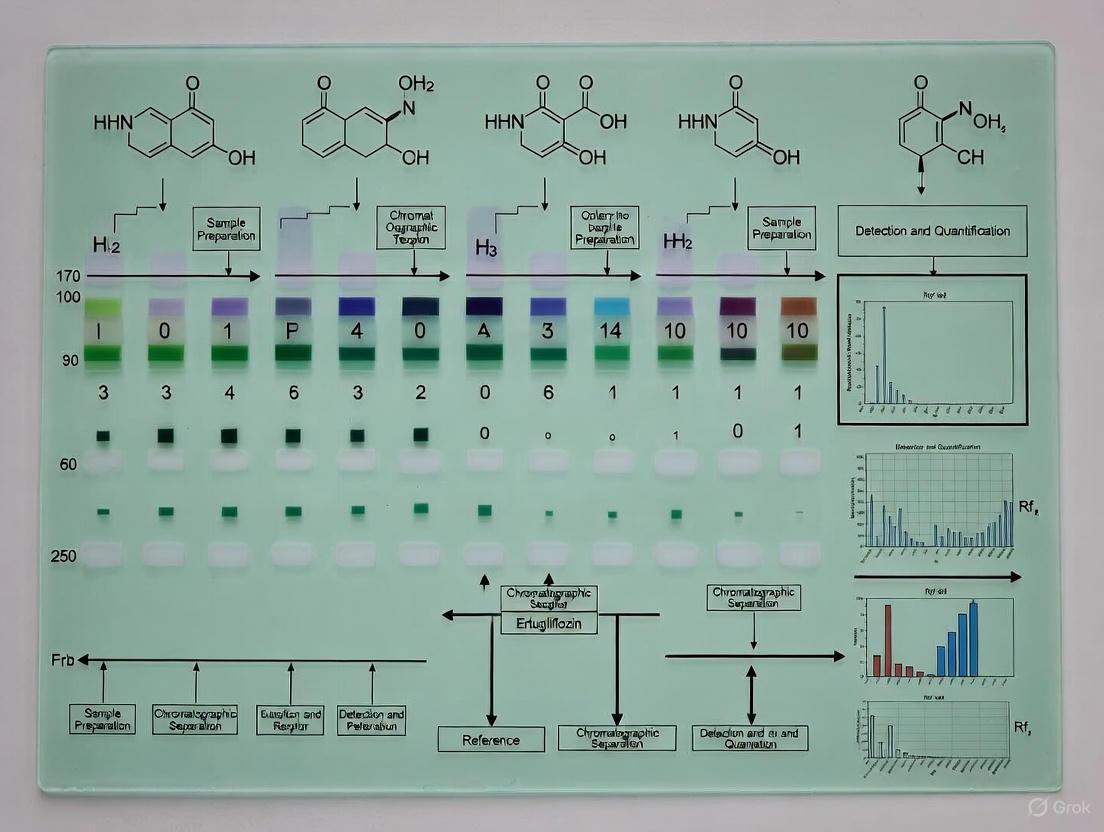
This article presents a comprehensive guide to developing a green, stability-indicating reversed-phase high-performance thin-layer chromatography (RP-HPTLC) method for the analysis of Ertugliflozin in tablets.
Development and Validation of a Green Reversed-Phase HPTLC Method for the Analysis of Ertugliflozin in Pharmaceutical Tablets
Abstract
This article presents a comprehensive guide to developing a green, stability-indicating reversed-phase high-performance thin-layer chromatography (RP-HPTLC) method for the analysis of Ertugliflozin in tablets. Tailored for researchers and pharmaceutical analysts, the content spans from foundational principles and method development to systematic troubleshooting and rigorous validation. A key focus is the direct comparison with a traditional normal-phase HPTLC method, demonstrating the superior greenness profile, accuracy, precision, and sensitivity of the RP-HPTLC approach, as evaluated by multiple assessment tools (NEMI, AES, AGREE, ChlorTox). The method offers a robust, sustainable, and compliant solution for quality control in drug development.
Ertugliflozin and the Imperative for Green Analytical Chemistry in Pharmaceutical Analysis
Therapeutic Role and Clinical Pharmacology
Ertugliflozin is a potent, selective sodium-glucose cotransporter 2 (SGLT2) inhibitor approved in the US, EU, and other regions as an adjunct to diet and exercise to improve glycemic control in adults with type 2 diabetes mellitus (T2DM). [1] [2] As a member of the gliflozin drug class, it represents an insulin-independent approach to managing hyperglycemia by targeting renal glucose reabsorption. [1]
Mechanism of Action
Ertugliflozin exerts its therapeutic effects through a unique mechanism that is independent of pancreatic β-cell function or insulin sensitivity: [1]
- SGLT2 Inhibition: SGLT2 is a high-capacity, low-affinity transporter expressed predominantly in the S1 segment of the proximal renal tubule, responsible for approximately 90% of glucose reabsorption from the glomerular filtrate.
- Urinary Glucose Excretion: By selectively inhibiting SGLT2, ertugliflozin blocks renal glucose reabsorption, lowers the renal threshold for glucose, and increases urinary glucose excretion (UGE), thereby reducing plasma glucose concentrations.
- Additional Benefits: The caloric loss associated with glycosuria contributes to weight reduction, while the mild diuretic and natriuretic effects of SGLT2 inhibition help reduce blood pressure. [1]
Table 1: Selectivity Profile of SGLT2 Inhibitors [1]
| SGLT2 Inhibitor | SGLT2 IC₅₀ (nM) | SGLT1 IC₅₀ (nM) | Relative Selectivity (SGLT2:SGLT1) |
|---|---|---|---|
| Canagliflozin | 2.7 | 710 | ~260-fold |
| Dapagliflozin | 1.2 | 1400 | ~1200-fold |
| Empagliflozin | 3.1 | 8300 | ~2700-fold |
| Ertugliflozin | 0.877 | 1960 | ~2200-fold |
Clinical Efficacy
The efficacy of ertugliflozin has been established through the comprehensive VERTIS (eValuation of ERTugliflozin effIcacy and Safety) phase III clinical trial program involving approximately 13,000 patients across more than 40 countries. [1]
- Monotherapy: In treatment-naive patients or those not receiving antidiabetic agents for at least 8 weeks, ertugliflozin (5 or 15 mg once daily) reduced HbA1c by 0.7% or 0.8%, respectively, compared to 0.2% with placebo. [2]
- Combination Therapy: When added to existing metformin therapy, ertugliflozin 5 or 15 mg provided HbA1c reductions of 0.7% or 0.9%, respectively, compared to 0.2% with metformin monotherapy. [2]
- Fixed-Dose Combinations: Ertugliflozin is commercially available as a single entity (Steglatro) and in fixed-dose combinations with metformin hydrochloride (Segluromet) or sitagliptin (Steglujan) to address diverse therapeutic needs. [2]
Physicochemical and Pharmacokinetic Properties
Structural and Chemical Characteristics
Ertugliflozin (PF-04971729/MK-8835) belongs to a novel subclass of selective SGLT2 inhibitors incorporating a unique dioxa-bicyclo[3.2.1]octane (bridged ketal) ring system. [1] The commercial product is formulated as a cocrystal with l-pyroglutamic acid (l-PGA) in a 1:1 ratio, known as ertugliflozin∙l-PGA. [1]
Table 2: Physicochemical Properties of Ertugliflozin [1] [3]
| Property | Description |
|---|---|
| Chemical Name | (1S,2S,3S,4R,5S)-5-[4-Chloro-3-(4-ethoxybenzyl)phenyl]-1-hydroxymethyl-6,8-dioxabicyclo[3.2.1]octane-2,3,4-triol, compound with (2S)-5-oxopyrrolidine-2-carboxylic acid |
| Molecular Formula | C₂₂H₂₅ClO₇ (ertugliflozin free base); C₂₇H₃₂ClNO₁₀ (ertugliflozin∙l-PGA cocrystal) |
| Molecular Weight | 436.13 g/mol (free base); 566.00 g/mol (cocrystal) |
| Appearance | White non-hygroscopic crystalline powder |
| Solubility | Soluble in acetone and ethanol; slightly soluble in acetonitrile and ethyl acetate; sparingly soluble in water |
| BCS Classification | Class I (high solubility, high permeability) |
Pharmacokinetic Profile
The favorable pharmacokinetic profile of ertugliflozin supports its once-daily dosing regimen without regard to meals: [1]
- Absorption: Oral absorption is rapid, with time to peak plasma concentrations (Tₘₐₓ) occurring at 1 hour (fasted) and 2 hours (fed) postdose. Ertugliflozin has an absolute bioavailability of approximately 100% under fasted conditions.
- Distribution: The terminal phase half-life ranges from 11 to 18 hours, and steady-state concentrations are achieved by 6 days after initiating once-daily dosing.
- Food Effects: Administration with food results in no meaningful effect on ertugliflozin area under the curve (AUC) but decreases peak concentrations (Cₘₐₓ) by 29%, which is not considered clinically relevant.
- Special Populations: No dose adjustments are required for patients with renal impairment or mild-to-moderate hepatic impairment based on pharmacokinetic data.
Analytical Challenges and Degradation Profile
The analysis of ertugliflozin in pharmaceutical formulations presents specific challenges due to its chemical structure and susceptibility to degradation under certain stress conditions.
Stability and Degradation Pathways
Forced degradation studies conducted according to ICH guidelines reveal that ertugliflozin is relatively stable under thermal, photolytic, neutral, and alkaline hydrolysis conditions but undergoes significant degradation in acidic and oxidative environments. [3] Recent research has identified and structurally characterized five novel degradation products formed under these stress conditions. [3]
Figure 1: Ertugliflozin degradation pathways under stress conditions. Acidic hydrolysis produces four distinct degradation products, while oxidative stress yields one additional product. [3]
The structural characterization of these degradation products requires advanced analytical techniques including ultra-high-performance liquid chromatography-mass spectrometry (UHPLC-MS), high-resolution mass spectrometry (HRMS), and nuclear magnetic resonance (NMR) spectroscopy. [3] The identification and control of these impurities are critical for ensuring drug safety, stability, and quality.
Green Analytical Chemistry Considerations
Traditional analytical methods for pharmaceutical analysis often employ significant quantities of hazardous organic solvents, generating substantial waste with environmental concerns. The principles of Green Analytical Chemistry (GAC) emphasize: [4]
- Replacement of hazardous solvents with environmentally preferable alternatives
- Reduction of solvent consumption and waste generation
- Use of energy-efficient instruments and procedures
- Minimization of sample preparation steps
Greenness assessment tools such as the National Environmental Method Index (NEMI), Analytical Eco-Scale (AES), ChlorTox, and Analytical GREEnness (AGREE) provide systematic approaches to evaluate and improve the environmental sustainability of analytical methods. [4]
Experimental Protocols
Green Reversed-Phase HPTLC Method for Ertugliflozin Quantification
This protocol describes a validated reversed-phase high-performance thin-layer chromatography (RP-HPTLC) method for the determination of ertugliflozin in pharmaceutical tablets, emphasizing green chemistry principles. [4]
Materials and Equipment
Table 3: Research Reagent Solutions for RP-HPTLC Analysis [4]
| Item | Specification | Function/Purpose |
|---|---|---|
| Stationary Phase | RP-18F₂₅₄S HPTLC plates (e.g., silica gel 60 RP-18F₂₅₄S) | Separation medium providing reversed-phase chromatography |
| Mobile Phase | Ethanol-water (80:20 v/v) | Green solvent system for elution; ethanol replaces more hazardous organic solvents |
| Sample Solvent | Ethanol or ethanol-water mixture | Environmentally preferable solvent for sample preparation |
| Standard Solution | Ertugliflozin reference standard in ethanol | Quantification standard for calibration |
| HPTLC Instrumentation | Automated sample applicator, development chamber, TLC scanner | Precise application, development, and detection of chromatographic separation |
Procedure
Plate Preparation: Pre-cut RP-18F₂₅₄S HPTLC plates to appropriate size. If necessary, pre-wash the plates with methanol and activate at 60°C for 5 minutes.
Standard Solution Preparation: Accurately weigh approximately 10 mg of ertugliflozin reference standard into a 10 mL volumetric flask. Dissolve and make up to volume with ethanol to obtain a stock solution of 1 mg/mL. Prepare working standards by appropriate dilution.
Sample Preparation: Weigh and powder not less than 20 tablets. Transfer an accurately weighed portion of the powder equivalent to about 10 mg of ertugliflozin to a 10 mL volumetric flask. Add about 7 mL of ethanol, sonicate for 10 minutes with intermittent shaking, dilute to volume with ethanol, and mix well. Filter the solution through a 0.45 μm membrane filter.
Sample Application: Using an automated sample applicator, apply standards and samples as bands typically 6 mm wide and 8 mm apart, with application rate of 15 nL/s. The dosage volume should be adjusted to ensure sample concentrations fall within the linear range of 25-1200 ng/band.
Chromatographic Development: Develop the plate in a twin-trough glass chamber previously saturated with mobile phase (ethanol-water, 80:20 v/v) for 20 minutes at room temperature. The development distance should be approximately 80 mm from the point of application.
Detection and Scanning: After development, dry the plate in air and scan at 199 nm using a TLC scanner operated in deuterium lamp mode with slit dimensions of 5.00 × 0.45 mm.
Data Analysis: Measure peak areas and prepare a calibration curve by plotting peak area against concentration of standard bands. Determine ertugliflozin concentration in samples by interpolation from the calibration curve.
Method Validation
The method should be validated according to ICH Q2(R2) guidelines for the following parameters: [4]
- Linearity: Demonstrate linear response over the concentration range of 25-1200 ng/band with correlation coefficient (r²) > 0.99
- Precision: Intra-day and inter-day precision should show %RSD < 2%
- Accuracy: Recovery studies should yield results in the range of 98-102%
- Specificity: No interference from excipients or degradation products
- Robustness: Method should withstand small, deliberate variations in mobile phase composition and development conditions
Comparison of Normal-Phase vs. Reversed-Phase HPTLC
Table 4: Comparative Method Performance for Ertugliflozin Analysis [4]
| Parameter | Normal-Phase HPTLC | Reversed-Phase HPTLC |
|---|---|---|
| Stationary Phase | Silica gel 60 NP-18F₂₅₄S | Silica gel 60 RP-18F₂₅₄S |
| Mobile Phase | Chloroform-methanol (85:15 v/v) | Ethanol-water (80:20 v/v) |
| Linear Range | 50–600 ng/band | 25–1200 ng/band |
| Detection Wavelength | 199 nm | 199 nm |
| Rf Value | 0.29 ± 0.01 | 0.68 ± 0.01 |
| Tailing Factor (As) | 1.06 ± 0.02 | 1.08 ± 0.03 |
| Theoretical Plates/m | 4472 ± 4.22 | 4652 ± 4.02 |
| Greenness Assessment | Less favorable (uses chloroform) | More favorable (uses ethanol) |
Figure 2: Comparative analytical workflow for normal-phase versus reversed-phase HPTLC analysis of ertugliflozin. The reversed-phase method offers superior linear range and greener solvent system. [4]
Ertugliflozin represents an important therapeutic option in the management of type 2 diabetes mellitus, with a well-characterized mechanism of action, favorable pharmacokinetic profile, and demonstrated clinical efficacy. From an analytical perspective, the development of reliable, sensitive, and environmentally sustainable methods for its quantification represents an ongoing research priority.
The RP-HPTLC method described herein provides a green alternative to traditional analytical approaches, aligning with the principles of green analytical chemistry while maintaining rigorous performance standards. This methodology offers particular advantages for routine quality control applications in pharmaceutical analysis, where efficiency, cost-effectiveness, and environmental considerations are increasingly important.
Future directions in ertugliflozin analysis may focus on further miniaturization of methods, development of even greener solvent systems, and implementation of advanced detection techniques to enhance sensitivity and specificity while reducing environmental impact.
The Principles of Green Analytical Chemistry (GAC) and Regulatory Drivers for Sustainable Methods
Green Analytical Chemistry (GAC) has emerged as a transformative discipline within analytical science, driven by the need to align laboratory practices with global sustainability goals. GAC seeks to minimize the environmental and human health impacts of analytical methodologies while maintaining the high standards of accuracy, precision, and reliability required in pharmaceutical and chemical analysis [5] [6]. This paradigm shift is particularly relevant in pharmaceutical analysis, where traditional methods often consume significant resources, generate substantial hazardous waste, and utilize toxic solvents.
The development of GAC stems from the broader framework of green chemistry, with foundational principles formally proposed to meet the specific needs of analytical laboratories [5]. The core challenge and objective of GAC lie in achieving an optimal compromise between the increasing quality of analytical results and improving the environmental friendliness of the methods [5]. For researchers working on analytical methods for pharmaceuticals such as ertugliflozin, implementing GAC principles means redesigning workflows to reduce hazardous waste, minimize energy consumption, enhance operator safety, and properly manage analytical waste, thereby contributing to more sustainable pharmaceutical quality control.
The 12 Principles of Green Analytical Chemistry
The 12 principles of Green Analytical Chemistry provide a comprehensive framework for designing, developing, and evaluating environmentally benign analytical methods. These principles adapt and extend the original green chemistry concepts to address the specific requirements and challenges of analytical chemistry [5]. The table below summarizes the twelve principles and their core objectives:
Table 1: The 12 Principles of Green Analytical Chemistry
| Principle Number | Principle Name | Core Objective |
|---|---|---|
| 1 | Direct Techniques | Apply direct analytical techniques to avoid sample treatment [5] |
| 2 | Reduced Sample Size | Minimize sample size and number of samples [5] |
| 3 | In Situ Measurements | Perform measurements in situ when possible [5] |
| 4 | Process Integration | Integrate analytical processes and operations [5] |
| 5 | Automation & Miniaturization | Select automated and miniaturized methods [5] |
| 6 | Derivatization Avoidance | Avoid derivatization where possible [5] |
| 7 | Waste Minimization | Avoid generation of large waste volumes [5] |
| 8 | Multi-Analyte Assays | Conduct multi-analyte or multi-parameter assays [5] |
| 9 | Energy Reduction | Minimize total energy consumption [5] |
| 10 | Green Reagents | Use reagents from renewable sources [5] |
| 11 | Waste Toxicity Reduction | Minimize toxicity of analytical waste [5] |
| 12 | Operator Safety | Increase safety for the operator [5] |
These principles collectively emphasize strategies such as preventing waste generation rather than treating it after formation, using safer solvents and auxiliaries, designing for energy efficiency, and reducing the need for derivatization [5] [6]. Principle 10 introduces the novel concept of employing natural reagents, reflecting the continuous evolution of GAC to incorporate new sustainable ideas [5].
Figure 1: Visualization of GAC Principle Categories. The diagram groups the 12 principles into strategic, material-oriented, and operational categories to illustrate their interconnected relationships.
Regulatory Drivers and Assessment Frameworks
Regulatory Landscape
The implementation of sustainable analytical methods is increasingly influenced by regulatory requirements and global sustainability initiatives. The U.S. Food and Drug Administration (FDA) requires environmental assessments (EAs) as part of certain new drug applications, abbreviated applications, and investigational new drug applications, unless the action qualifies for categorical exclusion [7]. This regulatory framework ensures that the environmental impacts of pharmaceutical products and their analytical control methods are considered during the approval process.
Internationally, regulatory programs such as the European Union's Water Framework Directive and the U.S. Clean Water Act govern the discharge of damaging materials, including pharmaceutical residues, into the environment [8]. The European Green Deal and Zero Pollution Action Plan further reinforce the need for sustainable practices across the pharmaceutical lifecycle [8]. These regulatory drivers are complemented by international standards such as ISO 14001 for environmental management systems and ISO 22000 for food safety management, which increasingly incorporate environmental sustainability criteria [6].
Greenness Assessment Tools
To evaluate and quantify the environmental performance of analytical methods, several greenness assessment tools have been developed. These metrics enable objective comparison between methods and support continuous improvement in sustainability performance:
Table 2: Greenness Assessment Tools for Analytical Methods
| Assessment Tool | Output Format | Key Assessment Criteria | Advantages |
|---|---|---|---|
| Analytical Eco-Scale (AES) [6] [4] | Penalty point system and total score | Reagent toxicity, waste amount, energy consumption, occupational hazards [6] | Simple semi-quantitative evaluation suitable for routine analysis [6] |
| AGREE Metric [6] [4] | Radial diagram (0-1) and total score | All 12 GAC principles integrated into holistic algorithm [6] | Comprehensive evaluation with intuitive visual output [6] |
| Green Analytical Procedure Index (GAPI) [6] | Color-coded pictogram | Entire analytical workflow from sampling to final determination [6] | Easy visualization of environmental hotspots in method [6] |
| NEMI Scale [9] | Binary pictogram (four quadrants) | PBT (persistent, bioaccumulative, toxic), hazardous, corrosive, waste quantity [9] | Quick visual assessment using simple criteria [9] |
| BAGI (Blueness Assessment) [10] [6] | Asteroid diagram and percentage score | Throughput, cost, availability, operational simplicity, practical viability [6] | Evaluates practical applicability alongside greenness [6] |
The AGREE metric, introduced in 2020, represents one of the most comprehensive tools as it integrates all 12 GAC principles into a unified algorithm, providing both a single-score evaluation and an intuitive radial diagram output [6]. For sample preparation steps, the AGREEprep tool offers specialized evaluation through ten assessment criteria [6]. The recent development of the Blue Applicability Grade Index (BAGI) complements greenness assessment by focusing on practical method applicability, supporting the emerging concept of White Analytical Chemistry (WAC) that balances analytical performance (red), environmental impact (green), and practical applicability (blue) [6].
Figure 2: Greenness and Applicability Assessment Workflow. The diagram illustrates the relationship between greenness assessment tools, practicality evaluation, and their integration through White Analytical Chemistry.
Application Note: Green RP-HPTLC for Ertugliflozin
Experimental Protocol: Green RP-HPTLC Method for Ertugliflozin Quantification
Method Overview: This application note details a green reversed-phase high-performance thin-layer chromatography (RP-HPTLC) method for the quantification of ertugliflozin in pharmaceutical tablets, demonstrating the practical implementation of GAC principles.
Materials and Reagents:
Table 3: Research Reagent Solutions for Green RP-HPTLC
| Reagent/Material | Specification | Function in Method | Green Alternative Rationale |
|---|---|---|---|
| Ertugliflozin standard | Pharmaceutical secondary standard (purity >98%) | Reference standard for quantification | Enables method validation and accurate quantification |
| Ethanol (Green solvent) | HPLC grade, bio-based preferred | Mobile phase component | Replaces toxic acetonitrile and methanol; biodegradable and less hazardous [4] |
| Purified water | HPLC grade | Mobile phase component | Non-toxic, renewable solvent replacing buffer solutions [4] |
| RP-18 HPTLC plates | Silica gel 60 RP-18F254S, 10 × 20 cm | Stationary phase | Enables reversed-phase separation without derivatization |
| Ethyl acetate | HPLC grade (for cleaning) | Equipment cleaning | Less hazardous than chlorinated solvents |
Instrumentation and Conditions:
- HPTLC System: CAMAG HPTLC system with Automatic TLC Sampler 4 (ATS4) sample applicator
- Stationary Phase: Silica gel 60 RP-18F254S plates (Merck, Germany)
- Mobile Phase: Ethanol-water (80:20, v/v) [4]
- Application Volume: 10 μL as bands (6 mm width)
- Development Distance: 75 mm in twin-trough chamber
- Saturation Time: 15 minutes at room temperature
- Detection: Densitometric scanning at 199 nm
- Analysis Time: Approximately 20 minutes per sample (including development)
Sample Preparation:
- Standard Solution: Accurately weigh 10 mg of ertugliflozin reference standard and dissolve in 10 mL of ethanol-water (80:20, v/v) to obtain 1000 μg/mL stock solution.
- Tablet Sample: Weigh and finely powder twenty tablets. Transfer powder equivalent to 10 mg of ertugliflozin to 10 mL volumetric flask.
- Extraction: Add 7 mL of ethanol-water (80:20, v/v), sonicate for 15 minutes, dilute to volume with the same solvent, and mix well.
- Filtration: Filter through 0.45 μm membrane filter before application to HPTLC plates.
Method Validation Parameters (as per ICH Q2(R2) guidelines):
- Linearity Range: 25-1200 ng/band [4]
- Precision: %RSD <2% for intra-day and inter-day precision [4]
- Accuracy: 98-102% recovery across three concentration levels [4]
- Detection Limit: 8.2 ng/band [4]
- Quantification Limit: 25 ng/band [4]
- Robustness: Deliberate variations in mobile phase composition (±2%) and development distance (±5 mm)
Greenness Profile of the RP-HPTLC Method
The greenness of the developed RP-HPTLC method was evaluated using multiple assessment tools and compared with conventional normal-phase (NP)-HPTLC and reported HPLC methods:
Table 4: Comparative Greenness Assessment of Ertugliflozin Methods
| Assessment Tool | RP-HPTLC Method | NP-HPTLC Method | Reported HPLC Methods |
|---|---|---|---|
| Analytical Eco-Scale | Score: >90 (Excellent greenness) [4] | Score: ~75 (Acceptable greenness) [4] | Score: <50 (Inadequate greenness) [4] |
| AGREE Metric | Score: >0.80 [4] | Score: ~0.60 [4] | Score: <0.40 [4] |
| NEMI Pictogram | All four quadrants green [4] | Two quadrants green [4] | Typically one quadrant green [4] |
| BAGI Applicability | High score (>80%) [10] | Moderate score (~60%) | Variable, typically moderate |
| Solvent Greenness | Ethanol-water (green solvents) [4] | Chloroform-methanol (hazardous solvents) [4] | Acetonitrile-methanol (hazardous solvents) [4] |
| Waste Generation | <10 mL per analysis [4] | 15-20 mL per analysis [4] | 50-1000 mL per analysis [4] |
The greenness advantages of the RP-HPTLC method are substantial, primarily due to the replacement of hazardous chloroform and methanol with environmentally benign ethanol and water, minimal solvent consumption, reduced energy requirements, and significantly lower waste generation compared to conventional HPLC methods [4].
The integration of Green Analytical Chemistry principles into pharmaceutical analysis represents both an ethical imperative and a practical opportunity for innovation. The application of GAC principles to the development of RP-HPTLC methods for pharmaceuticals like ertugliflozin demonstrates that significant environmental benefits can be achieved without compromising analytical performance. The greenness assessment tools provide objective evidence of these improvements, while regulatory frameworks create increasing incentives for adopting sustainable practices.
Future developments in GAC will likely focus on several key areas. The integration of artificial intelligence and machine learning for method optimization, the development of novel green solvents with improved chromatographic properties, and the advancement of miniaturized and portable devices will further enhance the sustainability of analytical workflows [11]. Additionally, the concept of White Analytical Chemistry, which balances the red (analytical performance), green (environmental impact), and blue (practical applicability) aspects, will gain wider adoption as researchers seek holistic method evaluation [6].
For pharmaceutical researchers and quality control laboratories, embracing GAC principles offers a pathway to reduce environmental impact, decrease operating costs, enhance operator safety, and align with global sustainability initiatives. The methods and assessment frameworks described in this application note provide a practical foundation for implementing green analytical practices in the context of ertugliflozin analysis and beyond, contributing to the broader transformation of analytical chemistry into a more sustainable scientific discipline.
High-Performance Thin-Layer Chromatography (HPTLC) has emerged as a sophisticated, versatile, and environmentally conscious analytical technique particularly suited for the quality control of pharmaceuticals. Its distinctive workflow, which allows for the parallel analysis of multiple samples on a single plate, offers significant advantages in efficiency, cost-effectiveness, and solvent consumption compared to column chromatographic techniques like HPLC. This application note frames these attributes within a specific research context: the development and green profiling of methods for the analysis of ertugliflozin (ERZ), a sodium-glucose cotransporter-2 (SGLT2) inhibitor used in the management of type 2 diabetes mellitus [4] [12]. The pressing need for sustainable analytical practices in drug development and quality control has brought the greenness of analytical methods to the forefront. This document provides a detailed comparison of two fundamental HPTLC approaches—Normal-Phase (NP) and Reversed-Phase (RP)—focusing on their validation metrics and environmental impact, using the analysis of ertugliflozin as a case study.
Theoretical Foundations: NP-HPTLC vs. RP-HPTLC
The primary distinction between Normal-Phase and Reversed-Phase HPTLC lies in the polarity of the stationary phase and the consequent mechanism of separation.
Normal-Phase HPTLC (NP-HPTLC): This method utilizes a polar stationary phase, most commonly silica gel. Separation is achieved based on the differential affinity of analytes for the polar stationary phase, with more polar compounds being more strongly retained and thus migrating shorter distances. Traditional NP-HPTLC often employs mobile phases that are non-aqueous and involve organic solvents of varying polarity, such as chloroform-methanol mixtures [4].
Reversed-Phase HPTLC (RP-HPTLC): In contrast, RP-HPTLC employs a non-polar stationary phase, typically silica gel that has been derivatized with alkyl chains, such as C18 (octadecylsilane). Here, the separation mechanism is inverted: more non-polar compounds are retained more strongly on the hydrophobic stationary phase. This mode of chromatography frequently uses aqueous-organic solvent mixtures, such as ethanol-water, as the mobile phase [4].
The choice between these two modes has profound implications not only for the selectivity and performance of the method but also for its environmental footprint and safety, which are central tenets of Green Analytical Chemistry (GAC).
Case Study: Green Profiling of Ertugliflozin Methods
A direct comparative study was conducted to develop stability-indicating HPTLC methods for the determination of ertugliflozin in pharmaceutical tablets. The study meticulously designed, validated, and evaluated both NP and RP methods, providing a robust dataset for comparison [4] [12].
Experimental Conditions and Reagents
The foundational parameters for the two methods are summarized in the table below.
Table 1: Summary of Experimental Conditions for NP-HPTLC and RP-HPTLC Methods for Ertugliflozin
| Parameter | Normal-Phase (NP) HPTLC | Reversed-Phase (RP) HPTLC |
|---|---|---|
| Stationary Phase | Silica gel 60 NP-18F~254S | Silica gel 60 RP-18F~254S |
| Mobile Phase | Chloroform/Methanol (85:15, v/v) | Ethanol/Water (80:20, v/v) |
| Detection Wavelength | 199 nm | 199 nm |
| Linear Range | 50–600 ng/band | 25–1200 ng/band |
| Sample Application | ||
| Chromatographic Development | ||
| Detection |
The Researcher's Toolkit: Essential Materials and Reagents
Table 2: Key Research Reagent Solutions and Equipment
| Item | Function/Description |
|---|---|
| HPTLC Plates (NP & RP) | The solid support coated with the stationary phase (silica gel or C18) where separation occurs. |
| Linomat 5 Automatic Applicator | A semi-automatic device used for precise, band-wise application of samples and standards onto the HPTLC plate. |
| TLC Scanner 3 | A densitometer that scans the developed plate, quantifying the concentration of analytes based on UV absorbance. |
| Standard Solution of Ertugliflozin | A pure, accurately weighed reference standard of the drug, dissolved in an appropriate solvent (e.g., methanol), used for calibration. |
| Mobile Phase Solvents | The eluent system that carries the analytes through the stationary phase. The choice (chloroform vs. ethanol) is critical for both performance and greenness. |
| Twin-Trough Development Chamber | A glass chamber where the mobile phase migrates through the stationary phase via capillary action, effecting the separation. |
Method Validation and Performance Metrics
Both methods were validated according to International Council for Harmonisation (ICH) guidelines. The key validation parameters are consolidated in the table below, demonstrating the superior performance of the RP-HPTLC method [4].
Table 3: Comparison of Validation Metrics for NP-HPTLC and RP-HPTLC Methods
| Validation Parameter | Normal-Phase (NP) HPTLC | Reversed-Phase (RP) HPTLC |
|---|---|---|
| Linearity (Range) | 50–600 ng/band | 25–1200 ng/band |
| Precision (% RSD) | Data not explicitly stated in results, but described as lower than RP. | Data not explicitly stated, but described as higher than NP. |
| Accuracy (Assay % in Tablets) | 87.41% | 99.28% |
| Robustness | Less robust | More robust |
| Theoretical Plates per Meter (N/m) | 4472 ± 4.22 | 4652 ± 4.02 |
| Tailing Factor (A~s~) | 1.06 ± 0.02 | 1.08 ± 0.03 |
| Limit of Detection (LOD) | Implied to be less sensitive (higher LOD) | More sensitive (lower LOD); wider linear range suggests better sensitivity. |
Greenness Assessment Using Multiple Metric Tools
The environmental profile of each method was rigorously evaluated using four distinct greenness assessment tools, providing a multi-faceted view of their ecological impact [4].
- National Environmental Method Index (NEMI): This tool provides a simple pictogram. The RP-HPTLC method, using ethanol-water, scored favorably as ethanol is biodegradable, less hazardous, and less toxic compared to the chloroform-methanol system used in NP-HPTLC [4].
- Analytical Eco-Scale (AES): This semi-quantitative tool assigns penalty points to hazardous reagents and energy consumption. A higher score indicates a greener method. The RP-HPTLC method achieved a higher AES score than the NP-HPTLC method [4].
- ChlorTox: This tool specifically evaluates the toxicity and environmental impact of chlorinated solvents. The NP-HPTLC method's use of chloroform incurred a significantly higher penalty, confirming the environmental advantage of the chloroform-free RP-HPTLC method [4].
- Analytical GREEnness (AGREE): This comprehensive tool uses a 0-1 scale, where 1 is ideal greenness. The RP-HPTLC method achieved a significantly higher AGREE score compared to the NP-HPTLC method, consolidating its status as the superior green analytical method [4].
The following diagram illustrates the logical workflow for method selection and greenness assessment leading to the conclusive advantage of the RP approach.
Detailed Experimental Protocols
Protocol A: Sample Preparation for Ertugliflozin Tablets
- Weighing: Accurately weigh and finely powder not less than 20 tablets.
- Extraction: Transfer an amount of powder equivalent to about 10 mg of ertugliflozin to a 10 mL volumetric flask.
- Solubilization: Add about 7 mL of methanol to the flask.
- Sonication: Sonicate the mixture for 15-20 minutes with occasional shaking to ensure complete dissolution of the active ingredient.
- Dilution: Allow the solution to cool to room temperature. Dilute to volume with methanol and mix well.
- Filtration: Filter the solution through a 0.45 μm syringe filter, discarding the first 1 mL of the filtrate.
Protocol B: Method Development and Optimization
- Stationary Phase Selection:
- For NP-HPTLC: Use pre-coated silica gel 60 NP-18F~254S~ plates.
- For RP-HPTLC: Use pre-coated silica gel 60 RP-18F~254S~ plates.
- Mobile Phase Optimization (as per the case study [4]):
- For NP-HPTLC: Test different ratios of chloroform and methanol (e.g., from 95:5 to 45:55 v/v). The optimal ratio for a sharp peak at R~f~ 0.29 was found to be Chloroform/Methanol (85:15 v/v).
- For RP-HPTLC: Test different ratios of ethanol and water (e.g., from 90:10 to 40:60 v/v). The optimal ratio for a sharp peak at R~f~ 0.68 was found to be Ethanol/Water (80:20 v/v).
- Chamber Saturation: Pour the optimized mobile phase into a twin-trough developing chamber. Line the chamber with filter paper and allow it to saturate for 20 minutes at room temperature before plate development.
Protocol C: Chromatographic Procedure
- Sample Application: Using a semi-automatic applicator (e.g., CAMAG Linomat 5), apply bands of the standard and sample solutions (e.g., 4-6 mm band width) onto the HPTLC plate. The application position should typically be 8 mm from the bottom and 10 mm from the side. Maintain a consistent distance between bands.
- Plate Development: Place the spotted plate into the pre-saturated developing chamber. Allow the mobile phase to ascend vertically to a distance of 70-80 mm from the point of application.
- Drying: Remove the plate from the chamber and allow it to dry completely in a fume hood using a stream of hot air to evaporate the solvents.
- Detection: Place the dried plate in a TLC scanner (e.g., CAMAG TLC Scanner 3) and scan the chromatograms at 199 nm in absorbance mode. The resulting chromatograms are used for the qualitative (R~f~ value) and quantitative (peak area) analysis of ertugliflozin.
The comprehensive comparison of NP-HPTLC and RP-HPTLC methods for the analysis of ertugliflozin, framed within the context of green chemistry principles, unequivocally demonstrates the superiority of the reversed-phase approach. The RP-HPTLC method, utilizing an ethanol-water mobile phase, was found to be more precise, accurate, sensitive, and robust than its normal-phase counterpart, which relied on a chloroform-methanol system. Crucially, the application of four different greenness metric tools (NEMI, AES, ChlorTox, and AGREE) consistently confirmed that the RP-HPTLC method possesses a significantly superior environmental profile [4]. This case study powerfully illustrates that analytical performance and ecological sustainability are not mutually exclusive goals. For researchers and drug development professionals seeking to implement modern, green analytical practices, the strategic choice of RP-HPTLC with eco-friendly solvents like ethanol and water is highly recommended. This approach aligns with the broader thesis that Reversed-Phase HPTLC represents a viable and superior pathway for the sustainable analysis of pharmaceuticals like ertugliflozin.
Critical Review of Existing Analytical Methods for Ertugliflozin and Identified Gaps
Ertugliflozin (ERZ) is a sodium-glucose cotransporter-2 (SGLT2) inhibitor approved for managing type 2 diabetes mellitus [4] [13]. Ensuring its quality, safety, and efficacy in pharmaceutical products requires robust, precise, and environmentally sustainable analytical methods. While various techniques have been reported for ERZ analysis, significant gaps remain in the development of green, stability-indicating methods, particularly using advanced planar chromatographic platforms.
This review critically evaluates existing analytical methodologies for ertugliflozin, highlighting their validation metrics, environmental impact, and practical applicability. Within the broader context of thesis research on green reversed-phase high-performance thin-layer chromatography (RP-HPTLC) for ERZ in tablets, this analysis identifies crucial methodological gaps and proposes future directions aligned with the principles of green analytical chemistry (GAC).
Reported Analytical Techniques for Ertugliflozin
A literature survey reveals that several analytical techniques have been employed for the determination of ertugliflozin in bulk drugs, pharmaceutical formulations, and biological matrices. These include chromatographic methods such as High-Performance Liquid Chromatography (HPLC), Ultra-Performance Liquid Chromatography (UPLC), and Thin-Layer Chromatography (TLC), as well as spectroscopic and hyphenated techniques [14] [13].
Spectroscopic Methods: UV spectrophotometry has been utilized for the determination of ERZ in pharmaceutical formulations, offering simplicity and cost-effectiveness [14]. However, these methods may lack the specificity required for analysis in complex matrices and are generally not suitable for simultaneous quantification of multiple components or stability-indicating analysis.
Chromatographic Methods:
- HPLC and RP-HPLC: Numerous HPLC methods, particularly reversed-phase (RP) modes, have been developed for ERZ, both alone and in combination with other drugs like sitagliptin and metformin [4] [15]. These methods are prized for their robustness, accuracy, and precision.
- UPLC and UPLC-MS/MS: Ultra-performance liquid chromatography coupled with tandem mass spectrometry provides high sensitivity, specificity, and faster analysis times [10]. A specific UPLC-MS/MS method was developed for simultaneous estimation of ERZ and sitagliptin in bulk and tablet forms, demonstrating linearity in the range of 5–22.5 ng/mL for ERZ and 10–150 ng/mL for sitagliptin [10].
- LC-MS/MS: Liquid chromatography with tandem mass spectrometry has been primarily applied to the quantification of ERZ in biological samples like human plasma and urine, leveraging high sensitivity and selectivity for low-concentration analytes in complex matrices [14].
Planar Chromatographic Methods: Prior to 2024, no HPTLC methods for ERZ were documented in the literature [4] [12]. A recent study directly addressed this gap by developing and validating both normal-phase (NP) and reversed-phase (RP) HPTLC methods, with a particular emphasis on the greenness profile of the RP-HPTLC approach [4] [12].
Comparative Performance and Validation Metrics
A direct comparison of normal-phase (NP) and reversed-phase (RP) HPTLC methods reveals significant differences in performance characteristics, as summarized in Table 1.
Table 1: Comparison of NP-HPTLC and RP-HPTLC Methods for Ertugliflozin [4]
| Parameter | NP-HPTLC Method | RP-HPTLC Method |
|---|---|---|
| Stationary Phase | Silica gel 60 NP-18F254S | Silica gel 60 RP-18F254S |
| Mobile Phase | Chloroform/Methanol (85:15 v/v) | Ethanol-Water (80:20 v/v) |
| Detection Wavelength | 199 nm | 199 nm |
| Linearity Range | 50–600 ng/band | 25–1200 ng/band |
| Assay Result (Tablets) | 87.41% | 99.28% |
| Key Advantages | Stability-indicating | Greener, more robust, accurate, precise, linear, and sensitive |
The RP-HPTLC method demonstrates superior performance with a wider linear range, higher sensitivity (lower detection limit), and a more accurate assay result for commercial tablets compared to the NP-HPTLC method [4]. Both methods possess stability-indicating characteristics, as they can successfully analyze ERZ in the presence of its degradation products [4] [12].
Detailed Experimental Protocols
Protocol for Green RP-HPTLC Analysis of Ertugliflozin
This protocol details the setup for the green RP-HPTLC method, which can be adopted for the quantitative analysis of ERZ in pharmaceutical tablets.
I. Materials and Reagents (The Scientist's Toolkit) Table 2: Essential Research Reagent Solutions for RP-HPTLC
| Item | Specification/Function |
|---|---|
| Stationary Phase | HPTLC plates RP-18F254S (e.g., silica gel 60 RP-18F254S). These reversed-phase plates use C18-modified silica gel as the stationary phase [4] [16]. |
| Mobile Phase | Ethanol and water in a ratio of 80:20 (v/v). Ethanol is a greener solvent alternative [4]. |
| Standard Solution | Ertugliflozin reference standard. Prepare stock solution in an appropriate solvent like ethanol and further dilute to working concentrations [4]. |
| Sample Solution | Powder from commercially available ERZ tablets, extracted and dissolved in the same solvent as the standard [4]. |
| Development Chamber | Standard twin-trough glass chamber for HPTLC, pre-saturated with mobile phase vapor for 20 minutes at room temperature [4]. |
| Detection Instrument | TLC scanner operated at 199 nm for densitometric analysis [4]. |
II. Procedure
- Plate Pre-washing (Optional): Pre-wash RP-HPTLC plates with methanol to remove potential impurities, then dry and activate in an oven if necessary.
- Sample Application: Using an automated applicator (e.g., Linomat 5), apply standard and sample solutions as bands (e.g., 6 mm length) onto the RP-HPTLC plate. Maintain a consistent distance from the bottom and between bands.
- Chromatographic Development: Develop the plate in a twin-trough chamber saturated with the ethanol-water (80:20 v/v) mobile phase. The optimum development distance is approximately 8 cm from the point of application [4].
- Plate Drying: After development, remove the plate and air-dry it thoroughly in a fume hood to evaporate the mobile phase completely.
- Detection and Quantification: Scan the developed and dried plate using a TLC scanner in the absorbance mode at 199 nm. Generate a calibration curve by plotting the peak area against the concentration of the standard bands and use this to quantify ERZ in the sample bands [4].
HPTLC Workflow and Method Selection
The following diagram illustrates the logical workflow for developing and selecting an appropriate HPTLC method for Ertugliflozin analysis, culminating in the recommended green RP-HPTLC protocol.
Critical Gaps in Current Analytical Methods
Gaps in Green Analytical Chemistry
A significant gap in the existing literature on ERZ analysis is the limited application of Green Analytical Chemistry (GAC) principles. Many reported methods rely on traditional solvents without considering their environmental impact, health hazards, and waste generation [4].
The recent development of a green RP-HPTLC method directly addresses this gap. The method was systematically evaluated using four greenness assessment tools: National Environmental Method Index (NEMI), Analytical Eco-Scale (AES), ChlorTox, and Analytical GREEnness (AGREE) [4] [12]. The results demonstrated that the RP-HPTLC method, utilizing an ethanol-water mobile phase, is significantly greener than the NP-HPTLC method (which uses chloroform-methanol) and all other reported HPLC techniques [4] [12]. The move towards solvents like ethanol, which is biodegradable and less toxic, is a crucial step in making pharmaceutical analysis more sustainable [4].
Technological and Applicability Gaps
Beyond environmental considerations, several other technological gaps exist:
- Lack of Advanced HPTLC Platforms: While basic HPTLC methods are now emerging, there is a complete absence of advanced "HPTLC+" multimodal approaches for ERZ analysis. These platforms integrate HPTLC with high-end techniques like Mass Spectrometry (MS), Surface-Enhanced Raman Spectroscopy (SERS), and bioautography, which can provide superior sensitivity, selectivity, and the ability to detect biological activity directly from the plate [17].
- Limited Stability-Indicating Methods: Although some methods claim to be stability-indicating, there is a need for more comprehensive forced degradation studies that are fully validated according to International Council for Harmonisation (ICH) guidelines to demonstrate specificity in the presence of degradation products [4] [15].
- Scalability and Transferability: The transfer of methods from development to quality control settings and between different laboratories can be hampered by a lack of robustness testing and detailed system suitability parameters, which are not always thoroughly reported [15].
The critical review of existing analytical methods for ertugliflozin reveals that while several robust techniques like HPLC and LC-MS/MS are well-established, a notable gap existed in the realm of planar chromatography, which has only recently been filled. The newly developed green RP-HPTLC method stands out for its combination of validation performance and adherence to GAC principles, making it a strong candidate for routine quality control of ERZ in tablets.
Future work should focus on leveraging advanced HPTLC platforms by coupling them with mass spectrometry (HPTLC-MS) for unambiguous identification of ERZ and its degradation products, or with bioautography to screen for biological activity. Furthermore, the integration of machine learning, such as convolutional neural networks (CNNs), for automated spot recognition and data processing could enhance analytical efficiency, reduce human error, and improve reproducibility [17]. The continued emphasis on green chemistry, using tools like AGREE and AES for method development, will be paramount in advancing sustainable analytical practices for pharmaceutical compounds like ertugliflozin.
The adoption of Green Analytical Chemistry (GAC) principles aims to mitigate the adverse environmental and health impacts of analytical activities while maintaining the quality of analytical results [18]. The 12 principles of GAC provide a framework for developing more sustainable laboratory practices, focusing on the reduction of hazardous chemical use, waste generation, and energy consumption [18]. Within pharmaceutical analysis, particularly in the development of reversed-phase high-performance thin-layer chromatography (RP-HPTLC) methods for compounds like ertugliflozin in tablets, demonstrating environmental sustainability has become increasingly important [4]. This has led to the development and application of several greenness assessment tools that provide standardized metrics to evaluate and validate the environmental friendliness of analytical methods.
Greenness Assessment Metrics
Four widely adopted metrics for evaluating the greenness of analytical methods include the National Environmental Methods Index (NEMI), Analytical Eco-Scale (AES), Analytical GREEnness (AGREE), and ChlorTox tool. Each offers a distinct approach to environmental assessment.
Table 1: Core Characteristics of Greenness Assessment Tools
| Metric Tool | Assessment Basis | Output Format | Key Advantages | Primary Limitations |
|---|---|---|---|---|
| NEMI [18] | Four criteria: PBT chemicals, hazardous waste, corrosivity, waste quantity | Pictogram with four colored/blank quadrants | Simple, quick visual interpretation | Qualitative only; limited scope of assessment |
| Analytical Eco-Scale (AES) [18] | Penalty points subtracted from ideal score of 100 based on reagent hazards, energy, waste | Numerical score (higher = greener) | Semi-quantitative; allows method comparison | Does not cover all 12 GAC principles |
| AGREE [19] | All 12 principles of GAC | Score 0-1 (higher = greener) and colored pictogram | Comprehensive; considers all GAC principles | Requires specialized software for calculation |
| ChlorTox [20] [4] | Toxicity and mass of chlorinated solvents | Mass in grams (lower = greener) | Specific focus on problematic chlorinated solvents | Limited scope to single solvent class |
Detailed Tool Descriptions
National Environmental Methods Index (NEMI)
The National Environmental Methods Index (NEMI) is one of the oldest greenness assessment tools, developed in 2002 [18]. Its pictogram is a circle divided into four quadrants, with each quadrant representing a specific criterion. A quadrant is colored green only if the method meets that criterion:
- PBT: None of the chemicals used are persistent, bioaccumulative, and toxic [18]
- Hazardous: No reagents are listed as hazardous on the D, F, P, or U waste lists [18]
- Corrosive: The pH is between 2 and 12 during the analytical process [18]
- Waste: The total waste generated is ≤50 g per sample [18]
The tool provides a quick, at-a-glance assessment but offers only qualitative (pass/fail) information without gradation of performance [18].
Analytical Eco-Scale (AES)
The Analytical Eco-Scale (AES) is a semi-quantitative assessment tool that assigns penalty points to analytical methods based on their environmental impact [18]. The approach begins with a perfect score of 100 points for an "ideal green analysis." Points are then subtracted for:
- Amount and hazard of reagents used
- Energy consumption exceeding 0.1 kWh per sample
- Waste generation
- Other operational hazards [18]
The final score categorizes method greenness: >75 represents "excellent green analysis," >50 represents "acceptable green analysis," and lower scores indicate insufficient greenness [20] [21]. For example, a recently published greener RP-HPTLC method for apremilast achieved an AES score of 93, demonstrating excellent greenness [20].
Analytical GREEnness (AGREE)
The Analytical GREEnness (AGREE) tool represents the most comprehensive approach, incorporating all 12 principles of GAC into its evaluation [19]. AGREE uses a standardized 0-1 scale, where higher scores indicate superior greenness performance. The tool generates a circular pictogram divided into 12 sections, each corresponding to one GAC principle, with color intensity reflecting compliance level [18]. AGREE is particularly valuable for pharmaceutical analysis as it provides a complete environmental profile. For instance, a green stability-indicating HPTLC method for flufenamic acid achieved an AGREE score of 0.77, indicating good environmental performance [19].
ChlorTox Tool
The ChlorTox tool specifically addresses the environmental concerns associated with chlorinated solvents, which are particularly problematic due to their toxicity and environmental persistence [20] [4]. This metric calculates the total mass (in grams) of chlorinated solvents used per sample analysis [4]. Lower ChlorTox values indicate greener methods. In the assessment of an RP-HPTLC method for apremilast, the ChlorTox value was determined to be 0.66 g, reflecting minimal use of chlorinated solvents [20].
Application in RP-HPTLC Method Development
The development of a green RP-HPTLC method for ertugliflozin in tablets exemplifies the practical application of these metrics. In one study, normal-phase (NP)-HPTLC using chloroform/methanol (85:15 v/v) was directly compared with RP-HPTLC using ethanol-water (80:20 v/v) [4]. The greenness assessment using all four tools demonstrated the significant environmental advantage of the RP-HPTLC approach, which eliminated the use of chlorinated solvents entirely [4].
Table 2: Greenness Assessment of NP-HPTLC vs. RP-HPTLC for Ertugliflozin
| Assessment Tool | NP-HPTLC Method | RP-HPTLC Method | Interpretation |
|---|---|---|---|
| NEMI Pictogram | Two quadrants colored [4] | Three quadrants colored [4] | RP approach meets more green criteria |
| AES Score | Lower score [4] | Higher score [4] | RP approach is more environmentally friendly |
| AGREE Score | 0.45 [4] | 0.85 [4] | RP approach demonstrates superior greenness |
| ChlorTox Value | Higher due to chloroform [4] | 0 (no chlorinated solvents) [4] | RP approach eliminates chlorinated solvent concern |
The AGREE score of 0.85 for the RP-HPTLC method significantly surpassed the 0.45 score for the NP-HPTLC approach, demonstrating the substantial environmental improvement achieved through solvent selection [4].
Experimental Protocol: Application of Greenness Metrics to RP-HPTLC
Method Development and Optimization
Objective: To develop and validate a green RP-HPTLC method for the quantification of ertugliflozin in pharmaceutical tablets and assess its environmental performance using NEMI, AES, AGREE, and ChlorTox tools.
Materials and Reagents:
- Standard and Sample: Ertugliflozin reference standard (purity ≥99%), marketed ertugliflozin tablets [4]
- Stationary Phase: RP-18F254S HPTLC plates (10 × 20 cm) with 5 μm particle size [4]
- Mobile Phase: Ethanol-water binary mixtures in varying ratios (e.g., 80:20, v/v) [4]
- Solvents: Ethanol (green solvent), water, chloroform (for comparison) [4]
- Equipment: HPTLC system with automatic sample applicator, developing chamber, TLC scanner, WinCATS software [4]
Chromatographic Procedure
Standard Solution Preparation: Accurately weigh 10 mg of ertugliflozin reference standard and dissolve in 10 mL ethanol to obtain 1 mg/mL stock solution. Prepare working standards through appropriate dilution [4].
Sample Preparation: Weigh and powder twenty tablets. Transfer powder equivalent to 10 mg ertugliflozin to 10 mL volumetric flask, add 8 mL ethanol, sonicate for 15 minutes, and dilute to volume with ethanol. Filter through 0.45 μm membrane filter [22].
Chromatographic Conditions:
- Application volume: 10 μL as 6-mm bands
- Mobile phase: Ethanol-water (80:20, v/v)
- Development distance: 8 cm in linear ascending mode
- Chamber saturation: 30 minutes with mobile phase vapors
- Detection: Densitometry at 199 nm [4]
Method Validation: Validate the method according to ICH Q2(R2) guidelines for parameters including linearity (25-1200 ng/band), precision (CV <2%), accuracy (98-102% recovery), and robustness [4] [22].
Greenness Assessment Procedure
NEMI Assessment:
- Verify reagents against PBT chemical list
- Check solvents against D, F, P, U hazardous waste lists
- Confirm analytical pH remains between 2-12
- Calculate total waste per sample (<50 g) [18]
- Color appropriate quadrants of NEMI pictogram
Analytical Eco-Scale Calculation:
- Start with base score of 100
- Subtract penalty points for:
- Reagent hazards and quantities
- Energy consumption >0.1 kWh/sample
- Waste generation
- Calculate final score: AES = 100 - total penalty points [18]
AGREE Assessment:
- Use AGREE software with input parameters for all 12 GAC principles
- Input data on instrument energy consumption, sample preparation, reagents, waste, etc.
- Generate AGREE pictogram and overall score (0-1) [19]
ChlorTox Calculation:
- Identify any chlorinated solvents in method
- Calculate total mass (g) of chlorinated solvents used per sample analysis
- Record as ChlorTox value (goal = 0 g for greenest methods) [4]
Figure 1: Greenness Assessment Workflow for RP-HPTLC Method Development
The Scientist's Toolkit: Essential Research Reagents and Materials
Table 3: Essential Research Reagents for Green RP-HPTLC Analysis
| Item | Specification | Function/Role in Green Analysis |
|---|---|---|
| RP-18 HPTLC Plates | Silica gel 60 RP-18F254S, 10 × 20 cm | Stationary phase for reversed-phase separation [4] |
| Ethanol | HPLC/LC grade | Green solvent for mobile phase and sample preparation [4] |
| Water | Deionized/Purified (Milli-Q) | Green solvent for mobile phase [19] |
| Automated Developing Chamber | CAMAG ADC2 or equivalent | Ensures reproducible development conditions [19] |
| HPTLC Densitometer | CAMAG TLC Scanner 4 or equivalent | Enables quantitative analysis without derivatization [23] |
| Microsyringe | Hamilton, 100-200 μL | Precise sample application as narrow bands [19] |
The implementation of standardized greenness metrics—NEMI, AES, AGREE, and ChlorTox—provides a systematic approach to evaluate and improve the environmental sustainability of analytical methods. In the context of RP-HPTLC method development for ertugliflozin in tablets, these tools demonstrate that careful solvent selection (specifically replacing chlorinated solvents with ethanol-water mixtures) significantly enhances method greenness while maintaining analytical performance. The comprehensive assessment provided by these tools, particularly the multi-principle AGREE evaluation, offers pharmaceutical scientists a validated approach to demonstrate environmental responsibility in analytical method development.
A Step-by-Step Protocol for Developing the Green RP-HPTLC Method for Ertugliflozin Tablets
Within the framework of developing a green analytical methodology for a thesis, the selection of reagents and materials is paramount. This document details the application of the reversed-phase (RP) stationary phase Silica gel 60 RP-18F254S plates in conjunction with the ethanol-water mobile phase system for the analysis of Ertugliflozin (ERZ) in tablet formulations. This combination aligns with the principles of Green Analytical Chemistry (GAC), seeking to replace traditional normal-phase (NP) systems that often employ more hazardous solvents like chloroform [4]. These notes provide a detailed protocol, validation data, and greenness assessment to guide researchers and scientists in drug development.
The Scientist's Toolkit: Research Reagent Solutions
The following table catalogues the essential materials and reagents required for the successful implementation of this green reversed-phase HPTLC method.
Table 1: Essential Materials and Reagents for RP-HPTLC Analysis of Ertugliflozin
| Item | Function / Rationale |
|---|---|
| RP-18F254S HPTLC Plates | The stationary phase. Comprised of silica gel coated with C18 chains, enabling reversed-phase separations. The F254S indicates the presence of a fluorescent indicator for detection at 254 nm [4] [24]. |
| Ethanol (Absolute) | The green organic modifier in the mobile phase. It is biodegradable, less toxic, and safer for analysts and the environment compared to traditional solvents like acetonitrile or methanol [4] [25]. |
| Purified Water | The aqueous component of the mobile phase. A green solvent that helps to modulate the polarity of the mobile phase [24]. |
| Ertugliflozin Working Standard | Used for the preparation of calibration standards and validation of the analytical method. Provides the reference for quantification [4]. |
| Automated Developing Chamber (ADC2) | Provides a controlled environment for plate development, ensuring consistent vapor saturation and reproducible chromatographic results [4] [24]. |
| Densitometer with UV Detector | The detection system. Used to scan the developed HPTLC plates for quantitative analysis of the separated bands [4]. |
Experimental Protocol: RP-HPTLC Method for Ertugliflozin
Instrumentation and Chromatographic Conditions
- HPTLC System: CAMAG HPTLC system (or equivalent) [4] [24].
- Sample Applicator: Automatic TLC Sampler (e.g., ATS4) equipped with a microliter syringe [24].
- Application Parameters: Band width: 6 mm; Application rate: 150 nL/s [24] [25].
- Stationary Phase: Silica gel 60 RP-18F254S plates (10 x 20 cm) [4].
- Mobile Phase: Ethanol–Water (80:20, v/v) [4].
- Development Chamber: Automated Developing Chamber 2 (ADC2) with linear ascending mode [24].
- Saturation: Chamber saturation with mobile phase vapors for 30 minutes at 22 ± 2 °C [24] [25].
- Development Distance: 80 mm [25].
- Detection: Densitometric scanning at λ = 199 nm [4].
- Scanning Parameters: Slit dimensions: 4.00 x 0.45 mm; Scanning speed: 20 mm/s [4] [24].
Sample and Standard Preparation
- Standard Stock Solution (100 µg/mL): Accurately weigh 10 mg of ERZ working standard and dissolve in 100 mL of the ethanol-water (80:20 v/v) mobile phase [4] [24].
- Calibration Curve Standards: Dilute the standard stock solution appropriately with the mobile phase to obtain concentrations in the range of 25–1200 ng/band [4].
- Tablet Sample Preparation:
- Weigh and finely powder twenty tablets.
- Accurately weigh a portion of the powder equivalent to 10 mg of ERZ and transfer to a 100 mL volumetric flask.
- Add approximately 70 mL of the ethanol-water (80:20 v/v) mobile phase.
- Sonicate the mixture for 15 minutes to ensure complete dissolution.
- Dilute to volume with the mobile phase and mix well.
- Filter the solution through a 0.45 µm membrane filter.
- Dilute the filtrate further with the mobile phase to obtain a sample concentration of approximately 200 ng/band for analysis [4] [24].
Detailed Experimental Workflow
The following diagram outlines the logical sequence of the analytical procedure.
Method Validation and Data Presentation
The developed RP-HPTLC method was validated as per ICH Q2(R2) guidelines [4] [24].
System Suitability and Linear Regression
Table 2: System Suitability Parameters and Regression Data for ERZ
| Parameter | Result for RP-HPTLC |
|---|---|
| Retardation Factor (Rf) | 0.68 ± 0.01 [4] |
| Tailing Factor (As) | 1.08 ± 0.03 [4] |
| Theoretical Plates per Meter (N/m) | 4652 ± 4.02 [4] |
| Linearity Range | 25 - 1200 ng/band [4] |
| Detection Wavelength | 199 nm [4] |
Validation Results
Table 3: Summary of Method Validation Parameters
| Validation Parameter | Result |
|---|---|
| Accuracy (% Recovery) | 98.18 - 99.30% (as demonstrated for a similar drug, Suvorexant) [24] |
| Precision (% CV) | 0.78 - 0.94 (Intra-day and Inter-day, as demonstrated for Suvorexant) [24] |
| Robustness | Method was found to be robust [4] |
| Sensitivity (LOD/LOQ) | LOD = 3.32 ng/band, LOQ = 9.98 ng/band (as demonstrated for Suvorexant) [24] |
Greenness Assessment
The environmental impact of the RP-HPTLC method was evaluated and compared against a normal-phase (NP-HPTLC) method using chloroform-methanol (85:15 v/v) [4]. The following diagram illustrates the multi-tool assessment strategy.
The quantitative results from these tools demonstrate the superior greenness profile of the RP-HPTLC method using ethanol-water over the NP-HPTLC method, which uses the more hazardous chloroform [4] [24].
Within the framework of research into developing a green reversed-phase high-performance thin-layer chromatography (RP-HPTLC) method for the analysis of ertugliflozin in tablet dosage forms, the optimization of the mobile phase and chamber conditions is a critical step. This protocol details a systematic approach for method development that aligns with the principles of Green Analytical Chemistry (GAC), focusing on the use of safer solvents and robust operational parameters. The methodology described herein has been adapted and optimized from recent scientific studies to ensure high performance, reliability, and environmental sustainability [4] [26] [27].
Mobile Phase Composition Optimization
The selection of the mobile phase is paramount for achieving adequate separation, symmetric peak shape, and desired retention for the analyte of interest.
Green Solvent Selection for RP-HPTLC
In reversed-phase chromatography, the stationary phase is hydrophobic, and the mobile phase is a polar mixture, typically consisting of water and one or more organic solvents. For a green method, the choice of organic solvent is critical.
- Preferred Green Solvent: Ethanol-water mixtures have been established as an excellent green mobile phase system for RP-HPTLC [4] [26] [27]. Ethanol is preferred over acetonitrile or methanol due to its lower toxicity and superior environmental profile [28].
- Optimization Procedure: A typical optimization involves testing a series of ethanol-water ratios (e.g., 40:60, 50:50, 60:40, 70:30, 80:20, v/v) to identify the composition that provides the optimal retention factor (Rf) and peak symmetry for ertugliflozin [4] [27].
- Outcome: For the analysis of ertugliflozin, a mobile phase of ethanol-water (80:20, v/v) has been demonstrated to produce a compact, well-resolved band at an Rf of approximately 0.68 [4].
Table 1: System Suitability Parameters for Ertugliflozin Using Ethanol-Water Mobile Phase in RP-HPTLC [4]
| Ethanol:Water Ratio (v/v) | Tailing Factor (As) | Theoretical Plates per Meter (N/m) | Retention Factor (Rf) |
|---|---|---|---|
| 40:60 | 1.34 ± 0.05 | 1452 ± 1.61 | 0.78 ± 0.03 |
| 50:50 | 1.27 ± 0.04 | 1943 ± 1.78 | 0.75 ± 0.03 |
| 60:40 | 1.22 ± 0.03 | 2861 ± 3.16 | 0.73 ± 0.03 |
| 70:30 | 1.19 ± 0.03 | 3544 ± 3.74 | 0.71 ± 0.02 |
| 80:20 | 1.08 ± 0.03 | 4652 ± 4.02 | 0.68 ± 0.01 |
| 90:10 | 1.17 ± 0.04 | 3772 ± 3.93 | 0.70 ± 0.02 |
Mobile Phase Optimization Workflow
The following diagram illustrates the logical workflow for optimizing the mobile phase composition, a critical step in method development.
Chamber Saturation Condition Optimization
Chamber saturation, or the pre-equilibration of the development chamber with mobile phase vapor, is a key parameter that significantly impacts the reproducibility, efficiency, and sharpness of the separated bands.
Importance of Chamber Saturation
- Reproducibility: A saturated chamber environment minimizes solvent evaporation from the TLC plate during development, leading to more consistent and reproducible Rf values [29] [30].
- Band Sharpness: Saturation promotes uniform mobile phase migration, which reduces band diffusion and tailing, resulting in sharper, more compact bands and higher separation efficiency (theoretical plates) [4].
- Standardized Protocol: A saturation time of 15-30 minutes at room temperature is commonly employed and recommended for robust HPTLC analysis [4] [29] [30].
Chamber Saturation Experimental Protocol
Materials:
- Twin-trough HPTLC development chamber
- Prepared mobile phase
Procedure:
- Preparation: Pour a sufficient volume of the optimized mobile phase (e.g., ethanol-water 80:20) into one trough of the twin-trough chamber.
- Saturation: Place a clean, blank HPTLC plate or a glass plate in the empty trough. Close the chamber lid securely.
- Equilibration: Allow the chamber to stand undisturbed for a defined period, typically 20 minutes, to ensure the vapor phase is fully saturated with the mobile phase.
- Development: After saturation, introduce the spotted HPTLC plate into the trough containing the mobile phase and commence development without delay to maintain the saturated environment.
The diagram below contrasts the mobile phase migration and band formation in saturated versus unsaturated chambers.
Integrated Experimental Protocol for Ertugliflozin
This section provides a detailed, step-by-step protocol for the analysis of ertugliflozin in tablets using the optimized green RP-HPTLC conditions.
Methodology:
- Standard Solution Preparation: Accurately weigh 10 mg of ertugliflozin reference standard into a 10 mL volumetric flask. Dissolve and make up to volume with methanol to obtain a primary stock solution of 1 mg/mL. Further dilute serially with methanol to obtain working standards for calibration [4] [31].
- Sample Solution Preparation: Weigh and finely powder not less than 20 tablets. Transfer an accurately weighed quantity of the powder equivalent to about 10 mg of ertugliflozin to a 10 mL volumetric flask. Add about 7 mL of methanol, sonicate for 30 minutes with intermittent shaking, cool, and dilute to volume with methanol. Filter the solution through a 0.45 µm membrane filter [4] [26].
- Chromatographic Conditions:
- Stationary Phase: RP-18 F254S HPTLC plates
- Mobile Phase: Ethanol - Water (80:20, v/v)
- Saturation Time: 20 minutes in a twin-trough chamber
- Migration Distance: 70 mm
- Detection Wavelength: 199 nm [4]
- Spot Application: Apply standards and samples as bands (e.g., 6 mm width) using an automated applicator (e.g., CAMAG Linomat). Maintain a suitable distance from the bottom and sides of the plate.
- Plate Development and Scanning: Develop the plate in the pre-saturated chamber. After development, dry the plate thoroughly. Scan the plate using a densitometer at the specified wavelength.
The Scientist's Toolkit: Research Reagent Solutions
Table 2: Essential Materials and Reagents for Green RP-HPTLC Method Development
| Item | Function / Role | Green & Practical Considerations |
|---|---|---|
| RP-18 F254S HPTLC Plates | Reversed-phase stationary phase for separation. | The F254 indicator allows for UV visualization at 254 nm. |
| Ethanol (Absolute) | The strong, eco-friendly organic solvent in the mobile phase. | Preferred for its low toxicity and renewable origin. Class 3 residual solvent per ICH guidelines. |
| Water (Deionized) | The weak solvent in the mobile phase. | Essential for creating the elution gradient in RP-HPTLC. |
| Twin-Trough Chamber | Provides a controlled environment for chamber saturation and plate development. | The twin-trough design allows for efficient saturation with minimal mobile phase volume. |
| Microsyringe (e.g., 100 µL) | For precise application of sample and standard bands onto the HPTLC plate. | Enables accurate and reproducible band application, critical for quantitative analysis. |
| Densitometer with UV Lamp | For scanning the developed HPTLC plate and quantifying the analyte bands. | Allows for in-situ quantification and peak purity assessment by recording spectra directly from the plate. |
The quantitative analysis of active pharmaceutical ingredients (APIs) in solid dosage forms begins with a critical and often limiting step: efficient sample preparation and extraction. For the analysis of Ertugliflozin (ERZ), a sodium-glucose cotransporter 2 (SGLT2) inhibitor used to treat type 2 diabetes, employing an extraction method that is not only efficient but also environmentally sustainable is paramount within a modern analytical laboratory. This application note details a validated, green analytical protocol for the efficient extraction and subsequent quantification of Ertugliflozin from marketed tablet formulations using Reversed-Phase High-Performance Thin-Layer Chromatography (RP-HPTLC). The described methodology aligns with the principles of Green Analytical Chemistry (GAC) by utilizing safer solvents, minimizing waste, and reducing energy consumption, providing a robust and eco-friendly alternative to traditional normal-phase HPTLC and other chromatographic techniques [4].
Principle of the Method
The extraction and analysis of Ertugliflozin are achieved through a solvent-based extraction followed by separation and quantification on RP-HPTLC plates. The principle relies on the differential affinity of the API between the solid sample matrix, the extraction solvent, and the reversed-phase stationary phase.
- Extraction: Ertugliflozin is efficiently dissolved out of the homogenized tablet matrix using a green solvent mixture. The chosen solvent, ethanol-water, effectively solubilizes the API while leaving most insoluble excipients behind, resulting in a clean sample solution [4].
- Chromatography: The extracted sample is applied as a band on an RP-HPTLC plate. A mobile phase of ethanol-water (80:20, v/v) is used for development. In this reversed-phase system, the non-polar C18-modified stationary phase interacts with the non-polar regions of the Ertugliflozin molecule, while the polar mobile phase drives the migration. The separation is based on this partitioning effect, leading to a distinct and quantifiable band for Ertugliflozin at a specific retardation factor (Rf) [4].
The entire workflow, from sample preparation to final quantification, is designed to be efficient and environmentally conscious, as illustrated below.
Research Reagent Solutions and Materials
The following table lists the essential reagents, materials, and instruments required to perform the extraction and analysis.
Table 1: Essential Research Reagents and Materials
| Item | Specification / Function |
|---|---|
| Ertugliflozin Reference Standard | High-purity chemical for calibration and method validation. |
| Marketed Ertugliflozin Tablets | Source of the API for extraction; e.g., tablets containing ERZ. |
| Ethanol (Absolute) | Green solvent used for extraction and as a component of the RP-HPTLC mobile phase [4]. |
| Water (HPLC Grade) | Used in the mobile phase to adjust elution strength. |
| RP-HPTLC Plates | Silica gel 60 RP-18 F₂₅₄S plates (e.g., 20 × 10 cm); the stationary phase for chromatographic separation [4]. |
| Volumetric Flasks | For precise preparation of standard and sample solutions. |
| Syringe Filters | 0.45 μm or 0.22 μm, for filtration of the sample solution before application. |
| Micropipette | For precise application of sample bands on the HPTLC plate. |
| Densitometer | Instrument for scanning the developed TLC plate to quantify the analyte bands at 199 nm [4]. |
| Chromatography Chamber | A twin-through glass chamber for saturated development of the TLC plate. |
Detailed Experimental Protocols
Standard Solution Preparation
- Stock Solution (100 µg/mL): Accurately weigh 10 mg of Ertugliflozin reference standard and transfer it to a 100 mL volumetric flask. Dissolve and make up to volume with ethanol to achieve a final concentration of 100 µg/mL.
- Working Standard Solutions: Prepare a series of working standards from the stock solution by appropriate dilution with ethanol to cover the calibration range of 25–1200 ng/band [4].
Sample Solution Preparation (Extraction from Tablets)
- Weighing and Powdering: Accurately weigh and finely powder not less than 20 tablets.
- Sample Aliquots: Transfer an amount of powder equivalent to 10 mg of Ertugliflozin into a 100 mL volumetric flask.
- Solvent Addition: Add approximately 70 mL of ethanol to the flask.
- Extraction: Sonicate the mixture for 20 minutes with intermittent shaking to ensure complete extraction of the API from the tablet matrix.
- Equilibration: Allow the solution to return to room temperature.
- Dilution to Volume: Make up the final volume to 100 mL with the same solvent.
- Filtration: Filter a portion of the solution through a 0.45 µm syringe filter. Discard the first few mL of the filtrate.
- Further Dilution: Dilute the filtered solution quantitatively with ethanol to obtain a final concentration within the linear range of the calibration curve (e.g., ~500 ng/band) [4].
Chromatographic Procedure
- Application: Using a micropipette or an automatic sample applicator, apply the standard and sample solutions as 6-mm bands on the RP-HPTLC plate (Silica gel 60 RP-18 F₂₅₄S). The application position should be 8 mm from the bottom and 14 mm from the side margins.
- Development: Develop the plate in a twin-through glass chamber previously saturated for 20 minutes with the mobile phase Ethanol-Water (80:20, v/v). The development distance is 80 mm from the point of application.
- Drying: After development, remove the plate from the chamber and air-dry it thoroughly.
- Detection: Scan the dried plate using a densitometer in absorbance mode at a wavelength of 199 nm [4].
Data Analysis and Method Validation
The developed method has been extensively validated as per International Council for Harmonisation (ICH) Q2(R2) guidelines. The following table summarizes the key validation parameters and performance data for the RP-HPTLC method in comparison to a normal-phase (NP)-HPTLC method, demonstrating its superiority.
Table 2: Method Validation and Greenness Profile: RP-HPTLC vs. NP-HPTLC
| Parameter | RP-HPTLC Method | NP-HPTLC Method |
|---|---|---|
| Stationary Phase | Silica gel 60 RP-18F₂₅₄S | Silica gel 60 F₂₅₄S |
| Mobile Phase | Ethanol - Water (80:20 v/v) [4] | Chloroform - Methanol (85:15 v/v) [4] |
| Detection Wavelength | 199 nm [4] | 199 nm [4] |
| Rf Value | 0.68 ± 0.01 [4] | 0.29 ± 0.01 [4] |
| Linearity Range | 25 - 1200 ng/band [4] | 50 - 600 ng/band [4] |
| Correlation Coefficient (r²) | > 0.999 | > 0.999 |
| Accuracy (% Recovery) | 99.28% [4] | 87.41% [4] |
| Precision (% RSD) | < 2% | < 2% |
| Tailing Factor (As) | 1.08 [4] | 1.06 [4] |
| Theoretical Plates per Meter (N/m) | 4652 [4] | 4472 [4] |
| AGREE Greenness Score | 0.88 (Excellent) [4] | 0.45 (Poor) [4] |
The assessment of the method's environmental impact is a core component of this protocol. The greenness profile was evaluated using multiple metrics, including the Analytical GREEnness (AGREE) tool, which provides a comprehensive score based on the 12 principles of GAC. The high AGREE score for the RP-HPTLC method confirms its status as an excellent green analytical method. The logical pathway for selecting this green method is summarized below.
Discussion
The data unequivocally demonstrates that the RP-HPTLC method is superior to the NP-HPTLC approach for the analysis of Ertugliflozin. The RP method offers a wider linearity range, superior accuracy as evidenced by the near-quantitative recovery of 99.28%, and excellent precision. Crucially, from a green chemistry perspective, the replacement of the hazardous chloroform in the NP method with a far less toxic ethanol-water mixture in the RP method drastically improves the environmental profile of the analysis without compromising, and indeed enhancing, analytical performance [4].
This protocol successfully integrates efficient sample preparation with a sustainable and robust chromatographic technique. The use of ethanol, a solvent with a favorable environmental, health, and safety profile, in both the extraction and mobile phase, aligns with the principles of GAC by reducing toxicity and waste [10] [4]. The method is stability-indicating, proving capable of selectively quantifying Ertugliflozin even in the presence of its degradation products, making it suitable for use in stability studies and quality control labs [4].
This application note provides a detailed, ready-to-use protocol for the efficient and environmentally sustainable extraction and quantification of Ertugliflozin from pharmaceutical tablets. The validated RP-HPTLC method, with its high accuracy, precision, sensitivity, and excellent greenness credentials, represents a significant advancement over traditional methods. It is highly recommended for routine quality control analysis in pharmaceutical laboratories committed to adopting greener analytical practices.
The development of eco-friendly analytical methods is a critical advancement in pharmaceutical quality control. This application note details the optimized instrumental parameters for the analysis of ertugliflozin (ERZ) in tablet formulations using green reversed-phase high-performance thin-layer chromatography (RP-HPTLC). The protocol focuses on two fundamental instrumental aspects: the selection of the detection wavelength (199 nm) and the application of sample bands. These parameters were systematically optimized to achieve maximum sensitivity and precision while aligning with the principles of green analytical chemistry by utilizing an ethanol-water mobile phase, which reduces environmental impact compared to traditional normal-phase systems [4].
Experimental Protocols
Materials and Reagents
- Analytical Standard: Ertugliflozin (ERZ).
- Pharmaceutical Formulation: ERZ-marketed tablets.
- Solvents: Absolute ethanol and deionized water (HPLC grade).
- Stationary Phase: RP-HPTLC silica gel 60 RP-18F254S plates (e.g., Merck, Germany) [4].
Instrumentation
The following instrumental configuration is recommended for the protocol:
Table 1: Essential Instrumentation for RP-HPTLC Analysis
| Instrument | Function | Specification/Model |
|---|---|---|
| CAMAG Linomat V | Automated band application onto HPTLC plates | Sample dosage speed of 150 nL/s [32] |
| RP-HPTLC Plates | Stationary phase for chromatographic separation | Silica gel 60 RP-18F254S [4] |
| Twin-Trough Chamber | Chamber for plate development | Pre-saturated with mobile phase [32] |
| TLC Scanner IV | Densitometric scanning of developed plates | Equipped with a deuterium lamp [4] [32] |
| Software | Data acquisition and analysis | winCATS or VisionCATS [32] |
Research Reagent Solutions
Table 2: Key Reagent Solutions and Their Functions
| Reagent Solution | Function in the Analysis |
|---|---|
| ERZ Standard Stock Solution | Serves as the primary reference for quantifying the drug in tablet formulations. |
| Ethanol-Water Mobile Phase (80:20, v/v) | The eco-friendly solvent system that facilitates the separation of ERZ on the reversed-phase plate [4]. |
| Pharmaceutical Tablet Extract | Sample solution prepared from the marketed product for assay determination. |
Detailed Methodology
Wavelength Selection and Optimization
The optimal detection wavelength was determined by spectrophotometric analysis of ERZ.
- Preparation: A standard solution of ERZ is prepared in methanol.
- Scanning: The solution is spectroscopically scanned across the UV range.
- Identification: The spectrum identifies 199 nm as the wavelength of maximum absorption (λ_max) for ERZ, ensuring highly sensitive and specific detection during densitometry [4].
Band Application Protocol
Precise sample application is crucial for reproducibility and peak shape.
- Sample Loading: Using a CAMAG Linomat V autosampler, a 100 µL Hamilton syringe is filled with the standard or sample solution.
- Application Parameters: The sample is applied onto the RP-HPTLC plate as narrow, sharp bands with a typical bandwidth of 8 mm.
- Application Speed: The dosage speed is maintained at a constant 150 nL per second to ensure uniform band application and optimal chromatographic performance [32].
- Positioning: Bands are applied 8 mm from the bottom edge of the plate.
Chromatographic Development and Scanning
- Mobile Phase: Ethanol-water (80:20, v/v) [4].
- Chamber Saturation: The twin-trough development chamber is saturated with the mobile phase for 15-20 minutes at room temperature to ensure reproducible separation conditions [32].
- Development: The spotted plate is placed in the chamber and developed to a distance of 80 mm from the point of application.
- Drying: The developed plate is air-dried for 10 minutes at room temperature to evaporate the mobile phase completely.
- Scanning: The plate is scanned in absorbance mode at 199 nm using a TLC scanner equipped with a deuterium lamp. The slit dimensions are set to 6.00 x 0.45 mm, and the scanning speed is 10 mm/s [4] [32].
Results and Data Analysis
System Suitability and Validation
The method was validated according to ICH guidelines. The system suitability parameters confirmed the robustness of the instrumental setup.
Table 3: System Suitability and Method Validation Data for ERZ Analysis by RP-HPTLC
| Parameter | Result for RP-HPTLC | Result for NP-HPTLC (Comparison) |
|---|---|---|
| Optimal Mobile Phase | Ethanol-Water (80:20 v/v) [4] | Chloroform-Methanol (85:15 v/v) [4] |
| Retardation Factor (Rf) | 0.68 ± 0.01 [4] | 0.29 ± 0.01 [4] |
| Tailing Factor (As) | 1.08 ± 0.03 [4] | 1.06 ± 0.02 [4] |
| Theoretical Plates per Meter (N/m) | 4652 ± 4.02 [4] | 4472 ± 4.22 [4] |
| Linearity Range | 25–1200 ng/band [4] | 50–600 ng/band [4] |
| Detection Wavelength | 199 nm [4] | 199 nm [4] |
| Assay Result (Tablets) | 99.28% [4] | 87.41% [4] |
Greenness Assessment
The greenness of the RP-HPTLC method was evaluated using several metrics, including the Analytical GREEnness (AGREE) tool. The results demonstrated that the RP-HPTLC method, which utilizes the ethanol-water mobile phase, is significantly more environmentally friendly than the corresponding normal-phase HPTLC (NP-HPTLC) method that uses chloroform and methanol [4].
Diagram 1: Experimental workflow for developing and validating the green RP-HPTLC method.
Discussion
The data confirms that the RP-HPTLC method, with parameters optimized for 199 nm detection and precise band application, is superior to the NP-HPTLC approach. The higher theoretical plates per meter (4652 ± 4.02) and superior tailing factor (1.08 ± 0.03) indicate better separation efficiency and peak symmetry [4]. Furthermore, the wider linearity range (25–1200 ng/band) and higher accuracy in the tablet assay (99.28%) demonstrate the method's enhanced sensitivity and reliability for quantitative analysis. The selection of 199 nm is critical as it corresponds to the λ_max of ERZ, thereby providing the lowest limits of detection and quantification. The use of an automated applicator for band application ensures high precision, which is reflected in the low standard deviation of the Rf values.
This application note establishes that the instrumental parameters of 199 nm for detection and controlled band application at 8 mm bandwidth are fundamental to the success of the green RP-HPTLC method for ertugliflozin. The validated protocol provides a robust, precise, and environmentally friendly solution for the routine quality control of ertugliflozin in pharmaceutical tablets, supporting the broader thesis that reversed-phase techniques with green solvents represent a significant advancement in sustainable pharmaceutical analysis.
Detailed Standard Operating Procedure (SOP) from Plate Development to Densitometric Detection
This Application Note provides a detailed Standard Operating Procedure (SOP) for the analysis of ertugliflozin in tablet dosage forms using green reversed-phase high-performance thin-layer chromatography (RP-HPTLC) with densitometric detection. The protocol aligns with the principles of Green Analytical Chemistry (GAC) by utilizing more environmentally friendly solvents, reducing waste generation, and minimizing energy consumption compared to conventional normal-phase HPTLC or HPLC methods [33] [34] [26]. The procedure has been adapted and optimized for ertugliflozin based on established chromatographic principles and green chemistry advancements in pharmaceutical analysis.
Principle
Reversed-phase HPTLC separates analytes based on their differential partitioning between a non-polar stationary phase (e.g., C8, C18 silica) and a relatively polar mobile phase. The hydrophobic interactions between the analyte and the alkyl chains of the stationary phase drive the separation. This method is particularly suited for moderately polar to non-polar compounds like ertugliflozin. A key advantage of the RP-HPTLC technique outlined here is its adherence to sustainability goals, as it often employs mobile phases that can be tailored to incorporate less toxic and biodegradable solvents such as ethanol or acetone-water mixtures, thereby reducing environmental impact [34] [26].
Materials and Equipment
Research Reagent Solutions
Table 1: Essential materials and reagents for green RP-HPTLC analysis.
| Item | Specification / Function |
|---|---|
| HPTLC Plates | RP-18 F254 glass-backed plates (e.g., 10 cm x 10 cm or 20 cm x 10 cm). The F254 indicator allows for UV visualization. |
| Microsyringe | 100 µL capacity, semi-automatic or automatic applicator (e.g., CAMAG Linomat V or ATS4) for precise band-wise sample application. |
| Chromatography Chamber | Automatic Developing Chamber (ADC) or standard flat-bottom twin-trough chamber for mobile phase development. |
| Densitometer | TLC Scanner (e.g., CAMAG TLC Scanner 3 or 4) capable of scanning in the UV-Vis range for quantitative measurement. |
| Software | Compatible software (e.g., WinCATS, visionCATS) for controlling the scanner and processing chromatographic data. |
| Ertugliflozin Standard | Certified reference standard of high purity for preparing calibration solutions. |
| Green Solvents | Acetone, Ethanol, Ethyl Acetate, and Ultra-pure Water. These are preferred for their lower toxicity and better environmental profile [34]. |
| UV Lamp | For visual spot inspection at 254 nm or 366 nm, if needed. |
Required Solutions
- Mobile Phase: Acetone-Water (e.g., 80:20, v/v). This combination is highlighted as an effective and green solvent system in RP-HPTLC methods [34].
- Standard Stock Solution: Accurately weigh 10 mg of ertugliflozin reference standard and dissolve in 10 mL of methanol to obtain a concentration of 1 mg/mL.
- Sample Solution: Grind not less than 10 tablets. Weigh a portion of the powder equivalent to about 10 mg of ertugliflozin. Extract with 10 mL of methanol by sonication for 15 minutes. Filter the solution before application.
Procedure
The following diagram summarizes the entire RP-HPTLC analytical workflow:
Detailed Operating Steps
Plate Pre-washing and Activation
- Pre-wash the RP-18 F254 HPTLC plates with the mobile phase (or methanol) by developing up to the top of the plate to remove any residual impurities.
- Dry the pre-washed plates in an oven at 110°C for 5-10 minutes to activate them. Allow them to cool to room temperature in a desiccator before use.
Sample Application
- Using a microsyringe and an automatic applicator, apply the standard and sample solutions as bands onto the pre-marked application positions. A typical band length of 6 mm is recommended [35] [34].
- Maintain a distance of 10 mm from the bottom edge and 15 mm from the side edges of the plate. Keep a minimum distance of 8 mm between two adjacent bands.
- Slowly dry the applied bands using a stream of inert gas (e.g., nitrogen) or air.
Chromatographic Development
- Pour approximately 20-30 mL of the mobile phase (e.g., Acetone-Water, 80:20 v/v) into the twin-trough chamber. Ensure the chamber is saturated with mobile phase vapor for about 15-20 minutes at room temperature (22 ± 2°C) [34].
- Place the spotted plate vertically into the chamber, ensuring the applied bands are above the mobile phase level.
- Allow the mobile phase to ascend vertically up to a migration distance of 70-80 mm from the point of application.
- Remove the plate from the chamber and mark the solvent front immediately.
Plate Drying
- Dry the developed plate completely at room temperature in a fume hood or using a hair dryer with cool air to remove any residual solvent.
Densitometric Detection
- Place the dried plate securely on the stage of the TLC scanner.
- Set the scanner parameters. The scanning wavelength should be set at the λmax of ertugliflozin (to be determined from a UV spectrum or literature, typically in the range of 220-230 nm) [10].
- Perform scanning in the absorbance mode with a deuterium lamp. Use a scanning speed of 20 mm/s and a slit dimension of 4.00 mm x 0.45 mm [34].
- The scanner will generate a chromatogram (densitogram) showing peaks corresponding to the separated bands. Record the peak areas for both standard and sample bands.
Data Analysis and Calculation
System Suitability
Before quantification, ensure the system suitability parameters meet the acceptance criteria.
Table 2: System suitability parameters and acceptance criteria.
| Parameter | Acceptance Criteria |
|---|---|
| Retardation Factor (Rf) | 0.20 - 0.50 (for main band) |
| Peak Asymmetry (Tailing Factor) | ≤ 1.5 |
| Number of Theoretical Plates per Meter (N m⁻¹) | > 4000 |
The Rf is calculated as: Rf = Distance traveled by solute / Distance traveled by solvent front
Calibration and Quantification
- Construct a calibration curve by applying a series of standard solutions covering a concentration range (e.g., 25-1200 ng/band) [34].
- Plot the peak area against the corresponding concentration of ertugliflozin (ng per band).
- Determine the regression equation and the correlation coefficient (R²). A value of R² > 0.995 is typically required [36] [34].
- Calculate the amount of ertugliflozin in the sample solution using the regression equation from the calibration curve.
Amount of drug (mg/tablet) = (Calculated Amount from Curve × Dilution Factor × Average Weight) / (Application Volume × Label Claim × 1000)
Method Validation
This green RP-HPTLC method should be validated as per ICH Q2(R2) guidelines to ensure its reliability for intended use.
Table 3: Key validation parameters and typical results.
| Validation Parameter | Protocol & Acceptance Criteria | Typical Outcome (Example) |
|---|---|---|
| Linearity | 6 concentration levels, R² > 0.995 | R² = 0.998 [34] |
| Precision (% RSD) | Intra-day & Inter-day (n=6), RSD ≤ 2% | RSD = 0.97-2.23% [36] |
| Accuracy (% Recovery) | Standard addition at 3 levels (n=6), Recovery 98-102% | 98-104.9% [10] |
| Specificity | No interference from excipients or degradation products. Peak purity should be confirmed. | Achieved baseline separation [34] |
| Robustness | Deliberate, small changes in mobile phase composition (±2%), development distance, etc. | RSD of results should be < 2% [34] |
| LOD & LOQ | LOD (S/N ~3:1), LOQ (S/N ~10:1) | LOD: 2.42 ng/band, LOQ: 7.34 ng/band [36] |
Greenness Assessment
The environmental sustainability of this analytical method can be evaluated using metric tools such as the Analytical GREEnness (AGREE) metric, which incorporates all 12 principles of Green Analytical Chemistry [10] [34]. A reported RP-HPTLC method using acetone-water as a mobile phase achieved an AGREE score of 0.82, indicating excellent greenness profile compared to normal-phase methods (score 0.46) or many HPLC techniques [34] [26]. The use of ethanol or acetone-water mixtures significantly reduces the environmental footprint by replacing more hazardous solvents like chloroform or acetonitrile.
Troubleshooting Chromatographic Issues and Optimizing for Robustness and Performance
High-Performance Thin-Layer Chromatography (HPTLC) is an advanced planar chromatography technique that offers high resolution, sensitivity, and efficiency for the analysis of pharmaceutical compounds. Unlike conventional TLC, HPTLC utilizes stationary phases with smaller, more uniform particle sizes (typically 4-8 µm), resulting in reduced analyte diffusion, increased theoretical plates, and enhanced separation power [37]. The technique has gained significant attention in green analytical chemistry due to its minimal solvent consumption, reduced waste generation, and energy efficiency compared to conventional liquid chromatography methods [4].
In the context of analyzing antidiabetic drugs like ertugliflozin (ERZ), a novel sodium-glucose cotransporter-2 (SGLT2) inhibitor, HPTLC presents distinct advantages. The literature reveals that reversed-phase HPTLC (RP-HPTLC) methods demonstrate superior environmental friendliness and analytical performance compared to normal-phase HPTLC (NP-HPTLC) approaches for ERZ determination in marketed pharmaceutical tablets [4]. However, method development in HPTLC faces several technical challenges that can compromise analytical results if not properly addressed.
Core Principles of HPTLC Method Development
Fundamental Separation Mechanisms
HPTLC operates on the fundamental principles of adsorption and partition chromatography, where separation occurs based on differential affinities of analytes between a stationary phase and a mobile phase [37]. In normal-phase HPTLC, a polar stationary phase (typically silica gel) is paired with a less polar mobile phase, whereas reversed-phase HPTLC employs a non-polar stationary phase (such as C18-modified silica) with a more polar, often aqueous mobile phase [37]. The separation process involves continuous adsorption and desorption of sample components as the mobile phase moves through the stationary phase by capillary action, resulting in distinct bands characterized by their retention factor (Rf) values [37].
The retardation factor (Rf) is a critical chromatographic parameter calculated as the ratio of the distance traveled by the analyte to the distance traveled by the solvent front. This value serves as a characteristic constant for a given compound under specific chromatographic conditions and is essential for compound identification and method optimization [37].
Instrumentation and Automation
Modern HPTLC systems feature highly automated instrumentation controlled by specialized software, significantly improving reproducibility and accuracy compared to manual TLC techniques [37]. Key components include:
- Sample Application Units: Precision instruments like automatic TLC samplers or Linomat systems that apply samples as narrow bands or spots using syringes and nitrogen gas, ensuring high precision in application volume and position [37].
- Developing Chambers: Automated systems such as Automatic Developing Chambers (ADC) that control critical parameters including pre-saturation, conditioning, development distance, and drying, eliminating variations due to inconsistent chamber saturation or human intervention [37].
- Detection and Densitometric Evaluation: TLC scanners that measure the intensity of reflected or transmitted light from separated bands, coupled with software for data acquisition, processing, and quantitative analysis against standards [37].
Common Pitfalls and Their Solutions in HPTLC
Peak Tailing: Causes and Remedial Strategies
Peak tailing occurs when chromatographic bands skew toward the baseline after the apex, appearing as elongated "tails" on the trailing edge of the peak. This phenomenon significantly affects resolution, quantification accuracy, and method robustness [38].
Primary Causes:
- Active Sites on the Stationary Phase: Residual silanol groups or metal contamination on silica-based columns can interact with polar or basic compounds, particularly pronounced for basic analytes like ertugliflozin [38].
- Inappropriate Mobile Phase pH: When the pH isn't optimized for the analyte's pKa, partial ionization can result in inconsistent interactions with the stationary phase [38].
- Column Overloading: Injecting too much sample exceeds the column's capacity, especially for highly retained analytes [38].
- Poor Column Condition: Aged, fouled, or partially blocked stationary phase affects analyte interaction [38].
Solutions for Tailing:
- Use end-capped or polar-embedded stationary phases to mask active silanol groups [38].
- Adjust mobile phase pH to maintain analytes in a consistent ionization state [38].
- Reduce sample volume or concentration to avoid column overloading [38].
- Regenerate or replace aged columns and implement proper sample filtration [38].
Table 1: Impact of Stationary Phase and Mobile Phase on Tailing in Ertugliflozin HPTLC
| Parameter | Normal Phase HPTLC | Reversed Phase HPTLC |
|---|---|---|
| Stationary Phase | Silica gel 60 NP-18F254S | Silica gel 60 RP-18F254S |
| Mobile Phase | Chloroform/Methanol (85:15 v/v) | Ethanol-Water (80:20 v/v) |
| Tailing Factor (As) | 1.06 ± 0.02 | 1.08 ± 0.03 |
| Theoretical Plates/m (N/m) | 4472 ± 4.22 | 4652 ± 4.02 |
| Greenness Assessment | Less eco-friendly | More eco-friendly |
Poor Resolution: Optimization Approaches
Poor resolution between adjacent bands represents a critical challenge in HPTLC method development, particularly for compounds with similar chemical structures or polarities.
Contributing Factors:
- Inappropriate Mobile Phase Composition: Incorrect solvent strength or selectivity fails to adequately differentiate between analytes [37].
- Insufficient Chamber Saturation: Inconsistent vapor phase equilibrium leads to irregular solvent front movement and variable Rf values [37].
- Excessive Development Distance: Longer migration paths can increase band broadening effects [37].
- Suboptimal Stationary Phase Selection: Mismatch between analyte characteristics and sorbent properties [37].
Resolution Enhancement Strategies:
- Systematically optimize mobile phase composition through solvent strength and selectivity adjustments [4].
- Ensure adequate chamber saturation (typically 20-30 minutes) using filter paper lining for uniform vapor distribution [37].
- Limit development distance to 5-7 cm in HPTLC to reduce analysis time and band broadening [37].
- Select appropriate stationary phase chemistry (normal phase, reversed phase, or modified sorbents) based on analyte polarity [37].
Table 2: Method Optimization for Improved Resolution in Ertugliflozin HPTLC
| Optimization Parameter | Effect on Resolution | Optimal Condition for ERZ |
|---|---|---|
| Mobile Phase Ratio | Directly impacts selectivity and retention | NP: CHCl3/MeOH (85:15 v/v) RP: EtOH/H2O (80:20 v/v) |
| Chamber Saturation Time | Affects reproducibility of Rf values | Minimum 20-30 minutes |
| Development Distance | Influences separation efficiency and analysis time | 5-7 cm for HPTLC |
| Stationary Phase | Determines primary separation mechanism | RP-18F254S for greener profile |
| Detection Wavelength | Affects sensitivity and peak shape | 199 nm for ERZ |
Irregular band shapes, including broadening, fronting, or distortion, compromise quantitative accuracy and method reliability.
Causes of Irregular Bands:
- Poor Sample Application Technique: Inconsistent band geometry or positioning during application [37].
- Inadequate Sample Preparation: Presence of particulate matter or incompatible solvent systems [37].
- Mobile Phase Incompatibility: Sample solvent strength exceeding mobile phase strength [38].
- Environmental Factors: Fluctuations in temperature and humidity during development [37].
Prevention and Correction:
- Employ automated sample applicators for consistent band length, width, and positioning [37].
- Implement appropriate sample pretreatment including filtration or centrifugation to remove particulates [37].
- Ensure sample solvent strength doesn't exceed mobile phase strength to prevent band deformation [38].
- Maintain controlled environmental conditions using automated developing chambers [37].
Experimental Protocols for Method Optimization
Protocol 1: Stationary Phase and Mobile Phase Selection
Objective: To identify optimal stationary and mobile phase combinations for ertugliflozin separation using green chemistry principles.
Materials:
- HPTLC plates: Silica gel 60 NP-18F254S and RP-18F254S (Merck, Darmstadt, Germany)
- Mobile phase components: Chloroform, methanol, ethanol, water (HPLC grade)
- Standard solution: Ertugliflozin (1 mg/mL in methanol)
- Instrumentation: CAMAG HPTLC system with automatic developer and densitometer
Procedure:
- Cut HPTLC plates to appropriate size (10 × 10 cm) using plate cutter.
- Pre-wash plates by developing with methanol and activate at 120°C for 20 minutes.
- Apply ertugliflozin standard solution (5 μL) as 6-mm bands using automatic applicator.
- Prepare normal phase mobile phase: Chloroform-methanol in varying ratios (95:5, 85:15, 75:25, 65:35, 55:45, 45:55 v/v).
- Prepare reversed-phase mobile phase: Ethanol-water in varying ratios (90:10, 80:20, 70:30, 60:40, 50:50, 40:60 v/v).
- Develop plates in twin-trough chamber pre-saturated with mobile phase for 20 minutes.
- Dry developed plates in air current and scan at 199 nm using TLC scanner.
- Record Rf values, tailing factors, and theoretical plate numbers for each combination.
- Calculate greenness scores using AES, AGREE, and NEMI metrics for each method.
Expected Outcomes: Identification of optimal mobile phase composition providing Rf values between 0.2-0.8, tailing factor接近 1.0, and maximum theoretical plates, while maintaining green chemistry principles [4].
Protocol 2: Forced Degradation Studies for Stability-Indicating Methods
Objective: To validate the stability-indicating capability of the HPTLC method for ertugliflozin through forced degradation studies.
Materials:
- Standard and sample solutions of ertugliflozin
- Acidic degradant: 0.1M HCl
- Basic degradant: 0.1M NaOH
- Oxidative degradant: 3% H2O2
- Thermal chamber and UV chamber for stress studies
Procedure:
- Prepare separate ertugliflozin samples (1 mg/mL) for each stress condition.
- For acidic degradation: Treat sample with 0.1M HCl (1:1) and maintain at room temperature for 30 minutes.
- For alkaline degradation: Treat sample with 0.1M NaOH (1:1) and maintain at room temperature for 30 minutes.
- For oxidative degradation: Treat sample with 3% H2O2 (1:1) and maintain at room temperature for 30 minutes.
- For thermal degradation: Expose solid drug to 80°C for 24 hours.
- For photolytic degradation: Expose drug solution to UV light (254 nm) for 24 hours.
- Neutralize treated samples where appropriate and prepare appropriate dilutions.
- Apply stressed samples alongside untreated standard on optimized HPTLC system.
- Develop chromatograms and compare band patterns to establish resolution between parent drug and degradation products.
- Calculate peak purity using densitometric scanning.
Expected Outcomes: Successful separation of ertugliflozin from its degradation products, demonstrating the method's stability-indicating properties and specificity [4] [39].
Figure 1: HPTLC Method Development and Troubleshooting Workflow
Green HPTLC Method Development for Ertugliflozin
Application to Ertugliflozin Analysis
The development of a green RP-HPTLC method for ertugliflozin in pharmaceutical tablets exemplifies the practical application of optimized method development principles. Research demonstrates that RP-HPTLC utilizing ethanol-water (80:20 v/v) as mobile phase provides superior analytical performance and environmental friendliness compared to NP-HPTLC with chloroform-methanol (85:15 v/v) [4].
The method validation parameters for ertugliflozin RP-HPTLC showed excellent linearity in the range of 25-1200 ng/band, with improved accuracy, precision, and sensitivity compared to the normal-phase approach [4]. The greenness assessment using multiple metrics (NEMI, AES, ChlorTox, and AGREE) confirmed the RP-HPTLC method as more environmentally sustainable, making it particularly suitable for routine quality control analysis in pharmaceutical industries [4].
Greenness Assessment of HPTLC Methods
The evaluation of method environmental impact has become an essential aspect of modern analytical chemistry. For ertugliflozin HPTLC methods, four distinct greenness assessment tools were employed:
- National Environmental Method Index (NEMI): Categorizes methods based on persistence, bioaccumulation, and toxicity of reagents [4].
- Analytical Eco-Scale (AES): Provides a numerical score based on penalty points for hazardous chemicals and energy consumption [4].
- ChlorTox: Specifically evaluates chlorine content and toxicity [4].
- Analytical GREEnness (AGREE): Comprehensive assessment using multiple green analytical chemistry principles [4].
The RP-HPTLC method for ertugliflozin demonstrated superior greenness profiles across all assessment metrics compared to NP-HPTLC and reported HPLC methods, highlighting the importance of solvent selection in sustainable method development [4].
Table 3: Greenness Assessment Comparison for Ertugliflozin Methods
| Assessment Tool | NP-HPTLC Method | RP-HPTLC Method | Reported HPLC Methods |
|---|---|---|---|
| NEMI Profile | Less favorable | More favorable | Least favorable |
| Analytical Eco-Scale | Lower score | Higher score | Lowest scores |
| ChlorTox Assessment | Higher toxicity | Lower toxicity | Highest toxicity |
| AGREE Score | Lower (≤0.5) | Higher (≥0.72) | Lowest |
| Principal Advantage | - | Ethanol-water mobile phase | - |
| Principal Disadvantage | Chloroform-containing mobile phase | - | High solvent consumption |
The Scientist's Toolkit: Essential Research Reagents and Materials
Table 4: Essential Research Reagents and Materials for Green HPTLC Method Development
| Item | Specification | Function/Application |
|---|---|---|
| HPTLC Plates | Silica gel 60 RP-18F254S, 10 × 10 cm | Stationary phase for reversed-phase separation |
| Mobile Phase Solvents | Ethanol (HPLC grade), Water (HPLC grade) | Eco-friendly mobile phase components |
| Standard Compounds | Ertugliflozin (purity ≥99%) | Method development and validation reference |
| Sample Application Syringe | Hamilton micro-liter syringe (100 µL) | Precise sample application as bands |
| Developing Chamber | CAMAG twin trough chamber (20 × 10 cm) | Controlled mobile phase development |
| Densitometer | CAMAG TLC Scanner III | Quantitative evaluation of separated bands |
| Derivatization Reagent | Suitable for detection of non-UV active compounds | Visualization enhancement when needed |
| pH Adjustment Reagents | Phosphoric acid, sodium hydroxide (analytical grade) | Mobile phase pH optimization |
| Filter Paper | Whatman filter paper for chamber lining | Improved chamber saturation |
| Sample Filtration | Nylon membrane filters (0.45 µm) | Particulate removal from samples |
The development of robust HPTLC methods requires systematic optimization of multiple parameters to address common pitfalls including tailing, poor resolution, and irregular bands. Through careful selection of stationary phases, mobile phase composition, and development conditions, these challenges can be effectively mitigated. The application of green chemistry principles further enhances the sustainability of analytical methods without compromising performance.
The case study of ertugliflozin analysis demonstrates that reversed-phase HPTLC with eco-friendly solvents like ethanol-water mixtures provides superior analytical performance and environmental profile compared to traditional normal-phase approaches utilizing chlorinated solvents. This methodology framework serves as a valuable guide for researchers developing stability-indicating methods for pharmaceutical compounds, particularly within quality control environments where reliability, efficiency, and sustainability are paramount.
The application of Analytical Quality by Design (AQbD) principles to method development represents a paradigm shift from traditional, univariate approaches to a systematic, risk-based, and data-driven framework [40] [41]. This proactive strategy emphasizes enhanced method robustness and a deep understanding of the relationship between method parameters and their performance attributes [41]. Within the context of developing a green reversed-phase high-performance thin-layer chromatography (RP-HPTLC) method for the quantification of ertugliflozin (ERZ) in tablets, the systematic optimization of Critical Method Parameters (CMPs) is paramount. This protocol details a comprehensive, data-driven workflow for identifying, screening, and optimizing CMPs to establish a robust and environmentally friendly analytical procedure, aligning with the core tenets of green analytical chemistry [4].
AQbD-based Method Development Workflow
The systematic optimization of an analytical method via the AQbD approach follows a defined sequence of steps, from defining the method's purpose to establishing a control strategy for its lifecycle management [40] [41]. The following diagram illustrates this logical workflow.
Diagram Title: AQbD Workflow for Method Development
Defining the Analytical Target Profile (ATP) and Critical Quality Attributes (CQAs)
The foundation of an AQbD-based method is a clearly defined Analytical Target Profile (ATP), which prospectively describes the desired performance of the analytical procedure [41].
- ATP for Ertugliflozin RP-HPTLC Method: To quantitatively determine ertugliflozin in pharmaceutical tablet dosage forms using a green RP-HPTLC method that is specific, precise, accurate, and stability-indicating [4].
- Identification of CQAs: CQAs are the method performance characteristics that must be ensured within an appropriate limit to guarantee the method fulfills its ATP [41]. For the ERZ method, the CQAs include:
- Retardation Factor (Rf): For optimal peak resolution and identification.
- Theoretical Plates per Meter (N/m): As a measure of method efficiency.
- Tailing Factor (As): As a measure of peak symmetry.
- Accuracy and Precision: To ensure reliability of the quantitative result.
Risk Assessment and Identification of Critical Method Parameters
A risk assessment is conducted to systematically identify and prioritize method parameters that can potentially impact the CQAs [40] [41]. This initial screening reduces the number of variables for subsequent experimental optimization.
Risk Assessment Tools and Application
An Ishikawa (fishbone) diagram is a qualitative tool ideal for brainstorming potential variables during initial method development [41]. For a more quantitative assessment, a Risk Estimation Matrix (REM) is used, which scores risks based on their severity and probability of occurrence [41].
Diagram Title: Ishikawa Diagram for RP-HPTLC Method
Output of Risk Assessment
The risk assessment for the ERZ RP-HPTLC method, informed by experimental data [4], identifies the following as high-risk parameters, thus designating them as Critical Method Parameters (CMPs) for further study:
- Type of Organic Modifier (e.g., Ethanol vs. Acetonitrile)
- Ratio of Organic Modifier to Water in the mobile phase
- Stationary Phase Type (e.g., RP-18, RP-8, CN)
Parameters such as extraction time and application volume were found to have a lower risk profile and can be controlled as part of the method's operational procedure.
Design of Experiments (DoE) for Screening and Optimization
With the CMPs identified, a structured Design of Experiments (DoE) approach is employed to efficiently explore the multifactorial relationships between the CMPs and the CQAs, and to locate the Method Operable Design Region (MODR) [40] [41].
Experimental Protocol for DoE
Objective: To determine the optimal combination of CMPs that yields CQAs meeting the ATP requirements for the ERZ RP-HPTLC method.
Materials and Reagents:
- Ertugliflozin reference standard
- RP-HPTLC plates: Silica gel 60 RP-18F254S, 10 cm x 10 cm [4]
- Solvents: Absolute ethanol, HPLC-grade water (green alternatives) [4]
- Sample: Pharmaceutical tablets containing ERZ
- Instrumentation: HPTLC system with automatic sample applicator, twin-trough development chamber, and densitometer with win-CATS software.
Procedure:
- Sample Preparation:
- Prepare a standard stock solution of ERZ (1 mg/mL) in ethanol.
- Prepare sample solutions by extracting and dissolving powdered tablet equivalent to 10 mg of ERZ in 10 mL of ethanol [29].
Experimental Design and Execution:
- A Central Composite Design (CCD) is recommended for response surface modeling. The factors and levels are shown in Table 1.
- For each experimental run, apply 2-10 µL of standard and sample solutions in triplicate as bands onto the RP-HPTLC plate.
- Develop the plate in a twin-trough chamber pre-saturated with the mobile phase vapor for 10-20 minutes.
- Ascend the mobile phase to a migration distance of 7 cm.
- Dry the plate and perform densitometric scanning at 199 nm [4].
Data Collection:
- For each chromatogram, record the Retardation Factor (Rf), number of theoretical plates per meter (N/m), and tailing factor (As).
Data Analysis and Defining the MODR
The data collected from the DoE is analyzed using multiple linear regression to build mathematical models linking the CMPs to each CQA. The "MODR" is the multidimensional combination of CMPs where the method meets all predefined CQA criteria [40] [41]. The table below summarizes the optimization data for the ERZ RP-HPTLC method, illustrating how CQAs change with the ethanol-to-water ratio [4].
Table 1: Method Optimization Data for ERZ RP-HPTLC with Ethanol-Water Mobile Phase [4]
| Ethanol:Water Ratio (v/v) | Tailing Factor (As) | Theoretical Plates per Meter (N/m) | Retardation Factor (Rf) |
|---|---|---|---|
| 40:60 | 1.34 ± 0.05 | 1452 ± 1.61 | 0.78 ± 0.03 |
| 50:50 | 1.27 ± 0.04 | 1943 ± 1.78 | 0.75 ± 0.03 |
| 60:40 | 1.22 ± 0.03 | 2861 ± 3.16 | 0.73 ± 0.03 |
| 70:30 | 1.19 ± 0.03 | 3544 ± 3.74 | 0.71 ± 0.02 |
| 80:20 | 1.08 ± 0.03 | 4652 ± 4.02 | 0.68 ± 0.01 |
| 90:10 | 1.17 ± 0.04 | 3772 ± 3.93 | 0.70 ± 0.02 |
Note: The working point of Ethanol:Water (80:20 v/v) was selected as it provided the optimal combination of low tailing and high efficiency [4].
The Scientist's Toolkit: Essential Research Reagents and Materials
The following table details the key materials and reagents required for the development and validation of the green RP-HPTLC method for ertugliflozin.
Table 2: Essential Research Reagent Solutions and Materials
| Item | Function/Description | Example/Note |
|---|---|---|
| RP-18 HPTLC Plates | The stationary phase; separation is based on hydrophobic interactions between the analyte and the C18-modified silica gel. | Silica gel 60 RP-18F254S plates [4]. |
| Green Organic Solvents | Serve as the organic modifier in the mobile phase, replacing traditional toxic solvents like chloroform or acetonitrile. | Absolute ethanol, a preferred green solvent [4]. |
| Densitometer Scanner | Instrument for quantifying the analyte bands on the HPTLC plate by measuring absorbance or fluorescence. | CAMAG TLC Scanner with win-CATS software [29]. |
| Automatic Sample Applicator | For precise and reproducible application of samples and standards as narrow bands onto the HPTLC plate. | CAMAG LINOMAT V [29]. |
| Twin-Trough Development Chamber | Provides a controlled environment for the chromatographic development, allowing for chamber saturation. | CAMAG twin-trough chamber [29]. |
| Ertugliflozin Reference Standard | The high-purity compound used to prepare calibration standards and validate the method's accuracy. | USP or equivalent grade. |
Control Strategy and Lifecycle Management
A control strategy is a planned set of controls, derived from current product and process understanding, that ensures method performance meets the ATP [41]. For the ERZ RP-HPTLC method, this includes:
- Working Point: Operating the method at a defined point within the MODR, such as Ethanol:Water (80:20 v/v) on RP-18 plates [4].
- System Suitability Tests: Establishing acceptance criteria for CQAs (e.g., Rf = 0.68 ± 0.02, As < 1.1, N/m > 4500) to be verified before each analytical run.
- Lifecycle Management: Implementing continuous monitoring of method performance. If future changes are required, the MODR provides scientific evidence for regulatory flexibility, allowing adjustments within the defined region without full revalidation [40] [41].
This application note demonstrates a systematic, data-driven protocol for optimizing Critical Method Parameters in the development of a green RP-HPTLC method for ertugliflozin. By adopting the AQbD framework—from defining the ATP and risk-based CMP identification to DoE-driven MODR establishment—researchers can achieve robust, reliable, and environmentally sustainable analytical methods. This approach not only minimizes the risk of out-of-specification (OOS) results but also provides regulatory flexibility, supporting continuous improvement throughout the method's lifecycle.
Strategies for Enhancing Peak Symmetry and Theoretical Plate Count
In the development of robust and sustainable analytical methods for pharmaceutical analysis, two critical performance parameters are peak symmetry and theoretical plate count. Peak symmetry, measured by the peak asymmetry factor, indicates the extent of tailing or fronting, which directly impacts the accuracy of quantitative integration. The theoretical plate count (N) is a fundamental measure of column efficiency, describing the number of discrete partitioning steps a solute undergoes as it migrates through the chromatographic system [42]. In the context of green reversed-phase high-performance thin-layer chromatography (RP-HPTLC) for the analysis of ertugliflozin in tablet formulations, optimizing these parameters is essential for developing methods that are not only environmentally friendly but also precise, accurate, and reliable for quality control purposes. This application note details practical strategies and protocols for enhancing these crucial chromatographic parameters.
Theoretical Background
Understanding Peak Symmetry
An ideal chromatographic peak exhibits a symmetrical, Gaussian shape. Peak tailing, a common deviation from this ideal, occurs when the peak's trailing edge is broader than its leading edge. This phenomenon is particularly problematic for basic compounds analyzed under reversed-phase conditions [43].
Consequences of Peak Tailing:
- Impaired Resolution: The broadened trailing edge can obscure closely eluting peaks, especially lower-concentration analytes.
- Quantitation Challenges: The slow return to baseline complicates the determination of integration endpoints for both analysts and software, potentially compromising the accuracy and precision of quantitative results [43]. Regulatory guidelines, such as the U.S. Pharmacopeia (Chapter 621), often specify that peak asymmetry should be less than 1.8 for acceptable performance [43].
Fundamentals of Theoretical Plates
The concept of theoretical plates was adapted from distillation and countercurrent distribution theory to chromatography by Martin and Synge, for which they received the Nobel Prize in 1952 [42] [44]. The number of theoretical plates (N) is a key metric for quantifying the efficiency of a chromatographic column or plate, representing the number of theoretical equilibrium stages a solute passes through.
Calculation Methods: Several established formulas are used to calculate N, each with specific applications and considerations, as summarized in Table 1.
Table 1: Common Formulas for Calculating Theoretical Plates
| Method | Formula | Key Features | Common Use |
|---|---|---|---|
| Tangent Line Method [45] | ( N = 16 \times (t_r / W)^2 ) | Width (W) is the distance between the baseline intercepts of tangents to the peak's inflection points. Results in smaller N for tailing peaks. | United States Pharmacopeia (USP) |
| Half-Peak Height Method [42] [45] | ( N = 5.54 \times (tr / W{0.5})^2 ) | Width ((W_{0.5})) is measured at half the peak height. Simpler for manual calculation. | European Pharmacopoeia (EP), British Pharmacopoeia (BP) |
| Area/Height Method [45] | ( N = 2 \pi \times (t_r H / A)^2 ) | Uses peak area (A) and height (H). Provides reproducible results even for distorted peaks. | - |
| EMG Method [45] | ( N = 41.7 \times (tr / (W{0.1} / (a{0.1}/b{0.1}))^2 ) | Accommodates peak asymmetry using widths at 10% peak height ((a{0.1}), (b{0.1})). | - |
The relationship between plate count and resolution (Rs) is given by the Purnell equation, which highlights that resolution is proportional to the square root of N [44]: [ Rs = \frac{\sqrt{N}}{4} \times \frac{\alpha - 1}{\alpha} \times \frac{k'}{k' + 1} ] Where α is the selectivity factor and k' is the retention factor of the second peak.
Strategies for Enhancing Peak Symmetry
Addressing Chemical Causes of Tailing
For reversed-phase separations, particularly of basic compounds, chemical interactions with the stationary phase are a primary cause of tailing.
- Use High-Purity Silica: Modern "Type B" silica with low metal impurity content reduces the number of highly acidic silanol groups that can cause tailing through undesirable ionic interactions [43].
- Optimize Mobile Phase pH: Operating at a low pH (e.g., 2-3) can suppress the ionization of residual silanols on the silica surface and promote protonation of basic analytes, minimizing ionic interactions [43]. The pH should be selected based on the pKa values of the analytes to control their ionization state.
- Employ Tailored Mobile Phase Additives: While the use of masking agents like triethylamine (TEA) is declining with improved column technology, it was a historical strategy to block active sites on the stationary phase. However, TEA is generally incompatible with mass spectrometric detection [43].
Addressing Physical and Non-Chemical Causes
Peak tailing can also arise from instrumental or methodological issues unrelated to chemistry.
- Ensure Proper System Connections: Check for loose or poorly made capillary connections throughout the system, which can cause peak broadening and tailing [43].
- Optimize Sample Solvent: A significant mismatch between the sample diluent and the initial mobile phase composition can cause peak distortion. The sample should ideally be dissolved in a solvent of equal or weaker eluting strength than the mobile phase [43].
- Maintain Column Health: A column that is fouled with sample residues or has a disrupted particle bed can produce tailing peaks. Regular flushing and using guard columns are recommended preventive measures [43].
Strategies for Maximizing Theoretical Plate Count
Column efficiency, expressed as the number of theoretical plates (N), can be optimized by adjusting several experimental parameters. The relationship is often described by the van Deemter equation, which plots plate height (H = L/N, where L is column length) against mobile phase linear velocity.
Table 2: Key Parameters Affecting Theoretical Plate Count
| Parameter | Effect on Plate Count (N) | Practical Consideration for HPTLC |
|---|---|---|
| Stationary Phase Particle Size | Smaller particles generally lower plate height (H) and increase N. | HPTLC uses fine, uniform particles (e.g., 5 µm) for high efficiency [46]. |
| Mobile Phase Velocity/Development | N is dependent on the development distance and mobile phase velocity. An optimum velocity minimizes H. | The chamber saturation time must be optimized for reproducible mobile phase velocity and separation [47]. |
| Sample Application | Narrow, compact application bands are crucial. Excessive spot size increases band broadening, reducing N. | Use automated applicators for precise, narrow bands [48] [46]. |
| Analyte Diffusion | Lower diffusion coefficients (related to mobile phase viscosity) can improve N. | Mobile phase composition affects viscosity. |
Experimental Protocols for Green RP-HPTLC Method Development
This protocol outlines a systematic approach for developing a green RP-HPTLC method for ertugliflozin in tablets, incorporating strategies to optimize peak symmetry and efficiency.
Research Reagent Solutions
Table 3: Essential Materials and Reagents
| Item | Function/Description | Green Consideration |
|---|---|---|
| RP-18 HPTLC Plates (e.g., Silica gel 60 F₂₅₄) [49] [46] | The stationary phase. Reversed-phase modified silica for hydrophobic interactions. | - |
| Acetone [49] | Green organic solvent for mobile phase. | Preferred due to its lower environmental impact [49]. |
| Water [49] | Green solvent for mobile phase. | Non-toxic and safe [49]. |
| Ammonium Formate/Ammonium Acetate | Mobile phase buffer to control pH and ionic strength. | - |
| Micropipette or Automated Applicator (e.g., Camag Linomat) [46] | For precise sample application as narrow bands. | - |
| Densitometer Scanner (e.g., Camag TLC Scanner) [47] [46] | For in-situ quantification of analyte bands. | - |
Detailed Step-by-Step Protocol
Step 1: Initial Mobile Phase Selection
- Begin with a green solvent system of acetone and water in a ratio of 80:20 (v/v) [49]. This combination has been successfully used in green RP-HPTLC methods.
- Pre-saturate the twin-trough development chamber with the mobile phase vapor for approximately 15-20 minutes at room temperature to ensure reproducible chromatographic conditions [47] [46].
Step 2: Sample Application
- Prepare standard and sample solutions in methanol or a solvent compatible with the mobile phase.
- Using an automated applicator or a precision micropipette, apply samples as narrow bands (e.g., 6 mm wide) onto the HPTLC plate. A typical application volume for quantitative analysis is 10 µL [46]. The band should be compact to minimize initial band width and maximize plate count.
Step 3: Chromatographic Development
- Develop the plate in the pre-saturated chamber with the optimized mobile phase over a distance of 8 cm from the point of application.
- After development, remove the plate and dry it thoroughly in a stream of air to completely evaporate the mobile phase.
Step 4: Densitometric Analysis
- Scan the developed plate using a TLC densitometer. The optimal wavelength for ertugliflozin can be determined from its UV spectrum; 220 nm is a common starting point for many pharmaceuticals [47].
- Set the slit dimensions to slightly smaller than the developed band width (e.g., 6 x 0.3 mm) to ensure accurate scanning without interference from adjacent bands [47].
Step 5: Optimization and Greenness Assessment
- Optimize for Symmetry and Efficiency: Systematically vary the mobile phase composition (e.g., acetone:water ratios from 70:30 to 90:10) and pH (using 0.1-1% formic acid or ammonium buffers) to improve peak shape and resolution. The workflow for this optimization is detailed in Figure 1.
- Assess Greenness: Evaluate the final method using modern greenness assessment tools such as the Analytical Greenness (AGREE) metric, which considers all 12 principles of green analytical chemistry [49] [21] [10]. An AGREE score close to 1.0 indicates excellent greenness.
Figure 1: Workflow for Optimizing Peak Symmetry and Plate Count in Green RP-HPTLC.
Case Study: Application to Ertugliflozin in Tablets
The principles outlined above are directly applicable to the analysis of ertugliflozin. A recent study on a UPLC-MS/MS method for ertugliflozin and sitagliptin emphasized the importance of using modern column chemistry and optimized mobile phases (acetonitrile and ammonium formate buffer) to achieve good chromatographic performance [10]. While this study used UPLC-MS/MS, the underlying chromatographic principles for achieving symmetric peaks and high efficiency are transferable to the HPTLC domain.
Proposed Protocol for Ertugliflozin:
- Stationary Phase: Use RP-18 HPTLC plates with a concentration zone for pre-concentration and band focusing.
- Mobile Phase: Optimize a system of acetone and ammonium formate buffer (2 mM, pH ~4.5) in a ratio of 85:15 (v/v). The buffer helps control ionization and suppress silanol interactions.
- Detection: Perform densitometric scanning at 225 nm based on the compound's chromophore.
- Validation: Validate the final method for linearity, precision, accuracy, LOD, LOQ, and robustness per ICH guidelines, ensuring it is suitable for quality control of tablet formulations.
Achieving optimal peak symmetry and theoretical plate count is fundamental to developing reliable, high-performance green RP-HPTLC methods. By understanding the chemical and physical origins of peak tailing and systematically optimizing parameters such as stationary phase selection, mobile phase composition, pH, and sample application technique, researchers can significantly enhance method performance. The integration of green chemistry principles, assessed using modern metrics like AGREE, ensures that these methods are not only effective for the quantitative analysis of drugs like ertugliflozin in tablets but also environmentally sustainable. The strategies and detailed protocols provided herein serve as a comprehensive guide for scientists and drug development professionals in their analytical method development endeavors.
Conducting Forced Degradation Studies for Stability-Indicating Property Verification
Forced degradation studies are an indispensable component of pharmaceutical development, providing critical data on the intrinsic stability of drug substances and the specificity of analytical methods. These studies involve deliberately exposing an active pharmaceutical ingredient (API) to various stress conditions to facilitate the development of stability-indicating methods that can accurately quantify the API while resolving it from its degradation products. Within the context of green analytical chemistry, there is a growing emphasis on developing environmentally sustainable methodologies that reduce hazardous waste, minimize energy consumption, and incorporate safer solvents without compromising analytical performance [4] [10].
This application note details the integration of forced degradation studies within a research framework focusing on green reversed-phase high-performance thin-layer chromatography (RP-HPTLC) for the analysis of ertugliflozin in tablet formulations. Ertugliflozin, a sodium-glucose cotransporter-2 (SGLT2) inhibitor used for managing type 2 diabetes mellitus, demonstrates specific degradation profiles under stress conditions that must be thoroughly characterized to ensure product quality and patient safety [50] [3]. The protocols described herein align with ICH guidelines and emphasize green chemistry principles, providing researchers with a comprehensive workflow for verifying the stability-indicating properties of analytical methods.
Forced Degradation Behavior of Ertugliflozin
Understanding the degradation behavior of the specific API under investigation is fundamental to designing effective forced degradation studies. For ertugliflozin, comprehensive stress testing has revealed distinct patterns of degradation across different conditions.
Ertugliflozin exhibits differential stability under various stress conditions. It remains relatively stable under thermal, photolytic, neutral, and alkaline hydrolysis conditions. However, significant degradation occurs under acidic hydrolysis and oxidative stress, leading to the formation of multiple degradation products (DPs) [3]. One study identified and characterized five novel degradation products formed under these stress conditions, which were previously unreported [3].
- Acidic Hydrolysis: Results in the formation of up to four distinct degradation products (DP-1, DP-2, DP-3, and DP-4) [3].
- Oxidative Hydrolysis: Leads to the formation of one primary degradation product (DP-5) [3].
- Other Conditions: Alkaline, thermal, photolytic, and neutral conditions may cause some degradation but to a lesser extent than acid and oxidative stresses [50] [51].
The following table summarizes the forced degradation profile of ertugliflozin based on current literature:
Table 1: Forced Degradation Profile of Ertugliflozin
| Stress Condition | Extent of Degradation | Number of Identified Degradation Products | Primary Degradation Products |
|---|---|---|---|
| Acid Hydrolysis | Significant | 4 | DP-1, DP-2, DP-3, DP-4 [3] |
| Oxidative Hydrolysis | Significant | 1 | DP-5 [3] |
| Alkali Hydrolysis | Mild to Moderate | Not Specified | Not Fully Characterized [50] [51] |
| Thermal Degradation | Mild | Not Specified | Not Fully Characterized [51] |
| Photolytic Degradation | Mild | Not Specified | Not Fully Characterized [50] |
| Neutral Hydrolysis | Mild | Not Specified | Not Fully Characterized [50] |
Structural Characterization of Degradation Products
Advanced analytical techniques are required to identify and characterize degradation products. For ertugliflozin, a combination of ultra-high-performance liquid chromatography-mass spectrometry (UHPLC-MS), high-resolution mass spectrometry (HRMS), and nuclear magnetic resonance (NMR) spectroscopy has been employed to elucidate the structures of the five major DPs [3]. This comprehensive approach provides concrete evidence for the proposed structures and aids in understanding the degradation pathways.
Application to Green RP-HPTLC Method Development
Forced degradation studies are pivotal in demonstrating that a developed analytical method is stability-indicating. This means the method can accurately quantify the API without interference from degradation products, excipients, or other potential impurities.
A green RP-HPTLC method was developed for ertugliflozin as a more sustainable and efficient alternative to traditional normal-phase (NP)-HPTLC and HPLC methods [4].
- Stationary Phase: RP-18F254S plates [4]
- Mobile Phase: Ethanol-Water (80:20 v/v) [4]
- Detection: 199 nm [4]
- Linear Range: 25-1200 ng/band [4]
This method was validated as per ICH guidelines and demonstrated superior robustness, accuracy, precision, linearity, and sensitivity compared to the NP-HPTLC method that used a chloroform/methanol (85:15 v/v) mobile phase [4]. The method's greenness was quantitatively assessed using multiple tools (NEMI, AES, ChlorTox, AGREE), confirming its environmentally friendly profile [4].
Verification of Stability-Indicating Property
The stability-indicating property of the green RP-HPTLC method was verified by analyzing forced degradation samples. The method successfully resolved ertugliflozin from its degradation products generated under acid and oxidative stress conditions, confirming its specificity [4]. The assay results for ertugliflozin in commercial tablets were reported as 99.28% using this green RP-HPTLC method, demonstrating its accuracy and applicability for routine analysis [4].
Experimental Protocols
Protocol 1: Forced Degradation of Ertugliflozin
This protocol is designed to generate degradation products for subsequent method validation [3] [51].
- Materials: Ertugliflozin API; Hydrochloric acid (HCl, 2N); Sodium hydroxide (NaOH, 2N); Hydrogen peroxide (H₂O₂, 20-30%); HPLC-grade water and solvents.
Equipment: Thermostatically controlled water bath or oven; Photostability chamber; Analytical balance.
Procedure:
- Acid Degradation: Prepare a solution of ertugliflozin in a suitable solvent. Add 2N HCl and reflux at 60°C for 30 minutes. Neutralize with a saturated ammonium carbonate solution or base upon completion [3] [51].
- Alkali Degradation: Prepare a solution of ertugliflozin. Add 2N NaOH and reflux at 60°C for 30 minutes. Neutralize with acid upon completion [51].
- Oxidative Degradation: Prepare a solution of ertugliflozin. Add 20% H₂O₂ and allow to stand at room temperature or 60°C for 30-60 minutes [3] [51].
- Thermal Degradation: Expose solid ertugliflozin to dry heat at 105°C in an oven for 6 hours [51].
- Photolytic Degradation: Expose solid ertugliflozin and/or solutions to UV light (e.g., in a photostability chamber) for a specified duration (e.g., 7 days or 200 W h/m²) as per ICH guidelines [51].
- Neutral Hydrolysis: Reflux a solution of ertugliflozin in water at 60°C for 6 hours [51].
- Termination and Analysis: After stress, quench the reactions appropriately (e.g., neutralization, dilution). Dilute the samples to a target concentration (e.g., equivalent to 1.5 μg/mL of ertugliflozin) and analyze using the developed RP-HPTLC method.
Protocol 2: Green RP-HPTLC Method for Analysis
This protocol outlines the specific conditions for the green RP-HPTLC analysis of ertugliflozin and its degradation products [4].
- Materials: Ertugliflozin standard; Ethanol (HPLC grade); Water (HPLC grade); Marketed tablet formulation; RP-18F254S HPTLC plates (e.g., 60 RP-18F254S from Merck).
Equipment: HPTLC system (e.g., Camag or equivalent) including sample applicator (Linomat), twin-trough development chamber, TLC scanner, and winCATS or similar software.
Chromatographic Conditions:
- Stationary Phase: Silica gel 60 RP-18F254S plates [4].
- Mobile Phase: Ethanol - Water (80:20, v/v) [4].
- Application Volume: 2-10 μL of standard and sample solutions applied as bands (e.g., 6 mm wide).
- Development: Ascending linear development in a twin-trough chamber pre-saturated with mobile phase vapor for 20 minutes. Development distance of 8 cm.
- Detection: Densitometric scanning at 199 nm in reflectance mode [4].
Procedure:
- Preparation of Standard Solution: Dissolve an accurately weighed quantity of ertugliflozin standard in ethanol to obtain a stock solution of 1000 μg/mL. Further dilute with ethanol to prepare working standards.
- Preparation of Sample Solution: Weigh and finely powder not less than 20 tablets. Transfer an accurately weighed portion of the powder equivalent to about 10 mg of ertugliflozin to a 100 mL volumetric flask. Add about 70 mL of ethanol, sonicate for 25 minutes, dilute to volume with ethanol, and mix. Filter the solution through a 0.45 μm membrane filter.
- Chromatography: Apply the standard and sample solutions as bands on the RP-HPTLC plate. Develop the plate in the pre-saturated chamber with the mobile phase. Dry the developed plate in air.
- Scanning and Quantification: Scan the plate and record the chromatograms. Measure the peak areas of ertugliflozin in the standard and sample solutions. Calculate the amount of ertugliflozin in the tablet formulation using the respective peak areas.
The workflow below illustrates the logical relationship between forced degradation studies and the verification of a stability-indicating method.
Data Analysis and Acceptance Criteria
The validation of the stability-indicating method requires that all data meet predefined acceptance criteria, as per ICH Q2(R1) guidelines. The following table summarizes key validation parameters and typical acceptance criteria for a method like the green RP-HPTLC method for ertugliflozin, based on data from similar methods [4] [52] [51].
Table 2: Method Validation Parameters and Acceptance Criteria
| Validation Parameter | Experimental Requirement | Acceptance Criteria | Reported Data for Ertugliflozin Methods |
|---|---|---|---|
| Linearity | Calibration curve across a specified range. | Correlation coefficient (R²) > 0.99 | R² > 0.99 [4] [51] |
| Accuracy (% Recovery) | Analysis of spiked samples at multiple levels. | 98 - 102% | 98 - 102% [52] [51] |
| Precision (% RSD) | Repeatability (intra-day) and intermediate precision (inter-day). | RSD ≤ 2.0% | Intra-day RSD < 1% [51] |
| Specificity | Resolution of API peak from degradation products. | Baseline resolution (Resolution > 1.5) | Achieved [4] |
| LOD / LOQ | Signal-to-noise ratio of 3:1 for LOD and 10:1 for LOQ. | --- | LOD: 0.03-0.10 μg/mL (HPLC) [51] |
| Robustness | Deliberate, small changes in method parameters. | %RSD of peak areas ≤ 2.0% | Method found robust [4] [51] |
The Scientist's Toolkit: Research Reagent Solutions
Successful execution of forced degradation studies and analytical method development relies on the use of specific, high-quality reagents and materials.
Table 3: Essential Research Reagents and Materials
| Item | Function / Role | Green/Safety Considerations |
|---|---|---|
| Ertugliflozin API (Standard) | Primary reference standard for method development, calibration, and identification. | Handle as per laboratory safety protocols for pharmaceuticals. |
| RP-18F254S HPTLC Plates | Stationary phase for the chromatographic separation. | Enables reversed-phase mechanism. |
| Ethanol (HPLC Grade) | Primary solvent in the green mobile phase; also used for sample preparation. | Green solvent: Preferred over more toxic solvents like methanol or acetonitrile [4]. |
| Hydrochloric Acid (HCl) | Used for acid hydrolysis stress studies. | Corrosive; requires careful handling and neutralization before disposal. |
| Hydrogen Peroxide (H₂O₂) | Used for oxidative stress studies. | Oxidizing agent; can generate reactive species. |
| Sodium Hydroxide (NaOH) | Used for alkaline hydrolysis stress studies. | Corrosive; requires careful handling and neutralization before disposal. |
| Formic Acid (LC-MS Grade) | Used in mobile phase for UHPLC-MS characterization of DPs [3]. | Volatile and compatible with MS detection. |
| Acetonitrile (HPLC Grade) | Used in sample preparation or as a component in non-green methods for comparison [51]. | Less desirable from a green chemistry perspective; should be replaced with ethanol where possible [4]. |
Forced degradation studies are a critical, regulatory-mandated activity that provides the foundation for developing reliable, stability-indicating analytical methods. This application note has detailed the process of conducting these studies specifically for ertugliflozin, integrating them with the development and verification of a green RP-HPTLC method. The outlined protocols demonstrate that it is feasible to employ sustainable analytical techniques—utilizing ethanol-water mobile phases—that are simultaneously robust, precise, accurate, and capable of effectively separating ertugliflozin from its degradation products. By adopting these green chemistry principles, researchers and drug development professionals can ensure product quality while minimizing the environmental impact of analytical operations.
In the development of analytical methods for pharmaceuticals, achieving accurate and reliable results is paramount. For researchers focusing on green Reverse-Phase High-Performance Thin-Layer Chromatography (RP-HPTLC), two of the most persistent challenges are sample matrix interference and ensuring method specificity. Matrix components from tablet excipients, fillers, and binders can co-elute with the target analyte, leading to inaccurate quantification, poor resolution, and heightened detection limits. Simultaneously, specificity—the ability to unequivocally assess the analyte in the presence of potential interferents like degradation products—is a cornerstone of method validation, particularly for stability-indicating assays. Framed within the context of a broader thesis on the green analysis of ertugliflozin in tablets, these application notes provide detailed protocols and data to equip scientists with strategies to overcome these analytical hurdles, ensuring that methods are not only environmentally sustainable but also robust and specific.
Understanding Sample Matrix Interference in Tablet Analysis
The pharmaceutical tablet matrix is a complex mixture designed to ensure drug stability, bioavailability, and manufacturability. However, components such as starches, lactose, microcrystalline cellulose, magnesium stearate, and various polymers can introduce significant analytical interference [53].
Mechanisms of Interference:
- Overloading Effects: High concentrations of matrix components can saturate the stationary phase, leading to broad, diffuse chromatographic bands and streaking [53].
- Competitive Binding: Matrix components compete with the analyte for interaction sites on the sorbent, altering the analyte's retardation factor (Rf) and reducing resolution [53].
- Chemical Interactions: Some matrix components may interact chemically with the analyte or the mobile phase, potentially causing analyte degradation or shifting its chromatographic behavior.
Impact on Green RP-HPTLC for Ertugliflozin: In the case of ertugliflozin, a sodium-glucose cotransporter-2 (SGLT2) inhibitor, a green RP-HPTLC method utilizing ethanol-water (80:20 v/v) as the mobile phase has been established [4]. Without proper sample cleanup, matrix interferents can co-migrate with ertugliflozin, compromising the accuracy of the assay, which was reported at 99.28% for commercial tablets when this interference was mitigated [4].
Experimental Protocols for Overcoming Matrix Interference
The following protocols detail a systematic approach to sample preparation and method optimization to ensure analyte specificity and minimize matrix effects.
Protocol: Sample Dissolution and Cleanup for Ertugliflozin Tablets
Principle: To extract ertugliflozin from the tablet matrix while leaving interfering excipients behind, using solvents compatible with green chemistry principles [53].
Procedure:
- Weighing and Homogenization: Accurately weigh and finely powder not less than 20 tablets. This ensures a homogeneous and representative sample [53].
- Sample Dissolution: Transfer a quantity of the powder equivalent to one tablet's drug content into a volumetric flask. Add a sufficient volume of ethanol-water (80:20 v/v)—the green mobile phase itself—and sonicate for 20-30 minutes with intermittent shaking to ensure complete extraction of ertugliflozin [4] [53].
- Dilution and Filtration: Dilute to volume with the ethanol-water mixture. Pass the solution through a 0.22 μm syringe filter to remove particulate matter that could damage the HPTLC plate or cause irregular solvent flow during development [53].
- Standard Solution Preparation: Prepare a standard solution of pure ertugliflozin reference standard in the same ethanol-water mixture at a known concentration.
Table 1: Sample Preparation Steps and Rationale
| Step | Action | Rationale | Greenness Consideration |
|---|---|---|---|
| 1. Homogenization | Powder and mix 20 tablets. | Ensures a uniform and representative sample for analysis. | Non-destructive; minimal solvent use. |
| 2. Solvent Extraction | Sonicate with Ethanol-Water (80:20 v/v). | Uses the green mobile phase to selectively dissolve the analyte, aligning extraction with chromatographic conditions [4]. | Ethanol is a preferred, less hazardous solvent [4]. |
| 3. Filtration | Use a 0.22 μm membrane filter. | Removes insoluble matrix components (e.g., cellulose, stearates) that cause physical interference [53]. | Minimal waste generation. |
Protocol: Solid-Phase Extraction (SPE) for Complex Matrices
Principle: For more complex matrices or biological samples, SPE provides selective cleanup by retaining either the analyte or the interferents on a sorbent, based on chemical interactions [53].
Procedure (Reverse-Phase SPE for Further Cleanup):
- Conditioning: Condition a C18 SPE cartridge sequentially with methanol and then water.
- Sample Loading: Load the filtered sample solution (in ethanol-water) onto the cartridge. Ertugliflozin, being relatively non-polar, should be retained on the C18 sorbent.
- Washing: Wash the cartridge with a small volume of water or a mild ethanol-water solution (e.g., 20:80 v/v) to remove polar matrix salts and sugars.
- Elution: Elute the purified ertugliflozin with a stronger solvent, such as a higher percentage of ethanol (e.g., 80:20 v/v or pure ethanol). Collect the eluent.
- Reconstitution (if necessary): Evaporate the eluent to dryness under a gentle stream of nitrogen and reconstitute in a precise volume of the initial mobile phase for spotting.
Ensuring Specificity in Green RP-HPTLC
Specificity is demonstrated by proving that the analytical method can distinguish the analyte from all other potential components. For a stability-indicating method, this involves testing the analyte in the presence of its degradation products.
Protocol: Forced Degradation Studies
Principle: Subject the drug substance to harsh conditions (acid, base, oxidation, heat, light) to generate degradation products. The specificity of the method is confirmed if the ertugliflozin peak is resolved from all degradation peaks and the assay result is unaffected [4].
Procedure:
- Stress Conditions: Expose separate samples of ertugliflozin standard solution to:
- Acidic Hydrolysis: 0.1 M HCl at room temperature for 1-2 hours.
- Basic Hydrolysis: 0.1 M NaOH at room temperature for 1-2 hours.
- Oxidative Degradation: 3% H₂O₂ at room temperature for 30 minutes.
- Thermal Degradation: Heat solid powder at 80°C for 24 hours.
- Photodegradation: Expose solid powder to UV light (e.g., 254 nm) for 24 hours.
- Chromatographic Analysis: Spot the stressed samples alongside an unstressed standard on the same RP-HPTLC plate (e.g., silica gel 60 RP-18F254S). Develop the plate using the optimized green mobile phase, ethanol-water (80:20 v/v) [4].
- Detection and Analysis: Detect the bands at 199 nm using a densitometer. Compare the chromatograms for the appearance of new peaks and the integrity of the main ertugliflozin peak.
Table 2: Specificity and Method Validation Data for Ertugliflozin RP-HPTLC
| Validation Parameter | Results for Ertugliflozin RP-HPTLC | Interpretation |
|---|---|---|
| Linearity Range | 25–1200 ng/band [4] | The method is linear over a wide concentration range. |
| Detection/Quantification | Sensitive and precise [4] | Suitable for low-level impurity detection and accurate quantification. |
| Specificity | Able to assess ERZ in the presence of degradation products [4] | Confirms the method is stability-indicating. |
| Accuracy (Assay) | 99.28% in marketed tablets [4] | High accuracy, indicating minimal matrix interference. |
| Greenness (AGREE Tool) | Higher score vs. NP-HPTLC and HPLC [4] | The method aligns with Green Analytical Chemistry principles. |
The Scientist's Toolkit: Research Reagent Solutions
Table 3: Essential Materials for Green RP-HPTLC Analysis of Ertugliflozin
| Item | Function / Role | Specific Example / Note |
|---|---|---|
| RP-HPTLC Plates | The stationary phase for separation. | Silica gel 60 RP-18F254S plates; C18-modified silica provides reverse-phase interactions [4]. |
| Green Mobile Phase | The liquid phase that carries the analyte. | Ethanol-Water (80:20 v/v); a safer, biodegradable alternative to toxic solvents like chloroform [4]. |
| Microsyringe / Autosampler | For precise application of sample spots. | Enables application of 0.5-10 μL volumes with high precision, crucial for quantitative analysis [53]. |
| Densitometer Scanner | For in-situ quantitative measurement of spots. | Detects and quantifies bands at 199 nm; provides data for Rf values, peak area, and purity [4]. |
| 0.22 μm Syringe Filter | For sample cleanup. | Removes particulate matter from the sample solution, preventing damage to the HPTLC plate and ensuring even development [53]. |
| Forced Degradation Reagents | To stress the drug and generate impurities. | 0.1 M HCl, 0.1 M NaOH, 3% H₂O₂; used to validate method specificity as per ICH guidelines [4]. |
Workflow and Signaling Pathways
The following diagram illustrates the logical workflow for developing and validating a green RP-HPTLC method, from initial sample preparation to final data interpretation, with built-in checks for matrix interference and specificity.
Method Development and Validation Workflow
The specificity of an analytical method like HPTLC is not governed by a traditional biochemical signaling pathway but by a series of physicochemical interactions and decision points that ensure analytical confidence. The following diagram conceptualizes this "Specificity Assurance Pathway."
Specificity Assurance Pathway
Comprehensive Method Validation and Comparative Analysis with Traditional Techniques
The International Council for Harmonisation (ICH) Q2(R2) guideline provides the global benchmark for validating analytical procedures, ensuring the reliability, accuracy, and consistency of data used in the pharmaceutical quality control of drug substances and products, such as ertugliflozin tablets [54] [55]. The updated 2024 version of ICH Q2(R2) modernizes the validation framework, emphasizing a science- and risk-based approach that is integrated throughout the entire lifecycle of an analytical procedure [56] [55]. This guideline, together with its companion ICH Q14 on Analytical Procedure Development, shifts the paradigm from a one-time validation event to continuous lifecycle management [55] [57]. The core objective is to demonstrate through laboratory studies that the analytical procedure is "fit for its intended purpose" [57]. For the analysis of ertugliflozin in tablets via green reversed-phase High-Performance Thin-Layer Chromatography (HPTLC), a thorough understanding and application of these validation parameters is paramount for regulatory acceptance and ensuring product quality and patient safety.
Core Validation Parameters: Definitions and Regulatory Expectations
The following parameters are fundamental to demonstrating that an analytical procedure is fit for its intended purpose.
Accuracy
Accuracy expresses the closeness of agreement between the measured value obtained from a series of test results and the true value (conventional true value or an accepted reference value) [54] [55]. It is typically reported as percent recovery of the known amount of analyte spiked into the sample matrix.
Precision
Precision signifies the closeness of agreement (degree of scatter) between a series of measurements obtained from multiple sampling of the same homogeneous sample under the prescribed conditions [55]. It is usually expressed as relative standard deviation (RSD) or coefficient of variation (CV). The guideline describes three levels:
- Repeatability: Precision under the same operating conditions over a short interval (intra-assay precision).
- Intermediate Precision: Precision within-laboratories variations (e.g., different days, different analysts, different equipment).
- Reproducibility: Precision between different laboratories (assessed during method transfer) [55].
ICH Q2(R2) now formally recommends that precision and accuracy can be evaluated either individually using confidence intervals or jointly using a combined approach (Total Analytical Error) that incorporates both systematic and random error into a single metric [57].
Linearity
Linearity of an analytical procedure is its ability (within a given range) to obtain test results that are directly proportional to the concentration (amount) of analyte in the sample [55]. The guideline clarifies that for procedures with a non-linear response, the focus should be on demonstrating the linearity of the results (i.e., the proportionality between the reported results and the true values) rather than the linearity of the instrumental response [57].
Range
The range of an analytical procedure is the interval between the upper and lower concentrations (including these concentrations) of analyte for which it has been demonstrated that the analytical procedure has a suitable level of linearity, accuracy, and precision [55]. It is established based on the intended application of the procedure.
Limit of Detection (LOD) and Limit of Quantitation (LOQ)
- LOD: The lowest amount of analyte in a sample that can be detected but not necessarily quantitated as an exact value [55].
- LOQ: The lowest amount of analyte in a sample that can be quantitatively determined with suitable precision and accuracy under the stated experimental conditions [55].
Experimental Protocols for Validation of a Green Reversed-Phase HPTLC Method for Ertugliflozin
This section provides detailed application notes for the validation of a green reversed-phase HPTLC method for the quantification of ertugliflozin in tablet dosage forms. The "green" aspect implies the use of more environmentally friendly solvents.
Sample Preparation
- Standard Stock Solution: Accurately weigh 10 mg of ertugliflozin reference standard into a 10 mL volumetric flask. Dissolve and make up to volume with a suitable green solvent (e.g., ethanol or a eutectic solvent) to obtain a 1 mg/mL primary stock solution.
- Sample Solution: Weigh and powder not less than 20 tablets. Transfer an amount of powder equivalent to 10 mg of ertugliflozin to a 10 mL volumetric flask. Add ~7 mL of ethanol, sonicate for 15 minutes with intermittent shaking, cool, and dilute to volume with ethanol. Filter the solution through a 0.45 μm membrane filter. This is the test sample solution.
Chromatographic Conditions
- Stationary Phase: Reversed-phase HPTLC plates (e.g., RP-18 F254s).
- Mobile Phase: Utilize a green solvent mixture, e.g., Ethanol:Water (e.g., 85:15, v/v).
- Application: Apply standard and sample bands as 6 mm bands using an automated applicator (e.g., 8 mm from the bottom and 15 mm from each side).
- Development: Develop the plate in a twin-trough chamber previously saturated with mobile phase vapor for 20 minutes at ambient temperature to a migration distance of 80 mm.
- Densitometric Detection: Scan the developed plate at the maximum wavelength (λmax) of ertugliflozin (e.g., ~225 nm) using a densitometer in reflectance-absorbance mode.
Protocol for Accuracy (Recovery Study)
- Spike known amounts of ertugliflozin reference standard into a pre-analyzed placebo powder at three levels: 50%, 100%, and 150% of the target test concentration (n=3 for each level).
- Prepare the solutions as per the sample preparation method and analyze using the established chromatographic conditions.
- Calculate the percent recovery for each level and the overall average recovery.
- ICH Q2(R2) now recommends presenting data with an appropriate confidence interval (e.g., 95%) to assess the acceptability of the results [57].
Protocol for Precision
- Repeatability (Intra-assay): Analyze six independently prepared sample solutions from a homogeneous tablet powder batch (at 100% test concentration) on the same day under the same conditions. Calculate the %RSD of the assay values.
- Intermediate Precision: Repeat the repeatability study on a different day, with a different analyst, and/or on a different HPTLC system. The combined results from both series are used to evaluate intermediate precision, expressed as %RSD.
Protocol for Linearity and Range
- Prepare a series of standard solutions from the stock solution to obtain concentrations covering 50% to 150% of the expected target concentration (e.g., 50, 80, 100, 120, 150 ng/band).
- Apply each concentration in triplicate onto the HPTLC plate, develop, and scan.
- Plot the mean peak area (y-axis) against the applied concentration (x-axis).
- Calculate the regression equation (y = mx + c) and the correlation coefficient (r). The linearity is acceptable if r > 0.999.
Protocol for LOD and LOQ
Based on the Standard Deviation of the Response and the Slope (as per ICH Q2(R2)):
- Calculate the standard deviation (σ) of the y-intercepts of regression lines from a series of independent linearity plots, or the residual standard deviation of the regression line.
- LOD = 3.3 σ / S
- LOQ = 10 σ / S Where S is the slope of the calibration curve. These values should be verified experimentally by analyzing samples at the calculated LOD and LOQ concentrations.
The workflow below illustrates the logical sequence and interrelationship of these key validation experiments.
Application Notes and Data Interpretation
Expected Outcomes and Acceptance Criteria
For a validated HPTLC method for ertugliflozin, the following acceptance criteria are typically expected based on ICH Q2(R2) principles [54] [55].
Table 1: Typical Acceptance Criteria for HPTLC Method Validation of Ertugliflozin
| Validation Parameter | Recommended Acceptance Criteria | Typical Experimental Outcome Example |
|---|---|---|
| Accuracy (Recovery %) | 98.0 - 102.0% | Mean Recovery = 99.5% (95% CI: 98.8 - 100.2%) |
| Precision (%RSD) | ||
| Repeatability | ≤ 2.0% | %RSD = 0.8% (n=6) |
| Intermediate Precision | ≤ 3.0% | %RSD = 1.5% (n=12) |
| Linearity (Correlation Coefficient, r) | r > 0.999 | r = 0.9998 |
| Range | 50-150% of target conc. | Confirmed suitable (Linearity, Accuracy, Precision met) |
| LOD | Visual / Signal-to-Noise ~ 3 | 5 ng/band |
| LOQ | Visual / Signal-to-Noise ~ 10, with Precision & Accuracy | 15 ng/band |
The Scientist's Toolkit: Essential Research Reagent Solutions
The following table lists key materials and reagents required for the successful development and validation of this analytical method.
Table 2: Essential Research Reagent Solutions for Green Reversed-Phase HPTLC
| Item | Function / Purpose | Specific Example / Note |
|---|---|---|
| Ertugliflozin Reference Standard | Primary standard for calibration and recovery studies; ensures accuracy and traceability. | Use pharmacopeial grade standard of known high purity (e.g., ≥99.0%). |
| Reversed-Phase HPTLC Plates | Solid support (stationary phase) for chromatographic separation. | e.g., Silica gel 60 RP-18 F254s plates (10 cm x 10 cm or 20 cm x 10 cm). |
| Green Solvents (HPLC Grade) | Components of the mobile phase and for sample preparation; reduce environmental impact. | Ethanol (from renewable sources), water (HPLC grade). Avoid acetonitrile. |
| Automated Sample Applicator | Precise and reproducible application of sample bands onto the HPTLC plate; critical for precision. | e.g., Linomat 5 (CAMAG) or equivalent. |
| Twin-Trough Development Chamber | Provides a controlled, vapor-saturated environment for uniform chromatographic development. | CAMAG or equivalent glass chamber. |
| Densitometer with UV Lamp | Quantification of the separated analyte bands by measuring light absorption/reflection. | e.g., TLC Scanner 4 (CAMAG) with visionCATS software, set at λmax of ertugliflozin. |
Advanced Statistical Approaches in ICH Q2(R2)
The revised guideline encourages more sophisticated statistical evaluation. For accuracy and precision, the combined approach (Total Analytical Error - TAE) is now formally recognized [57]. This approach simultaneously assesses whether the sum of systematic error (inaccuracy) and random error (imprecision) falls within pre-defined acceptance limits. It is often presented graphically as a Total Error Profile, which visually demonstrates the working range where the method performs satisfactorily [57]. Furthermore, for individual accuracy and precision assessments, the use of confidence intervals is suggested over simple point estimates, providing a more robust statistical evaluation of the data [57].
The successful validation of a green reversed-phase HPTLC method for ertugliflozin in tablets, in full compliance with ICH Q2(R2), requires a meticulous and science-driven approach. By systematically addressing the core parameters of linearity, range, LOD, LOQ, accuracy, and precision—and by leveraging modern statistical interpretations and a risk-based mindset—researchers can confidently develop a robust, reliable, and environmentally conscious analytical procedure. This not only ensures the quality and safety of the pharmaceutical product but also aligns with the contemporary regulatory emphasis on the entire analytical procedure lifecycle, facilitating smoother regulatory reviews and post-approval changes [56] [55].
Within pharmaceutical quality control, the pivot toward sustainable methodologies is paramount. This application note delineates a direct comparative study of two high-performance thin-layer chromatography (HPTLC) methods for the analysis of ertugliflozin (ERZ) in tablets: a traditional normal-phase (NP-HPTLC) technique employing silica gel with a chloroform-methanol mobile phase and a greener reversed-phase (RP-HPTLC) alternative. Framed within a broader thesis on green analytical chemistry (GAC), this work provides detailed protocols and quantitative data, demonstrating that the RP-HPTLC method offers superior analytical performance alongside a significantly enhanced environmental profile, making it the recommended procedure for routine quality control [4] [12].
Comparative Experimental Data
The following tables summarize the key experimental outcomes from the validation and greenness assessment of the NP-HPTLC and RP-HPTLC methods for ERZ.
Table 1: Chromatographic Conditions and Validation Parameters for ERZ Analysis
| Parameter | NP-HPTLC Method | RP-HPTLC Method |
|---|---|---|
| Stationary Phase | Silica gel 60 NP-18F254S [4] | Silica gel 60 RP-18F254S [4] |
| Mobile Phase | Chloroform/Methanol (85:15, v/v) [4] | Ethanol/Water (80:20, v/v) [4] |
| Detection Wavelength | 199 nm [4] | 199 nm [4] |
| Retardation Factor (Rf) | 0.29 ± 0.01 [4] | 0.68 ± 0.01 [4] |
| Linearity Range | 50–600 ng/band [4] | 25–1200 ng/band [4] |
| Sensitivity (LOD/LOQ) | Not explicitly stated | 0.92 / 2.76 ng/band [58] |
| Accuracy (% Recovery) | Not fully stated for ERZ | 98.24–101.57% [58] |
| Precision (% RSD) | <2% (for instrumental precision) [4] | <1% (for intra-day & inter-day) [58] |
| Assay Result (Tablet) | 87.41% [4] | 99.28% [4] |
Table 2: Greenness Assessment Scores
| Greenness Metric | NP-HPTLC Method | RP-HPTLC Method |
|---|---|---|
| AGREE Score | Lower score (Inferred: ~0.46) [26] | Higher score (Inferred: ~0.78) [26] |
| Analytical Eco-Scale | Lower score [4] | Higher score (93 for analogous method) [58] |
| NEMI Pictogram | Not all green circles [4] | All four green circles [4] |
| ChlorTox | Higher toxicity score [4] | Lower toxicity score (0.88 g for analogous method) [58] |
The data in Table 1 demonstrates that the RP-HPTLC method provides a wider linear range, higher sensitivity, better accuracy (as evidenced by the tablet assay result closer to 100%), and excellent precision. Table 2 conclusively shows that the RP-HPTLC method, which utilizes ethanol-water, is environmentally superior to the NP-HPTLC method, which relies on the more toxic chloroform [4].
Experimental Protocols
Instrumentation and Materials
- HPTLC System: CAMAG system including an Automatic TLC Sampler 4 (ATS4), an Automated Developing Chamber 2 (ADC2), and a TLC Scanner with WinCATS software [22].
- Stationary Phases: Pre-coated glass plates—Silica gel 60 NP-18F254S for NP-HPTLC and Silica gel 60 RP-18F254S for RP-HPTLC [4].
- Chemicals: Ertugliflozin working standard, chloroform (HPLC grade), methanol (HPLC grade), absolute ethanol (HPLC grade), and deionized water from a Milli-Q system [4].
- Samples: Marketed pharmaceutical tablets containing ERZ [4].
Detailed Methodology
Step 1: Standard Solution Preparation
- Accurately weigh 10 mg of ERZ working standard.
- Transfer to a 100 mL volumetric flask and dissolve in the respective mobile phase (NP or RP).
- Dilute to volume with the same solvent to obtain a primary stock solution of 100 µg/mL.
- Prepare working standard solutions by serial dilution to cover the required calibration range (e.g., 25-1200 ng/band for RP) [4].
Step 2: Sample Solution Preparation (Tablet Dosage Form)
- Weigh and finely powder not less than 20 tablets.
- Accurately weigh a portion of the powder equivalent to about 10 mg of ERZ.
- Transfer to a 100 mL volumetric flask, add approximately 70 mL of the mobile phase, and sonicate for 15-20 minutes with intermittent shaking.
- Allow to cool, dilute to volume with the mobile phase, and mix well.
- Filter the solution through a 0.45 µm membrane filter. Discard the first few mL of the filtrate [4] [22].
Step 3: Chromatographic Procedure
- Application: Using the ATS4 applicator, apply the standard and sample solutions as 6 mm bands onto the respective HPTLC plates (NP or RP). The application rate is typically 150 nL/s.
- Development: Develop the plates in the ADC2 pre-saturated with mobile phase vapor for 20 minutes at room temperature (22 ± 2 °C). Use a linear ascending development to a distance of 8 cm.
- Drying: After development, dry the plates in a fume hood at room temperature.
- Detection and Quantification: Scan the dried plates at 199 nm using a TLC scanner in densitometry mode. The slit dimensions are set to 4.00 × 0.45 mm, and the scanning speed is 20 mm/s [4].
The developed methods were validated as per ICH Q2(R2) guidelines [4] [58]:
- Linearity: Construct calibration plots of peak area vs. concentration (n=6). The RP method showed a wider linear range (25-1200 ng/band) with a high correlation coefficient (r² > 0.99).
- Accuracy: Assessed by standard addition/recovery studies at three concentration levels (e.g., 50%, 100%, 150% of the test concentration). Report % recovery for each level (n=3).
- Precision: Evaluate intra-day precision (repeatability) by analyzing six replicates on the same day and inter-day precision (intermediate precision) over three different days. Report % relative standard deviation (% RSD).
- Robustness: Deliberately introduce small, deliberate variations in mobile phase composition (±2%), development distance (±5 mm), and chamber saturation time (±5 minutes). Evaluate the impact on the Rf value and peak area.
- Specificity: Demonstrate that the peak for ERZ is pure and free from interference from excipients or degradation products formed under forced degradation studies (acid, base, oxidative, thermal stress).
The Scientist's Toolkit: Essential Research Reagents
Table 3: Key Reagents and Materials for RP-HPTLC Analysis
| Reagent/Material | Function in the Analysis | Greenness & Safety Consideration |
|---|---|---|
| Ertugliflozin Standard | Primary reference standard for calibration and quantification. | Handle as a pharmaceutical active; standard lab safety protocols apply. |
| RP-18F254S HPTLC Plates | Stationary phase for reversed-phase separation. | Enables the use of aqueous-organic mobile phases. |
| Absolute Ethanol | Green organic modifier in the mobile phase. | Biodegradable, less toxic, and renewable compared to traditional solvents like chloroform or acetonitrile [4]. |
| Deionized Water | Aqueous component of the green mobile phase. | Non-toxic, safe, and inexpensive. |
Workflow and Performance Diagram
This application note provides conclusive evidence that the reversed-phase HPTLC method, utilizing an ethanol-water mobile phase, is markedly superior to the traditional normal-phase approach for the analysis of ertugliflozin in tablets. The RP-HPTLC method demonstrates enhanced analytical performance in terms of sensitivity, linear dynamic range, accuracy, and precision. Critically, aligned with the principles of green analytical chemistry, the RP method significantly reduces environmental impact by replacing hazardous chlorinated solvents with a greener alternative. It is, therefore, the recommended and fit-for-purpose technique for the sustainable quality control of ertugliflozin in pharmaceutical formulations.
The development of analytical methods in pharmaceutical chemistry is increasingly guided by the principles of Green Analytical Chemistry (GAC), which aims to minimize the environmental impact of analytical procedures while maintaining analytical performance [59] [18]. This application note details a comprehensive quantitative greenness assessment for a reversed-phase high-performance thin-layer chromatography (RP-HPTLC) method developed for the analysis of ertugliflozin in tablet dosage forms. The evaluation employs multiple greenness metric tools in a head-to-head comparison format, providing researchers with a structured protocol for environmental impact assessment of analytical methods. The methodology is framed within broader thesis research on green RP-HPTLC applications, addressing the critical need for standardized sustainability assessment in pharmaceutical analysis [4].
Theoretical Background: Greenness Assessment Metrics
Fundamental Principles of Green Analytical Chemistry
Green Analytical Chemistry (GAC) represents a strategic approach to minimizing the negative environmental, health, and safety impacts of analytical procedures while maintaining method performance [59]. The foundation of GAC rests on 12 principles articulated by Jacek Namieśnik, which provide a roadmap for implementing greener practices in analytical laboratories [59] [18]. These principles have been further refined through 10 factors of green sample preparation (GSP), expanding the scope for assessing the environmental impact of sample preparation steps [59]. The complexity of modern analytical methods necessitates comprehensive metrics that evaluate multiple aspects including reagents, energy consumption, waste generation, and operator safety [59] [18].
Multiple metric tools have been developed to quantitatively and qualitatively evaluate the greenness of analytical methods. These tools employ different approaches, ranging simple pictograms to complex scoring systems:
- NEMI (National Environmental Methods Index): One of the oldest GAC metrics, using a simple pictogram with four quadrants to indicate whether specific environmental criteria are met [18].
- Analytical Eco-Scale: A scoring system that assigns penalty points for hazardous reagents, energy consumption, and waste generation, with higher scores indicating greener methods [4] [18].
- AGREE (Analytical GREEnness Metric): A comprehensive tool that evaluates methods against all 12 GAC principles, providing a score from 0-1 [4].
- GEMAM (Greenness Evaluation Metric for Analytical Methods): A recently developed metric based on both the 12 principles of GAC and 10 factors of sample preparation, with results presented on a 0-10 scale [59] [60].
- ChlorTox: A specialized tool focusing on chlorinated solvent toxicity [4].
Table 1: Summary of Major Greenness Assessment Metrics
| Metric Tool | Assessment Basis | Scoring System | Output Format | Key Strengths |
|---|---|---|---|---|
| NEMI [18] | 4 environmental criteria | Pass/Fail for each criterion | Pictogram (4 quadrants) | Simple, visual, quick assessment |
| Analytical Eco-Scale [4] [18] | Penalty points for hazardous aspects | 100-point scale (higher = greener) | Numerical score | Semi-quantitative, comprehensive factors |
| AGREE [4] | 12 GAC principles | 0-1 scale (higher = greener) | Circular pictogram | Comprehensive, aligns with GAC principles |
| GEMAM [59] [60] | 12 GAC principles + 10 GSP factors | 0-10 scale | Hexagonal pictogram with numerical score | Comprehensive, includes sample preparation |
| ChlorTox [4] | Toxicity of chlorinated solvents | Not specified | Not specified | Specialized for solvent toxicity |
Experimental Protocols
Reversed-Phase HPTLC Method for Ertugliflozin
Materials and Reagents
- Ertugliflozin reference standard (purity ≥99%)
- Commercial tablet formulations containing ertugliflozin
- Ethanol (HPLC grade) - green solvent alternative
- Water (HPLC grade)
- RP-18F254S HPTLC plates (Merck, Germany)
- Microsyringe (100 μL) for sample application
Instrumentation and Conditions
- HPTLC system (CAMAG, Switzerland) including:
- Linomat 5 automatic sample applicator
- ADC2 automated developing chamber
- TLC Scanner 4
- winCATS software for data processing
- Chromatographic conditions:
- Stationary phase: RP-18F254S HPTLC plates
- Mobile phase: Ethanol-water (80:20, v/v)
- Application volume: 5 μL per band
- Development distance: 80 mm
- Detection wavelength: 199 nm
- Chamber saturation: 20 min at room temperature
- Analysis time: Approximately 20 min per sample [4]
Sample Preparation Protocol
Stock solution preparation: Accurately weigh 10 mg of ertugliflozin reference standard and transfer to a 10 mL volumetric flask. Dissolve in and dilute to volume with ethanol to obtain a final concentration of 1 mg/mL.
Sample solution preparation: Weigh and powder not less than 20 tablets. Transfer an accurately weighed portion of the powder equivalent to 10 mg of ertugliflozin to a 10 mL volumetric flask. Add approximately 7 mL of ethanol, sonicate for 15 minutes with occasional shaking, and dilute to volume with ethanol. Filter the solution through a 0.45 μm membrane filter.
Calibration standards: Prepare serial dilutions of the stock solution with ethanol to obtain concentrations ranging from 25-1200 ng/band for the construction of calibration curves.
Chromatographic procedure:
- Pre-wash the HPTLC plates with methanol and activate at 60°C for 5 min.
- Apply sample bands as 6 mm bands using the automatic applicator.
- Develop the plate in the ADC2 chamber pre-saturated with mobile phase vapor.
- Dry the developed plate at room temperature.
- Perform densitometric scanning at 199 nm [4].
Greenness Assessment Protocol
NEMI Assessment Procedure
Consult the PBT list: Verify that no chemicals used in the method appear on the Persistent, Bioaccumulative, and Toxic chemicals list.
Check hazardous waste lists: Confirm that no solvents are listed on the D, F, P, or U hazardous wastes lists.
Measure pH: Ensure the pH of all solutions remains between 2 and 12 throughout the analytical procedure.
Quantify waste: Calculate the total waste generated per analysis, ensuring it does not exceed 50 g.
Pictogram generation: Color the quadrant of the NEMI pictogram green for each criterion that is met [18].
Analytical Eco-Scale Assessment Procedure
Establish baseline: Begin with 100 points representing an ideal green analysis.
Assign penalty points:
- Reagent penalty: Assign points based on reagent quantity and hazard potential.
- Energy penalty: Assign 1 point per kWh consumed above 0.1 kWh per sample.
- Waste penalty: Assign points based on waste amount and hazard classification.
Calculate final score: Subtract total penalty points from 100. Interpret results: >75 excellent greenness, 75-50 acceptable greenness, <50 inadequate greenness [18].
AGREE Assessment Procedure
Input method parameters: Enter data for all 12 GAC principles including energy consumption, waste generation, and toxicity of reagents.
Weight assignment: Assign relative weights to each principle based on method priorities.
Score calculation: The software computes an overall score between 0-1, with higher scores indicating better greenness.
Pictogram interpretation: The output pictogram provides visual representation of performance against each principle [4].
GEMAM Assessment Procedure
Input method parameters: Enter data for 21 criteria across six sections (sample, reagent, instrument, method, waste, operator).
Section scoring: Calculate scores for each section using the provided algorithms.
Weight assignment: Apply default weights (sample 10%, reagent 25%, instrument 15%, method 15%, waste 25%, operator 10%) or customize based on method priorities.
Overall calculation: Compute the total score using the formula:
Total score = Σ(Score of section_i × Weight of Section_i) [59]
Pictogram generation: Generate the hexagonal pictogram displaying sectional and overall scores.
Results and Discussion
Method Validation and Performance
The RP-HPTLC method for ertugliflozin demonstrated excellent analytical performance with linearity in the range of 25-1200 ng/band (r² > 0.99), precision with %RSD < 2%, and accuracy with recovery between 98-102% [4]. The method successfully quantified ertugliflozin in commercial tablets with an assay result of 99.28%, indicating its suitability for routine pharmaceutical analysis.
Comparative Greenness Assessment Results
Table 2: Quantitative Greenness Scores for RP-HPTLC Method for Ertugliflozin
| Metric Tool | Score Obtained | Score Interpretation | Key Strengths Identified | Areas for Improvement |
|---|---|---|---|---|
| NEMI | 4/4 quadrants green [4] | Excellent | No PBT chemicals, minimal waste, neutral pH | Limited quantitative differentiation |
| Analytical Eco-Scale | >75 (Excellent) [4] | Excellent greenness | Use of ethanol instead of chlorinated solvents | Energy consumption during development |
| AGREE | 0.82 [4] | Excellent greenness | Comprehensive green principles alignment | - |
| GEMAM | 8.5/10 (Estimated) | Very good greenness | Miniaturization, green solvents | Sample destruction required |
| ChlorTox | Low toxicity score [4] | Excellent | Avoidance of chlorinated solvents | Limited scope |
The RP-HPTLC method demonstrated superior greenness credentials compared to normal-phase HPTLC and reported HPLC methods [4]. The use of ethanol-water mobile phase instead of chlorinated solvents (e.g., chloroform) significantly enhanced the greenness profile, as reflected across all assessment metrics.
Critical Analysis of Metric Tools
Each greenness assessment tool provided unique insights into the environmental profile of the analytical method:
- NEMI offered a quick, visual assessment but lacked granularity for comparative analysis between similarly green methods.
- Analytical Eco-Scale provided an excellent semi-quantitative approach but involved subjective penalty point assignments.
- AGREE delivered the most comprehensive evaluation against GAC principles with an intuitive visual output.
- GEMAM showed particular strength in evaluating sample preparation aspects, which often contribute significantly to environmental impact [59].
The convergence of high scores across all metrics confirms the substantial greenness advantages of the RP-HPTLC method, particularly through the elimination of chlorinated solvents, miniaturization, and waste reduction.
The Scientist's Toolkit
Research Reagent Solutions
Table 3: Essential Materials for Green RP-HPTLC Method Development
| Item | Specification | Function | Green Alternative Consideration |
|---|---|---|---|
| Stationary Phase | RP-18F254S HPTLC plates | Separation medium | Allows aqueous mobile phases, eliminating need for toxic solvents |
| Mobile Phase | Ethanol-water (80:20 v/v) | Compound elution | Ethanol is biodegradable, low toxicity compared to acetonitrile or methanol |
| Sample Applicator | Linomat 5 | Precise sample application | Automated application reduces material waste and improves reproducibility |
| Development Chamber | ADC2 | Controlled mobile phase development | Automated development reduces solvent vapor exposure and improves reproducibility |
| Detection System | TLC Scanner 4 | Densitometric quantification | Non-destructive detection allows further analysis or documentation |
Software and Calculation Tools
- GEMAM Software: Freely available at https://gitee.com/xtDLUT/Gemam/releases/tag/Gemam-v1 for comprehensive greenness assessment [59]
- winCATS Software: For HPTLC method operation, data acquisition, and processing
- AGREE Calculator: Available online for AGREE metric calculations
Visual Workflows and Relationships
Diagram 1: Green Method Development Workflow
Diagram 2: Greenness Assessment Tool Relationships
This application note demonstrates a comprehensive protocol for quantitative greenness assessment using multiple metric tools, applied specifically to an RP-HPTLC method for ertugliflozin. The multi-metric approach provides complementary perspectives on method environmental performance, with the RP-HPTLC method demonstrating excellent greenness credentials across all assessment tools. The structured methodology enables researchers to make informed decisions regarding the environmental sustainability of analytical methods, supporting the pharmaceutical industry's transition toward greener analytical practices. Future work should focus on standardization of assessment protocols and development of integrated metrics that combine greenness with practical method performance characteristics.
Within the paradigm of green analytical chemistry, Reversed-Phase High-Performance Thin-Layer Chromatography (RP-HPTLC) has emerged as a sustainable and efficient technique for pharmaceutical quality control. This application note details the implementation of a green RP-HPTLC methodology for the analysis of ertugliflozin in commercial tablets, presenting comprehensive assay results and comparative recovery studies against traditional Normal-Phase HPTLC (NP-HPTLC). The transition to greener analytical methods aligns with the principles of green analytical chemistry by utilizing less hazardous chemicals and generating reduced waste, without compromising analytical performance [4].
Experimental Protocols
Materials and Reagents
Research Reagent Solutions and Essential Materials
| Category | Item | Specification/Function |
|---|---|---|
| Stationary Phases | Silica gel 60 RP-18F254S plates | Reversed-phase separation matrix [4] |
| Silica gel 60 NP-18F254S plates | Normal-phase separation matrix [4] | |
| Mobile Phase (RP-HPTLC) | Ethanol | Greener organic solvent, 80% in mobile phase [4] |
| Water | Aqueous component, 20% in mobile phase [4] | |
| Mobile Phase (NP-HPTLC) | Chloroform | Traditional solvent, 85% in mobile phase [4] |
| Methanol | Organic modifier, 15% in mobile phase [4] | |
| Standards & Samples | Ertugliflozin reference standard | Method calibration and quantification [4] |
| Commercial ertugliflozin tablets | Sample analysis (e.g., Steglatro) [4] | |
| Instrumentation | HPTLC system | Sample application, development, and scanning [4] |
| UV scanner | Detection at 199 nm [4] |
Detailed Chromatographic Methodology
RP-HPTLC Method Protocol:
- Stationary Phase: Pre-wash and activate the RP-18F254S HPTLC plates with methanol.
- Sample Application: Apply standard and sample bands (4 mm width) using an automated applicator positioned 8 mm from the bottom edge.
- Mobile Phase: Prepare ethanol-water in the ratio 80:20 (v/v) and place in a twin-trough chamber.
- Chromatographic Development: Equilibrate the chamber for 15 minutes at room temperature (25 ± 2 °C). Develop the chromatogram up to a migration distance of 70 mm.
- Detection: Dry the developed plate and perform densitometric scanning at 199 nm [4].
NP-HPTLC Method Protocol (for comparison):
- Stationary Phase: Use silica gel 60 NP-18F254S HPTLC plates without pre-washing.
- Mobile Phase: Prepare chloroform-methanol in the ratio 85:15 (v/v).
- Development: Follow the same chamber saturation and development process as the RP method [4].
Sample Preparation Protocol
- Tablet Stock Solution: Accurately weigh and powder twenty tablets. Transfer an amount equivalent to one tablet's API weight into a volumetric flask.
- Extraction: Add a sufficient volume of ethanol (for RP-HPTLC) or chloroform-methanol (for NP-HPTLC) and sonicate for 25 minutes to ensure complete dissolution and extraction of the API.
- Filtration and Dilution: Make up to volume with the same solvent, mix well, and filter. Further dilute the filtrate to obtain a working solution within the linear range of the method [4] [51].
Results and Discussion
Assay Results and Comparative Method Validation
The validated RP-HPTLC and NP-HPTLC methods were applied to determine the content of ertugliflozin in commercial tablets. The results, along with key validation parameters, are summarized in the table below.
Table 1: Comparative Assay Results and Validation Data for NP-HPTLC and RP-HPTLC Methods
| Parameter | NP-HPTLC Method | RP-HPTLC Method |
|---|---|---|
| Assay Result (% of Label Claim) | 87.41% [4] | 99.28% [4] |
| Linearity Range | 50–600 ng/band [4] | 25–1200 ng/band [4] |
| Detection Mode | UV at 199 nm [4] | UV at 199 nm [4] |
| Retardation Factor (Rf) | 0.29 ± 0.01 [4] | 0.68 ± 0.01 [4] |
| Tailing Factor (As) | 1.06 ± 0.02 [4] | 1.08 ± 0.03 [4] |
| Theoretical Plates per Meter (N/m) | 4472 ± 4.22 [4] | 4652 ± 4.02 [4] |
| Accuracy (% Recovery) | Data not explicitly stated | 98–104.9% (based on similar UPLC study) [10] |
The RP-HPTLC method demonstrated superior performance, evidenced by a higher and more accurate assay result (99.28%) compared to the NP-HPTLC method (87.41%). This suggests better extraction efficiency and/or less interaction with excipients in the reversed-phase system. The wider linear range and higher number of theoretical plates per meter further confirm the robustness and efficiency of the RP-HPTLC method for the quantitative analysis of ertugliflozin [4].
Greenness Profile Assessment
The environmental impact of both analytical methods was evaluated using multiple greenness assessment tools. The outcomes of this evaluation are summarized in the following table.
Table 2: Greenness Assessment of HPTLC Methods Using Multiple Metrics
| Greenness Metric | NP-HPTLC Method | RP-HPTLC Method | Implication |
|---|---|---|---|
| National Environmental Method Index (NEMI) | Likely less favorable due to chloroform [4] | More favorable profile [4] | RP method uses safer solvents |
| Analytical Eco-Scale (AES) | Lower score [4] | Higher score [4] | RP method is more environmentally acceptable |
| ChlorTox | Higher toxicity impact [4] | Lower toxicity impact [4] | RP method avoids toxic chlorinated solvent |
| Analytical GREEnness (AGREE) | Lower score [4] | Higher score [4] | RP method aligns better with all GAC principles |
The results from all four greenness assessment tools consistently demonstrate that the RP-HPTLC method, which utilizes ethanol-water as the mobile phase, is significantly more environmentally sustainable than the NP-HPTLC method that employs chloroform-methanol. Ethanol is biodegradable and less toxic, making the RP approach a greener alternative for routine analysis [4].
Workflow and Greenness Comparison
The following diagram illustrates the logical relationship and comparative advantages of the RP-HPTLC method over the NP-HPTLC method, as established in this study.
This application note establishes that the green RP-HPTLC method, utilizing an ethanol-water mobile phase, provides a more accurate, robust, and environmentally sustainable approach for the routine analysis of ertugliflozin in commercial tablets compared to the traditional NP-HPTLC method. The RP-HPTLC method achieved a superior assay result of 99.28% and demonstrated excellent validation characteristics, including a wider linear range and higher efficiency. The comprehensive greenness assessment confirms its alignment with the principles of green analytical chemistry, making it a highly recommended procedure for quality control laboratories seeking to implement sustainable analytical practices.
The imperative for sustainable analytical practices in pharmaceutical development has catalyzed a shift from traditional High-Performance Liquid Chromatography (HPLC) towards greener methodologies. This application note frames this transition within a broader thesis on developing a green Reversed-Phase High-Performance Thin-Layer Chromatography (RP-HPTLC) method for the analysis of ertugliflozin in tablets. Conventional HPLC methods, while robust, often generate significant hazardous waste due to high consumption of organic solvents like acetonitrile and methanol [6]. This document benchmarks the environmental and practical performance of established HPLC techniques against emerging green RP-HPTLC, providing validated protocols and a comparative analysis of their solvent consumption and waste generation.
Green Analytical Chemistry Principles & Assessment Tools
The movement towards sustainable analysis is guided by the 12 Principles of Green Analytical Chemistry (GAC), which prioritize waste minimization, safer solvents, and energy efficiency [6]. To quantitatively evaluate these principles, several assessment tools have been developed.
- Analytical Eco-Scale: A semi-quantitative tool that assigns penalty points to an analytical method based on its consumption of hazardous reagents, energy, and generated waste. A higher final score indicates a greener method [4].
- AGREE (Analytical GREEnness): This tool uses the 12 GAC principles to provide a holistic score between 0 and 1, represented by an intuitive radial diagram, offering a comprehensive environmental profile [4] [61].
- Green Analytical Procedure Index (GAPI): A visual, color-coded pictogram that evaluates the environmental impact across the entire analytical workflow [6].
- Blue Applicability Grade Index (BAGI): A complementary tool that assesses a method's practical viability—such as throughput, cost, and operational simplicity—ensuring that green methods are also practical for routine use [61] [62].
These metrics are critical for objectively comparing the greenness of analytical methods, moving beyond performance to include environmental and practical dimensions, a concept known as White Analytical Chemistry [6] [61].
Benchmarking Data: HPLC vs. Green RP-HPTLC
The following tables provide a direct, quantitative comparison of a reported HPLC method for ertugliflozin and a greener RP-HPTLC alternative, focusing on solvent consumption and greenness metrics.
Table 1: Comparative Method Parameters and Solvent Consumption
| Parameter | Reported HPLC Method [13] | Green RP-HPTLC Method [4] |
|---|---|---|
| Stationary Phase | C18 column | RP-18F254S HPTLC plates |
| Mobile Phase | Not specified (typically acetonitrile- or methanol-based buffers) | Ethanol-Water (80:20 v/v) |
| Total Solvent per Analysis | ~10-50 mL (HPLC flow rates typically 1-2 mL/min over 10-25 min) | ~10-15 mL (for chamber saturation, multiple samples per plate) |
| Solvent Consumption per Sample | ~10-50 mL | ~0.2-0.3 mL (calculated for 10 samples/plate) |
| Analysis Time | 10-25 minutes per sample | Simultaneous analysis of multiple samples on one plate |
| Key Solvent Hazard | Often uses toxic solvents (e.g., acetonitrile, methanol) | Uses safer, biodegradable ethanol |
Table 2: Greenness Profile Assessment Scores
| Assessment Tool | Reported HPLC Method [4] [13] | Green RP-HPTLC Method [4] |
|---|---|---|
| Analytical Eco-Scale | Lower score (higher penalty for hazardous solvents) | Higher score (indicating a greener profile) |
| AGREE Score | Lower score (e.g., estimated <0.5) | Superior score (indicating closer alignment with all 12 GAC principles) |
| NEMI Profile | Typically fewer green fields (e.g., persistent, hazardous waste) | More green fields (safer solvents, less hazardous waste) |
The data demonstrates that the RP-HPTLC method achieves a dramatic reduction in solvent consumption per sample—over 50-fold in the presented comparison [4]. Furthermore, by replacing traditional, toxic solvents with a benign ethanol-water mixture, it significantly improves the safety and environmental impact of the analysis.
Experimental Protocols
Protocol 1: Reported HPLC Method for Ertugliflozin (Baseline)
This protocol outlines a typical, non-green HPLC method for benchmarking purposes.
- Instrumentation: Standard HPLC system with UV detector, C18 column (e.g., 250 mm x 4.6 mm, 5 µm).
- Chromatographic Conditions:
- Mobile Phase: Acetonitrile/Methanol and phosphate or acetate buffer (e.g., pH 4.0-5.0) in a ratio between 50:50 to 60:40 (v/v).
- Flow Rate: 1.0 mL/min.
- Injection Volume: 10-20 µL.
- Column Temperature: 25-40°C.
- Detection Wavelength: 199-220 nm.
- Run Time: Approximately 10-15 minutes.
- Sample Preparation:
- Accurately weigh and powder not less than 20 tablets.
- Transfer an amount of powder equivalent to about 10 mg of ertugliflozin to a volumetric flask.
- Add about 70% of the diluent (mobile phase or a suitable solvent), sonicate for 15-20 minutes with shaking.
- Dilute to volume with the diluent and mix well.
- Filter the solution through a 0.45 µm membrane filter, discarding the first few mL of the filtrate.
- Validation: The method must be validated for specificity, linearity, accuracy, precision, and robustness as per ICH Q2(R1) guidelines [63] [64].
Protocol 2: Green RP-HPTLC Method for Ertugliflozin
This protocol details the greener alternative method for the analysis of ertugliflozin in tablets [4].
- Instrumentation: HPTLC system equipped with an automatic applicator, twin-trough development chamber, TLC scanner, and winCATS or similar software.
- Chromatographic Conditions:
- Stationary Phase: Pre-coated silica gel 60 RP-18F254S HPTLC plates (e.g., 10 cm x 10 cm).
- Mobile Phase: Ethanol-Water (80:20, v/v).
- Application Volume: 2-10 µL per band via automatic applicator (e.g., 100 ng/band).
- Development: Ascending development in a twin-trough chamber pre-saturated with mobile phase vapor for 20 minutes at room temperature.
- Migration Distance: 70 mm from the point of application.
- Detection: Densitometric scanning at 199 nm in reflectance-absorbance mode.
- Sample Preparation:
- Accurately weigh and powder not less than 20 tablets.
- Transfer an amount of powder equivalent to about 50 mg of ertugliflozin to a 50 mL volumetric flask.
- Add about 40 mL of ethanol, sonicate for 20 minutes with intermittent shaking.
- Cool to room temperature, dilute to volume with ethanol, and mix well.
- Centrifuge or filter the solution (e.g., 0.45 µm syringe filter). Further dilute as needed to obtain a final concentration of about 100 ng/µL.
- Validation: The method is validated per ICH guidelines, demonstrating linearity in the range of 25-1200 ng/band, and acceptable accuracy, precision, and specificity, including stability-indicating properties [4].
The Scientist's Toolkit: Essential Research Reagents & Materials
Table 3: Key Reagent Solutions and Materials
| Item | Function in Analysis | Green & Practical Considerations |
|---|---|---|
| RP-18F254S HPTLC Plates | The stationary phase for chromatographic separation. | Allows simultaneous development of multiple samples, drastically reducing analysis time and solvent use per sample. |
| Ethanol (Absolute) | Primary component of the green mobile phase. | Biodegradable, less toxic, and renewable; preferred over hazardous acetonitrile and methanol. |
| Water (HPLC Grade) | Component of the mobile phase; sample diluent. | A benign solvent. Using purified grade ensures reproducibility and avoids interference. |
| Twin-Trough Development Chamber | To develop the HPTLC plates in a controlled, vapor-saturated environment. | Chamber saturation improves separation efficiency and reproducibility while minimizing mobile phase usage. |
| Microsyringe / Automatic Applicator | To apply sample and standard bands precisely onto the HPTLC plate. | Ensures precise, reproducible application volumes in the nanoliter to microliter range, critical for quantitative analysis. |
| Densitometer/TLC Scanner | For in-situ quantification of the separated analyte bands. | Enables direct, sensitive, and accurate quantification without the need for elution, saving solvents and time. |
Concluding Analysis and Future Perspectives
The benchmark data unequivocally demonstrates that green RP-HPTLC offers a substantially more sustainable and practical alternative to traditional HPLC for the routine analysis of drugs like ertugliflozin in solid dosage forms. The most significant advantage lies in the drastic reduction of solvent consumption and hazardous waste generation, achieved through miniaturization and the use of benign solvents like ethanol [4] [65]. This aligns with the core principles of GAC and contributes to lower operational costs and reduced environmental impact.
The superior scores on greenness assessment metrics (Analytical Eco-Scale, AGREE) confirm the environmental benefits of the RP-HPTLC method [4] [61]. Furthermore, its inherent capability for high-throughput analysis—running multiple samples in parallel on a single plate—enhances laboratory efficiency without compromising the validity of the analytical data, which is also reflected in a positive BAGI score for practicality [4].
For researchers and drug development professionals, adopting green RP-HPTLC represents a viable step towards meeting corporate sustainability goals and regulatory expectations for environmentally conscious practices. Future work will focus on extending these green principles to other drug compounds and further integrating green metrics into the entire analytical lifecycle.
Conclusion
The developed green RP-HPTLC method, utilizing an ethanol-water mobile phase, establishes a superior alternative for the routine analysis of Ertugliflozin in tablets. It successfully combines excellent analytical performance—demonstrated through validation parameters like linearity (25–1200 ng/band), precision, accuracy (~99% recovery), and stability-indicating capability—with a significantly improved environmental profile. The consistent findings from four greenness assessment tools confirm its advantage over traditional NP-HPTLC and other reported methods. This work provides a validated, practical, and sustainable framework for quality control laboratories. Future directions should focus on applying this green analytical principle to the simultaneous determination of Ertugliflozin in its fixed-dose combinations and exploring its applicability in bioanalysis and dissolution testing, further embedding sustainability into pharmaceutical sciences.
References
- 1. Overview of the Clinical Pharmacology of Ertugliflozin, a ... [https://pmc.ncbi.nlm.nih.gov/articles/PMC7403171/]
- 2. Ertugliflozin Oral: uses, dosing, warnings, adverse events, ... [https://www.medcentral.com/drugs/monograph/174571-318004/ertugliflozin-oral]
- 3. Identification, isolation, and structural characterization of ... [https://www.nature.com/articles/s41598-023-36289-9]
- 4. Comparing the Greenness and Validation Metrics of ... [https://pmc.ncbi.nlm.nih.gov/articles/PMC11137692/]
- 5. The 12 principles of green analytical chemistry and ... [https://www.sciencedirect.com/science/article/pii/S0165993613001234]
- 6. Green Approaches in High-Performance Liquid ... [https://pmc.ncbi.nlm.nih.gov/articles/PMC12430196/]
- 7. Environmental Assessment of Human Drug and Biologics ... [https://www.fda.gov/regulatory-information/search-fda-guidance-documents/environmental-assessment-human-drug-and-biologics-applications]
- 8. Regulatory and policy approaches for sustainable medicines ... [https://pmc.ncbi.nlm.nih.gov/articles/PMC11871503/]
- 9. Eco-friendly and stability-indicating HPTLC method for the ... [https://www.sciencedirect.com/science/article/pii/S2772577425000333]
- 10. Development and validation of a UPLC-MS/MS method for ... [https://www.sciencedirect.com/science/article/pii/S2772577424001022]
- 11. Green Analytical Chemistry—Recent Innovations [https://www.mdpi.com/2673-4532/6/1/10]
- 12. Comparing the Greenness and Validation Metrics of ... [https://pubmed.ncbi.nlm.nih.gov/38826538/]
- 13. Ertugliflozin Analysis [https://www.ajpaonline.com/HTML_Papers/Asian%20Journal%20of%20Pharmaceutical%20Analysis__PID__2024-15-3-13.html]
- 14. Overview of the Analytical Development for Method ... Ertugliflozin [https://ajprd.com/index.php/journal/article/view/1577]
- 15. Development and validation of stability indicating rp-hplc method for... [https://ijpsr.com/bft-article/development-and-validation-of-stability-indicating-rp-hplc-method-for-ertugliflozin-and-sitagliptin-by-qbd-approach/?view=fulltext]
- 16. High Performance Thin Layer Chromatography Plates [https://www.sigmaaldrich.com/US/en/technical-documents/technical-article/analytical-chemistry/thin-layer-chromatography/high-performance-thin-layer-chromatography-plates?srsltid=AfmBOooypWCsp4m_CzA_yo0My5nekRv-XZAfPYrAEQwYtSHh8g9KNpjZ]
- 17. Versatile Platforms based on HPTLC: Multimodal and ... [https://www.sciencedirect.com/science/article/pii/S0924224425004467?dgcid=rss_sd_all]
- 18. Green analytical chemistry metrics for evaluating the ... [https://pmc.ncbi.nlm.nih.gov/articles/PMC11697060/]
- 19. Development and Validation of a Stability-Indicating ... [https://www.mdpi.com/2297-8739/10/1/39]
- 20. A greener RP-HPTLC-densitometry method for the ... [https://www.sciencedirect.com/science/article/pii/S187853522301033X]
- 21. Green stability-indicating RP-HPTLC approach for ... [https://pubmed.ncbi.nlm.nih.gov/40022240/]
- 22. Green stability-indicating RP-HPTLC approach for ... [https://bmcchem.biomedcentral.com/articles/10.1186/s13065-025-01431-3]
- 23. comparison with the published methods [https://pmc.ncbi.nlm.nih.gov/articles/PMC11705924/]
- 24. Green stability-indicating RP-HPTLC approach for ... [https://pmc.ncbi.nlm.nih.gov/articles/PMC11871598/]
- 25. A Green High-Performance Thin-Layer Chromatography ... [https://pmc.ncbi.nlm.nih.gov/articles/PMC9103461/]
- 26. Rapid, Sensitive, and Sustainable Reversed-Phase ... [https://www.mdpi.com/2227-9717/9/8/1305]
- 27. Combining Normal/Reversed-Phase HPTLC with Univariate ... [https://pmc.ncbi.nlm.nih.gov/articles/PMC7866824/]
- 28. Modern Trends and Best Practices in Mobile-Phase ... [https://www.chromatographyonline.com/view/modern-trends-and-best-practices-mobile-phase-selection-reversed-phase-chromatography-0]
- 29. Development and validation of a normal-phase HPTLC ... [https://pmc.ncbi.nlm.nih.gov/articles/PMC5760830/]
- 30. Development and Validation of an HPTLC Method for ... [https://www.chromatographyonline.com/view/development-and-validation-hptlc-method-determination-aflatoxin-b1]
- 31. Development of Green HPTLC method for simultaneous ... [https://pmc.ncbi.nlm.nih.gov/articles/PMC10541718/]
- 32. Development and Validation of High-Performance Thin ... - PMC [https://pmc.ncbi.nlm.nih.gov/articles/PMC12628033/]
- 33. Recent Advances In Green Chromatography Techniques ... [https://www.sciencedirect.com/science/article/pii/S2772391725000830]
- 34. Green stability-indicating RP-HPTLC technique for determi... [https://www.degruyterbrill.com/document/doi/10.1515/gps-2024-0107/html?srsltid=AfmBOoocmfU9DRE7UZcDWm-5XSfI5V6cDO7RFt4HsnNrSEwEH3-CTmAv]
- 35. a comparative study with HPTLC densitometry [https://www.nature.com/articles/s41598-025-26418-x]
- 36. Development of a Validated High-Performance Thin-Layer ... [https://pmc.ncbi.nlm.nih.gov/articles/PMC12525945/]
- 37. - High ( Performance ) | PDF Thin Layer Chromatography HPTLC [https://www.slideshare.net/slideshow/high-performance-thin-layer-chromatography-hptlc/281419539]
- 38. and Fronting in HPLC And GC: 7 Causes and... - PharmaGuru Tailing [https://pharmaguru.co/tailing-and-fronting-in-hplc-and-gc/]
- 39. Development and Validation of stability indicating RP ... [https://rjptonline.org/HTMLPaper.aspx?Journal=Research%20Journal%20of%20Pharmacy%20and%20Technology;PID=2022-15-11-16]
- 40. Analytical Quality by Design (AQbD) Approach to the ... [https://pmc.ncbi.nlm.nih.gov/articles/PMC9653622/]
- 41. AQbD-novel strategy for analytical methods [https://fjps.springeropen.com/articles/10.1186/s43094-024-00706-1]
- 42. Chromatography Fundamentals, Part V: Theoretical Plates [https://www.chromatographyonline.com/view/chromatography-fundamentals-part-v-theoretical-plates-significance-properties-and-uses]
- 43. The Evolution of LC Troubleshooting [https://www.chromatographyonline.com/view/the-evolution-of-lc-troubleshooting-strategies-for-improving-peak-tailing]
- 44. So How Many Theoretical Plates Will it Take Anyway? That ... [https://www.thermofisher.com/blog/analyteguru/so-how-many-theoretical-plates-will-it-take-anyway-that-all/]
- 45. Formula for Calculating the Number of Theoretical Plates [https://www.shimadzu.com/an/service-support/technical-support/analysis-basics/basic/34/34tec.html]
- 46. FDA validated ecofriendly HPTLC method for quantification ... [https://www.nature.com/articles/s41598-025-18548-z]
- 47. High Performance Thin Layer Chromatography (HPTLC ... [https://pmc.ncbi.nlm.nih.gov/articles/PMC11357029/]
- 48. Validated HPTLC method for the simultaneous ... [https://www.sciencedirect.com/science/article/pii/S2214181214000068]
- 49. A rapid and sensitive stability-indicating green RP-HPTLC ... [https://www.sciencedirect.com/science/article/abs/pii/S0026265X2100045X]
- 50. Development and Validation of stability indicating RP ... [https://rjptonline.org/AbstractView.aspx?PID=2022-15-11-16]
- 51. Stability indicating method development and validation for ... [https://fjps.springeropen.com/articles/10.1186/s43094-021-00179-6]
- 52. Analytical Method Development and Validation for ... [https://ajpaonline.com/AbstractView.aspx?PID=2025-15-4-4]
- 53. Complete Guide to Thin Layer Chromatography Sample ... [https://www.organomation.com/complete-guide-to-thin-layer-chromatography-sample-preparation]
- 54. ICH Q2(R2) Validation of analytical procedures [https://www.ema.europa.eu/en/ich-q2r2-validation-analytical-procedures-scientific-guideline]
- 55. ICH and FDA Guidelines for Analytical Method Validation [https://www.labmanager.com/ich-and-fda-guidelines-for-analytical-method-validation-34252]
- 56. Q2(R2) Validation of Analytical Procedures March 2024 [https://www.fda.gov/regulatory-information/search-fda-guidance-documents/q2r2-validation-analytical-procedures]
- 57. What's new in ICH Q2(R2) ? The Enoval software can help ... [https://www.pharmalex.com/thought-leadership/blogs/whats-new-in-ich-q2r2-the-enoval-software-can-help-you-be-compliant/]
- 58. Contrasting the validation parameters and greenness of ... [https://www.sciencedirect.com/science/article/pii/S1878535224002399]
- 59. Greenness evaluation metric for analytical methods and software - PMC [https://pmc.ncbi.nlm.nih.gov/articles/PMC12318332/]
- 60. Greenness evaluation metric for analytical methods and ... [https://www.sciencedirect.com/science/article/pii/S209517792500019X]
- 61. Assessing environmental sustainability of HPLC methods ... [https://www.sciencedirect.com/science/article/pii/S2772577424000910]
- 62. A comparative greenness assessment of chromatographic ... [https://www.sciencedirect.com/science/article/pii/S2772577424000211]
- 63. Validation of Stability-Indicating HPLC Methods for ... [https://www.chromatographyonline.com/view/validation-of-stability-indicating-hplc-methods-for-pharmaceuticals-overview-methodologies-and-case-studies]
- 64. Development and Validation of an HPLC Method ... [https://pmc.ncbi.nlm.nih.gov/articles/PMC6431496/]
- 65. How to Implement Green HPLC Techniques for Reduced ... [https://eureka.patsnap.com/report-how-to-implement-green-hplc-techniques-for-reduced-waste]