Designing for Degradation: A Strategic Framework for Evaluating Biodegradability in Pharmaceuticals and Novel Chemicals
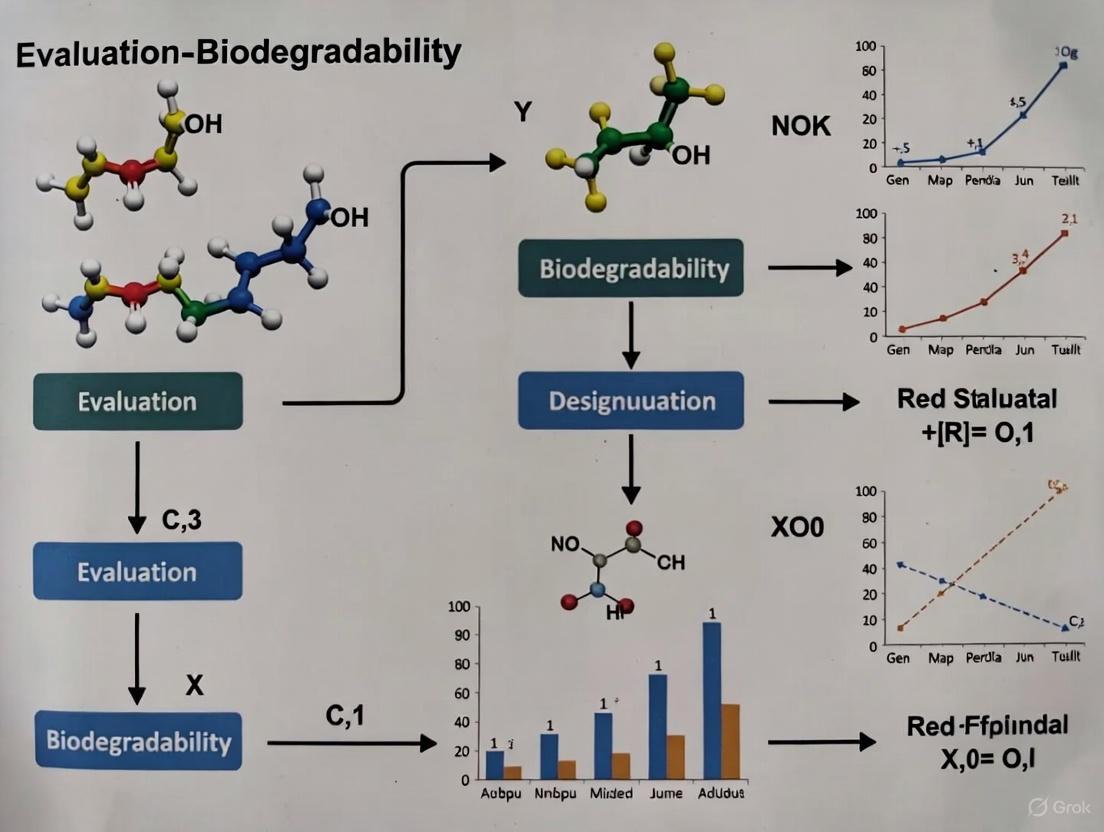
This article provides a comprehensive guide for researchers and drug development professionals on integrating biodegradability assessment into the chemical design process.
Designing for Degradation: A Strategic Framework for Evaluating Biodegradability in Pharmaceuticals and Novel Chemicals
Abstract
This article provides a comprehensive guide for researchers and drug development professionals on integrating biodegradability assessment into the chemical design process. It bridges the gap between foundational principles, standardized testing methodologies like the OECD 301 and 310 series, and the practical challenges of optimizing chemical structures for reduced environmental persistence. Covering topics from regulatory frameworks and the 'Safe and Sustainable by Design' (SSbD) concept to troubleshooting volatile compounds and interpreting real-world variability, this resource equips scientists with the knowledge to make informed decisions early in R&D, ultimately supporting the development of greener, more sustainable chemicals and pharmaceuticals.
Why Biodegradability Matters: Linking Molecular Design to Environmental Impact and Sustainability Goals
In the field of sustainable chemical and product development, accurately assessing biodegradability is paramount for environmental safety and regulatory compliance. The Organisation for Economic Co-operation and Development (OECD) has established a tiered testing system that classifies biodegradation into distinct categories, with "ready biodegradability" and "ultimate biodegradability" representing critical concepts in this framework [1]. Ultimate biodegradation, also referred to as mineralization, represents the complete breakdown of an organic compound to simple, stable products such as carbon dioxide (CO₂), water, mineral salts, and new microbial biomass through biological processes [2]. This process signifies the highest level of biodegradation, ensuring no persistent intermediates remain in the environment. In contrast, primary biodegradation involves only structural modification of the parent compound, potentially resulting in metabolites that could remain environmentally persistent [2].
Ready biodegradability is an arbitrary classification assigned to chemicals that pass stringent screening tests designed to predict rapid and complete breakdown in diverse aquatic environments under aerobic conditions [3] [2]. These tests are intentionally stringent; a positive result provides a strong indication that a substance will biodegrade quickly and completely in the natural environment, leading to a classification of "not persistent" [1] [4]. The OECD's testing hierarchy progresses from ready biodegradability tests as initial screening tools, through inherent biodegradability tests that demonstrate biodegradation potential under optimized conditions, and finally to simulation tests that more closely mimic specific environmental compartments like soil or water systems [1].
Understanding the OECD 301 Test Series
Core Principles and Pass Criteria
The OECD 301 series serves as the international standard for determining ready biodegradability, comprising six distinct test methods that share common stringent principles [3]. These tests are conducted in a mineral medium inoculated with a diverse, non-pre-adapted microbial population, typically derived from activated sludge, surface water, or soil [1] [3]. The standard test duration is 28 days, with incubation occurring in the dark or diffuse light at a constant temperature of 22°C ± 2°C under aerobic conditions [3]. To validate proper test operation, controls including blanks (inoculum only) and reference compounds with known biodegradability (e.g., aniline, sodium acetate) are run concurrently [3].
The specific pass criteria for ready biodegradability depend on the analytical endpoint measured, with thresholds designed to indicate substantial mineralization. For tests measuring Dissolved Organic Carbon (DOC) removal, such as OECD 301A and 301E, a pass requires ≥70% removal of the initial DOC [1] [3]. For respirometric methods measuring oxygen consumption or CO₂ production, a pass requires ≥60% of the Theoretical Oxygen Demand (ThOD) or Theoretical CO₂ (ThCO₂) [1] [3]. The theoretical values are calculated based on the compound's chemical formula, representing the amount of oxygen required for complete oxidation or the maximum CO₂ that could be produced from total mineralization [3].
The Critical 10-Day Window Criterion
Beyond achieving the pass threshold, a substance must demonstrate rapid biodegradation kinetics through the "10-day window" criterion to be classified as readily biodegradable [1] [3]. This window begins when biodegradation first reaches 10% of the theoretical maximum and must conclude within 10 days thereafter, all within the total 28-day test period [3]. This requirement ensures that biodegradation commences without a substantial lag phase and proceeds rapidly, indicating that microorganisms in the test system can immediately utilize the compound without a prolonged adaptation period [1]. If a substance meets the pass level (60% or 70%) but fails to do so within this 10-day window, it does not qualify as readily biodegradable, though it may still undergo testing under inherent or simulation conditions [1].
Table 1: Comparison of OECD 301 Test Methods for Ready Biodegradability
| Test Method | Principle & Measurement | Suitable Substance Characteristics | Key Advantages | Key Disadvantages |
|---|---|---|---|---|
| 301A: DOC Die-Away | Measures decrease in Dissolved Organic Carbon (DOC) | Water-soluble, non-volatile | Simple, accessible; direct measure of carbon removal | Susceptible to false positives from adsorption; not for poorly soluble/volatile |
| 301B: CO₂ Evolution (Modified Sturm Test) | Quantifies CO₂ produced from mineralization | Highly soluble, poorly soluble, absorbing; non-volatile | Clear criterion for ultimate biodegradation; handles poorly soluble/absorbing | Not suitable for volatile materials due to aeration |
| 301C: MITI (I) | Measures oxygen consumption (respirometry) | Poorly soluble, volatile | Can test poorly soluble/volatile materials | Very conservative; specific "standard" inoculum may have lower activity |
| 301D: Closed Bottle | Measures dissolved oxygen (DO) consumption (respirometry) | Highly soluble, volatile, absorbing | Simple setup; handles volatile/absorbing materials | Primarily for water-soluble; continuous stirring not standard |
| 301E: Modified OECD Screening | Measures decrease in Dissolved Organic Carbon (DOC) | Water-soluble, non-volatile, non-adsorbing | Comprehensive DOC assessment; uses lower microorganism concentration than 301A | Similar adsorption issues to 301A; inoculum/compound ratio can be unfavorable |
| 301F: Manometric Respirometry | Measures oxygen consumption (respirometry) | Soluble, poorly soluble, insoluble, nonvolatile, absorbing, volatile (highly versatile) | Wide applicability, simple setup, no aeration needed; continuous monitoring | Requires ThOD (chemical formula) or COD; not for highly toxic substances |
Experimental Protocols and Methodologies
Standard Ready Biodegradability Test Procedure
The general experimental protocol for OECD 301 tests follows a standardized approach to ensure consistency and comparability across laboratories. The test medium is prepared as a mineral salt solution containing essential nutrients: 85 mg/L KH₂PO₄, 217.5 mg/L K₂HPO₄, 334 mg/L Na₂HPO₄·2H₂O, 5 mg/L NH₄Cl, 27.5 mg/L CaCl₂, 22.5 mg/L MgSO₄·7H₂O, and 0.25 mg/L FeCl₃·6H₂O [5]. The microbial inoculum is derived from secondary effluent of a municipal sewage treatment plant, activated sludge, surface water, or soil, with the population density carefully standardized—typically 10⁵ to 10⁶ cells/mL—to prevent excessive biomass that could lead to unrealistically rapid degradation [1] [5] [3]. The test substance is added as the sole carbon source at a concentration ranging from 10-100 mg/L, and the system is incubated aerobically in the dark at 22±2°C for 28 days [3].
Biodegradation is monitored throughout the test period using method-specific analytical techniques. In DOC-based methods (OECD 301A, 301E), samples are periodically filtered through 0.45μm membranes, and the dissolved organic carbon content is measured using a carbon analyzer [3]. In CO₂-based methods (OECD 301B), the carbon dioxide produced is trapped in barium hydroxide or sodium hydroxide solutions and quantified by titration or conductivity measurements [5] [3]. In respirometric methods (OECD 301C, 301D, 301F), oxygen consumption is measured using manometric, electrochemical, or optical sensors in closed systems [3]. All tests include controls containing only inoculum (blanks) to account for endogenous activity, and reference compounds with known biodegradability (e.g., sodium acetate, aniline) to verify inoculum viability [3].
Enhanced and Modified Testing Approaches
For challenging substances such as those with poor water solubility, enhanced and modified test approaches have been developed to improve bioavailability while maintaining standardized conditions. The ISO 10634 guideline provides methods for preparing poorly soluble substances, including ultrasonic dispersion, adsorption onto solid supports like silica gel, and dispersion using emulsifiers or solvents [5]. Research has demonstrated that bioavailability improvement methods (BIMs) can significantly impact test results for hydrophobic compounds, with ultrasonic dispersion and dispersion with silicone oil proving effective for solid chemicals, while adsorption onto silica gel and ultrasonic dispersion work well for liquid chemicals [5].
When standard ready tests yield negative results, enhanced Ready Biodegradability Tests (eRBTs) may be employed as an intermediate testing step before proceeding to more complex simulation tests. These enhanced approaches may include prolonging test duration up to 60 days and using larger test vessels while maintaining the substrate/inoculum ratio [4]. These modifications help address limitations of standard tests for substances with slow but steady biodegradation patterns or to counteract the "lottery effect" of microbiological biodiversity by increasing the starting number of competent degraders [4]. However, it is important to note that such enhanced tests have specific applications in persistence assessment and may not be used for claiming ready biodegradability classification [4].
The Testing Pathway and Data Interpretation
The following diagram illustrates the decision-making process in the tiered OECD biodegradability testing framework:
Diagram Title: OECD Biodegradability Testing Decision Pathway
Essential Research Reagents and Materials
Table 2: Key Research Reagents and Materials for Biodegradability Testing
| Reagent/Material | Function/Purpose | Application Notes |
|---|---|---|
| Mineral Salt Medium | Provides essential inorganic nutrients for microbial growth without adding organic carbon | Standardized composition ensures reproducibility across tests [5] |
| Activated Sludge Inoculum | Source of diverse, non-adapted microorganisms from wastewater treatment | Must be used at low concentration (30-1000 mg/L); pre-adaptation not permitted [1] [3] |
| Reference Compounds (e.g., sodium acetate, aniline) | Verifies inoculum viability and test validity | Must achieve pass levels in validated tests; used as positive controls [3] |
| Silica Gel | Solid support for adsorbing poorly soluble test substances | Improves bioavailability of hydrophobic compounds without inhibiting microorganisms [5] |
| Silicone Oil | Carrier phase for poorly soluble liquid substances | Enhances dispersion and bioavailability; particularly effective for oils and lubricants [5] |
| Emulsifiers (e.g., Synperonic PE/P94) | Disperses water-insoluble compounds in aqueous medium | Must be non-biodegradable and non-toxic to inoculum; used at minimal effective concentrations [5] |
| CO₂ Trapping Solutions (e.g., Ba(OH)₂, NaOH) | Absorbs and quantifies carbon dioxide produced during mineralization | Allows quantification of ultimate biodegradation in Sturm-type tests [5] [3] |
| Oxygen Monitoring Systems | Measures oxygen consumption in respirometric methods | Includes manometric, electrochemical, and optical sensors in closed systems [3] |
The distinction between ready and ultimate biodegradability, with its specific pass criteria and the critical 10-day window, forms a cornerstone of environmental fate assessment for chemicals and materials. The OECD 301 framework provides a standardized, stringent system for identifying substances that will likely break down rapidly and completely in aquatic environments, thereby minimizing persistence and potential environmental accumulation. Understanding these test systems' principles, methodologies, and interpretation criteria is essential for researchers developing new chemicals, pharmaceuticals, and materials with improved environmental profiles. As scientific understanding advances, methodologies continue to evolve with enhanced tests and modified approaches that address challenging substances while maintaining the scientific rigor necessary for reliable environmental persistence classification.
The strategic assessment of chemical biodegradability has transitioned from a voluntary environmental consideration to a regulatory imperative driven by powerful legislative frameworks across the globe. For researchers and drug development professionals, understanding these regulatory drivers is not merely about compliance—it is a fundamental aspect of sustainable product design and market access strategy. The European Union's REACH (Registration, Evaluation, Authorisation and Restriction of Chemicals) regulation, the United States Environmental Protection Agency (EPA) protocols, and other international frameworks have established rigorous, scientifically-grounded methodologies that directly shape how biodegradability is evaluated in industrial and pharmaceutical chemicals [6] [7].
These regulatory frameworks employ biodegradability testing as a critical tool for protecting human health and ecosystems, serving multiple assessment needs including PBT/vPvB screening (Persistent, Bioaccumulative, and Toxic/very Persistent and very Bioaccumulative), hazard classification, and determining Predicted Environmental Concentrations [6]. The recent inclusion of PMT/vPvM (Persistent, Mobile, Toxic/very Persistent and very Mobile) hazard classes within the EU's CLP (Classification, Labelling and Packaging) Regulation has further elevated the importance of degradation assessment in chemical regulation [6]. For scientific researchers, this regulatory landscape necessitates a sophisticated understanding of how test method selection, interpretation criteria, and assessment endpoints vary across jurisdictions—a complexity that is magnified by the ongoing scientific evolution of the test methods themselves [8].
Global Regulatory Frameworks and Their Testing Philosophies
REACH and the European CLP Regulation
The REACH regulation (EC No 1907/2006) establishes a comprehensive framework for chemical management in the European Union, with biodegradation assessment playing a pivotal role in its persistence evaluation requirements. Under REACH, substances are categorized according to a strict stepwise approach based on their biodegradation behavior: readily biodegradable, inherently biodegradable (meeting or not meeting specific criteria), or not biodegradable [6]. This classification directly influences the chemical's regulatory burden, particularly for high-production volume substances exceeding 100 tonnes per year, where further testing may be mandated to refine environmental risk assessments [6].
The CLP Regulation (EC No 1272/2008) complements REACH by establishing harmonized criteria for hazard classification and labeling. The integration of PBT/vPvB and PMT/vPvM hazard classes into CLP has made biodegradation data increasingly significant for environmental hazard classification [6]. A critical challenge for researchers lies in the fact that "different interpretations of persistence can be made for the same substance depending on the EU regulation," highlighting the need for careful interpretation of testing results within specific regulatory contexts [6].
US EPA and FIFRA Implementation
The United States Environmental Protection Agency approaches biodegradability assessment through multiple regulatory pathways, with significant focus on product-specific claims under the Federal Insecticide, Fungicide, and Rodenticide Act (FIFRA). The EPA's Office of Pesticide Programs has established precise criteria for biodegradability claims on registered products, requiring rigorous scientific validation through approved testing methodologies [7]. For an "all ingredients" claim (e.g., "100% Biodegradable"), all ingredients must meet ready biodegradability standards using specific OECD or OCSPP test guidelines, and the product cannot contain any ingredients classified as carcinogens, mutagens, or reproductive toxicants (CMRs) by authoritative bodies [7].
Beyond product claims, the EPA provides guidance on using ready and inherent biodegradability tests to derive input data for multimedia fate models and wastewater treatment plant models, acknowledging the utility of these screening tests while recognizing their limitations for quantitative risk assessment [9]. The EPA explicitly notes that "estimated half-lives derived using this methodology should never be used when reliable measured biodegradation half-lives are available," emphasizing the screening-level nature of these approaches [9].
International Standards and Cross-Border Alignment
The OECD Test Guidelines serve as the international standard for chemical safety testing, forming the technical foundation for most regulatory biodegradability assessments worldwide [10]. These guidelines are recognized under the Mutual Acceptance of Data system, which prevents duplicative testing across member countries and facilitates global chemical regulation [10]. However, despite this international harmonization of test methods, significant differences remain in how different jurisdictions implement and interpret the results within their regulatory frameworks [11].
Table 1: Comparative Overview of Key Regulatory Frameworks for Biodegradability Assessment
| Regulatory Framework | Primary Regulatory Driver | Key Testing Approaches | Classification Categories | Industry Focus |
|---|---|---|---|---|
| EU REACH/CLP [6] | PBT/vPvB/PMT assessment; Hazard classification | OECD 301 (Ready); OECD 302 (Inherent); Simulation testing | Readily biodegradable; Inherently biodegradable; Not biodegradable | Industrial chemicals; Pharmaceuticals |
| US EPA (FIFRA) [7] | Product claims; Environmental safety | OCSPP 835.3110/3140; OECD 301 | Pass/Fail based on stringent criteria with CMR restrictions | Pesticides; "Down-the-drain" products |
| OECD Guidelines [10] | Mutual Acceptance of Data (MAD) | Full OECD 301 series; OECD 310 | Readily biodegradable (with/without 10-day window) | Cross-sectoral; Global market access |
Experimental Protocols and Testing Strategies
OECD 301 Series: The Gold Standard for Ready Biodegradability
The OECD 301 guidelines represent the internationally recognized standard for determining ready biodegradability, a classification indicating rapid and complete breakdown in aquatic environments [3]. These tests function as stringent screening tools conducted under aerobic conditions in dilute aqueous medium, using an inoculum of environmental microorganisms, with incubation at 22°C ± 2°C in the dark for 28 days [3]. The fundamental principle underlying these tests is measurement of ultimate biodegradation, where the test substance is completely mineralized to carbon dioxide, water, and biomass, typically monitored through Dissolved Organic Carbon (DOC) removal, CO₂ production, or oxygen uptake [3].
To achieve a "readily biodegradable" classification under OECD 301, a substance must meet two critical criteria: First, it must achieve specific pass levels (≥70% DOC removal or ≥60% of Theoretical Oxygen Demand/CO₂ production); Second, it must demonstrate this degradation within a 10-day window period, which begins when degradation reaches 10% and must conclude within the 28-day test duration [3]. This 10-day window is a key differentiator, as substances meeting pass levels only after this period generally do not qualify as readily biodegradable [3].
Table 2: OECD 301 Test Methods and Their Methodological Specifics
| Test Method | Measurement Principle | Suitable Substance Characteristics | Pass Level | Regulatory Application |
|---|---|---|---|---|
| 301A: DOC Die-Away [3] | DOC removal | Water-soluble, non-volatile | ≥70% DOC removal | REACH screening; EPA submissions |
| 301B: CO₂ Evolution [3] | CO₂ production | Poorly soluble, absorbing materials | ≥60% ThCO₂ | Lubricants, oils, surfactants |
| 301C: MITI (I) [3] | Oxygen consumption | Poorly soluble, volatile samples | ≥60% ThOD | Conservative assessment; Japan submissions |
| 301D: Closed Bottle [3] | Oxygen consumption | Soluble, volatile, absorbing | ≥60% ThOD | Pharmaceuticals; personal care products |
| 301E: Modified OECD Screening [3] | DOC removal | Soluble, non-volatile, non-adsorbing | ≥70% DOC removal | General chemical screening |
| 301F: Manometric Respirometry [3] | Oxygen consumption | Versatile: soluble, insoluble, volatile, absorbing | ≥60% ThOD | Broad-spectrum applications |
Advanced Testing: Inherent and Simulation Studies
For substances failing ready biodegradability criteria, regulatory frameworks often require further investigation through inherent biodegradability tests (OECD 302 series) or simulation studies (OECD 303, 309) [6] [12]. Inherent tests employ conditions more favorable to biodegradation (e.g., higher microbial concentration, longer duration, or specialized inocula) to determine if a substance has any potential to biodegrade under environmental conditions [12]. These tests provide crucial information for chemicals that may not pass ready biodegradability standards but still demonstrate degradation potential in specific environmental compartments.
Simulation testing, such as OECD 309 for aerobic surface water degradation, aims to more closely mimic real-world environmental conditions but faces challenges in standardization and reproducibility [8]. Recent workshops organized by the European Centre for Ecotoxicology and Toxicology of Chemicals have highlighted ongoing efforts to improve these guidelines, focusing on robustness, implementation, and environmental relevance through better standardization of microbial biomass characterization, inoculum selection, and test substance concentrations [8].
The Scientist's Toolkit: Essential Research Reagent Solutions
Table 3: Key Research Reagents and Materials for Biodegradation Studies
| Reagent/Material | Function in Experimental Protocol | Regulatory Context | Technical Considerations |
|---|---|---|---|
| Activated Sludge Inoculum [3] | Source of diverse environmental microorganisms | Required by OECD 301; Source and pretreatment specified | Microbial diversity critical; Activity validation required via reference compounds |
| Mineral Medium [3] | Provides essential inorganic nutrients without organic carbon | Standardized composition in OECD guidelines | Must be free of organic carbon to avoid interference |
| Reference Compounds (e.g., aniline, sodium acetate) [3] | Validates inoculum activity and proper test operation | Mandatory positive controls in OECD tests | Must achieve pass levels within defined timeframes |
| Theoretical Oxygen Demand (ThOD)/Theoretical CO₂ (ThCO₂) [3] | Calculated maximum oxygen consumption/CO₂ production | Essential for respirometric method pass/fail determination | Requires knowledge of chemical formula and degradation pathway |
| Radiolabeled Test Substances (e.g., ¹⁴C-labeled) [12] | Enables precise tracking of test substance fate | Used in higher-tier testing (e.g., OECD 314B) | Provides lower detection limits; requires specialized handling |
Regulatory Testing Strategies and Data Interpretation
Strategic Test Selection and Decision Pathways
Choosing the appropriate biodegradation test method requires careful consideration of substance properties, regulatory requirements, and testing objectives. The strategic selection process can be visualized as a decision pathway that aligns method capabilities with substance characteristics and regulatory goals.
This decision pathway illustrates how researchers must align method selection with both substance characteristics and regulatory objectives. The choice of test method can significantly influence the outcome of biodegradability assessment, making this initial decision critical for successful regulatory navigation.
From Test Data to Regulatory Classification
Translating experimental results into regulatory classifications requires careful interpretation of pass/fail criteria across different frameworks. The EPA's interim guidance demonstrates how ready biodegradability test results are converted into half-life estimations for modeling purposes, assigning activated sludge half-lives of 1, 3, 10, or 30 hours based on the percentage of degradation achieved in ready tests [9]. This quantitative approach facilitates the use of screening test data in environmental fate modeling, though the EPA appropriately cautions about the substantial scientific uncertainties in these estimation methods [9].
The EU's Technical Guidance Document establishes a different interpretation scheme, where chemicals meeting both the final pass criterion and the 10-day window in ready tests are assigned a half-life of 0.69 hours (rate constant of 1.0 hr⁻¹), while those missing only the 10-day window receive a half-life of 2.3 hours (rate constant of 0.3 hr⁻¹) [9]. This contrast between regulatory approaches highlights the importance of jurisdiction-specific interpretation even when using the same underlying test data.
Emerging Trends and Future Directions in Regulatory Assessment
The regulatory landscape for biodegradability assessment continues to evolve, driven by scientific advances and increasing emphasis on sustainable chemistry principles. Several key trends are shaping the future of this field:
One Substance, One Assessment: The European Commission is moving toward harmonized interpretation of persistence assessment across different regulations, seeking to resolve current situations where "different interpretations of persistence can be made for the same substance depending on the EU regulation" [6].
Guideline Evolution: Ongoing refinement of test guidelines addresses methodological challenges, with recent workshops focusing on improving the robustness, implementation, and environmental relevance of simulation tests like OECD 309 [8].
Group-Based Assessment: Growing regulatory focus on chemical groups of concern, particularly PFAS (per- and polyfluoroalkyl substances), is driving group-based restriction approaches that consider persistence as a defining property [13].
Integrated Testing Strategies: Regulatory frameworks increasingly encourage tiered testing approaches that progress from ready biodegradability screening to more complex inherent and simulation studies based on initial results and tonnage thresholds [6] [9].
For researchers and drug development professionals, these trends underscore the importance of forward-looking testing strategies that anticipate regulatory evolution while generating scientifically robust biodegradability data. By understanding both the current requirements and emerging directions in regulatory assessment, scientists can more effectively design chemicals and products that align with global sustainability objectives while maintaining regulatory compliance.
Safe and Sustainable by Design (SSbD) represents a paradigm shift in chemical and material development, positioning biodegradability as a fundamental criterion from the earliest stages of innovation. This framework is central to meeting European Union policy ambitions and addresses growing global concerns over plastic pollution and resource sustainability [14]. The SSbD approach moves beyond traditional risk assessment by integrating a lifecycle-thinking approach that encompasses all stages from raw material extraction to end-of-life, ensuring that safety and sustainability considerations are embedded throughout the product development process [14]. This methodology is particularly crucial for researchers and drug development professionals who are developing new chemical entities and materials that must meet stringent environmental and safety standards while maintaining performance characteristics.
The conceptual foundation of SSbD is built upon five critical building blocks: design, data, risk and sustainability governance, competencies, and social and corporate strategic needs [14]. These elements work in concert to create a holistic framework for evaluating chemical products and processes. For biodegradability specifically, this means considering not only whether a material will break down in the environment but also the safety of its degradation products and the sustainability of its production processes. The framework emphasizes the importance of connecting trans-disciplinary experts throughout the innovation process, particularly from the early phases, to identify and address the most significant safety and sustainability challenges across the value chain [14].
Biodegradable Materials in SSbD: A Comparative Analysis
Advanced Biopolymer Technologies
The development of advanced biopolymers represents a significant advancement in SSbD-compliant materials. Recent research from Rice and Houston universities has demonstrated a breakthrough in bacterial cellulose engineering using a dynamic biosynthesis technique that aligns bacterial cellulose fibers in real-time through a rotational bioreactor [15]. This process creates robust biopolymer sheets with exceptional mechanical properties, achieving tensile strength up to 436 megapascals in pure form and 553 megapascals when reinforced with boron nitride nanosheets [15]. This material maintains flexibility, foldability, and transparency while being environmentally benign, addressing the core SSbD principle of combining performance with sustainability.
When compared to conventional biodegradable materials, these advanced bacterial cellulose composites show remarkable performance characteristics. The alignment of cellulose nanofibrils during growth represents a fundamental innovation in biomaterial production, enabling high-strength multifunctional bionanocomposites that can compete with traditional materials on technical performance while offering superior environmental profiles [15]. The scalable, single-step process holds significant promise for numerous industrial applications, including structural materials, thermal management solutions, packaging, textiles, green electronics, and energy storage systems, demonstrating the versatility of SSbD-driven material innovation [15].
Comparative Performance Data of Biodegradable Materials
Table 1: Mechanical and Thermal Properties of Advanced Biodegradable Materials
| Material Type | Tensile Strength (MPa) | Thermal Conductivity Enhancement | Degradation Time | Key Applications |
|---|---|---|---|---|
| Bacterial Cellulose (Aligned) | 436 [15] | Not Specified | Biodegradable [15] | Structural materials, packaging, textiles |
| Bacterial Cellulose with Boron Nitride | 553 [15] | 3x faster heat dissipation [15] | Biodegradable [15] | Thermal management, green electronics |
| Polylactic Acid (PLA) | 50-70 [16] | Limited | 6 months - 2 years [16] | Packaging, disposable tableware, 3D printing |
| Polyhydroxyalkanoates (PHA) | 20-40 [16] | Limited | 3-12 months [16] | Single-use items, packaging |
| Mushroom Packaging | Variable | Not Specified | 45-180 days [16] | Protective packaging, shipping materials |
Table 2: Market Readiness and Environmental Impact Comparison
| Material Category | Market Size (2024) | Projected Growth | Key Environmental Advantages | Certification Standards |
|---|---|---|---|---|
| Plant-Based Bioplastics (PLA/PHA) | $1.9 billion [16] | $5.1 billion by 2034 (10.2% CAGR) [16] | Reduces fossil plastic use, biodegradable [16] | ASTM D6400, EN13432 [16] |
| Biodegradable Packaging | $140.6 billion (projected 2029) [16] | Strong growth across sectors | Reduces landfill waste by 47% (documented cases) [16] | EN13432, ASTM D6400 [16] |
| Mushroom Packaging | Emerging | Rapid adoption by major brands | Uses agricultural waste, compostable [16] | ASTM D6400, EN13432 [16] |
| Bacterial Cellulose | Research phase | High potential across multiple industries | Pure biopolymer, no harmful chemicals [15] | Under development |
Experimental Protocols for Biodegradability Assessment
Dynamic Biosynthesis of Aligned Bacterial Cellulose
The development of high-strength bacterial cellulose materials employs an innovative rotational bioreactor system that enables real-time alignment of cellulose-producing bacteria. The methodology begins with the preparation of a bacterial culture, typically Gluconacetobacter xylinus, in a standardized growth medium containing carbon sources, nitrogen sources, and essential nutrients [15]. The bioreactor introduces controlled fluid dynamics that direct the movement of bacteria during cellulose production, effectively aligning their motion and resulting in organized nanofibril deposition [15].
The protocol proceeds through several critical phases: First, the inoculation phase establishes the bacterial culture in the rotational bioreactor under sterile conditions. Second, the alignment phase utilizes precisely controlled rotational speeds (typically between 50-200 RPM depending on the desired alignment characteristics) to create shear forces that orient the bacteria during cellulose production. Third, the incorporation phase allows for the addition of reinforcing agents such as boron nitride nanosheets at optimal concentrations ranging from 0.5-5% w/v, depending on the target application [15]. Finally, the harvesting and processing phase yields bacterial cellulose sheets with defined alignment characteristics. The entire process occurs at mild temperatures (25-30°C) and neutral pH conditions, maintaining bacterial viability throughout the 5-14 day production cycle, depending on the desired thickness and material properties [15].
Standardized Biodegradation Testing Protocols
Assessment of biodegradability follows established international standards to ensure consistency and reliability of data. The ASTM D6400 and EN13432 standards provide comprehensive frameworks for evaluating compostability and biodegradation in controlled environments [16]. These protocols involve exposing material samples to specific microbial consortia under optimized conditions of temperature (58°C ± 2°C for thermophilic conditions or 20-25°C for mesophilic conditions), moisture content (approximately 50-55%), and oxygen availability [16].
The testing methodology includes several critical measurements: First, biodegradation extent is quantified by measuring the percentage of organic carbon converted to carbon dioxide over a specific time period (typically 180 days). Second, disintegration testing evaluates the physical breakdown of materials under composting conditions, with requirements specifying that at least 90% of the material should pass through a 2mm sieve after 12 weeks. Third, ecotoxicity testing assesses the impact of degradation products on plant growth and microbial activity, ensuring no harmful substances accumulate in the environment [16]. These standardized protocols provide researchers with comparable data for evaluating the environmental performance of SSbD materials.
The Researcher's Toolkit: Essential Reagents and Materials
Table 3: Key Research Reagents and Equipment for SSbD Biodegradability Studies
| Reagent/Equipment | Function in Research | Specifications & Considerations |
|---|---|---|
| Rotational Bioreactor | Enables aligned bacterial cellulose production | Precise RPM control (50-200 range), sterile operation, scalable design [15] |
| Gluconacetobacter xylinus | Primary cellulose-producing bacterium | Standard ATCC strains, optimized growth media, contamination controls [15] |
| Boron Nitride Nanosheets | Reinforcement additive for enhanced properties | 0.5-5% w/v concentration, uniform dispersion critical [15] |
| Composting Inoculum | Standardized microbial source for biodegradation tests | Meets ASTM/EN standards, consistent microbial diversity [16] |
| Respiration Monitoring System | Quantifies CO₂ evolution during biodegradation | Continuous monitoring, high accuracy (±2%), temperature controlled [16] |
| Thermal Analysis Equipment | Characterizes material properties and stability | TGA, DSC for decomposition profiles and thermal stability [15] |
| Mechanical Testing Instruments | Evaluates tensile strength and material performance | Standardized sample preparation, cross-head speed control, environmental conditioning [15] |
The integration of biodegradability as a fundamental pillar of Safe and Sustainable by Design represents a transformative approach to materials development that aligns with global sustainability goals. The experimental data and comparative analysis presented demonstrate that advanced biodegradable materials can achieve mechanical properties competitive with conventional materials while offering superior environmental profiles. The continued innovation in materials such as aligned bacterial cellulose, coupled with standardized assessment protocols, provides researchers and drug development professionals with robust frameworks for implementing SSbD principles. As regulatory pressure increases and consumer demand for sustainable products grows, the importance of biodegradability-by-design will continue to accelerate, driving further innovation in this critical field of green chemistry.
Pharmaceutical residues in global waterways represent a pressing and complex environmental challenge. Driven by human excretion, improper disposal, and industrial waste streams, these micro-pollutants persist through conventional water treatment systems to enter aquatic ecosystems worldwide [17]. The continuous infusion of pharmaceuticals into waterways creates a scenario of "pseudo-persistence," where these biologically active compounds exert subtle yet significant impacts on aquatic life and potentially human health [18]. This case study examines the scope of pharmaceutical pollution, evaluates current mitigation approaches centered on biodegradability principles, and explores the promising frontier of "green-by-design" pharmaceuticals and biosurfactants as sustainable alternatives.
The Global Scope of Pharmaceutical Pollution
Quantifying the Contamination
Recent global reconnaissance studies reveal the alarming pervasiveness of pharmaceutical pollution in sewage treatment plants (STPs), which serve as primary point sources for environmental contamination. A synthesis of data from 101 peer-reviewed publications demonstrates that pharmaceutical residues are detectable in STPs across all inhabited continents, with the highest cumulative concentrations of analgesics and anti-inflammatory drugs observed in North and South America [17].
Table 1: Frequently Detected Pharmaceuticals in Global Waterways
| Pharmaceutical | Therapeutic Class | Maximum Reported Concentration in STP Influent (ng/L) | Detection Frequency |
|---|---|---|---|
| Diclofenac | Analgesic/Anti-inflammatory | >100,000 | High |
| Ibuprofen | Analgesic/Anti-inflammatory | >100,000 | High |
| Sulfamethoxazole | Antibiotic | >100,000 | High |
| Ciprofloxacin | Antibiotic | >100,000 | High |
| Carbamazepine | Anticonvulsant | Not specified | High |
| Diazepam | Anxiolytic | Not specified | High |
The table above illustrates that compounds like diclofenac, ibuprofen, sulfamethoxazole, and ciprofloxacin have been detected at exceptionally high concentrations, exceeding 100,000 ng/L in some STP influents [17]. These findings underscore the magnitude of pharmaceutical emissions into wastewater systems.
Environmental Impacts and Ecological Risks
Pharmaceutical residues in aquatic environments exert multifaceted ecological effects, even at trace concentrations. A 2022 study sampling over 1,000 locations across 104 countries found unsafe levels of pharmaceutical contaminants in more than a quarter of the sampling sites [18]. The impacts manifest at various biological levels:
Behavioral Changes in Aquatic Organisms: Experimental research has demonstrated that anti-anxiety medications like clobazam can alter salmon migration behavior, with medicated fish passing hydropower dams faster than their unmedicated counterparts due to apparently lowered inhibitions [18].
Antibiotic Resistance Development: Consistent exposure to low levels of antibiotics in the environment accelerates the development of antimicrobial resistance, potentially fueling the rise of "superbugs" [18]. A recent modeling study estimates that approximately 8,500 tons of the most-used antibiotics leach into the world's river systems annually from human consumption alone [18].
Trophic Transfer and Bioaccumulation: Pharmaceutical compounds can accumulate within food chains, with potential impacts transferring to predators that consume contaminated prey [18]. This bioaccumulation poses risks to higher trophic levels, particularly for lipophilic compounds that persist in biological tissues.
Ecosystem Disruption: Ecotoxicological risk assessments based on hazard quotients (HQs) reveal heightened vulnerability among primary producers and consumers in aquatic environments [17]. The disruption of microbial communities can fundamentally alter ecosystem functions and reduce microbial diversity [18].
Current Wastewater Treatment Limitations
Conventional sewage treatment plants exhibit varying removal efficiencies for different pharmaceutical classes, with many compounds demonstrating significant persistence through treatment processes.
Table 2: Pharmaceutical Removal Efficiencies in Conventional Treatment
| Pharmaceutical | Typical Removal Efficiency (%) | Persistence Classification |
|---|---|---|
| Ibuprofen | >80% | Readily removed |
| Naproxen | >80% | Readily removed |
| Atenolol | Variable (negative removal in some STPs) | Moderate persistence |
| Simvastatin | Variable (negative removal in some STPs) | Moderate persistence |
| Valsartan | Variable (negative removal in some STPs) | Moderate persistence |
| Diazepam | Predominantly negative removal | Persistent |
| Carbamazepine | Predominantly negative removal | Persistent |
| Azithromycin | Predominantly negative removal | Persistent |
| Clindamycin | Predominantly negative removal | Persistent |
As evidenced in the table above, compounds like ibuprofen and naproxen demonstrate relatively high removal efficiencies (consistently exceeding 80%), while others such as diazepam, carbamazepine, azithromycin, and clindamycin show persistence through conventional treatment processes, as indicated by predominantly negative removal percentages [17]. This persistence highlights the limitations of current wastewater treatment infrastructures in addressing pharmaceutical pollution.
Biodegradability as a Design Principle
Defining Biodegradability in Chemical Context
In chemical and environmental contexts, biodegradability describes the capacity of substances to undergo decomposition into natural elements through the enzymatic action of microorganisms [19]. The Organization for Economic Cooperation and Development (OECD) has established standardized test guidelines (OECD 301) for assessing "ready biodegradability" under aerobic conditions, which include six methodological variants suited to different chemical characteristics [20].
The established classification schema for biodegradability includes:
- Highly biodegradable: Complete mineralization within 10 days; time window <4 days [20]
- Readily biodegradable: High level of mineralization (>70%) within 28 days [20]
- Inherently biodegradable: Not readily biodegradable but shown to be biodegradable using other test methods [20]
- Non-biodegradable: Unsuccessful attempts to demonstrate inherent biodegradability [20]
For a chemical to be classified as readily biodegradable, it must achieve pass levels during a 10-day window within the 28-day test period, typically demonstrating 70% dissolved organic carbon removal, 60% theoretical oxygen demand, or 60% theoretical carbon dioxide yield, depending on the test method employed [20].
Experimental Protocols for Biodegradability Assessment
Standardized testing protocols provide the methodological foundation for determining biodegradability profiles of chemical compounds. The most widely recognized approaches include:
OECD 301 Guidelines
The OECD 301 guideline describes six standardized methods for screening chemicals for ready biodegradability under aerobic conditions [20]:
- 301A: DOC Die-Away: Measures removal of dissolved organic carbon
- 301B: Respirometry (CO₂ Evolution): Modified Sturm Test measuring carbon dioxide production
- 301C: MITI Test: Japanese Ministry of International Trade and Industry test measuring oxygen consumption
- 301D: Closed Bottle Test: Measures dissolved oxygen consumption
- 301E: Modified OECD Screening: Measures dissolved organic carbon
- 301F: Manometric Respirometry: Measures oxygen consumption
The selection of appropriate test methods depends on the chemical characteristics of the compound, with poorly soluble compounds limited to respirometry methods (301B, C, D, F) and volatile substances best suited to the closed bottle test (301D) [20].
Carbon Mass Balance Approach
Advanced methodologies employ carbon mass balance models to generate reliable biodegradation rates for quantitative structure-biodegradation relationship (QSBR) models [21]. This approach involves:
- Performing aerobic biodegradation experiments in batch reactors seeded with known degraders
- Monitoring chemical removal, degrader growth, and CO₂ production over time
- Interpreting data using full carbon mass balance models to determine Monod kinetic parameters (Y, Ks, qmax, and μmax) for each chemical
- Developing stoichiometric equations for aerobic mineralization of test chemicals
This method has demonstrated that approximately 35% (s.d ± 8%) of recovered substrate carbon converts to biomass, while 65% (s.d ± 8%) mineralizes to CO₂ [21].
In Silico Prediction of Biodegradability
Computational approaches for predicting biodegradability have emerged as valuable tools for screening chemical compounds before synthesis and testing. Quantitative Structure-Biodegradation Relationship (QSBR) models correlate molecular descriptors with biodegradation rates, enabling prioritization of chemical half-lives for regulatory screening purposes [21]. The Online Chemical Modeling Environment (OCHEM) provides a platform for developing such models, incorporating multiple descriptor sets and machine learning methods to build consensus models with estimated prediction accuracy for individual compounds [20].
These computational approaches typically identify characteristic structural properties and molecular fragments that influence biodegradation activity, providing chemists with guidance to improve the biodegradability of new chemical compounds during the design phase [20].
Green Surfactants as Pharmaceutical Alternatives
Biosurfactants: Structure and Advantages
Biosurfactants, also termed "green surfactants," are surface-active compounds of microbial or plant origin that offer promising alternatives to conventional petroleum-based surfactants in pharmaceutical formulations [22]. These amphiphilic molecules consist of hydrophobic tails and hydrophilic heads, classified similarly to synthetic surfactants as anionic, cationic, zwitterionic, or nonionic based on the charge of their hydrophilic groups [22].
Table 3: Comparison of Conventional vs. Bio-based Surfactants
| Parameter | Petroleum-based Surfactants | Bio-based Surfactants |
|---|---|---|
| Raw Material Source | Finite petrochemical stocks | Renewable resources (plant oils, microorganisms) |
| Biodegradability | Slow or partial degradation | High biodegradability |
| Toxicity Profile | Generally higher toxicity | Low toxicity |
| Environmental Persistence | Can linger for years | Break down into harmless compounds |
| Functional Diversity | Limited by synthetic pathways | Wide structural diversity |
| Production Cost | Generally lower | Higher, but decreasing |
| Carbon Footprint | Higher greenhouse gas emissions | Reduced environmental impact |
Biosurfactants provide distinct advantages including high biodegradability, lower toxicity, compatibility with biological systems, and production from renewable feedstocks [22]. Their molecular structures, often derived from plant oils or microbial fermentation, prioritize ease of degradation by microorganisms in natural environments [23].
Market Adoption and Commercial Applications
The global biosurfactants market, valued at USD 1.65 billion in 2025, is projected to reach USD 2.89 billion by 2030, reflecting a compound annual growth rate of 11.79% [24]. This growth is particularly driven by rhamnolipids, which demonstrate high emulsification properties, stability across diverse temperatures and pH levels, and complete biodegradability [24]. The detergent and cleaning industries represent the primary application segment for biosurfactants currently, though pharmaceutical and personal care applications are expanding rapidly [24].
The Scientist's Toolkit: Key Research Reagents and Materials
Table 4: Essential Research Materials for Biodegradability Assessment
| Reagent/Material | Function in Experimental Protocols | Application Context |
|---|---|---|
| Activated Sludge Inoculum | Provides diverse microbial community for biodegradation testing | OECD 301 tests; simulation of environmental degradation |
| Mineral Medium | Supplies essential nutrients (K, Na phosphate) without organic carbon | Standardized biodegradation tests |
| Reference Compounds (Aniline, Sodium Acetate) | Positive controls for validating test system activity | Quality control in biodegradation assays |
| Specific Degrader Strains | Known microbial degraders for carbon mass balance studies | QSBR model validation; degradation pathway analysis |
| CO₂ Trapping Solutions | Absorb and quantify mineralized carbon | Respirometry methods (Sturm Test) |
| Oxygen Electrodes | Measure dissolved oxygen consumption | Closed Bottle Test; manometric respirometry |
| DOC Analysis Equipment | Quantify dissolved organic carbon removal | DOC Die-Away test |
| Chemical Standards | Reference materials for analytical calibration | HPLC/MS quantification of test compounds |
The environmental burden of pharmaceutical residues in waterways presents a complex challenge requiring multidisciplinary solutions. Current evidence demonstrates widespread pharmaceutical contamination with documented ecological impacts, while conventional wastewater treatment shows limited efficacy for many persistent compounds. The framework of "green-by-design" pharmaceuticals, incorporating biodegradability as a core molecular property from the earliest development stages, offers a proactive approach to mitigating this environmental challenge. Advances in biosurfactants provide promising alternatives for formulation science, while QSBR models and standardized testing protocols enable forward-looking assessment of environmental fate. As research continues, integration of biodegradability principles into pharmaceutical design represents a critical pathway toward reconciling therapeutic innovation with environmental stewardship.
The United Nations Sustainable Development Goals (SDGs) provide a comprehensive blueprint for global peace and prosperity, targeting achievement by 2030 [25]. Medicinal chemistry, traditionally focused on drug discovery and development, now emerges as a critical discipline for advancing these goals through sustainable molecular design and manufacturing processes [25] [26]. This field intersects multiple SDGs, particularly Good Health and Well-being (SDG 3), through its core mission of developing therapeutics, while simultaneously influencing Responsible Consumption and Production (SDG 12) and Climate Action (SDG 13) through its environmental footprint [25] [27]. The integration of green chemistry principles and biodegradable molecular design represents a paradigm shift toward sustainable pharmaceutical development that aligns with the UN's broader sustainability agenda [27] [28]. This article evaluates how innovative medicinal chemistry approaches—from molecular design to manufacturing—directly contribute to SDG targets while maintaining therapeutic efficacy.
Medicinal Chemistry's Direct Contributions to Priority SDGs
Medicinal chemistry strategically advances several priority SDGs through targeted research and sustainable practices. The table below summarizes these core contributions.
Table 1: Priority SDGs and Medicinal Chemistry Contributions
| Sustainable Development Goal | Specific Contributions of Medicinal Chemistry |
|---|---|
| SDG 1: No Poverty | Developing affordable treatments for Infectious Diseases of Poverty (IDoPs) and Neglected Tropical Diseases (NTDs) to break the poverty-illness cycle [25]. |
| SDG 3: Good Health & Well-being | Core mission of drug discovery and development; designing safer, more effective medicines for diverse diseases [25] [29]. |
| SDG 12: Responsible Consumption & Production | Applying green chemistry principles (e.g., solvent substitution, waste prevention, atom economy) to reduce the environmental footprint of drug manufacturing [25] [27]. |
| Life on Land (SDG 15) & Life Below Water (SDG 14) | Designing biodegradable pharmaceuticals and implementing processes to minimize pharmaceutical pollutants in ecosystems [25]. |
Medicinal chemistry's role in poverty reduction (SDG 1) involves addressing the vicious cycle where poverty exacerbates disease and illness perpetuates poverty [25]. This is achieved through public-private partnerships like the Drugs for Neglected Diseases initiative (DNDi), which focus on creating sustainable pipelines for affordable treatments for conditions like schistosomiasis and human African trypanosomiasis (HAT) [25]. For SDG 3, the field's primary contribution lies in its core function: discovering and developing new medicines. This now explicitly includes designing drugs for enhanced biodegradability to reduce environmental persistence after use [27].
Comparative Analysis: Traditional vs. Sustainable Pharmaceutical Manufacturing
The pharmaceutical industry faces significant sustainability challenges, generating 10 billion kilograms of waste annually from active pharmaceutical ingredient (API) production alone, with disposal costs of approximately $20 billion [27]. Transitioning to green chemistry and engineering principles is crucial for reducing this footprint. The following table compares traditional and sustainable approaches across key process parameters.
Table 2: Performance Comparison of Traditional vs. Sustainable Pharmaceutical Processes
| Process Parameter | Traditional Pharmaceutical Chemistry | Sustainable Medicinal Chemistry Approaches | Performance & Sustainability Impact |
|---|---|---|---|
| Solvent Usage | Heavy reliance on hazardous, petroleum-derived solvents (e.g., chlorinated solvents) [27] [28]. | Switch to green solvents (e.g., water, ionic liquids, bio-based solvents), solvent-free reactions, or solvent recycling [27] [28]. | Reduces toxicity, waste generation, and environmental pollution; improves worker safety [27]. |
| Catalysis | Stoichiometric reagents, leading to high molecular weight byproducts and waste [27]. | Use of selective catalysts (biocatalysis, heterogeneous catalysis, photocatalysis) [27] [28]. | Enhances atom economy, reduces steps (derivatization), lowers energy requirements, and minimizes waste [27]. |
| Energy Consumption | Energy-intensive batch processes, often requiring high temperatures/pressures [27] [28]. | Process intensification (continuous flow chemistry, microwave-assisted synthesis) [27] [28]. | Significant energy savings, improved safety, better reaction control, and smaller physical footprint [27]. |
| Feedstock Source | Primarily fossil-based, non-renewable raw materials [30]. | Utilization of renewable, bio-based feedstocks (e.g., biomass, fermented sugars) [27] [30]. | Lowers carbon footprint, enhances resource security, and supports a circular bioeconomy [27] [30]. |
| Waste Management | End-of-pipe treatment of hazardous waste [27]. | Waste valorization (converting waste into valuable products) and inherently safer chemical design [27]. | Prevents waste at the source, reduces disposal costs, and creates value from byproducts [27]. |
The performance data demonstrates that sustainable approaches are not merely environmentally preferable but are also strategically advantageous. They offer economic benefits through long-term cost reduction from lower waste disposal and energy consumption, enhance worker safety by minimizing exposure to hazardous substances, and improve public perception and regulatory compliance [27].
Experimental Protocols for Sustainable Bioplastics in Medicinal Chemistry
While bioplastics are not drugs, their application in pharmaceutical packaging and medical devices provides a relevant model for evaluating the biodegradability of designed chemicals. The following experimental workflow details the synthesis and testing of a novel bioplastic material.
Detailed Methodology
Material Synthesis (LEAFF)
- Cellulose Nanofiber Preparation: Extract cellulose nanofibers from agricultural waste (e.g., corn stover, wheat straw) using a combination of mechanical fibrillation and chemical treatment to achieve a uniform dispersion [31].
- Biopolymer Matrix Synthesis: Produce Polylactic Acid (PLA) or Polyhydroxybutyrate (PHB) via microbial fermentation of sugars derived from corn or starch. For PLA, the process involves ring-opening polymerization of lactide [31].
- Multilayer Assembly: Create the LEAFF structure using a layer-by-layer casting or co-extrusion process. The optimized structure places the cellulose nanofiber layer as a central core, sandwiched between two layers of the bioplastic (PLA or PHB). This biomimetic design replicates the structure of a leaf, enhancing strength and functionality [31].
Performance Testing & Characterization
- Tensile Strength Measurement: Conduct according to ASTM D638 standard. The LEAFF material has demonstrated higher tensile strength than conventional petrochemical plastics like polyethylene and polypropylene, making it competitive for packaging applications [31].
- Barrier Property Testing: Measure water vapor transmission rate (WVTR) and oxygen transmission rate (OTR) using gravimetric and coulometric methods, respectively. The multilayer structure provides excellent resistance to air and water, which is critical for maintaining the stability of packaged pharmaceuticals [31].
- Biodegradation Protocol:
- Cut film samples into standard sizes (e.g., 2cm x 2cm).
- Place samples in controlled compost or soil at room temperature (approx. 25°C).
- Monitor weight loss, molecular weight reduction (via GPC), and surface morphological changes (via SEM) over 4-8 weeks. The key differentiator of LEAFF is its ability to biodegrade at room temperature, unlike many existing bioplastics that require high-temperature industrial composting facilities [31].
- Printability Assessment: Test direct inkjet and laser printing on the LEAFF surface to evaluate adhesion and resolution. This functional property saves manufacturers from printing separate labels, enhancing affordability and reducing material usage [31].
The Scientist's Toolkit: Key Reagents for Sustainable Chemistry
Implementing sustainable medicinal chemistry requires specialized reagents and materials that align with green principles. The following table catalogues essential solutions for researchers.
Table 3: Key Research Reagent Solutions for Sustainable Medicinal Chemistry
| Reagent/Material | Function & Application | Sustainable Advantage |
|---|---|---|
| Cellulose Nanofibers | Renewable reinforcing agent in bioplastic composites (e.g., LEAFF material); bio-based filler [31]. | Derived from abundant plant biomass; biodegradable; enhances strength, reducing material usage [31]. |
| Bio-based Solvents (e.g., Cyrene, Ethyl Lactate) | Substitute for hazardous dipolar aprotic solvents (e.g., DMF, NMP) in reaction mixtures [27]. | Low toxicity, bio-derived from renewable feedstocks (e.g., cellulose waste), and often biodegradable [27]. |
| Immobilized Enzymes (Biocatalysts) | Catalyze specific, stereoselective reactions under mild conditions in API synthesis [27] [28]. | High selectivity reduces byproducts; operates in water at ambient T/P, lowering energy use and waste [27]. |
| Bionaphtha | Renewable feedstock for steam cracking to produce bio-olefins like bio-ethylene [30]. | Produced from waste oils/plant materials; reduces reliance on fossil fuels, enabling "drop-in" bio-based chemicals [30]. |
| Polylactic Acid (PLA) | A versatile, compostable biopolymer used in packaging, medical devices, and as a subject of biodegradability studies [31]. | Produced from fermented plant starch (e.g., corn); is biodegradable and compatible with the circular economy model [31]. |
Medicinal chemistry is a powerful enabler for achieving the UN Sustainable Development Goals. The experimental data and comparative analysis presented confirm that sustainable approaches—from molecular design featuring biodegradable components like cellulose nanofibers to manufacturing processes employing green solvents and catalysis—can simultaneously fulfill therapeutic, environmental, and economic objectives. The transition to these practices is a strategic imperative for the pharmaceutical industry, promising to reduce its environmental footprint while fostering innovation, ensuring economic resilience, and contributing to a healthier planet. As the 2030 deadline for the SDGs approaches, the continued integration of these principles will be crucial for building a sustainable future for all.
Navigating the Testing Landscape: A Practical Guide to OECD 301 and 310 Biodegradability Assays
In the field of environmentally responsible chemical and product design, demonstrating biodegradability is a fundamental requirement for regulatory acceptance, market access, and substantiating sustainability claims. The Organisation for Economic Co-operation and Development (OECD) provides a suite of standardized test guidelines that serve as internationally recognized benchmarks for assessing the biodegradability of chemical substances [32]. These guidelines are pivotal for researchers, scientists, and drug development professionals who must provide robust, defensible data on whether a substance will break down readily in the environment or persist, thereby posing a potential ecological risk.
The OECD's Test Guidelines are a collection of internationally agreed-upon methods used by governments, industry, and independent laboratories to determine the safety of chemicals, and they are a cornerstone of the Mutual Acceptance of Data (MAD) system [32]. This system ensures that quality data generated in one adhering country is accepted for assessment in all others, saving the chemical industry the significant cost of duplicative testing and preventing the creation of non-tariff barriers to trade [32]. For professionals tasked with evaluating the environmental fate of chemicals, pharmaceuticals, and consumer products, selecting the appropriate test method from the available options is a critical first step. This guide provides a detailed comparative analysis of the key OECD methods for "ready biodegradability"—the 301 series (A-F) and the related 310 test—to inform this vital decision-making process.
Comparative Analysis of OECD Test Methods
The core of the OECD's framework for screening chemicals is the concept of "ready biodegradability." This is a stringent classification indicating that a chemical has the inherent potential to break down rapidly and completely in a wide range of aerobic aquatic environments [3]. A positive result in one of these screening tests suggests that the chemical will undergo rapid and ultimate biodegradation in most environments, including efficient wastewater treatment plants [33]. The general principles common to these tests include a 28-day incubation period in a defined mineral medium inoculated with a diverse population of microorganisms (typically from activated sludge), under aerobic conditions in the dark, and with monitoring against blank controls and reference substances [3].
While all methods under OECD 301 aim to determine ready biodegradability, they differ significantly in their measurement principles, analytical techniques, and suitability for substances with specific physical-chemical properties [3]. The choice of method can profoundly influence the test outcome, making it essential to match the chemical's characteristics with the appropriate test protocol.
The following table provides a comprehensive comparison of the OECD 301A-F and 310 test methods, summarizing their key attributes to aid in method selection.
Table 1: Comparative Overview of Key OECD Biodegradability Test Methods
| Test Method | Principle & Measurement | Pass Criteria for "Ready Biodegradable" | Key Advantages | Key Limitations & Suitability |
|---|---|---|---|---|
| OECD 301A (DOC Die-Away) | Measures the disappearance of the dissolved organic carbon (DOC) [3]. | ≥70% DOC removal [3]. | Direct measure of carbon removal; simple setup [3]. | Not suitable for poorly soluble or volatile substances; susceptible to false positives from adsorption [3]. |
| OECD 301B (CO₂ Evolution) | Measures CO₂ produced from the complete mineralization of the test substance [3] [34]. | ≥60% of theoretical CO₂ (ThCO₂) [3]. | Clear criterion for ultimate biodegradation; suitable for poorly soluble and absorbing materials [3] [34]. | Not suitable for volatile materials due to continuous aeration [3] [34]. |
| OECD 301C (MITI I) | Primarily measures biochemical oxygen demand (BOD) via oxygen consumption in a closed respirometer [35] [3]. | ≥60% of theoretical oxygen demand (ThOD) [3]. | Suitable for testing poorly soluble and volatile substances [3] [36]. | Considered the most conservative test; specific inoculum requirement; high test concentration may limit bioavailability [3]. |
| OECD 301D (Closed Bottle) | Measures dissolved oxygen consumption in sealed bottles [37] [3]. | ≥60% of ThOD [37]. | Simple system; ideal for highly soluble, volatile, and/or absorbing substances [37] [3]. | Primarily for soluble substances; lower microbial concentration; no continuous stirring [3]. |
| OECD 301E (Modified OECD Screening) | Predominantly measures biodegradation via DOC removal [3] [38]. | ≥70% DOC removal [3]. | Uses a lower concentration of microorganisms than 301A; can be used with absorbing materials [3] [38]. | Similar susceptibility to adsorption as 301A; inoculum-to-compound ratio can be unfavorable for inhibitory substances [3]. |
| OECD 301F (Manometric Respirometry) | Measures oxygen consumption in a closed system via pressure or volume change [35] [3]. | ≥60% of ThOD [3]. | Highly versatile; suitable for soluble, poorly soluble, insoluble, and volatile materials [3]. | Requires chemical formula for ThOD (or COD); not ideal for highly toxic substances [3]. |
| OECD 310 (CO₂ in Sealed Vessels) | Measures CO₂ production in a closed, sealed-bottle system [33]. | ≥60% of ThCO₂ [33]. | Ideal for substances with volatile components; prevents stripping of organics; good for soluble and insoluble substances [33]. | Limited initial oxygen supply may not support complete degradation of high-strength wastes. |
The Critical "10-Day Window" Criterion
Beyond the pass-level thresholds, a pivotal concept for classifying a substance as "readily biodegradable" across all OECD 301 tests is the "10-day window" [3] [39]. This criterion requires that the pass level (e.g., 60% ThOD or 70% DOC removal) must be reached within a 10-day period that begins when degradation exceeds 10%, and this entire window must conclude within the standard 28-day test duration [3] [39]. A substance that degrades slowly and steadily but only crosses the pass level after day 28, or that fails to meet the 10-day window rule, is not classified as readily biodegradable. This distinguishes chemicals that break down rapidly from those that degrade slowly but ultimately.
Experimental Protocols and Workflows
While each test method has its specific protocol, the general workflow for conducting these biodegradability studies follows a logical sequence from preparation to data interpretation. Understanding this workflow is crucial for researchers to properly plan and execute these assessments.
Diagram 1: A generalized workflow for conducting OECD ready biodegradability tests.
Detailed Methodologies for Key Tests
OECD 301B (CO₂ Evolution Test)
The OECD 301B test, also known as the Modified Sturm Test, is designed to measure the ultimate biodegradation of a substance by quantifying the carbon dioxide evolved as it is mineralized by microorganisms [39] [34].
- Sample Preparation: The test substance is introduced into an aqueous mineral medium containing a defined concentration of microorganisms, typically sourced from activated sludge from a wastewater treatment plant (WWTP) [39]. The organic carbon content of the sample must be known to calculate the theoretical CO₂ production [34].
- Aerobic Incubation: The mixture is aerated and incubated in the dark at a constant temperature (typically 22°C ± 2°C) for a standard period of 28 days, though it can be extended for assessing ultimate biodegradability [39].
- CO₂ Evolution Measurement: The CO₂ produced from the test vessel is trapped in a solution of barium or sodium hydroxide. The amount of CO₂ is determined by titrimetric or gravimetric analysis and compared to both a blank control (inoculum only) and the theoretical maximum (ThCO₂) [3] [34].
- Applications: This method is well-suited for highly soluble, poorly soluble, and/or absorbing materials like lubricants, greases, oils, and surfactants. However, it is not appropriate for volatile substances because the continuous aeration would strip them from the test system [3] [34].
OECD 301D (Closed Bottle Test)
The OECD 301D test offers a different approach, ideal for substances that are not compatible with the aerated systems of tests like 301B.
- Principle: This test determines biodegradability by measuring the consumption of dissolved oxygen in sealed bottles filled with a solution of the test substance and inoculum [37].
- Procedure: Bottles are filled with a mineral solution, inoculum, and the test substance. They are sealed to isolate the system from the atmosphere and incubated at constant temperature. The dissolved oxygen concentration is measured periodically over 28 days using an oxygen electrode [37].
- Data Interpretation: The biochemical oxygen demand (BOD) is calculated from the oxygen depletion and expressed as a percentage of the theoretical oxygen demand (ThOD). A result of ≥60% degradation qualifies the substance as readily biodegradable [37].
- Applications: The closed bottle system is particularly advantageous for testing volatile substances, as well as those that are highly soluble and/or absorbing, making it common for drugs, surfactants, and personal care products [37] [3].
OECD 310 (CO₂ in Sealed Vessels)
OECD 310 shares its measurement principle with 301B (CO₂ evolution) but its system design with 301D (closed system). It was developed to address a key limitation of the 301B test.
- Protocol: This method uses sealed vessels (bottles) that contain an initial amount of oxygen sufficient to support the complete biodegradation of the test material [33]. The CO₂ produced is measured, typically by an automated or high-throughput system.
- Key Differentiator: Unlike the continuously aerated 301B system, the sealed design of OECD 310 prevents the loss of volatile organic compounds. This ensures that the microbial inoculum is exposed to the entire sample, including volatile constituents, leading to a more accurate assessment of biodegradability for such materials [33].
- Suitability: OECD 310 is especially well-suited for substances with volatile compounds and is accepted by many regulatory agencies and certification bodies as a robust method for environmental claims [33].
The Scientist's Toolkit: Essential Research Reagents and Materials
Successful execution of OECD biodegradability tests requires careful preparation and the use of specific, high-quality materials and reagents. The following table details key components of the research toolkit for these assays.
Table 2: Essential Research Reagents and Materials for OECD Biodegradability Testing
| Reagent/Material | Function & Role in the Test Protocol | Key Considerations |
|---|---|---|
| Activated Sludge Inoculum | Serves as the source of a diverse, active population of microorganisms responsible for biodegradation. Typically collected from a municipal wastewater treatment plant [40] [39]. | Should be fresh and pre-conditioned if necessary. Viability and activity must be confirmed, often by using a reference substance [3]. |
| Mineral Salt Medium | Provides essential inorganic nutrients (e.g., nitrogen, phosphorus, potassium, trace elements) to support robust microbial growth and metabolic activity during the test period [3]. | Must be free of organic carbon contaminants that could interfere with DOC or CO₂ measurements. Prepared with high-purity water [3]. |
| Reference Substance | A readily biodegradable compound (e.g., aniline, sodium acetate, benzoate) used to validate the activity of the inoculum and confirm the test is functioning properly [3]. | Should achieve pass-level degradation within the expected timeframe. Failure indicates an invalid test. |
| CO₂ Absorption Solution | Used in OECD 301B and 310 tests to trap evolved CO₂. Typically a solution of barium hydroxide [34] or sodium hydroxide. | The trapped CO₂ is quantified via titration (e.g., with HCl) or gravimetrically, allowing calculation of the percentage biodegradation [34]. |
| Dissolved Oxygen Probe | A critical analytical instrument for the OECD 301D (Closed Bottle) test, used to precisely measure oxygen concentration in the test bottles [37]. | Must be properly calibrated prior to use. Measurements are taken at the start and end of the test, and sometimes at intervals. |
| Respirometer | An automated instrument used for methods like OECD 301C and 301F that measure oxygen consumption. It monitors pressure or volume changes in a closed flask as oxygen is consumed [35]. | Provides continuous, high-resolution data on biodegradation kinetics. Instruments like the BPC Blue are engineered to adhere to these standards [35]. |
The OECD 301 series and the OECD 310 test provide a robust, internationally harmonized framework for assessing the ready biodegradability of chemical substances. As this comparative guide illustrates, there is no one-size-fits-all approach. The choice of method is a strategic decision that must be guided by the physical-chemical properties of the test substance—specifically its solubility, volatility, and adsorption potential. For instance, volatile substances are poorly suited for the aerated OECD 301B test but are excellent candidates for the closed systems of OECD 301D or 310 [3] [33].
For researchers and drug development professionals, a thorough understanding of these methodologies is not merely about regulatory compliance; it is a critical component of sustainable product development. Selecting the correct test from the outset prevents costly delays, invalid results, and provides the scientifically sound data needed to make credible environmental claims. As global pressure for greener chemistry intensifies, these standardized tests will continue to be indispensable tools for designing and verifying chemicals that minimize their environmental footprint, thereby protecting aquatic ecosystems and advancing the principles of a circular economy.
Selecting the appropriate test methodology is a critical first step in evaluating the environmental fate and biodegradability of chemical substances. This decision becomes particularly complex when dealing with difficult-to-test substances—those possessing challenging properties such as high volatility, low solubility, or a tendency to adsorb to surfaces and testing apparatus [41]. An ill-suited test method can produce unreliable data, leading to inaccurate biodegradability classifications and flawed environmental risk assessments. Within the context of research on designed chemicals, where the goal is often to engineer products for enhanced environmental breakdown, employing a scientifically sound testing framework is paramount.
This guide provides a structured approach for researchers, scientists, and drug development professionals to navigate the selection of biodegradation and physical-chemical property tests. By objectively comparing established methodologies like the OECD 301 series and specialized techniques such as the slow-stir method, this framework aims to support the development of chemicals that align with the principles of sustainable design and environmental safety.
Key Challenges in Testing Difficult-to-Test Substances
Difficult-to-test substances are typically characterized by very low water solubility (generally less than 0.1 mg/L) and may also be volatile or susceptible to adsorption [41]. These properties introduce significant experimental artifacts if not properly managed.
- Volatility: Compounds with high vapor pressure can be lost from aqueous test systems, especially when agitation is vigorous or when samples are transferred, leading to an underestimation of their concentration and biodegradability [41].
- Adsorption: Substances may adsorb onto the surfaces of test vessels, filter media, or even microbial cells. This removal from solution can be misinterpreted as biodegradation, resulting in false positives [42].
- Low Solubility: Achieving and maintaining a bioavailable concentration of a poorly soluble substance in an aqueous test medium is challenging. Aggressive agitation to disperse the substance can create emulsions, further complicating analysis [41].
Understanding these challenges is the first step in selecting a test method that controls for these confounding factors, thereby ensuring the integrity and reliability of the data produced.
Test Method Comparison and Decision Framework
A comparative analysis of common test methods reveals distinct advantages and limitations, guiding the selection process based on the substance's properties.
Comparative Analysis of Test Methods
Table 1: Comparison of Key Biodegradation and Property Testing Methods
| Test Method | Primary Application | Key Principle | Suitable for Volatile Substances? | Suitable for Adsorbing Substances? | Key Advantages | Key Limitations |
|---|---|---|---|---|---|---|
| OECD 301F: Manometric Respirometry [42] | Ready biodegradability | Measures oxygen consumption in a closed system. | Yes | Yes | Simple setup; no aeration; handles a wide range of substances. | Not specified for highly volatile substances. |
| OECD 301B: CO₂ Evolution [42] | Ready biodegradability | Measures CO₂ production. | No | Yes | Suitable for poorly soluble and absorbing materials. | Inappropriate for volatile materials due to CO₂-free air sweeping. |
| OECD 301D: Closed Bottle [42] | Ready biodegradability | Measures dissolved oxygen consumption. | Yes | Yes | Suitable for highly soluble, volatile, and absorbing samples. | Lower microbial population due to small test volume. |
| Slow-Stir Water Solubility Method [41] | Water solubility for difficult substances | Achieves equilibrium via slow stirring to minimize emulsion. | Yes | Information missing | Designed for volatile, hydrophobic liquids; avoids emulsion formation. | Not suitable for denser-than-water liquids; long equilibration times. |
| Column Elution Method [41] | Water solubility for solids | Water is eluted through a column packed with the test substance. | Limited suitability | Information missing | Best suited for solid, non-volatile, hydrophobic compounds. | Liquid compounds may slough off; volatile compounds may be lost. |
| SPME-Arrow Geometry [43] | Preconcentration for analysis | Enhanced solid-phase microextraction with larger sorbent volume. | Yes (its purpose) | Information missing | Higher sensitivity and broader linear range for volatile analytes. | An analytical technique, not a biodegradability test. |
Decision Framework and Experimental Selection
The following decision pathway synthesizes the comparative data into a logical workflow for test selection, ensuring the chosen method aligns with the physical-chemical properties of the substance in question.
Detailed Experimental Protocols
Slow-Stir Method for Water Solubility
The slow-stir method is an adaptation of techniques used for determining octanol-water partition coefficients and is particularly suited for volatile, hydrophobic liquid substances [41].
- Apparatus: Use glass vessels of at least 1-liter volume, equipped with a sampling port or spigot at the bottom. The vessel configuration should minimize headspace while maximizing the test substance-water interface [41].
- Procedure: Reagent grade water is added to the vessel. The test substance is added in excess (typically three to four orders of magnitude greater than the expected solubility) to the water surface. The system is sealed to prevent volatile loss and stirred slowly with a minimal vortex (dimple < 0.5 cm) to avoid emulsification [41].
- Sampling and Analysis: Water samples are withdrawn from the bottom sampling port over daily or weekly intervals. For volatile organics, use gas-tight syringes and minimize sample transfer and storage. Equilibrium, indicating maximum water solubility, is reached when consecutive samples show a stable concentration [41].
- Key Parameters: The method requires lengthy equilibration periods (weeks to months) for substances with extremely low solubility (< 10 µg/L). It is currently defined for compounds with a density less than water [41].
OECD 301 Ready Biodegradability Tests
The OECD 301 guidelines are a series of tests to assess the ready biodegradability of chemicals in an aerobic aqueous medium [42].
- Common Principle: All tests determine the ultimate biodegradability by measuring the consumption of oxygen or the production of carbon dioxide over a 28-day period. A substance is classified as "readily biodegradable" if it reaches 60% degradation within a 10-day window within the 28-day test [42].
- OECD 301F (Manometric Respirometry): A closed bottle is partially filled with water, leaving a small headspace, and inoculated with microorganisms. The oxygen consumption in the water and headspace is measured manometrically and compared to the theoretical oxygen demand (ThOD) [42].
- OECD 301D (Closed Bottle): A bottle is filled with water, the test substance, and an inoculum. The dissolved oxygen concentration is measured periodically throughout the test. The biological oxygen demand is compared to the ThOD to calculate the percentage biodegradation [42].
- Inoculum: The tests are initiated by adding a small number of microorganisms from a mixed population, typically derived from secondary sewage effluent or activated sludge [42].
The Scientist's Toolkit: Essential Research Reagents and Materials
Table 2: Key Research Reagents and Materials for Testing
| Item | Function/Description | Application Notes |
|---|---|---|
| Activated Sludge Inoculum | A mixed population of microorganisms sourced from sewage treatment plants. | Serves as the biological catalyst in OECD 301 tests to simulate environmental breakdown [42]. |
| Slow-Stir Vessel | A sealed glass vessel (≥1L) with a bottom sampling port. | Minimizes headspace and allows for sampling without disturbing the test substance layer for solubility tests [41]. |
| SPME-Arrow Device | A solid-phase microextraction device with a larger sorbent volume than traditional fibers. | Provides enhanced sensitivity for the preconcentration and analysis of volatile analytes like PFAS [43]. |
| TD Tubes (Thermal Desorption) | Stainless steel tubes containing a sorbent phase for trapping VOCs. | Used for robust collection and storage of volatile samples from breath, stool, or skin for GC-MS analysis [44]. |
| Covalent Organic Frameworks (COFs) | A class of porous materials with high chemical stability and tunable structures. | Emerging as excellent adsorbents for capturing volatile radionuclides and organic compounds in research settings [45]. |
Selecting the correct test method is a fundamental component of evaluating the environmental footprint of designed chemicals. This framework demonstrates that for soluble, volatile, and adsorbing substances, standard methodologies often require modification or replacement with specialized techniques like the slow-stir method or specific OECD 301 tests. By aligning substance properties with the appropriate experimental protocol, researchers can generate reliable data on biodegradability and physical-chemical properties. This rigorous approach is indispensable for advancing the development of chemicals that are not only effective but also consistent with the principles of green chemistry and environmental sustainability, ultimately supporting safer product development and more accurate regulatory decisions.
OECD 310 Closed Bottle Test for Volatile Organic Compounds (VOCs)
Within the framework of sustainable chemical design, demonstrating ultimate biodegradability is essential for assessing the environmental fate of synthetic compounds. The Organisation for Economic Co-operation and Development (OECD) provides standardized test guidelines to evaluate whether chemicals break down completely in the environment. OECD 310: CO₂ in Sealed Vessels (Headspace Test) serves as a crucial screening method for determining ready biodegradability under aerobic conditions [46]. For researchers developing volatile organic compounds (VOCs) or chemicals containing volatile components, this test offers a distinct advantage over traditional methods by preventing the loss of volatile test substances, thereby ensuring accurate biodegradation measurements [33].
This guide provides an objective comparison of OECD 310 against alternative OECD 301 tests, detailing experimental protocols and contextualizing its application within modern biodegradability assessment strategies for drug development and chemical research.
Methodological Principles and Key Features of OECD 310
OECD 310 is an aqueous, aerobic biodegradation method that measures the ultimate biodegradation of a test substance by quantifying carbon dioxide (CO₂) production in sealed vessels. The test substance, typically at a concentration of 20 mg of organic carbon per liter, is incubated as the sole source of carbon and energy in a buffered mineral salts medium inoculated with a mixed population of microorganisms [46]. The test normally runs for 28 days, and the CO₂ resulting from the microbial degradation of the test substance is determined by measuring the Inorganic Carbon (IC) produced [46].
A critical feature of OECD 310 is its closed-bottle, sealed-vessel system. This system is specifically designed to retain volatile compounds, which is a significant limitation of open-system tests like OECD 301B. In open systems, air bubbling can strip volatile components from the reactor, reducing the amount of organic carbon available for biodegradation and leading to inaccurately low CO₂ evolution measurements [33]. OECD 310 vessels are sealed and contain sufficient oxygen at the outset to support the complete degradation of the organic material present [33].
Criteria for Classification
The extent of biodegradation is expressed as a percentage of the theoretical maximum IC production (ThIC). A substance is classified as "readily biodegradable" if it achieves >60% of the ThIC within a 10-day window that occurs within the 28-day test period. This 10-day window begins when degradation reaches 10% of ThIC and must conclude within the 28-day timeframe [46] [33]. Achieving this pass level is considered indicative of rapid and ultimate biodegradation in most environments. If the 60% threshold is met at any point during the test, but not within the 10-day window, the substance may be classified as "ultimately biodegradable," suggesting degradation in particularly favorable environments, such as well-operated sewage treatment plants [33].
Comparative Analysis: OECD 310 vs. Alternative Biodegradability Tests
Side-by-Side Comparison of OECD 310 and OECD 301 Series
The table below summarizes the core differences between OECD 310 and a representative test from the OECD 301 series, OECD 301B.
Table 1: Comparison of Key Characteristics between OECD 310 and OECD 301B
| Feature | OECD 310 (Headspace Test) | OECD 301B (CO₂ Evolution Test) |
|---|---|---|
| System Design | Sealed vessels (closed bottle) [33] | Open systems with air bubbling [33] |
| Suitability for VOCs | Ideal, prevents stripping of volatiles [33] | Poor, volatiles are lost via air flow [33] |
| Measurement Principle | CO₂ evolution measured via headspace analysis [46] | CO₂ evolution measured in effluent air [33] |
| Oxygen Supply | Initial oxygen only [33] | Continuous supply from bubbled air [33] |
| Test Substance Form | Suitable for both soluble and insoluble substances [33] | Primarily for soluble substances |
| Throughput Potential | High [33] | Standard |
Interpreting Comparison Data for Research Decisions
The comparative data clearly positions OECD 310 as the superior methodological choice for evaluating volatile substances. The fundamental advantage lies in the integrity of carbon accounting. For VOCs, the use of an open test system like OECD 301B introduces a significant variable error, as an unknown fraction of the test substance is lost physically rather than biologically. This can lead to false-negative results and an incorrect classification of a potentially biodegradable VOC as persistent [33].
OECD 310 eliminates this confounder, providing a more accurate and reliable determination of biodegradability for volatile chemicals. This is critical for researchers who need to make definitive claims about a product's environmental fate for regulatory submissions or eco-labeling [33]. Furthermore, the closed-system design of OECD 310 reduces opportunities for human error and external contamination, enhancing the reproducibility of results [33].
Detailed Experimental Protocol for OECD 310
The following diagram illustrates the key stages of the OECD 310 test protocol, from setup to data analysis.
Key Procedural Steps
- Preparation of Test Vessels: Triplicate bottles are set up for the test substance, blank controls (inoculated medium only), and reference controls (a substance of known biodegradability like sodium benzoate) [46]. The test substance is introduced at 20 mg C/L as the sole carbon source.
- Inoculation: The buffer-mineral salts medium is inoculated with a mixed population of microorganisms, typically derived from sewage treatment plant effluent. The inoculum must not be pre-adapted to the test substance [46] [47].
- Incubation and Sampling: Vessels are sealed and incubated in the dark at a constant temperature (e.g., 22°C) for up to 28 days. A sufficient number of time intervals are used for analysis, with at least five bottles analyzed at the end to enable robust statistical calculation of 95% confidence intervals [46].
- Analysis and Calculation: The CO₂ produced in the test vessels is measured by analyzing the Inorganic Carbon (IC). Biodegradation is calculated as the percentage of the theoretical CO₂ that has been produced, after subtracting the CO₂ measured in the blank controls [46].
- % Biodegradation = [(ICTest - ICBlank) / ThIC] × 100
- Validity and Classification: The test is considered valid if the reference compound shows known biodegradability. The test substance is classified as "readily biodegradable" if biodegradation exceeds 60% ThIC within the defined 10-day window [46].
The Scientist's Toolkit: Essential Reagents and Materials
Table 2: Key Research Reagents and Materials for OECD 310 Testing
| Item | Function / Specification |
|---|---|
| Sealed Vessels (Headspace Bottles) | Gas-tight vessels (e.g., 1-2 L) with septa for headspace sampling. Critical for containing VOCs and measuring CO₂ evolution [46] [33]. |
| Buffer-Mineral Salts Medium | Provides essential inorganic nutrients (N, P, K, etc.) and maintains pH, ensuring the test substance is the sole carbon source [46]. |
| Mixed Microbial Inoculum | A non-pre-adapted population of microorganisms, typically from activated sludge or secondary effluent. Represents the natural degradative potential [46] [47]. |
| Reference Substances | Compounds of known biodegradability (e.g., aniline, sodium benzoate). Used to verify the microbial activity and validity of the test procedure [46]. |
| Inorganic Carbon (IC) Analyzer | Instrumentation to accurately quantify CO₂ in the vessel headspace, which is the primary analytical endpoint of the test [46]. |
| Theoretical IC (ThIC) Value | A calculated maximum amount of CO₂ that could be produced from the complete mineralization of the test substance. Serves as the benchmark for the 60% pass level [46]. |
Context and Future Perspectives in Biodegradability Assessment
OECD 310 is firmly situated within the OECD's tiered testing strategy, which begins with screening-level Ready Biodegradability Tests (RBTs) [47]. A positive result in an RBT like OECD 310 allows for a definitive "ready biodegradable" classification, which is highly valued in regulatory frameworks like REACH (Registration, Evaluation, Authorisation and Restriction of Chemicals) as an indicator of "non-persistence" [47].
However, the stringent conditions of RBTs (low biomass, no pre-adaptation, 28-day duration) are often criticized for being unrepresentative of natural environments. Consequently, a negative result does not automatically imply persistence; it may lead to higher-tier testing (inherent or simulation tests) under more realistic conditions [47]. The field of biodegradability testing is evolving, with research focused on improving inoculum characterization, developing enhanced RBTs (eRBTs) with greater predictive power, and creating integrated testing strategies that combine chemical analysis and biological treatment to address complex mixtures of pollutants [48] [47]. For VOCs, OECD 310 remains a foundational and fit-for-purpose method within this evolving landscape.
The transition from traditional laboratory testing to sophisticated in silico modeling represents a paradigm shift in how researchers evaluate the environmental fate of chemicals. This evolution is critical for fields like green chemistry and drug development, where understanding a molecule's persistence and breakdown pathways is essential for sustainability and safety profiling. Traditional experimental methods provide the foundational data through standardized tests, which now serve as the critical input for powerful computational forecasting tools. This integrated approach allows scientists to rapidly prioritize chemicals, assess long-term environmental risks, and design inherently biodegradable molecules, thereby bridging the gap between empirical data and predictive environmental science.
Experimental biodegradability tests are designed to measure the rate and extent of a material's breakdown by microorganisms into natural end products like water, carbon dioxide, and biomass. These tests simulate various environmental conditions, from aerobic aquatic systems to anaerobic sludge and soil, providing specific data on a chemical's behavior. This experimentally derived data is no longer just an endpoint; it has become the essential fuel for quantitative structure-activity relationship (QSAR) models and machine learning algorithms. These models can then predict the fate of untested or even virtual compounds, dramatically accelerating the assessment process and providing invaluable insights early in the design phase of new chemicals or pharmaceuticals.
Experimental Protocols for Generating Biodegradability Data
Standardized experimental tests provide the rigorous, reproducible data required to calibrate and validate environmental fate models. The following protocols are established international standards for determining biodegradability under various conditions.
Aerobic Biodegradation Tests
OECD 301 Series: Ready Biodegradability Tests This series consists of several tests that determine a chemical's "ready biodegradability" under aerobic conditions in aqueous medium. The core principle involves measuring the consumption of oxygen (Biochemical Oxygen Demand, BOD) or the evolution of carbon dioxide as a result of microbial activity. A substance is classified as readily biodegradable if, within a 10-day window within a 28-day test period, it achieves a pass level of 60% of theoretical oxygen demand (ThOD) or theoretical carbon dioxide production (ThCO2) [49] [50]. These tests are typically shorter-term, lasting four weeks or longer, and serve as a stringent base level of biodegradability [50]. The specific methodologies within this series include the Dissolved Organic Carbon Die-Away test (301 A), the CO2 Evolution test (301 B), and the Modified MITI test (301 C), among others, each tailored for different chemical properties.
ISO 17556 / ASTM D5988: Aerobic Biodegradation in Soil This standard evaluates the ultimate aerobic biodegradability of plastics and other materials in soil by measuring the oxygen consumption in a closed respirometer or the amount of carbon dioxide produced. The test is performed under controlled laboratory conditions at a constant temperature, typically lasting up to six months. The result is expressed as the percentage of biodegradation, calculated from the ratio of the biochemical oxygen demand to the theoretical oxygen demand of the test substance. This method is particularly relevant for assessing the environmental impact of materials that may end up in soil, such as agricultural mulches or other disposed products [50].
Anaerobic Biodegradation Tests
OECD 311: Anaerobic Biodegradation of Organic Compounds in Digested Sludge This test method assesses the biodegradability of a material under anaerobic conditions, simulating environments like anaerobic digesters, sediments, and water-logged soils. The test substance is mixed with digested sludge in sealed vessels, and the production of biogas (a mixture of methane and carbon dioxide) is measured over time. The test typically runs for up to 60 days, which is longer than many aerobic tests due to the slower kinetics of anaerobic microbial processes. The percentage of biodegradation is calculated by comparing the measured biogas production from the test substance to its theoretical maximum biogas production [51] [50]. This protocol is crucial for evaluating a chemical's fate in wastewater treatment plants and landfill environments.
Compostability Tests
ASTM D6400 & EN 13432: Compostability under Industrial Conditions These are comprehensive, multi-tiered standards that evaluate a material's suitability for industrial composting. They go beyond simple biodegradation to include three key criteria:
- Biodegradation: The material must demonstrate a minimum of 90% conversion to CO2 within 180 days under controlled composting conditions.
- Disintegration: The material must fragment into small pieces so that no more than 10% remains on a 2mm sieve after composting.
- Ecotoxicity: The resulting compost must support plant growth, showing no adverse effects compared to control compost, as determined by a plant germination test [50].
The entire testing process for these standards, which includes biodegradability, disintegration, and ecotoxicity assessments, typically takes a minimum of six months [50]. While initially designed for plastics and packaging, these standards are now commonly applied to a wider range of materials and products [19] [50].
Computational Models for Environmental Fate Prediction
Experimentally derived biodegradability data serves as the primary input for a suite of computational tools that predict the environmental fate and toxicity of chemicals. These in silico models enable high-throughput screening and hazard characterization.
Tools for Predicting Biodegradation and Toxicity
Table 1: Key Computational Platforms for Environmental Fate Prediction
| Platform Name | Primary Function | Methodology | Key Features |
|---|---|---|---|
| EPA ToxCast [52] [53] | Toxicity Forecasting & Bioactivity Profiling | Aggregates data from 700+ high-throughput in vitro assays. | Provides bioactivity data for ~10,000 chemicals; used for prioritization and hazard characterization. |
| BiodegPred [49] | Combined Biodegradability & Toxicity Prediction | Machine Learning (Support Vector Machine) trained on experimental data from multiple databases (e.g., EAWAG BBD, PPDB). | Predicts biodegradability and mammalian oral toxicity from a SMILES string; user-friendly web interface. |
| QSAR Toolbox [54] | Chemical Profiling & Property Prediction | Quantitative Structure-Activity Relationship (QSAR) analysis. | Fills data gaps by read-across from similar, well-characterized chemicals; used for hydrolysis and biodegradation modeling. |
| EPI Suite (Biowin) [54] | Environmental Fate Estimation | QSAR models predicting physical/chemical properties and environmental fate. | Provides predictions for biodegradability probability and hydrolysis rates under various conditions. |
| VEGA QSAR [54] | Toxicity and Fate Prediction | An open-source platform hosting multiple QSAR models. | Offers predictions for various endpoints including biodegradation and toxicity with confidence assessments. |
Case Study: In Silico Prediction of Novichok Degradation Products
A recent study exemplifies the power of integrating experimental data with computational models. Researchers conducted the first comprehensive in silico evaluation of the environmental fate of six Novichok nerve agent degradation products. The study utilized a battery of models, including the QSAR Toolbox, EPI Suite (Biowin), VEGA QSAR, Deep-PK, and ADMET Predictor [54].
The workflow and key findings of this integrated approach are summarized in the diagram below:
The modeling effort yielded critical quantitative predictions, as detailed in the table below.
Table 2: Predicted Environmental Fate of Novichok Degradation Products [54]
| Degradation Product | Predicted Hydrolysis Half-Life (Days) | Predicted Hydrolysis Rate Constant (Kn/day) | Biodegradability (OECD 301C) |
|---|---|---|---|
| MOPAA | 2.6 | 7.53 | Not Readily Biodegradable |
| EOPAA | 2.6 | 7.53 | Not Readily Biodegradable |
| MOPGA | 2.6 | 7.53 | Not Readily Biodegradable |
| EOPGA | 2.6 | 7.53 | Not Readily Biodegradable |
| MPAA | 38.6 | 1.73 | Not Readily Biodegradable |
| MPGA | 38.6 | 1.73 | Not Readily Biodegradable |
The study demonstrated that hydrolysis rates varied significantly based on chemical structure, with half-lives ranging from 2.6 to 38.6 days. Furthermore, none of the degradation products met the criteria for being "readily biodegradable," suggesting they may persist in the environment and pose long-term risks. This application underscores the value of computational methods in chemical defense planning and risk assessment for compounds where experimental data is scarce or dangerous to obtain [54].
Successfully navigating the landscape from experimental testing to predictive modeling requires a specific set of tools and reagents. The following table details key solutions and resources essential for researchers in this field.
Table 3: Key Research Reagent Solutions and Computational Resources
| Item / Resource | Function / Description | Application Context |
|---|---|---|
| Digested Sludge | Sourced from wastewater treatment plants; provides a diverse consortium of anaerobic microorganisms. | Inoculum for anaerobic biodegradability tests (e.g., OECD 311) [51] [50]. |
| Activated Sludge | Aerobic microbial consortium from sewage treatment. | Inoculum for ready biodegradability tests (e.g., OECD 301 series) [49]. |
| Synthetic Compost | A standardized, composted organic mixture. | Creates consistent conditions for compostability testing (e.g., ASTM D6400, EN 13432) [50]. |
| Respirometer | Instrument measuring oxygen consumption (aerobic) or biogas production (anaerobic). | Quantifies microbial activity and biodegradation extent in closed-vessel tests [51]. |
| SMILES String | Simplified Molecular-Input Line-Entry System; a standardized notation for chemical structure. | Primary input for in silico prediction tools like BiodegPred and QSAR models [49]. |
| invitroDB Database | EPA's relational database containing processed ToxCast assay data. | Central resource for accessing and managing high-throughput screening bioactivity data [52] [53]. |
| tcpl R Package | Comprehensive R package for processing, curve-fitting, and visualizing concentration-response data. | Used to analyze and model high-throughput screening data from ToxCast and similar programs [53]. |
The integration of standardized experimental data with advanced computational models represents the future of environmental fate prediction. While laboratory tests like the OECD series and ASTM standards provide the critical, ground-truthed data on biodegradability under specific conditions, in silico tools like BiodegPred and the EPA ToxCast program leverage this data for rapid, high-throughput forecasting. As demonstrated in the Novichok case study, this combined approach provides powerful insights for chemical risk assessment, drug development, and green chemistry design. The ongoing challenge is to expand the databases of high-quality experimental results to further train and refine these predictive models, increasing their accuracy and scope. For researchers, mastering both the test tube and the model is now essential for accurately assessing and mitigating the environmental impact of new chemicals.
Overcoming Testing Challenges and Designing Chemicals for Enhanced Biodegradation
For researchers and developers creating biodegradable chemicals and pharmaceuticals, a fundamental challenge lies in the inherent unpredictability of how these compounds will behave in the real world. A chemical that degrades rapidly in one environment may persist in another, leading to variable efficacy and potential ecological harm. This variability poses a significant hurdle for accurate environmental impact assessments and the reliable performance of biodegradable products. The core thesis of this field is that evaluating biodegradability must extend beyond standardized laboratory conditions to account for the complex spatial heterogeneity of natural ecosystems. A recent large-scale European study underscores this, demonstrating that the biodegradation rates of commercial chemicals are not intrinsic constants but can vary substantially based on their location [55]. This guide objectively compares this variability and the experimental protocols used to measure it, providing a critical framework for the development and evaluation of biodegradable chemicals.
Quantifying Spatial Variability in Degradation Rates
A pivotal 2024 study provides comprehensive quantitative data on the spatial variability of biodegradation rates across European rivers, testing 97 chemical compounds across 18 river segments in five countries [55]. The findings challenge the notion of a single, representative biodegradation rate for a chemical.
Table 1: Summary of Key Findings from European River Biodegradation Study
| Metric | Finding | Implication for Biodegradability Assessment |
|---|---|---|
| Scope of Variability | 95 of 97 compounds showed statistically significant variability in biodegradation rates across sites [55]. | Biodegradation is rarely a universal property; spatial context is critical. |
| Persistence Example | C12 Isethionate (surfactant) and Hydrochlorothiazide (diuretic) showed no significant biodegradation in any river segment [55]. | These compounds may be considered universally persistent under the studied conditions. |
| Degree of Variation | Median spatial variation indicated most biodegradation rates fall within a factor of 8 of the mean value [55]. | Predictions of chemical fate and exposure in models have substantial inherent uncertainty. |
| Pattern in Variability | Compounds that biodegrade quickly (e.g., Bezafibrate, Valsartan) generally exhibited lower spatial variability [55]. | Single-site testing may be sufficient for clearly fast-degrading chemicals. |
| Key Drivers | Total organic carbon, longitude, and clay content were identified as factors explaining variability across the 18 river segments [55]. | Environmental and geographical parameters can serve as proxies for predicting degradation rates. |
Table 2: Representative Chemical Degradation Profiles and Variability
| Chemical Compound | Primary Use | Degradation Classification | Relative Spatial Variability |
|---|---|---|---|
| C12 Isethionate | Surfactant (shampoos, soaps) | Persistent (no significant degradation) [55] | Not Applicable |
| Hydrochlorothiazide | Pharmaceutical (diuretic) | Persistent (no significant degradation) [55] | Not Applicable |
| Bezafibrate | Pharmaceutical | Fast | Low [55] |
| Valsartan | Pharmaceutical | Fast | Low [55] |
| Other Agrochemicals, Cosmetics | Various | Slow | Large [55] |
Experimental Protocols for Assessing Spatial Variability
To generate the data presented above, researchers employed rigorous, standardized methodologies. Understanding these protocols is essential for interpreting results and designing robust biodegradability studies.
Core Biodegradation Test Method
The primary higher-tier test for evaluating environmental persistence is the OECD 309 guideline. The European study utilized a modified version of this test to investigate spatial variability [55].
- Objective: To determine the time course of biodegradation of chemicals at low concentrations in natural water samples, simulating real-world exposure levels.
- Basic Principle: The test measures the biological disappearance of a test substance in natural water and sediment systems under aerobic conditions. The primary endpoint is the conversion of the parent compound to CO₂ and water, or its incorporation into microbial biomass.
- Key Modifications for Spatial Assessment: Instead of a single water/sediment sample, the study applied the test to identical samples of 97 chemicals across 18 distinct freshwater river segments spanning a wide geographical and climatic range (Spain, Greece, Germany, Sweden, Switzerland) [55]. This parallel design is crucial for directly quantifying variability.
Environmental Sampling and Analysis Protocol
Concurrent with biodegradation testing, characterizing the environmental context of each site is vital for explaining observed variability. The following workflow, derived from the river study and complementary soil spatial variability research [55] [56], outlines this process.
Detailed Methodological Steps:
- Site Selection and Stratification: Researchers select sampling sites to capture a range of environmental conditions. This includes variation in geography, climate, land use, and suspected pollution levels. A purposive random sampling method can ensure coverage of all predefined categories [56].
- Field Sampling: Water, sediment, and/or soil samples are systematically collected from predetermined locations. The European study collected samples from 18 river segments [55], while a farm-scale soil study collected 89 samples using a global positioning system (GPS) for precise location data [56].
- Sample Processing: Collected samples are air-dried, homogenized, and sieved (e.g., through a 2 mm mesh) to remove large debris and ensure consistency for analysis [56].
- Environmental Parameter Analysis: A suite of physical and chemical parameters is measured for each sample to characterize the ecosystem. Key parameters include:
- Physical: Temperature, particle size distribution (clay, silt, sand), bulk density, porosity [55] [56].
- Chemical: pH, dissolved oxygen, electrical conductivity (salinity), total organic carbon (TOC), concentrations of key nutrients (Nitrogen, Phosphorus, Potassium) and metals [55] [56].
- Biological: Microbial biomass and species composition (using molecular microbiology techniques like DNA sequencing) [55].
- Geostatistical Analysis and Mapping: Data on both degradation rates and environmental parameters are analyzed using geostatistical techniques (e.g., in ArcGIS or R). This involves calculating spatial dependence and generating interpolation maps (e.g., using Kriging) to visualize the distribution of properties and degradation rates across the landscape [56]. This step transforms point data into continuous spatial information, revealing patterns and correlations.
Drivers and Mechanisms of Variability
The observed spatial variability in chemical degradation is not random; it is driven by identifiable environmental factors that influence microbial community structure and activity. The following diagram synthesizes the primary drivers and their interrelationships identified in the research [55] [56].
Explanation of Driver Interactions:
- Total Organic Carbon (TOC): TOC serves as a surrogate for available carbon and energy, supporting greater microbial biomass and diversity. Sites with higher TOC often exhibit higher overall metabolic activity, which can enhance the co-metabolism or direct degradation of target chemicals [55].
- Clay Content and Particle Size: Clay particles have a high surface area and can strongly adsorb chemicals, making them less bioavailable for microbial degradation. This sorption can significantly slow down the apparent biodegradation rate of a compound [55].
- Geography and Land Use: Historical and current land use practices (e.g., agriculture, urbanization, fertilization) are major contributors to spatial heterogeneity in soil and water properties [56]. These practices alter nutrient levels, pH, and organic matter, creating distinct micro-environments that select for different microbial communities.
- Microbial Community Composition: Ultimately, biodegradation is a biological process mediated by enzymes from specific microorganisms. The presence or absence of microbes with the requisite catabolic pathways is the ultimate determinant of whether a chemical will degrade. Spatial variation in microbial community structure is therefore a fundamental driver of degradation variability [55].
The Scientist's Toolkit: Key Reagents and Materials
To conduct rigorous spatial variability assessments in biodegradation research, the following tools and reagents are essential.
Table 3: Essential Research Reagent Solutions for Biodegradation Studies
| Reagent / Material | Function in Experimental Protocol | Example & Context |
|---|---|---|
| Natural Water/Sediment Samples | The core medium for higher-tier biodegradation tests, providing the native microbial community and environmental matrix. | Collected from multiple field sites (e.g., 18 European rivers) to assess spatial variability [55]. |
| Standard Reference Chemicals | Used to validate and calibrate biodegradation test methods, ensuring analytical accuracy and inter-laboratory reproducibility. | Compounds with known degradation profiles are run alongside test chemicals. |
| Polyhydroxyalkanoate (PHA) Producers | Microbial strains used to produce and study biodegradable plastics, serving as both a product and a subject of degradation studies. | Cupriavidus necator bacteria cultivated to synthesize PHA from food waste [57]. |
| Chemical Catalysts | Enable chemical upcycling of plastic waste (a complementary approach to biodegradation) via processes like hydrolysis and alcoholysis. | Used in processes to depolymerize biodegradable plastics like PLA and PHB into valuable monomers [58]. |
| Culture Media Components | Provide essential nutrients (C, N, P, S) to maintain and grow microbial communities in degradation experiments. | e.g., Ammonium sulfate as a nitrogen source for C. necator [57]; Organic acids from fermented food waste as a carbon source [57]. |
| Analytical Standards (ISCC) | Certified reference materials for bio-feedstocks, providing chain-of-custody and sustainability verification for circular economy research. | ISCC EU and ISCC PLUS certifications for bionaphtha and biopropane traceability [30]. |
Mitigating Volatility and Adsorption Issues to Prevent Inaccurate Test Results
In the field of biodegradability-designed chemicals research, the accurate analysis of volatile organic compounds (VOCs) is paramount. These analyses are complicated by a fundamental challenge: the adsorption of volatile and semi-volatile analytes onto the surfaces of sampling systems and analytical instruments. This interaction with active sites on metal, glass, and polymer surfaces can lead to significant sample loss, poor recovery, and ultimately, inaccurate test results that compromise data integrity. For researchers and drug development professionals, understanding and mitigating these effects is critical for reliable environmental monitoring, chemical fate studies, and product development. This guide objectively compares the performance of various materials and strategies for preventing analyte adsorption, providing a structured framework for selecting the optimal approach for your research.
The Underlying Challenge: Surface Reactivity and Analyte Loss
Adsorption occurs when gas-phase or liquid molecules adhere to the surface of a container or its components, a process driven by physicochemical interactions between the analyte and the surface material [59]. In the context of trace-level analysis, this is not a simple inconvenience but a major source of error. The problem is particularly acute for compounds containing electron-rich functional groups—such as carboxylates, phosphates, and other strong Lewis bases—which can interact strongly with metal ions and metal-containing surfaces in LC systems [60]. The consequences manifest as:
- Poor chromatographic peak shape and broadening
- Reduced analytical sensitivity and higher detection limits
- Inaccurate quantification and compromised data reproducibility
- Complete analyte loss in worst-case scenarios
The following diagram illustrates the core mechanisms of adsorption and its impact on analytical accuracy.
Comparative Analysis of Material Performance
The selection of materials for sampling systems, storage containers, and instrument flow paths is perhaps the most critical factor in mitigating adsorption. The following tables summarize experimental data comparing the performance of common materials when exposed to challenging analytes.
| Material Type | Methanol Recovery Time (for 10m tubing) | Adsorption Propensity | Temperature Stability | Key Observations |
|---|---|---|---|---|
| SilcoNert Coated Stainless Steel | < 1 minute | Very Low | High (up to 450°C) | No emission of trace compounds during heating; robust and non-permeating. |
| Untreated Stainless Steel | > 40 minutes | Very High | High | Readily adsorbs active compounds; shown to cause complete methanol loss. |
| Electropolished Stainless Steel | Data Not Provided | High | High | Smoother surface but adsorption remains significant. |
| PFA / PTFE / FEP Polymer | < 1 minute | Extremely Low | Low to Moderate | Excellent inertness but limited by porosity, permeability, and temperature stability; can emit trace compounds at 50-100°C. |
| PEEK Polymer | Data Not Provided | Low (with careful management) | Moderate | Requires careful surface management to achieve acceptable results. |
| Cylinder Passivation Type | Methanol (100 nmol/mol) | Ethanol (100 nmol/mol) | Acetone (100 nmol/mol) | Formaldehyde (1 μmol/mol) | Monoterpenes (2 nmol/mol) |
|---|---|---|---|---|---|
| SilcoNert 2000 (Stainless Steel) | + (Suitable) | + (Suitable) | + (Suitable) | + (Suitable) | + (Suitable) |
| Cylinder A (Aluminum, Proprietary) | ▬ (Not Suitable) | + (Suitable) | + (Suitable) | + (Suitable) | ▬ (Not Suitable) |
| Cylinder B (Aluminum, Proprietary) | (-) (Less Suitable) | + (Suitable) | + (Suitable) | + (Suitable) | ▬ (Not Suitable) |
| Cylinder C (Aluminum, Proprietary) | ▬ (Not Suitable) | + (Suitable) | + (Suitable) | + (Suitable) | + (Suitable) |
| Cylinder D (Aluminum, Proprietary) | ▬ (Not Suitable) | + (Suitable) | + (Suitable) | + (Suitable) | ▬ (Not Suitable) |
Note: Symbols (+, -, ▬) based on decanting effect deviation: <5% (+), Suitable; 5-10% (-), Less Suitable; >10% (▬), Not Suitable.
Key Experimental Protocols for Evaluation
To generate the comparative data presented, researchers employed rigorous methodologies. The protocols below detail two key experiments for assessing adsorption.
Objective: To evaluate the kinetic adsorption and desorption properties of different tubing materials.
- Apparatus Setup: A GC system equipped with a suitable detector (e.g., FID) is set up with a bypass line and a section to interchangeably install a 10-meter long test tubing.
- Baseline Establishment: A calibrated gas mixture of methanol at 180 μmol/mol in nitrogen is passed through the system bypass until a stable baseline signal is recorded.
- Sample Introduction: The gas flow is switched from the bypass to the test tubing (e.g., untreated stainless steel vs. SilcoNert-coated stainless steel).
- Data Acquisition: The detector signal is monitored continuously. The time required for the methanol signal to return to the original stable baseline concentration after switching to the test tubing is measured.
- Analysis: The recovery time is a direct indicator of adsorption. Shorter recovery times indicate lower surface adsorption and superior material performance.
Objective: To assess the stability of VOCs in passivated gas cylinders during long-term storage and transfer.
- Gravimetric Preparation: A "mother" gas cylinder is prepared gravimetrically according to ISO 6142-1, containing a precise mixture of several VOCs (e.g., methanol, ethanol, acetone at 100 nmol/mol; monoterpenes at 2 nmol/mol).
- Decanting: The mixture from the mother cylinder is used to fill several different "daughter" cylinders, each featuring a different passivation treatment or material.
- Storage and Analysis: The daughter cylinders are stored, and their contents are analyzed after a defined period and compared to the known concentration of the mother cylinder.
- Quantification: The "decanting effect" is calculated as the percentage deviation of the daughter cylinder concentration from the mother cylinder. A deviation of less than 5% is considered suitable, between 5-10% is less suitable, and over 10% is not suitable for the tested component.
Advanced Strategies and the Research Toolkit
Beyond material selection, several analytical strategies can be employed to manage adsorption. A powerful approach involves using mobile phase additives that compete with the analyte for active sites. For instance, adding a strong Lewis base like phosphate to the mobile phase can effectively block active sites on surfaces like zirconia, preventing adsorption of analytes like benzoic acid [60]. It is critical to note that many strong Lewis bases are incompatible with mass spectrometric detection, so the choice of additive must be application-specific.
The following diagram integrates these strategies into a comprehensive workflow for mitigating adsorption, from system setup to data analysis.
The Scientist's Toolkit: Essential Reagents and Materials
The following table details key materials and reagents essential for experiments designed to minimize volatility and adsorption issues.
| Item | Function & Rationale |
|---|---|
| Inert Coated Tubing (e.g., SilcoNert / Sulfinert) | Provides a robust, non-permeating, and high-temperature stable flow path that prevents adsorption of reactive VOCs and analytes with Lewis basic functional groups [61]. |
| Inert Coated Cylinders & Fittings | Ensures stable storage of calibration gases and standard mixtures by providing a non-reactive internal surface, preventing degradation and concentration drift over time [61]. |
| PTFE-Lined Septa | Creates a reliable seal for headspace and GC vials while minimizing the introduction of contaminants or the adsorption of analytes onto the septum material itself [59]. |
| Borosilicate Glass Vials | Offers a smooth, inert surface for sample containment with low adsorption properties compared to plastic vials, minimizing interaction with volatile compounds [59]. |
| Lewis Base Mobile Phase Additives (e.g., Phosphate) | Used to manage strong adsorption in LC systems by saturating active metal-containing surfaces (e.g., in zirconia columns or frits), preventing analyte loss [60]. |
| Derivatization Reagents | Chemically modifies analytes to increase their volatility and reduce their propensity for surface adsorption prior to analysis [59]. |
Mitigating volatility and adsorption is not a one-size-fits-all endeavor but a fundamental aspect of robust analytical method development in biodegradability research. The experimental data clearly demonstrates that inert coated flow paths, such as those provided by SilcoNert, offer a superior combination of minimal adsorption, durability, and high-temperature stability compared to untreated metals or limited-use polymers. For researchers, the systematic application of this knowledge—through careful material selection, thoughtful method design, and consistent system maintenance—is the most effective strategy to ensure the generation of accurate, reliable, and reproducible test results. This, in turn, accelerates valid scientific conclusions in the critical field of designed chemical biodegradation.
High-Throughput Screening (HTS) has evolved from a brute-force numbers game into a sophisticated, intelligent process that balances speed with biological relevance. Modern HTS is characterized by its ability to evaluate compound libraries not just for simple activity, but simultaneously for selectivity, toxicity, and mechanism of action within the same workflow [62]. This transformation is driven by pressures from pharmaceutical pipelines facing patent cliffs, escalating R&D costs, and the urgent need for more targeted, personalized therapeutics [62].
A pivotal shift in strategy is the move from massive, indiscriminate library screens to leaner, more precise campaigns. While early HTS might screen hundreds of thousands of compounds, modern approaches may screen a fraction of that number but generate exponentially richer, multi-parametric data on morphology, signaling, and even transcriptomic changes from each well [62]. This evolution is made possible through the convergence of several key technologies: advanced automation, 3D cell models, artificial intelligence (AI), and miniaturized assay systems. These technologies enable researchers to obtain results that are more translatable to clinical outcomes early in the discovery process, potentially reducing late-stage failures [62].
Furthermore, the principles of high-throughput screening are now being applied to new challenges, including the assessment of chemical biodegradation for sustainable drug development. This expansion demonstrates the versatility and adaptability of HTS methodologies across different scientific domains [63] [64].
Current State of High-Throughput Screening Technologies
The contemporary HTS landscape is characterized by significant advancements in automation, biological model systems, and data analysis capabilities.
Automation and Robotic Systems
Modern HTS automation has moved beyond simple liquid handling to encompass fully integrated, end-to-end workflows. As highlighted at the ELRIG Drug Discovery 2025 conference, the sector is branching in two complementary directions: accessible benchtop systems for widespread use, and complex, unattended multi-robot workflows for high-intensity applications [65].
- Benchtop Automation: Systems like Tecan's Veya liquid handler offer "walk-up automation" that any researcher can operate, democratizing access to HTS capabilities without requiring specialized robotics expertise [65].
- Integrated Robotic Workflows: For maximum throughput, systems like Tecan's FlowPilot software can schedule and manage complex workflows where liquid handlers, robotic arms, and analytical instruments operate seamlessly without human intervention [65].
- Ergonomic Design: The focus on usability extends to manual tools as well. Companies like Eppendorf now design pipettes based on extensive surveys of working scientists, incorporating features like lighter frames, shorter travel distances, and larger plungers to reduce strain during manual operations [65].
The primary value proposition of these automation advances is consistency and reproducibility. As Mike Bimson of Tecan noted, "Replacing human variation with a stable system gives you data you can trust years later" [65]. This robustness is fundamental for generating reliable, comparable data across screening campaigns and over time.
Advanced Biological Model Systems
Perhaps the most transformative development in HTS has been the transition from simple 2D cell cultures to more physiologically relevant 3D models.
- 3D Cell Cultures: Conventional HTS relied on monolayers of cells in flat plates that were easy to handle and image but biologically simplistic. Newer 3D systems—including spheroids, organoids, and scaffold-based systems—provide a more physiologically relevant microenvironment that mimics real tissues [62]. Dr. Tamara Zwain explains the advantage: "The beauty of 3D models is that they behave more like real tissues. You get gradients of oxygen, nutrients, and drug penetration that you just don't see in 2D culture" [62].
- Patient-Derived Organoids: These are increasingly used to test drug responses in genetically and phenotypically relevant systems before clinical trials begin. While they may not be used for the first screening round, they are becoming standard for validation, helping researchers "catch variability and resistance early, before spending years on a compound that won't translate" [62].
- Automated 3D Culture Platforms: Companies like mo:re are addressing the reproducibility challenges of 3D models with platforms like the MO:BOT, which automates seeding, media exchange, and quality control of organoids. This technology can scale from six-well to 96-well formats, providing up to twelve times more data on the same footprint [65].
Despite the advantages of 3D models, many labs still run 2D and 3D systems side-by-side for practical reasons, balancing biological realism with practicality and cost considerations [62].
Detection and Readout Technologies
The evolution of detection technologies has enabled researchers to extract dramatically more information from each screening experiment.
- High-Content Imaging (HCI): Moves beyond simple "yes/no" signals to capture vast, multi-parametric data on cell morphology, signaling, and other phenotypic changes [62].
- Label-Free Biosensing: Eliminates the need for fluorescent or other labels that might interfere with biological systems.
- AI-Enhanced Live-Cell Imaging: Can identify subtle phenotypic changes invisible to the human eye, extracting more meaningful information from screening data [62].
- Flow Cytometry: Used in innovative applications such as measuring bacterial proliferation as an indicator of chemical biodegradation in miniaturized 96-well plate systems [63] [66].
These advanced detection methods generate enormous datasets, with multiplexed assays producing terabytes of information in a single campaign. This creates new challenges in data management, analysis, and interpretation that are increasingly addressed through AI and machine learning approaches [62].
Experimental Protocols for High-Throughput Assessment
Protocol 1: High-Throughput Biodegradation Screening Using Bacterial Proliferation
Principle: This method uses bacterial proliferation (growth) as an indicator of biodegradation, measured by flow cytometry in a miniaturized 96-well plate system [63] [66].
Methodology:
- Inoculum Preparation: Natural bacterial communities are collected from relevant environments (e.g., wastewater treatment plant effluent, lake water, or seawater) without removing background carbon, preserving natural diversity [63].
- Plate Setup: Test chemicals are added as the sole carbon source to 96-well plates containing the inoculum in natural medium. Reference chemicals like sodium benzoate, aniline, and caffeine serve as controls [63] [66].
- Incubation Conditions: Plates are incubated at 19°C for up to 14 days, with sampling at multiple time points (e.g., days 0, 2, 5, 7, 9, 14) [63].
- Measurement: Bacterial growth is quantified using flow cytometry at each time point. Increased cell count compared to non-exposed inocula indicates biodegradation [63] [66].
- Validation: Results are compared in parallel with standard biodegradation screening tests (OECD 301F for freshwater, OECD 306 for seawater) to validate the approach [63].
Applications: This method is particularly valuable for early-stage screening of chemical biodegradability, supporting the development of environmentally friendly chemicals and pharmaceuticals. It offers advantages in throughput, miniaturization, and automation potential compared to traditional labor-intensive biodegradation tests [63].
Protocol 2: Automated 3D Cell Culture Screening for Compound Efficacy
Principle: This protocol uses automated 3D cell culture systems to assess compound efficacy and toxicity in more physiologically relevant models.
Methodology:
- Model Selection: Choose appropriate 3D models based on the research question—spheroids for basic screening, patient-derived organoids for translational relevance, or organ-on-chip systems for complex tissue interactions [62] [65].
- Automated Culture: Use automated systems like the MO:BOT platform for standardized seeding, media exchange, and quality control. The system can reject sub-standard organoids before screening to ensure data quality [65].
- Compound Exposure: Apply compound libraries using nanoliter-precision dispensers (acoustic or pressure-driven) to minimize reagent use and ensure consistency [62].
- Multi-Parametric Readouts: Implement high-content imaging and analysis to capture complex phenotypic responses, not just simple viability metrics [62].
- Data Integration: Combine screening data with multi-omics information and AI analysis to identify mechanisms of action and predictive biomarkers [65].
Applications: This approach is particularly valuable for oncology and neurodegenerative disease research where tissue context and microenvironment play critical roles in drug response. It provides more clinically predictive data earlier in the discovery process [62].
Table 1: Comparison of High-Throughput Screening Methodologies
| Screening Method | Throughput | Key Readout | Biological Relevance | Primary Applications |
|---|---|---|---|---|
| 2D Cell-Based HTS | High (100,000+ compounds) | Target activity, cytotoxicity | Low to Moderate | Initial hit identification, target-based campaigns |
| 3D Cell Model HTS | Moderate (10,000+ compounds) | Phenotypic response, penetration | High | Oncology, toxicology, translational studies |
| High-Throughput Biodegradation | Moderate (100s of chemicals) | Bacterial growth via flow cytometry | Environmental relevance | Green chemistry, sustainable drug development |
| AI-Powered Virtual Screening | Very High (Millions of compounds) | Predicted binding affinity, properties | Computational | Hit identification, lead optimization, library enrichment |
Comparative Analysis of Screening Strategies and Data
Performance Metrics Across Screening Platforms
The selection of an appropriate screening strategy involves balancing multiple performance metrics, including throughput, cost, biological relevance, and data richness.
Table 2: Performance Metrics of Screening Platforms
| Platform Feature | Traditional 2D HTS | 3D Model HTS | Virtual/AI Screening | High-Throughput Biodegradation |
|---|---|---|---|---|
| Theoretical Throughput | 100,000+ compounds/week | 10,000+ compounds/week | 1,000,000+ compounds/day | 100s of chemicals in parallel |
| Assay Cost per Compound | Moderate to High | High | Very Low | Moderate |
| Data Richness | Moderate (single-parameter) | High (multi-parametric) | Computational predictions | Single primary endpoint with growth kinetics |
| Translational Predictive Value | Limited | High for tissue penetration and efficacy | Emerging, improving with better algorithms | Correlates with standard biodegradation tests |
| Automation Potential | High (established) | Moderate (improving) | Native digital workflow | High (96-well format, flow cytometry) |
Integration with AI and Data Analytics
AI and machine learning are transforming HTS from a data generation tool to an intelligent discovery engine:
- Hit Enrichment: Recent work demonstrates that integrating pharmacophoric features with protein-ligand interaction data can boost hit enrichment rates by more than 50-fold compared to traditional methods [67].
- Image Analysis: Pattern recognition algorithms, particularly deep learning models, can analyze complex imaging data from high-content screens far more effectively than manual methods [62].
- Experimental Design: AI can help design tiered workflows, starting with broad, simple screens and reserving deeper phenotyping for compounds that show initial promise [62].
- Data Integration: Platforms like Sonrai Analytics integrate complex imaging, multi-omic, and clinical data into a single analytical framework, enabling researchers to uncover links between molecular features and disease mechanisms more quickly [65].
The key challenge is data quality and structure. As noted by Cenevo's CEO Keith Hale, many organizations have "lots of data, but not much insight yet" due to fragmented, siloed data and inconsistent metadata [65]. Solving these data infrastructure problems is a prerequisite for realizing the full potential of AI in HTS.
The Scientist's Toolkit: Essential Research Reagents and Materials
Successful implementation of high-throughput screening workflows requires careful selection of reagents, materials, and platforms. The following table summarizes key components of the modern HTS toolkit.
Table 3: Essential Research Reagents and Solutions for High-Throughput Screening
| Reagent/Platform | Function | Key Features | Representative Examples/Providers |
|---|---|---|---|
| 3D Cell Culture Systems | Provide physiologically relevant models for screening | Mimic tissue architecture, cell-cell interactions | Spheroids, organoids, scaffold-based systems [62] |
| Natural Bacterial Inocula | Biodegradation assessment using environmentally relevant microbes | Preserves natural microbial diversity | Wastewater effluent, lake water, seawater communities [63] |
| Enzyme Cocktails | Accelerated biodegradation pre-screening | Amplifies early biodegradation stages for rapid prediction | Proprietary enzyme technology (Normec OWS) [64] |
| Flow Cytometry Reagents | Bacterial proliferation measurement in biodegradation screens | Enables high-throughput cell counting in 96-well format | Viability stains, metabolic markers [63] |
| Automated Liquid Handlers | Precise reagent dispensing and plate manipulation | Nanoliter precision, reduced error, high speed | Acoustic dispensers, pressure-driven systems [62] |
| High-Content Imaging Systems | Multi-parametric analysis of cellular responses | Captures morphological, spatial, and intensity data | AI-enhanced live-cell imaging platforms [62] |
| AI-Assisted Analysis Platforms | Data interpretation and pattern recognition | Identifies complex relationships in large datasets | Cenevo, Sonrai Analytics, in-house developed tools [65] |
Visualization of High-Throughput Screening Workflows
Integrated Drug Discovery and Biodegradability Screening Pathway
The following diagram illustrates the integrated workflow connecting early drug discovery with biodegradability assessment, highlighting key decision points and parallel screening processes.
High-Throughput Biodegradation Screening Methodology
This diagram details the specific workflow for high-throughput biodegradation screening using bacterial proliferation as the key indicator.
Future Directions and Strategic Implications
The future of HTS is increasingly digital, personalized, and sustainable. Several key trends are shaping the next generation of high-throughput screening:
AI-Driven Adaptive Screening: Dr. Tamara Zwain predicts that by 2035, HTS will be "almost unrecognizable compared to today," with organoid-on-chip systems connecting different tissues and barriers, and AI deciding in real-time which compounds or doses to try next [62]. This represents a shift from static screening to dynamic, intelligent experimentation.
Reduced Wet-Lab Screening: As noted by Laura Turunen, "AI to enhance modeling at every stage, from target discovery to virtual compound design" coupled with quantum computing could make molecule predictions so accurate that wet-lab screening is reduced, dramatically cutting waste [62].
Sustainability Integration: The application of HTS principles to biodegradability assessment reflects a growing emphasis on sustainable drug development. High-throughput pre-screening platforms, like those offered by Normec OWS and Aropha, are making it feasible to evaluate environmental impact early in the development process [64] [68].
Fully Integrated Digital Platforms: The merger of companies like Recursion and Exscientia represents a trend toward integrating phenomic screening with automated precision chemistry into full end-to-end platforms [69]. This convergence aims to create seamless workflows from target identification to clinical candidate selection.
For research and development teams, alignment with these trends offers the potential to mitigate risk early through predictive tools, compress timelines via integrated workflows, and strengthen decision-making with functionally validated data. In this landscape, technologies that provide direct, system-relevant evidence of compound activity—whether therapeutic efficacy or environmental impact—are evolving from optional tools to strategic assets [67].
The escalating challenge of global plastic and pharmaceutical pollution has intensified the need for a fundamental scientific understanding of biodegradation processes. This guide provides a comparative analysis of contemporary research strategies aimed at correlating molecular structures with their specific biodegradation pathways. By examining approaches ranging from computational predictions to the design of novel biodegradable materials, this review serves as a critical resource for researchers and scientists engaged in the development of environmentally benign chemicals. The systematic evaluation of experimental data, predictive models, and engineered enzymes and materials presented herein underscores a multidisciplinary frontier in biodegradability-designed chemicals research, highlighting both current capabilities and persistent challenges in the field.
Comparative Analysis of Predictive Models and Experimental Data
A cornerstone of biodegradability research involves the use of computational tools to predict the fate of chemical compounds. Among these, BIOWIN models, part of the US EPA's EPI Suite, are widely used for initial biodegradability screening [70]. These models estimate the time frame for primary and ultimate biodegradation of organic chemicals under aerobic conditions with mixed microbial populations [71]. However, a critical comparison between BIOWIN predictions and experimental data for 16 pharmaceuticals reveals significant discrepancies. For instance, antibiotics like clarithromycin, azithromycin, and ofloxacin are predicted by BIOWIN to be refractory, yet experimental studies in activated sludge systems demonstrate they are not completely persistent [70] [72]. This divergence underscores a key limitation: BIOWIN models primarily focus on the chemical structure as the determinant of biodegradability, often overlooking crucial environmental and biological factors that influence degradation in real-world systems [70].
Table 1: Comparison of BIOWIN Predictions vs. Experimental Findings for Selected Pharmaceuticals
| Pharmaceutical | BIOWIN Prediction | Experimental Finding | Key Factors in Experimental Degradation |
|---|---|---|---|
| Clarithromycin | Refractory | Not completely refractory | Cometabolism by ammonia-oxidizing bacteria (AMO enzyme) |
| Azithromycin | Refractory | Not completely refractory | Cometabolism; long Solids Retention Times (SRTs) |
| Ofloxacin | Refractory | Not completely refractory | Secondary substrate utilization |
| Diclofenac | Varies | Varies significantly | Highly dependent on specific reactor configuration and microbial community |
Alternative computational frameworks like the Biochemical Network Integrated Computational Explorer (BNICE) offer a different approach [71]. BNICE generates every possible biochemical reaction from a set of starting compounds based on enzyme reaction rules derived from the Enzyme Commission (EC) classification system. This method has successfully reproduced known biodegradation routes for xenobiotics like 4-chlorobiphenyl and phenanthrene, and has also proposed novel, thermodynamically feasible degradation pathways, providing valuable targets for metabolic engineering [71]. Unlike rule-based systems, BNICE's generative capacity can illuminate previously uncharacterized metabolic routes, expanding the toolkit for bioremediation design.
Molecular Design of Programmable and Bio-based Plastics
Moving beyond prediction to design, recent innovations in material science have led to plastics with engineered biodegradation functions. Researchers at Rutgers University have developed a novel chemical strategy to create programmable plastics that self-destruct under everyday conditions without requiring heat or harsh chemicals [73]. Inspired by natural polymers like DNA and proteins that contain built-in "helper groups" to facilitate breakdown, the team designed plastics with a similar structural feature. The spatial arrangement of these groups allows the degradation rate to be finely tuned—from days to years—making the material's lifetime programmable for its intended use, such as short-term packaging or long-term automotive parts [73].
Table 2: Comparison of Advanced Plastic Materials and Their Degradation Properties
| Material Type | Key Structural Feature | Degradation Trigger/Conditions | Degradation Rate | Key Advantages |
|---|---|---|---|---|
| Rutgers Programmable Plastic [73] | Built-in helper groups (molecular "crease") | Everyday conditions; UV light or metal ions | Programmable (days to years) | No industrial composting needed; tunable lifetime |
| Washington University LEAFF [31] | Multilayer structure with cellulose nanofibers | Room temperature composting | Biodegrades at room temperature | Higher tensile strength than PE/PP; low air/water permeability |
| Conventional Bioplastics (PLA/PHB) | Polyester chains | High-temperature industrial composting | Requires elevated temperatures | Bio-based feedstock; established production |
Concurrently, scientists at Washington University in St. Louis have drawn inspiration from leaf structures to create a high-performance bioplastic named LEAFF (Layered, Ecological, Advanced, multi-Functional Film) [31]. This material features a multilayer design with cellulose nanofibers embedded within bioplastics like Polylactic Acid (PLA). This biomimetic architecture overcomes key limitations of traditional bioplastics by providing superior tensile strength—outperforming polyethylene and polypropylene—while enabling biodegradation at room temperature, a significant advancement over PLA which typically requires high-temperature composting [31]. This approach demonstrates how incorporating natural, readily degradable polymers like cellulose into the material's core structure can enhance both functionality and environmental compatibility.
Enzymatic Mechanisms and Pathway Analysis in Bioremediation
The initial enzymatic attack is often the rate-limiting step in the biodegradation of complex organic molecules. A detailed structural understanding of these enzymes is crucial for harnessing their potential. Alkane hydroxylases, the enzymes responsible for the first step of aerobic n-alkane degradation, exemplify this principle [74]. These enzymes activate inert alkanes by inserting oxygen atoms from molecular oxygen, and their three-dimensional structures determine substrate specificity and the degradation pathway initiated.
Microbes employ four primary aerobic pathways for n-alkane degradation, each initiated by a distinct enzymatic mechanism [74]:
- Terminal Oxidation: Oxidation of the terminal methyl group to a primary alcohol, which is subsequently converted to a fatty acid.
- Biterminal Oxidation: Oxidation at both termini of the alkane chain, leading to a dicarboxylic acid.
- Subterminal Oxidation: Oxidation at a subterminal carbon, forming a secondary alcohol.
- The Finnerty Pathway: A dioxygenase-mediated pathway forming n-alkyl hydroperoxides, unique to certain Acinetobacter species.
The following diagram illustrates the logical workflow for analyzing these enzymatic pathways, from microbial systems to potential bioremediation applications.
Diagram: Analyzing enzymatic pathways for bioremediation.
Under anaerobic conditions, the mechanisms shift radically. Microbes utilize alternative strategies such as the fumarate addition pathway, where alkanes are added to fumarate to form alkylsuccinates, and the carboxylation pathway, which involves the addition of inorganic bicarbonate to the alkane [74]. These insights into both aerobic and anaerobic enzymatic mechanisms provide a foundation for engineering microbes or enzyme cocktails tailored to specific pollutant profiles in contaminated environments.
Advanced Oxidation Processes and Selectivity in Complex Systems
For recalcitrant pollutants that resist biological degradation, Advanced Oxidation Processes (AOPs) like the Fenton reaction (Fe²⁺/H₂O₂) are often employed. A key advancement in this field is the understanding that Fenton degradation exhibits distinct selectivity and pathways for different species of Dissolved Organic Matter (DOM) [75]. A 2025 study systematically classified DOM into eight precursor species—lipids, proteins, lignins, carbohydrates, tannins, amino sugars, unsaturated hydrocarbons, and aromatic organics—and demonstrated that each follows a unique degradation pathway when subjected to Fenton treatment [75].
The research combined individual monomer reactions with mixed monomer reactions to dissect this selectivity in complex systems. For example, while proteins, amino sugars, and lignins exhibited faster kinetic decay, carbohydrates were not preferentially attacked despite their high hydrophilicity [75]. Furthermore, the aromaticity (AI and AImod) of the resulting Fenton-derived DOM molecules varied significantly by precursor species, with tannins and aromatic organics producing more aromatic and polycyclic aromatic-like products. This molecular-level understanding of Fenton selectivity provides a theoretical basis for optimizing the process to target specific contaminants in complex wastewater streams, thereby minimizing the formation of potentially hazardous secondary DOM [75].
Essential Research Reagents and Methodologies
The experimental insights and data compared in this guide are generated through a suite of sophisticated reagents and protocols. The following table details key solutions and materials central to biodegradation research.
Table 3: Key Research Reagent Solutions for Biodegradation Studies
| Research Reagent / Material | Function and Application in Biodegradation Research |
|---|---|
| Immobilized Bacteria Carriers [76] | Materials like cinnamon shells or peanut shells used to immobilize bacterial cells, enhancing diesel degradation efficiency by combining adsorption and biodegradation. |
| Activated Sludge [70] [72] | A mixed microbial community from wastewater treatment plants used in experimental systems to study the biodegradation and biosorption of pharmaceuticals under realistic conditions. |
| Stable Isotope-Labeled Monomers [75] | Chemically identical to target compounds but with isotopic labels (e.g., ¹³C), used to trace specific biodegradation or Fenton degradation pathways in complex environmental media. |
| UHPLC Orbitrap MS/MS [75] | Ultra-high-performance liquid chromatography coupled with high-resolution mass spectrometry for characterizing the molecular composition of parent compounds and degradation products. |
| Homogeneous Fenton System [75] | A classic reagent system of Fe(II) and H₂O₂ used to generate hydroxyl radicals (•OH) for studying the pathways and selectivity of advanced oxidation processes. |
The experimental workflow for pathway elucidation often involves a combination of top-down and bottom-up approaches. A prime example is the study of Fenton degradation, which combined reactions of individual DOM monomers, mixed monomers, and gradient mixtures, including stable isotope tracers, to validate transformation pathways in actual complex media like Suwannee River natural organic matter [75]. For biodegradation pathway prediction, the BNICE framework employs an automated network generation method. It iteratively applies enzyme reaction rules (derived from the EC classification system) to a set of starting compounds, generating all possible products in successive generations until the network is complete [71]. This computational protocol is followed by pathway and thermodynamic analyses to identify feasible routes.
The comparative analysis presented in this guide illuminates the multifaceted pursuit of correlating molecular features with biodegradation pathways. Key findings indicate that while computational models like BIOWIN provide valuable initial screening, their predictions require validation against experimental data that account for complex biological factors like cometabolism [70] [72]. The emergence of programmable plastics with built-in degradation triggers [73] and high-performance biomimetic materials like LEAFF [31] demonstrates the powerful shift from merely predicting biodegradation to actively designing it into molecular and material architectures. Simultaneously, advanced analytical techniques are revealing the precise selectivity of degradation processes, such as the Fenton reaction, at the molecular level [75]. Collectively, these approaches—computational, enzymatic, material, and analytical—form an integrated toolkit for researchers. The convergence of these strategies is paving the way for a new era of rationally designed, environmentally compatible chemicals and materials, fundamentally advancing the thesis of designing for biodegradability from the outset.
Optimizing API Design to Reduce Environmental Persistence Without Compromising Efficacy
The pharmaceutical industry faces a critical challenge in balancing the development of highly effective Active Pharmaceutical Ingredients (APIs) with the growing imperative to minimize their environmental impact. With an estimated 350,000 chemicals in global trade and over 100,000 actively used in the European Union market, the potential for environmental contamination from persistent chemical entities is substantial [77]. The environmental persistence of APIs has emerged as a significant concern, as these compounds can remain intact in ecosystems for extended periods, leading to bioaccumulation and potential toxicity to non-target organisms [77] [78]. This comprehensive guide examines current methodologies, tools, and experimental approaches for designing APIs with reduced environmental persistence while maintaining therapeutic efficacy, providing researchers with practical frameworks for implementing sustainable design principles in pharmaceutical development.
Computational Tools for Environmental Persistence Assessment
Prioritization Tools and Databases
Table 1: Computational Tools for Assessing API Environmental Persistence
| Tool Name | Developer | Key Parameters Assessed | Number of Chemicals Covered | Data Sources |
|---|---|---|---|---|
| PikMe | Norwegian Institute for Water Research | Persistence (P), Bioaccumulation (B), Mobility (M), Toxicity (T) | >1,000,000 substances | CompTox, OPERA, EPIWEB, QSAR Toolbox, NORMAN SusDat [77] |
| CompTox Chemicals Dashboard | U.S. EPA | Physicochemical properties, toxicity, environmental fate | 1,139,631 | Experimental and predicted data from multiple sources [77] |
| OPERA | NIEHS | Physicochemical properties, toxicity, environmental fate parameters | 1,096,458 | QSAR predictions and experimental data [77] |
| QSAR Toolbox | OECD & ECHA | PBT profiling based on REACH registrations | 9,635 | ECHA registration data, QSAR models [77] |
| NORMAN SusDat | NORMAN Network | Physicochemical properties, toxicity, analytical methods | 82,397 | Data from NORMAN members and external contributors [77] |
The PikMe tool represents a significant advancement in prioritization methodologies, offering a modular, open-access approach that evaluates both the level of concern and data reliability for over one million substances [77]. Unlike static risk assessment tools, PikMe's flexibility allows researchers to prioritize chemicals based on specific scenarios relevant to APIs, such as drinking water contamination or bioaccumulation in aquatic organisms, rather than relying solely on global risk scores [77].
AI-Driven Molecular Design
Table 2: AI Models for Predictive Environmental Assessment of APIs
| AI Model Type | Common Applications in API Design | Key Metrics for Evaluation | Environmental Parameters Predicted |
|---|---|---|---|
| Deep Neural Networks (DNNs) | Predicting solubility, melting point, toxicity classification | MAE, RMSE, R² | Biodegradability, toxicity, environmental persistence [78] |
| Generative Adversarial Networks (GANs) | Novel molecular structure generation | AUC, Sensitivity, Specificity | Designed for low persistence & high efficacy [78] |
| Variational Autoencoders (VAEs) | Molecular generation and optimization | MAE, RMSE | Structures with balanced efficacy & environmental profiles [78] |
| Language Models (GPT, BERT) | Synthetic enzyme design, molecular behavior prediction | Zero-shot learning accuracy | Protein sequences, drug-like molecule behavior [78] |
| Random Forests | Biodegradability, toxicity prediction | AUC, Sensitivity, Specificity | Environmental fate parameters [78] |
| XGBoost | Pharmacokinetic parameter prediction | MAE, RMSE, MRE | Metabolic stability, clearance rates [78] |
Artificial intelligence has emerged as a transformative technology in green API design, enabling the prediction of complex environmental parameters before synthesis [78]. AI-driven models can accelerate the discovery of novel compounds with reduced environmental persistence while maintaining therapeutic efficacy, significantly reducing experimental waste and resource consumption in the development process [78]. These models learn from existing chemical data to predict properties such as biodegradability, toxicity, and environmental half-life, allowing researchers to filter out problematic compounds early in the design phase.
Experimental Protocols for Assessing API Environmental Impact
Standardized Biodegradation Assessment
Protocol Title: Aerobic Biodegradation in Activated Sludge
Purpose: To determine the ready biodegradability of API compounds in wastewater treatment environments.
Materials and Reagents:
- Activated sludge from municipal wastewater treatment plant (freshly collected)
- Test compound (API) in purified form
- Mineral medium: KH₂PO₄ (8.5 mg/L), K₂HPO₄ (21.75 mg/L), Na₂HPO₄·7H₂O (33.4 mg/L), NH₄Cl (0.5 mg/L), CaCl₂ (27.5 mg/L), MgSO₄·7H₂O (22.5 mg/L), FeCl₃·6H₂O (0.25 mg/L)
- Positive control: sodium acetate (20 mg/L)
- Inhibited control: mercuric chloride (10 mg/L)
Procedure:
- Prepare mineral medium and adjust pH to 7.0 ± 0.2
- Concentrate activated sludge by centrifugation at 3000 × g for 10 minutes and resuspend in mineral medium to achieve 1 g/L suspended solids
- Add test compound to achieve final concentration of 10 mg/L dissolved organic carbon (DOC)
- Incubate flasks in the dark at 20°C ± 1°C with continuous shaking at 150 rpm
- Sample at days 0, 7, 14, and 28 for DOC analysis and specific chemical analysis via LC-MS/MS
- Calculate biodegradation percentage based on DOC removal: % Degradation = [(C₀ - Cₜ)/C₀] × 100, where C₀ is initial DOC and Cₜ is DOC at time t
Interpretation: Compounds showing >60% degradation within 28 days are considered readily biodegradable, while those with <20% degradation are considered persistent.
Bioaccumulation Potential Assessment
Protocol Title: Determination of Bioconcentration Factor (BCF) in Aquatic Systems
Purpose: To evaluate the potential of APIs to accumulate in aquatic organisms.
Materials and Reagents:
- Test fish species (Oncorhynchus mykiss or Danio rerio)
- Test compound (API) with known purity
- Aerated aquatic system with temperature control
- Water sampling apparatus
- Tissue homogenization equipment
- LC-MS/MS system for quantitative analysis
Procedure:
- Acclimate fish to test conditions for 14 days prior to exposure
- Expose fish to 0.1, 1.0, and 10 μg/L of test compound for 28 days (uptake phase)
- Transfer exposed fish to clean water for additional 14 days (depuration phase)
- Collect water samples daily during both phases for concentration analysis
- Sacrifice fish (n=5) at days 0, 7, 14, 21, 28 (uptake), and 35, 42 (depuration) for tissue analysis
- Homogenize fish tissue and extract compounds using appropriate solvent systems
- Analyze tissue and water concentrations using validated LC-MS/MS methods
- Calculate BCF using the following equation: BCF = Cₜᵢₛₛᵤₑ/Cwₐₜₑᵣ, where Cₜᵢₛₛᵤₑ is the steady-state concentration in fish tissue and Cwₐₜₑᵣ is the concentration in water
Interpretation: BCF values <100 indicate low bioaccumulation potential, 100-5000 indicate moderate potential, and >5000 indicate high bioaccumulation potential.
Green Chemistry Approaches for Sustainable API Design
Molecular Modification Strategies
Table 3: Molecular Modification Strategies to Reduce Environmental Persistence
| Strategy | Molecular Approach | Expected Impact on Persistence | Potential Impact on Efficacy |
|---|---|---|---|
| Introduction of metabolically labile groups | Ester, amide, or glycoside linkages | Increased biodegradability | Requires retention of target binding affinity |
| Reduction of halogenation | Replacement of Cl, Br, F with H or OH | Significant reduction in persistence | May affect lipophilicity and membrane permeability |
| Molecular size optimization | MW <500 g/mol | Enhanced metabolic degradation | Must maintain receptor interaction |
| Hydrophilicity adjustment | Log P optimization (prefer 1-3) | Reduced bioaccumulation | Balanced membrane penetration and solubility |
| Stereochemistry optimization | Single enantiomer vs. racemic mixture | Specific isomer may have better degradation | Often improves potency and reduces dose |
| Prodrug approaches | Incorporation of enzymatically cleaved groups | Rapid degradation to inactive metabolites | Activated at site of action |
Implementing green chemistry principles in API synthesis represents a cornerstone approach for reducing environmental impact [79]. Key strategies include maximizing atom economy to ensure that the majority of reactants are incorporated into the final product, thereby minimizing waste generation [79]. Additionally, the adoption of catalysis—particularly biocatalysis using engineered enzymes—enables highly selective transformations under mild conditions, reducing energy requirements and hazardous byproducts [79] [78].
Sustainable Synthesis Methodologies
Table 4: Comparison of Green Synthesis Approaches for APIs
| Synthesis Approach | Key Features | Environmental Benefits | Limitations |
|---|---|---|---|
| Biocatalysis | Enzyme-mediated transformations using engineered microorganisms | Mild conditions, high selectivity, reduced waste | Enzyme production cost, stability issues [79] [78] |
| Continuous Manufacturing | Flow chemistry with microreactors | Reduced equipment size, energy efficiency, improved safety | Significant infrastructure investment required [79] |
| Multicomponent Reactions | Single-step synthesis from ≥3 reactants | Maximized atom economy, reduced purification needs | Optimization challenges for complex APIs [79] |
| Solvent-free Reactions | Mechanochemistry using mechanical energy | Complete elimination of solvent waste | Limited to compatible reaction types [79] |
| Green Solvents | Water, bio-based solvents (ethyl lactate, glycerol), ionic liquids | Reduced toxicity, biodegradability, safer profiles | May require process re-optimization [79] |
The pharmaceutical industry's transition toward continuous manufacturing represents a paradigm shift from traditional batch processing [79]. Continuous systems operate with significantly reduced equipment size, shorter production times, and improved product quality while enhancing safety through smaller quantities of reactive intermediates [79]. The implementation of microreactors has been particularly transformative, enabling precise control over reaction parameters and achieving higher yields with reduced environmental impact for common APIs like ibuprofen and paracetamol [79].
Analytical Framework and Visualization
API Environmental Persistence Assessment Workflow
AI-Driven Molecular Design Process
The Scientist's Toolkit: Essential Research Reagents and Solutions
Table 5: Key Research Reagent Solutions for API Environmental Testing
| Reagent/Category | Function | Application Examples | Environmental Relevance |
|---|---|---|---|
| Activated Sludge Inoculum | Biodegradation assessment | Ready biodegradability testing (OECD 301) | Simulates wastewater treatment plant conditions [77] |
| S9 Liver Microsomal Fractions | Metabolic stability evaluation | Hepatic clearance prediction | Correlates with environmental degradation rates |
| Solid Phase Extraction (SPE) Cartridges | Sample concentration and cleanup | Water and tissue residue analysis | Enables detection at environmentally relevant concentrations |
| Stable Isotope-Labeled Standards | Quantitative mass spectrometry | Internal standards for LC-MS/MS | Accurate measurement of trace-level environmental concentrations |
| Biotransformation Enzymes | Metabolic pathway identification | Transformation product identification | Predicts environmental degradation metabolites |
| Daphnia magna Culturing Kits | Acute toxicity testing | Ecotoxicity assessment (OECD 202) | Regulatory requirement for environmental risk assessment |
- Computational Platforms: The PikMe tool provides modular prioritization capabilities specifically designed for chemicals of emerging concern, integrating data from multiple sources including CompTox, OPERA, and QSAR Toolbox [77]. These platforms enable researchers to assess persistence, bioaccumulation, mobility, and toxicity parameters for over one million substances, facilitating early identification of potential environmental issues during API design.
Analytical Standards: Certified reference materials for emerging contaminants are essential for method validation and accurate quantification in complex environmental matrices. These standards enable precise measurement of API concentrations at trace levels (ng/L) in surface waters, groundwater, and biological tissues.
Bioassay Kits: Ready-to-use ecotoxicity testing systems employing standardized organisms (e.g., Vibrio fischeri, Desmodesmus subspicatus) provide rapid screening capabilities for assessing the potential ecological impact of API candidates and their transformation products.
The strategic integration of computational prediction tools, green chemistry principles, and comprehensive experimental assessment represents a robust framework for optimizing API design to reduce environmental persistence without compromising therapeutic efficacy. The evolving landscape of AI-driven molecular design, coupled with modular assessment tools like PikMe, provides researchers with unprecedented capability to proactively address environmental concerns during early development stages. As the pharmaceutical industry continues to embrace sustainability as a core development criterion, the methodologies and comparative data presented in this guide offer a practical pathway for designing next-generation APIs that deliver therapeutic benefits while minimizing ecological impact. The continued advancement of predictive models, standardized assessment protocols, and green synthesis methodologies will be essential for achieving meaningful progress in sustainable pharmaceutical development.
From Lab Data to Real-World Impact: Validation, Regulatory Acceptance, and Comparative Analysis
The assessment of a chemical's environmental persistence (P) is a cornerstone of regulatory frameworks worldwide, forming an integral part of the hazard evaluation for Persistent, Bioaccumulative and Toxic (PBT), very Persistent and very Bioaccumulative (vPvB), Persistent, Mobile and Toxic (PMT), and very Persistent and very Mobile (vPvM) substances [80]. The core principle is that persistence signifies a chemical's ability to resist degradation in the environment, leading to potential long-term exposure and unforeseen adverse effects on ecosystems and human health. If a substance of concern is released, its persistence can make environmental remediation a challenge spanning many years [81]. Consequently, accurately classifying persistence against established regulatory thresholds is not merely an academic exercise but a critical activity with significant implications for chemical regulation, safety, and sustainable development.
This guide provides a comparative framework for researchers and regulatory professionals to interpret biodegradability data within modern persistence classification schemes. It moves beyond simplistic pass/fail approaches to explore the integrated, weight-of-evidence (WoE) methodologies advocated in contemporary guidance [81] [80]. As regulatory science evolves, so too does the understanding that persistence in the environment depends on a multitude of fate processes—including abiotic and biotic transformations and physical partitioning—all of which are influenced by a substance's physicochemical properties and specific environmental conditions [81]. Framing content within the broader thesis of evaluating biodegradability-designed chemicals, this guide aims to equip scientists with the knowledge to robustly benchmark their substances against regulatory thresholds, ensuring assessments are both protective and scientifically accurate.
Regulatory Thresholds and Classification Criteria
Globally, various regulations define specific compartmental half-life thresholds that determine whether a substance is classified as persistent (P) or very persistent (vP). These thresholds are typically derived from a limited set of legacy persistent organic pollutants and may not fully represent the diverse behavior of all chemical classes entering the environment today [81]. The table below summarizes the key regulatory criteria for persistence classification in the European context, which is often referenced internationally.
Table 1: Key Regulatory Persistence (P) and very Persistence (vP) Classification Thresholds based on half-lives (DT50).
| Environmental Compartment | Persistence (P) | very Persistence (vP) |
|---|---|---|
| Freshwater/Sediment (Marine) | Half-life (DT50) > 40 days in marine waterHalf-life (DT50) > 60 days in freshwaterHalf-life (DT50) > 120 days in marine sedimentHalf-life (DT50) > 120 days in freshwater sediment | Half-life (DT50) > 60 days in marine waterHalf-life (DT50) > 60 days in freshwaterHalf-life (DT50) > 180 days in marine sedimentHalf-life (DT50) > 180 days in freshwater sediment |
| Soil | Half-life (DT50) > 120 days | Half-life (DT50) > 180 days |
| Air | Half-life (DT50) > 2 days | Half-life (DT50) > 2 days |
A significant challenge in applying these criteria is that existing regulatory frameworks often rely on simplistic and reductionist evaluation schemes [81]. These schemes typically assess persistence against degradation half-lives determined in single-compartment simulation tests or against degradation levels measured in stringent screening tests. Many standard test methods are not well-suited for all substance types, particularly those that are poorly soluble, highly sorptive, volatile, or of complex and variable composition (UVCBs) [81]. This can lead to substances being falsely assessed as either persistent or non-persistent. Therefore, the scientific and regulatory community is increasingly advocating for more flexible and holistic evaluation schemes.
Key Experimental Protocols for Persistence Assessment
A tiered testing strategy is employed, beginning with stringent screening tests and progressing to more complex simulation studies. Understanding the methodology and, crucially, the interpretation of each test is vital for accurate classification.
Ready Biodegradability Tests (e.g., OECD 301 Series)
Objective: These are stringent screening tests designed to determine the innate biodegradability of a chemical under aerobic conditions. A positive result indicates that the substance is likely to biodegrade rapidly in the environment.
Core Protocol: The test substance is incubated at ~20°C as the sole source of organic carbon in a mineral medium inoculated with a small, diverse population of microorganisms from activated sludge or effluent. Biodegradation is monitored over 28 days by measuring parameters like Dissolved Organic Carbon (DOC) removal, biochemical oxygen demand (BOD), or CO2 evolution [82]. A pass threshold is typically reached when >60% of theoretical CO2 is evolved or >70% DOC is removed within a 10-day window at the end of the 28-day period.
Interpretation for P-Class: A successful pass in a ready biodegradability test is strong evidence for a substance being non-persistent in a water compartment. Failure, however, does not automatically indicate persistence; it may be due to the test's stringent conditions (e.g., low biomass, lack of adaptation). Failure necessitates further investigation [82].
Inherent Biodegradability Tests (e.g., OECD 302 Series)
Objective: These tests determine if a substance has the inherent potential to biodegrade under less stringent, more favorable conditions than the ready tests.
Core Protocol: These tests use a higher biomass concentration or allow for a longer adaptation period for microorganisms. An example is the Modified Zahn-Wellens test (OECD 302B), which operates with high sludge concentration and monitors DOC removal over up to 28 days [82].
Interpretation for P-Class: A positive result (e.g., >70% DOC removal in the Modified Zahn-Wellens test) demonstrates that the substance can be biodegraded, but not necessarily rapidly in the environment. A poor result in an inherent test is considered strongly indicative of poor biodegradability and potential persistence [82].
Simulation Tests (e.g., OECD 303, 307, 308, 309)
Objective: These tests simulate the degradation behavior of a chemical in a specific environmental system, such as a water-sediment column, soil, or surface water, providing more realistic half-life data.
Core Protocol: For example, an OECD 308 study investigates the transformation in aquatic sediment systems. The chemical is introduced into a water-sediment microcosm, and its decline, along with the formation of major transformation products, is monitored over time (e.g., 100 days) under controlled laboratory conditions. The data is used to calculate a half-life (DT50) for the water, sediment, and overall system [81].
Interpretation for P-Class: Results from simulation tests provide the most direct and reliable data for P-classification against the regulatory half-life thresholds listed in Table 1. They account for factors like partitioning and degradation in multiple compartments simultaneously.
Table 2: Comparison of Key Biodegradation Test Methods and Their Regulatory Weight.
| Test Method | Test Type | Key Measured Parameter(s) | Pass/Fail Threshold | Interpretation for Persistence Assessment |
|---|---|---|---|---|
| OECD 301 (e.g., 301F) | Ready Biodegradability | CO2 Evolution (Mineralization) | >60% of ThCO2 | Pass: Strong evidence for non-persistent. Fail: Inconclusive; requires further testing. |
| OECD 301 (e.g., 301A) | Ready Biodegradability | DOC Removal | >70% DOC removal | Pass: Strong evidence for non-persistent. Fail: Inconclusive; requires further testing [82]. |
| OECD 302B | Inherent Biodegradability | DOC Removal | >70% DOC removal | Pass: Substance is inherently biodegradable. Fail: Strong indicator of potential persistence. |
| OECD 308 | Simulation Test (Water-Sediment) | Degradation kinetics in water and sediment | Calculation of DT50 (half-life) | Direct comparison to P/vP regulatory thresholds in water and sediment [81]. |
Recognizing the limitations of single-test assessments, modern frameworks emphasize a Weight-of-Evidence (WoE) approach [81]. This involves integrating all available data to form a holistic judgment on a substance's persistence.
Integrated Assessment Framework: A WoE framework systematically collects and evaluates diverse data types, including standard laboratory tests, non-standard studies, quantitative structure-activity relationship (QSAR) model results, and even field monitoring data [81]. Each piece of evidence is assessed for its reliability and relevance before being combined.
Overall Persistence (Pov): A key metric in WoE is the calculation of Overall Persistence (Pov). Pov is a multimedia modeling metric that represents a chemical's residence time in the environment as a whole, considering its emission pattern, partitioning properties, and degradation half-lives across all compartments (air, water, soil, sediment) [81]. This approach avoids the pitfall of a substance being declared "non-persistent" simply because it degrades rapidly in one compartment but is extremely stable in another to which it partitions strongly.
Supporting Tools: Freely available tools like the Persistence Assessment Tool (PAT) have been cited in official guidance (e.g., the EU's CLP Regulation) to support this process. The PAT provides a step-by-step method for data collection, quality assessment, and quantitative WoE determination, simplifying a complex evaluation [80].
The following diagram illustrates the logical workflow for a modern, WoE-based persistence assessment.
WoE Persistence Assessment Workflow
The Scientist's Toolkit: Essential Reagents and Materials
Successful execution and interpretation of biodegradation studies require specific standardized reagents and materials. The following table details key components used in these experimental protocols.
Table 3: Essential Research Reagent Solutions for Biodegradability Testing.
| Reagent/Material | Typical Composition/Standard | Function in the Experimental Protocol |
|---|---|---|
| Mineral Salt Medium | Defined salts of NH4+, Na+, K+, Ca2+, Mg2+, Fe3+; phosphates and sulfates. | Provides essential inorganic nutrients for microbial growth, ensuring the test substance is the sole source of organic carbon. |
| Activated Sludge Inoculum | Microorganisms collected from a municipal waste water treatment plant, washed and pre-incubated. | Introduces a diverse, viable population of microbes to catalyze the biodegradation process. Inoculum quality is critical. |
| Substance Stock Solution | The test chemical, dissolved in water or a volatile solvent at a known concentration. | Introduces the target analyte into the test system at a defined concentration for monitoring degradation. |
| Control Substrates | Reference compounds like sodium acetate or aniline. | Serves as a positive control to validate the activity of the microbial inoculum. |
| Absorbents (e.g., NaOH, Soda Lime) | Aqueous sodium hydroxide or solid soda lime. | Traps CO2 evolved from mineralized carbon, allowing for quantification of ultimate biodegradation. |
Benchmarking chemicals against regulatory persistence thresholds has evolved from a checklist activity into a sophisticated, evidence-based process. The critical insight for researchers is that a single test result is rarely definitive. Accurate P-classification demands a holistic view, integrating data from ready and inherent biodegradability screens, simulation tests providing half-life data, and modern modeling approaches like overall persistence (Pov). The move towards formal Weight-of-Evidence (WoE) methodologies, supported by tools like the PAT, provides a structured path to more consistent, transparent, and accurate persistence assessments [81] [80]. For developers of biodegradable-designed chemicals, this framework offers a robust means to demonstrate the environmental safety and regulatory compliance of their products, ensuring that promising new substances are evaluated on a complete and scientifically sound basis.
The principles of green chemistry and the design of environmentally sustainable chemicals are becoming imperative across industrial and pharmaceutical domains. This case study provides a comparative analysis of the biodegradability of common pharmaceuticals and industrial chemicals, specifically biodegradable plastics. The objective is to evaluate their environmental persistence based on experimental data, framing the findings within the broader thesis of designing chemicals for reduced environmental impact. For researchers and drug development professionals, understanding these degradation profiles is critical for mitigating the ecological footprint of novel compounds and aligning with evolving regulatory pressures that increasingly favor sustainable design [83].
Biodegradability of Common Pharmaceuticals
Pharmaceutical residues are recognized as emerging environmental contaminants, entering ecosystems primarily through wastewater treatment systems that are often ineffective at their removal [84]. Their biodegradability is a key determinant of their environmental persistence.
Experimental Protocol for Pharmaceutical Biodegradation
A critical study assessed the biodegradability of eight commonly prescribed pharmaceuticals using a modified carbon dioxide (CO₂) evolution method, often referred to as a modified Sturm test [85] [84].
- Inoculum Source: The inoculum was derived from the secondary effluent of a domestic sewage treatment plant, providing a realistic consortium of microorganisms found in wastewater. Coarse particles were removed by sieving before use [84].
- Test Substance Preparation: Pharmaceutical tablets were pulverized to a fine powder. An amount equivalent to 50 mg/L of the active pharmaceutical ingredient (API) was used for each test sample. The APIs were confirmed prior to testing via thin-layer chromatography (TLC) [84].
- Mineral Media: The test was conducted in a mineral medium containing essential nutrients, including potassium dihydrogen orthophosphate (KH₂PO₄), dipotassium hydrogen orthophosphate (K₂HPO₄), ammonium chloride (NH₄Cl), calcium chloride (CaCl₂), and magnesium sulfate (MgSO₄·7H₂O) [84].
- Procedure and Measurement: The test vessel containing mineral media and inoculum was preconditioned for three days. The test substance was then added, and the system was supplied with CO₂-free air. The CO₂ produced from microbial respiration was trapped in sodium hydroxide (NaOH) absorption bottles. The amount of CO₂ was determined by titrating the base with hydrochloric acid (HCl). Biodegradation was calculated as the percentage of theoretical CO2 (% ThCO₂) produced by the complete mineralization of the test compound [84].
- System Control: Dextrose monohydrate (glucose) was used as a reference compound to validate the activity of the inoculum. The setup was deemed functional as dextrose achieved 77 ± 0.270% degradation in 7 days [84].
Quantitative Biodegradability Data of Pharmaceuticals
The experimental results demonstrate that the majority of the tested pharmaceuticals are highly persistent in the environment.
Table 1: Biodegradability of Common Pharmaceuticals Over 28 Days (Adapted from [84])
| Pharmaceutical | Therapeutic Category | % Theoretical CO₂ (ThCO₂) Evolution | Biodegradability Classification |
|---|---|---|---|
| Dextrose (Control) | Reference Compound | 77.0 ± 0.270% (at 7 days) | Readily Biodegradable |
| Mebendazole | Antihelminthic | 13.0 ± 0.050% | Non-biodegradable |
| Atenolol | Anti-hypertensive | 6.8 ± 0.026% | Non-biodegradable |
| Quinine Sulfate | Antimalarial | 1.8 ± 0.008% | Non-biodegradable |
| Nevirapine | Antiretroviral | 1.3 ± 0.005% | Non-biodegradable |
| Ketoconazole | Antifungal | 1.0 ± 0.003% | Non-biodegradable |
| Pen-V | Antibiotic | 1.0 ± 0.004% | Non-biodegradable |
| Isoniazid/Rifampicin | Anti-tuberculosis | 0.8 ± 0.003% | Non-biodegradable |
| Ciprofloxacin | Antibiotic | Negative CO₂ evolution | Non-biodegradable (Bactericidal) |
A notable finding was the performance of the antibiotic Ciprofloxacin, which showed negative CO₂ evolution. This indicates that the drug was so potent that it inhibited or killed the microbial population in the inoculum, preventing any measurable biodegradation activity [84]. This persistence aligns with environmental detections of pharmaceuticals like sulfamethoxazole and various antiretrovirals in water systems, confirming their limited breakdown in real-world conditions [84].
Biodegradability of Industrial Chemicals (Biodegradable Plastics)
In contrast to traditional plastics, biodegradable plastics are engineered to mineralize into harmless natural compounds, offering a promising path for reducing plastic pollution [86].
Types and Degradation Characteristics of Biodegradable Plastics
The biodegradability of these materials is highly dependent on their chemical structure and the specific environmental conditions.
Table 2: Comparative Analysis of Common Biodegradable Plastics
| Plastic Type | Feedstock Source | Key Characteristics | Biodegradability Conditions & Notes |
|---|---|---|---|
| PLA (Polylactic Acid) | Renewable (e.g., corn starch) | Bio-based, compostable | Requires industrial composting conditions (high temperatures) [86]. |
| PHA (Polyhydroxyalkanoates) | Microbial fermentation | Bio-based, biodegradable, biocompatible | Degrades in soil and marine environments; used in medical implants [86] [87]. |
| PBS (Polybutylene Succinate) | Can be bio-based | Biodegradable, compostable, strong contender for replacing traditional plastics | A promising, strong option; can be partially or entirely bio-based (bio-PBS) [86]. |
| Starch-Based Blends | Renewable (e.g., potatoes, corn) | Biodegradable, often blended with other polymers | Less toxic, widely used in packaging and agriculture [87]. |
| Bio-PET/PE/PP | Renewable (bio-ethanol) | Bio-based, recyclable | Not necessarily biodegradable; reduces fossil fuel dependence but shares persistence issues with conventional plastics [86]. |
| PDCA-based Polymers | Bio-sourced (from glucose) | High strength (surpasses PET), biodegradable | Emerging material; superior physical properties and biodegradability shown in recent research [88]. |
A recent breakthrough in September 2025 demonstrated the production of a high-performance biodegradable plastic alternative. A Kobe University research team used engineered E. coli to produce PDCA (pyridinedicarboxylic acid) from glucose. Materials incorporating PDCA show physical properties comparable to or surpassing PET but are biodegradable, representing a significant advance in the field [88].
Key Experimental Workflows in Bioplastic Development
The development of novel biodegradable plastics like PDCA involves sophisticated bioengineering workflows, distinct from the standardized biodegradation tests used for pharmaceuticals.
Diagram 1: Biosynthesis workflow for PDCA biodegradable plastic, illustrating a modern bioengineering approach to creating sustainable materials [88].
Comparative Analysis and Discussion
The experimental data reveals a stark contrast in the biodegradability profiles of the studied pharmaceuticals and industrial biodegradable plastics.
- Pharmaceuticals Exhibit High Persistence: With the exception of the control, none of the tested pharmaceuticals met the criteria for being classified as biodegradable. Their degradation was negligible, all below 13% ThCO₂ over 28 days [84]. This inherent stability, while beneficial for drug shelf-life, becomes an environmental liability, leading to bioaccumulation and potential ecosystem disruption [83].
- Biodegradable Plastics Require Specific Conditions: In contrast, materials like PLA, PHA, and PBS are designed to biodegrade, but this process often requires specific conditions such as industrial composting facilities with sustained high temperatures (above 50°C) and microbial activity [86] [87]. If disposed of inappropriately, their degradation can be slow and might still contribute to environmental pollution, including microplastic formation [86].
- Fundamental Design Philosophy: This dichotomy stems from the core design objective of each class of chemicals. Pharmaceuticals are engineered for stability, metabolic resistance, and efficacy in the human body. Conversely, biodegradable plastics are designed with environmental disintegration as a primary end-of-life function.
The Scientist's Toolkit: Essential Research Reagents and Materials
Research in biodegradability and sustainable chemical design relies on a specific set of reagents, materials, and methodologies.
Table 3: Essential Research Reagents and Materials for Biodegradability Studies
| Reagent/Material | Function/Application | Example Context |
|---|---|---|
| Mineral Media Salts (e.g., KH₂PO₄, K₂HPO₄, NH₄Cl) | Provides essential inorganic nutrients to maintain microbial activity in biodegradation tests. | OECD 301B standard; pharmaceutical biodegradation assays [84]. |
| Activated Sludge Inoculum | Serves as the source of microorganisms for aerobic biodegradation testing. | Sourced from wastewater treatment plants for environmental relevance [84]. |
| Biodegradable Polymers (e.g., PLA, PHA, PBS) | Serve as target materials for testing or as benchmarks in development of new sustainable materials. | Evaluating degradation rates and mechanical properties of bioplastics [86] [87]. |
| Engineered Microbial Strains (e.g., E. coli) | Act as "cell factories" for the bio-synthesis of target molecules like biodegradable plastics. | Production of PDCA from glucose [88]. |
| Specific E3 Ligase Ligands (e.g., for VHL, CRBN) | Key components in Targeted Protein Degradation (TPD) for designing drugs that degrade within the body. | Creating Proteolysis-Targeting Chimeras (PROTACs) [89]. |
This comparative analysis clearly demonstrates that most common pharmaceuticals are highly persistent in the environment, whereas industrial biodegradable plastics are designed to break down, albeit under specific conditions. The findings underscore a critical challenge: the very stability that makes pharmaceuticals therapeutically effective also makes them enduring environmental pollutants. The principles of "benign by design" must be integrated into the development of both pharmaceuticals and industrial chemicals. Future innovation should focus on designing pharmaceuticals with biodegradable moieties that remain stable until excretion and then break down in the environment, and on advancing biodegradable plastic technology to degrade effectively in a wider range of natural conditions. This dual approach is essential for mitigating the ecological impact of human activity and moving towards a more sustainable circular economy.
The transition from laboratory-based chemical design to real-world environmental impact hinges on a critical property: biodegradability. For researchers and scientists developing new chemicals, standardized tests provide the initial, vital screening for environmental persistence. However, the ultimate validation occurs not in the controlled conditions of a lab, but in the complex microbial ecosystems of full-scale wastewater treatment plants (WWTPs). These facilities serve as the first major environmental barrier for down-the-drain chemicals, where microbial populations in activated sludge are primarily responsible for pollutant removal [90]. The core thesis of this evaluation is that a chemical's biodegradability, initially quantified in standardized tests, directly dictates its fate and the consequent microbial response in operational WWTPs. This guide objectively compares the predictive power of standard laboratory tests against actual WWTP performance, providing a framework for researchers to design chemicals with improved environmental profiles.
Experimental Protocols: From Bench-Scale to Full-Scale
Standardized Laboratory Biodegradation Tests
Standardized ready and inherent biodegradation tests are the primary tools for initial chemical assessment. These methods, codified by organisations like the OECD, are designed to determine if a chemical can be broken down by microorganisms under specific, controlled conditions.
Key Methodologies:
- OECD 301 (Ready Biodegradability): A suite of tests (e.g., 301B) where the test material is the sole carbon source for a defined microbial inoculum, typically from activated sludge. Biodegradation is measured over 28 days by non-specific endpoints like CO₂ production (respiratory) or dissolved organic carbon (DOC) removal [91].
- OECD 302 (Inherent Biodegradability): Tests (e.g., 302B) that employ higher inoculum concentrations or adapted microorganisms, representing a more stringent assessment. These tests often show increased biodegradation rates and can be completed in a shorter timeframe compared to OECD 301 tests [91].
- Enhanced Ready Biodegradability Testing (eRBT): An evolved strategy to address the limitations of standard tests. Enhancements include extending the test duration from 28 to 60 days and using larger test vessels to increase microbial diversity, thereby improving reliability and reproducibility for challenging compounds [91].
Application to Polymers: These tests have been successfully applied to water-soluble polymers like Polyethylene Glycols (PEGs), Polyvinyl Alcohols (PVOHs), and Carboxy Methyl Celluloses (CMCs). For instance, PEGs and PVOHs can achieve complete mineralization, though higher molecular weights may require test duration extensions. Conversely, CMC biodegradation is inversely correlated with its degree of carboxy methyl substitution [91].
Full-Scale WWTP Performance Monitoring
In a full-scale WWTP, the key metric linking laboratory tests to real-world performance is the Biodegradability Index, typically expressed as the BOD₅/COD ratio (B/C ratio) of the influent wastewater [90].
Monitoring Methodology:
- Sample Collection: Large-scale studies analyze hundreds of activated sludge samples from multiple full-scale plants. One study assessed 195 samples, comprising nearly 5 million 16S rRNA sequences, to understand microbial community assembly [90].
- Parameter Measurement:
- Chemical Oxygen Demand (COD): Measures the total oxygen demand for chemical oxidation of organic and inorganic matter, indicating the presence of non-biodegradable and potentially toxic compounds [92].
- Biochemical Oxygen Demand (BOD₅): Measures the oxygen required by microorganisms to break down organic matter over five days, representing the biodegradable fraction [92].
- Microbial Community Analysis: High-throughput sequencing (e.g., 16S rRNA) is used to determine microbial diversity, assembly mechanisms, and interaction networks within the sludge in response to the influent's biodegradability [90].
Table 1: Key Parameters in Biodegradability Assessment
| Parameter | Description | Significance in Assessment |
|---|---|---|
| BOD₅/COD Ratio | Ratio of 5-day biochemical oxygen demand to chemical oxygen demand. | Primary indicator of wastewater biodegradability; determines microbial assembly in WWTPs [90]. |
| COD Removal Load | Mass of COD removed by the treatment process. | Direct measure of WWTP treatment performance and efficiency [90]. |
| Microbial Diversity | Variety of microbial species in activated sludge. | Indicator of system health and stability; affected by influent B/C ratio [90]. |
| Dissolved Organic Carbon (DOC) | Concentration of organic carbon in water. | Non-specific analytical endpoint in standard tests to confirm mineralization [91]. |
Comparative Performance: Standard Tests vs. WWTP Ecosystems
The correlation between standardized test results and WWTP performance is not always direct, but strong patterns emerge that are critical for chemical design.
The Central Role of the BOD₅/COD Ratio
The B/C ratio is a pivotal metric that connects chemical composition to treatment plant function. Research on full-scale WWTPs demonstrates that this ratio directly determines the microbial assembly mechanisms, which in turn govern the plant's pollutant removal efficiency [90].
Performance Relationship:
- Optimal Range: A B/C ratio of approximately 0.5 is optimal for system stability and treatment efficiency, promoting strong microbial communities and high pollutant removal [90].
- Extreme Values: Very low or very high B/C ratios result in low microbial diversity, stronger stochastic (random) assembly processes, and large, complex networks, which ultimately lead to a lower pollutant removal load [90].
- Pretreatment for Intractable Wastewaters: For waste streams with low inherent biodegradability, such as those from the petrochemical industry (B/C ratio ~0.09), advanced oxidation processes like the photo-Fenton method can be used as a pretreatment. This process can elevate the B/C ratio to between 0.3 and 0.6, dramatically improving suitability for subsequent biological treatment [93].
Limitations and Bridging the Gap
Standard tests, while invaluable, possess inherent limitations when predicting full-scale performance.
Key Limitations:
- Conservative Conditions: Test systems have high substrate concentrations relative to low microbial densities, making mineralization rates not directly environmentally relevant [91].
- Inoculum Variability: Significant variability in the presence of "competent degraders" can occur when using small-volume grab samples from the environment (e.g., river water), leading to challenges in reproducibility [91].
- Dynamic Fluctuations: WWTP influent quality and quantity are highly variable, a factor not captured in static lab tests. Machine learning models are now being developed to better predict these dynamic fluctuations in parameters like COD and BOD₅, bridging the lab-to-plant gap [92].
Table 2: Comparison of Standard Tests and WWTP Performance Indicators
| Aspect | Standardized Lab Tests (e.g., OECD 301/302) | Full-Scale WWTP Performance |
|---|---|---|
| Primary Objective | Determine inherent potential for biodegradation under controlled conditions. | Achieve efficient, stable pollutant removal under dynamic, real-world conditions. |
| Key Measured Output | Percent mineralization (via CO₂, O₂, or DOC). | Pollutant removal loads (e.g., COD, BOD₅) and effluent quality. |
| Microbial Community | Defined, low-diversity inoculum. | Complex, adaptive, high-density consortium. |
| Impact of Low Biodegradability | Classifies chemical as "persistent" in regulatory models. | Leads to inefficient treatment, microbial community disruption, and potential environmental discharge. |
| Typical Duration | 28 days (standard) to 60 days (enhanced). | Continuous, 24/7 operation. |
Advanced Modeling and Data Analysis
To overcome the limitations of standalone tests, the field is moving towards integrated data-driven approaches.
Predictive Modeling for BOD₅: Given that BOD₅ measurement is time-consuming and complex, accurate prediction models are crucial. A hybrid deep learning model that combines signal decomposition and dynamic feature selection has achieved high accuracy (R² values up to 0.96 for COD and 0.93 for BOD₅) in forecasting these influent parameters, allowing for better plant optimization [92].
Statistical Relationships: For industrial wastewater, a reliable predictive model for the biodegradability index has been developed. A strong linear association of BOD = 0.433COD + 222 was found, allowing for cost-effective and rapid wastewater evaluation based on the more easily measured COD [94].
Intelligent Evaluation: For complex wastewaters like those from petrochemical plants, intelligent evaluation methods using multi-time-scale analysis and dynamic fuzzy neural networks have been established to provide real-time, accurate biodegradability classification, directly informing treatment process control [95].
The Scientist's Toolkit: Essential Reagents and Materials
Table 3: Key Research Reagent Solutions for Biodegradability Studies
| Reagent / Material | Function in Experimentation |
|---|---|
| Activated Sludge Inoculum | Provides the microbial consortium from a WWTP, serving as the biocatalyst in standard tests and seed for WWTP studies [91]. |
| Hydrogen Peroxide (H₂O₂) | A key reactant in Advanced Oxidation Processes like photo-Fenton pretreatment, used to enhance the biodegradability of refractory wastewaters [93]. |
| Ferrous Ions (Fe²⁺) | Catalyst used in conjunction with H₂O₂ in the Fenton and photo-Fenton processes to generate highly reactive hydroxyl radicals [93]. |
| Sodium Benzoate | A readily biodegradable compound commonly used as a positive control in OECD tests to verify inoculum viability [91]. |
| Polyethylene Glycols (PEGs) | Water-soluble polymers used as benchmark materials for evaluating polymer biodegradation in standard test systems [91]. |
Visualizing the Experimental Workflow
The following diagram illustrates the logical workflow and key relationships in evaluating chemical biodegradability from the lab to a full-scale wastewater treatment plant.
The journey "beyond the lab" reveals that standardized biodegradability tests are necessary but not sufficient for predicting real-world performance. The B/C ratio emerges as the critical linchpin, directly governing microbial ecology and treatment efficiency in WWTPs. For researchers designing biodegradable chemicals, this evidence supports a dual-strategy:
- Target a B/C Ratio ≥0.5: Chemicals formulated to achieve this ratio in standard tests are far more likely to be efficiently removed in WWTPs, promoting stable microbial communities and minimizing environmental release.
- Design for the Microbial Community: The ultimate consumers of down-the-drain chemicals are the microbes in activated sludge. Chemical structures should be designed to be accessible and non-toxic to these diverse consortia.
The convergence of standardized testing, full-scale monitoring, and advanced predictive modeling provides a robust framework for developing next-generation chemicals that are not only functional but also compatible with the circular economy of water resource recovery facilities.
In the field of designed chemicals research, validating testing protocols is not merely a regulatory formality but a scientific necessity. The assessment of chemical biodegradability—the breakdown of organic materials by microorganisms through oxidation, reduction, and hydrolysis—stands as a critical determinant of environmental impact and chemical persistence [96]. Within this context, reference compounds serve as essential scientific controls, providing benchmark data that calibrates testing methods and enables meaningful cross-study comparisons. The strategic use of these compounds transforms isolated test results into reliable, interpretable data, allowing researchers to distinguish between methodological artifacts and true chemical properties.
The regulatory landscape increasingly mandates robust biodegradability assessment. European legislators, for instance, have incorporated chemical persistency into the Registration, Evaluation, and Authorization of Chemicals (REACH) framework, which requires biodegradability assessments for chemicals produced or imported in quantities exceeding one ton per year [96]. However, a significant data gap persists; only 61% of high-production-volume chemicals currently have adequate biodegradability information [96]. This knowledge gap underscores the urgent need for validated, reliable testing protocols that can generate trustworthy data for regulatory decisions and environmental safety assessments.
Comparative Analysis of OECD Testing Protocols
The Organisation for Economic Co-operation and Development (OECD) provides standardized testing guidelines that serve as the international benchmark for biodegradability assessment. These protocols vary significantly in their stringency, application, and environmental relevance, creating a nuanced landscape for researchers seeking to validate their testing approaches.
Ready versus Inherent Biodegradability Tests
A fundamental distinction in biodegradability testing lies between "ready" and "inherent" biodegradability protocols. Ready biodegradability tests (OECD 301 series) evaluate the potential for rapid and complete degradation in aquatic environments under standardized conditions with a 28-day test duration. A chemical achieving 60% degradation in this timeframe is classified as readily biodegradable and considered non-persistent in aquatic environments [97]. In contrast, inherent biodegradability tests (OECD 302 series) employ more favorable conditions—extended exposure periods and lower test substance to biomass ratios—to determine whether a chemical possesses any biodegradability potential, even if it does not meet the stringent criteria for "ready" classification [97].
Table 1: Comparison of Key OECD Biodegradability Test Guidelines
| Test Guideline | Test Type | Duration | Pass Criteria | Environmental Relevance | Key Applications |
|---|---|---|---|---|---|
| OECD 301 (A-F) | Ready biodegradability | 28 days | ≥60% degradation | Simulates rapid degradation in aquatic environments | Screening for non-persistent chemicals; REACH assessments |
| OECD 302 (A-C) | Inherent biodegradability | Variable, typically longer | ≥20% (primary); ≥70% (ultimate) | Determines degradation potential under favorable conditions | Identifying potentially degradable chemicals; extrapolation to STP removal rates |
| OECD 307 | Soil biodegradation | Variable, based on degradation kinetics | Half-life (t₀.₅) determination | Evaluates transformation in soil under oxic/anoxic conditions | Persistence assessment in terrestrial environments; PBT identification |
Protocol Stringency and Performance Variation
Comparative studies reveal significant performance variations between different OECD test guidelines, highlighting the importance of reference compounds for method validation. Research comparing OECD Test Guideline 301C (commonly applied under Japan's Chemical Substances Control Law) with other ready biodegradability tests demonstrated that 301C exhibits "relatively weak biodegradation intensity" compared to tests using activated sludge from wastewater treatment plants [98]. This performance disparity was linked to the use of specially precultured activated sludge with synthetic sewage in 301C, which resulted in different microbial activities compared to natural sludge sources.
This methodological variation has substantive implications for chemical assessment. Specific chemical classes—including phosphorus compounds, secondary, tertiary, and quaternary amines, and branched quaternary carbon compounds—were identified as likely to pass in more stringent tests but fail in OECD 301C conditions [98]. Such findings underscore how protocol selection alone can determine whether a chemical is classified as biodegradable or persistent, emphasizing the critical need for reference compounds that can calibrate these methodological differences.
Experimental Protocols: Methodologies for Validation
Standardized Testing Frameworks
The validation of biodegradability testing protocols employs meticulously controlled experimental frameworks. The OECD 301 F ready biodegradation test, a respirometry-manometric method, measures the oxygen demand of microorganisms as they metabolize test compounds, providing an indirect measure of biodegradation extent [99]. This method has been successfully applied to diverse chemical categories, including artificial sweeteners and synthetic dyes found in dietary supplements, revealing that compounds like Acesulfame K, Sucralose, Tartrazine, and Carmoisine resist ready biodegradation, highlighting potential environmental persistence concerns [99].
For soil environments, OECD Guideline 307 employs flow-through systems or biometer-type flasks incubated in darkness under controlled conditions. This protocol measures not just parent compound disappearance but also formation and decline of transformation products, calculating critical parameters including half-life (t₀.₅), disappearance times (DT50, DT75, DT90), and non-extractable residues (NER) [97]. Under EU REACH criteria for identifying persistent, bioaccumulative, and toxic (PBT) substances, chemicals with soil half-lives exceeding 120 days are classified as persistent [97], making this testing essential for comprehensive environmental risk assessment.
Analytical Methods for Compound Detection
Advanced analytical techniques are indispensable for accurate quantification of biodegradation. The development of double detection methods using ultra-high performance liquid chromatography coupled with both quadrupole time-of-flight mass spectrometry (UHPLC-qToF) and diode array detection (UHPLC-DAD) provides the sensitivity required to detect residual compounds and transformation products in complex test matrices [99]. This methodological rigor ensures that purported "biodegradation" does not merely represent phase transfer or adsorption phenomena but reflects genuine chemical transformation.
Table 2: Key Analytical Methods for Biodegradation Assessment
| Analytical Method | Detection Principle | Sensitivity | Applications | Advantages |
|---|---|---|---|---|
| Respirometry (OECD 301 F) | Oxygen consumption measurement | Moderate | Ready biodegradability screening | Non-specific; measures ultimate biodegradation |
| UHPLC-qToF | High-resolution mass spectrometry | High (ppt-ppb) | Compound-specific quantification; metabolite identification | Provides structural information on transformation products |
| UHPLC-DAD | UV-Vis absorption | Moderate to high | Targeted analysis of chromophores | Cost-effective for routine monitoring |
| GC/MS | Mass spectrometry after separation | High | Volatile and semi-volatile compounds | Extensive spectral libraries for identification |
Computational Approaches for Protocol Validation
Machine Learning and QSAR Models
Computational methods have emerged as powerful tools for validating and complementing experimental biodegradability assessments. Quantitative Structure-Activity Relationship (QSAR) models represent a well-established approach that correlates molecular descriptors or fingerprints with biodegradation outcomes [96]. These models employ various machine learning algorithms—including support vector machines (SVM), random forest (RF), k-nearest neighbors (kNN), and gradient boosting (GB)—to predict biodegradation potential based on chemical structure [96] [97].
Recent comparative studies demonstrate that graph convolutional networks (GCNs) can overcome certain QSAR limitations by directly processing molecular graphs without requiring pre-defined molecular descriptors [96]. This approach simplifies implementation and enhances stability, with GCN models showing nearly identical specificity and sensitivity values without need for specific descriptor selection [96]. The GCN architecture typically consists of graph convolution layers that calculate features of neighboring atoms and prediction layers that generate classification outputs, effectively learning structural features relevant to biodegradation directly from molecular representation.
Read-Across Structure-Property Relationship (RASPR) Models
The integration of read-across methodology with traditional QSAR approaches has yielded read-across structure-property relationship (RASPR) models, which combine structural/physicochemical features with similarity and error-based features [97]. Classification-based read-across structure-biodegradability relationship (c-RASBR) models developed using OECD TG 302 and 307 data have demonstrated superior performance compared to conventional QSBR models, with support vector classifier (SVC)-based models achieving accuracy ranging from 0.73-0.98 for training sets and 0.77-0.84 for test sets [97].
These computational approaches facilitate protocol validation by identifying structural features that consistently correlate with biodegradation across different testing frameworks. For instance, certain structural features—such as halogen atoms, chain branching, and nitro groups—typically increase biodegradation time, while others—including esters, amides, and hydroxyl groups—generally decrease biodegradation time [96]. Understanding these structure-activity relationships enables researchers to select appropriate reference compounds that represent challenging chemical classes for specific protocol validation.
The Researcher's Toolkit: Essential Materials and Reagents
The experimental assessment of biodegradability relies on specialized materials and reagents that ensure methodological consistency and reproducibility across laboratories. The following table details essential research reagent solutions and their functions in biodegradability studies.
Table 3: Essential Research Reagents and Materials for Biodegradability Testing
| Reagent/Material | Function/Application | Specification Considerations | Protocol References |
|---|---|---|---|
| Activated Sludge | Microbial inoculum for biodegradation tests | Source (WWTP vs. synthetic), pre-conditioning, microbial diversity | OECD 301, 302 [98] |
| Mineral Medium | Provides essential nutrients without organic carbon | Standardized composition (N, P, trace elements) | OECD 301 F [99] |
| Reference Compounds | Method validation and quality control | Readily degradable (e.g., sodium acetate) and poorly degradable compounds | All OECD guidelines [98] |
| Synthetic Sewage | Pre-conditioning of activated sludge | Standardized glucose and peptone composition | OECD 301C [98] |
| Respirometric Equipment | Measures biological oxygen demand | Manometric or electrolytic systems | OECD 301 F [99] |
| Chromatographic Standards | Quantification of test compounds and metabolites | Certified reference materials with known purity | UHPLC methods [99] |
Visualizing Testing Frameworks and Decision Processes
The complex relationships between different testing protocols and their applications necessitate clear visual representation to guide researcher decision-making. The following diagrams illustrate key frameworks in biodegradability assessment.
OECD Testing Protocol Relationships
Reference Compound Validation Workflow
The validation of biodegradability testing protocols through comparative data and reference compounds represents a cornerstone of reliable chemical safety assessment. As this analysis demonstrates, protocol selection significantly influences biodegradation outcomes, with different OECD guidelines exhibiting varying stringency and applicability to specific chemical classes. The integration of experimental approaches with computational models—including emerging graph convolutional networks and read-across structure-property relationship methodologies—provides a robust framework for protocol validation that transcends the limitations of individual testing methods.
For researchers and drug development professionals, these comparative approaches offer practical pathways to enhance testing reliability while addressing the pressing need for biodegradability data on the thousands of chemicals in commercial use. By strategically employing reference compounds across validated protocols, the scientific community can generate the high-quality, comparable data essential for informed regulatory decisions and effective environmental protection in the context of a broader thesis on evaluating biodegradability designed chemicals research.
Navigating Eco-Labeling and Third-Party Certifications (e.g., EU Ecolabel)
Eco-labeling represents a critical tool for verifying the environmental credentials of products in the marketplace. Among these, the EU Ecolabel stands as a world-renowned, voluntary certification scheme that promotes goods and services demonstrating proven environmental excellence based on standardized processes and scientific evidence [100]. Established over 30 years ago, this official European Union label has evolved into a comprehensive system covering diverse product categories from cleaning products and textiles to tourist accommodations [100] [101].
For researchers focused on biodegradability-designed chemicals, the EU Ecolabel provides a valuable framework of strict, multi-criteria requirements that address environmental impacts throughout a product's entire life cycle. As a Type I ecolabel compliant with ISO 14024, it offers third-party verified, rigorous standards that represent approximately the top 10-20% of environmentally performing products available on the European Economic Area market [100] [102]. The label has demonstrated substantial growth, with over 102,000 certified goods and services and 3,248 awarded licenses as of 2025, reflecting its increasing importance in the green economy [101].
The EU Ecolabel Framework: Governance and Criteria Development
Governance Structure
The EU Ecolabel operates under a sophisticated governance framework managed by the European Commission in conjunction with member states. The system is implemented through independent Competent Bodies in each participating country, which are responsible for assessing applications and awarding the label [100]. These bodies ensure verification occurs consistently through parties independent from the operators being certified.
Strategic oversight is provided by the European Union Ecolabelling Board (EUEB), which comprises representatives from Competent Bodies, stakeholder organizations including environmental NGOs, consumer associations, industry representatives, and EU/UN bodies [100]. This multi-stakeholder approach ensures balanced input into criteria development from organizations such as the European Environmental Bureau, WWF, and the European Consumer Organisation (BEUC) [100].
Scientific Basis and Criteria Development
EU Ecolabel criteria are founded on scientific assessments that consider the complete product lifecycle from raw material extraction to disposal [100]. The development process follows a multi-step, multi-stakeholder approach outlined in Annex I of the EU Ecolabel Regulation, with the Joint Research Centre managing the technical development of criteria [102].
Criteria are designed to address the main environmental impacts of each product category while ensuring high performance standards. They typically include requirements for restricted use of hazardous substances, reduced energy and water consumption, minimized waste generation, and enhanced durability and repairability [100]. Social and ethical aspects are also incorporated where appropriate, creating a holistic sustainability standard [102].
Table: EU Ecolabel Criteria Development Process
| Stage | Key Activities | Participants |
|---|---|---|
| Initiation | Identification of need for new/revised criteria | Commission, Member States, Competent Bodies, stakeholders |
| Technical Development | Lifecycle assessment, market analysis, draft criteria | Lead party with technical expertise |
| Stakeholder Consultation | Review and comment on proposals | EUEB, industry, NGOs, consumer groups |
| Adoption | Formal decision by Commission after Regulatory Committee vote | European Commission, Member States |
EU Ecolabel Criteria for Biodegradability: Experimental Protocols and Testing Standards
Biodegradability Requirements for Cosmetic and Animal Care Products
The EU Ecolabel establishes precise biodegradability standards for product formulations, particularly for rinse-off cosmetics and animal care products. These requirements are designed to ensure that ingredients break down effectively in environmental compartments, thus minimizing persistence and potential bioaccumulation [103].
For rinse-off cosmetic products, the criteria mandate that all surfactants must be readily biodegradable under both aerobic and anaerobic conditions [103]. The legislation specifies the use of standardized testing methodologies, primarily the OECD 301 series (A-F) for aerobic biodegradability and ISO 11734, ECETOC No. 28, or OECD 311 for anaerobic biodegradability assessment [103] [104]. Additionally, the content of all organic ingoing substances that are aerobically non-biodegradable (aNBO) or anaerobically non-biodegradable (anNBO) must not exceed specified limits that vary by product type, typically ranging from 5-70 mg/g of product [103].
For leave-on cosmetic products, at least 95% by weight of the total content of organic ingoing substances must meet one of several criteria: readily biodegradable according to OECD 301 A-F; demonstrate low aquatic toxicity (NOEC/ECx > 0.1 mg/l or EC/LC50 > 10.0 mg/l) without bioaccumulation potential; show potential biodegradability (OECD 302 A-C) with low aquatic toxicity; or have low aquatic toxicity with limited bioavailability (molecular weight > 700 g/mol) [103].
Key Testing Methodologies for Biodegradability Assessment
The EU Ecolabel relies on internationally recognized standardized testing protocols to verify biodegradability claims. These methods provide reproducible, comparable data on chemical behavior in environmental matrices.
Table: Key Biodegradability Testing Methods Referenced in EU Ecolabel Criteria
| Test Method | Application | Key Parameters | Experimental Protocol Overview |
|---|---|---|---|
| OECD 301 A-F | Ready biodegradability (aerobic) | Pass level: ≥60% biodegradation in 10-day window within 28-day test | Measures biochemical oxygen demand or CO₂ evolution in aerobic aqueous medium |
| OECD 302 A-C | Inherent biodegradability | Classification of inherent biodegradability | Modified MITI I, Zahn-Wellens, modified SCAS methods under optimized conditions |
| OECD 311 | Anaerobic biodegradability | Methane and CO₂ production measurement | Anaerobic digestion in sludge or sewage at 35±°C for up to 60 days |
| ISO 11734 | Anaerobic biodegradability | Ultimate biodegradation under anaerobic conditions | Evaluation of ultimate biodegradation by measurement of biogas production |
The experimental workflow for biodegradability assessment typically follows a standardized progression from screening-level tests to more comprehensive environmental simulation studies. The Detergent Ingredient Database (DID) list serves as a key resource, containing biodegradability data for commonly used ingredients, though testing is required for substances not included in the database [104].
Biodegradability Assessment Workflow for EU Ecolabel Compliance
Comparative Analysis of Eco-Labels with Focus on Biodegradability Criteria
EU Ecolabel Versus Other Major Certification Schemes
When evaluating biodegradability standards across eco-labeling schemes, significant variations emerge in stringency, scope, and testing requirements. The EU Ecolabel stands apart through its comprehensive lifecycle approach and specific, verifiable biodegradability criteria for chemical ingredients.
Unlike self-declared claims (Type II labels), which lack independent verification, the EU Ecolabel provides third-party validated criteria with explicit testing methodologies [105]. Compared to other Type I labels such as the Nordic Swan or Blue Angel, the EU Ecolabel offers a pan-European recognition advantage, though specific technical requirements may show similarities due to harmonization efforts [106].
For textile certifications, standards like GOTS (Global Organic Textile Standard) focus predominantly on organic fiber content and processing chemicals, while the EU Ecolabel adopts a broader environmental perspective including durability, recycled content, and end-of-life considerations [107]. Similarly, while the Cradle to Cradle Certified program emphasizes material health and recyclability, the EU Ecolabel provides more specific guidance on biodegradability testing protocols [107].
Quantitative Comparison of Biodegradability Requirements
The EU Ecolabel establishes precise quantitative thresholds for biodegradability across product categories, enabling objective comparison with other standards and conventional products.
Table: Comparative Biodegradability Requirements Across Standards
| Product Category | EU Ecolabel Requirements | Other Certifications | Conventional Products |
|---|---|---|---|
| Rinse-off Cosmetics | Surfactants: 100% aerobic & anaerobic biodegradable; aNBO limits: 5-70 mg/g | Varying surfactant restrictions; typically lack anaerobic requirements | No specific biodegradability requirements |
| Leave-on Cosmetics | ≥95% biodegradable or low-toxicity ingredients | Often exempt from stringent biodegradability rules | Formulated for stability with limited biodegradability consideration |
| Textiles | Focus on chemical restrictions, durability, recycled content | GOTS: Organic fiber focus; Oeko-Tex: Consumer safety emphasis | Primarily performance and cost considerations |
| Cleaning Products | Comprehensive ingredient biodegradability requirements | Some certifications address surfactant biodegradability only | Basic regulatory compliance for specific chemicals |
The Scientist's Toolkit: Essential Research Reagents and Methodologies
Researchers investigating biodegradability for eco-label compliance require specific analytical tools and reference materials to generate valid, reproducible data. The following reagents and methodologies represent essential components for experimental work in this domain.
Table: Essential Research Reagents and Methodologies for Biodegradability Studies
| Reagent/Method | Function | Application in EU Ecolabel Context |
|---|---|---|
| OECD 301 Test Kits | Standardized ready biodegradability testing | Determination of aerobic biodegradability potential |
| Activated Sludge | Microbial inoculum for biodegradation studies | Simulation of wastewater treatment plant conditions |
| Reference Compounds (sodium acetate, aniline) | Positive controls for validation of test systems | Verification of microbial activity in experimental setups |
| Analytical Standards | HPLC, GC calibration for specific chemical analysis | Monitoring parent compound disappearance and metabolite formation |
| ISO 11734 Materials | Anaerobic digestion simulation | Assessment of biodegradability under anaerobic conditions |
| DID List Database | Reference for existing ingredient data | Screening-level assessment without experimental testing |
Research Implications and Future Directions
The EU Ecolabel's rigorous approach to biodegradability assessment presents significant research challenges and opportunities for scientists developing novel chemicals and formulations. The requirement for both aerobic and anaerobic biodegradability data necessitates comprehensive testing strategies that account for diverse environmental compartments [103].
Future developments in the field will likely include the expansion of criteria to additional product groups, with ongoing discussions regarding food and feed products, though criteria development for these categories is currently on hold [102]. Additionally, the integration of advanced testing methodologies incorporating molecular biology techniques may provide deeper insights into biodegradation pathways and kinetics beyond current standardized tests.
For researchers, the EU Ecolabel framework offers a structured approach to green chemical design that aligns with the 12 Principles of Green Chemistry, particularly Principle 10: "Design for Degradation" [104]. By anticipating and addressing these requirements early in product development, scientists can create innovative solutions that meet both performance and environmental excellence criteria, driving sustainable innovation in the chemical industry.
Conclusion
Evaluating and designing for biodegradability is no longer a peripheral concern but a central component of sustainable chemical and pharmaceutical development. By mastering the foundational concepts, strategically applying the appropriate OECD test methods, proactively troubleshooting common pitfalls, and rigorously validating results against real-world scenarios, researchers can significantly reduce the environmental footprint of their products. The future of biomedical research hinges on this integrated approach, where molecular design seamlessly incorporates end-of-life environmental fate. Advancing high-throughput screening tools, building robust predictive models, and embracing a holistic 'benign by design' philosophy will be critical for the industry to meet both therapeutic goals and its environmental responsibilities, ultimately contributing to a cleaner and more sustainable planet.
References
- 1. Toward the future of OECD/ISO biodegradability testing ... [https://pmc.ncbi.nlm.nih.gov/articles/PMC10033483/]
- 2. Definition(s) according to OECD [https://www.ecetoc.org/technical-report-123/measured-partitioning-property-data/biodegradation/definitions-according-to-oecd/]
- 3. OECD 301 Biodegradability Testing: A Strategic Tool for ... [https://contractlaboratory.com/oecd-301-biodegradability-testing-a-strategic-tool-for-sustainable-product-development/]
- 4. Enhanced ready biodegradability screening tests for the ... [https://www.sciencedirect.com/science/article/abs/pii/S0048969722022276]
- 5. Evaluating the ready biodegradability of two poorly water- ... [https://pmc.ncbi.nlm.nih.gov/articles/PMC5010604/]
- 6. Biodegradation Testing Strategies in the Framework of ... [https://bluefrogscientific.com/chemical-regulatory-news-and-views/biodegradation-testing-strategies-framework-reach-clp]
- 7. Criteria for Biodegradability Claims on Products Registered ... [https://www.epa.gov/pesticide-labels/criteria-biodegradability-claims-products-registered-under-fifra]
- 8. ECETOC Workshop Report Highlights Advances and ... [https://www.ecetoc.org/news/ecetoc-workshop-report-highlights-advances-and-challenges-in-biodegradation-testing-guidelines/]
- 9. Interim Guidance for Using Ready and Inherent ... [https://www.epa.gov/tsca-screening-tools/interim-guidance-using-ready-and-inherent-biodegradability-tests-derive-input]
- 10. Guidelines for the Testing of Chemicals [https://www.oecd.org/en/topics/sub-issues/testing-of-chemicals/test-guidelines.html]
- 11. Global GHS Implementation Differences: 2025 Country Guide [https://www.complianceandrisks.com/blog/global-ghs-implementation-differences-by-country-a-definitive-guide-for-multinational-compliance-teams/]
- 12. Biodegradation Testing [https://www.smithers.com/industries/agricultural-science/conventional-pesticides-testing/environmental-fate/biodegradation-studies]
- 13. Restrictions - Internal Market, Industry, Entrepreneurship and ... [https://single-market-economy.ec.europa.eu/sectors/chemicals/reach/restrictions_en]
- 14. Safe-and-sustainable-by-design: State of the art ... [https://www.sciencedirect.com/science/article/pii/S2452223623001244]
- 15. Rice researchers develop superstrong, eco-friendly materials ... [https://news.rice.edu/news/2025/rice-researchers-develop-superstrong-eco-friendly-materials-bacteria]
- 16. Top 12 Biodegradable Products Transforming Industries in 2025 [https://ystpack.com/growing-demand-for-biodegradable-products-2025-top-12/]
- 17. Global pharmaceutical pollution in waterways [https://www.sciencedirect.com/science/article/pii/S2405665025001192]
- 18. Pharmaceutical Pollution Is Widespread Across the World's ... [https://insideclimatenews.org/news/13052025/todays-climate-pharmaceutical-pollution-waterways/]
- 19. Biodegradable and compostable alternatives to conventional ... [https://pmc.ncbi.nlm.nih.gov/articles/PMC2873018/]
- 20. Modeling the Biodegradability of Chemical Compounds ... [https://pmc.ncbi.nlm.nih.gov/articles/PMC5175213/]
- 21. The experimental determination of reliable biodegradation ... [https://www.sciencedirect.com/science/article/pii/S0043135419304634]
- 22. Green Surfactants (Biosurfactants): A Petroleum-Free ... [https://pmc.ncbi.nlm.nih.gov/articles/PMC10077441/]
- 23. Understanding How Biodegradable Surfactants Break Down [https://www.chemicalproductsokc.com/understanding-how-biodegradable-surfactants-break-down/]
- 24. Biosurfactants Market worth $2.89 billion by 2030 [https://www.prnewswire.com/news-releases/biosurfactants-market-worth-2-89-billion-by-2030---exclusive-report-by-marketsandmarkets-302625332.html]
- 25. Medicinal Chemistry: A Key Driver in Achieving the Global ... [https://pmc.ncbi.nlm.nih.gov/articles/PMC11998007/]
- 26. Medicinal Chemistry: A Key Driver in Achieving the Global ... [https://chemistryforsustainability.org/publication/medicinal-chemistry-key-driver-achieving-global-sustainable-development-goals]
- 27. Embracing Sustainable Processes in the Pharmaceutical ... [https://scifiniti.com/3079-1421/1/2025.0013]
- 28. Green Chemistry, Sustainable Pharmaceutical Synthesis ... [https://jddhs.com/index.php/jddhs/article/view/38]
- 29. UN Sustainable Development Goal 3: Good Health and ... [https://pubs.rsc.org/en/Journals/ArticleCollectionLanding?themeId=1fb9d345-04a1-46b4-b9b7-abe89fc1d9e6&journalName=]
- 30. Bio-Chemicals 2025 [https://www.spglobal.com/commodity-insights/en/news-research/special-reports/chemicals/bio-chemicals-2025]
- 31. Scientists unveil bioplastic that degrades at room ... [https://www.sciencedaily.com/releases/2025/08/250803011823.htm]
- 32. OECD GUIDELINE FOR TESTING OF CHEMICALS [https://www.oecd.org/chemicalsafety/testing/24314994.pdf]
- 33. Understanding OECD 310 - Biodegradability Testing [https://www.respirtek.com/blog/understanding-oecd-310-a-modern-approach-to-biodegradability-testing/]
- 34. OECD 301B: CO2 Evolution Ready Biodegradability Test [https://www.aropha.com/biodegradable-testing-labs/oecd-301b/]
- 35. OECD Guidelines Test No. 301 C & F [https://bpcinstruments.com/oecd-guidelines-test-no-301-c-f/]
- 36. OECD 301C - MITI Biodegradation Test [https://www.situbiosciences.com/product/oecd-301c-miti-biodegradation-test/]
- 37. OECD 301D: Closed Bottle Ready Biodegradability Test [https://www.aropha.com/biodegradable-testing-labs/oecd-301d/]
- 38. OECD 301E - Modified Biodegradation Test - DOC [https://www.situbiosciences.com/product/oecd-301e-modified-biodegradation-test-doc/]
- 39. OECD 301B Biodegradability Testing Lab: Ensuring ... [https://www.respirtek.com/blog/oecd-301b-biodegradability-testing-lab-ensuring-environmental-compliance/]
- 40. A Deep Dive into OECD 301 A Biodegradability Testing [https://www.respirtek.com/blog/a-deep-dive-into-oecd-301-a-biodegradability-testing/]
- 41. Inter-laboratory comparison of water solubility methods ... [https://bmcchem.biomedcentral.com/articles/10.1186/s13065-021-00778-7]
- 42. Types of OECD 301 Biodegradation Tests [https://www.aropha.com/resources/blog/types-of-oecd-301-biodegradation-tests/]
- 43. Comparison of solid phase microextraction geometries for ... [https://pubs.rsc.org/en/content/articlehtml/2025/an/d5an00758e]
- 44. Detection of Volatile Organic Compounds as an emerging ... [https://www.nature.com/articles/s41531-025-00993-2]
- 45. Adsorption of volatile radionuclides in covalent organic ... [https://www.sciencedirect.com/science/article/pii/S1383586625039590]
- 46. Test No. 310: Ready Biodegradability - CO2 in sealed ... [https://www.oecd.org/en/publications/2014/09/test-no-310-ready-biodegradability-co2-in-sealed-vessels-headspace-test_g1g4a7fa.html]
- 47. Toward the future of OECD/ISO biodegradability testing ... [https://link.springer.com/article/10.1007/s00253-023-12406-6]
- 48. A comprehensive review and perspective research in ... [https://www.sciencedirect.com/science/article/abs/pii/S0013935124003761]
- 49. Concomitant prediction of environmental fate and toxicity of ... [https://pmc.ncbi.nlm.nih.gov/articles/PMC7750720/]
- 50. An Overview of the Top Biodegradability and ... [https://www.respirtek.com/blog/an-overview-of-the-top-biodegradability-and-compostability-testing-standards-and-their-differences/]
- 51. Alternative methods for determining anaerobic ... [https://www.sciencedirect.com/science/article/abs/pii/S1359511309003705]
- 52. Toxicity Forecasting (ToxCast) [https://www.epa.gov/comptox-tools/toxicity-forecasting-toxcast]
- 53. Exploring ToxCast Data | US EPA [https://www.epa.gov/comptox-tools/exploring-toxcast-data]
- 54. The environmental fate of Novichok degradation products [https://www.sciencedirect.com/science/article/pii/S0160412025006245]
- 55. New study of European rivers shows substantial variation in ... [https://environment.ec.europa.eu/news/new-study-european-rivers-shows-substantial-variation-how-quickly-commercial-chemicals-biodegrade-2025-05-15_en]
- 56. Farm-scale soil spatial variability at a mountain research ... [https://www.nature.com/articles/s41598-025-03695-0]
- 57. Researchers turn food waste into biodegradable plastic [https://www.binghamton.edu/news/story/5671/binghamton-university-researchers-develop-process-to-turn-food-waste-into-biodegradable-plastic]
- 58. Chemical upcycling of biodegradable plastic waste [https://pubs.rsc.org/se/content/articlehtml/2025/gc/d5gc02078f]
- 59. How to Minimize Adsorption in GC Headspace Vials Effectively [https://www.hplcvials.com/news/how-to-minimize-adsorption-in-gc-headspace-vials-effectively.html]
- 60. Strongly Adsorbing Analytes: What, Why, and How to Fix It [https://www.chromatographyonline.com/view/strongly-adsorbing-analytes-what-why-and-how-to-fix-it]
- 61. Key Factors in Producing Reliable Trace VOC Analysis [https://www.silcotek.com/blog/key-factors-in-producing-reliable-trace-voc-analysis]
- 62. High-Throughput Screening Meets AI and 3D Models [https://www.technologynetworks.com/drug-discovery/articles/how-high-throughput-screening-is-transforming-modern-drug-discovery-405922]
- 63. Development of a high-throughput method for screening ... [https://academic.oup.com/etc/advance-article/doi/10.1093/etojnl/vgaf236/8261373?searchresult=1]
- 64. High-Throughput Pre-Screening for Biodegradability - [https://normecows.com/degradation-toxicity/high-throughput-pre-screening-for-biodegradability/]
- 65. Inside ELRIG's Drug Discovery 2025 [https://www.drugtargetreview.com/article/190237/inside-elrigs-drug-discovery-2025/]
- 66. Development of a high throughput method for screening ... [https://pubmed.ncbi.nlm.nih.gov/40981514/]
- 67. Top 5 Drug Discovery Trends 2025 Driving Breakthroughs [https://www.pelagobio.com/cetsa-drug-discovery-resources/blog/drug-discovery-trends-2025/]
- 68. High-Throughput Biodegradation Screening [https://www.aropha.com/biodegradability-services/biodegradation-testing/]
- 69. Leading AI-Driven Drug Discovery Platforms [https://www.sciencedirect.com/science/article/abs/pii/S0031699725075118]
- 70. Review of experimental biodegradation data on ... [https://www.sciencedirect.com/science/article/pii/S0301479723010988]
- 71. Computational Framework for Predictive Biodegradation [https://pmc.ncbi.nlm.nih.gov/articles/PMC4073782/]
- 72. Review of experimental biodegradation data on ... [https://pubmed.ncbi.nlm.nih.gov/37329580/]
- 73. Scientists Develop Plastics That Can Break Down, Tackling ... [https://www.rutgers.edu/news/scientists-develop-plastics-can-break-down-tackling-pollution]
- 74. Structural insights into diversity and n-alkane ... [https://www.frontiersin.org/journals/microbiology/articles/10.3389/fmicb.2013.00058/full]
- 75. Pathways and selectivity of Fenton degradation of different ... [https://www.nature.com/articles/s41467-025-61753-7]
- 76. Systematic degradation mechanism and pathways analysis ... [https://www.sciencedirect.com/science/article/pii/S266649842030020X]
- 77. a flexible prioritization tool for chemicals of emerging concern [https://academic.oup.com/etc/advance-article/doi/10.1093/etojnl/vgaf237/8263823?searchresult=1]
- 78. AI-Driven Chemical Design: Transforming the ... [https://www.mdpi.com/2673-9879/5/2/24]
- 79. Green Pharma Revolution: Eco-Friendly Strategies for API ... [https://pharmafeatures.com/green-pharma-revolution-eco-friendly-strategies-for-api-manufacturing-in-modern-medicine/]
- 80. Meet the challenge of new CLP hazard classes with simplified ... [https://www.ricardo.com/en/news-and-insights/industry-insights/meet-the-challenge-of-new-clp-hazard-classes-with-simplified-persistence-evaluations]
- 81. Moving persistence assessments into the 21st century [https://pmc.ncbi.nlm.nih.gov/articles/PMC9299815/]
- 82. The value of biodegradation screening test results for ... [https://www.sciencedirect.com/science/article/abs/pii/S0045653505009963]
- 83. Revolutionary Biodegradable Drug Delivery Systems (2025) [https://pharmacores.com/revolutionary-biodegradable-drug-delivery-systems/]
- 84. Assessing the biodegradability of common pharmaceutical ... [https://pmc.ncbi.nlm.nih.gov/articles/PMC7581924/]
- 85. Assessing the biodegradability of common pharmaceutical ... [https://www.sciencedirect.com/science/article/pii/S2405844020321290]
- 86. Bioplastics and biodegradable plastics: A review of recent ... [https://www.sciencedirect.com/science/article/abs/pii/S0048969725005467]
- 87. Biodegradable Plastic Market Size 2025 to 2034 [https://www.precedenceresearch.com/biodegradable-plastic-market]
- 88. Scientists create biodegradable plastic stronger than PET [https://www.sciencedaily.com/releases/2025/09/250904014137.htm]
- 89. Targeted protein degradation: advances in drug discovery ... [https://www.nature.com/articles/s41392-024-02004-x]
- 90. of Biodegradability determines microbial assembly... wastewater [https://pubmed.ncbi.nlm.nih.gov/31731242/]
- 91. Water soluble polymer biodegradation evaluation using ... [https://www.sciencedirect.com/science/article/abs/pii/S0048969722071066]
- 92. A hybrid deep learning model based on signal ... [https://www.sciencedirect.com/science/article/abs/pii/S0013935124025192]
- 93. Improved biodegradability of hardly-decomposable wastewaters from... [https://jbioleng.biomedcentral.com/articles/10.1186/s13036-018-0104-9]
- 94. Developing a reliable predictive model for the ... [https://www.nature.com/articles/s41598-025-15866-0]
- 95. Intelligent biodegradability evaluation of petrochemical ... [https://link.springer.com/article/10.1007/s11431-024-2930-3]
- 96. A Comparative Study of the Performance for Predicting ... [https://pmc.ncbi.nlm.nih.gov/articles/PMC8811760/]
- 97. Assessing biodegradability potential of organic chemicals ... [https://www.sciencedirect.com/science/article/abs/pii/S0048969725020169]
- 98. Comparison of biodegradation performance of OECD test ... [https://academic.oup.com/etc/article/33/2/328/7761632]
- 99. Advanced analytical methods to study the environmental ... [https://www.sciencedirect.com/science/article/pii/S0731708524006174]
- 100. About the EU Ecolabel - Environment - European Commission [https://environment.ec.europa.eu/topics/circular-economy-topics/eu-ecolabel/about-eu-ecolabel_en]
- 101. New EU Ecolabel statistics: setting the gold standard with ... [https://environment.ec.europa.eu/news/new-eu-ecolabel-statistics-setting-gold-standard-more-100000-certifications-2025-04-15_en]
- 102. EU Ecolabel Product Groups and Criteria [https://environment.ec.europa.eu/topics/circular-economy/eu-ecolabel/product-groups-and-criteria_en]
- 103. EU Ecolabel Criteria for Cosmetic Products and Animal ... [https://www.aropha.com/resources/blog/european-union-ecolabel-criteria-cosmetics-and-animal-care-products/]
- 104. Biodegradability and Compostability [https://www.ctpa.org.uk/biodegradability-and-compostability]
- 105. Ultimate Eco-Label Guide: What Consumers Want in 2025 [https://www.ajantabottle.com/blog/eco-label-in-2025/?srsltid=AfmBOoq-Nh034vUEczfKsRKmAhb4eeMhwsfq9w5WsClaVFMs4rgPc33l]
- 106. EU Ecolabel - Community and Helpdesk [https://environment.ec.europa.eu/topics/circular-economy-topics/eu-ecolabel/community-and-helpdesk_en]
- 107. Best Sustainability Certifications & Ecolabels | 2025 [https://thesustainableagency.com/blog/sustainability-certifications-and-ecolabels-guide/]