Accelerated Solvent Extraction vs Supercritical Fluid Extraction: A Strategic Guide for Researchers and Drug Development
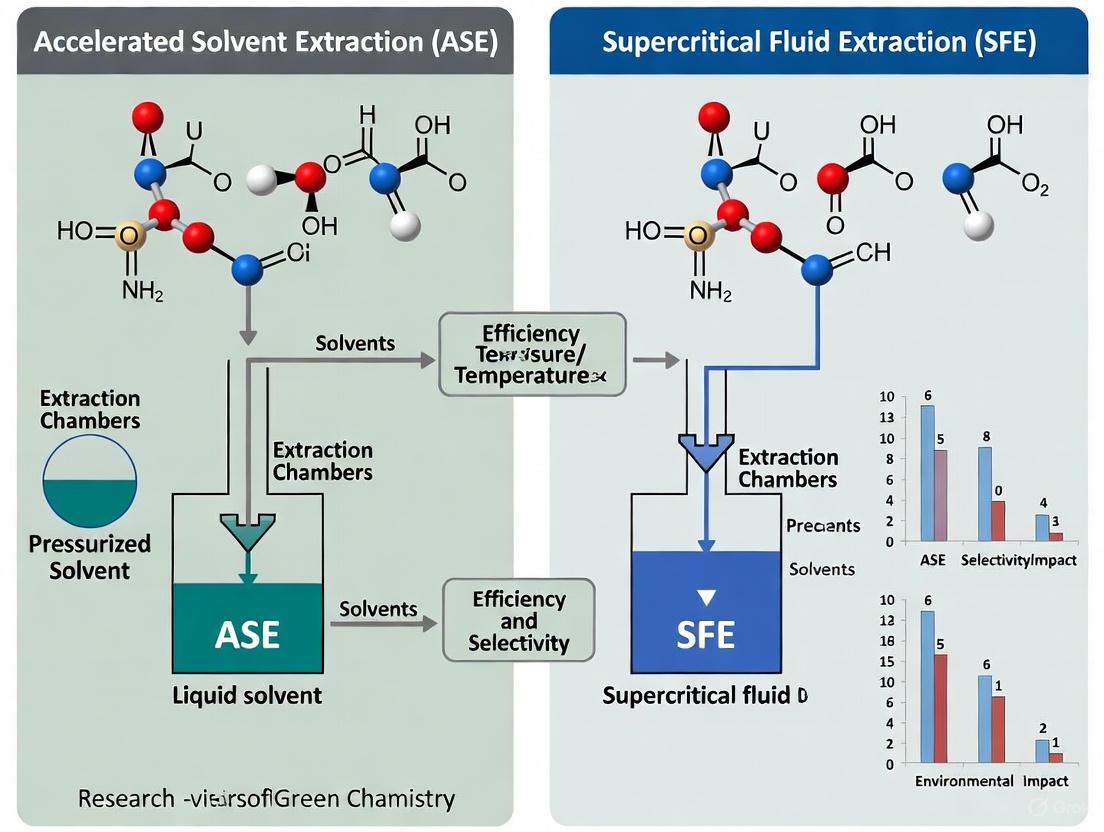
This article provides a comprehensive comparative analysis of Accelerated Solvent Extraction (ASE) and Supercritical Fluid Extraction (SFE) for researchers and professionals in drug development and biomedical fields.
Accelerated Solvent Extraction vs Supercritical Fluid Extraction: A Strategic Guide for Researchers and Drug Development
Abstract
This article provides a comprehensive comparative analysis of Accelerated Solvent Extraction (ASE) and Supercritical Fluid Extraction (SFE) for researchers and professionals in drug development and biomedical fields. It covers the foundational principles of both techniques, explores their specific methodological applications from botanical compounds to drug formulation, and delivers practical troubleshooting and optimization strategies based on current research. By synthesizing validation data and comparative performance metrics, this guide serves as a strategic resource for selecting the optimal extraction technology to enhance product purity, yield, and efficiency in research and development pipelines.
Core Principles: Demystifying ASE and SFE Technologies
Accelerated Solvent Extraction (ASE), also referred to as Pressurized Fluid Extraction (PFE), is a modern, efficient technique for the rapid extraction of solid samples. It is classified as a green extraction technology due to its significantly reduced solvent consumption and shorter processing times compared to traditional methods like Soxhlet extraction [1]. The core principle of ASE involves using conventional liquid solvents at elevated temperatures and pressures to dramatically enhance the extraction process. This technique is particularly valuable in a research context for the selective removal of lipophilic compounds, such as fatty acids and terpenes, from complex solid matrices like lignocellulosic biomass [2]. Its efficiency and selectivity make it a powerful tool for researchers and drug development professionals who require high-purity extracts from natural resources.
Core Principles of ASE
The high efficiency of ASE stems from the application of two key physical parameters: elevated temperature and elevated pressure. These conditions work synergistically to overcome the kinetic and thermodynamic limitations of standard solid-liquid extraction.
The Role of Elevated Temperature
Operating at temperatures significantly above the normal boiling point of the solvent is a fundamental aspect of ASE. This elevated temperature has several critical effects:
- Increased Solubility: The solubility of analytes typically increases with temperature.
- Enhanced Diffusion Rate: The rate at which analytes diffuse from the solid matrix into the solvent is accelerated.
- Improved Desorption: The strong interactions between the analyte and the matrix surface are more easily broken at higher temperatures.
- Reduced Solvent Viscosity: The lower viscosity of the solvent facilitates better penetration into the porous matrix of the sample.
As demonstrated in the optimization of lipophilic compound extraction from pinewood sawdust, temperature is a positive influencing factor, with higher temperatures (up to 160 °C) leading to increased yields [2].
The Role of Elevated Pressure
The application of pressure, typically in the range of 500 to 3000 psi, serves two primary functions:
- Maintaining the Solvent in a Liquid State: Pressure prevents the solvent from vaporizing, allowing it to remain in the liquid phase well above its atmospheric boiling point. This enables the use of high temperatures without losing the solvent volume.
- Forcing Solvent into Matrix Pores: The pressure helps push the solvent into the deepest pores of the sample matrix, ensuring better contact between the solvent and the entire sample. This is particularly important for samples with low permeability or a dense internal structure.
ASE Experimental Protocol: Extraction of Lipophilic Compounds from Biomass
The following detailed protocol is adapted from a comparative study of ASE and Supercritical Fluid Extraction (SFE) for the extraction of lipophilic compounds from pinewood sawdust [2].
Research Reagent Solutions and Essential Materials
Table 1: Essential Materials and Reagents for ASE
| Item Name | Function/Description |
|---|---|
| Pinewood Sawdust | The lignocellulosic biomass matrix. Ground and sieved to a uniform particle size of 425 µm. |
| Ethanol (99.6%) | A polar, food-grade, and environmentally benign solvent. Ideal for extracting a wide range of medium-polarity compounds. |
| Toluene (96%) | A non-polar solvent. Often used in mixture with ethanol to adjust solvent polarity for specific extractable classes. |
| Nitrogen (N₂) Gas | Used for the automated purge of extraction cells and collection vials post-extraction. |
| Cellulose Filters | Placed at the ends of the extraction cell to contain the solid sample and prevent particulate matter from entering the fluidic path. |
| Stainless Steel ASE Cells | The vessels that hold the sample and withstand the high temperatures and pressures of the extraction process. |
Step-by-Step Methodology
Sample Preparation:
- Obtain the solid biomass (e.g., Pinus patula sawdust).
- Use a Willey mill to grind the material to a fine powder.
- Sieve the ground material to achieve a homogeneous particle size of 425 µm.
- Determine the moisture content using a moisture balance and store the prepared sample at 4°C until use.
System Preparation:
- Ensure the ASE system is clean and calibrated.
- Prime the solvent delivery system with the selected extraction solvent (e.g., ethanol or a toluene-ethanol mixture).
- Pre-heat the oven to the desired extraction temperature.
Loading the Extraction Cell:
- Place a cellulose filter at the bottom of the stainless steel extraction cell.
- Weigh the prepared sample (typically 1-10 grams) and load it into the cell.
- Lightly tamp the sample to avoid channeling.
- Place another cellulose filter on top of the sample to secure it.
- Close the cell and place it into the ASE carousel.
Setting Extraction Parameters:
- Program the ASE system with the optimized operational conditions. For pinewood lipophilic compounds, these were determined by Response Surface Methodology to be [2]:
- Temperature: 160 °C
- Static Time: 12.5 minutes
- Static Cycles: 1
- Pressure: A standard pressure is applied (e.g., 1000-2000 psi) to keep the solvent liquid. The specific value was not detailed in the study but is inherent to the technique.
- Flush Volume: Typically 60% of the cell volume.
- Purge Time: Typically 60-90 seconds with nitrogen gas.
- Program the ASE system with the optimized operational conditions. For pinewood lipophilic compounds, these were determined by Response Surface Methodology to be [2]:
Executing the Extraction:
- Start the automated sequence. The system will:
- a. Fill the cell with the pre-heated solvent.
- b. Pressurize the cell and heat it to the set temperature.
- c. Hold the conditions for the specified "static time" (12.5 mins), allowing the solvent to interact with the sample.
- d. Flush the cell with fresh solvent to transfer the extract to the collection vial.
- e. Purge the cell and transfer line with nitrogen gas to ensure all extract is collected.
- Start the automated sequence. The system will:
Post-Extraction Processing:
- The extract is collected in a sealed vial.
- If necessary, the extract can be concentrated under a gentle stream of nitrogen or by rotary evaporation before further analysis (e.g., FTIR, Py-GC/MS, TGA).
The workflow is also presented in the following diagram:
Comparative Data: ASE vs. Supercritical Fluid Extraction (SFE)
Within the broader thesis context, it is critical to understand ASE's performance relative to other green extraction techniques, notably Supercritical Fluid Extraction (SFE). The following data, derived from a comparative study on pinewood sawdust, provides a quantitative performance analysis [2].
Table 2: Optimized Conditions and Performance: ASE vs. SFE
| Parameter | Accelerated Solvent Extraction (ASE) | Supercritical Fluid Extraction (SFE) |
|---|---|---|
| Optimum Temperature | 160 °C | 50 °C |
| Optimum Pressure | (Inherent to maintain liquid state) | 300 bar |
| Key Solvent/Flow | Ethanol/Toluene (as solvent) | CO₂ (3.2 mL/min) + Ethanol (2 mL/min co-solvent) |
| Extraction Time | 12.5 minutes (static time) | Not Specified |
| Maximum Yield | 4.2% (dry weight basis) | 2.5% (dry weight basis) |
| Model R² | 0.87 | 0.80 |
The data demonstrates that under their respective optimized conditions, ASE exhibited a 68% higher extraction yield for lipophilic compounds from pinewood sawdust compared to SFE [2]. The higher coefficient of determination (R²) for the ASE model also suggests a more robust and predictable process optimization.
The following diagram summarizes this comparative efficiency:
Analysis of Extracted Compounds
The lipophilic compounds obtained via ASE from pinewood sawdust were rigorously characterized, confirming the technique's effectiveness [2].
- FTIR Spectroscopy: Identified the presence of key functional groups in the extract, including aliphatic groups, hydroxyl groups, and carboxyl groups, which are characteristic of fatty acids and terpenes.
- Thermal Analysis (TGA/DSC): Revealed that the extracted lipophilic compounds degraded within a temperature range of 250–450°C, providing information on their thermal stability.
- Compound Identification (Py-GC/MS): This analysis confirmed that the ASE extract was rich in specific valuable lipophilic compounds, primarily fatty acids and terpenes.
Accelerated Solvent Extraction stands as a powerful and efficient technique defined by its use of high pressure and temperature to enable rapid and robust extraction of solid samples. Its application in the extraction of lipophilic compounds from lignocellulosic biomass demonstrates a clear advantage in terms of extraction yield over SFE, achieving a 4.2% yield compared to 2.5% under optimized conditions for both methods [2]. The detailed protocol, reagent list, and workflow diagrams provided herein offer a reliable template for researchers to implement this technique. The high recovery of commercially relevant compounds like fatty acids and terpenes underscores ASE's significant value in fields such as natural product research and pharmaceutical development, where efficiency, solvent reduction, and compound purity are of paramount importance.
Supercritical Fluid Extraction (SFE) is a green and efficient technology that utilizes supercritical fluids as solvents for isolating target compounds from complex matrices. A substance becomes supercritical when heated above its critical temperature (Tc) and pressurized beyond its critical pressure (Pc), a point where it exhibits unique properties intermediate between a gas and a liquid [3]. This state provides the fluid with gas-like diffusivity and viscosity, enabling deep penetration into solid materials, coupled with liquid-like density and solvating power, allowing for efficient dissolution of compounds [4] [3].
Carbon dioxide (CO₂) is the most widely used solvent in SFE applications. Its critical point is readily achievable (Tc = 31.1°C, Pc = 73.8 bar), making it suitable for processing thermally labile bioactive compounds [3]. As a recognized safe solvent by regulatory bodies, supercritical CO₂ (scCO₂) offers a non-toxic, non-flammable, and environmentally friendly alternative to conventional organic solvents such as hexane and methanol [5] [6]. The principle of SFE allows for highly selective extraction by fine-tuning parameters like pressure and temperature, which directly influence the density and solvating power of the supercritical fluid [3]. This precision enables the selective isolation of target compounds while preserving their structural integrity and biological activity.
SFE in the Context of ASE and Other Extraction Techniques
Within the landscape of modern extraction methodologies, SFE stands alongside techniques like Accelerated Solvent Extraction (ASE) as a powerful green alternative to conventional methods such as Soxhlet extraction or ultrasonication.
A comparative study extracting lipophilic compounds from pinewood sawdust demonstrated the distinct performance profiles of SFE and ASE [7]. While ASE yielded a higher extraction efficiency (4.2%) compared to SFE (2.5%), SFE operates under much milder thermal conditions, making it more suitable for heat-sensitive compounds [7]. Another study on the determination of organic micropollutants in marine particulate matter found that the recoveries and precision of both ASE and SFE compared favorably with Soxhlet, ultrasonication, and methanolic saponification methods [8].
The table below summarizes a quantitative comparison of SFE versus other extraction methods:
Table 1: Comparison of Supercritical Fluid Extraction with Other Prominent Extraction Techniques
| Extraction Method | Typical Operating Conditions | Extraction Efficiency | Advantages | Limitations |
|---|---|---|---|---|
| Supercritical Fluid Extraction (SFE) | Moderate Temp (35-70°C), High Pressure (>74 bar) [6] [3] | Yields of 2.5-4.2% for lipophilic compounds [7] | Selective, low thermal degradation, solvent-free residues, environmentally friendly [4] [5] | High initial investment, can be less efficient for some compounds vs. ASE [7] |
| Accelerated Solvent Extraction (ASE) | High Temp (100-200°C), High Pressure (100-200 bar) [7] | Yield of 4.2% for lipophilic compounds [7] | High efficiency, fast, automated [8] | High temperatures may degrade thermolabile compounds |
| Soxhlet Extraction | Moderate-High Temp (solvent dependent), Ambient Pressure | Recoveries of 93-115% for alkanes vs. SFE/ASE [8] | High recovery, simple equipment | Lengthy process, large solvent consumption, high thermal stress |
| Ultrasonication (USE) | Ambient Temp/Pressure (typically) | Recoveries comparable to SFE/ASE for hydrocarbons [8] | Simple, low equipment cost | Low selectivity, high solvent use, potential for extract contamination |
Principles and Mechanisms of SFE
The operational workflow of SFE is a tightly controlled process that leverages the unique properties of supercritical CO₂. The following diagram illustrates the logical flow and key components of a standard SFE system.
SFE Process Workflow
The mechanism of SFE involves several key stages:
- Solvent Delivery and Pressurization: Liquid CO₂ is drawn from a supply tank, cooled to maintain its liquid state, and pressurized above its critical point using a high-pressure pump [3].
- Extraction: The supercritical CO₂ is passed through a vessel containing the solid sample matrix. The fluid diffuses into the matrix, dissolving the target lipophilic compounds. The solvating power is tuned by adjusting the pressure and temperature [4] [3].
- Separation: The compound-laden scCO₂ is then transferred to a separation vessel held at a lower pressure. This reduction in pressure causes the CO₂ to revert to a gaseous state, drastically reducing its solvating power and precipitating the extracted compounds for collection [3].
- Solvent Recycling: The gaseous CO₂ can be vented or re-liquefied and recycled back into the system, enhancing the economic and environmental profile of the process [3].
Key Applications and Protocols in Research and Development
Protocol: Extraction of Lycopene from Grapefruit
The following protocol details the optimized SFE of lycopene, a thermally sensitive carotenoid, from grapefruit (Citrus paradisi) endocarp, as established by research published in Scientific Reports [6].
Objective: To extract lycopene from freeze-dried grapefruit powder using scCO₂ and determine the impact of process parameters on yield.
Materials & Reagents:
- Raw Material: Ripe grapefruit.
- Preparation: Peel and dice fruit, then lyophilize at -52°C for 96 hours. Grind the lyophilized material and sieve to a particle size of <250 µm. Store at -20°C [6].
- Extraction Solvent: CO₂ (purity >99.5%) with ethanol as a food-grade co-solvent [6].
Experimental Setup & Method:
- Loading: Load 100 g of prepared grapefruit powder into the extraction vessel.
- Extraction: Set the scCO₂ extractor to the determined optimum conditions: 305 bar pressure, 70 °C temperature, 35 g/min CO₂ flow rate, and 135 minutes extraction time. Use ethanol at 5% of the total solvent as a co-solvent [6].
- Separation & Collection: Depressurize the scCO₂ stream into a collection vessel. Collect the extracted lycopene in an amber bottle and store at -20°C prior to analysis.
Analysis:
- Re-dissolve the vacuum-dried extract in hexane and filter through a 0.22 µm PVDF membrane.
- Quantify lycopene yield using Supercritical Fluid Chromatography (SFC) with a BEH 2-EP column and a photodiode array detector set to 452 nm [6].
- Utilize a Central Composite Design (CCD) of Response Surface Methodology to model the effect of pressure, temperature, flow rate, and time on yield. The study found that extraction pressure and time, both individually and interactively, were the most significant factors [6].
Protocol: Optimization of Cannabinoid Extraction from Cannabis
This protocol outlines the development and optimization of an SFE setup for the quantitation of 11 distinct cannabinoids from medicinal cannabis, a process critical for developing well-characterized formulations [9].
Objective: To design an SFE setup that maximizes the yield of cannabinoids from cannabis flowers under optimal operating conditions.
Materials & Reagents:
- Raw Material: Dried flowers of medicinal cannabis (e.g., Cannabis sativa), pulverized to a particle size of <2.7 mm [9].
- Extraction Solvent: scCO₂.
Experimental Setup & Method:
- SFE Setup: The design of the extraction chamber is critical. To maximize yield, a cold separator (separating chamber) should be positioned immediately after the sample chamber to mitigate the throttling effect and dry ice formation during depressurization [9].
- Extraction: Perform extraction at 250 bar and 37 °C. These conditions were selected because CO₂ attains a high density (893.7 kg/m³) at this state, favoring the solvation of cannabinoids. The total extraction time is 3 hours [9].
- Collection: Successive washing of the extract with fresh scCO₂ can further increase yields [9].
Analysis:
- Analyze the extract using a validated uHPLC-DAD (ultra-High Performance Liquid Chromatography with Diode Array Detection) method.
- Use a C18 column with a gradient solvent system (e.g., water/phosphoric acid and acetonitrile) to achieve baseline separation of 11 cannabinoids in a single 32-minute run [9].
- Validate the assay for accuracy, precision, linearity, LOD, and LOQ to ensure reliable quantification [9].
The Scientist's Toolkit: Essential Research Reagent Solutions
Successful implementation of SFE relies on a set of key reagents and materials. The following table details essential components for a typical SFE protocol.
Table 2: Essential Research Reagents and Materials for Supercritical CO₂ Extraction
| Reagent/Material | Function/Application | Research Considerations |
|---|---|---|
| Carbon Dioxide (CO₂) | Primary supercritical solvent. | High purity (>99.5%) is recommended to prevent contamination. It is excellent for non-polar lipophilic compounds [6] [3]. |
| Co-solvents (e.g., Ethanol) | Modifier to enhance solvent power. | Added in small percentages (e.g., 5-10%) to scCO₂ to improve the extraction yield of medium-polarity compounds like certain polyphenols or cannabinoids [5] [6]. Ethanol is preferred for food and pharmaceutical applications due to its GRAS status [5]. |
| Sample Preparation Materials | Preparing the raw matrix for extraction. | Lyophilization preserves heat-sensitive compounds. Particle size reduction (<250µm to 2.7mm) increases surface area for improved extraction efficiency. Drying the sample (or adding desiccants like Na₂SO₄) is often necessary, as high water content can impede scCO₂ penetration [8] [6]. |
| Analytical Standards | Quantification of target compounds. | Certified reference standards (e.g., lycopene, CBD, THC) are crucial for developing and validating analytical methods like SFC or uHPLC for accurate quantification of the extract [6] [9]. |
Supercritical Fluid Extraction using CO₂ represents a powerful and sustainable extraction platform that aligns with the principles of green chemistry. When evaluated against Accelerated Solvent Extraction, SFE's principal advantage lies in its ability to process thermally labile compounds under mild temperatures without sacrificing selectivity or producing toxic solvent waste. While factors such as high initial capital investment and technical complexity remain considerations, the technology's benefits—including tunable selectivity, environmental friendliness, and production of high-purity, solvent-free extracts—solidify its value in modern research and industrial applications. As the demand for natural and precisely characterized bioactive compounds grows in pharmaceuticals, nutraceuticals, and food science, SFE is poised to play an increasingly critical role in the scientist's extraction toolkit.
Accelerated Solvent Extraction (ASE) and Supercritical Fluid Extraction (SFE) are two advanced, green extraction techniques central to modern research in pharmaceuticals and natural products. Both methods offer significant advantages over traditional extraction techniques, including reduced solvent consumption, shorter extraction times, and enhanced selectivity [2] [10]. ASE, also known as Pressurized Liquid Extraction (PLE), utilizes liquid solvents at elevated temperatures and pressures to achieve rapid and efficient extraction from solid matrices [10]. SFE employs supercritical fluids—most commonly carbon dioxide (scCO₂)—which exhibit properties intermediate between gases and liquids, enabling superior penetration and selective extraction [11]. Understanding their fundamental differences in solvent systems, pressure, and temperature is crucial for selecting the appropriate technology for specific research and development applications.
Core Technological Comparison
The fundamental operating principles of ASE and SFE dictate their respective solvent systems, pressure, and temperature ranges, which are summarized in Table 1 below.
Table 1: Key Technological Parameters of ASE and SFE
| Technological Parameter | Accelerated Solvent Extraction (ASE) | Supercritical Fluid Extraction (SFE) |
|---|---|---|
| Solvent System | Liquid organic solvents (e.g., ethanol, toluene:ethanol mixtures, water) [2] [10] | Primarily supercritical CO₂ (scCO₂), often with co-solvents like ethanol [2] [11] |
| Typical Pressure Range | High enough to keep solvents liquid above their boiling points [10] | Above 73.8 bar (critical pressure of CO₂), typically 200-300 bar for research [2] [12] |
| Typical Temperature Range | 80–160 °C [2] [10] | 40–60 °C (for scCO₂) [2] [12] |
| Physical State of Extractant | Liquid [10] | Supercritical Fluid [11] |
| Mechanism | Enhanced solubility and mass transfer at high temperature; matrix disruption [10] | Gas-like diffusivity and viscosity combined with liquid-like density and solvating power [10] [11] |
Solvent Systems
- ASE Solvents: ASE employs conventional liquid solvents. The most common solvents include ethanol and toluene-ethanol mixtures, chosen for their polarity and environmental friendliness [2] [10]. Water, especially as subcritical water, is also used, where its polarity and dielectric constant decrease at high temperatures, allowing it to extract a wider range of compounds [10]. The solvent selection is based on the chemical affinity for the target analyte.
- SFE Solvents: SFE predominantly uses supercritical carbon dioxide (scCO₂) due to its GRAS (Generally Recognized as Safe) status, low cost, and easily attainable critical point (31.1 °C, 73.8 bar) [11] [12]. Its main limitation is low polarity, which is often overcome by adding polar co-solvents (modifiers) like ethanol to enhance the solvating power for a broader range of bioactive compounds [2] [1].
Pressure and Temperature Ranges
- ASE Conditions: ASE operates at elevated temperatures (80–160 °C) and pressures sufficient to maintain the solvent in a liquid state above its boiling point [2] [10]. High temperature is the primary driver for efficiency, reducing solvent viscosity and surface tension, disrupting matrix bonds, and increasing analyte solubility [10].
- SFE Conditions: SFE with CO₂ requires temperatures and pressures above the critical point. Research-scale applications often use 40–60 °C and 200–300 bar [2] [12]. The solvent power of the supercritical fluid is highly dependent on its density, which is a function of temperature and pressure, allowing for tunable selectivity [11].
Experimental Protocols
Protocol for ASE of Lipophilic Compounds from Pinewood Sawdust
This protocol is adapted from a comparative study of lipophilic compound extraction from lignocellulosic biomass [2].
1. Sample Preparation:
- Obtain Pinus patula sawdust.
- Grind the sawdust using a Willey mill and sieve to a uniform particle size of 425 µm.
- Measure and record the moisture content. The sawdust can be stored at 4 °C for future use.
2. Instrument Setup:
- Solvent System: Prepare a solvent mixture of toluene and ethanol [2].
- Fill the extraction cell with the prepared sample.
- Set the ASE system parameters to the optimized conditions determined by Response Surface Methodology [2]:
- Temperature: 160 °C
- Static Time: 12.5 minutes
- Static Cycles: 1
- Pressure is applied automatically to keep the solvent liquid.
3. Extraction Execution:
- Initiate the extraction cycle. The system will heat and pressurize, and the static cycle will hold the solvent in contact with the sample for the set time.
- After the cycle, the extract is purged into a collection vessel with an inert gas (e.g., N₂).
- The yield is determined gravimetrically. Under these conditions, a maximum yield of 4.2% lipophilic compounds can be expected [2].
Protocol for SFE of Lipophilic Compounds from Pinewood Sawdust
This protocol outlines the method for extracting lipophilic compounds using SFE, as per the same comparative study [2].
1. Sample Preparation:
- Follow the same sample preparation steps as for the ASE protocol (grinding and sieving to 425 µm).
2. Instrument Setup:
- Ensure the SFE system is clean and calibrated.
- Load the prepared sample into the high-pressure extraction vessel.
- Set the SFE system to the optimized conditions [2]:
- Temperature: 50 °C
- Pressure: 300 bar
- CO₂ Flow Rate: 3.2 mL/min
- Co-solvent (Ethanol) Flow Rate: 2 mL/min
3. Extraction Execution:
- Pressurize the system with CO₂ and initiate the flow of both CO₂ and the ethanol co-solvent.
- Maintain the extraction at the set parameters for the desired duration (typically determined by extraction curves).
- The lipophilic compounds are collected in a separator by reducing the pressure, causing the CO₂ to lose its solvating power.
- The yield is determined gravimetrically. Under these optimum conditions, a yield of 2.5% lipophilic compounds can be achieved [2].
Workflow and Pathway Visualization
The following diagram illustrates the logical workflow for selecting and executing an extraction methodology, from sample preparation to analysis, based on the target compounds and matrix.
Diagram 1: Extraction Methodology Selection Workflow (Width: 760px)
The Scientist's Toolkit: Essential Research Reagents and Materials
Successful implementation of ASE and SFE requires specific reagents and materials. Table 2 lists key items and their functions based on the cited experimental work.
Table 2: Essential Research Reagent Solutions for ASE and SFE
| Item | Function/Application | Example/Note |
|---|---|---|
| Carbon Dioxide (CO₂) | Primary solvent for SFE; non-toxic, leaves no residue [11] [12]. | SFE-grade CO₂ with high purity is essential to prevent contamination [11]. |
| Ethanol | Green co-solvent/modifier; enhances solubility of polar compounds in SFE and common solvent for ASE [2] [10]. | GRAS-status solvent; 99.6% purity or higher is recommended for research [2]. |
| Toluene | Organic solvent used in ASE for lipid-soluble compounds [2]. | Often used in mixtures with ethanol (e.g., toluene:ethanol) [2]. |
| Inert Gas (N₂) | Used for purging lines and collection vessels in ASE to prevent oxidation [2] [10]. | High-purity nitrogen gas. |
| Grinding Mill | Reduces particle size of solid samples to increase surface area for extraction [2]. | A Willey mill or equivalent [2]. |
| Standard Sieves | Standardizes particle size for consistent packing and reproducible extraction kinetics [2] [10]. | e.g., 425 µm sieve for pinewood sawdust [2]. |
| Extraction Vessels/Cells | High-pressure containers that hold the sample during the extraction process [10]. | Must be chemically compatible and rated for the pressures and temperatures used. |
| Tetramethylammonium hydroxide (TMAH) | Derivatization agent used with Py-GC/MS for the analysis of lipophilic compounds like fatty acids [13]. | Helps in the identification and quantification of extracts [13]. |
The principles of Green Chemistry have become a pivotal driver for the adoption of modern extraction techniques in analytical and drug development laboratories. Among these, Accelerated Solvent Extraction (ASE) and Supercritical Fluid Extraction (SFE), particularly with CO₂, are recognized as sustainable alternatives to traditional methods like Soxhlet extraction [14] [15]. While both techniques align with green chemistry goals by reducing solvent consumption and energy usage, they possess distinct environmental and safety profiles, operational parameters, and application suitability. This application note provides a detailed, comparative analysis of ASE and SFE from a green chemistry perspective, supported by quantitative data, standardized protocols, and workflow visualizations to guide researchers and scientists in selecting the optimal technique for their specific needs in the context of natural product and bioactive compound extraction.
Green extraction techniques are defined as "extraction methods based on the detection and development of extraction processes which will reduce energy consumption, enables the use of solvents substitutes, renewable natural products, and ensure a safe and high-quality extract/product" [15]. Both ASE and SFE operationalize these principles, though through different mechanistic approaches.
Accelerated Solvent Extraction (ASE), also known as Pressurized Liquid Extraction (PLE), operates by using conventional organic solvents at elevated temperatures and pressures. This high-pressure environment raises the solvent's boiling point, facilitating faster analyte desorption, enhancing solvent penetration into the sample matrix, and significantly reducing both extraction time and solvent volume compared to methods like Soxhlet extraction [14] [15].
Supercritical Fluid Extraction (SFE) utilizes solvents, typically carbon dioxide (CO₂), above their critical temperature and pressure, where they exist as a supercritical fluid. Supercritical CO₂ (SC-CO₂) exhibits gas-like diffusivity and viscosity, which promotes rapid penetration into matrices, coupled with liquid-like density, which confers high solvating power [15]. Its tunable solvent strength by simple manipulation of pressure and temperature, along with its non-toxic, inert, and easily separable nature, makes it a cornerstone of green extraction technology [15].
Quantitative Comparative Analysis
The following tables summarize the key performance metrics and environmental profiles of ASE and SFE based on current literature and experimental data.
Table 1: Performance and Environmental Profile Comparison
| Parameter | Accelerated Solvent Extraction (ASE) | Supercritical Fluid Extraction (SFE) |
|---|---|---|
| Extraction Principle | High temperature & pressure with liquid solvents [14] | Supercritical fluid (e.g., CO₂) at critical T & P [15] |
| Typical Solvent | Organic solvents (e.g., acetone, hexane) [14] | Supercritical CO₂ (often with co-solvents like ethanol) [15] |
| Solvent Consumption | Reduced vs. Soxhlet (e.g., ~50% less) [14] | Very low; uses non-toxic, recyclable CO₂ [15] |
| Extraction Time | Faster than traditional methods (minutes vs. hours) [14] | Fast processing time [15] |
| Energy Consumption | Lower than Soxhlet [14] | Reduced energy consumption [15] |
| Operator Safety | Enhanced vs. open systems; reduced exposure [14] | High; uses non-toxic, non-flammable CO₂ [15] |
| Green Score (AGREE Prep) | High [14] | Not explicitly stated, but principles align with green chemistry |
| Optimal For | General solid samples, stable compounds [14] | Thermolabile, volatile compounds; polar compounds with co-solvent [15] |
Table 2: Experimental Yield and Efficiency Data from Rosemary Extraction [16]
| Extraction Technique | Total Carnosol + Carnosic Acid (mg/100 mg) | Extract Yield (%) | Antioxidant Activity |
|---|---|---|---|
| Accelerated Solvent Extraction (ASE) | 18.92 | 13.98 | Standard (Baseline) |
| Supercritical Fluid Extraction (SFE) | 26.96 | 19.40 | ~2x higher than ASE and UAE |
| Ultrasound Assisted Extraction (UAE) | 17.63 | 13.73 | Similar to ASE |
Detailed Experimental Protocols
Protocol for Accelerated Solvent Extraction (ASE)
This protocol is adapted for the extraction of bioactive compounds from plant materials such as rosemary [16] and is applicable to ash samples for pollutant analysis [14].
Sample Preparation:
- Plant Material: Air-dry the raw plant material (e.g., rosemary leaves) and mill or grind it to a homogeneous particle size (e.g., 0.5-1.0 mm). For some applications, a de-oiling pre-treatment via hydrodistillation may be necessary [16].
- Ash Samples: Homogenize the ash sample (e.g., fly ash or bottom ash) without further processing [14].
Extraction Procedure:
- Cell Packing: Weigh an appropriate amount of prepared sample (e.g., 1-5 g) and mix thoroughly with a dispersant (e.g., diatomaceous earth). Pack the mixture tightly into a stainless steel ASE extraction cell.
- Spiking (for analyte recovery): For quantitative analysis of specific contaminants like dioxins, spike the sample with isotopically labeled standards (e.g., ¹³C isotope standards) prior to extraction to assess method performance and recovery, as per US EPA Method 1613B [14].
- Parameter Setting: Load the cell into the ASE instrument and set the operational parameters based on the optimized conditions for the target analyte. Typical parameters are:
- Temperature: 100-150 °C [14] [15]
- Pressure: 1000-2000 psi [15]
- Static Time: 5-15 minutes per cycle
- Solvent: Selected based on analyte polarity (e.g., acetone, hexane, or mixtures) [14]
- Cycles: 1-3 static cycles
- Purge: Nitrogen purge for 60-120 seconds to transfer the entire extract to the collection vial.
- Extraction & Collection: Initiate the extraction cycle. The extract is collected in a sealed vial, ready for concentration or direct analysis.
Protocol for Supercritical Fluid Extraction (SFE)
This protocol outlines the process for extracting heat-sensitive bioactive compounds from plant materials using supercritical CO₂ [15] [16].
Sample Preparation:
- Plant Material: Dry and mill the plant material (e.g., rosemary) to a consistent fine powder to maximize surface area and disrupt cell walls, enhancing SC-CO₂ penetration [15] [16].
- Moisture Control: Ensure the sample is adequately dried, as high moisture content can interfere with the extraction efficiency of non-polar compounds by SC-CO₂.
Extraction Procedure:
- System Pre-conditioning: Ensure the entire SFE system (pump, oven, extraction vessel, separators) is clean and pressure-tight. Pre-cool the CO₂ to its liquid state using the system chiller.
- Extraction Vessel Packing: Accurately weigh the prepared sample and pack it densely into the high-pressure extraction vessel to eliminate dead volume.
- System Assembly and Pressurization: Place the vessel in the oven and connect it to the fluidic path. Set the oven temperature above the critical temperature of CO₂ (e.g., 40-70 °C). Using the pump, pressurize the system above the critical pressure of CO₂ (e.g., 300-400 bar).
- Dynamic/Static Extraction: Once the set temperature and pressure are stable, initiate the extraction. This can be done in static mode (where the fluid soaks the sample for a set time), dynamic mode (where the fluid continuously flows through the sample), or a combination of both [15].
- Fractional Separation (Optional): The extract-laden supercritical fluid passes through one or more separators (set in series) where the pressure and/or temperature are manipulated. This fractional separation allows for the selective precipitation of different compound classes based on their solubility, enhancing extract purity [15].
- Extract Collection: The extracted compounds, now in a liquid or solid state after CO₂ decompression, are collected from the separator(s). The CO₂ reverts to a gas and can be vented or recycled.
Workflow and Decision Pathway
The following diagrams illustrate the generalized operational workflows for ASE and SFE, followed by a logical decision pathway to guide technique selection.
The Scientist's Toolkit: Essential Research Reagent Solutions
Table 3: Key Reagents and Materials for ASE and SFE
| Item | Function/Application |
|---|---|
| Diatomaceous Earth | A dispersant used in ASE to prevent sample agglomeration and create consistent solvent flow paths within the extraction cell [14]. |
| ¹³C-labeled Isotope Standards | Critical for internal standardization and quantification in analytical methods, allowing for accurate determination of analyte recovery, as specified in US EPA 1613B for dioxin analysis [14]. |
| Food-Grade CO₂ (High Purity) | The primary supercritical solvent for SFE. Its non-toxic, GRAS (Generally Recognized as Safe) status makes it ideal for food, pharmaceutical, and nutraceutical extractions [15]. |
| Co-solvents (e.g., Ethanol, Methanol) | Added in small percentages (1-15%) to SC-CO₂ to modify its polarity and dramatically improve the extraction yield of medium- and high-polarity compounds like polyphenols and glycosides [15]. |
| Certified Reference Materials (CRMs) | Standard reference materials (e.g., certified ash samples or plant material with known analyte concentrations) used for method validation, calibration, and quality control in both ASE and SFE [14]. |
From a green chemistry perspective, both ASE and SFE represent significant advancements over traditional extraction methods. ASE offers a robust, automated platform that drastically reduces solvent consumption and time compared to Soxhlet, making it a greener workhorse for routine extraction of stable analytes from solid samples [14]. SFE, particularly with CO₂, provides an unparalleled profile for operator safety and environmental friendliness, especially for valuing thermolabile and volatile compounds, and allows for sophisticated selectivity through tuning and fractional separation [15].
The choice between ASE and SFE is not a matter of which is universally "better," but which is more appropriate for the specific application, considering the nature of the target analyte, the required purity, and the weight given to factors like absolute solvent elimination versus operational flexibility and cost. The experimental data presented, such as the higher yield and antioxidant activity obtained from rosemary using SFE, underscore the potential performance benefits of this technique for high-value bioactive compounds [16]. As the field moves forward, integrating these green extraction techniques with the principles of Safe and Sustainable-by-Design (SSbD) will be crucial for minimizing the environmental footprint of chemical processes in research and industry [17].
Strategic Applications: Implementing ASE and SFE in Research and Drug Development
Within the landscape of modern plant extraction technologies, Accelerated Solvent Extraction (ASE) and Supercritical Fluid Extraction (SFE) represent two advanced, solvent-efficient methodologies. As research shifts towards greener and more efficient industrial processes, understanding the specific applications, advantages, and limitations of each technique is crucial for researchers and drug development professionals. These methods are pivotal for the isolation of bioactive compounds—such as polyphenols, essential oils, and antioxidants—from complex botanical matrices. This document provides detailed application notes and experimental protocols to guide the selection and implementation of these techniques, framing them within a comparative research context to inform method selection for specific analytical and scaling requirements [5].
Comparative Analysis: ASE vs. SFE
The choice between ASE and SFE depends on the target compounds, the nature of the plant matrix, and the desired throughput, scalability, and purity of the final extract. The following table summarizes the core quantitative and qualitative differences between these two techniques.
Table 1: Comparative Analysis of Accelerated Solvent Extraction (ASE) and Supercritical Fluid Extraction (SFE)
| Parameter | Accelerated Solvent Extraction (ASE) | Supercritical Fluid Extraction (SFE) |
|---|---|---|
| Primary Solvent | Liquid organic solvents (e.g., ethanol, methanol, water mixtures) [18] | Supercritical Carbon Dioxide (CO₂), often with co-solvents like ethanol [19] [5] |
| Operating Conditions | High pressure (500-3000 psi) and elevated temperature (50-200°C) [18] | High pressure (74-800 bar) and temperature above 31°C [20] [19] |
| Extraction Time | Rapid (typically 12-20 minutes per cycle) [18] | Moderate to Fast (10 to 60 minutes) [19] |
| Selectivity | Good, adjustable by solvent polarity [18] | Excellent, highly tunable by varying pressure and temperature [19] [5] |
| Solvent Consumption | Low compared to traditional methods, but requires disposal [18] | Very Low; CO₂ is recycled and reused in a closed-loop system [20] [5] |
| Suitability for Thermolabile Compounds | Moderate; high temperatures can be a risk [18] | Excellent due to low operating temperatures (e.g., 31-60°C) [5] |
| Environmental & Safety Impact | Uses organic solvents, requiring proper handling and disposal [18] | Very favorable; CO₂ is non-toxic, non-flammable, and leaves no residual solvent [20] [5] |
| Capital & Operational Cost | Moderate capital investment [18] | High capital investment for high-pressure equipment; operational costs influenced by energy consumption [5] |
| Typical Applications | Broad-spectrum extraction of both polar and non-polar compounds [18] | Selective extraction of lipids, essential oils, flavors, and fragrances; often preferred for high-value, heat-sensitive bioactives [19] [5] |
Experimental Protocols
Protocol for Supercritical Fluid Extraction (SFE)
This protocol outlines the steps for the selective extraction of bioactive compounds from dried plant material using supercritical CO₂.
Research Reagent Solutions & Essential Materials
Table 2: Key Materials for Supercritical Fluid Extraction
| Item | Function/Explanation |
|---|---|
| Liquid CO₂ Supply (Food Grade) | The primary supercritical fluid solvent; non-toxic and recyclable [5]. |
| Modifier Solvent (e.g., Ethanol, Methanol) | Added in small quantities (e.g., 1-15%) to enhance the solubility of polar compounds in supercritical CO₂ [5]. |
| Plant Material (e.g., Ground Seeds, Herbs) | The extraction matrix. Must be dried and finely ground to increase surface area and improve extraction efficiency [20] [19]. |
| High-Pressure Extraction Vessel | Contains the plant material and withstands the operational pressures of the SFE system [20]. |
| Back Pressure Regulator | Maintains high pressure throughout the system by controlling the flow of the supercritical fluid [19]. |
| Separator/Collection Vessel | The location where pressure is reduced, causing the CO₂ to revert to a gas and the extracted material to precipitate for collection [20] [19]. |
Detailed Step-by-Step Methodology
- System Preparation & Raw Material Loading: Ensure the SFE system is clean and all components are in proper working condition. Weigh a precise amount of finely ground and dried plant material. Load it into the high-pressure extraction vessel, ensuring an even pack to avoid channeling [20].
- System Pressurization and Heating: Pump liquid CO₂ (often cooled to ~5°C for pump efficiency) into the system. Simultaneously, heat the system to achieve supercritical conditions (temperature >31°C, pressure >74 bar). The standard operating range is often between 40-80°C and 100-400 bar, depending on the target compounds [20] [19].
- Dynamic Extraction: Pass the supercritical CO₂ through the extraction vessel at a controlled mass flow rate. The supercritical fluid diffuses into the plant matrix, dissolving the target bioactive compounds. The duration of this step is a key optimization parameter [19].
- Separation and Collection: The CO₂-rich extract stream is passed into a separator vessel. Here, the pressure is lowered, causing the CO₂ to lose its solvating power and revert to a gas. The extracted compounds precipitate out and are collected in a liquid form from the bottom of the separator [20] [19].
- Solvent Recycling and Depressurization: The gaseous CO₂ is cooled, re-liquefied, and recycled back into the system, creating a closed-loop process. After the extraction cycle is complete, the system is fully depressurized [20].
- Post-Processing (If Required): The crude extract may require further purification steps, such as winterization to remove fats and waxes, or distillation to isolate specific compounds [20].
Workflow Visualization
The following diagram illustrates the logical workflow and component relationships in a typical SFE system.
Protocol for Accelerated Solvent Extraction (ASE)
This protocol, also known as Pressurized Liquid Extraction (PLE), uses conventional solvents at elevated temperatures and pressures to achieve rapid and efficient extraction [18].
Research Reagent Solutions & Essential Materials
Table 3: Key Materials for Accelerated Solvent Extraction
| Item | Function/Explanation |
|---|---|
| Extraction Solvent | A suitable solvent (e.g., Ethanol, Water, Hexane) chosen based on the polarity of the target bioactive compounds [18]. |
| Plant Material | The sample must be dried and homogenized to a fine powder for optimal extraction [18]. |
| Diatomaceous Earth | Often used as a dispersant to mix with the sample, preventing clumping and ensuring even solvent contact [18]. |
| High-Pressure Extraction Cell | A robust steel cell that holds the sample and withstands high pressure and temperature [18]. |
| Solvent Pump | A high-pressure pump that delivers the solvent into the extraction cell [18]. |
| Oven | Heats the extraction cell to the desired temperature during the static extraction phase [18]. |
| Collection Vial | A graduated vial, typically glass, for collecting the extract after the pressure is released [18]. |
Detailed Step-by-Step Methodology
- Sample Preparation: Homogenize the plant material and mix it with a dispersant like diatomaceous earth. This mixture is then packed into the extraction cell [18].
- System Priming: Place the extraction cell into the ASE system. Ensure the collection vial is in place.
- Pressurization and Heating: The cell is filled with the selected solvent and pressurized (typically 500-3000 psi). The system heats the cell and its contents to a predefined temperature (e.g., 50-200°C), which is above the solvent's normal boiling point. This increases the solubility and diffusion rates of the analytes [18].
- Static Extraction: The system maintains the pressure and temperature for a set time (e.g., 5-10 minutes), allowing the solvent to penetrate the matrix and dissolve the target compounds effectively [18].
- Solvent Flushing and Purge: After the static period, a fresh volume of solvent is pumped through the cell to flush the extracted analytes into the collection vial. Finally, an inert gas (e.g., Nitrogen) purges the cell and transfer lines to ensure all extract is transferred to the vial [18].
- Extract Handling: The collected extract may require concentration (e.g., via rotary evaporation) and/or filtration before further analysis or purification [18].
Workflow Visualization
The following diagram illustrates the sequential workflow for an ASE process.
Both Supercritical Fluid Extraction and Accelerated Solvent Extraction offer significant advantages over traditional extraction methods in terms of speed, efficiency, and solvent consumption. SFE stands out for its unparalleled selectivity, green credentials, and ideal application for thermolabile, non-polar to moderately polar compounds. Its primary constraints are the high initial capital investment and complexity in scaling. In contrast, ASE provides a robust, rapid, and highly automated platform for the broad-spectrum extraction of a wider range of polarities using familiar solvents, making it an exceptional tool for high-throughput analytical laboratories. The decision between them is not a question of which is superior in absolute terms, but which is optimal for a specific research goal, defined by the target analyte, matrix, and project resources.
Supercritical Fluid Extraction (SFE), particularly using supercritical carbon dioxide (scCO₂), has emerged as a transformative green technology for pharmaceutical particle engineering. This technology enables precise control over drug particle size and morphology, addressing critical challenges in drug bioavailability and processing. scCO₂ possesses unique properties intermediate between gases and liquids—exhibiting gas-like diffusivity and viscosity combined with liquid-like density—which make it ideal for particle formation and micronization processes [21] [22]. The critical point of CO₂ (Tc = 31.1°C, Pc = 7.38 MPa) is readily achievable, making it suitable for processing thermolabile pharmaceutical compounds without degradation [23] [21]. Within the broader context of extraction technologies, SFE distinguishes itself from accelerated solvent extraction (PLE) through its utilization of solvents above their critical points, enabling unique applications in particle engineering beyond mere compound extraction [10].
The pharmaceutical industry increasingly adopts SFE-based techniques to overcome limitations of conventional methods such as thermal degradation, poor particle size control, and organic solvent residues [23] [21]. These techniques allow for the production of micron (0.1–5 μm) and nano-sized particles with enhanced dissolution rates and improved bioavailability, particularly for Biopharmaceutics Classification System (BCS) Class II and IV drugs with poor solubility [23] [24]. This application note provides detailed protocols and technical guidance for implementing SFE technologies in drug particle micronization and dispersion.
Key SFE Techniques for Particle Engineering
Three primary SFE techniques have been developed for pharmaceutical particle engineering, categorized by the role of supercritical CO₂ in the process [23]:
Table 1: Fundamental SFE Techniques for Particle Engineering
| Technique | SCF Role | Mechanism | Key Advantages | Key Limitations |
|---|---|---|---|---|
| RESS (Rapid Expansion of Supercritical Solutions) | Solvent | Solute dissolution in scCO₂ followed by rapid expansion through a nozzle creates supersaturation and particle precipitation [23] [21]. | Narrow particle size distribution; organic solvent-free; single-step process [23]. | Limited to compounds with good scCO₂ solubility; nozzle clogging potential [23] [21]. |
| SAS (Supercritical Antisolvent) & GAS (Gas Antisolvent) | Antisolvent | scCO₂ acts as antisolvent to reduce solvent power of conventional organic solvent, causing solute precipitation [23] [21]. | Wide control over particle morphology (nano- to micro-scale); suitable for continuous processing [23]. | Longer washing periods; potential particle aggregation; requires solvent disposal [23]. |
| PGSS (Particles from Gas-Saturated Solutions) | Solute | scCO₂ dissolved into melted substance or suspension followed by expansion causes cooling and particle formation [23]. | Low scCO₂ consumption; applicable to liquids and suspensions; low cost [23]. | Difficulty producing submicron particles; limited particle size control [23]. |
Quantitative Solubility Data for Process Design
Solubility of active pharmaceutical ingredients (APIs) in scCO₂ represents a critical parameter for selecting and designing appropriate SFE processes. The following table summarizes experimental solubility data for representative compounds:
Table 2: Drug Solubility in Supercritical CO₂ Under Varied Conditions
| Drug Compound | Temperature Range (K) | Pressure Range (bar) | Solubility Range (mole fraction) | Crossover Pressure (bar) | Reference |
|---|---|---|---|---|---|
| Paracetamol | 311-358 | 95-265 | 0.3055 × 10⁻⁶ to 16.3582 × 10⁻⁶ | ~110 | [25] |
| General Range (68 drugs) | 308-358 | 80-350 | 10⁻⁸ to 10⁻³ | Compound-dependent | [24] |
Temperature exhibits a dual effect on solubility, dependent on pressure conditions. Below the crossover pressure (~110 bar for paracetamol), solubility decreases with increasing temperature; above this point, solubility increases with temperature [25]. This phenomenon must be considered during process optimization.
Experimental Protocols for SFE Techniques
Protocol for Rapid Expansion of Supercritical Solutions (RESS)
Principle: The RESS process exploits the pressure-dependent solubility of compounds in scCO₂. Rapid depressurization of the supercritical solution through a nozzle creates extreme supersaturation, leading to rapid nucleation and particle formation [23] [21].
Materials and Equipment:
- High-pressure vessel (equipped with heating jacket)
- CO₂ supply with purification system
- High-pressure pump (preferably syringe type)
- Pre-expansion cell with sintered metal filters
- Nozzle (capillary or laser-drilled orifice)
- Thermostated expansion chamber with particle collection system
- Back-pressure regulator
Procedure:
- System Preparation: Clean all components with appropriate solvents and dry thoroughly. Assemble the system and pressure-test with inert gas before operation.
- Solute Loading: Place the drug substance (100-500 mg) in the pre-expansion cell equipped with filters to prevent undissolved particles from entering the nozzle.
- System Pressurization: Fill the system with scCO₂ and gradually increase pressure to the desired operating level (typically 100-300 bar) using the high-pressure pump.
- Equilibration: Maintain system at constant temperature (40-80°C) and pressure for 30-60 minutes to ensure complete dissolution of the drug substance in scCO₂.
- Particle Formation: Expand the supercritical solution rapidly through the nozzle (25-60 μm diameter) into the low-pressure expansion chamber maintained at atmospheric pressure.
- Particle Collection: Collect the precipitated particles on a suitable substrate (glass slides, filters) placed in the expansion chamber.
- System Depressurization: After completion, gradually depressurize the system at a controlled rate (5-10 bar/min) to avoid disturbing collected particles.
Critical Parameters:
- Nozzle geometry: Diameter (25-60 μm), length-to-diameter ratio (≥10)
- Pre-expansion temperature: 40-80°C
- Pre-expansion pressure: 100-300 bar
- Extraction time: 30-60 minutes
- ScCO₂ flow rate: 1-3 L/min
Protocol for Supercritical Antisolvent (SAS) Precipitation
Principle: The SAS technique utilizes scCO₂ as an antisolvent to reduce the solvent power of a conventional organic solvent containing dissolved solute, leading to high supersaturation and particle precipitation [23] [21].
Materials and Equipment:
- High-pressure precipitation vessel with sight glasses
- CO₂ supply and delivery system
- High-pressure liquid pump for organic solution
- Coaxial nozzle for separate introduction of solution and scCO₂
- Solution injection system
- Temperature control system
- Back-pressure regulator
- Solvent collection system
Procedure:
- Vessel Preparation: Clean and dry the precipitation vessel. Ensure the nozzle is properly aligned and secured.
- System Pressurization: Pressurize the vessel with scCO₂ to the desired operating pressure (typically 80-150 bar) and stabilize temperature (35-60°C).
- Solution Preparation: Dissolve the drug substance (0.5-2% w/v) in an appropriate organic solvent (methanol, ethanol, acetone, dichloromethane).
- Solution Injection: Inject the drug solution through the inner capillary of the coaxial nozzle at a controlled flow rate (0.5-2 mL/min) while maintaining constant pressure via the back-pressure regulator.
- Antisolvent Action: Simultaneously introduce scCO₂ through the outer nozzle annulus. The scCO₂ rapidly diffuses into the liquid phase, acting as an antisolvent and causing particle precipitation.
- Washing Phase: After complete solution injection, continue scCO₂ flow for 30-60 minutes to remove residual solvent from the precipitated particles.
- Particle Collection: Gradually depressurize the vessel and collect the dry powder from the precipitation chamber floor or filter.
Critical Parameters:
- Drug solution concentration: 0.5-2% w/v
- Solution flow rate: 0.5-2 mL/min
- scCO₂ flow rate: 5-20 g/min
- Operating pressure: 80-150 bar
- Operating temperature: 35-60°C
- Nozzle geometry and configuration
Advanced Applications in Drug Delivery Systems
SHIFT Technology for Homogeneous Formulations
Super-stable Homogeneous Intermix Formulating Technology (SHIFT) represents an innovative application of SFE for creating uniform dispersions of hydrophilic drugs in hydrophobic carriers. This technology has demonstrated particular utility for challenging formulations such as lipiodol-ICG (indocyanine green) systems used in hepatocellular carcinoma treatment [22].
Protocol for SHIFT Dispersion:
- Prepare the hydrophobic carrier phase (e.g., lipiodol) in the high-pressure mixing chamber.
- Dissolve the hydrophilic drug (e.g., ICG) in a minimal amount of compatible solvent.
- Introduce scCO₂ into the system at moderate pressure (100-150 bar) and temperature (35-45°C).
- Maintain under constant agitation for 15-30 minutes to facilitate molecular dispersion.
- Gradually release pressure while maintaining temperature to achieve homogeneous dispersion.
- Validate dispersion stability through centrifugation and spectroscopic methods.
SHIFT-generated formulations demonstrate significantly enhanced stability and reduced burst release compared to conventional emulsions, with improved photothermal conversion efficiency for diagnostic applications [22].
SPFT for Drug Micronization
Super-table Pure-Nanomedicine Formulation Technology (SPFT) utilizes SCF antisolvent principles to achieve drug micronization without additives. This technology enables the production of pure drug nanoparticles with enhanced solubility characteristics [22].
Key Advantages:
- No requirement for stabilizers or surfactants
- Preservation of crystal form and chemical stability
- Narrow particle size distribution (100-500 nm)
- Applicable to heat-sensitive compounds
The Scientist's Toolkit: Essential Research Reagents and Materials
Table 3: Essential Research Reagents and Materials for SFE Particle Engineering
| Category | Item | Specification | Function/Purpose |
|---|---|---|---|
| Supercritical Fluid | Carbon dioxide | High purity (99.99%), with dip tube | Primary supercritical solvent medium [23] [21] |
| Co-solvents | Ethanol, methanol | HPLC grade, with low water content | Enhance solubility of polar compounds in scCO₂ [21] |
| Organic Solvents | Dichloromethane, acetone, DMSO | Analytical grade, low residue | Solvent for SAS process; must be miscible with scCO₂ [23] |
| Nozzle Components | Capillary nozzles, orifice plates | Stainless steel, 25-60 μm diameter | Create rapid expansion for RESS; precise dimensions critical [23] |
| Polymeric Carriers | PLGA, PLLA, chitosan | Pharmaceutical grade, controlled MW | Biodegradable carriers for controlled release formulations [23] [21] |
| Pressure Vessels | Precipitation chamber, expansion vessel | Stainless steel, rated > 400 bar, with sight glasses | Contain high-pressure processes; allow visual monitoring [23] |
| Analytical Standards | Drug reference standards | USP/EP grade, high purity | Quantify solubility and process efficiency [25] |
Computational Modeling for Solubility Prediction
Machine learning approaches have demonstrated superior capability in predicting drug solubility in scCO₂ compared to traditional thermodynamic models. Recent research with 68 drugs and 1726 experimental data points has established the effectiveness of ensemble methods [24].
Optimal Model Performance:
- XGBoost algorithm: RMSE = 0.0605, R² = 0.9984
- Applicability domain: 97.68% of data points within acceptable range
- Key input parameters: T, P, Tc, Pc, ρ, ω, MW, T_m
Implementation Protocol:
- Data Collection: Compile experimental solubility data with corresponding temperature and pressure conditions.
- Feature Engineering: Calculate critical properties, acentric factors, and molecular descriptors.
- Model Training: Implement XGBoost with 10-fold cross-validation.
- Validation: Compare predicted vs. experimental values using statistical metrics.
- Application: Use trained model to predict solubility for new compounds at various process conditions.
This computational approach significantly reduces experimental burden and enables rapid screening of candidate compounds for SFE processing [24].
Analytical Methods for Particle Characterization
Comprehensive characterization of SFE-processed particles is essential for quality assessment and process optimization. The following analytical techniques are recommended:
- Particle Size Distribution: Laser diffraction, dynamic light scattering
- Morphology Assessment: Scanning electron microscopy (SEM)
- Crystalline Form: X-ray powder diffraction (XRPD)
- Surface Chemistry: X-ray photoelectron spectroscopy (XPS)
- Thermal Properties: Differential scanning calorimetry (DSC)
- Dissolution Performance: USP dissolution apparatus with sink conditions
SFE-engineered particles typically demonstrate enhanced dissolution rates, with micronized formulations (0.1-5 μm) showing 2-5 fold improvement in dissolution velocity compared to unprocessed materials [23] [21].
The global edible oil market faces significant challenges, including price volatility, supply chain disruptions, and sustainability concerns. In this context, edible insects have emerged as a promising sustainable alternative lipid source, offering lower environmental impact compared to conventional livestock through reduced CO2 emissions and resource consumption [26]. Despite their significant lipid content, which represents the second-largest component after protein, research on edible insect oils remains limited, often focusing predominantly on protein applications [26].
Advanced extraction technologies like supercritical fluid extraction (SFE) and accelerated solvent extraction (ASE) offer significant advantages over traditional methods, including reduced solvent usage, shorter processing times, and improved extraction efficiency [2] [27]. This case study investigates the optimization of SFE for oil extraction from edible insects, specifically Tenebrio molitor and Locusta migratoria, using Response Surface Methodology (RSM) to maximize yield and quality parameters. The findings are contextualized within a broader thesis comparing SFE with ASE, highlighting the relative advantages and limitations of each technology for lipid recovery from biological matrices.
Theoretical Background: SFE vs. ASE
Supercritical Fluid Extraction (SFE)
SFE utilizes fluids, typically carbon dioxide (CO₂), above their critical temperature and pressure, where they exhibit unique properties intermediate between gases and liquids. Supercritical CO₂ offers high diffusivity, low viscosity, and tunable solvating power by simply adjusting pressure and temperature parameters [2]. The primary advantages include:
- Solvent-free residues: CO₂ reverts to gaseous form upon depressurization, leaving no solvent traces [26]
- Low thermal stress: Operates at moderate temperatures, preserving thermolabile compounds [2]
- Environmental compatibility: CO₂ is non-toxic, non-flammable, and recyclable [27]
Accelerated Solvent Extraction (ASE)
ASE, also known as pressurized liquid extraction, employs conventional solvents at elevated temperatures (100-374°C) and pressures (up to 221 bar) to enhance extraction efficiency [27]. The increased pressure maintains solvents in liquid state above their boiling points, significantly improving mass transfer and solubility of bioactive compounds [2] [27]. Key characteristics include:
- Rapid extraction: Dramatically reduced processing times compared to conventional methods [27]
- High throughput: Automated systems enable sequential processing of multiple samples [27]
- Solvent versatility: Compatible with a wide range of polar and non-polar solvents [2]
Comparative Extraction Efficiency
Studies on lignocellulosic biomass indicate ASE typically achieves higher extraction yields compared to SFE. For pinewood sawdust, ASE yielded 4.2% lipophilic compounds versus 2.5% for SFE under optimized conditions [2] [13]. However, SFE demonstrates superior selectivity for specific compound classes, including tocopherols and volatile compounds, while better preserving thermosensitive components [26] [28].
Materials and Methods
Insect Material Preparation
Four edible insect species were investigated: Tenebrio molitor larvae, Gryllus bimaculatus, Locusta migratoria, and Zophobas atratus larvae. Insects were obtained from specialized farms (Jeongeup, South Korea) and reared under controlled conditions (25-30°C, 60-65% relative humidity) with wheat bran feed [26]. Prior to extraction, insects underwent a 2-day fasting period to empty their digestive systems, were sacrificed by freezing at -70°C, freeze-dried, and ground to achieve homogeneous particle size distribution [26].
Supercritical Fluid Extraction Optimization
Experimental Design
RSM with Box-Behnken Design (BBD) was employed to optimize SFE parameters, with extraction yield as the response variable. Three independent variables were investigated:
- Extraction pressure (X₁: 200-400 bar)
- Temperature (X₂: 40-60°C)
- Time (X₃: 1-5 hours)
The complete experimental design comprised 15 runs with three center points to estimate experimental error [26].
Extraction Protocol
- Sample loading: Place 5g of prepared insect powder into the 50mL extraction vessel
- System pressurization: Achieve desired pressure (200-400 bar) using CO₂ pump
- Temperature equilibration: Maintain specified temperature (40-60°C) in the oven chamber
- Dynamic extraction: Conduct extraction for predetermined duration (1-5 hours) with continuous CO₂ flow
- Collection: Recover extracted oil in collection vessels maintained at ambient pressure
- Quantification: Weigh extracted oil and calculate percentage yield relative to initial sample mass [26]
Accelerated Solvent Extraction Protocol
For comparative analysis, ASE was performed following this standardized protocol:
- Cell preparation: Load 2g of insect powder into 22mL stainless steel extraction cells
- Solvent selection: Utilize food-grade ethanol or ethanol/water mixtures (typically 70:30 v/v)
- Extraction parameters: Set temperature to 160°C, static time to 12.5 minutes, with single static cycle
- Purge: Utilize nitrogen purge for 60 seconds to recover extract from cell void volume
- Solvent removal: Evaporate solvents under reduced pressure using rotary evaporation
- Yield calculation: Determine extraction yield gravimetrically [2] [27]
Analytical Methods
Quality Parameters
- Acid value (AV): Determined by titration according to AOCS Cd 3d-63 [26]
- Peroxide value (PV): Measured via titration method following AOCS Cd 8b-90 [26]
- Iodine value (IV): Calculated from fatty acid composition data [26]
Fatty Acid Analysis
Fatty acid methyl esters (FAMEs) were prepared by base-catalyzed transesterification and analyzed using gas chromatography with flame ionization detection (GC/FID) [26].
Volatile Compound Profiling
Volatile compounds were extracted via headspace solid-phase microextraction arrow (HS-SPME-Arrow) and analyzed by gas chromatography-mass spectrometry (GC-MS) [26].
Results and Discussion
RSM Optimization of SFE
The relationship between SFE parameters and extraction yield was modeled using a quadratic polynomial equation:
The model demonstrated high statistical significance (F = 95.92, p < 0.0001) with a coefficient of determination (R²) of 0.9912, indicating excellent fit between predicted and experimental values [26].
Table 1: Optimized SFE Conditions for Edible Insect Oils
| Parameter | Range Tested | Optimal Value | Influence on Yield |
|---|---|---|---|
| Pressure | 200-400 bar | 400 bar | Strong positive effect |
| Temperature | 40-60°C | 55°C | Mild negative effect |
| Time | 1-5 hours | 3 hours | Strong positive effect |
The optimization revealed pressure and time as the most significant factors positively influencing extraction yield, while temperature exhibited a slight negative correlation in the tested range [26].
Extraction Yield Comparison
Table 2: Comparison of Extraction Yields Between SFE and ASE
| Insect Species | SFE Yield (%) | ASE Yield (%) | Extraction Conditions |
|---|---|---|---|
| Tenebrio molitor | 19.2 | 22.5 | SFE: 400 bar, 55°C, 3h; ASE: 160°C, 12.5min, ethanol |
| Locusta migratoria | 16.8 | 20.1 | SFE: 400 bar, 55°C, 3h; ASE: 160°C, 12.5min, ethanol |
| Gryllus bimaculatus | 14.3 | 17.9 | SFE: 400 bar, 55°C, 3h; ASE: 160°C, 12.5min, ethanol |
| Zophobas atratus | 15.6 | 19.3 | SFE: 400 bar, 55°C, 3h; ASE: 160°C, 12.5min, ethanol |
ASE consistently demonstrated higher extraction efficiency across all insect species, attributable to the combined effects of elevated temperature and pressurized solvent penetration [2]. However, SFE extracts exhibited superior volatile compound profiles and potentially higher quality, as discussed in subsequent sections.
Quality Characteristics of Extracted Oils
Table 3: Quality Parameters of SFE vs. ASE Extracted Insect Oils
| Quality Parameter | SFE Extracts | ASE Extracts | Significance |
|---|---|---|---|
| Acid Value (mg KOH/g) | Significantly higher | Lower | p < 0.05 |
| Peroxide Value (meq/kg) | < 15 | < 15 | Not significant |
| Iodine Value (g I₂/100g) | Comparable | Comparable | Not significant |
| PUFA/SFA Ratio | > 0.45 | > 0.45 | Not significant |
SFE extracts displayed significantly higher acid values, potentially due to more efficient extraction of free fatty acids or slight hydrolysis during the longer extraction process [26]. Both methods maintained peroxide values below 15 meq/kg, indicating good oxidative stability, and consistently yielded oils with favorable polyunsaturated to saturated fatty acid (PUFA/SFA) ratios exceeding 0.45 [26].
Fatty Acid Composition
The fatty acid profiles were consistent between extraction methods, dominated by oleic (C18:1), linoleic (C18:2), and palmitic (C16:0) acids. Tenebrio molitor and Locusta migratoria oils demonstrated particularly high nutritional quality, with elevated PUFA/SFA ratios and low arteriosclerosis and thrombosis indices [26].
Volatile Compound Profiles
HS-SPME-Arrow-GC/MS analysis revealed significantly higher total volatile concentrations in SFE extracts compared to ASE counterparts (p < 0.05) [26]. Tenebrio molitor and Locusta migratoria oils extracted via SFE contained higher concentrations of volatile compounds associated with consumer-preferred aromas, highlighting the superior selectivity of SFE for flavor and fragrance compounds [26].
Experimental Protocols
Standard Operating Procedure: SFE Optimization
Protocol 1: RSM-Optimized SFE of Edible Insect Oils
Sample Preparation
- Freeze-dry insects for 48 hours until constant weight
- Grind using industrial grinder to pass through 40-mesh sieve
- Store powder in airtight containers at -20°C until use
SFE System Setup
- Ensure CO₂ supply with dip tube for liquid withdrawal
- Verify cleanliness of 50mL extraction vessel
- Set collection vessel to ambient temperature and pressure
Extraction Procedure
- Weigh 5.0 ± 0.1g insect powder accurately
- Load sample into extraction vessel with glass wool plugs
- Set pressure to 400 bar using CO₂ pump
- Program oven temperature to 55°C
- Initiate dynamic extraction for 3 hours
- Collect oil in amber glass vials
- Weigh extracted oil and calculate percentage yield
Post-processing
- Flush system with pure CO₂ for 10 minutes between runs
- Clean vessel with appropriate solvents between different samples
Comparative Extraction Protocol
Protocol 2: Parallel SFE and ASE for Method Comparison
Sample Splitting
- Homogenize large batch of insect powder
- Precisely divide into 2g aliquots for parallel extractions
SFE Parameters
- Follow Protocol 1 with 400 bar, 55°C, 3 hours
ASE Parameters
- Load 2g sample into 22mL extraction cell
- Set temperature: 160°C
- Set static time: 12.5 minutes
- Use ethanol as solvent (70% ethanol:water for polar compounds)
- Single static cycle with 60% flush volume
- Nitrogen purge: 60 seconds
Analysis
- Determine yields gravimetrically
- Conduct parallel quality analyses (AV, PV, IV)
- Perform fatty acid and volatile profiling
The Scientist's Toolkit
Table 4: Essential Research Reagent Solutions for SFE Optimization
| Reagent/Equipment | Specification | Function | Application Notes |
|---|---|---|---|
| Supercritical CO₂ | 99.9% purity, with dip tube | Primary extraction solvent | Critical for maintaining supercritical state; purity prevents contamination |
| Food-Grade Ethanol | 96-99% purity, denatured | ASE solvent & SFE co-solvent | GRAS status ensures food safety; effective for polar compounds |
| Edible Insect Powder | Freeze-dried, 40-mesh particle size | Extraction matrix | Consistent particle size ensures reproducible extraction |
| Reference Standards | Fatty acid methyl esters, tocopherols | Analytical calibration | Essential for quantitative GC analysis |
| Derivatization Reagents | BF₃-methanol, methoxyamine | Sample preparation for GC | Enables fatty acid profiling and metabolomic studies |
| SPME-Arrow Fibers | Divinylbenzene/Carboxen/Polydimethylsiloxane | Volatile compound extraction | Superior sensitivity compared to conventional SPME |
Workflow and Pathway Diagrams
This case study demonstrates the successful optimization of SFE for edible insect oils using RSM, establishing optimal parameters of 400 bar pressure, 55°C temperature, and 3-hour extraction time. While ASE demonstrated superior extraction efficiency with higher yields across all tested insect species, SFE produced oils with significantly better volatile profiles and potentially superior sensory characteristics [26].
The findings position SFE as the preferred method for producing premium edible insect oils where flavor and fragrance are critical quality parameters, while ASE offers advantages for maximum yield extraction. Both technologies represent significant improvements over conventional extraction methods, aligning with green chemistry principles through reduced environmental impact and enhanced sustainability profiles [26] [27].
Future research should focus on scaling optimized SFE parameters to industrial production, conducting comprehensive sensory evaluations, and exploring hybrid approaches that leverage the complementary strengths of both SFE and ASE technologies.
Caffeoylquinic acids (CQAs), notably chlorogenic acid (5-CQA) and 3,5-dicaffeoylquinic acid (3,5-diCQA), are valuable phenolic compounds with significant antioxidant, antibacterial, and anti-inflammatory activities [29] [30]. The extraction and analysis of these compounds from plant materials is a key focus in the development of natural bioactive products. Forced chicory roots (FCR), a major by-product of Belgian endive production, represent an underutilized source of these high-value CQAs [29]. Traditionally considered low-value waste, FCR offers a sustainable and economically viable raw material for biorefining [30].
This case study explores the optimization of Accelerated Solvent Extraction (ASE) for the recovery of CQAs from FCR. ASE, also known as Pressurized Liquid Extraction (PLE), is a green extraction technique that uses high temperature and pressure to achieve efficient extraction with reduced solvent consumption and shorter processing times [10]. The objective is to provide a detailed protocol and data set that can be directly compared to alternative methods like Supercritical Fluid Extraction (SFE) within a broader research context.
Key Principles of Accelerated Solvent Extraction
Accelerated Solvent Extraction is a solid-liquid extraction process conducted under elevated pressure and temperature [10]. The key principles behind its efficiency are:
- Enhanced Solubility and Mass Transfer: High temperature reduces the viscosity and surface tension of the solvent, facilitating better penetration into the plant matrix and improving the solubility of target compounds [10].
- Subcritical Conditions: Application of pressure keeps the solvent in a liquid state well above its normal boiling point, allowing for faster and more complete extraction without solvent degradation [29].
- Inert Atmosphere: Extractions are typically performed under a nitrogen atmosphere, which prevents oxidative degradation of thermosensitive bioactive compounds like CQAs during the process [29].
Materials and Methods
Research Reagent Solutions
The following table details the essential materials and reagents required to replicate the optimized ASE protocol.
Table 1: Key Research Reagent Solutions and Materials
| Item | Function/Description | Source/Example |
|---|---|---|
| Forced Witloof Chicory Roots | Raw material, source of CQAs. Cultivar "Flexine-Vilmorin" recommended [29]. | Association des Producteurs d'Endive de France (APEF) [29]. |
| Ethanol (99.9%) | Green extraction solvent. Used in water mixtures for optimal CQA recovery [29]. | Thermo Fisher [29]. |
| Diatomaceous Earth | Inert material mixed with sample to prevent compaction and improve solvent flow [29]. | Thermo Fisher [29]. |
| Chlorogenic Acid (5-CQA) Standard | Analytical standard for HPLC calibration and quantification [29]. | Sigma-Aldrich [29]. |
| 3,5-diCQA Standard | Analytical standard for HPLC calibration and quantification [29]. | Carbosynth [29]. |
| DPPH | Reagent for assessing antioxidant activity of extracts [29]. | Sigma-Aldrich [29]. |
| Trolox | Standard for quantifying antioxidant capacity (DPPH assay) [29]. | Sigma-Aldrich [29]. |
Sample Preparation Protocol
- Washing: Clean freshly obtained FCR with cold tap water to remove soil and debris [29].
- Slicing and Drying: Cut the roots into slices and dry at 40°C for approximately 72 hours [29].
- Grinding and Sieving: Grind the dried slices using a commercial blender and sieve the powder to obtain a particle size below 500 µm [29]. This fine particle size maximizes the surface area for solvent contact.
Accelerated Solvent Extraction Protocol
- System Setup: Use an Accelerated Solvent Extraction system equipped with a solvent controller unit [29].
- Cell Preparation: Weigh 1.0 g (dry matter equivalent) of the prepared FCR powder. Mix thoroughly with 1.0 g of diatomaceous earth. Transfer the mixture to a 100 mL stainless steel extraction cell [29].
- Extraction Parameters: Program the ASE system with the following static extraction conditions [29]:
- Pressure: 100 bar
- Atmosphere: Nitrogen
- Pre-heat Time: 5-7 minutes (depending on set temperature)
- Extraction Time: 30 minutes
- Temperature and Solvent: According to the experimental design (e.g., 40-140°C; 0-100% ethanol) [29].
- Extract Collection: After the extraction cycle, flush the cell with fresh solvent and purge with nitrogen. Collect the extract in a sealed vessel [29].
- Extract Analysis: The collected extracts are then analyzed for CQA content via High-Performance Liquid Chromatography (HPLC) and for antioxidant activity via the DPPH radical scavenging assay [29].
Experimental Workflow
The following diagram illustrates the logical workflow from sample preparation to data analysis.
Results and Discussion
Optimization of Extraction Parameters Using RSM
A D-optimal experimental design and Response Surface Methodology (RSM) were employed to model and optimize the effects of temperature and ethanol percentage on CQA yield and antioxidant activity [29]. The independent variables and their levels are summarized below.
Table 2: Independent Variables and Their Levels for the RSM Design
| Independent Variable | Symbol | Levels |
|---|---|---|
| Temperature | X₁ | 40, 65, 90, 115, 140 (°C) |
| Ethanol Percentage | X₂ | 0, 50, 100 (%) |
The analysis yielded second-order polynomial models for the responses, leading to the identification of specific optimal conditions for each target.
Table 3: Optimized ASE Conditions and Results for CQAs from Chicory Roots
| Response | Optimal Conditions | Optimal Yield/Activity | Key Findings |
|---|---|---|---|
| 5-CQA Yield | 107°C, 46% Ethanol | 4.95 ± 0.48 mg/g DM [29] | Yield is highly dependent on both temperature and solvent polarity. Medium ethanol percentages provide the best balance for solubility [29]. |
| 3,5-diCQA Yield | 95°C, 57% Ethanol | 5.41 ± 0.79 mg/g DM [29] | Requires a slightly higher solvent polarity (less ethanol) than 5-CQA for optimal recovery [29]. |
| Antioxidant Activity | 115°C, 40% Ethanol | > 22 mg Trolox/g DM [29] | The maximum antioxidant activity did not fully correlate with individual CQA yields, suggesting a contribution from other compounds formed or co-extracted at higher temperatures [29]. |
Critical Factor Analysis
The following diagram summarizes the influence and mechanism of the key factors in the ASE process.
Comparative Analysis with Supercritical Fluid Extraction
Within the broader thesis context, it is crucial to compare ASE with Supercritical Fluid Extraction (SFE), another prominent green extraction technology.
- Selectivity and Purity: SFE, typically using supercritical CO₂, offers high selectivity. By tuning pressure and temperature, it can isolate specific compound fractions with high purity [31] [32]. This makes it excellent for extracting non-polar compounds like essential oils. For more polar compounds like CQAs, the addition of a polar co-solvent (e.g., ethanol) is necessary [33].
- Efficiency and Yield: ASE often achieves higher extraction yields for polar phenolic compounds directly from plant matrices without the need for co-solvents. A comparative study on Glaucosciadium cordifolium showed that ASE produced extracts with higher total phenolic content and significant antioxidant activity compared to SFE [34].
- Solvent and Environmental Impact: Both techniques are considered greener than conventional methods like Soxhlet. SFE uses generally recognized as safe (GRAS) CO₂, which is easily removed, leaving no solvent residue [32]. ASE, while using organic solvents, does so in a closed system with significantly reduced volumes and can employ green solvents like water-ethanol mixtures [29] [10].
- Cost and Complexity: SFE equipment generally involves a higher initial capital investment and can be more complex to operate due to the high-pressure requirements for maintaining supercritical states. ASE systems are often seen as more accessible and easier to integrate into existing laboratory workflows.
This application note details a successful protocol for optimizing the extraction of caffeoylquinic acids from forced chicory roots using Accelerated Solvent Extraction. The key outcomes are:
- The optimal conditions for maximizing the yield of 5-CQA (107°C, 46% ethanol) and 3,5-diCQA (95°C, 57% ethanol) have been empirically determined using RSM.
- The antioxidant activity of the extracts can be maximized under specific conditions (115°C, 40% ethanol), which may not fully align with the maximum yield of individual CQAs.
- ASE proves to be a highly efficient and robust green technique for valorizing agricultural by-products like FCR into valuable bioactive extracts.
When framed within the broader research comparing ASE and SFE, ASE demonstrates distinct advantages for the extraction of polar phenolic compounds like CQAs in terms of extraction efficiency, operational practicality, and lower capital cost. SFE remains a superior choice for applications requiring high selectivity for non-polar compounds or where the complete absence of organic solvent residues is paramount. The choice between the two technologies ultimately depends on the specific target compounds, the desired extract characteristics, and economic considerations.
The selection of an appropriate extraction technique is a critical determinant of success in natural product research and drug development. The efficiency, selectivity, and preservation of target compounds are profoundly influenced by the extraction methodology employed. This application note provides a structured framework for selecting between two advanced extraction techniques—Accelerated Solvent Extraction (ASE) and Supercritical Fluid Extraction (SFE)—based on the physicochemical properties of target compounds, with a specific focus on lipophilic, thermosensitive, and polar molecules. Within the broader context of comparative ASE versus SFE research, we present optimized experimental protocols, quantitative performance data, and practical decision-support tools to guide researchers in matching technology to application requirements.
Supercritical Fluid Extraction utilizes supercritical carbon dioxide (scCO₂) as its primary solvent. scCO₂ exhibits gas-like diffusivity and viscosity combined with liquid-like density, enabling efficient penetration of matrix pores and enhanced mass transfer [35]. The solvating power of scCO₂ can be fine-tuned by modulating pressure and temperature, with the addition of polar cosolvents (e.g., ethanol) further extending its applicability to moderately polar compounds [2] [33]. SFE operates at moderate temperatures (typically 40-80°C), making it particularly suitable for thermolabile molecules [35].
Accelerated Solvent Extraction employs conventional solvents at elevated temperatures (typically 100-200°C) and pressures to maintain them in the liquid state. This enhances solubility and mass transfer kinetics while reducing solvent consumption and extraction time compared to traditional techniques like Soxhlet extraction [2]. The elevated temperatures can improve desorption and diffusion of analytes from the sample matrix but may degrade highly thermosensitive compounds.
Table 1: Comparative Analysis of SFE and ASE Technologies
| Parameter | Supercritical Fluid Extraction (SFE) | Accelerated Solvent Extraction (ASE) |
|---|---|---|
| Primary Solvent | Supercritical CO₂ (often with modifiers) [35] | Conventional organic solvents (e.g., ethanol, toluene:ethanol mixtures) [2] |
| Typical Operating Conditions | Pressure: 150-450 bar; Temperature: 40-80°C [2] [35] | Pressure: 50-150 bar; Temperature: 100-200°C [2] |
| Mechanism of Action | Tunable solvation power of scCO₂, high diffusivity [35] | Enhanced solubility and kinetics at elevated T/P [2] |
| Ideal Compound Classes | Lipophilic compounds (oils, fats, fragrances, terpenes) [2] [35] | Broad range (lipophilic to polar), depending on solvent [2] |
| Throughput | Moderate | High (parallel extraction possible) |
| Solvent Consumption | Low (CO₂ is recycled) | Moderate (reduced vs. traditional methods) |
| Thermosensitive Compound Suitability | Excellent (low operating temperatures) | Good (static time must be minimized) [2] |
Matching Extraction Technology to Compound Classes
Lipophilic Compounds
Exemplar Target: Fatty acids, terpenes, resins, and seed oils [2] [35].
Recommended Technology: SFE is often the superior choice for lipophilic compounds due to the non-polar nature of scCO₂, which exhibits a polarity similar to toluene [35]. The solvating power for oils and fats can be maximized at elevated pressures.
Supporting Data: A comparative study on pinewood sawdust extraction demonstrated that while ASE achieved a higher total yield of lipophilic compounds (4.2%) compared to SFE (2.5%), the SFE extract was likely more selective for the target lipophiles. The optimum SFE conditions were temperature of 50°C, pressure of 300 bar, and a cosolvent (ethanol) flow rate of 2 ml/min [2]. For cherry seed oil extraction, SFE kinetics were successfully modeled, confirming its efficacy for lipidic materials [35].
Thermosensitive Compounds
Exemplar Target: Unstable vitamins, certain polyphenols, delicate aroma compounds, and proteins [36].
Recommended Technology: SFE is strongly indicated for thermosensitive compounds. Its ability to operate at low temperatures (e.g., 50°C) prevents thermal degradation [2]. The inert environment provided by CO₂ further minimizes oxidation.
Supporting Data: The integrity of complex biomolecules can be compromised at high temperatures. For instance, research on metabolic pathways highlights that enzyme function and protein structure are sensitive to thermal stress [36]. While ASE can be used with caution by minimizing static time, SFE provides a more universally safe thermal environment [2].
Polar Compounds
Exemplar Target: Tannins, certain alkaloids, polyphenols, and sugars [33].
Recommended Technology: ASE is generally more effective for polar compounds due to the flexibility in solvent choice. Polar solvents like water, ethanol, or methanol can be used at elevated temperatures to efficiently desorb and solubilize polar targets [2] [33]. While SFE can be modified with polar cosolvents (e.g., ethanol, methanol) to extract semi-polar compounds, its efficiency for highly polar molecules remains limited [33].
Supporting Data: Research on tannin recovery indicates that while SFE with modified CO₂ can extract some tannin fractions, the process is less developed and shows limited industrial application for these highly polar compounds compared to conventional and other advanced methods [33]. ASE, with a solvent like toluene:ethanol or pure ethanol, has proven highly effective for extracting a broad spectrum of compounds from biomass, including polar substances [2].
Table 2: Application-Based Technology Selection Guide
| Target Compound Class | Recommended Technology | Key Operational Considerations |
|---|---|---|
| Lipophilic Compounds(e.g., Fatty acids, seed oils, terpenes) | SFE | Use high pressures (e.g., 300-450 bar) to increase CO₂ density and solvating power. Small quantities of non-polar modifiers can enhance yield [2] [35]. |
| Thermosensitive Compounds(e.g., Labile vitamins, proteins) | SFE | Maintain low temperatures (40-60°C). Optimize contact time to maximize yield without degradation [2] [36]. |
| Polar Compounds(e.g., Tannins, polyphenols, sugars) | ASE | Use polar solvents like ethanol, water, or methanol. Temperature is a key driver for efficiency [2] [33]. |
| Broad-Spectrum Extracts(e.g., Total phytochemical screening) | ASE | Offers greater flexibility with solvent choice (e.g., solvent mixtures) to dissolve a wide range of analytes of varying polarity [2]. |
Experimental Protocols
Protocol for SFE of Lipophilic Compounds (e.g., Seed Oils)
This protocol is adapted from optimized procedures for cherry seed and pinewood sawdust extraction [2] [35].
4.1.1 Research Reagent Solutions
Table 3: Essential Reagents and Materials for SFE
| Item | Function/Application |
|---|---|
| Liquid CO₂ (≥99.9%) | Primary supercritical solvent [35]. |
| Ethanol (≥99.5%) | Polar cosolvent to modify scCO₂ polarity and enhance extraction of medium-polarity compounds [2]. |
| Nitrogen Gas | Used for purging and maintaining an inert atmosphere in the system [2]. |
| Plant Material (e.g., milled seeds) | The raw material for extraction. Should be ground and sieved to a uniform particle size (e.g., 425-800 μm) [2] [35]. |
4.1.2 Procedure
- Sample Preparation: Reduce the particle size of the raw material using a hammer mill or similar equipment. Sieve to obtain a uniform particle size (e.g., 425-800 μm). Record the exact mass of the sample loaded into the extractor vessel (e.g., 130.0 ± 0.1 g) [35].
- System Preparation: Seal the extraction vessel and ensure all connections are secure. Preheat the extractor to the target temperature (e.g., 50°C). Flush the system with CO₂ to displace air.
- Pressurization and Extraction: Pressurize the system with CO₂ to the target pressure (e.g., 300 bar) using a compressor. Initiate the CO₂ flow at the desired rate (e.g., 3.2 ml/min). If using a cosolvent like ethanol, start the cosolvent pump at the set flow rate (e.g., 2 ml/min) [2].
- Static Extraction (Optional): Some methods begin with a static period to allow the solvent to equilibrate with the matrix.
- Dynamic Extraction: Open the outlet valve to allow the supercritical fluid to pass continuously through the sample matrix and carry the extracted compounds into the separator. Maintain constant temperature and pressure.
- Collection: In the separator, the pressure is reduced, causing the CO₂ to lose its solvating power and precipitate the extract. The CO₂ is typically vented or recycled.
- Sample Recovery: At the end of the extraction cycle, carefully collect the extract from the separator vessel. Weigh the extract and analyze as needed.
Protocol for ASE of Polar Compounds (e.g., Polyphenols)
This protocol is based on methods for the efficient extraction of lipophilic and polar compounds from lignocellulosic biomass [2].
4.2.1 Research Reagent Solutions
- Extraction Solvents: Ethanol, methanol, water, or toluene:ethanol mixtures, depending on the polarity of the target compounds [2].
- Inert Gas (Nitrogen): Used for system purging and solvent transfer.
4.2.2 Procedure
- Sample Preparation: Grind and sieve the plant material to a consistent particle size (e.g., 425 μm). Mix with a dispersant like diatomaceous earth if the sample is too moist to prevent clumping.
- Cell Loading: Place the sample into the stainless steel extraction cell. Fill any void volume with inert material to prevent channeling.
- Parameter Setting: Program the ASE system with the optimized method:
- Extraction: Start the method. The system will fill the cell with solvent, heat and pressurize it, and hold for the static time.
- Collection: After the static hold, the extract is flushed from the cell into the collection vessel with fresh solvent, and the remaining solvent is purged with nitrogen.
- Post-Processing: Combine the extracts from the collection vial. The solvent is typically removed under reduced pressure using a rotary evaporator to concentrate the analytes.
Technology Selection Workflow
The following diagram illustrates the decision-making process for selecting the appropriate extraction technology based on the primary characteristics of the target compound.
Compound Extraction Selection Flow
Advanced Protocols: Troubleshooting and Optimizing ASE and SFE for Maximum Yield and Purity
This document provides detailed application notes and protocols for the optimization of Supercritical Fluid Extraction (SFE), with a specific focus on the critical parameters of pressure, temperature, and co-solvent flow rates. Framed within a broader thesis comparing SFE with Accelerated Solvent Extraction (ASE), this guide serves as a practical resource for researchers and scientists in drug development and related fields. The optimization approaches outlined here, particularly the use of Response Surface Methodology (RSM), enable the development of efficient, selective, and sustainable extraction processes for high-value bioactive compounds from natural biomass. A comparative study on pinewood sawdust concluded that while ASE exhibited a higher extraction efficiency for lipophilic compounds (4.2% yield vs. 2.5% for SFE), SFE offers superior selectivity and uses greener solvents, making it indispensable for specific applications [2].
Supercritical Fluid Extraction (SFE), especially using carbon dioxide (CO₂), is a clean and efficient technique for isolating bioactive compounds. Its solvating power is highly tunable, primarily by manipulating pressure, temperature, and the use of co-solvents [10]. SFE operates on the principle that a fluid above its critical point exhibits properties between a gas and a liquid, resulting in high diffusivity, low viscosity, and tunable density. The density of the supercritical CO₂, which directly influences its solvating power, is predominantly controlled by adjusting the system pressure and temperature [33] [10]. For polar compounds, the addition of a modest percentage of a polar co-solvent, such as ethanol, significantly enhances the extraction scope and yield [37]. The systematic optimization of these parameters is crucial for maximizing extraction yield, selectivity, and process economy.
The following tables consolidate optimal SFE parameters and their effects on the extraction yield of various bioactive compounds from different biomass sources, as reported in recent studies.
Table 1: Summary of Optimized SFE Parameters for Various Bioactive Compounds
| Biomass Source | Target Compound | Optimal Pressure (bar) | Optimal Temperature (°C) | Optimal Co-solvent (Flow Rate or %) | Maximum Yield | Citation |
|---|---|---|---|---|---|---|
| Pinewood Sawdust | Lipophilic compounds | 300 | 50 | Ethanol (2 ml/min) | 2.5% | [2] |
| Thai Fingerroot | Phenolics & Flavonoids | 250 | 45 | 100% Ethanol (pre-mixed) | 28.67% | [38] |
| Labisia pumila Leaves | Phenolic acids | 283 | 32 | 78% Ethanol-Water (16% v/v) | 14.05% | [39] |
| Hemp Seed | Oil & Phenolics | 200 | 50 | 10% Ethanol (in CO₂) | 30.13% | [37] |
Table 2: Effect of Individual SFE Parameters on Extraction Outcomes
| Parameter | Primary Effect | General Impact on Yield | Example of Observed Effect |
|---|---|---|---|
| Pressure | Increases fluid density, enhancing solvating power. | Positive correlation; most significant factor for non-polar compounds. | Hemp seed oil yield increased with pressure from 10 to 20 MPa [37]. |
| Temperature | Complex effect: reduces fluid density but increases solute vapor pressure. | Variable; often a negative effect on yield due to density drop, but positive for mass transfer. | Higher temperature (50°C) negatively impacted fingerroot yield vs. 45°C [38]. |
| Co-solvent | Increases polarity of SC-CO₂, solubilizing more polar compounds. | Strong positive correlation for polar bioactives like phenolics. | 10% ethanol in CO₂ boosted phenolics in hemp seed oil by ~40% vs. pure CO₂ [37]. |
Detailed Experimental Protocols
Protocol 1: Systematic Optimization of SFE Using RSM
This protocol is adapted from studies on pinewood sawdust and Thai fingerroot, which successfully employed Response Surface Methodology (RSM) for parameter optimization [2] [38].
1. Objective: To determine the optimal combination of pressure, temperature, and co-solvent flow rate for maximizing the yield of target bioactive compounds.
2. Experimental Design:
- Software: Utilize statistical software (e.g., Design-Expert, Minitab, R).
- Design Type: Employ a Box-Behnken Design (BBD) or Central Composite Design (CCD).
- Variables and Ranges:
- Independent Variable A: Pressure (e.g., 200 - 300 bar)
- Independent Variable B: Temperature (e.g., 35 - 55 °C)
- Independent Variable C: Co-solvent Flow Rate or Concentration (e.g., 0 - 100% ethanol)
- Response Variable: Extraction Yield (%, w/w), Total Phenolic Content (TPC), etc.
3. Materials and Equipment:
- SFE System: Equipped with a CO₂ pump, co-solvent pump, extraction vessel, pressure regulator, and collection vessel.
- Biomass: Plant material, freeze-dried and ground to a uniform particle size (e.g., 0.3 - 0.8 mm).
- Solvents: Liquid CO₂ (food grade, >99.9% purity), anhydrous ethanol (GRAS grade).
4. Procedure:
- Sample Preparation: Accurately weigh a fixed mass (e.g., 20 g) of prepared biomass into the extraction vessel.
- System Setup: Pack the vessel, ensuring no channeling. Connect to the SFE system.
- Static Extraction: Pressurize and heat the system to the target conditions. Maintain under static mode for a predetermined time (e.g., 30 min) to allow for equilibration and compound solubilization [39].
- Dynamic Extraction: Initiate the flow of CO₂ and co-solvent at the specified rates. Collect the extract in the collection vessel for a fixed duration (e.g., 30-240 min).
- Sample Processing: Carefully depressurize the system. Weigh the collected extract and analyze for your target responses (yield, TPC, etc.).
- Data Analysis: Fit the experimental data to a quadratic polynomial model. Perform ANOVA to assess the model's significance and lack-of-fit. Use 3D surface plots to visualize parameter interactions and identify the optimum.
The workflow for this systematic optimization is outlined in the diagram below.
Protocol 2: SFE with Ethanol as a Co-solvent for Enhanced Phenolic Recovery
This protocol is specifically designed to boost the yield of polar compounds, based on the successful work with hemp seed oil [37].
1. Objective: To enhance the extraction efficiency of phenolic compounds using ethanol-modified supercritical CO₂.
2. Materials and Equipment:
- As per Protocol 4.1.
- Anhydrous ethanol for co-solvent.
3. Procedure:
- Base SFE Optimization: First, optimize pressure, temperature, and time for oil yield using pure CO₂. For hemp seeds, this was found to be 200 bar (20 MPa), 50°C, and 244 min [37].
- Co-solvent Addition: Under the optimized base conditions, introduce ethanol as a co-solvent.
- Co-solvent Proportioning: Test different proportions of ethanol (e.g., 2.5%, 5%, 10%, 20% of total solvent volume). The ethanol can be pre-mixed with the sample in the extraction vessel or delivered via a separate co-solvent pump.
- Extraction and Analysis: Perform the dynamic extraction. Analyze the resulting oil or extract for yield, Total Phenolic Content (TPC), and other relevant bioactive markers.
4. Expected Outcome: The use of 10% ethanol as a co-solvent is expected to significantly increase TPC and antioxidant capacity without negatively impacting the oil yield or its fatty acid profile [37].
The Scientist's Toolkit: Research Reagent Solutions
Table 3: Essential Materials and Reagents for SFE Optimization
| Item | Function/Description | Example from Literature |
|---|---|---|
| Supercritical CO₂ | Primary solvent; non-toxic, non-flammable, and easily removed. | Commercial-grade liquefied CO₂ (99.9% purity) is standard [39]. |
| Ethanol (GRAS Grade) | Polar co-solvent; dramatically improves extraction of phenolics and other polar compounds. | Used at 100% for fingerroot [38] and 10% for hemp seed [37]. |
| Water-Ethanol Mixtures | Adjustable polarity co-solvent system for fine-tuning selectivity. | A 78% (v/v) ethanol-water mixture was optimal for phenolic acids from Labisia pumila [39]. |
| Response Surface Methodology (RSM) | Statistical design of experiments for efficient multi-parameter optimization. | Used to model and optimize yields in all cited studies [2] [38] [39]. |
| Box-Behnken Design (BBD) | A specific, efficient type of RSM design requiring fewer experimental runs. | Applied for optimizing lipophilic compound extraction from pinewood sawdust [2]. |
Comparative Workflow: SFE vs. ASE
The choice between SFE and ASE is guided by the target compounds, desired solvent greenness, and required selectivity. The following diagram illustrates the decision-making and operational workflow for both techniques.
Within the field of modern green extraction technologies, Accelerated Solvent Extraction (ASE) and Supercritical Fluid Extraction (SFE) represent two pivotal techniques for the efficient recovery of bioactive compounds from natural matrices [40] [10]. The core principle of ASE, also known as Pressurized Liquid Extraction (PLE), involves the use of liquid solvents at elevated temperatures and pressures [10]. These conditions enhance extraction efficiency by increasing the solubility of analytes and improving the mass transfer rates from the solid matrix into the solvent [2] [10].
Framed within a broader thesis comparing ASE and SFE, this document provides detailed application notes and protocols for the optimization of ASE. Specifically, we focus on the critical operational parameters of static time, static cycle number, and solvent polarity, whose precise calibration is essential for maximizing yield, maintaining compound integrity, and ensuring the overall efficiency of the extraction process for drug development applications.
Core Principles of ASE and SFE
The Mechanism of Accelerated Solvent Extraction (ASE)
ASE operates by circulating a solvent through a pressurized extraction cell containing the solid sample at temperatures significantly above the solvent's standard boiling point [1] [10]. The application of high pressure (typically 500 to 3000 psi) keeps the solvent in a liquid state, facilitating rapid and efficient extraction [10]. The elevated temperature decreases the viscosity and surface tension of the solvent, thereby increasing its ability to penetrate the matrix and dissolve the target compounds [10]. Furthermore, high temperature disrupts the strong interactions (e.g., van der Waals forces, hydrogen bonding) between the analytes and the matrix, leading to higher yields in a fraction of the time required by conventional methods like Soxhlet extraction [10].
In contrast, SFE employs a fluid, typically carbon dioxide (CO₂), above its critical temperature and pressure [40] [10]. In this supercritical state, the fluid exhibits unique properties: gas-like diffusivity and viscosity, which promote deep penetration into the matrix, combined with liquid-like density, which governs its solvating power [1]. A key advantage of SFE, particularly with CO₂, is the tunability of solvent strength by manipulating pressure and temperature [1]. However, the solvating power of pure supercritical CO₂ is often limited to non-polar compounds, frequently necessitating the addition of polar modifiers (e.g., ethanol) to extract mid- to high-polarity molecules, adding a layer of complexity to method development [2] [1].
Optimizing Key ASE Parameters
The efficiency of ASE is governed by several interconnected parameters. Fine-tuning these variables is critical for developing a robust and efficient extraction method.
Static Time
Static time refers to the period during which the extraction cell, filled with the heated solvent, is held at constant temperature and pressure before being purged into the collection vial.
- Function: This dwell time allows for the equilibration and diffusion of analytes from the inner pores of the matrix into the solvent bulk [10].
- Optimization: An increase in static time generally increases extraction yield, but only up to a point. Excessive static times can lead to prolonged overall extraction time without a significant yield increase and may potentially degrade thermolabile compounds. Research on pinewood sawdust demonstrated that a static time of 12.5 minutes was optimal for extracting lipophilic compounds [2]. Beyond this point, the yield plateaued, indicating that the system had reached equilibrium.
Static Cycle Number
A static cycle comprises one static time period followed by a purge of the solvent to the collection vial. Multiple cycles are often performed on the same sample with fresh solvent.
- Function: Using multiple cycles with fresh solvent helps to overcome the solubility limit in a single batch of solvent, thereby enhancing the completeness of the extraction through a displacement mechanism governed by concentration gradients [2].
- Optimization: The optimal number of cycles depends on the matrix and analyte. For many applications, 1 to 3 cycles are sufficient. The study on pinewood sawdust found that a single static cycle was adequate to achieve the maximum yield of 4.2% for lipophilic compounds, suggesting a highly efficient initial dissolution and transfer [2]. More complex or stubborn matrices may require additional cycles.
Solvent Polarity
The choice of solvent is one of the most critical factors, as it must match the chemical nature of the target analytes.
- Function: Solvent polarity directly determines the solubility and selectivity of the extraction. The solvent must be able to disrupt the matrix-analyte bonds and solvate the target molecules effectively [10].
- Optimization: A solvent with a polarity close to that of the target compound will typically yield the best results. Water-ethanol mixtures are widely recommended as they are environmentally friendly (GRAS) and their polarity can be tuned by varying the ratio [10]. For non-polar compounds like lipids, less polar solvents such as hexane or toluene-ethanol mixtures may be more appropriate [2]. The solute-solvent interaction is a two-way process; the solute's electronic structure (e.g., a conjugated system in an amide group) can also influence local solvent organization and the effective electric field experienced, thereby impacting the extraction [41].
Table 1: Optimization Guide for Key ASE Parameters
| Parameter | Function & Impact | Optimal Range & Examples |
|---|---|---|
| Static Time | Allows analyte diffusion from matrix; too short limits yield, too long wastes time. | 5-15 minutes; 12.5 mins for pinewood lipophilics [2]. |
| Static Cycle Number | Uses fresh solvent to overcome solubility limits; more cycles increase completeness. | Often 1-3 cycles; 1 cycle for pinewood sawdust [2]. |
| Solvent Polarity | Governs solubility and selectivity for target analytes. | Match to analyte: Water-ethanol (polar), Toluene:Ethanol (mid-polar), Hexane (non-polar) [2] [10]. |
| Temperature | Decreases solvent viscosity, disrupts matrix-analyte bonds; primary yield driver. | 50-200°C; 160°C for pinewood lipophilics [2] [10]. |
| Pressure | Keeps solvent liquid at high temps; minor direct effect on yield once liquid state is achieved. | Typically 500-3000 psi (35-200 bar) [10]. |
ASE vs. SFE: A Comparative Analysis
The choice between ASE and SFE is application-dependent. The following table summarizes their comparative features based on recent research.
Table 2: Comparative Analysis: Accelerated Solvent Extraction (ASE) vs. Supercritical Fluid Extraction (SFE)
| Feature | Accelerated Solvent Extraction (ASE) | Supercritical Fluid Extraction (SFE) |
|---|---|---|
| Principle | Liquid solvent at high temp/pressure [10]. | Supercritical fluid (e.g., CO₂) above critical point [10]. |
| Optimal Conditions (from research) | Temp: 160°C, Static Time: 12.5 min, Cycles: 1 [2]. | Temp: 50°C, Pressure: 300 bar, Cosolvent Flow: 2 ml/min [2]. |
| Extraction Yield | 4.2% for lipophilic compounds from pinewood [2]. | 2.5% for lipophilic compounds from pinewood (with cosolvent) [2]. |
| Key Advantages | High efficiency, fast, applicable to a wide range of polarities [2] [10]. | Tunable solvent power, low environmental impact (with CO₂) [1] [10]. |
| Limitations/Challenges | Uses organic solvents (though can be GRAS) [10]. | Lower efficiency for polar compounds without modifiers; can be more complex and costly [2] [1]. |
| Ideal Application Scope | Broad-spectrum extraction of bioactive compounds (polar to mid-polar), especially from plant matrices [10]. | Targeted extraction of non-polar compounds (e.g., lipids, essential oils); decaffeination, fragrances [1] [10]. |
Detailed Experimental Protocols
Protocol 1: Optimizing ASE for Lipophilic Compounds from Lignocellulosic Biomass
This protocol is adapted from a study that achieved a 4.2% yield of lipophilic compounds from pinewood sawdust and directly compared ASE with SFE [2].
5.1.1 Research Reagent Solutions & Materials Table 3: Essential Materials for ASE Optimization
| Item | Function/Description | Example |
|---|---|---|
| ASE System | Automated pressurized solvent extraction system. | Systems from manufacturers like Thermo Fisher Scientific (Dionex). |
| Extraction Cells | Stainless-steel vessels to hold sample under pressure. | 11-33 mL capacity cells. |
| Cellulose Filters | Placed at cell ends to retain fine particles. | - |
| Dispersing Agent | Inert material mixed with sample to prevent channeling. | Diatomaceous earth. |
| Solvents | Extraction medium, chosen based on analyte polarity. | Toluene, Ethanol, Toluene:Ethanol mixtures, water [2]. |
| Collection Vials | Glass vials to collect the extract. | 40-60 mL vials. |
| Gas Supply | Inert gas for purging lines and cells post-extraction. | Nitrogen gas. |
| Sample Matrix | Prepared solid sample for extraction. | Pinewood sawdust, ground and sieved to 425 μm [2]. |
5.1.2 Method
- Sample Preparation: Air-dry the pinewood sawdust (Pinus patula). Grind the material using a Willey mill and sieve to a uniform particle size of 425 μm. Determine and record the moisture content [2].
- System Setup: Install the ASE system according to the manufacturer's instructions. Prime the solvent lines. Pre-heat the oven.
- Cell Preparation: Weigh approximately 1-5 grams of prepared sample. Mix thoroughly with an inert dispersing agent like diatomaceous earth in a ~3:1 ratio (agent:sample). Quantitatively transfer the mixture to the extraction cell, lightly tapping to settle the contents without compacting.
- Extraction Parameters:
- Execution: Place the loaded cell into the ASE carousel. Start the automated extraction sequence. The system will heat, pressurize, perform the static extraction, flush, and purge the extract into a sealed collection vial.
- Post-Processing: After the cycle is complete and the system has cooled, carefully remove the collection vial. Transfer the extract and rinse the vial with a small amount of clean solvent. The combined extract can be concentrated under a gentle stream of nitrogen or by rotary evaporation before analysis (e.g., by Py-GC/MS, FTIR) [2].
Protocol 2: Systematic Optimization Using Response Surface Methodology (RSM)
For novel matrices, a systematic approach like RSM is recommended to find the global optimum for multiple parameters simultaneously.
5.2.1 Method
- Define Variables and Ranges: Identify critical parameters (e.g., Temperature, Static Time, Solvent Composition) and define a realistic experimental range for each based on literature or preliminary tests.
- Experimental Design: Use a statistical design like a Box-Behnken Design (BBD) to define the set of experimental runs. This design efficiently explores the response surface with a reduced number of experiments compared to a full factorial design [2].
- Execute Experiments: Conduct the ASE extractions as outlined in the design matrix, randomizing the run order to minimize bias.
- Model and Analyze: Fit the experimental yield data to a quadratic polynomial model. Use analysis of variance (ANOVA) to evaluate the model's significance and the individual and interactive effects of the parameters. The study on pinewood sawdust used this approach, resulting in a model with a high coefficient of determination (R² = 0.87 for ASE), confirming its predictive power [2].
- Validation: Perform a confirmation experiment at the predicted optimal conditions to validate the model's accuracy.
Workflow and Parameter Relationships
The following diagram illustrates the logical workflow of an ASE process and the interconnected relationships between its key parameters.
ASE Optimization Workflow
The fine-tuning of static time, cycle number, and solvent polarity is paramount for harnessing the full potential of Accelerated Solvent Extraction. As demonstrated, optimized ASE can achieve superior extraction yields for certain applications, such as the recovery of lipophilic compounds from pinewood, where it outperformed SFE (4.2% vs. 2.5% yield) [2]. The choice between ASE and SFE should be guided by the specific nature of the target analytes, with ASE offering robust efficiency for a wide polarity range and SFE providing a greener, more tunable alternative for non-polar compounds.
The protocols and data herein provide researchers and drug development professionals with a clear framework for developing and optimizing efficient, reproducible, and scalable ASE methods, thereby contributing valuable application notes to the ongoing research dialogue comparing advanced extraction technologies.
The efficacy of a bioactive compound is intrinsically linked to its structural integrity, which can be compromised during extraction. Thermal degradation poses a significant threat, potentially diminishing the yield, purity, and biological activity of target analytes. As research pivots towards greener and more efficient extraction technologies, understanding the thermal degradation profiles of compounds and implementing strategies to mitigate this risk is paramount. This Application Note examines these strategies within the central research framework of Accelerated Solvent Extraction (ASE) versus Supercritical Fluid Extraction (SFE). We provide a detailed, comparative analysis and robust experimental protocols designed for researchers and drug development professionals seeking to optimize the recovery of sensitive compounds.
Comparative Analysis of ASE and SFE
The choice between ASE and SFE is critical, as each technique interacts with heat and pressure in fundamentally different ways, leading to distinct implications for thermal degradation.
Table 1: Fundamental Comparison of ASE and SFE Principles
| Feature | Accelerated Solvent Extraction (ASE) | Supercritical Fluid Extraction (SFE) |
|---|---|---|
| Core Principle | Uses liquid solvents at elevated temperatures and pressures [42] [43] | Uses fluids (e.g., CO₂) above their critical point, possessing gas-like viscosity and liquid-like density [44] [45] |
| Typical Solvent | Organic solvents (e.g., ethanol, toluene, water) [2] | Supercritical CO₂, often with polar cosolvents like ethanol [2] [45] |
| Typical Conditions | Temperature: 50–200 °C [42]; Pressure: 500–3000 psi [42] | Temperature: 31–60 °C [2] [44]; Pressure: 74+ bar [45] |
| Primary Mechanism | Elevated temperature increases solubility and diffusion; pressure keeps solvent liquid [43] [10] | Tunable solvent power via pressure/temperature; high diffusivity for rapid penetration [44] [45] |
| Inherent Thermal Risk | Higher risk due to elevated temperatures, especially for compounds degrading above 100–180 °C [46] [10] | Lower risk due to moderate temperatures, ideal for thermolabile compounds [45] |
Key Trade-offs and Decision Framework
- Yield vs. Integrity: A comparative study on pinewood sawdust demonstrated that ASE achieved a higher yield of lipophilic compounds (4.2%) compared to SFE (2.5%) under their respective optimal conditions [2]. However, the ASE process was conducted at 160 °C, a temperature that can degrade certain thermolabile phenolics and anthocyanins [46] [10]. SFE, optimized at 50 °C, is more likely to preserve the integrity of such sensitive molecules.
- Selectivity and Solvent Flexibility: SFE's selectivity is superior, as the solvating power of the supercritical fluid can be finely tuned by adjusting pressure and temperature [45]. The addition of cosolvents (e.g., 5-10% ethanol) further allows for the extraction of more polar compounds like polyphenols [45]. ASE selectivity is primarily governed by solvent choice, with water becoming less polar at high temperatures, enabling subcritical water extraction [45] [10].
Table 2: Experimental Yield and Optimal Conditions for Lipophilic Compound Extraction
| Extraction Technique | Maximum Reported Yield | Optimal Conditions for Maximum Yield | Key Optimization Parameters |
|---|---|---|---|
| ASE | 4.2% [2] | Temperature: 160 °C; Static Time: 12.5 min; Static Cycle: 1 [2] | Temperature, Static Time, Static Cycle [2] |
| SFE | 2.5% [2] | Temperature: 50 °C; Pressure: 300 bar; CO₂ Flow Rate: 3.2 mL/min; Cosolvent (Ethanol) Flow Rate: 2 mL/min [2] | Pressure, Temperature, CO₂ & Cosolvent Flow Rate [2] |
Detailed Experimental Protocols
The following protocols are adapted from literature and can be applied to extract bioactive compounds from plant biomass, such as pinewood sawdust.
Protocol for Accelerated Solvent Extraction (ASE)
This protocol is designed for the extraction of lipophilic compounds, optimizing for yield while being mindful of thermal degradation [2].
I. Research Reagent Solutions Table 3: Essential Materials for ASE
| Item | Function/Description |
|---|---|
| Pinewood Sawdust | The lignocellulosic biomass matrix containing target lipophilic compounds. Sieve to 425 µm [2]. |
| Ethanol (99.6%) / Toluene (96%) | Extraction solvent. Ethanol is a greener alternative; solvent choice depends on compound polarity [2]. |
| Diatomaceous Earth | Dispersant used to grind the sample, preventing clumping and improving solvent contact [42]. |
| Stainless Steel Extraction Cells | Vessels that hold the sample and withstand high pressure and temperature during extraction [43]. |
| Nitrogen Gas | Used to purge the system and transfer the final extract [2]. |
II. Step-by-Step Workflow
- Sample Preparation: Grind the biomass (e.g., Pinus patula sawdust) using a Willey mill and sieve to a uniform particle size of 425 µm. Measure and record the moisture content [2].
- Cell Loading: Mix the prepared sample with diatomaceous earth in a mortar. Fill a 22 mL stainless steel extraction cell with the mixture and close the lid securely [42].
- Instrument Setup: Place the extraction cell onto the ASE instrument (e.g., Thermo Scientific Dionex ASE 350 or EXTREVA ASE). Set the operational program based on optimized parameters [2] [43]:
- Solvent: Ethanol or Toluene:Ethanol mixture
- Temperature: 160 °C
- Pressure: 1000–2000 psi
- Static Time: 12.5 minutes
- Static Cycles: 1
- Purge Time: With Nitrogen gas (e.g., 60 seconds)
- Extraction Execution: Initiate the automated extraction cycle. The instrument will heat and pressurize the cell, followed by a static extraction period and a nitrogen purge to transfer the extract into a collection vial [43].
- Post-Processing: The extract can be concentrated under a gentle stream of nitrogen if necessary and stored at 4 °C prior to analysis [2].
Protocol for Supercritical Fluid Extraction (SFE)
This protocol emphasizes the extraction of thermolabile compounds using supercritical CO₂, with parameters optimized for selectivity and preservation of compound integrity [2].
I. Research Reagent Solutions Table 4: Essential Materials for SFE
| Item | Function/Description |
|---|---|
| Liquid CO₂ | The primary supercritical fluid solvent. It is inert, non-toxic, and provides high diffusivity [2] [45]. |
| Cosolvent (e.g., Ethanol) | A modifier added to increase the polarity of SC-CO₂, enabling extraction of more polar compounds like polyphenols [2] [45]. |
| High-Pressure Pump | Delivers CO₂ and cosolvent at a constant, precise flow rate to maintain supercritical conditions [45]. |
| Extraction Vessel | A pressure cell designed to withstand high pressures (e.g., >300 bar) and contain the sample [2]. |
| Pressure Regulator & Collection Vial | The regulator reduces pressure post-extraction, causing CO₂ to gasify and separate from the solute, which is collected in the vial [45]. |
II. Step-by-Step Workflow
- Sample Preparation: Prepare the biomass as described in the ASE protocol (ground and sieved to 425 µm) [2].
- Vessel Packing: Pack the extraction vessel tightly with the prepared sample to avoid channeling, which reduces extraction efficiency.
- System Setup and Pressurization: Place the vessel into the SFE system. Set the operational parameters [2]:
- Extraction Temperature: 50 °C
- Extraction Pressure: 300 bar
- CO₂ Flow Rate: 3.2 mL/min
- Cosolvent (Ethanol) Flow Rate: 2 mL/min
- Extraction Time: 60–120 minutes (dynamic mode)
- Equilibration and Extraction: Allow the system to equilibrate at the set temperature and pressure. Initiate the dynamic extraction by starting the flow of CO₂ and cosolvent.
- Collection and Separation: The extract-laden fluid passes through a pressure regulator into a collection vial held at ambient pressure. The rapid drop in pressure causes the CO₂ to revert to a gas, leaving the pure extract in the collection vial [45]. The CO₂ gas can be vented or recycled.
Analytical Techniques for Assessing Compound Integrity
To validate the success of degradation prevention strategies, comprehensive analysis of the extracts is essential.
- Chemical Profiling: Pyrolysis-Gas Chromatography/Mass Spectrometry (Py-GC/MS) can identify specific lipophilic compounds (e.g., fatty acids, terpenes) and reveal thermal degradation products formed during the extraction or analysis itself [2].
- Functional Group Analysis: Fourier Transform Infrared (FTIR) Spectroscopy confirms the presence of key functional groups (e.g., aliphatic, hydroxyl, carboxyl). Shifts or changes in peak intensity can indicate structural modifications or degradation [2].
- Thermal Stability Assessment: Thermogravimetric Analysis/Differential Scanning Calorimetry (TGA/DSC) directly measures the thermal stability of the extract. The degradation temperature of the compounds (e.g., occurring between 250–450 °C for pinewood lipophilics) provides a benchmark for their thermal resilience [2].
- Bioactivity Testing: Comparing the antioxidant activity (e.g., via DPPH or ORAC assays) of extracts obtained by ASE and SFE provides functional evidence of preserved bioactivity, which is often correlated with the integrity of phenolic and flavonoid compounds [46] [10].
The strategic prevention of thermal degradation requires a careful balance between extraction yield and compound integrity. Accelerated Solvent Extraction can achieve high yields but operates at temperatures that pose a significant risk to thermolabile bioactives. In contrast, Supercritical Fluid Extraction, with its moderate, tunable conditions, offers a superior pathway for preserving the structural and functional integrity of sensitive compounds. The choice of technique should be guided by the thermal stability of the target compounds and the desired purity of the final extract. The protocols and analytical methods outlined herein provide a robust framework for researchers to make informed decisions, ensuring the recovery of high-quality, bioactive compounds for advanced pharmaceutical and nutraceutical applications.
Enhancing Selectivity and Yield through Experimental Design (RSM and Box-Behnken Design)
Response Surface Methodology (RSM) is a collection of statistical and mathematical techniques used for developing, improving, and optimizing processes. Its primary purpose is to explore the relationships between several explanatory variables and one or more response variables, typically to identify optimal process conditions. RSM is particularly valuable when a response of interest is influenced by multiple variables, and the goal is to simultaneously optimize these variables [47].
The Box-Behnken Design (BBD) is a special type of response surface design that is independently rotatable or nearly rotatable and requires only three levels for each factor (-1, 0, +1). Unlike other RSM designs, BBD does not contain any points at the vertices of the design space, avoiding extreme factor combinations that may be impractical, dangerous, or too expensive to test. This characteristic makes BBD particularly advantageous for avoiding experimental conditions where factor extremes occur simultaneously, which is often a concern in process optimization [48] [49]. BBD is specifically designed to efficiently estimate the coefficients of a second-order (quadratic) model, which is the primary interest in most RSM studies [50].
Table 1: Key Characteristics of Box-Behnken Designs
| Characteristic | Description |
|---|---|
| Factor Levels | Three levels per factor (-1, 0, +1) |
| Design Structure | Spherical design with points on a sphere within the design space |
| Extreme Points | Avoids corner points and star points |
| Rotatability | Nearly rotatable or rotatable for specific designs |
| Model Fitting | Efficient for fitting second-order quadratic models |
| Practicality | Often requires fewer runs than comparable designs |
Theoretical Framework of Box-Behnken Design
Mathematical Foundation
The Box-Behnken design is structured to efficiently fit a second-order model of the form illustrated in Equation 1, which explains how factors affect the responses [47]:
Y = β₀ + ΣβᵢXᵢ + ΣβᵢᵢXᵢ² + ΣΣβᵢⱼXᵢXⱼ [47]
Where:
- Y is the predicted response
- β₀ is the model intercept
- βᵢ are the linear coefficients
- βᵢᵢ are the quadratic coefficients
- βᵢⱼ are the interaction coefficients
- Xᵢ and Xⱼ are the coded values of the independent variables
This quadratic model allows for the characterization of curvature in response surfaces, which is essential for identifying optimal conditions in complex processes such as extraction techniques.
Comparison with Central Composite Design
While both BBD and Central Composite Design (CCD) are used in RSM, they have distinct characteristics. CCD is a traditional fractional factorial design that is rotatable and contains five levels for each factor, allowing it to test up to a fourth-order model. In contrast, BBD uses only three levels and is specifically designed for fitting second-order models [50].
BBD typically requires a smaller number of experimental runs compared to CCD, making it more efficient. For example, with three factors, BBD requires 15 runs, while CCD requires 20 runs; with four factors, BBD requires 27 runs compared to 31 for CCD; and with five factors, BBD requires 46 runs compared to 52 for CCD [50] [49]. This efficiency makes BBD particularly valuable when experimental runs are costly or time-consuming.
The choice between these designs often depends on the process knowledge. For relatively unknown processes, CCD might be more useful, while for more well-informed processes, BBD could provide better refinement and optimization with more precision [50].
Experimental Design and Protocol
Step-by-Step BBD Implementation Protocol
Step 1: Define Experimental Objectives and Response Variables Clearly identify the primary response variable to be optimized (e.g., extraction yield, selectivity). Ensure the response is measurable with appropriate precision and relevant to the research objectives. In comparative studies of extraction techniques, multiple responses may be measured simultaneously [2].
Step 2: Select Factors and Levels Identify independent variables that potentially influence the response. Based on preliminary experiments or literature, establish three levels for each factor: low (-1), middle (0), and high (+1). The number of factors typically ranges from 3 to 7 in BBD [51].
Step 3: Generate Experimental Design Utilize statistical software (Minitab, Design-Expert, JMP, etc.) to generate the BBD matrix. The software will create a randomized run order to minimize confounding effects of extraneous variables. For three factors, the design consists of 12 edge midpoints and 3 center points, totaling 15 runs [52].
Step 4: Execute Experimental Runs Conduct experiments according to the randomized sequence generated in Step 3. Adhere strictly to the factor levels specified for each run. Measure and record response values for all experimental runs.
Step 5: Model Development and Analysis Fit the experimental data to a second-order polynomial model using regression analysis. Evaluate model adequacy through statistical measures including ANOVA, lack-of-fit test, and coefficient of determination (R²) [47].
Step 6: Model Validation Confirm the predictive capability of the developed model through additional verification experiments conducted at optimal conditions identified by the model.
Application to Extraction Technology Comparison
In the context of comparing Accelerated Solvent Extraction (ASE) and Supercritical Fluid Extraction (SFE), the BBD approach can be applied to optimize both techniques for fair comparison. A recent study applied BBD to optimize the extraction of lipophilic compounds from pinewood sawdust using both ASE and SFE [2].
For ASE, the investigated factors were:
- A: Temperature (with a studied range up to 160°C)
- B: Static time (with a studied range up to 12.5 minutes)
- C: Static cycle (with a studied range including 1 cycle)
For SFE, the investigated factors included:
- A: Temperature (with a studied range around 50°C)
- B: Pressure (with a studied range up to 300 bar)
- C: CO₂ flow rate (with a studied range up to 3.2 mL/min)
- D: Cosolvent flow rate (with a studied range up to 2 mL/min)
The response variable for both techniques was the yield of lipophilic compounds, expressed as a percentage of the dry mass of pinewood sawdust [2].
Data Analysis and Interpretation
Statistical Analysis Protocol
After completing the experimental runs according to the BBD matrix, the data analysis proceeds as follows:
Model Fitting: Use multiple linear regression to fit the full quadratic model containing all main effects, two-factor interactions, and quadratic effects. The initial model for three factors would include: intercept, three main effects (A, B, C), three two-factor interactions (AB, AC, BC), and three quadratic effects (A², B², C²) [48].
Significance Testing: Evaluate the statistical significance of each model term using p-values at a predetermined significance level (typically α = 0.05). Effects with p-values less than 0.05 are considered statistically significant [51].
Model Reduction: Remove non-significant terms from the model using stepwise regression or manual elimination, while maintaining hierarchy. The reduced model should contain only statistically significant terms that meaningfully contribute to explaining the response variation.
Model Validation: Assess the model's goodness-of-fit using multiple statistical measures:
- Coefficient of determination (R²): Proportion of variance in the response explained by the model
- Adjusted R²: R² adjusted for the number of terms in the model
- Predicted R²: Measure of how well the model predicts new data
- Lack-of-fit test: Determines if the model adequately fits the data
A well-fitting model should have R² values close to 1.0, non-significant lack-of-fit (p > 0.05), and reasonable agreement between adjusted and predicted R² [47].
Visualization and Interpretation
Response Surface Plots: Generate three-dimensional response surface plots and two-dimensional contour plots to visualize the relationship between factors and the response. These plots help identify optimal regions and factor interactions [50].
Optimization: Utilize numerical optimization techniques such as desirability functions to identify factor settings that simultaneously optimize one or more responses. The optimization criteria can include maximizing, minimizing, or targeting specific response values [51].
Table 2: Example BBD Results for ASE and SFE Optimization
| Extraction Technique | Optimal Conditions | Maximum Yield | Coefficient of Determination (R²) |
|---|---|---|---|
| Accelerated Solvent Extraction (ASE) | Temperature: 160°CStatic time: 12.5 minsStatic cycle: 1 | 4.2% | 0.87 |
| Supercritical Fluid Extraction (SFE) | Temperature: 50°CPressure: 300 barCO₂ flow rate: 3.2 mL/minCosolvent flow rate: 2 mL/min | 2.5% | 0.80 |
Case Study: Optimization of ASE and SFE for Lipophilic Compound Extraction
Experimental Setup and Design
A comprehensive study applied BBD to compare and optimize ASE and SFE for extracting lipophilic compounds from pinewood sawdust [2]. The experimental design and implementation followed the protocol outlined in Section 3.
For ASE, a three-factor BBD was employed with the following factor levels:
- Temperature: Varied across a range with optimum at 160°C
- Static time: Varied across a range with optimum at 12.5 minutes
- Static cycle: Varied across a range with optimum at 1 cycle
For SFE, a four-factor BBD was implemented with these factor levels:
- Temperature: Varied across a range with optimum at 50°C
- Pressure: Varied across a range with optimum at 300 bar
- CO₂ flow rate: Varied across a range with optimum at 3.2 mL/min
- Cosolvent flow rate: Varied across a range with optimum at 2 mL/min
The experimental data were fitted to quadratic models, resulting in R² values of 0.87 for ASE and 0.80 for SFE, indicating good model fit for both techniques [2].
Results and Comparative Analysis
The optimization results demonstrated that ASE achieved higher extraction efficiency (4.2% yield) compared to SFE (2.5% yield) under their respective optimal conditions [2]. The response surface analysis revealed different factor-response relationships for the two techniques:
For ASE, increased temperature positively influenced the yield of lipophilic compounds, with optimal performance at the highest temperature tested (160°C). In contrast, for SFE, the interaction of flow rate parameters at moderate temperature (50°C) and high pressure (300 bar) drove the optimal yield.
The characterization of extracted compounds using Pyrolysis-Gas Chromatography Mass Spectrometry (Py-GC/MS) showed that both techniques produced extracts rich in fatty acids and terpenes, confirming that the optimized conditions successfully targeted the desired lipophilic compounds [2].
Figure 1: BBD Optimization Workflow for ASE vs SFE Comparison
The Scientist's Toolkit: Essential Research Reagents and Materials
Table 3: Essential Research Reagents and Materials for ASE and SFE Studies
| Item | Function/Application | Technical Specifications |
|---|---|---|
| Carbon Dioxide (CO₂) | Extraction solvent in SFE | High purity (≥99.9%), supercritical state |
| Ethanol | Extraction solvent or cosolvent | High purity (99.6%), green solvent alternative |
| Toluene | Organic solvent for extraction | 96% purity, effective for lipophilic compounds |
| Pinewood Sawdust | Model biomass substrate | Particle size 425μm, controlled moisture content |
| Nitrogen Gas | Sample processing and preservation | Inert atmosphere for sample handling |
Box-Behnken Design provides a powerful, efficient framework for optimizing complex processes such as Accelerated Solvent Extraction and Supercritical Fluid Extraction. Its ability to model quadratic responses with fewer experimental runs than alternative designs makes it particularly valuable for resource-intensive extraction studies.
The case study application demonstrates that BBD can successfully identify optimal conditions for both ASE and SFE, enabling meaningful comparison between the techniques. The results showed ASE achieved higher extraction yields (4.2%) for lipophilic compounds from pinewood sawdust compared to SFE (2.5%), though both techniques produced qualitatively similar extracts rich in fatty acids and terpenes [2].
The structured protocol presented in this work provides researchers with a systematic approach for applying BBD to their own extraction optimization challenges, particularly when comparing multiple techniques. The methodology emphasizes proper experimental design, statistical rigor, and practical validation to ensure reliable, actionable results that advance extraction science and technology.
The efficiency of downstream analytical processes in pharmaceutical research and drug development is fundamentally dictated by the initial sample preparation stage. The extraction of strongly adsorbed analytes from complex matrices represents a significant technical hurdle, often leading to low recovery rates, prolonged analysis times, and compromised data integrity. Within this context, Accelerated Solvent Extraction (ASE) and Supercritical Fluid Extraction (SFE) have emerged as two powerful, modern techniques designed to overcome the limitations of traditional methods like Soxhlet extraction or maceration. While both techniques aim to enhance efficiency and reduce environmental impact, they operate on distinct principles and are differentially suited to specific analytical challenges. ASE utilizes common liquid solvents at elevated temperatures and pressures to rapidly disrupt matrix-analyte interactions, whereas SFE employs supercritical fluids, most commonly carbon dioxide (scCO₂), prized for their gas-like penetration and liquid-like solvation power [2]. This application note provides a structured comparison of ASE and SFE, detailing their optimized protocols and applications. It is framed within a broader research thesis investigating the comparative efficacy and applicability of these two green extraction technologies for tackling some of the most persistent problems in sample preparation.
Technical Comparison: ASE vs. SFE
The selection between ASE and SFE hinges on a clear understanding of their operational parameters, inherent strengths, and limitations. The table below provides a quantitative and qualitative comparison to guide this decision-making process.
Table 1: Technical Comparison of ASE and SFE
| Feature | Accelerated Solvent Extraction (ASE) | Supercritical Fluid Extraction (SFE) |
|---|---|---|
| Fundamental Principle | Uses liquid solvents at high pressure and temperature to increase solubility and mass transfer [2]. | Uses a supercritical fluid to solubilize and extract analytes [33]. |
| Typical Solvent | Ethanol, toluene-ethanol mixtures, water [2]. | Supercritical carbon dioxide (scCO₂), often with co-solvents like ethanol [2] [12]. |
| Typical Pressure Range | Not specified in detail, but operates at pressure high enough to keep solvents liquid. | 100 - 450 bar [2] [12]. |
| Typical Temperature Range | Up to 160°C - 200°C [2]. | 31°C - 60°C and above [12] [33]. |
| Key Advantages | • High throughput and rapid extraction• Compatibility with a wide range of solvents• High extraction efficiency demonstrated for lipophilic compounds [2]. | • Superior selectivity by tuning pressure/temperature• Low environmental impact; non-toxic solvents• Preserves thermolabile compounds [53] [12] [33]. |
| Key Challenges | • High temperatures may degrade thermolabile compounds• Consumption of organic solvents (though less than traditional methods) [2]. | • High capital investment for equipment• High energy consumption for maintaining pressure• Can be less efficient for polar molecules without modifiers [53] [12]. |
| Ideal for Analytes/Matrices | • Lipophilic compounds from solid matrices (e.g., pinewood sawdust) [2].• Environmental pollutants from soil, polymers. | • Thermosensitive compounds (e.g., tannins, essential oils, APIs) [33].• Natural products for food and nutraceuticals [12]. |
Experimental Protocols
Protocol for ASE of Lipophilic Compounds from Lignocellulosic Biomass
This protocol is adapted from a comparative study optimizing the extraction of lipophilic compounds from pinewood sawdust [2].
3.1.1 Research Reagent Solutions
Table 2: Key Reagents and Materials for ASE
| Item | Function/Description |
|---|---|
| Pinewood Sawdust | The model lignocellulosic biomass matrix, ground and sieved to a uniform particle size (e.g., 425 µm). |
| Ethanol (99.6%) or Toluene:Ethanol mixture | Extraction solvent. Ethanol is a greener alternative, while mixtures can enhance yield for specific compounds. |
| Nitrogen Gas (N₂) | Used for system purging and transferring extracts. |
| ASE System | An automated system (e.g., from manufacturers like Thermo Fisher or Buchi) capable of maintaining high pressure and temperature. |
3.1.2 Workflow and Procedure
The following workflow outlines the key steps for the ASE procedure:
Figure 1: ASE experimental workflow for lipophilic compounds.
- Sample Preparation: Air-dry the pinewood sawdust and grind it to a consistent particle size (e.g., 425 µm) to ensure uniform extraction.
- System Setup: Weigh a precise amount of sample (e.g., 1-5 g) and load it into the stainless-steel extraction cell. Fill any void volume with inert diatomaceous earth.
- Parameter Configuration: Program the ASE system with the optimized parameters [2]:
- Temperature: 160°C
- Pressure: Sufficient to maintain the solvent in a liquid state (typically ~1000-2000 psi).
- Static Time: 12.5 minutes.
- Static Cycles: 1.
- Solvent: Ethanol or a toluene-ethanol mixture.
- Extraction Execution: Initiate the cycle. The system will fill the cell with solvent, heat and pressurize it, and hold it under static conditions for the set time.
- Collection: Upon completion, the system will purge the extract from the cell with an inert gas (N₂) into a sealed collection vial.
- Post-processing: The extract can be concentrated under a gentle stream of nitrogen if necessary and then made ready for analysis (e.g., by Py-GC/MS, FTIR).
Protocol for SFE of Tannins from Biomass
This protocol outlines a sustainable approach for the selective recovery of tannins, leveraging the tunability of SFE [33].
3.2.1 Research Reagent Solutions
Table 3: Key Reagents and Materials for SFE
| Item | Function/Description |
|---|---|
| Plant Biomass | Tannin-rich source (e.g., quebracho wood, mimosa bark), dried and finely ground. |
| Carbon Dioxide (CO₂) | Primary supercritical fluid (purity > 99.9%). |
| Ethanol or Methanol | Polar co-solvent (modifier) to enhance extraction of polar tannins. |
| SFE System | A system comprising a CO₂ pump, a co-solvent pump, a pressurized extraction vessel, an oven, and a back-pressure regulator. |
3.2.2 Workflow and Procedure
The following workflow outlines the key steps for the SFE procedure for tannin recovery:
Figure 2: SFE experimental workflow for tannin recovery.
- Sample Preparation: Dry the plant biomass thoroughly and mill it to a fine powder to maximize surface area.
- System Setup: Pack the extraction vessel tightly with the biomass sample to avoid channeling.
- Parameter Configuration: Set the SFE conditions for selective tannin extraction [33]:
- Temperature: 40°C - 60°C (optimize for target tannin class).
- Pressure: 200 - 300 bar. Higher pressure increases solvent density and extraction power.
- CO₂ Flow Rate: ~3.2 mL/min [2].
- Co-solvent: 5-15% ethanol to improve the solubility of polar tannins.
- Extraction Time: Typically 60-120 minutes (including static and dynamic modes).
- Equilibration and Extraction: Pressurize the system with scCO₂ and the co-solvent. Allow it to equilibrate, then initiate dynamic extraction where the supercritical fluid continuously flows through the sample.
- Collection: The dissolved analytes are carried out of the vessel and separated from the scCO₂ by depressurization across a back-pressure regulator, causing the CO₂ to gasify. The extract is collected in a trap containing a small volume of ethanol or another suitable solvent.
- Analysis: The collected extract can be analyzed for tannin content and composition using techniques like HPLC or spectrophotometric assays.
Protocol for Matrix Cleanup Prior to Phenolic Pollutant Extraction
For extremely complex and challenging matrices like wastewater, a dedicated cleanup step before the main extraction is often indispensable. The following protocol uses a magnetic core-shell adsorbent for efficient matrix interference removal [54].
3.3.1 Workflow and Procedure
Figure 3: Matrix cleanup and microextraction workflow for pollutants.
- Sample Collection and Pre-treatment: Collect wastewater samples (e.g., from pharmaceutical or petrochemical effluent) and centrifuge at 7000 rpm for 5 minutes to remove suspended solids [54].
- pH Adjustment: Adjust the pH of the supernatant to a value where the matrix interferences are adsorbed by the magnetic adsorbent, while the target phenolic pollutants remain in solution.
- Matrix Cleanup (d-μSPE):
- Add a precise amount (e.g., 10-30 mg) of the magnetic core-shell metal-organic framework (MOF) adsorbent to the sample.
- Vortex the mixture for a set time to disperse the adsorbent and allow it to bind with matrix interferents.
- Separate the adsorbent from the liquid using an external magnet. The cleaned supernatant, now containing the phenolic analytes, is decanted for the next step.
- Derivatization and Extraction (VA-LLME):
- To the cleaned sample, add sodium carbonate (to create an alkaline environment) and acetic anhydride (as a derivatizing agent) to convert the polar phenols into less polar acetate derivatives.
- Rapidly inject a small volume (e.g., < 100 µL) of a water-immiscible extraction solvent (e.g., 1,1,2-trichloroethane).
- Vortex the mixture vigorously to achieve complete dispersion of the extraction solvent and efficient transfer of the derivatized analytes.
- Analysis: The organic phase, rich in the target analytes, is collected and analyzed by GC-FID or GC-MS [54].
The effective extraction of strongly adsorbed analytes from complex matrices is not a one-size-fits-all endeavor. Both ASE and SFE offer powerful, complementary solutions within the modern scientist's toolkit. ASE stands out for its raw speed and high efficiency in extracting a broad range of compounds, particularly from solid samples, making it ideal for high-throughput environments. In contrast, SFE provides unmatched selectivity and a superior green profile, making it the definitive choice for processing thermolabile compounds and for applications where solvent residues are a critical concern. The incorporation of an initial matrix cleanup step, as demonstrated, further enhances the robustness of these methods when dealing with the most challenging samples. The choice between ASE and SFE must be guided by the specific nature of the analyte, the matrix, and the overarching goals of the analysis, including throughput, sustainability, and regulatory compliance.
Data-Driven Decisions: A Comparative Analysis of ASE and SFE Performance
The selection of an optimal extraction technique is a critical step in the development and analysis of pharmaceutical compounds, nutraceuticals, and natural products. This application note provides a detailed, data-driven comparison between two advanced extraction methods: Accelerated Solvent Extraction (ASE) and Supercritical Fluid Extraction (SFE). Within a research context, the choice between these methods hinges on the target compounds, desired throughput, and environmental impact. Based on current experimental evidence, ASE demonstrates superior extraction yield for a range of analytes, while SFE offers exceptional selectivity and a cleaner, solvent-free extract profile, making it ideal for heat-sensitive and high-value compounds [2] [37] [55].
The following core findings provide a high-level summary of the comparison, with subsequent sections offering detailed experimental data and protocols.
- Accelerated Solvent Extraction (ASE): Operates at high temperatures and pressures to enhance solvent solubility and diffusion. It is characterized by high speed, high automation, and high yield for many compound classes, though it uses organic solvents.
- Supercritical Fluid Extraction (SFE): Uses supercritical CO₂ (often with modifiers) as the extraction fluid. It is prized for being a green, low-solvent technology that is highly tunable for selective extraction, though it may have a higher initial equipment cost.
Quantitative Performance Comparison
The performance of ASE and SFE varies significantly depending on the sample matrix and target compounds. The table below summarizes key quantitative data from recent comparative studies.
Table 1: Direct Comparison of ASE and SFE Performance Metrics
| Performance Metric | Accelerated Solvent Extraction (ASE) | Supercritical Fluid Extraction (SFE) | Sample Matrix & Key Context |
|---|---|---|---|
| Extraction Yield | 4.2% (lipophilic compounds) [2] | 2.5% (lipophilic compounds) [2] | Pinewood sawdust; ASE demonstrated higher efficiency. |
| Extraction Yield | 28.83 g/100 g (oil) [37] | 28.7 g/100 g (oil, neat CO₂); 30.13 g/100 g (with 10% ethanol) [37] | Hemp seeds; SFE yield enhanced significantly with co-solvent. |
| Extraction Time | 12.5 minutes (static time) [2] | 244 minutes (for maximum yield) [37] | Varies by sample; ASE is typically a faster process. |
| Solvent Consumption | Low (uses milliliters) [14] [56] | Very Low (uses recycled CO₂) [57] [58] | SFE is superior from a green chemistry perspective. |
| Typical Temperature | 160°C [2] | 50°C [2] | SFE is better for thermolabile compounds. |
| Typical Pressure | High (varies by system) [14] | 20-40 MPa (200-400 bar) [37] [55] | Both systems operate under elevated pressure. |
| Co-solvent Impact | N/A (solvent is primary) | Significant enhancement; increased phenolic content by ~43% with 5% ethanol [55] | Co-solvents like ethanol are crucial for polar compound extraction in SFE. |
Detailed Experimental Protocols
To ensure reproducibility and provide a clear framework for method development, detailed protocols from key comparative studies are outlined below.
Protocol 1: Extraction of Lipophilic Compounds from Biomass
This protocol is derived from a direct comparative study of ASE and SFE for lipophilic compounds from pinewood sawdust, optimized using a Box-Behnken Design (BBD) and Response Surface Methodology (RSM) [2].
Table 2: Key Reagent Solutions for Biomass Extraction
| Reagent/Material | Function in the Experiment |
|---|---|
| Pinewood Sawdust (425 µm) | The lignocellulosic biomass matrix from which lipophilic compounds are extracted. |
| Ethanol (99.6%) | The primary green solvent for ASE; also used as a co-solvent in SFE. |
| Toluene (96%) | An organic solvent used in specific ASE protocols for enhanced extraction. |
| Liquid CO₂ | The supercritical fluid solvent in SFE; non-toxic and easily removed. |
| Nitrogen (N₂) Gas | Used for the solvent purge process in ASE to ensure complete collection. |
A. ASE Methodology
- Objective: Optimize the yield of lipophilic compounds.
- Sample Preparation: Grind and sieve biomass to a particle size of 425 µm. Determine and standardize moisture content.
- Optimized Parameters:
- Extraction Solvent: Ethanol or Toluene:Ethanol mixtures.
- Temperature: 160°C.
- Static Time: 12.5 minutes.
- Static Cycles: 1.
- Pressure: High pressure (system-dependent, typically 1000-2000 psi).
- Purge: With nitrogen gas.
- Procedure:
- Load the prepared sample into the stainless steel ASE cell.
- Fill the remaining cell volume with inert packing material.
- Place the cell in the ASE instrument and set the optimized parameters.
- The process is fully automated: the cell is heated, filled with solvent, held at pressure and temperature, purged, and the extract is collected in a vial.
- Analysis: The extract is analyzed for yield and composition via Py-GC/MS, FTIR, and TGA/DSC.
B. SFE Methodology
- Objective: Optimize the yield of lipophilic compounds.
- Sample Preparation: Identical to ASE preparation.
- Optimized Parameters:
- Temperature: 50°C.
- Pressure: 300 bar.
- CO₂ Flow Rate: 3.2 mL/min.
- Co-solvent (Ethanol) Flow Rate: 2 mL/min.
- Procedure:
- Pack the prepared sample into the SFE extraction vessel.
- Set the temperature and pressure to the desired conditions.
- Initiate the CO₂ and co-solvent flow at the optimized rates.
- The extraction is performed in a dynamic mode, with the solute-laden CO₂ expanded through a restrictor into a collection vessel containing a suitable solvent.
- The collected extract is then concentrated and prepared for analysis.
- Analysis: Identical to ASE analysis for direct comparison.
Protocol 2: Enhanced Bioactive Recovery from Hemp Seeds using SFE
This protocol highlights the optimization and use of ethanol as a co-solvent in SFE to enhance the recovery of polar bioactive compounds, a key advantage of the technique [37].
- Objective: Maximize oil yield and bioactive compound (phenolics, tocopherols) content from hemp seeds.
- Sample Preparation: Hemp seeds are crushed and sieved to a particle size of 500 µm.
- Optimized Parameters for Neat CO₂:
- Temperature: 50°C
- Pressure: 20 MPa (~200 bar)
- Time: 244 min
- CO₂ Flow Rate: 0.25 kg/h
- Co-solvent Modification:
- Co-solvent: Ethanol (food-grade).
- Optimum Proportion: 10% (by volume).
- Procedure: The co-solvent is mixed with CO₂ during the dynamic extraction phase under the same optimized temperature and pressure conditions.
- Analysis:
- Yield: Gravimetric analysis.
- Total Phenolic Content (TPC): Folin-Ciocalteu method.
- Bioactive Profile: HPLC-DAD/ESI-MS2 for identification and quantification of phenolic compounds (e.g., N-trans-caffeoyltyramine, cannabisins A & B).
Method Selection and Workflow Integration
Choosing between ASE and SFE requires a systematic approach based on the research goals. The following decision pathway outlines the critical questions to guide this selection.
Both ASE and SFE represent significant advancements over traditional extraction methods like Soxhlet, offering improved efficiency, automation, and alignment with green chemistry principles [14] [59]. The choice for drug development and research is not a matter of one technique being universally superior, but of strategic alignment with project objectives.
- Accelerated Solvent Extraction (ASE) is the preferred workhorse for high-throughput, high-yield applications where the broad-spectrum extraction of compounds is desired and the use of organic solvents is acceptable. Its speed and automation make it ideal for environmental monitoring, quality control, and initial screening of plant materials [14] [56].
- Supercritical Fluid Extraction (SFE) excels in applications requiring selectivity, purity, and a green profile. Its ability to operate at low temperatures preserves thermolabile bioactive compounds, and the tunability of CO₂ with modifiers allows for targeted extraction of high-value pharmaceuticals, nutraceuticals, and cosmetic ingredients without solvent residues [57] [37] [55].
For a comprehensive research thesis, the complementary nature of these techniques should be emphasized. A robust extraction strategy may even involve using both methods in tandem—ASE for initial rapid screening and SFE for subsequent selective, high-purity isolation of specific bioactive compounds.
Within the framework of research comparing Accelerated Solvent Extraction (ASE) and Supercritical Fluid Extraction (SFE), the analysis of critical quality metrics is paramount. These metrics, including acid value, peroxide value, and solvent residues, are essential for evaluating the efficacy, safety, and quality of extracts derived from plant-based materials, pharmaceuticals, and food products. The move towards greener extraction technologies, such as ASE and SFE, is driven by the need to reduce the consumption of hazardous organic solvents, minimize environmental impact, and produce cleaner extracts with minimal residual solvents [10] [15]. This document provides detailed application notes and standardized protocols for determining these vital quality parameters, with data and methodologies contextualized specifically within the ASE vs. SFE research paradigm.
Analytical Methods for Key Quality Metrics
Peroxide Value (PV) Analysis
The peroxide value is a critical indicator of the primary oxidation products in oils and fats, directly correlating with their freshness [60]. While traditional methods like titration are established, modern spectroscopic techniques offer rapid alternatives.
Protocol: Determination of Peroxide Value via Mid-Infrared Spectroscopy
This protocol is adapted for the analysis of edible oils and lipid extracts obtained from ASE and SFE processes [60].
- Principle: Mid-infrared (MIR) spectroscopy measures the absorption of infrared light by functional groups in molecules. The hydroperoxide group (-OOH) formed during lipid oxidation has a characteristic absorption band that can be quantified and correlated to the peroxide value via a multivariate calibration model.
- Equipment: FTIR spectrometer equipped with a temperature-stable liquid cell; 50 µm path length optical path length (OPL) cell is recommended [60].
- Software: Multivariate analysis software capable of Partial Least Squares Regression (PLSR).
- Calibration Model Development:
- Collect a set of oil samples with known PVs (determined by reference titration methods) spanning the expected range of your extracts.
- Acquire MIR spectra of all calibration standards under consistent conditions (e.g., 50 µm OPL, controlled temperature).
- Use PLSR to construct a calibration model that correlates the spectral data to the known PVs.
- Validate the model using an independent test set of samples.
- Sample Analysis:
- Load the lipid extract into the pre-cleaned MIR liquid cell.
- Collect the spectrum of the sample.
- Input the spectral data into the validated PLSR model to predict the PV.
- Notes: This method is rapid and non-destructive. A global calibration model built from diverse oil classes (e.g., 19 different plant-based oils) produced an RMSEP of 7.3. However, models built solely on one oil class (e.g., olive oil) may fail to extrapolate to other oil types [60].
Solvent Residue Analysis
The choice of solvent is a fundamental differentiator between ASE and SFE. Ensuring the absence of harmful solvent residues in the final extract is a key quality control step, particularly for pharmaceuticals and nutraceuticals.
Protocol: Screening for Chlorinated and Hydrocarbon Solvent Residues using Headspace-Gas Chromatography-Mass Spectrometry (HS-GC-MS)
This protocol is designed for detecting volatile organic solvent residues in solid or semi-solid extracts.
- Principle: A sample is heated in a sealed vial to equilibrate the volatile analytes between the sample matrix and the headspace. An aliquot of the headspace vapor is then injected into a GC-MS system for separation, identification, and quantification.
- Equipment: Headspace autosampler; Gas Chromatograph coupled with a Mass Spectrometer detector.
- Consumables: Headspace vials, caps, and septa; certified reference standards for target solvents (e.g., n-hexane, dichloromethane, chloroform).
- Procedure:
- Sample Preparation: Precisely weigh approximately 100 mg of the extract into a headspace vial and seal immediately.
- Headspace Conditions: Place the vial in the autosampler and set the incubation temperature to 80-120 °C (optimize based on sample). Equilibration time is typically 15-30 minutes.
- GC Conditions: Use a non-polar or mid-polar capillary column (e.g., 5% phenyl polysiloxane). Employ a temperature program (e.g., 40 °C hold 2 min, ramp to 250 °C at 15 °C/min).
- MS Conditions: Operate the MS in Electron Impact (EI) mode with Selected Ion Monitoring (SIM) for highest sensitivity or full scan for untargeted analysis.
- Calibration: Create a calibration curve using series of standard solutions with known concentrations of the target solvents.
- Analysis: Identify solvents by matching their retention times and mass spectra with those of the standards. Quantify using the established calibration curve.
Acid Value Analysis
While not explicitly detailed in the search results, the acid value is a standard metric for quantifying free fatty acids in lipids, indicating hydrolysis or spoilage. It is typically determined by titration.
Comparative Analysis: ASE vs. SFE
The following tables summarize the key characteristics and experimental outcomes of ASE and SFE, providing a direct comparison relevant for researchers.
Table 1: Operational Characteristics and Environmental Impact
| Parameter | Accelerated Solvent Extraction (ASE) | Supercritical Fluid Extraction (SFE) |
|---|---|---|
| Solvent | Liquid solvents (e.g., ethanol, toluene, water) [2] | Primarily supercritical CO₂, often with co-solvents like ethanol [15] |
| Primary Mechanism | High pressure and temperature to maintain solvents in liquid state, enhancing desorption and diffusion [10] | Solvation power of supercritical fluids with gas-like diffusivity and liquid-like density [15] |
| Typical Conditions | High temperatures (e.g., 160 °C), elevated pressures [2] | Moderate temperatures (e.g., 50-60 °C), high pressures (e.g., 300 bar) [2] [15] |
| Solvent Consumption | Reduced compared to Soxhlet [10] | Very low; CO₂ is vented and can be recycled [61] |
| Environmental Impact | Uses organic solvents, but volumes are reduced [10] | Considered a "green" technology; CO₂ is non-toxic and non-flammable [15] |
| Residual Solvents | Requires post-processing removal of liquid solvents | Typically no harmful residues; CO₂ reverts to gas [61] |
Table 2: Experimental Performance in Lipophilic Compound Extraction from Pinewood Sawdust [2]
| Aspect | Accelerated Solvent Extraction (ASE) | Supercritical Fluid Extraction (SFE) |
|---|---|---|
| Optimum Conditions | Temperature: 160 °C; Static Time: 12.5 min; Static Cycle: 1 [2] | Temperature: 50 °C; Pressure: 300 bar; CO₂ Flow: 3.2 mL/min; Co-solvent Flow: 2 mL/min [2] |
| Maximum Yield | 4.2% (under optimum conditions) [2] | 2.5% (under optimum conditions) [2] |
| Extract Composition | Rich in fatty acids and terpenes [2] | Rich in fatty acids and terpenes [2] |
| Model Fitness (R²) | 0.87 [2] | 0.80 [2] |
Experimental Workflows
The following diagrams illustrate the logical flow of the key experimental processes described in these application notes.
ASE Experimental Process
SFE Experimental Process
The Scientist's Toolkit: Essential Research Reagents and Materials
Table 3: Key Reagents and Materials for Extraction and Quality Analysis
| Item | Function/Application | Notes |
|---|---|---|
| Supercritical CO₂ | Primary solvent for SFE; non-toxic, inert, and highly diffusible [15]. | Food-grade quality is essential. Critical point: 31.1 °C, 73.8 bar [61]. |
| Ethanol (GRAS) | Co-solvent for SFE and PLE; increases yield of polar compounds like antioxidants [2] [15]. | Preferred due to its safety and environmental profile. |
| Pressurized Liquid Extraction (PLE) System | Automated system for performing ASE using high pressure and temperature [10]. | Also known as Accelerated Solvent Extractor (ASE). |
| FTIR Spectrometer | For rapid, non-destructive determination of quality metrics like Peroxide Value [60]. | Requires a validated PLSR model for accurate quantification. |
| Liquid Cell for FTIR | Holder for liquid samples during IR analysis. | Path length (e.g., 50 µm) is critical for signal intensity [60]. |
| Headspace GC-MS System | Gold-standard for identifying and quantifying volatile solvent residues in final extracts. | Provides high sensitivity and definitive confirmation via mass spectra. |
| Reference Standards (e.g., Fatty Acids, Solvents) | For calibrating analytical instruments and quantifying analytes. | Certified reference materials (CRMs) ensure accuracy. |
| Box-Behnken Design (BBD) | Response Surface Methodology for optimizing extraction parameters [2]. | Efficiently models nonlinear relationships between variables. |
The selection of an extraction technique is paramount in determining the purity, selectivity, and stability of bioactive compounds recovered from biomass. Accelerated Solvent Extraction (ASE) and Supercritical Fluid Extraction (SFE) represent two advanced methods that offer significant advantages over conventional techniques like maceration or steam distillation, which often involve large amounts of toxic solvents, high temperatures, and long extraction times that can degrade thermosensitive compounds [2]. Within a broader research framework comparing ASE and SFE, this application note details how the distinct mechanisms of each method directly influence the volatile profiles and integrity of the extracted lipophilic compounds, providing critical data for researchers and drug development professionals seeking to optimize for yield, purity, and compound stability.
Methodological Comparison: ASE vs. SFE
The fundamental operating principles of ASE and SFE directly dictate their respective capabilities for preserving compound integrity and achieving selectivity.
2.1 Accelerated Solvent Extraction (ASE) ASE operates by using liquid solvents at elevated temperatures (above their boiling point) and pressures [2]. The high temperature increases the solubility and desorption of analytes from the sample matrix, while the high pressure keeps the solvent in a liquid state, enabling rapid and efficient extraction [2]. While effective, the elevated temperatures can pose a risk to highly thermolabile compounds.
2.2 Supercritical Fluid Extraction (SFE) SFE typically uses supercritical carbon dioxide (scCO₂) as its primary solvent. In this state, CO₂ exhibits unique physiochemical properties, such as gas-like diffusivity and liquid-like density, which allow for deep penetration into the biomass matrix and efficient solubilization of target compounds [2] [62]. A key advantage of SFE is its operational capability at moderate temperatures, which, combined with the inert environment provided by CO₂, offers superior protection for photosensitive, oxidizable, and volatile biocompounds [62]. The selectivity of SFE can be finely tuned by adjusting parameters like pressure and temperature or by adding modest amounts of polar cosolvents like ethanol [2].
Quantitative Comparison of Extraction Performance
The following tables summarize optimized operational parameters and their corresponding outputs for the extraction of lipophilic compounds from pinewood sawdust, facilitating a direct comparison of the two techniques.
Table 1: Optimized Operational Parameters for ASE and SFE
| Parameter | Accelerated Solvent Extraction (ASE) | Supercritical Fluid Extraction (SFE) |
|---|---|---|
| Temperature | 160 °C | 50 °C |
| Pressure | Not a primary variable (elevated to maintain liquid state) | 300 bar |
| Static Time | 12.5 minutes | Not Applicable |
| Static Cycle | 1 | Not Applicable |
| Solvent | Ethanol/Toluene | Supercritical CO₂ |
| CO₂ Flow Rate | Not Applicable | 3.2 mL/min |
| Cosolvent Flow Rate | Not Applicable | 2 mL/min (Ethanol) |
Table 2: Extraction Yield and Compound Analysis
| Output Metric | Accelerated Solvent Extraction (ASE) | Supercritical Fluid Extraction (SFE) |
|---|---|---|
| Maximum Yield (%) | 4.2% | 2.5% |
| Key Identified Compounds | Fatty acids, Terpenes [2] | Fatty acids, Terpenes [2] |
| Degradation Temperature | 250 - 450 °C (for extracted compounds) [2] | 250 - 450 °C (for extracted compounds) [2] |
| Primary Advantage for Purity/Stability | High extraction efficiency | Protection of oxidizable and volatile compounds; Tunable selectivity [62] |
Experimental Protocols
Protocol for Accelerated Solvent Extraction (ASE) of Lipophilic Compounds
1. Sample Preparation:
- Obtain Pinus patula sawdust and grind it using a Willey mill.
- Sieve the ground material to a uniform particle size of 425 μm.
- Measure the moisture content using a moisture balance and store the sample at 4°C until use [2].
2. Extraction Procedure:
- Load the prepared sawdust into the ASE extraction cell.
- Set the extraction system to the optimized parameters [2]:
- Temperature: 160 °C
- Static Time: 12.5 minutes
- Static Cycle: 1
- Use a solvent mixture of toluene and ethanol as the extraction solvent.
- Upon completion, collect the extract and evaporate the solvent under a gentle stream of nitrogen gas.
- Weigh the extracted material to determine the percentage yield.
3. Analysis:
- Analyze the chemical composition of the extract using Pyrolysis-Gas Chromatography/Mass Spectrometry (Py-GC/MS).
- Perform Fourier Transform Infrared (FTIR) spectroscopy to identify functional groups (e.g., aliphatic, hydroxyl, carboxyl).
- Conduct thermal analysis (TGA/DSC) to determine the degradation profile of the extracted compounds [2].
Protocol for Supercritical Fluid Extraction (SFE) of Lipophilic Compounds
1. Sample Preparation:
- Prepare the Pinus patula sawdust identically to the ASE protocol (ground and sieved to 425 μm) [2].
2. Extraction Procedure:
- Load the biomass into the high-pressure SFE vessel.
- Set the system to the optimized parameters [2]:
- Temperature: 50 °C
- Pressure: 300 bar
- CO₂ Flow Rate: 3.2 mL/min
- Cosolvent (Ethanol) Flow Rate: 2 mL/min
- Conduct the extraction for a predetermined time.
- The lipophilic compounds solubilized in the supercritical CO₂ and cosolvent are collected in a separator upon depressurization.
- Recover the extract and weigh it to calculate the percentage yield.
3. Analysis:
- Characterize the extract using the same analytical suite as for the ASE extract: Py-GC/MS, FTIR, and TGA/DSC [2].
Workflow and Compound Degradation Pathways
The following diagram illustrates the logical workflow for the comparative evaluation of ASE and SFE, from sample preparation to data interpretation.
The Scientist's Toolkit: Essential Research Reagents and Materials
Table 3: Key Research Reagent Solutions for ASE and SFE
| Item | Function/Application | Specific Example/Note |
|---|---|---|
| Supercritical CO₂ | Primary solvent in SFE; non-toxic, selective, and easily removable. | SFE with CO₂ protects photosensitive and volatile compounds [62]. |
| Ethanol (C₂H₅OH) | Polar cosolvent; used to modify the polarity of scCO₂ in SFE or as a solvent in ASE. | Enhances yield of mid-polarity lipids; a green solvent alternative [2]. |
| Toluene (C₆H₅CH₃) | Non-polar solvent; often used in mixture with ethanol for ASE of lipophilic compounds. | Improves extraction efficiency of non-polar lipids from wood biomass [2]. |
| Pinewood Sawdust | Model lignocellulosic biomass; source of lipophilic compounds like fatty acids and terpenes. | Should be ground and sieved to a uniform particle size (e.g., 425 µm) for reproducibility [2]. |
| Deuterated Standards | Internal standards for mass spectrometry; enable precise quantification. | e.g., Deuterated morphine, codeine, amphetamine for method validation [63]. |
Within analytical and process chemistry, the selection of an extraction technique is pivotal, balancing analytical precision with economic viability and scalability. This assessment focuses on two prominent techniques: Accelerated Solvent Extraction (ASE) and Supercritical Fluid Extraction (SFE). ASE uses conventional liquid solvents at elevated temperatures and pressures to increase extraction efficiency [42] [64]. SFE, most often employing supercritical CO₂, separates components using the unique solvent properties of a fluid above its critical temperature and pressure [65] [19]. This document provides a detailed economic and scalability comparison of these methods, providing application notes and protocols to guide researchers and drug development professionals in selecting the appropriate technology from the laboratory bench to full-scale industrial production.
Fundamental Principles
Accelerated Solvent Extraction (ASE) automates the process of extracting solid and semi-solid samples with liquid solvents. The key to its performance is the use of elevated temperatures and pressures. Increased temperature accelerates extraction kinetics and reduces solvent viscosity, enhancing penetration into the matrix. Elevated pressure keeps the solvent in a liquid state well above its atmospheric boiling point, enabling faster and more efficient extractions in minutes instead of hours [42] [64]. Typical operating parameters are temperatures of 50–200 °C and pressures of 500–3000 psi [42].
Supercritical Fluid Extraction (SFE) relies on the properties of a fluid above its critical point. A supercritical fluid possesses a liquid-like density and gas-like diffusivity and viscosity, allowing it to penetrate solid matrices rapidly and dissolve target compounds [19] [3]. Carbon dioxide (CO₂) is the most prevalent solvent due to its low critical temperature (31°C) and pressure (74 bar), non-toxicity, and low cost [65] [19]. Its solvent power can be finely tuned by adjusting pressure and temperature, allowing for selective extractions [19].
Side-by-Side Technical and Economic Comparison
The following table summarizes the core characteristics of ASE and SFE, providing a direct comparison for initial assessment.
Table 1: Technical and Economic Comparison of ASE and SFE
| Parameter | Accelerated Solvent Extraction (ASE) | Supercritical Fluid Extraction (SFE) |
|---|---|---|
| Operating Principle | Liquid solvents at high temp/pressure [42] [64] | Supercritical fluid (e.g., CO₂) as solvent [19] |
| Typical Solvent | Methanol, DCM, hexane, acetone, toluene [66] [42] | Supercritical CO₂, often with modifiers (e.g., ethanol) [19] |
| Typical Temperature | 50–200 °C [42] | 35–80 °C [65] [19] |
| Typical Pressure | 500–3000 psi (34–200 bar) [42] | 100–500 bar (often up to 800 bar for oils) [65] [19] |
| Extraction Speed | High (minutes per sample) [42] | High (10–60 minutes) [19] |
| Solvent Consumption | Low (compared to Soxhlet) [66] [42] | Very Low (solvent is recycled) [65] |
| Selectivity | Moderate (primarily governed by solvent choice) | High (tunable via pressure/temperature) [19] |
| Capital Cost | Moderate | High [19] |
| Operational Cost | Cost of organic solvents | Cost of CO₂ and energy for compression |
| Key Advantage | Fast, automated, uses familiar solvents | Green technology, tunable, no solvent residues [65] [3] |
| Key Limitation | Requires solvent disposal | High pressure requirement increases cost [19] |
Performance Data from Comparative Studies
Independent studies comparing these techniques to classical methods like Soxhlet extraction provide quantitative performance data.
Table 2: Analytical Performance in Environmental and Biological Applications
| Application Context | Extraction Method | Target Analytes | Reported Recovery (%) | Key Findings | Source |
|---|---|---|---|---|---|
| Marine Particulate Matter | SFE | PAHs, Alkanes, CHCs | 96–105% (vs. ref. methods) | Recoveries and precision compared well with Soxhlet; required dry sample. | [8] |
| Marine Particulate Matter | ASE | PAHs, Alkanes, CHCs | 97–108% (vs. ref. methods) | Achieved recoveries equal to Soxhlet, ultrasonication, and MSE. | [8] |
| Animal-Derived Foods | ASE | Veterinary Drug Residues | >75% | Advantages: high speed, low solvent consumption, batch processing. | [42] |
| Diesel Soot Particles | ASE & SFE | Heavy PAHs, NitroPAHs | Incomplete (highly refractory matrix) | Quantitative extraction required non-classical, strong electron-donor solvent mixtures (e.g., pyridine). | [66] |
Detailed Experimental Protocols
Protocol for Accelerated Solvent Extraction (ASE)
This protocol is adapted for the extraction of organic micropollutants from solid environmental matrices, such as sediments or particulate matter [66] [8] [42].
3.1.1 Research Reagent Solutions
Table 3: Essential Materials for ASE
| Item | Function | Example/Note |
|---|---|---|
| ASE System | Automated extraction instrument. | e.g., ASE350 (Thermo Scientific). |
| Stainless Steel Extraction Cells | Contain the sample during extraction. | Typical volume 22 mL [42]. |
| Cellulose Filters | Placed at the ends of the cell to retain the sample. | |
| Diatomaceous Earth | Dispersing agent to prevent sample clumping and improve solvent flow. | Mixed with sample during grinding [42]. |
| High-Purity Solvents | Extraction medium. | e.g., n-hexane/acetone, dichloromethane (DCM), methanol, toluene [66] [8] [42]. |
| Collection Vials | Glass vials for collecting the extract. |
3.1.2 Step-by-Step Procedure
- Sample Preparation: The solid sample is air-dried and finely ground. It is then thoroughly mixed with diatomaceous earth in a mortar to create a free-flowing powder [42].
- Cell Packing: The extraction cell is assembled with a cellulose filter at the bottom. The homogenized sample mixture is carefully transferred into the cell, ensuring a uniform pack without voids. The cell is then capped.
- Instrument Setup: The loaded cell is placed into the ASE instrument carousel. The instrument method is programmed with the following parameters [66] [42]:
- Solvent: Selected based on analyte polarity (e.g., 9:1 (v/v) Methanol:DCM [64] or n-hexane/acetone [8]).
- Temperature: 100–150 °C [66] [64].
- Pressure: 1000–2000 psi [42] [64].
- Heating Time: 5–10 minutes.
- Static Time: 5–10 minutes (the period the solvent remains in the cell under heated pressure).
- Cycles: Typically 2–3 static cycles to ensure exhaustive extraction.
- Flush Volume: 50–100% of the cell volume with fresh solvent.
- Purge Time: 60–100 seconds with inert gas (e.g., N₂) to clear the lines and cell.
- Extraction: The method is initiated. The process is fully automated: the system fills the cell with solvent, heats and pressurizes it, holds it under static conditions, flushes the extract into the collection vial, and purges the cell.
- Extract Handling: The collected extract is typically concentrated under a gentle stream of nitrogen if necessary, transferred to a volumetric flask, and made up to volume with solvent prior to analysis (e.g., by GC-MS or LC-MS).
The workflow for this ASE protocol is summarized in the following diagram:
Protocol for Supercritical Fluid Extraction (SFE)
This protocol outlines the use of SFE for extracting non-polar to moderately polar compounds from natural matrices [65] [19].
3.2.1 Research Reagent Solutions
Table 4: Essential Materials for SFE
| Item | Function | Example/Note |
|---|---|---|
| SFE System | Comprises a CO₂ pump, pressure cell, heater, back-pressure regulator, and collection vessel. | |
| High-Purity CO₂ | The primary supercritical solvent. | Food grade, often with a dip tube to pump liquid CO₂. |
| Modifier Solvent | A co-solvent (e.g., ethanol) to enhance solubility of polar analytes. | Added via a second pump. |
| Pressure Vessel/Extraction Cell | Holds the sample during extraction; must withstand high pressure. | |
| Collection Vial/Trap | Collects the extract after depressurization; often contains a solvent or an adsorbent. | |
| Sodium Sulfate | Drying agent; may be mixed with the sample if it has high water content. | [8] |
3.2.2 Step-by-Step Procedure
- Sample Preparation: The solid sample is often ground and may be mixed with an inert material like sodium sulfate to remove water, which can impede extraction [8]. The sample is lightly packed into the extraction vessel to avoid channeling.
- System Setup: The extraction cell is placed in the oven of the SFE system. The collection vessel is prepared, typically by filling it with a small volume of organic solvent (e.g., dichloromethane or ethanol) to trap the precipitate.
- Method Programming: The SFE method is defined with the following parameters [65] [19]:
- CO₂ Density/Flow Rate: Set by controlling the pump pressure and temperature. A mass flow meter is ideal.
- Extraction Temperature: 40–80 °C.
- Extraction Pressure: 150–400 bar (higher for lipids, ~800 bar).
- Modifier: Type (e.g., ethanol) and percentage (0–15%).
- Extraction Time: 10–60 minutes.
- Separator Pressure/Temperature: Set to achieve precipitate collection.
- Extraction & Collection: The method is started. Liquid CO₂ is pumped, heated to supercritical conditions, and passed through the extraction cell. The solute-laden fluid then expands through a restrictor or back-pressure regulator into the collection vessel at lower pressure, causing the extract to precipitate. The CO₂ is vented or recycled.
- Extract Recovery: The collection solvent, now containing the extracted compounds, is recovered. It may be concentrated and made up to a known volume for analysis.
The workflow for this SFE protocol is summarized in the following diagram:
Economic and Scalability Assessment
Pathway from Laboratory to Industrial Production
The journey from analytical-scale extraction to industrial production involves critical considerations at each stage, as illustrated below.
Cost Structure and Scalability Analysis
Accelerated Solvent Extraction (ASE):
- Capital Outlay: Moderate. Analytical-scale ASE instruments are competitively priced compared to SFE. However, scaling up to large-volume industrial Pressurized Liquid Extraction (PLE) units requires significant investment in high-pressure, high-temperature rated equipment and automation.
- Operational Costs: Dominated by solvent consumption. While ASE reduces solvent use by 80-90% compared to Soxhlet [42], the ongoing purchase, disposal, and recovery/recycling of high-purity organic solvents represent a recurring and substantial cost. Disposal of hazardous waste solvents adds both economic and environmental burdens.
- Scalability: The technology scales linearly in principle, often by increasing cell size or operating multiple systems in parallel. The main constraints are the management of large solvent volumes and associated costs at the production scale.
Supercritical Fluid Extraction (SFE):
- Capital Outlay: High. The requirement for high-pressure pumps, pressure vessels, robust heating systems, and pressure regulation equipment results in a higher initial investment than for ASE systems [19].
- Operational Costs: Dominated by energy consumption for compressing CO₂ and capital depreciation. The solvent (CO₂) itself is relatively inexpensive, non-toxic, and can be recycled within a closed system, drastically reducing both consumption and waste disposal costs [65] [3]. This makes operational costs more predictable and often lower over the long term.
- Scalability: Highly scalable but with engineering challenges. Industrial SFE units are successfully used for large-scale production (e.g., decaffeination, hop extraction). The primary scaling limitation is the high cost and engineering complexity of manufacturing very large high-pressure vessels and pumps, which can make capacity increases capital-intensive.
The choice between ASE and SFE for scaling from the laboratory to industrial production is a strategic decision that balances technical requirements with economic and environmental factors.
Accelerated Solvent Extraction (ASE) presents a lower barrier to entry at the analytical scale and is an excellent choice for high-throughput analytical laboratories where speed, automation, and compatibility with a wide range of traditional solvents are paramount. Its scalability to production is technically feasible but can be constrained by the long-term costs and environmental footprint of organic solvent consumption.
Supercritical Fluid Extraction (SFE) requires a higher initial capital investment but offers a "greener" profile with minimal solvent waste [65] [3]. Its superior selectivity and the absence of toxic solvent residues in the final product make it ideal for high-value applications in the food, pharmaceutical, and nutraceutical industries. For large-scale production where purity and environmental impact are critical, SFE can provide a more sustainable and economically viable solution over the lifecycle of the project.
Ultimately, the decision hinges on the specific application, the value of the extract, regulatory constraints, and a thorough lifecycle cost analysis. Both techniques are mature and capable, but they serve optimally in different segments of the economic and scalability landscape.
The landscape of analytical extraction is undergoing a significant transformation, driven by the dual pressures of technological advancement and evolving regulatory expectations. As laboratories seek to future-proof their operations, understanding the interplay between innovative extraction methodologies and the regulatory environment becomes paramount. Supercritical Fluid Extraction (SFE) has emerged as a cornerstone green technology that aligns with both sustainability goals and analytical efficiency demands. This application note examines SFE within the broader context of extraction technologies, providing researchers, scientists, and drug development professionals with actionable insights, optimized protocols, and strategic frameworks for implementing robust, compliant extraction processes. We focus specifically on the experimental design principles that make SFE a reproducible and efficient choice for modern laboratories facing evolving regulatory standards.
Market and Regulatory Landscape
Regulatory Trends Influencing Technology Adoption
Financial services regulatory insights, while not directly governing laboratory operations, provide a telling analogy for the broader regulatory shift toward more responsive and efficient oversight models. Regulatory bodies are increasingly emphasizing outcome-oriented approaches rather than prescriptive, process-heavy examinations [67]. For laboratory operations, this translates to a growing expectation for:
- Proactive Issues Management: Laboratories that can demonstrate robust, self-directed issues management action plans (IMAPs) and strong internal audit functions may experience more streamlined regulatory interactions [67].
- Technology-Enabled Compliance: The adoption of AI and advanced analytics for continuous monitoring and data-driven decision support is becoming a best practice rather than an innovation [67].
- Resource Optimization: Regulatory models are evolving to reduce redundant testing and retrospective reviews, favoring instead forward-looking risk management aligned with operational priorities [67].
SFE as a Sustainable and Efficient Technology
SFE represents a green alternative to conventional extraction methods like accelerated solvent extraction, offering reduced environmental impact through the elimination of harmful chemical solvents [68]. The technology's tunable properties—including temperature, pressure, and modifier composition—provide a higher degree of extraction control compared to traditional methods [68]. This flexibility makes SFE particularly valuable for laboratories processing diverse sample matrices while maintaining compliance with increasingly stringent environmental regulations.
Table: Comparison of SFE and Traditional Soxhlet Extraction Parameters
| Parameter | Supercritical Fluid Extraction | Traditional Soxhlet Extraction |
|---|---|---|
| Tunable Properties | Temperature, pressure, flow rate, modifier composition | Limited primarily to solvent choice and extraction time |
| Environmental Impact | Minimal; uses CO₂ | High; requires large solvent volumes |
| Selectivity | Highly tunable for specific analytes | Limited by solvent polarity |
| Automation Potential | High | Low to moderate |
| Extraction Time | Typically 30-60 minutes [69] | Often several hours or more |
Experimental Design for SFE Optimization
The Critical Role of Systematic Experimentation
SFE is sometimes considered a "black box design" process due to the complex interactions between multiple factors that simultaneously affect extraction efficiency [68]. Experimental design provides the most effective approach to systematically identify and optimize these significant factors while minimizing experimental trials, time, and resources [68]. A well-constructed experimental design allows researchers to navigate the complex parameter space of SFE without requiring complete knowledge of the underlying fluid dynamics and mass transfer principles.
Strategic Framework for SFE Experimental Design
The selection of an appropriate experimental design strategy depends on the research objectives, feasibility constraints, and current understanding of the extraction system. The following diagram illustrates the decision pathway for selecting and implementing experimental designs in SFE methodology development:
Screening Designs for Factor Identification
Screening designs represent the initial phase of SFE optimization, enabling researchers to identify the most influential factors from a broad range of potential variables. These designs efficiently examine qualitative, quantitative, and mixture-related factors simultaneously [68]. The most common screening designs employed in SFE development include:
- Full Factorial Design: Examines all possible combinations of factors and their interactions, ideal when the number of factors is small (typically ≤4) and interaction effects are suspected [68].
- Fractional Factorial Design: A practical alternative to full factorial designs when many factors need investigation with limited experimental resources [68].
- Plackett-Burman Design: Particularly efficient for screening a large number of factors with minimal experimental runs, though it provides limited information about interaction effects [68].
Optimization Designs for Parameter Refinement
Once critical factors are identified through screening, optimization designs determine the optimal conditions or settings for the SFE process [68]. These designs typically employ Response Surface Methodology (RSM) to model complex relationships between factors and responses:
- Central Composite Design (CCD): The most widely used RSM design, consisting of factorial points, center points, and axial points that enable estimation of quadratic effects [69].
- Box-Behnken Design (BBD): An efficient three-level design that avoids extreme factor combinations while still modeling curvature in the response surface [68].
Table: Experimental Design Applications in SFE Optimization
| Design Type | Primary Objective | Key Features | Typical Applications |
|---|---|---|---|
| Full Factorial | Screen limited factors and their interactions | Examines all possible combinations; resource-intensive | Initial method development with known critical parameters [68] |
| Fractional Factorial | Screen many factors with minimal runs | Examines a fraction of full factorial combinations | Identifying critical parameters from many potential factors [68] |
| Plackett-Burman | Rapid screening of many factors | Highly efficient; minimal runs | Preliminary factor screening in novel matrices [68] |
| Central Composite | Optimization of critical parameters | Models curvature; estimates quadratic effects | Final method optimization after factor identification [69] |
| Box-Behnken | Optimization without extreme conditions | Avoids extreme factor combinations; efficient | Optimization when extreme conditions may degrade analytes [68] |
Detailed SFE Protocol for Bioactive Compounds
Optimized Workflow for Trans-Resveratrol Extraction
The following comprehensive protocol demonstrates the application of experimental design principles to develop an optimized SFE method for extracting trans-resveratrol from peanut kernels, based on published research [69]:
Equipment and Reagent Specifications
Table: Research Reagent Solutions for SFE
| Item | Specification | Function/Purpose |
|---|---|---|
| CO₂ Source | Ultra-high purity (>99.98%) [69] | Primary extraction fluid; tunable solvation power |
| Modifier | Ethanol, HPLC grade [69] | Enhance polarity range of supercritical CO₂ |
| Sample Matrix | Diatomaceous earth [70] | Improve extraction efficiency and flow characteristics |
| Extraction Vessel | 5mL stainless steel [70] | Contain sample during high-pressure extraction |
| Filter Material | 100% Cotton [70] | Prevent particulate matter in extract and system |
| Collection Solvent | Ethanol, AR grade [69] | Trap and preserve extracted analytes |
| HPLC Column | RP-C18, 4.6×250mm, 5µm [69] | Separate and quantify target analytes |
| Mobile Phase | 0.1% Formic acid in water/Acetonitrile [69] | HPLC separation with improved peak shape |
Critical Method Parameters and Optimization
The optimized parameters for trans-resveratrol extraction resulted from a systematic two-stage experimental design approach:
Full Factorial Design (Screening): A 2⁴ full factorial design initially evaluated four factors—pressure (4000-6000 psi), temperature (60-80°C), modifier percentage (3-7%), and extraction time (20-40 minutes)—identifying pressure, temperature, and time as statistically significant factors affecting extraction yield [69].
Central Composite Design (Optimization): Subsequent optimization using CCD refined the significant parameters, establishing optimal conditions of 7000 psi pressure, 70°C temperature, and 50 minutes extraction time [69]. The amount of modifier (ethanol) demonstrated no significant effect within the tested range.
This optimized method achieved a trans-resveratrol concentration of 0.7884 ± 0.1553 µg/g in peanut samples, closely matching the predicted value of 0.7998 µg/g (R²predict = 95.56%) [69]. The SFE technique provided superior selectivity with less contamination compared to conventional solvent extraction, eliminating the need for extensive sample clean-up before HPLC analysis.
Implementation Strategy for Future-Proof Laboratories
Building a Responsive SFE Methodology Framework
Future-proofing extraction laboratories requires both technical optimization and strategic operational approaches:
- Modular Method Development: Implement a library of validated SFE methods for different compound classes, with established modulation parameters for method adaptation to new analytes or matrices.
- Continuous Verification Protocols: Establish routine system suitability tests using reference materials to ensure ongoing method performance, particularly important for regulatory compliance.
- Data-Driven Parameter Adjustment: Maintain historical data on method performance across different matrices to inform future method development and reduce optimization time for new applications.
Technology Integration for Operational Excellence
Modern SFE operations benefit significantly from integration with complementary technologies and technology-enabled processes:
- Automated Data Capture: Implement systems to automatically record critical method parameters (pressure, temperature, flow rates) alongside analytical results for complete method documentation.
- AI-Assisted Method Development: Leverage machine learning approaches to predict optimal starting points for SFE method development based on compound properties and matrix characteristics.
- Digital Compliance Documentation: Utilize systems that automatically compile method development data, validation results, and performance metrics into regulatory-ready formats.
SFE technology, when developed through systematic experimental design principles, represents a robust, sustainable extraction platform well-positioned to meet evolving research and regulatory demands. The integration of screening and optimization designs enables efficient method development that maximizes extraction efficiency while minimizing resource consumption. The protocols and frameworks presented in this application note provide researchers with practical tools to implement SFE technologies that are both scientifically sound and regulatory responsive. As extraction laboratories face increasing pressure to deliver faster results with greater environmental responsibility, SFE emerges as a future-proof technology that aligns with both analytical excellence and sustainability objectives.
Conclusion
The choice between Accelerated Solvent Extraction and Supercritical Fluid Extraction is not a matter of one being universally superior, but rather of strategic alignment with project goals. ASE often provides higher yields for a broader range of compounds with faster cycle times, making it a robust and efficient workhorse. In contrast, SFE excels in unmatched selectivity, superior product integrity for heat-sensitive compounds, and the production of solvent-free extracts, which is critical for pharmaceutical applications. The ongoing evolution of both technologies, particularly the integration of automation and data analytics in SFE, points toward a future of more intelligent, reproducible, and sustainable extraction processes. For the field of drug development, the ability of SFE to facilitate advanced drug dispersion and crystallization, as demonstrated in treatments for hepatocellular carcinoma and other conditions, underscores its transformative potential in creating next-generation therapeutics. Researchers are advised to base their selection on a balanced consideration of target compound sensitivity, desired purity, regulatory requirements, and overall process economics.
References
- 1. Modern Technique for the Extraction of Solid Materials [https://www.chromatographyonline.com/view/modern-technique-extraction-solid-materials-update]
- 2. A comparative study of supercritical fluid extraction and ... [https://www.sciencedirect.com/science/article/abs/pii/S2352554122000122]
- 3. Principles of the supercritical extraction process [https://www.buffaloextracts.com/knowledge/what-are-the-principles-of-the-supercritical-extraction-process-explore-this-guide-to-learn/]
- 4. Supercritical CO2 technology for biomass extraction: Review [https://www.sciencedirect.com/science/article/pii/S0926669025008945]
- 5. Supercritical Extraction Techniques for Obtaining ... [https://pmc.ncbi.nlm.nih.gov/articles/PMC11171758/]
- 6. Process optimization for the supercritical carbondioxide ... [https://www.nature.com/articles/s41598-021-89772-6]
- 7. A comparative study of supercritical fluid extraction and ... [https://ui.adsabs.harvard.edu/abs/2022SusCP..2600608K/abstract]
- 8. Comparison of ASE and SFE with Soxhlet, Sonication ... [https://pubmed.ncbi.nlm.nih.gov/21639259/]
- 9. Development and Optimization of Supercritical Fluid ... [https://pmc.ncbi.nlm.nih.gov/articles/PMC8227983/]
- 10. New Trends in Supercritical Fluid Technology and ... [https://pmc.ncbi.nlm.nih.gov/articles/PMC10254675/]
- 11. Prep Supercritical Fluid Extraction (SFE) System in the ... [https://www.linkedin.com/pulse/prep-supercritical-fluid-extraction-sfe-system-real-world-kgxae/]
- 12. Supercritical Fluid Extraction Chemicals Market Size [https://www.gminsights.com/industry-analysis/supercritical-fluid-extraction-chemicals-market]
- 13. A comparative study of supercritical fluid extraction and ... [https://openscholar.dut.ac.za/items/d7d3fb36-f6e1-4b39-9785-bc8cbb15d953]
- 14. Comparative efficiency of soxhlet and accelerated solvent ... [https://www.sciencedirect.com/science/article/pii/S2772577425000242]
- 15. Recent Advances in Supercritical Fluid Extraction of Natural ... [https://pmc.ncbi.nlm.nih.gov/articles/PMC7504334/]
- 16. Optimization of Accelerated Solvent Extraction, Ultrasound ... [https://papers.ssrn.com/sol3/papers.cfm?abstract_id=4578928]
- 17. Mapping the current landscape of Safe-by-Design reviews, ... [https://www.sciencedirect.com/science/article/pii/S0160412023005780]
- 18. The Steps of Plant Extraction - Revealing Nature's Secrets [https://pure5extraction.com/what-are-the-steps-of-plant-extraction/]
- 19. Supercritical fluid extraction [https://en.wikipedia.org/wiki/Supercritical_fluid_extraction]
- 20. Steps Involved in a Supercritical CO2 Extraction Process [https://www.buffaloextracts.com/knowledge/what-are-the-steps-involved-in-a-supercritical-co2-extraction-process-here-is-your-guide/]
- 21. Using Supercritical Fluid Technology as a Green ... [https://pmc.ncbi.nlm.nih.gov/articles/PMC6956038/]
- 22. Supercritical Fluids: An Innovative Strategy for Drug ... [https://www.mdpi.com/2306-5354/11/8/788]
- 23. Review Particle formation and micronization using non- ... [https://www.sciencedirect.com/science/article/abs/pii/S0255270114002050]
- 24. Predicting drug solubility in supercritical carbon dioxide ... [https://www.nature.com/articles/s41598-025-24006-7]
- 25. Supercritical carbon dioxide utilization in drug delivery [https://www.sciencedirect.com/science/article/pii/S0928098722001580]
- 26. Optimization and comparative analysis of quality ... [https://www.sciencedirect.com/science/article/abs/pii/S0308814625004881]
- 27. Comparative analysis of Soxhlet, accelerated solvent, and ... [https://www.sciencedirect.com/science/article/abs/pii/S2352554124003851]
- 28. Optimization of Oil and Tocopherol Extraction from Maqui ... [https://www.mdpi.com/2076-3921/13/7/845]
- 29. Optimization of the Accelerated Solvent Extraction of ... [https://pmc.ncbi.nlm.nih.gov/articles/PMC9601592/]
- 30. Optimization of the Accelerated Solvent Extraction ... [https://www.mdpi.com/2304-8158/11/20/3214]
- 31. Innovative sample preparation techniques in food analysis [https://www.sciencedirect.com/science/article/pii/S2772582025000440]
- 32. Advances in Supercritical Fluid Extraction, DFT, and ... [https://www.sciencedirect.com/science/article/pii/S2590123025034772]
- 33. Supercritical Fluid Extraction—A Sustainable and Selective ... [https://www.mdpi.com/2076-3417/15/11/5914]
- 34. Chemical characterization of Glaucosciadum cordifolium ... [https://www.sciencedirect.com/science/article/abs/pii/S1359511323003288]
- 35. Supercritical Fluid Extraction Kinetics of Cherry Seed Oil [https://www.mdpi.com/2304-8158/10/7/1513]
- 36. Thermodynamics shapes the in vivo enzyme burden of ... [https://pmc.ncbi.nlm.nih.gov/articles/PMC12506098/]
- 37. Optimizing ethanol-modified supercritical CO₂ extraction ... [https://www.nature.com/articles/s41598-025-91441-x]
- 38. Synergistic Effects of Pressure, Temperature, CO2 Flow Rate ... [https://pmc.ncbi.nlm.nih.gov/articles/PMC12248829/]
- 39. Parameter Effects and Optimisation in Supercritical Fluid ... [https://www.mdpi.com/2297-8739/9/12/385]
- 40. A review of modern and conventional extraction techniques ... [https://www.sciencedirect.com/science/article/pii/S2468227623000443]
- 41. Solvent Organization and Electrostatics Tuned by Solute ... [https://pmc.ncbi.nlm.nih.gov/articles/PMC10081530/]
- 42. 3.3. Accelerated Solvent Extraction (ASE) [https://bio-protocol.org/exchange/minidetail?id=9252159&type=30]
- 43. Accelerated Solvent Extraction (ASE) [https://www.thermofisher.com/us/en/home/industrial/chromatography/chromatography-sample-preparation/automated-sample-preparation/accelerated-solvent-extraction-ase.html]
- 44. 2.4. Supercritical fluid extraction [https://bio-protocol.org/exchange/minidetail?id=19013853&type=30]
- 45. Supercritical Fluid Extraction - an overview [https://www.sciencedirect.com/topics/agricultural-and-biological-sciences/supercritical-fluid-extraction]
- 46. Impact of extraction techniques on phytochemical ... [https://pmc.ncbi.nlm.nih.gov/articles/PMC12343529/]
- 47. 2.4. Experimental Design: Box–Behnken Design (BBD) [https://bio-protocol.org/exchange/minidetail?id=10431169&type=30]
- 48. Box-Behnken Designs | Statistics Knowledge Portal [https://www.jmp.com/en/statistics-knowledge-portal/design-of-experiments/response-surface-methodology/box-behnken-designs]
- 49. 11.2.2 - Box-Behnken Designs | STAT 503 [https://online.stat.psu.edu/stat503/lesson/11/11.2/11.2.2]
- 50. 4. Box-Behnken Response Surface Methodology [https://www.theopeneducator.com/doe/Response-Surface-Methodology/Box-Behnken-Response-Surface-Methodology]
- 51. Box-Behnken Designs: Example [https://help.synthesisplatform.net/doe9/box-behnken_designs__example.htm]
- 52. Example of Create Response Surface Design (Box-Behnken) [https://support.minitab.com/en-us/minitab/help-and-how-to/statistical-modeling/doe/how-to/response-surface/create-response-surface-design/create-box-behnken-design/before-you-start/example/]
- 53. Environmental impacts of supercritical fluids processes [https://www.sciencedirect.com/science/article/pii/S0195925525003038]
- 54. Matrix cleanup assisted extraction of phenolic pollutants ... [https://www.nature.com/articles/s41598-025-24462-1]
- 55. Extraction Kinetics and Yield Optimization of Aronia ... [https://www.sciencedirect.com/science/article/pii/S0896844625002839]
- 56. Deep Dive into Accelerated Solvent Extraction (ASE) [https://www.datainsightsmarket.com/reports/accelerated-solvent-extraction-ase-1555151]
- 57. Supercritical Fluid Extraction System Market Size 2025-2032 [https://www.360iresearch.com/library/intelligence/supercritical-fluid-extraction-system]
- 58. Supercritical Fluid Extraction Equipment 2025 Trends and ... [https://www.archivemarketresearch.com/reports/supercritical-fluid-extraction-equipment-495277]
- 59. Greener Extraction Solutions for Microalgal Compounds [https://pmc.ncbi.nlm.nih.gov/articles/PMC12298023/]
- 60. Comparison of Spectroscopic Techniques for Determining ... [https://pubmed.ncbi.nlm.nih.gov/33140662/]
- 61. Application of supercritical fluids in cholesterol extraction from ... [https://pmc.ncbi.nlm.nih.gov/articles/PMC6046015/]
- 62. Supercritical fluid extraction as a suitable technology to ... [https://www.sciencedirect.com/science/article/pii/S0896844622001371]
- 63. Fast Screening for Drugs of Abuse by Solid-Phase ... [https://pubmed.ncbi.nlm.nih.gov/9681336/]
- 64. Accelerated Solvent Extractor - The Summons Lab - MIT [https://summons.mit.edu/facilities/ase/]
- 65. Supercritical Fluid Extraction (SFE) [https://www.ucm.es/leffs/supercritical-fluid-extraction]
- 66. Comparison of hot Soxhlet and accelerated solvent ... [https://www.sciencedirect.com/science/article/abs/pii/S0039914010002845]
- 67. Our Take: financial services regulatory update – August 15, ... [https://www.pwc.com/us/en/industries/financial-services/library/our-take/15-15-2025.html]
- 68. Review Experimental design of supercritical fluid extraction [https://www.sciencedirect.com/science/article/abs/pii/S0260877413005128]
- 69. Supercritical fluid extraction (SFE) optimization of trans ... [https://pmc.ncbi.nlm.nih.gov/articles/PMC7054580/]
- 70. 3.4. Supercritical Fluid Extraction (SFE) [https://bio-protocol.org/exchange/minidetail?id=17024290&type=30]