A Comparative Guide to Greenness Assessment Tools: Applying NEMI, GAPI, and AGREE in Pharmaceutical Analysis
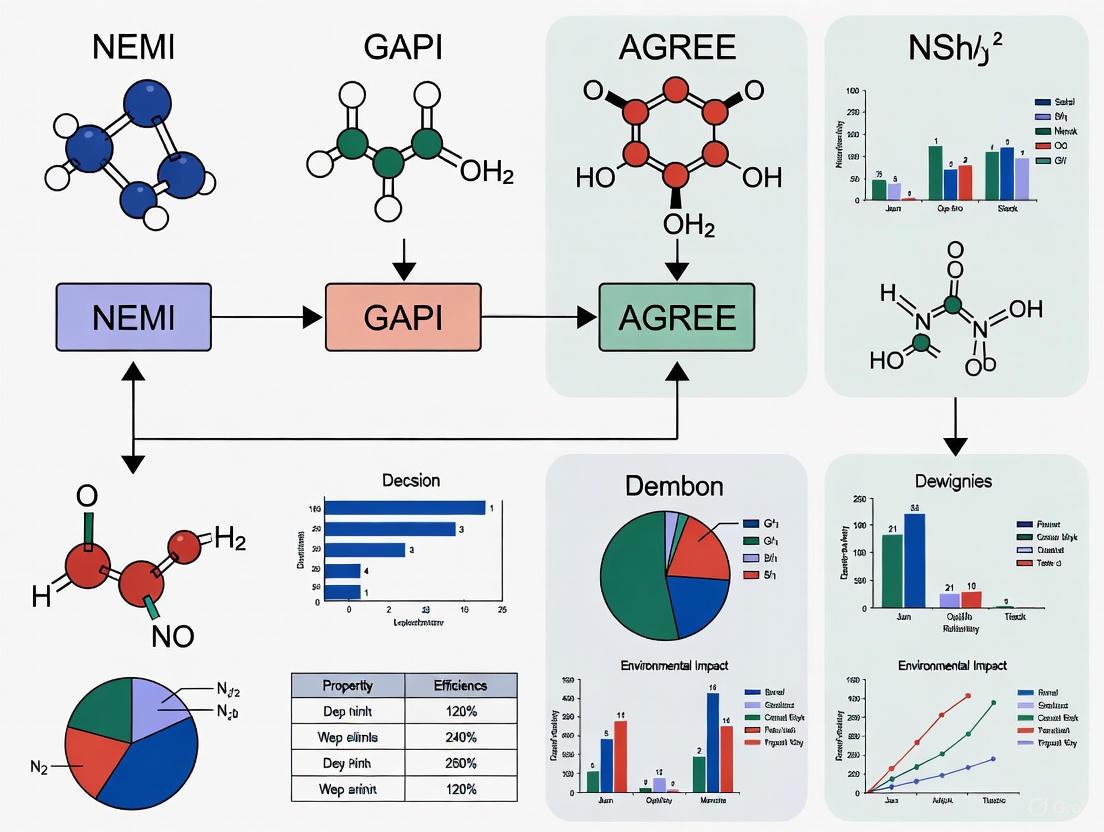
This article provides a comprehensive comparison of the primary greenness assessment tools—NEMI, ESA, GAPI, and AGREE—used in analytical chemistry, with a specific focus on pharmaceutical and biomedical applications.
A Comparative Guide to Greenness Assessment Tools: Applying NEMI, GAPI, and AGREE in Pharmaceutical Analysis
Abstract
This article provides a comprehensive comparison of the primary greenness assessment tools—NEMI, ESA, GAPI, and AGREE—used in analytical chemistry, with a specific focus on pharmaceutical and biomedical applications. It explores the foundational principles of each tool, their practical application in method development, and strategies for troubleshooting and optimization. Through comparative case studies on drug assays, it validates the tools' effectiveness and offers guidance for researchers and drug development professionals to select and implement the most appropriate green metrics, thereby integrating environmental responsibility into analytical method validation and routine analysis.
Understanding the Core Principles of Green Analytical Chemistry and Its Key Metrics
Defining Green Analytical Chemistry and Its Core Objectives
Green Analytical Chemistry (GAC) represents a fundamental shift in how analytical methods are designed and performed, moving toward environmentally friendly practices. The main goal of GAC is to minimize or eliminate the use of toxic substances and generation of waste throughout analytical processes. [1] This paradigm extends beyond environmental protection to encompass economic efficiency and enhanced safety for analysts, creating a holistic framework for sustainable laboratory practices. [2]
The significance of GAC in modern laboratories continues to grow as environmental regulations tighten and industries increasingly prioritize sustainability. [2] GAC principles are being integrated into undergraduate chemistry education, ensuring future chemists develop a mindset that prioritizes environmentally responsible approaches alongside scientific excellence. [2] This educational focus equips graduates with skills to develop methods that meet increasingly rigorous environmental standards while maintaining analytical integrity.
The Twelve Principles of Green Analytical Chemistry
GAC is guided by twelve principles that provide a comprehensive framework for developing sustainable analytical methods. These principles emphasize waste prevention, using safer solvents and auxiliaries, designing for energy efficiency, and developing real-time analysis to prevent pollution. [2] Additional principles focus on minimizing sample preparation, avoiding derivatization, and selecting methods that maximize operator safety. [3] Together, these principles form a robust foundation for transitioning from traditional analytical chemistry to greener alternatives without compromising analytical performance.
Comparative Analysis of Greenness Assessment Tools
To effectively implement GAC principles, several standardized assessment tools have been developed to evaluate and quantify the environmental impact of analytical methods. The most widely used tools include the National Environmental Methods Index (NEMI), Green Analytical Procedure Index (GAPI), and Analytical GREEnness (AGREE) metric. Each tool offers unique advantages and follows different assessment methodologies, enabling researchers to select the most appropriate evaluation system for their specific applications.
Tool Characteristics and Assessment Methodologies
Table 1: Comparison of Key Features of Major Greenness Assessment Tools
| Assessment Tool | Assessment Methodology | Scoring System | Visual Output | Key Advantages | Main Limitations |
|---|---|---|---|---|---|
| NEMI (National Environmental Methods Index) | Simple binary assessment based on four criteria | Qualitative (Pass/Fail) | Four-quadrant pictogram | Simple, quick assessment | Limited differentiation; 14 of 16 methods received same rating in one study [4] |
| GAPI (Green Analytical Procedure Index) | Comprehensive evaluation of entire method lifecycle | Semi-quantitative (color-coded) | Multi-colored pictogram | Evaluates full analytical process | Complex assessment protocol [4] |
| AGREE (Analytical GREEnness Metric) | Evaluates all 12 GAC principles using weighted criteria | Quantitative (0-1 scale) | Circular pictogram with score | Comprehensive, automated calculation, highlights weak points | Requires specialized software [4] |
Performance Comparison in Practical Applications
Comparative studies have demonstrated significant differences in how these assessment tools evaluate analytical methods. A 2021 study examining 16 chromatographic methods for hyoscine N-butyl bromide assay found that NEMI provided the least differentiation, with 14 methods receiving identical pictograms. [4] In contrast, AGREE and GAPI provided more nuanced evaluations that effectively distinguished between methods with varying environmental impacts. [4]
Another recent study applying these tools to a green HPTLC-UV method for simultaneous estimation of amlodipine besylate and indapamide demonstrated their practical utility. The method achieved an AGREE score of 0.73, indicating excellent greenness, which was corroborated by complementary assessments using NEMI and GAPI. [5] This case study highlights how multiple assessment tools can provide a comprehensive greenness profile for analytical methods.
Detailed Experimental Protocols for Greenness Assessment
Implementing greenness assessment requires systematic approaches to evaluate analytical methods against established criteria. The following protocols outline standard procedures for applying the most widely used GAC assessment tools in pharmaceutical analysis.
AGREE Assessment Protocol
The AGREE metric offers a comprehensive, software-based evaluation that considers all twelve principles of GAC. The assessment protocol follows these key steps: [4] [5]
- Software Implementation: Utilize the dedicated AGREE software, which is freely available for analytical greenness calculation.
- Data Collection: Gather complete methodological details including sample preparation, reagent consumption, energy requirements, waste generation, and operator safety measures.
- Parameter Input: Enter data for all twelve assessment criteria corresponding to the GAC principles, with the software applying weighted calculations based on environmental significance.
- Result Interpretation: Review the composite score on a 0-1 scale, where higher scores indicate superior greenness, accompanied by a circular pictogram that visually highlights strengths and weaknesses across all principles.
The primary advantage of AGREE is its ability to provide both an overall score and visual identification of aspects needing improvement, guiding researchers toward optimizing method greenness. [4]
GAPI Assessment Protocol
The Green Analytical Procedure Index employs a detailed pictogram to represent environmental impacts across five phases of analysis. The assessment protocol includes: [2] [5]
- Lifecycle Evaluation: Analyze the entire analytical process from sample collection through final determination, including sample preservation, transportation, and preparation.
- Criteria Scoring: Evaluate each step against multiple greenness criteria, assigning color codes (green, yellow, red) to indicate environmental performance.
- Pictogram Generation: Construct the final GAPI pictogram that provides an at-a-glance assessment of method greenness across all operational phases.
GAPI's strength lies in its comprehensive coverage of the entire analytical workflow, though it requires more detailed evaluation than simpler tools like NEMI. [4]
NEMI Assessment Protocol
The National Environmental Methods Index offers a simplified assessment based on four key criteria: [5]
- Persistent/Bioaccumulative Toxics Check: Verify that the method uses no reagents classified as PBTs (Persistent, Bioaccumulative, and Toxic).
- Corrosive Substances Check: Ensure no substances with pH ≤2 or ≥12 are used.
- Hazardous Waste Generation: Confirm that the method generates less than 50g of hazardous waste.
- Pictogram Generation: Create the four-quadrant diagram where each quadrant turns green if the corresponding criterion is met.
While NEMI provides a quick assessment, its binary pass/fail system offers limited granularity for comparing methods with moderate environmental impacts. [4]
Key Reagents and Materials for Green Analytical Methods
Table 2: Essential Research Reagent Solutions for Green Analytical Chemistry
| Reagent/Material | Category | Function in GAC | Application Examples |
|---|---|---|---|
| Deep Eutectic Solvents (DES) | Green Solvent | Replaces hazardous organic solvents | Extraction of phenolic compounds from medicinal plants [6] |
| Molecularly Imprinted Polymers (MIPs) | Advanced Material | Provides high selectivity, reducing need for multiple purification steps | Sample preparation for complex matrices [7] |
| Metal-Organic Frameworks (MOFs) | Advanced Material | High surface area and tunable porosity enhance extraction efficiency | Extraction and pre-concentration of analytes [7] |
| Ethanol-Water Mixtures | Green Solvent | Replaces acetonitrile or methanol in chromatography | Mobile phase in HPLC analysis [3] |
| Conductive Polymers | Advanced Material | Enable miniaturized extraction techniques with reduced solvent consumption | Solid-phase microextraction applications [7] |
Visualizing Greenness Assessment Workflows
The pathway to implementing green analytical chemistry involves systematic evaluation and optimization of existing methods. The following diagram illustrates the decision-making process for selecting and applying greenness assessment tools:
Greenness Assessment Tool Selection Workflow - This diagram illustrates the decision pathway for selecting appropriate greenness assessment tools based on analytical needs and objectives.
Implementation Strategies for Modern Laboratories
Successful implementation of Green Analytical Chemistry in modern laboratories requires strategic approaches that balance environmental goals with analytical performance requirements. Key implementation strategies include:
Solvent Replacement and Waste Reduction
A fundamental strategy involves replacing hazardous solvents with green alternatives. Ethanol-water mixtures have successfully replaced acetonitrile or methanol in HPLC methods while maintaining analytical performance. [3] Similarly, Natural Deep Eutectic Solvents (NADES) have demonstrated excellent extraction capabilities for phenolic compounds from medicinal plants, achieving greenness profiles comparable to water while providing superior extractability for both polar and weak polar compounds. [6]
Miniaturization and Automation
Miniaturized sample preparation techniques dramatically reduce solvent consumption and waste generation while maintaining or improving analytical sensitivity. [7] These approaches include solid-phase microextraction (SPME), dispersive liquid-liquid microextraction (DLLME), and thin-film SPME (TF-SPME). [7] When combined with automated systems, these techniques further enhance greenness by improving reproducibility, reducing human error, and minimizing operator exposure to hazardous chemicals. [8]
Method Optimization Frameworks
The integration of Analytical Quality by Design (AQbD) with GAC principles represents a transformative approach for developing robust, reproducible, and environmentally sustainable analytical methods. [3] AQbD employs systematic tools including risk assessment, Design of Experiments (DoE), and Method Operable Design Region (MODR) to optimize methods for both performance and sustainability. [3] This integrated framework ensures methods are inherently green from initial development rather than requiring subsequent modifications.
Future Perspectives and Challenges
Despite significant progress in Green Analytical Chemistry, several challenges remain in its widespread adoption. Current research focuses on addressing these limitations while exploring new opportunities for enhanced sustainability.
Standardized Assessment and Education
A significant challenge is the inconsistent application of greenness metrics across different laboratories and research groups. [3] Future efforts should focus on standardizing assessment protocols and integrating GAC principles into analytical chemistry curricula at undergraduate and graduate levels. [2] Educational initiatives are essential for fostering a generation of chemists who prioritize sustainability in method development and implementation.
Regulatory Acceptance and Method Transition
Many official standard methods from organizations such as CEN, ISO, and Pharmacopoeias remain resource-intensive and score poorly on greenness metrics. [8] A recent evaluation of 174 standard methods revealed that 67% scored below 0.2 on the AGREEprep scale (where 1 represents the highest possible score). [8] Regulatory agencies play a critical role in driving adoption by establishing clear timelines for phasing out outdated methods and providing technical guidance for implementing greener alternatives.
Emerging Technologies and Approaches
Future developments in GAC will likely focus on circular analytical chemistry principles that emphasize resource recovery and reuse. [8] Additional innovations may include the integration of artificial intelligence for method optimization and the development of novel green materials with enhanced selectivity and efficiency. [3] As these technologies mature, they will further reduce the environmental footprint of analytical chemistry while maintaining the high-quality data required for scientific research and regulatory compliance.
The increasing environmental concerns associated with analytical laboratories have catalyzed the development of Green Analytical Chemistry (GAC), a transformative movement aimed at minimizing the ecological footprint of chemical analysis. Analytical methods, particularly in pharmaceutical analysis, traditionally consume significant amounts of hazardous solvents and generate substantial waste, creating an urgent need for sustainable alternatives. This paradigm shift has driven the creation of systematic assessment tools that can quantify and benchmark the environmental friendliness of analytical procedures. The evolution of these metrics—from simple early tools like the National Environmental Methods Index (NEMI) to sophisticated contemporary models like the Analytical GREEnness metric (AGREE)—represents a crucial advancement in aligning analytical science with global sustainability goals. This guide provides a comprehensive comparison of these tools, underpinned by experimental data, to equip researchers, scientists, and drug development professionals with the knowledge to select and implement the most appropriate greenness assessment strategy for their work [3] [9].
Greenness Assessment Tools: Principles and Mechanisms
The Foundational Tool: National Environmental Methods Index (NEMI)
The National Environmental Methods Index (NEMI) is one of the earliest and simplest tools developed for greenness assessment. Its pictogram consists of a quartered circle, where each quadrant is colored green if it meets one of four basic criteria: (1) the method does not use persistent, bioaccumulative, and toxic (PBT) chemicals; (2) it does not use corrosive chemicals (pH <2 or >12); (3) it does not use hazardous chemicals; and (4) the waste generated is not classified as "hazardous" under the U.S. Environmental Protection Agency's regulations. The primary advantage of NEMI is its simplicity and ease of use. However, this simplicity is also its major drawback. A comparative study evaluating 16 chromatographic methods for hyoscine N-butyl bromide found NEMI to be the least effective tool, as 14 of the 16 methods received an identical pictogram, failing to provide sufficient differentiation or detailed insight into the method's environmental impact [4] [10].
The Semi-Quantitative Advance: Eco-Scale Assessment (ESA)
The Eco-Scale Assessment (ESA) introduced a penalty-point system to address the limitations of NEMI. This approach assigns a base score of 100, from which points are deducted for each element of the analytical procedure that violates green chemistry principles, including the use of hazardous reagents, energy consumption, and generated waste. The final score provides a semi-quantitative measure: an excellent green analysis scores above 75, a acceptable analysis scores above 50, and an inadequate green analysis scores below 50. ESA provides reliable numerical assessments that allow for easier comparison between methods. Its drawback is that it does not automatically highlight the specific areas where an analytical technique needs improvement, requiring manual calculation and analysis [4] [11].
The Comprehensive Pictogram: Green Analytical Procedure Index (GAPI)
The Green Analytical Procedure Index (GAPI) was developed to offer a more detailed visual profile of a method's greenness. The GAPI pictogram employs a five-sector design—each sector representing a different stage of the analytical process (sampling, sample preparation, reagents, instrumentation, and final determination)—and uses a three-color system (green, yellow, red) to indicate the environmental impact at each stage. This tool provides a more comprehensive and fully descriptive evaluation than NEMI, making it particularly useful for identifying problematic stages in a complex analytical procedure. The main disadvantage of GAPI is its complexity compared to NEMI and ESA, as it requires a more detailed analysis of the entire method workflow [4] [12].
The Contemporary Benchmark: Analytical GREEnness Metric (AGREE)
The Analytical GREEnness (AGREE) metric represents the current state-of-the-art, integrating the twelve principles of Green Analytical Chemistry into a unified, automated assessment. The tool outputs a circular pictogram with twelve sections, each corresponding to one GAC principle. The sections are colored from dark green to red based on performance, and the tool provides an overall score on a scale of 0 to 1. A key merit of AGREE is its automation via user-friendly software, which reduces subjectivity. Furthermore, the multi-colored pictogram instantly visualizes the weakest points in an analytical technique, guiding researchers toward targeted improvements. A 2021 comparative study concluded that AGREE offers advantages in simplicity and automation over GAPI, making it a powerful and accessible tool for modern laboratories [4] [11].
The Emerging Frontier: Multi-Criteria Decision Analysis (TOPSIS)
Looking beyond the established metrics, Multi-Criteria Decision Analysis (MCDA) methods like the Technique for Order of Preference by Similarity to Ideal Solution (TOPSIS) are emerging as advanced tools for ranking the greenness of analytical procedures. TOPSIS functions by evaluating alternatives based on multiple, often weighted, criteria. In a recent study comparing thirteen analytical methods for mifepristone determination, the criteria were the twelve GAC principles. The analysis found a correlation between the TOPSIS ranking and the AGREE metric, but not with other tools like NEMI or GAPI, suggesting that TOPSIS is a powerful complementary approach for complex decision-making where multiple environmental factors must be balanced [11].
The following diagram illustrates the logical relationships and evolution of these major greenness assessment tools:
Comparative Analysis of Assessment Tools
The table below provides a detailed, side-by-side comparison of the key characteristics of the major greenness assessment tools.
Table 1: Comprehensive Comparison of Greenness Assessment Tools
| Tool | Assessment Approach | Output Format | Scoring System | Key Advantages | Main Limitations |
|---|---|---|---|---|---|
| NEMI [4] [10] | Binary (Pass/Fail of 4 criteria) | Quaternary pictogram | No numerical score | Simple and fast to apply | Low differentiating power; ignores energy use and toxicity |
| Eco-Scale (ESA) [4] [11] | Penalty points | Numerical score (0-100) | 100 = Perfect greenness | Semi-quantitative, good for comparison | Does not automatically highlight weak points |
| GAPI [4] [12] | Qualitative (5 lifecycle stages) | Multi-sector pictogram (green/yellow/red) | No numerical score | Comprehensive lifecycle view | Complex to create; less objective |
| AGREE [4] [11] | Quantitative (12 GAC principles) | Circular pictogram with overall score | 0-1 (1 = Ideal greenness) | Automated, comprehensive, and intuitive | Requires specialized software for full functionality |
| TOPSIS (MCDA) [11] | Multi-criteria ranking | Ranking of alternatives | Best-to-worst ranking | Handles complex, multi-factor decisions | Setup and calculation are more complex |
Experimental Data and Case Study Comparisons
Case Study 1: Assessment of Chromatographic Methods for Hyoscine N-Butyl Bromide
A landmark comparative study evaluated 16 published chromatographic methods for the assay of hyoscine N-butyl bromide (HNBB) using NEMI, ESA, GAPI, and AGREE [4] [10]. The findings offer critical, data-driven insights into the performance of each tool.
- NEMI Performance: The tool proved ineffective for nuanced comparison, as 14 out of the 16 methods (87.5%) displayed an identical NEMI pictogram. This result underscores its inadequacy for differentiating between methods with varying degrees of environmental impact.
- ESA and AGREE Performance: Both tools provided reliable numerical scores, but on different scales. ESA scores (out of 100) and AGREE scores (out of 1) allowed for a clear ranking of methods. AGREE was noted for its additional benefit of automation and its ability to clearly highlight the specific principles of GAC that were violated.
- GAPI and AGREE Performance: Both tools provided descriptive, three-colored pictograms that were more informative than NEMI. However, the study concluded that AGREE holds merits over GAPI in terms of simplicity and automation [4].
Case Study 2: Greenness Evaluation of Voriconazole Determination Methods
A 2022 review assessed the greenness of various methods for determining the antifungal drug Voriconazole using AES, NEMI, GAPI, and AGREE [9]. The study highlighted the significant environmental impact of common analytical practices, noting that a typical HPLC system operating with a 1 mL/min flow rate can generate 1.5 liters of waste in a 24-hour period, much of which consists of toxic solvents like methanol and acetonitrile. The application of multiple assessment tools confirmed that only a few of the reported methods were truly eco-friendly, emphasizing the need for analysts to consciously develop methods based on GAC principles. This case study demonstrates the practical value of these tools in auditing and improving the sustainability of pharmaceutical analysis.
Case Study 3: Application in an Eco-Friendly TLC Method for Antihypertensives
A recent 2025 study developed an eco-friendly thin-layer chromatography (TLC) method for the simultaneous quantification of three antihypertensive drugs—amlodipine besylate, telmisartan, and indapamide—using an Analytical Quality by Design (AQbD) approach [12]. The greenness of the optimized method was rigorously evaluated using both the complex GAPI and AGREE metrics. The use of these advanced tools provided a validated, quantitative justification for the method's environmental credentials, showcasing how modern greenness assessment is integrated into the development of new, sustainable analytical techniques from the outset.
The Scientist's Toolkit: Essential Reagents and Materials for Green Chromatography
The transition to greener analytical methods often involves replacing traditional, hazardous solvents with safer alternatives and adopting more efficient technologies. The following table details key reagents and materials that are essential for implementing green chromatography in pharmaceutical analysis.
Table 2: Key Research Reagent Solutions for Green Chromatography
| Reagent/Material | Traditional Substance | Function in Analysis | Green Advantage |
|---|---|---|---|
| Ethanol [3] | Acetonitrile, Methanol | Mobile phase modifier | Biodegradable, less toxic, and from renewable sources |
| Water [3] | Buffers with additives | Mobile phase component | Non-toxic, safe, and readily available |
| Fused-Core or Sub-2µm Columns [9] | Traditional 5µm HPLC columns | Stationary phase for separation | Enables faster analysis and lower solvent consumption (reduced flow rates) |
| Micellar Electrokinetic Chromatography (MEKC) [11] | Reversed-Phase HPLC | Separation technique | Uses aqueous surfactants instead of organic solvents |
| Propylene Carbonate [9] | Methanol, Acetonitrile | Solvent | A safer, biodegradable alternative to traditional organic solvents |
The evolution of greenness assessment tools from NEMI to AGREE and the emergence of MCDA methods like TOPSIS reflect a growing sophistication in how the analytical community quantifies and strives for sustainability. While simpler tools like NEMI provide an accessible entry point, the demand for comprehensive, nuanced, and actionable evaluation has made AGREE the current benchmark. The experimental case studies consistently show that applying more than one assessment tool (e.g., ESA, GAPI, and AGREE) provides the most reliable and precise evaluation of a method's greenness [4].
Future developments are likely to focus on greater integration with other frameworks, such as Analytical Quality by Design (AQbD), and the incorporation of Artificial Intelligence (AI) to further optimize methods for both performance and sustainability [3]. As regulatory expectations evolve, the inclusion of greenness assessment in method validation protocols is becoming increasingly imperative, solidifying its role as a cornerstone of modern, responsible analytical science [4] [3].
In the pharmaceutical industry and environmental monitoring, the principles of Green Analytical Chemistry (GAC) aim to minimize the environmental impact of analytical methods. This has led to the development of several greenness assessment tools that help researchers and drug development professionals evaluate and compare the ecological footprint of their analytical procedures. The National Environmental Methods Index (NEMI) represents one of the pioneering tools in this field, offering a straightforward, pictogram-based approach to environmental assessment. As the field has evolved, more comprehensive metrics have emerged, including the Green Analytical Procedure Index (GAPI) and the Analytical Greenness (AGREE) metric, each offering different levels of detail and sophistication. Understanding NEMI's simple pictogram system, its operational mechanism, and its limitations relative to newer tools is essential for scientists making informed decisions about method selection and development within a sustainability framework.
The NEMI Pictogram: A Model of Simplicity
Fundamental Design and Interpretation
The National Environmental Methods Index (NEMI) provides a searchable database of environmental monitoring methods and employs a simple, visual assessment system. The NEMI pictogram is a square divided into four quadrants, each representing a different environmental criterion. A quadrant is colored green if the method meets that specific criterion and is left blank if it does not. The four criteria assessed are [13] [14]:
- PBT: The method does not use persistent, bioaccumulative, and toxic (PBT) chemicals.
- Hazardous: The method does not use reagents that are hazardous according to the U.S. Environmental Protection Agency (EPA).
- Corrosive: The method does not use reagents with a pH ≤ 2 or ≥ 12.5.
- Waste: The method generates less than 50 g of waste.
This binary (green/white) visual system allows for a rapid, at-a-glance assessment of a method's basic environmental impact [13].
Workflow for NEMI Assessment
The following diagram illustrates the logical process a researcher follows to assess an analytical method using the NEMI criteria.
Comparative Analysis of Greenness Assessment Tools
The evolution of greenness assessment has progressed from NEMI's basic approach to more sophisticated and comprehensive metrics. The table below summarizes the key characteristics of NEMI, Analytical Eco-Scale, GAPI, and AGREE.
Table 1: Comparison of Key Greenness Assessment Tools
| Tool Name | Type of Output | Basis of Assessment | Scoring System | Key Advantages | Key Limitations |
|---|---|---|---|---|---|
| NEMI | Binary pictogram | 4 criteria: PBT, hazardous, corrosive, waste [13] [14] | Green/white quadrants | Simplicity, speed of interpretation [13] | Qualitative, general information; ignores chemical amounts, energy use [13] [14] |
| Analytical Eco-Scale | Semi-quantitative score | Penalty points for hazardous reagents, energy, waste [13] | Score = 100 - total penalty points; >75 = green, 50-75 = acceptable, <50 = not green [13] | Semi-quantitative, includes energy and waste amount [13] | Relies on expert judgment for penalties; lacks visual component [14] |
| GAPI | Qualitative pictogram | 5 stages of analytical process [14] | Color-coded (green/yellow/red) sections for each stage [14] | Comprehensive; visualizes impact across workflow [14] | No overall score; some subjectivity in color assignment [14] |
| AGREE | Quantitative score & pictogram | 12 Principles of GAC [11] [14] | Score 0-1; circular pictogram with colored sections [14] | Comprehensive, user-friendly, provides a unified score [11] [14] | Subjective weighting of criteria; limited pre-analytical process coverage [14] |
Quantitative Performance Comparison
A 2024 study comparing thirteen analytical procedures for determining mifepristone in water samples provided experimental data on the performance of different greenness assessment tools. The results highlight how the choice of tool can influence the perceived greenness of a method.
Table 2: Greenness Assessment Scores for Mifepristone Determination Methods (2024 Study) [11]
| Analytical Method | TOPSIS Ranking (Based on 12 GAC Principles) | NEMI Assessment | Eco-Scale Score | AGREE Score |
|---|---|---|---|---|
| Solid Phase Extraction-Micellar Electrokinetic Chromatography (SPE-MEKC) | 1 (Most preferred) | Not Specified | Not Specified | Not Specified |
| Spectrophotometric Methods (for COVID-19 drugs) | Not Applicable | Passed 4/4 criteria (All quadrants green) [15] | >75 (Excellent greenness) [15] | >0.75 (Acceptable greenness) [15] |
| Solid Phase Extraction-UHPLC-MS/MS | 13 (Least preferred) | Not Specified | Not Specified | Not Specified |
Experimental Protocol for Comparative Study [11]: The methodology for this comparative analysis involved using the multi-criteria decision analysis (MCDA) tool TOPSIS (Technique for Order of Preference by Similarity to Ideal Solution). Thirteen analytical methods for mifepristone determination were used as input alternatives. The input data was described using assessment criteria based on the 12 principles of green analytical chemistry. The weights for each criterion were assigned equally using objective mean weighting (0.0833 for each of the 12 principles). The GAC principles were translated into 0-1 scores using the AGREE calculator, and these scores were used as inputs in the TOPSIS decision matrix to generate the final ranking.
Key Limitations of the NEMI Methodology
While NEMI's simplicity is advantageous for a quick review, it introduces significant limitations that researchers must consider, especially when making critical decisions in drug development.
- Lack of Quantitative Data: NEMI is a qualitative tool. It indicates the presence or absence of hazardous chemicals but does not account for the amounts of chemicals used or waste generated. A method using a minute quantity of a hazardous reagent and one using a large volume would both have the same blank quadrant, failing to represent the actual risk or environmental load accurately [13].
- Limited Scope of Assessment: The four criteria overlook other crucial environmental and practical factors. NEMI does not consider energy consumption, the safety of the operator, the possibility of miniaturization or automation, or whether direct analytical techniques are used [11] [14]. This narrow scope provides an incomplete picture of a method's overall greenness and safety.
- Non-Granular and Binary Output: The simple pass/fail system lacks granularity. It cannot distinguish between a method that barely fails a criterion and one that is egregiously non-compliant. This "general information" is insufficient for meaningfully comparing two methods that appear similar under NEMI's assessment [13] [14].
- Manual and Time-Consuming Verification: To complete the NEMI pictogram, a researcher must manually search for each chemical used in the procedure in official lists to check their PBT and hazardous status. This process is noted to be inconvenient and time-consuming [13].
To effectively implement and evaluate green analytical principles, professionals in drug development and environmental monitoring should be familiar with the following key resources and tools.
Table 3: Essential Research Reagent Solutions and Tools for Green Assessment
| Tool / Resource | Function / Purpose | Relevance to Green Assessment |
|---|---|---|
| NEMI Database | A searchable compendium of environmental and analytical methods [16]. | Provides the foundational database and the original NEMI pictogram for method lookup and initial screening. |
| AGREE Calculator | A software tool that calculates the AGREE score based on the 12 GAC principles [14]. | Enables a comprehensive, quantitative, and visual greenness assessment of an entire analytical workflow. |
| AGREEprep | A dedicated tool for evaluating the environmental impact of sample preparation steps [14]. | Allows for a focused assessment on one of the most impactful and resource-intensive stages of analysis. |
| GAPI Pictogram | A visual template for assessing greenness across five stages of the analytical process [14]. | Offers a more detailed, multi-stage visual assessment than NEMI, though it remains qualitative. |
| TOPSIS (MCDA) | A multi-criteria decision analysis algorithm for ranking alternatives based on multiple factors [11]. | Helps researchers objectively select the greenest analytical method by considering weighted GAC principles simultaneously. |
| Alternative Solvents | Greener solvents (e.g., ethanol, micellar solutions) used in place of hazardous ones [11] [15]. | Directly reduces hazardous waste, toxicity, and environmental impact, improving scores across all major metrics. |
The National Environmental Methods Index (NEMI) established a crucial foundation for environmental consciousness in analytical science through its easily interpretable pictogram. Its primary strengths are simplicity and speed of assessment, making it suitable for an initial, high-level screening of analytical methods [13]. However, its qualitative nature, limited scope, and binary output system present significant drawbacks for researchers and drug development professionals who require a nuanced understanding of a method's environmental footprint [13] [14].
The evolution of tools like the semi-quantitative Analytical Eco-Scale, the comprehensive GAPI, and the sophisticated, score-based AGREE metric demonstrates a clear trajectory toward more holistic and actionable assessments [14]. As evidenced by comparative studies, these advanced tools can correlate with multi-criteria decision analysis like TOPSIS, providing a more reliable basis for method selection [11]. For modern scientists, NEMI remains a valuable entry point, but it should be considered a first step rather than the final word, with its inherent limitations guiding practitioners toward more robust and quantitative greenness assessment frameworks for meaningful environmental stewardship in research and development.
The growing emphasis on sustainability in analytical chemistry has led to the development of several greenness assessment tools that enable researchers to evaluate the environmental impact of their methodologies. Among these, the Analytical Eco-Scale Assessment (ESA) stands out as a practical, quantitative approach that complements other established metrics including the National Environmental Methods Index (NEMI), Green Analytical Procedure Index (GAPI), and Analytical GREEnness metric (AGREE). These tools collectively address the need for standardized evaluation protocols that align analytical practices with the principles of green chemistry, particularly in pharmaceutical analysis and drug development where solvent consumption and waste generation are significant concerns [10] [17].
The Analytical Eco-Scale was proposed in 2012 as a comprehensive semi-quantitative tool for evaluating analytical methodologies, enabling direct comparison between methods and supporting the selection of the greenest alternatives [18]. Unlike simple pass/fail systems, it provides a numerical score that reflects overall environmental impact, making it particularly valuable for researchers seeking to optimize their methods for sustainability without compromising analytical performance [19].
Fundamentals of Analytical Eco-Scale Assessment
Core Principles and Calculation Methodology
The Analytical Eco-Scale operates on a straightforward penalty point system that evaluates the environmental impact of each component and step in an analytical procedure. The assessment begins with a base score of 100 points, representing an ideal green analysis that generates no waste, uses no hazardous substances, and consumes minimal energy [18]. Points are then subtracted for each parameter that deviates from ideal green conditions:
Eco-Scale Score = 100 - Total Penalty Points
Penalty points are assigned based on the amount and hazard level of reagents used, energy consumption, waste generation, and occupational hazards. The magnitude of penalty points reflects the relative environmental impact, with higher penalties for more hazardous substances and processes [18] [20]. This approach provides a flexible framework that can be adapted to various analytical techniques while maintaining consistent evaluation criteria.
Comparison with Other Green Assessment Tools
Table 1: Comparison of Major Green Analytical Assessment Tools
| Assessment Tool | Type of Output | Basis of Evaluation | Key Advantages | Main Limitations |
|---|---|---|---|---|
| Analytical Eco-Scale (ESA) | Numerical score (0-100) | Penalty points for hazardous chemicals, energy, waste | Simple calculation, easy comparison, semi-quantitative | Does not account for all green chemistry principles |
| NEMI | Pictogram (pass/fail for 4 criteria) | Four environmental criteria: PBT, hazardous, corrosive, waste >50g | Simple visualization, easy interpretation | Limited discrimination, low sensitivity |
| GAPI | Three-colored pictogram (15 criteria) | Multi-criteria evaluation of all method steps | Comprehensive, detailed assessment | Complex implementation, qualitative |
| AGREE | Numerical score (0-1) and colored pictogram | 12 principles of green analytical chemistry | Comprehensive, quantitative, highlights weak points | Requires specialized software |
A comparative study evaluating these tools for assessing chromatographic methods of hyoscine N-butyl bromide found that while NEMI provided simplicity, it lacked discriminatory power as 14 out of 16 methods had identical pictograms [10]. In contrast, both ESA and AGREE provided reliable numerical assessments, though with different scoring ranges (0-100 for ESA, 0-1 for AGREE). The study noted that AGREE offers advantages in automation and identifying specific areas for greenness improvement, while GAPI and AGREE provide more detailed three-colored pictograms than NEMI's simple pass/fail system [10].
Experimental Applications and Protocol Evaluation
Detailed Assessment Protocol for Analytical Eco-Scale
Implementing the Analytical Eco-Scale requires systematic evaluation of all components and steps in an analytical method. The penalty points assigned to common parameters in pharmaceutical analysis include:
Reagents and Solvents: Penalty points are determined by both quantity and hazard potential. For instance, acetonitrile typically receives 5-10 penalty points depending on amount, while less hazardous alternatives like ethanol may receive only 1-4 points [18] [20]. The exact penalty is calculated based on concentration and environmental impact.
Energy Consumption: Analytical instruments are assessed based on power requirements and operation time. A standard HPLC system operating for 20-30 minutes might receive 1 penalty point, while energy-intensive techniques like GC-MS could receive higher penalties [18].
Occupational Hazards: Procedures requiring special safety measures for toxic, corrosive, or flammable substances incur additional penalty points based on risk level [18].
Waste Generation: The amount and hazardous nature of waste produced directly influences penalty points, with a typical penalty of 3-5 points for analytical waste requiring special treatment [20].
Table 2: Example Eco-Scale Assessment of HPLC Methods for Pharmaceutical Analysis
| Method Parameter | Conventional HPLC | Green HPLC | Micellar HPLC |
|---|---|---|---|
| Mobile Phase Composition | Acetonitrile:phosphate buffer (60:40) | Ethanol:water (50:50) | Surfactant:water (20:80) |
| Solvent Penalty Points | 8 | 3 | 1 |
| Energy Consumption | 25 min runtime (1 point) | 15 min runtime (1 point) | 10 min runtime (0 points) |
| Waste Generation | 50 mL/organic waste (4 points) | 25 mL/organic waste (2 points) | 5 mL/non-hazardous (1 point) |
| Occupational Hazards | Toxic solvents (3 points) | Low toxicity (1 point) | Minimal hazard (0 points) |
| Total Penalty Points | 16 | 7 | 2 |
| Eco-Scale Score | 84 | 93 | 98 |
Experimental Case Studies in Pharmaceutical Analysis
The practical application of Analytical Eco-Scale across diverse pharmaceutical analysis scenarios demonstrates its utility in method optimization and selection:
Case Study 1: Simultaneous Analysis of Antihypertensive Medications A developed RP-HPLC method for simultaneous determination of telmisartan, hydrochlorothiazide, and amlodipine besylate was evaluated using the Analytical Eco-Scale. The method utilized an eco-friendly mobile phase and achieved short run times with minimal waste production. When assessed against conventional methods, the proposed approach demonstrated superior greenness credentials with significantly reduced penalty points, primarily due to solvent replacement and waste reduction strategies [19].
Case Study 2: Micellar Organic-Solvent Free HPLC for Carbapenems Researchers developed an organic solvent-free micellar HPLC method for determining ertapenem and meropenem, replacing traditional organic solvents with surfactant-based mobile phases. The method was evaluated using ESA, GAPI, and AGREE assessment tools. The Eco-Scale assessment specifically highlighted the advantages of eliminating organic solvents, reducing hazardous waste, and minimizing energy consumption through optimized separation conditions [21].
Case Study 3: Stability-Indicating HPTLC Method for Carbamazepine A green high-performance thin-layer chromatography (HPTLC) method was developed for assessment of carbamazepine and its degradation product iminostilbene. The Analytical Eco-Scale was used to compare the greenness profile of the developed method with an official HPLC method. The HPTLC approach demonstrated superior greenness credentials, particularly in solvent consumption and waste emission categories, achieving an excellent Eco-Scale score [22].
Case Study 4: Voltammetric Determination of Antiemetic Mixture A sensitive electrochemical method using a modified carbon paste electrode was developed for estimation of pyridoxine HCl and doxylamine succinate. The greenness of this voltammetric approach was compared to a reported HPLC method using the Analytical Eco-Scale. The electrochemical method demonstrated significantly better greenness performance due to minimal reagent consumption, reduced waste generation, and lower energy requirements [20].
Comparative Performance Assessment
Inter-Tool Correlation Analysis
A comprehensive study comparing the performance of multiple greenness assessment tools examined thirteen analytical procedures for determining mifepristone in water samples. The research employed TOPSIS (Technique for Order of Preference by Similarity to Ideal Solution) multi-criteria decision analysis alongside established metrics including NEMI, Eco-Scale, GAPI, AGREE, and AGREEprep [23]. The findings revealed that only the AGREE metric demonstrated correlation with TOPSIS ranking, while other tools, including Eco-Scale, showed different prioritizations. This suggests that while ESA provides valuable quantitative assessment, it should be used alongside other tools for comprehensive greenness evaluation [23].
Strategic Implementation in Method Development
The Analytical Eco-Scale serves distinct roles at different stages of analytical method development:
Method Selection: ESA provides straightforward comparison of existing methods, with scores above 75 representing excellent green analysis, 50-75 representing acceptable green analysis, and below 50 representing inadequate green analysis [18].
Optimization Guidance: The penalty point system helps identify specific areas for improvement in method greenness, directing researchers to focus on parameters with the highest environmental impact [10] [20].
Validation Documentation: Including ESA scores in method validation protocols provides quantitative evidence of environmental performance, increasingly required by regulatory bodies and environmental management systems [10].
Research Reagent Solutions for Green Analytical Chemistry
Table 3: Essential Reagents and Materials for Green Analytical Methods
| Reagent/Material | Function in Analysis | Green Alternative | Eco-Scale Benefit |
|---|---|---|---|
| Acetonitrile (HPLC) | Reverse-phase mobile phase | Ethanol, methanol, or surfactant-based mobile phases | Reduces penalty points from 5-10 to 1-4 |
| Chloroform | Extraction solvent | Ethyl acetate, cyclopentyl methyl ether | Eliminates persistent environmental contaminant |
| Phosphate buffers | Mobile phase modifier | Ammonium acetate, ammonium carbonate | Reduces aquatic toxicity potential |
| Derivatization reagents | Analyte modification for detection | Miniaturization to reduce volumes | Minimizes hazardous reagent consumption |
| Traditional columns (250-150mm) | Chromatographic separation | Short columns (50-100mm) | Reduces solvent consumption and waste |
| Zirconium dioxide/MWCNT | Electrode modification | Replacement of mercury electrodes | Enables green electroanalysis |
Workflow Diagram for Eco-Scale Assessment
The following diagram illustrates the systematic procedure for implementing the Analytical Eco-Scale assessment:
The Analytical Eco-Scale Assessment provides a practical, semi-quantitative approach to evaluating the greenness of analytical methods, complementing other assessment tools in a researcher's sustainability toolkit. Its straightforward penalty point system offers clear guidance for method optimization and selection, particularly when used alongside more comprehensive tools like GAPI and AGREE. As the pharmaceutical industry continues to emphasize environmental responsibility, ESA serves as an accessible entry point for laboratories beginning their green analytical chemistry journey while providing meaningful metrics for experienced practitioners seeking to validate their sustainability claims.
For researchers and drug development professionals, incorporating Eco-Scale Assessment into method development and validation protocols represents a strategic step toward reducing the environmental impact of analytical operations while maintaining the high-quality data standards required in pharmaceutical sciences. The tool's ability to quantify improvements in method greenness makes it particularly valuable for documenting sustainability initiatives and guiding continuous improvement efforts in analytical laboratories.
Table of Contents
- Introduction to Green Assessment Tools
- GAPI: In-Depth Analysis
- Comparative Analysis of Greenness Tools
- Experimental Protocols and Applications
- Essential Research Reagent Solutions
- Conclusions and Future Perspectives
The growing emphasis on sustainability has made Green Analytical Chemistry (GAC) a cornerstone of modern method development in pharmaceutical and environmental analysis. Evaluating the environmental impact of analytical procedures necessitates robust, standardized tools. Several assessment metrics have been developed, including the National Environmental Methods Index (NEMI), Analytical Eco-Scale Assessment (ESA), and the more recent Green Analytical Procedure Index (GAPI) and Analytical GREEnness metric (AGREE). Each tool offers a unique approach to quantifying the "green" character of analytical methods, from sample collection to final determination [24] [10]. This guide objectively compares these tools, with a particular focus on the structure, application, and comparative performance of the comprehensive three-color pictogram employed by GAPI, framed within the broader context of greenness tools comparison research.
GAPI: In-Depth Analysis
The Green Analytical Procedure Index (GAPI) is a dedicated tool designed to evaluate the environmental impact of an entire analytical methodology. Its key differentiator is a detailed pictogram that provides an immediately perceptible visual summary of a method's greenness [24].
- Pictogram Structure: The GAPI symbol is composed of five pentagrams, each representing a major step in the analytical procedure: sample collection, preservation, transport, and storage; sample preparation; reagents and solvents; instrumentation; and type of determination [24].
- Three-Color System: Each segment of the pentagrams is colored to indicate the environmental impact of a specific sub-step:
- Green: Signifies a low environmental impact.
- Yellow: Signifies a medium environmental impact.
- Red: Signifies a high environmental impact [24].
- Scope and Evolution: A significant advancement, the Complementary GAPI (ComplexGAPI), has been developed to address processes prior to the analytical procedure itself, such as the synthesis of reagents or materials used. This expanded tool adds a hexagon to the standard GAPI pictogram, offering a more comprehensive life-cycle perspective [25]. Software is available to facilitate the generation of ComplexGAPI pictograms [25].
Comparative Analysis of Greenness Tools
A comparative study of four greenness assessment tools highlights their respective advantages, disadvantages, and ideal use cases, providing critical context for researchers to select the appropriate tool [10].
Table 1: Key Characteristics of Major Greenness Assessment Tools
| Tool Name | Type of Output | Scoring System | Key Advantages | Key Disadvantages |
|---|---|---|---|---|
| NEMI | Pictogram (4 quadrants) | Binary (Green/Non-green) | Simple, easy to use [10] | Lacks granularity; multiple methods often have identical pictograms, limiting discrimination [10] |
| Analytical Eco-Scale | Numerical score | Score out of 100 (Higher = Greener) | Provides a reliable numerical assessment; good for ranking methods [10] | Does not offer a visual pictogram like GAPI or AGREE |
| GAPI | Detailed 3-color pictogram | Qualitative (Green/Yellow/Red) | Exhaustive information on each step of the analytical method [24] [10] | Complexity compared to NEMI and Eco-Scale [10] |
| AGREE | Detailed 3-color pictogram | Score between 0-1 (Higher = Greener) | Provides a reliable numerical score & pictogram; automated calculation; highlights weakest points in a method [10] | - |
The relationship between these tools and their evolution towards more sophisticated assessments can be visualized in the following diagram:
Graph 1: Evolution of Green Assessment Tools
Experimental Protocols and Applications
The practical application of these tools is demonstrated in validated experimental protocols. A recent study developed an HPLC-PDA method for the simultaneous determination of Glibenclamide, Metoprolol Tartrate, and Phenol Red in rat intestinal permeability studies [26].
- Methodology: The method was optimized for trueness, precision, and robustness following ICH guidelines. The intestinal permeability of Glibenclamide was studied using the in situ Single Pass Intestinal Perfusion (SPIP) technique [26].
- Comprehensive Greenness Assessment: This study's environmental impact was evaluated using a wide array of nine greenness assessment tools, including NEMI, Analytical Eco-Scale, GAPI, MoGAPI (a modified version of GAPI), AGREE, AGREEprep (a tool for sample preparation), RAPI, BAGI, and CACI [26]. The method achieved high scores across these metrics, confirming its alignment with green chemistry principles and minimal ecological impact [26]. This multi-tool approach is recommended for a robust and conclusive greenness evaluation [10].
The workflow for developing and validating an analytical method with integrated greenness assessment is as follows:
Graph 2: Analytical Method Greenness Assessment Workflow
Essential Research Reagent Solutions
The following table details key reagents and materials commonly used in analytical methods for drug analysis, like the HPLC method for Glibenclamide and Metoprolol, along with their functions in the context of green chemistry [26].
Table 2: Key Research Reagent Solutions in Analytical Chemistry
| Reagent/Material | Function in Analytical Methodology | Green Chemistry Consideration |
|---|---|---|
| High-Performance Liquid Chromatography (HPLC) System | Instrumentation for the separation, identification, and quantification of compounds in a mixture. | Energy consumption and waste generation (e.g., solvent usage) are key evaluation points in tools like GAPI and AGREE [24] [10]. |
| Mobile Phase Solvents | Liquid phase that carries the analyte through the chromatographic column. | Toxicity, biodegradability, and sourcing of solvents are critically assessed. Safer solvent alternatives are a central tenet of green chemistry. |
| Chromatographic Column | Stationary phase where the separation of analytes occurs based on chemical interactions. | The materials and chemicals used in column manufacturing can be evaluated in advanced tools like ComplexGAPI [25]. |
| Reference Standards | Highly purified compounds used for method calibration and validation. | The synthetic pathway and purification processes of standards can be assessed using ComplexGAPI [25]. |
The comparison clearly demonstrates that while simple tools like NEMI provide a quick initial assessment, more sophisticated tools like GAPI and AGREE offer a deeper, more meaningful evaluation of an analytical method's environmental impact. GAPI's strength lies in its comprehensive, multi-step visual breakdown using the three-color pictogram, making it an excellent tool for identifying specific areas of high environmental impact within a complex methodology [24] [10]. For researchers requiring both detailed assessment and a quantitative score for easier comparison, AGREE presents a powerful alternative due to its automation and clear scoring system [10].
The trend is moving towards holistic life-cycle assessment, as seen with ComplexGAPI [25], and the use of multiple assessment tools in tandem to gain a complete picture [10] [26]. It is strongly recommended that the evaluation of greenness be integrated into standard method validation protocols, ensuring that environmental responsibility becomes a fundamental criterion in analytical method development within pharmaceutical and biomedical research [10].
The field of analytical chemistry has witnessed a significant shift toward sustainability, leading to the development of Green Analytical Chemistry (GAC). This paradigm focuses on reducing the environmental impact of analytical procedures by minimizing hazardous reagent consumption, reducing waste generation, and improving energy efficiency [27]. The movement has spawned several metric systems to evaluate and compare the environmental footprint of analytical methods, creating a growing need for comprehensive comparison guides. The fundamental principles of GAC encompass a wide spectrum of considerations, including the amounts and toxicity of reagents, generated waste, energy requirements, procedural steps, miniaturization, and automation [28]. These criteria collectively provide a multidimensional perspective on what constitutes a truly green analytical method.
Among the various assessment tools developed, three have gained prominent recognition: the National Environmental Methods Index (NEMI), the Green Analytical Procedure Index (GAPI), and the Analytical GREEnness Metric (AGREE) [11]. Each tool offers distinct approaches to greenness evaluation, with varying comprehensiveness, scoring mechanisms, and output formats. While earlier tools like NEMI provided simple pictogram-based assessments, they often lacked the granularity to capture the complex, multivariate nature of environmental impact [27]. The evolution of these tools has progressively addressed these limitations, culminating in more sophisticated metrics like AGREE that incorporate the full spectrum of GAC principles into their evaluation framework [29]. This guide provides a detailed comparison of these tools, with particular emphasis on AGREE as a comprehensive, automated solution based on the 12 GAC principles.
Understanding the AGREE Metric
Conceptual Foundation and Development
The Analytical GREEnness Metric (AGREE) represents a significant advancement in greenness assessment tools by offering a comprehensive, flexible, and straightforward approach that generates easily interpretable results [28]. Developed to address limitations in previous metric systems, AGREE incorporates all 12 principles of green analytical chemistry into its evaluation framework, transforming them into a unified scoring system on a 0-1 scale [27]. This calculator is designed to overcome the shortcomings of earlier tools that included only a few assessment criteria or treated them as non-continuous functions [27]. The tool emerged from the recognized need for a metric system that could comprehensively characterize greenness by considering material requirements (both quality and quantity), waste generation, energy consumption, analyst safety, and general approach to the analytical procedure [27].
AGREE's development was guided by four key requirements for an ideal metric system: comprehensiveness of input, flexibility of input importance, simplicity of output, and clarity of output [27]. The tool successfully meets these requirements through its unique approach of considering multiple aspects of the analytical process while providing an intuitively understandable result. Unlike previous metrics, AGREE explicitly recognizes that not all assessment criteria hold equal importance across different analytical applications [27]. For some applications, ensuring simplicity might be crucial, while for others, the primary focus might be on minimizing reagent use and waste generation. This recognition led to the incorporation of a weighting system that allows users to assign different levels of importance to the 12 principles based on their specific needs and priorities [27].
The 12 Principles of Green Analytical Chemistry
AGREE's evaluation framework is built upon the 12 SIGNIFICANCE principles of green analytical chemistry, which serve as the foundation for its comprehensive assessment approach [27]. These principles encompass the full lifecycle of an analytical method, from initial design to implementation and waste management. The first principle emphasizes the importance of direct analytical techniques to avoid sample treatment, with remote sensing without sample damage representing the greenest alternative and multistep methods with extensive pretreatment representing the least green approach [27]. The scoring system for this principle differentiates between various levels of sample preparation, from non-invasive analysis (score: 0.90) to external sample pre-treatment with a large number of steps (score: 0.00) [27].
The second principle focuses on minimal sample size and minimal number of samples, recognizing that advances in miniaturization have enabled chemical analysis with almost negligible sample consumption [27]. Subsequent principles address in-situ measurements, the number of procedural steps, automation and miniaturization, derivatization avoidance, waste generation, multi-analyte capability, energy consumption, reagent renewability, toxicity considerations, and operator safety [27]. Each principle is converted into a score using specific transformation equations or classification tables that translate methodological characteristics into numerical values between 0 and 1, allowing for consistent comparison across different analytical techniques [27].
Software Implementation and Features
AGREE is implemented through user-friendly, open-source software that makes the assessment procedure straightforward for researchers [28]. The software is freely available for download from https://mostwiedzy.pl/AGREE, ensuring accessibility for the global scientific community [28] [27]. This automated tool guides users through inputting relevant data about their analytical method, applying appropriate weights to different criteria based on their importance, and generating a comprehensive assessment output. The software's architecture is designed to handle input variables of different natures—binary, discrete, or continuous functions—enhancing its applicability across diverse analytical scenarios [27].
The AGREE software generates a distinctive clock-like pictogram that presents the assessment results in an easily interpretable visual format [27]. The overall greenness score appears in the center of the graph, while the performance for each of the 12 principles is displayed in dedicated segments around the clock face. The color of each segment reflects the performance level for that principle (red-yellow-green scale), and the width of each segment indicates the weight assigned to that criterion by the user [27]. This innovative visualization approach allows researchers to quickly identify both the overall greenness of their method and specific areas where improvements could enhance environmental friendliness.
Comparative Analysis of Green Assessment Tools
The evolution of greenness assessment in analytical chemistry has produced several distinct metric systems, each with unique approaches, strengths, and limitations. The National Environmental Methods Index (NEMI) was among the first reported approaches, utilizing a simple pictogram divided into four parts that reflect different criteria: generation of waste, use of persistent/bioaccumulative/toxic reagents, use of hazardous reagents, and whether conditions are corrosive [27] [29]. Each criterion is treated in a binary manner—if the value is met, the corresponding pictogram section is filled with green; otherwise, it remains uncolored [27]. While intuitive, this approach lacks granularity as it doesn't differentiate between varying levels of greenness.
The Analytical Eco-Scale represents another assessment approach based on assigning penalty points to aspects that decrease a procedure's greenness [27] [29]. Points for toxic reagents, waste generation, or high energy demand are subtracted from a base of 100, and the remaining points determine whether the procedure is ideally green, acceptable, or not green [27]. The Green Analytical Procedure Index (GAPI) expands upon NEMI by considering more criteria and utilizing a three-grade scale with a traffic light color scheme [27] [29]. More recently, the RGB additive color model has been developed to include not only greenness criteria but also analytical performance (red) and productivity (blue) [27]. The result is an easily interpretable color combination reflecting performance across these three categories.
Table 1: Comparison of Major Greenness Assessment Metrics
| Metric Tool | Assessment Basis | Scoring System | Output Format | Key Advantages | Main Limitations |
|---|---|---|---|---|---|
| NEMI [27] [29] | 4 primary criteria | Binary (meets/does not meet) | Pictogram with 4 quadrants | Simple, intuitive | Limited criteria, binary assessment lacks granularity |
| Analytical Eco-Scale [27] [29] | Penalty points for non-green aspects | Points subtracted from 100 | Numerical score (0-100) | Quantitative result, wider criteria range | Subjective penalty assignment |
| GAPI [27] [29] | Expanded criteria set | 3-level traffic light system | Multi-segment pictogram | More comprehensive than NEMI | Limited differentiation capacity |
| AGREE [28] [27] | 12 GAC principles | Continuous 0-1 scale | Clock-like graph with segments | Comprehensive, flexible weighting, detailed output | Requires more detailed input data |
AGREE Versus Other Metrics: Technical Comparison
AGREE distinguishes itself from other greenness assessment tools through several technical innovations. Unlike NEMI's binary approach or GAPI's three-level assessment, AGREE employs a continuous 0-1 scale for each principle, allowing for more nuanced differentiation between methods [27]. This approach captures subtle differences in environmental performance that simpler metrics might overlook. Additionally, AGREE incorporates a weighting system that allows users to assign different levels of importance to the 12 principles based on specific analytical scenarios, whereas other tools typically apply fixed criteria weights [27]. This flexibility acknowledges that the relative importance of greenness criteria may vary depending on the application context.
A significant advantage of AGREE is its comprehensive coverage of all 12 GAC principles, providing a more complete environmental profile than tools with limited criteria sets [27]. The output generated by AGREE also offers superior informational value compared to other metrics. While NEMI and GAPI provide primarily qualitative outputs, AGREE delivers both quantitative scores and visual indicators of performance across all principles [27]. Recent research has demonstrated correlation between AGREE and multi-criteria decision analysis (MCDA) approaches like TOPSIS, suggesting stronger alignment with comprehensive environmental assessment compared to some other metrics [11]. This correlation highlights AGREE's effectiveness in capturing the multidimensional nature of greenness in analytical chemistry.
Experimental Applications and Case Studies
Pharmaceutical Analysis Applications
AGREE has been extensively applied to evaluate the greenness of analytical methods in pharmaceutical development and quality control. In a notable study comparing methods for nitazoxanide quantification, researchers developed a spectrofluorimetric technique and evaluated its greenness profile using multiple assessment tools, including NEMI, Analytical Eco-Scale, GAPI, and AGREE [29]. The method involved reduction of NTZ with zinc powder in acidic media to produce a fluorescent product, with excitation at 299 nm and emission measurement at 440 nm [29]. When assessed using AGREE, this method achieved an excellent greenness score, outperforming previously reported methods for NTZ determination including spectrophotometric, HPLC, HPTLC, and stripping voltammetry approaches [29]. The study demonstrated AGREE's effectiveness in differentiating between methods with varying environmental impacts and identifying the greenest available option.
In another pharmaceutical application, researchers developed an eco-friendly HPLC method for simultaneous determination of four cardiovascular drugs: nebivolol hydrochloride, telmisartan, valsartan, and amlodipine besylate [30]. The method utilized a mobile phase composed of 0.1% formic acid in water (pH: 2.5) and ethanol, with UV detection at 220 nm [30]. The greenness of this method was evaluated using AGREE alongside other tools, confirming its alignment with sustainable practices and reduced ecological impact [30]. The method demonstrated that environmentally friendly alternatives to conventional chromatographic methods can be developed without compromising analytical performance, achieving linearity with correlation coefficients greater than 0.999 for all analytes and recovery values between 98.86% and 99.89% [30].
Table 2: AGREE Assessment Results in Pharmaceutical Case Studies
| Application Context | Analytical Method | Key Green Features | AGREE Performance | Comparison to Alternative Methods |
|---|---|---|---|---|
| Nitazoxanide quantification [29] | Spectrofluorimetry after reduction with Zn/HCl | Minimal solvent use, reduced waste generation | Excellent greenness score | Superior to reported spectrophotometric, HPLC, HPTLC methods |
| Multi-component cardiovascular drugs [30] | HPLC with ethanol/acidified water mobile phase | Ethanol替代 hazardous solvents, reduced toxicity | High alignment with sustainable practices | Improved over methods using high organic solvent concentrations |
| Mifepristone determination in water [11] | Solid phase extraction with micellar electrokinetic chromatography | Miniaturization, reduced hazardous solvents | Top ranking among 13 analytical methods | Superior to SPE-UHPLC-MS/MS (ranked last) |
Environmental Monitoring Applications
AGREE has proven valuable in environmental analytics, particularly for selecting green methodologies for monitoring emerging contaminants. A comprehensive study applied AGREE and other metrics to evaluate thirteen analytical procedures for mifepristone determination in water samples [11]. The study employed multi-criteria decision analysis (TOPSIS) alongside green metrics to rank the methods, with solid phase extraction combined with micellar electrokinetic chromatography (SPE-MEKC) emerging as the preferred green method based on AGREE scoring [11]. In contrast, solid phase extraction combined with ultra-high performance liquid chromatography tandem mass spectrometry (SPE-UHPLC-MS/MS) was ranked last, highlighting significant differences in environmental impact between technically sophisticated methods [11].
This environmental application demonstrated AGREE's correlation with systematic multi-criteria decision analysis approaches, supporting its validity as a comprehensive greenness assessment tool [11]. The study illustrated how AGREE can guide researchers and environmental monitoring agencies toward more sustainable method selection without compromising analytical performance. The 12 principles incorporated in AGREE were translated into scores using the AGREE calculator with default weighting, and these scores served as inputs in the TOPSIS decision matrix, facilitating a robust comparison of method greenness [11].
Experimental Protocols and Assessment Methodology
Implementing AGREE Assessment: A Step-by-Step Protocol
Implementing AGREE for greenness assessment follows a systematic protocol that ensures comprehensive and consistent evaluation of analytical methods. The first step involves compiling all relevant data about the analytical procedure, including sample preparation requirements, reagent types and quantities, energy consumption, waste generation, and safety considerations [27]. This data collection should be as precise as possible, quantifying parameters such as sample size, solvent volumes, reaction times, and temperature requirements. The next step involves accessing the AGREE software, which is freely available as open-source code from https://mostwiedzy.pl/AGREE [28] [27].
Once the software is accessed, users input the collected data, responding to prompts related to each of the 12 GAC principles. The software then translates these inputs into scores for each principle using built-in transformation algorithms [27]. For example, for the first principle (direct analytical techniques), the user selects the appropriate sample pretreatment approach from options ranging from remote sensing without sample damage (score: 1.00) to external sample pre-treatment with numerous steps (score: 0.00) [27]. For the second principle (minimal sample size), the software calculates a score based on the actual sample mass or volume using specific transformation equations [27]. After inputting all data, users have the option to assign weighting factors to each principle based on their relative importance in the specific analytical context [27]. If no weights are assigned, the software defaults to equal weighting for all principles. The final step involves generating and interpreting the output, which includes both an overall score (0-1) and the detailed clock-shaped pictogram showing performance across all principles [27].
AGREE Assessment Workflow
The following diagram illustrates the comprehensive workflow for conducting an AGREE assessment, from data collection through result interpretation:
Essential Research Reagent Solutions for Green Analytical Chemistry
Transitioning to greener analytical methods often requires substituting conventional reagents with more environmentally friendly alternatives. The following table outlines key reagent solutions that can enhance the greenness profile of analytical methods as evaluated by AGREE:
Table 3: Research Reagent Solutions for Green Analytical Chemistry
| Reagent Category | Conventional Materials | Green Alternatives | AGREE Principle Addressed | Environmental Benefit |
|---|---|---|---|---|
| Solvents [30] | Acetonitrile, methanol, chlorinated solvents | Ethanol, water, butanol | Principle 10 (renewable reagents), Principle 11 (toxicity) | Reduced toxicity, biodegradability |
| Extraction Phases [11] | Synthetic polymers, hazardous solvents | Molecularly imprinted polymers, green solvents | Principle 2 (minimal sample size), Principle 5 (miniaturization) | Reduced waste, lower toxicity |
| Derivatization Agents [27] | Toxic catalysts, hazardous reagents | Microwave assistance, catalyst-free approaches | Principle 6 (derivatization avoidance) | Reduced hazardous waste generation |
| Energy Sources [27] | Conventional heating, high energy consumption | Microwave-assisted, ultrasound-assisted, room temperature processes | Principle 9 (energy minimization) | Reduced carbon footprint |
| Waste Treatment [27] | Direct disposal without treatment | Recycling, neutralization, proper disposal protocols | Principle 7 (waste generation) | Minimized environmental impact |
The comprehensive comparison of greenness assessment tools presented in this guide demonstrates the significant advantages of AGREE as a holistic, flexible, and automated solution for evaluating the environmental impact of analytical methods. By incorporating all 12 principles of green analytical chemistry into a unified scoring system with customizable weighting, AGREE provides a more nuanced and context-sensitive assessment than earlier metrics like NEMI and GAPI [27]. The tool's distinctive output format—a clock-like pictogram with color-coded segments—effectively communicates both overall greenness performance and specific areas for potential improvement [27].
Case studies across pharmaceutical analysis and environmental monitoring have validated AGREE's practical utility in identifying genuinely sustainable analytical methods [29] [30] [11]. The correlation between AGREE scores and sophisticated multi-criteria decision analysis approaches further supports its validity as a comprehensive assessment tool [11]. As analytical chemistry continues to evolve toward greater sustainability, AGREE represents a significant step forward in standardizing and automating greenness evaluation. Its open-source nature and user-friendly software implementation ensure accessibility for researchers across diverse scientific disciplines, potentially accelerating the adoption of greener analytical practices throughout the scientific community [28] [27]. Future developments will likely focus on expanding the tool's database, refining scoring algorithms, and potentially integrating artificial intelligence to provide even more sophisticated environmental impact assessments.
A Step-by-Step Guide to Implementing Greenness Tools in Analytical Method Development
The growing emphasis on sustainability in scientific practices has positioned Green Analytical Chemistry (GAC) as a fundamental discipline for modern researchers, scientists, and drug development professionals. GAC aims to minimize the environmental impact of analytical procedures while maintaining analytical performance [31]. Within this framework, greenness assessment tools provide standardized approaches to evaluate and compare the environmental footprint of analytical methods. The National Environmental Methods Index (NEMI) stands as one of the pioneering tools in this field, offering a simple, visually intuitive pictogram for rapid greenness evaluation [32] [31].
First introduced in 2002, NEMI provides a simplified approach to greenness assessment through its distinctive four-quadrant pictogram [31]. This tool was developed by the Methods and Data Comparability Board (MDCB) and remains one of the oldest GAC metrics [31]. Its straightforward design allows researchers to quickly assess whether an analytical method meets basic environmental criteria, making it particularly valuable for initial screening and educational purposes when introducing GAC concepts. The NEMI pictogram serves as a valuable starting point for understanding green method assessment, though contemporary analytical chemistry increasingly combines it with more comprehensive metrics to obtain a complete environmental profile [10] [32].
Decoding the NEMI Pictogram: A Quadrant-by-Quadrant Guide
The NEMI pictogram consists of a circle divided into four equal quadrants, with each quadrant representing a specific environmental criterion. A quadrant is colored green only if the method satisfies the corresponding requirement; otherwise, it remains blank [31]. This binary assessment system (pass/fail) provides immediate visual feedback on a method's environmental performance.
Table 1: The Four Criteria of the NEMI Pictogram
| Quadrant | Criterion | Requirement for Green Color |
|---|---|---|
| Upper Left | PBT Chemicals | No chemicals used are Persistent, Bioaccumulative, and Toxic [31]. |
| Upper Right | Hazardous Waste | No reagents are listed as hazardous (D, F, P, or U lists) [31]. |
| Lower Left | Corrosivity | Sample pH remains between 2 and 12 during the process [31]. |
| Lower Right | Waste Generation | Total waste produced is ≤ 50 g per analytical sample [31]. |
The following diagram illustrates the decision-making process for determining whether each quadrant of the NEMI pictogram should be colored green.
The primary advantage of NEMI lies in its simplicity and immediate visual communication. Researchers can quickly determine if a method meets baseline environmental standards. However, this simplicity also represents NEMI's main limitation: it provides only a qualitative, binary assessment (green or white) without indicating the degree of greenness or offering insights for improvement [10] [31]. Furthermore, NEMI does not account for other critical factors such as energy consumption, operator safety, or the quantity of each reagent used [31].
Practical Application: NEMI in Experimental Protocols
Case Study: Greenness Assessment of Chromatographic Methods
A 2021 comparative study applied NEMI alongside other assessment tools to evaluate 16 chromatographic methods for quantifying hyoscine N-butyl bromide (HNBB), an antispasmodic drug [10]. The study revealed a significant limitation of NEMI: 14 of the 16 methods received an identical NEMI pictogram, making it difficult to distinguish their relative greenness [10]. This demonstrates that while NEMI is effective for a basic pass/fail assessment, it lacks the granularity needed for comparing methods that all meet its baseline criteria.
In this application, researchers typically follow a standard protocol:
- Inventory all chemicals used in the analytical procedure
- Check against PBT and hazardous lists to determine upper quadrants
- Measure procedural pH to assess corrosivity potential
- Calculate total waste from solvents and reagents per sample
- Color the pictogram based on these assessments
Case Study: HPLC Method for Antibiotic Analysis
A 2024 study developed an RP-HPLC method for quantifying cefotaxime sodium and applied NEMI for greenness assessment [33]. The method utilized a binary mixture of acetonitrile and ammonium acetate (15:85) with pH adjusted to 6.1, meeting NEMI's criteria for non-corrosive pH [33]. The researchers successfully obtained a NEMI pictogram with all four quadrants colored green, indicating compliance with all of NEMI's environmental criteria [33]. This outcome positioned the method as environmentally preferable according to NEMI's standards and demonstrated how the tool can validate efforts to reduce environmental impact during method development.
Comparative Analysis: NEMI vs. Other Greenness Assessment Tools
While NEMI offers simplicity, modern analytical chemistry requires more comprehensive assessment tools. The Green Analytical Procedure Index (GAPI) and Analytical GREEnness Metric (AGREE) provide more detailed evaluations of method greenness [10].
Table 2: Comparison of Key Greenness Assessment Tools
| Tool | Assessment Type | Key Features | Advantages | Limitations |
|---|---|---|---|---|
| NEMI | Qualitative, Binary | Four-quadrant pictogram; Simple criteria [31]. | Quick visual assessment; Easy to use and interpret [31]. | Limited scope; No quantitative output; Poor differentiation between methods [10] [31]. |
| Analytical Eco-Scale | Semi-quantitative, Numerical | Penalty point system; Ideal green analysis = 100 points [31]. | Provides a numerical score; Allows for degree of greenness [31]. | Does not cover all GAC principles; Penalty assignment can be subjective [31]. |
| GAPI | Qualitative, Pictorial | Five-field pictogram; Covers entire method lifecycle [10]. | More comprehensive than NEMI; Evaluates sample collection to final determination [10]. | Complex pictogram; No numerical output; Requires more time to apply [10]. |
| AGREE | Quantitative, Numerical | 0-1 score based on all 12 GAC principles; Circular pictogram [10]. | Comprehensive assessment; Quantitative score; Highlights weak points [10]. | Requires specialized software; More complex calculation [10]. |
The AGREE metric, introduced more recently, calculates a score from 0 to 1 based on all 12 principles of GAC, providing both a numerical result and a circular pictogram that visually represents performance across all principles [10]. This tool offers the advantage of being quantitative and comprehensive while also highlighting specific areas needing improvement [10]. In the HNBB study mentioned previously, AGREE provided differentiated scores that enabled clearer ranking of the 16 analytical methods, demonstrating its superior discriminating power compared to NEMI [10].
The Scientist's Toolkit: Essential Research Reagents and Materials
When developing green analytical methods, the careful selection of reagents and materials is crucial for minimizing environmental impact. The following table outlines key solutions and their functions in the context of green chemistry principles.
Table 3: Essential Research Reagent Solutions for Green Analytical Chemistry
| Reagent/Material | Function in Green Analytical Chemistry | Application Example |
|---|---|---|
| Acetonitrile | Organic solvent in chromatographic separations [33]. | Mobile phase component in HPLC [33]. |
| Ammonium Acetate | Buffer component for pH control [33]. | Maintaining optimal pH for separation while avoiding corrosive extremes [33]. |
| Triethylamine | pH adjustment agent [33]. | Modifying mobile phase pH in HPLC methods [33]. |
| Ethanol | Greener alternative to toxic organic solvents [33]. | Replacement for more hazardous solvents in extractions and separations. |
| Water | The greenest solvent; replacement for organic solvents [33]. | Primary component in mobile phases where possible [33]. |
| Micellar Solutions | Eco-friendly mobile phase components [32]. | Micellar Liquid Chromatography (MLC) as a green alternative to conventional HPLC [32]. |
The NEMI pictogram remains a valuable introductory tool for assessing the greenness of analytical methods, providing an immediate visual representation of whether a method meets four fundamental environmental criteria. Its simplicity makes it particularly useful for educational purposes and initial method screening. However, its limitations—including binary assessment, limited scope, and poor discriminatory power—highlight the necessity of using complementary assessment tools like GAPI and AGREE for a comprehensive evaluation [10]. For researchers and drug development professionals committed to sustainability, employing a multi-tool approach that leverages both the simplicity of NEMI and the sophistication of newer metrics represents the most effective strategy for developing truly green analytical methods that align with the principles of Green Analytical Chemistry.
The Analytical Eco-Scale is a semi-quantitative assessment tool designed to evaluate the greenness of analytical methods based on the 12 principles of Green Analytical Chemistry (GAC) [34]. This scoring system provides researchers with a straightforward approach to quantify the environmental impact of their analytical procedures, encouraging the adoption of more sustainable laboratory practices. Unlike simple pass/fail systems, the Eco-Scale offers a nuanced evaluation by assigning penalty points to various parameters that deviate from ideal green analysis, resulting in a final score that clearly indicates a method's environmental performance [34] [31].
The tool was developed in response to the need for a practical assessment method that could effectively compare different analytical approaches and guide method development toward greener alternatives [34]. Traditional green chemistry metrics such as Atom Economy and E-Factor, while valuable for organic synthesis, often fail to adequately address the specific requirements and challenges of analytical chemistry, making the Analytical Eco-Scale particularly valuable for analytical chemists and drug development professionals seeking to minimize their environmental footprint [34] [35].
Principles and Calculation Methodology
Fundamental Concepts
The Analytical Eco-Scale operates on a simple yet effective principle: an ideal green analysis is assigned a base score of 100 points, and penalty points are subtracted for each parameter that is not environmentally ideal [34] [31]. The calculation follows this straightforward formula:
Eco-Scale Score = 100 - Total Penalty Points
According to this system, methods scoring higher than 75 are considered excellent green analysis, scores between 50 and 75 represent acceptable green analysis, while scores below 50 indicate insufficient greenness [31]. This clear classification system enables researchers to quickly assess and compare the environmental performance of different analytical methods.
An "ideal green analysis" must meet three strict criteria: (1) the solvents or reagents used must not pose any health, environmental, or physical hazards; (2) energy consumption must be less than 0.1 kWh per sample; and (3) the procedure must generate no waste [34] [31]. While few methods meet all these ideal conditions, they serve as important benchmarks for continuous improvement in green method development.
Penalty Points Assignment Protocol
The assignment of penalty points follows a structured protocol that considers the type and quantity of reagents, energy consumption, occupational hazards, and waste generation. The amount of penalty points depends on the inherent hazard of each substance and the quantity used in the analytical procedure [31].
Table: Analytical Eco-Scale Penalty Points Assignment Criteria
| Parameter Category | Subcategory | Penalty Points | Remarks |
|---|---|---|---|
| Reagents | High hazard | >10 | Persistent, bioaccumulative, toxic (PBT) compounds, carcinogens, mutagens, reproductive toxins |
| Medium hazard | 8 | Harmful compounds, irritants | |
| Low hazard | 6 | May include acids, bases, buffers | |
| Minimal hazard | 2 | e.g., acetic acid, sodium carbonate | |
| Energy Consumption | >1.5 kWh/sample | 5 | - |
| 1.0-1.5 kWh/sample | 4 | - | |
| 0.1-1.0 kWh/sample | 3 | - | |
| <0.1 kWh/sample | 0 | Ideal condition | |
| Occupational Hazards | - | 0-3 | Based on risk of explosion, corrosion, etc. |
| Waste | Per gram | 1-5 | Depends on hazard classification |
The penalty points for reagents are multiplied by a factor based on quantity: if the amount used is less than 10 mL or 1 g, a factor of 1 is applied; for 10-100 mL or 1-10 g, a factor of 2 is used; for more than 100 mL or 10 g, a factor of 3 is applied [31]. This quantity-based multiplier ensures that the scale reflects both the inherent hazard of chemicals and the exposure risk associated with their usage volume.
Experimental Protocols and Application Workflow
Step-by-Step Assessment Procedure
Implementing the Analytical Eco-Scale requires a systematic approach to ensure comprehensive evaluation of all relevant parameters. The following step-by-step protocol outlines the standardized assessment procedure:
Inventory Analysis: Compile a complete list of all chemicals, solvents, and reagents used in the analytical procedure, including sample preparation, separation, and detection stages. Record exact volumes/masses for each component [34].
Hazard Classification: Consult Safety Data Sheets (SDS) and chemical hazard databases to classify each substance according to its environmental, health, and safety hazards. Pay particular attention to PBT (persistent, bioaccumulative, toxic) compounds and substances listed on D, F, P, or U hazardous waste lists [31].
Energy Audit: Calculate total energy consumption per sample, considering instrumentation requirements, analysis time, temperature control needs, and any auxiliary equipment. Convert to kWh per sample for standardized assessment [34] [31].
Waste Quantification: Determine the total mass of waste generated per sample, including solvents, reagents, consumables, and any special waste streams. Classify waste according to hazard categories [31].
Penalty Points Assignment: Refer to the standardized penalty points table to assign appropriate penalties for each parameter based on hazard level and quantity. Apply multiplication factors for reagent quantities [31].
Score Calculation: Subtract total penalty points from the ideal score of 100 to obtain the final Eco-Scale score. Classify the method according to the greenness categories (excellent, acceptable, insufficient) [31].
This workflow can be visualized through the following assessment diagram:
Case Study: Voltammetric Method for Pharmaceutical Analysis
A practical application of the Analytical Eco-Scale was demonstrated in the development of a voltammetric method for determining an antiemetic binary mixture containing doxylamine succinate in the presence of its toxic metabolite [20]. The greenness assessment compared the newly developed voltammetric approach with a previously published HPLC method, with the following experimental parameters and penalty point assignments:
The voltammetric method utilized minimal reagent quantities with acetate buffer as the primary electrolyte, significantly reducing hazardous waste generation compared to the HPLC method which employed acetonitrile and methanol as mobile phase components. Energy consumption was considerably lower due to the elimination of high-pressure pumping systems and reduced analysis time. Occupational hazards were minimized through the use of less toxic chemicals and reduced manipulation steps.
The published HPLC method for the same analysis incurred substantially higher penalty points due to the use of hazardous organic solvents in the mobile phase, higher energy requirements for pump operation and column temperature control, and generation of larger volumes of contaminated waste requiring special disposal procedures [20].
Table: Comparative Eco-Scale Assessment of Voltammetric vs. HPLC Methods
| Assessment Parameter | Voltammetric Method | Reported HPLC Method |
|---|---|---|
| Reagent Hazard | Acetate buffer (low hazard) | Acetonitrile, methanol (medium hazard) |
| Reagent Quantity | <10 mL per sample | >100 mL per sample |
| Energy Consumption | <0.1 kWh per sample | >1.0 kWh per sample |
| Occupational Hazard | Minimal risk | Moderate risk (solvent exposure) |
| Waste Generated | <10 g per sample | >50 g per sample |
| Total Penalty Points | 15 | 45 |
| Final Eco-Scale Score | 85 | 55 |
| Greenness Category | Excellent | Acceptable |
This case study demonstrates how the Analytical Eco-Scale provides a standardized framework for objectively comparing the environmental performance of different analytical approaches, with the voltammetric method achieving an "excellent" rating (85) compared to the "acceptable" rating (55) for the conventional HPLC method [20].
Comparative Analysis with Other Greenness Assessment Tools
Tool Comparison Framework
When evaluating greenness assessment tools, it's essential to understand their relative strengths, limitations, and appropriate applications. The following comparative analysis places the Analytical Eco-Scale within the broader context of commonly used greenness metrics in analytical chemistry:
Table: Comprehensive Comparison of Green Analytical Chemistry Assessment Tools
| Tool Characteristics | Analytical Eco-Scale | NEMI | GAPI | AGREE |
|---|---|---|---|---|
| Assessment Type | Semi-quantitative | Qualitative | Semi-quantitative | Quantitative |
| Scoring System | Numerical (0-100) | Pictogram (pass/fail) | Pictogram (5 parameters) | Numerical (0-1) |
| Key Parameters | Reagents, energy, waste, hazards | PBT, hazardous waste, corrosivity, waste amount | Sample collection, preservation, preparation, transportation, detection | All 12 GAC principles |
| Primary Advantages | Simple calculation, comprehensive scope | Simple pictogram, quick assessment | Detailed pictogram, covers entire method | Holistic assessment, automated calculation |
| Key Limitations | Requires hazard data, subjective penalty assignment | Oversimplified, limited discrimination | Complex pictogram, no numerical score | Requires specialized software |
| Ideal Use Case | Method development and comparison | Quick preliminary screening | Detailed environmental impact assessment | Comprehensive greenness evaluation |
Strategic Tool Selection Guidelines
Based on the comparative analysis, researchers can employ these tools strategically throughout method development and validation processes:
Preliminary Screening: NEMI provides quick initial assessment but lacks discrimination power (14 of 16 methods received identical NEMI scores in one comparative study) [4].
Method Development Optimization: The Analytical Eco-Scale offers detailed feedback for incremental improvements through its penalty point system, allowing researchers to identify specific areas for greenness enhancement [34] [31].
Comprehensive Assessment: AGREE provides the most holistic evaluation by addressing all 12 GAC principles simultaneously and offers the advantage of automation, though it requires specialized software [4] [36].
Comparative Studies: For published method comparisons, using multiple tools (Eco-Scale, GAPI, and AGREE) provides complementary perspectives and more robust conclusions about relative greenness [4].
Recent research recommends applying multiple assessment tools when evaluating analytical method greenness, as each tool provides unique insights. A comparative study of 16 chromatographic methods found that while NEMI was least effective at discrimination (14 methods had identical pictograms), Eco-Scale, GAPI, and AGREE provided reliable and complementary assessments [4].
The Scientist's Toolkit: Essential Research Reagents and Materials
Successful implementation of green analytical methods requires careful selection of reagents and materials. The following toolkit highlights essential components for developing environmentally friendly analytical procedures:
Table: Essential Reagents and Materials for Green Analytical Chemistry
| Tool/Reagent | Function | Green Alternatives | Eco-Scale Considerations |
|---|---|---|---|
| Acetate Buffer | Supporting electrolyte in electrochemistry | Biodegradable components | Low penalty points (2), minimal hazard |
| Water | Solvent for extraction and preparation | - | Zero penalty points, ideal solvent |
| Ethanol | Greener alternative to acetonitrile in HPLC | Renewable sources | Lower penalty than acetonitrile |
| Microwave Extraction | Sample preparation | Reduced solvent consumption | Energy penalty but reduced reagent penalty |
| Solid Phase Microextraction | Sample concentration | Solventless technique | Eliminates solvent-related penalties |
| Multi-walled Carbon Nanotubes | Electrode modification | Enhanced sensitivity | Minimal penalty compared to chemical modifiers |
| Zirconium Dioxide | Electrode modification | Non-toxic, high stability | Low penalty points, improved method performance |
| Direct Analysis Methods | Eliminate sample preparation | e.g., NMR, direct MS | Avoid sample preparation penalties |
The strategic selection of reagents and methodologies directly impacts the Analytical Eco-Scale score. Methods incorporating direct analysis techniques without extensive sample preparation typically achieve higher scores due to reduced reagent consumption and waste generation [34]. Similarly, employing alternative solvents with better environmental profiles and implementing miniaturized approaches can significantly reduce penalty points across multiple categories.
For researchers developing new analytical methods, beginning with the greenest possible alternatives in each category and making strategic compromises only when necessary for analytical performance represents the most effective approach to achieving excellent Eco-Scale scores while maintaining methodological robustness.
The growing emphasis on sustainable laboratory practices has catalyzed the development of specialized tools for evaluating the environmental impact of analytical methods. Within the framework of green analytical chemistry (GAC), assessment methodologies have evolved from simple checklists to sophisticated, multi-parameter scoring systems that provide comprehensive environmental profiling of entire analytical procedures. These tools enable researchers to quantify the "greenness" of their methods, facilitating conscious improvements toward more sustainable practices. The comparative analysis of these tools—specifically the National Environmental Methods Index (NEMI), Analytical Eco-Scale, Green Analytical Procedure Index (GAPI), and Analytical GREEnness metric (AGREE)—provides valuable insights for researchers seeking to implement environmentally responsible analytical protocols while maintaining scientific rigor and performance standards.
Each assessment tool operates on distinct principles, offering unique advantages and limitations. NEMI provides a simple pictorial representation but lacks granularity, often resulting in identical assessments for methods with significant environmental differences. Analytical Eco-Scale offers a numerical scoring system (out of 100) that penalizes hazardous practices, with higher scores indicating greener methods. GAPI introduces a comprehensive visual profile using a five-field pentagram to evaluate each step of the analytical process. The newer AGREE tool combines the visual intuitiveness of GAPI with automated calculation capabilities, providing a consolidated score between 0 and 1 while highlighting specific areas for improvement. Understanding these tools' operational frameworks is essential for their proper application in method development and validation within pharmaceutical and environmental analysis contexts.
Detailed Methodologies of Greenness Assessment Tools
Green Analytical Procedure Index (GAPI)
The Green Analytical Procedure Index represents a significant advancement in green assessment methodology by evaluating the entire analytical workflow from initial sample collection to final determination. GAPI employs a standardized symbol composed of five pentagrams, each divided into several fields that correspond to different aspects of the analytical procedure. This design allows for a nuanced evaluation at each process stage, addressing a critical limitation of earlier tools that focused predominantly on the analysis phase while neglecting sample preparation and post-analysis considerations. The color-coded system—using green, yellow, and red to signify low, medium, and high environmental impact, respectively—provides an immediately perceptible visual summary that enables rapid comparison between methods while retaining detailed procedural information [24].
The GAPI assessment encompasses multiple parameters across the analytical lifecycle, including sample handling, transportation, storage, preservation, and preparation techniques. It further evaluates solvent and reagent consumption, energy requirements, instrument type, and waste generation, culminating with an assessment of the detection technique itself. This comprehensive scope ensures that previously overlooked environmental impacts, such as those associated with sample stabilization or transport conditions, receive appropriate consideration. The tool's design emphasizes the principle that green chemistry improvements should be implemented throughout the analytical process rather than focusing exclusively on the analysis stage. However, studies have noted that GAPI's comprehensive nature introduces implementation complexity compared to simpler tools like NEMI and Eco-Scale, potentially requiring more time and expertise for proper application [4].
Comparative Tool Methodologies
National Environmental Methods Index (NEMI)
NEMI employs a simple pictogram approach with a circle divided into four quadrants indicating whether the method meets basic criteria: (1) does not use persistent, bioaccumulative, and toxic chemicals; (2) does not use corrosive substances; (3) does not generate hazardous waste; and (4) uses minimal energy. While this simplicity facilitates rapid assessment, it comes with significant limitations. A comparative study evaluating 16 chromatographic methods for hyoscine N-butyl bromide determination found NEMI ineffective for detailed discrimination, as 14 of the 16 methods displayed identical NEMI pictograms despite substantial differences in their environmental impacts [10]. This lack of granularity restricts NEMI's utility for comprehensive greenness evaluation, particularly when comparing similar methodologies.
Analytical Eco-Scale Assessment (ESA)
The Analytical Eco-Scale operates on a penalty points system, where an ideal green method scores 100 points, and penalties are subtracted for hazardous practices based on the type and quantity of reagents, energy consumption, and waste generation. This approach provides a quantitative assessment that facilitates method ranking and comparison. The total score offers immediate feedback on overall greenness, with scores below 50 indicating inadequate green character, scores between 50-75 representing acceptable greenness, and scores above 75 indicating excellent green performance. While this numerical output simplifies comparison, it may obscure specific areas requiring improvement, as different combinations of penalties can yield identical total scores [10].
Analytical GREEnness Metric (AGREE)
The AGREE tool represents the latest evolution in greenness assessment, incorporating automated calculation features and a comprehensive 0-1 scoring system that evaluates twelve principles of green analytical chemistry. AGREE combines the visual advantages of GAPI's pictogram with quantitative assessment capabilities, generating a circular diagram with twelve sections corresponding to different assessment criteria. Each section is color-coded (green to red) based on performance, with the overall score displayed centrally. This approach simultaneously provides an at-a-glance assessment of greenness while highlighting the weakest aspects of an analytical method that require improvement. Studies have highlighted AGREE's advantages in automation and its ability to pinpoint specific deficiencies in analytical techniques [10].
Table 1: Comparison of Greenness Assessment Tool Characteristics
| Assessment Tool | Output Type | Assessment Scope | Key Advantages | Reported Limitations |
|---|---|---|---|---|
| NEMI | Pictogram (4 quadrants) | Limited to chemicals and waste | Simple, quick assessment | Low discriminative power; oversimplified |
| Analytical Eco-Scale | Numerical score (0-100) | Reagents, energy, waste | Quantitative results; easy comparison | Doesn't highlight specific weak points |
| GAPI | Multi-field pentagram | Comprehensive (sample to result) | Detailed process evaluation | Complex implementation |
| AGREE | Scaled diagram (0-1) | 12 green chemistry principles | Automated; highlights weaknesses | Newer tool with less established track record |
Experimental Protocols for Tool Application
GAPI Assessment Protocol
Implementing the GAPI tool requires a systematic, step-by-step approach to ensure comprehensive evaluation of all analytical process components. The initial phase involves deconstructing the analytical method into discrete, sequential steps: (1) sample collection, (2) preservation and storage, (3) sample preparation, (4) reagents and solvents used, (5) instrumentation and energy consumption, and (6) waste generation and disposal. For each step, the assessor must gather detailed information regarding quantities, chemical hazards, energy requirements, and potential environmental impacts. This data collection forms the foundation for the subsequent scoring phase, where each aspect of the pentagram is assigned a color based on specific criteria [24].
The application of the GAPI tool to chromatographic methods illustrates its operational protocol. In a study comparing three chromatographic methods for quantifying sulfadiazine and trimethoprim in bovine meat and chicken muscles, researchers documented all method parameters including sample mass, extraction solvents and volumes, reconstitution solvents, mobile phase composition, chromatographic system type, and analysis duration. For the HPLC-UV method, this included assessing the environmental impact of using 10mL of methanol and acetonitrile in the extraction process, followed by chromatographic separation using a mobile phase containing potassium dihydrogen phosphate and acetonitrile. The MLC-UV method was evaluated for its use of a micellar mobile phase containing sodium dodecyl sulfate, propanol, and triethylamine—a potentially greener alternative to conventional organic solvents. The UPLC-MS/MS method was assessed considering its reduced solvent consumption but increased energy requirements due to mass spectrometric detection [32].
Comparative Assessment Protocol
When conducting comparative evaluations of multiple greenness tools, researchers must maintain consistent assessment boundaries and data collection methodologies across all tools to ensure valid comparisons. The protocol begins with selecting representative analytical methods—preferably well-documented procedures with complete parameter reporting. In the comparative study of hyoscine N-butyl bromide assessment methods, researchers identified 16 published chromatographic methods with sufficient methodological detail for comprehensive evaluation. Each method was systematically profiled using a standardized data extraction template covering all relevant parameters: sample size, sample preparation technique, solvent types and volumes, reagent quantities and hazards, energy consumption, instrumentation, analysis time, and waste production [10].
Following data collection, each assessment tool is applied according to its specific methodology. For NEMI, this involves checking compliance with the four criteria and generating the corresponding pictogram. For Analytical Eco-Scale, penalty points are calculated based on established tables linking reagent hazards and quantities to specific deductions. For GAPI, each of the five pentagram sections is completed based on the environmental impact of the corresponding process step. For AGREE, the twelve principles are scored according to the tool's algorithm to generate the final diagram and numerical value. Throughout this process, researchers document not only the final results but also the time requirements, implementation challenges, and subjective assessment of each tool's usability to provide comprehensive comparison data [10].
Comparative Experimental Data
Tool Performance Assessment
Comparative studies provide valuable insights into the practical performance of greenness assessment tools when applied to real analytical methods. In the evaluation of 16 chromatographic methods for hyoscine N-butyl bromide determination, significant disparities emerged in the tools' ability to differentiate method greenness. The NEMI tool demonstrated limited discriminative power, with 14 of the 16 methods (87.5%) receiving identical assessments despite substantial differences in their solvent consumption, energy requirements, and waste production. This finding underscores NEMI's primary limitation as an oversimplified tool suitable only for preliminary screening rather than detailed greenness profiling [10].
The numerical assessment tools provided more nuanced differentiation. The Analytical Eco-Scale yielded scores distributed across a range, successfully ranking methods according to their environmental impact. Similarly, AGREE produced differentiated scores between 0 and 1, enabling finer resolution in greenness comparison. Both GAPI and AGREE provided fully descriptive three-colored pictograms that facilitated visual comparison while retaining detailed procedural information. Researchers noted AGREE's particular advantage in automating calculations and explicitly highlighting the weakest points in analytical techniques, thereby directing method improvement efforts more efficiently than the other tools [10].
Greenness Assessment in Pharmaceutical Analysis
The application of multiple assessment tools to pharmaceutical analysis methods reveals how different tools can yield complementary information. In the evaluation of three chromatographic methods for sulfadiazine and trimethoprim quantification, all three tools consistently identified UPLC-MS/MS as the greenest option due to its minimized solvent consumption and reduced analysis time, followed by the micellar liquid chromatographic method, with the conventional HPLC-UV method ranked as least green. However, each tool emphasized different aspects of greenness: NEMI focused primarily on chemical hazards, Eco-Scale provided an overall environmental impact score, and GAPI detailed specific process contributions to environmental impact [32].
Table 2: Greenness Assessment Results for Chromatographic Methods of Sulfadiazine and Trimethoprim
| Analytical Method | Key Characteristics | NEMI Assessment | Eco-Scale Score | GAPI Profile |
|---|---|---|---|---|
| HPLC-UV | Conventional separation; higher solvent consumption; longer run time | 2/4 quadrants green | Moderate score (details not specified in results) | More yellow/red fields |
| MLC-UV | Micellar mobile phase; reduced organic solvent use | 3/4 quadrants green | Improved score over HPLC-UV | Mixed green/yellow fields |
| UPLC-MS/MS | Reduced solvent consumption; faster analysis; higher energy detection | 3/4 quadrants green | Highest score of three methods | Predominantly green fields |
This multi-tool assessment demonstrated that while all tools generally agreed on method ranking, they provided different perspectives on the specific environmental advantages and limitations of each approach. The study concluded that applying multiple assessment tools offers a more comprehensive understanding of method greenness than reliance on a single tool [32].
Visualizing Assessment Tool Selection
The following workflow diagram illustrates the decision process for selecting an appropriate greenness assessment tool based on research objectives and methodological considerations:
Tool Selection Workflow
This decision pathway guides researchers in selecting the most appropriate greenness assessment tool based on their specific requirements, whether for preliminary screening, quantitative comparison, detailed process evaluation, or automated assessment with weakness identification. For the most comprehensive analysis, applying multiple tools provides complementary perspectives on method greenness.
Essential Research Reagent Solutions
The implementation of greenness assessment tools requires understanding both the assessment methodologies and the practical materials and reagents involved in developing greener analytical methods. The following table details key research reagents and their functions in the context of green analytical chemistry:
Table 3: Essential Reagents and Materials for Green Analytical Chemistry
| Reagent/Material | Function in Analytical Chemistry | Green Chemistry Considerations |
|---|---|---|
| Micellar Formulations (e.g., Sodium dodecyl sulfate) | Mobile phase component in micellar liquid chromatography | Redces organic solvent consumption; biodegradable options preferred |
| Methanol/Acetonitrile | Common organic solvents for extraction and chromatography | Hazardous; requires proper waste management; volume minimization strategies |
| Aqueous Buffers | Mobile phase modifiers for pH control | Replace organic modifiers when possible; consider environmental persistence |
| Monolithic Columns | Stationary phase for chromatographic separation | Enable faster analysis with lower backpressure; reduce solvent consumption |
| UPLC Systems | High-pressure chromatographic instrumentation | Reduce analysis time and solvent use; higher energy consumption during operation |
The comprehensive evaluation of greenness assessment tools demonstrates that GAPI provides unparalleled comprehensiveness in evaluating entire analytical procedures from sample collection to final determination. Its structured approach to assessing each process step addresses a critical gap in simpler tools like NEMI, which often fail to discriminate meaningfully between methods with substantial environmental differences. However, the comparative studies reveal that no single tool excels in all aspects—NEMI offers simplicity, Eco-Scale provides quantitative scoring, GAPI delivers detailed process evaluation, and AGREE combines automation with weakness identification.
For researchers and drug development professionals, the selection of an assessment tool should align with specific research objectives. For preliminary screening, NEMI may suffice, while method development and optimization benefit from GAPI's detailed process analysis. When comparative ranking is essential, Eco-Scale and AGREE provide quantitative outputs, with AGREE offering additional insights into specific improvement areas. The most robust approach involves applying multiple assessment tools to leverage their complementary strengths, thereby obtaining a multidimensional perspective on method greenness. As green analytical chemistry continues to evolve, the integration of these assessment tools into method validation protocols represents a critical step toward standardizing sustainability evaluation in analytical science.
The push for sustainable practices in laboratories has made Green Analytical Chemistry (GAC) a critical field, leading to the development of various metrics to evaluate the environmental impact of analytical methods [31]. These tools help researchers quantify factors like solvent toxicity, energy consumption, and waste generation. Among these, the Analytical GREEnness (AGREE) metric has emerged as a prominent, comprehensive tool designed to address the limitations of earlier models [4] [10].
AGREE is distinguished by its foundation on the 12 principles of GAC [11]. It provides a quantitative score and an intuitive pictogram, making it a valuable asset for researchers and drug development professionals aiming to make informed, environmentally conscious choices about their analytical procedures [31]. This guide provides a detailed protocol for using the AGREE calculator and objectively compares its performance with major alternatives like NEMI, GAPI, and the Analytical Eco-Scale, supported by experimental data from comparative studies.
The AGREE Calculator: A Detailed Protocol
The AGREE metric evaluates an analytical method against the 12 principles of Green Analytical Chemistry, translating them into a unified score.
Inputting Data into the AGREE Calculator
The AGREE calculator is freely available as software. Inputting data requires a systematic review of the analytical procedure against each of the 12 GAC principles [11].
Step 1: Gathering Method Parameters Before using the software, compile all relevant data from the analytical method protocol. This includes sample size, details on sample preparation (e.g., extraction techniques, reagents, and their amounts), instrument type, analysis time, energy consumption, and waste generation data [31].
Step 2: Data Input and Weighting The calculator interface presents 12 fields corresponding to the GAC principles. For each principle, you input a score based on how well the method complies. A key feature of AGREE is its flexible weighting system. Each of the 12 criteria can be assigned a weight based on its perceived importance for a specific assessment, allowing for customized evaluations. By default, all principles are assigned equal weight (0.0833) [11].
Table 1: Data Input Guide for the 12 GAC Principles in AGREE
GAC Principle Input Consideration Example Data Required 1. Directness Is sample preparation avoided? Use of direct analysis (e.g., in-line) 2. Sample prep Number and scale of steps Sample size, number of extraction steps 3. Derivatization Use of derivatization agents Amount and toxicity of derivatization reagents 4. Waste generation Amount of waste per sample Total waste volume in mL/g per analysis 5. Sample amount Size of the sample Sample volume or mass collected 6. Automation & Miniaturization Degree of method integration Use of automated, miniaturized, or on-line systems 7. Throughput & Analysis Time Speed and number of analytes Number of analytes per run, instrument time 8. Energy Consumption kWh per sample Instrument power rating and run time 9. Reagent & Solvent Toxicity Type and amount of chemicals GHS hazard pictograms, quantities used 10. Operator Safety Occupational hazards Exposure to toxic vapors, corrosive substances 11. Renewable Reagents Use of bio-based solvents Use of solvents like ethanol vs. acetonitrile 12. Waste Treatment & Reuse Post-analysis waste handling Recycling, degradation, or passivation of waste
The following diagram illustrates the logical workflow for conducting an assessment with the AGREE calculator, from data preparation to result interpretation:
Figure 1: The AGREE Calculator Assessment Workflow
Interpreting the AGREE Output Pictogram
The output of the AGREE assessment is a circular pictogram that is both informative and easy to interpret.
- Pictogram Structure: The pictogram is a circle divided into 12 segments, each corresponding to one of the 12 GAC principles [31].
- Color Code: Each segment is colored based on the method's performance for that principle:
- Overall Score: The final score, displayed in the center of the pictogram, is a number between 0 and 1. A score of 1 represents an ideal green method [4]. This score provides a quick, quantitative measure of the method's overall greenness.
- Identifying Weak Points: The color-coded segments allow for immediate visual identification of the aspects of the analytical procedure that have the largest environmental impact and require optimization. For instance, a red segment on "Reagent Toxicity" clearly indicates a need to substitute hazardous solvents with greener alternatives [4].
Comparative Performance of Greenness Tools
While several assessment tools exist, a comparative study reveals significant differences in their approach, output, and usefulness.
Table 2: Comparison of Major Green Analytical Chemistry Assessment Tools
| Tool Name | Type of Output | Scoring System | Key Advantages | Key Limitations | Case Study Finding (HNBB Analysis) |
|---|---|---|---|---|---|
| AGREE | 12-segment pictogram | 0 to 1 (1 = ideal) | Based on all 12 GAC principles; provides quantitative score and visual weak points; automated free software [4] [31]. | Requires detailed method data for accurate input [11]. | Provided reliable, nuanced scores; highlighted specific areas for improvement [4] [10]. |
| NEMI | 4-quadrant pictogram | Qualitative (Pass/Fail) | Simple, easy to read at a glance [4] [37]. | Lacks granularity; no energy consideration; 14 of 16 methods had identical pictogram, making selection difficult [4] [10]. | |
| Analytical Eco-Scale | Numerical score | 0 to 100 (100 = ideal) | Semi-quantitative; considers amounts of reagents and energy [31] [37]. | Does not visually highlight weak points; penalty assignment can be subjective [4] [37]. | Provided reliable numerical assessment, but conclusions differed from other tools [4] [11]. |
| GAPI | 5-pentagram pictogram | Qualitative (No total score) | Evaluates the entire analytical methodology from sampling to detection [38] [37]. | Complex to apply; lacks a single overall score for easy comparison [4] [38]. | Provides fully descriptive pictograms, but is more complex than NEMI and ESA [4]. |
Experimental Data from Tool Comparisons
A direct comparative study evaluated 16 chromatographic methods for assaying Hyoscine N-butyl bromide (HNBB) using NEMI, Eco-Scale, GAPI, and AGREE [4] [10]. The findings were telling:
- NEMI was the least effective in differentiation, as 14 of the 16 methods had an identical pictogram, failing to guide the selection of the greenest method [4].
- Analytical Eco-Scale and AGREE both provided reliable numerical assessments. However, AGREE offered additional benefits through automation and its ability to highlight the weakest points in the analytical techniques [4].
- While GAPI provides detailed three-colored pictograms, its main disadvantage is complexity compared to other tools. AGREE was found to have merits of simplicity and automation over GAPI [4].
Another study on mifepristone determination methods found that the ranking provided by the multi-criteria decision analysis (TOPSIS) correlated with the AGREE metric, but showed no correlation with NEMI, Eco-Scale, or GAPI, underscoring AGREE's alignment with a broader decision-making framework [11].
Emerging Modifications and Tools
The field of green metrics is evolving to address the limitations of existing tools. A recent development is the Modified GAPI (MoGAPI), which adds a total percentage score to the traditional GAPI pictogram, facilitating easier comparison between methods [38]. Other tools like AGREEprep focus specifically on the greenness of sample preparation steps, and ComplexGAPI expands assessment to include processes prior to the analytical procedure itself, such as the synthesis of specific reagents or sorbents [31] [39].
The Scientist's Toolkit: Essential Reagents and Materials for Green Analysis
Transitioning to greener analytical methods often involves substituting traditional materials with safer, more sustainable alternatives. The following table lists key solutions used in the development of green analytical protocols.
Table 3: Research Reagent Solutions for Green Analytical Chemistry
| Reagent/Material | Function in Analysis | Greenness Consideration |
|---|---|---|
| Bio-based Solvents (e.g., Ethanol) | Extraction and mobile phase component [11]. | Renewable, biodegradable, and generally less toxic than petroleum-based solvents like acetonitrile or hexane [11]. |
| Ionic Liquands | Extraction solvents in microextraction techniques [38]. | Low volatility reduces inhalation hazards and atmospheric pollution. Their properties can be tailored for specific applications. |
| Supercritical CO₂ | Extraction solvent and mobile phase (in SFC) [40]. | Non-toxic, non-flammable, and easily removed from the extract. It is considered a green alternative to organic solvents. |
| Dodecanol | Extractant in dispersive liquid-liquid microextraction (DLLME) [38]. | Used as a less toxic and greener alternative to chlorinated solvents like chloroform in microextraction procedures [38]. |
| Surfactants (e.g., SDS) | Mobile phase modifier in chromatography [38]. | Can be less hazardous than traditional organic solvent modifiers, enabling greener chromatographic separations [38]. |
| Molecularly Imprinted Polymers (MIPs) | Selective sorbents for sample preparation. | Offer high selectivity, reducing the need for large solvent volumes in cleanup and extraction steps, enabling miniaturization. |
The AGREE calculator stands out as a modern, robust, and highly informative tool for assessing the greenness of analytical methods. Its strengths lie in its comprehensive basis in the 12 GAC principles, its intuitive and informative pictogram that pinpoints environmental weak points, and its quantitative overall score that enables straightforward comparison between methods. Experimental comparisons consistently show that AGREE provides more nuanced and actionable insights than simpler tools like NEMI, while being less complex and more automated than GAPI.
For researchers and drug development professionals committed to sustainability, mastering the AGREE metric is highly recommended. It not only facilitates the selection of the greenest available method but also provides a clear roadmap for optimizing existing procedures to reduce their environmental impact, thereby supporting the broader adoption of Green Analytical Chemistry principles.
The adoption of Green Analytical Chemistry (GAC) principles has become increasingly crucial in pharmaceutical analysis, driving the development of analytical methods that minimize environmental impact while maintaining analytical performance. High-performance liquid chromatography (HPLC), while a cornerstone technique in drug analysis, traditionally consumes significant amounts of organic solvents, generating substantial chemical waste. This case study explores the application of three significant greenness assessment tools—NEMI (National Environmental Methods Index), GAPI (Green Analytical Procedure Index), and AGREE (Analytical GREEnness metric)—in evaluating the environmental impact of HPLC methods for drug analysis. The comparative evaluation of these tools provides researchers and drug development professionals with a framework for selecting not only analytically sound but also environmentally sustainable methodologies, aligning with the broader pharmaceutical industry goals of sustainability and reduced ecological footprint.
The fundamental premise of GAC is to reduce the environmental impact of analytical practices across their entire lifecycle, from sample preparation to final analysis. This involves minimizing or eliminating hazardous reagents, reducing energy consumption, and implementing waste management strategies. Greenness assessment tools have emerged as critical instruments for quantifying and comparing the environmental friendliness of analytical methods, enabling objective evaluations and guiding improvements toward more sustainable practices. As the field evolves, these metrics have become increasingly sophisticated, offering more comprehensive and nuanced assessments of method greenness.
Key Assessment Metrics and Their Characteristics
The evolution of greenness assessment tools has produced several well-established metrics, each with unique approaches, strengths, and limitations. Understanding these characteristics is essential for their proper application in evaluating HPLC methods for pharmaceutical analysis.
Table 1: Comparison of Major Greenness Assessment Tools
| Tool Name | Assessment Approach | Output Format | Key Advantages | Main Limitations |
|---|---|---|---|---|
| NEMI (National Environmental Methods Index) | Qualitative evaluation based on four criteria: PBT (persistent, bioaccumulative, toxic), hazardous, corrosive, waste amount [4]. | Simple pictogram with four colored quadrants [4]. | Rapid visual communication, simple interpretation [4]. | Limited discrimination (methods often appear identical), does not consider energy consumption or sample preparation [4]. |
| GAPI (Green Analytical Procedure Index) | Semi-quantitative evaluation of entire analytical process from sample collection to final determination [24]. | Five-tiered pentagram with color coding (green-yellow-red) [24]. | Comprehensive scope covering all method steps, visual but detailed output [4] [24]. | Complex assessment process, requires significant manual input [4]. |
| AGREE (Analytical GREEnness Metric) | Quantitative assessment based on all 12 principles of GAC [4]. | Circular pictogram with 12 sections and overall score (0-1), color-coded [4]. | Most comprehensive evaluation, automated software available, highlights specific weaknesses [4]. | Relatively new tool with potentially less established user base. |
Complementary Assessment Frameworks
Beyond the core greenness metrics, researchers have developed complementary tools that provide additional perspectives on method sustainability. The Analytical Eco-Scale offers a simplified quantitative assessment by assigning penalty points to ungreen practices, with higher scores indicating greener methods [4] [41]. Meanwhile, the emerging concept of White Analytical Chemistry (WAC) expands the evaluation beyond environmental impact alone, creating a trichromatic assessment framework that balances greenness with analytical performance and practical applicability [41]. This holistic approach is increasingly important for developing methods that are not only environmentally friendly but also practically viable in regulatory and quality control environments.
Comparative Analysis of Greenness Assessment Tools
Tool Performance in Pharmaceutical Analysis Context
A comparative study evaluating chromatographic methods for hyoscine N-butyl bromide (HNBB) demonstrated significant differences in tool performance and outcomes. The study revealed that NEMI, despite its simplicity, was the least effective discriminator, with 14 out of 16 methods displaying identical NEMI pictograms, failing to provide meaningful differentiation between methodologies [4]. In contrast, both Eco-Scale Assessment (ESA) and AGREE provided reliable numerical assessments, though with different scoring systems (0-100 for ESA and 0-1 for AGREE) [4]. The study highlighted AGREE's particular advantages in automation capability and its ability to pinpoint specific weaknesses in analytical techniques requiring greenness improvements [4].
GAPI and AGREE both offer descriptive three-colored pictograms, but AGREE demonstrates advantages in simplicity and automation compared to the more complex GAPI [4]. This complexity of GAPI was noted as a potential barrier to its widespread adoption, particularly for researchers new to greenness assessment. Based on comprehensive evaluations, current recommendations favor ESA, GAPI, and AGREE tools for their ability to provide reliable and precise results about method greenness, with AGREE increasingly emerging as a comprehensive solution due to its alignment with all 12 GAC principles and growing software support.
Strategic Application of Multiple Tools
The research consistently emphasizes the importance of applying more than one assessment tool when evaluating the greenness of analytical methods, as different tools may yield divergent conclusions about which method represents the greenest alternative [4]. This multi-tool approach provides a more robust and nuanced understanding of environmental impact, allowing researchers to balance different aspects of greenness. Planning for greenness should be integrated early in method development, before practical laboratory trials, to effectively reduce chemical hazards released into the environment [4]. Furthermore, there is a strong recommendation to include greenness evaluation in method validation protocols alongside traditional performance characteristics, establishing it as a standard requirement for analytical method deployment in pharmaceutical quality control [4].
Case Studies: Greenness Assessment of HPLC Methods in Drug Analysis
Application to β-Sitosterol in Pharmaceutical Ointments
A recent development of an HPLC method for quantifying β-sitosterol in burn ointments (MEBO) demonstrates comprehensive greenness assessment in practice. The method utilized a C18 column (50 × 3.0 mm, 2.5 μm) with an isocratic mobile phase of methanol and acetonitrile (70:30 v/v) at a flow rate of 0.7 mL/min, achieving a remarkably short analysis time of 2.1 minutes [42]. This method incorporated an effective sample preparation procedure using 0.8 N ethanolic NaOH and diethyl ether for extraction [42]. The shortened runtime significantly minimized solvent consumption and waste generation, directly addressing GAC principles of waste reduction.
The greenness profile of this β-sitosterol method was evaluated using AGREE, Chlortox, BAGI, RGB12, and RGBfast tools, providing a multi-faceted sustainability assessment [42]. This comprehensive evaluation demonstrated the method's environmental credentials while maintaining analytical performance suitable for quality control applications. The successful application to commercial products (MEBO, Avomeb, and BISTROl) confirmed its practical utility for routine analysis, proving that greener methods can effectively meet pharmaceutical quality control requirements without compromising analytical rigor.
Comparative Study of HPTLC Methods for Antiviral Agents
While not exclusively focusing on HPLC, a comparative study of normal-phase versus reversed-phase HPTLC methods for simultaneous quantification of three antiviral agents (Remdesivir, Favipiravir, and Molnupiravir) illustrates important principles applicable to chromatographic method development [41]. The study employed a thorough trichromatic sustainability assessment using Analytical Eco-Scale, Modified GAPI (MoGAPI), AGREE, BAGI, and RGB12 metrics [41]. The reversed-phase HPTLC procedure utilized a greener mobile phase consisting only of ethanol:water (6:4, v/v), avoiding more hazardous solvents [41].
This case study highlights the value of direct comparison between method variants to identify greener alternatives, a approach equally applicable to HPLC development. The use of multiple complementary metrics provided robust evidence of the methods' sustainability and practicality, offering a model for comprehensive method evaluation in pharmaceutical analysis. The research emphasized that HPTLC represents a greener alternative to HPLC in many applications due to its lower solvent consumption, faster analysis, and higher throughput capabilities [41].
Complex GAPI and AGREE Assessment of TLC Method
Although again not exclusively HPLC, a recent study developing an ecofriendly TLC-densitometry method for quantifying a ternary antihypertensive combination (amlodipine besylate, telmisartan, and indapamide) demonstrated advanced greenness assessment approaches [12]. The method employed an aluminium-backed TLC silica gel 60 F254 plates with a mobile phase of toluene-isopropanol-methanol-triethylamine (6:1:1.3:0.2, V/V) [12]. The greenness was evaluated using both complex GAPI and AGREE metrics, highlighting the trend toward more sophisticated greenness assessment that covers all aspects of the analytical method [12].
This study exemplifies the integration of greenness assessment with Analytical Quality by Design (AQbD) principles, embedding sustainability considerations directly into method development rather than as an afterthought. The approach resulted in a method that was not only green but also robust and fit-for-purpose, demonstrating the compatibility of quality and sustainability objectives in analytical method development.
Experimental Protocols for Greenness Assessment
Standardized Workflow for Comprehensive Evaluation
Diagram: Greenness Assessment Workflow for HPLC Methods
Detailed Methodologies from Cited Research
Protocol 1: AGREE Assessment Implementation
- Data Collection: Gather all method details including sample preparation, reagent types and amounts, instrumentation parameters, energy consumption, and waste management procedures [4].
- Software Utilization: Input collected data into AGREE calculator software, which is freely available online [4].
- Parameter Scoring: The software automatically evaluates the method against all 12 GAC principles, assigning scores for each criterion [4].
- Pictogram Generation: The tool generates a circular pictogram with 12 sections, each color-coded (green-yellow-red) based on performance, with an overall score between 0-1 displayed in the center [4].
- Interpretation: Higher scores indicate greener methods; red sectors highlight specific areas requiring improvement for enhanced greenness [4].
Protocol 2: GAPI Assessment Procedure
- Process Mapping: Break down the analytical method into distinct steps: sample collection, preservation, transportation, preparation, instrumentation, and final determination [24].
- Criteria Evaluation: For each of the five pentagrams in the GAPI symbol, assess relevant environmental impact criteria including reagent toxicity, energy consumption, waste generation, and operator safety [24].
- Color Coding: Assign green (low impact), yellow (medium impact), or red (high impact) to each segment based on the assessment [24].
- Pictogram Completion: Fill in the GAPI symbol with the assigned colors to create a visual representation of the method's environmental impact across its entire lifecycle [24].
Protocol 3: NEMI Assessment Methodology
- Criteria Checking: Evaluate the method against four simple criteria: (1) does not use persistent, bioaccumulative, and toxic (PBT) chemicals; (2) does not use hazardous reagents; (3) does not use strongly acidic or basic conditions (pH <2 or >12); (4) waste generation is less than 50g per analysis [4].
- Pictogram Generation: For each criterion met, fill in the corresponding quadrant in the NEMI pictogram [4].
- Interpretation: A fully green pictogram indicates all four criteria are met, though this provides only a basic assessment without granularity [4].
The Scientist's Toolkit: Essential Materials for Green HPLC
Table 2: Key Research Reagent Solutions for Green HPLC Method Development
| Item/Category | Function & Application | Green Alternatives & Considerations |
|---|---|---|
| Mobile Phase Solvents | Separation medium in HPLC; dissolves analytes | Replace acetonitrile with ethanol or methanol; use water-ethanol mixtures; consider subcritical water chromatography [42] [41]. |
| Sample Preparation Sorbents | Extract, clean-up, and concentrate analytes | Use smaller cartridges (e.g., 96-well plates); implement solvent-less techniques like SPME; choose biodegradable sorbents. |
| Columns | Stationary phase for chromatographic separation | Use smaller dimension columns (e.g., 2.1 mm ID); core-shell or monolithic columns for higher efficiency; higher temperatures to reduce solvent viscosity. |
| Extraction Solvents | Isolate analytes from sample matrix | Replace chlorinated solvents with ethyl acetate or alcohols; use surfactant-based systems; implement microwave- or ultrasound-assisted extraction. |
| Analytical Standards | Method calibration and quantification | Prepare in solvents compatible with green mobile phases; use at appropriate concentrations to minimize waste. |
| Greenness Assessment Software | Evaluate method environmental impact | AGREE calculator; online GAPI tools; commercial software with sustainability modules. |
The comprehensive evaluation of NEMI, GAPI, and AGREE tools demonstrates that while each has distinct advantages and limitations, AGREE emerges as the most comprehensive tool for assessing the greenness of HPLC methods in drug analysis due to its alignment with all 12 GAC principles, quantitative output, and ability to identify specific improvement areas [4]. The case studies examined reveal a clear trend toward multi-tool assessment approaches that provide complementary insights into method sustainability, balancing greenness with practical applicability and analytical performance [42] [41]. The pharmaceutical industry's movement toward incorporating greenness assessment directly into method development protocols represents a significant shift in analytical quality standards, positioning environmental impact as a fundamental criterion alongside traditional validation parameters.
Future developments in green HPLC methodology will likely focus on several key areas: further minimization of solvent consumption through miniaturized systems and microfluidic technologies; increased adoption of alternative solvents such as supercritical fluids and deep eutectic solvents; integration of automated and on-line sample preparation to reduce manual handling and waste; and development of even more sophisticated assessment tools that incorporate life-cycle analysis and carbon footprint calculations. As these advancements mature, greenness assessment will become an increasingly integral component of analytical method development, validation, and regulatory submission in the pharmaceutical industry, ultimately contributing to more sustainable drug development practices without compromising quality or performance standards.
Integrating Greenness Assessment into the Method Development Workflow
The integration of greenness assessment into analytical method development represents a fundamental shift in how scientists approach drug development and environmental analysis. Green Analytical Chemistry (GAC) has emerged as a critical discipline focused on minimizing the environmental footprint of analytical methods while maintaining scientific robustness [14]. This transformation extends beyond environmental concerns to encompass organizational resilience and long-term operational efficiency within pharmaceutical development [43]. The traditional approach of evaluating methods solely on performance metrics has evolved into a more holistic paradigm where environmental impact, safety, and sustainability are integral components of method validation and selection.
This guide provides a comprehensive comparison of established greenness assessment tools, detailing their application within modern analytical workflows. As the industry faces increasing pressure to adopt sustainable practices, understanding how to effectively implement these assessment methodologies has become essential for researchers, scientists, and drug development professionals seeking to align their work with global sustainability goals while maintaining analytical excellence.
The field of greenness assessment has progressed significantly from basic evaluation systems to sophisticated, multi-dimensional metrics that provide comprehensive environmental profiling of analytical methods.
Historical Development of Assessment Metrics
The evolution of greenness assessment tools reflects a growing recognition of the need for standardized, comprehensive environmental evaluation in analytical science. National Environmental Methods Index (NEMI) represented an early milestone with its simple pictogram indicating whether a method complied with four basic environmental criteria related to toxicity, waste, and safety [14]. While appreciated for its simplicity, NEMI's binary structure limited its ability to distinguish degrees of greenness or assess the full analytical workflow [14].
The subsequent introduction of the Analytical Eco-Scale provided a more quantitative approach by applying penalty points to non-green attributes and subtracting them from a base score of 100 [14] [38]. This facilitated direct comparison between methods but still relied on expert judgment and lacked visual components [14]. The field advanced significantly with the development of the Green Analytical Procedure Index (GAPI), which assessed the entire analytical process using a five-part, color-coded pictogram [14] [38]. This visual approach allowed researchers to quickly identify high-impact stages within a method.
A major advancement came with the Analytical Greenness (AGREE) metric, based on the 12 principles of GAC, which provided both a unified circular pictogram and a numerical score between 0 and 1 [14] [2]. More recent developments include AGREEprep (focused specifically on sample preparation), Modified GAPI (MoGAPI) (which added a scoring system to GAPI), and the Carbon Footprint Reduction Index (CaFRI), which addresses climate impact considerations [14] [38].
Table 1: Historical Evolution of Major Greenness Assessment Tools
| Tool Name | Year Introduced | Key Innovation | Primary Output |
|---|---|---|---|
| NEMI | Early 2000s | First standardized pictogram | Binary compliance (pass/fail) for 4 criteria |
| Analytical Eco-Scale | 2012 | Penalty point system | Numerical score (0-100) |
| GAPI | 2015 | Comprehensive lifecycle assessment | Color-coded pentagram pictogram |
| AGREE | 2020 | Alignment with 12 GAC principles | Pictogram + numerical score (0-1) |
| AGREEprep | 2021 | Sample preparation focus | Specialized pictogram + score |
| MoGAPI | 2023 | Scoring system added to GAPI | Pictogram + percentage score |
| CaFRI | 2025 | Carbon footprint emphasis | Climate impact assessment |
The Twelve Principles of Green Analytical Chemistry
The foundation of modern greenness assessment lies in the 12 principles of Green Analytical Chemistry, which serve as evaluation criteria for comprehensive metrics like AGREE [11]. These principles prioritize direct analytical techniques, minimized sample size, in-situ measurements, reduced procedural steps, automation and miniaturization, avoided derivatization, waste minimization, multi-analyte capability, energy efficiency, renewable reagent use, reduced toxicity, and operator safety [11]. Understanding these principles is essential for effectively implementing and interpreting greenness assessments within method development workflows.
Comparative Analysis of Major Greenness Assessment Tools
Tool Characteristics and Application Scope
Each greenness assessment tool offers unique advantages and limitations, making them differentially suited to various applications within the method development workflow.
Table 2: Comparative Characteristics of Major Greenness Assessment Tools
| Tool | Assessment Scope | Scoring System | Visual Output | Key Advantages | Main Limitations |
|---|---|---|---|---|---|
| NEMI | Basic environmental criteria | Binary (pass/fail) | Simple pictogram | User-friendly, rapid assessment | Lacks granularity, limited scope |
| Analytical Eco-Scale | Reagents, energy, waste, hazards | Numerical (0-100) | None | Facilitates direct method comparison | Subjective penalty assignments |
| GAPI | Entire analytical lifecycle | None (qualitative) | Color-coded pentagram | Comprehensive, visually intuitive | No overall score for comparison |
| AGREE | 12 GAC principles | Numerical (0-1) | Circular pictogram | Comprehensive, user-friendly software | Limited pre-analytical phase assessment |
| MoGAPI | Enhanced GAPI scope | Percentage (0-100%) | Color-coded pentagram + score | Enables objective method comparison | Relatively new, less established |
| AGREEprep | Sample preparation | Numerical (0-1) | Specialized pictogram | Addresses critical impact stage | Requires supplementary tools for full method |
| CaFRI | Carbon emissions | Reduction index | Climate impact profile | Addresses climate change alignment | Narrow focus on carbon footprint |
Scoring Systems and Interpretation Guidelines
Understanding the scoring methodologies and interpretation frameworks for each tool is essential for meaningful implementation in method development.
NEMI employs a binary assessment where a method receives a green circle for each of four criteria it meets: (1) no persistent, bioaccumulative, toxic reagents; (2) no corrosive reagents under normal use; (3) no large waste generation (>50mL); and (4) all reagents are not hazardous [44]. A method ideally displays four green circles but receives no overall numerical score.
The Analytical Eco-Scale assigns penalty points to non-green attributes related to reagents, energy consumption, and waste [38]. The final score is calculated by subtracting penalty points from a base of 100, with scores above 75 representing excellent green analysis, 50-74 indicating acceptable green methods, and below 50 categorizing methods as inadequately green [38] [44]. In a study of cannabinoid analysis in oils, 7 of 8 HPLC methods scored between 50-73, while one achieved 80, categorizing them as acceptable to excellent green methods [44].
AGREE provides a score between 0 and 1 based on equally weighted assessment of the 12 GAC principles, with higher scores indicating superior greenness [11]. The accompanying pictogram visually represents performance across all principles simultaneously, enabling rapid identification of strengths and weaknesses [2].
MoGAPI calculates a percentage score based on credits assigned to each aspect of the analytical process, divided by maximum possible credits [38]. The tool classifies methods into excellent green (≥75), acceptable green (50-74), and inadequately green (<50), similar to the Analytical Eco-Scale [38]. This classification system enables straightforward benchmarking and comparison between methods.
Workflow Integration and Implementation Protocols
Strategic Integration into Method Development
Effectively incorporating greenness assessment requires strategic planning throughout the method development lifecycle. The integration of Analytical Quality by Design (AQbD) with GAC principles represents a transformative approach that ensures both methodological robustness and environmental sustainability [3].
The AQbD framework incorporates green assessment through several key stages:
- Defining the Analytical Target Profile (ATP) that includes predefined environmental performance criteria alongside traditional analytical parameters [3]
- Identification of Critical Method Parameters (CMPs) that influence both analytical quality and environmental impact [3]
- Risk Assessment using tools like Ishikawa diagrams and Failure Mode Effects Analysis (FMEA) to prioritize variables affecting method quality and greenness [3]
- Design of Experiments (DoE) to systematically optimize factors for both performance and sustainability [3]
- Establishing the Method Operable Design Region (MODR) that includes environmental considerations [3]
- Validation incorporating greenness metrics as key performance indicators [3]
Fig 1. Green AQbD Workflow Integration
Experimental Protocol for Comprehensive Greenness Assessment
Implementing a standardized assessment protocol ensures consistent evaluation and meaningful comparison between analytical methods. The following workflow outlines a comprehensive approach to greenness assessment:
Phase 1: Method Characterization
- Document all consumables (solvents, reagents, materials) with quantities and hazard classifications
- Record energy consumption for each instrument and step in the procedure
- Quantify waste generation with categorization by type and disposal requirements
- Identify safety requirements including personal protective equipment and special handling
Phase 2: Multi-Tool Assessment
- Apply NEMI for basic compliance screening [44]
- Calculate Analytical Eco-Scale score with detailed penalty point justification [38] [44]
- Construct GAPI or MoGAPI diagrams for lifecycle impact visualization [14] [38]
- Compute AGREE score using available software tools [11] [2]
- For sample preparation-intensive methods, incorporate AGREEprep assessment [14]
- For carbon footprint focus, include CaFRI evaluation [14]
Phase 3: Comparative Analysis and Optimization
- Identify specific areas of environmental concern across all metrics
- Prioritize modifications based on impact on both greenness and analytical performance
- Implement iterative improvements with re-assessment after each modification
- Document final greenness profile for method documentation and regulatory submissions
Fig 2. Greenness Assessment Experimental Protocol
Advanced Applications and Decision-Support Frameworks
Multi-Criteria Decision Analysis (MCDA) for Method Selection
As the number of greenness assessment tools grows, researchers increasingly face challenges in reconciling potentially conflicting results from different metrics. Multi-criteria decision analysis (MCDA) methodologies like the Technique for Order of Preference by Similarity to Ideal Solution (TOPSIS) have emerged as valuable frameworks for integrating multiple greenness assessments into a unified ranking [11].
In a recent study evaluating 13 analytical procedures for mifepristone determination in water samples, TOPSIS was employed with assessment criteria based on the 12 principles of GAC [11]. The analysis revealed that solid phase extraction with micellar electrokinetic chromatography (SPE-MEKC) ranked as the most preferred method, while solid phase extraction combined with ultra-high performance liquid chromatography tandem mass spectrometry (SPE-UHPLC-MS/MS) ranked last [11]. Notably, the study found correlation between TOPSIS rankings and AGREE metric results but not with other assessment tools, highlighting the importance of using complementary evaluation methods [11].
The TOPSIS methodology involves:
- Defining the decision problem (selecting the greenest analytical method)
- Identifying alternative methods
- Selecting evaluation criteria based on GAC principles
- Assigning weights to criteria (often equal weighting for objective assessment)
- Constructing a decision matrix based on AGREE scores or other quantitative metrics
- Calculating relative closeness to the ideal solution
- Ranking alternatives based on composite scores [11]
Case Study: Application to Pharmaceutical Analysis
A case study evaluating a sugaring-out liquid-liquid microextraction (SULLME) method for determination of antiviral compounds demonstrates the practical application of complementary greenness assessment tools [14].
The multi-metric evaluation revealed:
- MoGAPI score of 60 indicating moderate greenness, with strengths in green solvents and microextraction but weaknesses in specific storage requirements, moderately toxic substances, vapor emissions, and waste generation exceeding 10mL per sample without treatment [14]
- AGREE score of 56 reflecting a balanced profile, with benefits from miniaturization, semi-automation, absence of derivatization, and small sample volume (1mL), but compromised by toxic and flammable solvents, low throughput (2 samples/hour), and moderate waste generation [14]
- AGSA score of 58.33 showing strengths in semi-miniaturization and avoided derivatization but limitations in manual handling, pretreatment steps, lack of integrated processes, multiple hazard pictograms, and no waste management reporting [14]
- CaFRI score of 60 indicating reasonable energy consumption (0.1-1.5 kWh per sample) but limitations in renewable energy usage, absent CO2 tracking, long-distance transportation, and organic solvent use exceeding 10mL per sample [14]
This multidimensional assessment provides a more comprehensive sustainability profile than any single metric, enabling targeted improvements across specific environmental impact categories.
Research Reagent Solutions for Green Analytical Chemistry
Implementing greener analytical methods often requires specialized reagents and materials that reduce environmental impact while maintaining analytical performance.
Table 3: Essential Research Reagents for Green Analytical Methods
| Reagent/Material | Function | Green Alternative | Application Example |
|---|---|---|---|
| Acetonitrile | HPLC mobile phase | Ethanol-water mixtures | RP-HPLC for pharmaceutical compounds [3] |
| Chloroform | Extraction solvent | Dodecanol | Dispersive liquid-liquid microextraction of antivirals [38] |
| Methanol | HPLC mobile phase | Ethanol with additives | Chromatographic analysis with C18 columns [38] |
| Phosphate buffers | Mobile phase modifier | Green surfactant solutions | Dynamic modification of stationary phases [38] |
| Traditional sorbents | Solid-phase extraction | Biopolymer-based sorbents | Sample preparation for various analytes |
| Virgin plastics | Lab consumables | Recycled/recyclable materials | Reducing laboratory plastic waste [43] |
The integration of greenness assessment into method development workflows has evolved from a niche consideration to an essential component of sustainable analytical science. The current landscape offers diverse tools ranging from simple pictograms to comprehensive multi-criteria assessments, enabling researchers to select appropriate metrics based on specific application requirements.
The convergence of Analytical Quality by Design with Green Analytical Chemistry principles represents the most promising framework for developing methods that are simultaneously robust, reproducible, and environmentally sustainable [3]. Future developments will likely focus on standardized assessment methodologies, integrated software platforms combining AQbD and GAC evaluation, artificial intelligence-assisted optimization, and expanded lifecycle assessment incorporating supply chain environmental impact [3].
As regulatory expectations evolve and sustainability becomes increasingly important in scientific and industrial practice, the proactive integration of greenness assessment into method development will transition from competitive advantage to operational necessity. The tools and frameworks presented in this guide provide researchers with a foundation for navigating this transition while maintaining the scientific excellence required for advanced analytical applications in drug development and environmental analysis.
Overcoming Challenges and Enhancing the Green Profile of Your Analytical Methods
Common Pitfalls in Greenness Assessment and How to Avoid Them
The adoption of Green Analytical Chemistry (GAC) principles has transformed how researchers evaluate the environmental impact of analytical methods, particularly in pharmaceutical analysis and drug development. Greenness assessment tools provide a structured framework for evaluating the ecological footprint of analytical procedures, from sample preparation to final detection. The fundamental goal is to minimize the use of hazardous substances, reduce energy consumption, and limit waste generation while maintaining analytical performance. The 12 principles of GAC serve as the foundational bedrock for these evaluation systems, guiding the development of methodologies that align with broader sustainability objectives in scientific practice [31].
Within this landscape, several metric tools have emerged as standard instruments for greenness evaluation, each with distinct approaches, advantages, and limitations. The National Environmental Methods Index (NEMI), Green Analytical Procedure Index (GAPI), and Analytical GREEnness Metric (AGREE) represent three generations of assessment tools that reflect the evolving sophistication in how the scientific community quantifies environmental impact [37] [31]. Understanding the proper application, strengths, and weaknesses of each tool is crucial for researchers seeking to make genuinely sustainable choices in analytical method development and selection. This comparative analysis examines these tools within the context of a broader thesis on greenness assessment, focusing specifically on common implementation pitfalls and evidence-based strategies to avoid them.
Comparative Analysis of Major Assessment Tools
Tool Characteristics and Evaluation Metrics
Table 1: Fundamental Characteristics of Major Greenness Assessment Tools
| Assessment Tool | Assessment Type | Output Format | Scoring System | Key Parameters Evaluated |
|---|---|---|---|---|
| NEMI | Qualitative | Pictogram (4 quadrants) | Binary (green/uncolored) | PBT chemicals, hazardous waste, pH, waste amount |
| GAPI | Semi-quantitative | Multi-colored pentagrams | Color codes (green/yellow/red) | Sample collection, preservation, transportation, preparation, reagents, instrumentation, waste |
| AGREE | Quantitative | Circular pictogram with score | 0-1 scale | All 12 GAC principles with weighted criteria |
| Analytical Eco-Scale | Quantitative | Numerical score | 100-point scale | Reagents, energy, waste, occupational hazards |
| AGREEprep | Quantitative | Circular pictogram with score | 0-1 scale | 10 principles of green sample preparation |
Performance Comparison and Application Data
Table 2: Performance Comparison of Assessment Tools Based on Experimental Studies
| Tool Attribute | NEMI | GAPI | AGREE | Eco-Scale |
|---|---|---|---|---|
| Discrimination Power | Low (limited differentiation) | Moderate (visual but no overall score) | High (precise numerical output) | High (exact numerical score) |
| Ease of Use | Simple | Complex | Simple with software | Moderate |
| Scope of Assessment | Limited | Comprehensive | Comprehensive | Broad but less detailed |
| Software Availability | No | No | Yes (open access) | No |
| Case Study Results | 14 of 16 methods had identical pictograms [10] | Visual identification of weak points | Scores from 0.57-0.80 in comparative studies [45] | Scores of 79, 76 for top-ranked methods [45] |
Experimental Protocols for Tool Application
Standardized Assessment Methodology
To ensure consistent and comparable greenness evaluations, researchers should implement a standardized protocol when applying assessment tools to analytical methods. The foundational step involves comprehensive data collection for all aspects of the analytical procedure, including: sample collection method (in-line, online, or offline); sample preservation requirements (chemical preservation, temperature control); transportation needs; sample preparation steps (extraction, purification, derivatization); reagent types and quantities; energy consumption per sample (kWh); instrument type and operation parameters; and waste generation volume and management [38] [37].
For GAPI application, the protocol requires evaluating each of the five pentagrams representing different stages of the analytical process. Each subsection is assigned a color based on specific criteria: green for environmentally friendly practices, yellow for moderate impact, and red for significant environmental concerns [37]. The recently introduced Modified GAPI (MoGAPI) tool enhances this approach by calculating an overall score percentage, addressing a major limitation of the original GAPI [38]. The scoring formula divides the sum of obtained credits by the maximum possible credits, excluding non-applicable items from the calculation to prevent skewing results.
For AGREE implementation, researchers should utilize the openly available software, inputting data corresponding to each of the 12 GAC principles [10] [31]. The tool employs a weighted calculation where each principle contributes differently to the final score on a 0-1 scale, with 1 representing ideal greenness. The software generates a circular pictogram with colored segments that visually represent performance in each principle area, with the overall score displayed in the center [31].
Validation and Comparison Protocol
To validate greenness assessments and enable meaningful comparisons between methods, researchers should implement a multi-tool verification approach. A documented case study evaluating hyoscine N-butyl bromide assay methods demonstrated the importance of this strategy, finding that NEMI provided identical pictograms for 14 of 16 methods despite significant methodological differences, while AGREE and Eco-Scale offered more nuanced differentiation [10]. The protocol should include:
- Parallel assessment using at least two complementary tools (e.g., one pictogram-based and one score-based)
- Cross-verification of results to identify inconsistencies
- Sensitivity analysis for scoring tools by varying weight assignments
- Benchmarking against reference methods with established greenness profiles
For complex methods involving extensive sample preparation or synthetic pathways, the ComplexGAPI tool should be employed, which expands on standard GAPI by adding a hexagon to evaluate processes preceding the analytical procedure itself [25]. Similarly, AGREEprep specifically addresses sample preparation components, applying ten assessment criteria aligned with green sample preparation principles [46].
Common Pitfalls and Evidence-Based Solutions
Tool Selection and Application Errors
Pitfall 1: Overreliance on Single-Tool Assessment A critical pitfall in greenness evaluation is dependence on a single assessment tool, which may provide incomplete or misleading conclusions. Research demonstrates that different tools can yield conflicting greenness rankings for the same set of analytical methods. A comparative study of thirteen analytical procedures for mifepristone determination found that only AGREE metric correlated with the TOPSIS multi-criteria decision analysis ranking, while other metrics showed no correlation [11]. This discrepancy arises from each tool's unique evaluation focus—NEMI emphasizes waste volume and chemical hazards, GAPI covers procedural comprehensiveness, while AGREE aligns with all 12 GAC principles.
Solution: Implement a complementary multi-tool strategy Researchers should adopt a triangulation approach using tools with different assessment philosophies. Evidence suggests that combining GAPI's procedural comprehensiveness with AGREE's quantitative scoring and Eco-Scale's penalty-based system provides the most robust evaluation [10] [31]. For pharmaceutical applications, this multi-tool approach should become standard practice in method validation protocols, with planned greenness assessment before laboratory trials to reduce environmental impact proactively [10].
Pitfall 2: Neglecting Method Performance in Greenness Evaluation Exclusive focus on environmental parameters without considering analytical performance represents another significant pitfall. Greenness assessment should not compromise method validity, accuracy, precision, sensitivity, and robustness. The fundamental challenge of GAC lies in balancing environmental impact reduction with maintaining or improving analytical results quality [31].
Solution: Integrate whiteness and blueness assessments Emerging approaches advocate for comprehensive sustainability evaluation encompassing greenness (environmental impact), whiteness (analytical performance), and blueness (practical and economic factors) [47]. Pharmaceutical researchers should adopt the RGB12 algorithm and Blue Applicability Grade Index (BAGI) alongside greenness metrics to ensure balanced method selection [47] [31]. This integrated approach acknowledges that the greenest method is ineffective if it fails to meet analytical requirements or implementation practicality.
Technical Implementation Pitfalls
Pitfall 3: Inadequate Data Collection for Comprehensive Assessment Many greenness evaluations suffer from incomplete data collection, particularly regarding energy consumption, waste management, and reagent quantities. This limitation disproportionately affects tools like AGREE and Analytical Eco-Scale that require quantitative inputs [46]. A tutorial on AGREEprep highlights that assessment challenges often arise because essential data are not readily available or poorly defined in method publications [46].
Solution: Standardize greenness reporting in methodological research Researchers should implement a checklist-based approach for documenting all parameters relevant to greenness assessment during method development. Critical often-overlooked data points include: exact energy consumption per sample (kWh), complete waste volume including sample preparation, detailed reagent toxicity classifications, and sample transportation requirements [38] [46]. Method publications should include a dedicated section with these parameters to facilitate accurate greenness evaluation by other researchers.
Pitfall 4: Misinterpretation of Pictogram-Based Tools The visual nature of NEMI and GAPI pictograms makes them susceptible to misinterpretation, particularly regarding scale sensitivity and color significance. NEMI's binary assessment (green/uncolored) fails to differentiate between marginally acceptable and excellent environmental performance [10] [31]. Similarly, GAPI's multi-colored pentagrams provide no overall scoring system, making direct comparison between methods challenging [38].
Solution: Utilize enhanced tools with quantitative outputs and software support* Where possible, researchers should select enhanced assessment tools that provide both visual and quantitative outputs. The recently developed MoGAPI tool addresses GAPI's limitation by calculating an overall percentage score (0-100%) while retaining the descriptive pictograms [38]. Similarly, AGREE's software-based approach provides both a visual diagram and precise numerical score, enhancing objectivity and comparability [10] [31]. For NEMI-based assessments, the advanced NEMI or Assessment of Green Profile (AGP) tools offer more nuanced color scales (green-yellow-red) that better represent performance gradients [31].
Greenness Assessment Decision Pathway: This diagram illustrates the optimal workflow for greenness assessment while highlighting common pitfalls and their corresponding evidence-based solutions at each stage of the evaluation process.
Research Reagent Solutions for Greenness Assessment
Table 3: Essential Resources for Effective Greenness Assessment Implementation
| Tool/Resource | Type | Primary Function | Access Information |
|---|---|---|---|
| AGREE Calculator | Software | Quantitative greenness scoring based on 12 GAC principles | Open access available online |
| MoGAPI Software | Software | Modified GAPI assessment with overall scoring | bit.ly/MoGAPI (open source) [38] |
| ComplexGAPI | Software | Expanded GAPI for processes preceding analysis | Freeware available [25] |
| AGREEprep | Software | Specialized assessment for sample preparation | Open access available [46] |
| NEMI Database | Database | Chemical hazard information for assessment | http://www.nemi.gov [31] |
| TOPSIS MCDA | Methodology | Multi-criteria decision analysis for ranking | Algorithm for method selection [11] |
The evolving landscape of greenness assessment tools offers pharmaceutical researchers increasingly sophisticated methods for quantifying the environmental impact of analytical procedures. The evidence clearly indicates that no single tool provides a perfect assessment, with each exhibiting specific strengths and limitations. NEMI offers simplicity but lacks discrimination power; GAPI provides comprehensive visual assessment but historically lacked quantitative scoring; while AGREE and Eco-Scale deliver numerical scores but may require specialized software or calculations.
Successful implementation requires avoiding the common pitfalls of single-tool reliance, performance neglect, inadequate data collection, and pictogram misinterpretation. By adopting the complementary multi-tool approach, standardized reporting protocols, and integrated RGB assessment strategy outlined in this guide, researchers can make more informed, environmentally sustainable decisions in analytical method development and selection. The ongoing development of enhanced tools like MoGAPI and AGREEprep, coupled with available software solutions, continues to advance the field toward more objective, comparable, and actionable greenness assessments that align with the fundamental principles of Green Analytical Chemistry.
The adoption of Green Analytical Chemistry (GAC) principles in pharmaceutical analysis and drug development has catalyzed the creation of multiple specialized tools to evaluate the environmental impact of analytical methods. Among these, the National Environmental Methods Index (NEMI), Eco-Scale Assessment (ESA), Green Analytical Procedure Index (GAPI), and Analytical GREEnness metric (AGREE) have emerged as prominent assessment frameworks. Each tool employs a unique methodology to quantify the environmental footprint of analytical procedures, leading to potential discrepancies in evaluation outcomes that can confuse researchers and complicate method selection. A comparative study analyzing these tools revealed that when evaluating 16 chromatographic methods for hyoscine N-butyl bromide, NEMI proved least effective for differentiation as 14 methods received identical pictograms, while ESA, GAPI, and AGREE provided more nuanced assessments [10].
Understanding the underlying architectures, scoring mechanisms, and limitations of these tools is essential for researchers to reconcile conflicting results and draw scientifically robust conclusions about method greenness. This comparative guide examines the operational frameworks of these assessment tools, provides experimental data on their performance, and offers evidence-based protocols for resolving discrepancies in greenness evaluations. The systematic comparison presented here empowers researchers to make informed decisions when selecting analytical methods that align with both analytical quality requirements and sustainability objectives in pharmaceutical development [3] [48].
Tool Methodologies and Assessment Protocols
Fundamental Architectures of Assessment Tools
Each greenness assessment tool employs a distinct architectural framework for evaluating analytical methods:
NEMI (National Environmental Methods Index): This tool utilizes a simple pictogram with four colored quadrants representing whether the method meets specific criteria: (1) non-hazardous reagents, (2) non-corrosive conditions (pH 2-12), (3) non-PBT (persistent, bio-accumulative, toxic) chemicals, and (4) waste generation below 50g. Its binary assessment system (pass/fail for each criterion) provides quick visualization but lacks granularity for detailed comparison [48].
Eco-Scale Assessment (ESA): ESA employs a penalty points system where an ideal green method scores 100. Points are deducted for hazardous reagents, energy consumption, waste generation, and occupational hazards. Methods scoring >75 are considered "excellent green," 50-75 are "acceptable green," and <50 are "insufficient green." This quantitative approach enables ranking but offers limited insight into specific improvement areas [48].
GAPI (Green Analytical Procedure Index): GAPI utilizes a comprehensive pictogram with 15 colored segments evaluating the entire analytical procedure from sample collection to final determination. Each segment is color-coded (green, yellow, red) based on environmental impact. This tool provides detailed assessment across multiple method parameters but has greater complexity than NEMI or ESA [10].
AGREE (Analytical GREEnness Metric): AGREE employs a circular pictogram with 12 segments corresponding to the 12 principles of GAC, scored from 0-1. The tool calculates a weighted overall score (0-1) and uses a traffic-light color system. Key advantages include automation capabilities and clear visualization of weak points needing improvement [10].
Experimental Application Protocols
Implementing these tools requires standardized protocols to ensure consistent evaluation:
For NEMI application, researchers must: (1) Inventory all chemicals used in the method; (2) Determine if any chemicals appear on PBT lists; (3) Measure maximum and minimum pH conditions; (4) Calculate total waste generated per analysis; (5) Fill appropriate quadrants based on compliance with criteria [48].
The ESA protocol involves: (1) Assigning penalty points for reagent toxicity (1-4 points per reagent); (2) Deducting points for energy consumption >0.1 kWh/sample (1 point); (3) Subtracting points for waste generation >10 mL (1 point) or >100 mL (2 points); (4) Accounting for occupational hazards (1-3 points); (5) Calculating final score by subtracting total penalties from 100 [48].
GAPI implementation requires: (1) Identifying each stage of the analytical process; (2) Collecting data for 15 parameters including sample collection, preservation, transportation, preparation, instrumentation, and final determination; (3) Assigning green, yellow, or red to each parameter based on environmental impact; (4) Completing the multi-segment pictogram [10].
The AGREE methodology includes: (1) Inputting data related to each of the 12 GAC principles; (2) Applying weighting factors to different parameters based on relative importance; (3) Allowing the software to calculate sector scores and overall assessment; (4) Interpreting the circular output with color-coded sections [10].
Comparative Performance Analysis
Quantitative Tool Comparison Data
Multiple studies have systematically compared the performance of greenness assessment tools when applied to pharmaceutical analysis methods. The table below summarizes key comparative findings:
Table 1: Performance Comparison of Greenness Assessment Tools
| Assessment Tool | Scoring System | Output Format | Key Strengths | Principal Limitations |
|---|---|---|---|---|
| NEMI | Binary (Pass/Fail) | 4-quadrant pictogram | Simplicity, quick visualization | Low resolution, 87.5% of methods received identical scores [10] |
| Eco-Scale Assessment | Numerical (0-100) | Single score with penalty breakdown | Quantitative ranking capability | Limited detail on specific improvement areas [48] |
| GAPI | Qualitative (Green/Yellow/Red) | 15-segment pictogram | Comprehensive lifecycle assessment | Complexity in application and interpretation [10] |
| AGREE | Numerical (0-1) + color coding | 12-segment circular pictogram | Automated calculation, identifies weak points | Requires specialized software for optimal use [10] |
Application of these tools to chromatographic methods for neurotransmitter analysis (dopamine, serotonin, glutamate, and GABA) revealed significant differences in assessment outcomes. While NEMI provided identical pictograms for most methods, ESA and GAPI enabled better differentiation. In one study, ESA scores ranged from 71-90 across seven methods, with Method 1a (by Tae-Hyun Kim et al.) achieving the highest score of 90, while Method 4 (by Xiaozhe Zhang et al.) scored lowest at 71 [48]. GAPI evaluation provided more detailed insights, with Method 6 emerging as the optimal choice based on combined greenness, analytical scope, sensitivity, and analysis time [48].
Case Study Data: Pharmaceutical Method Evaluation
Recent research applying multiple assessment tools to pharmaceutical methods provides valuable comparative data:
Table 2: Greenness Assessment Scores for Pharmaceutical Compounds
| Analytical Method | Target Compound | NEMI | Eco-Scale | GAPI | AGREE | Reference |
|---|---|---|---|---|---|---|
| AQbD-driven RP-HPLC | Irbesartan in chitosan nanoparticles | Not specified | Not specified | Not specified | Not specified | [3] |
| RP-HPLC PDA | Metronidazole & Nicotinamide | Not specified | Not specified | Not specified | 0.75 | [3] |
| SPE-MEKC | Mifepristone in water | Variable | Variable | Variable | Correlated with TOPSIS | [11] |
| SPE-UHPLC-MS/MS | Mifepristone in water | Variable | Variable | Variable | Lowest correlation | [11] |
A significant finding from recent studies is the integration of multi-criteria decision analysis (MCDA) with greenness assessment. The Technique for Order of Preference by Similarity to Ideal Solution (TOPSIS) has been applied to evaluate 13 analytical procedures for mifepristone determination in water samples. This approach demonstrated correlation with AGREE metric scores but showed no consistent correlation with NEMI, Eco-Scale, or GAPI [11]. This suggests that AGREE may align more closely with systematic multi-criteria decision frameworks than other tools.
Resolving Discrepancies Between Tools
Analysis Framework for Divergent Results
The inherent architectural differences between assessment tools frequently generate conflicting greenness evaluations. To resolve these discrepancies systematically, researchers should implement the following framework:
Contextualize Tool Methodologies: Recognize that NEMI provides a basic screening-level assessment, while ESA, GAPI, and AGREE offer progressively more detailed evaluations. When NEMI scores conflict with other tools, prioritize the more granular assessments from AGREE or GAPI, as NEMI's binary approach lacks differentiation capacity [10].
Weight Assessment Comprehensiveness: Acknowledge that tools with broader assessment scope (GAPI and AGREE) provide more holistic greenness evaluations than those focusing on limited parameters (NEMI). When discrepancies occur, consider whether the methodological differences account for the divergent results. For instance, GAPI's inclusion of sample collection and preparation stages may explain different outcomes compared to ESA's focus primarily on reagents and waste [10] [48].
Implement Multi-Tool Consensus Approach: Apply at least two complementary assessment tools—preferably one numerical (ESA or AGREE) and one pictogram-based (GAPI)—to gain different perspectives on method greenness. Studies consistently recommend against relying on a single tool for greenness evaluation [10] [48].
Correlate with Multi-Criteria Decision Analysis: When available, compare greenness tool outputs with TOPSIS or similar MCDA results, as these incorporate multiple decision criteria beyond pure environmental impact. Research has demonstrated correlation between AGREE scores and TOPSIS ranking, providing validation for this tool's assessments [11].
Decision Pathway for Tool Selection and Reconciliation
The following diagram outlines a systematic approach for selecting and reconciling greenness assessment tools:
Research Reagent Solutions for Green Assessment
Implementing greenness assessment requires specific methodological tools and frameworks. The following table details essential "research reagents" - the assessment tools and protocols needed for evaluating analytical method environmental performance:
Table 3: Essential Research Reagent Solutions for Greenness Assessment
| Assessment Tool | Primary Function | Application Context | Implementation Requirements |
|---|---|---|---|
| NEMI | Preliminary environmental screening | Initial method triaging and basic greenness classification | Chemical inventory, pH data, waste volume calculation |
| Eco-Scale Assessment | Quantitative greenness scoring | Method ranking and comparative analysis | Detailed reagent toxicity data, energy consumption metrics |
| GAPI | Comprehensive lifecycle assessment | Full environmental impact evaluation across all method stages | Complete methodological details from sampling to analysis |
| AGREE | Automated GAC principles evaluation | Standardized assessment against 12 green chemistry principles | Software tool input for all GAC principle parameters |
| TOPSIS-MCDA | Multi-criteria decision analysis | Ranking alternatives considering multiple weighted criteria | Defined decision matrix with criterion weights and performance scores |
Based on comparative analysis of greenness assessment tools and their application to pharmaceutical analysis methods, the following evidence-based recommendations emerge:
First, avoid reliance on single-tool assessments, particularly NEMI alone, which lacks differentiation capacity for nuanced comparisons. Instead, implement a multi-tool strategy combining ESA or AGREE for quantitative scoring with GAPI for comprehensive lifecycle assessment. This approach leverages the complementary strengths of different evaluation frameworks [10] [48].
Second, prioritize AGREE and GAPI for critical assessments requiring detailed environmental impact analysis, as these tools provide the most comprehensive evaluations. AGREE offers particular advantages through its automated calculation, clear visualization of weak points, and correlation with multi-criteria decision analysis [10] [11].
Third, contextualize greenness assessments within broader methodological requirements, including analytical performance, practical feasibility, and regulatory compliance. The optimal method balances environmental considerations with analytical quality, as demonstrated in AQbD-driven approaches that integrate green chemistry with quality by design principles [3].
Finally, incorporate greenness assessment early in method development rather than as a retrospective evaluation. Studies strongly recommend "planning for the greenness of analytical methods before practical trials in a laboratory for reduction of chemical hazards released into the environment" [10]. This proactive approach aligns with emerging regulatory expectations and global sustainability goals in pharmaceutical development.
As green chemistry principles continue to evolve, assessment tools will likely become more sophisticated and standardized. Currently, employing the systematic comparison and discrepancy resolution frameworks presented here enables researchers to draw robust conclusions about method environmental performance, advancing both scientific quality and sustainability objectives in analytical chemistry.
The adoption of green chemistry principles has become a critical objective in modern laboratories, driven by evolving regulations, environmental concerns, and the need for more sustainable scientific practices. For researchers, scientists, and drug development professionals, implementing greening strategies is no longer optional but essential for reducing the environmental footprint of chemical processes while maintaining scientific rigor and analytical performance. This guide explores three fundamental strategies for method greening: solvent replacement, miniaturization, and waste reduction, providing objective comparisons and experimental data to inform laboratory decision-making. These approaches align with multiple principles of green chemistry, including waste prevention, safer solvents, and accident prevention [49] [50].
Framed within the broader context of greenness assessment tools, this review leverages established evaluation frameworks including the National Environmental Methods Index (NEMI), Green Analytical Procedure Index (GAPI), and Analytical GREEnness metric (AGREE) to provide standardized comparison of greening strategies [10] [32]. The progression toward greener methods represents both an environmental imperative and a practical pathway to more efficient, cost-effective, and safer laboratory operations across pharmaceutical development and analytical chemistry.
Greenness Assessment Tools: NEMI, GAPI, and AGREE
Evaluating the environmental impact of analytical methods requires standardized assessment tools. The most prominent frameworks include NEMI, GAPI, and AGREE, each with distinct approaches and applications.
Table 1: Comparison of Greenness Assessment Tools for Analytical Methods
| Tool | Assessment Approach | Output Format | Key Advantages | Key Limitations |
|---|---|---|---|---|
| NEMI | Binary evaluation (pass/fail) against four criteria | Pictogram with four colored quadrants | Simple, quick visualization | Limited differentiation; most methods receive identical rating [10] |
| Analytical Eco-Scale | Penalty points assigned for hazardous parameters | Numerical score out of 100 | Provides quantitative, reliable assessment | Does not highlight specific weak points [10] |
| GAPI | Multi-criteria evaluation across entire method lifecycle | Five-element pictogram with color coding | Comprehensive, fully descriptive | Complex assessment process [10] [32] |
| AGREE | Multi-criteria evaluation based on 12 principles of GAC | Numerical score (0-1) with color-coded clock | Automated calculation, highlights weakest points | Relatively new with less established user base [10] |
A comparative study evaluating chromatographic methods for hyoscine N-butyl bromide demonstrated that applying multiple assessment tools provides the most complete understanding of a method's environmental impact [10]. While NEMI offered simplicity, it proved least effective for differentiation, with 14 of 16 methods receiving identical pictograms. AGREE and GAPI provided more nuanced assessments through their multi-criteria approaches and color-coded visual outputs [10]. These tools create the essential framework for objectively comparing the effectiveness of various greening strategies discussed in subsequent sections.
Strategy 1: Solvent Replacement
The Problem with Conventional Solvents
Solvents constitute a major environmental concern in chemical processes, particularly in pharmaceutical industry where they can account for up to 56% of the entire mass involved in the synthesis of an active pharmaceutical ingredient (API) [51]. Many traditional dipolar aprotic solvents like dimethylformamide (DMF), N-methyl-2-pyrrolidinone (NMP), and dimethylacetamide (DMAc) present significant environmental, health, and safety (EHS) concerns, including reproductive toxicity, carcinogenicity, and environmental persistence [49] [51]. Legislative changes through REACH regulations have implemented restrictions on many commonly employed solvents, making identification of alternatives increasingly urgent [50] [51].
The problematic nature of these solvents is particularly concerning given their prevalence in synthetic chemistry. Dipolar aprotic and ethereal solvents comprise just over 40% of all organic solvents utilized in synthetic organic, medicinal, and process chemistry [51]. Their popularity stems from desirable physicochemical properties including ability to dissolve a wide range of materials (including salts), versatility as reaction media, and often low cost [51]. However, with growing legislative, EHS, and societal pressures, the need to identify and implement greener, safer alternatives has never been greater.
Green Solvent Selection Guides and Alternatives
Several systematic approaches have been developed to guide solvent selection and substitution. Solvent selection guides provide categorized assessments of solvents based on their environmental, health, and safety profiles, enabling informed decision-making [50]. These guides typically employ multi-criteria assessment methods that evaluate factors such as toxicity, flammability, environmental fate, and life cycle impacts [50].
Table 2: Green Solvent Alternatives to Common Problematic Solvents
| Problematic Solvent | Primary Concerns | Recommended Alternatives | Key Advantages of Alternatives |
|---|---|---|---|
| DMF | Reproductive toxicity, environmental persistence [51] | Dimethyl carbonate, Cyrene (dihydrolevoglucosenone), 2-MeTHF [51] | Better EHS profile, bio-based origins (Cyrene), renewable resources |
| NMP | Reproductive toxicity [51] | 2-MeTHF, CPME (cyclopentyl methyl ether) [51] | Lower toxicity, better biodegradability, similar performance |
| Dichloromethane | Carcinogenicity, environmental toxicity [50] | Ethyl acetate, methyl acetate, 2-MeTHF [50] | Lower toxicity, reduced environmental impact |
| 1,4-Dioxane | Carcinogenicity, organ damage [51] | 2-MeTHF, CPME [51] | Non-carcinogenic, better safety profile |
| THF | Peroxide formation, flammability [51] | 2-MeTHF, CPME [51] | Higher stability, reduced peroxide formation |
Two prominent assessment methodologies include the ETH Zurich EHS tool and the Rowan University solvent guide. The ETH Zurich approach combines EHS assessment with cumulative energy demand calculations, providing a comprehensive environmental profile [50]. The Rowan University method develops an index composed of 12 environmental parameters, offering improved differentiation between similar solvents [50]. Case studies demonstrate that rational solvent substitution can maintain reaction performance while significantly improving environmental and safety profiles [51].
Diagram 1: Solvent Replacement Decision Workflow. This diagram illustrates the systematic process for identifying and implementing greener solvent alternatives, from initial assessment through experimental validation.
Case Study: Amide Synthesis with Waste Reduction
A compelling example of integrated greening comes from amide synthesis, which the ACS Green Chemistry Institute Pharmaceutical Roundtable recognized as a priority research area due to its prevalence and environmental impact [52]. Thalluri et al. developed a continuous operation protocol where the major portion of the product was separated by precipitation using ethanol, and the homogeneous reaction mixture (containing catalyst, solvent, and unreacted starting material) was reused in subsequent cycles [52].
This approach demonstrated significant waste reduction while maintaining synthetic efficiency. For instance, in the synthesis of amides from N-protected amino acids, the method achieved isolated yields of 60-75% while recovering 26-38% of excess amine and 26-38% of the alcohol solvent [52]. The continuous reuse strategy substantially reduced the E-factor (waste generated per kg of product) compared to traditional batch processes, highlighting how solvent replacement and recovery strategies can be effectively combined for maximum environmental benefit [52].
Strategy 2: Miniaturization
NMR Tube Reactors for Nanoparticle Synthesis
Miniaturization represents a powerful strategy for reducing resource consumption and waste generation in chemical synthesis. An innovative approach uses glass tubes designed for nuclear magnetic resonance (NMR) measurements as miniaturized reactors for nanomaterial synthesis [53] [54]. This method reduces solvent volumes from typical 10-100 mL in conventional reflux setups to as low as 0.1-0.2 mL, representing a 50-500 fold reduction in solvent consumption [53].
The NMR tube reactor approach maintains synthetic performance while offering multiple green chemistry advantages. In the synthesis of gold nanoparticles via the Turkevich method, NPs obtained in 500 mL (conventional reflux) and 0.2 mL (NMR tube) showed identical sizes of approximately 13 nm within measurement error [53]. This demonstrates that the dramatic scale reduction does not compromise the quality of the synthesized nanomaterials, making it a viable green alternative for research and development.
Table 3: Performance Comparison of Conventional vs. Miniaturized Nanoparticle Synthesis
| Nanoparticle Type | Conventional Scale | NMR Tube Scale | Result Comparison | Green Benefits |
|---|---|---|---|---|
| Gold NPs | 200-500 mL [53] | 0.2 mL [53] | Identical size (~13 nm) [53] | 1000-2500x solvent reduction |
| Iridium NPs | Typical: 10-100 mL [53] | 0.1-0.2 mL [53] | Same size (1.6 nm) even at high precursor concentration [53] | Enables safer high-concentration studies |
| Osmium NPs | Typical: 10-100 mL [53] | 0.1-0.2 mL [53] | Small NPs (1.6 ± 0.4 nm) obtained [53] | Redoves precious metal waste |
| Copper Sulfide NPs | Typical: 10-100 mL [53] | 0.1-0.2 mL [53] | Same structure (β-chalcocite) confirmed by PDF [53] | Enables direct analysis in reaction vessel |
Experimental Protocol for Miniaturized Synthesis
The experimental methodology for NMR tube-based synthesis involves several key steps [53]:
- Reactor Preparation: Use standard NMR tubes (3-5 mm diameter) as reaction vessels, which can be closed with septa for atmosphere control or nuts and ferrules for higher pressure experiments.
- Reaction Setup: Add reactants and solvent to the NMR tube (typical volume 0.1-0.5 mL). Commercially available small stir bars (e.g., 8 mm × 1.5 mm) enable mixing within the tube.
- Temperature Control: Use heating plates with temperature control or dedicated heating cartridges with temperature controllers. The length of the NMR tube provides natural reflux condensation, which can be enhanced with fans or water-cooling devices.
- High-Throughput Capability: Design custom holders to perform multiple experiments simultaneously (up to 9 experiments per holder in published designs), enabling parallel screening while minimizing space and energy requirements.
- Analysis Compatibility: Analyze products directly in the NMR tube using various techniques, including transmission electron microscopy (after deposition), X-ray diffraction, or synchrotron scattering measurements.
This methodology enables safer operating conditions, particularly for reactions requiring high temperatures or prolonged reaction times. For instance, the approach allowed safe time-resolved studies over weeks at high precursor concentrations (100 mM) for iridium NP synthesis, which would be challenging with conventional reflux setups due to safety concerns and resource requirements [53].
Diagram 2: Benefits of Miniaturization Using NMR Tube Reactors. This diagram illustrates the multiple environmental and practical advantages of the NMR tube miniaturization approach for chemical synthesis.
Strategy 3: Waste Reduction
Reaction Mixture Recycling in Amide Synthesis
Waste reduction represents a fundamental pillar of green chemistry, directly addressing the first principle of waste prevention. Beyond solvent selection and miniaturization, innovative process designs can dramatically reduce the environmental footprint of chemical synthesis. The continuous amide synthesis approach developed by Thalluri et al. demonstrates this principle through reaction mixture recycling [52].
Their methodology involves:
- Reaction Execution: Performing amide synthesis through mild activation of carboxylic acids to benzyl esters followed by aminolysis in a single pot.
- Product Separation: Precipitating the amide product using ethanol as a green antisolvent.
- Mixture Recovery: Recovering the homogeneous reaction mixture containing catalyst (pTsOH), solvent (benzyl alcohol), and unreacted starting materials by simple filtration.
- Continuous Reuse: Directly reusing the recovered reaction mixture for subsequent synthetic cycles with fresh starting materials.
This approach fundamentally reimagines the traditional linear "react-purify-discard" paradigm, creating a circular process that maximizes resource utilization. The methodology proved applicable to various N-protected amino acids and amines, demonstrating broad utility across different amide syntheses [52].
Quantitative Waste Reduction Assessment
The effectiveness of this waste reduction strategy can be quantified through several metrics:
- Solvent Recovery: The process enabled recovery of 26-61% of the alcohol solvent across different substrates [52].
- Amine Recovery: Excess amine reagents were recovered at 19-57% depending on the specific reaction [52].
- Yield Maintenance: Despite the recycling approach, the method maintained good isolated yields (60-75% for most substrates), demonstrating that green principles can be implemented without sacrificing efficiency [52].
This strategy directly targets the reduction of E-factor, defined as the waste generated per kg of product, which is particularly important in pharmaceutical applications where reaction mass efficiency is often low due to complex syntheses and purification requirements [52]. By reusing the reaction mixture, the approach minimizes not only solvent waste but also the embodied energy and resources invested in catalyst synthesis and solvent production.
The Scientist's Toolkit: Research Reagent Solutions
Implementing effective greening strategies requires specific tools and reagents designed to facilitate sustainable chemistry practices. The following essential materials represent key solutions for researchers pursuing method greening:
Table 4: Essential Research Reagent Solutions for Method Greening
| Tool/Reagent | Function in Greening Strategy | Application Examples | Green Benefits |
|---|---|---|---|
| NMR Tubes (3-5 mm) | Miniaturized reaction vessels | Nanoparticle synthesis, small-scale reaction screening | 50-500x reduction in solvent use [53] |
| 2-MeTHF | Green ethereal solvent alternative | Replacement for THF, 1,4-dioxane in extractions, reactions | Bio-based origin, lower toxicity, better safety profile [51] |
| Cyrene (Dihydrolevoglucosenone) | Bio-based dipolar aprotic solvent alternative | Replacement for DMF, NMP in reactions | Renewable feedstock, reduced toxicity [51] |
| Dimethyl Carbonate | Green methylating agent and solvent | Replacement for halogenated solvents, methyl halides | Biodegradable, low toxicity [51] |
| CPME (Cyclopentyl Methyl Ether) | Green ethereal solvent | Replacement for traditional ethers in reactions, extractions | Higher stability, reduced peroxide formation [51] |
| Ethanol | Green antisolvent for precipitation | Product isolation in amide synthesis, recrystallization | Renewable, low toxicity, effective for recovery strategies [52] |
| pTsOH | Catalytic activator for greener synthesis | Amide bond formation without stoichiometric activators | Enables catalytic vs. stoichiometric waste reduction [52] |
These research reagents and tools enable the practical implementation of greening strategies across various chemical processes. Their selection should be guided by both performance requirements and comprehensive greenness assessments using the tools discussed in Section 2.
The strategic implementation of solvent replacement, miniaturization, and waste reduction approaches provides powerful pathways toward more sustainable laboratory practices. Experimental data demonstrates that these strategies can maintain analytical and synthetic performance while significantly reducing environmental impacts. Solvent selection guides and alternative solvents like 2-MeTHF, Cyrene, and dimethyl carbonate offer drop-in replacements for problematic solvents without sacrificing performance. Miniaturization approaches using NMR tube reactors enable dramatic reductions in solvent consumption (up to 1000-fold) while maintaining product quality and enabling high-throughput experimentation. Waste reduction strategies, particularly reaction mixture recycling, fundamentally reimagine processes as circular rather than linear flows, maximizing resource efficiency.
Framed within the context of greenness assessment tools, these strategies collectively address the principles of green chemistry while providing practical, implementable solutions for researchers and drug development professionals. The continued development and adoption of such greening strategies, guided by standardized assessment tools like GAPI and AGREE, will be essential for advancing sustainable science while maintaining the rigorous performance standards required in pharmaceutical and chemical development.
The Role of AGREEprep for Focused Evaluation of Sample Preparation Steps
The increasing focus on environmental sustainability has propelled the development of Green Analytical Chemistry (GAC), which aims to minimize the environmental impact of analytical methods. This evolution has generated a need for reliable metrics to evaluate and compare the greenness of analytical procedures. While comprehensive tools like the National Environmental Methods Index (NEMI), Analytical Eco-Scale, Green Analytical Procedure Index (GAPI), and Analytical GREEnness metric (AGREE) assess entire analytical workflows, a significant gap remained in the specialized evaluation of sample preparation. This stage is often critically important due to its substantial consumption of solvents, energy, and generation of waste [14] [55].
AGREEprep emerged in 2022 as the first dedicated metric tool specifically designed to evaluate the environmental impact of sample preparation methods. Developed by Psillakis, Tobiszewski, and their coworkers, it addresses the ten fundamental principles of green sample preparation, filling a crucial niche in the analytical chemist's toolkit [56] [55]. This article provides a comparative analysis of AGREEprep against other established greenness assessment tools, highlighting its unique role in enabling a focused and nuanced evaluation of sample preparation within the broader context of sustainable method development.
The Evolution and Landscape of Greenness Assessment Tools
The progression of greenness metrics reflects a growing commitment to sustainable scientific practices. The journey began with foundational tools like NEMI, which used a simple pictogram to indicate whether a method met four basic environmental criteria. While user-friendly, its binary pass/fail structure lacked the granularity to distinguish degrees of greenness [14] [4]. The field advanced with more quantitative tools like the Analytical Eco-Scale, which assigns penalty points for non-green attributes, and the more comprehensive GAPI, which provides a color-coded pictogram for the entire analytical process [14] [4].
A significant leap forward came with the introduction of AGREE, which uses the 12 principles of GAC to provide a unified numerical score between 0 and 1, along with an intuitive circular pictogram [14]. However, a common limitation of these broader tools was their insufficient focus on the sample preparation stage, which is frequently the most resource-intensive part of an analytical procedure [56]. This limitation underscored the need for a specialized tool, leading to the development of AGREEprep.
Table 1: Overview of Key Greenness Assessment Tools
| Tool Name | Scope of Assessment | Output Format | Key Advantages | Main Limitations |
|---|---|---|---|---|
| NEMI [14] [4] | Entire method | Binary pictogram | Simple, accessible | Lacks granularity; cannot distinguish degrees of greenness |
| Analytical Eco-Scale [14] [4] | Entire method | Numerical score (out of 100) | Quantitative; allows direct comparison | Relies on expert judgment for penalties; no visual component |
| GAPI [14] [4] | Entire method | Multi-colored pictogram | Comprehensive; visual identification of high-impact stages | Complex; no overall score; some subjectivity in color assignment |
| AGREE [14] [4] | Entire method | Numerical score (0-1) & circular pictogram | Comprehensive; user-friendly; facilitates comparison | Does not sufficiently account for pre-analytical processes |
| AGREEprep [56] [55] | Sample preparation only | Numerical score (0-1) & pictogram | Targeted evaluation; identifies improvement points in sample prep | Must be used with other tools for full method evaluation |
AGREEprep: A Detailed Methodology for Sample Preparation
Core Principles and Assessment Framework
AGREEprep is grounded in the ten principles of green sample preparation [56] [55]. The tool uses open-source software to calculate and visualize results, offering both a final score on a 0-1 scale and a detailed pictogram. This dual output provides an at-a-glance understanding of a method's environmental performance while also highlighting specific areas for potential improvement.
The ten assessment criteria, each with a default weighting, are as follows [56] [55]:
- Relation to sampling: Favoring in-situ sample preparation.
- Use of safe chemicals: Using safer solvents and reagents.
- Sustainable materials: Targeting reusable and renewable materials.
- Waste minimization: Minimizing the amount of waste generated.
- Sample size: Minimizing sample, chemical, and material amounts.
- Sample throughput: Maximizing the number of samples processed per unit time.
- Integration and automation: Integrating steps and promoting automation.
- Energy consumption: Minimizing energy requirements.
- Final determination technique: Choosing the greenest possible configuration for subsequent analysis.
- Operator exposure: Ensuring safe procedures for the operator.
A key feature of AGREEprep is its flexibility in assigning weights to these criteria. While default weights are suggested, users can adjust them according to their specific analytical goals, making the tool adaptable to different contexts and priorities [56].
AGREEprep in Practice: Experimental Protocol and Application
Implementing AGREEprep involves a systematic process of data collection and input into its dedicated software. The following workflow diagram outlines the key stages of conducting an AGREEprep assessment, from defining the scope to interpreting the final score and pictogram.
Diagram 1: AGREEprep Assessment Workflow
For researchers assessing methods from the literature, a common challenge is missing data, as critical details about energy consumption or exact waste volumes are often not reported. In such cases, reasonable estimations or assumptions must be made, which should be clearly documented to ensure transparency [56].
Comparative Analysis: AGREEprep vs. Other Green Metrics
Head-to-Head Tool Comparison
The distinct value of AGREEprep becomes clear when compared to broader-scope tools. While tools like GAPI and AGREE provide an excellent overview, AGREEprep's dedicated focus allows for a more granular analysis of the sample preparation step. A comparative study evaluating microextraction techniques for therapeutic drug monitoring (TDM) effectively utilized AGREEprep alongside other metrics, demonstrating its utility in a bioanalytical context [55].
Table 2: Comparative Scores of Different Microextraction Techniques Using AGREEprep
| Microextraction Technique | AGREEprep Score | Key Greenness Highlights | Key Greenness Drawbacks |
|---|---|---|---|
| Solid Phase Microextraction (SPME) [55] | 0.89 | Solventless; minimal waste; amenable to automation | Fiber cost and limited lifetime can impact material sustainability |
| Microextraction by Packed Sorbent (MEPS) [55] | 0.82 | Low solvent consumption; small sample volume; reusable sorbent | Potential for carry-over; requires careful method optimization |
| Dispersive Liquid-Liquid Microextraction (DLLME) [55] | 0.75 | High enrichment factors; fast operation | Often uses toxic dispersive and extraction solvents |
| Stir Bar Sorptive Extraction (SBSE) [55] | 0.85 | High sensitivity; low solvent use | Longer extraction times; higher energy consumption for stirring |
Case Study: AGREEprep in Multi-Tool Assessment
A comprehensive evaluation of analytical methods benefits from using multiple metrics. A case study assessing a Sugaring-Out-Induced Homogeneous Liquid–Liquid Microextraction (SULLME) method for determining antiviral compounds used several tools, including AGREE, which gave the method a score of 0.56 [14]. The method was commended for its miniaturization and lack of derivatization but was penalized for its use of toxic solvents and moderate waste generation—weaknesses that AGREEprep would examine in even greater detail specific to the sample preparation process. This multi-tool approach provides a multidimensional view of a method's sustainability, with AGREEprep adding critical depth to the sample preparation stage [14].
The Scientist's Toolkit: Essential Reagents and Materials
The drive toward greener sample preparation has spurred the development and adoption of specialized reagents and materials designed to minimize environmental impact and enhance safety.
Table 3: Key Reagent Solutions for Green Sample Preparation
| Reagent/Material | Function in Sample Prep | Greenness Advantage |
|---|---|---|
| Bio-based Solvents (e.g., Ethyl Lactate, Cyrene) [14] | Extraction medium | Low toxicity, biodegradable, often from renewable sources |
| Ionic Liquids [55] | Extraction solvents for LPME | Low volatility, reducing vapor pressure and operator exposure |
| Molecularly Imprinted Polymers (MIPs) [55] | Selective sorbents for SPE and SPME | High selectivity reduces need for repeated clean-up steps, saving solvents |
| Stir Bars for SBSE [55] | Extraction device for SBSE | Reusability minimizes solid waste compared to single-use cartridges |
| Hydrophilic-Lipophilic Balanced (HLB) Sorbents [55] | Broad-spectrum sorbents for SPE | Reduce method development time and solvent use via wide applicability |
AGREEprep has established itself as an indispensable specialist within the ecosystem of greenness assessment tools. Its focused design allows for a nuanced evaluation of the sample preparation step that broader-scope tools cannot replicate. While it does not replace the need for a holistic method evaluation with tools like AGREE or GAPI, it powerfully complements them. For researchers and drug development professionals aiming to genuinely reduce the environmental footprint of their analytical methods, employing AGREEprep provides the deep, actionable insights necessary to make sample preparation not only more efficient and effective but also truly sustainable. Its application, particularly in conjunction with other metrics, represents a best practice in the development of modern, environmentally responsible analytical methods.
The field of Green Analytical Chemistry (GAC) has witnessed remarkable evolution since its inception, transitioning from basic environmental impact checklists to sophisticated, multi-faceted assessment frameworks. While established metrics like the National Environmental Methods Index (NEMI), Green Analytical Procedure Index (GAPI), and Analytical GREEnness (AGREE) have formed the foundation of greenness evaluation, a new generation of tools has emerged to address their limitations and provide more comprehensive, quantitative, and user-friendly assessments [14]. This progression reflects a growing global commitment to integrating environmental responsibility into analytical science, enabling chemists to design, select, and implement methods that are both scientifically robust and ecologically sustainable [14].
The newest metrics, including Modified GAPI (MoGAPI), Analytical Green Star Area (AGSA), and others, offer enhanced capabilities such as cumulative scoring systems, visual intuitiveness, and specialized focus areas. These tools represent the ongoing refinement of greenness evaluation, moving beyond binary assessments to provide multidimensional views of method sustainability [14]. This article provides a comprehensive comparison of these newer metrics, examining their unique features, applications, and performance relative to established frameworks, with particular emphasis on their utility for researchers, scientists, and drug development professionals.
The Next Generation of Green Metrics
Modified GAPI (MoGAPI)
MoGAPI represents an evolution of the original Green Analytical Procedure Index (GAPI), which was developed to assess the entire analytical process from sample collection through preparation to final detection using a five-part, color-coded pictogram [14]. While GAPI allowed users to visually identify high-impact stages within a method, it lacked an overall greenness score, and its color assignments were somewhat subjective [14]. MoGAPI addressed these limitations by introducing a cumulative scoring system that improves comparability and clarity between methods while retaining the comprehensive pictographic approach of its predecessor [14] [57].
The key advancement of MoGAPI lies in its quantitative output, which facilitates direct comparison between analytical methods. In a case study evaluating a sugaring-out liquid-liquid microextraction (SULLME) method, MoGAPI assigned a score of 60, indicating moderate greenness [14]. The method earned positive points for using green solvents and reagents and applying microextraction techniques that limit solvent consumption to less than 10 mL per sample. However, points were deducted for requiring specific storage conditions, using moderately toxic substances, emitting vapors, and generating more than 10 mL of waste per sample without treatment strategies [14].
Analytical Green Star Area (AGSA)
AGSA is a recently introduced metric that combines intuitive visualization with an integrated scoring system [14]. This tool uses a star-shaped diagram to represent performance across multiple green criteria, including reagent toxicity, waste generation, energy use, and solvent consumption [58]. The total area of the star provides a direct and visually compelling method for comparison, with a larger green area indicating superior environmental performance [58] [57].
AGSA is explicitly structured around the 12 principles of GAC and is available as open-source software, facilitating cross-disciplinary comparisons [58] [57]. It introduces several advancements over previous metrics, including built-in scoring, resistance to user bias, and method classification capabilities [57]. In the SULLME case study, AGSA assigned a score of 58.33, with strengths in semi-miniaturization and avoidance of derivatization, but limitations in manual sample handling, pretreatment steps, and absence of integrated processes [14].
Other Emerging Metrics
While MoGAPI and AGSA represent significant advances, other specialized metrics have emerged to address specific assessment needs:
AGREEprep is the first tool dedicated exclusively to evaluating the environmental impact of sample preparation [14]. As this step often involves substantial solvent use, energy consumption, or hazardous reagents, AGREEprep addresses a crucial but often overlooked part of the analytical workflow. It provides both visual and quantitative outputs but must be used alongside broader tools for full method evaluation [14].
Carbon Footprint Reduction Index (CaFRI), introduced in 2025, estimates and encourages reduction of carbon emissions associated with analytical procedures [14]. This tool aligns analytical chemistry with broader climate targets by considering how different stages in analytical methods directly or indirectly increase carbon footprints. In the SULLME evaluation, CaFRI assigned a score of 60, noting positive aspects like low energy consumption (0.1-1.5 kWh per sample) but highlighting limitations in renewable energy use and CO2 emissions tracking [14].
Table 1: Comparison of Newer Greenness Assessment Metrics
| Metric | Year Introduced | Key Features | Scoring System | Specialized Focus | Open Source |
|---|---|---|---|---|---|
| MoGAPI | ~2023 (Modified version) | Retains GAPI pictogram with added quantitative scoring | 0-100 scale | Entire analytical process | No |
| AGSA | 2025 | Star-shaped diagram based on 12 GAC principles | 0-100 scale | Holistic environmental impact | Yes [58] |
| AGREEprep | ~2023 | First dedicated sample preparation assessment | 0-1 scale | Sample preparation stage | No |
| CaFRI | 2025 | Carbon emission focus | 0-100 scale | Climate impact | No |
Comparative Analysis of Assessment Tools
Visual Representation and User Experience
The newer generation of greenness assessment tools places significant emphasis on visual intuitiveness and user experience. AGSA's star-shaped diagram represents a departure from previous circular or rectangular pictograms, offering an immediately recognizable visualization of environmental performance [58] [57]. This approach allows researchers to quickly identify both strengths and weaknesses in their analytical methods. Similarly, MoGAPI maintains the familiar GAPI pictogram while enhancing its utility through quantitative scoring [14].
The trend toward open-source platforms, particularly evident in AGSA, represents a significant shift in the field, promoting accessibility and cross-disciplinary adoption [58] [57]. AGSA is available at https://www.bit.ly/AGSA2025, allowing researchers to easily implement the metric without financial barriers [58]. This openness facilitates broader adoption and standardization across the scientific community.
Comprehensive Scope and Specialization
The evolution of greenness metrics has followed two parallel paths: comprehensive assessment and specialized focus. MoGAPI and AGSA aim to provide holistic evaluations of entire analytical methods, while tools like AGREEprep and CaFRI focus on specific aspects such as sample preparation or carbon footprint [14]. This specialization allows for more targeted environmental improvements in particularly impactful areas of analytical chemistry.
Recent research indicates that the most thorough greenness assessments utilize multiple complementary tools to gain a multidimensional view of sustainability [14]. For instance, in the evaluation of an HPLC method for simultaneous determination of glibenclamide, metoprolol tartrate, and phenol red, researchers employed nine different assessment tools, including NEMI, Analytical Eco-Scale, GAPI, MoGAPI, AGREE, AGREEprep, RAPI, BAGI, and CACI [26]. This multi-metric approach provides a more nuanced understanding than any single tool could offer independently.
Quantitative Scoring and Comparability
A significant limitation of early greenness metrics was the lack of quantitative scoring systems that would enable direct comparison between methods. The newest tools specifically address this shortcoming. MoGAPI introduced a cumulative scoring system to the GAPI framework, while AGSA provides a clear numerical score alongside its visual star diagram [14] [57]. This quantitative approach allows researchers to track improvements over time and make objective comparisons between alternative methodologies.
The scoring ranges vary between tools, with some using a 0-100 scale (MoGAPI, AGSA) and others employing a 0-1 scale (AGREE) [14]. Despite these differences, the consistent trend toward quantifiable outputs represents significant progress in the field of greenness assessment.
Case Studies and Experimental Applications
Pharmaceutical Analysis Applications
The newer greenness metrics have been widely applied in pharmaceutical analysis, demonstrating their utility in drug development and quality control. A recent study developed a QbD-driven RP-HPLC method for simultaneous analysis of dihydropyridine calcium channel blockers (amlodipine, nifedipine, lercanidipine, nimodipine, and nitrendipine) in pharmaceuticals [59]. The greenness and practicality of the method were evaluated using AGREE, MoGAPI, complex MoGAPI, AGSA, CaFRI, BAGI, and CACI tools, confirming the method's environmental friendliness and excellent practical applicability for routine pharmaceutical quality control analysis [59].
Another study focused on the simultaneous determination of glibenclamide, metoprolol tartrate, and phenol red using HPLC-PDA applied multiple greenness assessment tools, including the newer MoGAPI and AGREEprep metrics [26]. The method achieved high scores across these assessments, reflecting its alignment with green analytical chemistry principles and minimal ecological impact [26].
Bioanalytical and Environmental Monitoring
Beyond pharmaceutical applications, the newer metrics have proven valuable in bioanalytical and environmental monitoring contexts. The electrochemical determination of cyclobenzaprine hydrochloride in wastewater samples using a recycled graphite-modified nitrogen-doped CQDs electrode was evaluated with AGSA, demonstrating the metric's applicability to environmental samples [58]. This study also highlighted the importance of greenness assessment in developing sustainable methods for detecting pharmaceutical pollutants in aquatic ecosystems [58].
Table 2: Performance of Analytical Methods in Greenness Case Studies
| Analytical Method | Application | MoGAPI Score | AGSA Score | AGREE Score | CaFRI Score | Key Strengths | Key Limitations |
|---|---|---|---|---|---|---|---|
| SULLME [14] | Determination of antiviral compounds | 60 | 58.33 | 56 | 60 | Green solvents, microextraction | Waste generation, toxic substances |
| HPLC-PDA [26] | Pharmaceutical analysis (GLB, MET, PR) | High (exact value not specified) | Not specified | High (exact value not specified) | Not specified | Miniaturization, reduced solvent use | Not specified |
| Electrochemical sensor [58] | Wastewater analysis (CBZ) | Not specified | Implemented | Not specified | Not specified | Recycled materials, low energy | Not specified |
Implementation Guidelines and Best Practices
Selection Criteria for Metric Implementation
Choosing the most appropriate greenness assessment metrics depends on several factors, including the analytical technique being used, the specific environmental concerns of interest, and the required balance between comprehensiveness and specialization. For methods where sample preparation represents a significant portion of environmental impact, AGREEprep provides valuable specialized assessment [14]. For climate-conscious evaluations, CaFRI offers unique insights into carbon footprint [14]. For holistic assessments, MoGAPI and AGSA deliver comprehensive evaluations of the entire analytical process [14] [57].
Researchers should consider using multiple complementary tools to gain a complete picture of method sustainability. The case study evaluating SULLME demonstrated how MoGAPI, AGREE, AGSA, and CaFRI together provided a multidimensional view that highlighted both strengths (miniaturization, avoided derivatization) and weaknesses (waste management, reagent safety) [14].
Integration with Functional Assessment Metrics
A recent trend in analytical chemistry is the distinction between the greenness of a method and its "whiteness," which represents the overall picture comprising both environmental sustainability and functionality [60] [61]. The Red-Green-Blue (RGB) model used in White Analytical Chemistry (WAC) evaluates methods based on three primary attributes: green (environmental impact), red (analytical performance), and blue (practicality and cost-effectiveness) [60] [61].
Newer tools like the Red Analytical Performance Index (RAPI) and Blue Applicability Grade Index (BAGI) complement greenness metrics by assessing analytical performance and practicality, respectively [61]. The most comprehensive method evaluations now integrate greenness assessments with these functional metrics to ensure that environmentally friendly methods are also analytically sound and practically applicable [61].
Method Development and Optimization Strategies
The newer greenness metrics not only serve assessment purposes but can also guide method development toward more sustainable practices. Key strategies for improving greenness scores include:
- Solvent reduction and substitution: Miniaturization techniques and replacement of hazardous solvents with greener alternatives [14]
- Energy optimization: Reducing analysis times and operating temperatures [14]
- Waste management: Implementing recycling, treatment, and minimization strategies [14]
- Renewable energy integration: Utilizing solar or other renewable energy sources for analytical instruments [14]
The experimental protocol for implementing these strategies typically involves iterative development cycles where each modification is assessed using greenness metrics to quantify improvements and guide further optimization.
Visualizing Metric Relationships and Applications
The following diagram illustrates the relationships between the major greenness assessment tools and their positions in the evolution of Green Analytical Chemistry metrics:
The diagram illustrates how newer metrics like MoGAPI and AGSA have evolved from foundational tools while specialized metrics address specific aspects of greenness assessment. The dashed lines connecting to RGB represent the integration of these tools into holistic White Analytical Chemistry frameworks.
The landscape of greenness assessment in analytical chemistry has evolved significantly with the introduction of newer metrics like MoGAPI, AGSA, and other specialized tools. These advancements address critical limitations of earlier frameworks by providing quantitative scoring systems, enhanced visual intuitiveness, and specialized assessment capabilities. The case studies examined demonstrate the practical utility of these metrics across diverse applications, from pharmaceutical analysis to environmental monitoring.
For researchers and drug development professionals, the newer metrics offer more nuanced and actionable insights into method sustainability. The trend toward multi-metric assessment, complemented by functional evaluation tools like RAPI and BAGI, enables a more holistic understanding of analytical methods that balances environmental responsibility with analytical performance and practical applicability. As the field continues to evolve, these tools will play an increasingly vital role in guiding the development of sustainable analytical methodologies that meet both scientific and environmental objectives.
Validating Greenness Claims: Comparative Case Studies and Tool Selection Criteria
The adoption of Green Analytical Chemistry (GAC) principles is essential for developing sustainable and environmentally responsible analytical methods. To quantify and evaluate the environmental impact of these methods, several assessment tools have been developed. Among the most prominent are the National Environmental Methods Index (NEMI), Eco-Scale Assessment (ESA), Green Analytical Procedure Index (GAPI), and Analytical GREEnness metric (AGREE).
This guide provides an objective, data-driven comparison of these four tools, offering researchers and drug development professionals a clear framework for selecting the most appropriate metric for their work.
Each tool offers a unique approach to greenness assessment, differing in complexity, output, and underlying methodology.
Table 1: Core Characteristics of Greenness Assessment Tools
| Tool Name | Development Year | Assessment Type | Output Format | Key Principle |
|---|---|---|---|---|
| NEMI | 2002 [31] | Qualitative | Pictogram (4 quadrants) | A simple pass/fail for 4 criteria [31] |
| ESA (Eco-Scale) | 2012 [31] | Quantitative | Numerical Score (0-100) | Penalty points subtracted from 100 for ideal analysis [31] |
| GAPI | ~2018 [10] [29] | Semi-Quantitative | Pictogram (15 segments) | Evaluates environmental impact across 5 stages [31] |
| AGREE | 2020 [29] | Quantitative | Pictogram (12 segments) & Score (0-1) | Weights all 12 GAC principles to calculate a final score [10] |
The following diagram illustrates the logical relationship and historical development of these key greenness assessment tools:
Detailed Comparison of Assessment Methodologies
National Environmental Methods Index (NEMI)
NEMI's pictogram is a circle divided into four quadrants. Each quadrant turns green if a specific criterion is met [31]:
- PBT: No persistent, bioaccumulative, and toxic chemicals are used.
- Hazardous: No reagents are on hazardous waste lists (D, F, P, or U).
- Corrosivity: The pH is maintained between 2 and 12.
- Waste: The total waste generated is ≤ 50 g.
Limitations: Its binary (pass/fail) nature offers low descriptive power. A comparative study found it the "least effective in providing information about the analytical method," often failing to differentiate between methods [10].
Eco-Scale Assessment (ESA)
ESA provides a quantitative score. It starts from a baseline of 100 points for an ideal green analysis and subtracts penalty points for hazardous reagents, energy consumption, and waste generation [31]. The final score is interpreted as:
- >75: Excellent green analysis
- >50: Acceptable green analysis
- <50: Insufficient greenness
Green Analytical Procedure Index (GAPI)
GAPI uses a colored pictogram with 15 segments to evaluate the environmental impact of an analytical method across five stages: sample collection, preservation, preparation, transportation, and analysis [31]. Each segment is colored green, yellow, or red to indicate low, medium, or high environmental impact. While more comprehensive than NEMI, its main disadvantage is its complexity [10].
Analytical GREEnness Metric (AGREE)
AGREE is a quantitative tool that evaluates methods against all 12 principles of GAC. It outputs a score between 0 and 1 (where 1 is ideal) and presents it in a circular pictogram with 12 sections, each corresponding to one GAC principle. The color of each section and the overall score provide an immediate visual and numerical assessment. A key merit is its automation and ability to highlight the weakest points in a method [10].
Experimental Data and Case Study Performance
A direct comparative study evaluated 16 chromatographic methods for the assay of hyoscine N-butyl bromide (HNBB) using all four tools [10]. The findings demonstrate their varying discriminatory power.
Table 2: Performance in a Direct Comparative Case Study [10]
| Assessment Tool | Key Finding in HNBB Study | Ability to Differentiate 16 Methods | Descriptive Power |
|---|---|---|---|
| NEMI | 14 out of 16 methods had identical pictograms | Very Low | Low |
| ESA | Provided reliable numerical scores (out of 100) | High | Medium |
| GAPI | Provided fully descriptive three-colored pictograms | High | High |
| AGREE | Provided reliable numerical scores (out of 1) and pictograms | High | High |
Another study on a fluorescence method for Nitazoxanide quantification highlighted AGREE's advantages, noting it offers automation and pinpoints areas for environmental improvement, a feature lacking in earlier tools [29].
Protocols for Application and Greenness Evaluation
Applying these tools requires a structured approach. The following workflow is adapted from methodologies used in evaluating the greenness of analytical procedures for drugs like hydroxychloroquine and Nitazoxanide [62] [29].
Experimental Protocol for Method Evaluation
The following protocol is based on procedures from published comparative studies [10] [62] [29]:
- Method Definition: Clearly outline the complete analytical procedure, including sample preparation, reagents, instrumentation, and data processing.
- Data Collection: Compile a detailed inventory of all chemicals (type, quantity, hazard), energy consumption (instrument type and run time), and waste generated.
- Tool Application:
- NEMI: Check criteria for PBT, hazardous waste, pH, and total waste.
- ESA: Calculate penalty points for each parameter and subtract from 100.
- GAPI: For each of the 15 steps, assign green, yellow, or red based on environmental impact.
- AGREE: Use the available software, inputting data for all 12 GAC principles.
- Analysis: Compare the outputs. Use AGREE, GAPI, and ESA for reliable and precise results, as NEMI may lack sufficient detail [10].
- Iterative Improvement: Use the results, particularly from AGREE, to identify and improve the least green aspects of the method.
Essential Research Reagent Solutions
The following table lists key items and software used in the experimental application of these greenness assessment tools, as derived from the cited research.
Table 3: Key Reagents and Software for Greenness Assessment
| Item / Software | Function / Purpose | Example Use in Research |
|---|---|---|
| AGREE Calculator | Software to compute the AGREE score and generate its pictogram. | Automated calculation of the greenness score based on the 12 GAC principles [10]. |
| GAPI Template | A standardized pictogram template for manual evaluation. | Used for semi-quantitative assessment of method steps in fluorescence spectroscopy [29]. |
| Eco-Scale Penalty Point List | A reference for assigning penalty points to reagents, energy, and waste. | Enabled quantitative scoring of a spectrofluorimetric method [29]. |
| NEMI Database | A searchable database (www.nemi.gov) to check PBT and hazardous waste status. | Determining if reagents meet the four pass/fail criteria for the pictogram [31]. |
The choice of a greenness assessment tool depends on the desired level of detail and the context of the evaluation.
- For a quick, simple overview: NEMI provides a basic starting point but is not recommended for rigorous comparison due to its low discriminatory power [10].
- For a straightforward numerical score: ESA offers an accessible quantitative measure, making it easy to rank methods [10] [31].
- For a detailed, multi-stage visual assessment: GAPI is a dependable tool that provides a complete picture of the method's environmental impact [62].
- For a comprehensive, automated, and principle-based evaluation: AGREE is the most advanced tool, effectively highlighting strengths and weaknesses against all 12 GAC principles [10] [29].
For a robust evaluation, the research consensus strongly recommends using more than one tool, typically a combination of ESA, GAPI, and AGREE, to obtain a reliable and complete picture of an analytical method's greenness [10] [62]. Integrating this evaluation into method validation protocols is a critical step toward mainstreaming sustainable practices in analytical chemistry and drug development.
The analysis of pharmaceutical compounds like Remdesivir (RDV), a key antiviral treatment, must balance analytical performance with environmental responsibility. Green Analytical Chemistry (GAC) principles advocate for reducing the environmental impact of analytical methods, leading to the development of assessment tools such as the National Environmental Methods Index (NEMI), Green Analytical Procedure Index (GAPI), and Analytical GREEnness (AGREE) metric [10] [5]. This case study objectively compares the greenness profiles of various published chromatographic methods for RDV analysis using these tools, providing experimental data and metrics to guide researchers and drug development professionals in selecting sustainable analytical techniques.
Greenness Assessment Tools: Principles and Application
A thorough evaluation of an analytical method's environmental impact requires understanding the specific criteria of different assessment tools. The following table summarizes the key characteristics of the three primary metrics used in this study.
Table 1: Overview of Greenness Assessment Tools
| Tool Name | Type of Output | Scoring System | Key Assessment Criteria | Primary Advantages | Primary Disadvantages |
|---|---|---|---|---|---|
| NEMI [10] [5] | Pictogram (Quadrant) | Qualitative (Pass/Fail per criterion) | PBT, Hazardous, Corrosive, Waste Quantity | Simplicity, Ease of use | Low descriptive power; lacks granularity |
| GAPI [10] [5] | Pictogram (5 Pentagrams) | Semi-Quantitative (Green/Yellow/Red) | All steps from sample collection to final determination | Comprehensive, Fully descriptive | Complexity in application and interpretation |
| AGREE [10] [63] | Pictogram (Circular) & Numerical | Quantitative (0-1 scale) | 12 principles of GAC | Automated, Highlights weakest points, Provides overall score | Requires dedicated software for official calculation |
The NEMI tool provides a simple pictogram with four quadrants, each representing a criterion: the method is considered "green" in that area if it does not use persistent, bioaccumulative, and toxic (PBT) chemicals; does not use hazardous reagents; does not use corrosive chemicals; and generates less than 50 g of waste [5]. Its simplicity, however, limits its discriminatory power, as many methods can end up with identical pictograms [10].
The GAPI tool offers a more detailed evaluation through a pictogram of five pentagrams, each divided into three segments. It uses a color-coded system (green, yellow, red) to assess the environmental impact of each step of the analytical process, from sample collection and preservation to final analysis and waste treatment [5] [64]. This makes it fully descriptive but more complex than NEMI [10].
The AGREE metric is a more recent tool that evaluates methods against all 12 principles of Green Analytical Chemistry. It provides a quantitative score between 0 and 1 and a circular pictogram where each segment represents one principle, color-coded from red to green [10] [63]. A key merit of AGREE is its ability to automatically highlight the weakest points in an analytical technique, providing clear direction for improvements in greenness [10].
Comparative Greenness Assessment of Remdesivir Methods
This section evaluates several chromatographic methods for RDV analysis, detailing their protocols and comparing their environmental footprints.
Green HPTLC-UV Method for Bulk and Pharmaceutical Formulations
- Experimental Protocol: A green HPTLC-UV method was developed for RDV quantitation in bulk and pharmaceutical vials [64]. The analysis used pre-coated silica gel 60 F254 plates with a mobile phase of ethanol and distilled water in a ratio of 7:3 (v/v). The standard stock solution (800 μg/mL) was prepared in ethanol, with working standards prepared by further dilution. Detection and quantitation were performed via densitometric scanning at 240 nm. The method was validated as per ICH guidelines and showed a linear range of 0.15–5.0 μg/band, with an LOD of 0.03 μg/band [64].
- Greenness Profile: The AGREE metric for this HPTLC-UV method was calculated, demonstrating its excellent greenness profile. The use of ethanol, a relatively benign solvent, in the mobile phase contributes significantly to its positive assessment [64].
Green Reversed-Phase Liquid Chromatography (RP-HPLC) Method
- Experimental Protocol: A green stability-indicating RP-HPLC method was developed for RDV in bulk drug and pharmaceutical formulations [65]. The mobile phase consisted of 0.4% trifluoroacetic acid and acetonitrile, delivered at a flow rate of 1.0 mL/min. The method was validated over a linearity range of 5–50 μg/mL and used for impurity profiling by subjecting RDV to forced degradation studies (e.g., acidic, alkaline, and oxidative hydrolysis) [65].
- Greenness Profile: The green profile of this RP-HPLC method was evaluated using both the NEMI and AGREE tools. A comparative analytical eco-scale was also used to establish its greenness against existing methods [65].
Normal-Phase vs. Reversed-Phase HPTLC for Anti-COVID-19 Agents
- Experimental Protocol: A comparative study developed two HPTLC methods for the simultaneous determination of RDV, Favipiravir, and Molnupiravir [63]. The normal-phase method used a mobile phase of ethyl acetate: ethanol: water (9.4:0.4:0.25, v/v). In contrast, the reversed-phase procedure used a greener mobile phase of ethanol: water (6:4, v/v). Detection was at 244 nm for RDV and Molnupiravir and 325 nm for Favipiravir [63].
- Greenness Profile: The sustainability of both methods was evaluated using Analytical Eco-Scale, the novel Modified Green Analytical Procedure Index (MoGAPI), and the AGREE metric for greenness. The recent Blue Applicability Grade Index (BAGI) tool was used for practicality assessment, and the RGB12 model was used for whiteness appraisal, proving the methods' excellent sustainability [63].
HPTLC Method for Co-administered Drugs in Human Plasma
- Experimental Protocol: A new HPTLC method was developed for the simultaneous determination of RDV, Favipiravir, and the corticosteroid Dexamethasone in human plasma, using apixaban as an internal standard [66]. The mobile phase was a mixture of ethyl acetate, hexane, and acetic acid (9:1:0.3, by volume). The bands were visualized at 254 nm, yielding Rf values of 0.3 for RDV, 0.64 for Dexamethasone, and 0.77 for Favipiravir. The method was validated with low quantitation limits (0.1 μg/band for RDV and Dexamethasone, 0.2 μg/band for Favipiravir) [66].
- Greenness Profile: The whiteness of this method was assessed using the RGB12 algorithm, which appraises analytical performance, eco-compatibility, and practicality. The method achieved a high whiteness percentage of 95.6% [66].
Comparative Greenness Scores
The following table synthesizes the quantitative and qualitative greenness scores for the described methods, allowing for a direct comparison.
Table 2: Comparative Greenness Scores of Remdesivir Analytical Methods
| Analytical Method | AGREE Score | NEMI Profile | GAPI Profile | Other Metrics | Key Green Features |
|---|---|---|---|---|---|
| HPTLC-UV (Ethanol:Water) [64] | Data Not Specified | Not Applied | Applied (Favorable) | - | Benign ethanol-water mobile phase |
| RP-HPLC (Acid/ACN) [65] | Applied | Applied | Not Applied | Analytical Eco-Scale | Not Specified |
| NP-HPTLC (3 drugs) [63] | Applied | Not Applied | MoGAPI Applied | BAGI, RGB12 (Whiteness) | Ethyl acetate, ethanol, water mobile phase |
| RP-HPTLC (3 drugs) [63] | Applied | Not Applied | MoGAPI Applied | BAGI, RGB12 (Whiteness) | Greener ethanol-water mobile phase |
| HPTLC in Plasma [66] | Not Applied | Not Applied | Not Applied | RGB12 (Whiteness = 95.6%) | Low solvent consumption, high throughput |
The Scientist's Toolkit: Key Reagents and Materials
The following table lists essential reagents and materials commonly used in the development of green chromatographic methods for Remdesivir, along with their functions and greenness considerations.
Table 3: Essential Research Reagents and Materials for Green Chromatography of Remdesivir
| Reagent/Material | Function in Analysis | Greenness Considerations | Example Use Case |
|---|---|---|---|
| Silica Gel HPTLC Plates (F254) [64] | Stationary phase for chromatographic separation. | Allows for minimal mobile phase consumption per sample. | Used in all cited HPTLC methods for RDV [63] [66] [64]. |
| Ethanol [63] [64] | Component of the mobile phase. | Considered a greener, biodegradable solvent compared to acetonitrile or methanol. | Primary solvent in the green HPTLC-UV method [64] and the RP-HPTLC method [63]. |
| Ethyl Acetate [63] [66] | Component of the mobile phase. | Preferable to more toxic solvents like chlorinated hydrocarbons. | Used in the normal-phase HPTLC method [63] and the plasma analysis method [66]. |
| Water [63] [64] | Component of the mobile phase. | Nontoxic, non-hazardous, and the ideal green solvent. | Used in the mobile phase of multiple HPTLC methods [63] [64]. |
| Acetonitrile [65] | Component of the mobile phase in RP-HPLC. | Less green due to toxicity and waste disposal concerns; requires justification of use. | Used in the reversed-phase HPLC method for RDV [65]. |
| Acetic Acid [66] | Mobile phase additive (modifier). | Used in small quantities to adjust pH/improve separation. | Used in the HPTLC method for plasma analysis [66]. |
Workflow for Greenness Assessment
The logical process for conducting a comparative greenness assessment of analytical methods, as demonstrated in this case study, can be summarized in the following workflow. This diagram outlines the key steps from method selection to final whiteness evaluation.
Figure 1: Workflow for comparative greenness assessment.
This comparative analysis demonstrates that High-Performance Thin-Layer Chromatography (HPTLC) often exhibits a superior greenness profile for the analysis of Remdesivir compared to traditional HPLC methods. Key factors contributing to this advantage include significantly lower solvent consumption, reduced energy requirements, and the ability to use greener solvent systems like ethanol and water [63] [64]. The AGREE and GAPI tools provide more reliable, precise, and nuanced assessments of method greenness compared to the simpler NEMI tool [10].
The findings strongly support the recommendation to use multiple complementary assessment tools, including AGREE, GAPI, and BAGI, culminating in an overall whiteness evaluation using the RGB12 algorithm [63]. This integrative trichromatic approach ensures that the selected method is not only environmentally benign but also practically viable and analytically sound. Incorporating the evaluation of greenness into method validation protocols is a critical step toward standardizing sustainable practices in pharmaceutical analysis and drug development [10].
The growing demand for sustainable cosmetic products has intensified the need for robust methodologies to evaluate the environmental impact of cosmetic ingredients, particularly ultraviolet (UV) filters. Within the framework of broader research comparing greenness assessment tools (NEMI, GAPI, AGREE), this case study provides a detailed examination of the Analytical GREEnness (AGREE) metric and its specialized counterpart, AGREEprep, for evaluating analytical methods used in the determination of UV filters. Green Analytical Chemistry (GAC) principles aim to introduce innovative techniques that reduce environmental and occupational hazards at all stages of chemical analytical procedures, allowing for faster and more energy-efficient processes without compromising methodological performance [23]. The evaluation of UV filters is particularly crucial given increasing regulatory scrutiny and consumer concerns about environmental impact and human safety [67] [68].
While several assessment tools have been developed, each possesses unique advantages, disadvantages, and assessment protocols. The National Environmental Methods Index (NEMI) offers simplicity through its pictogram approach but lacks granularity, often failing to distinguish meaningfully between different methods. The Eco-Scale Assessment (ESA) provides a reliable numerical score but requires significant manual input. The Green Analytical Procedure Index (GAPI) offers detailed three-colored pictograms but suffers from complexity in application [10]. In this landscape, AGREE has emerged as a comprehensive, user-friendly tool that combines the advantages of its predecessors while addressing their limitations through automated scoring and detailed performance insights across all 12 principles of GAC [10] [23].
Methodology: Tool Comparison and Experimental Protocols
The selection of an appropriate greenness assessment tool depends heavily on the specific requirements of the analysis, including the need for detail, simplicity, or focus on specific process stages. The following comparison outlines the fundamental characteristics of the major greenness assessment tools relevant to UV filter analysis.
Table 1: Comparison of Major Greenness Assessment Tools for Analytical Methods
| Tool Name | Scoring System | Primary Output | Key Advantages | Key Limitations |
|---|---|---|---|---|
| NEMI [10] | Binary (Pass/Fail) | 4-quadrant pictogram | Simple, quick visualization | Limited differentiation; lacks granularity |
| Eco-Scale Assessment (ESA) [10] | Numerical (0-100) | Total score out of 100 | Reliable numerical assessment; penalizes hazardous procedures | Manual calculation; less effective at highlighting weak points |
| Green Analytical Procedure Index (GAPI) [10] [23] | Qualitative (High/Medium/Low) | 3-colored pictogram | Fully descriptive; covers entire method lifecycle | Complex to apply and interpret |
| AGREE [10] [23] | Numerical (0-1) | Circular pictogram with 12 segments & overall score | Automated calculation, highlights weakest points for improvement, integrates all 12 GAC principles | Requires specialized software for optimal use |
| AGREEprep [23] | Numerical (0-1) | Pictogram specific to sample preparation | Specialized for sample prep stage; detailed environmental impact assessment | Limited to only one stage of analytical process |
Experimental Protocol for Greenness Assessment Using AGREE
The application of AGREE and AGREEprep follows a systematic protocol designed to ensure comprehensive and reproducible evaluations of analytical methods.
- Method Selection and Documentation: Compile complete procedural details for the analytical methods targeting UV filters. This includes sample preparation, extraction techniques, instrumentation, reagent consumption, waste generation, and energy requirements [23].
- AGREE Software Input: Enter the collected methodological data into the AGREE software tool. The input corresponds to the 12 principles of Green Analytical Chemistry, which include criteria such as sample size, derivatization, waste generation, energy consumption, toxicity of reagents, and operator safety [23].
- Score Calculation and Pictogram Generation: The software automatically calculates scores between 0 and 1 for each of the 12 principles, generating a circular pictogram where each segment represents one GAC principle. The tool also produces an overall composite score, with higher scores indicating greener methods [23].
- AGREEprep Application: For methods requiring extensive sample preparation, apply AGREEprep specifically to the sample preparation stage. This provides a focused assessment of the environmental impact associated with extraction and purification steps [23].
- Comparative Analysis and Interpretation: Compare the AGREE and AGREEprep scores and pictograms across different analytical methods. Identify segments with the lowest scores to pinpoint specific aspects requiring improvement to enhance methodological greenness [10] [23].
Experimental Protocol for In Vivo Safety Testing of UV Filters
While AGREE focuses on environmental impact, the safety profile of UV filters is typically established through rigorous clinical studies, as mandated by regulations such as the EU Cosmetic Regulation (EC) No 1223/2009 [69] [70]. Key methodologies include:
- Human Repeated Insult Patch Test (HRIPT): This repeated occlusive test involves applying patches containing the UV filter to subject skin multiple times (e.g., a series of 9-15 applications) over several weeks, with a challenge patch applied after a 2-3 week rest period. The skin is examined for erythema and swelling to evaluate sensitization potential [69].
- Human Maximization Test: This intensive test involves a series of patch applications (typically five 48-hour applications) on skin pre-treated with a mild irritant like 5% sodium lauryl sulfate. This method is designed to maximize the detection of potential allergic reactions [69].
- One-Time Occlusive Test: A single application of the substance for 24-48 hours under an occlusive patch helps identify materials capable of producing acute irritation [69].
- In Vitro Safety Assessments: These include skin diffusion tests to measure percutaneous absorption, genotoxicity tests (e.g., Ames test), and local tolerance tests on reconstructed human epidermis models to evaluate skin and eye irritation potential [70].
Results and Discussion: AGREE and AGREEprep in Practice
Comparative Performance of Assessment Tools
In the determination of organic compounds, including UV filters, AGREE demonstrates distinct advantages over other greenness assessment tools. A comparative study of four assessment tools revealed that while NEMI provided simplistic pass/fail evaluations that often failed to differentiate meaningfully between methods, and Eco-Scale offered reliable numerical assessments, AGREE provided the most comprehensive evaluation by highlighting the weakest points in analytical techniques that need improvement [10]. The tool's capacity for automated calculation and its foundation in all 12 principles of GAC make it particularly valuable for method development and optimization [23].
Research applying multiple assessment tools to analytical methods for pharmaceutical compounds found that only AGREE correlated well with sophisticated multi-criteria decision analysis (TOPSIS), while other metrics showed no correlation [23]. This suggests that AGREE more accurately captures the complex multidimensional nature of method greenness, making it particularly reliable for evaluating UV filter analysis methods where multiple environmental factors must be considered simultaneously.
AGREEprep for Sample Preparation Assessment
Sample preparation often represents the most environmentally impactful stage of analytical methods for UV filters, frequently involving substantial solvent consumption and waste generation. AGREEprep addresses this critical phase by providing specialized evaluation of sample preparation techniques common in UV filter analysis, such as Solid Phase Extraction (SPE) and liquid-liquid extraction [23].
The application of AGREEprep enables researchers to directly compare different extraction and clean-up methodologies, identifying opportunities to incorporate greener alternatives such as reduced solvent volumes, alternative solvents, or miniaturized approaches. This focused assessment is particularly valuable given that sample preparation can account for the majority of waste and energy consumption in chromatographic analysis of UV filters [23].
Case Study: AGREE Application in Method Selection
A practical implementation of AGREE in evaluating analytical methods for environmental contaminants demonstrated its effectiveness in method selection. When applied to 13 different analytical procedures for determining pharmaceutical compounds in water samples, AGREE successfully ranked methods according to their environmental impact, with Solid Phase Extraction combined with Micellar Electrokinetic Chromatography (SPE-MEKC) emerging as the greenest option [23].
This case study illustrates how AGREE's comprehensive scoring system, which incorporates all 12 GAC principles, provides a more nuanced evaluation than simpler tools. The resulting pictograms offer immediate visual identification of methodological strengths and weaknesses across multiple environmental dimensions, facilitating targeted improvements in method development for UV filter analysis [23].
Table 2: Key Reagent Solutions in UV Filter Analysis and Greenness Assessment
| Reagent/Category | Function in UV Filter Analysis | Greenness Considerations | Examples/Alternatives |
|---|---|---|---|
| Organic Solvents (Methanol, Acetonitrile, Ethyl Acetate) [23] | Extraction, separation, and mobile phase in chromatographic analysis | High toxicity, volatile, hazardous waste; major focus for green improvement | Replace with water-based or less toxic alternatives; minimize volumes |
| Solid Phase Extraction (SPE) Sorbents [23] | Sample clean-up and concentration of UV filters prior to analysis | Reduction of solvent consumption compared to liquid-liquid extraction | Miniaturized formats; biodegradable sorbent materials |
| Derivatization Agents [23] | Chemical modification of analytes to improve detection | Additional processing steps increase waste and energy use | Eliminate derivatization through alternative detection methods |
| Reference Standards (Benzophenone-3, Octocrylene) [71] [68] | Method calibration and quantification of specific UV filters | Limited environmental impact; essential for accurate monitoring | Use minimal quantities required for reliable calibration |
| Mobile Phase Additives (Buffers, Ion-Pairing Agents) [23] | Improve chromatographic separation of UV filters | Can hinder solvent recycling; increase waste toxicity | Green alternatives; volatile additives; eliminate when possible |
The comprehensive evaluation of AGREE and AGREEprep demonstrates their significant value in advancing sustainable practices for UV filter analysis in the cosmetics industry. AGREE stands out among green assessment tools due to its comprehensive 12-principle framework, automated calculation capability, and diagnostic functionality that identifies specific aspects of methods requiring environmental improvement. The complementary nature of AGREEprep provides crucial specialized assessment of sample preparation stages, which often represent the greatest environmental burden in analytical procedures.
For researchers and drug development professionals, the integration of these tools into method development and validation protocols offers a pathway to significantly reduce the environmental impact of UV filter analysis while maintaining methodological efficacy. The ability to quantitatively compare methods and track improvements through AGREE scores supports the industry's growing commitment to sustainability. Furthermore, the correlation between AGREE and sophisticated multi-criteria decision analysis tools underscores its robustness for guiding the selection of truly greener analytical methods in cosmetic science and regulation.
As regulatory pressures intensify and consumer demand for environmentally friendly products grows, the implementation of structured greenness assessment using AGREE and AGREEprep will become increasingly essential for the development of next-generation UV filters and their analytical monitoring methods.
Green Analytical Chemistry (GAC) has emerged as a critical discipline focused on minimizing the environmental footprint of analytical methods, extending the broader green chemistry movement into analytical practice since approximately 2000 [14]. This transformation represents a significant shift in how analytical challenges are approached, with an increased emphasis on environmental benignity while maintaining analytical performance [14]. The field has progressed from basic environmental considerations to sophisticated, multi-faceted assessment frameworks that evaluate the entire analytical workflow [14].
The evolution of greenness metrics reflects a growing global commitment to sustainable scientific practices [14]. From early binary tools like the National Environmental Methods Index (NEMI) to advanced, multidimensional models such as the Analytical GREEnness metric (AGREE) and Analytical Green Star Analysis (AGSA), the sophistication and comprehensiveness of these tools have significantly advanced [14]. This progression highlights the increasing importance of integrating environmental responsibility into analytical science, enabling chemists to design, select, and implement methods that are both scientifically robust and ecologically sustainable [14].
This guide provides an objective comparison of the most prominent greenness assessment tools, supported by experimental data and case studies, to help researchers, scientists, and drug development professionals select the most appropriate tool for their specific analytical needs.
Greenness Assessment Tools: Comparative Analysis
Table 1: Core Characteristics of Major Greenness Assessment Tools
| Tool Name | Year Introduced | Assessment Scope | Output Type | Scoring System | Primary Advantages | Main Limitations |
|---|---|---|---|---|---|---|
| NEMI | ~2000 [14] | Basic criteria (reagents, waste, corrosiveness) | Pictogram (4 quadrants) | Binary (pass/fail per criterion) | Simple, fast visual assessment [10] | Limited information; poor differentiation [10] |
| Analytical Eco-Scale | 2012 [72] | Reagents, energy, waste, hazard | Numerical score | 0-100 scale (higher = greener) | Quantitative, facilitates comparison [10] | Subjective penalty assignments [14] |
| GAPI | 2018 [3] | Comprehensive workflow (sampling to determination) | Multi-colored pictogram (15 sections) | Qualitative (green/yellow/red) | Comprehensive coverage [10] | Complex; no overall score [10] |
| AGREE | 2020 [10] | 12 GAC principles | Circular pictogram + numerical | 0-1 scale (higher = greener) | Comprehensive, automated, highlights weak points [10] | Does not fully address pre-analytical processes [14] |
| AGREEprep | 2021 [14] | Sample preparation only | Circular pictogram + numerical | 0-1 scale (higher = greener) | Focuses on often-overlooked sample prep stage [14] | Must be used with broader tools for full method evaluation [14] |
| AGSA | 2025 [14] | Multiple green criteria | Star-shaped diagram + numerical | 0-100 scale (higher = greener) | Intuitive visualization, integrated scoring [14] | Newer tool with limited adoption track record |
Performance Comparison in Practical Applications
Table 2: Tool Performance in Published Method Evaluations
| Application Context | NEMI Performance | Eco-Scale Performance | GAPI Performance | AGREE Performance | Reference |
|---|---|---|---|---|---|
| Hyoscine N-butyl bromide assay (16 methods) | Least effective: 14/16 methods had identical pictograms [10] | Reliable numerical assessment; scores out of 100 [10] | Descriptive three-colored pictogram; complex assessment [10] | Reliable numerical assessment; scores out of 1; highlighted weak points [10] | [10] |
| Sulfadiazine & trimethoprim in meat | Simple but limited differentiation [32] | Excellent green: >75; Acceptable green: >50; Inadequate: <50 [32] | Comprehensive workflow assessment [32] | N/A | [32] |
| Hydroxychloroquine bioanalysis (18 LC methods) | Same pictograms for all methods; least informative [72] | Digitally presented; easily applied; highly recommended [72] | Complete picture from sampling to final determination [72] | Digitally presented; easily applied; highly recommended [72] | [72] |
| Sertaconazole with preservatives (MEKC & HPTLC) | Basic assessment [73] | Quantitative score [73] | Comprehensive pictogram [73] | Recent metric with software [73] | [73] |
| Cefotaxime sodium RP-HPLC | Greener quadrants [33] | N/A | Greener quadrants [33] | Score of 0.68 vs. 0.44 for reported method [33] | [33] |
Experimental Protocols and Methodologies
Standardized Evaluation Framework
To ensure consistent and comparable assessments across different analytical methods, researchers should adopt a standardized evaluation protocol:
Step 1: Method Characterization Completely document all components of the analytical procedure, including sample preparation requirements, reagent types and volumes, instrumentation specifications, energy consumption parameters, and waste generation estimates [14] [72]. This comprehensive documentation forms the foundation for accurate greenness assessment.
Step 2: Multi-Tool Assessment Apply at least two complementary assessment tools to evaluate the method's environmental impact [10] [73]. Research indicates that using multiple tools provides a more balanced and comprehensive understanding of a method's greenness profile [10]. A recommended approach combines one quantitative tool (e.g., AGREE or Eco-Scale) with one pictogram-based tool (e.g., GAPI or NEMI) [72].
Step 3: Comparative Analysis Benchmark the method against existing alternatives using the same assessment tools [33]. This comparative approach facilitates identification of the most environmentally sustainable option while maintaining analytical performance standards [32].
Step 4: Improvement Identification Utilize assessment results, particularly outputs from tools like AGREE that highlight weak points, to identify opportunities for method optimization [10]. This might include solvent substitution, energy reduction strategies, or waste minimization approaches [14].
Step 5: Validation Integration Incorporate greenness assessment directly into method validation protocols to ensure environmental considerations become a standard component of analytical method development [10] [72].
Case Study Protocol: SULLME Method Evaluation
A recent case study evaluating a sugaring-out liquid-liquid microextraction (SULLME) method for determining antiviral compounds demonstrates the application of complementary assessment tools [14]:
Experimental Conditions: The method was evaluated using Modified GAPI (MoGAPI), AGREE, AGSA, and the Carbon Footprint Reduction Index (CaFRI) [14]. Each tool provided a distinct perspective on the method's sustainability profile.
Results Interpretation:
- MoGAPI scored 60/100, indicating moderate greenness, with strengths in green solvents but weaknesses in waste management [14]
- AGREE scored 56/100, highlighting benefits of miniaturization but noting toxic solvent use [14]
- AGSA assigned 58.33/100, emphasizing manual handling limitations [14]
- CaFRI scored 60/100, noting low energy consumption but absence of renewable energy [14]
Conclusion: The multi-tool assessment provided a multidimensional evaluation, demonstrating both strengths (reduced solvent use) and limitations (waste management, reagent safety) of the SULLME method [14].
Decision Framework for Tool Selection
The selection of an appropriate greenness assessment tool depends on multiple factors, including the desired comprehensiveness, need for quantitative scoring, and specific analytical context. The decision framework above provides a systematic approach to tool selection based on user requirements and method characteristics.
Essential Research Reagent Solutions
Table 3: Key Reagents and Materials for Green Analytical Chemistry
| Reagent/Material | Function in GAC | Green Alternatives | Application Examples |
|---|---|---|---|
| Solvents | Mobile phase composition; Extraction | Ethanol, water, biodegradable solvents [3] | RP-HPLC with ethanol-water mobile phases [3] |
| Stationary Phases | Chromatographic separation | Monolithic columns, core-shell particles [3] | Fast separation with reduced solvent consumption [3] |
| Extraction Sorbents | Sample preparation | Biobased reagents [14] | Microextraction techniques [14] |
| Derivatization Agents | Analyte modification for detection | Avoidance where possible [14] | Direct analysis methods [14] |
| Buffers & Additives | Mobile phase modification | Ammonium acetate, triethylamine [33] | pH adjustment in HPLC methods [33] |
The landscape of greenness assessment tools has evolved significantly from basic binary indicators to sophisticated, multi-criteria evaluation frameworks. Based on comprehensive comparative studies, AGREE, GAPI, and Analytical Eco-Scale currently provide the most reliable and informative assessments for analytical methods [10]. The choice of tool should align with specific assessment needs: NEMI for basic screening, Eco-Scale for quantitative comparison, GAPI for comprehensive workflow assessment, and AGREE for balanced evaluation with clear visual output [10] [72].
Future developments in greenness assessment are likely to focus on increased automation, integration with analytical quality by design (AQbD) approaches [3], and incorporation of life-cycle assessment principles [14]. Emerging tools like AGSA and CaFRI represent steps in this direction, offering more nuanced evaluations of environmental impact [14]. Furthermore, the integration of multi-criteria decision analysis (MCDA) methods like TOPSIS shows promise for handling the complex trade-offs inherent in greenness assessment [11].
For the analytical community, adopting a standardized approach to greenness assessment using the frameworks outlined in this guide will be essential for advancing sustainable analytical practices while maintaining the high-quality data required for pharmaceutical development and other critical applications.
The Importance of Multi-Tool Assessment for a Holistic Greenness Profile
The adoption of Green Analytical Chemistry (GAC) principles has become a critical objective for modern laboratories, driving the need for robust methodologies to evaluate the environmental impact of analytical procedures. Several assessment tools have emerged as industry standards, including the National Environmental Methods Index (NEMI), the Analytical Eco-Scale, the Green Analytical Procedure Index (GAPI), and the Analytical GREEnness (AGREE) metric [4] [32] [38]. Each tool employs a unique assessment protocol, leading to a significant challenge: the final results from different tools may yield conflicting conclusions about which method qualifies as the "greenest" [4]. This inconsistency creates decision-making confusion for researchers and underscores the fundamental thesis that reliable greenness evaluation requires a multi-tool approach.
The comparative evaluation of these tools reveals that each possesses distinct advantages and limitations in how they quantify environmental impact. While NEMI offers simplicity with its pass/fail pictogram system, it often lacks the discriminatory power to differentiate between methods with moderate environmental differences [4]. In contrast, the Analytical Eco-Scale and AGREE provide numerical scores that facilitate more precise comparisons, with AGREE offering the additional benefits of automation and detailed insight into specific areas needing environmental improvement [4] [38]. The GAPI tool delivers a comprehensive three-colored pictogram covering multiple aspects of the analytical process but has been criticized for its complexity and, in its original form, the lack of an overall numerical score to simplify method comparison [4] [38]. This landscape of complementary strengths and weaknesses provides the foundational rationale for implementing a multi-tool assessment strategy to achieve a truly holistic greenness profile.
Comparative Analysis of Green Assessment Tools
Tool Specifications and Scoring Methodologies
The effective implementation of a multi-tool assessment strategy requires a thorough understanding of each tool's underlying structure, scoring methodology, and output format. The table below summarizes the core characteristics of four prominent greenness assessment tools:
Table 1: Core Characteristics of Prominent Greenness Assessment Tools
| Tool Name | Output Format | Scoring Basis | Key Strengths | Key Limitations |
|---|---|---|---|---|
| NEMI [4] [32] | Pass/Fail Pictogram | Four criteria for hazardous chemicals | Simple, quick visualization | Low discriminative power; 14/16 methods had same pictogram [4] |
| Analytical Eco-Scale [4] [38] | Numerical Score (0-100) | Penalty points for hazardous elements | Reliable quantitative result; easy comparison | Lacks visual impact; no automated calculation [38] |
| GAPI [4] [38] | Three-colored Pictogram (5 pentagrams) | Evaluation of multiple analytical steps | Comprehensive; detailed visual breakdown | No overall score in original form; complex [4] [38] |
| AGREE [4] [38] | Numerical Score (0-1) & Colored Pictogram | Twelve principles of GAC | Automated, reliable, highlights weak points | Requires software/website for optimal use |
Detailed Tool Descriptions and Recent Advancements
NEMI (National Environmental Methods Index) functions as a searchable database for environmental monitoring methods but is also applied as a greenness assessment tool. Its pictogram is based on four criteria: whether the used chemicals are persistent, bioaccumulative, toxic, or whether the procedure uses hazardous reagents [32]. While this makes assessment quick, its major drawback is low resolution; in a comparative study of 16 chromatographic methods, NEMI failed to distinguish between 14 of them, which all shared an identical pictogram [4].
The Analytical Eco-Scale employs a subtractive scoring system. An ideal green analysis starts with a base score of 100, and penalty points are deducted for the amount and hazard of reagents, energy consumption, and generated waste [38]. This provides a tangible, quantitative result that simplifies ranking different methods. However, it does not offer the intuitive visual representation of other tools and has been noted for not adequately accounting for the severity of chemical hazard pictograms when assigning penalties [38].
GAPI (Green Analytical Procedure Index) offers a significant advancement in detail over NEMI. Its strength lies in evaluating the entire analytical methodology across five pentagrams, which cover steps from sample collection and preparation to instrument energy consumption and waste treatment [32] [38]. Each subsection is colored green, yellow, or red, providing an at-a-glance overview of the environmental impact of each step. The primary historical limitation of GAPI has been the absence of a single aggregated score, making direct quantitative comparison between methods challenging. This has recently been addressed by the development of Modified GAPI (MoGAPI), which integrates the visual strengths of GAPI with a total percentage score, enabling clearer classification and comparison [38].
AGREE (Analytical GREEnness metric) is a more recent software-based tool that evaluates methods against all 12 principles of Green Analytical Chemistry. It outputs a circular pictogram with twelve sections, each corresponding to one GAC principle and colored from red to green. A significant advantage is the automatic calculation of an overall score between 0 and 1, combining quantitative and visual assessments [4] [38]. It is particularly valued for its ability to highlight the weakest points in an analytical technique, thereby guiding researchers toward targeted improvements [4].
Experimental Protocols for Multi-Tool Assessment
General Workflow for Comprehensive Greenness Evaluation
A standardized experimental protocol is essential for ensuring consistent, comparable, and objective results when applying multiple assessment tools to a set of analytical methods. The following workflow outlines the key stages for conducting a robust multi-tool greenness assessment, from initial method characterization to final interpretation.
Figure 1: Workflow for a multi-tool greenness assessment.
Phase 1: Method Parameterization The initial phase involves the meticulous compilation of all relevant data for the analytical methods under investigation. This foundational step requires gathering detailed information on sample collection and preservation techniques, the sample preparation workflow (including extraction, purification, and pre-concentration steps), the type and quantity of solvents and reagents used, the core analytical instrumentation and its energy consumption, and finally, the waste generation and management protocols [32] [38]. This comprehensive dataset serves as the common input for all subsequent assessment tools.
Phase 2: Independent Tool Application In this phase, each greenness assessment tool is applied systematically to the characterized methods. For NEMI, the practitioner checks the method's compliance with its four criteria to generate the pass/fail pictogram [32]. For the Analytical Eco-Scale, penalty points are assigned based on the reagent hazards, amounts, energy use, and waste, which are then subtracted from 100 to yield the final score [38]. For GAPI, each of the five pentagrams is colored based on the specific procedures in each step of the method [32]. For AGREE, the user inputs the method parameters into the available software, which automatically calculates the score and generates the pictogram [4] [38]. Applying the newer MoGAPI tool follows a similar process but yields an additional overall percentage score [38].
Phase 3: Holistic Analysis and Reporting The final, critical phase is the synthesis of results. A comparative table should be constructed that lists all methods and their scores/outputs from each tool. The analysis should not only look for a consensus on the top-performing method but also actively investigate discrepancies. For instance, a method might score highly on one tool but poorly on another due to the specific environmental facets emphasized by each tool. This nuanced analysis provides the truly holistic profile, identifying methods that are consistently green across multiple dimensions rather than just optimized for a single metric.
Case Study: Assessment of Chromatographic Methods
A compelling application of this multi-tool protocol is illustrated by a study evaluating 16 published chromatographic methods for the assay of Hyoscine N-butyl bromide [4]. The study implemented NEMI, Analytical Eco-Scale, GAPI, and AGREE, revealing the critical limitations of a single-tool approach. The NEMI assessment was found to be the least effective, as 14 of the 16 methods shared an identical pictogram, failing to provide meaningful differentiation. In contrast, the Analytical Eco-Scale and AGREE tools provided reliable numerical scores, facilitating a clear ranking of the methods. AGREE was noted to have merits over the Analytical Eco-Scale in terms of automation and its capacity to pinpoint the weakest aspects of a technique for future improvement. GAPI provided fully descriptive, three-colored pictograms, offering deep insight but lacking an inherent mechanism for easy ranking in its original form [4].
In another case study assessing three chromatographic methods (HPLC-UV, MLC-UV, and UPLC-MS/MS) for quantifying sulfadiazine and trimethoprim in meat samples, the application of NEMI, Analytical Eco-Scale, and GAPI confirmed the superior greenness of the UPLC-MS/MS method [32]. This particular method achieved this status by utilizing a smaller column size, reducing solvent consumption, and shortening the run time, thereby demonstrating how the multi-tool assessment can validate design choices that align with GAC principles, such as waste reduction and energy efficiency.
The Scientist's Toolkit: Essential Reagents and Materials
The practical implementation of green analytical methods and their subsequent assessment relies on a suite of specialized reagents, materials, and software. The following table details key components referenced in the experimental case studies.
Table 2: Key Reagents, Materials, and Software for Green Analytical Chemistry
| Category | Item/Solution | Function/Application | Greenness Consideration |
|---|---|---|---|
| Solvents | Ethanol, Water [3] | Greener mobile phase alternatives in HPLC | Replaces toxic solvents like acetonitrile or methanol. |
| Chromatography Columns | C18 Column [32] [38] | Standard stationary phase for reverse-phase separation. | N/A - Core component. |
| Monolithic Columns, Sub-2µm Columns [32] [3] | Stationary phases for faster analysis and reduced solvent consumption. | Reduces solvent use and analysis time, saving energy. | |
| Extraction Agents | Dodecanol [38] | Extractant in dispersive liquid-liquid microextraction (DLLME). | Considered a greener solvent compared to chlorinated solvents. |
| Software & Metrics | AGREE Software [4] | Automated calculation of the AGREE metric score and pictogram. | Enables objective, standardized greenness assessment. |
| MoGAPI Software [38] | Calculates total score and generates pictogram for the Modified GAPI tool. | Free, open-source tool for simplified and scored GAPI application. |
The journey toward sustainable analytical laboratories is complex and requires reliable navigation tools. The evidence from comparative studies is clear: no single greenness assessment tool provides a complete picture. The reliance on any one tool, such as NEMI, can be misleading due to poor discriminatory power, while the exclusive use of scoring tools like AGREE or the Analytical Eco-Scale might overlook detailed procedural insights offered by GAPI. Therefore, a multi-tool assessment strategy is not merely beneficial—it is indispensable for a holistic understanding.
The synergistic application of NEMI, Analytical Eco-Scale, GAPI, and AGREE—along with newer, integrated tools like MoGAPI—empowers researchers to make truly informed decisions. This approach balances simplicity with detail, quantitative scoring with visual clarity, and overall rankings with diagnostic insight. As the field of Green Analytical Chemistry continues to evolve, the commitment to a multi-faceted evaluation protocol will be the cornerstone of developing analytical methods that are not only precise and accurate but also unequivocally benign to the environment.
The integration of Green Analytical Chemistry (GAC) principles into analytical method development represents a paradigm shift in the pharmaceutical sciences. While traditional validation parameters—accuracy, precision, specificity, and sensitivity—remain fundamental for establishing method reliability, they now form only one dimension of a comprehensive assessment framework [30]. The environmental impact of analytical methods has emerged as a critical secondary dimension, necessitating tools that can evaluate both analytical performance and ecological sustainability [31] [14]. This comparative guide examines how three prominent greenness assessment tools—NEMI, GAPI, and AGREE—correlate with traditional validation parameters, providing researchers with evidence-based insights for selecting appropriate assessment methods that balance analytical performance with environmental responsibility.
Greenness Assessment Tools: Core Principles and Mechanisms
The evolution of greenness assessment tools has progressed from simple binary indicators to sophisticated quantitative metrics that evaluate multiple aspects of environmental impact throughout the analytical lifecycle [14]. Understanding the fundamental characteristics of each tool is essential for proper selection and application.
Table 1: Fundamental Characteristics of Greenness Assessment Tools
| Tool | Full Name | Year Introduced | Assessment Basis | Output Type | Scale |
|---|---|---|---|---|---|
| NEMI | National Environmental Methods Index | 2002 | 4 basic environmental criteria | Pictogram (qualitative) | Binary (green/white) |
| GAPI | Green Analytical Procedure Index | 2018 | 5 stages of analytical process | Pictogram (semi-quantitative) | 3-color scale (green-yellow-red) |
| AGREE | Analytical GREEnness Metric | 2020 | 12 principles of GAC | Pictogram + numerical score | 0-1 (with 1 = ideal greenness) |
Detailed Tool Specifications
The National Environmental Methods Index (NEMI) employs a simple pictogram with four quadrants that turn green when specific criteria are met: (1) chemicals not on the PBT (persistent, bioaccumulative, toxic) list; (2) no hazardous solvents on D, F, P, or U waste lists; (3) pH between 2-12; and (4) waste generation ≤50 g [31]. While intuitive, this binary approach has significant limitations in distinguishing between methods with moderate versus excellent greenness profiles, as evidenced by a comparative study where 14 of 16 methods for hyoscine N-butyl bromide analysis received identical NEMI pictograms [4].
The Green Analytical Procedure Index (GAPI) expands evaluation to the entire analytical process through a five-field pictogram that assesses sampling, sample preservation, transportation, preparation, and detection [5]. Each field is color-coded (green, yellow, red) based on environmental impact, providing more granular assessment than NEMI. GAPI has been widely applied in pharmaceutical analysis, such as in assessing HPTLC methods for amlodipine besylate and indapamide, where it provided detailed insights into specific areas for greenness improvement [5].
The Analytical GREEnness (AGREE) metric represents the most advanced approach, incorporating all 12 principles of GAC into a unified assessment [30]. AGREE provides both a circular pictogram with 12 segments and a comprehensive numerical score between 0 and 1, offering immediate visual and quantitative feedback. In the evaluation of an HPTLC method for amlodipine and indapamide, AGREE provided a score of 0.73, indicating "excellent greenness" with specific identification of strengths and weaknesses across all GAC principles [5].
Diagram 1: Integration Framework for Analytical Method Assessment. This diagram illustrates how traditional validation parameters and greenness assessment tools must be balanced to develop optimal analytical methods that meet both performance and sustainability criteria.
Comparative Assessment: Tool Performance Across Methodologies
Case Study Analysis in Pharmaceutical Applications
Multiple comparative studies have evaluated the effectiveness of greenness assessment tools when applied to real pharmaceutical analysis methods. A fundamental study examining 16 chromatographic methods for hyoscine N-butyl bromide analysis revealed significant differences in tool effectiveness [4]. While NEMI provided identical assessments for 14 methods, AGREE and GAPI successfully differentiated between methods, with AGREE particularly noted for its ability to "highlight the weakest points in analytical techniques that need further improvements in terms of greenness" [4].
In neurotransmitter analysis, a comparison of seven chromatographic methods for dopamine, serotonin, glutamate, and GABA determination demonstrated that GAPI showed "maximum greenness throughout the analysis," with Method 6 emerging as the optimal choice based on combined greenness and analytical performance criteria [74]. This method excelled not only in environmental metrics but also in traditional parameters, featuring a "wide scope of application (13 components can be analyzed), high sensitivity (low LOQ values), and fast analysis" [74].
Correlation with Traditional Validation Parameters
The relationship between greenness scores and traditional validation parameters reveals important patterns. Methods with superior greenness profiles often demonstrate correlated advantages in practicality and efficiency, though sometimes with trade-offs in certain performance aspects.
Table 2: Greenness Tool Correlation with Analytical Performance Parameters
| Performance Parameter | NEMI Correlation | GAPI Correlation | AGREE Correlation | Evidence |
|---|---|---|---|---|
| Analysis Time | Limited correlation | Moderate negative correlation | Strong negative correlation | Faster methods (e.g., UPLC) score higher in AGREE [4] |
| Sensitivity | No clear correlation | Weak positive correlation | Moderate positive correlation | AGREE rewards miniaturization, often increasing sensitivity [74] |
| Accuracy/Precision | No demonstrated correlation | Indirect via sample prep assessment | Indirect via process optimization | Green methods show comparable accuracy (98-102%) [30] |
| Method Scope | No assessment | Positive correlation with multi-analyte | Strong positive correlation | Methods analyzing multiple compounds score higher [74] |
| Practical Efficiency | No assessment | Moderate assessment | Comprehensive assessment | AGREEprep specifically addresses practical efficiency [14] |
A study developing an eco-friendly HPLC method for four cardiovascular drugs demonstrated that excellent greenness profiles could be maintained without compromising analytical performance [30]. The method achieved linearity with correlation coefficients >0.999 for all analytes, accuracy consistently above 98.98%, and precision with relative standard deviations <2%, while simultaneously earning high greenness scores from AGREE and other assessment tools [30].
Methodologies and Experimental Protocols
Implementation Protocols for Greenness Assessment
NEMI Assessment Protocol:
- Compile complete inventory of all chemicals, solvents, and reagents used in the analytical procedure
- Check each chemical against the PBT list and verify none are present
- Confirm no solvents appear on D, F, P, or U hazardous waste lists
- Measure procedure pH to ensure it remains between 2-12
- Calculate total waste generated per analysis, including sample preparation and mobile phase waste
- Color appropriate quadrants green only if all criteria for that category are met [31]
GAPI Assessment Protocol:
- Divide the analytical procedure into five stages: sample collection, preservation/transportation, sample preparation, instrumental analysis, and final determination
- For each stage, evaluate sub-criteria including waste generation, energy consumption, reagent toxicity, and safety hazards
- Assign color codes for each sub-criterion: green (favorable), yellow (moderate concern), red (unfavorable)
- Complete the five-field pictogram with appropriate colors for all sub-criteria [5]
AGREE Assessment Protocol:
- Access the AGREE calculator software or spreadsheet
- Input data corresponding to each of the 12 GAC principles
- The tool automatically calculates scores based on weighted criteria including energy consumption, waste generation, toxicity, and operator safety
- Interpret the resulting score (0-1) and the colored circular pictogram, where darker green indicates better performance [30]
Integrated Assessment Workflow
For comprehensive method evaluation, researchers should implement a sequential assessment protocol:
- Begin with traditional validation parameters to establish analytical reliability
- Conduct parallel greenness assessment using multiple tools
- Correlate findings to identify potential trade-offs or synergistic improvements
- Optimize methods to enhance both performance and greenness
- Document both traditional and greenness parameters in method validation reports [4] [30]
Diagram 2: Integrated Method Assessment Workflow. This workflow illustrates the sequential process for comprehensive analytical method evaluation, incorporating both traditional validation parameters and greenness assessment tools in an iterative optimization process.
Essential Research Reagent Solutions
The implementation of green analytical methods requires specific reagents and materials that reduce environmental impact while maintaining analytical performance. The following table details key solutions referenced in the studies examined.
Table 3: Essential Research Reagent Solutions for Green Analytical Chemistry
| Reagent/Material | Function in Analysis | Green Attributes | Application Example |
|---|---|---|---|
| Ethanol | Mobile phase component | Renewable, biodegradable, low toxicity | Replacement for acetonitrile in HPLC [30] |
| Ethyl Acetate | Extraction solvent | Low persistence, biodegradable | Mobile phase in HPTLC [5] |
| Water | Mobile phase/solvent | Non-toxic, safe, renewable | Primary solvent in reversed-phase HPLC [30] |
| Primary Secondary Amine (PSA) | Clean-up sorbent | Reduces need for multiple solvents | QuEChERS method for pesticides [75] |
| C18 Sorbents | Extraction/clean-up | Enables miniaturization | Solid-phase extraction [75] |
| Anhydrous MgSO₄ | Drying agent | Non-toxic, efficient | QuEChERS method dehydration [75] |
The correlation between traditional validation parameters and greenness assessment scores reveals a fundamentally important relationship in modern analytical chemistry: environmentally responsible methods frequently align with improved analytical performance in key areas including efficiency, cost-effectiveness, and operator safety. While NEMI provides a basic introductory assessment tool, its limited discriminative power restricts its utility for comprehensive method development. GAPI offers valuable semi-quantitative assessment across the entire analytical process, while AGREE represents the most sophisticated approach with its numerical scoring system based on all 12 GAC principles.
The evidence from multiple pharmaceutical applications demonstrates that methods with superior greenness profiles frequently excel in traditional validation parameters, particularly in analysis time, method scope, and practical efficiency. This synergy between greenness and performance enables researchers to develop analytical methods that satisfy both technical and environmental requirements without compromise. As the field evolves, the integration of greenness assessment into method validation protocols represents a necessary step toward sustainable analytical practices that maintain scientific rigor while reducing environmental impact.
Conclusion
The comparative analysis of NEMI, ESA, GAPI, and AGREE underscores that no single tool is universally superior; each offers unique strengths. While NEMI provides a simple starting point, ESA offers a quantitative score, and GAPI and AGREE deliver more comprehensive, visually intuitive assessments. The trend is moving towards automated, holistic tools like AGREE that consider the entire analytical lifecycle. For biomedical and clinical research, the future lies in formally integrating these greenness assessments into method validation protocols. This will ensure that new analytical methods for drug monitoring and quality control are not only precise and accurate but also environmentally sustainable, reducing the ecological footprint of pharmaceutical analysis. The emergence of multi-dimensional frameworks like White Analytical Chemistry (WAC) further highlights the need to balance environmental impact with analytical performance and practical applicability.
References
- 1. sciencedirect.com/journal/ green - analytical - chemistry [https://www.sciencedirect.com/journal/green-analytical-chemistry]
- 2. : integrating sustainability into... Green analytical chemistry [https://link.springer.com/article/10.1007/s00216-024-05680-4]
- 3. Eco-Friendly AQbD-Driven HPLC: A Sustainable Approach to Method... [https://jyoungpharm.org/10.5530/jyp.20250087]
- 4. study of four greenness assessment tools for selection of... Comparative [https://pubs.rsc.org/en/content/articlelanding/2021/ay/d0ay02169e]
- 5. Greenness profile assessment to HPTLC‒UV method for the... [https://link.springer.com/article/10.1007/s00764-024-00299-8]
- 6. (PDF) Green analytical chemistry metrics: Towards a sustainable phenolics extraction from medicinal plants | María Fernanda Silva - Academia.edu [https://www.academia.edu/80486789/Green_analytical_chemistry_metrics_Towards_a_sustainable_phenolics_extraction_from_medicinal_plants]
- 7. Recent Trends in the Development of Green Analytical Sample Preparation Methods Using Advanced Materials - PMC [https://pmc.ncbi.nlm.nih.gov/articles/PMC12106946/]
- 8. HPLC 2025 Preview: The Road To Sustainable Analytical Chemistry [https://www.chromatographyonline.com/view/hplc-2025-preview-the-road-to-sustainable-analytical-chemistry]
- 9. of greenness for the determination of voriconazole in... Assessment [https://pmc.ncbi.nlm.nih.gov/articles/PMC8982219/]
- 10. Comparative study of four greenness assessment tools for selection of greenest analytical method for assay of hyoscine N-butyl bromide - PubMed [https://pubmed.ncbi.nlm.nih.gov/33404016/]
- 11. Multi-criteria decision analysis: technique for order of preference by... [https://pmc.ncbi.nlm.nih.gov/articles/PMC11058867/]
- 12. Analytical quality by design-based optimization of ecofriendly thin‑layer chromatography‒densitometry method for quantification of antihypertensive combination using complex GAPI and AGREE tool [https://link.springer.com/article/10.1007/s00764-025-00349-9]
- 13. Advantages Of The NEMI Symbol Assessment - 1002 Words | Cram [https://www.cram.com/essay/Advantages-Of-The-NEMI-Symbol-Assessment/PCJ69R7ZTG]
- 14. The Green Component: Assessing the Environmental Impact of... [https://www.chromatographyonline.com/view/the-green-component-assessing-the-environmental-impact-of-analytical-methods]
- 15. Simultaneous analysis of two drugs used as supportive treatment for... [https://bmcchem.biomedcentral.com/articles/10.1186/s13065-022-00860-8]
- 16. National Environmental Methods Index [https://www.nemi.gov/]
- 17. Green analytical chemistry metrics for evaluating the greenness of analytical procedures - ScienceDirect [https://www.sciencedirect.com/science/article/pii/S2095177924001102]
- 18. Analytical Eco-Scale for assessing the greenness of analytical procedures - ScienceDirect [https://www.sciencedirect.com/science/article/abs/pii/S0165993612001525]
- 19. Analytical Eco-Scale for Assessing the Greenness of a Developed RP-HPLC Method Used for Simultaneous Analysis of Combined Antihypertensive Medications - PubMed [https://pubmed.ncbi.nlm.nih.gov/27492952/]
- 20. Analytical Eco-Scale for Evaluating the Uniqueness of Voltammetric Method used for Determination of Antiemetic Binary Mixture Containing Doxylamine Succinate in Presence of its Toxic Metabolite | Electrocatalysis [https://link.springer.com/article/10.1007/s12678-022-00751-5]
- 21. Micellar Organic-solvent free HPLC design of experiment for the determination of Ertapenem and meropenem; assessment using GAPI, AGREE and analytical Eco-scale models - ScienceDirect [https://www.sciencedirect.com/science/article/abs/pii/S0026265X22010906]
- 22. Validation and eco - scale of stability-indicating HPTLC... assessment [https://link.springer.com/article/10.1007/s00764-020-00023-2]
- 23. Multi-criteria decision analysis: technique for order of preference by... [https://link.springer.com/article/10.1007/s11356-024-32961-3]
- 24. A new tool for the evaluation of the analytical : procedure ... Green [https://pubmed.ncbi.nlm.nih.gov/29426502/]
- 25. Complementary green (ComplexGAPI)... analytical procedure index [https://pubs.rsc.org/en/content/articlelanding/2021/gc/d1gc02318g]
- 26. Simultaneous Determination of Glibenclamide, Metoprolol Tartrate, and... [https://pubmed.ncbi.nlm.nih.gov/40434125/]
- 27. —Analytical GREEnness Metric Approach and Software - PMC AGREE [https://pmc.ncbi.nlm.nih.gov/articles/PMC7588019/]
- 28. AGREE-Analytical GREEnness Metric Approach and Software - PubMed [https://pubmed.ncbi.nlm.nih.gov/32538619/]
- 29. A Turn-On–Type Fluorescence Resonance Energy Transfer... [https://link.springer.com/article/10.1007/s10895-022-03072-4]
- 30. Evaluation of analytical greenness metric for an eco-friendly method developed through the integration of green chemistry and quality-by-design for the simultaneous determination of Nebivolol hydrochloride, Telmisartan, Valsartan, and Amlodipine besylate - PMC [https://pmc.ncbi.nlm.nih.gov/articles/PMC11365310/]
- 31. Green analytical chemistry metrics for evaluating the greenness of analytical procedures - PMC [https://pmc.ncbi.nlm.nih.gov/articles/PMC11697060/]
- 32. Application of NEMI, Analytical Eco-Scale and GAPI tools for greenness assessment of three developed chromatographic methods for quantification of sulfadiazine and trimethoprim in bovine meat and chicken muscles: Comparison to greenness profile of reported HPLC methods - ScienceDirect [https://www.sciencedirect.com/science/article/abs/pii/S0026265X19333454]
- 33. RP-HPLC method for quantification of cefotaxime sodium by using design of experiment, a green analytical approach: Analytical method development, validation, and application [https://japsonline.com/abstract.php?article_id=4382&sts=2]
- 34. (PDF) Analytical - Eco for assessing the greenness of Scale ... analytical [https://www.academia.edu/96644570/Analytical_Eco_Scale_for_assessing_the_greenness_of_analytical_procedures]
- 35. Green Chemistry Metrics with Special Reference to Green Analytical Chemistry - PMC [https://pmc.ncbi.nlm.nih.gov/articles/PMC6272361/]
- 36. Tools to Evaluate the Eco-efficiency of Analytical Methods in the Context of Green and White Analytical Chemistry: A Review - PubMed [https://pubmed.ncbi.nlm.nih.gov/37877508/]
- 37. A new tool for the evaluation of the analytical procedure: Green Analytical Procedure Index - ScienceDirect [https://www.sciencedirect.com/science/article/abs/pii/S0039914018300195]
- 38. Modified GAPI (MoGAPI) Tool and Software for the Assessment of Method Greenness: Case Studies and Applications | MDPI [https://www.mdpi.com/2673-4532/5/3/30]
- 39. Complementary green analytical procedure index (ComplexGAPI) and software - Green Chemistry (RSC Publishing) DOI:10.1039/D1GC02318G [https://pubs.rsc.org/en/content/articlehtml/2021/gc/d1gc02318g]
- 40. Analytical Method Greenness Score (AMGS) Calculator | Chemistry For Sustainability [https://chemistryforsustainability.org/tools-metrics/analytical-method-greenness-score-amgs-calculator]
- 41. study of Normal-phase versus reversed-phase HPTLC... Comparative [https://link.springer.com/article/10.1186/s13065-025-01439-9]
- 42. Development and comprehensive greenness of assessment ... HPLC [https://bmcchem.biomedcentral.com/articles/10.1186/s13065-024-01372-3]
- 43. Shaping a Greener, Sustainable Future in Drug Development: Insights From ELRIG 2025 [https://www.news-medical.net/life-sciences/Shaping-a-Greener-Sustainable-Future-in-Drug-Development-Insights-From-ELRIG-2025.aspx]
- 44. of analytical Greenness for determination of... assessment methods [https://pubmed.ncbi.nlm.nih.gov/39161240/]
- 45. (PDF) Green of Chromatographic Methods Used for the... Assessment [https://www.academia.edu/129440705/Green_Assessment_of_Chromatographic_Methods_Used_for_the_Analysis_of_Four_Methamphetamine_Combinations_with_Commonly_Abused_Drugs]
- 46. A Tutorial on AGREEprep an Analytical Greenness Metric for Sample Preparation - ScienceDirect [https://www.sciencedirect.com/science/article/pii/S2772582022000225]
- 47. , blueness, and whiteness evaluation of a quantitative... Greenness [https://bmcchem.biomedcentral.com/articles/10.1186/s13065-025-01477-3]
- 48. Application of Three Ecological Assessment Tools in Examining Chromatographic Methods for the Green Analysis of a Mixture of Dopamine, Serotonin, Glutamate and GABA: A Comparative Study [https://www.mdpi.com/1420-3049/26/18/5436]
- 49. for non- Replacement dipolar aprotic strategies green solvents [https://pubs.rsc.org/en/content/articlelanding/2020/gc/d0gc02149k]
- 50. Tools and techniques for solvent selection: green selection... solvent [https://sustainablechemicalprocesses.springeropen.com/articles/10.1186/s40508-016-0051-z]
- 51. of Less-Preferred Dipolar Aprotic and Ethereal Replacement ... Solvents [https://pmc.ncbi.nlm.nih.gov/articles/PMC9098182/]
- 52. in amide Waste by a continuous reduction based... synthesis method [https://pubs.rsc.org/en/content/articlehtml/2012/ra/c2ra20643a]
- 53. Simple Setup Miniaturization with Multiple Benefits for Green ... [https://pmc.ncbi.nlm.nih.gov/articles/PMC8829938/]
- 54. A simple setup miniaturization with multiple benefits for Green ... [https://chemrxiv.org/engage/chemrxiv/article-details/61d1d7e57284d0304200a252]
- 55. assessment of microextraction techniques in therapeutic... Greenness [https://pmc.ncbi.nlm.nih.gov/articles/PMC11216521/]
- 56. A Tutorial on AGREEprep an Analytical Greenness Metric for Sample... [https://www.bohrium.com/paper-details/a-tutorial-on-agreeprep-an-analytical-greenness-metric-for-sample-preparation/817060463580807170-92504]
- 57. Analytical Green Star Area (AGSA) as a new tool to assess greenness of analytical methods - ScienceDirect [https://www.sciencedirect.com/science/article/pii/S2352554125001494]
- 58. Analytical green star area (AGSA) as a new assessment tool for the electrochemical determination of cyclobenzaprine hydrochloride in wastewater sample ... - RSC Advances (RSC Publishing) DOI:10.1039/D5RA04880J [https://pubs.rsc.org/en/content/articlehtml/2025/ra/d5ra04880j]
- 59. QbD-driven RP-HPLC method for the simultaneous analysis of... [https://bmcchem.biomedcentral.com/articles/10.1186/s13065-025-01661-5]
- 60. Comparison of greenness and whiteness of selected mechanochemical and solution-based reactions using a new RGBsynt model - Green Chemistry (RSC Publishing) DOI:10.1039/D4GC05097E [https://pubs.rsc.org/en/content/articlehtml/2025/gc/d4gc05097e]
- 61. Red analytical performance index (RAPI) and software: the missing... [https://pubs.rsc.org/en/content/articlehtml/2025/gc/d4gc05298f]
- 62. The Ecological Impact of Liquid Chromatographic Methods Reported for Bioanalysis of COVID-19 Drug, Hydroxychloroquine: Insights on Greenness Assessment by Heba Shaaban :: SSRN [https://papers.ssrn.com/sol3/papers.cfm?abstract_id=4236447]
- 63. Comparative study of Normal-phase versus reversed-phase HPTLC... [https://pmc.ncbi.nlm.nih.gov/articles/PMC11954355/]
- 64. novel photometric and planar Green assays of... chromatographic [https://www.degruyterbrill.com/document/doi/10.1515/revac-2023-0060/html]
- 65. Development, validation and forced degradation studies of green liquid... [https://pubmed.ncbi.nlm.nih.gov/36967508/]
- 66. A newly developed high-performance thin layer chromatographic ... [https://pmc.ncbi.nlm.nih.gov/articles/PMC11705924/]
- 67. Personal Care UV Market Size & Forecast to 2030 Filters [https://www.researchandmarkets.com/report/uv-filter]
- 68. Sunscreens: UV filters to protect us: Part 1: Changing regulations and choices for optimal sun protection - PMC [https://www.ncbi.nlm.nih.gov/pmc/articles/PMC7838247/]
- 69. In vivo studies of substances used in the cosmetic industry - PMC [https://pmc.ncbi.nlm.nih.gov/articles/PMC4969411/]
- 70. How to define the safety of cosmetic ingredients? — Typology [https://us.typology.com/library/how-is-the-safety-of-ingredients-used-in-skincare-products-evaluated]
- 71. EU Updates Annexes V and VI to the Cosmetics Regulation | UL Solutions [https://www.ul.com/news/eu-updates-annexes-v-and-vi-cosmetics-regulation]
- 72. The ecological impact of liquid chromatographic methods reported for bioanalysis of COVID-19 drug, hydroxychloroquine: Insights on greenness assessment - PMC [https://www.ncbi.nlm.nih.gov/pmc/articles/PMC9643294/]
- 73. Development and comprehensive greenness assessment for MEKC and HPTLC methods for simultaneous estimation of sertaconazole with two co-formulated preservatives in pharmaceutical dosage forms - ScienceDirect [https://www.sciencedirect.com/science/article/abs/pii/S2352554121002072]
- 74. Application of Three Ecological Assessment Tools in Examining... [https://pubmed.ncbi.nlm.nih.gov/34576907/]
- 75. Development, validation and a GAPI greenness assessment for the determination of 103 pesticides in mango fruit drink using LC-MS/MS - PMC [https://www.ncbi.nlm.nih.gov/pmc/articles/PMC10703049/]