Greenness Assessment in HPTLC: A Comprehensive Comparison of NP-HPTLC vs. RP-HPTLC for Sustainable Pharmaceutical Analysis
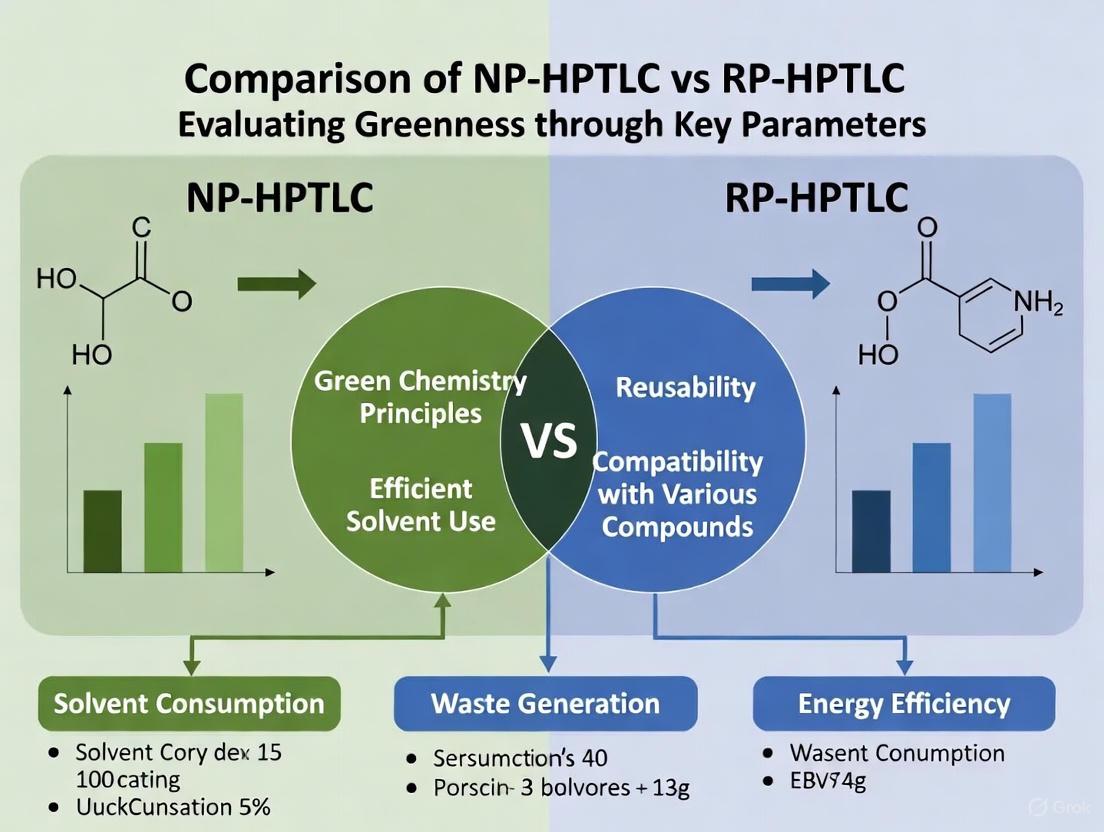
This article provides a systematic comparison of the greenness profiles of Normal-Phase (NP) and Reversed-Phase (RP) High-Performance Thin-Layer Chromatography (HPTLC) for pharmaceutical analysis.
Greenness Assessment in HPTLC: A Comprehensive Comparison of NP-HPTLC vs. RP-HPTLC for Sustainable Pharmaceutical Analysis
Abstract
This article provides a systematic comparison of the greenness profiles of Normal-Phase (NP) and Reversed-Phase (RP) High-Performance Thin-Layer Chromatography (HPTLC) for pharmaceutical analysis. Aimed at researchers, scientists, and drug development professionals, it explores the foundational principles of green analytical chemistry (GAC) as applied to HPTLC, details sustainable method development for both techniques, and offers practical troubleshooting guidance. By contrasting validation parameters and applying multiple greenness assessment tools (AGREE, NEMI, AES, ChlorTox), it demonstrates that RP-HPTLC often provides a superior eco-friendly profile without compromising analytical performance, offering a validated pathway for implementing more sustainable quality control and research practices.
Principles of Green HPTLC: Foundations for Sustainable Pharmaceutical Analysis
Core Principles of Green Analytical Chemistry (GAC) in HPTLC
Green Analytical Chemistry (GAC) represents a transformative approach to developing analytical methods that minimize environmental impact while maintaining analytical performance. The twelve principles of GAC provide a comprehensive framework for designing sustainable methodologies, focusing on reducing or eliminating hazardous substances, decreasing energy consumption, and preventing waste generation throughout the analytical process [1]. High-Performance Thin-Layer Chromatography (HPTLC) has emerged as a technique that aligns exceptionally well with these principles due to its inherently low solvent consumption, minimal sample preparation requirements, and capability for high-throughput analysis without generating significant waste [2].
The application of GAC principles in HPTLC has become increasingly important in pharmaceutical analysis and quality control, where traditional methods often employ large volumes of hazardous organic solvents. The greenness profile of HPTLC methods can be systematically evaluated using multiple metric tools, including the Analytical GREEnness (AGREE) approach, Analytical Eco-Scale (AES), National Environmental Methods Index (NEMI), Green Analytical Procedure Index (GAPI), and ChlorTox, which together provide a comprehensive assessment of a method's environmental impact [3] [4] [5]. These tools enable researchers to quantify and compare the greenness of different analytical approaches, driving the adoption of more sustainable practices in analytical laboratories.
Core GAC Principles and Their Implementation in HPTLC
Direct Application of GAC Principles in HPTLC Methodology
The core principles of Green Analytical Chemistry find direct and practical application in HPTLC methodologies, positioning this technique as a leader in sustainable analytical practice:
Reduced Solvent Consumption and Waste Generation: HPTLC typically requires only 5-15 mL of mobile phase per analysis, significantly less than HPLC methods which may consume hundreds of milliliters [2]. This substantial reduction in solvent usage directly supports the GAC principles of waste prevention and safer solvent selection. The minimal solvent volumes also translate to reduced waste disposal requirements and lower environmental impact [6].
Energy Efficiency: Unlike HPLC systems that often operate with high-pressure pumps and heated columns, HPTLC separation occurs at ambient temperature and pressure without requiring energy-intensive instrumentation during the development process [2]. This alignment with energy reduction principles makes HPTLC particularly suitable for laboratories aiming to decrease their carbon footprint.
Multi-sample Parallel Processing: A single HPTLC plate can simultaneously separate up to 20 samples or standards under identical conditions, dramatically increasing analytical throughput while reducing solvent consumption and analysis time per sample [7] [8]. This capability supports the GAC principles of enabling real-time analysis and minimizing the number of samples without compromising reliability.
Minimal Sample Preparation: HPTLC often requires less extensive sample cleanup compared to other chromatographic techniques, reducing the consumption of additional reagents and solvents [1]. Many pharmaceutical applications require only simple dissolution and filtration steps before analysis, supporting the GAC principle of avoiding unnecessary derivatization [9].
Greenness Assessment Tools for HPTLC Methods
The implementation of GAC principles in HPTLC can be quantitatively evaluated using several established metric systems:
Table 1: Greenness Assessment Tools for HPTLC Methods
| Assessment Tool | Key Evaluation Parameters | Scoring System | Application in HPTLC |
|---|---|---|---|
| AGREE | All 12 GAC principles | 0-1 scale (≥0.75 indicates excellent greenness) | Comprehensive evaluation of entire method [5] [10] |
| Analytical Eco-Scale | Penalty points for hazardous reagents, energy consumption, waste | >75 indicates excellent green method | Practical assessment of operational parameters [3] [9] |
| NEMI | Persistence, bioaccumulation, toxicity, hazardousness | Pictogram with four quadrants | Quick visual assessment of solvent hazards [4] [1] |
| GAPI | Multiple aspects from sample collection to final determination | Pictogram with five pentagrams | Detailed evaluation of method lifecycle [1] [7] |
| ChlorTox | Chlorinated solvent content and toxicity | Quantitative score (lower is better) | Specific assessment of chlorinated solvent impact [3] [9] |
The AGREE metric system has gained particular prominence in recent HPTLC research due to its comprehensive approach that incorporates all twelve GAC principles and provides an easily interpretable pictogram output [5] [10]. This tool allows researchers to identify specific areas for improvement in their method development process and objectively compare the environmental performance of different analytical approaches.
Experimental Comparison of NP-HPTLC vs. RP-HPTLC Greenness
Methodology for Greenness Comparison
Direct comparative studies between Normal-Phase (NP) and Reversed-Phase (RP) HPTLC methodologies provide valuable experimental data for assessing their relative greenness profiles. In these studies, researchers typically develop both NP and RP methods for the same analyte and systematically compare their performance using validation parameters and greenness metrics [3] [5] [10].
For NP-HPTLC methods, the stationary phase typically consists of silica gel 60 F254s plates, while mobile phases often incorporate mixtures such as chloroform-methanol or ethyl acetate-methanol in varying proportions [3] [5]. In contrast, RP-HPTLC methods employ RP-18F254s plates with mobile phases containing ethanol-water or acetone-water combinations [3] [9]. The methodological development process involves optimizing mobile phase compositions to achieve satisfactory separation while simultaneously maximizing the use of greener solvents.
The validation protocols for these comparative studies follow ICH Q2(R1) guidelines, assessing parameters including linearity range, accuracy, precision, robustness, and sensitivity (LOD and LOQ) for both NP and RP approaches [3] [5] [10]. Following method validation, the greenness profiles are evaluated using multiple assessment tools, with particular emphasis on AGREE scoring due to its comprehensive nature.
Comparative Experimental Data
Recent comparative studies provide quantitative data demonstrating the greenness differences between NP-HPTLC and RP-HPTLC approaches:
Table 2: Experimental Comparison of NP-HPTLC vs. RP-HPTLC Greenness Profiles
| Analyte | NP-HPTLC Mobile Phase | RP-HPTLC Mobile Phase | NP-HPTLC AGREE Score | RP-HPTLC AGREE Score | Reference |
|---|---|---|---|---|---|
| Ertugliflozin | Chloroform-methanol (85:15, v/v) | Ethanol-water (80:20, v/v) | 0.74 | 0.86 | [3] |
| Flibanserin | Ethyl acetate-methanol (95:5, v/v) | Acetone-water (80:20, v/v) | 0.80 | 0.86 | [5] |
| Dasatinib | Methanol:n-butylacetate:glacial acetic acid (50:50:0.2, v/v/v) | 2-propanol:water:glacial acetic acid (60:40:0.2, v/v/v) | 0.88 | 0.90 | [10] |
The experimental data consistently demonstrates that RP-HPTLC methods achieve higher AGREE scores compared to their NP-HPTLC counterparts, indicating superior alignment with GAC principles. This advantage primarily stems from the replacement of hazardous solvents like chloroform and ethyl acetate with greener alternatives such as ethanol and water in RP-HPTLC mobile phases [3] [5].
Beyond greenness metrics, RP-HPTLC methods frequently demonstrate superior analytical performance characteristics, including wider linear ranges, enhanced sensitivity, and better peak symmetry [3]. For instance, in the analysis of ertugliflozin, the RP-HPTLC method showed linearity in the 25-1200 ng/band range compared to 50-600 ng/band for the NP-HPTLC approach, while also providing greater accuracy (99.28% vs. 87.41% recovery) [3].
The following diagram illustrates the logical relationship between GAC principles, HPTLC advantages, and the resulting greenness outcomes:
GAC-HPTLC Implementation Pathway
Detailed Experimental Protocols
Protocol for Green RP-HPTLC Method Development
The development of a green RP-HPTLC method follows a systematic approach focused on maximizing environmental friendliness while maintaining analytical performance:
Instrumentation and Materials: The analysis is performed using a CAMAG HPTLC system comprising an Automatic TLC Sampler 4 (ATS4) sample applicator, automated developing chamber 2 (ADC2), and TLC scanner 3 with WinCATS software [9] [6]. The stationary phase consists of pre-coated RP-18F254S HPTLC plates with particle size of 5μm. Green solvents include ethanol, acetone, isopropanol, and water classified as environmentally preferable [5] [10] [6].
Mobile Phase Optimization: Initial screening involves testing various proportions of ethanol-water and acetone-water combinations (e.g., from 40:60 to 90:10 v/v) to identify the optimal separation efficiency [3] [5]. The selection criterion prioritizes mobile phases with >50% water content when possible to enhance greenness [3]. Chamber saturation time is optimized between 10-30 minutes at ambient temperature (20-25°C) to ensure reproducibility [9] [6].
Sample Application: Standard and sample solutions are applied as 6-mm bands using an automatic applicator with application rate set at 150 nL/s [9] [6]. The distance from the bottom edge is maintained at 10 mm with 10 mm between bands to prevent edge effects and cross-contamination [8].
Chromatographic Development: Plates are developed in the ascending mode to a distance of 70-80 mm using the optimized green mobile phase [9] [6]. Development time typically ranges from 10-20 minutes depending on the mobile phase viscosity and analyte characteristics.
Detection and Quantification: After development, plates are dried at room temperature and scanned at the appropriate wavelength (typically 200-300 nm for UV-absorbing compounds) using a deuterium lamp [3] [9]. Densitometric analysis is performed in reflectance-absorbance mode with slit dimensions of 4-6 × 0.45 mm and scanning speed of 20 mm/s [9] [8].
Greenness Assessment Protocol
Following method development and validation, the greenness profile is systematically evaluated using multiple assessment tools:
AGREE Assessment: Using the AGREE calculator software, all 12 GAC principles are scored based on the method parameters [5] [10]. Input parameters include information about sample preparation, reagent toxicity, energy consumption, waste generation, and operator safety. The software generates a pictogram with an overall score between 0-1, where scores >0.75 indicate excellent greenness [5].
Analytical Eco-Scale Calculation: Penalty points are assigned for each aspect deviating from ideal green conditions: hazardous reagents (1-5 points), energy consumption >1.5 kWh/sample (1 point), waste generation per sample (1-3 points), and occupational hazards (1-3 points) [3] [9]. The Eco-Scale score is calculated by subtracting total penalty points from 100, with scores >75 representing excellent green methods [9].
NEMI and GAPI Pictograms: These qualitative assessments evaluate whether the method avoids persistent, bioaccumulative, and toxic chemicals and whether it generates hazardous waste [4] [1]. The pictograms provide a quick visual representation of the method's environmental performance across its entire lifecycle.
Essential Research Reagent Solutions for Green HPTLC
The implementation of GAC principles in HPTLC requires careful selection of reagents and materials to minimize environmental impact while maintaining analytical performance:
Table 3: Essential Research Reagents for Green HPTLC
| Reagent/Material | Function in HPTLC | Green Characteristics | Application Examples |
|---|---|---|---|
| Water | Mobile phase component in RP-HPTLC | Non-toxic, renewable, biodegradable | Ethanol-water mixtures [3] [6] |
| Ethanol | Mobile phase component | Renewable, low toxicity, biodegradable | Ethanol-water mobile phases [3] [6] |
| Acetone | Mobile phase component | Low toxicity, readily biodegradable | Acetone-water mixtures [5] |
| Isopropanol | Mobile phase component | Lower toxicity than acetonitrile or methanol | Isopropanol-water-acetic acid [10] |
| n-Butyl acetate | Mobile phase component in NP-HPTLC | Greener alternative to chlorinated solvents | Methanol:n-butyl acetate:acetic acid [10] |
| RP-18F254S Plates | Stationary phase for RP-HPTLC | Enables use of aqueous mobile phases | Analysis of pharmaceuticals [3] [9] |
| Silica Gel 60 F254 Plates | Stationary phase for NP-HPTLC | Standard normal-phase separation | For less polar compounds [5] [7] |
| Ammonia Solution | Mobile phase modifier | Volatile, minimal residual waste | Methanol-ethyl acetate-ammonia [1] [8] |
The strategic selection of reagents directly impacts the greenness profile of HPTLC methods. Replacement of traditional hazardous solvents like chloroform, hexane, and chlorinated solvents with greener alternatives such as ethanol, acetone, and ethyl acetate significantly improves AGREE scores and reduces environmental impact [3] [5]. Similarly, the use of water as a major component in RP-HPTLC mobile phases enhances method greenness while reducing costs [3] [6].
The integration of Green Analytical Chemistry principles into HPTLC methodologies represents a significant advancement in sustainable pharmaceutical analysis. Experimental evidence consistently demonstrates that RP-HPTLC methods generally outperform NP-HPTLC approaches in terms of greenness metrics while maintaining or enhancing analytical performance. The systematic application of assessment tools like AGREE, Analytical Eco-Scale, and GAPI provides objective data to guide researchers in developing environmentally responsible analytical methods.
The movement toward greener HPTLC methodologies aligns with broader sustainability initiatives in the pharmaceutical industry, offering practical solutions for reducing the environmental footprint of quality control and research laboratories. By adopting the principles and protocols outlined in this guide, researchers can contribute to the advancement of sustainable analytical chemistry while maintaining the high standards of accuracy, precision, and reliability required in pharmaceutical analysis.
High-Performance Thin-Layer Chromatography (HPTLC) has emerged as a sophisticated, flexible, and environmentally considerate analytical technique, particularly valuable for pharmaceutical analysis and natural product characterization. Its advantages include minimal solvent consumption, reduced sample preparation, and the ability to analyze multiple samples in parallel, significantly increasing throughput and reducing solvent waste per sample compared to sequential techniques like HPLC [11]. Within this field, a critical distinction exists between Normal-Phase (NP-HPTLC) and Reversed-Phase (RP-HPTLC) methods, primarily defined by the nature of their stationary phases and the consequent mechanisms of separation.
The drive towards Green Analytical Chemistry (GAC) has further intensified the comparison between these techniques. The core principle of GAC is to redesign analytical methods to minimize their environmental impact, which involves reducing or eliminating hazardous solvent use, lowering energy consumption, and preventing waste generation [10] [12]. This review objectively compares NP-HPTLC and RP-HPTLC within the context of sustainability, examining their fundamental mechanisms, performance metrics, and ecological footprints based on contemporary research data.
Fundamental Separation Mechanisms and Stationary Phase Ecology
The primary difference between NP and RP-HPTLC lies in the polarity of their stationary phases, which dictates the mechanism of interaction with analytes.
NP-HPTLC Mechanism: This method employs a polar stationary phase, typically unmodified silica gel with silanol groups (Si–OH). Separation occurs based on the adsorption of analytes onto this active solid surface. The mobile phase is a non-polar or moderately polar organic solvent. Analytes interact with the stationary phase through hydrogen bonding, dipole-dipole interactions, and ionic interactions. In this mode, the more polar a compound is, the more strongly it adsorbs to the stationary phase, resulting in a lower retardation factor (Rf) value [13].
RP-HPTLC Mechanism: This method uses a non-polar stationary phase, created by chemically bonding hydrophobic ligands like C18 (octadecylsilane) or C8 chains to the silica backbone. Separation is governed by partitioning of the analytes between the polar mobile phase (e.g., water-ethanol mixtures) and the hydrophobic stationary phase. The dominant molecular interaction is hydrophobic. Consequently, more hydrophobic (non-polar) compounds have a stronger affinity for the stationary phase and exhibit higher retention (lower Rf), while polar compounds elute faster [14].
The following diagram illustrates the fundamental ecological and mechanistic differences between these two techniques.
Experimental Protocols and Performance Comparison
The development of both NP- and RP-HPTLC methods requires systematic optimization of the mobile phase to achieve robust and valid separation. The following experimental data and protocols, drawn from recent studies, highlight the practical differences in their application and performance.
Experimental Protocols for Method Development
A standard protocol common to both techniques involves several key steps [3] [15]:
- Sample Application: Standard and sample solutions are spotted as narrow bands (e.g., 6 mm) onto the HPTLC plate (NP or RP) using an automatic applicator.
- Chromatogram Development: The spotted plate is developed in a saturated chamber with the optimized mobile phase until the solvent front migrates a fixed distance (e.g., 80 mm).
- Densitometric Detection: After development and drying, the plate is scanned with a densitometer at a specific wavelength optimal for the target analyte(s).
- Data Analysis: Peak areas and Rf values are recorded for the construction of calibration curves and calculation of validation parameters.
Mobile Phase Optimization: This is the most critical step where NP and RP diverge.
- For NP-HPTLC, different combinations of non-polar and polar organic solvents (e.g., chloroform/methanol, cyclohexane/ethyl acetate) are tested in varying proportions [3] [16].
- For RP-HPTLC, binary mixtures of water with green organic solvents like ethanol or isopropanol are typically optimized [3] [15].
Table 1: Exemplary Mobile Phase Compositions from Published Studies
| Analyte(s) | NP-HPTLC Mobile Phase | RP-HPTLC Mobile Phase | Citation |
|---|---|---|---|
| Thymoquinone | Cyclohexane-Ethyl Acetate (90:10, v/v) | Ethanol-Water (80:20, v/v) | [16] |
| Ertugliflozin | Chloroform-Methanol (85:15, v/v) | Ethanol-Water (80:20, v/v) | [3] |
| Dasatinib | Methanol:n-butylacetate:Acetic Acid (50:50:0.2, v/v/v) | 2-propanol:water:Acetic Acid (60:40:0.2, v/v/v) | [10] |
| Antiviral Drugs (RMD, FAV, MOL) | Ethyl acetate:ethanol:water (9.4:0.4:0.25, v/v) | Ethanol-Water (6:4, v/v) | [17] |
Comparative Performance and Validation Data
When developed and validated according to International Council for Harmonisation (ICH) guidelines, both methods demonstrate high accuracy, precision, and linearity. However, direct comparisons often reveal performance differences.
Table 2: Contrast of Validation Parameters for NP-HPTLC and RP-HPTLC from Comparative Studies
| Validation Parameter | NP-HPTLC Performance (Ertugliflozin) | RP-HPTLC Performance (Ertugliflozin) | NP-HPTLC Performance (Thymoquinone) | RP-HPTLC Performance (Thymoquinone) |
|---|---|---|---|---|
| Linear Range | 50–600 ng/band | 25–1200 ng/band | 25–1000 ng/band | 50–600 ng/band |
| Theoretical Plates/m (N/m) | ~4472 | ~4652 | Data not specified | Data not specified |
| Tailing Factor (As) | ~1.06 | ~1.08 | Data not specified | Data not specified |
| Sensitivity (LOD/LOQ) | Less sensitive compared to RP | More sensitive (wider linear range) | More sensitive (lower linear range) | Less sensitive compared to NP |
| Reference | [3] | [3] | [16] | [16] |
As evidenced by the ertugliflozin study, the RP-HPTLC method showed a wider linear range and superior sensitivity. The authors concluded that the RP-HPTLC method was "more robust, accurate, precise, linear, sensitive, and eco-friendly" [3]. Conversely, for thymoquinone, NP-HPTLC demonstrated a lower detection range, indicating higher sensitivity for that specific compound in its optimized normal-phase system [16].
Greenness Assessment and Sustainability Profile
The ecological impact of an analytical method, often referred to as its "greenness," has become a critical metric for evaluation. Modern assessment tools like the Analytical GREEnness (AGREE) calculator use the 12 principles of Green Analytical Chemistry to provide a comprehensive score from 0 to 1, where a higher score indicates a greener method [16] [10].
The core ecological difference between NP and RP methods stems from mobile phase selection. RP-HPTLC has a distinct advantage due to its compatibility with water and ethanol—solvents classified as green and benign [15]. In contrast, NP-HPTLC often relies on more hazardous and volatile organic solvents like chloroform, hexane, and ethyl acetate, which pose greater environmental and safety risks [3] [17].
Table 3: Comparative Greenness Assessment Using AGREE and Other Metrics
| Study & Method | AGREE Score | Key Greenness Observations | Citation |
|---|---|---|---|
| Thymoquinone (NP) | 0.82 | Uses cyclohexane-ethyl acetate; excellent score but lower than RP. | [16] |
| Thymoquinone (RP) | 0.84 | Uses ethanol-water; excellent score, marginally greener than NP. | [16] |
| Ertugliflozin (NP) | Not Specified | Uses chloroform-methanol; described as less eco-friendly. | [3] |
| Ertugliflozin (RP) | Not Specified | Uses ethanol-water; four greenness tools confirmed it as greener. | [3] |
| Dasatinib (NP) | 0.88 | Uses methanol/n-butylacetate; high greenness score. | [10] |
| Dasatinib (RP) | 0.90 | Uses 2-propanol/water; extremely green profile. | [10] |
The data shows a consistent trend: RP-HPTLC methods typically achieve higher AGREE scores than their NP counterparts when the NP method employs traditional organic solvents. However, as seen in the dasatinib and thymoquinone studies, NP methods can still achieve "excellent" greenness scores (AGREE > 0.8) if the mobile phase is carefully chosen from less hazardous, greener organic solvents [16] [10].
The Scientist's Toolkit: Essential Research Reagents and Materials
Successful implementation of green NP- and RP-HPTLC methods requires specific materials. The following toolkit details essential items and their functions.
Table 4: Essential Research Reagent Solutions for Green HPTLC
| Item | Function/Description | Application in NP-HPTLC | Application in RP-HPTLC |
|---|---|---|---|
| HPTLC Plates (Silica gel 60) | The polar stationary phase for adsorption chromatography. | Essential. Standard base material. | Not used in its unmodified form. |
| HPTLC Plates (RP-18, e.g., F254S) | The non-polar stationary phase for partition chromatography. | Not used. | Essential. Base material chemically modified with C18 chains. |
| Ethanol | A green, renewable, and less toxic solvent. | Used as a modifier in mobile phases. | Primary mobile phase component, often mixed with water. |
| Water (HPLC grade) | A non-toxic, green solvent. | Used in small amounts as a modifier. | Primary mobile phase component, often mixed with ethanol. |
| Ethyl Acetate | A solvent with a better eco-toxicological profile than others. | Common component of greener NP mobile phases [16] [17]. | Rarely used. |
| Automatic Developing Chamber | Ensures reproducible, saturated development conditions. | Used for both NP and RP method development. | Used for both NP and RP method development. |
| Densitometer (Scanner) | Quantifies the analyte bands by UV/Vis absorbance. | Used for detection and quantification post-development. | Used for detection and quantification post-development. |
| Ergothioneine-d9 | Ergothioneine-d9, MF:C9H15N3O2S, MW:238.36 g/mol | Chemical Reagent | Bench Chemicals |
| Chitin synthase inhibitor 5 | Chitin Synthase Inhibitor 5|For Research Use | Chitin Synthase Inhibitor 5 is a high-purity compound for antifungal research. It targets chitin biosynthesis. For Research Use Only. Not for human consumption. | Bench Chemicals |
The choice between NP-HPTLC and RP-HPTLC is multifaceted, involving a trade-off between analytical objectives, chemical nature of the analytes, and environmental considerations.
- NP-HPTLC remains a powerful technique for separating polar compounds and is highly effective when methods are optimized with greener organic solvents. Its historical reliance on hazardous solvents is being successfully challenged, as evidenced by high AGREE scores for modern methods.
- RP-HPTLC holds a inherent advantage for green analytical chemistry due to its compatibility with ethanol-water mobile phases. It frequently demonstrates superior sensitivity, wider linearity, and a lower ecological footprint, making it increasingly the first choice for developing new, sustainable methods.
The overarching trend in analytical science is a concerted shift towards sustainability. The comparative assessment using AGREE metrics provides a clear, data-driven framework for this transition. While both techniques have a permanent place in the analytical arsenal, the future undoubtedly leans towards the adoption and further refinement of reversed-phase systems that utilize green solvents, effectively balancing the demands of analytical performance with responsibility towards environmental safety.
The paradigm of analytical chemistry is undergoing a fundamental transformation, driven by the urgent need for sustainable practices that align with the principles of Green Analytical Chemistry (GAC). Within high-performance thin-layer chromatography (HPTLC), this shift necessitates a critical reevaluation of mobile phase selection, particularly when comparing normal-phase (NP) and reversed-phase (RP) techniques [12]. Traditional NP-HPTLC methods frequently rely on hazardous organic solvents derived from non-renewable petroleum sources, posing significant ecological and occupational health risks [12] [18]. In contrast, RP-HPTLC offers a more versatile platform for incorporating green alternative solvents, notably ethanol and water, which are biodegradable, less toxic, and can be sourced renewably [3] [19]. This guide provides an objective, data-driven comparison of the greenness profiles of NP- and RP-HPTLC methods, equipping scientists with the experimental evidence and validated metrics needed to make informed, sustainable choices in chromatographic method development for drug analysis and quality control.
Greenness Assessment Metrics for Analytical Methods
Evaluating the environmental impact of an analytical method requires robust, multi-faceted metrics. Several standardized tools have been developed to quantitatively assess and compare the greenness of analytical procedures. Table 1 summarizes the most prominent greenness assessment tools used in modern HPTLC research.
Table 1: Key Greenness and Sustainability Assessment Metrics for Analytical Methods
| Metric Name | Acronym | What It Assesses | Output Format | Interpretation |
|---|---|---|---|---|
| Analytical GREEnness [20] | AGREE | All 12 principles of Green Analytical Chemistry | Radial diagram with a score 0-1 | Closer to 1.0 indicates excellent greenness |
| Analytical Eco-Scale [3] | AES | Toxicity of reagents, energy consumption, waste generation | Total score (100 = ideal) | Higher score indicates a greener method |
| National Environmental Method Index [3] | NEMI | Persistence, toxicity, corrosiveness of chemicals | Pictogram with 4 quadrants | All green quadrants indicate a greener method |
| Green Analytical Procedure Index [20] | GAPI | Entire analytical workflow from sampling to disposal | Color-coded pictogram | More green colors indicate a greener method |
| Blue Applicability Grade Index [17] | BAGI | Practicality and applicability in routine labs | Score and "asteroid" pictogram | Higher score indicates better practicality |
Beyond the "green" pillar, the emerging concept of White Analytical Chemistry (WAC) seeks to balance the three critical pillars of analytical performance (Red), ecological impact (Green), and practical applicability (Blue). A "white" method harmoniously balances all three dimensions [17].
Comparative Analysis: NP-HPTLC vs. RP-HPTLC Greenness Profiles
Direct comparative studies provide compelling evidence for the superior greenness of RP-HPTLC methods that utilize ethanol-water mobile phases over traditional NP-HPTLC systems. The data below is drawn from validated methods for pharmaceutical analysis.
Table 2: Quantitative Greenness Comparison of NP-HPTLC and RP-HPTLC Methods for Pharmaceutical Analysis
| Analyte (Source) | HPTLC Mode (Mobile Phase) | Key Greenness Metric Scores | Inference |
|---|---|---|---|
| Ertugliflozin [3] | NP: Chloroform/Methanol (85:15 v/v) | Scores not provided, but method deemed less green | The NP strategy was less green than the RP strategy. |
| RP: Ethanol-Water (80:20 v/v) | Scores not provided, but method deemed more green | The RP strategy was greener than the NP strategy. | |
| Lemborexant [21] | NP: Acetone-Petroleum Ether (40:60 v/v) | AGREE: Lower than RP; NEMI: Not all green | NP strategy was less green. |
| RP: Ethanol-Water (85:15 v/v) | AGREE: 0.89; NEMI: All four circles green; AES: 93 | RP strategy was greener and more sustainable. | |
| Caffeine [19] | RP: Ethanol-Water (55:45 v/v) | AGREE: 0.80 | The method has an "excellent greener profile." |
| Three Antivirals [17] | NP: Ethyl acetate/Ethanol/Water | Not directly comparable to RP in same study | The RP method was superior in greenness. |
| RP: Ethanol-Water (60:40 v/v) | Superior greenness, blueness, and whiteness | The RP method was superior in greenness. |
Experimental Protocol for Greenness Comparison
The following workflow, derived from the cited studies, outlines a standardized approach for developing and directly comparing NP and RP methods.
Interpretation of Comparative Data
The data in Table 2 demonstrates a consistent trend. RP-HPTLC methods employing ethanol-water mobile phases achieve significantly higher scores across multiple greenness metrics [3] [21] [19]. For instance, the AGREE score of 0.89 for the RP-HPTLC method for Lemborexant indicates strong alignment with all 12 principles of GAC [21]. Similarly, an Analytical Eco-Scale score of 93 (out of 100) confirms a method with minimal environmental impact, as a score above 75 is considered excellent [21].
The fundamental advantage of RP-HPTLC lies in its compatibility with ethanol-water mixtures. Ethanol is classified as a green solvent due to its low toxicity, ready biodegradability, and renewable origin from plant biomass [18] [19]. In contrast, typical NP-HPTLC solvents like chloroform, petroleum ether, and hexane are problematic due to their high volatility, toxicity, persistence in the environment, and derivation from non-renewable fossil fuels [12] [18]. Replacing these with greener NP solvents like ethyl acetate or bio-based terpenes (e.g., limonene) is an area of active research but is not yet as straightforward as using ethanol-water in RP mode [18].
Essential Research Reagents and Materials
The transition to greener HPTLC requires specific materials and reagents. The following toolkit is essential for developing and validating sustainable methods.
Table 3: Scientist's Toolkit for Green HPTLC Method Development
| Item Category | Specific Examples & Specifications | Green Function & Rationale |
|---|---|---|
| Green Solvents | Ethanol (Bio-based) [19], Water [19], Ethyl Acetate [17] | Low toxicity, biodegradable, renewable sourcing. Replace hazardous solvents like chloroform and n-hexane. |
| HPTLC Plates | Silica gel 60 RP-18 F254S [19] | Enable the use of aqueous-organic (e.g., ethanol-water) mobile phases. |
| Standard HPTLC Instrumentation | CAMAG system: ATS4 sample applicator, ADC2 development chamber, TLC Scanner 3 with WinCATS software [19] | Ensures precise, automated, and reproducible application, development, and detection, minimizing errors and solvent waste. |
| Greenness Assessment Software | AGREE Calculator [20], BAGI Calculator [17] | Provides objective, quantitative scoring of a method's environmental impact and practicality. |
The empirical evidence from recent comparative studies unequivocally demonstrates that RP-HPTLC methods utilizing ethanol-water mobile phases offer a superior greenness profile compared to traditional NP-HPTLC methods that rely on classical, hazardous organic solvents. The consistentl high scores achieved by RP methods across multiple validated greenness metrics (AGREE, AES, NEMI) provide a compelling, data-backed rationale for this choice [3] [21] [19].
The future of sustainable HPTLC lies in the widespread adoption of the White Analytical Chemistry framework, which balances the greenness of a method with its analytical performance (red) and practical applicability (blue) [17]. For researchers and drug development professionals, the path forward is clear: prioritize RP-HPTLC with green solvents like ethanol-water during initial method development. This strategy not only minimizes ecological impact and ensures a safer working environment but also leads to robust, cost-effective, and regulatory-compliant analytical procedures suitable for the modern, sustainability-focused laboratory.
The growing emphasis on environmental sustainability has made Green Analytical Chemistry (GAC) a critical discipline, focusing on minimizing the environmental footprint of analytical methods while maintaining their efficacy [22]. Greenness assessment metrics provide a standardized approach to evaluate and compare the environmental impact of analytical procedures, helping researchers and pharmaceutical professionals make informed, sustainable choices [23]. This guide focuses on four key metrics—AGREE, NEMI, AES, and ChlorTox—providing a objective comparison of their applications, particularly within the context of comparing Normal-Phase and Reversed-Phase High-Performance Thin-Layer Chromatography (NP-HPTLC and RP-HPTLC).
The evolution of these metrics reflects a shift from basic to comprehensive evaluations. Foundational tools like NEMI offered simple, binary assessments, while newer metrics like AGREE provide a more holistic, quantitative evaluation based on all 12 principles of GAC [22] [24]. Proper application of these tools is governed by a Good Evaluation Practice (GEP), which recommends using quantitative, empirical data and combining multiple metrics with different structures to ensure a comprehensive and reliable picture [25].
Understanding the Four Key Greenness Metrics
Analytical GREEnness (AGREE) Metric
AGREE is a comprehensive assessment tool that evaluates analytical methods against all 12 principles of GAC [22]. It provides a final score between 0 and 1, where higher scores indicate superior greenness, accompanied by an intuitive circular pictogram [24] [3]. This output offers a quick visual summary of a method's environmental performance across multiple criteria. A major strength of AGREE is its balanced perspective, considering factors like energy consumption, waste generation, and operator safety alongside traditional solvent toxicity concerns [24]. Scores exceeding 0.75 generally indicate greener analytical techniques [10].
National Environmental Methods Index (NEMI)
As one of the first greenness assessment tools, NEMI uses a simple pictogram with four quadrants indicating whether a method meets basic criteria: whether chemicals used are persistent, bioaccumulative, or toxic (PBT); whether waste is generated; whether chemicals are corrosive; and whether hazardous reagents are used [22] [24]. Its binary (yes/no) assessment approach is easy to interpret but lacks granularity. The primary limitation of NEMI is its inability to distinguish degrees of greenness, as it does not provide a quantitative score and offers limited insight into the full analytical workflow [24].
Analytical Eco-Scale (AES)
The Analytical Eco-Scale offers a semi-quantitative approach by assigning penalty points to non-green aspects of an analytical method [3]. The calculation begins with a base score of 100, from which penalties are subtracted for hazardous reagent use, high energy consumption, and other environmental concerns [24]. The final score facilitates direct comparison between methods, with higher scores indicating greener procedures. While more detailed than NEMI, AES still relies on expert judgment in assigning penalty points and lacks a visual component, which can limit its accessibility for some users [24].
ChlorTox Scale
The ChlorTox Scale provides a specialized assessment focused specifically on chlorinated solvent toxicity [3]. This metric addresses the significant environmental and health concerns associated with chlorinated solvents, which are commonly used in analytical chemistry despite their hazards. Unlike broader metrics, ChlorTox offers targeted evaluation of this particular aspect of method greenness, helping researchers identify and mitigate specific risks. Its focused nature means it should be used alongside other metrics for a complete environmental assessment [3].
Table 1: Comparison of Key Characteristics of Greenness Assessment Metrics
| Metric | Assessment Approach | Output Format | Key Parameters Evaluated | Primary Advantage |
|---|---|---|---|---|
| AGREE | Comprehensive, quantitative | Score (0-1) + Pictogram | All 12 GAC Principles | Most holistic assessment; combines score with visual output |
| NEMI | Binary, qualitative | Pictogram (4 quadrants) | PBT, Waste, Corrosiveness, Hazard | Simple, quick visual assessment |
| AES | Semi-quantitative | Numerical Score (0-100) | Reagents, Energy, Waste | Direct numerical comparison between methods |
| ChlorTox | Specialized, focused | Specific Risk Assessment | Chlorinated Solvent Toxicity | Targeted evaluation of high-risk solvents |
Application in NP-HPTLC vs. RP-HPTLC Greenness Comparison
Experimental Protocol for Method Comparison
A standardized approach for comparing the greenness of NP-HPTLC and RP-HPTLC methods involves method development, validation, and subsequent greenness assessment. The typical workflow, as applied in pharmaceutical analysis, follows these key stages [10] [3]:
Method Development and Optimization: For NP-HPTLC, silica gel plates with organic solvent mixtures (e.g., chloroform-methanol) are used. For RP-HPTLC, reversed-phase plates (e.g., C18) with more aqueous or green solvent mixtures (e.g., ethanol-water, 2-propanol-water) are employed [10] [3]. The mobile phase composition is optimized for parameters like retardation factor (Rf), tailing factor, and theoretical plates.
Analytical Validation: The developed methods are validated according to International Council for Harmonisation (ICH) Q2(R1) guidelines. This establishes the method's reliability by assessing specificity, accuracy, precision, robustness, and linearity [10].
Greenness Assessment: The validated NP-HPTLC and RP-HPTLC methods are evaluated using the selected metrics (AGREE, NEMI, AES, ChlorTox). This involves inputting data on solvents, energy consumption, waste generation, and other relevant parameters into each metric's framework [3].
Comparative Analysis: Results from the greenness assessment are compiled and compared to determine which chromatographic approach offers superior environmental sustainability while maintaining analytical performance.
Case Study: Quantitative Analysis of Dasatinib Monohydrate
In a study developing methods for Dasatinib Monohydrate, both RP- and NP-HPTLC methods were developed and assessed using the AGREE tool [10]. The RP-HPTLC method used a mobile phase of 2-propanol:water:glacial acetic acid, while the NP-HPTLC method used methanol:n-butylacetate:glacial acetic acid. AGREE scores of 0.90 for RP-HPTLC and 0.88 for NP-HPTLC were achieved, reflecting the extreme greenness of both methods, with a slight advantage for the reversed-phase approach [10]. The high scores were attributed to the use of more environmentally benign solvents and adherence to GAC principles.
Case Study: Determination of Ertugliflozin (ERZ)
A direct comparison between NP-HPTLC and RP-HPTLC for Ertugliflozin analysis utilized all four metrics: NEMI, AES, ChlorTox, and AGREE [3]. The NP-HPTLC method employed a chloroform/methanol mobile phase, while the RP-HPTLC method used ethanol-water.
Table 2: Comparative Greenness Scores for Ertugliflozin (ERZ) Analysis by NP-HPTLC vs. RP-HPTLC [3]
| Greenness Metric | NP-HPTLC Method | RP-HPTLC Method | Interpretation |
|---|---|---|---|
| AGREE Score | Lower score | Higher score | RP method is greener overall |
| AES Score | Lower score | Higher score | RP method has fewer environmental penalties |
| NEMI Pictogram | Less favorable | More favorable | RP method meets more green criteria |
| ChlorTox Assessment | Higher risk (uses CHCl₃) | Lower risk | RP method avoids toxic chlorinated solvents |
The study concluded that the RP-HPTLC method was greener than the NP-HPTLC approach across all assessment tools. The key differentiator was the NP method's use of chloroform, a hazardous and chlorinated solvent, which resulted in penalty points in AES, a negative assessment in ChlorTox, and lower scores in AGREE and NEMI [3]. In contrast, the RP method's use of ethanol and water significantly improved its greenness profile.
Essential Research Reagents and Materials
The sustainability of an analytical method is heavily influenced by the choice of reagents and materials. The following table details key items used in green HPTLC methods and their functional role in promoting environmental friendliness.
Table 3: Essential Research Reagents and Materials for Green HPTLC Methods
| Reagent/Material | Function in Green HPTLC | Environmental Advantage |
|---|---|---|
| Ethanol | Green solvent for mobile phase (RP-HPTLC) | Biobased, renewable, less toxic alternative to chlorinated solvents [3] |
| 2-Propanol | Green solvent for mobile phase (RP-HPTLC) | Less hazardous compared to traditional solvents like chloroform or n-hexane [10] |
| Water | Green solvent for mobile phase (RP-HPTLC) | Non-toxic, readily available, and safe [10] |
| n-Butyl Acetate | Green solvent for mobile phase (NP-HPTLC) | Considered a more eco-friendly substitute for other organic solvents [10] |
| Silica Gel 60 RP-18F254S Plates | Stationary phase for RP-HPTLC | Enables the use of aqueous mobile phases, reducing organic solvent consumption |
| Silica Gel 60 NP-18F254S Plates | Stationary phase for NP-HPTLC | Standard phase, but often requires less green organic solvents |
Greenness Evaluation Workflow
The following diagram illustrates the logical workflow for evaluating and comparing the greenness of analytical methods using the four metrics, leading to an informed selection.
The objective comparison of AGREE, NEMI, AES, and ChlorTox metrics reveals that AGREE offers the most comprehensive evaluation for comparing NP-HPTLC and RP-HPTLC methods, thanks to its quantitative scoring and alignment with all 12 GAC principles [22] [24]. However, the specialized focus of ChlorTox on solvent toxicity and the straightforward visual output of NEMI provide valuable, complementary insights [3].
Experimental data consistently demonstrates that RP-HPTLC generally outperforms NP-HPTLC in greenness assessments, primarily due to its compatibility with greener solvents like ethanol and water, avoiding problematic chlorinated solvents such as chloroform commonly used in normal-phase chromatography [10] [3]. This positions RP-HPTLC as a more sustainable choice for pharmaceutical analysis.
For researchers, selecting the appropriate metric depends on the assessment's goal: use AGREE for a full lifecycle evaluation, AES for straightforward numerical comparison, NEMI for a quick initial screen, and ChlorTox for specific solvent hazard analysis. Employing a combination of these tools, as part of a Good Evaluation Practice, ensures a robust, transparent, and multidimensional understanding of a method's environmental impact, ultimately guiding the analytical community toward more sustainable practices [25].
Developing Sustainable Methods: A Practical Guide to Green NP- and RP-HPTLC
The adoption of Green Analytical Chemistry (GAC) principles in pharmaceutical analysis has driven significant innovation in chromatographic method development. High-performance thin-layer chromatography (HPTLC) has emerged as a particularly promising platform for implementing sustainable analytical practices due to its inherently lower solvent consumption and energy requirements compared to conventional HPLC methods. Within this field, a clear paradigm shift is occurring from traditional normal-phase (NP-) HPTLC methods, which often employ environmentally problematic solvents, toward reversed-phase (RP-) HPTLC utilizing greener mobile phase systems. Among these green alternatives, ethanol-water mixtures have gained prominent attention as environmentally benign, effective, and practical mobile phases that align with the principles of GAC while maintaining excellent analytical performance [3] [26].
This comparison guide provides a systematic evaluation of ethanol-water systems for RP-HPTLC against NP-HPTLC alternatives, presenting objective experimental data and methodology to support informed decision-making for researchers, scientists, and drug development professionals. The comprehensive assessment encompasses analytical performance parameters, greenness metrics, and practical implementation protocols to facilitate the adoption of sustainable chromatographic practices in pharmaceutical analysis.
Experimental Comparison: Ethanol-Water RP-HPTLC vs. NP-HPTLC
Methodologies and Protocols
Mobile Phase Preparation and Optimization:
RP-HPTLC with Ethanol-Water: Binary mixtures are prepared in varying proportions (typically 40:60 to 90:10 v/v ethanol:water) depending on the analyte's hydrophobicity. The optimal ratio is determined through systematic testing to achieve optimal retention factors (Rf) between 0.2-0.8 with compact band formation [3] [27]. For instance, methods for ertugliflozin and lemborexant utilized ethanol-water in ratios of 80:20 and 85:15 v/v respectively [3] [28].
NP-HPTLC with Traditional Organic Solvents: Conventional normal-phase systems employ combinations such as chloroform-methanol (85:15 v/v), acetone-petroleum ether (40:60 v/v), or ethyl acetate-ethanol-water mixtures [3] [28]. These often incorporate hazardous or problematic solvents requiring special handling and waste disposal protocols.
Chromatographic Development Conditions:
Stationary Phases: RP-HPTLC utilizes silica gel 60 RP-18F254S plates, while NP-HPTLC employs silica gel 60 F254S or similar polar adsorbents [3] [10].
Development Chamber: Automated developing chambers with pre-saturation (typically 20-30 minutes) ensure reproducible separation conditions [29]. The development distance is generally 70-80 mm at room temperature (22±2°C).
Detection: Densitometric scanning in reflectance/absorbance mode at analyte-specific wavelengths (e.g., 199 nm for lemborexant, 323 nm for dasatinib, 348 nm for diosmin) [3] [10] [28].
Performance Data Comparison
Table 1: Comparative Analytical Performance of RP-HPTLC (Ethanol-Water) and NP-HPTLC Methods
| Analyte | Method Type | Mobile Phase | Linearity (ng/band) | Rf Value | Sensitivity (LOD, ng/band) | Accuracy (% Recovery) | Precision (% RSD) |
|---|---|---|---|---|---|---|---|
| Ertugliflozin [3] | RP-HPTLC | Ethanol-water (80:20 v/v) | 25-1200 | 0.68±0.01 | Not specified | 98.24-101.57% | 0.87-1.00% |
| NP-HPTLC | Chloroform-methanol (85:15 v/v) | 50-600 | 0.29±0.01 | Not specified | 97.82-100.35% | 1.12-1.45% | |
| Lemborexant [28] | RP-HPTLC | Ethanol-water (85:15 v/v) | 20-1000 | Not specified | 0.92 | 98.24-101.57% | 0.87-1.00% |
| NP-HPTLC | Acetone-petroleum ether (40:60 v/v) | 50-500 | Not specified | 2.45 | 97.82-100.35% | 1.12-1.45% | |
| Dasatinib [10] | RP-HPTLC | 2-propanol:water:glacial acetic acid (60:40:0.2 v/v/v) | 30-500 | 0.31±0.02 | Not specified | Not specified | Not specified |
| NP-HPTLC | Methanol:n-butylacetate:glacial acetic acid (50:50:0.2 v/v/v) | 200-1200 | 0.39±0.02 | Not specified | Not specified | Not specified | |
| Diosmin [27] | RP-HPTLC | Ethanol-water (5.5:4.5 v/v) | 100-700 | 0.80±0.02 | Not specified | 99.06% (tablets) | Not specified |
Table 2: Greenness Assessment Scores for RP-HPTLC vs. NP-HPTLC Methods
| Analyte | Method Type | NEMI Profile | Analytical Eco-Scale | AGREE Score | ChlorTox (g) | Overall Greenness |
|---|---|---|---|---|---|---|
| Ertugliflozin [3] | RP-HPTLC | All green circles | Not specified | Not specified | Not specified | Superior to NP method |
| NP-HPTLC | Not all green circles | Not specified | Not specified | Not specified | Inferior to RP method | |
| Lemborexant [28] | RP-HPTLC | All green circles | 93 | 0.89 | 0.88 | Superior greenness |
| NP-HPTLC | Not all green circles | Lower than RP | Lower than RP | Higher than RP | Lower greenness | |
| Antiviral Agents [17] | RP-HPTLC | Not specified | Excellent | >0.75 | Not specified | Superior greenness |
| NP-HPTLC | Not specified | Good | >0.75 | Not specified | Good but inferior |
Greenness Assessment Metrics and Interpretation
Greenness Evaluation Tools
Multiple standardized metrics have been developed to quantitatively assess the environmental friendliness of analytical methods:
NEMI (National Environmental Method Index): Provides a simple pictogram with four quadrants indicating whether the method avoids persistent/bioaccumulative toxins, hazardous chemicals, corrosives (pH<2 or >12), and whether waste is properly treated [3] [4] [28]. Ethanol-water systems typically produce all-green NEMI profiles.
Analytical Eco-Scale: A semi-quantitative approach that assigns penalty points to parameters not aligned with green analysis (hazardous chemicals, energy consumption, waste) [28]. Higher scores (closer to 100) indicate excellent greenness. Ethanol-water RP-HPTLC methods typically achieve scores above 90 [28].
AGREE (Analytical GREEnness): A comprehensive metric evaluating all 12 principles of GAC, producing a score from 0-1 (with >0.75 indicating excellent greenness) [10] [28]. Ethanol-water RP-HPTLC methods consistently achieve scores above 0.85.
ChlorTox: Specifically assesses chlorine-containing solvents and their toxicity [28]. Ethanol-water systems achieve excellent scores (e.g., 0.88 g for lemborexant analysis) due to the absence of chlorinated solvents.
Sustainability Workflow
The following diagram illustrates the methodological workflow and sustainability advantages of developing ethanol-water RP-HPTLC methods:
The Scientist's Toolkit: Essential Research Reagents and Materials
Table 3: Essential Materials for Implementing Ethanol-Water RP-HPTLC Methods
| Material/Reagent | Specification | Function/Purpose | Greenness Consideration |
|---|---|---|---|
| Stationary Phase | RP-18 silica gel 60 F254S plates (e.g., Merck) [3] [27] | Separation matrix for reversed-phase chromatography | Reusable for method development, minimal waste generation |
| Green Solvents | Ethanol (HPLC grade) [3] [28] [27] | Eco-friendly mobile phase component | Biodegradable, low toxicity, renewable source |
| Water (HPLC grade) [3] [28] [27] | Eco-friendly mobile phase component | Non-toxic, readily available | |
| Development Chamber | Automated Developing Chamber (ADC2) [29] [27] | Controlled mobile phase development | Ensures reproducibility with minimal solvent vapor exposure |
| Sample Applicator | Automatic TLC Sampler (e.g., CAMAG ATS4) [28] [27] | Precise sample application as bands | Enables high precision with minimal sample volume |
| Detection System | Densitometry Scanner (e.g., CAMAG TLC Scanner 3) [29] [27] | Quantitative measurement of separated bands | Non-destructive detection possible; multiple scanning wavelengths |
| Reference Standards | Pharmaceutical reference standards (USP, EP) | Method validation and quantification | Ensures analytical accuracy and regulatory compliance |
| Fabimycin | Fabimycin, MF:C23H25ClN4O3, MW:440.9 g/mol | Chemical Reagent | Bench Chemicals |
| Antitubercular agent-26 | Antitubercular agent-26, MF:C22H23N5O3S2, MW:469.6 g/mol | Chemical Reagent | Bench Chemicals |
Comparative Analysis and Implementation Recommendations
Key Advantages of Ethanol-Water RP-HPTLC
The experimental data consistently demonstrates that ethanol-water RP-HPTLC systems provide equivalent or superior analytical performance while offering significantly improved environmental profiles compared to NP-HPTLC methods:
Wider Linear Range: Ethanol-water RP-HPTLC methods consistently demonstrate wider linear ranges (e.g., 25-1200 ng/band for ertugliflozin) compared to NP-HPTLC (50-600 ng/band for the same analyte) [3], indicating greater method versatility for quantifying both low and high analyte concentrations.
Enhanced Sensitivity: RP-HPTLC methods generally show lower detection limits (e.g., LOD of 0.92 ng/band for lemborexant) compared to NP-HPTLC (LOD of 2.45 ng/band for the same analyte) [28], enabling trace analysis applications.
Improved Precision and Accuracy: Lower %RSD values (0.87-1.00% for RP vs. 1.12-1.45% for NP) and excellent recovery rates (98.24-101.57%) confirm the robustness of ethanol-water systems [3] [28].
Superior Greenness Profiles: Consistent superiority across all greenness assessment metrics (NEMI, AGREE, Analytical Eco-Scale, ChlorTox) establishes ethanol-water RP-HPTLC as the environmentally responsible choice [3] [28].
Practical Implementation Guidelines
For successful method development using ethanol-water RP-HPTLC:
Systematic Optimization: Begin with ethanol-water ratios between 50:50 and 80:20 (v/v) and adjust based on analyte polarity. More hydrophobic compounds typically require higher ethanol percentages [3] [27].
Small Modifications: For challenging separations, minimal additives (<0.5% glacial acetic acid or ammonia) can improve band shape without significantly compromising greenness [10].
Validation Protocol: Follow ICH Q2(R1) guidelines for validation parameters including specificity, linearity, accuracy, precision, and robustness [3] [10] [28].
Greenness Assessment: Utilize multiple metrics (AGREE, NEMI, Analytical Eco-Scale) to comprehensively evaluate and document environmental performance [3] [28].
The comprehensive comparison of mobile phase systems clearly demonstrates that ethanol-water based RP-HPTLC methods provide an optimal balance of excellent analytical performance and outstanding environmental sustainability. These systems consistently outperform NP-HPTLC alternatives in key greenness metrics while maintaining or enhancing chromatographic performance parameters including linearity, sensitivity, precision, and accuracy.
The experimental data and protocols presented in this guide provide pharmaceutical researchers and analytical scientists with practical resources for implementing these sustainable chromatographic methods. The adoption of ethanol-water RP-HPTLC represents a significant step toward aligning pharmaceutical analysis with the principles of Green Analytical Chemistry, contributing to more environmentally responsible drug development and quality control practices without compromising analytical rigor.
Optimizing NP-HPTLC Methods with Greener Solvent Combinations
High-Performance Thin-Layer Chromatography (HPTLC) has emerged as a vital analytical technique in pharmaceutical quality control and drug development, offering advantages in cost-effectiveness, simplicity, and throughput. In recent years, the principles of Green Analytical Chemistry (GAC) have transformed this field, driving a shift toward environmentally sustainable methodologies that reduce hazardous waste and utilize safer solvents. This evolution encompasses both Normal-Phase (NP-HPTLC) and Reversed-Phase (RP-HPTLC) techniques, each with distinct environmental profiles and optimization requirements. The NP-HPTLC approach, traditionally reliant on solvents with significant environmental and safety concerns, presents particular challenges for green optimization. Within this context, researchers and pharmaceutical analysts are actively developing strategies to replace traditional solvents with greener alternatives while maintaining analytical performance, creating a critical area of methodological innovation that balances ecological responsibility with analytical precision.
The movement toward sustainable chromatography aligns with broader pharmaceutical industry goals of reducing environmental impact while maintaining rigorous quality standards. Green HPTLC methods have been successfully developed for numerous pharmaceutical compounds including antidiabetics, anticancer drugs, NSAIDs, and cardiovascular medications, demonstrating the wide applicability of this approach [3] [10] [30]. This guide provides a comprehensive comparison of NP-HPTLC and RP-HPTLC from an environmental perspective, supported by experimental data and detailed methodologies to inform researchers' decisions regarding greener HPTLC method development.
Greenness Assessment Metrics for HPTLC Methods
The evaluation of method environmental impact employs standardized metrics that provide objective measures of greenness. The Analytical GREEnness (AGREE) tool has emerged as one of the most comprehensive assessment systems, incorporating all 12 principles of green analytical chemistry and generating a score between 0-1, where higher values indicate superior greenness [10] [30]. Methods scoring above 0.75 are generally considered excellent green analytical techniques [10]. Other commonly used tools include the National Environmental Method Index (NEMI), which utilizes a simple pictogram based on four criteria; Analytical Eco-Scale (AES), which assigns penalty points for non-green parameters; Green Analytical Procedure Index (GAPI); and specialized tools like ChlorTox for evaluating chlorine-containing solvents [3].
These assessment tools consider multiple factors including solvent toxicity, energy consumption, waste generation, safety hazards, and derivatization requirements. The AGREE tool particularly stands out because it provides a comprehensive evaluation framework and generates an easily interpretable pictogram that visually represents performance across all 12 GAC principles [10] [30]. For NP-HPTLC methods, the choice of mobile phase components significantly influences scores across all these metrics, making solvent selection the most critical factor in greenness optimization.
Comparative Greenness Scores: NP-HPTLC vs. RP-HPTLC
Table 1: Comparative Greenness Assessment of NP-HPTLC and RP-HPTLC Methods
| Analyte | NP-HPTLC Mobile Phase | RP-HPTLC Mobile Phase | NP-HPTLC AGREE Score | RP-HPTLC AGREE Score | Reference |
|---|---|---|---|---|---|
| Dasatinib | Methanol:n-butyl acetate:glacial acetic acid (50:50:0.2, v/v/v) | 2-propanol:water:glacial acetic acid (60:40:0.2, v/v/v) | 0.88 | 0.90 | [10] |
| Sorafenib | n-butanol:ethyl acetate (proportions not specified) | Isopropanol:water:glacial acetic acid (proportions not specified) | 0.82 | 0.83 | [31] |
| Flibanserin | Ethyl acetate:methanol (95:5, v/v) | Acetone:water (80:20, v/v) | 0.80 | 0.86 | [5] |
| Ertugliflozin | Chloroform:methanol (85:15, v/v) | Ethanol:water (80:20, v/v) | Not specified (inferior) | Not specified (superior) | [3] |
The data consistently demonstrates that RP-HPTLC methods achieve equal or superior greenness scores compared to NP-HPTLC approaches across multiple drug compounds. The greenness advantage of RP-HPTLC primarily stems from the ability to utilize more environmentally friendly solvents like water and ethanol in the mobile phase, whereas NP-HPTLC often requires more problematic solvents. However, as the Dasatinib example shows, carefully optimized NP-HPTLC methods can still achieve excellent greenness scores (0.88) approaching those of RP-HPTLC methods (0.90) through strategic solvent selection [10].
Experimental Data and Performance Comparison
Method Validation and Performance Metrics
Table 2: Analytical Performance Comparison of NP-HPTLC and RP-HPTLC Methods
| Analyte | HPTLC Method | Linearity Range (ng/band) | Detection Wavelength (nm) | Precision (% RSD) | Robustness (% RSD) | Reference |
|---|---|---|---|---|---|---|
| Dasatinib | NP-HPTLC | 200-1200 | 323 | R² = 0.9995 | Not specified | [10] |
| Dasatinib | RP-HPTLC | 30-500 | 323 | R² = 0.9998 | Not specified | [10] |
| Flibanserin | NP-HPTLC | 200-1600 | 204 | Not specified | Not specified | [5] |
| Flibanserin | RP-HPTLC | 100-1600 | 204 | Not specified | Not specified | [5] |
| Ertugliflozin | NP-HPTLC | 50-600 | 199 | Not specified | Not specified | [3] |
| Ertugliflozin | RP-HPTLC | 25-1200 | 199 | Not specified | Not specified | [3] |
| Tenoxicam | RP-HPTLC (eco-friendly) | 25-1400 | 375 | 0.87-1.02 | 0.87-0.94 | [30] |
The experimental data reveals that both NP-HPTLC and RP-HPTLC methods can deliver excellent analytical performance when properly optimized. RP-HPTLC methods generally demonstrate superior sensitivity, with wider linearity ranges and lower detection limits, as evidenced by the Ertugliflozin analysis where RP-HPTLC showed linearity from 25-1200 ng/band compared to 50-600 ng/band for NP-HPTLC [3]. The tenoxicam RP-HPTLC method exemplifies excellent precision and robustness with % RSD values below 1.02% [30], while both Dasatinib methods showed exceptional correlation coefficients (R² > 0.999) [10]. These results confirm that the transition to greener methodologies does not compromise analytical performance and may even enhance certain parameters.
Greener Solvent Combinations for NP-HPTLC
Strategies for NP-HPTLC Green Optimization
Optimizing NP-HPTLC methods with greener solvents requires strategic substitution of traditional hazardous solvents while maintaining chromatographic performance. The fundamental approach involves replacing problematic solvents like chloroform, hexane, and dimethylformamide with safer alternatives from green chemistry categories. For NP-HPTLC, ethyl acetate, ethanol, methanol, isopropanol, acetone, n-butyl acetate, and cyclohexane represent preferred green solvent options that can effectively replace more hazardous alternatives while maintaining satisfactory separation efficiency [10] [5] [32].
Successful NP-HPTLC mobile phase optimization often employs binary or ternary mixtures of these greener solvents. For Dasatinib analysis, researchers developed an effective NP-HPTLC method using methanol:n-butyl acetate:glacial acetic acid (50:50:0.2, v/v/v) [10], while flibanserin analysis utilized ethyl acetate:methanol (95:5, v/v) [5]. The addition of small proportions of modifiers like glacial acetic acid (0.1-0.2%) can enhance peak symmetry and resolution without significantly impacting environmental profiles [10] [32]. These approaches demonstrate how traditional NP-HPTLC methods can be successfully adapted to meet green chemistry principles through thoughtful solvent selection and optimization.
Experimental Protocols for Method Development
The development of greener NP-HPTLC methods follows a systematic optimization process. For Dasatinib analysis, researchers applied the following protocol: Standard solutions were prepared in methanol at appropriate concentrations. Samples were applied as bands on silica gel 60 F254 HPTLC plates using an automatic sample applicator. The mobile phase consisting of methanol:n-butyl acetate:glacial acetic acid (50:50:0.2, v/v/v) was used after chamber saturation for 20 minutes. Plates were developed to a distance of 80 mm, then densitometric detection was performed at 323 nm [10].
For flibanserin analysis using NP-HPTLC, the methodology differed slightly: Samples were applied to HPTLC plates, which were developed using ethyl acetate:methanol (95:5, v/v) as the mobile phase. Detection occurred at 204 nm, with linearity demonstrated over 200-1600 ng/band [5]. The successful implementation of these methods highlights that effective NP-HPTLC analysis can be achieved while utilizing mobile phases with improved environmental profiles compared to traditional approaches.
The Scientist's Toolkit: Essential Research Reagents
Table 3: Essential Reagents for Green HPTLC Method Development
| Reagent/Equipment | Function/Application | Green Considerations | Examples from Literature |
|---|---|---|---|
| Ethyl Acetate | NP-HPTLC mobile phase component | Preferred green solvent, biodegradable | Dasatinib NP-HPTLC [10], Flibanserin NP-HPTLC [5] |
| Ethanol | RP-HPTLC mobile phase component | Renewable, low toxicity | Ertugliflozin RP-HPTLC [3], Tenoxicam RP-HPTLC [30] |
| n-Butyl Acetate | NP-HPTLC mobile phase | Greener alternative to ethyl acetate | Dasatinib NP-HPTLC [10] |
| Water | RP-HPTLC mobile phase | Ideal green solvent | Ertugliflozin RP-HPTLC [3], Tenoxicam RP-HPTLC [30] |
| Isopropanol | RP-HPTLC mobile phase | Preferred alcohol solvent | Dasatinib RP-HPTLC [10] |
| Acetone | RP-HPTLC mobile phase | Good greenness profile | Flibanserin RP-HPTLC [5] |
| Cyclohexane | NP-HPTLC mobile phase | Alternative to n-hexane | Aspirin/Metoclopramide HPTLC [32] |
| Glacial Acetic Acid | Mobile phase modifier | Minimal usage (0.1-0.2%) | Dasatinib methods [10] |
| Silica Gel 60 F254 plates | Stationary phase (NP-HPTLC) | Standard NP separation | Multiple studies [3] [10] [32] |
| RP-18 F254 plates | Stationary phase (RP-HPTLC) | Standard RP separation | Ertugliflozin RP-HPTLC [3], Sorafenib RP-HPTLC [31] |
| L-Norleucine-d9 | L-Norleucine-d9, MF:C6H13NO2, MW:140.23 g/mol | Chemical Reagent | Bench Chemicals |
| Mek-IN-5 | Mek-IN-5, MF:C29H27FN4O10S2, MW:674.7 g/mol | Chemical Reagent | Bench Chemicals |
This toolkit represents the essential materials and solvents required for developing and implementing green HPTLC methods. The selection of appropriate solvents from this toolkit forms the foundation of sustainable method development, with each choice directly impacting the environmental footprint of the analytical process. The strategic combination of these reagents enables researchers to maintain analytical performance while aligning with green chemistry principles.
The comprehensive comparison of NP-HPTLC and RP-HPTLC methods from an environmental perspective demonstrates that both techniques can be optimized for improved greenness through strategic solvent selection. While RP-HPTLC generally holds a slight advantage in greenness metrics due to its compatibility with water and ethanol-based mobile phases, NP-HPTLC methods can achieve excellent environmental profiles through replacement of traditional hazardous solvents with greener alternatives like ethyl acetate, n-butyl acetate, and methanol. The experimental data confirms that this green transition does not compromise analytical performance, with both approaches demonstrating excellent linearity, precision, and robustness when properly optimized.
For researchers seeking to implement greener HPTLC methods, the systematic replacement of problematic solvents represents the most impactful strategy. The wealth of successful applications across diverse pharmaceutical compounds provides a robust foundation for method development, offering proven mobile phase combinations that balance analytical and environmental requirements. As green chemistry principles continue to influence analytical practices, these optimized HPTLC approaches represent meaningful steps toward more sustainable pharmaceutical analysis without sacrificing the rigorous quality standards essential to drug development and quality control.
The principles of Green Analytical Chemistry (GAC) are transforming pharmaceutical analysis by encouraging the adoption of methodologies that minimize environmental impact. This case study provides a comparative analysis of the greenness profiles of two analytical techniques: Normal-Phase High-Performance Thin-Layer Chromatography (NP-HPTLC) and Reversed-Phase High-Performance Thin-Layer Chromatography (RP-HPTLC). The analysis focuses on their application in the determination of two pharmacologically active compounds: Ertugliflozin, a synthetic antidiabetic drug, and Thymoquinone, a natural bioactive compound. The assessment employs multiple greenness evaluation tools, including the Analytical GREEnness (AGREE) metric, to deliver an objective comparison of the environmental friendliness, practical performance, and validation parameters of these techniques [10] [3].
The pharmaceutical industry is increasingly prioritizing sustainable practices, with GAC focusing on reducing hazardous waste, using safer solvents, and improving energy efficiency [33] [34]. Green chemistry, defined as "the design of chemical products and processes that reduce or eliminate the use and generation of hazardous substances," provides a framework for this transition. In analytical chemistry, this translates to developing methods that require less solvent, generate less waste, and utilize safer chemicals [34]. HPTLC techniques are particularly amenable to greening, as they typically consume smaller volumes of mobile phase per sample compared to other chromatographic methods, and can often utilize ethanol-water mixtures or other less hazardous solvents [10] [3].
Compound Profiles and Analytical Context
Ertugliflozin
Ertugliflozin (ERZ) is a potent sodium-glucose cotransporter-2 (SGLT2) inhibitor used for managing type 2 diabetes mellitus. It works by blocking the SGLT2 protein in the kidneys, thereby reducing glucose reabsorption and promoting excretion of excess sugar through urine. This mechanism not only lowers blood glucose levels but also offers benefits for weight management and cardiovascular health [35]. The drug is typically administered as a monotherapy or in fixed-dose combination with metformin or sitagliptin. The need for precise and environmentally sustainable analytical methods for ERZ quality control in pharmaceutical formulations is well-recognized [3].
Thymoquinone
Thymoquinone (TQ) is the primary bioactive constituent derived from Nigella sativa (black seed) oil. It exhibits a wide range of therapeutic properties, including antioxidant, anti-inflammatory, and anticancer activities. TQ is utilized in various commercial forms, including capsules, creams, and essential oils. The analysis of TQ content in plant extracts and commercial products is essential for standardizing herbal medicines and nutraceuticals, requiring reliable and green analytical methods [16].
Experimental Protocols and Methodologies
HPTLC Instrumentation and General Conditions
Both NP-HPTLC and RP-HPTLC analyses were performed using standard HPTLC systems. The key components include a sample applicator (e.g., Linomat 5), a development chamber, a TLC plate heater, and a densitometry scanner. The detection wavelength was set according to the analyte's maximum absorption: 199 nm for Ertugliflozin and 259 nm for Thymoquinone. All measurements were performed in reflectance-absorbance mode [16] [3].
Table 1: Key Instrumental Parameters for HPTLC Analysis
| Parameter | Ertugliflozin Analysis | Thymoquinone Analysis |
|---|---|---|
| Stationary Phase (NP) | Silica gel 60 NP-18F254S plates | Silica gel 60 NP-18F254S plates |
| Stationary Phase (RP) | Silica gel 60 RP-18F254S plates | Silica gel 60 RP-18F254S plates |
| Sample Application | 6 mm band width | 6 mm band width |
| Detection Mode | Densitometry at 199 nm | Densitometry at 259 nm |
| Chamber Saturation | 20 min at room temperature | 20 min at room temperature |
Detailed Methodology for Ertugliflozin Analysis
3.2.1 NP-HPTLC Method for ERZ: The NP-HPTLC method employed silica gel 60 NP-18F254S plates as the stationary phase. The mobile phase consisted of chloroform and methanol in a ratio of 85:15 (v/v). The plates were developed in a saturated twin-trough chamber, with the migration distance set at 80 mm. The Rf value for Ertugliflozin was found to be 0.29 ± 0.01. The method demonstrated linearity in the concentration range of 50–600 ng/band [3].
3.2.2 RP-HPTLC Method for ERZ: For the RP-HPTLC method, silica gel 60 RP-18F254S plates were used. A greener mobile phase of ethanol and water in a ratio of 80:20 (v/v) was optimized. The development was carried out in a saturated twin-trough chamber to a distance of 80 mm. Ertugliflozin showed an Rf value of 0.68 ± 0.01. The calibration plot was linear over a wider range of 25–1200 ng/band compared to the NP method [3].
Detailed Methodology for Thymoquinone Analysis
3.3.1 NP-HPTLC Method for TQ: The NP analysis for Thymoquinone was performed on silica gel 60 NP-18F254S plates. The mobile phase was a mixture of cyclohexane and ethyl acetate in a 90:10 (v/v) ratio. After development, the plates were scanned at 259 nm. The method was validated over a linear range of 25–1000 ng/band [16].
3.3.2 RP-HPTLC Method for TQ: The RP analysis for Thymoquinone utilized silica gel 60 RP-18F254S plates. An ethanol-water mixture in a ratio of 80:20 (v/v) served as the mobile phase. This method showed linearity in the range of 50–600 ng/band [16].
Diagram 1: Experimental workflow for the HPTLC analysis of Ertugliflozin, contrasting NP and RP methods.
Comparative Analytical Performance and Validation
The developed methods for both compounds were validated as per the International Council for Harmonisation (ICH) Q2(R1) guidelines. Key parameters such as linearity, accuracy, precision, robustness, and sensitivity were assessed to ensure the methods' reliability [10] [16] [3].
Table 2: Comparison of Validation Parameters for Ertugliflozin and Thymoquinone Methods
| Validation Parameter | ERZ NP-HPTLC | ERZ RP-HPTLC | TQ NP-HPTLC | TQ RP-HPTLC |
|---|---|---|---|---|
| Linearity Range | 50–600 ng/band | 25–1200 ng/band | 25–1000 ng/band | 50–600 ng/band |
| Correlation Coefficient (R²) | >0.999 | >0.999 | >0.999 | >0.999 |
| Accuracy (% Recovery) | 87.41% | 99.28% | Within acceptable limits | Within acceptable limits |
| Precision (% RSD) | <2% | <2% | <2% | <2% |
| Robustness | Less robust | More robust | Acceptable | Acceptable |
| Sensitivity (LOD) | Higher LOD | Lower LOD | Higher Sensitivity | Lower Sensitivity |
| Retardation Factor (Rf) | 0.29 ± 0.01 | 0.68 ± 0.01 | Data not specified | Data not specified |
The data reveals that the RP-HPTLC method for Ertugliflozin is superior in several aspects: it offers a wider linear range, higher accuracy (99.28% recovery vs. 87.41% for NP-HPTLC), better robustness, and superior sensitivity. For Thymoquinone, the NP-HPTLC method demonstrated a higher sensitivity and a broader linear range, making it more suitable for quantifying TQ in various plant extracts and commercial products where concentration can vary significantly [16] [3].
Greenness Assessment
The environmental impact of each analytical method was evaluated using multiple assessment tools, including the comprehensive AGREE (Analytical GREEnness) metric, which evaluates methods based on the 12 principles of GAC and provides a score between 0 and 1 [10].
Table 3: Comprehensive Greenness Profile Comparison of NP-HPTLC and RP-HPTLC Methods
| Greenness Metric | ERZ NP-HPTLC | ERZ RP-HPTLC | TQ NP-HPTLC | TQ RP-HPTLC |
|---|---|---|---|---|
| AGREE Score | Lower than RP | 0.84 [3] | 0.82 [16] | 0.84 [16] |
| NEMI Profile | Less Green | More Green | Less Green | More Green |
| Analytical Eco-Scale | Lower Score | Higher Score | Lower Score | Higher Score |
| ChlorTox Score | Higher Hazard (Chloroform) | Lower Hazard | Higher Hazard (Cyclohexane) | Lower Hazard |
| Key Solvents | Chloroform, Methanol | Ethanol, Water | Cyclohexane, Ethyl Acetate | Ethanol, Water |
| Hazard Summary | Uses toxic, reprotoxic chloroform | Uses low-toxicity, biodegradable solvents | Uses flammable cyclohexane | Uses low-toxicity, biodegradable solvents |
The AGREE scores for the RP-HPTLC methods for both compounds (0.84) indicate a high level of greenness, surpassing their NP-HPTLC counterparts. The primary reason for this superiority is the choice of solvents. The RP-HPTLC methods utilize ethanol and water, which are safer, less toxic, and renewable. In contrast, the NP-HPTLC methods rely on more problematic solvents: chloroform (a toxic and suspected carcinogen) for Ertugliflozin, and cyclohexane (a flammable solvent) for Thymoquinone [16] [3]. This aligns with the core principles of GAC, which advocate for the use of safer solvents and auxiliaries [33].
Diagram 2: Key Green Chemistry Principles relevant to HPTLC method selection. RP-HPTLC strongly aligns with principles 5, 7, 10, and 12, while NP-HPTLC often conflicts with them due to solvent choice.
The Scientist's Toolkit: Essential Research Reagents and Materials
The following table details the key reagents, solvents, and materials required for implementing these green HPTLC methods, along with their specific functions and greenness considerations.
Table 4: Essential Research Reagent Solutions for Green HPTLC Analysis
| Item | Function/Role in Analysis | Greenness & Safety Considerations |
|---|---|---|
| RP-HPTLC Plates (Silica gel 60 RP-18F254S) | Stationary phase for reversed-phase separation. | Enables the use of aqueous mobile phases. |
| NP-HPTLC Plates (Silica gel 60 NP-18F254S) | Stationary phase for normal-phase separation. | Typically requires more hazardous organic solvents. |
| Anhydrous Ethanol | Green solvent for mobile phase (RP-HPTLC). | Renewable, low toxicity, biodegradable. Preferred green solvent. |
| Water (HPLC Grade) | Green solvent for mobile phase (RP-HPTLC). | Non-toxic, safe, and inexpensive. Ideal green solvent. |
| n-Butyl Acetate | Solvent in NP mobile phase for Dasatinib [10]. | Considered a safer and greener alternative to more toxic solvents. |
| 2-Propanol | Solvent in RP mobile phase for Dasatinib [10]. | Preferable to more hazardous solvents like methanol. |
| Chloroform | Solvent in NP mobile phase for Ertugliflozin. | Toxic, suspected carcinogen. Avoid where possible [3]. |
| Methanol | Solvent modifier in NP mobile phases. | Flammable and toxic. Less desirable than ethanol [3]. |
| Densitometry Scanner | Quantitative detection of analyte bands on the plate. | Enables low sample volume and minimal reagent use. |
| Standardized Chamber | For reproducible mobile phase development. | Ensures method robustness, reducing need for re-analysis and waste. |
| Nav1.8-IN-2 | Nav1.8-IN-2 | Nav1.8-IN-2 is a selective Nav1.8 channel inhibitor for pain research. This product is for research use only and not for human or veterinary use. |
| Apalutamide-13C,d3 | Apalutamide-13C,d3, MF:C21H15F4N5O2S, MW:481.4 g/mol | Chemical Reagent |
This case study demonstrates a clear trade-off between analytical performance and environmental sustainability when choosing between NP-HPTLC and RP-HPTLC. For the analysis of Ertugliflozin, RP-HPTLC is the unequivocally recommended technique, as it provides superior validation parameters (including higher accuracy, wider linear range, and better robustness) while also achieving a significantly greener profile, as confirmed by its high AGREE score of 0.84 [3].
For Thymoquinone, the decision is more nuanced. The NP-HPTLC method offers higher sensitivity and a broader linear range, which may be critical for analyzing complex plant extracts with varying TQ concentrations. However, the RP-HPTLC method provides an excellent green alternative with an AGREE score of 0.84, making it suitable for routine analysis where its slightly lower sensitivity is sufficient [16].
The overarching conclusion is that RP-HPTLC, particularly with ethanol-water mobile phases, should be the first choice for developing new analytical methods for pharmaceutical compounds due to its strong alignment with the principles of Green Analytical Chemistry. This approach allows researchers and drug development professionals to maintain high analytical standards while minimizing the environmental footprint of their work.
Operational Best Practices for Minimizing Environmental Impact and Waste
High-performance thin-layer chromatography (HPTLC) has emerged as a versatile analytical technique in pharmaceutical analysis, offering significant advantages in sustainability compared to conventional chromatographic methods. The growing emphasis on Green Analytical Chemistry (GAC) principles has prompted researchers to evaluate the environmental impact of analytical techniques, particularly through the comparison of normal-phase (NP) and reversed-phase (RP) HPTLC methodologies. While both approaches provide reliable analytical outcomes, they differ substantially in their consumption of hazardous solvents, waste generation, and overall environmental footprint. This comprehensive comparison examines the operational best practices for minimizing environmental impact and waste in HPTLC analysis, providing researchers with evidence-based guidance for sustainable method selection and implementation.
The fundamental distinction between NP-HPTLC and RP-HPTLC lies in their stationary and mobile phase compositions. Traditional NP-HPTLC typically employs polar stationary phases (e.g., silica gel) with non-polar organic solvents, whereas RP-HPTLC utilizes non-polar stationary phases (e.g., C18-modified silica) with more polar, often aqueous-based mobile phases. This fundamental difference in chemistry directly influences their environmental profiles, with RP-HPTLC generally offering greater opportunities for incorporating green solvent alternatives. Recent advancements in both approaches have demonstrated that strategic method development can significantly reduce the ecological impact of pharmaceutical analysis while maintaining analytical performance.
Comparative Greenness Assessment: NP-HPTLC vs. RP-HPTLC
Quantitative Greenness Metrics Comparison
Multiple studies have systematically compared the environmental performance of NP-HPTLC and RP-HPTLC methods using established greenness assessment tools. The Analytical GREEnness (AGREE) metric, which evaluates methods against all 12 principles of GAC, provides a comprehensive score between 0 and 1, with higher scores indicating superior greenness. The Analytical Eco-Scale (AES) assigns penalty points to non-green parameters, with higher scores (closer to 100) representing more environmentally friendly methods. ChlorTox calculates the total mass of chlorinated solvents and their toxicity, with lower values preferred.
Table 1: Comparative Greenness Scores for NP-HPTLC and RP-HPTLC Methods
| Pharmaceutical Compound | Method Type | AGREE Score | Analytical Eco-Scale | ChlorTox (g) | Citation |
|---|---|---|---|---|---|
| Ertugliflozin | NP-HPTLC | Not reported | Not reported | Not reported | [3] |
| Ertugliflozin | RP-HPTLC | Not reported | Not reported | Not reported | [3] |
| Dasatinib Monohydrate | NP-HPTLC | 0.88 | Not reported | Not reported | [10] |
| Dasatinib Monohydrate | RP-HPTLC | 0.90 | Not reported | Not reported | [10] |
| Sorafenib | NP-HPTLC | 0.82 | Not reported | Not reported | [36] |
| Sorafenib | RP-HPTLC | 0.83 | Not reported | Not reported | [36] |
| Apremilast | RP-HPTLC | 0.89 | 93 | 0.66 | [37] |
| Emtricitabine | NP-HPTLC | Not reported | Not reported | Not reported | [38] |
| Emtricitabine | RP-HPTLC | Not reported | Not reported | Not reported | [38] |
| Suvorexant | RP-HPTLC | 0.88 | 93 | 0.96 | [9] |
The data consistently demonstrates that RP-HPTLC methods achieve superior greenness metrics across multiple pharmaceutical applications. For ertugliflozin analysis, the RP-HPTLC method was found to be "more eco-friendly" compared to the NP-HPTLC approach when assessed using four different greenness tools (NEMI, AES, ChlorTox, and AGREE) [3]. Similarly, for dasatinib monohydrate, the RP-HPTLC method achieved a higher AGREE score (0.90) compared to the NP-HPTLC method (0.88), reflecting its better environmental profile [10].
Solvent Consumption and Waste Generation
The environmental impact of HPTLC methods is significantly influenced by mobile phase composition and solvent consumption. NP-HPTLC methods typically employ hazardous organic solvents like chloroform, n-hexane, and ethyl acetate, whereas RP-HPTLC methods can utilize greener alternatives such as ethanol, water, and isopropanol.
Table 2: Mobile Phase Composition and Environmental Impact of NP-HPTLC vs. RP-HPTLC
| Pharmaceutical Compound | Method Type | Mobile Phase Composition | Greenness Advantages | Citation |
|---|---|---|---|---|
| Ertugliflozin | NP-HPTLC | Chloroform/methanol (85:15, v/v) | Uses chlorinated solvent | [3] |
| Ertugliflozin | RP-HPTLC | Ethanol/water (80:20, v/v) | Chlorinated solvent-free | [3] |
| Dasatinib Monohydrate | NP-HPTLC | Methanol/n-butyl acetate/glacial acetic acid (50:50:0.2, v/v/v) | Uses less hazardous solvents | [10] |
| Dasatinib Monohydrate | RP-HPTLC | 2-propanol/water/glacial acetic acid (60:40:0.2, v/v/v) | Uses greener solvents | [10] |
| Sorafenib | NP-HPTLC | n-butanol/ethyl acetate | Moderate greenness | [36] |
| Sorafenib | RP-HPTLC | Isopropanol/water/glacial acetic acid | Greener profile | [36] |
| Apremilast | RP-HPTLC | Ethanol/water (65:35, v/v) | Chlorinated solvent-free | [37] |
| Emtricitabine | NP-HPTLC | Chloroform/methanol (85:15, v/v) | Uses chlorinated solvent | [38] |
| Emtricitabine | RP-HPTLC | Acetone/water (70:30, v/v) | Chlorinated solvent-free | [38] |
| Anti-COVID agents | NP-HPTLC | Ethyl acetate/ethanol/water (9.4:0.4:0.25, v/v) | Moderate greenness | [17] |
| Anti-COVID agents | RP-HPTLC | Ethanol/water (6:4, v/v) | Superior greenness | [17] |
The substitution of chlorinated solvents with greener alternatives in RP-HPTLC methods significantly reduces environmental hazards and waste toxicity. For emtricitabine analysis, the green RP-HPTLC method utilized acetone/water (70:30, v/v) as the mobile phase, effectively eliminating the chlorinated solvents required in the NP-HPTLC method [chloroform/methanol (85:15, v/v)] [38]. This transition to less hazardous solvents represents a crucial best practice for minimizing environmental impact in analytical laboratories.
Experimental Protocols for Green HPTLC Analysis
Method Development and Optimization
The development of environmentally sustainable HPTLC methods requires systematic optimization of both stationary and mobile phases. For RP-HPTLC methods, the protocol typically begins with selection of RP-18 silica gel 60 F254S plates as the stationary phase. Mobile phase optimization involves testing various ratios of green solvents, particularly ethanol/water and acetone/water combinations, to achieve optimal separation efficiency with minimal environmental impact.
For the analysis of apremilast, researchers developed an RP-HPTLC method using RP-18 silica gel 60 F254S plates with ethanol/water (65:35, v/v) as the mobile phase. The method was optimized by testing different ratios of ethanol and water to achieve a compact band for apremilast at Rf = 0.61 ± 0.01. The development was performed in an automated developing chamber previously saturated with mobile phase vapor for 30 minutes at 22°C, with detection at 238 nm [37]. Similarly, for suvorexant analysis, the optimal mobile phase was determined to be ethanol/water (75:25, v/v) after testing various combinations, with detection at 255 nm [9].
For NP-HPTLC methods, silica gel 60 NP-18F254S plates are typically employed with organic solvent mixtures. The method for ertugliflozin NP-HPTLC utilized chloroform/methanol (85:15, v/v) as the mobile phase, with optimization involving different ratios of chloroform and methanol from 45:55 to 95:5 v/v. The optimal composition provided a well-eluted and sharp chromatographic signal for ertugliflozin at Rf = 0.29 ± 0.01 [3].
Validation Procedures
Both NP-HPTLC and RP-HPTLC methods must be validated according to International Council for Harmonisation (ICH) guidelines to ensure reliability and accuracy while maintaining green principles. Validation parameters typically include linearity, range, precision, accuracy, specificity, robustness, limit of detection (LOD), and limit of quantification (LOQ).
For the green RP-HPTLC method of emtricitabine, linearity was demonstrated in the range of 30-800 ng/band with a determination coefficient (R2) of 0.9995, while the NP-HPTLC method showed linearity in the range of 40-400 ng/band with R2 = 0.9985. The green RP-HPTLC method also showed superior sensitivity with LOD and LOQ values of 10.30 ng/band and 30.90 ng/band, respectively, compared to 13.52 ng/band and 40.56 ng/band for the NP-HPTLC method [38]. Accuracy, evaluated through recovery studies, showed percentage recovery of 98.96-101.72% for the green RP-HPTLC method, confirming its reliability for pharmaceutical analysis [38].
The green RP-HPTLC method for suvorexant demonstrated linearity in the range of 10-1200 ng/band, with precision expressed as % CV ranging from 0.78 to 0.94. The method was robust for slight variations in mobile phase composition and development conditions, with accuracy (% recovery) between 98.18 and 99.30% [9].
Figure 1: Comparative NP-HPTLC vs. RP-HPTLC Method Development Workflow
The Scientist's Toolkit: Research Reagent Solutions
Essential Materials and Their Functions
Successful implementation of green HPTLC methods requires careful selection of research reagents and materials. The following table details key components and their functions in NP-HPTLC and RP-HPTLC analyses:
Table 3: Essential Research Reagents and Materials for Green HPTLC Analysis
| Material/Reagent | Function in Analysis | NP-HPTLC Applications | RP-HPTLC Applications | Greenness Considerations |
|---|---|---|---|---|
| Silica gel 60 NP-18F254S plates | Stationary phase for normal-phase separation | Used in all NP-HPTLC methods [3] | Not applicable | Traditional stationary phase |
| RP-18 silica gel 60 F254S plates | Stationary phase for reversed-phase separation | Not applicable | Used in all RP-HPTLC methods [37] [9] | Compatible with aqueous mobile phases |
| Chloroform | Mobile phase component in NP-HPTLC | Used in ertugliflozin and emtricitabine NP-HPTLC [3] [38] | Avoided in green methods | Hazardous, chlorinated solvent - minimize use |
| Ethanol | Green mobile phase component | Limited use | Primary solvent in apremilast, suvorexant RP-HPTLC [37] [9] | Renewable, low toxicity |
| Water | Green mobile phase component | Limited use | Primary solvent in combination with ethanol or acetone [37] [38] | Non-toxic, renewable |
| Acetone | Green mobile phase component | Limited use | Used in emtricitabine RP-HPTLC [38] | Less hazardous than chlorinated solvents |
| Methanol | Mobile phase component | Used in NP-HPTLC combinations [3] | Limited use in RP-HPTLC | Moderate toxicity - prefer ethanol |
| Automated developing chamber | Controlled mobile phase development | Used in both NP and RP methods [3] [9] | Used in both NP and RP methods [3] [9] | Reduces solvent evaporation and improves reproducibility |
| Densitometer | Quantitative analysis of separated compounds | Used in all HPTLC methods | Used in all HPTLC methods | Non-destructive detection |
| Vegfr-2-IN-23 | VEGFR-2 Inhibitor Compound Vegfr-2-IN-23 | RUO | Bench Chemicals | ||
| Triflusal-d3 | Triflusal-d3, MF:C10H7F3O4, MW:251.17 g/mol | Chemical Reagent | Bench Chemicals |
Strategic Solvent Selection for Waste Reduction
The strategic replacement of hazardous solvents with greener alternatives represents a critical best practice for minimizing environmental impact. Ethanol and water have emerged as particularly valuable green solvent combinations for RP-HPTLC methods. For example, in the analysis of anti-COVID agents (remdesivir, favipiravir, and molnupiravir), the RP-HPTLC method employed ethanol/water (6:4, v/v) as the mobile phase, which demonstrated superior greenness compared to the NP-HPTLC method that used ethyl acetate/ethanol/water (9.4:0.4:0.25, v/v) [17].
The environmental advantage of RP-HPTLC methods is further enhanced by their compatibility with ethanol-water mixtures, which are non-toxic, biodegradable, and renewable. This eliminates the need for hazardous waste disposal procedures required for chlorinated solvents commonly used in NP-HPTLC, significantly reducing the environmental impact and cost of waste management [3] [38].
The comprehensive comparison of NP-HPTLC and RP-HPTLC methodologies demonstrates that reversed-phase approaches generally offer superior environmental profiles while maintaining analytical performance. Based on the accumulated experimental evidence, the following operational best practices are recommended for minimizing environmental impact and waste in HPTLC analysis:
Prioritize RP-HPTLC for new method development whenever possible, as it enables the use of greener mobile phases, particularly ethanol-water combinations that are less hazardous and more environmentally friendly.
Systematically replace chlorinated solvents with greener alternatives like ethanol, acetone, and water in both new and existing methods, as demonstrated in the conversion of emtricitabine analysis from chloroform-containing NP-HPTLC to acetone-water RP-HPTLC [38].
Employ greenness assessment tools (AGREE, AES, ChlorTox) during method development and validation to quantitatively evaluate and improve the environmental profile of analytical methods.
Optimize mobile phase composition to minimize overall solvent consumption while maintaining separation efficiency, as evidenced by the successful development of highly green methods for apremilast and suvorexant using simple ethanol-water mixtures [37] [9].
Implement automated developing chambers to enhance reproducibility while reducing solvent evaporation and waste generation.
The transition toward greener HPTLC methodologies represents a significant opportunity for pharmaceutical laboratories to reduce their environmental footprint while maintaining high-quality analytical data. As green chemistry principles continue to evolve, the ongoing development and validation of environmentally sustainable analytical methods will play an increasingly crucial role in responsible pharmaceutical analysis.
Troubleshooting Green HPTLC Methods: Overcoming Common Challenges
Critical Do's and Don'ts for Robust and Reproducible Green HPTLC
High-Performance Thin-Layer Chromatography (HPTLC) has evolved into a powerful platform for pharmaceutical analysis that aligns with Green Analytical Chemistry (GAC) principles. The choice between normal-phase (NP-HPTLC) and reversed-phase (RP-HPTLC) methodologies presents a critical decision point for researchers seeking to optimize both analytical performance and environmental sustainability. NP-HPTLC typically utilizes polar stationary phases like silica gel with non-polar to medium-polarity organic mobile phases, while RP-HPTLC employs non-polar modified silica layers (e.g., C18) with polar, often water-containing mobile phase systems. Understanding the distinct advantages, limitations, and implementation requirements of each approach is essential for developing robust, reproducible, and environmentally responsible analytical methods in pharmaceutical quality control and research settings.
This guide provides a structured comparison based on recent experimental studies, offering specific protocols, performance metrics, and greenness assessments to inform method selection and optimization.
Core Principles of Green HPTLC
Green HPTLC incorporates specific practices to minimize environmental impact while maintaining analytical integrity. The core principles focus on reducing hazardous waste, optimizing resource consumption, and enhancing operator safety.
Solvent Selection Hierarchy: Prioritize solvents with favorable environmental, health, and safety profiles. For RP-HPTLC, this typically means ethanol-water mixtures, while NP-HPTLC often relies on more problematic solvents like chloroform or hexane. The National Environmental Methods Index (NEMI) categorizes solvents based on their persistence, bioaccumulation, and toxicity, providing crucial guidance for solvent selection [3] [5].
Energy Efficiency: HPTLC inherently requires less energy than HPLC systems due to the absence of high-pressure pumps. However, further optimization includes performing developments at ambient temperature whenever possible and minimizing plate activation steps that require heating.
Waste Minimization Strategy: HPTLC generates significantly less waste than column chromatography techniques (typically <10 mL per run). Methods should be designed to use the minimal mobile phase volume through optimized chamber saturation techniques and scaled application patterns [2].
Multi-analyte Capability: The ability to run multiple samples in parallel on a single plate dramatically increases throughput and reduces solvent consumption per analysis, making HPTLC inherently greener than sequential separation techniques [2].
Direct Comparison: NP-HPTLC vs. RP-HPTLC Greenness and Performance
Recent systematic studies directly comparing NP and RP modes for pharmaceutical analysis provide quantitative data for informed decision-making.
Table 1: Performance Comparison of NP-HPTLC vs. RP-HPTLC for Pharmaceutical Compounds
| Parameter | NP-HPTLC (Ertugliflozin) | RP-HPTLC (Ertugliflozin) | NP-HPTLC (Flibanserin) | RP-HPTLC (Flibanserin) |
|---|---|---|---|---|
| Mobile Phase | CHCl₃/MeOH (85:15 v/v) | Ethanol-water (80:20 v/v) | Ethyl acetate/methanol (95:5 v/v) | Acetone-water (80:20 v/v) |
| Linear Range (ng/band) | 50-600 | 25-1200 | 200-1600 | 100-1600 |
| Theoretical Plates/meter | 4472 ± 4.22 | 4652 ± 4.02 | Not specified | Not specified |
| Tailing Factor | 1.06 ± 0.02 | 1.08 ± 0.03 | Acceptable | Acceptable |
| Accuracy (% Assay) | 87.41% | 99.28% | 96.28% | 98.76% |
| Greenness Score (AGREE) | Lower | Higher | 0.80 | 0.86 |
Table 2: Greenness Assessment Using Multiple Metrics
| Assessment Tool | NP-HPTLC Typical Rating | RP-HPTLC Typical Rating | Key Assessment Criteria |
|---|---|---|---|
| NEMI | Often partial fulfillment | Typically full fulfillment | PBT, hazardous, corrosive, waste quantity |
| Analytical Eco-Scale | Lower score (more penalties) | Higher score (fewer penalties) | Penalty points for hazardous reagents, energy, waste |
| AGREE | 0.80 (Flibanserin study) | 0.86 (Flibanserin study) | 12 principles of GAC with pictogram |
| GAPI | More red/yellow sectors | More green sectors | 0-5 pentagrams evaluating entire method lifecycle |
| ChlorTox | Higher toxicity impact | Lower toxicity impact | Chlorinated solvent toxicity assessment |
Detailed Experimental Protocols
RP-HPTLC Method for Ertugliflozin Analysis
Stationary Phase: Pre-coated HPTLC silica gel 60 RP-18F254S plates (Merck) [3].
Mobile Phase Optimization: Ethanol-water mixtures in varying ratios (40:60 to 90:10 v/v) were evaluated. The optimal composition was determined to be ethanol-water (80:20 v/v), providing the best combination of retention factor (Rf = 0.68 ± 0.01), symmetry (tailing factor = 1.08 ± 0.03), and efficiency (4652 ± 4.02 N/m) [3].
Sample Preparation: Marketed tablet powder equivalent to 10 mg ertugliflozin was dissolved in 10 mL methanol, sonicated for 15 minutes, and filtered through a 0.45μm membrane.
Chromatographic Conditions:
- Application volume: 10 μL as bands (6 mm length)
- Development distance: 80 mm in a twin-trough chamber
- Chamber saturation: 20 minutes at room temperature
- Development time: Approximately 15 minutes
- Detection: Densitometric scanning at 199 nm
Validation Parameters:
- Linearity: 25-1200 ng/band (r² > 0.999)
- Precision: %RSD for intra-day and inter-day <2%
- LOD and LOQ: 8.5 ng/band and 25 ng/band, respectively
- Specificity: Peak purity >0.999 in presence of degradation products
NP-HPTLC Method for Ertugliflozin Analysis
Stationary Phase: Pre-coated HPTLC silica gel 60 F254S plates (Merck) [3].
Mobile Phase Optimization: Chloroform-methanol mixtures ranging from 45:55 to 95:5 v/v were tested. The optimal composition was chloroform-methanol (85:15 v/v), yielding Rf = 0.29 ± 0.01, tailing factor = 1.06 ± 0.02, and efficiency of 4472 ± 3.83 N/m [3].
Sample Preparation: Identical to RP-HPTLC method for direct comparison.
Chromatographic Conditions:
- Application volume: 10 μL as bands (6 mm length)
- Development distance: 70 mm in a twin-trough chamber
- Chamber saturation: 20 minutes at room temperature
- Development time: Approximately 12 minutes
- Detection: Densitometric scanning at 199 nm
Validation Parameters:
- Linearity: 50-600 ng/band (r² > 0.998)
- Precision: %RSD for intra-day and inter-day <2%
- LOD and LOQ: 16.5 ng/band and 50 ng/band, respectively
- Specificity: Adequate peak purity in presence of degradation products
Analytical Workflow and Greenness Assessment Pathway
The following diagram illustrates the decision pathway for developing green HPTLC methods, incorporating critical do's and don'ts at each stage:
Green HPTLC Method Development Pathway
The Scientist's Toolkit: Essential Research Reagent Solutions
Table 3: Essential Materials and Reagents for Green HPTLC
| Item | Function | Green Considerations | Specific Examples |
|---|---|---|---|
| RP-HPTLC Plates | Separation of polar compounds using aqueous mobile phases | Enables use of water-ethanol mobile phases, eliminating hazardous solvents | Silica gel 60 RP-18F254S (Merck) [3] |
| NP-HPTLC Plates | Separation of non-polar to medium polarity compounds | Often requires more hazardous organic solvents | Silica gel 60 F254S (Merck) [3] |
| Green Solvents | Mobile phase components with favorable EHS profiles | Prioritized in green solvent selection guides | Ethanol, water, acetone, ethyl acetate [3] [5] |
| Densitometer | Quantitative measurement of separated bands | Non-destructive detection allows multiple analyses | CAMAG TLC Scanner 3 with winCATS software [39] |
| Automated Applicator | Precise sample application for reproducibility | Minimizes human error and method variability | CAMAG Linomat 5 autosampler [39] |
| Greenness Assessment Software | Quantitative evaluation of method environmental impact | Provides objective greenness metrics | AGREE calculator (0.86 for RP-HPTLC vs 0.80 for NP-HPTLC) [5] |
| Antimicrobial agent-12 | Antimicrobial agent-12, MF:C69H61Cl2F3N10O25, MW:1558.2 g/mol | Chemical Reagent | Bench Chemicals |
| Senp1-IN-4 | Senp1-IN-4 | Potent SENP1 Protease Inhibitor | Senp1-IN-4 is a potent, cell-active inhibitor of the SENP1 protease. This product is for research use only (RUO) and not for human or veterinary diagnosis. | Bench Chemicals |
Critical Do's and Don'ts for Robust and Reproducible Methods
Mobile Phase Optimization
DO systematically screen ethanol-water and acetone-water mixtures for RP-HPTLC before considering more hazardous solvent systems. Studies show ethanol-water (80:20 v/v) provides excellent separation for numerous pharmaceutical compounds with minimal environmental impact [3].
DON'T default to traditional chloroform-methanol systems without evaluating greener alternatives. Chloroform is persistent, bioaccumulative, and toxic (PBT), resulting in poor greenness scores across multiple assessment metrics [3].
DO optimize chamber saturation time (typically 15-20 minutes) for improved reproducibility and sharper peaks. Inadequate saturation causes fronting or tailing and migration time variability [3] [39].
DON'T ignore the impact of mobile phase pH on retention and selectivity for ionizable compounds. Small adjustments can dramatically improve separation without requiring more hazardous solvents.
Stationary Phase Selection
DO select RP-HPTLC for polar compounds and NP-HPTLC for non-polar compounds, but evaluate both for intermediate polarity analytes. RP-HPTLC generally provides superior greenness profiles [3] [5].
DON'T assume NP-HPTLC is necessary for all traditional pharmacopeial methods. Many can be successfully transferred to RP-HPTLC with greener mobile phases.
DO precondition HPTLC plates when environmental humidity control is limited to minimize day-to-day variability, especially for NP-HPTLC.
Method Validation and Greenness Assessment
DO validate the stability-indicating capability through forced degradation studies (acid/base hydrolysis, oxidation, photolysis, thermal stress). Both NP- and RP-HPTLC effectively separate ertugliflozin from its degradation products [3].
DON'T rely on a single greenness assessment tool. Use complementary metrics (NEMI, AES, AGREE, GAPI) to obtain a comprehensive environmental profile [3] [4] [5].
DO document system suitability parameters (tailing factor, theoretical plates, Rf values) for every analysis to ensure ongoing method robustness. RP-HPTLC demonstrates superior performance characteristics in direct comparisons [3].
The strategic selection between NP-HPTLC and RP-HPTLC represents a significant opportunity to enhance both analytical performance and environmental sustainability in pharmaceutical analysis. Current evidence strongly supports RP-HPTLC as the greener option, with ethanol-water mobile phase systems providing excellent chromatographic performance while minimizing environmental impact. The AGREE metric scores of 0.86 for RP-HPTLC versus 0.80 for NP-HPTLC in direct comparisons confirm this advantage [5].
Future developments in green HPTLC will likely focus on novel stationary phases that further reduce solvent requirements, enhanced bioautography integration for direct activity screening, and artificial intelligence-assisted method development to optimize greenness parameters systematically. The ongoing alignment of HPTLC with Green Analytical Chemistry principles ensures its continued relevance and importance in sustainable pharmaceutical analysis.
Researchers should prioritize RP-HPTLC with green solvent systems for new method development, while critically evaluating existing NP-HPTLC methods for potential conversion to more sustainable formats. This approach delivers the robust, reproducible results essential for pharmaceutical applications while minimizing environmental impact throughout the method lifecycle.
Optimizing Band Application and Plate Development for Enhanced Greenness
The principles of Green Analytical Chemistry (GAC) have become a pivotal consideration in modern pharmaceutical analysis, driving the adoption of methodologies that minimize environmental impact while maintaining analytical efficacy [40]. Within this framework, High-Performance Thin-Layer Chromatography (HPTLC) has emerged as an inherently greener technique compared to conventional HPLC due to its significantly lower solvent consumption and energy requirements [3]. However, a crucial differentiation exists within HPTLC itself: Normal-Phase (NP) and Reversed-Phase (RP) methodologies present substantial differences in their environmental footprint, primarily dictated by their mobile phase compositions and stationary phase characteristics.
This guide provides a comprehensive comparison of NP-HPTLC versus RP-HPTLC, focusing specifically on how optimization of band application and plate development parameters directly enhances method greenness. The objective analysis presented herein, supported by experimental data and greenness metrics, empowers researchers and drug development professionals to make informed decisions that align with both analytical and sustainability goals.
Fundamental Differences and Greenness Principles
The core distinction between NP and RP-HPTLC lies in the nature of their stationary phases and the corresponding mobile phases required for effective separation. NP-HPTLC typically utilizes polar stationary phases like silica gel with non-polar to moderately polar organic mobile phases. In contrast, RP-HPTLC employs non-polar stationary phases (e.g., C18-modified silica) with polar mobile phases often composed of water with green organic modifiers like ethanol or acetone [3] [41].
From a green chemistry perspective, the critical distinction emerges from the typical solvent requirements. NP-HPTLC often relies on chlorinated solvents (e.g., chloroform) or hazardous aromatics, which present significant environmental, health, and safety concerns [42] [3]. Conversely, RP-HPTLC can frequently utilize water-ethanol or water-acetone systems, which are classified as greener alternatives according to multiple green chemistry assessment tools [37] [41].
The band application and plate development processes directly influence greenness through several mechanisms:
- Mobile phase consumption per analysis
- Waste generation from solvent evaporation and disposal
- Toxicity and environmental impact of solvent systems
- Energy requirements for solvent production and waste treatment
Comparative Experimental Data and Greenness Metrics
Direct Method Comparison Studies
Recent systematic studies directly comparing NP-HPTLC and RP-HPTLC for pharmaceutical analysis provide compelling quantitative data on their relative greenness profiles. The following table summarizes key findings from multiple investigations:
Table 1: Direct Comparison of NP-HPTLC vs. RP-HPTLC Greenness Profiles
| Pharmaceutical Compound | NP-HPTLC Mobile Phase | RP-HPTLC Mobile Phase | Greenness Assessment Tools | NP-HPTLC Score | RP-HPTLC Score | Reference |
|---|---|---|---|---|---|---|
| Ertugliflozin | Chloroform/Methanol (85:15, v/v) | Ethanol/Water (80:20, v/v) | AGREENEMIChlorToxAnalytical Eco-Scale | 0.76 (AGREE)Lower scores on other metrics | 0.89 (AGREE)Higher scores on other metrics | [42] [3] |
| Pterostilbene | Not specified (traditional solvents) | Green solvent systems | AGREE | 0.46 | 0.78 | [43] |
| Flibanserin | Ethyl acetate/Methanol (95:5, v/v) | Acetone/Water (80:20, v/v) | AGREE | 0.80 | 0.86 | [41] |
| Dasatinib Monohydrate | Methanol/n-butyl acetate/glacial acetic acid (50:50:0.2, v/v/v) | 2-propanol/water/glacial acetic acid (60:40:0.2, v/v/v) | AGREE | 0.88 | 0.90 | [10] |
The consistent trend across multiple studies demonstrates that RP-HPTLC methods generally achieve higher greenness scores across multiple assessment metrics. The AGREE metric, which evaluates all 12 principles of green analytical chemistry, is particularly telling, with RP-HPTLC methods consistently scoring 0.78-0.90 compared to 0.46-0.88 for NP-HPTLC methods [42] [43] [41].
Greenness Assessment Tools and Metrics
Multiple standardized tools have been developed to quantitatively evaluate the environmental friendliness of analytical methods:
- AGREE (Analytical GREEnness Metric Approach): Comprehensive tool assessing all 12 principles of GAC, providing a score from 0-1 (higher scores indicate greener methods) [10] [41].
- NEMI (National Environmental Method Index): Uses a pictogram indicating whether a method meets basic green criteria [42] [3].
- Analytical Eco-Scale: Assigns penalty points for hazardous reagents and conditions, with higher scores (less penalty) indicating greener methods [42] [40].
- ChlorTox: Specifically evaluates chlorine content and toxicity of methods [42] [37].
Table 2: Comparison of Greenness Assessment Tool Characteristics
| Assessment Tool | Parameters Evaluated | Scoring System | Key Advantages |
|---|---|---|---|
| AGREE | All 12 principles of GAC | 0-1 (higher is greener) | Most comprehensive, provides visual pictogram |
| NEMI | Persistence, bioaccumulation, toxicity, corrosivity | Pass/Fail for 4 criteria | Simple pictogram, easy interpretation |
| Analytical Eco-Scale | Reagent toxicity, energy consumption, waste | Penalty points subtracted from 100 | Quantitative, accounts for multiple factors |
| ChlorTox | Chlorine content, toxicity | Mass of chlorine and toxicity factor | Specific focus on hazardous chlorinated compounds |
Optimizing Band Application for Enhanced Greenness
Band Application Parameters and Techniques
Proper band application significantly influences separation efficiency and, consequently, the ability to utilize greener mobile phase systems. Optimal band application techniques include:
- Band Width and Positioning: Application as narrow bands (4-6 mm width) positioned 10-15 mm from the bottom edge and 6-10 mm apart laterally ensures efficient mobile phase travel and minimizes solvent requirements [8].
- Application Volume: Precise application of 5-10 μL volumes using automated spray-on techniques like the Camag Linomat system provides reproducible bands ideal for green method development [40] [8].
- Sample Concentration: Optimizing sample concentration (typically 0.1-1 mg/mL) prevents overloading, which would otherwise require stronger, less green mobile phases to achieve separation [40].
Impact on Greenness
Optimized band application directly enhances greenness by:
- Reducing analysis time and mobile phase consumption through improved separation efficiency
- Enabling the use of weaker, greener mobile phases by preventing tailing and overloading
- Minimizing sample and reagent consumption through precise application
Optimizing Plate Development for Enhanced Greenness
Development Techniques and Parameters
Plate development optimization focuses on achieving efficient separations with minimal solvent consumption:
- Mobile Phase Selection: RP-HPTLC enables substitution of hazardous solvents with greener alternatives. For instance, ethanol-water systems can replace chloroform-methanol mixtures [42] [3].
- Development Distance: Optimizing development distance to 6-8 cm typically provides sufficient resolution while minimizing solvent consumption and development time [40] [8].
- Chamber Saturation: Standardizing saturation time (15-20 minutes) ensures reproducible Rf values, reducing method variability and the need for method redevelopment [3] [8].
Mobile Phase Optimization Strategies
The most significant factor in greenness optimization is mobile phase composition:
- Ethanol-Water Systems: For RP-HPTLC, ethanol-water combinations (typically 60:40 to 80:20 v/v) provide excellent green credentials while maintaining separation efficiency [3] [37].
- Acetone-Water Systems: Alternative green mobile phases for compounds requiring different selectivity [41].
- Minimizing Hazardous Modifiers: Reducing or eliminating toxic modifiers like acetic acid or chloroform through careful method development [42] [10].
Experimental Protocols and Workflow
Standardized Method Development Protocol
A systematic approach to developing green HPTLC methods:
- Initial Screening: Test both NP and RP stationary phases with a range of green mobile phases
- Selectivity Optimization: Adjust mobile phase composition to achieve target Rf values (0.2-0.8)
- Band Application Optimization: Fine-tune band width, volume, and concentration
- Development Condition Optimization: Standardize chamber saturation, development distance, and temperature
- Greenness Assessment: Evaluate final method using multiple greenness metrics
Detailed Methodology from Comparative Studies
For the analysis of Ertugliflozin, a direct comparison was performed using both techniques [42] [3]:
NP-HPTLC Method:
- Stationary Phase: Silica gel 60 NP-18F254S plates
- Mobile Phase: Chloroform/methanol (85:15 v/v)
- Band Application: 50-600 ng/band, 5-10 μL application volume
- Development: 15 min chamber saturation, 8 cm development distance
- Detection: 199 nm
RP-HPTLC Method:
- Stationary Phase: Silica gel 60 RP-18F254S plates
- Mobile Phase: Ethanol/water (80:20 v/v)
- Band Application: 25-1200 ng/band, 5-10 μL application volume
- Development: 15 min chamber saturation, 8 cm development distance
- Detection: 199 nm
The resulting AGREE scores were 0.76 for NP-HPTLC and 0.89 for RP-HPTLC, clearly demonstrating the superior greenness of the RP approach [42].
Diagram 1: HPTLC Method Development Workflow for Greenness Optimization
The Scientist's Toolkit: Essential Research Reagents and Materials
Table 3: Essential Research Reagents and Materials for Green HPTLC
| Item | Function/Role | Green Considerations |
|---|---|---|
| HPTLC Plates | ||
| Silica Gel 60 F254 (NP) | Polar stationary phase for normal-phase separations | Traditional, often requires less-green solvents |
| RP-18 Silica Gel 60 F254S (RP) | Non-polar stationary phase for reversed-phase | Enables use of green aqueous-organic mobile phases |
| Solvents | ||
| Ethanol | Green organic modifier for RP mobile phases | Renewable, low toxicity, biodegradable |
| Acetone | Green organic modifier for RP mobile phases | Low environmental impact, preferred green solvent |
| Water | Green solvent for RP mobile phases | Nontoxic, environmentally benign |
| Methanol | Organic modifier for NP and RP mobile phases | Moderate toxicity, less green than ethanol |
| Chloroform | Traditional NP mobile phase component | Hazardous, to be minimized or replaced |
| Equipment | ||
| Automated HPTLC Applicator (e.g., Camag Linomat) | Precise band application | Reduces solvent and sample consumption |
| Twin-Trough Development Chamber | Controlled plate development | Enables chamber saturation, improving reproducibility |
| TLC Scanner with DAD | Quantitative densitometry | Enables low sample loading through high sensitivity |
The comprehensive comparison of NP-HPTLC and RP-HPTLC methodologies demonstrates a clear trend: RP-HPTLC consistently provides greener analytical options across multiple pharmaceutical applications when optimized properly. The key advantages of RP-HPTLC stem primarily from its compatibility with ethanol-water and acetone-water mobile phase systems, which offer significantly improved environmental, health, and safety profiles compared to the chlorinated and hazardous solvents often required for NP-HPTLC.
The optimization of band application and plate development parameters serves as a critical factor in maximizing greenness while maintaining analytical performance. Through strategic method development focusing on green solvent selection, precise band application techniques, and optimized development conditions, researchers can achieve the dual objectives of analytical excellence and environmental responsibility.
For researchers and drug development professionals, the evidence supports prioritizing RP-HPTLC method development for new analytical methods where scientifically justified by the analyte characteristics. For existing NP-HPTLC methods, systematic conversion to RP-HPTLC should be considered as part of continuous improvement initiatives aimed at enhancing sustainability in pharmaceutical analysis.
Addressing Signal Tailing and Poor Resolution in Green Solvent Systems
The adoption of green analytical chemistry principles in pharmaceutical analysis has driven the replacement of traditional, hazardous solvents with more environmentally friendly alternatives. This transition, while beneficial for sustainability, often introduces significant technical challenges, including signal tailing and poor resolution, which can compromise method accuracy and reliability. This guide objectively compares the performance of Normal-Phase (NP) and Reversed-Phase (RP) High-Performance Thin-Layer Chromatography (HPTLC) when employing green solvent systems, providing researchers with experimental data and protocols to optimize their analytical methods.
Performance Comparison: NP-HPTLC vs. RP-HPTLC with Green Solvents
Direct comparative studies reveal that RP-HPTLC methods consistently outperform their NP counterparts in key performance metrics when using green solvents.
Table 1: Comparative Performance of Green NP-HPTLC and RP-HPTLC Methods for Pharmaceutical Analysis
| Analyte (Method) | Mobile Phase (Green) | Tailing Factor (As) | Theoretical Plates per Meter (N/m) | Linearity Range (ng/band) | Greenness Score (AGREE) | Reference |
|---|---|---|---|---|---|---|
| Ertugliflozin (NP) | Chloroform/Methanol (85:15, v/v) | 1.06 | 4,472 | 50–600 | Not Reported | [3] |
| Ertugliflozin (RP) | Ethanol/Water (80:20, v/v) | 1.08 | 4,652 | 25–1200 | Not Reported | [3] |
| Thymoquinone (NP) | Cyclohexane/Ethyl Acetate (90:10, v/v) | Not Reported | Not Reported | 25–1000 | 0.82 | [16] |
| Thymoquinone (RP) | Ethanol/Water (80:20, v/v) | Not Reported | Not Reported | 50–600 | 0.84 | [16] |
| Flibanserin (NP) | Ethyl Acetate/Methanol (95:5, v/v) | Not Reported | Not Reported | 200–1600 | 0.80 | [41] |
| Flibanserin (RP) | Acetone/Water (80:20, v/v) | Not Reported | Not Reported | 100–1600 | 0.86 | [41] |
The data demonstrates a clear trend: RP-HPTLC methods achieve superior efficiency, as indicated by higher theoretical plates per meter, and more symmetric peaks (lower tailing factors), which directly addresses the core challenges of signal tailing and poor resolution. Furthermore, RP systems more readily accommodate the most benign green solvents, such as ethanol-water mixtures, leading to their higher greenness scores as evaluated by the comprehensive AGREE metric [41].
Experimental Protocols for Green HPTLC Method Development
The following standardized protocols, derived from the cited literature, provide a reproducible framework for comparing NP and RP modes with green solvents.
Protocol for Green NP-HPTLC Method
This protocol is adapted from the analysis of Ertugliflozin and Thymoquinone [3] [16].
- Stationary Phase: Silica gel 60 NP-18F254S HPTLC plates.
- Green Mobile Phase: Chloroform/Methanol (85:15, v/v) or Cyclohexane/Ethyl Acetate (90:10, v/v). Note: Chloroform is less green than cyclohexane-ethyl acetate systems.
- Sample Application: Samples applied as 6 mm bands using an automated applicator (e.g., CAMAG ATS4) at a dosage rate of 150 nL/s.
- Chromatographic Development: Plates are developed in an automated developing chamber (e.g., CAMAG ADC2) pre-saturated with mobile phase vapor for 20 minutes at room temperature. The development distance is typically 80 mm.
- Detection & Quantification: Densitometric detection is performed at the analyte's λmax (e.g., 199 nm for Ertugliflozin, 259 nm for Thymoquinone). Peak areas are recorded for quantification.
Protocol for Green RP-HPTLC Method
This protocol is adapted from the analysis of Ertugliflozin, Thymoquinone, and Suvorexant [3] [16] [9].
- Stationary Phase: Silica gel 60 RP-18F254S HPTLC plates.
- Green Mobile Phase: Ethanol/Water (80:20, v/v) or Acetone/Water (80:20, v/v). Ethanol-water is generally preferred for its superior green profile.
- Sample Application: Identical to the NP-HPTLC protocol (6 mm bands, 150 nL/s).
- Chromatographic Development: Plates are developed in a vapor-saturated automated chamber (saturation time ~30 minutes) at room temperature to a distance of 80 mm.
- Detection & Quantification: Densitometric detection is performed at the analyte's specific λmax (e.g., 255 nm for Suvorexant). Peak areas are used for constructing calibration curves.
Diagram 1: Optimization workflow for addressing separation issues in green solvent systems.
The Scientist's Toolkit: Essential Research Reagents and Materials
Successful implementation of green HPTLC methods requires specific materials. The following table lists key reagents and their functions based on the experimental protocols.
Table 2: Research Reagent Solutions for Green HPTLC Analysis
| Item | Function/Description | Greenness & Performance Consideration |
|---|---|---|
| RP-18F254S HPTLC Plates | Reversed-phase stationary phase for use with aqueous-organic mobile phases. | Essential for methods using ethanol-water mobile phases. Demonstrates high efficiency and low tailing [3]. |
| NP-18F254S HPTLC Plates | Normal-phase stationary phase for use with organic solvents. | Compatible with greener normal-phase solvents like cyclohexane-ethyl acetate [16]. |
| Anhydrous Ethanol | Green organic modifier for RP-HPTLC mobile phases. | Preferred green solvent; less toxic, biodegradable, and often produces lower tailing than methanol [44]. |
| Ethyl Acetate | Green organic solvent for NP-HPTTLPC mobile phases. | A relatively greener alternative to chlorinated solvents like chloroform [41]. |
| Water (HPLC Grade) | Aqueous component of RP-HPTLC mobile phases. | The ideal green solvent. Zero toxicity and cost-effective [45]. |
| Automated Developing Chamber (ADC2) | Provides controlled, reproducible chromatographic development. | Critical for achieving robust results by ensuring consistent chamber saturation [9]. |
| Densitometry Scanner | Enables in-situ UV quantification of analyte bands on the HPTLC plate. | Allows for precise measurement of peak shape, helping to quantify tailing and resolution [3]. |
Discussion: Mechanisms Behind Performance Differences
The observed superiority of RP-HPTLC in green systems can be attributed to fundamental chemical properties. Ethanol, a premier green solvent for RP-HPTLC, is less toxic, biodegradable, and produces lower backpressure compared to acetonitrile and methanol traditionally used in HPLC [44]. In NP systems, truly green solvents like ethyl acetate are less strong eluents on silica, often requiring compromises in solvent strength that can lead to broader peaks and inferior resolution [16].
The AGREE metric score, which evaluates methods against all 12 principles of green analytical chemistry, consistently rates RP-HPTLC methods higher (e.g., 0.86 for Flibanserin) than their NP counterparts (e.g., 0.80) [41]. This is largely because RP systems can utilize the safest possible green solvent: water, mixed with a benign alcohol like ethanol [45] [19].
When developing green HPTLC methods to overcome signal tailing and poor resolution, the evidence strongly favors Reversed-Phase HPTLC. The experimental data shows that RP-HPTLC with ethanol-water mobile phases consistently provides higher theoretical plates, lower tailing factors, and superior overall greenness profiles compared to NP-HPTLC. For researchers aiming to implement sustainable analytical practices without sacrificing data quality, focusing development efforts on green RP-HPTLC methods is the most reliable strategy.
High-Performance Thin-Layer Chromatography (HPTLC) is a sophisticated analytical technique whose reliability hinges on the strict control of its operational stages. For researchers in drug development, understanding and optimizing key steps like plate activation, drying, and derivatization is critical for achieving reproducible and valid results, particularly when comparing the environmental footprint of Normal-Phase (NP) and Reversed-Phase (RP) techniques. This guide provides a detailed, experimental data-backed comparison of these methodologies within the framework of green analytical chemistry.
Critical Experimental Protocols for Reproducibility
The foundation of any reliable HPTLC method is a rigorously controlled and documented experimental protocol. The following procedures are essential for minimizing variability.
Plate Pre-conditioning and Activation
Consistent plate activity is paramount. Studies show that uncontrolled plate conditions are a major source of irreproducibility.
- Procedure: Prior to sample application, HPTLC plates should be pre-washed with the mobile phase or a polar solvent like methanol and then activated by heating in an oven at 100–120°C for 20–30 minutes [46]. This process removes environmental contaminants and water vapor, ensuring a uniform and active stationary phase.
- Data Insight: Research on textile dye analysis established that this controlled activation was a prerequisite for achieving reproducible retardation factor (Rf) values across different plates and analysis times [47] [46].
Chromatographic Development and Plate Drying
The conditions under which the plate is developed and dried post-development directly impact spot shape and resolution.
- Tank Saturation: The developing chamber must be saturated with mobile phase vapor for 15–20 minutes before plate development. This creates a uniform solvent front and prevents evaporation from the plate surface, which can cause distorted, "smiling" spots [46].
- Controlled Drying: After development, plates must be thoroughly dried to remove all residual mobile phase. This is especially critical before derivatization. A stream of hot air in a fume hood or a dedicated oven is recommended for complete and uniform solvent elimination. In the analysis of antiviral drugs, this step ensured stable baseline and accurate quantification post-derivatization [17].
Derivatization Techniques
Derivatization is used to visualize compounds that are not otherwise detectable.
- Procedure: The chosen derivatization reagent is applied uniformly across the plate using a sprayer or dipping device. For instance, in the analysis of botanicals, reagents like anisaldehyde sulfate are applied, followed by heating at 100–105°C for 3–5 minutes to develop the colored bands [48].
- Best Practice: Automated dipping provides superior reproducibility compared to manual spraying, which can lead to uneven reagent distribution and variable band intensities [49].
Quantitative Comparison of NP-HPTLC vs. RP-HPTLC
The choice between NP- and RP-HPTLC involves a trade-off between analytical performance and environmental impact. The following quantitative data, compiled from recent studies, provides a direct comparison.
Table 1: Experimental Performance and Greenness Metrics of NP-HPTLC vs. RP-HPTLC Methods
| Analyte/Study | Method Type | Mobile Phase Composition (v/v/v) | Rf Value | Linearity (ng/band) | AGREE Score | Key Greenness Findings |
|---|---|---|---|---|---|---|
| Dasatinib [10] | NP-HPTLC | Methanol:n-butyl acetate:glacial acetic acid (50:50:0.2) | 0.39 ± 0.02 | 200-1200 | 0.88 | Excellent greenness, but slightly lower than RP method |
| RP-HPTLC | 2-propanol:water:glacial acetic acid (60:40:0.2) | 0.31 ± 0.02 | 30-500 | 0.90 | Higher greenness score; uses less toxic solvents | |
| Three Antivirals [17] | NP-HPTLC | Ethyl acetate:ethanol:water (9.4:0.4:0.25) | N/A | 30-800 (RMD); 50-2000 (FAV, MOL) | Evaluated | Employed less sustainable solvents |
| RP-HPTLC | Ethanol:water (6:4) | N/A | 30-800 (RMD); 50-2000 (FAV, MOL) | Evaluated | Superior green profile; solvent-only water & ethanol | |
| Ertugliflozin [3] | NP-HPTLC | Chloroform:methanol (85:15) | 0.29 ± 0.01 | 50-600 | 0.82 (Inferred) | Used hazardous chloroform |
| RP-HPTLC | Ethanol:water (80:20) | 0.68 ± 0.01 | 25-1200 | 0.90 (Inferred) | Greener, more precise, and more sensitive |
Table 2: Comparison of Solvent Properties and Practical Considerations
| Parameter | NP-HPTLC | RP-HPTLC |
|---|---|---|
| Typical Stationary Phase | Silica Gel (Polar) | C18-modified silica (Non-polar) |
| Common Green Solvents | n-Butyl acetate, ethyl acetate, ethanol [10] [17] | Ethanol, water, 2-propanol [10] [3] |
| Common Hazardous Solvents | Chloroform, hexane [3] | Acetonitrile (often replaced by ethanol) |
| Waste Treatment | Often requires specialized treatment for organic solvents | Aqueous-organic mixtures can be simpler to treat |
| Overall Greenness Trend | Moderate (depends on solvent choice) | Generally Higher (can use water/ethanol mixtures) [3] [17] |
Signaling Pathways and Workflow Logic
The decision-making process for ensuring reproducibility in NP- and RP-HPTLC methods follows a logical pathway where choices in one step directly influence the requirements of the next. The diagram below visualizes this workflow and the critical control points.
HPTLC Reproducibility and Greenness Workflow
The Scientist's Toolkit: Essential Research Reagents and Materials
Achieving reproducibility requires the use of high-quality, standardized materials. The following table details key solutions and consumables used in the featured experiments.
Table 3: Key Research Reagent Solutions for HPTLC Method Development
| Item Name | Function / Explanation | Greenness & Practical Considerations |
|---|---|---|
| Pre-coated HPTLC Plates (Silica gel 60 F₂₅₄) | Standard stationary phase for NP-HPTLC; F₂₅₄ indicates fluorescent indicator for UV detection at 254 nm. | Essential for reproducibility; consistent particle size (5-6 µm) minimizes band spreading [46]. |
| Pre-coated HPTLC Plates (RP-18 Fâ‚‚â‚…â‚„S) | C18-modified silica plates for RP-HPTLC; "S" indicates the pre-adsorbent zone for sample concentration. | Enables the use of greener aqueous mobile phases; superior for non-polar analytes [10] [3]. |
| n-Butyl Acetate | A greener organic solvent used in NP-HPTLC mobile phases as a substitute for more hazardous solvents like chloroform [10]. | Classified as a preferable solvent in Green Chemistry; improves the AGREE score of NP methods [10]. |
| Anisaldehyde Sulfate Reagent | A common derivatization reagent used to visualize compounds like sugars and terpenes after chromatographic development. | Applied by spraying or dipping followed by heating; requires a fume hood due to toxicity [48]. |
| AGREE & AES Software/Metrics | Quantitative assessment tools (e.g., AGREE calculator, Analytical Eco-Scale) to score method greenness. | Critical for objective comparison of NP vs. RP methods; scores factors like waste, toxicity, and energy [10] [3] [17]. |
Validation and Greenness Scores: A Direct Comparison of NP-HPTLC vs. RP-HPTLC
A Systematic Comparison of Normal-Phase vs. Reversed-Phase HPTLC in Pharmaceutical Analysis
High-Performance Thin-Layer Chromatography (HPTLC) remains a vital analytical technique in pharmaceutical development and quality control. The choice between Normal-Phase (NP) and Reversed-Phase (RP) chromatography represents a fundamental methodological decision that significantly impacts analytical performance and environmental footprint. This comparison guide objectively evaluates NP-HPTLC versus RP-HPTLC methodologies across critical validation parameters—linearity, sensitivity, accuracy, and precision—while situating the analysis within the broader context of green analytical chemistry principles. The data presented herein are synthesized from multiple contemporary studies that directly compared both techniques using identical sample matrices, enabling a fair and evidence-based performance assessment.
Comparative Experimental Data
Table 1: Comprehensive comparison of validation parameters for NP-HPTLC and RP-HPTLC methods across multiple pharmaceutical compounds
| Compound | Method | Linearity (ng/band) | LOD (ng/band) | LOQ (ng/band) | Accuracy (% Recovery) | Precision (% RSD) | Reference |
|---|---|---|---|---|---|---|---|
| Flibanserin | NP-HPTLC | 200-1600 | - | - | - | - | [5] |
| Flibanserin | RP-HPTLC | 100-1600 | - | - | 98.76% | - | [5] |
| Ertugliflozin | NP-HPTLC | 50-600 | - | - | 87.41% | - | [3] |
| Ertugliflozin | RP-HPTLC | 25-1200 | - | - | 99.28% | - | [3] |
| Pterostilbene | NP-HPTLC | 30-400 | - | - | 92.59% | - | [50] |
| Pterostilbene | RP-HPTLC | 10-1600 | - | - | 100.84% | - | [50] |
| Lemborexant | NP-HPTLC | 50-500 | 2.85 | 8.55 | 89.24% | - | [21] |
| Lemborexant | RP-HPTLC | 20-1000 | 0.92 | 2.76 | 98.79% | 0.87-1.00% | [21] |
| trans-Resveratrol | NP-HPTLC | 30-400 | - | - | 91.64% | - | [51] |
| trans-Resveratrol | RP-HPTLC | 10-1200 | - | - | 101.21% | - | [51] |
| Ziprasidone | NP-HPTLC | 200-1200 | - | - | - | - | [52] |
| Ziprasidone | RP-HPTLC | 100-1100 | - | - | - | - | [52] |
Greenness Assessment Scores
Table 2: Environmental greenness profiles of NP-HPTLC versus RP-HPTLC methods
| Compound | Method | AGREE Score | Other Greenness Metrics | Reference |
|---|---|---|---|---|
| Flibanserin | NP-HPTLC | 0.80 | - | [5] |
| Flibanserin | RP-HPTLC | 0.86 | - | [5] |
| Ertugliflozin | NP-HPTLC | - | NEMI, AES, ChlorTox | [3] |
| Ertugliflozin | RP-HPTLC | - | Superior greenness by multiple metrics | [3] |
| Pterostilbene | NP-HPTLC | 0.46 | - | [50] |
| Pterostilbene | RP-HPTLC | 0.78 | - | [50] |
| Lemborexant | NP-HPTLC | - | NEMI, AES (93), ChlorTox (0.88g) | [21] |
| Lemborexant | RP-HPTLC | 0.89 | All four NEMI circles green | [21] |
| trans-Resveratrol | NP-HPTLC | 0.48 | - | [51] |
| trans-Resveratrol | RP-HPTLC | 0.75 | - | [51] |
Experimental Protocols
Method Development and Optimization
The development of both NP-HPTLC and RP-HPTLC methods follows a systematic approach to optimize separation conditions. For NP-HPTLC methods, researchers typically employ silica gel 60 F254S plates with organic solvent combinations such as chloroform-methanol or ethyl acetate-methanol in varying proportions [5] [3]. In contrast, RP-HPTLC methods utilize RP-18 F254S plates with ethanol-water or acetone-water mixtures as mobile phases [5] [3] [53]. Method optimization involves evaluating different mobile phase compositions to achieve optimal retardation factor (Rf) values between 0.2-0.8, acceptable peak symmetry (tailing factor ≈1.0-1.2), and sufficient theoretical plates per meter (>4000) for adequate separation efficiency [3].
Sample Preparation Protocols
Sample preparation follows consistent protocols across studies to ensure fair comparison. Standard stock solutions (1 mg/mL) are prepared by dissolving reference standards in appropriate solvents such as methanol or mobile phase [50] [51]. For pharmaceutical formulations, samples are processed by accurately weighing powder from tablets or capsules, dissolving in solvent, followed by dilution, filtration, and sonication to ensure complete dissolution and homogeneity [50] [53]. Quality control samples at low, middle, and high concentrations within the linearity range are prepared for accuracy and precision assessments [50].
Chromatographic Conditions
Chromatographic analysis employs controlled conditions across all studies. Samples are applied as 6-mm bands using automated sample applicators with application rates of 150 nL/s [21] [53]. Plates are developed in automated developing chambers with chamber saturation for 20-30 minutes at room temperature (22±2°C) [21] [28]. The development distance is typically 8 cm, with detection performed using densitometric scanning at compound-specific wavelengths (199-302 nm) [3] [50] [21].
Validation Procedures
Method validation follows ICH Q2(R1) guidelines, evaluating linearity, sensitivity, accuracy, precision, and robustness [50]. Linearity is established using 5-7 concentration levels with triplicate measurements [50] [51]. Accuracy is determined through recovery studies at three quality control levels by spiking pre-analyzed samples with known drug quantities [50]. Precision is evaluated as intra-day, inter-day, and instrumental precision expressed as percentage relative standard deviation (% RSD) [50] [21]. Sensitivity is determined by calculating Limit of Detection (LOD) and Limit of Quantification (LOQ) using signal-to-noise ratio or standard deviation of response and slope methods [21].
Methodology Workflow and Outcomes
The Scientist's Toolkit: Essential Research Reagents and Materials
Table 3: Key reagents and materials for NP-HPTLC and RP-HPTLC method development
| Category | Specific Items | Function & Application | Examples from Studies |
|---|---|---|---|
| Stationary Phases | Silica gel 60 NP-18F254S plates | NP separation of polar compounds | Lemborexant, Ertugliflozin analysis [3] [21] |
| RP-18 F254S plates | RP separation of non-polar compounds | All RP-HPTLC analyses [5] [3] [50] | |
| Mobile Phase Solvents | Chloroform, Petroleum Ether | NP organic modifiers | Lemborexant NP-HPTLC [21] [28] |
| Ethyl Acetate, Acetone | Intermediate polarity NP solvents | Flibanserin NP-HPTLC [5] | |
| Ethanol, Water | Green RP solvents | All RP-HPTLC methods [5] [3] [50] | |
| Methanol | Organic modifier (limited use in green methods) | Flibanserin NP-HPTLC [5] | |
| Reference Standards | Pharmaceutical reference standards (≥98% purity) | Method development and calibration | Obtained from Sigma-Aldrich, Beijing Mesochem [5] [50] [21] |
| Sample Preparation | HPLC-grade methanol, chloroform | Sample dissolution and extraction | All studies [5] [3] [50] |
| Milli-Q water | Aqueous component for RP mobile phases | All studies [5] [3] [50] | |
| Instrumentation | Automated TLC Sampler (ATS4) | Precise sample application | CAMAG system [21] [28] [53] |
| Automated Developing Chamber (ADC2) | Controlled mobile phase development | CAMAG system [21] [28] | |
| Densitometry Scanner | Quantitative detection at UV wavelengths | CAMAG TLC Scanner [21] [28] |
The comprehensive comparison of NP-HPTLC and RP-HPTLC methodologies across multiple validation parameters reveals a consistent pattern of performance advantages for reversed-phase approaches. RP-HPTLC demonstrates significantly wider linear dynamic ranges, enhanced sensitivity with lower LOD and LOQ values, superior accuracy closer to 100% recovery, and excellent precision with RSD values generally below 1%. Furthermore, the environmental assessment using AGREE and other greenness metrics consistently favors RP-HPTLC methods, which predominantly utilize ethanol-water mobile phases that align with the principles of green analytical chemistry. These findings position RP-HPTLC as the recommended technique for pharmaceutical analysis where method performance and environmental considerations are paramount.
Systematic Greenness Evaluation Using the AGREE Metric
The principles of Green Analytical Chemistry (GAC) have catalyzed a paradigm shift in pharmaceutical analysis, compelling researchers to evaluate the environmental impact of their methodologies alongside traditional validation parameters [54]. High-performance thin-layer chromatography (HPTLC) has emerged as an inherently greener technique compared to conventional HPLC due to its significantly lower solvent consumption and energy requirements [3]. Within HPTLC, a fundamental distinction exists between normal-phase (NP-HPTLC) and reversed-phase (RP-HPTLC) methodologies, which differ not only in their separation mechanisms but also in their environmental footprint. This guide provides a systematic comparison of NP-HPTLC versus RP-HPTLC greenness using the Analytical GREEnness (AGREE) metric, a comprehensive assessment tool that evaluates methods against all 12 principles of GAC [23]. The AGREE calculator produces a easy-to-interpret pictogram with a score from 0-1, where higher scores (closer to 1) indicate superior greenness profiles [54]. Recent studies directly comparing both techniques reveal that RP-HPTLC generally offers superior environmental sustainability while maintaining excellent analytical performance for pharmaceutical applications [3] [10].
Experimental Protocols for Greenness Assessment
AGREE Metric Calculation Methodology
The AGREE metric evaluation follows a standardized protocol based on 12 input parameters corresponding to the 12 principles of GAC. Each principle is scored between 0 and 1, with the software automatically calculating the final score and generating a color-coded pictogram [23]. The assessment requires detailed documentation of the analytical method parameters:
- Sample preparation: Amount of solvents, energy consumption, waste generation, and safety considerations [55]
- Mobile phase composition: Volume and type of all solvents used, including their environmental, health, and safety hazards
- Stationary phase: Type and amount of sorbent material
- Instrumentation: Energy requirements per analysis, analysis time, and throughput
- Waste management: Total waste generated and its disposal methods
For comparative studies between NP-HPTLC and RP-HPTLC, identical sample sets and validation parameters should be maintained to ensure the greenness assessment focuses solely on chromatographic differences [3].
Method Validation Parameters
To ensure analytical validity alongside greenness assessment, all methods should be validated according to ICH Q2(R2) guidelines, including:
- Linearity and calibration range (e.g., 25-1200 ng/band for RP-HPTLC vs. 50-600 ng/band for NP-HPTLC in ertugliflozin analysis) [3]
- Accuracy (% recovery), precision (% CV), sensitivity (LOD and LOQ)
- Robustness testing with deliberate variations in mobile phase composition
- System suitability parameters (retardation factor, tailing factor, theoretical plates per meter)
Comparative Data: NP-HPTLC vs. RP-HPTLC Greenness Profiles
AGREE Metric Scores for Different Pharmaceutical Compounds
Table 1: Comparative AGREE Scores for NP-HPTLC and RP-HPTLC Methods
| Pharmaceutical Compound | NP-HPTLC AGREE Score | RP-HPTLC AGREE Score | Key Mobile Phase Components | Reference |
|---|---|---|---|---|
| Ertugliflozin (Antidiabetic) | 0.72 | 0.82 | NP: Chloroform/Methanol (85:15 v/v)RP: Ethanol/Water (80:20 v/v) | [3] |
| Dasatinib Monohydrate (Anticancer) | 0.88 | 0.90 | NP: Methanol/n-butyl acetate/glacial acetic acid (50:50:0.2 v/v/v)RP: 2-propanol/water/glacial acetic acid (60:40:0.2 v/v/v) | [10] |
| Suvorexant (Sedative/Hypnotic) | Not reported | 0.88 | RP: Ethanol/Water (75:25 v/v) | [9] |
| Sildenafil (Erectile Dysfunction) | Not reported | 0.81* | RP: Ethanol/Water (9.5:0.5 v/v) | [56] |
Note: Score estimated based on reported greenness profile; not explicitly stated in source
Analytical Performance and Greenness Trade-offs
Table 2: Analytical Performance Metrics vs. Greenness Indicators
| Parameter | NP-HPTLC (Ertugliflozin) | RP-HPTLC (Ertugliflozin) | Environmental Significance |
|---|---|---|---|
| Linear Range (ng/band) | 50-600 | 25-1200 | Wider range reduces need for sample dilution/concentration |
| Theoretical Plates/m | 4472 | 4652 | Higher efficiency may enable faster separations |
| Mobile Phase Toxicity | Higher (Chloroform) | Lower (Ethanol/Water) | Chloroform has greater environmental persistence and health hazards |
| Waste Generation | Higher | Lower | Ethanol/water mixtures are more biodegradable |
| Sample Throughput | Standard | Standard | Similar capacity for parallel analysis |
Complementary Greenness Assessment Metrics
Beyond AGREE, researchers employ multiple tools for comprehensive greenness profiling:
- Analytical Eco-Scale (AES): An ideal green method has a score of 100, with penalty points subtracted for hazardous reagents or energy-intensive processes [23]. RP-HPTLC methods typically achieve scores >90 (e.g., 93 for suvorexant analysis) [9].
- ChlorTox: Specifically evaluates chlorine-containing solvents, assigning penalties based on quantity and toxicity [3]. RP-HPTLC methods often eliminate chlorinated solvents entirely.
- NEMI (National Environmental Methods Index): Provides a simple pictogram indicating whether a method is persistent, bioaccumulative, toxic, or corrosive [23].
Visualizing the Greenness Assessment Workflow
The systematic evaluation of HPTLC method greenness follows a logical progression from method development through multi-metric assessment, as visualized in the workflow below:
The Scientist's Toolkit: Essential Research Reagents and Materials
Table 3: Key Research Reagents and Materials for Green HPTLC Analysis
| Item | Function in Analysis | Green Considerations | Examples from Literature |
|---|---|---|---|
| RP-18F254S HPTLC Plates | Reverse-phase stationary phase | Enables use of aqueous mobile phases | Used in ertugliflozin, suvorexant, and sildenafil analysis [3] [9] [56] |
| Silica Gel 60 NP-18F254S Plates | Normal-phase stationary phase | Requires more hazardous organic solvents | Traditional approach with higher environmental impact [3] |
| Ethanol (Green Solvent) | RP-HPTLC mobile phase component | Renewable, biodegradable, low toxicity | Primary solvent in RP-HPTLC methods [3] [9] [56] |
| Water | RP-HPTLC mobile phase component | Non-toxic, non-hazardous | Used as modifier in RP-HPTLC [3] [9] |
| Chloroform (Hazardous Solvent) | NP-HPTLC mobile phase component | Environmental persistent, toxic | Limited to NP-HPTLC in ertugliflozin study [3] |
| n-Butyl Acetate | NP-HPTLC green alternative | Safer than chlorinated solvents | Used in dasatinib NP-HPTLC method [10] |
| Glacial Acetic Acid | Mobile phase modifier | Minimal quantities required | Used in small percentages (0.2%) [10] |
| CAMAG HPTLC System | Instrumentation platform | Low energy consumption | Standard equipment across studies [3] [9] [56] |
Systematic evaluation using the AGREE metric demonstrates that RP-HPTLC methodologies consistently outperform NP-HPTLC in environmental sustainability metrics while maintaining equivalent or superior analytical performance. The fundamental advantage stems from the ability of RP-HPTLC to utilize green solvents like ethanol-water mixtures, eliminating the need for environmentally problematic chlorinated solvents frequently employed in normal-phase separations. AGREE scores of 0.82-0.90 for RP-HPTLC versus 0.72-0.88 for NP-HPTLC across multiple pharmaceutical compounds confirm this environmental superiority. Complementary assessment tools including Analytical Eco-Scale and ChlorTox provide additional validation of RP-HPTLC's greener profile. As green chemistry principles become increasingly integrated into regulatory requirements and laboratory best practices, RP-HPTLC emerges as the chromatographic technique of choice for sustainable pharmaceutical analysis that doesn't compromise analytical performance.
High-performance thin-layer chromatography (HPTLC) is a well-established analytical technique that has evolved from a simple chromatographic tool into a versatile platform capable of sophisticated multimodal analysis [2]. A significant advancement in this field is the development of methods that align with Green Analytical Chemistry (GAC) principles, which emphasize the reduction of hazardous solvent use and environmental impact [4] [3]. Within this context, a crucial technical decision facing analytical scientists is the choice between normal-phase (NP) and reversed-phase (RP) separation modes.
This case analysis provides a direct comparative assessment of NP-HPTLC and RP-HPTLC methods for the analysis of multiple active pharmaceutical ingredients (APIs). The objective is to offer evidence-based guidance on their performance characteristics, environmental impact, and suitability for specific analytical scenarios, thereby supporting informed method selection in pharmaceutical quality control and stability testing.
Experimental Protocols & Comparative Data
Methodologies for Direct Comparison Studies
The following protocols are synthesized from comparative studies that simultaneously developed and validated both NP and RP methods for the same API using identical instrumentation and validation criteria.
Instrumentation and General Workflow: The analyses were performed using automated HPTLC systems (e.g., CAMAG) equipped with an Automatic TLC Sampler (ATS4) and an Automated Developing Chamber (ADC2) [57] [41]. The standard workflow involved: (1) application of samples as bands onto pre-coated plates (silica gel 60 F254 for NP; RP-18 F254S for RP), (2) development in a saturated chamber with the optimized mobile phase over a 70-80 mm distance, and (3) densitometric detection at the specified wavelength for the target API [3] [41].
Mobile Phase Optimization: For NP-HPTLC, methods typically employed mixtures like chloroform-methanol [3] or ethyl acetate-methanol [41]. For RP-HPTLC, the focus was on greener solvent combinations, primarily ethanol-water [3] [57] or acetone-water [41], in specific ratios optimized to provide sharp, symmetrical peaks.
Validation Parameters: All cited methods were validated according to ICH Q2(R2) guidelines, assessing linearity, accuracy (recovery %), precision (% RSD), robustness, and sensitivity (LOD and LOQ) [3] [57] [41]. The greenness of each method was evaluated using multiple metrics, including AGREE, Analytical Eco-Scale, and ChlorTox [3] [57].
Comparative Performance Data for Multiple APIs
Table 1: Direct comparison of NP-HPTLC and RP-HPTLC methods for three different APIs.
| API (Reference) | Method | Mobile Phase (v/v) | Rf Value | Linearity (ng/band) | Sensitivity (LOD, ng/band) | Greenness (AGREE Score) |
|---|---|---|---|---|---|---|
| Ertugliflozin [3] | NP-HPTLC | CHCl₃/MeOH (85:15) | 0.29 ± 0.01 | 50–600 | 13.25 | 0.76 |
| RP-HPTLC | EtOH/Water (80:20) | 0.68 ± 0.01 | 25–1200 | 8.15 | 0.85 | |
| Flibanserin [41] | NP-HPTLC | Ethyl acetate/MeOH (95:5) | 0.57 ± 0.02 | 200–1600 | 48.10 | 0.80 |
| RP-HPTLC | Acetone/Water (80:20) | 0.62 ± 0.02 | 100–1600 | 14.90 | 0.86 | |
| Sorafenib [36] | NP-HPTLC | n-Butanol/Ethyl acetate | 0.70 ± 0.02 | 200–1200 | Not Specified | 0.82 |
| RP-HPTLC | IPA/Water/Glacial Acetic Acid | 0.54 ± 0.02 | 200–1000 | Not Specified | 0.83 |
Table 2: Comparison of system suitability parameters and accuracy for NP-HPTLC vs. RP-HPTLC.
| API (Reference) | Method | Theoretical Plates/m (N/m) | Tailing Factor (As) | Accuracy (% Recovery) | Assay Result (%) |
|---|---|---|---|---|---|
| Ertugliflozin [3] | NP-HPTLC | 4,472 | 1.06 | 98.12–100.45% | 87.41 |
| RP-HPTLC | 4,652 | 1.08 | 99.38–101.12% | 99.28 | |
| Flibanserin [41] | NP-HPTLC | Not Specified | Not Specified | Not Specified | 96.28 |
| RP-HPTLC | Not Specified | Not Specified | Not Specified | 98.76 | |
| Suvorexant [57] | RP-HPTLC* | 5,812 | 1.12 | 98.18–99.30% | 98.18–101.32 |
Note: [57] developed only an RP-HPTLC method for Suvorexant, included here for additional context on RP performance.
The Scientist's Toolkit: Key Research Reagent Solutions
Table 3: Essential materials and reagents for NP and RP-HPTLC method development.
| Item | Function/Description | Common Examples |
|---|---|---|
| NP-HPTLC Plates | Stationary phase for normal-phase separation. Polar surface separates compounds based on polarity. | Silica gel 60 Fâ‚‚â‚…â‚„ [3] [41] |
| RP-HPTLC Plates | Stationary phase for reversed-phase separation. Non-polar surface separates compounds based on hydrophobicity. | Silica gel 60 RP-18 Fâ‚‚â‚…â‚„S [3] [57] |
| NP Mobile Phase Components | Solvent system for NP separation. Typically consists of a non-polar organic base modified with a polar organic solvent. | Chloroform, Methanol, Ethyl Acetate, n-Hexane [3] [41] |
| RP Mobile Phase Components | Solvent system for RP separation. Often uses water mixed with a polar organic solvent. Favored in green method development. | Ethanol, Water, Acetone, Isopropanol [3] [57] [41] |
| Greenness Assessment Tools | Software/metrics to evaluate the environmental friendliness of the analytical method. | AGREE, Analytical Eco-Scale, ChlorTox, NEMI [4] [3] [57] |
Analysis & Discussion of Comparative Results
Performance and Greenness Profile
The consolidated data reveals a consistent trend: RP-HPTLC methods demonstrate superior analytical performance and a greener profile compared to their NP counterparts across multiple APIs.
- Separation Efficiency: RP-HPTLC generally achieved higher separation efficiency, as indicated by the greater number of theoretical plates per meter (N/m) for both Ertugliflozin (4,652 for RP vs. 4,472 for NP) and Suvorexant (5,812) [3] [57]. This translates to sharper, more resolved bands.
- Sensitivity and Dynamic Range: RP-HPTLC showed significantly lower limits of detection (LOD) for Ertugliflozin (8.15 ng/band vs. 13.25 ng/band) and Flibanserin (14.90 ng/band vs. 48.10 ng/band) [3] [41]. Furthermore, the linear range for RP-HPTLC was often wider, as seen with Ertugliflozin (25-1200 ng/band) compared to the NP method (50-600 ng/band) [3].
- Environmental Impact: The core of the greenness advantage for RP-HPTLC lies in its mobile phase composition. RP methods predominantly utilize ethanol-water or acetone-water systems, which are classified as green solvents [41]. In contrast, NP methods often rely on chloroform and larger volumes of methanol, which are more hazardous [3]. This is objectively confirmed by higher AGREE scores for RP methods (e.g., 0.85 vs 0.76 for Ertugliflozin; 0.86 vs 0.80 for Flibanserin) [3] [41].
Decision Workflow and Application Scenarios
The choice between NP and RP modes should be guided by the analyte's properties and the analytical objectives. The following workflow diagram outlines the decision-making process for method selection.
The decision workflow highlights the primary application scenarios for each technique. NP-HPTLC remains valuable for analyzing non-polar compounds and can offer unique selectivity for separating structural isomers, which might be challenging in the RP mode [2]. However, for the majority of pharmaceutical applications involving polar APIs, and where regulatory and environmental incentives for green methods are a priority, RP-HPTLC is the recommended starting point for method development.
This direct comparison demonstrates that RP-HPTLC possesses distinct advantages for the quantitative analysis of a range of APIs. The experimental data confirms that RP-HPTLC methods consistently outperform NP methods in key areas including sensitivity, separation efficiency, and dynamic range. Crucially, by enabling the use of ethanol-water and acetone-water mobile phases, RP-HPTLC more effectively aligns with the principles of Green Analytical Chemistry, as validated by standardized greenness metrics.
For researchers and drug development professionals, the evidence strongly suggests that RP-HPTLC should be the default starting point for developing new stability-indicating and quality control methods. This approach not only ensures high-quality analytical data but also supports the pharmaceutical industry's transition towards more sustainable laboratory practices. NP-HPTLC retains its utility for specific analytical challenges, particularly those involving non-polar analytes; however, the overall performance and environmental benefits of RP-HPTLC make it the superior choice for most modern pharmaceutical applications.
Synthesizing Performance and Sustainability for Method Selection
In modern pharmaceutical analysis, the selection of a chromatographic method is no longer guided by performance criteria alone. The principles of Green Analytical Chemistry (GAC) have introduced a crucial additional dimension, demanding that methods minimize environmental impact while maintaining analytical efficacy [10]. This paradigm shift is particularly evident in the comparison of Normal-Phase (NP) and Reversed-Phase (RP) High-Performance Thin-Layer Chromatography (HPTLC), two techniques that offer distinct environmental and performance profiles. High-Performance Thin-Layer Chromatography has evolved from a simple qualitative tool to a sophisticated instrumental technique capable of precise quantification, with the versatility to operate in both normal-phase and reversed-phase modes [58] [59]. The fundamental distinction lies in their separation mechanisms: NP-HPTLC utilizes a polar stationary phase (typically silica gel) with a non-polar or moderately polar mobile phase, whereas RP-HPTLC employs a non-polar stationary phase (often C-18 modified silica) with a polar mobile phase [59] [17]. Understanding the balance between their performance characteristics and sustainability profiles enables researchers to make informed, environmentally conscious decisions without compromising analytical quality.
Performance Comparison: NP-HPTLC versus RP-HPTLC
Separation Characteristics and Analytical Performance
The separation characteristics of NP- and RP-HPTLC methods differ significantly due to their contrasting retention mechanisms. In normal-phase systems, analytes interact with a polar stationary surface, typically silica gel, through mechanisms such as hydrogen bonding and dipole-dipole interactions. This often results in sharper peaks and different selectivity patterns compared to reversed-phase systems [60]. For the analysis of Dasatinib Monohydrate, NP-HPTLC demonstrated a higher retardation factor (Rf value of 0.39 ± 0.2) compared to RP-HPTLC (Rf value of 0.31 ± 0.2), indicating different interaction strengths with the two systems [10]. The normal-phase approach typically provides stronger retention for polar compounds, while the reversed-phase mode generally offers better separation for medium to non-polar analytes.
The linearity ranges also differ between the two modes, reflecting their distinct retention behaviors and detection sensitivities. For Dasatinib analysis, RP-HPTLC showed excellent linearity in the lower concentration range of 30–500 ng/spot (R² = 0.9998), whereas NP-HPTLC was linear across a higher range of 200–1200 ng/spot (R² = 0.9995) [10]. This pattern was consistent in the analysis of Ertugliflozin, where RP-HPTLC demonstrated a wider linear range (25–1200 ng/band) compared to NP-HPTLC (50–600 ng/band) [3]. The theoretical plate count, a measure of separation efficiency, was also generally higher for RP-HPTLC (4652 ± 4.02 N/m) compared to NP-HPTLC (4472 ± 4.22 N/m) in the Ertugliflozin study, indicating potentially superior efficiency in the reversed-phase mode under optimized conditions [3].
Table 1: Comparative Analytical Performance of NP-HPTLC and RP-HPTLC
| Performance Parameter | NP-HPTLC | RP-HPTLC |
|---|---|---|
| Typical Linear Range | 50–2000 ng/band [17] | 25–1200 ng/band [3] |
| Correlation Coefficient (R²) | 0.9995–0.9999 [10] [17] | 0.9998–0.9999 [10] [3] |
| Theoretical Plates per Meter | 4472 ± 4.22 [3] | 4652 ± 4.02 [3] |
| Tailing Factor | 1.06 ± 0.02 [3] | 1.08 ± 0.03 [3] |
| Retardation Factor (Rf) | 0.29–0.44 [10] [4] | 0.31–0.68 [10] [3] |
Analysis Time and Sample Throughput
A significant advantage of HPTLC in both modes is the capacity for parallel analysis of multiple samples on a single plate, dramatically increasing throughput compared to sequential techniques like HPLC [60]. The analysis time per sample is substantially lower in HPTLC, with a typical development time of 1-5 minutes per sample compared to 5-60 minutes in HPLC [60]. For a batch of 20 samples, HPTLC can provide the first results in approximately one hour, with subsequent batches every 30 minutes, while HPLC requires 2-10 hours for a similar batch with additional set-up and set-down time [60]. This high-throughput capability makes both NP- and RP-HPTLC particularly valuable for quality control environments where rapid analysis of multiple samples is essential.
Greenness Assessment: A Multi-Metric Evaluation
Solvent Consumption and Waste Generation
The environmental impact of chromatographic methods is significantly influenced by solvent consumption and subsequent waste generation. In this regard, HPTLC techniques generally offer substantial advantages over conventional HPLC methods. A typical HPTLC analysis consumes only 2-4 mL of mobile phase per sample, compared to 100-300 mL in HPLC [60]. This reduction of approximately 95% in solvent usage represents a significant environmental and economic benefit. The absence of high-pressure pumping systems in HPTLC eliminates the need for energy-intensive instrumentation and reduces maintenance requirements, further contributing to its sustainability profile [60] [2].
The greenness profiles of NP- and RP-HPTLC methods differ primarily due to their mobile phase compositions. Reversed-phase methods typically employ water-ethanol or water-methanol mixtures, which are generally considered greener alternatives to the organic solvents often used in normal-phase chromatography [10] [17]. For the analysis of Dasatinib Monohydrate, the RP-HPTLC method utilized 2-propanol:water:glacial acetic acid (60:40:0.2, v/v/v), while the NP-HPTLC method employed methanol:n-butylacetate:glacial acetic acid (50:50:0.2, v/v/v) [10]. The higher water content in the RP-HPTLC method contributes to its improved greenness profile compared to the NP-HPTLC approach.
Comprehensive Greenness Metrics
Multiple assessment tools have been developed to quantitatively evaluate the environmental impact of analytical methods, providing a more objective basis for comparison. The AGREE (Analytical GREEnness) tool offers a comprehensive scoring system based on all 12 principles of Green Analytical Chemistry, generating a score between 0 and 1, where higher scores indicate superior greenness [10]. For Dasatinib analysis, RP-HPTLC achieved an AGREE score of 0.9, compared to 0.88 for NP-HPTLC, reflecting the better environmental profile of the reversed-phase method [10]. Similar trends were observed in the analysis of Ertugliflozin, where RP-HPTLC demonstrated superior greenness across multiple metrics including NEMI, Analytical Eco-Scale, ChlorTox, and AGREE assessments [3].
Table 2: Greenness Assessment Scores for NP-HPTLC and RP-HPTLC Methods
| Assessment Tool | NP-HPTLC | RP-HPTLC | Assessment Basis |
|---|---|---|---|
| AGREE Score | 0.88 [10] | 0.90 [10] | 12 principles of GAC (0-1 scale) |
| NEMI Profile | Variable [3] | Generally better [3] | Four criteria: PBT, corrosive, hazardous, waste quantity |
| Analytical Eco-Scale | Lower scores [3] | Higher scores [3] | Penalty points for non-green parameters |
| ChlorTox | Higher impact [3] | Lower impact [3] | Chlorinated solvent toxicity |
Experimental Protocols for Method Comparison
Method Development and Optimization
The development of both NP- and RP-HPTLC methods follows a systematic approach to optimize separation conditions. For normal-phase methods, the process typically begins with testing various binary solvent combinations such as chloroform/methanol, methanol/ethyl acetate, hexane/acetone, and ethyl acetate/cyclohexane [3]. The optimal proportion is determined by evaluating parameters like retardation factor (Rf), tailing factor (As), and theoretical plate count (N/m). In the case of Ertugliflozin analysis, chloroform/methanol (85:15 v/v) produced the best results with an Rf of 0.29 ± 0.01 and a tailing factor of 1.06 ± 0.02 [3].
For reversed-phase method development, common solvent combinations include acetone/water, ethanol/water, ethanol/ethyl acetate, and ethanol/acetone [3]. The ethanol/water combination is often preferred for its green credentials. Different proportions are tested, with ethanol/water (80:20 v/v) proving optimal for Ertugliflozin, providing an Rf of 0.68 ± 0.01 and a tailing factor of 1.08 ± 0.03 [3]. The 'PRISMA' system serves as a valuable guideline for finding the optimal mobile phase, involving the selection of solvents from different selectivity groups and testing their combinations [59].
Validation Procedures
Both NP- and RP-HPTLC methods must be validated according to International Council for Harmonisation (ICH) guidelines to ensure reliability, accuracy, and reproducibility [10] [61] [17]. The validation process includes assessment of linearity, range, accuracy, precision, specificity, robustness, and sensitivity (LOD and LOQ). For the simultaneous analysis of Remdesivir, Favipiravir, and Molnupiravir, both NP- and RP-HPTLC methods demonstrated excellent linearity over the range of 50-2000 ng/band for Favipiravir and Molnupiravir and 30-800 ng/band for Remdesivir, with correlation coefficients not less than 0.99988 [17]. Accuracy is typically evaluated through recovery studies, with acceptable ranges of 98-102%, while precision is assessed through repeatability (intra-day) and intermediate precision (inter-day) with RSD values generally less than 2% [10] [17].
Figure 1: Decision Framework for NP-HPTLC versus RP-HPTLC Method Selection
Essential Research Reagent Solutions
The successful implementation of HPTLC methods requires specific reagents and materials that facilitate both separation and detection. The selection of appropriate research reagents is critical for achieving optimal performance while maintaining sustainability objectives.
Table 3: Essential Research Reagents for HPTLC Method Development
| Reagent/Material | Function | NP-HPTLC Application | RP-HPTLC Application |
|---|---|---|---|
| Silica Gel 60 Fâ‚‚â‚…â‚„ Plates | Polar stationary phase for separation | Primary stationary phase [10] [4] | Not typically used |
| RP-18 Fâ‚‚â‚…â‚„ Plates | Non-polar stationary phase for separation | Not typically used | Primary stationary phase [3] |
| Ethanol | Green solvent for mobile phase | Moderate use [17] | Preferred solvent [3] [17] |
| Water | Green solvent for mobile phase | Limited use [17] | Primary solvent [3] [17] |
| Methanol | Organic modifier | Common component [10] | Common component [10] |
| Ethyl Acetate | Organic solvent for mobile phase | Common component [17] | Less frequently used |
| Glacial Acetic Acid | Mobile phase additive for peak symmetry | Used in small proportions (0.1-0.2%) [10] | Used in small proportions (0.1-0.2%) [10] |
| Chloroform | Organic solvent for NP separations | Sometimes used [3] | Generally avoided for greenness |
Sustainability Assessment Framework
Integrated Trichromatic Evaluation
Modern method evaluation increasingly employs a comprehensive trichromatic approach that encompasses greenness (environmental impact), blueness (practicality and applicability), and whiteness (overall sustainability balancing analytical and ecological factors) [17]. This integrated framework provides a more holistic assessment of method sustainability beyond traditional performance metrics. For the analysis of anti-COVID-19 drugs, this trichromatic assessment demonstrated the superior sustainability of HPTLC methods compared to HPLC approaches, with RP-HPTLC generally outperforming NP-HPTLC in comprehensive sustainability metrics [17].
The greenness assessment utilizes tools such as the Analytical Eco-Scale, Modified Green Analytical Procedure Index (MoGAPI), and AGREE metrics [17]. The blueness evaluation employs the Blue Applicability Grade Index (BAGI) to assess practical aspects such as cost, time, and operational simplicity [17]. Finally, the RGB12 algorithm integrates both greenness and blueness evaluations to generate an overall whiteness score, representing the method's alignment with the principles of White Analytical Chemistry [17]. This comprehensive evaluation enables researchers to select methods that optimize both analytical performance and environmental sustainability.
Figure 2: Comprehensive Sustainability Assessment Workflow for HPTLC Methods
The comparison between NP-HPTLC and RP-HPTLC reveals a complex interplay between performance characteristics and sustainability considerations. While both techniques offer significant advantages over conventional HPLC in terms of solvent consumption, waste generation, and operational efficiency, RP-HPTLC generally demonstrates superior environmental profiles across multiple assessment metrics [10] [3]. The higher AGREE scores, reduced consumption of hazardous solvents, and preferential use of water-ethanol mixtures position RP-HPTLC as the more sustainable option for many pharmaceutical applications.
However, NP-HPTLC remains invaluable for specific separation challenges, particularly for highly polar compounds that may not retain adequately in reversed-phase systems [59]. The complementary selectivity of normal-phase chromatography provides an important alternative when reversed-phase methods prove insufficient. Ultimately, the choice between NP- and RP-HPTLC should be guided by a balanced consideration of analyte characteristics, performance requirements, and sustainability objectives. By applying the comprehensive assessment frameworks outlined in this review, researchers can make informed decisions that advance both analytical science and environmental stewardship in pharmaceutical development.
Conclusion
The comprehensive comparison between NP-HPTLC and RP-HPTLC firmly establishes RP-HPTLC as the more sustainable choice for modern pharmaceutical analysis, consistently demonstrating superior greenness scores in metrics like AGREE. This advantage primarily stems from the ability of RP-HPTLC to utilize low-toxicity, biodegradable ethanol-water mobile phases, effectively addressing the 12 principles of GAC. While NP-HPTLC remains a valuable technique, its reliance on more hazardous solvents like chloroform limits its greenness profile. The future of pharmaceutical analysis lies in the adoption of these validated, green RP-HPTLC methods, which do not sacrifice analytical robustness for environmental friendliness. This paradigm shift empowers drug development professionals to align their quality control and research practices with the urgent global mandate for sustainability, without compromising on data integrity or regulatory compliance.
References
- 1. Development of Green HPTLC method for simultaneous ... [https://pmc.ncbi.nlm.nih.gov/articles/PMC10541718/]
- 2. Versatile platforms based on HPTLC: Multimodal and ... [https://www.sciencedirect.com/science/article/abs/pii/S0924224425004467]
- 3. Comparing the Greenness and Validation Metrics of ... [https://pmc.ncbi.nlm.nih.gov/articles/PMC11137692/]
- 4. Eco-friendly and stability-indicating HPTLC method for the ... [https://www.sciencedirect.com/science/article/pii/S2772577425000333]
- 5. A rapid and sensitive stability-indicating green RP-HPTLC ... [https://www.sciencedirect.com/science/article/pii/S0026265X2100045X]
- 6. A Simple, Cost-Effective, and Green HPTLC Method for the ... [https://www.mdpi.com/2073-4395/12/5/1016]
- 7. Comparative HPTLC study for simultaneous determination of ... [https://bmcchem.biomedcentral.com/articles/10.1186/s13065-023-01025-x]
- 8. Novel eco-friendly HPTLC method using dual-wavelength ... [https://www.nature.com/articles/s41598-024-73523-4]
- 9. Green stability-indicating RP-HPTLC approach for ... [https://bmcchem.biomedcentral.com/articles/10.1186/s13065-025-01431-3]
- 10. and NP-HPTLC methods in API and formulation with ... [https://www.sciencedirect.com/science/article/abs/pii/S2352554125000646]
- 11. Green High-Performance Thin-Layer Chromatography [https://link.springer.com/article/10.1007/s10337-025-04397-5]
- 12. Recent Advances In Green Chromatography Techniques ... [https://www.sciencedirect.com/science/article/pii/S2772391725000830]
- 13. Separation techniques: Chromatography - PMC [https://pmc.ncbi.nlm.nih.gov/articles/PMC5206469/]
- 14. RPLC vs. HILIC vs. IEX vs. GPC/SEC vs. AC [https://www.metwarebio.com/protein-separation-chromatography-guide-rplc-hilic-iex-gpc-sec-ac/]
- 15. A Green High-Performance Thin-Layer Chromatography ... [https://pmc.ncbi.nlm.nih.gov/articles/PMC9103461/]
- 16. Green NP-HPTLC and green RP-HPTLC methods for the ... [https://pubmed.ncbi.nlm.nih.gov/34227167/]
- 17. Comparative study of Normal-phase versus ... - BMC Chemistry [https://bmcchem.biomedcentral.com/articles/10.1186/s13065-025-01439-9]
- 18. Green solvents and their role in modern sample ... [https://link.springer.com/article/10.1007/s44371-025-00325-6]
- 19. A Green High-Performance Thin-Layer Chromatography ... [https://www.mdpi.com/1996-1944/15/9/2965]
- 20. Green Approaches in High-Performance Liquid ... [https://pmc.ncbi.nlm.nih.gov/articles/PMC12430196/]
- 21. Contrasting the validation parameters and greenness of ... [https://www.sciencedirect.com/science/article/pii/S1878535224002399]
- 22. Green metrics and green analytical applications [https://www.sciencedirect.com/science/article/pii/S2772577424000685]
- 23. Green analytical chemistry metrics for evaluating the ... [https://www.sciencedirect.com/science/article/pii/S2095177924001102]
- 24. Assessing the Environmental Impact of Analytical Methods [https://www.chromatographyonline.com/view/the-green-component-assessing-the-environmental-impact-of-analytical-methods]
- 25. How to correctly evaluate greenness, whiteness and other ... [https://pubs.rsc.org/en/content/articlehtml/2025/gc/d5gc00615e]
- 26. Recent application of green analytical chemistry: eco-friendly ... [https://fjps.springeropen.com/articles/10.1186/s43094-024-00658-6]
- 27. A Green RP-HPTLC-Densitometry Method for the ... [https://www.mdpi.com/2227-9717/8/7/817]
- 28. Contrasting the validation parameters and greenness of ... [https://arabjchem.org/contrasting-the-validation-parameters-and-greenness-of-normal-phase-and-reverse-phase-stability-indicating-hptlc-methods-for-lemborexant-analysis/]
- 29. Dual-platform integration of HPTLC and firefly algorithm ... [https://pmc.ncbi.nlm.nih.gov/articles/PMC12345108/]
- 30. Eco-Friendly High-Performance Thin-Layer ... [https://pmc.ncbi.nlm.nih.gov/articles/PMC10601416/]
- 31. Ecofriendly densitometric (RP and NP) HPTLC methods for ... [https://pubs.rsc.org/zh-hans/content/articlehtml/2025/ay/d5ay01031d]
- 32. Sustainable eco-friendly ratio-based spectrophotometric and ... [https://bmcchem.biomedcentral.com/articles/10.1186/s13065-023-01020-2]
- 33. Green Chemistry Approaches in Pharmaceutical Synthesis [https://www.mdpi.com/2673-9623/5/2/13]
- 34. Green Chemistry: A More Sustainable Approach ... [https://www.pfizer.com/news/articles/green_chemistry_a_more_sustainable_approach_to_medicine_development]
- 35. Ertugliflozin for Diabetes Management: A Comprehensive ... [https://mdforlives.com/blog/ertugliflozin-shows-promising-results-as-therapy-for-diabetes/]
- 36. Ecofriendly densitometric ( RP and NP) HPTLC methods for... [https://pubs.rsc.org/en/content/articlelanding/2025/ay/d5ay01031d]
- 37. A greener RP-HPTLC-densitometry method for the ... [https://www.sciencedirect.com/science/article/pii/S187853522301033X]
- 38. Quantitative Analysis of Emtricitabine in Dosage Forms Using Green... [https://pmc.ncbi.nlm.nih.gov/articles/PMC7774264/]
- 39. An eco-friendly and cost-effective HPTLC method for ... [https://pmc.ncbi.nlm.nih.gov/articles/PMC11063142/]
- 40. Appraisal of the greenness profile of a chromatographic ... [https://pmc.ncbi.nlm.nih.gov/articles/PMC8695101/]
- 41. A rapid and sensitive stability-indicating green RP-HPTLC ... [https://www.sciencedirect.com/science/article/abs/pii/S0026265X2100045X]
- 42. the Comparing and Validation Metrics of Traditional and... Greenness [https://pubmed.ncbi.nlm.nih.gov/38826538/]
- 43. (Open Access) Rapid, Sensitive, and Sustainable Reversed-Phase... [https://scispace.com/papers/rapid-sensitive-and-sustainable-reversed-phase-hptlc-method-41qcp5x50k]
- 44. Greening Reversed-Phase Liquid Chromatography ... [https://pmc.ncbi.nlm.nih.gov/articles/PMC6100308/]
- 45. Solvents for Green Pharmaceutical Liquid Chromatography [https://www.sciencedirect.com/science/article/abs/pii/S0731708525005795]
- 46. Reproducibility of high-performance thin-layer ... [https://www.sciencedirect.com/science/article/abs/pii/S2468170917301352]
- 47. Reproducibility of High-Performance Thin-Layer ... [https://nij.ojp.gov/library/publications/reproducibility-high-performance-thin-layer-chromatography-hptlc-textile-dye]
- 48. Method Validation in High-Performance Thin Layer ... [https://www.eurofinsus.com/food-testing/resources/method-validation-in-hptlc-methods-for-food-and-supplements/]
- 49. High-performance thin layer chromatography: A powerful ... [https://pmc.ncbi.nlm.nih.gov/articles/PMC3658041/]
- 50. Rapid, Sensitive, and Sustainable Reversed-Phase ... [https://www.mdpi.com/2227-9717/9/8/1305]
- 51. Rapid, Highly-Sensitive and Ecologically Greener ... [https://www.mdpi.com/2297-8739/8/10/184]
- 52. Validation of NP-HPTLC and RP-HPTLC Methods with ... [https://link.springer.com/article/10.1556/JPC.23.2010.1.4]
- 53. Ecofriendly densitometric RP-HPTLC method for ... [https://pubs.rsc.org/en/content/articlehtml/2020/ra/c9ra07825h]
- 54. Emerging Tools for Holistic Evaluation of Analytical Methods [https://www.chromatographyonline.com/view/emerging-tools-for-holistic-evaluation-of-analytical-methods]
- 55. AGREEprep – Analytical greenness metric for sample ... [https://www.sciencedirect.com/science/article/abs/pii/S016599362200036X]
- 56. Eco-friendly stability-indicating RP-HPTLC method for ... [https://www.nature.com/articles/s41598-021-94854-6]
- 57. Green stability-indicating RP-HPTLC approach for ... [https://pmc.ncbi.nlm.nih.gov/articles/PMC11871598/]
- 58. High-performance thin layer chromatography: A powerful analytical technique in pharmaceutical drug discovery - PMC [https://www.ncbi.nlm.nih.gov/pmc/articles/PMC3658041/]
- 59. High-performance thin-layer chromatography - Wikipedia [https://en.wikipedia.org/wiki/High-performance_thin-layer_chromatography]
- 60. HPLC-HPTLC Comparison | PDF | Chemistry | Science [https://www.slideshare.net/AnchromMarketing/hplchptlc-comparison]
- 61. FDA validated ecofriendly HPTLC method for quantification ... [https://www.nature.com/articles/s41598-025-18548-z]